Search Results: "nic"

3 May 2017

Ingo Juergensmann: Back to the roots: FidoNet

Back in the good old days there was no Facebook, Google+, Skype and no XMPP servers for people to communicate with each other. The first "social communities" were Bulletin Board Systems (BBS), if you want to see those as social communities. Often those BBS not only offered communication possibilities to online users but also ways to communicate with others when being offline. Being offline is from todays point of view a strange concept, but back then it was a common scenario 20-30 years ago, because being online meant to dial via a modem and a phone line into a BBS or - at a later time - Internet provider. Those BBS interconnected with each others and some networks grew that allowed to exchange messages between different BBS - or mailboxes. One of those networks was FidoNet. When I went "online" back then, I called into a BBS, a mailbox. I don't know why, but when reading messages from others the mailbox crashed quite frequently. So the "sysop" of that mailbox offered me to become a FidoNet point - just to prevent that I'd keep crashing his mailbox all the time. So, there I was: a FidoNet point, reachable under the FidoNet address 2:2449/413.19. At some time I took over the mailbox from the old sysop, because he moved out of town. Despite the fact that the Internet arose in the late 1990s, making all those BBS, mailboxes, and networks such as FidoNet obsolete. However, it was a whole lot of fun back then. So much fun that I plan to join FidoNet again. Yes, it's still there! Instead of using dial-up connections via modems most nodes in FidoNet now offers connection via Internet as well. A FidoNet system (node) usually consists of a mailer that does the exchange with other systems, a tosser that "routes" the mail to the recipients, and a reader with which you can finally read and write messages to others. Back in the old days I ran my mailbox on my Amiga 3000 with a Zyxel U-1496E+ modem, later with an ISDN card called ISDN-Master. The software used was first TrapDoor as mailer and TrapToss as a tosser. Later replaced by GMS Mailer as a mailer and MailManager as a tosser and reader. Unfortunately GMS Mailer is not able to handle connections via Internet. For this you'll need something like binkd, which is a Debian package. So, doing a quick search for FidoNet packages on Debian reveals this:
# apt-cache search fidonets 0.00 % 0.00 % [kdevtmpfs]
crashmail - JAM and *.MSG capable Fidonet tosser
fortunes-es - Spanish fortune database
htag - A tagline/.signature adder for email, news and FidoNet messages
ifcico - Fidonet Technology transport package
ifgate - Internet to Fidonet gateway
ifmail - Internet to Fidonet gateway
jamnntpd - NNTP Server allowing newsreaders to access a JAM messagebase
jamnntpd-dbg - debugging symbols for jamnntpd
lbdb - Little Brother's DataBase for the mutt mail reader
So, there are at least two different mailer (ifcico and binkd) and crashmail as a tosser. What is missing is a FidoNet reader. In older Debian releases there was GoldEd+, but this package got removed from Debian some years ago. There's still some upstream development of GoldEd+, but when I tried to compile it fails. So there is no easy way to have a full FidoNet node running on Debian, which is sad. Yes, FidoNet is maybe outdated technology, but it's still alive and I would like to get a FidoNet node running again. Are there any other FidoNet nodes running on Debian and give assistance in setting up? There are maybe some fully integrated solutions like MysticBBS, but I'm unsure about those. So, any tips and hints are welcome! :-)
Kategorie:

2 May 2017

Clint Adams: Ezra's legacy

Good, he said. I d like to see that white females number go down though. Let s work on that. We agree on something, she said. Do white women look down on you for being Mexican? They look down on everyone for being anything, he snorted. How do you feel about progessive female SJWs who claim to defend your interests as an ethnic minority while at the same time secretly hating you for being the scum of the earth? she asked. White saviorism is pretty obnoxious, he replied, but so is calling people SJWs because they give a fuck about other human beings. Do you think they truly give a fuck? she asked. I m sure they do, to an extent, but like anyone they are self-serving, he said. I just don t get going out of your way to further judge them. They do judge people all the time, she said. Usually it s people who are problematic, he said, which I m okay with, though sadly, as with anything, people go too far, like policing language or making an issue of something that doesn t need to be one. That s the very heart of activism as a surrogate activity: faking concern about other people s problems in order to promote themselves in some way, she explained. For example SJW is way better than Meninist, he continued. Pick your poison, I guess. What s a Meninist? she asked. Red-pill assholes who think the world is out to subjugate men in favor of women, he explained. Those guys always talk about lifting, she laughed. They lift their way through life and lift problems away. To be fair you re pretty apathetic about people s concerns or you don t seem to care aobut other people s problems, he observed. Maybe I have enough problems of my own, she said, problems that have a social dimension, but I just bother trying to fix them in as much as they affect me. That s fine, he said, some just want to care about problems affecting others. To each their own. I don t think it s inherently selfish. For example, she said, I have problems with my Emacs setup. Emacs always seems more trouble than what it s worth, he said, but so do you.
Posted on 2017-05-02
Tags: umismu

Shirish Agarwal: Advice for people registering for debconf

Let me start by sharing the nice offer I got from Qatar airways today Qatar airways discount offer Unfortunately it doesn t work for me as the offer ends way before the conference will happen. I am guessing this is slack time for Qatar airways hence they are introduced this offer. I would have gladly taken this up if it was there in July end, August mid-week but guess that s when international tourist season might start :(. Now onto other business, while I m glad of the response generated by my blog post about Debconf which was published about a week back I am in much the same boat as everybody else so connecting with me wouldn t be beneficial at all. While I know the rough criteria that is used to evaluate applications, everybody has a fair chance. While I have shared some advice/insight for new people making proposals and a somewhat longer version in a mail the best way IMO is to take lots of care during the registration process. Think of the registration process as making a GSOC application, rework and reiterate the application as many times as possible till you yourself are not satisfied with the application although May 10th is the cut-off date for bursary applications. Having shared that, Debconf and Debian likes to have varied crowd, hence both fresh people who may be curious and have shown a slant of contributing towards free software has as much as a chance as seasoned Debian Developers. From the numbers shared, it seems something like 109 odd bursary requests till about 2 days back and while around 28-30 odd bursary requests would be fulfilled. So it s a pretty unenvious position for the people who are going to be making the choices. That does not mean one should lose hope as some people cancel their bursaries, the easiest being if the visa is denied then obviously the person whose visa is denied can t travel, other reasons might be work/business plans changing, death in the family etc. everything and anything that life can throw on you. Usually then the bursary moves on the next person on the list. Even if you are not selected this year, don t lose heart and try again next year. The beautiful thing about Debconf is each time the circumstances differ, for e.g. next year in Taiwan the accommodation is free from the University so it s possible that more people would be there in Debconf18. One contribution that people can easily do/make and doesn t need a lot of Unix skills is the Debian SSO documentation , you could do in the Debian wiki or if mediawiki is your tea then the Debconf wiki is also welcoming which uses mediawiki. The current documentation is text-based, it would be an improvement if we have the same thing with help of pictures showing how you get the certificate and add it to your favourite browser. Let somebody who is new try it, if nobody steps up say in a week, then will do that documentation myself. So best of luck on your applications and hopefully we will all meet either in Debconf17 or Debconf18. Till later.
Filed under: Miscellenous Tagged: #Advice, #applicaiton, #Bursary requests, #contribution, #debconf17, #Debconf18, #planet-debian, #QatarAirways, #variety, Documentation

1 May 2017

Matthew Garrett: Intel's remote AMT vulnerablity

Intel just announced a vulnerability in their Active Management Technology stack. Here's what we know so far.
Background Intel chipsets for some years have included a Management Engine, a small microprocessor that runs independently of the main CPU and operating system. Various pieces of software run on the ME, ranging from code to handle media DRM to an implementation of a TPM. AMT is another piece of software running on the ME, albeit one that takes advantage of a wide range of ME features.
Active Management TechnologyAMT is intended to provide IT departments with a means to manage client systems. When AMT is enabled, any packets sent to the machine's wired network port on port 16992 or 16993 will be redirected to the ME and passed on to AMT - the OS never sees these packets. AMT provides a web UI that allows you to do things like reboot a machine, provide remote install media or even (if the OS is configured appropriately) get a remote console. Access to AMT requires a password - the implication of this vulnerability is that that password can be bypassed.
Remote managementAMT has two types of remote console: emulated serial and full graphical. The emulated serial console requires only that the operating system run a console on that serial port, while the graphical environment requires drivers on the OS side requires that the OS set a compatible video mode but is also otherwise OS-independent[2]. However, an attacker who enables emulated serial support may be able to use that to configure grub to enable serial console. Remote graphical console seems to be problematic under Linux but some people claim to have it working, so an attacker would be able to interact with your graphical console as if you were physically present. Yes, this is terrifying.
Remote mediaAMT supports providing an ISO remotely. In older versions of AMT (before 11.0) this was in the form of an emulated IDE controller. In 11.0 and later, this takes the form of an emulated USB device. The nice thing about the latter is that any image provided that way will probably be automounted if there's a logged in user, which probably means it's possible to use a malformed filesystem to get arbitrary code execution in the kernel. Fun!

The other part of the remote media is that systems will happily boot off it. An attacker can reboot a system into their own OS and examine drive contents at their leisure. This doesn't let them bypass disk encryption in a straightforward way[1], so you should probably enable that.
How bad is thisThat depends. Unless you've explicitly enabled AMT at any point, you're probably fine. The drivers that allow local users to provision the system would require administrative rights to install, so as long as you don't have them installed then the only local users who can do anything are the ones who are admins anyway. If you do have it enabled, though
How do I know if I have it enabled?Yeah this is way more annoying than it should be. First of all, does your system even support AMT? AMT requires a few things:

1) A supported CPU
2) A supported chipset
3) Supported network hardware
4) The ME firmware to contain the AMT firmware

Merely having a "vPRO" CPU and chipset isn't sufficient - your system vendor also needs to have licensed the AMT code. Under Linux, if lspci doesn't show a communication controller with "MEI" or "HECI" in the description, AMT isn't running and you're safe. If it does show an MEI controller, that still doesn't mean you're vulnerable - AMT may still not be provisioned. If you reboot you should see a brief firmware splash mentioning the ME. Hitting ctrl+p at this point should get you into a menu which should let you disable AMT.
How about over Wifi?Turning on AMT doesn't automatically turn it on for wifi. AMT will also only connect itself to networks it's been explicitly told about. Where things get more confusing is that once the OS is running, responsibility for wifi is switched from the ME to the OS and it forwards packets to AMT. I haven't been able to find good documentation on whether having AMT enabled for wifi results in the OS forwarding packets to AMT on all wifi networks or only ones that are explicitly configured.
What do we not know?We have zero information about the vulnerability, other than that it allows unauthenticated access to AMT. One big thing that's not clear at the moment is whether this affects all AMT setups, setups that are in Small Business Mode, or setups that are in Enterprise Mode. If the latter, the impact on individual end-users will be basically zero - Enterprise Mode involves a bunch of effort to configure and nobody's doing that for their home systems. If it affects all systems, or just systems in Small Business Mode, things are likely to be worse.
We now know that the vulnerability exists in all configurations.
What should I do?Make sure AMT is disabled. If it's your own computer, you should then have nothing else to worry about. If you're a Windows admin with untrusted users, you should also disable or uninstall LMS by following these instructions.
Does this mean every Intel system built since 2008 can be taken over by hackers?No. Most Intel systems don't ship with AMT. Most Intel systems with AMT don't have it turned on.
Does this allow persistent compromise of the system?Not in any novel way. An attacker could disable Secure Boot and install a backdoored bootloader, just as they could with physical access.
But isn't the ME a giant backdoor with arbitrary access to RAM?Yes, but there's no indication that this vulnerability allows execution of arbitrary code on the ME - it looks like it's just (ha ha) an authentication bypass for AMT.
Is this a big deal anyway?Yes. Fixing this requires a system firmware update in order to provide new ME firmware (including an updated copy of the AMT code). Many of the affected machines are no longer receiving firmware updates from their manufacturers, and so will probably never get a fix. Anyone who ever enables AMT on one of these devices will be vulnerable. That's ignoring the fact that firmware updates are rarely flagged as security critical (they don't generally come via Windows update), so even when updates are made available, users probably won't know about them or install them.
Avoiding this kind of thing in futureUsers ought to have full control over what's running on their systems, including the ME. If a vendor is no longer providing updates then it should at least be possible for a sufficiently desperate user to pay someone else to do a firmware build with the appropriate fixes. Leaving firmware updates at the whims of hardware manufacturers who will only support systems for a fraction of their useful lifespan is inevitably going to end badly.
How certain are you about any of this?Not hugely - the quality of public documentation on AMT isn't wonderful, and while I've spent some time playing with it (and related technologies) I'm not an expert. If anything above seems inaccurate, let me know and I'll fix it.

[1] Eh well. They could reboot into their own OS, modify your initramfs (because that's not signed even if you're using UEFI Secure Boot) such that it writes a copy of your disk passphrase to /boot before unlocking it, wait for you to type in your passphrase, reboot again and gain access. Sealing the encryption key to the TPM would avoid this.

[2] Updated after this comment - I thought I'd fixed this before publishing but left that claim in by accident.

(Updated to add the section on wifi)

(Updated to typo replace LSM with LMS)

(Updated to indicate that the vulnerability affects all configurations)

comment count unavailable comments

Thorsten Alteholz: My Debian Activities in April 2017

FTP assistant This month I marked 72 packages for accept and sent one email to a maintainer asking questions. The number of rejections went down to 15. I would name that a good level again. Debian LTS This was my thirty-fourth month that I did some work for the Debian LTS initiative, started by Raphael Hertzog at Freexian. As others reduced their workload for this month, my all in all workload has been 23.75h. During that time I did uploads of In addition I had one week of frontdesk duties. I also started to work on icu and bind9. The patches for icu applied fine but the corresponding test did not work but stopped somewhere in the middle!? I am open for any suggestions why this could happen. Other stuff This has been a busy LTS month, so I only created node-tunein and adopted smstools as DOPOM.

30 April 2017

Paul Wise: FLOSS Activities April 2017

Changes

Issues

Review

Administration
  • Debian systems: quiet a logrotate warning, investigate issue with DNSSEC and alioth, deploy fix on our first stretch buildd, restore alioth git repo after history rewrite, investigate iptables segfaults on buildd and investigate time issues on a NAS
  • Debian derivatives census: delete patches over 5 MiB, re-enable the service
  • Debian wiki: investigate some 403 errors, fix alioth KGB config, deploy theme changes, close a bogus bug report, ping 1 user with bouncing email, whitelist 9 email addresses and whitelist 2 domains
  • Debian QA: deploy my changes
  • Debian mentors: security upgrades and service restarts
  • Openmoko: debug mailing list issue, security upgrades and reboots

Communication
  • Invite Wazo to the Debian derivatives census
  • Welcome ubilinux, Wazo and Roopa Prabhu (of Cumulus Linux) to the Debian derivatives census
  • Discuss HP/ProLiant wiki page with HPE folks
  • Inform git history rewriter about the git mailmap feature

Sponsors The libconfig-crontab-perl backports and pyvmomi issue were sponsored by my employer. All other work was done on a volunteer basis.

Matthew Garrett: Looking at the Netgear Arlo home IP camera

Another in the series of looking at the security of IoT type objects. This time I've gone for the Arlo network connected cameras produced by Netgear, specifically the stock Arlo base system with a single camera. The base station is based on a Broadcom 5358 SoC with an 802.11n radio, along with a single Broadcom gigabit ethernet interface. Other than it only having a single ethernet port, this looks pretty much like a standard Netgear router. There's a convenient unpopulated header on the board that turns out to be a serial console, so getting a shell is only a few minutes work.

Normal setup is straight forward. You plug the base station into a router, wait for all the lights to come on and then you visit arlo.netgear.com and follow the setup instructions - by this point the base station has connected to Netgear's cloud service and you're just associating it to your account. Security here is straightforward: you need to be coming from the same IP address as the Arlo. For most home users with NAT this works fine. I sat frustrated as it repeatedly failed to find any devices, before finally moving everything behind a backup router (my main network isn't NATted) for initial setup. Once you and the Arlo are on the same IP address, the site shows you the base station's serial number for confirmation and then you attach it to your account. Next step is adding cameras. Each base station is broadcasting an 802.11 network on the 2.4GHz spectrum. You connect a camera by pressing the sync button on the base station and then the sync button on the camera. The camera associates with the base station via WPS and now you're up and running.

This is the point where I get bored and stop following instructions, but if you're using a desktop browser (rather than using the mobile app) you appear to need Flash in order to actually see any of the camera footage. Bleah.

But back to the device itself. The first thing I traced was the initial device association. What I found was that once the device is associated with an account, it can't be attached to another account. This is good - I can't simply request that devices be rebound to my account from someone else's. Further, while the serial number is displayed to the user to disambiguate between devices, it doesn't seem to be what's used internally. Tracing the logon traffic from the base station shows it sending a long random device ID along with an authentication token. If you perform a factory reset, these values are regenerated. The device to account mapping seems to be based on this random device ID, which means that once the device is reset and bound to another account there's no way for the initial account owner to regain access (other than resetting it again and binding it back to their account). This is far better than many devices I've looked at.

Performing a factory reset also changes the WPA PSK for the camera network. Newsky Security discovered that doing so originally reset it to 12345678, which is, uh, suboptimal? That's been fixed in newer firmware, along with their discovery that the original random password choice was not terribly random.

All communication from the base station to the cloud seems to be over SSL, and everything validates certificates properly. This also seems to be true for client communication with the cloud service - camera footage is streamed back over port 443 as well.

Most of the functionality of the base station is provided by two daemons, xagent and vzdaemon. xagent appears to be responsible for registering the device with the cloud service, while vzdaemon handles the camera side of things (including motion detection). All of this is running as root, so in the event of any kind of vulnerability the entire platform is owned. For such a single purpose device this isn't really a big deal (the only sensitive data it has is the camera feed - if someone has access to that then root doesn't really buy them anything else). They're statically linked and stripped so I couldn't be bothered spending any significant amount of time digging into them. In any case, they don't expose any remotely accessible ports and only connect to services with verified SSL certificates. They're probably not a big risk.

Other than the dependence on Flash, there's nothing immediately concerning here. What is a little worrying is a family of daemons running on the device and listening to various high numbered UDP ports. These appear to be provided by Broadcom and a standard part of all their router platforms - they're intended for handling various bits of wireless authentication. It's not clear why they're listening on 0.0.0.0 rather than 127.0.0.1, and it's not obvious whether they're vulnerable (they mostly appear to receive packets from the driver itself, process them and then stick packets back into the kernel so who knows what's actually going on), but since you can't set one of these devices up in the first place without it being behind a NAT gateway it's unlikely to be of real concern to most users. On the other hand, the same daemons seem to be present on several Broadcom-based router platforms where they may end up being visible to the outside world. That's probably investigation for another day, though.

Overall: pretty solid, frustrating to set up if your network doesn't match their expectations, wouldn't have grave concerns over having it on an appropriately firewalled network.

(Edited to replace a mistaken reference to WDS with WPS)

comment count unavailable comments

Russ Allbery: Review: Periodic Tales

Review: Periodic Tales, by Hugh Aldersey-Williams
Publisher: HarperCollins
Copyright: February 2011
ISBN: 0-06-207881-X
Format: Kindle
Pages: 451
Perhaps my favorite chapter in Randall Munroe's What If? is his examination of what would happen if you assembled a periodic table from square blocks of each element. As with most What If? questions, the answer is "everyone in the vicinity dies," but it's all about the journey. The periodic table is full of so many elements that we rarely hear about but which have fascinating properties. It was partly in the memory of that chapter that I bought Periodic Tales on impulse after seeing a mention of it somewhere on the Internet (I now forget where). Hugh Aldersey-Williams is a journalist and author, but with a background in natural sciences. He also has a life-long hobby of collecting samples of the elements and attempting to complete his own private copy of the periodic table, albeit with considerably more precautions and sample containment than Munroe's thought experiment. Periodic Tales is inspired by that collection. It's a tour and cultural history of many of the elements, discussing their discovery, their role in commerce and industry, their appearance, and often some personal anecdotes. This is not exactly a chemistry book, although there's certainly some chemistry here, nor is it a history, although Aldersey-Williams usually includes some historical notes about each element he discusses. The best term might be an anthropology of the elements: a discussion of how they've influenced culture and an examination of the cultural assumptions and connections we've constructed around them. But primarily it's an idiosyncratic and personal tour of the things Aldersey-Williams found interesting about each one. Periodic Tales is not comprehensive. The completionist in me found that a bit disappointing, and there are a few elements that I think would have fit the overall thrust of the book but are missing. (Lithium and its connection to mental health and now computer batteries comes to mind.) It's also not organized in the obvious way, either horizontally or vertically along the periodic table. Instead, Aldersey-Williams has divided the elements he talks about into five major but fairly artificial divisions: power (primarily in the economic sense), fire (focused on burning and light), craft (the materials from which we make things), beauty, and earth. Obviously, these are fuzzy; silver appears in craft, but could easily be in power with gold. I'm not sure how defensible this division was. But it does, for good or for ill, break the reader's mind away from a purely chemical and analytical treatment and towards broader cultural associations. This cultural focus, along with Aldersey-Williams's clear and conversational style, are what pull this book firmly away from being a beautified recitation of facts that could be gleamed from Wikipedia. It also leads to some unexpected choices of focus. For example, the cultural touchstone he chooses for sodium is not salt (which is a broad enough topic for an entire book) but sodium street lights, the ubiquitous and color-distorting light of modern city nights, thus placing salt in the "fire" category of the book. Discussion of cobalt is focused on pigments: the brilliant colors of paint made possible by its many brightly-colored compounds. Arsenic is, of course, a poison, but it's also a source of green, widely used in wallpaper (and Aldersey-Williams discusses the connection with the controversial death of Napoleon). And the discussion of aluminum starts with a sculpture, and includes a fascinating discussion of "banalization" as we become used to use of a new metal, which the author continues when looking a titanium and its currently-occurring cultural transition between the simply new and modern and a well-established metal with its own unique cultural associations. One drawback of the somewhat scattered organization is that, while Periodic Tales provides fascinating glimmers of the history of chemistry and the search to isolate elements, those glimmers are disjointed and presented in no particular order. Recently-discovered metals are discussed alongside ancient ones, and the huge surge in elemental isolation in the 1800s is all jumbled together. Wikipedia has a very useful timeline that helps sort out one's sense of history, but there was a part of me left wanting a more structured presentation. I read books like this primarily for the fascinating trivia. Mercury: known in ancient times, but nearly useless, so used primarily for ritual and decoration (making the modern reader cringe). Relative abundancies of different elements, which often aren't at all what one might think. Rare earths (not actually that rare): isolated through careful, tedious work by Swedish mining chemists whom most people have never heard of, unlike the discoverers of many other elements. And the discovery of the noble gases, which is a fascinating bit of disruptive science made possible by new technology (the spectroscope), forcing a rethinking of the periodic table (which had no column for noble gases). I read a lot of this while on vacation and told interesting tidbits to my parents over breakfast or dinner. It's that sort of book. This is definitely in the popular science and popular writing category, for all the pluses and minuses that brings. It's not a detailed look at either chemistry or history. But it's very fun to read, it provides a lot of conversational material, and it takes a cultural approach that would not have previously occurred to me. Recommended if you like this sort of thing. Rating: 7 out of 10

29 April 2017

Shirish Agarwal: India and the Agricultural Economy

Indian farmer ploughing a field in traditional style - Wikimedia commons I was in two minds when I read Ritesh s blog post about the Indian Economy. I was angry with Ritesh as he seemed to selectively take facts and present it rather than taking it whole. Even if he had searched even a little bit, he would have got much more better material and everybody would have been the gainer. I have to also admit, I feel very much like a hypocrite as I have never slaved in a farm so my understanding and conclusions are a mix of media and limited interaction with farmers some years ago. There is also lots of local customs and politics that come into the picture and it s not as straight-forward as Ritesh thinks. What he has failed to share/account for is the far worse bad and stressed debts for the industry so just saying farm loan waivers are bad without sharing any of the context makes it seem much more worse. This is when our Current Chief Economic Adviser states about loan waivers to corporates You need to be able to forgive those debts because this is how capitalism works. People make mistakes, those have to be forgiven to some extent Let me start though with words from a book I read sometime back On a peasant uprising erupted in . The farmers were angry with high interest rates, high taxes, high inflation and low-government prices for their crops. The system had let them into debt, and debt had meant foreclosure and loss of their fields to the land barons. I intentionally have made a fill in the blanks as both the dates and places was true in India 100 years back and even today, the only difference between the two is the absence of taxes. Many people would think I m talking about Champaran whose tale while well-known in India is sadly a stub-class article in wikipedia  with quite a few citation needed tags as well  but is also true today as will be seen below. Interestingly, there is/was a remark by some unknown person who said gora sahab gays, bhura sahab aaya meaning the white officer has gone, in his place the brown officer has come. The evidence of this is very much in the Telegraph Act and the story about its usage and its place in Indian politics Surprisingly, sadly and coincidentally, the quote minus the dates and place didn t happen in India but also in Cambodia. The above quote has been taken from for the sake of all living things by John M. Del Vecchio. The quote itself appears in the first 10 odd pages (historical summation) of the somewhat 1200 odd pages book. I actually got an old edition which tops out at 900 pages so probably some more updated input/news isn t available but it still packs a powerful wallop. I want to dedicate a separate blog post for the book itself so will not say more on that book and what it shares. Sadly and coincidentally, there were news reports yesterday itself of farmers agitating for better prices just yesterday. Some of the interesting work if you want to understand the farmer s indebtedness is to study the Income, Expenditure, Productive Assets and Indebtedness of Agricultural Households in India done by NSSO. Again, one does not need to read the whole report, there were some of the analysis shared by the Hindu here and here. This was also echoed by Logical Indian It really boggles the mind to know than an average farming household earns around INR 200 per day. Even if you take a family of four people that comes to INR 50/- per person. Most rural joint families at the very least have 3-4 kids at the very least. Sadly Agricultural incomes do not keep sync even with the inflation index as there is no fair minimum age and wage for the Indian farmer, the concept does not exist for her(im)  . Just me and mum going onto a restaurant and having one dish each easily can run anywhere between INR 200~250 easily . Cooking in the house is the same if you add/input the labor (which is usually not calculated) used to make lunch/dinner. There was the idea that contract farming might be a solution but even that was corrupted by Multi-national companies such as Pepsi and others that the Government is showing movement to have a model contracting law . There are loads of stories on downtoearth magazine which deals with the above and all sorts of issues the farmer faces. I should talk about Maharashtra and even here there was/has been an irrigation scam with figures given from 35k to 70k crores or 350 to 700 billion INR . The latest finding by the PAC has been shared here. I will cut the blog post short as I find the whole thing personally very depressing. As far as local customs go this was from one of the farmers interaction some years ago where me and some other friends had gone across a village and came to know that all of them grew the same crop with some minor variances. When asked why is it so, while many said its fate, one of the elderly gentleman shared an experience where a farmer had planted some other thing. The gentleman prospered while the other villagers were suffering from glut of whatever they produced. Knowing he prospered, the other villagers damaged his crops and all sorts of unlucky things started happening for the farmer. In the end he realized his best bet is to follow the ways of the other villagers, at least they would be in peace. What I have shared isn t either unique or even unknown, even Toronto Star of Canada reported on the issue some years ago. At the end of it all, the story is one of no education and limited skill-set and I don t see it changing any time soon. There are some who are earning big figures, but majority of the farmers will always be in the red
Filed under: Miscellenous Tagged: #Agricultal Economy, #Champaran, #Contract farming, #Corruption, #farmer suicide, #irrigation scam, #Loan waivers, #planet-debian, poverty

Antoine Beaupr : My free software activities, April 2017

Debian Long Term Support (LTS) This is my monthly Debian LTS report. My time this month was spent working on various hairy security issues, most notably XBMC (now known as Kodi) and yaml-cpp.

Kodi directory transversal I started by looking in CVE-2017-5982, a "directory traversal" vulnerability in XBMC (now known as Kodi) which is a technical term for "allow attackers to read any world-readable file on your computer from the network". It's a serious vulnerability which has no known fix. When you enable the "remote control" interface in Kodi, it allows anyone with the password (which is disabled by default) to download any files Kodi has read access to on the machine it's running. Considering Kodi is often connected to multiple services, this may mean elevated compromise and more nasty stuff. I furthered the investigation done with my own analysis which showed the problem is difficult to solve: Kodi internally uses the facility to show thumbnails and media to the user, and there are no clear way of restricting which paths Kodi should have access to. Indeed, Kodi is designed to access mounted file systems and paths in arbitrary locations. In Debian bug #855225, I further confirmed confirmed wheezy and jessie-backports as vulnerable and therefore showed with good certainty that stretch and sid are vulnerable as well. I also suggested possible workaround, but at this point, it's in upstream's hands, as the changes will be intrusive. The file transfer mechanism need to be revamped all over Kodi, or authentication (with a proper password policy), need to be enforced.

Squirrelmail Next I looked at that old webmail software, Squirrelmail, which suffers from a remote code execution vulnerability (CVE-2017-7692) when sending mails with sendmail on the commandline. This is arguably an edge case, but considering the patch was simple, I figured I would provide an update to the LTS community. I tried to get a coordinated release for jessie, since the code is the same, but this wasn't completed at the time of writing. A patch is available and will hopefully be picked up by another LTS worker soon.

Fop and Batik Those issues (CVE-2017-5661 and CVE-2017-5662) were more difficult. The patches weren't clearly documented and there were no upstream references other than security advisories for the first release in years (in the case of batik) or months (in the case of fop), which made it hard to track down the issues. Fortunately, I was able to track down the upstream issues (FOP-2668 and BATIK-1139) where I got confirmation on what the proper fixes were. I could then release DLA-927-1 and DLA-926-1 with the backported patches. I do not use fop or batik. In fact, even after reading the homepage of both products, I couldn't quite figure out what use people could possibly have for that thing. Before uploading the packages, I therefore made packages available for testing for fop and batik.

libsndfile Next up was libsndfile which a bunch of overflows when parsing various audio files. I backported a patch for CVE-2017-7585 CVE-2017-7586 and CVE-2017-7741 which all seemed to be fixed by a single patch usptream. CVE-2017-7742 was also fixed, although with a separate patch. In all of those, i could only test CVE-2017-7741 and CVE-2017-7742, as the others were missing test cases. I provided a test package for a few days then I also figured it would be best to incorporate the security fixes done in stable, which brought in fixes for CVE-2015-7805, CVE-2014-9756 and CVE-2014-9496. So in the end, I ported patches from wheezy to jessie and uploaded the jessie version (reverting certain build changes) into wheezy and uploaded DLA-928-1 with the results.

yaml-cpp I then turned to yaml-cpp, a C++ parser for YAML. This one didn't have a known upstream fix, but I figured I would give it a shot anyways. I ended up writing my first C++ code in years which is still pending review and merge upstream. It's not an easy problem to fix: this is basically an excessive recursion problem that can be used to smash the stack. I figured I could introduce a recursion limit, but as the discussion showed, this is a limited approach: stack size varies on different platforms and it's not easy to find the right limit. The real solution is to rewrite the code to avoid recursion but that's a major code refactoring I didn't feel belong in a LTS update. Besides, this could be better handled by upstream, so I will leave things at that for now. It does make you wonder how much code out there is recursing on untrusted data structures...

kedpm Finally, a friend over at Koumbit.org reported Debian bug #860817, as information leak in kedpm, a password manager I previously maintained. I requested and got assigned CVE-2017-8296 and provided a fix for wheezy and jessie. For unstable and the coming stretch release, I have requested kedpm to be completely removed from Debian (Debian bug #860817) which involved a release notes update (Debian bug #861277). It's unfortunate to see software go, but kedpm wasn't maintained. I wasn't the original author: I just gave a few patches and ended up maintaining that software and not using it. It's a bad situation to be in, as you don't really know what's working and not with the tools you are supposed to be responsible for. There are more modern alternatives available now and I encourage everyone to switch.

Triage Looking for more work, I peeked a bit in the secretary tasks to triage some pending issues. I found that trafficserver could be crashed with simple requests (CVE-2017-5659) so I looked into that issue. My analysis showed that the patch is long and complex and could be difficult to backport to the old version available in wheezy. I also couldn't reproduce the issue in wheezy, so it may be a bug introduced only later, although I couldn't confirm that directly. I also triaged wireshark, where I just noted the maintainer expressed concern that we were taking up issues too fast and will probably take care of this one. I also postponed various issues in GnuTLS (marked "no-dsa") as they affect only a (unfortunately) rarely used part of GnuTLS that has been removed in later version: OpenPGP support.

Other free software work

Debiman I finally got around contributing to the debiman project. I worked on ensuring that there is a dman compatibility in debiman, by shipping dman in the debian-goodies package (Debian bug #860920). I also submitted a pull request to fix the fix about page title, document the custom assets repository, fix a stray bracket and link to the link to venerable man7.org project After a discussion on IRC, I also filed a few more issues: I'm happy to be able to contribute to this important service and I hope the new FAQ I created will be online soon!

XMonad and Emacs I started using writeroom-mode again as part of my work on LWN. As it turns out, my setup was not exactly working: I had to port my config to the new version and windows weren't "sticky" as they should be, a known issue with Xmonad. Indeed, Xmonad doesn't obey the "static" or "all desktops" standard directives. Writeroom is a "distraction-free writing" mode for Emacs, so the irony of working on such a deep distraction in establishing a distraction free environment is not lost on me. Needing to scratch that particular itch, and with the help of clever people from the IRC channel, I was able to make Emacs tell Xmonad to show its window (or "frame" as Emacs likes to call it) on all desktops. This involved creating a new function which I think could be useful in the CopyWindow library:
--   Toggle between "copyToAll" or "killAllOtherCopies". Copies to all
-- workspaces, or remove from all other workspaces, depending on
-- previous state (checked with "wsContainingCopies").
copyToAllToggle :: X ()
copyToAllToggle = do
    -- check which workspaces have copies
    copies <- wsContainingCopies
    if null copies
      then windows copyToAll -- no workspaces, make sticky
      else killAllOtherCopies -- already other workspaces, unstick
There are probably better ways of implementing this directly in the CopyWindow code - wsContainingCopies, in particular, is probably overkill. But it's all I can use directly from my xmonad.hs, so that's what I did. The other bit I needed was something to trigger that function from the outside. I rejected the ServerMode hook because it looked a bit too complicated and there is a built-in facility within X that works without this, which, from Emacs' point of view, is the x-send-client-message function. So I made up a new message identifier and wrote a event hook handler to process it:
--   handle X client messages that tell Xmonad to make a window appear
-- on all workspaces
--
-- this should really be using _NET_WM_STATE and
-- _NET_WM_STATE_STICKY. but that's more complicated: then we'd need
-- to inspect a window and figure out the current state and act
-- accordingly. I am not good enough with Xmonad to figure out that
-- part yet.
--
-- Instead, just check for the relevant message and check if the
-- focused window is already on all workspaces and toggle based on
-- that.
--
-- this is designed to interoperate with Emacs's writeroom-mode module
-- and called be called from elisp with:
--
-- (x-send-client-message nil 0 nil "XMONAD_COPY_ALL_SELF" 8 '(0))
myClientMessageEventHook :: Event -> X All
myClientMessageEventHook (ClientMessageEvent  ev_message_type = mt, ev_data = dt ) = do
  dpy <- asks display
  -- the client message we're expecting
  copyAllMsg <- io $ internAtom dpy "XMONAD_COPY_ALL_SELF" False
  -- if the event matches the message we expect, toggle sticky state
  when (mt == copyAllMsg && dt /= []) $ do
    copyToAllToggle
  -- we processed the event completely
  return $ All True
All that was left was to hook that into Emacs, and I was done! Whoohoo! Full screen total domination, distraction free work! :) I would love to hear from others what they think of that approach, if they have improvements or if the above copyToAllToggle function could be merged in. Ideally, Xmonad would just parse the STICKY client messages and do the right thing - maybe even directly in CopyWindow - but I have found this enough Haskell for one day. You can see the diff on my home directory to see exactly the changes involved to make this configuration work.

Emacs packaging Speaking of Emacs, after complaining in the noisy #emacs IRC channel about the poor TLS configuration of marmelade.org -- and filing a bug (Debian bug #861106) regarding the use of SHA-1 in certificate pinning -- I was told we shouldn't expect trust from third-party ELPA repositories. Marmelade seems to be dead, as the maintainer is "behind the great firewall of China" and MELPA still hasn't figured out how to sign packages. In the end, it seems like there are tons of elpa packages in Debian and that if your favorite one is missing, that's a bug that can be filed and fixed. I first discovered that 6 of the packages I used were already packaged: And so I went ahead and filed a ton more bugs for the packages I am using but that aren't in Debian just yet: Of those, I can't recommend multiple-cursors (MC) enough: I used it at least 4 times just writing this text. It's just awesome. The other ones are also all great in their own right of course, but I feel they are more specific to my workflow whereas MC is just amazing.

ikiwiki I did some more work on ikiwiki the software driving this blog. I created a new plugin to, at least, fix anchors in the table of contents to be human readable. This is something I had done on the MoinMoin wiki almost a decade ago -- which I called then NicerHeadingIds and that I have always found frustrating with Ikiwiki. It turns out the problem was both easier and hairier than I thought. Right from the start, something weird was happening: something was already adding nice headings, but they were somewhat broken. It turns out that multimarkdown already inserts those headers, but I wasn't satisfied with the way they were generated. But even worse, I had the headinganchors plugin enabled, but that plugin wasn't taking effect, because of multimarkdown. And even if it would take effect, it doesn't behave well with non-ASCII characters, which gets turned in their numeric presentation. So I also wrote the i18nheadinganchors plugin that creates better headings and patched the toc plugin so that it can reuse existing anchors if they exist, while keeping backwards compatibility. I hope this gets merged in a future ikiwiki release so I do not have to carry this patch locally too long... In other news, I have upgraded the ikiwiki-hosting package to the latest version and sent a patch upstream to provide HSTS support.

Other stuff I have migrated all my public repos hosted on my home server to either Gitlab.com or Github. I also have repositories on 0xacab and it seemed ludicrous to have 4 different, canonical, places where my code was hosted. I have now about 40 different projects on Gitlab and about 60 on Github, although most of the latter are forks of existing projects. I also made a manpage for stressant and moved the documentation to RTFD which makes it neatly accessible. I also made small incremental improvements (like --directory support). I installed Rainloop on this server to give a nice, mobile-friendly webmail. Instructions to replicate this setup are in mail. In the constant git-annex documentation effort, I tried to draft a user guide that could be a basis for restructuring the documentation to be more easily accessible. I also helped a friend put his documentation on the wiki in splitting a repository. Finally, I also looked into Android stuff a little more. I wrote a usability review of the F-Droid privileged extension that will bring good changes, I hope. I also opened the discussion regarding reproducible builds to try and clarify exactly how those worked to help the Wallabag people ship consistently signed alphas. So far, it seems that it will remain a standard practice on F-Droid to ship packages that are not signed by the official upstream signature, unfortunately, unless upstream provides a reproducible build that is publicly available... Switching to such build is also a hairy issue, as, obviously, the signature changes, which raises the alarm we are trying to avoid in the first place.

John Goerzen: Is there any way to truly secure Docker container contents?

There is much to like about Docker. Much has been written about it, and about how secure the containerization is. This post isn t about that. This is about keeping what s inside each container secure. I believe we have a fundamental problem here. Earlier this month, a study on security vulnerabilities on Docker Hub came out, and the picture isn t pretty. One key finding:
Over 80% of the :latest versions of official images contained at least on high severity vulnerability!
And it s not the only one raising questions. Let s dive in and see how we got here. It s hard to be secure, but Debian makes it easier Let s say you want to run a PHP application like WordPress under Apache. Here are the things you need to keep secure: On Debian (and most of its best-known derivatives), we are extremely lucky to have a wonderful security support system. If you run a Debian system, the combination of unattended-updates, needrestart, debsecan, and debian-security-support will help one keep a Debian system secure and verify it is. When the latest OpenSSL bug comes out, generally speaking by the time I wake up, unattended-updates has already patched it, needrestart has already restarted any server that uses it, and I m protected. Debian s security team generally backports fixes rather than just say here s the new version , making it very safe to automatically apply patches. As long as I use what s in Debian stable, all layers mentioned above will be protected using this scheme. This picture is much nicer than what we see in Docker. Problems We have a lot of problems in the Docker ecosystem:
  1. No built-in way to know when a base needs to be updated, or to automatically update it
  2. Diverse and complicated vendor security picture
  3. No way to detect when intermediate libraries need to be updated
  4. Complicated final application security picture
Let s look at them individually. Problem #1: No built-in way to know when a base needs to be updated, or to automatically update it First of all, there is nothing in Docker like unattended-updates. Although a few people have suggested ways to run unattended-updates inside containers, there are many reasons that approach doesn t work well. The standard advice is to update/rebuild containers. So how do you know when to do that? It is not all that obvious. Theoretically, official OS base images will be updated when needed, and then other Docker hub images will detect the base update and be rebuilt. So, if a bug in a base image is found, and if the vendors work properly, and if you are somehow watching, then you could be protected. There is work in this area; tools such as watchtower help here. But this can lead to a false sense of security, because: Problem #2: Diverse and complicated vendor security picture Different images can use different operating system bases. Consider just these official images, and the bases they use: (tracking latest tag on each) And how about a few unofficial images? The good news is that Debian jessie seems to be pretty popular here. The bad news is that you see everything from Oracle Linux, to Ubuntu, to Debian testing, to Debian oldstable in just this list. Go a little further, and you ll see Alpine Linux, CentOS, and many more represented. Here s the question: what do you know about the security practices of each of these organizations? How well updated are their base images? Even if it s Debian, how well updated is, for instance, the oldstable or the testing image? The attack surface here is a lot larger than if you were just using a single OS. But wait, it gets worse: Problem #3: No way to detect when intermediate libraries need to be updated Let s say your Docker image is using a base that is updated immediately when a security problem is found. Let s further assume that your software package (WordPress, MySQL, whatever) is also being updated. What about the intermediate dependencies? Let s look at the build process for nginx. The Dockerfile for it begins with Debian:stretch-slim. But then it does a natural thing: it runs an apt-get install, pulling in packages from both Debian and an nginx repo. I ran the docker build across this. Of course, the apt-get command brings in not just the specified packages, but also their dependencies. Here are the ones nginx brought in: fontconfig-config fonts-dejavu-core gettext-base libbsd0 libexpat1 libfontconfig1 libfreetype6 libgd3 libgeoip1 libicu57 libjbig0 libjpeg62-turbo libpng16-16 libssl1.1 libtiff5 libwebp6 libx11-6 libx11-data libxau6 libxcb1 libxdmcp6 libxml2 libxpm4 libxslt1.1 nginx nginx-module-geoip nginx-module-image-filter nginx-module-njs nginx-module-xslt ucf Now, what is going to trigger a rebuild if there s a security fix to libssl1.1 or libicu57? (Both of these have a history of security holes.) The answer, for the vast majority of Docker images, seems to be: nothing automatic. Problem #4: Complicated final application security picture And that brings us to the last problem: Let s say you want to run an application in Docker. exim, PostgreSQL, Drupal, or maybe something more obscure. Who is watching for security holes in it? If you re using Debian packages, the Debian security team is. If you re using a Docker image, well, maybe it s the random person that contributed it, maybe it s the vendor, maybe it s Docker, maybe it s nobody. You have to take this burden on yourself, to validate the security support picture for each image you use. Conclusion All this adds up to a lot of work, which is not taken care of for you by default in Docker. It is no surprise that many Docker images are insecure, given this picture. The unfortunate reality is that many Docker containers are running with known vulnerabilities that have known fixes, but just aren t, and that s sad. I wonder if there are any practices people are using that can mitigate this better than what the current best-practice recommendations seem to be?

Russ Allbery: Review: Neverness

Review: Neverness, by David Zindell
Publisher: Bantam Spectra
Copyright: May 1988
Printing: July 1989
ISBN: 0-553-27903-3
Format: Mass market
Pages: 552
Mallory Ringess is a Pilot, one of the people who can guide a lightship through interstellar space from inside the dark cocoon and biotech interface that allows visualization of the mathematics of interstellar travel. At the start of the book, he's young, arrogant, impulsive, and has a deeply unhealthy relationship with Leopold Soli, the Lord Pilot and supposedly his uncle by marriage (although they share a remarkable physical resemblance). An encounter with his uncle in a bar provokes a rash promise, and Ringess finds himself promising to attempt to map the Solid State Entity in search of the Elder Eddas, a secret of life from the mythical Ieldra that might lead to mankind's immortality. The opening of Neverness is Ringess's initial voyage and brash search, in which he proves to be a capable mathematician who can navigate a region of space twisted and deformed by becoming part of a transcendent machine intelligence. The knowledge he comes away with, though, is scarcely more coherent than the hints Soli relates at the start of the story: the secret of mankind is somehow hidden in its deepest past. That, in turn, provokes a deeply bizarre trip into the ice surrounding his home city of Neverness to attempt to steal biological material from people who have recreated themselves as Neanderthals. Beyond that point, I would say that things get even weirder, but weird still implies some emotional connection with the story. I think a more accurate description is that the book gets more incoherently mystical, more hopelessly pretentious, and more depressingly enthralled by childish drama. It's the sort of thing that one writes if one is convinced that the Oedipal complex is the height of subtle characterization. I loathed this book. I started loathing this book partway through Ringess's trip through the Solid State Entity, when Zindell's prose reached for transcendent complexity, tripped over its own shoelaces, and fell headlong into overwrought babbling. I continued reading every page because there's a perverse pleasure in hate-reading a book one dislikes this intensely, and because I wanted to write a review on the firm foundation of having endured the entire experience. The paperback edition I have has a pull quote from Orson Scott Card on the cover, which includes the phrase "excellent hard science fiction." I'm not sure what book Card read, because if this is hard science fiction, Lord of the Rings is paranormal romance. Even putting aside the idea that one travels through interstellar space by proving mathematical theorems in artificially dilated time (I don't think Zindell really understands what a proof is or why you write one), there's the whole business with stopping time with one's mind, reading other people's minds, and remembering one's own DNA. The technology, such as it is, makes considerably less sense than Star Wars. The hard SF requirement to keep technology consistent with extrapolated science is nowhere to be found here. The back-cover quote from the St. Louis Post-Dispatch is a bit more on-target: "Reminiscent of Gene Wolfe's New Sun novels... really comes to life among the intrigues of Neverness." This is indeed reminiscent of Gene Wolfe, in that it wouldn't surprise me at all if Zindell fell in love with the sense of antiquity, strangeness, and hints of understood technology that Wolfe successfully creates and attempted to emulate Wolfe in his first novel. Sadly, Zindell isn't Wolfe. Almost no one is, which is why attempting to emulate the extremely difficult feat Wolfe pulls off in the Book of the New Sun in your first novel is not a good idea. The results aren't pretty. There is something to be said for resplendent descriptions, rich with detail and ornamental prose. That something is "please use sparingly and with an eye to the emotional swings of the novel." Wolfe does not try to write most of a novel that way, which is what makes those moments of description so effective. Wolfe is also much better at making his mysteries and allusions subtle and unobtrusive, rather than having the first-person protagonist beat the reader over the head with them for pages at a time. This is a case where showing is probably better than telling. Let me quote a bit of description from the start of the book:
She shimmers, my city, she shimmers. She is said to be the most beautiful of all the cities of the Civilized Worlds, more beautiful even than Parpallaix or the cathedral cities of Vesper. To the west, pushing into the green sea like a huge, jewel-studded sleeve of city, the fragile obsidian cloisters and hospices of the Farsider's Quarter gleamed like black glass mirrors. Straight ahead as we skated, I saw the frothy churn of the Sound and their whitecaps of breakers crashing against the cliffs of North Beach and above the entire city, veined with purple and glazed with snow and ice, Waaskel and Attakel rose up like vast pyramids against the sky. Beneath the half-ring of extinct volcanoes (Urkel, I should mention, is the southernmost peak, and though less magnificent than the others, it has a conical symmetry that some find pleasing) the towers and spires of the Academy scattered the dazzling false winter light so that the whole of the Old City sparkled.
That's less than half of that paragraph, and the entire book is written like that, even in the middle of conversations. Endless, constant words piled on words about absolutely everything, whether important or not, whether emotionally significant or not. And much of it isn't even description, but philosophical ponderings that are desperately trying to seem profound. Here's another bit:
Although I knew I had never seen her before, I felt as if I had known her all my life. I was instantly in love with her, not, of course, as one loves another human being, but as a wanderer might love a new ocean or a gorgeous snowy peak he has glimpsed for the first time. I was practically struck dumb by her calmness and her beauty, so I said the first stupid thing which came to mind. "Welcome to Neverness," I told her.
Now, I should be fair: some people like this kind of description, or at least have more tolerance for it than I do. But that brings me to the second problem: there isn't a single truly likable character in this entire novel. Ringess, the person telling us this whole story, is a spoiled man-child, the sort of deeply immature and insecure person who attempts to compensate through bluster, impetuousness, and refusing to ever admit that he made a mistake or needed to learn something. He spends a good portion of the book, particularly the deeply bizarre and off-putting sections with the fake Neanderthals, attempting to act out some sort of stereotyped toxic masculinity and wallowing in negative emotions. Soli is an arrogant, abusive asshole from start to finish. Katherine, Ringess's love interest, is a seer who has had her eyes removed to see the future (I cannot express how disturbing I found Zindell's descriptions of this), has bizarre and weirdly sexualized reactions to the future she never explains, and leaves off the ends of all of her sentences, which might be be the most pointlessly irritating dialogue quirk I've seen in a novel. And Ringess's mother is a man-hating feminist from a separatist culture who turns into a master manipulator (I'm starting to see why Card liked this book). I at least really wanted to like Bardo, Ringess's closest friend, who has a sort of crude loyalty and unwillingness to get pulled too deep into the philosophical quicksand lurking underneath everything in this novel. Alas, Zindell insists on constantly describing Bardo's odious eating, belching, and sexual habits every time he's on the page, thus reducing him to the disgusting buffoon who gets drunk a lot and has irritating verbal ticks. About the only person I could stand by the end of the book was Justine, who at least seems vaguely sensible (and who leaves the person who abuses her), but she's too much of a non-entity to carry sustained interest. (There is potential here for a deeply scathing and vicious retelling of this story from Justine's point of view, focusing on the ways she was belittled, abused, and ignored, but I think Zindell was entirely unaware of why that would be so effective.) Oh, and there's lots of gore and horrific injury and lovingly-described torture, because of course there is. And that brings me back to the second half of that St. Louis Post-Dispatch review quote: "... really comes to life among the intrigues of Neverness." I would love to know what was hiding behind the ellipses in this pull quote, because this half-sentence is not wrong. Insofar as Neverness has any real appeal, it's in the intrigues of the city of Neverness and in the political structure that rules it. What this quote omits is that these intrigues start around page 317, more than halfway through the novel. That's about the point where faux-Wolfe starts mixing with late-career Frank Herbert and we get poet-assassins, some revelations about the leader of the Pilot culture, and some more concrete explanations of what this mess of a book is about. Unfortunately, you have to read through the huge and essentially meaningless Neanderthal scenes to get there, scenes that have essentially nothing to do with the interesting content of this book. (Everything that motivates them turns out to be completely irrelevant to the plot and useless for the characters.) The last 40% of the book is almost passable, and characters I cared about might have even made it enjoyable. Still, a couple of remaining problems detract heavily, chief among them the lack of connection of the great revelation of the story to, well, anything in the story. We learn at the very start of the novel that the stars of the Vild are mysteriously exploding, and much of the novel is driven by uncovering an explanation and solution. The characters do find an explanation, but not through any investigation. Ringess is simply told what is happening, in a wad of exposition, as a reward for something else entirely. It's weirdly disconnected from and irrelevant to everything else in the story. (There are some faint connections to the odd technological rules that the Pilot society lives under, but Zindell doesn't even draw attention to those.) The political intrigue in Neverness is similar: it appears out of nowhere more than halfway through the book, with no dramatic foundation for the motives of the person who has been keeping most of the secrets. And the final climax of the political machinations involves a bunch of mystical nonsense masquerading as science, and more of the Neanderthal bullshit that ruins the first half of the book. This is a thoroughly bad book: poorly plotted, poorly written, clotted and pretentious in style, and full of sociopaths and emotionally stunted children. I read the whole thing because I'm immensely stubborn and make poor life choices, but I was saying the eight deadly words ("I don't care what happens to these people") by a hundred pages in. Don't emulate my bad decisions. (Somehow, this novel was shortlisted for the Arthur C. Clarke award in 1990. What on earth could they possibly have been thinking?) Neverness is a stand-alone novel, but the ending sets up a subsequent trilogy that I have no intention of reading. Followed by The Broken God. Rating: 2 out of 10

27 April 2017

Joey Hess: Exede Surfbeam 2

My new satellite internet connection is from Exede, connecting to the ViaSat 1 bird in geosync orbit. A few technical details that I've observed follow. antagonistic by design The "Surfbeam 2 wifi modem" is a closed proprietary system. That is important because it's part of Exede's bandwidth management system. The Surfbeam tracks data use and sends it periodically to Exede. When a user has gone over their monthly priority data, Exede then throttles the bandwidth in various ways -- this throttling seems to be implemented, at least partially on the Surfbeam itself. (Perhaps by setting QoS flags?) So, if a user could hack their Surfbeam, they could probably bypass the bandwidth caps, or at least some of them. Perhaps Exede would notice eventually. Of course, doing so would surely violate the Exede TOS. If you're renting the modem, like I am, hacking a device you don't own might also subject you to criminal penalties. Needless to say, I don't plan to hack the SurfBeam. But it's been hacked before. So, this is a device that lives in people's homes and is antagonistic to them by design. weird data throttling The way the Surfbeam reports data use back to Exede periodically and gets throttling configured has some odd effects sometimes. For example, the Surfbeam can be in throttled state left-over from the previous billing month. When a new billing month begins, it can remain throttled for some time (up to multiple hours) until it sends an update to Exede and they un-throttle it. Data downloaded at that time might still be counted as priority data even though it was throttled. I've seen some good indications of that happening, but am not sure yet. But, I've decided that the throttling doesn't matter for me. Why? ViaSat 1 has many spot beams, and the working-class beam I'm in (most of it is in eastern Kentucky) does not seem to get a lot of use between 7 am and 4:30 pm weekdays. Even when throttled, I often get 300 kb/s - 1 mb/s speeds during the day, which is not a lot worse than the ~2.5 mb/s peak when unthrottled. And that's the time when I want to use broadband -- when the sun is shining and I'm at home at work/play. I'm probably going to switch to a cheaper plan with less priority data, because the priority data is not buying me much. This is a big change from the old FAP which rendered the satellite no faster than dialup. a whole network in there Looking at the ports open on the Surfbeam, some very strange things turned up. First, there are not one, not two, but three separate IPs used by the device, and there are at least two and perhaps three distinct computers involved. There are a lot of flickering LEDs inside the box; a whole network in there. 192.168.100.1 is the satellite controller. It's a Linux box, fingerprinted as kernel 3.10 or so (so full of security holes presumably), and it's running thttpd/2.25b (doesn't seem to have any known holes). It seems to have ssh and snmp, but with some port filtering that prevents access. (Note that the above exploit video confirms that snmp is running.) Some machine parsable data is exposed at http://192.168.100.1/index.cgi?page=modemStatusData and http://192.168.100.1/index.cgi?page=triaStatusData. (See (SurfStat program) 192.168.1.1 is the wifi router. It has a dns server, an icslap proxy, and nmap thinks it's Linux 3.x with Synology DiskStation Manager (probably the latter is a false positive?) It has its own separate web server for configuration, which is not thttpd. I'm fairly sure this is a separate processor from the other IP address. 192.168.100.2 responds to ICMP, but has no open ports at all. However, it seems to have filtered ssh, telnet, msrpc, microsoft-ds, and port 8090 (probably http), so perhaps it's running all that stuff. This one is definitely a separate processor, located in the Satellite dish's TRIA (transmit receive integrated assembly). Verified by disconnecting the dish's coax cable and being unable to ping it. lack of source code for GPLed software Exede did not provide anything to me about the GPL licensed source code on the Surfbeam 2. I'm not sure if they're legally required to do so in my case, since they're renting it to me? But, they do let you buy the device too, so it's interesting that nothing mentions the licenses of its software and where to get the source code. I'll try to buy it and ask for the source code eventually. power use The Surfbeam pulls as much power as two beefy laptops, but it is beaming signals thousands of miles into space, so I give it a bit of a pass. I want to find a way to power it from DC power, but have not had any success with that so far, so am wasting more power to run it on an inverter. Its power supply is rated at 30v and 2.5 amps. Interestingly, I've seen a photo of another Surfbeam power supply that only pulls 1.5 amps. This and a different case with fewer (external) LEDs makes me think perhaps the installer stuck me with an old and less efficient version. Maybe they integrated some of those processors into a single board in a new version and perhaps made it waste less power as heat. Mine gets pretty warm. I'm currently only able to run it approximately one hour per hour of sun collected by the house. Still on dialup the rest of the time. With the ability to get on broadband when dialup is being painful, being on dialup the rest of the time is perfectly ok. Of course it helps that with tools like git-annex, I'm very well tuned to popping up onto broadband briefly and making it count.

26 April 2017

Russ Allbery: Review: Zero Bugs and Program Faster

Review: Zero Bugs and Program Faster, by Kate Thompson
Publisher: Kate Thompson
Copyright: 2015
Printing: December 2016
ISBN: 0-9961933-0-8
Format: Trade paperback
Pages: 169
Zero Bugs and Program Faster is another book I read for the engineering book club at work. Unlike a lot of the previous entries, I'd never heard about it before getting it for the book club and had no idea what to expect. What I got was a lavishly-illustrated book full of quirky stories and unusual turns of presentation on the general subject of avoiding bugs in code. Unfortunately, it's not a very deep examination of the topic. All that an experienced programmer is likely to get out of this book is the creative storytelling and the occasionally memorable illustration. I knew that this may not be a book aimed at me when I read the first paragraph:
If two books in a bookstore teach the same thing, I take the shorter one. Why waste time reading a 500-page book if I can learn the same in 100 pages? In this book, I kept things clear and brief, so you can ingest the information quickly.
It's a nice thought, but there are usually reasons why the 500-page book has 400 more pages, and those are the things I was missing here. Thompson skims over the top of every topic. There's a bit here on compiler warnings, a bit on testing, a bit on pair programming, and a bit on code review, but they're all in extremely short chapters, usually with some space taken up with an unusual twist of framing. This doesn't leave time to dive deep into any topic. You won't be bored by this book, but most of what you'll earn is "this concept exists." And if you've been programming for a while, you probably know that already. I learned during the work discussion that this was originally a blog and the chapters are repurposed from blog posts. I probably should have guessed at that, since that's exactly what the book feels like. It's a rare chapter that's longer than a couple of pages, including the room for the illustrations. The illustrations, I must say, are the best part of the book. There are a ton of them, sometimes just serving the purpose of stock photography to illustrate a point (usually with a slightly witty caption), sometimes a line drawing to illustrate some point about code, sometimes an illustrated mnemonic for the point of that chapter. The book isn't available in a Kindle edition precisely because including the illustrations properly is difficult to do (per its Amazon page). As short as this book is, only about two-thirds of it is chapters about programming. The rest is code examples (not that the chapters themselves were light on code examples). Thompson introduces these with:
One of the best ways to improve your programming is to look at examples of code written by others. On the next pages you will find some code I like. You don't need to read all of it: take the parts you like, and skip the parts you don't. I like it all.
I agree with this sentiment: reading other people's code is quite valuable. But it's also very easy to do, given a world full of free software and GitHub repositories. When reading a book, I'm looking for additional insight from the author. If the code examples are beautiful enough to warrant printing here, there presumably is some reason why. But Thompson rarely does more than hint at the reason for inclusion. There is some commentary on the code examples, but it's mostly just a discussion of their origin. I wanted to know why Thompson found each piece of code beautiful, as difficult as that may be to describe. Without that commentary, it's just an eclectic collection of code fragments, some from real systems and some from various bits of stunt programming (obfuscation contests, joke languages, and the like). The work book club discussion showed that I wasn't the only person disappointed by this book, but some people did like it for its unique voice. I don't recommend it, but if it sounds at all interesting, you may want to look over the corresponding web site to get a feel for the style and see if this is something you might enjoy more than I did. Rating: 5 out of 10

23 April 2017

Mark Brown: Bronica Motor Drive SQ-i

I recently got a Bronica SQ-Ai medium format film camera which came with the Motor Drive SQ-i. Since I couldn t find any documentation at all about it on the internet and had to figure it out for myself I figured I d put what I figured out here. Hopefully this will help the next person trying to figure one out, or at least by virtue of being wrong on the internet I ll be able to get someone who knows what they re doing to tell me how the thing really works. Bottom plate The motor drive attaches to the camera using the tripod socket, a replacement tripod socket is provided on the base of plate. There s also a metal plate with the bottom of the hand grip attached to it held on to the base plate with a thumb screw. When this is released it gives access to the screw holding in the battery compartment which (very conveniently) takes 6 AA batteries. This also provides power to the camera body when attached. Bottom plate with battery compartment visible On the back of the base of the camera there s a button with a red LED next to it which illuminates slightly when the button is pressed (it s visible in low light only). I m not 100% sure what this is for, I d have guessed a battery check if the light were easier to see. Top of drive On the top of the camera there is a hot shoe (with a plastic blanking plate, a nice touch), a mode selector and two buttons. The larger button on the front replicates the shutter release button on the body (which continues to function as well) while the smaller button to the rear of the camera controls the motor depending on the current state of the camera it cocks the shutter, winds the film and resets the mirror when it is locked up. The mode dial offers three modes: off, S and C. S and C appear to correspond to the S and C modes of the main camera, single and continuous mirror lockup shots. Overall with this grip fitted and a prism attached the camera operates very similarly to a 35mm SLR in terms of film winding and so on. It is of course heavier (the whole setup weighs in at 2.5kg) but balanced very well and the grip is very comfortable to use.

21 April 2017

Rhonda D'Vine: Home

A fair amount of things happened since I last blogged something else than music. First of all we did actually hold a Debian Diversity meeting. It was quite nice, less people around than hoped for, and I account that to some extend to the trolls and haters that defaced the titanpad page for the agenda and destroyed the doodle entry for settling on a date for the meeting. They even tried to troll my blog with comments, and while I did approve controversial responses in the past, those went over the line of being acceptable and didn't carry any relevant content. One response that I didn't approve but kept in my mailbox is even giving me strength to carry on. There is one sentence in it that speaks to me: Think you can stop us? You can't you stupid b*tch. You have ruined the Debian community for us. The rest of the message is of no further relevance, but even though I can't take credit for being responsible for that, I'm glad to be a perceived part of ruining the Debian community for intolerant and hateful people. A lot of other things happened since too. Mostly locally here in Vienna, several queer empowering groups were founding around me, some of them existed already, some formed with the help of myself. We now have several great regular meetings for non-binary people, for queer polyamory people about which we gave an interview, a queer playfight (I might explain that concept another time), a polyamory discussion group, two bi-/pansexual groups, a queer-feminist choir, and there will be an European Lesbian* Conference in October where I help with the organization and on June 21st I'll finally receive the keys to my flat in Que[e]rbau Seestadt. I'm sooo looking forward to it. It will be part of the Let me come Home experience that I'm currently in. Another part of that experience is that I started changing my name (and gender marker) officially. I had my first appointment in the corresponding bureau, and I hope that it won't last too long because I have to get my papers in time for booking my flight to Montreal, and somewhen along the process my current passport won't contain correct data anymore. So for the people who have it in their signing policy to see government IDs this might be your chance to finally sign my key then. I plan to do a diversity BoF at debconf where we can speak more directly on where we want to head with the project. I hope I'll find the time to do an IRC meeting beforehand. I'm just uncertain how to coordinate that one to make it accessible for interested parties while keeping the destructive trolls out. I'm open for ideas here.

/personal permanent link Comments: 3 Flattr this

Dirk Eddelbuettel: Rblpapi 0.3.6

Time for a new release of Rblpapi -- version 0.3.6 is now on CRAN. Rblpapi provides a direct interface between R and the Bloomberg Terminal via the C++ API provided by Bloomberg Labs (but note that a valid Bloomberg license and installation is required). This is the seventh release since the package first appeared on CRAN last year. This release brings a very nice new function lookupSecurity() contributed by Kevin Jin as well as a number of small fixes and enhancements. Details below:

Changes in Rblpapi version 0.3.6 (2017-04-20)
  • bdh can now store in double preventing overflow (Whit and John in #205 closing #163)
  • bdp documentation has another ovveride example
  • A new function lookupSecurity can search for securities, optionally filtered by yellow key (Kevin Jin and Dirk in #216 and #217 closing #215)
  • Added file init.c with calls to R_registerRoutines() and R_useDynamicSymbols(); also use .registration=TRUE in useDynLib in NAMESPACE (Dirk in #220)
  • getBars and getTicks can now return data.table objects (Dirk in #221)
  • bds has improved internal protect logic via Rcpp::Shield (Dirk in #222)

Courtesy of CRANberries, there is also a diffstat report for the this release. As always, more detailed information is on the Rblpapi page. Questions, comments etc should go to the issue tickets system at the GitHub repo.

This post by Dirk Eddelbuettel originated on his Thinking inside the box blog. Please report excessive re-aggregation in third-party for-profit settings.

20 April 2017

Dirk Eddelbuettel: RcppQuantuccia 0.0.1

New package! And, as it happens, a effectively a subset or variant of one my oldest packages, RQuantLib. Fairly recently, Peter Caspers started to put together a header-only subset of QuantLib. He called this Quantuccia, and, upon me asking, said that it stands for "little sister" of QuantLib. Very nice. One design goal is to keep Quantuccia header-only. This makes distribution and deployment much easier. In the fifteen years that we have worked with QuantLib by providing the R bindings via RQuantLib, it has always been a concern to provide current QuantLib libraries on all required operating systems. Many people helped over the years but it is still an issue, and e.g. right now we have no Windows package as there is no library build it against. Enter RcppQuantuccia. It only depends on R, Rcpp (for seamless R and C++ integrations) and BH bringing Boost headers. This will make it much easier to have Windows and macOS binaries. So what can it do right now? We started with calendaring, and you can compute date pertaining to different (ISDA and other) business day conventions, and compute holiday schedules. Here is one example computing inter alia under the NYSE holiday schedule common for US equity and futures markets:
R> library(RcppQuantuccia)
R> fromD <- as.Date("2017-01-01")
R> toD <- as.Date("2017-12-31")
R> getHolidays(fromD, toD)        # default calender ie TARGET
[1] "2017-04-14" "2017-04-17" "2017-05-01" "2017-12-25" "2017-12-26"
R> setCalendar("UnitedStates")
R> getHolidays(fromD, toD)        # US aka US::Settlement
[1] "2017-01-02" "2017-01-16" "2017-02-20" "2017-05-29" "2017-07-04" "2017-09-04"
[7] "2017-10-09" "2017-11-10" "2017-11-23" "2017-12-25"
R> setCalendar("UnitedStates::NYSE")
R> getHolidays(fromD, toD)        # US New York Stock Exchange
[1] "2017-01-02" "2017-01-16" "2017-02-20" "2017-04-14" "2017-05-29" "2017-07-04"
[7] "2017-09-04" "2017-11-23" "2017-12-25"
R>
The GitHub repo already has a few more calendars, and more are expected. Help is of course welcome for both this, and for porting over actual quantitative finance calculations. More information is on the RcppQuantuccia page. Issues and bugreports should go to the GitHub issue tracker.

This post by Dirk Eddelbuettel originated on his Thinking inside the box blog. Please report excessive re-aggregation in third-party for-profit settings.

19 April 2017

Antoine Beaupr : The rise of Linux-based networking hardware

Linux usage in networking hardware has been on the rise for some time. During the latest Netdev conference held in Montreal this April, people talked seriously about Linux running on high end, "top of rack" (TOR) networking equipment. Those devices have long been the realm of proprietary hardware and software companies like Cisco or Juniper, but Linux seems to be making some significant headway into the domain. According to Shrijeet Mukherjee, VP of Engineering at Cumulus Networks: "we are seeing a 28% adoption rate in the Fortune 50" companies. As someone who has worked in system administration and networking for over a decade, I was surprised by this: switches have always been black boxes of proprietary hardware that we barely get a shell into. But as more and more TOR hardware gets Linux support, some of that work trickles down outside of that niche. Are we really seeing the rise of Linux in high-end networking hardware?

Linux as the standard interface During his keynote at Netdev, Jesse Brandeburg explained that traffic is exploding on the Internet: "From 2006 to 2016 the compound annual growth rate was 78% of network traffic. So the network traffic is growing like crazy. In 2010 to 2023, it's going to grow by a thousand times." He also mentioned Intel was working on devices that could do up to 400 Gbps. In his talk, he argued that Linux has a critical place in the modern world by repeating the mantra that "everything is on the network, and the network runs Linux", but does it really? Through Android, Linux has become the most popular end-user device operating system and is also dominant on the server but what about the actual fabric of the network: the routers and switches that interconnect all those machines? Mukherjee, in his own keynote, argued that even though Linux has achieved dominance in the server and virtualization markets, there is a "discontinuity [...] at the boundary where the host and the network meet" and argued "that the host without the network will not survive". In other words, proprietary hardware and software in the network threaten free software in the server. Even though some manufacturers are already providing a "Linux interface" in their hardware, it is often only some sort of compatibility shell which might be compared with the Ubuntu compatibility layer in Windows: it's not a real Linux. Mukherjee pushed this idea further by saying that those companies are limiting themselves by not using the full Linux stack. He presented Linux as the "top vehicle for innovation" that provides a featureful network stack, citing VXLAN, eBPF, and Quagga as prime features used on switches. Mukherjee also praised the diversity of the user-space Linux ecosystem as something that commercial alternatives can't rival; he compared the faster Linux development to the commercial sector where similar top features stay in the beta stage for up to 3 years. Because of its dominance in the server market, consumers are expecting a Linux-like interface on their networking gear now, which means Linux could be the standard interface all providers strive toward. As a Debian developer, I can't help but smile at the thought; if there's one thing we have not been able to do among Linux distributions, it's pretty much standardize user space in a consistent interface. POSIX is old and incomplete, the FHS is showing its age, and most distributions have abandoned LSB. Yet, the idea is certainly enticing: there is a base set of tools and applications, especially for the Linux kernel, that are standardized: iproute2, ethtool, and iptables are generally consistent across distributions, even though each distribution has its own way of using them. Yet Linux is not dominant, why? Mukherjee identified the problem as "packaging issues" and listed a set of features he would like Linux to improve:
  • Standardization of the ethtool interface. The idea is to make ethtool a de-facto standard to manage switches and ports. Mukherjee gave the example that data centers spend more money on cables than any other hardware and explained that making it easier to identify cables is therefore a key functionality. Getting consistent interface naming was also a key problem identified by numerous participants at the conference. While systemd tried to fix this with the predictable network interface names specification, the interface names are not necessarily predictable across virtual machines or on special hardware; in fact, this was the topic of the first talk of the conference. ethtool also needs to support interfaces that run faster than 1 Gbps, something that still has limited support in Linux at the moment.
  • Scaling of the Linux bridge. Through the rise of "software defined networking", we are likely to see multi-switch virtual environments that need to scale to hundreds of interfaces and devices easily. This is something the Linux bridge was never designed to do and it's showing scalability issues. During the conference, there was hope that the new XDP and eBPF developments could help, but also concerns this would create yet another bridge layer inside the kernel.
Cumulus's goal seems to be to establish Linux as the industry standard for this new era of networking and it is not alone. Through its Open Compute project, Facebook is sharing open designs of data center products and, while we have yet to see commercial off-the-shelf (COTS) 24 and 48-port gigabit switches trickle down to the consumer market, the company is definitely deploying new hardware based on those specifications in its own data centers, and those devices are often based on Linux.

The Linux switch implementation So how exactly do switches work in Linux? The Linux kernel manipulates switches with three different operation structures: switchdev_ops, which we previously covered, ethtool_ops, and netdev_ops. Certain switches, however, also need distributed switch architecture (DSA) features to be properly handled. DSA is a more obscure part of the network stack that allows Linux to represent hardware switches or chains of switches using regular Linux tools like bridge, ifconfig, and so on. While switchdev is a new layer, DSA has been in the kernel since 2.6.28 in 2008. Originally developed to support Marvell switches, DSA is now a generic layer deployed in WiFi access points, set-top boxes, on-board flight entertainment systems, trains, and other industrial equipment. Switches that have an Ethernet controller need DSA, whereas the kernel can support switches without Ethernet controllers directly with switchdev drivers. The first years of DSA's development consisted only of basic maintenance but, in the last three years, DSA has seen a resurgence of contributions, as part of Linux networking push to support hardware offloading and network switches. Between 2014 and 2015, DSA added support for Broadcom hardware, wake on LAN, and hardware port bridging, among other features. DSA's development was parallel to swconfig, written by the OpenWrt project to support the small office and home office (SOHO) routers that the project is targeting. The main difference between swconfig and DSA is that DSA-supported switches show one network interface per port, whereas swconfig-configured switches show up as a single port, which limits the amount of information that can be extracted from the switch. For example, you cannot have per-port traffic statistics with swconfig. That limitation is what led to the creation of the switchdev framework, when swconfig was proposed (then refused) for inclusion in mainline. Another goal of switchdev was to support bridge hardware offloading and network interface card (NIC) virtualization. Also, whereas swconfig uses virtual LAN (VLAN) tagging to address ports, DSA enables the use of device-specific tagging headers to address different ports, which enables DSA to have better control over the switches. This allows, for example, DSA to do internet group management protocol (IGMP) snooping or implement the spanning tree protocol, whereas swconfig doesn't have those features. Some switches are actually connected to the host CPU through an Ethernet interface instead of regular PCI-Express interface, and DSA supports this as well. One advantage that remains in the swconfig approach is that it treats the internal switch as a simple external switch, and addresses ports with standard VLAN tags. This is something DSA could do, as well, but no one has bothered implementing this just yet. For now, DSA drivers use device-specific tagging mechanisms that limit the number of supported devices. Other areas of future improvement for DSA are better multi-chip support, IGMP snooping, and bonding, as well as firewall, NAT, and TC offloading.

Where is the freedom? Given all those technical improvements, you might rightfully wonder if your own wireless router or data center switch runs Linux. In recent years, we have seen more and more networking devices shipped with Linux and sometimes even OpenWrt (e.g. in the case of the Turris Omnia, which we previously covered), and especially on SOHO routers, but it sometimes means a crippled operating system that only offers you a proprietary web interface. But at least those efforts make it easier to deploy free operating systems on those devices. Based on my experience running OpenWrt on wireless routers to build the Montreal mesh network, deploying Linux on routers and switches has always been a manual process. The Ubiquiti hardware being used in the mesh network comes with an OpenWrt derivative, but it includes proprietary drivers and a proprietary web interface. To use the mesh networking protocol that was chosen, it was necessary to deploy custom OpenWrt images by hand. For years, it was a continuous struggle for OpenWrt developers to liberate generation after generation of proprietary hardware with companies like Cisco locking down the venerable WRT platform in 2006 and the US Federal Communications Commission (FCC) rules that forced TP-Link to block free software on its routers, a change that was later reverted. Most hardware providers are obviously not dedicated to software freedom: deploying Linux on their hardware is for them an economic, not political choice. As you might expect, a "Linux router" these days often means a closed device and operating system, using Linux as the only free component. I had the privilege of doing some reverse engineering on the SmartRG SR603n VDSL modem, which also doubles as a WiFi router and VoIP phone adapter. I was able to get a shell on that machine, and what I found was a custom operating system built on top of the Linux kernel. I wrote a detailed report about this two years ago and the situation then was pretty grim. Another experience I had was working over a decade in data centers, which tells an even worse story: most switches and routers there are not running free software at all. We have deployed HP ProCurve switches that provide free (as in beer) software updates and have struggled for years to find free (as in speech) software alternatives for those. We built our own routers using COTS server hardware, at a significant performance cost over the dedicated application-specific integrated circuits (ASICs) built into commercial routers, which do not offer us the trust and flexibility we were looking for. But Linux is definitely making some headway, and has been for a while. When we covered switchdev in February 2016, it was just getting started, but now vendors like Mellanox, Broadcom, Cumulus, and Intel are writing and shipping code using the framework. Cumulus, in particular, is developing a Debian-based distribution (Cumulus Linux) that it deploys for clients on targeted hardware. Most of the hardware in that list, however, is not actually open in the more radical sense: they are devices that can run free software but are not generally open-source hardware. There are some exceptions, but they sit at the higher end of the spectrum: most organizations probably don't need a 100 Gbps ports, let alone the 128 ports in the Backpack switch that Cumulus is shipping. How much this translates to actual freedom for the end-user is therefore questionable. While I have seen encouraging progress on the high end of the hardware spectrum at Netdev, I'm not sure this will translate into immediate wins in the data center or even for home users in the short term. In the long term, however, we will hopefully see some progress in Linux's rise in general-purpose networking hardware following its dominance in general-purpose computing.
The author would like to thank the Netdev organizers for travel assistance. Also, thanks to Andrew Lunn for a technical review of this article. Note: this article first appeared in the Linux Weekly News.

18 April 2017

Norbert Preining: Gaming: Firewatch

A nice little game, Firewatch, puts you into a fire watch tower in Wyoming, with only a walkie-talkie connecting him to his supervisor Delilah. A so called first person mystery adventure with very nice graphics and great atmosphere.
Starting with your trip to the watch tower, the game sends the player into a series of missions , during which more and more clues about a mystery disappearance are revealed. The game development is rather straight forward, one has hardly any choices, and it is practically impossible to miss something or fail in some way.
The big plus of the game is the great atmosphere, the funny dialogues with Delilah, the story that pulls you into the game, and the development of the character(s). The tower, the cave, all the places one visits are delicately designed with lots of personality, making this a very human like game.
What is weak is the finish. During the game I was always thinking about whether I should tell Delilah everything, or keep some things secret. But in the end nothing matters, all ends with a simple escape in the helicopter and without any tying up the loose ends. Somehow a pity for such a beautiful game to leave the player somehow unsatisfied at the end.
But although the finish wasn t that good, I still enjoyed it more than I expected. Due to the simple flow it wont keep you busy for many hours, but as a short break a few evenings (for me), it was a nice break from all the riddle games I love so much.
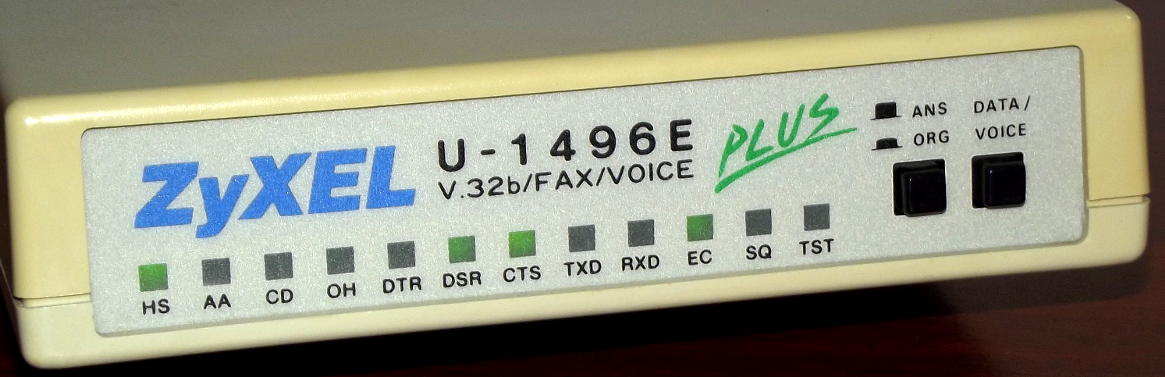
Next.

Previous.
