Pandemic Situation in India.
I don t know from where I should start. This is probably a good start. I actually would recommend Indiacable as they do attempt to share some things happening in India from day to day but still there is a lot thatt they just can t cover, nobody can cover. There were two reports which kind of shook me all inside. One which sadly came from the UK publication Independent, probably as no Indian publication would dare publish it. The other from Rural India. I have been privileged in many ways, including friends who have asked me if I need any financial help. But seeing reports like above, these people need more help, guidance and help than I.
While I m never one to say give to Foundations. If some people do want to help people from Maharashtra, then moneylifefoundation could be a good place where they could donate. FWIW, they usually use the foundation to help savers and investors be safe and help in getting money when taken by companies with dubious intentions. That is their drive. Two articles show their bent. The first one is about the Algo scam which I have written previously about the same in this blog. Interestingly, when I talk about this scam, all Modi supporters are silent. The other one does give some idea as to why the Govt. is indifferent. That is going to a heavy cross for all relatives to bear. There has been a lot that has been happening. Now instead of being limited to cities, Covid has now gone hinterland in a big way. One could ask also Praveen as he probably knows what would be good for Kerala and surrounding areas.
The biggest change, however, has been that India is now battling not just the pandemic but also Mucormycosis also known as black fungus and its deadlier cousin the white fungus. Mucormycosis came largely due to an ill-advise given that applying cow dung gives protection to Corona. And many applied it due to faith. And people who know science do know that in fact it has that bacteria.
Sadly, those of us who are and were more interested in law, computer science etc. has now also have to keep on top of what is happening in the medical field. It isn t that I hate it, but it has a lot of costs. From what I could gather on various social media and elsewhere, a single injection of anti-fungal for the above costs INR 3k/- and that needs to be 5 times in a day and that course has to be for three weeks. So even the relatively wealthy people can and will become poor in no time. No wonder thousands of those went to UK, US, Dubai or wherever they could find safe-harbor from the pandemic with no plans of arriving back soon.
There was also the whole bit about FBS or Fetal Bovin Serum. India ordered millions of blood serum products from abroad and continues to. This was quickly shut down as news on Social Media. Apparently, it is only the Indian cow which is worthy of reverence. All other cows and their children are fair game according to those in power. Of course, that discussion was quickly shut down as was the discussion about IGP (Indian Genome Project). People over the years had asked me why India never participated for the HGP (Human Gnome Project). I actually had no answer for that. Then in 2020, there was idea of IGP which was put up and then it was quickly shot down as the results could damage a political party s image. In fact, a note to people who want to join Indian civil services tells the reason exactly. While many countries in the world are hypocrites, including the U.S. none can take the place that India has made for itself in that field.
The Online experience
The vaccination process has been made online and has led to severe heartburn and trouble for many including many memes. For e.g.
Daily work, get up, have a bath, see if you got a slot on the app, sleep. People trying desperately to get a slot, taken from Hindi Movie Dilwale Dulhania Le Jaygenge.
Just to explain what is happening, one has to go to the website of cowin. Sharing a screenshot of the same.
Cowin app. sceeenshot
I have deliberately taken a screenshot of the cowin app. in U.P. which is one of the areas where the ruling party, BJP has. I haven t taken my state for the simple reason, even if a slot is open, it is of no use as there are no vaccines. As have been shared in India Cable as well as in many newspapers, it is the Central Govt. which holds the strings for the vaccines. Maharashtra did put up an international tender but to no effect. All vaccine manufacturers want only Central Govt. for purchases for multiple reasons. And GOI is saying it has no money even though recently it got loans as well as a dividend from RBI to the tune of 99k crore. For what all that money is, we have no clue.
Coming back though, to the issue at hand. the cowin app. is made an open api. While normally, people like us should and are happy when an API is open, it has made those who understand how to use git, compile, etc. better than others. A copy of the public repo. of how you can do the same can be found on Github. Now, obviously, for people like me and many others it has ethical issues.
Kiran s Interview in Times of India (TOI)
There isn t much to say apart from I haven t used it. I just didn t want to. It just is unethical. Hopefully, in the coming days GOI does something better. That is the only thing we are surviving on, hope.
The Toolkit saga
A few days before, GOI shared a toolkit apparently made by Congress to defame the party in power. That toolkit was shared before the press and Altnews did the investigation and promptly shredded the claims. Congress promptly made an FIR in Chhattisgarh where it is in power. The gentleman who made the claims Mr. Sambit Patra refused to appear against the police without evidence citing personal reasons and asking 1 week to appear before them. Apart from Altnews which did a great job, sadly many people didn t even know that there is something called WYSIWYG. I had to explain that so many Industries, whether it is politics, creative industries, legal, ad industries, medical transcription, and imaging all use this, and all the participants use the same version of the software. The reason being that in most Industries, there is a huge loss and issue of legal liabilities if something untoward happens. For e.g. if medical transcription is done in India is wrong (although his or her work will be checked by a superior in the West), but for whatever reason is not, and a wrong diagnosis is put (due to wrong color or something) then a patient could die and the firm who does that work could face heavy penalties which could be the death of them.
There is another myth that Congress has unlimited wealth or huge wealth. I asked if that was the case, why didn t they shift to Mac. Of course, none have answers on this one.
There is another reason why they didn t want to appear. The Rona Wilson investigation by Arsenal Experts also has made them cautious. Previously, they had a free run. Nowadays, software forensic tools are available to one and all. For e.g. Debian itself has a good variety of tools for the same. I remember Vipin s sharing few years back. For those who want to start, just install the apps. and try figuring out. Expertise on using the tools takes years though, as you use the tool day in night.
Update 25/05/2021 Apparently because Twitter made and showcased few tweets as Manipulated Media , those in Govt. are and were dead against it. So they conducted a raid against Twitter India headquarters, knowing fully well that there would be nobody except security. The moment I read this, my mind went to the whole Fruit of the poisonous tree legal doctrine. Sadly though, India doesn t recognize it and in fact, still believes in the pre-colonial era that evidence however collected is good. A good explanation of the same can be found here. There are some exceptions to the rule, but they are done so fine that more often than not, they can t be used in the court of law in India. Although a good RTI was shared by Mr. Saket Gokhale on the same issue, which does raise some interesting points
Twitter India Raid, Saket Gokhale RTI 1 Saket Gokhale RTI query , Twitter India Raid 2
FWIW, Saket has been successful in getting his prayers heard either as answers to RTI queries or then following it up in the various High Courts of India. Of course, those who are in the ruling party ridicule him but are unable to find faults in his application of logic. And quite a few times, I have learned from his applications as well as nuances or whatever is there in law, a judgment or a guideline which he invokes in his prayer. For e.g. the Lalitha Kumari Guidelines which the gentleman has shared in his prayer can be found here. Hence now, it would be upto the Delhi Police Cell to prove their case in response to RTI. He has also trapped them as he has shared they can t give excuses/exemptions which they have tried before.
As I had shared earlier, High Courts in India have woken up, whether it is Delhi, Mumbai, Aurangabad, Madhya Pradesh, Uttar Pradesh, Odisha or Kerala. Just today i.e. on 25th May 2021, Justices Bela Trivedi and Justice Kalra had asked how come all the hospitals don t have NOC from the Fire De[partment. They also questioned the ASG (Assistant Solicitor General) as how BU (Building Use Certificate) has been granted as almost all the 400 hospitals are in residential area. To which the ASG replies, it is the same state in almost 4000 schools as well as 6000 odd factories in Ahemdabad alone, leave the rest of the district and state alone. And this is when last year strict instuctions were passed. They chose to do nothing sadly. I will share a link on this when bar and bench gives me
The Hindu also shared the whole raid on twitter saga.
Conclusion
In conclusion, I sincerely do not where we are headed. The only thing I know is that we cannot expect things to be better before year-end and maybe even after that. It all depends on the vaccines and their availability.
After that ruralindia article, I had to see quite a few movies and whatnot just to get that out of my head. And this is apart from the 1600 odd teachers and workers who have died in the U.P. poll duty. Now, what a loss, not just to the family members of the victims, but a whole generation of school children who would not be able to get quality teaching and be deprived of education. What will be their future, God only knows.
The only good Bollywood movie which I saw was Ramprasad ki Teravi . The movie was an accurate representation of most families in and around me. There was a movie called Sansar (1987) which showed the breakup of the joint family and into a nuclear family. This movie could very well have been a continuation of the same. Even Marathi movies which at one time were very progressive have gone back to the same boy, girl love story routine. Sameer, though released in late 2020, was able to see it only recently. Vakeel Saab was an ok copy of Pink . I loved Sameer as, unlike Salman Khan films, it showed pretty much an authentic human struggle of a person who goes to the Middle East without any qualifications and works as a laborer and the trials he goes through. Somehow, Malayalam movies have a knack for showing truth without much of budget. Most of the Indian web series didn t make an impact. I think many of them were just going through the motions, it seems as everybody is concerned with the well-being of their near and dear ones. There was also this (Trigger Warning: This story discusses organized campaigns glorifying and advocating sexual violence against Muslim women.) Hoping people somehow make it to the other side of the pandemic.
The freenode IRC network has been hijacked.
TL;DR: move to libera.chat or OFTC.net, as did countless
free software projects including Gentoo, CentOS, KDE, Wikipedia,
FOSDEM, and more. Debian and the Tor project were already on OFTC and
are not affected by this.
What is freenode and why should I care?
freenode is the largest remaining IRC network. Before this
incident, it had close to 80,000 users, which is small in terms of
modern internet history -- even small social networks are larger by
multiple orders of magnitude -- but is large in IRC history. The IRC
network is also extensively used by the free software community, being
the default IRC network on many programs, and used by hundreds if not
thousands of free software projects.
I have been using freenode since at least 2006.
This matters if you care about IRC, the internet, open protocols,
decentralisation, and, to a certain extent, federation as well. It
also touches on who has the right on network resources: the people who
"own" it (through money) or the people who make it work (through their
labor). I am biased towards open protocols, the internet, federation,
and worker power, and this might taint this analysis.
What happened?
It's a long story, but basically:
back in 2017, the former head of staff sold the freenode.net
domain (and its related company) to Andrew Lee, "American
entrepreneur, software developer and writer", and, rather weirdly,
supposedly "crown prince of Korea" although that part is kind of
complex (see House of Yi, Yi Won, and Yi Seok). It
should be noted the Korean Empire hasn't existed for over a
century at this point (even though its flag, also weirdly,
remains)
back then, this was only known to the public as this strange PIA
and freenode joining forces gimmick. it was suspicious at
first, but since the network kept running, no one paid much
attention to it. opers of the network were similarly reassured
that Lee would have no say in the management of the network
this all changed recently when Lee asserted ownership of the
freenode.net domain and started meddling in the operations of the
network, according to this summary. this part is disputed,
but it is corroborated by almost a dozen former staff which
collectively resigned from the network in protest, after legal
threats, when it was obvious freenode was lost.
the departing freenode staff founded a new network,
irc.libera.chat, based on the new ircd they were working on
with OFTC, solanum
meanwhile, bot armies started attacking all IRC networks: both
libera and freenode, but also OFTC and unrelated networks like a
small one I help operate. those attacks have mostly stopped as of
this writing (2021-05-24 17:30UTC)
on freenode, however, things are going for the worse: Lee has been
accused of taking over a channel, in a grotesque abuse of
power; then changing freenode policy to not only justify the
abuse, but also remove rules against hateful speech, effectively
allowing nazis on the network (update: the change was
reverted, but not by Lee)
Update: even though the policy change was reverted, the actual
conversations allowed on freenode have already degenerated into toxic
garbage. There are also massive channel takeovers (presumably
over 700), mostly on channels that were redirecting to libera,
but also channels that were still live. Channels that were taken
over include #fosdem, #wikipedia, #haskell...
Instead of working on the network, the new "so-called freenode" staff
is spending effort writing bots and patches to basically automate
taking over channels. I run an IRC network and this bot is
obviously not standard "services" stuff... This is just grotesque.
At this point I agree with this HN comment:
We should stop implicitly legitimizing Andrew Lee's power grab by
referring to his dominion as "Freenode". Freenode is a
quarter-century-old community that has changed its name to
libera.chat; the thing being referred to here as "Freenode" is
something else that has illegitimately acquired control of
Freenode's old servers and user database, causing enormous
inconvenience to the real Freenode.
I don't agree with the suggested name there, let's instead call it "so
called freenode" as suggested later in the thread.
What now?
I recommend people and organisations move away from freenode as soon
as possible. This is a major change: documentation needs to be fixed,
and the migration needs to be coordinated. But I do not believe we can
trust the new freenode "owners" to operate the network reliably and in
good faith.
It's also important to use the current momentum to build a critical
mass elsewhere so that people don't end up on freenode again by
default and find an even more toxic community than your typical
run-of-the-mill free software project (which is already not a high bar
to meet).
Update: people are moving to libera in droves. It's now reaching
18,000 users, which is bigger than OFTC and getting close to the
largest, traditionnal, IRC networks (EFnet, Undernet, IRCnet are in
the 10-20k users range). so-called freenode is still larger, currently
clocking 68,000 users, but that's a huge drop from the previous count
which was 78,000 before the exodus began. We're even starting to see
the effects of the migration on netsplit.de.
Update 2: the isfreenodedeadyet.com site is updated more
frequently than netsplit and shows tons more information. It shows 25k
online users for libera and 61k for so-called freenode (down from
~78k), and the trend doesn't seem to be stopping for so-called
freenode. There's also a list of 400+ channels that have moved
out. Keep in mind that such migrations take effect over long
periods of time.
Where do I move to?
The first thing you should do is to figure out which tool to use for
interactive user support. There are multiple alternatives, of course
-- this is the internet after all -- but here is a short list of
suggestions, in preferred priority order:
Matrix.org, which bridges with OFTC and (hopefully soon) with
libera as well, modern IRC alternative
XMPP/Jabber also still exists, if you're into that kind of
stuff, but I don't think the "chat room" story is great there, at
least not as good as Matrix
Basically, the decision tree is this:
if you want to stay on IRC:
if you are already on many OFTC channels and few freenode
channels: move to OFTC
if you are more inclined to support the previous freenode staff:
move to libera
if you care about matrix users (in the short term): move to
OFTC
if you are ready to leave IRC:
if you want the latest and greatest: move to Matrix
if you like XML and already use XMPP: move to XMPP
Frankly, at this point, everyone should seriously consider moving to
Matrix. The user story is great, the web is a first class user, it
supports E2EE (although XMPP as well), and has a lot of momentum
behind it. It even bridges with IRC well (which is not the case for
XMPP) so if you're worried about problems like this happening again.
(Indeed, I wouldn't be surprised if similar drama happens on OFTC or
libera in the future. The history of IRC is full of such epic
controversies, takeovers, sabotage, attacks, technical flamewars, and
other silly things. I am not sure, but I suspect a federated model
like Matrix might be more resilient to conflicts like this one.)
Changing protocols might mean losing a bunch of users however: not
everyone is ready to move to Matrix, for example. Graybeards like me
have been using irssi for years, if not decades, and would take quite
a bit of convincing to move elsewhere.
I have mostly kept my channels on IRC, and moved either to OFTC or
libera. In retrospect, I think I might have moved everything to OFTC
if I would have thought about it more, because almost all of my
channels are there. But I kind of expect a lot of the freenode
community to move to libera, so I am keeping a socket open there
anyways.
How do I move?
The first thing you should do is to update documentation, websites,
and source code to stop pointing at freenode altogether. This is what
I did for feed2exec, for example. You need to let people know in
the current channel as well, and possibly shutdown the channel on
freenode.
Since my channels are either small or empty, I took the radical
approach of:
redirecting the channel to ##unavailable which is historically
the way we show channels have moved to another network
make the channel invite-only (which effectively enforces the
redirection)
kicking everyone out of the channel
kickban people who rejoin
set the topic to announce the change
In IRC speak, the following commands should do all this:
/msg ChanServ set #anarcat mlock +if ##unavailable
/msg ChanServ clear #anarcat users moving to irc.libera.chat
/msg ChanServ set #anarcat restricted on
/topic #anarcat this channel has moved to irc.libera.chat
If the channel is not registered, the following might work
/mode #anarcat +if ##unavailable
Then you can leave freenode altogether:
/disconnect Freenode unacceptable hijack, policy changes and takeovers. so long and thanks for all the fish.
Keep in mind that some people have been unable to setup such
redirections, because the new freenode staff have taken over their
channel, in which case you're out of luck...
Some people have expressed concern about their private data hosted at
freenode as well. If you care about this, you can always talk to
NickServ and DROP your nick. Be warned, however, that this assumes
good faith of the network operators, which, at this point, is kind of
futile. I would assume any data you have registered on there
(typically: your NickServ password and email address) to be
compromised and leaked. If your password is used elsewhere (tsk, tsk),
change it everywhere.
Update: there's also another procedure, similar to the above, but
with a different approach. Keep in mind that so-called freenode staff
are actively hijacking channels for the mere act of mentioning libera
in the channel topic, so thread carefully there.
Last words
This is a sad time for IRC in general, and freenode in
particular. It's a real shame that the previous freenode staff have
been kicked out, and it's especially horrible that if the new policies of
the network are basically making the network open to nazis. I wish
things would have gone out differently: now we have yet another fork
in the IRC history. While it's not the first time freenode changes
name (it was called OPN before), now the old freenode is still around
and this will bring much confusion to the world, especially since the
new freenode staff is still claiming to support FOSS.
I understand there are many sides to this story, and some people were
deeply hurt by all this. But for me, it's completely unacceptable
to keep pushing your staff so hard that they basically all (except
one?) resign in protest. For me, that's leadership failure at the
utmost, and a complete disgrace. And of course, I can't in good
conscience support or join a network that allows hate speech.
Regardless of the fate of whatever we'll call what's left of freenode,
maybe it's time for this old IRC thing to die already. It's still a
sad day in internet history, but then again, maybe IRC will never
die...
A couple of weeks ago I stumbled across a Template Haskell question on the
Haskell sub-reddit. This was quite exciting
because I rarely see TH questions, and this one was by someone working
on something which was quite similar to what I had done: they were writing
a code generator, and had pure functions of type Exp -> Exp -> Exp, but
wanted to leverage TH's quasi-quotation syntax (e.g. [ \p -> p + 1 ])
as a syntactic short-hand. Alas these quasi-quotes are of type Q Exp, so
the question becomes, how to escape Q?
I had to do exactly this, so I knew an answer: use unsafePerformIO. Another
commenter pointed at this Overloaded Quotation Brackets GHC
Proposal which I was
not aware of and is a much more elegant solution, available since GHC 9.0.1.
There was something odd about the question, though.
Sometime later on, I checked back to find that the thread had been deleted.
It turns out it was one of a set of duplicate posts with exactly the same
question. Spammers are copying old questions and reposting them, presumably
in an attempt to harvest "Reddit karma".
When I learned that, my sense of oddness about the question remained, so I went
to find the original thread, to discover I wrote the original question a year
ago
and had therefore literally answered my own question a year
later.
Back to the more elegant solution. In GHC versions 9 onwards, quasi-quotation
returns a different type that is not bound up in the Q Monad:
GHC 8.8.4:
 > :t [  42  ]
[  42  ] :: Language.Haskell.TH.Lib.Internal.ExpQ
 > [  42  ]
<interactive>:5:1: error:
      No instance for (Show Language.Haskell.TH.Lib.Internal.ExpQ)
        arising from a use of  print
      In a stmt of an interactive GHCi command: print it
GHC 9.0.1:
 > :t [  42  ]
[  42  ]
  :: Language.Haskell.TH.Syntax.Quote m =>
     m Language.Haskell.TH.Syntax.Exp
 > [  42  ]
LitE (IntegerL 42)
Powerlevel10k is a theme for Zsh. It contains some powerful
features, is astoundingly fast, and easy to customize. I am quite
amazed at the skills of its main author. Be sure to also have a
look at Zsh for Humans, a complete Zsh configuration including
this theme.
One of the nice features of Powerlevel10k is transient prompts:
past prompts are reduced to a more minimal configuration to save space
by removing unneeded information.
My implementation of a transient prompt with Zsh. Past prompts are compact and include the time of the command execution, the hostname, and the status of the previous command while the complete prompt contains more information like the current directory and the Git branch.
When it comes to configuring my shell, I still prefer writing and
understanding each line going into it. Therefore, I am still building
my Zsh configuration from scratch. Here is how I have integrated
the above transient feature into my prompt.
The first step is to configure the appearance of the prompt in its
compact form. Let s assume we have a variable, $_vbe_prompt_compact
set to 1 when we want a compact prompt. We use the
following function to define the prompt appearance:
_vbe_prompt ()localretval=$?# When compact, just time + prompt signif(($_vbe_prompt_compact));then# Current time (with timezone for remote hosts)
_vbe_prompt_segment cyan default "%D %H:%M$ SSH_TTY+ %Z "# Hostname for remote hosts[[$SSH_TTY]]&&\
_vbe_prompt_segment black magenta "%B%M%b"# Status of the last commandif(($retval));then
_vbe_prompt_segment red default $ PRCH[reta]else
_vbe_prompt_segment green cyan $ PRCH[ok]fi# End of prompt
_vbe_prompt_end
returnfi# Regular prompt with many information# [ ]
setopt prompt_subst
PS1='$(_vbe_prompt) '
Update (2021.05)
The following part has been rewritten to be
more robust. The code is stolen from Powerlevel10k s issue #888.
See the comments for more details.
Our next step is to redraw the prompt after accepting a command. We
wrap Zsh line editor into a function:1
_vbe-zle-line-init()[[$CONTEXT== start ]]return0# Start regular line editor(( $+zle_bracketed_paste ))&& print -r -n - $zle_bracketed_paste[1]
zle .recursive-edit
local -i ret=$?(( $+zle_bracketed_paste ))&& print -r -n - $zle_bracketed_paste[2]# If we received EOT, we exit the shellif[[$ret==0&&$KEYS==$'\4']];then_vbe_prompt_compact=1
zle .reset-prompt
exitfi# Line edition is over. Shorten the current prompt._vbe_prompt_compact=1
zle .reset-prompt
unset _vbe_prompt_compact
if(( ret ));then# Ctrl-C
zle .send-break
else# Enter
zle .accept-line
fireturn ret
zle -N zle-line-init _vbe-zle-line-init
That s all!
One downside of using the powerline fonts is that it messes with
copy/paste. As I am using tmux, I use the following snippet to work
around this issue and use only standard Unicode characters when
copying from the terminal:
Copying and pasting the text from the screenshot above yields the
following text:
14:21 % ssh eizo.luffy.cx
Linux eizo 4.19.0-16-amd64 #1 SMP Debian 4.19.181-1 (2021-03-19) x86_64Last login: Fri Apr 23 14:20:39 2021 from 2a01:cb00:3f:b02:9db6:efa4:d85:7f9f14:21 CEST % uname -a
Linux eizo 4.19.0-16-amd64 #1 SMP Debian 4.19.181-1 (2021-03-19) x86_64 GNU/Linux14:21 CEST %Connection to eizo.luffy.cx closed.14:22 % git status
On branch article/zsh-transientUntracked files: (use "git add <file>..." to include in what will be committed) ../../media/images/zsh-compact-prompt@2x.jpgnothing added to commit but untracked files present (use "git add" to track)
We have to manually enable bracketed paste because
Zsh does it after zle-line-init.
Armadillo is a powerful and expressive C++ template library for linear algebra aiming towards a good balance between speed and ease of use with a syntax deliberately close to a Matlab. RcppArmadillo integrates this library with the R environment and language and is widely used by (currently) 865 other packages on CRAN.
This new release brings Armadillo 10.5.0 which was released early on Friday. We had done one full test in the 10.5 rc1 prerelease one week earlier, and did another test on 10.5.0 and this 0.10.5.0.0 RcppArmadillo release just for added rigour. The package was then uploaded to CRAN late Friday (my timezone). The automated process flagged one NOTE as a false positive (yet another instance of the well-known (yet dreaded) issue of Suggests != Depends by one these 865 packages). This lead to a need of an inspection by one of the CRAN maintainers, and the weekend being the weekend it was only processed just now.
Upstream moves at a speed that is a little faster than the cadence CRAN likes. As we had released RcppArmadillo 0.10.4.0.0 on April 13 we did not want to follow-up too soon thereafter with 0.10.4.1.0 which was thusly only a GitHub and drat release (which can always be had easily too via install.packages("RcppArmadillo", repos="https://RcppCore.github.io/drat").)
The full set of changes follows. We include the aforementioned interim release as well.
Changes in RcppArmadillo version 0.10.5.0 (2021-05-21)
Upgraded to Armadillo release 10.5 (Antipodean Fortress)
added .clamp() member function
expanded the standalone clamp() function to handle complex values
more efficient use of OpenMP
vector, matrix and cube constructors now initialise elements to zero by default; use the fill::none specifier, eg. mat X(4,5,fill::none), to disable element initialisation
Added codecov.yml to exclude Armadillo from coverage analysis
Changes in RcppArmadillo version 0.10.4.1.0 (2021-04-23)
Upgraded to Armadillo release 10.4.1 (Pressure Cooker)
As a person who prefers full access to data in the simplest format, while at the same time having it useful with latest technologies, my quest for trying things out is an ongoing activity.
Earlier, I blogged about my needs of collating news feeds in a simple format, readily accessible offline, while still being useful and aligned with the modern paradigm.
In today s age, the other common aspect of our life, is digitization of moments. With the advent of great technology and affordable economics, the world now has access to great devices to capture moments in digital form. Most people, these days, are equipped with smart devices, like mobile phones, that come with pretty good image capturing devices. Our lives, our societies, how we interact; a lot of it is now built around the assumption of smart devices and digital services.
A lot of good things have happened of it. We are now able to send messages to people, securely, in a matter of seconds. We are now able to capture moments, which otherwise we d often miss; all thanks to devices like smart mobile phones that most of all carry almost all along with us.
In this regard, we are quite indebted to the technology revolution that has improved life styles all over. Of course, like every coin has a flip side, thus too, too much of obsession with digital life, also has its drawbacks. A simple reminder to self should always be about what a human life is designed for and try to live by its rules.
Moments
Given the tools general availability, we are all more used to capturing moments. Once upon a time, taking a photo meant going to a photo studio.
Then came a generation where we d have personal devices with roll films, to which we captured the moments. And then get it processed from a photo developing service provider. And that is when we d know which all moments came out correct and which ones were spoilt. In such cases, there s always the wish I could have that moment again.
Thankfully, now, in our current generation, we have the liberty to take pictures and validate them almost immediately. We also have the flexibility to take multiple shots of the moment and do the filtering later. There s also many intelligent and invasive services, all mostly provided free, to help you organize these moments; at a small cost of keeping an eye on your life activity.
In a summary, mankind, now, generates lots and lots of data. So much lot that now even mammoths like Google are forced to make a call whether it is more profitable to sniff user activity while providing them a service for free, or ask people to pay otherwise too.
Privacy
Many of us are wary of the amount of personal data we generate, which is our asset; and how the big tech giants want a piece of it in the name of free services. And in such quest, free aside, there s always a lookout for privacy savvy tools that can help us draw a bold line in between Public and Private
Google Photos
Google Photos has been a great tool. The way it organizes, siphons and present your data is simply amazing. No good would have been the photos taken, if they weren t easily searchable, organized, annotated, and presented.
But Google Photos is proprietary and invasive. The amount of information they have access to should be a concern to all people. For services that invade so much, the world needs Free Services.
PhotoPrism
I only came across this project around a month ago, while the project has been around since 2019. So far, in my exploration, this is one of the best Free Software tools to manage and organize my digital photos. The other favorite tool that I regularly depend on is Digikam and it still is a gem.
In a gist, PhotoPrism aims to be the equivalent of Google Photos, for the privacy savvy people.
As of date, it has a decent list of features available. And for some of the missing ones, I ve come up with a fairly okay workflow with other tools, which is one of the reasons of this blog post.
PhotoPrism is a web app, written in the Go Programming Language. Its layout and workflow as a Photo Management application is similar to Google Photos. It is very performant compared to other applications. Since it is a Progressive Web App, access through a Laptop, Tablet or Mobile is almost the same. It uses Google TensorFlow for some of its features and thus you feel like using Google Photos in some regard.
Some shortcomings and workarounds
Facial Recognition: To date, facial recognition is a planned feature. But this was easy to tackle given that Digikam has pretty solid facial recognition. So I use Digikam to detect, recognize and annotate faces. And then PhotoPrism is happy enough to use those annotations and present relevant data.
HTTP Web App: The upstream project has done a good job of making use of Docker container technology in presenting this web app solution. A software solution, the equivalent of a Google Photos, does need a heavyweight config. In free software, it is all about reusing available tools. PhotoPrism makes use of tools like MySQL, Vue.js, TensorFlow, GoLang, GoLibs and strives to provide a single package solution, all thanks to Docker containers.
In its current offering, PhotoPrism is run as a HTTP Web App. I wanted to have an added layer of security on top of it. And thus run an nginx reverse proxy on top of it. Along with it, I run the proxy service on HTTPS, thus making all traffic from clients to the proxy encrypted. I also wanted an added layer of HTTP AUTH on top, so I explored some options and finally settled down with http-auth-digest
Also, in the current implementation, PhotoPrism doesn t have a strong notion of normal and private photos in its data organization. I wanted normal photos available under a standard auth realm and private photos under a different realm. And along with a different realm, I also wanted some added security directives for it. So far, it looks like I ve put together a decent solution with the help of nginx.
First of all, since the port from the host is forwarded to the docker instance, that needed to be controlled. Instead of the default of listening on all interfaces, I changed it to loopback only. Because my primary and only interface is going to be the nginx reverse proxy
Setup nginx with a self-signed certificate to have all communication encrypted.
Setup nginx as a reverse proxy to talk to PhotoPrism.
nginx packaging: I was so happy to see the simplicity of the nginx packaging in Debian. Becuase http-auth-digest is not upstream, it needs to be pulled in separately and compiled. I was happy to see how simple the packaging structure of nginx in Debian is. It was just a matter of putting in the module in the right modules location, which as structured such in the packaging falls under the debian/ packaging sub-folder, that any future upgrades will be quite easy to manage.
http-auth-digest: I d love to see http-auth-digest module be part of the upstream package. While I m a web n00b, I felt this module perfect for my use case. From what I ve understood, set up and tested so far, this module fills in all my requirements; which is more of like a session management.
With the combined setup in place, https://host is authenticated with a different set of credentials. On the other hand, https://host/discover and /private get covered with a different set of credentials and policies. While, this will continue to be an ongoing effort and audit of the services that I build, so far now, I feel this is in decent shape that I can use it as my daily driver.
The end result is:
It is is now fair to say that Google is big enough to rewrite all the standards. Or at least break them. Or best, their arrogance of it. This bug report is a fine example of what other ways it could have been dealt.
Recently, Raphael Hertzog published ideas [1] about how to make Debian more attractive for big enterprises. One missing key stone here is the possibility to sign up for an enterprise support subscription scheme. Another question tackles how to provide such a support scheme within Debian, without disturbing the current flow of how Debian is developed these days.
And, there are likely more questions to asks, riddles to solve, and hurdles to overcome.
We want to discuss this topic, brainstorm on it, collect new ideas and also hear your concerns on a public channel. Over the past weeks there already have been mail exchanges off-list.
We want to reboot this privately started discussion now in public (as that's where it belongs) starting +/- at the end of the coming week via the currently quite inactive Debian mailing list 'debian-enterprise' [2]. Please join the discussion (and the mailing list) [3] if interested in this topic.
light & love
Mike (aka sunweaver)
[1] https://raphaelhertzog.com/2021/03/30/challenging-times-for-freexian-1/
(also read parts 2-4)
[2] debian-enterprise@lists.debian.org
[3] https://lists.debian.org/debian-enterprise
Kubernetes is about giving up control. As someone who likes to understand what s going on that s made it hard for me to embrace it. I ve also mostly been able to ignore it, which has helped. However I m aware it s incredibly popular, and there s some infrastructure at work that uses it. While it s not my responsibility I always find having an actual implementation of something is useful in understanding it generally, so I decided it was time to dig in and learn something new.
First up, I should say I understand the trade-off here about handing a bunch of decisions off to Kubernetes about the underlying platform allowing development/deployment to concentrate on a nice consistent environment. I get the analogy with the shipping container model where you can abstract out both sides knowing all you have to do is conform to the TEU API. In terms of the underlying concepts I ve got some virtualisation and container experience, so I m not coming at this as a complete newcomer. And I understand multi-site dynamically routed networks.
That said, let s start with a basic goal. I d like to understand k8s (see, I can be cool and use the short name) enough to be comfortable with what s going on under the hood and be able to examine a running instance safely (i.e. enough confidence about pulling logs, probing state etc without fearing I might modify state). That ll mean when I come across such infrastructure I have enough tools to be able to hopefully learn from it.
To do this I figure I ll need to build myself a cluster and deploy some things on it, then poke it. I ll start by doing so on bare metal; that removes variables around cloud providers and virtualisation and gives me an environment I know is isolated from everything else. I happen to have a GMK NucBox available, so I ll use that.
As a first step I m aiming to get a single node cluster deployed running some sort of web accessible service that is visible from the rest of my network. That should mean I ve covered the basics of a Kubernetes install, a running service and actually making it accessible.
Of course I m running Debian. I ve got a Bullseye (Debian 11) install - not yet released as stable, but in freeze and therefore not a moving target. I wanted to use packages from Debian as much as possible but it seems that the bits of Kubernetes available in main are mostly just building blocks and not a great starting point for someone new to Kubernetes. So to do the initial install I did the following:
# Install docker + nftables from Debian
apt install docker.io nftables
# Add the Kubernetes repo and signing key
curl -s https://packages.cloud.google.com/apt/doc/apt-key.gpg > /etc/apt/k8s.gpg
cat > /etc/apt/sources.list.d/kubernetes.list <<EOF
deb [signed-by=/etc/apt/k8s.gpg] https://apt.kubernetes.io/ kubernetes-xenial main
EOF
apt update
apt install kubelet kubeadm kubectl
That resulted in a 1.21.1-00 install, which is current at the time of writing. I then used kubeadm to create the cluster:
The extra parameters were to make the API server externally accessible from the host. I don t know if that was a good idea or not at this stage
kubeadm spat out a bunch of instructions but the key piece was about copying the credentials to my user account. So I did:
noodles@udon:~$ kubectl get nodes
NAME   STATUS     ROLES                  AGE     VERSION
udon   NotReady   control-plane,master   4m31s   v1.21.1
Ooooh. But why s it NotReady? Seems like it s a networking issue and I need to install a networking provider. The documentation on this is appalling. Flannel gets recommended as a simple option but then turns out to need a --pod-network-cidr option passed to kubeadm and I didn t feel like cleaning up and running again (I ve omitted all the false starts it took me to get to this point). Another pointer was to Weave so I decided to try that with the following magic runes:
(I believe what that s doing is the first 3 lines create a password and store it into the internal Kubernetes config so the weave pod can retrieve it. The final line then grabs a YAML config from Weaveworks to configure up weave. My intention is to delve deeper into what s going on here later; for now the primary purpose is to get up and running.)
As I m running a single node cluster I then had to untaint my control node so I could use it as a worker node too:
These are all things I m going to have to learn about, but for now I ll nod and smile and pretend I understand.
Now I want to actually deploy something to the cluster. I ended up with a simple HTTP echoserver (though it s not entirely clear that s actually the source for what I ended up pulling):
$ kubectl create deployment hello-node --image=k8s.gcr.io/echoserver:1.10
deployment.apps/hello-node created
$ kubectl get pod
NAME                          READY   STATUS    RESTARTS   AGE
hello-node-59bffcc9fd-8hkgb   1/1     Running   0          36s
$ kubectl expose deployment hello-node --type=NodePort --port=8080
$ kubectl get services
NAME         TYPE        CLUSTER-IP      EXTERNAL-IP   PORT(S)          AGE
hello-node   NodePort    10.107.66.138   <none>        8080:31529/TCP   1m
Looks good. And to test locally:
curl http://10.107.66.138:8080/
Hostname: hello-node-59bffcc9fd-8hkgb
Pod Information:
	-no pod information available-
Server values:
	server_version=nginx: 1.13.3 - lua: 10008
Request Information:
	client_address=192.168.53.147
	method=GET
	real path=/
	query=
	request_version=1.1
	request_scheme=http
	request_uri=http://10.107.66.138:8080/
Request Headers:
	accept=*/*
	host=10.107.66.138:8080
	user-agent=curl/7.74.0
Request Body:
	-no body in request-
Neat. But my external network is 192.168.53.0/24 and that s a 10.* address so how do I actually make it visible to other hosts?
What I seem to need is an Ingress Controller which provide some sort of proxy between the outside world and pods within the cluster. Let s pick nginx because at least I have some vague familiarity with that and it seems like it should be able to do a bunch of HTTP redirection to different pods depending on the incoming request.
i.e. incoming requests to http://udon.mynetwork/ should go to the hello-node on port 8080. I applied this:
$ kubectl apply -f hello-ingress.yaml
ingress.networking.k8s.io/example-ingress created
$ kubectl get ingress
NAME              CLASS    HOSTS            ADDRESS   PORTS   AGE
example-ingress   <none>   udon.mynetwork             80      3m8s
No address? What have I missed? Let s check the nginx service, which apparently lives in the ingress-nginx namespace:
noodles@udon:~$ kubectl get services -n ingress-nginx
NAME                                 TYPE           CLUSTER-IP      EXTERNAL-IP   PORT(S)                    AGE
ingress-nginx-controller             LoadBalancer   10.96.9.41      <pending>     80:32740/TCP,443:30894/TCP 13h
ingress-nginx-controller-admission   ClusterIP      10.111.16.129   <none>        443/TCP                    13h
<pending> does not seem like something I want. Digging around it seems I need to configure the external IP. So I do:
noodles@udon:~$ kubectl get services -n ingress-nginx
NAME                                 TYPE           CLUSTER-IP      EXTERNAL-IP      PORT(S)                 AGE
ingress-nginx-controller             LoadBalancer   10.96.9.41      192.168.53.147   80:32740/TCP,443:30894/TCP   14h
ingress-nginx-controller-admission   ClusterIP      10.111.16.129   <none>           443/TCP                 14h
noodles@udon:~$ kubectl get ingress
NAME              CLASS    HOSTS           ADDRESS          PORTS   AGE
example-ingress   <none>   udon.mynetwork  192.168.53.147   80      14h
Let s try a curl from a remote host:
curl http://udon.mynetwork/
Hostname: hello-node-59bffcc9fd-8hkgb
Pod Information:
	-no pod information available-
Server values:
	server_version=nginx: 1.13.3 - lua: 10008
Request Information:
	client_address=192.168.0.5
	method=GET
	real path=/
	query=
	request_version=1.1
	request_scheme=http
	request_uri=http://udon.mynetwork:8080/
Request Headers:
	accept=*/*
	host=udon.mynetwork
	user-agent=curl/7.64.0
	x-forwarded-for=192.168.53.136
	x-forwarded-host=udon.mynetwork
	x-forwarded-port=80
	x-forwarded-proto=http
	x-real-ip=192.168.53.136
	x-request-id=6aaef8feaaa4c7d07c60b2d05c45f75c
	x-scheme=http
Request Body:
	-no body in request-
Ok, so that seems like success. I ve got a single node cluster running a single actual application pod (the echoserver) and exporting it to the outside world. That s enough to start poking under the hood. Which is for another post, as this one is already getting longer than I d like. I ll just leave some final thoughts of things I need to work out:
What s going on with the networking?
Where s the IPv6 (the host in question has native IPv6 routing)?
How do I deploy my own application pod?
I should look at a multiple host setup (i.e. a real cluster).
How much of this goes away if I use a cloud provider like AWS to run the cluster?
Can I do this with the Debian Kubernetes packages?
RcppDate wraps the featureful date library written by Howard Hinnant for use with R. This header-only modern C++ library has been in pretty wide-spread use for a while now, and adds to C++11/C++14/C++17 what will be (with minor modifications) the date library in C++20.
Our previous 0.0.2 release already contained date version 3.0.0 from last year plus some of changes accumulated since then. Now that date 3.0.1 was just released, we are providing a quick sync with this version.
Changes in version 0.0.3 (2021-05-19)
Updated to upstream version 3.0.1
If you like this or other open-source work I do, you can now sponsor me at GitHub.
As it is now known, the freenode IRC network has been taken over by a Trumpian wannabe korean royalty bitcoins millionaire. To make a long story short, the former freenode head of staff secretly "sold" the network to this person even if it was not hers to sell, and our lawyers have advised us that there is not much that we can do about it without some of us risking financial ruin. Fuck you Christel, lilo's life work did not deserve this.
What you knew as freenode after 12:00 UTC of May 19 will be managed by different people.
As I have no desire to volunteer under the new regime, this marks the end of my involvement with freenode. It had started in 1999 when I encouraged the good parts of #linux-it to leave ircnet, and soon after I became senior staff. Even if I have not been very active recently, at this point I was the longest-serving freenode staff member and now I expect that I will hold this record forever.
The people that I have met on IRC, on freenode and other networks, have been and still are a very important part of my life, second only to the ones that I have known thanks to Usenet. I am not fine, but I know that the communities which I have been a part of are not defined by a domain name and will regroup somewhere else.
The current freenode staff members have resigned with me, these are some of their farewell messages:
A new release of the inline package got to CRAN today. inline facilitates writing code in-line in simple string expressions or short files. The package was used quite extensively by Rcpp in the days before Rcpp Attributes arrived on the scene proving an even better alternative for its use cases. inline is still used by rstan and a number of other packages.
Johannes Ranke, who uses and stresses inline via his package mkin, updated the loading/unloading of DLLs which, following updates in R-devel, was failing some tests. As luck will have it, this new version appears to still fail on two of the platforms we do not actually have easy access to so another version may be coming shortly .
See below for a detailed list of changes extracted from the NEWS file.
Changes in inline version 0.3.18 (2021-05-17)
The moveDLL code and tests were updated for changed in R-devel (Johannes in #22 fixing #21).
Redox-dependent inactivations are actually rather common in the field of metalloenzymes, and electrochemistry can be an extremely powerful tool to study them, providing one can analyze the data quantitatively. The point of this point is to teach the reader how to do so using QSoas. For more general information about redox inactivations and how to study them using electrochemical techniques, the reader is invited to read the review del Barrio and Fourmond, ChemElectroChem 2019.
This post is a tutorial to learn the analysis of data coming from the study of the redox-dependent substrate inhibition of periplasmic nitrate reductase NapAB, which has the advantage of being relatively simple. The whole processed is discussed in Jacques et al, BBA, 2014. What you need to know in order to follow this tutorial is the following:
the whole inactivation/reactivation process can be modelled by a simple reversible reaction:
$$ \mathrm A \rightleftharpoons \mathrm I $$
A is the active form, I the inactive form;
the forward rate constant is \(k_i(E)\) (dependent on potential) and the backward rate constant is \(k_a(E)\), also dependent on potential;
the experiment is done in a series of 5 steps at 3 different potentials: \(E_0\) then \(E_1\) then \(E_2\) then \(E_1\) then, finally, \(E_0\);
the enzyme is assumed to be fully active at the beginning of the first step;
a single experiment is used to obtain the values of \(k_i\) and \(k_a\) for the three potentials (although not reliably for the value at \(E_0\)
the current given by the active species depends on potential (and it is negative because the enzyme catalyzes a reduction), and the inactive species gives no current;
in addition to the reversible reaction above, there is an irreversible, potential-dependent loss.
You can download the data files from the GitHub repository. Before fitting the data to determine the values of the rate constants at the potentials of the experiment, we will first subtract the background current, assuming that the respective contributions of faradaic and non-faradaic currents is additive. Start QSoas, go to the directory where you saved the files, and load both the data file and the blank file thus:
QSoas> cd
QSoas> load 27.oxw
QSoas> load 27-blanc.oxw
QSoas> S 1 0
(after the first command, you have to manually select the directory in which you downloaded the data files). The S 1 0 command just subtracts the dataset 1 (the first loaded) from the dataset 0 (the last loaded), see more there. blanc is the French for blank...
Then, we remove a bit of the beginning and the end of the data, corresponding to one half of the steps at \(E_0\), which we don't exploit much here (they are essentially only used to make sure that the irreversible loss is taken care of properly). This is done using strip-if:
QSoas> strip-if x<30 x>300
Then, we can fit ! The fit used is called fit-linear-kinetic-system, which is used to fit kinetic models with only linear reactions (like here) and steps which change the values of the rate constants but do not instantly change the concentrations. The specific command to fit the data is:
The /species=2 indicates that there are two species (A and I). The /steps=0,1,2,1,0 indicates that there are 5 steps, with three different conditions (0 to 2) in order 0,1,2,1,0. This fits needs a bit of setup before getting started. The species are numbered, 1 and 2, and the conditions (potentials) are indicated by #0, #1 and #2 suffixes.
The I_1 and I_2 are the currents for the species 1 and 2, so something for 1 (active form) and 0 for 2 (inactive form).
Moreover, the parameters I_2_#0 (and _#1, _#2) should be fixed and not free (since we don't need to adjust a current for the inactive form).
The k_11 and k_22 correspond to species-specific irreversible loss. It is generally best to leave them fixed to 0.
k_12 is the formation of 2 (I) from 1 (A), and k_21 is the formation of A from I. Their values will be determined for the three conditions. The default values should work here.
The k_loss parameters are the rates of irreversible loss that apply indiscriminately on all species (unlike k_11 and k_22). They are adjusted and ther default values should work too.
alpha_1_0 and alpha_2_0 are the initial concentrations of species 1 and 2, so they should be fixed to 1 and 0.
Last, the xstart_a and (_b, _c, _d and _e) correspond to the starting times for the steps, here, 0, 60, 120, 210 and 270.
For the sake of simplicity, you can also simply load the starting-parameters.params parameters to have all setup the correct way. Then, just hit Fit, enjoy this moment when QSoas works and you don't have to... The screen should now look like this:
Now, it's done ! The fit is actually pretty good, and you can read the values of the inactivation and reactivation rate constants from the fit parameters.
You can train also on the 21.oxw and 21-blanc.oxw files. Usually, re-loading the best fit parameters from other potentials as starting parameters work really well. Gathering the results of several fits into a real curve of rate constants as a function of potentials is left as an exercise for the reader (or maybe a later post), although you may find these series of posts useful in this context !
About QSoas
QSoas is a powerful open source data analysis program that focuses on flexibility and powerful fitting capacities. It is released under the GNU General Public License. It is described in Fourmond, Anal. Chem., 2016, 88 (10), pp 5050 5052. Current version is 3.0. You can download its source code there (or clone from the GitHub repository) and compile it yourself, or buy precompiled versions for MacOS and Windows there.
Today marks the 90th day of me joining Canonical to work on Ubuntu full-time! So since
it s been a while already, this blog post is long due. :)
The News
I joined Canonical, this February, to work on Ubuntu full-time! \o/
Those who know, they know that this is really very exciting for me because Canonical has
been a dream company for me, for real (more about this below!). And hey, this is my first
job, ever, so all the more reason to be psyched about, isn t it? ^_^
P.S. Keep reading and we ll meet my squad really sooon!
The Story
Being an undergrad student (batch 2017-2021), I ve been slightly worried during my last
two semesters, naturally, thinking about how s it all gonna pan out and what will I be doing,
et al, because I ve been seeing all my friends and batchmates getting placed in companies
or going for masters or at least having some sort of plans for their future and I, on the
other hand, was hopelessly clueless. :D
Well, to be fair, I did Google Summer of Code twice,
in 2019 and
2020, became a
Debian Developer in 2019, been a part of
GCI and Outreachy, contributed
to over dozens of open-source projects, et al, et al. So I wasn t all completely hopeless
but for sure was completely clueless , heh.
And for full disclosure, I was only slightly panicking because firstly, I did get placed
in several companies and secondly, I didn t really need a job immediately since I was already
getting paid to work on Debian stuff by Freexian, which was good enough. :)
(and honestly, Freexian has my whole heart! - more on that later sometime.)
But that s not the point. I was still confused and worried and my mom & dad, more so than
anyone. Ugh. We were all figuring out and she asked me places that I was interested to work
in. And whilst I wasn t clear about things I wanted to do (and still am!) but I was (very)
clear about this and so I told her about Canonical and also did tell her that it s a bit too
ambitious for me to think about it now so I ll probably apply after some experience or something.
and as they say, the world works in mysterious ways and well, it did for me! So back during
the Ruby sprints (Feb 20), Kanashiro, the guy ( ), mentioned that his team was hiring and
has a vacant position but I won t be eligible since I was still in my junior year. It was
since then I ve been actively praying for Cronus, the god of time, to wave his magic wand and
align it in such a way that the next opening should be somewhere near my graduation. And guess
what? IT HAPPENED!
9 months later, in November 20, Kanashiro told me his team is hiring yet again and that I
could apply this time! Without much (since there was some ) delay, I applied and started
asking all sorts of questions to Kanashiro. No words are enough for him, he literally helped
me throughout the process; from referring me to answering all sorts of doubts I had!
And roughly after 2 months of interviewing, et al, my ambitious dream did come true and I
finalyyyy signed my contract! \o/
(the interview process and what went on during those 10 weeks is a story for later ;))
The Server Team! \o
This position, which I didn t mention earlier, was for the Server Team which is a team of
15 people, working to make Ubuntu server the best! And as I
tweeted sometime back, the team
is absolutely lovely, super kind, and consists of the best of teammates one could possibly
ask for!
Here s a quick sneak peek into our weekly team meeting. Thanks to
Rafael for taking such a lovely picture. And yes,
the cat Luna is a part of our squad!
And oh, did I mention that we re completely remote and distributed?
FUN FACT: Our team covers all the TZs, that is, at any point of time (during weekdays),
you ll find someone or the other from the team around! \o/
Anyway, our squad, managed by Rick is divided into two halves: Squeaky Wheels and
Table Flip. Cool names, right?
Squeaky Wheels does the distro side of stuff and consists of Christian, Andreas, Rafael, Robie,
Bryce, Sergio, Kanashiro, Athos, and now myself as well! And OTOH, Table Flip consists of Dan,
Chad, Paride, Lucas, James, and Grant.
Even though I interact w/ Squeaky Wheels more (basically daily), each of my teammates is
absolutely lovely and equally awesome!
Whilst I ll talk more about things here in the upcoming months, this is it for now! If there s
anything, in particular, you d like to know more about, let me know!
And lastly, here s us vibing our way through, making Ubuntu server better, cause that s how
we roll!
Until next time. :wq for today.
I recently bought a Pinebook Pro. This was mainly out of general interest,
but also because I wanted to have a spare portable computer. When I was
recently having some difficulty with my laptop not charging, I realised that I
am dependent on having access to Emacs, notmuch.el and my usual git
repositories in the way that most people are dependent on their smartphones
all the info I need to get things done is in there, and it s very disabling
not to have it. So, good to have a spare.
I decided to get the machine running the hard way, and have been working to
add a facility to install the device-specific bootloader to
Consfigurator. It has been good to learn about
how ARM machines boot. The only really hard part turned out to be coming up
with the right abstractions within Consfigurator, thanks to the hard work of
the Debian U-Boot maintainers. This left me with a chroot and a corresponding
disk image, properly partitioned and with the bootloader installed. It was
only then that the difficulties began: getting a kernel and initrd combination
which can output to the Pinebook Pro s screen and take input from its keyboard
is not really straightforward yet, but that s required for inputting disk
encryption passwords, which are required on portable devices. I don t have
the right hardware to make a serial connection to the machine, so all this
took a lot of trial and error. I ve ended up using Manjaro s patched upstream
kernel build for now, because that compiles in the right drivers, and
debugging an initrd without a serial connection is far too inefficient.
What I keep having to remind myself is that this device isn t really a laptop
in the usual sense it s a single board computer that s powering several
pieces of hardware which together roughly constitute a laptop. I think
something which epitomises this is how the power light doesn t come on when
you hit the power button, but only when the bootloader or operating system
kernel thinks to turn on the LED. You start up this SBC and it loads up some
software and then once it has got itself going several seconds later
that software starts turning on the screen, keyboard, power LEDs etc. Whereas
on an ordinary laptop it s more than you turn on the keyboard, screen, power
LEDs etc. all at once, and then /they/ go off and load some software. Of
course this description is nothing like what s actually going on, but it s my
attempt to capture how it feels as a user, who is installing operating
systems, but otherwise treating the laptop s hardware, including things like
boot ROMs, as a black box. There are tangible differences between what it is
like to do that with an ordinary laptop and with the Pinebook Pro.
Thanks to Vagrant Cascadian for all the work on U-Boot in Debian and for help
on IRC, Cyril Brulebois for help with crossbuilding, and Birger Schacht for a
useful blog
post.
The Debian Janitor is an automated
system that commits fixes for (minor) issues in Debian packages that can be
fixed by software. It gradually started proposing merges in early
December. The first set of changes sent out ran lintian-brush on sid packages maintained in
Git. This post is part of a series about the progress of the Janitor.
The FOSS world uses a wide variety of different build tools; given a git
repository or tarball, it can be hard to figure out how to build and install a
piece of software.
Humans will generally know what build tool a project is using when they check
out a project from git, or they can read the README. And even then, the answer
may not always be straightforward to everybody. For automation, there
is no obvious place to figure out how to build or install a project.
Debian
For Debian packages, Debian maintainers generally will have determined
that the appropriate tools to invoke are, and added appropriate invocations to
debian/rules. This is really nice when rebuilding all of Debian - one can just
invoke debian/rules - a consistent interface - and it will in turn invoke the
right tools to build the package, meeting a long list of requirements.
With newer versions of debhelper
and most common build systems, debhelper can figure a lot of this out
automatically - the maintainer just has to add the
appropriate build and run time dependencies.
However, debhelper needs to be consistent in its behaviour per compat level -
otherwise builds might start failing with different versions of debhelper, when
the autodetection logic is changed. debhelper can also only do the right thing
if all the necessary dependencies are present. debhelper also only functions
in the context of a Debian package.
Ognibuild
Ognibuild is a new tool that figures
out the build system in use by an upstream project, as well as the other
dependencies it needs. This information can then be used to invoke said build
system, or to e.g. add missing build dependencies to a Debian package.
Ognibuild uses a variety of techniques to work out what the dependencies for an
upstream package are:
Extracting dependencies and other requirements declared in build system
metadata (e.g. setup.py)
Attempting builds and parsing build logs for missing dependencies (repeating
until the build succeeds), calling out to buildlog-consultant
Once it is determined which dependencies are missing, they can be resolved in a
variety of ways. Apt can be invoked to install missing dependencies on Debian
systems (optionally in a chroot) or ecosystem-specific tools can be used to do
so (e.g. pypi or cpan).
Instead of installing packages, the tool can also simply
inform the user about the missing packages and commands to install them, or
update a Debian package appropriately (this is what deb-fix-build does).
The target audience of ognibuild are people who need to (possibly from
automation) build a variety of projects from different ecosystems or users who
are looking to just install a project from source. Developers who are just
hacking on e.g. a Python project are better off directly invoking the
ecosystem-native tools rather than a wrapper like ognibuild.
Supported ecosystems
(Partially) supported ecosystems currently include:
Combinations of make and autoconf, automake or CMake
Python, including fetching packages from pypi
Perl, including fetching packages from cpan
Haskell, including fetching from hackage
Ninja/Meson
Maven
Rust, including fetching packages from crates.io
PHP Pear
R, including fetching packages from CRAN and Bioconductor
Usage
Ognibuild provides a couple of top-level subcommands that will seem familiar to anybody who has used a couple of other build systems:
ogni clean - remove build artifacts
ogni dist - create a dist tarball
ogni build - build the project in the current directory
ogni test - run the test suite
ogni install - install the project somewhere
ogni info - display project information including discovered build system and dependencies
ogni exec - run an arbitrary command but attempt to resolve issues like missing dependencies
These tools all take a couple of common options:
resolve=apt auto native
Specifies how to resolve any missing dependencies:
apt: install the appropriate dependency using apt
native: install dependencies using native tools like pip or cpan
auto: invoke either apt or native package install, depending on whether
the current user is allowed to invoke apt
schroot=name
Run inside of a schroot.
explain
do not make any changes but tell the user which native on apt packages they could install.
There are also subcommand-specific options, e.g. to install to a specific directory on restrict which tests are run.
Examples
Creating a dist tarball
1
2
3
4
5
6
7
8
9
% git clone https://github.com/dulwich/dulwich
%cd dulwich
% ogni --schroot=unstable-amd64-sbuild dist
Writing dulwich-0.20.21/setup.cfgcreating distCreating tar archiveremoving 'dulwich-0.20.21' (and everything under it)Found new tarball dulwich-0.20.21.tar.gz in /var/run/schroot/mount/unstable-amd64-sbuild-974d32d7-6f10-4e77-8622-b6a091857e85/build/tmpucazj7j7/package/dist.
Installing ldb from source, resolving dependencies using apt
% wget https://cpan.metacpan.org/authors/id/T/TO/TORU/XML-LibXML-LazyBuilder-0.08.tar.gz_ <https://cpan.metacpan.org/authors/id/T/TO/TORU/XML-LibXML-LazyBuilder-0.08.tar.gz>_
% tar xvfz XML-LibXML-LazyBuilder-0.08.tar.gz
Cd XML-LibXML-LazyBuilder-0.08% ogni test
Current Status
ognibuild is still in its early stages, but works well enough that it can
detect and invoke the build system for most of the upstream projects packaged
in Debian. If there are buildsystems that it currently lacks support for or
other issues, then I d welcome any bug reports.
The diffoscope maintainers are pleased to announce the release of diffoscope
version 175. This version includes the following changes:
* Use the actual filesystem path name (instead of diffoscope's concept of the
  source name) to correct APK filename filtering when an APK file is in
  another container -- we need to filter the auto-generated "1.apk" instead
  of "original-filename.apk". (Closes: reproducible-builds/diffoscope#255)
* Don't call os.path.basename twice.
* Correct grammar in a fsimage.py debug message.
* Add a comment about stripping filenames.
The Population Issue and its many facets
Another couple of weeks passed. A Lot of things happening, lots of anger and depression in folks due to handling in pandemic, but instead of blaming they are willing to blame everybody else including the population. Many of them want forced sterilization like what Sanjay Gandhi did during the Emergency (1975). I had to share So Long, My son . A very moving tale of two families of what happened to them during the one-child policy in China. I was so moved by it and couldn t believe that the Chinese censors allowed it to be produced, shot, edited, and then shared worldwide. It also won a couple of awards at the 69th Berlin Film Festival, silver bear for the best actor and the actress in that category. But more than the award, the theme, and the concept as well as the length of the movie which was astonishing. Over a 3 hr. something it paints a moving picture of love, loss, shame, relief, anger, and asking for forgiveness. All of which can be identified by any rational person with feelings worldwide.
Girl child
What was also interesting though was what it couldn t or wasn t able to talk about and that is the Chinese leftover men. In fact, a similar situation exists here in India, only it has been suppressed. This has been more pronounced more in Asia than in other places. One big thing in this is human trafficking and mostly women trafficking. For the Chinese male, that was happening on a large scale from all neighboring countries including India. This has been shared in media and everybody knows about it and yet people are silent. But this is not limited to just the Chinese, even Indians have been doing it. Even yesteryear actress Rupa Ganguly was caught red-handed but then later let off after formal questioning as she is from the ruling party. So much for justice.
What is and has been surprising at least for me is Rwanda which is in the top 10 of some of the best places in equal gender. It, along with other African countries have also been in news for putting quite a significant amount of percentage of GDP into public healthcare (between 20-10%), but that is a story for a bit later. People forget or want to forget that it was in Satara, a city in my own state where 220 girls changed their name from nakusha or unwanted to something else and that had become a piece of global news. One would think that after so many years, things would have changed, the only change that has happened is that now we have two ministries, The Ministry of Women and Child Development (MoWCD) and The Ministry of Health and Welfare (MoHFW). Sadly, in both cases, the ministries have been found wanting, Whether it was the high-profile Hathras case or even the routine cries of help which given by women on the twitter helpline. Sadly, neither of these ministries talks about POSH guidelines which came up after the 2012 gangrape case. For both these ministries, it should have been a pinned tweet. There is also the 1994 PCPNDT Act which although made in 1994, actually functioned in 2006, although what happens underground even today nobody knows .
On the global stage, about a decade ago, Stephen J. Dubner and Steven Levitt argued in their book Freakonomics how legalized abortion both made the coming population explosion as well as expected crime rates to be reduced. There was a huge pushback on the same from the conservatives and has become a matter of debate, perhaps something that the Conservatives wanted. Interestingly, it hasn t made them go back but go forward as can be seen from the Freakonomics site.
Climate Change
Another topic that came up for discussion was repeatedly climate change, but when I share Shell s own 1998 Confidential report titled Greenhouse effect all become strangely silent. The silence here is of two parts, there probably is a large swathe of Indians who haven t read the report and there may be a minority who have read it and know what already has been shared with U.S. Congress. The Conservative s argument has been for it is jobs and a weak we need to research more . There was a partial debunk of it on the TBD podcast by Matt Farell and his brother Sean Farell as to how quickly the energy companies are taking to the coming change.
Health Budget
Before going to Covid stories. I first wanted to talk about Health Budgets. From the last 7 years the Center s allocation for health has been between 0.34 to 0.8% per year. That amount barely covers the salaries to the staff, let alone any money for equipment or anything else. And here by allocation I mean, what is actually spent, not the one that is shared by GOI as part of budget proposal. In fact, an article on Wire gives a good breakdown of the numbers. Even those who are on the path of free markets describe India s health business model as a flawed one. See the Bloomberg Quint story on that. Now let me come to Rwanda. Why did I chose Rwanda, I could have chosen South Africa where I went for Debconf 2016, I chose because Rwanda s story is that much more inspiring. In many ways much more inspiring than that South Africa in many ways. Here is a country which for decades had one war or the other, culminating into the Rwanda Civil War which ended in 1994. And coincidentally, they gained independence on a similar timeline as South Africa ending Apartheid in 1994. What does the country do, when it gains its independence, it first puts most of its resources in the healthcare sector. The first few years at 20% of GDP, later than at 10% of GDP till everybody has universal medical coverage.
Coming back to the Bloomberg article I shared, the story does not go into the depth of beyond-expiry date medicines, spurious medicines and whatnot. Sadly, most media in India does not cover the deaths happening in rural areas and this I am talking about normal times. Today what is happening in rural areas is just pure madness. For last couple of days have been talking with people who are and have been covering rural areas. In many of those communities, there is vaccine hesitancy and why, because there have been whatsapp forwards sharing that if you go to a hospital you will die and your kidney or some other part of the body will be taken by the doctor. This does two things, it scares people into not going and getting vaccinated, at the same time they are prejudiced against science. This is politics of the lowest kind. And they do it so that they will be forced to go to temples or babas and what not and ask for solutions. And whether they work or not is immaterial, they get fixed and property and money is seized. Sadly, there are not many Indian movies of North which have tried to show it except for oh my god but even here it doesn t go the distance. A much more honest approach was done in Trance . I have never understood how the South Indian movies are able to do a more honest job of story-telling than what is done in Bollywood even though they do in 1/10th the budget that is needed in Bollywood. Although, have to say with OTT, some baggage has been shed but with the whole film certification rearing its ugly head through MEITY orders, it seems two steps backward instead of forward. The idea being simply to infantilize the citizens even more. That is a whole different ball-game which probably will require its own space.
Vaccine issues
One good news though is that Vaccination has started. But it has been a long story full of greed by none other than GOI (Government of India) or the ruling party BJP. Where should I start with. I probably should start with this excellent article done by Priyanka Pulla. It is interesting and fascinating to know how vaccines are made, at least one way which she shared. She also shared about the Cutter Incident which happened in the late 50 s. The response was on expected lines, character assassination of her and the newspaper they published but could not critique any of the points made by her. Not a single point that she didn t think about x or y. Interestingly enough, in January 2021 Bharati Biotech was supposed to be share phase 3 trial data but hasn t been put up in public domain till May 2021. In fact, there have been a few threads raised by both well-meaning Indians as well as others globally especially on twitter to which GOI/ICMR (Indian Council of Medical Research) is silent. Another interesting point to note is that Russia did say in its press release that it is possible that their vaccine may not be standard (read inactivation on their vaccines and another way is possible but would take time, again Brazil has objected, but India hasn t till date.)
What also has been interesting is the homegrown B.1.617 lineage or known as double mutant . This was first discovered from my own state, Maharashtra and then transported around the world. There is also B.1.618 which was found in West Bengal and is same or supposed to be similar to the one found in South Africa. This one is known as Triple mutant . About B.1.618 we don t know much other than knowing that it is much more easily transferable, much more infectious. Most countries have banned flights from India and I cannot fault them anyway. Hell, when even our diplomats do not care for procedures to be followed during the pandemic then how a common man is supposed to do. Of course, now for next month, Mr. Modi was supposed to go and now will not attend the G7 meeting. Whether, it is because he would have to face the press (the only Prime Minister and the only Indian Prime Minister who never has faced free press.) or because the Indian delegation has been disinvited, we would never know.
A good article which shares lots of lows with how things have been done in India has been an article by Arundhati Roy. And while the article in itself is excellent and shares a bit of the bitter truth but is still incomplete as so much has been happening. The problem is that the issue manifests in so many ways, it is difficult to hold on. As Arundhati shared, should we just look at figures and numbers and hold on, or should we look at individual ones, for e.g. the one shared in Outlook India. Or the one shared by Dr. Dipshika Ghosh who works in Covid ICU in some hospital
Dr. Dipika Ghosh sharing an incident in Covid Ward
Interestingly as well, while in the vaccine issue, Brazil Anvisa doesn t know what they are doing or the regulator just isn t knowledgeable etc. (statements by various people in GOI, when it comes to testing kits, the same is an approver.)
ICMR/DGCI approving internationally validated kits, Press release.
Twitter
In the midst of all this, one thing that many people have forgotten and seem to have forgotten that Twitter and other tools are used by only the elite. The reason why the whole thing has become serious now than in the first phase is because the elite of India have also fallen sick and dying which was not the case so much in the first phase. The population on Twitter is estimated to be around 30-34 million and people who are everyday around 20 odd million or so, which is what 2% of the Indian population which is estimated to be around 1.34 billion. The other 98% don t even know that there is something like twitter on which you can ask help. Twitter itself is exclusionary in many ways, with both the emoticons, the language and all sorts of things. There is a small subset who does use Twitter in regional languages, but they are too small to write anything about. The main language is English which does become a hindrance to lot of people.
Censorship
Censorship of Indians critical of Govt. mishandling has been non-stop. Even U.S. which usually doesn t interfere into India s internal politics was forced to make an exception. But of course, this has been on deaf ears. There is and was a good thread on Twitter by Gaurav Sabnis, a friend, fellow Puneite now settled in U.S. as a professor.
Gaurav on Trump-Biden on vaccination of their own citizens
Now just to surmise what has been happened in India and what has been happening in most of the countries around the world. Most of the countries have done centralization purchasing of the vaccine and then is distributed by the States, this is what we understand as co-operative federalism. While last year, GOI took a lot of money under the shady PM Cares fund for vaccine purchase, donations from well-meaning Indians as well as Industries and trade bodies. Then later, GOI said it would leave the states hanging and it is they who would have to buy vaccines from the manufacturers. This is again cheap politics. The idea behind it is simple, GOI knows that almost all the states are strapped for cash. This is not new news, this I have shared a couple of months back. The problem has been that for the last 6-8 months no GST meeting has taken place as shared by Punjab s Finance Minister Amarinder Singh. What will happen is that all the states will fight in-between themselves for the vaccine and most of them are now non-BJP Governments. The idea is let the states fight and somehow be on top. So, the pandemic, instead of being a public health issue has become something of on which politics has to played. The news on whatsapp by RW media is it s ok even if a million or two also die, as it is India is heavily populated. Although that argument vanishes for those who lose their dear and near ones. But that just isn t the issue, the issue goes much more deeper than that
Oxygen:12% Remedisivir:12% Sanitiser:12% Ventilator:12% PPE:18% Ambulances 28%
Now all the products above are essential medical equipment and should be declared as essential medical equipment and should have price controls on which GST is levied. In times of pandemic, should the center be profiting on those. States want to let go and even want the center to let go so that some relief is there to the public, while at the same time make them as essential medical equipment with price controls. But GOI doesn t want to. Leaders of opposition parties wrote open letters but no effect. What is sad to me is how Ambulances are being taxed at 28%. Are they luxury items or sin goods ? This also reminds of the recent discovery shared by Mr. Pappu Yadav in Bihar. You can see the color of ambulances as shared by Mr. Yadav, and the same news being shared by India TV news showing other ambulances. Also, the weak argument being made of not having enough drivers. Ideally, you should have 2-3 people, both 9-1-1 and Chicago Fire show 2 people in ambulance but a few times they have also shown to be flipped over. European seems to have three people in ambulance, also they are also much more disciplined as drivers, at least an opinion shared by an American expat.
Pappu Yadav, President Jan Adhikar Party, Bihar May 11, 2021
What is also interesting to note is GOI plays this game of Health is State subject and health is Central subject depending on its convenience. Last year, when it invoked the Epidemic and DMA Act it was a Central subject, now when bodies are flowing down the Ganges and pyres being lit everywhere, it becomes a State subject. But when and where money is involved, it again becomes a Central subject. The States are also understanding it, but they are fighting on too many fronts.
Snippets from Karnataka High Court hearing today, 13th March 2021
One of the good things is most of the High Courts have woken up. Many of the people on the RW think that the Courts are doing Judicial activism . And while there may be an iota of truth in it, the bitter truth is that many judges or relatives or their helpers have diagnosed and some have even died due to Covid. In face of the inevitable, what can they do. They are hauling up local Governments to make sure they are accountable while at the same time making sure that they get access to medical facilities. And I as a citizen don t see any wrong in that even if they are doing it for selfish reasons. Because, even if justice is being done for selfish reasons, if it does improve medical delivery systems for the masses, it is cool. If it means that the poor and everybody else are able to get vaccinations, oxygen and whatever they need, it is cool. Of course, we are still seeing reports of patients spending in the region of INR 50k and more for each day spent in hospital. But as there are no price controls, judges cannot do anything unless they want to make an enemy of the medical lobby in the country. A good story on medicines and what happens in rural areas, see no further than Laakhon mein ek.
Allahabad High Court hauling Uttar Pradesh Govt. for lack of Oxygen is equal to genocide, May 11, 2021
The censorship is not just related to takedown requests on twitter but nowadays also any articles which are critical of the GOI s handling. I have been seeing many articles which have shared facts and have been critical of GOI being taken down. Previously, we used to see 404 errors happen 7-10 years down the line and that was reasonable. Now we see that happen, days weeks or months. India seems to be turning more into China and North Korea and become more anti-science day-by-day
Fake websites
Before going into fake websites, let me start with a fake newspaper which was started by none other than the Gujarat CM Mr. Modi in 2005 .
Gujarat Satya Samachar 2005 launched by Mr. Modi.
And if this wasn t enough than on Feb 8, 2005, he had invoked Official Secrets Act
Mr. Modi invoking Official Secrets Act, Feb 8 2005 Gujarat Samachar
The headlines were In Modi s regime press freedom is in peril-Down with Modi s dictatorship. So this was a tried and tested technique. The above information was shared by Mr. Urvish Kothari, who incidentally also has his own youtube channel.
Now cut to 2021, and we have a slew of fake websites being done by the same party. In fact, it seems they started this right from 2011. A good article on BBC itself tells the story. Hell, Disinfo.eu which basically combats disinformation in EU has a whole pdf chronicling how BJP has been doing it. Some of the sites it shared are
Times of New York Manchester Times Times of Los Angeles Manhattan Post Washington Herald and many more.
The idea being take any site name which sounds similar to a brand name recognized by Indians and make fool of them. Of course, those of who use whois and other such tools can easily know what is happening. Two more were added to the list yesterday, Daily Guardian and Australia Today. There are of course, many features which tell them apart from genuine websites. Most of these are on shared hosting rather than dedicated hosting, most of these are bought either from Godaddy and Bluehost. While Bluehost used to be a class act once upon a time, both the above will do anything as long as they get money. Don t care whether it s a fake website or true. Capitalism at its finest or worst depending upon how you look at it. But most of these details are lost on people who do not know web servers, at all and instead think see it is from an exotic site, a foreign site and it chooses to have same ideas as me. Those who are corrupt or see politics as a tool to win at any cost will not see it as evil. And as a gentleman Raghav shared with me, it is so easy to fool us. An example he shared which I had forgotten. Peter England which used to be an Irish brand was bought by Aditya Birla group way back in 2000. But even today, when you go for Peter England, the way the packaging is done, the way the prices are, more often than not, people believe they are buying the Irish brand. While sharing this, there is so much of Naom Chomsky which comes to my mind again and again
Caste Issues
I had written about caste issues a few times on this blog. This again came to the fore as news came that a Hindu sect used forced labor from Dalit community to make a temple. This was also shared by the hill. In both, Mr. Joshi doesn t tell that if they were volunteers then why their passports have been taken forcibly, also I looked at both minimum wage prevailing in New Jersey as a state as well as wage given to those who are in the construction Industry. Even in minimum wage, they were giving $1 when the prevailing minimum wage for unskilled work is $12.00 and as Mr. Joshi shared that they are specialized artisans, then they should be paid between $23 $30 per hour. If this isn t exploitation, then I don t know what is.
And this is not the first instance, the first instance was perhaps the case against Cisco which was done by John Doe. While I had been busy with other things, it seems Cisco had put up both a demurrer petition and a petition to strike which the Court stayed. This seemed to all over again a type of apartheid practice, only this time applied to caste. The good thing is that the court stayed the petition.
Dr. Ambedkar s statement if Hindus migrate to other regions on earth, Indian caste would become a world problem given at Columbia University in 1916, seems to be proven right in today s time and sadly has aged well. But this is not just something which is there only in U.S. this is there in India even today, just couple of days back, a popular actress Munmun Dutta used a casteist slur and then later apologized giving the excuse that she didn t know Hindi. And this is patently false as she has been in the Bollywood industry for almost now 16-17 years. This again, was not an isolated incident. Seema Singh, a lecturer in IIT-Kharagpur abused students from SC, ST backgrounds and was later suspended. There is an SC/ST Atrocities Act but that has been diluted by this Govt. A bit on the background of Dr. Ambedkar can be found at a blog on Columbia website. As I have shared and asked before, how do we think, for what reason the Age of Englightenment or the Age of Reason happened. If I were a fat monk or a priest who was privileges, would I have let Age of Enlightenment happen. It broke religion or rather Church which was most powerful to not so powerful and that power was more distributed among all sort of thinkers, philosophers, tinkers, inventors and so on and so forth.
Situation going forward
I believe things are going to be far more complex and deadly before they get better. I had to share another term called Comorbidities which fortunately or unfortunately has also become part of twitter lexicon. While I have shared what it means, it simply means when you have an existing ailment or condition and then Coronavirus attacks you. The Virus will weaken you. The Vaccine in the best case just stops the damage, but the damage already done can t be reversed. There are people who advise and people who are taking steroids but that again has its own side-effects. And this is now, when we are in summer. I am afraid for those who have recovered, what will happen to them during the Monsoons. We know that the Virus attacks most the lungs and their quality of life will be affected. Even the immune system may have issues. We also know about the inflammation. And the grant that has been given to University of Dundee also has signs of worry, both for people like me (obese) as well as those who have heart issues already. In other news, my city which has been under partial lockdown since a month, has been extended for another couple of weeks. There are rumors that the same may continue till the year-end even if it means economics goes out of the window.There is possibility that in the next few months something like 2 million odd Indians could die
The above is a conversation between Karan Thapar and an Oxford Mathematician Dr. Murad Banaji who has shared that the under-counting of cases in India is huge. Even BBC shared an article on the scope of under-counting. Of course, those on the RW call of the evidence including the deaths and obituaries in newspapers as a narrative . And when asked that when deaths used to be in the 20 s or 30 s which has jumped to 200-300 deaths and this is just the middle class and above. The poor don t have the money to get wood and that is the reason you are seeing the bodies in Ganges whether in Buxar Bihar or Gajipur, Uttar Pradesh. The sights and visuals makes for sorry reading Pandit Ranjan Mishra son on his father s death due to unavailability of oxygen, Varanasi, Uttar Pradesh, 11th May 2021.
For those who don t know Pandit Ranjan Mishra was a renowned classical singer. More importantly, he was the first person to suggest Mr. Modi s name as a Prime Ministerial Candidate. If they couldn t fulfil his oxygen needs, then what can be expected for the normal public.
Conclusion
Sadly, this time I have no humorous piece to share, I can however share a documentary which was shared on Feluda . I have shared about Feluda or Prodosh Chandra Mitter a few times on this blog. He has been the answer of James Bond from India. I have shared previously about The Golden Fortress . An amazing piece of art by Satyajit Ray. I watched that documentary two-three times. I thought, mistakenly that I am the only fool or fan of Feluda in Pune to find out that there are people who are even more than me. There were so many facets both about Feluda and master craftsman Satyajit Ray that I was unaware about. I was just simply amazed. I even shared few of the tidbits with mum as well, although now she has been truly hooked to Korean dramas. The only solace from all the surrounding madness. So, if you have nothing to do, you can look up his books, read them and then see the movies. And my first recommendation would be the Golden Fortress. The only thing I would say, do not have high hopes. The movie is beautiful. It starts slow and then picks up speed, just like a train. So, till later.
Update The Mass surveillance part I could not do justice do hence removed it at the last moment. It actually needs its whole space, article. There is so much that the Govt. is doing under the guise of the pandemic that it is difficult to share it all in one article. As it is, the article is big
C Thi Nguyen wrote an interesting article about the difficulty of escaping from Echo Chambers and also mentions Epistemic Bubbles [1].
An Echo Chamber is a group of people who reinforce the same ideas and who often preemptively strike against opposing ideas (for example the right wing denigrating mainstream media to prevent their followers from straying from their approved message). An Epistemic Bubble is a group of people who just happen to not have contact with certain different ideas.
When reading that article I wondered about what bubbles I and the people I associate with may be in. One obvious issue is that I have little communication with people who don t write in English and also little communication with people who are poor. So people who are poor and who can t write in English (which means significant portions of the population of India and Africa) are out of communication range for me. There are many situations that are claimed to be bubbles such as white people who are claimed to be innocent of racial issues because they only associate with other white people and men in the IT industry who are claimed to be innocent of sexism because they don t associate with women in the IT industry. But I think they are more of an echo chamber issue, if a white American doesn t access any of the variety of English language media produced by Afro Americans and realise that there s a racial problem it s because they don t want to see it and deliberately avoid looking at evidence. If a man in the IT industry doesn t access any of the media produced by women in tech and realise there are problems with sexism then it s because they don t want to see it.
When is it OK to Reject a Group?
The Ad Hominem Wikipedia page has a good analysis of different types of Ad Hominem arguments [2]. But the criteria for refuting a point in a debate are very different to the criteria used to determine which sources you should trust when learning about a topic.
For example it s theoretically possible for someone to be good at computer science while also thinking the world is flat. In a debate about some aspect of computer programming it would be a fallacious Ad Hominem argument to say you think the Earth is flat therefore you can t program a computer . But if you do a Google search for information on computer programming and one of the results is from earthisflat.com then it would probably save time to skip reading that one. If only one person supports an idea then it s quite likely to be wrong. Good ideas tend to be supported by multiple people and for any good idea you will find a supporter who doesn t appear to have any ideas that are obviously wrong.
One of the problems we have as a society now is determining the quality of data (ideas, claims about facts, opinions, communication/spam, etc). When humans have to do that it takes time and energy. Shortcuts can make things easier. Some shortcuts I use are that mainstream media articles are usually more reliable than social media posts (even posts by my friends) and that certain media outlets are untrustworthy (like Breitbart). The next step is that anyone who cites a bad site like Breitbart as factual (rather than just an indication of what some extremists believe) is unreliable. For most questions that you might search for on the Internet there is a virtually endless supply of answers, the challenge is not finding an answer but finding a correct answer. So eliminating answers that are unlikely to be correct is an important part of the search.
If someone is citing references to support their argument and they can only cite fringe or extremist sites then I won t be convinced. Now someone could turn that argument around and claim that a site I reference such as the New York Times is wrong. If I find that my ideas were based on a claim that can only be found on the NYT then I will reconsider the issue. While I think that the NYT is generally accurate they are capable of making mistakes and if they are the sole source for claims that go against other claims then I will be hesitant to accept such claims. Newspapers often have exclusive articles based on their own research, but such articles always inspire investigation from other newspapers so other articles appear either supporting or questioning the claims in the exclusive.
Saving Time When Interacting With Members of Echo Chambers
Convincing a member of a cult or echo chamber of anything is not likely. When in discussions with them the focus should be on the audience and on avoiding wasting much time while also not giving them the impression that you agree with them.
A common thing that members of echo chambers say is I don t have time to read about that when you ask if they have read a research paper or a news article. I don t have time to listen to people who can t or won t learn before speaking, there just isn t any value in that. Also if someone has a list of memes that takes more than 15 minutes to recite then they have obviously got time for reading things, just not reading outside their echo chamber.
Conversations with members of echo chambers seem to be state free. They make a claim and you reject it, but regardless of the logical flaws you point out or the counter evidence you cite they make the same claim again the next time you speak to them. This seems to be evidence supporting the claim that evangelism is not about converting other people but alienating cult members from the wider society [3] (the original Quora text seems unavailable so I ve linked to a Reddit copy). Pointing out that they had made a claim previously and didn t address the issues you had with it seems effective, such discussions seem to be more about performance so you want to perform your part quickly and efficiently.
Be aware of false claims about etiquette. It s generally regarded as polite not to disagree much with someone who invites you to your home or who has done some favour for you, but that is no reason for tolerating an unwanted lecture about their echo chamber. Anyone who tries to create a situation where it seems rude of you not to listen to them saying things that they know will offend you is being rude, much ruder than telling them you are sick of it.
Look for specific claims that can be disproven easily. The claim that the Roman Salute is different from the Hitler Salute is one example that is easy to disprove. Then they have to deal with the issue of their echo chamber being wrong about something.
Back in my last post on this topic, I'd got shell on my doorbell but hadn't figured out why the HTTP callbacks weren't always firing. I still haven't, but I have learned some more things.
Doorbird sell a chime, a network connected device that is signalled by the doorbell when someone pushes a button. It costs about $150, which seems excessive, but would solve my problem (ie, that if someone pushes the doorbell and I'm not paying attention to my phone, I miss it entirely). But given a shell on the doorbell, how hard could it be to figure out how to mimic the behaviour of one?
Configuration for the doorbell is all stored under /mnt/flash, and there's a bunch of files prefixed 1000eyes that contain config (1000eyes is the German company that seems to be behind Doorbird). One of these was called 1000eyes.peripherals, which seemed like a good starting point. The initial contents were "Peripherals":[] , so it seemed likely that it was intended to be JSON. Unfortunately, since I had no access to any of the peripherals, I had no idea what the format was. I threw the main application into Ghidra and found a function that had debug statements referencing "initPeripherals and read a bunch of JSON keys out of the file, so I could simply look at the keys it referenced and write out a file based on that. I did so, and it didn't work - the app stubbornly refused to believe that there were any defined peripherals. The check that was failing was pcVar4 = strstr(local_50[0],PTR_s_"type":"_0007c980);, which made no sense, since I very definitely had a type key in there. And then I read it more closely. strstr() wasn't being asked to look for "type":, it was being asked to look for "type":". I'd left a space between the : and the opening " in the value, which meant it wasn't matching. The rest of the function seems to call an actual JSON parser, so I have no idea why it doesn't just use that for this part as well, but deleting the space and restarting the service meant it now believed I had a peripheral attached.
The mobile app that's used for configuring the doorbell now showed a device in the peripherals tab, but it had a weird corrupted name. Tapping it resulted in an error telling me that the device was unavailable, and on the doorbell itself generated a log message showing it was trying to reach a device with the hostname bha-04f0212c5cca and (unsurprisingly) failing. The hostname was being generated from the MAC address field in the peripherals file and was presumably supposed to be resolved using mDNS, but for now I just threw a static entry in /etc/hosts pointing at my Home Assistant device. That was enough to show that when I opened the app the doorbell was trying to call a CGI script called peripherals.cgi on my fake chime. When that failed, it called out to the cloud API to ask it to ask the chime[1] instead. Since the cloud was completely unaware of my fake device, this didn't work either. I hacked together a simple server using Python's HTTPServer and was able to return data (another block of JSON). This got me to the point where the app would now let me get to the chime config, but would then immediately exit. adb logcat showed a traceback in the app caused by a failed assertion due to a missing key in the JSON, so I ran the app through jadx, found the assertion and from there figured out what keys I needed. Once that was done, the app opened the config page just fine.
Unfortunately, though, I couldn't edit the config. Whenever I hit "save" the app would tell me that the peripheral wasn't responding. This was strange, since the doorbell wasn't even trying to hit my fake chime. It turned out that the app was making a CGI call to the doorbell, and the thread handling that call was segfaulting just after reading the peripheral config file. This suggested that the format of my JSON was probably wrong and that the doorbell was not handling that gracefully, but trying to figure out what the format should actually be didn't seem easy and none of my attempts improved things.
So, new approach. Rather than writing the config myself, why not let the doorbell do it? I should be able to use the genuine pairing process if I could mimic the chime sufficiently well. Hitting the "add" button in the app asked me for the username and password for the chime, so I typed in something random in the expected format (six characters followed by four zeroes) and a sufficiently long password and hit ok. A few seconds later it told me it couldn't find the device, which wasn't unexpected. What was a little more unexpected was that the log on the doorbell was showing it trying to hit another bha-prefixed hostname (and, obviously, failing). The hostname contains the MAC address, but I hadn't told the doorbell the MAC address of the chime, just its username. Some more digging showed that the doorbell was calling out to the cloud API, giving it the 6 character prefix from the username and getting a MAC address back. Doing the same myself revealed that there was a straightforward mapping from the prefix to the mac address - changing the final character from "a" to "b" incremented the MAC by one. It's actually just a base 26 encoding of the MAC, with aaaaaa translating to 00408C000000.
That explained how the hostname was being generated, and in return I was able to work backwards to figure out which username I should use to generate the hostname I was already using. Attempting to add it now resulted in the doorbell making another CGI call to my fake chime in order to query its feature set, and by mocking that up as well I was able to send back a file containing X-Intercom-Type, X-Intercom-TypeId and X-Intercom-Class fields that made the doorbell happy. I now had a valid JSON file, which cleared up a couple of mysteries. The corrupt name was because the name field isn't supposed to be ASCII - it's base64 encoded UTF16-BE. And the reason I hadn't been able to figure out the JSON format correctly was because it looked something like this: "Peripherals":[] "prefix": "type":"DoorChime","name":"AEQAbwBvAHIAYwBoAGkAbQBlACAAVABlAHMAdA==","mac":"04f0212c5cca","user":"username","password":"password" ]
Note that there's a total of one [ in this file, but two ]s? Awesome. Anyway, I could now modify the config in the app and hit save, and the doorbell would then call out to my fake chime to push config to it. Weirdly, the association between the chime and a specific button on the doorbell is only stored on the chime, not on the doorbell. Further, hitting the doorbell didn't result in any more HTTP traffic to my fake chime. However, it did result in some broadcast UDP traffic being generated. Searching for the port number led me to the Doorbird LAN API and a complete description of the format and encryption mechanism in use. Argon2I is used to turn the first five characters of the chime's password (which is also stored on the doorbell itself) into a 256-bit key, and this is used with ChaCha20 to decrypt the payload. The payload then contains a six character field describing the device sending the event, and then another field describing the event itself. Some more scrappy Python and I could pick up these packets and decrypt them, which showed that they were being sent whenever any event occurred on the doorbell. This explained why there was no storage of the button/chime association on the doorbell itself - the doorbell sends packets for all events, and the chime is responsible for deciding whether to act on them or not.
On closer examination, it turns out that these packets aren't just sent if there's a configured chime. One is sent for each configured user, avoiding the need for a cloud round trip if your phone is on the same network as the doorbell at the time. There was literally no need for me to mimic the chime at all, suitable events were already being sent.
Still. There's a fair amount of WTFery here, ranging from the strstr() based JSON parsing, the invalid JSON, the symmetric encryption that uses device passwords as the key (requiring the doorbell to be aware of the chime's password) and the use of only the first five characters of the password as input to the KDF. It doesn't give me a great deal of confidence in the rest of the device's security, so I'm going to keep playing.
[1] This seems to be to handle the case where the chime isn't on the same network as the doorbell
Like many I use pass for storing usernames and passwords. This gives me easy access to credentials in a secure manner.
I don't like the way that the metadata (i.e. filenames) are public, but that aside it is a robust tool I've been using for several years.
The last time I talked about pass was when I talked about showing the age of my credentials, via the integrated git support.
That then became a pass-plugin:
  frodo ~ $ pass age
  6 years ago GPG/root@localhost.gpg
  6 years ago GPG/steve@steve.org.uk.OLD.gpg
  ..
  4 years, 8 months ago Domains/Domain.fi.gpg
  4 years, 7 months ago Mobile/dna.fi.gpg
  ..
  1 year, 3 months ago Websites/netlify.com.gpg
  1 year ago Financial/ukko.fi.gpg
  1 year ago Mobile/KiK.gpg
  4 days ago Enfuce/sre.tst.gpg
  ..
Anyway today's work involved writing another plugin, named env. I store my data in pass in a consistent form, each entry looks like this:
   username: steve
   password: secrit
   site: http://example.com/login/blah/
   # Extra data
The keys vary, sometimes I use "login", sometimes "username", other times "email", but I always label the fields in some way.
Recently I was working with some CLI tooling that wants to have a username/password specified and I patched it to read from the environment instead. Now I can run this:
That's ideal, because now I can source that from within a shell:
   $ source <(pass env internal/cli/tool-name)
   $ echo username
   steve
Or I could directly execute the tool I want:
   $ pass env --exec=$HOME/ldap/ldap.py internal/cli/tool-name
   you are steve
   ..
TLDR: If you store your password entries in "key: value" form you can process them to export $KEY=$value, and that allows them to be used without copying and pasting into command-line arguments (e.g. "~/ldap/ldap.py --username=steve --password=secrit")

 Daily work, get up, have a bath, see if you got a slot on the app, sleep.
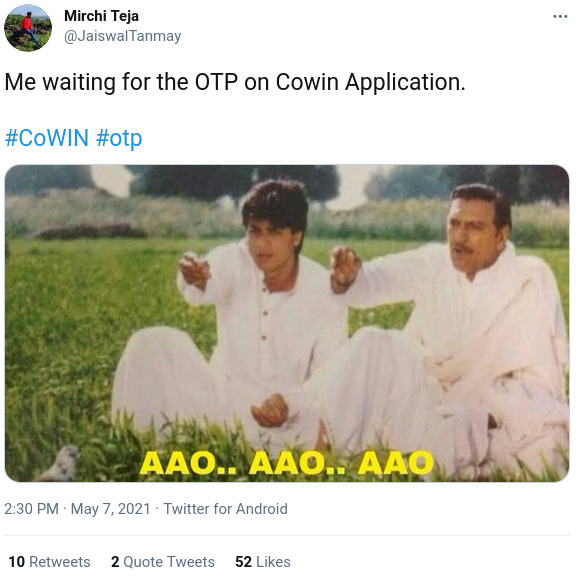 People trying desperately to get a slot, taken from Hindi Movie Dilwale Dulhania Le Jaygenge.
 Cowin app. sceeenshot
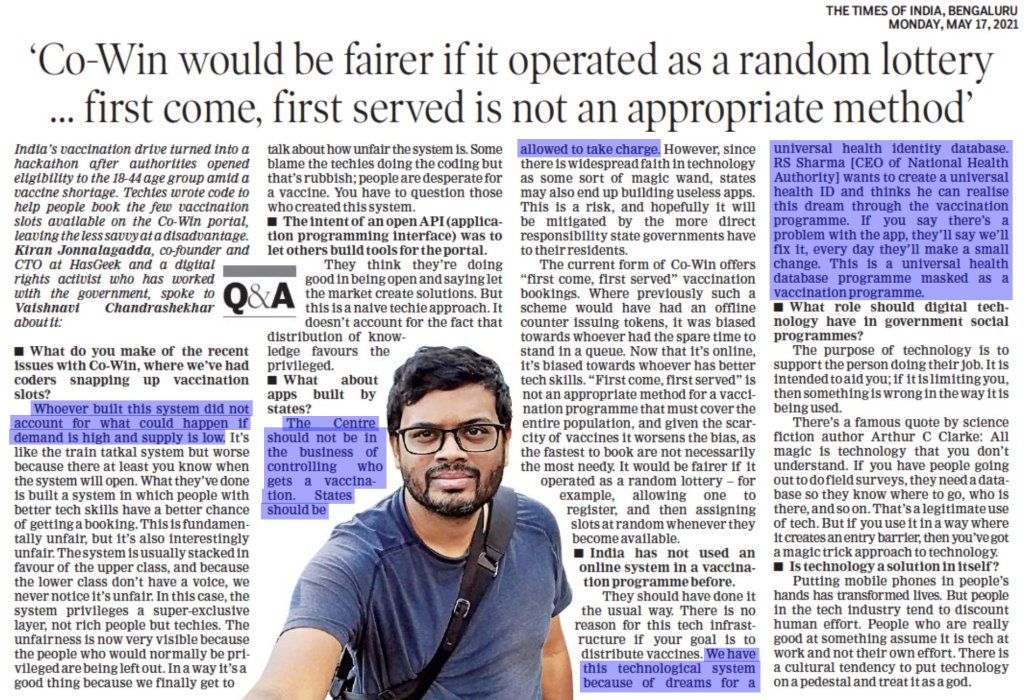
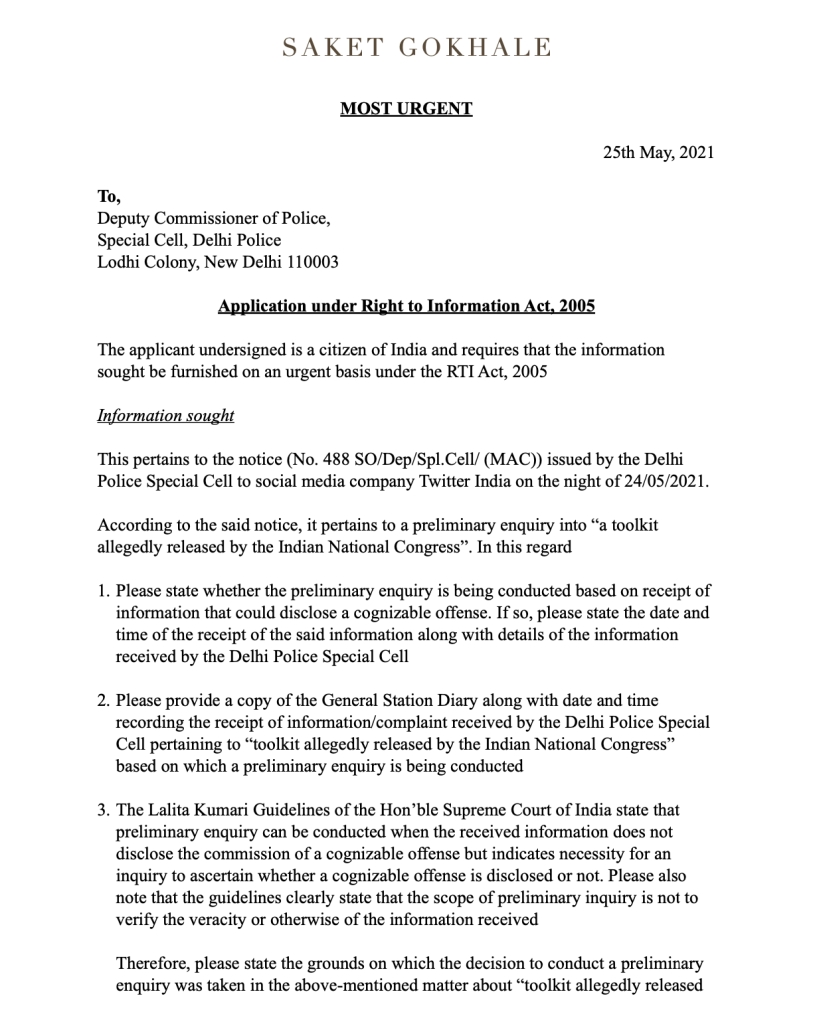 Twitter India Raid, Saket Gokhale RTI 1
 Saket Gokhale RTI query , Twitter India Raid 2
 The Hindu also shared the whole raid on twitter saga.
 A couple of weeks ago I stumbled across a Template Haskell question on the


 As a person who prefers full access to data in the simplest format, while at the same time having it useful with latest technologies, my quest for trying things out is an ongoing activity.
Earlier, I

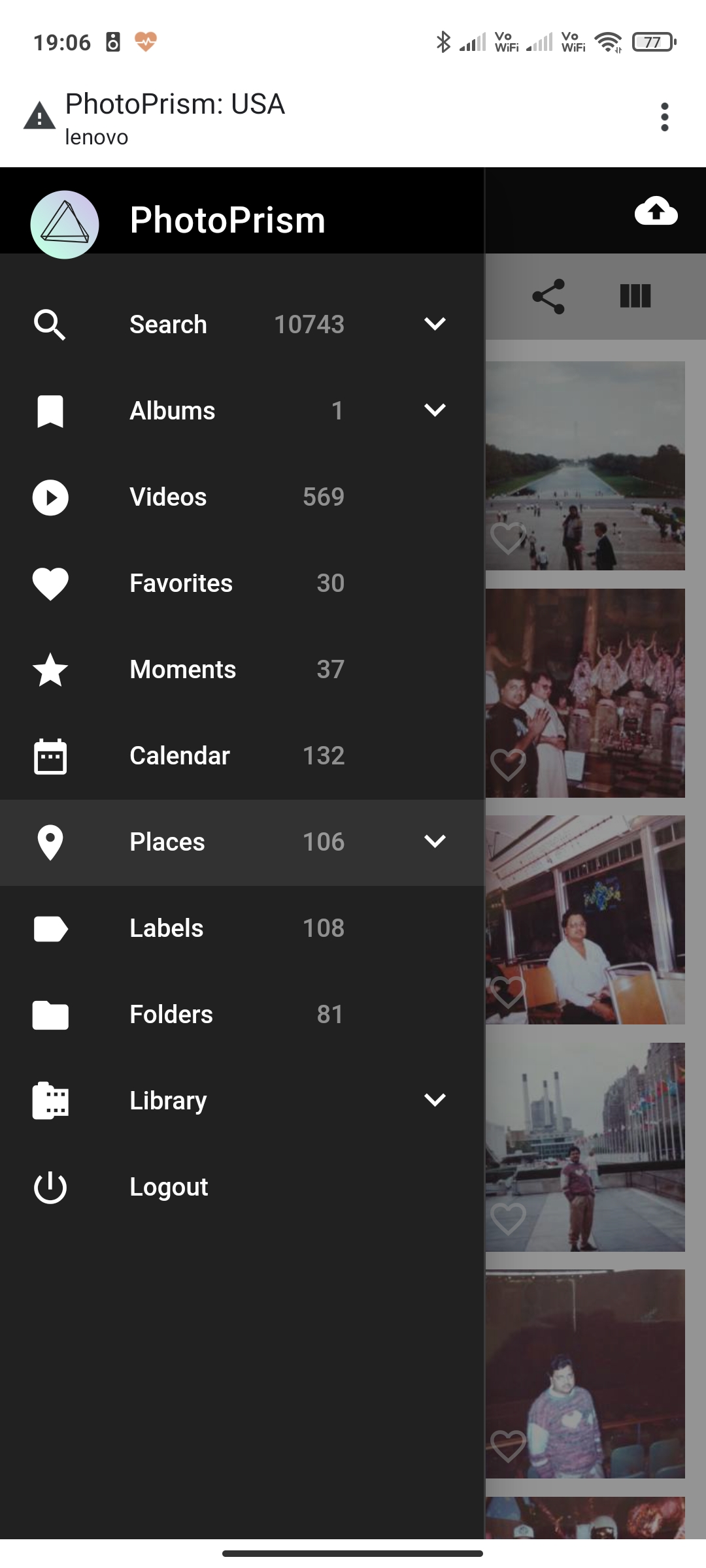
 Recently, Raphael Hertzog published ideas [1] about how to make Debian more attractive for big enterprises. One missing key stone here is the possibility to sign up for an enterprise support subscription scheme. Another question tackles how to provide such a support scheme within Debian, without disturbing the current flow of how Debian is developed these days.
And, there are likely more questions to asks, riddles to solve, and hurdles to overcome.
We want to discuss this topic, brainstorm on it, collect new ideas and also hear your concerns on a public channel. Over the past weeks there already have been mail exchanges off-list.
We want to reboot this privately started discussion now in public (as that's where it belongs) starting +/- at the end of the coming week via the currently quite inactive Debian mailing list 'debian-enterprise' [2]. Please join the discussion (and the mailing list) [3] if interested in this topic.
light & love

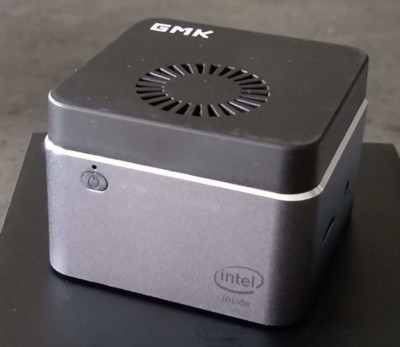
 As it is now known, the freenode IRC network has been taken over by a Trumpian wannabe korean royalty bitcoins millionaire. To make a long story short, the former freenode head of staff secretly "sold" the network to this person even if it was not hers to sell, and our lawyers have advised us that there is not much that we can do about it without some of us risking financial ruin. Fuck you Christel, lilo's life work did not deserve this.
What you knew as freenode after 12:00 UTC of May 19 will be managed by different people.
As I have no desire to volunteer under the new regime, this marks the end of my involvement with freenode. It had started in 1999 when I encouraged the good parts of


 And oh, did I mention that we re completely remote and distributed?

 I recently bought a Pinebook Pro. This was mainly out of general interest,
but also because I wanted to have a spare portable computer. When I was
recently having some difficulty with my laptop not charging, I realised that I
am dependent on having access to Emacs, notmuch.el and my usual git
repositories in the way that most people are dependent on their smartphones
all the info I need to get things done is in there, and it s very disabling
not to have it. So, good to have a spare.
I decided to get the machine running the hard way, and have been working to
add a facility to install the device-specific bootloader to
 .
On the global stage, about a decade ago, Stephen J. Dubner and Steven Levitt argued in their book

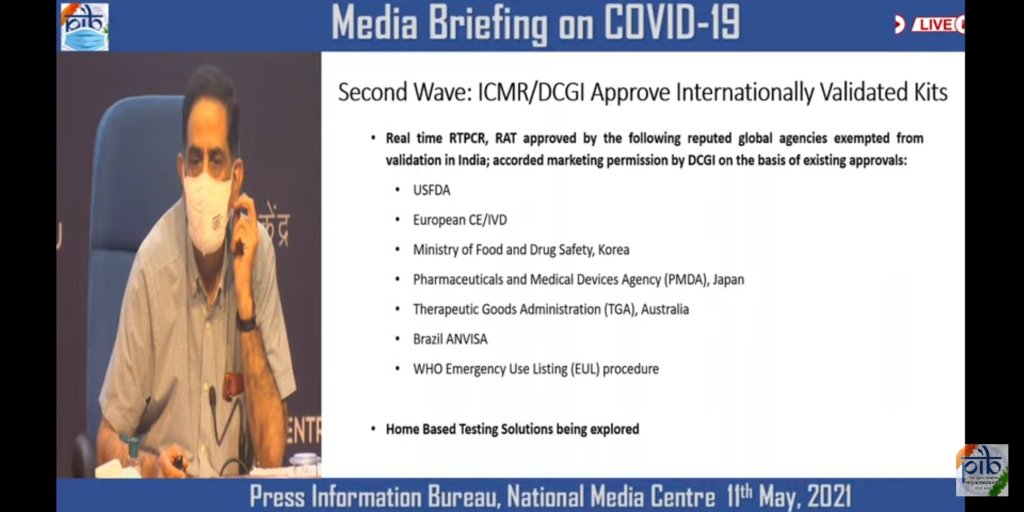
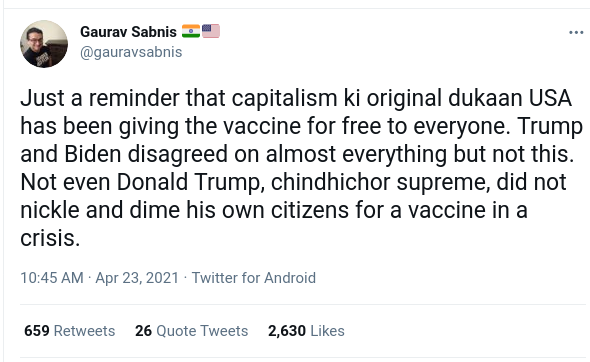
 Pappu Yadav, President Jan Adhikar Party, Bihar May 11, 2021


 Back in
 Like many I use