Search Results: "he"

4 October 2023

Russ Allbery: Review: The Last Watch

Review: The Last Watch, by J.S. Dewes
Series: Divide #1
Publisher: Tor
Copyright: 2021
ISBN: 1-250-23634-7
Format: Kindle
Pages: 476
The Last Watch is the first book of a far-future science fiction duology. It was J.S. Dewes's first novel. The station of the SCS Argus is the literal edge of the universe: the Divide, beyond which there is nothing. Not simply an absence of stars, but a nothing from a deeper level of physics. The Argus is there to guard against a return of the Viators, the technologically superior alien race that nearly conquered humanity hundreds of years prior and has already returned once, apparently traveling along the Divide. Humanity believes the Viators have been wiped out, but they're not taking chances. It is not a sought-after assignment. The Sentinels are the dregs of the military: convicts, troublemakers, and misfits, banished to the literal edge of nowhere. Joining them at the start of this book is the merchant prince, cocky asshole, and exiled sabateur Cavalon Mercer. He doesn't know what to expect from either military service or service on the edge of the universe. He certainly did not expect the Argus to be commanded by Adequin Rake, a literal war hero and a far more effective leader than this post would seem to warrant. There are reasons why Rake is out on the edge of the universe, ones that she's not eager to talk about. They quickly become an afterthought when the Argus discovers that the Divide is approaching their position. The universe is collapsing, and the only people who know about it are people the System Collective would prefer to forget exist. Yes, the edge of the universe, not the edge of the galaxy. Yes, despite having two FTL mechanisms, this book has a scale problem that it never reconciles. And yes, the physics do not really make sense, although this is not the sort of book that tries to explain the science. The characters are too busy trying to survive to develop new foundational theories of physics. I was looking for more good military SF after enjoying Artifact Space so much (and still eagerly awaiting the sequel), so I picked this up. It has some of the same elements: the military as a place where you can make a fresh start with found family elements, the equalizing effects of military assignments, and the merits of good leadership. They're a bit disguised here, since this is a crew of often-hostile misfits under a lot of stress with a partly checked-out captain, but they do surface towards the end of the book. The strength of this book is the mystery of the contracting universe, which poses both an immediate threat to the ship and a longer-term potential threat to, well, everything. The first part of the book builds tension with the immediate threat, but the story comes into its own when the crew starts piecing together the connections between the Viators and the Divide while jury-rigging technology and making risky choices between a lot of bad options. This is the first half of a duology, so the mysteries are not resolved here, but they do reach a satisfying and tantalizing intermediate conclusion. The writing is servicable and adequate, but it's a bit clunky in places. Dewes doesn't quite have the balance right between setting the emotional stakes and not letting the characters indulge in rumination. Rake is a good captain who is worn down and partly checked out, Mercer is scared and hiding it with arrogance and will do well when given the right sort of attention, and all of this is reasonably obvious early on and didn't need as many of the book's pages as it gets. I could have done without the romantic subplot, which I thought was an unnecessary distraction from the plot and turned into a lot of tedious angst, but I suspect I was not the target audience. (Writers, please remember that people can still care about each other and be highly motivated by fear for each other without being romantic partners.) I would not call this a great book. The characters are not going to surprise you that much, and it's a bit long for the amount of plot that it delivers. If you are the sort of person who nit-picks the physics of SF novels and gets annoyed at writers who don't understand how big the universe is, you will have to take a deep breath and hold on to your suspension of disbelief. But Dewes does a good job with ratcheting up the tension and conveying an atmosphere of mysterious things happening at the edge of nowhere, while still keeping it in the genre of mysterious technology and mind-boggingly huge physical phenomena rather than space horror. If you've been looking for that sort of book, this will do. I was hooked and will definitely read the sequel. Followed by The Exiled Fleet. Rating: 7 out of 10

3 October 2023

Bastian Blank: Introducing uploads to Debian by git tag

Several years ago, several people proposed a mechanism to upload packages to Debian just by doing "git tag" and "git push". Two not too long discussions on debian-devel (first and second) did not end with an agreement how this mechanism could work.1 The central problem was the ability to properly trace uploads back to the ones who authorised it. Now, several years later and after re-reading those e-mail threads, I again was stopped at the question: can we do this? Yes, it would not be just "git tag", but could we do with close enough? I have some rudimentary code ready to actually do uploads from the CI. However the list of caveats are currently pretty long. Yes, it works in principle. It is still disabled here, because in practice it does not yet work. Problems with this setup So what are the problems? It requires the git tags to include the both signed files for a successful source upload. This is solved by a new tool that could be a git sub-command. It just creates the source package, signs it and adds the signed file describing the upload (the .dsc and .changes file) to the tag to be pushed. The CI then extracts the signed files from the tag message and does it's work as normal. It requires a sufficiently reproducible build for source packages. Right now it is only known to work with the special 3.0 (gitarchive) source format, but even that requires the latest version of this format. No idea if it is possible to use others, like 3.0 (quilt) for this purpose. The shared GitLab runner provides by Salsa do not allow ftp access to the outside. But Debian still uses ftp to do uploads. At least if you don't want to share your ssh key, which can't be restricted to uploads only, but ssh would not work either. And as the current host for those builds, the Google Cloud Platform, does not provide connection tracking support for ftp, there is no easy way to allow that without just allowing everything. So we have no way to currently actually perform uploads from this platform. Further work As this is code running in a CI under the control of the developer, we can easily do other workflows. Some teams do workflows that do tags after acceptance into the Debian archive. Or they don't use tags at all. With some other markers, like variables or branch names, this support can be expanded easily. Unrelated to this task here, we might want to think about tying the .changes files for uploads to the target archive. As this code makes all of them readily available in form of tag message, replaying them into possible other archives might be more of a concern now. Conclusion So to come back to the question, yes we can. We can prepare uploads using our CI in a way that they would be accepted into the Debian archive. It just needs some more work on infrastructure.

  1. Here I have to admit that, after reading it again, I'm not really proud of my own behaviour and have to apologise.

Junichi Uekawa: Electronic receipt storage in Japan.

Electronic receipt storage in Japan. Japan also started allowing electronic data for receipts, but had some red tape associated with it. Presumably they were worried about increase in fraud cases. Law amendment that went in effet Jan 2022 made the last annoying bits simpler. We used to be required to sign the paper receipt and scan within 3 days of receiving the receipt. This special requirement is now gone. It took a few years to reach this state but now we are at a similar state as our colleagues in the US. Nice.

Russ Allbery: Review: Monstrous Regiment

Review: Monstrous Regiment, by Terry Pratchett
Series: Discworld #31
Publisher: Harper
Copyright: October 2003
Printing: August 2014
ISBN: 0-06-230741-X
Format: Mass market
Pages: 457
Monstrous Regiment is the 31st Discworld novel, but it mostly stands by itself. You arguably could start here, although you would miss the significance of Vimes's presence and the references to The Truth. The graphical reading order guide puts it loosely after The Truth and roughly in the Industrial Revolution sequence, but the connections are rather faint.
There was always a war. Usually they were border disputes, the national equivalent of complaining that the neighbor was letting their hedge row grow too long. Sometimes they were bigger. Borogravia was a peace-loving country in the middle of treacherous, devious, warlike enemies. They had to be treacherous, devious, and warlike; otherwise, we wouldn't be fighting them, eh? There was always a war.
Polly's brother, who wanted nothing more than to paint (something that the god Nuggan and the ever-present Duchess certainly did not consider appropriate for a strapping young man), was recruited to fight in the war and never came back. Polly is worried about him and tired of waiting for news. Exit Polly, innkeeper's daughter, and enter the young lad Oliver Perks, who finds the army recruiters in a tavern the next town over. One kiss of the Duchess's portrait later, and Polly is a private in the Borogravian army. I suspect this is some people's favorite Discworld novel. If so, I understand why. It was not mine, for reasons that I'll get into, but which are largely not Pratchett's fault and fall more into the category of pet peeves. Pratchett has dealt with both war and gender in the same book before. Jingo is also about a war pushed by a ruling class for stupid reasons, and featured a substantial subplot about Nobby cross-dressing that turns into a deeper character re-evaluation. I thought the war part of Monstrous Regiment was weaker (this is part of my complaint below), but gender gets a considerably deeper treatment. Monstrous Regiment is partly about how arbitrary and nonsensical gender roles are, and largely about how arbitrary and abusive social structures can become weirdly enduring because they build up their own internally reinforcing momentum. No one knows how to stop them, and a lot of people find familiar misery less frightening than unknown change, so the structure continues despite serving no defensible purpose. Recently, there was a brief attempt in some circles to claim Pratchett posthumously for the anti-transgender cause in the UK. Pratchett's daughter was having none of it, and any Pratchett reader should have been able to reject that out of hand, but Monstrous Regiment is a comprehensive refutation written by Pratchett himself some twenty years earlier. Polly is herself is not transgender. She thinks of herself as a woman throughout the book; she's just pretending to be a boy. But she also rejects binary gender roles with the scathing dismissal of someone who knows first-hand how superficial they are, and there is at least one transgender character in this novel (although to say who would be a spoiler). By the end of the book, you will have no doubt that Pratchett's opinion about people imposing gender roles on others is the same as his opinion about every other attempt to treat people as things. That said, by 2023 standards the treatment of gender here seems... naive? I think 2003 may sadly have been a more innocent time. We're now deep into a vicious backlash against any attempt to question binary gender assignment, but very little of that nastiness and malice is present here. In one way, this is a feature; there's more than enough of that in real life. However, it also makes the undermining of gender roles feel a bit too easy. There are good in-story reasons for why it's relatively simple for Polly to pass as a boy, but I still spent a lot of the book thinking that passing as a private in the army would be a lot harder and riskier than this. Pratchett can't resist a lot of cross-dressing and gender befuddlement jokes, all of which are kindly and wry but (at least for me) hit a bit differently in 2023 than they would have in 2003. The climax of the story is also a reference to a classic UK novel that to even name would be to spoil one or both of the books, but which I thought pulled the punch of the story and dissipated a lot of the built-up emotional energy. My larger complaints, though, are more idiosyncratic. This is a war novel about the enlisted ranks, including the hazing rituals involved in joining the military. There are things I love about military fiction, but apparently that reaction requires I have some sympathy for the fight or the goals of the institution. Monstrous Regiment falls into the class of war stories where the war is pointless and the system is abusive but the camaraderie in the ranks makes service oddly worthwhile, if not entirely justifiable. This is a real feeling that many veterans do have about military service, and I don't mean to question it, but apparently reading about it makes me grumbly. There's only so much of the apparently gruff sergeant with a heart of gold that I can take before I start wondering why we glorify hazing rituals as a type of tough love, or why the person with some authority doesn't put a direct stop to nastiness instead of providing moral support so subtle you could easily blink and miss it. Let alone the more basic problems like none of these people should have to be here doing this, or lots of people are being mangled and killed to make possible this heart-warming friendship. Like I said earlier, this is a me problem, not a Pratchett problem. He's writing a perfectly reasonable story in a genre I just happen to dislike. He's even undermining the genre in the process, just not quite fast enough or thoroughly enough for my taste. A related grumble is that Monstrous Regiment is very invested in the military trope of naive and somewhat incompetent officers who have to be led by the nose by experienced sergeants into making the right decision. I have never been in the military, but I work in an industry in which it is common to treat management as useless incompetents at best and actively malicious forces at worst. This is, to me, one of the most persistently obnoxious attitudes in my profession, and apparently my dislike of it carries over as a low tolerance for this very common attitude towards military hierarchy. A full expansion of this point would mostly be about the purpose of management, division of labor, and people's persistent dismissal of skills they don't personally have and may perceive as gendered, and while some of that is tangentially related to this book, it's not closely-related enough for me to bore you with it in a review. Maybe I'll write a stand-alone blog post someday. Suffice it to say that Pratchett deployed a common trope that most people would laugh at and read past without a second thought, but that for my own reasons started getting under my skin by the end of the novel. All of that grumbling aside, I did like this book. It is a very solid Discworld novel that does all the typical things a Discworld novel does: likable protagonists you can root for, odd and fascinating side characters, sharp and witty observations of human nature, and a mostly enjoyable ending where most of the right things happen. Polly is great; I was very happy to read a book from her perspective and would happily read more. Vimes makes a few appearances being Vimes, and while I found his approach in this book less satisfying than in Jingo, I'll still take it. And the examination of gender roles, even if a bit less fraught than current politics, is solid Pratchett morality. The best part of this book for me, by far, is Wazzer. I think that subplot was the most Discworld part of this book: a deeply devout belief in a pseudo-godlike figure that is part of the abusive social structure that creates many of the problems of the book becomes something considerably stranger and more wonderful. There is a type of belief that is so powerful that it transforms the target of that belief, at least in worlds like Discworld that have a lot of ambient magic. Not many people have that type of belief, and having it is not a comfortable experience, but it makes for a truly excellent story. Monstrous Regiment is a solid Discworld novel. It was not one of my favorites, but it probably will be someone else's favorite for a host of good reasons. Good stuff; if you've read this far, you will enjoy it. Followed by A Hat Full of Sky in publication order, and thematically (but very loosely) by Going Postal. Rating: 8 out of 10

2 October 2023

Jonathan Dowland: Promotion

It's been quiet here (I hope to change that), but I want to share some good news: I've been promoted to Principal Software Engineer! Next February will start my 9th year with Red Hat. Time flies when you're having fun!

Aigars Mahinovs: Debconf 23 photos all

Two weeks have passed since Debconf 23 came to a close in Kochi, Kerala, India this year. In keeping with the more relaxed nature of Debconf in India, the rest of my photos from the event were to be published about two weeks from the end of the event. That will give me a bit more time to process them correctly and also give all of you a chance to see these pictures with fresh eyes and stir up new memories from the event. In the end we are looking at 653 photos and one video. Several different group photos, including a return of the pool group photo that was missing from the event since Mexico in 2006! This year was the first for a new camera (Canon R7) and I am quite happy with the results, even if I still need to learn a lot about this new beast. Also the gradual improvements of panorama stiching software (Hugin) ment that this year I did not need to manually correct any face-melt events on any of the group photos. So that is cool! DebConf 23 pool Group photo You can find all my photos on: Also, don't forget to explore the rest of the Git LFS share content - there are very many great photos by others this year as well!

1 October 2023

Junichi Uekawa: Family member getting sick, and I'm starting to feel bad.

Family member getting sick, and I'm starting to feel bad. This is bad.

Paul Wise: FLOSS Activities September 2023

Focus This month I didn't have any particular focus. I just worked on issues in my info bubble.

Changes

Issues

Review
  • Spam: reported 2 Debian bug reports
  • Debian wiki: RecentChanges for the month
  • Debian BTS usertags: changes for the month
  • Debian screenshots:
    • approved fzf lame lsd termshark vifm
    • rejected orthanc (private data), gpr/orthanc (Windows), qrencode (random QR codes), weboob-qt (chess website)

Administration
  • Debian IRC: fix #debian-pkg-security topic/metadata
  • Debian wiki: unblock IP addresses, approve accounts

Communication

Sponsors The SWH work was sponsored. All other work was done on a volunteer basis.

30 September 2023

Ian Jackson: DKIM: rotate and publish your keys

If you are an email system administrator, you are probably using DKIM to sign your outgoing emails. You should be rotating the key regularly and automatically, and publishing old private keys. I have just released dkim-rotate 1.0; dkim-rotate is a tool to do this key rotation and publication. If you are an email user, your email provider ought to be doing this. If this is not done, your emails are non-repudiable , meaning that if they are leaked, anyone (eg, journalists, haters) can verify that they are authentic, and prove that to others. This is not desirable (for you). Non-repudiation of emails is undesirable This problem was described at some length in Matthew Green s article Ok Google: please publish your DKIM secret keys. Avoiding non-repudiation sounds a bit like lying. After all, I m advising creating a situation where some people can t verify that something is true, even though it is. So I m advocating casting doubt. Crucially, though, it s doubt about facts that ought to be private. When you send an email, that s between you and the recipient. Normally you don t intend for anyone, anywhere, who happens to get a copy, to be able to verify that it was really you that sent it. In practical terms, this verifiability has already been used by journalists to verify stolen emails. Associated Press provide a verification tool. Advice for all email users As a user, you probably don t want your emails to be non-repudiable. (Other people might want to be able to prove you sent some email, but your email system ought to serve your interests, not theirs.) So, your email provider ought to be rotating their DKIM keys, and publishing their old ones. At a rough guess, your provider probably isn t :-(. How to tell by looking at email headers A quick and dirty way to guess is to have a friend look at the email headers of a message you sent. (It is important that the friend uses a different email provider, since often DKIM signatures are not applied within a single email system.) If your friend sees a DKIM-Signature header then the message is DKIM signed. If they don t, then it wasn t. Most email traversing the public internet is DKIM signed nowadays; so if they don t see the header probably they re not looking using the right tools, or they re actually on the same email system as you. In messages signed by a system running dkim-rotate, there will also be a header about the key rotation, to notify potential verifiers of the situation. Other systems that avoid non-repudiation-through-DKIM might do something similar. dkim-rotate s header looks like this:
DKIM-Signature-Warning: NOTE REGARDING DKIM KEY COMPROMISE
 https://www.chiark.greenend.org.uk/dkim-rotate/README.txt
 https://www.chiark.greenend.org.uk/dkim-rotate/ae/aeb689c2066c5b3fee673355309fe1c7.pem
But an email system might do half of the job of dkim-rotate: regularly rotating the key would cause the signatures of old emails to fail to verify, which is a good start. In that case there probably won t be such a header. Testing verification of new and old messages You can also try verifying the signatures. This isn t entirely straightforward, especially if you don t have access to low-level mail tooling. Your friend will need to be able to save emails as raw whole headers and body, un-decoded, un-rendered. If your friend is using a traditional Unix mail program, they should save the message as an mbox file. Otherwise, ProPublica have instructions for attaching and transferring and obtaining the raw email. (Scroll down to How to Check DKIM and ARC .) Checking that recent emails are verifiable Firstly, have your friend test that they can in fact verify a DKIM signature. This will demonstrate that the next test, where the verification is supposed to fail, is working properly and fails for the right reasons. Send your friend a test email now, and have them do this on a Linux system:
    # save the message as test-email.mbox
    apt install libmail-dkim-perl # or equivalent on another distro
    dkimproxy-verify <test-email.mbox
You should see output containing something like this:
    originator address: ijackson@chiark.greenend.org.uk
    signature identity: @chiark.greenend.org.uk
    verify result: pass
    ...
If the output ontains verify result: fail (body has been altered) then probably your friend didn t manage to faithfully save the unalterered raw message. Checking old emails cannot be verified When you both have that working, have your friend find an older email of yours, from (say) month ago. Perform the same steps. Hopefully they will see something like this:
    originator address: ijackson@chiark.greenend.org.uk
    signature identity: @chiark.greenend.org.uk
    verify result: fail (bad RSA signature)
or maybe
    verify result: invalid (public key: not available)
This indicates that this old email can no longer be verified. That s good: it means that anyone who steals a copy, can t verify it either. If it s leaked, the journalist who receives it won t know it s genuine and unmodified; they should then be suspicious. If your friend sees verify result: pass, then they have verified that that old email of yours is genuine. Anyone who had a copy of the mail can do that. This is good for email thieves, but not for you. For email admins: announcing dkim-rotate 1.0 I have been running dkim-rotate 0.4 on my infrastructure, since last August. and I had entirely forgotten about it: it has run flawlessly for a year. I was reminded of the topic by seeing DKIM in other blog posts. Obviously, it is time to decreee that dkim-rotate is 1.0. If you re a mail system administrator, your users are best served if you use something like dkim-rotate. The package is available in Debian stable, and supports Exim out of the box, but other MTAs should be easy to support too, via some simple ad-hoc scripting. Limitation of this approach Even with this key rotation approach, emails remain nonrepudiable for a short period after they re sent - typically, a few days. Someone who obtains a leaked email very promptly, and shows it to the journalist (for example) right away, can still convince the journalist. This is not great, but at least it doesn t apply to the vast bulk of your email archive. There are possible email protocol improvements which might help, but they re quite out of scope for this article.
Edited 2023-10-01 00:20 +01:00 to fix some grammar


comment count unavailable comments

Russell Coker: Links September 2023

Interesting article in Wired about adversarial attacks on ML systems to get them to do things that they are explicitely programmed not to do such as describe how to make illegal drugs [1]. The most interesting part of this is that the attacks work on most GPT systems which is probably due to the similar data used to train them. Vice has an interesting article about the Danish Synthetic Party , a political partyled by an AI [2]. Citizens can vote for candidates who will try to get laws passed that match the AI generated goals, there is no option of voting for an AI character. The policies they are advocating for are designed to appeal to the 20% of Danes who don t vote. They are also trying to inspire similar parties in other countries. I think this has the potential to improve democracy. Vice reports that in 2021 a man tried to assasinate the Queen of England with inspiration from Star Wars and an AI chat bot [3]. While someone who wants to be a real-life Sith is probably going to end up doing something bad we still don t want to have chat bots encourage it. Bruce Schneier wrote an interesting article about milestones for AI involvement in the political process [4]. Sam Varghese wrote an interesting article about the allegations that India is following the example of Saudi Arabia and assasinating people in other countries who disagree with their government [5]. We need to stop this. Ian Jackson wrote an interesting blog post advocating that DKIM PRIVATE keys be rotated and PUBLISHED [6]. The idea is that if a hostile party gets access to the mailbox of someone who received private email from you then in the normal DKIM setup of keys never changing they can prove that the email is authentic when they leak it. While if you mail server publishes the old keys as Ian advocates then the hostile party can t prove that you sent the email in question as anyone could have forged a signature. Anything that involves publishing a private key gets an immediate negative reaction but I can t fault the logic here.

Adnan Hodzic: auto-cpufreq v2.0

Almost 4 years after initial auto-cpufreq release, 4200 Github stars, 65 contributors & 42 releases, tool being topic of numerous Linux podcasts and shows, and... The post auto-cpufreq v2.0 appeared first on FoolControl: Phear the penguin.

Fran ois Marier: Things I do after uploading a new package to Debian

There are a couple of things I tend to do after packaging a piece of software for Debian, filing an Intent To Package bug and uploading the package. This is both a checklist for me and (hopefully) a way to inspire other maintainers to go beyond the basic package maintainer duties as documented in the Debian Developer's Reference. If I've missed anything, please leave an comment or send me an email!

Salsa for collaborative development To foster collaboration and allow others to contribute to the packaging, I upload my package to a new subproject on Salsa. By doing this, I enable other Debian contributors to make improvements and propose changes via merge requests. I also like to upload the project logo in the settings page (i.e. https://salsa.debian.org/debian/packagename/edit) since that will show up on some dashboards like the Package overview.

Launchpad for interacting with downstream Ubuntu users While Debian is my primary focus, I also want to keep an eye on how my package is doing on derivative distributions like Ubuntu. To do this, I subscribe to bugs related to my package on Launchpad. Ubuntu bugs are rarely Ubuntu-specific and so I will often fix them in Debian. I also set myself as the answer contact on Launchpad Answers since these questions are often the sign of a Debian or a lack of documentation. I don't generally bother to fix bugs on Ubuntu directly though since I've not had much luck with packages in universe lately. I'd rather not spend much time preparing a package that's not going to end up being released to users as part of a Stable Release Update. On the other hand, I have succesfully requested simple Debian syncs when an important update was uploaded after the Debian Import Freeze.

Screenshots and tags I take screenshots of my package and upload them on https://screenshots.debian.net to help users understand what my package offers and how it looks. I believe that these screenshots end up in software "stores" type of applications. Similarly, I add tags to my package using https://debtags.debian.org. I'm not entirely sure where these tags are used, but they are visible from apt show packagename.

Monitoring Upstream Releases Staying up-to-date with upstream releases is one of the most important duties of a software packager. There are a lot of different ways that upstream software authors publicize their new releases. Here are some of the things I do to monitor these releases:
  • I have a cronjob which run uscan once a day to check for new upstream releases using the information specified in my debian/watch files:
      0 12 * * 1-5   francois  test -e /home/francois/devel/deb && HTTPS_PROXY= https_proxy= uscan --report /home/francois/devel/deb   true
    
  • I subscribe to the upstream project's releases RSS feed, if available. For example, I subscribe to the GitHub tags feed for git-secrets and Launchpad announcements for email-reminder.
  • If the upstream project maintains an announcement mailing list, I subscribe to it (e.g. rkhunter-announce or tor release announcements).
When nothing else is available, I write a cronjob that downloads the upstream changelog once a day and commits it to a local git repo:
#!/bin/bash
pushd /home/francois/devel/zlib-changelog > /dev/null
wget --quiet -O ChangeLog.txt https://zlib.net/ChangeLog.txt   exit 1
git diff
git commit -a -m "Updated changelog" > /dev/null
popd > /dev/null
This sends me a diff by email when a new release is added (and no emails otherwise).

Russell Coker: Choosing Exclusion

There is an article The Inappropriately Excluded by the Polymath Archives [1] that gets cited a lot. Mainly by Mensa types who think that their lack of success is due to being too smart. The Main Claim is Wrong The main claim is:
The probability of entering and remaining in an intellectually elite profession such as Physician, Judge, Professor, Scientist, Corporate Executive, etc. increases with IQ to about 133. It then falls by about 1/3 at 140. By 150 IQ the probability has fallen from its peak by 97%! The first thing to consider is whether taking those professions is a smart thing to do. These are the types of jobs that a school career adviser would tell you are good choices for well paying jobs, but really there s lots of professional positions that get similar pay with less demanding work. Physicians have to deal with people who are sick and patients who die including cases where the physician needs to make a recommendation on incomplete information where the wrong choice will result in serious injury or death, there are significant benefits to being a medical researcher or doing biological engineering. Being a Judge has a high public profile and has a reasonable amount of pressure, good for status but you can probably earn more money with less work as a corporate lawyer. Being a professor is a position that is respected but which in many countries is very poorly paid. In a mid-size company executives probably get about $300k compared to $220k for middle managers and $100k-$180k for senior professional roles in the same company. There has been research on how much happyness is increased by having more money, here is one from CBS saying that income up to $500K can increase happiness[2] which contradicts previous research suggesting that income over $75K didn t provide much benefit. I think that part of this is determined by the conditions that you live in, if you live in a country like Australia with cheap healthcare then you won t feel as great a need to hoard money. Another part is whether you feel obliged to compete with other people for financial status, if driving an old car of a non-prestige brand while my neighbours have new BMWs concerned me then I might desire an executive position. I think that the smart thing to do is to get work that is relatively enjoyable, pays enough for all the essentials and some reasonable luxury, and doesn t require excessive effort or long hours. Unless you have a great need for attention from other people then for every job with a high profile there will be several with similar salaries but less attention. The main point of the article is that people with high IQs all want to reach the pinnacle of their career path and don t do so because they are excluded. It doesn t consider the possibility that smart people might have chosen the option that s best for them. For example I ve seen what my manager and the CIO of my company do and it doesn t look like fun for me. I m happy to have them earn more than me as compensation for doing things I don t want to do. Why is This Happening? This section of the article starts with Because of the dearth of objective evidence, the cause of the exclusion cannot be determined directly which is possibly where they should have given up. Also I could have concluded this blog post with I m not excluded from this list of jobs that suck , but I will continue listing problems with the article. One claim in the article is:
Garth Zietsman has said, referring to people with D15IQs over 152, A common experience with people in this category or higher is that they are not wanted the masses (including the professional classes) find them an affront of some sort. The question I have is whether it s being smart or being a jerk that the masses find to be an affront, I m guessing the latter. I don t recall seeing evidence outside high school of people inherently disliking smarter people. The article claims that We have no reason to conclude that this upper limit on IQ differences changes in adulthood . Schools don t cater well to smart kids and it isn t good for kids to have no intellectual peers. One benefit I ve found in the Free Software community is that there are a lot of smart people. Regarding leadership it claims D.K. Simonton found that persuasiveness is at its maximum when the IQ differential between speaker and audience is about 20 points . A good counter example is Julius Sumner Miller who successfully combined science education and advertising for children s chocolate [3]. Maybe being a little smarter than other people makes it more difficult to communicate with them but being as smart as Julius Sumner Miller can outweigh that. The article goes on to claim that the intellectual elites have an average IQ of 125 because they have to convince people who have an average IQ of 105. I think that if that 20 point difference was really a thing then you would have politicians with an IQ of 125 appointing leaders of the public service with an IQ of 145 who would then hire scientific advisers with an IQ of 165. In a corporate environment a CEO with an IQ of 125 could hire a CIO with an IQ of 145 who could then hire IT staff with an IQ of 165. If people with 165 IQs wanted to be Prime Minister or CEO that might suck for them, but if they wanted to have the most senior technical roles in public service or corporations then it would work out well. For the work I do I almost never speak to a CEO and rarely speak to anyone who regularly speaks to them, if CEOs don t like me and won t hire people like me then it doesn t matter to me as I won t meet them. Inappropriate Educational Options The section on Inappropriate Educational Options is one where I almost agree with the author. I say almost because I don t think that schools are good for anyone. Yes schools have some particular problems for smart kids, but they also have serious problems for kids who are below average IQ, kids who have problems at home, kids who are disabled, etc. Most schools fail so many groups of kids in so many ways that the overall culture of schools can t be functional. Social Isolation The section on Social Isolation is another where I almost agree with the author. But as with schools I think that society overall is poorly structured to support people such that people on the entire range of IQs have more difficulty in finding friends and relationships than they should. One easy change to make would be to increase the minimum wage such that one minimum wage job can support a family without working more than 35 hours a week and to set the maximum work week to something less than 40 hours Atlassian has a good blog post about the data on working weeks [4]. Wired has an article suggesting that 5 hours a day is an ideal work time for some jobs [5]. We also need improvements in public transport and city design to have less wasted time and better options for socialising. Conclusion The blogspot site hosting the article in question also has a very complex plan for funding a magazine for such articles [6]. The problems with that funding model start with selling advertising that converts to shares in a Turks & Caicos company in an attempt to circumvent securities regulations (things don t work that way). Then it goes in to some complex formulas for where money will go. This isn t the smart way to start a company, the smart way is to run a kickstarter with fixed rewards for specific amounts of contributions and then possibly have an offer of profit sharing with people who donate extra or something. As a general rule when doing something that s new to you it s a good idea to look at how others have succeeded at it in the past. Devising an experimental new way of doing something is best reserved to people who have some experience withe the more common methods. Mentioning this may seem like an ad hominem attack, but I think it s relevant to consider this in the context of people who score well in IQ tests but don t do so well in other things. Maybe someone who didn t think that they were a lot smarter than everyone else would have tried to launch a magazine in a more common way and actually had some success at it. In a more general sense I think that people who believe that they are suffering because of being too smart are in a similar category as incels. It s more of a psychological problem than anything else and one that they could solve for themselves.

29 September 2023

Scarlett Gately Moore: KDE: Another Busy Week! KDE neon, Debian, Snaps Oh My!

KDE Plasma 6KDE Plasma 6
I would like to welcome you to my revamped site. It is still a work in progress, so please be patient while I work out the kinks! I have also explained a bit more about myself in my About Me page for those that may have questions about my homesteader lifestyle. Check it out when you have time. My site is mostly my adventures in packaging software in Linux in a variety of formats ( mostly Debian and Ubuntu Snaps containerized packages ). This keeps me very busy, as folks don t realize the importance of packaging. Without it, applications remain in source code form which isn t very usable by the users! While turning the source code into something user friendly we often run into issues and work with upstream ( I am a very strong believer in upstream first ) to resolve any issues. This makes for a better user experience and less buggy software. Workarounds are very hard to maintain and thus fixing it right the first time is the best path! With this said, while I am not strong in any one programming language ( Well maybe Ruby from my CI tooling background ) I am versed in many languages, as I have to understand the code that I am filing bug reports for! We have to have a strong knowledge of being able to understand build failures, debug runtime failures and most importantly we have to be able to fix them, or find the resources to assist in fixing them. As most of you know I am KDE s biggest fan ( There is nothing wrong with Gnome, its a great platform ). So a big portion of my work is dedicated to KDE. A fantastic tool for working on my KDE packaging has been KDE Neon! With the developer version I have all the tools necessary to debug and fix issues that arise. There is also the added bonus of living on the edge and finding out runtime issues right away! That is enough about me for now and on to my weekly round up! KDE neon: Carlos ( check out his new blog! https://www.ethicalconstruct.au/dotclear_blog/ ) and I have been very busy with another round of KDE applications making the move to Qt6. We have finished KDE PIM and KDE Games in Neon/unstable! I have worked out issues with print-manager and re-enabled it in experimental as it s qt6 development is still happening in kf6 branch. Instructions here: https://blog.neon.kde.org/2023/08/04/announcing-kde-neon-experimental/ Fixed issues with a broken kscreenlocker and missing window decorations. You can now safely leave your computer and not worry about that dreaded black screen. Debian: I have uploaded the newest squashfuse to unstable. I have uploaded another NEW dependency for bubblegum golang-github-alecthomas-mango-kong-dev Ubuntu Snaps: This week continues working closely with Jarred Wilson of Canonical in getting his Qt6 content snap in shape for use with my KDE Frameworks 6 snap ( an essential snap to move forward with our next generation Qt6 applications and of course the Plasma snap. I spent some time debugging the neochat snap and fixed some QML issues, but I am now facing issues with wayland. It now works fine for those of us still on X11. I will continue working out wayland. Thank you! I rely on donations to upkeep my everyday living and so far thanks to each and every one of you I have survived almost a full year! It has been scary from time to time, but I am surviving. Until my snap project goes through I must rely on the kindness of my supporters. The proceeds of my donations goes to the following: I have joined the kool kids and moved to Donorbox for donations. Donate I still have Gofundme for those that don t want to signup for yetanotherdonationplatform. https://gofund.me/b8b69e54

28 September 2023

Lisandro Dami n Nicanor P rez Meyer: sd-mux-ctrl in Debian

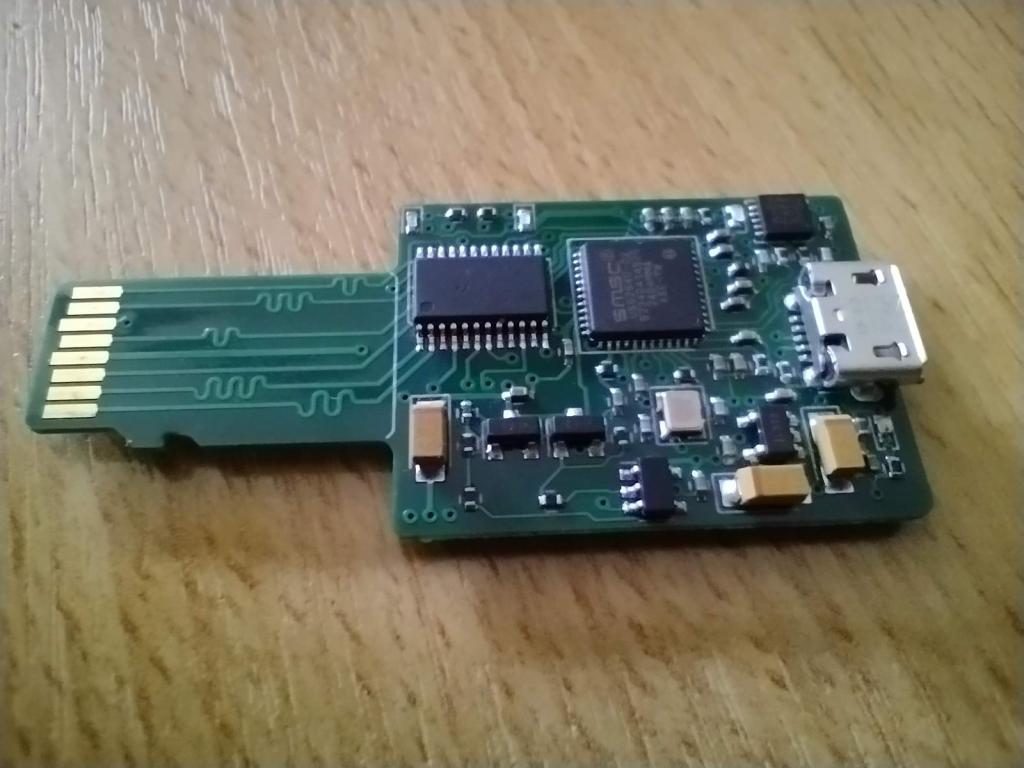
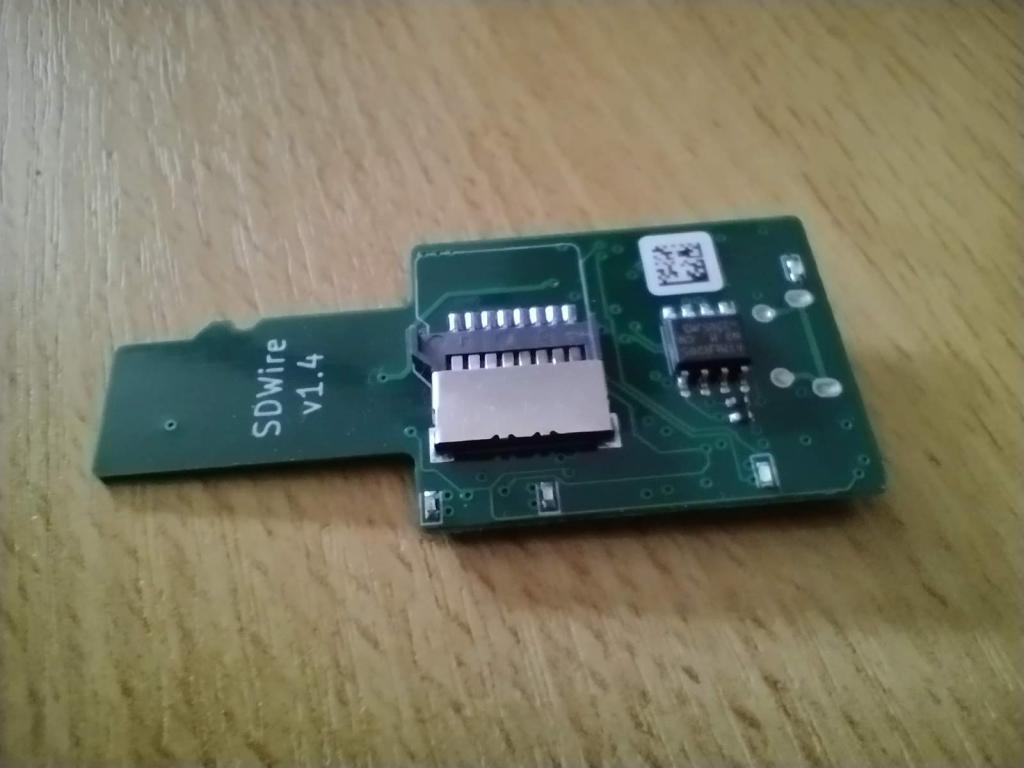
Part of what I love to do is to play with embedded devices running Linux. And many times I need to juggle with an SD card in order to copy a filesystem to a board... until I found SDWire. SDWire v1.4, top view SDWire v1.4, bottom view This little gadget is an SD muxer: it allows you to use it as a "normal" card reader or switch the SD card to the SD card slot. So next time I need to copy contents to a SD card and then push it to a board I can just do it from the command line. Now the software to control this device was not in Debian, so I fixed that. I am keeping the code and the packaging on GitLab, as "The Tizen project is not anymore really active". At the time of writing the package was just accepted, so it might take a couple of hours to be available on the archive. Enjoy!

27 September 2023

Jonathan McDowell: onak 0.6.3 released

Yesterday I tagged a new version of onak, my OpenPGP compatible keyserver. I d spent a bit of time during DebConf doing some minor cleanups, in particular an annoying systemd socket activation issue I d been seeing. That turned out to be due completely failing to compile in the systemd support, even when it was detected. There was also a signature verification issue with certain Ed225519 signatures (thanks Antoine Beaupr for making me dig into that one), along with various code cleanups. I also worked on Stateless OpenPGP CLI support, which is something I talked about when I released 0.6.2. It isn t something that s suitable for release, but it is sufficient to allow running the OpenPGP interoperability test suite verification tests, which I m pleased to say all now pass. For the next release I m hoping the OpenPGP crypto refresh process will have completed, which at the very least will mean adding support for v6 packet types and fingerprints. The PostgreSQL DB backend could also use some love, and I might see if performance with SQLite3 has improved any. Anyway. Available locally or via GitHub.
0.6.3 - 26th September 2023
  • Fix systemd detection + socket activation
  • Add CMake checking for Berkeley DB
  • Minor improvements to keyd logging
  • Fix decoding of signature creation time
  • Relax version check on parsing signature + key packets
  • Improve HTML escaping
  • Handle failed database initialisation more gracefully
  • Fix bug with EDDSA signatures with top 8+ bits unset

Bits from Debian: New Debian Developers and Maintainers (July and August 2023)

The following contributors got their Debian Developer accounts in the last two months: The following contributors were added as Debian Maintainers in the last two months: Congratulations!

Antoine Beaupr : How big is Debian?

Now this was quite a tease! For those who haven't seen it, I encourage you to check it out, it has a nice photo of a Debian t-shirt I did not know about, to quote the Fine Article:
Today, when going through a box of old T-shirts, I found the shirt I was looking for to bring to the occasion: [...] For the benefit of people who read this using a non-image-displaying browser or RSS client, they are respectively:
   10 years
  100 countries
 1000 maintainers
10000 packages
and
        1 project
       10 architectures
      100 countries
     1000 maintainers
    10000 packages
   100000 bugs fixed
  1000000 installations
 10000000 users
100000000 lines of code
20 years ago we celebrated eating grilled meat at J0rd1 s house. This year, we had vegan tostadas in the menu. And maybe we are no longer that young, but we are still very proud and happy of our project! Now How would numbers line up today for Debian, 20 years later? Have we managed to get the bugs fixed line increase by a factor of 10? Quite probably, the lines of code we also have, and I can only guess the number of users and installations, which was already just a wild guess back then, might have multiplied by over 10, at least if we count indirect users and installs as well
Now I don't know about you, but I really expected someone to come up with an answer to this, directly on Debian Planet! I have patiently waited for such an answer but enough is enough, I'm a Debian member, surely I can cull all of this together. So, low and behold, here are the actual numbers from 2023! So it doesn't line up as nicely, but it looks something like this:
         1 project
        10 architectures
        30 years
       100 countries (actually 63, but we'd like to have yours!)
      1000 maintainers (yep, still there!)
     35000 packages
    211000 *binary* packages
   1000000 bugs fixed
1000000000 lines of code
 uncounted installations and users, we don't track you
So maybe the the more accurate, rounding to the nearest logarithm, would look something like:
         1 project
        10 architectures
       100 countries (actually 63, but we'd like to have yours!)
      1000 maintainers (yep, still there!)
    100000 packages
   1000000 bugs fixed
1000000000 lines of code
 uncounted installations and users, we don't track you
I really like how the "packages" and "bugs fixed" still have an order of magnitude between them there, but that the "bugs fixed" vs "lines of code" have an extra order of magnitude, that is we have fixed ten times less bugs per line of code since we last did this count, 20 years ago. Also, I am tempted to put 100 years in there, but that would be rounding up too much. Let's give it another 30 years first. Hopefully, some real scientist is going to balk at this crude methodology and come up with some more interesting numbers for the next t-shirt. Otherwise I'm available for bar mitzvahs and children parties.

26 September 2023

Ravi Dwivedi: Fixing keymaps in Chromebook Running Debian Bookworm

I recently bought an HP Chromebook from Abhas who had already flashed coreboot in it. I ran a fresh installation of Debian 12 (Bookworm) on it with KDE Plasma. Right after installation, the Wi-Fi and bluetooth were working, but I was facing two issues: So I asked my friend Alper for help on fixing the same as he has some experience with Chromebooks. Thanks a lot Alper for the help. I am documenting our steps here for helping others who are facing this issue. Note: This works in X11. For wayland, the steps might differ. To set system-wide keyboard configuration on Debian systems:
$ sudo dpkg-reconfigure keyboard-configuration
Choose Chromebook as the Keyboard Model . Each DE should default to the system configuration, but might need its own configuration which would similarly be available in their GUI tools. But you can check and set it manually from the command line, for example as in this thread. To check the keyboard model Xorg-based DEs:
$ setxkbmap -print -query   grep model:
model:  pc104
To change it temporarily, until a reboot:
$ setxkbmap -model chromebook
If it s not there in KDE settings that would be a bug, To change it persistently for KDE:
$ cat >>.config/kxkbrc <<EOF
[Layout]
Model=chromebook
EOF
This thread was helpful.

Ravi Dwivedi: Fixing audio and keymaps in Chromebook Running Debian Bookworm

I recently bought an HP Chromebook from Abhas who had already flashed coreboot in it. I ran a fresh installation of Debian 12 (Bookworm) on it with KDE Plasma. Right after installation, the Wi-Fi and bluetooth were working, but I was facing two issues:

Fixing audio I ran the script mentioned here and that fixed the audio. The instructions from that link are:
git clone https://github.com/WeirdTreeThing/chromebook-linux-audio
cd chromebook-linux-audio
./setup-audio

Fixing keyboard I asked my friend Alper for help on fixing the keyboard as he has some experience with Chromebooks. Thanks a lot Alper for the help. I am documenting our steps here for helping others who are facing this issue. Note: This works in X11. For wayland, the steps might differ. To set system-wide keyboard configuration on Debian systems:
$ sudo dpkg-reconfigure keyboard-configuration
Choose Chromebook as the Keyboard Model . Each DE should default to the system configuration, but might need its own configuration which would similarly be available in their GUI tools. But you can check and set it manually from the command line, for example as in this thread. To check the keyboard model Xorg-based DEs:
$ setxkbmap -print -query   grep model:
model:  pc104
To change it temporarily, until a reboot:
$ setxkbmap -model chromebook
If it s not there in KDE settings that would be a bug, To change it persistently for KDE:
$ cat >>.config/kxkbrc <<EOF
[Layout]
Model=chromebook
EOF
This thread was helpful.

Next.

Previous.