Search Results: "bab"

6 August 2013

Ian Wienand: Running cloud images locally

Fedora and Ubuntu both provide compact cloud images that are useful for spinning up small VM's quickly (much quicker than installing from a huge ISO or even net-install). Both these pages have single-click buttons to simply launch the VM's at Amazon, which is very cool. However, you may have reason to use them "offline" with a local KVM (outside of EC2 or OpenStack) for testing, or on a plane, etc. I didn't find a lot of information on this (although it is all available once you know what you're looking for). So here's my quick guide for the complete newbie. Firstly, download your image of choice and put it in /var/lib/libvirt/images. Open up virt-manager and you can create your new VM via "import existing image". You can try booting it, but the problem you'll hit is the images have no default password or way to log-in because, very sensibly, you're expected to inject that. Booting you'll see cloud-init attempting to contact 169.254.169.254 to collect the meta-data to initalize the VM; eventually it will time out and you're left at a login prompt you can't log in at. cloud-init does many things and is very flexible with lots of different plugins to initialise images in various ways. The particular one we're interested in is the No cloud plugin. This will look for data from a locally attached CD drive, which works very easily for this scenario. Now that you know that's what you're looking for, the instructions are fairly clear; I'll repeat them just for clarity. Firstly you want to create a minimal meta-data file that has a host-name and an instance-id:
$ cat meta-data
instance-id: iid-local01;
local-hostname: myhost;
Modifying the instance-id will signal to cloud-init that it should run again because something changed. This is also where you can put static IP address data; see the documentation. Secondly, create a user-data file that has the commands to enable password login; set a password, and inject your ssh public key so you can easily log-in:
$ cat user-data
#cloud-config
password: mypassword
ssh_pwauth: True
chpasswd:   expire: False  
ssh_authorized_keys:
  - ssh-rsa ... foo@foo.com (insert ~/.ssh/id_rsa.pub here)
Note for new players: that #cloud-config isn't an optional comment, it's a directive. If you leave it out, you'll probably see a little something about Unhandled non-multipart userdata starting... and your changes won't apply. Insert those two into files into an iso:
$ genisoimage -output init.iso -volid cidata -joliet -rock user-data meta-data
Then copy init.iso into /var/lib/libvirtd/images as well, and connect that as a virtual-cd drive to your virtual-machine created from the image. When you boot you should see some output as it injects your key. It should get an address via DHCP and then you should be able to log-in with fedora or ubuntu users. Then you can start getting more complicated with things like static addresses, package installations, running commands, etc by reading the documentation.

5 August 2013

Wouter Verhelst: Hard disk partition pregap and grub2

A week or so back, I was at a customer to upgrade his server to wheezy. This server had originally been installed, not as squeeze but as something older, and was installed using an LVM-on-mdraid setup. Booting off such a setup (without a /boot partition outside of the raid/LVM) is certainly possible with several boot loaders, including grub2; however, it was having issues in this particular instance, producing an error message along the likes of:
/sbin/grub2-setup: warn: Your embedding area is unusually small. core.img won't fit in it..
It took me a while to figure out what that meant, but the Internet to the rescue:
Disk /dev/sda: 160.0 GB, 160041885696 bytes
255 heads, 63 sectors/track, 19457 cylinders, total 312581808 sectors
Units = sectors of 1 * 512 = 512 bytes
Sector size (logical/physical): 512 bytes / 512 bytes
I/O size (minimum/optimal): 512 bytes / 512 bytes
Disk identifier: 0x000b3c3b
   Device Boot      Start         End      Blocks   Id  System
/dev/sda1   *        2048   312580095   156289024   83  Linux
That partition starts at the 2048th block, resulting in a 1MiB gap before the first partition. The older default was to start on the 63rd block, for a pregap of just short of 32KiB. Unfortunately, the only way to fix this issue without ugly hacks (such as the chainloading suggested in this fedora forum thread) is to repartition. Luckily, thanks to the magic of LVM, this isn't difficult (if a little involved). Steps:
pvmove -v /dev/md0
vgreduce -a
mdadm -S /dev/md0
(...repartition the hard disks that make up /dev/md0...)
mdadm -C /dev/md0 (... other options required to recreate /dev/md0 on the desired RAID level...)
pvcreate /dev/md0
vgextend /dev/vg /dev/md0
... and then rinse, repeat for md1. At that point, installing grub will work as usual. An alternative (since we were using RAID1) could have been to remove one disk from the RAID array, repartition it, create a new RAID1 array in degraded mode, pvmove over to that, destroy the original array, and add the second disk to the new array. This would probably be a better idea when you only have one RAID array, for instance, or when you have more than one array and have more data than fits on a single array. However, that wasn't the case here (at least not after a resize2fs -M call followed by an appropriate lvresize one), and so I thought that not reducing redundancy, even if only temporarily, was a better move.

3 August 2013

Russell Coker: Religious Conversion

Today I was in the center of Melbourne and I saw two stands run by Muslims advocating their faith. They had a selection of DVDs and brochures to give away and seemed friendly enough for anyone who wanted a chat. I think that this is a good thing, if the majority of the Australian population would think of the Muslim minority as people who give away DVDs rather than as potential suicide bombers then it would be a great benefit for society. Then I saw a Christian stand which had placards indicating that Jesus loves Muslims, which is fine. One of the workers on that stand then gleefully told me that there had been a Muslim stand in that area but the Muslims departed when they arrived. It would be good if advocates for the various religions could work together to promote positive things that they all agree on (generally related to being nice to other people). When they seem to be essentially bullying other religious groups into leaving the area they aren t making a good case for a kind and caring god. The Christian who was so happy about the Muslims departing then tried to convert me. He started by talking about a mobile phone not being able to appear from nothing which was the start of an utterly stupid argument about creationism. That was stupid firstly because it s obvious that evolution doesn t apply to consumer electronics, if I leave a phone lying on top of another phone overnight I m not going to get some little phones appearing as a result. But the bigger stupidity is in even promoting creationism in the first place. Advocating creationism is essentially claiming that god is so incapable that ze can t manage an evolutionary process. An all-seeing all-knowing god of infinite intelligence could just create a plasma cloud that will form into a solar system and evolve life. People who argue for creationism don t believe in a capable god, they believe in a being that resembles a god in the way a magician resembles someone who can actually perform magic. Arguing for creationism is arguing for a limited being which probably isn t worthy of worship (why worship space aliens who are probably only a few thousand years ahead of us). Regardless of the scientific evidence (which is strongly in favor of evolution) just logically thinking about the issue in regard to what a being with infinite powers might actually do suggests that ze could just as easily create or evolve all life and probably wouldn t care about what we believe. Genesis should be taken as metaphor because it s obvious that nothing that s taught in a year 7 science class could be taught to your typical stone age goat-herd, but even if it was taken literally it s not specified as a required belief (as opposed to a belief in a single god, repenting sins, and other beliefs which are required). The greatest stupidity however is the fact that even if it made any sense to promote creationism it wouldn t make sense to do so immediately. Any time you want to convert someone to a set of beliefs it s a good strategy to start with the ones which will seem least wacky. I can have have a conversation with Christians about positive things which we generally agree on such as donating to charity and trying to do good things in various ways. But when they start with the stupid stuff I walk away. When the weather is better I plan to interview representatives of the various religious groups who are trying to convert people on the street and rate them according to how wacky they are. I ll be a little limited in my ability to review them by the total lack of any right to free speech in Australia (our laws are much the same as those in the UK). But I should still be able to give them a reasonable review.

Benjamin Mako Hill: Doctor of Philosophy

On Wednesday, I successfully defended my PhD dissertation in front of a ridiculously packed house at the MIT Media Lab. I am humbled by the support shown by the MIT Sloan, Media Lab, and Harvard communities. Earlier today, I finished up paperwork and submitted my archival copies. I m done. Although I ve often heard PhDs described as emotional roller coasters, I feel enormously blessed in that I honestly can t relate. My eight years at MIT and Harvard have been almost universally positive and I have learned and grown indescribably. As excited as I am about my next chapter at the University of Washington, I m going to miss my life here. Deeply. My dissertation was three essays on volunteer mobilization in peer production. Once I have a chance to catch up and recover, I ll be posting the previously unpublished pieces. The Remixing Dilemma was included in the dissertation and is already online. The Media Lab AV team shot professional video of the talk. When I get a copy of the video, I ll post that too. But because I think it s important, I ve formatted and published the acknowledgments section of the dissertation today. Although there are too many folks to thank, I ve highlighted the contributions of my co-authors, and friends, Aaron Shaw and Andr s Monroy Hern ndez and my almost unbelievably incredible group of advisors: Eric von Hippel, Yochai Benkler, Mitch Resnick, and Tom Malone.

2 August 2013

Jonathan Wiltshire: Cold caller: 1, jmw: 0

Some evil nasty cold callers who want to sell us windows and doors have been on the phone for a third time. Previously they have been cagey and haven t given away any information that could identify them, except the name Status . They always claim to have made an appointment with the homeowner (that s me) to call (which is a lie) but can never say who arranged the appointment because it s not on the file (probably the only true thing in the conversation). We re listed at the Telephone Preference Service so this kind of call shouldn t be arriving in the first place. However, the TPS gives very little recourse to subscribers when companies ignore it and call anyway. Tonight I thought I d got somewhere by feigning interest and getting a phone number out of them while I have a think about whether to replace our windows. That s one piece of information I can access to make a start on finding out who they are. I was so surprised to get an answer straight away that I didn t bother to gather anything else. The number is for the regional branch of a well-known national children s charity.
Cold caller: 1, jmw: 0 is a post from: jwiltshire.org.uk Flattr

Petter Reinholdtsen: 90 percent done with the Norwegian draft translation of Free Culture

It has been a while since my last update. Since last summer, I have worked on a Norwegian docbook version of the 2004 book Free Culture by Lawrence Lessig, to get a Norwegian text explaining the problems with the copyright law. Yesterday, I finally broken the 90% mark, when counting the number of strings to translate. Due to real life constraints, I have not had time to work on it since March, but when the summer broke out, I found time to work on it again. Still lots of work left, but the first draft is nearing completion. I created a graph to show the progress of the translation: When the first draft is done, the translated text need to be proof read, and the remaining formatting problems with images and SVG drawings need to be fixed. There are probably also some index entries missing that need to be added. This can be done by comparing the index entries listed in the SiSU version of the book, or comparing the English docbook version with the paper version. Last, the colophon page with ISBN numbers etc need to be wrapped up before the release is done. I should also figure out how to get correct Norwegian sorting of the index pages. All docbook tools I have tried so far (xmlto, docbook-xsl, dblatex) get the order of symbols and the special Norwegian letters wrong. There is still need for translators and people with docbook knowledge, to be able to get a good looking book (I still struggle with dblatex, xmlto and docbook-xsl) as well as to do the draft translation and proof reading. And I would like the figures to be redrawn as SVGs to make it easy to translate them. Any SVG master around? There are also some legal terms that are unfamiliar to me. If you want to help, please get in touch with me, and check out the project files currently available from github. If you are curious what the translated book currently look like, the updated PDF and EPUB are published on github. The HTML version is published as well, but github hand it out with MIME type text/plain, confusing browsers, so I saw no point in linking to that version.

Joey Hess: DIY crowdfunding and bitcoin

Well, my git-annex crowdfunding campaign is half way to its August 15th conclusion. So far it's raised more than five times what I hoped it would. I wish I could say I'm like some canny NASA engineer who intentionally sets low expectations for their Mars rover, but in both the previous kickstarter and this campaign I've really had no idea how far it'd go. I'm glad that I'll be working on git-annex for another year. I was particularly unsure if it'd be successful to move off Kickstarter. During the git-annex assistant Kickstarter campaign, I saw many small contributions from people who learned of it due to it being a successfully funded project, a staff pick, etc. Losing that easy network effect is a gamble. So far I've had only half the number of contributors that I got on Kickstarter. I've basically missed out entirely on the $5 level casual contributors. On the other hand, my backers have generally been more generous (and some have been exceedingly generous). And I've avoided rewards that will cost much money, so I may end up in the same ballpark funding level in the end! Incidentially, I'm really enjoying getting in touch to let people know when I make their sponsored commits. There's still time to sponsor one of your own ;) Bitcoin I also was curious to experiment with Bitcoin in this campaign. Partly because Paypal isn't available everywhere internationally, and takes really obnoxious percentages of transactions (though probably not as bad as Kickstarter taking its percentage followed by Amazon payments taking its percentage..) and partly because there seem to be interesting possibilities for supporting free software with Bitcoin. (Especially if any of the microtransactions on top of Bitcoin take off.) So far 5% of backers have used Bitcoin. It's been quite strange to actually have significant amounts of bitcoins in my wallet. Wordpress has had 94 bitcoin payments over 9 months since starting accepting them. I've had 47 payments in the two weeks my campaign has run so far. Wow! Most of the bitcoin payments have come in via Coinbase (a few people have found my direct payment address), but of those very few were using bitcoin purchased on Coinbase. Most are probably transfers of bitcoin they already had, or perhaps bitcoin purchased on other sites. The one technical issue I've had with using bitcoin is that Coinbase has not provided details about who sent most of the donations. Probably some of them are intentionally anonymous, but I suspect Coinbase's interface to claim incoming bitcoin transactions failed for some of them. (If you donated bitcoin and want to actually get a reward, please email me.) By the way, I'm converting most of the bitcoins back to USD pretty quickly. I'm not interested in speculating on currency exchange rates with money that has been donated so I can accomplish a particular task.. DIY I put up the campaign website without any means in place to handle updating it. This is because I never automate anything until I've done it at least 10 times by hand. ;) After the first trickle of donations became a flood, I quickly realized I needed at least something to handle keeping the numbers straight. What I whipped up in an hour of coding is a system where I enter incoming payments into a hledger file and a small haskell program parses that and writes out various files that are included into the website. Amusingly the percentage calculation and display code was copied from git-annex, so part of git-annex is helping run its own fundraising campaign. The campaign video is itself hosted in a public git-annex repository, come to think of it. The rest of the site is built using ikiwiki. Given that it's hosted at Branchable, this is a high level of dogfooding and DIY. There are certianly better crowdfunding platforms, but all I miss in this one is automated transaction entry. And I have total flexability, double entry accounting, and a powerful static website generator that handled being on the top of Hacker News without a sweat. Oh, and some money. What's not to like?

1 August 2013

John Goerzen: A 4-year-old s sudden interest in German monorail

Today, Oliver and Jacob heard about monorails. I showed them a wikipedia article about monorails, and it had a picture of a monorail in Germany. Oliver, age 4: I have been on that monorail! Me: Sorry, Oliver, but that monorail is in Germany. You have never been to Germany. Oliver: But I HAVE been to Germany! Me: No, you have never been to Germany. Oliver: Dad, I HAVE been to Germany. I love Germany! Jacob, taking an interest: Dad, can we go to Germany sometime? Me: Yes, we probably could sometime. Jacob: Great! Then we could ride a Deutsche Bahn train! At this point, we had a brief discussion about the fact that we can t take a train from the United States to Germany, but we can fly there and then take trains. Oliver: Dad, we should go the the airport and tell them to take us to Germany right now!

31 July 2013

Russell Coker: Links July 2013

Wayne Mcgregor gave an interesting TED talk about the creative processes of a choreographer [1]. The dancing in this talk is really good. Melissa McEwan wrote an interesting article on whether being an ally to members of a disadvantaged group is a state or a process [2]. It seems to me that the word ally is a problem here, maybe a word like supporter would be more useful. Ken Murray wrote an insightful article How Doctors Die about the end of life choices that people with medical experience make [3]. He makes a good case for rejecting the type of treatment which has a low probability of success and a certainty of lowering the quality of life. It would be good if health insurance offered patients with terminal illness an option of $1000 per day party funds if they chose to reject the expensive and painful methods that might extend their life, that might even save enough money to allow cheaper health insurance! Rick Falkvinge wrote an interesting post about the copyright to translations of the Bible [4]. I used to think that copyright issues with religious works was only a problem with cults Joshua Foer wrote an interesting article for the New Yorker about the invention of the language Quijada which is designed for maximum precision [5]. It also has a lot of background information on constructed languages and the way that they are used.

30 July 2013

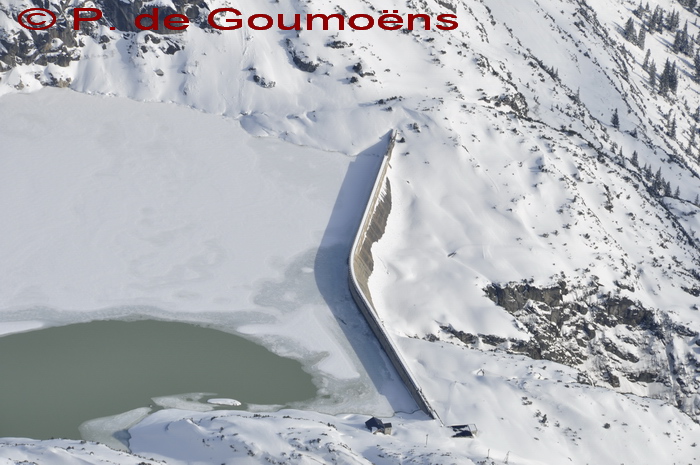
Daniel Pocock: Switzerland's scariest railway (video)

Although promoted as a funicular railway, the Gelmerbahn funicular has the appearance of a giant roller coaster and all of the fun too. For all those still having nightmares about recent rail tragedies in the age of non-stop surveillance and on-line replays, the 108 degree ascent (or descent) may not be your thing. On the other hand, for those who experience the London Underground each morning, "mind the gap" takes on a whole new meaning as you see your feet hanging out the bottom of the train and the tracks descending vertically into the valley below. <video controls="" height="340" poster="http://danielpocock.com/sites/danielpocock.com/files/gbahn-preview.jpg" width="560">

<source src="http://video.danielpocock.com/Gelmerbahn.webm" type="video/webm"></source>
Click to access video on original page
</video> and here are download links for those who prefer to download now and watch later (about 160MB): At the top At the top, there is a scenic two hour walk around Lake Gelmer, the path takes you across the top of a dam built for hydro-electric power generation. Lake Gelmer - hydro-electric dam Getting there from DebConf13 and the Debian 20th birthday For those coming to Switzerland for DebConf13 next month, the Gelmerbahn is probably a little bit too far for a day trip but makes an excellent place to stop during a 2 or 3 day tour around Switzerland. It is accessible using the all-day bus pass for the tour of 3 or 4 mountain passes or by train to Innertkirchen and then a short ride on the bus. The busses are irregular, use sbb.ch to plan the journey. Walking down the mountain from the lake to the bus stop takes about 90 minutes and for those who choose this option, the ticket is cheaper. More Swiss travel blogs Please click here to access some of my previous blogs about Swiss travel with videos and useful ideas for day trips.

29 July 2013

Thomas Goirand: OpenStack Havana b2 available, openstack-debian-images approved

I have finished preparing the beta 2 of the next release of OpenStack. It is currently only available from out Git on Alioth (in /git/openstack), and directly from my jenkins repository, which creates Wheezy backports for it:
deb ftp://havana.pkgs.enovance.com/debian havana main
deb http://archive.gplhost.com/debian havana-backports main
As for every OpenStack release, a large number of Python modules needed to be packaged and are waiting in the FTP master NEW queue to be approved: oslo-sphinx, python-django-discover-runner, python-hacking, python-jsonrpclib, python-lesscpy, python-neutronclient, python-nosehtmloutput, python-requestbuilder, python-termcolor, sphinxcontrib-httpdomain and sphinxcontrib-pecanwsme. Let s hope that they will be approved before the next beta release in september (time where OpenStack Havana will be in feature freeze). The total number of packages maintained by the OpenStack team (on which I really am the only active maintainer for the moment ), there s 53 packages, plus these 11 packages waiting in the NEW queue. That s a big number of package, and I wouldn t mind some help One thing that annoyed all the community is that Quantum, the OpenStack network virtualization module, had to be renamed as Neutron, because of a trademark from Quantum (you probably remember the Quantum Fireball hard drives? Well, it s the same company ). Another good news is that my openstack-debian-images package has just been approved and landed in Sid. With it, you can automate the process of building a Debian image for OpenStack with a simple shell command (there s a man page that I wrote with it: read it if you need to build images). It is made of a single shell script to build the image, using kpartx, parted, mbr, debootstrap, extlinux and friends. I tried to keep it simple, not involving a huge amount of components. With the release of cloud-init 0.7.2-3, I have fixed a few bugs (3 important bugs, out of which 2 where RC bugs), thanks to contributions in the debian-cloud@lists.debian.org mailing list. This includes adding new init.d scripts, so we now have support for user data. This doesn t only benefits OpenStack images, but anyone willing to start virtual machines in the cloud (nowadays, every cloud implementation needs cloud-init installed in the virtual images). This means you can include a script in the metadata of the virtual machine you start it, and it will be executed at startup. If everything goes as planned (that is, no new RC bug), I will upload an update of cloud-init to backports in 5 days (there is already a version there, but it doesn t have the necessary init.d scripts to execute the user data scripts), and openstack-debian-images in 9 days. Then it will be possible to build OpenStack images with absolutely all the tools available from Wheezy (and backports). I hope to be able to discuss that during Debconf 13.

28 July 2013

Francois Marier: FISL for foreigners HOWTO

FISL (pronounced FIZZ lay by the locals) is a large Free and Open Source software gathering in Porto Alegre, Brazil. While the primary audience of that conference is the Latin America "libre software" community, a number of overseas speakers also participate in that conference. This is my contribution to them: a short guide for international guests visiting the F rum Internacional do Software Livre.

Planning Before you fly out, make sure you look up the visa requirements for your country of citizenship. Many western countries will require a visa and you will need to visit the local Brazillian embassy ahead of time to get one. Next, have a look at the list of recommended immunizations. As with most destinations, it is recommended that your routine immunizations be up to date, but there are also other specialized ones such as Yellow Fever that are recommended by the Brazillian government. You should therefore visit a travel clinic a few weeks ahead of time. Other than that, I suggest reading up on the country and keeping an eye on the various travel advisories.

Arrival You will be flying at the Porto Alegre airport. If you need to exchange overseas money for Brazilian Reals, you can do that there. You'll probably also want to pick up a power adapter at the airport if you intend to charge your laptop while you're in the country :) Brazil has both 127V and 220V outlets using Type N sockets. Privacy note: using the free airport wifi will require giving your Passport details as part of the registration process.

Language If you don't speak Portuguese, expect a few challenges since most of the people you'll meet (including taxi drivers, many airport workers, some hotel staff) won't speak English. I highly recommend getting a phrase book before you leave and printing paper maps of where you are planning to go (to show to taxi drivers when you get lost). Native Spanish speakers seem to get by speaking Spanish to Portuguese speakers and understanding enough Portuguese to hold a conversation. I wouldn't count on it unless your Spanish is quite good though. Also, the official conference blog posts get eventually translated to English, but there is a delay, so you may want to subscribe to the Portuguese feed and use Google Translate to keep up with FISL news before you get there.

The conference FISL is a large conference and it has a very "decentralized" feel to it. From the outside, it looks like it's organized by an army of volunteers where everyone is taking care of some portion of it without a whole lot of top-down direction. It seems to work quite well! What this means for you as a foreign speaker however is that you're unlikely to be provided with a lot of information or help finding your way around the conference (i.e. no "speaker liaison"). There is a separate registration desk for speakers but that's about all of the attention you'll receive before you deliver your talk. So make sure you know where to go and show up in your assigned room early to speak with the person introducing you. If your talk is in English, it will be live-transated by an interpreter. It's therefore a good idea to speak a bit more slowly and to pause a bit more. Other than that, the organizers make an effort to schedule an English talk in each timeslot so non-Portuguese speakers should still be able to get a lot out of the conference. FISL was a lot of fun for me and I hope that some of these tips will help you enjoy the biggest FLOSS gathering in the southern hemisphere!

27 July 2013

Christian Perrier: [life] Running update July 27th 2013: Bubulle now runs in moutains

My last running update was sent after I had a great April month with two successful trail races (35km then 44km). The next target was Mont-Blanc marathon in Chamonix valley in early July, so it's time for me to send a new update before summer. May and June was mostly training. Huge training. Very long distances with 375km in May and over 430 in June (breaking my former monthly record by over 50 kilometers). Yes, that means over 14 kilometers every day..:-) I indeed achieved that with my "go to work partly by running" habits, which are now deeply included in my daily schedule. Much more convenient than bus ride (with the typical random schedules of RATP, which French people translate by "Rentre Avec Tes Pieds" or "Come back home by walking"....which is exactly what I'm doing). With such training (sometimes including extra rides in the forests, with short but steep ups and downs)....I was well prepared for THE early summer goal : Marathon du Mont-Blanc in Chamonix (not Ultra Trail du Mont-blanc : this one, I'm not ready for....yet).. My first mountain trail race, and what race! Imagine 42km in the moutain lovers heaven, namely the Chamonix Valley, with the Mont-Blanc, Aiguille Verte, Aiguille du Midi, Aiguilles Rouges, etc. above your head. Of course, not only in the valley but goind up and down "slightly"....in short 2200 meters positive climb..:-) I ran it with a female friend of mine, who I met in local races and through runners web forums. Sabine has about the same running skills than me and we developed a good and nice friendship, sharing our love for running in the nature. So, during May and June, we decided to run this race together as we were both registered for it. A first trial in a local 35km trail race two weeks before the MMB was very successful. We ended up in 3h40 and Sabine was ranked 5th female runner. And, moreover, we had a tremendous pleasure by crossing the finishing line together. So, we did it again in Chamonix. And, hell, we did it well: I had set the goal to 6 hours and 30 minutes and we completed the race in..... 6 hours and 34 minutes. Much much better than I and she would have expected. And, believe me, crossing the finishing line was again a special moment, particularly because the crowd at the end of this race make it look like l'Alpe d'Huez on the Tour de France. And, this on a wonderful sunny day, arriving at Planpraz, facing the Mont-Blanc. If you've ever been to Chamonix, you know what I mean. So, first moutain trail and, hell, not the last one! For those of you who can read French...or just want to see some pictures of a running bubulle, here is the link to the story. And these 42 kilometers were indeed so well done that the day after, while coming down from the famous Aiguille du Midi with Elisabeth (who came with me to Chamonix, of course)...I decided to run down from the cable car intermediate stop (2300m altitude) to Chamonix (1050m). Over 1200 meters down in 48 minutes... :-). Just a bit slower than the cable car....:) The remaining of July saw me again running back and forth to work and I'm indeed about to break my monthly record, eventually reaching 450 kilometers in one month and only two days NOT running in the whole month. Yeah, crazy. The upcoming Sunday, August 4th, just before going to Debconf 13, I'll spend a few days in Lanslebourg and will be running the EDF Cenis Tour trail, for 50 kilometers and 2600 meters positive climb. This time, a very "small" race, with no more than 150 runners. So, that will be another experience by running nearly entirely alone between 1400 and 2700 meters altitude. I'll post the outcome (or you'll probably hear about it at DC13....). See you, hopefully not in 3 months, for another update about running Bubulle.

26 July 2013

Steve Kemp: International character sets and encodings are hard.

Today I've made the 0.15 release of lumail, which has several fixups and cleanups. The previous release included a rewrite of the scrolling code, courtesy of kain88-de. This release fixes a few corner cases in that update which caused empty messages/Maildirs to be highlighted - operating on such ghost-entries would cause a segfault. Oops. I've received several more great contributions from 7histle, and trou and I'm very happy with the state of the code and the usefulness of the application. The biggest outstanding issue is RFC 2047 header decoding. Converting subject/to/from fields to readable versions of their encoded form:
Subject: =?utf-8?Q?Blipfoto=20=2D=20Introducing=20the=20all=2Dnew=20Bli
This is annoying because I'm using mimetic for handling all MIME-related code, and this doesn't seem to offer the facilities that I need. The current plan is to use the RFC-2047 handling from vmime, but I've fought with that library unsucessfully for two days now - and a further complication is that the library is included in Squeeze/Sid, but not the stable release of Debian. In conclusion I still regard the client as complete, because I'm using it exclusively and I rarely get "foreign" mails. But there is one more push required to fix all the outstanding bugs which generall boil down to: Randomly I'm wondering if I can call out to Lua to do the header decoding. Add "on_header_field()" and display the results. So today I'll be looking at how sensible that is, probably not very.

25 July 2013

John Goerzen: Development Freedom in New Platforms

I started writing code when I was somewhere around 1st grade, hacking some rudimentary BASIC on a TRS-80. Since then, I ve used more programming languages than I can count; everything from C to Prolog, Python to Haskell, and probably a dozen others. I enjoy diversity in programming languages and tools. I ve had an interest in both web and mobile development for some time, but have done little with either. Reflecting on that lately, I realize that both platforms severely restrict my freedom to use the tools I choose. Even on an old x86 with 640K of RAM, I had choices; BASIC, Pascal, and C would work under DOS. (Plus assembler, but I had yet to learn that at the time.) On Android, my choices are Java or Java. (OK, or something that compiles to Java, but those selections are still limited.) Plus it seems like I d have to use Eclipse, which seems to have taken the kitchen sync crown from Emacs long ago, and not in a good way. On iOS, the choices are Objective C. And on the web, it s JavaScript. The problem with all this is that there s little room for language innovation on those platforms. If predictions about the decline of development on the PC pan out, how will the next advance in programming languages gain traction if the hot spots for development are locked down to three main languages? Will we find ourselves only willing to consider languages that can compile to Java/Dalvik bytecode? And won t that put limits on the possible space for innovation to occur within? Yes, I know about things like Mono and the Android Scripting Environment, which offer some potential for hope, but I think it s still safe to say that these platforms are pretty closed to development in unofficial languages. I don t know of major apps in the Android market written in Python, for instance. I know of efforts such as Ubuntu s, but even they simply lock down development to a different toolkit. There is no choice there of GTK vs. Qt, or such things. Sadly, I don t think it has to be this way. My phone has way more power than my computer did just a few years ago, and that computer was capable of not just executing, but even compiling, code written in all sorts of different languages. But I don t know if there s much we can do to change things. Even with native code on Android, plenty still has to go through Dalvik (at least that s my understanding). If you wanted to write a Python app with a full graphical touch interface on Android, I don t think this would be all that easy of a task.

John Goerzen: Spring Always Comes

There will come a time when you believe everything is finished. That will be the beginning. Louis L Amour
Last year, I wrote about the difficult times in my life and hope for future, but never really explained why. I have written little since, because there is little I can write without a bit of explanation. It is partly because of the complexity of the task of telling my story without telling too much of others stories. But it is important I tell this story. So often on the Internet, we hear only the brave face, the positive things that happen. This story involves tears and difficulty. And also we often see only anger and bitterness. This story involves joy and celebration. One afternoon last year, I was working as usual (I work from home) when two sheriff deputies arrived on my doorstep. They gave me paperwork showing that my now ex-wife had filed for divorce, had asked them to serve me the paperwork, and that she had been given temporary possession of the house. I had 2 hours to gather up clothes and a little computer equipment (there was a list) and leave the house. Thus began the most difficult time in my life. I went from reading a bedtime story and singing a bedtime song to my young boys every night to seeing them only a little, from living in the house my grandparents and dad had lived in to having no particular plan for where I d sleep that night, from thinking I had a good idea of what the future held to not knowing when, if ever, I d ever be back home. I worried about how the boys would fare (they have done well so far). And it was incomprehensible; I couldn t find answers to why? . In the time since, the divorce became final, I did return home, the boys spend more time with me, and a new normal emerged. At the time, it seemed like a sudden, deep winter blizzard. I couldn t see very far down the road, spring seemed far off, and I couldn t see very well either forward or backward. But I was determined to find positives in the situation. It started almost immediately; I had never been a person to talk about pain, but just a few hours after the divorce was filed, I knew I needed to talk to someone about it, and did. A week later, I shared about it in church. Amazing friends, locally and all over the world, provided support and encouragement. I had less total time with the boys than before the divorce, but more time with just the three of us, and we used it to play together at home, spend days in town, and even take a train trip to Santa Fe, where none of us had ever been before. I realized how much I could forgive, and that my ex-wife probably did the best she could with the persistent legacy of difficult life events that happened to her long before she met me. I understood this, and was never angry, just sad, for everyone. I have always known nobody is perfect, myself included, but can be hard on myself when I m less than perfect. I forgave myself, too, realizing that I did my best to help in the most unfamiliar of waters, and although I sometimes didn t get it right, my conscience is clear because my heart was in the right place and I tried, very hard. Most incredibly, I became a person with a deep sense of inner peace. I always tried to work hard to set life on a good path; I got good grades in school, am a good employee, and have a strong set of values. But where courts are involved, there s a strong sense of powerlessness. At times, there was nothing I could do to make life better for my boys or for me. I finally had to let go of taking on responsibility for all that on my own shoulders. I simply knew that things would be OK, and in fact were OK, and that there is nothing in life that really deserves worries. That doesn t mean worries are never present, but that mostly they are subdued, like a radio quietly playing in another room. When they aren t, I can sit down at the piano, play my penny whistle, sing, walk to my creek, talk to friends, or any of so many things that let them melt away. I stopped searching for happiness and peace, and let those things find me. In religious terms, my faith became not just an intellectual one, but also a spiritual one. An atheist friend asked me, Just what does religion mean to you anyway? My answer: The certainty that spring always comes, for everyone that understands this.
People speak of misfortunes and sufferings, remarked Pierre, but if at this moment I were asked: Would you rather be what you were before you were taken prisoner, or go through all this again? then for heaven s sake let me again have captivity and horseflesh! We imagine that when we are thrown out of our usual ruts all is lost, but it is only then that what is new and good begins. While there is life there is happiness. There is much, much before us. Tolstoy, War and Peace
By Thanksgiving, I had much to be thankful for. Some of it under my nose waiting to be rediscovered after years of distraction, such as the glorious Kansas sunrises. Some things were new, such as roasting a turkey all by myself (or, rather, with Jacob and Oliver) for the first time, and having it come out absolutely perfectly. And some were just the things of everyday life: that I lived in my own house again, that I could walk out to the creek at the edge of my property whenever I wanted, that I could play piano, that the sounds of laughter and little running feet again could often be heard on my wood floors. That s not to say everything was easy; the courts sometimes made decisions sometimes I didn t think were in the boys best interests, legal things dragged on and on, but in the end, peace endured. Happiness endured. I found myself thinking at Thanksgiving that it was the best Thanksgiving ever. Not much later, I considered myself happier than I ve ever been. I was focusing on the daily gifts of life, marveling at the sunrises, looking forward to life s next adventure, confident that it would be far better than the last. And then, to my complete surprise, I found myself in a relationship again. On top of all the wonderful things happening in my life, I met Laura. I never could have imagined a friend so wonderful, a relationship so loving and joyful, something to treasure so deeply. I can look back at events and shake my head in amazement and wonder, that I found myself happier than I d ever been, and then this wonderful relationship on top of that. I have been blessed to have the life I do, and feel almost embarrassingly lucky. I share this story because friends that had been through divorce years ago shared their stories. They gave me hope. And if I didn t share this story in this public way, I would be squandering an opportunity to find more positives from what happened. I hope that this helps, somehow, someone that is in pain know that there is beauty in the valley, and spring always comes, every single year. And I share it because happiness like this can t be repressed for long. Tolstoy was right. While there is life, there is happiness. I ll end with a story from last Thanksgiving. It was 6:10AM that weekend. I was still asleep, and heard this: Jacob, yelling from his room: Dad? Dad! Me, groggy: Yes, Jacob? Jacob: Can I go down and look at the Christmas tree? Me: Sure, and you can turn it on too. Jacob: Great! At that point, I could have gone back to sleep. I was really short on sleep that morning, and Jacob would have been fine. But I gave him a couple of minutes, then I went downstairs too. He was curled up on the piano bench, looking at the tree. I quietly turned up the downstairs thermostat, got a chair, put it next to the piano bench, and sat down by the tree too. Jacob crawled over onto my lap and snuggled up for awhile. Neither of us said anything. Then: Dad? Yes? This is the best Thanksgiving ever. And he gave me a big hug. And he was right. Yes, he was RIGHT! That will be the beginning. Spring comes!

24 July 2013

Daniel Leidert: Moving from (software) RAID 1 to RAID 5 and testing performance

Finally I finished migrating my new N54L from a 2-disk software RAID 1 (2x2TB WD20EFRX) to 3-disk RAID 5 (3x2TB WD20EFRX) using mdadm. I got an excellent mini HOWTO I followed. Resyncing and reshaping the RAID took several days ... top speed was 110.000K/s ... but left my data untouched. Finally growing the RAID now I have two partitions; one with 0.5GB (md0) and the other with 3.4GB (md1) which both host an EXT4 file system, whereas the first one is encrypted via LUKS and the second one is not. RAID device and file system configuration Below is a summary of the setup and the values I found working well for my system.
3-disk RAID 5 devicefile system
devicechunkstripe_cache_sizeread_ahead_kbtypeencryptionstridestripe-width
/dev/md064409632768ext4luks1632
/dev/md15121638432768ext4no128256
I've played around with the system a bit. Changing the chunk size on the fly however took a long time. /dev/md0 will contain some backups, so there probably will be a mixture of small and large files. So I've chosen to only test the values 64K, 128K and 512K (default) for this device. I left the other untouched as it will mainly contain large files. Performance measurement Below are the results using hdparm to measure performance. First lets take a look at the drives ...

$ hdparm -tT /dev/sd[bcd]
/dev/sdb:
Timing cached reads: 3268 MB in 2.00 seconds = 1634.54 MB/sec
Timing buffered disk reads: 438 MB in 3.00 seconds = 145.87 MB/sec

/dev/sdc:
Timing cached reads: 3292 MB in 2.00 seconds = 1646.32 MB/sec
Timing buffered disk reads: 392 MB in 3.01 seconds = 130.22 MB/sec

/dev/sdd:
Timing cached reads: 3306 MB in 2.00 seconds = 1653.18 MB/sec
Timing buffered disk reads: 436 MB in 3.00 seconds = 145.26 MB/sec

$ hdparm --direct -tT /dev/sd[bcd]
/dev/sdb:
Timing O_DIRECT cached reads: 468 MB in 2.01 seconds = 233.17 MB/sec
Timing O_DIRECT disk reads: 442 MB in 3.00 seconds = 147.15 MB/sec

/dev/sdc:
Timing O_DIRECT cached reads: 468 MB in 2.00 seconds = 233.69 MB/sec
Timing O_DIRECT disk reads: 392 MB in 3.01 seconds = 130.36 MB/sec

/dev/sdd:
Timing O_DIRECT cached reads: 468 MB in 2.00 seconds = 233.94 MB/sec
Timing O_DIRECT disk reads: 442 MB in 3.01 seconds = 146.93 MB/sec
... and now at the RAID devices ...

$ hdparm -tT /dev/md?
/dev/md0:
Timing cached reads: 3320 MB in 2.00 seconds = 1660.37 MB/sec
Timing buffered disk reads: 770 MB in 3.01 seconds = 256.05 MB/sec

/dev/md1:
Timing cached reads: 3336 MB in 2.00 seconds = 1668.07 MB/sec
Timing buffered disk reads: 742 MB in 3.01 seconds = 246.89 MB/sec

$ hdparm --direct -tT /dev/md?
/dev/md0:
Timing O_DIRECT cached reads: 974 MB in 2.00 seconds = 487.08 MB/sec
Timing O_DIRECT disk reads: 770 MB in 3.01 seconds = 256.17 MB/sec

/dev/md1:
Timing O_DIRECT cached reads: 784 MB in 2.00 seconds = 391.18 MB/sec
Timing O_DIRECT disk reads: 742 MB in 3.01 seconds = 246.42 MB/sec
... and now lets see, which actual speed we reach using dd. First lets check the encrypted device:

RAID-5 /dev/md0 (LUKS encrypted EXT4): chunk=64K, stripe_cache_size=4096,
readahead(blockdev)=65536, stride=16, stripe-width=32 ...

$ dd if=/dev/zero of=/mnt/md0/10g.img bs=1k count=10000000
10000000+0 Datens tze ein
10000000+0 Datens tze aus
10240000000 Bytes (10 GB) kopiert, 64,1227 s, 160 MB/s

$ dd if=/mnt/md0/10g.img of=/dev/null bs=1k count=10000000
10000000+0 Datens tze ein
10000000+0 Datens tze aus
10240000000 Bytes (10 GB) kopiert, 85,768 s, 119 MB/s
Well, read speed is consistently lower than write speed for the encrypted file system. Lets take a look at the non-encrypted device:

RAID-5 /dev/md1 (EXT4): chunk=512K, stripe_cache_size=16384,
readahead(blockdev)=65536, stride=128, stripe-width=256 ...

$ dd if=/dev/zero of=/mnt/md1/10g.img bs=1k count=10000000
10000000+0 Datens tze ein
10000000+0 Datens tze aus
10240000000 Bytes (10 GB) kopiert, 37,0016 s, 277 MB/s

$ dd if=/mnt/md1/10g.img of=/dev/null bs=1k count=10000000
10000000+0 Datens tze ein
10000000+0 Datens tze aus
10240000000 Bytes (10 GB) kopiert, 33,5901 s, 305 MB/s
Looks nice to me. How to set these values I use a mixture of udev, util-linux and e2fsprogs to set the values. First I checked, which values for stripe_cache_size and read_ahead_kb are working best for me. For the LUKS encrypted EXT4 I got varying results showing best performances with values of 4096, 8192 and 16384 for stripe_cache_size. I decided for the first value, because it appeared more often with the best performance than the others.

$ less /etc/udev/rules.d/90-local-n54l.rules grep stripe_cache
SUBSYSTEM=="block", KERNEL=="md0", ACTION=="add", TEST=="md/stripe_cache_size", TEST=="queue/read_ahead_kb", ATTR md/stripe_cache_size ="4096", ATTR queue/read_ahead_kb ="32768", ATTR bdi/read_ahead_kb ="32768"
SUBSYSTEM=="block", KERNEL=="md1", ACTION=="add", TEST=="md/stripe_cache_size", TEST=="queue/read_ahead_kb", ATTR md/stripe_cache_size ="16384", ATTR queue/read_ahead_kb ="32768", ATTR bdi/read_ahead_kb ="32768"
The read_ahead_kb value can also be set using blockdev. Note that this command expects a value of 512-byte sectors whereas read_ahead_kb is the size in kbyte. Therefor the difference in values:

$ blockdev --setra 65536 /dev/md[01]
Tuning the EXT4 file system performance with calculated values using tune2fs:

$ tune2fs -E stride=16,stripe-width=32 -O dir_index /dev/mapper/_dev_md0
$ tune2fs -E stride=128,stripe-width=256 -O dir_index /dev/md1
Disabling NCQ reduced the speed a lot for me, so I left the values as is and did not struggle with it:

$ cat /sys/block/sd[bcd]/device/queue_depth
31
31
31

Thomas Goirand: The v sikness is spreading

It seems to be a new fashion. Instead of tagging software with a normal version number, many upstream adds a one letter prefix. Instead of version 0.1.2, it becomes version v0.1.2. This sickness has spread all around in Github (to tell only about the biggest one), from one repository to the next, from one author to the next. It has consequences, because Github (and others) conveniently provides tarballs out of Git tags. Then the tarball names becomes packagename-v0.1.2.tar.gz instead of package packagename-0.1.2.tar.gz. I ve even seen worse, like tags called packagename-0.1.2. Then the tarball becomes packagename-packagename-0.1.2. Consequently, we have to go around a lot of problems like mangling in our debian/watch files and so on (probably the debian/gbp.conf if you use that ). This is particularly truth when upstream doesn t make tarball and only provides tags on github (which is really fine to me, but then tags have to be made in a logical way). Worse: I ve seen this v-prefixing disease as examples in some howtos. What s wrong with you guys? From where is coming this v sickness? Have you guys watch too much the v 2009 series on TV, and you are a fan of the visitors? How come a version number isn t just made of numbers? Or is this just a v like the virus of prefixing release names with a v ? So, if you are an upstream author, reading debian planet, with your software packaged in Debian, and caught the bad virus of prefixing your version numbers with a v, please give-up on that. Adding a v to your tags is meaningless anyway, and it s just annoying us downstream. Edit: Some people pointed to me some (IMO wrong) reasons why to prefix version numbers. My original post was only half serious, and responding with facts and common sense breaks the fun! :) Anyway, the most silly one being that Linus has been using it. I wont comment on that one, it s obvious that it s not a solid argumentation. Then the second one is for tab completion. Well, if your bash-completion script is broken, fix it so that it does what you need, rather than going around the problem by polluting your tags. Then the 3rd argument was if you were merging 2 repositories. First this never happened to me to merge 2 completely different repos, and I very much doubt that this is an operation that you have to do often. Second, if you merge the repositories, the tags are loosing all meanings, and I don t really think you will need them anyway. Then the last one would be working with submodules. I haven t done it, and that might be the only case where it makes sense, though this has nothing to do with prefixing with v (you would need a much smarter approach, like prefixing with project names, which in that case makes sense). So I stand by my post: prefixing with v makes no sense.

Keith Packard: present-redirect

Present Extension Redirection Multi-buffered applications have always behaved poorly in the presence of the Composite extension: Owen Taylor suggested that Present should offer a way to redirect operations to the compositing manager as a way to solve these problems. This posting is my attempt to make that idea a bit more concrete given the current Present design. Design Goals Here s a list of features I think we should try to provide:
  1. Provide accurate information to applications about when presentation to the screen actually occurs. In particular, GLX applications using GLX_OML_sync_control should receive the correct information in terms of UST and MSC for each Swap Buffers request.
  2. Ensure that applications still receive correct information as to the contents of their buffers, in particular we want to be able to implement EGL_EXT_buffer_age in a useful manner.
  3. Avoid needing to un-redirect full-screen windows to get page flipping behavior.
  4. Eliminate all extra copies. A windowed application may still perform one copy from back buffer to scanout buffer, but there shouldn t be any reason to copy contents to the composite redirection buffer or the compositing manager back buffer.
Simple Present Redirection With those goals in mind, here s what I see as the sequence of events for a simple windowed application doing a new full-window update without any translucency or window transformation in effect:
  1. Application creates back buffer, draws new frame to it.
  2. Application executes PresentRegion. In this example, the valid and update parameters are None , indicating that the full window should be redrawn.
  3. The server captures the PresentRegion request and constructs a PresentRedirectNotify event containing sufficient information for the compositor to place that image correctly on the screen:
    • target window for the presentation
    • source pixmap containing the new image
    • idle fence to notify when the source pixmap is no longer in use.
    • serial number from the request.
    • target MSC for the presentation. This should probably just be the computed absolute MSC value, and not the original target/divisor/numerator values provided by the application.
  4. The compositing manager receives this event and constructs a new PresentRegion request using the provided source pixmap, but this time targeting the root window, and constructing a valid region which clips the pixmap to the shape of the window on the screen. This request would use the original application s idle fence value so that when complete, the application would get notified. This request would need to also include the original target window and serial number so that a suitable PresentCompleteNotify event can be constructed and delivered when the final presentation is complete.
  5. The server executes this new PresentRegion operation. When complete, it delivers PresentCompleteNotify events to both the compositing manager and the application.
  6. Once the source pixmap is no longer in use (either the copy has completed, or the screen has flipped away from this pixmap), the server triggers the idle fence.
Multiple Application Redirection If multiple applications perform PresentRegion operations within the same frame, then the compositing manager will receive multiple PresentRedirectNotify events, and can simply construct multiple new PresentRegion requests. If these are all queued to the same global MSC, they will execute at the same frame boundary. No inter-operation dependency exists here. Complex Presentations Ok, so the simple case looks like it s pretty darn simple to implement, and satisfies the design goals nicely. Let s look at a couple of more complicated cases in common usage; the first is with translucency, the second with scaling application images down to thumbnails and the third with partial application window updates. Redirection with Translucency If the compositing manager discovers that a portion of the updated region overlays or is overlaid by something translucent (either another window, or drop shadows, or something else), then a composite image for that area must be constructed before the whole can be presented. Starting when the compositing manager receives the event, we have:
  1. The compositing manager receives this event. Using the new pixmap, along with pixmaps for the other involved windows and graphical elements, the compositing manager constructs an updated view for the affected portion of the screen in a back buffer pixmap. Once complete, a PresentRegion operation that uses this back buffer pixmap is sent to the X server. Again, the original target window and serial number are also delivered to the server so that a suitable PresentCompleteNotify event can be delivered to the application.
  2. The server executes this new PresentRegion operation; PresentCompleteNotify events are delivered, and idle fences triggered as appropriate.
Redirection with Transformation Transformation of the window contents means that we cannot always update a portion of the back buffer directly from the provided application pixmap as that will not contain the window border. Contents generated from a region that includes both application pixels and window border pixels must be sourced from a single pixmap containing both sets of pixels. One option that I ve discussed in the past to solve this would be to have the original application allocate the pixmap large enough to hold both the application contents and the surrounding window border. Have it draw the application contents at the correct offset within this pixmap, and then have the window manager contents drawn around that; either automatically by the X server, or even manually by the compositing manager. That would be mighty convenient for the compositing manager, but would require significant additional infrastructure throughout the X server and even harder the drawing system (OpenGL or some other system). There s another reason to want this though, and that s for sub-frame buffer scanout page swapping. The second option would be for the compositing manager to combine these images itself; there s a nice pixmap already containing the window manager image the composite redirect buffer. Taking the provided source pixmap and copying it directly to the target window will construct our composite image, just as if we had no Present redirection in place. This will cost an additional copy though, which we ve promised to avoid. Of course, as it s just for thumb-nailing or other visual effects, perhaps the compositing manager could perform this operation at a reduced frame rate, so that overall system performance didn t suffer. Retaining Access to the Application Buffer Above, I discussed having the idle fence from the redirected PresentRegion operation be sent along with the replacement PresentRegion operation. This ignores the fact that the composting manager may well need the contents of that application frame again in the future, when displaying changes for other applications that involve the same region of the screen. With the goal of making sure the idle fences are triggered as soon as possible so that applications can re-use or free the buffers quickly, let s think about when the triggering can occur.
  1. Full-screen flipped applications. In this case, the application s idle fence can be triggered once the application provides a new frame and the X server has flipped to that new frame, or some other scanout buffer.
  2. Windowed, copied applications. In this case, the application s idle fence can be triggered once the application provides a new frame to the compositing manager, and the X server doesn t have any presentations queued.
In both cases, we require that both the X server and the compositing manager be finished with the buffer before the application s idle fence should be triggered. One easy way to get this behavior is for the composting manager to create a new idle fence for its operations. When that is triggered, it would receive an X event and then trigger the applications idle fence as appropriate. This would add considerable latency to the application s idle fence a round trip through the compositing manager. The alternative would be to construct some additional protocol to make the applications idle fence dependent on the Present operation and some additional state provided by the compositing manager. Some experimentation here is warranted, but my experience with latency in this area is that it causes applications to end up allocating another back buffer as the idle notification arrives just after a buffer allocation request comes down to the rendering library. Definitely sub-optimal. An Aside on Media Stream Counters The GLX_OML_sync_control extension defines the Media Stream Counter (MSC) as a counter unique to the graphics subsystem which is incremented each time a vertical retrace occurs. That would be trivial if we had only one vertical retrace sequence in the world. However, we actually have N+1 such counters, one for each of the N active monitors in the system and a separate fake counter to be used when none of the other counters is available. In the current Present implementation, windows transition among the various Media Stream Counter domains as they move between the various monitors, and those monitors get turned on and off. As they move between these counter domains, Present tracks a global offset from their original domain. This offset ensures that the MSC value remains monotonically increasing as seen by each window. What it does not ensure is that all windows have comparable MSC sequence values; two windows on the same monitor may well have different MSC values for the same physical retrace event. And, even moving a window from one MSC domain to another and back won t make it return to the original MSC sequence values due to differences in refresh rates between the monitors. Internally, Present asserts that each CRTC in the system identifies a unique MSC domain, and it has a driver API which identifies which CRTC a particular window should be associated with. Once a particular CRTC has been identified for a window, client-relative MSC values and CRTC-relative MSC values can be exchanged using an offset between that CRTC MSC domain and the window MSC domain. The Intel driver assigns CRTCs to windows by picking the CRTC showing the greatest number of pixels for a particular window. When two CRTCs show the same number of pixels, the Intel driver picks the first in the list. Vblank Synchronization and Multiple Monitors Ok, so each window lives in a particular MSC domain, clocked by the MSC of the CRTC the driver has associated it with. In an un-composited world, this makes picking when to update the screen pretty simple; Present updates the screen when vblank happens in the CRTC associated with the window. In the composite redirected case, it s a bit harder all of the PresentRegion operations are going to target the root window, and yet we want updates for each window to be synchronized with the monitor containing that window. Of course, the root window belongs to a single MSC domain (likely the largest monitor, using the selection algorithm described above from the Intel driver). So, any PresentRegion requests will be timed relative to that single monitor. I think what is required here is for the PresentRegion extension to take an optional CRTC argument, which would then be used as the MSC domain instead of the window MSC domain. All of the timing arguments would be interpreted relative to that CRTC MSC domain. The PresentRedirectNotify event would then contain the relevant CRTC and the MSC value would be relative to that CRTC. A clever Compositing manager could then decompose a global PresentRegion operation into per-CRTC PresentRegion operations and ensure that multiple monitors were all synchronized correctly. We could take this even further and have the PresentRegion capable of passing a smaller CRTC-sized pixmap down to the kernel, effectively providing per-CRTC pixmaps with no visible explicit protocol Other Composite Users Ok, so the above discussion is clearly focused on getting the correct contents onto the screen with minimal copies along the way. However, what I ve ignored is how to deal with other applications, also using Composite at the same time. They re all going to expect that the composite redirect buffers will contain correct window contents at all times, and yet we ve just spent a bunch of time making that not be the case to avoid copying data into those buffers and instead copying directly to the compositing manager back or front buffers. Obviously the X server is aware of when this happens; the compositing manager will have selected for manual redirection on all top-level windows, while our other application will have only been able to select for automatic redirection. So, we ve got two pretty clear choices here:
  1. Have the X server change how Present redirection works when some other application selects for Automatic redirection on a window. It would copy the source pixmap into the window buffer and then send (a modified?) PresentRedirectNotify event to the compositing manager.
  2. Include a flag in the PresentRedirectNotify event that the composite redirect buffer needs to eventually get the contents of the source pixmap, and then expect the compositing manager to figure out what to do.
Development Plans As usual, I m going to pick the path of least resistance for all of the above options and see how things look; where the easy thing works, we can keep using it. Where the easy thing fails, I ll try something else. The changes required for this are pretty minimal. The PresentRegion request needs to gain a list of window/serial pairs that are also to be notified when the operation completes:
PRESENTNOTIFY  
    window: WINDOW
    serial: CARD32
     
 
    PresentRegion
    window: WINDOW
    pixmap: PIXMAP
    serial: CARD32
    valid-area: REGION or None
    update-area: REGION or None
    x-off, y-off: INT16
    idle-fence: FENCE
    target-crtc: CRTC or None
    target-msc: CARD64
    divisor: CARD64
    remainder: CARD64
    notifies: LISTofPRESENTNOTIFY
 
    Errors: Window, Pixmap, Match
The target-crtc parameter explicitly identifies a CRTC MSC domain. If None, then this request implicitly uses the window MSC domain. notifies provides a list of windows that will also receive PresentCompleteNotify events with the associated serial number when this PresentRegion operation completes.
 
    PresentRedirectNotify
    type: CARD8         XGE event type (35)
    extension: CARD8        Present extension request number
    length: CARD16          2
    evtype: CARD16          Present_RedirectNotify
    eventID: PRESENTEVENTID
    event-window: WINDOW
    window: WINDOW
    pixmap: PIXMAP
    serial: CARD32
    valid-area: REGION
    valid-rect: RECTANGLE
    update-area: REGION
    update-rect: RECTANGLE
    x-off, y-off: INT16
    target-crtc: CRTC
    target-msc: CARD64
    idle-fence: FENCE
    update-window: BOOL
 
The target-crtc identifies which CRTC MSC domain the target-msc value relates to. divisor and remainder have been removed as the target-msc value has been adjusted using the application values. If update-window is True, then the recipient of this event is instructed to provide reasonably up-to-date contents directly to the window by copying the contents of pixmap to the window manually. Beyond these two protocol changes, the compositing manager is expected to receive Sync events when the idle-fence is triggered and then manually perform a Sync operation to trigger the client s idle-fence when appropriate. I m planning to work on these changes, and then go re-work xcompmgr (or perhaps unagi, which certainly looks less messy) to incorporate support for Present redirection. The goal is to have something to demonstrate at Guadec, which doesn t seem impossible, aside from leaving on vacation in four days

23 July 2013

MJ Ray: Misusing a Royal Baby and Child Porn to Censor The Internet

There s been some media coverage at the start of this week about blocking child porn. Except it s not about child porn that s a trojan horse. People who want to access pornography that is already illegal (Protection of Children Act 1978) are probably already using security tools to hide their downloading and will be unaffected by this unless they re pretty stupid. And the announcement, about the same time as the predicted birth of a royal baby, third in line to the throne, seems like a cynical attempt to bury bad news taken straight from the Blair Government. That would almost be enough reason to oppose it: they don t want the media to look at this too closely for some reason. So what s this actually about? It looks like a way to force through widespread acceptance of the ability to censor most UK internet users by shouting won t somebody think of the children? If you doubt it, take a look at the list of filtered topics: So if they get away with this censorship, you won t be able to use Twitter or contact the Samaritans until you deactivate it. Except I suspect you will because they re pretty big and the Cameron Government won t want to pick a fight with them: it ll be the next Twitter and the next Samaritans, currently much smaller and unable to defend themselves, who get shut out of UK homes. So what can we do, besides explaining this and writing to our MPs? Are we better off joining parties who oppose this censorship, like the Pirate Party, or joining existing parties and trying to overturn their stupid support for it?

Next.

Previous.