Search Results: "ag"

24 February 2008

Sam Hocevar: Bits from the DPL: FTP assistants, marketing team, init scripts, elections

Not going to FOSDEM Hello, dear developers. I suppose many of you are currently at FOSDEM, but unfortunately I could not attend the event this year. Here are some news for you anyway! FTP assistants I am very pleased to let you know that yesterday Peter Palfrader (weasel) added Kalle Kivimaa (killer) and Thomas Viehmann (tviehmann) to the list of FTP assistants. I still hope that more people can be added soon to this team, but this is definitely good news. Marketing team At the various conferences I attended I have paid much attention to how other distributions and FOSS projects were promoting their work, and despite us often having t-shirts, stickers and posters like the others, we really miss a few things which would make Debian as appealing as other, dynamic projects. I would like to set up a Debian Marketing Team, whose work would be to organise all the promotional stuff (logos, t-shirt designs, wallpapers, etc.) so that the project can officially endorse good designs, and to make the ultimate decision on visual stuff such as CD covers, splash screens, etc. This team would have official DPL delegation, but I hope that it can also work with non-Debian-developers, as many packaging teams already do, because the non-DDs know better than us how to draw people to Debian. So please let me know if you are interested, even if you are not a DD, and especially if you are not a programmer! I also would like to spend some Debian money on a contest, similar to the FreeBSD logo contest, to create a friendly mascot for the Debian project (in a similar way to the Linux penguin or the GNU gnu) that we can use where the logo is not enough. More on this in a few days. Development news Last month Petter Reinholdtsen (pere) gave some news about his project of improving the init system. This is almost as simple as adding LSB headers to your init scripts, and work is advancing towards this goal, though not as quickly as desirable. If your packages have init scripts, or if you wish to help, I urge you to have a look at the proposal so that we can have it in Lenny. DPL elections The new DPL term is in almost 2 months, but campaign starts next month. I have already stated that I would not run again, and haven't changed my mind. As many, many Debian developers are attending FOSDEM, I hope you can use some real-life meeting time to discuss the people you think would make good DPLs and tell them. Maybe they haven't thought of running (or re-running). Being DPL does have an impact on your real life. If you are still wondering whether to run, or have any personal questions, feel free to ask me, I'll gladly share my experience.

Mike Hommey: Crazy ideas

I often have a bunch of somewhat crazy ideas, and I don’t have any time available to test or implement them, which is sad. So just in case these crazy ideas would scratch someone’s itch, I’m going to throw them in the wild. I’ve been using git for a few months, now, and used it not only for source code management, but for efficient storage, too. *VERY* efficient. I’ll have to write about that some day. Anyways, while installing pristine-tar, today, I just thought it would be neat to have an equivalent pristine-deb, to store deb files efficiently. I’m pretty sure someone else thought about this possibility, but it’s still better that such ideas come to the ears (eyes, actually) of someone that could implement them. Such a pristine-deb tool could be used to… store packages from snapshot.debian.net. That would reduce the amount of space required for the archive dramatically, IMHO. I’m pretty sure old packages are not requested that much, so they could be generated on-the-fly from a CGI script placed as a GET action, so that urls wouldn’t change. The same could probably be applied to archive.debian.org. It could even save enough space that archive.debian.org could host snapshot.debian.net. But that depends on the average package content and its average evolution, which I have absolutely no idea about. Update: It would also be interesting to have the .diff.gz files in there, too ; it would obviously allow to have an easy view of the contents, such as copyright files, changelogs, and other bits of information available on packages.debian.org. Update 2: Actually, pristine-deb would as easy as storing 2 pristine-tars (one for control.tar.gz and one for data.tar.gz), and a debian-binary file. The .deb can be aggregated with
ar -rc file.deb debian-binary control.tar.gz data.tar.gz

23 February 2008

Dave Noble: Video from the Debian room at FOSDEM

As some of you may know, we have been streaming video streams from the Debian room at FOSDEM. This has been working with rather variable results. The machine handling the encoding is a 2 GHz P4-m laptop. It seems to not be able to keep a video stream bigger than the size of a postage stamp going without crashing. Now although this is better than nothing (you can at least still hear the audio live, and see a humanoid figure walking about), being able to see the slides clearly would also be nice.
Tomorrow, this may be improved on. The video stream (when it's online) is at http://fosdem.debconf.org:8000/stream.ogg

Wouter Verhelst: FOSDEM 2008: Day one

Day one of FOSDEM 2008 has now ended, and almost everything seems to have gone fine from my end. Note, "fine" is not "perfect"; there were some issues. Nothing spectacularly problematic; and as for the last item, that can be easily fixed by introducing fresh blood in organizing the Debian side of FOSDEM next year. Not that I want to stop being involved, but at least not being the only one responsible might be sensible. Other than that, no real issues, really. Well, except for one; I was so backlogged with everything that I had to postpone finishing my slides 'till the very last moment—half an hour ago. Ugh. But, well. Great FOSDEM!

Filip Van Raemdonck: Programmer's prank

While performing some research on the article about lighttpd, PHP and SSL I wrote a few days ago, I found out about a practical joke in Google's search results for the phrase “Once in a blue moon”.
The first result returned is an answer from Google Calculator, and the result they give is “1.16699016 10^-8 hertz”.

While this was obviously not a serious answer, it had to make sense somehow — but it didn't immediately occur to me what it might mean. When I found out how often a “blue moon” actually occurs, every 2.7 years approximately, it seemed obvious that the above number had to be the frequency of that event. A little math confirmed this; inverse the above number and you get a number in seconds which is approximately 2.7 and then something.

Nice easter egg from the Google crew.

Gustavo R. Montesino: Debian bits

Romain Francoise: Shared links for 2008-02-23

Russell Coker: Giving Away Hardware

For the last few years I have been actively seeking free hardware to give to members of my local LUG. Whenever a friend or business associate mentions that they are upgrading or replacing computers I enquire what they plan to do with the old ones and request that the old gear be given to me if there are no other plans for it. There is a moderate amount of hardware that I use for my own purposes, but the free hardware that is available is often in excess of my requirements and also sometimes just unsuitable for my use (I am happy to install a second-hand IBM or HP machine for a client but I won’t install a white-box machine). One organisation that I sometimes give computers to is Computerbank [1]. The purpose of Computerbank is to take donations of old machines, fix them and install Linux, and then sell them for extremely low prices to people who can’t afford new machines. It’s been a while since I gave them any computers because for a long time the minimum specs on machines that they were willing to accept were higher than the machines that I obtained. Generally I offer my old hardware to the mailing list of Linux Users of Victoria [2]. I offer not only working systems but also broken systems and other things that might be useless to most people - but are greatly desired by the small minority who can use them. One member of that list wants PC power supplies for repairing other electronic devices, so I collect batches of machines that are broken but appear to have working PSUs and give them to him. I once received a box of free two-button mice. I offered them to LUV members expecting that many people would want one or two for test machines. No-one wanted them for use as mice but one guy wanted all of them to use their sensors in robotics projects. One thing that impresses me is the community spirit demonstrated. Often I will offer some free machines and the first response will be something like “I’d like to take that machine apart for the bits, but if someone wants a complete system please give it to them instead”. There aren’t many occasions when you see someone suggesting that they may not be the most deserving recipient for something that is free! My aims in this effort are to help random Linux users in my area, and to help the environment by reducing the amount of land-fill. My efforts aren’t going to make a significant impact on the environmental situation, but they do make a significant impact on the availability of hardware for members of the Linux community - which seems to be of particular interest to people who want cheap machines for their children or grand-children. I encourage other people to do similar things. One thing that impressed me was the organisation of used hardware gifts at LCA. Near the start of the conference hardware was given away to anyone who put their hand up. At the end of the conference more hardware was given away (I expect it was mostly by delegates who lived locally). It would be good if this idea (which worked so well) was spread to other conferences.

22 February 2008

John Goerzen: Revisiting Git and Mercurial

Exactly one year ago today, I wrote about Git, Mercurial, and Bzr. I have long been interested in VCS, and looked at the three main DVCS systems back then.

A Quick Review

Mercurial was, and for the moment, remains, my main VCS. Bzr remains really uninteresting; I don't see it offering anything compelling that Mercurial or Git can't do. My Git gripes mainly revolved around its interface and documentation. Also, I do have Windows people using my software, and need a plausible solution for them, even though I personally do no development on that platform.

Ted Tso wrote his own article in reply to mine, noting that the Git community had identified many of the same things I had ans was working on them.

I followed up to Ted with:

... So if Ted's right, and a year from now git is easier to use, better documented, more featureful, and runs well on Windows, it won't be that hard to switch over and preserve history. Ted's the sort of person that usually is right, so maybe I should starting looking at hg2git right now.


So I guess that means it's time to start looking at Git again.

This is rather rambly, I know. It's late and I want to get these thoughts down before going to sleep...

Looking at Git

I started at the Git wikipedia page for an overview of the software. It linked to two Google Tech Talks about Git: one by Linus Torvalds and another by Randal Schwartz. Of the two, I found Linus' more entertaining and Randal's more informative. Linus' point that CVS is fundamentally broken, and that SVN trying to be "a better CVS" (an early goal of svn, at least) means it too is fundamentally broken, strikes me as quite sound.

One other interesting tidbit I picked up is that git can show you where functions have moved from one file to another, thanks to its rename-detection heuristic. That sounds really sweet, and is the best reason I've yet heard for Git's stubborn refusal to track renames.

The Landscape

I've been following Mercurial and Darcs somewhat, and not paying much attention to Git. Mercurial has been adding small features, and is nearing version 1.0. Darcs has completed a major overhaul both of its repository format and internal algorithms and is nearing version 2.0, and appears to have finally killed the doppleganger (aka conflict spinlock) bug for good.

Git, meanwhile, seems to have made strides in usability and documentation in its 1.5.x versions.

One thing particularly interesting to me is: what projects are using the different VCSs. High-profile projects now using Mercurial include OpenSolaris, OpenJDK (Java 7), and Mozilla's projects. Git has, of course, the Linux kernel. It also has just about everything associated with freedesktop.org, including X. Also a ton of Unixy stuff.

Both Mercurial and Git communities are working on TortoiseHg/TortoiseGit types of GUIs for Windows users. Git appears to have a sane Windows port now as well, putting it on pretty much even footing with Mercurial and Darcs there. However, I didn't spot anything with obvious Windows ties in the Git "what projects use git" pages.

The greater speed of Mercurial and Git -- even for pushing and pulling small patches -- likely will keep me away from Darcs for the moment.

Onwards...

As time allows (I do have other things keeping me busy), I plan to install git and work through some tutorials and try to use it in practice as much as possible, to get a good feel for it.

Future

It is beneficial to be using a VCS that is popular, though that is certainly not a major criterion for me. I refuse to use SVN because its lack of distributed functionality makes it too unproductive to be useful. But it looks like Git is gaining a lot of traction these days, especially in Debian circles, which also makes it more interesting.

I notice that Ted did convert e2fsprogs over to git as he said he might, incidentally.

Sebastian Harl: collectd 4.3.0 uploaded to unstable

Yesterday, collectd 4.3.0-1 has been uploaded to Debian unstable. The most important changes since 3.x are (in chronological order): See the changelog for details. About collectd:
collectd is a small daemon which collects system information periodically and provides mechanisms to monitor and store the values in a variety of ways. It is written in C for performance. Since the daemon doesn't need to startup every time it wants to update the values it's very fast and easy on the system and allows very fine-grained statistics.

Andrew Pollock: [tech] On the evilness of User-Agent sniffing

Jeremy Visser writes about the evilness of User-Agent sniffing I tend to disagree with him, particularly after reading Wikipedia's robots.txt file, and some of the comments in there. wget can be quite a nasty program if used incorrectly. Chances are, if you know what you're doing, you'll know how to change the User-Agent string, and therefore you're probably not going to do something dumb like try to download the entire site recursively. If you don't, you're probably Doing It Wrong.

John Goerzen: Two new bashisms

I learned about two bash features I hadn't known about today.

From a colleague, GLOBIGNORE. A colon-separated glob of files to ignore when expanding globs. Helpful behavior when set to "*~" and used with grep.

From the Git FAQ, in a section explaining that it breaks the Git build process, CDPATH. A colon-separated search path to use when you type cd. Possibly useful to refer to subdirs of ~ or other common areas. Seems like it's prone to break a ton of scripts if exported though.

Bastian Blank: Broken DVDs

Today I got another broken DVD. It is the special edition of The Shawshank Redemption. It is rather new and libdvdread just chokes on it. At least the old one does, while the version in sid is able to read them, thanks to a small patch. The DVD exploits a feature of the standard. The filesystem on it (UDF) provides a size for the info files (VTS_XX_0.IFO) and the corresponding backup file (VTS_XX_0.BUP). This sizes are void, only the offsets within the files matters. The sizes are just too small and libdvdread checked that while reading them. Thanks to the patch, libdvdread now updates its internal knowledge while parsing the file. With the fix it is possible to play the DVD, at least with mplayer. But I want to play it on my machine without optical drive. I used dvdbackup to read other DVDs but it simply failed this time. This DVD also have broken backup files. They have different sizes, sometimes they even look empty, and contents than the real ones. With the corrent amount of force (just ignoring them) and some magic (#467075) dvdbackup copies something to disk which is playable with mplayer (libdvdread) and totem (libdvdnav). Okay, nothing is complete. This DVD contains another title set which seems to be never referenced. It have a completely bogus info file and a 1GB menu VOB. As I have a copy now, I'm away, watching a really great movie.

Russell Coker: Watching While Waiting

Over the past four years every visit to a doctor or hospital has involved some time spent in a waiting room, in the case of hospital visits it has often been more than an hour waiting. Each of those waiting rooms has had a selection of bad magazines and a TV. If I ever visit a hospital after 8PM then I might have a chance of seeing something that I want to watch on TV, but otherwise it’s all awful. Fortunately there are better things that they could do. It would not be difficult to get a basic PC and install all the content from ted.com (and possibly other sites with quality free content) and have some sort of video juke-box program running. TED not only has lectures about arts and science but also performances by musicians and dancers. The chance that a random person can find something they enjoy in TED’s archives seems significantly greater than the chance of finding something worth watching in the daytime-soap TV segment. But TED is far from the only option available, there are quite a number of free video sites and the ones that include advertising in the video stream would probably be more than happy to have their content copied on to juke boxes.

MJ Ray: TV / Hamburg is the North's largest brothel

I watched BBC's Panorama show about bottled water on Monday night. It was the first TV show in some time to really upset me.

Of course, I realise that life isn't fair (although I believe it should be free and try to make it fairer) but I was staggered just how unfair it is. It seems like bottled water should be considered as bad as coffee, cocoa and so on. Unlike those, this one is relatively easy to avoid - carry a flask.

Yesterday's Magnetic North on BBC4tv was more amusing viewing. The title of this post is a quote from it (or as near as I could remember). Jonathan Meades is a comic genius and I agree with him about the North. It's a fabulous and much underrated part of Europe.

He visits Sassnitz near the end of the show, which I enjoyed visiting a few years ago. If you missed it last night, I expect it will be repeated soon, like most things on BBC4tv.

Marc 'Zugschlus' Haber: Bounce from BTS to BTS

Sometimes a bug report is a labyrinth. #348046 is an example of this. It is a horrible mess of at least three different issues with half of the original participants having become unresponsive. I would like to pull the issues apart into different bug reports to be able to deal with them (and their probably unresponsive submitters) individually. Obviously, cloning and renaming is not an option since this copies the mess. So, it would probably be desireable to download the bug mbox and to bounce individual messages to new bugs (that have been created before), but the BTS recognizes the dupes and bins them. Blars has helped me by looking at BTS mail log, so it was clear that removing the X-Loop, X-Debian-PR, X-Spam, Resent- and Received headers from the mbox before loading it into mutt to do the actual bouncing works fine. A command line to do this:
rm -f mboxout; mboxbug formail -d -I Received -I X-Debian-PR -I X-Loop -I X-Spam -I Resent -s >> mboxout
After trying this in “production”, one needs to send one message per BTS pulse, or one will totally mess up the order of the messages. That’s a real pity and an annoyance.

Romain Francoise: Shared links for 2008-02-22

Benjamin Mako Hill: Credit Card Numbers

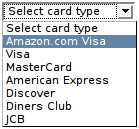
Every since I found out that the first digits of any credit card denote the issuer identifier (i.e., folks can tell who issued a credit card and what type it is just from the first digit or two) I've been annoyed almost each time I have to input credit card information on the web. Any decent credit card system knows that if a sixteen digit credit card number starts with 4, it's a Visa. And yet, each time anyone buys anything on the web, they must select "Visa" from the drop-down box. On a certain level we all know this; People in stores and restaurants never have to select the type of card before swiping. /copyrighteous/images/amazon_cc_selectbox.png When I'm feeling generous, I imagine this is so that the credit card companies can give an extra reminder that they only accept certain credit cards -- not being able to select a card type in an "essential" input field constrained to multiple choices is a pretty strong reminder. When I'm feeling less generous, I suspect it might be so that the companies can subtly remind us that they have their own brand credit cards that we might like to acquire.
Russell Coker: Service Videos

I just read interesting blog post about Lenovo service information [1]. They have huge documents about how to service their machines as well as apparently having videos in flash format to show how to perform various tasks. The first thing I’d like to see is other companies following this example. I clearly recall one time when I had an IBM 2RU server apart and I couldn’t work out how to get the power cable for the tape drive installed, a video of how to do so would surely have saved me some time then, I was working for a law firm and had a small outage window - not a situation where I wanted to waste any time. The next thing I would like to see is Lenovo not using Flash for this, but instead allow download of MP4 and/or OGG video. When doing a job in a tight time window with a demanding client I would like to have all the relevant documentation (including videos) on my laptop before I visit their site.

Frank Lichtenheld: Obligatory FOSDEM post

I'm going to FOSDEM, the Free and Open Source Software Developers' European Meeting I will see you all at my talk, right? ;)

Next.

Previous.