Search Results: "tb"

14 August 2013

Joey Hess: words fail me


13 August 2013

Russell Coker: Nexus 4 Ringke Fusion Case

LG Nexus 4 phone with Ringke Fusion case I ve been using Android phones for 2.5 years and for all my phones (Sony-Ericsson Xperia X10, Samsung Galaxy S, Samsung Galaxy S3, and LG Nexus 4) I ve bought gel cases. The gel cases are made of soft rubber which allows phones to bounce rather than break if dropped and also provide better grip (both for holding the phone and for resting it on a vibrating surface such as a tray in a car or plane). The cases have cost me between $12.50 and $15, I haven t felt inclined to pay any more because a case has always seemed like a needless expense, something that merely compensates for deficiencies in phone design. There are some problems with the gel cases, the first one is that they are rather ugly, while I m not really interested in decorating my phones it seems a waste to have a nice phone like the Nexus 4 which has a neat sparkling pattern on the back and then use a case that entirely covers it. The next problem is the fact that the gel cases tend to restrict access to the buttons on the outside of the case. I have been given a Rearth Ringke Fusion case for my Nexus 4 by MobileZap (this is a link for the Nexus 4 cases they sell) [1]. The case features a transparent layer of plastic at the back which protects the phone against having the rear glass of the case break (a known risk with the Nexus 4) while still allowing the user to admire it. With good lighting the sparkling pattern on the back of the phone can still be enjoyed, unfortunately this doesn t show up at all in my photo. It s impossible for a photo to capture a shimmering effect although other photographers have done a better job at showing off a Nexus 4. Also the transparent back to the case gives the option of putting any form of decoration between the phone and the case, for example one could print the logo of their Ingress team and put it between the phone and the case. One thing that is visible in the photo is the feet on the back of the case. With small feet at the corners the transparent back usually won t touch a surface that it rests on, this should prevent unsightly scratches to the back of the case. Also the feet can get some grip on the surface that it rests on, my car has a tray suitable for resting a phone which has a pattern of dimples that catch the feet of the Ringke case and prevent it from sliding. Finally the external buttons for power and volume control are not obstructed in any way. After using 7 phones of 4 different models with gel cases I ve become accustomed to buttons either being difficult to press or easy to press accidentally. The Ringke case allows the buttons to be pressed easily when needed but doesn t seem prone to accidental presses. I m not about to buy a new case for my Galaxy Note 2 (my main phone at the moment) because I don t like paying to replace something that works. But next time I buy a case I ll look for something better than a plain gel case, it s worth paying an extra $9 to get a good case for a phone that costs $350 (the current discount rate for a Nexus 4) or more. I definitely recommend the Ringke case for a Nexus 4.

12 August 2013

Sylvestre Ledru: Merchandising at Debconf

Debian France and Debian Swiss associations are now selling products at Debconf. We are now selling
Buff
23 CHF / 18 euros
Black polo
31 CHF / 25 euros
Rugby polo
50 CHF / 40 euros
Mousepad
13 CHF / 10 euros
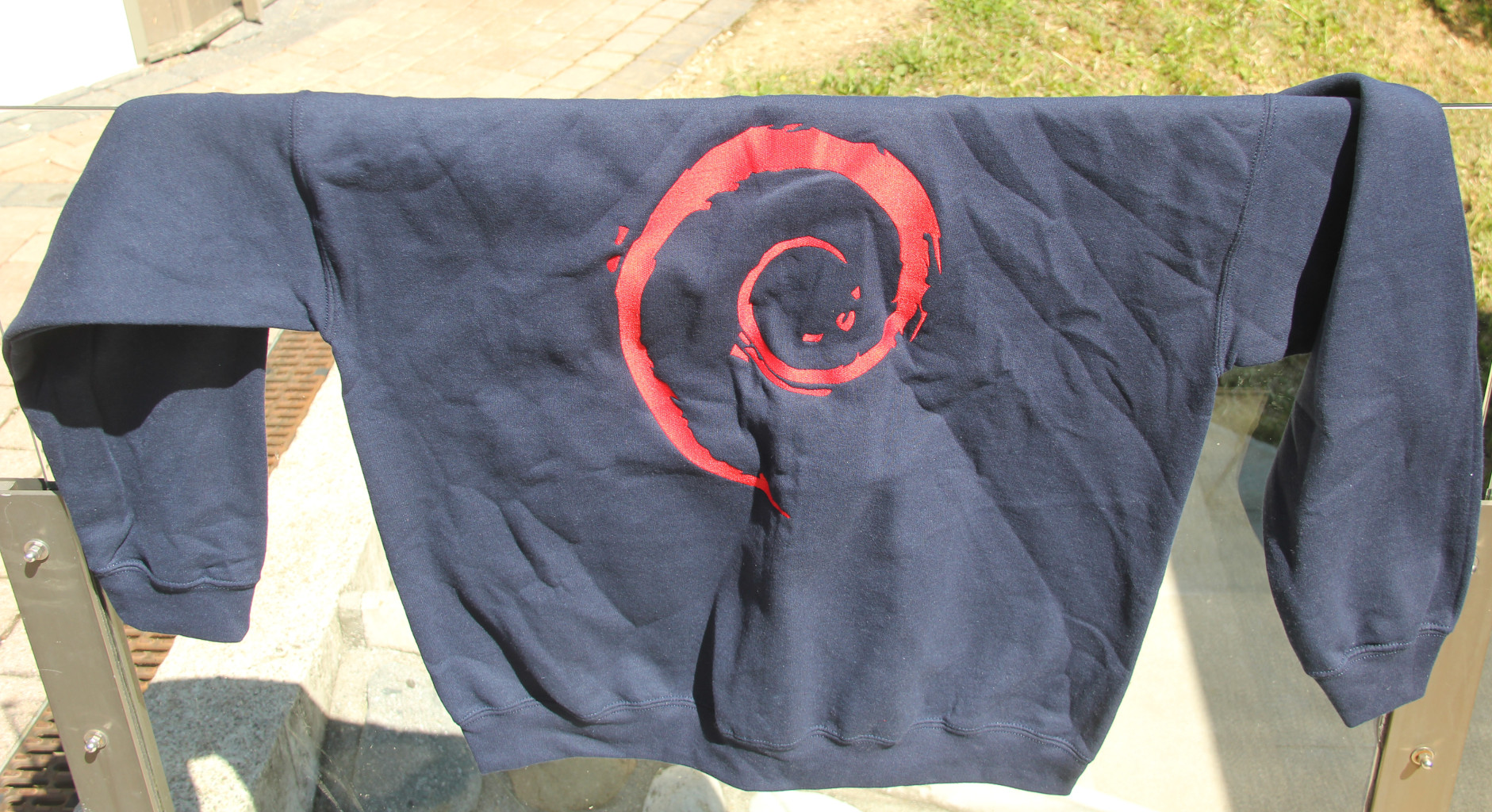
We have also some new hoodies.
They come in 4 colors: black, white, grey and dark blue.
With or without zip:
Without zip: 44 CHF / 35 euros
With zip: 50 CHF / 40 euros With also have hats:
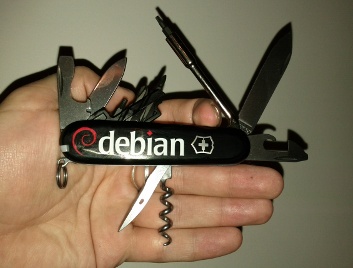
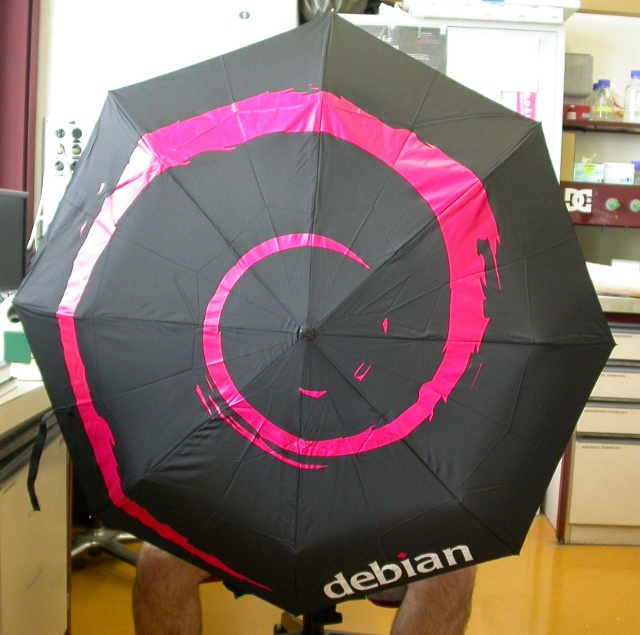
Price: 10 CHF / 9 euros We have also the Debian umbrellas and knifes.

Photo credit Kibi
For those who are at Debconf, they are for sell at the Debconf front desk from 4 to 6 and will be probably available for sell on enventelibre after the event.

10 August 2013

Daniel Pocock: DebConf13 arrival

DebConf13 is about to get under way at Vaumarcus, Switzerland. Bus stop Swiss PostBus drops delegates at the entrance to Le Camp. The ascent Delegates get a feel for the Swiss landscape. Main talk room Rooms are prepared and ready for speakers Ambience There are many relaxing places for people to catch up and have a discussion Leadership One of the DebConf chairs enjoys a quiet moment of reflection Drinks The bar is open DebConf13 begins

9 August 2013

Richard Hartmann: Release Critical Bug report for Week 32

As a more or less random data point for DebConf13, here's the current bug stats for Debian. Hope to see you there, and if you want to attend the BoF Gitify ALL the things or the talk Gitify your life you can do so on site, via IRC in #vcs-home on OFTC, or simply follow the live streams. If you see my in person, I have two crates of Scheider Aventinus with me and don't plan on bringing home any full bottles. The UDD bugs interface currently knows about the following release critical bugs: Graphical overview of bug stats thanks to azhag:

6 August 2013

Daniel Pocock: DebConf next week, free real-time communications session

DebConf13 is just about to get under way. While last year's event involved an exciting visit to Nicaragua, this year it is right here in Switzerland making it very convenient for many of those in the very populous community of free software enthusiasts across western Europe.
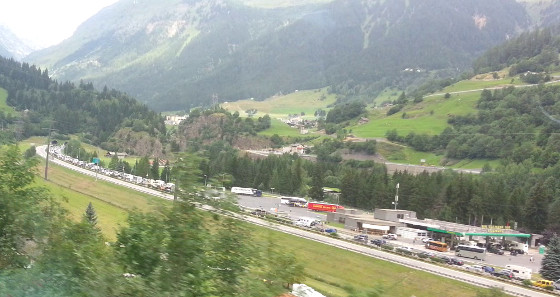
A long queue has already formed on the freeway going north from Italy into Switzerland's Gotthard Tunnel: did somebody put Debian's 20th birthday party on a social networking site? The big invitation On the final day of DebConf, Saturday 17 August, there is an afternoon track dedicated to the topic of free real-time communications. While DebConf is traditionally aimed at the Debian Developer community, real-time communications, by definition, requires cross-platform collaboration in order to succeed and it is a particularly hot topic thanks to recent revelations about communications privacy. Therefore, there is a wider invitation for visitors to attend this session, please just remember to register your details here, it is free (and private). To get a feel for the topic, please see the video of the Free, Open and Secure Communications panel from FOSDEM 2013 Seeing Switzerland
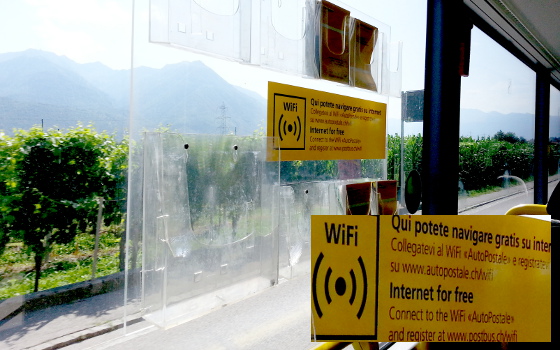
Who said Switzerland is expensive? Swiss Postbus is offering free wifi now Please see some of my previous blogs about Swiss travel for videos and pictures if you are looking for ideas for your time in .ch

5 August 2013

Daniel Pocock: Effectively supporting virtual domains with Mailman

When I first decided to run my own list server, I was well aware of the popularity of Mailman but I was deterred from using it by the complexity of setting up virtual hosts. In particular, 99% of the software I use for servers is packaged. Whenever I choose a new piece of software, using something that is packaged and supported is high on my list of priorities. Mailman's distribution tarball and the packages built from it only have limited support for virtual hosting. My own objective is to host lists for open source projects. As some of these projects don't have dedicated budgets, it is particularly important to find lightweight, low-maintenance solutions. Furthermore, it is important that those solutions don't detract from the time I want to invest in the projects themselves. I've developed some scripts to solve the problem: to start using them quickly, please see the README file. Here I provide a more detailed overview of the logic behind this approach. Mailman's limitations and workarounds For me, the biggest limitation of Mailman is that the site list is always linked to a single domain, which has to be chosen arbitrarily from the list of domains being hosted. Although it is not emphasized in the documentation, there is also the inconvenience of having all the lists from potentially unrelated projects appearing together on Mailman's main index page. Another limitation is that each list name must be globally unique across all domains. Some existing workarounds exist but they have limitations too. There is a virtual domain patch, but it is not clear how this handles the site list or the site index page. There is also the postfix-to-mailman script distributed by Debian and Ubuntu: using a transport-based solution looks elegant at first, but when you realise that you need to whitelist the addresses (to ensure messages are rejected at ingress rather than bounced), it becomes just as much work to maintain as the alternatives it aims to avoid: Mailman's authors do not endorse this approach. Experimenting with Sympa Deterred by Mailman's limitations, I initially went with Sympa and that seemed to run quite well for a number of years. In particular, it supports full virtual hosting out-of-the-box and all this is standard in the convenient Debian packages. From time-to-time, users have complained about the use of JavaScript in the web UI, but that was not something I could immediately resolve. However, when I upgraded to Debian 7 (wheezy), more serious problems appeared. Initially, the web UI (used for subscribing or browsing the archives) was completely broken. Anybody accessing the site would be given a download of the wws binary rather than the page that was supposed to be generated by the binary. I discovered errors about this in Apache's error.log and tried installing libapache2-mod-fcgid. The problem was resolved, but from then on, my whole web server became unstable and at least once every day I would have to restart the Apache process or it would become inaccessible. I put the details into a bug report and after not getting any feedback, decided to go and have another look at Mailman. A closer look at Mailman Looking at Mailman again, it appeared that the only way to achieve a relatively "pure" virtual hosting solution would be to run multiple installations of Mailman in different directory trees. Initially, I hoped this could be done by sharing copies of the binaries and just creating replicas of the structure under /var/lib/mailman. Looking under the hood, I discovered that the paths were compiled into the binaries and could not be easily overriden. It appears that this limitation could be overcome with some trivial patches to read directory names from the environment. The main aims of using shared binaries are disk space efficiency and also being able to benefit from security updates for the binary packages. However, if I had to patch the binaries, then I wouldn't be able to benefit from the security update packages anyway. So, it became inevitable that I would have to build binaries from source one way or another: either with a patch or by building multiple copies of each binary, each hardcoded with a different path. Putting it into practice Looking over the Mailman architecture, there are four things to be replicated for each installation:
  • init script to start a standalone qrunner per domain
  • cron jobs
  • CGI configuration from Apache (easily isolated by using a different ScriptAlias inside each Apache <VirtualHost>
  • Invocation of the Mailman binary from the mailer's aliases file
The init scripts and crontabs can be easily generated from a template (I used Debian's copies of these files as a base for that). Some of the Apache configuration can be handled by putting wildcards in the <Directory> specifications and the rest can be easily cut-and-pasted into <VirtualHost> definitions. Based on all of the above, all I had to do was run Mailman's configure script and make once for each virtual domain. I've scripted the whole process - my script is available here Managing the aliases file One particular limitation of my mailer (Postfix) is that the Mailman message processor can't be invoked directly from a rule in the virtual alias map. Scripts like this can only be invoked from the normal /etc/aliases file. This problem is not unique to Mailman: for Sympa, I also had to deal with this. The most common solution is to use the virtual file to translate all the virtual list addresses into very verbose usernames within the local domain:
Address Mapped to
widget-users@lists.example.org lists.example.org-widget-users@my-local-domain
The local part, lists.example.org-widget-users can then be used in the regular /etc/aliases file. This approach is described in the Sympa documentation and also in one of the virtual domain patches for Mailman. I've included a script for generating these alias mappings in the repository with my other scripts for building virtual Mailman installations. It would also be possible to patch Mailman itself to generate such files dynamically when new lists are created. Conclusion and next steps Using the techniques described and these small scripts, I successfully built independent virtual hosts for two of my domains, lists.lumicall.org and lists.dynalogin.org on a single mail host. Notice how each of them has the appearance of a clean, standalone Mailman installation? Going forward, I believe it would not be hard for the 2.x branch of Mailman to support this approach to virtual hosting with three changes:
  • Allowing the binaries to take their directory tree name from an environment variable or command line option or by inspecting argv[0] to discover their own location,
  • Generating the aliases file in the more verbose format and
  • Providing some convenient init script and crontab that iterates over all the domains

3 August 2013

Russell Coker: Religious Conversion

Today I was in the center of Melbourne and I saw two stands run by Muslims advocating their faith. They had a selection of DVDs and brochures to give away and seemed friendly enough for anyone who wanted a chat. I think that this is a good thing, if the majority of the Australian population would think of the Muslim minority as people who give away DVDs rather than as potential suicide bombers then it would be a great benefit for society. Then I saw a Christian stand which had placards indicating that Jesus loves Muslims, which is fine. One of the workers on that stand then gleefully told me that there had been a Muslim stand in that area but the Muslims departed when they arrived. It would be good if advocates for the various religions could work together to promote positive things that they all agree on (generally related to being nice to other people). When they seem to be essentially bullying other religious groups into leaving the area they aren t making a good case for a kind and caring god. The Christian who was so happy about the Muslims departing then tried to convert me. He started by talking about a mobile phone not being able to appear from nothing which was the start of an utterly stupid argument about creationism. That was stupid firstly because it s obvious that evolution doesn t apply to consumer electronics, if I leave a phone lying on top of another phone overnight I m not going to get some little phones appearing as a result. But the bigger stupidity is in even promoting creationism in the first place. Advocating creationism is essentially claiming that god is so incapable that ze can t manage an evolutionary process. An all-seeing all-knowing god of infinite intelligence could just create a plasma cloud that will form into a solar system and evolve life. People who argue for creationism don t believe in a capable god, they believe in a being that resembles a god in the way a magician resembles someone who can actually perform magic. Arguing for creationism is arguing for a limited being which probably isn t worthy of worship (why worship space aliens who are probably only a few thousand years ahead of us). Regardless of the scientific evidence (which is strongly in favor of evolution) just logically thinking about the issue in regard to what a being with infinite powers might actually do suggests that ze could just as easily create or evolve all life and probably wouldn t care about what we believe. Genesis should be taken as metaphor because it s obvious that nothing that s taught in a year 7 science class could be taught to your typical stone age goat-herd, but even if it was taken literally it s not specified as a required belief (as opposed to a belief in a single god, repenting sins, and other beliefs which are required). The greatest stupidity however is the fact that even if it made any sense to promote creationism it wouldn t make sense to do so immediately. Any time you want to convert someone to a set of beliefs it s a good strategy to start with the ones which will seem least wacky. I can have have a conversation with Christians about positive things which we generally agree on such as donating to charity and trying to do good things in various ways. But when they start with the stupid stuff I walk away. When the weather is better I plan to interview representatives of the various religious groups who are trying to convert people on the street and rate them according to how wacky they are. I ll be a little limited in my ability to review them by the total lack of any right to free speech in Australia (our laws are much the same as those in the UK). But I should still be able to give them a reasonable review.

1 August 2013

Russ Allbery: Review: And Playing the Role of Herself

Review: And Playing the Role of Herself, by K.E. Lane
Publisher: Regal Crest
Copyright: 2006
Printing: June 2010
ISBN: 1-932300-72-4
Format: Kindle
Pages: 336
Caidence Harris is an actress who has finally gotten her big shot: a starring role in the hit police drama 9th Precinct. She plays half of a police partnership; the other half is played by her best friend, the considerably more famous Liz Stokley. She's quite happy with her life and her work, and only tentatively pondering what to do about coming out (at least to herself) as a lesbian. But matters get considerably more complicated when she starts falling for Robyn Ward, a star in a parallel legal drama. And the very high-profile girlfriend of one of the best male tennis players in the world. Yes, another lesbian romance. This one has won several awards, including the highest recommendation from my friend who's been prefiltering the genre for me and pointing out only the best stories. And despite being set firmly among the rich and famous and involving TV dramas with the serial numbers filed off, he was right. This is a thoroughly enjoyable story. One of its strongest parts is how Lane develops the romance between Caidence and Robyn. There is a bit of the inevitable physical chemistry so common in romances (I still don't believe kisses work that way), and a few descriptions of physical beauty (after all, there's a built-in excuse for everyone to be TV-star beautiful). But Lane avoids putting either at the center of the relationship. Instead, this is a romance built on trust, tentative at first and then growing but rocky. That speaks to me a lot more than all the descriptions of physical chemistry. For example, we don't see Caidence and Robyn meet for the first time in the novel, as is usually the case. They've been around each other before, with Caidence acting rather tongue-tied and a bit star-struck and Robyn thinking she's rather silly. The story begins when, for whatever reason, Caidence finally manages to relax and become genuine, and then both of them become closer as they find themselves lowering barriers around each other that they normally don't lower. Lane does an excellent job using a few key facial expressions as symbols and hallmarks of that, letting the reader follow the way that trust builds through the story. The other great element of this book is Caidence's friend Liz. She could have been a stereotype of a movie star: drop-dead gorgeous, a new boyfriend each week, but not particularly intelligent. That's how she comes off at first. But as the story progresses, Lane shows more and more of their friendship, and the reader gets to see just how much Liz's first impression is a combination of an act and her unapologetic tendency to do what she wants. Underneath, she's a strong female character and an excellent, if meddling friend; by the end of the book, she was in the running for my favorite character. This is characterization of a quality that I rarely see in any genre of novel. Given that it's a romance that I enjoyed, you can correctly expect there not to be a lot of obnoxious communication breakdowns or chapters full of the main characters refusing to communicate with each other. There are, of course, a wide variety of barriers in the way of a relationship for the main characters, not the least of which being that neither of them was looking for something serious. But while they both do occasionally thoughtless or hurtful things, it's always clear just why they were thoughtless, or where their buttons were accidentally pressed, and few of the character actions are outright stupid. And, delightfully, Lane structures the story so that there are multiple, incremental payoffs. One can not only enjoy the characters getting together in the end, as they always do in this genre, but a lot of important and meaningful steps along the way. Lane does a great job putting the reader in Caidence's head, helped by first-person narration, so that one can feel just how much some moments mean to her emotionally. Add in several other fleshed-out and interesting supporting characters, some incredible architecture that was fun to imagine, and rather more in the way of plot twists and dramatic moments than I usually expect in a romance (and although the book worried me once, none of them go to the dark places that would have been less fun), and one gets a novel that kept me engrossed from start to finish. I'm tempted to read it again, and that's rare for me for a romance novel. If you're in the mood for a heart-warming story about intelligent people learning how to be together, I highly recommend this book. It's a great book to read as a stress relief when you want a story that you know will turn out "right." Rating: 9 out of 10

31 July 2013

Christoph Berg: Version Numbers

Following an idea by Ansgar Burchardt, I've done some digging on version numbers in Debian: Most common version numbers:
projectb=> select version::text, count(*) from source group by 1 order by 2 desc;
  version     count 
------------+-------
 4:4.10.5-1     131
 1.0-1          120
 1.0.0-1         95
 1.1-1           95
 1.0.1-1         93
 1.2-1           88
 1.0-2           82
 0.2-1           80
 0.3-1           79
 0.5-1           77
 0.04-1          76
 1.1.1-1         76
 0.10-1          74
 1.4-1           72
 1.1-2           71
 0.1-1           70
 0.11-1          70
Version number with the most spellings: (considered equal by the dpkg definition, implemented in the "debversion" type)
projectb=> select version::text, count(*) from source where version = '1.02-1' group by 1 order by 2 desc;
  version     count 
------------+-------
 1.2-1           88
 1.02-1          46
 1.002-1          4
 1.000002-1       1
 001.002-1        1
 1.00002-1        1
If we look at equivalent version numbers, the first table above looks entirely different:
projectb=> select version, count(*) from source group by 1 order by 2 desc limit 30;
  version     count 
------------+-------
 0.3-1          162
 1.0-1          160
 0.05-1         156
 0.04-1         154
 0.02-1         151
 1.02-1         141
 0.006-1        133
 1.001-1        131
 4:4.10.5-1     131
 0.7-1          127
(I'm also participating in the "longest version number" contest, I've just uploaded bind9 version 1:9.8.4.dfsg.P1-6+nmu2+deb7u1~bpo60+1 to backports.)

Raphael Geissert: Ten years-old ebook reader

I own a ten years-old ebook reader.

Is it a smartphone?
It has features that make it pretty much like one, except that it can't make phone calls. So no. (However, I dare to say that making phone calls is one of the least used features of smartphones nowadays. Perhaps in the feature smartphones won't even be phones anymore, due to atrophy.)

What is it then?
It is a Sony CLI , a PEG-SJ22 to be more precise. A PDA running Palm OS 4.1 that I'm now using as an ebook reader. To my surprise, the Plucker and iSilo readers still exist and at least the latter seems somewhat alive - there is even a version for Android.

Nowadays there are ebook readers with electronic paper displays, wifi or 3G connectivity, and other features but they all come down to the same thing: an ebook reader. Truth be told, the technology is quite old. In 2004, a year after the release of the PEG-SJ22, Sony also released the LIBRI EBR-1000EP in Japan, an ebook reader with a 6" electronic paper display. A few years later is was released in the US as the Sony Reader.

Certainly, there have been advances since those devices were first released, but I have yet to see something that is really innovating. This year we are back to wrist watches, which were first released more than ten years ago - and one of them even ran linux.

Netbooks also had devices like the PEG-UX50 as their ancestor.

And if you were thinking about shoes, you've arrived late: the Puma RS already had some chips in them, and the Adidas 1 were also sported a few years ago. World, it's time to innovate.

Russell Coker: Links July 2013

Wayne Mcgregor gave an interesting TED talk about the creative processes of a choreographer [1]. The dancing in this talk is really good. Melissa McEwan wrote an interesting article on whether being an ally to members of a disadvantaged group is a state or a process [2]. It seems to me that the word ally is a problem here, maybe a word like supporter would be more useful. Ken Murray wrote an insightful article How Doctors Die about the end of life choices that people with medical experience make [3]. He makes a good case for rejecting the type of treatment which has a low probability of success and a certainty of lowering the quality of life. It would be good if health insurance offered patients with terminal illness an option of $1000 per day party funds if they chose to reject the expensive and painful methods that might extend their life, that might even save enough money to allow cheaper health insurance! Rick Falkvinge wrote an interesting post about the copyright to translations of the Bible [4]. I used to think that copyright issues with religious works was only a problem with cults Joshua Foer wrote an interesting article for the New Yorker about the invention of the language Quijada which is designed for maximum precision [5]. It also has a lot of background information on constructed languages and the way that they are used.

30 July 2013

Bits from Debian: Martin Michlmayr gets the O'Reilly Open Source Award

Longtime Debian Developer Martin Michlmayr was named as one of 6 winners of the 2013 O Reilly Open Source Awards. This Award recognize individual contributors who have demonstrated exceptional leadership, creativity, and collaboration in the development of Open Source Software. Martin received the award for his investment in Debian where he served as Debian Project Leader for two terms between 2003 and 2005. Alt Martin Michlmayr gets the O'Reilly Open Source Award Congratulations tbm!

Daniel Pocock: Switzerland's scariest railway (video)

Although promoted as a funicular railway, the Gelmerbahn funicular has the appearance of a giant roller coaster and all of the fun too. For all those still having nightmares about recent rail tragedies in the age of non-stop surveillance and on-line replays, the 108 degree ascent (or descent) may not be your thing. On the other hand, for those who experience the London Underground each morning, "mind the gap" takes on a whole new meaning as you see your feet hanging out the bottom of the train and the tracks descending vertically into the valley below. <video controls="" height="340" poster="http://danielpocock.com/sites/danielpocock.com/files/gbahn-preview.jpg" width="560">

<source src="http://video.danielpocock.com/Gelmerbahn.webm" type="video/webm"></source>
Click to access video on original page
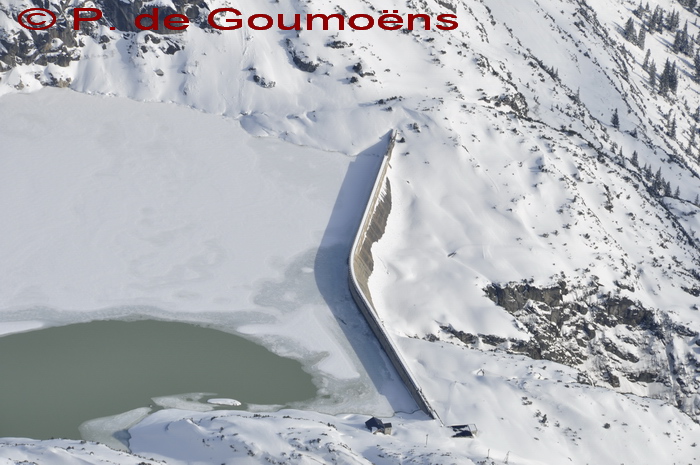
</video> and here are download links for those who prefer to download now and watch later (about 160MB): At the top At the top, there is a scenic two hour walk around Lake Gelmer, the path takes you across the top of a dam built for hydro-electric power generation. Lake Gelmer - hydro-electric dam Getting there from DebConf13 and the Debian 20th birthday For those coming to Switzerland for DebConf13 next month, the Gelmerbahn is probably a little bit too far for a day trip but makes an excellent place to stop during a 2 or 3 day tour around Switzerland. It is accessible using the all-day bus pass for the tour of 3 or 4 mountain passes or by train to Innertkirchen and then a short ride on the bus. The busses are irregular, use sbb.ch to plan the journey. Walking down the mountain from the lake to the bus stop takes about 90 minutes and for those who choose this option, the ticket is cheaper. More Swiss travel blogs Please click here to access some of my previous blogs about Swiss travel with videos and useful ideas for day trips.

29 July 2013

Thomas Goirand: OpenStack Havana b2 available, openstack-debian-images approved

I have finished preparing the beta 2 of the next release of OpenStack. It is currently only available from out Git on Alioth (in /git/openstack), and directly from my jenkins repository, which creates Wheezy backports for it:
deb ftp://havana.pkgs.enovance.com/debian havana main
deb http://archive.gplhost.com/debian havana-backports main
As for every OpenStack release, a large number of Python modules needed to be packaged and are waiting in the FTP master NEW queue to be approved: oslo-sphinx, python-django-discover-runner, python-hacking, python-jsonrpclib, python-lesscpy, python-neutronclient, python-nosehtmloutput, python-requestbuilder, python-termcolor, sphinxcontrib-httpdomain and sphinxcontrib-pecanwsme. Let s hope that they will be approved before the next beta release in september (time where OpenStack Havana will be in feature freeze). The total number of packages maintained by the OpenStack team (on which I really am the only active maintainer for the moment ), there s 53 packages, plus these 11 packages waiting in the NEW queue. That s a big number of package, and I wouldn t mind some help One thing that annoyed all the community is that Quantum, the OpenStack network virtualization module, had to be renamed as Neutron, because of a trademark from Quantum (you probably remember the Quantum Fireball hard drives? Well, it s the same company ). Another good news is that my openstack-debian-images package has just been approved and landed in Sid. With it, you can automate the process of building a Debian image for OpenStack with a simple shell command (there s a man page that I wrote with it: read it if you need to build images). It is made of a single shell script to build the image, using kpartx, parted, mbr, debootstrap, extlinux and friends. I tried to keep it simple, not involving a huge amount of components. With the release of cloud-init 0.7.2-3, I have fixed a few bugs (3 important bugs, out of which 2 where RC bugs), thanks to contributions in the debian-cloud@lists.debian.org mailing list. This includes adding new init.d scripts, so we now have support for user data. This doesn t only benefits OpenStack images, but anyone willing to start virtual machines in the cloud (nowadays, every cloud implementation needs cloud-init installed in the virtual images). This means you can include a script in the metadata of the virtual machine you start it, and it will be executed at startup. If everything goes as planned (that is, no new RC bug), I will upload an update of cloud-init to backports in 5 days (there is already a version there, but it doesn t have the necessary init.d scripts to execute the user data scripts), and openstack-debian-images in 9 days. Then it will be possible to build OpenStack images with absolutely all the tools available from Wheezy (and backports). I hope to be able to discuss that during Debconf 13.

27 July 2013

Petter Reinholdtsen: First beta release of Debian Edu/Skolelinux based on Debian Wheezy

The first wheezy based beta release of Debian Edu was wrapped up today. This is the release announcement: New features for Debian Edu 7.1+edu0~b0 released 2013-07-27 These are the release notes for for Debian Edu / Skolelinux 7.1+edu0~b0, based on Debian with codename "Wheezy". About Debian Edu and Skolelinux Debian Edu, also known as Skolelinux, is a Linux distribution based on Debian providing an out-of-the box environment of a completely configured school network. Immediately after installation a school server running all services needed for a school network is set up just waiting for users and machines being added via GOsa , a comfortable Web-UI. A netbooting environment is prepared using PXE, so after initial installation of the main server from CD, DVD or USB stick all other machines can be installed via the network. The provided school server provides LDAP database and Kerberos authentication service, centralized home directories, DHCP server, web proxy and many other services. The desktop contains more than 60 educational software packages and more are available from the Debian archive, and schools can choose between KDE, Gnome, LXDE and Xfce desktop environment. This is the fifth test release based on Debian Wheezy. Basically this is an updated and slightly improved version compared to the Squeeze release. ALERT: Alpha based installations should reinstall or downgrade the versions of gosa and libpam-mklocaluser to the ones used in this beta release. Software updates Other changes Known issues Where to get it To download the multiarch netinstall CD release you can use The MD5SUM of this image is: 55d5de9765b6dccd5d9ec33cf1a07109
The SHA1SUM of this image is: 996a1d9517740e4d627d100de2d12b23dd545a3f To download the multiarch USB stick ISO release you can use The MD5SUM of this image is: d8f0818c51a78d357de794066f289f69
The SHA1SUM of this image is: 49185ca354e8d0543240423746924f76a6cee733 How to report bugs http://wiki.debian.org/DebianEdu/HowTo/ReportBugs

Christian Perrier: Developers per country (July 2013)

This is time again for my annual report about the number of developers per country. This is now the fifth edition of this report, after the 2012, 2011, 2010 and 2009 editions. So, here we are with the July 2013 version, sorted by the ratio of *active* developers per million population for each country.
Act: number of active developers
Dev: total number of developers
A/M: number of active devels per million pop.
D/M: number of devels per million pop.
2009: rank in 2009
2010: rank in 2010
2011: rank in 2011 (June)
2011: rank in 2012 (June)
2013: rank now
Code Name Population Act Dev Dev Act/Million Dev/Million 2009 2010 June 2011 June 2012 July 2013
fi Finland 5259250 19 31 3,61 5,89 1 1 1 1 1
ie Ireland 4670976 12 15 2,57 3,21 13 9 6 2 2
ch Switzerland 7870134 20 27 2,54 3,43 2 2 2 3 3
mq Martinique 396404 1 1 2,52 2,52

3 4 4
se Sweden 9088728 22 37 2,42 4,07 3 6 7 5 5
no Norway 4973029 12 15 2,41 3,02 5 4 4 6 6
nz New Zealand 4331600 10 15 2,31 3,46 4 3 5 7 7
de Germany 81471834 165 235 2,03 2,88 7 7 9 9 8 *
lu Luxemburg 503302 1 1 1,99 1,99 8 5 8 8 9 *
at Austria 8217280 16 26 1,95 3,16 6 8 10 10 10
fr France 65350000 100 130 1,53 1,99 12 12 11 11 11
au Australia 22607571 31 59 1,37 2,61 9 10 12 12 12
be Belgium 11071483 14 17 1,26 1,54 10 11 13 13 13
uk United-Kingdom 62698362 73 114 1,16 1,82 14 14 14 14 14
nl Netherlands 16728091 19 40 1,14 2,39 11 13 15 15 15
ca Canada 33476688 32 61 0,96 1,82 15 15 17 16 16
dk Denmark 5529888 5 10 0,9 1,81 17 17 16 17 17
es Spain 46754784 35 56 0,75 1,2 16 16 19 18 18
it Italy 59464644 36 51 0,61 0,86 23 22 22 19 19
cz Czech Rep 10190213 6 6 0,59 0,59 21 20 21 21 20 *
lt Lithuania 3535547 2 2 0,57 0,57 28 19 20 22 21 *
us USA 313232044 173 378 0,55 1,21 19 21 25 24 22 *
il Israel 7740900 4 6 0,52 0,78 24 24 24 25 23 *
hu Hungary 10076062 5 10 0,5 0,99 18 25 26 20 24 *
hr Croatia 4290612 2 2 0,47 0,47 20 18 18 26 25 *
lv Latvia 2204708 1 1 0,45 0,45 26 26 27 27 26 *
bg Bulgaria 7364570 3 3 0,41 0,41 25 23 23 23 27 *
uy Uruguay 3477778 1 2 0,29 0,58 22 27 28 28 28
jp Japan 127078679 35 50 0,28 0,39 30 28 29 29 29
pl Poland 38441588 10 14 0,26 0,36 29 29 30 30 30
cr Costa Rica 4301712 1 1 0,23 0,23 31 30 31 31 31
by Belarus 9577552 2 2 0,21 0,21 35 36 39 39 32 *
sg Singapore 5183700 1 1 0,19 0,19


33 33
pt Portugal 10561614 2 4 0,19 0,38 27 32 32 34 34
gr Greece 10787690 2 3 0,19 0,28 33 38 34 35 35
sk Slovakia 5477038 1 1 0,18 0,18 32 31 33 36 36
ar Argentina 40677348 6 8 0,15 0,2 34 33 35 32 37 *
rs Serbia 7186862 1 1 0,14 0,14


38 *
tw Taiwan 23040040 3 3 0,13 0,13 37 34 37 37 39 *
br Brazil 192376496 21 23 0,11 0,12 36 35 38 38 40 *
cu Cuba 11241161 1 1 0,09 0,09
38 41 41 41
kr South Korea 48754657 4 6 0,08 0,12 39 39 42 42 42
gt Guatemala 13824463 1 1 0,07 0,07


43 *
ve Venezuela 28047938 2 2 0,07 0,07 40 45 50 49 44 *
ec Ecuador 15007343 1 1 0,07 0,07
40 43 43 45 *
co Colombia 45566856 3 4 0,07 0,09 41 44 46 47 46 *
cl Chile 16746491 1 2 0,06 0,12 42 41 44 44 47 *
za South Africa 50590000 3 10 0,06 0,2 38 48 48 48 48
ru Russia 143030106 7 8 0,05 0,06 43 42 47 45 49 *
mg Madagascar 21281844 1 1 0,05 0,05 44 37 40 40 50 *
ro Romania 21904551 1 2 0,05 0,09 45 43 45 46 51 *
my Malaysia 28250000 1 1 0,04 0,04

49 50 52 *
pe Peru 29907003 1 1 0,03 0,03 46 46 51 51 53 *
tr Turkey 74724269 2 2 0,03 0,03 47 47 52 52 54 *
ua Ukraine 45134707 1 1 0,02 0,02 48 53 58 59 55 *
th Thailand 66720153 1 2 0,01 0,03 50 50 54 54 56 *
eg Egypt 80081093 1 3 0,01 0,04 51 51 55 55 57 *
mx Mexico 112336538 1 1 0,01 0,01 49 49 53 53 58 *
cn China 1344413526 10 14 0,01 0,01 53 53 57 56 59 *
in India 1210193422 9 9 0,01 0,01 52 52 56 57 60 *
sv El Salvador 7066403 0 1 0 0,14

36 58 61 *


957 1535 62,35%


A few interesting facts:

25 July 2013

DebConf team: DebConf13 preliminary schedule available (Posted by Talks team)

We are happy to announce that the schedule for the upcoming DebConf13 in Vaumarcus, Switzerland, is available! It is still possible for some changes to occur, as we always try to accept new proposals, even those submitted during the conference. DebConf13 talks will mostly happen in two rooms simultaneously, except for a few plenaries which will be presented in the main room with no parallel event. A third room will be available for discussion groups and ad-hoc sessions. As usual, we ve tried to cluster related activities in sequence, even though it was not always possible. Besides that there will be many tracks covering specific topics, which are: There will also be two special tracks, since DebConf is not only about hacking, talks and discussions: As in previous years, we provide various ways to access the schedule: the DebConf team

24 July 2013

Daniel Leidert: Moving from (software) RAID 1 to RAID 5 and testing performance

Finally I finished migrating my new N54L from a 2-disk software RAID 1 (2x2TB WD20EFRX) to 3-disk RAID 5 (3x2TB WD20EFRX) using mdadm. I got an excellent mini HOWTO I followed. Resyncing and reshaping the RAID took several days ... top speed was 110.000K/s ... but left my data untouched. Finally growing the RAID now I have two partitions; one with 0.5GB (md0) and the other with 3.4GB (md1) which both host an EXT4 file system, whereas the first one is encrypted via LUKS and the second one is not. RAID device and file system configuration Below is a summary of the setup and the values I found working well for my system.
3-disk RAID 5 devicefile system
devicechunkstripe_cache_sizeread_ahead_kbtypeencryptionstridestripe-width
/dev/md064409632768ext4luks1632
/dev/md15121638432768ext4no128256
I've played around with the system a bit. Changing the chunk size on the fly however took a long time. /dev/md0 will contain some backups, so there probably will be a mixture of small and large files. So I've chosen to only test the values 64K, 128K and 512K (default) for this device. I left the other untouched as it will mainly contain large files. Performance measurement Below are the results using hdparm to measure performance. First lets take a look at the drives ...

$ hdparm -tT /dev/sd[bcd]
/dev/sdb:
Timing cached reads: 3268 MB in 2.00 seconds = 1634.54 MB/sec
Timing buffered disk reads: 438 MB in 3.00 seconds = 145.87 MB/sec

/dev/sdc:
Timing cached reads: 3292 MB in 2.00 seconds = 1646.32 MB/sec
Timing buffered disk reads: 392 MB in 3.01 seconds = 130.22 MB/sec

/dev/sdd:
Timing cached reads: 3306 MB in 2.00 seconds = 1653.18 MB/sec
Timing buffered disk reads: 436 MB in 3.00 seconds = 145.26 MB/sec

$ hdparm --direct -tT /dev/sd[bcd]
/dev/sdb:
Timing O_DIRECT cached reads: 468 MB in 2.01 seconds = 233.17 MB/sec
Timing O_DIRECT disk reads: 442 MB in 3.00 seconds = 147.15 MB/sec

/dev/sdc:
Timing O_DIRECT cached reads: 468 MB in 2.00 seconds = 233.69 MB/sec
Timing O_DIRECT disk reads: 392 MB in 3.01 seconds = 130.36 MB/sec

/dev/sdd:
Timing O_DIRECT cached reads: 468 MB in 2.00 seconds = 233.94 MB/sec
Timing O_DIRECT disk reads: 442 MB in 3.01 seconds = 146.93 MB/sec
... and now at the RAID devices ...

$ hdparm -tT /dev/md?
/dev/md0:
Timing cached reads: 3320 MB in 2.00 seconds = 1660.37 MB/sec
Timing buffered disk reads: 770 MB in 3.01 seconds = 256.05 MB/sec

/dev/md1:
Timing cached reads: 3336 MB in 2.00 seconds = 1668.07 MB/sec
Timing buffered disk reads: 742 MB in 3.01 seconds = 246.89 MB/sec

$ hdparm --direct -tT /dev/md?
/dev/md0:
Timing O_DIRECT cached reads: 974 MB in 2.00 seconds = 487.08 MB/sec
Timing O_DIRECT disk reads: 770 MB in 3.01 seconds = 256.17 MB/sec

/dev/md1:
Timing O_DIRECT cached reads: 784 MB in 2.00 seconds = 391.18 MB/sec
Timing O_DIRECT disk reads: 742 MB in 3.01 seconds = 246.42 MB/sec
... and now lets see, which actual speed we reach using dd. First lets check the encrypted device:

RAID-5 /dev/md0 (LUKS encrypted EXT4): chunk=64K, stripe_cache_size=4096,
readahead(blockdev)=65536, stride=16, stripe-width=32 ...

$ dd if=/dev/zero of=/mnt/md0/10g.img bs=1k count=10000000
10000000+0 Datens tze ein
10000000+0 Datens tze aus
10240000000 Bytes (10 GB) kopiert, 64,1227 s, 160 MB/s

$ dd if=/mnt/md0/10g.img of=/dev/null bs=1k count=10000000
10000000+0 Datens tze ein
10000000+0 Datens tze aus
10240000000 Bytes (10 GB) kopiert, 85,768 s, 119 MB/s
Well, read speed is consistently lower than write speed for the encrypted file system. Lets take a look at the non-encrypted device:

RAID-5 /dev/md1 (EXT4): chunk=512K, stripe_cache_size=16384,
readahead(blockdev)=65536, stride=128, stripe-width=256 ...

$ dd if=/dev/zero of=/mnt/md1/10g.img bs=1k count=10000000
10000000+0 Datens tze ein
10000000+0 Datens tze aus
10240000000 Bytes (10 GB) kopiert, 37,0016 s, 277 MB/s

$ dd if=/mnt/md1/10g.img of=/dev/null bs=1k count=10000000
10000000+0 Datens tze ein
10000000+0 Datens tze aus
10240000000 Bytes (10 GB) kopiert, 33,5901 s, 305 MB/s
Looks nice to me. How to set these values I use a mixture of udev, util-linux and e2fsprogs to set the values. First I checked, which values for stripe_cache_size and read_ahead_kb are working best for me. For the LUKS encrypted EXT4 I got varying results showing best performances with values of 4096, 8192 and 16384 for stripe_cache_size. I decided for the first value, because it appeared more often with the best performance than the others.

$ less /etc/udev/rules.d/90-local-n54l.rules grep stripe_cache
SUBSYSTEM=="block", KERNEL=="md0", ACTION=="add", TEST=="md/stripe_cache_size", TEST=="queue/read_ahead_kb", ATTR md/stripe_cache_size ="4096", ATTR queue/read_ahead_kb ="32768", ATTR bdi/read_ahead_kb ="32768"
SUBSYSTEM=="block", KERNEL=="md1", ACTION=="add", TEST=="md/stripe_cache_size", TEST=="queue/read_ahead_kb", ATTR md/stripe_cache_size ="16384", ATTR queue/read_ahead_kb ="32768", ATTR bdi/read_ahead_kb ="32768"
The read_ahead_kb value can also be set using blockdev. Note that this command expects a value of 512-byte sectors whereas read_ahead_kb is the size in kbyte. Therefor the difference in values:

$ blockdev --setra 65536 /dev/md[01]
Tuning the EXT4 file system performance with calculated values using tune2fs:

$ tune2fs -E stride=16,stripe-width=32 -O dir_index /dev/mapper/_dev_md0
$ tune2fs -E stride=128,stripe-width=256 -O dir_index /dev/md1
Disabling NCQ reduced the speed a lot for me, so I left the values as is and did not struggle with it:

$ cat /sys/block/sd[bcd]/device/queue_depth
31
31
31

23 July 2013

Russell Coker: Security is Impossible

The Scope of the Problem Security is inherently complex because of the large number of ways of circumventing it. For example Internet facing servers have been successfully attacked based on vulnerabilities in the OS, the server application, public key generation, DNS, SSL key certificates (and many other programs and algorithms in use), as well as the infrastructure and employees of all companies in the chain. When all those layers work reasonably well (not perfectly but well enough to not obviously be the weakest link) there are attacks on the end user systems that access the servers (such as the trojan horse programs used to attack PCs used for online banking). My Area of Interest The area of security that interests me is Linux software development. There are many related areas such as documentation and default configurations to make it easier for people to secure their systems (instead of insecure systems being the default option) which are all important. There are also many related fields such as ensuring that all people with relevant access are trustworthy. There are many interesting problems to solve in such areas most of which aren t a good match for my skills or just require more time than I have available. I sometimes write blog posts commenting on random security problems in other areas. Sometimes I hope to inspire people to new research, sometimes I hope to just inform users who can consider the issues when implementing solutions to security problems. Bugs In the software development side there are ongoing problems of bugs in code that weaken security. The fact that the main area of concern for people who are interested in securing systems is fixing bugs is an indication that the problem of software quality needs a lot of work at the moment. The other area that gets a reasonable amount of obvious work is in access control. Again it s an area that needs a lot of work, but the fact that we re not done with that is an indication of how far there is to go in generally improving computer security. Authenticating Software Releases There have been cases where source code repositories have been compromised to introduce trojan horse code, the ones I ve read about have been discovered reasonably quickly with little harm done but there could be some which weren t discovered. Of course it s likely that such attacks will be discovered because someone will have the original and the copies can be compared. Repositories of binaries are a bigger problem, it s not always possible to recompile a program and get a binary which checks out as being identical (larger programs often include the build time in the binary). Even for build processes which don t include such data it can be very difficult to determine the integrity of a build process. For example programs compiled with different versions of libraries, header files, or compilers will usually differ slightly. As most developers frequently change the versions of such software they will often be unable to verify their own binaries and any automated verification of such binaries will be impossible for anyone else. So if a developer s workstation was compromised without their knowledge it might be impossible for them to later check whether they released trojan binaries without just running the binaries in question and looking for undesired behavior. The problem of verifying past binaries is solvable for large software companies, Linux distributions, and all other organisations that have the resources to keep old versions of all binaries and libraries used to build software. For proprietary software companies the verification process would have to start with faith in the vendor of their OS and compiler doing the right thing. For Linux distributions and other organisations based on free software it would start by having the source to everything which can then be verified in theory although in practice verifying all source for compilers, the OS, and libraries would be a huge undertaking. Espionage There is a well documented history of military espionage, people who are sworn to secrecy have been subverted by money, blackmail, and by having political beliefs which don t agree with their government. The history of corporate espionage is less well documented but as corporations perform less stringent background checks than military organisations I think it s safe to assume that corporate espionage is much more common. Presumably any government organisation that can have any success at subverting employees of a foreign government can be much more successful in subverting programmers (either in companies such as Microsoft or in the FOSS community). One factor that makes it easier to launch such attacks is the global nature of software development. Government jobs that involve access to secret data have requirements about where the applicant was born and has lived, corporate jobs and volunteer positions in free software development don t have such requirements. The effort involved in subverting an existing employee of a software company or contributor to free software or the effort involved in getting an agent accepted in such a project would be quite small when compared to a nuclear weapons program. Therefore I think we should assume that every country which is capable of developing nuclear weapons (even North Korea) can do such things if they wish. Would the government of such a country want to subvert a major software project that is used by hundreds of millions of people? I can imagine ways that such things could benefit a government and while there would be costs for such actions (both in local politics and international relations) it seems most likely that some governments would consider it to be worth the risk and North Korea doesn t seem to have much to lose. Conclusion We would like every computer to be like a castle with a strong wall separating them from the bad things which can t be breached in ways that aren t obvious. But the way things are progressing with increasingly complex systems depending on more people and other systems it s becoming more like biology than engineering. We can think of important government systems as being comparable to the way people with compromised immune systems are isolated from any risk of catching a disease, the consequences of an infection are worse so greater isolation measures are required. For regular desktop PCs getting infected by a trojan is often regarded as being similar to getting a cold in winter. People just accept that their PC will be infected on occasion and don t bother making any serious effort to prevent it. After an infection is discovered the user (or their management for a corporate PC) tend not to be particularly worried about data loss in spite of some high profile data leaks from companies that do security work and the ongoing attacks against online banking and webcam spying on home PCs. I don t know what it will take for users to start taking security risks seriously. I think that a secure boot is a good step in the right direction, but it s a long way from being able to magically solve all security problems. I ve previously described some of the ways that secure boot won t save you [1]. The problems of subverting developers don t seem to be an immediate concern (although we should consider the possibility that it might be happening already without anyone noticing). The ongoing trend is that the value of computers in society is steadily increasing which therefore increases the rewards for criminals and spy agencies who can compromise them. Therefore it seems that we will definitely face the problems of subverted developers if we can adequately address the current technical problems related to flaws in software and inadequate access control. We just need to fix some of the problems which are exploited more easily to force the attackers to use the more difficult and expensive attacks. Note that it is a really good thing to make attacks more difficult, that decreases the number of organisations that are capable of attack even though it won t stop determined attackers. For end user systems the major problem seems to be related to running random programs from the Internet without a security model that adequately protects the system. Both Android and iOS make good efforts at protecting a system in the face of random hostile applications, but they have both been shown to fail in practice (it might be a good idea to have a phone for games that is separate from the phone used for phone calls etc). More research into OS security is needed to address this. But in the mean time users need to refrain from playing games and viewing porn on systems that are used for work, Internet banking, and other important things. While PCs are small and cheap enough that having separate PCs for important and unimportant tasks is practical it seems that most users don t regard the problems as being serious enough to be worth the effort.

Next.

Previous.