Chris Lamb: Free software activities in January 2021
 Here is my monthly update covering what I have been doing in the free software world during January 2021 (previous month):
- As part of my duties of being on the board of directors of the Open Source Initiative, I attended its monthly meeting and participated in various licensing and other related discussions occurring on the internet. Unfortunately, I could not attend the parallel meeting for Software in the Public Interest this month.
- After a rather turbulent 2020, I was very grateful to have been chosen in OpenUK's 2021 honours as one of the 100 top influencers in the UK's open technology community, which recognises contributions to open source software, open data and open hardware. Congratulations to all of the other open source heroes and heroines who were also listed am looking forward to an exciting year together.
Reproducible Builds One of the original promises of open source software is that distributed peer review and transparency of process results in enhanced end-user security. However, whilst anyone may inspect the source code of free and open source software for malicious flaws, almost all software today is distributed as pre-compiled binaries. This allows nefarious third-parties to compromise systems by injecting malicious code into ostensibly secure software during the various compilation and distribution processes. The motivation behind the Reproducible Builds effort is to ensure no flaws have been introduced during this compilation process by promising identical results are always generated from a given source, thus allowing multiple third-parties to come to a consensus on whether a build was compromised. This month, I:
- Categorised a huge number of packages and issues in the Reproducible Builds "notes" repository.
- Drafted, published and publicised our monthly report and attended a number of IRC meetings.
-
In Debian:
- Kept isdebianreproducibleyet.com up to date. [...]
- Submitted the following patches to fix reproducibility-related toolchain issues within Debian:
-
I also submitted a number of patches to fix specific reproducibility issues including apertium-anaphora & davs2, as well as a number of issues found during reproducibility testing. For example, I discovered that
node-tap-parser's manual pages contained errors instead of documentation (#980293).
-
disorderfs is our FUSE-based filesystem that deliberately introduces non-determinism into system calls to reliably flush out reproducibility issues. This month, I updated our benchmarking tools to call use a tool that will call
stat(2)repeatedly. [...]
-
Updated the main Reproducible Builds website and documentation with many changes, including adding a missing image [...] and to ignore commits that start with, for example, '
2020 12' when generating commit listings [...]. - strip-nondeterminism is our tool to remove specific non-deterministic results from a completed build. This month, I ensured that the tool did not process unwritable files and printing a warning in this case (#980356) as well as a number of codebase improvements such as reflowing logic to make future changes easier. [...]
I also made the following changes to diffoscope, our in-depth and content-aware diff utility that can locate and diagnose reproducibility issues, releasing version 164, version 165 and version 166 as well as triaging and merging many contributions from others:
-
New features:
- Save
sys.argvin our top-level temporary directory, in case it helps debug why temporary directories might not get cleaned up. [...] - Collapse the
--acland--xattrarguments into--extended-filesystem-attributesto cover all of these extended attributes, defaulting the new option to false (ie. to not check these expensive external calls). [...][...]
- Save
- Bug fixes:
-
Output improvements:
- Show the 'fuzziness' amount in percentage terms, not out of the rather-arbitrary '400'. [...]
- Improve help text for the
--exclude-directory-metadataargument. [...] - Wrap our external call to
cmp(1)with a missing profiling point. [...] - Truncate
jsondiffdifferences at 512 bytes, in case they consume the entire page. [...] - Improve the logging around fuzzy matching. [...]
-
Codebase improvements:
- Clarify in a comment that
__del__is not always called in Python, so temporary directories are not necessarily removed the moment they go out of scope. [...] - Print the free space in our temporary directory when we create it, not from within
diffoscope.main. [...] - Tidy the
diffoscope.comparators.utils.fuzzymodule. [...] - Add a note regarding the special ordering of
test_all_tools_are_listedwithin that module. [...]
- Clarify in a comment that
Debian Uploads
-
python-django:3.1.5-1New upstream bugfix release.3.2~alpha1-1New upstream 3.2 alpha release & misc packaging updates.
-
redis:6.0.9-2(to unstable) Enable systemdType=notifysupport. (#977852lllllllllll)6.0.9-3(to unstable) Allow/etc/redisto be rewritten and also removed upon purge. (#981000)6.0.9-4(to unstable) Send systemd readiness notification when we are ready to accept connections in order to fixreplicaofsupport. Thanks to Guillem Jover for the report and patch. (#981226)6.2~rc2-1(to experimental) New upstream release.6.2~rc2-2(to experimental) Allow/etc/redisto be rewritten and also removed upon purge. (#981000)
-
Investigated and triaged:
cairo(CVE-2020-35492),firefox-esr(CVE-2020-16044),jackson-databind(CVE-2020-36179 CVE-2020-36189),nvidia-graphics-drivers(CVE-2021-1052, CVE-2021-1053 & CVE-2021-1056)),opensmtpd(CVE-2020-35680 & CVE-2020-35679),php7.0(CVE-2020-7071)),python-autobahn(CVE-2020-35678) &tlslite-ng(CVE-2020-26263. - Frontdesk duties, responding to user/developer questions, reviewing others' packages, participating in mailing list discussions, attending a monthly meeting, etc.
-
Issued DLA 2515-1 for
csync2. The cluster synchronization tool did not correctly check for the return value from GnuTLS security routines; it neglected to repeatedly call this function as required by the design of the API. -
Issued DLA 2516-1 for
gssproxyto fix a privilege separation issue that arose from failing to unlock a shared resource. -
Issued DLA 2517-1 and ELA 342-1 for the Dovecot to fix two issues. The first was an issue where an attacker could cause the IMAP server to discover filesystem directory structures and even access other users' emails using a specially crafted command (
CVE-2020-24386). The second was an issue where a malicious sender could crash Dovecot by sending messages with more than 10,000 (!) attachments (CVE-2020-25275). -
It was discovered that there was an in issue in the command-line tool for the Pacemaker High Availability stack. Local attackers were able to execute commands via shell code injection to the
crm historycommand-line tool, potentially allowing escalation of privileges. DLA 2533-1 was issued to address this.

 Today I played Tetris over a serial console connection, on a Vax 4000 running OpenBSD. I haven't felt that 1337 since a long time.


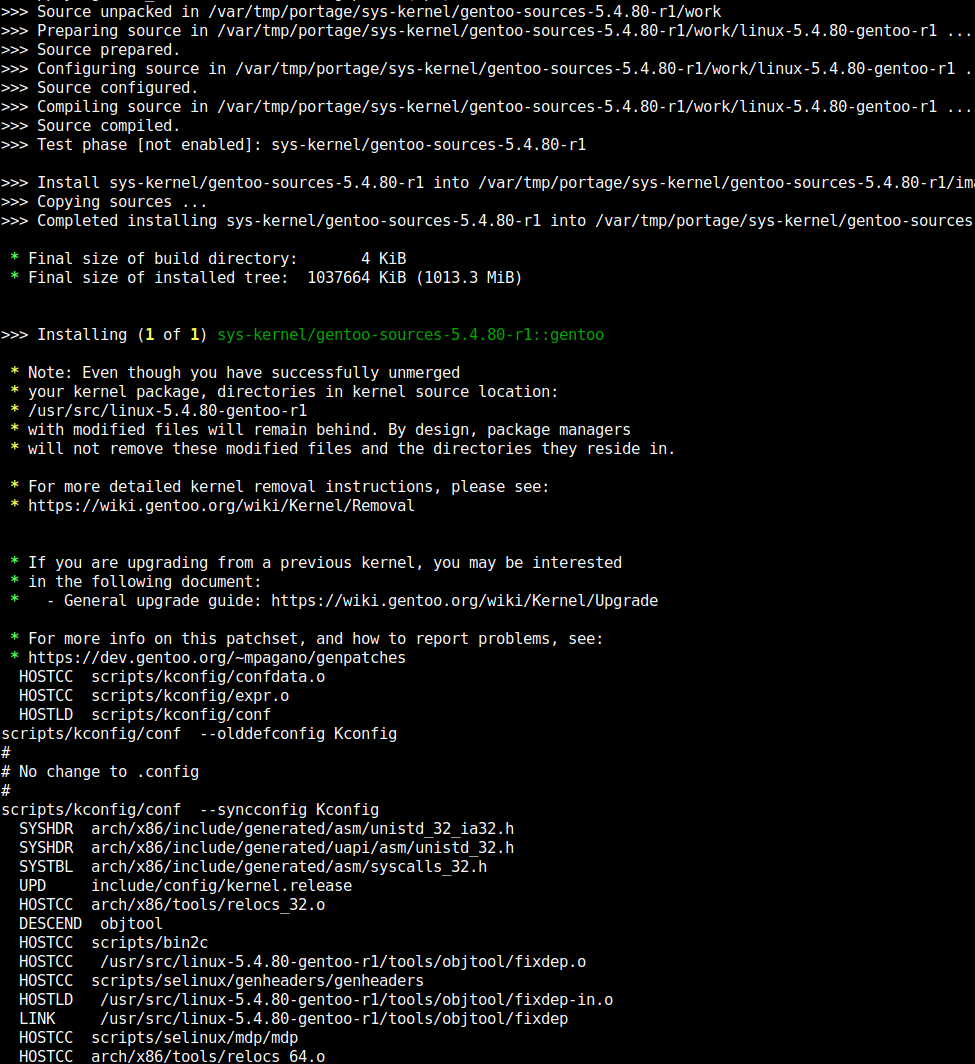
 Gentoo emerges of




 This is the subject of an interesting thread on the debian-devel mailing list.
It started with ".. The current policy of hiding other versions of Debian is limiting
the adoption of your OS by people like me.."
It seems that this user managed to contact us developers and give us some important
information how we can improve the user experience.
The following discussion shows that all our users need non-free firmware to get their
wireless network cards run.
Do we provide such installation images for our users?
Sure. We build them regularly, host them on our servers, we also sign
the hash sum with our official signing key. But we hide them very well
and still call them unofficial. Why?
I would like to have a more positive name for those images.
Ubuntu has the HWE (Hardware Enablement) kernel. Maybe Debian firmware
enablement images?
We should better promote the images that fits best for our users.
BTW, the URL for all these useful images is
 Although it was a much larger step when I made a similar announcement

 Ever since X.org switched to rootless operation, the days of the Geode X.org driver have been numbered. The old codebase dates back from Geode's early days at Cyrix, was then updated by NSC to add support for their new GX2 architecture, from which AMD dropped GX1 support and added support for their new LX architecture. To put it mildly, that codebase is a serious mess. However, at least the LX code comes with plenty of niceties, such as being able to detect when it runs on an OLPC XO-1 and to probe DCC pins to determine the optimal display resolution on other hardware. This still doesn't make the codebase cruft-free.
Anyhow, most Linux distributions have dropped support for anything older than i686 with PAE, which essentially means that the GX2 code is just for show. Debian is one of very few distributions whose x86-32 port still ships with i686 without PAE. In fact, the lowest common denominator kernel on i386 is configured for Geode (LX).
A while back, someone had started working on a KMS driver for the Geode LX. Through word of mouth, I got my hands on a copy of their Git tree. The driver worked reasonably well, but the codebase needs some polishing before it could be included in the Linux kernel tree.
Hence this call for help:
Is there anyone with good experience of the LKML coding standards who would be willing to clean up the driver's code and submit the patch to the LKML?
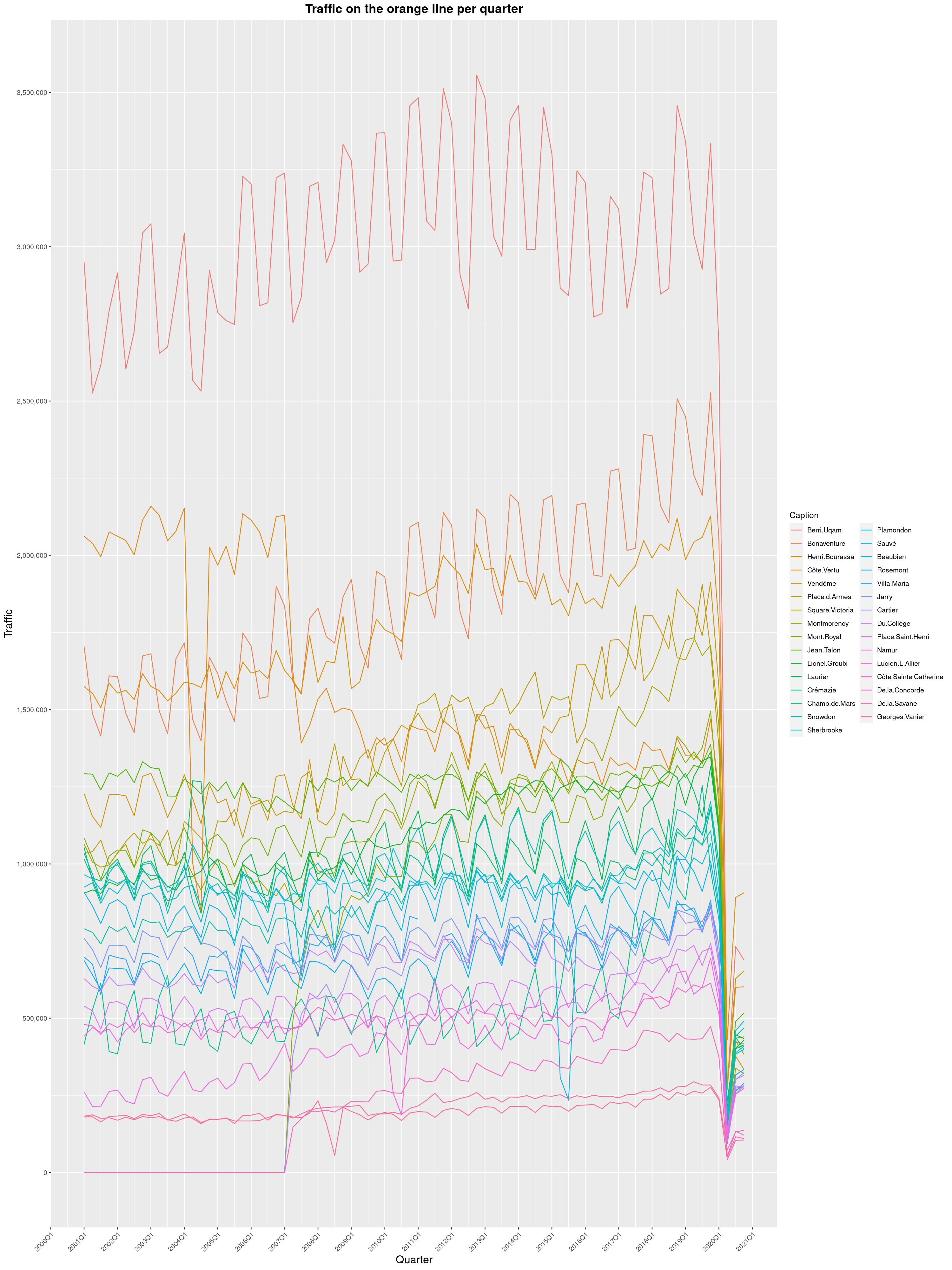
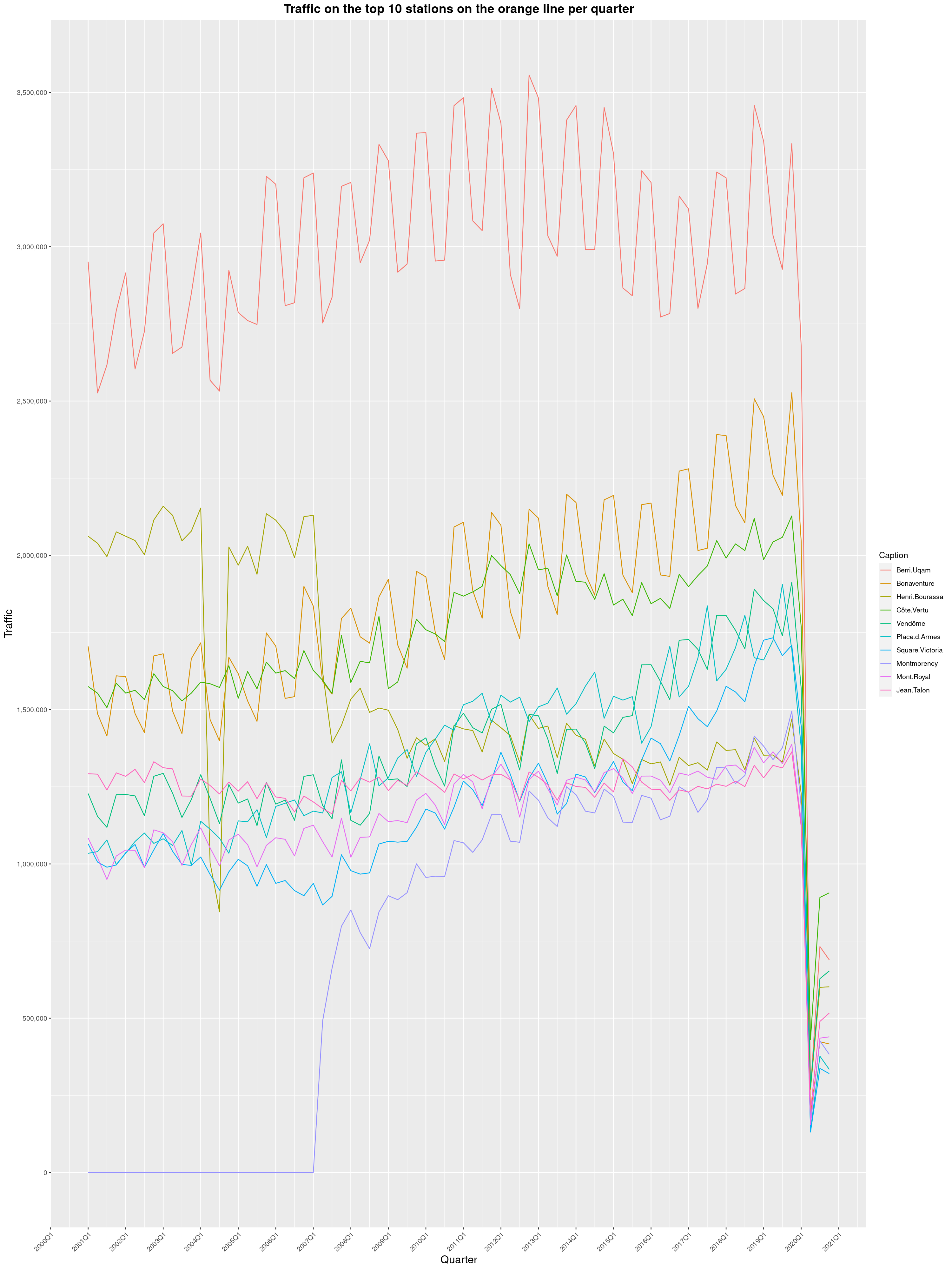
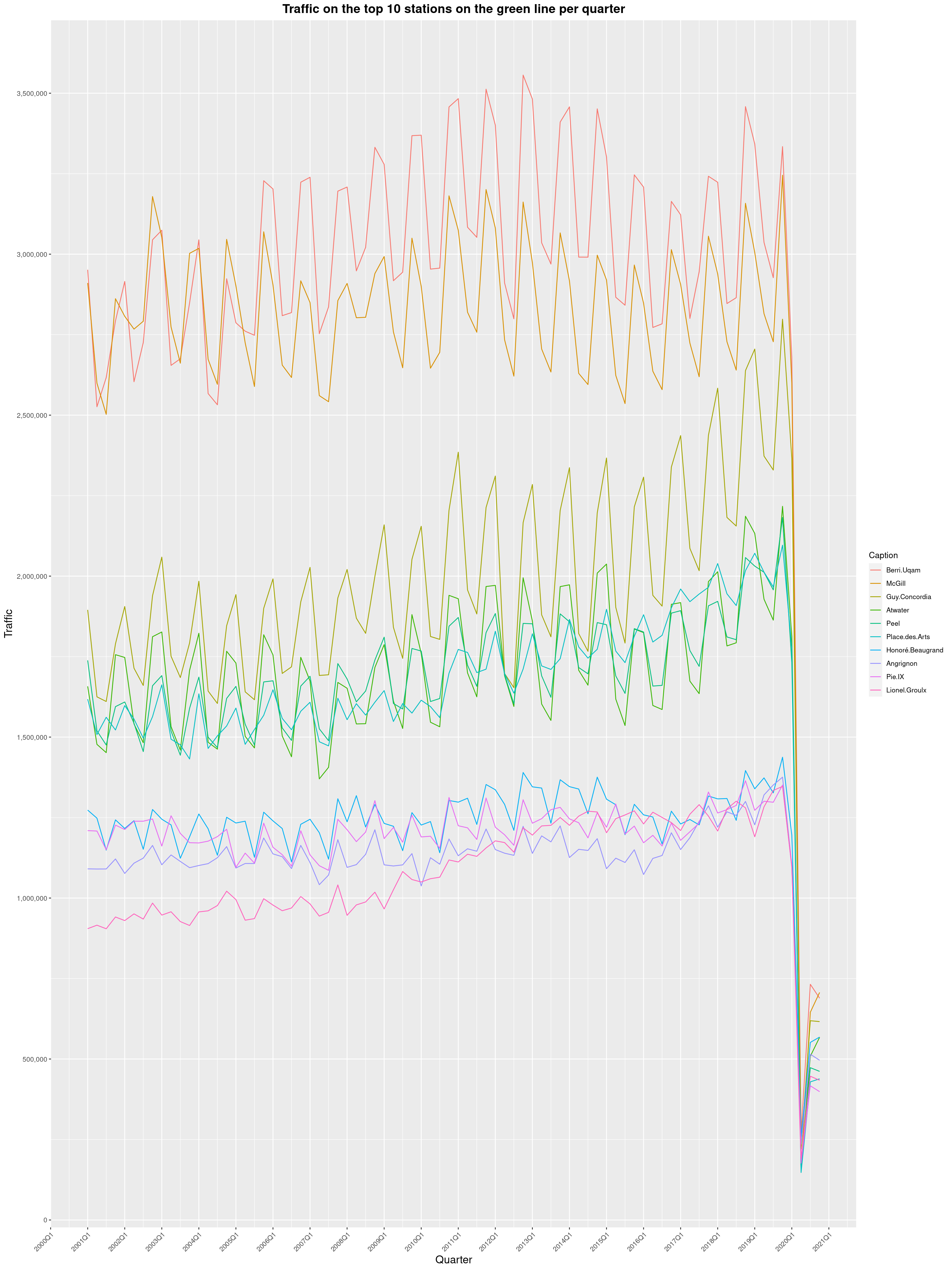
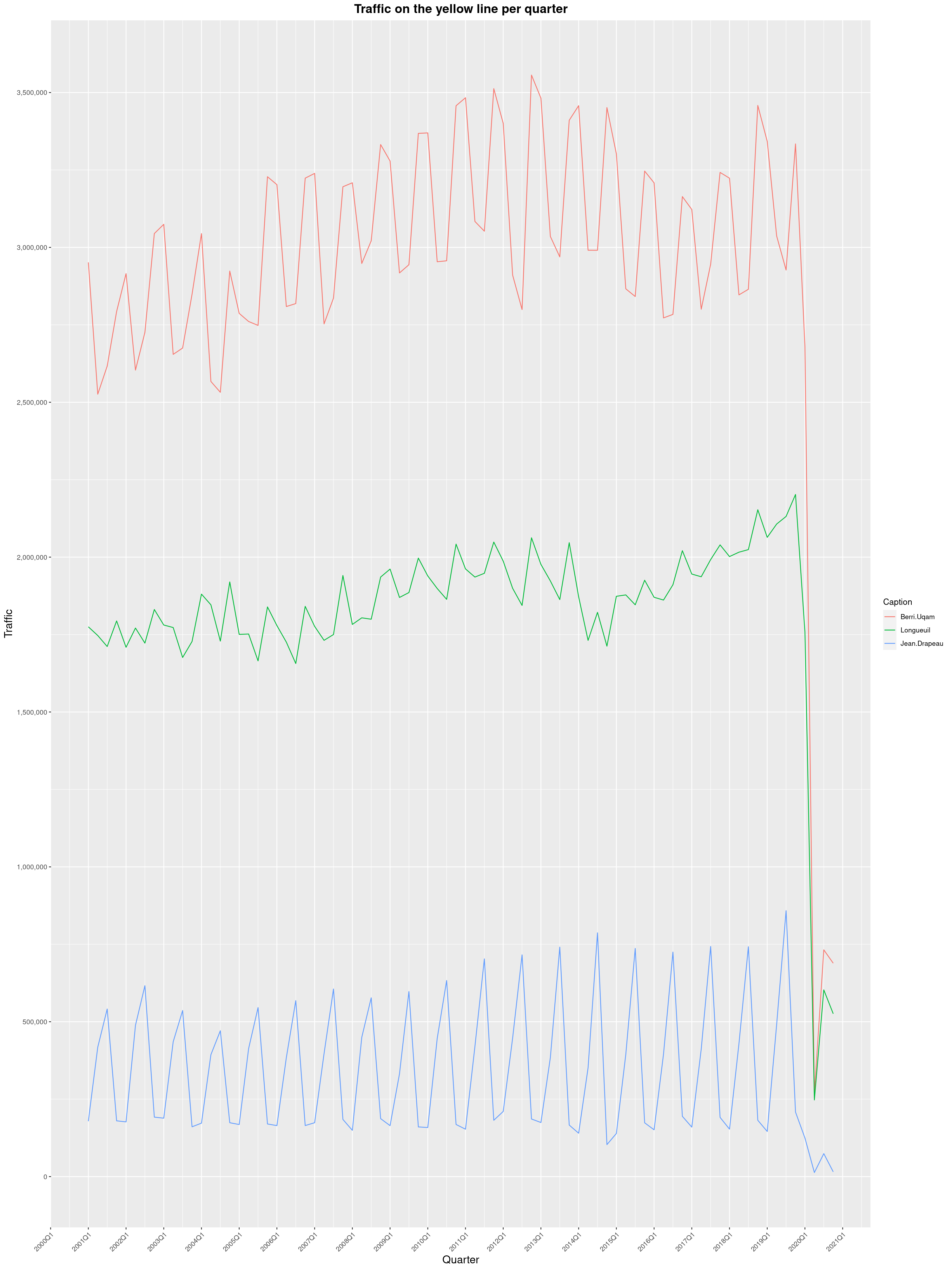
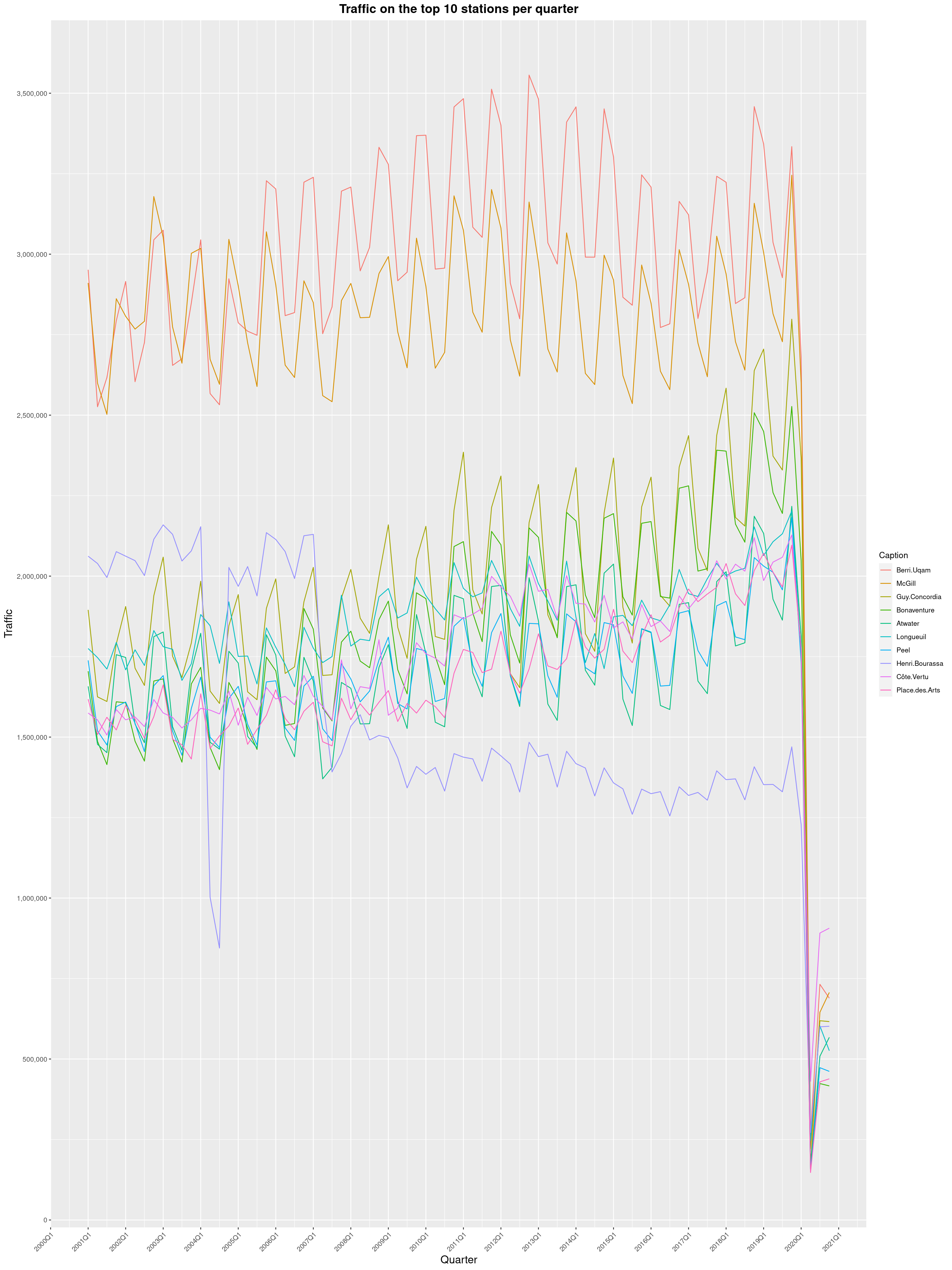
 In 2019, I got curious and asked Soci t de Transport de Montr al, Montreal's
transit agency, for the foot traffic data of Montreal's subway.
Since then, two years has passed and with COVID-19 still going strong, I wanted
to see what impact the pandemic had had. And oh boy, what an impact it is.
So here it is, data from 2001 to 2020, graphed the same way as in the