Search Results: "willi"

4 June 2017

Lars Wirzenius: Vmdb2 first alpha release: Debian disk image creation tool

tl;dr: Get vmdebootstrap replacement from http://git.liw.fi/vmdb2 and run it from the source tree. Tell me if something doesn't work. Send patches. Many years ago I wrote vmdebootstrap, a tool for installing Debian on a disk image for virtual machines. I had a clear personal need: I was setting up a CI system and it needed six workers: one each for Debian oldstable, stable, and unstable, on two architectures (i386, amd64). Installing Debian six times in the same way is a lot of work, so I figured how difficult can it be to automate it. Turns out that not difficult at all, except to install a bootloader. (Don't ask me why I didn't use any of the other tools for this. It was long ago, and while some of the tools that now exist probably did exist then, I like writing code and learning things while doing it.) After a while I was happy with what the program did, but didn't want to upload it to Debian, and didn't want to add the kinds of things other people wanted, so I turned vmdebootstrap over to Neil Williams, who added a ton of new features. Unfortunately, it turned out that my initial architecture was not scaleable, and also the code I wrote wasn't very good, and there weren't any tests. Neil did heroic work forcing my crappy software into doing things I never envisioned. Last year he needed a break and asked me to take vmdebootstrap back. I did, and have been hiding from the public eye ever since, since I was so ashamed of the code. (I created a new identity and pretended to be an international assassin and backup specialist, travelling the world forcing people to have at least one tested backup of their system. If you've noticed reports in the press about people reporting near-death experiences while holding a shiny new USB drive, that would've been my fault.) Pop quiz: if you have a program with ten boolean options ("do this, except if that option is given, do the other thing"), how many black box tests do you need to test all the functionality? If one run of the program takes half an hour, how long will a full test suite run? I did some hard thinking about vmdebootstrap, and came to the sad conclusion that it had reached the end of its useful life as a living software project. There was no reasonable way to add most of the additional functionality people were asking for, and even maintaining the current code was too tedious a task to consider seriously. It was time to make a clean break of the past and start over, without caring about backwards compatibility. After all, the old code wasn't going anywhere so anyone who needed it could still use it. There was no need to burden a new program with my past mistakes. All new mistakes were called for. At the Cambridge mini-Debconf of November, 2016, I gave a short presentation of what I was going to do. I also posted about my plans to the debian-cloud list. In short, I would write a new, more flexible and cleaner replacement to be called vmdb2. For various personal reasons, I've not been able to spend as much time on vmdb2 as I'd like to, but I've now reached the point where I'd like to announce the first alpha version publically. The source code is hosted here: http://git.liw.fi/vmdb2 . There are .deb packages at my personal public APT repo (http://liw.fi/code/), but vmdb2 is easy enough to run directly from a git checkout:
sudo ./vmdb2 foo.vmdb --output foo.img
There's no need to install it to try it. What works: What doesn't work: I'm not opposed to adding support for those, but they're not directly interesting to me. For example, I only have amd64 machines. The best way to get support for additional features is to tell me how, preferably in the form of patches. (If I have to read tons of docs, or other people's code, and then write code and iterate while other people tell me it doesn't work, it's probably not happening.) Why would you be interested in vmdb2? There's a lot of other tools to do what it does, so perhaps you shouldn't care. That's fine. I like writing tools for myself. But if this kind of tool is of interest to you, please do have a look. A short tutorial: vmdb2 wants you to give it a "specification file" (conventionally suffixed .vmdb, because someone stole the .spec suffix, but vmdb2 doesn't care about the name). Below is an example. vmdb2 image specification files are in YAML, since I like YAML, and specify a sequence of steps to take to build the image. Each step is a tiny piece of self-contained functionality provided by a plugin.
steps:
  - mkimg: "  output  "
    size: 4G
  - mklabel: msdos
    device: "  output  "
  - mkpart: primary
    device: "  output  "
    start: 0%
    end: 100%
    part-tag: root-part
The above create an image (name is specified with the --output option), which is four gigabytes in size, and create a partitition table and a single partition that fills the whole disk. The "tag" is given so that later steps can easily refer to the partition. If you prefer another way to partition the disk, you can achieve that by adding more "mkpart" steps. For example, for UEFI you'll want to have an EFI partition.
  - mkfs: ext4
    partition: root-part
  - mount: root-part
    fs-tag: root-fs
The above formats the partition with the ext4 filesystem, and then mounts it. The mount point will be a temporary directory created by vmdb2, and a tag is again given to the mount point so it can be referred to.
  - unpack-rootfs: root-fs
The above unpacks a tar archive to put content into the filesystem, if the tar archive exists. The tar archive is specified with the --rootfs-tarball command line option.
  - debootstrap: stretch
    mirror: http://http.debian.net/debian
    target: root-fs
    unless: rootfs_unpacked
  - apt: linux-image-amd64
    fs-tag: root-fs
    unless: rootfs_unpacked
  - cache-rootfs: root-fs
    unless: rootfs_unpacked
The above will run debootstrap and install a kernel into the filesystem, but skip doing that if the rootfs tarball was used. Also, the tarball is created if it didn't exist. This way the tarball is used by all but the first run, which saves a bit of time. On my laptop and with a local mirror, debootstrap and kernel installation takes on the order of nine minutes (500 to 600 seconds), whereas unpacking the tar archive is a bit faster (takes around 30 seconds). When iterating over things other than debootstrap, this speeds things up something wonderful, and seems worth the complexity. The "unless:" mechanism is generic. All the steps share some state, and the unpack-rootfs step sets the "rootfs_unpacked" flag in the shared state. The "unless:" field tells vmdb2 to check for the flag and if it is not set, or if it is set to false ("unless it is set to true"), vmdb2 will execute the step. vmdb2 may get more such flags in the future, if there's need.
  - chroot: root-fs
    shell:  
      sed -i '/^root:[^:]*:/s//root::/' /etc/passwd
      echo pc-vmdb2 > /etc/hostname
The above executes a couple of shell commands in a chroot of the root filesystem we've just created. In this case they remove a login password from root, and set the hostname. This is a replacement of the vmdebootstrap "customize" script, but it can be inserted anywhere into the sequence of steps. There's boot chroot and non-chroot variants of the step. This is a good point to mention that writing customize scripts gets quite repetitive and tedious after a while, so vmdb2 has a plugin to run Ansible instead. You can customize your image with that instead, while the image is being built and not have to wait until you boot the image and running Ansible over ssh.
  - grub: bios
    root-fs: root-fs
    root-part: root-part
    device: "  output  "
    console: serial
Finally, install a boot loader, grub. This shows the BIOS variant, UEFI is also supported. This also configures grub and the kernel to use a serial console. There's a "yarn" (test suite) to build and smoke test an image with vmdb2 to make sure at least the basic functionality works. The smoke test boots the image under Qemu, logs in as root, and tells the VM to power off. Very, very basic, but has already found actual bugs in vmdb2. The smoke test needs the serial console to work. As with vmdebootstrap originally, I don't particularly want to maintain the package in Debian. I've added Debian packaging (so that I can install it on my own machines), but I already have enough packages to maintain, so I'm hoping someone else will volunteer to take on the Debian maintainership and bug handling duties. If you would like vmdb2 to do more things to suit you better, I'm happy to explain how to write plugins to provide more types of steps. If you are currently using vmdebootstrap, either directly or as part of another tool, I encourage you to have a look at vmdb2. In the long term, I would like to retire vmdebootstrap entirely, once vmdb2 can do everything vmdebootstrap can do, and few people use vmdebootstrap. This may take a while. In any case, whether you want a new image building tool or not, happy hacking.

1 June 2017

Raphaël Hertzog: My Free Software Activities in May 2017

My monthly report covers a large part of what I have been doing in the free software world. I write it for my donors (thanks to them!) but also for the wider Debian community because it can give ideas to newcomers and it s one of the best ways to find volunteers to work with me on projects that matter to me. Debian LTS I was allocated 12 hours to work on security updates for Debian 7 Wheezy. During this time I did the following: Misc Debian work Debian Handbook. I started to work on the update of the Debian Administrator s Handbook for Debian 9 Stretch. As part of this, I noticed a regression in dblatex and filed this issue both in the upstream tracker and in Debian and got that issue fixed in sid and stretch (sponsored the actual upload, filed the unblock request). I also stumbled on a regression in dia which was due to an incorrect Debian-specific patch that I reverted with a QA upload since the package is currently orphaned. Django. On request of Scott Kitterman, I uploaded a new security release of Django 1.8 to jessie-backports but that upload got rejected because stretch no longer has Django 1.8 and I m not allowed to maintain that branch in that repository. Ensued a long and heated discussion that has no clear resolution yet. It seems likely that some solution will be found for Django (the 1.8.18 that was rejected was accepted as a one-time update already, and our plans for the future make it clear that we would have like to have an LTS version in stretch in the first place) but the backports maintainers are not willing to change the policy to accomodate for other similar needs in the future. The discussion has been complicated by the intervention of Neil Williams who brought up an upgrade problem of lava-server (#847277). Instead of fixing the root-problem in Django (#863267), or adding a work-around in lava-server s code, he asserted that upgrading first to Django 1.8 from jessie-backports was the only upgrade path for lava-server. Thanks See you next month for a new summary of my activities.

No comment Liked this article? Click here. My blog is Flattr-enabled.

31 May 2017

Lars Wirzenius: Using a Yubikey 4 for ensafening one's encryption

Introduction I've written before about using a U2F key with PAM. This post continues the theme and explains how to use a smartcard with GnuPG for storing OpenPGP private keys. Specifically, a Yubikey 4 card, because that's what I have, but any good GnuPG compatible card should work. The Yubikey is both a GnuPG compatible smart card, and a U2F card. The Yubikey 4 can handle keys up to 4096 bits. Older Yubikeys can only handle keys up to 2095 bits. The reason to do this is to make it harder for an attacker to steal your encryption keys. I will assume you don't already have an OpenPGP key, or are willing to generate a new one. I will also assume you run Debian stretch; some of the desktop environment setup details may differ between Debian versions or between Linux distributions. You will need: Terminology Some terminology: Outline The process outline is:
  1. Create a new, signing-only master key with GnuPG.
  2. Create three "subkeys", one each for encryption, signing, and authentication. These subkeys are what everyone else uses.
  3. Export copies of the master key pair and the subkey pairs and put them in a safe place.
  4. Put the subkeys on the Yubikey.
  5. GnuPG will automatically use the keys from the card. You have to have the card plugged into a USB port for things to work. If someone steals your laptop, they won't get the private subkeys. Even if they steal your Yubikey, they won't get them (the smartcard is physically designed to prevent that), and can't even use them (because there's PIN codes or passphrases and getting them wrong several times locks up the smartcard).
  6. Use gpg-agent as your SSH agent, and the authentication-only subkey on the Yubikey is used as your ssh key.
Configure GnuPG The process in more detail: Create new keys
$ gpg --full-generate-key
gpg (GnuPG) 2.1.18; Copyright (C) 2017 Free Software Foundation, Inc.
This is free software: you are free to change and redistribute it.
There is NO WARRANTY, to the extent permitted by law.

Please select what kind of key you want:
(1) RSA and RSA (default)
(2) DSA and Elgamal
(3) DSA (sign only)
(4) RSA (sign only)
Your selection? 4
RSA keys may be between 1024 and 4096 bits long.
What keysize do you want? (2048) 4096
Requested keysize is 4096 bits
Please specify how long the key should be valid.
0 = key does not expire
= key expires in n days
w = key expires in n weeks
m = key expires in n months
y = key expires in n years
Key is valid for? (0) 1y
Key expires at Tue 29 May 2018 06:43:54 PM EEST
Is this correct? (y/N) y

GnuPG needs to construct a user ID to identify your key.

Real name: Lars Wirzenius
Email address: liw@liw.fi
Comment: test key
You selected this USER-ID:
"Lars Wirzenius (test key) <liw@liw.fi>>"

Change (N)ame, (C)omment, (E)mail or (O)kay/(Q)uit? o
We need to generate a lot of random bytes. It is a good idea to perform
some other action (type on the keyboard, move the mouse, utilize the
disks) during the prime generation; this gives the random number
generator a better chance to gain enough entropy.
gpg: key 25FB738D6EE435F7 marked as ultimately trusted
gpg: directory '/home/liw/.gnupg/openpgp-revocs.d' created
gpg: revocation certificate stored as '/home/liw/.gnupg/openpgp-revocs.d/A734C10BF2DF39D19DC0F6C025FB738D6EE435F7.rev'
public and secret key created and signed.

Note that this key cannot be used for encryption. You may want to use
the command "--edit-key" to generate a subkey for this purpose.
pub rsa4096 2017-05-29 [SC] [expires: 2018-05-29]
A734C10BF2DF39D19DC0F6C025FB738D6EE435F7
uid Lars Wirzenius (test key) <liw@liw.fi>
  • Note that I set a 1-year expiration for they key. The expiration can be extended at any time (if you have the master secret key), but unless you do, the key won't accidentally live longer than the chosen time.
  • Review the key:
$ gpg --list-secret-keys
/home/liw/.gnupg/pubring.kbx
----------------------------
sec rsa4096 2017-05-29 [SC] [expires: 2018-05-29]
A734C10BF2DF39D19DC0F6C025FB738D6EE435F7
uid [ultimate] Lars Wirzenius (test key) <liw@liw.fi>
  • You now have the signing-only master key. You should now create three subkeys (keyid is the key identifier shown in the key listing, A734C10BF2DF39D19DC0F6C025FB738D6EE435F7 above). Use the --expert option to be able to add an authentication-only subkey.
$ gpg --edit-key --expert A734C10BF2DF39D19DC0F6C025FB738D6EE435F7z
gpg (GnuPG) 2.1.18; Copyright (C) 2017 Free Software Foundation, Inc.
This is free software: you are free to change and redistribute it.
There is NO WARRANTY, to the extent permitted by law.

Secret key is available.

sec rsa4096/25FB738D6EE435F7
created: 2017-05-29 expires: 2018-05-29 usage: SC
trust: ultimate validity: ultimate
[ultimate] (1). Lars Wirzenius (test key) <liw@liw.fi>

gpg> addkey
Please select what kind of key you want:
(3) DSA (sign only)
(4) RSA (sign only)
(5) Elgamal (encrypt only)
(6) RSA (encrypt only)
(7) DSA (set your own capabilities)
(8) RSA (set your own capabilities)
(10) ECC (sign only)
(11) ECC (set your own capabilities)
(12) ECC (encrypt only)
(13) Existing key
Your selection? 4
RSA keys may be between 1024 and 4096 bits long.
What keysize do you want? (2048) 4096
Requested keysize is 4096 bits
Please specify how long the key should be valid.
0 = key does not expire
= key expires in n days
w = key expires in n weeks
m = key expires in n months
y = key expires in n years
Key is valid for? (0) 1y
Key expires at Tue 29 May 2018 06:44:52 PM EEST
Is this correct? (y/N) y
Really create? (y/N) y
We need to generate a lot of random bytes. It is a good idea to perform
some other action (type on the keyboard, move the mouse, utilize the
disks) during the prime generation; this gives the random number
generator a better chance to gain enough entropy.

sec rsa4096/25FB738D6EE435F7
created: 2017-05-29 expires: 2018-05-29 usage: SC
trust: ultimate validity: ultimate
ssb rsa4096/05F88308DFB71774
created: 2017-05-29 expires: 2018-05-29 usage: S
[ultimate] (1). Lars Wirzenius (test key) <liw@liw.fi>

gpg> addkey
Please select what kind of key you want:
(3) DSA (sign only)
(4) RSA (sign only
(5) Elgamal (encrypt only)
(6) RSA (encrypt only)
(7) DSA (set your own capabilities)
(8) RSA (set your own capabilities)
(10) ECC (sign only)
(11) ECC (set your own capabilities)
(12) ECC (encrypt only)
(13) Existing key
Your selection? 6
RSA keys may be between 1024 and 4096 bits long.
What keysize do you want? (2048) 4096
Requested keysize is 4096 bits
Please specify how long the key should be valid
0 = key does not expire
= key expires in n days
w = key expires in n weeks
m = key expires in n months
y = key expires in n years
Key is valid for? (0) 1y
Key expires at Tue 29 May 2018 06:45:22 PM EEST
Is this correct? (y/N) y
Really create? (y/N) y
We need to generate a lot of random bytes. It is a good idea to perform
some other action (type on the keyboard, move the mouse, utilize the
disks) during the prime generation; this gives the random number
generator a better chance to gain enough entropy.

sec rsa4096/25FB738D6EE435F7
created: 2017-05-29 expires: 2018-05-29 usage: SC
trust: ultimate validity: ultimate
ssb rsa4096/05F88308DFB71774
created: 2017-05-29 expires: 2018-05-29 usage: S
ssb rsa4096/2929E8A96CBA57C7
created: 2017-05-29 expires: 2018-05-29 usage: E
[ultimate] (1). Lars Wirzenius (test key) <liw@liw.fi>

gpg> addkey
Please select what kind of key you want:
(3) DSA (sign only)
(4) RSA (sign only)
(5) Elgamal (encrypt only)
(6) RSA (encrypt only)
(7) DSA (set your own capabilities)
(8) RSA (set your own capabilities)
(10) ECC (sign only)
(11) ECC (set your own capabilities)
(12) ECC (encrypt only)
(13) Existing key
Your selection? 8

Possible actions for a RSA key: Sign Encrypt Authenticate
Current allowed actions: Sign Encrypt

(S) Toggle the sign capability
(E) Toggle the encrypt capability
(A) Toggle the authenticate capability
(Q) Finished

Your selection? a

Possible actions for a RSA key: Sign Encrypt Authenticate
Current allowed actions: Sign Encrypt Authenticate

(S) Toggle the sign capability
(E) Toggle the encrypt capability
(A) Toggle the authenticate capability
(Q) Finished

Your selection? s

Possible actions for a RSA key: Sign Encrypt Authenticate
Current allowed actions: Encrypt Authenticate

(S) Toggle the sign capability
(E) Toggle the encrypt capability
(A) Toggle the authenticate capability
(Q) Finished

Your selection? e

Possible actions for a RSA key: Sign Encrypt Authenticate
Current allowed actions: Authenticate

(S) Toggle the sign capability
(E) Toggle the encrypt capability
(A) Toggle the authenticate capability
(Q) Finished

Your selection? q
RSA keys may be btween 1024 and 4096 bits long.
What keysize do you want? (2048) 4096
Requested keysize is 4096 bits
Please specify how long the key should be valid.
0 = key does not expire
= key expires in n days
w = key expires in n weeks
m = key expires in n months
y = key expires in n years
Key is valid for? (0) 1y
Key expires at Tue 29 May 2018 06:45:56 PM EEST
Is this correct? (y/N) y
Really create? (y/N) y
We need to generate a lot of random bytes. It is a good idea to perform
some other action (type on the keyboard, move the mouse, utilize the
disks) during the prime generation; this gives the random number
generator a better chance to gain enough entropy.

sec rsa4096/25FB738D6EE435F7
created: 2017-05-29 expires: 2018-05-29 usage: SC
trust: ultimate validity: ultimate
ssb rsa4096/05F88308DFB71774
created: 2017-05-29 expires: 2018-05-29 usage: S
ssb rsa4096/2929E8A96CBA57C7
created: 2017-05-29 expires: 2018-05-29 usage: E
ssb rsa4096/4477EB0AEF1C440A
created: 2017-05-29 expires: 2018-05-29 usage: A
[ultimate] (1). Lars Wirzenius (test key) <liw@liw.fi>

gpg> save
Export secret keys to files, make a backup
  • You now have a master key and three subkeys. They are hidden in the ~/.gnupg directory. It is time to "export" the secret keys out from there.
$ gpg --export-secret-key --armor keyid > master.key
$ gpg --export-secret-subkeys --armor keyid > subkeys.key
  • You should keep these files safe. You don't want to lose them, and you don't want anyone else to get access to them. I recommend you format two USB memory sticks, format them using full-disk encryption, and copy the exported files to both of them. Then keep them somewhere safe. There's ways of making this part more sophisticated, but that's for another time.
  • The next step involves some hoop-jumping. What we want is to have the master secret key NOT on you machine, so we tell GnuPG to remove it. We exported it above, so we won't lose it. However, deleting the master secret key also removes the secret subkeys. But we can import those without importing the master secret key.
$ gpg --delete-secret-key keyid
$ gpg --import subkeys.key
  • Now verify that you have the secret subkeys, but not the master key. There should be one line starting with sec# (note the hash mark, which indicates the key isn't available), and three lines starting with ssb (no hash mark).
$ gpg -K
/home/liw/.gnupg/pubring.kbx
----------------------------
sec# rsa4096 2017-05-29 [SC] [expires: 2018-05-29]
A734C10BF2DF39D19DC0F6C025FB738D6EE435F7
uid [ultimate] Lars Wirzenius (test key) <liw@liw.fi>
ssb rsa4096 2017-05-29 [S] [expires: 2018-05-29]
ssb rsa4096 2017-05-29 [E] [expires: 2018-05-29]
ssb rsa4096 2017-05-29 [A] [expires: 2018-05-29]
Install subkeys on a Yubikey
  • Now insert the Yubikey in a USB slot. We can start transferring the secret subkeys to the Yubikey. If you want, you can set your name and other information, and change PIN codes. There's several types of PIN codes: normal use, unblocking a locked card, and a third PIN code for admin operations. Changing the PIN codes is a good idea, otherwise everyone will just try the default of 123456 (admin 12345678). However, I'm skipping that in the interest of brevity.
$ gpg -card-edit
...
  • Actually move the subkeys to the card. Note that this does a move, not a copy, and the subkeys will be removed from your ~/.gnupg (check with gpg -K).
$ gpg --edit-key liw
gpg (GnuPG) 2.1.18; Copyright (C) 2017 Free Software Foundation, Inc.
This is free software: you are free to change and redistribute it.
There is NO WARRANTY, to the extent permitted by law.

Secret key is available.

pub rsa4096/25FB738D6EE435F7
created: 2017-05-29 expires: 2018-05-29 usage: SC
trust: ultimate validity: ultimate
ssb rsa4096/05F88308DFB71774
created: 2017-05-29 expires: 2018-05-29 usage: S
ssb rsa4096/2929E8A96CBA57C7
created: 2017-05-29 expires: 2018-05-29 usage: E
ssb rsa4096/4477EB0AEF1C440A
created: 2017-05-29 expires: 2018-05-29 usage: A
[ultimate] (1). Lars Wirzenius (test key) <liw@liw.fi>

gpg> key 1

pub rsa4096/25FB738D6EE435F7
created: 2017-05-29 expires: 2018-05-29 usage: SC
trust: ultimate validity: ultimate
ssb* rsa4096/05F88308DFB71774
created: 2017-05-29 expires: 2018-05-29 usage: S
ssb rsa4096/2929E8A96CBA57C7
created: 2017-05-29 expires: 2018-05-29 usage: E
ssb rsa4096/4477EB0AEF1C440A
created: 2017-05-29 expires: 2018-05-29 usage: A
[ultimate] (1). Lars Wirzenius (test key) <liw@liw.fi>

gpg> keytocard
Please select where to store the key:
(1) Signature key
(3) Authentication key
Your selection? 1

pub rsa4096/25FB738D6EE435F7
created: 2017-05-29 expires: 2018-05-29 usage: SC
trust: ultimate validity: ultimate
ssb* rsa4096/05F88308DFB71774
created: 2017-05-29 expires: 2018-05-29 usage: S
ssb rsa4096/2929E8A96CBA57C7
created: 2017-05-29 expires: 2018-05-29 usage: E
ssb rsa4096/4477EB0AEF1C440A
created: 2017-05-29 expires: 2018-05-29 usage: A
[ultimate] (1). Lars Wirzenius (test key) <liw@liw.fi>

gpg> key 1

pub rsa4096/25FB738D6EE435F7
created: 2017-05-29 expires: 2018-05-29 usage: SC
trust: ultimate validity: ultimate
ssb rsa4096/05F88308DFB71774
created: 2017-05-29 expires: 2018-05-29 usage: S
ssb rsa4096/2929E8A96CBA57C7
created: 2017-05-29 expires: 2018-05-29 usage: E
ssb rsa4096/4477EB0AEF1C440A
created: 2017-05-29 expires: 2018-05-29 usage: A
[ultimate] (1). Lars Wirzenius (test key) <liw@liw.fi>

gpg> key 2

pub rsa4096/25FB738D6EE435F7
created: 2017-05-29 expires: 2018-05-29 usage: SC
trust: ultimate validity: ultimate
ssb rsa4096/05F88308DFB71774
created: 2017-05-29 expires: 2018-05-29 usage: S
ssb* rsa4096/2929E8A96CBA57C7
created: 2017-05-29 expires: 2018-05-29 usage: E
ssb rsa4096/4477EB0AEF1C440A
created: 2017-05-29 expires: 2018-05-29 usage: A
[ultimate] (1). Lars Wirzenius (test key) <liw@liw.fi>

gpg> keytocard
Please select where to store the key:
(2) Encryption key
Your selection? 2

pub rsa4096/25FB738D6EE435F7
created: 2017-05-29 expires: 2018-05-29 usage: SC
trust: ultimate validity: ultimate
ssb rsa4096/05F88308DFB71774
created: 2017-05-29 expires: 2018-05-29 usage: S
ssb* rsa4096/2929E8A96CBA57C7
created: 2017-05-29 expires: 2018-05-29 usage: E
ssb rsa4096/4477EB0AEF1C440A
created: 2017-05-29 expires: 2018-05-29 usage: A
[ultimate] (1). Lars Wirzenius (test key) <liw@liw.fi>

gpg> key 2

pub rsa4096/25FB738D6EE435F7
created: 2017-05-29 expires: 2018-05-29 usage: SC
trust: ultimate validity: ultimate
ssb rsa4096/05F88308DFB71774
created: 2017-05-29 expires: 2018-05-29 usage: S
ssb rsa4096/2929E8A96CBA57C7
created: 2017-05-29 expires: 2018-05-29 usage: E
ssb rsa4096/4477EB0AEF1C440A
created: 2017-05-29 expires: 2018-05-29 usage: A
[ultimate] (1). Lars Wirzenius (test key) <liw@liw.fi>

gpg> key 3

pub rsa4096/25FB738D6EE435F7
created: 2017-05-29 expires: 2018-05-29 usage: SC
trust: ultimate validity: ultimate
ssb rsa4096/05F88308DFB71774
created: 2017-05-29 expires: 2018-05-29 usage: S
ssb rsa4096/2929E8A96CBA57C7
created: 2017-05-29 expires: 2018-05-29 usage: E
ssb* rsa4096/4477EB0AEF1C440A
created: 2017-05-29 expires: 2018-05-29 usage: A
[ultimate] (1). Lars Wirzenius (test key) <liw@liw.fi>

gpg> keytocard
Please select where to store the key:
(3) Authentication key
Your selection? 3

pub rsa4096/25FB738D6EE435F7
created: 2017-05-29 expires: 2018-05-29 usage: SC
trust: ultimate validity: ultimate
ssb rsa4096/05F88308DFB71774
created: 2017-05-29 expires: 2018-05-29 usage: S
ssb rsa4096/2929E8A96CBA57C7
created: 2017-05-29 expires: 2018-05-29 usage: E
ssb* rsa4096/4477EB0AEF1C440A
created: 2017-05-29 expires: 2018-05-29 usage: A
[ultimate] (1). Lars Wirzenius (test key) <liw@liw.fi>

gpg> save
  • If you want to use several Yubikeys, or have a spare one just in case, repeat the previous four steps (starting from importing subkeys back into ~/.gnupg).
  • You're now done, as far GnuPG use is concerned. Any time you need to sign, encrypt, or decrypt something, GnuPG will look for your subkeys on the Yubikey, and will tell you to insert it in a USB port if it can't find the key.
Use subkey on Yubikey as your SSH key
  • To actually use the authentication-only subkey on the Yubikey for ssh, you need to configure your system to use gpg-agent as the SSH agent. Add the following line to .gnupg/gpg-agent.conf:
     enable-ssh-support
    
  • On a Debian stretch system with GNOME, edit /etc/xdg/autostart/gnome-keyring-ssh.desktop to have the following line, to prevent the GNOME ssh agent from starting up:
     Hidden=true
    
  • Edit /etc/X11/Xsession.options and remove or comment out the line that says use-ssh-agent. This stops a system-started ssh-agent from being started when the desktop start.
  • Create the file ~/.config/autostart/gpg-agent.desktop with the following content:
     [Desktop Entry]
     Type=Application
     Name=gpg-agent
     Comment=gpg-agent
     Exec=/usr/bin/gpg-agent --daemon
     OnlyShowIn=GNOME;Unity;MATE;
     X-GNOME-Autostart-Phase=PreDisplayServer
     X-GNOME-AutoRestart=false
     X-GNOME-Autostart-Notify=true
     X-GNOME-Bugzilla-Bugzilla=GNOME
     X-GNOME-Bugzilla-Product=gnome-keyring
     X-GNOME-Bugzilla-Component=general
     X-GNOME-Bugzilla-Version=3.20.0
    
  • To test, log out, and back in again, run the following in a terminal:
$ ssh-add -l
The output should contain a line that looks like this:
    4096 SHA256:PDCzyQPpd9tiWsELM8LwaLBsMDMm42J8/eEfezNgnVc cardno:000604626953 (RSA)
  • You need to export the authentication-only subkey in the SSH key format. You need this for adding to .ssh/authorized_keys, if nothing else.
$ gpg --export-ssh-key keyid > ssh.pub
  • Happy hacking.
See also See also the following links. I've used them to learn enough to write the above. Edited to fix:
  • Output of gpg -K after removing secret master key.

20 May 2017

Neil Williams: Software, service, data and freedom

Free software, free services but what about your data? I care a lot about free software, not only as a Debian Developer. The use of software as a service matters as well because my principle free software development is on just such a project, licensed under the GNU Affero General Public License version 3. The AGPL helps by allowing anyone who is suitably skilled to install their own copy of the software and run their own service on their own hardware. As a project, we are seeing increasing numbers of groups doing exactly this and these groups are actively contributing back to the project. So what is the problem? We've got an active project, an active community and everything is under a free software licence and regularly uploaded to Debian main. We have open code review with anonymous access to our own source code CI and anonymous access to project planning, open mailing list archives as well as an open bug tracker and a very active IRC channel (#linaro-lava on OFTC). We develop in the open, we respond in the open and we publish frequently (monthly, approximately). The code we write defaults to public visibilty at runtime with restrictions available for certain use cases. What else can we be doing? Well it was a simple question which started me thinking.
The lava documentation has various example test scripts e.g. https://validation.linaro.org/static/docs/v2/examples/test-jobs/qemu-kernel-standard-sid.yaml these have no licence information, we've adapted them for a Linux Foundation project, what licence should apply to these files? Robert Marshall
Those are our own examples, contributed as part of the documentation and covered by the AGPL like the rest of the documentation and the software which it documents, so I replied with the same. However, what about all the other submissions received by the service?
Data Freedom LAVA acts by providing a service to authenticated users. The software runs your test code on hardware which might not be available to the user or which is simply inconvenient for the test writer to setup themselves. The AGPL covers this nicely. What about the data contributed by the users? We make this available to other users who will, naturally, copy and paste for their own tests. In most cases, because the software defaults to public access, anonymous users also get to learn from the contributions of other test writers. This is a good thing and to be encouraged. (One reason why we moved to YAML for all submissions was to allow comments to help other users understand why the submission does specific things.) Writing a test job submission or a test shell definition from scratch is a non-trivial amount of work. We've written dozens of pages of documentation covering how and how not to do it but the detail of how a test job runs exactly what the test writer requires can involve substantial effort. (Our documentation recommends using version control for each of these works for exactly these reasons.) At what point do these works become software? At what point do these need licensing? How could that be declared?
Perils of the Javascript Trap approach When reading up on the AGPL, I also read about Service as a Software Substitute (SaaSS) and this led to The Javascript Trap. I don't consider LAVA to be SaaSS although it is Software as a Service (SaaS). (Distinguishing between those is best left to the GNU document as it is an almighty tangle at times.) I did look at the GNU ideas for licensing Javascript but it seems cumbersome and unnecessary - a protocol designed for the specific purposes of their own service rather than as a solution which could be readily adopted by all such services. The same problems affect trying to untangle sharing the test job data within LAVA.
Adding Licence text The traditional way, of course, is simply to add twenty lines or so of comments at the top of every file. This works nicely for source code because the comments are hidden from the final UI (unless an explicit reference is made in the --help output or similar). It is less nice for human readable submissions where the first thing someone has to do is scroll passed the comments to get to what they want to see. At that point, it starts to look like a popup or a nagging banner - blocking the requested content on a website to try and get the viewer to subscribe to a newsletter or pay for the rest of the content. Let's not actively annoy visitors who are trying to get things done.
Adding Licence files This can be done in the remote version control repository - then a single line in the submitted file can point at the licence. This is how I'm seeking to solve the problem of our own repositories. If the reference URL is included in the metadata of the test job submission, it can even be linked into the test job metadata and made available to everyone through the results API.
metadata:
  licence.text: http://mysite/lava/git/COPYING
  licence.name: BSD 3 clause
Metadata in LAVA test job submissions is free-form but if the example was adopted as a convention for LAVA submissions, it would make it easy for someone to query LAVA for the licences of a range of test submissions. Currently, LAVA does not store metadata from the test shell definitions except the URL of the git repo for the test shell definition but that may be enough in most cases for someone to find the relevant COPYING or LICENCE file.
Which licence? This could be a problem too. If users contribute data under unfriendly licences, what is LAVA to do? I've used the BSD 3 clause in the above example as I expect it to be the most commonly used licence for these contributions. A copyleft licence could be used, although doing so would require additional metadata in the submission to declare how to contribute back to the original author (because that is usually not a member of the LAVA project).
Why not Creative Commons? Although I'm referring to these contributions as data, these are not pieces of prose or images or audio. These are instructions (with comments) for a specific piece of software to execute on behalf of the user. As such, these objects must comply with the schema and syntax of the receiving service, so a code-based licence would seem correct.
Results Finally, a word about what comes back from your data submission - the results. This data cannot be restricted by any licence affecting either the submission or the software, it can be restricted using the API or left as the default of public access. If the results and the submission data really are private, then the solution is to take advantage of the AGPL, take the source code of LAVA and run it internally where the entire service can be placed within a firewall.
What happens next?
  1. Please consider editing your own LAVA test job submissions to add licence metadata.
  2. Please use comments in your own LAVA test job submissions, especially if you are using some form of template engine to generate the submission. This data will be used by others, it is easier for everyone if those users do not have to ask us or you about why your test job does what it does.
  3. Add a file to your own repositories containing LAVA test shell definitions to declare how these files can be shared freely.
  4. Think about other services to which you submit data which is either only partially machine generated or which is entirely human created. Is that data free-form or are you essentially asking the service to do a precise task on your behalf as if you were programming that server directly? (Jenkins is a classic example, closely related to LAVA.)
    • Think about how much developer time was required to create that submission and how the service publishes that submission in ways that allow others to copy and paste it into their own submissions.
    • Some of those submissions can easily end up in documentation or other published sources which will need to know about how to licence and distribute that data in a new format (i.e. modification.) Do you intend for that useful purpose to be defeated by releasing your data under All Rights Reserved?
Contact I don't enable comments on this blog but there are enough ways to contact me and the LAVA project in the body of this post, it really shouldn't be a problem for anyone to comment.

17 May 2017

Daniel Pocock: Hacking the food chain in Switzerland

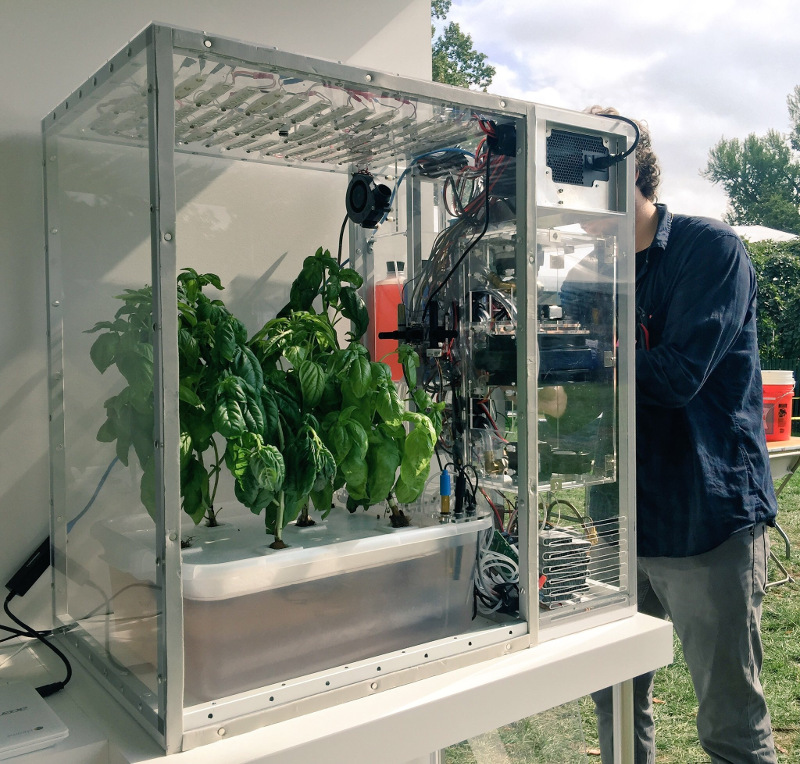
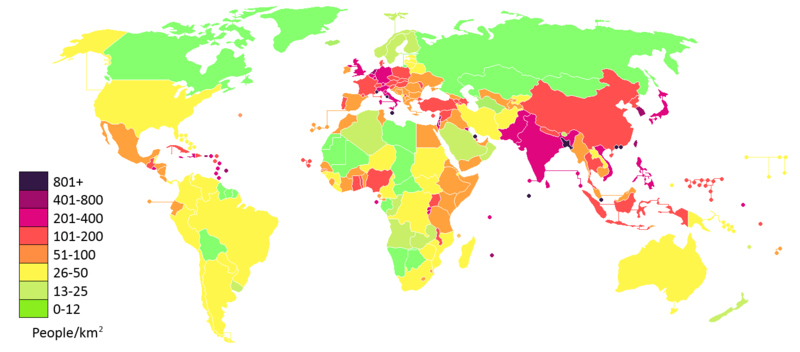
A group has recently been formed on Meetup seeking to build a food computer in Zurich. The initial meeting is planned for 6:30pm on 20 June 2017 at ETH, (Zurich Centre/Zentrum, R mistrasse 101). The question of food security underlies many of the world's problems today. In wealthier nations, we are being called upon to trust a highly opaque supply chain and our choices are limited to those things that major supermarket chains are willing to stock. A huge transport and storage apparatus adds to the cost and CO2 emissions and detracts from the nutritional value of the produce that reaches our plates. In recent times, these problems have been highlighted by the horsemeat scandal, the Guacapocalypse and the British Hummus crisis. One interesting initiative to create transparency and encourage diversity in our diets is the Open Agriculture (OpenAg) Initiative from MIT, summarised in this TED video from Caleb Harper. The food produced is healthier and fresher than anything you might find in a supermarket and has no exposure to pesticides. An open source approach to food An interesting aspect of this project is the promise of an open source approach. The project provides hardware plans, a a video of the build process, source code and the promise of sharing climate recipes (scripts) to replicate the climates of different regions, helping ensure it is always the season for your favour fruit or vegetable. Do we need it? Some people have commented on the cost of equipment and electricity. Carsten Agger recently blogged about permaculture as a cleaner alternative. While there are many places where people can take that approach, there are also many overpopulated regions and cities where it is not feasible. Some countries, like Japan, have an enormous population and previously productive farmland contaminated by industry, such as the Fukushima region. Growing our own food also has the potential to reduce food waste, as individual families and communities can grow what they need. Whether it is essential or not, the food computer project also provides a powerful platform to educate people about food and climate issues and an exciting opportunity to take the free and open source philosophy into many more places in our local communities. The Zurich Meetup group has already received expressions of interest from a diverse group including professionals, researchers, students, hackers, sustainability activists and free software developers. Next steps People who want to form a group in their own region can look in the forum topic "Where are you building your Food Computer?" to find out if anybody has already expressed interest. Which patterns from the free software world can help more people build more food computers? I've already suggested using Debian's live-wrapper to distribute a runnable ISO image that can boot from a USB stick, can you suggest other solutions like this? Can you think of any free software events where you would like to see a talk or exhibit about this project? Please suggest them on the OpenAg forum. There are many interesting resources about the food crisis, an interesting starting point is watching the documentary Food, Inc. If you are in Switzerland, please consider attending the meeting on at 6:30pm on 20 June 2017 at ETH (Centre/Zentrum), Zurich. One final thing to contemplate: if you are not hacking your own food supply, who is?

1 May 2017

Russ Allbery: Review: Survival

Review: Survival, by Julie E. Czerneda
Series: Species Imperative #1
Publisher: DAW
Copyright: May 2004
ISBN: 0-7564-0180-1
Format: Hardcover
Pages: 401
Dr. Mackenzie Connor, Mac to everyone she works with, is a biodiversity researcher specializing in salmon. In her future United States, humanity seems to have caught on to the importance of preserving wild places and learning about them, and is willing to invest in good equipment and a semi-permanent research installation. This comes with some occasional drawbacks, since she has to fight to get access to the salmon runs inside a nature preserve, but she wouldn't have it any other way. She wins enough of those fights, won the latest, and is now in position to monitor a run in a way that she's never been able to before. She was not expecting an alien to go diving in the middle of her salmon run. She was certainly not expecting that alien to be accompanied by a bureaucrat insisting that this alien's curiosity is more important than her research (hah). But the accompanying letter she receives is scarily persuasive, if maddeningly unhelpful. Much like the apparently jovial, earnest, eager, and very odd alien. Mac's continued hopes that she can quickly put this bizarre intrusion to rest and go back to her salmon are dashed by an impossible power outage, an alien visitor, and a violent kidnapping. Now her best friend and colleague is missing, the bureaucrat is not who he appears to be, and Mac is getting caught up in something that feels way over her head. SF novels feature a lot of science, but not a lot of scientific research. The research that does appear is often impulsive, wildly compressed, or far too focused on the breakthroughs of single people. The SF novel that everyone points to for accurate portrayal of real scientific research is Benford's Timescape, which I found deeply unexciting. Now I have a new novel to point to for a better treatment, although (somewhat disappointingly) Mac's research gets sidelined relatively early in the story and left behind for the conclusion. Czerneda gives us not just a few scientists and an imaginary research project, but an entire operational field station with a history. The Norcoast Salmon Research Facility is located just off-shore in carefully-designed domes to provide easy access to the sea with minimal intrusion into the local ecology. It's a bustling mix of research scientists, engineers, and the ever-present seasonal grad students, who come and go in all their immature enthusiasm and are viewed with a motherly bemusement that I immediately recognized from years of working at a university. Mac splits administrative duties with another scientist in an arrangement that will be familiar to academics everywhere, and the book opens with a mutually suspicious but mostly scripted turf fight with the guardian of the neighboring wildlife trust, the same fight they've been having every six months for years. I know Czerneda is herself a biologist by training; I'm not sure what her other academic background is, but if she hasn't spent years around academics and field studies, she's at least done some excellent research. A lot of novels have a quotidian background that's interrupted by the arrival of the plot. At the start of the story, the characters often care more about their day-to-day lives than the plot, and are dragged into it reluctantly. But one sign of an excellent writer is their ability to get the reader to care about that quotidian background alongside the character, and to sympathize with the character's reluctance to get pulled into the promised (and generally more exciting) novel plot. Czerneda succeeds in this about as well as any writer I've read since Robin McKinley's Sunshine, and that's high praise. I cared about Mac's salmon, I was nearly as irritated as she was when her research was interrupted, and I still want to go back and see more of the experiments and studies she was hoping to run. Interstellar drama and threats to multiple species are all well and good, but the salmon are running! The actual plot is a mysterious threat that turns into a combination of a biological and cultural puzzle and a sort of first-contact story. Mac is not truly the first human to encounter the Dhryn, but she's certainly the first person they've explained anything to, and the first human to go where she goes. Sadly, it also shares some of the characteristics that sour me a bit on biological SF for personal reasons: a bit too much description of food, eating habits, squishy body parts, digestive processes, and biological discomfort. This is mostly a personal gripe, and won't bother other people as much as it does me, but I could have done without bits like the descriptions of Mac's attempts to figure out how to survive on alien cuisine. I'm also dubious of some of the biology of the Dhryn; given the startling bizarreness of Earth biology, maybe I shouldn't be, but I still think there are a few problems with the square-cube law here. But Mac's irrepressible grumpy curiosity makes this story, even in the bits that made me squeamish. I think I'd read any book in which she's the main character. I will warn that the ending is surprisingly dark and wasn't what I was expecting, and Survival doesn't resolve its central mysteries. This is clearly the first book of a trilogy and should be read with that expectation. But I thoroughly enjoyed it, and hopefully the next book will have more salmon. Followed by Migration. Rating: 8 out of 10

30 April 2017

Russ Allbery: Review: Periodic Tales

Review: Periodic Tales, by Hugh Aldersey-Williams
Publisher: HarperCollins
Copyright: February 2011
ISBN: 0-06-207881-X
Format: Kindle
Pages: 451
Perhaps my favorite chapter in Randall Munroe's What If? is his examination of what would happen if you assembled a periodic table from square blocks of each element. As with most What If? questions, the answer is "everyone in the vicinity dies," but it's all about the journey. The periodic table is full of so many elements that we rarely hear about but which have fascinating properties. It was partly in the memory of that chapter that I bought Periodic Tales on impulse after seeing a mention of it somewhere on the Internet (I now forget where). Hugh Aldersey-Williams is a journalist and author, but with a background in natural sciences. He also has a life-long hobby of collecting samples of the elements and attempting to complete his own private copy of the periodic table, albeit with considerably more precautions and sample containment than Munroe's thought experiment. Periodic Tales is inspired by that collection. It's a tour and cultural history of many of the elements, discussing their discovery, their role in commerce and industry, their appearance, and often some personal anecdotes. This is not exactly a chemistry book, although there's certainly some chemistry here, nor is it a history, although Aldersey-Williams usually includes some historical notes about each element he discusses. The best term might be an anthropology of the elements: a discussion of how they've influenced culture and an examination of the cultural assumptions and connections we've constructed around them. But primarily it's an idiosyncratic and personal tour of the things Aldersey-Williams found interesting about each one. Periodic Tales is not comprehensive. The completionist in me found that a bit disappointing, and there are a few elements that I think would have fit the overall thrust of the book but are missing. (Lithium and its connection to mental health and now computer batteries comes to mind.) It's also not organized in the obvious way, either horizontally or vertically along the periodic table. Instead, Aldersey-Williams has divided the elements he talks about into five major but fairly artificial divisions: power (primarily in the economic sense), fire (focused on burning and light), craft (the materials from which we make things), beauty, and earth. Obviously, these are fuzzy; silver appears in craft, but could easily be in power with gold. I'm not sure how defensible this division was. But it does, for good or for ill, break the reader's mind away from a purely chemical and analytical treatment and towards broader cultural associations. This cultural focus, along with Aldersey-Williams's clear and conversational style, are what pull this book firmly away from being a beautified recitation of facts that could be gleamed from Wikipedia. It also leads to some unexpected choices of focus. For example, the cultural touchstone he chooses for sodium is not salt (which is a broad enough topic for an entire book) but sodium street lights, the ubiquitous and color-distorting light of modern city nights, thus placing salt in the "fire" category of the book. Discussion of cobalt is focused on pigments: the brilliant colors of paint made possible by its many brightly-colored compounds. Arsenic is, of course, a poison, but it's also a source of green, widely used in wallpaper (and Aldersey-Williams discusses the connection with the controversial death of Napoleon). And the discussion of aluminum starts with a sculpture, and includes a fascinating discussion of "banalization" as we become used to use of a new metal, which the author continues when looking a titanium and its currently-occurring cultural transition between the simply new and modern and a well-established metal with its own unique cultural associations. One drawback of the somewhat scattered organization is that, while Periodic Tales provides fascinating glimmers of the history of chemistry and the search to isolate elements, those glimmers are disjointed and presented in no particular order. Recently-discovered metals are discussed alongside ancient ones, and the huge surge in elemental isolation in the 1800s is all jumbled together. Wikipedia has a very useful timeline that helps sort out one's sense of history, but there was a part of me left wanting a more structured presentation. I read books like this primarily for the fascinating trivia. Mercury: known in ancient times, but nearly useless, so used primarily for ritual and decoration (making the modern reader cringe). Relative abundancies of different elements, which often aren't at all what one might think. Rare earths (not actually that rare): isolated through careful, tedious work by Swedish mining chemists whom most people have never heard of, unlike the discoverers of many other elements. And the discovery of the noble gases, which is a fascinating bit of disruptive science made possible by new technology (the spectroscope), forcing a rethinking of the periodic table (which had no column for noble gases). I read a lot of this while on vacation and told interesting tidbits to my parents over breakfast or dinner. It's that sort of book. This is definitely in the popular science and popular writing category, for all the pluses and minuses that brings. It's not a detailed look at either chemistry or history. But it's very fun to read, it provides a lot of conversational material, and it takes a cultural approach that would not have previously occurred to me. Recommended if you like this sort of thing. Rating: 7 out of 10

29 April 2017

Russ Allbery: Review: Neverness

Review: Neverness, by David Zindell
Publisher: Bantam Spectra
Copyright: May 1988
Printing: July 1989
ISBN: 0-553-27903-3
Format: Mass market
Pages: 552
Mallory Ringess is a Pilot, one of the people who can guide a lightship through interstellar space from inside the dark cocoon and biotech interface that allows visualization of the mathematics of interstellar travel. At the start of the book, he's young, arrogant, impulsive, and has a deeply unhealthy relationship with Leopold Soli, the Lord Pilot and supposedly his uncle by marriage (although they share a remarkable physical resemblance). An encounter with his uncle in a bar provokes a rash promise, and Ringess finds himself promising to attempt to map the Solid State Entity in search of the Elder Eddas, a secret of life from the mythical Ieldra that might lead to mankind's immortality. The opening of Neverness is Ringess's initial voyage and brash search, in which he proves to be a capable mathematician who can navigate a region of space twisted and deformed by becoming part of a transcendent machine intelligence. The knowledge he comes away with, though, is scarcely more coherent than the hints Soli relates at the start of the story: the secret of mankind is somehow hidden in its deepest past. That, in turn, provokes a deeply bizarre trip into the ice surrounding his home city of Neverness to attempt to steal biological material from people who have recreated themselves as Neanderthals. Beyond that point, I would say that things get even weirder, but weird still implies some emotional connection with the story. I think a more accurate description is that the book gets more incoherently mystical, more hopelessly pretentious, and more depressingly enthralled by childish drama. It's the sort of thing that one writes if one is convinced that the Oedipal complex is the height of subtle characterization. I loathed this book. I started loathing this book partway through Ringess's trip through the Solid State Entity, when Zindell's prose reached for transcendent complexity, tripped over its own shoelaces, and fell headlong into overwrought babbling. I continued reading every page because there's a perverse pleasure in hate-reading a book one dislikes this intensely, and because I wanted to write a review on the firm foundation of having endured the entire experience. The paperback edition I have has a pull quote from Orson Scott Card on the cover, which includes the phrase "excellent hard science fiction." I'm not sure what book Card read, because if this is hard science fiction, Lord of the Rings is paranormal romance. Even putting aside the idea that one travels through interstellar space by proving mathematical theorems in artificially dilated time (I don't think Zindell really understands what a proof is or why you write one), there's the whole business with stopping time with one's mind, reading other people's minds, and remembering one's own DNA. The technology, such as it is, makes considerably less sense than Star Wars. The hard SF requirement to keep technology consistent with extrapolated science is nowhere to be found here. The back-cover quote from the St. Louis Post-Dispatch is a bit more on-target: "Reminiscent of Gene Wolfe's New Sun novels... really comes to life among the intrigues of Neverness." This is indeed reminiscent of Gene Wolfe, in that it wouldn't surprise me at all if Zindell fell in love with the sense of antiquity, strangeness, and hints of understood technology that Wolfe successfully creates and attempted to emulate Wolfe in his first novel. Sadly, Zindell isn't Wolfe. Almost no one is, which is why attempting to emulate the extremely difficult feat Wolfe pulls off in the Book of the New Sun in your first novel is not a good idea. The results aren't pretty. There is something to be said for resplendent descriptions, rich with detail and ornamental prose. That something is "please use sparingly and with an eye to the emotional swings of the novel." Wolfe does not try to write most of a novel that way, which is what makes those moments of description so effective. Wolfe is also much better at making his mysteries and allusions subtle and unobtrusive, rather than having the first-person protagonist beat the reader over the head with them for pages at a time. This is a case where showing is probably better than telling. Let me quote a bit of description from the start of the book:
She shimmers, my city, she shimmers. She is said to be the most beautiful of all the cities of the Civilized Worlds, more beautiful even than Parpallaix or the cathedral cities of Vesper. To the west, pushing into the green sea like a huge, jewel-studded sleeve of city, the fragile obsidian cloisters and hospices of the Farsider's Quarter gleamed like black glass mirrors. Straight ahead as we skated, I saw the frothy churn of the Sound and their whitecaps of breakers crashing against the cliffs of North Beach and above the entire city, veined with purple and glazed with snow and ice, Waaskel and Attakel rose up like vast pyramids against the sky. Beneath the half-ring of extinct volcanoes (Urkel, I should mention, is the southernmost peak, and though less magnificent than the others, it has a conical symmetry that some find pleasing) the towers and spires of the Academy scattered the dazzling false winter light so that the whole of the Old City sparkled.
That's less than half of that paragraph, and the entire book is written like that, even in the middle of conversations. Endless, constant words piled on words about absolutely everything, whether important or not, whether emotionally significant or not. And much of it isn't even description, but philosophical ponderings that are desperately trying to seem profound. Here's another bit:
Although I knew I had never seen her before, I felt as if I had known her all my life. I was instantly in love with her, not, of course, as one loves another human being, but as a wanderer might love a new ocean or a gorgeous snowy peak he has glimpsed for the first time. I was practically struck dumb by her calmness and her beauty, so I said the first stupid thing which came to mind. "Welcome to Neverness," I told her.
Now, I should be fair: some people like this kind of description, or at least have more tolerance for it than I do. But that brings me to the second problem: there isn't a single truly likable character in this entire novel. Ringess, the person telling us this whole story, is a spoiled man-child, the sort of deeply immature and insecure person who attempts to compensate through bluster, impetuousness, and refusing to ever admit that he made a mistake or needed to learn something. He spends a good portion of the book, particularly the deeply bizarre and off-putting sections with the fake Neanderthals, attempting to act out some sort of stereotyped toxic masculinity and wallowing in negative emotions. Soli is an arrogant, abusive asshole from start to finish. Katherine, Ringess's love interest, is a seer who has had her eyes removed to see the future (I cannot express how disturbing I found Zindell's descriptions of this), has bizarre and weirdly sexualized reactions to the future she never explains, and leaves off the ends of all of her sentences, which might be be the most pointlessly irritating dialogue quirk I've seen in a novel. And Ringess's mother is a man-hating feminist from a separatist culture who turns into a master manipulator (I'm starting to see why Card liked this book). I at least really wanted to like Bardo, Ringess's closest friend, who has a sort of crude loyalty and unwillingness to get pulled too deep into the philosophical quicksand lurking underneath everything in this novel. Alas, Zindell insists on constantly describing Bardo's odious eating, belching, and sexual habits every time he's on the page, thus reducing him to the disgusting buffoon who gets drunk a lot and has irritating verbal ticks. About the only person I could stand by the end of the book was Justine, who at least seems vaguely sensible (and who leaves the person who abuses her), but she's too much of a non-entity to carry sustained interest. (There is potential here for a deeply scathing and vicious retelling of this story from Justine's point of view, focusing on the ways she was belittled, abused, and ignored, but I think Zindell was entirely unaware of why that would be so effective.) Oh, and there's lots of gore and horrific injury and lovingly-described torture, because of course there is. And that brings me back to the second half of that St. Louis Post-Dispatch review quote: "... really comes to life among the intrigues of Neverness." I would love to know what was hiding behind the ellipses in this pull quote, because this half-sentence is not wrong. Insofar as Neverness has any real appeal, it's in the intrigues of the city of Neverness and in the political structure that rules it. What this quote omits is that these intrigues start around page 317, more than halfway through the novel. That's about the point where faux-Wolfe starts mixing with late-career Frank Herbert and we get poet-assassins, some revelations about the leader of the Pilot culture, and some more concrete explanations of what this mess of a book is about. Unfortunately, you have to read through the huge and essentially meaningless Neanderthal scenes to get there, scenes that have essentially nothing to do with the interesting content of this book. (Everything that motivates them turns out to be completely irrelevant to the plot and useless for the characters.) The last 40% of the book is almost passable, and characters I cared about might have even made it enjoyable. Still, a couple of remaining problems detract heavily, chief among them the lack of connection of the great revelation of the story to, well, anything in the story. We learn at the very start of the novel that the stars of the Vild are mysteriously exploding, and much of the novel is driven by uncovering an explanation and solution. The characters do find an explanation, but not through any investigation. Ringess is simply told what is happening, in a wad of exposition, as a reward for something else entirely. It's weirdly disconnected from and irrelevant to everything else in the story. (There are some faint connections to the odd technological rules that the Pilot society lives under, but Zindell doesn't even draw attention to those.) The political intrigue in Neverness is similar: it appears out of nowhere more than halfway through the book, with no dramatic foundation for the motives of the person who has been keeping most of the secrets. And the final climax of the political machinations involves a bunch of mystical nonsense masquerading as science, and more of the Neanderthal bullshit that ruins the first half of the book. This is a thoroughly bad book: poorly plotted, poorly written, clotted and pretentious in style, and full of sociopaths and emotionally stunted children. I read the whole thing because I'm immensely stubborn and make poor life choices, but I was saying the eight deadly words ("I don't care what happens to these people") by a hundred pages in. Don't emulate my bad decisions. (Somehow, this novel was shortlisted for the Arthur C. Clarke award in 1990. What on earth could they possibly have been thinking?) Neverness is a stand-alone novel, but the ending sets up a subsequent trilogy that I have no intention of reading. Followed by The Broken God. Rating: 2 out of 10

23 April 2017

Shirish Agarwal: Debconf 17 in Montreal

Debconf Montreal 17 logo Before I start, debconf registration opened about a week back depending upon what time-frame you are in. So, if you have used and contributed to Debian or are curious to know and try out Debian, this would be right time to register for the conference. For those who are either financially weak (like yours truly) or those who are a minority in any way can avail those
sponsorships, more information about the sponsorship/travel bursary can be found here. Also make sure that you read, understand and accept the Debconf Code of conduct before trying to register. Even if Debconf does give the bursary, getting a visa for Canada might be tricky but then what would be life without any challenges. In the hierarchy of wants and needs, I would say attending debconf would come in the want category and not the needs category as needs are simply food, clothes and roof over one s head, thankfully all of which have been there for as long as I remember or know. To dream is necessary for life and being part of debconf would be part of that dream. While I have put up couple of talks, I have asked if somebody would be willing to tackle/share some basic things in Debconf 17 as well. Let s see if I m able to get any response to that. There was a recent Debian BSP in Montreal. While I don t know how many bugs were fixed, although UDD shows only 32 bugs remain to be fixed before Stretch could be released. Indian cricket team To put things into perspective, I had gone to a friend s place at Market Yard and came to know of a local cricket league which is being played in the city on the likes/basis of the IPL . The amount they will get is INR 88,000 (which is 1,361 USD, around the cost of ticket to and fro from Pune to Montreal and back as of date) and similar and 10 teams of 11-15 people are vying from it. The winning team will get that amount along with a trophy and signed certificates. Of course at the highest level i.e. the IPL, each night the players would probably earn a million or more for each play. One IPL season pay is what 90% of the people don t/can t earn in their whole lifetime. Montreal Metro image from Wikimedia Commons Apart from the conference, I have shared about the northern lights and the snacks on stand thing, there is one thing more to explore and that is the Montreal Metro . While I was re-reading the wiki entry today I was very much reminded about Pune Metro and Metro Samvaad that I attended couple of weeks before. That too as it was not held too far from my house, around 500 metres so could attend. The only hitch I see is the question mark on fate of 6,133 trees . I have shared one probable solution but then it has its own challenges . In the end, Metro is the need of the hour as vehicles in pune are reaching the 5 million mark while residents are around 3 million plus something depending on whether you chose to believe the 2011 census or the more recentish world population review . In either case/scenario I do not see any improvement unless consistent public transport is available. While Buses don t run on time, it is hoped that the metro would run on time. Some of the similarities between the two system, apart from the fact that from what I read Montreal Metro is mostly subway while Pune Metro would be mostly elevated. There is the idea/thought of having POI (Points of Interest) and free shows etc. in order to attract young and old to travel to destinations to and fro. There are a lot of theatre groups, stand-up comedians, rock and roll as well as classical musical concerts for which people like me would be willing to travel week-ends to attend such shows. Of course, this is all in the head, we will know the reality starting this May and commercial journeys if everything goes as planned in end 2018.
Filed under: Miscellenous Tagged: #Canadian Visa, #Debconf Montreal 2017, #Debconf registration, #Debian BSP, #Debian Stretch, #Environment, #Montreal Metro, #Montreal Subway, #planet-debian, #Points of Interest, #Pune Metro, #travel bursary, Debian, Economics

4 April 2017

Matthias Klumpp: On Tanglu

It s time for a long-overdue blogpost about the status of Tanglu. Tanglu is a Debian derivative, started in early 2013 when the systemd debate at Debian was still hot. It was formed by a few people wanting to create a Debian derivative for workstations with a time-based release schedule using and showcasing new technologies (which include systemd, but also bundling systems and other things) and built in the open with a community using the similar infrastructure to Debian. Tanglu is designed explicitly to complement Debian and not to compete with it on all devices. Tanglu has achieved a lot of great things. We were the first Debian derivative to adopt systemd and with the help of our contributors we could kill a few nasty issues affecting it and Debian before it ended up becoming default in Debian Jessie. We also started to use the Calamares installer relatively early, bringing a modern installation experience additionally to the traditional debian-installer. We performed the usrmerge early, uncovering a few more issues which were fed back into Debian to be resolved (while workarounds were added to Tanglu). We also briefly explored switching from initramfs-tools to Dracut, but this release goal was dropped due to issues (but might be revived later). A lot of other less-impactful changes happened as well, borrowing a lot of useful ideas and code from Ubuntu (kudos to them!). On the infrastructure side, we set up the Debian Archive Kit (dak), managing to find a couple of issues (mostly hardcoded assumptions about Debian) and reporting them back to make using dak for distributions which aren t Debian easier. We explored using fedmsg for our infrastructure, went through a long and painful iteration of build systems (buildbot -> Jenkins -> Debile) before finally ending up with Debile, and added a set of own custom tools to collect archive QA information and present it to our developers in an easy to digest way. Except for wanna-build, Tanglu is hosting an almost-complete clone of basic Debian archive management tools. During the past year however, the project s progress slowed down significantly. For this, mostly I am to blame. One of the biggest challenges for a young project is to attract new developers and members and keep them engaged. A lot of the people coming to Tanglu and being interested in contributing were unfortunately no packagers and sometimes no developers, and we didn t have the manpower to individually mentor these people and teach them the necessary skills. People asking for tasks were usually asked where their interests were and what they would like to do to give them a useful task. This sounds great in principle, but in practice it is actually not very helpful. A curated list of junior jobs is a much better starting point. We also invested almost zero time in making our project known and create the necessary buzz and excitement that s actually needed to sustain a project like this. Doing more in the advertisement domain and help newcomers area is a high priority issue in the Tanglu bugtracker, which to the day is still open. Doing good alone isn t enough, talking about it is of crucial importance and that is something I knew about, but didn t realize the impact of for quite a while. As strange as it sounds, investing in the tech only isn t enough, community building is of equal importance. Regardless of that, Tanglu has members working on the project, but way too few to manage a project of this magnitude (getting package transitions migrated alone is a large task requiring quite some time while at the same time being incredibly boring :P). A lot of our current developers can only invest small amounts of time into the project because they have a lot of other projects as well. The other issue why Tanglu has problems is too much stuff being centralized on myself. That is a problem I wanted to rectify for a long time, but as soon as a task wasn t done in Tanglu because no people were available to do it, I completed it. This essentially increased the project s dependency on me as single person, giving it a really low bus factor. It not only centralizes power in one person (which actually isn t a problem as long as that person is available enough to perform tasks if asked for), it also centralizes knowledge on how to run services and how to do things. And if you want to give up power, people will need the knowledge on how to perform the specific task first (which they will never gain if there s always that one guy doing it). I still haven t found a great way to solve this it s a problem that essentially kills itself as soon as the project is big enough, but until then the only way to counter it slightly is to write lots of documentation. Last year I had way less time to work on Tanglu than the project deserves. I also started to work for Purism on their PureOS Debian derivative (which is heavily influenced by some of the choices we made for Tanglu, but with different focus that s probably something for another blogpost). A lot of the stuff I do for Purism duplicates the work I do on Tanglu, and also takes away time I have for the project. Additionally I need to invest a lot more time into other projects such as AppStream and a lot of random other stuff that just needs continuous maintenance and discussion (especially AppStream eats up a lot of time since it became really popular in a lot of places). There is also my MSc thesis in neuroscience that requires attention (and is actually in focus most of the time). All in all, I can t split myself and KDE s cloning machine remains broken, so I can t even use that ;-). In terms of projects there is also a personal hard limit of how much stuff I can handle, and exceeding it long-term is not very healthy, as in these cases I try to satisfy all projects and in the end do not focus enough on any of them, which makes me end up with a lot of half-baked stuff (which helps nobody, and most importantly makes me loose the fun, energy and interest to work on it). Good news everyone! (sort of) So, this sounded overly negative, so where does this leave Tanglu? Fact is, I can not commit the crazy amounts of time for it as I did in 2013. But, I love the project and I actually do have some time I can put into it. My work on Purism has an overlap with Tanglu, so Tanglu can actually benefit from the software I develop for them, maybe creating a synergy effect between PureOS and Tanglu. Tanglu is also important to me as a testing environment for future ideas (be it in infrastructure or in the make bundling nice! department). So, what actually is the way forward? First, maybe I have the chance to find a few people willing to work on tasks in Tanglu. It s a fun project, and I learned a lot while working on it. Tanglu also possesses some unique properties few other Debian derivatives have, like being built from source completely (allowing us things like swapping core components or compiling with more hardening flags, switching to newer KDE Plasma and GNOME faster, etc.). Second, if we do not have enough manpower, I think converting Tanglu into a rolling-release distribution might be the only viable way to keep the project running. A rolling release scheme creates much less effort for us than making releases (especially time-based ones!). That way, users will have a constantly updated and secure Tanglu system with machines doing most of the background work. If it turns out that absolutely nothing works and we can t attract new people to help with Tanglu, it would mean that there generally isn t much interest from the developer or user side in a project like this, so shutting it down or scaling it down dramatically would be the only option. But I do not think that this is the case, and I believe that having Tanglu around is important. I also have some interesting plans for it which will be fun to implement for testing  The only thing that had to stop is leaving our users in the dark on what is happening. Sorry for the long post, but there are some subjects which are worth writing more than 140 characters about  If you are interested in contributing to Tanglu, get in touch with us! We have an IRC channel #tanglu-devel on Freenode (go there for quicker responses!), forums and mailinglists, It looks like I will be at Debconf this year as well, so you can also catch me there! I might even talk about PureOS/Tanglu infrastructure at the conference.
30 March 2017

Shirish Agarwal: The tale of the dancing girl #nsfw

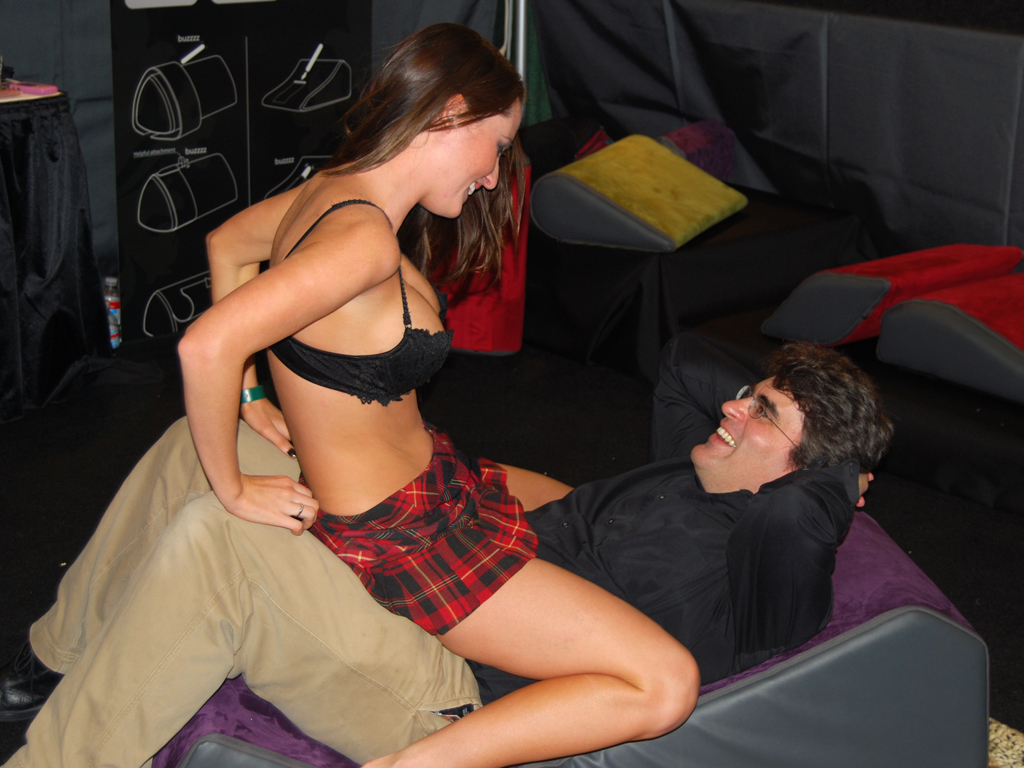
Demonstration of a Lapdance - Wikipedia

Demonstration of a Lapdance Wikipedia

The post will be adult/mature in nature. So those below 18 please excuse. The post is about an anecdote almost 20 years to date, The result its being posted is I had a dinner with a friend to whom I shared this and he thought it would be nice if I shared this hence sharing it. The conversation was about being young and foolish in which I shared the anecdote. The blog post was supposed to be about Aadhar which shocked me both in the way no political discourse happened and the way the public as well as public policy was gamed but that would have to wait for another day. History I left college in 1995. The anecdote/incident probably happened couple of years earlier so probably 1992-1993. At that time, I was in my teens and as a typical teenager I made few friends. One of those friends, who would remain nameless as since we drifted apart, and as I have not take permission from him, taking his name would not be a good idea. Anyway, this gentleman, let s call him Mr. X as an example. Couple of months before, he had bought an open jeep, similar but very different from the jeep being shown below. Open Jeep had become a fashion statement few months back (in those days) as a Salman khan starred movie had that and anybody who had money wanted one just like that.
Illustration of an open jeep, sadly its a military one - wikipedia

Illustration of an open jeep, sadly its a military one wikipedia

Those days we didn t have cell-phones and I had given my land-line phone number to very few friends as in those days, as the land-lines were a finicky instrument. One fine morning, I get a call from my friend telling he is going to come near my place and I should meet him at some xyz place and we would go for a picnic for the whole day and it is possible that we might return next day. As it was holidays and only a fool would throw away a chance to have a ride in open air jeep, I immediately agreed. I shared that my friends had organized a picnic and giving another friend s number (who didn t know anything) got permission and went to meet Mr. X. This was very early morning, around 0600 hrs. . After meeting him, he told that we would be going to Mumbai, take some more friends from there and then move on. In those days, a railway ticket from Shivaji Nagar to V.T. (now C.S.T.) costed INR 30/- . I had been to Mumbai few times before for various technical conferences and knew few cheap places to eat, I knew that going via train, we could go and come back spending at the most INR 150/- and still have some change left-over (today s meal at a roadside/street vendor easily passes that mark). The Journey I shared with him that it will be costly and I don t have any money to cover the fuel expenses and he said he would shoulder the expenses, he just wanted my company for the road. Those days, it was the scenic Old Mumbai-Pune highway and we took plenty of stops to admire that ghats (hills and valleys together). That journey must have taken around 7-8 hours while today by new Expressway, you could do the same thing by 2.5/3 hours. Anyhow, we reached to some swanky hotel in South Mumbai. South Mumbai was not the financial powerhouse that it today is, there was mix of very old buildings and new buildings like the swanky hotel that we had checked in. I have no memory nor any idea whether it was 1 class, 3 class or 5 class and could have cared less as had been tired from the journey. We checked in, I had a long warm water bath and then slept in the king-size bed with curtains drawn. Evening came and we took the jeep and picked up 2-3 of his friends who were from my age or a year or two older and we went to Nariman Point. Seeing the Queen s necklace from Nariman Point at night is a sight in itself. Keeping with the innocence, I was under the impression that we had arrived at our destination, at this our host, Mr. X and his Bombaiya friends had a quiet laugh saying its a young night still. We must have whiled away couple of hours, having chai and throwing rocks in the sea. The Meeting After a while, Mr. X took us to another swanky place. My eyes were out of my sockets as this seemed to be as elitist a place as could be. I saw many White European women in various stages of undress pole-dancing and lap-dancing. I had recently (in those days) come to know the term but was under the impression that it was something that happened in Europe and States only. I had no idea that lap-dancing was older than my birth as according to Wikipedia. So looking back now, I am not surprised that in two decades the concept crossed the oceans. Again, Mr. X being the host, agreed to bear all the costs and all of us had food, drink and a lap-dance from any of the dancers on the floor. As I was young and probably shy (still am) I asked Mr. X s help to pick a girl/woman for me. The woman whom he picked was auburn-aired, was either my age or a year or two older/younger to me. What proceeded next was about 20-30 minutes of totally sexualized erotic experience. While he and all his friends picked girls to go all the way, I was hesitant to let loose. Maybe it was due to my lack of courage or inexperience, maybe it was not in my city so couldn t predict the outcome, maybe was just afraid that reality might mar fantasy, I dunno till date. Although we kissed and necked a lot, I guess that should count for something. The conversation After all my friends had gone to the various rooms, sometime after I excused myself, went to the loo myself, peed a bit, splashed cold water on self, came out and had couple of glasses of water and came back to my seat. The lady came back and I shared that I was not interested in going further and while she was beautiful, I just didn t have the guts. I did ask her if she would give me company though for sometime as I didn t know anyone else at that place. Our conversation was more about her than me as I had more or less an average life upto that moment. There were only three unorthodox things that I had done before meeting her. I had drunk wines of different types, smoked weed and had a Magic Mushrooms experience the year before with another group of friends I had made there. Goa in those days was simply magical in those days but that probably would need its story/own blog post. When I enquired about her, she shared she was from Russia and she rattled off more than half a dozen places around the world where she had been to and this was her second or third stint in Mumbai and she wasn t at all unhappy about the lifestyle and choices she was leading. I had no answer for her as a young penniless college-going student. Her self-confidence and the way she carried herself was impressive, with or without clothes. During course of the conversation she shared a couple of contacts from whom I could get better weed at slightly higher price if I were in Goa. Few months later, those contacts turned out to be true. After sometime, we took all the women and ourselves, around 8-9 people in his jeep (how he negotiated that is beyond me) went to a hygienic Pani puri and Bhel (puffed rice mixed with variety of spices typically tomato, potato, coriander chutney as well as Tamarind Chutney among other things) place and moved them to tears (the spices in bhel and Pani puri did it for them) and this was when we had explicitly asked the bhel-wala guy to make it extremely mild with just a hint of spice in it. Anyways, sometime later, we dropped them at the same place, dropped his friends and came back to the hotel we booked and got drunk again. After-effects Few years later, it came in the newspapers/media that while India had broken out of financial isolation just few years back (1991) and were profiting from it, many countries of the former USSR were going the other way around and hence there was huge human trafficking and immigration that had taken place. This was in-line with what the lady/woman/Miss X had shared with me. The latest trigger The latest trigger happened couple of months back where I learnt of a hero flight attendant saving a girl from human-trafficking. Till date, I am unsure whether she was doing it willingly or putting a brave smile in front of me, because even if she had confided me in any way, I probably would have been too powerless to help her in any-way. I just don t know. Foolishness thy name While my friend took advantage of my innocence and introduced me to a world which otherwise I would probably not know exists, it could have easily have gone some other way as well. While I m still unsure of the choices I made, I was and am happy that I was able to strike a conversation with her and attempt to reach the person therein. Was it the truth or an elaborate fabricated lie to protect myself and herself, this I will never know. Oppression I understand the fact that as a customer or somebody who is taking part in either of those performances or experiences it isn t easy in any way to know/say that whether the performer is doing it wilfully or not as the experiences are in tightly controlled settings.
Filed under: Miscellenous Tagged: #anecdote, #confusion, #elitist, #growing up, #lap dance, #NSFW, #Open Jeep, Mumbai

25 March 2017

Russ Allbery: Spring haul

Work has been hellishly busy lately, so that's pretty much all I've been doing. The major project I'm working on should be basically done in the next couple of weeks, though (fingers crossed), so maybe I'll be able to surface a bit more after that. In the meantime, I'm still acquiring books I don't have time to read, since that's my life. In this case, two great Humble Book Bundles were too good of a bargain to pass up. There are a bunch of books in here that I already own in paperback (and hence showed up in previous haul posts), but I'm running low on shelf room, so some of those paper copies may go to the used bookstore to make more space. Kelley Armstrong Lost Souls (sff)
Clive Barker Tortured Souls (horror)
Jim Butcher Working for Bigfoot (sff collection)
Octavia E. Butler Parable of the Sower (sff)
Octavia E. Butler Parable of the Talents (sff)
Octavia E. Butler Unexpected Stories (sff collection)
Octavia E. Butler Wild Seed (sff)
Jacqueline Carey One Hundred Ablutions (sff)
Richard Chizmar A Long December (sff collection)
Jo Clayton Skeen's Leap (sff)
Kate Elliot Jaran (sff)
Harlan Ellison Can & Can'tankerous (sff collection)
Diana Pharoh Francis Path of Fate (sff)
Mira Grant Final Girls (sff)
Elizabeth Hand Black Light (sff)
Elizabeth Hand Saffron & Brimstone (sff collection)
Elizabeth Hand Wylding Hall (sff)
Kevin Hearne The Purloined Poodle (sff)
Nalo Hopkinson Skin Folk (sff)
Katherine Kurtz Camber of Culdi (sff)
Katherine Kurtz Lammas Night (sff)
Joe R. Lansdale Fender Lizards (mainstream)
Robert McCammon The Border (sff)
Robin McKinley Beauty (sff)
Robin McKinley The Hero and the Crown (sff)
Robin McKinley Sunshine (sff)
Tim Powers Down and Out in Purgatory (sff)
Cherie Priest Jacaranda (sff)
Alastair Reynolds Deep Navigation (sff collection)
Pamela Sargent The Shore of Women (sff)
John Scalzi Miniatures (sff collection)
Lewis Shiner Glimpses (sff)
Angie Thomas The Hate U Give (mainstream)
Catherynne M. Valente The Bread We Eat in Dreams (sff collection)
Connie Willis The Winds of Marble Arch (sff collection)
M.K. Wren Sword of the Lamb (sff)
M.K. Wren Shadow of the Swan (sff)
M.K. Wren House of the Wolf (sff)
Jane Yolen Sister Light, Sister Dark (sff)

22 March 2017

Elena 'valhalla' Grandi: XMPP VirtualHosts, SRV records and letsencrypt certificates

XMPP VirtualHosts, SRV records and letsencrypt certificates

When I set up my XMPP server, a friend of mine asked if I was willing to have a virtualhost with his domain on my server, using the same address as the email.

Setting up prosody and the SRV record on the DNS was quite easy, but then we stumbled on the issue of certificates: of course we would like to use letsencrypt, but as far as we know that means that we would have to setup something custom so that the certificate gets renewed on his server and then sent to mine, and that looks more of a hassle than just him setting up his own prosody/ejabberd on his server.

So I was wondering: dear lazyweb, did any of you have the same issue and already came up with a solution that is easy to implement and trivial to maintain that we missed?

20 March 2017

Shirish Agarwal: Tale of two countries, India and Canada

Apologies the first blog post got sent out by mistake. Weather comparisons between the two countries Last year, I had come to know that this year s debconf is happening in Canada, a cold country. Hence, few weeks/month back, I started trying to find information online when I stumbled across few discussion boards where people were discussing about Innerwear and Outerwear and I couldn t understand what that was all about. Then somehow stumbled across this Video, which is of a game called the Long Dark and just seeing couple of episodes it became pretty clear to me why the people there were obsessing with getting the right clothes and everything about it. Couple of Debconf people were talking about the weather in Montreal, and surprise, surprise it was snowing there, in fact supposed to be near the storm of the century. Was amazed to see that they have a website to track how much snow has been lifted. If we compare that to Pune, India weather-wise we are polar opposites. There used to be a time, when I was very young, maybe 5 yrs. old that once the weather went above 30 degree celsius, rains would fall, but now its gonna touch 40 degrees soon. And April and May, the two hottest months are yet to come. China Gate Before I venture further, I was gifted the book China Gate written by an author named William Arnold. When I read the cover and the back cover, it seemed the story was set between China and Taiwan, later when I started reading it, it shares history of Taiwan going back 200 or so odd years. This became relevant as next year s Debconf, Debconf 2018 will be in Taiwan, yes in Asia very much near to India. I am ashamed to say that except for the Tiananmen Square Massacre and the Chinese High-Speed Rail there wasn t much that I knew. According to the book, and I m paraphrasing here the gist I got was that for a long time, the Americans promised Taiwan it will be an Independent country forever, but due to budgetary and other political constraints, the United States took the same stand as China from 1979. Interestingly, now it seems Mr. Trump wants to again recognize Taiwan as a separate entity from China itself but as is with Mr. Trump you can t be sure of why he does, what he does. Is it just a manoeuvrer designed to out-smart the chinese and have a trade war or something else, only time will tell. One thing which hasn t been shared in the book but came to know via web is that Taiwan calls itself Republic of China . If Taiwan wants to be independent then why the name Republic of China ? Doesn t that strengthen China s claim that Taiwan is an integral part of China. I don t understand it. The book does seduce you into thinking that the events are happening in real-time, as in happening now. That s enough OT for now. null Population Density As well in the game and whatever I could find on the web, Canada seems to be on the lower side as far as population is concerned. IIRC, few years back, Canadians invited Indian farmers and gave them large land-holdings for over 100 years on some small pittance. While the link I have shared is from 2006, I read it online and in newspapers even as late as in 2013/2014. The point being there seems to be lot of open spaces in Canada, whereas in India we fight for even one inch literally, due to overpopulation. This sharing reminded me of Mark of Gideon . While I was young, I didn t understand the political meaning of it and still struggle to understand about whom the show was talking about. Was it India, Africa or some other continent they were talking about ? This also becomes obvious when you figure out the surface area of the two countries. When I had started to learn about Canada, I had no idea, nor a clue that Canada is three times the size of India. And this is when I know India is a large country. but seeing that Canada is thrice larger just boggled my mind. As a typical urbanite, would probably become mad if in a rural area in Canada. Montreal, however seems to be something like Gwalior or Bangalore before IT stormed in, seems to be a place where people can work, play and have quite a few gardens as well. Rail This is one thing that is similar in both the great countries. India has Indian Railways and while the Canadians have their own mountain railway called viarail. India chugs on its 68k kilometre network, Canada is at fourth position with 52k network. With thrice the land size, it should have been somewhere where Russia is or even better than them. It would be interesting if a Canadian/s comment about their railway network and why it is so bad in terms of reach. As far as food is concerned, somebody shared this Also, have no idea if Canadian trains are as entertaining as Indian ones, in terms of diverse group of people as well as variety of food to eat as also shared a bit in the video. I am not aware whether Via Rail is the only network operator and there are other network operators unlike Indian Railways which has monopoly on most of the operations. Countries which have first past the post system - Wikipedia Business houses, Political Families This is again something that is similar in both the countries, it seems (from afar) that its only few business houses and more importantly political families which have governed for years. From what little I could understand, both India and Canada have first past the post system which as shared by its critics is unfair to new and small parties. It would be interesting to see if Canada does a re-think. For India, it would need a massive public education outreach policy and implementation. We just had elections in 5 states of India with U.P. (with respect to area-size and population density) and from the last several years, the EVM s (Electronic Voting Machines) tries to make sure that nobody could know which area which party got the most votes. This is to make sure the winning party is not able to take revenge on people or areas which did not vote for them. Instead you have general region counting of votes with probably even the Election Commission not knowing which EVM went to what area and what results are there in sort of double-blind methodology. As far as Business houses are concerned, I am guessing it s the same world-over, only certain people hold the wealth while majority of us are in hard-working, non-wealthy status. Northern Lights - Aurora Borealis Northern Lights, Aurora Borealis Apart from all the social activities that Montreal is famous for, somebody told/shared with me that it is possible to see the Northern Lights, Aurora Borealis can be seen in Canada. I dunno how true or not it is, while probably in Montreal it isn t possible to see due to light pollution, but maybe around 40-50 kms. from the city ? Can people see it from Canada ? IF yes, how far would you have to go ? Are there any companies or people who take people to see the Northern Lights. While I still have to apply for bursary, and if that gets ok, then try getting the visa, but if that goes through, apart from debconf and social activities happening in and around Montreal, Museums, Music etc. , this would be something I would like to experience if it s possible. While I certainly would have to be prepared for the cold that would be, if it s possible, no offence to debconf or anybody else but it probably would be the highlight of the entire trip if its possible. This should be called/labelled as the greatest show on earth TM.
Filed under: Miscellenous Tagged: # Population Density, #Area size, #Aurora Borealis, #Canada, #Trains, DebConf, India, politics

Shirish Agarwal: Canada and India, similarities and differences.

Weather comparisons between the two countries Few days/weeks back, I had come to know that Canada, where this year s debconf is happening is cold country. I started trying to find information online when I stumbled across few boards where people were discussing about innerwear and outerwear and I couldn t understand what that was all about. Then somehow stumbled across this game, it s called the Long Dark and just seeing couple of episodes it became pretty clear to me why the people there were obsessing with getting the right clothes and everything about it. Couple of Debconf people were talking about weather in Montreal, and surprise, surprise it was snowing there, in fact supposed to be near the storm of the century. Was amazed to see that they have a website to track how much snow has been lifted. If we compare that to Pune, India weather-wise we are polar opposites. There used to be a time, when I was very young, maybe 5 yrs. old that once the weather went above 30 degree celcius, rains would fall, but now its gonna touch 40 degrees soon. And April and May, the two hottest months are yet to come. China Gate Before I venture further, I was gifted the book China Gate written by an author named William Arnold. When I read the cover and the backcover, it seemed the story was set between China and Taiwan, later when I started reading it, it shares history of Taiwan going back 200 or so odd years. This became relevant as next year s Debconf, Debconf 2018 will be in Taiwan, yes in Asia very much near to India. I am ashamed to say that except for the Tiananmen Square Massacre and the Chinese High-Speed Rail there wasn t much that I knew. According to the book, and I m paraphrasing here the gist I got was that for a long time, the Americans promised Taiwan it will be an Independent country forever, but due to budgetary and other political constraints, the United States took the same stand as China from 1979 and now it seems Mr. Trump wants to again recognize Taiwan as a separate entity from China itself. One thing which hasn t been shared in the book but came to know via web is that Taiwan calls itself Republic of China . If Taiwan wants to be independent then why the name Republic of China ? Doesn t that strengthen China s claim that Taiwan is an integral part of China. I don t understand it. The book does seduce you into thinking that the events are happening in real-time, as in happening now. That s enough OT for now. null Population Density As well in the game and whatever I could find on the web, Canada seems to be on the lower side as far as population is concerned. IIRC, few years back, Canadians invited Indian farmers and gave them large land-holdings for over 100 years on some small pittance. While the link I have shared is from 2006, I read it online and in newspapers even as late as in 2013/2014. The point being there seems to be lot of open spaces in Canada, whereas in India we fight for even one inch literally, due to overpopulation. This sharing reminded me of Mark of Gideon . While I was young, I didn t understand the political meaning of it and still struggle to understand about whom the show was talking about. Was it India, Africa or some other continent they were talking about ? This also becomes obvious when you figure out the surface area of the two countries. When I had started to learn about Canada, I had no idea, nor a clue that Canada is three times the size of India. And this is when I know India is a large country. but seeing that Canada is thrice larger just boggled my mind. As a typical urbanite, would probably become mad if in a rural area in Canada. Montreal, however seems to be something like Gwalior or Bangalore before IT stormed in, seems to be a place where people can work, play and have quite a few gardens as well. Rail This is one thing that is similar in both the great countries. India has Indian Railways and while the Canadians have their own mountain railway called viarail. India chugs on its 68k kilometre network, Canada is at fourth position with 52k network. With thrice the land size, it should have been somewhere where Russia is or even better than them. It would be interesting if Canadians comment about their railway network and why it is so bad in terms of reach. Business houses, Political Families This is again something that is similar in both the countries, it seems (from afar) that its only few business houses and more importantly political families which have governed for years.
Filed under: Miscellenous

15 March 2017

Michal &#268;iha&#345;: Life of free software project

During last week I've noticed several interesting posts about challenges being free software maintainer. After being active in open source for 16 years I can share much of the feelings I've read and I can also share my dealings with the things. First of all let me link some of the other posts on the topic: I guess everybody involved in in some popular free software project knows it - there is much more work to be done than people behind the project can handle. It really doesn't matter it those are bug reports, support requests, new features or technical debt, it's simply too much of that. If you are the only one behind the project it can feel even more pressing. There can be several approaches how to deal with that, but you have to choose what you prefer and what is going to work for you and your project. I've used all of the below mentioned approaches on some of the projects, but I don't think there is a silver bullet. Finding more people Obviously if you can not cope with the work, let's find more people to do the work. Unfortunately it's not that easy. Sometimes people come by, contribute few patches, but it's not that easy to turn them into regular contributor. You should encourage them to stay and to care about the part of the project they have touched. You can try to attract completely new contributors through programs as Google Summer of Code (GSoC) or Outreachy, but that has it's own challenges as well. With phpMyAdmin we're participating regularly in GSoC (we've only missed last year as we were not chosen by Google that year) and it indeed helps to bring new people on the board. Many of them even stay around your project (currently 3 of 5 phpMyAdmin team members are former GSoC students). But I think this approach really works only for bigger organizations. You can also motivate people by money. It's way which is not really much used on free software projects, partly because lack of funding (I'll get to that later) and partly because it doesn't necessarily bring long time contributors, just cash hunters. I've been using Bountysource for some of my projects (Weblate and Gammu) and so far it mostly works other way around - if somebody posts bounty on the issue, it means it's quite important for him to get that fixed, so I use that as indication for myself. On attracting new developers it never really worked well, even when I've tried to post bounties to some easy to fix issues, where newbies could learn our code base and get paid for that. These issues stayed opened for months and in the end I've fixed them myself because they annoyed me. Don't care too much I think this is most important aspect - you simply can never fix all the problems. Let's face it and work according to that. There can be various levels of don't caring. I find it always better to try to encourage people to fix their problem, but you can't expect big success rate in that, so you might find it not worth of the time. What I currently do:

  • I often ignore direct emails asking for fixing something. The project has public issue tracker on purpose. Once you solve the issue there others will have chance to find it when they face similar problem. Solving things privately in mails will probably make you look at similar problems again and again.
  • I try to batch process things. It is really easier to get focused when you work on one project and do not switch contexts. This means people will have to wait until you get to their request, but it also means that you will be able to deal them much more effectively. This is why Free hosting requests for Hosted Weblate get processed once in a month.
  • I don't care about number of unread mails, notifications or whatever. Or actually I try to not get much of these at all. This is really related to above, I might to some things once in a month (or even less) and that's still okay. Maybe you're just getting notifications for things you really don't need to get notified on? Do you really need notification for new issues? Isn't it better just to look at the issue tracker once in a time than constantly feeling the pressure of not read notifications?
  • I don't have to fix every problem. When it seems like something what could be as well fixed by the reporter, I just try to give them guidance how to dig deeper into the issue. Obviously this can't work for all cases, but getting more people on board always helps.
  • I try to focus on things which can save time in future. Many issues turn out to be just some unclear things and once you figure out that, spend few more minutes to improve your documentation to cover that. It's quite likely that this will save your time in future.
If you still can't handle that, you should consider abandoning the project as well. Does it bring something to you other than frustration of not completed work? I know it can be hard decision, in the end it is your child, but sometimes it's the best think you can do. Get paid to do the work Are you doing your fulltime job and then work on free software on nights or weekends? It can probably work for some time, but unless you find some way to make these two match, you will lack free time to relax and spend with friends or family. There are several options to make these work together. You can find job where doing free software will be natural part of it. This worked for me pretty well at SUSE, but I'm sure there are more companies where it will work. It can happen that the job will not cover all your free software activities, but this still helps. You can also make your project to become your employer. This can be sometimes challenging to make volunteers and paid contractors to work on one project, but I think this can be handled. Such setup currently works currently quite well for phpMyAdmin (we will announce second contractor soon) and works quite well for me with Weblate as well. Funding free software projects Once your project is well funded, you can fix many problems by money. You can pay yourself to do the work, hire additional developers, get better infrastructure or travel to conferences to spread word about it. But the question is how to get to the point of being well funded. There are several crowdfunding platforms which can help you with that (Liberapay, Bountysource salt, Gratipay or Snowdrift to mention some). You can also administer the funding yourself or using some legal entity such as Software Freedom Conservancy which handles this for phpMyAdmin. But the most important thing is to persuade people and companies to give back. You know there are lot of companies relying on your project, but how to make them fund the project? I really don't know, I still struggle with this as I don't want to be too pushy in asking for money, but I'd really like to see them to give back. What kind of works is giving your sponsors logo / link placement on your website. If your website is well ranked, you can expect to get quite a lot of SEO sponsors and the question is where to draw a line what you still find acceptable. Obviously the most willing to pay companies will have nothing to do with what you do and they just want to get the link. The industry you can expect is porn, gambling, binary options and various MFA sites. You will get some legitimate sponsors related to your project as well. We felt we've gone too far with phpMyAdmin last year and we've stricten the rules recently, but the outcome is still not visible on our website (as we've just limited new sponsors, but existing contracts will be honored). Another option is to monetize your project more directly. You can offer consulting services or provide it as a service (this is what I currently do with Weblate). It really depends on the product if you can build customer base on that or not, but certainly this is not something what would work well for all projects. Thanks for reading this and I hope it's not too chaotic, as I've moved parts there and back while writing and I'm afraid it got too long in the end.

Filed under: Debian English Gammu phpMyAdmin SUSE Weblate 0 comments

7 March 2017

Bits from Debian: New Debian Developers and Maintainers (January and February 2017)

The following contributors got their Debian Developer accounts in the last two months:
  • Ulrike Uhlig (ulrike)
  • Hanno Wagner (wagner)
  • Jose M Calhariz (calharis)
  • Bastien Roucari s (rouca)
The following contributors were added as Debian Maintainers in the last two months:
  • Dara Adib
  • F lix Sipma
  • Kunal Mehta
  • Valentin Vidic
  • Adrian Alves
  • William Blough
  • Jan Luca Naumann
  • Mohanasundaram Devarajulu
  • Paulo Henrique de Lima Santana
  • Vincent Prat
Congratulations!

5 March 2017

Shirish Agarwal: To say or not to say

Voltaire For people who are visually differently-abled, the above reads To learn who rules over you, simply find out who you are not allowed to criticize Voltaire wrote this either in late 16th century or early 17th century and those words were as apt in those times, as it is in these turbulent times as well. Update 05/03 According to @bla these words are attributable to a neo-nazi and apparently a child abuser. While I don t know the context in which it was shared, it describes the environment in which we are perfectly. Please see his comment for a link and better understanding. The below topic requires a bit of maturity, so if you are easily offended, feel free not to read further. While this week-end I was supposed to share about the recent Science Day celebrations that we did last week Science Day celebrations at GMRT Would explore it probably next week. This week the attempt is to share thoughts which had been simmering at the back of my mind for more than 2 weeks or more and whose answers are not clear to me. My buttons were pressed when Martin f. Kraft shared about a CoC violation and the steps taken therein. While it is easy to say with 20:20 hind-sight to say that the gentleman acted foolishly, I don t really know the circumstances to pass the judgement so quickly. In reality, while I didn t understand the joke in itself, I have to share some background by way of anecdotes as to why it isn t so easy for me to give a judgement call. a. I don t know the topics chosen by stand-up comedians in other countries, in India, most of the stand-up acts are either about dating or sex or somewhere in-between, which is lovingly given the name Leela (dance of life) in Indian mythology. I have been to several such acts over the years at different events, different occasions and 99.99% of the time I would see them dealing with pedophilia, necrophilia and all sorts of deviants in sexuality and people laughing wildly, but couple of times when the comedian shared the term sex with people, educated, probably more than a few world-travelled middle to higher-middle class people were shocked into silence. I had seen this not in once but 2-3 times in different environments and was left wondering just couple of years back Is sex such a bad word that people get easily shocked ? Then how is it that we have 1.25 billion + people in India. There had to be some people having sex. I don t think that all 1.25 billion people are test-tube babies. b. This actually was what lead to my quandary last year when my sharing of My Experience with Debian which I had carefully prepared for newbies, seeing seasoned debian people, I knew my lame observations wouldn t cut ice with them and hence had to share my actual story which involved a bit of porn. I was in two minds whether or not to say it till my eyes caught a t-shirt on which it was said We make porn or something to that effect. That helped me share my point. c. Which brings me to another point, it seems it is becoming increasingly difficult to talk about anything either before apologizing to everyone and not really knowing who will take offence at what and what the repercussions might be. In local sharings, I always start with a blanket apology that if I say something that offends you, please let me know afterwards so I can work on it. As the term goes You can t please everyone and that is what happens. Somebody sooner or later would take offence at something and re-interpret it in ways which I had not thought of. Charlie Chaplin - King of self-deprecating humor From the little sharings and interactions I have been part of, I find people take offence at the most innocuous things. For instance, one of the easy routes of not offending anyone is to use self-deprecating humour (or so I thought) either of my race, caste, class or even my issues with weight and each of the above would offend somebody. Charlie Chaplin didn t have those problems. If somebody is from my caste, I m portraying the caste in a certain light, a certain slant. If I m talking about weight issues, then anybody who is like me (fat) feels that the world is laughing at them rather than at me or they will be discriminated against. While I find the last point a bit valid, it leaves with me no tools and no humour. I neither have the observational powers or the skills that Kapil Sharma has and have to be me. While I have no clue what to do next, I feel the need to also share why humour is important in any sharing.- a. Break When any speaker uses humour, the idea is to take a break from a serious topic. It helps to break the monotony of the talk especially if the topic is full of jargon talk and new concepts. A small comedic relief brings the attendees attention back to the topic as it tends to wander in a long monotonous talk. b. Bridge Some of the better speakers use one or more humourous anecdote to explain and/or bridge the chasm between two different concepts. Some are able to produce humour on the fly while others like me have to rely on tried and tested methods. There is one another thing as well, humour is seems to be a mixture of social, cultural and political context and its very easy to have it back-fired upon you. For instance, I attempted humour on refugees, probably not the best topic to try humour in the current political climate, and predictably, it didn t go down well. I had to share and explain about Robin Williams slightly dark yet humorous tale in Moscow on the Hudson The film provides comedy and pathos in equal measure. You are left identifying with Vladimir Ivanoff (Robin Williams character) especially in the last scene where he learns of his grand-mother dying and he remembers her and his motherland, Russia and plays a piece on his saxophone as a tribute both to his grand-mother and the motherland. Apparently, in the height of the cold war, if a Russian defected to United States (land of Satan and other such terms used) you couldn t return to Russia. The movie, seen some years back left a deep impact on me. For all the shortcomings and ills that India has, even if I could, would and could I be happy anywhere else ? The answers are not so easy. With most NRI s (Non-Resident Indians) who emigrated for good did it not so much for themselves but for their children. So the children would hopefully have a better upbringing, better facilities, better opportunities than they would have got here. I talked to more than a few NRI s and while most of them give standardized answers, talking awhile and couple of beers or their favourite alcohol later, you come across deeply conflicted human beings whose heart is in India and their job, profession and money interests compel them to be in the country where they are serving. And Indian movies further don t make it easy for the Indian populace when trying to integrate into a new place. Some of the biggest hits of yesteryear s were about having the distinct Indian culture in their new country while the message of most countries is integration. I know of friends who are living in Germany who have to struggle through their German in order to be counted as a citizen, the same I guess is true of other countries as well, not just the language but the customs as well. They also probably struggle with learning more than one language and having an amalgamation of values which somehow they and their children have to make sense of. I was mildly shocked last week to learn that Mishi Choudary had to train people in the U.S. to differentiate between Afghan turban styles of wearing and the Punjabi style of wearing the turban. A simple search on Afghani turban and Punjabi turban reveals that there are a lot of differences between the two cultures. In fact, the way they talk, the way they walk, there are lots that differentiate the two cultures. The second shocking video was of an African-American man racially abusing an Indian-American girl. At first, I didn t believe it till I saw the video on facebook. My point through all that is it seems humour, that clean, simple exercise which brings a smile to you and uplifts the spirit doesn t seem to be as easy as it once was. Comments, suggestions, criticisms all are welcome.
Filed under: Miscellenous Tagged: #Elusive, #Fear, #hind-sight, #Humour, #immigrant, #integration, #Mishi Choudary, #refugee, #Robin Williams, #self-deprecating, #SFLC, #two-minds

4 March 2017

Simon Josefsson: GPS on Replicant 6

I use Replicant on my main Samsung S3 mobile phone. Replicant is a fully free Android distribution. One consequence of the fully free means that some functionality is not working properly, because the hardware requires non-free software. I am in the process of upgrading my main phone to the latest beta builds of Replicant 6. Getting GPS to work on Replicant/S3 is not that difficult. I have made the decision that I am willing to compromise on freedom a bit for my Geocaching hobby. I have written before how to get GPS to work on Replicant 4.0 and GPS on Replicant 4.2. When I upgraded to Wolfgang s Replicant 6 build back in September 2016, it took some time to figure out how to get GPS to work. I prepared notes on non-free firmware on Replicant 6 which included a section on getting GPS to work. Unfortunately, that method requires that you build your own image and has access to the build tree. Which is not for everyone. This writeup explains how to get GPS to work on a Replicant 6 without building your own image. Wolfgang already explained how to add all other non-free firmware to Replicant 6 but it did not cover GPS. The reason is that GPS requires non-free software to run on your main CPU. You should understand the consequences of this before proceeding! The first step is to download a Replicant 6.0 image, currently they are available from the replicant 6.0 forum thread. Download the replicant-6.0-i9300.zip file and flash it to your phone as usual. Make sure everything (except GPS of course) works, after loading other non-free firmware (Wifi, Bluetooth etc) using "./firmwares.sh i9300 all" that you may want. You can install the Geocaching client c:geo via fdroid by adding fdroid.cgeo.org as a separate repository. Start the app and verify that GPS does not work. Keep the replicant-6.0-i9300.zip file around, you will need it later. The tricky part about GPS is that the daemon is started through the init system of Android, specified by the file /init.target.rc. Replicant ships with the GPS part commented out. To modify this file, we need to bring out our little toolbox. Modifying the file on the device itself will not work, the root filesystem is extracted from a ramdisk file on every boot. Any changes made to the file will not be persistent. The file /init.target.rc is stored in the boot.img ramdisk, and that is the file we need to modify to make a persistent modification. First we need the unpackbootimg and mkbootimg tools. If you are lucky, you might find them pre-built for your operating system. I am using Debian and I couldn t find them easily. Building them from scratch is however not that difficult. Assuming you have a normal build environment (i.e., apt-get install build-essentials) try the following to build the tools. I was inspired by a post on unpacking and editing boot.img for some of the following instructions.

git clone https://github.com/CyanogenMod/android_system_core.git
cd android_system_core/
git checkout cm-13.0 
cd mkbootimg/
gcc -o ./mkbootimg -I ../include ../libmincrypt/*.c ./mkbootimg.c
gcc -o ./unpackbootimg -I ../include ../libmincrypt/*.c ./unpackbootimg.c
sudo cp mkbootimg unpackbootimg /usr/local/bin/
You are now ready to unpack the boot.img file. You will need the replicant ZIP file in your home directory. Also download the small patch I made for the init.target.rc file: https://gitlab.com/snippets/1639447. Save the patch as replicant-6-gps-fix.diff in your home directory.
mkdir t
cd t
unzip ~/replicant-6.0-i9300.zip 
unpackbootimg -i ./boot.img
mkdir ./ramdisk
cd ./ramdisk/
gzip -dc ../boot.img-ramdisk.gz   cpio -imd
patch < ~/replicant-6-gps-fix.diff 
Assuming the patch applied correctly (you should see output like "patching file init.target.rc" at the end) you will now need to put the ramdisk back together.
find . ! -name .   LC_ALL=C sort   cpio -o -H newc -R root:root   gzip > ../new-boot.img-ramdisk.gz
cd ..
mkbootimg --kernel ./boot.img-zImage \
--ramdisk ./new-boot.img-ramdisk.gz \
--second ./boot.img-second \
--cmdline "$(cat ./boot.img-cmdline)" \
--base "$(cat ./boot.img-base)" \
--pagesize "$(cat ./boot.img-pagesize)" \
--dt ./boot.img-dt \
--ramdisk_offset "$(cat ./boot.img-ramdisk_offset)" \
--second_offset "$(cat ./boot.img-second_offset)" \
--tags_offset "$(cat ./boot.img-tags_offset)" \
--output ./new-boot.img
Reboot your phone to the bootloader:
adb reboot bootloader
Then flash the new boot image back to your phone:
heimdall flash --BOOT new-boot.img
The phone will restart. To finalize things, you need the non-free GPS software components glgps, gps.exynos4.so and gps.cer. Before I used a complicated method involving sdat2img.py to extract these files from a CyanogenMod 13.x archive. Fortunately, Lineage OS is now offering downloads containing the relevant files too. You will need to download some files, extract them, and load them onto your phone.
wget https://mirrorbits.lineageos.org/full/i9300/20170125/lineage-14.1-20170125-experimental-i9300-signed.zip
mkdir lineage
cd lineage
unzip ../lineage-14.1-20170125-experimental-i9300-signed.zip
adb root
adb wait-for-device
adb remount
adb push system/bin/glgps /system/bin/
adb push system/lib/hw/gps.exynos4.vendor.so /system/lib/hw/gps.exynos4.so
adb push system/bin/gps.cer /system/bin/
Now reboot your phone and start c:geo and it should find some satellites. Congratulations!

27 February 2017

Matthew Garrett: The Fantasyland Code of Professionalism is an abuser's fantasy

The Fantasyland Institute of Learning is the organisation behind Lambdaconf, a functional programming conference perhaps best known for standing behind a racist they had invited as a speaker. The fallout of that has resulted in them trying to band together events in order to reduce disruption caused by sponsors or speakers declining to be associated with conferences that think inviting racists is more important than the comfort of non-racists, which is weird in all sorts of ways but not what I'm talking about here because they've also written a "Code of Professionalism" which is like a Code of Conduct except it protects abusers rather than minorities and no really it is genuinely as bad as it sounds.

The first thing you need to know is that the document uses its own jargon. Important here are the concepts of active and inactive participation - active participation is anything that you do within the community covered by a specific instance of the Code, inactive participation is anything that happens anywhere ever (ie, active participation is a subset of inactive participation). The restrictions based around active participation are broadly those that you'd expect in a very weak code of conduct - it's basically "Don't be mean", but with some quirks. The most significant is that there's a "Don't moralise" provision, which as written means saying "I think people who support slavery are bad" in a community setting is a violation of the code, but the description of discrimination means saying "I volunteer to mentor anybody from a minority background" could also result in any community member not from a minority background complaining that you've discriminated against them. It's just not very good.

Inactive participation is where things go badly wrong. If you engage in community or professional sabotage, or if you shame a member based on their behaviour inside the community, that's a violation. Community sabotage isn't defined and so basically allows a community to throw out whoever they want to. Professional sabotage means doing anything that can hurt a member's professional career. Shaming is saying anything negative about a member to a non-member if that information was obtained from within the community.

So, what does that mean? Here are some things that you are forbidden from doing:
  • If a member says something racist at a conference, you are not permitted to tell anyone who is not a community member that this happened (shaming)
  • If a member tries to assault you, you are not allowed to tell the police (shaming)
  • If a member gives a horribly racist speech at another conference, you are not allowed to suggest that they shouldn't be allowed to speak at your event (professional sabotage)
  • If a member of your community reports a violation and no action is taken, you are not allowed to warn other people outside the community that this is considered acceptable behaviour (community sabotage)

Now, clearly, some of these are unintentional - I don't think the authors of this policy would want to defend the idea that you can't report something to the police, and I'm sure they'd be willing to modify the document to permit this. But it's indicative of the mindset behind it. This policy has been written to protect people who are accused of doing something bad, not to protect people who have something bad done to them.

There are other examples of this. For instance, violations are not publicised unless the verdict is that they deserve banishment. If a member harasses another member but is merely given a warning, the victim is still not permitted to tell anyone else that this happened. The perpetrator is then free to repeat their behaviour in other communities, and the victim has to choose between either staying silent or warning them and risk being banished from the community for shaming.

If you're an abuser then this is perfect. You're in a position where your victims have to choose between their career (which will be harmed if they're unable to function in the community) and preventing the same thing from happening to others. Many will choose the former, which gives you far more freedom to continue abusing others. Which means that communities adopting the Fantasyland code will be more attractive to abusers, and become disproportionately populated by them.

I don't believe this is the intent, but it's an inevitable consequence of the priorities inherent in this code. No matter how many corner cases are cleaned up, if a code prevents you from saying bad things about people or communities it prevents people from being able to make informed choices about whether that community and its members are people they wish to associate with. When there are greater consequences to saying someone's racist than them being racist, you're fucking up badly.

comment count unavailable comments

Next.

Previous.