My experience at
MiniDebConf Campinas 2026
Last week, I spent the entire week in Campinas attending MiniDebConf
and MiniDebCamp. The Debian Brazil community organizes this event every
year, and this year's edition was the biggest so far.
During MiniDebCamp, I sponsored a few uploads and spent two days
teaching packaging to two participants. I usually teach packaging
online, so it was refreshing to do it in person. I believe the
experience was much better than teaching online.
One of my mentees introduced me to the DDTSS (Debian
Distributed Translation Server Satellite). Even though there are many
i18n contributors in Brazil, this was my first time learning about this
system. I plan to contribute to translations over the next few weeks
using DDTSS.
My Activities
NOTE: I translated every talk title; the original
titles are in PT-BR, so some details may have been lost in
translation.
I presented three talks and led one BoF session. The talks are all
available on Debian's Peertube:
You can also find my slides at people.d.o.
My first talk was a showcase of dh-make-vim, a
tool I created and have been using for a few months. Some people tested
it and found bugs, which was really nice to see.
My second talk was essentially a live version of my blog post Zero-Code
Instrumentation of an Envoy TCP Proxy using eBPF.
I also gave a lightning talk about something many people are not
aware of: non-uploading DDs can also sponsor uploads.
If you're interested, this bug report provides more context: tracker.debian.org:
Signed by field is missing when sponsoring as DD non-uploading
Finally, I led the BoF session "Experiences,
lessons learned, and next steps from the mentoring sessions". This
was my favorite session, we had many participants with different
perspectives and ideas, which led to a very engaging discussion. I'm
still working on the action plans and I plan to release them soon.
Here are some photos of these activities:
My favorite activities
This is a list, in no particular order, of some of the sessions I
enjoyed the most:
Free
Software: Freedom, Autonomy, Sovereignty
I had been really looking forward to this one. Alexandre Oliva is a
very important figure in the Free Software movement, especially in South
America. I'll need to rewatch it, my futures talks about Free Software
will likely be inspired by this one.
Symbolism
- an introduction
Despite the title, this talk was not about astrology! I'll probably
rewatch it as well, as there is a lot of information to take in. I
really like the passion S rgio Durigan has for C. He is also a great
speaker and knows how to guide the audience through the topic.
Debate:
Contemporary controversies in Debian
The debate itself was great, but the conversations we had afterward
were even better. I changed some of my opinions after hearing different
perspectives. I don't think this format would work at DebConf, but I
would definitely like to attend another one like this.
Why
LTS on Debian?
I had a few questions about LTS, and Kanashiro and Santiago answered
them both during the talk and in the Q&A session. They also shared
some challenges and how to avoid them, it was a great learning
experience.
Unfortunatly, I couldn't attend everything I was interested in, as
always.
DayTrip - The
Brazilian Particle Accelerator
Sirius is the largest and most complex scientific infrastructure ever
built in Brazil and one of the most advanced synchrotron light sources
in the world. My jaw dropped the entire time; it's hard to describe how
incredible this is.
My favorite detail: they're running Debian :)
Wrap up
I believe this was the best MiniDebConf Brazil so far. There were
many other things I chose not to include here, as this post is already
quite long. Still, here are a few more highlights:
During March and April, we had a number of performance issues that made
Debusine s core functions of running work requests and reflecting their
results in workflows quite unreliable. Investigating and fixing this took
up a lot of time from both the Debusine development team and Freexian s
sysadmins.
The central problems involved a series of database concurrency and worker
communication issues that interacted in complex ways. On bad days, this
caused between 10% and 25% of processed work requests to fail unnecessarily.
We communicated some of the problems to users on IRC, but not consistently
since we didn t entirely understand the scope of the problems at the time.
Most of the problems are fixed now, but we had a retrospective meeting to
make sure we understood what happened and that we learn from it. Here s a
summary.
Data model
Debusine s
workflows
consist of many individual work
requests.
Each work request has a database row representing its state, which means
that the overall state of a workflow is distributed across many rows.
Changes to one work request (for example, when it is completed) can cause
changes to other work requests (perhaps unblocking it so that it can be
scheduled to an idle worker). Those changes may happen concurrently, and in
practice often do.
Workers typically need to create
artifacts
containing the output of tasks: these include things like packages, build
logs, and test output.
Debusine records task history so that it can make better decisions about how
to schedule work requests. Since this might otherwise grow without bound,
the server expires older parts of that history after a while. The same is
true for many other kinds of data.
Causes
Because workflows involve changes that propagate between work requests,
there were historically some cases where different parts of the system
could deadlock due to trying to take update locks on overlapping sets of
work request rows in different orders. We mitigated that somewhere around
2025-11-05 by locking entire workflows in one go before making any change
that might need to propagate between work requests like this; that dealt
with the deadlocks, but it s quite a heavyweight locking strategy that
sometimes caused significant delays.
We ve been working for some time to make Debusine useful to Debian
developers, and regression
tracking is
an important part of that: it lets developers test uploads without being
too badly misled by tests in related packages that were already failing
before they started. On 2026-03-11 we enabled this by default on
debusine.debian.net, after testing it for a while. Although this is
useful, it put more load on the system as a whole, often approximately
doubling the number of work requests in a given workflow with many
additional dependencies between them.
Like much of the world, we re in an arms race with unethical scrapers
desperately trying to feed everyone else s data into LLMs before they run
out of money. We saw a substantial uptick here towards the end of March,
which meant that we had to temporarily disable regression tracking and to
put some other mitigations in front of our web interface.
We historically haven t had systematic internal timeouts. Prompted by
ruff, a
Google Summer of Code applicant went through and added timeouts in many
places, including some calls between the worker and the server. This was
fiddly work and the student did a solid job, so I m not putting them on
blast or anything! However, it did mean that some things that came in
under load balancer timeouts now timed out earlier on the client side of
the request (and hence in Debusine workers), which made some problems show
up in different ways and be more obvious. This was deployed on
2026-04-03.
Fixes
Workflow orchestration
Figuring out what individual work requests need to be run as part of a
workflow - the process we call orchestration - can be challenging. Unlike
typical CI pipelines, these workflows often span substantial chunks of a
distribution: a glibc update can involve retesting nearly everything!
Nevertheless, it s not particularly helpful for it to take hours just to
build the workflow
graph.
Fixing this involved many classic database optimizations such as adding
indexes and CTEs, but probably the
most effective fix was adding a cache for
lookups
within each orchestrator run or work request. Profiling showed that
resolving lookups was a hot spot, and the way that task data is often passed
down through a workflow meant that the same lookup could be resolved
hundreds or thousands of times in a large workflow.
Expiry
We knew for quite some time that our expiry job took very aggressive
locks,
effectively blocking most of the rest of the system. This was an early
decision to make the expiry logic simpler by allowing it to follow graphs
without worrying about concurrent activity, but it clearly couldn t stay
that way forever.
Row locks in
PostgreSQL
was very helpful in figuring out the correct approach here. Since we re
mainly concerned about the possibility of new foreign key references being
created to artifacts we re considering for expiry, and since that would
involve taking FOR KEY SHARE locks on those rows, we can explicitly take
FOR UPDATE locks (which conflict with FOR KEY SHARE), and then recompute
the set of artifacts to expire with any locked artifacts marked to keep.
This was delicate work, but it saved minutes of downtime every day.
Whole-workflow locking
I mentioned earlier that we avoided some deadlock issues by taking locks on
entire workflows. To ensure that these locks are effective even against
code that isn t specifically aware of them, this is implemented by using
SELECT FOR UPDATE on all the work request rows in the workflow. In some
cases the search for which rows to lock itself tripped up the PostgreSQL
planner.
Scheduling
We run multiple Celery
workers for various purposes. Some of them can do many things in parallel,
but in some specific cases (notably the task scheduler) we only ever want a
single instance to run at once. Unfortunately a bug in the systemd
service
meant that the scheduler often ran concurrently anyway! Once we fixed that,
the scheduler logs became a lot less confusing.
When Debusine was small, it was reasonable for it to perform scheduling very
aggressively, typically as soon as any change occurred to a work request or
a worker that might possibly influence it. This doesn t scale very well,
though, and even though we tried to batch multiple scheduling triggers that
occurred within a single transaction, it could still make debugging very
confusing. We reduced the number of changes that would result in immediate
scheduling, and deferred everything else to a regular tick .
The scheduler may not be able to assign a work request to an idle worker due
to the workflow being locked. That isn t a major problem in itself; it can
just try again later. However, in very large workflows, we found that it
often worked its way down all the pending work requests one by one finding
that each of them was locked, which was slow and also produced a huge amount
of log noise. It now assumes that if a work request is locked, then it
might as well skip other work requests in the same workflow until the next
scheduler run.
Between them, these changes reduced the number of locks typically being held
on debusine.debian.net by about 80%:
Worker refactoring
The Debusine worker has always been partially asynchronous, but while it was
actually executing a task - in other words, most of the time, at least in
busy periods - it didn t respond to inbound websocket
messages,
causing spurious disconnections. We restructured the whole worker to be
fully event-based.
We also had to put quite a bit of effort into improving the path by which
workers report work request completion, because if that hits a
timeout
then it can mean throwing away hours of work. We have some further
improvements in mind, but for now we defer most of this work to a Celery
task so that whole-workflow locks aren t on the critical path.
Database write volume
One of our sysadmins observed that our database write volume was
consistently very high. This was a puzzle, but for a long time we left that
unexplored. Eventually we thought to ask PostgreSQL s own
statistics,
and we found a surprise:
Oh my - that s a lot of db_collectionitem updates and must surely be out
of proportion with what we really need. Can we narrow that down by asking
about the most recently-updated tuples?
That might not be absolutely reliable, but it was certainly a hint. As per
PostgreSQL s
documentation,
by default UPDATE always performs physical updates to every matching row
regardless of whether the data has changed, and our code to expire old task
history entries wasn t doing that properly. Once we knew where to look, it
was easy to add some extra
constraints.
This reduced our mean write volume on debusine.debian.net from about 23 MB/s
to about 3 MB/s, which had an immediate knock-on effect on our request
failure rate:
Current state
Our metrics indicate that things are a lot better now. We still have a few
things to deal with, such as:
Some more performance fixes are on their way to fix some remaining cases
where views are very slow or where file uploads from workers fail due to
locks.
We have some changes in the works to revamp how work request changes
propagate through workflows in a way that doesn t require so many
heavyweight locks.
We have a number of monitoring and alerting improvements we d like to
make, both for outcomes (things like slow Celery tasks) and possible root
causes (database performance). We d also like to deploy some more modern
observability tools; hunting for things using journalctl isn t terrible,
but it s not really the state of the art.
We need to improve how we communicate to users when we re having
operational problems, both informally (IRC, etc.) and on the
site.
deb-scrub-obsolete is a tool in the debian-codemods suite that tries to
identify and remove cruft automatically. It knows about dummy
transitional packages, superseded alternatives, and similar patterns it can
detect by querying the archive. But some workarounds are too
project-specific for a generic tool to recognise on its own.
Developers can leave structured comments in their packaging files that tell
deb-scrub-obsolete when a particular line or block can be removed.
The Debian Janitor regularly
runs various codemods like deb-scrub-obsolete on all
vcs-accessible Debian packages. This means that if you
leave a remove-after: trixie annotation in your package, you will
automatically get a pull request to remove the annotated code once trixie has
been released, without needing to remember to do it yourself.
The Comment Format
The annotations take the form of specially-formatted comments. For shell files
(and by extension most maintainer scripts), a line-level annotation looks like this:
When trixie has been released, deb-scrub-obsolete will remove that line
entirely. The comment can appear anywhere on the line before or after other
comments and additional explanatory text can follow:
blah # Trixie comes with blah built in # remove-after: trixie
For larger sections, block-level annotations bracket the code to remove:
These blocks can be nested, which is useful when one outer condition wraps
several inner ones with finer-grained timing.
Expressions
The initial set of supported expressions is deliberately small. The main one
is a Debian release name: remove-after: trixie means once trixie has
been released . The condition is checked against distro-info <https://manpages.debian.org/trixie/distro-info/distro-info.1.en.html>_, the same data
source that other Debian tooling uses to track release status.
The expression language is designed to be monotonic conditions should only
ever go from false to true, not back. A workaround that needs to be
re-introduced after removal belongs in a new commit, not in an annotation. If
deb-scrub-obsolete cannot parse an annotation it finds in a file, it
leaves all annotations in that file untouched, to avoid a situation where
related blocks are only partially removed.
Annotations can also carry a marker name an arbitrary label with no spaces,
commas, or the word after which can then be passed to
deb-scrub-obsolete on the command line. This makes it possible to trigger
removal of a named set of annotations together, useful for coordinated
transitions where several packages need to be cleaned up at the same time.
Future Extensions
The initial expression set is minimal; the design leaves room for richer
conditions. Some candidates under consideration:
Whether a particular suite has a new enough version of a package (removing
a Build-Depends version constraint once it is satisfied everywhere)
Whether a package has been removed from the archive
Whether all currently-supported releases contain a new enough version
Compound expressions using and / or are also on the list, for cases where
removal depends on multiple conditions being true simultaneously.
Status
The annotation format is specified but not yet implemented in
deb-scrub-obsolete - it is planned for a future release. If you maintain
Debian packages and have opinions on the annotation format or the expression
language, feedback is welcome. The specification lives in
scrub-obsolete/doc/scrub-annotations.md
in the lintian-brush repository. Many thanks to Helmut Grohne for the initial
suggestion and feedback on the design.
I have done some packaging work on Amazfish (the smart-watch software that works with the PineTime among others) for Debian. Here is my Git repository for libnemodbus (a dependency for Amazfish that isn t in Debian) [1]. Here is my Git repository for Amazfish itself [2].
These packages are currently using QT5 which is a good reason to not upload them now as the transition to QT6 is in progress. Patching them to work with QT6 (as the libnemodbus upstream is apparently not migrating to QT6 yet) shouldn t be that difficult but is something that needs some care and communication to get it right.
Running this package on my laptop with my PineTime (which worked very reliably when run by GadgetBridge on Android) wasn t reliable and the PineTime would disconnect and refuse to connect again. Doing it on the Furilabs FLX1s gave a similar result. If Amazfish was the only Bluetooth program having problems on my laptop and on my FLX1s then I d blame it, but both those systems have some other Bluetooth issues.
Running this on my laptop Amazfish would send it s own test notifications to my watch but system notifications (from notify-send among others) wouldn t get sent. Running this on my FLX1s I got ONE notification from my network monitoring system sent to my watch before my phone and watch stopped talking to each other.
To make things even more difficult for me the harbour-amazfish-ui program doesn t work correctly with the libraries installed on my FLX1s and doesn t display the content of many screens but it works correctly when running in a container environment with stock Debian/Testing.
Below is the script that I m currently using to launch apps in a Debian/Testing container on my FLX1s. The comment about unshare-user doesn t apply to this version of the script but I left it in to avoid the potential for future confusion. The Furilabs people diverted the bwrap binary and have a wrapper that removes a set of parameters that they think will cause problems.
#!/bin/bash
set -e
BUILDBASE=/chroot/testing
# bwrap: Can't mount proc on /newroot/proc: Device or resource busy
# get the above with --unshare-user and --unshare-pid
exec bwrap.real --bind /tmp /tmp --bind /run /run --bind $HOME $HOME --ro-bind $BUILDBASE/etc /etc --ro-bind $BUILDBASE/usr /usr --ro-bind $BUILDBASE/var/lib /var/lib --symlink usr/bin /bin --symlink usr/sbin /sbin --symlink usr/lib /lib --proc /proc --dev-bind /dev /dev --die-with-parent --new-session "$@"
Due to the range of problems I m having I think it would be best to pass this package on to someone else who has a different test setup. It could be that further testing will reveal that my issues are related to bugs in Amazfish but I can t prove it either way at this time. Maybe when using a smart watch other than a Pine Time it will work more reliably but it seems most likely that my laptop and phone are to blame. I can t make more progress on this now.
Discussion of AI systems seems to be dominated by fears of uncommon and unlikely threats. I think that we should be focusing more on real issues with LLMs and with society in general and put the most effort towards the biggest problems.
It s Not AI
True Artificial Intelligence [1] (IE a computer that has the mental capacity of a household pet) is something that I think can be developed, but it hasn t been developed and we don t have good plans for developing it. We seem to be a lot further away from achieving that goal than we were from landing on the moon in 1962 when JFK gave his historic speech.
What we have is a variety of pattern recognition systems that can predict what fits into a pattern. The most well known type of Machine Learning (ML) is the Large Language Model (LLM) which means ChatGPT and similar systems which predict which text would be likely to come next and can make an essay from it. They can give interesting and useful output, but there is no thought behind it, it s just a better form of Eliza (the famous program from 1964 that simulates conversation by pattern matching) [2]. By analysing billions of documents, storing the data in a condensed mathematical way, and then using computation to extract from that record LLMs can produce output that is unfortunately considered by some people to be good enough to include in legal documents submitted to courts, university assignments, and many other documents. But they do so without even having the thinking ability of a mouse.
To call current systems AIs without any significant qualifiers when criticising them is to concede the debate about the worth of such things.
If we develop AIs that can actually think we will have to deal with the issues in the SciFi horror short story Lena by qntm [3].
The Bad Arguments
Here is a list of some of the most unreasonable arguments I ve seen against AI which distract attention from real problems both related to AI and other problems in society.
Suicide and Homicide
Wikipedia has a page listing Deaths Linked to Chatbots [4] which right now has 16 entries from 2023 to Feb 2026. They are all tragedies and as a society we should try to prevent such things. But what I would like to see from the media is some analysis of overall trends, yes it gets people s attention when someone dies in an unusual way but we need to have attention paid to the more numerous deaths which are preventable. It has become a standard practice to give information on Lifeline in media referencing suicide, it would be good if they also developed a practice of mentioning the relative incidence of a problem when publishing an article about it.
One of the many factors that cause more suicides than chatbots is school, Scientific American has an informative article from 2022 about the correlation between child suicide and school [5]. It is based on US statistics and shows that the lowest suicide rate is in July (a no-school month in the US) which has a rate of 2.3 per 100,000 person years. So if kids had a quality of life equivalent to July all year around then there would be 2.3 suicides per 100,000 kids every year while if they had a quality of life equivalent to a Monday in January or November it would be 3.9 suicides per 100,000 kids every year. The article states Any time I present these data to teachers, parents, principals or school administrators, they are shocked. This should be common knowledge. It is common knowledge to anyone who takes any notice of what happens in schools, but paying attention to serious problems is unpleasant, it s more fun to pretend that school is good for everyone. No parent wants to think that they sent their child to a place that was horrible, no teacher wants to think that they are part of a system that harms kids.
The US CDC has an informative article about youth suicide [6] which documents it as the 3rd largest cause of death in the 14-18 age range fro 2021. This article was published in 2024 and based on statistics from 2023 and earlier. It notes significant differences in suicides, attempts, and persistent feelings of sadness or hopelessness which had girls at more than twice the rate of boys and LGBQ+ kids at more than twice the rate of heterosexual students. It seems obvious that misogyny and homophobia is correlated with suicide and that s something that could and should be addressed in schools. My state has a Safer Schools program [7] to try and alleviate the problems related to homophobia, but I expect that things are getting worse in the US in that regard. 39.7% of kids in US high schools had persistent feelings of sadness or hopelessness before LLMs became popular, school could and should be a happy time for the vast majority of kids but instead almost half of the kids don t enjoy it and a majority of girls and LGBQ+ kids don t. Having no mention of trans kids is a significant omission from that article, based on everything I ve heard from trans people I expect that their statistics would be even worse.
One could argue that the small number of deaths inspired by use or misuse of LLMs is an indication of a larger number of people suffering in ways that don t result in death and don t get noticed. But I don t think that can compare to the fact that the majority of girls and LGBQ+ kids have persistent feelings of sadness or hopelessness in the current school system.
Regarding homicide, the Australian Institute of Criminology has an article showing that in the 2003-2004 time period 49% of women who were killed were listed as a domestic argument [8], that s something that could and should be addressed. That article claimed 308 homicide victims in that time period which is larger than the world-wide death toll from LLMs but also less than 1/3 the death toll from car accidents in Australia. Australia has less than 0.4% of the world population, a fairly low homicide rate, and a number of homicides that vastly outnumbers all world homicides related to LLMs.
I think it s great to address any cause of suicide or homicide, but devoting government resources and legislation towards very uncommon causes instead of things that happen every day is not a good strategy. It would be fine to address all factors leading to suicide, but problems with the school system have been a major factor for decades with little effort applied to fix it.
Fraud and Other Crime
There is evidence of criminals using LLMs to help prepare for crimes, the ability to generate large amounts of text quickly can be used for fraud and extortion. This is going to be a serious problem and we need structural changes to society to deal with it. There is an ongoing issue of scammers convincing older people that their child or other young relative is in trouble and a large amount of cash is required to address it. This sort of scam as well as the more well known Nigerian scams will probably become more common as the cost of running them decreases. This may be more of a problem for people in developing countries as currently a common scam business model is to have people in regions where wages are low (such as Pakistan for one who I spoke to) scamming people in relatively wealthy countries like Australia so an attack with a low probability of success is financially viable. Cheaper attacks will make less affluent victims financially viable to the scammers.
While writing this post I received a financial scam phone call trying to get me to invest in SpaceX that was run by an AI chat system, I expect to receive more of them and this is something that needs to be dealt with via both technical measures and legislation.
Do we have to accept less freedom and less anonymity in finances as a cost of reducing financial crime? Greater restrictions on the use of cash would make some crimes more difficult or less profitable for criminals. As a society I think we need to have a discussion about a balance between financial freedom and freedom from criminal exploitation, failing to have such a discussion is likely to lead to policies which don t work well.
Also one thing that ML systems are good at is recognising patterns in data. Banks could scan all their transactions and look for patterns that correlate with fraud. They currently do this badly and do things like locking credit cards when someone goes to another country and spends money. They could do a better job of that and involve the police in cases of obvious fraud even when the customer doesn t realise that they are a victim.
This isn t a reason to criticise AIs , it s a reason to plan defensive technology that matches the capabilities of attackers.
As an aside I used to work for a company that was developing AI software to scan bank phone calls and allow banks to recognise employees who acted illegally. Unfortunately the Royal Commission into banking misconduct [9] didn t impose any penalties that gave the banks a financial reason to avoid criminal activity.
Unemployment and Inequality
There are many claims about AI systems making large numbers of jobs obsolete, some of them are outlandish such as the claims that all white-collar jobs will be obsolete in the near future. There are some reasonable claims like the ability to replace some mundane jobs.
Replacing jobs that suck with computers, robots, and other machinery is a good thing! Very few people wish that they were working on a farm without a tractor. In 1900 it s estimated that between 60% and 70% of the world labour force worked in agriculture and 40% of the US labour force did so. Now it s something like 27% globally and between 1% and 3% in developed countries. Automated factories are also a good thing, it s best to avoid boring and dangerous work.
The most plausible claims about job replacement from AI is jobs that involve analysing and summarising documents. One example that comes to mind is the worst kind of journalism where press releases from companies are massaged into the format of a feature article. I don t think anyone wants that sort of job and doing it with AI hopefully means no human has to sign their name to it.
For work like programming few people will be directly replaced by AI but if people can do their work more efficiently while using it then less people are required. I don t think that any programmer likes the part of their job where they have to skim read long documents looking for a clue about how to solve a problem with a library or protocol. A LLM processing the document and finding the potentially useful things will take away the drudgery from the work and allow greater productivity.
The trend in replacing people has been making people work longer. If you force all employees to work 60 hour weeks then that can theoretically allow hiring fewer people than having 40 hour weeks. For some work that applies but for skilled work it mostly doesn t as productivity and work quality on average drops when people work more than 40 hours in a week.
Another trend for exploiting people is having a low minimum wage and making accommodation expensive so that many people need to work two jobs. What we need is legislation to restore the situation in the 70s where a single full time job was sufficient to provide for a family. The low minimum wage and high expenses for many things is a problem that s been slowly developing over the course of decades while being mostly ignored by journalists. If they could concentrate on the real issues that are hurting workers today they could incite political action to fix these problems.
Academic Cheating
There is no shortage of ways of cheating in school and university. There are people who are paid to write essays, mobile phones are used for cheating in exams, etc. Getting an AI to write essays makes it easier to cheat for the essay writing part but does so with lower quality and in a less stealthy way.
What s the worst case scenario? That we have to change to oral exams for all university subjects?
In the US the average annual price for tuition at a university is apparently $25,000, if each student had individually supervised assessment for their exams at a cost of $100 per hour it would make the degree cost 4% more. The cost of university in the US is unreasonably high and that s a problem that needs to be fixed, but a hypothetical case of increasing the price by 4% isn t going to be a major part of it.
Weak Arguments Against AI
Computer Security Attacks
There have been many claims made that AI will break the security of all systems and cause the type of disruption that was previously predicted for year 2000. Bruce Schneier has written a good analysis of the issues including how AI can be used by both attackers and defenders [10], he doesn t have a strong conclusion on whether the net result will be good or bad but his article does make it clear that the result is not going to be a total disaster.
While I was working on this post I read another post by Bruce Schneier that was significantly more negative about this issue [11]. While I still don t think this will destroy civilisation I found his other post convincing enough to move computer security from the bad argument section to the weak argument section.
Spidering the Web to Death
There are issues of bots from AI companies doing a bad job of trying to download all the Internet s content and using a lot of resources. When it was just the major search engines and the Wayback Machine doing it the load was small due to having a small number of organisations that were very good at the way they did it having evolved practices over many years. Now we have a lot of idiots doing it badly and repeatedly hitting generated content.
This is really annoying but is something that we can deal with. Currently my blog and many other sites are hosted on a Hetzner server with a E3-1271 v3 CPU with 32G of RAM and there are occasions where more than half the CPU power is being used to service web requests from such systems. Even on the server bidding (renting servers previously used by other customers) Hetzner isn t offering systems so slow nowadays, the slowest they offer is about 20% faster than that. This is something that can be dealt with by spending a little more on hosting until the companies doing that go bankrupt.
I m sure this is a serious problem for some people, but for most people it s not a big deal. Also hostile traffic on the Internet is something we have all had to deal with as a part of life since the mid to late 90s.
RAM Prices
The unreasonably high prices for RAM are annoying and hurt the development of useful computer projects. Big companies can afford it, even with current high prices and large quantities of RAM used for some servers it s still not significant. But it is a major issue for hobbyists and small projects. Things like setting up a dozen test VMs for FOSS development are now too expensive for many people who develop software in their spare time.
But this is a temporary thing, if AI companies were to keep buying RAM at high rates for a few years companies would just manufacture more of it to meet demand. In some situations capitalism can work.
Environmental Damage
There are many people claiming that power used by data centers for AI will lead to environmental damage, using power and water when there isn t enough.
The trend of computer hardware is to get smaller and faster. It hasn t been going as fast as it used to in many areas but it hasn t stopped either and it s an exponential trend. There has been an increase in data centers (DCs) for AI use as the use has been increasing faster than the hardware gets smaller. Eventually they will stop increasing faster than advances in hardware and software can match and the size of DCs will decrease.
As the production of renewable energy is increases the environmental cost of energy hungry industries decreases. In a few years this won t be an issue anyone is bothered about.
False Claims About Danger as PR
Jamie McClelland makes an interesting claim that the AI companies are pushing dangers of AI as a method of PR [12]. That seems plausible and combined with the tendency of many journalists to just massage press releases from companies into articles could be the reason for a lot of the bad arguments against AI.
Good Arguments Against AI
Spam Everywhere
I ve previously written about Communication and Hostile AIs [13]. I think that filling all communication channels with rubbish is a denial of service attack against society.
In the past communication took some effort, even the simplest email that was directly targeted at the recipient took some human effort and that reduced it s frequency. I get a lot of spam saying something like I see your web site doesn t rank in the top for Google searches while my web site in fact rates well and the actor named Russell Coker is ranking below me, so I know that such spam hasn t had the minimum of human involvement. Now a spammer who wanted to do a better job could get an LLM written spam for every target so the message was specifically aimed at them and would take much longer to be recognised by a human as spam and would also avoid most anti-spam software.
Searching for businesses used to be easy, the phone book had listings for them and there was a real cost to being in the book as well as humans actively trying to stop fraud. Creating fake web sites to get business isn t too difficult but it s also not trivial at the moment and such fake sites won t look complete. Now with LLMs it s possible to create hundreds of sites that have content and look reasonable without human involvement. Instead of the small number of suicides and homicides inspired by AI chat systems we should probably be concerned about people who need psychological or medical advice being misled by bogus web sites created as part of fraud campaigns. Imagine people searching for mental health assistance finding web sites run by cults who oppose psychology as a profession. Imagine people searching for basic medical advice such as how to cook a healthy meal getting sucked in to web sites that start sane and then lead people to Ivermectin as a universal medicine.
LLMs have the potential to take spam from quick and simple attacks to large scale targeted fraud aimed at people and organisations that don t have the resources to defend against it. There have been many reports of CEO impersonation fraud against major corporations aiming to steal hundreds of thousands of dollars and fraud against individuals who are persuaded to get amounts like $50,000 to help a relative who is allegedly in a difficult situation. But if every corner store experienced the same type of attack that CEOs experience and if every child had someone trying to steal the pocket money in the same way that relatively wealthy people are being targeted now it would really change things.
David Brin wrote an insightful and informative blog post about this focusing on how AI generated content is being allowed to destroy YouTube [14].
Deep Fakes
There is some overlap between filling all communications channels with rubbish (fake news etc) and deep fake. Making a fake photo of a politician or celebrity to lobby for legislative changes is a real issue but it s not what most people think of when the term deep fake is used.
Using photo and video faking targeting non-consenting people is a serious issue. It s not just fake porn (which is a major issue and will cause some suicides) as there are many other possibilities. Fake videos showing behaviour that justifies sacking people from their jobs is going to become an issue, for people in public facing positions even proof that the videos are fake won t necessarily help them.
Will we find ourselves in a situation where every politician gets deep-fake porn made of them and the only people who run for public office are ones who are cool with that? Will positions of leadership in the technology industry be restricted to people who aren t bothered by having the most depraved fake porn made of them?
The Justice System
We have seen a lot of evidence of law enforcement and the court system based on bias leading to bad results. The Innocence Project attempts to correct that and it s web site documents some of the things that have gone wrong [15]. Using AI systems to do some of the work of law enforcement by training computers on the flawed results of current systems can entrench bias and also make it harder to spot.
When determining whether someone should be considered a suspect or whether a prisoner should be eligible for parole the number of factors that a human can use is limited. But a computer can take many more factors into account so the issues of whether inappropriate factors are being used can be masked. Computers are also unable to explain decisions that they made and are also able to come up with better fake reasons.
In the past there have been racist policies in the US about banks not lending to people living in suburbs where most houses were owned by non-white people, these policies were documented and the documents have become part of the historical record showing racist policies. If a LLM decides not to lend money to people based on mathematical correlations it determined based on historical banking practices it could assign negative weights to factors such as non-English names and implement the racism in a large array of numbers with no proof.
The current cases of lawyers getting LLM systems to do some of their work and having their incompetence revealed when the computer generated work is shown to be ridiculously bad are amusing. But that is not the real problem. The real problems will start when the computers in police cars start flagging every car owned by a non-write person as having a probable cause for a drug stop.
Technically Not Financial Fraud
The majority of the ecosystem around AI is a financial scam [16]. There are companies and individuals doing good things with machine learning some of which is based on hardware and software developed as part of this ecosystem. But the majority of it has no plausible path to profits and a the future of it inevitably ends with some bankruptcies. There are circular flows of money that have the major cloud providers and NVidia looped in, when the values of these companies correct it will become apparent that they have all burned a lot of money keeping this running and all the senior people have got a share of it (the entire purpose of stock options is to allow senior people to suck money out of the company). Then every cloud provider will increase costs while under chapter 11 and all the companies that depend on them will pay whatever it takes. That includes all major companies and most governments. Unlike the dot-com boom and crash and the housing crash the coming financial crash will impact every company that we deal with and most governments. So the people in first-world countries will effectively be taxed to pay for this scam while the executives go party in Monaco. This may seem like an extreme claim but it all happened before with the dot com crash and the housing market crash.
The CEO class has an ongoing practice of doing things that aren t crimes because they lobby (bribe) politicians to make them legal. So the current stock market shenanigans around AI don t seem to involve things that governments consider to be crimes. But any normal person might be surprised to learn that such things are legal and most people would vote for such things to be crimes if they had the opportunity.
A global financial crisis is the least of the problems that seem likely to afflict society from AI systems. But it will be more immediately obvious when it happens which could be this year!
Propaganda
Creating art requires skills that the type of people who want to create propaganda tend to lack. AI technologies allow creating art that is based on mathematical models of actual art to the requirements of the person running the program.
I have seen the term AI Fascism used to describe the use of AI to help authoritarian governments. I am dubious about whether it deserves that term and while every article I ve read about the topic has had some good points I thought that they were all weak points.
But there are lots of ways that governments can abuse their populations without going full fascist. In the last century there were lots of truly terrible governments that didn t even make the top 10 of fascism.
AI Sycophants
Bruce Schneier wrote an informative blog post about AI Chatbots and Trust which focused on sycophantic chatbots [17]. We have seen a lot of evidence of terrible behaviour and stupid decisions from rich people due to having no negative consequences for bad choices. The vast majority of the history of kings concerns bad decisions made by such people. A future where middle class and poor people can make the same bad decisions as rich people wouldn t be good.
Good Things About ML
Machine Learning (abbreviated as ML) can do useful things. It s not just Large Language Models (LLMs) such as ChatGPT etc. There are also ML systems that can analyse images and other data sets.
I have found ChatGPT to be very useful for making suggestions for improving blog posts. I don t get it to write anything just ask for suggestions. It has pointed out things that I missed such as when I didn t include the price when reviewing a car because the car in question was much more expensive than I will ever pay, the price wasn t relevant to me but would be to some readers. It has also made useful suggestions about structure of blog posts, repeating points, and having a good conclusion. It has some downsides which include trying to erase my voice from my writing, suggesting that the rhetorical question does email suck? is unprofessional.
I have worked for a company that used ML systems to analyse driver performance and alert people if a driver is falling asleep, using a phone, or otherwise seems unable to drive safely. Their business model involved a human reviewing the images from the drivers the computer flagged and then determining who is actually doing the wrong thing. This seems a good use of the technology.
I have also worked for a company that used ML systems to analyse the performance of bank employees and detect potentially fraudulent behaviour. Preventing crime seems to be clearly a good thing and in this case the manager of the employee in question would review the evidence to make sure that they weren t being falsely accused.
Conclusion
I don t think that the problems with managing the changes that so called AI is introducing are particularly new. An example of how society handles change that s worth considering is car safety. The seat belt first became mandatory for aeroplanes in some jurisdictions in 1928. The Model T Ford is widely regarded as the first vehicle to start a mass market for cars and it was released in 1925. So if society acted in a reasonable way then for the majority of mass market cars seat belts would have been a standard feature. However seat belts were first made compulsory in 1970 in Victoria Australia and there are still people who think that they are safer without seat belts! The delay in adoption of car seat belts is only one example of needless deaths caused by not taking reasonable measures for car safety but it s one that s easy to demonstrate and measure.
The difference between past problems like car safety and the current problems of AI is that the AI problems will be more pervasive. Most of my history as a car driver and car passenger was in cars that are much less safe than cars made in the last 10 years. But partly through luck I ve never been in a serious crash so being in cars that wouldn t have given me a low probability of surviving a freeway speed crash didn t affect me. There is no possibility that through any combination of luck and skill someone could avoid the downsides of AI . If nothing else the results of elections will be affected and no-one can avoid that.
As a society we really need to address the real issues related to AI which in some cases requires legislation.
I ve had some problems running apps I want on my Furilabs FLX1s [1], so I decided to install some container environments to test various versions. I started with Debian/Testing so I can test the build process for some packages I m about to upload to Unstable.
Systemd Issues
When running debootstrap testing testing to setup the chroot the process aborted with errors including the following from the systemd postinst:
Failed to enable units: Protocol driver not attached.
Cannot open '/etc/machine-id': Protocol driver not attached
This turned out to be from trying to run systemctl in the postinst, I just removed the set -e line from /chroot/testing/var/lib/dpkg/info/systemd.postinst and kept on going (I m not planning to actually use systemd so it s failure to setup wasn t a problem).
Then I installed a bunch of -dev packages needed to build my package which had a dependency chain that included udev leading to the following error:
Setting up udev (260.1-1) ...
Failed to chase and open directory '/etc/udev/hwdb.d', ignoring: Protocol driver not attached
Failed to chase and open directory '/usr/lib/udev/hwdb.d', ignoring: Protocol driver not attached
Udev is also a part of systemd.
Googling for this turned up a closed systemd bug about this indicating that it has a minimum kernel version of 5.10 [2]. The Furiphone has kernel 4.19.325-furiphone-radon due to being based on Android.
Checking the kernel version isn t that hard to do, if the systemd programs in question checked the version and reported can t run on kernels prior to 5.10 then it would avoid a lot of confusion and also bug reports that the systemd developers don t want.
Some Debian package dependencies can probably do with revision. Installing the packages libkdb3-dev libkf5archive-dev qtdeclarative5-dev qtpositioning5-dev qttools5-dev ideally wouldn t have a dependency chain leading to udev.
The Furilabs people appear to have patched the latest Debian version of systemd to work with the older kernels, the version is currently 260.1-1+furios0+git20260425023744.8401044.forky.production.
Compile Times
I got this working by just editing every postinst script and either removing the set -e or adding an exit 0 at the top, I don t need things to be configured properly for a running OS I just need the files in the right locations for a container.
One issue I discovered when I started compiling is that it was only running on 1 core and the nprocs program was returning 1 . The lscpu program showed that only 1 of the 8 cores was online, it was a single Cortex-A78 core. Some combination of putting it in caffeine mode and having the screen on enabled all 6*Cortex-A55 and 2*Cortex-A78 cores.
The below table compares compiling Harbour-Amazfish on the Furiphone with all 8 CPU cores active, my E5-2696 v4 workstation (almost the fastest socket 2011-3 CPU ever made), running ARM64 software emulation on a system with two E5-2699A v4 CPUs, and a Radxa 8 core ARM SBC (which I will review in a future blog post).
Given that the source apparently limits the parallelism to less than 7 cores on average it s pretty impressive for the elapsed time to be only 2.5* longer on the phone. Emulating the ARM64 build at about 4* the system CPU time is impressive too, as the system has 4.5* as many CPU cores it could theoretically compile ARM code faster than the native ARM hardware I own for any project that uses enough cores.
Hot on the heels of the Copy Fail vulnerability [1] there is a new vulnerability Dirty Frag [2] (I linked to the Alma Linux page because it s the first one I saw and it explains things well).
The Test System
The test system was running kernel 6.19.14+deb14-amd64 and had the configuration after my last test of Copy Fail which was a default configuration with the following commands run:
Strict Policy is Not Vulnerable
I did a quick test on a Debian SE Linux system with a user running as user_t (which is often referred to as strict policy ) and got the following result:
It seems that the rxrpc_socket access is the main thing.
I did a search for domains permitted to use that class on a system without unconfined domains and saw the following:
This configuration doesn t appear to be vulnerable, at least to this form of the attack.
Unconfined Domains
I reinstalled the unconfined policy with the following command and assigned it to the user test2 with the following commands:
The kernel message log had the following lines from the time of the attack:
[ 1310.861545] Initializing XFRM netlink socket
[ 1310.909048] alg: No test for authencesn(hmac(sha256),cbc(aes)) (authencesn(hmac-sha256-lib,cbc-aes-aesni))
[ 1310.909935] alg: No test for echainiv(authencesn(hmac(sha256),cbc(aes))) (echainiv(authencesn(hmac-sha256-lib,cbc-aes-aesni)))
[ 1318.353602] process 'su' launched '/bin/sh' with NULL argv: empty string added
Conclusion
It seems that we will be getting a lot of these so running SE Linux users as user_t is the right thing to do for servers and multi user systems.
Welcome to our April 2026 report from the Reproducible Builds project!
Our reports outline what we ve been up to over the past month, highlighting items of news from elsewhere in the increasingly-important area of software supply-chain security. As ever, if you are interested in contributing to the Reproducible Builds project, please see the Contribute page on our website.
In this month s report, we cover:
For relay operators, this approach raises the security bar by enforcing better behaviors by design:
[ ]
Reproducibility. A system that doesn t change between reboots is easier to verify and, eventually, to reproduce and audit.
Furthermore, using a Trusted Platform Module (TPM), could allow for greater integrity in the future:
Transparency logs. Once you have a measured boot chain, you can publish it. A relay operator provides a recipe for a reproducible build; anyone can recompute the expected hash and verify it matches what the TPM reports. An append-only transparency log can make these attestations publicly auditable. The Tor community could run an independent monitor to track this across the relay fleet.
Civil Infrastructure Platform celebrates 10 years of supporting industrial grade Linux
Congratulations to the Civil Infrastructure Platform (CIP) for reaching their 10-year anniversary last month. CIP has been a supporter of Reproducible Builds for many years, and we have collaborated on a number of technical issues that overlap. As Chris Lamb mentions in CIP s press release:
The collaboration between the Reproducible Builds project and CIP highlights a critical shift in how we approach industrial software. Through verifiability, CIP ensures that the open source foundation of our critical infrastructure is not only sustainable but also demonstrably secure. This commitment to transparency is vital for the trust and resilience required by critical systems over decades of operation.
Reproducible Builds at LinuxFest NorthWest
Vagrant Cascadian and Chris Lamb hosted a table in the exposition hall at LinuxFest NorthWest 2026 this month in Bellingham, WA, USA, introducing many people to Reproducible Builds and answering questions both days of the conference.
In addition, Vagrant presented Beyond Trusting Open Source Software on Sunday afternoon, exploring the intersection of Free/Open Source Software, Reproducible Builds and Bootstrappable builds, and how they all reinforce each other. Vagrant s slides are available online, including source code to build them reproducibly.
Reproducibility issues in Rust binaries that embed random bytes
Reproducible Builds developer kpcyrdopened a ticket on the Rustsec issue tracker regarding binaries that deliberately inject random bytes into their binaries as a secret seed for a Hash Collision DoS mitigation.
As kpcyrd notes in his message, this causes issues for reproducibility, and because the relevant end-user binaries are mostly distributed pre-compiled through package managers, those binaries (and by extension the secret seed) are public knowledge . kpcyrd goes on to note:
This is somewhat unique to Rust because Python/JavaScript doesn t compile binaries, and Go (to my knowledge) is too restrictive during build for any library to pull something like this.
to ensure reproducibility, the pacman [package manager] keys have to be stripped from the image, meaning that pacman is not usable out of the box in this image. While waiting to find a suitable solution to this technical constraint, we are therefore providing this reproducible image under a dedicated tag as a first milestone. []
Patches
The Reproducible Builds project detects, dissects and attempts to fix as many currently-unreproducible packages as possible. We endeavour to send all of our patches upstream where applicable or possible. This month, we wrote a large number of such patches, including:
binutils (consider SOURCE_DATE_EPOCH when emitting static library archive header)
diffoscope development
diffoscope is our in-depth and content-aware diff utility that can locate and diagnose reproducibility issues. This month, Chris Lamb made a number of changes, including preparing and uploading versions, 316, 317 and 318 to Debian.
Chris Lamb:
Bump Standards-Version to 4.7.4. []
Correct ordering of python3-guestfs architecture restrictions. []
Limit python3-guestfs Build-Dependency to architectures that are not i386. []
Try to fix PYPI_ID_TOKEN debugging. []
Holger Levsen:
Add ppc64el to the list of python3-guestfs architecture whitelist. (Closes: #1132974). []
Documentation updates
Yet again, there were a number of improvements made to our website this month including:
Manuel Jacob:
Fix some minor wording issues on the Stable inputs page, and update information about the sorting behavior of GNU Make [].
On the Archives page, remove information about deterministic archives in historical Fedora versions [], add a note about .tar file portability [] and correct a section about .tar PAX headers [].
Timo Pohl posted our list inviting people to online group discussions with 4-6 participants each to talk about your perception of terms and
requirements for reproducibility. As Timo notes:
During our research of the existing literature, as well as my experience
at the Reproducible Builds Summit 2025 in Vienna,
we noticed that some of the terminology in the field is not used
consistently across different groups of people, and that the precise
meaning of some core terms like reproducibility of an artifact in
itself is not uniform.
As Timo mentions, the sessions will last roughly 90 minutes and will be rewarded with 50 per participant.
kpcyrd posted to the list asking for assistance with fixing an issue after updating the flake.lock file for their repro-env project.
The goal of the project is to assess whether
GitHub Actions can be reproduced.
Currently, it focuses on two types of Actions: JavaScript-based actions
and Docker-based actions (composite actions are
not considered). For JavaScript actions, the project rebuilds the
distributed files and compares them bit-by-bit with the repository
contents. For Docker actions, it rebuilds
images from the Dockerfile and checks for semantic equivalence, using
diffoci, across
builds.
Finally, if you are interested in contributing to the Reproducible Builds project, please visit our Contribute page on our website. However, you can get in touch with us via:
Debian LTS/ELTS
This was my hundred-forty-second month that I did some work for the Debian LTS initiative, started by Raphael Hertzog at Freexian.
During my allocated time I uploaded or worked on:
[DLA 4530-1] gst-plugins-bad1.0 security update to fix two CVEs related to denial of service or execution of arbitrary code if a malformed media file is opened.
[DLA 4544-1] ntfs-3g to fix one CVE related to local root privilege escalation.
[DLA 4545-1] packagekit security update to fix one CVE related to local privilege escalation.
[DLA 4547-1] gimp security update to fix three CVEs related to denial of service or execution of arbitrary code if a malformed PSP, JPEG 2000 or PSD file is opened.
[ELA-1682-1] gst-plugins-bad1.0 security update to fix two CVEs in Buster and Stretch related to denial of service or execution of arbitrary code.
[ELA-1689-1] ntfs-3g security update to fix one CVE in Buster and Stretch related to local root privilege escalation..
[ELA-1693-1] pakagekit security update to fix one CVE in Buster and Stretch related to local privilege escalation.
[libcoap3] upload to sid to fix two CVEs related to out-of-bounds read and stacked based buffer overflow.
[#1134340] trixie-pu bug for libcoap3 to fix two CVEs in Trixie.
[cups] upload to sid to fix six CVEs.
I also did a week of front desk duties and started to work on backports of the cups CVEs.
Debian Printing
This month I uploaded a new upstream versions:
Unfortunately the first upload of cups introduces a regression and another upload was needed to take care of a crash. The patch for one CVE also broke a test script, which is used by lots of printing packages in Debian. As a result some autopkgtest runs failed. This could be fixed as well and the only remaining issue that needs some more investigation is related to cups-pdf.
This work is generously funded by Freexian!
Debian Lomiri
This month I continued to work on unifying packaging on Debian and Ubuntu. This makes it easier to work on those packages independent of the used platform.
I also started working on two new packages: lomiri-radio-app and lomiri-fretboardtrainer-app
This work is generously funded by Fre(i)e Software GmbH!
Debian Astro
This month I uploaded a new upstream version or a bugfix version of:
A feature on modern PCIe implementations is Resizable BAR AKA REBAR . This basically means that instead of allocating 256MB of address space for a PCIe device to have it s memory mapped the device can ask for more, the limit can be 4G with some hardware or the combination of motherboard and expansion card can support 64bit addressing to allow the entire memory space of a GPU to be mapped in one region. Directly mapping all the memory will be faster no matter how things work, but a combination of algorithms optimised for a flat memory layout and overheads from remapping can cause 90% of performance to be lost without REBAR support. Some GPUs (or maybe the software driving them) will even refuse to work without it.
I believe that almost all hardware supporting DDR4 will support REBAR at a hardware level, but in many cases the BIOS doesn t support it. There are people who have reflashed a system BIOS to add REBAR support and there are options to use a modified UEFI boot loader to replace the code that is used for mapping the GPU memory.
The systems I like to use are server grade tower systems with registered ECC RAM, after a few years they become quite cheap and still give decent performance while supporting large amounts of RAM. But many such systems that could support REBAR don t, presumably because the vendor doesn t have a great interest in supporting new uses of old hardware.
Comparing the Name Brand Servers
The HP Z640 and Z840 systems I m running date from 2014 and give good performance with replacement CPUs that are cheap on ebay, but they don t support REBAR without a flashed BIOS. The next release of those HP servers are the HP Z6 and Z8 Gen 4 systems from 2017 that have BIOS support for enabling REBAR.
The Lenovo Thinkstation Px20 (P520, P920, etc) don t support REBAR which is especially disappointing as they were on sale from 2017 to 2022 and have decently fast CPUs. The replacement for the Px20 systems are the ones that are still on sale now and they seem likely to have REBAR support but won t be affordable on ebay.
The Dell PowerEdge T440 and R740 systems (and presumably all their servers from 2017) don t support REBAR. There are no google hits for T550 and R750 systems from 2021, so presumably no complaints means that Dell servers from that era support it. But the T350 servers are junk and only take slow CPUs, and the T550 systems are brutally expensive. The Precision 5520 systems don t support it and newer Precision workstations will get expensive.
It seems that HP is best for this.
Which HP Workstation
The Z2 G4 only supports 64G of RAM so isn t worth considering.
The Z4 G4 is low end and comes in two variants. The one with i5/i7/i9 CPUs doesn t support ECC RAM so isn t suitable for me, and that probably means most Z4 G4 systems on the market. The upside is that apparently 2*6pin PCIe power cables is standard so any size GPU should work and there are 8 DIMM slots supporting up to 512G of RAM. There are 3 options for PSU, 490w for 0 GPUs, 750W for 2 (small) GPUs, and 1000W for up to 4 GPUs.
The Z6 G4 has an option for a second CPU that almost no-one selects, that reduces the space for RAM so there s only 6 DIMM slots. But as there is no option for a Z6 without ECC RAM every one on offer will be good.
The Z8 G4 is a nice dual socket system that I would not use for a serious GPU after my experience of my Z840 having a motherboard problem from a big GPU.
The Z4 G4 is going for about $500 on ebay with the 750W PSU, that is more than I want to pay but not a lot more. In 6 months they could be going for $350 or so. There are hardly any Z6 G4 systems on offer and they are all well over $1000 so I m not considering them.
Conclusion
I need to poll the second hand sites for Z4 G4 systems and find one going cheap. One of those could be a good ML test machine for a while and then become a workstation once the faster CPUs (which are currently around $900) become cheap.
Review: Full Speed to a Crash Landing, by Beth Revis
Series:
Chaotic Orbits #1
Publisher:
DAW
Copyright:
August 2024
ISBN:
0-7564-1947-6
Format:
Kindle
Pages:
153
Full Speed to a Crash Landing is a science fiction novella and the
first of a series. Beth Revis made the New York Times bestseller list for
an earlier series of young adult science fiction novels, but somehow I had
not heard of her before this series.
Ada Lamarr is a salvager. She picks up material from crashed or dead ships
for resale. As the story opens, she has a large hole in the side of her
ship, she's running out of oxygen, and the other ship nearby is refusing
to answer her distress call. By the time they finally respond, there is
barely enough time to get aboard before she is entirely out of air.
Ada's first-person narration drops hints that she may not be entirely what
she seems. But then, neither is the Halifax, so it's only fair.
The captain of the Halifax treats Ada with a great deal of
suspicion and wants her out of the way of their ongoing salvage operation.
However, the captain does not appear to be entirely in charge. Ada is
immediately struck by the mysterious Rian White, who seems to have some
authority over their mission and is more thoughtful and calculating than
the rest of the crew. He's also handsome, which doesn't hurt.
I was tempted to keep writing about the plot, but given the short length
of this book, I should stop there and let you enjoy the twists and turns
for yourself. This is a fun science fiction action romp: lots of banter,
lots of tense moments, and a cagey first-person protagonist with an
irrepressible sense of humor and a knack for brazening her way through
conversations. It's not long on world-building (there isn't enough room),
but Revis works in enough details to be intriguing and to set up some
interesting motivations.
This is the sort of book that lives and dies by how much you like the
protagonist, something that you will easily figure out by the end of an
ebook sample if you're the sort of reader who uses those. Ada is
irreverent, talkative, and very adroit at diverting attention
(entertainingly) onto anything other than the critical piece of
information other people are missing. If you want to, I suspect you could
easily figure out most of what Ada is up to before the book reveals it
explicitly. It's not that complicated, and the book isn't really trying to
hide, although it doesn't give you all the necessary information in
advance. Personally, I was happy to sit back and enjoy the ride.
There is no romance in this book beyond frequent comments from Ada that
she would have liked there to be a romance in this book under different
circumstances, but I will be surprised if that romance doesn't show up
later in the series. Ada and Rian are clearly being set up as a pair. I
didn't like Rian as much, mostly because he's less memorable as a
character, but he comes into his own in the appendices after the plot
proper.
I thought those concluding appendices were the best part of the novella
and question the Kindle formatting decision to treat them like
supplemental material. They purport to be a series of government memos,
fill in a lot more of the backstory and world building, and have the best
footnotes. Don't skip them!
This isn't the sort of book that I am inspired to immediately push into
everyone's hands, but it's a fast, well-paced story that delivered a few
reading sessions of entertainment. I'm not sure the political philosophy
in the background makes a lot of sense, but at least not a standard
stereotype of current politics seen in so much science fiction. It's going
to set up some interesting character conflict in later books. I'm
certainly intrigued enough to keep reading.
Recommended when you're in the mood for some fast-paced fun that's short
and undemanding.
Followed by How to Steal a Galaxy.
Rating: 7 out of 10
So I am using Debian on a System76 Arm64 (aarch64) workstation since 9 months, and I can say: everything works. It should be noted that I use very few proprietary software, so I rely mostly on Debian packages for what I am doing.
What I can say is basically all open source software which exists today, takes care to build on aarch64 or is available as a binary, either in the Debian archive, in a Flatpak or Snap, or in a Github Artefact. From 3D games, to Kubernetes tooling, practically everything open source is compiled for aarch64 Linux as well. Same thing for server software, every container image built is also proposing an aarch64 binary today.
I could also add a standard PCI Express Soundblaster sound card, and the kernel recognized it without issues.
The major downside I had was that Wayland is not working on my Nvidia GPU, whether with Nouveau or the proprietary drivers, thus I am using Gnome with X11.
Also on the proprietary side, I missed the Discourse client, but I am not using that much, and those video meetings tool which popped up in the COVID time are perfectly usable in the browser.
The situation is for me much better than in the 2000s when I used a Mac Mini (powerpc) with Debian, where the need for a Flash player at that time really limited the amount of online content I could access.
What do I get using aarch64 you ask ? The main reason for me was the curiosity to use a non x86 arch, and to have a 80 core / 128 GB RAM machine to do a Lab in a Box with OpenShift running on OpenStack, with Ceph and a bit of local LLM inference thrown in.
In the end I have enough labs at work, so that need disappeared, but I still enjoy having that amount of power in a rather quiet machine for a standard 80W consumption.
testrepository
For a long time I ve used Robert Collins testrepository (testr) to
run tests in many of the projects I work on. It s a small, focused tool
built around a simple idea: decouple the running of tests from the
recording and querying of their results.
The way it works is straightforward. A test runner emits a subunit
stream a compact binary protocol for test results and testrepository
stores those streams in a per-project .testrepository/ directory.
Once results are in the repository, you can ask questions like which
tests failed in the last run? , re-run only the failures , what are the
slowest tests? , or what changed between this run and the previous one? .
The killer feature, for me, has always been the failing-test loop. When a
big test suite breaks, you don t want to re-run the whole thing after every
fix you want to iterate on just the failures, and only re-run the full
suite once they re all green. testrepository made that workflow ergonomic
long before most language-specific test runners had anything comparable,
and many of them still don t have a good answer for it.
testrepository has served me well for over a decade, but it has been
largely unmaintained for a while, and I had some ideas of improvements that I
wanted to try out. So I wrote a Rust port, which has since grown a number of
features of its own.
Inquest
Inquest is a Rust port of testrepository that has since grown a
number of features of its own. The binary is called inq.
Goals
The goals are deliberately modest:
a single static binary, no Python runtime required
no need to write a dedicated config file for most projects
compatible enough with testrepository s workflow that I can switch projects
over without retraining my fingers
a richer on-disk format that captures more about each run (git commit,
command line, duration, exit code, concurrency)
good support for the languages I actually use day-to-day: Rust, Python,
Go, and Node.js
mostly Do What I Mean (DWIM), e.g. getting me to know as quickly
as possible what tests are failing and why, and being clever
about doing this
Inquest reads and writes subunit v2 streams, so anything that can produce
subunit (directly or via one of the many converters) can feed into it.
Quick start
Inquest can usually figure out how to run your tests on its own. In a Rust,
Python, Go or Node.js project:
$ cdmy-project
$ inq
Or if the auto-detection doesn t work, you can ask it to generate a config file and
then run the tests:
$ inqauto
$ inqrun
inq auto writes an inquest.toml describing how to invoke the test
runner; inq run runs the tests, captures the subunit stream, and stores
the results in a .inquest/ directory.
For a Rust project the generated config looks like:
$ inqstats# repository-wide statistics $ inqlast# results of the most recent run $ inqfailing# only the failing tests $ inqslowest# the slowest tests in the last run $ inqrun--failing# re-run only what failed last time
The last one is the workflow I use most often: run the full suite once, fix
the obvious failures, then iterate on inq run --failing until the list
is empty.
A few things that aren t in testrepository
Some of the features that have grown in inquest beyond the original
testrepository functionality:
Timeouts. --test-timeout, --max-duration, and
--no-output-timeout will kill a test process that is hanging or has
stopped producing output. --test-timeout auto derives a per-test
timeout from the historical duration of that test, which is handy for
catching tests that hang.
Once the test runner is killed, the test is marked as failed and the next
test is started, so a broken test doesn t hold up the whole suite.
Ordering --order can be used to run tests in a specific order, e.g.
to run the slowest tests first, to run the tests that failed most recently
first, or to run the widest variety of tests first to maximize the chance of
finding a failure early on.
Live progress. inq running tails the in-progress subunit stream
on disk and reports observed/expected test counts, percent complete,
elapsed wall-clock time, and an ETA derived from each test s historical
duration. Useful when a CI run is taking longer than you d like.
Flakiness ranking. inq flaky ranks tests by pass fail transitions
in consecutive runs in which the test was recorded, so chronically broken
tests rank low and genuinely flapping tests rank high.
Comparing runs. inq diff <A> <B> shows what changed between two
test runs newly failing, newly passing, and tests that flipped state
which makes it easy to see whether your last change actually fixed (or
broke) anything.
Bisecting git history. inq bisect <TEST> drives git bisect
to find the commit that broke a given test. It defaults the
known-good and known-bad commits from the recorded run history (the
most recent run where the test passed, and the most recent where it
failed), so in the common case there is no need to remember either
just point it at the test name and let it work.
Richer run metadata. inq info shows the git commit, command
line, duration, exit code, and concurrency for a run, with a flag for
whether the working tree was dirty when the run started. Combined with
inq diff this makes it much easier to triangulate when a regression
was introduced.
Rerun a previous run verbatim. inq rerun <ID> re-runs exactly the
tests of a previous run, in the same order, forwarding the same --
arguments that the original run used. inq rerun -1 repeats the latest.
Web based view. inq web serves a web-based view of the repository,
with a dashboard of recent runs and detailed views of individual runs and tests.
Web UI
Most of the time I drive inquest from the command line, but for browsing
historical results of a large suite spotting flapping tests, drilling
into a single test s run history, or just getting a visual sense of which
parts of the suite are hurting a web view is more pleasant. inq web
starts a local server with exactly that:
$ inqweb
The repository overview shows totals and a per-test history grid where
each cell is one run, coloured by outcome. Bands of red make it easy to
pick out tests that have been broken for a long time, and isolated red
cells in an otherwise green column point at flaky tests.
Drilling into an individual test gives you its full run history, a
duration sparkline, and per-run pass/fail status:
Migrating from testrepository
If you already have a .testrepository/ directory full of historical
runs, inq upgrade will migrate it into the new .inquest/ format,
with a progress bar for the impatient.
The legacy .testr.conf (INI) format is still understood, so existing
projects don t have to be converted to inquest.toml immediately
though the TOML format is preferred for new projects.
Trying it
The source is on GitHub at jelmer/inquest. To install from source:
$ cargoinstallinquest
In a project with a Rust, Python, Go or Node.js test suite:
We are very excited to announce that Debian has been assigned seven contributors
to work under mentorship on a variety of
projects with us during the
Google Summer of Code.
Here is a list of the projects and contributors, along with details of the
tasks to be performed.
Project: Automated Debian Packaging with debianize
Contributor: Anurag Nayak
Deliverables of the project: Debianize is a tool that aims to automatically
create debian packages from scratch from upstream source trees. As for the
current version, it works for some of the packages but it is not reliable. This
project aims at making it production ready such that it can work with most of
the projects. Along with that improving its reliability, coverage, integration
with the broader ecosystem and other enhancements.
Project: Linux Livepatching
Contributor: Aryan Karamtoth
Deliverables of the project: Linux Kernel Livepatching is the process of
replacing functions in the kernel code affected by CVEs with the patch-applied
functions during system runtime. It's basically a method to apply security
kernel patches to a running system.
Project: DebNet: Visualising the Bus Factor Graph Analysis of Debian's Infrastructure
Contributor: Fabio Ruhland
Deliverables of the project: DebNet models the Debian archive as a graph to
identify critical packages maintained by too few people. Using data from the
Ultimate Debian Database (UDD), it builds a package dependency graph and a
maintainer-package graph to compute practical metrics like the Bus Factor,
Fragility Score, and Dependency Impact for every source package.
Project: Attack of the Clones: Fight Back Using Code Duplication Detection From Security Patches
Contributor: Gajendra Nath Soren
Deliverables of the project: This project aims to detect vulnerable code clones
in the Debian archive by automatically extracting signatures from security
patches. Using a two-signal approach that separates vulnerable patterns from
fix patterns, the system generates high-specificity queries to search the entire
archive via Debian CodeSearch.
Project: Debusine: debuginfod server
Contributor: Jugal59
Deliverables of the project: This project implements a debuginfod-compatible
server within Debusine to provide automated debug symbol resolution for Debian
developers.
Project: Debian-LSP: Improve File Format Support
Contributor: Lucas Ly Ba
Deliverables of the project: The Debian LSP Language Server currently provides
only basic features field completion, parse-error diagnostics, and simple
quick fixes leaving Debian maintainers without the rich IDE experience
available in other ecosystems.
Project: Debusine: live log streaming
Contributor: mo-ashraf
Deliverables of the project: Debusine currently only shows task logs after a
task has fully completed. This means developers working with long-running jobs
(such as package builds or test pipelines) have no way to monitor progress in
real time or catch failures early. This project adds live log streaming to
Debusine.
Congratulations and welcome to all the contributors!
The Google Summer of Code program is possible in Debian thanks to the efforts of
Debian Developers and Debian Contributors that dedicate part of their free time
to mentor contributors and outreach tasks.
Join us and help extend Debian! You can follow the contributors' weekly reports
on the debian-outreach mailing-list, chat with us on our
IRC channel or reach out to the individual projects' team
mailing lists.
I mentor several people in Debian, and have been repeatedly asked to offer an opportunity to ask questions on a live call. I have now started a recurring video call for exactly that, which I call Mentoring Mondays, and it is open for anyone aspiring to contribute to Debian, one of the oldest and most widely used Linux distributions.
Mentoring Mondays have already been happening for the past few Mondays, and this week we had a record 20 people on the call. During the calls so far we have had a demo of updating a package for a new upstream release using gbp, and of how to create a Merge Request on Salsa for a new upstream version. There is clearly a need for this, so I am announcing this now also on my blog, just as I have publicly announced that I offer mentoring for aspiring Debian contributors.
What is Mentoring Mondays?
Mentoring Mondays is a recurring video call that lasts roughly 45 minutes with the agenda:
Weekly walk-through: demo of something in Debian packaging, explaining the what and why
Discussion on pros and cons to help participants develop their judgment
Questions & answers on Debian packaging, or open source contributing in general
This is ideal for you if you:
Have built a .deb package at least once and want to do it better
Are stuck on a specific Debian packaging bug and need guidance
Want to understand how Debian Developers actually work day-to-day
The call is mainly intended for those who want to contribute to Debian (or Debian derivatives, with Ubuntu being the most popular), but anyone can join to learn about things related to contributing to a Linux distribution. Please note that video chat uses Debian Social Jitsi. Joining the call requires authentication using a Salsa account, which anyone contributing to Debian should have anyway.
Calls are not recorded, so participants can chat freely, and are also encouraged to be on-camera for an enhanced sense of community.
Matrix channel and future meeting time announcements
Please join the Matrix channel #mentoringmondays:matrix.debian.social if you plan to attend Mentoring Mondays. All future meeting times will be announced there. It is also the channel to post questions about Debian packaging to be answered during the call.
The current meeting time is friendly to people in Europe, Asia and Australian time zones, and will repeat at the same time slot on:
May 11th, 2026 at 12:30 UTC
May 18th, 2026 at 12:30 UTC
May 25th, 2026 at 12:30 UTC
June 1st, 2026 at 12:30 UTC
June 8th, 2026 at 12:30 UTC
Starting in mid-June the meeting time will change to accommodate participation in different time zones.
Spread the word
Feel free to extend the invite to anyone you think might be interested in joining!
If you mention this on social media, please post using tag #mentoringmondays, or simply boost the existing posts on the social media of your preference: Mastodon, Lemmy, Reddit, Bluesky, LinkedIn, Farcaster, X.
Thanks
A big thanks to Jason Kregting for helping organize. I would also like to thank in advance all the Debian Developers who are able to join the call and be available to participate in discussions and help answer questions.
If I had been patient, it would have saved me time. One such instance
is following.
From my early blogs, you might know I am using mutt to do email. Just
after I get along with mutt, I started using notmuch. Because limit
search in mutt is always a pain when you have multiple folders. And
what better tool out there than notmuch-mutt to bind both these.
notmuch-mutt provide three macros by default.
One for search, one for reconstructing threads and one for
manipulating tags, which I missed.
Now my impatient part. I have already mapped f6 for my folder
movements and in my initial days of notmuch, I only use just search.
So I never cared about the f6 macro provided by notmuch-mutt. As time
goes by I got very comfortable with notmuch. I was stretching my
notmuch legs. I started to live more on notmuch search results
date:today tag:unread than more on the mutt index. To the problem,
since notmuch-mutt dump all results to a temp maildir location, can t
perform flag changes back to the original maildir which was annoying,
because we need to distinguish what mail you read and what not when
you subscribed to most of all debian mailing list.
I was under the impression that, the notmuch-mutt is not capable of
doing so and I just went like that without checking docs. I started
doing all crazy hack to sync these maildirs.
I even started reading notmuch-mutt codebase.
Later, I settled on notmuch-vim. Cause I can manipulate flags sync
back from notmuch to maildir.
And while searching for something, I accidentally revisited the the
the notmuch-mutt macro page and saw the tag manipulation. I was like
:( .
If I read about the third macro patiently when added that to config,
I could ve saved time by not doing ugly hacks around it.
I think I learned my lesson.
On the 7th of September 2025, my friend Dione and I had a day trip to Vienna the capital of Austria. We were attending a conference in Budapest, Hungary, which is 250 km from Vienna. So, it was a good opportunity to visit Vienna.
We took a morning train from Budapest to Vienna and got back to Budapest by night. However, booking these tickets turned out to be a bit complicated. There were many websites to book the train ticket Hungarian Railways, Austrian Railways, and third-party sites such as Omio. All these websites had different prices for the same ticket.
I booked the tickets from the Hungarian Railways website as it was the cheapest. The train from Budapest to Vienna was 13, operated by Eurocity. Also, I had to pay 2 for the seat reservation on top. The train from Vienna to Budapest operated by Railjet was 21, along with 2 extra for reservation again making it 23. The tickets for the two-way journey added up to 38.
The cost of these tickets varied depending on when one purchses them: the sooner you purchase, the lower the price. I bought my tickets 15 days ahead of the date of journey and paid just 38. In contrast, Dione booked just one day before her trip and paid around 100 for her tickets.
As for the seat reservation, long-distance trains in Europe usually require paying extra for the seat reservation. This ensures that you get your preferred seat, such as a window seat or an aisle seat. Nevertheless, you will get a seat on long-distance trains because they do not sell more tickets than there are seats. Therefore, you will get a seat without reservation as well. However, we reserved our seats so that we can sit together. This helped us more in the return part of the journey from Vienna to Budapest which was more crowded than the train we took from Budapest to Vienna in the morning.
On another note, reservation is mandatory on some trains in Europe, but ours wasn t one of them. In addition, people also use rail passes, so an extra charge is required on top for reserving the seats for pass holders. On the other hand, local trains do not require seat reservations in general.
Our train s scheduled departure was at 08:55 from the Budapest Kelenfold station. We reached the train station 40 minutes before the train s scheduled departure. The Kelenfold station had free Wi-Fi, which was handy because I didn t have a local SIM.
A departures board at Budapest Kelenfold station. Photo by Ravi Dwivedi, released under CC-BY-SA 4.0.
This is platform number 15 of Budapest Kelenfold station where we boarded our train. Photo by Ravi Dwivedi, released under CC-BY-SA 4.0.
Our train arrived on time. I tried to find our coach number but could not find the numbers written anywhere on the side of the coach. Luckily, we were helped by a fellow passenger who directed me to look at the doors, where the numbers were mentioned clearly!
Then we got into our compartment and took our respective seats. Our tickets were checked twice - once while the train was in Hungary and the other when in Austria. Showing the PDF of the train ticket on our mobile to the ticket inspector was good enough for the purpose. Austria and Hungary are a part of the open transit Schengen area, which means this was the extent of the border control checks we had to go through.
Interior of our Budapest to Vienna train. Photo by Ravi Dwivedi, released under CC-BY-SA 4.0.
The train also had free Wi-Fi, albeit with poor connection at times. There were no eatery options inside the train.
We deboarded at the Wien Hauptbahnhof station in Vienna. The journey was 250 km and took 2.5 hours, reaching Vienna at 11:25, which was the scheduled time.
This blue colored train was the one we took for our Budapest to Vienna journey. Photo by Ravi Dwivedi, released under CC-BY-SA 4.0.
An BB train standing at a platform of Vienna train station. BB is the national carrier of Austria. Photo by Ravi Dwivedi, released under CC-BY-SA 4.0.
Wien Hauptbahnhof train station. Photo by Ravi Dwivedi, released under CC-BY-SA 4.0.
At the station, we bought a 24-hour public transport pass from a ticket machine for 8. The pass includes unlimited access to all the public transport in Vienna for 24 hours. My pass was valid from the 7th of September at 11:34 to the 8th of September at 11:33. A single public transport ticket (from anywhere to anywhere) costs 2.4. A single ticket of 2.4 can be used once on any public transport in Vienna trams, metros, and buses.
Therefore, the pass is a good deal if you are going to take at least four public transport trips in a day. Unlike the public transport pass I got in Budapest, the pass in Vienna was anonymous and not tied to the rider s name.
My public transport pass in Vienna.
We wanted to visit the Sch nbrunn Palace. The palace was reachable by subway. In order to get to the subway station, we started by going outside the station. But it was not outside. So we came back inside the station building and realized that the subway was underground.
We took the subway and deboarded at the Sch nbrunn subway station the closest one to the palace. The ride was smooth; the train was pretty silent.
By the way, like Budapest, there were no AFC gates for boarding the subway in Vienna. The stations had ticket validators instead, where you are supposed to validate your tickets before getting into the subway.
Instead of AFC gates, Vienna has ticket validators as in the picture. You need to tap your ticket in the validator before boarding the subway. Photo by Ravi Dwivedi, released under CC-BY-SA 4.0.
These validators are in place to ensure that you use your ticket only once. Unlike AFC gates, which are present in metros of most of the countries I have been to, the ticket validators don t act as a physical barrier to enter the boarding area.
If you board the metro without validating your ticket, you will be facing hefty fines upon getting caught. I have heard that the fine is around 100. On the other hand, if you have a public transport pass like we did, then you don t need to validate it before boarding.
In addition, there were no annoying security checks either, unlike in Indian cities. In the Delhi metro, for example, you would need to scan your bags and pass through a security check before getting to the AFC gates.
Vienna subway. Photo by Ravi Dwivedi, released under CC-BY-SA 4.0.
Now back to the story, after alighting at the Sch nbrunn subway station, we walked to the Sch nbrunn Palace. One can roam around outside the palace and click pictures for free. To go inside, however, requires buying tickets. The tickets for the palace can be booked in advance on the internet. We didn t take the tickets in advance, as we decided to visit the palace at the last moment.
So we went to the ticket counter and found out that we needed to wait for 1 hour 40 minutes before going inside if we took the tickets at that moment. In addition, one ticket costs 44 (around 4000 Indian rupees). Since we had to return to Budapest in the evening and only had a few hours in the city, we decided not to go inside the palace. Instead, we clicked a few pictures outside the palace.
Sch nbrunn Palace. Photo by Ravi Dwivedi, released under CC-BY-SA 4.0.
The Sch nbrunn Palace is a UNESCO World Heritage Site and is a historically significant place. It servedas one of the residences of the powerful Habsburg dynasty. The palace looked so good that my friend Dione said, It seemed like the palace was built yesterday . This remark applied to other parts of Vienna we went to. For example, the subway stations also seemed like they were built yesterday.
A street near Sch nbrunn Palace. Photo by Ravi Dwivedi, released under CC-BY-SA 4.0.
Now, we wanted to go someplace to grab a bite. I asked my friend Urbec for suggestions on where to go. They suggested we visit the steps named Strudlhofstiege, which had the added benefit of being in a neighborhood with good bakeries and buildings.
So, we took the subway and deboarded at the Ro auer L nde station, followed by walking around a kilometer to reach the stairs.
Ro auer L nde subway station. Photo by Ravi Dwivedi, released under CC-BY-SA 4.0.
Platform of the Ro auer L nde subway station. Photo by Ravi Dwivedi, released under CC-BY-SA 4.0.
The The Strudlhofstiege steps. Photo by Ravi Dwivedi, released under CC-BY-SA 4.0.
On the way, we were also looking for a place to eat. Unfortunately, it was Sunday, and Vienna closes on Sunday. That means most of the shops including bakeries and caf s are closed. Only places like railway stations have shops open on Sundays.
By the way, walking around in the streets of Vienna was a treat. The streets were not crowded (as it was not exactly a touristy neighborhood) and had good pedestrian infrastructure, with clean streets and separate cycling tracks. The buildings were also beautiful.
A random street in Vienna.
Another street in Vienna.
After some walking, we found a restaurant open. I grabbed the menu to check the prices. A lady at the shop asked me what I was doing, and I told her that I was browsing the menu. She said that the menu was in German. I don t know how she knew that we didn t know German, but it seemed like a racist thing to be told.
We roamed around further and found a caf by the name of Blue Orange, where we ordered coffee and croissants. When we got our order, the waiter told us that they were having some issues, so they wouldn t charge us for the croissant if it wasn t good.
A picture of Blue Orange caf . Photo by Ravi Dwivedi, released under CC-BY-SA 4.0.
My friend and I took a bite, and both of us didn t like the croissant. After some time, the waiter came to us and asked whether the croissant was okay, to which we said no. Therefore, they didn t charge us for the croissant. This was the first time something like this happened to me. It felt like I was in a different world. I added a small tip at the end for this gesture, which I had to put in a jar at the counter.
The cappuccino I ordered was 4.50, while the espresso that Dione ordered was 3.60. The croissant would have been 3.60. I remember Paris having cheaper croissants!
Then when the waiter brought our drinks out, they automatically gave me the espresso and Dione the cappuccino. Dione found this funny because there is a stereotype in her country (Australia) that men drink strong black coffee, and women drink milky drinks like cappuccinos. She found it interesting that this stereotype seems to exist in Austrian culture too.
We hopped on a tram to reach the nearest subway station and went to the Wien Hauptbahnhof station to have something before we caught our return train to Budapest.
Trams in Vienna. Photo by Ravi Dwivedi, released under CC-BY-SA 4.0.
At the station, I had Esterhazyschnitten and Punschkrapfen (thanks, Urbec, for the suggestion). The lady at the shop warned me that punschkrapfen had alcohol in it, to which I said okay.
Esterhazyschnitten was a cake made of almonds, while punschkrapfen was a jam-filled sponge cake, soaked in rum. Esterhazyschnitten was my favorite out of the two. The punschkrapfen was too sweet for my taste.
Punschkrapfen. Photo by Ravi Dwivedi, released under CC-BY-SA 4.0.
Esterhazyschnitten. Photo by Ravi Dwivedi, released under CC-BY-SA 4.0.
While the station was well-built, there were a couple of things about the Wien Hauptbahnhof station that we didn t like. There were no seats inside the station, so we had to eat outside the building. Also, the toilets needed to be paid for. It costs 50 cents to use the toilets at this station.
The Vienna train station had departure boards all over the place. So, we went to the platform our train was to arrive on.
Departure boards in Vienna displaying information about the trains. Photo by Ravi Dwivedi, released under CC-BY-SA 4.0.
Platform and tracks at Wien Hauptbahnhof station. Photo by Ravi Dwivedi, released under CC-BY-SA 4.0.
When our train arrived, we had some difficulty locating our compartment. This train was operated by a different company (Railjet) than the one we took in the morning (Eurocity) from Budapest to Vienna, and we were able to locate the coach numbers using the digital board at the station. Each compartment had a digital board next to it on the station displaying the coach number. However, that wasn t the problem. Even after reading the coach numbers and trying to find ours, it didn t appear where we expected in the sequence.
When we were not able to find our coach for a while, we asked a ticket inspector of the train who was standing on the platform. He directed us towards the front side of the train. So we started running to the front side as we didn t know how long the train stops.
As we ran toward our coach, we found out that the engine of the back train was connected with the last compartment of the train at the front. At that point, we realized that the train was a combination of two trains. At a later station, the train on the back side parted ways and went towards Vienna Airport.
Interior of the train we took from Vienna to Budapest. Photo by Ravi Dwivedi, released under CC-BY-SA 4.0.
This is the train we took for our return journey from Vienna to Budapest. It is standing on a platform in Budapest Kelenfold station. Photo by Ravi Dwivedi, released under CC-BY-SA 4.0.
We had a smooth journey and reached Budapest a couple of hours later.
Vienna is a beautiful city; we enjoyed being there, and we would like to visit the city again!
That s it for now. Signing off. See you in the next one!
Credits: Thanks to Dione and Badri for proofreading.
Educators throughout the world are tasked with the difficult requirement of
evaluating students works, making sure the grades meaningfully reflect the
students understanding of the subject, and that a graded assignment maps
to the relevant work invested in solving it. After the irruption of
Large-Language Models in late 2023, this task became obviously much harder:
if a widely available computer program is able to solve an assignment in a
way that resembles a human-generated response, how can educators
meaningfully grade their groups?
As it has been the case with different innovations over time (such as with
the appearance of electronic calculators or the mass availability of
digital encyclopedias), the first reactions were of prohibition and denial:
students who use the new tool in question are to be disqualified or somehow
punished. It is only some time after the innovation in question settles
that teachers find a way to properly weigh, integrate and accept its use.
The authors of this position article present several arguments as to why it
is impossible, unethical and unadvisable to use automated AI detection
systems to process student assignments. The first argument is whether it is
at all possible to reliably differentiate human-written essays from
LLM-generated artifacts. The first criticism is that AI detectors are,
themselves, LLMs trained on human-generated texts (negative) and
LLM-generated texts (positive). However, the only way to assert the
training material is not noisy is to use pre-2020 text as human-generated
but natural ways of writing are influenced by what people read, and the
authors quote studies pointing out that human language, particularly in the
scholarly fields, has incorporated terms and constructions that were used
as LLM markers. Quoting the authors, As exposure to AI-generated material
becomes increasingly widespread, it is reasonable to expect that the
linguistic patterns of human writing will shift, reflecting the influence
of AI-assisted texts encountered across education, media, and everyday
communication . Stylistic elements and other such markers are being adopted
back into regular speech at a high rate.
Then, the aspect of ethics comes into play as well. While it is expected
that teachers should demand intellectual integrity from students, and
plagiarism detectors have been widely accepted into the workflow of
academics, the accusation of presenting LLM output as own work is
necessarily an uphill battle: the accused party is tasked with providing
proof of innocence based on nebulous, probabilistic accusations. The
authors argue, once an accusation of turning in a LLM-generated text is
made on a student, the onus on proving innocence lies with the accused.
The authors review and argue against a series of techniques that have been
presented in literature to aid teachers in detecting LLM abuse, such as
linguistic markers, single or multiple AI detectors, the use of false
references, hidden adversarial prompts, arguing in all cases the techniques
fail to be trustable enough and highlighting the probability of both false
positives and negatives. They also present AI detection as a false
dichotomy: many works presented are not 100% human generated nor 100%
LLM-generated, but some pertinent LLM-generated paragraphs are presented
mixed with human-generated content, in a positive, critical AI use
( Students work is frequently created with, not by, generative AI ).
The article closes by reiterating the authors position: AI detection in
education is not merely flawed; it is conceptually unsound . they call upon
institutions to accept the use of generative LLMs cannot be solved through
surveillance and punishment , but has to be tackled by an assessment
design that recognizes AI s role in learning .
This article s position is very strong and well argued, and although it
will surely meet with ample opposition, it surely poses an important, very
current problematic. As a teacher, I found it a very enlightening read.
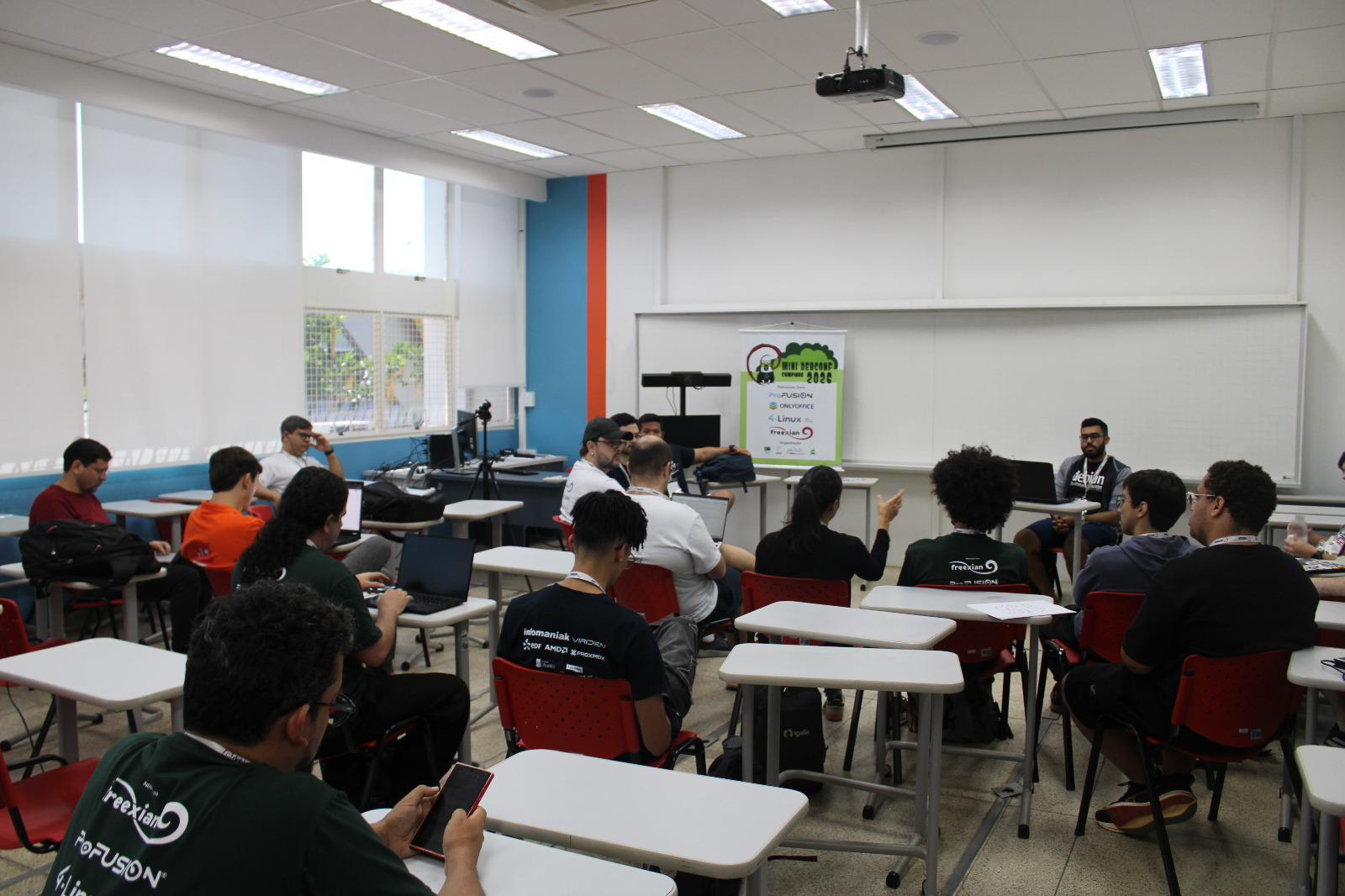
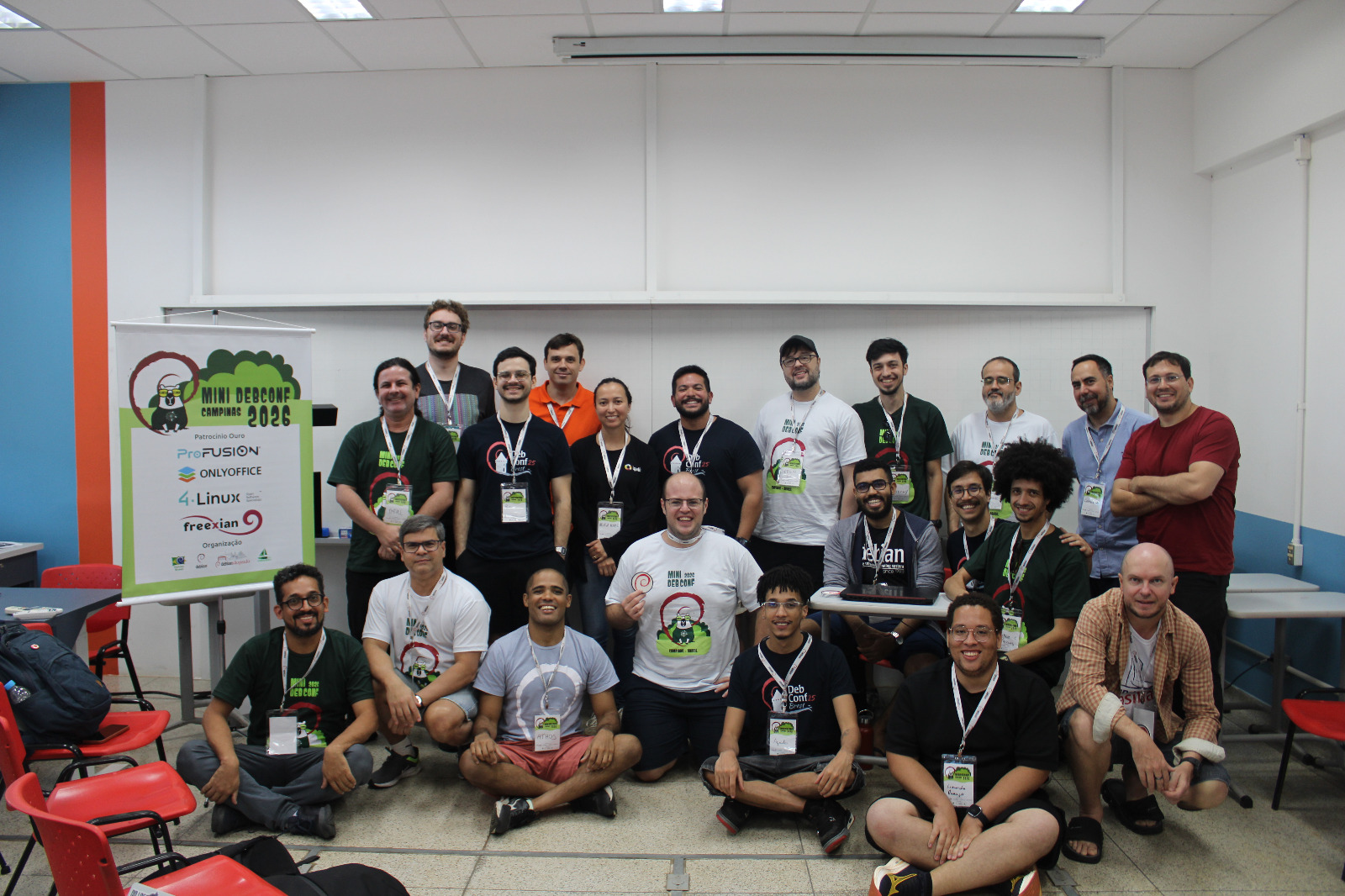
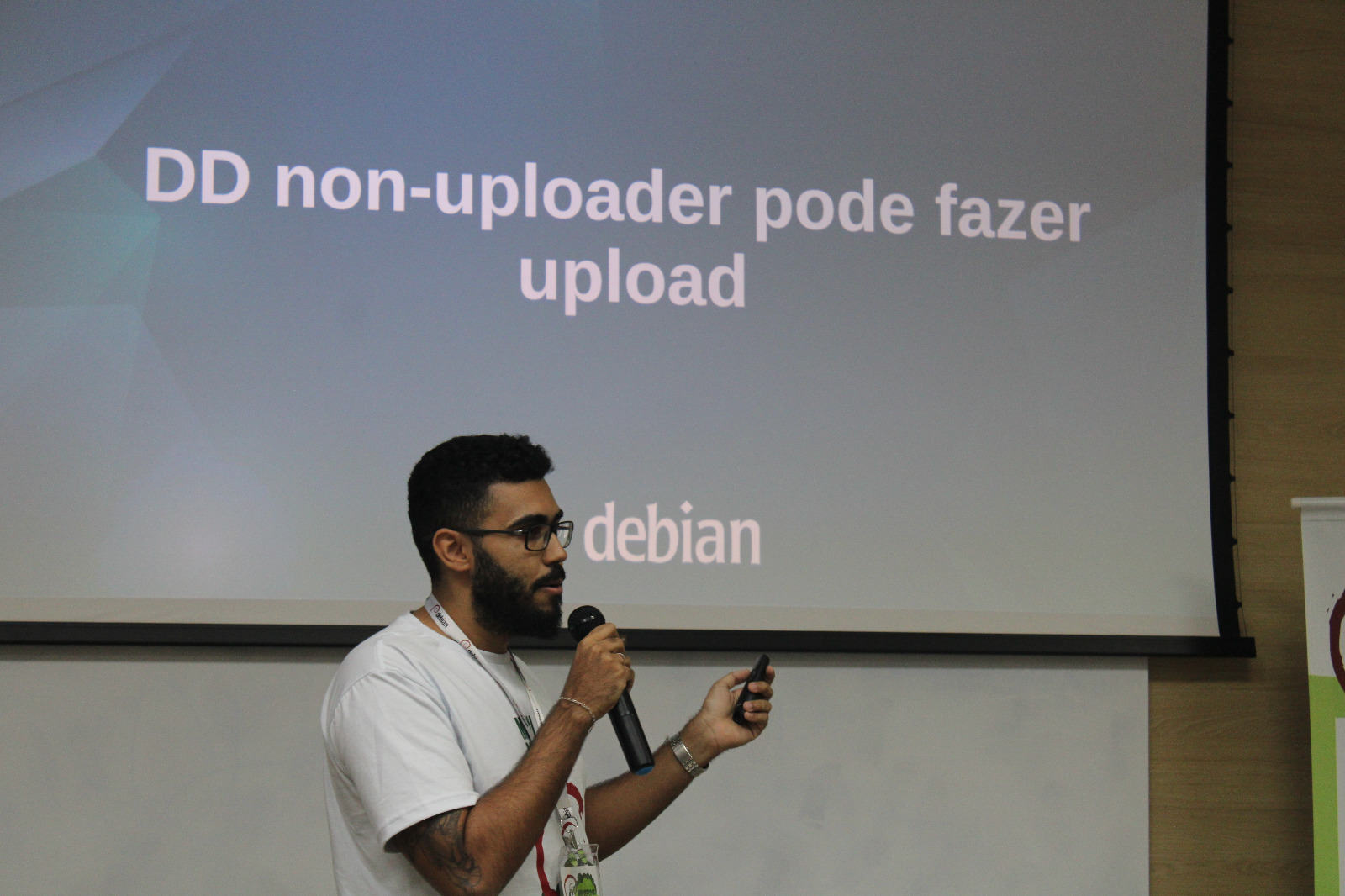
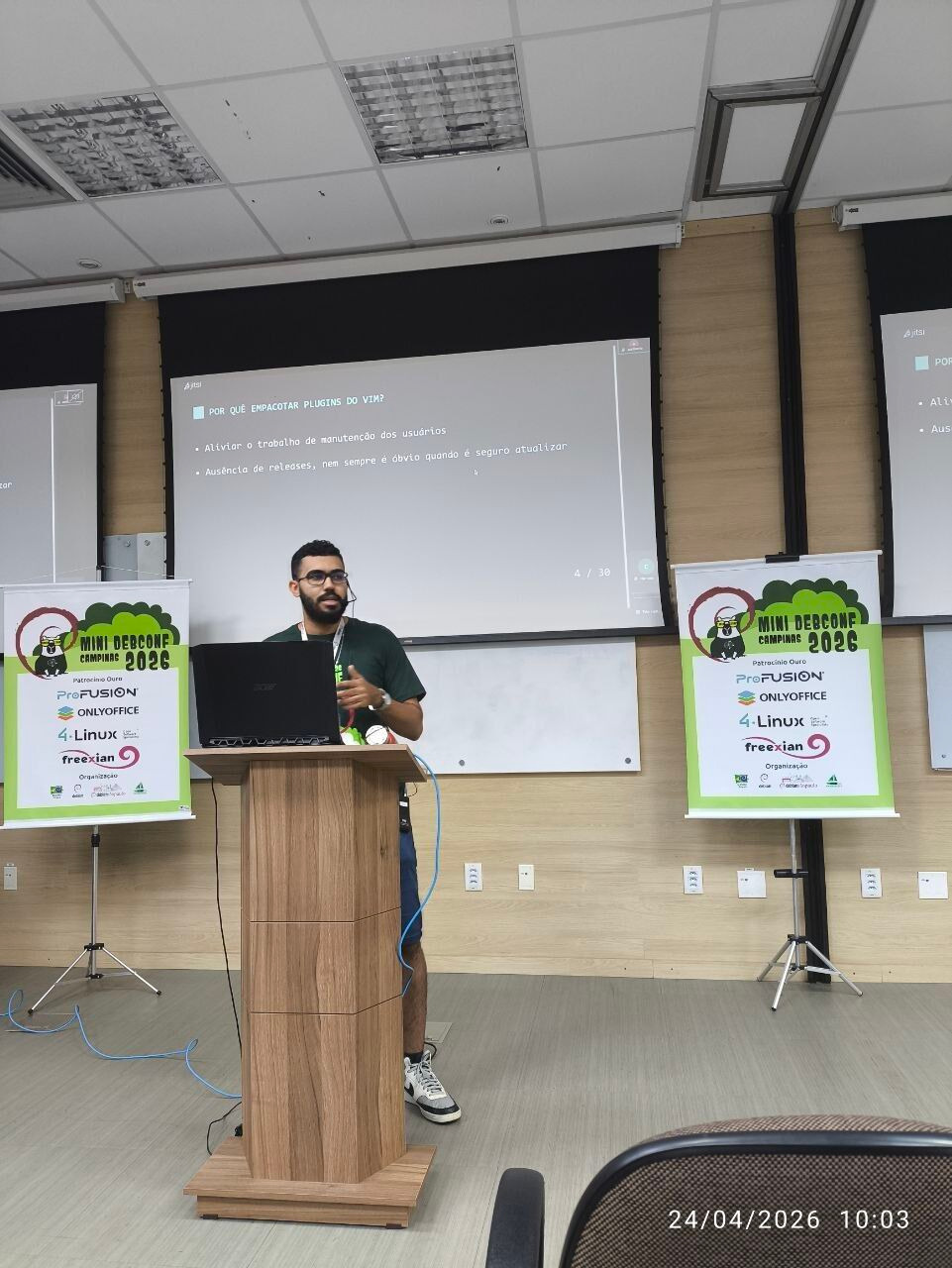
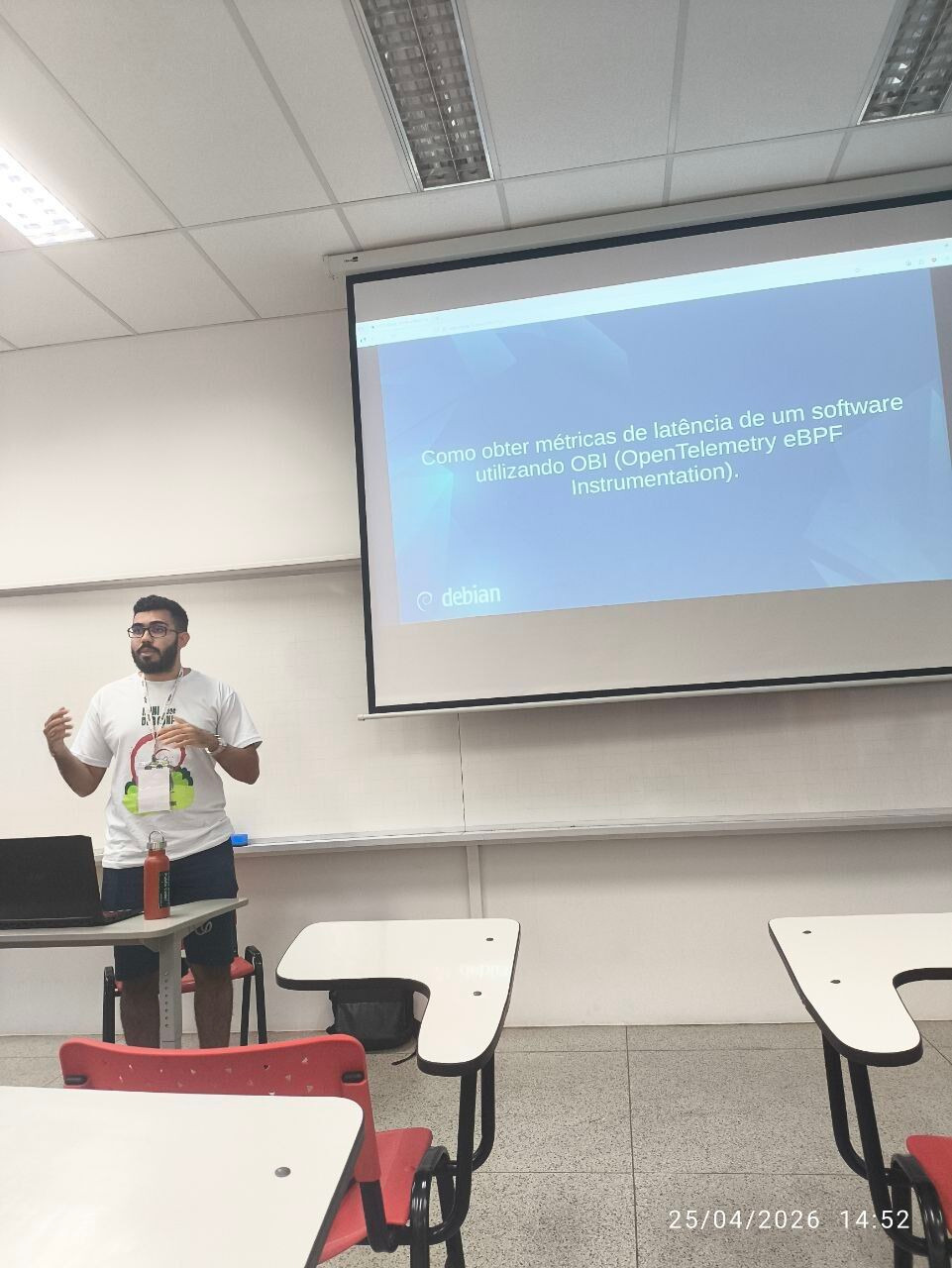
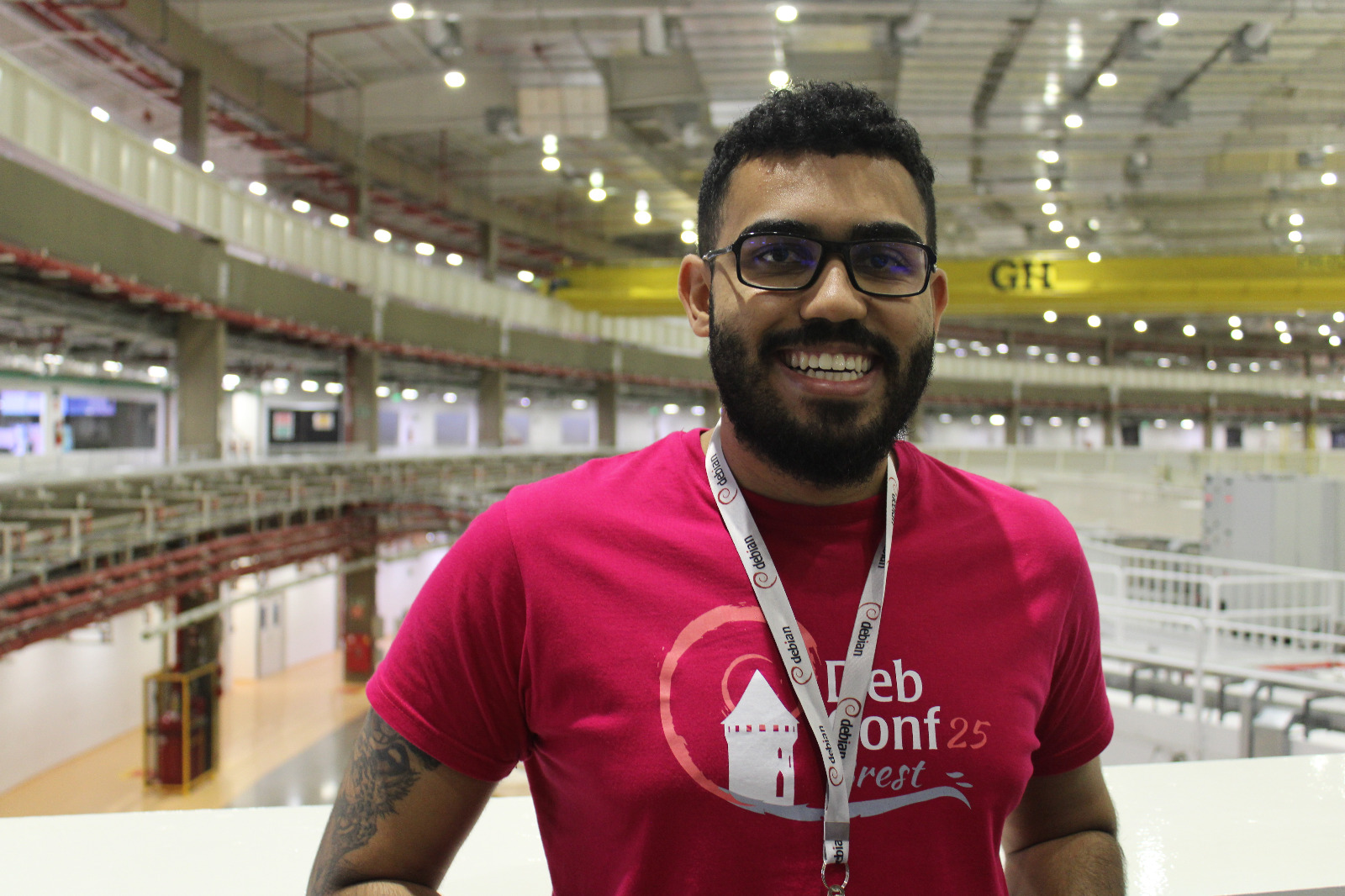
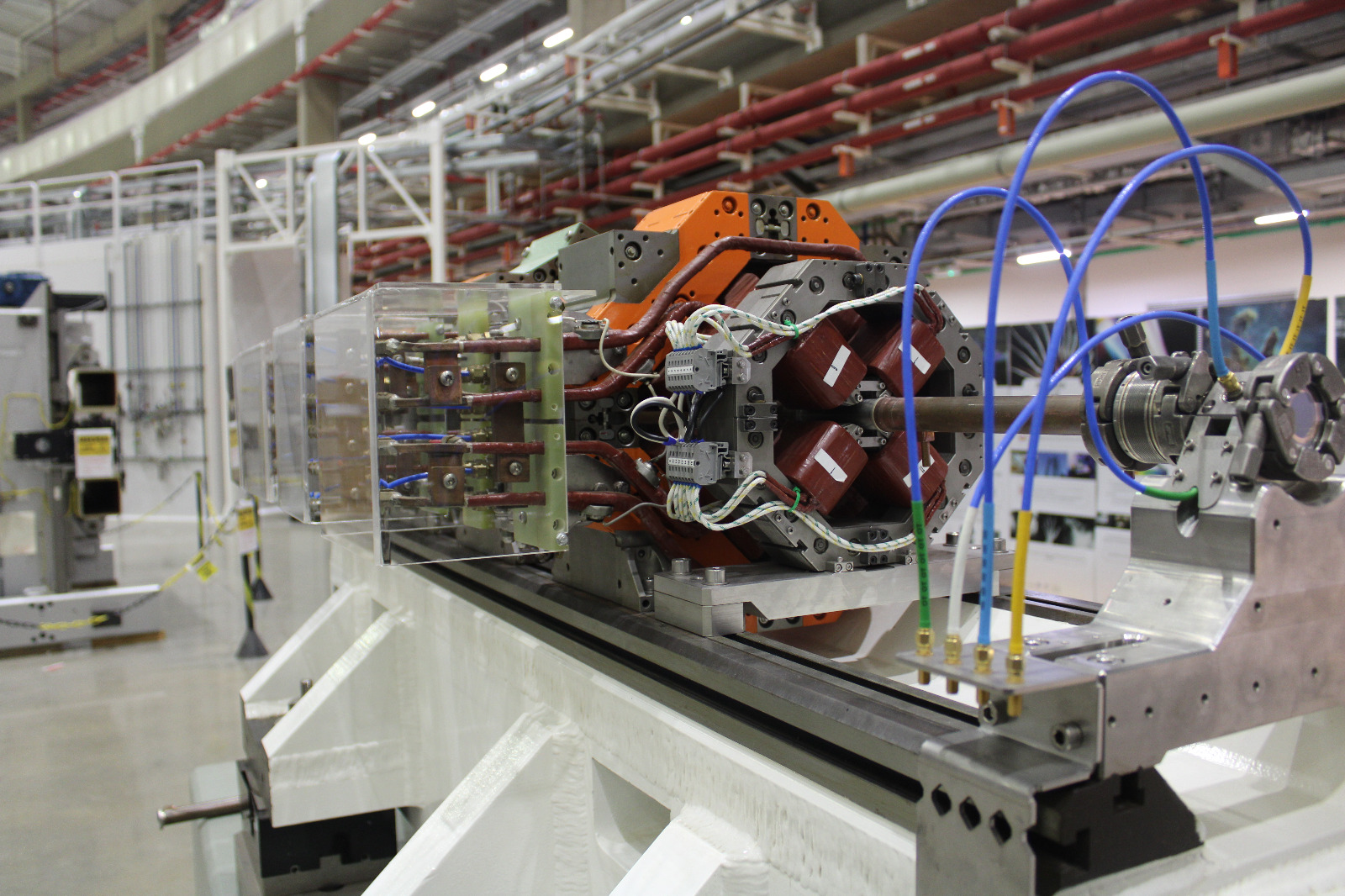
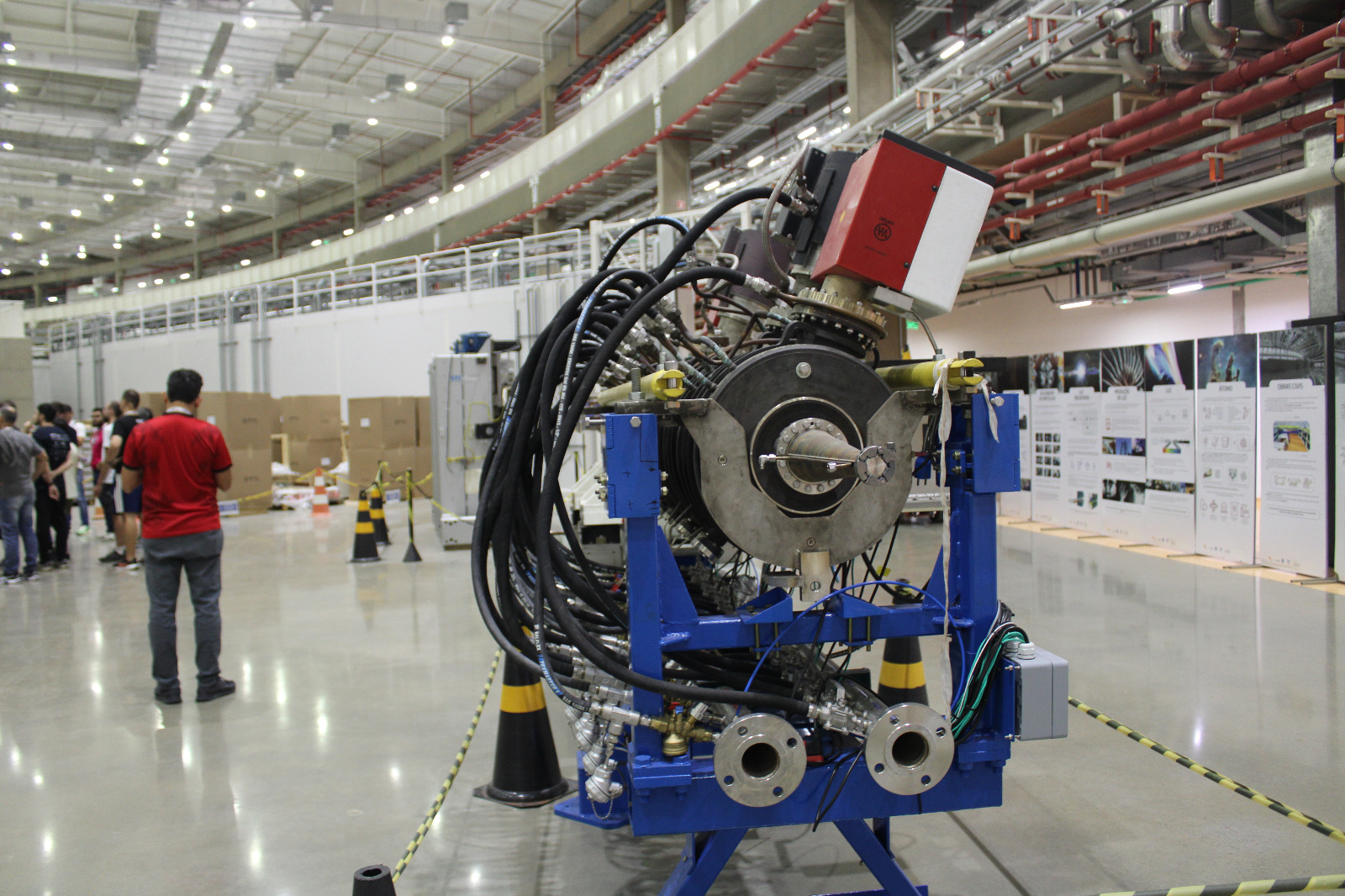
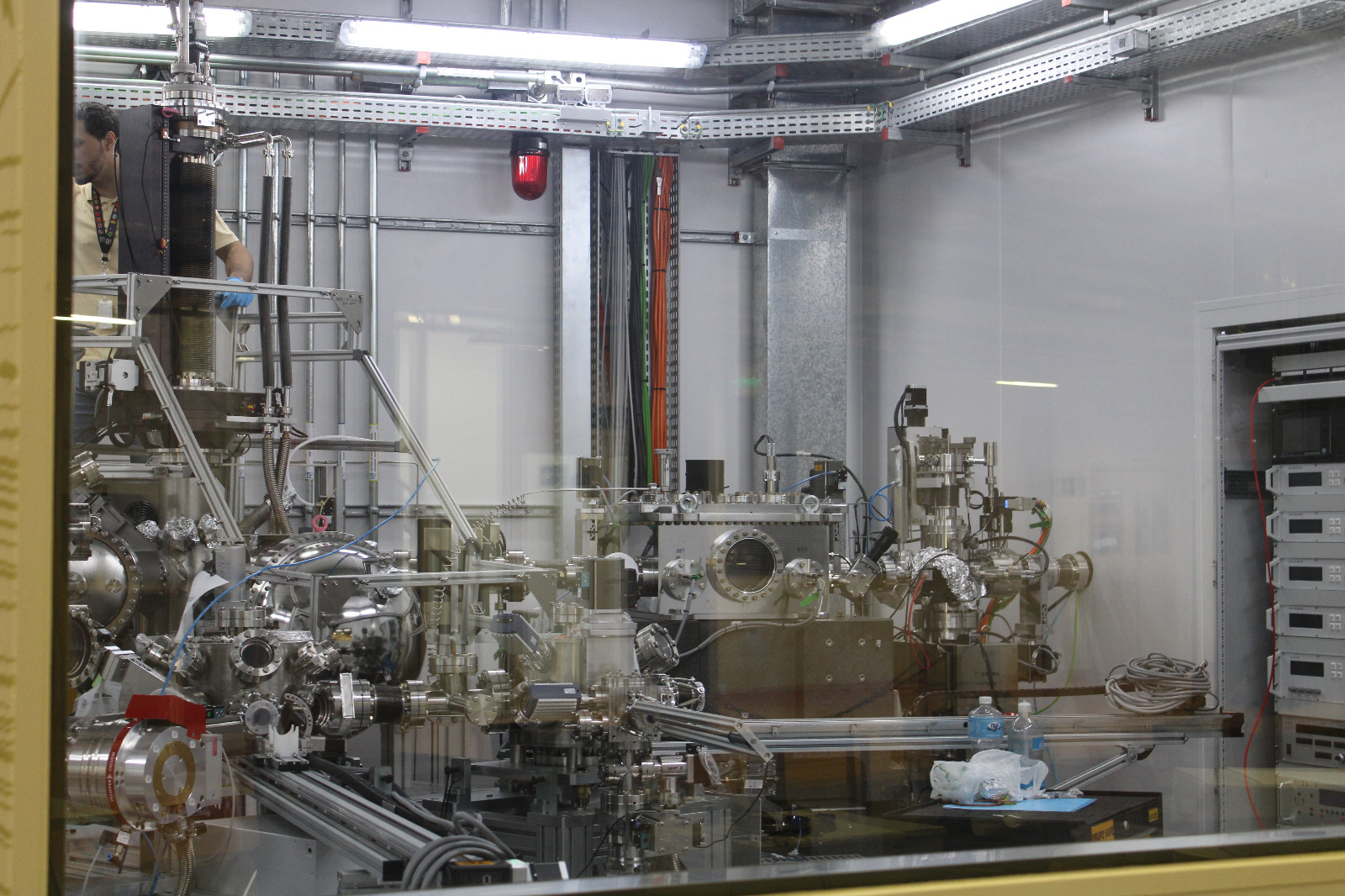
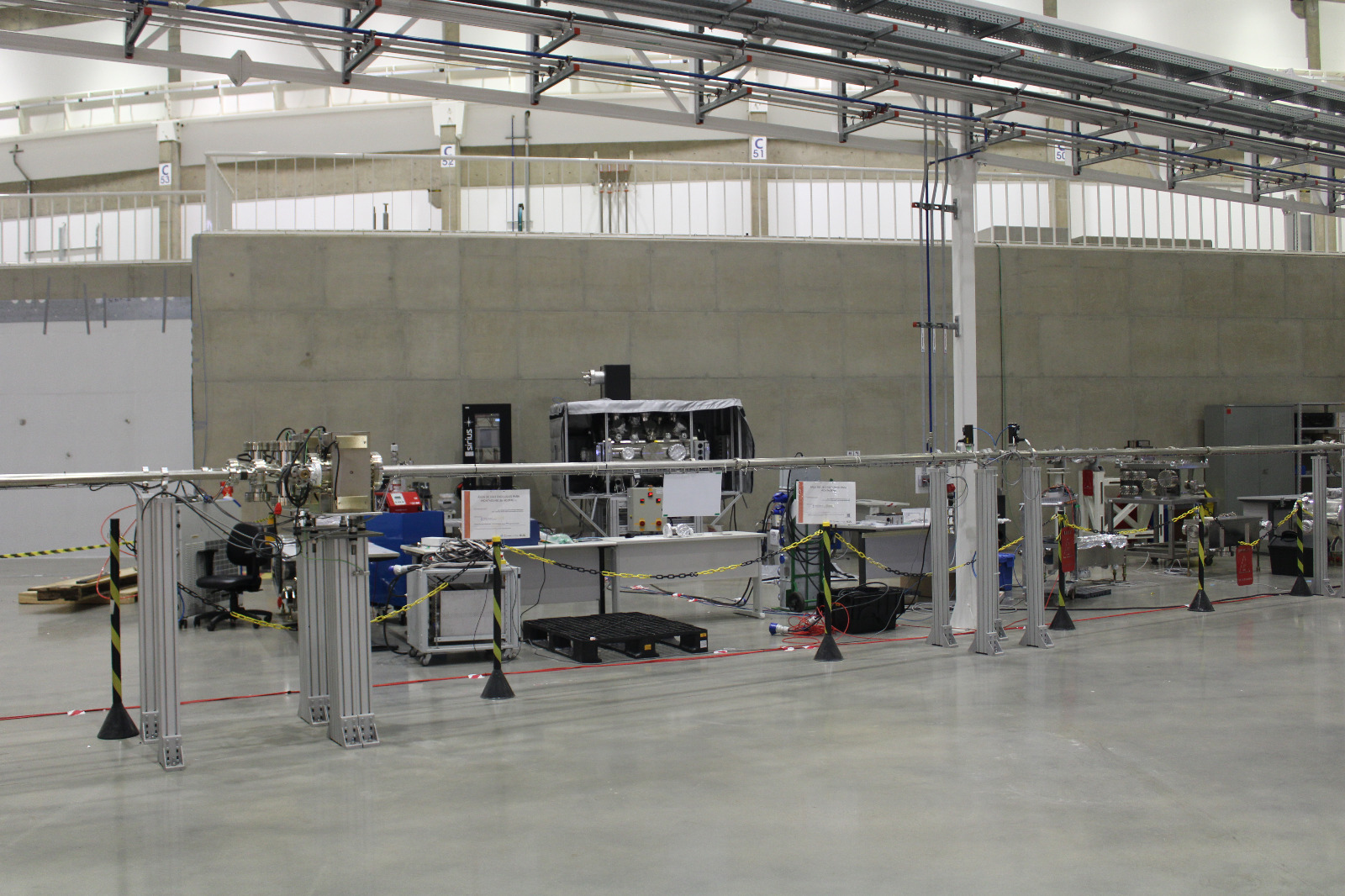
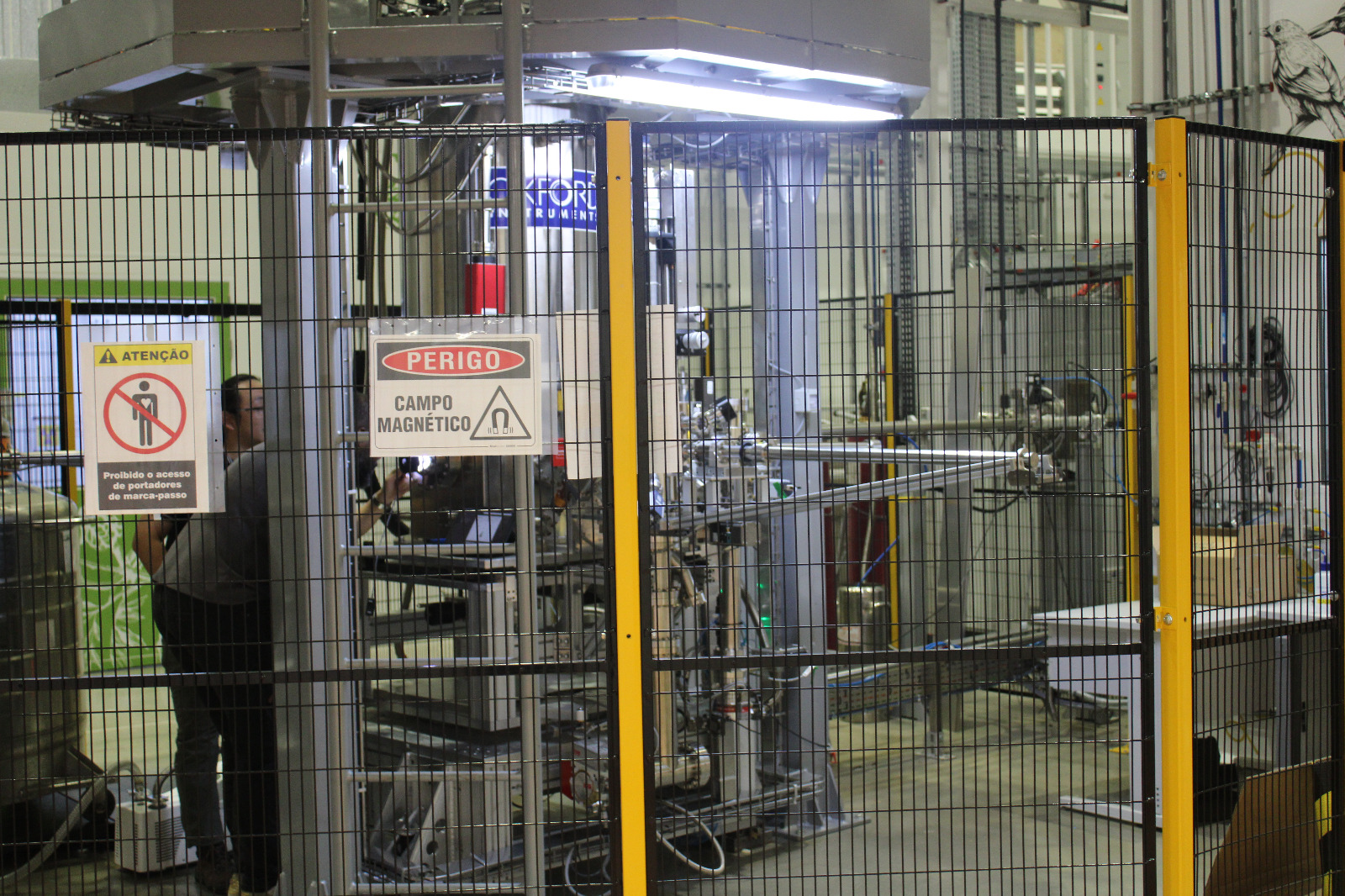
 During March and April, we had a number of performance issues that made
Debusine s core functions of running work requests and reflecting their
results in workflows quite unreliable. Investigating and fixing this took
up a lot of time from both the Debusine development team and Freexian s
sysadmins.
The central problems involved a series of database concurrency and worker
communication issues that interacted in complex ways. On bad days, this
caused between 10% and 25% of processed work requests to fail unnecessarily.
We communicated some of the problems to users on IRC, but not consistently
since we didn t entirely understand the scope of the problems at the time.
Most of the problems are fixed now, but we had a retrospective meeting to
make sure we understood what happened and that we learn from it. Here s a
summary.


 Drilling into an individual test gives you its full run history, a
duration sparkline, and per-run pass/fail status:


 We are very excited to announce that Debian has been assigned seven contributors
to work under mentorship on a variety of


 I mentor several people in Debian, and have been repeatedly asked to offer an opportunity to ask questions on a live call. I have now started a recurring video call for exactly that, which I call Mentoring Mondays, and it is open for anyone aspiring to contribute to Debian, one of the oldest and most widely used Linux distributions.
Mentoring Mondays have already been happening for the past few Mondays, and this week we had a record 20 people on the call. During the calls so far we have had a demo of updating a package for a new upstream release using
 A departures board at Budapest Kelenfold station. Photo by Ravi Dwivedi, released under CC-BY-SA 4.0.
 This is platform number 15 of Budapest Kelenfold station where we boarded our train. Photo by Ravi Dwivedi, released under CC-BY-SA 4.0.
 Interior of our Budapest to Vienna train. Photo by Ravi Dwivedi, released under CC-BY-SA 4.0.
 This blue colored train was the one we took for our Budapest to Vienna journey. Photo by Ravi Dwivedi, released under CC-BY-SA 4.0.
 An BB train standing at a platform of Vienna train station. BB is the national carrier of Austria. Photo by Ravi Dwivedi, released under CC-BY-SA 4.0.
 Wien Hauptbahnhof train station. Photo by Ravi Dwivedi, released under CC-BY-SA 4.0.
 My public transport pass in Vienna.
 Instead of AFC gates, Vienna has ticket validators as in the picture. You need to tap your ticket in the validator before boarding the subway. Photo by Ravi Dwivedi, released under CC-BY-SA 4.0.
 Vienna subway. Photo by Ravi Dwivedi, released under CC-BY-SA 4.0.
 Sch nbrunn Palace. Photo by Ravi Dwivedi, released under CC-BY-SA 4.0.
 A street near Sch nbrunn Palace. Photo by Ravi Dwivedi, released under CC-BY-SA 4.0.
 Ro auer L nde subway station. Photo by Ravi Dwivedi, released under CC-BY-SA 4.0.
 Platform of the Ro auer L nde subway station. Photo by Ravi Dwivedi, released under CC-BY-SA 4.0.
 The The Strudlhofstiege steps. Photo by Ravi Dwivedi, released under CC-BY-SA 4.0.
 A random street in Vienna.
 Another street in Vienna.
 A picture of Blue Orange caf . Photo by Ravi Dwivedi, released under CC-BY-SA 4.0.
 Trams in Vienna. Photo by Ravi Dwivedi, released under CC-BY-SA 4.0.
 Punschkrapfen. Photo by Ravi Dwivedi, released under CC-BY-SA 4.0.
 Esterhazyschnitten. Photo by Ravi Dwivedi, released under CC-BY-SA 4.0.
 Departure boards in Vienna displaying information about the trains. Photo by Ravi Dwivedi, released under CC-BY-SA 4.0.
 Platform and tracks at Wien Hauptbahnhof station. Photo by Ravi Dwivedi, released under CC-BY-SA 4.0.
 Interior of the train we took from Vienna to Budapest. Photo by Ravi Dwivedi, released under CC-BY-SA 4.0.
 This is the train we took for our return journey from Vienna to Budapest. It is standing on a platform in Budapest Kelenfold station. Photo by Ravi Dwivedi, released under CC-BY-SA 4.0.
