Russ Allbery: Review: Dark Class
| Series: | Class 5 #5 |
| Publisher: | Eclipse |
| Copyright: | 2022 |
| ISBN: | 0-6454658-2-8 |
| Format: | Kindle |
| Pages: | 349 |
| Series: | Class 5 #5 |
| Publisher: | Eclipse |
| Copyright: | 2022 |
| ISBN: | 0-6454658-2-8 |
| Format: | Kindle |
| Pages: | 349 |
= into a calculator.
Typing = 660km / (2/3)c * 2 -> ms gives me 6.60457 ms1 without
leaving my terminal, thanks to the Zsh line editor.
= as an alias to a calculator command. I
prefer Numbat, a scientific calculator that supports unit conversions.
Qalculate is a close second.2 If neither is available, we fall back to
Zsh s built-in zcalc module.
As the alias built-in uses = as a separator for name and value, we need to
alter the aliases associative array:
if (( $+commands[numbat] )); then aliases[=]='numbat -e' elif (( $+commands[qalc] )); then aliases[=]='qalc' else autoload -Uz zcalc aliases[=]='zcalc -f -e' fi
= 847/11 becomes numbat -e 847/11.
= 5 * 3 fails: Zsh expands the *
character as a glob pattern before passing it to the calculator. The same issue
applies to other characters that Zsh treats specially, such as > or . You
must quote the expression:
$ = '5 * 3' 15
line-finish widget before submitting a command. We hook a
function that detects the = prefix and quotes the expression:
_vbe_calc_quote() case $BUFFER in "="*) typeset -g _vbe_calc_expr=$BUFFER # not used yet BUFFER="= $ (q-)$ $ BUFFER#= # " ;; esac add-zle-hook-widget line-finish _vbe_calc_quote
= 5 * 3 and press , _vbe_calc_quote strips the =
prefix, quotes the remainder with the (q-) parameter expansion flag,
and rewrites the buffer to = '5 * 3' before Zsh submits the command. As a
bonus, you can save a few keystrokes with =5*3!
You can now compute math expressions and convert units directly from your shell.
Zsh automatically quotes your expressions:
$ = '1 + 2' 3 $ = 'pi/3 + pi > cos' -0.5 $ = '17 USD -> EUR' 14.7122 $ = '180*500mg -> g' 90 g $ = '5 gigabytes / (2 minutes + 17 seconds) -> megabits/s' 291.971 Mbit/s $ = 'now() -> tz("Asia/Tokyo")' 2026-03-22 22:00:03 JST (UTC +09), Asia/Tokyo $ = '1 / (40 rods / hogshead) -> L / 100km' 118548 0.01 l/km

_vbe_calc_history() return $ +_vbe_calc_expr add-zsh-hook zshaddhistory _vbe_calc_history _vbe_calc_preexec() (( $ +_vbe_calc_expr )) && print -s $_vbe_calc_expr unset _vbe_calc_expr return 0 add-zsh-hook preexec _vbe_calc_preexec
zshaddhistory hook returns 1 if we are evaluating an expression, telling
Zsh not to record the command. The preexec hook then adds the original,
unquoted command with print -s.
noglob precommand modifier. If you stick with to instead of ->
for unit conversion, it covers 90% of use cases. For a related Zsh line editor
trick, see how I use auto-expanding aliases to fix common typos.
When you re looking at source code it can be helpful to have some evidence
indicating who wrote it. Author tags give a surface level indication, but
it turns out you can just
lie
and if someone isn t paying attention when merging stuff there s certainly a
risk that a commit could be merged with an author field that doesn t
represent reality. Account compromise can make this even worse - a PR being
opened by a compromised user is going to be hard to distinguish from the
authentic user. In a world where supply chain security is an increasing
concern, it s easy to understand why people would want more evidence that
code was actually written by the person it s attributed to.
git has support for cryptographically signing
commits and tags. Because git is about choice even if Linux isn t, you can
do this signing with OpenPGP keys, X.509 certificates, or SSH keys. You re
probably going to be unsurprised about my feelings around OpenPGP and the
web of trust, and X.509 certificates are an absolute nightmare. That leaves
SSH keys, but bare cryptographic keys aren t terribly helpful in isolation -
you need some way to make a determination about which keys you trust. If
you re using someting like GitHub you can extract that
information from the set of keys associated with a user account1, but
that means that a compromised GitHub account is now also a way to alter the
set of trusted keys and also when was the last time you audited your keys
and how certain are you that every trusted key there is still 100% under
your control? Surely there s a better way.
|
|
gpg namespace even if you re not using OpenPGP. Yes, this makes
me sad. But you re also going to need something else. Either
user.signingkey needs to be set to the path of your certificate, or you
need to set gpg.ssh.defaultKeyCommand to a command that will talk to an
SSH agent and find the certificate for you (this can be helpful if it s
stored on a smartcard or something rather than on disk). Thankfully for you,
I ve written one. It will
talk to an SSH agent (either whatever s pointed at by the SSH_AUTH_SOCK
environment variable or with the -agent argument), find a certificate
signed with the key provided with the -ca argument, and then pass that
back to git. Now you can simply pass -S to git commit and various other
commands, and you ll have a signature.
ssh-keygen2, which validates signatures against a file in a format
that looks somewhat like authorized-keys. This lets you add something like:
|
|
CA_PUB_KEY or (optionally) an OpenPGP key provided in
ALLOWED_PGP_KEYS. Why OpenPGP? Because even if you sign all of your own
commits with an SSH certificate, anyone using the API or web interface will
end up with their commits signed by an OpenPGP key, and if you want to have
those commits validate you ll need to handle that.
In any case, this should be easy enough to integrate into whatever CI
pipeline you have. This is currently very much a proof of concept and I
wouldn t recommend deploying it anywhere, but I am interested in merging
support for additional policy around things like expiry dates or group
membership.
https://github.com/<username>.keys? Now you do
keygen command does things
other than generate keys
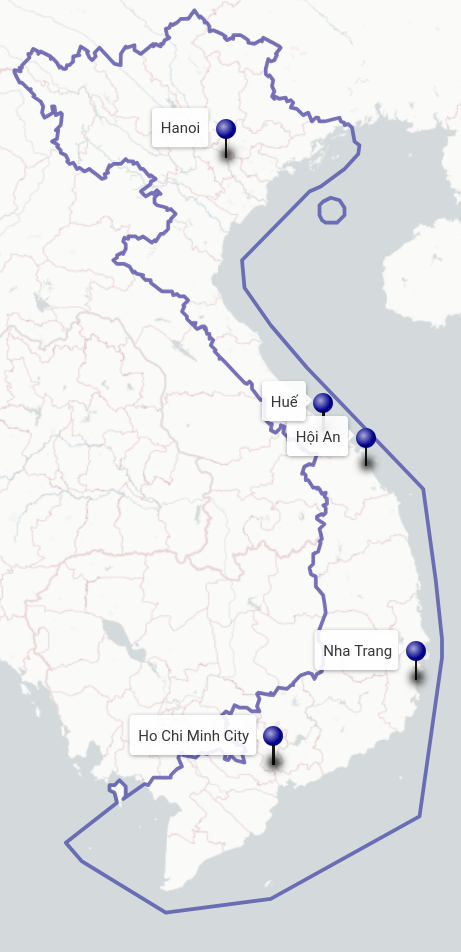
A map of Vietnam with points of places we went to labeled. CARTO MAPTILER OPENSTREETMAP
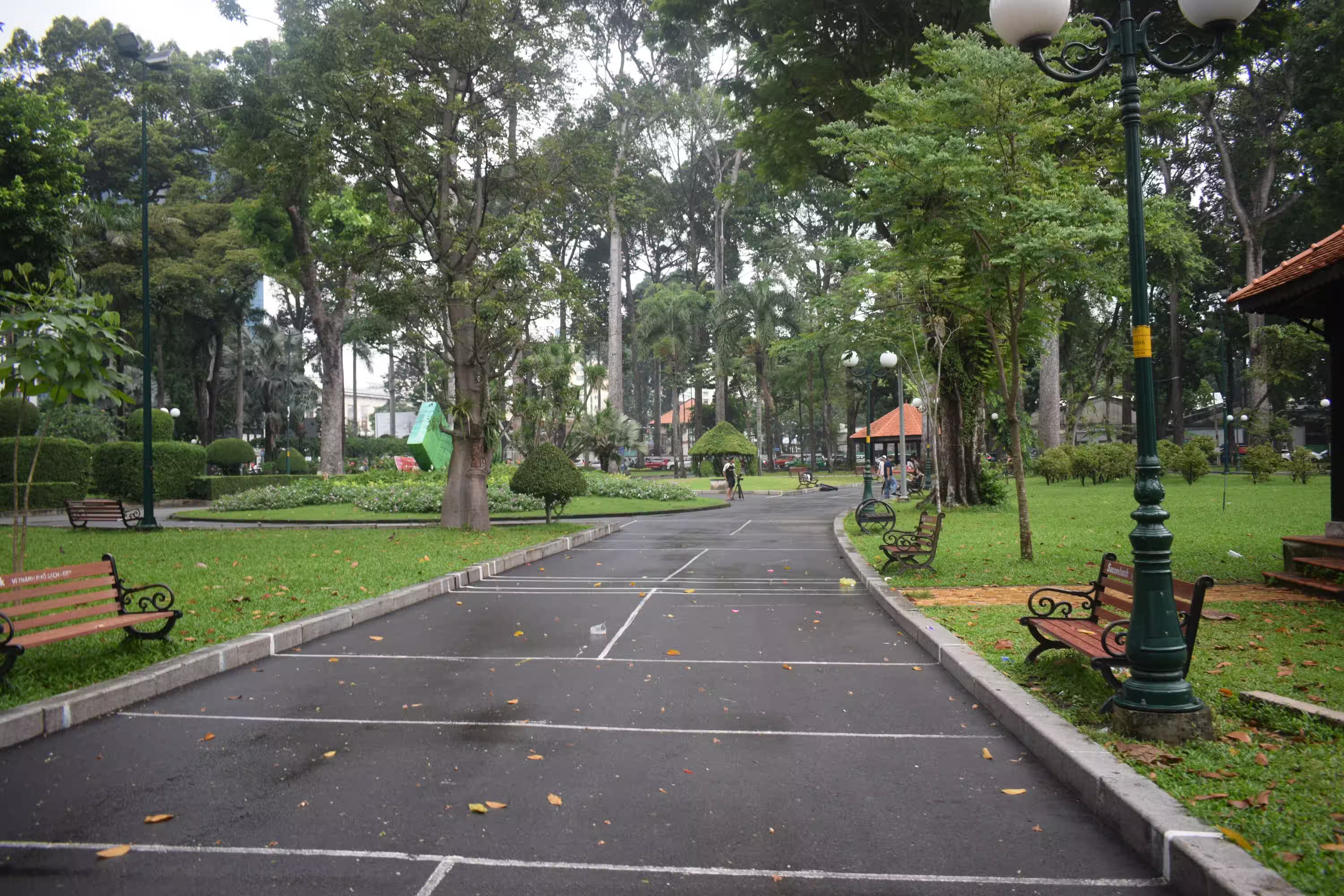
A picture of the park we roamed around in Ho Chi Minh City. Photo by Ravi Dwivedi, released under CC-BY-SA 4.0.

This is the restaurant Badri s friend took us to. Photo by Ravi Dwivedi, released under CC-BY-SA 4.0.

One of the dishes we had in the restaurant. This one was especially tasty. Photo by Ravi Dwivedi, released under CC-BY-SA 4.0.
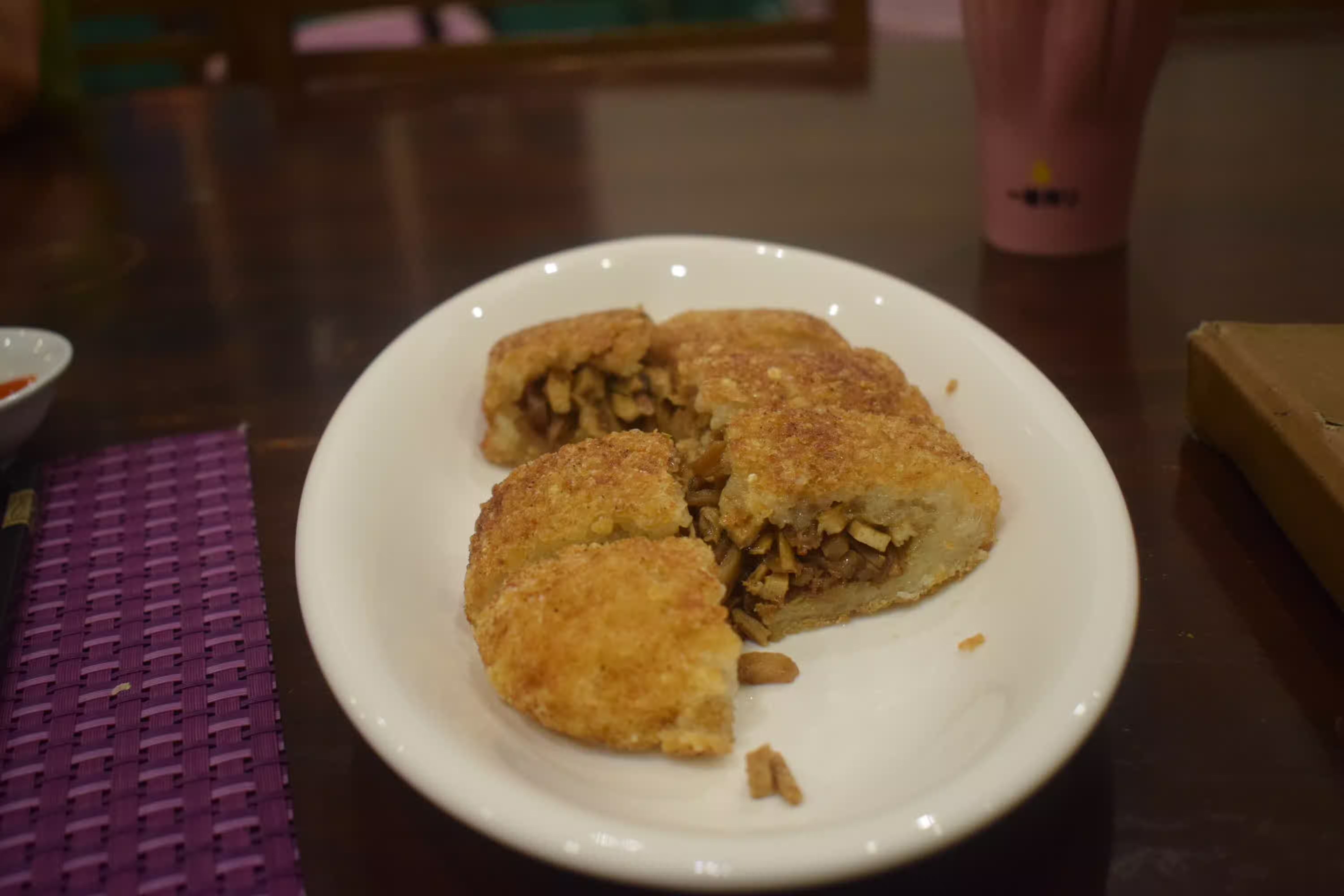
One of the dishes we had in the restaurant. Photo by Ravi Dwivedi, released under CC-BY-SA 4.0.
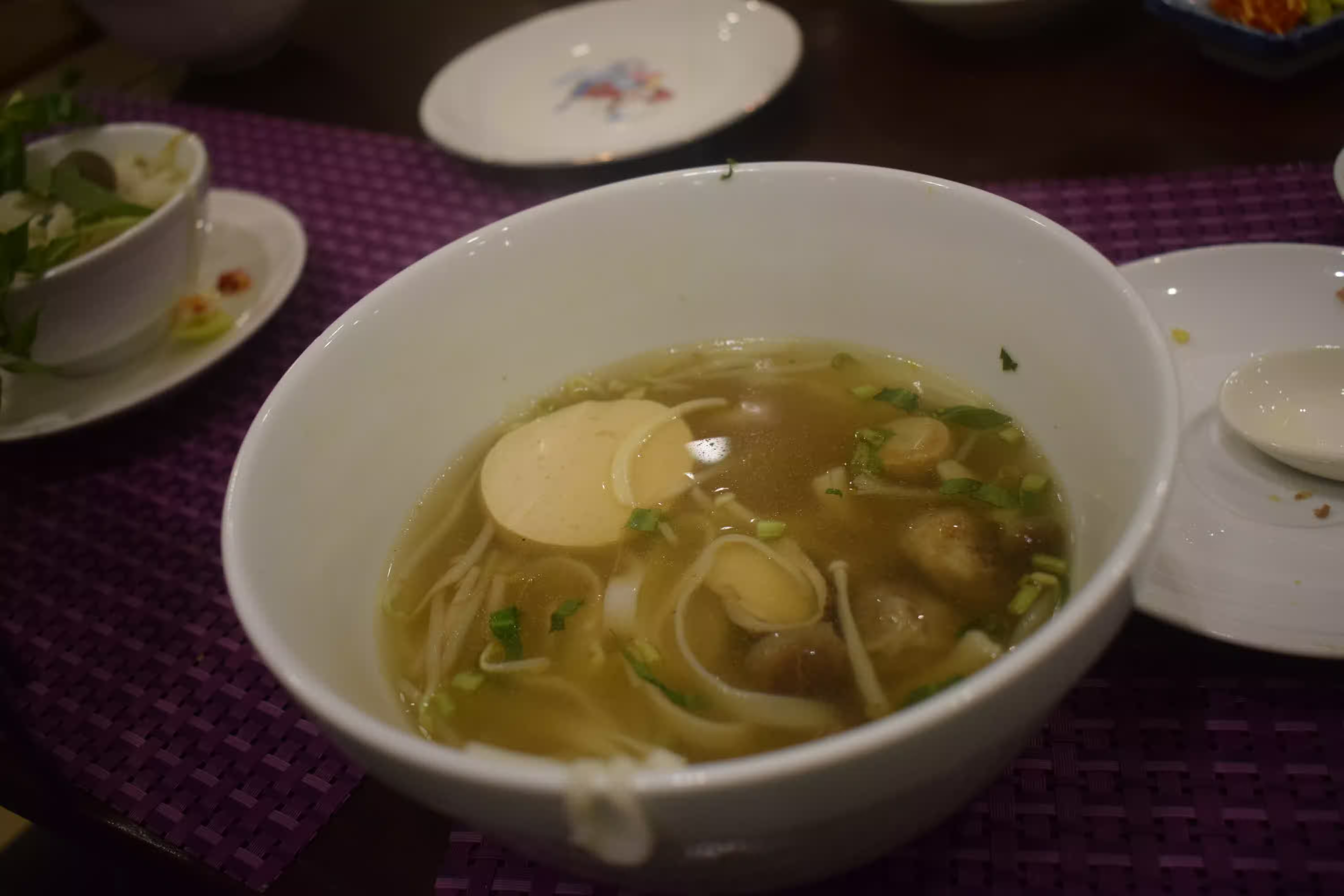
These noodles are called Pho and are very popular in Vietnam. Photo by Ravi Dwivedi, released under CC-BY-SA 4.0.
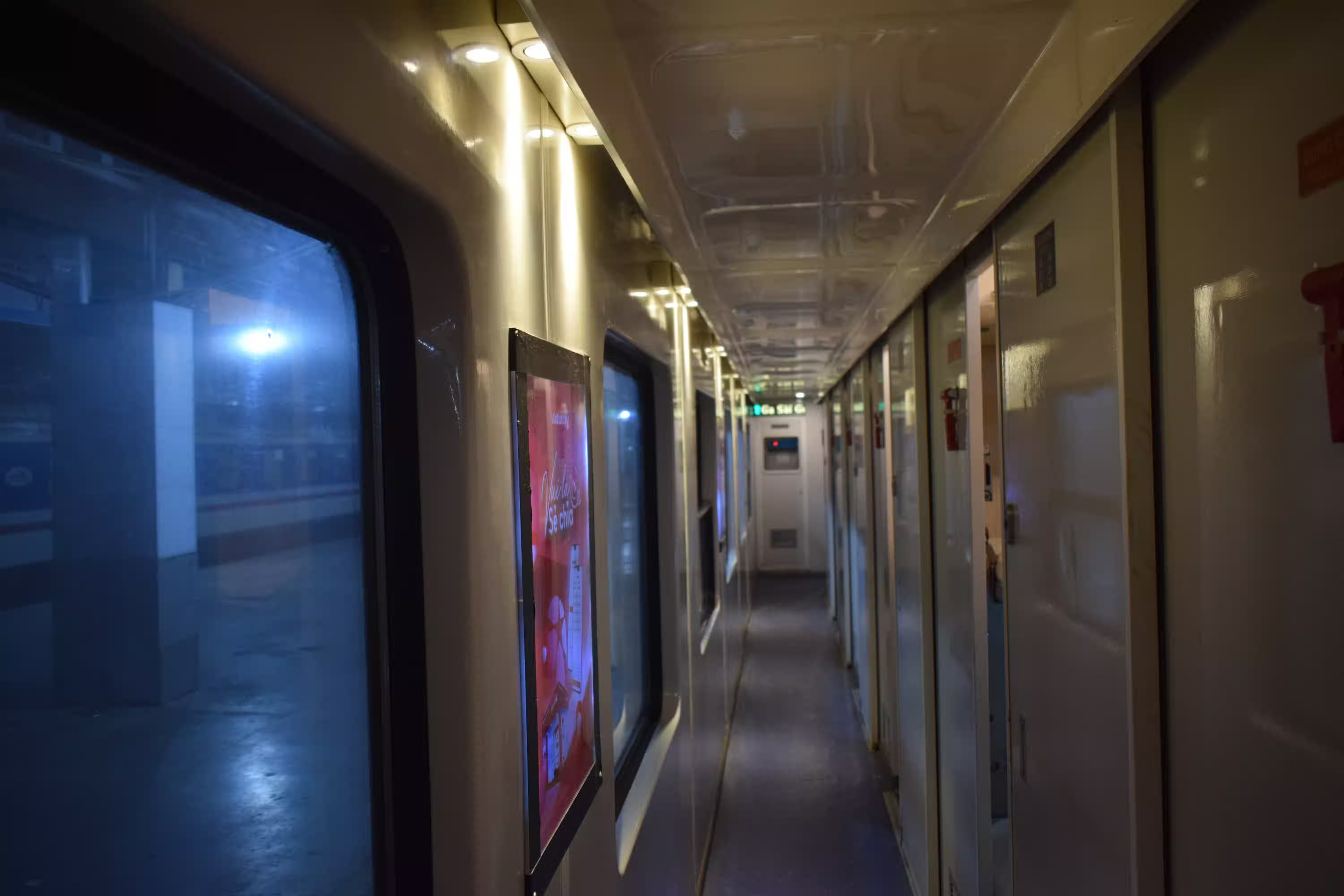
Interior of our train coach. Trains in Vietnam don t have side berths, unlike India. Photo by Ravi Dwivedi, released under CC-BY-SA 4.0.
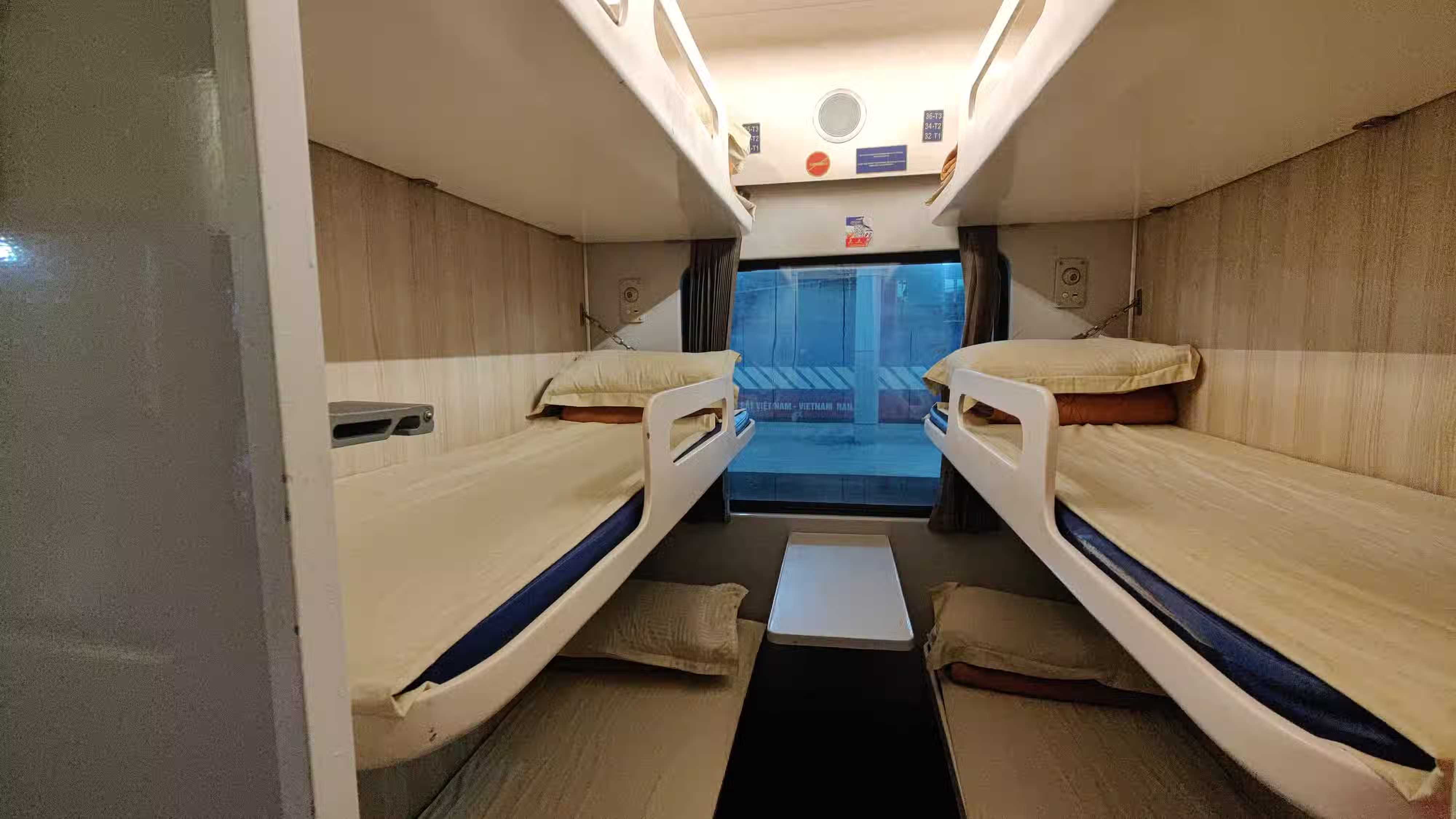
A picture of the berths from our coach. It had three tiers, similar to a 3 AC coach in Indian trains. Photo by Ravi Dwivedi, released under CC-BY-SA 4.0.
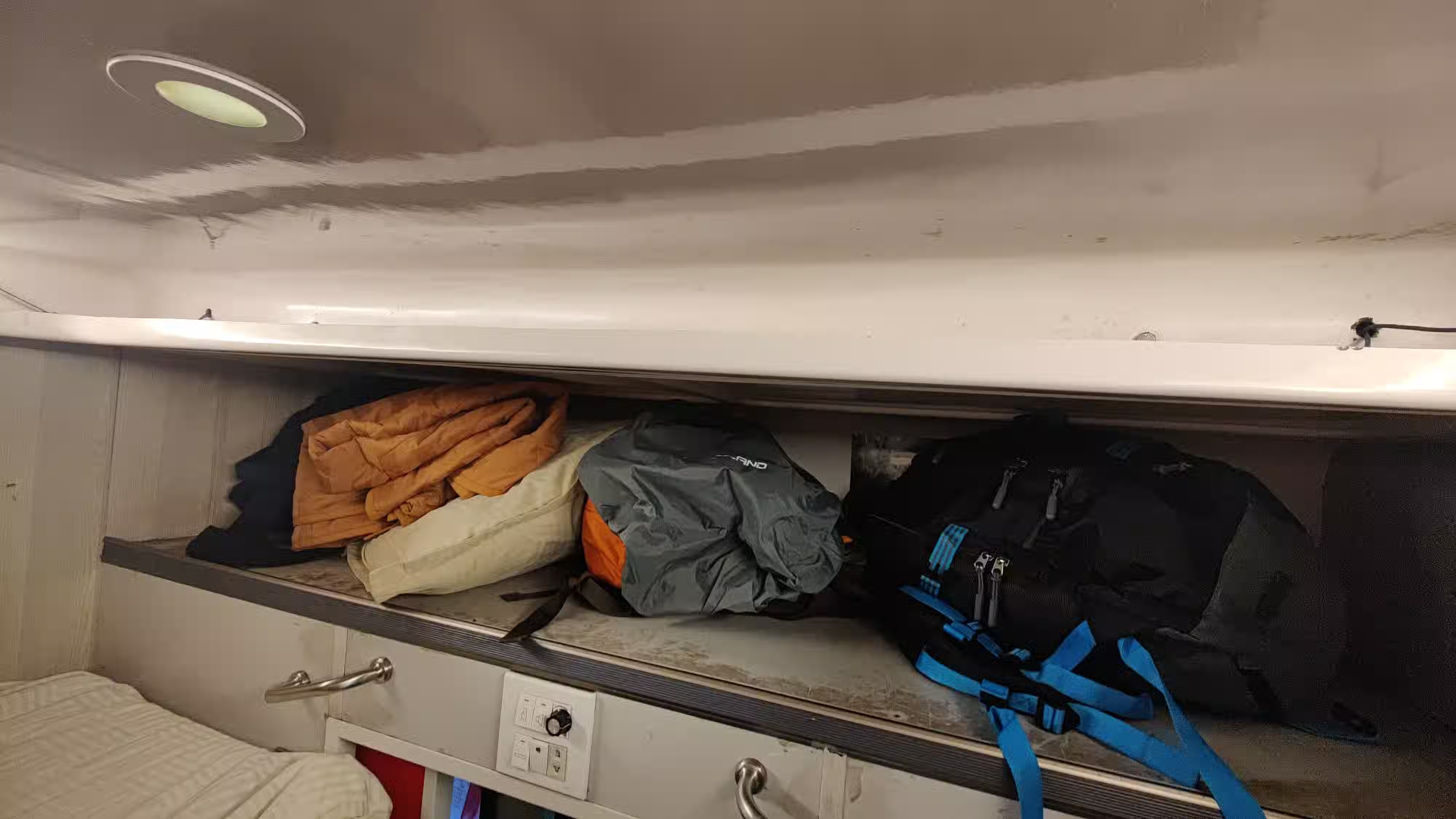
The train had a cabin to put the bags in. Photo by Ravi Dwivedi, released under CC-BY-SA 4.0.

Nha Trang train station. Photo by Ravi Dwivedi, released under CC-BY-SA 4.0.

I got a complimentary cup of green tea along with coffee in Nha Trang. In this trip, Badri and I found out that this is customary at local places in Vietnam. Photo by Ravi Dwivedi, released under CC-BY-SA 4.0.
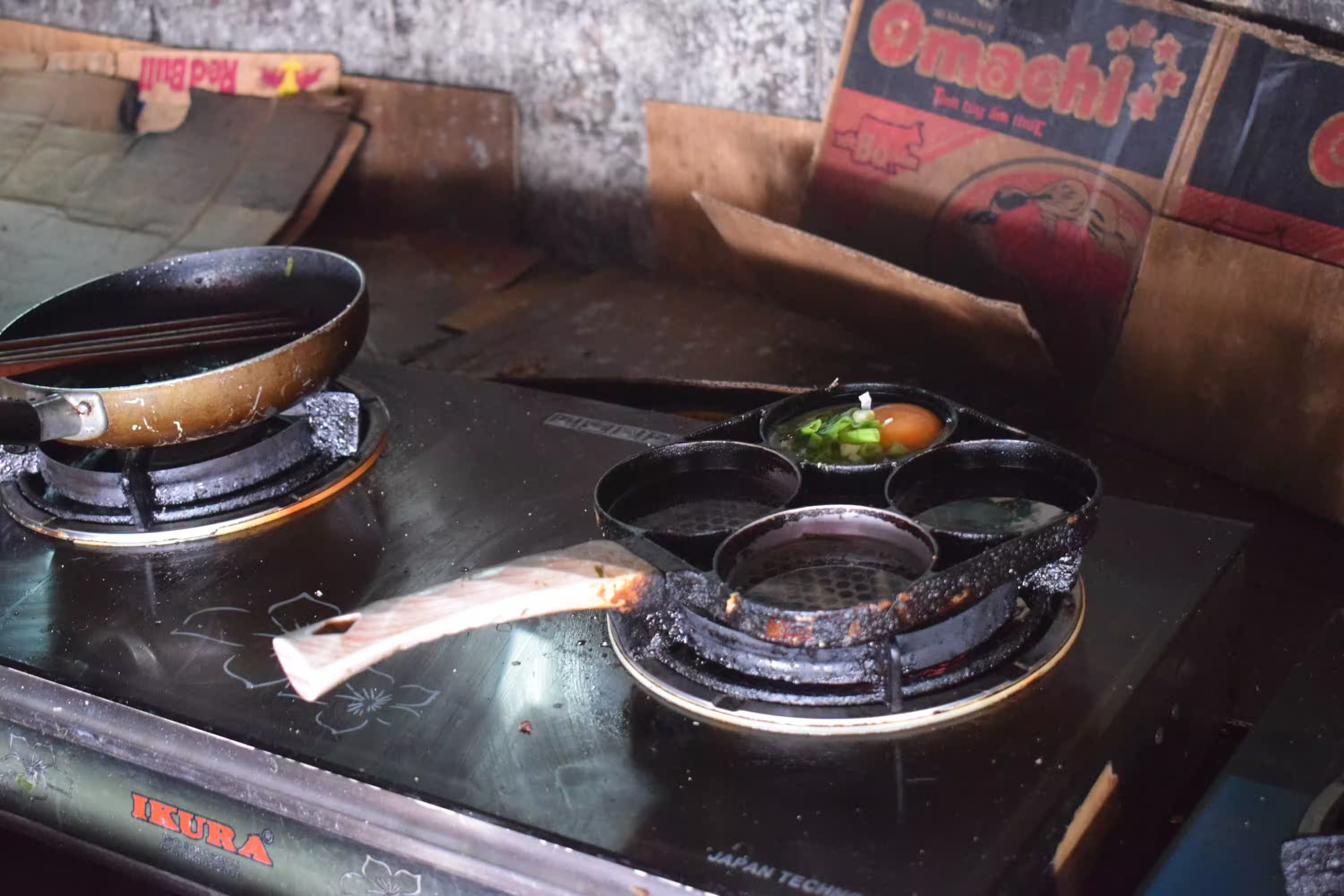
Eggs being cooked on a pan for my order. Photo by Ravi Dwivedi, released under CC-BY-SA 4.0.

The beach we went to in Nha Trang. Photo by Ravi Dwivedi, released under CC-BY-SA 4.0.

This one was shot in the city center. In this trip, Badri and I found out that this is customary at local places in Vietnam. Photo by Ravi Dwivedi, released under CC-BY-SA 4.0.
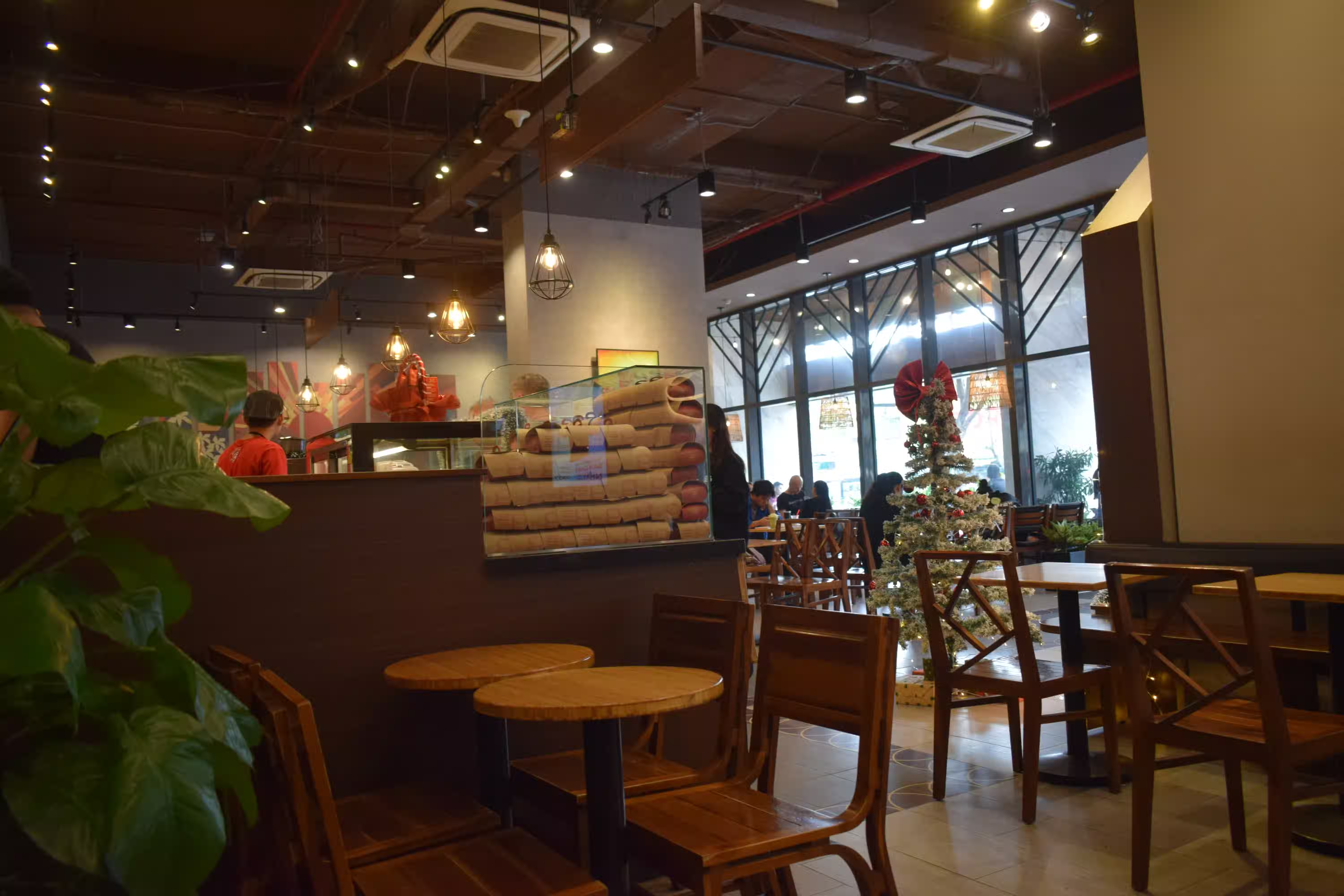
Inside a Highlands Coffee cafe in Nha Trang. Photo by Ravi Dwivedi, released under CC-BY-SA 4.0.

A coffee I got from Highlands Coffee in Nha Trang. Photo by Ravi Dwivedi, released under CC-BY-SA 4.0.
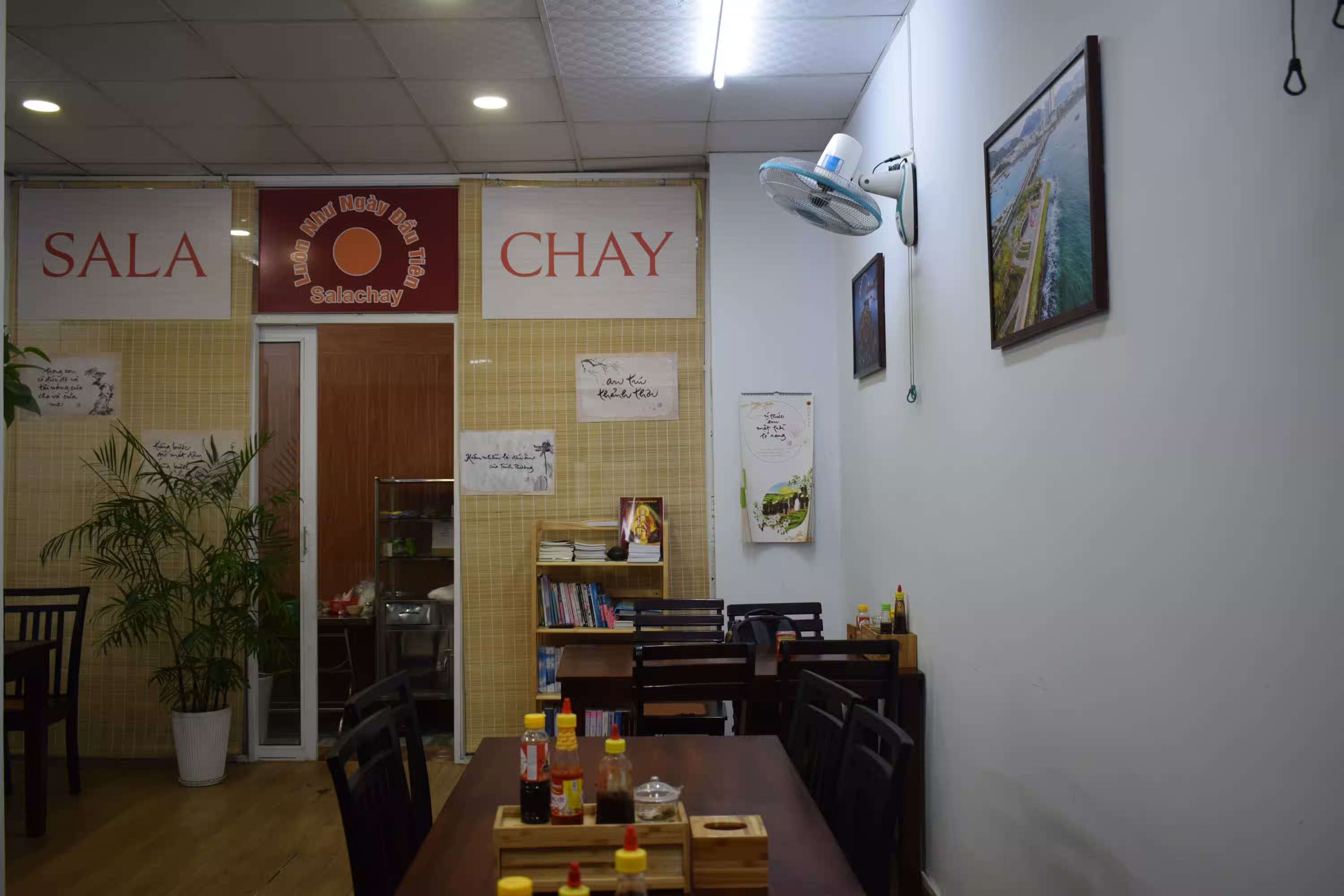
The restaurant we went to in Nha Trang. The word Chay in the name means it was a vegan restaurant. Photo by Ravi Dwivedi, released under CC-BY-SA 4.0.
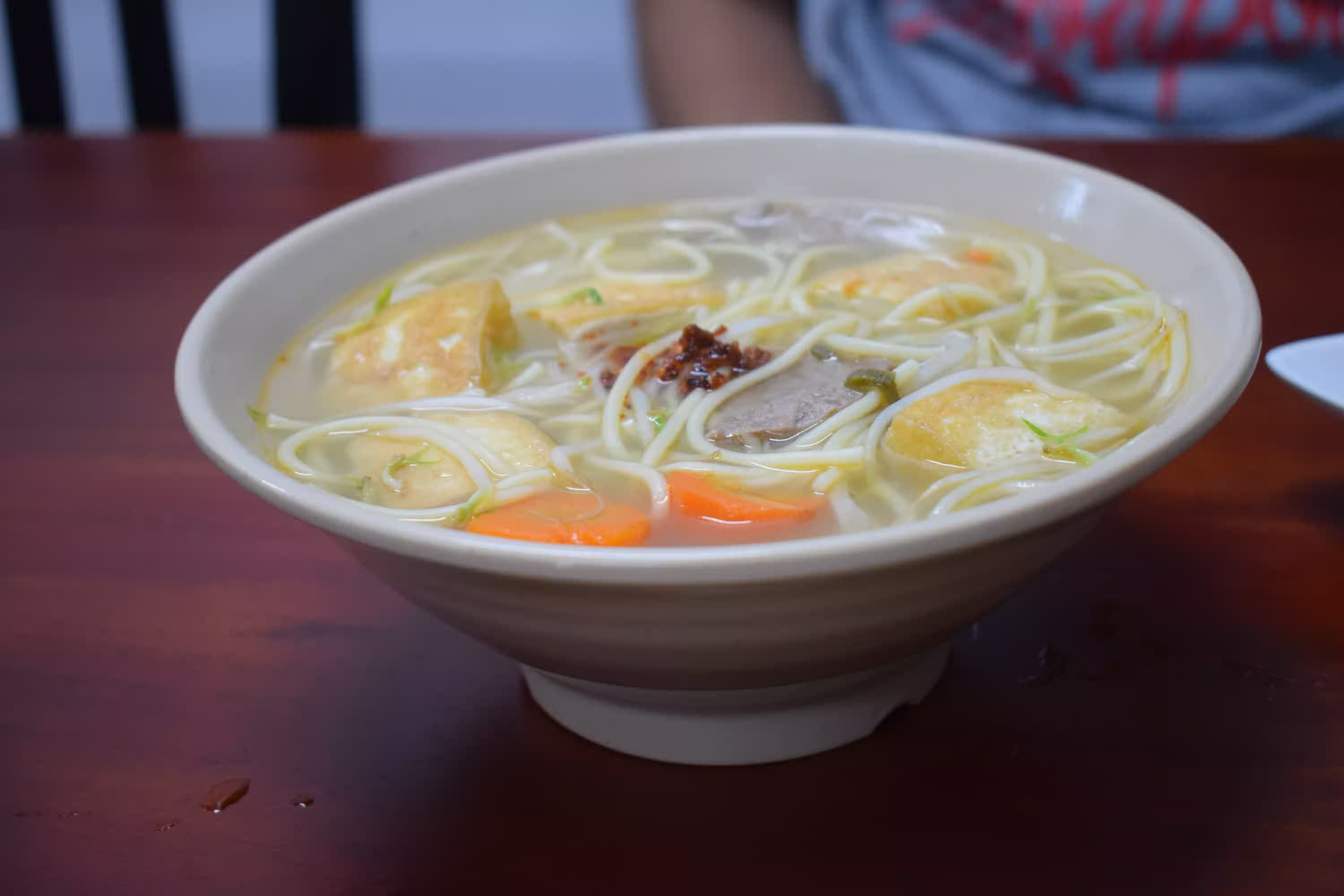
Soupy noodles we got at that restaurant. Photo by Ravi Dwivedi, released under CC-BY-SA 4.0.
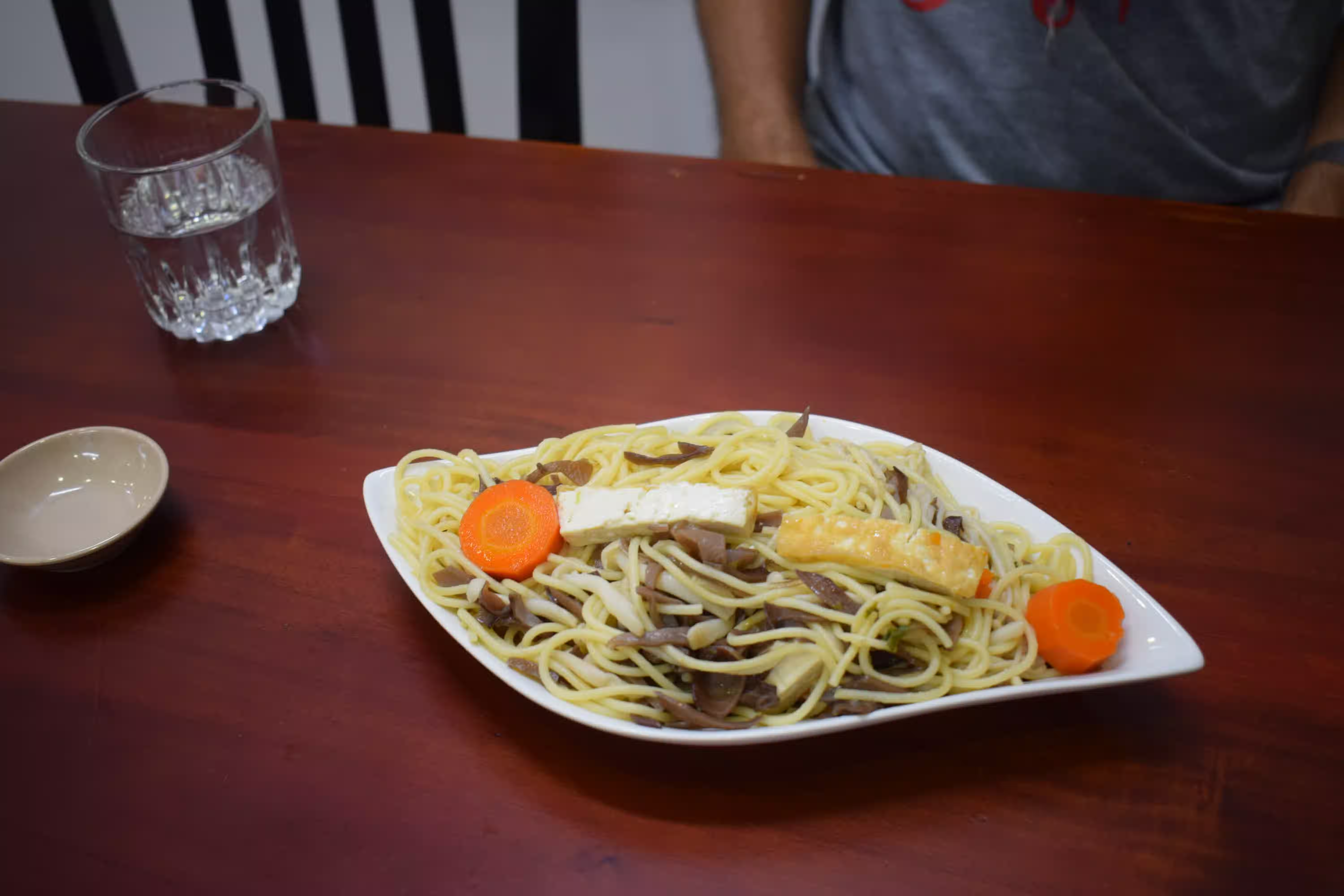
Dry noodles we got at that restaurant. Photo by Ravi Dwivedi, released under CC-BY-SA 4.0.
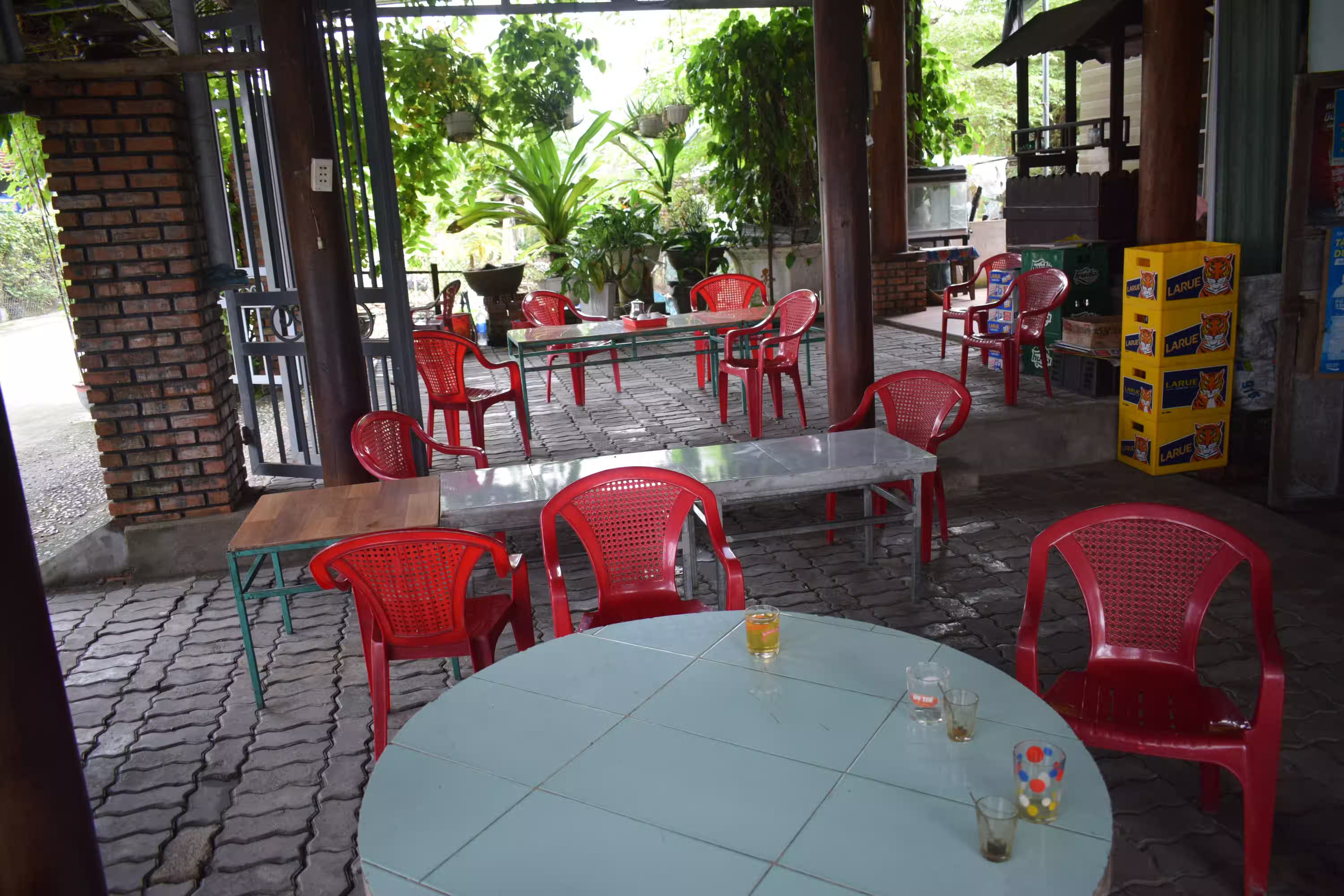
This was the place we had our coffee in Tra Kieu. Photo by Ravi Dwivedi, released under CC-BY-SA 4.0.

Photo of Badri with taxi driver. Photo by Ravi Dwivedi, released under CC-BY-SA 4.0.

A picture of Tra Kieu area near the train station we got down at. Photo by Ravi Dwivedi, released under CC-BY-SA 4.0.

Our breakfast in Hoi An. Photo by Ravi Dwivedi, released under CC-BY-SA 4.0.

A photo of the hostel we stayed in Hoi An. Photo by Ravi Dwivedi, released under CC-BY-SA 4.0.

Typical yellow house with gabled roof in Hoi An old town. Photo by Ravi Dwivedi, released under CC-BY-SA 4.0.

Egg coffee I had in Hoi An. Photo by Ravi Dwivedi, released under CC-BY-SA 4.0.

Bahn Bao in Hue. Photo by Ravi Dwivedi, released under CC-BY-SA 4.0.
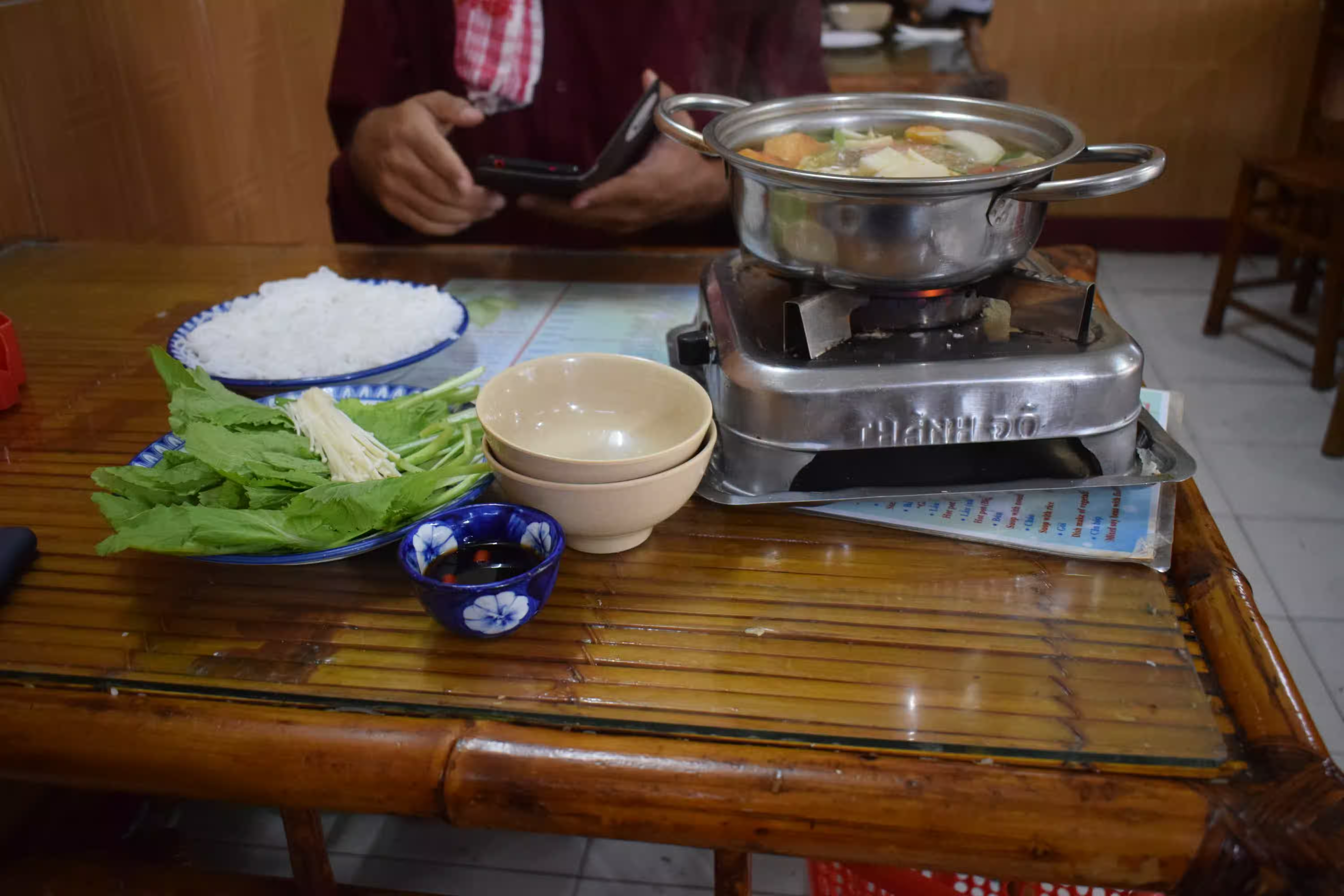
Hot Pot. Photo by Ravi Dwivedi, released under CC-BY-SA 4.0.
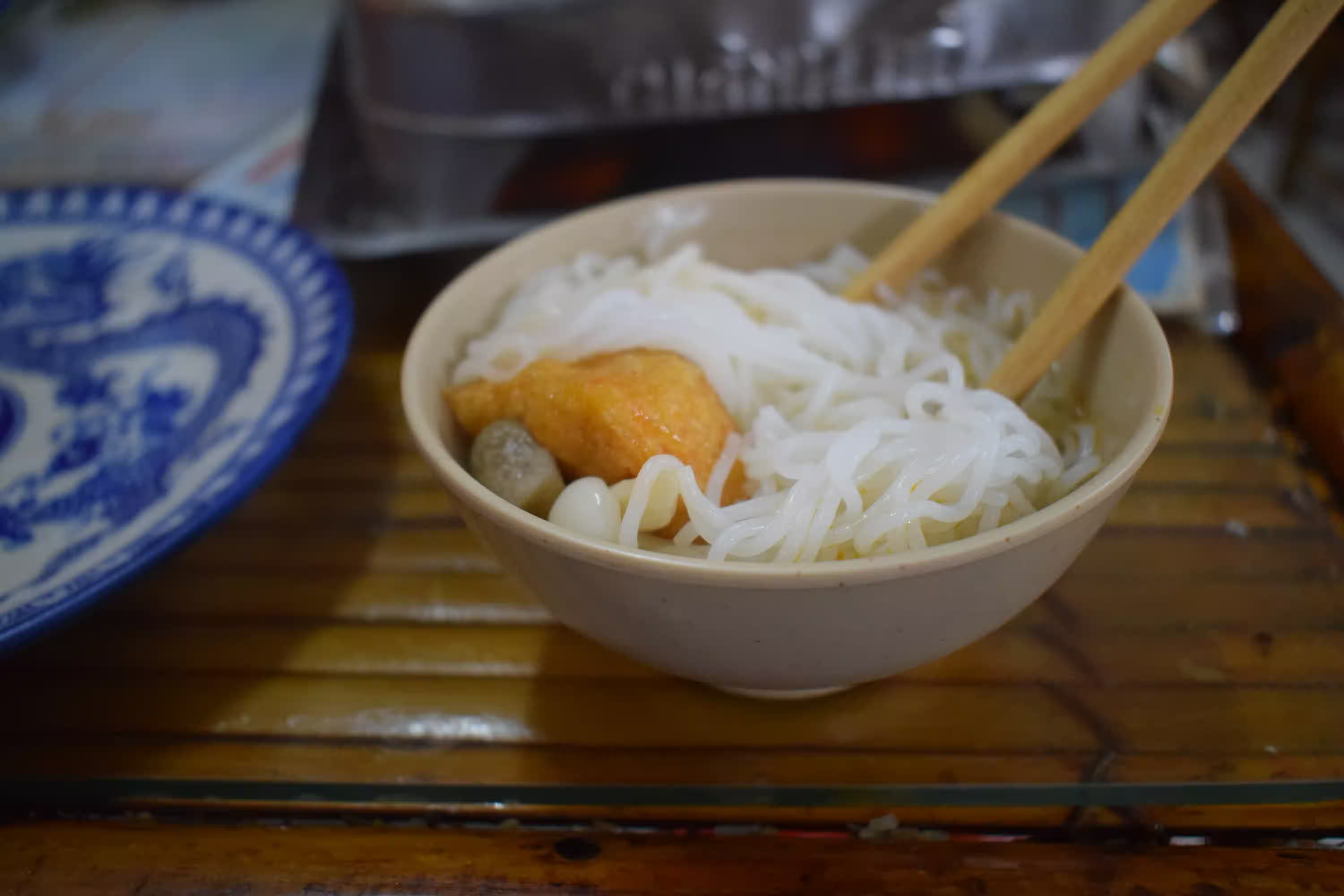
Added soup to the noodles. Photo by Ravi Dwivedi, released under CC-BY-SA 4.0.

Steamed rolls made of rice flour. Photo by Ravi Dwivedi, released under CC-BY-SA 4.0.
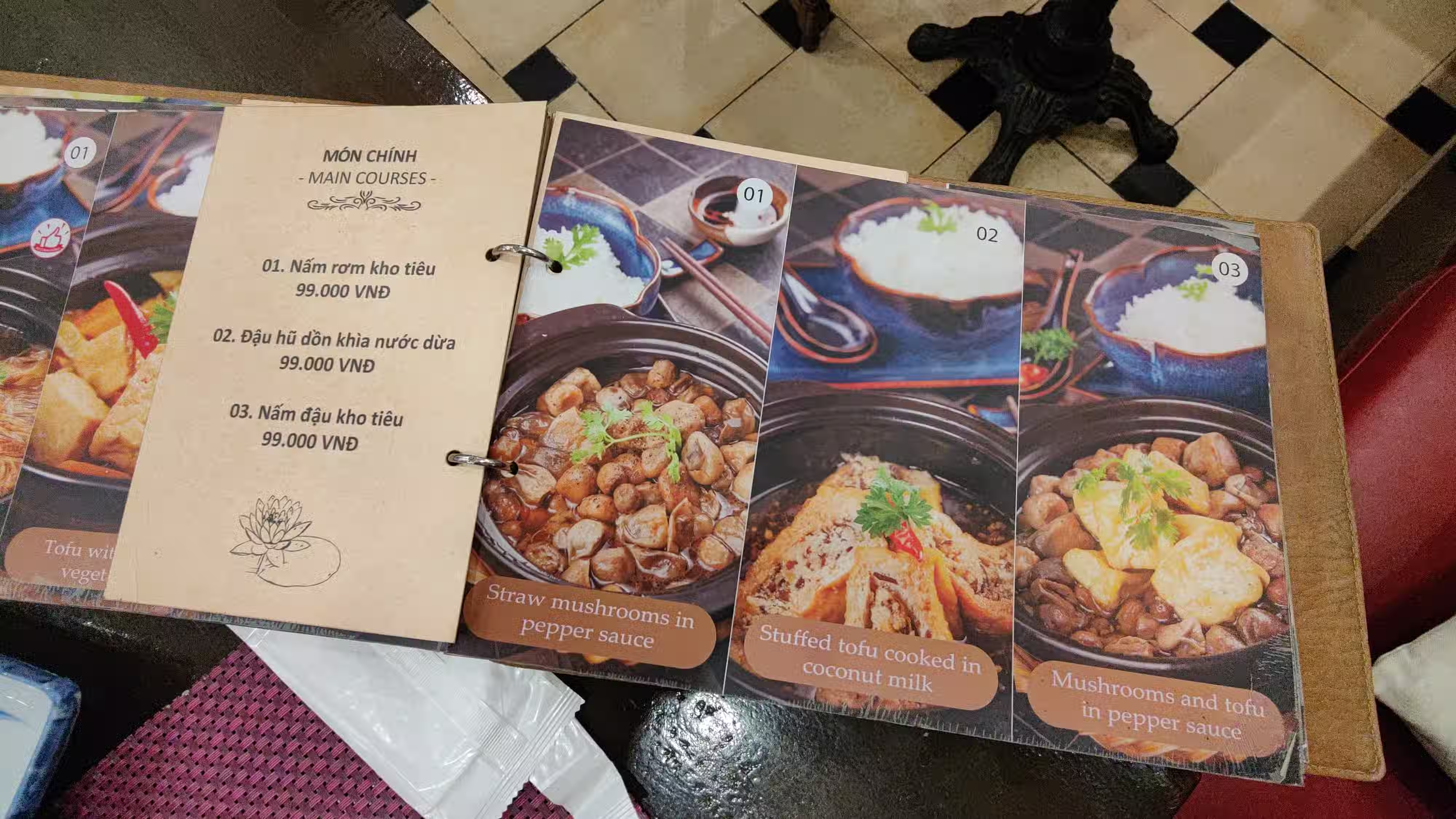
Menu from a restaurant in Ho Chi Minh City with detailed description of the food. Photo by Ravi Dwivedi, released under CC-BY-SA 4.0.
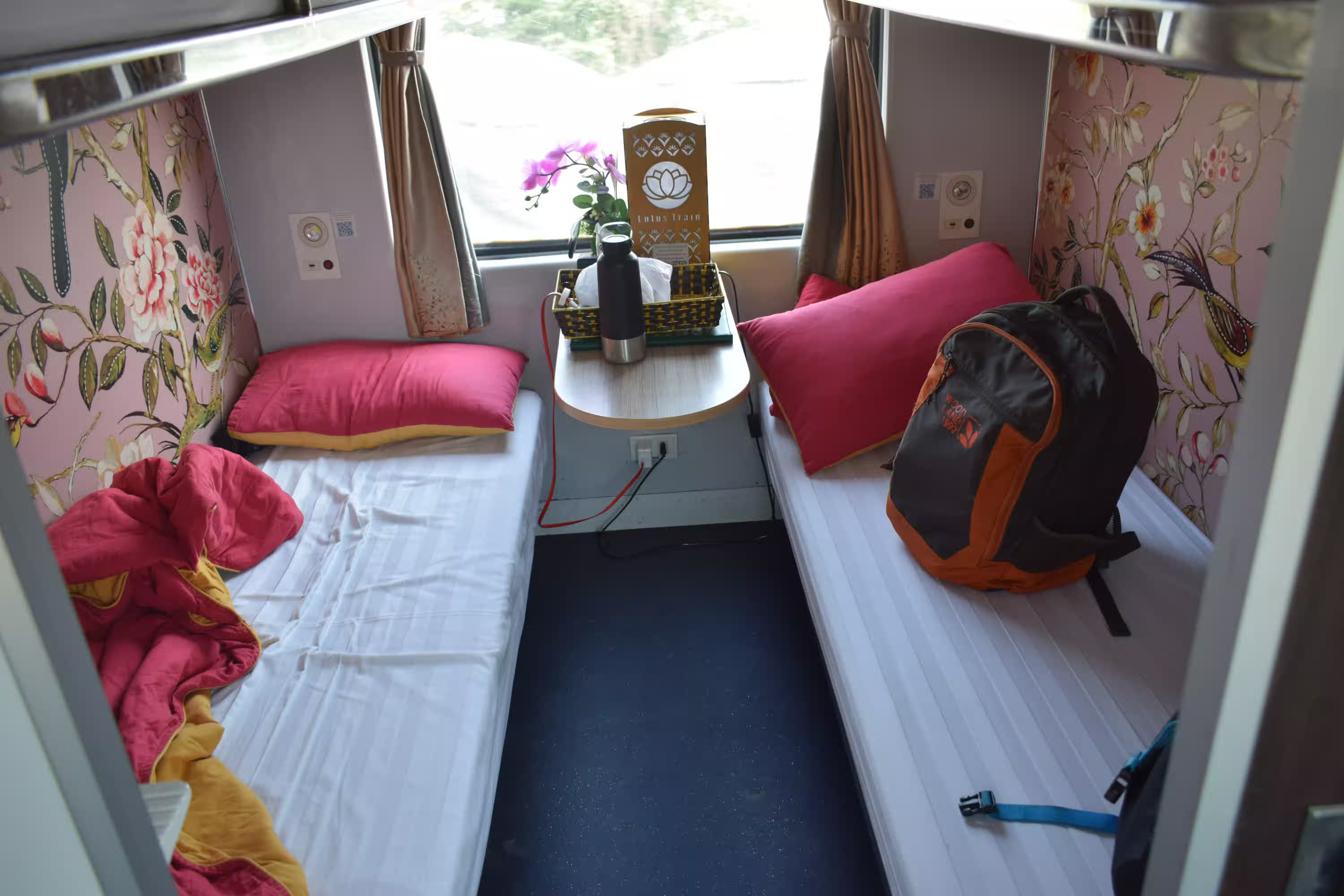
Our berths in the train. Photo by Ravi Dwivedi, released under CC-BY-SA 4.0.
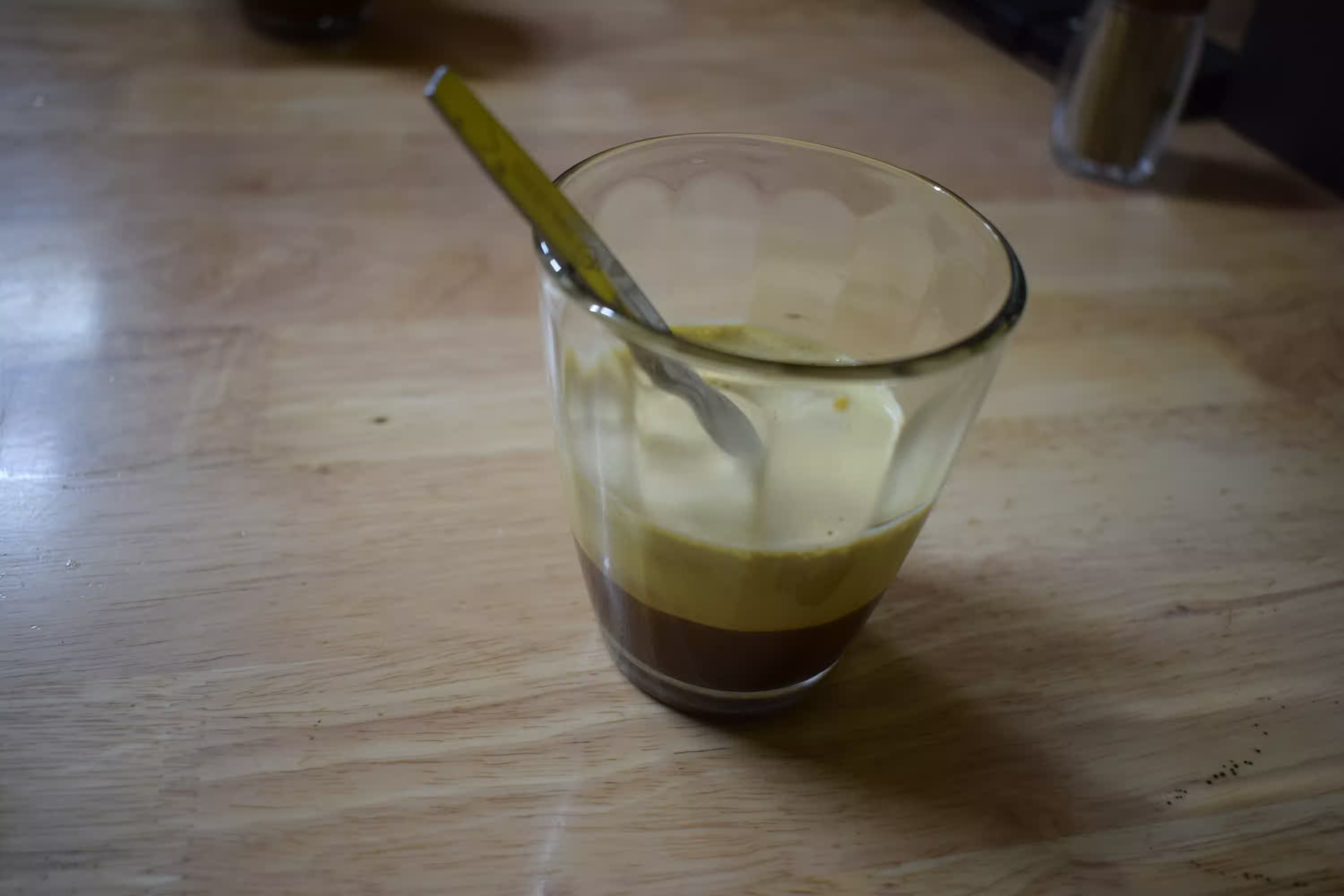
Egg coffee in Hanoi. Photo by Ravi Dwivedi, released under CC-BY-SA 4.0.

Hanoi train street is a tourist attraction in Hanoi. Photo by Ravi Dwivedi, released under CC-BY-SA 4.0.
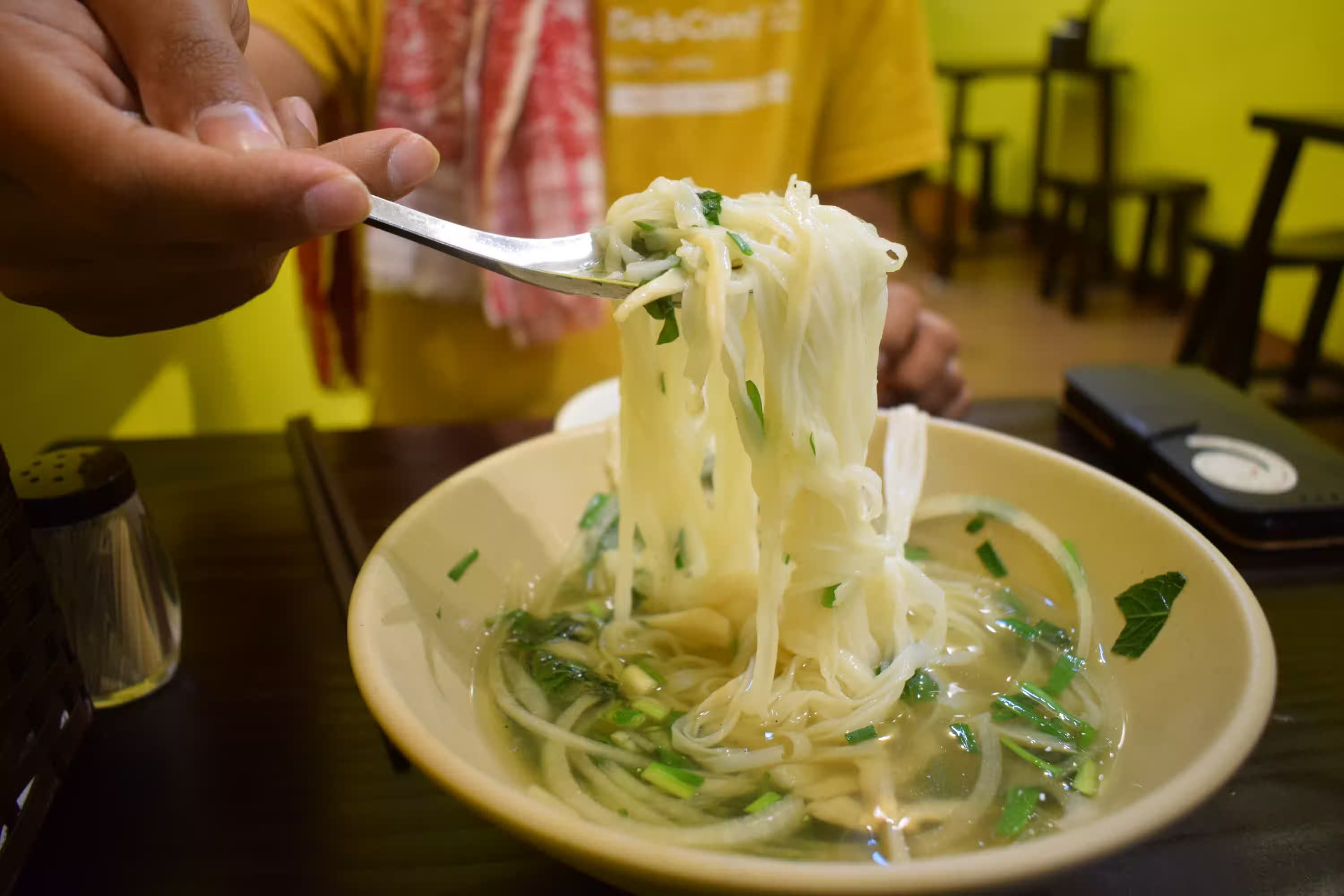
A picture of pho we had in Hanoi. Photo by Ravi Dwivedi, released under CC-BY-SA 4.0.
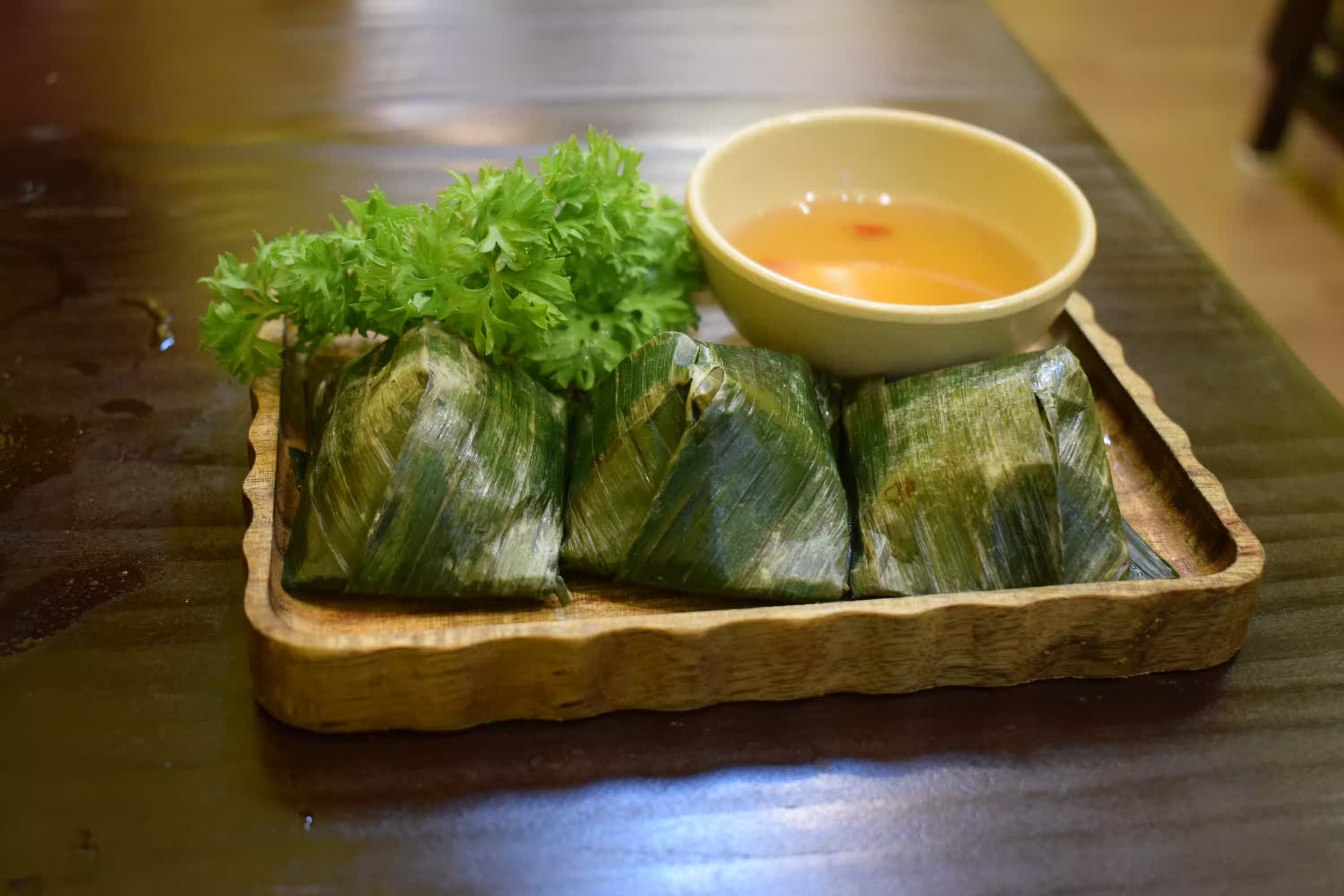
Bahn it is served packed in banana leaves. Photo by Ravi Dwivedi, released under CC-BY-SA 4.0.

Bahn it. Photo by Ravi Dwivedi, released under CC-BY-SA 4.0.
WWW::Mechanize::Chrome library and its test suite. ThisResource was not cached errors duringsaveResources, we implemented a fully asynchronous fallback_saveResourceTree. By chaining_cached_document with DOM.getOuterHTMLfile:// access.File name too long errors,MAX_PATH limit is 260filenameFromUrl was hardened. The filenamedefault_executable_names was expanded to includeheadless_shell and search paths were updated to include/usr/lib64/chromium-browser/.DOM.documentUpdated events could invalidatenodeIds immediately after navigation, causing XPath queriessleep(0.25s) was added after page loads to ensure the DOMualarm was a blocker for Windows, wheret::helper::set_watchdog functionalarm() (seconds) on Windowsualarm (microseconds) on Unix-like systems, enablinglib/ and to always runmake clean and perl Makefile.PL to ensureMETA.json and META.yml reflect the newad2 Windows Server 2025 instance was restored andad2 Windows_future API.xpath, field,get, etc.) into thin wrappers around new non-blocking..._future counterparts. This moved timeout management tot/lib/t/helper.pm, was created tosafe_get,safe_xpath) were implemented there, usingFuture->wait_any to race asynchronous operations against# Example test helper implementation
sub safe_xpath
my ($mech, $query, %options) = @_;
my $timeout = delete $options timeout 5;
my $call_f = $mech->xpath_future($query, %options);
my $timeout_f = $mech->sleep_future($timeout)->then(sub Future->fail("Timeout") );
return Future->wait_any($call_f, $timeout_f)->get;
t/50-tick.t)WWW::Mechanize::Chrome::Node was storing[key, val, key, val]), which wast::helper that listens on an ephemeral port; the backgroundget_set_value_future non-blocking required first making its_field_by_name, asynchronous. This culminatedform_name,form_id, etc.) to use the new asynchronous_future lookups, which was a key step in mitigating the_process_eval_result helper to centralize the parsing ofRuntime.evaluate. This ensures consistenteval_in_page) and asynchronous (eval_future)$self and the $response object, creating aScalar::Util::weaken on both $self and any->then block that is stored on an object.
wantarray): AwantarrayFuture->then blocks. This causedxpath to return incorrect results (e.g., awantarray in the synchronous_future method, and# Synchronous Wrapper
sub xpath($self, $query, %options)
$options wantarray = wantarray; # 1. Capture
return $self->xpath_future($query, %options)->get; # 2. Pass
# Asynchronous Implementation
sub xpath_future($self, $query, %options)
my $wantarray = delete $options wantarray ; # 3. Retrieve
# ... async logic ...
return $doc->then(sub
if ($wantarray) # 4. Respect
return Future->done(@results);
else
return Future->done($results[0]);
);
decoded_content()__body_future. This was implemented by storing the$response-> __body_future ). To make this more robust,about:blankXMLSerializer to get the live DOM content.
Future->then. Callbacks were updated to use optionalsub($result = undef) ... ) to gracefullysetDocumentContent is parsed differently than contentdocument.evaluate) against the live DOM, bypassing the_future variants.t/lib/t/helper.pm), not in the core library.wantarrayFuture chain to ensure correctwarn, note, diag) should be$self->log('debug', ...)MutationObserver Saga (March 19)
With most of the library refactored to be asynchronous, one stubbornt/65-is_visible.t, continued to fail with timeouts.wait_until_visible polling logic with a moreMutationObserver.
repeat sleep loop with an event-drivenMutationObserver in JavaScript that would notify PerlcallFunctionOn_future.setTimeout, which expected milliseconds.MutationObserver sPromise would never resolve, even after thecheckVisibility JavaScript logic inside the observerconsole.log tracing, failed to resolve theChrome.pm module.MutationObserver approachMutationObserver, a strategic decision was made to revertMutationObserver implementation, when integrated viacallFunctionOn_future with awaitPromise,MutationObserver code fromWWW::Mechanize::Chrome.pm and restore the originalrepeat sleep polling mechanism. A stable,t/lib/t/helper.pmsafe_wait_until_* wrappers werewait_any andsleep_future) that raced against the underlying pollingt/78-memleak.t persisted, but only on the Windowsad2 environment. This required a different approach thanon_dialog event listener was not being broken on Windows,on_dialog(undef) in DESTROY) were notIO::Async event loop implementation on Windows, and theTest::Memory::Cycle module. The cycle report was identicalon_dialog(undef) call fromclose() to DESTROY().deleteing the listener and callbackDESTROY.$self->remove_listener and$self->target->unlisten in a mistaken attempt to findt/78-memleak.t was wrapped in a conditionalTODO block that only executes on Windowsif ($^O =~ /MSWin32/i)), formally acknowledging the bugprove --nocount --jobs 3 -I local/ -bl xt t directly. This-It/lib include path, whicht::helper module.Can't locate t/helper.pm in @INC.Makefile.PL revealed a custom MY::test block-It/lib flag into themake test command. This confirmed thatmake test is the correct, canonical way to run the test.github/workflows/linux.yml file was modified to replaceprove call with make test in theRun Tests step. This ensures the CI environment runs theWWW::Mechanize::Chrome test suite is now stable and
Version 0.0.28 of RcppSpdlog arrived
on CRAN today, has been
uploaded to Debian and built for r2u. The (nice) documentation site
has been refreshed too. RcppSpdlog
bundles spdlog, a
wonderful header-only C++ logging library with all the bells and
whistles you would want that was written by Gabi Melman, and also includes fmt by Victor Zverovich. You can learn
more at the nice package
documention site.
This release contains a rebuild RcppExports.cpp to aid
Rcpp in the transition towards
Rcpp::stop() and away from Rf_error() in its
user packages. No othe
The NEWS entry for this release follows.
Courtesy of my CRANberries, there is also a diffstat report detailing changes. More detailed information is on the RcppSpdlog page, or the package documention site.Changes in RcppSpdlog version 0.0.28 (2026-03-19)
- Regenerate
RcppExports.cppto switch to(Rf_error)aiding in Rcpp transition toRcpp::stop()
This post by Dirk Eddelbuettel originated on his Thinking inside the box blog. If you like this or other open-source work I do, you can sponsor me at GitHub.
Linux kernel security modules provide a good additional layer of security around individual programs by restricting what they are allowed to do, and at best block and detect zero-day security vulnerabilities as soon as anyone tries to exploit them, long before they are widely known and reported. However, the challenge is how to create these security profiles without accidentally also blocking legitimate actions. For MariaDB in Debian and Ubuntu, a new AppArmor profile was recently created by leveraging the extensive test suite with 7000+ tests, giving good confidence that AppArmor is unlikely to yield false positive alerts with it.

AppArmor is a Mandatory Access Control (MAC) system, meaning that each process controlled by AppArmor has a sort of an allowlist called profile that defines all capabilities and file paths a program can access. If a program tries to do something not covered by the rules in its AppArmor profile, the action will be denied on the Linux kernel level and a warning logged in the system journal. This additional security layer is valuable because even if a malicious user found a security vulnerability some day in the future, the AppArmor profile severely restricts the ability to exploit it and gain access to the operating system.
AppArmor was originally developed by Novell for use in SUSE Linux, but nowadays the main driver is Canonical and AppArmor is extensively used in Ubuntu and Debian, and many of their derivatives (e.g. Linux Mint, Pop!_OS, Zorin OS) and in Arch. AppArmor s benefit compared to the main alternative SELinux (used mainly in the RedHat/Fedora ecosystem) is that AppArmor is easier to manage. AppArmor continues to be actively developed, with new major version 5.0 expected to arrive soon.
I also have some personal history contributing some notification handler scripts in Python and I also created the website that AppArmor.net still runs.
/var/log/audit/audit.log or run journalctl -ke --grep=apparmor.
A typical denial entry for MariaDB will look like this (split across multiple lines for legibility):
msg=audit(1700000000.123:456): apparmor="DENIED" operation="open"
profile="/usr/sbin/mariadbd" name="/custom/data/path/test.ibd" pid=1234
comm="mariadbd" requested_mask="r" denied_mask="r" fsuid=1000 ouid=0open, mknod, file_mmap, file_perm)./usr/sbin/mariadbd profile).mariadbd).r for read, w for write)./etc/apparmor.d/ or drop a local customization file in at /etc/apparmor.d/local/. If the denied action looks malicious, the sysadmin should start a security investigation and if needed report a suspected zero-day vulnerability to the upstream software vendor (e.g. Ubuntu customers to Canonical, or MariaDB customers to MariaDB).
complain mode and iterated on the allowlist by running the full mariadb-test-run with all MariaDB plugins and features enabled until we had a comprehensive yet clean list of rules.
To be extra diligent, we also reworked the autopkgtest for MariaDB in Debian and Ubuntu CI systems to run with the AppArmor profile enabled and to print all AppArmor notices at the end of the run, making it easy to detect now and in the future if the MariaDB test suite triggers any AppArmor denials. If any test fails, the release would not get promoted further, protecting users from regressions.
While developing and triggering manual test runs we used the maximal achievable test suite with 7177 tests. The test is however so extensive it takes over two hours to run, and it also has some brittle tests, so the standard test run in Debian and Ubuntu autopkgtest is limited just to MariaDB s main suite with about 1000 tests. Having some tests fail while testing the AppArmor profile was not a problem, because we didn t need all the tests to pass we merely needed them to run as many code paths as possible to see if they run any system calls not accounted for in the AppArmor profile.
Note that extending the profile was not just mechanical copying of log messages to the profile. For example, even though a couple of tests involve running the dash shell, we decided to not allow it, as it opens too much of a path for a potential exploit to access the operating system.
The result of this effort is a modernized, robust profile that is now production-ready. Those interested in the exact technical details can read the Debian Bug#1130272 and the Merge Request discussions at salsa.debian.org, which hosts the Debian packaging source code.
complain mode, so AppArmor only logs would-be-denials without blocking anything. The AppArmor profile was switched to enforce mode only in the very latest MariaDB revision 1:11.8.6-4 in Debian, and a NEWS item issued to help increase user awareness of this change. It is also slated for the upcoming Ubuntu 26.04 Resolute Raccoon release next month, providing out-of-the-box hardening for the wider ecosystem.
While automated testing is extensive, it cannot simulate everything. Most notably various complicated replication topologies and all Galera setups are likely not covered. Thus, I am calling on the community to deploy this profile and monitor for any audit denials in the kernel logs. If you encounter unexpected behavior or legitimate denials, please submit a bug report via the Debian Bug Tracking System.
To ensure you are running the latest MariaDB version, run apt install --update --yes mariadb-server. To view the latest profile rules, run cat /etc/apparmor.d/mariadbd and to see if it is enforced review the output of aa-status. To quickly check if there were any AppArmor denials, simply run journalctl -k grep -i apparmor grep -i mariadb.
And yet another maintenance release of the tidyCpp
package arrived on CRAN this morning, just days after previous release
which itself came a mere week and a half after its predecessor. It has
been built for r2u as
well. The package offers a clean C++ layer (as well as one small C++
helper class) on top of the C API for R which aims to make use of this
robust (if awkward) C API a little easier and more consistent. See the
vignette for motivating
examples.
This release restores the small CSS file used by the vignette which
we, in a last-second decision, omitted from the previous release. Oddly,
it only failed under the oldrel i.e. the R from now nearly two years
ago. But it was still an unenforced error, and this upload corrects
it.
Changes are summarized in the NEWS entry that follows.
Thanks to my CRANberries, there is also a diffstat report for this release. For questions, suggestions, or issues please use the issue tracker at the GitHub repo.Changes in tidyCpp version 0.0.11 (2026-03-17)
- Keep a CSS file in the package to allow vignette build on r-oldrel too
This post by Dirk Eddelbuettel originated on his Thinking inside the box blog. If you like this or other open-source work I do, you can now sponsor me at GitHub.
Another minor maintenance release version 0.1.4 of package RcppClassicExamples
arrived earlier today on CRAN,
and has been built for r2u. This package
illustrates usage of the old and otherwise deprecated initial Rcpp API
which no new projects should use as the normal and current Rcpp API is so much better.
This release, the first in two and half years, mostly aids Rcpp in moving from
Rf_error() to Rcpp::stop() for better
behaviour under error conditions or excections. A few other things were
updated in the interim such as standard upgrade to continuous
integration, use of Authors@R, and switch to static linking and an
improved build to support multiple macOS architectures.
No new code or features. Full details below. And as a reminder, don t
use the old RcppClassic use Rcpp
instead.
Thanks to CRANberries, you can also look at a diff to the previous release.Changes in version 0.1.4 (2026-03-16)
- Continuous integration has been updated several times
- DESCRIPTION now uses Authors@R
- Static linking is enforced, RcppClassic (>= 0.9.14) required
- Calls to
Rf_error()have been replaced withRcpp::stop()- Updated versioned dependencies
This post by Dirk Eddelbuettel originated on his Thinking inside the box blog. If you like this or other open-source work I do, you can now sponsor me at GitHub.
| Series: | Lady Astronaut #4 |
| Publisher: | Tor |
| Copyright: | 2025 |
| ISBN: | 1-250-23703-3 |
| Format: | Kindle |
| Pages: | 390 |
The Debian LTS Team, funded by [Freexian s Debian LTS offering]
(https://www.freexian.com/lts/debian/), is pleased to report its activities for
February.
lintian, autopkgtest, piuparts, blhc) on the built artifacts.
In addition we can run the autopkgtests of every other package in the
archive that depends on the built package, like britney does for testing
migration in Debian.
Some of these other packages may have currently-failing autopkgtests
that have nothing to do with the changes in the upload under test.
For example:
regression_tracking=true feature, and have enabled it in the
upload-to-* workflows on debusine.debian.net.
With this enabled, you ll get a new QA tab on your debian_pipeline
workflows that shows the trend of each test:
debian:qa-results collection used for analyzing regressions is
specified to the debian_pipeline with the
regression_tracking_qa_results lookup parameter.
On debusine.debian.net we have configured a debian:qa-results
collection for sid that can be referenced and added to by tasks in
any workspace.
Regressions can be more subtle than a simple Success Failure.
If the number of autopkgtests that fail increases, or the number of
lintian tags emitted increases, those are also considered a regressions.
upload-to-* workflows on
debusine.debian.net.
To disable, pass -O debusine_workflow_data.enable_regression_tracking=false when you dput
an upload to debusine.
To use the regression-tracking in your own workflows, use a
debian_pipeline workflow that is configured with
enable_regression_tracking=true.
This will require a qa_suite to be specified, pointing to the
baseline suite.
We hope this will make it easier to check QA results for packages tested
on debusine.debian.net.
Recently I found myself with a few hours to kill, but with the only
available connectivity provided by an annoying firewall which would
normally allow requests only to a few very specific web sites.
This post shows how to work around this kind of restrictions by hiding
SSH in an HTTPS connection, which then can be used as a SOCKS proxy to
allow general connectivity.

socat
does all the hard work.
First, create two self-signed RSA keys pairs, one for the client
(bongo) and one for the server (attila):
domain=bongo.example.net openssl req -x509 -newkey rsa:2048 -days 7300 \ -subj /CN=$domain -addext "subjectAltName = DNS:$domain" \ -keyout socat.key -nodes \ -out socat.pemThen, concatenate the public and private keys to create the file provided to the
cert option, and use the public key as
the file for the cafile option on the other
side.
On the client side, if you normally would connect to
attila.example.net then you can add something like this to
~/.ssh/config:
Host httpstunnel-attila.example.net ProxyCommand socat --statistics STDIO OPENSSL:attila.example.net:443, cert=$HOME/.ssh/socat-bongo.pem,cafile=$HOME/.ssh/socat-attila.pem, snihost=$ SOCAT_SNI:-x.com DynamicForward 1080 Compression yes HostKeyAlias attila.example.net ControlMaster yes ControlPath ~/.ssh/.control_attila.example.net_22_%rThe
ProxyCommand directive uses socat to
provide the connectivity which ssh will use over stdio
instead of connecting to port 22 of the server.
The snihost option is enough to make many firewalls
believe that this is an authorized HTTPS request.
On the server side we use a simple systemd unit to start a forking
instance of socat, which will accept and process requests
from the client (and from random crawlers on the Internet: expect a lot
of cruft in that log...):
[Unit] Description=socat tunnel After=network.target [Service] Type=exec ExecStart=socat -ly OPENSSL-LISTEN:443,fork,reuseaddr, cert=%d/tlskey,cafile=%d/tlsca TCP:localhost:22 SuccessExitStatus=143 LoadCredential=tlskey:/etc/ssh/socat-attila.pem LoadCredential=tlsca:/etc/ssh/socat-bongo.pem Restart=on-abnormal RestartSec=5s DynamicUser=yes PrivateDevices=yes PrivateTmp=yes ProtectClock=yes ProtectControlGroups=yes ProtectHome=yes ProtectHostname=yes ProtectKernelLogs=yes ProtectKernelModules=yes ProtectKernelTunables=yes ProtectProc=invisible ProtectSystem=strict RestrictAddressFamilies=AF_INET AF_INET6 AF_UNIX RestrictNamespaces=yes RestrictRealtime=yes RestrictSUIDSGID=yes LockPersonality=yes MemoryDenyWriteExecute=yes NoNewPrivileges=yes AmbientCapabilities=CAP_NET_BIND_SERVICE CapabilityBoundingSet=CAP_NET_BIND_SERVICE SystemCallArchitectures=native SystemCallErrorNumber=EPERM SystemCallFilter=@system-service SystemCallFilter=~@resources SystemCallFilter=~@privileged [Install] WantedBy=multi-user.targetStrong sandboxing is enabled, so the
socat instance
is confined with very limited privileges. An interesting point is the
use of systemd credentials
to provide the cryptographic keys, since it allows to store them in a
part of the file system which would not be accessible to the program.
Advanced users can use this method to provide the keys from secure
storage.
# dig -t txt _spf.google.com grep spf1 _spf.google.com. 300 IN TXT "v=spf1 ip4:74.125.0.0/16 ip4:209.85.128.0/17 ip6:2001:4860:4864::/56 ip6:2404:6800:4864::/56 ip6:2607:f8b0:4000::/36 ip6:2800:3f0:4000::/36 ip6:2a00:1450:4000::/36 ip6:2c0f:fb50:4000::/36 ~all" # dig -t txt outlook.com grep spf1 outlook.com. 126 IN TXT "v=spf1 include:spf2.outlook.com -all" # dig -t txt _spf.mail.yahoo.com grep spf1 _spf.mail.yahoo.com. 1800 IN TXT "v=spf1 ptr:yahoo.com ptr:yahoo.net ip4:34.2.71.64/26 ip4:34.2.75.0/26 ip4:34.2.84.64/26 ip4:34.2.85.64/26 ip4:34.2.64.0/22 ip4:34.2.68.0/23 ip4:34.2.70.0/23 ip4:34.2.72.0/22 ip4:34.2.78.0/23 ip4:34.2.80.0/23 ip4:34.2.82.0/23 ip4:34.2.84.0/24 ip4:34.2.86.0" "/23 ip4:34.2.88.0/23 ip4:34.2.90.0/23 ip4:34.2.92.0/23 ip4:34.2.85.0/24 ip4:34.2.94.0/23 ?all" # dig -t txt icloud.com grep spf1 icloud.com. 3586 IN TXT "v=spf1 ip4:17.41.0.0/16 ip4:17.58.0.0/16 ip4:17.142.0.0/15 ip4:17.57.155.0/24 ip4:17.57.156.0/24 ip4:144.178.36.0/24 ip4:144.178.38.0/24 ip4:112.19.199.64/29 ip4:112.19.242.64/29 ip4:222.73.195.64/29 ip4:157.255.1.64/29" " ip4:106.39.212.64/29 ip4:123.126.78.64/29 ip4:183.240.219.64/29 ip4:39.156.163.64/29 ip4:57.103.64.0/18" " ip6:2a01:b747:3000:200::/56 ip6:2a01:b747:3001:200::/56 ip6:2a01:b747:3002:200::/56 ip6:2a01:b747:3003:200::/56 ip6:2a01:b747:3004:200::/56 ip6:2a01:b747:3005:200::/56 ip6:2a01:b747:3006:200::/56 ~all"In most IM systems there is a strong connection between people who communicate. If I send you two direct messages they will appear in the same room, and if someone else tries forging messages from me (EG by replacing the c and e letters in my address with Cyrillic letters that look like them or by mis-spelling my name) a separate room will be created and it will be obvious that something unexpected is happening. Protecting against the same attacks in email requires the user carefully reading the message, given that it s not uncommon for someone to start a message to me with Hi Russel (being unable to correctly copy my name from the To: field of the message they are writing) it s obvious that any security measure relying on such careful reading will fail. The IM protections against casual forgery also apply to rooms with multiple users, a new user can join a room for the purpose of spamming but they can t send a casual message impersonating a member of the room. A user can join a Matrix room I m in with the name Russell from another server but the potential for confusion will be minimised by a message notifying everyone that another Russell has joined the room and the list of users will show two Russells. For email the protections against forgery when sending to a list server are no different than those when sending to an individual directly which means very weak protections. Authenticating the conversation context once as done with IM is easier and more reliable than authenticating each message independently. Is Email Sucking the Main Technical Difference? It seems that the problems with forgery, spam, and general confusion when using email are a large part of the difference between email and IM. But in terms of technical issues the fact that email has significantly more users (if only because you need an email account to sign up for an IM system) is a major difference. Internet email is currently a universal system (apart from when it breaks from spam) and it has historically been used to gateway to other email systems like Fidonet, Uucp, and others. The lack of tight connection between parties that exchange messages in email makes it easier to bridge between protocols but harder to authenticate communication. Most of the problems with Internet email are not problems for everyone at all times, they are technical trade-offs that work well for some situations and for some times. Unfortunately many of those trade-offs are for things that worked well 25+ years ago. The GUI From a user perspective there doesn t have to be a great difference between email and IM. Email is usually delivered quickly enough to be in the same range as IM. The differences in layout between IM client software and email client software is cosmetic, someone could write an email client that organises messages in the same way as Slack or another popular IM system such that the less technical users wouldn t necessarily know the difference. The significant difference in the GUI for email and IM software was a design choice. Conversation Organisation The most significant difference in the operation of email and IM at the transport level is the establishment of connections in IM. Another difference is the fact that there are no standards implemented for the common IM implementations to interoperate which is an issue of big corporations creating IM systems and deliberately making them incompatible. The methods for managing email need to be improved. Having an inbox that s an unsorted mess of mail isn t useful if you want to track one discussion, breaking it out into different sub folders for common senders (similar to IM folders for DMs) as a standard feature without having to setup rules for each sender would be nice. Someone could design an email program with multiple layouts, one being the traditional form (which seems to be copied from Eudora [3]) and one with the inbox (or other folders) split up into conversations. There are email clients that support managing email threads which can be handy in some situations but often isn t the best option for quickly responding to messages that arrived recently. Archiving Most IM systems have no method for selectively archiving messages, there s a request open for a bookmark function in Matrix and there s nothing stopping a user from manually copying a message. But there s nothing like the convenient ability to move email to an archive folder in most IM systems. Without good archiving IM is a transient medium. This is OK for conversations but not good for determining the solutions to technical problems unless there is a Wiki or other result which can be used without relying on archives. Composing Messages In a modern email client when sending a message it prompts you for things that it considers complete, so if you don t enter a Subject or have the word attached in the message body but no file is attached to the message then it will prompt you to confirm that you aren t making a mistake. In an IM client the default is usually that pressing ENTER sends the message so every paragraph is a new message. IM clients are programmed to encourage lots of short messages while email clients are programmed to encourage more complete messages. Social Issues Quality The way people think about IM and email is very different, as one example there was never a need for a site like nohello.net for email. The idea that it s acceptable to use even lower quality writing in IM than people tend to use in email seems to be a major difference between the communication systems. It can be a good thing to have a chatty environment with messages that are regarded as transient for socialising, but that doesn t seem ideal for business use. Ownership Email is generally regarded as being comparable to physical letters. It is illegal and widely considered to be socially wrong to steal a letter from someone s letterbox if you regret sending it. In email the only unsend function I m aware of is that in Microsoft software which is documented to only work within the same organisation, and that only works if the recipient hasn t read the message. The message is considered to be owned by the recipient. But for IM it s a widely supported and socially acceptable function to delete or edit messages that have been sent. The message is regarded as permanently the property of the sender. What Should We Do? Community Creators When creating a community (and I use this in the broadest sense including companies) you should consider what types of communication will work well. When I started the Flounder group [4] I made a deliberate decision that non-free communication systems go against the aim of the group, I started it with a mailing list and then created a Matrix room which became very popular. Now the list hardly gets any use. It seems that most of the communication in the group is fairly informal and works better with IM. Does it make sense to use both? Should IM systems be supplemented with other systems that facilitate more detail such as a Wiki or a Lemmy room/instance [5] to cover the lack of long form communication? I have created a Lemmy room for Flounder but it hasn t got much interest so far. It seems that almost no-one makes a strategic decision about such issues. Software Developers It would be good to have the same options for archiving IM as there are for email. Also some options to encourage quality in IM communication similar to the way email clients want confirmation before sending messages without a subject or that might be missing an attachment. It would also be good to have better options for managing conversations in email. The Inbox as currently used is good for some things but a button to switch between that and a conversation view would be good. There are email clients that allow selecting message sort order and aggregation (kmail has a good selection of options) but they are designed for choosing a single setup that you like not between multiple views based on the task you are doing. It would be good to have links between different communication systems, if users had the option of putting their email address in their IM profile it would make things much easier. Having entirely separate systems for email and IM isn t good for users. Users The overall communications infrastructure could be improved if more people made tactical decisions about where and how to communicate. Keep the long messages to email and the chatty things to IM. Also for IM just do the communication not start with hello . To discourage wasting time I generally don t reply to messages that just say hello unless it s the first ever IM from someone. Conclusion A large part of the inefficiencies in electronic communication are due to platforms and usage patterns evolving with little strategic thought. The only apparent strategic thought is coming from corporations that provide IM services and have customer lock in at the core of their strategies. Free software developers have done great work in developing software to solve tactical problems but the strategies of large scale communications aren t being addressed. Email is loosely coupled and universal while IM is tightly coupled, authenticated, and often siloed. This makes email a good option for initial contact but a risk for ongoing discussions. There is no great solution to these issues as they are largely a problem due to the installed user base. But I think we can mitigate things with some GUI design changes and strategic planning of communication.
What led to this experiment? Well, for one, Well, for one, there was a thought
shared by Andrej Karpathy regarding the shift towards "Agentic" workflows.

"The future of software is not just 'tools', but 'agents' that can navigate complex tasks on your behalf."Recently, I spoke with Ritesh, who mentioned his success using the Gemini CLI to debug an idle power drain issue on his laptop. I wanted to experiment with this myself, and I had the perfect use case: configuring the Hyprland Window Manager on my aging laptop. The machine is nearly eight years old with 12GB of RAM (upgraded from the original 4GB). I found that GNOME and KDE were becoming overkill, often leading to system freezes when running multiple AI-powered IDEs like Antigravity and VS Code with Co-pilot. Coincidentally, I noticed my Jio number had a "Google One 2TB" and "Google AI Premium" plan available to claim. I claimed it, and now here I am, experimenting with the Gemini CLI.
npm install -g @google/gemini-cliNext, we need to create a context for Gemini a set of instructions for it to follow throughout the project. This is managed via a GEMINI.md file. I went to Google Gemini, explained my requirements, and asked it to generate one for me. My requirements were:
# Role: Hyprland Configuration Specialist (Minimalist & High-Performance)
You are a Linux Systems Engineer specializing in migrating users from heavy
Desktop Environments to minimalist, tiling-based Wayland sessions on Debian.
Your goal is to maximize available RAM for heavy applications while maintaining
essential desktop features.
## 1. Environment & Persona
- **Target OS:** Debian (Linux)
- **Target WM:** Hyprland
- **Hardware:** ThinkPad E470 (i5-7th Gen, 12GB RAM)
- **User Profile:** Emacs user, prioritizes "anti-gravity" (zero bloat).
- **Tone:** Technical, concise, and security-conscious.
## 2. Core Functional Requirements
- **Status Bar:** waybar (with CPU, RAM, Network, and Battery icons).
- **Wallpaper:** swww or hyprpaper .
- **Screen Lock:** hyprlock + hypridle .
- **Input Mapping:** Swap Control and Caps Lock ( kb_options = ctrl:nocaps ).
## 3. Operational Constraints
- **Permission First:** Ask before using sudo or writing outside the work directory.
- **Inspection:** Use hyprctl , lsmod , or gsettings for compatibility checks.
- **Artifact Management:** Update MEMORY.md after every major step.
Read MEMORY.md and GEMINI.md. Based on my hardware, give me a shell script to inspect my current GNOME environment so we can start replicating the session basics.
Another maintenance release of the RcppCNPy
package arrived on CRAN today,
and has already been built as an r2u binary. RcppCNPy
provides R with read and write access to NumPy files thanks to the cnpy library by Carl Rogers
along with Rcpp for the glue to R.
The changes are minor and similar to other recent changes. We aid Rcpp in the transition away from calling
Rf_error() by relying in Rcpp::stop() which
has better behaviour and unwinding when errors or exceptions are
encountered. So once again no user-facing changes. Full details are
below.
CRANberries also provides a diffstat report for the latest release. As always, feedback is welcome and the best place to start a discussion may be the GitHub issue tickets page. If you like this or other open-source work I do, you can now sponsor me at GitHub.Changes in version 0.2.15 (2026-03-13)
- Replaced Rf_error with Rcpp::stop in three files
- Maintenance updates to continuous integration
This post by Dirk Eddelbuettel originated on his Thinking inside the box blog. Please report excessive re-aggregation in third-party for-profit settings.
git clone https://gitlab.com/hoexter-experiments/ech
cd ech
buildah build --layers -f Dockerfile -t echtest
podman run -ti echtest /usr/local/bin/curl \
--ech true --doh-url https://one.one.one.one/dns-query \
https://crypto.cloudflare.com/cdn-cgi/trace.cgi
fl=48f121
h=crypto.cloudflare.com
ip=2.205.251.187
ts=1773410985.168
visit_scheme=https
uag=curl/8.19.0
colo=DUS
sliver=none
http=http/2
loc=DE
tls=TLSv1.3
sni=encrypted
warp=off
gateway=off
rbi=off
kex=X25519
It also builds nginx and you can use that for a local test within
the image. More details in the
README.
Welcome to the February 2026 report from the Reproducible Builds project!
These reports outline what we ve been up to over the past month, highlighting items of news from elsewhere in the increasingly-important area of software supply-chain security. As ever, if you are interested in contributing to the Reproducible Builds project, please see the Contribute page on our website.
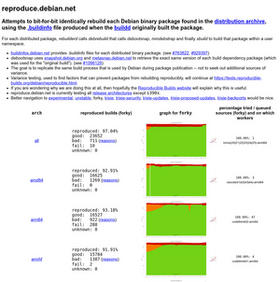
The last year has seen the introduction, development and deployment of reproduce.debian.net. In technical terms, this is an instance of rebuilderd, our server designed monitor the official package repositories of Linux distributions and attempt to reproduce the observed results there.
This month, however, Holger Levsen added suite-based navigation (eg. Debian trixie vs forky) to the service (in addition to the already existing architecture based navigation) which can be observed on, for instance, the Debian trixie-backports or trixie-security pages.
diffoscope is our in-depth and content-aware diff utility that can locate and diagnose reproducibility issues. This month, Chris Lamb made a number of changes, including preparing and uploading versions, 312 and 313 to Debian.
In particular, Chris updated the post-release deployment pipeline to ensure that the pipeline does not fail if the automatic deployment to PyPI fails [ ]. In addition, Vagrant Cascadian updated an external reference for the 7z tool for GNU Guix. [ ]. Vagrant Cascadian also updated diffoscope in GNU Guix to version 312 and 313.
In Debian this month:
sbom-toolkit package was uploaded, which provides a collection of scripts for generating SBOM. This is the tooling used in Apertis to generate the Licenses SBOM and the Build Dependency SBOM. It also includes dh-setup-copyright, a Debhelper addon to generate SBOMs from DWARF debug information, which are extracted from DWARF debug information by running dwarf2sources on every ELF binaries in the package and saving the output.
Lastly, Bernhard M. Wiedemann posted another openSUSE monthly update for their work there.
pimsync in the GNU Guix review process
50.beta regressed in reproducibility compared to 49.0. Specifically, the new generated .oga files differ in their Serial No. and Checksum [fields] . However, Jeremy ended up fixing the issue by replacing ffmpeg with oggenc.
archlinux-dev-public mailing list on our mailing list this month after a discussion at our latest Summit meeting on the topic of Link-Time Optimisation (LTO) specifically on the reasons why LTO often needs to be disabled in relation to Arch Linux s approach to binary hardening.
0) may materially differ from using SOURCE_DATE_EPOCH) when a situation demands the use of a fixed timestamp.
pnut, a C compiler capable of bootstrapping itself and TCC from any POSIX-compliant shell and human-readable source files.
bitsnpicas.fonts-topaz-unicode.bitsnpicas.
Once again, there were a number of improvements made to our website this month including:
repro-build to the Tools page. [ ]
.properties files. [ ]
Julien Malka and Arnout Engelen published a paper titled Lila: Decentralized Build Reproducibility Monitoring for the Functional Package Management Model:
[While] recent studies have shown that high reproducibility rates are achievable at scale demonstrated by the Nix ecosystem achieving over 90% reproducibility on more than 80,000 packages the problem of effective reproducibility monitoring remains largely unsolved. In this work, we address the reproducibility monitoring challenge by introducing Lila, a decentralized system for reproducibility assessment tailored to the functional package management model. Lila enables distributed reporting of build results and aggregation into a reproducibility database [ ].A PDF of their paper is available online.
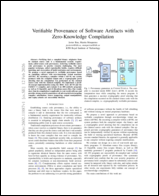
Javier Ron and Martin Monperrus of KTH Royal Institute of Technology, Sweden, also published a paper, titled Verifiable Provenance of Software Artifacts with Zero-Knowledge Compilation:
Verifying that a compiled binary originates from its claimed source code is a fundamental security requirement, called source code provenance. Achieving verifiable source code provenance in practice remains challenging. The most popular technique, called reproducible builds, requires difficult matching and reexecution of build toolchains and environments. We propose a novel approach to verifiable provenance based on compiling software with zero-knowledge virtual machines (zkVMs). By executing a compiler within a zkVM, our system produces both the compiled output and a cryptographic proof attesting that the compilation was performed on the claimed source code with the claimed compiler. [ ]A PDF of the paper is available online.
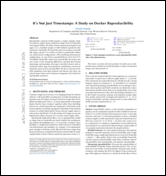
Oreofe Solarin of Department of Computer and Data Sciences, Case Western Reserve University, Cleveland, Ohio, USA, published It s Not Just Timestamps: A Study on Docker Reproducibility:
Reproducible container builds promise a simple integrity check for software supply chains: rebuild an image from its Dockerfile and compare hashes. We built a Docker measurement pipeline and apply it to a stratified sample of 2,000 GitHub repositories that contained a Dockerfile. We found that only 56% produce any buildable image, and just 2.7% of those are bitwise reproducible without any infrastructure configurations. After modifying infrastructure configurations, we raise bitwise reproducibility by 18.6%, but 78.7% of buildable Dockerfiles remain non-reproducible.A PDF of Oreofe s paper is available online.
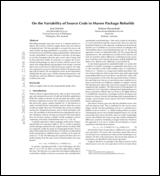
Lastly, Jens Dietrich and Behnaz Hassanshahi published On the Variability of Source Code in Maven Package Rebuilds:
[In] this paper we test the assumption that the same source code is being used [by] alternative builds. To study this, we compare the sources released with packages on Maven Central, with the sources associated with independently built packages from Google s Assured Open Source and Oracle s Build-from-Source projects. [ ]A PDF of their paper is available online.
#reproducible-builds on irc.oftc.net.
rb-general@lists.reproducible-builds.org
Next.