Search Results: "sf"

20 July 2025

Michael Prokop: What to expect from Debian/trixie #newintrixie

Trixie Banner, Copyright 2024 Elise Couper Update on 2025-07-28: added note about Debian 13/trixie support for OpenVox (thanks, Ben Ford!) Debian v13 with codename trixie is scheduled to be published as new stable release on 9th of August 2025. I was the driving force at several of my customers to be well prepared for the upcoming stable release (my efforts for trixie started in August 2024). On the one hand, to make sure packages we care about are available and actually make it into the release. On the other hand, to ensure there are no severe issues that make it into the release and to get proper and working upgrades. So far everything is looking pretty well and working fine, the efforts seemed to have payed off. :) As usual with major upgrades, there are some things to be aware of, and hereby I m starting my public notes on trixie that might be worth for other folks. My focus is primarily on server systems and looking at things from a sysadmin perspective. Further readings As usual start at the official Debian release notes, make sure to especially go through What s new in Debian 13 + issues to be aware of for trixie (strongly recommended read!). Package versions As a starting point, let s look at some selected packages and their versions in bookworm vs. trixie as of 2025-07-20 (mainly having amd64 in mind):
Package bookworm/v12 trixie/v13
ansible 2.14.3 2.19.0
apache 2.4.62 2.4.64
apt 2.6.1 3.0.3
bash 5.2.15 5.2.37
ceph 16.2.11 18.2.7
docker 20.10.24 26.1.5
dovecot 2.3.19 2.4.1
dpkg 1.21.22 1.22.21
emacs 28.2 30.1
gcc 12.2.0 14.2.0
git 2.39.5 2.47.2
golang 1.19 1.24
libc 2.36 2.41
linux kernel 6.1 6.12
llvm 14.0 19.0
lxc 5.0.2 6.0.4
mariadb 10.11 11.8
nginx 1.22.1 1.26.3
nodejs 18.13 20.19
openjdk 17.0 21.0
openssh 9.2p1 10.0p1
openssl 3.0 3.5
perl 5.36.0 5.40.1
php 8.2+93 8.4+96
podman 4.3.1 5.4.2
postfix 3.7.11 3.10.3
postgres 15 17
puppet 7.23.0 8.10.0
python3 3.11.2 3.13.5
qemu/kvm 7.2 10.0
rsync 3.2.7 3.4.1
ruby 3.1 3.3
rust 1.63.0 1.85.0
samba 4.17.12 4.22.3
systemd 252.36 257.7-1
unattended-upgrades 2.9.1 2.12
util-linux 2.38.1 2.41
vagrant 2.3.4 2.3.7
vim 9.0.1378 9.1.1230
zsh 5.9 5.9
Misc unsorted apt The new apt version 3.0 brings several new features, including: systemd systemd got upgraded from v252.36-1~deb12u1 to 257.7-1 and there are lots of changes. Be aware that systemd v257 has a new net.naming_scheme, v257 being PCI slot number is now read from firmware_node/sun sysfs file. The naming scheme based on devicetree aliases was extended to support aliases for individual interfaces of controllers with multiple ports. This might affect you, see e.g. #1092176 and #1107187, the Debian Wiki provides further useful information. There are new systemd tools available: The tools provided by systemd gained several new options: Debian s systemd ships new binary packages: Linux Kernel The trixie release ships a Linux kernel based on latest longterm version 6.12. As usual there are lots of changes in the kernel area, including better hardware support, and this might warrant a separate blog entry. To highlight some changes with Debian trixie: See Kernelnewbies.org for further changes between kernel versions. Configuration management For puppet users, Debian provides the puppet-agent (v8.10.0), puppetserver (v8.7.0) and puppetdb (v8.4.1) packages. Puppet s upstream does not provide packages for trixie, yet. Given how long it took them for Debian bookworm, and with their recent Plans for Open Source Puppet in 2025, it s unclear when (and whether at all) we might get something. As a result of upstream behavior, also the OpenVox project evolved, and they already provide Debian 13/trixie support (https://apt.voxpupuli.org/openvox8-release-debian13.deb). FYI: the AIO puppet-agent package for bookworm (v7.34.0-1bookworm) so far works fine for me on Debian/trixie. Be aware that due to the apt-key removal you need a recent version of the puppetlabs-apt for usage with trixie. The puppetlabs-ntp module isn t yet ready for trixie (regarding ntp/ntpsec), if you should depend on that. ansible is available and made it with version 2.19 into trixie. Prometheus stack Prometheus server was updated from v2.42.0 to v2.53, and all the exporters that got shipped with bookworm are still around (in more recent versions of course). Trixie gained some new exporters: Virtualization docker (v26.1.5), ganeti (v3.1.0), libvirt (v11.3.0, be aware of significant changes to libvirt packaging), lxc (v6.0.4), podman (v5.4.2), openstack (see openstack-team on Salsa), qemu/kvm (v10.0.2), xen (v4.20.0) are all still around. Proxmox already announced their PVE 9.0 BETA, being based on trixie and providing 6.14.8-1 kernel, QEMU 10.0.2, LXC 6.0.4, OpenZFS 2.3.3. Vagrant is available in version 2.3.7, but Vagrant upstream does not provide packages for trixie yet. Given that HashiCorp adopted the BSL, the future of vagrant in Debian is unclear. If you re relying on VirtualBox, be aware that upstream doesn t provide packages for trixie, yet. VirtualBox is available from Debian/unstable (version 7.1.12-dfsg-1 as of 2025-07-20), but not shipped with stable release since quite some time (due to lack of cooperation from upstream on security support for older releases, see #794466). Be aware that starting with Linux kernel 6.12, KVM initializes virtualization on module loading by default. This prevents VirtualBox VMs from starting. In order to avoid this, either add kvm.enable_virt_at_load=0 parameter into kernel command line or unload the corresponding kvm_intel / kvm_amd module. If you want to use Vagrant with VirtualBox on trixie, be aware that Debian s vagrant package as present in trixie doesn t support the VirtualBox package version 7.1 as present in Debian/unstable (manually patching vagrant s meta.rb and rebuilding the package without Breaks: virtualbox (>= 7.1) is known to be working). util-linux The are plenty of new options available in the tools provided by util-linux: Now no longer present in util-linux as of trixie: The following binaries got moved from util-linux to the util-linux-extra package: And the util-linux-extra package also provides new tools: OpenSSH OpenSSH was updated from v9.2p1 to 10.0p1-5, so if you re interested in all the changes, check out the release notes between those versions (9.3, 9.4, 9.5, 9.6, 9.7, 9.8, 9.9 + 10.0). Let s highlight some notable behavior changes in Debian: There are some notable new features: Thanks to everyone involved in the release, looking forward to trixie + and happy upgrading!
Let s continue with working towards Debian/forky. :)

17 July 2025

Otto Kek l inen: Debcraft Easiest way to modify and build Debian packages

Featured image of post Debcraft   Easiest way to modify and build Debian packagesDebian packaging is notoriously hard. Far too many new contributors give up while trying, and many long-time contributors leave due to burnout from having to do too many thankless maintenance tasks. Some just skip testing their changes properly because it feels like too much toil. Debcraft is my attempt to solve this by automating all the boring stuff, and making it easier to learn the correct practices and helping new and old packagers better track changes in both source code and build artifacts.

The challenge of declarative packaging code Unlike how rpm or apk packages are done, the deb package sources by design avoid having one massive procedural packaging recipe. Instead, the packaging is defined in multiple declarative files in the debian/ subdirectory. For example, instead of a script running install -m 755 bin/btop /usr/bin/btop there is a file debian/btop.install containing the line usr/bin/btop. This makes the overall system more robust and reliable, and allows, for example, extensive static analysis to find problems without having to build the package. The notable exception is the debian/rules file, which contains procedural code that can modify any aspect of the package build. Almost all other files are declarative. Benefits include, among others, that the effect of a Debian-wide policy change can be relatively easily predicted by scanning what attributes and configurations all packages have declared. The drawback is that to understand the syntax and meaning of each file, one must understand which build tools read which files and traverse potentially multiple layers of abstraction. In my view, this is the root cause for most of the perceived complexity.

Common complaints about .deb packaging Related to the above, people learning Debian packaging frequently voice the following complaints:
  • Debian has too many tools to learn, often with overlapping or duplicate functionality.
  • Too much outdated and inconsistent documentation that makes learning the numerous tools needlessly hard.
  • Lack of documentation of the generally agreed best practices, mainly due to Debian s reluctance as a project to pick one tool and deprecate the alternatives.
  • Multiple layers of abstraction and lack of clarity on what any single change in the debian/ subdirectory leads to in the final package.
  • Requirement of Debian packages to be developed on a Debian system.

How Debcraft solves (some of) this Debcraft is intentionally opinionated for the sake of simplicity, and makes heavy use of git, git-buildpackage, and most importantly Linux containers, supporting both Docker and Podman. By using containers, Debcraft frees the user from the requirement of having to run Debian. This makes .deb packaging more accessible to developers running some other Linux distro or even Mac or Windows (with WSL). Of course we want developers to run Debian (or a derivative like Ubuntu) but we want them even more to build, test and ship their software as .deb. Even for Debian/Ubuntu users having everything done inside clean hermetic containers of the latest target distribution version will yield more robust, secure and reproducible builds and tests. All containers are built automatically on-the-fly using best practices for layer caching, making everything easy and fast. Debcraft has simple commands to make it easy to build, rebuild, test and update packages. The most fundamental command is debcraft build, which will not only build the package but also fetch the sources if not already present, and with flags such as --distribution or --source-only build for any requested Debian or Ubuntu release, or generate source packages only for Debian or PPA upload purposes. For ease of use, the output is colored and includes helpful explanations on what is being done, and suggests relevant Debian documentation for more information. Most importantly, the build artifacts, along with various logs, are stored in separate directories, making it easy to compare before and after to see what changed as a result of the code or dependency updates (utilizing diffoscope among others). While the above helps to debug successful builds, there is also the debcraft shell command to make debugging failed builds significantly easier by dropping into a shell where one can run various dh commands one-by-one. Once the build works, testing autopkgtests is as easy as running debcraft test. As with all other commands, Debcraft is smart enough to read information like the target distribution from the debian/changelog entry. When the package is ready to be released, there is the debcraft release command that will create the Debian source package in the correct format and facilitate uploading it either to your Personal Package Archive (PPA) or if you are a Debian Developer to the official Debian archive.

Automatically improve and update packages Additionally, the command debcraft improve will try to fix all issues that are possible to address automatically. It utilizes, among others, lintian-brush, codespell and debputy. This makes repetitive Debian maintenance tasks easier, such as updating the package to follow the latest Debian policies. To update the package to the latest upstream version there is also debcraft update. It will read the package configuration files such as debian/gbp.conf and debian/watch and attempts to import the latest upstream version, refresh patches, build and run autopkgtests. If everything passes, the new version is committed. This helps automate the process of updating to new upstream versions.

Try out Debcraft now! On a recent version of Debian and Ubuntu, Debcraft can be installed simply by running apt install debcraft. To use Debcraft on some other distribution or to get the latest features available in the development version install it using:
git clone https://salsa.debian.org/debian/debcraft.git
cd debcraft
make install-local
To see exact usage instructions run debcraft --help.

Contributions welcome Current Debcraft version 0.5 still has some rough edges and missing features, but I have personally been using it for over a year to maintain all my packages in Debian. If you come across some issue, feel free to file a report at https://salsa.debian.org/debian/debcraft/-/issues or submit an improvement at https://salsa.debian.org/debian/debcraft/-/merge_requests. The code is intentionally written entirely in shell script to keep the barrier to code contribution as low as possible.
By the way, if you aspire to become a Debian Developer, and want to follow my examples in using state-of-the-art tooling and collaborate using salsa.debian.org, feel free to reach out for mentorship. I am glad to see more people contribute to Debian!

Arnaud Rebillout: Acquire-By-Hash for APT packages repositories, and the lack of it in Kali Linux

This is a lenghty blog post. It features a long introduction that explains how apt update acquires various files from a package repository, what is Acquire-By-Hash, and how it all works for Kali Linux: a Debian-based distro that doesn't support Acquire-By-Hash, and which is distributed via a network of mirrors and a redirector. In a second part, I explore some "Hash Sum Mismatch" errors that we can hit with Kali Linux, errors that would not happen if only Acquire-By-Hash was supported. If anything, this blog post supports the case for adding Acquire-By-Hash support in reprepro, as requested at https://bugs.debian.org/820660. All of this could have just remained some personal notes for myself, but I got carried away and turned it into a blog post, dunno why... Hopefully others will find it interesting, but you really need to like troubleshooting stories, packed with details, and poorly written at that. You've been warned! Introducing Acquire-By-Hash Acquire-By-Hash is a feature of APT package repositories, that might or might not be supported by your favorite Debian-based distribution. A repository that supports it says so, in the Release file, by setting the field Acquire-By-Hash: yes. It's easy to check. Debian and Ubuntu both support it:
$ wget -qO- http://deb.debian.org/debian/dists/sid/Release   grep -i ^Acquire-By-Hash:
Acquire-By-Hash: yes
$ wget -qO- http://archive.ubuntu.com/ubuntu/dists/devel/Release   grep -i ^Acquire-By-Hash:
Acquire-By-Hash: yes
What about other Debian derivatives?
$ wget -qO- http://http.kali.org/kali/dists/kali-rolling/Release   grep -i ^Acquire-By-Hash:   echo not supported
not supported
$ wget -qO- https://archive.raspberrypi.com/debian/dists/trixie/Release   grep -i ^Acquire-By-Hash:   echo not supported
not supported
$ wget -qO- http://packages.linuxmint.com/dists/faye/Release   grep -i ^Acquire-By-Hash:   echo not supported
not supported
$ wget -qO- https://apt.pop-os.org/release/dists/noble/Release   grep -i ^Acquire-By-Hash:   echo not supported
not supported
Huhu, Acquire-By-Hash is not ubiquitous. But wait, what is Acquire-By-Hash to start with? To answer that, we have to take a step back and cover some basics first. The HTTP requests performed by 'apt update' What happens when one runs apt update? APT first requests the Release file from the repository(ies) configured in the APT sources. This file is a starting point, it contains a list of other files (sometimes called "Index files") that are available in the repository, along with their hashes. After fetching the Release file, APT proceeds to request those Index files. To give you an idea, there are many kinds of Index files, among which: There's an excellent Wiki page that details the structure of a Debian package repository, it's there: https://wiki.debian.org/DebianRepository/Format. Note that APT doesn't necessarily download ALL of those Index files. For simplicity, we'll limit ourselves to the minimal scenario, where apt update downloads only the Packages files. Let's try to make it more visual: here's a representation of a apt update transaction, assuming that all the components of the repository are enabled:
apt update -> Release -> Packages (main/amd64)
                      -> Packages (contrib/amd64)
                      -> Packages (non-free/amd64)
                      -> Packages (non-free-firmware/amd64)
Meaning that, in a first step, APT downloads the Release file, reads its content, and then in a second step it downloads the Index files in parallel. You can actually see that happen with a command such as apt -q -o Debug::Acquire::http=true update 2>&1 grep ^GET. For Kali Linux you'll see something pretty similar to what I described above. Try it!
$ podman run --rm kali-rolling apt -q -o Debug::Acquire::http=true update 2>&1   grep ^GET
GET /kali/dists/kali-rolling/InRelease HTTP/1.1    # <- returns a redirect, that is why the file is requested twice
GET /kali/dists/kali-rolling/InRelease HTTP/1.1
GET /kali/dists/kali-rolling/non-free/binary-amd64/Packages.gz HTTP/1.1
GET /kali/dists/kali-rolling/main/binary-amd64/Packages.gz HTTP/1.1
GET /kali/dists/kali-rolling/non-free-firmware/binary-amd64/Packages.gz HTTP/1.1
GET /kali/dists/kali-rolling/contrib/binary-amd64/Packages.gz HTTP/1.1
However, and it's now becoming interesting, for Debian or Ubuntu you won't see the same kind of URLs:
$ podman run --rm debian:sid apt -q -o Debug::Acquire::http=true update 2>&1   grep ^GET
GET /debian/dists/sid/InRelease HTTP/1.1
GET /debian/dists/sid/main/binary-amd64/by-hash/SHA256/22709f0ce67e5e0a33a6e6e64d96a83805903a3376e042c83d64886bb555a9c3 HTTP/1.1
APT doesn't download a file named Packages, instead it fetches a file named after a hash. Why? This is due to the field Acquire-By-Hash: yes that is present in the Debian's Release file. What does Acquire-By-Hash mean for 'apt update' The idea with Acquire-By-Hash is that the Index files are named after their hash on the repository, so if the MD5 sum of main/binary-amd64/Packages is 77b2c1539f816832e2d762adb20a2bb1, then the file will be stored at main/binary-amd64/by-hash/MD5Sum/77b2c1539f816832e2d762adb20a2bb1. The path main/binary-amd64/Packages still exists (it's the "Canonical Location" of this particular Index file), but APT won't use it, instead it downloads the file located in the by-hash/ directory. Why does it matter? This has to do with repository updates, and allowing the package repository to be updated atomically, without interruption of service, and without risk of failure client-side. It's important to understand that the Release file and the Index files are part of a whole, a set of files that go altogether, given that Index files are validated by their hash (as listed in the Release file) after download by APT. If those files are simply named "Release" and "Packages", it means they are not immutable: when the repository is updated, all of those files are updated "in place". And it causes problems. A typical failure mode for the client, during a repository update, is that: 1) APT requests the Release file, then 2) the repository is updated and finally 3) APT requests the Packages files, but their checksum don't match, causing apt update to fail. There are variations of this error, but you get the idea: updating a set of files "in place" is problematic. The Acquire-By-Hash mechanism was introduced exactly to solve this problem: now the Index files have a unique, immutable name. When the repository is updated, at first new Index files are added in the by-hash/ directory, and only after the Release file is updated. Old Index files in by-hash/ are retained for a while, so there's a grace period during which both the old and the new Release files are valid and working: the Index files that they refer to are available in the repo. As a result: no interruption of service, no failure client-side during repository updates. This is explained in more details at https://www.chiark.greenend.org.uk/~cjwatson/blog/no-more-hash-sum-mismatch-errors.html, which is the blog post from Colin Watson that came out at the time Acquire-By-Hash was introduced in... 2016. This is still an excellent read in 2025. So you might be wondering why I'm rambling about a problem that's been solved 10 years ago, but then as I've shown in the introduction, the problem is not solved for everyone. Support for Acquire-By-Hash server side is not for granted, and unfortunately it never landed in reprepro, as one can see at https://bugs.debian.org/820660. reprepro is a popular tool for creating APT package repositories. In particular, at Kali Linux we use reprepro, and that's why there's no Acquire-By-Hash: yes in the Kali Release file. As one can guess, it leads to subtle issues during those moments when the repository is updated. However... we're not ready to talk about that yet! There's still another topic that we need to cover: this window of time during which a repository is being updated, and during which apt update might fail. The window for Hash Sum Mismatches, and the APT trick that saves the day Pay attention! In this section, we're now talking about packages repositories that do NOT support Acquire-By-Hash, such as the Kali Linux repository. As I've said above, it's only when the repository is being updated that there is a "Hash Sum Mismatch Window", ie. a moment when apt update might fail for some unlucky clients, due to invalid Index files. Surely, it's a very very short window of time, right? I mean, it can't take that long to update files on a server, especially when you know that a repository is usually updated via rsync, and rsync goes to great length to update files the most atomically as it can (with the option --delay=updates). So if apt update fails for me, I've been very unlucky, but I can just retry in a few seconds and it should be fixed, isn't it? The answer is: it's not that simple. So far I pictured the "package repository" as a single server, for simplicity. But it's not always what it is. For Kali Linux, by default users have http.kali.org configured in their APT sources, and it is a redirector, ie. a web server that redirects requests to mirrors that are nearby the client. Some context that matters for what comes next: the Kali repository is synced with ~70 mirrors all around the world, 4 times a day. What happens if your apt update requests are redirected to 2 mirrors close-by, and one was just synced, while the other is still syncing (or even worse, failed to sync entirely)? You'll get a mix of old and new Index files. Hash Sum Mismatch! As you can see, with this setup the "Hash Sum Mismatch Window" becomes much longer than a few seconds: as long as nearby mirrors are syncing the window is opened. You could have a fast and a slow mirror next to you, and they can be out of sync with each other for several minutes every time the repository is updated, for example. For Kali Linux in particular, there's a "detail" in our network of mirrors that, as a side-effect, almost guarantees that this window lasts several minutes at least. This is because the pool of mirrors includes kali.download which is in fact the Cloudflare CDN, and from the redirector point of view, it's seen as a "super mirror" that is present in every country. So when APT fires a bunch of requests against http.kali.org, it's likely that some of them will be redirected to the Kali CDN, and others will be redirected to a mirror nearby you. So far so good, but there's another point of detail to be aware of: the Kali CDN is synced first, before the other mirrors. Another thing: usually the mirrors that are the farthest from the Tier-0 mirror are the longest to sync. Packing all of that together: if you live somewhere in Asia, it's not uncommon for your "Hash Sum Mismatch Window" to be as long as 30 minutes, between the moment the Kali CDN is synced, and the moment your nearby mirrors catch up and are finally in sync as well. Having said all of that, and assuming you're still reading (anyone here?), you might be wondering... Does that mean that apt update is broken 4 times a day, for around 30 minutes, for every Kali user out there? How can they bear with that? Answer is: no, of course not, it's not broken like that. It works despite all of that, and this is thanks to yet another detail that we didn't go into yet. This detail lies in APT itself. APT is in fact "redirector aware", in a sense. When it fetches a Release file, and if ever the request is redirected, it then fires the subsequent requests against the server where it was initially redirected. So you are guaranteed that the Release file and the Index files are retrieved from the same mirror! Which brings back our "Hash Sum Mismatch Window" to the window for a single server, ie. something like a few seconds at worst, hopefully. And that's what makes it work for Kali, literally. Without this trick, everything would fall apart. For reference, this feature was implemented in APT back in... 2016! A busy year it seems! Here's the link to the commit: use the same redirection mirror for all index files. To finish, a dump from the console. You can see this behaviour play out easily, again with APT debugging turned on. Below we can see that only the first request hits the Kali redirector:
$ podman run --rm kali-rolling apt -q -o Debug::Acquire::http=true update 2>&1   grep -e ^Answer -e ^HTTP
Answer for: http://http.kali.org/kali/dists/kali-rolling/InRelease
HTTP/1.1 302 Found
Answer for: http://mirror.freedif.org/kali/dists/kali-rolling/InRelease
HTTP/1.1 200 OK
Answer for: http://mirror.freedif.org/kali/dists/kali-rolling/non-free-firmware/binary-amd64/Packages.gz
HTTP/1.1 200 OK
Answer for: http://mirror.freedif.org/kali/dists/kali-rolling/contrib/binary-amd64/Packages.gz
HTTP/1.1 200 OK
Answer for: http://mirror.freedif.org/kali/dists/kali-rolling/main/binary-amd64/Packages.gz
HTTP/1.1 200 OK
Answer for: http://mirror.freedif.org/kali/dists/kali-rolling/non-free/binary-amd64/Packages.gz
HTTP/1.1 200 OK
Interlude Believe it or not, we're done with the introduction! At this point, we have a good understanding of what apt update does (in terms of HTTP requests), we know that Release files and Index files are part of a whole, and we know that a repository can be updated atomically thanks to the Acquire-By-Hash feature, so that users don't experience interruption of service or failures of any sort, even with a rolling repository that is updated several times a day, like Debian sid. We've also learnt that, despite the fact that Acquire-By-Hash landed almost 10 years ago, some distributions like Kali Linux are still doing without it... and yet it works! But the reason why it works is more complicated to grasp, especially when you add a network of mirrors and a redirector to the picture. Moreover, it doesn't work as flawlessly as with the Acquire-By-Hash feature: we still expect some short (seconds at worst) "Hash Sum Mismatch Windows" for those unlucky users that run apt update at the wrong moment. This was a long intro, but that really sets the stage for what comes next: the edge cases. Some situations in which we can hit some Hash Sum Mismatch errors with Kali. Error cases that I've collected and investigated over the time... If anything, it supports the case that Acquire-By-Hash is really something that should be implemented in reprepro. More on that in the conclusion, but for now, let's look at those edge cases. Edge Case 1: the caching proxy If you put a caching proxy (such as approx, my APT caching proxy of choice) between yourself and the actual packages repository, then obviously it's the caching proxy that performs the HTTP requests, and therefore APT will never know about the redirections returned by the server, if any. So the APT trick of downloading all the Index files from the same server in case of redirect doesn't work anymore. It was rather easy to confirm that by building a Kali package during a mirror sync, and watch if fail at the "Update chroot" step:
$ sudo rm /var/cache/approx/kali/dists/ -fr
$ gbp buildpackage --git-builder=sbuild
+------------------------------------------------------------------------------+
  Update chroot                                Wed, 11 Jun 2025 10:33:32 +0000  
+------------------------------------------------------------------------------+
Get:1 http://http.kali.org/kali kali-dev InRelease [41.4 kB]
Get:2 http://http.kali.org/kali kali-dev/contrib Sources [81.6 kB]
Get:3 http://http.kali.org/kali kali-dev/main Sources [17.3 MB]
Get:4 http://http.kali.org/kali kali-dev/non-free Sources [122 kB]
Get:5 http://http.kali.org/kali kali-dev/non-free-firmware Sources [8297 B]
Get:6 http://http.kali.org/kali kali-dev/non-free amd64 Packages [197 kB]
Get:7 http://http.kali.org/kali kali-dev/non-free-firmware amd64 Packages [10.6 kB]
Get:8 http://http.kali.org/kali kali-dev/contrib amd64 Packages [120 kB]
Get:9 http://http.kali.org/kali kali-dev/main amd64 Packages [21.0 MB]
Err:9 http://http.kali.org/kali kali-dev/main amd64 Packages
  File has unexpected size (20984689 != 20984861). Mirror sync in progress? [IP: ::1 9999]
  Hashes of expected file:
   - Filesize:20984861 [weak]
   - SHA256:6cbbee5838849ffb24a800bdcd1477e2f4adf5838a844f3838b8b66b7493879e
   - SHA1:a5c7e557a506013bd0cf938ab575fc084ed57dba [weak]
   - MD5Sum:1433ce57419414ffb348fca14ca1b00f [weak]
  Release file created at: Wed, 11 Jun 2025 07:15:10 +0000
Fetched 17.9 MB in 9s (1893 kB/s)
Reading package lists...
E: Failed to fetch http://http.kali.org/kali/dists/kali-dev/main/binary-amd64/Packages.gz  File has unexpected size (20984689 != 20984861). Mirror sync in progress? [IP: ::1 9999]
   Hashes of expected file:
    - Filesize:20984861 [weak]
    - SHA256:6cbbee5838849ffb24a800bdcd1477e2f4adf5838a844f3838b8b66b7493879e
    - SHA1:a5c7e557a506013bd0cf938ab575fc084ed57dba [weak]
    - MD5Sum:1433ce57419414ffb348fca14ca1b00f [weak]
   Release file created at: Wed, 11 Jun 2025 07:15:10 +0000
E: Some index files failed to download. They have been ignored, or old ones used instead.
E: apt-get update failed
The obvious workaround is to NOT use the redirector in the approx configuration. Either use a mirror close by, or the Kali CDN:
$ grep kali /etc/approx/approx.conf 
#kali http://http.kali.org/kali <- do not use the redirector!
kali  http://kali.download/kali
Edge Case 2: debootstrap struggles What if one tries to debootstrap Kali while mirrors are being synced? It can give you some ugly logs, but it might not be fatal:
$ sudo debootstrap kali-dev kali-dev http://http.kali.org/kali
[...]
I: Target architecture can be executed
I: Retrieving InRelease 
I: Checking Release signature
I: Valid Release signature (key id 827C8569F2518CC677FECA1AED65462EC8D5E4C5)
I: Retrieving Packages 
I: Validating Packages 
W: Retrying failed download of http://http.kali.org/kali/dists/kali-dev/main/binary-amd64/Packages.gz
I: Retrieving Packages 
I: Validating Packages 
W: Retrying failed download of http://http.kali.org/kali/dists/kali-dev/main/binary-amd64/Packages.gz
I: Retrieving Packages 
I: Validating Packages 
W: Retrying failed download of http://http.kali.org/kali/dists/kali-dev/main/binary-amd64/Packages.gz
I: Retrieving Packages 
I: Validating Packages 
W: Retrying failed download of http://http.kali.org/kali/dists/kali-dev/main/binary-amd64/Packages.gz
I: Retrieving Packages 
I: Validating Packages 
I: Resolving dependencies of required packages...
I: Resolving dependencies of base packages...
I: Checking component main on http://http.kali.org/kali...
I: Retrieving adduser 3.152
[...]
To understand this one, we have to go and look at the debootstrap source code. How does debootstrap fetch the Release file and the Index files? It uses wget, and it retries up to 10 times in case of failure. It's not as sophisticated as APT: it doesn't detect when the Release file is served via a redirect. As a consequence, what happens above can be explained as such:
  1. debootstrap requests the Release file, gets redirected to a mirror, and retrieves it from there
  2. then it requests the Packages file, gets redirected to another mirror that is not in sync with the first one, and retrieves it from there
  3. validation fails, since the checksum is not as expected
  4. try again and again
Since debootstrap retries up to 10 times, at some point it's lucky enough to get redirected to the same mirror as the one from where it got its Release file from, and this time it gets the right Packages file, with the expected checksum. So ultimately it succeeds. Edge Case 3: post-debootstrap failure I like this one, because it gets us to yet another detail that we didn't talk about yet. So, what happens after we successfully debootstraped Kali? We have only the main component enabled, and only the Index file for this component have been retrieved. It looks like that:
$ sudo debootstrap kali-dev kali-dev http://http.kali.org/kali
[...]
I: Base system installed successfully.
$ cat kali-dev/etc/apt/sources.list
deb http://http.kali.org/kali kali-dev main
$ ls -l kali-dev/var/lib/apt/lists/
total 80468
-rw-r--r-- 1 root root    41445 Jun 19 07:02 http.kali.org_kali_dists_kali-dev_InRelease
-rw-r--r-- 1 root root 82299122 Jun 19 07:01 http.kali.org_kali_dists_kali-dev_main_binary-amd64_Packages
-rw-r--r-- 1 root root    40562 Jun 19 11:54 http.kali.org_kali_dists_kali-dev_Release
-rw-r--r-- 1 root root      833 Jun 19 11:54 http.kali.org_kali_dists_kali-dev_Release.gpg
drwxr-xr-x 2 root root     4096 Jun 19 11:54 partial
So far so good. Next step would be to complete the sources.list with other components, then run apt update: APT will download the missing Index files. But if you're unlucky, that might fail:
$ sudo sed -i 's/main$/main contrib non-free non-free-firmware/' kali-dev/etc/apt/sources.list
$ cat kali-dev/etc/apt/sources.list
deb http://http.kali.org/kali kali-dev main contrib non-free non-free-firmware
$ sudo chroot kali-dev apt update
Hit:1 http://http.kali.org/kali kali-dev InRelease
Get:2 http://kali.download/kali kali-dev/contrib amd64 Packages [121 kB]
Get:4 http://mirror.sg.gs/kali kali-dev/non-free-firmware amd64 Packages [10.6 kB]
Get:3 http://mirror.freedif.org/kali kali-dev/non-free amd64 Packages [198 kB]
Err:3 http://mirror.freedif.org/kali kali-dev/non-free amd64 Packages
  File has unexpected size (10442 != 10584). Mirror sync in progress? [IP: 66.96.199.63 80]
  Hashes of expected file:
   - Filesize:10584 [weak]
   - SHA256:71a83d895f3488d8ebf63ccd3216923a7196f06f088461f8770cee3645376abb
   - SHA1:c4ff126b151f5150d6a8464bc6ed3c768627a197 [weak]
   - MD5Sum:a49f46a85febb275346c51ba0aa8c110 [weak]
  Release file created at: Fri, 23 May 2025 06:48:41 +0000
Fetched 336 kB in 4s (77.5 kB/s)  
Reading package lists... Done
E: Failed to fetch http://mirror.freedif.org/kali/dists/kali-dev/non-free/binary-amd64/Packages.gz  File has unexpected size (10442 != 10584). Mirror sync in progress? [IP: 66.96.199.63 80]
   Hashes of expected file:
    - Filesize:10584 [weak]
    - SHA256:71a83d895f3488d8ebf63ccd3216923a7196f06f088461f8770cee3645376abb
    - SHA1:c4ff126b151f5150d6a8464bc6ed3c768627a197 [weak]
    - MD5Sum:a49f46a85febb275346c51ba0aa8c110 [weak]
   Release file created at: Fri, 23 May 2025 06:48:41 +0000
E: Some index files failed to download. They have been ignored, or old ones used instead.
What happened here? Again, we need APT debugging options to have a hint:
$ sudo chroot kali-dev apt -q -o Debug::Acquire::http=true update 2>&1   grep -e ^Answer -e ^HTTP
Answer for: http://http.kali.org/kali/dists/kali-dev/InRelease
HTTP/1.1 304 Not Modified
Answer for: http://http.kali.org/kali/dists/kali-dev/contrib/binary-amd64/Packages.gz
HTTP/1.1 302 Found
Answer for: http://http.kali.org/kali/dists/kali-dev/non-free/binary-amd64/Packages.gz
HTTP/1.1 302 Found
Answer for: http://http.kali.org/kali/dists/kali-dev/non-free-firmware/binary-amd64/Packages.gz
HTTP/1.1 302 Found
Answer for: http://kali.download/kali/dists/kali-dev/contrib/binary-amd64/Packages.gz
HTTP/1.1 200 OK
Answer for: http://mirror.sg.gs/kali/dists/kali-dev/non-free-firmware/binary-amd64/Packages.gz
HTTP/1.1 200 OK
Answer for: http://mirror.freedif.org/kali/dists/kali-dev/non-free/binary-amd64/Packages.gz
HTTP/1.1 200 OK
As we can see above, for the Release file we get a 304 (aka. "Not Modified") from the redirector. Why is that? This is due to If-Modified-Since also known as RFC-7232. APT supports this feature when it retrieves the Release file, it basically says to the server "Give me the Release file, but only if it's newer than what I already have". If the file on the server is not newer than that, it answers with a 304, which basically says to the client "You have the latest version already". So APT doesn't get a new Release file, it uses the Release file that is already present locally in /var/lib/apt/lists/, and then it proceeeds to download the missing Index files. And as we can see above: it then hits the redirector for each requests, and might be redirected to different mirrors for each Index file. So the important bit here is: the APT "trick" of downloading all the Index files from the same mirror only works if the Release file is served via a redirect. If it's not, like in this case, then APT hits the redirector for each files it needs to download, and it's subject to the "Hash Sum Mismatch" error again. In practice, for the casual user running apt update every now and then, it's not an issue. If they have the latest Release file, no extra requests are done, because they also have the latest Index files, from a previous apt update transaction. So APT doesn't re-download those Index files. The only reason why they'd have the latest Release file, and would miss some Index files, would be that they added new components to their APT sources, like we just did above. Not so common, and then they'd need to run apt update at a unlucky moment. I don't think many users are affected in practice. Note that this issue is rather new for Kali Linux. The redirector running on http.kali.org is mirrorbits, and support for If-Modified-Since just landed in the latest release, version 0.6. This feature was added by no one else than me, a great example of the expression "shooting oneself in the foot". An obvious workaround here is to empty /var/lib/apt/lists/ in the chroot after debootstrap completed. Or we could disable support for If-Modified-Since entirely for Kali's instance of mirrorbits. Summary and Conclusion The Hash Sum Mismatch failures above are caused by a combination of things: At the same time: All in all, it seems that all those issues would go away if only Acquire-By-Hash was supported in the Kali packages repository. Now is not a bad moment to try to land this feature in reprepro. After development halted in 2019, there's now a new upstream, and patches are being merged again. But it won't be easy: reprepro is a C codebase of around 50k lines of code, and it will take time and effort for the newcomer to get acquainted with the codebase, to the point of being able to implement a significant feature like this one. As an alternative, aptly is another popular tool to manage APT package repositories. And it seems to support Acquire-By-Hash already. Another alternative: I was told that debusine has (experimental) support for package repositories, and that Acquire-By-Hash is supported as well. Options are on the table, and I hope that Kali will eventually get support for Acquire-By-Hash, one way or another. To finish, due credits: this blog post exists thanks to my employer OffSec. Thanks for reading!

12 July 2025

Bits from Debian: Debconf25 welcomes its sponsors

DebConf25 logo DebConf25, the 26th edition of the Debian conference is taking place in Brest Campus of IMT Atlantique Bretagne-Pays de la Loire, France. We appreciate the organizers for their hard work, and hope this event will be highly beneficial for those who attend in person as well as online. This event would not be possible without the help from our generous sponsors. We would like to warmly welcome the sponsors of DebConf 25, and introduce them to you. We have five Platinum sponsors. Our Gold sponsors are: Our Silver sponsors are: Bronze sponsors: And finally, our Supporter level sponsors: A special thanks to the IMT Atlantique Bretagne-Pays de la Loire, our Venue Partner and our Network Partner ResEl! Thanks to all our sponsors for their support! Their contributions enable a diverse global community of Debian developers and maintainers to collaborate, support one another, and share knowledge at DebConf25.

Reproducible Builds: Reproducible Builds in June 2025

Welcome to the 6th report from the Reproducible Builds project in 2025. Our monthly reports outline what we ve been up to over the past month, and highlight items of news from elsewhere in the increasingly-important area of software supply-chain security. If you are interested in contributing to the Reproducible Builds project, please see the Contribute page on our website. In this report:
  1. Reproducible Builds at FOSSY 2025
  2. Distribution work
  3. diffoscope
  4. OSS Rebuild updates
  5. Website updates
  6. Upstream patches
  7. Reproducibility testing framework

Reproducible Builds at FOSSY 2025 On Saturday 2nd August, Vagrant Cascadian and Chris Lamb will be presenting at this year s FOSSY 2025. Their talk, titled Never Mind the Checkboxes, Here s Reproducible Builds!, is being introduced as follows:
There are numerous policy compliance and regulatory processes being developed that target software development but do they solve actual problems? Does it improve the quality of software? Do Software Bill of Materials (SBOMs) actually give you the information necessary to verify how a given software artifact was built? What is the goal of all these compliance checklists anyways or more importantly, what should the goals be? If a software object is signed, who should be trusted to sign it, and can they be trusted forever?
The talk will introduce the audience to Reproducible Builds as a set of best practices which allow users and developers to verify that software artifacts were built from the source code, but also allows auditing for license compliance, providing security benefits, and removes the need to trust arbitrary software vendors. Hosted by the Software Freedom Conservancy and taking place in Portland, Oregon, USA, FOSSY aims to be a community-focused event: Whether you are a long time contributing member of a free software project, a recent graduate of a coding bootcamp or university, or just have an interest in the possibilities that free and open source software bring, FOSSY will have something for you . More information on the event is available on the FOSSY 2025 website, including the full programme schedule. Vagrant and Chris will also be staffing a table this year, where they will be available to answer any questions about Reproducible Builds and discuss collaborations with other projects.

Distribution work In Debian this month:
  • Holger Levsen has discovered that it is now possible to bootstrap a minimal Debian trixie using 100% reproducible packages. This result can itself be reproduced, using the debian-repro-status tool and mmdebstrap s support for hooks:
      $ mmdebstrap --variant=apt --include=debian-repro-status \
           --chrooted-customize-hook=debian-repro-status \
           trixie /dev/null 2>&1   grep "Your system has"
       INFO  debian-repro-status > Your system has 100.00% been reproduced.
    
  • On our mailing list this month, Helmut Grohne wrote an extensive message raising an issue related to Uploads with conflicting buildinfo filenames:
    Having several .buildinfo files for the same architecture is something that we plausibly want to have eventually. Imagine running two sets of buildds and assembling a single upload containing buildinfo files from both buildds in the same upload. In a similar vein, as a developer I may want to supply several .buildinfo files with my source upload (e.g. for multiple architectures). Doing any of this is incompatible with current incoming processing and with reprepro.
  • 5 reviews of Debian packages were added, 4 were updated and 8 were removed this month adding to our ever-growing knowledge about identified issues.

In GNU Guix, Timothee Mathieu reported that a long-standing issue with reproducibility of shell containers across different host operating systems has been solved. In their message, Timothee mentions:
I discovered that pytorch (and maybe other dependencies) has a reproducibility problem of order 1e-5 when on AVX512 compared to AVX2. I first tried to solve the problem by disabling AVX512 at the level of pytorch, but it did not work. The dev of pytorch said that it may be because some components dispatch computation to MKL-DNN, I tried to disable AVX512 on MKL, and still the results were not reproducible, I also tried to deactivate in openmpi without success. I finally concluded that there was a problem with AVX512 somewhere in the dependencies graph but I gave up identifying where, as this seems very complicated.

The IzzyOnDroid Android APK repository made more progress in June. Not only have they just passed 48% reproducibility coverage, Ben started making their reproducible builds more visible, by offering rbtlog shields, a kind of badge that has been quickly picked up by many developers who are proud to present their applications reproducibility status.
Lastly, in openSUSE news, Bernhard M. Wiedemann posted another monthly update for their work there.

diffoscope diffoscope is our in-depth and content-aware diff utility that can locate and diagnose reproducibility issues. This month, Chris Lamb made the following changes, including preparing and uploading versions 298, 299 and 300 to Debian:
  • Add python3-defusedxml to the Build-Depends in order to include it in the Docker image. [ ]
  • Handle the RPM format s HEADERSIGNATURES and HEADERIMMUTABLE as a special-case to avoid unnecessarily large diffs. Thanks to Daniel Duan for the report and suggestion. [ ][ ]
  • Update copyright years. [ ]
In addition, @puer-robustus fixed a regression introduced in an earlier commit which resulted in some differences being lost. [ ][ ] Lastly, Vagrant Cascadian updated diffoscope in GNU Guix to version 299 [ ][ ] and 300 [ ][ ].

OSS Rebuild updates OSS Rebuild has added a new network analyzer that provides transparent HTTP(S) interception during builds, capturing all network traffic to monitor external dependencies and identify suspicious behavior, even in unmodified maintainer-controlled build processes. The text-based user interface now features automated failure clustering that can group similar rebuild failures and provides natural language failure summaries, making it easier to identify and understand patterns across large numbers of build failures. OSS Rebuild has also improved the local development experience with a unified interface for build execution strategies, allowing for more extensible environment setup for build execution. The team also designed a new website and logo.

Website updates Once again, there were a number of improvements made to our website this month including:
  • Arnaud Brousseau added Stage , a new Linux distribution, to our Tools page.
  • Chris Lamb improved the docker instructions on the diffoscope website. [ ]


Upstream patches The Reproducible Builds project detects, dissects and attempts to fix as many currently-unreproducible packages as possible. We endeavour to send all of our patches upstream where appropriate. This month, we wrote a large number of such patches, including:

Reproducibility testing framework The Reproducible Builds project operates a comprehensive testing framework running primarily at tests.reproducible-builds.org in order to check packages and other artifacts for reproducibility. In June, however, a number of changes were made by Holger Levsen, including:
  • reproduce.debian.net-related:
    • Installed and deployed rebuilderd version 0.24 from Debian unstable in order to make use of the new compression feature added by Jarl Gullberg for the database. This resulted in massive decrease of the SQLite databases:
      • 79G 2.8G (all)
      • 84G 3.2G (amd64)
      • 75G 2.9G (arm64)
      • 45G 2.1G (armel)
      • 48G 2.2G (armhf)
      • 73G 2.8G (i386)
      • 72G 2.7G (ppc64el)
      • 45G 2.1G (riscv64)
      for a combined saving from 521G 20.8G. This naturally reduces the requirements to run an independent rebuilderd instance and will permit us to add more Debian suites as well.
    • During migration to the latest version of rebuilderd, make sure several services are not started. [ ]
    • Actually run rebuilderd from /usr/bin. [ ]
    • Raise temperatures for NVME devices on some riscv64 nodes that should be ignored. [ ][ ]
    • Use a 64KB kernel page size on the ppc64el architecture (see #1106757). [ ]
    • Improve ordering of some failed to reproduce statistics. [ ]
    • Detect a number of potential causes of build failures within the statistics. [ ][ ]
    • Add support for manually scheduling for the any architecture. [ ]
  • Misc:
    • Update the Codethink nodes as there are now many kernels installed. [ ][ ]
    • Install linux-sysctl-defaults on Debian trixie systems as we need ping functionality. [ ]
    • Limit the fs.nr_open kernel turnable. [ ]
    • Stop submitting results to deprecated buildinfo.debian.net service. [ ][ ]
In addition, Jochen Sprickerhof greatly improved the statistics and the logging functionality, including adopting to the new database format of rebuilderd version 0.24.0 [ ] and temporarily increasing maximum log size in order to debug a nettlesome build [ ]. Jochen also dropped the CPUSchedulingPolicy=idle systemd flag on the workers. [ ]

Finally, if you are interested in contributing to the Reproducible Builds project, please visit our Contribute page on our website. However, you can get in touch with us via:

10 July 2025

Tianon Gravi: Yubi Whati? (YubiKeys, ECDSA, and X.509)

Off-and-on over the last several weeks, I've been spending time trying to learn/understand YubiKeys better, especially from the perspective of ECDSA and signing. I had a good mental model for how "slots" work (canonically referenced by their hexadecimal names such as 9C), but found that it had a gap related to "objects"; while closing that, I was annoyed that the main reference table for this gap lives primarily in either a PDF or inside several implementations, so I figured I should create the reference I want to see in the world, but that it would also be useful to write down some of my understanding for my own (and maybe others') future reference. So, to that end, I'm going to start with a bit ( ) of background information, with the heavy caveat that this only applies to "PIV" ("FIPS 201") usage of YubiKeys, and that I only actually care about ECDSA, although I've been reassured that it's the same for at least RSA (anything outside this is firmly Here Be Not Tianon; "gl hf dd"). (Incidentally, learning all this helped me actually appreciate the simplicity of cloud-based KMS solutions, which was an unexpected side effect. ) At a really high level, ECDSA is like many other (asymmetric) cryptographic solutions you've got a public key and a private key, the private key can be used to "sign" data (tiny amounts of data, in fact, like P-256 can only reasonably sign 256 bits of data, which is where cryptographic hashes like SHA256 come in as secure analogues for larger data in small bit sizes), and the public key can then be used to verify that the data was indeed signed by the private key, and only someone with the private key could've done so. There's some complex math and RNGs involved, but none of that's actually relevant to this post, so find that information elsewhere. Unfortunately, this is where things go off the rails: PIV is X.509 ("x509") heavy, and there's no X.509 in the na ve view of my use case. In a YubiKey (or any other PIV-signing-supporting smart card? do they actually have competitors in this specific niche? ), a given "slot" can hold one single private key. There are ~24 slots which can hold a private key and be used for signing, although "Slot 9c" is officially designated as the "Digital Signature" slot and is encouraged for signing purposes. One of the biggest gotchas is that with pure-PIV (and older YubiKey firmware ) the public key for a given slot is only available at the time the key is generated, and the whole point of the device in the first place is that the private key is never, ever available from it (all cryptographic operations happen inside the device), so if you don't save that public key when you first ask the device to generate a private key in a particular slot, the public key is lost forever (asterisk).
$ # generate a new ECDSA P-256 key in "slot 9c" ("Digital Signature")
$ # WARNING: THIS WILL GLEEFULLY WIPE SLOT 9C WITHOUT PROMPTING
$ yubico-piv-tool --slot 9c --algorithm ECCP256 --action generate
-----BEGIN PUBLIC KEY-----
MFkwEwYHKoZIzj0CAQYIKoZIzj0DAQcDQgAEtGoWRGyjjUlJFXpu8BL6Rnx8jjKR
5+Mzl2Vepgor+k7N9q7ppOtSMWefjFVR0SEPmXqXINNsCi6LpLtNEigIRg==
-----END PUBLIC KEY-----
Successfully generated a new private key.
$ # this is the only time/place we (officially) get this public key
With that background, now let's get to the second aspect of "slots" and how X.509 fits. For every aforementioned slot, there is a corresponding "object" (read: place to store arbitrary data) which is corresponding only by convention. For all these "key" slots the (again, by convention) corresponding "object" is explicitly supposed to be an X.509 certificate (see also the PDF reference linked above). It turns out this is a useful and topical place to store that public key we need to keep handy! It's also an interesting place to shove additional details about what the key in a given slot is being used for, if that's your thing. Converting the raw public key into a (likely self-signed) X.509 certificate is an exercise for the reader, but if you want to follow the conventions, you need some way to convert a given "slot" to the corresponding "object", and that is the lookup table I wish existed in more forms. So, without further ado, here is the anti-climax:
Slot Object Description
0x9A 0x5FC105 X.509 Certificate for PIV Authentication
0x9E 0x5FC101 X.509 Certificate for Card Authentication
0x9C 0x5FC10A X.509 Certificate for Digital Signature
0x9D 0x5FC10B X.509 Certificate for Key Management
0x82 0x5FC10D Retired X.509 Certificate for Key Management 1
0x83 0x5FC10E Retired X.509 Certificate for Key Management 2
0x84 0x5FC10F Retired X.509 Certificate for Key Management 3
0x85 0x5FC110 Retired X.509 Certificate for Key Management 4
0x86 0x5FC111 Retired X.509 Certificate for Key Management 5
0x87 0x5FC112 Retired X.509 Certificate for Key Management 6
0x88 0x5FC113 Retired X.509 Certificate for Key Management 7
0x89 0x5FC114 Retired X.509 Certificate for Key Management 8
0x8A 0x5FC115 Retired X.509 Certificate for Key Management 9
0x8B 0x5FC116 Retired X.509 Certificate for Key Management 10
0x8C 0x5FC117 Retired X.509 Certificate for Key Management 11
0x8D 0x5FC118 Retired X.509 Certificate for Key Management 12
0x8E 0x5FC119 Retired X.509 Certificate for Key Management 13
0x8F 0x5FC11A Retired X.509 Certificate for Key Management 14
0x90 0x5FC11B Retired X.509 Certificate for Key Management 15
0x91 0x5FC11C Retired X.509 Certificate for Key Management 16
0x92 0x5FC11D Retired X.509 Certificate for Key Management 17
0x93 0x5FC11E Retired X.509 Certificate for Key Management 18
0x94 0x5FC11F Retired X.509 Certificate for Key Management 19
0x95 0x5FC120 Retired X.509 Certificate for Key Management 20
See also "piv-objects.json" for a machine-readable copy of this data. (Major thanks to paultag and jon gzip johnson for helping me learn and generally putting up with me, but especially dealing with my live-stream-of-thoughts while I stumble through the dark. )

8 July 2025

David Bremner: Hibernate on the pocket reform 3/n

Context

Serial console hardware
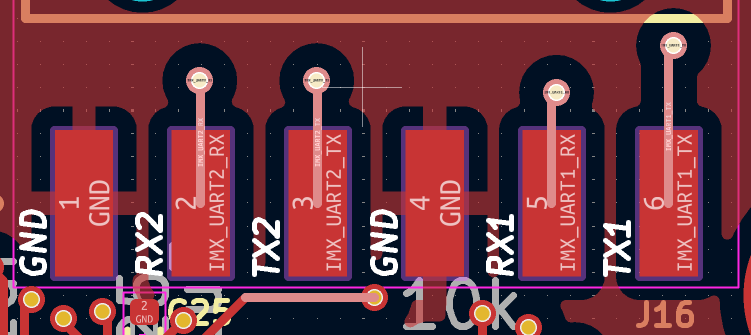
  • Manual is unclear about name of connector (J16 in schematics, J17 in manual).
  • Also numbering of pins is not given afaict.
  • Clone https://source.mnt.re/reform/pocket-reform.git
  • Look at pocket-reform-motherboard.kicad_pcb
  • From the PCB I can confirm J16 and pins numbered left (sysctl) to right.
  • attach "dtech" prolific PL2303 based serial to usb cable per serial console section of PR manual
  • lsusb shows ID 067b:23a3 Prolific Technology, Inc. ATEN Serial Bridge
  • install tio
  • add my user to group dialout
  • newgrp dialout
  • tio /dev/ttyUSB0 -b 1500000
  • A closer look at the PCB in kicad makes me realize the pin labels in the manual are wrong. 4 = GND, 5 = UART1_RX, 6= UART1_TX. With that change I have U-boot output on boot.

Serial console software With some help from minute on ircs://irc.libera.chat:6697/#mnt-reform, I got the kernel boot arguments right to have not just u-boot output but linux kernel output on the serial console. In consfigurator notation
(on-change
      (file:has-content "/etc/flash-kernel/ubootenv.d/00reform2_serial_console"
        "setenv bootargs \"$ bootargs  console=ttyS2,1500000 keep_bootcon\"")
    (cmd:single "flash-kernel"))
The filename should sort before "00reform2_ubootenv" so that the existing "console=tty1" still ends up at the end. previous episode next episode

Sahil Dhiman: Five Years of Writing - Now What?

Okay, here s the deal, I pushed my first post on Reimagined Doodle - Alias Command, five years ago on July 8th, 2020. Don t think I ever mentioned that post started out as a Github Gist which I later transferred here seeking a more long-term home on an independent platform. Writing about writings, motivations, and the blog itself has been a recurring theme here over the years. 1 2 3 4 5 6 7 8 9 I m unsure how I sustained expressing myself and writing here for this long. Now and then, I go months without any thought of writing, and then all of a sudden I start in bursts with sequential posts one after another. There isn t a pattern per se in topics other than whatever burning question I have at the moment. So here s to a milestone and then some.

7 July 2025

Birger Schacht: Debian on Framework 12

For some time now I was looking for a device to replace my Thinkpad. Its a 14" device, but thats to big for my taste. I am a big fan of small notebooks, so when frame.work announced their 12" laptop, I took the chance and ordered one right away. I was in one of the very early batches and got my package a couple of days ago. When ordering, I chose the DIY edition, but in the end there was not that much of DIY to do: I had to plug in the storage and the memory, put the keyboard in and tighten some screws. There are very detailed instructions with a lot of photos that tell you which part to put where, which is nice. Image of the Framework 12 laptop, assembled but powered off My first impressions of the device are good - it is heavier than I anticipated, but very vell made. It is very easy to assemble and disassemble and it feels like it can take a hit. When I started it the first time it took some minutes to boot because of the new memory module, but then it told me right away that it could not detect an operating system. As usual when I want to install a new system, I created a GRML live usb system and tried to boot from this USB device. But the Framwork BIOS did not want to let me boot GRML, telling me it is blocked by the current security policy. So I started to look in the BIOS where I could find the SecureBoot configuration, but there was no such setting anywhere. I then resorted to a Debian Live image, which was allowed to boot. Image of the screen of the Framework 12 laptop, saying it could not detect an operating system I only learned later, that the SecureBoot setting is in a separate section that is not part of the main BIOS configuration dialog. There is an Administer Secure Boot icon which you can choose when starting the device, but apparently only before you try to load an image that is not allowed. I always use my personal minimal install script to install my Debian systems, so it did not make that much of a difference to use Debian Live instead of GRML. I only had to apt install debootstrap before running the script. I updated the install script to default to trixie and to also install shim-signed and after successful installation booted into Debian 13 on the Framwork 12. Everthing seems to work fine so far. WIFI works. For sway to start I had to install firmware-intel-graphics. The touchscreen works without me having to configure anything (though I don t have frame.work stylus, as they are not yet available), also changing the brightness of the screen worked right away. The keyboard feels very nice, likewise the touchpad, which I configured to allow tap-to-click using the tap enabled option of sway-input. Image of the a Framework 12 laptop, showing the default Sway background image One small downside of the keyboard is that it does not have a backlight, which was a surprise. But given that this is a frame.work laptop, there are chances that a future generation of the keyboard will have backlight support. The screen of the laptop can be turned all the way around to the back of the laptops body, so it can be used as a tablet. In this mode the keyboard gets disabled to prevent accidently pushing keys when using the device in tablet mode. For online meetings I still prefer using headphones with cables over bluetooth once, so I m glad that the laptop has a headphone jack on the side. Above the screen there are a camera and a microphone, which both have separate physical switches to disable them. I ordered a couple of expansion cards, in the current setup I use two USB-C, one HDMI and one USB-A. I also ordered a 1TB expansion card and only used this to transfer my /home, but I soon realized that the card got rather hot, so I probably won t use it as a permanent expansion. I can not yet say a lot about how long the battery lasts, but I will bring the laptop to DebConf 25, I guess there I ll find out. There I might also have a chance to test if the screen is bright enough to be usable outdoors ;)

5 July 2025

Bits from Debian: Bits from the DPL

Dear Debian community, This is bits from the DPL for June. The Challenge of Mentoring Newcomers In June there was an extended discussion about the ongoing challenges around mentoring newcomers in Debian. As many of you know, this is a topic I ve cared about deeply--long before becoming DPL. In my view, the issue isn t just a matter of lacking tools or needing to try harder to attract contributors. Anyone who followed the discussion will likely agree that it s more complex than that. I sometimes wonder whether Debian s success contributes to the problem. From the outside, things may appear to just work , which can lead to the impression: Debian is doing fine without me--they clearly have everything under control. But that overlooks how much volunteer effort it takes to keep the project running smoothly. We should make it clearer that help is always needed--not only in packaging, but also in writing technical documentation, designing web pages, reaching out to upstreams about license issues, finding sponsors, or organising events. (Speaking from experience, I would have appreciated help in patiently explaining Free Software benefits to upstream authors.) Sometimes we think too narrowly about what newcomers can do, and also about which tasks could be offloaded from overcommitted contributors. In fact, one of the most valuable things a newcomer can contribute is better documentation. Those of us who ve been around for years may be too used to how things work--or make assumptions about what others already know. A person who just joined the project is often in the best position to document what s confusing, what s missing, and what they wish they had known sooner. In that sense, the recent "random new contributor s experience" posts might be a useful starting point for further reflection. I think we can learn a lot from positive user stories, like this recent experience of a newcomer adopting the courier package. I'm absolutely convinced that those who just found their way into Debian have valuable perspectives--and that we stand to learn the most from listening to them. We should also take seriously what Russ Allbery noted in the discussion: "This says bad things about the project's sustainability and I think everyone knows that." Volunteers move on--that s normal and expected. But it makes it all the more important that we put effort into keeping Debian's contributor base at least stable, if not growing. Project-wide LLM budget for helping people Lucas Nussbaum has volunteered to handle the paperwork and submit a request on Debian s behalf to LLM providers, aiming to secure project-wide access for Debian Developers. If successful, every DD will be free to use this access--or not--according to their own preferences. Kind regards Andreas.

Taavi V n nen: Tracking my train travel by parsing tickets in emails

Rumour has it that I might be a bit of a train nerd. At least I want to collect various nerdy data about my travels. Historically that data has lived in manual form in several places,1 but over the past year and a half I've been working on a toy project to collect most of that information into a custom tool. That toy project2 uses various sources to get information about trains to fill up its database: for example, in Finland Fintraffic, the organization responsible for railway traffic management, publishes very comprehensive open data about almost everything that's moving on the Finnish railway network. Unfortunately, I cannot be on all of the trains.3 Thus I need to tell the system details about my journeys. The obvious solution is to make a form that lets me save that data. Which I did, but I got very quickly bored of filling out that form, and as regular readers of this blog know, there is no reason to settle for a simple but boring solution when the alternative is to make something that is ridiculously overengineered.

Parsing data out of my train tickets Finnish long-distance trains generally require train-specific seat reservations, which means VR (the train company) knows which trains I am on. We just need to find a way to extract that information in some machine-readable format. So my plan for the ridiculously overengineered solution was to parse the booking emails to get the details I need. Now, VR ticket emails include the data I want in a couple of different formats: they're included as text in the HTML email body, they're in the embedded calendar invite, as text in the included PDF ticket, and encoded in the Aztec Code in the included PDF ticket. I chose to parse the last option with the hopes of building something that could be ported to parse other operators' tickets with relative ease.
Example Aztec code
Example Aztec code
After a bit of digging (thank you to the KDE Itinerary people for documenting this!) I stumbled upon an European Union Agency for Railways PDF titled ELECTRONIC SEAT/BERTH RESERVATION AND ELECTRONIC PRODUCTION OF TRANSPORT DOCUMENTS - TRANSPORT DOCUMENTS (RCT2 STANDARD) which, in its Appendix C.1, describes how the information is encoded in the code.4 (As a side note, various sources call these codes SSB version 1 codes, although that term isn't used in this specification. So maybe there are more specifications about the format that I haven't discovered yet!) I then wrote a parser in Go for the binary data embedded in these codes. So far it works, although I wouldn't be surprised if there are some edge cases that it doesn't handle. In particular, the spec specifies a custom lookup table for converting between text and binary data, and that only has support for characters 0-9 and A-Z. But Finnish railway station codes can also use and .. maybe I need to buy a ticket to a station with one of those.

Extracting barcodes out of emails A parser just for the binary format isn't enough here if the intended source input is the emails that VR sends upon making a booking. Time to write a single-purpose email server! In short, the logic in the server, again written in Go and with the help of go-smtp and go-message, is:
  • Accept any mail with a reasonable body size
  • Process through all body parts
  • For all PDF parts, extract all images
  • For all images, run them through ZXing
  • For all decoded barcodes, try to parse them with my new ticket parsing library I mentioned earlier
  • If any tickets are found, send the data from them and any metadata to the main backend, which will save them to a database
The custom mail server exposes an LMTP interface over TCP for my internet-facing mail servers to forward to. I chose LMTP for this because it seemed like a better fit in theory than normal (E)SMTP. I've since discovered that curl doesn't support LMTP which makes development much harder, and in practice there's no benefit of LMTP here as all mails are being sent to the backend in a single request regardless of the number of recipients, so maybe I'll migrate it to regular SMTP at some point.

Side quest time The last missing part is automatically forwarding the ticket mails to the new service. I've routed a dedicated subdomain to the new service, and the backend is configured to allocate addresses like i2v44g2pygkcth64stjgyuqz@somedomain.example for each user. That's great if we wanted to manually forward mails to the service, but we can go one step above that. I created a dedicated email alias in my mail server config that routes both to my regular mailbox and the service address. That way I can update my VR account to use the alias and have mails automatically processed while still receiving backup copies of the tickets (and any other important mail that VR might send me). Unfortunately that last part turns out something that's easier said than done. Logging in on the website, I'm greeted by this text stating I need to contact customer service by phone to change the address associated with my account.5 After a bit of digging, I noticed that the mobile app suggests filling out a feedback form in order to change the address. So I filled that, and after a day or two I got a "confirm you want to change your email" mail. Success!

  1. Including (but not limited to): a page of this website, the notes app on my phone, and an uMap map.
  2. Which I'm not directly naming here because I still think it needs a lot more work before being presentable, but if you're really interested it's not that hard to find out.
  3. Someone should invent human cloning so that we can fix this.
  4. People who know much more about railway ticketing than I do were surprised when I told them this format is still in use somewhere. So, uh, sorry if you were expecting a nice universal worldwide standard!
  5. In case you have not guessed yet, I do not like making phone calls.

4 July 2025

Sahil Dhiman: Secondary Authoritative Name Server Options for Self-Hosted Domains

In the past few months, I have moved authoritative name servers (NS) of two of my domains (sahilister.net and sahil.rocks) in house using PowerDNS. Subdomains of sahilister.net see roughly 320,000 hits/day across my IN and DE mirror nodes, so adding secondary name servers with good availability (in addition to my own) servers was one of my first priorities. I explored the following options for my secondary NS, which also didn t cost me anything:

1984 Hosting

Hurriance Electric

Afraid.org

Puck

NS-Global

Asking friends Two of my friends and fellow mirror hosts have their own authoritative name server setup, Shrirang (ie albony) and Luke. Shirang gave me another POP in IN and through Luke (who does have an insane amount of in-house NS, see dig ns jing.rocks +short), I added a JP POP. If we know each other, I would be glad to host a secondary NS for you in (IN and/or DE locations).

Some notes
  • Adding a third-party secondary is putting trust that the third party would serve your zone right.
  • Hurricane Electric and 1984 hosting provide multiple NS. One can use some or all of them. Ideally, you can get away with just using your own with full set from any of these two. Play around with adding and removing secondaries, which gives you the best results. . Using everyone is anyhow overkill, unless you have specific reasons for it.
  • Moving NS in-house isn t that hard. Though, be prepared to get it wrong a few times (and some more). I have already faced partial outages because:
    • Recursive resolvers (RR) in the wild behave in a weird way and cache the wrong NS response for longer time than in TTL.
    • NS expiry took more than time. 2 out of 3 of my Netim s NS (my domain registrar) had stopped serving my domain, while RRs in the wild hadn t picked up my new in-house NS. I couldn t really do anything about it, though.
    • Dot is pretty important at the end.
    • With HE.net, I forgot to delegate my domain on their panel and just added in my NS set, thinking I ve already done so (which I did but for another domain), leading to a lame server situation.
  • In terms of serving traffic, there s no distinction between primary and secondary NS. RR don t really care who they re asking the query to. So one can have hidden primary too.
  • I initially thought of adding periodic RIPE Atlas measurements from the global set but thought against it as I already host a termux mirror, which brings in thousands of queries from around the world leading to a diverse set of RRs querying my domain already.
  • In most cases, query resolution time would increase with out of zone NS servers (which most likely would be in external secondary). 1 query vs. 2 queries. Pay close attention to ADDITIONAL SECTION Shrirang s case followed by mine:
$ dig ns albony.in
; <<>> DiG 9.18.36 <<>> ns albony.in
;; global options: +cmd
;; Got answer:
;; ->>HEADER<<- opcode: QUERY, status: NOERROR, id: 60525
;; flags: qr rd ra; QUERY: 1, ANSWER: 4, AUTHORITY: 0, ADDITIONAL: 9
;; OPT PSEUDOSECTION:
; EDNS: version: 0, flags:; udp: 65494
;; QUESTION SECTION:
;albony.in.			IN	NS
;; ANSWER SECTION:
albony.in.		1049	IN	NS	ns3.albony.in.
albony.in.		1049	IN	NS	ns4.albony.in.
albony.in.		1049	IN	NS	ns2.albony.in.
albony.in.		1049	IN	NS	ns1.albony.in.
;; ADDITIONAL SECTION:
ns3.albony.in.		1049	IN	AAAA	2a14:3f87:f002:7::a
ns1.albony.in.		1049	IN	A	82.180.145.196
ns2.albony.in.		1049	IN	AAAA	2403:44c0:1:4::2
ns4.albony.in.		1049	IN	A	45.64.190.62
ns2.albony.in.		1049	IN	A	103.77.111.150
ns1.albony.in.		1049	IN	AAAA	2400:d321:2191:8363::1
ns3.albony.in.		1049	IN	A	45.90.187.14
ns4.albony.in.		1049	IN	AAAA	2402:c4c0:1:10::2
;; Query time: 29 msec
;; SERVER: 127.0.0.53#53(127.0.0.53) (UDP)
;; WHEN: Fri Jul 04 07:57:01 IST 2025
;; MSG SIZE  rcvd: 286
vs mine
$ dig ns sahil.rocks
; <<>> DiG 9.18.36 <<>> ns sahil.rocks
;; global options: +cmd
;; Got answer:
;; ->>HEADER<<- opcode: QUERY, status: NOERROR, id: 64497
;; flags: qr rd ra; QUERY: 1, ANSWER: 11, AUTHORITY: 0, ADDITIONAL: 1
;; OPT PSEUDOSECTION:
; EDNS: version: 0, flags:; udp: 65494
;; QUESTION SECTION:
;sahil.rocks.			IN	NS
;; ANSWER SECTION:
sahil.rocks.		6385	IN	NS	ns5.he.net.
sahil.rocks.		6385	IN	NS	puck.nether.net.
sahil.rocks.		6385	IN	NS	colin.sahilister.net.
sahil.rocks.		6385	IN	NS	marvin.sahilister.net.
sahil.rocks.		6385	IN	NS	ns2.afraid.org.
sahil.rocks.		6385	IN	NS	ns4.he.net.
sahil.rocks.		6385	IN	NS	ns2.albony.in.
sahil.rocks.		6385	IN	NS	ns3.jing.rocks.
sahil.rocks.		6385	IN	NS	ns0.1984.is.
sahil.rocks.		6385	IN	NS	ns1.1984.is.
sahil.rocks.		6385	IN	NS	ns-global.kjsl.com.
;; Query time: 24 msec
;; SERVER: 127.0.0.53#53(127.0.0.53) (UDP)
;; WHEN: Fri Jul 04 07:57:20 IST 2025
;; MSG SIZE  rcvd: 313
  • Theoretically speaking, a small increase/decrease in resolution would occur based on the chosen TLD and the popularity of the TLD in query originators area (already cached vs. fresh recursion).
  • One can get away with having only 3 NS (or be like Google and have 4 anycast NS or like Amazon and have 8 or like Verisign and make it 13 :P).
  • Nowhere it s written, your NS needs not to be called dns* or ns1, ns2 etc. Get creative with naming NS; be deceptive with the naming :D.
  • A good understanding of RR behavior can help engineer a good authoritative NS system.

Further reading

3 July 2025

Russell Coker: The Fuss About AI

There are many negative articles about AI (which is not about actual Artificial Intelligence also known as AGI ). Which I think are mostly overblown and often ridiculous. Resource Usage Complaints about resource usage are common, training Llama 3.1 could apparently produce as much pollution as 10,000 round trips by car between Los Angeles and New York City . That s not great but when you compare to the actual number of people doing such drives in the US and the number of people taking commercial flights on that route it doesn t seem like such a big deal. Apparently commercial passenger jets cause CO2 emissions per passenger about equal to a car with 2 people. Why is it relevant whether pollution comes from running servers, driving cars, or steel mills? Why not just tax polluters for the damage they do and let the market sort it out? People in the US make a big deal about not being communist, so why not have a capitalist solution, make it more expensive to do undesirable things and let the market sort it out? ML systems are a less bad use of compute resources than Bitcoin, at least ML systems give some useful results while Bitcoin has nothing good going for it. The Dot-Com Comparison People often complain about the apparent impossibility of AI companies doing what investors think they will do. But this isn t anything new, that all happened before with the dot com boom . I m not the first person to make this comparison, The Daily WTF (a high quality site about IT mistakes) has an interesting article making this comparison [1]. But my conclusions are quite different. The result of that was a lot of Internet companies going bankrupt, the investors in those companies losing money, and other companies then bought up their assets and made profitable companies. The cheap Internet we now have was built on the hardware from bankrupt companies which was sold for far less than the manufacture price. That allowed it to scale up from modem speeds to ADSL without the users paying enough to cover the purchase of the infrastructure. In the early 2000s I worked for two major Dutch ISPs that went bankrupt (not my fault) and one of them continued operations in the identical manner after having the stock price go to zero (I didn t get to witness what happened with the other one). As far as I m aware random Dutch citizens and residents didn t suffer from this and employees just got jobs elsewhere. There are good things being done with ML systems and when companies like OpenAI go bankrupt other companies will buy the hardware and do good things. NVidia isn t ever going to have the future sales that would justify a market capitalisation of almost 4 Trillion US dollars. This market cap can support paying for new research and purchasing rights to patented technology in a similar way to the high stock price of Google supported buying YouTube, DoubleClick, and Motorola Mobility which are the keys to Google s profits now. The Real Upsides of ML Until recently I worked for a company that used ML systems to analyse drivers for signs of fatigue, distraction, or other inappropriate things (smoking which is illegal in China, using a mobile phone, etc). That work was directly aimed at saving human lives with a significant secondary aim of saving wear on vehicles (in the mining industry drowsy drivers damage truck tires and that s a huge business expense). There are many applications of ML in medical research such as recognising cancer cells in tissue samples. There are many less important uses for ML systems, such as recognising different types of pastries to correctly bill bakery customers technology that was apparently repurposed for recognising cancer cells. The ability to recognise objects in photos is useful. It can be used for people who want to learn about random objects they see and could be used for helping young children learn about their environment. It also has some potential for assistance for visually impaired people, it wouldn t be good for safety critical systems (don t cross a road because a ML system says there are no cars coming) but could be useful for identifying objects (is this a lemon or a lime). The Humane AI pin had some real potential to do good things but there wasn t a suitable business model [2], I think that someone will develop similar technology in a useful way eventually. Even without trying to do what the Humane AI Pin attempted, there are many ways for ML based systems to assist phone and PC use. ML systems allow analysing large quantities of data and giving information that may be correct. When used by a human who knows how to recognise good answers this can be an efficient way of solving problems. I personally have solved many computer problems with the help of LLM systems while skipping over many results that were obviously wrong to me. I believe that any expert in any field that is covered in the LLM input data could find some benefits from getting suggestions from an LLM. It won t necessarily allow them to solve problems that they couldn t solve without it but it can provide them with a set of obviously wrong answers mixed in with some useful tips about where to look for the right answers. Jobs and Politics Noema Magazine has an insightful article about how AI can allow different models of work which can enlarge the middle class [3]. I don t think it s reasonable to expect ML systems to make as much impact on society as the industrial revolution, and the agricultural revolutions which took society from more than 90% farm workers to less than 5%. That doesn t mean everything will be fine but it is something that can seem OK after the changes have happened. I m not saying apart from the death and destruction everything will be good , the death and destruction are optional. Improvements in manufacturing and farming didn t have to involve poverty and death for many people, improvements to agriculture didn t have to involve overcrowding and death from disease. This was an issue of political decisions that were made. The Real Problems of ML Political decisions that are being made now have the aim of making the rich even richer and leaving more people in poverty and in many cases dying due to being unable to afford healthcare. The ML systems that aim to facilitate such things haven t been as successful as evil people have hoped but it will happen and we need appropriate legislation if we aren t going to have revolutions. There are documented cases of suicide being inspired by Chat GPT systems [4]. There have been people inspired towards murder by ChatGPT systems but AFAIK no-one has actually succeeded in such a crime yet. There are serious issues that need to be addressed with the technology and with legal constraints about how people may use it. It s interesting to consider the possible uses of ChatGPT systems for providing suggestions to a psychologist, maybe ChatGPT systems could be used to alleviate mental health problems. The cases of LLM systems being used for cheating on assignments etc isn t a real issue. People have been cheating on assignments since organised education was invented. There is a real problem of ML systems based on biased input data that issue decisions that are the average of the bigotry of the people who provided input. That isn t going to be worse than the current situation of bigoted humans making decisions based on hate and preconceptions but it will be more insidious. It is possible to search for that so for example a bank could test it s mortgage approval ML system by changing one factor at a time (name, gender, age, address, etc) and see if it changes the answer. If it turns out that the ML system is biased on names then the input data could have names removed. If it turns out to be biased about address then there could be weights put in to oppose that. For a long time there has been excessive trust in computers. Computers aren t magic they just do maths really fast and implement choices based on the work of programmers who have all the failings of other humans. Excessive trust in a rule based system is less risky than excessive trust in a ML system where no-one really knows why it makes the decisions it makes. Self driving cars kill people, this is the truth that Tesla stock holders don t want people to know. Companies that try to automate everything with AI are going to be in for some nasty surprises. Getting computers to do everything that humans do in any job is going to be a large portion of an actual intelligent computer which if it is achieved will raise an entirely different set of problems. I ve previously blogged about ML Security [5]. I don t think this will be any worse than all the other computer security problems in the long term, although it will be more insidious. How Will It Go? Companies spending billions of dollars without firm plans for how to make money are going to go bankrupt no matter what business they are in. Companies like Google and Microsoft can waste some billions of dollars on AI Chat systems and still keep going as successful businesses. Companies like OpenAI that do nothing other than such chat systems won t go well. But their assets can be used by new companies when sold at less than 10% the purchase price. Companies like NVidia that have high stock prices based on the supposed ongoing growth in use of their hardware will have their stock prices crash. But the new technology they develop will be used by other people for other purposes. If hospitals can get cheap diagnostic ML systems because of unreasonable investment into AI then that could be a win for humanity. Companies that bet their entire business on AI even when it s not necessarily their core business (as Tesla has done with self driving) will have their stock price crash dramatically at a minimum and have the possibility of bankruptcy. Having Tesla go bankrupt is definitely better than having people try to use them as self driving cars.

2 July 2025

Dirk Eddelbuettel: RcppArmadillo 14.6.0-1 on CRAN: New Upstream Minor Release

armadillo image Armadillo is a powerful and expressive C++ template library for linear algebra and scientific computing. It aims towards a good balance between speed and ease of use, has a syntax deliberately close to Matlab, and is useful for algorithm development directly in C++, or quick conversion of research code into production environments. RcppArmadillo integrates this library with the R environment and language and is widely used by (currently) 1241 other packages on CRAN, downloaded 40.4 million times (per the partial logs from the cloud mirrors of CRAN), and the CSDA paper (preprint / vignette) by Conrad and myself has been cited 634 times according to Google Scholar. Conrad released a minor version 4.6.0 yesterday which offers new accessors for non-finite values. And despite being in Beautiful British Columbia on vacation, I had wrapped up two rounds of reverse dependency checks preparing his 4.6.0 release, and shipped this to CRAN this morning where it passed with flying colours and no human intervention even with over 1200 reverse dependencies. The changes since the last CRAN release are summarised below.

Changes in RcppArmadillo version 14.6.0-1 (2025-07-02)
  • Upgraded to Armadillo release 14.6.0 (Caffe Mocha)
    • Added balance() to transform matrices so that column and row norms are roughly the same
    • Added omit_nan() and omit_nonfinite() to extract elements while omitting NaN and non-finite values
    • Added find_nonnan() for finding indices of non-NaN elements
    • Added standalone replace() function
  • The fastLm() help page now mentions that options to solve() can control its behavior.

Courtesy of my CRANberries, there is a diffstat report relative to previous release. More detailed information is on the RcppArmadillo page. Questions, comments etc should go to the rcpp-devel mailing list off the Rcpp R-Forge page.

This post by Dirk Eddelbuettel originated on his Thinking inside the box blog. If you like this or other open-source work I do, you can sponsor me at GitHub.

30 June 2025

Otto Kek l inen: Corporate best practices for upstream open source contributions

Featured image of post Corporate best practices for upstream open source contributions
This post is based on presentation given at the Validos annual members meeting on June 25th, 2025.
When I started getting into Linux and open source over 25 years ago, the majority of the software development in this area was done by academics and hobbyists. The number of companies participating in open source has since exploded in parallel with the growth of mobile and cloud software, the majority of which is built on top of open source. For example, Android powers most mobile phones today and is based on Linux. Almost all software used to operate large cloud provider data centers, such as AWS or Google, is either open source or made in-house by the cloud provider. Pretty much all companies, regardless of the industry, have been using open source software at least to some extent for years. However, the degree to which they collaborate with the upstream origins of the software varies. I encourage all companies in a technical industry to start contributing upstream. There are many benefits to having a good relationship with your upstream open source software vendors, both for the short term and especially for the long term. Moreover, with the rollout of CRA in EU in 2025-2027, the law will require software companies to contribute security fixes upstream to the open source projects their products use. To ensure the process is well managed, business-aligned and legally compliant, there are a few do s and don t do s that are important to be aware of.

Maintain your SBOMs For every piece of software, regardless of whether the code was done in-house, from an open source project, or a combination of these, every company needs to produce a Software Bill of Materials (SBOM). The SBOMs provide a standardized and interoperable way to track what software and which versions are used where, what software licenses apply, who holds the copyright of which component, which security fixes have been applied and so forth. A catalog of SBOMs, or equivalent, forms the backbone of software supply-chain management in corporations.

Identify your strategic upstream vendors The SBOMs are likely to reveal that for any piece of non-trivial software, there are hundreds or thousands of upstream open source projects in use. Few organizations have resources to contribute to all of their upstreams. If your organization is just starting to organize upstream contribution activities, identify the key projects that have the largest impact on your business and prioritize forming a relationship with them first. Organizations with a mature contribution process will be collaborating with tens or hundreds of upstreams.

Appoint an internal coordinator and champions Having a written policy on how to contribute upstream will help ensure a consistent process and avoid common pitfalls. However, a written policy alone does not automatically translate into a well-running process. It is highly recommended to appoint at least one internal coordinator who is knowledgeable about how open source communities work, how software licensing and patents work, and is senior enough to have a good sense of what business priorities to optimize for. In small organizations it can be a single person, while larger organizations typically have a full Open Source Programs Office. This coordinator should oversee the contribution process, track all contributions made across the organization, and further optimize the process by working with stakeholders across the business, including legal experts, business owners and CTOs. The marketing and recruiting folks should also be involved, as upstream contributions will have a reputation-building aspect as well, which can be enhanced with systematic tracking and publishing of activities. Additionally, at least in the beginning, the organization should also appoint key staff members as open source champions. Implementing a new process always includes some obstacles and occasional setbacks, which may discourage employees from putting in the extra effort to reap the full long-term benefits for the company. Having named champions will empower them to make the first few contributions themselves, setting a good example and encouraging and mentoring others to contribute upstream as well.

Avoid excessive approvals To maintain a high quality bar, it is always good to have all outgoing submissions reviewed by at least one or two people. Two or three pairs of eyeballs are significantly more likely to catch issues that might slip by someone working alone. The review also slows down the process by a day or two, which gives the author time to sleep on it , which usually helps to ensure the final submission is well-thought-out by the author. Do not require more than one or two reviewers. The marginal utility goes quickly to zero beyond a few reviewers, and at around four or five people the effect becomes negative, as the weight of each approval decreases and the reviewers begin to take less personal responsibility. Having too many people in the loop also makes each feedback round slow and expensive, to the extent that the author will hesitate to make updates and ask for re-reviews due to the costs involved. If the organization experiences setbacks due to mistakes slipping through the review process, do not respond by adding more reviewers, as it will just grind the contribution process to a halt. If there are quality concerns, invest in training for engineers, CI systems and perhaps an internal certification program for those making public upstream code submissions. A typical software engineer is more likely to seriously try to become proficient at their job and put effort into a one-off certification exam and then make multiple high-quality contributions, than it is for a low-skilled engineer to improve and even want to continue doing more upstream contributions if they are burdened by heavy review processes every time they try to submit an upstream contribution.

Don t expect upstream to accept all code contributions Sure, identifying the root cause of and fixing a tricky bug or writing a new feature requires significant effort. While an open source project will certainly appreciate the effort invested, it doesn t mean it will always welcome all contributions with open arms. Occasionally, the project won t agree that the code is correct or the feature is useful, and some contributions are bound to be rejected. You can minimize the chance of experiencing rejections by having a solid internal review process that includes assessing how the upstream community is likely to understand the proposal. Sometimes how things are communicated is more important than how they are coded. Polishing inline comments and git commit messages help ensure high-quality communication, along with a commitment to respond quickly to review feedback and conducting regular follow-ups until a contribution is finalized and accepted.

Start small to grow expertise and reputation In addition to keeping the open source contribution policy lean and nimble, it is also good to start practical contributions with small issues. Don t aim to contribute massive features until you have a track record of being able to make multiple small contributions. Keep in mind that not all open source projects are equal. Each has its own culture, written and unwritten rules, development process, documented requirements (which may be outdated) and more. Starting with a tiny contribution, even just a typo fix, is a good way to validate how code submissions, reviews and approvals work in a particular project. Once you have staff who have successfully landed smaller contributions, you can start planning larger proposals. The exact same proposal might be unsuccessful when proposed by a new person, and successful when proposed by a person who already has a reputation for prior high-quality work.

Embrace all and any publicity you get Some companies have concerns about their employees working in the open. Indeed, every email and code patch an employee submits, and all related discussions become public. This may initially sound scary, but is actually a potential source of good publicity. Employees need to be trained on how to conduct themselves publicly, and the discussions about code should contain only information strictly related to the code, without any references to actual production environments or other sensitive information. In the long run most employees contributing have a positive impact and the company should reap the benefits of positive publicity. If there are quality issues or employee judgment issues, hiding the activity or forcing employees to contribute with pseudonyms is not a proper solution. Instead, the problems should be addressed at the root, and bad behavior addressed rather than tolerated. When people are working publicly, there tends to also be some degree of additional pride involved, which motivates people to try their best. Contributions need to be public for the sponsoring corporation to later be able to claim copyright or licenses. Considering that thousands of companies participate in open source every day, the prevalence of bad publicity is quite low, and the benefits far exceed the risks.

Scratch your own itch When choosing what to contribute, select things that benefit your own company. This is not purely about being selfish - often people working on resolving a problem they suffer from are the same people with the best expertise of what the problem is and what kind of solution is optimal. Also, the issues that are most pressing to your company are more likely to be universally useful to solve than any random bug or feature request in the upstream project s issue tracker.

Remember there are many ways to help upstream While submitting code is often considered the primary way to contribute, please keep in mind there are also other highly impactful ways to contribute. Submitting high-quality bug reports will help developers quickly identify and prioritize issues to fix. Providing good research, benchmarks, statistics or feedback helps guide development and the project make better design decisions. Documentation, translations, organizing events and providing marketing support can help increase adoption and strengthen long-term viability for the project. In some of the largest open source projects there are already far more pending contributions than the core maintainers can process. Therefore, developers who contribute code should also get into the habit of contributing reviews. As Linus law states, given enough eyeballs, all bugs are shallow. Reviewing other contributors submissions will help improve quality, and also alleviate the pressure on core maintainers who are the only ones providing feedback. Reviewing code submitted by others is also a great learning opportunity for the reviewer. The reviewer does not need to be better than the submitter - any feedback is useful; merely posting review feedback is not the same thing as making an approval decision. Many projects are also happy to accept monetary support and sponsorships. Some offer specific perks in return. By human nature, the largest sponsors always get their voice heard in important decisions, as no open source project wants to take actions that scare away major financial contributors.

Starting is the hardest part Long-term success in open source comes from a positive feedback loop of an ever-increasing number of users and collaborators. As seen in the examples of countless corporations contributing open source, the benefits are concrete, and the process usually runs well after the initial ramp-up and organizational learning phase has passed. In open source ecosystems, contributing upstream should be as natural as paying vendors in any business. If you are using open source and not contributing at all, you likely have latent business risks without realizing it. You don t want to wake up one morning to learn that your top talent left because they were forbidden from participating in open source for the company s benefit, or that you were fined due to CRA violations and mismanagement in sharing security fixes with the correct parties. The faster you start with the process, the less likely those risks will materialize.

23 June 2025

Gunnar Wolf: Private key management Oh, the humanity...

If we ever thought a couple of years or decades of constant use would get humankind to understand how an asymetric key pair is to be handled It s time we moved back to square one. I had to do an online tramit with the Mexican federal government to get a statement certifying I successfully finished my studies, and I found this jewel of user interface: E.firma So I have to:
  1. Submit the asymetric key I use for tax purposes, as that s the ID the government has registered for me. OK, I didn t expect it to be used for this purpose as well, but I ll accept it. Of course, in our tax system many people don t require having a public key generated ( easier regimes are authenticated by password only), but all professionals with a c dula profesional (everybody getting a unviersitary title) is now compelled to do this step.
  2. Not only I have to submit my certificate (public key) But also the private part (and, of course, the password that secures it). I understand I m interacting with a Javascript thingie that runs only client-side, and I trust it is not shipping my private key to their servers. But given it is an opaque script, I have no assurance about it. And, of course, this irks me because I am who I am and because I ve spent several years thinking about cryptography. But for regular people, it just looks as a stupid inconvenience: they have to upload two weird files with odd names and provide a password. What for?
This is beyond stupid. I m baffled. (of course, I did it, because I need the fsckin document. Oh, and of course, I paid my MX$1770, 80, for it which does not make me too happy for a tramit that s not even shuffling papers, only storing the right bits in the right corner of the right datacenter, but anyhow )

22 June 2025

Sahil Dhiman: Case of (broken) maharashtra.gov.in Authoritative Name Servers

Maharashtra is a state here in India, which has Mumbai, the financial capital of India, as its capital. maharashtra.gov.in is the official website of the State Government of Maharashtra. We re going to talk about authoritative name servers serving it (and bunch of child zones under maharashtra.gov.in). Here s a simple trace for the main domain:
$ dig +trace maharashtra.gov.in
; <<>> DiG 9.18.33-1~deb12u2-Debian <<>> +trace maharashtra.gov.in
;; global options: +cmd
.            33128    IN    NS    j.root-servers.net.
.            33128    IN    NS    h.root-servers.net.
.            33128    IN    NS    l.root-servers.net.
.            33128    IN    NS    k.root-servers.net.
.            33128    IN    NS    i.root-servers.net.
.            33128    IN    NS    g.root-servers.net.
.            33128    IN    NS    f.root-servers.net.
.            33128    IN    NS    e.root-servers.net.
.            33128    IN    NS    b.root-servers.net.
.            33128    IN    NS    d.root-servers.net.
.            33128    IN    NS    c.root-servers.net.
.            33128    IN    NS    m.root-servers.net.
.            33128    IN    NS    a.root-servers.net.
.            33128    IN    RRSIG    NS 8 0 518400 20250704050000 20250621040000 53148 . pGxGZftwj+6VNTSQtstTKVN95Z7/b5Q8GSjRCXI68GoVYbVai9HNelxs OGIRKL4YmSrsiSsndXuEsBuvL9QvQ+qbybNLkekJUAiicKYNgr3KM3+X 69rsS9KxHgT2T8/oqG8KN8EJLJ8VkuM2PJ2HfSKijtF7ULtgBbERNQ4i u2I/wQ7elOyeF2M76iEOa7UGhgiBHSBqPulsbpnB//WbKL71yyFhWSk0 tiFEPuZM+iLrN2qBsElriF4kkw37uRHq8sSGcCjfBVdkpbb3/Sb3sIgN /zKU17f+hOvuBQTDr5qFIymqGAENA5UZ2RQjikk6+zK5EfBUXNpq1+oo 2y64DQ==
;; Received 525 bytes from 9.9.9.9#53(9.9.9.9) in 3 ms
in.            172800    IN    NS    ns01.trs-dns.com.
in.            172800    IN    NS    ns01.trs-dns.net.
in.            172800    IN    NS    ns10.trs-dns.org.
in.            172800    IN    NS    ns10.trs-dns.info.
in.            86400    IN    DS    48140 8 2 5EE4748C2069B99C98BC39A56881A64AF17CC78711E6297D43AC5A4F 4B5BB6E5
in.            86400    IN    RRSIG    DS 8 1 86400 20250704050000 20250621040000 53148 . jkCotYosapreoKKPvr9zPOEDECYVe9OtJLjkQbFfTin8uYbm/kdWzieW CkN5sabif5IHTFU4FEVOShfu4DFeUolhNav56TPKjGqEGjQ7qCghpqTj dNN4iY2s8BcJ2ujHwhm6HRfdbQRVoKYQ73UUZ+oWSute6lXWHE9+Snk2 1ZCAYPdZ2s1s7NZhrZW2YXVw/nHIcRl/rHqWIQ9sgUlsd6MwmahcAAG+ v15HG9Q48rCG1A2gJlJPbxWpVe0EUEu8LzDsp+ORqy1pHhzgJynrJHJz qMiYU0egv2j7xVPSoQHXjx3PG2rsOLNnqDBYCA+piEXOLsY3d+7c1SZl w9u66g==
;; Received 679 bytes from 199.7.83.42#53(l.root-servers.net) in 3 ms
maharashtra.gov.in.    900    IN    NS    ns8.maharashtra.gov.in.
maharashtra.gov.in.    900    IN    NS    ns9.maharashtra.gov.in.
maharashtra.gov.in.    900    IN    NS    ns10.maharashtra.gov.in.
maharashtra.gov.in.    900    IN    NS    ns18.maharashtra.gov.in.
maharashtra.gov.in.    900    IN    NS    ns20.maharashtra.gov.in.
npk19skvsdmju264d4ono0khqf7eafqv.gov.in. 300 IN    NSEC3 1 1 0 - P0KKR4BMBGLJDOKBGBI0KDM39DSM0EA4 NS SOA MX TXT RRSIG DNSKEY NSEC3PARAM
npk19skvsdmju264d4ono0khqf7eafqv.gov.in. 300 IN    RRSIG NSEC3 8 3 300 20250626140337 20250528184339 48544 gov.in. Khcq3n1Jn34HvuBEZExusVqoduEMH6DzqkWHk9dFkM+q0RVBYBHBbW+u LsSnc2/Rqc3HAYutk3EZeS+kXVF07GA/A486dr17Hqf3lHszvG/MNT/s CJfcdrqO0Q8NZ9NQxvAwWo44bCPaECQV+fhznmIaVSgbw7de9xC6RxWG ZFcsPYwYt07yB5neKa99RlVvJXk4GHX3ISxiSfusCNOuEKGy5cMxZg04 4PbYsP0AQNiJWALAduq2aNs80FQdWweLhd2swYuZyfsbk1nSXJQcYbTX aONc0VkYFeEJzTscX8/wNbkJeoLP0r/W2ebahvFExl3NYpb7b2rMwGBY omC/QA==
npk19skvsdmju264d4ono0khqf7eafqv.gov.in. 300 IN    RRSIG NSEC3 13 3 300 20250718144138 20250619135610 22437 gov.in. mbj7td3E6YE7kIhYoSlDTZR047TXY3Z60NY0aBwU7obyg5enBQU9j5nl GUxn9zUiwVUzei7v5GIPxXS7XDpk7g==
6bflkoouitlvj011i2mau7ql5pk61sks.gov.in. 300 IN    NSEC3 1 1 0 - 78S0UO5LI1KV1SVMH1889FHUCNC40U6T TXT RRSIG
6bflkoouitlvj011i2mau7ql5pk61sks.gov.in. 300 IN    RRSIG NSEC3 8 3 300 20250626133905 20250528184339 48544 gov.in. M2yPThQpX0sEf4klooQ06h+rLR3e3Q/BqDTSFogyTIuGwjgm6nwate19 jGmgCeWCYL3w/oxsg1z7SfCvDBCXOObH8ftEBOfLe8/AGHAEkWFSu3e0 s09Ccoz8FJiCfBJbbZK5Vf4HWXtBLfBq+ncGCEE24tCQLXaS5cT85BxZ Zne6Y6u8s/WPgo8jybsvlGnL4QhIPlW5UkHDs7cLLQSwlkZs3dwxyHTn EgjNWClhghGXP9nlvOlnDjUkmacEYeq5ItnCQjYPl4uwh9fBJ9CD/8LV K+Tn3+dgqDBek6+2HRzjGs59NzuHX8J9wVFxP7/nd+fUgaSgz+sST80O vrXlHA==
6bflkoouitlvj011i2mau7ql5pk61sks.gov.in. 300 IN    RRSIG NSEC3 13 3 300 20250718141148 20250619135610 22437 gov.in. raWzWsQnPkXYtr2v1SRH/fk2dEAv/K85NH+06pNUwkxPxQk01nS8eYlq BPQ41b26kikg8mNOgr2ULlBpJHb1OQ==
couldn't get address for 'ns18.maharashtra.gov.in': not found
couldn't get address for 'ns20.maharashtra.gov.in': not found
;; Received 1171 bytes from 2620:171:813:1534:8::1#53(ns10.trs-dns.org) in 0 ms
;; communications error to 10.187.202.24#53: timed out
;; communications error to 10.187.202.28#53: timed out
;; communications error to 10.187.203.201#53: timed out
;; no servers could be reached
Quick takeaways: It s a hit or miss for this DNS query resolution.

Looking at in zone data Let s look at NS added in zone itself (with 9.9.9.9):
$ dig ns maharashtra.gov.in
; <<>> DiG 9.18.33-1~deb12u2-Debian <<>> ns maharashtra.gov.in
;; global options: +cmd
;; Got answer:
;; ->>HEADER<<- opcode: QUERY, status: NOERROR, id: 172
;; flags: qr rd ra; QUERY: 1, ANSWER: 2, AUTHORITY: 0, ADDITIONAL: 3
;; OPT PSEUDOSECTION:
; EDNS: version: 0, flags:; udp: 1232
;; QUESTION SECTION:
;maharashtra.gov.in.        IN    NS
;; ANSWER SECTION:
maharashtra.gov.in.    300    IN    NS    ns8.maharashtra.gov.in.
maharashtra.gov.in.    300    IN    NS    ns9.maharashtra.gov.in.
;; ADDITIONAL SECTION:
ns9.maharashtra.gov.in.    300    IN    A    10.187.202.24
ns8.maharashtra.gov.in.    300    IN    A    10.187.202.28
;; Query time: 180 msec
;; SERVER: 9.9.9.9#53(9.9.9.9) (UDP)
;; WHEN: Sat Jun 21 23:00:49 IST 2025
;; MSG SIZE  rcvd: 115
Pay special attention to ADDITIONAL SECTION . Running dig ns9.maharashtra.gov.in and dig ns8.maharashtra.gov.in, return RFC 1918 ie these private addresses. This is coming from zone itself, so in zone A records of NS8 and NS9 point to 10.187.202.28 and 10.187.202.24 respectively. Cloudflare s 1.1.1.1 has a slightly different version:
$ dig ns maharashtra.gov.in @1.1.1.1
; <<>> DiG 9.18.33-1~deb12u2-Debian <<>> ns maharashtra.gov.in @1.1.1.1
;; global options: +cmd
;; Got answer:
;; ->>HEADER<<- opcode: QUERY, status: NOERROR, id: 36005
;; flags: qr rd ra; QUERY: 1, ANSWER: 3, AUTHORITY: 0, ADDITIONAL: 1
;; OPT PSEUDOSECTION:
; EDNS: version: 0, flags:; udp: 1232
;; QUESTION SECTION:
;maharashtra.gov.in.        IN    NS
;; ANSWER SECTION:
maharashtra.gov.in.    300    IN    NS    ns8.
maharashtra.gov.in.    300    IN    NS    ns10.maharashtra.gov.in.
maharashtra.gov.in.    300    IN    NS    ns9.
;; Query time: 7 msec
;; SERVER: 1.1.1.1#53(1.1.1.1) (UDP)
;; WHEN: Sun Jun 22 10:38:30 IST 2025
;; MSG SIZE  rcvd: 100
Interesting response here for sure :D. The reason for difference between response from 1.1.1.1 and 9.9.9.9 is in the next section.

Looking at parent zone gov.in is the parent zone here. Tucows is operator for gov.in as well as .in ccTLD zone:
$ dig ns gov.in +short
ns01.trs-dns.net.
ns01.trs-dns.com.
ns10.trs-dns.org.
ns10.trs-dns.info.
Let s take a look at what parent zone (NS) hold:
$ dig ns maharashtra.gov.in @ns01.trs-dns.net.
; <<>> DiG 9.18.36 <<>> ns maharashtra.gov.in @ns01.trs-dns.net.
;; global options: +cmd
;; Got answer:
;; ->>HEADER<<- opcode: QUERY, status: NOERROR, id: 56535
;; flags: qr rd; QUERY: 1, ANSWER: 0, AUTHORITY: 5, ADDITIONAL: 6
;; WARNING: recursion requested but not available
;; OPT PSEUDOSECTION:
; EDNS: version: 0, flags:; udp: 1232
; COOKIE: f13027aa39632404010000006856fa2a9c97d6bbc973ba4f (good)
;; QUESTION SECTION:
;maharashtra.gov.in.        IN    NS
;; AUTHORITY SECTION:
maharashtra.gov.in.    900    IN    NS    ns8.maharashtra.gov.in.
maharashtra.gov.in.    900    IN    NS    ns18.maharashtra.gov.in.
maharashtra.gov.in.    900    IN    NS    ns10.maharashtra.gov.in.
maharashtra.gov.in.    900    IN    NS    ns9.maharashtra.gov.in.
maharashtra.gov.in.    900    IN    NS    ns20.maharashtra.gov.in.
;; ADDITIONAL SECTION:
ns20.maharashtra.gov.in. 900    IN    A    52.183.143.210
ns18.maharashtra.gov.in. 900    IN    A    35.154.30.166
ns10.maharashtra.gov.in. 900    IN    A    164.100.128.234
ns9.maharashtra.gov.in.    900    IN    A    103.23.150.89
ns8.maharashtra.gov.in.    900    IN    A    103.23.150.88
;; Query time: 28 msec
;; SERVER: 64.96.2.1#53(ns01.trs-dns.net.) (UDP)
;; WHEN: Sun Jun 22 00:00:02 IST 2025
;; MSG SIZE  rcvd: 248
The ADDITIONAL SECTION gives a completely different picture (different from in zone NSes). Maybe this was how it was supposed to be, but none of the IPs listed for NS10, NS18 and NS20 are responding to any DNS query. Assuming NS8 as 103.23.150.88 and NS9 as 103.23.150.89, checking SOA on each gives following:
$ dig soa maharashtra.gov.in @103.23.150.88 +short
ns8.maharashtra.gov.in. postmaster.maharashtra.gov.in. 2013116777 1200 600 1296000 300
$ dig soa maharashtra.gov.in @103.23.150.89 +short
ns8.maharashtra.gov.in. postmaster.maharashtra.gov.in. 2013116757 1200 600 1296000 300
NS8 (which is marked as primary in SOA) has serial 2013116777 and NS9 is on serial 2013116757, so looks like the sync (IXFR/AXFR) between primary and secondary is broken. That s why NS8 and NS9 are serving different responses, evident from the following:
$ dig ns8.maharashtra.gov.in @103.23.150.88 +short
103.23.150.88
$ dig ns8.maharashtra.gov.in @103.23.150.89 +short
10.187.202.28
$ dig ns9.maharashtra.gov.in @103.23.150.88 +short
103.23.150.89
$ dig ns9.maharashtra.gov.in @103.23.150.89 +short
10.187.202.24
$ dig ns maharashtra.gov.in @103.23.150.88 +short
ns9.
ns8.
ns10.maharashtra.gov.in.
$ dig ns maharashtra.gov.in @103.23.150.89 +short
ns9.maharashtra.gov.in.
ns8.maharashtra.gov.in.
$ dig ns10.maharashtra.gov.in @103.23.150.88 +short
10.187.203.201
$ dig ns10.maharashtra.gov.in @103.23.150.89 +short
# No/empty response ^
This is the reason for difference in 1.1.1.1 and 9.9.9.9 responses in previous section.

To summarize:
  • Primary and secondary NS aren t in sync. Serials aren t matching, while NS8 and NS9 are responding differently for same queries.
  • NSes have A records with private address, not reachable on the internet, so lame servers.
  • Incomplete NS address, not even FQDN in some cases.
  • Difference between NS delegated in parent zone and NS added in actual zone.
  • Name resolution works in very particular order (in my initial trace it failed).
Initially, I thought of citing RFCs, but I don t really think it s even required. 1.1.1.1, 8.8.8.8 and 9.9.9.9 are handling (lame servers, this probelm) well, handing out the A record for the main website, so dig maharashtra.gov.in would mostly pass and that was the reason I started this post with +trace to recurse the complete zone to show the problem. For later reference:
$ dig maharashtra.gov.in @8.8.8.8 +short
103.8.188.109

Email to SOA address I have sent the following email to address listed in SOA:
Subject - maharashtra.gov.in authoritative DNS servers not reachable Hello, I wanted to highlight the confusing state of maharashtra.gov.in authoritative DNS servers. Parent zone list following as name servers for your DNS zone:
  • ns8.maharashtra.gov.in.
  • ns18.maharashtra.gov.in.
  • ns10.maharashtra.gov.in.
  • ns9.maharashtra.gov.in.
  • ns20.maharashtra.gov.in.
Out of these, ns18 and ns20 don t have public A/AAAA records and are thus not reachable. ns10 keeps on shuffling between NO A record and 10.187.203.201 (private, not reachable address). ns8 keeps on shuffling between 103.23.150.88 and 10.187.202.28 (private, not reachable address). ns9 keeps on shuffling between 103.23.150.89 and 10.187.202.24 (private, not reachable address). These are leading to long, broken, or no DNS resolution for the website(s). Can you take a look at the problem? Regards, Sahil
I ll update here if I get a response. Hopefully, they ll listen and fix their problem.

20 June 2025

Matthew Garrett: My a11y journey

23 years ago I was in a bad place. I'd quit my first attempt at a PhD for various reasons that were, with hindsight, bad, and I was suddenly entirely aimless. I lucked into picking up a sysadmin role back at TCM where I'd spent a summer a year before, but that's not really what I wanted in my life. And then Hanna mentioned that her PhD supervisor was looking for someone familiar with Linux to work on making Dasher, one of the group's research projects, more usable on Linux. I jumped.

The timing was fortuitous. Sun were pumping money and developer effort into accessibility support, and the Inference Group had just received a grant from the Gatsy Foundation that involved working with the ACE Centre to provide additional accessibility support. And I was suddenly hacking on code that was largely ignored by most developers, supporting use cases that were irrelevant to most developers. Being in a relatively green field space sounds refreshing, until you realise that you're catering to actual humans who are potentially going to rely on your software to be able to communicate. That's somewhat focusing.

This was, uh, something of an on the job learning experience. I had to catch up with a lot of new technologies very quickly, but that wasn't the hard bit - what was difficult was realising I had to cater to people who were dealing with use cases that I had no experience of whatsoever. Dasher was extended to allow text entry into applications without needing to cut and paste. We added support for introspection of the current applications UI so menus could be exposed via the Dasher interface, allowing people to fly through menu hierarchies and pop open file dialogs. Text-to-speech was incorporated so people could rapidly enter sentences and have them spoke out loud.

But what sticks with me isn't the tech, or even the opportunities it gave me to meet other people working on the Linux desktop and forge friendships that still exist. It was the cases where I had the opportunity to work with people who could use Dasher as a tool to increase their ability to communicate with the outside world, whose lives were transformed for the better because of what we'd produced. Watching someone use your code and realising that you could write a three line patch that had a significant impact on the speed they could talk to other people is an incomparable experience. It's been decades and in many ways that was the most impact I've ever had as a developer.

I left after a year to work on fruitflies and get my PhD, and my career since then hasn't involved a lot of accessibility work. But it's stuck with me - every improvement in that space is something that has a direct impact on the quality of life of more people than you expect, but is also something that goes almost unrecognised. The people working on accessibility are heroes. They're making all the technology everyone else produces available to people who would otherwise be blocked from it. They deserve recognition, and they deserve a lot more support than they have.

But when we deal with technology, we deal with transitions. A lot of the Linux accessibility support depended on X11 behaviour that is now widely regarded as a set of misfeatures. It's not actually good to be able to inject arbitrary input into an arbitrary window, and it's not good to be able to arbitrarily scrape out its contents. X11 never had a model to permit this for accessibility tooling while blocking it for other code. Wayland does, but suffers from the surrounding infrastructure not being well developed yet. We're seeing that happen now, though - Gnome has been performing a great deal of work in this respect, and KDE is picking that up as well. There isn't a full correspondence between X11-based Linux accessibility support and Wayland, but for many users the Wayland accessibility infrastructure is already better than with X11.

That's going to continue improving, and it'll improve faster with broader support. We've somehow ended up with the bizarre politicisation of Wayland as being some sort of woke thing while X11 represents the Roman Empire or some such bullshit, but the reality is that there is no story for improving accessibility support under X11 and sticking to X11 is going to end up reducing the accessibility of a platform.

When you read anything about Linux accessibility, ask yourself whether you're reading something written by either a user of the accessibility features, or a developer of them. If they're neither, ask yourself why they actually care and what they're doing to make the future better.

comment count unavailable comments

19 June 2025

Jonathan Carter: My first tag2upload upload

Tag2upload? The tag2upload service has finally gone live for Debian Developers in an open beta. If you ve never heard of tag2upload before, here is a great primer presented by Ian Jackson and prepared by Ian Jackson and Sean Whitton. In short, the world has moved on to hosting and working with source code in Git repositories. In Debian, we work with source packages that are used to generated the binary artifacts that users know as .deb files. In Debian, there is so much tooling and culture built around this. For example, our workflow passes what we call the island test you could take every source package in Debian along with you to an island with no Internet, and you ll still be able to rebuild or modify every package. When changing the workflows, you risk losing benefits like this, and over the years there has been a number of different ideas on how to move to a purely or partially git flow for Debian, none that really managed to gain enough momentum or project-wide support. Tag2upload makes a lot of sense. It doesn t take away any of the benefits of the current way of working (whether technical or social), but it does make some aspects of Debian packages significantly simpler and faster. Even so, if you re a Debian Developer and more familiar with how the sausage have made, you ll have noticed that this has been a very long road for the tag2upload maintainers, they ve hit multiple speed bumps since 2019, but with a lot of patience and communication and persistence from all involved (and almost even a GR), it is finally materializing.

Performing my first tag2upload So, first, I needed to choose which package I want to upload. We re currently in hard freeze for the trixie release, so I ll look for something simple that I can upload to experimental.
I chose bundlewrap, it s quote a straightforward python package, and updates are usually just as straightforward, so it s probably a good package to work on without having to deal with extra complexities in learning how to use tag2upload. So, I do the usual uscan and dch -i to update my package
And then I realise that I still want to build a source package to test it in cowbuilder. Hmm, I remember that Helmut showed me that building a source package isn t necessary in sbuild, but I have a habit of breaking my sbuild configs somehow, but I guess I should revisit that. So, I do a dpkg-buildpackage -S -sa and test it out with cowbuilder, because that s just how I roll (at least for now, fixing my local sbuild setup is yak shaving for another day, let s focus!). I end up with a binary that looks good, so I m satisfied that I can upload this package to the Debian archives. So, time to configure tag2upload. The first step is to set up the webhook in Salsa. I was surprised two find two webhooks already configured:
I know of KGB that posts to IRC, didn t know that this was the mechanism it does that by before. Nice! Also don t know what the tagpending one does, I ll go look into that some other time. Configuring a tag2upload webhook is quite simple, add a URL, call the name tag2upload, and select only tag push events:
I run the test webhook, and it returned a code 400 message about a missing message header, which the documentation says is normal. Next, I install git-debpush from experimental. The wiki page simply states that you can use the git-debpush command to upload, but doesn t give any examples on how to use it, and its manpage doesn t either. And when I run just git-debpush I get:
jonathan@lapcloud:~/devel/debian/python-team/bundlewrap/bundlewrap-4.23.1$ git-debpush
git-debpush: check failed: upstream tag upstream/4.22.0 is not an ancestor of refs/heads/debian/master; probably a mistake ('upstream-nonancestor' check)
pristine-tar is /usr/bin/pristine-tar
git-debpush: some check(s) failed; you can pass --force to ignore them
I have no idea what that s supposed to mean. I was also not sure whether I should tag anything to begin with, or if some part of the tag2upload machinery automatically does it. I think I might have tagged debian/4.23-1 before tagging upstream/4.23 and perhaps it didn t like it, I reverted and did it the other way around and got a new error message. Progress!
jonathan@lapcloud:~/devel/debian/python-team/bundlewrap/bundlewrap-4.23.1$ git-debpush
git-debpush: could not determine the git branch layout
git-debpush: please supply a --quilt= argument
Looking at the manpage, it looks like quilt=baredebian matches my package the best, so I try that:
jonathan@lapcloud:~/devel/debian/python-team/bundlewrap/bundlewrap-4.23.1$ git-debpush --quilt=baredebian
Enumerating objects: 70, done.
Counting objects: 100% (70/70), done.
Delta compression using up to 12 threads
Compressing objects: 100% (37/37), done.
Writing objects: 100% (37/37), 8.97 KiB   2.99 MiB/s, done.
Total 37 (delta 30), reused 0 (delta 0), pack-reused 0 (from 0)
To salsa.debian.org:python-team/packages/bundlewrap.git
6f55d99..3d5498f debian/master -> debian/master
 * [new tag] upstream/4.23.1 -> upstream/4.23.1
 * [new tag] debian/4.23.1-1_exp1 -> debian/4.23.1-1_exp1
Ooh! That looked like it did something! And a minute later I received the notification of the upload in my inbox:
So, I m not 100% sure that this makes things much easier for me than doing a dput, but, it s not any more difficult or more work either (once you know how it works), so I ll be using git-debpush from now on, and I m sure as I get more used to the git workflow of doing things I ll understand more of the benefits. And at last, my one last use case for using FTP is now properly dead. RIP FTP :)

Debian Outreach Team: GSoC 2025 Introduction: Make Debian for Raspberry Pi Build Again

Hello everyone! I am Kurva Prashanth, Interested in the lower level working of system software, CPUs/SoCs and Hardware design. I was introduced to Open Hardware and Embedded Linux while studying electronics and embedded systems as part of robotics coursework. Initially, I did not pay much attention to it and quickly moved on. However, a short talk on Liberating SBCs using Debian by Yuvraj at MiniDebConf India, 2021 caught my interest. The talk focused on Open Hardware platforms such as Olimex and BeagleBone Black, as well as the Debian distributions tailored for these ARM-based single-board computers has intrigued me to delve deeper into the realm of Open Hardware and Embedded Linux. These days I m trying to improve my abilities to contribute to Debian and Linux Kernel development. Before finding out about the Google Summer of Code project, I had already started my journey with Debian. I extensively used Debian system build tools(debootstrap, sbuild, deb-build-pkg, qemu-debootstrap) for Building Debian Image for Bela Cape a real-time OS for music making to achieve extremely fast audio and sensor processing times. In 2023, I had the opportunity to attend DebConf23 in Kochi, India - thanks to Nilesh Patra (@nilesh) and I met Hector Oron (@zumbi) over dinner at DebConf23 and It was nice talking about his contributions/work at Debian on armhf port and Debian System Administration that conversation got me interested in knowing more about Debian ARM, Installer and I found it fascinating that EmDebian was once a external project bringing Debian to embedded systems and now, Debian itself can be run on many embedded systems. And, also during DebCamp I got Introduced to PGP/GPG keys and the web of trust by Carlos Henrique Lima Melara (@charles) I learned how to use and generate GPG keys. After DebConf23 I tried debian packaging and I miserably failed to get sponsorship for a python library I packaged. I came across the Debian project for this year s Google Summer of Code and found the project titled Make Debian for Raspberry Pi Build Again quite interesting to me and applied. Gladly, on May 8th, I received an acceptance e-mail from GSoC. I got excited that I ll spend the summer working on something that I like doing. I am thrilled to be part of this project and I am super excited for the summer of 25. I m looking forward to work on what I most like, new connections and learning opportunities. So, let me talk a bit more about my project. I will be working on to Make Debian for Raspberry Pi SBC s under the guidance of Gunnar Wolf (@gwolf). In this post, I will describe the project I will be working on.

Why make Debian for Raspberry Pi build again? There is an available set of images for running Debian in Raspberry Pi computers (all models below the 5 series)! However, the maintainer severely lacking time to take care for them; called for help for somebody to adopt them, but have not been successful. The image generation scripts might have bitrotted a bit, but it is mostly all done. And there is a lot of interest and use still in having the images freshly generated and decently tested! This GSoC project is about getting the [https://raspi.debian.net/ Raspberry Pi Debian images] site working reliably, daily-built images become automatic again and ideally making it easily deployable to be run in project machines and migrating exsisting hosting infrastructure to Debian.

How much it differ from Debian build process? While the goal is to stay as close as possible to the Debian build process, Raspberry Pi boards require some necessary platform-specific changes primarily in the early boot sequence and firmware handling. Unlike typical Debian systems, Raspberry Pi boards depend on a non-standard bootloader and use non-free firmware (raspi-firmware), Introducing some hardware-specific differences in the initialization process. These differences are largely confined to the early boot and hardware initialization stages. Once the system boots, the userspace remains closely aligned with a typical Debian install, using Debian packages. The current modifications are required due to non-free firmware. However, several areas merit review: but there are a few parts that might be worth changing.
  1. Boot flow: Transitioning to a U-Boot based boot process (as used in Debian installer images for many other SBCs) would reduce divergence and better align with Debian Installer.
  2. Current scripts/workarounds: Some existing hacks may now be redundant with recent upstream support and could be removed.
  3. Board-specific images: Shift to architecture-specific base images with runtime detection could simplify builds and reduce duplication.
Debian already already building SD card images for a wide range of SBCs (e.g., BeagleBone, BananaPi, OLinuXino, Cubieboard, etc.) installer-arm64/images/u-boot and installer-armhf/images/u-boot, a similar approach for Raspberry Pi could improve maintainability and consistency with Debian s broader SBC support.

Quoted from Mail Discussion Thread with Mentor (Gunnar Wolf)
"One direction we wanted to explore was whether we should still be building one image per family, or whether we could instead switch to one image per architecture (armel, armhf, arm64). There were some details to iron out as RPi3 and RPi4 were quite different, but I think it will be similar to the differences between the RPi 0 and 1, which are handled at first-boot time. To understand what differs between families, take a look at Cyril Brulebois generate-recipe (in the repo), which is a great improvement over the ugly mess I had before he contributed it"
In this project, I intend to to build one image per architecture (armel, armhf, arm64) rather than continuing with the current model of building one image per board. This change simplifies image management, reduces redundancy, and leverages dynamic configuration at boot time to support all supported boards within each architecture. By using U-Boot and flash-kernel, we can detect the board type and configure kernel parameters, DTBs, and firmware during the first boot, reducing duplication across images and simplifying the maintenance burden and we can also generalize image creation while still supporting board-specific behavior at runtime. This method aligns with existing practices in the DebianInstaller team and aligns with Debian s long-term maintainability goals and better leverages upstream capabilities, ensuring a consistent and scalable boot experience. To streamline and standardize the process of building bootable Debian images for Raspberry Pi devices, I proposed a new workflow that leverages U-Boot and flash-kernel Debian packages. This provides a clean, maintainable, and reproducible way to generate images for armel, armhf and arm64 boards. The workflow is vmdb2, a lightweight, declarative tool designed to automate the creation of disk images. A typical vmdb2 recipe defines the disk layout, base system installation (via debootstrap), architecture-specific packages, and any custom post-install hooks and the image should includes U-Boot (the u-boot-rpi package), flash-kernel, and a suitable Debian kernel package like linux-image-arm64 or linux-image-armmp. U-Boot serves as the platform s bootloader and is responsible for loading the kernel and initramfs. Unlike Raspberry Pi s non-free firmware/proprietary bootloader, U-Boot provides an open and scriptable interface, allowing us to follow a more standard Debian boot process. It can be configured to boot using either an extlinux.conf or a boot.scr script generated automatically by flash-kernel. The role of flash-kernel is to bridge Debian s kernel installation system with the specifics of embedded bootloaders like U-Boot. When installed, it automatically copies the kernel image, initrd, and device tree blobs (DTBs) to the /boot partition. It also generates the necessary boot.scr script if the board configuration demands it. To work correctly, flash-kernel requires that the target machine be identified via /etc/flash-kernel/machine, which must correspond to an entry in its internal machine database.\ Once the vmdb2 build is complete, the resulting image will contain a fully configured bootable system with all necessary boot components correctly installed. The image can be flashed to an SD card and used to boot on the intended device without additional manual configuration. Because all key packages (U-Boot, kernel, flash-kernel) are managed through Debian s package system, kernel updates and boot script regeneration are handled automatically during system upgrades.

Current Workflow: Builds one Image per family The current vmdb2 recipe uses the Raspberry Pi GPU bootloader provided via the raspi-firmware package. This is the traditional boot process followed by Raspberry Pi OS, and it s tightly coupled with firmware files like bootcode.bin, start.elf, and fixup.dat. These files are installed to /boot/firmware, which is mounted from a FAT32 partition labeled RASPIFIRM. The device tree files (*.dtb) are manually copied from /usr/lib/linux-image-*-arm64/broadcom/ into this partition. The kernel is installed via the linux-image-arm64 package, and the boot arguments are injected by modifying /boot/firmware/cmdline.txt using sed commands. Booting depends on the root partition being labeled RASPIROOT, referenced through that file. There is no bootloader like UEFI-based or U-Boot involved the Raspberry Pi firmware directly loads the kernel, which is standard for Raspberry Pi boards.
- apt: install
  packages:
    ...
    - raspi-firmware  
The boot partition contents and kernel boot setup are tightly controlled via scripting in the recipe. Limitations of Current Workflow: While this setup works, it is
  1. Proprietary and Raspberry Pi specific It relies on the closed-source GPU bootloader the raspi-firmware package, which is tightly coupled to specific Raspberry Pi models.
  2. Manual DTB handling Device tree files are manually copied and hardcoded, making upgrades or board-specific changes error-prone.
  3. Not easily extendable to future Raspberry Pi boards Any change in bootloader behavior (as seen in the Raspberry Pi 5, which introduces a more flexible firmware boot process) would require significant rework.
  4. No UEFI-based/U-Boot The current method bypasses the standard bootloader layers, making it inconsistent with other Debian ARM platforms and harder to maintain long-term.
As Raspberry Pi firmware and boot processes evolve, especially with the introduction of Pi 5 and potentially Pi 6, maintaining compatibility will require more flexibility - something best delivered by adopting U-Boot and flash-kernel.

New Workflow: Building Architecture-Specific Images with vmdb2, U-Boot, flash-kernel, and Debian Kernel This workflow outlines an improved approach to generating bootable Debian images architecture specific, using vmdb2, U-Boot, flash-kernel, and Debian kernels and also to move away from Raspberry Pi s proprietary bootloader to a fully open-source boot process which improves maintainability, consistency, and cross-board support.

New Method: Shift to U-Boot + flash-kernel U-Boot (via Debian su-boot-rpi package) and flash-kernel bring the image building process closer to how Debian officially boots ARM devices. flash-kernel integrates with the system s initramfs and kernel packages to install bootloaders, prepare boot.scr or extlinux.conf, and copy kernel/initrd/DTBs to /boot in a format that U-Boot expects. U-Boot will be used as a second-stage bootloader, loaded by the Raspberry Pi s built-in firmware. Once U-Boot is in place, it will read standard boot scripts ( boot.scr) generated by flash-kernel, providing a Debian-compatible and board-flexible solution. Extending YAML spec for vmdb2 build with U-Boot and flash-kernel To improve an existing vmdb2 YAML spec(https://salsa.debian.org/raspi-team/image-specs/raspi_master.yaml), to integrate U-Boot, flash-kernel, and the architecture-specific Debian kernel into the image build process. By incorporating u-boot-rpi and flash-kernel from Debian packages, alongside the standard initramfs-tools, we align the image closer to Debian best practices while supporting both armhf and arm64 architectures. Below are key additions and adjustments needed in a vmdb2 YAML spec to support the workflow: Install U-Boot, flash-kernel, initramfs-tools and the architecture-specific Debian kernel.
- apt: install
  packages:
    - u-boot-rpi
    - flash-kernel
    - initramfs-tools
    - linux-image-arm64 # or linux-image-armmp for armhf 
  tag: tag-root
Replace linux-image-arm64 with the correct kernel package for specific target architecture. These packages should be added under the tag-root section in YAML spec for vmdb2 build recipe. This ensures that the necessary bootloader, kernel, and initramfs tools are included and properly configured in the image. Configure Raspberry Pi firmware to Load U-Boot Install the U-Boot binary as kernel.img in /boot/firmware we can also download and build U-Boot from source, but Debian provides tested binaries.
- shell:  
    cp /usr/lib/u-boot/rpi_4/u-boot.bin $ ROOT? /boot/firmware/kernel.img
    echo "enable_uart=1" >> $ ROOT? /boot/firmware/config.txt
  root-fs: tag-root
This makes the RPi firmware load u-boot.bin instead of the Linux kernel directly. Set Up flash-kernel for Debian-style Boot flash-kernel integrates with initramfs-tools and writes boot config suitable for U-Boot. We need to make sure /etc/flash-kernel/db contains an entry for board (most Raspberry Pi boards already supported in Bookworm). Set up /etc/flash-kernel.conf with:
- create-file: /etc/flash-kernel.conf
  contents:  
    MACHINE="Raspberry Pi 4"
    BOOTPART="/dev/disk/by-label/RASPIFIRM"
    ROOTPART="/dev/disk/by-label/RASPIROOT"
  unless: rootfs_unpacked
This allows flash-kernel to write an extlinux.conf or boot.scr into /boot/firmware. Clean up Proprietary/Non-Free Firmware Bootflow Remove the direct kernel loading flow:
- shell:  
    rm -f $ ROOT? /boot/firmware/vmlinuz*
    rm -f $ ROOT? /boot/firmware/initrd.img*
    rm -f $ ROOT? /boot/firmware/cmdline.txt
  root-fs: tag-root
Let U-Boot and flash-kernel manage kernel/initrd and boot parameters instead. Boot Flow After This Change
[SoC ROM] -> [start.elf] -> [U-Boot] -> [boot.scr] -> [Linux Kernel]
  1. This still depends on the Raspberry Pi firmware to start, but it only loads U-Boot, not Linux kernel.
  2. U-Boot gives you more flexibility (e.g., networking, boot menus, signed boot).
  3. Using flash-kernel ensures kernel updates are handled the Debian Installer way.
  4. Test with a serial console (enable_uart=1) in case HDMI doesn t show early boot logs.
Advantage of New Workflow
  1. Replaces the proprietary Raspberry Pi bootloader with upstream U-Boot.
  2. Debian-native tooling Uses flash-kernel and initramfs-tools to manage boot configuration.
  3. Consistent across boards Works for both armhf and arm64, unifying the image build process.
  4. Easier to support new boards Like the Raspberry Pi 5 and future models.
This transition will standardize a bit image-building process, making it aligned with upstream Debian Installer workflows.

vmdb2 configuration for arm64 using u-boot and flash-kernel NOTE: This is a baseline example and may require tuning.
# Raspberry Pi arm64 image using U-Boot and flash-kernel
steps:
  # ... (existing mkimg, partitions, mount, debootstrap, etc.) ...
  # Install U-Boot, flash-kernel, initramfs-tools and architecture specific kernel
  - apt: install
    packages:
      - u-boot-rpi
      - flash-kernel
      - initramfs-tools
      - linux - image - arm64 # or linux - image - armmp for armhf
    tag: tag-root
  # Install U-Boot binary as kernel.img in firmware partition
  - shell:  
      cp /usr/lib/u-boot/rpi_arm64 /u-boot.bin $ ROOT? /boot/firmware/kernel.img
      echo "enable_uart=1" >> $ ROOT? /boot/firmware/config.txt
    root-fs: tag-root
  # Configure flash-kernel for Raspberry Pi
  - create-file: /etc/flash-kernel.conf
    contents:  
      MACHINE="Generic Raspberry Pi ARM64"
      BOOTPART="/dev/disk/by-label/RASPIFIRM"
      ROOTPART="/dev/disk/by-label/RASPIROOT"
    unless: rootfs_unpacked
  # Remove direct kernel boot files from Raspberry Pi firmware
  - shell:  
      rm -f $ ROOT? /boot/firmware/vmlinuz*
      rm -f $ ROOT? /boot/firmware/initrd.img*
      rm -f $ ROOT? /boot/firmware/cmdline.txt
    root-fs: tag-root
  # flash-kernel will manage boot scripts and extlinux.conf
  # Rest of image build continues...

Required Changes to Support Raspberry Pi Boards in Debian (flash-kernel + U-Boot)

Overview of Required Changes
Component Required Task
Debian U-Boot Package Add build target for rpi_arm64 in u-boot-rpi. Optionally deprecate legacy 32-bit targets.
Debian flash-kernel Package Add or verify entries in db/all.db for Pi 4, Pi 5, Zero 2W, CM4. Ensure boot script generation works via bootscr.uboot-generic.
Debian Kernel Ensure DTBs are installed at /usr/lib/linux-image-<version>/ and available for flash-kernel to reference.

flash-kernel

Already Supported Boards in flash-kernel Debian Package https://sources.debian.org/src/flash-kernel/3.109/db/all.db/#L1700
Model Arch DTB-Id
Raspberry Pi 1 A/B/B+, Rev2 armel bcm2835-*
Raspberry Pi CM1 armel bcm2835-rpi-cm1-io1.dtb
Raspberry Pi Zero/Zero W armel bcm2835-rpi-zero*.dtb
Raspberry Pi 2B armhf bcm2836-rpi-2-b.dtb
Raspberry Pi 3B/3B+ arm64 bcm2837-*
Raspberry Pi CM3 arm64 bcm2837-rpi-cm3-io3.dtb
Raspberry Pi 400 arm64 bcm2711-rpi-400.dtb

uboot

Already Supported Boards in Debian U-Boot Package https://salsa.debian.org/installer-team/flash-kernel/-/blob/master/db/all.db

arm64 Model Arch Upstream Defconfig Debian Target - - - Raspberry Pi 3B arm64 rpi_3_defconfig rpi_3 Raspberry Pi 4B arm64 rpi_4_defconfig rpi_4 Raspberry Pi 3B/3B+/CM3/CM3+/4B/CM4/400/5B/Zero 2W arm64 rpi_arm64_defconfig rpi_arm64
armhf Model Arch Upstream Defconfig Debian Target - - - Raspberry Pi 2 armhf rpi_2_defconfig rpi_2 Raspberry Pi 3B (32-bit) armhf rpi_3_32b_defconfig rpi_3_32b Raspberry Pi 4B (32-bit) armhf rpi_4_32b_defconfig rpi_4_32b
armel Model Arch Upstream Defconfig Debian Target - - - Raspberry Pi armel rpi_defconfig rpi Raspberry Pi 1/Zero armel rpi_0_w rpi_0_w These boards are already defined in debian/rules under the u-boot-rpi source package and generates usable U-Boot binaries for corresponding Raspberry Pi models.

To-Do: Add Missing Board Support to U-Boot and flash-kernel in Debian Several Raspberry Pi models are missing from the Debian U-Boot and flash-kernel packages, even though upstream support and DTBs exist in the Debian kernel but are missing entries in the flash-kernel database to enable support for bootloader installation and initrd handling.

Boards Not Yet Supported in flash-kernel Debian Package
Model Arch DTB-Id
Raspberry Pi 3A+ (32 & 64 bit) armhf, arm64 bcm2837-rpi-3-a-plus.dtb
Raspberry Pi 4B (32 & 64 bit) armhf, arm64 bcm2711-rpi-4-b.dtb
Raspberry Pi CM4 arm64 bcm2711-rpi-cm4-io.dtb
Raspberry Pi CM 4S arm64 -
Raspberry Zero 2 W arm64 bcm2710-rpi-zero-2-w.dtb
Raspberry Pi 5 arm64 bcm2712-rpi-5-b.dtb
Raspberry Pi CM5 arm64 -
Raspberry Pi 500 arm64 -

Boards Not Yet Supported in Debian U-Boot Package
Model Arch Upstream defconfig(s)
Raspberry Pi 3A+/3B+ arm64 -, rpi_3_b_plus_defconfig
Raspberry Pi CM 4S arm64 -
Raspberry Pi 5 arm64 -
Raspberry Pi CM5 arm64 -
Raspberry Pi 500 arm64 -

So, what next? During the Community Bonding Period, I got hands-on with workflow improvements, set up test environments, and began reviewing Raspberry Pi support in Debian s U-Boot and flash-kernel and these are the logs of the project, where I provide weekly reports on the work done. You can check here: Community Bonding Period logs. My next steps include submitting patches to the u-boot and flash-kernel packages to ensure all missing Raspberry Pi entries are built and shipped. And, also to confirm the kernel DTB installation paths and make sure the necessary files are included for all Raspberry Pi variants. Finally, plan to validate changes with test builds on Raspberry Pi hardware. In parallel, I m organizing my tasks and setting up my environment to contribute more effectively. It s been exciting to explore how things work under the hood and to prepare for a summer of learning and contributing to this great community.

Next.

Previous.