Search Results: "nomeata"

3 April 2008

Joachim Breitner: My stuff on YouTube

I usually don t blog this much, but sometimes it all comes together. And I usually don t blog about YouTube videos, but this is an exception: Someone put a video there to show off with the pidgin-blinklight plugin I wrote cool. (The video itself isn t that cool. But still.)

Joachim Breitner: Distance Map Morpher

In my last blog entry, I was asking for algorithms to morph a picture so that contour lines would become circles. I then started to write some python/gtk/cairo code to actually visualize my thought. It came out relatively pretty, so I made the GUI around it usable (although far from nice, I guess) and put the current, early version in a darcs repostory (DarcsWeb browser available).
This is a screenshot (click for full version) of a map of my part of town, shamlessly stolen off the internet. The red shading shows the distance from the thick point of the graph the redder, the closer. On the right the image is morphed so that all points on a circle around the center have the same distance to it. The blue shape on the left and the blue circle on the right are points with distance 205.Below the user canCurrently, there is one algorithm to determine the distance of a point to the center: Travel along the graph to the most suitable edge, leave at the point closest to the target and then go crossroads , which comes at a greater cost.There are some things to do, most notable:Comments and patches are, as always, welcome. If you want to try it out make sure you have python2.5, pygtk and numeric-python installed.

Joachim Breitner: How to make contour lines circles?

Dear lazyweb, I have a question with regard to image manipulation. Given an rectangle image with a continous function on it (in my case, walking distance from a certain point), I can easily draw the contour lines of the function, i.e. for a given distance from the center mark all points that have this distance. This looks very similar to the contour lines of height map. I d like to morph this image now that all these contour lines are circles around the centers, but I don t have a good idea how to do that with a minimum amount of distorting. Any suggestions or pointers to algorithms are welcome.

16 March 2008

Joachim Breitner: The problem with turing complete editors

I was just editing a file with vim and was about to do the same few strokes repeatedly. I vaguely remembered something about recording macros, so I tried it: I pressed q-1 to start recording, did my steps (a yank, a movement, an insert, a paste, a movement), and finished the recording with q. Now I could repeat these steps with @-1.I then noticed that I forgot something at the end (moving the curser to the beginning of the line). I re-started recording (q-1), thought hey, maybe I can insert the old recording here and pressed @-1. Surprisingly, that worked. I added the missing movement and finshed the recording with q.When I then tried to recall these commands with @-1, the editor froze and I was wondering whether the network connection went down (I was working over SSH). But it wasn t, and it dawned me that vim did not insert my old commands when re-recording the macro, but just inserted the call to the macro itself. My text editor was caught in a infinite loop...Not too bad, I just killed vim, did not lose anything and everything was fine. But I think an editor, even vim, should somehow prevent such behaviour.

3 March 2008

Joachim Breitner: Creative Week of Snowboarding

I was snowboarding with some friends last week, and in the evenings I had a little rush of uncontrolled creativity: I wrote a new entry in my (German) tech parody news about guitar hero in music education and two new parody songs: Pain of Boarding instead of Sound of silence and a snowboard-variant of I will survive . I ve also hacked up my XML/XSLT/make-website-system to include the songs, so you can find all my songs there now as well.

11 February 2008

Joachim Breitner: How to fork privately

A few days ago, I asked how to fork a debian package privately. I got some repsonses by comments, e-Mail and other blog posts, and I want to summarize the tools that were suggested. I have not really tried them, just looked at the webpages, the documentation or the sourcecode. I m only including Debian-specific solutions, as using Gentoo might be nice, but is out of scope here :-)I also deleted half the text before saving it, and I hate rewriting stuff, so it might be a bit terse.debtooEddy Petri or tells me about his three year old project debtoo, which wants to bring a Gentoo-like experience to Debian. While it probably provides what I need, it feels too big in that it has a more general aim than what I m looking for. It is not in Debian and not actively developed in the last two years.srcinstEddy also tells me about srcinst, which is a small haskell program written by jgoerzen in 2005. This is more a proof-of-concept that builds a package and all necessariy build-dependencies without using a binary package, but does not allow for patches to be applied. It is in Debian, actively maintained, but not developed, and barely documented (just an IRC log).apt-buildA similar tool and also in Debian is apt-build. This package is created to compile packages for optimization (as it asks half a dozend compiler-flag-questions with DebConf during the installation). It allows the user to apply a patch to the source, but it has to be passed as a command line option, and patches seem not to be tracked. Not much development in the last year, and not much documentation.debpatchNot to be confused with the program in the debdelta package is the debpatch tool by Victor Hsieh which Carsten Hey told me about. Also written in 2005, this comes closest to what I want. For every package you want to modify, you can configure it to apply patches to the source, to add patches to the debian/patches directory or to statically replace files in the generated binary and puts it in a local apt repository. No code yet to track new versions of the packages and no support for pbuilder though. This perl script is not yet in Debian, but is available as a Debian package and seems to have seen some development in the last years. Quick Googleing does not return any user reports; has any already tried this?customdebSomewhat in this direction goes the script that I wrote two weeks ago for a totally different project, customdeb, but it is aimed at binary debian files exclusively, and debpatch already supports replacing files in the binary package.Summary I found a few projects that go in a similar direction, and one that seems to fit my needs quite well. All of them are not widely used and in a very early state of development. I m actually surprised that this is not a itch more people had to scratch! I will have a closer look at debpatch when I find the time and maybe, if found useful, see if it can be included in Debian probably after a name change, since we already have a debpatch binary.

Joachim Breitner: Ways to fork privately

A few days ago, I asked how to fork a debian package privately. I got some repsonses by comments, e-Mail and other blog posts, and I want to summarize the tools that were suggested. I have not really tried them, just looked at the webpages, the documentation or the sourcecode. I m only including Debian-specific solutions, as using Gentoo might be nice, but is out of scope here :-)I also deleted half the text before saving it, and I hate rewriting stuff, so it might be a bit terse.debtooEddy Petri or tells me about his three year old project debtoo, which wants to bring a Gentoo-like experience to Debian. While it probably provides what I need, it feels too big in that it has a more general aim than what I m looking for. It is not in Debian and not actively developed in the last two years.srcinstEddy also tells me about srcinst, which is a small haskell program written by jgoerzen in 2005. This is more a proof-of-concept that builds a package and all necessariy build-dependencies without using a binary package, but does not allow for patches to be applied. It is in Debian, actively maintained, but not developed, and barely documented (just an IRC log).apt-buildA similar tool and also in Debian is apt-build. This package is created to compile packages for optimization (as it asks half a dozend compiler-flag-questions with DebConf during the installation). It allows the user to apply a patch to the source, but it has to be passed as a command line option, and patches seem not to be tracked. Not much development in the last year, and not much documentation.debpatchNot to be confused with the program in the debdelta package is the debpatch tool by Victor Hsieh which Carsten Hey told me about. Also written in 2005, this comes closest to what I want. For every package you want to modify, you can configure it to apply patches to the source, to add patches to the debian/patches directory or to statically replace files in the generated binary and puts it in a local apt repository. No code yet to track new versions of the packages and no support for pbuilder though. This perl script is not yet in Debian, but is available as a Debian package and seems to have seen some development in the last years. Quick Googleing does not return any user reports; has any already tried this?customdebSomewhat in this direction goes the script that I wrote two weeks ago for a totally different project, customdeb, but it is aimed at binary debian files exclusively, and debpatch already supports replacing files in the binary package.apt-srcAlso a related tool Carsten Hey told me about is apt-src. This tool wants to provide apt-like features for source packages. It allows you to install sources somewhere, upgrade the source and build binary packages from them. It does not really hide the sources from the user and seems to be created for people who want to work with the source somehow. If you have local changes to the sources, it can try to merge them with the new version, but these changes are not kept as a separate patch but only as implicit changes. If that were different, it would seem be a very nice tool. It s written by Joey Hess he abondonned it in 2004. Since then, not much development has happened.debnestYet another approach is taken by debnest, which Peter Makholm took over. Here, you create a full debian source package with a debian/ directory containing a control and rule file etc., but besides the debian/ directory, it contains just the packed sources (.dsc et al) from another package. In your debian/rules, you can specify your changes. I can see no support for tracking new versions of the inner package, but at least this project is maintained and in Debian.Summary I found a few projects that go in a similar direction, and one that seems to fit my needs quite well. All of them are not widely used and in a very early state of development, and it seems to be something people start to work on and quickly lose interest. I m actually surprised that this is not a itch more people had to scratch! I will have a closer look at debpatch when I find the time and maybe, if found useful, see if it can be included in Debian probably after a name change, since we already have a debpatch binary. Or maybe I should try to add support for what I need to apt-src, which seems to be the most advanced of all these programs, although it s unmaintained longer than the others exist.Update: Added apt-src.Update 2: Added debnest;

8 February 2008

Joachim Breitner: How to fork privately?

I am very fond of Jean-Yves Lefort s link-monitor-applet, which puts little bars in my panel that display the ping time to certain hosts. Very useful, especially since I m often using a shaky wireless connection.With the latest release, though, the author added an icon next to these bars. He argued that the small bars, if there are only few of them, are hard to hit with the mouse, and therefore added this icon as a usability improvement for less advanced users.But for me, this makes the applet almost unusable, as I just don t have the space left for a useless icon. Things are here proably worse because the icon is higher than wide, scales to the maximum size that fits the panel and my panel is vertical and slightly wider than the normal horizontal panel is wide.I asked the author to make this behaviour configurable or to hide the icon when there are more than three hosts to display (with patch included), but he wanted to stick to the icon. So what are my options? I could manually download and extract the source, apply the patch and build the package every time a new version is uploaded to Debian but shouldn t this be easier?If Debian were not 20 but 2 years old I assume that all sources would be in one big git/darcs/hg/whatever repository, with something like the SuSE build service, which would automatically build the packages, and I could make my system automatically track a branch of the real Debian with my patches added. But at the moment, this would be utopical.I could imagine creating something smilar that would track the uploads to debian and, if link-monior-applet is uploaded, tries to automatically build a package with my modification, providing this in an apt repository that has a high apt priority for me. Has anyone done that already, or tried it, or thought about that?

27 January 2008

Joachim Breitner: customdeb easy modifications to binary Debian packages

I m currently working at the Linux migration of the city of B blingen which is currently pushed forward by Itomig. For our modifications to the client there I thought it would be nice to distribute them as easily as the regular Debian packages. We did not want to write a bunch of scripts that modify the files after installation, or try to create packages that modify other packages file.So I wrote customdeb, which currently allows you to change the contents and permissions of files inside a debian package, generating a new package (with a local version number) that you can easily distribute to your clients. The changes are specified in a simple, debian/control-like file, which therefore also serve as a documentation of your changes. It either modifies a package that you pass it on the command line or tries to fetch it with dget. More ways to change a package (e.g. adjust dependencies) will be added as soon as I need them (or someone else needs them and sends me a patch).I think this might be useful for others as well, so I am packaging it for Debian. If you want to try it before it went through the NEW queue, you can find the packages here. Contributions are welcome, but be aware that the perl code is currently written in a not very modular, quick-to-work style. I plan to change that if there is more interest in the program. I have the code in a darcs repository (browse it).

26 November 2007

Joachim Breitner: Children on sale

Another BBlooper found by me was featured on BBspot. Why BBspot is great? See my last post about it.

23 November 2007

Joachim Breitner: Descendant tree drawing problem

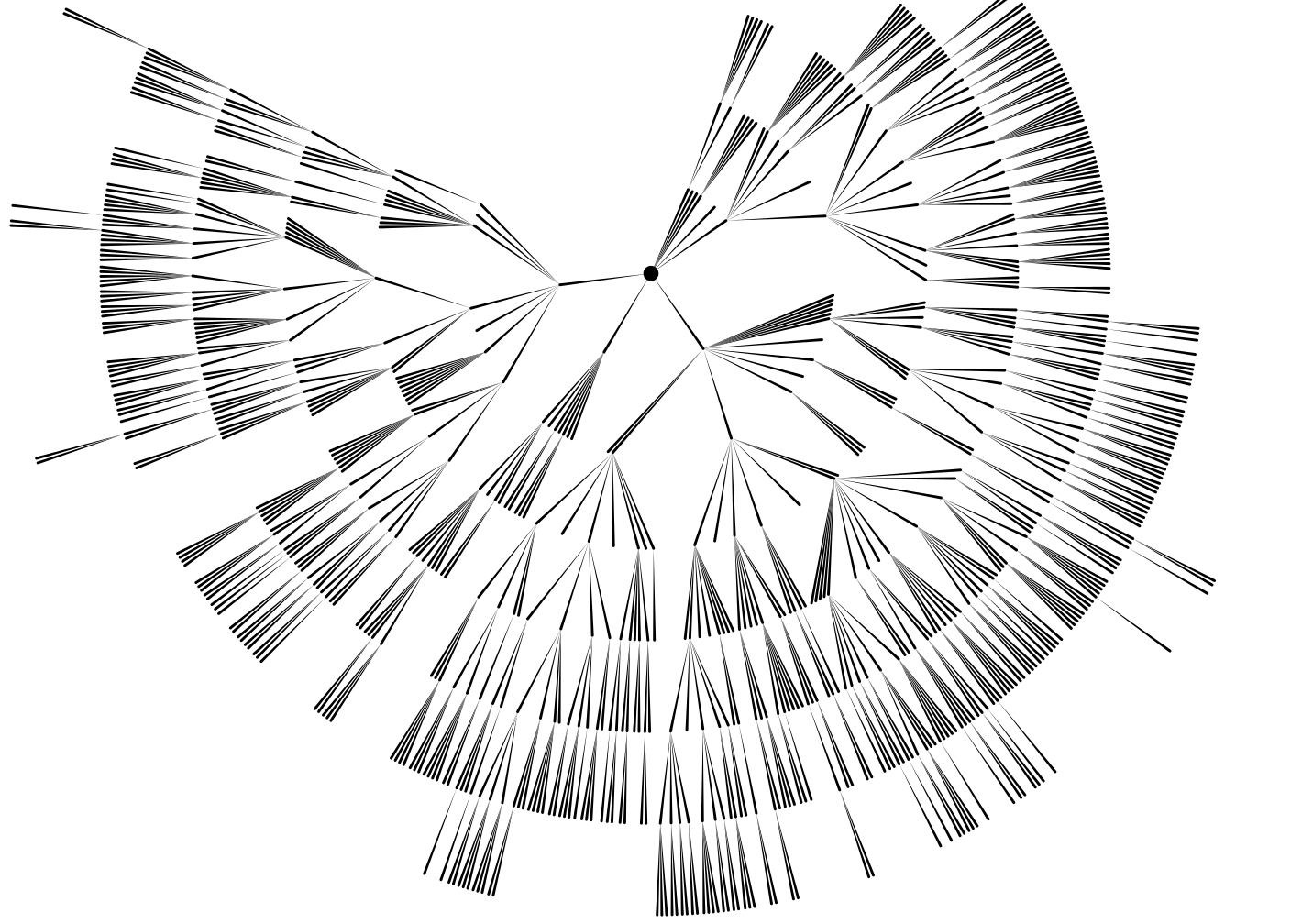
For a geneaology project of my familiy, I generated this fairly straight forward drawing of my Grand-Grand-Grand-Grandfather s descendants (click for full image): Unfortunately, this representation does not give any information about when someone lived, or how long. I tried to add this information to the graph, and I coudn t think of anything better than drawing each person as a rectangle whose upper edge lies above the parent s rectangle, and whose height and vertical possition represent the life span. This is the result (here you really have to click for a full view): This is obviouly not very helpful. Does anyone have a better idea how to draw this?By the way, these graphs are generated using haskell and the cairo bindings provided by gtk2hs very handy, as I also get svg output and pdf output for free.

7 October 2007

Joachim Breitner: Haskell Hackathon almost over

The Haskell Hackathon in Freiburg is nearly over now. For me, it turned out to be a xmonad hackathon, as of a few days ago, xmonad is able to handle dock applications such as the gnome-panel properly (that has prevented me from looking at xmonad before).Now that the panel worked, I also wanted it s window list and workspace switcher to at least show me the state of my workspaces. This resulted in the EwmhDesktops extension. I also noted that the dock handling provided in the default Config.hs was not sufficient, as it would even treat dialogs from gnome-panel as a dock. This is fixed with the extension ManageDocks, which later got additional support to increase xmonad s border gap if an window (such as gnome-panel) has the STRUT attribute set. To closer match my old metacity keys I added support to CycleWS for going to the next/previous workspace and for moving the current window there.I had some ideas how to make the hook interface for xmonad nice, and now started to work on debian packges for xmonad: You can get and test prelimary ones.

5 October 2007

Joachim Breitner: Haskell Hackathon: Hackage vs. Debian

This weekend, I m attending the Haskell Hackathon in Freiburg. Regular readers of my blog will have noticed an increasing interest in Haskell, so having this event so close was a nice chance to get more involved in the Haskell community. My blog also got added to Planet Haskell now.So far, I have hacked up a simple haskell program called Haskell Package Version Tracker . It takes the 00-index.tar.gz file of hackage (which is for Haskell what CPAN is for Perl) and a Debian Source file (which is the list of available packages in Debian) and outputs a comparision in the spirit of the Debian Perl Group s or utnubu s version comparison pages. You can see the last output, but I do not yet update that page regulary. The code is available in a Darcs repository. It uses the Index.hs-File from hackports thaks for that.

11 September 2007

Joachim Breitner: Cron s syslog messages

On a modern debian system (and other linuxes as well), the cron daemon is PAM-enabled, which is probably a good thing. One downside is that you get your /var/log/auth.log full of messages like:
Sep 11 11:15:01 otto CRON[8755]: pam_unix(cron:session): session opened for user jojo by (uid=0)
Sep 11 11:15:01 otto CRON[8755]: pam_unix(cron:session): session closed for user jojo
I think these are pretty useless and make it harder to find real authentication related entries in auth.log, especially if you get them every five minutes. Luckily, the fix is pretty simple: Just edit /etc/pam.d/cron and comment out the line @include common-session, as that only calls pam_unix.so which in turn, for session management, does nothing but logging anyways.To further separate the cron logs, you can remove these entries to syslog:
Sep 11 07:17:01 quimby /USR/SBIN/CRON[7949]: (root) CMD (   run-parts --report /etc/cron.hourly)
by configuring /etc/syslog.conf to move them to a logfile on its own:
*.*;auth,authpriv,cron.none     -/var/log/syslog
cron.*                          -/var/log/cron.log

6 September 2007

Joachim Breitner: Xen-Server-Sharing: The Setup

As previously mentioned, we are setting up a shared Xen hosting, and I promised to publish detailed setup steps. So here I will, but I warn you: I ll just note down what I m doing, and it might be confusing...
"Xen-Server-Sharing: The Setup" vollst ndig lesen

4 September 2007

Joachim Breitner: Xen Server sharing started

Today, I ordered a dedicated server for some friends of mine and me. We will split it up into 5 Xen instance, quite similar to Steve s xen-hosting. Thanks for the idea! Our project is name serverama, since our hosts will be named after Futurama characters.I might blog about the setup here, if I think it s interesting for the general public. I can t wait to get my hands wet in a chaos of RAID, LVM, Xen and virtual network bridges...

25 August 2007

Joachim Breitner: TTF-Glyph in pdflatex output

For a project of mine, I had the dire need of getting the Unicode character (U+26B0 COFFIN) in a PDF file created with pdflatex. I could find no latex package that provides this or a similar character, so I had to do it myself.There are some HOWTOs on how to use a TrueType font in pdflatex, but all of them thought that you are trying to use the font for your regular text, not just for the one strange glyph. So based on these, here is what I did:All in all you need to keep the files burial.enc, burial.sty, burial.tfm and t1burial.fd in the directory of your TeX file. I did not check how to install the files globally.If you think this is done horribly wrong, please feel free to tell me how it should be done instead.

20 June 2007

Joachim Breitner: Finding revoked signatures on a gpg key

The Gnu Pricacy Guard seems to have the default option of setting an expiry date when the signed key has such a date. My gpg key used to have such an expiry day when I went to the first keysigning parties (LinuxTag, DebConf 3). I have removed the expiry date later, but still a lot of signatures are now no longer valid: While I have signed 310 keys, my key is currently (pre-DebConf 7) only has 170 valid signatures.Tonight I wanted to find out what keys are these exactly, and after quite some trial and error I found a way to get that data, using only real old unix tools such as awk, sort, join:
gpg  --list-options show-sig-expire --fixed-list-mode --with-colons --list-sigs nomeata > my-sigs-col
cat my-sigs-col  awk -F: '$1 == "sig" && $7 != ""   print  '   sort -k 5,5 -t : -u > expired
cat my-sigs-col  awk -F: '$1 == "sig" && $7 == ""   print  '   sort -k 5,5 -t : -u > non-expired
join -v 1 -t : -j 5  expired non-expired > only-expired
Maybe I will use that list some time after DebConf7 to mail all these people, asking them to remove or update the expiry date from their signature.

19 June 2007

Gunnar Wolf: Fun at Debconf - And redefining targets

For some days at Debconf, I've been somewhat stressed and frustrated. You see, the first DebCamp/DebConf I took part in (Oslo), I was really productive - Besides meeting lots and lots of people and having a great time, during DebConf3 I learnt a scary lot about the project in many aspects and, although I was already a DD, it really decided me to get more involved.
When we were at Brazil, I had a great time as well, but (code-wise, bugs-wise and so on) I was much less productive - I started peeking at the processes that involve running such a strange and intensive conference, I was more active talking with other Latin Americans, and so on.
So, for DebConf5, I was a full orga team member - Man, did that make me feel powerful! Of course, as there was so much orga work to be done, I basically didn't hack into anything. During the day it was organizational work, and during the night time-after-22:00 (how do you people live without a night!?) it was sauna. What a great invention of the Finns! After getting relaxed by sauna, nights were socially intensive
About DebConf 6... Well, it was hectic and chaotic. It is probably the most stressful two-week period (two week? Two months at least! Well, anyway) period of my life. It is the only Debconf so far I don't even remember having had much social interaction. But still, for reasons I fail to understand, I am really happy we held DebConf in Mexico. It is one of the best, most exciting and (hopefully!) unrepeatable experiences in life.
What about this year? Well, I took a couple of steps back, and while I'm formally still part of the always-great orga team, there are way too many things I don't know or can answer. Partially, I blame that impossible dialect of English they speak in the UK - Please, next time you feel a bit tired, lock yourself in a room with six hurried English and Scottish people, add a couple of Germans to the mix (no, I don't have problem with the other accents spoken in there), and try to get the general lines discussed. Impossible.
As I took a couple of steps back, I thought I would be able to hack a bit. There were some great ideas of things to work on - But so far, I've practically not started with any! I wanted to do some QA rounds in the pkg-perl repository, kill a couple of long-standing bugs, and then there is thismetainit idea we have been discussing... So we held the MetaInit BoF, and Nomeata has been actively hacking it - But I must recognize I have done little besides documenting and cleaning a bit a minor module of it. The second day I was here, I started working on something that was completely outside of my plan (hacking up a subsystem for Pentabarf to help the video team, as I previously complained). Just after we finished with it, DebConf properly started - So I've been basically taping the talks, reviewing the files, in the orga and video meetings... Until yesterday, I was quite frustrated not to have been able to work a bit on the couple of things I wanted to do. I have not yet been able even to work on three things I need for my Real Life, which still counts, even at DebConf.
But then, yesterday I read a post by Wouter - Man, you are completely right, and I must keep this in mind at all times: DebCamp to me isn't about being productive, so much as it is about meeting people and getting to know the environment. Well, I've terribly even failed to get to know the environment (I'll reserve some time on Thursday or Friday, I hope), but so far this has been quite fun, and completely out of what I usually do. And, even without me considering this, DebConf has been quite productive for me in ways I didn't expect - I've met and had a couple of beers with the pkg-perl group (and today I'll meet with the pkg-ruby-extras group), have plotted several things with the Spanish-Speaking group (which, by the way, has tremendously grown since we were at Oslo), I even started hacking a bit my way into Pentabarf, which will be very useful once I get back to work!
Anyway, in short: Wouter, you made me reconsider, you made my day - Thanks! And now, I'm a happy man again :)

Next.

Previous.