Search Results: "jr"

26 September 2011

Benjamin Mako Hill: Science as Dance

The following selected bibliography showcases only a small portion of the academics who have demonstrated that while it may take two to tango, it only takes one to give a scholarly paper a silly cliche title:
Briganti, G. 2006. It Takes Two to Tango-The CH-53K is arguably the first serious US attempt to open the defense cooperation NATO has been seeking. Rotor and Wing 40(7):60 63.
Coehran, J. 2006. It Takes Two to Tango: Problems with Community Property Ownership of Copyrights and Patents in Texas. Baylor L. Rev. 58:407.
Diamond, M.J. 1984. It takes two to tango: Some thoughts on the neglected importance of the hypnotist in an interactive hypnotherapeutic relationship. American Journal of Clinical Hypnosis 27(1):3 13.
Kraack, A. 1999. It takes two to tango: The place of women in the construction of hegemonic masculinity in a student pub. Masculinities in Aotearoa/New Zealand 153 165.
Lackey, J. 2006. It takes two to tango: beyond reductionism and non-reductionism in the epistemology of testimony. The Epistemology of testimony 160 89.
Miller, C.A. 1998. It takes two to tango: understanding and acquiring symmetrical verbs. Journal of psycholinguistic research 27(3):385 411.
Modiano, N. 1984. It Takes Two to Tango, or Transmission is a Two-Way Street. Anthropology & Education Quarterly 15(4):326 330.
Ott, M.A. 2008. It Takes Two to Tango: Ethical Issues Raised by the Study of Topical Microbicides with Adolescent Dyads. The Journal of adolescent health: official publication of the Society for Adolescent Medicine 42(6):541.
Rubenstein, J.H. 2009. It takes two to tango: dance steps for diagnosing Barrett s esophagus. Respiratory Care Clinics of North America 69(6):1011 1013.
Settersten Jr, R.A. 2009. It takes two to tango: the (un) easy dance between life-course sociology and life-span psychology. Advances in Life Course Research 14(1-2):74 81.
Skaerbaek, E. 2004. It takes two to tango on knowledge production and intersubjectivity. NORA: Nordic Journal of Women's Studies 12(2):93 101.
Spencer, M. 2005. It takes two to tango. Journal of Business Strategy 26(5):62 68.
Vanaerschot, G. 2004. It Takes Two to Tango: On Empathy With Fragile Processes. Psychotherapy: Theory, Research, Practice, Training 41(2):112.
Viskochil, D.H. 2003. It takes two to tango: mast cell and Schwann cell interactions in neurofibromas. Journal of Clinical Investigation 112(12):1791 1792.
Weiner, A. 2001. It Takes Two to Tango:: Information, Metabolism, and the Origins of Life. Cell 105(3):307 308.
Wittman, M.L. 1990. It Takes Two to Tango: Your Simplistic System for Self-survival. Witmark Pub. Co.
There are also a few hundred groups who have demonstrated that larger groups can so as well.

21 September 2011

Ian Wienand: Exploring $ORIGIN

Anyone who works with building something with a few libraries will quickly become familiar with rpath's; that is the ability to store a path inside a binary for finding dependencies at runtime. Slightly less well known is that the dynamic linker provides some options for this path specification; one in particular is a path with the special variable $ORIGIN. ld.so man page has the following to say about the an $ORIGIN appearing in the rpath:
  ld.so understands the string $ORIGIN (or equivalently $ ORIGIN )
  in  an  rpath specification to mean the directory containing the
  application  executable.  Thus,  an   application   located   in
  somedir/app   could   be  compiled  with  gcc  -Wl,-rpath,'$ORI 
  GIN/../lib' so that it finds an  associated  shared  library  in
  somedir/lib  no matter where somedir is located in the directory
  hierarchy.
  
As a way of a small example, consider the following:
$ cat Makefile
main: main.c lib/libfoo.so
	gcc -g -Wall -o main -Wl,-rpath='$$ORIGIN/lib' -L ./lib -lfoo main.c
lib/libfoo.so: lib/foo.c
	gcc -g -Wall -fPIC -shared -o lib/libfoo.so lib/foo.c
$ cat main.c
void function(void);
int main(void)
 
   function();
   return 0;
 
$ cat lib/foo.c
#include <stdio.h>
void function(void)
 
   printf("called!\n");
 
$ make
gcc -g -Wall -fPIC -shared -o lib/libfoo.so lib/foo.c
gcc -g -Wall -o main -Wl,-rpath='$ORIGIN/lib' -L ./lib -lfoo main.c
$ ./main
called!
Now, wherever you should choose to locate main, as long as the library is in the right relative location it will be found correctly. If you are wondering how this works, examining the back-trace from the linker function that expands it is helpful:
$ gdb ./main
(gdb) break _dl_get_origin
Function "_dl_get_origin" not defined.
Make breakpoint pending on future shared library load? (y or [n]) y
Breakpoint 1 (_dl_get_origin) pending.
(gdb) r
Starting program: /tmp/test-origin/main 
Breakpoint 1, _dl_get_origin () at ../sysdeps/unix/sysv/linux/dl-origin.c:37
37	../sysdeps/unix/sysv/linux/dl-origin.c: No such file or directory.
	in ../sysdeps/unix/sysv/linux/dl-origin.c
(gdb) bt
#0  _dl_get_origin () at ../sysdeps/unix/sysv/linux/dl-origin.c:37
#1  0x00007ffff7de61f4 in expand_dynamic_string_token (l=0x7ffff7ffe128, 
    s=<value optimized out>) at dl-load.c:331
#2  0x00007ffff7de62ea in decompose_rpath (sps=0x7ffff7ffe440, 
    rpath=0xffffffc0 <Address 0xffffffc0 out of bounds>, l=0x0, 
    what=0x7ffff7df780a "RPATH") at dl-load.c:554
#3  0x00007ffff7de7051 in _dl_init_paths (llp=0x0) at dl-load.c:722
#4  0x00007ffff7de2124 in dl_main (phdr=0x7ffff7ffe6b8, 
    phnum=<value optimized out>, user_entry=0x7ffff7ffeb28) at rtld.c:1391
#5  0x00007ffff7df3647 in _dl_sysdep_start (
    start_argptr=<value optimized out>, dl_main=0x7ffff7de14e0 <dl_main>)
    at ../elf/dl-sysdep.c:243
#6  0x00007ffff7de0423 in _dl_start_final (arg=0x7fffffffe7c0) at rtld.c:338
#7  _dl_start (arg=0x7fffffffe7c0) at rtld.c:564
#8  0x00007ffff7ddfaf8 in _start () from /lib64/ld-linux-x86-64.so.2
Just from a first look we can divine that this has found the RPATH header in the dynamic section and has decided to expand the string $ORIGIN.
$ readelf --dynamic ./main
Dynamic section at offset 0x7d8 contains 23 entries:
  Tag        Type                         Name/Value
 0x0000000000000001 (NEEDED)             Shared library: [libfoo.so]
 0x0000000000000001 (NEEDED)             Shared library: [libc.so.6]
 0x000000000000000f (RPATH)              Library rpath: [$ORIGIN/lib]
 0x000000000000000c (INIT)               0x4004d8
 0x000000000000000d (FINI)               0x4006f8
At this point it proceeds to do a readlink on /proc/self/exe to get the path to the currently running binary, effectively does a basename on it and replaces the value of $ORIGIN. Interestingly, if this should fail, it will fall back on the environment variable LD_ORIGIN_PATH for unknown reasons. This might be useful if you were in a bad situation where /proc was not mounted and you still had to run your binary, although you could probably achieve the same thing via the use of LD_LIBRARY_PATH just as well. This feature should be used with some caution to avoid turning your application in a mess that can't be packaged in any standard manner. One common example of use is probably your java virtual machine to find its implementation libraries.
$ readelf --dynamic /usr/lib/jvm/java-6-sun/bin/java
Dynamic section at offset 0x9a28 contains 25 entries:
  Tag        Type                         Name/Value
 0x0000000000000001 (NEEDED)             Shared library: [libpthread.so.0]
 0x0000000000000001 (NEEDED)             Shared library: [libjli.so]
 0x0000000000000001 (NEEDED)             Shared library: [libdl.so.2]
 0x0000000000000001 (NEEDED)             Shared library: [libc.so.6]
 0x000000000000000e (SONAME)             Library soname: [lib.so]
 0x000000000000000f (RPATH)              Library rpath: [$ORIGIN/../lib/amd64/jli:$ORIGIN/../jre/lib/amd64/jli]
 ...
There is a small but interesting security issue. If an attacker can hardlink to your binary that is using $ORIGIN then any path expansion is now relative to the attackers directory. Hence it is possible to make the linker read in arbitrary libraries and hence run arbitrary code. Clearly if your program is running setuid as someone else, such as root, you've just given up the keys to the house! Luckily, the dynamic linker will not let you shoot yourself in the foot like this, and prevents expansion of the $ORIGIN field if the program is running setuid.
$ sudo chown root ./main
$ sudo chmod +s ./main
$ ./main
./main: error while loading shared libraries: libfoo.so: cannot open shared object file: No such file or directory
However, this is a good example of why you might want to keep users home and temp directories on separate file systems away from where binaries live. There is also a similar variable $PLATFORM, which describes the current running system. This is gained via the auxiliary vector, which I have written about here and here. Setting LD_SHOW_AUXV=1 will allow you to examine this value.
$ LD_SHOW_AUXV=1 ls
...
AT_PLATFORM:     x86_64
...

20 September 2011

MJ Ray: Six of the Best Podcasts?

I m listening to quite a few podcasts recently. Here are my current favourites: And now for number six, what are you listening to? Anything you d recommend?
17 September 2011

MJ Ray: Tour of Britain: Cheddar Gorge-ous

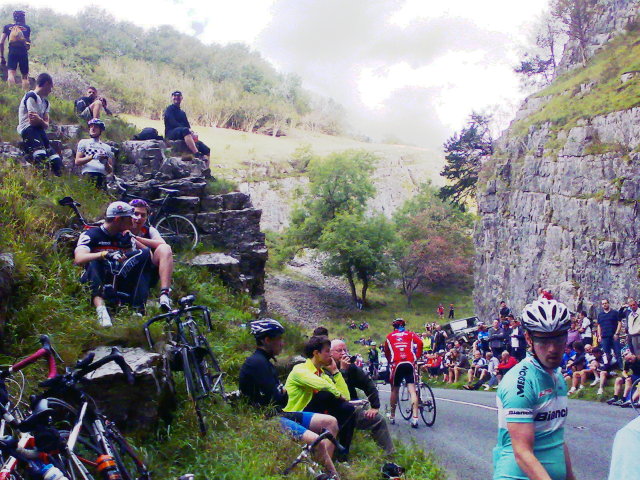
Photo of Fans in the Gorge

Fans in the Gorge

So tired, but so happy. Well worth it as a day out. Yesterday I went to the Tour of Britain as it passed through Cheddar Gorge. It was a fairly social trip, riding along with two from Bristol on the way in (hope they got back OK one bike broke crossing the orchard at Sandford, but I showed them Cheddar Cycle Store) and one from Milton on the way back. When I got there, I rode up the Gorge until I had to stop (or else fall off) and it was still packed with fans. It was a good half-hour before the race would pass by, but already almost every flattish piece of land by the road had either a spectator or a bicycle on it. I watched twitter for race news, posted an update @mjray, then put the phone away as the green-fronted police bikes came through just ahead of the racers. I tried videoing the race, but it s only the second outing for the handlebarcam and I seem to have deleted the recording before hooking it up to the laptop. Thankfully, the itv4 coverage (repeated 13:00) is pretty good. (My back is on TV! Ahem.) Now, today (Saturday) I will be mostly doing the work scheduled for Friday, but it was still worth it. Go along if you get the chance: Suffolk and Norfolk today, Westminster tomorrow. I suggested it to @enterprisehub s #coopsweekend because the Rabobank team are doing well.

14 September 2011

John Goerzen: Mexico Part 4: Street Scenes and Architecture

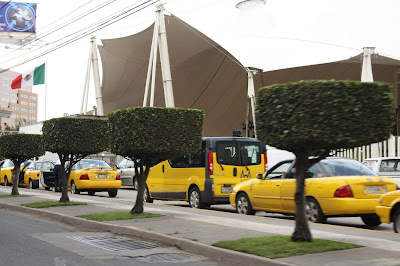
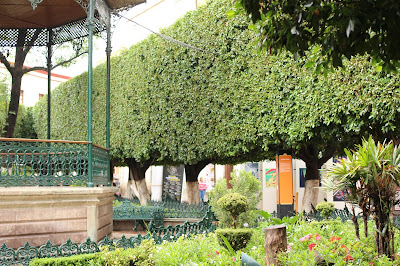
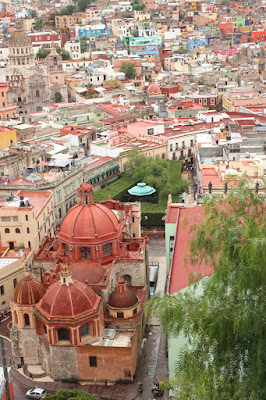
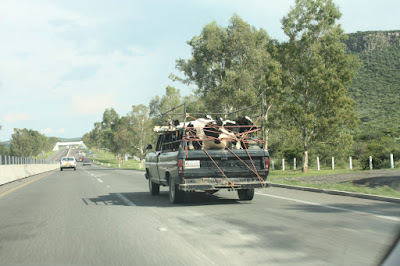
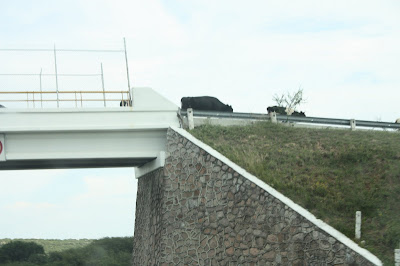
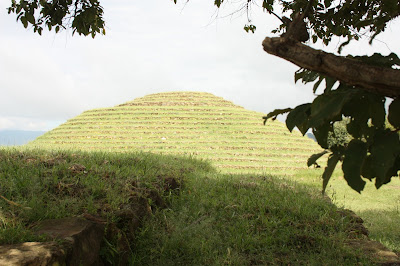
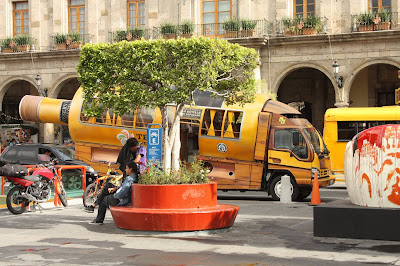
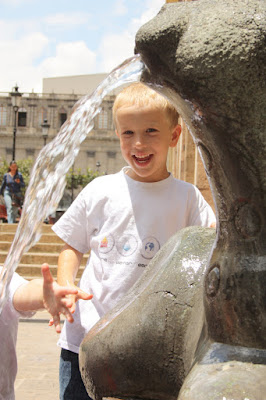
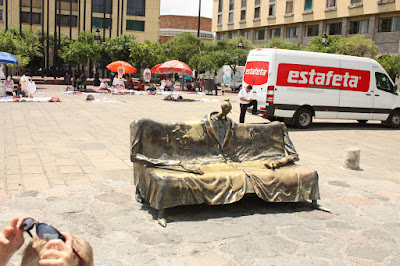
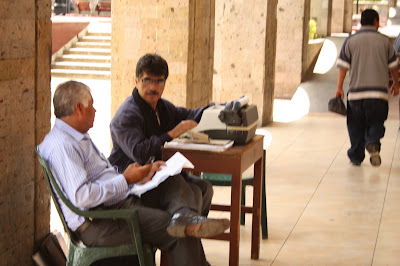
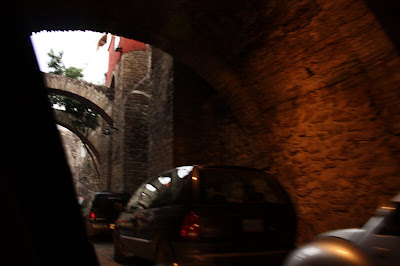
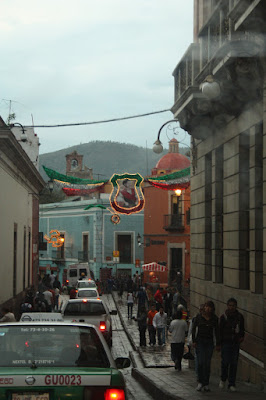
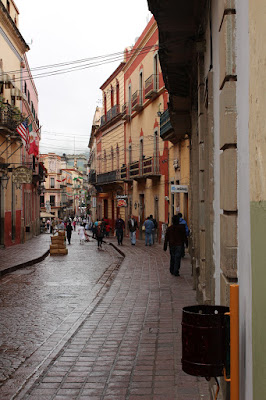
The fourth in a series; see also parts 1, 2, and 3. This post is going to be more a photolog than a narrative, and I apologize in advance for it being a bit disjointed. I ve already touched on these themes a bit in the other post, but now it s time to focus on them. Immediately after leaving the airport, it s quite clear that things are a little different. Trees are square. People ride around in the backs of pickups sometimes on top of piles of debris. Left turns are made in front of other lanes of traffic going the same way. But those are just the things obvious from the road. It s a lot of fun to enjoy the differences. First, the ubiquitous square trees. They look pretty, and are found all over. I also found carefully-manicured trees in cone shapes, more cylindrical shapes, etc. It seems that tree care is taken seriously in Mexico. It was also not uncommon to see the bottom few feet of a tree painted white. A park in Guanajuato had a whole bunch of trees carefully trimmed. And from up on the mountain, it still looked impressive (the green area behind the dome). Driving in Mexico was interesting for a lot of reasons. The highways there aren t quite as limited access as the freeways in the USA. It was quite common to see bicyclists, walkers, a mule, or some cattle ambling along the side of the road. Roadside taco stands don t require taking an exit. You just pull off the road because it s right there. Some sights were a bit surprising. Cattle in a pickup, with rope, for instance. Or cattle crossing the highway on the overpass. Street vendors were everywhere. Stop at a red light and someone might spring from the side of the road and suddenly start washing your windshield (expecting a tip); try to sell you flowers, juice, or bug zappers; or even throw business card-sized advertisements for adult websites into any open windows they can find. One night we saw an incredible fire juggler. I would have tipped him well but he was too far away to do so before the light turned green. Mexico s history stretches back into prehistoric times, and we saw the Teuchitlan ruins at Guachimontones one day. It was truly a remarkable feeling to be able to walk down the middle of the ancient ball court, or to climb up one pyramid and see the other from it. It s not exactly architecture, but Jacob and Oliver sure enjoyed visiting the hot springs at Bosque de la Primavera. Jacob still remembers that where the steam is, the water is 200 degrees, and we CAN T TOUCH IT THERE! Back in Guadalajara, here s a photo from the inside of the grand old cathedral. Compared to the cathedrals we saw in Europe, this was of a similar general size and design, and perhaps only slightly newer. But one big difference: worshipers outnumbered tourists at every Mexican cathedral I saw, whether in the center of Guadalajara or at a rainy intersection in Guanajuato or a plaza in Tlaquepaque. It made them feel more alive, and perhaps more sacred as well. One surprise was seeing people sitting on the steps of the cathedral in downtown Guadalajara selling trinkets such as beads. I think the only other place I had seen something like that was in New Orleans. All of Guadalajara s Centro was beautiful. Much of it survives from colonial days; I think a person could spend days exploring its museums and buildings. Way too many of my 900 photos were taken in Centro to post on the blog, but just for flavor, here s one of the less than historic scenes. Yes, that is a bus shaped like a tequila bottle. Fountains were beautiful and common across Mexico. A few of them were easily reachable by boys, and ours sure loved those. There was a lot of public art, including this interesting chair/skeleton/I m not sure what it is: And, just for good measure while walking around Centro, they tossed in an apparent Redundant Array of Inexpensive Typewriters. I don t know what they were doing, but there were about a dozen guys sitting out in the sun typing on their manual typewriters on their identical tables. And who can leave Guadalajara without seeing one of North America s most impressive traffic circles. I ve got to hand it to the Mexicans for making something that is normally really boring into an interesting work of art. Over in Guanajuato, a lot of driving takes place in the city s vast underground tunnel system. Here s a scene emerging from one of them. Guanajuato was already getting decorated for Mexican independence day festivities (Sept. 15-16) while we were there. Here s a typical Guanajuato street scene. Many of the streets were closed to traffic and perhaps not wide enough to handle vehicles anyway. Those streets had a wonderful peaceful and slow feel to them. I feel that I ve barely done the trip justice with this post. The feelings of walking down a beautiful Guanajuato street, or stepping into a Spanish cathedral, or even seeing a bunch of guys with typewriters, just can t be replicated. It s brimming with history and character, and shouldn t be missed.

9 September 2011

MJ Ray: Help with co-op development? Don t ask here

The blog is back. We ve moved it to our new blog hosting (please contact us if you d like us to host your blog or if you spot a problem with our blog), so the adverts are gone and I m still correcting the plugin setup for the new version. Among the comments was this one:
My small design firm needs to upgrade its software, which is very expensive. I am wondering what the legalities might be of putting together a cooperative of other designers to share the $4900.00 expense + additional seats.
Legalities of a buying co-op for seat-licensed software? I can write reams about co-ops but I shouldn t because:
  1. Our co-op doesn t sell seat-licensed software and we re basically opposed to that concept, preferring co-operative development of free and open source software (FOSS).
  2. This is a site about software, not co-op development. I helped set up our co-op, but I don t know enough to help many others. For co-op development, our co-op is a member of Somerset Co-operative Services and Co-operatives UK who can advise far better on that sort of thing and publish the damn fine Simply series of guides. We refer enquiries about co-op development to them, Co-operative Assistance Network and the co-operative enterprise hub.
  3. Mentioning $ makes me think this is a US-based question, so National Co-op Business Association may be a better place to start. If it s another dollar, the International Cooperative Alliance membership may show the right country. The legalities vary by country.
Anyway, now the blog is back, I ll write about software more soon. If you ve got questions about software for co-ops, co-op-made software and that sort of thing, please leave them in a comment.

28 August 2011

Micha Lenk: Finally transitioning to a new GnuPG key

Finally I managed to write up a transition statement for my not so new, but stronger GnuPG key. See below:
-----BEGIN PGP SIGNED MESSAGE-----
Hash: SHA1,SHA256
I am transitioning my GPG key from an old 1024-bit key to a new 4096-bit key.
The old key will continue to be valid for some time, but I prefer all new
correspondence to be encrypted for the new key, and will be making all
signatures going forward with the new key.
If you have signed my old key, I would appreciate signatures on my new key as
well, provided that your signing policy permits that without reauthenticating
me.
The old key, which I am transitioning away from, is:
pub   1024D/99E141B4 2004-02-10
      Key fingerprint = 25FE 4741 4770 0558 949D  1DB1 58DD 3FE2 99E1 41B4
The new key, to which I am transitioning, is:
pub   4096R/51B85139 2009-06-18
      Key fingerprint = A3EB B41F C5AB D675 CEE4  1C45 EA6C A6B9 51B8 5139
Thanks in advance.
Cheers,
Micha Lenk
-----BEGIN PGP SIGNATURE-----
Version: GnuPG v1.4.10 (GNU/Linux)
iEYEARECAAYFAk5aOnkACgkQWN0/4pnhQbTxPgCgzRhREZlQiKJyI9UIdJLLs3Zq
bH4AnA1myFxgDWM7aUMHXgvvsujLTjiWiQIcBAEBCAAGBQJOWjp5AAoJEOpsprlR
uFE5gCsP/0dtCUPl9aQHV1MbQl7+bMofpsC2ikkpdZmrzi68jTG16We49BuzY+PV
S8FhXqg17/YxhKYDnDNTowfztUOyjAOJxy5vrqm3X5xiLwTqN3js9mra+vb4s35k
EVbKMzLLDhj3i0FjeargWEmJmm9cVhaZWKvOvQUhDJAilqvEQ0/50P7B8I+1YvtV
UHoQKbweTljVSlK5R1YPPy9i6r2/oZBYxK4nrknWwS+qPQ5luqelJd+mZdgQ6tow
7HIvtmPgCblJ+hYZWFpoZK6vxs8RaBbuCQcKwYArNhZT/v4TeD/LAaUmIkbQMyKV
J2TKuEHya4+5GMbtg6BGKeiZpleEHPnAq1AfvGpz6opkxjxCLG3RO3X8D3EuM3RW
mkq60mWM8+Zwu1yKbb62iHplp6jpyiQgdjJlB6eHjX7SdY7CvHgYZxGDx4kclP0/
HAdig2U1T+nG6Nn5XflmmKwvNLuKlQlIwJ5NeXyCONRnYvdomQn2hgvkjwMLCdFh
ulIhxa4UvDY7/aQNPZeOrvDHb2XYpiV3TwA9hLgQXXWd0FPmUMVVPpKpRjilaWth
Mtq/QiMGP5Mq/YxgLInRZHGyajDtE67RD4+RgHYOP50cP3UGPoB4ncc2EEtM2kfe
BzJrXPHmdtyGEA6Korl0YwUTRnYsqkqkY1VqDsO0UkOLlV7RAzb9
=9vw1
-----END PGP SIGNATURE-----

27 August 2011

Michael Prokop: Open Source Projects using Jenkins

For a (german) talk I ll be giving soon I was interested in a list of open source projects which use Jenkins. Jenkins is a great open source continuous integration server. I was wondering whether such a list exists but since it doesn t exist yet I created my own and Kohsuke Kawaguchi (creator of Hudson/Jenkins) suggested to blog about it. There we go. :) Open source projects using Jenkins, though Jenkins service not accessible for the public (yet): And Cloudbees hosts some OSS projects providing Jenkins as a service. Update [2011-08-29]: thanks for all the feedback, I ve updated the list accordingly.
If you re aware of another open source project using Jenkins please leave it in the comments, I ll update the list accordingly then.

26 August 2011

Sylvestre Ledru: sun-java6 packages removed soon from Debian/Ubuntu (and all other linux distros)

For the story, due to license reasons, the version of Java packaged in Linux distributions is not the same as the one released on the official website.
Each time a new version of Java is was released, Sun/Oracle people are were publishing a other distro specific release available on a dedicated website. Since I have been maintaining sun-java6 packages for a year and half, I am following the rhythm releases (security is one of the reasons).
A few days ago, I pinged on Twitter Dalibor Topic, who is, AFAIK, the person in charge of this at Oracle, he replied with a blog post Retiring the DLJ. The main information from this blog post is:
[...] further Oracle JDK 6 (or Oracle JDK 7) releases on Linux and Solaris will not be provided under the DLJ [...]
Basically, that means that Linux distributions will not be able to package new releases of the proprietary JVM/JDK (including the latest update -27). The only release available in the Linux distro will be the OpenJDK. While I am glad to see Oracle pushing the free JDK, I am a bit concern by this sudden decision. There are still bugs (for example, with fonts, applets or other others issues) present in the OpenJDK which does not happen in the sun-java6 packages.
And also, as Andrew John Hughes said on Twitter, the Oracle proprietary JVM just lost one of the two freedoms it had (free to redistribute the software)... Moreover, many people are still using the proprietary JVM. For example, Debian popularity contest or Ubuntu Popularity Contest reports 836864 installations of sun-java6-jre against 749731 of openjdk-6-jre. The bottom line is, if you are aware of bugs present only in OpenJDK, please report them (on the Debian bug tracker, launchpad or as a comment of this blog post). We will report them upstream to make sure OpenJDK is as good as sun-java6. Edit: comments closed due to the spams... Drop me an email on sylvestre@debian.org. I will push them.

12 August 2011

MJ Ray: Back to Work

This is my first week back after two weeks off (I aim for three complete weeks off a year). Even if I had reached InboxZero (and ToDoZero and so on ), there was two weeks of requests, reports and rubbish piled on top of what was already scheduled. I wasn t even completely offline this time and was forwarding urgent incoming messages to other members of our co-op, but the backlog is still significant. How you deal with this? Basically, I arrive back and I feel like I m already behind. The good feeling of being up-to-date seems like a distant memory. The clear day I allocated to dealt with things that arrived seemed inadequate. Was that just bad luck because a lot of stuff came in, or is there a rule-of-thumb for how much catch-up time to allocate? 3 Lessons Learned From 6 Days Off The Grid Social Butterfly Guy offers a view on how to prioritise things, but it still looks like catch-up takes hours. Can you see any ways to make it more efficient but still please clients, collaborators and co-op members?

10 August 2011

MJ Ray: Software in the Public Interest August 2011 and election results

The SPI election results have been declared. Jimmy Kaplowitz, Clint Adams and Robert Brockway were elected to the SPI board. There were 75 voters, which is 16% turnout, up from the 13% in the last contested election, in 2009. The next meeting is this evening at 20:30 UTC (21:30 UK) in #spi on irc.spi-inc.org and there are a couple of resolutions, inviting the Drizzle database and Arch Linux distribution projects to associate, so that SPI can collect and process funds for them. Please, pop in and see how the new board members perform.

7 August 2011

Ritesh Raj Sarraf: MMA

Wrestling (WWE) is entertaining. The way the ww[ef] superstars (Especially the ones like Undertaker, Triple H) are presented is fun to watch. Or the kind of high flying maveuveurs the wwf superstars are able to perform, it really is super cool. The only catch is - it is not a sport. The feuds are all pre-defined to juicen things up.I recently came to know of UFC. I hope some day they start airing it in my part of the world. I'm still getting acquianted to MMA, but it really is an awesome sport. This is one forum which does show size does not matter. Was watching Royce Gracie's matches from UFC 4. Awesome matches clearly showing the skill with which one can beat any size or power. The final was in between a pro-jiu jitsu vs pro-wrestler. Gracie won it but was given a tough fight by the wrestler.That brings me to EA Sports MMA. read more

3 August 2011

Andrew Pollock: [life] Zoe at 15 months

Boy, the last three months have been very eventful, developmentally. First off, about 2 weeks after she turned 1, Zoe started walking in earnest. Within about 2 weeks of that there was no stopping her. It's funny to think she's only been walking for under 3 months and yet she's very stable on her feet. Secondly, she developed a mild egg allergy. Sarah was giving her some scrambled eggs (one egg's worth) for lunch one day, and she mixed in some cream cheese, and Zoe absolutely scoffed it all down, so she scrambled another egg and she scoffed that down too. She then broke out in some hives around her mouth and Sarah noticed that she was coughing a bit and a little wheezy when she put her down for her afternoon nap. Upon subsequent consultation with her paediatrician and a blood test, the allergy was confirmed and we now have to avoid eggs and Zoe was prescribed an Epi Pen Jr. We went and saw an allergist as a followup, and he did some skin tests that showed eggs were the only thing she's allergic to. He said her allergy was very mild in the grand scheme of things, and we're going to do another skin test when she's 2 to see if she's grown out of it. Eggs in baked goods are generally okay, as the offending protein is denatured at high temperatures. She's more allergic to the egg whites (1.56, which is in the "moderate" range) than the egg yolks (0.55, which is in the "low" range). Egg allergies are apparently something that one does eventually out grow, so that's a good thing. We'd also been keeping her off gluten and dairy because of a strong correlation between them and rather disgusting bowel motions. We've successfully reintroduced gluten with no adverse effects, and we've just started her back on cow's milk. We of course had our epic trip to the Grand Canyon, which Zoe handled absolutely marvelously. That was closely followed by a weekend down in LA, which was a bit more of a disaster as Sarah and I both came down with a 24 hour stomach bug that Zoe had had during the week. There's nothing quite like languishing in a non-childproofed hotel room, feeling like death, with a full of beans toddler busy running around jamming her fingers in drawers. Fortunately we were able to use a babysitter for a few hours respite, but it did rather completely mess up our plans for the weekend. Zoe did handle the drive to and from LA very well though. Zoe's been doing Saturday morning swim classes at the YMCA, which I've taken her to. I don't think she's enjoyed them as much as the indoor ones she did at the Sutton Swim School, where she went with Sarah previously, and I definitely don't feel like the classes are as structured. Unfortunately we just finished an 8 week session, and the next one filled up before we got a chance to book, so we're hoping to get back into something at the Sutton Swim School once an opening comes up. I might do something ad hoc with her on Saturdays at the Rinconada Pool in Palo Alto in the meantime. Zoe has also started going to regular daycare on Thursdays, so Sarah gets a day to focus on her University study. It's a home daycare that isn't too far away, and our friend's daughter goes there too, so there's someone she knows. The first few times Zoe got pretty upset when she was dropped off, but she barely makes a whimper now when Sarah drops her off. She's also usually down to one nap a day now. She has four teeth, top and bottom, with one molar definitely through and another three starting to make an appearance. I just bought an iBert safe-T-seat for my bike, because I've been itching to get out on the bike with Zoe on the weekends when I'm looking after her so Sarah can get some more study done. The weather is currently nice, and I've just learned about a bike trail that cuts across the bay in front of Moffett Field, so I'm keen to check that out. Apparently there's geese out there. I did my first decent ride with her last Sunday to the Mountain View Farmer's Markets and back. Zoe seemed to be okay with it. The helmet we got her drew a lot of comments from people at the markets. She's very much in the "point and grunt" stage at the moment. What's really cool is she'll nod or shake her head in response to yes/no questions. It's so cool when you can ask her a question and she solemnly nods her head in response. Often in the morning Sarah takes her to the park around the back of our home, and so now Zoe's gotten into that habit, so she'll scratch around at the front door and they head over there. The other day, Sarah opened the front door and she took off in the direction of the park, so Sarah just followed her to see where she went. Sure enough, she made her way over to the park. Tonight, Zoe fetched me my shoes and then dragged me over by the hand to the front door to demand that I take her out for a walk. She's also really getting into books now. She actively seeks out books, and has a bit of a flick through them, or brings one over and climbs into our laps, or backs up and sits in our laps if we're sitting on the floor, to have us read them to her. She's now strong enough to hold her bottle herself at bedtime, so I sit with her in my lap in the glider and read a story to her while she has her bedtime bottle. It's indescribably wonderful. She seems to understand quite a large array of words. We can go "Where's your <insert object here> and she'll look around the living room and generally find the item we're talking about. She also seems to understand questions about breakfast, lunch, going to the park, going to the bathroom, having a bath, etc as she seems to respond appropriately. In the speech department, I haven't really counted the words, but she's not saying a huge number of words. This morning, apparently she yelled "MAMA! MAMA! PARK!". "Park" being a new word for her. We bought an annual membership to the Children's Discovery Museum in San Jose, and we've probably taken her there half a dozen times or so since getting the membership. She particularly loves the water area. We finally got around to getting our back yard landscaped and made generally fit for a small child to run around in. Sarah's planted a butterfly garden in one corner, so hopefully once that's established we'll have some fun things for Zoe to watch from the window. I'm looking forward to planting some bulbs in the autumn. I expect the next 3 months will be more of the same. We've got some more overseas travel coming up, but a lot of relatives will be around, so hopefully we'll get a bit of downtime to ourselves. Zoe and I on my bike

13 July 2011

MJ Ray: SPI Annual General Meeting 2011

Software in the Public Interest (SPI) will hold its Annual General Meeting today: Wednesday, 13th July 2011 at 20:30 UTC (21:30 UK, 22:30 CET). SPI is the developer association that supports debian, OpenWrt and many other projects. SPI meetings are held on irc.spi-inc.org (the OFTC network). The agenda for the meeting is available at http://www.spi-inc.org/meetings/agendas/2011/2011-07-13/ There are currently no resolutions on the agenda, but there should be some annual reports.

5 July 2011

MJ Ray: #coops14 continues: Guardian, Facebook, Cyberunions and Breakfast

Thanks to the Guardian for publishing Why co-operatives matter written by two members of our co-op. Co-operative Congress 2011Also today, I m pictured being given a share by Giles Simon of our national co-ordinating co-op on the Co-operatives Fortnight Facebook page. I m not a big fan of facebook and I still want to try the more sharing alternatives that cyberunions reviewed. Speaking of cyberunions, apparently they answer the criticisms from my review in episode six which I still haven t found time to listen to yet and there s an episode seven out already. Maybe I ll start to catch up later today (Tuesday), if I don t go to the Bristol Wireless Annual Meeting. Tomorrow is another busy day, hopefully including the Koha Town Hall Meeting. And there s still half a week of Co-operatives Fortnight to go, so we re not done by a long way yet! If you d like to take part, there s a Co-operative Business Breakfast in Weston-super-Mare on Friday morning at 9am please leave me a comment if you d like to come along.

29 June 2011

Marco Silva: Using XMonad with Netbeans (or other Java apps)

After testing Emacs, Eclipse, KDevelop and CodeBlocks for writing C++ code, I decided to stick with Netbeans. It seems to be the most simple to configure and yet full of features and plugins. I was having one problem with it that when I focused out the window, and then focused on it again, it would not really grab the focus, in the sense that I would not be able to type without first clicking with the mouse. At first I thought the problem was with Netbeans, then with the JRE. I tried using sun-java6-jre, I tried upgrading my openjdk-6-jre, and nothing worked. I searched a little bit more and got to a discussion about this problem in ion3, and that made me think that the problem could be related to the window manager I use, XMonad. After searching a bit about it, I found on the XMonad FAQ some work arounds for problems with Java apps, but they didn't solve my problem. Then, I found the solution on this bug report. I got the darcs version of xmonad and XMonadContrib, included takeTopFocus on logHook, and now it's working!
MJ Ray: Co-operatives Fortnight and Congress 2011 (#coops14 and #cc11)

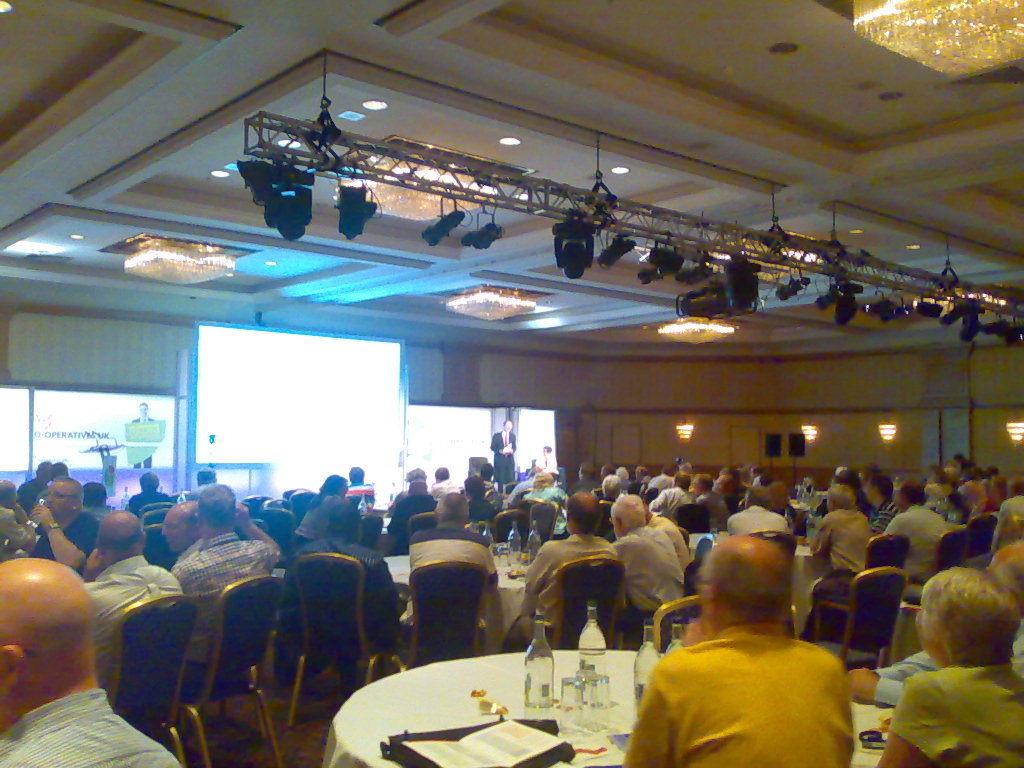
It s Co-operatives Fortnight until 9 July and our co-op is supporting many events: As you may know, we ve already done two events: First, last Friday, Michael attended the Co-operatives UK Annual Meeting on our behalf. Co-operatives UK is our national co-ordinating co-op and the figurehead for the movement in this country. I didn t see the meeting (the live video link didn t work for me, as before), but Michael reports:
The AGM seemed well organized; it was good to hear about the work they re doing and the concerns regarding the co-operative situation in Poland. I think it s important to exercise one s ability to vote, but would have liked more opportunity to speak with people.
We couldn t send anyone to the Mary Portas session on Friday evening, but Paul Dale Smith summarised the session and RuthRosselson described it as Mary Portas tells Co-op Congress how it is . Then on Saturday, I was in Manchester for The Power of Co-operation, thanks to support from software.coop and The Co-operative Bank. The first session I attended, on mutualisting the Post Office was interesting and pretty full, but I found some later sessions rather frustrating. As well as my usual concerns about surrendering to uncritical use of private-sector software, I got quite annoyed by two sessions on member engagement where the presenters seemed to talk for almost the full time without letting the audience engage! Not good for my blood pressure, that, especially when I feel they re missing something! But the real value of the day was in the fascinating discussions I had with many people in the short breaks in the plenary, or while wandering around the exhibition and the marketplace. For example, it was great to see Revolver still selling the T-shirts I mentioned here in 2009 as well as giving out free samples of their brilliant fairtrade coffee. What comes from the various discussions will probably decide whether we attend similar events in future. Were you in Birmingham? How was it for you? Are you supporting Co-operatives Fortnight? How, where, when and why?

23 June 2011

Evgeni Golov: monitoring Adaptec RAID controllers in Debian

So I got my hands on that new machine, somewhere, somehow, and I had to make myself comfortable on it. The biggest difference in that machine and the ones I used before is the RAID controller, an Adaptec 5405, instead of the 3ware ones I used to have before. That means getting used to new tools, messages and all these things which I ll try to document here.Step 1: does vendor deliver?Well, yes, mostly. There is (mainline) kernel support for the controller, Squeeze s kernel will boot up just fine and I just throw my junk into /dev/sda and it will handle the whole raidy thingy itself. But what is when I want to check the health of the disks, to add a spare or modify the caching? Ask the mighty vendor and it will answer Yes, you can! .So I downloaded that asm_debian_x86_x64_v6_50_18570.tgz, unpacked and faced two debs, one i368 and one amd64. Yes, you could have saved half of the bandwidth if someone would have asked for the arch before, but who cares for some additional 60MiB today? So let s see what it does. Oh no, wait, there is a README ASM_IUG_for_Debian_and_Ubuntu.txt:
1. Make sure to be in root level access.
2. Install the ASM storman .deb package. For example, if the package is storman_6.50-18570_i386.deb,
   then install it using the following command dpkg -i storman_6.50-18570_i386.deb
3. Adaptec Storage Manager will get installed at /usr/StorMan
4. Add the line /usr/StorMan to /etc/ld.so.conf. Then run "ldconfig". This is needed for the arcconf
   utility to find the path of the libstdc++.so.5 library
Well, 1 is obvious, so is 2.
For 3: hum, /usr/StorMan? Ever heard of FHS? Don t think so.
For 4: WTF?! I prefer to get libstdc++5 from my local Debian mirror instead.But at least they provide a .deb, right? Uhm, no, it s an RPM converted via alien :( And don t dare to look at preinst, postinst and postrm (it extracts an own copy of Sun JRE 1.6u16, chmods around wildly on install and does rm -rf something on uninstall, did I see that some days ago on the webs?). Let s get rid of that package as soon as possible, I decided, and just keep arcconf (which will be described later), esp because StorMan itself seems to include some call-home functionality which I d like not to have:
cp -a /usr/StorMan/arcconf /usr/local/sbin/
apt-get remove --purge storman
Step 2: does community deliver?You can, by the way, get (better) packages at http://hwraid.le-vert.net/wiki/DebianPackages from Adam C cile (Le_Vert). I didn t test those much, but I currently use the arcconf package from there, which seems to be exactly what I need: proper dependencies and just the arcconf binary, no Java sh*t.Step 3: monitor the controllerAs this post is about monitoring, not ranting, let s continue. As mentioned before, I only have arcconf installed, which is just a cli to do stuff with the controller. If I understood the docs right, the actual StorMan is able to send notification mails when a disk dies or the controller gets eaten by aliens, but as I don t have StorMan, I have to do things myself.Adam has a aacraid-status package in his repository, which includes some minimalistic shell-daemon to monitor the output of arcconf. It didn t perfectly fit my needs (and had some hickups with my disks which refuse to report a vendor, whyever), so I decided to write something myself (slightly based on what Adam has done in aacraid-status, though).The result is on GitHub: https://github.com/evgeni/aacraidAs you can see the code contains (at the time of writing) exactly ZERO comments and there is no README either, but it s actually quite usable already.I am now running aacraidd and get happy mails when something breaks :) [running = running from /etc/rc.local, no init script yet :)]Step 4: monitor the disks via smartmontoolsThere is one little problem I have with arcconf: it s closed source and does magic to the controller.With the old 3ware controller I was able to monitor the disks with smartmontools/smartd using something like this:
/dev/twa0 -d 3ware,0 -a -s L/../../2/01 -m root
/dev/twa0 -d 3ware,1 -a -s L/../../2/03
This is possible with Adaptect controllers too (not through /dev/twaX obviously). You have to have the sg module loaded, which will result in /dev/sg[012] on my machine, with sg0 being the controller itself and sg1/sg2 the both disks attached to it. Having sg loaded, one can now use smartd with:
/dev/sg1 -d sat -a -s L/../../7/01 -m root
/dev/sg2 -d sat -a -s L/../../7/02 -m root
(-d sat is the important option here!)Thanks to Thomas Krenn Wiki: Smartmontools mit Adaptec RAID Controller for the basic info and ostlogd.spenneberg.net: Adaptec-Raid-Controller S.M.A.R.T.-Healthstatus monitoren for the pointer to the sg module!Step 5: relaxYupp, 4 steps are enough, go relax until the next disk dies (you will be doing something REALLY important that moment according to Murphy).

21 June 2011

MJ Ray: Re: Cyberunions Podcast: Building links with the Co-operative Movement

John Atherton sent me a link to cyberunions discussing open-source and worker co-ops. In general, it s a very good show and worth a listen by anyone from the union movement, in my opinion. It s available in Ogg as well as MP3, which I think is also a plus point. There were a couple of points where I was ranting at the radio, though The first was the choice to try Skype alternatives. Leaving aside the danger of playing the alternatives game, I can understand why they chose that (the change of corporate control to Microsoft has been in the headlines recently and the phones affect them but not their listeners or readers), but open internet phones are a bit fiddly because they try to move quite a lot of data (audio) in real-time and a lot of domestic network devices don t behave correctly with the protocols that they use to do it. I agree with their conclusion that the problem is probably networking, but I wonder why they didn t log in to their routers, look at any debugging output and try to find the setting to change? Or try switching on debugging in the software and see what s wrong, or send it to someone who can help? Instead, it seemed like Linphone and Ekiga got blamed for not doing Skype-style router-busting without asking. They don t mention whether they tried switching on the STUN option mentioned in the Linphone FAQ and I don t see a email on linphone-users asking for support but I don t read every mail on that list. Am I being unfair, expecting them to seek support? Maybe but I m not sure. If you got the software from a store, what would you do? Would you throw it away and tell people that the stupid thing doesn t work? Moreover, would you use your podcast to say it doesn t work because users need to be clever enough for that obscure tool? That s a great way to scare people off unnecessarily. Wouldn t you usually think you might be overlooking some detail and ask for support, from its maker or the place where you got it? I think you d ask. I d probably ask, even though I m available for hire to fix FOSS problems and it s not the proudest feeling when I have a script-reading call-centre worker solve my mistake. Of course, with most from-store software, you ve paid an artificially-inflated box price, but the bigger cost is your time and that s the same for downloaded free and open source software, so why give it less of a chance to work? I also think they had easier options, like switching more of their website over to free and open source software, like getting rid of the rubbish comment system which doesn t work if you don t let it run javascript on your browser. I ve had a bit of discussion with them since the show and it seems my first suggestion may no longer work (typical!), so we ll see how that goes. Back to the show: the next segment did a good job of linking FOSS to the co-operative movement. I really think they should call it Free and Open Source Software and not just open source because I feel the freedom should be important to the labour movement. Also, calling the whole thing open source seems like calling all of the political left Revolutionary Socialism : inaccurate at best. I don t often express this objection these days (I ve bigger targets to work on), but it s important when trying to inform new audiences, else they only see part of our rainbow, a less radical part. Pretty interesting to suggest Orbea bikes as Mondragon s most famous brand. I d pick Eroski or Caja Laboral. What about you? Then it moved on to a pretty good description of UK co-ops, mentioning co-ops that I m a member of (the Co-operative Group) or buy from (John Lewis and Suma). I was surprised that it seemed to stop short and didn t mention any of the co-ops that work with free software, or with any software in fact. Of course, I d love software.coop to be mentioned, but there are other interesting and very different ones like BristolWireless.net and OSAlliance.com. Globally, many of the worker tech co-ops are linked through the tech-coop mailing list. This was the second part where I was shouting at the speakers. After all, Debian is a great voluntary project making a fantastic GNU/Linux distribution, but it is not a worker co-op by a long way and I suspect some of my fellow developers would be horrified to hear that suggested. Why not mention some actual tech worker co-ops? Finally, before the listener feedback, suggestions of tools which union activists could use. There was some minor confusion about exactly which version or name was really FOSS and a surprising claim about openoffice into LibreOffice (I thought Oracle were still screwing that up with Apache s help but I may have missed some news), but it was a good list of door-opening suggestions. I hope some activists will take them up. It seems there s an earlier show about open social networks, which is a topic I ll look at after I finish my series of posts about mailing lists. So, please let me know if you have comments on this show, that show, open social networks or mailing lists which you think I might find interesting, or if there s anything above you d like me to expand upon (or correct often, correct ).

17 June 2011

Timo Jyrinki: Ubuntu 10.04 LTS release fest in Tampere, Finland

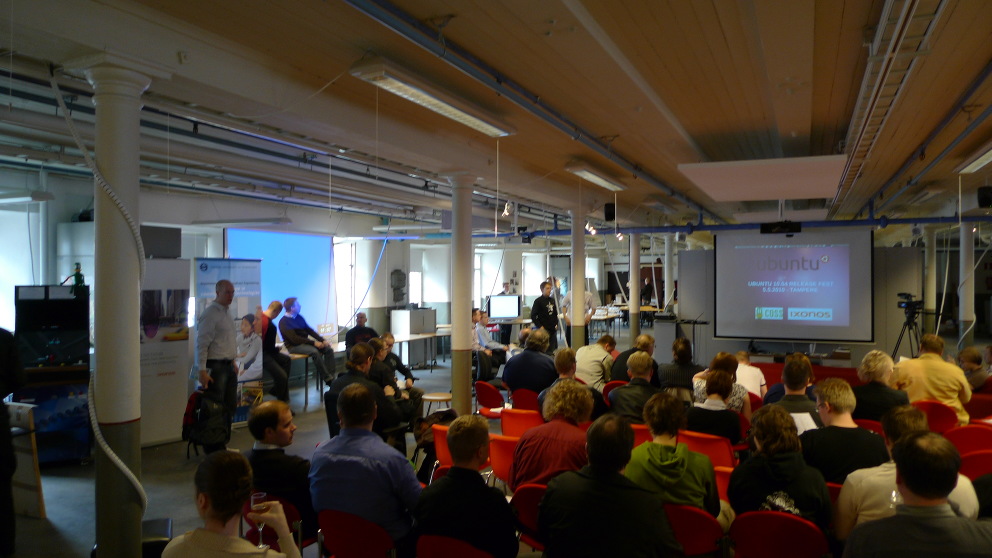
The main release party in Finland was held at Tampere, Finland and organized by Ixonos Plc and COSS. It was a great success, as proven by the almost 200 participants and great speakers.

The first sessions were mostly about the basics of Ubuntu and its roots in Debian and elsewhere. Then Tuure Vartiainen from Tampere University of Technology shared with us the release from the official Finnish mirror perspective (fi.archive.ubuntu.com, fi.releases.ubuntu.com, ...). 10.04 LTS release date was very hectic and the transfer speeds were not constantly optimal, but quite good anyway. For 10.10 they hope to up the network connectivity to 10G. I also took the opportunity to thank him later personally for the Ubuntu Finnish Remix mirroring which was arranged right before the release as well.

The next-to-final session was about Ubuntu for senior people with brief demoing of how Ubuntu UI can be customized. To give a little different perspective to usage of Ubuntu, the final speaker was a theater director and dramatist Jotaarkka Pennanen from Interactive Film Productions. Blender among else was praised.

In addition to speakers, we had 300 Ubuntu Finnish Remix CD:s, Ubuntu posters, Free Software Foundation Europe flyers, COSS flyers et cetera. After the main program there was a dinner and some wine offered to participants, which was a great social ending to the event.

Now a few photos follow. Unfortunately they are from before the event actually began, so others have probably more crowded photos and photos of the speakers themselves.


Next.

Previous.