Previously, I explained why ventilation monitoring is important, and the opportunity I see to help accelerate deployment of high quality ventilation monitoring for small businesses and organisations.
In this post, I m going to discuss my plans to tackle that opportunity:
My journey to ventilation monitoring
I started looking into ventilation monitoring in detail last year when I wanted to ensure that the classrooms of our local primary school were well ventilated during the Omicron outbreak. That research revealed that the existing products on offer were challenging to deploy in a school environment from a cost perspective while also not providing perfect functionality.
I built and deployed a set of monitors to our local school, along with a corresponding set of software and web services that provide management of the monitors and visibility into the collected data and trends. The benefit of the monitoring is evident - CO2 concentration drops immediately after a notification occurs, indicating the intended action of increasing ventilation is taking place. Initially this occurred more frequently, but over time low concentrations of CO2, indicating good ventilation levels, are regularly achieved across the school day thanks to simple changes in routine being established, such as leaving windows cracked open.
As the benefits of the project to the school became clear, my ambition and vision for ventilation monitoring grew from wanting to see my children learn in a safe and effective environment to desiring safe and effective learning, working, living and social spaces for everyone.
co2mon.nz: Ventilation monitoring as a service prototype
co2mon.nz is the service that I have launched to explore this opportunity. Based on the same hardware and software that I used for the school deployment I am selling both a physical CO2 monitor and an ongoing subscription service for the management and monitoring. Together, the monitor and software provide an effective and affordable path to understanding indoor air quality and ventilation status that anyone can use.
CO2 monitor
The CO2 monitor hardware and firmware are based on Oliver Seiler s design using a Sensirion SCD40 module for CO2 measurement and providing immediate in-room feedback via an on-monitor screen as well as a red/orange/green traffic light . In addition to the immediate feedback provided by the monitor itself, a WiFi connection can be configured allowing every measurement to be reported back to the supporting monitoring and management service.
At the current prototype stage, I am building all the hardware, 3D printing the plastic cases and assembling the circuit board from purchased components through a production line in my home workshop. The monitor is powered via a standard USB cable and wall adaptor for simplicity.
The first batch of monitors I built have been operating smoothly for nearly a year now. Further refinement and development of the design is required but already I am impressed with the potential this combination of easily accessible components provides to enable widespread adoption and deployment of ventilation monitoring.
Monitoring and management service
The web service provides a historical record of CO2 levels from each monitor through a set of graphs and other dashboards and allows for this data to be shared or published. This is useful both for providing visibility into ventilation status to those not directly present in the space (e.g. across an entire school) and to allow insights into trends and patterns in ventilation to be observed and acted upon.
When I began the project I approached the software side as an opportunity to explore the real-world equivalents of many of the internal tools and components that I was used to using within Google. That s been a fun process, even though it means I ve invested far more time on the software than the current number of customers or business state can really justify.
Communication with the monitors occurs via MQTT into a custom Go service responsible for maintaining the fleet and exposing the measurement data to Prometheus which acts as the storage layer. A second service (based on the Buffalo web framework) is responsible for serving the web interface containing the dashboards and configuration options. Alongside these core components another small Golang service manages a private X509 certificate authority to provide monitor identity and encryption of the measurement data and an automated pipeline of scripts and triggers takes care of firmware provisioning, sensor calibration and burn-in/failure testing when building batches of monitors.
While simple, the design is easy to manage and could scale to support many, many more monitors without significant effort. I m hosting the infrastructure on AWS, which I ve found pleasant and easy to use, and while not a typical choice, I m very pleased with the performance and flexibility that Prometheus offers as a data storage layer.
Areas of development
The prototype has been effective in proving the feasibility of offering ventilation monitoring as a service, but to evolve the prototype into an actual business is going to require further effort in the following areas:
Finding product market fit
I m confident that what co2mon.nz is offering could provide a useful and needed service for many small business owners and numerous others, but the question of whether it s sufficiently compelling that a sizeable group of customers see enough value that they re willing to regularly pay for it and therefore sustain a business providing the service is not yet proven.
While initial feedback on the idea has been positive, much of it has been from family and friends and I ve spent more time building the software (which has been fun and educational) than I have talking to actual potential customers and understanding their needs and wants.
This is a classic trap that technical founders fall into, and I m guilty despite my best intentions it s comfortable and easy for me to work on the parts where I have existing experience and neglect putting time into the customer-facing sales, marketing and research which are more uncomfortable, new and challenging!
Scaling monitor production
Scaling from the current prototype batches I have built to even modest levels (e.g. hundreds) of sales will require outsourcing. There are several potential New Zealand and overseas providers I can work with which look very promising, but will require iteration of the hardware design (e.g. to remove through-hole components which add complexity and expense to the PCB assembly process). The lead times I ve been quoted for working with these outsourced providers are in the order of 1-2 months per batch, and on top of this there are a number of other risks in terms of component availability and regulatory compliance that may add additional delays or time to resolve, particularly as my experience leans towards the software rather than the hardware.
It seems counter-intuitive to worry about how to scale to meet demand that doesn t yet provably exist, but given the potentially long lead times involved in establishing outsourced production I think it s worth taking some risk in starting this journey early.
Next steps
My aim now is to intentionally change my focus from the software to learning about the market and finding the right product to offer via two channels:
Via online marketing, to reach a wide range of potential customers and allow rapid iteration and testing of a variety of product/service combinations, including referral options for existing customers.
In-person with small businesses in my local area to seek out direct feedback and thoughts on the general issue of ventilation monitoring and the specific service I m offering.
One concrete possibility I m keen to test via both channels is a simple monthly price for the combined service, rather than purchasing a monitor and separate software subscription. This has the potential to be both simpler to market and explain to customers, while also opening the possibility of short-term rental or evaluation to customers who are not willing to make a long-term investment or commitment.
In parallel to the customer-focused discovery work, but as an explicit lower priority, I ll order an initial small batch of outsourced monitors to begin gaining experience with that process accepting the risk that the time and cost may turn out to be wasted if the product is wrong or not a good match for customers needs.
Babel, or the Necessity of Violence: An Arcane History of the Oxford
Translators' Revolution, to give it its full title, is a standalone
dark academia fantasy
set in the 1830s and 1840s, primarily in Oxford, England. The first book
of R.F. Kuang's previous trilogy, The Poppy War, was nominated for
multiple awards and won the Compton Crook Award for best first novel.
Babel is her fourth book.
Robin Swift, although that was not his name at the time, was born and
raised in Canton and educated by an inexplicable English tutor his family
could not have afforded. After his entire family dies of cholera, he is
plucked from China by a British professor and offered a life in England as
his ward. What follows is a paradise of books, a hell of relentless and
demanding instruction, and an unpredictably abusive emotional environment,
all aiming him towards admission to Oxford University. Robin will join
University College and the Royal Institute of Translation.
The politics of this imperial Britain are almost precisely the same as in
our history, but one of the engines is profoundly different. This world
has magic. If words from two different languages are engraved on a metal
bar (silver is best), the meaning and nuance lost in translation becomes
magical power. With a careful choice of translation pairs, and sometimes
additional help from other related words and techniques, the silver bar
becomes a persistent spell. Britain's industrial revolution is in
overdrive thanks to the country's vast stores of silver and the applied
translation prowess of Babel.
This means Babel is also the only part of very racist Oxford that accepts
non-white students and women. They need translators (barely) more than
they care about maintaining social hierarchy; translation pairs only work
when the translator is fluent in both languages. The magic is also
stronger when meanings are more distinct, which is creating serious
worries about classical and European languages. Those are still the bulk
of Babel's work, but increased trade and communication within Europe is
eroding the meaning distinctions and thus the amount of magical power.
More remote languages, such as Chinese and Urdu, are full of untapped
promise that Britain's colonial empire wants to capture. Professor
Lowell, Robin's dubious benefactor, is a specialist in Chinese languages;
Robin is a potential tool for his plans.
As Robin discovers shortly after arriving in Oxford, he is not the first
of Lowell's tools. His predecessor turned against Babel and is trying to
break its chokehold on translation magic. He wants Robin to help.
This is one of those books that is hard to review because it does some
things exceptionally well and other things that did not work for me. It's
not obvious if the latter are flaws in the book or a mismatch between book
and reader (or, frankly, flaws in the reader). I'll try to explain as
best I can so that you can draw your own conclusions.
First, this is one of the all-time great magical system hooks. The way
words are tapped for power is fully fleshed out and exceptionally
well-done. Kuang is a professional translator, which shows in the
attention to detail on translation pairs. I think this is the
best-constructed and explained word-based magic system I've read in
fantasy. Many word-based systems treat magic as its own separate language
that is weirdly universal. Here, Kuang does the exact opposite, and the
result is immensely satisfying.
A fantasy reader may expect exploration of this magic system to be the
primary point of the book, however, and this is not the case. It is an
important part of the book, and its implications are essential to the plot
resolution, but this is not the type of fantasy novel where the plot is
driven by character exploration of the magic system. The magic system
exists, the characters use it, and we do get some crunchy details, but the
heart of the book is elsewhere. If you were expecting the typical
relationship of a fantasy novel to its magic system, you may get a bit
wrong-footed.
Similarly, this is historical fantasy, but it is the type of historical
fantasy where the existence of magic causes no significant differences.
For some people, this is a pet peeve; personally, I don't mind that choice
in the abstract, but some of the specifics bugged me.
The villains of this book assert that any country could have done what
Britain did in developing translation magic, and thus their hoarding of it
is not immoral. They are obviously partly lying (this is a classic
justification for imperialism), but it's not clear from the book how they
are lying. Technologies (and magic here works like a technology) tend to
concentrate power when they require significant capital investment, and
tend to dilute power when they are portable and easy to teach.
Translation magic feels like the latter, but its effect in the book is
clearly the former, and I was never sure why.
England is not an obvious choice to be a translation superpower. Yes,
it's a colonial empire, but India, southeast Asia, and most certainly
Africa (the continent largely not appearing in this book) are home to
considerably more languages from more wildly disparate families than
western Europe. Translation is not a peculiarly European idea, and this
magic system does not seem hard to stumble across. It's not clear why
England, and Oxford in particular, is so dramatically far ahead. There is
some sign that Babel is keeping the mechanics of translation magic secret,
but that secret has leaked, seems easy to develop independently, and is
simple enough that a new student can perform basic magic with a few hours
of instruction. This does not feel like the kind of power that would be
easy to concentrate, let alone to the extreme extent required by the last
quarter of this book.
The demand for silver as a base material for translation magic provides a
justification for mercantilism that avoids the confusing complexities of
currency economics in our actual history, so fine, I guess, but it was a
bit disappointing for this great of an idea for a magic system to have
this small of an impact on politics.
I'll come to the actual thrust of this book in a moment, but first
something else Babel does exceptionally well: dark academia.
The remainder of Robin's cohort at Oxford is Remy, a dark-skinned Muslim
from Calcutta; Victoire, a Haitian woman raised in France; and Letty, the
daughter of a British admiral. All of them are non-white except Letty,
and Letty and Victoire additionally have to deal with the blatant sexism
of the time. (For example, they have to live several miles from Oxford
because women living near the college would be a "distraction.")
The interpersonal dynamics between the four are exceptionally well done.
Kuang captures the dislocation of going away to college, the unsettled
life upheaval that makes it both easy and vital to form suddenly tight
friendships, and the way that the immense pressure from classes and exams
leaves one so devoid of spare emotional capacity that those friendships
become both unbreakable and badly strained. Robin and Remy almost
immediately become inseparable in that type of college friendship in which
profound trust and constant companionship happen first and learning about
the other person happens afterwards.
It's tricky to talk about this without spoilers, but one of the things
Kuang sets up with this friend group is a pointed look at
intersectionality. Babel has gotten a lot of positive review buzz,
and I think this is one of the reasons why. Kuang does not pass over or
make excuses for characters in a place where many other books do. This
mostly worked for me, but with a substantial caveat that I think you may
want to be aware of before you dive into this book.
Babel is set in the 1830s, but it is very much about the politics
of 2022. That does not necessarily mean that the politics are off for the
1830s; I haven't done the research to know, and it's possible I'm seeing
the Tiffany problem (Jo Walton's observation that Tiffany is a historical
12th century women's name, but an author can't use it as a medieval name
because readers think it sounds too modern). But I found it hard to shake
the feeling that the characters make sense of their world using modern
analytical frameworks of imperialism, racism, sexism, and intersectional
feminism, although without using modern terminology, and characters from
the 1830s would react somewhat differently. This is a valid authorial
choice; all books are written for the readers of the time when they're
published. But as with magical systems that don't change history, it's a
pet peeve for some readers. If that's you, be aware that's the feel I got
from it.
The true center of this book is not the magic system or the history. It's
advertised directly in the title the necessity of violence although
it's not until well into the book before the reader knows what that means.
This is a book about revolution, what revolution means, what decisions you
have to make along the way, how the personal affects the political, and
the inadequacy of reform politics. It is hard, uncomfortable, and not
gentle on its characters.
The last quarter of this book was exceptional, and I understand why it's
getting so much attention. Kuang directly confronts the desire for
someone else to do the necessary work, the hope that surely the people
with power will see reason, and the feeling of despair when there are no
good plans and every reason to wait and do nothing when atrocities are
about to happen. If you are familiar with radical politics, these aren't
new questions, but this is not the sort of thing that normally shows up in
fantasy. It does not surprise me that Babel struck a nerve with
readers a generation or two younger than me. It captures that heady
feeling on the cusp of adulthood when everything is in flux and one is
assembling an independent politics for the first time. Once I neared the
end of the book, I could not put it down. The ending is brutal, but I
think it was the right ending for this book.
There are two things, though, that I did not like about the political arc.
The first is that Victoire is a much more interesting character than
Robin, but is sidelined for most of the book. The difference of
perspectives between her and Robin is the heart of what makes the end of
this book so good, and I wish that had started 300 pages earlier. Or,
even better, I wish Victoire has been the protagonist; I liked Robin, but
he's a very predictable character for most of the book. Victoire is not;
even the conflicts she had earlier in the book, when she didn't get much
attention in the story, felt more dynamic and more thoughtful than Robin's
mix of guilt and anxiety.
The second is that I wish Kuang had shown more of Robin's intellectual
evolution. All of the pieces of why he makes the decisions that he does
are present in this book, and Kuang shows his emotional state (sometimes
in agonizing detail) at each step, but the sense-making, the development
of theory and ideology beneath the actions, is hinted at but not shown.
This is a stylistic choice with no one right answer, but it felt odd
because so much of the rest of the plot is obvious and telegraphed. If
the reader shares Robin's perspective, I think it's easy to fill in the
gaps, but it felt odd to read Robin giving clearly thought-out political
analyses at the end of the book without seeing the hashing-out and
argument with friends required to develop those analyses. I felt like I
had to do a lot of heavy lifting as the reader, work that I wish had been
done directly by the book.
My final note about this book is that I found much of it extremely
predictable. I think that's part of why reviewers describe it as
accessible and easy to read; accessibility and predictability can be two
sides of the same coin. Kuang did not intend for this book to be subtle,
and I think that's part of the appeal. But very few of Robin's actions
for the first three-quarters of the book surprised me, and that's not
always the reading experience I want. The end of the book is different,
and I therefore found it much more gripping, but it takes a while to get
there.
Babel is, for better or worse, the type of fantasy where the
politics, economics, and magic system exist primarily to justify the plot
the author wanted. I don't think the societal position of the Institute
of Translation that makes the ending possible is that believable given the
nature of the technology in question and the politics of the time, and if
you are inclined to dig into the specifics of the world-building, I think
you will find it frustrating. Where it succeeds brilliantly is in
capturing the social dynamics of hothouse academic cohorts, and in making
a sharp and unfortunately timely argument about the role of violence in
political change, in a way that the traditionally conservative setting of
fantasy rarely does.
I can't say Babel blew me away, but I can see why others liked it
so much. If I had to guess, I'd say that the closer one is in age to the
characters in the book and to that moment of political identity
construction, the more it's likely to appeal.
Rating: 7 out of 10
The full title page of this book, in delightful 19th century style, is:
Once Upon a Tome: The Misadventures of a Rare Bookseller,
wherein the theory of the profession is partially explained, with a
variety of insufficient examples, by Oliver Darkshire. Interspersed
with several diverting FOOTNOTES of a comical nature, ably ILLUSTRATED
by Rohan Eason, PUBLISHED by W.W. Norton, and humbly proposed to the
consideration of the public in this YEAR 2023
That may already be enough to give you a feel for this book. Oliver
Darkshire works for Sotheran's Rare Books
and Prints in London, most notably running their
highly entertaining Twitter account.
This is his first book.
If you have been hanging out in the right corners of Twitter, you have
probably been anticipating the release of this book, and may already have
your own copy. If you have not (and to be honest it's increasingly
dubious whether there are right corners of Twitter left), you're in for a
treat. Darkshire has made Sotheran's a minor Twitter phenomenon due to
tweets like this:
CUSTOMER: oh thank heavens I have been searching for a rare book
expert with the knowledge to solve my complex problem
ME (extremely and unhelpfully specialized): ok well the words are
usually on the inside and I can see that's true here, so that's a good
start
I find I know lots of things until anyone asks me about it or there is
a question to answer, at which point I know nothing, I am a void, a
tragic bucket of ignorance
My hope was that Once Upon a Tome would be the same thing at book
length, and I am delighted to report that's exactly what it is. By the
time I finished reading the story of Darkshire's early training, I knew I
was going to savor every word.
The hardest part, though, lies in recording precisely in what ways a
book has survived the ravages of time. An entire lexicon of
book-related terminology has evolved over hundreds of years for
exactly this purpose terminology that means absolutely nothing to
the average observer. It's traditional to adopt this baroque language
when describing your books, for two reasons. The first is that the
specific language of the book trade allows you to be exceedingly
accurate and precise without using hundreds of words, and the second
is that the elegance of it serves to dull the blow a little. Most
rare books come with some minor defects, but that doesn't mean one has
to be rude about it.
You will learn something about rare book selling in this book, and more
about Darkshire's colleagues, but primarily this is a book-length attempt
to convey the slightly uncanny experience of working in a rare bookstore
in an entertaining way. Also, to be fully accurate, it is an attempt
shift the bookstore sideways in the reader's mind into a fantasy world
that mostly but not entirely parallels ours; as the introduction mentions,
this is not a strictly accurate day-by-day account of life at the store,
and stories have been altered and conflated in the telling.
Rare bookselling is a retail job but a rather strange one, with its own
conventions and unusual customers. Darkshire memorably divides rare book
collectors into Smaugs and Draculas: Smaugs assemble vast lairs of
precious items, Draculas have one very specific interest, and one's
success at selling a book depends on identifying which type of customer
one is dealing with. Like all good writing about retail jobs, half of the
fun is descriptions of the customers.
The Suited Gentlemen turn up annually, smartly dressed in matching
suits and asking to see any material we have on Ayn Rand. Faces
usually obscured by large dark glasses, they move without making a
sound, and only travel in pairs. Sometimes they will bark out a laugh
at nothing in particular, as if mimicking what they think humans do.
There are more facets than the typical retail job, though, since the
suppliers of the rare book trade (book runners, estate sales, and
collectors who have been sternly instructed by spouses to trim down their
collections) are as odd and varied as the buyers.
This sort of book rests entirely on the sense of humor of the author, and
I thought Darkshire's approach was perfect. He has the knack of poking
fun at himself as much as he pokes fun at anyone around him. This book
conveys an air of perpetual bafflement at stumbling into a job that suits
him as well as this one does, praise of the skills of his coworkers, and
gently self-deprecating descriptions of his own efforts. Combine that
with well-honed sentences, a flair for brief and memorable description,
and an accurate sense of how long a story should last, and one couldn't
ask for more from this style of book.
The book rest where the bible would be held (leaving arms free for
gesticulation) was carved into the shape of a huge wooden eagle. I m
given to understand this is the kind of eloquent and confusing
metaphor one expects in a place of worship, as the talons of the
divine descend from above in a flurry of wings and death, but it
seemed to alarm people to come face to face with the beaked fury of
God as they entered the bookshop.
I've barely scratched the surface of great quotes from this book. If you
like rare books, bookstores, or even just well-told absurd stories of
working a retail job, read this. It reminds me of True Porn Clerk Stories, except with much less off-putting
subject matter and even better writing. (Interestingly to me, it also
shares with those stories, albeit for different reasons, a more
complicated balance of power between the retail worker and the customer
than the typical retail establishment.) My one wish is that I would have
enjoyed more specific detail about the rare books themselves, since
Darkshire only rarely describes successful retail transactions. But
that's only a minor quibble.
This was a pure delight from cover to cover and exactly what I was hoping
for when I preordered it. Highly recommended.
Rating: 9 out of 10
Review: The Nordic Theory of Everything, by Anu Partanen
Publisher:
Harper
Copyright:
2016
Printing:
June 2017
ISBN:
0-06-231656-7
Format:
Kindle
Pages:
338
Anu Partanen is a Finnish journalist who immigrated to the United States.
The Nordic Theory of Everything, subtitled In Search of a
Better Life, is an attempt to explain the merits of Finnish approaches to
government and society to a US audience. It was her first book.
If you follow US policy discussion at all, you have probably been exposed
to many of the ideas in this book. There was a time when the US left was
obsessed with comparisons between the US and Nordic countries, and while
that obsession has faded somewhat, Nordic social systems are still
discussed with envy and treated as a potential model. Many of the topics
of this book are therefore predictable: parental leave, vacation, health
care, education, happiness, life expectancy, all the things that are far
superior in Nordic countries than in the United States by essentially
every statistical measure available, and which have been much-discussed.
Partanen brings two twists to this standard analysis. The first is that
this book is part memoir: she fell in love with a US writer and made the
decision to move to the US rather than asking him to move to Finland. She
therefore experienced the transition between social and government systems
first-hand and writes memorably on the resulting surprise, trade-offs,
anxiety, and bafflement. The second, which I've not seen previously in
this policy debate, is a fascinating argument that Finland is a far more
individualistic country than the United States precisely because of its
policy differences.
Most people, including myself, assumed that part of what made the
United States a great country, and such an exceptional one, was that
you could live your life relatively unencumbered by the downside of a
traditional, old-fashioned society: dependency on the people you
happened to be stuck with. In America you had the liberty to express
your individuality and choose your own community. This would allow
you to interact with family, neighbors, and fellow citizens on the
basis of who you were, rather than on what you were obligated to do or
expected to be according to old-fashioned thinking.
The longer I lived in America, therefore, and the more places I
visited and the more people I met and the more American I myself
became the more puzzled I grew. For it was exactly those key
benefits of modernity freedom, personal independence, and
opportunity that seemed, from my outsider s perspective, in a
thousand small ways to be surprisingly missing from American life
today. Amid the anxiety and stress of people s daily lives, those
grand ideals were looking more theoretical than actual.
The core of this argument is that the structure of life in the United
States essentially coerces dependency on other people: employers, spouses,
parents, children, and extended family. Because there is no universally
available social support system, those relationships become essential for
any hope of a good life, and often for survival. If parents do not
heavily manage their children's education, there is a substantial risk of
long-lasting damage to the stability and happiness of their life. If
children do not care for their elderly parents, they may receive no care
at all. Choosing not to get married often means choosing precarity and
exhaustion because navigating society without pooling resources with
someone else is incredibly difficult.
It was as if America, land of the Hollywood romance, was in practice
mired in a premodern time when marriage was, first and foremost, not
an expression of love, but rather a logistical and financial pact to
help families survive by joining resources.
Partanen contrasts this with what she calls the Nordic theory of love:
What Lars Tr g rdh came to understand during his years in the United
States was that the overarching ambition of Nordic societies during
the course of the twentieth century, and into the twenty-first, has
not been to socialize the economy at all, as is often mistakenly
assumed. Rather the goal has been to free the individual from all
forms of dependency within the family and in civil society: the poor
from charity, wives from husbands, adult children from parents, and
elderly parents from their children. The express purpose of this
freedom is to allow all those human relationships to be unencumbered
by ulterior motives and needs, and thus to be entirely free,
completely authentic, and driven purely by love.
She sees this as the common theme through most of the policy differences
discussed in this book. The Finnish approach is to provide neutral and
universal logistical support for most of life's expected challenges:
birth, child-rearing, education, health, unemployment, and aging. This
relieves other social relations family, employer, church of the
corrosive strain of dependency and obligation. It also ensures people's
basic well-being isn't reliant on accidents of association.
If the United States is so worried about crushing entrepreneurship and
innovation, a good place to start would be freeing start-ups and
companies from the burdens of babysitting the nation s citizens.
I found this fascinating as a persuasive technique. Partanen embraces the
US ideal of individualism and points out that, rather than being
collectivist as the US right tends to assume, Finland is better at
fostering individualism and independence because the government works to
removes unnecessary premodern constraints on individual lives. The reason
why so many Americans are anxious and frantic is not a personal failing or
bad luck. It's because the US social system is deeply hostile to healthy
relationships and individual independence. It demands a constant level of
daily problem-solving and crisis management that is profoundly exhausting,
nearly impossible to navigate alone, and damaging to the ideal of equal
relationships.
Whether this line of argument will work is another question, and I'm
dubious for reasons that Partanen (probably wisely) avoids. She presents
the Finnish approach as a discovery that the US would benefit from, and
the US approach as a well-intentioned mistake. I think this is
superficially appealing; almost all corners of US political belief at
least give lip service to individualism and independence. However,
advocates of political change will eventually need to address the fact
that many US conservatives see this type of social coercion as an intended
feature of society rather than a flaw.
This is most obvious when one looks at family relationships. Partanen
treats the idea that marriage should be a free choice between equals
rather than an economic necessity as self-evident, but there is a
significant strain of US political thought that embraces punishing people
for not staying within the bounds of a conservative ideal of family. One
will often find, primarily but not exclusively among the more religious, a
contention that the basic unit of society is the (heterosexual,
patriarchal) family, not the individual, and that the suffering of anyone
outside that structure is their own fault. Not wanting to get married, be
the primary caregiver for one's parents, or abandon a career in order to
raise children is treated as malignant selfishness and immorality rather
than a personal choice that can be enabled by a modern social system.
Here, I think Partanen is accurate to identify the Finnish social system
as more modern. It embraces the philosophical concept of modernity,
namely that social systems can be improved and social structures are not
timeless. This is going to be a hard argument to swallow for those who
see the pressure towards forming dependency ties within families as
natural, and societal efforts to relieve those pressures as government
meddling. In that intellectual framework, rather than an attempt to
improve the quality of life, government logistical support is perceived as
hostility to traditional family obligations and an attempt to replace
"natural" human ties with "artificial" dependence on government services.
Partanen doesn't attempt to have that debate.
Two other things struck me in this book. The first is that, in Partanen's
presentation, Finns expect high-quality services from their government and
work to improve it when it falls short. This sounds like an obvious
statement, but I don't think it is in the context of US politics, and
neither does Partanen. She devotes a chapter to the topic, subtitled "Go
ahead: ask what your country can do for you."
This is, to me, one of the most frustrating aspects of US political
debate. Our attitude towards government is almost entirely hostile and
negative even among the political corners that would like to see
government do more. Failures of government programs are treated as
malice, malfeasance, or inherent incompetence: in short, signs the program
should never have been attempted, rather than opportunities to learn and
improve. Finland had mediocre public schools, decided to make them
better, and succeeded. The moment US public schools start deteriorating,
we throw much of our effort into encouraging private competition and
dismantling the public school system.
Partanen doesn't draw this connection, but I see a link between the US
desire for market solutions to societal problems and the level of
exhaustion and anxiety that is so common in US life. Solving problems by
throwing them open to competition is a way of giving up, of saying we have
no idea how to improve something and are hoping someone else will figure
it out for a profit. Analyzing the failures of an existing system and
designing incremental improvements is hard and slow work. Throwing out
the system and hoping some corporation will come up with something better
is disruptive but easy.
When everyone is already overwhelmed by life and devoid of energy to
work on complex social problems, it's tempting to give up on compromise
and coalition-building and let everyone go their separate ways on their
own dime. We cede the essential work of designing a good society to
start-ups. This creates a vicious cycle: the resulting market solutions
are inevitably gated by wealth and thus precarious and artificially
scarce, which in turn creates more anxiety and stress. The short-term
energy savings from not having to wrestle with a hard problem is
overwhelmed by the long-term cost of having to navigate a complex and
adversarial economic relationship.
That leads into the last point: schools. There's a lot of discussion here
about school quality and design, which I won't review in detail but which
is worth reading. What struck me about Partanen's discussion, though, is
how easy the Finnish system is to use. Finnish parents just send their
kids to the most convenient school and rarely give that a second thought.
The critical property is that all the schools are basically fine, and
therefore there is no need to place one's child in an exceptional school
to ensure they have a good life.
It's axiomatic in the US that more choice is better. This is a constant
refrain in our political discussion around schools: parental choice,
parental control, options, decisions, permission, matching children to
schools tailored for their needs. Those choices are almost entirely
absent in Finland, at least in Partanen's description, and the amount of
mental and emotional energy this saves is astonishing. Parents simply
don't think about this, and everything is fine.
I think we dramatically underestimate the negative effects of constantly
having to make difficult decisions with significant consequences, and
drastically overstate the benefits of having every aspect of life be full
of major decision points. To let go of that attempt at control, however
illusory, people have to believe in a baseline of quality that makes the
choice less fraught. That's precisely what Finland provides by expecting
high-quality social services and working to fix them when they fall short,
an effort that the United States has by and large abandoned.
A lot of non-fiction books could be turned into long articles without
losing much substance, and I think The Nordic Theory of Everything
falls partly into that trap. Partanen repeats the same ideas from several
different angles, and the book felt a bit padded towards the end. If
you're already familiar with the policy comparisons between the US and
Nordic countries, you will have seen a lot of this before, and the book
bogs down when Partanen strays too far from memoir and personal reactions.
But the focus on individualism and eliminating dependency is new, at least
to me, and is such an illuminating way to look at the contrast that I
think the book is worth reading just for that.
Rating: 7 out of 10
The importance of clean, fresh indoor air is one of the most tangible takeaways of the Covid-19 pandemic. In addition to being an effective risk mitigation strategy for reducing the spread of respiratory illnesses, clean, fresh air is necessary to enable effective cognitive performance.
Monitoring indoor air quality is relatively easy to do, but traditionally has not been a key focus. I believe air quality monitoring should be accessible for any indoor space, and for highly occupied indoor spaces should be provided on a continuous basis. This post explores the need and an opportunity for a business that can accelerate the adoption of ventilation monitoring through the following topics:
The importance of indoor air quality
Clean, fresh air is fundamental to life and health. That might sound obvious, but unfortunately being obvious is not enough to ensure the air we breathe is in fact always clean and healthy. Repeated studies have revealed that in many cases the air you re breathing at school, in the bus or at work and probably also at home falls well below the ideal of what clean, fresh air should be.
Unclean air has potential long-term health impacts and has also been shown to lower cognitive performance impacting the ability to learn and work as well as increasing the risk of transmission of respiratory illnesses like Covid-19 and the flu.
Ventilation (replacing old stale air with clean fresh air) is the most effective and economical method of improving and maintaining high indoor air quality. Most New Zealand buildings (including schools and houses) are designed to rely on manual ventilation (opening windows), while newer buildings, often including larger or commercial buildings may use mechanical ventilation involving fans and ducts. Mechanical ventilation including filtration may also be required in situations where the outdoor air is not clean and fresh such as in a city or next to a busy intersection.
Observing the invisible
Overall air quality is a complex topic involving many contributing factors, many of which are invisible and not perceptible to us until well after adverse effects or irritation occur. This complexity and lack of visible signal is a large contributing factor to the ignorance and lack of attention towards indoor air quality that is prevalent in most buildings and indoor spaces today. Our attention is biased towards the risks that we can see, and this default bias has not been helped by hesitation and resistance to the idea that aerosol transmission and air quality is an important factor in preventing disease transmission that has only recently started to change. Zeynep Tufekci has a great overview that provides fascinating context for how an overreaction to the early incorrect theories of bad air and miasma causing disease contributed to aerosol transmission and air quality being incorrectly neglected for so long.
Correcting this history of inattention to indoor air quality is going to take time and effort, but one significant step that we can take to help start the journey to ensuring all indoor spaces have clean, healthy air is to make the invisible part visible. The concentration of carbon dioxide (CO2) in a space is an incredibly effective and easy to measure proxy for the ventilation of a space. The atmospheric background level of CO2 is around 420 parts per million (ppm), while our exhaled breath has concentrations as high as 40,000 ppm. Without effective ventilation, one or more people breathing in an enclosed space will rapidly lead to an observable increase in CO2 concentration, which in turn provides a signal that the ventilation is insufficient and needs to be improved.
Monitoring CO2 and improving ventilation is not a panacea for all possible air quality issues, but for the majority of buildings and indoor spaces, using CO2 as a proxy for ventilation and increasing ventilation when CO2 levels rise above recommended levels is a simple, effective and achievable approach that will deliver improvements in cognitive performance and reduction in the risk of disease transmission with few, if any, downsides or risks. See this Public Health Communication Centre briefing for a more detailed explanation.
Adding clean air to our hygiene practices
We have well established expectations of hygiene for the food we eat and the water we drink and these expectations are codified in regulations that ensure those providing these services do so in a way that gives us confidence that we re not going to be at risk of illness. You may recall seeing food grade ratings prominently displayed on the walls of restaurants and cafes that you visit as an example of this.
Why should the air we breathe be treated any differently?
I think there is a strong argument that indoor air quality deserves regulation, both of the absolute quality of the air and ensuring that the practices and achieved air quality are clearly advertised and available. Ventilation monitoring via measurement of CO2 concentration provides an effective and achievable method that can be used to achieve this, and countries like Belgium and Japan are already starting to regulate indoor air quality. In the UK, the independent SAGE group of scientists has published Scores on the Doors , a proposal which demonstrates how CO2 monitoring can be helpful in providing information about the air quality of indoor spaces.
Unfortunately there is no movement in any of these directions in New Zealand yet, and no sign that regulation or even a basic campaign to raise awareness of ventilation and air quality is even being planned. This is disappointing, but even if such work was planned, it would still require appropriate ventilation monitoring products and services to enable it, and while there are some options available, it is not a fully solved space yet.
Existing ventilation monitoring options
Until recently the available offerings for ventilation monitoring have sat at two distinct ends of the price and quality spectrum:
Handheld air quality meters advertised as measuring CO2, but in reality reporting only an approximation. These meters do not contain actual CO2 sensors, and only approximate CO2 levels based on measurements of other components of the air. While cheap (often less than $100), these meters are not useful for providing reliable data that can be systematically used to assess and improve ventilation and should be avoided.
High-end building management systems (BMS), and industrial measurement products targeted at large buildings such as offices or commercial applications such as food production. These systems require specialist installation, often integrated with large whole-building air conditioning systems. These systems, if appropriately configured, can be a great solution for the types of buildings and spaces that can afford them, but by their nature and cost, they do not offer a solution for the majority of smaller buildings and indoor spaces where we tend to spend a lot of our time.
Over the last few years a growing number of companies have developed products that fit in between the unreliable air quality meters and the expensive BMS/industrial measurement products. Promising NZ-based options in this space include Air Suite, Tether and Monkeytronics. These products are wall mountable, resemble a smoke alarm and utilise a WiFi network to report their measurements to a supporting web service. Pricing varies between $200 and $300 ex GST per unit.
Aranet, while not NZ based, provides a handheld monitor the Aranet4 Home, which is well regarded for quality and accuracy. Aranet4 Home devices are the most expensive in this space, retailing at $386 ex GST and offer a clunkier and less convenient set of connectivity options via a Bluetooth connection to an associated phone. To obtain similar reporting functionality to the other products requires upgrading to their Pro model and purchasing a separate base station at a combined cost of $1255 ex GST.
Outside the commercial product offerings are a number of open source DIY options, which can be built by anyone with basic electronics knowledge. AirGradient is a leading example based in Thailand, and within New Zealand Oliver Seiler s CO2 Monitor provides similar functionality. These open source options have a parts cost in the $100-$150 range, depending on volume built and provide high-quality measurements via trusted CO2 sensors while also offering huge flexibility in terms of how they operate, interact with users and potential supporting web services.
An opportunity: Small businesses and organisations
While a growing number of high-quality CO2 monitors has the potential to help drive increased adoption of ventilation monitoring, the plethora of small businesses and organisations that own, operate and manage many of the indoor spaces we visit on a day-to-day basis do not appear to be well served by these existing products.
To deploy ventilation monitoring a small business or organisation needs to first become aware of the need or demand for it, and then have a simple and easy path to acquire and install the monitor and access the data. Little to no marketing or demand generation appears to be targeted towards this market from the existing businesses and tellingly, several of the products are not directly available for sale, requiring interaction with a salesperson to purchase. This indicates a focus on selling to larger customers who have a campus or portfolio of buildings and will purchase in larger quantities than the typical small business or organisation will.
Small businesses and organisations are likely to occupy smaller buildings and spaces where manual ventilation is the prevalent method of improving and maintaining air quality. Maintaining clean, fresh air via manual ventilation requires the occupants of the space to receive an obvious and straightforward signal when action (opening windows, etc) is required. While the products above all tend to provide some form of local feedback and display in the room, the indication provided and notification of when to take action is less obvious and prominent than would be ideal in a situation where manual ventilation is being relied upon.
Informally testing this opportunity with family and friends running small businesses over the last few months has resulted in promising feedback. One particular success story was the discovery of a fresh air duct on the air conditioning unit in a small office that had never been connected to the outside air and was simply recirculating air from the ceiling space back into an office! The resulting stuffiness and poor air quality had been noticed, but without the clear indication from the CO2 monitor that the air conditioning was actually making things worse, rather than better, the underlying issue had not been understood. With the issue fixed and the duct now connected, that business is now enjoying much more productive and healthy working conditions.
Next steps
Many small businesses and organisations are likely to have poor air quality and opportunities for improvement similar to the example above that are waiting to be found and fixed, and the existing products available are neither focused or ideal for the needs of this market.
I have spent some time over the past six months building a basic CO2 monitoring service that I have used to deploy ventilation monitoring to our local school, and a few other local businesses. There are a number of challenges that still need to be addressed in order to scale the business up, but I think there is a reasonable chance that I can build a viable business that offers an attractive and useful solution that would accelerate the deployment of ventilation monitoring for small businesses and organisations.
In an upcoming post, I will explain the foundations of the service that I have built to date, the challenges that need to be overcome and how I plan to evolve the service from the current prototype into a sustainable, bootstrapped business.
I ve used hardware-backed OpenPGP keys since 2006 when I imported newly generated rsa1024 subkeys to a FSFE Fellowship card. This worked well for several years, and I recall buying more ZeitControl cards for multi-machine usage and backup purposes. As a side note, I recall being unsatisfied with the weak 1024-bit RSA subkeys at the time my primary key was a somewhat stronger 1280-bit RSA key created back in 2002 but OpenPGP cards at the time didn t support more than 1024 bit RSA, and were (and still often are) also limited to power-of-two RSA key sizes which I dislike.
I had my master key on disk with a strong password for a while, mostly to refresh expiration time of the subkeys and to sign other s OpenPGP keys. At some point I stopped carrying around encrypted copies of my master key. That was my main setup when I migrated to a new stronger RSA 3744 bit key with rsa2048 subkeys on a YubiKey NEO back in 2014. At that point, signing other s OpenPGP keys was a rare enough occurrence that I settled with bringing out my offline machine to perform this operation, transferring the public key to sign on USB sticks. In 2019 I re-evaluated my OpenPGP setup and ended up creating a offline Ed25519 key with subkeys on a FST-01G running Gnuk. My approach for signing other s OpenPGP keys were still to bring out my offline machine and sign things using the master secret using USB sticks for storage and transport. Which meant I almost never did that, because it took too much effort. So my 2019-era Ed25519 key still only has a handful of signatures on it, since I had essentially stopped signing other s keys which is the traditional way of getting signatures in return.
None of this caused any critical problem for me because I continued to use my old 2014-era RSA3744 key in parallel with my new 2019-era Ed25519 key, since too many systems didn t handle Ed25519. However, during 2022 this changed, and the only remaining environment that I still used my RSA3744 key for was in Debian and they require OpenPGP signatures on the new key to allow it to replace an older key. I was in denial about this sub-optimal solution during 2022 and endured its practical consequences, having to use the YubiKey NEO (which I had replaced with a permanently inserted YubiKey Nano at some point) for Debian-related purposes alone.
In December 2022 I bought a new laptop and setup a FST-01SZ with my Ed25519 key, and while I have taken a vacation from Debian, I continue to extend the expiration period on the old RSA3744-key in case I will ever have to use it again, so the overall OpenPGP setup was still sub-optimal. Having two valid OpenPGP keys at the same time causes people to use both for email encryption (leading me to have to use both devices), and the WKD Key Discovery protocol doesn t like two valid keys either. At FOSDEM 23 I ran into Andre Heinecke at GnuPG and I couldn t help complain about how complex and unsatisfying all OpenPGP-related matters were, and he mildly ignored my rant and asked why I didn t put the master key on another smartcard. The comment sunk in when I came home, and recently I connected all the dots and this post is a summary of what I did to move my offline OpenPGP master key to a Nitrokey Start.
First a word about device choice, I still prefer to use hardware devices that are as compatible with free software as possible, but the FST-01G or FST-01SZ are no longer easily available for purchase. I got a comment about Nitrokey start in my last post, and had two of them available to experiment with. There are things to dislike with the Nitrokey Start compared to the YubiKey (e.g., relative insecure chip architecture, the bulkier form factor and lack of FIDO/U2F/OATH support) but as far as I know there is no more widely available owner-controlled device that is manufactured for an intended purpose of implementing an OpenPGP card. Thus it hits the sweet spot for me.
Nitrokey Start
The first step is to run latest firmware on the Nitrokey Start for bug-fixes and important OpenSSH 9.0 compatibility and there are reproducible-built firmware published that you can install using pynitrokey. I run Trisquel 11 aramo on my laptop, which does not include the Python Pip package (likely because it promotes installing non-free software) so that was a slight complication. Building the firmware locally may have worked, and I would like to do that eventually to confirm the published firmware, however to save time I settled with installing the Ubuntu 22.04 packages on my machine:
$ sha256sum python3-pip*
ded6b3867a4a4cbaff0940cab366975d6aeecc76b9f2d2efa3deceb062668b1c  python3-pip_22.0.2+dfsg-1ubuntu0.2_all.deb
e1561575130c41dc3309023a345de337e84b4b04c21c74db57f599e267114325  python3-pip-whl_22.0.2+dfsg-1ubuntu0.2_all.deb
$ doas dpkg -i python3-pip*
...
$ doas apt install -f
...
$
Installing pynitrokey downloaded a bunch of dependencies, and it would be nice to audit the license and security vulnerabilities for each of them. (Verbose output below slightly redacted.)
jas@kaka:~$ pip3 install --user pynitrokey
Collecting pynitrokey
  Downloading pynitrokey-0.4.34-py3-none-any.whl (572 kB)
Collecting frozendict~=2.3.4
  Downloading frozendict-2.3.5-cp310-cp310-manylinux_2_17_x86_64.manylinux2014_x86_64.whl (113 kB)
Requirement already satisfied: click<9,>=8.0.0 in /usr/lib/python3/dist-packages (from pynitrokey) (8.0.3)
Collecting ecdsa
  Downloading ecdsa-0.18.0-py2.py3-none-any.whl (142 kB)
Collecting python-dateutil~=2.7.0
  Downloading python_dateutil-2.7.5-py2.py3-none-any.whl (225 kB)
Collecting fido2<2,>=1.1.0
  Downloading fido2-1.1.0-py3-none-any.whl (201 kB)
Collecting tlv8
  Downloading tlv8-0.10.0.tar.gz (16 kB)
  Preparing metadata (setup.py) ... done
Requirement already satisfied: certifi>=14.5.14 in /usr/lib/python3/dist-packages (from pynitrokey) (2020.6.20)
Requirement already satisfied: pyusb in /usr/lib/python3/dist-packages (from pynitrokey) (1.2.1.post1)
Collecting urllib3~=1.26.7
  Downloading urllib3-1.26.15-py2.py3-none-any.whl (140 kB)
Collecting spsdk<1.8.0,>=1.7.0
  Downloading spsdk-1.7.1-py3-none-any.whl (684 kB)
Collecting typing_extensions~=4.3.0
  Downloading typing_extensions-4.3.0-py3-none-any.whl (25 kB)
Requirement already satisfied: cryptography<37,>=3.4.4 in /usr/lib/python3/dist-packages (from pynitrokey) (3.4.8)
Collecting intelhex
  Downloading intelhex-2.3.0-py2.py3-none-any.whl (50 kB)
Collecting nkdfu
  Downloading nkdfu-0.2-py3-none-any.whl (16 kB)
Requirement already satisfied: requests in /usr/lib/python3/dist-packages (from pynitrokey) (2.25.1)
Collecting tqdm
  Downloading tqdm-4.65.0-py3-none-any.whl (77 kB)
Collecting nrfutil<7,>=6.1.4
  Downloading nrfutil-6.1.7.tar.gz (845 kB)
  Preparing metadata (setup.py) ... done
Requirement already satisfied: cffi in /usr/lib/python3/dist-packages (from pynitrokey) (1.15.0)
Collecting crcmod
  Downloading crcmod-1.7.tar.gz (89 kB)
  Preparing metadata (setup.py) ... done
Collecting libusb1==1.9.3
  Downloading libusb1-1.9.3-py3-none-any.whl (60 kB)
Collecting pc_ble_driver_py>=0.16.4
  Downloading pc_ble_driver_py-0.17.0-cp310-cp310-manylinux_2_17_x86_64.manylinux2014_x86_64.whl (2.9 MB)
Collecting piccata
  Downloading piccata-2.0.3-py3-none-any.whl (21 kB)
Collecting protobuf<4.0.0,>=3.17.3
  Downloading protobuf-3.20.3-cp310-cp310-manylinux_2_12_x86_64.manylinux2010_x86_64.whl (1.1 MB)
Collecting pyserial
  Downloading pyserial-3.5-py2.py3-none-any.whl (90 kB)
Collecting pyspinel>=1.0.0a3
  Downloading pyspinel-1.0.3.tar.gz (58 kB)
  Preparing metadata (setup.py) ... done
Requirement already satisfied: pyyaml in /usr/lib/python3/dist-packages (from nrfutil<7,>=6.1.4->pynitrokey) (5.4.1)
Requirement already satisfied: six>=1.5 in /usr/lib/python3/dist-packages (from python-dateutil~=2.7.0->pynitrokey) (1.16.0)
Collecting pylink-square<0.11.9,>=0.8.2
  Downloading pylink_square-0.11.1-py2.py3-none-any.whl (78 kB)
Collecting jinja2<3.1,>=2.11
  Downloading Jinja2-3.0.3-py3-none-any.whl (133 kB)
Collecting bincopy<17.11,>=17.10.2
  Downloading bincopy-17.10.3-py3-none-any.whl (17 kB)
Collecting fastjsonschema>=2.15.1
  Downloading fastjsonschema-2.16.3-py3-none-any.whl (23 kB)
Collecting astunparse<2,>=1.6
  Downloading astunparse-1.6.3-py2.py3-none-any.whl (12 kB)
Collecting oscrypto~=1.2
  Downloading oscrypto-1.3.0-py2.py3-none-any.whl (194 kB)
Collecting deepmerge==0.3.0
  Downloading deepmerge-0.3.0-py2.py3-none-any.whl (7.6 kB)
Collecting pyocd<=0.31.0,>=0.28.3
  Downloading pyocd-0.31.0-py3-none-any.whl (12.5 MB)
Collecting click-option-group<0.6,>=0.3.0
  Downloading click_option_group-0.5.5-py3-none-any.whl (12 kB)
Collecting pycryptodome<4,>=3.9.3
  Downloading pycryptodome-3.17-cp35-abi3-manylinux_2_17_x86_64.manylinux2014_x86_64.whl (2.1 MB)
Collecting pyocd-pemicro<1.2.0,>=1.1.1
  Downloading pyocd_pemicro-1.1.5-py3-none-any.whl (9.0 kB)
Requirement already satisfied: colorama<1,>=0.4.4 in /usr/lib/python3/dist-packages (from spsdk<1.8.0,>=1.7.0->pynitrokey) (0.4.4)
Collecting commentjson<1,>=0.9
  Downloading commentjson-0.9.0.tar.gz (8.7 kB)
  Preparing metadata (setup.py) ... done
Requirement already satisfied: asn1crypto<2,>=1.2 in /usr/lib/python3/dist-packages (from spsdk<1.8.0,>=1.7.0->pynitrokey) (1.4.0)
Collecting pypemicro<0.2.0,>=0.1.9
  Downloading pypemicro-0.1.11-py3-none-any.whl (5.7 MB)
Collecting libusbsio>=2.1.11
  Downloading libusbsio-2.1.11-py3-none-any.whl (247 kB)
Collecting sly==0.4
  Downloading sly-0.4.tar.gz (60 kB)
  Preparing metadata (setup.py) ... done
Collecting ruamel.yaml<0.18.0,>=0.17
  Downloading ruamel.yaml-0.17.21-py3-none-any.whl (109 kB)
Collecting cmsis-pack-manager<0.3.0
  Downloading cmsis_pack_manager-0.2.10-py2.py3-none-manylinux1_x86_64.whl (25.1 MB)
Collecting click-command-tree==1.1.0
  Downloading click_command_tree-1.1.0-py3-none-any.whl (3.6 kB)
Requirement already satisfied: bitstring<3.2,>=3.1 in /usr/lib/python3/dist-packages (from spsdk<1.8.0,>=1.7.0->pynitrokey) (3.1.7)
Collecting hexdump~=3.3
  Downloading hexdump-3.3.zip (12 kB)
  Preparing metadata (setup.py) ... done
Collecting fire
  Downloading fire-0.5.0.tar.gz (88 kB)
  Preparing metadata (setup.py) ... done
Requirement already satisfied: wheel<1.0,>=0.23.0 in /usr/lib/python3/dist-packages (from astunparse<2,>=1.6->spsdk<1.8.0,>=1.7.0->pynitrokey) (0.37.1)
Collecting humanfriendly
  Downloading humanfriendly-10.0-py2.py3-none-any.whl (86 kB)
Collecting argparse-addons>=0.4.0
  Downloading argparse_addons-0.12.0-py3-none-any.whl (3.3 kB)
Collecting pyelftools
  Downloading pyelftools-0.29-py2.py3-none-any.whl (174 kB)
Collecting milksnake>=0.1.2
  Downloading milksnake-0.1.5-py2.py3-none-any.whl (9.6 kB)
Requirement already satisfied: appdirs>=1.4 in /usr/lib/python3/dist-packages (from cmsis-pack-manager<0.3.0->spsdk<1.8.0,>=1.7.0->pynitrokey) (1.4.4)
Collecting lark-parser<0.8.0,>=0.7.1
  Downloading lark-parser-0.7.8.tar.gz (276 kB)
  Preparing metadata (setup.py) ... done
Requirement already satisfied: MarkupSafe>=2.0 in /usr/lib/python3/dist-packages (from jinja2<3.1,>=2.11->spsdk<1.8.0,>=1.7.0->pynitrokey) (2.0.1)
Collecting asn1crypto<2,>=1.2
  Downloading asn1crypto-1.5.1-py2.py3-none-any.whl (105 kB)
Collecting wrapt
  Downloading wrapt-1.15.0-cp310-cp310-manylinux_2_5_x86_64.manylinux1_x86_64.manylinux_2_17_x86_64.manylinux2014_x86_64.whl (78 kB)
Collecting future
  Downloading future-0.18.3.tar.gz (840 kB)
  Preparing metadata (setup.py) ... done
Collecting psutil>=5.2.2
  Downloading psutil-5.9.4-cp36-abi3-manylinux_2_12_x86_64.manylinux2010_x86_64.manylinux_2_17_x86_64.manylinux2014_x86_64.whl (280 kB)
Collecting capstone<5.0,>=4.0
  Downloading capstone-4.0.2-py2.py3-none-manylinux1_x86_64.whl (2.1 MB)
Collecting naturalsort<2.0,>=1.5
  Downloading naturalsort-1.5.1.tar.gz (7.4 kB)
  Preparing metadata (setup.py) ... done
Collecting prettytable<3.0,>=2.0
  Downloading prettytable-2.5.0-py3-none-any.whl (24 kB)
Collecting intervaltree<4.0,>=3.0.2
  Downloading intervaltree-3.1.0.tar.gz (32 kB)
  Preparing metadata (setup.py) ... done
Collecting ruamel.yaml.clib>=0.2.6
  Downloading ruamel.yaml.clib-0.2.7-cp310-cp310-manylinux_2_17_x86_64.manylinux2014_x86_64.manylinux_2_24_x86_64.whl (485 kB)
Collecting termcolor
  Downloading termcolor-2.2.0-py3-none-any.whl (6.6 kB)
Collecting sortedcontainers<3.0,>=2.0
  Downloading sortedcontainers-2.4.0-py2.py3-none-any.whl (29 kB)
Requirement already satisfied: wcwidth in /usr/lib/python3/dist-packages (from prettytable<3.0,>=2.0->pyocd<=0.31.0,>=0.28.3->spsdk<1.8.0,>=1.7.0->pynitrokey) (0.2.5)
Building wheels for collected packages: nrfutil, crcmod, sly, tlv8, commentjson, hexdump, pyspinel, fire, intervaltree, lark-parser, naturalsort, future
  Building wheel for nrfutil (setup.py) ... done
  Created wheel for nrfutil: filename=nrfutil-6.1.7-py3-none-any.whl size=898520 sha256=de6f8803f51d6c26d24dc7df6292064a468ff3f389d73370433fde5582b84a10
  Stored in directory: /home/jas/.cache/pip/wheels/39/2b/9b/98ab2dd716da746290e6728bdb557b14c1c9a54cb9ed86e13b
  Building wheel for crcmod (setup.py) ... done
  Created wheel for crcmod: filename=crcmod-1.7-cp310-cp310-linux_x86_64.whl size=31422 sha256=5149ac56fcbfa0606760eef5220fcedc66be560adf68cf38c604af3ad0e4a8b0
  Stored in directory: /home/jas/.cache/pip/wheels/85/4c/07/72215c529bd59d67e3dac29711d7aba1b692f543c808ba9e86
  Building wheel for sly (setup.py) ... done
  Created wheel for sly: filename=sly-0.4-py3-none-any.whl size=27352 sha256=f614e413918de45c73d1e9a8dca61ca07dc760d9740553400efc234c891f7fde
  Stored in directory: /home/jas/.cache/pip/wheels/a2/23/4a/6a84282a0d2c29f003012dc565b3126e427972e8b8157ea51f
  Building wheel for tlv8 (setup.py) ... done
  Created wheel for tlv8: filename=tlv8-0.10.0-py3-none-any.whl size=11266 sha256=3ec8b3c45977a3addbc66b7b99e1d81b146607c3a269502b9b5651900a0e2d08
  Stored in directory: /home/jas/.cache/pip/wheels/e9/35/86/66a473cc2abb0c7f21ed39c30a3b2219b16bd2cdb4b33cfc2c
  Building wheel for commentjson (setup.py) ... done
  Created wheel for commentjson: filename=commentjson-0.9.0-py3-none-any.whl size=12092 sha256=28b6413132d6d7798a18cf8c76885dc69f676ea763ffcb08775a3c2c43444f4a
  Stored in directory: /home/jas/.cache/pip/wheels/7d/90/23/6358a234ca5b4ec0866d447079b97fedf9883387d1d7d074e5
  Building wheel for hexdump (setup.py) ... done
  Created wheel for hexdump: filename=hexdump-3.3-py3-none-any.whl size=8913 sha256=79dfadd42edbc9acaeac1987464f2df4053784fff18b96408c1309b74fd09f50
  Stored in directory: /home/jas/.cache/pip/wheels/26/28/f7/f47d7ecd9ae44c4457e72c8bb617ef18ab332ee2b2a1047e87
  Building wheel for pyspinel (setup.py) ... done
  Created wheel for pyspinel: filename=pyspinel-1.0.3-py3-none-any.whl size=65033 sha256=01dc27f81f28b4830a0cf2336dc737ef309a1287fcf33f57a8a4c5bed3b5f0a6
  Stored in directory: /home/jas/.cache/pip/wheels/95/ec/4b/6e3e2ee18e7292d26a65659f75d07411a6e69158bb05507590
  Building wheel for fire (setup.py) ... done
  Created wheel for fire: filename=fire-0.5.0-py2.py3-none-any.whl size=116951 sha256=3d288585478c91a6914629eb739ea789828eb2d0267febc7c5390cb24ba153e8
  Stored in directory: /home/jas/.cache/pip/wheels/90/d4/f7/9404e5db0116bd4d43e5666eaa3e70ab53723e1e3ea40c9a95
  Building wheel for intervaltree (setup.py) ... done
  Created wheel for intervaltree: filename=intervaltree-3.1.0-py2.py3-none-any.whl size=26119 sha256=5ff1def22ba883af25c90d90ef7c6518496fcd47dd2cbc53a57ec04cd60dc21d
  Stored in directory: /home/jas/.cache/pip/wheels/fa/80/8c/43488a924a046b733b64de3fac99252674c892a4c3801c0a61
  Building wheel for lark-parser (setup.py) ... done
  Created wheel for lark-parser: filename=lark_parser-0.7.8-py2.py3-none-any.whl size=62527 sha256=3d2ec1d0f926fc2688d40777f7ef93c9986f874169132b1af590b6afc038f4be
  Stored in directory: /home/jas/.cache/pip/wheels/29/30/94/33e8b58318aa05cb1842b365843036e0280af5983abb966b83
  Building wheel for naturalsort (setup.py) ... done
  Created wheel for naturalsort: filename=naturalsort-1.5.1-py3-none-any.whl size=7526 sha256=bdecac4a49f2416924548cae6c124c85d5333e9e61c563232678ed182969d453
  Stored in directory: /home/jas/.cache/pip/wheels/a6/8e/c9/98cfa614fff2979b457fa2d9ad45ec85fa417e7e3e2e43be51
  Building wheel for future (setup.py) ... done
  Created wheel for future: filename=future-0.18.3-py3-none-any.whl size=492037 sha256=57a01e68feca2b5563f5f624141267f399082d2f05f55886f71b5d6e6cf2b02c
  Stored in directory: /home/jas/.cache/pip/wheels/5e/a9/47/f118e66afd12240e4662752cc22cefae5d97275623aa8ef57d
Successfully built nrfutil crcmod sly tlv8 commentjson hexdump pyspinel fire intervaltree lark-parser naturalsort future
Installing collected packages: tlv8, sortedcontainers, sly, pyserial, pyelftools, piccata, naturalsort, libusb1, lark-parser, intelhex, hexdump, fastjsonschema, crcmod, asn1crypto, wrapt, urllib3, typing_extensions, tqdm, termcolor, ruamel.yaml.clib, python-dateutil, pyspinel, pypemicro, pycryptodome, psutil, protobuf, prettytable, oscrypto, milksnake, libusbsio, jinja2, intervaltree, humanfriendly, future, frozendict, fido2, ecdsa, deepmerge, commentjson, click-option-group, click-command-tree, capstone, astunparse, argparse-addons, ruamel.yaml, pyocd-pemicro, pylink-square, pc_ble_driver_py, fire, cmsis-pack-manager, bincopy, pyocd, nrfutil, nkdfu, spsdk, pynitrokey
  WARNING: The script nitropy is installed in '/home/jas/.local/bin' which is not on PATH.
  Consider adding this directory to PATH or, if you prefer to suppress this warning, use --no-warn-script-location.
Successfully installed argparse-addons-0.12.0 asn1crypto-1.5.1 astunparse-1.6.3 bincopy-17.10.3 capstone-4.0.2 click-command-tree-1.1.0 click-option-group-0.5.5 cmsis-pack-manager-0.2.10 commentjson-0.9.0 crcmod-1.7 deepmerge-0.3.0 ecdsa-0.18.0 fastjsonschema-2.16.3 fido2-1.1.0 fire-0.5.0 frozendict-2.3.5 future-0.18.3 hexdump-3.3 humanfriendly-10.0 intelhex-2.3.0 intervaltree-3.1.0 jinja2-3.0.3 lark-parser-0.7.8 libusb1-1.9.3 libusbsio-2.1.11 milksnake-0.1.5 naturalsort-1.5.1 nkdfu-0.2 nrfutil-6.1.7 oscrypto-1.3.0 pc_ble_driver_py-0.17.0 piccata-2.0.3 prettytable-2.5.0 protobuf-3.20.3 psutil-5.9.4 pycryptodome-3.17 pyelftools-0.29 pylink-square-0.11.1 pynitrokey-0.4.34 pyocd-0.31.0 pyocd-pemicro-1.1.5 pypemicro-0.1.11 pyserial-3.5 pyspinel-1.0.3 python-dateutil-2.7.5 ruamel.yaml-0.17.21 ruamel.yaml.clib-0.2.7 sly-0.4 sortedcontainers-2.4.0 spsdk-1.7.1 termcolor-2.2.0 tlv8-0.10.0 tqdm-4.65.0 typing_extensions-4.3.0 urllib3-1.26.15 wrapt-1.15.0
jas@kaka:~$
Then upgrading the device worked remarkable well, although I wish that the tool would have printed URLs and checksums for the firmware files to allow easy confirmation.
jas@kaka:~$ PATH=$PATH:/home/jas/.local/bin
jas@kaka:~$ nitropy start list
Command line tool to interact with Nitrokey devices 0.4.34
:: 'Nitrokey Start' keys:
FSIJ-1.2.15-5D271572: Nitrokey Nitrokey Start (RTM.12.1-RC2-modified)
jas@kaka:~$ nitropy start update
Command line tool to interact with Nitrokey devices 0.4.34
Nitrokey Start firmware update tool
Platform: Linux-5.15.0-67-generic-x86_64-with-glibc2.35
System: Linux, is_linux: True
Python: 3.10.6
Saving run log to: /tmp/nitropy.log.gc5753a8
Admin PIN:
Firmware data to be used:
- FirmwareType.REGNUAL: 4408, hash: ...b'72a30389' valid (from ...built/RTM.13/regnual.bin)
- FirmwareType.GNUK: 129024, hash: ...b'25a4289b' valid (from ...prebuilt/RTM.13/gnuk.bin)
Currently connected device strings:
Device:
    Vendor: Nitrokey
   Product: Nitrokey Start
    Serial: FSIJ-1.2.15-5D271572
  Revision: RTM.12.1-RC2-modified
    Config: *:*:8e82
       Sys: 3.0
     Board: NITROKEY-START-G
initial device strings: [ 'name': '', 'Vendor': 'Nitrokey', 'Product': 'Nitrokey Start', 'Serial': 'FSIJ-1.2.15-5D271572', 'Revision': 'RTM.12.1-RC2-modified', 'Config': '*:*:8e82', 'Sys': '3.0', 'Board': 'NITROKEY-START-G' ]
Please note:
- Latest firmware available is:
  RTM.13 (published: 2022-12-08T10:59:11Z)
- provided firmware: None
- all data will be removed from the device!
- do not interrupt update process - the device may not run properly!
- the process should not take more than 1 minute
Do you want to continue? [yes/no]: yes
...
Starting bootloader upload procedure
Device: Nitrokey Start FSIJ-1.2.15-5D271572
Connected to the device
Running update!
Do NOT remove the device from the USB slot, until further notice
Downloading flash upgrade program...
Executing flash upgrade...
Waiting for device to appear:
  Wait 20 seconds.....
Downloading the program
Protecting device
Finish flashing
Resetting device
Update procedure finished. Device could be removed from USB slot.
Currently connected device strings (after upgrade):
Device:
    Vendor: Nitrokey
   Product: Nitrokey Start
    Serial: FSIJ-1.2.19-5D271572
  Revision: RTM.13
    Config: *:*:8e82
       Sys: 3.0
     Board: NITROKEY-START-G
device can now be safely removed from the USB slot
final device strings: [ 'name': '', 'Vendor': 'Nitrokey', 'Product': 'Nitrokey Start', 'Serial': 'FSIJ-1.2.19-5D271572', 'Revision': 'RTM.13', 'Config': '*:*:8e82', 'Sys': '3.0', 'Board': 'NITROKEY-START-G' ]
finishing session 2023-03-16 21:49:07.371291
Log saved to: /tmp/nitropy.log.gc5753a8
jas@kaka:~$
jas@kaka:~$ nitropy start list
Command line tool to interact with Nitrokey devices 0.4.34
:: 'Nitrokey Start' keys:
FSIJ-1.2.19-5D271572: Nitrokey Nitrokey Start (RTM.13)
jas@kaka:~$
Before importing the master key to this device, it should be configured. Note the commands in the beginning to make sure scdaemon/pcscd is not running because they may have cached state from earlier cards. Change PIN code as you like after this, my experience with Gnuk was that the Admin PIN had to be changed first, then you import the key, and then you change the PIN.
jas@kaka:~$ gpg-connect-agent "SCD KILLSCD" "SCD BYE" /bye
OK
ERR 67125247 Slut p  fil <GPG Agent>
jas@kaka:~$ ps auxww grep -e pcsc -e scd
jas        11651  0.0  0.0   3468  1672 pts/0    R+   21:54   0:00 grep --color=auto -e pcsc -e scd
jas@kaka:~$ gpg --card-edit
Reader ...........: 20A0:4211:FSIJ-1.2.19-5D271572:0
Application ID ...: D276000124010200FFFE5D2715720000
Application type .: OpenPGP
Version ..........: 2.0
Manufacturer .....: unmanaged S/N range
Serial number ....: 5D271572
Name of cardholder: [not set]
Language prefs ...: [not set]
Salutation .......:
URL of public key : [not set]
Login data .......: [not set]
Signature PIN ....: forced
Key attributes ...: rsa2048 rsa2048 rsa2048
Max. PIN lengths .: 127 127 127
PIN retry counter : 3 3 3
Signature counter : 0
KDF setting ......: off
Signature key ....: [none]
Encryption key....: [none]
Authentication key: [none]
General key info..: [none]
gpg/card> admin
Admin commands are allowed
gpg/card> kdf-setup
gpg/card> passwd
gpg: OpenPGP card no. D276000124010200FFFE5D2715720000 detected
1 - change PIN
2 - unblock PIN
3 - change Admin PIN
4 - set the Reset Code
Q - quit
Your selection? 3
PIN changed.
1 - change PIN
2 - unblock PIN
3 - change Admin PIN
4 - set the Reset Code
Q - quit
Your selection? q
gpg/card> name
Cardholder's surname: Josefsson
Cardholder's given name: Simon
gpg/card> lang
Language preferences: sv
gpg/card> sex
Salutation (M = Mr., F = Ms., or space): m
gpg/card> login
Login data (account name): jas
gpg/card> url
URL to retrieve public key: https://josefsson.org/key-20190320.txt
gpg/card> forcesig
gpg/card> key-attr
Changing card key attribute for: Signature key
Please select what kind of key you want:
   (1) RSA
   (2) ECC
Your selection? 2
Please select which elliptic curve you want:
   (1) Curve 25519
   (4) NIST P-384
Your selection? 1
The card will now be re-configured to generate a key of type: ed25519
Note: There is no guarantee that the card supports the requested size.
      If the key generation does not succeed, please check the
      documentation of your card to see what sizes are allowed.
Changing card key attribute for: Encryption key
Please select what kind of key you want:
   (1) RSA
   (2) ECC
Your selection? 2
Please select which elliptic curve you want:
   (1) Curve 25519
   (4) NIST P-384
Your selection? 1
The card will now be re-configured to generate a key of type: cv25519
Changing card key attribute for: Authentication key
Please select what kind of key you want:
   (1) RSA
   (2) ECC
Your selection? 2
Please select which elliptic curve you want:
   (1) Curve 25519
   (4) NIST P-384
Your selection? 1
The card will now be re-configured to generate a key of type: ed25519
gpg/card>
jas@kaka:~$ gpg --card-edit
Reader ...........: 20A0:4211:FSIJ-1.2.19-5D271572:0
Application ID ...: D276000124010200FFFE5D2715720000
Application type .: OpenPGP
Version ..........: 2.0
Manufacturer .....: unmanaged S/N range
Serial number ....: 5D271572
Name of cardholder: Simon Josefsson
Language prefs ...: sv
Salutation .......: Mr.
URL of public key : https://josefsson.org/key-20190320.txt
Login data .......: jas
Signature PIN ....: not forced
Key attributes ...: ed25519 cv25519 ed25519
Max. PIN lengths .: 127 127 127
PIN retry counter : 3 3 3
Signature counter : 0
KDF setting ......: on
Signature key ....: [none]
Encryption key....: [none]
Authentication key: [none]
General key info..: [none]
jas@kaka:~$
Once setup, bring out your offline machine and boot it and mount your USB stick with the offline key. The paths below will be different, and this is using a somewhat unorthodox approach of working with fresh GnuPG configuration paths that I chose for the USB stick.
jas@kaka:/media/jas/2c699cbd-b77e-4434-a0d6-0c4965864296$ cp -a gnupghome-backup-masterkey gnupghome-import-nitrokey-5D271572
jas@kaka:/media/jas/2c699cbd-b77e-4434-a0d6-0c4965864296$ gpg --homedir $PWD/gnupghome-import-nitrokey-5D271572 --edit-key B1D2BD1375BECB784CF4F8C4D73CF638C53C06BE
gpg (GnuPG) 2.2.27; Copyright (C) 2021 Free Software Foundation, Inc.
This is free software: you are free to change and redistribute it.
There is NO WARRANTY, to the extent permitted by law.
Secret key is available.
sec  ed25519/D73CF638C53C06BE
     created: 2019-03-20  expired: 2019-10-22  usage: SC
     trust: ultimate      validity: expired
[ expired] (1). Simon Josefsson <simon@josefsson.org>
gpg> keytocard
Really move the primary key? (y/N) y
Please select where to store the key:
   (1) Signature key
   (3) Authentication key
Your selection? 1
sec  ed25519/D73CF638C53C06BE
     created: 2019-03-20  expired: 2019-10-22  usage: SC
     trust: ultimate      validity: expired
[ expired] (1). Simon Josefsson <simon@josefsson.org>
gpg>
Save changes? (y/N) y
jas@kaka:/media/jas/2c699cbd-b77e-4434-a0d6-0c4965864296$
At this point it is useful to confirm that the Nitrokey has the master key available and that is possible to sign statements with it, back on your regular machine:
jas@kaka:~$ gpg --card-status
Reader ...........: 20A0:4211:FSIJ-1.2.19-5D271572:0
Application ID ...: D276000124010200FFFE5D2715720000
Application type .: OpenPGP
Version ..........: 2.0
Manufacturer .....: unmanaged S/N range
Serial number ....: 5D271572
Name of cardholder: Simon Josefsson
Language prefs ...: sv
Salutation .......: Mr.
URL of public key : https://josefsson.org/key-20190320.txt
Login data .......: jas
Signature PIN ....: not forced
Key attributes ...: ed25519 cv25519 ed25519
Max. PIN lengths .: 127 127 127
PIN retry counter : 3 3 3
Signature counter : 1
KDF setting ......: on
Signature key ....: B1D2 BD13 75BE CB78 4CF4  F8C4 D73C F638 C53C 06BE
      created ....: 2019-03-20 23:37:24
Encryption key....: [none]
Authentication key: [none]
General key info..: pub  ed25519/D73CF638C53C06BE 2019-03-20 Simon Josefsson <simon@josefsson.org>
sec>  ed25519/D73CF638C53C06BE  created: 2019-03-20  expires: 2023-09-19
                                card-no: FFFE 5D271572
ssb>  ed25519/80260EE8A9B92B2B  created: 2019-03-20  expires: 2023-09-19
                                card-no: FFFE 42315277
ssb>  ed25519/51722B08FE4745A2  created: 2019-03-20  expires: 2023-09-19
                                card-no: FFFE 42315277
ssb>  cv25519/02923D7EE76EBD60  created: 2019-03-20  expires: 2023-09-19
                                card-no: FFFE 42315277
jas@kaka:~$ echo foo gpg -a --sign gpg --verify
gpg: Signature made Thu Mar 16 22:11:02 2023 CET
gpg:                using EDDSA key B1D2BD1375BECB784CF4F8C4D73CF638C53C06BE
gpg: Good signature from "Simon Josefsson <simon@josefsson.org>" [ultimate]
jas@kaka:~$
Finally to retrieve and sign a key, for example Andre Heinecke s that I could confirm the OpenPGP key identifier from his business card.
jas@kaka:~$ gpg --locate-external-keys aheinecke@gnupg.com
gpg: key 1FDF723CF462B6B1: public key "Andre Heinecke <aheinecke@gnupg.com>" imported
gpg: Total number processed: 1
gpg:               imported: 1
gpg: marginals needed: 3  completes needed: 1  trust model: pgp
gpg: depth: 0  valid:   2  signed:   7  trust: 0-, 0q, 0n, 0m, 0f, 2u
gpg: depth: 1  valid:   7  signed:  64  trust: 7-, 0q, 0n, 0m, 0f, 0u
gpg: next trustdb check due at 2023-05-26
pub   rsa3072 2015-12-08 [SC] [expires: 2025-12-05]
      94A5C9A03C2FE5CA3B095D8E1FDF723CF462B6B1
uid           [ unknown] Andre Heinecke <aheinecke@gnupg.com>
sub   ed25519 2017-02-13 [S]
sub   ed25519 2017-02-13 [A]
sub   rsa3072 2015-12-08 [E] [expires: 2025-12-05]
sub   rsa3072 2015-12-08 [A] [expires: 2025-12-05]
jas@kaka:~$ gpg --edit-key "94A5C9A03C2FE5CA3B095D8E1FDF723CF462B6B1"
gpg (GnuPG) 2.2.27; Copyright (C) 2021 Free Software Foundation, Inc.
This is free software: you are free to change and redistribute it.
There is NO WARRANTY, to the extent permitted by law.
pub  rsa3072/1FDF723CF462B6B1
     created: 2015-12-08  expires: 2025-12-05  usage: SC
     trust: unknown       validity: unknown
sub  ed25519/2978E9D40CBABA5C
     created: 2017-02-13  expires: never       usage: S
sub  ed25519/DC74D901C8E2DD47
     created: 2017-02-13  expires: never       usage: A
The following key was revoked on 2017-02-23 by RSA key 1FDF723CF462B6B1 Andre Heinecke <aheinecke@gnupg.com>
sub  cv25519/1FFE3151683260AB
     created: 2017-02-13  revoked: 2017-02-23  usage: E
sub  rsa3072/8CC999BDAA45C71F
     created: 2015-12-08  expires: 2025-12-05  usage: E
sub  rsa3072/6304A4B539CE444A
     created: 2015-12-08  expires: 2025-12-05  usage: A
[ unknown] (1). Andre Heinecke <aheinecke@gnupg.com>
gpg> sign
pub  rsa3072/1FDF723CF462B6B1
     created: 2015-12-08  expires: 2025-12-05  usage: SC
     trust: unknown       validity: unknown
 Primary key fingerprint: 94A5 C9A0 3C2F E5CA 3B09  5D8E 1FDF 723C F462 B6B1
     Andre Heinecke <aheinecke@gnupg.com>
This key is due to expire on 2025-12-05.
Are you sure that you want to sign this key with your
key "Simon Josefsson <simon@josefsson.org>" (D73CF638C53C06BE)
Really sign? (y/N) y
gpg> quit
Save changes? (y/N) y
jas@kaka:~$
This is on my day-to-day machine, using the NitroKey Start with the offline key. No need to boot the old offline machine just to sign keys or extend expiry anymore! At FOSDEM 23 I managed to get at least one DD signature on my new key, and the Debian keyring maintainers accepted my Ed25519 key. Hopefully I can now finally let my 2014-era RSA3744 key expire in 2023-09-19 and not extend it any further. This should finish my transition to a simpler OpenPGP key setup, yay!
Thief of Time is the 26th Discworld novel and the last Death novel,
although he still appears in subsequent books. It's the third book
starring Susan Sto Helit, so I don't recommend starting here.
Mort is the best starting point for the
Death subseries, and Reaper Man provides
a useful introduction to the villains.
Jeremy Clockson was an orphan raised by the Guild of Clockmakers. He is
very good at making clocks. He's not very good at anything else,
particularly people, but his clocks are the most accurate in Ankh-Morpork.
He is therefore the logical choice to receive a commission by a mysterious
noblewoman who wants him to make the most accurate possible clock: a clock
that can measure the tick of the universe, one that a fairy tale says had
been nearly made before. The commission is followed by a surprise
delivery of an Igor, to help with the clock-making.
People who live in places with lots of fields become farmers. People who
live where there is lots of iron and coal become blacksmiths. And people
who live in the mountains near the Hub, near the gods and full of magic,
become monks. In the highest valley are the History Monks, founded by Wen
the Eternally Surprised. Like most monks, they take apprentices with
certain talents and train them in their discipline. But Lobsang Ludd, an
orphan discovered in the Thieves Guild in Ankh-Morpork, is proving a
challenge. The monks decide to apprentice him to Lu-Tze the sweeper;
perhaps that will solve multiple problems at once.
Since Hogfather, Susan has moved from
being a governess to a schoolteacher. She brings to that job the same
firm patience, total disregard for rules that apply to other people, and
impressive talent for managing children. She is by far the most popular
teacher among the kids, and not only because she transports her class all
over the Disc so that they can see things in person. It is a job that she
likes and understands, and one that she's quite irate to have interrupted
by a summons from her grandfather. But the Auditors are up to something,
and Susan may be able to act in ways that Death cannot.
This was great. Susan has quickly become one of my favorite Discworld
characters, and this time around there is no (or, well, not much)
unbelievable romance or permanently queasy god to distract. The
clock-making portions of the book quickly start to focus on Igor, who is a
delightful perspective through whom to watch events unfold. And the
History Monks! The metaphysics of what they are actually doing (which I
won't spoil, since discovering it slowly is a delight) is perhaps my
favorite bit of Discworld world building to date. I am a sucker for
stories that focus on some process that everyone thinks happens
automatically and investigate the hidden work behind it.
I do want to add a caveat here that the monks are in part a parody of
Himalayan Buddhist monasteries, Lu-Tze is rather obviously a parody of
Laozi and Daoism in general, and Pratchett's parodies of non-western
cultures are rather ham-handed. This is not quite the insulting mess that
the Chinese parody in Interesting Times
was, but it's heavy on the stereotypes. It does not, thankfully,
rely on the stereotypes; the characters are great fun on their own
terms, with the perfect (for me) balance of irreverence and
thoughtfulness. Lu-Tze refusing to be anything other than a sweeper and
being irritatingly casual about all the rules of the order is a classic
bit that Pratchett does very well. But I also have the luxury of ignoring
stereotypes of a culture that isn't mine, and I think Pratchett is on
somewhat thin ice.
As one specific example, having Lu-Tze's treasured sayings be a collection
of banal aphorisms from a random Ankh-Morpork woman is both hilarious and
also arguably rather condescending, and I'm not sure where I landed. It's
a spot-on bit of parody of how a lot of people who get very into "eastern
religions" sound, but it's also equating the Dao De Jing with
advice from the Discworld equivalent of a English housewife. I think the
generous reading is that Lu-Tze made the homilies profound by looking at
them in an entirely different way than the woman saying them, and that's
not completely unlike Daoism and works surprisingly well. But that's
reading somewhat against the grain; Pratchett is clearly making fun of
philosophical koans, and while anything is fair game for some friendly
poking, it still feels a bit weird.
That isn't the part of the History Monks that I loved, though. Their
actual role in the story doesn't come out of the parody. It's something
entirely native to Discworld, and it's an absolute delight. The scene
with Lobsang and the procrastinators is perhaps my favorite Discworld set
piece to date. Everything about the technology of the History Monks, even
the Bond parody, is so good.
I grew up reading the Marvel Comics universe, and Thief of Time
reminds me of a classic John Byrne or Jim Starlin story, where the heroes
are dumped into the middle of vast interdimensional conflicts involving
barely-anthropomorphized cosmic powers and the universe is revealed to
work in ever more intricate ways at vastly expanding scales. The Auditors
are villains in exactly that tradition, and just like the best of those
stories, the fulcrum of the plot is questions about what it means to be
human, what it means to be alive, and the surprising alliances these
non-human powers make with humans or semi-humans. I devoured this kind of
story as a kid, and it turns out I still love it.
The one complaint I have about the plot is that the best part of this book
is the middle, and the end didn't entirely work for me. Ronnie Soak is at
his best as a supporting character about three quarters of the way through
the book, and I found the ending of his subplot much less interesting.
The cosmic confrontation was oddly disappointing, and there's a whole
extended sequence involving chocolate that I think was funnier in
Pratchett's head than it was in mine. The ending isn't bad, but
the middle of this book is my favorite bit of Discworld writing yet, and I
wish the story had carried that momentum through to the end.
I had so much fun with this book. The Discworld novels are clearly
getting better. None of them have yet vaulted into the ranks of my
all-time favorite books there's always some lingering quibble or sagging
bit but it feels like they've gone from reliably good books to more
reliably great books. The acid test is coming, though: the next book is a
Rincewind book, which are usually the weak spots.
Followed by The Last Hero in publication order. There is no direct
thematic sequel.
Rating: 8 out of 10
Ken MacLeod is a Scottish science fiction writer who has become amusingly
famous for repeatedly winning the libertarian Prometheus Award despite
being a (somewhat libertarian-leaning) socialist. The Star
Fraction is the first of a loose series of four novels about future solar
system politics and was nominated for the Clarke Award (as well as winning the Prometheus). It was MacLeod's
first novel.
Moh Kohn is a mercenary, part of the Felix Dzerzhinsky Workers' Defence
collective. They're available for hire to protect research labs and
universities against raids from people such as animal liberationists and
anti-AI extremists (or, as Moh calls them, creeps and cranks). As
The Star Fraction opens, he and his smart gun are protecting a lab
against an attack.
Janis Taine is a biologist who is currently testing a memory-enhancing
drug on mice. It's her lab that is attacked, although it isn't vandalized
the way she expected. Instead, the attackers ruined her experiment by
releasing the test drug into the air, contaminating all of the controls.
This sets off a sequence of events that results in Moh, Janis, and Jordon
Brown, a stock trader for a religious theocracy, on the run from the US/UN
and Space Defense.
I had forgotten what it was like to read the uncompromising old-school
style of science fiction novel that throws you into the world and explains
nothing, leaving it to the reader to piece the world together as you go.
It's weirdly fun, but I'm either out of practice or this was a
particularly challenging example of the genre. MacLeod throws a lot of
characters at you quickly, including some that have long and complicated
personal histories, and it's not until well into the book that the pieces
start to cohere into a narrative. Even once that happens, the
relationship between the characters and the plot is unobvious until late
in the book, and comes from a surprising direction.
Science fiction as a genre is weirdly conservative about political
systems. Despite the grand, futuristic ideas and the speculation about
strange alien societies, the human governments rarely rise to the
sophistication of a modern democracy. There are a lot of empires,
oligarchies, and hand-waved libertarian semi-utopias, but not a lot of
deep engagement with the speculative variety of government systems humans
have proposed. The rare exceptions therefore get a lot of attention from
those of us who find political systems fascinating.
MacLeod has a reputation for writing political SF in that sense, and
The Star Fraction certainly delivers. Moh (despite the name of his
collective, which is explained briefly in the book) is a Trotskyist with a
family history with the Fourth International that is central to the plot.
The setting is a politically fractured Britain full of autonomous zones
with wildly different forms of government, theoretically ruled by a
restored monarchy. That monarchy is opposed by the Army of the New
Republic, which claims to be the legitimate government of the United
Kingdom and is considered by everyone else to be terrorists. Hovering in
the background is a UN entirely subsumed by the US, playing global
policeman over a chaotic world shattered by numerous small-scale wars.
This satisfyingly different political world is a major plus for me. The
main drawback is that I found the world-building and politics more
interesting than the characters. It's not that I disliked them; I found
them enjoyably quirky and odd. It's more that so much is happening and
there are so many significant characters, all set in an unfamiliar and
unexplained world and often divided into short scenes of a few pages, that
I had a hard time keeping track of them all. Part of the point of
The Star Fraction is digging into their tangled past and connecting
it up with the present, but the flashbacks added a confused timeline on
top of the other complexity and made it hard for me to get lost in the
story. The characters felt a bit too much like puzzle pieces until the
very end of the book.
The technology is an odd mix with a very 1990s feel. MacLeod is one of
the SF authors who can make computers and viruses believable, avoiding the
cyberpunk traps, but AI becomes relevant to the plot and the conception of
AI here feels oddly retro. (Not MacLeod's fault; it's been nearly 30
years and a lot has changed.) On-line discussion in the book is still
based on newsgroups, which added to the nostalgic feel. I did like the
eventual explanation for the computing part of the plot, though; I can't
say much while avoiding spoilers, but it's one of the more believable
explanations for how a technology could spread in a way required for the
plot that I've read.
I've been planning on reading this series for years but never got around
to it. I enjoyed my last try at a MacLeod
series well enough to want to keep reading, but not well enough to keep
reading immediately, and then other books happened and now it's been 19
years. I feel similarly about The Star Fraction: it's good enough
(and in a rare enough subgenre of SF) that I want to keep reading, but not
enough to keep reading immediately. We'll see if I manage to get to the
next book in a reasonable length of time.
Followed by The Stone Canal.
Rating: 6 out of 10
Utkarsh Gupta
did 24.25h (out of 49.25h assigned), thus carrying over 8.0h to the next month.
Evolution of the situation
In February, we have released 44 DLAs, which resolved 156 CVEs.
We are glad to welcome some new contributors who will hopefully help us fix CVEs in the supported release even faster.
However, we also experienced some setbacks as a few sponsors have stopped (or decreased) their support. If your company ever hesitated to sponsor Debian LTS, now might be a good time to join to ensure that we can continue this important work without having to scale down on the number of packages that we are able to support.
Thanks to our sponsors
Sponsors that joined recently are in bold.
If you're familiar with Elie Mystal's previous work (writer for The
Nation, previously editor for Above the Law, Twitter gadfly, and
occasional talking head on news commentary programs), you'll have a good
idea what to expect from this book: pointed liberal commentary, frequently
developing into rants once he works up a head of steam. The subtitle of
A Black Guy's Guide to the Constitution tells you that the topic is
US constitutional law, which is very on brand. You're going to get
succinct and uncompromising opinions at the intersection of law and
politics. If you agree with them, you'll probably find them funny; if you
disagree with them, you'll probably find them infuriating.
In other words, Elie Mystal is the sort of writer one reads less for "huh,
I disagreed with you but that's a good argument" and more for "yeah, you
tell 'em, Elie!" I will be very surprised if this book changes anyone's
mind about a significant political debate. I'm not sure if people who
disagree are even in the intended audience.
I'm leery of this sort of book. Usually its function is to feed
confirmation bias with some witty rejoinders and put-downs that only sound
persuasive to people who already agree with them. If I want that, I can
just read Twitter (and you will be unsurprised to know that Mystal has
nearly 500,000 Twitter followers). This style can also be boring at book
length if the author is repeating variations on a theme.
There is indeed a lot of that here, particularly in the first part of this
book. If you don't generally agree with Mystal already, save yourself the
annoyance and avoid this like the plague. It's just going to make you
mad, and I don't think you're going to get anything useful out of it. But
as I got deeper into this book, I think Mystal has another, more
interesting purpose that's aimed at people who do largely agree. He's
trying to undermine a very common US attitude (even on the left) about the
US constitution.
I don't know if most people from the US (particularly if they're white and
male) realize quite how insufferably smug we tend to be about the US
constitution. When you grow up here, the paeans to the constitution and
the Founding Fathers (always capitalized like deities) are so ubiquitous
and unremarked that it's difficult not to absorb them at a subconscious
level. There is a national mythology about the greatness of our charter
of government that crosses most political divides. In its modern form,
this comes with some acknowledgment that some of its original provisions
(the notorious three-fifths of a person clause, for instance) were bad,
but we subsequently fixed them and everything is good now. Nearly
everyone gets taught this in school, and it's almost never challenged.
Even the edifices of the US left, such as the ACLU and the NAACP, tend to
wrap themselves in the constitution.
It's an enlightening experience to watch someone from the US corner a
European with a discussion of the US constitution and watch the European
plan escape routes while their soul attempts to leave their body. And I
think it's telling that having that experience, as rare as it might be
given how oblivious we can be, is still more common than a white person
having a frank conversation with a black person in the US about the merits
of the constitution as written. For various reasons, mostly because this
is not very safe for the black person, this rarely happens.
This book is primarily Mystal giving his opinion on various current
controversies in constitutional law, but the underlying refrain is that
the constitution is a trash document written by awful people that sets up
a bad political system. That system has been aggressively defended by
reactionary Supreme Courts, which along with the designed difficulty of
the amendment process has prevented fixing many obviously broken parts.
This in turn has led to numerous informal workarounds and elaborate
"interpretations" to attempt to make the system vaguely functional.
In other words, Mystal is trying to tell the US reader to stop being so
precious about this specific document, and is using its truly egregious
treatment of black people as the main fulcrum for his argument. Along the
way, he gives an abbreviated tour of the highlights of constitutional law,
but if you're at all interested in politics you've probably heard most of
that before. The main point, I think, is to dig up any reverence left
over from a US education, haul it out into the light of day, and compare
it to the obvious failures of the constitution as a body of law and the
moral failings of its authors. Mystal then asks exactly why we should
care about original intent or be so reluctant to change the resulting
system of government.
(Did I mention you should not bother with this book if you don't agree
with Mystal politically? Seriously, don't do that to yourself.)
Readers of my reviews will know that I'm fairly far to the left
politically, particularly by US standards, and yet I found it fascinating
how much lingering reverence Mystal managed to dig out of me while reading
this book. I found myself getting defensive in places, which is absurd
because I didn't write this document. But I grew up surrounded by
nigh-universal social signaling that the US constitution was the greatest
political document ever, and in a religious tradition that often argued
that it was divinely inspired. If one is exposed to enough of this, it
becomes part of your background understanding of the world. Sometimes it
takes someone being deliberately provocative to haul it back up to the
surface where it can be examined.
This book is not solely a psychological intervention in national
mythology. Mystal gets into detailed legal arguments as well. I thought
the most interesting was the argument that the bizarre and unconvincing
"penumbras" and "emanations" reasoning in
Griswold
v. Connecticut (which later served as the basis of
Roe v. Wade) was
in part because the
Lochner
era Supreme Court had, in the course of trying to strike down all worker
protection laws, abused the concept of substantive due process so badly
that Douglas was unwilling to use it in the majority opinion and instead
made up entirely new law. Mystal argues that the Supreme Court should
have instead tackled the true meaning of substantive due process head-on
and decided Griswold on 14th Amendment equal protection and
substantive due process grounds. This is probably a well-known argument
in legal circles, but I'd not run into it before (and Mystal makes it far
more interesting and entertaining than my summary).
Mystal also joins the tradition of thinking of the Reconstruction
Amendments (the 13th, 14th, and 15th amendments passed after the Civil
War) as a second revolution and an attempt to write a substantially new
constitution on different legal principles, an attempt that subsequently
failed in the face of concerted and deadly reactionary backlash. I first
encountered this perspective via Jamelle Bouie, and it added a lot to my
understanding of Reconstruction to see it as a political fight about the
foundational principles of US government in addition to a fight over
continuing racism in the US south. Maybe I was unusually ignorant of it
(I know I need to read W.E.B. DuBois), but I think this line of reasoning
doesn't get enough attention in popular media. Mystal provides a good
introduction.
But, that being said, Allow Me to Retort is more of a vibes book
than an argument. As in his other writing, Mystal focuses on what he sees
as the core of a controversy and doesn't sweat the details too much. I
felt like he was less trying to convince me and more trying to model a
different way of thinking and talking about constitutional law that isn't
deferential to ideas that are not worthy of deference. He presents his
own legal analysis and possible solutions to current US political
challenges, but I don't think the specific policy proposals are the strong
part of this book. The point, instead, is to embrace a vigorous politics
based on a modern understanding of equality, democracy, and human rights,
without a lingering reverence for people who mostly didn't believe in any
of those things. The role of the constitution in that politics is a flawed
tool rather than a sacred text.
I think this book is best thought of as an internal argument in the US
left. That argument is entirely within the frame of the US legal
tradition, so if you're not in the US, it will be of academic interest at
best (and probably not even that). If you're on the US right, Mystal
offers lots of provocative pull quotes to enjoy getting outraged over, but
he provides that service on Twitter for free.
But if you are on the US left, I think Allow Me to Retort is worth
more consideration than I'd originally given it. There's something here
about how we engage with our legal history, and while Mystal's approach is
messy, maybe that's the only way you can get at something that's more
emotion than logic. In some places it degenerates into a Twitter rant,
but Mystal is usually entertaining even when he's ranting. I'm not sorry
I read it.
Rating: 7 out of 10
The Framework is a 13.5" laptop body with swappable parts, which
makes it somewhat future-proof and certainly easily repairable,
scoring an "exceedingly rare" 10/10 score from ifixit.com.
There are two generations of the laptop's main board (both compatible
with the same body): the Intel 11th and 12th gen chipsets.
I have received my Framework, 12th generation "DIY", device in late
September 2022 and will update this page as I go along in the process
of ordering, burning-in, setting up and using the device over the
years.
Overall, the Framework is a good laptop. I like the keyboard, the
touch pad, the expansion cards. Clearly there's been some good work
done on industrial design, and it's the most repairable laptop I've
had in years. Time will tell, but it looks sturdy enough to survive me
many years as well.
This is also one of the most powerful devices I ever lay my hands
on. I have managed, remotely, more powerful servers, but this is the
fastest computer I have ever owned, and it fits in this tiny case. It
is an amazing machine.
On the downside, there's a bit of proprietary firmware required (WiFi,
Bluetooth, some graphics) and the Framework ships with a proprietary
BIOS, with currently no Coreboot support. Expect to need the
latest kernel, firmware, and hacking around a bunch of things to get
resolution and keybindings working right.
Like others, I have first found significant power management issues,
but many issues can actually be solved with some configuration. Some
of the expansion ports (HDMI, DP, MicroSD, and SSD) use power when
idle, so don't expect week-long suspend, or "full day" battery while
those are plugged in.
Finally, the expansion ports are nice, but there's only four of
them. If you plan to have a two-monitor setup, you're likely going to
need a dock.
Read on for the detailed review. For context, I'm moving from the
Purism Librem 13v4 because it
basically exploded on me. I
had, in the meantime, reverted back to an old ThinkPad X220, so I
sometimes compare the Framework with that venerable laptop as well.
This blog post has been maturing for months now. It started in
September 2022 and I declared it completed in March 2023. It's the
longest single article on this entire website, currently clocking at
about 13,000 words. It will take an average reader a full hour to go
through this thing, so I don't expect anyone to actually do
that. This introduction should be good enough for most people, read
the first section if you intend to actually buy a Framework. Jump
around the table of contents as you see fit for after you did buy the
laptop, as it might include some crucial hints on how to make it work
best for you, especially on (Debian) Linux.
Advice for buyers
Those are things I wish I would have known before buying:
consider buying 4 USB-C expansion cards, or at least a mix of 4
USB-A or USB-C cards, as they use less power than other cards and
you do want to fill those expansion slots otherwise they snag
around and feel insecure
you will likely need a dock or at least a USB hub if you want a
two-monitor setup, otherwise you'll run out of ports
you have to do some serious tuning to get proper (10h+ idle, 10
days suspend) power savings
in particular, beware that the HDMI, DisplayPort and
particularly the SSD and MicroSD cards take a significant amount
power, even when sleeping, up to 2-6W for the latter two
beware that the MicroSD card is what it says: Micro, normal SD
cards won't fit, and while there might be full sized one
eventually, it's currently only at the prototyping stage
Current status
I have the framework! It's setup with a fresh new Debian bookworm
installation. I've ran through a large number of tests and burn in.
I have decided to use the Framework as my daily driver, and had to buy
a USB-C dock to get my two monitors
connected, which was own adventure.
Update: Framework just (2023-03-23) just announced a whole bunch of
new stuff:
The recording is available in this video and it's not your
typical keynote. It starts ~25 minutes late, audio is crap, lightning
and camera are crap, clapping seems to be from whatever staff they
managed to get together in a room, decor is bizarre, colors are
shit. It's amazing.
Specifications
Those are the specifications of the 12th gen, in general terms. Your
build will of course vary according to your needs.
CPU: i5-1240P, i7-1260P, or i7-1280P (Up to 4.4-4.8 GHz, 4+8
cores), Iris Xe graphics
4 x USB-C user-selectable expansion ports, including
USB-C
USB-A
HDMI
DP
Ethernet
MicroSD
250-1000GB SSD
3.5mm combo headphone jack
Kill switches for microphone and camera
Battery: 55Wh
Camera: 1080p 60fps
Biometrics: Fingerprint Reader
Backlit keyboard
Power Adapter: 60W USB-C (or bring your own)
ships with a screwdriver/spludger
1 year warranty
base price: 1000$CAD, but doesn't give you much, typical builds
around 1500-2000$CAD
Actual build
This is the actual build I ordered. Amounts in CAD. (1CAD =
~0.75EUR/USD.)
Base configuration
CPU: Intel Core i5-1240P (AKA Alder Lake P 8 4.4GHz
P-threads, 8 3.2GHz E-threads, 16 total, 28-64W), 1079$
Memory: 16GB (1 x 16GB) DDR4-3200, 104$
Customization
Keyboard: US English, included
Expansion Cards
2 USB-C $24
3 USB-A $36
2 HDMI $50
1 DP $50
1 MicroSD $25
1 Storage 1TB $199
Sub-total: 384$
Accessories
Power Adapter - US/Canada $64.00
Total
Before tax: 1606$
After tax and duties: 1847$
Free shipping
Quick evaluation
This is basically the TL;DR: here, just focusing on broad pros/cons of
the laptop.
Pros
easily repairable (complete with QR codes pointing to repair
guides!), the 11th gen received a 10/10 score from
ifixit.com, which they call "exceedingly rare", the 12th gen
has a similar hardware design and would probably rate similarly
replaceable motherboard!!! can be reused as a NUC-like device, with a
3d-printed case, 12th gen board can be bought standalone and
retrofitted into an 11th gen case
not a passing fad: they made a first laptop with the 11th gen Intel
chipset in 2021, and a second motherboard with the 12th Intel
chipset in 2022
four modular USB-C ports which can fit HDMI, USB-C (pass-through,
can provide power on both sides), USB-A, DisplayPort, MicroSD,
external storage (250GB, 1TB), active modding community
nice power led indicating power level (charging, charged, etc) when
plugged
they used to have some difficulty keeping up with the orders: first
two batches shipped, third batch sold out, fourth batch should have
shipped in October 2021. they generally seem to keep up with
shipping. update (august 2022): they rolled out a second line of
laptops (12th gen), first batch shipped, second batch shipped
late, September 2022 batch was generally on time, see this
spreadsheet for a crowdsourced effort to track those
supply chain issues seem to be under control as of early 2023. I
got the Ethernet expansion card shipped within a week.
compared to my previous laptop (Purism Librem
13v4), it feels strangely
bulkier and heavier; it's actually lighter than the purism (1.3kg
vs 1.4kg) and thinner (15.85mm vs 18mm) but the design of the
Purism laptop (tapered edges) makes it feel thinner
no space for a 2.5" drive
rather bright LED around power button, but can be dimmed in the
BIOS (not low enough to my taste) I got used to it
fan quiet when idle, but can be noisy when running, for example if
you max a CPU for a while
battery described as "mediocre" by Ars Technica (above), confirmed
poor in my tests (see below)
no RJ-45 port, and attempts at designing ones are failing
because the modular plugs are too thin to fit (according to Linux
After Dark), so unlikely to have one in the future
Update: they cracked that nut and ship an 2.5 gbps Ethernet
expansion card with a realtek chipset, without any
firmware blob
a bit pricey for the performance, especially when compared to the
competition (e.g. Dell XPS, Apple M1)
12th gen Intel has glitchy graphics, seems like Intel hasn't fully
landed proper Linux support for that chipset yet
Initial hardware setup
A breeze.
Accessing the board
The internals are accessed through five TorX screws, but there's a nice
screwdriver/spudger that works well enough. The screws actually hold in
place so you can't even lose them.
The first setup is a bit counter-intuitive coming from the Librem
laptop, as I expected the back cover to lift and give me access to the
internals. But instead the screws is release the keyboard and touch
pad assembly, so you actually need to flip the laptop back upright and
lift the assembly off to get access to the internals. Kind of
scary.
I also actually unplugged a connector in lifting the assembly because
I lifted it towards the monitor, while you actually need to lift it
to the right. Thankfully, the connector didn't break, it just
snapped off and I could plug it back in, no harm done.
Once there, everything is well indicated, with QR codes all over the
place supposedly leading to online instructions.
Bad QR codes
Unfortunately, the QR codes I tested (in the expansion card slot, the
memory slot and CPU slots) did not actually work so I wonder how
useful those actually are.
After all, they need to point to something and that means a URL, a
running website that will answer those requests forever. I bet those
will break sooner than later and in fact, as far as I can tell, they
just don't work at all. I prefer the approach taken by the MNT reform
here which designed (with the 100 rabbits folks) an actual paper
handbook (PDF).
The first QR code that's immediately visible from the back of the
laptop, in an expansion cord slot, is a 404. It seems to be some
serial number URL, but I can't actually tell because, well, the page
is a 404.
I was expecting that bar code to lead me to an introduction page,
something like "how to setup your Framework laptop". Support actually
confirmed that it should point a quickstart guide. But in a
bizarre twist, they somehow sent me the URL with the plus (+) signs
escaped, like this:
(They have also "let the team know about this for feedback and help
resolve the problem with the link" which is a support code word for
"ha-ha! nope! not my problem right now!" Trust me, I know, my own
code word is "can you please make a ticket?")
Seating disks and memory
The "DIY" kit doesn't actually have that much of a setup. If you
bought RAM, it's shipped outside the laptop in a little plastic case,
so you just seat it in as usual.
Then you insert your NVMe drive, and, if that's your fancy, you also
install your own mPCI WiFi card. If you ordered one (which was my
case), it's pre-installed.
Closing the laptop is also kind of amazing, because the keyboard
assembly snaps into place with magnets. I have actually used the
laptop with the keyboard unscrewed as I was putting the drives in and
out, and it actually works fine (and will probably void your warranty,
so don't do that). (But you can.) (But don't, really.)
Hardware review
Keyboard and touch pad
The keyboard feels nice, for a laptop. I'm used to mechanical keyboard
and I'm rather violent with those poor things. Yet the key travel is
nice and it's clickety enough that I don't feel too disoriented.
At first, I felt the keyboard as being more laggy than my normal
workstation setup, but it turned out this was a graphics driver
issues. After enabling a composition manager, everything feels snappy.
The touch pad feels good. The double-finger scroll works well enough,
and I don't have to wonder too much where the middle button is, it
just works.
Taps don't work, out of the box: that needs to be enabled in Xorg,
with something like this:
But be aware that once you enable that tapping, you'll need to deal
with palm detection... So I have not actually enabled this in the end.
Power button
The power button is a little dangerous. It's quite easy to hit, as
it's right next to one expansion card where you are likely to plug in
a cable power. And because the expansion cards are kind of hard to
remove, you might squeeze the laptop (and the power key) when trying
to remove the expansion card next to the power button.
So obviously, don't do that. But that's not very helpful.
An alternative is to make the power button do something else. With
systemd-managed systems, it's actually quite easy. Add a
HandlePowerKey stanza to (say)
/etc/systemd/logind.conf.d/power-suspends.conf:
And the power button will suspend! Long-press to power off doesn't
actually work as the laptop immediately suspends...
Note that there's probably half a dozen other ways of doing this,
see this, this, or that.
Special keybindings
There is a series of "hidden" (as in: not labeled on the key)
keybindings related to the fn keybinding that I actually
find quite useful.
Key
Equivalent
Effect
Command
p
Pause
lock screen
xset s activate
b
Break
?
?
k
ScrLk
switch keyboard layout
N/A
It looks like those are defined in the microcontroller so it
would be possible to add some. For example, the SysRq key
is almost bound to fns in there.
Note that most other shortcuts like this are clearly documented
(volume, brightness, etc). One key that's less obvious is
F12 that only has the Framework logo on it. That actually
calls the keysym XF86AudioMedia which, interestingly, does
absolutely nothing here. By default, on Windows, it opens your
browser to the Framework website and, on Linux, your "default
media player".
The keyboard backlight can be cycled with fn-space. The
dimmer version is dim enough, and the keybinding is easy to find in
the dark.
A skinny elephant would be performed with altPrtScr (above F11) KEY, so for
example altfnF11b
should do a hard reset. This comment suggests you need to hold
the fnonly if "function lock" is on, but that's
actually the opposite of my experience.
Out of the box, some of the fn keys don't work. Mute,
volume up/down, brightness, monitor changes, and the airplane mode key
all do basically nothing. They don't send proper keysyms to Xorg at
all.
This is a known problem and it's related to the fact that the
laptop has light sensors to adjust the brightness
automatically. Somehow some of those keys (e.g. the brightness
controls) are supposed to show up as a different input device, but
don't seem to work correctly. It seems like the solution is for the
Framework team to write a driver specifically for this, but so far no
progress since July 2022.
In the meantime, the fancy functionality can be supposedly disabled with:
echo 'blacklist hid_sensor_hub' sudo tee /etc/modprobe.d/framework-als-blacklist.conf
Kill switches
The Framework has two "kill switches": one for the camera and the
other for the microphone. The camera one actually disconnects the USB
device when turned off, and the mic one seems to cut the circuit. It
doesn't show up as muted, it just stops feeding the sound.
Both kill switches are around the main camera, on top of the monitor,
and quite discreet. Then turn "red" when enabled (i.e. "red" means
"turned off").
Monitor
The monitor looks pretty good to my untrained eyes. I have yet to do
photography work on it, but some photos I looked at look sharp and the
colors are bright and lively. The blacks are dark and the screen is
bright.
I have yet to use it in full sunlight.
The dimmed light is very dim, which I like.
Screen backlight
I bind brightness keys to xbacklight in i3, but out of the box I get
this error:
sep 29 22:09:14 angela i3[5661]: No outputs have backlight property
It just requires this blob in /etc/X11/xorg.conf.d/backlight.conf:
This way I can control the actual backlight power with the brightness
keys, and they do significantly reduce power usage.
Multiple monitor support
I have been able to hook up my two old monitors to the HDMI and
DisplayPort expansion cards on the laptop. The lid closes without
suspending the machine, and everything works great.
I actually run out of ports, even with a 4-port USB-A hub, which gives
me a total of 7 ports:
power (USB-C)
monitor 1 (DisplayPort)
monitor 2 (HDMI)
USB-A hub, which adds:
keyboard (USB-A)
mouse (USB-A)
Yubikey
external sound card
Now the latter, I might be able to get rid of if I switch to a
combo-jack headset, which I do have (and still need to test).
But still, this is a problem. I'll probably need a powered USB-C dock
and better monitors, possibly with some Thunderbolt chaining, to
save yet more ports.
But that means more money into this setup, argh. And figuring out my
monitor situation is the kind of thing I'm not that big
of a fan of. And neither is shopping for USB-C (or is it Thunderbolt?)
hubs.
My normal autorandr setup doesn't work: I have tried saving a
profile and it doesn't get autodetected, so I also first need to do:
autorandr -l framework-external-dual-lg-acer
The magic:
autorandr -l horizontal
... also works well.
The worst problem with those monitors right now is that they have a
radically smaller resolution than the main screen on the laptop, which
means I need to reset the font scaling to normal every time I switch
back and forth between those monitors and the laptop, which means I
actually need to do this:
Expansion ports
I ordered a total of 10 expansion ports.
I did manage to initialize the 1TB drive as an encrypted storage,
mostly to keep photos as this is something that takes a massive amount
of space (500GB and counting) and that I (unfortunately) don't work on
very often (but still carry around).
The expansion ports are fancy and nice, but not actually that
convenient. They're a bit hard to take out: you really need to crimp
your fingernails on there and pull hard to take them out. There's a
little button next to them to release, I think, but at first it feels
a little scary to pull those pucks out of there. You get used to it
though, and it's one of those things you can do without looking
eventually.
There's only four expansion ports. Once you have two monitors, the
drive, and power plugged in, bam, you're out of ports; there's nowhere
to plug my Yubikey. So if this is going to be my daily driver, with a
dual monitor setup, I will need a dock, which means more crap firmware
and uncertainty, which isn't great. There are actually plans to make a
dual-USB card, but that is blocked on designing an actual
board for this.
I can't wait to see more expansion ports produced. There's a ethernet
expansion card which quickly went out of stock basically the day
it was announced, but was eventually restocked.
I would like to see a proper SD-card reader. There's a MicroSD card
reader, but that obviously doesn't work for normal SD cards, which
would be more broadly compatible anyways (because you can have a
MicroSD to SD card adapter, but I have never heard of the
reverse). Someone actually found a SD card reader that fits and
then someone else managed to cram it in a 3D printed case, which
is kind of amazing.
Still, I really like that idea that I can carry all those little
adapters in a pouch when I travel and can basically do anything I
want. It does mean I need to shuffle through them to find the right
one which is a little annoying. I have an elastic band to keep them
lined up so that all the ports show the same side, to make it easier
to find the right one. But that quickly gets undone and instead I have
a pouch full of expansion cards.
Another awesome thing with the expansion cards is that they don't just
work on the laptop: anything that takes USB-C can take those cards,
which means you can use it to connect an SD card to your phone, for
backups, for example. Heck, you could even connect an external display
to your phone that way, assuming that's supported by your phone of
course (and it probably isn't).
The expansion ports do take up some power, even when idle. See the
power management section below, and particularly the power usage
tests for details.
USB-C charging
One thing that is really a game changer for me is USB-C charging. It's
hard to overstate how convenient this is. I often have a USB-C cable
lying around to charge my phone, and I can just grab that thing and
pop it in my laptop. And while it will obviously not charge as fast as
the provided charger, it will stop draining the battery at least.
(As I wrote this, I had the laptop plugged in the Samsung charger that
came with a phone, and it was telling me it would take 6 hours to
charge the remaining 15%. With the provided charger, that flew down to
15 minutes. Similarly, I can power the laptop from the power grommet
on my desk, reducing clutter as I have that single wire out there
instead of the bulky power adapter.)
I also really like the idea that I can charge my laptop with a power
bank or, heck, with my phone, if push comes to shove. (And
vice-versa!)
This is awesome. And it works from any of the expansion ports, of
course. There's a little led next to the expansion ports as well,
which indicate the charge status:
red/amber: charging
white: charged
off: unplugged
I couldn't find documentation about this, but the forum
answered.
This is something of a recurring theme with the Framework. While it
has a good knowledge base and repair/setup guides (and the
forum is awesome) but it doesn't have a good "owner manual" that
shows you the different parts of the laptop and what they do. Again,
something the MNT reform did well.
Another thing that people are asking about is an external sleep
indicator: because the power LED is on the main keyboard assembly,
you don't actually see whether the device is active or not when the
lid is closed.
Finally, I wondered what happens when you plug in multiple power
sources and it turns out the charge controller is actually pretty
smart: it will pick the best power source and use it. The only
downside is it can't use multiple power sources, but that seems like
a bit much to ask.
Multimedia and other devices
Those things also work:
webcam: splendid, best webcam I've ever had (but my standards are
really low)
onboard mic: works well, good gain (maybe a bit much)
onboard speakers: sound okay, a little metal-ish, loud enough to be
annoying, see this thread for benchmarks, apparently pretty
good speakers
Combo jack mic tests
The Framework laptop ships with a combo jack on the left side, which
allows you to plug in a CTIA (source) headset. In human
terms, it's a device that has both a stereo output and a mono input,
typically a headset or ear buds with a microphone somewhere.
It works, which is better than the Purism (which only had audio
out), but is on par for the course for that kind of onboard
hardware. Because of electrical interference, such sound cards very
often get lots of noise from the board.
With a Jabra Evolve 40, the built-in USB sound card generates
basically zero noise on silence (invisible down to -60dB in Audacity)
while plugging it in directly generates a solid -30dB hiss. There is
a noise-reduction system in that sound card, but the difference is
still quite striking.
On a comparable setup (curie, a 2017 Intel NUC), there is
also a his with the Jabra headset, but it's quieter, more in the order
of -40/-50 dB, a noticeable difference. Interestingly, testing with my
Mee Audio Pro M6 earbuds leads to a little more hiss on curie, more on
the -35/-40 dB range, close to the Framework.
Also note that another sound card, the Antlion USB adapter that comes
with the ModMic 4, also gives me pretty close to silence on a quiet
recording, picking up less than -50dB of background noise. It's
actually probably picking up the fans in the office, which do make
audible noises.
In other words, the hiss of the sound card built in the Framework
laptop is so loud that it makes more noise than the quiet fans in the
office. Or, another way to put it is that two USB sound cards (the
Jabra and the Antlion) are able to pick up ambient noise in my office
but not the Framework laptop.
See also my audio page.
Performance tests
Compiling Linux 5.19.11
On a single core, compiling the Debian version of the Linux kernel
takes around 100 minutes:
I had to plug the normal power supply after a few minutes because
battery would actually run out using my desk's power grommet (34
watts).
During compilation, fans were spinning really hard, quite noisy, but
not painfully so.
The laptop was sucking 55 watts of power, steadily:
  Time    User  Nice   Sys  Idle    IO  Run Ctxt/s  IRQ/s Fork Exec Exit  Watts
-------- ----- ----- ----- ----- ----- ---- ------ ------ ---- ---- ---- ------
 Average  87.9   0.0  10.7   1.4   0.1 17.8 6583.6 5054.3 233.0 223.9 233.1  55.96
 GeoMean  87.9   0.0  10.6   1.2   0.0 17.6 6427.8 5048.1 227.6 218.7 227.7  55.96
  StdDev   1.4   0.0   1.2   0.6   0.2  3.0 1436.8  255.5 50.0 47.5 49.7   0.20
-------- ----- ----- ----- ----- ----- ---- ------ ------ ---- ---- ---- ------
 Minimum  85.0   0.0   7.8   0.5   0.0 13.0 3594.0 4638.0 117.0 111.0 120.0  55.52
 Maximum  90.8   0.0  12.9   3.5   0.8 38.0 10174.0 5901.0 374.0 362.0 375.0  56.41
-------- ----- ----- ----- ----- ----- ---- ------ ------ ---- ---- ---- ------
Summary:
CPU:  55.96 Watts on average with standard deviation 0.20
Note: power read from RAPL domains: package-0, uncore, package-0, core, psys.
These readings do not cover all the hardware in this device.
memtest86+
I ran Memtest86+ v6.00b3. It shows something like this:
Software setup
Once I had everything in the hardware setup, I figured, voil , I'm
done, I'm just going to boot this beautiful machine and I can get back
to work.
I don't understand why I am so na ve some times. It's mind boggling.
Obviously, it didn't happen that way at all, and I spent the best of
the three following days tinkering with the laptop.
Secure boot and EFI
First, I couldn't boot off of the NVMe drive I transferred from the
previous laptop (the Purism) and the
BIOS was not very helpful: it was just complaining about not finding
any boot device, without dropping me in the real BIOS.
At first, I thought it was a problem with my NVMe drive, because it's
not listed in the compatible SSD drives from upstream. But I
figured out how to enter BIOS (press F2 manically, of
course), which showed the NVMe drive was actually detected. It just
didn't boot, because it was an old (2010!!) Debian install without
EFI.
So from there, I disabled secure boot, and booted a grml image to
try to recover. And by "boot" I mean, I managed to get to the grml
boot loader which promptly failed to load its own root file system
somehow. I still have to investigate exactly what happened there, but
it failed some time after the initrd load with:
Unable to find medium containing a live file system
This, it turns out, was fixed in Debian lately, so a daily GRML
build will not have this problems. The upcoming 2022 release
(likely 2022.10 or 2022.11) will also get the fix.
I did manage to boot the development version of the Debian
installer which was a surprisingly good experience: it mounted the
encrypted drives and did everything pretty smoothly. It even offered
me to reinstall the boot loader, but that ultimately (and correctly, as
it turns out) failed because I didn't have a /boot/efi partition.
At this point, I realized there was no easy way out of this, and I
just proceeded to completely reinstall Debian. I had a spare NVMe
drive lying around (backups FTW!) so I just swapped that in, rebooted
in the Debian installer, and did a clean install. I wanted to switch
to bookworm anyways, so I guess that's done too.
Storage limitations
Another thing that happened during setup is that I tried to copy over
the internal 2.5" SSD drive from the Purism to the Framework 1TB
expansion card. There's no 2.5" slot in the new laptop, so that's
pretty much the only option for storage expansion.
I was tired and did something wrong. I ended up wiping the partition
table on the original 2.5" drive.
Oops.
It might be recoverable, but just restoring the partition table
didn't work either, so I'm not sure how I recover the data
there. Normally, everything on my laptops and workstations is designed
to be disposable, so that wasn't that big of a problem. I did manage
to recover most of the data thanks to git-annexreinit, but
that was a little hairy.
Bootstrapping Puppet
Once I had some networking, I had to install all the packages I
needed. The time I spent setting up my workstations with Puppet has
finally paid off. What I actually did was to restore two critical
directories:
/etc/ssh
/var/lib/puppet
So that I would keep the previous machine's identity. That way I could
contact the Puppet server and install whatever was missing. I used my
Puppet optimization
trick to do a batch
install and then I had a good base setup, although not exactly as it
was before. 1700 packages were installed manually on angela before
the reinstall, and not in Puppet.
I did not inspect each one individually, but I did go through /etc
and copied over more SSH keys, for backups and SMTP over SSH.
LVFS support
It looks like there's support for the (de-facto) standard LVFS
firmware update system. At least I was able to update the UEFI
firmware with a simple:
Those instructions come from the beta forum post. I performed the
BIOS update on 2023-01-16T16:00-0500.
Resolution tweaks
The Framework laptop resolution (2256px X 1504px) is big enough to
give you a pretty small font size, so welcome to the marvelous world
of "scaling".
The Debian wiki page has a few tricks for this.
Console
This will make the console and grub fonts more readable:
Xorg
Adding this to your .Xresources will make everything look much bigger:
! 1.5*96
Xft.dpi: 144
Apparently, some of this can also help:
! These might also be useful depending on your monitor and personal preference:
Xft.autohint: 0
Xft.lcdfilter:  lcddefault
Xft.hintstyle:  hintfull
Xft.hinting: 1
Xft.antialias: 1
Xft.rgba: rgb
It my experience it also makes things look a little fuzzier, which is
frustrating because you have this awesome monitor but everything looks
out of focus. Just bumping Xft.dpi by a 1.5 factor looks good to me.
The Debian Wiki has a page on HiDPI, but it's not as good as the
Arch Wiki, where the above blurb comes from. I am not using the
latter because I suspect it's causing some of the "fuzziness".
TODO: find the equivalent of this GNOME hack in i3? (gsettings set
org.gnome.mutter experimental-features
"['scale-monitor-framebuffer']"), taken from this Framework
guide
Issues
BIOS configuration
The Framework BIOS has some minor issues. One issue I personally
encountered is that I had disabled Quick boot and Quiet boot in
the BIOS to diagnose the above boot issues. This, in turn, triggers a
bug where the BIOS boot manager (F12) would just hang
completely. It would also fail to boot from an external USB drive.
The current fix (as of BIOS 3.03) is to re-enable both Quick
boot and Quiet boot. Presumably this is something that will get
fixed in a future BIOS update.
Note that the following keybindings are active in the BIOS POST
check:
Key
Meaning
F2
Enter BIOS setup menu
F12
Enter BIOS boot manager
Delete
Enter BIOS setup menu
WiFi compatibility issues
I couldn't make WiFi work at first. Obviously, the default Debian
installer doesn't ship with proprietary firmware (although that might
change soon) so the WiFi card didn't work out of the box. But even
after copying the firmware through a USB stick, I couldn't quite
manage to find the right combination of ip/iw/wpa-supplicant
(yes, after repeatedly copying a bunch more packages over to get
those bootstrapped). (Next time I should probably try something like
this post.)
Thankfully, I had a little USB-C dongle with a RJ-45 jack lying
around. That also required a firmware blob, but it was a single
package to copy over, and with that loaded, I had network.
Eventually, I did managed to make WiFi work; the problem was more on
the side of "I forgot how to configure a WPA network by hand from the
commandline" than anything else. NetworkManager worked fine and got
WiFi working correctly.
Note that this is with Debian bookworm, which has the 5.19 Linux
kernel, and with the firmware-nonfree (firmware-iwlwifi,
specifically) package.
Battery life
I was having between about 7 hours of battery on the Purism Librem
13v4, and that's after a year or two of battery life. Now, I still
have about 7 hours of battery life, which is nicer than my old
ThinkPad X220 (20 minutes!) but really, it's not that good for a new
generation laptop. The 12th generation Intel chipset probably improved
things compared to the previous one Framework laptop, but I don't have
a 11th gen Framework to compare with).
(Note that those are estimates from my status bar, not wall clock
measurements. They should still be comparable between the Purism and
Framework, that said.)
The battery life doesn't seem up to, say, Dell XPS 13, ThinkPad X1, and
of course not the Apple M1, where I would expect 10+ hours of battery
life out of the box.
That said, I do get those kind estimates when the machine is fully
charged and idle. In fact, when everything is quiet and nothing is
plugged in, I get dozens of hours of battery life estimated (I've
seen 25h!). So power usage fluctuates quite a bit depending on usage,
which I guess is expected.
Concretely, so far, light web browsing, reading emails and writing
notes in Emacs (e.g. this file) takes about 8W of power:
Expansion cards matter a lot in the battery life (see below for a
thorough discussion), my normal setup is 2xUSB-C and 1xUSB-A (yes,
with an empty slot, and yes, to save power).
Interestingly, playing a video in a (720p) window in a window takes up
more power (10.5W) than in full screen (9.5W) but I blame that on my
desktop setup (i3 + compton)... Not sure if mpv hits the
VA-API, maybe not in windowed mode. Similar results with 1080p,
interestingly, except the window struggles to keep up altogether. Full
screen playback takes a relatively comfortable 9.5W, which means a
solid 5h+ of playback, which is fine by me.
Fooling around the web, small edits, youtube-dl, and I'm at around 80%
battery after about an hour, with an estimated 5h left, which is a
little disappointing. I had a 7h remaining estimate before I started
goofing around Discourse, so I suspect the website is a pretty
big battery drain, actually. I see about 10-12 W, while I was probably at
half that (6-8W) just playing music with mpv in the background...
In other words, it looks like editing posts in Discourse with Firefox
takes a solid 4-6W of power. Amazing and gross.
(When writing about abusive power usage generates more power usage, is
that an heisenbug? Or schr dinbug?)
Power management
Compared to the Purism Librem 13v4, the ongoing power usage seems to
be slightly better. An anecdotal metric is that the Purism would take
800mA idle, while the more powerful Framework manages a little over
500mA as I'm typing this, fluctuating between 450 and 600mA. That is
without any active expansion card, except the storage. Those numbers
come from the output of tlp-stat -b and, unfortunately, the "ampere"
unit makes it quite hard to compare those, because voltage is not
necessarily the same between the two platforms.
TODO: i915 driver has a lot of parameters, including some about
power saving, see, again, the arch wiki, and particularly
enable_fbc=1
TL:DR; power management on the laptop is an issue, but there's various
tweaks you can make to improve it. Try:
powertop --auto-tune
apt install tlp && systemctl enable tlp
nvme.noacpi=1 mem_sleep_default=deep on the kernel command line
may help with standby power usage
keep only USB-C expansion cards plugged in, all others suck power
even when idle
consider upgrading the BIOS to latest beta (3.06 at the time of
writing), unverified power savings
latest Linux kernels (6.2) promise power savings as well
(unverified)
Update: also try to follow the official optimization guide. It
was made for Ubuntu but will probably also work for your distribution
of choice with a few tweaks. They recommend using tlpui but it's
not packaged in Debian. There is, however, a Flatpak
release. In my case, it resulted in the following diff to
tlp.conf: tlp.patch.
Background on CPU architecture
There were power problems in the 11th gen Framework laptop, according
to this report from Linux After Dark, so the issues with power
management on the Framework are not new.
The 12th generation Intel CPU (AKA "Alder Lake") is a big-little
architecture with "power-saving" and "performance" cores. There
used to be performance problems introduced by the scheduler in Linux
5.16 but those were eventually fixed in 5.18, which uses
Intel's hardware as an "intelligent, low-latency hardware-assisted
scheduler". According to Phoronix, the 5.19 release improved the
power saving, at the cost of some penalty cost. There were also patch
series to make the scheduler configurable, but it doesn't look
those have been merged as of 5.19. There was also a session about this
at the 2022 Linux Plumbers, but they stopped short of
talking more about the specific problems Linux is facing in Alder
lake:
Specifically, the kernel's energy-aware scheduling heuristics don't
work well on those CPUs. A number of features present there
complicate the energy picture; these include SMT, Intel's "turbo
boost" mode, and the CPU's internal power-management mechanisms. For
many workloads, running on an ostensibly more power-hungry Pcore can
be more efficient than using an Ecore. Time for discussion of the
problem was lacking, though, and the session came to a close.
All this to say that the 12gen Intel line shipped with this Framework
series should have better power management thanks to its
power-saving cores. And Linux has had the scheduler changes to make
use of this (but maybe is still having trouble). In any case, this
might not be the source of power management problems on my laptop,
quite the opposite.
Also note that the firmware updates for various chipsets are
supposed to improve things eventually.
On the other hand, The Verge simply declared the whole P-series
a mistake...
Attempts at improving power usage
I did try to follow some of the tips in this forum post. The
tricks powertop --auto-tune and tlp's
PCIE_ASPM_ON_BAT=powersupersave basically did nothing: I was stuck
at 10W power usage in powertop (600+mA in tlp-stat).
Apparently, I should be able to reach the C8 CPU power state (or
even C9, C10) in powertop, but I seem to be stock at
C7. (Although I'm not sure how to read that tab in powertop: in the
Core(HW) column there's only C3/C6/C7 states, and most cores are 85%
in C7 or maybe C6. But the next column over does show many CPUs in
C10 states...
As it turns out, the graphics card actually takes up a good chunk of
power unless proper power management is enabled (see below). After
tweaking this, I did manage to get down to around 7W power usage in
powertop.
Expansion cards actually do take up power, and so does the screen,
obviously. The fully-lit screen takes a solid 2-3W of power compared
to the fully dimmed screen. When removing all expansion cards and
making the laptop idle, I can spin it down to 4 watts power usage at
the moment, and an amazing 2 watts when the screen turned off.
Caveats
Abusive (10W+) power usage that I initially found could be a problem
with my desktop configuration: I have this silly status bar that
updates every second and probably causes redraws... The CPU certainly
doesn't seem to spin down below 1GHz. Also note that this is with an
actual desktop running with everything: it could very well be that
some things (I'm looking at you Signal Desktop) take up unreasonable
amount of power on their own (hello, 1W/electron, sheesh). Syncthing
and containerd (Docker!) also seem to take a good 500mW just sitting
there.
Beyond my desktop configuration, this could, of course, be a
Debian-specific problem; your favorite distribution might be better at
power management.
Idle power usage tests
Some expansion cards waste energy, even when unused. Here is a summary
of the findings from the powerstat page. I also include other
devices tested in this page for completeness:
Device
Minimum
Average
Max
Stdev
Note
Screen, 100%
2.4W
2.6W
2.8W
N/A
Screen, 1%
30mW
140mW
250mW
N/A
Backlight 1
290mW
?
?
?
fairly small, all things considered
Backlight 2
890mW
1.2W
3W?
460mW?
geometric progression
Backlight 3
1.69W
1.5W
1.8W?
390mW?
significant power use
Radios
100mW
250mW
N/A
N/A
USB-C
N/A
N/A
N/A
N/A
negligible power drain
USB-A
10mW
10mW
?
10mW
almost negligible
DisplayPort
300mW
390mW
600mW
N/A
not passive
HDMI
380mW
440mW
1W?
20mW
not passive
1TB SSD
1.65W
1.79W
2W
12mW
significant, probably higher when busy
MicroSD
1.6W
3W
6W
1.93W
highest power usage, possibly even higher when busy
Ethernet
1.69W
1.64W
1.76W
N/A
comparable to the SSD card
So it looks like all expansion cards but the USB-C ones are active,
i.e. they draw power with idle. The USB-A cards are the least concern,
sucking out 10mW, pretty much within the margin of error. But both the
DisplayPort and HDMI do take a few hundred miliwatts. It looks like
USB-A connectors have this fundamental flaw that they necessarily draw
some powers because they lack the power negotiation features of
USB-C. At least according to this post:
It seems the USB A must have power going to it all the time, that
the old USB 2 and 3 protocols, the USB C only provides power when
there is a connection. Old versus new.
Apparently, this is a problem specific to the USB-C to USB-A
adapter that ships with the Framework. Some people have actually
changed their orders to all USB-C because of this problem, but I'm
not sure the problem is as serious as claimed in the forums. I
couldn't reproduce the "one watt" power drains suggested elsewhere,
at least not repeatedly. (A previous version of this post did show
such a power drain, but it was in a less controlled test
environment than the series of more rigorous tests above.)
The worst offenders are the storage cards: the SSD drive takes at
least one watt of power and the MicroSD card seems to want to take all
the way up to 6 watts of power, both just sitting there doing
nothing. This confirms claims of 1.4W for the SSD (but not
5W) power usage found elsewhere. The former post has
instructions on how to disable the card in software. The MicroSD card
has been reported as using 2 watts, but I've seen it as high as 6
watts, which is pretty damning.
The Framework team has a beta update for the DisplayPort adapter
but currently only for Windows (LVFS technically possible, "under
investigation"). A USB-A firmware update is alsounder
investigation. It is therefore likely at least some of those power
management issues will eventually be fixed.
Note that the upcoming Ethernet card has a reported 2-8W power usage,
depending on traffic. I did my own power usage tests in
powerstat-wayland and they seem lower than 2W.
The upcoming 6.2 Linux kernel might also improve battery usage when
idle, see this Phoronix article for details, likely in early
2023.
Idle power usage tests under Wayland
Update: I redid those tests under Wayland, see powerstat-wayland
for details. The TL;DR: is that power consumption is either smaller or
similar.
Idle power usage tests, 3.06 beta BIOS
I redid the idle tests after the 3.06 beta BIOS update and ended
up with this results:
Device
Minimum
Average
Max
Stdev
Note
Baseline
1.96W
2.01W
2.11W
30mW
1 USB-C, screen off, backlight off, no radios
2 USB-C
1.95W
2.16W
3.69W
430mW
USB-C confirmed as mostly passive...
3 USB-C
1.95W
2.16W
3.69W
430mW
... although with extra stdev
1TB SSD
3.72W
3.85W
4.62W
200mW
unchanged from before upgrade
1 USB-A
1.97W
2.18W
4.02W
530mW
unchanged
2 USB-A
1.97W
2.00W
2.08W
30mW
unchanged
3 USB-A
1.94W
1.99W
2.03W
20mW
unchanged
MicroSD w/o card
3.54W
3.58W
3.71W
40mW
significant improvement! 2-3W power saving!
MicroSD w/ card
3.53W
3.72W
5.23W
370mW
new measurement! increased deviation
DisplayPort
2.28W
2.31W
2.37W
20mW
unchanged
1 HDMI
2.43W
2.69W
4.53W
460mW
unchanged
2 HDMI
2.53W
2.59W
2.67W
30mW
unchanged
External USB
3.85W
3.89W
3.94W
30mW
new result
Ethernet
3.60W
3.70W
4.91W
230mW
unchanged
Note that the table summary is different than the previous table: here
we show the absolute numbers while the previous table was doing a
confusing attempt at showing relative (to the baseline) numbers.
Conclusion: the 3.06 BIOS update did not significantly change idle
power usage stats except for the MicroSD card which has
significantly improved.
The new "external USB" test is also interesting: it shows how the
provided 1TB SSD card performs (admirably) compared to existing
devices. The other new result is the MicroSD card with a card which,
interestingly, uses less power than the 1TB SSD drive.
That's 8mAh per 10 minutes (and 2 seconds), or 48mA, or, with this
battery, about 127 hours or roughly 5 days of standby. Not bad!
In comparison, here is my really old x220, before:
sep 29 22:13:54 emma systemd-sleep[176315]: /sys/class/power_supply/BAT0/energy_now = 5070 [mWh]
... after:
sep 29 22:23:54 emma systemd-sleep[176486]: /sys/class/power_supply/BAT0/energy_now = 4980 [mWh]
... which is 90 mwH in 10 minutes, or a whopping 540mA, which was
possibly okay when this battery was new (62000 mAh, so about 100
hours, or about 5 days), but this battery is almost dead and has
only 5210 mAh when full, so only 10 hours standby.
And here is the Framework performing a similar test, before:
... which is 49mAh in a little over 10 minutes (and 4 seconds), or
292mA, much more than the Purism, but half of the X220. At this rate,
the battery would last on standby only 12 hours!! That is pretty
bad.
Note that this was done with the following expansion cards:
2 USB-C
1 1TB SSD drive
1 USB-A with a hub connected to it, with keyboard and LAN
Preliminary tests without the hub (over one minute) show that it
doesn't significantly affect this power consumption (300mA).
This guide also suggests booting with nvme.noacpi=1 but this
still gives me about 5mAh/min (or 300mA).
Adding mem_sleep_default=deep to the kernel command line does make a
difference. Before:
... which is 2mAh in 74 seconds, which is 97mA, brings us to a more
reasonable 36 hours, or a day and a half. It's still above the x220
power usage, and more than an order of magnitude more than the Purism
laptop. It's also far from the 0.4% promised by upstream, which
would be 14mA for the 3500mAh battery.
It should also be noted that this "deep" sleep mode is a little more
disruptive than regular sleep. As you can see by the timing, it took
more than 10 seconds for the laptop to resume, which feels a little
alarming as your banging the keyboard to bring it back to life.
You can confirm the current sleep mode with:
# cat /sys/power/mem_sleep
s2idle [deep]
In the above, deep is selected. You can change it on the fly with:
... better! 6 mAh in about 6 minutes, works out to 63.5mA, so more
than two days standby.
A longer test:
oct 01 09:22:56 angela systemd-sleep[62978]: /sys/class/power_supply/BAT1/charge_now                     =   3327 [mAh]
oct 01 12:47:35 angela systemd-sleep[63219]: /sys/class/power_supply/BAT1/charge_now                     =   3147 [mAh]
That's 180mAh in about 3.5h, 52mA! Now at 66h, or almost 3 days.
I wasn't sure why I was seeing such fluctuations in those tests, but
as it turns out, expansion card power tests show that they do
significantly affect power usage, especially the SSD drive, which can
take up to two full watts of power even when idle. I didn't control
for expansion cards in the above tests running them with whatever
card I had plugged in without paying attention so it's likely the
cause of the high power usage and fluctuations.
It might be possible to work around this problem by disabling USB
devices before suspend. TODO. See also this post.
In the meantime, I have been able to get much better suspend
performance by unplugging all modules. Then I get this result:
oct 04 11:15:38 angela systemd-sleep[257571]: /sys/class/power_supply/BAT1/charge_now                     =   3203 [mAh]
oct 04 15:09:32 angela systemd-sleep[257866]: /sys/class/power_supply/BAT1/charge_now                     =   3145 [mAh]
Which is 14.8mA! Almost exactly the number promised by Framework! With
a full battery, that means a 10 days suspend time. This is actually
pretty good, and far beyond what I was expecting when starting down
this journey.
So, once the expansion cards are unplugged, suspend power usage is
actually quite reasonable. More detailed standby tests are available
in the standby-tests page, with a summary below.
There is also some hope that the Chromebook edition
specifically designed with a specification of 14 days standby
time could bring some firmware improvements back down to the
normal line. Some of those issues were reported upstream in April
2022, but there doesn't seem to have been any progress there
since.
TODO: one final solution here is suspend-then-hibernate, which
Windows uses for this
TODO: consider implementing the S0ix sleep states , see also troubleshooting
TODO: consider https://github.com/intel/pm-graph
Standby expansion cards test results
This table is a summary of the more extensive standby-tests I have performed:
Device
Wattage
Amperage
Days
Note
baseline
0.25W
16mA
9
sleep=deep nvme.noacpi=1
s2idle
0.29W
18.9mA
~7
sleep=s2idle nvme.noacpi=1
normal nvme
0.31W
20mA
~7
sleep=s2idle without nvme.noacpi=1
1 USB-C
0.23W
15mA
~10
2 USB-C
0.23W
14.9mA
same as above
1 USB-A
0.75W
48.7mA
3
+500mW (!!) for the first USB-A card!
2 USB-A
1.11W
72mA
2
+360mW
3 USB-A
1.48W
96mA
<2
+370mW
1TB SSD
0.49W
32mA
<5
+260mW
MicroSD
0.52W
34mA
~4
+290mW
DisplayPort
0.85W
55mA
<3
+620mW (!!)
1 HDMI
0.58W
38mA
~4
+250mW
2 HDMI
0.65W
42mA
<4
+70mW
Conclusions:
USB-C cards take no extra power on suspend, possibly less
than empty slots, more testing required
USB-A cards take a lot more power on suspend
(300-500mW) than on regular idle (~10mW, almost negligible)
1TB SSD and MicroSD cards seem to take a reasonable
amount of power (260-290mW), compared to their runtime
equivalents (1-6W!)
DisplayPort takes a surprising lot of power (620mW), almost
double its average runtime usage (390mW)
HDMI cards take, surprisingly, less power (250mW) in
standby than the DP card (620mW)
and oddly, a second card adds less power usage (70mW?!) than the
first, maybe a circuit is used by both?
Standby expansion cards test results, 3.06 beta BIOS
Framework recently (2022-11-07) announced that they will publish
a firmware upgrade to address some of the USB-C issues, including
power management. This could positively affect the above result,
improving both standby and runtime power usage.
The update came out in December 2022 and I redid my analysis with
the following results:
Device
Wattage
Amperage
Days
Note
baseline
0.25W
16mA
9
no cards, same as before upgrade
1 USB-C
0.25W
16mA
9
same as before
2 USB-C
0.25W
16mA
9
same
1 USB-A
0.80W
62mA
3
+550mW!! worse than before
2 USB-A
1.12W
73mA
<2
+320mW, on top of the above, bad!
Ethernet
0.62W
40mA
3-4
new result, decent
1TB SSD
0.52W
34mA
4
a bit worse than before (+2mA)
MicroSD
0.51W
22mA
4
same
DisplayPort
0.52W
34mA
4+
upgrade improved by 300mW
1 HDMI
?
38mA
?
same
2 HDMI
?
45mA
?
a bit worse than before (+3mA)
Normal
1.08W
70mA
~2
Ethernet, 2 USB-C, USB-A
Full results in standby-tests-306. The big takeaway for me is that
the update did not improve power usage on the USB-A ports which is a
big problem for my use case. There is a notable improvement on the
DisplayPort power consumption which brings it more in line with the
HDMI connector, but it still doesn't properly turn off on suspend
either.
Even worse, the USB-A ports now sometimes fails to resume after
suspend, which is pretty annoying. This is a known problem
that will hopefully get fixed in the final release.
I looked at building this myself but failed to run it. I opened a
RFP in Debian so that we can ship this in Debian, and also documented
my work there.
Note that there is now a counter that tracks charge/discharge
cycles. It's visible in tlp-stat -b, which is a nice
improvement:
Ethernet expansion card
The Framework ethernet expansion card is a fancy little doodle:
"2.5Gbit/s and 10/100/1000Mbit/s Ethernet", the "clear housing lets
you peek at the RTL8156 controller that powers it". Which is another
way to say "we didn't completely finish prod on this one, so it kind
of looks like we 3D-printed this in the shop"....
The card is a little bulky, but I guess that's inevitable considering
the RJ-45 form factor when compared to the thin Framework laptop.
I have had a serious issue when trying it at first: the link LEDs
just wouldn't come up. I made a full bug report in the forum and
with upstream support, but eventually figured it out on my own. It's
(of course) a power saving issue: if you reboot the machine, the links
come up when the laptop is running the BIOS POST check and even when
the Linux kernel boots.
I first thought that the problem is likely related to the
powertop service which I run at boot time to tweak some power saving
settings.
It seems like this:
By default, USB power saving is active in the kernel, but not
force-enabled for incompatible drivers. That is, devices that
support suspension will suspend, drivers that do not, will not.
So the fix is actually to uninstall tlp or disable that setting by
adding this to /etc/tlp.conf:
USB_AUTOSUSPEND=0
... but that disables auto-suspend on all USB devices, which may
hurt other power usage performance. I have found that a a
combination of:
USB_AUTOSUSPEND=1
USB_DENYLIST="0bda:8156"
and this on the kernel commandline:
usbcore.quirks=0bda:8156:k
... actually does work correctly. I now have this in my
/etc/default/grub.d/framework-tweaks.cfg file:
# net.ifnames=0: normal interface names ffs (e.g. eth0, wlan0, not wlp166
s0)
# nvme.noacpi=1: reduce SSD disk power usage (not working)
# mem_sleep_default=deep: reduce power usage during sleep (not working)
# usbcore.quirk is a workaround for the ethernet card suspend bug: https:
//guides.frame.work/Guide/Fedora+37+Installation+on+the+Framework+Laptop/
108?lang=en
GRUB_CMDLINE_LINUX="net.ifnames=0 nvme.noacpi=1 mem_sleep_default=deep usbcore.quirks=0bda:8156:k"
# fix the resolution in grub for fonts to not be tiny
GRUB_GFXMODE=1024x768
Other than that, I haven't been able to max out the card because I
don't have other 2.5Gbit/s equipment at home, which is strangely
satisfying. But running against my Turris Omnia
router, I could pretty much max a gigabit fairly easily:
The card doesn't require any proprietary firmware blobs which is
surprising. Other than the power saving issues, it just works.
In my power tests (see powerstat-wayland), the Ethernet card seems
to use about 1.6W of power idle, without link, in the above "quirky"
configuration where the card is functional but without autosuspend.
Proprietary firmware blobs
The framework does need proprietary firmware to operate. Specifically:
the WiFi network card shipped with the DIY kit is a AX210 card that
requires a 5.19 kernel or later, and the firmware-iwlwifi non-free firmware package
the Bluetooth adapter also loads the firmware-iwlwifi
package (untested)
the graphics work out of the box without firmware, but certain
power management features come only with special proprietary
firmware, normally shipped in the firmware-misc-nonfree
but currently missing from the package
Note that, at the time of writing, the latest i915 firmware from
linux-firmware has a serious bug where loading all the
accessible firmware results in noticeable I estimate 200-500ms lag
between the keyboard (not the mouse!) and the display. Symptoms also
include tearing and shearing of windows, it's pretty nasty.
One workaround is to delete the two affected firmware files:
cd /lib/firmware && rm adlp_guc_70.1.1.bin adlp_guc_69.0.3.bin
update-initramfs -u
You will get the following warning during build, which is good as
it means the problematic firmware is disabled:
W: Possible missing firmware /lib/firmware/i915/adlp_guc_69.0.3.bin for module i915
W: Possible missing firmware /lib/firmware/i915/adlp_guc_70.1.1.bin for module i915
But then it also means that critical firmware isn't loaded, which
means, among other things, a higher battery drain. I was able to move
from 8.5-10W down to the 7W range after making the firmware work
properly. This is also after turning the backlight all the way down,
as that takes a solid 2-3W in full blast.
The proper fix is to use some compositing manager. I ended up using
compton with the following systemd unit:
compton is orphaned however, so you might be tempted to use
picom instead, but in my experience the latter uses much
more power (1-2W extra, similar experience). I also tried
compiz but it would just crash with:
anarcat@angela:~$ compiz --replace
compiz (core) - Warn: No XI2 extension
compiz (core) - Error: Another composite manager is already running on screen: 0
compiz (core) - Fatal: No manageable screens found on display :0
When running from the base session, I would get this instead:
Also note that the iwlwifi firmware also looks incomplete. Even with
the package installed, I get those errors in dmesg:
[   19.534429] Intel(R) Wireless WiFi driver for Linux
[   19.534691] iwlwifi 0000:a6:00.0: enabling device (0000 -> 0002)
[   19.541867] iwlwifi 0000:a6:00.0: firmware: failed to load iwlwifi-ty-a0-gf-a0-72.ucode (-2)
[   19.541881] iwlwifi 0000:a6:00.0: firmware: failed to load iwlwifi-ty-a0-gf-a0-72.ucode (-2)
[   19.541882] iwlwifi 0000:a6:00.0: Direct firmware load for iwlwifi-ty-a0-gf-a0-72.ucode failed with error -2
[   19.541890] iwlwifi 0000:a6:00.0: firmware: failed to load iwlwifi-ty-a0-gf-a0-71.ucode (-2)
[   19.541895] iwlwifi 0000:a6:00.0: firmware: failed to load iwlwifi-ty-a0-gf-a0-71.ucode (-2)
[   19.541896] iwlwifi 0000:a6:00.0: Direct firmware load for iwlwifi-ty-a0-gf-a0-71.ucode failed with error -2
[   19.541903] iwlwifi 0000:a6:00.0: firmware: failed to load iwlwifi-ty-a0-gf-a0-70.ucode (-2)
[   19.541907] iwlwifi 0000:a6:00.0: firmware: failed to load iwlwifi-ty-a0-gf-a0-70.ucode (-2)
[   19.541908] iwlwifi 0000:a6:00.0: Direct firmware load for iwlwifi-ty-a0-gf-a0-70.ucode failed with error -2
[   19.541913] iwlwifi 0000:a6:00.0: firmware: failed to load iwlwifi-ty-a0-gf-a0-69.ucode (-2)
[   19.541916] iwlwifi 0000:a6:00.0: firmware: failed to load iwlwifi-ty-a0-gf-a0-69.ucode (-2)
[   19.541917] iwlwifi 0000:a6:00.0: Direct firmware load for iwlwifi-ty-a0-gf-a0-69.ucode failed with error -2
[   19.541922] iwlwifi 0000:a6:00.0: firmware: failed to load iwlwifi-ty-a0-gf-a0-68.ucode (-2)
[   19.541926] iwlwifi 0000:a6:00.0: firmware: failed to load iwlwifi-ty-a0-gf-a0-68.ucode (-2)
[   19.541927] iwlwifi 0000:a6:00.0: Direct firmware load for iwlwifi-ty-a0-gf-a0-68.ucode failed with error -2
[   19.541933] iwlwifi 0000:a6:00.0: firmware: failed to load iwlwifi-ty-a0-gf-a0-67.ucode (-2)
[   19.541937] iwlwifi 0000:a6:00.0: firmware: failed to load iwlwifi-ty-a0-gf-a0-67.ucode (-2)
[   19.541937] iwlwifi 0000:a6:00.0: Direct firmware load for iwlwifi-ty-a0-gf-a0-67.ucode failed with error -2
[   19.544244] iwlwifi 0000:a6:00.0: firmware: direct-loading firmware iwlwifi-ty-a0-gf-a0-66.ucode
[   19.544257] iwlwifi 0000:a6:00.0: api flags index 2 larger than supported by driver
[   19.544270] iwlwifi 0000:a6:00.0: TLV_FW_FSEQ_VERSION: FSEQ Version: 0.63.2.1
[   19.544523] iwlwifi 0000:a6:00.0: firmware: failed to load iwl-debug-yoyo.bin (-2)
[   19.544528] iwlwifi 0000:a6:00.0: firmware: failed to load iwl-debug-yoyo.bin (-2)
[   19.544530] iwlwifi 0000:a6:00.0: loaded firmware version 66.55c64978.0 ty-a0-gf-a0-66.ucode op_mode iwlmvm
Some of those are available in the latest upstream firmware package
(iwlwifi-ty-a0-gf-a0-71.ucode, -68, and -67), but not all
(e.g. iwlwifi-ty-a0-gf-a0-72.ucode is missing) . It's unclear what
those do or don't, as the WiFi seems to work well without them.
I still copied them in from the latest linux-firmware package in the
hope they would help with power management, but I did not notice a
change after loading them.
There are also multiple knobs on the iwlwifi and iwlmvm
drivers. The latter has a power_schmeme setting which defaults to
2 (balanced), setting it to 3 (low power) could improve
battery usage as well, in theory. The iwlwifi driver also has
power_save (defaults to disabled) and power_level (1-5, defaults
to 1) settings. See also the output of modinfo iwlwifi and
modinfo iwlmvm for other driver options.
Graphics acceleration
After loading the latest upstream firmware and setting up a
compositing manager (compton, above), I tested the classic
glxgears.
Running in a window gives me odd results, as the gears basically grind
to a halt:
Running synchronized to the vertical refresh.  The framerate should be
approximately the same as the monitor refresh rate.
137 frames in 5.1 seconds = 26.984 FPS
27 frames in 5.4 seconds =  5.022 FPS
Ouch. 5FPS!
But interestingly, once the window is in full screen, it does hit the
monitor refresh rate:
300 frames in 5.0 seconds = 60.000 FPS
I'm not really a gamer and I'm not normally using any of that fancy
graphics acceleration stuff (except maybe my browser does?).
I installed intel-gpu-tools for the intel_gpu_top
command to confirm the GPU was engaged when doing those simulations. A
nice find. Other useful diagnostic tools include glxgears and
glxinfo (in mesa-utils) and (vainfo in vainfo).
Following to this post, I also made sure to have those settings
in my about:config in Firefox, or, in user.js:
user_pref("media.ffmpeg.vaapi.enabled", true);
Note that the guide suggests many other settings to tweak, but those
might actually be overkill, see this comment and its parents. I
did try forcing hardware acceleration by setting gfx.webrender.all
to true, but everything became choppy and weird.
The guide also mentions installing the intel-media-driver package,
but I could not find that in Debian.
The Arch wiki has, as usual, an excellent reference on hardware
acceleration in Firefox.
Chromium / Signal desktop bugs
It looks like both Chromium and Signal Desktop misbehave with my
compositor setup (compton + i3). The fix is to add a persistent
flag to Chromium. In Arch, it's conveniently in
~/.config/chromium-flags.conf but that doesn't actually work in
Debian. I had to put the flag in
/etc/chromium.d/disable-compositing, like this:
It's possible another one of the hundreds of flags might fix this
issue better, but I don't really have time to go through this entire,
incomplete, and unofficial list (!?!).
Signal Desktop is a similar problem, and doesn't reuse those flags
(because of course it doesn't). Instead I had to rewrite the wrapper
script in /usr/local/bin/signal-desktop to use this instead:
exec /usr/bin/flatpak run --branch=stable --arch=x86_64 org.signal.Signal --disable-gpu-compositing "$@"
This was mostly done in this Puppet commit.
I haven't figured out the root of this problem. I did try using
picom and xcompmgr; they both suffer from the same issue. Another
Debian testing user on Wayland told me they haven't seen this problem,
so hopefully this can be fixed by switching to
wayland.
Graphics card hangs
I believe I might have this bug which results in a total
graphical hang for 15-30 seconds. It's fairly rare so it's not too
disruptive, but when it does happen, it's pretty alarming.
The comments on that bug report are encouraging though: it seems this
is a bug in either mesa or the Intel graphics driver, which means many
people have this problem so it's likely to be fixed. There's actually
a merge request on mesa already (2022-12-29).
It could also be that bug because the error message I get is
actually:
Jan 20 12:49:10 angela kernel: Asynchronous wait on fence 0000:00:02.0:sway[104431]:cb0ae timed out (hint:intel_atomic_commit_ready [i915])
Jan 20 12:49:15 angela kernel: i915 0000:00:02.0: [drm] GPU HANG: ecode 12:0:00000000
Jan 20 12:49:15 angela kernel: i915 0000:00:02.0: [drm] Resetting chip for stopped heartbeat on rcs0
Jan 20 12:49:15 angela kernel: i915 0000:00:02.0: [drm] GuC firmware i915/adlp_guc_70.1.1.bin version 70.1
Jan 20 12:49:15 angela kernel: i915 0000:00:02.0: [drm] HuC firmware i915/tgl_huc_7.9.3.bin version 7.9
Jan 20 12:49:15 angela kernel: i915 0000:00:02.0: [drm] HuC authenticated
Jan 20 12:49:15 angela kernel: i915 0000:00:02.0: [drm] GuC submission enabled
Jan 20 12:49:15 angela kernel: i915 0000:00:02.0: [drm] GuC SLPC enabled
It's a solid 30 seconds graphical hang. Maybe the keyboard and
everything else keeps working. The latter bug report is quite long,
with many comments, but this one from January 2023 seems to say
that Sway 1.8 fixed the problem. There's also an earlier patch to
add an extra kernel parameter that supposedly fixes that too. There's
all sorts of other workarounds in there, for example this:
from this comment... So that one is unsolved, as far as the
upstream drivers are concerned, but maybe could be fixed through Sway.
Weird USB hangs / graphical glitches
I have had weird connectivity glitches better described in this
post, but basically: my USB keyboard and mice (connected over a
USB hub) drop keys, lag a lot or hang, and I get visual glitches.
The fix was to tighten the screws around the CPU on the motherboard
(!), which is, thankfully, a rather simple repair.
USB docks are hell
Note that the monitors are hooked up to angela through a USB-C /
Thunderbolt dock from Cable Matters, with the lovely name of
201053-SIL. It has issues, see this blog
post for an in-depth discussion.
Shipping details
I ordered the Framework in August 2022 and received it about a month
later, which is sooner than expected because the August batch was
late.
People (including me) expected this to have an impact on the September
batch, but it seems Framework have been able to fix the delivery
problems and keep up with the demand.
As of early 2023, their website announces that laptops ship "within 5
days". I have myself ordered a few expansion cards in November 2022,
and they shipped on the same day, arriving 3-4 days later.
The supply pipeline
There are basically 6 steps in the Framework shipping pipeline, each
(except the last) accompanied with an email notification:
pre-order
preparing batch
preparing order
payment complete
shipping
(received)
This comes from the crowdsourced spreadsheet, which should be
updated when the status changes here.
I was part of the "third batch" of the 12th generation laptop, which
was supposed to ship in September. It ended up arriving on my door
step on September 27th, about 33 days after ordering.
It seems current orders are not processed in "batches", but in real
time, see this blog post for details on shipping.
Shipping trivia
I don't know about the others, but my laptop shipped through no less
than four different airplane flights. Here are the hops it took:
I can't quite figure out how to calculate exactly how much mileage
that is, but it's huge. The ride through Alaska is surprising enough
but the bounce back through Winnipeg is especially weird. I guess
the route happens that way because of Fedex shipping hubs.
There was a related oddity when I had my Purism laptop shipped: it
left from the west coast and seemed to enter on an endless, two week
long road trip across the continental US.
It s been quite a few months since the most recent updates about Flathub last year. We ve been busy behind the scenes, so I d like to share what we ve been up to at Flathub and why and what s coming up from us this year. I want to focus on:
Where Flathub is today as a strong ecosystem with 2,000 apps
Our progress on evolving Flathub from a build service to an app store
The economic barrier to growing the ecosystem, and its consequences
What s next to overcome our challenges with focused initiatives
Today
Flathub is going strong: we offer 2,000 apps from over 1,500 collaborators on GitHub. We re averaging 700,000 app downloads a day, with 898 million HTTP requests totalling 88.3 TB served by our CDN each day (thank you Fastly!). Flatpak has, in my opinion, solved the largest technical issue which has held back the mainstream growth and acceptance of Linux on the desktop (or other personal computing devices) for the past 25 years: namely, the difficulty for app developers to publish their work in a way that makes it easy for people to discover, download (or sideload, for people in challenging connectivity environments), install and use. Flathub builds on that to help users discover the work of app developers and helps that work reach users in a timely manner.
Initial results of this disintermediation are promising: even with its modest size so far, Flathub has hundreds of apps that I have never, ever heard of before and that s even considering I ve been working in the Linux desktop space for nearly 20 years and spent many of those staring at the contents of dselect (showing my age a little) or GNOME Software, attending conferences, and reading blog posts, news articles, and forums. I am also heartened to see that many of our OS distributor partners have recognised that this model is hugely complementary and additive to the indispensable work they are doing to bring the Linux desktop to end users, and that having more apps available to your users is a value-add allowing you to focus on your core offering and not a zero-sum game that should motivate infighting.
Ongoing Progress
Getting Flathub into its current state has been a long ongoing process. Here s what we ve been up to behind the scenes:
Development
Last year, we concluded our first engagement with Codethink to build features into the Flathub web app to move from a build service to an app store. That includes accounts for users and developers, payment processing via Stripe, and the ability for developers to manage upload tokens for the apps they control. In parallel, James Westman has been working on app verification and the corresponding features in flat-manager to ensure app metadata accurately reflects verification and pricing, and to provide authentication for paying users for app downloads when the developer enables it. Only verified developers will be able to make direct uploads or access payment settings for their apps.
Legal
So far, the GNOME Foundation has acted as an incubator and legal host for Flathub even though it s not purely a GNOME product or initiative. Distributing software to end users along with processing and forwarding payments and donations also has a different legal profile in terms of risk exposure and nonprofit compliance than the current activities of the GNOME Foundation. Consequently, we plan to establish an independent legal entity to own and operate Flathub which reduces risk for the GNOME Foundation, better reflects the independent and cross-desktop interests of Flathub, and provides flexibility in the future should we need to change the structure.
We re currently in the process of reviewing legal advice to ensure we have the right structure in place before moving forward.
Governance
As Flathub is something we want to set outside of the existing Linux desktop and distribution space and ensure we represent and serve the widest community of Linux users and developers we ve been working on a governance model that ensures that there is transparency and trust in who is making decisions, and why. We have set up a working group with myself and Mart n Abente Lahaye from GNOME, Aleix Pol Gonzalez, Neofytos Kolokotronis, and Timoth e Ravier from KDE, and Jorge Castro flying the flag for the Flathub community. Thanks also to Neil McGovern and Nick Richards who were also more involved in the process earlier on.
We don t want to get held up here creating something complex with memberships and elections, so at first we re going to come up with a simple/balanced way to appoint people into a board that makes key decisions about Flathub and iterate from there.
Funding
We have received one grant for 2023 of $100K from Endless Network which will go towards the infrastructure, legal, and operations costs of running Flathub and setting up the structure described above. (Full disclosure: Endless Network is the umbrella organisation which also funds my employer, Endless OS Foundation.) I am hoping to grow the available funding to $250K for this year in order to cover the next round of development on the software, prepare for higher operations costs (e.g., accounting gets more complex), and bring in a second full-time staff member in addition to Bart omiej Piotrowski to handle enquiries, reviews, documentation, and partner outreach.
We re currently in discussions with NLnet about funding further software development, but have been unfortunately turned down for a grant from the Plaintext Group for this year; this Schmidt Futures project around OSS sustainability is not currently issuing grants in 2023. However, we continue to work on other funding opportunities.
Remaining Barriers
My personal hypothesis is that our largest remaining barrier to Linux desktop scale and impact is economic. On competing platforms mobile or desktop a developer can offer their work for sale via an app store or direct download with payment or subscription within hours of making a release. While we have taken the time to first download time down from months to days with Flathub, as a community we continue to have a challenging relationship with money. Some creators are lucky enough to have a full-time job within the FLOSS space, while a few superstar developers are able to nurture some level of financial support by investing time in building a following through streaming, Patreon, Kickstarter, or similar. However, a large proportion of us have to make do with the main payback from our labours being a stream of bug reports on GitHub interspersed with occasional conciliatory beers at FOSDEM (other beverages and events are available).
The first and most obvious consequence is that if there is no financial payback for participating in developing apps for the free and open source desktop, we will lose many people in the process despite the amazing achievements of those who have brought us to where we are today. As a result, we ll have far fewer developers and apps. If we can t offer access to a growing base of users or the opportunity to offer something of monetary value to them, the reward in terms of adoption and possible payment will be very small. Developers would be forgiven for taking their time and attention elsewhere. With fewer apps, our platform has less to entice and retain prospective users.
The second consequence is that this also represents a significant hurdle for diverse and inclusive participation. We essentially require that somebody is in a position of privilege and comfort that they have internet, power, time, and income not to mention childcare, etc. to spare so that they can take part. If that s not the case for somebody, we are leaving them shut out from our community before they even have a chance to start. My belief is that free and open source software represents a better way for people to access computing, and there are billions of people in the world we should hope to reach with our work. But if the mechanism for participation ensures their voices and needs are never represented in our community of creators, we are significantly less likely to understand and meet those needs.
While these are my thoughts, you ll notice a strong theme to this year will be leading a consultation process to ensure that we are including, understanding and reflecting the needs of our different communities app creators, OS distributors and Linux users as I don t believe that our initiative will be successful without ensuring mutual benefit and shared success. Ultimately, no matter how beautiful, performant, or featureful the latest versions of the Plasma or GNOME desktops are, or how slick the newly rewritten installer is from your favourite distribution, all of the projects making up the Linux desktop ecosystem are subdividing between ourselves an absolutely tiny market share of the global market of personal computers. To make a bigger mark on the world, as a community, we need to get out more.
What s Next?
After identifying our major barriers to overcome, we ve planned a number of focused initiatives and restructuring this year:
Phased Deployment
We re working on deploying the work we have been doing over the past year, starting first with launching the new Flathub web experience as well as the rebrand that Jakub has been talking about on his blog. This also will finally launch the verification features so we can distinguish those apps which are uploaded by their developers.
In parallel, we ll also be able to turn on the Flatpak repo subsets that enable users to select only verified and/or FLOSS apps in the Flatpak CLI or their desktop s app center UI.
Consultation
We would like to make sure that the voices of app creators, OS distributors, and Linux users are reflected in our plans for 2023 and beyond. We will be launching this in the form of Flathub Focus Groups at the Linux App Summit in Brno in May 2023, followed up with surveys and other opportunities for online participation. We see our role as interconnecting communities and want to be sure that we remain transparent and accountable to those we are seeking to empower with our work.
Whilst we are being bold and ambitious with what we are trying to create for the Linux desktop community, we also want to make sure we provide the right forums to listen to the FLOSS community and prioritise our work accordingly.
Advisory Board
As we build the Flathub organisation up in 2023, we re also planning to expand its governance by creating an Advisory Board. We will establish an ongoing forum with different stakeholders around Flathub: OS vendors, hardware integrators, app developers and user representatives to help us create the Flathub that supports and promotes our mutually shared interests in a strong and healthy Linux desktop community.
Direct Uploads
Direct app uploads are close to ready, and they enable exciting stuff like allowing Electron apps to be built outside of flatpak-builder, or driving automatic Flathub uploads from GitHub actions or GitLab CI flows; however, we need to think a little about how we encourage these to be used. Even with its frustrations, our current Buildbot ensures that the build logs and source versions of each app on Flathub are captured, and that the apps are built on all supported architectures. (Is 2023 when we add RISC-V? Reach out if you d like to help!). If we hand upload tokens out to any developer, even if the majority of apps are open source, we will go from this relatively structured situation to something a lot more unstructured and we fear many apps will be available on only 64-bit Intel/AMD machines.
My sketch here is that we need to establish some best practices around how to integrate Flathub uploads into popular CI systems, encouraging best practices so that we promote the properties of transparency and reproducibility that we don t want to lose. If anyone is a CI wizard and would like to work with us as a thought partner about how we can achieve this make it more flexible where and how build tasks can be hosted, but not lose these cross-platform and inspectability properties we d love to hear from you.
Donations and Payments
Once the work around legal and governance reaches a decent point, we will be in the position to move ahead with our Stripe setup and switch on the third big new feature in the Flathub web app. At present, we have already implemented support for one-off payments either as donations or a required purchase. We would like to go further than that, in line with what we were describing earlier about helping developers sustainably work on apps for our ecosystem: we would also like to enable developers to offer subscriptions. This will allow us to create a relationship between users and creators that funds ongoing work rather than what we already have.
Security
For Flathub to succeed, we need to make sure that as we grow, we continue to be a platform that can give users confidence in the quality and security of the apps we offer. To that end, we are planning to set up infrastructure to help ensure developers are shipping the best products they possibly can to users. For example, we d like to set up automated linting and security scanning on the Flathub back-end to help developers avoid bad practices, unnecessary sandbox permissions, outdated dependencies, etc. and to keep users informed and as secure as possible.
Sponsorship
Fundraising is a forever task as is running such a big and growing service. We hope that one day, we can cover our costs through some modest fees built into our payments but until we reach that point, we re going to be seeking a combination of grant funding and sponsorship to keep our roadmap moving. Our hope is very much that we can encourage different organisations that buy into our vision and will benefit from Flathub to help us support it and ensure we can deliver on our goals. If you have any suggestions of who might like to support Flathub, we would be very appreciative if you could reach out and get us in touch.
Finally, Thank You!
Thanks to you all for reading this far and supporting the work of Flathub, and also to our major sponsors and donors without whom Flathub could not exist: GNOME Foundation, KDE e.V., Mythic Beasts, Endless Network, Fastly, and Equinix Metal via the CNCF Community Cluster. Thanks also to the tireless work of the Freedesktop SDK community to give us the runtime platform most Flatpaks depend on, particularly Seppo Yli-Olli, Codethink and others.
I wanted to also give my personal thanks to a handful of dedicated people who keep Flathub working as a service and as a community: Bart omiej Piotrowski is keeping the infrastructure working essentially single-handedly (in his spare time from keeping everything running at GNOME); Kolja Lampe and Bart built the new web app and backend API for Flathub which all of the new functionality has been built on, and Filippe LeMarchand maintains the checker bot which helps keeps all of the Flatpaks up to date.
And finally, all of the submissions to Flathub are reviewed to ensure quality, consistency and security by a small dedicated team of reviewers, with a huge amount of work from Hubert Figui re and Bart to keep the submissions flowing. Thanks to everyone named or unnamed for building this vision of the future of the Linux desktop together with us.
(originally posted to Flathub Discourse, head there if you have any questions or comments)
February ended up being a very short work month as I made a last minute decision to travel to Adelaide for the first 2 weeks of the month to help my brother with some house renovations he was undertaking. I thought I might be able to keep up with some work and my writing goals in the evenings while I was there, but days of hard manual labour are such an unfamiliar routine for me that I didn t have any energy left to make good on that intention.
The majority of my time and focus for the remaining one and half weeks of the month was catching up on the consulting work that I had pushed back while in Adelaide.
So while it doesn t make for a thrilling first month to look back and report on, overall I m not unhappy with what I achieved given the time available. Next month, I hope to be able to report some more exciting progress on the product development front as well.
Monthly Scoring Rubric
I m evaluating each goal using a 10 point scale based on execution velocity and risk level, rather than absolute success (which is what I will look at in the annual/mid-year review). If velocity is good and risk is low or well managed the score is high, if either the velocity is low, or risk is high then the score is low. E.g:
10 - perfect execution with low-risk, on track for significantly overachieving the goal.
7 - good execution with low or well managed risk, highly likely to achieve the goal.
5 - execution and risk are OK, should achieve the goal if all goes well.
3 - execution or risk have problems, goal is at risk.
0 - stalled, with no obvious path to recovery or success.
Goals
Consulting - 6/10
Goal: Execute a series of successful consulting engagements, building a reputation for myself and leaving happy customers willing to provide testimonials that support a pipeline of future opportunities.
I have one active local engagement assisting a software team with migrating their application from a single to multi-region architecture.
Two promising international engagements which were close to starting both cancelled based on newly issued company policies freezing their staffing/outsourcing budgets due to the current economic climate.
I m happy with where this is at - I hit 90% of my target hours in February (taking into account 2 weeks off) and the feedback I m receiving is positive. The main risk is the future pipeline of engagements, particularly if the cancellations indicate a new pattern. I m not overly concerned yet, as all the opportunities to date have been from direct or referred contacts in my personal network, so there s plenty of potential to more actively solicit work to create a healthier pipeline.
Product Development - 3/10
Goal: Grow my product development skill set by taking several ideas to MVP stage with customer feedback received, and launch at least one product which generates revenue and has growth potential.
Accelerating electrification - I continued to keep up with industry news and added some interestingreports to my reading queue, but made no significant progress towards identifying a specific product opportunity.
Farm management SaaS - no activity or progress at all.
co2mon.nz - I put significant thought and planning into how to approach a second iteration of this product. I started writing and completed 80% of a post to communicate the revised business plan, but it s not ready for publication yet, and even if it was, the real work towards it would need to actually happen to score more points here.
I had high hopes to make at least some progress in all three areas in February, but it just didn t happen due to lack of time. The good news is that since the low score here is purely execution driven, there s no new risks or blockers that will hinder much better progress here in March.
Professional Network Development - 8/10
Goal: To build a professional relationship with at least 30 new people this year.
This is off to a strong start, I made 4 brand new connections and re-established contact with 9 other existing people I d not talked to for a while. I ve found the conversations energising and challenging and I m looking forward to continuing to keep this up.
Writing - 2/10
Goal: To publish a high-quality piece of writing on this site at least once a week.
Well off track as already noted. I am enjoying the writing process and I continue to find it useful in developing my thoughts and forcing me to challenge my assumptions, but coupling the writing process with the thinking/planning that is a prerequisite to get those benefits definitely makes my output a lot slower than I was expecting.
The slower speed, combined with the obvious time constraints of this month are not a great doubly whammy to be starting with, but I think with some planning and preparation it should have been avoidable by having a backlog of pre-written content for use in weeks where I m on holiday or otherwise busy.
It s worth noting that among all the useful feedback I received, this writing target was often called out as overly ambitious, or likely to be counterproductive to producing quality writing. The feedback makes sense - for now I m not planning to change the goal (I might at my 6-month review point), but I am going to be diligent about adhering to my quality standard, which in turn means I m choosing to accept missing a weekly post here and there and taking a lower score on the goal overall.
I apologise if you ve been eagerly waiting for writing that never arrived over February!
Community - 5/10
Goal: To support the growth of my local technical community by volunteering my experience and knowledge with others through activities such as mentoring, conference talks and similar.
I was an invited participant of the monthly KiwiSRE meet-up which was discussing SRE team models, and in particular I was able to speak to my experiences as described in an old CRE blog post on this topic.
I joined the program committee for SREcon23 APAC which is scheduled for mid-June in Singapore. I also submitted two talk proposals of my own (not sharing the details for now, since the review process is intended to be blind) which I m hopeful might make the grade with my fellow PC members!
Feedback
As always, I d love to hear from you if you have thoughts or feedback triggered by anything I ve written above. In particular, it would be useful to know whether you find this type of report interesting to read and/or what you d like to see added/removed or changed.
Like each month, have a look at the work funded by Freexian s Debian LTS offering.
This is the first monthly report in 2023.
Debian LTS contributors
In January, 17 contributors have been paid to work on Debian
LTS. which is possibly the highest number of active contributors per month!
Their reports are available:
Abhijith PA
did 0.0h (out of 3.0h assigned and 11.0h from previous period), thus carrying over 14.0h to the next month.
Utkarsh Gupta
did 43.25h (out of 26.25h assigned and 17.0h from previous period).
Evolution of the situation
Furthermore, we released 46 DLAs in January,
which resolved 146 CVEs. We are working diligently to reduce the number of packages listed in dla-needed.txt,
and currently, we have 55 packages listed.
We are constantly growing and seeking new contributors. If you are a Debian Developer and want to join the LTS team,
please contact us.
Thanks to our sponsors
Sponsors that joined recently are in bold.
It's been a year since I started exploring HLedger, and I'm still
going. The rollover to 2023 was an opportunity to revisit my approach.
Some time ago I stumbled across Dmitry Astapov's HLedger notes (fully-fledged
hledger, which I briefly
mentioned in eventual consistency) and decided to adopt some of its ideas.
new year, new journal
First up, Astapov encourages starting a new journal file for a new calendar
year. I do this for other, accounting-adjacent files as a matter of course,
and I did it for my GNUCash files prior to adopting HLedger. But the reason
for those is a general suspicion that a simple mistake with those softwares
could irrevocably corrupt my data. I'm much more confident with HLedger, so
rolling over at years end isn't necessary for that. But there are other
advantages. A quick obvious one is you can get rid of old accounts (such as
expense accounts tied to a particular project, now completed).
one journal per import
In the first year, I periodically imported account data via CSV exports
of transactions and HLedger's (excellent) CSV import system. I imported
all the transactions, once each, into a single, large journal file.
Astapov instead advocates for creating a separate journal
for each CSV that you wish to import, and keep around the CSV, leaving you
with a 1:1 mapping of CSV:journal. Then use HLedger's "include" mechanism to
pull them all into the main journal.
With the former approach, where the CSV data was imported precisely, once, it
was only exposed to your import rules once. The workflow ended up being:
import transactions; notice some that you could have matched with import rules
and auto-coded; write the rule for the next time. With Astapov's approach, you
can re-generate the journal from the CSV at any point in the future with an
updated set of import rules.
tracking dependencies
Now we get onto the job of driving the generation of all these derivative
journal files. Astapov has built a sophisticated system using Haskell's "Shake",
which I'm not yet familiar, but for my sins I'm quite adept at (GNU-flavoured)
UNIX Make, so I started building with that. An example rule
This captures the dependency between the journal and the underlying CSV
but also to the relevant rules file; if I modify that, and this target
is run in the future, all dependent journals should be re-generated.1
opening balances
It's all fine and well starting over in a new year, and I might be generous
to forgive debts, but I can't count on others to do the same. We need
to carry over some balance information from one year to the next. Astapov has
a more complex (or perhaps featureful) scheme for this involving a custom
Haskell program, but I bodged something with a pair of make targets:
I think this could be golfed into a year-generic rule with a little more work.
The nice thing about this approach is the opening balances for a given year
might change, if adjustments are made in prior years. They shouldn't, for
real accounts, but very well could for more "virtual" liabilities. (including:
deciding to write off debts.)
run lots of reports
Astapov advocates for running lots of reports, and automatically. There's a
really obvious advantage of that to me: there's no chance anyone except me
will actually interact with HLedger itself. For family finances, I need
reports to be able to discuss anything with my wife.
Extending my make rules to run reports is trivial. I've gone for HTML
reports for the most part, as they're the easiest on the eye. Unfortunately
the most useful report to discuss (at least at the moment) would be a list
of transactions in a given expense category, and the register/aregister
commands did not support HTML as an output format. I submitted my first
HLedger patch to add HTML output support to aregister:
https://github.com/simonmichael/hledger/pull/2000
addressing the virtual posting problem
I wrote in my original hledger blog post that I had to resort to
unbalanced virtual postings in order to record both a liability between
my personal cash and family, as well as categorise the spend. I still
haven't found a nice way around that.
But I suspect having broken out the journal into lots of other journals
paves the way to a better solution to the above.
The form of a solution I am thinking of is: some scheme whereby the two
destination accounts are combined together; perhaps, choose one as a primary
and encode the other information in sub-accounts under that. For example,
repeating the example from my hledger blog post:
(I note this is very similar to a solution proposed to me by someone
responding on twitter).
The next step is to recognise that sometimes when looking at the data I
care about one aspect, and at other times the other, but rarely both. So
for the case where I'm thinking about family finances, I could use
account aliases
to effectively flatten out the expense category portion and ignore it.
On the other hand, when I'm concerned about how I've spent my personal
cash and not about how much I owe the family account, I could use
aliases to do the opposite: rewrite-away the family:liabilities:jon
prefix and combine the transactions with the regular jon:expenses
account heirarchy.
(this is all speculative: I need to actually try this.)
catching errors after an import
When I import the transactions for a given real bank account, I check the
final balance against another source: usually a bank statement, to make
sure they agree. I wasn't using any of the myriad methods to make sure
that this remains true later on, and so there was the risk that I make an
edit to something and accidentally remove a transaction that contributed
to that number, and not notice (until the next import).
The CSV data my bank gives me for accounts (not for credit cards) also includes
a 'resulting balance' field. It was therefore trivial to extend the CSV import
rules to add balance
assertions to
the transactions that are generated. This catches the problem.
There are a couple of warts with balance assertions on every such
transaction: for example, dealing with the duplicate transaction for paying
a credit card: one from the bank statement, one from the credit card.
Removing one of the two is sufficient to correct the account balances but
sometimes they don't agree on the transaction date, or the transactions
within a given day are sorted slightly differently by HLedger than by the
bank. The simple solution is to just manually delete one or two assertions:
there remain plenty more for assurance.
going forward
I've only scratched the surface of the suggestions in Astapov's "full fledged
HLedger" notes. I'm up to step 2 of 14. I'm expecting to return to it once
the changes I've made have bedded in a little bit.
I suppose I could anonymize and share the framework (Makefile etc) that I am
using if anyone was interested. It would take some work, though, so I don't know
when I'd get around to it.
the rm latest bit is to clear up some state-tracking files that HLedger writes to avoid importing duplicate transactions. In this case, I know better than HLedger.
Very few highly-anticipated movies appear in January and February, as the bigger releases are timed so they can be considered for the Golden Globes in January and the Oscars in late February or early March, so film fans have the advantage of a few weeks after the New Year to collect their thoughts on the year ahead. In other words, I'm not actually late in outlining below the films I'm most looking forward to in 2023...
Barbie
No, seriously! If anyone can make a good film about a doll franchise, it's probably Greta Gerwig. Not only was Little Women (2019) more than admirable, the same could be definitely said for Lady Bird (2017). More importantly, I can't help feel she was the real 'Driver' behind Frances Ha (2012), one of the better modern takes on Claudia Weill's revelatory Girlfriends (1978). Still, whenever I remember that Barbie will be a film about a billion-dollar toy and media franchise with a nettlesome history, I recall I rubbished the "Facebook film" that turned into The Social Network (2010). Anyway, the trailer for Barbie is worth watching, if only because it seems like a parody of itself.
Blitz
It's difficult to overstate just how important the aerial bombing of London during World War II is crucial to understanding the British psyche, despite it being a constructed phenomenon from the outset. Without wishing to underplay the deaths of over 40,000 civilian deaths, Angus Calder pointed out in the 1990s that the modern mythology surrounding the event "did not evolve spontaneously; it was a propaganda construct directed as much at [then neutral] American opinion as at British." It will therefore be interesting to see how British Grenadian Trinidadian director Steve McQueen addresses a topic so essential to the British self-conception. (Remember the controversy in right-wing circles about the sole Indian soldier in Christopher Nolan's Dunkirk (2017)?) McQueen is perhaps best known for his 12 Years a Slave (2013), but he recently directed a six-part film anthology for the BBC which addressed the realities of post-Empire immigration to Britain, and this leads me to suspect he sees the Blitz and its surrounding mythology with a more critical perspective. But any attempt to complicate the story of World War II will be vigorously opposed in a way that will make the recent hullabaloo surrounding The Crown seem tame. All this is to say that the discourse surrounding this release may be as interesting as the film itself.
Dune, Part II
Coming out of the cinema after the first part of Denis Vileneve's adaptation of Dune (2021), I was struck by the conception that it was less of a fresh adaptation of the 1965 novel by Frank Herbert than an attempt to rehabilitate David Lynch's 1984 version and in a broader sense, it was also an attempt to reestablish the primacy of cinema over streaming TV and the myriad of other distractions in our lives. I must admit I'm not a huge fan of the original novel, finding within it a certain prurience regarding hereditary military regimes and writing about them with a certain sense of glee that belies a secret admiration for them... not to mention an eyebrow-raising allegory for the Middle East. Still, Dune, Part II is going to be a fantastic spectacle.
Ferrari
It'll be curious to see how this differs substantially from the recent Ford v Ferrari (2019), but given that Michael Mann's Heat (1995) so effectively re-energised the gangster/heist genre, I'm more than willing to kick the tires of this about the founder of the eponymous car manufacturer. I'm in the minority for preferring Mann's Thief (1981) over Heat, in part because the former deals in more abstract themes, so I'd have perhaps prefered to look forward to a more conceptual film from Mann over a story about one specific guy.
Indiana Jones and the Dial of Destiny
Given I had a strong dislike of Indiana Jones and the Kingdom of the Crystal Skull (2008), I seriously doubt I will enjoy anything this film has to show me, but with 1981's Raiders of the Lost Ark remaining one of my most treasured films (read my brief homage), I still feel a strong sense of obligation towards the Indiana Jones name, despite it feeling like the copper is being pulled out of the walls of this franchise today.
Kafka
I only know Polish filmmaker Agnieszka Holland through her Spoor (2017), an adaptation of Olga Tokarczuk's 2009 eco-crime novel Drive Your Plow Over the Bones of the Dead. I wasn't an unqualified fan of Spoor (nor the book on which it is based), but I am interested in Holland's take on the life of Czech author Franz Kafka, an author enmeshed with twentieth-century art and philosophy, especially that of central Europe. Holland has mentioned she intends to tell the story "as a kind of collage," and I can hope that it is an adventurous take on the over-furrowed biopic genre. Or perhaps Gregor Samsa will awake from uneasy dreams to find himself transformed in his bed into a huge verminous biopic.
The Killer
It'll be interesting to see what path David Fincher is taking today, especially after his puzzling and strangely cold Mank (2020) portraying the writing process behind Orson Welles' Citizen Kane (1941). The Killer is said to be a straight-to-Netflix thriller based on the graphic novel about a hired assassin, which makes me think of Fincher's Zodiac (2007), and, of course, Se7en (1995). I'm not as entranced by Fincher as I used to be, but any film with Michael Fassbender and Tilda Swinton (with a score by Trent Reznor) is always going to get my attention.
Killers of the Flower Moon
In Killers of the Flower Moon, Martin Scorsese directs an adaptation of a book about the FBI's investigation into a conspiracy to murder Osage tribe members in the early years of the twentieth century in order to deprive them of their oil-rich land. (The only thing more quintessentially American than apple pie is a conspiracy combined with a genocide.) Separate from learning more about this disquieting chapter of American history, I'd love to discover what attracted Scorsese to this particular story: he's one of the few top-level directors who have the ability to lucidly articulate their intentions and motivations.
Napoleon
It often strikes me that, despite all of his achievements and fame, it's somehow still possible to claim that Ridley Scott is relatively underrated compared to other directors working at the top level today. Besides that, though, I'm especially interested in this film, not least of all because I just read Tolstoy's War and Peace (read my recent review) and am working my way through the mind-boggling 431-minute Soviet TV adaptation, but also because several auteur filmmakers (including Stanley Kubrick) have tried to make a Napoleon epic and failed.
Oppenheimer
In a way, a biopic about the scientist responsible for the atomic bomb and the Manhattan Project seems almost perfect material for Christopher Nolan. He can certainly rely on stars to queue up to be in his movies (Robert Downey Jr., Matt Damon, Kenneth Branagh, etc.), but whilst I'm certain it will be entertaining on many fronts, I fear it will fall into the well-established Nolan mould of yet another single man struggling with obsession, deception and guilt who is trying in vain to balance order and chaos in the world.
The Way of the Wind
Marked by philosophical and spiritual overtones, all of Terrence Malick's films are perfumed with themes of transcendence, nature and the inevitable conflict between instinct and reason. My particular favourite is his stunning Days of Heaven (1978), but The Thin Red Line (1998) and A Hidden Life (2019) also touched me ways difficult to relate, and are one of the few films about the Second World War that don't touch off my sensitivity about them (see my remarks about Blitz above). It is therefore somewhat Malickian that his next film will be a biblical drama about the life of Jesus. Given Malick's filmography, I suspect this will be far more subdued than William Wyler's 1959 Ben-Hur and significantly more equivocal in its conviction compared to Paolo Pasolini's ardently progressive The Gospel According to St. Matthew (1964). However, little beyond that can be guessed, and the film may not even appear until 2024 or even 2025.
Zone of Interest
I was mesmerised by Jonathan Glazer's Under the Skin (2013), and there is much to admire in his borderline 'revisionist gangster' film Sexy Beast (2000), so I will definitely be on the lookout for this one. The only thing making me hesitate is that Zone of Interest is based on a book by Martin Amis about a romance set inside the Auschwitz concentration camp. I haven't read the book, but Amis has something of a history in his grappling with the history of the twentieth century, and he seems to do it in a way that never sits right with me. But if Paul Verhoeven's Starship Troopers (1997) proves anything at all, it's all in the adaption.
To achieve my goal of publishing one high-quality piece of writing per week this year, I ve put together a draft writing plan and a few organisational notes.
Please let me know what you think - what s missing? what would you like to read more/less of from me?
I aim for each piece of writing to generate discussion, inspire further writing, and raise my visibility and profile with potential customers and peers. Some of the writing will be opinion, but I expect a majority of it will take a learning by teaching approach - aiming to explain and present useful information to the reader while helping me learn more!
Topic Backlog
The majority of my writing is going to fit into 4 series, allowing me to plan out a set of posts and narrative rather than having to come up with something novel to write about every week. To start with for Feb, my aim is to get an initial post in each series out the door. Long-term, it s likely that the order of posts will reflect my work focus (e.g. if I m spending a few weeks deep-diving into a particular product idea then expect more writing on that), but I will try and maintain some variety across the different series as well.
This backlog will be maintained as a living page at https://www.mattb.nz/w/queue.
Thoughts on SRE
This series of posts will be pitched primarily at potential consulting customers who want to understand how I approach the development and operations of distributed software systems. Initial topics to cover include:
What is SRE? My philosophy on how it relates to DevOps, Platform Engineering and various other hot terms.
How SRE scales up and down in size.
My approach to managing oncall responsibilities, toil and operational work.
How to grow an SRE team, including the common futility of SRE transformations .
Learning from incidents, postmortems, incident response, etc.
Business plan drafts
I have an ever-growing list of potential software opportunities and products which I think would be fun to build, but which generally don t ever leave my head due to lack of time to develop the idea, or being unable to convince myself that there s a viable business case or market for it.
I d like to start sharing some very rudimentary business plan sketches for some of these ideas as a way of getting some feedback on my assessment of their potential. Whether that s confirmation that it s not worth pursuing, an expression of interest in the product, or potential partnership/collaboration opportunities - anything is better than the idea just sitting in my head.
Initial ideas include:
Business oriented Mastodon hosting.
PDF E-signing - e.g. A Docusign competitor, but with a local twist through RealMe or drivers license validation.
A framework to enable simple, performant per-tenant at-rest encryption for SaaS products - stop the data leaks.
Product development updates
For any product ideas that show merit and develop into a project, and particularly for the existing product ideas I ve already committed to exploring, I plan to document my product investigation and market research findings as a way of structuring and driving my learning in the space.
To start with this will involve:
A series of explanatory posts diving into how NZ s electricity system works with a particular focus on how operational data that will be critical to managing a more dynamic grid flows (or doesn t flow!) today, and what opportunities or needs exist for generating, managing or distributing data that might be solvable with a software system I could build.
A series of product reviews and deep dives into existing farm management software and platforms in use by NZ farmers today, looking at the functionality they provide, how they integrate and generally testing the anecdotal feedback I have to date that they re clunky, hard to use and not well integrated.
For co2mon.nz the focus will be less on market research and more on exploring potential distribution channels (e.g. direct advertising vs partnership with air conditioning suppliers) and pricing models (e.g. buy vs rent).
Debugging walk-throughs
Being able to debug and fix a system that you re not intimately familiar with is valuable skill and something that I ve always enjoyed, but it s also a skill that I observe many engineers are uncomfortable with. There s a set of techniques and processes that I ve honed and developed over the years for doing this which I think make the task of debugging an unfamiliar system more approachable.
The idea, is that each post will take a problem or situation I ve encountered, from the initial symptom or problem report and walk through the process of how to narrow down and identify the trigger or root cause of the behaviour. Along the way, discussing techniques used, their pros and cons. In addition to learning about the process of debugging itself, the aim is to illustrate lessons that can be applied when designing and building software systems that facilitate and improve our experiences in the operational stage of a systems lifecycle where debugging takes place.
Miscellaneous topics
In addition the regular series above, stand-alone posts on the other topics may include:
The pros/cons I see of bootstrapping a business vs taking VC or other funding.
Thoughts on remote work and hiring staff.
AI - a confessional on how I didn t think it would progress in my lifetime, but maybe I was wrong.
Reflections on 15 years at Google and thoughts on subsequent events since my departure.
AWS vs GCP. Fight! Or with less click-bait, a level-headed comparison of the pros/cons I see in each platform.
Logistics
Discussion and comments
A large part of my motivation for writing regularly is to seek feedback and generate discussion on these topics. Typically this is done by including comment functionality within the website itself. I ve decided not to do this - on-site commenting creates extra infrastructure to maintain, and limits the visibility and breadth of discussion to existing readers and followers.
To provide opportunities for comment and feedback I plan to share and post notification and summarised snippets of selected posts to various social media platforms. Links to these social media posts will be added to each piece of writing to provide a path for readers to engage and discuss further while enabling the discussion and visibility of the post to grow and extend beyond my direct followers and subscribers.
My current thinking is that I ll distribute via the following platforms:
Twitter @xleem - selected posts. I m trying to reduce Twitter usage in favour of Mastodon, but there s no denying that it s still where a significant number of people and discussions are happening.
LinkedIn - probably primarily for posts in the business plan series, and notable milestones in the product development process.
In all cases, my aim will be to post a short teaser or summary paragraph that poses an question or relays an interesting fact to give some immediate value and signal to readers as to whether they want to click through rather than simply spamming links into the feed.
Feedback
In addition to social media discussion I also plan to add a direct feedback path, particularly for readers who don t have time or inclination to participate in written discussion, by providing a simple thumbs up/thumbs down feedback widget to the bottom of each post, including those delivered via RSS and email.
Organisation
To enable subscription to subsets of my writing (particularly for places like Planet Debian, etc where the more business focused content is likely to be off-topic), I plan to place each post into a set of categories:
Business
Technology
General
In addition to the categories, I ll also use more free-form tags to group writing with linked themes or that falls within one of the series described above.
This is the story of the currently progressing changes to secure boot
on Ubuntu and the history of how we got to where we are.
taking a step back: how does secure boot on Ubuntu work?
Booting on Ubuntu involves three components after the firmware:
shim
grub
linux
Each of these is a PE binary signed with a key. The shim is signed by Microsoft s
3rd party key and embeds a self-signed Canonical CA certificate, and optionally a
vendor dbx (a list of revoked certificates or binaries). grub and linux (and fwupd)
are then signed by a certificate issued by that CA
In Ubuntu s case, the CA certificate is sharded: Multiple people each have a part
of the key and they need to meet to be able to combine it and sign things, such as
new code signing certificates.
BootHole
When BootHole happened in 2020, travel was suspended and we hence could not rotate
to a new signing certificate. So when it came to updating our shim for the CVEs, we
had to revoke all previously signed kernels, grubs, shims, fwupds by their hashes.
This generated a very large vendor dbx which caused lots of issues as shim exported
them to a UEFI variable, and not everyone had enough space for such large variables.
Sigh.
We decided we want to rotate our signing key next time.
This was also when upstream added SBAT metadata to shim and grub. This gives
a simple versioning scheme for security updates and easy revocation using a
simple EFI variable that shim writes to and reads from.
Spring 2022 CVEs
We still were not ready for travel in 2021, but during BootHole we developed the
SBAT mechanism, so one could revoke a grub or shim by setting a single EFI variable.
We actually missed rotating the shim this cycle as a new vulnerability was reported
immediately after it, and we decided to hold on to it.
2022 key rotation and the fall CVEs
This caused some problems when the 2nd CVE round came, as we did not have a shim
with the latest SBAT level, and neither did a lot of others, so we ended up deciding
upstream to not bump the shim SBAT requirements just yet. Sigh.
Anyway, in October we were meeting again for the first time at a Canonical sprint,
and the shardholders got together and created three new signing keys: 2022v1, 2022v2,
and 2022v3. It took us until January before they were installed into the signing service
and PPAs setup to sign with them.
We also submitted a shim 15.7 with the old keys revoked which came back at around
the same time.
Now we were in a hurry. The 22.04.2 point release was scheduled for around middle
of February, and we had nothing signed with the new keys yet, but our new shim
which we need for the point release (so the point release media remains bootable
after the next round of CVEs), required new keys.
So how do we ensure that users have kernels, grubs, and fwupd signed with the
new key before we install the new shim?
upgrade ordering
grub and fwupd are simple cases: For grub, we depend on the new version. We decided
to backport grub 2.06 to all releases (which moved focal and bionic up from 2.04), and
kept the versioning of the -signed packages the same across all releases, so we were
able to simply bump the Depends for grub to specify the new minimum version. For fwupd-efi,
we added Breaks.
(Actually, we also had a backport of the CVEs for 2.04 based grub, and we did publish that
for 20.04 signed with the old keys before backporting 2.06 to it.)
Kernels are a different story: There are about 60 kernels out there. My initial idea was
that we could just add Breaks for all of them. So our meta package linux-image-generic which
depends on linux-image-$(uname -r)-generic, we d simply add Breaks: linux-image-generic ( 5.19.0-31)
and then adjust those breaks for each series. This would have been super annoying, but
ultimately I figured this would be the safest option. This however caused concern, because
it could be that apt decides to remove the kernel metapackage.
I explored checking the kernels at runtime and aborting if we don t have a trusted
kernel in preinst. This ensures that if you try to upgrade shim without having a kernel,
it would fail to install. But this ultimately has a couple of issues:
It aborts the entire transaction at that point, so users will be unable to run
apt upgrade until they have a recent kernel.
We cannot even guarantee that a kernel would be unpacked first. So even if you got
a new kernel, apt/dpkg might attempt to unpack it first and then the preinst would fail
because no kernel is present yet.
Ultimately we believed the danger to be too large given that no kernels had yet been released
to users. If we had kernels pushed out for 1-2 months already, this would have been a viable
choice.
So in the end, I ended up modifying the shim packaging to install both the latest shim and
the previous one, and an update-alternatives alternative to select between the two:
In it s post-installation maintainer script, shim-signed checks whether all kernels with a
version greater or equal to the running one are not revoked, and if so, it will setup the
latest alternative with priority 100 and the previous with a priority of 50.
If one or more of those kernels was signed with a revoked key, it will swap the priorities
around, so that the previous version is preferred.
Now this is fairly static, and we do want you to switch to the latest shim eventually, so
I also added hooks to the kernel install to trigger the shim-signed postinst script when
a new kernel is being installed. It will then update the alternatives based on the current
set of kernels, and if it now points to the latest shim, reinstall shim and grub to the
ESP.
Ultimately this means that once you install your 2nd non-revoked kernel, or you install
a non-revoked kernel and then reconfigure shim or the kernel, you will get the latest
shim. When you install your first non-revoked kernel, your currently booted kernel is
still revoked, so it s not upgraded immediately. This has a benefit in that you will
most likely have two kernels you can boot without disabling secure boot.
regressions
Of course, the first version I uploaded had still some remaining hardcoded shimx64
in the scripts and so failed to install on arm64 where shimaa64 is used. And if that
were not enough, I also forgot to include support for gzip compressed kernels there.
Sigh, I need better testing infrastructure to be able to easily run arm64 tests as
well (I only tested the actual booting there, not the scripts).
shim-signed migrated to the release pocket in lunar fairly quickly, but this caused
images to stop working, because the new shim was installed into images, but no
kernel was available yet, so we had to demote it to proposed and block migration.
Despite all the work done for end users, we need to be careful to roll this out for
image building.
another grub update for OOM issues.
We had two grubs to release: First there was the security update for the recent set
of CVEs, then there also was an OOM issue for large initrds which was blocking critical
OEM work.
We fixed the OOM issue by cherry-picking all 2.12 memory management patches, as well
as the red hat patches to the loader we take from there. This ended up a fairly large
patch set and I was hesitant to tie the security update to that, so I ended up pushing
the security update everywhere first, and then pushed the OOM fixes this week.
With the OOM patches, you should be able to boot initrds of between 400M and 1GB, it
also depends on the memory layout of your machine and your screen resolution and background
images. So OEM team had success testing 400MB irl, and I tested up to I think it was 1.2GB
in qemu, I ran out of FAT space then and stopped going higher :D
other features in this round
Intel TDX support in grub and shim
Kernels are allocated as CODE now not DATA as per the upstream mm changes, might fix boot on X13s
am I using this yet?
The new signing keys are used in:
shim-signed 1.54 on 22.10+, 1.51.3 on 22.04, 1.40.9 on 20.04, 1.37~18.04.13 on 18.04
grub2-signed 1.187.2~ or newer (binary packages grub-efi-amd64-signed or grub-efi-arm64-signed),
1.192 on 23.04.
fwupd-signed 1.51~ or newer
various linux updates. Check apt changelog linux-image-unsigned-$(uname -r) to see if
Revoke & rotate to new signing key (LP: #2002812) is mentioned in there to see if it
signed with the new key.
If you were able to install shim-signed, your grub and fwupd-efi will have the correct
version as that is ensured by packaging. However your shim may still point to the old one.
To check which shim will be used by grub-install, you can check the status of the shimx64.efi.signed
or (on arm64) shimaa64.efi.signed alternative. The best link needs to point to the file ending in
latest:
$ update-alternatives --display shimx64.efi.signed
shimx64.efi.signed - auto mode
  link best version is /usr/lib/shim/shimx64.efi.signed.latest
  link currently points to /usr/lib/shim/shimx64.efi.signed.latest
  link shimx64.efi.signed is /usr/lib/shim/shimx64.efi.signed
/usr/lib/shim/shimx64.efi.signed.latest - priority 100
/usr/lib/shim/shimx64.efi.signed.previous - priority 50
If it does not, but you have installed a new kernel compatible with the new shim, you can
switch immediately to the new shim after rebooting into the kernel by running dpkg-reconfigure shim-signed. You ll see in the output if the shim was updated, or you can check the output
of update-alternatives as you did above after the reconfiguration has finished.
For the out of memory issues in grub, you need grub2-signed 1.187.3~ (same binaries
as above).
how do I test this (while it s in proposed)?
upgrade your kernel to proposed and reboot into that
upgrade your grub-efi-amd64-signed, shim-signed, fwupd-signed to proposed.
If you already upgraded your shim before your kernel, don t worry:
upgrade your kernel and reboot
run dpkg-reconfigure shim-signed
And you ll be all good to go.
deep dive: uploading signed boot assets to Ubuntu
For each signed boot asset, we build one version in the latest stable release and the
development release. We then binary copy the built binaries from the latest stable release
to older stable releases. This process ensures two things: We know the next stable release
is able to build the assets and we also minimize the number of signed assets.
OK, I lied. For shim, we actually do not build in the development release but copy the
binaries upward from the latest stable, as each shim needs to go through external signing.
The entire workflow looks something like this:
Upload the unsigned package to one of the following build PPAs:
Copy the unsigned package back across all stable releases in the PPA
Upload the signed package for stable releases to the same PPA with ~<release>.1 appended to the version
Submit a request to canonical-signing-jobs to sign the uploads.
The signing job helper copies the binary -unsigned packages to the primary-2022v1 PPA where they are
signed, creating a signing tarball, then it copies the source package for the -signed package to the
same PPA which then downloads the signing tarball during build and places the signed assets into
the -signed deb.
Resulting binaries will be placed into the proposed PPA: https://launchpad.net/~ubuntu-uefi-team/+archive/ubuntu/proposed
Review the binaries themselves
Unembargo and binary copy the binaries from the proposed PPA to the proposed-public PPA: https://launchpad.net/~ubuntu-uefi-team/+archive/ubuntu/proposed-public.
This step is not strictly necessary, but it enables tools like sru-review to work, as they cannot access the packages from the normal private proposed PPA.
Binary copy from proposed-public to the proposed queue(s) in the primary archive
Lots of steps!
WIP
As of writing, only the grub updates have been released, other updates are still being
verified in proposed. An update for fwupd in bionic will be issued at a later point, removing
the EFI bits from the fwupd 1.2 packaging and using the separate fwupd-efi project instead
like later release series.
Welcome to the 39th post in the relatively randomly recurring rants,
or R4 for short. Today s
post picks up where the previous post #38:
Faster Feedback Systems started. As we argued in #38,
the need for fast feedback loops is fairly universal and
widespread. Fairly shortly after we posted #38,
useR! 2022 happened and one presentation had the key line
Waiting 1-24 minutes for a build to finish can be a massive time
suck.
which we would like to come back to today. Furthermore, the
unimitable @b0rk had a fabulous tweet just weeks later
stating the same point debugging
strategy: shorten your feedback loop as a key in a successful
debugging strategy.
So in sum: shorter is better. Nobody likes to wait. And shorter
i.e. faster is a key and recurrent theme in the R4 series. Today we
have a fairly nice illustration of two aspects we have stressed
before:
Fewer dependencies makes for faster installation time (apart from
other desirable robustness aspects); and
Using binaries makes for faster installation time as it removes
the need for compilations.
The combined effects can be staggering as we show below. The
example is motivated by a truly surprising (we are being generous
here) comment we received as an aside when discussing the eternal topic
of whether R users do, or do not, have a choice when picking packages,
or approaches, or verses. To our surprise, we were told that
packages are not substitutable . Which is both demonstrably
false (see below) and astonishing as it came from an academic.
I.e. someone trained and paid to abstract superfluous detail
away and recognise and compare core features of items under
investigation. Truly stunning. But I digress.
CRAN by now has many
packages, slowly moving in on 20,000 in total, and is a unique success
we commented-on time and time before. By now many packages shadow or
duplicate each other, reinvent one another, or revise/review. One
example is the pair of packages accessing PostgreSQL databases. There are
several, but two are key. The older one is RPostgreSQL
which has been around since Sameer Kumar Prayaga wrote it as a Google Summer of Code
student in 2008 under my mentorship. The package has now been maintained
well (if quietly) for many years by Tomoaki Nishiyama. The other
entrant is more recent, though not new, and is RPostgres by Kirill M ller and others. We will
for the remainder of this post refer to these two as the tiny
and the tidy version as either can been as being a
representative of a certain verse .
The aforementioned comment on non-substitutability struck us as
eminently silly, so we set out to prove just how absurd it really is. So
about a year ago we set up pair of GitHub repos with minimal code in a
pair we called lim-tiny
and lim-tidy.
Our conjecture was (and is!) that less is more just as post
#34
titled Less Is More argued with respect to package
dependencies. Each of the repos just does one thing: a query to a
(freely accessible but remote) PostgreSQL database. The tiny version
just retrieves a data frame using only the dependencies needed for RPostgreSQL
namely DBI and
nothing else. The tidy version retrieves a tibble and has access to
everything else that comes when installing RPostgres: DBI, dplyr, and magrittr plus
of course their respective dependencies. We were able to let the code
run in (very default) GitHub Actions on a weekly schedule without
intervention apart from one change to the SQL query when the remote
server (providing public bioinformatics data) changed its schema
slighly, plus one update to the action yaml code version. No other
changes.
We measure the time a standard continuous integration run takes in
total using the default GitHub Action setup in the tidy case (which
relies on RSPM/PPM binaries, caching, , and does not rebuild
from source each time), and our own r-ci script (introduced
in #32
for CI with R. It switched to using r2u during the course of
this experiment but already had access to binaries via c2d4u
so it is always binaries-based (see e.g.#37
or #13
for more). The chart shows the evolution of these run-times over the
course of the year with one weekly run each.
tiny vs tidy ci timing impact
chart
This study reveals a few things:
Yes, Veronica, we have a choice : one year of identical
results retrieving a data set via SQL from a PostgreSQL server. We can
often choose between alternative packages to get (or process) our
data.
There is a Free Lunch (TM) here: RPostgreSQL consistently
dominates RPostgres when measured in CI run-time for the same task.
While there is (considerable) variability (likely stemming from
heterogenous setups at GitHub Action) the tiny approach is on
average about twice as fast as the tidy approch.
You do have a choice. Would you rather wait x minutes for
CI, or 2x?
The key point there is that while the net-time to fire off a single
PostgreSQL is likely (near-)identical, the net cost of continuous
integration is not. In this setup, it is about twice the run-time
simply because Less Is More which (in this setup) comes out
to about being twice as fast. And that is a valid (and concrete, and
verifiable) illustration of the overall implicit cost of adding
dependencies to creating and using development, test, or run-time
environments.
Faster feedback loops make for faster builds and faster debugging.
Consider using fewer dependencies, and/or using binaries as provided by
r2u.
 Previously, I explained why ventilation monitoring is important, and the opportunity I see to help accelerate deployment of high quality ventilation monitoring for small businesses and organisations.
In this post, I m going to discuss my plans to tackle that opportunity:
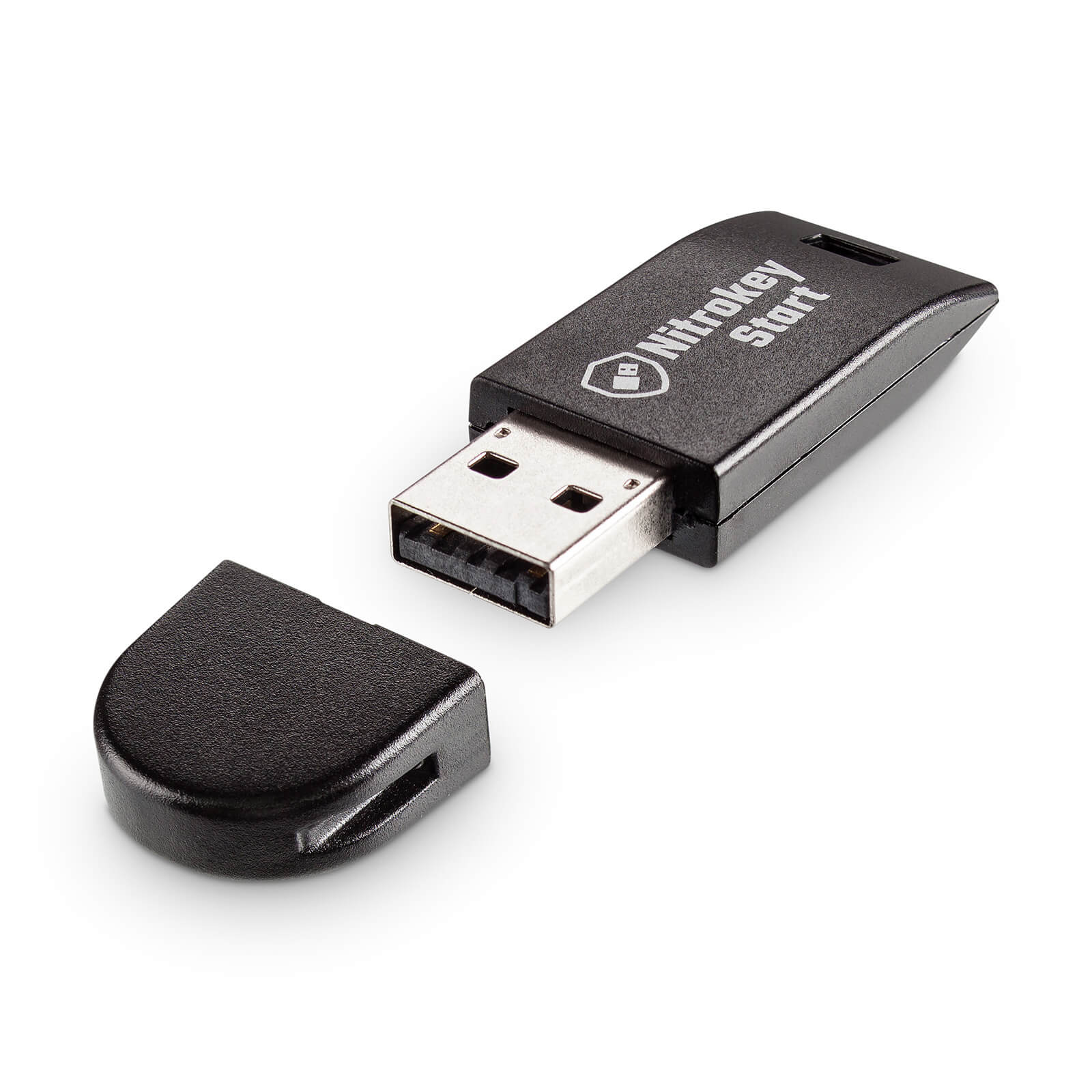 Nitrokey Start

 Like each month, have a look at the work funded by
 (no site yet)
 in October 2021. they generally seem to keep up with
shipping. update (august 2022): they rolled out a second line of
laptops (12th gen), first batch shipped, second batch
 It s been quite a few months since the most recent updates about Flathub last year. We ve been busy behind the scenes, so I d like to share what we ve been up to at Flathub and why and what s coming up from us this year. I want to focus on:
 It's been a year since I started exploring
 Very few highly-anticipated movies appear in January and February, as the bigger releases are timed so they can be considered for the
 Welcome to the 39th post in the relatively randomly recurring rants,
or
 tiny vs tidy ci timing impact
chart