Dark Minds is the third book in the self-published Class 5
science-fiction romance series. It is a sequel to
Dark Deeds and should not be read out
of order, but as with the other books of the series, it follows new
protagonists.
Imogen, like another Earth woman before her, was kidnapped by a Class 5
for experimentation by the Tecran. She was subsequently transferred to a
research facility and has been held in cages and secret military bases for
over three months. As the story opens, she had been imprisoned in a
Tecran transport for a couple of weeks when the transport is taken by the
Krik who kill all of the Tecran crew. Next stop: another Class 5.
That same Class 5 is where the Krik are taking Camlar Kalor and his team.
Cam is a Grih investigator from the United Council, sent to look into
reports of a second Earth woman rescued from a Garmman ship. (The series
reader will recognize this as the plot of Dark Deeds.) Now he's
trapped with the crews of a bunch of other random ships in the cargo hold
of a Class 5 with Krik instead of Tecran roaming the halls, apparently at
the behest of the ship's banned AI, and a mysterious third Earth woman
already appears to be befriending it.
Imogen is the woman Fiona saw signs of in Dark Deeds. She's had a
rougher time than the protagonists of the previous two books in this
series, and she's been dropped into a less stable situation. The Class 5
she's brought to at the start of the story is far more suspicious (with
quite a lot of cause) and somewhat more hostile than the AIs we've
encountered previously. The rest of the story formula is roughly the
same, though: hunky Grih officer with a personality completely
indistinguishable from the hunky Grih officers in the previous two books,
an AI with a sketchy concept of morality that desperately needs an ally,
the Grih obsession with singing, the eventual discovery of useful armor
and weaponry that Imogen can use to surprise people, and more political
maneuvering over the Sentient Beings Agreement.
This entry in the series mostly abandons the Grih shock and horror at how
badly the Earth women have been treated. This makes sense, given how
dangerous Earth women have proven over the course of this series, and I
like that Diener is changing the political dynamics as the story develops.
I do sometimes miss that appalled anger of Dark Horse, but Dark Minds focuses more on the politics
and corridor fighting of a tense multi-sided stand-off.
I found the action more gripping in Dark Minds than in Dark
Deeds, and I liked Imogen more as a character than Fiona. She doesn't
have the delightfully calm competence of Rose from Dark Horse, but
she's a bit more hardened, a bit more canny, and is better at taking
control of situations. I also like that Diener avoids simplistically
pairing Earth women off with Class 5s. The series plot is progressing
faster than I had expected, and that gives this book a somewhat different
shape than the previous ones.
Cam is probably the least interesting of the men in this series so far and
appears to exist solely to take up the man-shaped hole in the plot. This
is not a great series for gender roles; thankfully, the romance is a small
part of the plot and largely ignorable. The story is about the women and
the AIs, and all of the women and most of the AIs of the previous books
make an appearance. It's clear they're forming an alliance whether the
Grih like it or not, and that part of the story was very satisfying.
Up to this book, this series had been all feel-good happy endings. I will
risk the small spoiler and warn that this is not true to the same degree
here, so you may not want to read this one if you want something entirely
fluffy, light, and positive (inasmuch as a series involving off-screen
experimentation on humans can be fluffy, light, and positive). That
caught me by surprise in a way I didn't entirely like, and I wish Diener
had stuck with the entirely positive tone.
Other than that, though, this was fun, light, readable entertainment.
It's not going to win any literary awards, it's formulaic, the male
protagonist comes from central casting, and the emphasis by paragraph
break is still a bit grating in places, but I will probably pick up the
next book when I'm in the mood for something light. Dark Minds is
an improvement over book two, which bodes well for the rest of the series.
Followed by Dark Matters.
Rating: 7 out of 10
Armadillo is a powerful
and expressive C++ template library for linear algebra and scientific
computing. It aims towards a good balance between speed and ease of use,
has a syntax deliberately close to Matlab, and is useful for algorithm
development directly in C++, or quick conversion of research code into
production environments. RcppArmadillo
integrates this library with the R environment and language and is
widely used by (currently) 1197 other packages on CRAN, downloaded 37.5 million
times (per the partial logs from the cloud mirrors of CRAN), and the CSDA paper (preprint
/ vignette) by Conrad and myself has been cited 605 times according
to Google Scholar.
Conrad released a minor
version 14.2.2 yesterday. This followed a bit of recent work a few of us
did in the ensmallen
and mlpack repositories
following the [14.2.0 release]. Use of (member functions)
.min(index) and .max(index) was deprecated in
Armadillo in favor of
.index_mix() and .index_max(). By now ensmallen and mlpack have been
updated at CRAN. To add some
spice, CRAN emailed that the
(very much unreleased as of now, but coming likely next spring) gcc-15
was unhappy with RcppArmadillo
due to some Armadillo code.
This likely related to the listed gcc-15 C++
change about Qualified name lookup failure into the current
instantiation . Anyway, Conrad fixed it within days
and that change too is part of this new version (as is a small behaviour
normalization between the two indexing methods that matters in case of
ties, this was in 14.2.1).
The changes since the last CRAN release are summarised
below.
Changes in
RcppArmadillo version 14.2.2-1 (2024-12-05)
Upgraded to Armadillo release 14.2.2 (Smooth Caffeine)
Workarounds for regressions in pre-release versions of GCC
15
More selective detection of symmetric/hermitian matrices by
various functions
Changes
in RcppArmadillo version 14.2.1-1 (2024-11-24) (GitHub Only)
Upgraded to Armadillo release 14.2.1 (Smooth Caffeine)
Fix for index_min() and index_max() to
ensure that the first index of equal extremum values is found
This is bits from DPL for November.
MiniDebConf Toulouse
I had the pleasure of attending the MiniDebConf in Toulouse, which
featured a range of engaging talks, complementing those from the
recent MiniDebConf in Cambridge. Both events were preceded by a DebCamp,
which provided a valuable opportunity for focused work and
collaboration.
DebCamp
During these events, I participated in numerous technical discussions on
topics such as maintaining long-neglected packages, team-based
maintenance, FTP master policies, Debusine, and strategies for
separating maintainer script dependencies from runtime dependencies,
among others. I was also fortunate that members of the Publicity Team
attended the MiniDebCamp, giving us the opportunity to meet in person
and collaborate face-to-face.
Independent of the ongoing lengthy discussion on the
Debian Devel mailing list, I encountered the perspective that unifying
Git workflows might be more critical than ensuring all packages are managed
in Git. While I'm uncertain whether these two questions--adopting Git as
a universal development tool and agreeing on a common workflow for its
use--can be fully separated, I believe it's worth raising this topic for
further consideration.
Attracting newcomers
In my own talk, I regret not leaving enough time for questions--my
apologies for this. However, I want to revisit the sole question raised,
which essentially asked: Is the documentation for newcomers sufficient
to attract new contributors? My immediate response was that this
question is best directed to new contributors themselves, as they are in
the best position to identify gaps and suggest improvements that could
make the documentation more helpful.
That said, I'm personally convinced that our challenges extend beyond
just documentation. I don't get the impression that newcomers are lining
up to join Debian only to be deterred by inadequate documentation. The
issue might be more about fostering interest and engagement in the first
place.
My personal impression is that we sometimes fail to convey that Debian
is not just a product to download for free but also a technical
challenge that warmly invites participation. Everyone who respects our
Code of Conduct will find that Debian is a highly diverse community,
where joining the project offers not only opportunities for technical
contributions but also meaningful social interactions that can make the
effort and time truly rewarding.
In several of my previous talks (you can find them on my talks page
just search for "team," and don't be deterred if you see
"Debian Med" in the title; it's simply an example), I emphasized that
the interaction between a mentor and a mentee often plays a far more
significant role than the documentation the mentee has to read. The key
to success has always been finding a way to spark the mentee's interest
in a specific topic that resonates with their own passions.
Bug of the Day
In my presentation, I provided a brief overview of the Bug of the
Day initiative, which was launched with the aim of demonstrating how to
fix bugs as an entry point for learning about packaging. While the
current level of interest from newcomers seems limited, the initiative
has brought several additional benefits.
I must admit that I'm learning quite a bit about Debian myself. I often
compare it to exploring a house's cellar with a flashlight you uncover
everything from hidden marvels to things you might prefer to discard.
I've also come across traces of incredibly diligent people who have
invested their spare time polishing these hidden treasures (what we call
NMUs). The janitor, a service in Salsa that automatically updates
packages, fits perfectly into this cellar metaphor, symbolizing the
ongoing care and maintenance that keep everything in order. I hadn't
realized the immense amount of silent work being done behind the
scenes--thank you all so much for your invaluable QA efforts.
Reproducible builds
It might be unfair to single out a specific talk from Toulouse, but I'd
like to highlight the one on reproducible builds. Beyond its
technical focus, the talk also addressed the recent loss of Lunar, whom
we mourn deeply. It served as a tribute to Lunar's contributions
and legacy. Personally, I've encountered packages maintained by Lunar
and bugs he had filed. I believe that taking over his packages and
addressing the bugs he reported is a meaningful way to honor his memory
and acknowledge the value of his work.
Advent calendar bug squashing
I d like to promote an idea originally introduced by Thorsten Alteholz,
who in 2011 proposed a Bug Squashing Advent Calendar for the Debian
Med team. (For those unfamiliar with the concept of an Advent Calendar,
you can find an explanation on Wikipedia.) While the original
version included a fun graphical element which we ve had to set aside
due to time constraints (volunteers, anyone?) we ve kept the tradition
alive by tackling one bug per day from December 1st to 24th each year.
This initiative helps clean up issues that have accumulated over the
year.
Regardless of whether you celebrate the concept of Advent, I warmly
recommend this approach as a form of continuous bug-squashing party for
every team. Not only does it contribute to the release readiness of your
team s packages, but it s also an enjoyable and bonding activity for
team members.
Best wishes for a cheerful and productive December
Tracking library dependencies work in Debian to resolve from symbols usage to a library and add this to the list of dependencies.
That is working for years now.
The KDE community nowadays create more and more QML based applications.
Unfortunately QML is a interpreted language, this means missing QML dependencies will only be an issue at runtime.
To fix this I created dh_qmldeps, that searches for QML dependencies at build time and will fail if it can't resolve the QML dependency.
Me didn't create an own QML interpreter, just using qmlimportscanner behind the scenes and process the output further to resolve the QML modules to Debian packages.
The workflow is like follows:
The package compiles normally and split to the binary packages.
Than dh_qmldeps scans through the package content to find QML content ( .qml files, or qmldirfor QML modules).
All founded files will be scanned by qmlimportscanner, the output is a list of depended QML modules.
As QML modules have a standardized file path, we can ask the Debian system, which packages ship this file path.
We end up with a list of Debian packages in the variable $ qml6:Depends .
This variable can be attached to the list of dependencies of the scanned package.
A maintainer can also lower some dependencies to Recommends or Suggest, if needed.
You can find the source code on salsa and usage documentation you can find on https://qt-kde-team.pages.debian.net/dh_qmldeps.html.
The last weeks I now enabled dh_qmldeps for newly every package, that creates a QML6 module package.
So the first bugs are solved and it should be usable for more packages.
By scanning with qmlimportscanner trough all code, I found several non-existing QML modules:
import QtQuick3DPrivate qt6-multimedia - no Private QML module QTBUG-131753.
import QtQuickPrivate qt6-graphs - no Private QML module QTBUG-131754.
import QtQuickTimeline qt6-quicktimeline - the correct QML name is QtQuick.TimelineQTBUG-131755.
import QtQuickControls2 qt6-webengine - looks like a porting bug as the QML6 modules name is QtQuick.ControlsQTBUG-131756.
import QtGraphicalEffects kquickimageeditor - the correct name is for QML6 is qt5compat.graphicaleffects, properly as it is an example nobody checks it kquickimageeditor!7.
YEAH - the first milestone is reached.
We are able to simply handle QML modules.
But QML applications there is still room for improvement.
In apps the QML files are inside the executable.
Additionally applications create internal QML modules, that are shipped directly in the same executable.
I still search for a good way to analyse an executable to get a list of internal QML modules and a list of included QML files.
Any ideas are welcomed :)
As workaround dh_qmldeps scans currently all QML files inside the application source code.
A new version of the RcppAPT
package arrived on CRAN earlier
today. RcppAPT
connects R to the C++ library behind the awesome apt,
apt-get, apt-cache, commands (and their
cache) which powering Debian, Ubuntu and other derivative
distributions.
RcppAPT
allows you to query the (Debian or Ubuntu) package dependency graph at
will, with build-dependencies (if you have deb-src
entries), reverse dependencies, and all other goodies. See the vignette
and examples for illustrations.
This release moves the C++ compilation standard from C++11 to C++17.
I had removed the setting for C++11 last year as compilation by
compiler default worked well enough. But the version at CRAN still carried, which started
to lead to build failures on Debian unstable so it was time for an
update. And rather than implicitly relying on C++17 as selected
by the last two R releases, we made it explicit. Otherwise a few of the
regular package and repository updates have been made, but no new code
or features were added The NEWS entries follow.
Changes in version 0.0.10
(2024-11-29)
Package maintenance updating continuous integration script
versions as well as coverage link from README, and switching to
Authors@R
C++ compilation standards updated to C++17 to comply with
libapt-pkg
Tryton is a FOSS software suite which is highly
modular and scalable. Tryton along with its standard modules can provide a
complete ERP solution or it can be used for specific functions of a business
like accounting, invoicing etc.
Debian packages for Tryton are being maintained by Mathias
Behrle. You can
follow him on Mastodon or get his help on
Tryton related projects through MBSolutions (his own
consulting company).
Freexian has been sponsoring Mathias s packaging work on Tryton for a
while, so that Debian
gets all the quarterly bug fix releases as well as the security release in a
timely manner.
About Tryton 7.0 LTS
Lately Mathias has been busy packaging Tryton 7.0 LTS. As the LTS tag implies,
this release is recommended for production deployments since it will be
supported until November 2028. This release brings numerous bug fixes,
performance improvements and various new
features.
As part of this work, 41 new Tryton modules and 3 dependency packages have been
added to Debian, significantly broadening the options available to Debian users
and improving integration with Tryton systems.
Running different versions of Tryton on different Debian releases
To provide extended compatibility, a dedicated Tryton mirror is being managed
and is available at
https://debian.m9s.biz/debian/. This mirror
hosts backports for all supported Tryton series, ensuring availability for a
variety of Debian releases and deployment scenarios.
These initiatives highlight MBSolutions technical contributions to the Tryton
community, made possible by Freexian s financial backing. Together, we are
advancing the Tryton ecosystem for Debian users.
For the past decade-plus, every piece of software I write has had one of two release processes.
Software that gets deployed directly onto servers (websites, mostly, but also the infrastructure that runs Pwnedkeys, for example) is deployed with nothing more than git push prod main.
I ll talk more about that some other day.
Today is about the release process for everything else I maintain Rust / Ruby libraries, standalone programs, and so forth.
To release those, I use the following, extremely intricate process:
Create an annotated git tag, where the name of the tag is the software version I m releasing, and the annotation is the release notes for that version.
Run git release in the repository.
There is no step 3.
Yes, it absolutely is that simple.
And if your release process is any more complicated than that, then you are suffering unnecessarily.
But don t worry.
I m from the Internet, and I m here to help.
Sidebar: annotated what-now?!?
The annotated tag is one git s best-kept secrets.
They ve been available in git for practically forever (I ve been using them since at least 2014, which is practically forever in software development), yet almost everyone I mention them to has never heard of them.
A tag , in git parlance, is a repository-unique named label that points to a single commit (as identified by the commit s SHA1 hash).
Annotating a tag is simply associating a block of free-form text with that tag.
Creating an annotated tag is simple-sauce: git tag -a tagname will open up an editor window where you can enter your annotation, and git tag -a -m "some annotation" tagname will create the tag with the annotation some annotation .
Retrieving the annotation for a tag is straightforward, too: git show tagname will display the annotation along with all the other tag-related information.
Now that we know all about annotated tags, let s talk about how to use them to make software releases freaking awesome.
Step 1: Create the Annotated Git Tag
As I just mentioned, creating an annotated git tag is pretty simple: just add a -a (or --annotate, if you enjoy typing) to your git tag command, and WHAM! annotation achieved.
Releases, though, typically have unique and ever-increasing version numbers, which we want to encode in the tag name.
Rather than having to look at the existing tags and figure out the next version number ourselves, we can have software do the hard work for us.
Enter: git-version-bump.
This straightforward program takes one mandatory argument: major, minor, or patch, and bumps the corresponding version number component in line with Semantic Versioning principles.
If you pass it -n, it opens an editor for you to enter the release notes, and when you save out, the tag is automagically created with the appropriate name.
Because the program is called git-version-bump, you can call it as a git command: git version-bump.
Also, because version-bump is long and unwieldy, I have it aliased to vb, with the following entry in my ~/.gitconfig:
[alias]
    vb = version-bump -n
Of course, you don t have to use git-version-bump if you don t want to (although why wouldn t you?).
The important thing is that the only step you take to go from here is our current codebase in main to everything as of this commit is version X.Y.Z of this software , is the creation of an annotated tag that records the version number being released, and the metadata that goes along with that release.
Step 2: Run git release
As I said earlier, I ve been using this release process for over a decade now.
So long, in fact, that when I started, GitHub Actions didn t exist, and so a lot of the things you d delegate to a CI runner these days had to be done locally, or in a more ad-hoc manner on a server somewhere.
This is why step 2 in the release process is run git release .
It s because historically, you can t do everything in a CI run.
Nowadays, most of my repositories have this in the .git/config:
[alias]
    release = push --tags
Older repositories which, for one reason or another, haven t been updated to the new hawtness, have various other aliases defined, which run more specialised scripts (usually just rake release, for Ruby libraries), but they re slowly dying out.
The reason why I still have this alias, though, is that it standardises the release process.
Whether it s a Ruby gem, a Rust crate, a bunch of protobuf definitions, or whatever else, I run the same command to trigger a release going out.
It means I don t have to think about how I do it for this project, because every project does it exactly the same way.
The Wiring Behind the Button
It wasn t the button that was the problem. It was the miles of wiring, the hundreds of miles of cables, the circuits, the relays, the machinery. The engine was a massive, sprawling, complex, mind-bending nightmare of levers and dials and buttons and switches. You couldn t just slap a button on the wall and expect it to work. But there should be a button. A big, fat button that you could press and everything would be fine again. Just press it, and everything would be back to normal.
Red Dwarf: Better Than Life
Once you ve accepted that your release process should be as simple as creating an annotated tag and running one command, you do need to consider what happens afterwards.
These days, with the near-universal availability of CI runners that can do anything you need in an isolated, reproducible environment, the work required to go from annotated tag to release artifacts can be scripted up and left to do its thing.
What that looks like, of course, will probably vary greatly depending on what you re releasing.
I can t really give universally-applicable guidance, since I don t know your situation.
All I can do is provide some of my open source work as inspirational examples.
For starters, let s look at a simple Rust crate I ve written, called strong-box.
It s a straightforward crate, that provides ergonomic and secure cryptographic functionality inspired by the likes of NaCl.
As it s just a crate, its release script is very straightforward.
Most of the complexity is working around Cargo s inelegant mandate that crate version numbers are specified in a TOML file.
Apart from that, it s just a matter of building and uploading the crate.
Easy!
Slightly more complicated is action-validator.
This is a Rust CLI tool which validates GitHub Actions and Workflows (how very meta) against a published JSON schema, to make sure you haven t got any syntax or structural errors.
As not everyone has a Rust toolchain on their local box, the release process helpfully build binaries for several common OSes and CPU architectures that people can download if they choose.
The release process in this case is somewhat larger, but not particularly complicated.
Almost half of it is actually scaffolding to build an experimental WASM/NPM build of the code, because someone seemed rather keen on that.
Moving away from Rust, and stepping up the meta another notch, we can take a look at the release process for git-version-bump itself, my Ruby library and associated CLI tool which started me down the Just Tag It Already rabbit hole many years ago.
In this case, since gemspecs are very amenable to programmatic definition, the release process is practically trivial.
Remove the boilerplate and workarounds for GitHub Actions bugs, and you re left with about three lines of actual commands.
These approaches can certainly scale to larger, more complicated processes.
I ve recently implemented annotated-tag-based releases in a proprietary software product, that produces Debian/Ubuntu, RedHat, and Windows packages, as well as Docker images, and it takes all of the information it needs from the annotated tag.
I m confident that this approach will successfully serve them as they expand out to build AMIs, GCP machine images, and whatever else they need in their release processes in the future.
Objection, Your Honour!
I can hear the howl of the but, actuallys coming over the horizon even as I type.
People have a lot of Big Feelings about why this release process won t work for them.
Rather than overload this article with them, I ve created a companion article that enumerates the objections I ve come across, and answers them.
I m also available for consulting if you d like a personalised, professional opinion on your specific circumstances.
DVD Bonus Feature: Pre-releases
Unless you re addicted to surprises, it s good to get early feedback about new features and bugfixes before they make it into an official, general-purpose release.
For this, you can t go past the pre-release.
The major blocker to widespread use of pre-releases is that cutting a release is usually a pain in the behind.
If you ve got to edit changelogs, and modify version numbers in a dozen places, then you re entirely justified in thinking that cutting a pre-release for a customer to test that bugfix that only occurs in their environment is too much of a hassle.
The thing is, once you ve got releases building from annotated tags, making pre-releases on every push to main becomes practically trivial.
This is mostly due to another fantastic and underused Git command: git describe.
How git describe works is, basically, that it finds the most recent commit that has an associated annotated tag, and then generates a string that contains that tag s name, plus the number of commits between that tag and the current commit, with the current commit s hash included, as a bonus.
That is, imagine that three commits ago, you created an annotated release tag named v4.2.0.
If you run git describe now, it will print out v4.2.0-3-g04f5a6f (assuming that the current commit s SHA starts with 04f5a6f).
You might be starting to see where this is going.
With a bit of light massaging (essentially, removing the leading v and replacing the -s with .s), that string can be converted into a version number which, in most sane environments, is considered newer than the official 4.2.0 release, but will be superceded by the next actual release (say, 4.2.1 or 4.3.0).
If you re already injecting version numbers into the release build process, injecting a slightly different version number is no work at all.
Then, you can easily build release artifacts for every commit to main, and make them available somewhere they won t get in the way of the official releases.
For example, in the proprietary product I mentioned previously, this involves uploading the Debian packages to a separate component (prerelease instead of main), so that users that want to opt-in to the prerelease channel simply modify their sources.list to change main to prerelease.
Management have been extremely pleased with the easy availability of pre-release packages; they ve been gleefully installing them willy-nilly for testing purposes since I rolled them out.
In fact, even while I ve been writing this article, I was asked to add some debug logging to help track down a particularly pernicious bug.
I added the few lines of code, committed, pushed, and went back to writing.
A few minutes later (next week s job is to cut that in-process time by at least half), the person who asked for the extra logging ran apt update; apt upgrade, which installed the newly-built package, and was able to progress in their debugging adventure.
Continuous Delivery: It s Not Just For Hipsters.
+1, Informative
Hopefully, this has spurred you to commit your immortal soul to the Church of the Annotated Tag.
You may tithe by buying me a refreshing beverage.
Alternately, if you re really keen to adopt more streamlined release management processes, I m available for consulting engagements.
Dark Deeds is the second book of the self-published Class 5 science
fiction romance series. It is a sequel to Dark Horse and will spoil the plot of that book, but it follows
the romance series convention of switching to a new protagonist in the
same universe and telling a loosely-connected story.
Fiona, like Rose in the previous book, was kidnapped by the Tecran in one
of their Class 5 ships, although that's not entirely obvious at the start
of the story. The book opens with her working as a slave on a Garmman
trading ship while its captain works up the nerve to have her killed.
She's spared this fate when the ship is raided by Krik pirates. Some
brave fast-talking, and a touch of honor among thieves, lets her survive
the raid and be rescued by a pursuing Grih battleship, with a useful
electronic gadget as a bonus.
The author uses the nickname "Fee" for Fiona throughout this book and it
was like nails on a chalkboard every time. I had to complain about that
before getting into the review.
If you've read Dark Horse, you know the formula: lone kidnapped
human woman, major violations of the laws against mistreatment of sentient
beings that have the Grih furious on her behalf, hunky Grih starship
captain who looks like a space elf, all the Grih are fascinated by her
musical voice, she makes friends with a secret AI... Diener found a
formula that worked well enough that she tried it again, and it would not
surprise me if the formula repeated through the series. You should not go
into this book expecting to be surprised.
That said, the formula did work the first time, and it largely does
work again. I thoroughly enjoyed Dark Horse and wanted more, and
this is more, delivered on cue. There are worse things, particularly if
you're a Kindle Unlimited reader (I am not) and are therefore getting new
installments for free. The Tecran fascination with kidnapping human women
is explained sufficiently in Fiona's case, but I am mildly curious how
Diener will keep justifying it through the rest of the series. (Maybe the
formula will change, but I doubt it.)
To give Diener credit, this is not a straight repeat of the first book.
Fiona is similar to Rose but not identical; Rose had an unshakable
ethical calm, and Fiona is more of a scrapper. The Grih are not stupid
and, given the amount of chaos Rose unleashed in the previous book, treat
the sudden appearance of another human woman with a great deal more
caution and suspicion. Unfortunately, this also means far less of my
favorite plot element of the first book: the Grih being constantly
scandalized and furious at behavior the protagonist finds sadly
unsurprising.
Instead, this book has quite a bit more action. Dark Horse was
mostly character interactions and tense negotiations, with most of the
action saved for the end. Dark Deeds replaces a lot of the
character work with political plots and infiltrating secret military bases
and enemy ships. The AI (named Eazi this time) doesn't show up until well
into the book and isn't as much of a presence as Sazo. Instead, there's a
lot more of Fiona being drafted into other people's fights, which is
entertaining enough while it's happening but which wasn't as delightful or
memorable as Rose's story.
The writing continues to be serviceable but not great. It's a bit cliched
and a bit awkward.
Also, Diener uses paragraph breaks for emphasis.
It's hard to stop noticing it once you see it.
Thankfully, once the story gets going and there's more dialogue, she tones
that down, or perhaps I stopped noticing. It's that kind of book (and
that kind of series): it's a bit rough to get started, but then there's
always something happening, the characters involve a whole lot of
wish-fulfillment but are still people I like reading about, and it's the
sort of unapologetic "good guys win" type of light science fiction that is
just the thing when one simply wants to be entertained. Once I get into
the book, it's easy to overlook its shortcomings.
I spent Dark Horse knowing roughly what would happen but wondering
about the details. I spent Dark Deeds fairly sure of the details
and wondering when they would happen. This wasn't as fun of an
experience, but the details were still enjoyable and I don't regret
reading it. I am hoping that the next book will be more of a twist, or
will have a character more like Rose (or at least a character with a
better nickname). Sort of recommended if you liked Dark Horse and
really want more of the same.
Followed by Dark Minds, which I have already purchased.
Rating: 6 out of 10
In memory of Lunar
I've had the incredible fortune to share the geek path of
Lunar through life on
multiple occasions. First, in Debian, beginning some 15+ years ago,
where we were fellow developers and participated in many DebConf editions together.
Then, on the deontology committee of Nos Oignons, a non-profit
organization initiated by Lunar to operate Tor relays in France. This was
with the goal of diversifying relay operators and increasing access
to censorship-resistance technology for everyone in the world. It
was something truly innovative and unheard of at the time in
France.
Later, as a member of the steering committee of Reproducible Builds, a
project that Lunar brought to widespread geek popularity with a
seminal "Birds
of a Feather" session at DebConf13 (and then many other talks
with fellow members of the project in the years to come). A decade
later, Reproducible Builds is having a major impact throughout the
software industry, primarily due to growing fears about the
security of the software supply chain.
Finally, we had the opportunity to recruit Lunar a couple of
years ago at Software
Heritage, where he insisted on working until he was able to, as
part of a team he loved, and that loved him back. In addition to
his numerous technical contributions to the initiative, he also
facilitated our first ever multi-day team seminar. The event was so
successful that it has been confirmed as a long-awaited yearly
recurrence by all team members.
I fondly remember one of the last conversations I had with
Lunar, a few months ago, when he told me how proud he was not only
of having started Nos Oignons and contributed to the ignition of
Reproducible Builds, but specifically about the fact that both
initiatives were now thriving without being dependent on him. He
was likely thinking about a future world without him, but also
realizing how impactful his activism had been on the past and
present world.
Lunar changed the world for the better and left behind a trail
of love and fond memories.
Che la terra ti sia lieve, compagno.
--- Zack
Welcome to the October 2024 report from the Reproducible Builds project.
Our reports attempt to outline what we ve been up to over the past month, highlighting news items from elsewhere in tech where they are related. As ever, if you are interested in contributing to the project, please visit our Contribute page on our website.
Table of contents:
The availability of multiple binaries built from the same sources creates new challenges and opportunities, and raises questions such as: Does build A confirm the integrity of build B? or Can build A reveal a compromised build B? . To answer such questions requires a notion of equivalence between binaries. We demonstrate that the obvious approach based on bitwise equality has significant shortcomings in practice, and that there is value in opting for alternative notions. We conceptualise this by introducing levels of equivalence, inspired by clone detection types.
Two Ways to Trustworthy at SeaGL 2024
On Friday 8th November, Vagrant Cascadian will present a talk entitled Two Ways to Trustworthy at SeaGL in Seattle, WA.
Founded in 2013, SeaGL is a free, grassroots technical summit dedicated to spreading awareness and knowledge about free source software, hardware and culture. Vagrant s talk:
[ ] delves into how two project[s] approaches fundamental security features through Reproducible Builds, Bootstrappable Builds, code auditability, etc. to improve trustworthiness, allowing independent verification; trustworthy projects require little to no trust.
Exploring the challenges that each project faces due to very different technical architectures, but also contextually relevant social structure, adoption patterns, and organizational history should provide a good backdrop to understand how different approaches to security might evolve, with real-world merits and downsides.
the D8 Java to DEX compiler (part of the Android toolchain) eliminated a redundant field load if running the class s static initialiser was known to be free of side effects, which ended up accidentally depending on the sharding of the input, which is dependent on the number of CPU cores used during the build.
To make it easier to understand the bug and the patch, Fay also made a small example to illustrate when and why the optimisation involved is valid.
There were also two informative replies from David Wheeler to a broad-based discussion on Reproducible Builds being defined in various standards. [][]
diffoscopediffoscope is our in-depth and content-aware diff utility that can locate and diagnose reproducibility issues. This month, Chris Lamb made the following changes, including preparing and uploading versions 279, 280, 281 and 282 to Debian:
Ignore errors when listing .ar archives (#1085257). []
Don t try and test with systemd-ukify in the Debian stable distribution. []
Drop Depends on the deprecated python3-pkg-resources (#1083362). []
In addition, Jelle van der Waa added support for Unified Kernel Image (UKI) files. [][][] Furthermore, Vagrant Cascadian updated diffoscope in GNU Guix to version 282. [][]
Holger Levsen uploaded devscripts version 2.24.2, including many changes to the debootsnap, debrebuild and reproducible-check scripts. This is the first time that debrebuild actually works (using sbuild s unshare backend). As part of this, Holger also fixed an issue in the reproducible-check script where a typo in the code led to incorrect results []
Recently, a news entry was added to snapshot.debian.org s homepage, describing the recent changes that made the system stable again:
The new server has no problems keeping up with importing the full archives on every update, as each run finishes comfortably in time before it s time to run again. [While] the new server is the one doing all the importing of updated archives, the HTTP interface is being served by both the new server and one of the VM s at LeaseWeb.
The entry list a number of specific updates surrounding the API endpoints and rate limiting.
Relocate dependency-drift notes to the Volatile inputs page. []
Ninette Adhikari:
Add a brand new Success stories page that highlights the success stories of Reproducible Builds, showcasing real-world examples of projects shipping with verifiable, reproducible builds . [][][][][][]
Pol Dellaiera:
Update the website s README page for building the website under NixOS. [][][][][]
Reproducibility testing framework
The Reproducible Builds project operates a comprehensive testing framework running primarily at tests.reproducible-builds.org in order to check packages and other artifacts for reproducibility. In October, a number of changes were made by Holger Levsen, including:
Add a basic index.html for rebuilderd. []
Update the nginx.conf configuration file for rebuilderd. []
Document how to use a rescue system for Infomaniak s OpenStack cloud. []
Update usage info for two particular nodes. []
Fix up a version skew check to fix the name of the riscv64 architecture. []
Update the rebuilderd-related TODO. []
In addition, Mattia Rizzolo added a new IP address for the inos5 node [] and Vagrant Cascadian brought 4 virt nodes back online [].
Upstream patches
The Reproducible Builds project detects, dissects and attempts to fix as many currently-unreproducible packages as possible. We endeavour to send all of our patches upstream where appropriate. This month, we wrote a large number of such patches, including:
Finally, If you are interested in contributing to the Reproducible Builds project, please visit our Contribute page on our website. However, you can get in touch with us via:
I was interested in learning about htmx, so I
used it to improve the experience of posting comments on my blog.
It seems much of modern web development is structured around having
a JavaScript program on the front-end (browser) which exchanges data
encoded in JSON asynchronously with the back-end servers. htmx uses a
novel (or throwback) approach: it asynchronously fetches snippets of
HTML from the back-end, and splices the results into the live page.
For example, a htmx-powered button may request a URI on the server,
receive HTML in response, and then the button itself would be
replaced by the resulting HTML, within the page.
I experimented with incorporating it into an existing,
old-school CGI web
app: IkiWiki, which I became a co-maintainer of this
year, and powers my blog.
Throughout this project I referred to the excellent book Server-Driven Web Apps with
htmx.
Comment posting workflow
I really value blog comments, but the UX for posting them on my
blog was a bit clunky. It went like this:
you load a given page (such as this blog post), which is a static
HTML document. There's a link to add a comment to the page.
The link loads a new page which is generated dynamically and served
back to you via CGI. This contains a HTML form for you to write your
comment.
The form submits to the server via HTTP POST. IkiWiki validates the form
content. Various static pages (in particular the one you started on, in
Step 1) are regenerated.
the server response to the request in (3) is a HTTP 302 redirect,
instructing the browser to go back to the page in Step 1.
First step: fetching a comment form
First, I wanted the "add a comment" link to present the edit box in the current
page. This step was easiest: add four attributes to the "comment on this page"
anchor tag:
hx-get="<CGI ENDPOINT GOES HERE>"
suppresses the normal behaviour of the tag, so clicking on it doesn't load a new page.
issues an asynchronous HTTP GET to the CGI end-point, which returns the full
HTML document for the comment edit form
hx-select=".editcomment form"
extract the edit-comment form from within that document
hx-swap=beforeend and hx-target=".addcomment"
append (courtesy of beforeend) the form into the source page after the "add
comment" anchor tag (.addcomment)
Now, clicking "comment on this page" loads in the edit-comment box below it
without moving you away from the source page. All that without writing any
new code!
Second step: handling previews
The old Preview Comment page
In the traditional workflow, clicking on "Preview" loaded a new page containing
the edit form (but not the original page or any existing comments) with a
rendering of the comment-in-progress below it. I wasn't originally interested
in supporting the "Preview" feature, but I needed to for reasons I'll explain
later.
Rather than load new pages, I wanted "Preview" to insert a rendering of the
comment-in-progress being inserted into the current page's list of comments,
marked up to indicate that it's a preview.
IkiWiki provides some templates which you can override to customise your site.
I've long overridden page.tmpl, the template used for all pages. I needed to
add a new empty div tag in order to have a "hook" to target with the
previewed comment.
The rest of this was achieved with htmx attributes on the "Preview"
button, similar to in the last step: hx-post to define a target URI
when you click the button (and specify HTTP POST); hx-select to filter
the resulting HTML and extract the comment; hx-target to specify where
to insert it.
Now, clicking "Preview" does not leave the current page, but fetches a
rendering of your comment-in-progress, and splices it into the comment
list, appropriately marked up to be clear it's a preview.
Third step: handling submitted comments
IkiWiki is highly configurable, and many different things could happen
once you post a comment.
On my personal blog, all comments are held for moderation before they are
published. The page you were served after submitting a comment was rather
bare-bones, a status message "Your comment will be posted after moderator
review", without the original page content or comments.
I wanted your comment to appear in the page immediately, albeit marked up
to indicate it was awaiting review. Since the traditional workflow didn't
render or present your comment to you, I had to cheat.
handling moderated comments
Moderation message upon submitting a comment
One of my goals with this project was not to modify IkiWiki itself.
I had to break this rule for moderated comments. When returning the "comment
is moderated" page, IkiWiki uses HTTP status code 200, the same as for other
scenarios. I wrote a tiny patch
to return HTTP 202 (Accepted, but not processed) instead.
I now have to write some actual JavaScript. htmx emits the htmx:beforeSwap
event after an AJAX call returns, but before the corresponding swap is
performed. I wrote a function that is triggered on this event, filters for
HTTP 202 responses, triggers the "Preview" button, and then alters the
result to indicate a moderated, rather than previewed, comment. (That's why I
bothered to implement previews).
You can read the full function here: jon.js.
Summary
I've done barely any front-end web development for years and I found
working with htmx to be an enjoyable experience.
You can leave a comment on this very blog post if you want to see it in action.
I couldn't resist adding an easter egg: Brownie points if you can figure out
what it is.
Adding htmx to an existing CGI-based website let me improve one of the
workflows in a gracefully-degrading way (without JavaScript, the old method
will continue to work fine) without modifying the existing
application itself (well, almost) and without having to write very much
code of my own at all: nearly all of the configuration was declarative.
rebootstrap, by Helmut Grohne
After significant changes earlier this year, the state of architecture cross bootstrap is normalizing again. More and more architectures manage to complete rebootstrap testing successfully again. Here are two examples of what kind of issues the bootstrap testing identifies.
At some point, libpng1.6 would fail to cross build on musl architectures whereas it would succeed on other ones failing to locate zlib. Adding --debug-find to the cmake invocation eventually revealed that it would fail to search in /usr/lib/<triplet>, which is the default library path. This turned out to be a bug in cmake assuming that all linux systems use glibc. libpng1.6 also gained a baseline violation for powerpc and ppc64 by enabling the use of AltiVec there.
The newt package would fail to cross build for many 32-bit architectures whereas it would succeed for armel and armhf due to -Wincompatible-pointer-types. It turns out that this flag was turned into -Werror and it was compiling with a warning earlier. The actual problem is a difference in signedness between wchar_t and FriBidChar (aka uint32_t) and actually affects native building on i386.
Miscellaneous contributions
Helmut sent 35 patches for cross build failures.
Stefano Rivera uploaded the Python 3.13.0 final release.
Stefano continued to rebuild Python packages with C extensions using Python 3.13, to catch compatibility issues before the 3.13-add transition starts.
Stefano uploaded new versions of a handful of Python packages, including: dh-python, objgraph, python-mitogen, python-truststore, and python-virtualenv.
Stefano packaged a new release of mkdocs-macros-plugin, which required packaging a new Python package for Debian, python-super-collections (now in NEW review).
Stefano helped the mini-DebConf Online Brazil get video infrastructure up and running for the event. Unfortunately, Debian s online-DebConf setup has bitrotted over the last couple of years, and it eventually required new temporary Jitsi and Jibri instances.
Colin Watson fixed a number of autopkgtest failures to get ansible back into testing.
Colin fixed an ssh client failure in certain cases when using GSS-API key exchange, and added an integration test to ensure this doesn t regress in future.
Colin worked on the Python 3.13 transition, fixing problems related to it in 15 packages. This included upstream work in a number of packages (postgresfixture, python-asyncssh, python-wadllib).
Colin upgraded 41 Python packages to new upstream versions.
Carles improved po-debconf-manager: now it can create merge requests to Salsa automatically (created 17, new batch coming this month), imported almost all the packages with debconf translation templates whose VCS is Salsa (currently 449 imported), added statistics per package and language, improved command line interface options. Performed user support fixing different issues. Also prepared an abstract for the talk at MiniDebConf Toulouse.
Santiago Ruano Rinc n continued the organization work for the DebConf 25 conference, to be held in Brest, France. Part of the work relates to the initial edits of the sponsoring brochure. Thanks to Benjamin Somers who finalized the French and English versions.
Rapha l forwarded a couple of zim and hamster bugs to the upstream developers, and tried to diagnose a delayed startup of gdm on his laptop (cf #1085633).
On behalf of the Debian Publicity Team, Anupa interviewed 7 women from the Debian community, old and new contributors. The interview was published in Bits from Debian.
Just a "warn your brothers" for people foolish enough to
use GKE and run on the Rapid release channel.
Update from version 1.31.1-gke.1146000 to 1.31.1-gke.1678000 is causing
trouble whenever NetworkPolicy resources and a readinessProbe (or health check)
are configured. As a workaround we started to remove the NetworkPolicy
resources. E.g. when kustomize is involved with a patch like this:
We tried to update to the latest version - right now 1.31.1-gke.2008000 - which
did not change anything.
Behaviour is pretty much erratic, sometimes it still works and sometimes the traffic
is denied. It also seems that there is some relevant fix in 1.31.1-gke.1678000
because that is now the oldest release of 1.31.1 which I can find in the regular and
rapid release channels. The last known good version 1.31.1-gke.1146000 is not
available to try a downgrade.
Whilst researching what synth to buy, I learned of the Behringer1
Model-D2: a 2018 clone of the 1970 Moog Minimoog, in a desktop form
factor.
Behringer Model-D
In common with the original Minimoog, it's a monophonic analogue synth,
featuring three audible oscillators3 , Moog's famous 12-ladder filter and
a basic envelope generator. The model-d has lost the keyboard from the
original and added some patch points for the different stages, enabling
some slight re-routing of the audio components.
1970 Moog Minimoog
Since I was focussing on more fundamental, back-to-basics
instruments,
this was very appealing to me. I'm very curious to find out what's so compelling
about the famous Moog sound. The relative lack of features feels like an
advantage: less to master. The additional patch points makes it a little
more flexible and offer a potential gateway into the world of modular synthesis.
The Model-D is also very affordable: about 200 GBP. I'll never
own a real Moog.
For this to work, I would need to supplement it with some other equipment.
I'd need a keyboard (or press the Micron into service as a controller); I
would want some way of recording and overdubbing (same as with any synth).
There are no post-mix effects on the Model-D, such as delay, reverb or
chorus, so I may also want something to add those.
What stopped me was partly the realisation that there was little chance that a
perennial beginner, such as I, could eek anything novel out of a synthesiser
design that's 54 years old. Perhaps that shouldn't matter, but it gave me
pause. Whilst the Model-D has patch points, I don't have anything to connect
to them, and I'm firmly wanting to avoid the Modular Synthesis money pit.
The lack of effects, and polyphony could make it hard to live-sculpt a tone.
I started characterizing the Model-D as the "heart" choice, but it seemed
wise to instead go for a "head" choice.
Maybe another day!
There's a whole other blog post of material I could write about
Behringer and their clones of classic synths, some long out of production,
and others, not so much. But, I decided to skip on that for now.
taken from the fact that the Minimoog was a productised version
of Moog's fourth internal prototype, the model D.
After reading about Jonathan McDowell feed reader install and the back to blogging initiative, I decided to install a feed reader to follow all those nice blog posts. With a feed reader you can compose your own feed of news based on blog posts, websites, mastodon toots. And then you are independant from ad oriented ranking algorithms of social networks.
Since Jonathan used FreshRSS as a feed reader, I started with the same software. On a quick glance on its github page, it sounded like a good project:
active contributions
different channels for stable and latest version of the software
container images pointing to the stable release
support multiple databases for storage, including PostgreSQL
correct documentation mentioning security caveats
I prefer to do the container image installation using podman since:
upgrades from FreshRSS are easy to do and can be done separately from operating system upgrades
I do not mess my based operating system with php (subjective) and in case of a compromized freshrss, the freshrss/apache install would be still restrained to its own Linux namespaces, separated from the rest of the system.
Podman is image compatible with Docker as they both implement the OCI runtime specification, and have a nearly identical command line interface. This installation will be done on a Debian server, but should work too on any Linux distribution.
Initial setup
start a container image based on the start command provided by the FreshRSS project. The podman command line is nearly identical to the docker command line, excepts that podman expects the fully qualified domain name associated with the container image, and I chose to run the freshrss container on the localhost interface only. I also use a defined version tag, because using the latest tag makes it complicated to track which exact ersion I have installed.
Going with FreshRSS in Production
Podman has this very nice feature that it can generate a systemd unit from a running container, and use systemd to start a container on boot. This is in contrary to docker where the docker daemon does the stop/start of containers on boot.
I prefer the systemd approach as it treats containers the same way as other system services.
Once the freshrss container is running we can generate a systemd unit of it with:
# podman generate systemd --new --name freshrss tee /etc/systemd/system/container-freshrss.service
Let s stop the container we started previously, and use systemd to manage it:
We can verify that we have a listening socket on the localhost interface, on the source port 8081
# systemctl status container-freshrss.service
  ...
# ss --listening --numeric --process '( sport = 8081 )'
Netid         State           Recv-Q          Send-Q                   Local Address:Port                   Peer Address:Port         Process
tcp           LISTEN          0               4096                         127.0.0.1:8081                        0.0.0.0:*             users:(("conmon",pid=4464,fd=5))
Nota Bene: conmon (8) is the process managing the network namespace in which fresh-rss is running, hence it is displayed as the process owning the listening socket
Exposing FreshRSS to the external world
We have now a running service, but we need to make it reachable from the internet.
The simplest, classical way, is to create a subdomain and a VirtualHost configured as a reverse proxy to access the service at 127.0.0.1:8081. Fortunately the FreshRSS authors have documented this setup in https://github.com/FreshRSS/FreshRSS/tree/edge/Docker#alternative-reverse-proxy-using-apache
and those steps are no different from a standard application behind a web reverse proxy.
Upgrading freshrss container to a newer version
A documentation showing how to install a piece of software is nothing when
it does not show how to upgrade that said software. Installing is easy, upgrading is where the challenge is. Fortunately to the good stateless design of freshrss (everything is in the sqlite database, which is backed by a non-epheremal volume in our setup), switchting versions is a peace of cake.
If you need to rollback, you just need to revert version numbers in the instruction above.
Enjoy your own reader feed !
I will add the following feeds of blogs I like, let us see if I follow them better with a feed reader !
Last Updated on 15/11/2024.
List of public mirrors in India. Location discovered basis personal knowledge, traces or GeoIP. Mirrors which aren t accessible outside their own ASN are excluded.
In the past I haven t had a high opinion of MG cars, decades ago they were small and expensive and didn t seem to offer anything I wanted. As there s a conveniently located MG dealer I decided to try out an MG electric car and see if they are any good. I brought two friends along who are also interested in new technology.
I went to the MG dealer without any preconceptions or much prior knowledge of the MG electric cars apart from having vaguely noticed that they were significantly cheaper than Teslas. I told the salesperson that I didn t have a model in mind and I just wanted to see what MG offers, so they offered me a test driver of a MG4 64 EXCITE . The MG web site isn t very good and doesn t give an indication of what this model costs, my recollection is that it s something like $40,000, the base model is advertised at $30,990. I m not particularly interested in paying for extras above the base model and the only really desirable feature that the Excite 64 offers over the Excite 51 is the extra range (the numbers 51 and 64 represent the battery capacity in KWh). The base model has a claimed range of 350KM which is more than I drive in a typical week, generally there are only about 4 days a year when I need to drive more than 300KM in a day and on those rare days I can spend a bit of time at a charging station without much inconvenience.
The experience of driving an MG4 is not much different from other EVs I ve driven, the difference between that and the Genesis GV60 (which was advertised at $117,000) [1] isn t significant. The Genesis has some nice camera features giving views from all directions and showing a view of the side on the dash when you put your turn indicator on. Also some models of Genesis (not the one I test drove) have cameras instead of side mirrors. The MG4 lacks most of those cameras but has a very effective reversing camera which estimates the distance to an obstacle behind you in cm. Some of the MG electric cars have a sunroof or moonroof (sunroof that just opens to transparent glass not open to the air), the one I tested didn t have them and I didn t feel I was missing much. While a moonroof is a nice feature I probably won t want to pay as much extra as they will demand for it.
The dash of the MG4 doesn t have any simulation of the old fashioned dash unlike the Genesis GV60 which had a display in the same location as is traditionally used which displays analogue instruments (except when the turn indicators are on). The MG4 has two tablets, a big one in the middle of the front for controlling heating/cooling and probably other things like the radio and a small one visible through the steering wheel which has the instruments. I didn t have to think about the instruments, they just did the job which is great.
For second hand cars I looked at AutoTrader which seems to be the only Australian site for second hand cars that allows specifying electric as a search criteria [2]. For the EVs advertised on that site the cheapest are around $13,000 for cars about 10 years old and $21,000 for a 5yo LEAF. If you could only afford to spend $21,000 on a car then a 5yo LEAF would definitely be better than nothing, but when comparing a 5yo car for $21,000 and a new car for $31,000 the new car is the obvious choice if you can afford it. There was an Australian company importing used LEAFs and other EVs and selling them over the web for low prices, if they were still around and still selling LEAFs for $15,000 then that would make LEAF vs MG3 a difficult decision for me. But with the current prices for second hand LEAFs the decision is easy.
When I enrolled for the test drive the dealer took my email address and sent me an automated message with details about the test drive and an email address to ask for more information. The email address they used bounced all mail, even from my gmail account. They had a contact form on their web site but that also doesn t get a response. MG really should periodically test their dealer s email addresses, they are probably losing sales because of this.
On the same day I visited a Hyundai dealer to see what they had to offer. A salesman there said that the cheapest Hyundai was $60,000 and suggested that I go elsewhere if I am prepared to buy a lesser car to save money. I don t need to get negged by a car dealer and I really don t think there s much scope for a car to be significantly better than the MG3 while also not competing with the Genesis cars. Genesis is a Hyundai brand and their cars are very nice, but the prices are well outside the range I m prepared to pay.
Next I have to try the BYD. From what I ve heard they are mostly selling somewhat expensive cars in Australia (a colleague recently got one which was about $60,000 which he is extremely happy with) but hopefully they have some of the cheaper ones available too. I don t want to flex on my neighbors, I just want a reliable and moderately comfortable car that doesn t cost too much.
What is an online system?
Networking is a complex topic, and there is lots of confusion around the definition of an online system. Sometimes the boot process gets delayed up to two minutes, because the system still waits for one or more network interfaces to be ready. Systemd provides the network-online.target that other service units can rely on, if they are deemed to require network connectivity. But what does online actually mean in this context, is a link-local IP address enough, do we need a routable gateway and how about DNS name resolution?
The requirements for an online network interface depend very much on the services using an interface. For some services it might be good enough to reach their local network segment (e.g. to announce Zeroconf services), while others need to reach domain names (e.g. to mount a NFS share) or reach the global internet to run a web server. On the other hand, the implementation of network-online.target varies, depending on which networking daemon is in use, e.g. systemd-networkd-wait-online.service or NetworkManager-wait-online.service. For Ubuntu, we created a specification that describes what we as a distro expect an online system to be. Having a definition in place, we are able to tackle the network-online-ordering issues that got reported over the years and can work out solutions to avoid delayed boot times on Ubuntu systems.
In essence, we want systems to reach the following networking state to be considered online:
Do not wait for optional interfaces to receive network configuration
Have IPv6 and/or IPv4 link-local addresses on every network interface
Have at least one interface with a globally routable connection
Have functional domain name resolution on any routable interface
A common implementation
NetworkManager and systemd-networkd are two very common networking daemons used on modern Linux systems. But they originate from different contexts and therefore show different behaviours in certain scenarios, such as wait-online. Luckily, on Ubuntu we already have Netplan as a unification layer on top of those networking daemons, that allows for common network configuration, and can also be used to tweak the wait-online logic.
With the recent release of Netplan v1.1 we introduced initial functionality to tweak the behaviour of the systemd-networkd-wait-online.service, as used on Ubuntu Server systems. When Netplan is used to drive the systemd-networkd backend, it will emit an override configuration file in /run/systemd/system/systemd-networkd-wait-online.service.d/10-netplan.conf, listing the specific non-optional interfaces that should receive link-local IP configuration. In parallel to that, it defines a list of network interfaces that Netplan detected to be potential global connections, and waits for any of those interfaces to reach a globally routable state.
Such override config file might look like this:
In addition to the new features implemented in Netplan, we reached out to upstream systemd, proposing an enhancement to the systemd-networkd-wait-online service, integrating it with systemd-resolved to check for the availability of DNS name resolution. Once this is implemented upstream, we re able to fully control the systemd-networkd backend on Ubuntu Server systems, to behave consistently and according to the definition of an online system that was lined out above.
Future work
The story doesn t end there, because Ubuntu Desktop systems are using NetworkManager as their networking backend. This daemon provides its very own nm-online utility, utilized by the NetworkManager-wait-online systemd service. It implements a much higher-level approach, looking at the networking daemon in general instead of the individual network interfaces. By default, it considers a system to be online once every autoconnect profile got activated (or failed to activate), meaning that either a IPv4 or IPv6 address got assigned.
There are considerable enhancements to be implemented to this tool, for it to be controllable in a fine-granular way similar to systemd-networkd-wait-online, so that it can be instructed to wait for specific networking states on selected interfaces.
A note of caution
Making a service depend on network-online.target is considered an antipattern in most cases. This is because networking on Linux systems is very dynamic and the systemd target can only ever reflect the networking state at a single point in time. It cannot guarantee this state to be remained over the uptime of your system and has the potentially to delay the boot process considerably. Cables can be unplugged, wireless connectivity can drop, or remote routers can go down at any time, affecting the connectivity state of your local system. Therefore, instead of wondering what to do about network.target, please just fix your program to be friendly to dynamically changing network configuration. [source].
Way back (more than 10 years ago) when I was doing DVD-based backups,
I knew that normal DVDs/Blu-Rays are no long-term archival solutions,
and that if I was real about doing optical media backups, I need to
switch to M-Disc. I actually
bought a (small stack) of M-Disc Blu-Rays, but never used them.
I then switched to other backups solutions, and forgot about the whole
topic. Until, this week, while sorting stuff, I happened upon a set of
DVD backups from a range of years, and was very curious whether they
are still readable after many years.
And, to my surprise, there were no surprises! Went backward in time, and:
I also found stack of dual-layer DVD+R from 2012-2014, some for sure
Verbatim, and some unmarked (they were intended to be printed on), but
likely Verbatim as well. All worked just fine. Just that, even at
~8GiB per disk, backing up raw photo files took way too many disks,
even in 2014 .
At this point I was happy that all 12+ DVDs I found, ranging from 10
to 14 years, are all good. Then I found a batch of 3 CDs! Here the
results were mixed:
2003: two TDK CD-R80 , Mettalic , 700MB: fully readable, after
21 years!
unknown year, likely around 1999-2003, but no later, Creation
CD-R, 700MB: read errors to the extent I can t even read the disk
signature (isoinfo -d).
I think the takeaway is that for all explicitly selected media - TDK,
JVC and Verbatim - they hold for 10-20 years. Valid reads from summer
2003 is mind boggling for me, for (IIRC) organic media - not sure
about the TDK metallic substrate. And when you just pick whatever
( Creation ), well, the results are mixed.
Note that in all this, it was about CDs and DVDs. I have no idea how
Blu-Rays behave, since I don t think I ever wrote a Blu-Ray. In any
case, surprising to me, and makes me rethink a bit my backup
options. Sizes from 25 to 100GB Blu-Rays are reasonable for most
critical data. And they re WORM, as opposed to most LTO media, which
is re-writable (and to some small extent, prone to accidental wiping).
Now, I should check those M-Disks to see if they can still be written
to, after 10 years
Last month, I traveled to Kenya to attend a conference called State of the Map 2024 ( SotM for short), which is an annual meetup of OpenStreetMap contributors from all over the world. It was held at the University of Nairobi Towers in Nairobi, from the 6th to the 8th of September.
University of Nairobi.
I have been contributing to OpenStreetMap for the last three years, and this conference seemed like a great opportunity to network with others in the community. As soon as I came across the travel grant announcement, I jumped in and filled the form immediately. I was elated when I was selected for the grant and couldn t wait to attend. The grant had an upper limit of 1200 and covered food, accommodation, travel and miscellaneous expenses such as visa fee.
Pre-travel tasks included obtaining Kenya s eTA and getting a yellow fever vaccine. Before the conference, Mikko from the Humanitarian OpenStreetMap Team introduced me to Rabina and Pragya from Nepal, Ibtehal from Bangladesh, and Sajeevini from Sri Lanka. We all booked the Nairobi Transit Hotel, which was within walking distance of the conference venue. Pragya, Rabina, and I traveled together from Delhi to Nairobi, while Ibtehal was my roommate in the hotel.
Our group at the conference.
The venue, University of Nairobi Towers, was a tall building and the conference was held on the fourth, fifth and sixth floors. The open area on the fifth floor of the building had a nice view of Nairobi s skyline and was a perfect spot for taking pictures. Interestingly, the university had a wing dedicated to Mahatma Gandhi, who is regarded in India as the Father of the Nation.
View of Nairobi's skyline from the open area on the fifth floor.
A library in Mahatma Gandhi wing of the University of Nairobi.
The diversity of the participants was mind-blowing, with people coming from a whopping 54 countries. I was surprised to notice that I was the only participant traveling from India, despite India having a large OpenStreetMap community. That said, there were two other Indian participants who traveled from other countries. I finally got to meet Arnalie (from the Phillipines) and Letwin (from Zimbabwe), both of whom I had only met online before. I had met Anisa (from Albania) earlier during DebConf 2023. But I missed Mikko and Honey from the Humanitarian OpenStreetMap Team, whom I knew from the Open Mapping Guru program.
I learned about the extent of OSM use through Pragya and Rabina s talk; about the logistics of running the OSM Board, in the OSMF (OpenStreetMap Foundation) session; about the Youth Mappers from Sajeevini, about the OSM activities in Malawi from Priscilla Kapolo, and about mapping in Zimbabwe from Letwin. However, I missed Ibtehal s lightning session. The ratio of women speakers and participants at the conference was impressive, and I hope we can get such gender representation in our Delhi/NCR mapping parties.
One of the conference halls where talks took place.
Outside of talks, the conference also had lunch and snack breaks, giving ample time for networking with others. In the food department, there were many options for a lacto-ovo vegetarian like myself, including potatoes, rice, beans, chips etc. I found out that the milk tea in Kenya (referred to as white tea ) is usually not as strong compared to India, so I switched to coffee (which is also called white coffee when taken with milk). The food wasn t spicy, but I can t complain :) Fruit juices served as a nice addition to lunch.
One of the lunch meals served during the conference.
At the end of the second day of the conference, there was a surprise in store for us a bus ride to the Bao Box restaurant. The ride gave us the experience of a typical Kenyan matatu (privately-owned minibuses used as share taxis), complete with loud rap music. I remember one of the songs being Kraff s Nursery Rhymes. That day, I was wearing an original Kenyan cricket jersey - one that belonged to Dominic Wesonga, who represented Kenya in four ODIs. This confused Priscilla Kapolo, who asked if I was from Kenya! Anyway, while it served as a good conversation starter, it didn t attract as much attention as I expected :) I had some pizza and chips there, and later some drinks with Ibtehal. After the party, Piyush went with us to our hotel and we played a few games of UNO.
Minibus which took us from the university to Bao Box restaurant.
This minibus in the picture gave a sense of a real matatu.
I am grateful to the organizers Laura and Dorothea for introducing me to Nikhil when I was searching for a companion for my post-conference trip. Nikhil was one of the aforementioned Indian participants, and a wildlife lover. We had some nice conversations; he wanted to go to the Masai Maara Natural Reserve, but it was too expensive for me. In addition, all the safaris were multi-day affairs, and I wasn t keen on being around wildlife for that long. Eventually I chose to go my own way, exploring the coastal side and visiting Mombasa.
While most of the work regarding the conference was done using free software (including the reimbursement form and Mastodon announcements), I was disappointed by the use of WhatsApp for coordination with the participants. I don t use WhatsApp and so was left out. WhatsApp is proprietary software (they do not provide the source code) and users don t control it. It is common to highlight that OpenStreetMap is controlled by users and the community, rather than a company - this should apply to WhatsApp as well.
My suggestion is to use XMPP, which shares similar principles with OpenStreetMap, as it is privacy-respecting, controlled by users, and powered by free software. I understand the concern that there might not be many participants using XMPP already. Although it is a good idea to onboard people to free software like XMPP, we can also create a Matrix group, and bridge it with both the XMPP group and the Telegram group. In fact, using Matrix and bridging it with Telegram is how I communicated with the South Asian participants. While it s not ideal - as Telegram s servers are proprietary and centralized - but it s certainly much better than creating a WhatsApp-only group. The setup can be bridged with IRC as well. On the other hand, self-hosted mailing lists for participants is also a good idea.
Finally, I would like to thank SotM for the generous grant, enabling me to attend this conference, meet the diverse community behind OSM and visit the beautiful country of Kenya. Stay tuned for the blog post on Kenya trip.
Thanks to Sahilister, Contrapunctus, Snehal and Badri for reviewing the draft of this blog post before publishing.


 This is bits from DPL for November.
MiniDebConf Toulouse
I had the pleasure of attending the MiniDebConf in Toulouse, which
featured a range of
 Tracking library dependencies work in Debian to resolve from symbols usage to a library and add this to the list of dependencies.
That is working for years now.
The KDE community nowadays create more and more QML based applications.
Unfortunately QML is a interpreted language, this means missing QML dependencies will only be an issue at runtime.
To fix this I created

 For the past decade-plus, every piece of software I write has had one of two release processes.
Software that gets deployed directly onto servers (websites, mostly, but also the infrastructure that runs





 I was interested in learning about
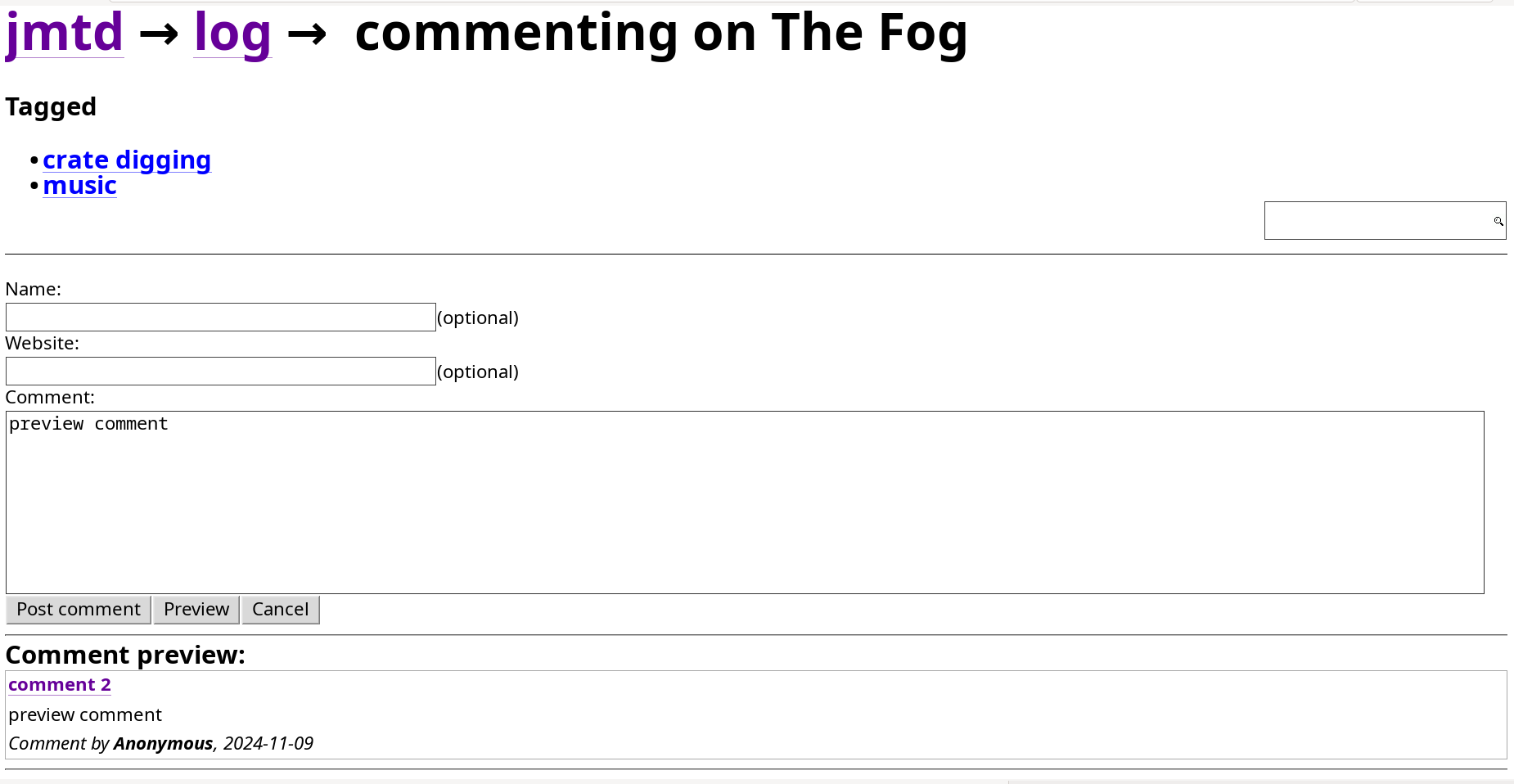
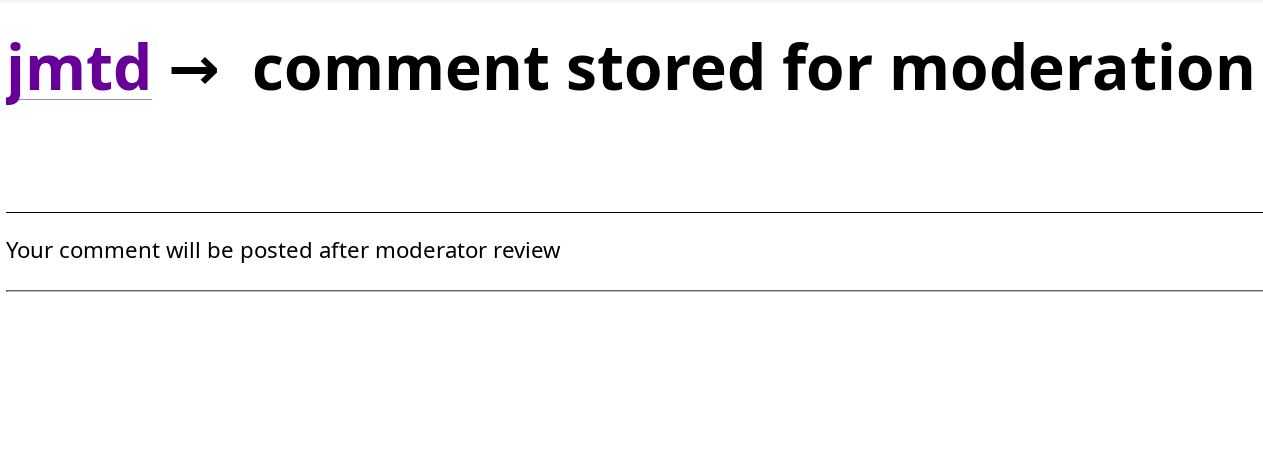



 University of Nairobi.
 Our group at the conference.
 View of Nairobi's skyline from the open area on the fifth floor.
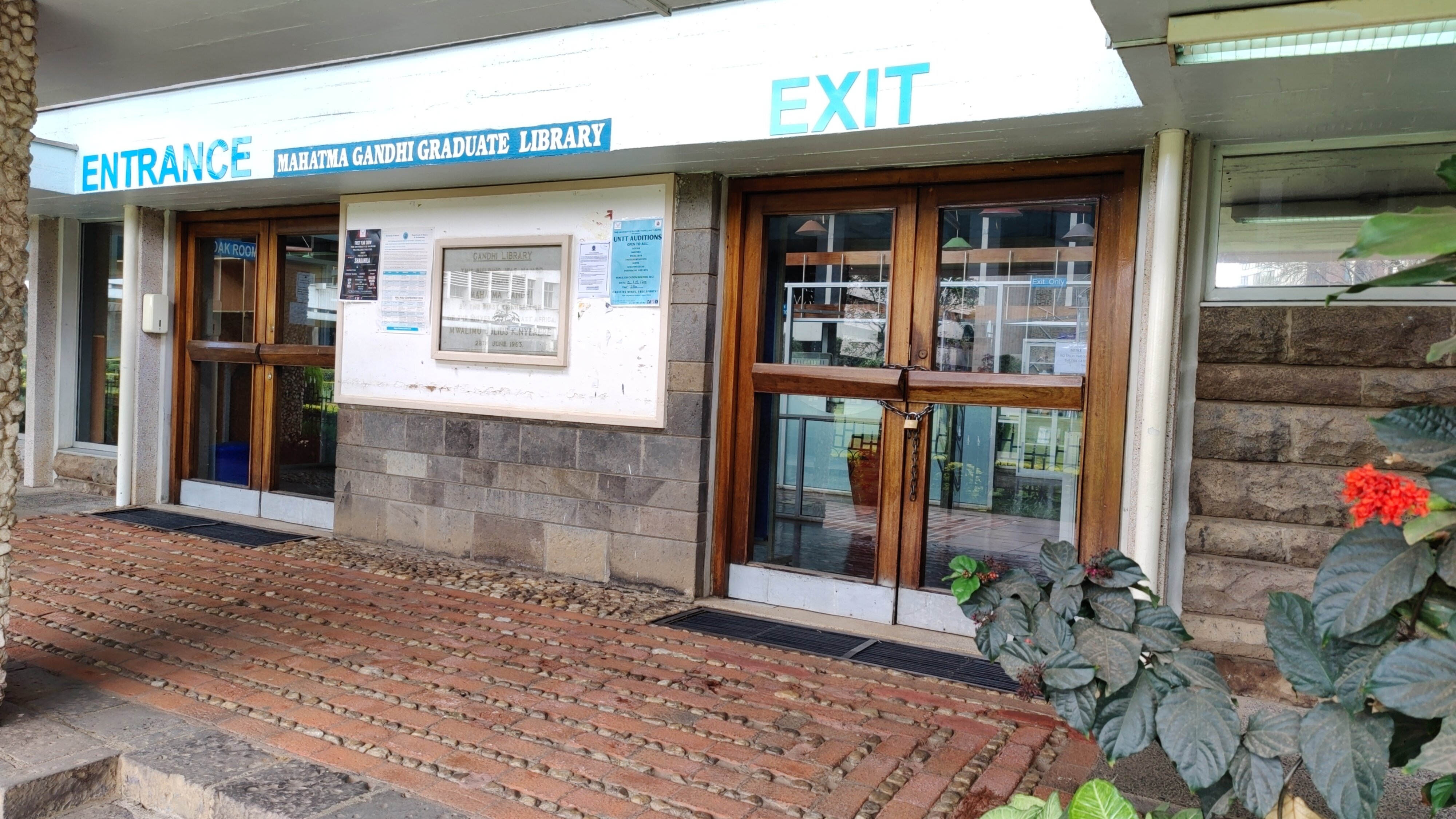 A library in Mahatma Gandhi wing of the University of Nairobi.
 One of the conference halls where talks took place.
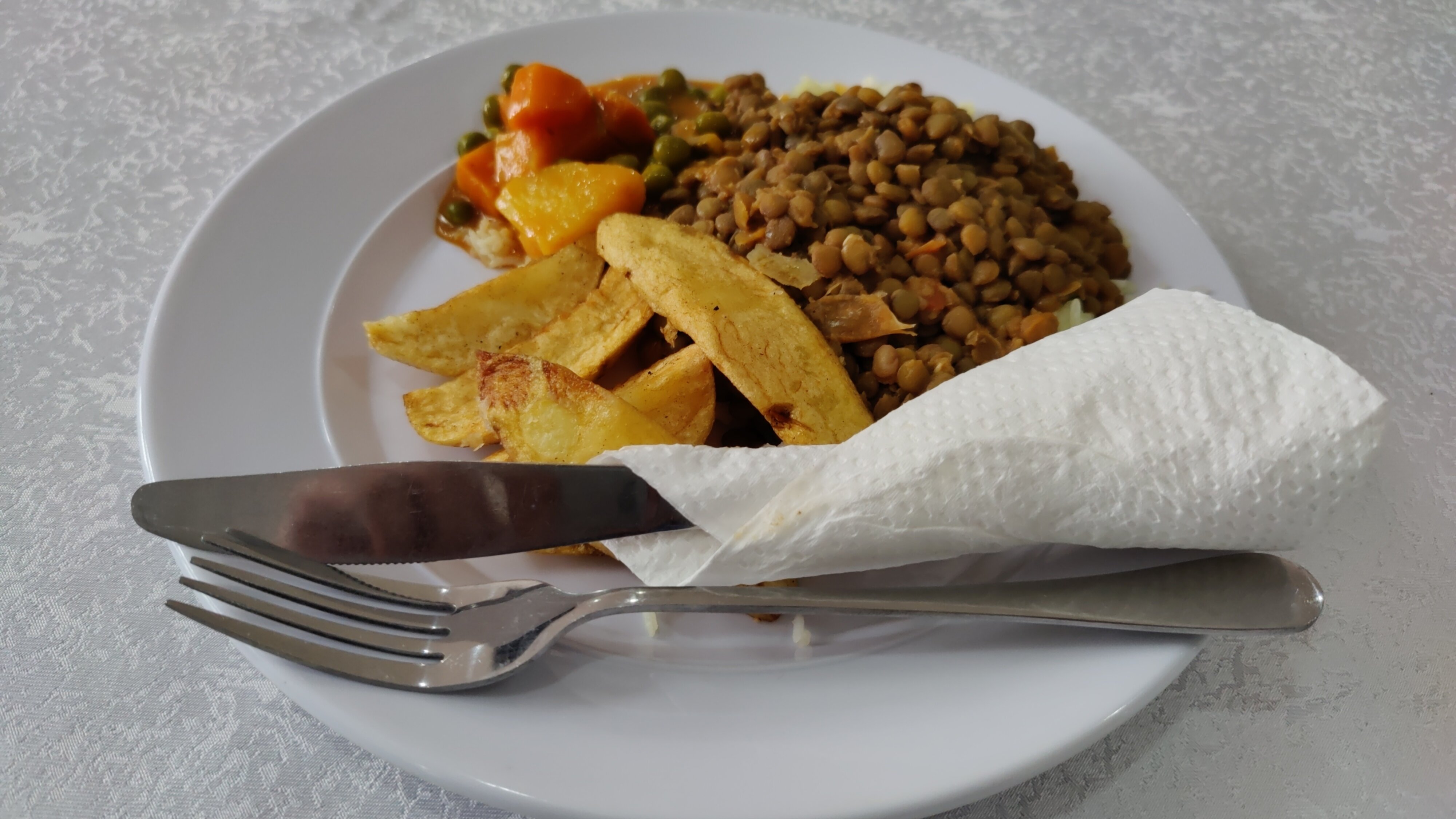 One of the lunch meals served during the conference.
 Minibus which took us from the university to Bao Box restaurant.
 This minibus in the picture gave a sense of a real matatu.