Search Results: "ads"

11 May 2026

Freexian Collaborators: Debusine workflow performance issues (by Colin Watson)

During March and April, we had a number of performance issues that made Debusine s core functions of running work requests and reflecting their results in workflows quite unreliable. Investigating and fixing this took up a lot of time from both the Debusine development team and Freexian s sysadmins. The central problems involved a series of database concurrency and worker communication issues that interacted in complex ways. On bad days, this caused between 10% and 25% of processed work requests to fail unnecessarily. We communicated some of the problems to users on IRC, but not consistently since we didn t entirely understand the scope of the problems at the time. Most of the problems are fixed now, but we had a retrospective meeting to make sure we understood what happened and that we learn from it. Here s a summary.

Data model Debusine s workflows consist of many individual work requests. Each work request has a database row representing its state, which means that the overall state of a workflow is distributed across many rows. Changes to one work request (for example, when it is completed) can cause changes to other work requests (perhaps unblocking it so that it can be scheduled to an idle worker). Those changes may happen concurrently, and in practice often do. Workers typically need to create artifacts containing the output of tasks: these include things like packages, build logs, and test output. Debusine records task history so that it can make better decisions about how to schedule work requests. Since this might otherwise grow without bound, the server expires older parts of that history after a while. The same is true for many other kinds of data.

Causes
  • Because workflows involve changes that propagate between work requests, there were historically some cases where different parts of the system could deadlock due to trying to take update locks on overlapping sets of work request rows in different orders. We mitigated that somewhere around 2025-11-05 by locking entire workflows in one go before making any change that might need to propagate between work requests like this; that dealt with the deadlocks, but it s quite a heavyweight locking strategy that sometimes caused significant delays.
  • We ve been working for some time to make Debusine useful to Debian developers, and regression tracking is an important part of that: it lets developers test uploads without being too badly misled by tests in related packages that were already failing before they started. On 2026-03-11 we enabled this by default on debusine.debian.net, after testing it for a while. Although this is useful, it put more load on the system as a whole, often approximately doubling the number of work requests in a given workflow with many additional dependencies between them.
  • Like much of the world, we re in an arms race with unethical scrapers desperately trying to feed everyone else s data into LLMs before they run out of money. We saw a substantial uptick here towards the end of March, which meant that we had to temporarily disable regression tracking and to put some other mitigations in front of our web interface.
  • We historically haven t had systematic internal timeouts. Prompted by ruff, a Google Summer of Code applicant went through and added timeouts in many places, including some calls between the worker and the server. This was fiddly work and the student did a solid job, so I m not putting them on blast or anything! However, it did mean that some things that came in under load balancer timeouts now timed out earlier on the client side of the request (and hence in Debusine workers), which made some problems show up in different ways and be more obvious. This was deployed on 2026-04-03.

Fixes

Workflow orchestration Figuring out what individual work requests need to be run as part of a workflow - the process we call orchestration - can be challenging. Unlike typical CI pipelines, these workflows often span substantial chunks of a distribution: a glibc update can involve retesting nearly everything! Nevertheless, it s not particularly helpful for it to take hours just to build the workflow graph. Fixing this involved many classic database optimizations such as adding indexes and CTEs, but probably the most effective fix was adding a cache for lookups within each orchestrator run or work request. Profiling showed that resolving lookups was a hot spot, and the way that task data is often passed down through a workflow meant that the same lookup could be resolved hundreds or thousands of times in a large workflow.

Expiry We knew for quite some time that our expiry job took very aggressive locks, effectively blocking most of the rest of the system. This was an early decision to make the expiry logic simpler by allowing it to follow graphs without worrying about concurrent activity, but it clearly couldn t stay that way forever. Row locks in PostgreSQL was very helpful in figuring out the correct approach here. Since we re mainly concerned about the possibility of new foreign key references being created to artifacts we re considering for expiry, and since that would involve taking FOR KEY SHARE locks on those rows, we can explicitly take FOR UPDATE locks (which conflict with FOR KEY SHARE), and then recompute the set of artifacts to expire with any locked artifacts marked to keep. This was delicate work, but it saved minutes of downtime every day.

Whole-workflow locking I mentioned earlier that we avoided some deadlock issues by taking locks on entire workflows. To ensure that these locks are effective even against code that isn t specifically aware of them, this is implemented by using SELECT FOR UPDATE on all the work request rows in the workflow. In some cases the search for which rows to lock itself tripped up the PostgreSQL planner.

Scheduling We run multiple Celery workers for various purposes. Some of them can do many things in parallel, but in some specific cases (notably the task scheduler) we only ever want a single instance to run at once. Unfortunately a bug in the systemd service meant that the scheduler often ran concurrently anyway! Once we fixed that, the scheduler logs became a lot less confusing. When Debusine was small, it was reasonable for it to perform scheduling very aggressively, typically as soon as any change occurred to a work request or a worker that might possibly influence it. This doesn t scale very well, though, and even though we tried to batch multiple scheduling triggers that occurred within a single transaction, it could still make debugging very confusing. We reduced the number of changes that would result in immediate scheduling, and deferred everything else to a regular tick . The scheduler may not be able to assign a work request to an idle worker due to the workflow being locked. That isn t a major problem in itself; it can just try again later. However, in very large workflows, we found that it often worked its way down all the pending work requests one by one finding that each of them was locked, which was slow and also produced a huge amount of log noise. It now assumes that if a work request is locked, then it might as well skip other work requests in the same workflow until the next scheduler run. Between them, these changes reduced the number of locks typically being held on debusine.debian.net by about 80%: Lock graph

Worker refactoring The Debusine worker has always been partially asynchronous, but while it was actually executing a task - in other words, most of the time, at least in busy periods - it didn t respond to inbound websocket messages, causing spurious disconnections. We restructured the whole worker to be fully event-based. We also had to put quite a bit of effort into improving the path by which workers report work request completion, because if that hits a timeout then it can mean throwing away hours of work. We have some further improvements in mind, but for now we defer most of this work to a Celery task so that whole-workflow locks aren t on the critical path.

Database write volume One of our sysadmins observed that our database write volume was consistently very high. This was a puzzle, but for a long time we left that unexplored. Eventually we thought to ask PostgreSQL s own statistics, and we found a surprise:
debusine=> SELECT relname AS table_name,
debusine->        n_tup_ins AS inserts,
debusine->        n_tup_upd AS updates,
debusine->        n_tup_del AS deletes,
debusine->        (n_tup_ins + n_tup_upd + n_tup_del) AS total_dml
debusine-> FROM pg_stat_user_tables
debusine-> WHERE (n_tup_ins + n_tup_upd + n_tup_del) > 0
debusine-> ORDER BY total_dml DESC
debusine-> LIMIT 20;
              table_name                inserts    updates     deletes   total_dml
--------------------------------------+---------+------------+---------+------------
 db_collectionitem                      1418251   3578202388   3630143   3583250782
 db_token                                 15143     11212106     11389     11238638
 db_workrequest                          386196      6399071   1820500      8605767
 db_fileinartifact                      2783021      1837929   1663887      6284837
 django_celery_results_taskresult       1819301      1501623   1791656      5112580
 db_artifact                             960077      3340859    663890      4964826
 db_collectionitemmatchconstraint       1550457            0   2207486      3757943
 db_artifactrelation                    2229382            0   1363825      3593207
 db_fileupload                          1023400      1057036   1023346      3103782
 db_file                                1673194            0    970252      2643446
 db_fileinstore                         1411995            0    970259      2382254
 db_filestore                                 0      2381578         0      2381578
 django_session                          645423      1519880       531      2165834
 db_workrequest_dependencies             365877            0    936537      1302414
 db_worker                                18317       949280      9487       977084
 db_collection                            10061           85    177741       187887
 db_workerpooltaskexecutionstatistics     28721            0         0        28721
 db_workerpoolstatistics                   1640            0         0         1640
 db_workflowtemplate                        130          158       649          937
 db_identity                                 76          661         0          737
(20 rows)
Oh my - that s a lot of db_collectionitem updates and must surely be out of proportion with what we really need. Can we narrow that down by asking about the most recently-updated tuples?
debusine=> SELECT DISTINCT category
debusine-> FROM db_collectionitem
debusine-> WHERE id IN (
debusine->     SELECT id FROM db_collectionitem
debusine->     ORDER BY xmin::text::integer DESC LIMIT 10000
debusine-> );
           category
------------------------------
 debusine:historical-task-run
(1 row)
That might not be absolutely reliable, but it was certainly a hint. As per PostgreSQL s documentation, by default UPDATE always performs physical updates to every matching row regardless of whether the data has changed, and our code to expire old task history entries wasn t doing that properly. Once we knew where to look, it was easy to add some extra constraints. This reduced our mean write volume on debusine.debian.net from about 23 MB/s to about 3 MB/s, which had an immediate knock-on effect on our request failure rate: Disk write graph HTTP errors

Current state Our metrics indicate that things are a lot better now. We still have a few things to deal with, such as:
  • Some more performance fixes are on their way to fix some remaining cases where views are very slow or where file uploads from workers fail due to locks.
  • We have some changes in the works to revamp how work request changes propagate through workflows in a way that doesn t require so many heavyweight locks.
  • We have a number of monitoring and alerting improvements we d like to make, both for outcomes (things like slow Celery tasks) and possible root causes (database performance). We d also like to deploy some more modern observability tools; hunting for things using journalctl isn t terrible, but it s not really the state of the art.
  • We need to improve how we communicate to users when we re having operational problems, both informally (IRC, etc.) and on the site.
  • Retries don t always behave the way you d expect in workflows.
I hope this has been an interesting tour through the sorts of things that can go wrong in this kind of distributed system!

9 May 2026

Dirk Eddelbuettel: RcppSpdlog 0.0.29 on CRAN: Small Enhancement

Version 0.0.29 of RcppSpdlog arrived on CRAN today, has been uploaded to Debian and built for r2u. The (nice) documentation site has been refreshed too. RcppSpdlog bundles spdlog, a wonderful header-only C++ logging library with all the bells and whistles you would want that was written by Gabi Melman, and also includes fmt by Victor Zverovich. You can learn more at the nice package documention site. This release features a rewritten internal routine unpacking the R variadic arguments into C++ variadic template arguments. This in turn allows to turn back to std::format in C++ mode when C++20 is used. We also adjust for the not-quite-ready-for-this state of the x86-64 based macOS machine at CRAN. It is running a compiler and SDK choice that cannot fully deal with C++20, so we dial compilation on it down to C++17. Similarly, and as we found out after the release, Ubuntu jammy is also too old to default to std::format so we need to add a better detection here too so that we can also fall back to the included fmt there. The NEWS entry for this release follows.

Changes in RcppSpdlog version 0.0.29 (2026-05-08)
  • Some small continuous integration updates
  • The internal formatter was rewritten as a recursive generator of variadic templates.
  • Switch back to std::format with C++20, but force inferior macos-release-x86_64 to use C++17 rather than default C++20 which fails

Courtesy of my CRANberries, there is also a diffstat report detailing changes. More detailed information is on the RcppSpdlog page, or the package documention site.

This post by Dirk Eddelbuettel originated on his Thinking inside the box blog. If you like this or other open-source work I do, you can sponsor me at GitHub.

7 May 2026

Reproducible Builds: Reproducible Builds in April 2026

Welcome to our April 2026 report from the Reproducible Builds project! Our reports outline what we ve been up to over the past month, highlighting items of news from elsewhere in the increasingly-important area of software supply-chain security. As ever, if you are interested in contributing to the Reproducible Builds project, please see the Contribute page on our website. In this month s report, we cover:

  1. Tor stateless relays and Reproducible Builds
  2. Civil Infrastructure Platform celebrates 10 years of supporting industrial grade Linux
  3. Reproducible Builds at LinuxFest NorthWest
  4. Reproducibility issues in Rust binaries that embed random bytes
  5. Distribution work
  6. Patches
  7. diffoscope development
  8. Documentation updates
  9. Misc news


Tor stateless relays and Reproducible Builds An interesting post was published on Tor Project blog by Osservatorio Nessuno OdV this month on stateless relays . These are stateless, diskless operating systems that are designed to be used as Tor exit relays. According to the post, which is titled A Server That Forgets: Exploring Stateless Relays:
For relay operators, this approach raises the security bar by enforcing better behaviors by design: [ ]
  1. Reproducibility. A system that doesn t change between reboots is easier to verify and, eventually, to reproduce and audit.
Furthermore, using a Trusted Platform Module (TPM), could allow for greater integrity in the future:
Transparency logs. Once you have a measured boot chain, you can publish it. A relay operator provides a recipe for a reproducible build; anyone can recompute the expected hash and verify it matches what the TPM reports. An append-only transparency log can make these attestations publicly auditable. The Tor community could run an independent monitor to track this across the relay fleet.

Civil Infrastructure Platform celebrates 10 years of supporting industrial grade Linux Congratulations to the Civil Infrastructure Platform (CIP) for reaching their 10-year anniversary last month. CIP has been a supporter of Reproducible Builds for many years, and we have collaborated on a number of technical issues that overlap. As Chris Lamb mentions in CIP s press release:
The collaboration between the Reproducible Builds project and CIP highlights a critical shift in how we approach industrial software. Through verifiability, CIP ensures that the open source foundation of our critical infrastructure is not only sustainable but also demonstrably secure. This commitment to transparency is vital for the trust and resilience required by critical systems over decades of operation.

Reproducible Builds at LinuxFest NorthWest Vagrant Cascadian and Chris Lamb hosted a table in the exposition hall at LinuxFest NorthWest 2026 this month in Bellingham, WA, USA, introducing many people to Reproducible Builds and answering questions both days of the conference. In addition, Vagrant presented Beyond Trusting Open Source Software on Sunday afternoon, exploring the intersection of Free/Open Source Software, Reproducible Builds and Bootstrappable builds, and how they all reinforce each other. Vagrant s slides are available online, including source code to build them reproducibly.

Reproducibility issues in Rust binaries that embed random bytes Reproducible Builds developer kpcyrd opened a ticket on the Rustsec issue tracker regarding binaries that deliberately inject random bytes into their binaries as a secret seed for a Hash Collision DoS mitigation. As kpcyrd notes in his message, this causes issues for reproducibility, and because the relevant end-user binaries are mostly distributed pre-compiled through package managers, those binaries (and by extension the secret seed) are public knowledge . kpcyrd goes on to note:
This is somewhat unique to Rust because Python/JavaScript doesn t compile binaries, and Go (to my knowledge) is too restrictive during build for any library to pull something like this.

Distribution work In Arch Linux this month, Robin Candau and Mark Hegreberg worked at adding a new repro tag/version to the Arch Linux Docker images providing a bit-for-bit reproducible image. Robin also shared a related announcement and implementation details on our mailing list. Arch Linux developer Robin Candau posted a blog post announcing that Arch Linux Now Has a Bit-for-Bit Reproducible Docker Image . Robin mentions one interesting caveat:
to ensure reproducibility, the pacman [package manager] keys have to be stripped from the image, meaning that pacman is not usable out of the box in this image. While waiting to find a suitable solution to this technical constraint, we are therefore providing this reproducible image under a dedicated tag as a first milestone. [ ]
The blog post was also discussed on Hacker News.
In Debian this month, 24 reviews of Debian packages were added, 7 were updated and 16 were removed this month adding to our knowledge about identified issues. Vagrant Cascadian performed Non-Maintainer Uploads (NMUs) in Debian for several packages with outstanding patches over a year old jakarta-jmeter, wxmplot, critcl, vcsh and magic-wormhole-transit-relay. In addition, Reproducible Builds developer Jochen Sprickerhof filed a bug against the APT package manager to request that APT should ignore [a] 0 epoch when downloading or installing with a version specifier . This is related to the special-case handling of the optional epoch prefix in Debian package version numbers.
In NixOS, Julien Malka presented Lila: Decentralized Build Reproducibility Monitoring for the Functional Package Management Model, a paper written together with Arnout Engelen at the Mining Software Repositories (MSR) ACM conference, where it was awarded the MSR 2026 FOSS Impact Award. Congratulations!
Lastly, in openSUSE, Michael Schroeder added reproducibility verification support in the Open Build Service [ ] and Bernhard M. Wiedemann posted another openSUSE monthly update for their reproducibility work there.

Patches The Reproducible Builds project detects, dissects and attempts to fix as many currently-unreproducible packages as possible. We endeavour to send all of our patches upstream where applicable or possible. This month, we wrote a large number of such patches, including:

diffoscope development diffoscope is our in-depth and content-aware diff utility that can locate and diagnose reproducibility issues. This month, Chris Lamb made a number of changes, including preparing and uploading versions, 316, 317 and 318 to Debian.
  • Chris Lamb:
    • Bump Standards-Version to 4.7.4. [ ]
    • Correct ordering of python3-guestfs architecture restrictions. [ ]
    • Limit python3-guestfs Build-Dependency to architectures that are not i386. [ ]
    • Try to fix PYPI_ID_TOKEN debugging. [ ]
  • Holger Levsen:
    • Add ppc64el to the list of python3-guestfs architecture whitelist. (Closes: #1132974). [ ]
In addition, Vagrant Cascadian updated diffoscope in GNU Guix to version 317.

Documentation updates Yet again, there were a number of improvements made to our website this month including:
  • Manuel Jacob:
    • Fix some minor wording issues on the Stable inputs page, and update information about the sorting behavior of GNU Make [ ].
    • On the Archives page, remove information about deterministic archives in historical Fedora versions [ ], add a note about .tar file portability [ ] and correct a section about .tar PAX headers [ ].
  • Mattia Rizzolo:
  • kpcyrd:
  • ktecho:

Misc news On our mailing list this month:
  • Timo Pohl posted our list inviting people to online group discussions with 4-6 participants each to talk about your perception of terms and requirements for reproducibility. As Timo notes:
    During our research of the existing literature, as well as my experience at the Reproducible Builds Summit 2025 in Vienna, we noticed that some of the terminology in the field is not used consistently across different groups of people, and that the precise meaning of some core terms like reproducibility of an artifact in itself is not uniform.
    As Timo mentions, the sessions will last roughly 90 minutes and will be rewarded with 50 per participant.
  • kpcyrd posted to the list asking for assistance with fixing an issue after updating the flake.lock file for their repro-env project.
  • Aman Sharma of the KTH Royal Institute of Technology, Sweden, posted to our list in order to share that Eric Cornelissen, a PhD student in KTH s CHAINS group, is maintaining an open-source project to monitor the reproducibility of GitHub Actions:
    The goal of the project is to assess whether GitHub Actions can be reproduced. Currently, it focuses on two types of Actions: JavaScript-based actions and Docker-based actions (composite actions are not considered). For JavaScript actions, the project rebuilds the distributed files and compares them bit-by-bit with the repository contents. For Docker actions, it rebuilds images from the Dockerfile and checks for semantic equivalence, using diffoci, across builds.


Finally, if you are interested in contributing to the Reproducible Builds project, please visit our Contribute page on our website. However, you can get in touch with us via:

4 May 2026

Russell Coker: Tower Servers and Resizable BAR

A feature on modern PCIe implementations is Resizable BAR AKA REBAR . This basically means that instead of allocating 256MB of address space for a PCIe device to have it s memory mapped the device can ask for more, the limit can be 4G with some hardware or the combination of motherboard and expansion card can support 64bit addressing to allow the entire memory space of a GPU to be mapped in one region. Directly mapping all the memory will be faster no matter how things work, but a combination of algorithms optimised for a flat memory layout and overheads from remapping can cause 90% of performance to be lost without REBAR support. Some GPUs (or maybe the software driving them) will even refuse to work without it. I believe that almost all hardware supporting DDR4 will support REBAR at a hardware level, but in many cases the BIOS doesn t support it. There are people who have reflashed a system BIOS to add REBAR support and there are options to use a modified UEFI boot loader to replace the code that is used for mapping the GPU memory. The systems I like to use are server grade tower systems with registered ECC RAM, after a few years they become quite cheap and still give decent performance while supporting large amounts of RAM. But many such systems that could support REBAR don t, presumably because the vendor doesn t have a great interest in supporting new uses of old hardware. Comparing the Name Brand Servers The HP Z640 and Z840 systems I m running date from 2014 and give good performance with replacement CPUs that are cheap on ebay, but they don t support REBAR without a flashed BIOS. The next release of those HP servers are the HP Z6 and Z8 Gen 4 systems from 2017 that have BIOS support for enabling REBAR. The Lenovo Thinkstation Px20 (P520, P920, etc) don t support REBAR which is especially disappointing as they were on sale from 2017 to 2022 and have decently fast CPUs. The replacement for the Px20 systems are the ones that are still on sale now and they seem likely to have REBAR support but won t be affordable on ebay. The Dell PowerEdge T440 and R740 systems (and presumably all their servers from 2017) don t support REBAR. There are no google hits for T550 and R750 systems from 2021, so presumably no complaints means that Dell servers from that era support it. But the T350 servers are junk and only take slow CPUs, and the T550 systems are brutally expensive. The Precision 5520 systems don t support it and newer Precision workstations will get expensive. It seems that HP is best for this. Which HP Workstation The Z2 G4 only supports 64G of RAM so isn t worth considering. The Z4 G4 is low end and comes in two variants. The one with i5/i7/i9 CPUs doesn t support ECC RAM so isn t suitable for me, and that probably means most Z4 G4 systems on the market. The upside is that apparently 2*6pin PCIe power cables is standard so any size GPU should work and there are 8 DIMM slots supporting up to 512G of RAM. There are 3 options for PSU, 490w for 0 GPUs, 750W for 2 (small) GPUs, and 1000W for up to 4 GPUs. The Z6 G4 has an option for a second CPU that almost no-one selects, that reduces the space for RAM so there s only 6 DIMM slots. But as there is no option for a Z6 without ECC RAM every one on offer will be good. The Z8 G4 is a nice dual socket system that I would not use for a serious GPU after my experience of my Z840 having a motherboard problem from a big GPU. The Z4 G4 is going for about $500 on ebay with the 750W PSU, that is more than I want to pay but not a lot more. In 6 months they could be going for $350 or so. There are hardly any Z6 G4 systems on offer and they are all well over $1000 so I m not considering them. Conclusion I need to poll the second hand sites for Z4 G4 systems and find one going cheap. One of those could be a good ML test machine for a while and then become a workstation once the faster CPUs (which are currently around $900) become cheap.

3 May 2026

Emmanuel Kasper: Arm64 Linux Desktop: one year after, all systems up

So I am using Debian on a System76 Arm64 (aarch64) workstation since 9 months, and I can say: everything works. It should be noted that I use very few proprietary software, so I rely mostly on Debian packages for what I am doing. What I can say is basically all open source software which exists today, takes care to build on aarch64 or is available as a binary, either in the Debian archive, in a Flatpak or Snap, or in a Github Artefact. From 3D games, to Kubernetes tooling, practically everything open source is compiled for aarch64 Linux as well. Same thing for server software, every container image built is also proposing an aarch64 binary today. I could also add a standard PCI Express Soundblaster sound card, and the kernel recognized it without issues. The major downside I had was that Wayland is not working on my Nvidia GPU, whether with Nouveau or the proprietary drivers, thus I am using Gnome with X11. Also on the proprietary side, I missed the Discourse client, but I am not using that much, and those video meetings tool which popped up in the COVID time are perfectly usable in the browser. The situation is for me much better than in the 2000s when I used a Mac Mini (powerpc) with Debian, where the need for a Flash player at that time really limited the amount of online content I could access. What do I get using aarch64 you ask ? The main reason for me was the curiosity to use a non x86 arch, and to have a 80 core / 128 GB RAM machine to do a Lab in a Box with OpenShift running on OpenStack, with Ceph and a bit of local LLM inference thrown in. In the end I have enough labs at work, so that need disappeared, but I still enjoy having that amount of power in a rather quiet machine for a standard 80W consumption.

Jelmer Vernoo : Inquest, a test result repository in Rust

testrepository For a long time I ve used Robert Collins testrepository (testr) to run tests in many of the projects I work on. It s a small, focused tool built around a simple idea: decouple the running of tests from the recording and querying of their results. The way it works is straightforward. A test runner emits a subunit stream a compact binary protocol for test results and testrepository stores those streams in a per-project .testrepository/ directory. Once results are in the repository, you can ask questions like which tests failed in the last run? , re-run only the failures , what are the slowest tests? , or what changed between this run and the previous one? . The killer feature, for me, has always been the failing-test loop. When a big test suite breaks, you don t want to re-run the whole thing after every fix you want to iterate on just the failures, and only re-run the full suite once they re all green. testrepository made that workflow ergonomic long before most language-specific test runners had anything comparable, and many of them still don t have a good answer for it. testrepository has served me well for over a decade, but it has been largely unmaintained for a while, and I had some ideas of improvements that I wanted to try out. So I wrote a Rust port, which has since grown a number of features of its own.
Inquest Inquest is a Rust port of testrepository that has since grown a number of features of its own. The binary is called inq.
Goals The goals are deliberately modest:
  • a single static binary, no Python runtime required
  • no need to write a dedicated config file for most projects
  • compatible enough with testrepository s workflow that I can switch projects over without retraining my fingers
  • a richer on-disk format that captures more about each run (git commit, command line, duration, exit code, concurrency)
  • good support for the languages I actually use day-to-day: Rust, Python, Go, and Node.js
  • mostly Do What I Mean (DWIM), e.g. getting me to know as quickly as possible what tests are failing and why, and being clever about doing this
Inquest reads and writes subunit v2 streams, so anything that can produce subunit (directly or via one of the many converters) can feed into it.
Quick start Inquest can usually figure out how to run your tests on its own. In a Rust, Python, Go or Node.js project:
 $ cd my-project
 $ inq
Or if the auto-detection doesn t work, you can ask it to generate a config file and then run the tests:
 $ inq auto
 $ inq run
inq auto writes an inquest.toml describing how to invoke the test runner; inq run runs the tests, captures the subunit stream, and stores the results in a .inquest/ directory. For a Rust project the generated config looks like:
 test_command = "cargo subunit $IDOPTION"
 test_id_option = "--test $IDFILE"
 test_list_option = "--list"
After the first run, the usual queries work:
 $ inq stats             # repository-wide statistics
 $ inq last              # results of the most recent run
 $ inq failing           # only the failing tests
 $ inq slowest           # the slowest tests in the last run
 $ inq run --failing     # re-run only what failed last time
The last one is the workflow I use most often: run the full suite once, fix the obvious failures, then iterate on inq run --failing until the list is empty.
A few things that aren t in testrepository Some of the features that have grown in inquest beyond the original testrepository functionality:
  • Timeouts. --test-timeout, --max-duration, and --no-output-timeout will kill a test process that is hanging or has stopped producing output. --test-timeout auto derives a per-test timeout from the historical duration of that test, which is handy for catching tests that hang. Once the test runner is killed, the test is marked as failed and the next test is started, so a broken test doesn t hold up the whole suite.

  • Ordering --order can be used to run tests in a specific order, e.g. to run the slowest tests first, to run the tests that failed most recently first, or to run the widest variety of tests first to maximize the chance of finding a failure early on.

  • Live progress. inq running tails the in-progress subunit stream on disk and reports observed/expected test counts, percent complete, elapsed wall-clock time, and an ETA derived from each test s historical duration. Useful when a CI run is taking longer than you d like.

  • Flakiness ranking. inq flaky ranks tests by pass fail transitions in consecutive runs in which the test was recorded, so chronically broken tests rank low and genuinely flapping tests rank high.

  • Comparing runs. inq diff <A> <B> shows what changed between two test runs newly failing, newly passing, and tests that flipped state which makes it easy to see whether your last change actually fixed (or broke) anything.

  • Bisecting git history. inq bisect <TEST> drives git bisect to find the commit that broke a given test. It defaults the known-good and known-bad commits from the recorded run history (the most recent run where the test passed, and the most recent where it failed), so in the common case there is no need to remember either just point it at the test name and let it work.

  • Richer run metadata. inq info shows the git commit, command line, duration, exit code, and concurrency for a run, with a flag for whether the working tree was dirty when the run started. Combined with inq diff this makes it much easier to triangulate when a regression was introduced.

  • Rerun a previous run verbatim. inq rerun <ID> re-runs exactly the tests of a previous run, in the same order, forwarding the same -- arguments that the original run used. inq rerun -1 repeats the latest.

  • Web based view. inq web serves a web-based view of the repository, with a dashboard of recent runs and detailed views of individual runs and tests.

Web UI Most of the time I drive inquest from the command line, but for browsing historical results of a large suite spotting flapping tests, drilling into a single test s run history, or just getting a visual sense of which parts of the suite are hurting a web view is more pleasant. inq web starts a local server with exactly that:
 $ inq web
The repository overview shows totals and a per-test history grid where each cell is one run, coloured by outcome. Bands of red make it easy to pick out tests that have been broken for a long time, and isolated red cells in an otherwise green column point at flaky tests. Inquest web UI repository overview, with a grid of per-run results Drilling into an individual test gives you its full run history, a duration sparkline, and per-run pass/fail status: Inquest web UI per-test view with run history and duration sparkline
Migrating from testrepository If you already have a .testrepository/ directory full of historical runs, inq upgrade will migrate it into the new .inquest/ format, with a progress bar for the impatient. The legacy .testr.conf (INI) format is still understood, so existing projects don t have to be converted to inquest.toml immediately though the TOML format is preferred for new projects.
Trying it The source is on GitHub at jelmer/inquest. To install from source:
 $ cargo install inquest
In a project with a Rust, Python, Go or Node.js test suite:
 $ inq
Bug reports and patches are welcome.

2 May 2026

Bits from Debian: Debian welcomes the 2026 GSoC interns

GSoC logo We are very excited to announce that Debian has been assigned seven contributors to work under mentorship on a variety of projects with us during the Google Summer of Code. Here is a list of the projects and contributors, along with details of the tasks to be performed.

Project: Automated Debian Packaging with debianize Deliverables of the project: Debianize is a tool that aims to automatically create debian packages from scratch from upstream source trees. As for the current version, it works for some of the packages but it is not reliable. This project aims at making it production ready such that it can work with most of the projects. Along with that improving its reliability, coverage, integration with the broader ecosystem and other enhancements.
Project: Linux Livepatching Deliverables of the project: Linux Kernel Livepatching is the process of replacing functions in the kernel code affected by CVEs with the patch-applied functions during system runtime. It's basically a method to apply security kernel patches to a running system.
Project: DebNet: Visualising the Bus Factor Graph Analysis of Debian's Infrastructure Deliverables of the project: DebNet models the Debian archive as a graph to identify critical packages maintained by too few people. Using data from the Ultimate Debian Database (UDD), it builds a package dependency graph and a maintainer-package graph to compute practical metrics like the Bus Factor, Fragility Score, and Dependency Impact for every source package.
Project: Attack of the Clones: Fight Back Using Code Duplication Detection From Security Patches Deliverables of the project: This project aims to detect vulnerable code clones in the Debian archive by automatically extracting signatures from security patches. Using a two-signal approach that separates vulnerable patterns from fix patterns, the system generates high-specificity queries to search the entire archive via Debian CodeSearch.
Project: Debusine: debuginfod server Deliverables of the project: This project implements a debuginfod-compatible server within Debusine to provide automated debug symbol resolution for Debian developers.
Project: Debian-LSP: Improve File Format Support Deliverables of the project: The Debian LSP Language Server currently provides only basic features field completion, parse-error diagnostics, and simple quick fixes leaving Debian maintainers without the rich IDE experience available in other ecosystems.
Project: Debusine: live log streaming Deliverables of the project: Debusine currently only shows task logs after a task has fully completed. This means developers working with long-running jobs (such as package builds or test pipelines) have no way to monitor progress in real time or catch failures early. This project adds live log streaming to Debusine.
Congratulations and welcome to all the contributors! The Google Summer of Code program is possible in Debian thanks to the efforts of Debian Developers and Debian Contributors that dedicate part of their free time to mentor contributors and outreach tasks. Join us and help extend Debian! You can follow the contributors' weekly reports on the debian-outreach mailing-list, chat with us on our IRC channel or reach out to the individual projects' team mailing lists.

Ben Hutchings: FOSS activity in April 2026

1 May 2026

Dirk Eddelbuettel: binb 0.0.8 on CRAN: Maintenance

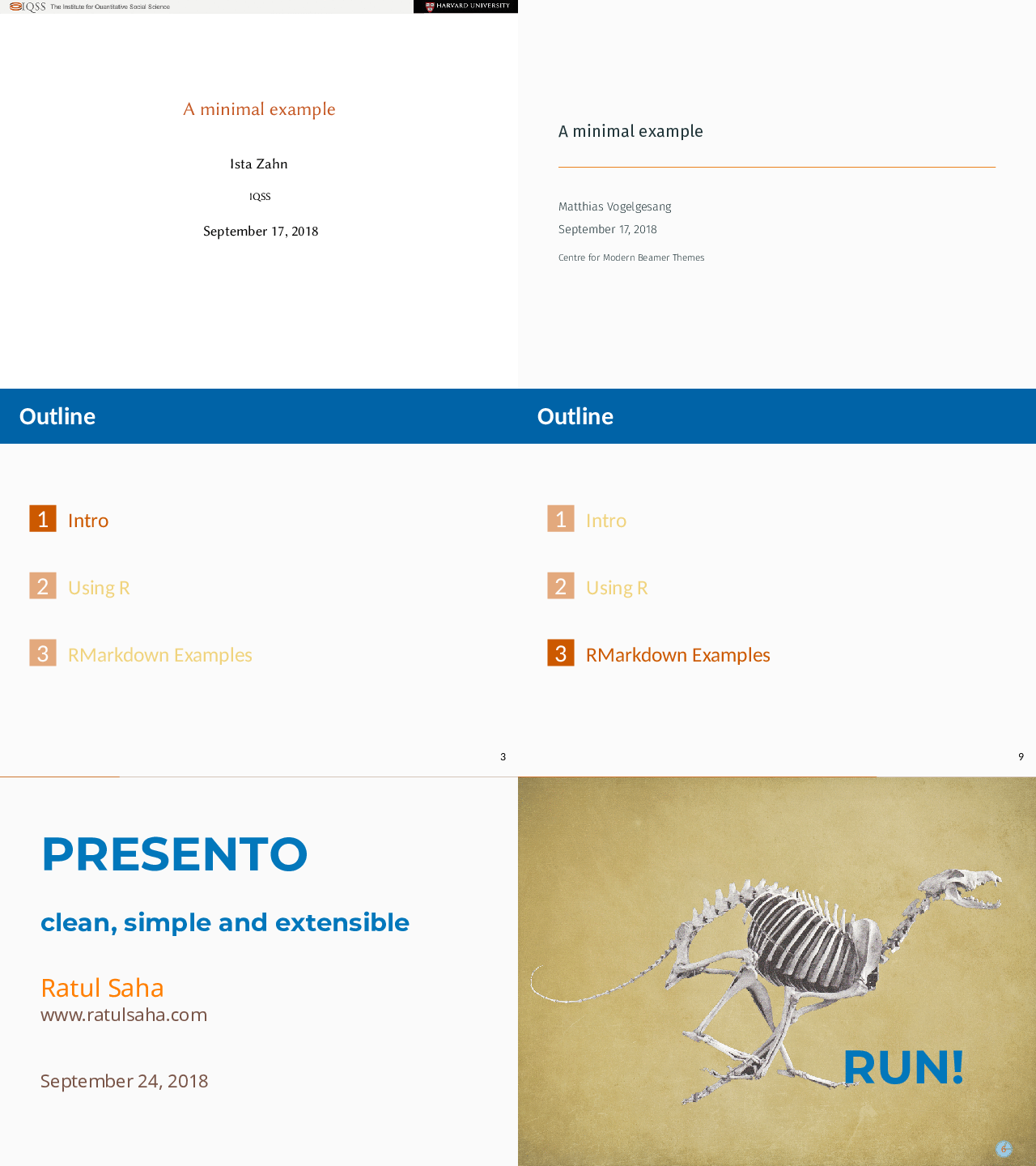
The eight release of the binb package, and first in two years, is now on CRAN and in r2u. binb regroups four rather nice themes for writing LaTeX Beamer presentations much more easily in (R)Markdown. As a teaser, a quick demo combining all four themes is available; documentation and examples are in the package. This release contains regular internal updates to continuous integration, URLs reference and switch to Authors@R. The trigger for the release, though, was a small updated need when very recent pandoc versions (as shipped with RStudio) are used which require a new variable declaration in the LaTeX template files in order to process uncaptioned tables. The summary of changes follows.

Changes in binb version 0.0.8 (2026-05-01)
  • Small updates to documentation URLs and continuous integration
  • The package now uses Authors@R in DESCRIPTION
  • Newer pandoc versions are accommodated by adding a required counter variable in the latex template file

CRANberries provides a summary of changes to the previous version. For questions or comments, please use the issue tracker at the GitHub repo.

This post by Dirk Eddelbuettel originated on his Thinking inside the box blog. If you like this or other open-source work I do, you can sponsor me at GitHub. You can also sponsor my Tour de Shore 2026 ride in support of the Maywood Fine Arts Center.

Junichi Uekawa: A rainy day starts May.

A rainy day starts May.

30 April 2026

Otto Kek l inen: Mentoring Mondays for aspiring Debian contributors

Featured image of post Mentoring Mondays for aspiring Debian contributorsI mentor several people in Debian, and have been repeatedly asked to offer an opportunity to ask questions on a live call. I have now started a recurring video call for exactly that, which I call Mentoring Mondays, and it is open for anyone aspiring to contribute to Debian, one of the oldest and most widely used Linux distributions. Mentoring Mondays have already been happening for the past few Mondays, and this week we had a record 20 people on the call. During the calls so far we have had a demo of updating a package for a new upstream release using gbp, and of how to create a Merge Request on Salsa for a new upstream version. There is clearly a need for this, so I am announcing this now also on my blog, just as I have publicly announced that I offer mentoring for aspiring Debian contributors.

What is Mentoring Mondays? Mentoring Mondays is a recurring video call that lasts roughly 45 minutes with the agenda:
  • Weekly walk-through: demo of something in Debian packaging, explaining the what and why
  • Discussion on pros and cons to help participants develop their judgment
  • Questions & answers on Debian packaging, or open source contributing in general
This is ideal for you if you:
  • Have built a .deb package at least once and want to do it better
  • Are stuck on a specific Debian packaging bug and need guidance
  • Want to understand how Debian Developers actually work day-to-day
The call is mainly intended for those who want to contribute to Debian (or Debian derivatives, with Ubuntu being the most popular), but anyone can join to learn about things related to contributing to a Linux distribution. Please note that video chat uses Debian Social Jitsi. Joining the call requires authentication using a Salsa account, which anyone contributing to Debian should have anyway. Calls are not recorded, so participants can chat freely, and are also encouraged to be on-camera for an enhanced sense of community.

Next call: Monday May 4th, 2026 Make sure you are logged into Salsa first, before opening the call on Debian s Jitsi instance.

Matrix channel and future meeting time announcements Please join the Matrix channel #mentoringmondays:matrix.debian.social if you plan to attend Mentoring Mondays. All future meeting times will be announced there. It is also the channel to post questions about Debian packaging to be answered during the call. The current meeting time is friendly to people in Europe, Asia and Australian time zones, and will repeat at the same time slot on:
  • May 11th, 2026 at 12:30 UTC
  • May 18th, 2026 at 12:30 UTC
  • May 25th, 2026 at 12:30 UTC
  • June 1st, 2026 at 12:30 UTC
  • June 8th, 2026 at 12:30 UTC
Starting in mid-June the meeting time will change to accommodate participation in different time zones.

Spread the word Feel free to extend the invite to anyone you think might be interested in joining! If you mention this on social media, please post using tag #mentoringmondays, or simply boost the existing posts on the social media of your preference: Mastodon, Lemmy, Reddit, Bluesky, LinkedIn, Farcaster, X.

Thanks A big thanks to Jason Kregting for helping organize. I would also like to thank in advance all the Debian Developers who are able to join the call and be available to participate in discussions and help answer questions.

28 April 2026

Abhijith PA: Patience could've saved me time.

If I had been patient, it would have saved me time. One such instance is following. From my early blogs, you might know I am using mutt to do email. Just after I get along with mutt, I started using notmuch. Because limit search in mutt is always a pain when you have multiple folders. And what better tool out there than notmuch-mutt to bind both these. notmuch-mutt provide three macros by default.
macro index <F8> \
"<enter-command>set my_old_pipe_decode=\$pipe_decode my_old_wait_key=\$wait_key nopipe_decode nowait_key<enter>\
<shell-escape>notmuch-mutt -r --prompt search<enter>\
<change-folder-readonly> echo $ XDG_CACHE_HOME:-$HOME/.cache /notmuch/mutt/results <enter>\
<enter-command>set pipe_decode=\$my_old_pipe_decode wait_key=\$my_old_wait_key<enter>" \
      "notmuch: search mail"
macro index <F9> \
"<enter-command>set my_old_pipe_decode=\$pipe_decode my_old_wait_key=\$wait_key nopipe_decode nowait_key<enter>\
<pipe-message>notmuch-mutt -r thread<enter>\
<change-folder-readonly> echo $ XDG_CACHE_HOME:-$HOME/.cache /notmuch/mutt/results <enter>\
<enter-command>set pipe_decode=\$my_old_pipe_decode wait_key=\$my_old_wait_key<enter>" \
      "notmuch: reconstruct thread"
macro index <F6> \
"<enter-command>set my_old_pipe_decode=\$pipe_decode my_old_wait_key=\$wait_key nopipe_decode nowait_key<enter>\
<pipe-message>notmuch-mutt tag -- -inbox<enter>\
<enter-command>set pipe_decode=\$my_old_pipe_decode wait_key=\$my_old_wait_key<enter>" \
      "notmuch: remove message from inbox"
One for search, one for reconstructing threads and one for manipulating tags, which I missed. Now my impatient part. I have already mapped f6 for my folder movements and in my initial days of notmuch, I only use just search. So I never cared about the f6 macro provided by notmuch-mutt. As time goes by I got very comfortable with notmuch. I was stretching my notmuch legs. I started to live more on notmuch search results date:today tag:unread than more on the mutt index. To the problem, since notmuch-mutt dump all results to a temp maildir location, can t perform flag changes back to the original maildir which was annoying, because we need to distinguish what mail you read and what not when you subscribed to most of all debian mailing list. I was under the impression that, the notmuch-mutt is not capable of doing so and I just went like that without checking docs. I started doing all crazy hack to sync these maildirs. I even started reading notmuch-mutt codebase. Later, I settled on notmuch-vim. Cause I can manipulate flags sync back from notmuch to maildir. And while searching for something, I accidentally revisited the the the notmuch-mutt macro page and saw the tag manipulation. I was like :( . If I read about the third macro patiently when added that to config, I could ve saved time by not doing ugly hacks around it. I think I learned my lesson.

27 April 2026

Gunnar Wolf: Heads we win, tails you lose AI detectors in education

This post is an unpublished review for Heads we win, tails you lose AI detectors in education
Educators throughout the world are tasked with the difficult requirement of evaluating students works, making sure the grades meaningfully reflect the students understanding of the subject, and that a graded assignment maps to the relevant work invested in solving it. After the irruption of Large-Language Models in late 2023, this task became obviously much harder: if a widely available computer program is able to solve an assignment in a way that resembles a human-generated response, how can educators meaningfully grade their groups? As it has been the case with different innovations over time (such as with the appearance of electronic calculators or the mass availability of digital encyclopedias), the first reactions were of prohibition and denial: students who use the new tool in question are to be disqualified or somehow punished. It is only some time after the innovation in question settles that teachers find a way to properly weigh, integrate and accept its use. The authors of this position article present several arguments as to why it is impossible, unethical and unadvisable to use automated AI detection systems to process student assignments. The first argument is whether it is at all possible to reliably differentiate human-written essays from LLM-generated artifacts. The first criticism is that AI detectors are, themselves, LLMs trained on human-generated texts (negative) and LLM-generated texts (positive). However, the only way to assert the training material is not noisy is to use pre-2020 text as human-generated but natural ways of writing are influenced by what people read, and the authors quote studies pointing out that human language, particularly in the scholarly fields, has incorporated terms and constructions that were used as LLM markers. Quoting the authors, As exposure to AI-generated material becomes increasingly widespread, it is reasonable to expect that the linguistic patterns of human writing will shift, reflecting the influence of AI-assisted texts encountered across education, media, and everyday communication . Stylistic elements and other such markers are being adopted back into regular speech at a high rate. Then, the aspect of ethics comes into play as well. While it is expected that teachers should demand intellectual integrity from students, and plagiarism detectors have been widely accepted into the workflow of academics, the accusation of presenting LLM output as own work is necessarily an uphill battle: the accused party is tasked with providing proof of innocence based on nebulous, probabilistic accusations. The authors argue, once an accusation of turning in a LLM-generated text is made on a student, the onus on proving innocence lies with the accused. The authors review and argue against a series of techniques that have been presented in literature to aid teachers in detecting LLM abuse, such as linguistic markers, single or multiple AI detectors, the use of false references, hidden adversarial prompts, arguing in all cases the techniques fail to be trustable enough and highlighting the probability of both false positives and negatives. They also present AI detection as a false dichotomy: many works presented are not 100% human generated nor 100% LLM-generated, but some pertinent LLM-generated paragraphs are presented mixed with human-generated content, in a positive, critical AI use ( Students work is frequently created with, not by, generative AI ). The article closes by reiterating the authors position: AI detection in education is not merely flawed; it is conceptually unsound . they call upon institutions to accept the use of generative LLMs cannot be solved through surveillance and punishment , but has to be tackled by an assessment design that recognizes AI s role in learning . This article s position is very strong and well argued, and although it will surely meet with ample opposition, it surely poses an important, very current problematic. As a teacher, I found it a very enlightening read.

Mike Gabriel: KVM Support inside LXC Containers [updated]

Yesterday, I had to add support for running KVM virtual machines inside an LXC container. More as a reminder to myself, in case I ever have to do this again, here the simple recipe: LXC Container Config Adjustment Enable lxc.autodev and execute hook script to be executed after initial /dev creation (updated 20260428: lxc.cgroup2.* instead of lxc.cgroup.*):
[...]
# Auto-create /dev nodes and add native KVM support to the LXC container
lxc.autodev = 1
lxc.hook.autodev = /var/lib/lxc/.hooks/lxc-hook.kvm-support
lxc.cgroup2.devices.allow = c 10:232 rwm
lxc.cgroup2.devices.allow = c 10:238 rwm
lxc.cgroup2.devices.allow = c 10:241 rwm
[...]
[added 20260408] On the internet, you can find a recipe that simply bind-mounts /dev/kvm from the host in to the LXC container. However, this fails if group ID of POSIX group kvm differs between host and container. LXC Hook Script for KVM Support Enablement The following script I placed at /var/lib/lxc/.hooks/lxc-hook.kvm-support (on the LXC host!):
#!/bin/sh
# set up native KVM support in LXC container
mknod -m 0660 $ LXC_ROOTFS_MOUNT /dev/kvm c 10 232
chown :kvm $ LXC_ROOTFS_MOUNT /dev/kvm
mknod -m 0660 $ LXC_ROOTFS_MOUNT /dev/vhost-net c 10 238
chown :kvm $ LXC_ROOTFS_MOUNT /dev/vhost-net
mknod -m 0660 $ LXC_ROOTFS_MOUNT /dev/vhost-vsock c 10 241
chown :kvm $ LXC_ROOTFS_MOUNT /dev/vhost-vsock

26 April 2026

Dirk Eddelbuettel: RProtoBuf 0.4.27 on CRAN: Upstream Adjustment

A new maintenance release 0.4.27 of RProtoBuf arrived on CRAN today. RProtoBuf provides R with bindings for the Google Protocol Buffers ( ProtoBuf ) data encoding and serialization library used and released by Google, and deployed very widely in numerous projects as a language and operating-system agnostic protocol. The new release is also already as a binary via r2u. This release adjusts to a change upstream. Luca Billi noticed that upstream removed some fields from FieldDescriptor, filed and issue and followed up with a spotless PR. No other changes. The following section from the NEWS.Rd file has all details and links.

Changes in RProtoBuf version 0.4.27 (2026-04-26)
  • Adjust to FieldDescriptor API changes in ProtoBuf 3.4 (Luca Billi in #114 fixing #113)

Thanks to my CRANberries, there is a diff to the previous release. The RProtoBuf page has copies of the (older) package vignette, the quick overview vignette, and the pre-print of our JSS paper. Questions, comments etc should go to the GitHub issue tracker off the GitHub repo.

This post by Dirk Eddelbuettel originated on his Thinking inside the box blog. If you like this or other open-source work I do, you can sponsor me at GitHub. You can also sponsor my Tour de Shore 2026 ride in support of the Maywood Fine Arts Center.

Aurelien Jarno: Running upstream OpenSBI on SpacemiT K1

The SpacemiT K1 is a rather interesting RISC-V SoC, found for instance on boards like the Banana Pi BPI-F3 board. It's one of those platforms that looked promising on paper, but took a bit of time before things really started to move upstream. Things have clearly accelerated over the last few months. Linux 7.0 brings, among other things PCIe support, making the board quite capable as a development board. SD card, CPU thermal sensor and cpufreq support are already in the pipe. Unfortunately the situation is less advanced on the firmware side. There is only very basic support for the SpacemiT K1 in U-Boot for the second stage, and initial SPL support has been posted on the mailing list, but has not yet been merged. In practice, this means you still have to rely on the vendor U-Boot, which is based on the rather old 2022.10 release. On the other hand, OpenSBI does have upstream support for the SpacemiT K1, however it is not compatible with the vendor U-Boot, mostly due to device tree differences. This can be addressed by applying a few patches to the vendor U-Boot, which I have published in a git tree in the k1-bl-v2.2.y-opensbi branch (technically this can also be handled on the OpenSBI side, but I prefer using a vanilla upstream OpenSBI version). The first two patches update the configuration to get closer to the upstream U-Boot defaults, and to enable some configuration options for the Milk-V Jupiter board, which stores its firmware in SPI NOR flash, instead of eMMC for the Banana Pi BPI-F3. The following patches update the device tree by adding extra compatible entries to several devices, as expected by the upstream kernel and OpenSBI (thanks to Troy Mitchell for the hint about the UART change) and update the CPU riscv,isa properties. Finally an additional patch adds the SpacemiT P1 PMIC to the device tree, which is required for the OpenSBI reboot patchset I recently posted (this is currently done only for the Banana Pi BPI-F3 and Milk-V Jupiter boards, but extending it to other boards should be straightforward). Building this U-Boot version is as simple as running this command in the source directory:
make k1_defconfig && make
On a Banana Pi BPI-F3 board, the resulting U-Boot can be flashed with:
echo 0 > /sys/block/mmcblk0boot0/force_ro
dd if=FSBL.bin of=/dev/mmcblk0boot0 bs=512 seek=1
dd if=u-boot.itb of=/dev/mmcblk0p1
Building upstream OpenSBI is also fairly simple, and can be done by running this command in the source directory:
make PLATFORM=generic
On a Banana Pi BPI-F3 board, the resulting OpenSBI can be flashed with:
dd if=fw_dynamic.itb of=/dev/mmcblk0p2
Note that the vendor U-Boot version is patched to install OpenSBI in a separate partition instead of embedding, as the upstream U-Boot does. While this works well on the Banana Pi BPI-F3, the corresponding partition in the Milk-V Jupiter SPI NOR flash is too small for the upstream OpenSBI version, and can't be easily resized without breaking compatibility. To address this, the branch k1-bl-v2.2.y-opensbi-embedded contains an additional patch (a bit hackish I admit) to somehow restore the upstream approach. The build process remains simple, first build OpenSBI with the following command:
make PLATFORM=generic
Then build U-Boot, specifying the patch to the just built OpenSBI firmware:
make k1_defconfig && make OPENSBI=/path/to/opensbi/build/platform/generic/firmware/fw_dynamic.bin
On a Milk-V Jupiter board, the resulting combined U-Boot/OpenSBI can be flashed with:
modprobe mdtblock
dd bs=4k if=FSBL.bin of=/dev/mtdblock2
dd bs=4k if=u-boot.itb of=/dev/mtdblock5
This combined U-Boot/OpenSBI can also be used on a Banana Pi BPI-F3, using the same flashing procedure as above, while skipping the OpenSBI part (although running it won't cause any issue, it will simply be unused). All of this is admittedly a bit hackish, but enabling the use of upstream OpenSBI is already one step forward. Hopefully, in a few months, we will be able to rely entirely on upstream U-Boot.

25 April 2026

Russ Allbery: Review: The Genocidal Healer

Review: The Genocidal Healer, by James White
Series: Sector General #8
Publisher: Orb
Copyright: 1991
Printing: May 2003
ISBN: 0-7653-0663-8
Format: Trade paperback
Pages: 255
The Genocidal Healer is the eighth book in James White's medical science fiction series about the Sector General hospital. As with the rest of the series, detailed memory of the previous books is not required and the books could be read out of order if you didn't mind spoilers. I read this as part of the Orb General Practice omnibus. Surgeon-Captain Lioren is a Tarlan doctor who was in charge of the medical response to a newly-discovered civilization. The aliens were suffering from an apparently universal plague and an ongoing vicious war waged entirely through hand-to-hand combat, putting them on the edge of extinction. Lioren rushed the distribution of a possible cure against the advice of the doctors working on developing it, with catastrophic results. As The Genocidal Healer opens, Lioren is insisting on a court-martial in the hope of receiving the sentence it believes it deserves and was denied: death. (It pronouns are the convention in the Sector General series for all alien races and formal discussions, because even someone prone to bouts of gender essentialism such as White understood the need for avoiding gender assumptions in a science fiction medical context.) Predictably, both Sector General and the Monitor Corps that technically runs the hospital are flatly unwilling to execute Lioren. Instead, he is assigned as a new apprentice in the psychology department under the legendary O'Mara, where he is ordered to investigate the psychological fitness of a senior doctor named Seldal. This leads him to talk to Seldal's patients, which in turn leads to a challenging set of ethical dilemmas. The first five chapters (and more than sixty pages) are the story of Lioren's trial and a recounting of the events on Cromsag. The series is full of medical and cultural puzzles like this, and usually I like them, but I thought this one was less successful. We know the vague (and horrible) outline of the ending in advance, and the massive simplification and artificial universality that is required to make this puzzle work is particularly blatant. A universally infectious disease is more of a fiction plot than a believable biological concept, and the number of failures of communication, analysis, and misunderstanding that have to line up to create White's predetermined outcome were a bit much for me. Once the story gets past that and into Lioren's psychological work, the novel improves. Lioren is guilt-ridden and irrational, but also rather arrogant about his guilt and his concepts of professional responsibility in a way that I think mostly worked. Most of the novel consists of Lioren slowly discovering that people like him and enjoy talking to him, much to his bafflement. In that, it has the gentle kindness and sense of universal basic decency that is characteristic of this series. There are, of course, medical puzzles to solve, although this time they are primarily psychological in nature. Various characters from previous books make an appearance, but White re-explains their background in sufficient detail that you don't need to remember (or have read) those previous books. There are a lot of similarities between this book and the previous one, Code Blue Emergency. Both feature nonhuman viewpoint protagonists and amusing descriptions of human facial expressions from an alien perspective. Both feature protagonists with overly rigid ethical structures that partly clash with the generally human policies of Sector General. The Genocidal Healer is a bit more subtle and nuanced, although a lot of Lioren's psychological evaluation rests on an ethical difference that I found somewhat unbelievable. This book, though, tackles a subject the previous book did not: religion. The treatment isn't horrible, but I have some complaints. My primary issue is that Lioren, who starts as an atheist, does extensive research into religion to help a patient and then starts making statements summarizing the religions beliefs of the majority of known species that are just... Christianity. As someone raised Christian, I recognized it immediately as the sort of abstracted Christianity that Christians claim is universal while completely ignoring the opinions of the adherents of any other religion. Key components of this majority galactic religious pattern, according to Lioren, include an omnipotent and omnibenevolent creator god, a religious figure who preaches forgiveness and mercy and is persecuted, and emphasis on redemption. This simply is not some abstract universal religion. This is just Christianity in disguise. Even in religions that have some of those elements in their traditions, they do not get the same emphasis and are not handled the way that Lioren describes them. I therefore found Lioren's extended discussions of religion rather annoying, since he kept claiming as relatively universal principles beliefs that are not even held by the majority of religious adherents on Earth, let alone a wildly varying collection of alien races with entirely different biology and societal constructions. It caused a lot of problems for my suspension of disbelief, on top of the annoyance at this repetition of, frankly, Christian propaganda. Lioren goes, from that research, into theodicy (the problem of evil). The interesting part of this is White's earnest portrayal of a doctor's approach to societal problems: a desire to find workarounds and patches and fixes for anything that makes people unhappy, whether medical or social. It makes sense, given the horrible biologic hands that some of the aliens in this series have been dealt, that they would question the idea of a benevolent god, so this philosophical digression is justified in that sense. But you might guess that a mid-list science fiction author is not going to say something new about one of the oldest problems in Christianity, and indeed he does not. Lioren arrives at the standard handwaving about the unknowability of divine intent, which I found tedious to read but at least not fatal to the plot. White, thankfully, doesn't take the religious material too far. The characters recognize how sensitive of an issue religion is in a hospital, Lioren never adopts religion fully, and the resolution of the plot is as much biological as philosophical. White is going somewhere with the introduction of religion, and although some of the path there annoyed me, I think the destination worked. White was from Northern Ireland, and therefore well aware of the drawbacks of religion, and he abhorred violence (hence Sector General as a setting), so the reader is in better hands with him than with most authors who might attempt this plot. I think I know a bit too much about religion to be the best audience for this entry in the series, and I'm not sure the introductory five chapters quite worked. But as with all of the other books in the series, this kept me turning the pages and I'm glad I read it. The Genocidal Healer probably isn't worth seeking out unless you're reading the whole series, but if you're enjoying the rest of the series, you'll probably like this too. Followed by The Galactic Gourmet. Rating: 6 out of 10

24 April 2026

Freexian Collaborators: Monthly report about Debian Long Term Support, March 2026 (by Santiago Ruano Rinc n)

The Debian LTS Team, funded by [Freexian s Debian LTS offering] (https://www.freexian.com/lts/debian/), is pleased to report its activities for March.

Activity summary During the month of March, 20 contributors have been paid to work on Debian LTS (links to individual contributor reports are located below). The team released 24 DLAs fixing 250 CVEs. We also welcomed two new members: Lukas M rdian and Emmanuel Arias to the team, who actually started to contribute to the LTS project several months ago. The team continued preparing security updates in its usual rhythm. Beyond the updates targeting Debian 11 ( bullseye ), which is the current release under LTS, the team also proposed updates for more recent releases (Debian 12 ( bookworm ) and Debian 13 ( trixie )), including Debian unstable. We highlight several notable security updates here below.
  • ansible (DLA 4502-1), prepared by Lee Garret in collaboration with Jochen, fixing a vulnerability that allows attackers to bypass unsafe content protections
  • asterisk (DLA 4515-1), prepared by Lukas M rdian, fixing four CVEs that include possible privilege escalations.
  • gimp (DLA 4500-1), prepared by Thorsten, fixing four CVEs related to denial of service or execution of arbitrary code.
  • gst-plugins-base1.0 and gst-plugins-ugly1.0 (DLA-4514-1, DLA-4516-1, respectively), both prepared by Utkarsh, addressing vulnerabilities that may yield to arbitrary code execution.
  • imagemagick, released by Bastien Roucari s (DLA 4497-1) fixing multiple vulnerabilities that could lead to information leaks, bypass of security policies, denial of service or arbitrary code execution.
  • libpng1.6 (DLA 4521-1), prepared by Tobias Frost, fixing an arbitrary code execution vulnerability
  • linux: Ben Hutchings released DLA 4498-1 and DLA 4499-1 for linux 5.10 and linux 6.1, respectively. Those updates especially address the CrackArmor flaw.
  • ruby-rack (DLA 4505-1), prepared by Utkarsh Gupta, addressing two vulnerabilities
  • strongswan (DLA 4512-1), prepared by Thorsten Alteholz, fixing a Denial of Service vulnerability
  • roundcube (DLA 4517-1) prepared by Guilhem Moulin, who discovered that one of the fixes provided by upstream was incomplete.
Contributions from outside the LTS Team: As usual, the thunderbird update, released as DLA 4511-1, was prepared by its maintainer Christoph Goehre. Thanks a lot for his continuous contributions. The LTS Team has also contributed with updates to the latest Debian releases:
  • Andreas Henriksson completed the uploads of glib2.0 for both trixie and bookworm
  • Arnaud Rebillout: python-cryptography for trixie
  • Arnaud and Bastien worked together to prepare a ca-certificates-java release for unstable
  • Bastien completed the upload of gpsd for trixie that was proposed in January.
  • Bastien uploaded a regression update of apache2 for trixie
  • Bastien prepared a zabbix point update for trixie
  • Bastien in collaboration with Markus released netty updates for trixie and bookworm DSA 6160-1
  • Daniel Leidert proposed python-tornado releases for both trixie and bookworm.
  • Daniel also prepared a python-authlib update for trixie
  • Guilhem prepared a mapserver update for bookworm.
  • Lucas Kanashiro proposed merge requests to fix three CVEs in erlang for both trixie and bookworm
  • Sylvain Beucler continued the work to replace p7zip with 7zip in the different supported releases, and proposed a point update for bookworm
  • Tobias prepared trixie and bookworm security updates, released as DSA-6189-1
  • Utkarsh prepared trixie and bookworm security update for ruby-rack, released as DSA-6180-1

Individual Debian LTS contributor reports

Thanks to our sponsors Sponsors that joined recently are in bold.

23 April 2026

Dirk Eddelbuettel: dtts 0.1.4 on CRAN: Maintenance

Leonardo and I are happy to announce another maintenance release 0.1.4 of our dtts package which has been on CRAN for four years now. dtts builds upon our nanotime package as well as the beloved data.table to bring high-performance and high-resolution indexing at the nanosecond level to data frames. dtts aims to offers the time-series indexing versatility of xts (and zoo) to the immense power of data.table while supporting highest nanosecond resolution. This release, not unlike yesterday s release of nanotime, is driven by recent changes in the bit64 package which underlies it. Michael, who now maintains it, had sent in two PRs to prepare for these changes. I updated continuous integration, and switched to Authors@R, and that pretty much is the release. The short list of changes follows.

Changes in version 0.1.4 (2026-04-23)
  • Continuous integration has received some routine updates
  • Adapt align() column names with changes in 'data.table' (Michael Chirico in #20)
  • Narrow imports to functions used for packages 'bit64', 'data.table' and 'nanotime' (Michael Chirico in #21)

Courtesy of my CRANberries, there is also a [diffstat repor]tbsdiffstat for this release. Questions, comments, issue tickets can be brought to the GitHub repo.

This post by Dirk Eddelbuettel originated on his Thinking inside the box blog. If you like this or other open-source work I do, you can now sponsor me at GitHub. You can also sponsor my Tour de Shore 2026 ride in support of the Maywood Fine Arts Center.

Sergio Talens-Oliag: Developing a Git Worktree Helper with Copilot

Over the past few weeks I ve been developing and using a personal command-line tool called gwt (Git Worktree) to manage Git repositories using worktrees. This article explains what the tool does, how it evolved, and how I used GitHub Copilot CLI to develop it (in fact the idea of building the script was also to test the tool).

The Problem: Managing Multiple BranchesI was working on a project with multiple active branches, including orphans; the regular branches are for fixes or features, while the orphans are used to keep copies of remote documents or store processed versions of those documents. The project also uses a special orphan branch that contains the scripts and the CI/CD configuration to store and process the external documents (it is on a separate branch to avoid mixing its operation with the main project code). The plan is trigger a pipeline against the special branch from remote projects to create or update the doc branch for it in our git repository, retrieving artifacts from the remote projects to get the files and put them on an orphan branch (initially I added new commits after each update, but I changed the system to use force pushes and keep only one commit, as the history is not really needed). The original documents have to be changed, so, after ingesting them, we run a script that modifies them and adds or updates another branch with the processed version; the contents of that branch are used by the main branch build process (there we use git fetch and git archive to retrieve its contents). When working on the scripts to manage the orphan branches I discovered the worktree feature of git, a functionality that allows me to keep multiple branches checked out in parallel using a single .git folder, removing the need to use git switch and git stash when changing between branches (until now I ve been a heavy user of those commands). Reading about it I found that a lot of people use worktrees with the help of a wrapper script to simplify the management. After looking at one or two posts and the related scripts I decided to create my own using a specific directory structure to simplify things. That s how I started to work on the gwt script; as I also wanted to test copilot I decided to build it using its help (I have a pro license at work and wanted to play with the cli version instead of integrated into an editor, as I didn t want to learn a lot of new keyboard shortcuts).

The gwt Philosophy: Opinionated and Transparentgwt enforces a simple, filesystem-visible model:
  • Exactly one bare repository named bare.git (treated as an implementation detail)
  • One worktree directory per branch where the directory name matches the branch name
  • Single responsibility: gwt doesn t try to be a general git wrapper; it only handles operations that map cleanly to this layout
The repository structure looks like this:
my-repo/
+-- bare.git/           # the Git repository (internal)
+-- main/               # worktree for branch "main"
+-- feature/api/        # worktree for branch "feature/api"
+-- fix/docs/           # worktree for branch "fix/docs"
+-- orphan-history/     # worktree for the "orphan-history" branch
The tool follows five core design principles:
  1. Explicit over clever: Git commands are not hidden or reinterpreted
  2. Transparent execution: Every operation is printed before it happens
  3. Safe, preview-first operations: Destructive commands default to preview, confirmation, then apply
  4. Shell-agnostic core: The script never changes the caller s working directory (shell wrappers handle that)
  5. Opinionated but minimal: Only commands that fit the layout model are included

Core CommandsThe script provides these essential commands:
  • gwt init <url> Clone a repository and set up the gwt layout
  • gwt convert <dir> Convert an existing Git checkout to the gwt layout
  • gwt add [--orphan] <branch> [<base>] Create a new worktree (optionally orphaned)
  • gwt remove <branch> Remove a worktree and unregister it (asks the user to remove the local branch too, useful when removing already merged branches)
  • gwt rename <old> <new> Rename a branch AND its worktree directory
  • gwt list List all worktrees
  • gwt default [<branch>] Get or set the default branch
  • gwt current Print the current worktree or branch name
Except init and convert all of the commands work inside a directory structure that follows the gwt layout, which looks for the bare.git folder to find the root folder of the structure. As I don t want to hide which commands are really used by the wrapper, all git and filesystem operations pass through a single run shell function that prints each command before executing it. This gives complete visibility into what the tool is doing. Also, destructive operations (remove, rename) default to preview mode:
$ gwt remove feature-old --dry-run
+ git -C bare.git branch -d feature-old
+ git -C bare.git worktree remove feature-old/
Apply these changes? [y/N]:
The user sees exactly what will happen, can verify it s correct, and only then confirm execution.

Incremental Development with CopilotThe gwt script has grown from 597 lines in its original version (git-wt) to 1,111 lines when writing the first draft of this post. This growth happened through incremental, test-driven development, with each feature being refined based on real usage patterns. What follows is a little history of the script evolution written with the help of git log.

Initial versionFirst I wrote a design document and asked copilot to create the initial version of the git-wt script with the original core commands. I started to use the tool with a remote repostory (I made copies of the branches in some cases to avoid missing work) and fixed bugs (trivial ones with neovim, larger ones asking copilot to fix the issues for me, so I had less typing to do).

First command updateOne of the first commands I had to enhance was rename:
  • as I normally use branches with / on their name and my tool checks out the worktrees using the branch name as the path inside the gwt root folder (i.e. a fix/rename branch creates the fix directory and checks the branch inside the fix/rename folder) the rename command had to clean up the empty parent directories
  • when renaming a worktree we move the folders and fix the references using the worktree repair command to make things work locally, but the rename also affects the remote branch reference, to avoid surprises the command unsets the remote branch reference so it can be pushed again using the new name (of course, the user is responsible of managing the old remote branch, as the gwt can t guess what it should do with it).

Integration with the shellAs I use zsh with the Powerlevel10k theme I asked copilot to help me add visual elements to the prompt when working with gwt folders, something that I would have never tried without help, as it would have required a lot of digging on my part on how to do it, as I never looked into it. The initial version of the code was on an independent file that I sourced from my .zshrc file and it prints on the right part of the prompt when we are inside a gwt folder (note that if the folder is a worktree we see the existing git integration text right before it, so we have the previous behavior and we see that it is a gwt friendly repo) and if we are on the root folder or the bare.git folder we see gwt or bare (I added the text because there are no git promts on those folders). I also asked copilot to create zsh autocompletion functions (I only use zsh, so I didn t add autocompletion for other shells). The good thing here is that I wouldn t have done that manually, as it would have required some reading to get it right, but the output of copilot worked and I can update things using it or manually if I need to. One thing I was missing from the script was the possibility of changing the working directory easily, so I wrote a gwt wrapper function for zsh that intercepts commands that require shell cooperation (changing the working directory) and delegates everything else to the core script. Currently the function supports the following enhanced commands:
  • cd [<branch>]: change into a worktree or the default one if missing
  • convert <dir>: convert a checkout, then cd into the initial worktree
  • add [--orphan] <branch> [<base>]: create a worktree, then cd into it on success
  • rename <old> <new>: rename a worktree, then cd into it if we were inside it
Note that the cd command will not work on other shells or if the user does not load my wrapper, but the rest will still work without the working directory changes.

Renaming the commandAs I felt that git-wt was a long name I renamed the tool to gwt, I could have done it by hand, but using copilot I didn t have to review all files by myself and it did it right (note that I have it configured to always ask me before doing changes, as it sometimes tries to do something I don t want and I like to check its changes as I have the files in git repos, I manually add the files when I like the status and if the cli output is not clear I allow it to apply it and check the effects with git diff so I can validate or revert what was done).

The convert commandAfter playing with one repo I added the convert subcommand for migrating existing checkouts, it seemed a simple task at first, but it took multiple iterations to get it right, as I found multiple issues while testing (in fact I did copies of the existing checkouts to be able to re-test each update, as some of the iterations broke them). The version of the function when this post was first edited had the following comment explaining what it does:
# ---------------------------------------------------------------------------
# convert - convert an existing checkout into the gwt layout
# ---------------------------------------------------------------------------
#
# Must be run from the parent directory of <dir>.
#
# Steps:
#   1. Read branch from the checkout's HEAD
#   2. Rename <dir> to <dir>.wt.tmp (sibling, same filesystem)
#   3. Create <dir>/ as the new gwt root
#   4. Move <dir>.wt.tmp/.git to <dir>/bare.git; set core.bare = true
#   5. Fix fetch refspec (bare clone default maps refs directly, no remotes/)
#   6. Add a --no-checkout worktree so git wires up the metadata and
#      creates <dir>/<branch>/.git (the only file in that dir)
#   7. Move that .git file into the real working tree (<dir>.wt.tmp)
#   8. Remove the now-empty placeholder directory
#   9. Move the real working tree into place as <dir>/<branch>
#  10. Reset the index to HEAD so git status is clean
#      (--no-checkout leaves the index empty)
#  11. Create <dir>/.git -> bare.git symlink so plain git commands work
#      from the root without --git-dir
#
# The .git file ends up at the same absolute path git recorded in step 5,
# so no worktree repair is needed. Working tree files are never modified.
The .git link was added when I noticed that I could run commands that don t need the checked out files on the root of the gwt structure, which is handy sometimes (i.e. a git fetch or a git log, that shows the log of the branch marked as default). After playing with commands that used the bare.git folder I updated the init and convert commands to keep the origin refs, ensuring that the remote tracking works correctly.

Improving the add commandWhile playing with the tool on more repos I noticed that I also had to enhance the add command to better handle worktree creation, depending on my needs. Right now the tool supports the following use cases:
  • if the branch exists locally or on origin, it just checks it out.
  • if the branch does not exist, we create it using the given base branch or, if no base is given, the current worktree (if we are in the root folder or bare.git the command fails).
  • as I needed it for my project, I added a --orphan option to be able to create orphan branches directly.

Moving to a single fileEventually I decided to make the tool self contained; I removed the design document (I moved the content to comments on the top of the script and details to comments on each function definition) and added a pair of commands to print the code to source for the p10k and zsh integration (autocompletion & functions), leaving everything in a single file. Now my .zshrc file adds the following to source both things:
# After loading the p10k configuration
if type gwt >/dev/null 2>&1; then
  source <(gwt p10k)
fi
[...]
# After loading autocompletion
if type gwt >/dev/null 2>&1; then
  source <(gwt zsh)
fi

VersioningAs I modified the script I found interesting to use CalVer-based versioning (the version variable has the format YYYY.mm.dd-r#) so I added a subcommand to show its value or bump it using the current date and computing the right revision number.

About the use of copilotAlthough I ve never been a fan of AI tools I have to admit that the copilot CLI has been very useful for building the tool:
  • Rapid prototyping: Each commit represented a small feature or fix that I could implement, test immediately in my actual workflow, and iterate on based on the result
  • Edge case handling: Rather than trying to anticipate every scenario upfront, I could ask Copilot how to handle edge cases as they appeared in real usage
  • Script refinement: Questions like "how do I clean up empty directories after a rename" or "how do I detect if I m inside a specific worktree" were quickly answered with working code
  • Shell integration: The Zsh wrapper and completion system grew from simple prototypes to sophisticated features, with each iteration informed by how I actually used the tool
For example, the convert command started as a simple rename operation, but evolved to also create a .git symlink and intelligently handle various migration scenarios all because I used it repeatedly and refined the implementation each time.

Self-Contained and Opinionatedgwt is deliberately opinionated:
  • Zsh & Powerlevel10k Integration: The tool includes built-in Zsh shell integration, accessed via source <(gwt zsh) and supports adding a prompt segment when using p10k, as described earlier.
  • Directory Structure: The bare.git directory name is non-negotiable. This is how gwt discovers the repository root from any subdirectory, and how the tool knows whether a directory is a gwt repository. The simplicity of this marker means the discovery mechanism is foolproof and requires no configuration.
  • No Configuration Files: gwt deliberately has no configuration. There are no .gwtrc files or config directories. This makes it portable; the tool works the same way everywhere, and repositories can be shared across systems without synchronizing configuration.

From Script to SystemWhat started as a small helper script for managing worktrees has become a complete system:
  1. Core script (gwt): 1,111 lines of pure shell, no external dependencies
  2. Shell integration: Zsh functions and completions
  3. Prompt integration: Powerlevel10k segment
  4. Documentation: Built-in help and design philosophy documentation
The script is self-contained, everything needed for the tool to work is in a single file. This makes it trivial to update (just replace the script) or audit (no hidden dependencies).

Development with AI supportDeveloping gwt with copilot taught me some things:
  • Incremental refinement works well for small tools: Each iteration informed the next, resulting in a tool that handles real use cases elegantly
  • Transparency is a feature: Making operations visible builds confidence and is easier to debug
  • Opinionated tools can be powerful: By constraining the problem space (one bare repo, one worktree per branch), the solution becomes simpler and more robust
  • Shell integration matters: The same core commands are easier to use when they can automatically change directories and provide completions
  • Real-world testing is essential: I wouldn t have discovered the need for automatic directory cleanup or context-aware cd behavior without actually using the tool daily

What was next?The tool is stable and handles my daily workflow well, so my guess is that I would keep using it and fixing issues if or when I found them, but I do not plan to include additional features unless I find a use case that justifies it (i.e. I never added support for some of the worktree subcommands, as it is easier to use the git versions if I ever needed them).

What really happenedWhile editing this post I discovered that I needed to add another command to it and fixed a bug (see below). With those changes and the inclusion of a license and copyright notice (just in case I distribute it at some point) now the script is 1,217 lines long instead of the 1,111 it had when I started to write this entry.

Submodule SupportWhen I converted this blog repository to the gwt format and tried to preview the post using docker compose, it failed because the worktree I was on didn t have the Git submodule initialized. My blog theme is included on the repository as a submodule, and when I used gwt to check out different branches in worktrees, the submodule was not initialized in the new worktrees. This led me to add new internal function and a gwt submodule command to handle submodule initialization; the internal function is called from convert and add (when converting a repo or adding a worktree) and the public command is useful to update the submodules on existing branches.

Path Handling with Branch Names Containing SlashesThe second discovery was a bug in how the tool handled branch names containing slashes (e.g., feature/new-api, docs/user-guide), the worktree directories are created with the branch name as the path, so a branch like feature/new-api would create two nested folders (feature and new-api inside it). However, there was a mismatch in how the zsh wrapper function resolved worktree paths (initially it used shell parameter expansion, i.e. rel="$ cwd#"$REPO_ROOT"/ "), versus how the core script calculated them, causing the cd command to fail or navigate to the wrong location when branch names contained slashes. The fix involved ensuring consistent path resolution throughout the script and wrapper (now it uses a function that processes the git worktree list output), so that gwt cd feature/new-api correctly navigates to the worktree directory regardless of path depth.

Conclusiongwt is a tool that solves a real problem: managing multiple Git branches simultaneously without context-switching overhead. I m sure I m going to keep using it for my projects, as it simplifies some workflows, although I ll also use switch and stash in some cases, but I like the use of multiple worktrees in parallel. In fact I converted this blog repository checkout to the gwt format to work on a separate branch as it felt the right approach even if I m the only one using the repo now, and it helped me improve the tool, as explained before. Also, it was a good example of how to use AI tools like copilot to develop a simple tool and keep it evolving while using it. In any case, although I find the copilot useful and has saved me time, I don t trust it to work without supervision, it worked well, but got stuck some times and didn t do the things as I wanted in multiple occasions. I also have an additional problem now I ve been reading about it, but I don t really know which models to use or how the premium requests are computed (I ve only been playing with it since last month and I ran out of requests the last day of the month on purpose, just to see what happened it stops working ;). On my work machine I ve been using a specific user account with a GitHub Copilot Business subscription and I only used the Anthropic Claude Sonnet 4.6 model and with my personal account I configured the Anthropic Claude Haiku 4.5 model, but I ve only used that to create the initial draft of this post (I ended up rewriting most of it manually anyway) and to review the final version (I m not a native speaker and it was useful for finding typos and improving the style in some parts). I guess I ll try other models with copilot in the future and check other command line tools like aider or claude-code, but probably only using free accounts unless I get a payed account at work, as I have with GitHub Copilot. To be fair, what I will love to be able to do is to use local models (aider can do it), but the machines I have are not powerful enough. I tried to run a simple test and it felt really slow, but when I have the time or the need I ll try again, just in case.

Next.

Previous.