Search Results: "bod"

24 November 2012

Richard Hartmann: Release Critical Bug report for Week 47

The gap As you can see below, the gap between this release cycle and the last is closing slowly but steadily. The graph Pawel Sadkowski published a very nice graph up to and including week 46. The gang This weekend, there are BSPs in Essen (Germany), Munich, Paris, and Tokyo. They are all hanging out on irc.debian.org (OFTC) in #debian-bugs. The gist The UDD bugs interface currently knows about the following release critical bugs: How do we compare to the squeeze cycle ?
Week Squeeze Wheezy Diff
43 284 (213+71) 468 (332+136) +184 (+119/+65)
44 261 (201+60) 408 (265+143) +147 (+64/+83)
45 261 (205+56) 425 (291+134) +164 (+86/+78)
46 271 (200+71) 401 (258+143) +130 (+58/+72)
47 283 (209+74) 366 (221+145) +83 (+12/+71)
48 256 (177+79)
49 256 (180+76)
50 204 (148+56)
51 124 (124+54)
52 115 (78+37)
1 93 (60+33)
2 82 (46+36)
3 25 (15+10)
4 14 (8+6)
5 2 (0+2)
6 release!

Russ Allbery: Review: Dune

Review: Dune, by Frank Herbert
Series: Dune #1
Publisher: Ace
Copyright: 1965
Printing: September 1990
ISBN: 0-441-17271-7
Format: Mass market
Pages: 537
The Atreides family, distant cousins to the imperial family, have ruled the planet of Caladan for twenty generations. Caladan is a wet farming world, comfortable and pleasant, but not horribly important. But House Atreides is feuding with House Harkonnen, and, at the start of Dune, that feud maneuvers Duke Leto into giving up his holdings and moving his family to take possession of Arrakis. Arrakis is a desert planet, previously controlled by Baron Harkonnen. It is unrelentingly hostile, home to smugglers and dangerous local desert dwellers called Fremen. But it's also one of the most important planets in the galaxy, since it's the sole origin of the chemical called melange, or spice. Spice permits a limited form of prescience, which allows the navigators of the Spacing Guild to successfully steer ships across the interstellar void. Arrakis's production of spice is what makes interstellar travel, and therefore all of interstellar civilization, possible. Dune is the story of Paul Atreides, son and heir to Duke Leto Atreides. His mother, Lady Jessica, is one of the Bene Gesserit, a secretive order of women devoted to mental and physical discipline and to the long-term genetic improvement of mankind. He is not supposed to exist; Lady Jessica was supposed to only bear a daughter of Leto. But he may be something special, the long-sought (but also dangerous) Kwisatz Haderach who can unite male and female Bene Gesserit powers. The Bene Gesserit take great interest in him from the start of Dune. More surprisingly, so do the Fremen of Arrakis; from the moment he arrives there, he seems to be fulfilling prophecies of theirs that are partly, but not entirely, ones planted by the Bene Gesserit long ago. The feud with the Harkonnens, the unstable place of Arrakis in galactic politics, the dreams of the Fremen and the Imperial ecologist on Arrakis of terraforming, Bene Gesserit plans, Paul's abilities, and the legends of the Fremen all combine in a complex mix of politics, battle, and clashes of culture. Dune is an acknowledged SF masterpiece, one of the best-known classics of the genre. It's usually found in short lists of the best SF novels ever written. It spawned five sequels by Frank Herbert (about which more in a moment), as well as numerous additional sequels and prequels by Kevin J. Anderson and Brian Herbert. It's been adopted for the screen twice, not to mention board games, video games, and numerous other projects. This is my second reading, the first in about twenty years, but the story was still immediately familiar from having seen films and having discussed and read about the universe. This is not science fiction in any strict sense. Dune is science fiction in the same way that Star Wars is: a futuristic gloss on top of power structures inspired by feudalism, heavily mixed with mysticism, mental powers, magic, and implausible but convenient science that creates the story effects the author wants. Both Bene Gesserit powers in general and Paul's abilities in particular are effectively magic. There is some hand-waving explanation of their ability to verbally control other people as taking advantage of specific pitches and intonations that people are vulnerable to, but it's effectively spell-casting (and is a direct inspiration for Jedi mind tricks). All of the mysticism (and there's quite a lot of it in Dune, including race memory, precognition, and even molecular transformation) resembles the Force from Star Wars more than anything scientific. Dune is epic fantasy told on a science fiction stage, complete with a young protagonist coming into his powers and dangerous and sometimes hostile mentors. What Dune gets right, and what has put it so high in the pantheon of great science fiction, is the world building. Herbert sets the story tens of thousands of years into the future of humanity and then effectively projects the feeling of deep history over everything in the novel. This is the kind of book that has appendices with more background information; more to the point, it's the kind of book where you may actually read them out of curiosity. Mankind has a vast interstellar empire (Herbert's universe, like Asimov's Foundation universe, admits no aliens) governed by a system akin to the early British monarchy. An emperor rules in balance with the Great Houses, who meet in a sort of parliament. But against both is a third force: the Spacing Guild, who maintains a monopoly over all interstellar travel. (And the Bene Gesserit form an underground, secretive fourth power base.) Herbert plays with vast swaths of time and great forces of history as well as very good epic fantasy and better than nearly all SF I've read. The detailed world-building is equally good. Nearly all of Dune takes place on the desert planet of Arrakis, which has a lovingly-described ecology and local culture built entirely around scarcity of water. (The details of that ecology are much of the plot and mystery of the book, so I won't spoil them further.) While I doubt the precise details hold up to close scientific scrutiny, this is an obvious precursor to the great ecological stories of later SF, such as Kim Stanley Robinson's Mars trilogy. The details all feel right and hang together in satisfying ways, while also generating the great Sand Worms of Arrakis, a key ingredient in several of the best set pieces in the history of SF. This is the sort of book where the fascinating details and discoveries about the world do as much to keep one turning the pages as the plot, although the plot is also satisfyingly twisty and tense. Unfortunately, Dune doesn't get everything right. The amount of mysticism involved is a bit much, and at times the drug-trip mystical experiences of viewpoint characters turn into excessively purple prose and nearly incomprehensible descriptions. Those mystical experiences also involve race and genetic memory, a concept that's just scientific enough to be unbelievable. A few of the other scentific cheats are also rather blantant; for example, Herbert constructs an elaborate, artificial technology of shielding that seems designed primarily as an excuse to add sword combat to a futuristic story, and I have always struggled to suspend disbelief about the way lasers and shields interact in Dune. The Spacer Guild's monopoly on interstellar travel can be explained; their monopoly on local orbital space, or even the high stratosphere, both vital to allow certain things on Arrakis to remain secret, are much more dubious. Herbert mostly doesn't try to explain these things, and as with Star Wars the less explained the cheats are, the better they work as part of the story. But the technological background doesn't hold up against much examination. Worse, for me, is the general quality of the writing. Herbert does some things very well, such as world-building, and avoids awkward infodumps. Characterization and pacing are both fairly solid; he does a good job with Paul and Jessica in particular, and I've always liked the Fremen. But he wants to put the reader in everyone's head, frequently by giving character thoughts as italicized dialogue, and to enable that he uses a perspective that I always find distracting. Most fiction is written in tight third person. This means that the viewpoint character for any given section of the book is referred to in the third person, like all the other characters, but the reader has special access to their thoughts and emotions. We get to know what they're really thinking and feeling, not just the impressions they give to others, while the non-viewpoint characters are shown only from external appearances and the thoughts of the viewpoint character. Some books hold to the same viewpoint character throughout, but more commonly books move between viewpoint characters at scene breaks to provide more angles on the book's events. First person, in which the story is told by a specific character as if they were telling a story or writing it down, is the most common alternative. Third person objective, in which we don't get any special insight into the internal thoughts of any of the characters, is less common but still unsurprising. Dune does not use any of those perspectives. Instead, Dune uses wandering third-person omniscient, in which we get the inner thoughts and emotions of a character in a scene and then a few lines later the inner thoughts and emotions of a different character. This is the sort of thing that may or may not bug you depending on how much you've read, how deep the expectations of perspective are ingrained, and how much you notice perspective. It drives me nuts. I subconsciously align with the viewpoint character of a section, and pay attention to the ways that authors indicate which character will be the viewpoint character at the start of a scene. Herbert's constant flitting from character to character makes me dizzy. We get the verbatim thoughts of everyone almost indiscriminately, making me feel like I'm randomly hopscotching through the scene. For me, this does two things: it hurts my ability to get engrossed in the story, since I'm constantly thrown out of my normal reading mode when the viewpoint unexpectedly shifts, and it makes the writing feel repetitive. One keeps hearing about the same thing from multiple perspectives, and at times the story bogs down in everyone's internal dialogues rather than showing character reactions and letting the reader draw their own conclusions. I think it tries for a cinematic perspective, but ends up making the story feel muddled. The other flaw, which I didn't notice originally but which leaped out at me during this re-read, is that Herbert's world-building uses quite a few stereotypes. The most notorious, and most widely discussed, is of course the Fremen. Herbert draws heavily on Arab and Islamic culture even beyond the obvious similarities of people living in a harsh, arid climate. He borrows some rather loaded terms and cultural markers, such as jihad, to construct a culture of potential religious fanatics. This is not all bad; the Fremen are clearly portrayed as the good guys, which is a refreshing change from more typical current portrayals of Islam. But it becomes clear that they have aligned their entire culture around influences from outside, and the whole plot of Dune can be fairly characterized as an instance of "what these people need is a white man." Paul (and Kynes before him) joins their culture as well, but Paul becomes a better native than the natives, while simultaneously bringing his outside perspective. It's the sort of plot that is more widely noticed today than it would have been in 1965. Another major example of this, and one that I found more blatant, is that Herbert turns the Harkonnen into hissable, one-sided villains and uses some nasty stereotypes to do it. The insane torturer is consistently and repeatedly described as effeminate, fat is used as a marker of moral inferiority and evil, and the primary villain is homosexual and prefers drugged young male slaves. Here too, this sort of characterization short-cut was more common in 1965, but it's not appealing and makes the (already rather camp) scenes set among the Harkonnen even less enjoyable. Less clear-cut is the way women are handled throughout Dune. I do have to give Herbert some credit, particularly for the era in which he was writing. There are powerful female characters in Dune, including both Jessica and Alia, who have their own independent power and successfully pursue their own agendas throughout. The effectively all-female Bene Gesserit is a major political power in the story and is treated by the other players with respect as well as fear. But it's hard not to also notice the general position of women as subservient to men, not only in the general culture of the Great Houses but also in the more positively-portrayed Fremen culture. Indeed, the subservience of women is even worse in Fremen culture, where they're treated like property and where being killed by a woman is a sign of shame. Again, Herbert deserves some credit for doing better than a lot of 1960s fiction, but the sexism fairy has still been at work here. None of these flaws change the fact that Dune is a masterpiece. Herbert brings together history, world building, ecology, politics, and a compelling coming-of-age story about a messiah figure into a fast-paced, sweeping epic with a thoroughly satisfying conclusion. I think they do make it a flawed masterpiece, but it's still one of those SF novels that everyone should read at least once. Sadly, it's also a masterpiece that I think has suffered from its own success in the form of sequels, prequels, and a ton of supporting material. This is one of the problems that truly excellent world building can lead to. Human history is fractal: any specific detail can be examined in more depth and will usually lead (provided that information is available at all) to even more fascinating detail. The best world building conveys that impression of depth. That's what Herbert achieves here with hints, notes, and asides: the sense that galactic history is a vast ediface with the same fractal complexity as real human history. It makes for a compelling background, but it also inspires people to dig into that background and flesh out all of the details the way that we do with human history. But this doesn't actually work; invented history created by one person simply cannot be fractal in the same way. Human history is endlessly complex because it was generated by the complex interactions of many people. Invented history is an illusion that hints at complexity by building the same surface, but one mind, or even a small number of minds, cannot generate the same depth. The result is that if one digs too deep, one removes that convincing surface and ends up with a mundane, simplistic, and unsatisfyingly fake set of events. I think that's what's happened with all of the supporting material that's been written around Dune since its original publication. Dune is of a piece, a single story that's deeply enjoyable on its own terms and leaves the reader with a satisfying impression of complexity. The systemic excavation of that complexity lessens it and reveals too much of the illusion. Yes, I want to know more about the Butlerian Jihad, but that's the point: the wanting is the sign of succesful crafting of imagined history. Reading the definitive account is more likely to leave me unsatisfied than to lead to the recursive curiosity that human history can create. The sequels to Dune written by Herbert himself are, for me, another matter. Some reviewers level the same criticism at them: that Herbert dives too far into background best left unexplored. But they have the advantage of moving forward, telling more of the story set off by Paul, and the end of Dune is a clear setup for a sequel. One of Paul's goals throughout most of the book has been left unaccomplished. I don't think Herbert dove too deep into his creation; rather, my problem with his sequels (all of which I've read, although it's been some years now) is that he took the story in a direction that I actively disliked and found painful to read. Regardless, the general consensus is that the sequels aren't as good as the original, and while Dune doesn't fully resolve its story, it's complete enough that it's possible to stop here. Stopping is the general recommendation, although I still may re-read and review the sequels at some point. Followed by Dune Messiah. Rating: 8 out of 10

23 November 2012

Benjamin Mako Hill: Cultivated Disinterest in Professional Sports

Like many of my friends, I have treated professional sports with cultivated indifference. But a year and a half ago, I decided to become a football fan. Several years ago, I was at a talk by Michael Albert at MIT where he chastised American intellectuals for what he claimed was cultivated disdain of professional sports. Albert suggested that sports reflect the go-to topic for small talk and building rapport across class and context. But he suggested that almost everybody who used the term "working class struggle" was incapable of making small talk with members of the working class because unlike most working class people (and most people in general) educated people systematically cultivate ignorance in sports. Professional sports are deeply popular. In the US, Sunday Night Football is now the most popular television show among women in its time slot and the third most popular television in America among 18-49 year old women. That it is also the most popular television show in general is old news. There are very few things that anywhere near half of Americans have in common. Interest in football is one of them. An enormous proportion of the US population watches the Superbowl each year. I recognized myself in Albert's critique. So I decided to follow a local team. I picked football because it is the most popular sport in America and because their strong revenue sharing system means that either team has a chance to win any given match. My local team is the New England Patriots and I've watched many of the team's games or highlights over the last season and a half. I've also followed a couple football blogs. A year and half in, I can call myself a football fan. And I've learned a few things in the process:
  1. With a little effort, getting into sports is easy. Although learning the rules of a sport can be complicated, sports are popular because people, in general, find them fun to watch. If you watch a few games with someone who can explain the rules, and if you begin to cheer for a team, you will find yourself getting emotionally invested and excited.
  2. Sports really do, as Albert implied, allow one to build rapport and small talk across society. I used to dread the local cab driver who would try to make small talk by mentioning Tom Brady or the Red Sox. No more! Some of these conversations turn into broader conversations about life and politics.
  3. Interest in sports can expand or shrink to fill the time you're willing to give it. It can mean just glancing through the sports sections of the paper and watching some highlights here or there. Or it can turn into a lifestyle.
  4. It's not all great. Football, like most professional sports, is deeply permeated with advertisements, commercialism, and money. Like other sports, it is also violent. I don't think I could ever get behind a fight sport where the goal is to hurt someone else. The machoness and absence of women in the highest levels of most professional sports bothers me deeply.
I've also tried to think a lot about why I, like most of my friends, avoided sports in the past. Disinterest in sports among academics and the highly educated is, in my experience, far from passive. I've heard people almost compete to explain the depth of their ignorance in sports one doesn't even know the rules, one doesn't own a television, one doesn't know the first thing about the game. I did the same thing myself. Bethany Bryson, a sociologist at JMU has shown that increased education is associated with increased inclusiveness in musical taste (i.e., highly educated people like more types of music) but that these people are most likely to reject music that is highly favored by the least educated people. Her paper's title sums up the attitude: "Anything But Heavy Metal". For highly educated folks, it's a sign of cultivation to be eclectic in one's tastes. But to signal to others that you belong in the intellectual elite, it can pay in cultural capital to dislike things, like sports, that are enormously popular among the least educated parts of society. This ignorance among highly educated people limits our ability to communicate, bond, and build relationships across different segments of society. It limits our ability to engage in conversations and build a common culture that crosses our highly stratified and segmented societies. Sports are not politically or culturally unproblematic. But they provide an easy and enjoyable way to build common ground with our neighbors and fellow citizens that transcend social boundaries.

21 November 2012

Erich Schubert: Phoronix GNOME user survey

While not everybody likes Phoronix (common complaints include tabloid journalism), they are doing a GNOME user survey again this year. If you are concerned about Linux on the desktop, you might want to participate; it is not particularly long.
Unfortunately, "the GNOME Foundation still isn't interested in having a user survey", and may again ignore the results; and already last year you could see a lot of articles along the lines of The Survey That GNOME Would Rather Ignore. One more reason to fill it out.

Dirk Eddelbuettel: Rcpp attributes: A simple example 'making pi'

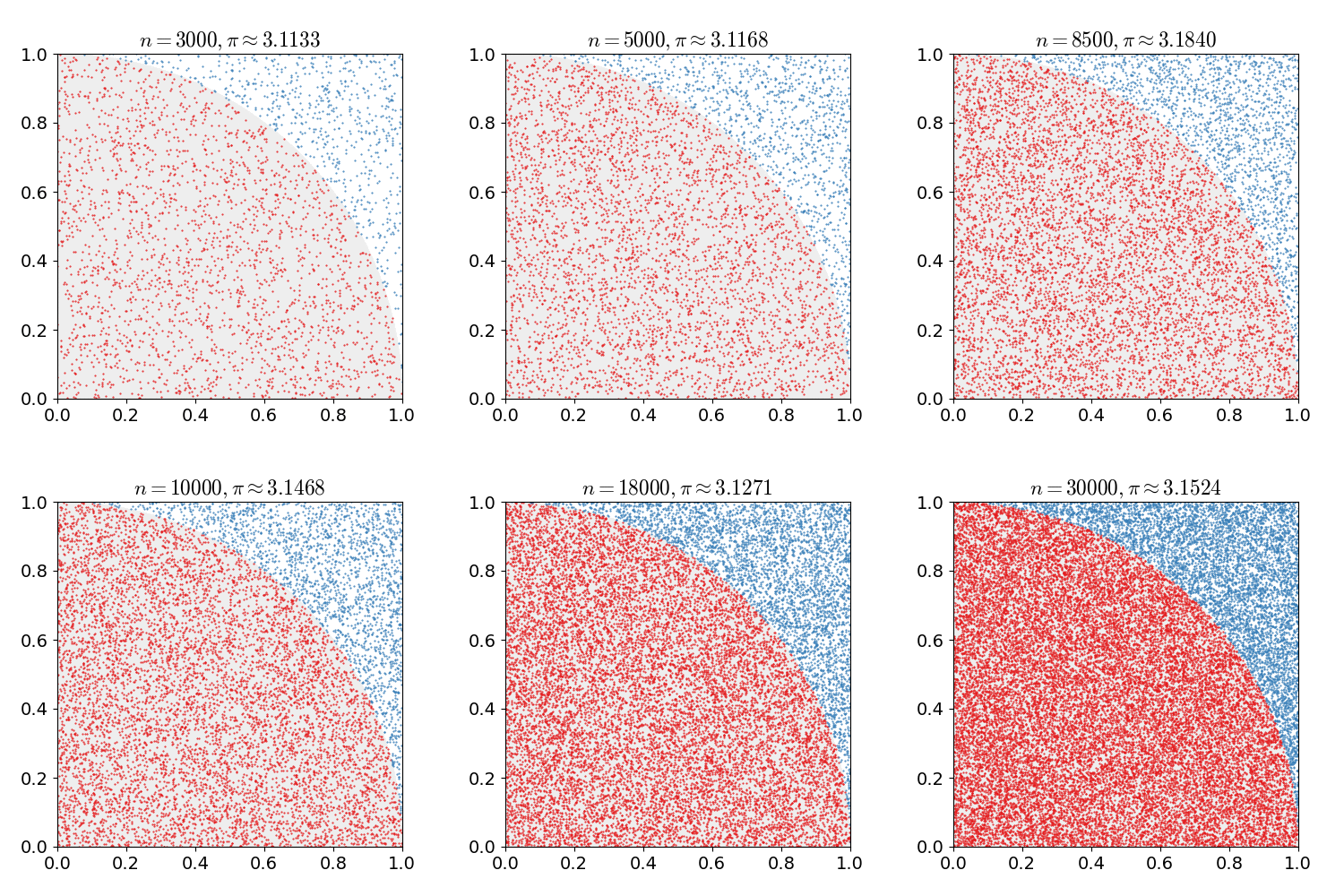
We introduced Rcpp 0.10.0 with a number of very nice new features a few days ago, and the activity on the rcpp-devel mailing list has been pretty responsive which is awesome. But because few things beat a nice example, this post tries to build some more excitement. We will illustrate how Rcpp attributes makes it really easy to add C++ code to R session, and that that code is as easy to grasp as R code. Our motivating example is everybody's favourite introduction to Monte Carlo simulation: estimating . A common method uses the fact the unit circle has a surface area equal to . We draw two uniform random numbers x and y, each between zero and one. We then check for the distance of the corresponding point (x,y) relative to the origin. If less than one (or equal), it is in the circle (or on it); if more than one it is outside. As the first quadrant is a quarter of a square of area one, the area of the whole circle is -- so our first quadrant approximates over four. The following figure, kindly borrowed from Wikipedia with full attribution and credit, illustrates this: Example of simulating pi Now, a vectorized version (drawing N such pairs at once) of this approach is provided by the following R function.
piR <- function(N)  
    x <- runif(N)
    y <- runif(N)
    d <- sqrt(x^2 + y^2)
    return(4 * sum(d < 1.0) / N)
 
And in C++ we can write almost exactly the same function thanks the Rcpp sugar vectorisation available via Rcpp:
#include <Rcpp.h>
using namespace Rcpp;
// [[Rcpp::export]]
double piSugar(const int N)  
    RNGScope scope;		// ensure RNG gets set/reset
    NumericVector x = runif(N);
    NumericVector y = runif(N);
    NumericVector d = sqrt(x*x + y*y);
    return 4.0 * sum(d < 1.0) / N;
 
Sure, there are small differences: C++ is statically typed, R is not. We need one include file for declaration, and we need one instantiation of the RNGScope object to ensure random number draws remain coordinated between the calling R process and the C++ function calling into its (compiled C-code based) random number generators. That way we even get the exact same draws for the same seed. But the basic approach is identical: draw a vector x and vector y, compute the distance to the origin and then obtain the proportion within the unit circle -- which we scale by four. Same idea, same vectorised implementation in C++. But the real key here is the one short line with the [[Rcpp::export]] attribute. This is all it takes (along with sourceCpp() from Rcpp 0.10.0) to get the C++ code into R. The full example (which assumes the C++ file is saved as piSugar.cpp in the same directory) is now:
#!/usr/bin/r
library(Rcpp)
library(rbenchmark)
piR <- function(N)  
    x <- runif(N)
    y <- runif(N)
    d <- sqrt(x^2 + y^2)
    return(4 * sum(d < 1.0) / N)
 
sourceCpp("piSugar.cpp")
N <- 1e6
set.seed(42)
resR <- piR(N)
set.seed(42)
resCpp <- piSugar(N)
## important: check results are identical with RNG seeded
stopifnot(identical(resR, resCpp))
res <- benchmark(piR(N), piSugar(N), order="relative")
print(res[,1:4])
and it does a few things: set up the R function, source the C++ function (and presto: we have a callable C++ function just like that), compute two simulations given the same seed and ensure they are in fact identical -- and proceed to compare the timing in a benchmarking exercise. That last aspect is not even that important -- we end up being almost-but-not-quite twice as fast on my machine for different values of N. The real takeaway here is the ease with which we can get a C++ function into R --- and the new process completely takes care of passing parameters in, results out, and does the compilation, linking and loading. More details about Rcpp attributes are in the new vignette. Now enjoy the .

Update:One somewhat bad typo fixed.

Update:Corrected one background tag.

Axel Beckert: zutils: zcat and friends on Steroids

I recently wrote about tools to handle archives conveniently. If you just have to handle compressed text files, there are some widely known shortcut commands to mimic common commands on files compressed with a specific compression format.
gzip bzip2 lzma xz
cat zcat bzcat lzcat xzcat
cmp zcmp bzcmp lzcmp xzcmp
diff zdiff bzdiff lzdiff xzdiff
grep zgrep bzgrep lzgrep xzgrep
egrep zegrep bzegrep lzegrep xzegrep
fgrep zfgrep bzfgrep lzfgrep xzfgrep
more zmore bzmore lzmore xzmore
less zless bzless lzless xzless
In Debian and derivatives, those tools are part of the according package for that compression utility, i.e. the zcat command is part of the gzip package and the xzfgrep command is part of the xz-utils package. But despite this matrix is quite easy to remember, the situation has a few drawbacks: This is where the zutils project comes in: zutils provides the functionality of most of these utilities, too, but with one big difference: You don t have to remember, think about or type which compression method has been used for your data, just use zcat, zcmp, zdiff, zgrep, zegrep, or zfgrep and it works independently of what compression method has been used if any or if there are different compression types mixed in the parameters to the same command:
$ zfgrep foobar bla.txt fnord.gz hurz.xz quux.lz bar.lzma
Especially if you use logrotate and let logrotate compress old logs, it s very comfortable that one command suffices to concatenate all the available logfiles, including the current uncompressed one:
$ zcat /var/log/syslog*    
Additionally, zutils versions of these tools also support lzip-compressed files. The zutils package is available in Debian starting with Wheezy and in Ubuntu since Oneiric. When being installed, it replaces the original z* utilities from the gzip package by diverting them away. The only drawback so far is that there neither a zless nor a zmore utility from the zutils project, so zless bla.txt fnord.gz hurz.xz quux.lz bar.lzma will not work as expected even after installing zutils as it is still the one from the gzip package and hence it will show you just the first two files in plain text, but not the remaining ones.

19 November 2012

Russ Allbery: Review: Inversions

Review: Inversions, by Iain M. Banks
Publisher: Pocket
Copyright: 1998
Printing: May 2001
ISBN: 0-7434-1196-X
Format: Mass market
Pages: 376
Inversions poses a special challenge for book metadata for reviews that try to avoid spoilers. If you've looked at my index of reviews, I may have arguably already spoiled you. I'm going to discuss the book with that spoiler, as most reviews do, because I think it's a better book knowing that information up-front. But if you want to avoid any spoilers, stop reading here, and avoid looking at its placement in my review index. Inversions consists of the interleaved stories of two people: a strange female doctor to the king of Haspide, and the bodyguard of the Protector of Tassassen. The doctor's story is told in the form of letters written by the doctor's apprentice to his "Master," who has clearly told him to spy on the doctor. (The identity of this person is revealed during the story.) The bodyguard's story is told in the third person and presented as a reconstruction of events. The stories never meet, although the two countries have some indirect political exchanges. The doctor becomes entangled in court intrigue and several murders, and the bodyguard protects the Protector (a general in charge of what was effectively a military coup against the former regime) during a war with neighboring barons who had initially supported him. Both stories reach conclusions, but somewhat unsatisfactory ones. The two characters never meet in the book. All of this is set among countries at a medieval level of technology. The doctor faces scorn and derision, not to mention outright opposition, both because she's a woman (she's only permitted to claim the title of doctor due to the king's favor and her claimed citizenship in a far-away land with strange customs) and because she uses more effective and more modern techniques. Other physicians still bleed patients, but the doctor is clearly aware of the germ theory of disease, dismisses contageon via bad odors, and otherwise strikes the reader as someone with advanced medical knowledge trying to practice it in primitive conditions. The spoiler, which is never stated outright but which is relatively apparent from various hints and allusions dropped by the characters, as well as at least one event that would otherwise have to be supernatural, is that Inversions actually takes place in the Culture milieu. How this planet and these stories fit into that milieu remains unexplained throughout the story, but we do get some clues in supposedly made-up stories that the bodyguard tells the son of the Protector, stories that are recognizable to Culture readers as less fictional than they sound in a medieval context. Banks has a tendency to play with unusual narrative structure and to fall on the mainstream side of SF plot construction. Inversions is a very closely-observed pair of entwined stories told in a way that downplays most of the dramatic structure and rising action and that undermines feelings of conclusion or catharsis. Despite having, on later reflection, two clear plots with clear conclusions, it feels more like parallel slices of life and stubbornly refuses to advertise any conclusions or deeper meaning. Whether that works will probably have a lot to do with the reader's tolerance for trying to draw one's own conclusions. I found it frustrating and unsatisfying, but knowing going in that it's a Culture novel helped by adding some deeper structure to give the story a modicum of meaning. Insofar as there's a larger theme, it's the exploration of the conflict between the two Culture citizens that is presented, thinly disguised, in the bodyguard's stories. This connection is not obvious; even determining how to map the two characters into the stories is a touch challenging. But if one is aware of it and looking for it in advance, it provides a bit of broader structure and some basis for judging the actions of the doctor and the bodyguard against a larger plan. I needed that to wring enjoyment from the book; I never cared enough about the characters otherwise to fully engage with either story. With the puzzle, and the constant search for connections to Culture concepts, it's somewhat more interesting, but it's still maddeningly indirect. (And, from various other Internet reactions, I don't think I'm missing something obvious.) It's possible that I went into the book with some incorrect assumptions that undermined my enjoyment. Hopefully this review will help other readers. Knowing that this is a Culture book and enjoying the process of finding references makes it more fun (and most of the references aren't too hard to find). But don't expect lots of closure from the stories, and don't expend to find out "what's really going on." It's not that sort of book. If you enjoy the individual stories for themselves, you'll have the best chance of enjoying the book as a whole, with the Culture references providing a fun additional layer. If the basic stories don't appeal, the Culture material probably isn't enough to make the book engrossing. Rating: 6 out of 10

18 November 2012

Jamie McClelland: New Privacy Arguments are Needed

Another decent article on online privacy was published by the NYT this morning. The article documents the collection and centralized aggregation of consumer data online. It ends with a strong message about consumers becoming the "product" - which echoes what Noam Chomsky and Ben Bagdikian have been saying for decades. The problem with this critique is that it doesn't go far enough. Chomsky and Bagdikian didn't say readers are the product of modern journalism and that's bad because nobody wants to be a product. They critiqued the model because it produces terrible journalism and democracy suffers as a result. Similarly, the online trading of audiences and the invasion of our privacy that results has more important implications than "don't be a sucker" which seems to be the gist of the privacy argument these days. Honestly, I don't stay awake at night worrying that Nike knows I'm looking for a pair of sneakers, or even that they know my income. I do stay awake at night worrying that people are tagging my photo on Facebook, which could allow the New York Police Dept to submit a photo of protesters to Facebook and get a list of names and addresses of the people in the photo. Or it could allow the police to track my movements via existing networks of surveillance cameras by matching my image to my name. Would that require a search warrant? How would that impact my trust in my government to know that my movements are being tracked? Or worse, to know they might be tracked but I'll never know if they are or aren't? Many governments (including the US) have sordid histories of infiltrating political organizations and intentionally sowing dissent. Having access to activists' purchasing habits provides a treasure trove of material for this purpose that previously was labor intensive for cops to collect. It also provides leverage during interrogation, a time of heightened emotional vulnerability where the mere mention of a private detail of one's life can have a powerful impact. How can we prevent law enforcement from having access to these details of our lives? And then there's the dragnet. A central database of consumer habits provides a tantalizing collection of information that could be searched for people who fit a profile of a crime. Is solving the crime at hand worth the invasion of privacy that results from people being investigating only based on their consumer habits? How would we measure the impact an investigation like this would have on our confidence in democracy and government? The corporate advertisers promoting this kind of data collection argue that these problems are the price of progress. However, the ideology behind these technology developments is capitalism, not some intrinsic aspect of the Internet or network communications. Historically, the Internet has developed based on a drive toward de-centralization. Email and web sites, the bedrock of Internet activity, are based on these principles: anyone can add their own email server or web server and everyone can seamlessly access it. In contrast, the logic of capitalism as it relates to the Internet, is one of centralization and aggregating data. Facebook and Google want you to use their platforms for all your online activities so they have as complete a picture as possible of what you like and do. As the New York Times article describes, companies like Rubicon want to track all your movements and aggregate that data for profit. We have a choice. We can carefully evaluate our use of corporate services and consider the implications it has not only on our lives but on society as a whole. And, we can choose to use and support services that promote open standards and interoperability that will respect our personal privacy values. Want a practical example? Friendica is software designed to allow you to post status alerts, photos, videos and other information about yourself in a way similar to Facebook. However, it has one big difference: you can host your account on any server running the software anywhere in the world. You can still "friend" people on different servers, but we don't have to all trust the same organization to host it. Furthermore, Friendica allows you to post once and automatically cross-post to your Twitter, Facebook or other similar services. Sound good? You are welcome to try out an account on the May First/People Link install: https://friends.mayfirst.org/.

Russ Allbery: Review: A Hero's Tale

Review: A Hero's Tale, by Catherine M. Wilson
Series: Women Were Warriors #3
Publisher: Shield Maiden
Copyright: 2008
ISBN: 0-9815636-3-5
Format: Kindle
Pages: 301

This is an ebook, so metadata may be inaccurate or missing. See notes on ebooks for more information. A Hero's Tale is the third book in the When Women Were Warriors trilogy, which is best thought of as a single long novel. Reading it independently will miss most of the significance of the plot, since one wouldn't know many of the important characters. A Hero's Tale follows the pattern of the second book: even less quiet contemplation, and even more in the way of events and plot. Tamras completes her training, in a somewhat unexpected way (and in a rather interesting reworking of gender roles), but then both Maara's past and the problems of A Journey of the Heart catch up with them. There is, accordingly, quite a bit more action, or at least war councils and political maneuvering, than the previous books, and somewhat less time for thoughtful wisdom. That also means that A Hero's Tale shifts a bit more towards the traditional fantasy coming-of-age story, where the heroine is able to shift armies and win conflicts with an understated and self-deprecating skill that comes inevitably but indirectly out of all of her previous experiences. I think Wilson is still fairly original in how she presents those tropes, with an interesting focus on empathy and compassion that is all too rare in this sort of story, but this book does feel a lot more like a story that one has read before. If you're particularly allergic to that story shape, you may find this entry somewhat disappointing. One of the things I loved about it, though, was Wilson's avoidance of traditional villains. There is one, so it's not a complete avoidance, but nearly everyone in this story has their own viewpoint and perspective and is on the side of right in their own way. Wilson uses Tamras's empathy and willingness to listen and understand to let the reader see various different perspectives without moving away from the first-person perspective. It's very nicely done. I thought the handling of the emotional arc of the story was more mixed. Tamras is seriously tested in some moments that aimed for heartbreaking, but I thought they fell short of the emotional punch they were supposed to carry since the story shape had already made it obvious that everything would turn out okay in the end. The story is so gentle that Wilson hadn't established any willingness to end something badly, which robs a lot of the punch from emotional turmoil. I also had quite a bit of trouble with the principle of love above all else, particularly for someone in Tamras's position. Maybe that's because I'm still too entrenched in the attitude towards politics that this series argues against, but I had a hard time not seeing her as personally indulgent. Both of those factors blunted the emotional climax for me, leaving it moving but not as heartbreaking as I think Wilson was aiming for. (This is the point where a friend will tell me that I think too much about books while I'm reading them.) That said, Wilson continues to write one of the best mentoring relationships that I've seen in fiction. The dynamic between Tamras and Maara is just beautiful, and remains so through the end of the book. So many traditional issues with rivalry, growth, replacement of the mentor, and relative social position that are ignored or dealt with ham-handedly in other stories are handled adeptly and quietly. Maara is by far my favorite character of this series, largely because of how she handles that relationship. I could identify with her more easily than with Tamras at various points in the story, and I thought the understated ending was quietly beautiful. If you enjoyed the rest of the series, definitely read A Hero's Tale for the conclusion. If you've been hungry for more typical action, you'll get some of it here. I wish a few deep emotions other than love had been in play, but, despite that, When Women Were Warriors is still quietly and delightfully different than most things I've read, and worth the price. Rating: 8 out of 10

16 November 2012

Diego Escalante Urrelo: EFI mode boot on Macbook3,1 with Debian

After my last post I got curious about booting the Macbook in EFI mode. Because, well, why not? So I googled for a while and found this blog post which served as a great reference and comment on two other. I understand EFI is somewhat buggy and what works for me might not work for you. So be careful, have a rescue disk at hand. On that topic, I should say that I could not get this to work with Debian sid s 3.2 kernel, but 3.5 from experimental worked fine for me.

Hopefully, you after booting EFI succesfully. My main question before doing this was What works? , I had heard some weird rumours and mentions that you had to run X in framebuffer mode and weird stuff like that. This is bullshit. Everything works fine, with the same standard software and setup. Features:

So, here we go. I am posting my notes in shell-like since I find little benefit in turning them into an essay or something more textual. Good luck! # Install grub-efi-$arch.
# Usually $arch depends on your processor.
# Best bet: you can use OSX to check for this:
#
# $ ioreg -l -p IODeviceTree grep firmware-abi
# It will print EFI32, or EFI64. You know what to do.
$ sudo apt-get install grub-efi-amd64 # Now we need to mount the system EFI partition for GRUB2 to install
# itself on it.
# NOTE: you have to do this, installing the package is NOT enough.
$ sudo mkdir /boot/efi
$ sudo mount /dev/sda1 /boot/efi
# Did you get the right partition?
# It should have an EFI directory with an APPLE directory inside.
# DO NOT DELETE THE APPLE DIRECTORY, PRICK.
$ ls /boot/efi
EFI/
$ ls /boot/efi/EFI/
APPLE/
# Create a new directory, debian will do.
# Run grub-install so GRUB2 drops its EFI code in the new directory.
$ sudo mkdir /boot/efi/EFI/debian
$ sudo grub-install
$ ls /boot/efi/EFI/
$ ls /boot/efi/EFI/debian/
# Help rEFIt know this is a GNU/Linux boot.
# rEFIt assigns icons depending on the name of the EFI file, grub64x is not in its list
$ sudo mv /boot/efi/EFI/debian/grub64x.efi /boot/efi/EFI/debian/e.efi # IMPORTANT: Add the proper modeset.
# For EFI-only systems: efi_uga
# For UEFI systems: efi_gop
# Without this you won t have any graphics.
$ sudo vim /etc/default/grub
...
GRUB_VIDEO_BACKEND="efi_uga"
...
# Update grub, reboot. Hope that everything worked.
$ sudo update-grub Extra credit
You can clean your MBR from the old GRUB2-pc installation (if you installed it to the hybryd-MBR, like a sane person) from OSX:
$ sudo fdisk -u /dev/disk(tab-to-complete, verify it is the right disk) (Read the man page for your fdisk to be sure -u still means fix MBR while keeping partitions )

14 November 2012

Petter Reinholdtsen: Debian Edu interview: Angela Fu

Here is another interview with one of the people in the Debian Edu and Skolelinux community. I am running short on people willing to be interviewed, so if you know about someone I should interview, Please send me an email. After asking for many months, I finally managed to lure another one of the people behind the German "IT-Zukunft Schule" project out from maternity leave to conduct an interview. Give a warm welcome to Angela Fu . :) Who are you, and how do you spend your days? I am a 39-year-old woman living in the very north of Germany near Denmark. I live in a patchwork family with "my man" Mike Gabriel, my two daughters, Mikes daughter and Mikes and my rather newborn son. At the moment - because of our little baby - I am spending most of the day by being a caring and organising mom for all the kids. Besides that I am really involved into and occupied with several inner growth processes: New born souls always bring the whole familiar system into movement and that needs time and focus ;-). We are also in the middle of buying a house and moving to it. In 2013 I will work again in my job in a German foundation for nature conservation. I am doing public relation work there. Besides that - and that is the connection to Skolelinux / Debian Edu - I am working in our own school project "IT-Zukunft Schule" in North Germany. I am responsible for the quality assurance, the customer relationship management and the communication processes in the project. Since 2001 I constantly have been training myself in communication and leadership. Besides that I am a forester, a landscaping gardener and a yoga teacher. How did you get in contact with the Skolelinux / Debian Edu project? I fell in love with Mike ;-). Very soon after getting to know him I was completely enrolled into Free Software. At this time Mike did IT-services for one newly founded school in Kiel. Other schools in Kiel needed concepts for their IT environment. Often when Mike came home from working at the newly founded school I found myself listening to his complaints about several points where the communication with the schools head or the teachers did not work. So we were clear that he would not work for one more school if we did not set up a structure for communication between him, the schools head, the teachers, the students and the parents. Together with our friend and hardware supplier Andreas Buchholz we started to get an overview of free software solutions suitable for schools. One day before Christmas 2010 Mike and I had a date with Kurt Gramlich in G tersloh. As Kurt and I are really interested in building networks of people and in being in communication we dived into Skolelinux and brought it to the first grammar schools in Northern Germany. For information about our school project you can read the interview with Mike Gabriel. What do you see as the advantages of Skolelinux / Debian Edu? First I have to say: I cannot answer this question technically. My answer comes rather from a social point of view. The biggest advantage of Skolelinux / Debian Edu I see is the large and strong international community of Debian Developers in the background which is very alive and connected over mailinglists, blogs and meetings. My constant feeling for the Debian Community is: If something does not work they will somehow fix it. All is well ;-). This is of course a user experience. What I also get as a big advantage of Skolelinux / Debian Edu is that everybody who uses it and works with it can also contribute to it - that includes students, teachers, parents... What do you see as the disadvantages of Skolelinux / Debian Edu? I will answer this question relating to the internal structure of Skolelinux / Debian Edu. What I see as a major disadvantage is that there is a gap between the group of developers for Debian Edu and the people who make the marketing, that means the people that bring Skolelinux to the schools. There is a lack of communication between these two groups and I think that does not really work for Skolelinux / Debian Edu. Further I appreciate that Skolelinux / Debian Edu is known as a do-ocracy. Nevertheless I keep asking myself if at some points a democracy or some kind of hierarchical project structure would be good and helpful. I am also missing some kind of contact between the Skolelinux / Debian Edu communities in Europe or on an international level. I think it would be good if there was more sharing between the different countries using Skolelinux / Debian Edu. Which free software do you use daily? On my laptop I am still using an Ubuntu 10.04 with a Gnome Desktop on. As applications I use Openoffice.org, Gedit, Firefox, Pidgin, LaTeX and GnuCash. For mails I am using Horde. And I am really fond of my N900 running with Maemo. Which strategy do you believe is the right one to use to get schools to use free software? I am really convinced that in our school project "IT-Zukunft Schule" we have developed (and keep developing) a great way to get schools to use Free Software. We have written a detailed concept for that so I cannot explain the whole thing here. But in a nutshell the strategy has three crucial pillars:

13 November 2012

Erich Schubert: Migrating from GNOME3 to XFCE

I have been a GNOME fan for years. I actually liked the switch from 1.x to 2.x, and at some point switched to 3.x when it became somewhat usable. At some point, I even started some small Gnome projects, one even was uploaded to the Gnome repositories. But I didn't have much time for my Linux hobby anymore back then.
However, I am now switching to XFCE. And for all I can tell, I am about the last one to make that switch. Everybody I know hates the new Gnome.
My reason is not emotional. It's simple: I have systems that don't work well with OpenGL, and thus don't work well with Gnome shell. Up to now, I can live fine with "Fallback mode" (aka: Gnome classic). It works really good for me, and does exactly what I need. But it has been all over the media: Gnome 3.8 will drop 'fallback' mode.
Now the choice is obvious: instead of switching to shell, I go to XFCE. Which is much closer to the original Gnome experience, and very productivity oriented.
There are tons of rants on GNOME 3 (for one of the most detailed ones, see Gnome rotting in threes, going through various issues). Something must be very wrong about what they are doing to receive this many sh*tstorms all the time. Every project receives some. I've even received a share of the Gnome 2 storms when Galeon (an early Gnome browser) made the move and started dropping some of the hard-to-explain and barely used options that would break with every other Mozilla release. And Mozilla embedding was a major pain these days. Yet, for every feature there would be some user somewhere that loved it, and as Debian maintainer of Galeon, I got to see all the complaints (and at the same time was well aware of the bugs caused by the feature overload).
Yet with Gnome 3, things are IMHO a lot different. In Gnome 2, it was a lot about making things more usable as they are, a bit cleaner and more efficient. With Gnome 3, it seems to be about experimenting with new stuff. Which is why it keeps on breaking APIs all the time. For example themeing GTK 3 is constantly broken; most of the themes available just don't work. Similar Gnome Shell extensions - most of them work with exactly one version of Gnome Shell (doesn't this indicate the author has abandoned Gnome shell?).
But the one thing that was really sticking out was when my I updated the PC of my dad. Apart from some glitches, he could not even shutdown his PC with Gnome-shell. Because you needed to press the Alt button to actually get a shutdown option.
This is indicative of where Gnome is heading: something undefined inbetween of PCs, tablets, media centers and mobile phones. They just decided that users don't need to shutdown anymore, so they could as well drop that option.
But the worst thing about the current state of GNOME is: They happily live with it. They don't care that they are losing users by the dozens. Because to them, these are just "complainers". Of cousre there is some truth in "Complainers gonna complain and haters gonna hate". But what Gnome is receiving is way above average. At some point, they should listen. 200 posts long comment chains from dozens of peopls on LWN are not just your average "complaints". It's an indicator that a key user base is unhappy with the software. In 2010 GNOME 2 had 45% market share in the LinuxQuestions poll, XFCE had 15%. In 2011, GNOME 3 had 19%, and XFCE jumped to 28%. And I wouldn't be surprised if GNOME 3 shell (not counting fallback mode) would clock at less than 10% in 2012 - despite being default.
Don't get me wrong: there is a lot on Gnome that I really like. But as they decided to drop my preferred UI, I am of course looking for alternatives. In particular, as I can get lots of the Gnome 3 benefits with XFCE. There is a lot in the Gnome ecosystem that I value, and that IMHO is driving Linux forward. Network-manager, Poppler, Pulseaudio, Clutter just to name a few. Usually, the stuff that is modular is really good. And in fact I have been a happy user of the "fallback" mode, too. Yet, the overall "desktop" Gnome 3 goals are in my opinion targeting the wrong user group. Gnome might need to target linux developers more again, to keep a healthy development community around. Frequently triggering sh*tstorms by high-profile people such as Linux Torvalds is not going to strengthen the community. There is nothing wrong in the FL/OSS community to encourage people to use XFCE. But these are developers that Gnome might need at some point.
On a backend / technical level (away from the Shell/UI stuff that most of the rants are about), my main concern about the Gnome future is GTK3. GTK2 was a good toolkit for cross-platform development. GTK3 as of now is not, but is largely a Linux/Unix only toolkit - in particular, because there apparently is no up to date Win32 port. With GTK 3.4 it was said that they are now working on Windows - but as of GTK 3.6 they are still nowhere to be found. So if you want to develop cross-platform, as of now, you better stay away from GTK 3. If this doesn't change soon, GTK might sooner or later lose the API battle to more portable libraries.

12 November 2012

Ingo Juergensmann: Resurrecting m68k

In August I picked up Elgar, a m68k machine, from NMMN in Hamburg, where it was ought to run as a buildd (NMMN donated space and network). Unfortunately it was in some kind of bad state: operating system was out of date, expansion cards were getting loose and NMMN wasn't happy about the CRT monitor in its datacenter as well. Elgar is an Amiga 4000 Desktop built into a custom tower case. It took some weeks and months until I found a little time to care about Elgar, but now it's up and running again:
[ 0.000000] Initializing cgroup subsys cpuset
[ 0.000000] Initializing cgroup subsys cpu
[ 0.000000] Linux version 3.2.0-3-amiga (Debian 3.2.23-1) (debian-kernel@lists.debian.org) (gcc version 4.6.3 (Debian 4.6.3-8+m68k.1) ) #1 Wed Jul 25 13:02:31 UTC 2012
[ 0.000000] Enabling workaround for errata I14
[ 0.000000] console [debug0] enabled
[ 0.000000] Amiga hardware found: [A4000] VIDEO BLITTER AUDIO FLOPPY A4000_IDE KEYBOARD MOUSE SERIAL PARALLEL A3000_CLK CHIP_RAM PAULA LISA ALICE_PAL ZORRO3
That's the stock Debian m68k kernel and it already runs on Arrakis and Vivaldi, two other buildds, as well without any problem. The only problem at the moment is the missing SCSI driver for the CyberStorm Mk1 accelerator card. There were some changes in the kernel that need to be dealt with by someone knowing. The other problem was to upgrade from etch-m68k to unstable. I already blogged about this last year. It's not as easy anymore and you'll need to deal with lots of dependency problems and such nowadays. But anyway:
elgar:~# cat /etc/debian_version
wheezy/sid
elgar:~# dpkg -l libc6
Desired=Unknown/Install/Remove/Purge/Hold
Status=Not/Inst/Conf-files/Unpacked/halF-conf/Half-inst/trig-aWait/Trig-pend
/ Err?=(none)/Reinst-required (Status,Err: uppercase=bad)
/ Name Version Architecture Description
+++-====================-===============-===============-==============================================
ii libc6:m68k 2.13-35 m68k Embedded GNU C Library: Shared libraries
It's amazing that the m68k port is in such good condition after more than 4 years. That's because of the real great work of Torsten Glaser who is doing much of the porter work for the tool chain. But m68k has currently 4833 packages in state Needs-Build:
wanna-build statistics - Mon Nov 12 06:51:13 CET 2012
----------------------------------------------------- Distribution unstable:
---------------------
Installed : 1321
Needs-Build : 4833
Building : 0
Uploaded : 0
Failed : 0
Dep-Wait : 0
Reupload-Wait : 0
Install-Wait : 0
Failed-Removed : 0
Dep-Wait-Removed: 0
Not-For-Us : 0
total : 9906 13.34% (1321) up-to-date, 13.34% (1321) including uploaded
48.79% (4833) need building
0.00% ( 0) currently building
0.00% ( 0) failed/dep-wait
0.00% ( 0) old failed/dep-wait
0.00% ( 0) need porting or cause the buildd serious grief
So, there's a lot of work to do, but it's apparent that m68k won't keep up with 10.000 packages in unstable. When I started running an autobuilder back in year 2000 there were 2400 packages for m68k, on Aug. 15th 2005 we had a total of 5949 packages in the archive. For m68k this means that we will have to start adding lots of packages to Not-For-Us. I think m68k will/should end up with approx. 4000 packages at most. In the end m68k is a fairly good shape now. It only needs to get some packages built... Let's see when the buildds are operational again... ;-)
Kategorie:

10 November 2012

Mart&iacute;n Ferrari: Amusing ourselves to death

What Orwell feared were those who would ban books. What Huxley feared was that there would be no reason to ban a book, for there would be no one who wanted to read one. --Foreword to the book. Just finished this book today. It was written in 1985, it talks about Dallas, and the 700 Club, Reagan and many other (by now) old fashioned things. It only talks about computers in passing, as this new thing that everybody is talking about. And it is extremely current. It's been 27 years, and it could have been written yesterday. You'll just need to replace some TV shows with Twitter, Reddit, or G+, but it has made me think a lot about my own relationship with information, and amusement. I couldn't help but think about this book when reading various essays that touch culture, education, or politics these days. It has also made me realise my own incongruence: being proud of not owning a TV, while I spent hours of my waking ours watching cat videos, news snippets in Google Reader, or curating links that have been reshared dozens of times. If you're at all interested in understanding our culture and discourse, do yourself a favor and get a copy. It's not long, nor dense in academic jargon. It's only 9 euro with free shipping in the Book Depository, and they even have a Kindle version in Amazon. Tags: Libros, Planet Debian

9 November 2012

Gunnar Wolf: Road trip to ECSL 2012 in Guatemala

Encuentro Centroamericano de Software Libre! Guatemala! During a national (for us) holiday, so it's easy to go without missing too much work time! How would I miss the opportunity? Several years ago, I started playing with the idea of having a road trip Probably this was first prompted with the UK crew and the Three Intrepid Motorcycle Riders arriving by land to DebConf 9 I don't know. Fact is, I wanted to go to DebConf10 in New York by land, as well as to DebConf12 in Nicaragua. Mostly due to a lack of time, I didn't Although we did start making some longish trips. Of course, my desire to show Regina what Mexico is like also helped! So, up until a week ago, our (according to my standards) long distance driving experience included:
  • M xico Guanajuato Puerto Vallarta Guanajuato M xico, in early November 2011, for Festival de Software Libre and with Regina and our Blender friends Octavio and Claudia. Totalling almost 1900Km, mostly consisting of wide, toll highway.
  • M xico Xilitla San Luis Potos M xico, in April 2012, just for fun and for a nice short vacation, alone with Regina. Totalling almost 1200Km, but through Sierra Gorda de Quer taro, a very tough stretch of about 250Km which we did at about 50Km/h on average. Beautiful route for sure! We didn't originally intend to go through San Luis Potos , and it does not appear to make much sense, as it adds ~350Km to the total, but it was even quicker than going back by the same route and according to those who now, even faster than our planned route, via Tamazunchale and Ixmiquilpan!
  • M xico San Luis Potos Zacatecas Aguascalientes Guanajuato M xico, in May 2012, for Congreso Internacional de Software Libre, again with Octavio and Claudia. Totalling 1250Km, and following very good roads, although most of them were toll-free.
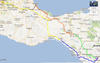
But there is always a certain halo over crossing a border, maybe more so in countries as large as Mexico. We convinced Pooka and Moni, and granted, with some aprehension, as we knew of some important security risks in the more rural areas we wanted to go through we decided to go to Guatemala. And, although we wanted to go with a bit more time, Real Life took its toll: We could not take more time than the intersection of what our respective jobs offered. So, here goes a short(?) recap of our six day long, 3200Km trip. Of course, we have a map detailing this. Mexico Veracruz I came to my office early on Wednesday (31-oct), and left with Regina around 10AM towards Veracruz. We agreed to meet there with Moni and Pooka, who would take the night bus, and continue together. Crossing Mexico City proved to be the longest obstacle We arrived to Veracruz already past 3PM, and spent a nice evening walking down the center and port of the city. Veracruz port can still be seen as part of central Mexico; I knew the road quite well. Veracruz San Andr s Tuxtla Catemaco San Cristobal de las Casas We met with our friends at the iconic Gran Caf de la Parroquia at 6:30AM. Had a nice breakfast with coffee, and by 7:30 we were heading south-west. The reason to have a road trip was to get to know the route, to enjoy the countryside So, given we "only" had to make 650Km this day, we took the non-toll road A narrow path stretching along the coastal plains of Veracruz, until Acayucan. Doing so, we also saved some money, as the equivalent toll road is around MX$300 (~US$25)! Veracruz is a hot state. We ended up all sweaty and tired by 19:00, when we reached San Cristobal. We had agreed not to drive at night, due to security issues, but fortunately there was quite a bit of traffic both ways between Tuxtla Guti rrez (Chiapas State capital, around 1hr from San Cristobal, where darkness got us) and our destination, so we carried on. Now, San Cristobal is a high city, almost as high as Mexico City (2100m), and being more humid, it was quite chilly. We went for a walk, and were convinced that at a later time, we had to stay for several days there. The city is beautiful, the region is breath-taking, there is a lot of great handicrafts as well, and it's overall very cheap. Really lovely place. San Cristobal de las Casas Cd. Cuauht moc La Mesilla Guatemala Once again, this day started early. We woke up ready to leave at 7AM, and not earlier because the hotel's parking didn't open earlier. After a very quick visit to San Cristobal downtown, to take some photos that were not right the night before, we took the road to Comit n, stopping just for some tamales de bola y chipil n for breakfast. Central Chiapas is almost continuously populated, differing from most of my experience in Mexico. It is all humid, and has some very beautiful landscapes. We passed Comit n, which is a much larger city than what we expected, went downhill after La Trinitaria, crossed a plain, and continued until hills started taking over again. We stopped in a very chaotic, dirty place: Just accross the border, where Ciudad Cuauht moc becomes La Mesilla. This border was basically what we expected: There is no half-official place to exchange money, so we had to buy quetzales from somebody who offered them on the street, at MX$2 per Q1 (where the real exchange should be around 1.50 to 1). While on the road, I was half-looking for exchange posts in Comit n and onwards, and found none (and being a festive day, they would probably be closed anyway). But we were expecting this, after all, and exchanged just the basic minimum: MX$600 (US$50, which by magic became Q300, US$40). The tramit consists of:
  • Spraying the car against diseases (which has a cost of Q18)
  • Each of us has to go through migration. Note, in case you cross this border: We didn't expressly cross Mexican migration, so officially there was no record of us going out. Be sure to go through migration to avoid problems at re-entry!
    Migration has no cost.
  • Customs. As we were entering by car, I had to purchase a permit for circulation. I don't remember the exact quote, but it was around Q150, and the permit is valid for 90 days.
  • That's it! Welcome to Guatemala!
La Mesilla is in Guatemala's Huehuetenango Department, and from all of the Departments we crossed until Guatemala city (Huehuetenango, Quetzaltenango, Totonicap n, Solol , Chimaltenango, Sacatep quez and Guatemala), this is the largest one. Huehuetenango is home to the Cuchumatanes mountain ridge. We found beautiful, really steep, really fertile mountains. It is plainly amazing: Mountains over 60 , and quite often full with agricultural use Even at their steepest points! The CA-1 highway is, in general, in very good shape. There are however many (many, many) speed bumps (or topes, in Mexican terminology. Or t mulos in Guatemalan), at least a couple at every village we crossed, not always painted. The road is narrow and quite winding; it follows river streams for most of the way. We feared it would be in much worse shape, from what we have heard, but during the whole way we found only three points where the road was unusable due to landslides and an alternative road was always in place when we needed it. After Totonicap n, the narrow road becomes a wide (four lane) highway. Don't let that fool you! It still goes through the center of every village along the road, so it's really not meant for speeding. Also, even though the pavement is in very good condition, it is really steep quite often. It is not the easiest road to drive, but it's (again) by far not as bad as we expected. We arrived to Guatemala City as dawn was falling, and got promptly lost. Guatemala has a very strange organization scheme: The city is divided in several zones, laid out in a swirl-like fashion. East-west roads are called Calle and North-south roads are called Avenida (except for zona 4, I think, where they are diagonal, and some are Rutas while the others are V as). I won't go into too much detail). Thing is, many people told us it's a foolproof design, and people from different countries understand the system perfectly. We didn't... At least not when we arrived. We got quite lost, and it took us around one hour to arrive to our hotel, at almost 19:00 Almost 12 hours since we left San Cristobal. Went for a quick dinner, and then waited for our friends to arrive after the first day of work of ECSL, which we missed completely. And, of course, we were quite tired, so we didn't stay up much longer. Antigua Guatemala On Saturday, ECSL's activities started after 14:00 so we almost-kidnapped Wences, the local organization lead, and took him to show us around Antigua Guatemala. Antigua was the capital of Guatemala until an earthquake destroyed it in the 1770s; the capital was moved to present-day Guatemala city, but Antigua was never completely abandoned. Today, it is a world heritage site, a beautiful city, where we could/should have stayed for several days. But we were there for the conference, so we were in Antigua just a couple of hours, and headed back to Guatemala. Word of caution: Going from Guatemala to Antigua, we went down via the steepest road I have ever driven. Again, a real four-lane highway... but quite scary! The main focus for this post is to give some roadtrip advice to potential readers... So, this time around, I won't give much detail regarding ECSL. It was quite interesting, we had some very good discussions... but it would take me too much space to talk about it! The road back: Guatemala Tec n Um n; Cd. Hidalgo Arriaga So, about the road back: Yes, we just spent three days getting to Guatemala City. We were there only for ~36 hours. And... We needed to be here by Tuesday morning no matter what. So, Sunday at noon we said goodbye to our good friends in ECSL and started the long way back. To get to know more of Guatemala, we went back by the CA-2 highway, which goes via the coastal plains Not close to the Pacific ocean, which we didn't get to see at all, but not through the mountains. To get to CA-2, we took CA-9 from Guatemala. If I am not mistaken, this is the only toll road in Guatemala (at least, the only we used, and we used some pretty good highways!) It is not expensive; I don't remember right now, but must have been around Q20 (US$3). Went South past Palin and until CA-2, just outside Escuintla city, and headed West. All of Escuintla and Suchitep quez it is again a four lane highway; somewhere in Retalhueu it becomes a two lane highway. We were strongly advised not to take this road at night because, as the population density is significantly lower than in CA-1, it can get lonely at times And there are several reports of robberies. We did feel the place much less populated, but saw nothing suspicious in any way. Something important: There are almost no speedbumps in CA-2! The terrain stayed quite flat and easy as we crossed Quetzaltenango, and only in San Marcos we found some interesting hills and a very strong rain that would intermitetntly accompany us for the rest of the ride. So, we finally arrived to the border city of Tec n Um n at around 16:30 Approximately four hours after leaving the capital. The Tec n Um n Cd. Hidalgo cities and border pass are completely different from the disorderly and dirty Cd. Cuauht moc La Mesilla ones. The city of Tec n Um n could be just a nice town anywhere in the country, it does not feel aggressive as most border cities I have seen in our continent. We stopped to eat at El pollo campero and headed to the border. In the Mexican side, we also saw a very well consolidated, big and ordered migration area. Migration officers were very kind and helpful As we left Cd. Cuauht moc, Regina didn't get a stamp of leaving Mexico, so technically she was ilegally out of the country (as she is not a national... They didn't care about the rest of us). The tramit to fix this was easy, simple, straightforward. We only paid for the fumigation again (MX$60, US$5), and were allowed to leave. Anyway, we crossed the border. There is a ~30Km narrow road between Cd. Hidalgo and Tapachula, but starting in Tapachula we went on Northwards via a very good, four lane and very straight highway. Even though we had agreed not to drive at night... Well, we were quite hurried and still too far from Mexico City, so we decided to push it for three more hours, following the coastline until the city of Arriaga, almost at the border between Chiapas and Oaxaca. Found a little hotel to sleep some hours and collapsed. Word of warning: This road (from Tapachula to Arriaga) is also known for its robberies. We saw only one suspicious thing: Two guys were pushing up their motorcycle, from which they had apparently fallen. We didn't stop, as they looked healthy and not much in need of help, but later on talked about this Even though this was at night, they were not moving as if they had just crashed; nothing was scratched, not the motorcycle and not their clothes. That might have been an attempt to mug us (or whoever stopped by). This highway is very lonely, and the two directions are separated by a wall of vegetation, so nobody would have probably seen us were we to stop for some minutes. Be aware if you use this road! The trip comes to an end: Arriaga Niltepec Istmo C rdoba M xico The next (last, finally!) day, we left at 6:30AM. After driving somewhat over one hour, we arrived to Niltepec, where a group of taxi drivers had the highway closed as a protest against their local government's tolerance of mototaxis. We evaluated going back to Arriaga and continue via the Tuxtla Guti rrez highway, but that would have been too long. We had a nice breakfast of tlayudas (which resulted in Pooka getting an alergic reaction shortly afterwards) and, talking with people here and there, were told about an alternative route by an agricultural road that surrounds the blockade. So, we took this road the best way we could, and after probably 1hr of driving at 20Km/h, finally came back to the main road. We planned on crossing the isthmus using the Acayucan-Juchit n road We were amazed at the La Ventosa ("the windy") area, where we crossed a huge eolic plant for electricity generation, so of course we got our good share of photos. From then onwards, not much more worth mention. Crossed the isthmus via a quite secondary road in not too good shape (although there is a lot of machinery, and the road will much likely improve in the next few months/years), then took the toll freeway along Veracruz until C rdoba. We stopped for a (delilcious and revigorizing!) cup of coffee in Hotel Zeballos, where Agust n de Iturbide signed with Viceroy Juan O'Donoj the treaties that granted Mexico the independence. Traveller, beware: When crossing between Puebla and Veracruz, there is a steep slope of almost 1000m where , you will almost always (except if it's close to noon) find very thick fog; taking the highway from C rdoba, this is in the region known as Cumbres de Maltrata. We had the usual fog, and just as we left it, a thin but constant rain that went on with us up until we got home. Crossed Puebla state with no further eventualities, and arrived to Pooka and Moni's house by 22:00. Less than one hour later, Regina and me arrived home as well. This was four days ago... and I have finally finished writing it all down ;-) Hope you find this useful, or if not, at least entertaining! If you read this post in my blog, you will find many pictures taken along the trip below (Well, if you are reading the right page, not in the general blog index...). If you are reading from a planet or other syndication service... Well, come to the blog! Dreamhost woes Oh, and... Yes, it sometimes happens: My blog is hosted at Dreamhost. This means that usually it works correctly... But sometimes, specially when many people request many nontrivial pages, it just gives an error. If you get an error, reload once or twice... Or until your patience manages ;-)

Richard Hartmann: Release Critical Bug report for Week 45

Erratum Last week's posting had the wrong week. Turns out the script always outputs week 42. As the weeks were so close to each other, I didn't realize this at first. I fixed this by hand for this posting and will have it fixed upstream by next week. Timing I have put a lot of thought into when to publish this. Friday so it's before the weekend? Sat/Sun so it's during the weekend? Monday so it's at the actual start of the week (sorry, people from the U.S.)? Feedback welcome, assuming anyone cares. The actual gist The UDD bugs interface currently knows about the following release critical bugs: How do we compare to the squeeze cycle ?
Week Squeeze Wheezy Diff
43 284 (213+71) 468 (332+136) +184 (+119 ; +65)
44 261 (201+60)
45 261 (205+56)
46 271 (200+71)
47 283 (209+74)
48 256 (177+79)
49 256 (180+76)
50 204 (148+56)
51 124 (124+54)
52 115 (78+37)
1 93 (60+33)
2 82 (46+36)
3 25 (15+10)
4 14 (8+6)
5 2 (0+2)
6 release!

8 November 2012

Jo Shields: Evil, or why Douglas Crockford is harmful to Free Software

Yesterday I received a new serious bug report against Mono in Debian. For those not in the know, serious severity is release critical, and can trigger removal of a package from the distribution in order to make a shipping release (e.g. if Debian is in deep freeze, as is the case right now). Bug 692614 relates to a single source file, ./mcs/class/System.Web.Extensions/System.Web.Script.Serialization/JsonDeserializer.cs, which is part of the System.Web.Extensions assembly. This file was written in 2008 by an upstream Mono developer, and is based on some code from json.org specifically JSON_parser.c and JSON_checker.c json.org code carries a non-standard license. Specifically, it s MIT/X11 with an added clause: The Software shall be used for Good, not Evil. I ve had some discussions with Mono upstream, and they believe that they have resolved the matter to their satisfaction their solution will make its way into Debian soon. But in the meantime, let s talk about the clause. The Free Software Foundation s Freedom 0 reads:
A program is free software if the program s users have the four essential freedoms:
  • The freedom to run the program, for any purpose (freedom 0).
The Debian Free Software Guidelines and Open Source Initiative s Open Source Definition clause 6 reads:
No Discrimination Against Fields of Endeavor The license must not restrict anyone from making use of the program in a specific field of endeavor. For example, it may not restrict the program from being used in a business, or from being used for genetic research.
It s fairly clear that the JSON.org license clause goes against both of these, making any piece of software using that license neither Open Source nor Free Software. It is not distributable by any organization which mandates Freedom for its users not in Debian, not in Fedora, not on Google Code. Anybody who cares about their users will reject a clause like this, because it has awful chilling effects. Think it s funny? It really isn t. Who can use the code without being at risk of a lawyer knocking on their doors? Can the Catholic Church? The ACLU? Republicans? Democrats? Military contractors? Genetic engineers? Big pharma? Petrochemicals firms? Communists? Fascists? Mono developers? WikiLeaks? Without a clear definition of good and evil , people need to seriously consider whether they are safe to use the code because if the developer and users interpretations of the terms differ, there could be hell to pay. Would you want to ship a hardware device let s say you re making a smart TV and have some developer of a library send his lawyers around to tell you sorry, TV rots kids brains, it s clearly evil to get your entire distribution channel shut down by injunction? It s not an oversight, kids. Upstream are well aware of the pain this childishness causes anyone who takes software licenses seriously. They giggle about it at conferences, like tweenagers who think they ve one-upped the adults in the room. This non-Free license is intended to mock people who take licensing seriously. In fact, one could easily categorise efforts to pollute the Free Software ecosystem with fake, non-Free software as evil, which would mean all JSON.org code fails to comply with its own license, due to shipping with its license (Inception, anyone?). Before the jokers in the room claim that this kind of problem is deserved by Mono, let s take a look at all the software in Debian which Douglas Crockford endangers with his childishness. PHP? OwnCloud? jQuery? You think Debian serves its users well by pulling jQuery from the next release in order to serve the ego of a man behaving like an eleven year old? It is also interesting to note that the author of this do no evil clause works at PayPal. Read that twice, go and repair your irony meters, then come back. In conclusion: thank you so VERY much Doug Crockford for making the world of Free Software measurably worse.

6 November 2012

Jon Dowland: Chronic

I've been ill for around 18 months. I started off ill, and more recently became more ill, so that I'd mentally divided my illness into two distinct periods. The truth, it turns out, is not quite so clear-cut. My more recent period of malaise spurred me on to seek a different treatment, which has restored me to a state of well-being which I had honestly forgot existed. It's quite possibly a combination of the desired outcome of treatment and also a side-effect of the drugs I'm on at the moment but I feel both mentally and physically the best I have in a long time. My mind is burning with ideas once again. Responsibilities and chores that used to sap me now seem less daunting. Having acclimatised to a steady-seeming state of being, which turns out to not be "well", I'd started to wonder if, in some respects, I'd reached the limits of my abilities. The knock-on effect of that was, to me, to consider what the future held, in many regards, including in terms of career. There were some benefits to my prior state of being. I'd begun to learn how to relax, how to wind down, how to not bite off more than I could chew. In particular I'd stopped worshipping at the alter of multitasking and started to give proper attention to one significant task at a time, with corresponding improvements in my productivity. These useful chunks of self-discipline have fallen to the wayside a little bit now. I'm enjoying a holiday in the body-and-mind landscape of my past. I don't feel too guilty about it. I think I deserve it. But I mustn't linger here too long, lest I forget those hard-won lessons. I've not managed to follow through on a lot of things I've tried to pick up over the last year and a half: software half-finished; Debian committments uncompleted; and I've felt a lingering sense of guilt about that, but at least I now have an explanation. Currently reading: Chronic City, by Jonathan Lethem.

Rapha&#235;l Hertzog: My Free Software Activities in October 2012

This is my monthly summary of my free software related activities. If you re among the people who made a donation to support my work (120.46 , thanks everybody!), then you can learn how I spent your money. Otherwise it s just an interesting status update on my various projects. Dpkg At the start of the month, I reconfigured dpkg s git repository to use KGB instead of the discontinued CIA to send out commit notices to IRC (on #debian-dpkg on OFTC, aka irc.debian.org). I didn t do anything else that affects dpkg and I must say that Guillem does not make it easy for others to get involved. He keeps all his work hidden in his private for 1.17.x branch and refuses to open an official jessie branch as can be seen from the lack of answer to this mail. On the bright side, he deals with almost all incoming bugs even before I have a chance to take care of them. But it s a pity that I can never review any of his fixes because they are usually pushed shortly before an upload. Misc packaging I helped to get #689336 fixed so that the initrd properly setups the keymap before asking for a passphrase for an encrypted partition. Related to this I filed #689722 so that cryptsetup gains a dependency ensuring that the required tools for keymap setup are available. I packaged a new upstream version of zim (0.57) and also a security update for python-django that affected both Squeeze and Wheezy. I uploaded an NMU of revelation (0.4.13-1.2) so that it doesn t get dropped from Wheezy (it was on the release team list of leaf packages that would be removed if unfixed) since my wife is using it to store her passwords. I sponsored a new upstream version of ledgersmb. Debian France We managed to elect new officers for Debian France. I m taking over the role of president, Sylveste Ledru is the new treasurer and Julien Danjou is the new secretary. Thank you very much to the former officers: Carl Chenet, Aur lien Jarno and Julien Cristau. We re in the process of managing this transition which will be completed during the next mini-Debconf in Paris so that we can exchange some papers and the like. In the first tasks that I have set myself, there s recruiting two new members for the boards of directors since we re only 7 and there are 9 seats. I made a call for volunteers and we have two volunteers. If you want to get involved and help Debian France, please candidate by answering that message as soon as possible. The Debian Handbook I merged the translations contributed on debian.weblate.org (which led me to file this wishlist bug on Weblate itself) and I fixed a number of small issues that had been reported. I made an upload to Debian to incorporate all those fixes But this is still the book covering Squeeze so I started to plan the work to update it for Wheezy and with Roland we have decided who is going to take care of updating each chapter. Librement Progress is annoyingly slow on this project. Handling money for others is highly regulated, at least in the EU apparently. I only wanted an escrow account to secure the money of users of the service but opening this account requires either to be certified as a payment institution by the Autorit de contr le prudentiel or to get an exemption from the same authority (covering only some special cases) or to sign a partnership with an established payment institution. Being certified is out of scope for now since it requires a minimum of 125000 EUR in capital (which I don t have). My bank can t sign the kind of partnership that I would need. So I have to investigate whether I can make it fit in the limited cases of exemption or I need to find another payment institution that is willing to work with me. Gittip uses Balanced a payment service specialized in market places but unfortunately it s US-only if you want to withdraw money from the system. I would love a similar service in Europe If I can t position Librement as a market place for the free software world (and save each contributor the hassle to open a merchant account), then I shall fallback to the solution where Librement only provides the infrastructure but no account, and developers who want to collect donations will have to use either Paypal or any other supported merchant account to collect funds. That s why my latest spec updates concerning the donation service and the payment service mentions Paypal and the possibility of choosing your payment service for your donation form. Thanks See you next month for a new summary of my activities.
5 comments Liked this article? Click here. My blog is Flattr-enabled.

Russ Allbery: Review: Cerebus

Review: Cerebus, by Dave Sim
Series: Cerebus #1
Publisher: Aardvark-Vanaheim
Copyright: August 1987
Printing: July 2003
ISBN: 0-919359-08-6
Format: Graphic novel
Pages: 546
Cerebus is something of a legend in comics. Begun in December of 1977 by Dave Sim, it was one of the first entirely independent, self-published comics in a field dominated by the large work-for-hire companies like Marvel and DC. It ran for 300 issues and nearly 27 years and became one of the most influential independent comic books of all time, in part due to Sim's outspoken views in favor of creator rights and his regular use of the editorial pages in Cerebus issues to air those views. This collection (the first "phonebook") collects issues 1 through 25, with one of the amazing wrap-around covers that makes all of the phonebooks so beautiful (possibly partly by later Cerebus collaborator Gerhard, although if so it's uncredited so far as I can tell). Cerebus reliably has some of the best black-and-white art you will ever see in comics. There is some debate over where to start with Cerebus, and a faction that, for good reasons, argues for starting with the second phonebook (High Society). While these first twenty-five issues do introduce the reader to a bunch of important characters (Elrod, Lord Julius, Jaka, Artemis Roach, and Suenteus Po, for example), all those characters are later reintroduced and nothing that happens here is hugely vital for the overall story. It's also quite rough, starting as Conan parody with almost no depth. The first half or so of this collection features lots of short stories with little or no broader significance, and the early ones are about little other than Cerebus's skills and fighting abilities. That said, when reading the series, I like to start at the beginning. It is nice to follow the characters from their moment of first introduction, and it's delightful to watch Sim's ability grow (surprisingly quickly) through the first few issues. Cerebus #1 is bad: crude, simplistic artwork, almost nothing in the way of a story, and lots of purple narration. But flipping forward even to Cerebus #6 (the first appearance of Jaka), one sees a remarkable difference. By Cerebus #7, Cerebus looks like himself, the plot is getting more complex, and Sim is clearly hitting his stride. And, by the end of this collection, the art has moved from crude past competent and into truly beautiful in places. It's one of the few black-and-white comics where I never miss color. The detailed line work is more enjoyable than I think any coloring could be. The strength of Cerebus as an ongoing character slowly emerges from behind the parody. What I like the most about Cerebus is that he's neither a predestined victor (apart from the early issues that follow the Conan model most closely) nor a pure loner who stands apart from the world. He gets embroiled in political affairs, but almost always for his own reasons (primarily wealth). He has his own moral code, but it's fluid and situational; it's the realistic muddle of impulse and vague principle that most of us fall back on in our everyday life, which is remarkably unlike the typical moral code in comics (or even fiction in general). And while he is in one sense better and more powerful than anyone else in the story, that doesn't mean Cerebus gets what he wants. Most stories here end up going rather poorly for him, forcing daring escapes or frustrating cutting of losses. Sim quickly finds a voice for Cerebus that's irascible, wise, practical, and a bit world-weary, as well as remarkably unflappable. He's one of the best protagonists in comics, and that's already clear by the end of this collection. Parody is the focus of these first issues, which is a mixed bag. The early issues are fairly weak sword-and-sorcery parody (particularly Red Sonja, primarily a vehicle for some tired sexist jokes) and worth reading only for the development in Sim's art style and the growth of Cerebus as a unique voice. Sim gets away from straight parody for the middle of the collection, but then makes an unfortunate return for the final few issues, featuring parodies of Man-Thing and X-Men that I thought were more forced than funny. You have to have some tolerance for this, and (similar to early Pratchett) a lot of it isn't as funny as the author seems to think it is. That said, three of Sim's most brilliant ongoing characters are parodies, just ones that are mixed and inserted into the "wrong" genres in ways that bring them alive. Elrod of Melvinbone, a parody of Moorcock's Elric of Melnibone who speaks exactly like Foghorn Leghorn, should not work and yet does. He's the source of the funniest moments in this collection. His persistant treatment of Cerebus as a kid in a bunny suit shouldn't be as funny as it is, but it reliably makes me laugh each time I re-read this collection. Lord Julius is a straight insertion of Groucho Marx who really comes into his own in the next collection, High Society, but some of the hilarious High Society moments are foreshadowed here. And Artemis Roach, who starts as a parody of Batman and will later parody a huge variety of comic book characters, provides several delightful moments with Cerebus as straight man. I'm not much of a fan of parody, but I still think Cerebus is genuinely funny. High Society is definitely better, but I think one would miss some great bits by skipping over the first collection. Much of what makes it work is the character of Cerebus, who is in turn a wonderful straight man for Sim's wilder characters and an endless source of sharp one-liners. It's easy to really care about and root for Cerebus, even when he's being manipulative and amoral, because he's so straightforward and forthright about it. The world Sim puts him into is full of chaos, ridiculousness, and unfairness, and Cerebus is the sort of character to put his head down, make a few sarcastic comments, and then get on with it. It's fun to watch. One final note: I've always thought the "phonebook" collections were one of Sim's best ideas. Unlike nearly all comic book collections, a Cerebus phonebook provides enough material to be satisfying and has always felt like a good value for the money. I wish more comic book publishers would learn from Sim's example and produce larger collections that aren't hardcover deluxe editions (although Sim has an admitted advantage from not having to reproduce color). Followed by High Society. Rating: 7 out of 10

Next.

Previous.