Search Results: "az"

6 November 2011

Michael Banck: 6 Nov 2011

I am currently sitting in the train to Goslar, where the German Conference on Cheminformatics will take place. As part of the Free Software Session, I will give a session on DebiChem. This is the first I attend this conference and I am looking forward to meet Noel O'Boyle and hopefully others from the community.

In light of this, I have packaged and uploaded RDKit and Cinfony over the last weeks and also updated the Debichem task pages, introducing a Cheminformatics Task at the same time. I feel we still need at least tasks for Chemical Education (to expose e.g. Kalzium more prominently), and possibly Protein Docking and Crystallography. So if you have experience/opinions in these fields (or want to propose other fields), drop me a mail or contact us at debichem-devel@lists.alioth.debian.org.

Uwe Hermann: Downloading non-DRM Amazon MP3s on Linux using clamz

I recently wanted to buy some MP3 files from Amazon (a whole album in my case, but you can also just buy single MP3 files if you want). Digital music downloads from Amazon are often much cheaper than buying the physical CD (from Amazon), and you can also instantly get the stuff within seconds, without having to wait for the physical CD to be shipped to your place. The good thing about Amazon's MP3 downloads is that the files are not infested with any DRM-crap (if that were the case I wouldn't spend a single penny on such useless junk, of course). This allows you to burn the MP3 files on CDs and/or play them on any device you like (MP3 player of choice, laptop, hifi-system, car, e-book reader with MP3 playback support, etc. etc). Granted, you can not re-sell the digital files on eBay later, this is the one little drawback you have when compared to physical CDs, but I guess most people can usually live with that. Also, it would be great if Amazon would provide Ogg Vorbis files instead (or in addition to) MP3 files, of course. Anyway, in order to download the MP3 files you buy from Amazon, they suggest to install the Amazon MP3 Downloader, which (surprisingly) is even available in a Mac and Linux version (only 32-bit though), but is (unsurprisingly) closed-source. This is no-go, of course, but luckily there is an alternative. The clamz tool (GPL, version 3 or later) allows you to easily download single Amazon MP3 files, or whole albums. First, you need to login to your Amazon account and then visit a certain Amazon page (which sets a special "congratulations, the Amazon MP3 Downloader has been successfully installed" cookie in your browser). See the clamz website for the respective URL for your country. For Germany, use this URL. The clamz installation is easy enough on Debian:
  $ apt-get install clamz
IMPORTANT: It seems you need at least version 0.5 for recent Amazon files as they apparently changed something, see #647043. Current Debian unstable as of today already has 0.5, though. After that is done, the rest is easy: In Amazon, click on "Buy MP3" or "Buy MP3 album", which will download a special AmazonMP3-1234567890.amz file. You can then let clamz download all the MP3s by typing:
  $ clamz AmazonMP3-1234567890.amz
Wait a few minutes, and you'll have a bunch of non-DRM MP3 files in your current directory. Easy. See the manpage for a bunch of options which let you configure clamz to your preferences.

5 November 2011

Jose Luis Rivas Contreras: Polipo and uncachable file

Dear lazyweb, I was searching through the internet what was I doing wrong, I wrote to the polipo-user list but my email got stuck on moderation, and my connection is really shitty (that s why I m using polipo the way I m using it). I have relaxTransparency and mindlesslyCacheVary set to true, but I don t need so aggresive caching in my development stages that are located under *.local and another development subdomain on the net. Already tried setting uncachableFile to /etc/polipo/uncachable and to ~/.polipo-uncachable, according to the web-config thing is properly setted up, but can t get it to recognize it s content. I first thought it was I was writing bad the regex, .*\.local but it does work in the /etc/polipo/forbidden file. Besides, adding complete domains to the uncachable file doesn t works neither. Could someone confirm this or throw me a hand on this? I m using 1.0.4.1-1.1 version which is the last one on unstable repos.

3 November 2011

Michal Čihař: Photo gallery, finally

In last weeks, I've finally managed to create my personal gallery, where I could present selection of my photographs. This task was outstanding on my todo list for pretty long time, the major obstacle being selecting photos which to present there. During my sickness few weeks ago, I finally went through most of my photos and chosen the ones which I think are worth presenting. Still I did not manage to go through photos from half year spent in Japan, so these will be added sometimes later. Also most of the pictures miss descriptions, though I'm (slowly) fixing this. From technical side, the gallery is being generated using lazygal with custom theme. You can check the gallery on photos.cihar.com, I hope you will like it :-).

Filed under: English Photography 1 comments Flattr this!

Joey Hess: the Engelbart demo

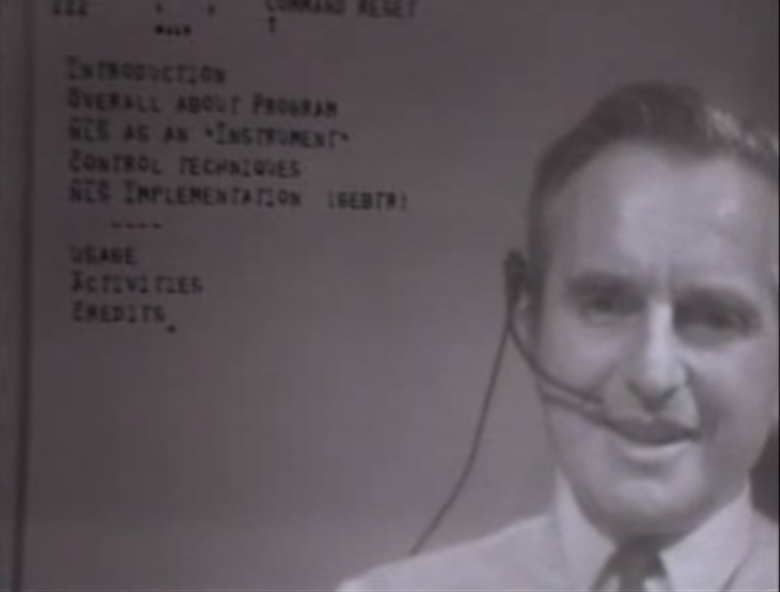
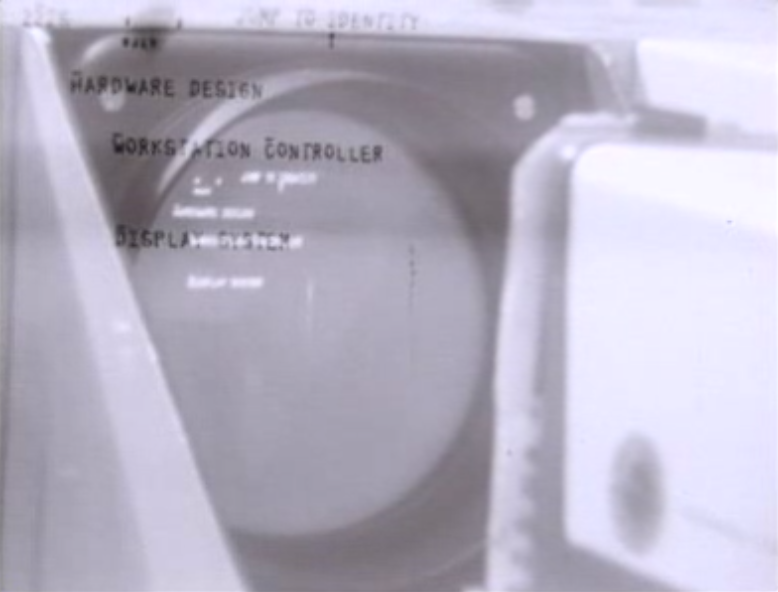
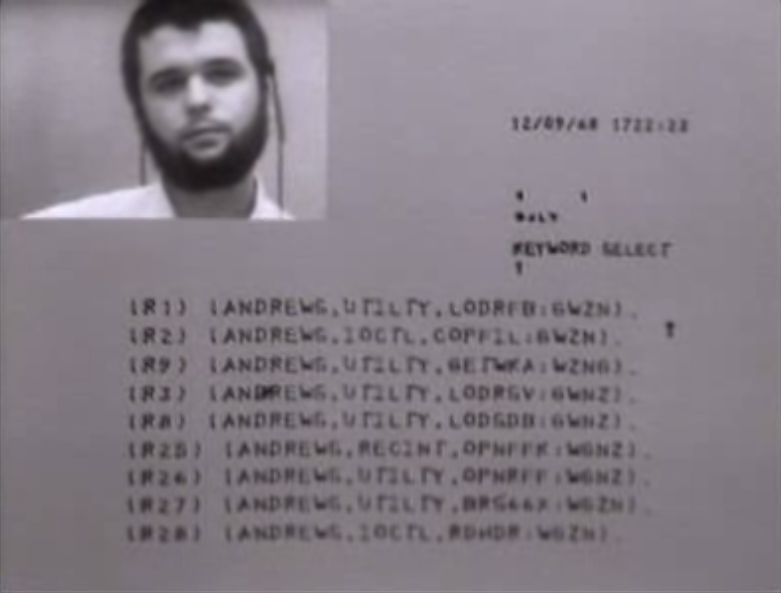
Just watched the whole Douglas Engelbart demo from 1968. Somehow I'd only heard of this as the first demo of the computer mouse, and only seen a brief clip on youtube. All three 30-minute reels of the film are available online, and well worth a watch in full. The mouse is the least of it, the demo includes an outlining text editor, model-view-controller, hypertext, wiki, domain specific programming languages, a precurser to email, bug tracking, version control(?), a chorded keyboard. (Ok, that last one didn't really take off.) Probably a dozen other things I've forgotten. All in a single interface, and all before I was born. Just like any tech demo, there are fumbles and mistakes, which is reassuring to anyone who has tried to give a tech demo. There's also the awesome crazy hack shown here. They could only afford these tiny, round CRTs, so they pointed a television camera at it, and the camera image was piped to their television console. (So add KVM switch to the list of firsts!) The demo was done in San Fransisco, with the computer system remote in Palo Alto, so in this image you see the text on the CRT overlaid with the video from the camera. Engelbart points out that the delay this added to the system acts as a short-term memory that filtered out flicker in the original display (and made the mouse have a mouse trail). To me it gives the whole demo a unique quality, as if it were underwater. Despite the piping around of audio and video signals, and the multiuser system, the glaring thing missing from the demo that we have these days is networking. Although there is this amusing bit at the end where they compile a regular expression and then apply it, in order to search for documents containing certain terms, and end up with a hyperlinked list of 10 results, ordered by relevance. Yes, think Google.

1 November 2011

Vincent Bernat: SSL computational DoS mitigation

Some days ago, a hacker group, THC, released a denial of service tool for SSL web servers. As stated in its description, the problem is not really new: a complete SSL handshake implies costly cryptographic computations. There are two different aspects in the presented attack:

Mitigation techniques There is no definitive solution to this attack but there exists some workarounds. Since the DoS tool from THC relies heavily on renegotiation, the most obvious one is to disable this mechanism on the server side but we will explore other possibilities.

Disabling SSL renegotiation Tackling the second problem seems easy: just disable SSL renegotiation. It is hardly needed: a server can trigger a renegotiation to ask a client to present a certificate but a client usually does not have any reason to trigger one. Because of a past vulnerability in SSL renegotiation, recent version of Apache and nginx just forbid it, even when the non-vulnerable version is available. openssl s_client can be used to test if SSL renegotiation is really disabled. Sending R on an empty line trigger renegotiation. Here is an example where renegotiation is disabled (despite being advertised as supported):
$ openssl s_client -connect www.luffy.cx:443 -tls1
[...]
New, TLSv1/SSLv3, Cipher is DHE-RSA-AES256-SHA
Server public key is 2048 bit
Secure Renegotiation IS supported
Compression: zlib compression
Expansion: zlib compression
[...]
R
RENEGOTIATING
140675659794088:error:1409E0E5:SSL routines:SSL3_WRITE_BYTES:ssl handshake failure:s3_pkt.c:591:
Disabling renegotation is not trivial with OpenSSL. As an example, I have pushed a patch to disable renegotiation in stud, the scalable TLS unwrapping daemon.

Rate limiting SSL handshakes Disabling SSL renegotiation on the client side is not always possible. For example, your web server may be too old to propose such an option. Since those renegotiations should not happen often, a workaround is to limit them. When the flaw was first advertised, F5 Networks provided a way to configure such a limitation with an iRule on their load-balancers. We can do something similar with just Netfilter. We can spot most TCP packets triggering such a renegotiation by looking for encrypted TLS handshake record. They may happen in a regular handshake but in this case, they usually are not at the beginning of the TCP payload. There is no field saying if a TLS record is encrypted or not (TLS is stateful for this purpose). Therefore, we have to use some heuristics. If the handshake type is unknown, we assume that this is an encrypted record. Moreover, renegotiation requests are usually encapsulated in a TCP packet flagged with push .
# Access to TCP payload (if not fragmented)
payload="0 >> 22 & 0x3C @ 12 >> 26 & 0x3C @"
iptables -A LIMIT_RENEGOCIATION \
    -p tcp --dport 443 \
    --tcp-flags SYN,FIN,RST,PSH PSH \
    -m u32 \
    --u32 "$payload 0 >> 8 = 0x160300:0x160303 && $payload 2 & 0xFF = 3:10,17:19,21:255" \
    -m hashlimit \
    --hashlimit-above 5/minute --hashlimit-burst 3 \
    --hashlimit-mode srcip --hashlimit-name ssl-reneg \
    -j DROP
The use of u32 match is a bit difficult to read. The manual page gives some insightful examples. $payload allows to seek for the TCP payload. It only works if there is no fragmentation. Then, we check if we have a handshake (0x16) and if we recognise TLS version (0x0300, 0x0301, 0x0302 or 0x0303). At least, we check if the handshake type is not a known value. There is a risk of false positives but since we use hashlimit, we should be safe. This is not a bullet proof solution: TCP fragmentation would allow an attacker to evade detection. Another equivalent solution would be to use CONNMARK to record the fact the initial handshake has been done and forbid any subsequent handshakes. If you happen to disable SSL renegociation, you can still use some Netfilter rule to limit the number of SSL handshakes by limiting the number of TCP connections from one IP:
iptables -A LIMIT_SSL \
    -p tcp --dport 443 \
    --syn -m state --state NEW \
    -m hashlimit \
    --hashlimit-above 120/minute --hashlimit-burst 20 \
    --hashlimit-mode srcip --hashlimit-name ssl-conn \
    -j DROP
Your servers will still be vulnerable to a large botnet but if there is only a handful of source IP, this rule will work just fine1. I have made all those solutions available in a single file.

Increasing server-side power processing SSL can easily be scaled up and out. Since SSL performance increases linearly with the number of cores, scaling up can be done by throwing in more CPU or more cores per CPU. Adding expensive SSL accelerators would also do the trick. Scaling out is also relatively easy but you should care about SSL session resume.

Putting more work on the client side In their presentation of the denial of service tool, THC explains:
Establishing a secure SSL connection requires 15 more processing power on the server than on the client.
I don t know where this figure comes from. To check it, I built a small tool to measure CPU time of a client and a server doing 1000 handshakes with various parameters (cipher suites and key sizes). The results are summarized on the following plot: Plot to compare computational power required by servers and clients For example, with 2048bit RSA certificates and a cipher suite like AES256-SHA, the server needs 6 times more CPU power than the client. However, if we use DHE-RSA-AES256-SHA instead, the server needs 34% less CPU power. The most efficient cipher suite from the server point of view seems to be something like DHE-DSS-AES256-SHA where the server needs half the power of the client. However, you can t really uses those shiny cipher suites:
  1. Some browsers do not support them: they are limited to RSA cipher suites2.
  2. Using them will increase your regular load a lot. Your servers may collapse with just legitimate traffic.
  3. They are expensive for some mobile clients: they need more memory, more processing power and will drain battery faster.
Let s dig a bit more on why the server needs more computational power in the case of RSA. Here is a SSL handshake when using a cipher suite like AES256-SHA: SSL full handshake When sending the Client Key Exchange message, the client will encrypt TLS version and 46 random bytes with the public key of the certificate sent by the server in its Certificate message. The server will have to decrypt this message with her private key. Those are the two most expensive operations in the handshake. Encryption and decryption are done with RSA (because of the selected cipher suite). To understand why decryption is more expensive than encryption, let me explain how RSA works. First, the server needs a public and a private key. Here are the main steps to generate them:
  1. Pick two random distinct prime numbers p and q , each roughly the same size.
  2. Compute n=pq . It is the modulus.
  3. Compute \varphi(n)=(p-1)(q-1) .
  4. Choose an integer e such that 1<e<\varphi(n) and \gcd(\varphi(n),e) = 1 (i.e. e and \varphi(n) are coprime). It is the public exponent.
  5. Compute d=e^ -1 \mod\varphi(n) . It is the private key exponent.
The public key is (n,e) while the private key is (n,d) . A message to be encrypted is first turned into an integer m<n (with some appropriate padding). It is then encrypted to a ciphered message c with the public key and should only be decrypted with the private key:
  • c=m^e\mod n (encryption)
  • m=c^d\mod n (decryption)
So, why is decryption more expensive? In fact, the key pair is not really generated like I said above. Usually, e is a small fixed prime number with a lot of 0, like 17 (0x11) or 65537 (0x10001) and p and q are choosen such that \varphi(n) is coprime with e . This allows encryption to be fast using exponentiation by squaring. On the other hand, its inverse d is a big number with no special property and therefore, exponentiation is more costly and slow. Instead of computing d from e , it is possible to choose d and compute e . We could choose d to be small and coprime with \varphi(n) and then compute e=d^ -1 \mod\varphi(n) and get blazingly fast decryption. Unfortunately, there are two problems with this: Therefore, we cannot use a small private exponent. The best we can do is to choose the public exponent to be e =4294967291 (the biggest prime 32bit number and it contains only one 0). However, there is no change as you can see on our comparative plot. To summarize, no real solution here. You need to allow RSA cipher suites and there is no way to improve the computational ratio between the server and the client with such a cipher suite.

Things get worse Shortly after the release the denial of service tool, Eric Rescorla3 published a good analysis on the impact of such a tool. He asks himself about the efficiency to use renegotiation for such an attack:
What you should be asking at this point is whether a computational DoS attack based on renegotiation is any better for the attacker than a computational DoS attack based on multiple connections. The way we measure this is by the ratio of the work the attacker has to do to the work that the server has to do. I ve never seen any actual measurements here (and the THC guys don t present any), but some back of the envelope calculations suggest that the difference is small. If I want to mount the old, multiple connection attack, I need to incur the following costs:
  1. Do the TCP handshake (3 packets)
  2. Send the SSL/TLS ClientHello (1 packet). This can be a canned message.
  3. Send the SSL/TLS ClientKeyExchange, ChangeCipherSpec, Finished messages (1 packet). These can also be canned.
Note that I don t need to parse any SSL/TLS messages from the server, and I don t need to do any cryptography. I m just going to send the server junk anyway, so I can (for instance) send the same bogus ClientKeyExchange and Finished every time. The server can t find out that they are bogus until it s done the expensive part. So, roughly speaking, this attack consists of sending a bunch of canned packets in order to force the server to do one RSA decryption.
I have written a quick proof of concept of such a tool. To avoid any abuse, it will only work if the server supports NULL-MD5 cipher suite. No sane server in the wild will support such a cipher. You need to configure your web server to support it before using this tool. While Eric explains that there is no need to parse any SSL/TLS messages, I have found that if the key exchange message is sent before the server send the answer, the connection will be aborted. Therefore, I quickly parse the server s answer to check if I can continue. Eric also says a bogus key exchange message can be sent since the server will have to decrypt it before discovering it is bogus. I have choosen to build a valid key exchange message during the first handshake (using the certificate presented by the server) and replay it on subsequent handshakes because I think the server may dismiss the message before the computation is complete (for example, if the size does not match the size of the certificate). With such a tool and 2048bit RSA certificate, a server is using 100 times more processing power than the client. Unfortunately, this means that most solutions, except rate limiting, exposed on this page may just be ineffective.

  1. However, since this rule relies on source IP to identify the attacker, the risk of false positive is real. You can slow down legitimate proxies, networks NATed behind a single IP, mobile users sharing an IP address or people behind a CGN.
  2. Cipher suites supported by all browsers are RC4-MD5, RC4-SHA and 3DES-SHA. Support for DHE-DSS-AES256-SHA requires TLS 1.2 (not supported by any browser).
  3. Eric is one of the author of several RFC related to TLS. He knows his stuff.

Philipp Kern: Useful Firefox extensions

Many people around me switched to Chrome or Chromium. I also used it for a bit, but I was a bit disappointed about the extensions available. To show why, here's a list of the extensions I've currently installed:
If Firefox on Android were quicker to start and faster overall, I might even use it there. But as-is it's not very useful. Sadly this also means that I can't use Firefox Sync on my phone and as I don't use Chrome on my desktop I also can't use Chrome to Phone. So I usually go and build a QR code on my laptop and read that with Android's Barcode Scanner.

Of course I'm actually using Iceweasel and I'm very grateful for Mike Hommey's efforts to track the release channel on mozilla.debian.net.

30 October 2011

Vincent Sanders: Software that adds another dimension to things

I think that it will come as no surprise to my fellow software engineers if I note that I almost never write new software any more. I maintain, I augment, I refactor, I debug but very, very rarely do I start something new.

This probably has something to do with my maturity as a code monkey, my immediate reaction is to seek out a solution to a problem that already exists and perhaps extend it to fulfil my requirements.

Partially this comes from my innate laziness but also over time I have discovered that I am a "finisher" the role I invariably end up in involves doing all the final bits to make the client accept a project. Because I know my reaction is to always finish something I start, I avoid starting things.

Anyhow, enough introspection, a couple of months ago I was talking on IRC about my 3D printer and was asked "can you print the Debian logo?". So I hunted around for software that would let me convert a bitmap into a suitable 3d format. The result was rather disappointing, the few tools I could find were generally python scripts which simply generated a matrix of cuboids, one for each pixel their heights corresponding to the pixel value.

I used one such script to generate a file for the Debian swirl and imported it into the OpenScad 3d modelling application. I got an inkling of the issues involved after the scene render took over half an hour. The resulting print was blocky and overall I was not terribly happy with the outcome.

So I decided I would write a program to convert images into a 3D representation. I asked myself, how hard can it be?

Sometimes starting from an utterly naive approach with no knowledge of a problem can lead to new insights. In this case I have spent all my free coding time for a month producing a program which I am now convinced has barely even scratched the surface of the possible solutions.

Having said that I have started from a blank editor window and a manual gcc command line compilation and progressed to an actually useful tool and, arguably, of more import to me I have learned and implemented a load of new algorithms which has actually been mentally stimulating and fun!

The basic premise of the tool is to take a PNG image, quantise it into a discrete number of levels , convert that as a height map into a triangle mesh, index that mesh (actually a very hard problem to solve efficiently), simplify the indexed mesh and output the result in a selection of 3D file formats.

The mesh generation alone is a complex field which it appears often devolves into the marching cubes algorithm simply out of despair of anything better ;-) I have failed to implement marching cubes so far (though I have partially implemented marching squares, an altogether simpler algorithm)

The mesh indexing creates an indexed list of vertices from the generated mesh and back annotates it with which faces are connected to which vertices. This effectively generates a useful representation of the meshes topology which can then be used to reduce the complexity of the mesh, or at least describe it. To gain efficiency I implemented my first ever bloom filter as part of my solution. I also learned that generating a plausible hash for said filter is a lot harder than it would seem. In the end I simply used the FNV hash which produces excellent results for very little computation cost.

The mesh simplification area is awash with academic research, most of which I ended up skipping and simply went for the absolute simplest edge removal algorithm. Implementing even this and maintaining a valid mesh topology was challenging.

By comparison the output of the various formats was positively trivial, mainly littered with head scratching over the bizzare de-facto "extensible" formats where only one trivial corner is ever actually implemented.

All in all I have had fun creating the PNG23D project and have actually used it to generate some useful output. I have even printed some of it to generate a lithophane of Turing. I now look forward to several years of maintaining and debugging it and doing all the other things I do instead of writing new software ;-)

29 October 2011

Kartik Mistry: New GPG Key

* What a lazy DD I m. My new GPG key transition document is available at: http://people.debian.org/~kartik/gpg-transition-kartik.txt.asc Many thanks to Christian Perrier for this. Please consider signing my new shiny key: 0x783AA4DE And, yes. It is fun to be at MiniDebconf here in Nitte.

Joey Hess: GitTogether2011

I attended the Git Together earlier this week. I was tenative about this, since I'm not really much of a git developer; all my git work is building stuff on top of it. It turned out great though. At first it seemed like one of those parties where you don't know anyone. But then I got to reconnect with Avery Pennarun for the first time since DebConf 2, and got to know Jonathan Nieder better, and it was also nice to see Jelmer Vernooij. And the core developers were also very welcoming. Junio Hamano knew of my work (and I am in awe of his), and Jeff King thinks my take on SHA1 security issues has value, and has been expanding on it. Shawn Pearce managed the unconference subtly and well. Lots of very smart people. At one point I found myself accross the table from Android's lead developer. I was very happy that everything I think needs improvement in git was discussed during the unconference:

28 October 2011

Russell Coker: Desktop Equivalent Augmented Reality

Augmented reality is available on all relatively modern smart phones. I ve played with it on my Android phone but it hasn t delivered the benefits that I hoped, there is a game where you can walk through a virtual maze which didn t work for me, and a bunch of programs which show me the position of stars, pizza restaurants, and other things which are cool but not really useful. It has been proven that larger screen size can make a surprising difference in productivity for increasing monitor size. The general concept seems to be that ideally everything you are thinking about at one time should be on the screen at once. I m not aware of any research comparing phones to desktop monitors but it is obvious that some tasks become extremely difficult or nearly impossible when attempted on the tiny screen of a phone. One significant example is coding. One noteworthy thing about coding is that the amount of typing is often quite small when compared to the amount of time spent looking at code, so the lack of good keyboard options on phones isn t always a serious problem. The iPhone 4 has a resolution of 640*960 which seems to be the best available phone resolution (with 480*854 being the highest resolution that is available in many phones). The Dell Streak at 5 inches seemed to have the largest screen in a phone, but they have stopped selling them. It seems that the largest screen available in a phone is about 4.2 inches. Probably the minimum that would be considered usable for development would be a resolution of about 1280*1024 and a screen size of about 14 inches, while opinion will vary a lot about this I think that the vast majority of programmers will agree that the bigger tablet computers and Netbooks (at about 10 inches and something like 1366*768 resolution) are well below the minimum size. It seems to me that a possible solution to this problem involves using augmented reality to provide a virtual desktop that is significantly larger and which has a significantly higher resolution. The advantage of augmented reality over merely scrolling is that it should allow faster and more reliable seeking for the section of virtual desktop that is of interest, and seek speed is probably the bottleneck with small monitors. One problem for this would be turning corners when on public transport, but the camera button could be used to reset the current phone position to be the middle of the viewing area, if the process of resetting the angle is fast enough it wouldn t be a great distraction. I don t think that a mobile phone will ever be a great device for software development and I don t think that the places where a serious computer isn t available are good places to work. But sometimes I get inspiration for tracking down a difficult bug when on the move and it would be really good to be able to read the code immediately. I won t have any time to work on such things myself. I m just publishing the idea in case someone who likes it happens to have a lot of spare time

27 October 2011

Michal &#268;iha&#345;: GePeS 0.1.0

After finalizing DOF Calc 0.1.0 yesterday, I've decided to push new version of GePeS as well. The update utilizes new Meego loader, so application should start much faster, add azimuth calculation for sun (set, rise and current) as well as compass is utilized for showing this azimuth. You can check all new features on screenshots page. New version is currently available in git and tarballs, binary version will be in Nokia store as soon it passes QA tests there.

Filed under: English Meego 0 comments Flattr this!

26 October 2011

Mike (stew) O'Connor: Bye Bye G+

Well, when I got an invite to try G+, I decided to make my first foray into social networking sites since friendster. It was mildly interesting while it lasted, however it seems that it is over for me now. I tried to use the name "Mike (stew) O'Connor" as I do on my gpg key. This caused my accounted to get flagged as violating their "real names" policy. I can't help but to feel a little offended that they think they know what my name is better than I do. I have a bit of a unique situation with my name. Pretty much NOBODY calls me "Mike" or "Michael" save a few people from my childhood. Its been this way for more than half of my life. My wife only ever has called me "stew". My two year old knows my name is "stew" but doesn't know my name is also "Mike". If I meet somebody new, I always introduce myself as "stew". All my clients call me stew... The instructions on google plus tell you "To help fight spam and prevent fake profiles, use the name your friends, family or co-workers usually call you.", So when my account was initially flagged. I tried changing my name to "Stew O'Connor". My account was "pending review" and I was still able to post and reply and the like. After review, my account was suspended, some of my privacy settings were changed, and I cannot change them back. Out of the 60 or so people that added me on G+, only one of them should ever be referring to me as "Mike". When someone calls me Mike that isn't one of the handful of people that "should" be calling me "Mike", my brain immediately puts them in the "oh, you don't know me very well" category. Oh well, Google, amazingly, you don't know me very well. After explaining to someone "oh, no you really should call me stew like everyone else", you say "No, I'd rather just not talk to you", now you are just being a jerk. Now I guess I have a retort to people that use the phrase which I find so annoying: "GIYF". Update: I appealed to change my name to Stew O'Connor which was denied, then appealed to change my name to Mike O'Connor which was also denied. I guess I was supposed to use "Michael" or something? Being denied "Mike", I deleted my suspeneded G+ account, feeling extra flouncy, chnaged by default search engine to duckduckgo.com.

24 October 2011

Biella Coleman: Occupy S o Paulo Under Threat

Occupy Sao Paulo Under Threat I was in Brazil last week and had the pleasure of participating in a teach-in at Occupy S o Paulo, a vibrant camp set up last week in the heart of the old down town. There are now under threat, please see below for details and spread the word. *** On October 15, a group of nearly 300 activists began an occupation of S o Paulo in the Valley of Anhagabau, one of the sites of the first rallies for direct elections during the end of the Brazilian military dictatorship in the 1980s. After a week of peaceful encampment, educational and cultural programs, and creating a sustainable community for not just themselves but many homeless people in downtown S o Paulo, the Occupy S o Paulo movement is coming under increased police threat. Today, Monday October 24, the governor of the state of S o Paulo, Geraldo Alckmin is holding two special events. First, he is hosting Florida Governor Rick Scott (R). Second, Alckmin has decided to hold a parade of 3000 military police right next to the encampment (see photo above). After a week of police harrassment and a pending court case for them to hold the right to pitch their tents, the Occupy S o Paulo movement sees this as an escalation of the harassment they have already faced by city police. Further, the presence of 3000 military police next to 300 occupiers is clearly meant to intimidate both occupiers and members of the public who have been coming up to the encampment and learning about the movement. Please take the time to call or email the governor and the secretary of public security of the state of S o Paulo to condemn this action. You can also send messages of solidarity to the S o Paulo occupation at occupysampaenglish@googlegroups.com. To contact Governor Geraldo Alckmin s office of citizen and organizational relations: Fill out a comment form at: http://www.saopaulo.sp.gov.br/en/fale/fale.php
Phone: 55-11-2193-8463 To contact the Secretary of Public Security, Ant nio Ferreiro Pinto:
Email: seguranca@sp.gov.br
Phone: 55-11-3291-8500

Dirk Eddelbuettel: Kurt Elling and the Kl vers Big Band at the Green Mill

Twenty-four hours ago I was in heaven. Or to more properly recapitulate and situate this, fourty-eight hours ago I was in hell. Now this requires some context. Earlier in the year, I had tweeted briefly about a Kurt Elling live concert still streaming on NPR, and truth be told, I have listened to Kurt Elling a whole lot ever since. The most recent album The Gate is fantastic, the Grammy-winner Dedicated to You (which retakes the very famous Coltrane/Hartman album) is beyond words, and The Messenger is worth it just for 'Nature Boy' and the funkiest-ever 'April in Paris'. I also saw him as part of a larger and otherwise rather neat tour. But I needed to see the man himself. So following what one can see from his touring calendar, I jotted down two October dates. Kurt Elling at the Green Mill. Fine. That was earlier in the summer. Summer has a tendency of evaporating quickly, so here we were in October. And getting going late on Friday, so by the time we got the Green Mill, a long line had formed and we ended up paying tribute to the line for fourty-five minutes with nothing to show. Sad. Home we went, and no live music. But somehow we mustered the energy to go again last night and thought we were early, arriving about 20 minutes before the show was to start. Ha! Others had appeared at 3pm, by 5pm all seats were gone. We were literally the last ones the get in after a short spell in a shorter line, and standing room-only it was. Oh, but what a treat we got. The set for these two days was Kurt Elling with the fourteen piece Kl vers Big Band from Denmark. They played for three marvellous sets, and well over four hours (with two 25 minute breaks). Pieces often alternated between big band arrangements and smaller pieces by Elling's standard rhythm band, and covered standards as well as Elling's catalogue. As I mentioned earlier on a short post (with pictures) on Google+, it is essentially impossible to not fall for Elling's stage presence when being so close to the stage. The man is just that good. Elling and the Kl vers Big Band will now play for six nights at Birdland in New York followed by a night each in Washington, DC, and Boston. If you're around, do yourself a favour and go out to see them.

23 October 2011

Asheesh Laroia: RFBP: Request for birthday present/package

There is a program that I love: bb. bb is a demo of the famous ASCII Art library, aalib.
     dT8  8Tb     
    dT 8  8 Tb    
   dT  8  8  Tb   
<PROJECT><PROJECT>
 dT    8  8    Tb 
dT     8  8     Tb
bb is a demo-scene-type program that shows how awesome automatic ASCII art is. The personalities of the people who made bb shine through. It's surely one of my favorite programs in Debian, up there with alpine. It's been in Debian since 1998. bb has a serious bug, however: BB's "graphics" freeze when music starts. Here's the issue. So if your system (like most GNU/Linux systems) uses pulseaudio for sound, then bb is broken. That means every Ubuntu user and most desktop Debian users can't use it. There are a few possible fixes, depending on where you'd want to solve the problem. If you just want bb to run on your own machine, without recompiling anything, you can adjust pulseaudio's configuration (in /etc/pulse/default.pa) to disable esound support. If you want to do that, just comment out this line:
 load-module module-esound-protocol-unix
We could also possibly patch bb so that it asks libmikmod not to use its esound "support." I think the smarter thing to do is to adjust libmikmod. Since its esound support seems to be just plain broken, it should be removed. At very least, it should not be the default when ALSA output is available. There is a new upstream release of libmikmod, maybe the esound output is fixed. In Debian, libmikmod is orphaned. When a package is orphaned, it means that a new person must step in and adopt the package. Debian packages need ongoing care and commitment to fix issues and make changes like this that benefit the users. In this case, you'd need to understand some C and be willing to maintain a shared library. Maintaining a library in Debian requires attention to detail, but it is quite doable. Since you would be adopting an existing package, most of the work is already done for you. I would also be quite willing to answer questions. If you're not a Debian developer, I would happily sponsor uploads of this package into Debian so that the fixes are part of the distribution. So: who will maintain libmikmod and fix bb? Could it be you? It would make a really great birthday present if the amazing bb program worked in the next Debian release. Leave a comment if you have questions or are interested! P.S. In a pinch, I can be convinced to maintain libmikmod myself, but I think this is a great opportunity for someone new to Debian to make a big difference.

Niels Thykier: Testing testing migration

If you have been following Lintian s development closely, you will probably have noticed that I have not really done anything there for the past week. Instead I have turned my focus on our testing migration script, britney2. First, I have created a minimal test suite[1]. It started as 4 simple tests and by now it contains about 30 tests. The size of each test is rather small; the largest tests are about 1600 binary packages in total[2], but most are 2-20 binary packages in total. Thus the test suite is rather fast compared to a live data sample , which easily takes more than 10 minutes for a single run. Unfortunately, hand-crafting the test data is somewhat annoying and easy to get wrong. The test suite has a somewhat unfair focus on auto-hint [3] cases, so the current britney2 fails up to 14 tests. Some of these appears to fail because the auto-hinter (for some reason) receives incomplete information about the situation. To my knowledge we not been able to debug the situation, but Adam has a refactor branch that does not seem to have this issue. Personally I am hoping it will soon be merged into the master branch, especially because it seems to simplify a lot of common operations. Joachim Breitner (who has been working on a SAT-solver based britney) also contributed a couple of test cases[4]. Allegedly, SAT-britney does rather well on the test suite, failing only 2 tests as far as I can tell[5]. On the other hand, it does solve a some of the more interesting cases britney2 does not solve. On a more mathematical note, the britney2 implementation behaves like a function[6] with an attractive fixed point[7]. This is interesting, because for some cases it may take britney2 a couple of iterations to reach the right solution. This fixed point is somewhat simple to find by using the following steps (pseudo-code):
// Runtime complexity O(n * br * diff), where "n" is the number of iterations until
// a fixed point is reached, "br" is the complexity of "run_britney" and "diff" is
// the runtime of the "last != current" comparison.
function find_fixed_point(initial);
    last = run_britney(initial)
    current = run_britney(last)
    while last != current ; do
        last = current
        current = run_britney(last)
    od
    return current
end
This gives us a simple way to test if britney will eventually solve the issue herself (and when she will do it). Currently britney2 is automatically run twice a day, so for every 2 iterations (beyond the first) roughly translates to a 24-hours delay. So far the test suite does not have a lot of problems that requires more than one iteration. Personally I would be pleased if it turned out to stay that way as the test suite coverage grows. If you are interested in playing around with this, you can get sources from: Footnotes: [1] http://lists.debian.org/debian-release/2011/10/msg00178.html [2] These tests are auto-generated, so it is merely an up-scaled pattern . [3] Basically if two (or more) packages needs to migrate into testing at the exact same time, they need to be hinted in. [4] Not to mention all the copy-waste errors he pointed out in mine. Apparently, SAT-britney has stricter requirements to the data than britney2. :P [5] I assume the test called sat-britney-death (created by Joachim) was named that way for a reason. The second failure is caused by SAT britney not reading hints (yet?), so the approve tpu package test case should fail. [6] A function that maps an archive into another archive erh, I mean, it maps a set of packages into another set of packages :P [7] http://en.wikipedia.org/wiki/Fixed_point_%28mathematics%29 Assuming my claim to be true, the function will have more than one fixed point. The obtained fixed point depends on the initial state of testing. As an example:
y depends on x
x in testing has RC bugs If x is not in testing, it cannot migrate to testing (due to its RC bugs). If x is not in testing, then y cannot migrate into testing. But if x starts in testing, then y may be able to migrate. This can happen if x migrated to testing before an RC bug was filed against it. (Dis-)Proving my claim is an exercise left for the reader.

Andrew Pollock: [life] Miss Representation

A few months after Zoe was born, it hit me that we didn't just have to raise a baby to grow up happy and healthy, we were raising a girl, and had to worry about making sure she had a healthy self-image and mind as well, and having to worry about how the world she was coming into was going to have an impact on that. I think it might have been around the time that I became aware of the book Cinderella Ate My Daughter that I had this realisation. I started taking more of an interest in, what I guess I'd call feminist issues. I became a seed funder for the Ada Initiative, and I tend to prick my ears up when I hear about feminist issues. So when an email went by on the parents list at work about a screening of an independent documentary film called Miss Representation, I watched the trailer, and since I'm currently swanning around sans wife and child, ponied up the $10 to go and see a screening of it in Palo Alto, which was followed by a Q&A session with the writer/director/producer. I basically went along on the strength of the trailer, and being a father of a daughter, and didn't do much more reading into the who the writer/director/producer was. It turns out that Jennifer Siebel is Gavin Newsom's wife. I didn't figure that out until I got home and did my homework, so some of the references she made in the conversation after the screening didn't make a lot of sense to me at the time. The documentary itself was very poignant, but I found that after about 40 or 50 minutes, I felt that the point was made, and I would have preferred to see more about what to do about it. But I guess what to do about it is to be aware of the problem. I had some trouble accepting the statistic quoted at the beginning of the film that the average teenager spends more than 10 hours each day consuming media. If they sleep for 8 hours, and go to school for 6 hours, that means they're spending every other waking minute consuming media, and I just don't buy that. Apparently Jennifer is working on a couple of related follow-up documentaries, so it'll be interesting to see what they're about and what they're like, and how they're presented to the viewing public. One of the things that disappointed me a bit was this film doesn't look like it's going to do any sort of mainstream theatre run. I'm not sure why, but it seems like the way they're going is for more of a grassroots, small screening thing, possibly as a way of trying to get it added to (I presume private) school curricula. It is getting a couple of showings on Oprah Winfrey's cable channel OWN, but that doesn't seem like enough to me. I think it'd really cause people to sit up and take notice if it got half-decent box office numbers and a bit more press coverage as a result. It's the kind of thing I could see going viral if it gets more exposure. The other thing that really disappointed me was the lack of men in the audience. I think I could have counted on both hands the number of men there. But I have to say that I wouldn't have heard about it (yet, anyway) if it weren't for that email that went by on the mailing list at work, so maybe it just doesn't have much of a profile yet. I view this documentary in the same calibre as Super Size Me, or anything that Michael Moore has put out. It's a documentary trying to highlight an issue with American culture. It should get as widespread a viewing as possible to get the conversation going. Instead, as best I can tell, there's two DVDs billed as "educational material", with what I consider prohibitive pricetags. I want to purchase a copy of the film for posterity (if nothing more, it'll be interesting to show Zoe a snapshot of American culture from around when she was born), but I'd also like to get my hands on the age-appropriate educational stuff so that I can use it with Zoe. The likelihood of Zoe going to a school that incorporates the material into its curriculum is slim (she'll be educated in Australia), so I'd really like to be able to use it at home. I'll end with this thought provoking article that also did the rounds of the parents list at work a few months ago.

22 October 2011

Adnan Hodzic: My DebConf11 summary and its after effects

Even though some three months have passed since DebConf11 has successfully ended, I still wanted to give you just a glimpse on how some parts were played through the eyes of a lunatic (read: organizer). Of course, blog post can t come close near of explaining anything but at least it should give some insight and hopefully some pointers to the future DebConf organizers. If you don t feel like reading this much text you can listen to last episode of This Week In Debian podcast and after it just head to Beginning of the end part. DebConf11 First of all I d like to apologize if I offended or hurt anyone in this whole process as it wasn t my intention and during DebConf organization this is nothing irregular, for you to get hurt or you hurting somebody else. One thing that got stuck with me this whole time is when Mart n Ferrari approached me after I did bid proposal of Bosnia/Herzegovina for DebConf11 back on DebConf9 and told me you have no idea what you just got yourself into I played cool and said something along the line of coure I do and boy did I lie. During DebConf organization you re bound to make some of your decisions instantaneously in which you ll lose something, the most you can do is assess what s the thing you can cut the cord on, even though if that thing or a person for that matter might have meant something to you. You ll lose things, relationships, friendships, contacts at the times sense of humor and maybe even common logic. Some of it comes back to you, some the very next day and for some it may take longer. Some of it was lost irreversibly, but even in that case it wasn t lost and could even be traced to some other cause. One thing that I m thankful for is that I didn t lose, not lose but even get distanced from those close to me, and that I didn t lose guy who was with me in this from very first day, my right hand, my partner in crime Velimir ( aroundthfur ). It s not even losing I m talking about here, because even by losing you re gaining something and this is part of your everyday life, it s just that your life frame kinda gets stuck on fast forward button. So once the ride s over you may feel bit dizzy asking yourself what just happened. During this time I was also contacted by Google recruiter regrading software engineer internship but to make a long story short I didn t make it due to my heavy involvement and my lack of time (read: fail). But I don t find this as losing either, first time I was contacted by them, next time they ll be contacted by me maybe even for different position this time (project manager? Big Smile. Even this DebConf wasn t our first bid we lost DebConf7 bid to Edinburgh, but it is perseverance that got us here. The moral I m trying to tell here is if you have a goal never back down from it. What I found to be our biggest problem and what I personally found as most painstaking in all of this was having and reporting to so many different sides and different groups while trying to keep them in same communication channel. Even my right hand (Velimir) was apart from me (Vienna), then place where two of us are coming from is not the place where DebConf is getting organized in. As in the end we ended up having all the parties separated and pulling to their own side, from Government of Republika Srpska to NGO to Debian to local team and to those who remained as undeclared . Option of cutting the cord in this case was missing as these were the components that DebCon11 was made of. Of course this meant you ll be missing workforce and there were days you d wake up driving >= 200 km/h (literally) with one hand on the wheel, other on the phone and your other right hand (Velimir) holding your RedBull. But you wouldn t do this just because you had to and there was no one else to do it, you d do it because you re responsible for the sake of the project and won t be just sitting there because by some unwritten hierarchy rules you re supposed to sit and supervise things. I d advise you do the same thing when you see there s no one else to do something, even if it means making coffee for one of the teams. I m not trying to scare you away from organizing your own DebConf, on the contrary after all I ve been through in past two years if someone asked me would I do it if I knew it was like this, without a doubt my answer would still be fsck yea . All the previous DebConf organizers told me about all of this, but why didn t I give up? For the same reason you won t give up and for the same reason why we believe in the same goal. If anything this is one of the stories you ll want to tell your kids about so When I was your age I used to sleep naked in the snow would turn to When I was your age I organized DebConf11 in Maybe this blog post wasn t even necessary and some things weren t supposed to be said, I guess sometimes I just can t shut up Smile For those who were on DebConf11 I hope you enjoyed and had a great time, otherwise I m saying all of this in vein. As organizer all you see is problems and you miss most of the confrence, but by what I know there are 11 candidate bids for DebConf13 and for me hearing that tells me the results of our efforts. DebConf11 after effects I could write a whole novel about this, but to keep it as short as possible, for last two years as a side project I was working on an idea of Government or some of its institutions migrating to Linux. At first I was somewhat loud about it, then after Microsoft heard about it and after they tried stopping the idea by trying to scare me by trying to interfere with my private life; as that didn t work its lobbyist came even near of obstructing the whole conference within the Government. For the sake of the conference, I convinced the Government that by supporting DebConf it doesn t mean they need to move to Linux and publicly stopped talking about it. I also convinced them that our only goal was to have successful conference and promote alternative options and open ideas. I wasn t lying as I saw this as new opportunity of them concluding on their own why they should or shouldn t not move, the better conference was the more chances of success we had. That s why I tried pushing as many representatives from various companies as in this case we would use reverse psychology where basically no one or few know what Linux or Debian for that matter is, but everybody knows who Google is, so if you have participants from i.e: Google or Austrian E-Health care system talking about how they are using your technology is better way to explain what s it all about really. Eventually Microsoft even had their first ever conference in Bosnia/Herzegovina and you wanna take a wild guess where it was held? Smile In the end we had a great conference, after the conference we were the ones that were approached by some big local companies interested in future co-operation and in the end a meeting with Mark Shuttleworth and President along with the core of Government was scheduled. Topic? Migration to Linux. For me personally this meeting went better then I could possibly even picture it, many topics were discussed and basically it was up to us/me to make a draft of the project plan and submit request for proposal to the Government. There was still some lobbying but it seemed as it all disappeared, runway was clear and open for the lift off. Necessary contacts with potential future partners were made and before any meetings were scheduled I announced I ll be taking a short break. I missed this years vacation, for matter of a fact I missed going to a vacation for last two years. I decided going to Dubrovnik for few days, just to recollect my thoughts, recompile my kernel and switch to lower gear as I was stuck in 6th gear for way too long. Beginning of the end Being on this vacation , even if it was only for few days this gave me an opportunity to look at it all from a different prospective, different angle and that s when it came to me. I realized that even before I was finished with one project without even realizing I was already involved with another one, one that would take much more time and one that might leave me wondering ~5 years later with question what if? After all if get involved with something I m not going to back out, it s either failure is not an option or I won t start doing it at all. Even if it brought me everything I wanted, how would you know if that s what you wanted if you haven t thought about it first? Having DebConf for the first time in this region already showed some (positive) results, but for seeing the actual results it may take a bit longer. We sowed the seeds now the best thing we can do is leave them as it is and see if anything grows out. Of course I could lean over them and protect them from any natural or any other type of hazards, this would also mean when I m not around it wouldn t know how to protect itself on its own. Besides all, interfering with natures way of doing things is rarely a good option. I consider myself to still be relatively young and threatening my well being over safe keeping some seeds and watching over if they grow into something or not doesn t really seem that attractive to me. Maybe one day I ll decide to leave the land, maybe I won t even get to see if anything grows out after all. Maybe some day someone will find this fruit, recognize its worth and claim it as it s own, maybe over time everybody forgets everything and even that this land once was a fertile ground. Maybe, maybe not. I m still a student, I was supposed to graduate last year but I took less classes last year so I wouldn t snap under all the pressure. That s why this year I have less classes and am supposed to graduate in May, that s less then a year until then and I just want to devote some time to myself, figure out what I want with me life, learn the things I want to learn, do the things I want to do. I want to turn back to working on Eclipse, I have some good plans for Eclipse and Android developers, lately I ve been slacking off way too much but I think I have a good excuse Smile In the end, all I know is that I still want to change the world, whether it s doing that inside of Google or in my own company, or some third place; or I ll just be laughing at this statement only time will show. I m hoping that now with all of this out of me I can finally finish the DebConf11 chapter of my life.

19 October 2011

Alastair McKinstry: Dear Lazyweb,

I'm building a debian package, CDAT. The latest version 6.0.alpha uses CMAKE to build, rather than configure. The trouble is that CMake doesn't build. It doesn't even fail.
$ mkdir build
$ cd build
$ cmake ..
()-- Configuring done
-- Generating done
-- Build files have been written to: /home/amckinstry/deb-packages /cdat/cdat-6.0.alpha/build
$ make
$
The problem is, 'make' does nothing. A Makefile is generated by CMake, which calls cmake which calls make again on ./CMakeFiles/Makefile2 ... which does nothing useful. Apparently the CMake is supposed to put useful stuff in there, but doesn't. What puts stuff into Makefile2, and where should I pick up the bugs trail? Tags , ,

Next.

Previous.