| Publisher: | O'Reilly |
| Copyright: | July 2005 |
| Printing: | April 2011 |
| ISBN: | 0-596-00173-8 |
| Format: | Trade paperback |
| Pages: | 492 |
use English in some circumstances, something that
I consider to be a horrible idea. So, when a coworker recommended it and
suggested I really should read it, I was dubious.
I'm glad I gave it a chance, since it turns out that nearly all of my
objections were based on misunderstandings or false information. (Well,
except for the use English part, but more on that in a moment.)
Perl Best Practices does provide a lot of advice, explaining
that flood of diagnostics, but perlcritic also warns about the same thing
repeatedly, inflating a handful of issues into a lot of messages. Most of
the recommendations in Perl Best Practices were things I was doing
already; most of the rest are entirely sensible. Also, perlcritic does
come with complete explanations of its diagnostics once you know where
they're hidden (the perldoc of Perl::Critic::Policy modules whose names
you can get at by insisting perlcritic divulge them). And, even more
delightfully, once I got past my objections, I discovered that Perl
Best Practices is one of the best books on coding style that I've read.
Coding style is a notoriously difficult subject, since nearly everyone is
convinced their personal style is the best (or at least that they don't
want to change). Conway acknowledges that up-front, and acknowledges that
some things are just arbitrary and consistency with any rule set is better
than following some specific rule set. He then spends surprisingly little
time on the sorts of things that dominate most coding style discussions
(indentation, spacing, commenting, etc.). Instead, this is primarily a
book about how to write efficient and transparent Perl code, one that
focuses much more on the content and structure of that code than on how it
is indented.
The best part is that there are no undefended rules here. Perl Best
Practices contains 256 separate guidelines, some quite general ("Provide
an optimal interface, rather than a minimal one") and some quite specific
("Pass constructor arguments as labeled values, using a hash reference"),
but every one of them has a supporting argument and specific reasons
behind it. Conway backs up every recommendation with code samples and
practical scenarios showing the pluses and minuses of different
approaches. This is a book unconcerned with being an authority; rather,
it reads like optional advice from a good mentor, complete with insightful
discussions on each point raised. You may come away from it disagreeing
with Conway's specific recommendation (and I did, in several places), but
you'll almost certainly be better-informed about the problem for having
read it.
Plus, this book is just fun to read. Admittedly, I love this sort of
thing; I spend lots of time thinking about coding style in any language,
and a lot more time refactoring coding style when working on my own
projects to try to achieve clarity and simplicity. But even without
sharing my love of the material, I think this book will be a delight for
any practicing Perl programmer who hasn't yet read it. Conway clearly has
a wealth of experience and years in the trenches of working with other
people's Perl code. The examples he draws on are brief, comprehensible,
and illuminating.
He also gave me a tour of a variety of helper modules and libraries that I
didn't know existed. List::Util is the most prominant example; this
incredibly helpful supply of list manipulation functions that I've always
half-known I wanted but never bothered to write is now part of Perl core
(as of 5.7.3), so there's no reason to avoid it. You too can stop using
grep when you actually mean first, or rewriting max
in ad hoc ways.
That does raise two of the rare flaws in this book, though. One is that I
disagree (partially) with Conway's willingness to recommend non-core
modules. He is a particular champion of the Readonly module over either
normal file global variables or use constant, for very good
reasons. But making Readonly a prerequisite for all other Perl code that
one releases seems a bit annoying (speaking as someone who used to
maintain local Perl installations). Maybe this isn't as big of a deal in
these days of ubiquitous Linux distributions and willingness to use the
CPAN shell, but I still dislike releasing code that depends on a
half-dozen (or more) other CPAN modules for reasons of coding convenience
and minor readability rather than core functionality. (His advocacy of
Sub::Install raised similar objections.)
The second flaw is not something Conway could have done anything about:
this book is from 2005, and it's now 2012. Now, the Perl ecosystem is now
quite mature, so that hampers the book much less than it would a
corresponding book about Ruby or even Python. I also aim for
compatibility with the oldest thing out there I know someone is still
running, so I'm still hesitant to require anything newer than Perl 5.8.
But still, this book was written seven years ago, and Perl is now at 5.14.
In the meantime, we've seen core language features like
given/when added, the addition of state variables,
the need for substantial reworking of how Unicode I/O is handled, the
addition of the new // operator, and the new package syntax,
among many other things. The Perl taught here is a bit dated, and I would
love to hear Conway's opinion about when (or if) to use say. Maybe
someday we'll get a second edition.
There are two other points that I do have to argue with. One is that
Conway does advocate, in a limited way, use English. I could
almost go along with his recommendation to use it only for those variables
that one has to look up, except that in nearly every case there are other
options and one can take the much better approach of simply not using
those variables at all. But he then writes the remaining examples in the
book using $EVAL_ERROR rather than $@, and I'm sorry, but
no. One could not construct a more frustrating annoyance for an
experienced Perl programmer than sending them on a futile hunt for where
the global variable $EVAL_ERROR is defined. One can debate the
merits of Larry Wall's original decision to use variables like $_,
@_, $?, $!, and $?, but for better or ill this
is Perl, and marginal readability gains for inexperienced programmers do
not warrant confusing experienced programmers. This is particularly true
when the use English variables are completely indistinguishable
from normal global variables, and not infrequently look like a global
variable that a programmer might choose.
The second is more of an amusement that a real disagreement. Conway
rightfully points out that Perl OO, and particularly the way that Perl
stores object instance data, is awkward, and none of the commonly-used
techniques are particularly satisfying. He then introduces a completely
new way of doing instance data that, while having some advantages, has a
very strange syntax and is utterly unlike how any OO code one finds in the
wild is written. While the discussion of the problem that he's trying to
solve is still interesting, I think the solutions he proposes will be more
of a curiosity than a style that most programmers will adopt.
But, those disagreements aside, I thoroughly enjoyed this book. I found
it so engrossing that I kept reading it straight through a long train ride
rather than switching to fiction halfway, like I do with most programming
books. I've since recommended it to several other coworkers, and we're in
the process of revising our internal Perl coding style based heavily on
it. It's the sort of book that I expect to re-read several times to
refresh my memory of Conway's analysis.
If you've been avoiding this one due to misconceptions like I had, or
because you think it might be too dry, or even just because you're afraid
it's outdated, I strongly recommend it. If you're worried about the price
of a printed (or electronic) book on this topic and you do Perl
programming as part of your job, see if your employer will buy you a copy
as training. It's worth it. I've been writing Perl professionally for
more than fifteen years, and I learned a ton from this book.
(And if it inspires you to change your coding style, take a look at
perlcritic. It requires some configuration, and getting started is quite
frustrating, but it reliably detects a surprisingly high percentage of the
issues discussed here and can help a great deal in making the coding style
shift stick until you can build new habits.)
Rating: 9 out of 10
| Publisher: | Nonstop |
| Copyright: | 2012 |
| ISBN: | 1-933065-39-7 |
| Format: | Trade paperback |
| Pages: | 288 |
Lethem's beautifully balanced, metaphorically rich prose propels this blackly jolly fable to a surprising yet satisfying conclusion. By book's end, a sense that the author had accomplished his takeoff taxiing and was now fully in flight for more cosmopolitan cities pervades the pages.What's "beautifully balanced prose"? Could you recognize it? Does that phrase communicate anything to you other than that the authors liked the book? The whole review collection is written with adjectives and metaphors like this, and after a while it all seems a bit much. It felt like the authors were straining for ways to describe how important or significant the books are and, in the process, lost sight of the basic goal of conveying information about the book. It feels overwrought rather than informative. Even if one is reviewing the books that one considers the pinnacle of achievement in science fiction, a conversational tone with concrete examples and specifics communicates more than impressive but slippery terms like "metaphorically rich." Lest I sound entirely negative, one thing that I did appreciate is that the reviews go to some effort (particularly for their short length) to put the work in the broader context of the field and within the author's oeuvre. Often there's some discussion of previous and subsequent work or related books, and the reviews that feature books from larger series provide good explanations for why those particular books were singled out. Sometimes the number of dangling references was frustrating; authors of these sorts of collections need to remember that most readers will not be as widely read, and reviewing books largely by comparison to other books runs the risk of missing the reader's knowledge entirely. But the reviews convey a real sense of SF as a broad conversation and provide a sense of the breadth and variety of themes and subgenres available. This is one of the fun explorations that this sort of catalog lets the authors and reader do together. Another, more minor, touch that I appreciated was the cover art. Each review leads with an image of the reviewed book's cover (alas, only in black and white for obvious printing reasons). But rather than taking the obvious approach of using the covers of the first releases, or the covers from a particular country, they're chosen from all of the world-wide editions in all their delightful variety. Typical artistic styles for book covers vary drastically between countries, and getting to see a sample of artwork from different markets is a treat. I want to recommend this book. It casts a much broader net than most collections of its kind and provides some needed attention to smaller corners of the genre. I was impressed by the book list before I bought it, and (with the inevitable quibbles) am even more impressed now that I've read it. Broderick and Di Filippo go out of their way to broaden the reader's horizon and open up new avenues for reading, which is one of the best things a review collection can do. But when reviewers don't avoid spoilers, I just can't recommend their work. For me, this is a cardinal sin. Combine that with a writing style that was occasionally overblown and overwritten and the merits don't quite overcome the flaws. I'm glad I read it; it got me excited about reading many books I've already purchased but not gotten to, and I got from it another slew of books to add to my to-purchase list. But I had to read it uncomfortably and lightly, constantly prepared to jump past a review that was too revealing. Rating: 6 out of 10
uhlo = "UHLO" SP ( Domain / address-literal ) *( SP ehlo-keyword ) CRLFThe receiver must check if all requested SMTP extensions are available.
| Series: | Alpha and Omega #2 |
| Publisher: | Ace |
| Copyright: | August 2008 |
| ISBN: | 0-441-01615-4 |
| Format: | Mass market |
| Pages: | 310 |
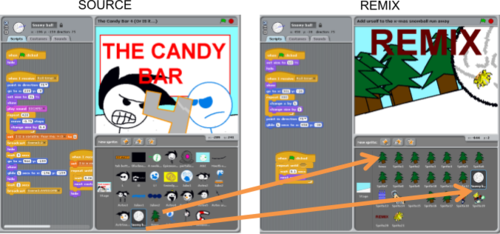
This post was written with Andr s Monroy-Hern ndez for the Follow the Crowd Research Blog. The post is a summary of a paper forthcoming in Computer-Supported Cooperative Work 2013. You read also read the full paper: The Cost of Collaboration for Code and Art: Evidence from Remixing. It is part of a series of papers I have written with Monroy-Hern ndez using data from Scratch. You can find the others on my academic website.Does collaboration result in higher quality creative works than individuals working alone? Is working in groups better for functional works like code than for creative works like art? Although these questions lie at the heart of conversations about collaborative production on the Internet and peer production, it can be hard to find research settings where you can compare across both individual and group work and across both code and art. We set out to tackle these questions in the context of a very large remixing community.
Example of a remix in the Scratch online community, and the project it is based off. The orange arrows indicate pieces which were present in the original and reused in the remix.
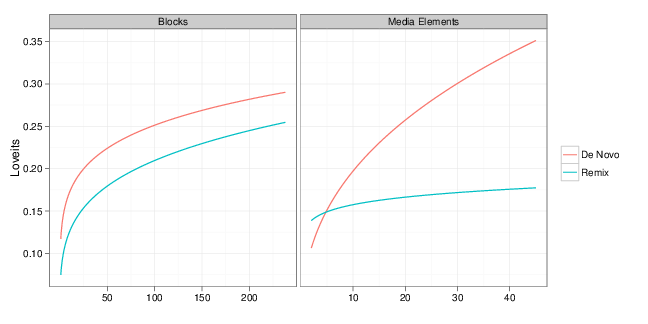
Two plots of estimated values for prototypical projects showing the predicted number of loveits using our estimates. In the left panel, the x-axis varies number of blocks while holding media intensity at the sample median. The right panel varies the number of media elements while holding the number of blocks at the sample median. Ranges for each are from 0 to the 90th percentile.
| Series: | Alpha and Omega #1 |
| Publisher: | Berkley |
| Copyright: | 2007 |
| ISBN: | 1-101-41379-4 |
| Format: | Kindle |
| Pages: | 112 |
man-db is a known dpkg trigger, I
suspected this would be the reason for the broken title, and here s
how I debugged it.
For starters, using d-i basically means asking a lot of questions,
which is implemented using the debconf mechanism. One should note that
two implementations are available:
debconfcdebconfcdebconf udebs, but joy begins when packages get installed
in /target: debconf is used there. We ll see why that matters.
Recipe #3: Set DEBCONF_DEBUG=developer and read logs!
DEBCONF_DEBUG environment
variable. The installer supports passing that as a kernel
parameter; example from the syslinux prompt: select the Graphical
install entry, press Tab , remove -- quiet and put
DEBCONF_DEBUG=developer there instead./var/log/syslog; there s a tail -f on it in VT4, but
one can run grep and friends on it in VT2 or VT3. There, one can see what
happens at the debconf level (the debconf protocol is documented in
debconf-devel(7)). Tiny excerpt (timestamps removed for clarity):
frontend: --> GET preseed/early_command
frontend: <-- 0
frontend: --> GET debian-installer/framebuffer
frontend: <-- 0 true
debconf: --> GET debconf/language
debconf: <-- 0 en
debconf: --> SET debconf/language en
debconf: Setting debconf/language to en
debconf: <-- 0 value set
debconf: --> GET debconf/priority
debconf: <-- 0 high
debconf: --> GET rescue/enable
debconf: <-- 0 false
TITLE occurrences:
debconf: --> SETTITLE debian-installer/main-menu-title
debconf: --> SETTITLE debian-installer/grub-installer/title
in-target: debconf (developer): ----> TITLE Configuration de man-db
debconf: --> TITLE Configuration de man-db
in-target: debconf (developer): <-- TITLE Configuration de man-db
in-target: debconf (developer): ----> TITLE Configuration de man-db
in-target: debconf (developer): ----> TITLE Configuration de grub-pc
debconf: --> TITLE Configuration de grub-pc
in-target: debconf (developer): <-- TITLE Configuration de grub-pc
in-target: debconf (developer): ----> TITLE Configuration de grub-pc
in-target: debconf (developer): ----> TITLE Configuration de man-db
debconf: --> TITLE Configuration de man-db
in-target: debconf (developer): <-- TITLE Configuration de man-db
in-target: debconf (developer): ----> TITLE Configuration de man-db
in-target: debconf (developer): ----> TITLE Configuration de grub-pc
debconf: --> TITLE Configuration de grub-pc
in-target: debconf (developer): <-- TITLE Configuration de grub-pc
in-target: debconf (developer): ----> TITLE Configuration de grub-pc
debconf: --> SETTITLE debian-installer/grub-installer/title
Bad news: the last one is about grub, so the title should be correct, right?cdebconf-gtk-udeb, built from the
cdebconf source. Let s look:
src/modules/frontend/gtk/ui.c has cdebconf_gtk_update_frontend_title(), which does what the function name suggests.src/modules/frontend/gtk/di.c has cdebconf_gtk_di_run_dialog(), which calls the first function.src/modules/frontend/gtk/progress.c has cdebconf_gtk_show_progress() (also calls the first
function), which comes with the following comments:
/** Show the progress widgets.
*
* This will actually add the widgets to the corresponding containers.
* The main title saved when starting the PROGRESS operation will be restored
* from the value saved when START was called. This is needed when GO is
* called during a PROGRESS operation.
grub, some
previous value could be restored and could be the reason for the
bad behaviour (that is easily confirmed by adding some
debug_printf() calls on fe->title in cdebconf, thanks to an
extra "debug.h" include). Maybe that s what needs fixing!wheezy or sid
chroot, and installing/removing a tiny package shipping a manpage
should be enough to run into the man-db trigger. Exporting
DEBCONF_DEBUG=developer there too, let s either install or
remove x11-apps (the trigger does the same job, and the debconf
trace is the same), here s the output:
Processing triggers for man-db ...
debconf (developer): frontend started
debconf (developer): frontend running, package name is man-db
debconf (developer): starting /var/lib/dpkg/info/man-db.config configure /usr/share/man
debconf (developer): <-- VERSION 2.0
debconf (developer): --> 0 2.0
debconf (developer): <-- INPUT medium man-db/install-setuid
debconf (developer): --> 30 question skipped
debconf (developer): <-- GO
debconf (developer): --> 0 ok
debconf (developer): starting /var/lib/dpkg/info/man-db.postinst triggered /usr/share/man
debconf (developer): <-- VERSION 2.0
debconf (developer): --> 0 2.0
debconf (developer): <-- GET man-db/auto-update
debconf (developer): --> 0 true
Even if one didn t know about the cdebconf/debconf thing, the
frontend started bit in the d-i syslog would have been the key:
it s only found in debconf, in the frontend script. That one
has several ways to determine the package being acted on, and it
finally calls:
debug developer => "frontend running, package name is $package";
$frontend->default_title($package) if length $package;
Tada, that s likely to be the issue.elsif ($ARGV[0]=~m!^.*/(.*?)\.(?:postinst postrm prerm)$!)
$package=$1;
Since $ARGV[1] is the action being passed to the maintainer
script, one can intercept the triggered action, and avoid
emitting a title update in this case; I ve therefore reassigned
#679327 to the debconf package,
and proposed a patch implementing that, which Joey Hess seems to
find reasonable.2004-05-27 Book Store
Expenses:Books $20.00
Liabilities:Visa
The concept seemed interesting enough for me to check it out and
look for others using it. I found blog posts from
Christine
Spang,
Pete
Keen,
Andrew
Cantino and
Ronald
Ip describing how they use it, as well as a post from
Bradley
M. Kuhn at the Software Freedom Conservancy. All seemed like good
recommendations fitting my need.
The ledger
package is available in Debian Squeeze, while the
hledger
package only is available in Debian Sid. As I use Squeeze, ledger
seemed the best choice to get started.
To get some real data to test on, I wrote a
web scraper for
LODO, the accounting system used by
the NUUG association, and started to
play with the data set. I'm not really deeply into accounting, but I
am able to get a simple balance and accounting status for example
using the "ledger balance" command. But I will have to
gather more experience before I know if the ledger way is a good fit
for the organisations I am involved in.
qemu-user-static and binfmt-support to allow us to run ARM
binaries:
$ sudo apt-get install debootstrap qemu-user-static binfmt-support
I'm using schroot's lvm-snapshot mode so we need an LVM volume,
formatted with a filesystem and mounted in a temporary location:
$ sudo lvcreate -L8G -n sbuild-wheezy-armel /dev/VG
$ sudo mkfs.ext3 /dev/VG/sbuild-wheezy-armel
$ sudo mount /dev/VG/sbuild-wheezy-armel /mnt/
Next we need to create the chroot. For this we use debootstrap in
foreign mode which does a 2 stage setup, firstly by using the
--foreign option:
$ sudo debootstrap --variant=buildd --include=fakeroot,build-essential \
--arch=armel --foreign \
wheezy /mnt http://<DEBIAN-MIRROR>/debian/
Now we (temporarily) copy the qemu-arm-static binary into the chroot
(at the place where binfmt-support expects it), change into the
chroot and run debootstrap's second stage to finish the basic chroot
setup:
$ sudo cp /usr/bin/qemu-arm-static /mnt/usr/bin/
$ sudo chroot /mnt
(chroot)# ./debootstrap/debootstrap --second-stage
(chroot)# exit
Now that we have a basic chroot in place it needs a little bit of
tailoring. I've found the easiest way to do this is to use
sbuild-createchroot and then tweak the result:
$ sudo sbuild-createchroot --arch=armel --foreign --setup-only \
wheezy /mnt http://<DEBIAN-MIRROR>/debian/
If we were building a native chroot then we could have skipped the
debootstrap stuff and let sbuild-createchroot handle
things. Unfortunately this doesn't seem to play nicely with
--foreign.
Now we can remove the qemu-arm-static binary from the
chroot. schroot will automatically bind mount the version from the
host into the chroot which ensures it remains up to date. We can also
unmount the chroot since we will let schroot manage that from here
on:
$ sudo rm /mnt/usr/bin/qemu-arm-static
$ sudo umount /mnt
Next we need to tweak the resulting schroot/sbuild configuration
since sbuild-createchroot assumes the use of schroot's directory
mode. First remove the symlink to /mnt which it created:
$ sudo rm /etc/sbuild/chroot/wheezy-armel-sbuild
Lastly we need to edit /etc/schroot/chroot.d/wheezy-armel-sbuild-<SUFFIX>
(where is randomly generated) and reconfigure it to use
lvm-snapshot mode, by apply the following changes:
[wheezy-armel-sbuild]
-type=directory
-directory=/mnt
+type=lvm-snapshot
+device=/dev/VG/sbuild-wheezy-armel
+lvm-snapshot-options=--size 2G
description=Debian wheezy/armel autobuilder
groups=root,sbuild
root-groups=root,sbuild
profile=sbuild
That's it, we now have a chroot which we can trivially invoke via
sbuild to build armel packages:
$ sbuild --arch=armel --dist=wheezy <... other options...>
We can also use sbuild-update to keep the chroot up to date:
$ sudo sbuild-update -udcar wheezy-armel
You can also use schroot to login to the chroot directly, although
for that case you'll likely want to create a different chroot using
schroot's directory or block-device mode instead lvm-snapshot
and drop some of the sbuild specific setup. I expect I'll blog about
this configuration in some more detail at some point in the future
since I'll want to document it to give a more convenient build
environment for Xen on
ARM
than the build
farm
which we have at work.
$ lsusb -v -s 1:3 2>&1 grep InterfaceClass
bInterfaceClass 1 Audio
bInterfaceClass 3 Human Interface Device
Audio devices were expected, but why a HID device ? This device is a headset, not a keyboard or a mouse Testing further, I also saw some number poping up on my screen whenever I pressed the the mute button. The only way to get the mouse back was to unplug the headset.
A quick google search gave a solution to setup X11 to ignore the headset. Problem solved.
But this did not answer the question regarding the HID device. Then I got a hint in the form of a sticker glued on the headset USB plug: Optimized for Microsoft Lync . This page gave the answer: an optimised for Lync device provides mute/unmute across PC and device .
I can only guess that when the mute button is pressed, some data is sent from the HID interface. Unfortunately, the window manager does not like to be on the receiving end of this data.
When I was a boy and I would see scary things in the news, my mother would say to me, Look for the helpers. You will always find people who are helping. To this day, especially in times of disaster, I remember my mother s words, and I am always comforted by realizing that there are still so many helpers so many caring people in this world.Sometimes I think that Fred Rogers wisdom is so often under-appreciated. What he says is true, very true. I know what it s like to fear for my child s life. And sometimes the shoe has been on the other foot, when I have been one of the helpers. Many of you know these last few months have been the most difficult in my life. And despite having gone through the deaths of three relatives, nothing has quite compared to this. I can not even begin to express my gratitude for all the care, compassion, and love that has come my way and towards the boys. People I barely knew before are now close friends. Random strangers have offered kindness and support. I have never before needed to be cared for like that, and in some ways perhaps it was hard to let myself be cared for. But I did, and all that caring and generosity has made an incredible difference in my life. Most of us don t see our pain on CNN or BBC, but that doesn t mean it s less real. And it doesn t mean there s nobody that cares. Open up to others, let them care for you. Things can and do get better. The people in Newtown did nothing to deserve this. No matter what evidence is found, they will never get an adequate answer to why? Children have been frightened, families torn apart, lives ended, for no reason at all. But they will survive the terrible pain. In time, they will find happiness again. And they will feel love and compassion from people around the world something to sustain them in their grief. I am certain of this. I recently read this quote, part of a story about a dying cancer patient: Don t forget that it doesn t take much to make someone s day. Yes, the world is still a good place.
Have you ever heard someone talking extensively about Cloud Computing or generally Clouds? and have you ever noticed the fact many people (even the ones who present themselves as experts) don t really understand what a Cloud is at all? That happened to me multiple times and one of the most common misunderstandings is many see the Cloud as something being on the internet. Many companies add a little logo representing a cloud on their frontpage and without a single change on their infrastructure (but surely with a price increment) they start calling their products as being on the Cloud. Given the lack of knowledge about this specific topic people tend to buy the product presented as being on the Cloud without understanding what they really bought.
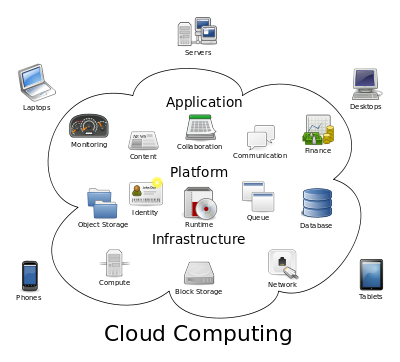
But what Cloud Computing really means? it took several years and more than fifteen drafts to the National Institute of Standards and Technology s (NIST) to find a definition. The final accepted proposal:
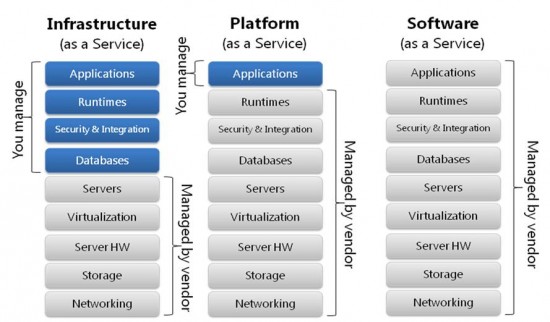
The above definition requires a few more clarifications specifically when it comes to understand where should we focus on while checking for a Cloud Computing solution. A few key points:Cloud computing is a model for enabling ubiquitous, convenient, on-demand network access to a shared pool of configurable computing resources (e.g., networks, servers, storage, applications and services) that can be rapidly provisioned and released with minimal management effort or service provider interaction.
The Cloud Computing technology is reasonably the future but can we trust Cloud providers? Are we sure that no one will ever have access to our files except us? and what about governments interested in acquiring a specific customer data hosted on the Cloud?
I always suggest to read deeply both the Privacy Policy and Terms of Use of a certain service before signing in especially when it comes to choose a Cloud storage provider. Many providers have the same aspect, they seem to provide the same resources, the same amount of storage for the same price but legally they may present different problems, and that is the case of Spideroak vs Dropbox. Quoting from the Dropbox s Privacy Policy:
It s evident that Dropbox employees can access your data or be forced by legal process to turn over your data unencrypted. On the other side, Spideroak on its latest update to its Privacy Policy states that data stored on their Cloud is encrypted and inaccessible without user s key, which is stored locally on user s computers. And what about the latest research paper, titled Cloud Computing in Higher Education and Research Institutions and the USA Patriot Act written by the legal experts of the University of Amsterdam s Institute for Information Law stating the anti-terror Patriot Act could be theoretically used by U.S. law enforcement to bypass strict European privacy laws to acquire citizen data within the European Union without their consensus? The only requirement for the data acquisition is the provider being an U.S company or an European company conducting systematic business in the U.S. For example an Italian company storing their documents (protected by the European privacy laws and under the general Italian jurisdiction) on a provider based in Europe but conducting systematic business in the United States, could be forced by U.S. law enforcement to transfer data to the U.S. territory for inspection by law enforcement agencies. Does someone really care about the privacy of companies, consumers and users at all? or better does privacy exists at all for the millions of the people that connect to the internet every day?Compliance with Laws and Law Enforcement Requests; Protection of DropBox s Rights. We may disclose to parties outside Dropbox files stored in your Dropbox and information about you that we collect when we have a good faith belief that disclosure is reasonably necessary to (a) comply with a law, regulation or compulsory legal request; (b) protect the safety of any person from death or serious bodily injury; (c) prevent fraud or abuse of DropBox or its users; or (d) to protect Dropbox s property rights. If we provide your Dropbox files to a law enforcement agency as set forth above, we will remove Dropbox s encryption from the files before providing them to law enforcement. However, Dropbox will not be able to decrypt any files that you encrypted prior to storing them on Dropbox.
sudo lsusb -d 12bf:ff03 -vvv
Bus 003 Device 019: ID 12bf:ff03
Device Descriptor:
bLength 18
bDescriptorType 1
bcdUSB 1.10
bDeviceClass 0 (Defined at Interface level)
bDeviceSubClass 0
bDeviceProtocol 0
bMaxPacketSize0 8
idVendor 0x12bf
idProduct 0xff03
bcdDevice 1.00
iManufacturer 1 Matrix Multimedia Ltd.
iProduct 2 Flowcode USB HID
iSerial 0
bNumConfigurations 1
Configuration Descriptor:
bLength 9
bDescriptorType 2
wTotalLength 41
bNumInterfaces 1
bConfigurationValue 1
iConfiguration 0
bmAttributes 0x80
(Bus Powered)
MaxPower 50mA
Interface Descriptor:
bLength 9
bDescriptorType 4
bInterfaceNumber 0
bAlternateSetting 0
bNumEndpoints 2
bInterfaceClass 3 Human Interface Device
bInterfaceSubClass 0 No Subclass
bInterfaceProtocol 0 None
iInterface 0
HID Device Descriptor:
bLength 9
bDescriptorType 33
bcdHID 1.10
bCountryCode 0 Not supported
bNumDescriptors 1
bDescriptorType 34 Report
wDescriptorLength 54
Report Descriptors:
** UNAVAILABLE **
Endpoint Descriptor:
bLength 7
bDescriptorType 5
bEndpointAddress 0x81 EP 1 IN
bmAttributes 3
Transfer Type Interrupt
Synch Type None
Usage Type Data
wMaxPacketSize 0x0008 1x 8 bytes
bInterval 5
Endpoint Descriptor:
bLength 7
bDescriptorType 5
bEndpointAddress 0x01 EP 1 OUT
bmAttributes 3
Transfer Type Interrupt
Synch Type None
Usage Type Data
wMaxPacketSize 0x0008 1x 8 bytes
bInterval 5
Device Status: 0x0980
(Bus Powered)
echo -n 3-1.1.4:1.0 sudo dd of=/sys/bus/usb/drivers/usbhid/unbindresulted in lussb dumping the descriptor items:
Item(Global): Usage Page, data= [ 0xa0 0xff ] 65440
(null)
Item(Local ): Usage, data= [ 0x01 ] 1
(null)
Item(Main ): Collection, data= [ 0x01 ] 1
Application
Item(Local ): Usage, data= [ 0x02 ] 2
(null)
Item(Main ): Collection, data= [ 0x00 ] 0
Physical
Item(Global): Usage Page, data= [ 0xa1 0xff ] 65441
(null)
Item(Local ): Usage, data= [ 0x03 ] 3
(null)
Item(Local ): Usage, data= [ 0x04 ] 4
(null)
Item(Global): Logical Minimum, data= [ 0x00 ] 0
Item(Global): Logical Maximum, data= [ 0xff 0x00 ] 255
Item(Global): Physical Minimum, data= [ 0x00 ] 0
Item(Global): Physical Maximum, data= [ 0xff ] 255
Item(Global): Report Size, data= [ 0x08 ] 8
Item(Global): Report Count, data= [ 0x08 ] 8
Item(Main ): Input, data= [ 0x02 ] 2
Data Variable Absolute No_Wrap Linear
Preferred_State No_Null_Position Non_Volatile Bitfield
Item(Local ): Usage, data= [ 0x05 ] 5
(null)
Item(Local ): Usage, data= [ 0x06 ] 6
(null)
Item(Global): Logical Minimum, data= [ 0x00 ] 0
Item(Global): Logical Maximum, data= [ 0xff 0x00 ] 255
Item(Global): Physical Minimum, data= [ 0x00 ] 0
Item(Global): Physical Maximum, data= [ 0xff ] 255
Item(Global): Report Size, data= [ 0x08 ] 8
Item(Global): Report Count, data= [ 0x08 ] 8
Item(Main ): Output, data= [ 0x02 ] 2
Data Variable Absolute No_Wrap Linear
Preferred_State No_Null_Position Non_Volatile Bitfield
Item(Main ): End Collection, data=none
Next.