Do not add further complexity when it can be avoided. We are generally happy with the feature set of i3 and instead focus on fixing bugs and maintaining it for stability. New features will therefore only be considered if the benefit outweighs the additional complexity, and we encourage users to implement features using the IPC whenever possible. Introduction to the i3 window managerWhile this is not as powerful as an embedded language, it is enough for many cases. Moreover, as high-level features may be opinionated, delegating them to small, loosely coupled pieces of code keeps them more maintainable. Libraries exist for this purpose in several languages. Users have published many scripts to extend i3: automatic layout and window promotion to mimic the behavior of other tiling window managers, window swallowing to put a new app on top of the terminal launching it, and cycling between windows with Alt+Tab. Instead of maintaining a script for each feature, I have centralized everything into a single Python process,
i3-companion using asyncio and the
i3ipc-python library. Each feature is self-contained into a
function. It implements the following components:
workspace_exclusive() function monitors new windows and moves them
if needed to an empty workspace or to one with the same application
already running.quake_console() function implements a drop-down console
available from any workspace. It can be toggled with
Mod+ . This is implemented as a scratchpad
window.workspace back_and_forth command, we can ask i3 to
switch to the previous workspace. However, this feature is not
restricted to the current output. I prefer to have one keybinding to
switch to the workspace on the next output and one keybinding to
switch to the previous workspace on the same output. This behavior
is implemented in the previous_workspace() function by keeping a
per-output history of the focused workspaces.workspace number
4 or move container to workspace number 4. The new_workspace()
function finds a free number and use it as the target workspace.output_update() function also takes an extra step to
coalesce multiple consecutive events and to check if there is a real
change with the low-level library xcffib.@on(CommandEvent("previous-workspace"), I3Event.WORKSPACE_FOCUS) async def previous_workspace(i3, event): """Go to previous workspace on the same output."""
CommandEvent() event class is my way to send a command to the
companion, using either i3-msg -t send_tick or binding a key to a
nop command. The latter is used to avoid spawning a shell and a
i3-msg process just to send a message. The companion listens to
binding events and checks if this is a nop command.
bindsym $mod+Tab nop "previous-workspace"
@debounce() to
coalesce multiple consecutive calls, @static() to define a static
variable, and @retry() to retry a function on failure. The whole
script is a bit more than 1000 lines. I think this is
worth a read as I am quite happy with the result.
notify(), to send notifications using DBus. container_info() and
workspace_info() uses it to display information about the container
or the tree for a workspace.

workspace_rename() function. The icons are from
the Font Awesome project. I maintain a mapping between applications
and icons. This is a bit cumbersome but it looks great.


ipc module: the next version of Polybar can receive
an arbitrary text on an IPC socket. The module is defined with a
single hook to be executed at the start to restore the latest status.
[module/network] type = custom/ipc hook-0 = cat $XDG_RUNTIME_DIR/i3/network.txt 2> /dev/null initial = 1
polybar-msg action "#network.send.XXXX". In
the i3 companion, the @polybar() decorator takes the string
returned by a function and pushes the update through the IPC socket.
The i3 companion reacts to DBus signals to update the Bluetooth and
network icons. The @on() decorator accepts a DBusSignal() object:
@on( StartEvent, DBusSignal( path="/org/bluez", interface="org.freedesktop.DBus.Properties", member="PropertiesChanged", signature="sa sv as", onlyif=lambda args: ( args[0] == "org.bluez.Device1" and "Connected" in args[1] or args[0] == "org.bluez.Adapter1" and "Powered" in args[1] ), ), ) @retry(2) @debounce(0.2) @polybar("bluetooth") async def bluetooth_status(i3, event, *args): """Update bluetooth status for Polybar."""

~/.xsession-errors file.3
I am using a two-stage setup: i3.service depends on
xsession.target to start services before
i3:
[Unit] Description=X session BindsTo=graphical-session.target Wants=autorandr.service Wants=dunst.socket Wants=inputplug.service Wants=picom.service Wants=pulseaudio.socket Wants=policykit-agent.service Wants=redshift.service Wants=spotify-clean.timer Wants=ssh-agent.service Wants=xiccd.service Wants=xsettingsd.service Wants=xss-lock.service
i3-session.target:
[Unit] Description=i3 session BindsTo=graphical-session.target Wants=wallpaper.service Wants=wallpaper.timer Wants=polybar-weather.service Wants=polybar-weather.timer Wants=polybar.service Wants=i3-companion.service Wants=misc-x.service


xset s
command. The locker can be invoked immediately with xset s activate.
X11 applications know how to prevent the screen saver from running. I
have also developed a small dimmer application that is executed 20
seconds before the locker to give me a chance to move the mouse if I
am not away.4 Have a look at my configuration
script.
xrandr.
:0 and :1. In the first implementation, I did try to
parametrize each service with the associated display, but this is
useless: there is only one DBus user session and many services
rely on it. For example, you cannot run two notification daemons.
Another release of the tidyCpp package arrived on CRAN earlier today. The packages offers a clean C++ layer on top of the C API for R which aims to make its use a little easier and more consistent.
The vignette has been extended once more with a new example, and added a table of contents. The package now supports a (truly minimal) C++ class for a numeric vector which is the most likely use case.
The NEWS entry follows and includes the 0.0.3 release earlier in the year which did not get the usual attention of post-release blog post.
Thanks to my CRANberries, there is also a diffstat report for this release. For questions, suggestions, or issues please use the issue tracker at the GitHub repo. If you like this or other open-source work I do, you can now sponsor me at GitHub.Changes in tidyCpp version 0.0.4 (2021-09-05)
- Minor updates to DESCRIPTION
- New snippet
rollminmaxExamplewith simple vector use- New class
NumVecmotivated from rolling min/max example- Expand the vignette with C++ example based on NumVec
- Add a table of contents to the vignette
Changes in tidyCpp version 0.0.3 (2021-03-07)
- Switch CI use to r-ci
- Protect nil object definition
This post by Dirk Eddelbuettel originated on his Thinking inside the box blog. Please report excessive re-aggregation in third-party for-profit settings.
ferm
first", "you need an extra reboot here", or "this is how you finish
the PostgreSQL upgrade".
With Debian getting closer to a 2 year release cycle, with the
previous release being supported basically only one year after the
new stable comes out, I feel more and more strongly that this needs
better automation.
So I'm thinking that I should write a prototype for this. Ubuntu has
do-release-upgrade that is too Ubuntu-specific to be reused. An
attempt at collaborating on this has been mostly met with silence
from Ubuntu's side as well.
I'm thinking that using something like Fabric, Mitogen, or
Transilience: anything that will allow me to write simple,
portable Python code that can run transparently on a local machine
(for single systems upgrades, possibly with a GUI frontend) to remote
servers (for large clusters of servers, maybe with canaries and
grouping using Cumin). I'll note that Koumbit started
experimenting with Puppet Bolt in the bullseye upgrade process,
but that feels too site-specific to be useful more broadly.
Thanks to lelutin and pabs for reviewing a draft of this post.
Welcome to the latest report from the Reproducible Builds project. In this post, we round up the important things that happened in the world of reproducible builds in August 2021. As always, if you are interested in contributing to the project, please visit the Contribute page on our website.
There were a large number of talks related to reproducible builds at DebConf21 this year, the 21st annual conference of the Debian Linux distribution (full schedule):
snapshot.debian.org for fun and profit about various tools they have developed to interact with the snapshot.debian.org wayback machine for Debian packages. In particular, they mention how they are using the service to reproduce and validate builds as well as touch on an alternative snapshot service that has been mentioned in previous reports.
PackagingCon (@PackagingCon) is new conference for developers of package management software as well as their related communities and stakeholders. The virtual event, which is scheduled to take place on the 9th and 10th November 2021, has a mission is to bring different ecosystems together: from Python s pip to Rust s cargo to Julia s Pkg, from Debian apt over Nix to conda and mamba, and from vcpkg to Spack we hope to have many different approaches to package management at the conference . A number of people from reproducible builds community are planning on attending this new conference, and some may even present. Tickets start at $20 USD.
As reported in our May report, the president of the United States signed an executive order outlining policies aimed to improve the cybersecurity in the US. The executive order comes after a number of highly-publicised security problems such as a ransomware attack that affected an oil pipeline between Texas and New York and the SolarWinds hack that affected a large number of US federal agencies. As a followup this month, however, a detailed fact sheet was released announcing a number large-scale initiatives and that will undoubtedly be related to software supply chain security and, as a result, reproducible builds.
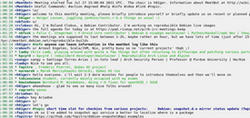
Lastly, We ran another productive meeting on IRC in August (original announcement) which ran for just short of two hours. A full set of notes from the meeting is available.
a practical attempt at shipping a program and having reasonably solid evidence there s probably no backdoor. All source code is annotated and there are instructions explaining how to use reproducible builds to rebuild the artifacts distributed in this repository from source. The idea is shifting the burden of proof from you need to prove there s a backdoor to we need to prove there s probably no backdoor . This repository is less about code (we re going to try to keep code at a minimum actually) and instead contains technical writing that explains why these controls are effective and how to verify them. You are very welcome to adopt the techniques used here in your projects. ( )As the project s
README goes on the mention: the techniques used to rebuild the binary artifacts are only possible because the builds for this project are reproducible . This was also announced on our mailing list this month in a thread titled i-probably-didnt-backdoor-this: Reproducible Builds for upstreams.
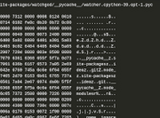
kpcyrd also wrote a detailed blog post about the problems surrounding Linux distributions (such as Alpine and Arch Linux) that distribute compiled Python bytecode in the form of .pyc files generated during the build process.
GCC lines that differ on a single prefix byte either. These are distracting, not very useful and are simply the strings(1) command s idea of the build ID, which is displayed elsewhere in the diff. [ ][ ].debug-like lines in the ELF-related output, as it is invariably a duplicate of the debug ID that exists better in the readelf(1) differences for this file. [ ]java -jar /path/to/apksigner.jar if we have an apksigner.jar as newer versions of apksigner in Debian use a shell wrapper script which will be rejected if passed directly to the JVM. [ ]apksigner in order to compare .apk files using apktool. [ ]odt2txt. [ ]HUGE_TOOLS Python dictionary. [ ]-f to apktool to avoid creating a strangely-named subdirectory. [ ]File import. [ ]logging variable in a specific place, so alias it to an underscore (ie. _ ) instead. [ ]passwd(5) mapping. [ ]python-libarchive-c version 3.1-1 to Debian experimental for the new 3.x branch python-libarchive-c is used by diffoscope.
In Debian, 68 reviews of packages were added, 33 were updated and 10 were removed this month, adding to our knowledge about identified issues. Two new issue types have been identified too: nondeterministic_ordering_in_todo_items_collected_by_doxygen and kodi_package_captures_build_path_in_source_filename_hash.
kpcyrd published another monthly report on their work on reproducible builds within the Alpine and Arch Linux distributions, specifically mentioning rebuilderd, one of the components powering reproducible.archlinux.org. The report also touches on binary transparency, an important component for supply chain security.
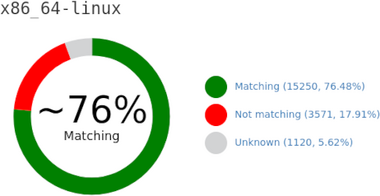
The @GuixHPC account on Twitter posted an infographic on what fraction of GNU Guix packages are bit-for-bit reproducible:
Finally, Bernhard M. Wiedemann posted his monthly reproducible builds status report for openSUSE.
awkward (timestamp issue)ck (build fails in single-CPU mode)cri-o (build ID issue related to Go parallelism)kernel-obs-build (cpio metadata issue)python-PyQt6 (.pyc-related issue)python-dulwich (fails to build in 2023)python-xkbgroup (.pyc-related issue)rnp (fails to build in 2024)dosfstools (from December 2018) was eventually merged.mapcache.spatialindex.pytsk.surgescript.rust-coreutils.translate.spirv-cross.numcodecs.tty-solitaire.samtools.pkg-config.pkgconf.ncftp.backuppc.sharutils.cfengine3.nbdkit.nbdkit.python3.9.supermin.virt-p2v.gnunet.mpb.ng.
Elsewhere, it was discovered that when supporting various new language features and APIs for Android apps, the resulting APK files that are generated now vary wildly from build to build (example diffoscope output). Happily, it appears that a patch has been committed to the relevant source tree. This was also discussed on our mailing list this month in a thread titled Android desugaring and reproducible builds started by Marcus Hoffmann.
There were quite a few changes to the Reproducible Builds website and documentation this month, including:
position:fixed CSS statement that is negatively affecting with some width settings. [ ]reprotest to mention how ldconfig conflicts with the kernel variation. [ ]
The Reproducible Builds project runs a testing framework at tests.reproducible-builds.org, to check packages and other artifacts for reproducibility. This month, the following changes were made:
LANG=C.UTF-8 to match the official Debian build servers. [ ]rsync output if the $DEBUG variable is enabled. [ ]mock, a tool used to build Fedora packages some time ago. [ ]rsync job related to Debian Live images. [ ]BUILD_TAG and BUILD_URL environment for the Debian Live jobs. [ ]master_wrapper script to use a Bash array for the parameters. [ ]safe_load() function over the unsafe variant. [ ]armhf nodes for DebConf21. [ ][ ]#reproducible-builds on irc.oftc.net.
rb-general@lists.reproducible-builds.org
A new release 0.4.13 of RQuantLib arrived on CRAN yesterday, and has been uploaded to Debian as well.
QuantLib is a very comprehensice free/open-source library for quantitative finance; RQuantLib connects it to the R environment and language.
This updates RQuantLib to a few now-deprecated (daycount convention) interfaces in QuantLib release 1.23. As the last release was sixteen months ago, we also updated a few standard packaging aspects (such as use of r-ci), updated README.md and DESCRIPTION and fixed an old typo. No other changes, no new interfaces.
Courtesy of my CRANberries, there is also a diffstat report for the this release. As always, more detailed information is on the RQuantLib page. Questions, comments etc should go to the new rquantlib-devel mailing list. Issue tickets can be filed at the GitHub repo. If you like this or other open-source work I do, you can now sponsor me at GitHub.Changes in RQuantLib version 0.4.13 (2021-09-02)
- Changes in RQuantLib code:
- Small updates to
DESCRIPTIONandREADME.md- Switch CI use to r-ci
- An eleven-year old typo was correct in a manual page (Dirk in #156 fixing #155 with thanks to @klin133)
- Daycount convention calls deprecated in QuantLib 1.23 were updated (Dirk in #157)
- Updated remaining http:// URLs in documentation to https://
This post by Dirk Eddelbuettel originated on his Thinking inside the box blog. Please report excessive re-aggregation in third-party for-profit settings.
A brand new release 0.2.4 of the RcppSMC package arrived on CRAN earlier today, with a dual delay for CRAN closing for a well-earned break, and then being overwhelmed when reopening. Other than that the processing was again versy smooth.
RcppSMC provides Rcpp-based bindings to R for the Sequential Monte Carlo Template Classes (SMCTC) by Adam Johansen described in his JSS article. Sequential Monte Carlo is also referred to as Particle Filter in some contexts.
The package started when I put some Rcpp bindings together based on Adam s paper and library. It grew when Adam and I supervised Leah South during the 2017 iteration of the Google Summer of Code. And now it grew again as we have Adam, Leah and myself looking over the shoulders of Ilya Zarubin who did very fine work during the 2021 iteration of the Google Summer of Code that just concluded! So we are now GSoC squared!
This release is effectively all work by Ilya and summarized below.
Courtesy of my CRANberries, there is a diffstat report for this release. More information is on the RcppSMC page. Issues and bugreports should go to the GitHub issue tracker. If you like this or other open-source work I do, you can now sponsor me at GitHub.Changes in RcppSMC version 0.2.4 (2021-09-01)
- Multiple Sequential Monte Carlo extensions (Ilya Zarubin as part of Google Summer of Code 2021)
- Add URL and BugReports to DESCRIPTION (Dirk in #53)
This post by Dirk Eddelbuettel originated on his Thinking inside the box blog. Please report excessive re-aggregation in third-party for-profit settings.
I have been Debian Stretch running on my HP Pavilion 14-ce0000nq laptop since buying it back in April 2019, just before my presence at Oxidizeconf where I presented "How to Rust When Standards Are Defined in C".Debian Buster (aka Debian 10) was released about 4 months later and I've been postponing the upgrade as my free time isn't what it used to be. I also tend to wait for the first or even second update of the release to avoid any sharp edges.As this laptop has a Realtek 8821CE wireless card that wasn't officially supported in the Linux kernel, I had to use an out-of-tree hacked driver to have the wireless work on Stretch kernels such as 4.19, it didn't even got along with DKMS, so all compilations and installations of it, I did them manually. More reason to wait for a newer release that would contain a driver inside the official kernel.I was waiting for the inevitable and dreading the wireless issues, but since mid-august Bullseye became stable, turning Stretch into oldoldstable, I decided that I had to do the upgrade, at least to buster.The Grub error and the fix error: symbol grub_is_lockdown not foundI looked for a solution and it seemed everyone was stuck or the solution was unclear.There is even a bug report in Debian about this error, bug #984760.

update-grub22) reinstall grub-efi-amd64 and make Debian the default
dpkg-reconfigure -plow grub-efi-amd64When reinstalling grub-efi-amd64 onto the disk, I think the scariest questions were to these:
andForce extra installation to the EFI removable media path?
Some EFI-based systems are buggy and do not handle new bootloaders correctly. If you force an extra installation of GRUB to the EFI removable media path, this should ensure that this system will boot Debian correctly despite such a problem. However, it may remove the ability to boot any other operating systems that also depend on this path. If so, you will need to make sure that GRUB is configured successfully to be able to boot any other OS installations correctly.
Update NVRAM variables to automatically boot into Debian?I think the first can be safely answered "No" if you don't plan on booting via a removable USB stick, while the second is the one that does the restoring.The second question is probably safe if you don't use PXE boot or other boot method, at least that's what I understand. But if you do, I suspect by installing refind, by playing with the multiple efi* named packages and tools, you can restore that, or it might be that your BIOS allows that directly.
GRUB can configure your platform's NVRAM variables so that it boots into Debian automatically when powered on. However, you may prefer to disable this behavior and avoid changes to your boot configuration. For example, if your NVRAM variables have been set up such that your system contacts a PXE server on every boot, this would preserve that behavior.
eddy@aptonia:/ $ cat /etc/modulesThe 5.10 compatible driver for RTL8821CE wireless adapterAfter the upgrade to Buster, the oldstable version of the kernel, 4.19, the hacked version of the driver I've been using on Stretch on 4.9 kernels was no longer compatible - failed to compile due to missing symbols.The fix for me was to switch to the DKMS compatible driver from https://github.com/tomaspinho/rtl8821ce, as this seems to work for both 4.19 and 5.10 kernels (installed from backports).
# /etc/modules: kernel modules to load at boot time.
#
# This file contains the names of kernel modules that should be loaded
# at boot time, one per line. Lines beginning with "#" are ignored.
r8169
DRV_NAME=rtl8821ceBut you just build and install them only for the select kernel versions of your choice:
DRV_VERSION=v5.5.2_34066.20200325
cp -r . /usr/src/$ DRV_NAME -$ DRV_VERSION
dkms add -m $ DRV_NAME -v $ DRV_VERSION
dkms build -m $ DRV_NAME -v $ DRV_VERSION -k 5.10.0-0.bpo.8-amd64Or, without the variables:
dkms install -m $ DRV_NAME -v $ DRV_VERSION -k 5.10.0-0.bpo.8-amd64
dkms build rtl8821ce/v5.5.2_34066.20200325 -k 4.19.0-17-amd64dkms status should confirm everything is in place and I think you need to update grub2 again after this.
dkms install rtl8821ce/v5.5.2_34066.20200325 -k 4.19.0-17-amd64
Instance, and much code needs (immutable) access to it. I can't pass both &Instance and &mut GameState because one is inside the other.
My workaround involves passing separate references to the other fields of Instance, leading to some functions taking far too many arguments. 14 in one case. (They're all different types so argument ordering mistakes just result in compiler errors talking about arguments 9 and 11 having wrong types, rather than actual bugs.)
I felt this problem was purely a restriction arising from limitations of the borrow checker. I thought it might be possible to improve on it. Weeks passed and the question gradually wormed its way into my consciousness. Eventually, I tried some experiments. Encouraged, I persisted.
What and how
partial-borrow is a Rust library which solves this problem. You sprinkle #[Derive(PartialBorrow)] and
partial!(...) and then you can
pass a reference which grants mutable access to only some of the fields. You can also pass a reference through which some fields are inaccessible. You can even split a single mut reference into multiple compatible references, for example granting mut access to mutually-nonverlapping subsets.
The core type is Struct__Partial (for some Struct).
It is a zero-sized type, but we prevent anyone from constructing one.
Instead we magic up references to it, always ensuring that they have the same address as some Struct.
The fields of Struct__Partial are also ZSTs that exist ony as references, and they Deref to the actual field (subject to compile-type borrow compatibility checking).
Soundness and testing
partial-borrow is primarily a nontrivial procedural macro which autogenerates reams of unsafe.
Of course I think it's sound, but I thought that the last two times before I added a test which demonstrated otherwise. So it might be fairer to say that I have tried to make it sound and that I don't know of any problems...
Reasoning about the correctness of macro-generated code is not so easy. One problem is that there is nowhere good to put the kind of soundness arguments you would normally add near uses of unsafe.
I decided to solve this by annotating an instance of the macro output. There's a not very complicated script using diff3 to help fold in changes if the macro output changes - merge conflicts there mean a possible re-review of the argument text. Of course I also have test cases that run with miri, and test cases for expected compiler errors for uses that need to be forbidden for soundness.
But this is quite hairy and I'm worried that it might be rather "my first insane unsafe contraption".
Also the pointer/reference trickery is definitely subtle, and depends heavily on knowing what Rust's aliasing and pointer provenance rules really are. Stacked Borrows is not entirely trivial to reason about in fiddly corner cases.
So for now I have only called it 0.1.0 and left a note in the docs. I haven't actually made Otter use it yet but that's the rather more boring software integration part, not the fun "can I do this mad thing" part so I will probably leave that for a rainy day. Possibly a rainy day after someone other than me has looked at partial-borrow (preferably someone who understands Stacked Borrows...).
Fun!
This was great fun. I even enjoyed writing the docs.
The proc-macro programming environment is not entirely straightforward and there are a number of things to watch out for. For my first non-adhoc proc-macro this was, perhaps, ambitious. But you don't learn anything without trying...
edited 2021-09-02 16:28 UTC to fix a typo
Debian Reunion Hamburg 2021
Moin!
I'm glad to finally be able to send out this invitation for the "Debian Reunion
Hamburg 2021" taking place at the venue of the 2018 & 2019 MiniDebConfs!
The event will run from Monday, Sep 27 2021 until Friday Oct 1 2021, with
Sunday, Sep 26 2021 as arrival day. IOW, Debian people meet again in Hamburg.
The exact format is less defined and structured than previous years, probably
we will just be hacking from Monday to Wednesday, have talks on Thursday and
a nice day trip on Friday.
Please read https://wiki.debian.org/DebianEvents/de/2021/DebianReunionHamburg
if you intend to attend, especially
Sad but true, and
at least something for some people. We should all do more local events. And
more online events too, eg I think this is a great idea too:
https://wiki.debian.org/DebianEvents/internet/2021/MiniDebConfOnlineBookworm
See you!
This is the second post in a series about the interface description language Candid.
service A1 :
get_value : (variant current; previous : nat )
-> (record value : int; last_change : nat )
to
service A2 :
get_value : (variant current; previous : nat; default )
-> (record value : int; last_change : nat; committed : bool )
is fine: It doesn t matter that clients that still use the old interface don t know about the new constructor of the argument variant. And the extra field in the result record will silently be ignored by old clients.
In the Candid spec, this relation is written as A2 <: A1 (note the order!), and the formal footing this builds on is subtyping. We thus say that it is safe to upgrade a service to a subtype , and that A2 s interface is a subtype of A1 s.
In small examples, I often use nat and int, because every nat is also a int, but some int values are not not nat values, namely the negative ones. We say nat is a subtype of int, nat <: int. So a function that in the first returns a int can in the new version return a nat without breaking old clients. But the other direction doesn t work: If the old version s method had a return type of nat, then changing that to int would be a breaking change, as old clients would not be prepared to handle negative numbers.
Note that arguments of function types follow different rules. In fact, the rules are simply turned around, and in argument position (also called negative position ), we can evolve the interface to accept supertypes. Concretely, a function that originally expected an nat can be changed to expect an int, but the other direction doesn t work, because there might still be old clients around that send negative numbers. This reversing-of-the-rules is called contravariance.
The vision is that the developer s tooling will warn the developer before they upgrade the code of a running service to a type that is not a subtype of the old interface.
Let me stress, though, that all this is about not breaking existing clients that use the old interface. It does not mean that a client developer who fetches the new interface for your service won t have to change their code to make his programs compile again.
service B : add_listener : (text, func (int) -> ()) -> ()
says that the service with interface B has a method called add_listener which takes two arguments, a plain value of type text and a reference to a function that itself expects a int-typed argument.
The contravariance of the subtyping rules explained above also applies to the types of these function reference. And because the int in the above type is on the left of two function arrows, the subtyping rule direction flips twice, and it is therefore safe to upgrade the service to accept the following interface:
service B : add_listener : (text, func (nat) -> ()) -> ()
vec was more work than it s worth it, and I defensively blame Coq s not-so-great support for nested recursion.
The soundness relies on subtyping, and that is all fine and well as long as we stick to canonical rules. Unfortunately, practical considerations force us to deviate from these a bit, as we see in the next post of this series.
One of the technologies that was created by DFINITY as we built the Internet Computer is Candid. Candid is
service A :
add : (int) -> ();
get : () -> (int);
clearly communicates that a service called A provides two methods add and get, that add takes an integer as an argument, and that get returns such a number. Of course, this only captures the outer shape of the service, but not what it actually does we might assume it implements a counter of sorts, but that is not part of the Candid interface description.
In order to now use the service, we also need a (low-level) transport mechanism. Candid itself does not specify that, but merely assumes that it exists, and is able to transport the name of the invoked method and a raw sequence of bytes to the service, and a response (again a raw sequence of bytes) back.
Already on the Internet Computer we have two distinct transport mechanisms used are external calls via an HTTP-based RPC interface and on-chain inter-canister calls. Both are handled by the service in the same way. Here we can see that Candid succeeds in abstracting over differences in the low-level transport mechanism. Because of this abstraction, it is possible to use Candid over other transportation mechanisms as well (conventional HTTPS, E-Mail, avian carrier). I think Candid has potential there as well, so even if you are not interested in the Internet Computer, this post may be interesting to you.
The translation of argument and result values (e.g. numbers of type int) to the raw sequence of bytes is specified by Candid, defining a wire format. For example, the type int denotes whole numbers of arbitrary size, and they are encoded using the LEB128 scheme. The Candid wire format also contains a magic number (DIDL, which is 0x4449444c in hex) and a type description (more on that later). So when passing the value 2342 to the add, the raw bytes transported will be 0x4449444c00017da612.
Of course we want to transfer more data than just integers, and thus Candid supports a fairly complete set of common basic types (nat, int, nat8, nat16, nat32, nat64, int8, int16, int32, int64, float32, float64, bool, text, blob) and composite types (vectors, optional values , records and variants). The design goal is to provide a canonical set of types enough to express most data that you might want to pass, but no more than needed, so that different host languages can support these types easily.
The Candid type system is structural. This means that two types are the same when they are defined the same way. Imagine two different services defining the same
type User = record name : text; user_id : nat
then although User is defined in two places, it s still the same type. In other words, these name type definitions are always just simple aliases, and what matters is their right-hand side.
Because Candid types can be recursive (e.g. type Peano = opt Peano), this means we have an equirecursive type system, which makes some things relatively hard.
So far, nothing too special about Candid compared to other interface definition languages (although a structural equirecursive type system is already something). In the next post we look at reference types, and how such higher order features make Candid an interesting technology.
-vcodec copy option is passed to ffmpeg).
A song for Debconf21 ["What shall we do with the drunken sailor"]
What shall we do with the online Debconf?What shall we do with the online Debconf?What shall we do with the online Debconf?
Earl-y in the morning
Close it up as we agreed it
Save each script in case we need it
Work out how we best live-feed itNext year s Debconf s dawning
Next year s Kosovo and Pristina
This virtual Debconf needs no cleaner
Hope when COVID s gone we re keener
To meet up every morning
Thanks to the Debconf orga team
Thanks to those who Loopy meme
Things are not always as they seeem
In virtual Debconf s morning
Bullseye s out its share is rising
Debconf s fun and quite surprising
Linux 30 :)
Yours and my thing - Debian s 28
Thanks to all who video d sessions
Debconf T-shirts - prized possessions
Debcamp bug-fixed some regressions
Now onto next year!
A closing song for Debconf 21 [Frere Jacques/Brueder Martin]
DebConf21
Virtual DebConf s
Now all through
Closed for you
Kosovo is next year
See you in Pristina!!
DebConf 22
Twenty twenty-two
182. This version includes the following changes:
[ Chris Lamb ]
* Also ignore, for example, spurious "fwGCC: (Debian ... )" lines in output
from strings(1).
* Only use "java -jar /path/to/apksigner.jar" if we have a .jar as newer
versions of apksigner use a shell wrapper script which will obviously be
rejected by the JVM. Also mention in the diff if apksigner is missing.
* Pass "-f" to apktool to avoid creating a strangely-named subdirectory and
to simplify code.
* If we specify a suffix for temporary file or directory, ensure it starts
with a "_" to make the generated filenames more human-readable.
* Drop an unused File import.
* Update the minimum version of the Black source code formatter.
[ Santiago Torres Arias ]
* Support parsing the return value of squashfs versions which discriminate
between fatal and non-fatal errors.
The Debian Janitor is an automated system that commits fixes for (minor) issues in Debian packages that can be fixed by software. It gradually started proposing merges in early December. The first set of changes sent out ran lintian-brush on sid packages maintained in Git. This post is part of a series about the progress of the Janitor. Linux distributions like Debian fulfill an important function in the FOSS ecosystem - they are system integrators that take existing free and open source software projects and adapt them where necessary to work well together. They also make it possible for users to install more software in an easy and consistent way and with some degree of quality control and review. One of the consequences of this model is that the distribution package often lags behind upstream releases. This is especially true for distributions that have tighter integration and standardization (such as Debian), and often new upstream code is only imported irregularly because it is a manual process - both updating the package, but also making sure that it still works together well with the rest of the system. The process of importing a new upstream used to be (well, back when I started working on Debian packages) fairly manual and something like this:
1 2 | version=4
http://somesite.com/dir/filenamewithversion.tar.gz
|
1 2 3 | ---
Repository: https://www.dulwich.io/code/dulwich/
Repository-Browse: https://www.dulwich.io/code/dulwich/
|
The vcswatch service that regularly
polls packaging repositories to see whether they have changed makes it a lot
easier to consume this information in usable way.
That means about 2300 packages updated, and about 4000 unchanged.
Or 5100 packages updated and 2100 for which there was nothing to do, i.e. no upstream commits since the last Debian upload.
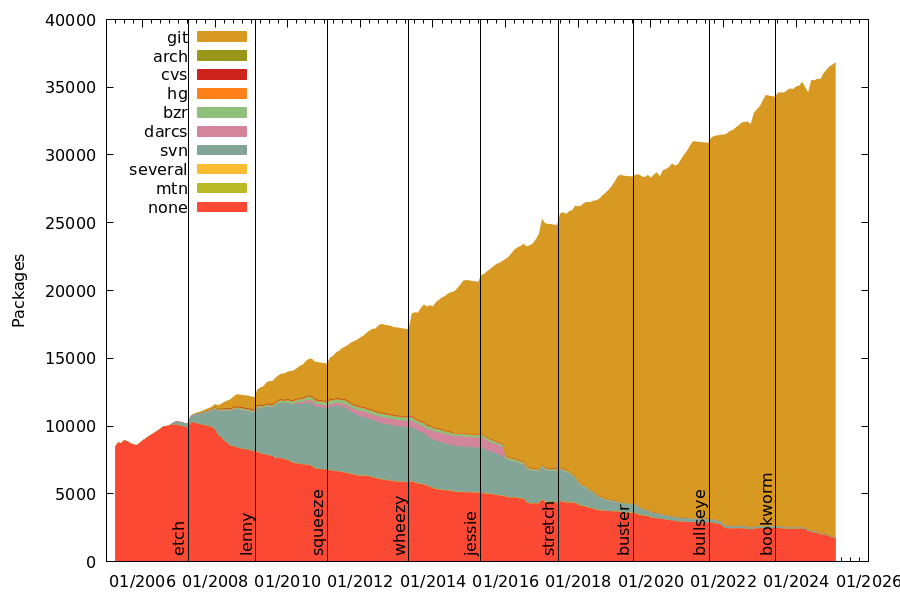
As can be seen, this works for a surprising fraction of packages. It s possible to get the numbers up even higher, by both improving the tooling, the autopkgtests and the metadata that is provided by packages.
1 2 3 4 5 6 | echo deb "[arch=amd64 signed-by=/usr/share/keyrings/debian-janitor-archive-keyring.gpg]" \
https://janitor.debian.net/ fresh-snapshots main sudo tee /etc/apt/sources.list.d/fresh-snapshots.list
echo deb "[arch=amd64 signed-by=/usr/share/keyrings/debian-janitor-archive-keyring.gpg]" \
https://janitor.debian.net/ fresh-releases main sudo tee /etc/apt/sources.list.d/fresh-releases.list
sudo curl -o /usr/share/keyrings/debian-janitor-archive-keyring.gpg https://janitor.debian.net/pgp_keys
apt update
|
1 | apt install -t fresh-snapshots r-cran-roxygen2
|
| [1] | I m not saying that a monoculture is great here, but it does help distributions. |
DebConf21 is taking place online, from 24 August to 28 August 2021.
It is the 22nd Debian conference, and organizers and participants are working hard
together at creating interesting and fruitful events.
We would like to warmly welcome the 19 sponsors of DebConf21, and introduce them to you.
We have five Platinum sponsors.
Our first Platinum sponsor is Lenovo.
As a global technology leader manufacturing a wide portfolio of connected products,
including smartphones, tablets, PCs and workstations as well as AR/VR devices,
smart home/office and data center solutions, Lenovo
understands how critical open systems and platforms are to a connected world.
Our next Platinum sponsor is Infomaniak.
Infomaniak is Switzerland's largest web-hosting company,
also offering backup and storage services, solutions for event organizers,
live-streaming and video on demand services.
It wholly owns its datacenters and all elements critical
to the functioning of the services and products provided by the company
(both software and hardware).
Roche is our third Platinum sponsor.
Roche is a major international pharmaceutical provider and research company
dedicated to personalized healthcare. More than 100,000 employees worldwide
work towards solving some of the greatest challenges for humanity using
science and technology. Roche is strongly involved in publicly funded
collaborative research projects with other industrial and academic partners
and has supported DebConf since 2017.
Amazon Web Services (AWS) is our fourth Platinum
sponsor.
Amazon Web Services is one of the world's
most comprehensive and broadly adopted cloud platform,
offering over 175 fully featured services from data centers globally
(in 77 Availability Zones within 24 geographic regions).
AWS customers include the fastest-growing startups, largest enterprises
and leading government agencies.
Google is our fifth Platinum sponsor.
Google is one of the largest technology companies in the
world, providing a wide range of Internet-related services and products such
as online advertising technologies, search, cloud computing, software, and hardware.
Google has been supporting Debian by sponsoring DebConf for more than
ten years, and is also a Debian partner sponsoring parts
of Salsa's continuous integration infrastructure
within Google Cloud Platform.
Our Gold sponsor is the Matanel Foundation.
The Matanel Foundation operates in Israel,
as its first concern is to preserve the cohesion of a society and a nation
plagued by divisions. The Matanel Foundation also works in Europe, in Africa
and in South America.
Our Silver sponsors are:
arm: the World s Best SoC Design Portfolio,
Arm powered solutions have been supporting innovation for more than 30 years
and are deployed in over 160 billion chips to date,
Hudson-Trading,
a company researching and developing automated trading algorithms
using advanced mathematical techniques,
Ubuntu
the Operating System delivered by Canonical,
Globo,
the largest media conglomerate in Brazil, founded in Rio de Janeiro in 1925
and distributing high-quality content across multiple platforms,
Two Sigma,
rigorous inquiry, data analysis, and invention to help solve the toughest
challenges across financial services
and
GitLab,
an open source end-to-end software development platform with built-in version
control, issue tracking, code review, CI/CD, and more.
Bronze sponsors:
Univention,
Gandi.net,
daskeyboard,
InterFace AG and
credativ.
And finally, our Supporter level sponsor, ISG.EE.
Thanks to all our sponsors for their support!
Their contributions make it possible for a large number
of Debian contributors from all over the globe to work together,
help and learn from each other in DebConf21.
Participating in DebConf21 online
The 22nd Debian Conference is being held online, due to COVID-19,
from August 24 to 28, 2021. Talks, discussions, panels and other activities run from 12:00 to 02:00 UTC.
Visit the DebConf21 website at https://debconf21.debconf.org
to learn about the complete schedule, watch the live streaming and join the different
communication channels for participating in the conference.
Next.