Elena 'valhalla' Grandi: The Cat Model of Package Ownership
The Cat Model of Package Ownership
Debian has been moving away from strong ownership of packages by package maintainers and towards encouraging group maintainership, for very good reasons: single maintainers have a bad bus factor and a number of other disadvantages.
When single maintainership is changed into maintainership by a small , open group of people who can easily communicate and sync with each other, everything is just better: there is an easy way to gradually replace people who want to leave, but there is also no duplication of efforts (because communication is easy), there are means to always have somebody available for emergency work and generally package quality can only gain from it.
Unfortunately, having such group of maintainers for every package would require more people than are available and willing to work on it, and while I think it's worth doing efforts to have big and important packages managed that way, it may not be so for the myriad of small ones that make up the long tail of a distribution.
Many of those packages may end up being maintained in a big team such as the language-based ones, which is probably better than remaining with a single maintainer, but can lead to some problems.
My experience with the old OpenEmbedded, back when it was still using monotone instead of git and everybody was maintaining everything, however, leads me to think that this model has a big danger of turning into nobody maintains anything, because when something needs to be done everybody is thinking that somebody else will do it.
As a way to prevent that, I have been thinking in the general direction of a Cat Model of Package Ownership, which may or may not be a way to prevent some risks of both personal maintainership and big teams.
The basic idea is that the my in my packages is not the my in my toys , but the my in my Cat, to whom I am a servant .
As in the case of a cat, if my package needs a visit to the vet, it's my duty to do so. Other people may point me to the need of such a visit, e.g. by telling me that they have seen the cat leaving unhealty stools, that there is a bug in the package, or even that upstream released a new version a week ago, did you notice?, but the actual putting the package in a cat carrier and bringing it to the vet falls on me.
Whether you're allowed to play with or pet the cat is her decision, not mine, and giving her food or doing changes to the package is usually fine, but please ask first: a few cats have medical issues that require a special diet.
And like cats, sometimes the cat may decide that I'm not doing a good enough job of serving her, and move away to another maintainer; just remember that there is a difference between a lost cat who wants to go back to her old home and a cat that is looking for a new one. When in doubt, packages usually wear a collar with contact informations, trying to ping those is probably a good idea.
This is mostly a summer afternoon idea and will probably require some refinement, but I think that the basic idea can have some value. Comments are appreciated on the federated social networks where this post is being published, via email (valid addresses are on my website http://www.trueelena.org/computers/articles/the_cat_model_of_package_ownership.html and on my GPG key http://www.trueelena.org/about/gpg.html) or with a post on a blog that appears on planet debian http://planet.debian.org/.
how small is small depends a lot on the size of the package, the amount of work it requires, how easy it is to parallelize it and how good are the people involved at communicating, so it would be quite hard to put a precise number here.
I've moved away from it because the boards I was using could run plain Debian, but I've heard that after the move to git there have been a number of workflow changes (of which I've seen the start) and everything now works much better.
 Debian LTS
July marked the fifteenth month I contributed to
 This is a repost and update of my retirement letter sent privately to Debian last month, July 10, 2016. At that time I received many notes of appreciation and good wishes which I treasure. Now, I d like to say goodbye to the broader Debian community and, as well, indicate which of the cleanup items have since been addressed in strikethrough style and with annotations. Also, I d like to stay in touch with many of you, so I have added some comments oriented towards those of you who are interested in doing that
 Now, business. These things remain to clean up upon my departure, and I d appreciate help from QA, and anyone else who can lend a hand. My packages are effectively orphaned, but I haven t the time to do any of the cleanup myself, so please speak up if you can help.


 Here is my monthly update covering a large part of what I have been doing in the free software world (
 I recently attended Snappy Sprint Heidelberg, the first
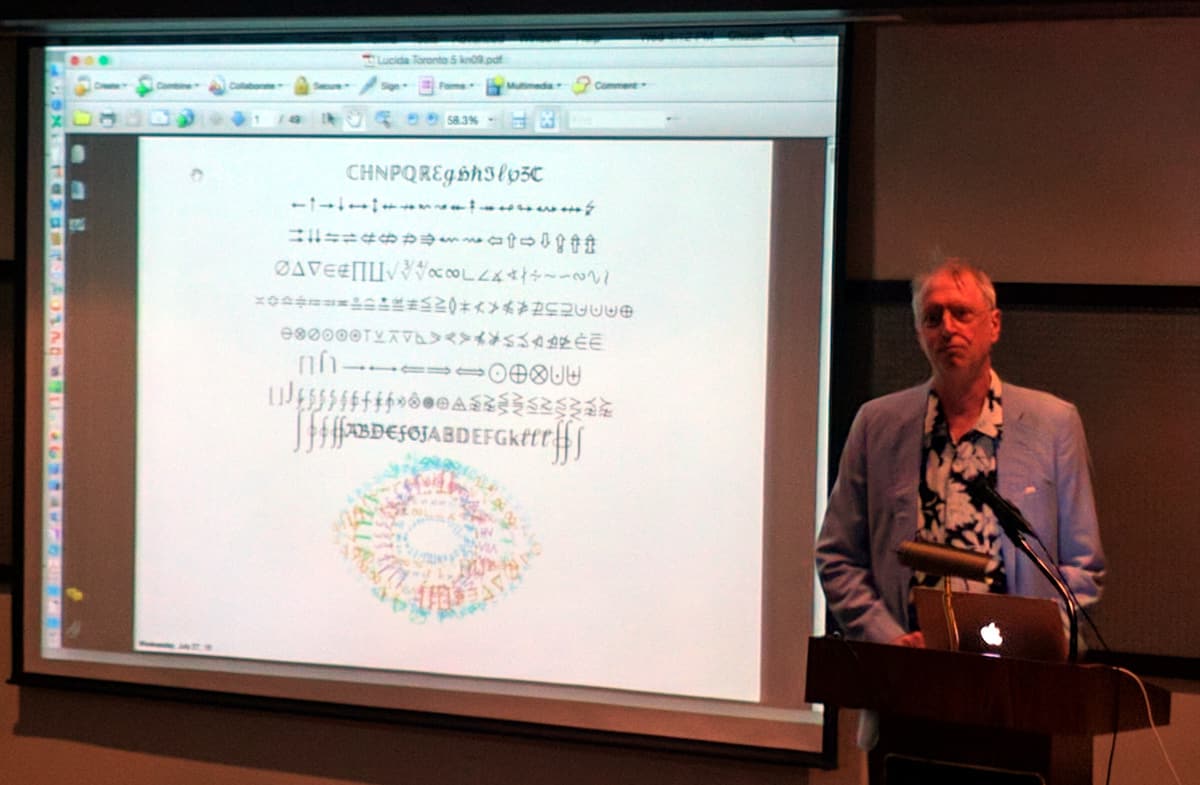
 Talks have been finished, and as a special present to the participants, Pavneet has organized an excursion that probably was one of the best I ever had. First we visited the




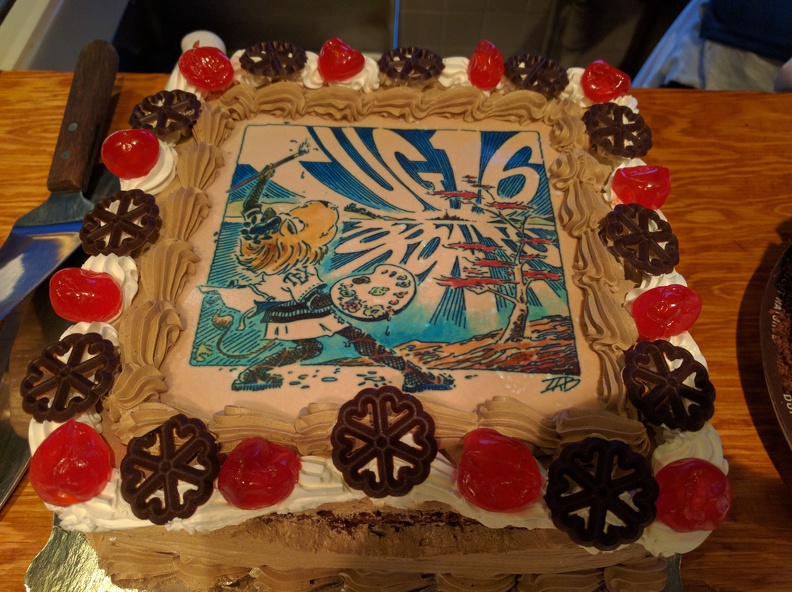

 During the ceremony, Pavneet also announced the winners of the

 Excellent life music in a bit schick/sophisticated atmosphere was a good finish for this excellent day. With Herb from MacTeX and his wife we killed two bottles of red wine, before slowly tingling back to the hotel.
A great finishing day of talks.

 I have a long overdue blog entry about what happened in recent times. People that follow
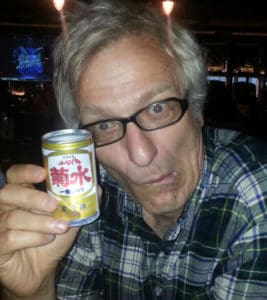 After the closing of the session, one part of our group went off to the baseball match, while another group dived into a Japanese-style Izakaya where we managed to kill huge amounts of sake and quite an amount of food. The photo shows me after the first bottle of sake, while just seeping on an intermediate small amount of genshu (kind of strong undiluted sake) before continuing to the next bottle.
An interesting and stimulating first day of TUG, and I am sure that everyone was looking forward to day 2.



 seems I've neglected both my blog & my RC bug fixing activities in the
last months. anyway, since I still keep track of RC bugs I worked
on, I thought I might as well publish the list:
 I
 I ll be at HOPE 11 this year - if anyone else will be around, feel free to send me an email! I won t have a phone on me (so texting only works if you use Signal!)
Looking forward for a chance to see everyone soon!

 If that wasn't all bad enough, now there is a new threat: while you are relaxing in the sun, scammers fool your phone company into issuing a replacement SIM card or transferring your mobile number to a new provider and then proceed to use it to take over all your email, social media, Paypal and bank accounts. The same scam has been appearing around the globe, from
 For phone companies, SMS messaging came as a side-effect of digital communications for mobile handsets. It is less than one percent of their business. SMS authentication is less than one percent of that. Phone companies lose little or nothing when SMS messages are hijacked so there is little incentive for them to secure it. Nonetheless, like insects riding on an elephant, numerous companies have popped up with a business model that involves linking websites to the wholesale telephone network and dressing it up as a "security" solution. These companies are able to make eye-watering profits by "purchasing" text messages for $0.01 and selling them for $0.02 (one hundred percent gross profit), but they also have nothing to lose when SIM cards are hijacked and therefore minimal incentive to take any responsibility.
Companies like Google, Facebook and Twitter have thrown more fuel on the fire by encouraging and sometimes even demanding users provide mobile phone numbers to "prove they are human" or "protect" their accounts. Through these antics, these high profile companies have given a vast percentage of the population a false sense of confidence in codes delivered by mobile phone, yet the real motivation for these companies does not appear to be security at all: they have worked out that the mobile phone number is the holy grail in cross-referencing vast databases of users and customers from different sources for all sorts of creepy purposes. As most of their services don't involve any financial activity, they have little to lose if accounts are compromised and everything to gain by accurately gathering mobile phone numbers from as many users as possible.

 I just published the videos from
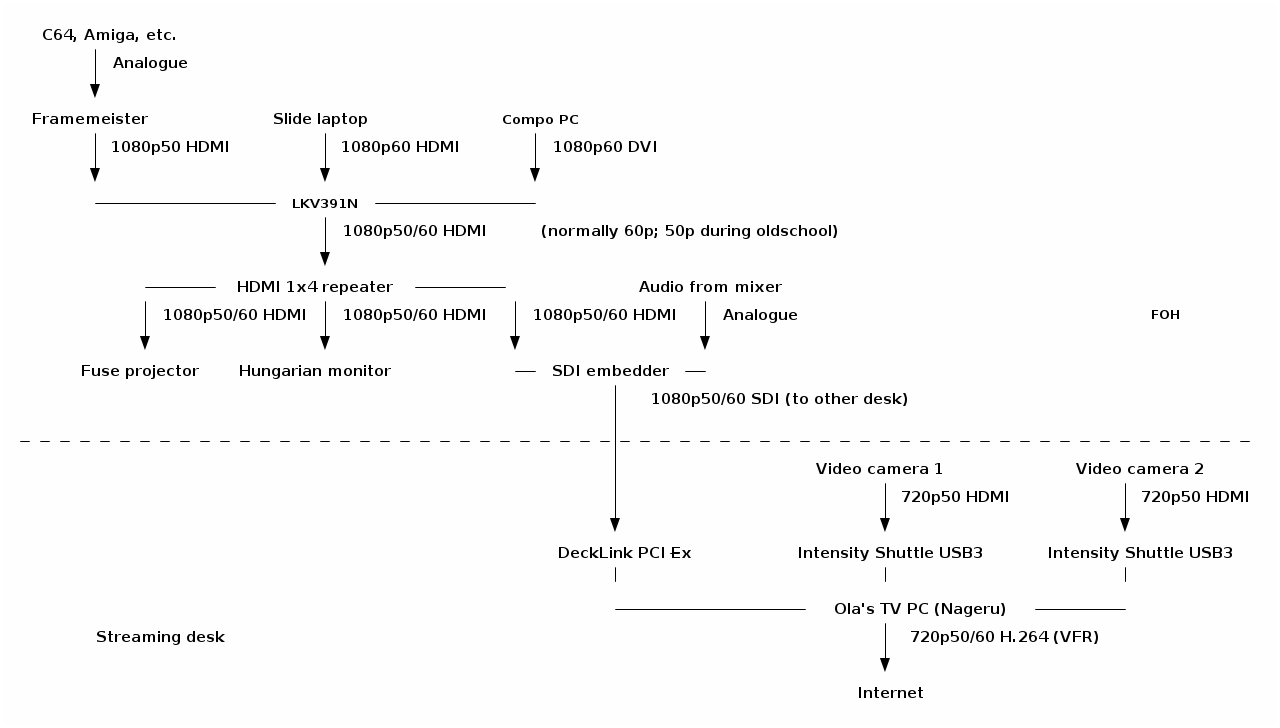 Of course, for me, the really interesting part here is near the end of the
chain, with
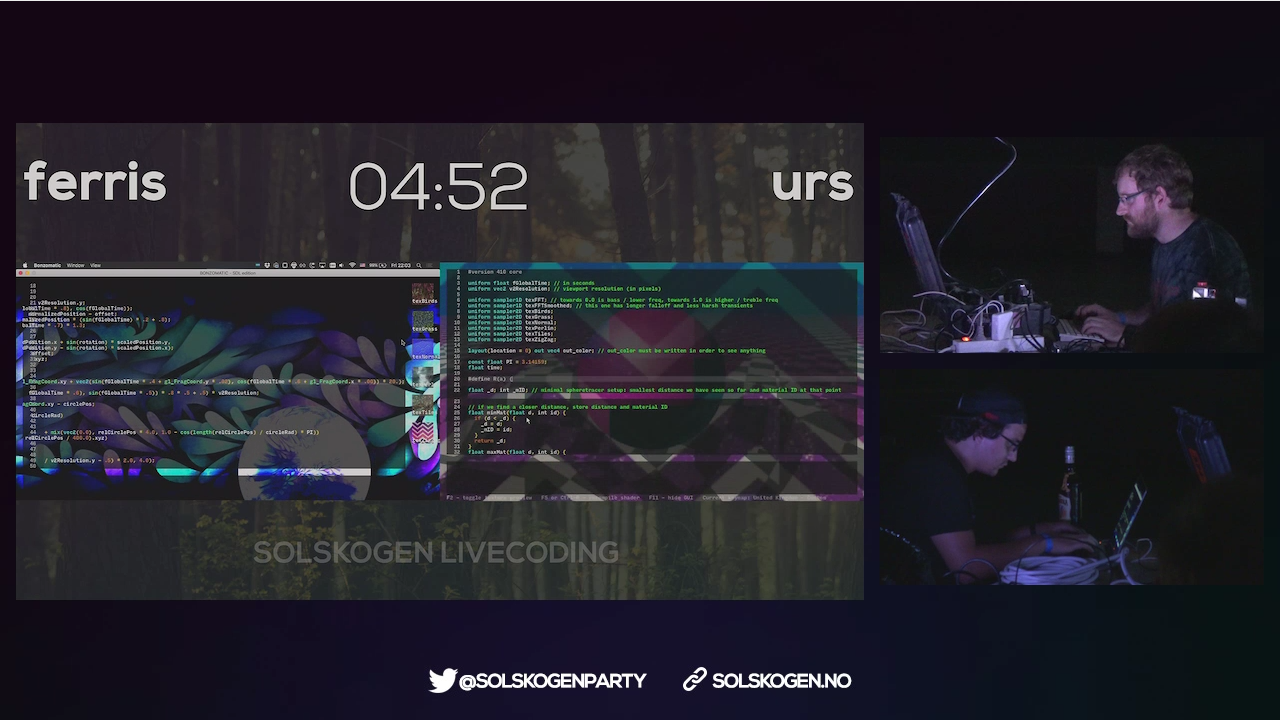 (Unfortunately, I forgot to take a screenshot of Nageru itself during this
run.)
Solskogen was the first time I'd really used Nageru in production, and
despite super-extensive testing, there's always something that can go wrong.
And indeed there was: First of all, we discovered that the local Internet
line was reduced from 30/10 to 5/0.5 (which is, frankly, unusable for
streaming video), and after we'd half-way fixed that (we got it to
25/4 or so by prodding the ISP, of which we could reserve about 2 for
video demoscene content is really hard to encode, so I'd prefer a lot
more) Nageru started crashing.
It wasn't even crashes I understood anything of. Generally it seemed like the
NVIDIA drivers were returning GL_OUT_OF_MEMORY on things like creating
mipmaps; it's logical that they'd be allocating memory, but we had 6 GB of
GPU memory and 16 GB of CPU memory, and lots of it was free. (The PC we used for encoding was much,
much faster than what you need to run Nageru smoothly, so we had plenty of
CPU power left to run x264 in, although you can of course always want more.)
It seemed to be mostly related to zoom transitions, so I generally avoided
those and ran that night's compos in a more static fashion.
It wasn't until later that night (or morning, if you will) that I actually
understood the bug (through the godsend of the