Search Results: "ag"

17 June 2008

Josselin Mouette: No world record today

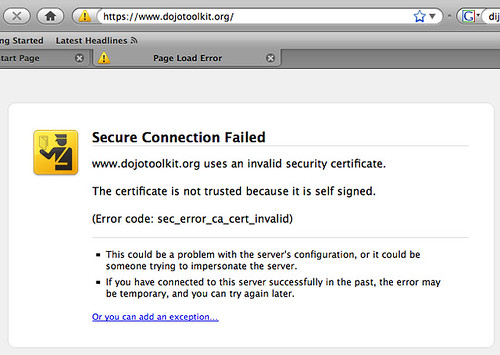
Instead of trying to set a world record in the most stupid world record ever category, finally bringing software development to the same level as sausages, you can do something useful for your computer: download the latest epiphany package in unstable. Thanks to glandium s work, it fixes two notable regressions introduced by gecko 1.9, including the removal of the incredibly unusable certificate error page, also known as I want to be as cryptic as IE. As a side note, after spending a whole sunday trying to fix #393837, without anything remotely looking like success, I m very happy that the Epiphany developers decided to abandon Gecko. Maybe we will finally have a browser that is usable without needing a herd of maniac cultists to fix a bug. Something they won t do anyway they re too busy downloading the longest sausage in the world.

Mike Hommey: You know SMTP is a dead end when

… you receive more than a thousand “Mail Delivery Error” messages in a few hours. Needless to say I sent none of the original emails which I’m getting these error messages for…

Andrew Stribblehill: Evaporative cooling and the job market

In evaporation, the more energetic (i.e. warmer) a water molecule on the surface of an object is, the higher its chance of it turning to vapour. The higher the wind speed across this surface, the faster these warm molecules will be blown away. This is the concept of evaporative cooling. The same applies when a company starts to fail, though there is an additional feedback cycle which compounds the problem. First, the most energetic molecules staff depart. These are the ones who can see a future for themselves outside of their current employment — and there is a high correlation between these people and those who are most valuable for an organisation. So the company becomes slightly worse due to the better people leaving. But it’s an exponential effect: it will rapidly get worse unless steps are taken to improve things. Eventually, the company stagnates as all of the interesting and innovative people have found alternative employment and only the boring ones are left. So, the moral of the story: the more a company blows, the faster its employees leave.

Aigars Mahinovs: Firefox 3.0 download record

Download Day Please help set a world record of most downloads in 24 hours by downloading a copy of Firefox 3.0 in the next 24 hours starting at 18:00 GMT today. Download yourself and get all your friends to do so as well. Only one download per computer is counted towards the record. More info on the record attempt. Firefox 3.0 Download record countdown timers. P.S. The SpreadFirefox web page is down at the moment. Overloaded less than 2 hours before the go time.

Daniel Silverstone: Scary licence questions follow

I have, at several points over the past few years, been interested in finding out quite how the GPL applies when one has runtime dynamic linking in the mix. As such, I would like to set a little scenario up and then solicit responses from you as to how things might go. I have yet to receive any useful answers which consider all the aspects. Several people have basically said oooh, hard.. erm therefore you can t do it , and the FSF have told someone I know who asked essentially this question, erm consult your lawyer ; and it took them four months to say that. So, with all that in mind, here we go Setting the scene
  1. There exists a company SuperMegaCorp...
  2. ...who have a software product called FantasticUsefulApp...
  3. ...which is released to the public in a proprietary/pay-for kind of way...
  4. ...but has a BSD licenced set of header files for third parties to write plugins distributed with it.
  5. There exists a useful GPLv2+ed library HandyStuffs...
  6. ...which is authored by a freedom loving software engineer called Fred.
  7. A pragmatic, yet freedom loving software engineer called Pete...
  8. ...who does not know Fred...
  9. ...writes a plugin for FantasticUsefulApp which we shall call IncrediblyCoolPlugin...
  10. ...which incorporates parts of the HandyStuffs codebase...
  11. ...and is GPLv2+ed by Pete...
  12. ...who then releases it to the wider world on his website.
Next, the following happens
  1. Seeing that Pete has written IncrediblyCoolPlugin for their FantasticUsefulApp...
  2. ...a user of the app called Uhura downloads it in binary form and drops it straight into the plugin folder.
  3. Uhura then starts FantasticUsefulApp which proceeds to dynamically link itself to IncrediblyCoolPlugin for the duration of Uhura's use of the app.
So here is question one Is anyone violating any of the GPLv2 s terms (or the GPLv3 s terms) by doing this at any point? If so, who is violating which terms, and how can that be fixed without losing functionality? Extending the scenario
  1. Uhura loves FantasticUsefulApp a lot. She also really loves IncrediblyCoolPlugin and wishes that each time she made a new installation of the app it would come with the plugin.
  2. Uhura writes to SuperMegaCorp and asks them to include IncrediblyCoolPlugin with FantasticUsefulApp.
  3. Liking the idea, and mindful to place the source code to IncrediblyCoolPlugin on their distribution media, SuperMegaCorp proceed to distribute the plugin along with their app in one easy to install bundle.
Here is question two Is anyone violating any of the GPLv2 s terms (or the GPLv3 s terms) by doing the above? If so, who is violating which terms, and how can that be fixed without losing functionality? (For this question, consider the bundling of the plugin and the app together as functionality it is preferable to retain.) An alternative way to extend the scenario
  1. Concerned about the possibilities of upsetting freedom lovers, SuperMegaCorp decline to distribute IncrediblyCoolPlugin with their app...
  2. ...however instead they distribute a plugin which connects to Pete's website and downloads IncrediblyCoolPlugin the first time FantasticUsefulApp loads, installing it for the user automatically.
And question three Is anyone violating any of the GPLv2 s terms (or the GPLv3 s terms) by doing the above? If so, who is violating which terms, and how can that be fixed without losing functionality? If anyone has any useful ideas on this, please either email them to me, or blog about it and email me a link. I intend to post a precis of the answers in a future entry.

Adam Jensen: 17 Jun 2008

The overall situation (admittedly a bit of a stretch):
The chicken cycle
(The soil depends on the chicken to keep it fertilized. Work with me here.) There are an infinitude of cycles that could be extracted from this, but we're only interested in the set of shortest-length cycles. Exhibit A:
Exhibit B:
And the classic philosophical gem, Exhibit C:
Is the problem solved, then? Not quite. The current DebGraph cycle detection operator works well for dependencies, but we also want to discover cycles of conflicting packages. Furthermore, one of our documented use cases involves finding nodes that depend on and conflict with one another.

Enrico Zini: Joys of schroot

Joys of schroot Schroot is good! Try schroot. You have LVM set up and some free extents in a vg? Try this:
# Create a new logical volume for a sid chroot
lvcreate -n schroot-sid -L1G YOUR-VG-NAME
mke2fs -j /dev/YOUR-VG-NAME/schroot-sid
# Debootstrap sid into it
mount /dev/YOUR-VG-NAME/schroot-sid /mnt
debootstrap --keyring=/etc/apt/trusted.gpg sid /mnt http://ftp.uk.debian.org/debian
umount /mnt
Then apt-get install schroot and put this in your /etc/schroot/schroot.conf:
[sid]
type=lvm-snapshot
device=/dev/YOUR-VG-NAME/schroot-sid
description=Debian sid
priority=5
users=YOUR-USER-NAME
root-users=YOUR-USER-NAME
source-root-users=root
aliases=unstable
lvm-snapshot-options=--size 2G
Now, schroot -c sid will make a LVM snapshot of /dev/YOUR-VG-NAME/schroot-sid, mount it, set it up as a nice working system, and chroot into it running a shell. Have a look around: resolv.conf is set up, your home directory is bind mounted, /proc and /sys are mounted. When you exit the chroot, the LVM snapshot disappears, and /dev/YOUR-VG-NAME/schroot-sid is unchanged. If you want to modify /dev/YOUR-VG-NAME/schroot-sid, you just schroot -c sid-source. In my laptop, I did this:
# schroot -c sid-source
(sid)# echo APT::Install-Recommends "false";' > /etc/apt/apt.conf.d/50enrico
(sid)# apt-get install build-essential, pbuilder, devscripts, fakeroot
(sid)# apt-get clean
At this point, to build a debian package like if I were using pbuilder, I do this:
pkgdir$ schroot -c sid
(sid)pkgdir$ su -c /usr/lib/pbuilder/pbuilder-satisfydepends
(sid)pkgdir$ debuild -us -uc
You can repeat this whole process with lenny and etch, for example, and if you are on an amd64 system, you can also do sid32, lenny32 and etch32. If you don't want to redownload packages all the time, install approx and configure the -source chroots to use it. This also allows you to easily switch all systems from one mirror to another if, for example, you are traveling abroad. If you want to do the same as pbuilder update, you can do this:
# schroot -c sid-source
(sid)# apt-get update
(sid)# apt-get dist-upgrade
(sid)# apt-get autoremove
(sid)# apt-get clean
You can use schroot -c sid-source for all sorts of permanent maintenance works. You can also create persistent named snapshots:
$ schroot -b -c sid -n playground
This will only disappear when you do:
$ schroot -c playground -e
And you can enter the schroot as many time as you want with:
$ schroot -r -c playground
You can also enter a temporary snapshot as many times as you want, by using the random name that schroot generated for it (you can see it, for example, when running df or mount). You fear that lvm snapshots are a little fragile and a little slow at the moment? It's not a problem: your home is bind-mounted inside the chroot, so you can do all the work in your normal home filesystem, without stressing the snapshot. This is good not only to build packages. For example, now that svk is broken in sid and lenny, I just did schroot -b -c etch -n svk, installed svk on it, and then every time I need svk, I can do schroot -r -c svk and have it ready.

Julien Danjou: awesome 3 progress

I've posted yesterday an overview of awesome 3 development state on the awesome mailing list. To sum up, everything's fine. I hope this summer will see a good hacker-friendly window manager coming out.

Philipp Kern: I'm going to DebConf 8!

http://media.debconf.org/dc8/images/debconf8-going-to.png This will be my first DebConf ever and I'm excited. I just booked my flights together with nomeata:
2008-08-03: Frankfurt (10:20) -> Buenos Aires (19:05) [LH510]
2008-08-03/04: Buenos Aires (21:30) -> Mar del Plata (3:20) [Bus]
2008-08-17: Mar del Plata (12:00) -> Buenos Aires (18:00) [Bus]
2008-08-18: Buenos Aires (20:55) -> Frankfurt (15:00) [LH511]

Enrico Zini: Passing values to turbogears widgets at display time (the general case)

Passing values to turbogears widgets at display time (the general case) Last time I dug this up I was not clear enough in documenting my findings, so I had to find them again. Here is the second attempt. In Turbogears, in order to pass parameters to arbitrary widgets in a compound widget, the syntax is:
form.display(PARAMNAME=dict(WIDGETNAME=VALUE))
And if you have more complex nested widgets and would like to know what goes on, this monkey patch is good for inspecting the params lookup functions:
import turbogears.widgets.forms
old_rpbp = turbogears.widgets.forms.retrieve_params_by_path
def inspect_rpbp(params, path):
    print "RPBP", repr(params), repr(path)
    res = old_rpbp(params, path)
    print "RPBP RES", res
    return res
turbogears.widgets.forms.retrieve_params_by_path = inspect_rpbp
The code for the lookup itself is, as the name suggests, in the retrieve_params_by_path function in the file widgets/forms.py in the Turbogears source code.

16 June 2008

Christian Perrier: On D-I releases

(hint: D-I=Debian Installer, the installation system for your favourite distro) Commenting on the blog entry I posted yesterday about D-I releases... I want to make it clear, in case it could be misunderstood, that writing that the next D-I release will certainly be called a Release Candidate and be the final release, is purely personal assumptions. I am not the D-I release manager. Otavio Salvador is. So, my assumption is only based on the small experience I got from a little bit less than 5 years in the D-I team and nearly 3 entire release cycles for Debian and D-I. Pure speculation, then. I could even say "science-fiction". I still believe that there will (should) be only one D-I release until the release of Lenny, but that decision is up to the D-I release manager(s?) and you're free to not believe me and just ask on #debian-boot or the debian-boot mailing list. Still, when it comes at i18n, I still believe that translators should move their asses if they want to make it for the release. And that involves /me saying them that the release is bloody near no matter if it's called a Release Candidate or Yet Another Beta.

Michal Čihař: No DebConf this year for me

Okay, I will again miss DebConf. This time it is not because of time, but because of money. The flight to Buenos Aires is far too expensive to go there just for DebConf and I didn't manage to plan some more travelling around South America... Hopefully it will get better next year, at least DebConf will be much closer :-). PS: Just after deadline for confirmation and my decision for not going there, I got an email that my sponsorship for travel was approved. Unfortunately too late to change my decision.

Ingo Juergensmann: Information Policy

Well, during the weekend some Debian machines were unreachable as MJ Ray wrote on debian-devel:

gluck, merkel, samosa and raff uncontactable (192.25.206.* network problem?)

I don't know anything more at this time, but wanted to push a small
message out so that others know it isn't just them and lists and IRC
are both still up, as far as I can see so far.


Except the topic on #debian-devel channel there was no other official notice, afaik.

I think handling of such issues can be improved. Although nobody apparently seemed to know what happened or when the problem will be solved, it would have been nice to publish information that actually were available:


  1. What happened?

  2. When did it happen?

  3. What services are affected?

  4. What is done to solve the problem?

  5. When will the problem be solved most likely (ETA)?

  6. Is there an alternative for the services affected by the problem?

  7. Where can I inform myself about any progress?


A webpage similar to that one for DSA-1571 would be a very nice idea, IMHO.

Andreas Metzler: Another GnuTLS release

GnuTLS will soon release 2.4.0. The 4th release candidate 2.3.15 should be available in experimental after the next dinstall run/mirror push. The upgrade and propagation to testing should be smooth, since the soname was not bumped. (The only tricky stuff was moving OpenPGP from gnutls-extra to gnutls, but since usage of gnutls-extra also requires direct linking to gnutls a soname bump could be averted.) Preliminary release notes are here. Anyway, I would appreciate if you could give 2.3.15-1 a short test. Add experimental to your sources.list and install libgnutls26=2.3.15-1 libgnutls-dev=2.3.15-1. FWIW I did not find any (new) problems when rebuilding the packages build-depending on libgnutls-dev. Now I only need to doublecheck with -release when an upload to unstable would work for them.

Julien Blache: pommed v1.20: minor fixes

pommed v1.20 is out, with two minor fixes: Available on Alioth now, in unstable after the next mirror push. Also I have to block pommed >= 1.19 from entering testing because Linux 2.6.25 is not yet available in Lenny. I hope this will be fixed soon, in the meanwhile, grab the packages from unstable if you’re running testing with a 2.6.25 kernel.

MJ Ray: Forthcoming (and past) Events News: LUGoG, BikeWeek, HacktionLab, SPI

LUG of Glastonbury meets at Tor Leisure in Glastonbury at 7pm tonight (Monday). It will be a general planning meeting, maybe with some GPG-key-signing and other tasks. If you want the LUG to show you something in particular, this will be a good event to attend. This week is BikeWeek 2008 and there's a free cyclists breakfast at the Victorian Cafe on the Weston-super-Mare seafront about 8am Wednesday morning. For events in other areas, stick a partial postcode into the BikeWeek event search. Someone from The Doon Of May was at Hacktionlab 2008 @ Highbury Farm this last weekend, as were Bristol Wireless, who were running the wifi. I've not seen an official announcement, but SPI's board meeting will be on Wednesday at 8pm UK time (1900 UTC), according to my last meeting report. I've heard through BBLUG that the notorious Shevek is co-organising an event called "An Adventure in Technology" at Trinity Community Arts in Bristol on 28 June 2008. It's a follow-up event to the 2003 Bristol Linux and will be an all-inclusive event where everybody is encouraged to bring something along, talk about it, swap ideas, and build things on site. It doesn't have to be Linux-based, but a lot of things will be. The event web site is http://www.techadventure.org/ and you should post there if you have an idea or want to run a session. There will also be a list for people who decide on the day that they want to give a talk.

Clint Adams: Garoupa troupa

This is dedicated to the little girl who just said that all tea tastes the same, but only because I bet she can't use an RSS aggregator. I had had enough tea to kill a horse. Okay, that's an understatement. I had had enough sweet corn to kill a horse, but I had had enough tea to kill a whole village of horses. The horses constructed a village, then they had a big schism because some of them wanted to become centaurs, then there was a war, then they had to rebuild the village, and now they're living in constant fear of being wiped out by tea. I had some cold, leftover tea for breakfast. I had milk tea for zweites Fr hst ck. I had milk tea for drittes Fr hst ck. Okay, drittes Fr hst ck was nothing more than a mug of milk tea and a glass of water. Then at dim sum, I was doubly foiled by a lack of . Doubly. I won't get into the details, but we ended up settling on some jasmine. I have a very shaky relationship with jasmine tea, but I didn't want to be difficult. I won't get into the details. A couple hours later, my heart was doing handstands. It stopped. It started. It did a jig. It projected itself into the future, fondled the Shrike inappropriately, and returned, only skipping four beats. Disco. It shifted itself into the eighth dimension, did a pirouette, and installed a gopher server. My other organs eyed it with disgust and contempt. It is no wonder then that I concluded I should have no more tea, then made the ridiculous decision to walk into a Cantonese restaurant for dinner. If this is not a clear case of Thanatos mixed with some idiocy and veal stock, then swirled around in a cocktail shaker until I get tired of this metaphor, then I get tired of this metaphor. I have some beer to help lower my pulse to 180, though I know it will elevate my blood pressure even more, and my blood pressure is already at about 3500 volts. So when I finish the bottle, the waiter asks if I want some tea. How can I refuse? He wanders off, and a second waiter appears out of the shadows, and asks me if I want some tea. Again I agree. Reinforcing it makes it better. Then he drops the question. This guy is my homeboy: he asks if jasmine is okay. I casually inquire what choices I might have that don't suck. He is about to respond when waiter #1 drops a teapot on my table. Surprise, it's jasmine. I surrender. Homeslice ain't having it though: he offers to trade me for something else. He gives me some options and I opt for the . He mumbles something informative and largely irrelevant, not suspecting that I just want to play tic-tac-toe in the . Surprisingly, I don't. Then I had mango pudding even though I had it at lunch too.

Uwe Hermann: Speed up Linux crypto operations on the One A110 laptop with VIA Padlock

One Mini A110 subnotebook OK, so I've been hacking on and testing my shiny new One A110 mini-laptop during the last few days and I must say I'm very happy with it. I'll write up some more details later (check the wiki if you're impatient), but today I want to highlight a very nice feature of this laptop (compared to, for instance, the Eee PC): The VIA C7-M ULV CPU in the laptop has VIA Padlock support. VIA Padlock is a hardware feature in recent VIA CPUs which provides hardware-accelerated AES and SHA-1/SHA-256 support, among other things. This can be used in Linux (with the proper drivers and patches) to improve performance of dm-crypt, OpenSSL (and all programs using it), scp, sha1sum, OpenVPN, etc. etc. I have written a quite extensive VIA Padlock HOWTO and benchmarks in the A110 wiki (but all of this will work on other systems which have VIA Padlock, too). To summarize, here are the most important benchmarks: dm-crypt (256bit AES, cbc-essiv:sha256) VIA Padlock dm-crypt benchmark Without VIA Padlock support:
$ hdparm -tT /dev/mapper/hdc2_crypt
/dev/mapper/hdc2_crypt:
 Timing cached reads:   448 MB in  2.00 seconds = 223.47 MB/sec
 Timing buffered disk reads:   22 MB in  3.07 seconds =   7.17 MB/sec
With VIA Padlock support:
$ hdparm -tT /dev/mapper/hdc2_crypt
/dev/mapper/hdc2_crypt:
 Timing cached reads:   502 MB in  2.00 seconds = 250.41 MB/sec
 Timing buffered disk reads:   90 MB in  3.07 seconds =  29.36 MB/sec
The native speed of the SSD in the laptop is 31.01 MB/sec, so there is almost no performance penalty when using VIA Padlock. OpenSSL OpenSSL speed benchmark, first line without Padlock, second line with Padlock enabled:
$ openssl speed -evp aes-256-cbc [-engine padlock]
type             16 bytes     64 bytes    256 bytes   1024 bytes   8192 bytes
aes-256-cbc       9187.18k    10572.28k    11054.32k    11179.36k    11218.02k
aes-256-cbc      47955.92k   150619.73k   325730.73k   458320.11k   520520.79k
ssh/scp Without VIA Padlock support:
$ scp -c aes256-cbc bigfile.dat localhost:/dev/null
bigfile.dat                100%  159MB   5.9MB/s   00:27
With VIA Padlock support:
$ scp -c aes256-cbc bigfile.dat localhost:/dev/null
bigfile.dat                100%  159MB  14.5MB/s   00:11
OpenVPN A real speed benchmark is pending (not measurable easily on 100MBit LAN, will try on a slower link), but as OpenVPN uses OpenSSL is should have roughly the same speedup iff you tell OpenVPN to use AES (it uses Blowfish per default). Also, there's a measurable difference in CPU load while tranferring large files over OpenVPN: 8% CPU load with VIA Padlock (vs. 20% CPU load without VIA Padlock). sha1sum / phe_sum phe_sum is a small C program which can be used as drop-in replacement for sha1sum (which doesn't support VIA Padlock yet). Quick benchmark: sha1sum, without VIA Padlock:
$ time sha1sum bigfile.dat
real    0m6.511s
user    0m5.864s
sys     0m0.412s
phe_sum (with VIA Padlock support):
$ time ./phe_sum bigfile.dat
real    0m1.149s
user    0m0.704s
sys     0m0.424s
All in all VIA Padlock gives you a pretty impressive speedup for many crypto-using applications on Linux, which is especially useful on the A110 mini-laptop (think OpenVPN or scp for mobile usage, and dm-crypt for an encrypted SSD, of course).

Francois Marier: Watch all of your logs using monkeytail

Monkeytail is a neat little tool which allows web developers and sysadmins to easily watch new additions to their log files by tailing them (i.e. tail -f) and providing helpful vertical spacing after detecting pauses in the output.

What makes monkeytail so useful is its ability to easily tail multiple files together, even when it involves connecting to these machines over ssh and running sudo on them. For example, you could tail all of your load-balanced servers by doing:
mtail @webservers
where webservers is an alias defined in ~/.mtailrc:
<group webservers>
sudo yes
<file>
filename /var/log/apache2/error.log
prefix "server1: "
host server1.example.com
</file>
<file>
filename /var/log/apache2/error.log
prefix "server2: "
host server2.example.com
</file>
</group>
It is available in Debian unstable and from its official homepage.

Kudos to Martyn Smith for turning this idea into a release!

Edd Dumbill: We're all ops people now

Ten years ago, most of us wouldn't have dreamt we'd be managing terabits of storage, tens of megabits of bandwidth, arrays of network-distributed services. The height of a programmer's worry would likely be choice of UI toolkit or finding the right way to indent code, and the height of consumer concern deciding which room to put the new computer in. Now the problems associated with managing large networks are becoming real for everyone, right down to the consumer level. Stupendously large amounts of computing resource are available at an instant. Your household probably has more than a terabyte of storage already. Issues such as single sign-on are going to hit home over the next year, as networked computing and entertainment devices profilerate. Features such as Apple's Time Machine will be increasingly vital — software that makes traditionally gnarly sysadmin tasks consumer-friendly. The rebranding of .Mac into "Mobile Me" is also a step in this direction. The impact on developers As software developers, we also have to cope with the effects of this resource-richness. For small sums of money we can get access to large computing clusters, geographically redundant hosting services. Our programs have left the desktop and found their new home on the web. System administration issues loom large upon us, security concerns lurk auspiciously in the corners of our minds. Although the cost of infrastructure has dropped radically, other costs remain high and are going to stay that way. System administrators are not only grumpy, they demand high wages. Commercial software license fees spiral out of control: traditional per-CPU licensing models make little sense when you can quickly bring up tens of machines. The cost in power is already troubling large companies, and there's no reason to suspect the problems won't ripple down. Help is at hand from a variety of technologies. If they don't yet make massive resource management trivial, they at least make it possible. Some of these also inhabit the weird territory of being both the source of a problem and a solution at the same time: virtualization, for example. Distributed revision control systems Distributed revision control is a technology whose time has finally come in popular circles, thanks in part to Linus Torvald's Git system. DRCS has several important impacts on today's developer: All these trends lower the barrier to entry, increase collaboration and agility of development. You can the value of this as more software tools become free. Selling such tools is rapidly becoming a thing of the past, the advantages of sharing enable the developers at the sharp end to get their jobs done quicker. However, such increased agility and, well, messiness leave other problems to solve, which the next two technologies address. Virtualization Hardware-as-a-service, infrastructure-as-a-service, call it what you will. The ability to create what we used to call entire machines, pick them up and move them around the network is revolutionary, and it's something that will have a real impact on regular developers. The benefits are at several levels. Configuration management Computing is a zero-sum game, and despite our increased ability to create and distribute software, problems still exist. We just pushed them to the next level. In good part, this next level is the problem of configuration management. We now have networks and clusters of (virtual) machines, software so agile we need six decimal places to describe its revision levels, and network and authentication paths that are starting to tangle. How do we manage that? One thing developers crave is repeatability. That's why we love our makefiles, autoconf, Ant, rake and so on. It's the one time even the most imperative-minded programmer writes declarative code. We like to say "let the world be like this." Our new sprawling world lacks this feature, and the best of our old toolkits — .debs, RPMs — address things only at the level of packages in a single environment. So developers must look to the world of operations, a territory we probably thought we needn't enter. In this world the new "make" is called Puppet. You write recipes to describe how things ought to be, and Puppet will make it so. I've been spending some time digging into Puppet, and feel excited by the confidence it's giving me. Now my applications exceed single source trees, and single machines, it gives me the means to tie the whole together. This article was going to be solely about Puppet, but that will have to wait now for another time. It's likely you'll have played with virtual machines and distributed revision control, but have you tried Puppet yet? Give it a spin, and let your mind wander over the benefits for your organization and development approaches. Conclusions
For developers and users alike, our world is changing. Hardware, connectivity and increasingly software is becoming cheap or free. The solidity of the old things we put value on — real things you can touch like disks — is eroding. What really matters is our data, our creations, and their communication. If they don't quite yet exist in a universal "cloud" yet, they're certainly getting frisky. As vendors provide solutions for consumers to manage their new domestic infrastructure, developers must look to network-aware toolkits and operations techniques to manage and get the best from their emergent infrastructures. Also on this topic: Join the conversation about this post

Next.

Previous.