Search Results: "tb"

19 January 2014

Matthias Klumpp: Tanglu Beta2 now available!

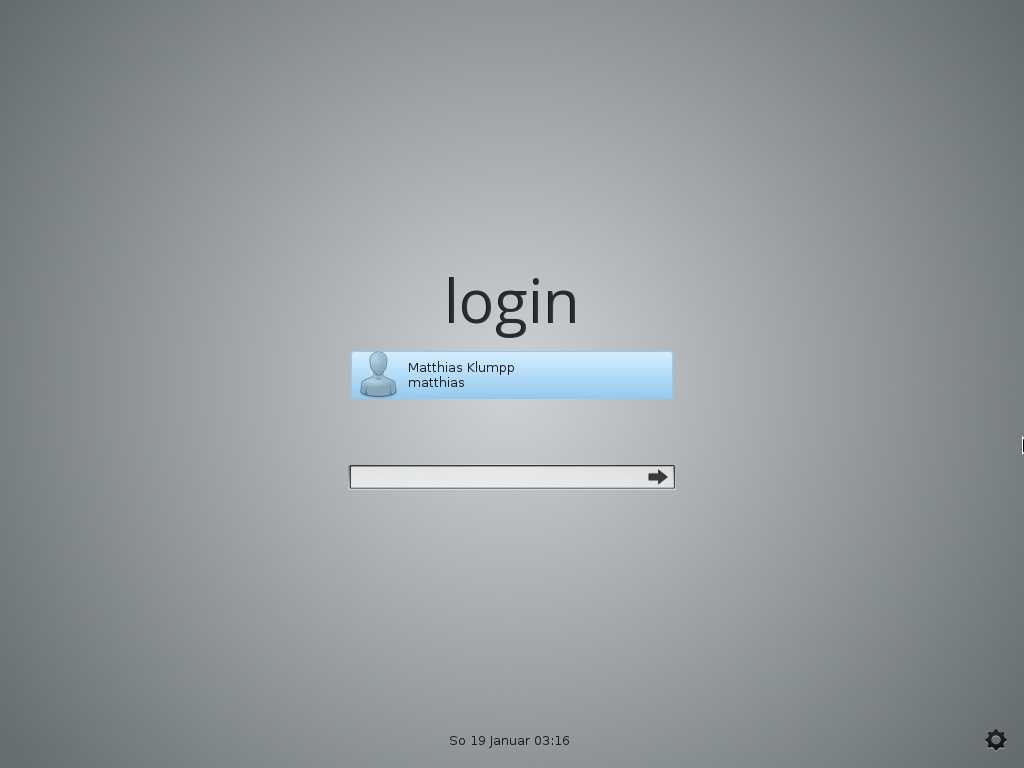
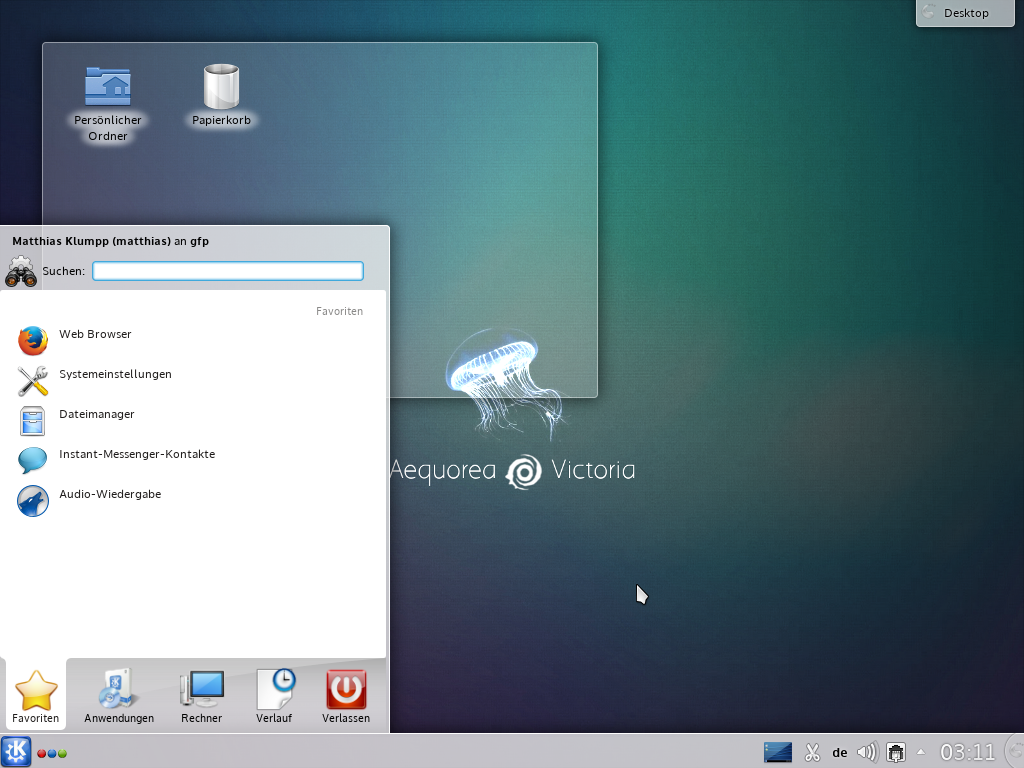
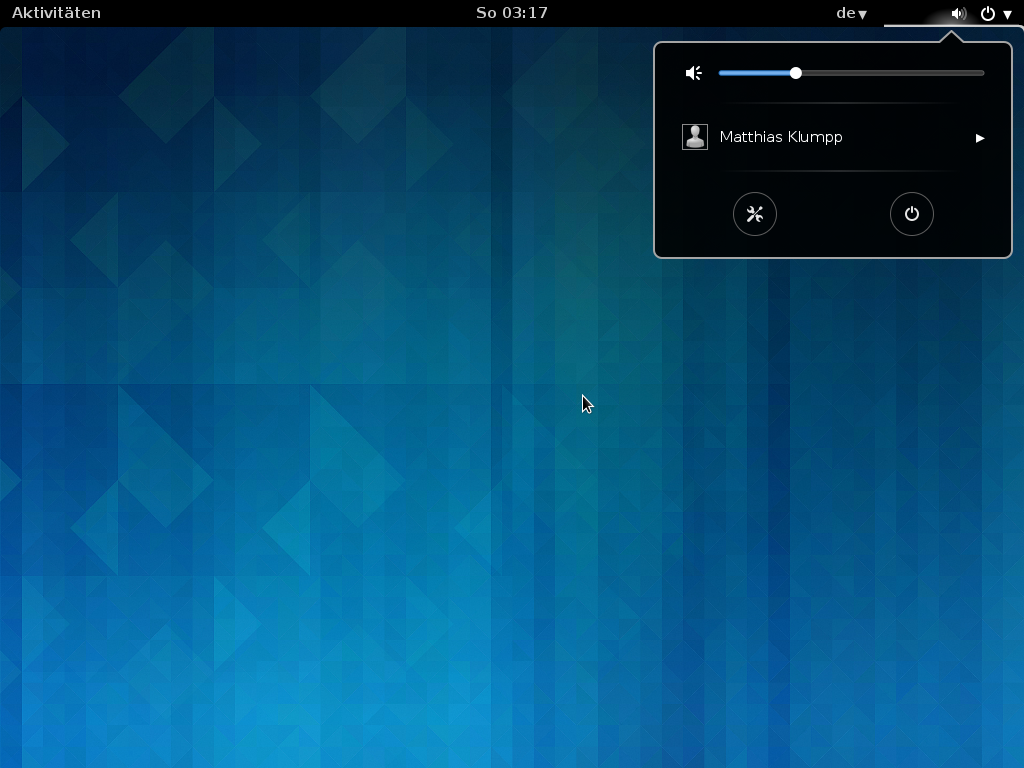
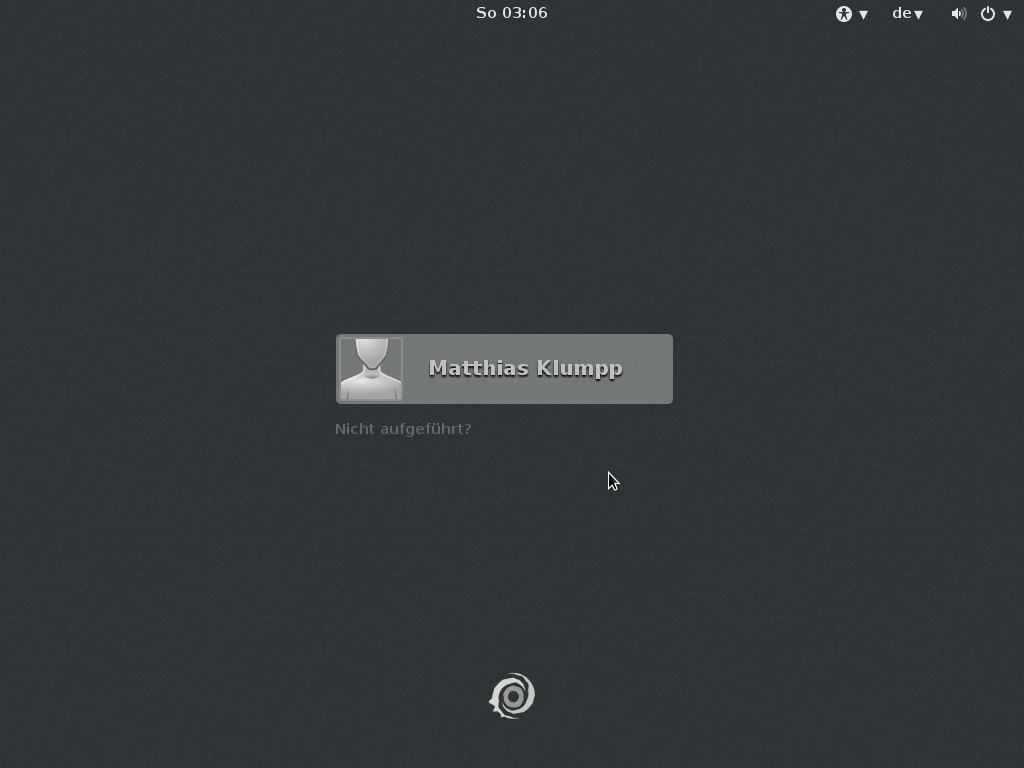
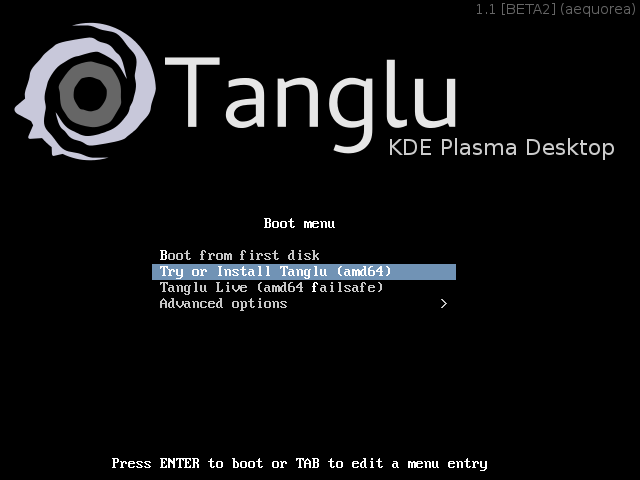
While writing this post, I recognize that we might need a news-blog for tanglu logo pureTanglu :-) Since yesterday, we have an (installable!) Beta2 release of Tanglu! Compared to the previous snapshot, it comes with a huge amount of improvements and bugfixes: Known issues: You can download the release from one of these mirrors: Mirror1 Mirror2 Mirror3 Additionally, there is now a release schedule for Tanglu Aequorea, and we will do a vote on the name for the next release soon (proposed names). As a note to Debian: systemd is working pretty well for Tanglu so far ;-) I am pretty happy with this Beta2 release, because Tanglu is shaping out to be the distribution we imagined in the beginning. Have fun! And as bonus, here are some images from Beta2: tanglu-beta2-kde0 tanglu-beta2-kde1 tanglu-beta2-kde2 tanglu-beta2-gnome2tanglu-beta2-gnome1

16 January 2014

Daniel Pocock: Get ready to try Debian SIP

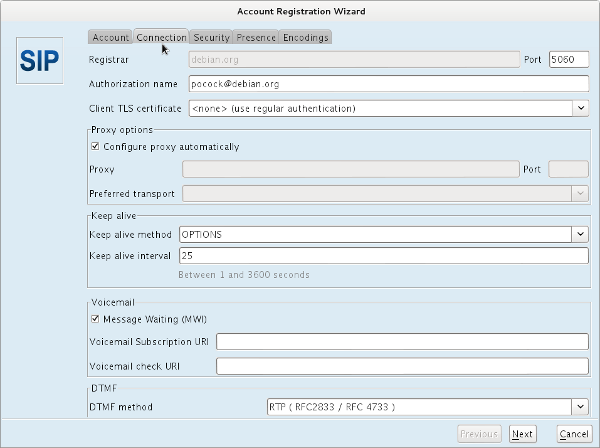
Before going on to talk about SIP, there is one really important thing that must be emphasized: XMPP/Jabber is also in the roadmap. Some of the infrastructure that has already been deployed (the new RTC passwords in ud-ldap, the TURN server and the RADIUS server) is good for both SIP and XMPP use cases. All to be revealed on Sunday As mentioned in my recent blog about the Debian.org NAPTR record, more details will be coming in my talk at mini-DebConf Paris this weekend. Today I'm just going to describe some things to install for those who want a head start. Jitsi Jitsi has been around for many years (originally as SIP Communicator) and it is probably the most advanced desktop softphone in the free software world. Jitsi packages are in jessie and sid - why not install them now. If you don't want to pull in dependencies from jessie on your wheezy system, you can also download from upstream and run it standalone. WebRTC browsers I've prepared a JSCommunicator implementation based on the jscommunicator-web-phone package. To use it, you need the latest version of Iceweasel/Firefox or Chromium. As HTML5 WebRTC / RTCPeerConnection is an evolving standard, using a recent browser is essential. Jitsi configuration for sip:debian.org It is not open for users just yet, but this is how you will configure it when it is available. More details to come...
AttachmentSize
step-4-setup-connection-scaled.png59.66 KB

15 January 2014

Jon Dowland: Whitley Bay Ice Rink

Recently, North Tyneside Council circulated the beginnings of a regional development plan. This consisted of a detailed map of the borough, complete with various areas marked out as sites for potential housing development. Included amongst the sites for potential development was Whitley Bay Ice Rink and the surrounding leisure facilities: a football pitch, a cricket pitch, and more. Whitley Bay Ice Rink has been a fixture in the cultural history of the region and it would be a terrible shame if it were to close. Many people seemed to agree: a petition calling for the site to be excluded from the plan received over 7,000 signatures. Residents were also able to write comments on the plan itself. The specific paragraph for the Ice Rink had attracted over 100 comments when I looked at it on the last day that comments were open. I hurredly put together one of my own:
Whitley Bay Ice Rink is about to celebrate it s 60th birthday as both a key part of the history and culture of the borough and a unique leisure facility in the wider area. Sadly the Rink has seemed, historically, to be somewhat neglected, rather like the other large cultural landmark in the region - Whitley Bay s Spanish City and Dome. I argue you should no sooner consider closing or redeveloping the Rink site than the Dome itself. Rather, both should be cherished and invested in, particularly if (as rumoured) the current owners are keen to retire or pass it on. In recognising the need to increase the amount of housing in the area, one should consider what facilities will be available to the new residents within the region. Removing facilities to provide housing is slaying the golden goose. Whitley Bay Ice Rink is one of the few rinks left in the country and the nearest permanent ice rink within 30 miles. Ice skating has become a fond and lasting memory for many of the adults who have grown up in the region, many of whom enjoy or look forward to their own children experiencing it. I look forward to taking my niece and nephew there, when they are old enough, as well as my own future children. It is a traditional spot for School trips; the sports teams operating from the rink have a proud history and fearsome reputation. It s an attraction for the large numbers of University students that travel to the two nearest Universities. The borough is blighted with rotting seaside hotels which (following the recent development of the Idols site) should be converted into attractive flat or maisonette housing as a priority.

10 January 2014

Paul Tagliamonte: Docker in Debian

Hello, World! Docker s in Debian! Isn t that great! Let s all get happy! It s called docker.io, so go ahead and sudo apt-get install docker.io whenever you want :) The first two uploads have a few errors, which are 100% my fault. The first were a set of FTBFS bugs, which were a stupid error on my part. Thanks to olasd for catching the remaining bug, related to stripping the binaries. I m so sorry this happened, it slipped through as a result of me having a local docker binary in /usr/local, which I tested completely before uploading a totally different binary. I won t let it happen again. It should be fixed now. However, this comes with a warning. It appears as though systemd (which, for the record I adore) is allowing lxc-start unmount /dev/pts and friends, which causes a bunch of damage to the host. I ve filed the bug as bug #734813. Currently the outdated mount(1) is holding back a workaround. Hopefully we get util-linux updated so we can hack around this in the short-term. Hopefully the bigger issues get solved. So, if you re a systemd user, please hold off on using docker.io until we resolve this issue in Debian.

9 January 2014

Russ Allbery: Review: Honeyed Words

Review: Honeyed Words, by J.A. Pitts
Series: Sarah Beauhall #2
Publisher: Tor
Copyright: July 2011
ISBN: 0-7653-2907-7
Format: Trade paperback
Pages: 412
Honeyed Words is a direct sequel to Black Blade Blues and probably doesn't make sense to read out of order. Sarah, Katie, their friends, and Katie's family are still recovering from the climactic events of Black Blade Blues and licking their wounds, but things are slowly looking up. Sarah is getting more comfortable openly expressing her sexuality, although there are still tensions, and her relationships are improving. The city of Vancouver also seems to be recovering. But major political shifts among the nonhuman races have echoes and ramifications, and after a kidnapped singer and a murdered dwarf, Sarah is pulled back into the turmoil. If you liked the world-building in Black Blade Blues, Honeyed Words is more of the same, but with more variety. Pitts adds elves to dwarves and dragons, shows considerably more of the supernatural world beneath the surface of human cities, and introduces Sarah to some new types of danger. There are a few more glimmers of the history of Sarah's sword and the nature of the gods in this universe, but still nothing conclusive. Pitts broadens the world-building rather than deepening it. But I liked the new characters. Teenage elves with obsessions make for great characters, and the demon who shows up about halfway through is delightful. As with the first book, this is mostly a story of things happening to Sarah while she tries to muddle through as best she can. There isn't much in the way of grand strategy or of seizing control of the plot. She just tries to do the right thing and gets lots of help from lots of friends. But the plot moves right along, and it's mixed with a healthy sense of normality that I find refreshing. She needs work as a blacksmith, she's trying to support a friend without having much money of her own, the living arrangements this forces are a bit of a strain for her own relationships, and her broken relationship with her family continues to lurk. Much urban fantasy is built around the premise of a regular person thrust into a fantasy world, but much of it then discards normal life once the supernatural starts. I think Pitts does a particularly good job of keeping his protagonist's life grounded in the ongoing mundane problems of living. It's also more fun to read about Sarah when she isn't quite as angstful. Over the course of Honeyed Words, she seems to be growing into a person who can accept who she is and feel secure about her place in the world. That's nice to see. The downside to this book is that, while it's full of quite a lot of stuff, not all of it coheres that horribly well. It has a certain "middle book" feel. The major plot resolves, but with some significant lingering consequences and something of a cliff-hanger last chapter. Most of the threads left open by the first book are still open here. There's character growth, and setup for some resolution, but not a lot of actual resolution. I still like this series, though. I like urban fantasy that isn't about vampires and werewolves; berserker blacksmiths and Norse legend has much more appeal, and I want to read more of it. Pitts's writing is a bit clunky and probably won't win many rewards, but it's serviceable and I think improving. If you enjoyed the first book, it's worth looking for this one as well. Followed by Forged in Fire. Rating: 7 out of 10

8 January 2014

Russell Coker: Dr Suelette Dreyfus LCA Keynote

Dr Suelette Dreyfus gave an interesting LCA keynote speech on Monday (it s online now for people who aren t attending LCA [1]). One of the interesting points she made was regarding the greater support for privacy protection in Germany, this is apparently due to so many German citizens having read their own Stasi files. The section of her talk about the technology that is being used against us today was very concerning. I wonder whether we should plan to move away from using any hardware or closed source software from the US, China, and probably most countries other than Germany. We really need to consider these issues at election time. I have previously blogged some rough ideas about having organisations such as Linux Australia poll parties to determine how well they represent the interests of citizens who use Linux [2]. I think that such things are even more important now. Steven Levy wrote an interesting summary of the situation for Wired [3]. At the end of her talk Suelette suggested that Aspies might be more likely to be whistle-blowers due to being unable to recognise the social signals about such things (IE managers say that they won t punish people for speaking out but most people recognise that to be lies). It s a plausible theory but I m worried that managers might decide to avoid hiring Aspies because of this. I wonder how many managers plan to have illegal activity as an option. But I guess that having criminals refuse to hire me wouldn t be such a bad thing.

6 January 2014

Steve Kemp: A beginning is a very delicate time.

Recently I wrote about docker, after a brief diversion into using runit for service management, I then wrote about it some more. I'm currently setting up a new PXE-boot environment which uses docker for serving DHCP and TFTPD, which is my first "real" usage of any note. It is fun, although I now discover I'm not alone in using docker for this purpose. Otherwise life is good, and my blog-spam detection service recently broke through the 11 million-rejected-comment barrier. The Wordpress Plugin is seeing a fair amount of use, which is encouraging - but more reviews would be nice ;) I could write about work, I've not done that since changing job, but I'm waiting for something disruptive to happen first.. ObQuote: Dune. (film)

Russell Coker: Length of Conference Questions

After LCA last year I wrote about speaking stacks and conference questions [1]. In that post I did some rough calculations on the amount of conference time taken by questions and determined that anyone who asks one question per day at a conference such as LCA (with about 600 delegates) is going to be asking more than 1/600 of all questions. That doesn t necessarily mean that someone shouldn t ask more than one question in a day, but they should carefully consider whether their questions are adding value to other delegates. Another issue that I ve noticed is the length of questions which seems to be a separate problem and it seems that we should consider keynote speeches separately as they involve all delegates. The regular conference lectures involve 4 to 6 streams running in parallel which means that in aggregate more questions can be asked. LCA has one keynote for each day including the mini-conf days, so that s 5 keynote speeches in total. If each keynote has 20 minutes of question time (and most keynote speeches probably have less) then there s 100 minutes of question time for the entire conference. For a genuine question (IE not a statement) that is non-trivial (anything that has a yes/no answer probably isn t interesting to the whole audience) the answer is probably going to be about three times as long as the question. Given some overheads for applause etc that means that the amount of time spent asking questions would be something less than 20 minutes at keynote speeches over the entire conference. If every delegate asked one keynote-speech question in the entire conference then that 20 minutes of questions would allow each delegate to spend 2 seconds asking a question. If 10% of delegates each asked one question and no-one asked a second question then each question could take an average of 20 seconds. Given the acoustic issues of asking a question from the back of the hall it seems unlikely to get a speaking rate of much more than a word a second, so 20 seconds of speaking would be in the range of 25 words (one tweet) to 50 words (if you speak at the typical speed of audio books according to Wikipedia). I think that audio-book speed isn t going to work well so a question asked at a keynote speech should probably be of a length that would fit on twitter. So if a question wouldn t fit on twitter then maybe a blog post or a discussion after the lecture would be a more suitable option. Before Asking a Question I think that before asking a question at a keynote speech people should consider whether that question would fit on twitter. They should also consider whether it is strictly a question and whether it will be of interest to other delegates. If your question is significantly longer than something that would fit on twitter then the next thing to consider is whether you are more important than other delegates. Because when someone asks more or longer questions than other people it will be interpreted as an implicit I am more important than you statement by many other delegates. Some Disclaimers Firstly I m not making any suggestions here for people who run conferences. I m making suggestions for delegates who are considering how they should act. The next disclaimer is that the educational benefit of the conference has the priority. If you have a question that really helps other delegates learn something which takes a little longer to ask then that s OK. Finally I apply the same criteria to my own decisions. There were several questions I considered asking at the keynote this morning, but I decided that none of them met the criteria of being short enough and generally interesting enough. There is one issue I will discuss with the speaker privately and I ll probably write at least one blog post related to the lecture.

5 January 2014

Lisandro Damián Nicanor Pérez Meyer: Qt 5.2.0 in Debian experimental, now available for more archs

Qt 5.2.0 is already available in experimental until we get a transition slot, but don't be afraid to test it. With this release we had major improvements. With 5.1.1 currently in sid we have the following buildd chart:

Qt 5.1.1 in Debian Sid
Now with 5.2.0 in Debian experimental we have:

Qt 5.2.0 in Debian experimental

As you can see Qt has compiled in more archs, thanks to the effort of the Debian's porters and from the Qt/KDE team.

Note that Qt JS Backend has dissapeared: it's functionality (the javascript engine) is now in Qt Declarative itself. It has been ported away from Google's v8 to a Qt-based engine, allowing it to build in more archs among other features.

You can also note that we still have quite some FTBFS, mostly coming from Qt Webkit. Feel free to send patches ;-)

2 January 2014

Luke Faraone: Unstandardized standards are the worst: sendmail

Implementing software to replace legacy systems is always a challenge, especially when you're dealing with a system with as much legacy as sendmail, which was first introduced as delivermail in 1979.ref

Each UNIX vendor, it seems, rewrote or heavily customized sendmail. This has lead to sometimes conflicting implementations.
Case in point: -tNormally, you invoke sendmail(8) with a series of arguments indicating the subject of a message, the recipients, etc. When invoked this way, the command expects a message on standard input, waits for EOF, and then sends your message along.

However, sometimes you don't want to have to fiddle with command-line parameters; you've already written a perfectly fine message with headers.

-t is generally passed to sendmail when you want to build a message envelope from an already-formatted message, with headers, etc. For example, if you had a file foo.txt with a body like this:
From: Luke Faraone 
To: John Smith
Subject: Hello, world!

Hi there.

you could send the message with a simple invocation of cat foo.txt sendmail -t. The system would take care of ensuring a Message-id was appended if appropriate, and queue the message to be sent. However, it is when you do slightly more complex invocations of sendmail that things get ambiguous.

It turns out that implementations differ on what exactly it means when you use -t in combination with naming destination addresses after the arguments to sendmail. exim4's documentation describes the situation in greater detail:
extract_addresses_remove_ argumentsUse: mainType: booleanDefault: true
According to some Sendmail documentation (Sun, IRIX, HP-UX), if any addresses are present on the command line when the -t option is used to build an envelope from a message s To:, Cc: and Bcc: headers, the command line addresses are removed from the recipients list. This is also how Smail behaves. However, other Sendmail documentation (the O Reilly book) states that command line addresses are added to those obtained from the header lines. When extract_addresses_remove_arguments is true (the default), Exim subtracts argument headers. If it is set false, Exim adds rather than removes argument addresses.

Thus, there's basically no mechanism for a program to know which behaviour to expect. God forbid two programs are installed on a system that expect different behaviours!

It appears that the default behaviour of Ruby is the opposite of what exim4 (Debian's default mail client) expects. This has resulted in numerous bug reports. Some replies suggest changing exim4's defaults, while others advocate overriding ActionMailer and friends to use sendmail -i instead, without -t.

That said, its not really clear who's wrong here; at no point does there appear to have been a definitive specification for sendmail, and as such we can hope for defined behaviour by common custom at best, and a sea of incompatibility bugs at worst. Amusingly, POSIX standards have nothing to say on this subject of sendmail at all; it defines that a mailx command must exist, but says that its sending mode may be implementation-specific.

As Matthew Garrett writes, there's not enough gin in the world.

1 January 2014

Vincent Bernat: Testing infrastructure with serverspec

Checking if your servers are configured correctly can be done with IT automation tools like Puppet, Chef, Ansible or Salt. They allow an administrator to specify a target configuration and ensure it is applied. They can also run in a dry-run mode and report servers not matching the expected configuration. On the other hand, serverspec is a tool to bring the well known RSpec, a testing tool for the Ruby programming language frequently used for test-driven development, to the infrastructure world. It can be used to remotely test server state through an SSH connection. Why one would use such an additional tool? Many things are easier to express with a test than with a configuration change, like for example checking that a service is correctly installed by checking it is listening to some port.

Getting started Good knowledge of Ruby may help but is not a prerequisite to the use of serverspec. Writing tests feels like writing what we expect in plain English. If you think you need to know more about Ruby, here are two short resources to get started: serverspec s homepage contains a short and concise tutorial on how to get started. Please, read it. As a first illustration, here is a test checking a service is correctly listening on port 80:
describe port(80) do
  it   should be_listening  
end
The following test will spot servers still running with Debian Squeeze instead of Debian Wheezy:
describe command("lsb_release -d") do
  it   should return_stdout /wheezy/  
end
Conditional tests are also possible. For example, we want to check the miimon parameter of bond0, but only when the interface is present:
has_bond0 = file('/sys/class/net/bond0').directory?
# miimon should be set to something other than 0, otherwise, no checks
# are performed.
describe file("/sys/class/net/bond0/bonding/miimon"), :if => has_bond0 do
  it   should be_file  
  its(:content)   should_not eq "0\n"  
end
serverspec comes with a complete documentation of available resource types (like port and command) that can be used after the keyword describe. When a test is too complex to be expressed with simple expectations, it can be specified with arbitrary commands. In the below example, we check if memcached is configured to use almost all the available system memory:
# We want memcached to use almost all memory. With a 2GB margin.
describe "memcached" do
  it "should use almost all memory" do
    total = command("vmstat -s   head -1").stdout #  
    total = /\d+/.match(total)[0].to_i
    total /= 1024
    args = process("memcached").args #  
    memcached = /-m (\d+)/.match(args)[1].to_i
    (total - memcached).should be > 0
    (total - memcached).should be < 2000
  end
end
A bit more arcane, but still understandable: we combine arbitrary shell commands (in ) and use of other serverspec resource types (in ).

Advanced use Out of the box, serverspec provides a strong fundation to build a compliance tool to be run on all systems. It comes with some useful advanced tips, like sharing tests among similar hosts or executing several tests in parallel. I have setup a GitHub repository to be used as a template to get the following features:
  • assign roles to servers and tests to roles;
  • parallel execution;
  • report generation & viewer.

Host classification By default, serverspec-init generates a template where each host has its own directory with its unique set of tests. serverspec only handles test execution on remote hosts: the test execution flow (which tests are executed on which servers) is delegated to some Rakefile1. Instead of extracting the list of hosts to test from a directory hiearchy, we can extract it from a file (or from an LDAP server or from any source) and attach a set of roles to each of them:
hosts = File.foreach("hosts")
  .map    line  line.strip  
  .map do  host 
   
    :name => host.strip,
    :roles => roles(host.strip),
   
end
The roles() function should return a list of roles for a given hostname. It could be something as simple as this:
def roles(host)
  roles = [ "all" ]
  case host
  when /^web-/
    roles << "web"
  when /^memc-/
    roles << "memcache"
  when /^lb-/
    roles << "lb"
  when /^proxy-/
    roles << "proxy"
  end
  roles
end
In the snippet below, we create a task for each server as well as a server:all task that will execute the tests for all hosts (in ). Pay attention, in , at how we attach the roles to each server.
namespace :server do
  desc "Run serverspec to all hosts"
  task :all => hosts.map    h  h[:name]   #  
  hosts.each do  host 
    desc "Run serverspec to host # host[:name] "
    ServerspecTask.new(host[:name].to_sym) do  t 
      t.target = host[:name]
      #  : Build the list of tests to execute from server roles
      t.pattern = './spec/ ' + host[:roles].join(",") + ' /*_spec.rb'
    end
  end
end
You can check the list of tasks created:
$ rake -T
rake check:server:all      # Run serverspec to all hosts
rake check:server:web-10   # Run serverspec to host web-10
rake check:server:web-11   # Run serverspec to host web-11
rake check:server:web-12   # Run serverspec to host web-12
Then, you need to modify spec/spec_helper.rb to tell serverspec to fetch the host to test from the environment variable TARGET_HOST instead of extracting it from the spec file name.

Parallel execution By default, each task is executed when the previous one has finished. With many hosts, this can take some time. rake provides the -j flag to specify the number of tasks to be executed in parallel and the -m flag to apply parallelism to all tasks:
$ rake -j 10 -m check:server:all

Reports rspec is invoked for each host. Therefore, the output is something like this:
$ rake spec
env TARGET_HOST=web-10 /usr/bin/ruby -S rspec spec/web/apache2_spec.rb spec/all/debian_spec.rb
......
Finished in 0.99715 seconds
6 examples, 0 failures
env TARGET_HOST=web-11 /usr/bin/ruby -S rspec spec/web/apache2_spec.rb spec/all/debian_spec.rb
......
Finished in 1.45411 seconds
6 examples, 0 failures
This does not scale well if you have dozens or hundreds of hosts to test. Moreover, the output is mangled with parallel execution. Fortunately, rspec comes with the ability to save results in JSON format. Those per-host results can then be consolidated into a single JSON file. All this can be done in the Rakefile:
  1. For each task, set rspec_opts to --format json --out ./reports/current/# target .json. This is done automatically by the subclass ServerspecTask which also handles passing the hostname in an environment variable and a more concise and colored output.
  2. Add a task to collect the generated JSON files into a single report. The test source code is also embedded in the report to make it self-sufficient. Moreover, this task is executed automatically by adding it as a dependency of the last serverspec-related task.
Have a look at the complete Rakefile for more details on how this is done. A very simple web-based viewer can handle those reports2. It shows the test results as a matrix with failed tests in red: Report viewer example Clicking on any test will display the necessary information to troubleshoot errors, including the test short description, the complete test code, the expectation message and the backtrace: Report viewer showing detailed error I hope this additional layer will help making serverspec another feather in the IT cap, between an automation tool and a supervision tool.

  1. A Rakefile is a Makefile where tasks and their dependencies are described in plain Ruby. rake will execute them in the appropriate order.
  2. The viewer is available in the GitHub repository in the viewer/ directory.

Russ Allbery: Review: The Female Man

Review: The Female Man, by Joanna Russ
Publisher: Beacon
Copyright: 1975
Printing: 1986
ISBN: 0-8070-6299-5
Format: Trade paperback
Pages: 214
The Female Man is one of the most famous novels of feminist science fiction, written by a giant of the field. Joanna Russ was one of the strongest writers of the first era of explicitly feminist SF and one of the most challenging. Along with Alice Sheldon (James Tiptree, Jr.) and Sheri Tepper, she's probably the best known author whose approach tended towards the directly confrontational. She was also a noted essayist, critic, and reviewer; her book How to Suppress Women's Writing is one of the most famous works of feminist literary criticism. That said, I wasn't sure what to expect from this book. I'd heard that it was about four different women: Jeannine, Joanna, Janet, and Jael. They're parallels of sorts but from far different cultures, alternate worlds displaced in time. I'd also heard that it was full of biting, accurate sarcasm, which is certainly the case. This is a book written from a place of righteous anger combined with keen social observation and a desire to point out how different the world could be. And how toxic male behavior towards women currently is. What it's not, however, is much of a novel, in the sense of having a clear plot that carries the reader through the book. There is a story of sorts, which revolves around the appearance of Janet in Joanna's time. Janet is a native of Whileaway, an alternate future Earth in which there are no men at all and social organization is significantly different. We get a fairly detailed description of her life and of some Whileaway customs over the course of the book. But they're mixed with excerpts from the lives of both Jeannine (from an alternate past in which the Great Depression never ended) and Joanna. If Janet's story is a sort of utopian alternate future, following the basic model of female separatist societies, Jeannine's is the dystopia drawn from our past. She's locked entirely into traditional gender roles and the desire to catch a man and be a wife. I found her the hardest character to read about by far, largely because she locks herself into the worst constraints of that role. She's almost entirely passive, and she's devoted to a man for whom it's difficult to have any respect at all. Janet is interesting in part because she's not particularly exceptional in either ability or intelligence. She just reflects the Whileaway culture, which leads to some sharp conflicts with the norms of Joanna's time. It's a very effective tactic for alienating the reader from current gender roles (or, at least, roles from the 1970s) and showing how absurd they appear with a different set of starting assumptions. Russ makes the point clearly; this is not a book that tends towards the subtle, although it can be a little hard to track the characters' progress through alternate timelines. Towards the end of the book, they meet the fourth character. (This is not really the sort of book that is possible to spoil by summary.) Jael is by far the most aggressive of any of them, the closest that any of them come to the caricature of a "man-hating feminist." One of the strengths of The Female Man is that, by the time the story reaches her, I at least was feeling quite a lot of sympathy towards her aggressively violent approach, after watching Joanna be put down and Jeannine simper ineffectually. However, it's worth nothing that Janet, the representative of the supposed utopia, does not agree with Jael or her methods, and the relationship between their worlds is interestingly complex. None of the four characters are exactly wrong (although Jeannine comes close); none of them are entirely right either. They're all struggling in different ways with how to define femininity. While the quiet and simplicity of Janet's world has definite appeal, it's the sort of utopia that one isn't sure one would actually want. And Jael has some pointed commentary on how wanting such a world is one thing, but the acts required to create it is quite another. I can see why this book is so well-known. Many of the scenes that show gender relations and male behavior are both painful and funny. Reading it forty years after it was written, it's clear that social norms have changed; men do and say things here that they would no longer be able to get away with, that are clearly from another era. But it's also clear that some of the underlying attitudes have not changed, just been cloaked in different language. And Russ's bluntness here is refreshing: this book does not pull its punches, both in openly ridiculing sexist behavior, and in showing how oppressive it is for women. That said, it didn't work as a story for me, in part because the plot is sketchy at best. It's a collection of individual excerpts and commentary, only some of which are shaped like a story. Much of it feels stream of consciousness, and when cut between three different viewpoints, it's also occasionally confusing. There are also a few too-obvious characters: some of the men, particularly in Jael's section, but also Jeannine, who I never liked even after she starts changing her mind about women's roles. I wanted a bit more story and a bit less introspection. I think this is an important book that's worth reading, and sadly it's not as obsolete as one would like. But I don't think it's entirely successful as a novel. Best treated as a piece of literary history. Rating: 6 out of 10

30 December 2013

Carl Chenet: Virtual environments with Python 3.3

Follow me on Identi.ca or Twitter One of the major features of Python 3.3 is the new venv module, allowing the creation of Python virtual environments on your system. 1. What is a virtual environment? A virtual environment is a directory dedicated to the execution of your Python applications. Activating your virtual environment will force Python to execute in this directory as the top level of this directory was the root of your file system. The virtual environments are interesting because of the independence they have toward the host they run on, especially when you want to install several versions of Python or if you want to install lots of dependencies without being the system administrator of the host. python-logo-master-v3-TM If you are a Python developer, you must know virtualenv. This really nice application offers a nice way to create Python virtual environment. Moreover it comes with pip already installed in your virtual environment, in order to install other dependencies you need in a really convenience way. Starting from Python 3.3, the module venv of the Python standard library offers the users to create virtual environments. This new feature will encourage all users to create virtual environments to develop their own Python applications, which is a good practice. Thanks to the experiences of several applications being used in the Python community, the module venv was written to be really efficient and widely available. The Python Enhancement Proposal 405 (PEP405) offers a really interesting reading if you wish to find more information about this topic. 2. Creating a virtual environment with Python 3.3 With Python 3.3 comes pyvenv-3.3, allowing to create Python virtual environment:
$ pyvenv-3.3 myvirtualenv
$ cd myvirtualenv/
$ tree .
.
  bin
    activate
    pydoc
    python -> python3.3
    python3 -> python3.3
    python3.3 -> /usr/bin/python3.3
  include
  lib
    python3.3
        site-packages
  pyvenv.cfg
As we can see, three directories were created.
$ cat pyvenv.cfg 
home = /usr/bin
include-system-site-packages = false
version = 3.3.2
Just before moving on, if you want to use the existing modules in your global site-packages directory on your system, the option system-site-packages is available. 3. Activate the virtual environment Lets activate our virtual environment. We need to use the bin/activate file in this environment:
$ source bin/activate 
(myvirtualenv) $
A change in our prompt indicated the good activation of the virtual environment. 4. Installing applications in the virtual environment But playing around with only the default Python interpreter is not really funny. Lets download pip, the Python installer, but before that we need a dependency setuptools:
(myvirtualenv) $ curl https://bitbucket.org/pypa/setuptools/raw/bootstrap/ez_setup.py -o ez_setup.py
 % Total % Received % Xferd Average Speed Time Time Time Current
 Dload Upload Total Spent Left Speed
 100 11356 100 11356 0 0 18507 0 --:--:-- --:--:-- --:--:-- 18495
(myvirtualenv) $ curl https://raw.github.com/pypa/pip/master/contrib/get-pip.py -o get-pip.py
 % Total % Received % Xferd Average Speed Time Time Time Current
 Dload Upload Total Spent Left Speed
 100 543k 100 543k 0 0 685k 0 --:--:-- --:--:-- --:--:-- 685k
Now lets install Setuptools and Pip:
(myvirtualenv) $ python3.3 ez_setup.py
 Downloading https://pypi.python.org/packages/source/s/setuptools/setuptools-2.0.tar.gz
 Extracting in /tmp/tmpxlrv7q
 Now working in /tmp/tmpxlrv7q/setuptools-2.0
 Installing Setuptools
... (lots of lines)...
Installed /tmp/myvirtualenv/lib/python3.3/site-packages/setuptools-2.0-py3.3.egg
 Processing dependencies for setuptools==2.0
 Finished processing dependencies for setuptools==2.0
(myvirtualenv) $ python3.3 get-pip.py
 Downloading/unpacking pip
 Downloading pip-1.4.1.tar.gz (445kB): 445kB downloaded
 Running setup.py egg_info for package pip
 ... (lots of lines)...
 Successfully installed pip
 Cleaning up...
Ok now we re ready to use pip to install anything we need in our virtual environment. Lets think one more second about what we did: we install the Setuptools and the Pip application inside our virtual environment, with nothing written on our main system. Now lets try to install Brebis, the fully automated backup checker, and run it in this environment:
(myvirtualenv) $ pip-3.3 install brebis
 Downloading/unpacking brebis
 Downloading brebis-0.8.tar.gz
 Running setup.py egg_info for package brebis
Installing collected packages: brebis
 Running setup.py install for brebis
 changing mode of build/scripts-3.3/brebis from 644 to 755
changing mode of /tmp/myvirtualenv/bin/brebis to 755
 Successfully installed brebis
 Cleaning up...
We re now ready to launch Brebis, executing in our virtual environment:
(myvirtualenv) $ brebis -h
usage: brebis [-h] [-c DIR] [-C DIR] [-d DELIMITER] [-g] [-G] [-l FILE]
 [-L DIR] [-O DIR] [-v] 
Fully automated backup checker
positional arguments:
 archives archives to check
optional arguments:
 -h, --help show this help message and exit
 -c DIR, --configpath DIR
 the path to the configurations
 -C DIR, --output-conf-dir DIR
 the directory to store the configuration file
 -d DELIMITER, --delimiter DELIMITER
 delimiter of the fields for the list of files
 -g, --gen-list generate a list of files inside a backup
 -G, --gen-full generate the configuration file and the list of files
 for the backup
 -l FILE, --log FILE the log file
 -L DIR, --output-list-dir DIR
 the directory to store the list of files inside an
 archive or tree
 -O DIR, --output-list-and-conf-dir DIR
 the directory to store the configuration file and the
 list of files inside an archive or tree
 -v, --version print the version of this program and exit
For more information: http://www.brebisproject.org
So we get an execution of the Brebis application inside our virtual environment, installed from our virtual environment with tools installed only in the virtual environment. That s a big step that such a feature is now included in the standard library. In the future, you will enjoy the possibility to create new virtual environments for each Python version right out of the box. Moreover, using the upgrade option of the pyvenv command, you will upgrade, if needed, your virtual environment in a really easy and straightforward way, making environments adaptable in time. What about you? What do you think about the Python 3 virtual environments and their features, given your own needs? Feel free to use the comments section of this post.

29 December 2013

Olivier Berger: Touchpad side scrolling enabling in gnome flashback

For whatever reason, the touchpad right edge would no longer allow me to do scrolling (like the usual middle wheel on the mouse) under the gnome flashback session in Debian testing. Here's a way to make it work : http://askubuntu.com/questions/248290/enable-both-edge-scrolling-and-two-finger-scrolling-for-touchpad/373134#373134 . This post provides a more elaborate script : http://who-t.blogspot.fr/2011/03/custom-input-device-configuration-in.html reusing an example script (in Debian, in /usr/share/doc/gnome-settings-daemon/examples/input-device-example.sh), but attention: it may be invoked twice, if like on my system, once for an "AlpsPS/2 ALPS GlidePoint" and then for a "PS/2 Mouse", but resetting the VertEdgeScroll to 0 in between. So the script looks like that on my system, now :
...
 if [ "$device" = "AlpsPS/2 ALPS GlidePoint" -o "$device" = "PS/2 Mouse" ]; then
        synclient VertEdgeScroll=1
 fi
I guess there's some kind of a bug here... but the gnome session is a hell when needing to spot the culprit package to report to, so for once, I'll let reportbug quiet. Hope this helps

Russ Allbery: Review: The Incrementalists

Review: The Incrementalists, by Steven Brust & Skyler White
Publisher: Tor
Copyright: September 2013
ISBN: 0-7653-3422-4
Format: Hardcover
Pages: 304
The Incrementalists are a secret society that has been in continuous existence for forty thousand years. The members are immortal... sort of (more on that in a moment). They are extremely good at determining what signals, triggers, and actions have the most impact on people, and adept at using those triggers to influence people's behavior. And they're making the world better. Not in any huge, noticeable way, just a little bit, here and there. Incrementally. Brust and White completely had me with this concept. There are several SF novels about immortals, but (apart from the vampire subgenre) they mostly stay underground and find ways to survive without trying to change the surrounding human society. I love the idea of small, incremental changes, and I was looking forward to reading a book about how that would work. How do they choose what to do? How do they find the right place to push? What long-term goals would such an organization pursue, and what governance structure would they use? I'm still wondering about most of those things, sadly, since that isn't what this novel is about at all. I should be fair: a few of those questions hover in the background. There are some political arguments (that parallel arguments on Brust's blog), and a tiny bit about governance. But mostly this is a sort of romance, a fight over identity, and an extensive exploration of the mental "garden" that the Incrementalists use and build to hold their memories and share information with each other. The story revolves around two Incrementalists: Phil, who is one of the leaders and has one of the longest continuous identities of any of the group, and Renee, a new recruit by Phil who picks up the memories and capabilities (sort of) of the recently-deceased Incrementalist Celeste. Phil is the long-term insider, although a fairly laid-back one. Renee is the outsider, the one to which the story is happening at the beginning, who is taught how the Incrementalists' system works. The Incrementalists is told in alternating first-person viewpoint sections by Phil and Renee (making me wonder if the characters were each written by one of the authors). Once I got past my disappointment over this book not being quite what I wanted, the identity puzzles that Brust and White play with here caught my attention. The underlying "magic" of the Incrementalists is based on the "memory palace" concept of storing memories via visualizations, but takes it into something akin to personal alternate worlds. Their immortality isn't through physical immortality, but rather the ability to store their memories and personality in their garden, which is their term for the memory palace, and then have it imposed on someone else: a combination of reincarnation, mental takeover, and mental merging. This makes for complex interpersonal relationships and complex interactions between memory, belief, and identity, not to mention some major ethical issues, which come to a head in Phil and Renee's relationship and Celeste's lingering meddling. I think Brust and White are digging into some interesting questions of character here. There's a lot of emphasis in The Incrementalists on the ease with which people can be manipulated, and the Incrementalists themselves are far from immune. Choice and personal definition are both questionable concepts given how much influence other people have, how many vulnerabilities everyone carries with them, and how much one's opinions are governed by one's life history. That makes identity complex, and raises the question of whether one can truly define oneself. But, while all these ideas are raised, I think The Incrementalists dances around them more than engages them directly. It's similar to the background hook: yes, these people are slowly improving the world, and we see a little bit of that (and a little bit of them manipulating people for their own convenience), but the story doesn't fully engage with the idea. There's a romance, a few arguments, some tension, some world-building, but I don't feel like this book ever fully committed to any of them. One of the occasional failure modes of Brust for me is insufficient explanation and insufficient clarity, and I hit that here. My final impression of The Incrementalists is interesting, enjoyable, but vaguely disappointing. It's still a good story with some interesting characters and nice use of the memory palace concept, and I liked Renee throughout (although I think the development of the love story is disturbingly easy and a little weird). But I can't strongly recommend it, and I'm not sure if it's worth seeking out. Rating: 7 out of 10

28 December 2013

Richard Hartmann: Release Critical Bug report for Week 52

I had been pondering to do an end-of-year bug stat post. Niels Thykier forced my hand, so here goes :) The UDD bugs interface currently knows about the following release critical bugs: Graphical overview of bug stats thanks to azhag:

27 December 2013

Russell Coker: Sound Device Order with ALSA

One problem I have had with my new Dell PowerEdge server/workstation [1] is that sound doesn t work correctly. When I initially installed it things were OK but after installing a new monitor sound stopped working. The command aplay -l showed the following:
**** List of PLAYBACK Hardware Devices ****
card 0: Generic [HD-Audio Generic], device 3: HDMI 0 [HDMI 0]
Subdevices: 1/1
Subdevice #0: subdevice #0
card 1: Speaker [Logitech USB Speaker], device 0: USB Audio [USB Audio]
Subdevices: 1/1
Subdevice #0: subdevice #0 So the HDMI sound hardware (which had no speakers connected) became ALSA card 0 (default playback) and the USB speakers became card 1. It should be possible to convert KDE to use card 1 and then have other programs inherit this, but I wasn t able to configure that with Debian/Wheezy. My first attempt at solving this was to blacklist the HDMI and motherboard drivers (as suggested by Lindsay on the LUV mailing list). I added the following to /etc/modprobe.d/hdmi-blacklist.conf:
blacklist snd_hda_codec_hdmi
blacklist snd_hda_intel Blacklisting the drivers works well enough. But the problem is that I will eventually want to install HDMI speakers to get better quality than the old Logitech portable USB speakers and it would be convenient to have things just work. Jason white suggested using the module options to specify the ALSA card order. The file /etc/modprobe.d/alsa-base.conf in Debian comes with an entry specifying that the USB driver is never to be card 0, which is exactly what I don t want. So I commented out the previous option for snd-usb-audio and put in the following ones to replace it:
# make USB 0 and HDMI/Intel anything else
options snd-usb-audio index=0
options snd_hda_codec_hdmi=-2
options snd_hda_intel=-2 Now I get the following from aplay -l and both KDE and mplayer will play to the desired card by default:
**** List of PLAYBACK Hardware Devices ****
card 0: Speaker [Logitech USB Speaker], device 0: USB Audio [USB Audio]
Subdevices: 1/1
Subdevice #0: subdevice #0
card 1: Generic [HD-Audio Generic], device 3: HDMI 0 [HDMI 0]
Subdevices: 1/1
Subdevice #0: subdevice #0

Asheesh Laroia: New job (what running Debian means to me)

Five weeks ago, I started a new job (Security Engineer, Eventbrite). I accepted the offer on a Friday evening at about 5:30 PM. That evening, my new boss and I traded emails to help me figure out what kind of computer I'd like. Time was of the essence because my start date was very next day, Tuesday. I wrote about how I value pixel count, and then RAM, and then a speedy disk, and then a speedy CPU. I named a few ThinkPad models that could be good, and with advice from the inimitable danjared, I pointed out that some Dell laptops come pre-installed with Ubuntu (which I could easily swap out for Debian). On Monday, my boss replied. Given the options that the IT department supports, he picked out the best one by my metrics: a MacBook Pro. The IT department would set up the company-mandated full-disk encryption and anti-virus scanning. If I wanted to run Linux, I could set up BootCamp or a virtualization solution. As I read the email, my heart nearly stopped. I just couldn't see myself using a Mac. I thought about it. Does it really matter to me enough to call up my boss and undo an IT request that is already in the works, backpedaling on what I claimed was important to me, opting for brand anti-loyalty to Apple over hardware speed? Yes, I thought to myself. I am willing to just not work there if I have to use a Mac. So I called $BOSS, and I asked, "What can we do to not get me a Mac?" It all worked out fine; I use a ThinkPad X1 Carbon running Debian for work now, and it absolutely does everything I need. It does have a slower CPU, fewer pixels, and less RAM, and I am the only person in the San Francisco engineering office not running Mac OS. But it all works. In the process, I thought it made sense to write up some text to $BOSS. Here is how it goes.
Hi $BOSS,

Thanks for hearing my concerns about having a Mac. It would basically be a fairly serious blow to my self image. It's possible I could rationalize it, but it would take a long time, and I'm not sure it would work.

I don't at all need to start work using the computer I'm going to be using for the weeks afterward. I'm OK with using something temporarily that is whatever is available, Mac or non-Mac; I could happily borrow something out of the equipment closet in the short term if there are plans in the works to replace it with something else that makes me productive in the long term.

For full-disk encryption, there are great solutions for this on Linux.

For anti-virus, it seems Symantec AV is available for Linux <http://www.symantec.com/business/support/index?page=content&id=HOWTO17995>.

It sounds like Apple and possibly Lenovo are the only brands that are available through the IT department, but it is worth mentioning that Dell sells perfectly great laptops with Linux pre-installed, such as the XPS 13. I would perfectly happily use that.

If getting me more RAM is the priority, and the T440s is a bad fit for $COMPANY, then the Lenovo X230 would be a great option, and is noticeably less expensive, and it fits 16GB of RAM.

BootCamp and the like are theoretical possibilities on Macs, but one worry I have is that if there were a configuration issue, it might not be worth me spending work time to have me fix my environment, but instead I would be encouraged for efficiency to use Mac OS, which is well-tested on Apple hardware, and then I would basically hate using my computer, which is a strong emotion, but basically how I would feel.

Another issue (less technical) is that if I took my work machine to the kinds of conferences that I go to, like Debconf, I would find myself in the extremely uncomfortable position of advertising for Apple. I am pretty strongly unexcited about doing that.

Relating to the self-image issue is that it means a lot to me to sort of carry the open source community with me as I do my technical work, even if that technical work is not making more open source software. Feeling part of this world that shares software, and Debian in particular where I have a strong feeling of attachment to the community, even while doing something different, is part of what makes using computers fun for me. So it clashes with that to use Mac OS on my main machine, or to feel like I'm externally indistinguishable from people who don't care about this sort of community.

I am unenthusiastic about making your life harder and looking like a prima donna with my possibly obscure requirements.

I am, however, excited to contribute to $COMPANY!

I hope that helps! Probably nothing you couldn't have guessed in here, but I thought it was worth spelling some of that out. Happy to talk more.

-- Asheesh.

26 December 2013

Niels Thykier: Jessie finally has less than 500 RC bugs

I am very pleased to say that RC bug counter for Jessie finally dropped below 500 RC bugs. For comparison, we broke the 700 RC bug curve in the start of November, so that is about 200 RC bugs in about 7-8 weeks (or about 25-28 RC bugs per week). Today, we have about 162 RC bugs on the auto-removal list. Though, I suspect many of the affected packages have reverse dependencies, so their removal from testing may be up 30 days away. Nevertheless, by this time in January, we could be looking at no more than 350 RC bugs left for Jessie.

Ian Campbell: Running ARM Grub on U-boot on Qemu

At the Mini-debconf in Cambridge back in November there was an ARM Sprint (which Hector wrote up as a Bits from ARM porters mail). During this there a brief discussion about using GRUB as a standard bootloader, particularly for ARM server devices. This has the advantage of providing a more "normal" (which in practice means "x86 server-like") as well as flexible solution compared with the existing flash-kernel tool which is often used on ARM. On ARMv7 devices this will more than likely involve chain loading from the U-Boot supplied by the manufacturer. For test and development it would be useful to be able to set up a similar configuration using Qemu. Cross-compilers Although this can be built and run on an ARM system I am using a cross compiler here. I'm using gcc-linaro-arm-linux-gnueabihf-4.8-2013.08_linux from Linaro, which can be downloaded from the linaro-toolchain-binaries page on Launchpad. (It looks like 2013.10 is the latest available right now, I can't see any reason why that wouldn't be fine). Once the cross-compiler has been downloaded unpack it somewhere, I will refer to the resulting gcc-linaro-arm-linux-gnueabihf-4.8-2013.08_linux directory as $CROSSROOT. Make sure $CROSSROOT/bin (which contains arm-linux-gnueabihf-gcc etc) is in your $PATH. Qemu I'm using the version packaged in Jessie, which is 1.7.0+dfsg-2. We need both qemu-system-arm for running the final system and qemu-user to run some of the tools. I'd previously tried an older version of qemu (1.6.x?) and had some troubles, although they may have been of my own making... Das U-boot for Qemu First thing to do is to build a suitable u-boot for use in the qemu emulated environment. Since we need to make some configuration changes we need to build from scratch. Start by cloning the upstream git tree:
$ git clone git://git.denx.de/u-boot.git
$ cd u-boot
I am working on top of e03c76c30342 "powerpc/mpc85xx: Update CONFIG_SYS_FSL_TBCLK_DIV for T1040" dated Wed Dec 11 12:49:13 2013 +0530. We are going to use the Versatile Express Cortex-A9 u-boot but first we need to enable some additional configuration options: You can add all these to include/configs/vexpress_common.h:
#define CONFIG_API
#define CONFIG_SYS_MMC_MAX_DEVICE   1
#define CONFIG_CMD_EXT2
#define CONFIG_CMD_ECHO
Or you can apply the patch which I sent upstream:
$ wget -O - http://patchwork.ozlabs.org/patch/304786/raw   git apply --index
$ git commit -m "Additional options for grub-on-uboot"
Finally we can build u-boot:
$ make CROSS_COMPILE=arm-linux-gnueabihf- vexpress_ca9x4_config
$ make CROSS_COMPILE=arm-linux-gnueabihf-
The result is a u-boot binary which we can load with qemu. GRUB for ARM Next we can build grub. Start by cloning the upstream git tree:
$ git clone git://git.sv.gnu.org/grub.git
$ cd grub
By default grub is built for systems which have RAM at address 0x00000000. However the Versatile Express platform which we are targeting has RAM starting from 0x60000000 so we need to make a couple of modifications. First in grub-core/Makefile.core.def we need to change arm_uboot_ldflags, from:
-Wl,-Ttext=0x08000000
to
-Wl,-Ttext=0x68000000
and second we need make a similar change to include/grub/offsets.h changing GRUB_KERNEL_ARM_UBOOT_LINK_ADDR from 0x08000000 to 0x68000000. Now we are ready to build grub:
$ ./autogen.sh
$ ./configure --host arm-linux-gnueabihf
$ make
Now we need to build the final grub "kernel" image, normally this would be taken care of by grub-install but because we are cross building grub we cannot use this and have to use grub-mkimage directly. However the version we have just built is for the ARM target and not for host we are building things on. I've not yet figured out how to build grub for ARM while building the tools for the host system (I'm sure it is possible somehow...). Luckily we can use qemu to run the ARM binary:
$ cat load.cfg
set prefix=(hd0)
$ qemu-arm -r 3.11 -L $CROSSROOT/arm-linux-gnueabihf/libc \
    ./grub-mkimage -c load.cfg -O arm-uboot -o core.img -d grub-core/ \
    fat ext2 probe terminal scsi ls linux elf msdospart normal help echo
Here we create load.cfg which is the setup script which will be built into the grub kernel, our version just sets the root device so that grub can find the rest of its configuration. Then we use qemu-arm-static to invoke grub-mkimage. The "-r 3.11" option tells qemu to pretend to be a 3.11 kernel (which is required by the libc used by our cross compiler, without this you will get a fatal: kernel too old message) and "-L $CROSSROOT/..." tells it where to find the basic libraries, such as the dynamic linker (luckily grub-mkimage doesn't need much in the way of libraries so we don't need a full cross library environment. The grub-mkimage command passes in the load.cfg and requests an output kernel targeting arm-uboot, core.img is the output file and the modules are in grub-core (because we didn't actually install grub in the target system, normally these would be found in /boot/grub). Lastly we pass in a list of default modules to build into the kernel, including filesystem drivers (fat, ext2), disk drivers (scsi), partition handling (msdos), loaders (linux, elf), the menu system (normal) and various other bits and bobs. So after all the we now have our grub kernel in core.img. Putting it all together Before we can launch qemu we need to create various disk images. Firstly we need some images for the 2 64M flash devices:
$ dd if=/dev/zero of=pflash0.img bs=1M count=64
$ dd if=/dev/zero of=pflash1.img bs=1M count=64
We will initialise these later from the u-boot command line. Secondly we need an image for the root filesystem on an MMC device. I'm using a FAT formatted image here simply for the convenience of using mtools to update the images during development.
$ dd if=/dev/zero of=mmc.img bs=1M count=16
$ /sbin/mkfs.vfat mmc.img
Thirdly we need a kernel, device tree and grub configuration on our root filesystem. For the first two I extracted them from the standard armmp kernel flavour package. I used the backports.org version 3.11-0.bpo.2-armmp version and extracted /boot/vmlinuz-3.11-0.bpo.2-armmp as vmlinuz and /usr/lib/linux-image-3.11-0.bpo.2-armmp/vexpress-v2p-ca9.dtb as dtb. Then I hand coded a simple grub.cfg:
menuentry 'Linux'  
        echo "Loading vmlinuz"
        set root='hd0'
        linux /vmlinuz console=ttyAMA0 ro debug
        devicetree /dtb
 
In a real system the kernel and dtb would be provided by the kernel packages and grub.cfg would be generated by update-grub. Now that we have all the bits we need copy them into the root of mmc.img. Since we are using a FAT formatted image we can use mcopy from the mtools package.
$ mcopy -v -o -n -i mmc.img core.img dtb vmlinuz grub.cfg ::
Finally after all that we can run qemu passing it our u-boot binary and the mmc and flash images and requesting a Cortex-A9 based Versatile Express system with 1GB of RAM:
$ qemu-system-arm -M vexpress-a9 -kernel u-boot -m 1024m -sd mmc.img \
    -nographic -pflash pflash0.img -pflash pflash1.img
Then at the VExpress# prompt we can configure the default bootcmd to load grub and save the environment to the flash images. The backslash escapes (\$ and \;) should be included as written here so that e.g. the variables are only evaluated when bootcmd is evaluated and not immediately when setting bootcmd and the bootm is set as part of bootcmd instead of executed immediately:
VExpress# setenv bootcmd fatload mmc 0:0 \$ loadaddr  core.img \; bootm \$ loadaddr 
VExpress# saveenv
Now whenever we boot the system it will automatically load boot grub from the mmc and launch it. Grub in turn will load the Linux binary and DTB and launch those. I haven't actually configure Linux with a root filesystem here so it will eventually panic after failing to find root. Future work The most pressing issue is the hard coded load address built in to the grub kernel image. This is something which needs to be discussed with the upstream grub maintainers as well as the Debian package maintainers. Now that the ARM packages have hit Debian (in experimental in the 2.02~beta2-1 package) I also plan to start looking at debian-installer integration as well as updating flash-kernel to setup the chain load of grub instead of loading a kernel directly.

Next.

Previous.