Stefano Zacchiroli: bits from the DPL for February 2012
Released a few hours ago, here is the monthly report of DPL
activities for February 2012.
Howdy, dear Project Members,
here's another round of updates about what has happened in DPL land, this time during February 2012. Highlights Quit a bit of highlights for this month:
PS as usual, the boring day-to-day activity log is available at
Howdy, dear Project Members,
here's another round of updates about what has happened in DPL land, this time during February 2012. Highlights Quit a bit of highlights for this month:
- The first item is not pleasant but important. Early February I've submitted to the attention of the Technical Committee the upload of multi-arch enabled dpkg to the archive. The Technical Committee quickly reached a decision. Shortly afterwards an upload to experimental has happened and discussions on -devel ensued. Please help out with testing.
- Thanks to IBM and OSUOSL we have some new fairly capable (virtual) machines for powerpc* ports. See the announcement for more info. In particular, please note the call for powerpc64 porters. If you're interested in contributing to such a port, please get in touch with DSA.
- Google Summer of Code project is up again. As usual, it is a good chance to get some work done and, more importantly, to let students who are passionate about Free Software discover Debian. I've delegated the task of GSoC admins --- thanks Ana, Gergely, and Sukhbir! A call for project proposals has already been sent out; there isn't much time left, so please hurry up and drop your ideas to the wiki page and contact the soc-coordination mailing list.
- A couple of important discussions have been going on on -project. The first is the old "trademark vs DFSG" discussion. I've posted there results from legal advice that I've sought on the matter, based on your suggestions. Then, I've posted a proposal on how to deal with trademarks issues in the archive.
- The second discussion is about Debian affiliation with OSI. We've been approached by OSI about that, as I've summarized on -project. Helped by the feedback received, I've decided to go ahead with affiliation and I'm now discussing with OSI representative the next steps.
- The long running work on software patent issues in the archive has been concluded publishing a policy on the matter. We now have a contact point and legal advice with whom we can discuss specific issues if/when they arise; hopefully that would help us to discriminate actual issues in the archive (if any) from the vast amount of FUD in the area.
- Following up Debian related talks at FOSDEM, I've been interviewed, together with Lars Wirzenius and Wookey, for The Register.
- I've took part at a FOSDEM panel session on comparing the organization of local user groups, ambassadors, and the like. We've mostly to learn from others in this area, but I've took the change to summarize what we currently have in a slide deck.
- DSA and the Groupware team will be holding sprints later on in March, while DAM / FrontDesk are having one right now co-located with the BSP in Moenchengladbach
- the video team sent out a report for their sprint back in November
- debbugs (AKA bugs.debian.org) hackers are organizing a sprint to get people interested in contributing to the code base up to speed. If you're, drop a line in the thread
- Thanks to SPI, we've established contacts with the owners of debian.eu, domain we believe we legitimately own. As a first step they've set up HTTP redirection from debian.eu to debian.org (instead of a computer hardware shop, as it was before) and we're now discussing actual transfer of domain ownership to a Debian Trusted Organization.
- We've contacted the Japanese trademark office to transfer the "debian" trademark there to SPI. Thanks to the previous owners (all Debian developers or contributors) for agreeing to the move. Now "only" a nasty pile of paperwork remains to be done.
- We have been invited to attend the OpenStack summit in April and have a presence there, free of charge. Loic Dachary, active member of the OpenStack packaging team in Debian, has agreed to go and represent Debian there. Thanks a lot to Stefano Maffulli for the invitation and to Loic for his availability!
- We are in the process of joining as a project, instead of relying on individual maintainers as in the past the ISC forum to get access to embargoed vulnerability information for important pieces of software such as BIND and DHCP. They've kindly offered us membership free of charge. I've submitted a draft of the membership agreement to SPI and I'm waiting for their decision.
-
Steady progress on the front of periodic budget reports, thanks
to the work of Martin Michlmayr. We've discussed at length during
FOSDEM and agreed on procedures to query the state of Debian
finances that work for both auditors and the DPL. Martin has also
set up a shared ledger repository and already checked in into it a
lot of money transactions for the past few years not from all
trusted organizations yet, though. Have faith, we'll get there

PS as usual, the boring day-to-day activity log is available at
master:/srv/leader/news/bits-from-the-DPL.*


 This is my monthly summary of my Debian related activities. If you re among the people who
 Dpkg and multiarch
The month started with a
 Hopefully everything will be ready in April. I m working hard to meet that deadline (you might have noticed that my blog has been relatively quiet in the last month ).
Thanks
See you next month for a new summary of my activities.


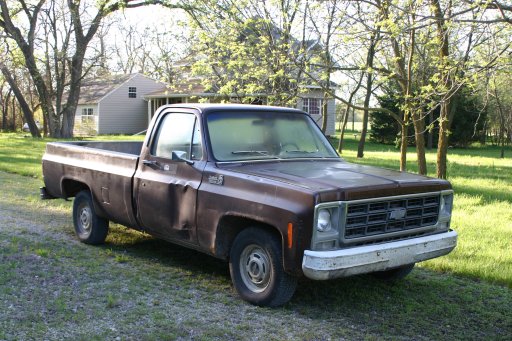 This pickup, in case you re wondering, is a thing of stories, shall we say. After a particularly frustrating experience with it one week (oh yes, the battle extended several days), I
 I have been in the habit of using
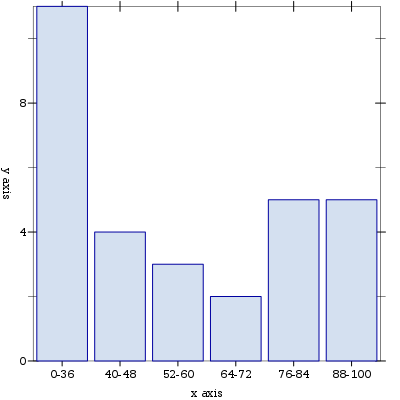


 Under Linux, there are a number of related features around marking areas of a file, filesystem, or block device as no longer allocated . In the standard view, here s what happens if you fill a file to 500M and then truncate it to 100M, using the truncate syscall:


 Talking about Secure Boot again, I'm afraid. One of the things that's made discussion of this difficult is that, while the specification isn't overly complicated, some of the outcomes aren't obvious at all until you spend a long time thinking about it. So here's some clarification on a few points.
 more instructions. I would guess that the initialisation of the
standard C++ library is complex?
Haskell, which has a GC and quite a complex runtime, executes slightly
less instructions than C++, but uses more cycles. Not bad, given the
capabilities of the runtime. The two versions of the Haskell program
are with the single-threaded runtime and with the multi-threaded one;
not much difference. A fully statically-linked Haskell binary (not
recommended usually) goes below 1M instructions, but not by much.
OCaml is a very nice surprise. The bytecode runtime is a bit slow to
startup, but the (native) compiled version is quite fast to start:
only 2 number of instructions and cycles compared to C, for an
advanced language. And twice as fast as Haskell . Nice!
Shells

