exec startx so after rebooting, I ran
exec sway and to my astonishment sway started. Hooray!
However, I found that ssh-agent wasn't running so I couldn't ssh into
any servers. That's kinda a problem.
Launching ssh-agent under openbox was buried deep in
/etc/X11/Xsession.d/90x11-common_ssh-agent and clearly was not going to
happen via wayland.
Since programs using ssh-agent depend on the environment variables
SSH_AUTH_SOCK and SSH_AGENT_PID being globally available I thought I could
simply run $(eval ssh-agent) via my tty terminal before running exec sway.
And, that would have worked. Except... I like to add my keys via ssh-add -c
so that everytime my key is being used I get a ssh-askpass prompt to confirm
the use.
It seems that since ssh-add is started before a window manager is running, it
can't run the prompt.
Ok, we can fix this. After searching the web, I came upon a solution of running
ssh-agent via systemctl --user:
# This service myst be started manually after sway
# starts.
[Unit]
Description=OpenSSH private key agent
IgnoreOnIsolate=true
[Service]
Type=forking
Environment=SSH_AUTH_SOCK=%t/ssh-agent.socket
ExecStart=/usr/bin/ssh-agent -a $SSH_AUTH_SOCK
Then, in my ~/.bashrc file I have:
if [ -n WAYLAND_DISPLAY ]; then
export SSH_AUTH_SOCK=/run/user/1000/ssh-agent.socket
fi
I think $SSH_AGENT_PID is only used by ssh-agent to kill itself. Now that
is running via systemd - killing it should be do-able without a global
environment variable.
Done? Hardly.
I've been using impass (nee assword) happily for years but alas it is
tightly integrated with xdo and xclip.
So... I've switched to keepassxc which works out of the box with wayland.
My next challenge was the status bar. Farewell faithful
tint2. One of the reasons I failed on my
first two attempts to switch to Sway was the difficulty of getting the swaybar
to work how I wanted, particularly with nm-applet. Two things allowed me to move forward:
nmtui. Sigh.xclip with
wl-clipboard was a little tedious
but really not that difficult.
Getting my screen shot and screen recorder functionality was a bit harder. I
did a lot of searching before I finally found and compiled both swappy, screen
shot and
wf-recorder.
In the course of all my adventures, I came across the following helpful tips:
libreoffice-gtk3 to ensure libre office runs under waylandMOZ_ENABLE_WAYLAND to ensure firefox works properly.ssh-add command to ensure I am prompted for each use of my key seems to cause sway to crash intermittently.export XDG_CURRENT_DESKTOP=sway and export XDG_SESSION_TYPE=wayland to my .bashrc, and after hours of frustration, realize that I needed to configured firejail to allow it so that I can share my entire screen in Firefox. It doesn't yet support sharing a specific window, so I still have to keep chromium around for that (and Chromium can only share xwayland windows). Sigh. Oh, one more thing about Firefox: the option to choose what to share doesn't have "Entire Screen" as an option, you are just supposed to know that you should choose "Use operating system settings".~/.config/sway/config file I have: bindsym Mod4+e exec wtype " ". I have repeated that line for the main accent marks I need.about:config in the Firefox location window, searching for privacy.webrtc.legacyGlobalIndicator and setting it to False. The reddit thread also suggested finding privacy.webrtc.hideGlobalIndicator and setting it to True, but that setting doesn't seem to be available and setting the first one alone seems to do the trick.GDK_BACKEND=wayland,x11. First I just set it to wayland to get gtk3 apps to use wayland (like gajim). But that broke electron apps (like signal) which notice that variable but don't have a way to display via wayland (at least not yet). Setting it to "wayland,x11" shows the priority. Thank you ubuntu community.~/.config/sway/env. That seems like an official sway place to put them, but sway doesn't pay any attention to them. So I start sway via my own bash script which sources that file via [ -f "$HOME/.config/sway/env" ] && . "$HOME/.config/sway/env" before exec'ing sway.Re-projection error gives a good estimation of just how exact the found parameters are. The closer the re-projection error is to zero, the more accurate the parameters we found are.This statement is trivially proven false: throw away most of your calibration data, and your reprojection error becomes very low. But we can all agree that a calibration computed from less data is actually worse. Right? All the various assumptions and hacks in the existing tooling are fine as long as you don't need a whole lot of accuracy out of your results. I need a lot of accuracy, however, so all the existing tools don't work for my applications. So I built a new set of tools, and have been using them with great delight. I just got the blessing to do a public release, so I'm announcing it here. The tools are
LG 27" 4K Monitor (3840x2160 60.00*+) to work without too much glitch, I had to live with an alias:
$ alias grep xrandr
alias rrs_xrandr_lg='xrandr --output DP-1 --mode 3840x2160 --scale .75x.75'
18:31
$ usystemctl status plasma-plasmashell.service
plasma-plasmashell.service - KDE Plasma Workspace
Loaded: loaded (/usr/lib/systemd/user/plasma-plasmashell.service; enabled; vendor preset: enabled)
Active: active (running) since Fri 2021-02-26 18:34:23 IST; 13s ago
Main PID: 501806 (plasmashell)
Tasks: 21 (limit: 18821)
Memory: 759.8M
CPU: 13.706s
CGroup: /user.slice/user-1000.slice/user@1000.service/session.slice/plasma-plasmashell.service
501806 /usr/bin/plasmashell --no-respawn
Feb 26 18:35:00 priyasi plasmashell[501806]: qml: recreating buttons
Feb 26 18:35:21 priyasi plasmashell[501806]: qml: recreating buttons
Feb 26 18:35:49 priyasi plasmashell[501806]: qml: recreating buttons
Feb 26 18:35:57 priyasi plasmashell[501806]: qml: recreating buttons
18:36
foo . You prep your package and enable all the releases that you want to build the package for. So the same package gets built, in separate clean environments, for every release I mentioned as an example above. You don t have to manually trigger the build for every release/every architcture. You should add the release (as projects) in OBS, set their supported architectures, and then add those enabled release projets as bits to your package.
Every build involves:
A quick note to say that we finalized a bugfix release 0.1.5 of RcppSimdJson yesterday which got onto CRAN earlier today. RcppSimdJson wraps the fantastic and genuinely impressive simdjson library by Daniel Lemire and collaborators. Via very clever algorithmic engineering to obtain largely branch-free code, coupled with modern C++ and newer compiler instructions, it results in parsing gigabytes of JSON parsed per second which is quite mindboggling. The best-case performance is faster than CPU speed as use of parallel SIMD instructions and careful branch avoidance can lead to less than one cpu cycle per byte parsed; see the video of the talk by Daniel Lemire at QCon (also voted best talk).
This version brings a small fix to Windows where temporary filenames constructed from URLs (as for example constructed by our td package) need an extra sanization for a possible ? character. We will be addressing that properly in due course but for now a simple gsub() will do. The NEWS entry follows.
Courtesy of my CRANberries, there is also a diffstat report for this release. For questions, suggestions, or issues please use the issue tracker at the GitHub repo. If you like this or other open-source work I do, you can now sponsor me at GitHub.Changes in version 0.1.5 (2021-02-23)
- Temporary filenames from request URLs need an extra path sanitization on Windows as seen with package td.
- A few
#nocovtags were added to the code.
This post by Dirk Eddelbuettel originated on his Thinking inside the box blog. Please report excessive re-aggregation in third-party for-profit settings.
It's been quite a long time since I last posted anything on this blog and I
can say that one of the reasons for that I don't feel comfortable using
ikiwiki anymore.
I am actively looking for alternatives to ikiwiki that allow me, mainly,
to write blog posts with the following characteristics (not necessarily in
order of importance):
ikiwiki. Apparently almost nobody
cares about supporting MathJax/KaTex out-of-the-box. To add insult
to injury, the templates are very general to the point of being very hard
to read (read: feature bloat) and it doesn't help that my editor (emacs)
doesn't know (at least in its current configuration) how to display its
structure.
feedgnuplot 1.57, which includes two new pieces that I've long
thought about adding:
gnuplotlib
guide
echo "# label value aaa 2 bbb 3 ccc 5 ddd 2" \ feedgnuplot --vnl \ --xticlabels \ --with 'boxes fill solid border lt -1' \ --ymin 0 --unset grid
--xticlabels does, is to accept a
data column as labels for the x-axis tics. Everything else that's supported by
feedgnuplot and gnuplot works as before. For instance, I can give a domain,
and use a style that takes y values and a color:
echo "# x label y color 5 aaa 2 1 6 bbb 3 2 10 ccc 5 4 11 ddd 2 1" \ feedgnuplot --vnl --domain \ --xticlabels \ --tuplesizeall 3 \ --with 'points pt 7 ps 2 palette' \ --xmin 4 --xmax 12 \ --ymin 0 --ymax 6 \ --unset grid
gnuplot's support for clustered histograms:
echo "# x label a b 5 aaa 2 1 6 bbb 3 2 10 ccc 5 4 11 ddd 2 1" \ vnl-filter -p label,a,b \ feedgnuplot --vnl \ --xticlabels \ --set 'style data histogram' \ --set 'style histogram cluster gap 2' \ --set 'style fill solid border lt -1' \ --autolegend \ --ymin 0 --unset grid
echo "# x label a b 5 aaa 2 1 6 bbb 3 2 10 ccc 5 4 11 ddd 2 1" \ vnl-filter -p label,a,b \ feedgnuplot --vnl \ --xticlabels \ --set 'style data histogram' \ --set 'style histogram rowstacked' \ --set 'boxwidth 0.8' \ --set 'style fill solid border lt -1' \ --autolegend \ --ymin 0 --unset grid
gnuplot's "row stacking". It also supports "column stacking", which
effectively transposes the data, and it's not obvious to me that makes sense in
the context of feedgnuplot. Similarly, it can label y and/or z axes; I
can't think of a specific use case, so I don't have a realistic usage in mind,
and I don't support that yet. If anybody can think of a use case, email me.
Notes and limitations:
--domain you can pass in both an x value and a tic label, it
is possible to give it conflicting tic labels for the same x value.
gnuplot itself has this problem too, and it just takes the last label it has
for a given x. This is probably good-enough.
feedgnuplot uses whitespace-separated columns with no escape mechanism, so
the field labels cannot have whitespace in it. Fixing this is probably not
worth the effort.
tuplesize
gnuplotlib. This will happen when
I need it or when somebody asks for it, whichever comes first.
feedgnuplot website now has a page containing examples and corresponding
graphical output. This serves as a tutorial and a gallery demonstrating some
usages. It's somewhat incomplete, since it can't show streaming plots, or
real-world interfacing with stuff that produces data: some of those usages
remain the the README. It's a million times better than what I had before
though, which was nothing.
Internally this is done just like the gnuplotlib guide: the thing is an
org-mode document with org-babel snippets that are evaluated by emacs to make
the images. There's some fancy emacs lisp to tie it all together. Works great!
| Series: | Finder Chronicles #1 |
| Publisher: | DAW Books |
| Copyright: | 2019 |
| ISBN: | 0-7564-1511-X |
| Format: | Kindle |
| Pages: | 391 |
I have written my first Rust crate: kmedoids.
Python users can use the wrapper package kmedoids.
It implements k-medoids clustering, and includes our new FasterPAM algorithm that drastically
reduces the computational overhead. As long as you can afford to compute the distance matrix of your data set,
clustering it with k-medoids is now feasible even for large k. (If your data is continuous and you
are interested in minimizing squared errors, k-means surely remains the better choice!)
My take on Rust so far:
for i in 0..n already causes a clippy warning; the clippy rule clearly is overshooting its own description. It fails to detect if the index i is actually needed. So the alternative would be a for (i, item) in list.iter().enumerate() . And apparently there is some weird reason why iterators are even faster than a range for loop?!?
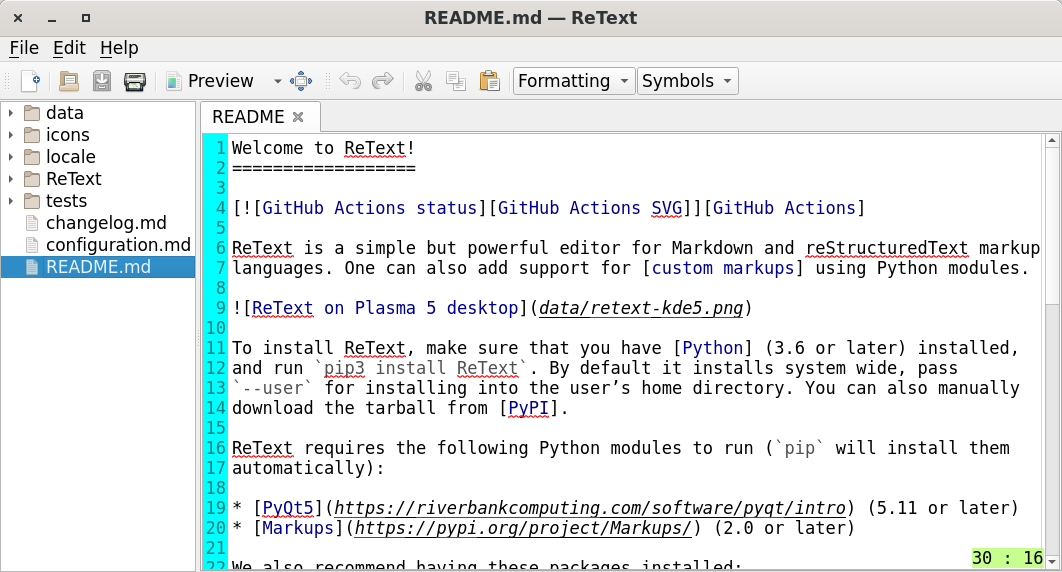
Also a new version of PyMarkups module was released, which contains all the
code for processing various markup languages. It now supports
markdown-extensions.yaml files which allow specifying complex extensions
options and adds initial support for MathJax 3.
Also check out the release notes for 7.1 which was not announced on this
blog.
Future plans include making at least one more release this year, adding support
for Qt 6. Qt 5 support will last for at least one more year.
Linux draws a distinction between code running in kernel (kernel space) and applications running in userland (user space). This is enforced at the hardware level - in x86-speak[1], kernel space code runs in ring 0 and user space code runs in ring 3[2]. If you're running in ring 3 and you attempt to touch memory that's only accessible in ring 0, the hardware will raise a fault. No matter how privileged your ring 3 code, you don't get to touch ring 0.| Series: | Lady Astronaut #2 |
| Publisher: | Tor |
| Copyright: | August 2018 |
| ISBN: | 0-7653-9893-1 |
| Format: | Kindle |
| Pages: | 380 |
The still very recent td package for accessing the twelvedata API for financial data has been updated and is now at version 0.0.2.
The time_series access point is now vectorised: supply a vector of symbols, and you receive list of data.frame (or xts) objects. See this tweet teasing out the earliest support for this new featire, and showing a quick four-securities plot. We also added simpler accessors get_quote() and get_price() rounding out the basic API support.
One first bug report alerting us to the fact that our use of RcppSimdJson requires an additional sanitizing of the temporary filename if used on Windows. We will fix that properly soon in new release 0.1.5 of that package; in the meantime you can get hot-fix binary 0.1.4.1 for Windows via install.packages("RcppSimdJson", repos="https://ghrr.github.io/drat") from the ghrr drat.
The NEWS entry follows.
Courtesy of my CRANberries, there is a comparison to the previous release. For questions or comments use the issue tracker off the GitHub repo. If you like this or other open-source work I do, you can now sponsor me at GitHub.Changes in version 0.0.2 (2021-02-18)
- The
time_seriesis now vectorised and can return a list of return objects when given a vector of symbols- The use of
tools::R_user_dir()is now conditional on having R 4.0.0 or later, older versions can use env.var for api key- New helper function
store_keyto save api key.- New simple accessors
get_quoteandget_price
This post by Dirk Eddelbuettel originated on his Thinking inside the box blog. Please report excessive re-aggregation in third-party for-profit settings.
Protected field is now supported.
It replaces the previous Important field and is like Essential,
but only for installed packages
(some minor more differences maybe in terms of ordering the installs).update command has gained an --error-on=any option that makes it error out on any failure,
not just what it considers persistent ons.rred method can now be used as a standalone program to merge pdiff files* wildcards work normally again (since 2.1.0)apt-key(1) is scheduled to be removed for Q2/2022, and several new warnings have been added.
apt-key was made obsolete in version 0.7.25.1, released in January 2010, by
/etc/apt/trusted.gpg.d becoming a supported place to drop additional keyring files,
and was since then only intended for deleting keys in the legacy trusted.gpg keyring.
Please manage files in trusted.gpg.d yourself;
or place them in a different location such as
/etc/apt/keyrings (or make up your own, there s no standard location)
or /usr/share/keyrings,
and use signed-by in the sources.list.d files.
The legacy trusted.gpg keyring still works, but will also stop working eventually.
Please make sure you have all your keys in trusted.gpg.d.
Warnings might be added in the upcoming months when a signature could not be verified using just trusted.gpg.d.
Future versions of APT might switch away from GPG.
* inside package names are deprecated (since 2.0).
They are not available anymore in apt(8), and will be removed for safety reasons in apt-get in a later release.
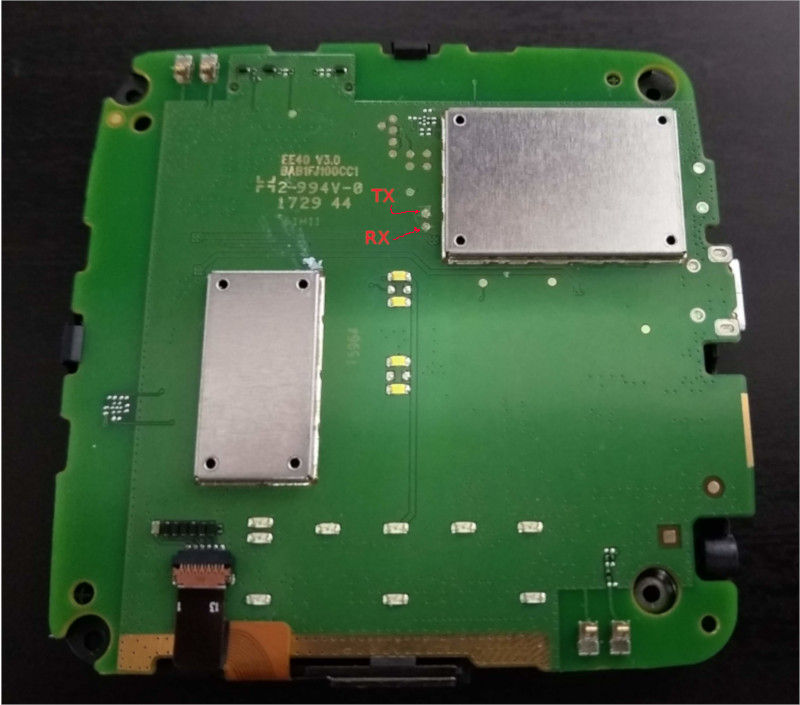
I ve mentioned in the past my twisted EE network setup from when I moved in to my current house. The 4GEE WiFi Mini (also known as the EE Osprey 2 Mini or the EE40VB, and actually a rebadged Alcatel Y853VB) has been sitting unused since then, so I figured I d see about trying to get a shell on it.
TL;DR: Of course it s running Linux, there s a couple of test points internally which bring out the serial console, but after finding those and logging in I discovered it s running ADB on port 5555 quite happily available without authentication both via wifi and the USB port. So if you have physical or local network access, instant root shell. Well done, folks. And then I bricked it before I could do anything more interesting.
There s a lack of information about this device out there - most of the links I can find are around removing the SIM lock - so I thought I d document the pieces I found just in case anyone else is trying to figure it out. It s based around a Qualcomm MDM9607 SoC, paired with 64M RAM and 256M NAND flash. Wifi is via an RTL8192ES. Kernel is 3.18.20. Busybox is v1.23.1. It s running dnsmasq but I didn t grab the version. Of course there s no source or offer of source provided.
Taking it apart is fairly easy. There s a single screw to remove, just beside the SIM slot. The coloured rim can then be carefully pried away from the back, revealing the battery. There are then 4 screws in the corners which need removed in order to be able to lift out the actual PCB and gain access to the serial console test points.
My mistake was going poking around trying to figure out where the updates are downloaded from - I know I m running a slightly older release than what s current, and the device can do an automatic download + update. Top tip; don t run Jrdrecovery. It ll error on finding /cache/update.zip and wipe the main partition anyway. That ll leave you in a boot loop where the device boots the recovery partition which tries to install /cache/update.zip which of course still doesn t exist.
So. Where next? First, I need to get the device into a state where I can actually do something other than watch it boot into recovery, fail to flash and reboot. Best guess at present is to try and get it to enter the Qualcomm EDL (Emergency Download) mode. That might be possible with a custom USB cable that grounds D+ on boot. Alternatively I need to probe some of the other test points on the PCB and see if grounding any of those helps enter EDL mode. I then need a suitable firehose OEM-signed programmer image. And then I need to actually get hold of a proper EE40VB firmware image, either via one of the OTA update files or possibly via an Alcatel ADSU image (though no idea how to get hold of one, other than by posting to a random GSM device forum and hoping for the kindness of strangers). More updates if/when I make progress
Format: Log Type - Time(microsec) - Message - Optional Info
Log Type: B - Since Boot(Power On Reset), D - Delta, S - Statistic
S - QC_IMAGE_VERSION_STRING=BOOT.BF.3.1.2-00053
S - IMAGE_VARIANT_STRING=LAATANAZA
S - OEM_IMAGE_VERSION_STRING=linux3
S - Boot Config, 0x000002e1
B - 105194 - SBL1, Start
D - 61885 - QSEE Image Loaded, Delta - (451964 Bytes)
D - 30286 - RPM Image Loaded, Delta - (151152 Bytes)
B - 459330 - Roger:boot_jrd_oem_main
B - 461526 - Welcome to key_check_poweron!!!
B - 466436 - REG0x00, rc=47
B - 469120 - REG0x01, rc=1f
B - 472018 - REG0x02, rc=1c
B - 474885 - REG0x03, rc=47
B - 477782 - REG0x04, rc=b2
B - 480558 - REG0x05, rc=
B - 483272 - REG0x06, rc=9e
B - 486139 - REG0x07, rc=
B - 488854 - REG0x08, rc=a4
B - 491721 - REG0x09, rc=80
B - 494130 - bq24295_probe: vflt/vsys/vprechg=0mV/0mV/0mV, tprechg/tfastchg=0Min/0Min, [0C, 0C]
B - 511546 - come to calculate vol and temperature!!
B - 511637 - ##############battery_core_convert_vntc: NTC_voltage=1785690
B - 517280 - battery_core_convert_vntc: <-44C, 1785690uV>, present=0
B - 529358 - bq24295_set_current_limit: setting=0mA, mode=-1, input/fastchg/prechg/termchg=-1mA/0mA/0mA/0mA
B - 534360 - bq24295_set_charge_current, rc=0,reg_val=0,i=0
B - 539636 - bq24295_enable_charge: setting=0, chg_enable=-1, otg_enable=0
B - 546072 - bq24295_enable_charging: enable_charging=0
B - 552172 - bq24295_set_current_limit: setting=0mA, mode=-1, input/fastchg/prechg/termchg=-1mA/0mA/0mA/0mA
B - 561566 - bq24295_set_charge_current, rc=0,reg_val=0,i=0
B - 567056 - bq24295_enable_charge: setting=0, chg_enable=0, otg_enable=0
B - 579286 - come to calculate vol and temperature!!
B - 579378 - ##############battery_core_convert_vntc: NTC_voltage=1785777
B - 585539 - battery_core_convert_vntc: <-44C, 1785777uV>, present=0
B - 597617 - charge_main: battery is plugout!!
B - 597678 - Welcome to pca955x_probe!!!
B - 601063 - pca955x_probe: PCA955X probed successfully!
D - 27511 - APPSBL Image Loaded, Delta - (179348 Bytes)
B - 633271 - QSEE Execution, Start
D - 213 - QSEE Execution, Delta
B - 638944 - >>>>>>>>>>>>>>>>>>>>>>>>>>>>>>>>>Start writting JRD RECOVERY BOOT
B - 650107 - >>>>>>>>>>>>>>>>>>>>>>>>>>>>>>>>>Start writting RECOVERY BOOT
B - 653218 - >>>>>>>>>>>>>>>>>>>>>>>>>>>>>>>>>read_buf[0] == 0
B - 659044 - SBL1, End
D - 556137 - SBL1, Delta
S - Throughput, 2000 KB/s (782884 Bytes, 278155 us)
S - DDR Frequency, 240 MHz
Android Bootloader - UART_DM Initialized!!!
[0] welcome to lk
[0] SCM call: 0x2000601 failed with :fffffffc
[0] Failed to initialize SCM
[10] platform_init()
[10] target_init()
[10] smem ptable found: ver: 4 len: 17
[10] ERROR: No devinfo partition found
[10] Neither 'config' nor 'frp' partition found
[30] voltage of NTC is 1789872!
[30] voltage of BAT is 3179553!
[30] usb present is 1!
[30] Loading (boot) image (4171776): start
[530] Loading (boot) image (4171776): done
[540] DTB Total entry: 25, DTB version: 3
[540] Using DTB entry 0x00000129/00010000/0x00000008/0 for device 0x00000129/00010000/0x00010008/0
[560] JRD_CHG_OFF_FEATURE!
[560] come to jrd_target_pause_for_battery_charge!
[570] power_on_status.hard_reset = 0x0
[570] power_on_status.smpl = 0x0
[570] power_on_status.rtc = 0x0
[580] power_on_status.dc_chg = 0x0
[580] power_on_status.usb_chg = 0x0
[580] power_on_status.pon1 = 0x1
[590] power_on_status.cblpwr = 0x0
[590] power_on_status.kpdpwr = 0x0
[590] power_on_status.bugflag = 0x0
[590] cmdline: noinitrd rw console=ttyHSL0,115200,n8 androidboot.hardware=qcom ehci-hcd.park=3 msm_rtb.filter=0x37 lpm_levels.sleep_disabled=1 earlycon=msm_hsl_uart,0x78b3000 androidboot.serialno=7e6ba58c androidboot.baseband=msm rootfstype=ubifs rootflags=b
[620] Updating device tree: start
[720] Updating device tree: done
[720] booting linux @ 0x80008000, ramdisk @ 0x80008000 (0), tags/device tree @ 0x81e00000
[ 0.000000] Booting Linux on physical CPU 0x0
[ 0.000000] Linux version 3.18.20 (linux3@linux3) (gcc version 4.9.2 (GCC) ) #1 PREEMPT Thu Aug 10 11:57:07 CST 2017
[ 0.000000] CPU: ARMv7 Processor [410fc075] revision 5 (ARMv7), cr=10c53c7d
[ 0.000000] CPU: PIPT / VIPT nonaliasing data cache, VIPT aliasing instruction cache
[ 0.000000] Machine model: Qualcomm Technologies, Inc. MDM 9607 MTP
[ 0.000000] Early serial console at I/O port 0x0 (options '')
[ 0.000000] bootconsole [uart0] enabled
[ 0.000000] Reserved memory: reserved region for node 'modem_adsp_region@0': base 0x82a00000, size 56 MiB
[ 0.000000] Reserved memory: reserved region for node 'external_image_region@0': base 0x87c00000, size 4 MiB
[ 0.000000] Removed memory: created DMA memory pool at 0x82a00000, size 56 MiB
[ 0.000000] Reserved memory: initialized node modem_adsp_region@0, compatible id removed-dma-pool
[ 0.000000] Removed memory: created DMA memory pool at 0x87c00000, size 4 MiB
[ 0.000000] Reserved memory: initialized node external_image_region@0, compatible id removed-dma-pool
[ 0.000000] cma: Reserved 4 MiB at 0x87800000
[ 0.000000] Memory policy: Data cache writeback
[ 0.000000] CPU: All CPU(s) started in SVC mode.
[ 0.000000] Built 1 zonelists in Zone order, mobility grouping on. Total pages: 17152
[ 0.000000] Kernel command line: noinitrd rw console=ttyHSL0,115200,n8 androidboot.hardware=qcom ehci-hcd.park=3 msm_rtb.filter=0x37 lpm_levels.sleep_disabled=1 earlycon=msm_hsl_uart,0x78b3000 androidboot.serialno=7e6ba58c androidboot.baseband=msm rootfstype=ubifs rootflags=bulk_read root=ubi0:rootfs ubi.mtd=16
[ 0.000000] PID hash table entries: 512 (order: -1, 2048 bytes)
[ 0.000000] Dentry cache hash table entries: 16384 (order: 4, 65536 bytes)
[ 0.000000] Inode-cache hash table entries: 8192 (order: 3, 32768 bytes)
[ 0.000000] Memory: 54792K/69632K available (5830K kernel code, 399K rwdata, 2228K rodata, 276K init, 830K bss, 14840K reserved)
[ 0.000000] Virtual kernel memory layout:
[ 0.000000] vector : 0xffff0000 - 0xffff1000 ( 4 kB)
[ 0.000000] fixmap : 0xffc00000 - 0xfff00000 (3072 kB)
[ 0.000000] vmalloc : 0xc8800000 - 0xff000000 ( 872 MB)
[ 0.000000] lowmem : 0xc0000000 - 0xc8000000 ( 128 MB)
[ 0.000000] modules : 0xbf000000 - 0xc0000000 ( 16 MB)
[ 0.000000] .text : 0xc0008000 - 0xc07e6c38 (8060 kB)
[ 0.000000] .init : 0xc07e7000 - 0xc082c000 ( 276 kB)
[ 0.000000] .data : 0xc082c000 - 0xc088fdc0 ( 400 kB)
[ 0.000000] .bss : 0xc088fe84 - 0xc095f798 ( 831 kB)
[ 0.000000] SLUB: HWalign=64, Order=0-3, MinObjects=0, CPUs=1, Nodes=1
[ 0.000000] Preemptible hierarchical RCU implementation.
[ 0.000000] NR_IRQS:16 nr_irqs:16 16
[ 0.000000] GIC CPU mask not found - kernel will fail to boot.
[ 0.000000] GIC CPU mask not found - kernel will fail to boot.
[ 0.000000] mpm_init_irq_domain(): Cannot find irq controller for qcom,gpio-parent
[ 0.000000] MPM 1 irq mapping errored -517
[ 0.000000] Architected mmio timer(s) running at 19.20MHz (virt).
[ 0.000011] sched_clock: 56 bits at 19MHz, resolution 52ns, wraps every 3579139424256ns
[ 0.007975] Switching to timer-based delay loop, resolution 52ns
[ 0.013969] Switched to clocksource arch_mem_counter
[ 0.019687] Console: colour dummy device 80x30
[ 0.023344] Calibrating delay loop (skipped), value calculated using timer frequency.. 38.40 BogoMIPS (lpj=192000)
[ 0.033666] pid_max: default: 32768 minimum: 301
[ 0.038411] Mount-cache hash table entries: 1024 (order: 0, 4096 bytes)
[ 0.044902] Mountpoint-cache hash table entries: 1024 (order: 0, 4096 bytes)
[ 0.052445] CPU: Testing write buffer coherency: ok
[ 0.057057] Setting up static identity map for 0x8058aac8 - 0x8058ab20
[ 0.064242]
[ 0.064242] **********************************************************
[ 0.071251] ** NOTICE NOTICE NOTICE NOTICE NOTICE NOTICE NOTICE **
[ 0.077817] ** **
[ 0.084302] ** trace_printk() being used. Allocating extra memory. **
[ 0.090781] ** **
[ 0.097320] ** This means that this is a DEBUG kernel and it is **
[ 0.103802] ** unsafe for produciton use. **
[ 0.110339] ** **
[ 0.116850] ** If you see this message and you are not debugging **
[ 0.123333] ** the kernel, report this immediately to your vendor! **
[ 0.129870] ** **
[ 0.136380] ** NOTICE NOTICE NOTICE NOTICE NOTICE NOTICE NOTICE **
[ 0.142865] **********************************************************
[ 0.150225] MSM Memory Dump base table set up
[ 0.153739] MSM Memory Dump apps data table set up
[ 0.168125] VFP support v0.3: implementor 41 architecture 2 part 30 variant 7 rev 5
[ 0.176332] pinctrl core: initialized pinctrl subsystem
[ 0.180930] regulator-dummy: no parameters
[ 0.215338] NET: Registered protocol family 16
[ 0.220475] DMA: preallocated 256 KiB pool for atomic coherent allocations
[ 0.284034] cpuidle: using governor ladder
[ 0.314026] cpuidle: using governor menu
[ 0.344024] cpuidle: using governor qcom
[ 0.355452] msm_watchdog b017000.qcom,wdt: wdog absent resource not present
[ 0.361656] msm_watchdog b017000.qcom,wdt: MSM Watchdog Initialized
[ 0.371373] irq: no irq domain found for /soc/pinctrl@1000000 !
[ 0.381268] spmi_pmic_arb 200f000.qcom,spmi: PMIC Arb Version-2 0x20010000
[ 0.389733] platform 4080000.qcom,mss: assigned reserved memory node modem_adsp_region@0
[ 0.397409] mem_acc_corner: 0 <--> 0 mV
[ 0.401937] hw-breakpoint: found 5 (+1 reserved) breakpoint and 4 watchpoint registers.
[ 0.408966] hw-breakpoint: maximum watchpoint size is 8 bytes.
[ 0.416287] __of_mpm_init(): MPM driver mapping exists
[ 0.420940] msm_rpm_glink_dt_parse: qcom,rpm-glink compatible not matches
[ 0.427235] msm_rpm_dev_probe: APSS-RPM communication over SMD
[ 0.432977] smd_open() before smd_init()
[ 0.437544] msm_mpm_dev_probe(): Cannot get clk resource for XO: -517
[ 0.445730] smd_channel_probe_now: allocation table not initialized
[ 0.453100] mdm9607_s1: 1050 <--> 1350 mV at 1225 mV normal idle
[ 0.458566] spm_regulator_probe: name=mdm9607_s1, range=LV, voltage=1225000 uV, mode=AUTO, step rate=4800 uV/us
[ 0.468817] cpr_efuse_init: apc_corner: efuse_addr = 0x000a4000 (len=0x1000)
[ 0.475353] cpr_read_fuse_revision: apc_corner: fuse revision = 2
[ 0.481345] cpr_parse_speed_bin_fuse: apc_corner: [row: 37]: 0x79e8bd327e6ba58c, speed_bits = 4
[ 0.490124] cpr_pvs_init: apc_corner: pvs voltage: [1050000 1100000 1275000] uV
[ 0.497342] cpr_pvs_init: apc_corner: ceiling voltage: [1050000 1225000 1350000] uV
[ 0.504979] cpr_pvs_init: apc_corner: floor voltage: [1050000 1050000 1150000] uV
[ 0.513125] i2c-msm-v2 78b8000.i2c: probing driver i2c-msm-v2
[ 0.518335] i2c-msm-v2 78b8000.i2c: error on clk_get(core_clk):-517
[ 0.524478] i2c-msm-v2 78b8000.i2c: error probe() failed with err:-517
[ 0.531111] i2c-msm-v2 78b7000.i2c: probing driver i2c-msm-v2
[ 0.536788] i2c-msm-v2 78b7000.i2c: error on clk_get(core_clk):-517
[ 0.542886] i2c-msm-v2 78b7000.i2c: error probe() failed with err:-517
[ 0.549618] i2c-msm-v2 78b9000.i2c: probing driver i2c-msm-v2
[ 0.555202] i2c-msm-v2 78b9000.i2c: error on clk_get(core_clk):-517
[ 0.561374] i2c-msm-v2 78b9000.i2c: error probe() failed with err:-517
[ 0.570613] msm-thermal soc:qcom,msm-thermal: msm_thermal:Failed reading node=/soc/qcom,msm-thermal, key=qcom,core-limit-temp. err=-22. KTM continues
[ 0.583049] msm-thermal soc:qcom,msm-thermal: probe_therm_reset:Failed reading node=/soc/qcom,msm-thermal, key=qcom,therm-reset-temp err=-22. KTM continues
[ 0.596926] msm_thermal:msm_thermal_dev_probe Failed reading node=/soc/qcom,msm-thermal, key=qcom,online-hotplug-core. err:-517
[ 0.609370] sps:sps is ready.
[ 0.613137] msm_rpm_glink_dt_parse: qcom,rpm-glink compatible not matches
[ 0.619020] msm_rpm_dev_probe: APSS-RPM communication over SMD
[ 0.625773] mdm9607_s2: 750 <--> 1275 mV at 750 mV normal idle
[ 0.631584] mdm9607_s3_level: 0 <--> 0 mV at 0 mV normal idle
[ 0.637085] mdm9607_s3_level_ao: 0 <--> 0 mV at 0 mV normal idle
[ 0.643092] mdm9607_s3_floor_level: 0 <--> 0 mV at 0 mV normal idle
[ 0.649512] mdm9607_s3_level_so: 0 <--> 0 mV at 0 mV normal idle
[ 0.655750] mdm9607_s4: 1800 <--> 1950 mV at 1800 mV normal idle
[ 0.661791] mdm9607_l1: 1250 mV normal idle
[ 0.666090] mdm9607_l2: 1800 mV normal idle
[ 0.670276] mdm9607_l3: 1800 mV normal idle
[ 0.674541] mdm9607_l4: 3075 mV normal idle
[ 0.678743] mdm9607_l5: 1700 <--> 3050 mV at 1700 mV normal idle
[ 0.684904] mdm9607_l6: 1700 <--> 3050 mV at 1700 mV normal idle
[ 0.690892] mdm9607_l7: 1700 <--> 1900 mV at 1700 mV normal idle
[ 0.697036] mdm9607_l8: 1800 mV normal idle
[ 0.701238] mdm9607_l9: 1200 <--> 1250 mV at 1200 mV normal idle
[ 0.707367] mdm9607_l10: 1050 mV normal idle
[ 0.711662] mdm9607_l11: 1800 mV normal idle
[ 0.716089] mdm9607_l12_level: 0 <--> 0 mV at 0 mV normal idle
[ 0.721717] mdm9607_l12_level_ao: 0 <--> 0 mV at 0 mV normal idle
[ 0.727946] mdm9607_l12_level_so: 0 <--> 0 mV at 0 mV normal idle
[ 0.734099] mdm9607_l12_floor_lebel: 0 <--> 0 mV at 0 mV normal idle
[ 0.740706] mdm9607_l13: 1800 <--> 2850 mV at 2850 mV normal idle
[ 0.746883] mdm9607_l14: 2650 <--> 3000 mV at 2650 mV normal idle
[ 0.752515] msm_mpm_dev_probe(): Cannot get clk resource for XO: -517
[ 0.759036] cpr_efuse_init: apc_corner: efuse_addr = 0x000a4000 (len=0x1000)
[ 0.765807] cpr_read_fuse_revision: apc_corner: fuse revision = 2
[ 0.771809] cpr_parse_speed_bin_fuse: apc_corner: [row: 37]: 0x79e8bd327e6ba58c, speed_bits = 4
[ 0.780586] cpr_pvs_init: apc_corner: pvs voltage: [1050000 1100000 1275000] uV
[ 0.787808] cpr_pvs_init: apc_corner: ceiling voltage: [1050000 1225000 1350000] uV
[ 0.795443] cpr_pvs_init: apc_corner: floor voltage: [1050000 1050000 1150000] uV
[ 0.803094] cpr_init_cpr_parameters: apc_corner: up threshold = 2, down threshold = 3
[ 0.810752] cpr_init_cpr_parameters: apc_corner: CPR is enabled by default.
[ 0.817687] cpr_init_cpr_efuse: apc_corner: [row:65] = 0x15000277277383
[ 0.824272] cpr_init_cpr_efuse: apc_corner: CPR disable fuse = 0
[ 0.830225] cpr_init_cpr_efuse: apc_corner: Corner[1]: ro_sel = 0, target quot = 631
[ 0.837976] cpr_init_cpr_efuse: apc_corner: Corner[2]: ro_sel = 0, target quot = 631
[ 0.845703] cpr_init_cpr_efuse: apc_corner: Corner[3]: ro_sel = 0, target quot = 899
[ 0.853592] cpr_config: apc_corner: Timer count: 0x17700 (for 5000 us)
[ 0.860426] apc_corner: 0 <--> 0 mV
[ 0.864044] i2c-msm-v2 78b8000.i2c: probing driver i2c-msm-v2
[ 0.869261] i2c-msm-v2 78b8000.i2c: error on clk_get(core_clk):-517
[ 0.875492] i2c-msm-v2 78b8000.i2c: error probe() failed with err:-517
[ 0.882225] i2c-msm-v2 78b7000.i2c: probing driver i2c-msm-v2
[ 0.887775] i2c-msm-v2 78b7000.i2c: error on clk_get(core_clk):-517
[ 0.893941] i2c-msm-v2 78b7000.i2c: error probe() failed with err:-517
[ 0.900719] i2c-msm-v2 78b9000.i2c: probing driver i2c-msm-v2
[ 0.906256] i2c-msm-v2 78b9000.i2c: error on clk_get(core_clk):-517
[ 0.912430] i2c-msm-v2 78b9000.i2c: error probe() failed with err:-517
[ 0.919472] msm-thermal soc:qcom,msm-thermal: msm_thermal:Failed reading node=/soc/qcom,msm-thermal, key=qcom,core-limit-temp. err=-22. KTM continues
[ 0.932372] msm-thermal soc:qcom,msm-thermal: probe_therm_reset:Failed reading node=/soc/qcom,msm-thermal,
key=qcom,therm-reset-temp err=-22. KTM continues
[ 0.946361] msm_thermal:get_kernel_cluster_info CPU0 topology not initialized.
[ 0.953824] cpu cpu0: dev_pm_opp_get_opp_count: device OPP not found (-19)
[ 0.960300] msm_thermal:get_cpu_freq_plan_len Error reading CPU0 freq table len. error:-19
[ 0.968533] msm_thermal:vdd_restriction_reg_init Defer vdd rstr freq init.
[ 0.975846] cpu cpu0: dev_pm_opp_get_opp_count: device OPP not found (-19)
[ 0.982219] msm_thermal:get_cpu_freq_plan_len Error reading CPU0 freq table len. error:-19
[ 0.991378] cpu cpu0: dev_pm_opp_get_opp_count: device OPP not found (-19)
[ 0.997544] msm_thermal:get_cpu_freq_plan_len Error reading CPU0 freq table len. error:-19
[ 1.013642] qcom,gcc-mdm9607 1800000.qcom,gcc: Registered GCC clocks
[ 1.019451] clock-a7 b010008.qcom,clock-a7: Speed bin: 4 PVS Version: 0
[ 1.025693] a7ssmux: set OPP pair(400000000 Hz: 1 uV) on cpu0
[ 1.031314] a7ssmux: set OPP pair(1305600000 Hz: 7 uV) on cpu0
[ 1.038805] i2c-msm-v2 78b8000.i2c: probing driver i2c-msm-v2
[ 1.043587] AXI: msm_bus_scale_register_client(): msm_bus_scale_register_client: Bus driver not ready.
[ 1.052935] i2c-msm-v2 78b8000.i2c: msm_bus_scale_register_client(mstr-id:86):0 (not a problem)
[ 1.062006] irq: no irq domain found for /soc/wcd9xxx-irq !
[ 1.069884] i2c-msm-v2 78b7000.i2c: probing driver i2c-msm-v2
[ 1.074814] AXI: msm_bus_scale_register_client(): msm_bus_scale_register_client: Bus driver not ready.
[ 1.083716] i2c-msm-v2 78b7000.i2c: msm_bus_scale_register_client(mstr-id:86):0 (not a problem)
[ 1.093850] i2c-msm-v2 78b9000.i2c: probing driver i2c-msm-v2
[ 1.098889] AXI: msm_bus_scale_register_client(): msm_bus_scale_register_client: Bus driver not ready.
[ 1.107779] i2c-msm-v2 78b9000.i2c: msm_bus_scale_register_client(mstr-id:86):0 (not a problem)
[ 1.167871] KPI: Bootloader start count = 24097
[ 1.171364] KPI: Bootloader end count = 48481
[ 1.175855] KPI: Bootloader display count = 3884474147
[ 1.180825] KPI: Bootloader load kernel count = 16420
[ 1.185905] KPI: Kernel MPM timestamp = 105728
[ 1.190286] KPI: Kernel MPM Clock frequency = 32768
[ 1.195209] socinfo_print: v0.10, id=297, ver=1.0, raw_id=72, raw_ver=0, hw_plat=8, hw_plat_ver=65536
[ 1.195209] accessory_chip=0, hw_plat_subtype=0, pmic_model=65539, pmic_die_revision=131074 foundry_id=0 serial_number=2120983948
[ 1.216731] sdcard_ext_vreg: no parameters
[ 1.220555] rome_vreg: no parameters
[ 1.224133] emac_lan_vreg: no parameters
[ 1.228177] usbcore: registered new interface driver usbfs
[ 1.233156] usbcore: registered new interface driver hub
[ 1.238578] usbcore: registered new device driver usb
[ 1.244507] cpufreq: driver msm up and running
[ 1.248425] ION heap system created
[ 1.251895] msm_bus_fabric_init_driver
[ 1.262563] qcom,qpnp-power-on qpnp-power-on-c7303800: PMIC@SID0 Power-on reason: Triggered from PON1 (secondary PMIC) and 'cold' boot
[ 1.273747] qcom,qpnp-power-on qpnp-power-on-c7303800: PMIC@SID0: Power-off reason: Triggered from UVLO (Under Voltage Lock Out)
[ 1.285430] input: qpnp_pon as /devices/virtual/input/input0
[ 1.291246] PMIC@SID0: PM8019 v2.2 options: 3, 2, 2, 2
[ 1.296706] Advanced Linux Sound Architecture Driver Initialized.
[ 1.302493] Add group failed
[ 1.305291] cfg80211: Calling CRDA to update world regulatory domain
[ 1.311216] cfg80211: World regulatory domain updated:
[ 1.317109] Switched to clocksource arch_mem_counter
[ 1.334091] cfg80211: DFS Master region: unset
[ 1.337418] cfg80211: (start_freq - end_freq @ bandwidth), (max_antenna_gain, max_eirp), (dfs_cac_time)
[ 1.354087] cfg80211: (2402000 KHz - 2472000 KHz @ 40000 KHz), (N/A, 2000 mBm), (N/A)
[ 1.361055] cfg80211: (2457000 KHz - 2482000 KHz @ 40000 KHz), (N/A, 2000 mBm), (N/A)
[ 1.370545] NET: Registered protocol family 2
[ 1.374082] cfg80211: (2474000 KHz - 2494000 KHz @ 20000 KHz), (N/A, 2000 mBm), (N/A)
[ 1.381851] cfg80211: (5170000 KHz - 5250000 KHz @ 80000 KHz), (N/A, 2000 mBm), (N/A)
[ 1.389876] cfg80211: (5250000 KHz - 5330000 KHz @ 80000 KHz), (N/A, 2000 mBm), (N/A)
[ 1.397857] cfg80211: (5490000 KHz - 5710000 KHz @ 80000 KHz), (N/A, 2000 mBm), (N/A)
[ 1.405841] cfg80211: (5735000 KHz - 5835000 KHz @ 80000 KHz), (N/A, 2000 mBm), (N/A)
[ 1.413795] cfg80211: (57240000 KHz - 63720000 KHz @ 2160000 KHz), (N/A, 0 mBm), (N/A)
[ 1.422355] TCP established hash table entries: 1024 (order: 0, 4096 bytes)
[ 1.428921] TCP bind hash table entries: 1024 (order: 0, 4096 bytes)
[ 1.435192] TCP: Hash tables configured (established 1024 bind 1024)
[ 1.441528] TCP: reno registered
[ 1.444738] UDP hash table entries: 256 (order: 0, 4096 bytes)
[ 1.450521] UDP-Lite hash table entries: 256 (order: 0, 4096 bytes)
[ 1.456950] NET: Registered protocol family 1
[ 1.462779] futex hash table entries: 256 (order: -1, 3072 bytes)
[ 1.474555] msgmni has been set to 115
[ 1.478551] Block layer SCSI generic (bsg) driver version 0.4 loaded (major 251)
[ 1.485041] io scheduler noop registered
[ 1.488818] io scheduler deadline registered
[ 1.493200] io scheduler cfq registered (default)
[ 1.502142] msm_rpm_log_probe: OK
[ 1.506717] msm_serial_hs module loaded
[ 1.509803] msm_serial_hsl_probe: detected port #0 (ttyHSL0)
[ 1.515324] AXI: get_pdata(): Error: Client name not found
[ 1.520626] AXI: msm_bus_cl_get_pdata(): client has to provide missing entry for successful registration
[ 1.530171] msm_serial_hsl_probe: Bus scaling is disabled [ 1.074814] AXI: msm_bus_scale_register_client(): msm_bus_scale_register_client: Bus driver not ready.
[ 1.083716] i2c-msm-v2 78b7000.i2c: msm_bus_scale_register_client(mstr-id:86):0 (not a problem)
[ 1.093850] i2c-msm-v2 78b9000.i2c: probing driver i2c-msm-v2
[ 1.098889] AXI: msm_bus_scale_register_client(): msm_bus_scale_register_client: Bus driver not ready.
[ 1.107779] i2c-msm-v2 78b9000.i2c: msm_bus_scale_register_client(mstr-id:86):0 (not a problem)
[ 1.167871] KPI: Bootloader start count = 24097
[ 1.171364] KPI: Bootloader end count = 48481
[ 1.175855] KPI: Bootloader display count = 3884474147
[ 1.180825] KPI: Bootloader load kernel count = 16420
[ 1.185905] KPI: Kernel MPM timestamp = 105728
[ 1.190286] KPI: Kernel MPM Clock frequency = 32768
[ 1.195209] socinfo_print: v0.10, id=297, ver=1.0, raw_id=72, raw_ver=0, hw_plat=8, hw_plat_ver=65536
[ 1.195209] accessory_chip=0, hw_plat_subtype=0, pmic_model=65539, pmic_die_revision=131074 foundry_id=0 serial_number=2120983948
[ 1.216731] sdcard_ext_vreg: no parameters
[ 1.220555] rome_vreg: no parameters
[ 1.224133] emac_lan_vreg: no parameters
[ 1.228177] usbcore: registered new interface driver usbfs
[ 1.233156] usbcore: registered new interface driver hub
[ 1.238578] usbcore: registered new device driver usb
[ 1.244507] cpufreq: driver msm up and running
[ 1.248425] ION heap system created
[ 1.251895] msm_bus_fabric_init_driver
[ 1.262563] qcom,qpnp-power-on qpnp-power-on-c7303800: PMIC@SID0 Power-on reason: Triggered from PON1 (secondary PMIC) and 'cold' boot
[ 1.273747] qcom,qpnp-power-on qpnp-power-on-c7303800: PMIC@SID0: Power-off reason: Triggered from UVLO (Under Voltage Lock Out)
[ 1.285430] input: qpnp_pon as /devices/virtual/input/input0
[ 1.291246] PMIC@SID0: PM8019 v2.2 options: 3, 2, 2, 2
[ 1.296706] Advanced Linux Sound Architecture Driver Initialized.
[ 1.302493] Add group failed
[ 1.305291] cfg80211: Calling CRDA to update world regulatory domain
[ 1.311216] cfg80211: World regulatory domain updated:
[ 1.317109] Switched to clocksource arch_mem_counter
[ 1.334091] cfg80211: DFS Master region: unset
[ 1.337418] cfg80211: (start_freq - end_freq @ bandwidth), (max_antenna_gain, max_eirp), (dfs_cac_time)
[ 1.354087] cfg80211: (2402000 KHz - 2472000 KHz @ 40000 KHz), (N/A, 2000 mBm), (N/A)
[ 1.361055] cfg80211: (2457000 KHz - 2482000 KHz @ 40000 KHz), (N/A, 2000 mBm), (N/A)
[ 1.370545] NET: Registered protocol family 2
[ 1.374082] cfg80211: (2474000 KHz - 2494000 KHz @ 20000 KHz), (N/A, 2000 mBm), (N/A)
[ 1.381851] cfg80211: (5170000 KHz - 5250000 KHz @ 80000 KHz), (N/A, 2000 mBm), (N/A)
[ 1.389876] cfg80211: (5250000 KHz - 5330000 KHz @ 80000 KHz), (N/A, 2000 mBm), (N/A)
[ 1.397857] cfg80211: (5490000 KHz - 5710000 KHz @ 80000 KHz), (N/A, 2000 mBm), (N/A)
[ 1.405841] cfg80211: (5735000 KHz - 5835000 KHz @ 80000 KHz), (N/A, 2000 mBm), (N/A)
[ 1.413795] cfg80211: (57240000 KHz - 63720000 KHz @ 2160000 KHz), (N/A, 0 mBm), (N/A)
[ 1.422355] TCP established hash table entries: 1024 (order: 0, 4096 bytes)
[ 1.428921] TCP bind hash table entries: 1024 (order: 0, 4096 bytes)
[ 1.435192] TCP: Hash tables configured (established 1024 bind 1024)
[ 1.441528] TCP: reno registered
[ 1.444738] UDP hash table entries: 256 (order: 0, 4096 bytes)
[ 1.450521] UDP-Lite hash table entries: 256 (order: 0, 4096 bytes)
[ 1.456950] NET: Registered protocol family 1
[ 1.462779] futex hash table entries: 256 (order: -1, 3072 bytes)
[ 1.474555] msgmni has been set to 115
[ 1.478551] Block layer SCSI generic (bsg) driver version 0.4 loaded (major 251)
[ 1.485041] io scheduler noop registered
[ 1.488818] io scheduler deadline registered
[ 1.493200] io scheduler cfq registered (default)
[ 1.502142] msm_rpm_log_probe: OK
[ 1.506717] msm_serial_hs module loaded
[ 1.509803] msm_serial_hsl_probe: detected port #0 (ttyHSL0)
[ 1.515324] AXI: get_pdata(): Error: Client name not found
[ 1.520626] AXI: msm_bus_cl_get_pdata(): client has to provide missing entry for successful registration
[ 1.530171] msm_serial_hsl_probe: Bus scaling is disabled
[ 1.535696] 78b3000.serial: ttyHSL0 at MMIO 0x78b3000 (irq = 153, base_baud = 460800 [ 1.544155] msm_hsl_console_setup: console setup on port #0
[ 1.548727] console [ttyHSL0] enabled
[ 1.548727] console [ttyHSL0] enabled
[ 1.556014] bootconsole [uart0] disabled
[ 1.556014] bootconsole [uart0] disabled
[ 1.564212] msm_serial_hsl_init: driver initialized
[ 1.578450] brd: module loaded
[ 1.582920] loop: module loaded
[ 1.589183] sps: BAM device 0x07984000 is not registered yet.
[ 1.594234] sps:BAM 0x07984000 is registered.
[ 1.598072] msm_nand_bam_init: msm_nand_bam_init: BAM device registered: bam_handle 0xc69f6400
[ 1.607103] sps:BAM 0x07984000 (va:0xc89a0000) enabled: ver:0x18, number of pipes:7
[ 1.616588] msm_nand_parse_smem_ptable: Parsing partition table info from SMEM
[ 1.622805] msm_nand_parse_smem_ptable: SMEM partition table found: ver: 4 len: 17
[ 1.630391] msm_nand_version_check: nand_major:1, nand_minor:5, qpic_major:1, qpic_minor:5
[ 1.638642] msm_nand_scan: NAND Id: 0x1590aa98 Buswidth: 8Bits Density: 256 MByte
[ 1.646069] msm_nand_scan: pagesize: 2048 Erasesize: 131072 oobsize: 128 (in Bytes)
[ 1.653676] msm_nand_scan: BCH ECC: 8 Bit
[ 1.657710] msm_nand_scan: CFG0: 0x290408c0, CFG1: 0x0804715c
[ 1.657710] RAWCFG0: 0x2b8400c0, RAWCFG1: 0x0005055d
[ 1.657710] ECCBUFCFG: 0x00000203, ECCBCHCFG: 0x42040d10
[ 1.657710] RAWECCCFG: 0x42000d11, BAD BLOCK BYTE: 0x000001c5
[ 1.684101] Creating 17 MTD partitions on "7980000.nand":
[ 1.689447] 0x000000000000-0x000000140000 : "sbl"
[ 1.694867] 0x000000140000-0x000000280000 : "mibib"
[ 1.699560] 0x000000280000-0x000000e80000 : "efs2"
[ 1.704408] 0x000000e80000-0x000000f40000 : "tz"
[ 1.708934] 0x000000f40000-0x000000fa0000 : "rpm"
[ 1.713625] 0x000000fa0000-0x000001000000 : "aboot"
[ 1.718582] 0x000001000000-0x0000017e0000 : "boot"
[ 1.723281] 0x0000017e0000-0x000002820000 : "scrub"
[ 1.728174] 0x000002820000-0x000005020000 : "modem"
[ 1.732968] 0x000005020000-0x000005420000 : "rfbackup"
[ 1.738156] 0x000005420000-0x000005820000 : "oem"
[ 1.742770] 0x000005820000-0x000005f00000 : "recovery"
[ 1.747972] 0x000005f00000-0x000009100000 : "cache"
[ 1.752787] 0x000009100000-0x000009a40000 : "recoveryfs"
[ 1.758389] 0x000009a40000-0x00000aa40000 : "cdrom"
[ 1.762967] 0x00000aa40000-0x00000ba40000 : "jrdresource"
[ 1.768407] 0x00000ba40000-0x000010000000 : "system"
[ 1.773239] msm_nand_probe: NANDc phys addr 0x7980000, BAM phys addr 0x7984000, BAM IRQ 164
[ 1.781074] msm_nand_probe: Allocated DMA buffer at virt_addr 0xc7840000, phys_addr 0x87840000
[ 1.791872] PPP generic driver version 2.4.2
[ 1.801126] cnss_sdio 87a00000.qcom,cnss-sdio: CNSS SDIO Driver registered
[ 1.807554] msm_otg 78d9000.usb: msm_otg probe
[ 1.813333] msm_otg 78d9000.usb: OTG regs = c88f8000
[ 1.820702] gbridge_init: gbridge_init successs.
[ 1.826344] msm_otg 78d9000.usb: phy_reset: success
[ 1.830294] qcom,qpnp-rtc qpnp-rtc-c7307000: rtc core: registered qpnp_rtc as rtc0
[ 1.838474] i2c /dev entries driver
[ 1.842459] unable to find DT imem DLOAD mode node
[ 1.846588] unable to find DT imem EDLOAD mode node
[ 1.851332] unable to find DT imem dload-type node
[ 1.856921] bq24295-charger 4-006b: bq24295 probe enter
[ 1.861161] qcom,iterm-ma = 128
[ 1.864476] bq24295_otg_vreg: no parameters
[ 1.868502] charger_core_register: Charger Core Version 5.0.0(Built at 20151202-21:36)!
[ 1.877007] i2c-msm-v2 78b8000.i2c: msm_bus_scale_register_client(mstr-id:86):0x3 (ok)
[ 1.885559] bq24295-charger 4-006b: bq24295_set_bhot_mode 3
[ 1.890150] bq24295-charger 4-006b: power_good is 1,vbus_stat is 2
[ 1.896588] bq24295-charger 4-006b: bq24295_set_thermal_threshold 100
[ 1.902952] bq24295-charger 4-006b: bq24295_set_sys_min 3700
[ 1.908639] bq24295-charger 4-006b: bq24295_set_max_target_voltage 4150
[ 1.915223] bq24295-charger 4-006b: bq24295_set_recharge_threshold 300
[ 1.922119] bq24295-charger 4-006b: bq24295_set_terminal_current_limit iterm_disabled=0, iterm_ma=128
[ 1.930917] bq24295-charger 4-006b: bq24295_set_precharge_current_limit bdi->prech_cur=128
[ 1.940038] bq24295-charger 4-006b: bq24295_set_safty_timer 0
[ 1.945088] bq24295-charger 4-006b: bq24295_set_input_voltage_limit 4520
[ 1.972949] sdhci: Secure Digital Host Controller Interface driver
[ 1.978151] sdhci: Copyright(c) Pierre Ossman
[ 1.982441] sdhci-pltfm: SDHCI platform and OF driver helper
[ 1.989092] sdhci_msm 7824900.sdhci: sdhci_msm_probe: ICE device is not enabled
[ 1.995473] sdhci_msm 7824900.sdhci: No vreg data found for vdd
[ 2.001530] sdhci_msm 7824900.sdhci: sdhci_msm_pm_qos_parse_irq: error -22 reading irq cpu
[ 2.009809] sdhci_msm 7824900.sdhci: sdhci_msm_pm_qos_parse: PM QoS voting for IRQ will be disabled
[ 2.018600] sdhci_msm 7824900.sdhci: sdhci_msm_pm_qos_parse: PM QoS voting for cpu group will be disabled
[ 2.030541] sdhci_msm 7824900.sdhci: sdhci_msm_probe: sdiowakeup_irq = 353
[ 2.036867] sdhci_msm 7824900.sdhci: No vmmc regulator found
[ 2.042027] sdhci_msm 7824900.sdhci: No vqmmc regulator found
[ 2.048266] mmc0: SDHCI controller on 7824900.sdhci [7824900.sdhci] using 32-bit ADMA in legacy mode
[ 2.080401] Welcome to pca955x_probe!!
[ 2.084362] leds-pca955x 3-0020: leds-pca955x: Using pca9555 16-bit LED driver at slave address 0x20
[ 2.095400] sdhci_msm 7824900.sdhci: card claims to support voltages below defined range
[ 2.103125] i2c-msm-v2 78b7000.i2c: msm_bus_scale_register_client(mstr-id:86):0x5 (ok)
[ 2.114183] msm_otg 78d9000.usb: Avail curr from USB = 1500
[ 2.120251] come to USB_SDP_CHARGER!
[ 2.123215] Welcome to sn3199_probe!
[ 2.126718] leds-sn3199 5-0064: leds-sn3199: Using sn3199 9-bit LED driver at slave address 0x64
[ 2.136511] sn3199->led_en_gpio=21
[ 2.139143] i2c-msm-v2 78b9000.i2c: msm_bus_scale_register_client(mstr-id:86):0x6 (ok)
[ 2.150207] usbcore: registered new interface driver usbhid
[ 2.154864] usbhid: USB HID core driver
[ 2.159825] sps:BAM 0x078c4000 is registered.
[ 2.163573] bimc-bwmon 408000.qcom,cpu-bwmon: BW HWmon governor registered.
[ 2.171080] devfreq soc:qcom,cpubw: Couldn't update frequency transition information.
[ 2.178513] coresight-fuse a601c.fuse: QPDI fuse not specified
[ 2.184242] coresight-fuse a601c.fuse: Fuse initialized
[ 2.192407] coresight-csr 6001000.csr: CSR initialized
[ 2.197263] coresight-tmc 6026000.tmc: Byte Counter feature enabled
[ 2.203204] sps:BAM 0x06084000 is registered.
[ 2.207301] coresight-tmc 6026000.tmc: TMC initialized
[ 2.212681] coresight-tmc 6025000.tmc: TMC initialized
[ 2.220071] nidnt boot config: 0
[ 2.224563] mmc0: new ultra high speed SDR50 SDIO card at address 0001
[ 2.231120] coresight-tpiu 6020000.tpiu: NIDnT on SDCARD only mode
[ 2.236440] coresight-tpiu 6020000.tpiu: TPIU initialized
[ 2.242808] coresight-replicator 6024000.replicator: REPLICATOR initialized
[ 2.249372] coresight-stm 6002000.stm: STM initialized
[ 2.255034] coresight-hwevent 606c000.hwevent: Hardware Event driver initialized
[ 2.262312] Netfilter messages via NETLINK v0.30.
[ 2.266306] nf_conntrack version 0.5.0 (920 buckets, 3680 max)
[ 2.272312] ctnetlink v0.93: registering with nfnetlink.
[ 2.277565] ip_set: protocol 6
[ 2.280568] ip_tables: (C) 2000-2006 Netfilter Core Team
[ 2.285723] arp_tables: (C) 2002 David S. Miller
[ 2.290146] TCP: cubic registered
[ 2.293915] NET: Registered protocol family 10
[ 2.298740] ip6_tables: (C) 2000-2006 Netfilter Core Team
[ 2.303407] sit: IPv6 over IPv4 tunneling driver
[ 2.308481] NET: Registered protocol family 17
[ 2.312340] bridge: automatic filtering via arp/ip/ip6tables has been deprecated. Update your scripts to load br_netfilter if you need this.
[ 2.325094] Bridge firewalling registered
[ 2.328930] Ebtables v2.0 registered
[ 2.333260] NET: Registered protocol family 27
[ 2.341362] battery_core_register: Battery Core Version 5.0.0(Built at 20151202-21:36)!
[ 2.348466] pmu_battery_probe: vbat_channel=21, tbat_channel=17
[ 2.420236] ubi0: attaching mtd16
[ 2.723941] ubi0: scanning is finished
[ 2.732997] ubi0: attached mtd16 (name "system", size 69 MiB)
[ 2.737783] ubi0: PEB size: 131072 bytes (128 KiB), LEB size: 126976 bytes
[ 2.744601] ubi0: min./max. I/O unit sizes: 2048/2048, sub-page size 2048
[ 2.751333] ubi0: VID header offset: 2048 (aligned 2048), data offset: 4096
[ 2.758540] ubi0: good PEBs: 556, bad PEBs: 2, corrupted PEBs: 0
[ 2.764305] ubi0: user volume: 3, internal volumes: 1, max. volumes count: 128
[ 2.771476] ubi0: max/mean erase counter: 192/64, WL threshold: 4096, image sequence number: 35657280
[ 2.780708] ubi0: available PEBs: 0, total reserved PEBs: 556, PEBs reserved for bad PEB handling: 38
[ 2.789921] ubi0: background thread "ubi_bgt0d" started, PID 96
[ 2.796395] android_bind cdev: 0xC6583E80, name: ci13xxx_msm
[ 2.801508] file system registered
[ 2.804974] mbim_init: initialize 1 instances
[ 2.809228] mbim_init: Initialized 1 ports
[ 2.815074] rndis_qc_init: initialize rndis QC instance
[ 2.819713] jrd device_desc.bcdDevice: [0x0242]
[ 2.823779] android_bind scheduled usb start work: name: ci13xxx_msm
[ 2.830230] android_usb gadget: android_usb ready
[ 2.834845] msm_hsusb msm_hsusb: [ci13xxx_start] hw_ep_max = 32
[ 2.840741] msm_hsusb msm_hsusb: CI13XXX_CONTROLLER_RESET_EVENT received
[ 2.847433] msm_hsusb msm_hsusb: CI13XXX_CONTROLLER_UDC_STARTED_EVENT received
[ 2.855851] input: gpio-keys as /devices/soc:gpio_keys/input/input1
[ 2.861452] qcom,qpnp-rtc qpnp-rtc-c7307000: setting system clock to 1970-01-01 06:36:41 UTC (23801)
[ 2.870315] open file error /usb_conf/usb_config.ini
[ 2.876412] jrd_usb_start_work open file erro /usb_conf/usb_config.ini, retry_count:0
[ 2.884324] parse_legacy_cluster_params(): Ignoring cluster params
[ 2.889468] ------------[ cut here ]------------
[ 2.894186] WARNING: CPU: 0 PID: 1 at /home/linux3/jrd/yanping.an/ee40/0810/MDM9607.LE.1.0-00130/apps_proc/oe-core/build/tmp-glibc/work-shared/mdm9607/kernel-source/drivers/cpuidle/lpm-levels-of.c:739 parse_cluster+0xb50/0xcb4()
[ 2.914366] Modules linked in:
[ 2.917339] CPU: 0 PID: 1 Comm: swapper Not tainted 3.18.20 #1
[ 2.923171] [<c00132ac>] (unwind_backtrace) from [<c0011460>] (show_stack+0x10/0x14)
[ 2.931092] [<c0011460>] (show_stack) from [<c001c6ac>] (warn_slowpath_common+0x68/0x88)
[ 2.939175] [<c001c6ac>] (warn_slowpath_common) from [<c001c75c>] (warn_slowpath_null+0x18/0x20)
[ 2.947895] [<c001c75c>] (warn_slowpath_null) from [<c034e180>] (parse_cluster+0xb50/0xcb4)
[ 2.956189] [<c034e180>] (parse_cluster) from [<c034b6b4>] (lpm_probe+0xc/0x1d4)
[ 2.963527] [<c034b6b4>] (lpm_probe) from [<c024857c>] (platform_drv_probe+0x30/0x7c)
[ 2.971380] [<c024857c>] (platform_drv_probe) from [<c0246d54>] (driver_probe_device+0xb8/0x1e8)
[ 2.980118] [<c0246d54>] (driver_probe_device) from [<c0246f30>] (__driver_attach+0x68/0x8c)
[ 2.988467] [<c0246f30>] (__driver_attach) from [<c02455d0>] (bus_for_each_dev+0x6c/0x90)
[ 2.996626] [<c02455d0>] (bus_for_each_dev) from [<c02465a4>] (bus_add_driver+0xe0/0x1c8)
[ 3.004786] [<c02465a4>] (bus_add_driver) from [<c02477bc>] (driver_register+0x9c/0xe0)
[ 3.012739] [<c02477bc>] (driver_register) from [<c080c3d8>] (lpm_levels_module_init+0x14/0x38)
[ 3.021459] [<c080c3d8>] (lpm_levels_module_init) from [<c0008980>] (do_one_initcall+0xf8/0x1a0)
[ 3.030217] [<c0008980>] (do_one_initcall) from [<c07e7d4c>] (kernel_init_freeable+0xf0/0x1b0)
[ 3.038818] [<c07e7d4c>] (kernel_init_freeable) from [<c0582d48>] (kernel_init+0x8/0xe4)
[ 3.046888] [<c0582d48>] (kernel_init) from [<c000dda0>] (ret_from_fork+0x14/0x34)
[ 3.054432] ---[ end trace e9ec50b1ec4c8f73 ]---
[ 3.059012] ------------[ cut here ]------------
[ 3.063604] WARNING: CPU: 0 PID: 1 at /home/linux3/jrd/yanping.an/ee40/0810/MDM9607.LE.1.0-00130/apps_proc/oe-core/build/tmp-glibc/work-shared/mdm9607/kernel-source/drivers/cpuidle/lpm-levels-of.c:739 parse_cluster+0xb50/0xcb4()
[ 3.083858] Modules linked in:
[ 3.086870] CPU: 0 PID: 1 Comm: swapper Tainted: G W 3.18.20 #1
[ 3.093814] [<c00132ac>] (unwind_backtrace) from [<c0011460>] (show_stack+0x10/0x14)
[ 3.101575] [<c0011460>] (show_stack) from [<c001c6ac>] (warn_slowpath_common+0x68/0x88)
[ 3.109641] [<c001c6ac>] (warn_slowpath_common) from [<c001c75c>] (warn_slowpath_null+0x18/0x20)
[ 3.118412] [<c001c75c>] (warn_slowpath_null) from [<c034e180>] (parse_cluster+0xb50/0xcb4)
[ 3.126745] [<c034e180>] (parse_cluster) from [<c034b6b4>] (lpm_probe+0xc/0x1d4)
[ 3.134126] [<c034b6b4>] (lpm_probe) from [<c024857c>] (platform_drv_probe+0x30/0x7c)
[ 3.141906] [<c024857c>] (platform_drv_probe) from [<c0246d54>] (driver_probe_device+0xb8/0x1e8)
[ 3.150702] [<c0246d54>] (driver_probe_device) from [<c0246f30>] (__driver_attach+0x68/0x8c)
[ 3.159120] [<c0246f30>] (__driver_attach) from [<c02455d0>] (bus_for_each_dev+0x6c/0x90)
[ 3.167285] [<c02455d0>] (bus_for_each_dev) from [<c02465a4>] (bus_add_driver+0xe0/0x1c8)
[ 3.175444] [<c02465a4>] (bus_add_driver) from [<c02477bc>] (driver_register+0x9c/0xe0)
[ 3.183398] [<c02477bc>] (driver_register) from [<c080c3d8>] (lpm_levels_module_init+0x14/0x38)
[ 3.192107] [<c080c3d8>] (lpm_levels_module_init) from [<c0008980>] (do_one_initcall+0xf8/0x1a0)
[ 3.200877] [<c0008980>] (do_one_initcall) from [<c07e7d4c>] (kernel_init_freeable+0xf0/0x1b0)
[ 3.209475] [<c07e7d4c>] (kernel_init_freeable) from [<c0582d48>] (kernel_init+0x8/0xe4)
[ 3.217542] [<c0582d48>] (kernel_init) from [<c000dda0>] (ret_from_fork+0x14/0x34)
[ 3.225090] ---[ end trace e9ec50b1ec4c8f74 ]---
[ 3.229667] /soc/qcom,lpm-levels/qcom,pm-cluster@0: No CPU phandle, assuming single cluster
[ 3.239954] qcom,cc-debug-mdm9607 1800000.qcom,debug: Registered Debug Mux successfully
[ 3.247619] emac_lan_vreg: disabling
[ 3.250507] mem_acc_corner: disabling
[ 3.254196] clock_late_init: Removing enables held for handed-off clocks
[ 3.262690] ALSA device list:
[ 3.264732] No soundcard [ 3.274083] UBIFS (ubi0:0): background thread "ubifs_bgt0_0" started, PID 102
[ 3.305224] UBIFS (ubi0:0): recovery needed
[ 3.466156] UBIFS (ubi0:0): recovery completed
[ 3.469627] UBIFS (ubi0:0): UBIFS: mounted UBI device 0, volume 0, name "rootfs"
[ 3.476987] UBIFS (ubi0:0): LEB size: 126976 bytes (124 KiB), min./max. I/O unit sizes: 2048 bytes/2048 bytes
[ 3.486876] UBIFS (ubi0:0): FS size: 45838336 bytes (43 MiB, 361 LEBs), journal size 9023488 bytes (8 MiB, 72 LEBs)
[ 3.497417] UBIFS (ubi0:0): reserved for root: 0 bytes (0 KiB)
[ 3.503078] UBIFS (ubi0:0): media format: w4/r0 (latest is w4/r0), UUID 4DBB2F12-34EB-43B6-839B-3BA930765BAE, small LPT model
[ 3.515582] VFS: Mounted root (ubifs filesystem) on device 0:12.
[ 3.520940] Freeing unused kernel memory: 276K (c07e7000 - c082c000)
INIT: version 2.88 booting
A new release of the dang package got to CRAN earlier today, a few months since the last relase. The dang package regroups a few functions of mine that had no other home as for example lsos() from a StackOverflow question from 2009 (!!) is one, this overbought/oversold price band plotter from an older blog post is another.
This release adds one function I tweeted about one month ago. It takes a function Josh Ulrich originally tweeted about in November with a reference to this gist. I refactored this into a proper functions and polished a few edges: the data now properly rolls off after a fixed delay (of two days), should work with other symbols (though we both focused on ^GSPC as a free (!!) real-time SP500 index (albeit only during trading hours), properly gaps between trading days and more. You can simply invoke it via
and a chart just like the one here will grow (though there is no state : if you stop it, or reboot, or the plot starts from scratch).
The short NEWS entry follows.
Courtesy of my CRANberries, there is a comparison to the previous release. For questions or comments use the issue tracker off the GitHub repo. If you like this or other open-source work I do, you can now sponsor me at GitHub.Changes in version 0.0.13 (2021-02-17)
- New function
intradayMarketMonitorbased on an earlier gist-posted snippet by Josh Ulrich.- The CI setup was generalized as a test for 'r-ci' and is used essentially unchanged with three different providers.
This post by Dirk Eddelbuettel originated on his Thinking inside the box blog. Please report excessive re-aggregation in third-party for-profit settings.
Lots of time has passed since the last status update, and Debian is going into pre-release freeze, so let us report a bit about the most recent changes: Debian/bullseye will have Plasma 5.20.5, Frameworks 5.78, Apps 20.12. Debian/experimental already carries Plasma 5.21 and Frameworks 5.79, and that is also the level at the OSC builds.
Debian Bullseye
We are in soft freeze now, and only targeted fixes are allowed, but Bullseye is carrying a good mixture consisting of the KDE Frameworks 5.78, including several backports of fixes from 5.79 to get smooth operation. Plasma 5.20.5, again with several cherry picks for bugs will be in Bullseye, too. The KDE/Apps are mostly at 20.12 level, and the KDE PIM group packages (akonadi, kmail, etc) are at 20.08.
Debian experimental
In the last days I have uploaded frameworks 5.79 and Plasma 5.21 to Debian/experimental. For Plasma there is still some NEW processing to be done, but in due time the packages will be available and installable from experimental.
OBS packages
The OBS packages as usual follow the latest release, and currently ship KDE Frameworks 5.79, KDE Apps 20.12.2, and Plasma 5.21.0. The package sources are as usual (note the different path for the Plasma packages and the App packages, containing the release version!), for Debian/unstable:

deb https://download.opensuse.org/repositories/home:/npreining:/debian-kde:/frameworks/Debian_Unstable/ ./ deb https://download.opensuse.org/repositories/home:/npreining:/debian-kde:/plasma521/Debian_Unstable/ ./ deb https://download.opensuse.org/repositories/home:/npreining:/debian-kde:/apps2012/Debian_Unstable/ ./ deb https://download.opensuse.org/repositories/home:/npreining:/debian-kde:/other/Debian_Unstable/ ./
Testing instead of Unstable for Debian/testing.
Digikam beta
There is also a separate repository for the upcoming digikam release:
deb https://download.opensuse.org/repositories/home:/npreining:/debian-kde:/digikam-beta/Debian_Unstable/ ./
meta-data. In a previous post, we have already described how one can set meta-data to data that are already loaded, and how one can make use of them. QSoas is already able to figure out some meta-data in the case of electrochemical data, most notably in the case of files acquired by GPES, ECLab or CHI potentiostats. However, only a small number of constructors are supported as of now[1], and there are a number of experimental details that the software is never going to be able to figure out for you, such as the pH, the sample, what you were doing... The new version of QSoas provides a means to permanently store meta-data for experimental data files:
QSoas> record-meta pH 7 file.datThis command uses record-meta to permanently store the information
pH = 7for the file
file.dat. Any time QSoas loads the file again, either today or in one year, the meta-data will contain the value 7 for the field pH. Behind the scenes, QSoas creates a single small file, file.dat.qsm, in which the meta-data are stored (in the form of a JSON dictionnary).
You can set the same meta-data to many files in one go, using wildcards (see load for more information). For instance, to set the pH=7 meta-data to all the .dat files in the current directory, you can use:
QSoas> record-meta pH 7 *.datYou can only set one meta-data for each call to record-meta, but you can use it as many times as you like. Finally, you can use the
/for-which option to load or browse to select only the files which have the meta you need:
QSoas> browse /for-which=$meta.pH<=7This command browses the files in the current directory, showing only the ones that have a pH meta-data which is 7 or below.
[1] I'm always ready to implement the parsing of other file formats that could be useful for you. If you need parsing of special files, please contact me, sending the given files and the meta-data you'd expect to find in those. About QSoas QSoas is a powerful open source data analysis program that focuses on flexibility and powerful fitting capacities. It is released under the GNU General Public License. It is described in Fourmond, Anal. Chem., 2016, 88 (10), pp 5050 5052. Current version is 3.0. You can download its source code there (or clone from the GitHub repository) and compile it yourself, or buy precompiled versions for MacOS and Windows there.
Next.