Search Results: "agi"

20 January 2015

Sven Hoexter: Heads up: possible changes in fonts-lyx

Today the super nice upstream developers of LyX reached out to me (and pelle@) as the former and still part time lyx package maintainers to inform us of an ongoing discussion in http://www.lyx.org/trac/ticket/9229. The current aproach to fix this bug might result in a name change of all fonts shipped in fonts-lyx with the next LyX release. Why is it relevant for people not using LyX? For some historic reasons beyond my knowledge the LyX project ships a bunch of math symbol fonts converted to ttf files. From a seperate source package they moved to be part of the lyx source package and are currently delivered via the fonts-lyx package. Over time a bunch of other packages picked this font package up as a dependency. Among them also rather popular packages like icedove, which results in a rather fancy popcon graph. Drawback as usual is that changes might have a visible impact in places where you do not expect them. So if you've some clue about fonts, or depend on fonts-lyx in some way, you might want to follow that issue cited above and/or get in contact with the LyX developers. If you've some spare time feel also invited to contribute to the lyx packaging in Debian. It really deserves a lot more love then what it seldomly gets today by the brave Nick Andrik, Per and myself.

Sven Hoexter: python-ipcalc bumped from 0.3 to 1.1.3

I've helped a friend to get started with Debian packaging and he has now adopted python-ipcalc. Since I've no prior experience with packaging of Python modules and there were five years of upstream development in between, I've uploaded to experimental to give it some exposure. So if you still use the python-ipcalc package, which is part of all current Debian releases and the upcoming jessie release, please check out the package from experimental. I think the only reverse dependency within Debian is sshfp, that one of course also requires some testing.

17 January 2015

Ulrike Uhlig: Updating a profile in Debian s apparmor-profiles-extra package

I have gotten my first patch to the Pidgin AppArmor profile accepted upstream. One of my mentors thus suggested that I d patch the updated profile in the Debian package myself. This is fairly easy and requires simply that one knows how to use Git. If you want to get write access to the apparmor-profiles-extra package in Debian, you first need to request access to the Collaborative Maintenance Alioth project, collab-maint in short. This also requires setting up an account on Alioth. Once all is set up, one can export the apparmor-profiles-extra Git repository.
If you simply want to submit a patch, it s sufficient to clone this repository anonymously.
Otherwise, one should use the auth parameter with debcheckout . The debcheckout command is part of the devscripts package:
debcheckout --auth apparmor-profiles-extra
Go into the apparmor-profiles-extra folder and create a new working branch:
git branch workingtitle
git checkout workingtitle
Get the latest version of profiles from upstream. In profiles , one can edit the profiles. Test. The debian/README.Debian file should be edited: add what relevant changes one just imported from upstream. Then, one could either push the branch to collab-maint:
git commit -a
git push origin workingtitle
or simply submit a patch to the Debian Bug Tracking System against the apparmor-profiles-extra package. The Debian AppArmor packaging team mailing list will receive a notification of this commit. This way, commits can be peer reviewed and merged by the team.

15 January 2015

Daniel Pocock: Disk expansion

A persistent problem that I encounter with hard disks is the capacity limit. If only hard disks could expand like the Tardis. My current setup at home involves a HP Microserver. It has four drive bays carrying two SSDs (for home directories) and two Western Digital RE4 2TB drives for bulk data storage (photos, source tarballs and other things that don't change often). Each pair of drives is mirrored. I chose the RE4 because I use RAID1 and they offer good performance and error recovery control which is useful in any RAID scenario. When I put in the 2TB drives, I created a 1TB partition on each for Linux md RAID1 and another 1TB partition on each for BtrFs. Later I added the SSDs and I chose BtrFs again as it had been working well for me. Where to from here? Since getting a 36 megapixel DSLR that produces 100MB raw images and 20MB JPEGs I've been filling up that 2TB faster than I could have ever imagined. I've also noticed that vendors are offering much bigger NAS and archive disks so I'm tempted to upgrade. First I looked at the Seagate Archive 8TB drives. 2TB bigger than the nearest competition. Discussion on Reddit suggests they don't have Error Recovery Control / TLER however and that leaves me feeling they are not the right solution for me. Then I had a look at WD Red. Slightly less performant than the RE4 drives I run now, but with the possibility of 6TB per drive and a little cheaper. Apparently they have TLER though, just like the RE4 and other enterprise drives. Will 6 or 8TB create new problems? This all leaves me scratching my head and wondering about a couple of things though:
  • Will I run into trouble with the firmware in my HP Microserver if I try to use such a big disk?
  • Should I run the whole thing with BtrFs and how well will it work at this scale?
  • Should I avoid the WD Red and stick with RE4 or similar drives from Seagate or elsehwere?
If anybody can share any feedback it would be really welcome.

Lunar: 80%

Unfortunately I could not go on stage at the 31st Chaos Communication Congress to present reproducible builds in Debian alongside Mike Perry from the Tor Project and Seth Schoen from the Electronic Frontier Foundation. I've tried to make it up for it, though and we have made amazing progress. Wiki reorganization What was a massive and frightening wiki page now looks really more welcoming: Screenshot of ReproducibleBuilds on Debian wiki Depending on what one is looking for, it should be much easier to find. There's now a high-level status overview given on the landing page, maintainers can learn how to make their packages reproducible, enthusiasts can more easily find what can help the project, and we have even started writing some history. .buildinfo for all packages New year's eve saw me hacking Perl to write dpkg-genbuildinfo. Similar to dpkg-genchanges, it's run by dpkg-buildpackage to produce .buildinfo control files. This is where the build environment, and hash of source and binary packages are recorded. This script, integrated with dpkg, replace the previous debhelper interim solution written by Niko Tyni. We used to fix mtimes in control.tar and data.tar using a specific addition to debhelper named dh_fixmtimes. To better support the ALWAYS_EXCLUDE environment variable and for pragramtic reasons, we moved the process in dh_builddeb. Both changes were quickly pushed to our continuous integration platform. Before, only packages using dh would create a .buildinfo and thus eventually be considered reproducible. With these modifications, many more packages had their chance and this shows: Growing amount of packages considered reproducible Yes, with our experimental toolchain we are now at more than eighty percent! That's more than 17200 source packages! srebuild Another big item on the todo-list was crossed over by Johannes Schauer. srebuild is a wrapper around sbuild:
Given a .buildinfo file, it first finds a timestamp of Debian Sid from snapshot.debian.org which contains the requested packages in their exact versions. It then runs sbuild with the right architecture as given by the .buildinfo file and the right base system to upgrade from, as given by the version of the base-files package version in the .buildinfo file. Using two hooks it will install the right package versions and verify that the installed packages are in the right version before the build starts.
Understanding problems Over 1700 packages have now been reviewed to understand why build results could not be reproduced on our experimental platform. The variations between the two builds are currently limited to time and file ordering, but this still has uncovered many problems. There are still toolchain fixes to be made (more than 180 packages for the PHP registry) which can make many packages reproducible at once, but others like C pre-processor macros will require many individual changes. debbindiff, the main tool used to understand differences, has gained support for .udeb, TrueType and OpenType fonts, PNG and PDF files. It's less likely to crash on problems with encoding or external tool. But most importantly for large package, it has been made a lot faster, thanks to Reiner Herrmann and Helmut Grohne. Helmut has also been able to spot cross-compilation issues by using debbindiff! Targeting our efforts It gives warm fuzzy feelings to hit the 80% mark, but it would be a bit irrelevant if this would not concern packages that matter. Thankfully, Holger worked on producing statistics for more specific package sets. Mattia Rizzolo has also done great work to improve the scripts generating the various pages visible on reproducible.debian.net. All essential and build-esential packages, except gcc and bash, are considered reproducible or have patches ready. After some lengthy builds, I also managed to come up with a patch to make linux build reproducibly. Miscellaneous After my initial attempt to modify r-base to remove a timestamp in R packages, Dirk Eddelbuettel discussed the issue with upstream and came up with a better patch. The latter has already been merged upstream! Dirk's solution is to allow timestamps to be set using an external environment variable. This is also how I modified FontForge to make it possible to reproduce fonts. Identifiers generated by xsltproc have also been an issue. After reviewing my initial patch, Andrew Awyer came up with a much nicer solution. Its potential performance implications need to be evaluated before submission, though. Chris West has been working on packages built with Maven amongst other things. PDF generated by GhostScript, another painful source of troubles, is being worked on by Peter De Wachter. Holger got X.509 certificates signed by the CA cartel for jenkins.debian.net and reproducible.debian.net. No more scary security messages now. Let's hope next year we will be able to get certificates through Let's Encrypt! Let's make a difference together As you can imagine with all that happened in the past weeks, the #debian-reproducible IRC channel has been a cool place to hang out. It's very energizing to get together and share contributions, exchange tips and discuss hardest points. Mandatory quote:
* h01ger is very happy to see again and again how this is a nice
         learning circle...! i've learned a whole lot here too... in
         just 3 months... and its going on...!
Reproducible builds are not going to change anything for most of our users. They simply don't care how they get software on their computer. But they care to get the right software without having to worry about it. That's our responsibility, as developers. Enabling users to trust their software is important and a major contribution, we as Debian, can make to the wider free software movement. Once Jessie is released, we should make a collective effort to make reproducible builds an highlight of our next release.

14 January 2015

Ritesh Raj Sarraf: apt-offline 1.6

I am pleased to announce the release of apt-offline - 1.6 This release is mostly a bug fix release, which every user should upgrade to. It also fixes a major bug in the way we limited the validation of GPG integrity, for the APT repository lists (Thank you Paul Wise). Also, In the last release, we migrated from custom magic library to the python shipped ctype python-magic library. That allowed some bugs to creep, and hopefully now, all those bugs should be fixed. A big thanks to Roland Summers for his bug reports and continuous feedback. What is apt-offline ?
Description-en: offline APT package manager
 apt-offline is an Offline APT Package Manager.
 .
 apt-offline can fully update and upgrade an APT based distribution without
 connecting to the network, all of it transparent to APT.
 .
 apt-offline can be used to generate a signature on a machine (with no network).
 This signature contains all download information required for the APT database
 system. This signature file can be used on another machine connected to the
 internet (which need not be a Debian box and can even be running windows) to
 download the updates.
 The downloaded data will contain all updates in a format understood by APT and
 this data can be used by apt-offline to update the non-networked machine.
 .
 apt-offline can also fetch bug reports and make them available offline.
Debian changelog for the 1.6 release.
apt-offline (1.6) experimental; urgency=medium
  * [2a4a7f1] Don't abuse exception handlers.
    Thanks to R-Sommer
  * [afc51b3] MIME type for a deb package.
    Thanks to R-Sommer
  * [ec2d539] Also include debian-archive-keyring.
    Thanks to Hans-Christoph Steiner (Closes: #748082)
  * [dc602ac] Update MIME type for .gpg
  * [c4f9b71] Cycle through possible apt keyrings.
    Thanks to Paul Wise (Closes: #747163)
  * [de0fe4d] Clarify manpage for install
  * [b5e1075] Update manpage with some doc about argparse positional
    values to arguments
  * [c22d64d] Port is data type integer.
    Thanks to Roland Sommer
  * [67edebe] autodetect release name
  * [5803141] Disable python-apt support
 -- Ritesh Raj Sarraf <rrs@debian.org>  Wed, 14 Jan 2015 15:34:45 +0530
[1] https://alioth.debian.org/projects/apt-offline/

Categories:

Keywords:

12 January 2015

Daniel Pocock: Lumicall: big steps forward, help needed

I've recently made more updates to Lumicall, the free, open source and secure alternative to Viber and Skype. Here are some of the highlights:
  • The dialing popup is now optional, so if you want to call your friends with Lumicall / SIP but they don't want to see the popup when making calls themselves, you can disable the popup on their phone.
  • The dialer popup now shows results asynchronously so you can dial more quickly
  • SIP SIMPLE messaging is now supported, Lumicall is now taking on WhatsApp
  • Various bugs in the preferences/settings have been fixed and adding SIP accounts is now easier
  • Dialing with a TURN relay is now much more reliable
  • It is now possible to redial SIP calls in the call history without seeing the nasty Android bug / popup telling you that you don't have Internet calling configured
F-Droid not updated yet F-Droid is not yet carrying the latest version. The F-Droid team may need assistance as they appear to be reviewing a lot of the third-party dependencies used by apps they distribute to make sure the full stack is 100% free software. If people want to continue having the option to get Lumicall and other free software through F-Droid instead of Google Play then helping the F-Droid community is the number one way you can help Lumicall. Other ways you can help, even without coding You don't have to be a developer to help with Lumicall. Taking on Viber, Skype and now WhatsApp as well may not sound easy. It isn't. Your help could make the difference though. Here are some of the things that need assistance:
  • Helping to get it on Wikipedia, they keep deleting the page while happily hosting pages about similar products like Sipdroid and CSipSimple
  • Helping get the latest dependencies and Lumicall version into F-Droid
  • UI design ideas
  • Web site assistance
  • Documentation and screenshots, e.g. for use with Asterisk and FreeSWITCH and various SIP proxies
  • Translation
  • Messaging: to be the default SMS app on an Android device, Lumicall would need a full messaging UI and the ability to replace all functions of the default SMS app. Can anybody identify any other free software that does this and is modular enough to share the relevant code with Lumicall?
  • ZRTP: can you help improve the ZRTP stack used by Lumicall?
Try SIP SIMPLE messaging When composing a message to a Lumicall user, the SIP address is written sip:number @sip5060.net. E.g. if the number is +442071234567 then the SIP address to use when calling or composing a message is sip:+442071234567 @sip5060.net Debian Developers should be able to interact with Lumicall users from rtc.debian.org using the SIP over WebSocket messaging. Getting the latest Lumicall It is available from:

Russell Coker: Systemd Notes

A few months ago I gave a lecture about systemd for the Linux Users of Victoria. Here are some of my notes reformatted as a blog post: Scripts in /etc/init.d can still be used, they work the same way as they do under sysvinit for the user. You type the same commands to start and stop daemons. To get a result similar to changing runlevel use the systemctl isolate command. Runlevels were never really supported in Debian (unlike Red Hat where they were used for starting and stopping the X server) so for Debian users there s no change here. The command systemctl with no params shows a list of loaded services and highlights failed units. The command journalctl -u UNIT-PATTERN shows journal entries for the unit(s) in question. The pattern uses wildcards not regexs. The systemd journal includes the stdout and stderr of all daemons. This solves the problem of daemons that don t log all errors to syslog and leave the sysadmin wondering why they don t work. The command systemctl status UNIT gives the status and last log entries for the unit in question. A program can use ioctl(fd, TIOCSTI, ) to push characters into a tty buffer. If the sysadmin runs an untrusted program with the same controlling tty then it can cause the sysadmin shell to run hostile commands. The system call setsid() to create a new terminal session is one solution but managing which daemons can be started with it is difficult. The way that systemd manages start/stop of all daemons solves this. I am glad to be rid of the run_init program we used to use on SE Linux systems to deal with this. Systemd has a mechanism to ask for passwords for SSL keys and encrypted filesystems etc. There have been problems with that in the past but I think they are all fixed now. While there is some difficulty during development the end result of having one consistent way of managing this will be better than having multiple daemons doing it in different ways. The commands systemctl enable and systemctl disable enable/disable daemon start at boot which is easier than the SysVinit alternative of update-rc.d in Debian. Systemd has built in seat management, which is not more complex than consolekit which it replaces. Consolekit was installed automatically without controversy so I don t think there should be controversy about systemd replacing consolekit. Systemd improves performance by parallel start and autofs style fsck. The command systemd-cgtop shows resource use for cgroups it creates. The command systemd-analyze blame shows what delayed the boot process and
systemd-analyze critical-chain shows the critical path in boot delays. Sysremd also has security features such as service private /tmp and restricting service access to directory trees. Conclusion For basic use things just work, you don t need to learn anything new to use systemd. It provides significant benefits for boot speed and potentially security. It doesn t seem more complex than other alternative solutions to the same problems. https://wiki.debian.org/systemd http://freedesktop.org/wiki/Software/systemd/Optimizations/ http://0pointer.de/blog/projects/security.html

10 January 2015

Mike Gabriel: Shifting my Focus in X2Go

Dear X2Go Community, dear friends, as many of you may know, I have been contributing a considerable amount
of time to upstream-maintaining X2Go over the past 4 years. I provided
new X2Go components (Python X2Go, PyHoca X2Go Client, a publicly
available X2Go Session Broker, X2Go MATE Bindings, etc.) and focused on
making X2Go a wide-spread community project. For the last 2-3 years I
have been in the role of the X2Go project coordinator and various other
roles. With the beginning of 2015, I will pass on several of those roles to
other people in the project, see the below list for already assigned and
unassigned roles: The reasons for tremendously reducing my workload on X2Go are these: In several internal exchanges we (Heinz, Stefan, Mihai, Mike#2, read more

9 January 2015

Diego Escalante Urrelo: Link Pack #02

First sequel to my Link Pack series (I ll remove the quotes when it s LP#05): Link Pack #01. This time I m going for fewer articles, to try to keep things less overwhelming. There s no special theme, and I m actually leaving out some nice things I read recently. On the plus side, that means I have good material for a Link Pack #03. Also, I m gonna stick with Link Pack as a name, because it s good enough :-).
A Teenager s View on Social Media: Written by an actual teen
A well thought and realistic take on how social media is being used nowadays by teenagers. I have seen the patterns the author describes, and actually follow many of them. Does that mean I m still a teenager? It s interesting that the messaging and group-messaging part of the article is very US centric, or at least very US centric from my point of view. WhatsApp is the default messenger application south of the states, and fills the role of somewhere you can chat with people without having to give them your full personal information , that is, a place where you can chat with someone without running out of SMS and without adding them on Facebook (which would open them to stalk your whole profile and other friends). Some carriers in South Am rica offer unlimited plans for specific applications like WhatsApp. What Would Jesus Buy? (2007) Full movie
Reverend Billy Talen from the Church of Stop Shopping Gospel is trying to prevent the Shopocalypse from happening. It s an entertaining story of a group of funny guys and girls trying to share a message with comedy (that means A+ on my list). Simple and independent, a nice film. 13 Nutrition Lies That Made The World Sick And Fat
A pet peeve of mine. Nutrition is not really that complicated, but unfortunately there are a lot of myths that make people take really bad decisions. If you only read one thing in 2014 2015, read this.
Bottom Line: The low-fat, high-carb diet recommended by the mainstream nutrition organizations is a miserable failure and has been repeatedly proven to be ineffective. ( ) Bottom Line: Low-carb diets are the easiest, healthiest and most effective way to lose weight and reverse metabolic disease. It is pretty much a scientific fact at this point.
GM s hit and run: How a lawyer, mechanic, and engineer blew open the worst auto scandal in history
Cars are so complex nowadays, and dependent on electronics, that I m honestly afraid of them. I have made software for many years and I know how hard, impossible, it is to get things perfect . I can t imagine how hard it is for something so critical as brakes, steering wheels, etc. Even cameras can t get focus right some times, and it s been many many years.
Countless articles have been written about General Motors and its massive recalls earlier this year. What hasn t been fully told is how GM might have gotten away with multiple counts of consumercide were it not for the efforts of three men: a Georgia lawyer, a Mississippi mechanic, and a Florida engineer. ( ) Brooke Melton needn t have died that night. She was killed by a corporation s callous disregard for the safety of its customers, made worse by a regulatory agency reluctant to regulate.
The Long Game: Part 1 and The Long Game: Part 2
Two very short (less than 5 minutes) video essays about how notable people in the story of creativity are always celebrated without mentioning the boring years when they were nothing but losers. It s a fun little video, worth a watch for the idea and the interesting editing. It feels like someone really wanted to create these.

8 January 2015

Wouter Verhelst: ExtreMon example

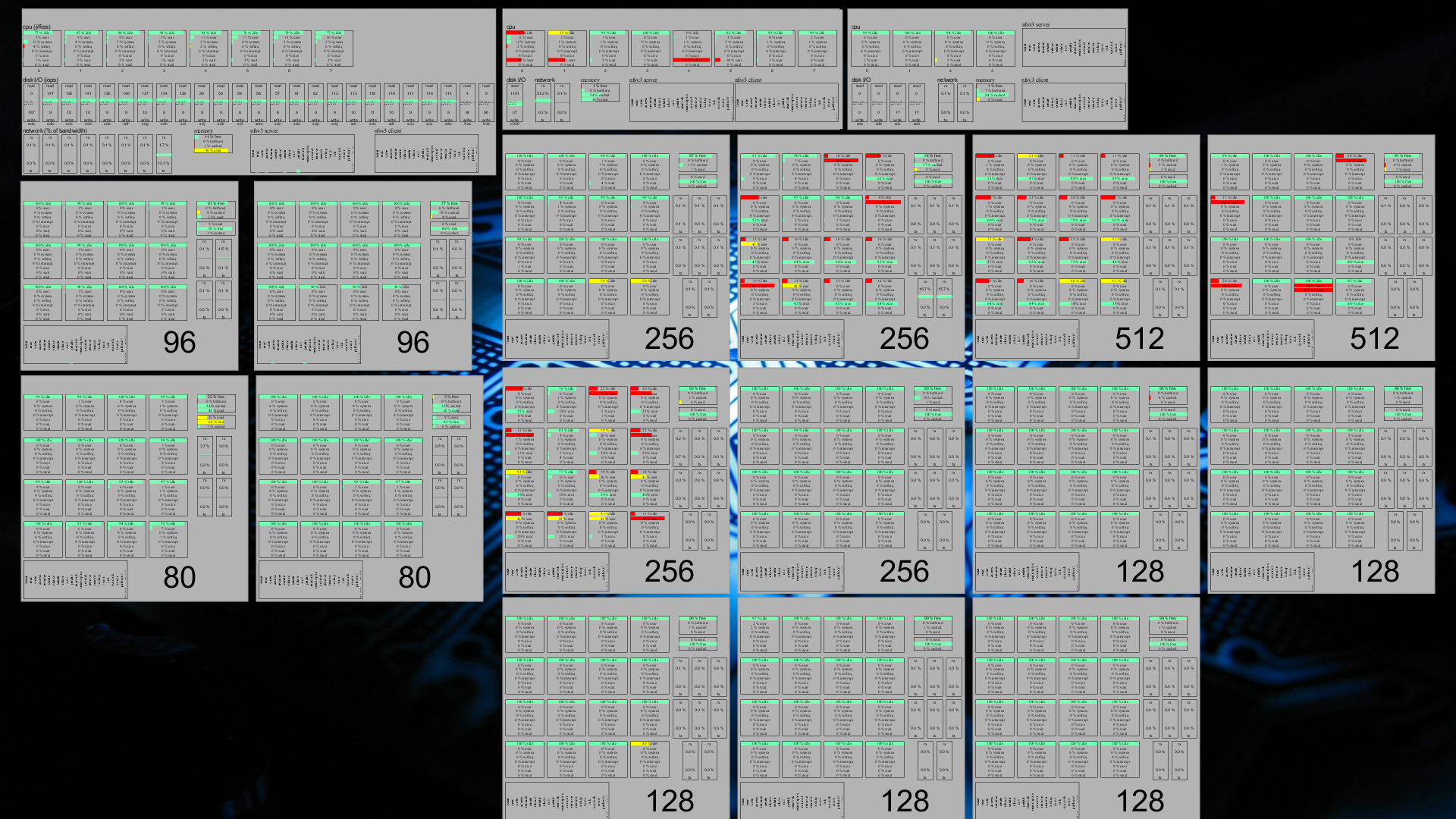
About a month ago, I blogged about extremon. As a reminder, ExtreMon is a monitoring tool that allows you to view things as they are happening, rather than with the ~5 minute delay that munin gives you, and also avoiding the quad-state limitation of Nagios' "good", "bad", "ugly", and "unknown" states. No, they're not really called that. Yes, I know you knew that. Anyway. In my blog post, I explained how you can set up ExtreMon, and I also set up a fairly limited demo version on my own server. But I have since realized that while it is functional, it doesn't actually show why ExtreMon is so great. In an effort to remedy that, I present you an example of what ExtreMon can do. Let's start with a screenshot of the ExtreMon console at the customer for which I spent time trying to figure out how to get it up and running: Click for full sized version. You'll note that even in that full-sized version, many things are unreadable. This is because the ExtreMon console allows one to move around (right mouse button drag for zoom; left mouse button drag for moving around; control+RMB for rotate; center mouse button to reset to default); so what matters is that everything fits on the screen, not whether it is all readable (if you need to read, you zoom). The image shows 18 rectangles. Each rectangle represents a single machine in this particular customer's HPC cluster. The top three rectangles are the cluster's file servers; the rest are its high performance nodes. You'll note that the left fileserver has 8 processor cores (top row), 8 network cards (bottom row, left part), and it also shows information on its memory usage (bottom row, small rectangle in the middle) as well as its NFS client and server procedure calls (bottom row, slightly larger rectangles to the right). This file server is the one on which I installed ZFS a while back; hence the large amount of disks visible in the middle row. The leftmost disk is the root filesystem (which is an ext4 off a hardware RAID1); the two rightmost "disks" are the PCIe-attached SSDs which are used for the ZFS L2ARC and write log. The other disks in this file server nicely show how ZFS does write load balancing over all its disks. The second file server has a hardware RAID1 on which it stores all its data; as such, there is only one disk graph there. It is also somewhat more limited in network, as it has only two NICs. It does, however, also have 8 cores. The last file server has no more than four processor cores; in addition, it also does not have a hardware RAID controller, so it must use software RAID over its four hard disks. This server is used for archival purposes, mostly, since it is insufficient for most anything else. As said, the other nodes are the "compute nodes", where the hard work is done. Most of these compute nodes have 16 cores each; two have 12 instead. When this particular screenshot was taken, four of the nodes (the ones showing red in their processor graphs) were hard at work; the others seem to have been mostly idling. In addition to the familiar memory, NFS (client only), network, and processor graphs, these nodes also show a "swap space" graph (just below the memory one), which seems fine for most nodes, except for the bottom left one (which shows a few bars that are coloured yellow rather than green). The green/yellow/red stuff is supposed to represent the "ok", "warning", "bad" states that would be familiar from Nagios. In this particular case, however, where "processor is busy all the time" is actually a wanted state, a low amount of idleness on the part of the processor isn't actually a problem, on the contrary. I did consider, therefore, to modify the ExtreMon configuration so that the processor graphs would not show red when the system was under high load; however, I found that differences in colour like this actually makes it more easy to see, at a glance, which machines are busy -- and that's one of the main reasons why we wanted to set this up. If you look carefully, you can find a particular processor core in the graph which shows 100% usage for "idle", "system", and "softirq", at the same time. Obviously that can't be the case, so there's a bug somewhere. Frank seems to believe it is a bug in CollectD; I haven't verified that. At any rate, though, this isn't usually a problem, due to the high update frequency of ExtreMon. The amount of data that's flowing through ExtreMon is amazing: Which renders a grand total of 2887 data points that are shown in this particular screenshot; and then I'm not even counting all the intermediate values, some of which also pass through ExtreMon. Nor am I counting the extra bits which have since been added (this screenshot is a few days old, now, and I'm still finetuning things). Yet even so, ExtreMon manages to update those values once every few seconds, in the worst case. As a result, the display isn't static for a moment, constantly moving and updating data so that what you see is never out of date for more than a second or two. Awesome.

6 January 2015

B lint R czey: Kodi from Debian

The well known XBMC Media Center has been renamed to Kodi with the 14.0 Helix release and following upstream s decision the xbmc packages are renamed to kodi as well. Debian ships a slightly changed version of XBMC using the XBMC from Debian name and following that tradition ladies and gentlemen let me introduce you Kodi from Debian :
Kodi from Debian main  screen

Kodi from Debian main screen

As of today Kodi from Debian uses the FFmpeg packages instead of the Libav ones which have been used by XBMC from Debian. The reason for the switch was upstream s decision of dropping the Libav compatibility code and FFmpeg becoming available again packaged in Debian (thanks to Andreas Cadhalpun). It is worth noting that while upstream Kodi 14.0 downloads and builds FFmpeg 2.4.4 by default, Debian ships FFmpeg 2.5.1 already and FFmpeg under Kodi will be updated independently from Kodi thanks to the packaging mechanism. The new kodi packages are uploaded to the NEW queue and are waiting for being accepted by the FTP Masters who are busy with preparing Jessie for the release (Many thanks to them for their hard work!), but in the meantime you can install kodi from https://people.debian.org/~rbalint/ppa/xbmc-ffmpeg/. Happy recovery from the holidays! :-)

3 January 2015

Russ Allbery: Review: The Ring of Charon

Review: The Ring of Charon, by Roger MacBride Allen
Series: Hunted Earth #1
Publisher: Tor
Copyright: December 1990
ISBN: 0-8125-3014-4
Format: Mass market
Pages: 500
Larry Chao is a junior scientist at a gravity research on Pluto, at the very outer limits of human reach in the solar system. The facility is for researching artificial gravity, which is one reason it's in the middle of nowhere. Another is that their experimental generator is built in a ring around Charon, and the close proximity of the two bodies is useful for scientific observation. Unfortunately, there hasn't been much to observe. They can create very short-lived gravity fields in very small areas, but nothing like the artificial gravity that was the original promise of the facility. As a result, the government is shutting the facility down. The authoritarian director, Simon Raphael, is... not exactly happy with that decision, but resigned to it and running the facility to completion with a sullen anger. When Larry makes a startling breakthrough at nearly the last minute for the society, Simon is uninterested and hostile. This leads Larry and his fellow scientist Sondra Berghoff to attempt a more radical demonstration of Larry's success and prove to the rest of the solar system that the facility should be kept open. That decision has a far deeper impact on humanity and the solar system than they could have possibly imagined. The Ring of Charon and its sequel, Shattered Sphere, were recommended to me as good harder science fiction. It took me a while to track down copies in fact, it took an in-person trip to Powell's. Once I found them, a relatively straightforward, old-school science fiction novel seemed like just the thing to read during my commute. Allen delivers there. I'm not spoiling the main plot driver of the book even though it's given away on the back cover, since it's some time in coming in the novel. But The Ring of Charon turns into a multi-viewpoint cross between a disaster novel and a scientific investigation. Larry and Sondra stay central to the plot, of course, but Allen adds a variety of other characters who are attempting to figure out what happened to the solar system and then deal with the consequences: everyone from scientists to pilots to communications officers in weird surrealistic stations. The science is mostly believable, apart from the scientific breakthrough that motivates the plot. Characterization isn't absent completely, but it's simple and unsubtle; dialogue is a bit wooden, characters aren't entirely multidimensional, but Allen does a reasonably good job with both pacing and the sense of mystery and investigation, and a surprisingly good job portraying organizational politics. As you might guess from the tone of my review, this is not the book to reach for if you want something ground-breaking. It's a very conventional, multi-viewpoint SF novel full of scientists and investigation of unknown and possibly hostile phenomena. If you've read much science fiction, you've read books like this before. But one thing that Allen does surprisingly well, which makes The Ring of Charon stand a bit above the pack, is that he doesn't write villains. Even Simon, who goes out of his way to make the reader hate him at the start of the book, becomes a surprisingly sympathetic character. The characters who are usually villains or at least foils in books like this the smooth PR person, the religious man, the blindly-focused scientist who isn't interested in anyone else's theories never turn into caricatures, play important roles in the plot, and turn out to be competent in their fields of expertise. There are actual villains, sort of, but I found myself feeling sympathetic even towards them, at least in places. Allen takes a rather old SF dodge to achieve conflict without an evil enemy, and, because of that, the end of the book felt like a bit of an anticlimax. But I did like the feel of the book where there isn't a good versus evil fight, just a wide variety of people (and others) trying to understand and control the universe in the best ways they know how. I'm not sure I can quite recommend this book. The quality of the writing is not particularly high, and I'm not generally a fan of the disaster novel style of storytelling. But despite not being very original, there's just something likable about it. It moves along reasonably well for a 500 page book, and it's refreshingly light on irritating stereotypes. I think one has to be in the right mood when reading it and set expectations accordingly, but it fit what I was looking for when I picked it up. One warning, though: although The Ring of Charon reaches a climax, the major plot conflict is not resolved at the end of this book, so you may want to have the sequel around. Followed by Shattered Sphere. Rating: 6 out of 10

2 January 2015

Russ Allbery: Review: An Imaginary Tale

Review: An Imaginary Tale, by Paul J. Nahin
Publisher: Princeton University
Copyright: 1998, 2007
Printing: 2010
ISBN: 0-691-14600-4
Format: Trade paperback
Pages: 259
Subtitled The Story of -1, An Imaginary Tale is a history of the use of the number mathematicians normally call i. Nahin starts in the 15th century with the discussion of the time on solving cubic equations, specifically del Ferro's solution to the depressed cubic. He walks through how to approach that solution with imaginary numbers, provides a brief introduction to the complex number plane, and then explains that del Ferro didn't follow the logic in those directions at all. Mathematicians at the time were dubious about negative numbers because they were not intuitive representations of real-world quantities. The square root of negative numbers was considered simply impossible. Nahin continues on in this historical vein for three chapters, walking through the mathematical problems that arose from analysis of cubics and the constant appearance of imaginary numbers, the early attempts to find a geometric interpretation, and then the slow development of the modern conception of imaginary numbers in the 19th century. The emphasis throughout is on the specifics of the math, not on the personalities, although there are a few personal tidbits. Along the way, he takes frequent side journeys to highlight the various places complex numbers are useful in solving otherwise-intractable problems. After that initial history come two chapters of applications of complex numbers: vector analysis, Kepler's laws, applications in electrical engineering, and more. He does win a special place in my heart by walking through the vector analysis problem that George Gamow uses to demonstrate complex numbers in One Two Three... Infinity: a treasure map whose directions depend on landmarks that no longer exist. Following that is a great chapter on deeper mathematical wizardry involving i, including Euler's identity, ii, and a pretty good explanation of hyperbolic functions. The final chapter is an introduction to complex function theory. One's opinion of this book is going to vary a lot depending on what type of history of math you like to read. Unfortunately, it wasn't what I was hoping for. That doesn't make it a bad book other reviewers have recommended it highly, and I think it would be a great book for someone with slightly different interests. But it's a very mathematical book. It's full of proofs, calculations, and analysis, and assumes that you remember a reasonable amount of algebra and calculus to follow along. It's been a long time since I studied math, and while I probably could have traced the links between steps of his proofs and derivations with some effort, I found myself skimming through large chunks of this book. I love histories of mathematics, and even popularizations of bits of it (particularly number theory), but with the emphasis on the popularization. If you're like me and are expecting something more like The Music of the Primes, or even One Two Three... Infinity, be warned that this is less about the people or the concepts and more about the math itself. If you've read books like that and thought they needed more equations, more detail, and more of the actual calculations, this may be exactly what you're looking for. Nahin is fun to read, at least when I wasn't getting lost in steps that are obvious to him. He's quite enthusiastic about the topic and clearly loves being able to show how to take apart a difficult mathematical equation using a novel technique. His joy reminds me of when I was most enjoying my techniques of integration class in college. Even when I started skimming past the details, I liked his excitement. This wasn't what I was looking for, so I can't exactly recommend it, but hopefully this review will help you guess whether you would like it. It's much heavier on the mathematics and lighter on the popularization, and if that's the direction you would have preferred the other similar books I've reviewed to go, this may be worth your attention. Rating: 6 out of 10

John Goerzen: Sound players: Adventures with Ampache, mpd, pulseaudio, Raspberry Pi, and Logitech Media Server

I finally decided it was about time to get my whole-house sound project off the ground. As an added bonus, I d like to be able to stream music from my house to my Android phone. Some Background It was about 2.5 years ago that I last revisited the music-listening picture on Linux. I used Spotify for awhile, but the buggy nature of its support for local music eventually drove me up the wall. I have a large collection of music that will never be on Spotify (local choirs, for instance) and this was an important feature. When Google Play Music added the feature of uploading your local collection, I used that; it let me stream music from my phone in my car (using the Bluetooh link to the car). I could also listen at home on a PC, or plug my phone into various devices to play. But that was a hassle, and didn t let me have music throughout the house. Google Play is reasonable for that, but it has a number of really glaring issues. One is that it often gets album artwork wrong; it doesn t use the ID3 tags embedded in the files, but rather tries to guess . Another is that the sync is only add . Move files to another place in your collection, or re-rip them to FLAC and replace your old MP3s, and suddenly they re in Google Play twice. It won t ever see updated metadata, either quite a hassle for someone that uses Musicbrainz and carefully curates metadata. My Hardware I already have an oldish PC set up as a entertainment box running MythTV. It is a diskless system (boots PAE over the network and has NFS root) and very quiet. It has video output to my TV, and audio output via S/PDIF to my receiver. It is one logical audio frontend. My workstation in my office is another obvious place. My kitchen has a radio with a line in jack, and I also have a small portable speaker with a line in jack to make the last two options. I also have a Raspberry Pi model B that I bought awhile ago and was looking for a purpose, so I thought this should be cheap and easy, right? Well. Cheap, yes. Easy, not so much. First attempt: Ampache The Ampache project produces quite a nice piece of software. Ampache has matured significantly in the last 2.5 years, and the usability of its web-interface with HTML5 and Flash players as options is quite impressive. It is easily as usable as Google s, though its learning curve is rather more steep. There are multiple Android apps for Ampache to stream remotely. And, while most are terribly buggy and broken, there is at least one that seems to work well. Ampache can also output m3u/pls files for a standalone player. It does on-the-fly transcoding. There are some chinks in the armor, however. The set of codecs that are transcoded or passed through is a global setting, not a per-device setting. The bitrates are per-account, so you can t easily have it transcode FLAC into 320Kbps mp3 for streaming on your LAN and 128Kbps MP3 for streaming to your phone. (There are some hacks involving IP address ranges and multiple accounts, but they are poorly documented and cumbersome.) Ampache also has a feature called localplay in which it drives local players instead of remote ones. I tried to use this in combination with mpd to drive music to the whole house. Ampache s mpd interface is a bit odd; it actually loads things up into mpd s queue. Sadly it shares the same global configs as the rest. Even though mpd is perfectly capable of handling FLAC audio, the Ampache web player isn t, so you have to either make it transcode mp3 for everything or forego the web player (or use a second account that has transcode everything set). Frustratingly, not one of the Android clients for Ampache is even remotely compatible with Localplay, and some will fail in surprising ways if you have been using Localplay on the web client. So let s see how this mpd thing worked out. Ampache with mpd for whole-house audio The primary method here is to use mpd s pulseaudio driver. I configured it like so:
audio_output
type "pulse"
name "MPD stream"
#server "remote_server" # optional
sink "rtp" # optional
mixer_type "software"

Then in /etc/pulse/system.pa:
load-module module-null-sink sink_name=rtp format=s16be channels=2 rate=44100 sink_properties="device.description='RTP Multicast Sink'"
load-module module-rtp-send source=rtp.monitor
This tells Pulse to use multicast streaming to the LAN for the audio packets. Pulse is supposed to have latency synchronization to achieve perfect audio everywhere. In practice, this works somewhat poorly. Plus I have to install pulse everywhere, which inserts its tentacles way too deeply into the ALSA stack for my taste. (alsamixer suddenly turns useless by default, for instance.) But I gave it a try. After much fiddling Pulse is rather poorly documented and the interactions of configuration tools with it even more so I found a working configuration. On my MythTV box, I added:
load-module module-rtp-recv
load-module module-native-protocol-tcp auth-ip-acl=127.0.0.1;x.x.x.x
The real annoyance was getting it to set the output through the S/PDIF digital port. Finally I figured out the magic potion:
set-card-profile 0 output:iec958-stereo+input:analog-stereo
This worked reasonably well. The Raspberry Pi was a much bigger challenge, however. I put Raspbian on it easily enough, and installed Pulse. But apparently it is well-known in the Pulse community that Pulse s RTP does not work well with wifi. Multicast itself works poorly with wifi in general, and Pulse won t do unicast RTP. However, Pulse assumes very low latency and just won t work well with wifi at all. Morever, pulseaudio on the rpi is something of a difficult beast to tame. It has crackling audio, etc. I eventually got it working decently with: daemon.conf:
realtime-scheduling = yes
realtime-priority = 5
resample-method = src-sinc-fastest
default-sample-rate = 44100
default-fragments = 4
default-fragment-size-msec=20
and in system.pa, commented out the module-udev-detect and module-detect, and added:
load-module module-alsa-card device_id=0 tsched=0 fragments=10 fragment_size=640 tsched_buffer_size=4194384 tsched_buffer_watermark=262144
plus the rtp-recv and tcp protocol lines as before. This got it working with decent quality, but it was always out of sync by at least a few tenths of a second, if not a whole second, with the other rooms. Brief diversion: mplayer Many players besides pulseaudio can play the RTP streams that pulseaudio generates. mplayer, for instance, can. I found this worked on the Raspberry Pi:
mplayer -really-quiet -cache 64 -cache-min 95 -demuxer rawaudio -rawaudio format=0x20776172 rtp://224.0.0.56:46510
But this produced even worse sync. It became clear that Ampache was not going to be the right solution. Logitech Media Server I have looked at this a few times over the years, but I ve somehow skipped it. But I looked at it again now. It is an open source (GPL) server, and was originally designed to work with Logitech hardware. There are now all sorts of software clients out there. There is a helpful wiki about it, although Logitech has rebranded the thing so many times, it s not even consistent internally on what the heck it s called (is it LMS? or Squeezebox Server? or Slimserver? The answer is: yes.) LMS does no web-based streaming. At all. But I thought I d give it a try. Installation is a little weird (its .deb packages up binary perl modules for things that are already in Debian, for half a dozen architectures and many Perl versions.) I had some odd issues but eventually it worked. It scanned my media collection. I installed squeezelite on my workstation as my first player, and things worked reasonably well out of the box. I proceeded to install squeezelite on the Raspberry Pi and MythTV server (where I had to compile libsoxr for wheezy, due to an obscure error I couldn t find the cause of until I used strace). Log in to the LMS web interface, tell it to enable synchronization, and bam! Perfect synchronization! Incredible. But I ran into two issues: one was that it used a lot of CPU even on my workstation (50% or more, even when idle). Strangely, it used far less CPU on the pi than did pulseaudio. Secondly, I d get annoying clicks from it from time to time. Some debugging and investigation revealed that they were both somewhat related; it was getting out of sync with the pi and correcting. Initially I assumed this to be an issue with the pi, but tracked it down to something else. I told it to upsample to 48kHz and this made the problem go away. My command on PC hardware is:
squeezelite -a 200:10 -o dmix -u hLX -z
And on the Raspberry Pi:
squeezelite -a 800:10:16:0 -n kitchen -z
It is working perfectly now. LMS even has an Android remote control app that can control all devices together, queue up playlists, etc. Very slick. The Raspberry Pi The Raspberry Pi, even the model B+, apparently has notoriously bad audio output. I noticed this first as very low volume on the output. I found a $11 USB DAC on Amazon that seems to do the trick, so we will see. I am also using the $10 Edimax USB Wifi and it seems to work well. Other Options The big-name other option here is Sonos. They have perfect sync audio already working. But they re pricy, closed, and proprietary; you have to buy Sonos speakers, transmitters, etc. for the entire house. Their receivers start at $200, and it s at least $350 to integrate an existing stereo into the system. I d be shelling out over $1000 to use Sonos for this setup. As it is, I ve bought less than $100 of equipment (a second Pi and its accessories) and getting output that, while no doubt not quite as pristine, it still quite nice and acceptable. Quite nice. Update: LMS with Apache It turns out that Logitech Media Server can automatically save created playlists to a spot where Ampache can find them. So an Ampache streaming player can be used to access the same collection LMS uses, with full features. Nice!

1 January 2015

Tim Retout: Looking back at 2014

I have a tendency to forget what I've been up to - so I made a list for 2014. I started the year having recently watched many 30c3 videos online - these were fantastic, and I really should get round to the ones from 31c3. January is traditionally the peak time for the recruitment industry, so at work we were kept busy dealing with all the traffic. We'd recently switched the main job search to use Solr rather than MySQL, which helped - but we did spend a lot of time during the early months of the year converting tables from MyISAM to InnoDB. At the start of February was FOSDEM, and Kate and I took Sophie (then aged 10 months) to her first software conference. I grabbed a spot in the Go devroom for the Sunday afternoon, which was awesome. Downside: we got horribly ill while in Brussels. At work I was sorting out configuration management - this led to some Perl module backporting for Debian, and I uploaded Zookeeper at some point during the year as well. We currently make use of vagrant, chef and a combination of Debian packages and cpanm for Perl modules, but I have big plans to improve on that this year. Over a break from work I hacked up apt-transport-tor, which lets you install Debian packages over the Tor network. (This was inspired by videos from 30c3 and/or LibrePlanet, I think?) Continuing the general theme of paranoia, I attended the Don't Spy On Us campaign's day of action in June. Over the summer at work I was experimenting with Statsd and Graphite for monitoring. I also wrote Toggle, a Perl module for feature flags. In July I attended a London.pm meeting for the first time, and heard Thomas Klausner talk about OX - this nudged me into various talks at LPW (see below). Pubs have a lot to answer for. At some point I got an IPv6 tunnel working at home (although my ISP-provided router's wireless doesn't forward it), and I had an XBMC install going on a Raspberry Pi as another fun hack. In August and September I worked on packaging pump.io for Debian, and attended IndieWebCamp Brighton, where I delivered a talk/workshop on setting up TLS. (This all ties in to the paranoia theme.) I stalled the work on pump.io, partly because of licensing issues at build-dependency time (if you want to run all the tests) - but I expect I'll pick this up in 2015 once jessie is released. November was the London Perl Workshop, where I presented my work from the summer on statsd/graphite and Toggle, and a Bread::Board lightning talk. LPW was more enjoyable for me this year than previous years, probably because of the interesting people discussing various aspects of how feature flags ought to work. Simultaneously was the Cambridge MiniDebConf (why do these always clash?) where I think I fixed at least one RC bug. This is not an exhaustive list of everything I've done this year - there are more changes now lined up for 2015 which I haven't shared yet. But looking back, I'm pleased that the many small experiments I get up to do add up to something over time, and I can see that I'm achieving something. Here's to another year!

Dirk Eddelbuettel: (Belated) 2014 Running Recap

Having just blogged about today's 5k, I noticed that I did not blog at all about running in 2014. There wasn't much, but another Ragnar Relay in February, again as an Ultra team. I more-or-less live tweeted this though: Pre-race warning (and that was my route!), Team photo at start, Leg 1, Leg 2, Leg 3, Leg 4, Leg 5, Leg 6, and Chilling I also ran the Philly Half-Marathon in November following up on the Penn R Workshop, and posted some tweets: Post race selfie, Strava result (thinking it was a 13.5 miler race--WTF), and Post-race chill.

This post by Dirk Eddelbuettel originated on his Thinking inside the box blog. Please report excessive re-aggregation in third-party for-profit settings.

Lars Wirzenius: The shape of a solution

Each software tool exists to solve some problem. For each problem, there are many possible solutions. Even when different programs basically do the same thing, they can have quite different shapes. As an example, this morning I was wondering if it would be possible for me to use notmuch to index my entire mail archive. For that, I needed to convert a number of mbox folders to Maildir format. That's a resonably easy problem, given access to suitable programming libraries, but there's an existing tool for that, called mb2md. Unfortunately, it has the wrong shape for my needs. mb2md doesn't just convert one mbox to one maildir. It's designed to for a mail admin converting all server-side mbox folders for a user into a corresponding structure of Maildir folders. This seems to be necessary when switching IMAP servers. That's a fairly specialised problem, and the program has been written to make it easy for a mail admin to do that. What I need is part of the problem solved by mb2md and indeed it can do just that part. However, the overall shape of mb2md is such that my part is hard to do. The incantation is quite unintuitive and requires careful reading of the documentation. The shape of a solution matters. mb2md could easily have been written in a way that provides a simple tool for the single folder conversion, and then a more complex tool for the mail admin's more complicated problem. This would have resulted in a much more general tool, and that would make it easier for more people to use it without much effort. Mail folder format conversions are a fairly esoteric thing to do. However, the lack of generality is a frequent issue with how programs are designed. It is easy to fall into the trap of writing a highly specialised tool, instead of taking a step back and making a more general purpose tool. The specialised tool will help a small number of people. The general tool will help many people. Examples of this are fairly common. Debian has a set of tools for making Debian live CDs; they are not quite able to make a bootable hard disk image as well (thus, vmdebootstrap). There's programs for computing cyclomatic complexity, which produce HTML reports, rather than something that can be processed by other programs without too much effort. There's tools for managing address books that are limited to specific cultures, e.g., by hardcoding assumptions of what a person's name looks like (thus, clab). One of my favourite examples is xargs, which by default does the wrong thing by assuming its input is whitespace delimited. Any whitespace, not just newlines. Any sensible use requires adding the -0 option, which makes xargs that much more tedious to use. Furthermore, I've often found that the more general tool is simpler. It's functional specification is simpler; it's implementation is simpler, and has fewer special cases; it's user experience is simpler. That's not always true, but often it is. Sometimes the general solution shape is not worth it. But it's always worth considering whether it might be. One of the parts of the Unix culture I really like is the preference for general tools that are easy to combine together.

Russ Allbery: Review: Three Parts Dead

Review: Three Parts Dead, by Max Gladstone
Series: Craft #1
Publisher: Tor
Copyright: October 2012
ISBN: 1-4668-0203-0
Format: Kindle
Pages: 336
Tara Abernathy was a student in the Hidden Schools, learning Craft, until she was expelled. Literally expelled: thrown from the floating schools to crash painfully to earth in the Badlands, left to return to her family and village and a life of small workings of Craft and contracts on behalf of local farmers. She had largely resigned herself to that life until raiders started killing people. Tara is not the sort of person who could stand by and watch that, or someone to refrain from using Craft to fix the world. The result was undead guardians for the town, perhaps unwisely formed from the town's risen dead, and only a job offer saves Tara from the ungrateful attention of her neighbors. That's how Tara finds herself employed by the firm of Kelethras, Albrecht, and Ao, in the person of partner Elayne Kevarian. Provisionally, depending on her performance on their job: the investigation of the death of a god. It's possible to call Three Parts Dead urban fantasy if you squint at it the right way. It is fantasy that takes place largely in cities, it features the investigation of a crime (and, before long, several crimes), and Tara's attitude is reminscent of an urban fantasy heroine. But this is considerably different from the normal fare of supernatural creatures. In this world, magic, called Craft, is an occupation that requires a great deal of precision and careful construction. Small workings are described similar to magic, although with an emphasis on metaphor. Larger workings more often come in the form of energy flows, contracts, and careful hedging, and the large Craft firms bear more resemblence to mergers and acquisitions specialists than to schools of wizards. This means that the murder investigation of the god of Alt Coulumb involves a compelling mix of danger, magic, highly unusual library investigations, forensic accounting, hidden Craft machinery, unexpected political alliances, and an inhuman police force. Rather than the typical urban fantasy approach of being beaten up until the resolution of the mystery becomes obvious, Tara and her companions do quite a lot of footwork and uncover a more complex political situation than they were expecting. And, in keeping with this take on magic, the story culminates in a courtroom drama (of a sort). I really enjoyed this. It combines the stylistic elements of urban fantasy that I like with some complex and original world-building and a great take on magical contracts. I prefer worlds like this one, where any source of power people have lived with for a long time is surrounded by the controls, formal analysis, and politics that humans create around anything of value. Tara is also a great protagonist. This is a coming of age story in a sense, and Tara is sometimes unsure of her abilities, but it's refreshingly devoid of worry or angst over new-found abilities. Tara enjoys her work, and approaches it with a well-written mix of uncertainty, impulsiveness, and self-confidence (sometimes warranted, sometimes not). I've read some good stories where the protagonist gets dragged into the story against their will, and some of them are quite good, but it's refreshing to read a book about someone who takes to the story like a duck to water. This is a believable protrayal of a character with a lot of native ability and intelligence, not much wisdom (yet), but a lot of thoughtful enthusiasm. I was disappointed to learn that she isn't the protagonist of the next book in the series. The biggest flaw I found in this book is that Gladstone doesn't stick reliably to his world conception. At times, Craft collapses into something more like typical fantasy magical battles, instead of legal procedure and contract made concrete. I suppose this makes parts of the book more exciting, but I would have preferred a plot resolution that involved less combat and more argument. This isn't helped by the utterly hissable villain. There's a lot of complexity in understanding what happened and who was going to benefit (and how), but there is absolutely no doubt who the enemy is, and he's essentially without redeeming qualities. I would have preferred more nuance, given how satisfyingly complex the rest of the world-building is. Three Parts Dead also occasionally suffers from the typical first novel problem of being a bit overstuffed. The world-building comes fast and thick, and nearly everything Tara does involves introducing new concepts. But the world does have a coherent history, and quite a lot of it. It used to be a more typical fantasy world ruled by gods, each with their own territory and worshippers (and Alt Coulumb is a throwback to this era), but an epic war between gods and Craft is in Tara's past, leading to the defeat or destruction of many of the gods. She lives in a time of uneasy truce between human and inhuman powers, featuring some very complex political and economic alliances. There's a lot of material here for an ongoing series. This is a great first novel. It's not without its flaws, but I enjoyed it from beginning to end, and will definitely keep reading the series. Recommended. Followed by Two Serpents Rise. Rating: 8 out of 10

31 December 2014

Wouter Verhelst: Perl 'issues'

I just watched a CCC talk in which the speaker claims Perl is horribly broken. Watching it was fairly annoying however, since I had to restrain myself from throwing things at the screen. If you're going to complain about the language, better make sure you actually understand the language first. I won't deny that there are a few weird constructions in there, but hey. The talk boils down to a claim that perl is horrible, because the list "data type" is "broken". First of all, Netanel, in Perl, lists are not arrays. Yes, that's confusing if you haven't done more than a few hours of Perl, but hear me out. In Perl, a list is an enumeration of values. A variable with an '@' sigil is an array; a construct consisting of an opening bracket ('(') followed by a number of comma- or arrow-separated values (',' or '=>'), followed by a closing bracket, is a list. Whenever you assign more than one value to an array or a hash, you need to use a list to enumerate the values. Subroutines in perl also use lists as arguments or return values. Yes, that last bit may have been a mistake. Perl has a concept of "scalar context" and "list context". A scalar context is what a sub is in when you assign the return value of your sub to a scalar; a list context is when you assign the return value of your sub to an array or a hash, or when you use the list construct (the thing with brackets and commas) with sub calls (instead of hardcoded values or variables) as the individual values. This works as follows:
sub magic  
    if (wantarray())  
        print "You're asking for a list!";
        return ('a', 'b', 'c');
      else  
        print "You're asking for a scalar!";
        return 'a';
     
 
print ("list: ", magic(), "\n");
print "scalar: " . magic() . "\n";
The above example will produce the following output:
You're asking for a list!
list: abc
You're asking for a scalar!
scalar: a
What happens here? The first print line creates a list (because things are separated by commas); the second one does not (the '.' is perl's string concatenation operator; as you can only concatenate scalars, the result is that you call the magic() sub in scalar context). Yes, seen as how arrays are not lists, the name of the wantarray() sub is horribly chosen. Anyway. It is documented that lists cannot be nested. Lists can only be one-dimensional constructs. If you create a list, and add another list as an element (or something that can be converted to a list, like an array or a hash), then the result is that you get a flattened list. If you don't want a flattened list, you need to use a reference instead. A reference is a scalar value that, very much like a pointer in C, contains a reference to another variable. This other variable can be an array, a hash, or a scalar. But it cannot be a list, because it must be a variable -- and lists cannot be variables. If you need to create multi-dimensional constructs, you need to use references. Taking a reference is done by prepending a backslash to whatever it is you're trying to take a reference of; or, in the case of arrays of hashes, one can create an anonymous array or hash with [] resp . E.g., if you want to add a non-flattened array to a list, you instead create a reference to an array, like so:
$arrayref = [ 'this', 'is', 'an', 'anonymous', 'array'];
you can now create a multi-dimensional construct:
@multiarray = ('elem1', $arrayref);
Or you can do that in one go:
@multiarray = ('elem1', [ 'this', 'is', 'an', 'anonymous', 'array']);
Alternatively, you can create a non-anonymous array first:
@onedimarray = ('this', 'is', 'not', 'an', 'anonymous', 'array');
@multiarray = ('elem1', \@onedimarray);
In perl, curly brackets can be used to create a reference to anonymous hashes, whereas square brackets can be used to create a reference to anonymous arrays. This is all a basic part of the language; if you don't understand that, you simply don't understand Perl. In other words, whenever you see someone doing this:
%hash =  'a' => 'b' ;
or
@array = [ '1', '2' ];
you can say that they don't understand the language. For reference, the assignment to %hash will result in an (unusable) hash with a single key that is a reference to an anonymous hash (which cannot be accessed anymore) and a value of undef; the assignment to @array will result in a two-dimensional array with one element in the first dimension, and two elements in the second. The CGI.pm fix which Natanel dismisses in the Q&A part of the talk as a "warning" which won't help (because it would be too late) is actually a proper fix, which should warn people in all cases. That is, if you do this:
%hash =   'name' => $name, 'password' => $cgi->param('password')  ;
then CGI.pm's param() sub will notice that it's being called in list context, and issue a warning -- regardless of whether the user is passing one or two password query-parameters. It uses the wantarray() sub, and produces a warning if that returns true. In short, Perl is not the horribly broken construct that Natanel claims it to be. Yes, there are a few surprises (most of which exist for historical reasons), and yes, those should be fixed. This is why the Perl community has redone much of perl for Perl 6. But the fact that there are a few surprises doesn't mean the whole language is broken. There are surprises in most languages; that is a fact of life. Yes, the difference between arrays and hashes on the one hand, and lists on the other hand, is fairly confusing; it took me a while to understand this. But once you get the hang of it, it's not all that difficult. And then these two issues that Natanel found (which I suppose could be described as bugs in the core modules) aren't all that surprising anymore. So, in short: What I do agree with is that if you want to use a language, you should understand its features. Unfortunately, this single line in the final slide of Natanel's talk is just about the only thing in the whole talk that sortof made sense to me. Ah well.

Next.

Previous.