Search Results: "zed"

18 August 2011

Wouter Verhelst: Happy Birthday, Debian!

Okay, I'm a few days late, but still. The 16th of August is Debian's birthday. It was on the 16th of August, 1993, that Ian Murdock announced the 'imminent' release of "the Debian Linux Release". As such, this year Debian celebrates its 18th birthday. It's incredible, but this means that if Debian was a person, it could now legally drink hard liquor. At least in some jurisdictions. What's more incredible is that I just realized that, since I've been involved with Debian for over 10 years, I've actually got first-hand experience for more than half Debian's lifetime. Time sure flies.

17 August 2011

Joey Hess: summer trips wrapup

Finally back from a solid month away. For the past three days I've been coding, which feels good after all that time away.

11 August 2011

Russell Coker: Name Server IP and a Dead Server

About 24 hours ago I rebooted the system that runs the secondary DNS for my zone and a few other zones. I d upgraded a few things and the system had been running for almost 200 days without a reboot so it was time for it. Unfortunately it didn t come back up. Even more unfortunately the other DNS server for my zone is ns.sws.net.au which is also the only other server for the sws.net.au zone. Normally this will work because the servers for the net.au zone have a glue record containing the server IP address. So when asked for the NS records for the sws.net.au domain the reply will include the IP address of ns.sws.net.au. The unfortunate part was that the IP address was the old IP address from before the sws.net.au servers changed to a new IP address range, I wonder whether this was due to the recovery process after the Distribute IT hack [1], as forgetting to change a glue record is not something that I or the other guy who runs that network would forget. But it is possible that we both stuffed up. The DNS secondary was an IBM P3-1GHz desktop system with two IDE disks in a RAID-1 array. It s been quite reliable, it s been running in the same hardware configuration for about four years now with only one disk replacement. It turned out that the cooling fan in the front of the case had seized up due to a lot of dirt and the BIOS wouldn t let the system boot in that state. Also one of the disks was reporting serious SMART problems and needed to be replaced poor cooling tends to cause disk errors. It seems that Compaq systems are good at informing the user of SMART problems, two different Compaq desktop systems (one from before the HP buyout and one from after) made very forceful recommendations that I replace the disk, it s a pity that the BIOS doesn t allow a normal boot process after the warning as following the recommendation to backup the data is difficult when the system won t boot. I have a temporary server running now, but my plan is to install a P3-866 system and use a 5400rpm disk to replace the 7200rpm that s currently in the second position in the RAID array. I ve done some tests on power use and an old P3 system uses a lot less than most new systems [2]. Power use directly maps to heat dissipation and a full size desktop system with big fans that dissipates less than 50W is more likely to survive a poorly cooled room in summer. Laptops dissipate less heat but as their vents are smaller (thus less effective at the best of times and more likely to get blocked) this doesn t provide a great benefit. Also my past experience of laptops as servers is that they don t want to boot up when the lid is closed and getting RAID-1 and multiple ethernet ports on a laptop is difficult. Finally I am going to create a third DNS server for the sws.net.au domain. While it is more pain to run extra servers, for some zones it s just worth it.

9 August 2011

Matt Zimmerman: Where s your data center?

Thanks to the tremendous growth of social applications over the past five years, we have our pick of services for collecting, saving and sharing our experiences online. We each have collections of photos, contacts, messages and more, spread across multiple popular services like Twitter, Facebook, LinkedIn, as well as many less popular services which address particular needs or preferences. We re also producing a wealth of exhaust data through our browsing history, mobile sensors, transactions and other activity streams that we rarely if ever examine directly. This ecosystem is becoming so complex that it s easy to lose track of what you ve created, shared or seen. We need new tools to manage this complexity, to make the most of the wealth of information and connections available to us through various services. John Battelle calls these metaservices , and points to growth in the number of connections between the services we use. I expect that this next age of information tools will center around data rather than services. Data is a common denominator for these online experiences, a bridge across disparate services, technologies, social graphs, and life cycles. Personal data, in particular, has this property: the only thing that links together your photos on Flickr, Facebook, Picasa and Twitpic is you. So where s your data center ? I don t anticipate the emergence of a single service where you do everything. There will continue to be innovation in the form of new and specialized services which meet a particular need very well. There won t be a single service which is everything to everybody. Instead, I foresee us wanting to track, save, use and control all of our stuff across the web. That s why my new colleagues and I are working to make that possible. There s open source code available on github, a vibrant IRC channel (#lockerproject on Freeenode), and lots more I d like to write about it. But it s time to get back to work for now

8 August 2011

Niels Thykier: Updates in the Lintian World

Documentation! That is what the next version of Lintian will have. In 2.5.1, Lintian
had support for adding options in the lintianrc. Unfortunately, the
user had to guess the syntax, which makes the feature less useful.
With the next release, the manpage and the example config file[1]
will contain documentation and examples. The User Manual[2] also saw some improvements. Particularly, it will
mention that lintian can process a .changes file and that it does
cross-package checks. Of course, it also documents the format of the
new Vendor Profiles. Though even with these improvements, the current
documentation still leaves much to be wanted. The last unpack script (unpack-srcpkg-l1) was finally removed and
was replaced by a smarter version of index collection. This means
that Lintian can now schedule index in parallel with a few other
collections (namely unpacked, which is the current bottleneck). The speed improvement is probably not noticeable, but it was also a
good time to upgrade our index collection to properly handle
multi-tarball source packages. Previously Lintian only extracted the
index from the base tarball. The fields collection also saw some attention. Previously it
extracted fields from the control file (in the .deb, etc.) into a
directory. Each field became a file and the value of the field would
be written in the field. Today, the collection basically looks like
this:
[...]
if (-d 'fields') 
    system('rm', '-rf', 'fields') == 0
        or die 'Could not remove old fields directory';
 
[...]
It has been deprecated the minute Lintian::Collect API saw a little
upgrade to fetch these fields itself. This change should remove some
unnecessary file I/O in a normal run[3]. If you have a friend with his/her own little home-grown Lintian check
(or collection)[4], they will have to update it to A) not depend on
fields, B) use the Lintian::Collect API for accessing fields and C)
depend on index for source packages if it uses the index information.
For the latter, Lintian::Collect has grown support for source package
index. Lintian has also seen a lot of decrufting in the 2.5.2 development
cycle. The new test suite now features skeletons ( standard base
environments ) and template support for all package test suites[5]. This means it takes a lot less of writing (or copy/waste) to generate
a simple specialized test in the low-level test suites. As a part
of cleaning up the test-suites, I got to run:
$ git rm t/ source,debs /*/copyright
without breaking a single test. I have to admit that commit 8584996
is among my favorite ones in the 2.5.2 development cycle. Finally, if you are one of the few that have ever used the
--packages-file option, then I am pleased to inform you that it will
be deprecated in 2.5.2 and replaced by --packages-from-file. The
old option had some specialized format, whereas the new option parses
the file (or stdin) as one package per line . The latter being far
more "find -name '*.deb' "-friendly. In case you are wondering why --packages-file is deprecated, here is
the packages-file parser from lintian 2.5.1:
    while (my $line = <$pkgin>)  
	chomp($line);
	my (undef, undef, undef, $file) = split(/\s+/, $line, 4);
	$pool->add_file($file);
     
- [1] Installed as /etc/lintianrc [2] Installed as /usr/share/doc/lintian/lintian. html/,txt.gz [3] Namely, 2 opens + 2 closes + 1 read and one write for each field
in every package (the fields were cached, once they were read). Not
to mention a directory listing and having to remove the files again
later. [4] Of course, you do not have such a thing Because we all know
that no one (except this not too close friend of yours) messes with
Internal APIs of other projects [5] The exception being that the changes suite does not have a
standard base environment, since it would be completely unused.

Jaldhar Vyas: Debian GNU/Minix Erratically Timed News vol. 1

Wondering what is going on with the port of Debian to the Minix 3 microkernal? Here's an update. dpkg Ported Well, the big news as I mentioned in my last post is that dpkg has been successfully ported. I haven't sent the patches to the maintainers just yet as they need review and clean up but I will do that ASAP. The architecture name is defined as minix_i386. (There is no k because I am using the Minix libc as well as the kernel.) I am currently targetting squeeze. A Maze of Twisty Dependencies All Different Armed with my new dpkg, I have begun building packages which has been an interesting experience. The Debian packaging systems greatest asset dependencies is also its most frustrating during initial bootstrapping. Take debhelper for instance; nowadays most packages depend on it and I personally wouldn't think of creating a .deb without it but it build-depends e.g. po4a which build-depends on...debhelper. Also some programs which are assumed to be present on linux such as ldconfig are simply not available on Minix. So currently theres a lot of dpkg --force-depends and even --force-all going on. Of course this is only a temporary problem until I get a full set of base packages built. The equivs package is coming in handy too. In lieu of working .debs, I have been using Minix native packages to fill in the gaps. They use NetBSD pkgsrc which is a new experience for me. I can't say I'm that impressed but they work and, being uptodate, are a good source of patches. Works in Progress The two big packages I need to work on next are perl 5.10.1 and gcc 4.4.5. I haven't touched the latter yet. Perl is failing in its second-stage bootstrap for reasons I haven't gotten to the bottom of just yet. I suspect it has more to do with deficiencies in my build environment than a problem in perl itself. libc Deficiencies As I mentioned last time, the situation has improved tremendously since Minix switched over to using the NetBSD libc but I am still running into problems with unimplemented APIs. Take getpwent(3) and getpwuid(3) for instance. Being able to map between user ids and names is kind of important you know? Even worse instead of being completely absent some of these exist as stubs. So they compile and link without warning but always return ENOFILE and so on. I was surprised to find that there is no standardized API for getting information on mounted filesystems. (Which e.g. df(1) needs.) Linux uses getmnt(3) similar but incompatible with System V. The BSDs use getmntinfo so probably this is what Minix will implement. GNU programs are good about portability but a lot of Free software is unfortunately Linux-centric. Hopefully the Debian FreeBSD port already has patches for these cases. There are several annoyances like this but I suppose I shouldn't complain too much. I am using an unreleased version of Minix which is under heavy development and I must say the upstream developers have been good about responding to my concerns. Looking forward: fakeroot, grub2, ext2 fakeroot is a very handy development tool that frees a developer from having to create .debs as root. Alas it won't work under Minix as it depends on LD_PRELOAD and Minix doesn't even support shared libraries. fakeroot-ng sounds a bit more promising as it uses the ptrace(2) system call which is implemented in the Minix kernel though I don't know how well. Minix is now multiboot compliant so it is possible to use grub2 instead of the Minix boot loader. Definitely something I'm going to look at soon. Minix now supports ext2 (though not ext3 or ext4) in addition to its native file system. For compatability this should become the default in the Debian port. While the kernel support is part of the standard Minix system, the userland support (e2fsprogs) is not for some reason. So I'll have to see about porting that. Can I Help the Porting Effort? Sorry not yet. Though if you are determined I'll try and help you get set up. Hopefully in a month or less I will be able to distribute a pre-alpha version so I suggest waiting for that. I am definitely going to be looking for outside help.

7 August 2011

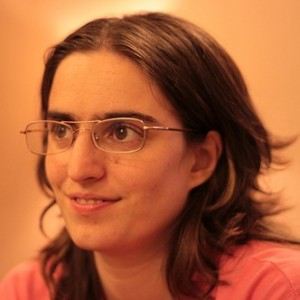
Rapha&#235;l Hertzog: People behind Debian: Margarita Manterola, Debian Women member

Photograph taken by Julia Palandri

When I think about Margarita, I always remember her as a friendly and welcoming person. Like most of the Debian Women members by the way. But she likes to spread some love and organized a Debian Appreciation Day for example. I think I met her in real life for the first time at Debconf 6 in Oaxtepec (Mexico). She deeply cares about Debian in general. She has proven it multiple times with her DPL candidacy and by giving talks like Making Debian rule again. One last thing, Debconf11 is just over and you will see that Debconf4 has had a big influence on Marga. My advice is simple: next time there s a Debconf on your continent, make sure to take a few days off and come to meet us! It really gives another picture of the Debian community. Now let s proceed with the interview. Raphael: Who are you? Margarita: I m Margarita Manterola, a Software Developer from Argentina. I work developing software in Python in a Debian-friendly company during the day, and teach programming at a local university during the evenings. I m married to Maximiliano Curia who is also a Debian Developer, most of our Free Software work has been done together. I only maintain a handful of packages in Debian, I m more interested in fixing bugs than in packaging new software. I ve also been a part of the organizing team of many of the previous Debian Conferences. One of the biggest commitments and the biggest success of my participation in Debian was being part of the organizing team of DebConf8, in Argentina. Raphael: How did you start contributing to Debian? Margarita: I started using Debian around 2000. Soon after we had learned the grips of general GNU/Linux usage, Maxy and I started giving an introductory course at our local university, and became quite involved with the local LUG. At some point in 2002/2003 I became a Debian Bug Reporter : most of my friends would report bugs to me, and I would then write them in the proper form to the BTS. I would also be very attentive about reporting any bugs that I might encounter myself trying to create good bug reports. The turning point in my participation in Debian was DebConf4 in Porto Alegre, Brazil. Being so close to Argentina meant that we felt specially invited to be there, and Maxy and I decided to go to DebConf for our honeymoon. We didn t really know much about DebConf dynamics, but we were really eager to learn more about Debian and become more involved. What happened was that meeting with DDs from all over the world transformed our lives, we became part of the Debian family and wanted to be more and more involved. Soon after that we both started maintaining packages and not long after that, applied to become Developers. The Debian Women project also meant a lot to me. I felt encouraged all along the way, encouraged to learn, to ask questions and to lose the fear of making mistakes. I became a Debian Developer on November 2005. Since then, Debian has always been one of the most important things I do in my life. Raphael There was a Debian Women BoF during debconf. What are the plans for Debian Women in the upcoming months? Margarita: I was not there in person, but thanks to the awesome work of the video team, and of Christian Perrier s typing efforts when something failed, I was able to experience much of what was discussed. :) One of the many points that came up during the BOF is that many people Want to help but don t know where to start or how to go about it. It s a challenge for the Debian Women project to find a way to allow these people to become involved in Debian through Mini projects or something like that. Another of the subjects that was brought up was the Debian Women mentoring project, which has been going on for quite a while now, but lacks enough publicity. So, we need to reach more people about it, and maybe also improve it with some templates, similar to the New Maintainer templates, so that mentees that don t know where to start have some sort of general path to follow. Raphael: You created very useful diagrams documenting how package maintainer scripts are invoked by dpkg. How did you do it and was that a useful experience? Margarita: I did those diagrams to be able to answer one of the questions in the NM templates, regarding the order of the maintainer script execution. Answering the question in text was basically copying and pasting the part of the Debian Policy that explained it, which wasn t really too clear for me, so I decided to go and make a diagram of it, so that I could really understand it. I did it by the best of all debugging techniques: adding prints to each of the maintainer scripts, and testing them in all the different orders that I could think of. It was a useful experience at the time, because I learned a lot of how maintainers scripts work. I didn t expect the diagrams to become so famous, though, I only did them to answer one NM question, that I assumed most other people had already answered before :) Raphael: You participated in a DPL election. This is a big commitment to make. What were your motivations? Margarita: As I said, I was part of the organizing team of DebConf8, in Argentina. Which was quite a success, a lot of people enjoyed it and praised the good work that had been done by the local team. During said DebConf8, I had a dream (it was almost a nightmare, actually): I woke up and just like that, I was the DPL. I spoke to some people about this dream and to my complete surprise many said that I should actually do it. After giving that possibility a year and a half of thoughts, during the 2010 campaign I was talked into participating myself as a candidate, and it was a very interesting experience. However, I m very glad that Zack got elected and not me, I think he makes a much better DPL that I would have made. Raphael: What s the biggest problem of Debian? Margarita: I think the main problem that we have is our communication, both inside the project and outside the project. Most of us are very technical people, our skills lay in the technical part of Debian (preparing packages, fixing bugs, writing software, administering systems) not in the social part. And thus, we lack a general empathy that is quite needed when interacting with people from all over the world. Raphael: Do you have wishes for Debian Wheezy? Margarita: Not particularly. I do want it to be a great release with good quality, stable software. I would also like to keep making Debian more and more universal with each release, making it more user friendly, more accessible, and more robust than any other previous release. Raphael: Is there someone in Debian that you admire for their contributions? Margarita: I admire a lot of people in Debian. There s a lot of people that contribute a lot of time to Debian, amounts of time that I can t begin to understand how they can afford. I admire Stefano Zacchiroli, our current project leader. And Steve McIntyre, the project leader before him. Also Bdale Garbee, who s also been a DPL in the past. Making this list I realize that Debian has been blessed by quite a number of great leaders in the past. I admire Holger Levsen, for his contributions to the DebConf video team, that have made it possible year after year for the whole project to participate in DebConf remotely. I admire Steve Langasek and Andreas Barth (etch is still my favourite release). I admire Christian Perrier for his work on internationalization. I admire Joerg Jaspert for the incredible amounts of time that he puts into Debian. And actually, I could go on admiring people all night long. I admire so many people that this interview could become a very boring list of names. I guess it s better to leave it at saying that Debian is lucky to have quite a lot of excellent hackers around.

Thank you to Marga for the time spent answering my questions. I hope you enjoyed reading her answers as I did. Subscribe to my newsletter to get my monthly summary of the Debian/Ubuntu news and to not miss further interviews. You can also follow along on Identi.ca, Twitter and Facebook.

14 comments Liked this article? Click here. My blog is Flattr-enabled.

Jan Wagner: Alone at home

Sometime it happens, that there are school holidays. As my lovely girl used to be a teacher, she has some time off at that period. So she left me with our kids yesterday to visit the grandparents.
It was two hours after leaving, when I was really surprized that I was sitting around and thinking about what to do next, as normaly the weekend are family time.
So I decided to take my bike and a paper map to get of for a trip. Since some years, I usually use my bike to escort the girls or when going to work, which is just a 5 minutes ride, so I thought that would be a great opportunitiy.
I took a backpack with raining clothes, mounted the bike helmet on it, in case I needed to go cross country, some water and my music player.
It was a great ride, beside that I realized I m not in the same condition as some years ago. Unfortunately this will likely not change in the next 12 mounth, as we have some projects in the queue we need to deal with. Hopefully we will solve that satisfactorily and have a bit more spare time afterwards.

Anyways .. 27,65km in 1h40 is not so bad, as it was hot and humid.
Ride summary:

6 August 2011

Andrew Pollock: [life] RIP Margaret Rutter

I got a call from Mum today to inform me that my grandmother had passed away last night, Brisbane time, at 94 years of age. Four generations If you want to get all genealogically correct, she's technically my step-maternal grandmother, but she's the grandmother I spent the most time with, growing up, so I'm not going to split hairs. It's come as a bit of a shock, because despite having had progressively worse dementia for probably over a decade, she's been in incredibly good physical condition. I think it was in her 70's that she had a heart valve replaced, and I for one had been expecting that to be the thing to wear out and take her down slowly. I last saw her in the flesh in January, when the above photo was taken, and more recently a few weeks ago on Skype. She was recently moved from an aged-care hostel in Toowoomba to a nursing home in Brisbane, as her dementia had progressed beyond the point that she could be cared for in the previous facility. Mum had visited her earlier in the day yesterday, and she was fine, but apparently the staff found her unconscious at around 5pm when they went to get her for dinner. She was taken to the Royal Brisbane and Women's Hospital where it was determined she had suffered from a stroke, and she passed away later that evening at around 11:30pm. So all in all, she had a very good innings, and of all the ways to leave this world, this was one of the quicker and more painless ways to do it. That's the problem with a quick exit - it's usually completely unexpected. It's looking like the funeral will be on Friday, and I've got a flight tentatively booked to leave on Wednesday and get in on Friday morning and return again on Monday. At the time I arranged this, I'd completely forgotten that I was flying to Calgary on Monday night to babysit the son of friends, while they go to the US Consulate for a visa appointment. Fortunately this travel doesn't conflict with that travel, it just means I'll be away from work for longer, and spending a lot of time inside pressurized tubes. I'm fairly confident with all of the short international trips, I'm going to look like a drug mule or something, and someone's going to thoroughly cavity search me.

Bdale Garbee: FreedomBox in Banja Luka

FreedomBox activities at Debconf11 I spent the last two weeks of July 2011 in Banja Luka. The occasion was the annual Debian developer's conference, Debconf11 and preceding work week known as Debcamp. This was my tenth successive year attending Debconf, and I had a very productive and pleasant time! The facilities were good, the local team was friendly, enthusiastic, and very helpful, and in addition to giving three talks and hosting a couple panel discussions, I managed to put a burst of energy into work on FreedomBox. Several other developers working on FreedomBox were also present, and a good number of Sheeva and Dream plugs were evident in the hacklabs sporting new FreedomBox stickers. Working together in the same place for several days, we made good progress on several projects, and also had some great discussions about what we want to do going forward. image building tools For some time, I've been working towards a light-weight tool set to build FreedomBox software images. Shortly before Debconf started, I chose the name 'freedom-maker' for this tool and shared a link to a readable copy of my git repository with other developers I expected to work with in Banja Luka. With input from Bert Agaz and Jonas Smedegaard during Debcamp, freedom-maker went from almost useful to actually useful. It still deserves work to be more useful to others, but I have now pushed a copy of the git repository to git.debian.org so that we can take advantage of the tools supported there to enable others to more easily contribute to the code. Very soon, Bert plans to add support to freedom-maker for using Lars Wirzenius' vmdebootstrap to build x86 images suitable for testing in a virtualized environment. At the same time, we plan to refactor the existing code slightly to enable lists of desired packages for the various image flavors we expect to produce independently of the configuration for each specific image building tool. Jonas continued in parallel to work on his alternate packaging toolset boxer. It offers some potentially interesting features for the future, and we may eventually merge some or all of it into freedom-maker, but for now it remains a separate utility. uAP user space tools Several weeks ago, we received from Marvell the source code to two user space programs that are necessary for configuring and monitoring the binary firmware provided for the uAP wireless chip used in the DreamPlug. Early during my stay in Banja Luka, I packaged these for Debian as uaputl and uapevent, and I am pleased to note that they were quickly accepted into the archive and are now present in Debian mirrors. u-boot Another bit of code received very shortly before Debconf started was the source for the version of u-boot shipped by Globalscale in the DreamPlug units we're working with. During Debcamp, Clint Adams passed a copy of this source to Jason Cooper, who was already trying to add support for the DreamPlug to upstream u-boot, but had stalled due to a lack of information. Jason has now merged his own work with the sources we got from the manufacturer, and is making good progress towards merging DreamPlug support into upstream u-boot. Once that happens, we should be able to flash our Sheeva and Dream plug devices with a u-boot image built from the source in the Debian u-boot package, in the process enabling things that matter to us like the ability to boot from an ext2 partition, and hopefully the ability to execute command scripts from that partition instead of having to hard-code kernel filenames in flash. This will allow us to support the ongoing effort in Debian to move away from the need for kernel symlinks. DreamPlug kernels With respect to kernels, another work stream at Debconf primarily involving H ctor Or n and Nick Bane was to analyze the current state of the patches from Marvell and Globalscale used to support the DreamPlug against both upstream and current Debian kernel sources. To my surprise and our collective pleasure, the remaining patch set required against current upstream kernels is much smaller than we previously believed! There are still several patches critical to us that are not merged upstream, but the work remaining to be able to build images for our devices from mainline and Debian kernel source trees now seems like something we might be able to complete before Debian's next stable release. One of our discoveries during the u-boot and kernel work during Debconf was that Globalscale did not obtain a new machine id for the DreamPlug, but instead re-used the one for the GuruPlug series, despite there being some differences in the hardware that require at least one additional driver. After much discussion, we plan to continue using the existing machine id instead of requesting another, particularly because the ARM kernel community has apparently stopped issuing new ids for the moment. We will add a new kernel config option for the DreamPlug, however, and are likely to build distinct Sheeva and Dream kernel packages that do not require initrd for use in FreedomBox images, even if doing so is not strictly necessary. This will allow us to optimize both the in-memory footprint and boot times for our devices. software configuration Another area of investigation in Banja Luka was technology for package configuration. Mirsal Ennaime performed various tests using debconf and Config::Model, with some results reflected in this commit relating to configuring the bitcoind daemon in the bitcoin package for Debian. identity and trust management While we did not actually do any FreedomBox specific work on the trust management layer we know is necessary, after several rounds of conversation, I am now more convinced than ever that the right path forward is to base our trust relationships on OpenPGP keys using GnuPG and Monkeysphere as starting software elements. Our thinking to date is captured on an Identity Management page in the wiki. communication services Another thing that became fairly clear to me during discussions at Debconf is that in the near term, planning to build communication services around XMPP is the approach most likely to give good results. Investigating the software choices available to build an interesting XMPP infrastructure is now a high priority for me. Jonas has done some work towards configuring and integrating ejabberd or Prosody, I've started studying yate as a possible call manager and VoIP server choice with XMPP/jingle support, and we await with great interest a release from the Buddycloud developers to evaluate as a possible basis for deploying social network services. Some of these software choices will lead us to use Apache as our web services base technology because of the need for features that only it supports well among daemons that are Free Software. Jonas completed packaging GNU Sip Witch for Debian, and it is now available in the mirror network. Tzafrir Cohen and Jonas did some initial testing on its use. documentation A number of new wiki pages were written (or at least started) in order to sum up ideas, design various aspects of FreedomBox, and reflect discussions that happened during DebConf11. A lot of work is needed to complete these pages though, as well as others to capture more of the current state of the project. press coverage Finally, while in Banja Luka I got some great press coverage for FreedomBox! On Sunday the 24th, I was interviewed by the main television network serving the Republika Srpska. This led to a couple of minutes of coverage near the top of the national news program that night, immediately following the lead story about the President and several ministers appearing at Debian Day that morning to help open the conference. This interview was later re-used in another TV program that summarized Debconf11. On the morning of Thursday the 28th, I was part of a small group that spent more than an hour meeting with the Minister of Science and Technology in his office, and the relationship between Debian and our work on FreedomBox was one of the items of discussion in that meeting and the associated press conference. I'm told this resulted in more press coverage, but if true I have not seen it yet. summary On Friday afternoon the 29th, I gave a talk in the main Debconf program containing a FreedomBox Progress Report . In it, I talked about the structure of the FreedomBox Foundation, progress the foundation has made, and the work that was still then underway in Banja Luka. It was streamed live over the internet, and replays are available online. The reaction from Debian developers present was very positive, which was good to learn since by that time my energy level was quite low after the nearly two weeks of intense technical and social interaction that is Debconf! All in all, we got lots of work done on FreedomBox in Banja Luka, enough that I think at least the next few steps along the road towards an eventual "1.0" release of a reference implementation are now much clearer than they were two weeks ago!

4 August 2011

Rapha&#235;l Hertzog: My Debian activities in July 2011

This is my monthly summary of my Debian related activities. If you re among the people who made a donation to support my work (170 , thanks everybody!), then you can learn how I spent your money. Otherwise it s just an interesting status update on my various projects. This month passed by very quickly since I attended both the Libre Software Meeting / RMLL and the DebConf. Libre Software Meeting / RMLL I attended only 3 days out of the 6 but that was a deliberate choice since I was also attending DebConf for a full week later in the month. During those 3 days I helped with the Debian booth that was already well taken care of by Fr d ric Perrenot and Arnaud Gambonnet. Unfortunately we did not have any goodies to sell. We (as in Debian France) should do better in this regard next time. One of the talks I attended presented EnVenteLibre. This website started as an online shop for two French associations (Ubuntu-fr, Framasoft). They externalize all the logistic to a company and only have to care about ordering goodies and delivering to the warehouse of the logistic company. They can also take some goodies from the warehouse and ship them for a conference, etc. We discussed a bit to see how Debian France could join, they are even ready to study what can be done to operate at the international level (that would be interesting for Debian with all the local associations that we have throughout the world). Back to the LSM, while I had 3 good days in Strasbourg, it seems to mee that the event is slowly fading out it s far from being an international event and the number of talks doesn t make for a better quality. BTW, do you remember that Debconf 0 and Debconf 1 were associated to this event while it was in Bordeaux? dpkg-source improvements During my time in Strasbourg (and in particular the travel to go there and back!) I implemented some changes to 3.0 (quilt) source format. It will now fail to build the source package if there are upstream changes that are not properly recorded in a quilt patch:
dpkg-source: info: local changes detected, the modified files are:
 2ping-1.1/README
dpkg-source: info: you can integrate the local changes with dpkg-source --commit
dpkg-source: error: aborting due to unexpected upstream changes, see /tmp/2ping_1.1-1.diff.cki8YB
As the error message hints, there s a new --commit command supported by dpkg-source that will generate the required quilt patch to fix this. In the processe you will have to submit a name and edit the patch header (pre-formatted with DEP3 compatible fields). You can get back the old behavior with the --auto-commit option. Build flags changes Ever since we adopted the Ubuntu changes to let dpkg-buildpackage set some build related environment variables (see #465282), many Debian people expressed their concerns with this approach both because it broke some packages and because those variables are not set if you execute debian/rules directly. In the end, the change was not quickly reverted and we fixed the package that this change broke. Despite this we later decided that the correct approach to inject build flags would be a new interface: dpkg-buildflags. Before changing dpkg-buildpackage to no longer set the compilation flags, I wanted to ensure dpkg-buildflags had some decent coverage in the archive (to avoid breaking too many packages again). My criteria was that CDBS and dh (of debhelper) should be using it. With the recent debhelper change (see #544844) this has been reached so I changed dpkg-buildpackage accordingly. Makefile snippets provided by dpkg At the same time, I also wanted an easy way for maintainers not using dh or CDBS to be able to fix their package easily and go back to injecting the compilation flags in the environment but doing it from the rules files. Starting with the next version of dpkg, this will be possible with something like this:
DPKG_EXPORT_BUILDFLAGS = 1
include /usr/share/dpkg/default.mk
Without DPKG_EXPORT_BUILDFLAGS the variables are not exported in the environment and have no effect unless you use them somewhere. More than build flags, this will also provide a bunch of other variables that can be useful in a rules files: all the variables provided by dpkg-architecture, vendor related variables/macro and some basic package information (mainly version related). dpkg-buildflags improvements Given the renewed importance that dpkg-buildflags will take now that dpkg-buildpackage no longer sets the corresponding environment variables, I thought that I could give it some love by fixing all the open issues and implementing some suggestions I got. I also had a chat with a few members of the technical committee to discuss how hardening build flags could be enabled in Debian and this also resulted in a few ideas of improvements. In the end, here are the main changes implemented: Will all those changes, the complete set of compilation flags can be returned by dpkg-buildflags (before it would only return the default flags and it was expected that the Debian packaging would add whatever else is required afterwards). Now the maintainer just has to use the new environment variables to ensure the returned values correspond to what the package needs. DebConf: rolling and hardening build flags I spent a full week in DebConf (from Sunday 24th to Sunday 31th) and as usual, it s been a pleasure to meet again all my Debian friends. It s always difficult to find a good balance between attending talks, working in the hacklab and socializing but I m pretty happy with the result. I did not have any goal when I arrived, except managing the Rolling Bof (slides and video here) but all the discussions during talks always lead to a growing TODO list. This year was no exception. The technical committee BoF resulted in some discussions of some of the pending issues, in particular one that interests me: how to enable hardening build flags in Debian (see #552688). We scheduled another discussion on the topic for Tuesday and the outcome is that dpkg-buildflags is the proper interface to inject hardening build flags provided that it offers a mean to drop unwanted flags and a practical way to inject them in the ./configure command line. Given this I got to work and implemented those new features and worked with Kees Cook to prepare a patch that enables the hardening build flags by default. It s not ready to be merged but it s working already (see my last update in the bug log). A few words about the Rolling BoF too. The room was pretty crowded: as usual the topic generates lots of interest. My goal with the BoF was very limited, I wanted to weigh the importance of the various opinions expressed in the last gigantic discussion on debian-devel. It turns out a vast majority of attendants believe that testing is already usable. But when you ask them if we must advertise it more, answers are relatively mixed. When asked if we can sustain lots of testing/rolling users, few people feel qualified to reply but those that do tend to say yes. More dpkg work Lots of small things done: Package Tracking System and DEHS Christoph Berg recently wrote a replacement for DEHS because the latter was not really reliable and not under control of the QA team. This is a centralized system that uses the watch files to detect new upstream versions of the software available in Debian. I updated the Package Tracking System to use this new tool instead of DEHS. The new thing works well but we re still lacking the mail notifications that DEHS used to send out. If someone wants to contribute it, that would be great! Misc packaging work I did some preliminary work to update the WordPress package to the latest upstream version (3.2). I still have to test the resulting package, replacing upstream shipped copies of javascript/PHP libraries is always a risk and unfortunately all of them had some changes in the integration process. I also updated nautilus-dropbox to version 0.6.8 released upstream. I also uploaded the previous version (that was in testing at that time) to squeeze-backports. So there s now an official package in all the Debian distributions (Squeeze, Wheezy, Sid and Experimental)! Thanks See you next month for a new summary of my activities.

No comment Liked this article? Click here. My blog is Flattr-enabled.

1 August 2011

Nathan Handler: Google Summer of Code Report #4

Due to the midterm evaluation, this report will cover a span of 4 weeks. As a result, it will be quite a bit longer than my previous reports. One of the first things I did after my last report was create a FAQ for the project. At first, the FAQ was a plain text file living only in the git repository. Then, it moved to being maintained on the Debian wiki with a cronjob pulling it into my local repository for me to commit and push. Finally, the cronjob moved to wagner. The FAQ is not actually committed to the git repository, but it is available in the dextools instance running on wagner or on the wiki. There is also now a basic README file that is part of the git repository that simply points people to the FAQ on the wiki (so people who branch the repository can easily find the documentation). For those of you who have been reading my other reports and/or testing the dashboard, you have probably noticed the problems I was having getting the text boxes sized properly. After spending countless hours researching and testing different solutions, we finally decided to give up on this for the time being. Therefore, all of the size attributes have been removed from the text inputs, and the background color has been reset to its default value. This means that we will no longer experience the issue of very wide text boxes and a horizontally stretched table. However, it also means that long strings will get cut-off when displayed in a text input. Since my initial mockup design at the start of the summer, I have had the rows of the table zebra-striped. Based on some feedback from Paul Wise (pabs), I changed this so that the row colors are based on the status of the task. Open tasks are red, closed tasks are green, and in progress tasks are yellow. This makes it much easier to quickly see the progress of the project and find tasks you are interested in. My original dashboard consisted of one main dex.html file. This file used some javascript to pull in each project s task list. We felt that a much more common use case would involve a user only interested in one particular project. As a result, they would not be likely to use the select boxes to change projects. This ultimately led to me creating standalone dex.html dashboards for each project. These per-project dashboards were identical to the original dex.html, except they did not include the select boxes at the top for changing projects. Eventually, I decided to completely get rid of the original dex.html dashboard. That file now consists of a simple list of links to all of the projects sorted by distribution. Another advantage of this change is that it is much easier to link to a specific project. For example, you might now link to /projects/dex-ubuntu-ancient-patches/dex.html (you can get the URL by simply copying it from the address bar). Another advantage is that you can now link directly to a specific project s graphs (just append #graph). Another feature that I am still working on is per-project documentation. From the start, we wanted to make it easy for new contributors to get involved in DEX. One way we can do this is by having clear documentation about what the project is and how to deal with tasks. I decided that the easiest approach would be to have this documentation live on the wiki. This allows users to use the familiar wiki markup language to format their text, and it gives us all of the other benefits a wiki provides. Documentation will live at /DEX/<distribution>/ <project>. The dashboard will then take care of pulling in this documentation and displaying it at the top of the proper page. For a while, I was thinking that it would be necessary to filter the HTML produced by the wiki to prevent malicious code from ending up on the dashboard. However, after playing around for a bit, I think that it should be pretty safe to just use the HTML as-is (if someone spams the wiki, we can always revert the change). I am currently finishing up some of the code to handle this, and it should be live sometime this week (a partially working version is live on wagner). There are also two new checkboxes at the top of each dashboard. These allow users to add completed tasks and/or tasks with completed bugs. This is useful for projects that are close to being complete, as it allows users to quickly view the few remaining tasks. This feature was requested by several people, and I am glad to finally be able to implement it for them. There is also a second graph on each page. This graph is a bar graph that shows the number of tasks each person has completed. It gets the people from the assignee column for the project, and it only counts tasks with a status of Complete . The graph is updated whenever the getbugs.py script runs to update the task listing (currently every 10 minutes). The bars are sorted from tallest to shortest. The idea behind this graph is to recognize the people working on a project. The form processing script has not worked on wagner. This was mainly due to a permission issue. Thanks to a hint from Rapha l Hertzog, I was able to use setfacl to fix this. The form can now be submitted, and it should successfully save all changes made via the web form. This involved some updates to support the per-project dex.html files. The form processing script will also ignore any status that is not complete , in progress , or incomplete , which prevents people from messing up the dashboard by submitting invalid information. Finally, the script will now try to use the HTTP_REFERER header to send the user back to the correct page. If this header is not set, the user will be sent back to the main dex.html index page. Sorting the table has been partially broken since I started including text inputs. I finally got this issue resolved, and I should now be able to sort by text inputs, select boxes, or anything else I might end up including in the table. You can test this by clicking on any header in the table. I will probably add a tiny image to make it more clear which header is being used to sort the table. By default, it is sorted based on the status and then the task name. The status column now has a select box for setting the status. Since the row coloring is done via javascript, the minute you change the status in the select box, the row color will change to reflect the new status. Keep in mind, for the time being, any change you make via the web form will be lost if you do not hit the Submit button at the top of the form. That covers most of the dashboard changes that have taken place since my last report. However, there were also some other changes that are worth noting. Matt Zimmerman, my original mentor, settled down from his traveling and resumed serving as my mentor for the project. I would like to thank Stefano Zacchiroli for all of his help this summer. I look forward to working with him more in the future. I have also started using the issue tracker feature on alioth for dextools. Right now, it is mainly being used to help me keep track of bugs and features that I need to deal with. I am hoping that as dextools starts to be used by more people that they will also help report issues on the tracker. This issue tracker is a good source of information for people interested in knowing what I will be working on in the future. I will briefly talk about some of the more important features that I will be working on. The first issue is one that I have already touched upon in this report. I want to sort out the per-project documentation. This is rather important, as it will most likely be utilized by all projects using the dashboard. It is also essential if we are to get new contributors involved in DEX projects. Second, I want to setup some method for backing up the projects/ directory on wagner. This directory is not maintained in the git repository, and it contains all of the information submitted via the web form and generated by the scripts. My current plan is to have this directory maintained in its own VCS. Every time getbugs.py runs or the form is submitted, a new commit will be made. This will allow us to easily revert any changes (spam) made to the dashboard. Since we do not foresee the dashboard being the target of much abuse, any user will be able to modify data via the web form. I also want to add the ability for users to create new projects and task via the web. I envision this as a separate form where they enter the distribution name, project name, a list of BTS bug numbers, and a list of any additional tasks. The script will then take care of applying the necessary usertag to the bugs and/or creating a tasks file in the projects directory for the non-bts tasks. Doing this will make starting a new project trivial, and will eliminate the need for VCS access to create projects that do not utilize BTS bugs. Finally, I want to eliminate the need for the user to hit the Submit button to save their changes. Any change the user makes should be submitted and saved instantly using AJAX. This will also help eliminate some confusion that was caused by the row color instantly changing when the status is changed. Some users thought that the color change meant that the change was saved when it really was not. Matt asked me the other day what features I think need to get added before the dashboard is really ready for public use. While the features and issues I mentioned above will help make the dashboard easier to use, the dashboard is still perfectly usable without them. There are only a few more weeks left in the Google Summer of Code 2011. By that time, all of these features and bugs should be sorted out, and we should be able to properly announce the dashboard and make it available for use on all DEX projects. That does not mean that the dashboard will be done . Instead, it will probably result in many new bugs and feature requests being submitted. However, at that point, I will make a very strong effort to keep the dashboard stable and to prevent data loss. I am looking forward to the finally finishing up this project and seeing it used by the DEX team. As always, if you are interested in helping out with DEX or dextools, my code is available in a git repository on alioth. There is also the new issue tracker where you can report bugs and request new features. Finally, you can join the debian-derivatives mailing list, join #debian-derivatives on OFTC, or contact me directly via email or on IRC (nhandler).</project></distribution>

31 July 2011

Uwe Hermann: The FONIC Surf-Stick, Huawei E1750 HSPA USB modem, on Debian GNU/Linux via usb_modeswitch and wvdial

FONIC Surf-Stick, Huawei E1750, package
I recently got myself a FONIC account for mobile Internet. This (German) prepaid-provider offers a "daily flatrate" for 2.50 per day. After the 10th day of usage (i.e., 25 ) you don't pay any more. This means, even if you need mobile Internet access 31 days a month, you only pay for 10 days. After 500MB/day or 5GB/month you're throttled down to GPRS speed (but you can still connect, and you don't pay more). The FONIC account comes with the "FONIC Surf-Stick", a Huawei E1750 HSPA USB modem (apparently it supports GPRS, EDGE, UMTS, HSDPA (up to 7.2Mbit/s), HSUPA (up to 5.76 Mbit/s), and a SIM card. In order to use the device on Linux you need two packages, usb_modeswitch and wvdial:
  $ apt-get install usb-modeswitch wvdial
Recent versions of usb_modeswitch (and matching udev entries) already support the Huawei E1750 out of the box, a few seconds after attaching the device it's automatically switched into modem mode. After this has been done you should have three new serial devices, usually /dev/ttyUSB0, /dev/ttyUSB1, and /dev/ttyUSB2. You'll need /dev/ttyUSB0 for talking to the device using AT commands. The lsusb output should look like this (see here for full lsusb -vvv):
  $ lsusb
  Bus 001 Device 045: ID 12d1:1436 Huawei Technologies Co., Ltd. 
(before usb_modeswitch was run, the USB IDs were 12d1:1446) FONIC Surf-Stick, Huawei E1750, front The required settings for connecting are documented at fonic.de, specifically the APN (pinternet.interkom.de). A username and/or password is not required. You need to provide your FONIC PIN though. Dialing is done using the *99# number and using the ATDT command. I'm using the following wvdial config file:
  $ cat /etc/wvdial.conf
  [Dialer Defaults]
  Modem = /dev/ttyUSB0
  Baud = 460800
  [Dialer pin]
  Init1 = AT+CPIN=1234
  [Dialer fonic]
  Phone = *99#
  Username = foo
  Password = foo
  Stupid Mode = 1
  Dial Command = ATDT
  Init2 = ATZ
  Init3 = AT+CGDCONT=1,"IP","pinternet.interkom.de"
FONIC Surf-Stick, Huawei E1750, back For mobile Internet access you would do the following:
  1. Attach the device via USB, wait a few seconds to let usb_modeswitch do its magic.
  2. Run wvdial pin and wait a few seconds (until the prompt returns):
      $ wvdial pin
      --> WvDial: Internet dialer version 1.61
      --> Initializing modem.
      --> Sending: AT+CPIN=1234
      AT+CPIN=1234
      OK
      --> Modem initialized.
      --> Configuration does not specify a valid phone number.
      --> Configuration does not specify a valid login name.
      --> Configuration does not specify a valid password.
    
  3. Run wvdial fonic and wait until the "CONNECT" message appears and you get DNS addresses:
      $ wvdial fonic
      --> WvDial: Internet dialer version 1.61
      --> Initializing modem.
      --> Sending: ATZ
      ATZ
      OK
      --> Sending: ATZ
      ATZ
      OK
      --> Sending: AT+CGDCONT=1,"IP","pinternet.interkom.de"
      AT+CGDCONT=1,"IP","pinternet.interkom.de"
      OK
      --> Modem initialized.
      --> Sending: ATDT*99#
      --> Waiting for carrier.
      ATDT*99#
      CONNECT
      --> Carrier detected.  Starting PPP immediately.
      --> Starting pppd at Mon Aug  1 xx:xx:xx 2011
      --> Pid of pppd: 18672
      --> Using interface ppp0
      --> local  IP address xxx.xxx.xxx.xxx
      --> remote IP address yyy.yyy.yyy.yyy
      --> primary   DNS address 193.189.244.225
      --> secondary DNS address 193.189.244.206
    
If everything worked fine you should now have connected successfully. There are other alternatives for achieving the same result, including umtsmon (Qt3 in the last release from 2009, looks a bit unmaintained), kppp, the GNOME NetworkManager, and others, but wvdial worked OK for me. For more details about the Huawei E1750 device (e.g. lsusb -vvv and more photos), see my wiki page at http://randomprojects.org/wiki/FONIC_Surf-Stick_Huawei_E1750 Update 2011-08-03: My measured download speed for a Debian ISO (over HTTP via wget, at night, roughly 22:00 o'clock) is 350-470 KB/s in case anyone is interested. During this download the blue LED on the stick was enabled, which denotes a UMTS connection (green == GPRS/EDGE, turquoise == HSDPA).

Mesutcan Kurt: Python Multi-Build for Python Extensions Packaging - Report 4

Hello,

This is the fourth report of my GSoC project for Debian. It has been a long time
since I wrote third report. So past four weeks a lot of things are implemented.

Firstly, I've changed tool's main script's name to py3build (removed .py suffix)
and make it executable so after you cloned my git repository you can use tool
with "./py3build".

I fixed a bug which occurs when the tool is invoked from somewhere except
its directory. If you invoke it like "./path/to/py3build/py3build" then the tool give
errors (f.e. could not find plugins etc.). Now this is fixed.

When I'm designing the API, I think if there is given build system (with
--system parameter) there is no need to invoke detect method but when
I'm writing autotools plugin, I realized that I need to learn which files are
exists and according to that information I'll invoke right thing (f.e. autoconf
or directly configure). So even if there is a given build system with --system
parameter its detect method invokes.

When I'm implementing plugins to tool, I need clean args (f.e. parameters
which are using with make clean) and install args (f.e. parameters with
make install) and I added it.

I added --dest-dir parameter this is passing to distutils plugin's root parameter.
In distutils plugin --install-dir parameter is passing as --install-platlib,
--install-purelib and --install-scripts so that maintainer can override it
with py3build's --install-args parameter.

Now, I implemented distutils, autotools, cmake plugins and working on
scons and packaging plugins. During the writing period of plugins I'm
testing them. After I finished these plugins I'm planning to write a patch
to dh and cdbs. After that I will write the tool and plugins for Python2.X.

Christian Perrier: [running] Debconf running: New-York record partly broken

OK, I'll also blog about other DebConf activities, but I was just working on my sports software of choice and just summarized my running activities here in Banja Luka (it's 22h45 last day of Debconf). I finally broke my record of last year (where I ran 112 kilometers) by running 115 kilometers. However, that was in 12 days while I was only 10 full days in New-York. So that record is only partially broken. These 115km were run in 12h09', which leads to a pace of 9.5km/h or 6'18"/km or 10'13"/mile (hello, Dirk). Fairly slow, indeed. However, this or that may better explain..:-). The cumulated positive slope for these 115km has been around 2000 meters! Specifically, I had great fun today when No l and I decided to make a final round in the hills close to the Banj Brdo. For that 12km run, we shared a taxi to the start of the Banj Brdo road, to avoid 2km of boring run in Banja Luka streets, then made our way to nearly each and every path we could find. Of course, that should soon lead to a very well mapped area on Openstreetmap. As usual, when a DebConf ends, the area is much better maped than it was before it. Here, the city was too well mapped by local OSMers, so we had to go to the mountains..:-). On this sunny Saturday, doing what I call a real trail run, with mud, slopes, scratching vegetation, rocks.....was an incredibly great pleasure. Sharing this with No l was also great. Hopefully, running in Managua next year will be as much fun (but maybe really tricky because of the heat). See you there!

30 July 2011

Christian Perrier: [running] Debconf running: New-York record partly broken

OK, I'll also blog about other DebConf activities, but I was just working on my sports software of choice and just summarized my running activities here in Banja Luka (it's 22h45 last day of Debconf). I finally broke my record of last year (where I ran 112 kilometers) by running 115 kilometers. However, that was in 12 days while I was only 10 full days in New-York. So that record is only partially broken. These 115km were run in 12h09', which leads to a pace of 9.5km/h or 6'18"/km or 10'13"/mile (hello, Dirk). Fairly slow, indeed. However, this or that may better explain..:-). The cumulated positive slope for these 115km has been around 2000 meters! Specifically, I had great fun today when No l and I decided to make a final round in the hills close to the . For that 12km run, we shared a taxi to the start of the Banj Brdo road, to avoid 2km of boring run in Banja Luka streets, then made our way to nearly each and every path we could find. Of course, that should soon lead to a very well mapped area on Openstreetmap. As usual, when a DebConf ends, the area is much better maped than it was before it. Here, the city was too well mapped by local OSMers, so we had to go to the mountains..:-). On this sunny Saturday, doing what I call a real trail run, with mud, slopes, scratching vegetation, rocks.....was an incredibly great pleasure. Sharing this with No l was also great. Hopefully, running in Managua next year will be as much fun (but maybe really tricky because of the heat). See you there!

Vincent Bernat: Plot benchmark results with matplotlib

In the past week, I ran a lot of benchmarks using a Spirent Avalanche which is an appliance providing performance testing of network related products (a load balancer, a router, a web server, ). The reporting module does not provide a lot of flexibility and the plots are not the most beautiful ones. Fortunately, the results are also exported as CSV. matplotlib is a python plotting library which produces great figures without making things hard when they should be easy. It is a good replacement for GNU Plot and you don t need a lot of Python knowledge to use it. The documentation includes a fine user s guide that should get you started in less than 20 minutes.

Quick introduction You can use matplotlib from IPython to experiment:
$ ipython -pylab
Python 2.6.7 (r267:88850, Jul 10 2011, 08:11:54) 
Type "copyright", "credits" or "license" for more information.
  Welcome to pylab, a matplotlib-based Python environment.
  For more information, type 'help(pylab)'.
> In [1]: plot([1,1,4,5,10,11])
When you are ready, you can build a simple Python script:
#!/usr/bin/env python
from matplotlib.pylab import *
plot([1,1,4,5,10,11])
savefig("my-plot.pdf")

Grabbing results from CSV Data are contained into a file named realtime.csv. It contains the raw data as well as some general information about the benchmark (test name, description, paramaters ). We need to skip those. Fortunately, csv2rec() allows to load data from a CSV file into a record array and skip the first rows if necessary.
from matplotlib.pylab import *
import sys, os
import gzip
skip = 0
for line in gzip.open(sys.argv[1]):
    if line.startswith("Seconds Elapsed,"):
        break
    skip = skip + 1
ava = csv2rec(gzip.open(sys.argv[1]),skiprows=skip)
Now, the Elapsed seconds column can be accessed with ava['elapsed_seconds'].

General structure I need 4 plots:
  • successful, unsuccesful and attempted transactions per second,
  • minimum, average and maximum response time per page,
  • Avalanche CPU usage,
  • incoming and outgoing bandwidth.
The most important plot is the first one. The second one is less important and the last ones are here only to check we did not hit some bottleneck during the benchmark. We want to produce a page like this: General structure matplotlib allows to plot subfigures. We create 4 subfigures sharing the same X axis (which the number of seconds elapsed since the beginning of the benchmark). We save the result to PDF.
# Create the figure (A4 format)
figure(num=None, figsize=(8.27, 11.69), dpi=100)
ax1 = subplot2grid((4, 2), (0, 0), rowspan=2, colspan=2)
# [...]
ax2 = subplot2grid((4, 2), (2, 0), colspan=2, sharex=ax1)
# [...]
ax3 = subplot2grid((4, 2), (3, 0), sharex=ax1)
# [...]
ax4 = subplot2grid((4, 2), (3, 1), sharex=ax1)
# [...]
# Save to PDF
savefig("%s.pdf" % TITLE)

Bandwidth plot Let s start with the easiest plot: bandwidth usage.
# Plot 4: Bandwidth
ax4 = subplot2grid((4, 2), (3, 1), sharex=ax1)
plot(ava['seconds_elapsed'], ava['incoming_traffic_kbps']/1000.,
     'b-', label='Incoming traffic')
plot(ava['seconds_elapsed'], -ava['outgoing_traffic_kbps']/1000.,
     'r-', label='Outgoing traffic')
grid(True, which="both", linestyle="dotted")
ylabel("Mbps", fontsize=7)
xticks(fontsize=7)
yticks(fontsize=7)
Here, in the suplot positioned in (3,1), we plot the number of seconds elapsed versus the incoming traffic with a blue line (b-). We also plot the seconds elapsed versus the outgoing traffic with a red line (r-). Here is the result: Bandwidth plot Most functions of matplotlib are exposed as a method of the object they refer to and as a global function. In the latest case, the function is applied to the latest created figure or plotting area. For example, plot() is called a function and therefore refer to the plotting area ax4. We could have written ax4.plot() instead.

CPU plot The average CPU utilization data available in the CSV file needs to be normalized. We assume the Avalanche to be mostly idle on start. The plotting part is pretty similar to our previous case.
# CPU
max = np.max(ava['average_cpu_utilization'])
order = 10**np.floor(np.log10(max))
max = np.ceil(max/order)*order
cpu = (max - ava['average_cpu_utilization'])*100/max
# Plot 3: CPU
ax3 = subplot2grid((4, 2), (3, 0), sharex=ax1)
plot(ava['seconds_elapsed'],
     cpu,
     'r-', label="Avalanche CPU")
grid(True, which="both", linestyle="dotted")
ylabel("Avalanche CPU%", fontsize=7)
xticks(fontsize=7)
yticks(fontsize=7)

Response time We would like to plot response time. We have three corresponding metrics: minimum response time, average response time, maximum response time. Because those metrics start from 0 ms up to several seconds, a logarithmic scale is used:
# Plot 2: response time
ax2 = subplot2grid((4, 2), (2, 0), colspan=2, sharex=ax1)
plot(ava['seconds_elapsed'], ava['minimum_response_time_per_page_msec'],
     'b-', label="Minimum response time")
plot(ava['seconds_elapsed'], ava['maximum_response_time_per_page_msec'],
     'r-', label="Maximum response time")
plot(ava['seconds_elapsed'], ava['average_response_time_per_page_msec'],
     'g-', linewidth=2, label="Average response time")
legend(loc='upper left', fancybox=True, shadow=True, prop=dict(size=8))
grid(True, which="major", linestyle="dotted")
yscale("log")
ylabel("Response time (msec)", fontsize=9)
xticks(fontsize=9)
yticks(fontsize=9)
This is also the first graphic with a legend. Response time plot

Transactions per second The most important plot is the number of transactions per second.
# Plot 1: TPS
ax1 = subplot2grid((4, 2), (0, 0), rowspan=2, colspan=2)
plot(ava['seconds_elapsed'], ava['desired_load_transactionssec'],
     '-', color='0.7', label="Desired Load")
plot(ava['seconds_elapsed'], ava['successful_transactionssecond'],
     'g:', label="Successful")
plot(ava['seconds_elapsed'], smooth(ava['successful_transactionssecond']),
     'g-', linewidth=2)
plot(ava['seconds_elapsed'], ava['attempted_transactionssecond'],
     'b-', label="Attempted")
plot(ava['seconds_elapsed'], ava['aborted_transactionssecond'],
     'k-', label="Aborted")
plot(ava['seconds_elapsed'][:-1], ava['unsuccessful_transactionssecond'][:-1],
     'r-', label="Unsuccessful")
legend(loc='upper left', fancybox=True, shadow=True, prop=dict(size=10))
grid(True, which="both", linestyle="dotted")
ylabel("Transactions/s")
The number of successful transactions is plotted twice: when the benchmarked equipment becomes overloaded, we get a lot of noise in this metric and it can be difficult to read. Therefore, we plot a smoothed version with the help of NumPy:
import numpy as np
def smooth(x, win=4):
    s = np.r_[x[win-1:0:-1],x,x[-1:-win:-1]]
    w = np.ones(win, 'd')
    y = np.convolve(w/w.sum(),s,mode='valid')
    return y[(win-1)/2:-(win-1)/2]
np.r_() is just here to extend our data by the size of the window. np.ones() build a weight vector of the size of the window. If the window is 4, we get [0.25, 0.25, 0.25, 0.25]. We use this vector to apply a convolution to the original data. Here is the result: Transactions plot The original data is a green dotted line while the smoothed one is a green thick line. What about the three annotations? matplotlib allows to put annotations on a figure. Here is how this is done:
# Noticeable points
count = 0
def highlight(index, reason):
    global count
    if index and index > 0:
        x,y = (ava['seconds_elapsed'][index],
               smooth(ava['successful_transactionssecond'])[index])
        plot([x], [y], 'ko')
        annotate('%d TPS\n(%s)' % (y,reason), xy=(x,y),
                 xytext=(20, -(count+4.7)*22), textcoords='axes points',
                 arrowprops=dict(arrowstyle="-",
                 connectionstyle="angle,angleA=0,angleB=80,rad=10"),
                 horizontalalignment='left',
                 verticalalignment='bottom',
                 fontsize=8)
        count = count + 1
highlight(np.argmax(smooth(ava['successful_transactionssecond'])), "Max TPS")
highlight(np.argmax(cpu > 99), "CPU>99%")
highlight(np.argmax(ava['average_response_time_per_page_msec'] > 500), ">500ms")
highlight(np.argmax(ava['average_response_time_per_page_msec'] > 100), ">100ms")
np.argmax() returns the index of the first maximum value. The trick here is that when I write ava['average_response_time_per_page_msec'] > 100, I get an array with 1 when the value is more than 100 and 0 otherwise. Therefore, np.argmax() will return the first index where the value is superior to 100 ms. The highlight() function will add a point (plot([x], [y], 'ko')) on the smoothed successful transactions par second plot and add an annotation with some fancy arrow. Look at this benchmark of nginx as SSL termination for a complete output of this script.

26 July 2011

Benjamin Mako Hill: Dates and Memory

Recently, I was working with Daf and Rob on a little offline wiki project -- more on that soon -- and we realized that we needed to parse some dates in ISO 8601 format. One of us wondered out loud if there was a Python module that could help us. I offered to take a look. Turns out, less than two months before, someone had uploaded just such a module into Debian. The maintainer? Me.

Joachim Breitner: SAT-solving the testing transition problem

It is half-time for me at DebCamp/DebConf11 in Banja Luka, Bosnia-Herzegovina, and that is a good time to write about my work so far. I started with some finger exercises, such as the HTML copying for gnome-terminal (as blogged previously) and cosmetic changes to the buildd.debian.org/status website. After that, I began my main project: A SAT-based solver for the testing transition problem. In Debian, new software first enters a repository called unstable, where it is tested. Once some requirements are fulfilled (package has been in unstable for usually at least 10 days and has no new release critical bugs), it is entitled to enter the repository called testing, which will eventually form a new stable Debian release. But some packages need to migrate together, usually because either requires the new version of the other. Also, no packages in testing ought to become uninstallable by some seemingly unrelated change. The software that decides these things is called britney. It is sufficiently good in making sure nothing bad happens, but not smart enough to figure out what to do in case more than two packages need to migrate simultaneously. My goal is to improve this. Now, the the various requirements can all be expressed as predicative formulas, and a lot of research has been going into writing good solvers for such problems, called SAT-solvers. Hence my plan was to only specify what we expect from a testing migration, but leave the search for a solution to such a general purpose and highly optimized program. My initial progress was good and I had some result after two days of hacking, and the approach is promising. Because the data sets are pretty large (1.5GB of input data, the final SAT problem has 1.8 million clauses with 250.000 variables), so I learned quite a bit about profiling and optimizing Haskell programs, and that parsec is slower than working with BS.lines and BS.split to parse simple input. I also used the FFI to use dpkg code directly to compare Debian version numbers. At some point I noticed that I actually want to solve PMAX-SAT problems: Given two set of clauses, hard clauses and soft clauses, find a variable assignment that fulfills the hard clauses and as many of the soft clauses as possible. Unfortunately, there are no fast Free PMAX-SAT solvers around. The ones that I found and that were fast enough that I could use them, msuncore by Joao Marques-Silva at the University College Dublin and MiniMaxSat by Federico Heras at the Universitat Polit cnica de Catalunya, are only available as statically linked binaries. It is a shame that this is acceptable by the academic community; imagine mathematicians would stop including the proofs in their papers, and only share their theorems. So if you happen to have written a PMAX-SAT solver and can solve this instance (in weighted DIMACS format) in less than five minutes, and want to brag that the Debian project is using your code, then please release it under a Free license (e.g. GPL or BSD) and tell me about it! The code of my SAT-based solver is, of course, available, though slightly unpolished. Parts of it (notably the interface to picosat and the PMAX-SAT solvers) might be of general interest and I plan to put them on Hackage as a separate license. Update: I have contacted the authors of the SAT solvers mentioned above, and they have reconfirmed that they have no intention of releasing the source. Now I put my hope in maxsatz2009 by Chumin LI, which is GPL but was not able to cope with my large instance directly; I think I need to change the memory management.

Flattr this post

24 July 2011

Tore S. Bekkedal: Ut ya: English version

If a single man can display so much hatred
think only of how much love we all can display together.

Stine Renate H heim

I wrote a Norwegian post explaining my experience at Ut ya. I had taken this blog for dead, and had entirely forgotten that it was syndicated on Planet Debian. I don t want to let Google Translate make this disaster any worse than it is the translation of bullets into balls being particularly bad so the international attention the massacre has garnered in consideration, I am writing an English translation of my experiences. I feel somehow duty-bound to make people aware of what happened, but I don t want to get into anything else but a sober description of the events and some very brief reflections. There are many details I have chosen to omit. Others have written their experiences of the events at Ut ya. I wanted to write mine down as well, and get it out there . Partly, I want to write this down because I m unsure if I will remember all the details at a later point in time, although I think I d prefer it if I couldn t. I m also writing this because people are asking about my experiences and it s much better to have an URL to give them, lest I have to keep going through the same spiel over and over again. Our former Prime Minister and current labour movement demigod Gro Harlem Brundtland had recently left the island. I had been the cameraman for a video interview of her talking about Ut ya, and I was in the media group room encoding the video into a file suitable for YouTube, when someone else in the room startled and said that Twitter was full of messages about a loud explosion in Oslo. As the newspapers brought us information about the extent of the damages, a consensus arose that an informational meeting was in order. As soon as the current round of talks finished, we were gathered into the main hall. The meeting was duly held, and after the statement was made that a TV feed would be made available, I took it upon myself as the local alpha geek to make it happen. Of course, the situation caused both the wireless network and the GPRS networks to become totally unusable. As I was waiting for someone to set up a password, I took the opportunity to face the consequences of having eaten two bits of a microwavable dish called Hold-It the local equivalent of a Hot Pocket and went to the toilet. As I was in there, I first heard agitated shouting, then screams, then gunshots coming from just outside the toilets. More than anything else, it sounded like a toy gun. I was convinced that someone was making a joke in incredibly bad taste and I stormed out of the booth with the intent of halting it. As I tore the door open, I saw two of my comrades hiding in a recessed corner. Their facial expressions left absolutely no doubt that this was no toy. They signalled for me to get back in the booth. I closed the door, did a mental double-take in utter, complete confusion, and opened it again. They were still signalling. Had they not stood there, I would have run straight into the gunman; they saved my life. I looked out into the hallway, and I made eye contact with a young boy lying in a pool of blood. He was motioning for me to help him. I heard more gunshots from inside the building and retreated back inside. As I was trying to think through my next move, I realized that the decidedly insubstantial wood-fiber door would not resist any kind of bullets. I made my way out into the hallway, with the intent of escaping outside. At that point, I was of course not aware that there was an intention to kill as many as possible, so I thought that the open spaces outside would be a place of relative safety. Of course, this proved to be wrong and my life was probably saved a second time by one of the caf volunteers taking me into a hard-to-spot employee s bathroom. We sat there for ninety minutes. Always ready to make a run for it, ready for just about anything. A peculiar group dynamic arose with these two people with whom I had barely previously spoken. We came to share a strange sense of common destiny and gallows humour. One of them had seen the shooter and described the police uniform. I perceived it to be realistic that we were the only ones aware of the wounded outside the toilet. I tried to reach the emergency services, but all their lines were busy; the terror attack in Oslo had probably clogged their lines. I finally got through to the fire services, who could inform me that the police did know about the situation and were on their way. This was to take 90 minutes and by the time we evacuated, the young boy outside my door had perished. The despair I first saw in his eyes as I passed him, fleeing from one room to the other and the empty, blank stare as we left, are burned into me and they are images I will never in my life forget. Finally, the real police arrived. We walked out. I chose the path through the minor conference hall something I now regret. The sight was simply beyond my capacity to describe fully, and so terrifying that I barely remember the sight only the terror it struck in me. There were several people bunched up in a corner, a big amorphous heap of bodies. Some were conscious and yelled at me not to do anything that could startle the police, others lay still. Their bodies were all covered in blood, and a thick pool of blood extended at least a half-metre in all directions around them. The policeman across the hall was screaming orders at me, but he was screaming so loudly that I couldn t make out his words at first. We were first moved into the camp newspaper s offices. There were about eight of us there, I think, in addition to one girl who lay wounded. Towards the end she was drifting in and out of consciousness. We covered her with sweaters to keep her warm and one of us tried to at least temper her bleeding. The bullet had missed her heart, but by the entry wound it was clear that it was not by far. I do not know who this girl was or how she is now. I sat behind and never saw her face. The wounded were evacuated first. I don t remember how long we remained; I had lost all concept of time. In spite of protests from the group who knew him, one kid was put in handcuffs. At the time I didn t understand why, and the policeman seemed to say something almost to the effect that there was no reason for it at all. I didn t see when they undid his cuffs, but I remember thinking that this treatment made a terrible experience even worse for him. I tried my best to comfort him but knew it would be little help. Later, when things stabilised a little, we were told that he was handcuffed because he had come from an unsecured area. The police was extremely good at carefully explaining what was happening and why; this was a big help and I am grateful for it. Eventually we were moved out into the main corridor of the building, where we joined up into a group of about fifty. Only when I saw the two people who saved my life did any emotion other than mild confusion arise. I broke down shivering in tears in one of their arms. After a few seconds, I came back to my senses and realised that this was not the time. I quickly gathered myself, got the shaking under control, and sat down. We were given some chocolate and soda from the kiosk. I remember making an offhand remark that an inability to find joy in free candy was a sure sign of a bad situation. We all laughed out loud. Gallows humour is a coping mechanism, but in retrospect one almost feels guilty for it. We were shown out in a single file with hands above our heads. I remember an intense concern that someone would slip in the steep, muddy slope and create a misunderstanding. Outside, there were more bodies. Some under improvised covers a tarpaulin from the waffle stand, the deflated bouncy castle but some simply lay there. Everyone I met displayed a courage, a mental discipline and unity of purpose far beyond anything one would ever wish to expect from people this young. Everyone conducted themselves with an attitude that could almost be described as stiff upper lip . Safely across the fjord we were offered blankets. I was asked if I was aware of any injuries, and asked to lift my shirt and show my abdominal region. We were shown into the bus which took us to the hotel used by the survivors and their family. I simply cannot describe in any words the relief I felt when I was able to embrace my living comrades. It was completely unlike anything I had ever felt before in my life. The euphoric feeling was tempered only by the realisation that there would be many I could never see again, comrades whom I had taken great pride in calling my friends, with futures in the service of all mankind, futures I had previously found such great joy in pondering and guessing about. The feeling which continues to upset me the most, is the feeling that so many of my comrades left behind grieving families and friends. Torn away senselessly. I do not know how much more than this relatively sober account of the events on Ut ya I can muster. I would, however, like to offer some reflections. First of all, from the bottom of my heart, I want to thank the police who saved the lives of so many still on the island, the holidaymakers who took aboard swimmers into their boats and the rescue services staffed primarily by volunteers who have spared no effort in trying to soften the blow as much as they can. The opportunity to spend time with those comrades who underwent the same experience as myself has also been an immeasurable aid. I was also so relieved to find my very closest friend among the survivors, which has also been an indescribable help. If I can name a single positive in this tragedy: Had he arrived with his automatic weapon fifteen or twenty minutes prior, he would have arrived during the informational meeting, at a time when the major hall was absolutely jam-packed the death toll would be many times what it ended up being. I am agonisingly aware of the meager comfort this provides to those who have been bereft of their closest, but I do find some solace in this. We cannot sweep under a rug that this was without question! a political attack on the labour movement. But it is thankfully also an attack which has been perceived by everyone as an attack on the Norwegian society, and on a symbol of the wide recruitment to the participatory democracy which lies at our very national soul. I cannot thank the Norwegian people, and indeed the people in other nations who have offered their condolences, enough for their shows of support and shared grief. It really has been a tremendous help to me knowing that so many people feel with us. I also want to thank from the bottom of my heart the rock-steadiness of everyone in both the national and local wings of the Labour Party and Labour Youth in supporting us, and the political milieu in general for their resolute steadfastness saving me from losing yet more that I cherish; our freedoms in a participatory democracy. Our Party has lost many of its very brightest youngsters. Personally I feel an angry spite, a deep restless urge to get the wheels of society going again. I want to show his kind that we will not be broken. We re stronger than that. I will not be frightened into silence and passivity. I want to remember the dead, and honor them by carrying on our common work. I want to end this with a request to everyone who reads this, echoing a statement I read by one of my good friends and comrades: Please, don t let me see any messages of hatred, wishes for the death penalty, anything like that. If anyone should be of the belief that anything will improve by murdering this sad little person, they would be profoundly wrong. All attention now should be plowed into caring for those victims and their relatives who did not share my luck, and not giving an audience to a perpetrator who wants one. Tore Sinding Bekkedal

Next.

Previous.