Search Results: "sten"

3 May 2010

Matthew Garrett: PCI power management problems

I've previously written about some of the implementation details of runtime PCI power management. One of the key aspects for PCI devices is that the PME line on the device be able to generate a wakeup event. Unfortunately, it turns out that since Windows makes no use of this functionality at present, some vendors have started failing to wire this up. This is problematic because the device itself still announces PME support and will even raise a PME signal when it gets woken up - but it's pretty much screaming as hard as it can and nobody's listening because somebody's replaced the air with cheese.

Bother, etc.

The obvious question is what to do next. We could poll all the PCI devices every second or so to see if there's a PME status register that's been set. This would be reasonably cheap (we're going to wake up at least once a second on x86 anyway, so it makes no real difference to power consumption) but would introduce obvious latency in the wakeup path. This would be fine for certain types of situation (you're probably not going to be too sad if your SD reader takes a second longer to notice a card insertion) but not others (if an sdio wireless card generates a wakeup interrupt then we really ought to do something about it in a more sensible timeframe). A second is to force users to pass a boottime argument to enable this at all. That kind of sucks.

The third possibility is limited to a subset of hardware, but does allow the introduction of some kind of elegance into what would otherwise be one of those nightmarish scenarios that makes me consider taking up farming instead. If we can trigger a PME ourselves then we can test whether the line is connected. This doesn't appear to be possible on SDHCI but the spec for firewire makes it look like we can do it there - one of the interrupt sources is the port enable/disable register, and we can hit toggle that ourselves. I haven't actually tested this yet, but if it works that would let us make this determination.

It's depressing that doing anything interesting with power management is still heavily determined by what Microsoft have bothered to implement - to the extent that on some machines (hello, Thinkpads) there are no GPE methods at all for PME signals and you don't get runtime power management at all. The only thing that saves us is that (a) it's pretty hard to be able to screw up stuff that's already all glued into one chip package, so integrated stuff like USB should be fine anyway, and (b) PCIe does this as part of the normal traffic stream so there's no way to get that wrong. Unless you're still missing the GPE methods for the signals (hello, Thinkpads) in which case you get nothing unless the native PCIe signalling works. I suspect that we can always force that, so there's some hope yet.

In summary, then: dispassionate.

2 May 2010

Julien Blache: forked-daapd: now with AirTunes v2 streaming

I ve been working on this for a few months now; it s taken quite some time because I wanted to do it right and deliver something better than what already existed in the OpenSource world as far as that particular technology was (not) concerned. So here it is:

AirTunes v2 UDP streaming forked-daapd can now do streaming to multiple AirTunes devices (as well as the local soundcard) and can be controlled from Remote (and, ideally, from anything that speaks DACP). I m releasing this early while the paint is still wet and not everything works on the DACP-side of things. Case in point, while playing a song or an album is supported, playing a playlist isn t. There s some work needed on this particular feature, and it ll get there eventually. There have been a couple of other changes in the codebase in recent weeks too; details after the jump. Implementing AirTunes v2 has been quite fun and, in addition to releasing the forked-daapd code today, I ve also taken the time to write down my findings about the protocol so others can experiment with it. This documentation is by no means exhaustive nor complete as far as the protocol goes; if you find out anything I haven t, let me know so I can update this document. Let s review the recent changes in the forked-daapd codebase over the past few weeks. AirTunes v2 You can now use Remote from your iSomething together with your AirTunes devices and forked-daapd to listen to your library. As mentioned above, playing a playlist is not supported; I have a few things to sort out before this can work and I suspect this will bring changes not only to the DACP interface but also to other parts of the code. So, stay tuned. forked-daapd supports synchronized playback to multiple AirTunes devices together with the local soundcard if so desired. You can expect the AirTunes devices to be in sync with each other, but the soundcard will usually run in circles around them. It looks like AirTunes plays sound a bit slower than 44.1 kHz; not a big deal, though, as AirTunes will catch up periodically and the desync, while it can be noticeable, isn t big (ie we re not talking seconds, not even one full second). Make sure your network can handle the load, as streaming to a single AirTunes device requires in excess of 1.6 Mbps (1.8 Mbps is actually closer to the real thing). Local audio output is supported via ALSA and OSS4, although note that the OSS4 code hasn t been very well tested. I intend to test and debug it fully at a later date, but feel free to beat me to it and send patches. Also note that, while there is code for FreeBSD in the player/streaming part of forked-daapd, it doesn t work well at all. The streaming code needs a timer with a higher resolution than kqueue/kevent has to offer, and I haven t found anything as capable as timerfd. So it s there, but it s broken. Read on about FreeBSD support. Metadata scanning Several fixes and enhancements have been made to the filescanner so it picks more and better metadata. Format-specific tagnames have been added to work around ffmpeg s limitations. Using a recent enough ffmpeg version (anything after mid-december 2009) will work best, especially for MP3 files. SQLite concurrency fixes The database code has been reworked to handle concurrency on the database. Issues with locked tables (or the whole database) were noticed pretty easily with big libraries when accessing forked-daapd during the library update after startup. On uniprocessor machines, this was even easier to hit. This, however, comes with new requirements for SQLite3: you ll now need SQLite3 v3.5.0 at least and it must be built with the unlock notify API enabled. Not all distributions ship SQLite3 with the unlock notify API enabled, so you may need to do a rebuild. Debian, for instance, doesn t; this is #579266. A word about FreeBSD support I m giving up on FreeBSD support. The streaming code doesn t work on FreeBSD due to timer issues, and I don t intend to fix it. I also don t intend to invest much time in porting future features to FreeBSD; if I can make it work, then fine, otherwise, too bad. Someone needs to step up if there s interest in having forked-daapd work on FreeBSD.

28 April 2010

Petter Reinholdtsen: Thoughts on roaming laptop setup for Debian Edu

For some years now, I have wondered how we should handle laptops in Debian Edu. The Debian Edu infrastructure is mostly designed to handle stationary computers, and less suited for computers that come and go. Now I finally believe I have an sensible idea on how to adjust Debian Edu for laptops, by introducing a new profile for them, for example called Roaming Workstations. Here are my thought on this. The setup would consist of the following: I believe all the pieces to implement this are in Debian/testing at the moment. If we work quickly, we should be able to get this ready in time for the Squeeze release to freeze. Some of the pieces need tweaking, like libpam-ccreds should get support for pam-auth-update (#566718) and nslcd (or perhaps debian-edu-config) should get some integration code to stop its daemon when the LDAP server is unavailable to avoid long timeouts when disconnected from the net. If we get Kerberos enabled, we need to make sure we avoid long timeouts there too. If you want to help out with implementing this for Debian Edu, please contact us on debian-edu@lists.debian.org.

27 April 2010

Gunnar Wolf: Probability, mindlessness and periodicity

I bought my current cell phone in mid January 2008, which means I have had it for ~830 days. I tend not to lose sight of the few things I keep on me at all times - Keys, wallet and cell phone. In this 830 day period, I doubt I have forgotten my phone for more than three days. Ok, lets just add some extra five days, for times I have travelled without the phone charger, resulting in me not having a phone available. So, eight days out of 830 gives us that the probability for me accidentally not having access to my phone for a whole day is close to 0.01, or 1% P(stupid) 0.01. I am not a heavy phone user. Far from it, I tend not to like using the phone. My calls are always kept to the minimum necessary, and I would not be surprised if I used my phone typically less than twice per week. However, there is a recurring event that makes my phone ring more often during certain very well defined periods of the year, with 1/365 probability. So, lets call this P(birthday) 0.00273. Yesterday I spent the day with some good, very long time friends. We did the April Ciclot n - I biked for 42 very nice kilometers, they did 36 (as we met 8Km away from my home ;-) )... but yes, after a while, I left my phone at my friends' table. So I guess today the phone will ring way more insistently than usual. At a table far away from home. With a probability of P(stupid birthday) 2.73 10 . So I'm facing the enjoyment of a very improbable day!

26 April 2010

Wouter Verhelst: Yanina Wickmayer, heroine of the Belgian fed cup team

Last weekend, I went to the Grenslandhallen in Hasselt, to see Belgium compete against Estonia in a Fed Cup tie of the World Group playoffs. The winner of this tie would gain a seat in the top-tier World Group next year, which opens the possibility of winning this competition. The Belgian team was the strongest possible one, with all four best Belgian female tennis players Yanina Wickmayer, Kim Clijsters, Justine Henin, and Kirsten Flipkens. On paper, the team should not have had any problems beating the Estonian team. Unfortunately, Justine fractured her pinky finger during practice on wednesday; and while it did not make it impossible for her to play, it did reduce her fitness somewhat, which meant that on Saturday, Kim and Yanina had to defend the Belgian colors. They did and won, but then Kim injured some muscle in her foot, which made it hard for her to walk on Sunday, let alone play. With only Justine, Yanina, and Kirsten available, coach Appelmans chose to put Justine on the field. Though she made a valiant effort, she unfortunately did not manage to beat an unleashed Kaia Kanepi, who it must be said played a terrific match. As such, it fell on Yanina to bring home the tie in the fourth singles rubber against Maret Ani. Being a bit nervous in the start of the first set, she made some unnecessary errors; but after a few games, she came through and started to play much better. Unfortunately, by that time the score was already at 5-1. Yanina won her first service game of the match to bring it to 5-2, but it wasn't enough, and Ani won the first set somewhat easily. She couldn't put anything on the table against a storming Wickmayer, however, and after two more sets, the outcome of the match and, by extension, the tie was clear: a win for Belgium. I can't help but note that Wickmayer has been a great player for the Belgian fed cup team these past few years, however. Since her first Fed Cup participation in 2007, she holds what is, given her ranking at the time, a rather impressive 9-4 win-loss record in Fed Cup. If it wasn't for Wickmayer, the Belgian team would not be where it is now. It was Wickmayer who won her three matches against Canada, one as part of a doubles team, to prevent demotion from world group II to the Europe/Africa zone back in 2009, with a 3-2 score. It was Wickmayer who won the crucial third rubber against higher-ranked Radwanska in February to beat Poland, with the latter even holding the home field advantage. And it's now been Wickmayer who won two of the three rubbers against Estonia that were needed to win the tie. So Congrats, Yanina!

24 April 2010

Francois Marier: Monitoring a Belkin 600VA UPS with NUT on Debian/Ubuntu

I recently bought a Belkin 600VA UPS (model F6S600auUSB) and here's what I had to do to setup the monitoring and automatic shutdown on Ubuntu 9.10 (karmic). (This procedure should work on recent versions of Debian as well.)

This UPS comes with a proprietary monitoring tool (written in Java) and you can find instructions to get this working on the Ubuntu forums, but I was looking for a free solution that would integrate well with the rest of the system. So after reading this blog post I decided to go with the Network UPS Tools project:

$ apt-get install nut

Once the nut package is installed, I edited /etc/nut/nut.conf to set:

MODE=standalone

and created the following files:

$ vim /nut/ups.conf

[belkinusb]
driver = megatec_usb
port = auto
desc = "Belkin UPS, USB interface"

$ vim /etc/nut/upsd.conf

# MAXAGE 15
# LISTEN 127.0.0.1 3493
# MAXCONN 1024

$ vim /etc/nut/upsd.users

[local_mon]
password = MYPASSWORD
upsmon master

$ vim /etc/nut/upsmon.conf

MONITOR belkinusb@localhost 1 local_mon MYPASSWORD master
POWERDOWNFLAG /etc/killpower
SHUTDOWNCMD "/sbin/shutdown -h +0"

Then all that was left to do was to restart nut:

$ /etc/init.d/nut restart

and check syslog for any errors:

$ tail /var/log/syslog

While nut is running, it will monitor the UPS and report any power problems to syslog. Once the UPS is running on battery, it will make sure the computer is safely shut down before power runs out.

Hopefully future versions of GNOME Power Manager will be able to integrate with nut directly and display battery information through its notification icon.

22 April 2010

Matt Brubeck: Headless Web Workers: Does the web need background apps?

At my last job, I created several web applications designed to replace built-in apps on mobile phones. While modern browsers and HTML5 made this incredibly easy in many ways, we still ended up writing native (i.e. non-web) code for most of our applications. There were a few different areas where the browser alone didn't meet our needs, but one that I found suprisingly common was background processing. Consider the following mobile applications: Ideally, each of these apps will perform some actions even when the user does not have it open. (Background processing is not strictly necessary for the e-reader, but it would be useful to ensure the library is up-to-date even when opened in a place with no network connection.) You can't do this with a web app. Web Workers don't solve the problem, because they run only while the web page is open. What we need are headless web workers.1 The API Headless workers could use almost the same API as Web Workers. Instead of responding to messages from a web page, they would listen to events from the host system (browser or OS). These events might include time intervals, power-on/resume, changes in network connection, geographic locations, or "push" notifications from a remote server. The event-driven architecture of JavaScript in the browser allows the host system a high level of discretion over resource consumption. There's no special code needed to suspend processes and later restore their state, because JavaScript workers are naturally inactive between events. The host can provide limits on CPU or memory usage per event, with a separate message to notify processes whose handlers were aborted. And it can limit the number of concurrent processes by choosing when to dispatch events to listeners. Some listeners could even be disabled completely at times (like if the device is busy or the battery is low), and notified later of the events they missed. This is almost a return to the old days of cooperative multitasking. Mobile computing is definitely driving everyone towards higher-level process control in the OS, and different assumptions for applications. It's not surprising that my whole proposal resembles Android and iPhone 4.0 multitasking in several ways, since I've been doing development on Android for the last 18 months and encountering many of the same issues. The UI Headless workers do need some way to interact with the user. They could display standard system notifications (via Growl on the Mac, libnotify on Ubuntu, the status bar in Android, etc.) using W3C Web Notifications, which already have an experimental implementation in Chrome. Users also needs to know which sites have background tasks installed. Headless workers could be represented by icons in a standard location (perhaps a toolbar in desktop browsers, or the home screen on a mobile device). The icons could display ambient status; clicking one would reveal a menu with options to configure or remove it. Questions This proposal might be hard to standardize, especially where it's tied to specific OS capabilities. For now I'm just curious: would it be useful? You can write a native app or a browser extension to solve this problem today. But would it be worthwhile to have a standard, cross-platform way to do it? Has anyone else run into problems that this approach could solve?

  1. Because all web standards should have names that sound like Harry Potter creatures.

20 April 2010

Andrew McMillan: DAViCal 0.9.9 - Tickets, Binds & CalDAV Scheduling

I've now released DAViCal 0.9.9, after five pretty intensive weeks of work. This includes a number of features that were implemented to support dotCal, which has now replaced their old Cosmo backend with DAViCal to break through a performance bottleneck. That turned into a six-week challenge, because Cosmo had wandered some distance from where calendaring standards are currently going, and so there was a lot of work under the covers of dotCal to switch from using various Cosmo-specific features to do the same thing, using open calendaring standards like CalDAV. One standard that Cosmo did support, and which DAViCal now supports also, are WebDAV tickets. Unfortunately the draft RFC for webdav tickets expired, and was never very well thought through, but the functionality is useful, in order to be able to hand people a secret 'ticket' that they can use to grant specific privileges to a single calendar. There's no UI in the DAViCal admin pages for this yet, but expect one to arrive in 0.9.9.1. Something that dotCal lets people do in the web calendar, is to add subscriptions to other dotCal user's calendars, which is a very nice feature, and certainly one we didn't want to lose. In Cosmo this was done by simply duplicating the calendars on a regular basis - a very resource intensive approach! So in order to support this in DAViCal I decided to add support for the WebDAV 'BIND' method, allowing calendars to be linked from one place into another, without requiring all the events to be duplicated. Mixing that up with the WebDAV tickets, it turns out to be very easy to make that stuff work in a read/write manner, and so I did that as well. Again, unfortunately there is no UI to see this at 0.9.9, but something should be in place for 0.9.9.1 because I know that this combination will be particularly useful to people using principal-centric CalDAV clients like the iCal, and especially like the iPhone, which can't see delegations, and where this would be an especially useful feature. The other major feature added in 0.9.9 is the long-awaited work on the Scheduling Extensions for CalDAV. This is currently an expired draft, but I've checked with Bernard Desruisseaux and there will definitely be a new draft out very soon with a few minor changes, and then there will be a push to finalise it as an RFC. Most of the work on this was done by Rob Ostensen, who has been working on a few DAViCal features now, and it was great to meet up with him in person at LCA 2010. Rob has also added support for pulling groups from LDAP into DAViCal 0.9.9 too, which will please a few people. This is the 0.9.9 release for a reason, too: it implements pretty much all of the functionality that a CalDAV server can usefully do at this point. The work that Rob did to get the scheduling extensions done was really the only hole in coverage of what current clients can do, and in the 0.9.9 series I plan to polish up what we have, add some basic UI to expose the tickets and binds (since no clients really do that at all, other than dotCal, which is proprietary :-). I'll also be working on implementing the bones of CardDAV support, and Rob will be moving on to implementing some parts of the iSchedule draft for server-to-server calendar scheduling. Enjoy!

John Goerzen: Moral obligations of Free Software authors?

I ve got a bit of a problem. I enjoy writing software. I often write software to solve some sort of problem that I ve had. Usually virtually any code I write winds up in my git repositories, on the theory that it might be useful to someone else. Some of the code that I think might really be useful to people gets even better treatment. OfflineIMAP, for instance, has a very comprehensive manpage, heavily commented example config file, wiki, mailing list, public bug tracker, etc. Most of these I did the majority of the work to create, but OfflineIMAP does occasionally receive code and documentation contributions from others. Now here s my dilemma. For my purposes, OfflineIMAP is, well, finished. It does everything I ever wanted it to do, and does it better than I ever expected it would. There are some people that would like it to do other things; for instance, optimize performance for IMAP folders with 100,000 messages in them, do UTF-8 folder name translation, and retry a sync if a connection is lost rather than crash (OfflineIMAP was designed to crash gracefully and be automated, so this has never bothered me.) None of these are features that I care about, and I don t have much time to devote to OfflineIMAP these days. It is not an interesting problem to me anymore as, well, I ve solved it already. Yet I ll be honest and say I feel guilty about the bug reports that are stacking up in the OfflineIMAP bug tracking system. OfflineIMAP is used by people that have an expectation for improvement. My efforts to hand over maintainership of OfflineIMAP have failed (the people have gone AWOL shortly after agreeing to maintain it). This problem is even more acute for hpodder, my command-line podcatcher. hpodder works great and is simple. But I no longer listen to podcasts. At all. (I blame my Kindle for that.) Therefore I no longer even use hpodder. Again, I feel guilty for not working on it; for instance, when language changes broke its UTF-8 support, I haven t gone in to fix it. Neither has anybody else, for that matter. This leads me to a dilemma. If I do nothing with my code but toss it on git.complete.org, few people will benefit from it. Most people need documentation, packages for their distribution, etc. git repos don t tend to show up highly in search engines. So, although technically I ve shared things with the world by putting them there, practically speaking I haven t done people many favors. On the other hand, if I go the whole responsible maintainer route, writing documentation, wiki, mailing list, Debian packages, etc., then I have the problem of, well, actual users who want actual support. I feel bad if I m not in a position to give it to them. Many people seem to have the expectation that software is never finished and will continue to be improved. (Ah, if only my name were Knuth I might stand a chance to evade that one. But only a chance, given all the TeX spinoffs.) This expectation, in turn, reduces my enthusiasm for publishing my code online as Free Software. Because now I can t just toss it up there and say help yourselves . Now I get angry emails about all the bug reports piling up. On the other hand, I also get occasional small contributions via my PayPal tip jar , which are awesome and motivating. Despite my grumbling, I do continue to maintain OfflineIMAP, primarily as a patch reviewer these days. I take an aggressive stance on quality, and when I get patches that add features without documentation, I usually write documentation for them before committing them. If I have evidence that a patch hurts quality, I yank it (as I had to do with IDLE support, which was a great feature, but the patch caused all sorts of stability problems due to its requirement of imaplib2.py). For that reason, I suspect, forks haven t taken off. So what s a person that writes niche software to do? OfflineIMAP isn t at the level of popularity of something like Gnome, or even debhelper, and never will be; its userbase consists of people that think that IMAP support in $MUA isn t good enough. hpodder is the somewhat small domain of console-loving podcast listeners. What are your suggestions? Should I abolish the bug trackers and just go for simple? Is there something more I could be doing to make the community feel more empowered? Is simple posting on git.complete.org not as bad as I thought?

16 April 2010

Vincent Sanders: Claudia black makes this look good

OK maybe the title is a bit of a reach, but she is pretty and my topic is dull.

It is the school holidays and between entertaining the kids I have been experimenting with the vala (see there is the link to the title) language. Overall I really like it, building a usable graphical GTK application is a snap and that side of it works well.

Unfortunately, and here comes a a whole pile of fail, the documentation is lacking, not just poor but mostly non-existent. You rapidly discover yourself using the Glib and GTK library documentation to try and infer how things work.

Underneath, the vala compiler is clever, it is really a c code generator. It takes your vala source file converts it to c and compiles it. When it works smoothly it works very well, when something is not quite right you can end up with a large pile of pieces complete with the C compiler spitting out cryptic nonsense.

This is all exasperated to new heights of madness when you want to access a simple c library. I say simple because if you want to access a Glib based library its easy and "there is an app for that". Because vala is object oriented c interfaces must be described as an object. This description is performed using vapi files. The file format is documented by the simple approach of "we already wrapped a load of libs go look at their vapi files"

For my small starter project I wanted to access a tiny c library I had written. The entire interface described in a single header header (excluding copyright) is:
typedef enum motor_dir  
motor_off = 0,
motor_forward = 1,
motor_back = 2,
motor_brake = 3,
motor_dir;

int edgerbtarm_init(void);
int edgerbtarm_close(void);
void edgerbtarm_ctrl_motor(int motorn, motor_dir direction);

Yes that is it! one enum, an initialise a finalise and a single operation function. The vapi file I came up with after a great deal of trial, error and head scratching was.
[CCode(cheader_filename = "libedgerbtarm.h",
lower_case_cprefix = "edgerbtarm_",
cprefix = "")]
namespace edgerbtarm
[CCode(cprefix = "motor_")]
public enum motor_dir
off,
forward,
back,
brake


public int init();
public int close();
public void ctrl_motor(int motorn, motor_dir direction);
This seemed to work until I tried to use the motor_dir type within my vala code at which point the c compiler started throwing errors about undeclared macros
arm.vala.c:297: error:  EDGERBTARM_TYPE_MOTOR_DIR  undeclared (first use in this function)
I struggled for some time and finally ended up asking my friend Enrico for help. He initially suggested I simply use an int instead of the motor_dir type and cast when I needed to. This approch worked and let me compile the program, it did however seem a bit grubby and removed the type safety of the enum.

Then Enrico came up with the "correct" solution. the enum description in the in the vapi file needed an extra parameter so vala would know the enum did not have a Glib type...yeah it was obvious to me too :-/

so by altering the vapi file enum declaration to
[CCode(cprefix = "motor_", has_type_id = false)]
public enum motor_dir
off,
forward,
back,
brake
Everything works as you might expect and the motor_dir enum can be used as a type within the vala program with no more fuss.

So the outcome of all this is that while vala is an interesting language which I may well use again in future, one should be aware that it is still very immature as a solution and has nowhere near enough documentation especially round the awkward stuff where it needs it most.

8 April 2010

Torsten Werner: Designing a web page for Debian


Some days ago I wanted to create a page that displays your override bugs against the virtual package ftp.debian.org in a way that allows simple copy pasting the dak command from it. The functionality should be similar to the existing removals page. The result of my work can be seen at http://ftp-master.debian.org/~twerner/override.html. I could not find a HTML/CSS template that looks like an official Debian page - what a pity. That is why I have stripped down the existing removal page and tried to make it more appealing. Finding two colors that suit the background color of our title was another challenge. I hope you like it.

Please don't tell me that my page is using Javascript. It is 2010.

6 April 2010

Michael Prokop: Remote Console feature through Java applet failing?

I m working for a customer who s using IBM blades. Remote access isn t limited to e.g. SoL but also possible through a Remote Console feature using a Java applet. After migrating one of my 32bit systems to a fresh 64bit system I suddenly couldn t use this Remote Console feature any longer. The error message was (leaving it for search engines and help other affected users):

load: class vnc.VncViewer.class not found.
java.lang.ClassNotFoundException: vnc.VncViewer.class
	at sun.plugin2.applet.Applet2ClassLoader.findClass(Applet2ClassLoader.java:152)
	at java.lang.ClassLoader.loadClass(ClassLoader.java:303)
	at java.lang.ClassLoader.loadClass(ClassLoader.java:248)
	at sun.plugin2.applet.Plugin2ClassLoader.loadCode(Plugin2ClassLoader.java:447)
	at sun.plugin2.applet.Plugin2Manager.createApplet(Plugin2Manager.java:2880)
	at sun.plugin2.applet.Plugin2Manager$AppletExecutionRunnable.run(Plugin2Manager.java:1397)
	at java.lang.Thread.run(Thread.java:619)
Caused by: java.net.ConnectException: Network is unreachable
	at java.net.PlainSocketImpl.socketConnect(Native Method)
	at java.net.PlainSocketImpl.doConnect(PlainSocketImpl.java:333)
	at java.net.PlainSocketImpl.connectToAddress(PlainSocketImpl.java:195)
	at java.net.PlainSocketImpl.connect(PlainSocketImpl.java:182)
	at java.net.SocksSocketImpl.connect(SocksSocketImpl.java:366)
	at java.net.Socket.connect(Socket.java:525)
	at sun.net.NetworkClient.doConnect(NetworkClient.java:161)
	at sun.net.www.http.HttpClient.openServer(HttpClient.java:394)
	at sun.net.www.http.HttpClient.openServer(HttpClient.java:529)
	at sun.net.www.http.HttpClient.<init>(HttpClient.java:233)
	at sun.net.www.http.HttpClient.New(HttpClient.java:306)
	at sun.net.www.http.HttpClient.New(HttpClient.java:323)
	at sun.net.www.protocol.http.HttpURLConnection.getNewHttpClient(HttpURLConnection.java:860)
	at sun.net.www.protocol.http.HttpURLConnection.plainConnect(HttpURLConnection.java:801)
	at sun.net.www.protocol.http.HttpURLConnection.connect(HttpURLConnection.java:726)
	at sun.net.www.protocol.http.HttpURLConnection.getInputStream(HttpURLConnection.java:1049)
	at java.net.HttpURLConnection.getResponseCode(HttpURLConnection.java:373)
	at sun.plugin2.applet.Applet2ClassLoader.getBytes(Applet2ClassLoader.java:458)
	at sun.plugin2.applet.Applet2ClassLoader.access$000(Applet2ClassLoader.java:46)
	at sun.plugin2.applet.Applet2ClassLoader$1.run(Applet2ClassLoader.java:126)
	at java.security.AccessController.doPrivileged(Native Method)
	at sun.plugin2.applet.Applet2ClassLoader.findClass(Applet2ClassLoader.java:123)
	... 6 more
Exception: java.lang.ClassNotFoundException: vnc.VncViewer.class
The error message might not be obvious at a glance and that s why I m writing about it actually. It s NOT the:
load: class vnc.VncViewer.class not found.
why it s failing but instead the real reason for the failure is the:
java.net.ConnectException: Network is unreachable
As you can read in Debian s Bug Tracking System in bug #560044:
Netbase has recently introduced the sysctl-setting
net.ipv6.bindv6only=1 in /etc/sysctl.d/bindv6only.conf and this setting will probably be the default in squeeze. This setting breaks networking in java, and any traffic will always
result in a java.net.SocketException: Network is unreachable .
To quote /etc/sysctl.d/bindv6only.conf:
When disabled, IPv6 sockets will also be able to send and receive IPv4 traffic with addresses in the form ::ffff:192.0.2.1 and daemons listening on IPv6 sockets will also accept IPv4 connections. When IPV6_V6ONLY is enabled, daemons interested in both IPv4 and IPv6 connections must open two listening sockets.
To work around this issue you can either execute the Java process through "java -Djava.net.preferIPv4Stack=true" or to change the IPv6 behaviour system wide execute "sysctl -w net.ipv6.bindv6only=0". To make this setting permanent across reboots adjust the setting inside /etc/sysctl.d/bindv6only.conf. After applying this workaround the Remote Console should work again.

30 March 2010

David Welton: Where Tcl and Tk Went Wrong

I've been pondering this subject for a while, and I think I'm finally ready to write about it.
Tcl was, for many years, my go-to language of choice. It's still near and dear to me in many ways, and I even worked on a portion of a book about it ( http://journal.dedasys.com/2009/09/15/tcl-and-the-tk-toolkit-2nd-edition ). However, examining what "went wrong" is quite interesting, if one attempts, as much as possible, a dispassionate, analytical approach that aims to gain knowledge, rather than assign blame or paper over real defects with a rose-colored vision of things. It has made me consider, and learn, about a variety of aspects of the software industry, such as economics and marketing, that I had not previously been interested in. Indeed, my thesis is that Tcl and Tk's problems primarily stem from economic and marketing (human) factors, rather than any serious defects with the technology itself. Before we go further, I want to say that Tcl is not "dying". It is still a very widely used language, with a lot of code in production, and, importantly, a healthy, diverse, and highly talented core team that is dedicated to maintaining and improving the code. That said, since its "heyday" in the late 90ies, it has not ... "thrived", I guess we can say. I would also like to state that "hindsight is 20-20" - it's easy to criticize after the fact, and not nearly so easy to do the right thing in the right moment. This was one reason why I was reticent to write this article. Let me repeat that I am writing it not out of malice or frustration (I went through a "frustrated" phase, but that's in the past), but because at this point I think it's a genuinely interesting "case history" of a the rise and gentle decline of a widely used software system, and that there is a lot to be learned. At the height of its popularity, Tcl was up there with Perl, which was the scripting language in those days. Perl, Tcl, and Python were often mentioned together. Ruby existed, but was virtually unknown outside of Japan. PHP was on the rise, but still hadn't really come into its own. Lua hadn't really carved out a niche for itself yet, either. Tcl is no longer one of the popular languages, these days, so to say it hasn't had problems is to bury one's head in the sand: it has fallen in terms of popularity. To examine what went wrong, we should probably start off with what went right: These features led to Tcl being widely used, from Cisco routers to advanced television graphics generation programs to the AOLserver web server, which was busy serving out large quantities of dynamic web pages when many of us were still fiddling around with comparatively slow and clunky CGI programs in Perl. Note also that there have been a lot of cool things to have gone into Tcl in the mean time. It has a lot of impressive features; many more than most people realize, and has had a lot of them for a while. Check out http://www.tcl.tk to learn more about the "good stuff". But that's not the point of this article... There was a healthy, active community of developers producing lots of interesting add-ons for the language, and working on the language itself. This culminated in its adoption by Sun Microsystems, which hired the language's creator, Dr. John Ousterhout, and a team of people, who added a lot of great features to the language. Quoting from Ousterhout's history of Tcl page:

The additional resources provided by Sun allowed us to make major improvements to Tcl and Tk. Scott Stanton and Ray Johnson ported Tcl and Tk to Windows and the Macintosh, so that Tcl became an outstanding cross-platform development environment; Windows quickly came to be the most common platform. Jacob Levy and Scott Stanton overhauled the I/O system and added socket support, so that Tcl could easily be used for a variety of network applications. Brian Lewis built a bytecode compiler for Tcl scripts, which provided speedups of as much as a factor of 10x. Jacob Levy implemented Safe-Tcl, a powerful security model that allows untrusted scripts to be evaluated safely. Jacob Levy and Laurent Demailly built a Tcl plugin, so that Tcl scripts can be evaluated in a Web browser, and we created Jacl and TclBlend, which allow Tcl and Java to work closely together. We added many other smaller improvements, such as dynamic loading, namespaces, time and date support, binary I/O, additional file manipulation commands, and an improved font mechanism. Unfortunately, after several years, Sun decided that they wanted to promote one and only one language. And that language was Java. So Ousterhout and many people from his team decamped to a startup that Ousterhout founded, called Scriptics, where the Tcl and Tk innovations continued:

In 1998, Scriptics made several patch releases for Tcl 8.0 to fix bugs and add small new features, such as a better support for the [incr Tcl] extension. In April 1999, Scriptics made its first major open source release, Tcl/Tk 8.1. This release added Unicode support (for internationalization), thread safety (for multi-threaded server applications), and an all-new regular expression package by Henry Spencer that included many new features as well as Unicode support.
However, as many a company based around open source was to find later, it's a tough space to be in. Scriptics changed its name to Ajuba, and was eventually sold (at a healthy profit, apparently, making it a relative dot com success story, all in all) to Interwoven, for the "B2B" technology that Ajuba had developed. Interwoven was not interested in Tcl, particularly, so, to create a system for the ongoing development and governance of the language, the "Tcl Core Team" was created. This was something of a blow to Tcl, but certainly not fatal: Perl, Python, Ruby, PHP, Lua have all had some paid corporate support, but it has by no means been constant, or included large teams. At the same time in the late 90ies, open source was really starting to take off in general. Programmers were making all kinds of progress, and had begun to make Linux into what is today the world's most widely used server platform, and laying the groundwork for the KDE and Gnome desktops. While these may still not be widely used, they are for the most part very polished systems, and leaps and bounds better than what passed for the 'Unix desktop' experience in the 90ies. One of the key bits of work that was added to Tk was to make it look pretty good on Microsoft Windows systems. This was in an time when the "enterprisey" folks were turning away from Unix in the form of AIX, Solaris, HPUX, et al. and taking up NT as the platform of choice, so it was in some ways sensible to make Tk work well there, and in any case as a cross platform GUI toolkit, it ought to work well there in any case. And, on the Unix side, Tk emulated the expensive, professional Motif look and feel that serious Unix programmers used. What could go wrong? As Gnome and KDE continued to mature, though, what would become one of Tk's major (in my opinion) marketing blunders took root. I have it on good authority, from someone who was there in the office, that the Scriptics guys working on Tcl and Tk viewed Gnome and KDE (and the Gtk and Qt toolkits) as not really worth their while. To be fair, since Tk has always been under a liberal BSD style license, the Qt toolkit has always been "off limits". Still, though, the attitude was that Tk was a standalone system, and since it ran on pretty much any Unix system, it didn't need to bother with Gnome or KDE. Gradually, though, as more and more people used Gnome and KDE exclusively on Linux, the Tk look and feel began to look more and more antiquated, a relic from the 1990ies when Motif (which has since pretty much disappeared) was king. Tk applications started to really stand out by not looking at all like the rest of the operating system. And, while Linux may not be responsible for a vast portion of the world's desktops, it is widely used by developers, who were turned off by the increasingly creaky look of the Tk applications they saw. Tk is and was actually a fairly flexible system, and it would have been possible to tweak the look and feel to make it look a bit better on Linux, without even doing any major work. Maybe not perfect, but certainly better looking. Nothing happened, though. Another problem was that Tk and Tcl made it so easy to create GUIs that anyone could, and did, despite, in many cases, a complete lack of design skills. You can't particularly blame the tools for how they're used, but there was certainly a cultural problem: if you read most of the early Tcl and Tk books, and even many of the modern ones, there are hundreds of pages dedicated to exactly how to use Tk, but few to none explaining even basic user interface concepts, or even admonitions to the user to seek out that knowledge prior to attempting a serious GUI program. The end result is that a lot of Tk programs, besides just looking "old fashioned" had fairly poor user interfaces because they were made by programmers who did not have a UI/design culture. Contrast that with Gnome and KDE, which have made a point of focusing on how to make a good GUI for their systems, complete with guidelines about how applications should behave. It may have taken them some time to get things right, but they have done a lot to try and instill a culture of creating high quality, well-integrated GUI's that are consistent with the system where they run. Lately, there has been a lot of work to update the Tk look and feel, and it has finally started to bear fruit. However, in terms of marketing, the damage has already been done: the image of "old, crufty Tk" has been firmly planted in countless developers' minds, and no amount of facts are going to displace it in the near future. Another problem Tcl faced, as it grew, was the tug-of-war between those wishing to see it small, light, and easy to distribute embedded within some other program, and those wishing it to become a "full-fledged" programming language, with lots of tools for solving every day programs. Unfortunately, that tug of war seems to have left it somewhere in the middle. Lua is probably more popular these days as an embedded language, because it is very small, and very fast, and doesn't have as much "baggage" as Tcl. Meaning, of course, that it doesn't do as much as Tcl either, but for a system where one merely wishes to embed a scripting language, without much 'extra stuff', Tcl's extra functionality is perhaps a burden rather than a bonus. On the other hand, while Perl was happily chugging along with their CPAN system for distributing code, giving users easy access to a huge array of add-on functionality, and Python was building up a "batteries included" distribution, that included a lot of very useful software straight out of the box. Tcl, on the other hand, chose to keep the core distribution smallish, and only lately has got some semblance of a packaging and distribution system, that is, however, run by ActiveState, and is (at least according to a cursory glance at the Tcl'ers wiki), not even fully open source. The lack of a good distribution mechanism, and, in the meantime, eschewing a larger, batteries-included main distribution left Tcl users with a language that, out of the box, did significantly less than the competition. Technically, a Python style "big" distribution would not have been all that difficult, so once again, I think this is a marketing problem: a failure of the Tcl Core Team to observe the "market", assess what users needed, and act on it in a timely manner. Somewhat related to the large Tcl vs small Tcl issue was one particular extension, or extensions to the language that was noticeably absent: a system for writing "object oriented" code. Tcl, at heart, will never be an OO language through and through, like Ruby or Smalltalk, but that doesn't mean that an OO system for it is not a useful way of organizing larger Tcl systems. Indeed, Tcl's syntax is flexible enough that it's possible to write an OO system in Tcl itself, or, optimizing for speed, utilizing the extensive C API in order to create new commands. Over the years, a number of such systems have arisen, the most well-known being "Incr Tcl" (a play on the incr command, which is akin to += 1 in languages like C). However, none of these extensions was ever included with the standard Tcl distribution or somehow "blessed" as the official OO system for Tcl. This meant that a newcomer to Tcl wishing to organize their code according to OO principles had to pick a system to use from several competing options. And of course, newcomers are the least able to judge a complex feature like that in a language, making it a doubly stressful choice. Furthermore, even experienced Tcl programmers who wanted to share their code could not utilize an OO system if they wanted their code to work with just standard Tcl. Also, if their code had a dependancy on some OO system, it would require the user to download not only the extension in question, but the OO system it was built on, which, naturally, might conflict with whatever OO system the user had already selected! As of Tcl 8.6, thanks to the work of Donal Fellows, Tcl is finally integrating the building blocks of an OO system in the core itself, but this effort is probably something like 10 years too late. Some other more or less minor things that have taken too long to get integrated in the Tcl or Tk distributions include the PNG format (still not there in a production release of Tcl), a readline-based command line (Tkcon is nice, but not a replacement for simply being able to type "tclsh" and get a nice, functional shell like Python, Ruby and most other languages have. This could easily lead to a bad first experience for someone trying out Tcl). Tcl also took too long to integrate a first-class hash type (accessed with the 'dict' command), which only appeared in 8.5. Its "arrays" aren't bad, but don't quite have the full power of a hash table as dict implements them. Once again, the code to do these things was/is out there, it has just been a matter of integrating it into Tcl and Tk, which has been a slow process. One actual technical problem that Tcl faces is the concept that all values must be representable as a string. This is more or less ok for things like lists, hash tables or numbers, but is problematic when the user wishes to represent a value that simply isn't a string. A basic example is a file handle, which at the C API level is a FILE*. How does Tcl get around this? It keeps an internal hash table with a Tcl-script accessible string, such as "file5" that points to a FILE * value that is used internally by file commands. This works pretty well, but there is a big "but": since you can compose a string like "file5" at any time, that must be able to access the actual file pointer, you can't do any sort of "garbage collection" to determine when to clean things up automatically. Other languages have explicit references to resources, so the program "knows" when a resource is no longer referenced by the rest of the program, and can clean it up. Therefore, the programmer must explicity free any resources referenced this way. This explanation is simplifying things somewhat, but it is something I view as a technical problem with Tcl. If you've been following along, you've noticed a lot of "these days" and "recently". That's because Tcl is still very actively developed, with a lot of new ideas going into it. However, if you look at the release dates, it seems that after Ajuba was sold off, and Ousterhout pretty much abandoned an active role in the language for good, placing it in the hands of the Tcl Core Team, there was a lull in the momentum, with Tcl 8.5 taking 5 years to be released. This is actually, in my opinion, an interesting phenomenon in languages: you risk hitting some kind of local maximum when your language is popular enough to have a lot of users who will be angry if things are changed or accidentally broken in the course of big upheavals. So you have to slow down, go carefully, and not rock the boat too much. On the other hand, there is an opportunity cost in that newer languages with less to lose can race ahead of you, adding all kinds of cool and handy new things, or simply fix and remove "broken" features. Erlang is another system that has, in my opinion, suffered from this problem to some degree, but this article is long enough already! Once again, though, not really a technical issue, but a problem with how the code was managed (and not an easy one to solve, at that). A Tcl failure that I was personally involved with was the web infrastructure. What went on to become Apache Rivet was one of the first open source Apache/Tcl projects, and was actually quite a nice system: it was significantly faster than PHP, and of course made use of Tcl, which at the time had a large library of existing code, and could be easily repurposed for projects outside the web (or the other way around: non-web code could be brought in to a web-based project). One thing I ought to have done differently with the Apache Rivet project was listen to the wise advice of Damon Courtney, my "partner in crime" on the project, who wanted to see Apache Rivet have a fairly "fat" distribution with lots of useful goodies. Rails and Django, these days, have shown that that's a sensible approach, rather than relying on lots of little extensions that the user has to go around and collect. The code was out there, I should have helped make Rivet do more "out of the box". A problem that is and it isn't: the syntax. Tcl's syntax is amazingly flexible. Since everything is a command, you can write new commands in Tcl itself - and that goes for control structures, too! For instance, Tcl has a "while" command, but no "do ... while". It's very easy to implement that in Tcl itself. You simply can't do that in most "everyday" languages. However, this comes at something of a "cost". The syntax, for your average programmer who doesn't want to go too far out of their comfort zone, is perhaps a little bit further afield from the C family of languages than they would prefer. Still though, a "human" problem, rather than a technical one. Perhaps, sadly, the message is that you'd better not "scare" people when introducing a new language, by showing people something that doesn't look at least a little bit familiar. Conclusions? First and foremost, that, gradually, Tcl and Tk continue to be improved. However, if one visits developer forums, there are also a lot of negatives associated with the Tcl and Tk "brands", and I am not sure if it will be possible to rectify that. So what can we learn from the rise and subsequent "stagnation" of Tcl?

28 March 2010

Russell Coker: Autism vs Asperger Syndrome

Diagnostic Changes for Autism Spectrum Disorders Currently Asperger Syndrome (AS) is one of a group of conditions that are grouped into the category Autism Spectrum Disorders (ASD). The American Psychiatric Association plans to merge Asperger s Disorder into Autism Spectrum Disorder [1] in version 5 of their Diagnostic and Statistical Manual (DSM). Apparently a primary reason for the change is the difficulty in assessing people into the various categories (AS, Autism, and PDD-NOS) and some variation in diagnosis between regions. Professor Simon Baron-Cohen (a leading researcher on Autism and Asperger Syndrome) wrote an insightful article about this for the New York Times [2]. He suggests that while genetic research about the causes of Autism Spectrum Disorders (ASDs) is in progress there should be no change. If it turns out that AS and Autism have the same genetic cause then that would be good evidence to combine them into a single diagnostic category. If however they turn out to have different genetic causes then they would need different categories and he suggests that changes should be delayed until this issue is resolved. Simon also raises the issue of the status of people who have already been diagnosed, this is one of the social issues relating to a change in diagnostic criteria. Social Issues related to Diagnosis Unlike some disorders listed in the DSM, many (possibly most) people with AS really care about such things. I think that a common reaction to being diagnosed with Aspergers is to make the study of ASDs a Special Interest , which therefore makes it impossible to ignore what the psychologists are doing in this regard. The biggest problem with changing the diagnostic criteria in this regard is that AS has a good reputation. Some people even think that it s generally a good thing and seem to imagine that every child who is diagnosed with it will end up working for Google! This means that parents will be less likely to reject a diagnosis and therefore will be more likely to try and create a good environment for their child and seek appropriate therapies (such as social skills training and occupational therapy). I expect that a child who is diagnosed as Autistic but who doesn t obviously conform to the worst stereotypes will likely have their parents reject the diagnosis which will lead to a bad result for everyone concerned. The contrary view in this issue is that people who are on the spectrum but who insist that they aren t Autistic are prejudiced and they should embrace the Autism Spectrum label as a measure of solidarity [3], while that s a reasonable point it s not going to happen in the short term. Also there is the issue of adult diagnosis of AS, there are lots of adults who could benefit from being diagnosed and obstacles to such diagnosis (such as associating it with a label that is not well accepted such as Autism) are not going to do any good for anyone. Is Asperger Syndrome really that similar to Autism? Roy Richard Grinker (Professor of Anthropology) wrote a positive article for the New York Times about the diagnostic changes [4]. He seems to think that because in some cases it is difficult to distinguish the difference between Autism and AS they should be in a single diagnostic criteria. Based on that logic you could say that no-one should be diagnosed with an ASD because there is never a clear dividing line between the Neuro-Typical and those who are on the spectrum! Some people are clearly on the spectrum, some clearly aren t, and some are near the border. Roy cites his daughter and Temple Grandin as examples of Autistic people who have greater ability to relate to animals than someone who is Neuro-Typical (NT). I don t have any particular skills in terms of relating to animals. Animals have smaller brains than humans and have thoughts that are less complex and more related to short-term issues, this makes them easier to predict in some situations. I do have significantly better skills in figuring out how to operate machines than most NTs, and this doesn t appear to be uncommon among Aspies. I ve read some of the material that Temple Grandin has written and watched the video of her TED talk, and I get a strong impression that she isn t like me. Even the Aspies who are the least successful in terms of their career (IE quite unlike Temple Grandin) often seem to be like me, I can understand the way they think and recognise that the problems they face are similar to mine but merely more severe. It seems to me that there are significant personality differences between people who have an affinity for animals and those who have an affinity for machines, maths, and engineering. I wouldn t be surprised if it was discovered that Autism and AS had different genetic causes, and this might mean that someone could have both sets of genes. It is obvious that the dividing line between Autism and AS is not that clear. It also seems that part of the diagnosis as implemented by psychologists may be based on the ability to act like an NT and succeed by objective criteria IE earn a good salary in the case of adults. One thing that Roy does get right is that he notes that among people diagnosed with AS and Autism there are both high and low functioning individuals. One thing that Roy gets wrong is the implication that Autistic people can become Aspies. An adult who is assessed without background information on their childhood may get a different diagnosis. If someone was reassessed as an adult with the full facts about their childhood available then (barring DSM changes) the same diagnosis should be returned. Conclusion It appears that this DSM change is going through regardless of the opinion of the people who are affected. While there is a logical basis for giving more weight to researchers than to the research subjects (who are bound to be more biased) it seems that there are some things you can t properly understand unless you live them. When a good portion of the research subjects feel compelled to share their experiences with anyone who will listen it is disappointing that so few of the researchers appear to be listening.

Russ Allbery: Why no comments

When I first converted my journal from Movable Type, I converted all the comments with it and planned on adding comment support, as a long-term goal. But I've increasingly found that not having comment support is nice, and recently after reading several different takes on this topic, I've decided to take this off my long-term to-do list. A point made by both people involved with sites with strong commenting communities (Making Light and John Scalzi's Whatever) and others who have turned off comments is that maintaining a good comment community in the face of significant interest is a lot of work. One of my goals right now is to do less work that isn't directly interesting so that I can reserve my energy for things that I consider more core. I've now added a link to my explanation for why there are no comments to all of my journal posts and indices. A few more thoughts in addition to the ones there: I've been reading a lot of comments recently, mostly from following the debate in the US about health care reform, and I've been struck at how rarely comments are meaningfully addressed to the original post author or show intent to participate in a discussion. On political topics, most comments appear instead to be taking advantage of the comment platform to post one's own opinion in public, sometimes with the additional gratification of forcing that opinion to show up in the space of someone who obviously disagrees. I'm not interested in participating in or enabling that. If you want to make a controversial statement or take a political stance, own your own words and take that stance in your own space. I also suspect that one of the reasons why this happens so much in comments is that comments are considerably more anonymous than journals. Even if one's journal isn't openly connected with one's real name and life, like mine is, there is some persistance and history to most journals. I'm a strong believer in anonymous speech for a variety of different reasons, but one of those reasons is not to permit drive-by content-free attacks on other people. And that's the standard behavior in both political blogs and comment pages on newspaper sites. The anonymous speech I have the most respect for is the type that creates and builds reputation for an anonymous nom de plume, presenting a consistent public image and taking responsibility for one's previous beliefs. This isn't what happens in comment threads. Finally, I consider all of my web site, including my journal, to be to some extent permanent. I mostly do not take down pages, and I wouldn't want to take down comment threads. But for the most part comments, particularly on controversial topics, don't fit into that model. There's nothing wrong with that, but it makes me want to redirect them to a more appropriate forum. If I felt like there was some lack in the world of places where people could anonymously publish controversial opinions, I might feel more obligation to provide one in my journal, but I don't. It's also not something that I'm good at; other people are doing a much better job. So I'm going to stay out of hosting that type of on-line discussion and leave it to people with more interest and time. I welcome e-mail replies to journal posts, and have had several good discussions in those e-mail exchanges. That's what works best for me.

27 March 2010

Clint Adams: DPL Campaign Questions 006

Gerfried Fuchs:
I have a question to the candidates: History has shown that DPLs more or less disappear not too long after their period or at least reduce their visible efforts immensly. I wonder where you see the reasons for this trend, what your impression is about it and wether you try to follow that trend or what you will try to do to not have this happen to you, too.
I think that some DPLs are overwhelmed by the amount of requests they receive, and more importantly, are overwhelmed by the feeling of futility from perceiving that it is impossible to fix the things that they had intended to fix. So, unless there are other factors I would need to adapt to, I would try to discourage the number of private requests, and to not lose hope and faith in Debian. I imagine that delegation could be very useful in both these areas. Gunnar Wolf:
What would be different if there was no leader? Where would the project lose more? Would it gain in some aspect?
The DPL is theoretically one of the most important checks against the power of delegates. The absence of a DPL would thus increase any power imbalance in the the project, and likely to make the fighting between core teams even more political and harmful. Communities and teams are destabilized by egos because people stop paying attention to their healthy shared goals and the people around them and instead focus on their own individual success. So if the project were to achieve some kind of anarchic utopia where this is not an issue, I could imagine that the DPL would be the last remaining ego threat, and removing that role would make things better. However, we are nowhere near that now, and I think the DPL can do more good on this front. Yavor Doganov:
What do you think the project should do (with or without or regardless of your help as potential DPL) to preserve this goodness (maximum supported architectures) for as long as possible? Do you think it is "goodness" or you're in the "good riddance" camp?
I definitely think that one of our strengths is being available on a large number of architectures, and beyond that, providing nearly identical experiences on each of those platforms. I am saddened when porters or package maintainers make decisions to stray from the norm on a particular architecture, because I truly enjoy the consistency. I have run Debian on i386, sparc, hppa, powerpc, amd64, and in the few cases where something was different, I found it irksome. However, there is definitely a point where the cost in maintaining a release architecture far exceeds the benefit, and at that time I think we must regretfully bid it farewell. So you are right that porters are a precious resource, and as DPL I would try to reduce their attrition. Speaking as a former porter, I found the unresponsiveness and uncooperativeness of certain buildd maintainers (especially when not porters themselves) to be extremely demotivating. I would try to find a way mitigate porters being demotivated in such a way.

26 March 2010

Benjamin Drung: How to get units consistent across all applications?

We have a units policy in Ubuntu, which we have to implement in lucid+1 (Ubuntu 10.10). Correcting all applications to conform to this policy is not an easy task. The first attempt to patch glib, which provides the g_format_size_for_display() function, failed. We need a library that can handle input and output formatted sizes. Take transmission as example: I want to set the bandwidth limit in the same unit as it displays me the limit. We have to introduce a set of new functions. Should I create a new library (named libbyteunits or similar) or add a bunch of new functions to glib (as replacement for g_format_size_for_display)? Is glib the right place for ten or more functions handling units? Pros for a separate library: Cons: I like to hear as many opinions as possible. Please let me also know, if you are glib developer, a g_format_size_for_display() using developer, a developer, or a user.

John Goerzen: Trip part 3: L beck

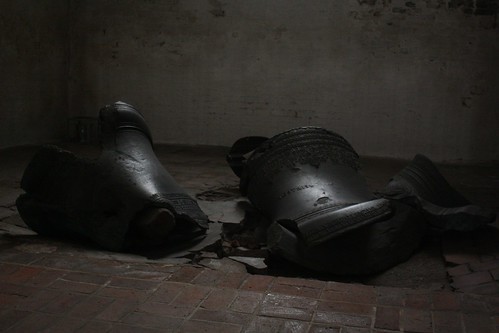
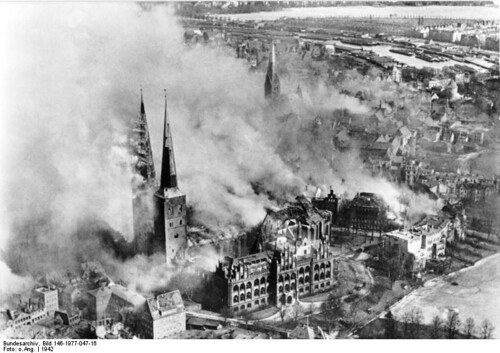
Note: This post was written in March 14-15 and posted after our return. When I think about L beck, the first thing that strikes me is the feeling of history underfoot. It struck me most when we set foot inside the Marienkirche. I had never quite felt a wave of a feeling of stepping back in time like that before. The stones on the floor were uneven and imperfect. L beck has had a wet and snowy winter, so the city had spread sand everywhere: sidewalks and roads. Walking into any grand church, I could hear the sound of sand under the shoes of everyone nearby, and feel it under my own shoes. I think I will long associate with L beck the feeling of walking into a grand old church, looking up at the top of the old building at seemingly impossible heights, while feeling the grit of sand and uneven stone beneath my feet. IMG_2643 Marienkirche isn t perfect, like some American churches I ve been in, such as the Basilica of Notre Dame. It doesn t have a lot of gold, either, and both of these attributes are wonderful. Look at a column of bricks, and you can see that each brick isn t exactly like its neighbor, and the entire column isn t perfectly straight. Lots of things in L beck are so old that they aren t perfectly straight, and it made me think that our American notion of always having to fix such things might be somewhat off sometimes. IMG_2629 Look up, and you see the frescos from the 1300s, revealed after many years after the building was struck by an allied bombing raid in 1942. This heavily damaged the building and knocked down plaster from the walls and ceiling, revealing the old artwork. Many parts of Marienkirche were lost as a result of the bombing, which perhaps adds to its slightly sparse and ancient feel. The church bells were sadly melted and crashed to the ground due to the bombing, and have been left exactly where they fell as a memorial. IMG_2641 Look down, and you see the uneven floor, and the concrete slabs above where important people were buried under the floor an attribute common to many of the churches we visited. It was common to see dates of graves from the 1600s and 1700s, though in some places it would go as far back as the 900s. The main part of the church has no heating or cooling, and visiting it on a day just a bit above freezing adds to the feeling of, well, old. Marienkirche has to be my favorite sight in L beck. Walking around the city, I get a similar feel. Many streets and sidewalks are made of stone. The streets that weren t damaged in the war have rows of beautiful old facades. Walk down many streets, and every so often I d see a little tunnel ( just wide enough for a coffin ) that goes under the street-facing houses to a nice little inner courtyard. These are open to the public, but tend to be very quiet and somewhat private. In the courtyard are smaller houses, which would have originally been used by the less wealthy. We also saw the L beck Dom (cathedral), which had a small museum about the destruction due to the Royal Air Force bombing in 1942. It was very sad to see the photo of the Dom in ruins, still smoking, even now. Burning L beck Cathedral after an air raid in 1942 I can only imagine what it must have felt like to residents of L beck to wake up to see many of their priceless centuries-old landmarks and places of worship so horribly destroyed and all of this for little strategic purpose really focused on the morale of the enemy civil population . It s sad that the allies would do such a short-sighted and terrible thing. Europeans have long had to live with the legacy of war upon war, while we Americans have rarely had to see the consequences of war up close. I think it would be good for more of us to visit these sites and come up face to face with what a bomb can do, and then perhaps we will be more judicious with them in the future. Shifting gears now to where we stayed: Andreas & Sigrid, with whom we stayed, have a beautiful 500-year-old house, with lots of original wood beams exposed, and some very old paintings on the walls and ceilings. Nearby were excellent bakeries and a chocolate shop. Terah and I visited it today and bought some very good chocolate. And this brings me to the second thing I ll remember: Andreas & Sigrid s children, Lukas and Rahel. Now, Terah knows no German, I know only a little bit, and the children know no English. So it was a bit slow getting to know each other to start out, but we managed to work around the communication barrier and had a great time. Terah played board games with Rahel, while with me, she kept inventing games to play: hiding somewhere, saying Hallo! , and laughing at how many unsuccessful attempts I might make to find her. I showed Lukas the camera on my Droid, which he used a lot, though a racing game on Terah s iPod Touch was more exciting. They both enjoyed looking at videos of American trains a bit, but especially pictures of our house and yard with Jacob and Oliver. They tried to teach me the German words for things, and also made futile attempts to correct my pronunciation! When we were leaving today, Rahel came over and gave me a kiss on the hand, then the same to Terah s hand, then a little kiss on one of our suitcases. It was touching and sweet. This was one of those experiences no guidebook prepared me for, and no tour bus would have provided. It is something neat to make friends with children despite the large language barrier. On to the rest of the visit We had arrived a little late into Hamburg. After getting our bags and some Euros at an ATM, the next step was to find the bus to L beck. No signs for it were evident, so I found an information desk. The person at the desk was carrying on a conversation in German with the person ahead of me in line. I figured an information desk person in a busy airport would speak English, and was all ready to ask Sprechen Sie Englisch? , but when I walked up, he got a polite smile, and said, Good morning! How can I help? Guess I m obvious. He directed me to the bus, gave me a brochure about it, and told me what time it would leave. Terah and I found the spot to wait, and for a moment I stepped inside the airport terminal. Terah won t let me forget that someone came up to her and asked a question in German, whereas I was spoken to in English. Anyhow, we found the bus, managed to communicate with the driver that doesn t speak English, and sat next to the friendly person that was talking to Terah. He turned out to be a violin player from Munich, and we had a great conversation for the next hour he asking questions about the USA, us asking questions about Germany and Munich. At one point, he commented, You two are so open minded and you re also Americans! He sounded surprised. We exchanged email addresses at the train station. Andreas found us there, and we walked through the city to his house, with him pointing out the sights along the way. L beck is a beautiful city, and though it was damaged in World War II, much of the really old parts still remain. The famous Holstentor Gate has a museum inside, which was fascinating to visit. On Sunday, we went to church with the family we were staying with, Andreas helpfully translating for us. There I met a British Python programmer, which was fun. His wife is a social worker, which was fun for Terah. Monday it was time to get on the train to Berlin. We again walked through a cold and rainy city to the Hauptbahnhof, ready to head to Berlin. There we got on a train to Hamburg, then an ICE train to Berlin. Despite having just a few minutes for a connection in Hamburg, it all went perfectly smoothly. The train left Leipzig about 10 seconds late the clock inside turned over to the minute, then the doors closed and we were off. Impressive. Note: the rest of my photos from L beck are available on Flickr.

25 March 2010

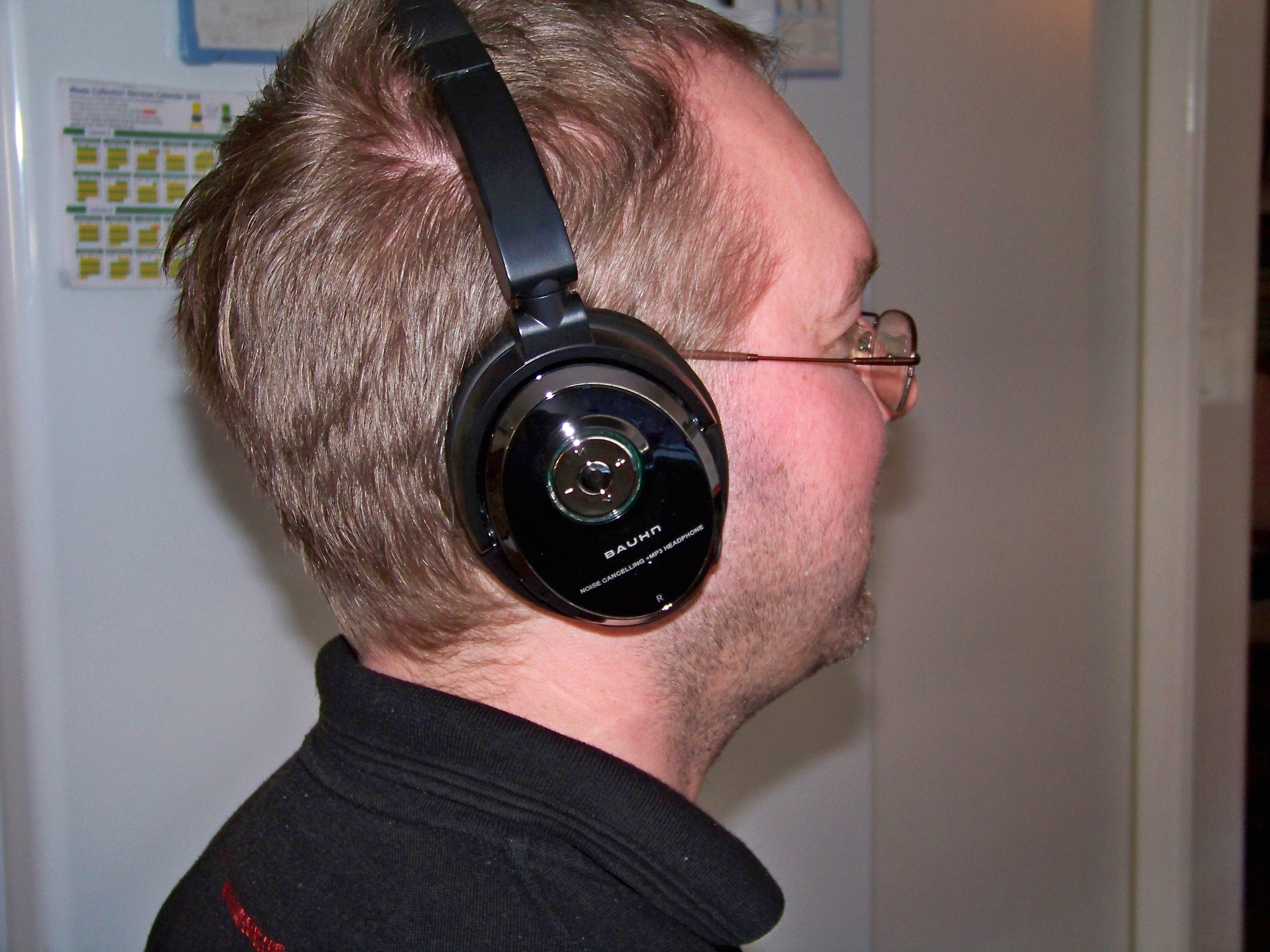
Russell Coker: Bose vs Bauhn/Aldi Noise Canceling Headphones

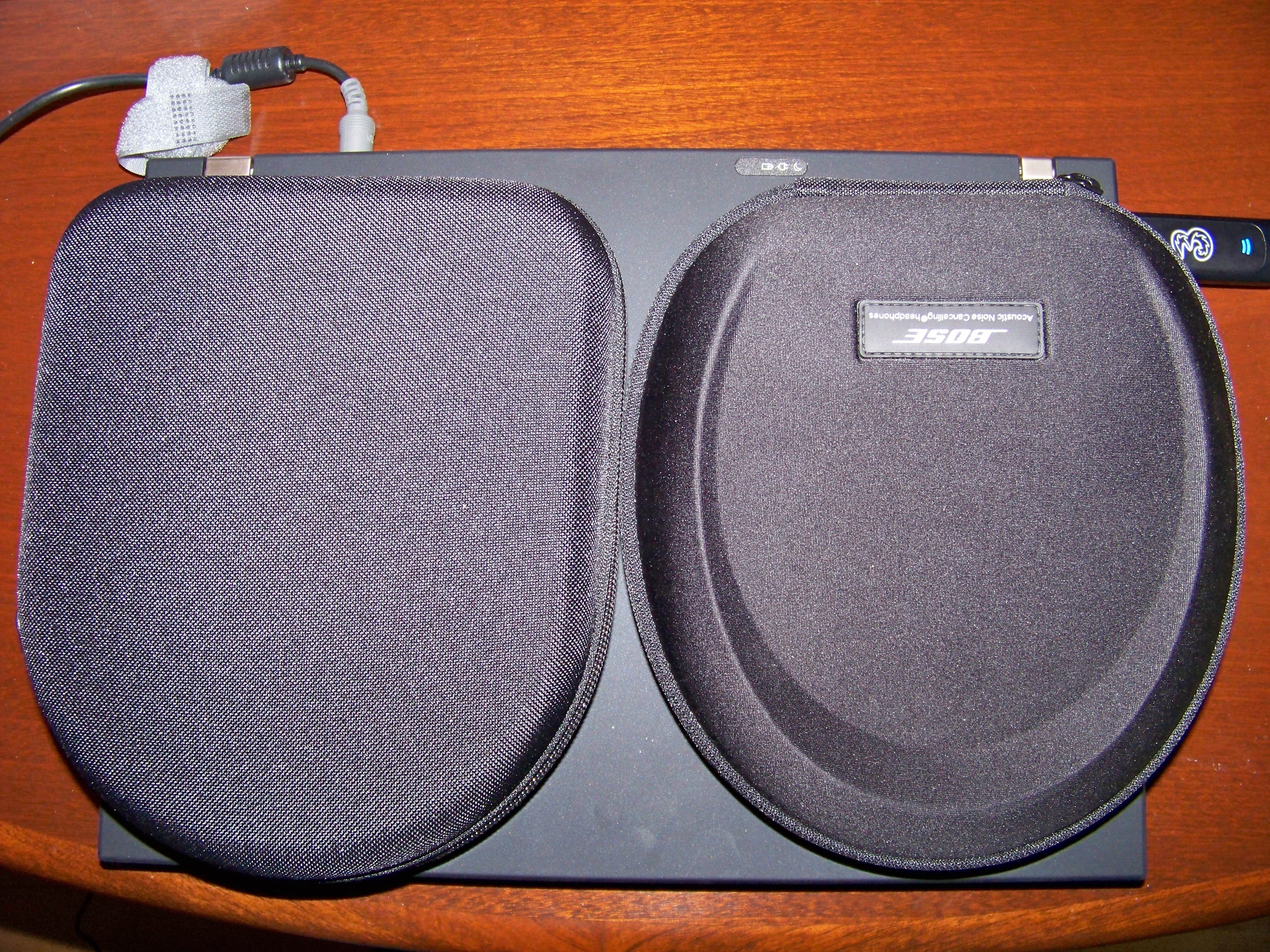
Me wearing Bauhn HeadphonesInside the case of Bauhn Noise Canceling Headphones showing the cable and connectorsOutside of the cases of Bauhn and Bose Headphones Overview The German supermarket chain Aldi has been running in Australia for 8 years now [1]. Their standard practice for a long time has been to offer regular special deals on a few items of consumer electronics every week, my chocolate fridge is one thing I bought from Aldi [2]. Today Aldi have started selling Noise Canceling Headphones [3]. These headphones are badged by Bauhn but that name is apparently applied to random products from cheap manufacturers, it may be an Aldi name that is applied to stuff that they sell. The headphones cost $69AU which is really cheap. But the deal will probably end in less than a week when stock runs out. Noise canceling headphones can be used in server rooms and other noisy environments. Every company that has a server room should buy a few sets. One of the features of noise-canceling is that it works best on low frequencies and on regular sounds it specifically doesn t block human voice well. In some noisy environments it will be easier to hear people talk if you wear such headphones! Noise canceling headphones are also very useful to people who are on the autism spectrum and other people who get more annoyed by noise pollution than average people. I have been wearing my Bose headphones on public transport and when walking around in the city, this not only stops traffic noise but it also helps to avoid people thinking that I want to talk to them. Features The first picture shows me wearing the Bauhn NC headphones, it s from the right to show the controls for the built-in MP3 player. I have not yet tested the MP3 functionality. It appears that as the controls are one power button, buttons for next/previous track, and for controlling the volume. This is fairly poor for MP3 functionality, ideally you would want to have a display to see a list of tracks, maybe have directories to store files, etc. I guess this could be a convenient feature on occasion, but you wouldn t buy the headphones for the MP3 functionality.
The next two pictures show a comparison of the Bauhn headset with the Bose QC-15 headset that I bought last year [4]. The cases of the Bauhn and Bose devices are almost exactly the same size and of a very similar shape, the Bose case is tapered and indented and also has a finer weave on the cloth covering it looks much nicer. Both devices come with an adapter for an airline socket and with a detachable cable. They also both have pouches attached to the inside of the case with velcro. But the Bauhn headphones come with an adapter for the 6.5mm TRS connector which could be convenient if you want to plug them in to a larger amplifier, the basic connector is 3.5mm in both cases. The Bauhn device uses a standard TRS connector at the headphone end while the Bose QC-15 use a special connector that matches the shape of the headset and which has a TRRS plug (to cater for the high/low volume switch), so it seems that a damaged Bauhn cable could be replaced cheaply while a replacement Bose cable would have to be purchased from Bose (presumably at great expense and delay). The Bauhn case also has a velcro attached pocket for storing business cards (or maybe a name tag or something). The supplied cable for the Bauhn is described as being 5 feet long which isn t quite long enough to reach a tower PC that is sitting on the floor. The Bose has a cable that is about a foot longer (maybe 6 feet total), but due to the non-standard connector you can t replace it. I presume that I could easily buy a 4 meter cable for the Bauhn headphones, but I could of course buy an extension cable to use with the Bose. Bose advertise the QC-15 headphones as having 35 hours of battery life from a single AAA battery. Aldi advertise the Bauhn headset as having 5 hours of battery life when NC is turned on and they use two AAA batteries. It s widely regarded that rechargeable batteries don t last as long as the batteries used for estimating the battery life (which presumably are the most expensive long-life batteries available). I ve found a single rechargeable AAA battery to last well over 5 hours in my Bose headphones, so it seems that battery life is considerably worse for the Bauhn device. One feature of the Bauhn device is that it can be used without any batteries for playing external music. The Bose headphones can t be used at all without a battery. So while the Bauhn will use the batteries faster it will at least be usable when the batteries run out. But if you are buying headphones for the purpose of avoiding noise then the Bose headphones are simply better. Comfort The Bose headphones have significantly deeper ear wells than the Bauhn about 23mm vs 18mm. If your ears stick out more than 18mm (as mine apparently do) then this is a good reason for choosing Bose. The Bose headphones are a tighter fit, the spring that pushes the ear-pieces together is stronger. But they have better padding so this doesn t cause me any discomfort. Also the Bose headphones have better passive noise reduction due to having a more snug fit around the ears. I ve worn my Bose headphones on a flight from the US to Australia with hardly a break and they were quite comfortable I would never want to do that with the Bauhn headphones. Noise Reduction I tested the Bose and Bauhn products against three noise scenarios, external music, an air-conditioner, and a car engine. The Bose headphones made good reductions of the noise from the external music (Numb by Linkin Park) and the air-conditioner. The Bauhn headphones did little to stop Linkin Park and was not very effective against the air-conditioner noise. I think that this is largely due to the lack of passive noise reduction, the air-conditioner in question makes little vibration noise and the sound of rushing air is generally immune to active noise cancellation. Both headphones were very effective when in a car with the engine idling. The engine noise of vehicles seems to fall in an ideal frequency range for active cancellation. Music Quality When listening to Youtube music played on my Thinkpad I could not notice any quality difference between the two sets of headphones. I did notice that the Bose headphones seemed to have a greater response in the higher frequency range, but that doesn t necessarily mean that one set is better than the other. Maybe if I was listening to FLAC0 encoded music that I had personally ripped from a CD then I would notice a difference. But for most people the Bauhn music quality should be good enough. Design Quality The Bose product is solidly designed, while the Bauhn product appears cheap in every way. Opening the battery compartment on the Bauhn headphones is difficult and if you do it wrong you could easily break the lid off, I expect that every set of Bauhn headphones that is used by children will be broken in a small amount of time but it should still be fully functional with a broken lid. The matt finish of the Bose headphones should hide minor scratches much better than the shiny Bauhn headphones. The Bauhn headphones also have lower quality plastic parts, it appears that the molds used were designed cheaply and without adequate care to prevent marking the final product. The design flaws that affect usage of the Bauhn product are the shallow ear wells, the poor fit of the cushions around the ears (which is probably mostly due to a weak spring pressing the ear cups to the wearer s head), and the battery compartment lid which is difficult to open and appears prone to breakage. The other flaws are all cosmetic. I wonder whether the Bauhn product was made by one of the big name manufacturers who deliberately reduced the quality to avoid competing with their more expensive products. It seems that the major flaws could have been corrected at design time with almost no increase in manufacturing costs. Recommendations If you can afford the Bose QuietComfort 15 Acoustic Noise Cancelling Headphones then they are really worth the extra expense, I have no regrets at all about spending about $320US (including tax) on my Bose QC-15. The Bauhn product is good for when you want something cheap, for example a set to be used in a server room, or for the use of children. I bought a Bauhn headset for a friend who is a pilot, he spent $1,100 on a noise-canceling headset for his plane but had never got around to buying one for recreational use I expect that he will allow his children to use his new Bauhn headphones, if they get broken it s only a $69 expense. The second cheapest NC headphones I ve seen on offer in Australia is Harvey Norman selling Phillips HN-110 Noise Canceling Headphones for $100AU [5]. Amazon sells Philips HN 110 Folding Noise-Canceling Headphones for $50US but doesn t seem to ship them outside the US (at least not to Australia). JB Hifi also has some NC headphones on sale in Australia [6], but they are more expensive at $219 for AKG and $319 for Sennheiser. Also the models they sell are on-ear which means that they will inherently have very little passive noise reduction and will also annoy anyone who doesn t like having their ears squashed. If I was buying NC headphones for my own use and didn t want to spend $300US then I would either buy the Philips HN 110 Folding Noise-Canceling Headphones from Amazon and get a friend in the US to post them to me or I would buy them from Harvey Norman. But the Bauhn product is good if you want cheap headphones to stop engine noise and give reasonable quality when playing music.

21 March 2010

Robert Collins: LibrePlanet 2010 day 3

Free network services A discussion session led by Bradley Kuhn, Mako & Matt Lee : Libre.fm encouraged last.fm to write an API so they didn t need to screen scrape; outcome of the network services story still unknown netbooks without local productivity apps might now work, most users of network office apps are using them because of collaboration. We have a replacement for twitter status.net, distributed system, but nothing like facebook [yet?]. Bradley says like the original GNU problem, just start writing secure peer to peer network services to offer the things that are currently proprietary. There is perhaps a lack of an architectural vision for replacing these proprietary things: folk are asking how we will replace the cloud aspects of facebook etc tagging photos and other stuff around the web, while not using hosted-by-other-people-services. I stopped at this point to switch sessions the rooms were not in sync session time wise. Mentoring in free software Leslie Hawthorne: Projector not working, so Leslie carried on a discussion carried on from the previous talk about the use of sexual themes in promoting projects/talk content and the like. This is almost certainly best covered by watching the video. A few themes from it though: We then got Leslies actual talk. Sadly I missed the start of it I was outside organising security guards because we had (and boy it was ironic) a very loud, confrontational guy at the front who was replying to every statement and the tone in the room had gotten to the point that a fight was brewing. From where I got back: Chris Ball, Hanna Wallach, Erinn Clark and Denise Paolucci Recruiting/retaining women in free software projects. Not a unique problem to women things that make it better for women can also increase the recruitment and retention of men. Make a lack of diversity a bug; provide onramps small easy bugs in the bug tracker (tagged as such), have a dedicated womens sub project and permit [well behaved :) ] men in there helps build connections into the rest of the project. Make it clear that mistakes are ok. On retention recognise first patches, first commits in newsletters and the like. Call out big things or long wanted features by the person that helped. Regular discussion of patches and fixes rather than just the changelog. CMU did a study on undergrad women participation in CS : Lack of confidence preceeds lack of interest/partipation . Engagement with what they are doing is a key thing too. Women are consistently undervaluing their worth to the free software community . Its the personal touch that seems to make a huge difference . More projects should do a code of conduct kudos to Ubuntu for doing it Chris Ball. I found the mentoring and women-in-free-software talks to have extremely similar themes which is perhaps confirmation or something but it wasn t surprising to me. They were both really good talks though! And thats my coverage of LibrePlanet I m catching a plane after lunch :( . Its a good low-key conference, and well put together.

Next.

Previous.