Search Results: "beh"

30 October 2010

Raphaël Hertzog: Latest features of dpkg-dev: debian packaging tools

I m attending the mini-Debconf Paris and I just gave a talk about the latest improvement of dpkg-dev the package providing the basic tools used to build Debian packages. Latest is a bit stretched since it embraces the last 2-3 years of development. My talk covered the following topics: The slides are relatively verbose so that you can understand them even if you did not attend the talk. Click here to get the slides. Related links This section points to various articles that cover more extensively some of the features mentioned in my talk. Concerning dpkg-source: Concerning dpkg-maintscript-helper: Concerning dpkg-vendor:

Flattr this Share/Bookmark One comment Support my work

28 October 2010

Obey Arthur Liu: Debian & the Google Code-in 2010, requesting tasks

Debian so far had a nice experience with the Google Summer of Code and this year, Google is going to run the Google Code-in. We have applied and would now need some help from you all.
In the words of the official announcement: Google Code-in, Google s contest to introduce pre-university students to the many kinds of contributions that make open source software
development possible, is starting on November 22, 2010. Google is inviting students worldwide to produce a variety of open source code,
documentation, training materials and user experience research for the organizations participating this year. These tasks include: I have applied on behalf of Debian and we now need a series of short tasks (1-2 weeks work) to propose in all these areas.
The selected mentoring organizations will be announced on November 5th 2010.
As you can see, this is an interesting project as the individual tasks are closer in size to an RC bug and encompass a wider range of areas than the Summer of Code. I set up a welcome page and a tasks page.
Please fill in your tasks ideas ASAP. You can also volunteer to help as admin and/or mentor.
We will be using the usual communication channels used for the Summer of Code:

John Goerzen: Rudy Schmidt & Time Capsules

This evening, I arrived at church for mens chorus practice. I was surprised to see this sign on the door:
Rudy Schmidt died rather unexpectedly, but peacefully on Wednesday morning at his home .
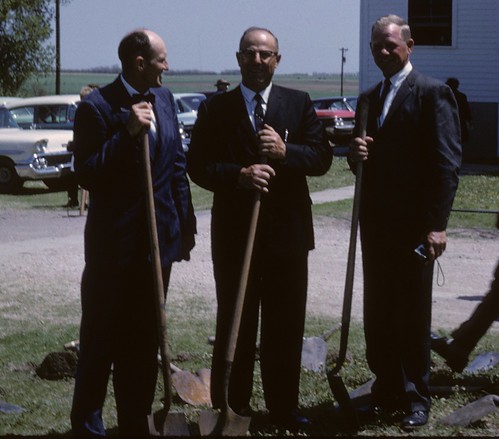
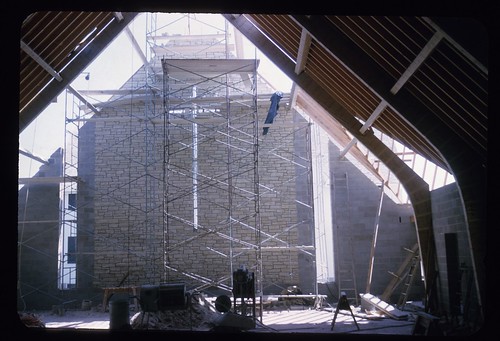
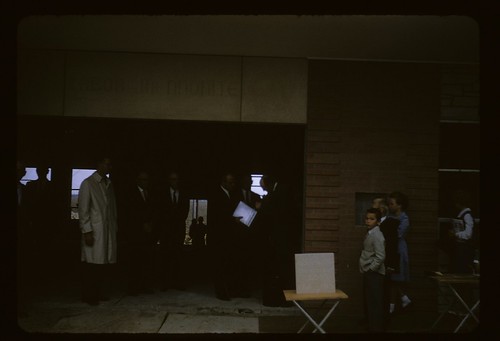
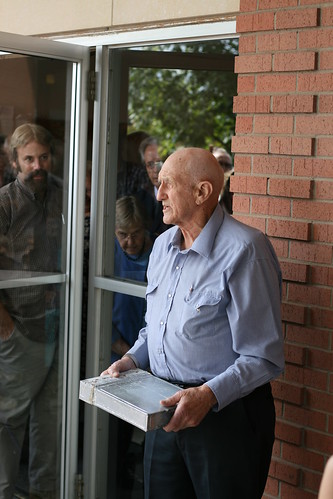
One of the benefits of living in a small community is that I get to know people of all ages around here. Not just people my own age, or coworkers. A few years ago, I worked on a history project for our church s centennial. Back in the 1960s, Rudy was one of the people in charge of building our current church. So he was a person I was interested in visiting with. Here he is, on the left, during the 1964 groundbreaking ceremony for the new building (the old one is visible in the background). 022 stamped may 1964cropped.jpg I and a few others went to his home one time a few years ago and we had a wonderful evening. Rudy shared all sorts of stories with us which I am happy to say I recorded. But moreover, Rudy was an avid photographer. There were some rare and brilliant color slides of the church being built in his collection. He let me borrow and scan some of them. Here are my two favorites: 015 stamped july 1964.jpg 016 stamped oct 1964.jpg Back in 1965, there was a ceremony at the setting of the cornerstone of Tabor Church. The people at the time assembled some papers and memorabilia and put them in a time capsule. Rudy Schmidt sealed the capsule and it was placed in the spot for it behind the cornerstone. Here is a photo of that ceremony. 013 stamped nov 1964.jpg 44 years later, on the occasion of Tabor s centennial, it was time to open the time capsule. The other building committee people, such as Jake Koehn, had passed away, so Rudy was the one to open it. He gave a few words in front of the large crowd, and mentioned that when he sealed it away, he smelled some smoke when he soldered it shut. Jake Koehn told him, Don t worry, nobody will ever see it again anyway and they had a little laugh about it. Now he was going to open it up and see if anything survived. img_6173.jpg It all did just a few minor burn marks. We enjoyed looking at all the items. Then the church placed some new items into the capsule. It was closed up again, to be opened in maybe 50 years. With luck, I ll still be around to see it opened again. Even if I m not, maybe Jacob and Oliver will be able to. And so it seems very fitting that the last hands to touch that box for the next 50 years were Rudy Schmidt s, when he placed it back in its spot on Oct. 12, 2008. img_6243.jpg

26 October 2010

Ingo Juergensmann: Grub on RAID and Configuration

I've been running grub for quite a long time on my machine, but when I rebooted the other day, I noticed that there's currently a problem with the grub installation on my system: it doesn't boot anymore! ;) My machine has 3 drives, with an LVM for the data on a RAID5. Then there is another RAID1 for /boot. This worked all the years quite reliable with grub. Now grub complains that it can't find the kernel anymore. The reason seems to be (from /boot/grub/grub.cfg):
echo 'Loading Linux 2.6.32-5-amd64 ...'
linux /boot/vmlinuz-2.6.32-5-amd64 root=UUID=36213d56-67cf-428d-b801-4171fd9d6943 ro vga=775
echo 'Loading initial ramdisk ...'
initrd /boot/initrd.img-2.6.32-5-amd64
For some reason I don't know there's a /boot in front of /vmlinuz... which prevents loading the kernel. There's a "set root='(md0)'" line in the config as well, but I assume that this is correct, because /dev/md0 is my /boot on RAID0. The rootfs is on /dev/md2, another RAID0. So, I can't set root='md2' because there's no /boot/grub directory in the first place. When I editing the linux and initrd lines in the boot prompt and remove the /boot, everything is fine and my system boots up just fine. Was there an intended change in grub-pc package that causes this behaviour or is ist just a plain bug?

25 October 2010

Jonathan Wiltshire: Facebook groups: a gift to framers

I didn t quite believe what I was seeing until I searched and found several other people noticing the same behaviour. For background, Facebook recently introduced the concept of groups not in the sense we ve been used to, but more like lists. Groups are supposed to be to lists what databases are to bits of paper. You can add friends to groups to organise them, send them group emails, run a collective mailing list, and so on. Except that in practice, this is another really good way of exploiting lazy users. See, there are some things to know about groups: The second point may be wrong it s very unclear exactly what permission is afforded to a group member and when or where information about the group membership is published. Since my day job is in private education, this immediately makes me think of two terrifying scenarios:
  1. A student inadvertently gets added to a large group and nobody notices because there is so much other traffic. Whatever my other privacy settings, anything I or anyone else posted to the group is now visible to him this is the same as the previous group arrangement. The difference is that he can now go on and add anyone else Mark Zuckerberg himself even without any kind of checks by the group administrator. A membership system like this quickly spirals out of control.
  2. Somebody with a grudge maybe I took too long fixing their PC adds me to a group with, shall we say, inappropriate or unsavoury content while I m away on holiday and tips off the child protection officer. Better yet, he first sends an email to all staff expressing horror and asking them to verify this in case it s his computer lying. Now there are multiple witnesses to the fact that I was a member of this group, and I return from the sea side to find a P45 on the door mat.
Unlike free software, I can t fix this. Fortunately, I have: enabled every email notification under the sun; few and trustworthy friends; according to my profile, no interests or contact details whatsoever; and no care for groups. I m happy with my lists, thanks all the same.
Comments flattr this!

Steve Kemp: Delivering to a Maildir folder, but marking as read

Email. We get a lot of it. We filter out the SPAM. Then if we're well-organized we file it away into folders as it arrives. (To be fair some people use priority settings such that all mail stays in their INBOX until they're "done" with it. I've never had the patience for that kind of behaviour.) One problem which I often encounter is wanting to have email be delivered, archived, and stored, but I don't want to read it. Yet when I see a folder in my mail client which has unread mail in it I cannot unsee. In my case I deliver mail to folders as it arrives via either Exim's filter language, or procmail. Procmail blows goats on the whole, but it is common and available everywhere - I just don't trust my own DSL enough to rely upon it (which is a dangerous sign). So, how do you deliver a new mail to a Maildir folder, and mark it read at the same time? Well you can be na ve and do what I did which is to invoke formail to add "Status: ro" to the header. Unfortunately that's insufficient to mark a mail as read when viewed in mutt. When an email is stored in a Maildir folder its status is encoded in part of its filename - which is why you'll have files like:
new/1288039894.28406_3.steve.org.uk
cur/1283711971.11157_3.skx.xen-hosting.net:2,S
The latter file has been Seen. So to mark a message as not-new you need to do two things: I've seen some horrific shell + procmail code to do the job, but the simpler version is:
:0
*^(To: From:).*root@
*^X-added-header:.*debian-administration.org
  ~/bin/read-to-maildir .machines.debian-administration.org/
Similarly you can use Exim's filter language to do the same job:
# Exim filter
if $h_to: contains "hostmaster@" then
    pipe "/home/skx/bin/read-to-maildir /home/steve/Maildir/.hostmaster/"
finish
Cute. Obvious too? Maybe not to me. ObSubject: Why did you murder someone, Raymond? - In Bruges

Raphaël Hertzog: Secret figures of a Debian/Ubuntu blogger: what you liked most on raphaelhertzog.com

Chart goes up on screenI launched raphaelhertzog.com this summer (taking over the English content of my former multi-lingual blog), when I decided that I would be more serious about blogging on Debian/Ubuntu related topics. On September, I decided to write 2 articles per week and up to now I managed to keep the schedule. Two of my articles were published by Linux Weekly News, those are much more researched than the average blog article (they are tagged with [LWN] in the list below). The most popular articles Most people read my blog through the RSS feed which happens to be syndicated on Planet Debian and Planet Ubuntu. According to the feedburner s statistics, the top-5 articles are:
  1. 5 reasons why I still contribute to Debian after 12 years (32700 views)
  2. [LWN] Understanding Membership Structures in Debian and Ubuntu (31700 views)
  3. Social Micropayment Can Foster Free Software, Discover Flattr (30100 views)
  4. Everything you need to know about conffiles: configuration files managed by dpkg (29900 views)
  5. How to make 110.28 EUR in one month with free software and Flattr (29400 views)
But I also have occasional readers visiting my blog because my articles are announced on Identi.ca, Twitter and Facebook (and they circulate on social networks, thanks to those who are sharing them!). The top-5 articles according to the statistics of my website are:
  1. 5 reasons why I still contribute to Debian after 12 years (6000 views)
  2. [LWN] Can Debian offer a Constantly Usable Testing distribution? (5000 views)
  3. Understanding Debian s release process (1500 views)
  4. Flattr FOSS (1400 views, not an article but I regularly blog about this project)
  5. Can Debian achieve world domination without being on Facebook? (1100 views)
The most flattered Since I am using Flattr on my blog, it can be interesting to see the articles which generated lots of flattr micro-donations. The top-3 articles are my articles about Flattr (1, 2, 3). Excluding articles related to Flattr, the top-5 is:
  1. 5 reasons why I still contribute to Debian after 12 years (12 flattr)
  2. The secret plan behind the 3.0 (quilt) Debian source package format (10 flattr)
  3. How to use multiple upstream tarballs in Debian source packages? (5 flattr)
  4. [LWN] Understanding Membership Structures in Debian and Ubuntu (4 flattr)
  5. Do You Want a Free Debian Book? Read on. (4 flattr)
Most articles get 2 to 3 flattr clicks. The most commented I usually get 4-5 comments on most articles but some generate much more feedback:
  1. [LWN] Can Debian offer a Constantly Usable Testing distribution? (40 comments)
  2. 5 reasons why I still contribute to Debian after 12 years (22 comments)
  3. Can Debian achieve world domination without being on Facebook? (15 comments)
  4. How to generate different dependencies on Debian and Ubuntu with a common source package (14 comments)
  5. [LWN] Understanding Membership Structures in Debian and Ubuntu (12 comments)
Factoids Here are my conclusions based on the above figures: If you also appreciate the above-linked articles, you should click here to subscribe to my email newsletter.

Flattr this Share/Bookmark 4 comments Support my work

21 October 2010

Raphaël Hertzog: The secret plan behind the 3.0 (quilt) Debian source package format

New source package formats do wondersWhile I have spent countless hours working on the new source format known as 3.0 (quilt) , I ve just realized that I have never blogged about its features and the reasons that lead me to work on it. Let s fix this. The good old 1.0 format Up to 2008, dpkg-source was only able to cope with a single source format (now named 1.0 ). That format was used since the inception of the project. While it worked fine for most cases, it suffered from a number of limitations mainly because it stored the Debian packaging files as a patch to apply on top of the upstream source tarball. This patch can have two functions: creating the required files in the debian sub-directory and applying changes to the upstream sources. Over time, if the maintainer made several modifications to the upstream source code, they would end up entangled (and undocumented) in this single patch. In order to solve this problem, patch systems were created (dpatch, quilt, simple-patchsys, dbs, ) and many maintainers started using them. Each implementation is slightly different but the basic principle is always the same: store the upstream changes as multiple patches in the debian/patches/ directory and apply them at build-time (and remove them during cleanup). Design goals for the new formats When I started working on the new source package format, I set out to get rid of all the known limitations and to integrate a patch system in dpkg-source. I wanted to clear up the situation so that learning packaging only requires to learn one patch system and would not require modifying debian/rules to use it. I picked quilt because it was popular, came with a large set of features, and was not suffering from NIH syndrome. This lead to the 3.0 (quilt) source format. I also created 3.0 (native) as a distinct format. 1.0 was able to generate two types of source packages (native and non-native) but I did not want to continue with this mistake of mixing both in a single format. The KISS principle dictated that the user should pick the format of his choice, put it in debian/source/format and be done with it. Now the build can rightfully fail when the requirements are not met instead of doing something unexpected as a fallback. Features of 3.0 (quilt) This is the format that replaces the non-native variant of the 1.0 source format. The features below are specific to the new format and differentiate it from its ancestor: Features of 3.0 (native) This format is very similar to the native variant of the 1.0 source format except for two things: Timeline Looking back at the history is interesting. This project already spans multiple years and is not really over until a majority of packages have switched to the new formats. As you can see this project is not over yet, although the most difficult part is already behind me. For my part, the biggest lesson is that you won t ever get enough review until your work is used within unstable. So if you have a Debian project that impacts a lot of people, make sure to organize an official review process from the start. And specifying your project through a Debian Enhancement Proposal is probably the best way to achieve this. If you appreciate the work that I put into this project, feel free to join Flattr and to flattr dpkg from time to time. Or check out my page Support my work .

Flattr this Share/Bookmark 12 comments Support my work

Ian Wienand: Logging POST requests with Apache

After getting a flood of spam, I became suspicious that there was an exploit in my blog software allowing easy robo-posts. Despite a code audit I couldn't see anything, and thus wanted to log the incoming POST requests before any local processing at all. It took me a while to figure out how to do this, hopefully this helps someone else. Firstly install libapache-mod-security, then the magic incarnation is
SecRuleEngine On
SecAuditEngine on
SecAuditLog /var/log/apache2/website-audit.log
SecRequestBodyAccess on
SecAuditLogParts ABIFHZ
SecDefaultAction "nolog,noauditlog,allow,phase:2"
SecRule REQUEST_METHOD "^POST$" "chain,allow,phase:2"
SecRule REQUEST_URI ".*" "auditlog"
So, to break it down a little, the default action says to do nothing during phase 2 (when the body is available for inspection); the allow means that we're indicating that nothing further will happen in any of the remaining phases, so the module can shortcut through them. The two SecRules work together -- the first says that any POST requests should be tested by the next rule (i.e. the chained rule), which in this case says that any request should be sent to the audit log. After that, the similar allow/phase argument again says that nothing further is going to happen in any of the subsequent phases mod_security can work on. As per the parts between A and Z, we'll log the headers, the request body, the final response and trailer. So, as it turns out, there is no exploit; it seems most likely there is an actual human behind the spam that gets through, because every time they take a guess it is correct. So I guess I'll take a glass-half-full kind of approach and rather than being annoyed at removing the spam, I'll just convince myself that I made a small donation from some spam overlord to one of their poor minions!

19 October 2010

MJ Ray: FixTheWeb is Coming!

I travel across the Sedgemoor/North Somerset/Bristol council borders, so I m a big fan of FixMyStreet which puts fault reporting for things like potholes, flytipping and broken lights behind a common interface. Credit to the MySociety charity project, once again. So I m quite happy that something similar is starting for website faults. If you know disabled people who are willing to report web accessibility issues for volunteers to pick up, please let them know they can currently: They will very shortly be able to use a browser toolbar too, which should make things even easier. The core team are intending to launch a website later in November, but there are the usual teething problems.

18 October 2010

Raphaël Hertzog: Understanding Debian s release process

Currently, the main product of the Debian project is its stable release[1]. Those release come out approximately every 18-24 months. This article gives a short overview of the process leading to the next stable release. Creating a new distribution Immediately after a stable release, a new distribution is created in the Debian archive. Its initial content is a copy of the (just released) stable distribution. Its codename is decided by the release managers and there s a tradition of picking a character s name from the Toy Story movie. As an example, the wheezy distribution will be created once squeeze (aka Debian 6.0) is out. For simplicity there s a generic name to refer to the distribution used to prepare the next stable release: it s testing. In the Debian archive, testing is just a symbolic link pointing to the right directory (squeeze currently). Updating packages, working on release goals During most of the cycle, developers work on packaging new upstream versions and implementing release goals. They upload their packages in the unstable distribution. From there packages trickle to the testing distribution once they satisfy some quality checks: they must not have new release-critical bugs, they must have been built on all architectures that were previously supported, they must not break any dependency in testing, and they must have spent at least 10 days in unstable. This minimal period ensures the package has been tested and gives enough time to users to file bugs if the package is suffering from problems. If the problems are deemed release-critical, they will block the migration of the package to testing. During this part of the release cycle, the main work of the release team is ensuring that updated packages flow from unstable to testing. It can be a tricky task: package dependencies frequently tie packages together so that they can only migrate to testing together. If only one of the tied packages is not ready (for example if a new revision has been uploaded and has not spent 10 days in unstable yet), then none of them can migrate. Stabilizing, polishing, fixing release-critical issues The constant churn of new packages makes it very difficult to build a very polished release. That s why, at some point, release managers freeze the testing distribution: automatic updates are stopped and they vet every single update made to testing. They have strong requirements, the goal is to only allow updates fixing release critical bugs, or those which are low-risk and bring significant value to the user experience (like new translations, updated documentation, etc.). During freeze, some packages are also removed because the current upstream version can t be supported for the lifetime of the stable release. The freeze tends to slow down the pace of changes in unstable. Many maintainers opt to push new upstream versions in experimental instead so that if they need to update their packages in testing, they can still do it through unstable. This procedure is recommended by the release managers because it means that updates that they unblock have been tested as usual. It s not the case for updates uploaded directly to testing (through testing-proposed-updates). This behavior is rather annoying for the bleeding-edge users that use testing or unstable like a rolling release. Release time Once release managers are satisfied of the quality of the new distribution, some last minute work is needed, like generating the CD images. In the Debian archive, the release is made official by pointing the stable symbolic link to the new distribution (and the oldstable one to the previous distribution). Now it s party time, the cycle is over, and a new one can start. :-) [1] The Constantly Usable Testing project aims to make testing a first-class product like stable but with a very different update policy.
Follow me on Identi.ca, Twitter and Facebook.

Flattr this Share/Bookmark 3 comments Support my work

17 October 2010

Neil Williams: Migrating debconf settings

I've been trying to work out how to handle (or whether to handle) the vestigial debconf values from emdebian-tools which was replaced in Debian some months ago. I tried to transfer the postrm script to libemdebian-tools-perl which itself is currently a transitional package. Turns out that when debconf tries to purge libemdebian-tools-perl, it doesn't purge the old emdebian-tools settings (it looks for libemdebian-tools-perl.templates instead of emdebian-tools.templates) - unless those were themselves setup by libemdebian-tools-perl. i.e. users with the original emdebian-tools setup will likely have debconf settings that are not purged by removing the package to which those settings should have migrated.

I have reconstructed a bare templates file locally and a simple script that can purge those values and it works on my system - I'm just not sure if this should be implemented in what is now merely a transitional package (libemdebian-tools-perl) which exists merely to support migrating to the current emdebian-crush package.

It's only three fields - single word values - and debconf settings are only a cache after all. Comments are still disabled on my blog but my email address isn't hard to find. If people really think it's worth writing code to "catch-up" with these redundant settings, I can do something after Squeeze. What I don't want to do is reintroduce debconf templates which are no longer used, merely to remove old settings left behind from the first migration.

So, lazyweb, what's the feeling? Is this worth doing anything about?

16 October 2010

Ingo Juergensmann: Upgrading to Squeeze - and suddenly CGI doesn't work anymore

Before I upgraded from Lenny to Squeeze, all my CGI scripts were working properly. The CGI scripts has been executed by Apache and resulted in rendered webpage. After the upgrade to Squeeze all those CGI scripts stopped been executed but instead started to get displayed as a plain text. Common to all those CGI scripts is that they have .phtml as suffix, but the bang path/shebang consists of "#!/usr/bin/python". As an example you can have a look at Buildd.Net and its scripts like this one. The section in Apaches config looks like this:
<Directory /home/builddnet/unstable/WWW/cgi/>
Options -Indexes +ExecCGI +FollowSymLinks
AddHandler cgi-script .cgi .sh .pl .py .phtml
Order allow,deny
Allow from all
</Directory>
So, I would expect that the CGI script handler will get executed when loading a *.phtml file and that the shebang would be honoured. Funny enough: when I rename that script to *.cgi it works. I haven't figured out yet, what causes this beahviour or what have changed during the upgrade - and how to revert to the old behaviour. So, dear lazyweb, can you give me some hints and pointers?

Pietro Abate: hidden ssh service via tor

We live in a nat-ed / firewall-ed world. Almost all DSL providers don't give public IPs and when the do, they are often behind a draconian firewall. In this context having an emergency remote shell, despite not fast and not public is very handy. A simple way to solve this problem it to create a hidden server on the tor network and the access the shell from anywhere in the world without caring of change of IPs, routing, dns or anything else. On debian you can just install tor from the official repository. Since Tor is not available in ubuntu (but it is available on debian), we need to get it directly from the tor website. There is a nice write-up on the ubuntu site : https://help.ubuntu.com/community/Tor . And these are the details on the tor website. So we add this to apt.sources
deb http://deb.torproject.org/torproject.org lucid main
and the we aptitude install tor .The package will install and run by default the tor daemon. Next step is to edit /etc/tor/torrc to add the proxy server.
HiddenServiceDir /var/lib/tor/ssh/
HiddenServicePort 22 127.0.0.1:22
Remember also to install the openssh-server server if you don't have it already. And this is it. In the directory /var/lib/tor/ssh/ you will find a file with the hostname on the TOR ring that you have to use to connect to you new hidden server. On the client side we need to aptitude install connect-proxy. It's a simple tool to tunnel ssh through a socks5 connection. Now you are ready to test. In your ~/.ssh/config you can simply add something like
Host *.onion
ProxyCommand connect -R remote -5 -S 127.0.0.1:9050 %h %p
and then ssh-way youronionhost.onion server . The connection will be veeeeery slow since you are going through different layers of encryption and indirection. You should also check the hostid of your server before connecting and dropping in a pub-key as you should never trust your friendly TOR providers (US govt, Chinese gvt, Iranian govt, etc ...). For emergency is actually pretty handy. For anything else if will make you die of boredom ...

Update Ahhh . It seems I've assumed that since TOR was not available on ubuntu, this was the same on debian. Tor is definitely available on debian, but not on ubuntu. Blah... check before asserting wrong information ! Post fixed.

13 October 2010

Cyril Brulebois: How many

How many bugs can be filed at once? 55 bugs in a row, so that the desired bug number is reached. It took some time to prepare all those reports, which eventually resulted in 55 successive bug numbers, on top of last-reported #599945 at the time, ta-da! I love it when a plan comes together! Just as a reminder, the main idea behind those bug reports is to get as many FTBFSes as possible reported, as previous mentioned. How many X packages can be uploaded between two dinstall runs? 14 packages. Now that things are settling down a bit on the squeeze front, I managed to have a look at X Server 1.9 (more precisely, 1.9.0.901 aka 1.9.1 rc1), which had already been worked on by Christopher James Halse Rogers (thanks!). Uploaded source packages include: So, what about the major (ati/radeon, intel, and nouveau) drivers? More on that later; if you want to test 1.9 with those, pick xserver-xorg-dev from experimental and build your driver against it. Hopefully only a few days should pass before you get an update on that topic. How many times did this blog go haywire? Possibly none, even though it was recently reworked so that http://ikibiki.org/ and http://blog.ikibiki.org/ are distinct. Some d-i or xorg tags may be added to older posts when time allows, but those shouldn t pop up in planet again. Flattr this!

12 October 2010

Matthew Garrett: Unicode 6.0

As Roozbeh noted, Unicode 6.0 came out yesterday. Somewhat fittingly (given it having been National Coming Out Day), it adds
U+1F46C TWO MEN HOLDING HANDS and
U+1F46D TWO WOMEN HOLDING HANDS

Unfortunately most people will probably be looking at small boxes with numbers in there for a while yet, which is probably a wonderful metaphor but I'm not quite sure for what.

I love Unicode. I love that it lets me produce correct typography without having to resort to . I love that it allows for hilarity like Zalgo and years of entertainment in searching for the limits of the LCA conference badge rendering. I'm thrilled that a poorly managed introduction of IDNs let me get away with things like www. .net, and that nobody's got around to taking it away from me yet. And U+1F64C PERSON RAISING BOTH HANDS IN CELEBRATION is going to be a core part of my IRC character set the moment I get a compose map that includes compose+\+o+/. But I also love little things like having the typographical freedom to express whatever kind of relationship I choose to.

Well, providing that it's between two adults. Maybe 6.1 should add combining variants?

11 October 2010

Lars Wirzenius: In defense of Nicole

In the real world, David does not always win over Goliath. That's sad, but it's true. Particularly in the case of a big corporation using its wealth, influence, and minions to stomp down invividuals, to prevent them from reducing those all-important profits. A corporation must profit, by any means necessary. Profit is more important than people. A corporation has exactly as little ethics, morals, conscience, and good behavior as it can get away with. It all pretty much rests the officers, and their personal balance between greed and being good people. While most CEOs and managers and other decision makers in a corporation aren't going to do big evil, say, have people killed, they might not mind being a little bit nasty occasionally. If you have a large corporation, with a culture of profit-worshipping, you'll have a large number of people willing to be a little bit nasty, and that amounts to a lot of nastiness. That's all a long prelude to this: earlier this year, the PTFS corporation bought Liblime, a competitor. They did this to get a controlling interest on Koha, the free software librarary mangament system. Much to their surprise, you can't buy a healthy free software project like that. The community of users and developers of Koha has resisted PTFS's strongarm tactics. PTFS wants control of the code base, version control systems, mailing lists, domains, web pages, wikis, and decision making, but the community doesn't let them. Right now they are attacking Nicole Engard, the documentation manager for the Koha community, spreading lies about her. Nicole is one of the Koha community members who has spoken against PTFS's actions. She also works for a PTFS competitor, another sin against PTFS. This is an unfortunate situation for Nicole, for Koha, and for free software in general. If corporations like PTFS manage to silence their critics by nastiness, then nastiness is a working strategy and will be used more in the future. We need to squash this every time it happens, so it does not spread. However, for PTFS to lose, Nicole will have to have the courage to stand up against even more aggression. In the old world, before the Internet, this would have been quite hard. She would have had to get newspapers interested in her case. PTFS would almost certainly have been able to prevent that, by using their PR muscle to conduct a smear campaign against her. However, with the Internet, it's easier. Anyone can step up and help defend Nicole. That's what this is. I've never actually met Nicole, but in my brief involvement with the Koha community, she was always helpful and professional. She has, personally, helped Koha and free software spread farther than it would otherwise have. She does good. Like pretty much everyone in the Koha community, she is considerate, polite, and just to a fault, even when dealing with those attacking her. PTFS, on the other hand, has done only one honorable thing that I am aware of: they finally released their version of Koha. Every other action from PTFS seems to be an attempt to gain an upper hand by underhanded stratagems. Luckily, they seem to be failing. Let's see if giving more publicity to the attack on Nicole will make it, too, fail. See Nicole's post about this for more information.

10 October 2010

Joey Hess: first real Haskell program

I've finally started writing my first real program in Haskell. I've been learning Haskell since 2007. That is to say, I've been reading about it, over and over. Progress learning has been annoyingly slow because I have not been able to commit to using it in a real program. Because when I'm writing a real program I want the program now, and I can code in other languages ten to one hundred times faster than I can currently code in Haskell. Nasty viscious cycle. Probably best to avoid getting really good at specific programming languages to avoid it, in hindsight. Writing a real program in Haskell is important because I mostly learn by doing real things. Exercises don't work well for me. Up till now the only real thing I did in Haskell was write a 250 line xmonad config file in it. Which really helped a lot, but mostly only with beating some of its syntax into my head. I have a few hundred lines of git-annex done. I don't need this urgently so I am willing to spend a week writing it instead of dashing off a perl version tonight. I seem to have had bad luck on the parts I tackled first, and run into some swampier parts of the Haskell platform. I hope these problems are behind me, they sure made the first 8 hours fun. time First thing I needed was a data structure with a time stamp. There are multiple modules to handle time, mostly seemingly incompatible, deprecated, and/or possibly broken. Data.DateTime seems to be the current choice, but I don't entirely trust it. Check this weird thing out, it thinks that 0 seconds and 1 second after the Unix epoch are the same second.
Data.DateTime> map (toSeconds . fromSeconds) [-1,0,1,2,100,1000,100000,100000,1000000,100000000,100000000,1000000000,10000000000]
[-2,0,0,1,99,999,99999,99999,999999,99999999,99999999,1000000000,10000000000]
Rounding error? (Now it's not all bad... it does support dates right up until the heat death of the universe, on 32 bit even. No Y2038 bug here.) locking Huh, I read RealWorld_Haskell_ twice and never noticed that it seems to omit POSIX file locking. Which in my Real World is a necessity. Probably because it's so hard in Haskell, with multiple gotchas. First there's the lazy IO problem, which means that if you explicitly close a file, code that read from it may not have really run yet. I ended up needing this scariness from System.IO.Strict, which is sadly not packaged in Debian or part of the Haskell Platform:
hGetContentsStrict h  = hGetContents h >>= \s -> length s  seq  return s
Then there's the Haskell's interface for fcntl locking, which exposes rather more of fcntl locking than I like to think about, being spoiled by perl's 2-parameter interface to it.
waitToSetLock lockfd (ReadLock, AbsoluteSeek, 0, 0)
And then there's that lockfd, which is not a regalar file handle, but a fd number, which has to be obtained by calling handleToFd. And then there's the crazy interface that has handleToFd close the input handle! Which is problimatic if you were going to use the file after you locked it..

6 October 2010

Lior Kaplan: a very good day for bidi in openoffice.org

As a follow up on my report from last month about bidi status in openoffice.org 3.3, today was a very good day for bidi in openoffice.org. The short story: two important bugs were fixed for 3.3, and we now have the bidi keyword for IssueZilla system. It began with the fix to a cosmetic bug in the openoffice.org main screen which caused the icons to repaint improperly. While this isn t critical at all, it just looks really bad to have it on the main screen. And I don t want people to get the wrong impression. Thanks you Philipp Lohmann for fixing #97556.
Costmetic bug in oo.org RTL UI

Costmetic bug in oo.org RTL UI

The second bug was that AutoFilter isn t working for RTL sheets (regards whether the UI is LTR or RTL). This issue was reported yesterday and got fixed in 24 hours. Thank you Niklas Nebel for fixing #114944. It took us longer to isolate the bug than to get a patch for it. I wish this will happen more (: For closing, and in response to the bidi meta issue, a new keyword was created in the issuezilla: bidi. Till now, there was a bidi sub component in the UI, but this isn t always helpful as sometimes it s better to report against the actual component. The keyword will help us to better tag the issues for easy listing. The thank you list is long, as there were more than a few people behind the scenes today. I ll only mention Netanel, my partner to the Hebrew l10n team.
Filed under: Israeli Community, LibreOffice, Openoffice.org Tagged: bidi, openoffice

Next.

Previous.