Search Results: "az"

22 April 2012

Robert Collins: Reading list

I ve recently caught up on a bunch of reading some of which are worth commending. Read them all, or none. I enjoyed them all.

21 April 2012

Christian Perrier: 2012 update 20 for Debian Installer localization

Status for D-I level 1 (core D-I files): Status for D-I level 2 (packages that have localized material that may appear during default installs, such as iso-codes, tasksel, etc.): Status for D-I level 3 (packages that have localized material that may appear during non-default installs, such as win32-loader) Full 100% completeness (hall of fame) for 22 languages: Asturian, Belarusian, Bulgarian, Catalan, Czech, German, Esperanto, Spanish, French, Indonesian, Italian, Japanese, Kazakh, Khmer, Dutch, Polish, Portuguese, Russian, Slovak, Swedish, Turkish, Simplified Chinese

19 April 2012

James Morrison: Issues with Appengine

I like App Engine, my wedding website runs on App Engine as well as a couple recent commercial projects. However, there are some annoyances that make a lot of the useful things I learned at Google not applicable.

  1. Chunked responses
    App Engine doesn't have a way of doing chunked responses.
    1.5. Processing after sending the responseMy annoyance here is that I can't send an early response and wait for some resource. Say I want to do 5 url fetches that I cache for a short period of time. If I want to reply in 250ms, I want to use any of the results I've gotten and reply to the user. Then once the rest of the fetches come in, I want to put them in the cache, so they will come back quickly the next time.
  2. Counters
    App Engine has crappy support for counters. You can shard your counters into the datastore: https://developers.google.com/appengine/articles/sharding_counters#counter_python or you can use taskqueues: http://blog.appenginefan.com/2009/10/non-sharded-counters-part-2-using-task.html . Now, how do you graph these counters over time, well, that is left as an exercise for the reader. Google has special datastores for stores and retrieving counters.
  3. Backends
    Backends in appengine are versioned separately from frontends. This sounds like a good idea, but to run the devserver with backends, the backends need to be in the same source tree. Thus backends share the same url space. Backends also share the same app.yaml, so again the url space is shared. Thus, if you make a change that you want to coordinate between the frontend and the backend, you need to change the application version in app.yaml, then rename all the backends in backends.yaml. If backends are supposed to be in the same source tree as frontends, then they should be prefixed with the application version. If backends should be versioned separately from frontends, then they shouldn't share url handlers from app.yaml.
    3.5 Uploading backends is slow
    Each backend is uploaded through appcfg.py separately. So if you are crazy and have one backend per backend level, then you need to upload 4 copies of the source code each time the backends get updated.
  4. Logging
    I want structured logs. Instead what you have to do is use the python logging module to write out human readable logs, then parse them out into the structure you want.
    http://code.google.com/p/google-app-engine-samples/source/browse/trunk/logparser/logparser.py

As a preemptive counter, 1.5 could be dealt with using backends and a background thread, except backends don't scale to the number of queries, so my use case above isn't fixed.

18 April 2012

Paul Tagliamonte: gcc 4.7 patchathon part II

Another day, more patches. This time, it was to the rockn vibes of Chopped. Patch for: In the mean-time, I put together a script for GCC 4.7 transition bugs that are owned by the QA team with patches in the BTS. It s easy as cake to throw together a QA upload, so I encourage anyone out there to do some easy hacking :)

17 April 2012

Tanguy Ortolo: Camera with a standard USB cable?

Digital camera icon Since some years, there has been a movement towards standardization: mobile devices are now using Micro-USB for data transfer and charging, and SD or Micro-SD for storage extension (except Apple of course). One piece is lacking to this perfection, however; as far as I know, digital camera producers did realize that SD won for storage, but they do not seem to have acknowledged the Micro-USB standard yet. Now, since manufacturers and resellers do not indicate the connector type, I have no way to be sure that this is still the case. So, dear lazyweb, do you know if, by chance, there exists a compact digital camera that would use SD cards and a Micro-USB connector for data transfer and integrated charging?

Russell Coker: The Most Important things for running a Reliable Internet Service

One of my clients is currently investigating new hosting arrangements. It s a bit of a complex process because there are lots of architectural issues relating to things such as the storage and backup of some terabytes of data and some serious computation on the data. Among other options we are considering cheap servers in the EX range from Hetzner [1] which provide 3TB of RAID-1 storage per server along with reasonable CPU power and RAM and Amazon EC2 [2]. Hetzner and Amazon aren t the only companies providing services that can be used to solve my client s problems, but they both provide good value for what they provide and we have prior experience with them. To add an extra complication my client did some web research on hosting companies and found that Hetzner wasn t even in the list of reliable hosting companies (whichever list that was). This is in some ways not particularly surprising, Hetzner offers servers without a full management interface (you can t see a serial console or a KVM, you merely get access to reset it) and the best value servers (the only servers to consider for many terabytes of data) have SATA disks which presumably have a lower MTBF than SAS disks. But I don t think that this is a real problem. Even when hardware that s designed for the desktop is run in a server room the reliability tends to be reasonable. My experience is that a desktop PC with two hard drives in a RAID-1 array will give a level of reliability in practice that compares very well to an expensive server with ECC RAM, redundant fans, redundant PSUs, etc. My experience is that the most critical factor for server reliability is management. A server that is designed to be reliable can give very poor uptime if poorly maintained or if there is no rapid way of discovering and fixing problems. But a system that is designed to be cheap can give quite good uptime if well maintained, if problems can be repidly discovered and fixed. A Brief Overview of Managing Servers There are text books about how to manage servers, so obviously I can t cover the topic in detail in a blog post. But here are some quick points. Note that I m not claiming that this list includes everything, please add comments about anything particularly noteworthy that you think I ve missed.
  1. For a server to be well managed it needs to be kept up to date. It s probably a good idea for management to have this on the list of things to do. A plan to check for necessary updates and apply them at fixed times (at least once a week) would be a good thing. My experience is that usually managers don t have anything to do with this and sysadmins either apply patches or not at their own whim.
  2. It is really ideal for people to know how all the software works. For every piece of software that s running it should either have come from a source that provides some degree of support (EG a Linux distribution) or be maintained by someone who knows it well. When you install custom software from people who become unavailable then it puts the reliability of the entire system at risk if anything breaks then you won t be able to get it fixed quickly.
  3. It should be possible to rapidly discover problems, having a client phone you to tell you that your web site is offline is a bad thing. Ideally you will have software like Nagios monitoring the network and reporting problems via a SMS gateway service such as ClickaTell.com. I am not sure that Nagios is the best network monitoring system or that ClickaTell is the best SMS gateway, but they have both worked well in my experience. If you think that there are better options for either of those then please write a comment.
  4. It should be possible to rapidly fix problems. That means that a sysadmin must be available 24*7 to respond to SMS and you must have a backup sysadmin for when the main person takes a holiday, or ideally two backup sysadmins so that if one is on holiday and another has an emergency then problems can still be fixed. Another thing to consider is that an increasing number of hotels, resorts, and cruise ships are providing net access. So you could decrease your need for backup sysadmins if you give a holiday bonus to a sysadmin who uses a hotel, resort, or cruise ship that has good net access. ;)
  5. If it seems likely that there may be some staff changes then it s a really good idea to hire a potential replacement on a casual basis so that they can learn how things work. There have been a few occasions when I started a sysadmin contract after the old sysadmin ceased being on speaking terms with the company owner. This made it difficult for me to learn what s going on.
  6. If your network is in any way complex (IE it s something that needs some skill to manage) then it will probably be impossible to hire someone who has experience in all the areas of technology at a salary you are prepared to pay. So you should assume that whoever you hire will do some learning on the job. This isn t necessarily a problem but is something that needs to be considered. If you use some unusual hardware or software and want it to run reliably then you should have a spare system for testing so that the types of mistake which are typically made in the learning process are not made on your production network.
Conclusion If you have a business which depends on running servers on the Internet and you don t do all the things in the above list then the reliability of a service like Hetzner probably isn t going to be an issue at all. Related posts:
  1. Servers vs Phones Hetzner have recently updated their offerings to include servers with...
  2. Why Internet Access in Australia Sucks In a comment on my post about (relatively) Cheap Net...
  3. The National Cost of Slow Internet Access Australia has slow Internet access when compared to other first-world...

14 April 2012

Craig Small: PHP floats and locales

I recently had a bug report in jffnms that the SLA checks were failing with bizarre calculations. Things like 300% disk drive utilization and the like. Briefly, JFFNMS is written in PHP and checks values that come out of rrdtool and makes various comparisons like have you used more than 80% of your disk or have there been too many errors. The logs showed strange input variables coming in, all were integers below 10. I don t know of many 1 or 3 kB sized disk drives. What was going on? I ran a rrdtool fetch command on the relevant file and got output of something like 1,780000e+07 which for an 18GB drive seemed ok. Notice the comma, in this locale that s a decimal point hmm. In lib/api.rrdtool.inc.php there is this line around the rrdtool_fetch area:
$value[] = ($line1[$i]=="nan")?0:(float)$line1[$i];
A quick check and I was finding that my 1,7 e+07 was coming back as 1. We had a float conversion problem. Or more specifically, php has a float conversion problem. I built a small check script like the following:
setlocale(LC_NUMERIC,'pl_PL.UTF-8');
$linfo = localeconv();
$pi='3,14';
print "Decimal is \"$linfo[decimal_point]\". Pi is $pi and ".(float)($pi)."\n";
print "Half is ".(1/2)."\n";
Which gave the output of:
Decimal is , . Pi is 3,14 and 3 Half is 0,5
So PHP is saying that decimal point is a comma and it uses it BUT if a string comes in with a comma, its not a decimal point. Really?? Are they serious here? I tried various combinations and could not make it parse correctly. The fix was made easier for me because I know rrdtool fetch only outputs values in scientific notation. That means if there is a string with a comma, then it must be a decimal point as it could never be used for a thousands mark. By using str_replace to replace any comma with a period the code worked again and didn t even need the locale to be set correctly, or that the locale for the shell where rrdtool is run is the same as the locale in php.

Craig Sanders: why is bzr so slow?

from the whinge of the day dept: I started a bzr branch of calibre about 2.5 hours ago because I wanted to see how difficult it would be to understand the code and make a few changes. The calibre Get Involved page warns that it can take about an hour .which is excessive to begin with and, worse, a huge understatement.
$ date ; ps u -Cbzr
Sat Apr 14 15:10:00 EST 2012
USER       PID %CPU %MEM    VSZ   RSS TTY      STAT START   TIME COMMAND
cas      14279  3.0  1.3 286836 215976 pts/3   S+   12:39   4:36 /usr/bin/python /usr/bin/bzr branch lp:calibre
It's still far from finished.
cas@ganesh:/usr/local/src/calibre$ bzr branch lp:calibre
You have not informed bzr of your Launchpad ID, and you must do this to
write to Launchpad or access private data.  See "bzr help launchpad-login".
1395260kB    65kB/s - Fetching revisions:Inserting stream:Estimate 178815/203940
a git clone of a much larger project would have been finished in mere minutes. WTF is bzr so horrendously slow? It's not my connection, I'm on an otherwise idle ADSL2 connection, that syncs about 14Mbps. i.e. capable of downloads of up 1.4 megabytes per second, not the 50-70kB/s that bzr is dawdling along at. It's not my CPU, an AMD 1090T hex-core overclocked to 3.7GHz (and almost completely idle) and since I have 16GB RAM, it's not lack of RAM either. Is there anything good about bzr that makes people actually want to use it? or is it just the association with ununtu and launchpad? maybe the purpose is to actively discourage casual involvement .you have to make a massive life commitment and run the gauntlet of tediously long waits before you can even look at the code. No wonder github is so popular. why is bzr so slow? is a post from: Errata

13 April 2012

David Welton: Mr. Blank, we're outside the building, and we want eBooks!

Steve Blank is known for his teachings on the Silicon Valley type of entrepreneurship, with his ideas forming the basis for the "lean startup movement" amongst other things. He writes frequently on entrepreneurship, and with a great deal of credibility, having been involved in various startups in a number of roles. He has, without a doubt, walked the walk in terms of startups, and now seems to be spending his time helping other people learn how to walk the same path. That's a noble thing to be doing when, with the money he's made, he could probably be off doing pretty much whatever he wants. If you've heard of Steve Blank, you've probably also heard his famous phrase: "get out of the building", an admonition to startup founders to get out and talk with their customers to validate their ideas, rather than huddling in their offices building something that may or may not have a market. With that in mind, when I saw he had a new book out, The Startup Owner's Manual, I thought "great, that's one I'll get without hesitating!". Unfortunately, though, an eBook wont' be out until "2nd half of 2012"! Ouch. To me, his ignoring eBooks is indicative of a need to get a bit further outside the building, though. "I want an eBook" was probably the biggest request on his blog post announcing the new book, along side messages of thanks for writing the book. After reading, on Blank's blog about the availability of the book from BookDepository Ltd, who offer free worldwide shipping, I went ahead and ordered it even if I would have prefered the eBook. Since they're in the UK, and I'm in Italy, I figure it can't take that long, right? Wrong. I ordered on March 15th, and as of April 13th, it still isn't here. Compare and contrast with the other books I'm currently reading which I was able to order and start looking at in just a few minutes on my Kindle. Granted, Steve Blank surely isn't doing this for the money, and from that point of view has little real need to listen to his customers - it's not wrong to say he's doing the world a favor by writing the book in the first place. If he thinks a paper version is far superior, that's his perogative. However, I think he's doing a lot of his readers a disservice by not making the eBook available sooner. I know I would have liked to start reading what he had to say last month, rather than waiting for a paper book to make its way (by mule train?) down here to Italy. The crux of the matter is that while he may well be right in thinking a paper book is "better", for some people, an eBook is the only option, and for them, an "inferior" eBook is a heck of a lot better than no book at all. Also, on a more constructive note, with eBooks, you can get pretty creative. For instance, if you have a tabular worksheet, you can simply hyperlink to it in, say, Google Docs, so that those with more advanced devices like iPads can open up the link and start working with a real, live spreadsheet immediately, rather than a chart in a printed book. Granted, that means 'giving away' the worksheet, but presumably it's not that valuable on its own, and makes for great advertising if it gets a lot of attention. Finally, since I actually run a business that does eBook conversions , on the blog post announcing the book, I offered to donate our services, so he'd get his book done for free, so you can't accuse me of just complaining! Mr. Blank, get out of that building and make an eBook available, please!

Peter Eisentraut: Enabling core files for PostgreSQL on Debian

The other day, I was a bit puzzled over a seemingly simple task: Enable core files to be generated from a PostgreSQL instance running on Debian. That instance has unfortunately been segfaulting on occasion, but never left a core file.

Now in principle it is clear that
ulimit -c unlimited
is the incantation to get this done. But where do you put this? You could hack it into the init script, but that seemed a bit ugly, and I wanted a sustainable solution.

A useful thing in the meantime is to check the current settings. That information is available in /proc/$PID/limits with the PID of the postmaster process (or any child process, really), and it looked like this to begin with:
Limit                     Soft Limit           Hard Limit           Units     
Max cpu time unlimited unlimited ms
Max file size unlimited unlimited bytes
Max data size unlimited unlimited bytes
Max stack size 8388608 unlimited bytes
Max core file size 0 unlimited bytes
...
Use sudo grep core /proc/$(sudo cat /var/run/postgresql/8.4-main.pid)/limits if you want it automated.

So it's good to know that we only need to set the soft limit.

One way to configure this properly would appear to be in /etc/security/limits.conf. There you can add a line like
*               soft    core            unlimited
to enable core dumps globally. I'm not actually sure whether that would work if the service is started during the boot without PAM. In any case, I didn't want to enable core files globally; who knows what that would lead to.

One could replace the * by a user name, such as postgres, and then enable pam_limits.so in /etc/pam.d/su. But the postgresql init script in Debian is nested about four levels deep, so it wasn't clear whether it called su at all.

Now as it turns out, the init script ends up changing the user using this Perl code:
$) = $groups;
$( = $gid;
$> = $< = $uid;
(see change_ugid in /usr/share/postgresql-common/PgCommon.pm), so the whole PAM line of thought wasn't going to work anyway. (Other packages such as pgbouncer and slony1 do got through su, so that would be a solution for those.)

The way to solve this is the pg_ctl -c option, which sets the soft limit for core files to unlimited. And the way to pass this option through the init script maze is the file /etc/postgresql/8.4/main/pg_ctl.conf, which should contain a line like this:
pg_ctl_options = '-c'
Then restart postgresql, and check /proc/$PID/limits again:
Limit                     Soft Limit           Hard Limit           Units     
Max cpu time unlimited unlimited ms
Max file size unlimited unlimited bytes
Max data size unlimited unlimited bytes
Max stack size 8388608 unlimited bytes
Max core file size unlimited unlimited bytes
OK.

Another thing that's recommendable in this context is to change the core file names to have a unique element, so that if multiple backends crash before you can take a look, they don't overwrite each other's core files. The core(7) man page explains the configuration options; I went with this sysctl setting:
kernel.core_pattern = core.%e.%p
which includes process name and PID. The PID file still ends up in the data directory of the PostgreSQL instance, which could also be changed, but I didn't find it necessary.

Stick the above line in /etc/sysctl.d/local.conf and reload with
service procps force-reload
I actually use a setting like that on all machines now; it's just nicer.

OK, and now I'll wait for the next core file. Or not.

11 April 2012

Erich Schubert: Are likes still worth anything?

When Facebook became "the next big thing", you had the "like" buttons pop up on various web sites. An of course "going viral" was the big thing everybody talked about, in particular SEO experts (or those that would like to be that).
But things have changed. In particular Facebook has. In the beginning, any "like" would be announced in the newsfeed to all your friends. This was what allowed likes to go viral, when your friends re-liked the link. This is what made it attractive to have like buttons on your web pages. (Note that I'm not referring to "likes" of a single Facebook post; they are something quite different!)
Once that everybody "knew" how important this was, everbody tried to make the most out of it. In particular scammers, viruses and SEO people. Every other day, some clickjacking application would flood Facebook with likes. Every backwater website was trying to get more audience by getting "liked". But at some point Facebook just stopped showing "likes". This is not bad. It is the obvious reaction when people get too annoyed by the constant "like spam". Facebook had to put an end to this.

But now that a "like" is pretty much worthless (in my opinion). Still, many people following "SEO Tutorials" are all crazy about likes. Instead, we should reconsider whether we really want to slow down our site loading by having like buttons on every page. A like button is not as lightweight as you might think it is. It's a complex JavaScript that tries to detect clickjacking attacks, and in fact invades your users' privacy, up to the point where for example in Germany it may even be illegal to use the Facebook like button on a web site.
In a few months, the SEO people will realize that the "like"s are a fad now, and will likely all try to jump the Google+ bandwagon. Google+ is probably not half as much a "dud" as many think it is (because their friends are still on Facebook and because you cannot scribble birthday wishes on a wall in Google+). The point is that Google can actually use the "+1" likes to improve everyday search results. Google for something a friend liked, and it will show up higher in the search results, and Google will show the friend who recommended it. Facebook cannot do this, because it is not a search engine (well, you can use it for searching people, although Ark probably is better at this, and one does nowhere search as many people as one does regular web searches). Unless they go into a strong partnership with Microsoft Bing or Yahoo, the "like"s can never be as important as Google "+1" likes. So don't underestimate the Google+ strategy on the long run.
There are more points where Facebook by now is much less useful as it used to be. For example event invitations. When Facebook was in full growth, you could essentially invite all your friends to your events. You could also use lists to organize your friends, and invite only the appropriate subset, if you cared enough. The problem again was: nobody cared enough. Everybody would just invite all their friends, and you would end up getting "invitation spam" several times a day. So again Facebook had to change and limit the invitation capabilities. You can no longer invite all, or even just all on one particular list. There are some tools and tricks that can work around this to some extend, but once everybody uses that, Facebook will just have to cut it down even further.
Similarly, you might remember "superpoke" and all the "gift" applications. Facebook (and the app makers) probably made a fortune on them with premium pokes and gifts. But then this too reached a level that started to annoy the users, so they had to cut down the ability of applications to post to walls. And boom, this segment essentially imploded. I havn't seen numbers on Facebook gaming, and I figure that by doing some special setup for the games Facebook managed to keep them somewhat happy. But many will remember the time when the newsfeed would be full of Farmville and Mafia Wars crap ... it just does no longer work this way.

So when working with Facebook and such, you really need to be on the move. Right now it seems that groups and applications are more useful to get that viral dream going. A couple of apps such as Yahoo currently require you to install their app (which then may post to your wall on your behalf and get your personal information!) to follow a link shared this way, and then can actively encourage you to reshare. And messages sent to a "Facebook group" are more likely to reach people that aren't direct friends of yours. When friends actually "join" an event, this is currently showing up in the news feed. But all of this can change with 0 days notice.
It will be interesting to see if Facebook can on the long run keep up with Googles ability to integrate the +1 likes into search results. It probably takes just a few success stories in the SEO community to become the "next big thing" in SEO to get +1 instead of Facebook likes. Then Google just has to wait for them to virally spread +1 adoption. Google can wait - its Google Plus growth rates aren't bad, and they have a working business model already that doesn't rely on the extra growth - they are big already and make good profits.
Facebook however is walking on a surprisingly thin line. They need a tight control on the amount of data shared (which is probably why they try to do this with "magic"). People don't want to have the impression that Facebook is hiding something from them (although it is in fact suppressing a huge part of your friends activity!), but they also don't want to get all this data spammed onto them. And in particular, it needs to give the web publishers and app developers the right amount of that extra access to the users, while in turn keeping the major spam away from the users.

Independent of the technology and actual products, it will be really interesting to see if we manage to find some way to keep the balance in "social" one-to-many communication right. It's not a fault of Facebook that many people "spam" all their friends with all their "data". Googles Circles probably isn't the final answer either. The reason why email still works rather well was probably because it makes one-to-one communication easier than one-to-many, because it isn't realtime, and because people expect you to put enough effort into composing your mails and choosing the right receipients for the message. Current "social" communication is pretty much posting everything to everyone you know adressed as "to whoever it may concern". Much of it is in fact pretty non-personal or even non-social. We have definitely reached the point where more data is shared than is being read. Twitter is probably the most extreme example of a "write-only" medium. The average number a tweet is read by a human except the original poster must be way below 1, and definitely much less than the average number of "followers".
So in the end, the answer may actually be a good automatic address book, with automatic groups and rich clients, to enable everybody to easily use email more efficiently. On the other hand, separting "serious" communication from "entertainment" communication may be well worth having a separate communications channel, and email definitely is dated and is having spam problems.

Craig Sanders: comments working again

how embarassing, i make a point of asking for comments and critique on my previous post but comments didn't actually work unless you're logged in. I only noticed because someone emailed me. It was the admin-ssl plugin. de-activated now, so comments are working again. A few people tried to add comments according to the log if you feel like making them again, go right ahead. thanks Craig comments working again is a post from: Errata

9 April 2012

Craig Sanders: getting the terminal size in python

I m finally getting around to making myself learn python as more than just a read-only language. Working with Openstack kind of requires it. So far, I like it. Much more than I thought I would as an unrepentant sh and perl using systems geek. And getting over my distaste for the white-space issue is also proving to be much easier than I thought it would (although I still think that block-delimiters like make the code easier to read PyHeresy, I know) While hacking the /usr/bin/glance command to have less ugly output, and adding a csv option to list the image index in a usefully parseable format, I needed to figure out how to get the terminal size (height,width). This, cobbled together from various google search results, seems to work. It s probably not strictly-correct python idiom, and there s probably a better way of doing it. Comments and critique are welcome.
def get_terminal_size(fd=1):
    """
    Returns height and width of current terminal. First tries to get
    size via termios.TIOCGWINSZ, then from environment. Defaults to 25
    lines x 80 columns if both methods fail.
 
    :param fd: file descriptor (default: 1=stdout)
    """
    try:
        import fcntl, termios, struct
        hw = struct.unpack('hh', fcntl.ioctl(fd, termios.TIOCGWINSZ, '1234'))
    except:
        try:
            hw = (os.environ['LINES'], os.environ['COLUMNS'])
        except:  
            hw = (25, 80)
 
    return hw
 
def get_terminal_height(fd=1):
    """
    Returns height of terminal if it is a tty, 999 otherwise
 
    :param fd: file descriptor (default: 1=stdout)
    """
    if os.isatty(fd):
        height = get_terminal_size(fd)[0]
    else:
        height = 999
 
    return height
 
def get_terminal_width(fd=1):
    """
    Returns width of terminal if it is a tty, 999 otherwise
 
    :param fd: file descriptor (default: 1=stdout)
    """
    if os.isatty(fd):
        width = get_terminal_size(fd)[1]
    else:
        width = 999
 
    return width
getting the terminal size in python is a post from: Errata

8 April 2012

Christian Perrier: 2012 update 19 for Debian Installer localization

Status for D-I level 1 (core D-I files): Status for D-I level 2 (packages that have localized material that may appear during default installs, such as iso-codes, tasksel, etc.): Status for D-I level 3 (packages that have localized material that may appear during non-default installs, such as win32-loader) Full 100% completeness (hall of fame) for 21 languages: Belarusian, Bulgarian, Catalan, Czech, German, Esperanto, Spanish, French, Indonesian, Italian, Japanese, Kazakh, Khmer, Dutch, Polish, Portuguese, Russian, Slovak, Swedish, Turkish, Simplified Chinese

John Goerzen: 26 Hours At The Creek

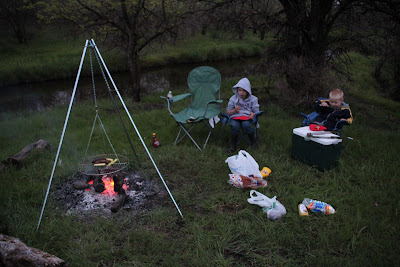
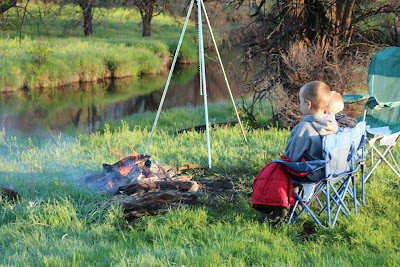
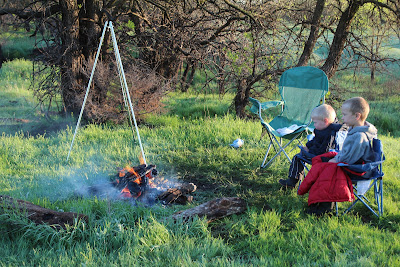
I m back from one of the best experiences a father can have a whole day with two happy boys. I took Jacob (5) and Oliver (2) camping with me out by our creek. This was the first time we d camped there, and also the first time I d taken the boys camping without Terah along. So there were some unknowns, but it worked out great. When we got out there, I started to get the tents set up. The boys were interested, but pretty soon invented some games. A large nearby tree with plenty of low branches on its trunk became their locomotive, and certain sticks made the train go forward or backward, whistle, or ding its bell. This was good for quite some entertainment. Another nearby tree, near the bank of the creek, had some erosion near it. Combined with its roots, this made some natural steps. Jacob named some the enter steps and others the exit steps , and I sure heard about it if I walked the wrong way on the exit steps. We then gathered up sticks and the things we needed to build a campfire. We cooked up brats and zucchini. Although it was later than usual for supper, they loved it just the same. After that, we made smores for dessert another thing they loved. Then, one of the big highlights: sleeping in tents and sleeping bags. I had showed them the sleeping bags earlier, and they were excited to try them out. Morning was beautiful when the sun came out, it was shining right on the heavy dew on the ground, making the grass shine brightly. It s not every day that they get to start their morning slowly waking up by a warm fire. They were content to sit for quite awhile while I got things going for breakfast. It was chilly outside, so I helped them change clothes by the fire where. I then cooked them some scrambled eggs which, despite the lack of salt and pepper, seemed so much better than normal to the boys and then we went exploring. I took them to some areas with erosion, which Jacob called the big holes in the ground. It s really quite beautiful in spring, which this cellphone photo completely fails to capture. The boys loved climbing up and down these areas, some of which were quite tall. They discovered different kinds of rock on the way up and down, and with my help avoided discovering too much of the mud at the bottom. We hiked back to our camping spot through grass almost as tall as Oliver much to his delight and then after warming up by the fire for a bit, went off in the other direction. There is a grove of trees by the creek over there, which surprise became another train. Here are the boys explaining how it works. <iframe allowfullscreen="allowfullscreen" frameborder="0" height="315" src="https://www.youtube.com/embed/43EcEK8F_ic?rel=0" width="560"></iframe> They helped pack things back up, too. Actually, it took some convincing to get Jacob to not pull up all the stakes for the tent before I was ready for them. Things didn t go perfectly, but then, they never do, and that was OK with everyone. Camping is an adventure, and it wouldn t be an adventure if you knew every detail beforehand. It is rare in life to be able to think that I have enough time to do anything the boys might want to do. Spend half an hour pretending a tree is a train sure, no problem. Today Oliver asked to go camping again, and was a bit disappointed when I didn t agree to go camping again right this minute, today. Jacob said, we had an EXCELLENT time and gave me hugs thinking about it. I have a lot of happy memories about the creek. We camped at the same spot where I went fishing or camped as a child. There have been family gatherings and even a birthday party out there. The boys and I have enjoyed a hike or a wagon ride to the area, but as I learned, nothing could possibly match the excitement of camping there. It is wonderful to add another happy memory of a time at the creek. And it s even better to see another generation of Goerzens discover that there s a lot of fun to be had down by the creek.

4 April 2012

James Bromberger: Goodbye Linux.2.6.x

It s taken some time, but now none of my personal Linux hosts (4 in total) are running the 2.6 kernel any more. From the start (January) my company web host on Amazon EC2 has been running a 3.x kernel. My little Acer Aspire Revo low power home server, with attached disk pack that sits in my shed in a network cabinet has run 3.x for the last 6 months or so. My Linux laptop (Dell Studio 1558) which only recently got installed (and, since removing Windows, hasn t overheated once!) went to 3.x immediately. And the last piece of the puzzel is a virtual machine I ve had for many years with Bytemark.co.uk they re now offering a 3.2 kernel in their menu of selectable kernels. Not that 3.x is that much different than 2.6.3x; but its a line in the sand of feature and security thats easy to identify. But with nearly 15 years of looking at a 2.x kernel, its about time we moved to 3.x!

Christian Perrier: 2012 update 18 for Debian Installer localization

Status for D-I level 1 (core D-I files): Status for D-I level 2 (packages that have localized material that may appear during default installs, such as iso-codes, tasksel, etc.): Status for D-I level 3 (packages that have localized material that may appear during non-default installs, such as win32-loader) Full 100% completeness (hall of fame) for 19 languages: Belarusian, Bulgarian, Catalan, Czech, German, Spanish, French, Indonesian, Italian, Japanese, Kazakh, Dutch, Polish, Portuguese, Russian, Slovak, Swedish, Turkish, Simplified Chinese

31 March 2012

Craig Sanders: rsync and .zfs snapshot directories

zfsonlinux recently added support for visible .zfs snapshot directories, so you no longer have to mount a snapshot to browse/view/recover files from it. This is good, but has caused my rsync backup to zfs script to complain about being unable to delete files in the .zfs directory (which is in the backup but not in the source). e.g.
sending incremental file list
rsync: delete_file: unlink(.zfs/snapshot/2012-03-31/vmlinuz.old) failed: Read-only file system (30)
rsync: delete_file: unlink(.zfs/snapshot/2012-03-31/vmlinuz) failed: Read-only file system (30)
[...]
cannot delete non-empty directory: .zfs/snapshot/2012-03-31
rsync: delete_file: rmdir(.zfs/snapshot/2012-03-31) failed: Device or resource busy (16)
rsync: delete_file: unlink(.zfs/snapshot/2012-03-30/vmlinuz.old) failed: Read-only file system (30)
rsync: delete_file: unlink(.zfs/snapshot/2012-03-30/vmlinuz) failed: Read-only file system (30)
[...]
The solution is to tell rsync to ignore .zfs directories on the destination. 1. use the -F option to make rsync use /.rsync-filter
2. create or add the following line to /.rsync-filter
-r .zfs/***
-s .zfs/***
On the first line, the - makes it an exclude rule, and the r indicates that the rule applies to the receiving side. Together, -r prevents rsync from attempting to delete the .zfs directories On the second line, the -s indicates that the rule applies to the sending side, preventing rsync from trying to backup any .zfs snapshot directories. This is only useful when backing up a ZFS filesystem. rsync and .zfs snapshot directories is a post from: Errata

Christian Perrier: Languages to be deactivated in Debian Installer

If I follow the policy we chose in D-I, I should deactivate languages that are not complete for what we call "sublevel 1" and "sublevel 2" in code Debian Installer. At this very moment, it means that I would deactivate (stats in parenthesis are those in these sublevels, respectively): For several of these, the fix is easy! So, even if you're not the person in charge officially for the said language, please get in touch with me (bubulle@d.o) if you want to complete the translation. For some of these languages, where contact with the translator in charge has apparently been lost, it could be their only chance to stay in wheezy.

27 March 2012

Christian Perrier: 2012 update 17 for Debian Installer localization

Status for D-I level 1 (core D-I files): Status for D-I level 2 (packages that have localized material that may appear during default installs, such as iso-codes, tasksel, etc.): Status for D-I level 3 (packages that have localized material that may appear during non-default installs, such as win32-loader) Full 100% completeness (hall of fame) for 18 languages: Belarusian, Bulgarian, Catalan, Czech, German, French, Indonesian, Italian, Japanese, Kazakh, Dutch, Polish, Portuguese, Russian, Slovak, Swedish, Turkish, Simplified Chinese

Next.

Previous.