Search Results: "tb"

29 March 2014

Andrew Cater: Debian - last of the 32 bit machines here just given away

Just passed on my only Intel procesor machine - second hand, from my father - and the last of the 32 bit machines (because my daughter's netbook is elsewhere at the moment, running XP unti April 8th)
It's probably about ten years since I first bought a 64 bit machine and I've had and passed on quite a few machines but this does feel like the end of an era.

I still have 32 bit ARM machines - like most of the world - but I'm more than confident that, as soon as I can get hold of a 64 bit ARM, Debian will run from day one.

There is a Compaq 386SX laptop in the garage somewhere - it ran Debian 2.0 and still would if I plugged it in and the disk spun up. 4MB of memory and an 80M disk, It was installed from floppies - that seems so long ago now. We've come a long way in the last 19 years and should be proud of it


28 March 2014

Matthias Klumpp: Appstream: The next step

appstream-logoWith the release of GNOME-Software 3.12, it s also time for another update about what is going on behind the scenes of Appstream, the project providing all the data needed to make software-centers work. So here is the long overdue update :) If you have attended my FOSDEM talk or seen the slides, you know about the concept of component metadata to describe (almost) all software components which make up a Linux system, as well as their public interfaces they provide for users and other software to access. This metadata specification was originally designed as part of the Listaller project for use with the 3rd-party software installer.
But we already have the Appstream specification, which describes applications available on a distribution. And technically, applications are nothing but specialized components.
When I was asked about extending the Appstream spec with fonts and codecs, I decided to give up the Listaller components concept and merge it with the Appstream project, effectively creating a single source of metadata for all software in distributions. Appstream and components were separate, because Appstream was designed just for application metadata shown in software-centers, while component-metadata was more technical and not user-visible. This separation, however, did not reflect reality. Software centers want to show things components were designed for (codecs, fonts, ), and application meta-information also can contain technical items not shown in a software-center, but useful for other functionality (e.g. for mimehandler finding). So, if you like clear naming of things (like I do), you can now think of the upcoming Appstream release 0.6 as Appstream not being a stream of application metadata, but rather metadata provided for use in applications. ;-) Extending Appstream with components has a number of benefits:
First of all, users will soon get systems which are able to automatically install missing firmware, codecs, fonts and even libraries or Python-modules. This happens in a distro-agnostic way, so any application can request installations of missing components through Appstream and PackageKit without having to care about distribution details. For distributors, you will get more information about the software upstream provides: Which public interfaces does it make available? What is the upstream s homepage? Summary? Short release-descriptions? Exposed library symbols? etc. This data was available before, of course, but we made it machine-readable and standardized now. This will also allow us to match software across distributions quickly, allowing efficient exchange of patches between distributions, and answering questions upstream has like in which distribuions is my software available, and in which version? . Tracking upstream software is also easier now. Last but not least, the metadata format gives upstreams a small say in how their software gets packaged (= how it gets split / if there is a metapackage depending on the split parts). For upstream authors, it is much easier to maintain just a few Appstream XML metafiles, instead of adding a Listaller component file as well (which was not XML). Most data for creating the metainfo files is already available, some can even be filled in automatically by the build-system. With all the advantages this new system has comes a small disadvantage: These changes broke the backwards-compatibility of the Appstream spec, so to use Appstream data in version 0.6 or higher, you need to adjust your parsers. But of course you are using a library to access the data anyway, which already does that for you ;-) GNOME-Software 3.12 has almost complete support for the new (but still not released) Appstream 0.6 spec through it s libappstream-glib library. The libappstream library in Appstream s Git branch will get 0.6 support as well very soon. The only thing you need to do is adjust your code for the new library version, which broke it s API as well due to a rewrite in C (I hope that we can provide language bindings again very soon).
Soon, there will also be a Qt library for accessing Appstream, since some people expressed a demand for it (and working with GObject in Qt C++ code always feels a litle bit odd).
The 0.6 specification is still being fine-tuned to iron out some issues which might come up and mainly to improve the documentation and adjust all tools. It will be released in 2-3 weeks, and bring not only components support, but also lots of other small improvements and additions for better description of applications/components. In some cases, tag names have changed to have less ambiguous names. Thanks to Richard Hughes for helping with the spec our discussions about the Appstream spec are highly productive and in the end lead to a better specification. Also, the new 0.6 specification includes many extensions used in GNOME-Software by default now, which makes it easier for other distributions to provide them for GS. The current draft for the Appstream 0.6 specifications can be found here. Some details might still change before the final release. As soon as the spec is final, there will be a ML announcement for distributors as well (watch the XDG distributions list), so there is enough time for distributors to future-proof their Appstream distro-data generators (I will also describe the changes more detailed then). If you are confused now about the whole components stuff: Fear not! ;-) I will do some more detailed posts in a few weeks explaining upstream projects how to provide metadata properly (after the 0.6 release). I will also finish the wiki page for Appstream AppData in KDE projects, where we can then use 0.6-style data in KDE right away.

Andrew Pollock: [life] Day 59: Rain, BJJ, play cafe, bunk beds and a car wash

Today was another wet day. Sarah dropped Zoe around in the morning, and she watched a little bit of TV before we drove to Brazilian Jiu-Jitsu class. My cycling fitness is going to go completely to hell. Zoe's really taken to her teacher, Patrick. The classes have pretty much been just Zoe and I on Friday's, with the occasional other kids, and so she's formed a pretty close relationship with her teacher. The last few weeks, Zoe's really liked to help Patrick set up and tidy up the space before and after the classes. She loves to tell Patrick about what's been going on in her life. It's really sweet to watch. Today there was another 3 year old boy, but he was much less focused than Zoe. I will miss the classes, because I've seen real self-defense value in what they've been teaching. For proper comparison, I should see tae kwon do clases as well, but currently I'd be pretty happy with what I've seen taught in Brazilian Jiu-Jitsu. I can see the practical application of it. We're going to go watch Patrick compete in May, and I'm looking forward to seeing some adult-level stuff. Megan's Dad was looking for something to do with his kids, so I suggested we meet at Lollipops Playland & Cafe in Cannon Hill after BJJ class. We were a bit late in getting there, mostly because Zoe wanted to hang around after class for a bit, but we got there eventually, and Zoe and Megan had a great time. We stayed for lunch and the girls played a bit more. It's the first time I've used a play cafe since coming back to Australia, and I found it almost overwhelmingly loud and busy. These places must love it when it rains. It was nice that Zoe's at an age now where she can go off and play on her own. Having Megan there was a great help in that regard, but the girls did keep losing each other, although that wasn't a big problem for either of them. While we were at the play cafe, I received an email saying that the Kindergarten working bee for tomorrow had been canceled on account of the wet weather, so that's opened up our Saturday significantly. After that, we headed down to Bunkers to place the order for the bunk bed I want to get Zoe for her birthday. I'd expected with all the morning's activities, for her to pass out in the car immediately, but surprisingly she lasted the distance, and had a great time sampling all the different bunk beds at the store. Even on the way back home, it took her a little while to fall asleep, so I extended the car ride by driving around the Port of Brisbane to see how much there was to see that might be interesting for Zoe when she's awake. After that, we went to the car wash to get the car cleaned, because it's been a while. Zoe had a babyccino and we sorted through the DreamWorks cards we'd traded with Megan that morning. It was time for dinner after the car wash, so we headed home, and Zoe watched some TV while I prepared dinner. At bath time, I realised that we hadn't had time to do anything for Science Friday. Yesterday at Bunnings I bought a roll of clear tubing for the heck of it, so we made a siphon in the bath. Zoe thought the tube was great fun, and had a good time blowing bubbles in the bath with it. Tomorrow we'll have to use some bubble bath for added entertainment. Bedtime went smoothly enough.

27 March 2014

Gunnar Wolf: Getting rid of rodents

So a good friend of mine talked about something in the debian-private mailing list. And we should not disclose that something outside such a sensible space without his approval. But Jakub is right. Once the discussion goes over to only messages talking about non-private stuff, the discussion should be moved to a non-private area. After all, we will not hide problems yada yada, right? So, not knowing where in the Debian lists this should go to, it will land on my blog, reformatting mail to make sense in this media:
Luca Filipozzi dijo [Wed, Mar 26, 2014 at 03:36:49PM +0000]:
Or don't use a mouse. When I started getting shoulder strain from using a mouse too much, I switched to an Adesso touchpad keyboard and was very happy with the positive outcome. I'm a touch (that's punny) less efficient with the touchpad compared to a mouse, but the lack of permanent injury and ongoing pain is worth it.
Right. I also have this keyboard (same brand even, different model). The keyboard is not that good (keys are not as smooth as in my previous, stock-Dell keyboard), but not having to move my right hand just to feed the rodent has made my back way way happier. I even feel better using a trackpad than a mouse (mabye because I use too much my netbook?). Luca, just out of curiosity: Did you ever manage to recognize the keyboard under the Synaptics driver, or to get it running under ChordMiddle or Emulate3Buttons? I had to fall to a ugly hack, mapping the "XF86Search" key to the middle button by telling my window manager (i3) to "bindsym X86Search exec xdotool click 2".
[ this can be declassified at any time ]
my contributions to this thread too...
my contribution unclassified, also
My classifications remain contributed. Do as you will with my bits of this message.

26 March 2014

Russell Coker: The Aspie Accent

I am often asked about my accent . The most common guess is that it s a British accent, while I lived in London for about a year I don t think that my accent changed much during that time (people have commented on the way I speak since I was in primary school). Also there isn t a British accent anyway, the Wikipedia page of Regional Accents of English has the first three sections devoted to accents in the island of Britain (and Northern Ireland is part of the United Kingdom which people often mean when they sat Britain ). The Received Pronounciation is the main BBC accent and the accent that is most associated with Britain/England/the UK (which are three different things even though most people don t know it) and I don t think that I sound like that at all. I ve had various other guesses, the Netherlands (where I lived for a few years but mostly spoke to other foreigners), New Zealand (which I ve visited a couple of times for conferences), Denmark (the closest I got was attending a conference in Sweden), and probably others I can t remember. If I actually had developed an accent from another country then it would probably be from the US. The amount of time I ve spent watching Hollywood movies and watching US TV shows greatly exceeds the amount of time I ve spent listening to people from all other countries. The fact that among all the people who wanted to try and guess where my accent supposedly originated none have ever included the US seems like strong evidence to suggest that I don t have any sort of accent that really derives from another country. Also I have never had someone mistake me for being a resident of their own country based on accent which seems like clear evidence that all claims about me having a foreign accent are bogus. Autism forums such as WrongPlanet.net [1] always turn up plenty of results for a search on accent . In such discussions it seems that a British accent is most common mistake and there are often theories raised about why that is often related to speaking in a formal or precise way or by using a large vocabulary. Also in such discussions the list of countries that people supposedly have accents from is very inclusive, it seems that any country that the listener has heard of but doesn t know that well is a good candidate. The fact that Aspies from outside the US are rarely regarded as having an American accent could be due to the fact that Hollywood has made most of the world population aware of what most American accents sound like. Also if I really had some sort of accent from another country then probably someone would comment on that when I m outside Australia. When I m travelling people tend to recognise my accent as Australian, while it doesn t please me when someone thinks that I sound like Crocodile Dundee (as happened in the Netherlands) it might not be entirely inaccurate. This is Annoying The way the issue of accent is raised is generally in the form of people asking where I m from, it seems to imply that they don t think I belong in Australia because of the way I speak. It s particularly annoying when people seem unable to realise that they are being obnoxious after the first wrong guess. When I reply no to the first are you from $COUNTRY question and don t offer any further commentary it s not an invitation to play 20 questions regarding where I m supposedly from, it s actually an indication that I m not interested in a conversation on that topic. A Social Skills 101 course would include teaching people that when someone uses one-word answers to your questions it usually means that they either don t like your questions or don t want to talk to you. Social Skills vs Status The combination of persistence and misreading a social situation which are involved when someone interrogates me about my supposed accent are both parts of the diagnostic criteria for Autism. But I generally don t get questions about my accent in situations where there are many Aspies (IE anything related to the Free Software community). I think that this is because my interactions with people in the Free Software community are based around work (with HR rules against being a jerk) and community events where no-one would doubt that I belong. I mostly get questions about my accent from random middle-class white people who feel entitled to query other people about their status who I meet in situations where there is nothing restraining them from being a jerk. For example random people I meet on public transport.

Neil Williams: LAVA packages for Debian

Packaging LAVA for Debian unstable with notes on other distributions I ve been building packages for LAVA on Debian unstable for several months now and I ve been running LAVA jobs on the laptop and on devices in my home lab and on an ARMv7 arndale too. Current LAVA installations use lava-deployment-tool which has only supported Ubuntu 12.04 LTS Precise Pangolin. There has been a desire in LAVA to move away from a virtual environment, to put configuration files in FHS compliant paths, to use standard distribution packages for dependencies and so to make LAVA available on more platforms than just precise. Packaging opens the door to installing LAVA on Debian, Ubuntu, Fedora and any other recent distribution. Despite LAVA currently being reliant on 12.04 Precise, some of the python dependencies of LAVA have been able to move forward using the virtual environment provided by builtout and pypi. This means that LAVA, as packaged, requires a newer base OS suite than precise for Ubuntu, the minimal base is Saucy Salamander 13.10 and for Debian it would be Jessie (testing) although there is currently a transition ongoing in Debian which means that uwsgi is not in testing and Debian unstable would be needed instead. The work to migrate configuration snippets out of deployment-tool and to ensure that the tarball built using setuptools contains all of the necessary files for the package has already been done. The packaging itself is clean and most of the work is done upstream. There is, as ever, more to do but the packages work smoothly for single install LAVA servers where the dispatcher is on the same machine as the django web frontend. The packages have also migrated to Django1.6, something which is proving difficult with the deployment-tool as it has not kept pace with the changes outside the virtual environment, even if other parts of LAVA have. LAVA will be switching to packages for installation instead of deployment-tool and this will mean changes to how LAVA works outside the Cambridge lab. When the time comes to swich to packaging, the plan is to update deployment-tool so that it no longer updates /srv/lava/ but instead migrates the instance to packages. Main changes
  1. Configuration files move into /etc/
    • Device configuration files /etc/lava-dispatcher/devices/
    • Instance configuration files/etc/lava-server/
  2. Log files move into /var/log/
    • Adding logrotate support no more multi-Gb log files in /srv/lava/
  3. Commitment to keeping the upstream code up to date with dependencies
  4. Support for migrating existing instances, using South.
  5. Packaging helpers
    • add devices over SSH instead of via a combination of web frontend and SSH.
    • Developer builds with easily identifiable version strings, built as packages direct from your git tree.
  6. New frontend
    • Although django1.6 does not change the design of the web frontend at all, LAVA will take the opportunity to apply a bootstrap frontend which has greater support for browsers on a variety of devices, including mobile. This also helps identify a packaged LAVA from a deployment LAVA.
  7. Documentation and regular updates
The Plan LAVA has made regular releases based on a monthly cycle and these will be provided as source tarballs at http://www.linaro.org/downloads/ for distributions to download. The
official monthly release and any intervening updates will be made available for distributions to use for their own packaging. Additionally, Debian packages will be regularly built for use within LAVA and these will be available for those who choose to migrate from Ubuntu Precise to Debian Jessie. LAVA will assist maintainers who want to package LAVA for their distributions and we welcome patches from such maintainers. This can include changes to the developer build support script to automate the process of supporting development outside LAVA. Initially, LAVA will migrate to packaging internally, to prove the process and to smooth out the migration. Other LAVA instances are welcome to follow this migration or wait until the problems have been ironed out. The Issues Build Dependencies For Debian unstable, the list of packages which must be installed on your Debian system to be able to build packages from the lava-server and lava-dispatcher source code trees are:
debhelper (>= 8.0.0) python   python-all   python-dev   python-all-dev 
python-sphinx (>= 1.0.7+dfsg)   python3-sphinx python-mocker 
python-setuptools python-versiontools
(python-versiontools may disappear before the packages are finalised) In addition, to be able to install lava-server, these packages need to be built from tarballs released by Linaro (the list may shorten as changes upstream are applied)
linaro-django-pagination, 
python-django-restricted-resource (>= 0.2.7), 
lava-tool (>= 0.2), lava-utils-interface (>= 1.0), 
linaro-django-xmlrpc (>= 0.4),
python-versiontools (>= 1.8),
python-longerusername,
linaro-dashboard-bundle (>= 1.10.2), 
lava-dispatcher (>= 0.33.3)
lava-coordinator, lava-server-doc
The list for lava-dispatcher is currently:
python-json-schema-validator, lava-tool (>= 0.4), 
lava-utils-interface, linaro-dashboard-bundle (>= 1.10.2), 
The packages available from my experimental repository are using a new packaging branch of lava-server and lava-dispatcher where we are also migrating the CSS to Bootstrap CSS. Installing LAVA on Debian unstable
$ sudo apt-get install emdebian-archive-keyring
Add the link to my experimental repository (amd64, i386, armhf & arm64) to your apt sources, e.g. by creating a file /etc/apt/sources.list.d/lava.list containing:

deb http://people.linaro.org/~neil.williams/lava sid main
Update with the new key

$ sudo apt-get update
It is always best to install postgresql first:

$ sudo apt-get install postgresql
There are then three options for the packages to install (Please be careful with remote worker setup, it is not suitable for important installations at this time.):
  1. Single instance, server and dispatcher with recommended tools
    apt-get install lava
    Installs linaro-image-tools and guestfs tools.
  2. Single instance, server and dispatcher
    apt-get install lava-server
    Installs enough to run LAVA on a single machine, running jobs on boards on the same LAN.
  3. Experimental remote worker support
    apt-get install lava-worker
    Needs a normal lava-server installation to act as the master scheduler but is aimed at supporting a dispatcher and boards which are remote from that master.
The packages do not assume that your apache2.4 setup is identical to that used in other LAVA installations, so the LAVA apache config is installed to /etc/apache2/sites-available/ but is not enabled by default. If you choose to use the packaged apache config, you can simply run:

$ sudo a2ensite lava-server
$ sudo apache2ctl restart
(If this is a fresh apache install, use a2dissite to disable to default configuration before restarting.) Information on creating a superuser, adding devices and administering your LAVA install is provided in the README.Debian file in lava-server:

$ zless /usr/share/doc/lava-server/README.Debian.gz
Provisos and limitations Please be aware that packaged LAVA is still a work-in-progress but do let us know if there are problems. Now is the time to iron out install bugs and other issues as well as to prepare LAVA packages for other distributions. It will be a little while before the packages are ready for upload to Debian I ve got to arrange the download location and upload the dependencies first and some of that work will wait until more work has gone in upstream to consolidate some of the current dependencies.

Mario Lang: Accessible DNS hosting with LuaDNS

I used to host my internet infrastructure at Hurricane Electric. It all started in october 1998 with POP3/SMTP, HTTP and DNS. In the coming years, I began to host all services except DNS on my own. But I kept using he.net for its DNS management interface. It was dead simple, and therefore accessible. All they had was a basic textarea with BIND alike configuration in it. I could log in to their admin interface and change my DNS records as desired. A few years ago, they auto-upgraded my account to their new shiny DNS panel, which, surprise surprise, is no longer accessible with a simple text browser. After a bit of bitching with support, they ended up downgrading my account back to the old functionality, so I was happy again. However, as you might guess, last time I needed to change a DNS record, I found that the DNS panel has been ugpraded yet again and is again no longer accessible to me. So it was time to leave the sinking ship. But I needed to find an accessible DNS hosting service. Not an easy task, given that everyone seems to do more or less the same thing these days.
Git to the rescue! After a bit of web searching it became apparent that most offers these days are not what I want. I want a simple interface without any danger of accessibility issues. In most cases, you can not test the DNS management interface before signup. After a few dead ends, I took a step back and said to myself: "So, what is it that I am actually looking for? If this were a wishlist item, how would I like my workflow to be?" And the answer came immediately: "I want my zonefiles in a git repo!" So I decided to turn my search upside down and search exactly for that. And guess what, I found exactly what I was looking for: LuaDNS. LuaDNS has 5 nameservers in Europe, Asia and North America. As the name implies, it offers a way to write your zone files with Lua. This can be quite helpful for programmatically generating zones. However, it also supports BIND alike zone files, which is what I use. The idea is simple: You create a Git repository on GitHub or BitBucket and let LuaDNS know where it is. A web hook can be setup to automatically trigger zone rebuilds once you push to your repository. So all my accessibility problems around DNS hosting are suddenly completely gone. Once I edited/commited my zone files and pushed to my repository, LuaDNS will automatically pull from the repository and update my zones.
  • I can edit my zones with my editor of choice without having to go through the web.
  • I have history for my DNS changes.
  • I can revert changes easily.
  • Changes can have descriptive commit log entries.
  • All the usual advantages of Git.
And I will never have to fight with an inaccessible web interface again. That said, LuaDNS has a web interface for administering account settings. It works very nice with Lynx. I hope they keep it that way.
Current LuaDNS limitations There are two things I don't particularily like about LuaDNS currently:
  • There are currently no AAAA records for their DNS servers. This is apparently being worked on and is supposed to be fixed somewhere around april 2014. Note that AAAA records are perfectly supported by LuaDNS zone files, it is just that none of the DNS servers they provide to you offers any AAAA records yet. So IPv6-only hosts might have trouble to reach your site if they don't use an IPv4 enabled recursor (a rather rare setup I guess).
  • Due to the way BIND alike zone files work in LuaDNS (SOA records are autogenerated), you can currently not sign your zones. I've been told DNSSEC is on the list of things to work on at LuaDNS, so I am looking forward to see what they will implement.
The team is friendly and was very fast to react on a question via email. Looks good, I'll stay. Now that I think of it, this article might be considered an answer to Steve Kemps question what would you pay for: I'd pay for a VCS based DNS hosting solution that allows me to use DNSSEC, if its web interface were kept clean and simple and therefore accessible. However, I don't mind a free account for low volume usage at all. Especially if that makes it easy to test the service and make sure it works as expected.

25 March 2014

Francesca Ciceri: A crafty roundup: projects from the last months

A quick roundup of things I made during the last months, following tutorials here and there. finished projects for babies 1: a soft bunny more or less based on this one 2: skelly man! You can find pattern and instructions on Chez Beeper Bebe's blog 3: bibs: the embroidered one is based on this pattern by Charlotte Lyons on SouleMama's blog, the other re-uses the same pattern but add a bird applique instead. finished projects for women 1, 4: my first try with the beautiful Weekender Bag ended with something else entirely: apparently, where euclidean geometry principles apply, cutting a piece of fabric 10 cm smaller will result in a bag 10 cm smaller!
Go figure! Fhtang! I'm happy anyway with the final result, but it resembles more a tote bag than a weekender one. I then made also a successful Weekender, but haven't taken a pic yet. If you try that pattern, you may find this blogpost helpful. 2: This is my try at copycatting this model without a pattern and didn't end very well.
However, a couple lessons learned: 3: Blouse with knit-stretchy stuff! (You love me when I speak technical, don't you?)
I did that without pattern, mostly using a similar top I have as inspiration/guide

Russell Coker: Nexus5 Armourdillo Hybrid Case

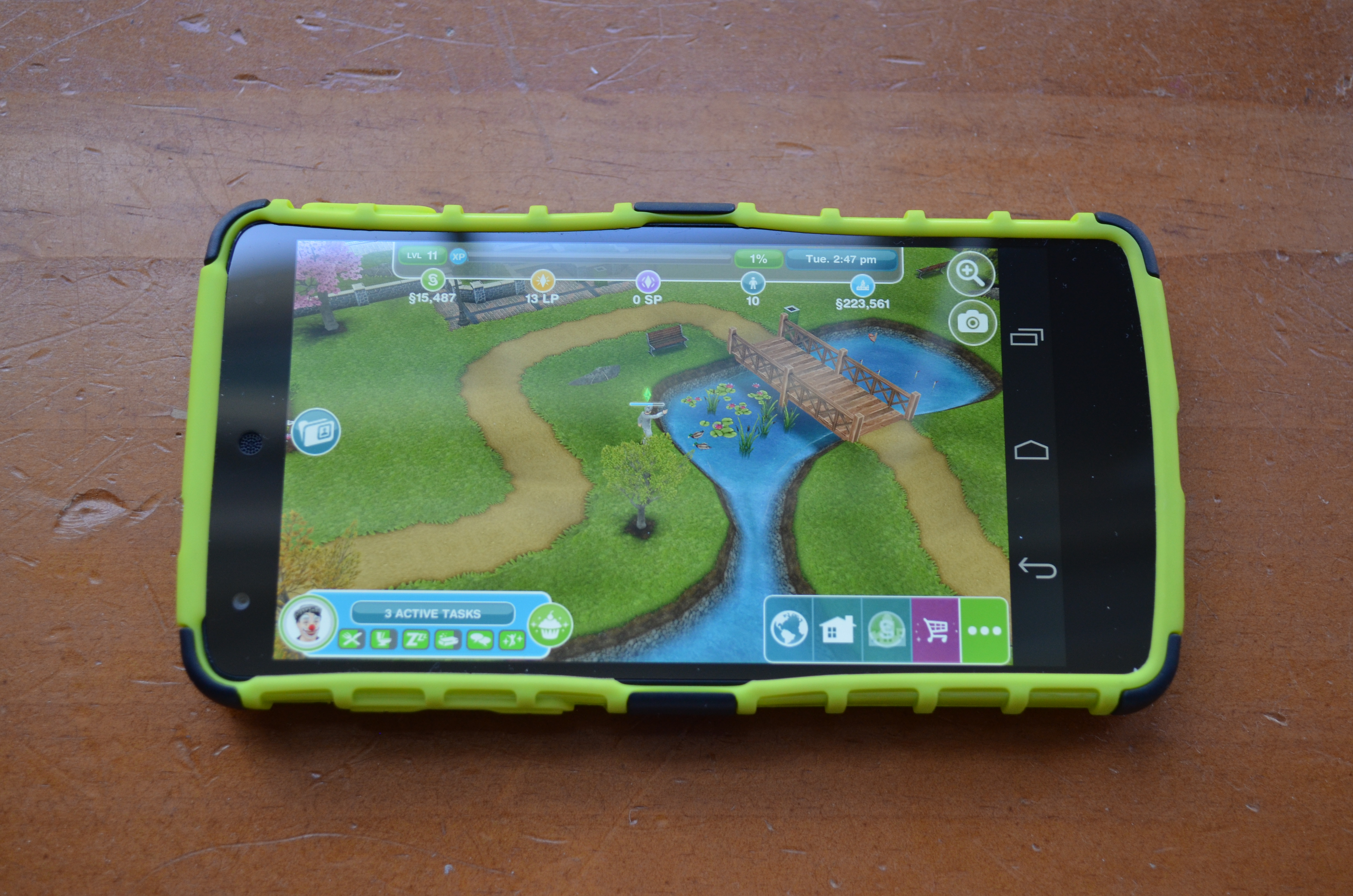
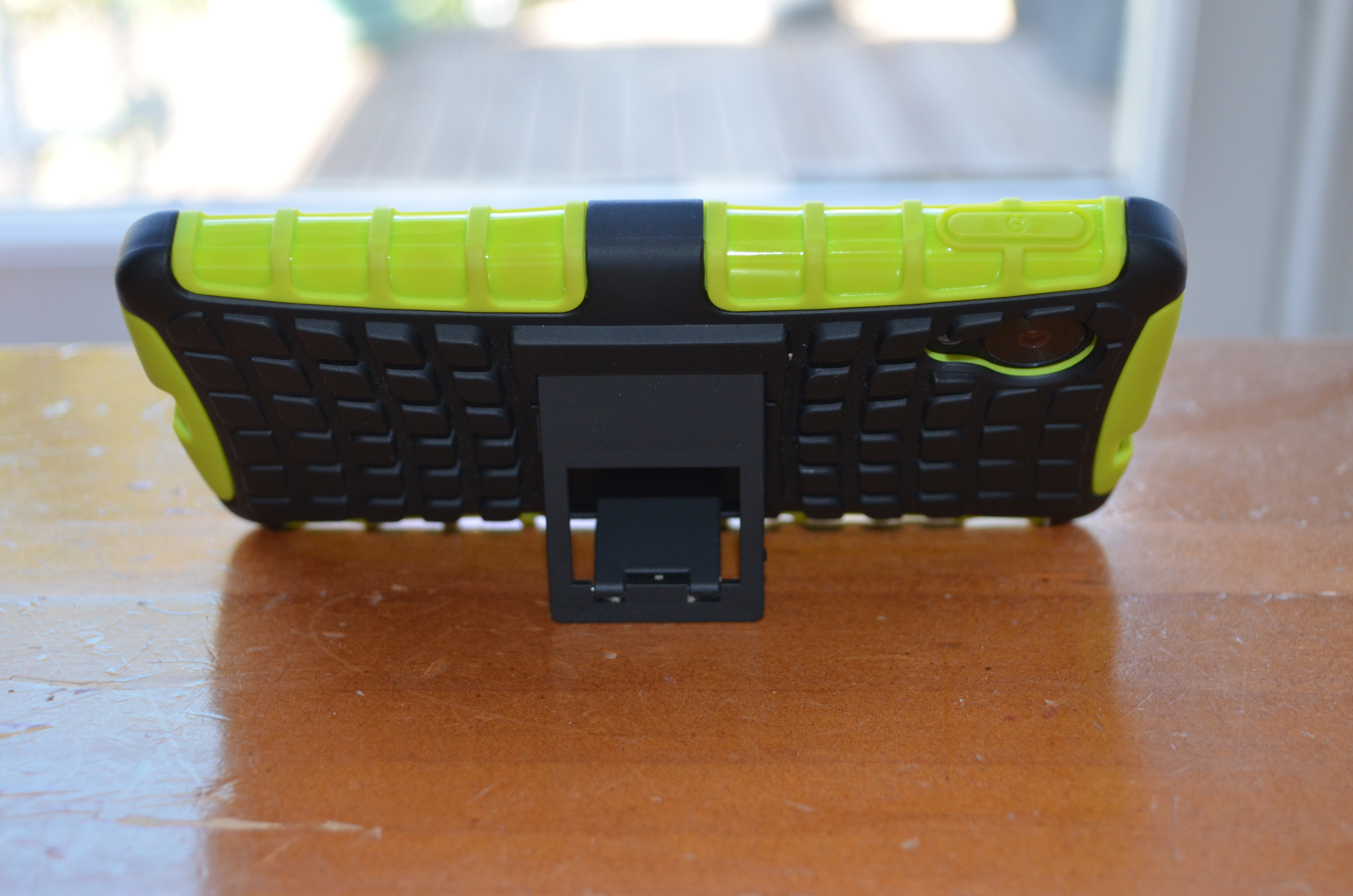
back of case showing both layersfront of casecase standshowing the mirror surface of the Nexus 5 I ve just been given an Armourdillo Hybrid case for the Nexus 5 [1] to review. The above pictures show the back of the case, the front of the case, the stand, and the front of the case with the screen blank. When I first photographed the case the camera focused on a reflection of the window, I include that picture for amusement and to demonstrate how reflective the phone screen is. This case is very hard, the green plastic is the soft inner layer which is still harder than the plastic in a typical gel case . The black part is polycarbonate which is very hard and also a little slippery. The case is designed with lots of bumps for grip (a little like the sole of a running shoe) so it s not likely to slip out of your hand. But the polycarbonate slides easily on plastic surfaces such as the dash of a car. It s fortunate that modern cars have lots of cup holders that can be used for holding a phone. I haven t dropped the phone since getting the new case, but I expect that the combination of a hard outer shell and a slightly softer inner shell (to cushion the impact) will protect it well. All the edges of the case extend above the screen so dropping the phone face down on a hard flat surface shouldn t cause any damage. The black part has a stand for propping the phone on it s side to watch a movie. The stand is very solid and is in the ideal position for use on soft surfaces such as a doona or pillow for watching TV in bed. Appearance This case is mostly designed to protect the phone and the bumps that are used for grip detract from the appearance IMHO. I think that the Ringke Fusion case for my Nexus 4 [2] looks much better, it s a trade-off between appearance and functionality. My main criteria for this case were good protection (better than a gel case) and small size (not one of the heavy waterproof cases). It was a bonus to get a green case for the Enlightened team in Ingress. NB Armourdillo also offers a blue case for the Resistance team in Ingress as well as other colors. MobileZap also have a number of other cases for the Nexus 5 [3].

24 March 2014

Andrew Shadura: Tired of autotools? Try this: mk-configure

mk-configure is a project which tries to be autotools done right. Instead of supporting an exceedingly large number of platforms, modern and ancient, at costs of generated unreadable multi-kilobyte shell scripts, mk-configure aims at better support of less platforms, but those which are really in use today. One of the main differences of this project is that it avoids code generation as much as possible. The author of mk-configure, Aleksey Cheusov, a NetBSD hacker from Belarus, uses NetBSD make (bmake) and shell script snippets instead of monstrous libraries written in m4 interleaved with shell scripts. As the result, there s no need in a separate step of package configuration or bootstrapping the configure script, everything is done by just running bmake, or a convenience wrapper for it, mkcmake, which prepends a proper library path to bmake arguments, so you don t have to specify it yourself. Today, mk-configure is already powerful enough to be able replace autotools for most of the projects, and what is missing from it can be easily done by hacking the Makefile, which would otherwise be quite simple. Try it for your project, you may really like it. I already did. And report bugs.

23 March 2014

Gregor Herrmann: RC bugs 2013/49 - 2014/12

since people keep talking to me about my RC bug fixing activities, I thought it might be time again for a short report. to be honest, I mostly stopped my almost daily work at some point in december, partly because the overall number of RC bugs affecting both testing & unstable is quite low (& therefore the number of easy-to-fix bugs), due to the auto-removal policy of the release team (kudos!). but I still kept track about RC bugs I worked on, & here's the list; as you can see, mostly pkg-perl bugs ps: the how-can-i-help package is a nice tool for finding RC bugs in packages you care about. install it if you haven't so far!

Niels Thykier: Upcoming changes to Lintian (in 2.5.22)

The next version of Lintian, 2.5.22, is long overdue mostly because 2.5.21 FTBFS in sid. Besides fixing test failures, 2.5.22 also fixes: Besides bug fixes, we also added a couple of new features/nice changes: We just need to do some final tweaks and get the tag descriptions reviewed before we are ready to release the next version.

Russell Coker: Aldi Deserves an Award for Misleading Email

Aldi Mobile has made a significant change to their offerings. They previously had an offer of $35 for unlimited calls and 2.5G of data in a month for which they had to publicly apologise for misleading customers as 2500 minutes of calls a month (83 minutes per day) is no-where near unlimited [1]. They also had an offer of $15 for 2G of data. In an email about this Aldi said Many of our customers are using a lot less than what is included in our current $35 plan. So we will soon be introducing new Value Packs with more flexible options; meaning you only pay for what you really need and they start from just $10. . That is grossly misleading, if they offered new plans in addition to the old ones and allowed customers to choose the plan that is the best match then it would be useful to some customers. But removing the supposedly unlimited plan and the $15 for 2G of data option is removing affordable options for people who want to use their phones for lots of calls or very few calls but moderate amounts of data use. New Plans The base rate for calls on Aldi pre-paid is $0.12 per minute and $0.12 per SMS, consider every mention of minute in this section to be minute or SMS . The Aldi Newplans page [2] starts with a $10 per month plan which offers 100 minutes of calls which would be $12 at the previous rate of $0.12 per minute. That is OK value when compared to just using the pre-paid calls if you consistently use more than 83 minutes of calls per month. However if you don t use 84 minutes of calls (EG you don t speak much on the phone and use Google Hangouts instead of SMS) then it s not good value. Also the advertised data use is $5 per 100MB, which is way below what is needed for a typical user with an Android phone. My mother in law was barely able to stick within a limit of 300MB/month when that was her limit, but while using the Aldo 2G/month bolt-on she s increased her data usage. The smallest of the new plans costs $20 per month, it provides 300 minutes of calls and includes 300MB of data. For an extra $7 you can get another 300MB of data. For my mother in law it seems that the cheapest option on the new plans would be $27 per month, that would cover the 60 minutes of calls she might make and the 450MB of data she s probably using. That s significantly more expensive than her previous cost of $15 for 2G of data and $7.20 for calls and has the additional difficulty that I would have to be more involved in helping her avoid excessive data use. The 2G data bolt-on was really good for some of my relatives, when they use that and configure their phones not to update software over 3G they never had to ask me about any problems related to excess data use. So my mother in law is facing an extra $5 per month (or maybe more depending on data use) and more time spent calling me for tech support. The data bolt on that Aldi is going to offer in future is $30 for 3G of data to replace the previous offer of $15 for 2G of data. The cost will be unchanged for anyone who uses between 2G and 3G a month, for everyone who uses less than 2G or more than 3G the data bolt-on will cost more. There is simply no possibility for any Aldi data-only customer to save on data use. The only way someone who uses a moderate amount of data could save money is if they use more than 160 minutes of calls and less than 1G of data. Disclaimer My analysis above is based on interpreting the Aldi web site. As with most telcos they aren t trying to make things easy in this regard, it seems that the consensus of opinion among telcos is to use complex pricing to make it difficult to compare and reduce competitive pressure. I blame any inaccuracies in my analysis on the Aldi web site. Why Aldi Shouldn t Mislead Customers Aldi isn t primarily a mobile phone company, their main business is running a supermarket. The trust of customers is important to them, raising prices when competition goes away is one thing, but misleading customers about it is another. If Aldi were to honestly say now that Kogan Mobile no longer exists there is nothing forcing us to have low prices then I d have a lot more respect for their company and be more inclined to shop at their supermarket. It s a sad indictment of our society that I need to include a why lying is wrong section in such a blog post.

21 March 2014

Sylvestre Ledru: Rebuild of Debian using Clang 3.4

Using the AWS donation, David Suarez and myself have been able to rebuild the whole archive with Clang 3.4.
The rebuild has been done January 10th but, with my new job, I did not find the time to publish the result.
Releases after releases, the results are getting better and better. Currently, 2193 packages in the archive are failing to build from source.
That is roughly the same number of build failures as with the precedent rebuild with Clang 3.3.
However, this is good news for two reasons:
* the number of new packages in Debian increased (18854 at time of the 3.3 release, 21204 for the 3.4)
* clang 3.4 has more checks and error detections. I also started to update clang to make it closer to gcc. For example, I transformed wrong usage of -O (> 6) error to be treated as regular warning. However, a critical bug has emerged during this release. When using -D_FORTIFY_SOURCE=2 (which is the case of many Debian packages), the binaries produced freeze (infinity loop in the ASM). This has been reported upstream as bug 16821 and concerns about 150 packages (including Firefox, gcc, LLVM, etc). Hopefully, this will be fixed in 3.5 (this is unlikely for 3.4.1). About the new build failures, now, Clang triggers an error (or warning + -Werror) on: * Wrong usage of the default argument (should be done in the definition)
16 occurrences * Usage of C++11 feature without the appropriate argument
7 occurrences * Unused static const declaration
5 occurrences * Recursive template instantiation exceeded
4 occurrences * Defitinion of a builtin function
3 occurrences * Read-only variable is not assignable
2 occurrences By the way, I proposed a Google Summer of Code Project to work faster on a support of Debian built by Clang. As requirements, I asked students to fix some bugs, they already did a great job.

Hideki Yamane: my present situation (from Japan)

Vacation at Oosawa Onsen ( ) for a week was so nice. Just I did is sleep, take a bath (hot spring, of course), eat and drink, oh and also some bug squashing :-)


Write introduction about "APT line setting" at monthy "Software Design" magazine April 2014, and brief introduction about Ubuntu for "Linux Engineer Beginners guide (2nd edition)"


Upgrade debian-mirror.sakura.ne.jp mirror (one of ftp.jp.debian.org hosting site) today, from Squeeze to Wheezy with no trouble so it took just 15 minites - smooth :-)


And... oh, I should back to write next article before editor gets angry. Hurry up! ;)

20 March 2014

Daniel Pocock: xTuple consults community on best license options

xTuple, the makers of PostBooks, the compelling PostgreSQL-based accounting and CRM suite have started a discussion about how to move to a more recognised license. It is really good to see a company dealing with these issues in an open manner and engaging the community for feedback. For those who are familiar with these issues or have practical experience of how businesses have been successful with GPL and other free licenses, please share your comments on John's blog. Some of the reasons why companies need to think about licensing issues like this:
  • They not only want to be open source, they also want to engage the community through Github, hoping to make it easier for developer collaboration. A familiar license makes this easier.
  • They want to extend the product more rapidly by using other open source libraries and need to maintain compatibility of licenses. Using a less well known license can make this more awkward. In the case of xTuple, they are now using a number of libraries and frameworks to support their powerful new web front end.
  • Having a recognised and respected license like GPL can also be a factor in other initiatives like crowd funding.

19 March 2014

Jan Dittberner: CLT 2014 was great again

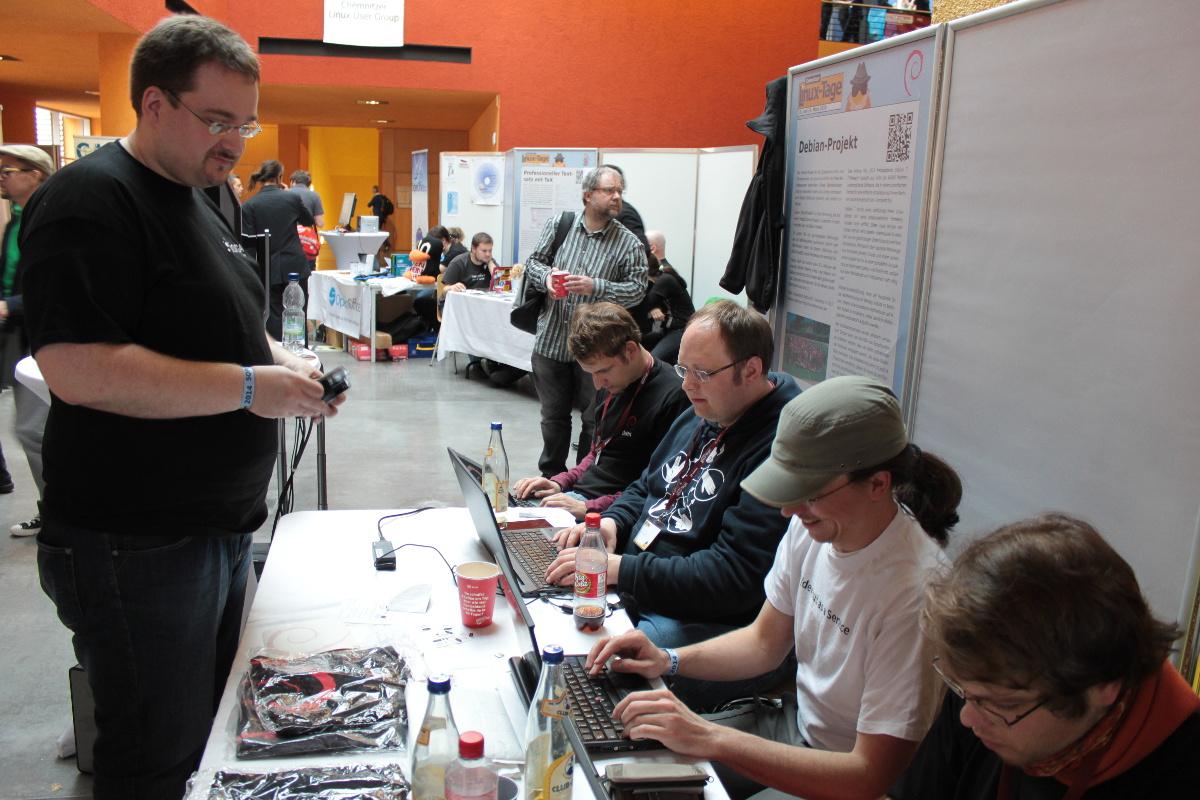
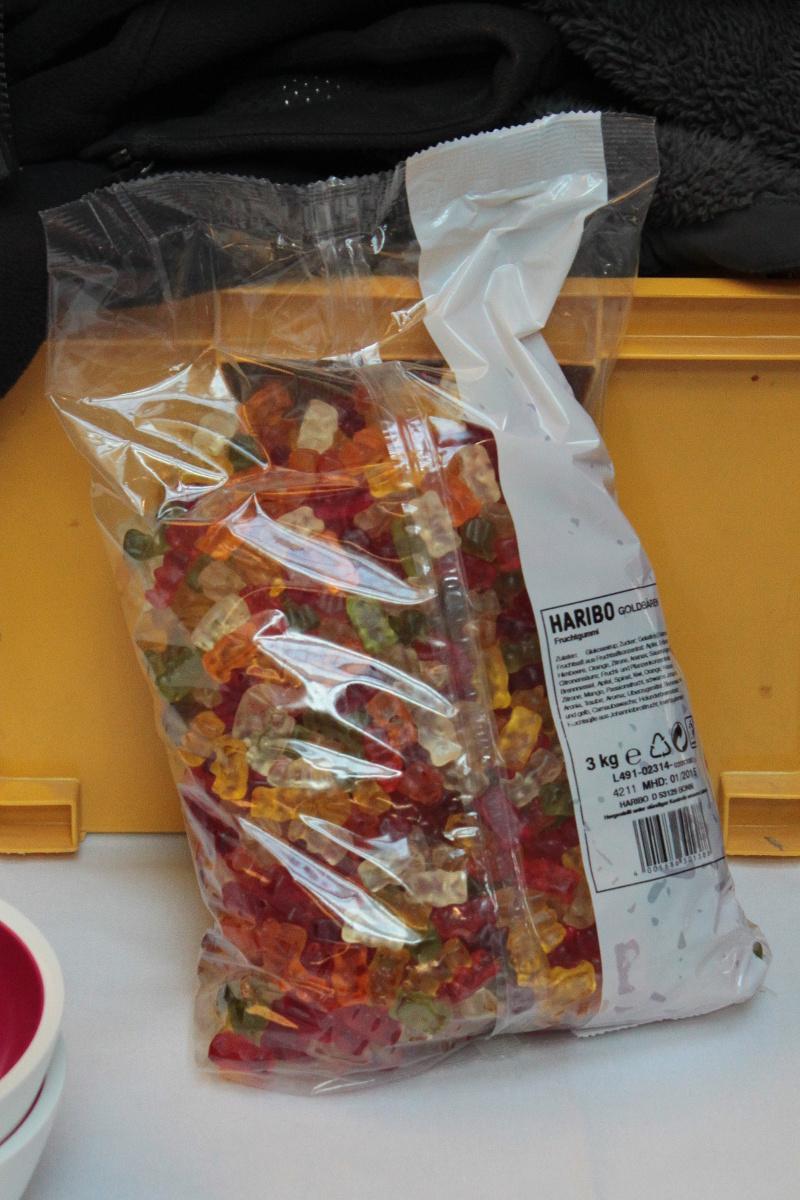
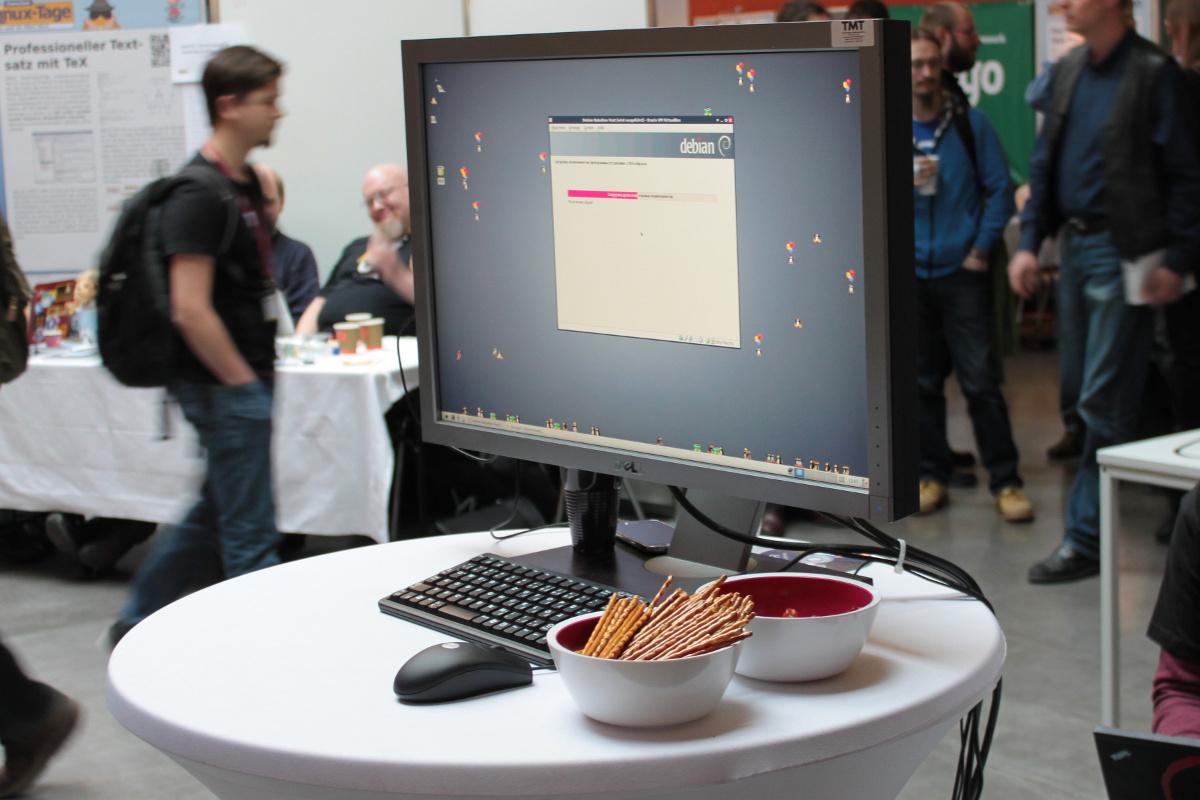
as in previous years we had a Debian booth at the Chemnitzer Linux-Tage it was as well organized as the years before and I enjoyed meeting a lot of great people from the Debian and free software communities as well as CAcert again. At our booth we presented the awesome work of Debian Installer translators in a BabelBox surrounded by xpenguins which attracted young as well as older passers-by. We got thanks for our work which I want to forward to the whole Debian community. A Debian user told us that he is able to use some PC hardware from the late 1990s that does not work with other desktop OSes anymore. We fed 3 kg of strategic jelly bear reserves as well as some packs of savoury snacks to our visitors. Alexander Wirt brought some T-Shirts, Stickers and Hoodies that we sold almost completely. We did some keysigning at the booth to help to get better keys into the Debian keyring and helped a prospective new Debian Developer to get a strong key signed to his FD approval. I also attended the Key signing party organized by Jens Kubieziel. Thanks to all people who helped at the booth:
  • Alexander Mundt
  • Alexander Wirt
  • Florian Baumann
  • Jan H rsch
  • Jan Wagner
  • Jonas Genannt
  • Rene Engelhard
  • Rhalina
  • Y Plentyn
Thanks to TMT for sponsoring the booth hardware.

18 March 2014

Vincent Bernat: EDNS client subnet support for BIND

To provide geolocation-aware answers with BIND, a common solution is to use a patch adding GeoIP support. A client can be directed to the closest (and hopefully fastest) web server:
view "FRANCE"  
     match-clients   geoip_cityDB_country_FR;  ;
     zone "example.com" in  
         type master;
         file "france.example.com.dns";
      ;
 ;
view "GERMANY"  
     match-clients   geoip_cityDB_country_DE;  ;
     zone "example.com" in  
         type master;
         file "germany.example.com.dns";
      ;
 ;
/* [...] */
view "DEFAULT"  
    zone "example.com" in  
        type master;
        file "example.com.dns";
     ;
 ;
However, an end user does not usually talk directly to authoritative servers. They proxy the query to a third-party recursor server which will query the authoritative server on their behalf. The recursor also caches the answer to be able to serve it directly to other clients. On most cases, we can still rely on the recursor GeoIP location to forward the client to the closest web server because it is located in the client s ISP network, as shown on the following schema: Query for www.example.com through an ISP recursor
  1. Juan is located in China and wants to know the IP address of www.example.com. She queries her ISP resolver.
  2. The resolver asks the authoritative server for the answer.
  3. Because the IP address of the resolver is located in China, the authoritative server decides to answer with the IP address of the web server located in Japan which is the closest one.
  4. Juan can now enjoy short round-trips with the web server.
However, this is not the case when using a public recursor as provided by Google or OpenDNS. In this case, the IP address of the end client and the source IP address of the recursor may not share the same locality. For example, in the following schema, the authoritative server now thinks it is in relation with an European customer and answers with the IP address of the web server located in Europe: Query for www.example.com through an open recursor Moreover, caching makes the problem worse. To solve this problem, a new EDNS extension to expose the client subnet has been proposed. When using this extension, the recursor will provide the client subnet to the authoritative server for it to build an optimized reply. The subnet is vague enough to respect client s privacy but precise enough to be able to locate it. A patched version of dig allows one to make queries with this new extension:
$ geoiplookup 138.231.136.0
GeoIP Country Edition: FR, France
$ ./bin/dig/dig @dns-02.dailymotion.com www.dailymotion.com \
>     +client=138.231.136.0/24
; <<>> DiG 9.8.1-P1-geoip-1.3 <<>> @dns-02.dailymotion.com www.dailymotion.com +client=138.231.136.0/24
; (1 server found)
;; global options: +cmd
;; Got answer:
;; ->>HEADER<<- opcode: QUERY, status: NOERROR, id: 23312
;; flags: qr aa rd; QUERY: 1, ANSWER: 2, AUTHORITY: 0, ADDITIONAL: 1
;; WARNING: recursion requested but not available
;; OPT PSEUDOSECTION:
; EDNS: version: 0, flags:; udp: 4096
; CLIENT-SUBNET: 138.231.136.0/24/24
;; QUESTION SECTION:
;www.dailymotion.com.           IN      A
;; ANSWER SECTION:
www.dailymotion.com.    600     IN      A       195.8.215.136
www.dailymotion.com.    600     IN      A       195.8.215.137
;; Query time: 20 msec
;; SERVER: 188.65.127.2#53(188.65.127.2)
;; WHEN: Sun Oct 20 15:44:47 2013
;; MSG SIZE  rcvd: 91
$ geoiplookup 195.8.215.136
GeoIP Country Edition: FR, France
In the above example, a client located in France gets a reply with two IP addresses located in France. If we now are an US client, we will get IP addresses located in the US:
$ geoiplookup 170.149.100.0
GeoIP Country Edition: US, United States
$ ./bin/dig/dig @dns-02.dailymotion.com www.dailymotion.com \
>     +client=170.149.100.0/24
; <<>> DiG 9.8.1-P1-geoip-1.3 <<>> @dns-02.dailymotion.com www.dailymotion.com +client=170.149.100.0/24
; (1 server found)
;; global options: +cmd
;; Got answer:
;; ->>HEADER<<- opcode: QUERY, status: NOERROR, id: 23187
;; flags: qr aa rd; QUERY: 1, ANSWER: 2, AUTHORITY: 0, ADDITIONAL: 1
;; WARNING: recursion requested but not available
;; OPT PSEUDOSECTION:
; EDNS: version: 0, flags:; udp: 4096
; CLIENT-SUBNET: 170.149.100.0/24/24
;; QUESTION SECTION:
;www.dailymotion.com.           IN      A
;; ANSWER SECTION:
www.dailymotion.com.    600     IN      A       188.65.120.135
www.dailymotion.com.    600     IN      A       188.65.120.136
;; Query time: 18 msec
;; SERVER: 188.65.127.2#53(188.65.127.2)
;; WHEN: Sun Oct 20 15:47:22 2013
;; MSG SIZE  rcvd: 91
$ geoiplookup 188.65.120.135
GeoIP Country Edition: US, United States
The recursor is expected to cache the two different answers and only serve them if the client matches the appropriate subnet (the one confirmed in the answer from the authoritative server). With this new extension, the authoritative server knows that Juan is located in China and answers with the appropriate IP address: Query for www.example.com through an open recursor with client subnet Not many authoritative servers support this extension (PowerDNS and gdnsd, as far as I know). At Dailymotion, we have built a patch for BIND. It only works when BIND is configured as an authoritative server and it doesn t expose no configuration knobs. Feel free to use it (at your own risk). Once installed, you need to register yourself to OpenDNS and to Google to receive queries with the extension enabled.

16 March 2014

Russell Coker: BTRFS Status March 2014

I m currently using BTRFS on most systems that I can access easily. It s not nearly reliable enough that I want to install it on a server in another country or an embedded device that s only accessible via 3G, but for systems where I can access the console it s not doing too badly. Balancing and Space Allocation # btrfs filesystem df /
Data, single: total=103.97GiB, used=85.91GiB
System, DUP: total=32.00MiB, used=20.00KiB
Metadata, DUP: total=1.78GiB, used=1.31GiB
# df -h /
Filesystem Size Used Avail Use% Mounted on
/dev/disk/by-uuid/ac696117-473c-4945-a71e-917e09c6503c 108G 89G 19G 84% /
Currently there are still situations where it can run out of space and deadlock on freeing space. The above shows the output of the btrfs df command and the regular df command, I have about 106G of disk space used by data and metadata in BTRFS while df shows that the entire filesystem (IE the block device) is 108G. So if I use another 2G of data or metadata then the system is at risk of deadlocking. To avoid that happening I have to run btrfs balance start / to start a balance which defragments the space use and frees some blocks. Currently there is a bug in BTRFS (present in all Debian/Unstable kernels) which prevents a balance operation from completing when systemd is used in a default configuration (there s something about the way systemd accesses it s journal files that triggers a BTRFS bug). This is really inconvenient, particularly given that there s probably a strong correlation between people who use experimental filesystems and people who use experimental init programs. When you get to the stage of the filesystem being deadlocked you can sometimes recover by removing snapshots and sometimes by adding a new device to the filesystem (even a USB flash drive will do). But I once had a filesystem get into a state where there wasn t enough space to balance, add a device, or remove a snapshot so I had to do a backup/format/restore. Quota Groups Last time I asked the developers (a few weeks ago) they told me that quota groups aren t ready to use. They also said that they know about enough bugs that there s no benefit in testing that feature. Even people who want to report bugs in BTRFS shouldn t use quotas. Kernel Panics with Kmail I ve had three systems develop filesystem corruption on files related to Kmail (the email program from KDE). I suspect that Kmail is triggering a bug in BTRFS. On all three systems the filesystem developed corruption that persisted across a reboot. One of the three systems was fixed by deleting the file for the Outbox, the others are waiting for kernel 3.14 which is supposed to fix the bug that causes kernel panics when accessing the corrupted files in question. I don t know whether kernel 3.14 will fix the bug that caused the corruption in the first place. Conclusion As I don t use quotas BTRFS is working well for me on systems that have plenty of storage space and don t run Kmail. There are some systems running systemd where I plan to upgrade the kernel before all the filesystem space is allocated. One of my systems is currently running SysVinit so I can balance the filesystem. Apart from these issues BTRFS is working reasonably well for me. I haven t yet had it s filesystem checksums correct corrupted data from disk in any situation other than tests (I have had ZFS correct such an error, so hardware I use does benefit from this). I have restored data from BTRFS snapshots on many occasions, so that feature has been a major benefit for me. When I had a system with faulty RAM the internal checks in BTRFS alerted me to the problem and I didn t lose any data, the filesystem became read-only and I was able to copy everything off even though it was too corrupted for writes.

Gunnar Wolf: Trying to get Blender to run in the CuBox-i (armhf): Help debugging Python!

As I posted some weeks ago, I have been playing with my CuBox-i4Pro, a gorgeous little ARM machine by SolidRun, built around an iMX6 system-on-a-chip. My first stabs at using it resulted in my previous post on how to get a base, almost-clean Debian distribution to run (Almost? Yes, the kernel requires some patches not yet accepted upstream, so I'm still running with a patched 3.0.35-8 kernel). After writing this step by step instructions, I followed them and built images ready to dd to a SD card and start running (available at my people.debian.org space. Now, what to do with this little machine? My version is by no means a limited box: 4 ARM cores, 2GB RAM make a quite decent box. In my case, this little machine will most likely be a home storage server with little innovation. However, the little guy is a power server, at only 3W consumption. I wanted to test its capabilities to do some number crunching and aid some of my friends The obvious candidate is building a Blender render farm. Right, the machines might be quite underpowered, but they are cheap (and look gorgeous!), so at least it's worth playing a bit! Just as a data point, running on an old hard disk (and not on my very slow SD card), the little machine was able to compile the Blender sources into a Debian package in 89m13.537s, that is, 5353 seconds. According to the Debian build logs (yes, for a different version, I tried with the version in Wheezy and in a clean Wheezy system), the time it took to build on some other architectures' build daemons was 1886s on i386, 1098s on PowerPC, 2003s on AMD64, 11513s on MIPS and 27721 on ARMHF. That means, my little machine is quite slower than desktop systems, but not unbearably so. But sadly, I have hit a wall, and have been unable to do any further progress. Blender segfaults at startup under the Debian armhf architecture. I have submitted bug report #739194 about this, but have got no replies to it yet. I did get the great help from my friends in the OFTC #debian-arm channel, but they could only help up to a given point. It seems the problem lies in the Python interpreter in armhf, not in Blender itself... But I cannot get much further either. I'm sending this as a blog post to try to get more eyeballs on my problem How selfish, right? :-) So, slightly going over the bug report, blender just dies at startup:
  1. $ blender -b -noaudio
  2. Segmentation fault
After being told that strace is of little help when debugging this kind of issues, I went via gdb. A full backtrace pointed to what feels like the right error point:
  1. (gdb) bt full
  2. #0 0x2acd8cce in PyErr_SetObject ()
  3. from /usr/lib/arm-linux-gnueabihf/libpython3.3m.so.1.0
  4. No symbol table info available.
  5. #1 0x2acd8c9a in PyErr_Format ()
  6. from /usr/lib/arm-linux-gnueabihf/libpython3.3m.so.1.0
  7. No symbol table info available.
  8. #2 0x2ac8262c in PyType_Ready ()
  9. from /usr/lib/arm-linux-gnueabihf/libpython3.3m.so.1.0
  10. No symbol table info available.
  11. #3 0x2ac55052 in _PyExc_Init ()
  12. from /usr/lib/arm-linux-gnueabihf/libpython3.3m.so.1.0
  13. No symbol table info available.
  14. #4 0x2ace95e2 in _Py_InitializeEx_Private ()
  15. from /usr/lib/arm-linux-gnueabihf/libpython3.3m.so.1.0
  16. No symbol table info available.
  17. #5 0x00697898 in BPY_python_start (argc=3, argv=0x7efff8d4)
  18. at /build/blender-dPxPUD/blender-2.69/source/blender/python/intern/bpy_interface.c:274
  19. py_tstate = 0x0
  20. py_path_bundle = 0x0
  21. program_path_wchar = L"/usr/bin/blender", '\000' <repeats 1007 times>
  22. #6 0x0044a1ca in WM_init (C=C@entry=0x1d83220, argc=argc@entry=3,
  23. argv=argv@entry=0x7efff8d4)
  24. at /build/blender-dPxPUD/blender-2.69/source/blender/windowmanager/intern/wm_init_exit.c:176
  25. No locals.
  26. #7 0x0042e4de in main (argc=3, argv=0x7efff8d4)
  27. at /build/blender-dPxPUD/blender-2.69/source/creator/creator.c:1597
  28. C = 0x1d83220
  29. syshandle = 0x1d8a338
  30. ba = 0x1d8a840
  31. (gdb)
I'm not pasting here the full bug history (go to the bug report for the full information!), but it does point me to this being a problem in Python-land: It points to something not found at line 59 of Python/errors.c. And what I understand from that line is that some kind of unknown exception is thrown, and the Python interpreter does not now what to do with it. The check done at line 59 is the if (exception != NULL ** ....:
  1. void
  2. PyErr_SetObject(PyObject *exception, PyObject *value)
  3. PyThreadState *tstate = PyThreadState_GET();
  4. PyObject *exc_value;
  5. PyObject *tb = NULL;
  6. if (exception != NULL &&
  7. !PyExceptionClass_Check(exception))
  8. PyErr_Format(PyExc_SystemError,
  9. "exception %R not a BaseException subclass",
  10. exception);
  11. return;
So... Dear lazyweb: Any pointers on where to go on from here? kthxbye.

Next.

Previous.