Greetings! This is a (4 days delay) copy of the announce I made on the openstack-dev@lists.openstack.org on the 8th of April 2016.
I am overjoyed, thrilled and delighted to announce the release of the Debian packages for Mitaka.
All of the DefCore packages were validated successfully this morning through our package-only-based Tempest CI.
Content of this release
Here are some tweaks to git log that I have found useful. It might
depend on the workflow of individual projects how applicable this is.
Git stores separate author and committer information for each commit.
How these are generated and updated is sometimes mysterious but
generally makes sense. For example, if you cherry-pick a commit to a
different branch, the author information stays the same but the
committer information is updated. git log defaults to showing the
author information. But I generally care less about that than the
committer information, because I m usually interested in when the
commit arrived in my or the public repository, not when it was
initially thought about. So let s try to change the default git log
format to show the committer information instead. Again, depending on
the project and the workflow, there can be other preferences.
To create a different default format for git log, first create a new
format by setting the Git configuration item pretty.somename. I
chose pretty.cmedium because it s almost the same as the default
medium but with the author information replaced by the committer
information.
[pretty]
cmedium="format:%C(auto,yellow)commit %H%C(auto,reset)%nCommit: %cn <%ce>%nCommitDate: %cd%n%n%w(0,4,4)%s%n%+b"
Unfortunately, the default git log formats are not defined in terms
of these placeholders but are hardcoded in the source, so this is my
best reconstruction using the available means.
You can use this as git log --pretty=cmedium, and you can set this
as the default using
[format]
pretty=cmedium
If you find this useful and you re the sort of person who is more
interested in their own timeline than the author s history, you might
also like two more tweaks.
First, add %cr for relative date, so it looks like
[pretty]
cmedium="format:%C(auto,yellow)commit %H%C(auto,reset)%nCommit: %cn <%ce>%nCommitDate: %cd (%cr)%n%n%w(0,4,4)%s%n%+b"
This adds a relative designation like 2 days ago to the commit date.
Second, set
[log]
date=local
to have all timestamps converted to your local time.
When you put all this together, you turn this
commit e2c117a28f767c9756d2d620929b37651dbe43d1
Author: Paul Eggert <eggert@cs.ucla.edu>
Date: Tue Apr 5 08:16:01 2016 -0700
into this
commit e2c117a28f767c9756d2d620929b37651dbe43d1
Commit: Paul Eggert <eggert@cs.ucla.edu>
CommitDate: Tue Apr 5 11:16:01 2016 (3 days ago)
PS: If this is lame, there is always this:
http://fredkschott.com/post/2014/02/git-log-is-so-2005/
I've been working on TPMTOTP a little this weekend. I merged a pull request that adds command-line argument handling, which includes the ability to choose the set of PCRs you want to seal to without rebuilding the tools, and also lets you print the base32 encoding of the secret rather than the qr code so you can import it into a wider range of devices. More importantly it also adds support for setting the expected PCR values on the command line rather than reading them out of the TPM, so you can now re-seal the secret against new values before rebooting.
Started in 2008, lldpd is an implementation of
IEEE 802.1AB-2005 (aka LLDP) written in C. While it contains some
unit tests, like many other network-related software at the time, the
coverage of those is pretty poor: they are hard to write because the
code is written in an imperative style and tighly coupled with the
system. It would require extensive mocking1. While a rewrite
(complete or iterative) would help to make the code more
test-friendly, it would be quite an effort and it will likely
introduce operational bugs along the way.
To get better test coverage, the major features of lldpd are now
verified through integration tests. Those tests leverage Linux
network namespaces to setup a lightweight and isolated environment
for each test. They run through pytest, a powerful testing tool.
assert keyword,class testArithmetics(unittest.TestCase): def test_addition(self): self.assertEqual(1 + 3, 4)
def test_addition(): assert 1 + 3 == 4
class testInVM(unittest.TestCase): def setUp(self): self.vm = VM('Test-VM') self.vm.start() self.ssh = SSHClient() self.ssh.connect(self.vm.public_ip) def tearDown(self): self.ssh.close() self.vm.destroy() def test_hello(self): stdin, stdout, stderr = self.ssh.exec_command("echo hello") stdin.close() self.assertEqual(stderr.read(), b"") self.assertEqual(stdout.read(), b"hello\n")
tearDown() method won t be invoked. The VM
will be left running.
Instead, with pytest, we could do this:
@pytest.yield_fixture def vm(): r = VM('Test-VM') r.start() yield r r.destroy() @pytest.yield_fixture def ssh(vm): ssh = SSHClient() ssh.connect(vm.public_ip) yield ssh ssh.close() def test_hello(ssh): stdin, stdout, stderr = ssh.exec_command("echo hello") stdin.close() stderr.read() == b"" stdout.read() == b"hello\n"
@pytest.mark.parametrize("n1, n2, expected", [ (1, 3, 4), (8, 20, 28), (-4, 0, -4)]) def test_addition(n1, n2, expected): assert n1 + n2 == expected
lldpd process in each namespace.lldpcli we get the expected result in the other.@pytest.mark.skipif('LLDP-MED' not in pytest.config.lldpd.features, reason="LLDP-MED not supported") @pytest.mark.parametrize("classe, expected", [ (1, "Generic Endpoint (Class I)"), (2, "Media Endpoint (Class II)"), (3, "Communication Device Endpoint (Class III)"), (4, "Network Connectivity Device")]) def test_med_devicetype(lldpd, lldpcli, namespaces, links, classe, expected): links(namespaces(1), namespaces(2)) with namespaces(1): lldpd("-r") with namespaces(2): lldpd("-M", str(classe)) with namespaces(1): out = lldpcli("-f", "keyvalue", "show", "neighbors", "details") assert out['lldp.eth0.lldp-med.device-type'] == expected
lldpd was compiled with
LLDP-MED support. Second, the test is parametrized. We will execute
four distinct tests, one for each role that lldpd should be able to
take as an LLDP-MED-enabled endpoint.
The signature of the test has four parameters that are not covered by
the parametrize() decorator: lldpd, lldpcli, namespaces and
links. They are fixtures. A lot of magic happen in those to keep
the actual tests short:
lldpd is a factory to spawn an instance of lldpd. When called,
it will setup the current namespace (setting up the chroot,
creating the user and group for privilege separation, replacing
some files to be distribution-agnostic, ), then call lldpd
with the additional parameters provided. The output is recorded and
added to the test report in case of failure. The module also
contains the creation of the pytest.config.lldpd object that is
used to record the features supported by lldpd and skip
non-matching tests. You can read
fixtures/programs.py for more details.
lldpcli is also a factory, but it spawns instances of lldpcli,
the client to query lldpd. Moreover, it will parse the output in
a dictionary to reduce boilerplate.
namespaces is one of the most interesting pieces. It is a
factory for Linux namespaces. It will spawn a new namespace or
refer to an existing one. It is possible to switch from one namespace
to another (with with) as they are contexts. Behind the scene,
the factory maintains the appropriate file descriptors for each
namespace and switch to them with setns(). Once the test is done,
everything is wipped out as the file descriptors are garbage
collected. You can read fixtures/namespaces.py
for more details. It is quite reusable in other
projects2.
links contains helpers to handle network interfaces: creation of
virtual ethernet link between namespaces, creation of bridges,
bonds and VLAN, etc. It relies on the pyroute2 module. You can
read fixtures/network.py for more details.
pytest -n 10 --boxed. To
catch even more bugs, both the address sanitizer (ASAN) and the
undefined behavior sanitizer (UBSAN) are enabled. In case of a
problem, notably a memory leak, the faulty program will exit with a
non-zero exit code and the associated test will fail.
root and
_lldpd). Therefore, the tests have to run as root.
The second limitation is with the PID namespace. It s
not possible for a process to switch from one PID
namespace to another. When you call setns() on a PID
namespace, only children of the current process will
be in the new PID namespace. The PID namespace is
convenient to ensure everyone gets killed once the
tests are terminated but you must keep in mind that
/proc must be mounted in children only. The third
limitation is that, for some namespaces (PID and
user), all threads of a process must be part of the
same namespace. Therefore, don t use threads in
tests. Use multiprocessing module instead.
A new Armadillo release 6.700.3 is out, and we uploaded RcppArmadillo 0.6.700.3.0 to CRAN and Debian. This followed the usual thorough reverse-dependecy checking of by now 216 packages using.
Armadillo is a powerful and expressive C++ template library for linear algebra aiming towards a good balance between speed and ease of use with a syntax deliberately close to a Matlab.
Changes in this release are as follows:
Changes in RcppArmadillo version 0.6.700.3.0 (2016-04-05)Courtesy of CRANberries, there is also a diffstat report for this release. As always, more detailed information is on the RcppArmadillo page. Questions, comments etc should go to the rcpp-devel mailing list off the R-Forge page.
- Upgraded to Armadillo 6.700.3 (Catabolic Amalgamator Deluxe)
- added
logmat()for calcuating the matrix logarithm- added
regspace()for generating vectors with regularly spaced elements- added
logspace()for generating vectors with logarithmically spaced elements- added
approx_equal()for determining approximate equality- added
trapz()for numerical integration- expanded
.save()and.load()with hdf5_binary_trans file type, to save/load data with columns transposed to rows
This post by Dirk Eddelbuettel originated on his Thinking inside the box blog. Please report excessive re-aggregation in third-party for-profit settings.
A new version of RcppAPT -- our interface from R to the C++ library behind the awesome apt, apt-get, apt-cache, ... commands and their cache -- is now on CRAN.
It adds three new commands to the package. Two are relatively simple: showSrc() and dumpPackage() displays information about a given package, similar to what apt-cache showsrc and apt-cache showpkg, respectively, would reveal. Lastly, the buildDepends() function retrieves all build-dependencies for a packages. This should come in handy for automated tested for which I have some plans.
A bit more information is on the package page here as well as as the GitHub repo.
This post by Dirk Eddelbuettel originated on his Thinking inside the box blog. Please report excessive re-aggregation in third-party for-profit settings.
The developer uploads their code to gerrit via the git-review tool. There is no further action required on their behalf and the developer simply waits for results.
Gerrit provides a JSON-encoded "firehose" output of everything happening to it. New reviews, votes, updates and more all get sent out over this pipe. Zuul is the overall scheduler that subscribes itself to this information and is responsible for managing the CI jobs appropriate for each change.
Zuul has a configuration that tells it what jobs to run for what projects. Zuul can do lots of interesting things, but for the purposes of this discussion we just consider that it puts the jobs it wants run into gearman for a Jenkins master to consume. gearman is a job-server; as they explain it "[gearman] provides a generic application framework to farm out work to other machines or processes that are better suited to do the work". Zuul puts into gearman basically a tuple (job-name, node-type) for each job it wants run, specifying the unique job name to run and what type of node it should be run on.
A group of Jenkins masters are subscribed to gearman as workers. It is these Jenkins masters that will consume the job requests from the queue and actually get the tests running. However, Jenkins needs two things to be able to run a job a job definition (what to actually do) and a slave node (somewhere to do it). The first part what to do is provided by job-definitions stored in external YAML files and processed by Jenkins Job Builder (jjb) in to job configurations for Jenkins. Each Jenkins master gets these definitions pushed to it constantly by Puppet, thus each Jenkins master instance knows about all the jobs it can run automatically. Zuul also knows about these job definitions; this is the job-name part of the tuple we said it put into gearman. The second part somewhere to run the test takes some more explaining. To the next point...
Several cloud companies donate capacity in their clouds for OpenStack to run CI tests. Overall, this capacity is managed by a customised orchestration tool called nodepool. Nodepool watches the gearman queue and sees what requests are coming out of Zuul. It looks at node-type of jobs in the queue and decides what types of nodes need to start and which cloud providers have capacity to satisfy demand. Nodepool will monitor the start-up of the virtual-machines and register the new nodes to the Jenkins master instances.
At this point, the Jenkins master has what it needs to actually get jobs started. When nodepool registers a host to a Jenkins master as a slave, the Jenkins master can now advertise its ability to consume jobs. For example, if a ubuntu-trusty node is provided to the Jenkins master instance by nodepool, Jenkins can now consume from gearman any job it knows about that is intended to run on an ubuntu-trusty slave. Jekins will run the job as defined in the job-definition on that host ssh-ing in, running scripts, copying the logs and waiting for the result. (It is a gross oversimplification, but for the purposes of OpenStack CI, Jenkins is pretty much used as a glorified ssh/scp wrapper. Zuul Version 3, under development, is working to remove the need for Jenkins to be involved at all).
Eventually, the test will finish. The Jenkins master will put the result back into gearman, which Zuul will consume. The slave will be released back to nodepool, which destroys it and starts all over again (slaves are not reused and also have no sensitive details on them, as they are essentially publicly accessible). Zuul will wait for the results of all jobs for the change and post the result back to Gerrit; it either gives a positive vote or the dreaded negative vote if required jobs failed (it also handles merges to git, but we'll ignore that bit for now).
There's a piece of software called XScreenSaver. It attempts to fill two somewhat disparate roles:
Trusted Platform Modules are fairly unintelligent devices. They can do some crypto, but they don't have any ability to directly monitor the state of the system they're attached to. This is worked around by having each stage of the boot process "measure" state into registers (Platform Configuration Registers, or PCRs) in the TPM by taking the SHA1 of the next boot component and performing an extend operation. Extend works like this:
My monthly report covers a large part of what I have been doing in the free software world. I write it for my donators (thanks to them!) but also for the wider Debian community because it can give ideas to newcomers and it s one of the best ways to find volunteers to work with me on projects that matter to me.
I skipped my monthly report last time so this one will cover two months. I will try to list only the most important things to not make it too long.
The Debian Handbook
I worked with Ryuunosuke Ayanokouzi to prepare a paperback version of the Japanese translation of my book. Thanks to the efforts of everybody, it s now available. Unfortunately, Lulu declined to take it in distribution program so it won t be available on traditional bookstores (like Amazon, etc.). The reason is that they do not support non-latin character sets in the meta-data.
I tried to cheat a little bit by inputting the description in English (still explaining that the book was in Japanese) but they rejected it nevertheless because the English title could mislead people. So the paperback is only available on lulu.com. Fortunately, the shipping costs are reasonable if you pick the most economic offer.
Following this I invited the Italian, Spanish and Brazilian Portuguese translators to complete the work (they were close will all the strings already translated, mainly missing translated screenshots and some backcover content) so that we can also release paperback versions in those languages. It s getting close to completion for them. Hopefully we will have those available until next month.
Distro Tracker
In early February, I tweaked the configuration to send (by email) exceptions generated by incoming mails and by routine task. Before this they were logged but I did not take the time to look into them. This quickly brought a few issues into light and I fixed them as they appeared: for instance the bounce handling code was getting confused when the character case was not respected, and it appears that some emails come back to us after having been lowercased. Also the code was broken when the References field used more than one line on incoming control emails.
This brought into light a whole class of problems with the database storing twice the same email with only differing case. So I did further work to merge all those duplicate entries behind a single email entry.
Later, the experimental Sources files changed and I had to tweak the code to work with the removal of the Files field (relying instead on Checksums-* to find out the various files part of the entry).
At some point, I also fixed the login form to not generate an exception when the user submits an empty form.
I also decided that I no longer wanted to support Django 1.7 in distro tracker as Django 1.8 is the current LTS version. I asked the Debian system administrators to update the package on tracker.debian.org with the version in jessie-backports. This allowed me to fix a few deprecation warnings that I kept triggering because I wanted the code to work with Django 1.7.
One of those warnings was generated by django-jsonfield though and I could not fix it immediately. Instead I prepared a pull request that I submitted to the upstream author.
Oh, and a last thing, I tweaked the CSS to densify the layout on the package page. This was one of the most requested changes from the people who were still preferring packages.qa.debian.org over tracker.debian.org.
Kali and new pkg-security team
As part of my Kali work, I have been fixing RC bugs in Debian packages that we use in Kali. But in many cases, I stumbled upon packages whose maintainers were really missing in action (MIA). Up to now, we were only doing non-maintainers upload (NMU) but I want to be able to maintain those packages more effectively so we created a new pkg-security team (we re only two right now and we have no documentation yet, but if you want to join, you re welcome, in particular if you maintain a package which is useful in the security field).
arm64 work. The first 3 packages that we took over (ssldump, sucrack, xprobe) are actually packages that were missing arm64 builds. We just started our arm64 port on Kali and we fixed them for that architecture. Since they were no longer properly maintained, in most cases it was just a matter of using dh_autoreconf to get up-to-date config. sub,guess files.
We still miss a few packages on arm64: vboot-utils (that we will likely take over soon since it s offered for adoption), ruby-libv8 and ruby-therubyracer, ntopng (we have to wait a new luajit which is only in experimental right now). We also noticed that dh-make-golang was not available on arm64, after some discussion on #debian-buildd, I filed two bugs for this: #819472 on dh-make-golang and #819473 on dh-golang.
RC bug fixing. hdparm was affected by multiple RC bugs and the release managers were trying to get rid of it from testing. This removed multiple packages that were used by Kali and its users. So I investigated the situation of that package, convinced the current maintainers to orphan it, asked for new maintainers on debian-devel, reviewed multiple updates prepared by the new volunteers and sponsored their work. Now hdparm is again RC-bug free and has the latest upstream version. We also updated jsonpickle to 0.9.3-1 to fix RC bug #812114 (that I forwarded upstream first).
Systemd presets support in init-system-helpers. I tried to find someone (to hire) to implement the system preset feature I requested in #772555 but I failed. Still Andreas Henriksson was kind enough to give it a try and sent a first patch. I tried it and found some issues so I continued to improve it and simplify it I submitted an updated patch and pinged Martin Pitt. He pointed me to the DEP-8 test failures that my patch was creating. I quickly fixed those afterwards. This patch is in use in Kali and lets us disable network services by default. I would like to see it merged in Debian so that everybody can setup systemd preset file and have their desire respected at installation time.
Misc bug reports. I filed #813801 to request a new upstream release of kismet. Same for masscan in #816644 and for wkhtmltopdf in #816714. We packaged (before Debian) a new upstream release of ruby-msgpack and found out that it was not building on armel/armhf so we filed two upstream tickets (with a suggested fix). In #814805, we asked the pyscard maintainer to reinstate python-pyscard that was dropped (keeping only the Python3 version) as we use the Python 2 version in Kali.
And there s more: I filed #816553 (segfault) and #816554 against cdebootstrap. I asked for dh-python to have a better behaviour after having being bitten by the fact that dh with python3 was not doing what I expected it to do (see #818175). And I reported #818907 against live-build since it is failing to handle a package whose name contains an upper case character (it s not policy compliant but dpkg supports them).
Misc packaging
I uploaded Django 1.9.2 to unstable and 1.8.9 to jessie-backports. I provided the supplementary information that Julien Cristau asked me in #807654 but despite this, this jessie update has been ignored for the second point release in a row. It is now outdated until I update it to include the security fixes that have been released in the mean time but I m not yet sure that I will do it the lack of cooperation of the release team for that kind of request is discouraging.
I sponsored multiple uploads of dolibarr (on security update notably) and tcpdf (to fix one RC bug).
Thanks
See you next month for a new summary of my activities.
No comment Liked this article? Click here. My blog is Flattr-enabled.
The developer uploads their code to gerrit via the git-review tool. They wait.
Gerrit provides a JSON-encoded "firehose" output of everything happening to it. New reviews, votes, updates and more all get sent out over this pipe. Zuul is the overall scheduler that subscribes itself to this information and is responsible for managing the CI jobs appropriate for each change.
Zuul has a configuration that tells it what jobs to run for what projects. Zuul can do lots of interesting things, but for the purposes of this discussion we just consider that it puts the jobs it wants run into gearman for a Jenkins host to consume. gearman is a job-server; as they explain it "[gearman] provides a generic application framework to farm out work to other machines or processes that are better suited to do the work".
A group of Jenkins hosts are subscribed to gearman as workers. It is these Jenkins hosts that will consume the job requests from the queue and actually get the tests running. Jenkins needs two things to be able to run a job -- a job definition (what to actually do) and a slave node (somewhere to do it). The first part -- what to do -- is provided by job-definitions stored in external YAML files and processed by Jenkins Job Builder (jjb) in to job configurations for Jenkins. Thus each Jenkins instance knows about all the jobs it might need to run. Zuul also knows about these job definitions, so you can see how we now have a mapping where Zuul can put a job into gearman saying "run test foo-bar-baz" and a Jenkins host can consume that request and know what to do. The second part -- somewhere to run the test -- takes some more explaining. To the next point...
Several cloud companies donate capacity in their clouds for OpenStack to run CI tests. Overall, this capacity is managed by nodepool -- a customised orchestration tool. Nodepool watches the gearman queue and sees what requests are coming out of Zuul, and decides what type of capacity to provide and in what clouds to satisfy the outstanding job queue. Nodepool will start-up virtual-machines as required, and register those nodes to the Jenkins instances.
At this point, Jenkins has what it needs to actually get jobs started. When nodepool registers a host to Jenkins as a slave, the Jenkins host can now advertise its ability to consume jobs. For example, if a ubuntu-trusty node is provided to the Jenkins instance by nodepool, Jenkins can now consume a job from the queue intended to run on an ubuntu-trusty host. It will run the job as defined in the job-definition -- ssh-ing into the host, running scripts, copying the logs and waiting for the result. (It is a gross oversimplification, but but Jenkins is pretty much a glorified ssh/scp wrapper to OpenStack CI. Zuul Version 3, under development, is working to remove the need for Jenkins to be involved at all).
Eventually, the test will finish. Jenkins will put the result back into gearman, which Zuul will consume. The slave will be released back to nodepool, which destroys it and starts all over again (slaves are not reused and also have no sensitive details on them, as they are essentially publicly accessible). Zuul will wait for the results of all jobs and post the result back to Gerrit and give either a positive vote or the dreaded negative vote if required jobs failed (it also handles merges to git, but we'll ignore that bit for now).
See also my apps list for a more complete list of the apps I have installed on the phone. I welcome recommendations on cool free software apps I should use!I have replaced the stock firmware on the phone with Cyanogenmod 12.1, which was a fairly painful experience, partly because of the difficult ambiance on the #cyanogenmod channel on Freenode, where I had extreme experiences: a brave soul helped me through the first flashing process for around 2 hours, nicely holding my hand at every step. Other times, I have seen flames and obtuse comments from people being vulgar, brutal, obnoxious, if not sometimes downright homophobic and sexist from other users. It is clearly a community that needs to fix their attitude. I have documented everything I could in details in this wiki page, in case others want to resuscitate their old phones, but also because I ended up reinstalling the freaking phone about 4 times, and was getting tired of forgetting how to do it every time. I am somewhat fascinated by Android: here is the Linux-based device that should save us all from the proprietary Apple nightmares of fenced in gardens and censorship. Yet, public Android downloads are hidden behind license agreements, even though the code itself is free, which has led fellow Debian developers to work on making libre rebuilds of Androids to workaround this insanity. But worse: all phones are basically proprietary devices down to the core. You need custom firmware to be loaded on the machine for it to boot at all, from the bootloader all the way down to the GSM baseband and Wifi drivers. It is a minefield of closed source software, and trying to run free software on there is a bit of a delusion, especially since the baseband has so much power over the phone. Still, I think it is really interesting to run free software on those machines, and help people that are stuck with cell phones get familiar with software freedom. It seems especially important to me to make Android developers aware of software freedom considering how many apps are available for free yet on which it is not possible to contribute significantly because the source code is not published at all, or published only on the Google Store, instead of the more open and public F-Droid repository which publishes only free software. So I did contribute. This month, I am happy to announce that I contributed to the following free software projects on Android:
this battery will reach end of life (5%) in 935 days, 19:07:58.336480, on 2018-10-23 12:06:07.270290Which is, to be fair, a good life: it will somewhat work for about three more years.
Favorites list which is populated by the "star"
button in the UI.
I had a lot of fun writing this script. I started using elpy as an
IDE in Emacs. (Notice how
Emacs got a new webpage, which is a huge improvement was had been
basically unchanged since the original version, now almost 20
years old, and probably written by RMS himself.) I wonder how I
managed to stay away from Elpy for so long, as it glues together key
components of Emacs in an elegant and functional bundle:
When I started contributing to OpenStack, almost five
years ago, it was a small ecosystem. There were no foundation, a handful of
projects and you could understand the code base in a few days.
Fast forward 2016, and it is a totally different beast. The project grew to
no less than 54 teams,
each team providing one or more deliverable. For example, the Nova and Swift
team each one produces one service and its client, whereas the Telemetry team
produces 3 services and 3 different clients.
In 5 years, OpenStack went to a few
IaaS projects, to
54 different teams tackling different areas related to cloud computing. Once
upon a time, OpenStack was all about starting some virtual machines on a
network, backed by images and volumes. Nowadays, it's also about orchestrating
your network deployment over containers, while managing your application
life-cycle using a database service, everything being metered and billed for.
This exponential growth has been made possible with the decision of the
OpenStack Technical Committee
to open the gates with
the project structure reform voted at the end of 2014.
This amendment suppresses the old OpenStack model of "integrated projects"
(i.e. Nova, Glance, Swift ). The big tent, as it's called, allowed OpenStack to
land new projects every month, growing from the 20 project teams of December
2014 to the 54 we have today multiplying the number of projects by 2.7 in a
little more than a year.
Amazing growth, right?
And this was clearly a good change. I sat at the Technical Committee in 2013,
when projects were trying to apply to be "integrated", after Ceilometer and
Heat were. It was painful to see how the Technical Committee was trying to
assess whether new projects should be brought in or not.
But what I notice these days, is how OpenStack is still stuck between its old
and new models. On one side, it accepted a lot of new teams, but on the other
side, many are considered as second-class citizens. Efforts are made to
continue to build an OpenStack project that does not exist anymore.
For example, there is a team trying to define what's OpenStack core, named
DefCore. That is looking to define
which projects are, somehow, actually OpenStack. This leads to weird
situations,
such as having non-DefCore projects seeing their doc rejected from installation guides.
Again,
I reiterated my proposal
to publish documentation as part of each project code to solve that dishonest
situation and put everything on a level playing field
Some cross-projects specs are also pushed without implication of all OpenStack
projects. For example, The
deprecate-cli
spec which proposes to deprecate command-line interface tools proposed by each
project had a lot of sense in the old OpenStack sense, where the goal was to
build a unified and ubiquitous cloud platform. But when you now have tens of
projects with largely different scopes, this start making less sense. Still,
this spec was merged by the OpenStack Technical Committee this cycle. Keystone
is the first project to proudly force users to rely on
openstack-client,
removing its old keystone command line tool.
I find it odd to push that specs when it's pretty clear that some projects
(e.g. Swift, Gnocchi ) have no intention to go down that path.
Unfortunately, most specs pushed by the Technical Committee are in the realm of
wishful thinking. It somehow makes sense, since only a few of the members are
actively contributing to OpenStack projects, and they can't by themselves
implement all of that magically. But OpenStack is no exception in the free
software world and remains a do-ocracy.
There is good cross-project content in OpenStack, such as
the API working group.
While the work done should probably not be OpenStack specific, there's a lot
that teams have learned by building various HTTP REST API with different
frameworks. Compiling this knowledge and offering it as a guidance to various
teams is a great help.
My fellow developer Chris Dent wrote a post about
what he would do on the Technical Committee.
In this article, he points to a lot of the shortcomings I described here, and
his confusion between OpenStack being a product or being a kit is quite
understandable. Indeed, the message broadcasted by OpenStack is still very
confusing after the big tent openness. There's no enough user experience
improvement being done.
The OpenStack Technical Committee election is opened for April 2016, and from
what I read so far, many candidates are proposing to now clean up the big tent,
kicking out projects that do not match certain criteria anymore. This is
probably a good idea, there is some inactive project laying around. But I don't
think that will be enough to solve the identity crisis that OpenStack is
experiencing.
So this is why, once again this cycle, I will throw my hat in the ring and
submit my candidacy for OpenStack Technical Committee.
Julian has
written
about their efforts to strengthen security in APT, and shortly before that
notified us that Launchpad s
signatures on PPAs use
weak SHA-1 digests. Unfortunately we hadn t noticed that before; GnuPG s
defaults tend to result in weak digests unless carefully tweaked, which is a shame.
I started on the necessary fixes for this immediately we heard of the
problem, but it s taken a little while to get everything in place, and I
thought I d explain why since some of the problems uncovered are interesting
in their own right.
Firstly, there was the relatively trivial matter of using SHA-512 digests
on new
signatures.
This was mostly a matter of adjusting our configuration, although writing
the test was a bit tricky since
PyGPGME isn t as helpful as it could
be. (Simpler repository implementations that call gpg from the command
line should probably just add the --digest-algo SHA512 option instead of
imitating this.)
After getting that in place, any change to a suite in a PPA will result in
it being re-signed with SHA-512, which is good as far as it goes, but we
also want to re-sign PPAs that haven t been modified. Launchpad hosts more
than 50000 active PPAs, though, a significant percentage of which include
packages for sufficiently recent Ubuntu releases that we d want to re-sign
them for this. We can t expect everyone to push new uploads, and we need to
run this through at least some part of our usual publication machinery
rather than just writing a hacky shell script to do the job (which would
have no idea which keys to sign with, to start with); but forcing full
reprocessing of all those PPAs would take a prohibitively long time, and at
the moment we need to interrupt normal PPA publication to do this kind of
work. I therefore had to spend some quality time working out how to make
things go fast enough.
The first couple of changes
(1,
2)
were to add options to our publisher script to let us run just the one step
we need in careful mode: that is, forcibly re-run the Release file
processing step even if it thinks nothing has changed, and entirely disable
the other steps such as generating Packages and Sources files. Then
last week I finally got around to timing things on one of our staging
systems so that we could estimate how long a full run would take. It was
taking a little over two seconds per archive, which meant that if we were to
re-sign all published PPAs then that would take more than 33 hours!
Obviously this wasn t viable; even just re-signing xenial would be
prohibitively slow.
The next question was where all that time was going. I thought perhaps that
the actual signing might be slow for some reason, but it was taking about
half a second per archive: not great, but not enough to account for most of
the slowness. The main part of the delay was in fact when we committed the
database transaction after processing each archive, but not in the actual
PostgreSQL commit, rather in the ORM invalidate method called to prepare for a commit.
Launchpad uses the excellent Storm for all
of its database interactions. One property of this ORM (and possibly of
others; I ll cheerfully admit to not having spent much time with other ORMs)
is that it uses a
WeakValueDictionary
to keep track of the objects it s populated with database results. Before
it commits a transaction, it iterates over all those alive objects to note
that if they re used in future then information needs to be reloaded from
the database first. Usually this is a very good thing: it saves us from
having to think too hard about data consistency at the application layer.
But in this case, one of the things we did at the start of the publisher
script was:
def getPPAs(self, distribution):
"""Find private package archives for the selected distribution."""
if (self.isCareful(self.options.careful_publishing) or
self.options.include_non_pending):
return distribution.getAllPPAs()
else:
return distribution.getPendingPublicationPPAs()
def getTargetArchives(self, distribution):
"""Find the archive(s) selected by the script's options."""
if self.options.partner:
return [distribution.getArchiveByComponent('partner')]
elif self.options.ppa:
return filter(is_ppa_public, self.getPPAs(distribution))
elif self.options.private_ppa:
return filter(is_ppa_private, self.getPPAs(distribution))
elif self.options.copy_archive:
return self.getCopyArchives(distribution)
else:
return [distribution.main_archive]
filter means that we do all the public/private
filtering of PPAs up-front and return a list of all the PPAs we intend to
operate on. This means that all those objects are alive as far as Storm is
concerned and need to be considered for invalidation on every commit, and
the time required for that stacks up when many thousands of objects are
involved: this is essentially accidentally
quadratic behaviour, because all
archives are considered when committing changes to each archive in turn.
Normally this isn t too bad because only a few hundred PPAs need to be
processed in any given run; but if we re running in a mode where we re
processing all PPAs rather than just ones that are pending publication, then
suddenly this balloons to the point where it takes a couple of seconds. The
fix
is very simple, using an
iterator instead
so that we don t need to keep all the objects alive:
from itertools import ifilter
def getTargetArchives(self, distribution):
"""Find the archive(s) selected by the script's options."""
if self.options.partner:
return [distribution.getArchiveByComponent('partner')]
elif self.options.ppa:
return ifilter(is_ppa_public, self.getPPAs(distribution))
elif self.options.private_ppa:
return ifilter(is_ppa_private, self.getPPAs(distribution))
elif self.options.copy_archive:
return self.getCopyArchives(distribution)
else:
return [distribution.main_archive]
signContent method taking a fingerprint
rather than a key, despite the fact that we normally already had the key in
hand; this caused us to have to ask GPGME to reload the key, which requires
two subprocess calls. Converting this to take a key rather than a
fingerprint
gets the per-archive time down to about a quarter of a second on our staging
system, about eight times faster than where we started.
Using this, we ve now re-signed all xenial Release files in PPAs using
SHA-512 digests. On production, this took about 80 minutes to iterate over
around 70000 archives, of which 1761 were modified. Most of the time
appears to have been spent skipping over unmodified archives; even a few
hundredths of a second per archive adds up quickly there. The remaining
time comes out to around 0.4 seconds per modified archive. There s
certainly still room for speeding this up a bit.
We wouldn t want to do this procedure every day, but it s acceptable for
occasional tasks like this. I expect that we ll similarly re-sign wily,
vivid, and trusty Release files soon in the same way.
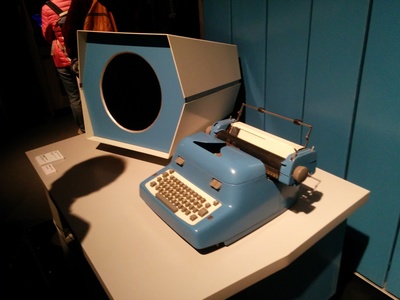
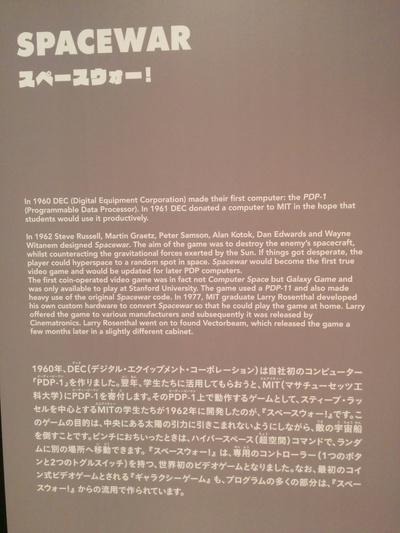
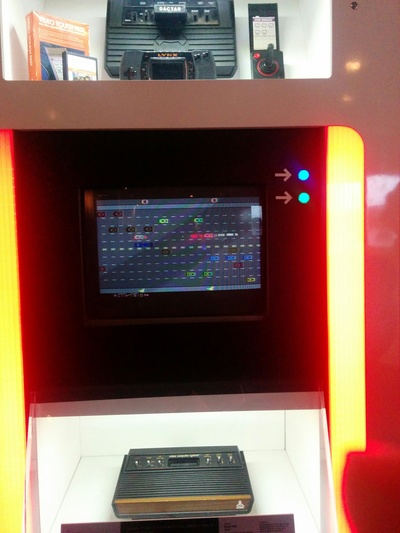
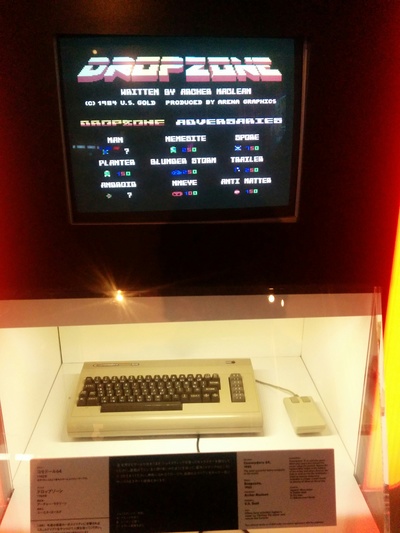
I can see the real DEC PDP-1 hardware. Unfortunately it is only haredware, not worked. And also PONG is exibited.
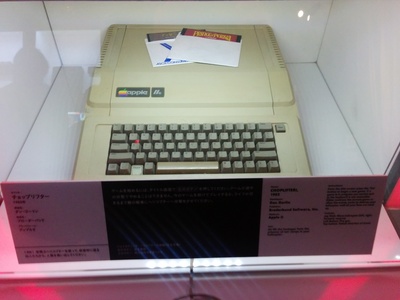
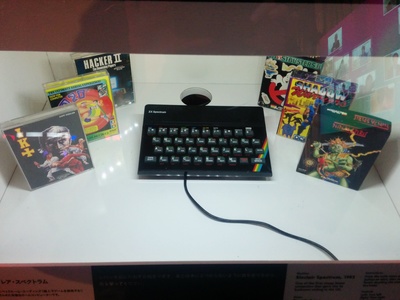
There are many old hardware Atari 2600, Commodore 64, Spectrum, and so on.
Almost exhibition with English description, and officials can talk English, if you feel interested, go Miraikan until 30th May.
In the interest of being as brief as possible (just ask for details if you
want to know more or if you think that it would help), I have started,
against my preferences, to start using chromium from Debian instead of
Firefox (aka, Iceweasel).
The reason? I have a slow computer (a Core 2 Duo T7250). My main computer.
My workhorse.
There are some sites that even with an empty profile and a vanilla Firefox
build right from Mozilla Foundation cause Firefox to generate a very heavy
CPU load. I briefly reported this via Twitter to one (but not the
only!) of the sites in question and to Firefox Site Compatibility.
What do I see? Many CSS and redraw events (thanks to Firefox's profiling
tools). In fact, as many events that Firefox alone is able to completely
take over 1 (of the 2) cores that I have, with just that single tab open.
I don't see those problems with Chromium, unfortunately (or, at least, they
are not that perceptible to my computer's CPU).
So, before I go on and formally file a bug report, I would love to confirm
if other people see the same problems that I am seeing. Do you also see
something similar? Your input is highly welcome!
As my readers probably are well aware, I wrote my transgender coming out poem Mermaidsover 10 years ago, to make it clear to people how I define, what I am and how I would hope they could accept me. I did put it publicly into my blog so I could point people to it. And I still do so regularly. It still comes from the bottom of my heart. And I am very happy that I got the chance to present it in a Poetry Slam last year, it was even recorded and uploaded to YouTube. There is just one thing that I was also told over the time every now and then by some people that I would have liked to understand what's going on:

Why is it in English, my English isn't that good.My usual response was along the lines of that the events that triggered me writing it were in an international context and I wanted to make sure that they understood what I wrote. At that time I didn't realize that I am cutting out a different group of people from being able to understand what's going on inside me. So this year there was a similar event: the Flawless Poetry Slam which touched the topics of
Feminist? Queer? Gender? Rolemodels? - Let's talk about it.I took that as motivation to finally write another text on the topic, and this time in German. Unfortunately though I wasn't able to present it that evening, I wasn't drawn for the lineup. But, I was told that there was another slam going on just last wednesday, so I went there ... and made it onto the stage! And this is the text that I presented there. I am uncertain how well online translators work for you, but I hope you get the core points if you don't understand German:
Ich bin was ich binHope you get the idea. The audience definitely liked it, the jury wasn't so much on board but that's fine, it's five random people and it's mostly for fun anyway. Later that night though some things happened that didn't make me feel so comfortable anymore. I went to the loo, waiting in line with the other ladies, a bit later the waitress came along telling me "the men's room is over there". I told her that I'm aware of that and thanked her, which got her confused and said something along the lines of "so you are both, or what?" but went away after that. Her tone and response wasn't really giving me much comfort, though none of the other ladies in the line did look strangely.
F nf Worte mit wahrem Sinn:
Ich bin was ich bin Du denkst: "Mann im Rock?
Das ist ja wohl l cherlich,
der ist sicher schwul." "Fingernagellack?
Na da schau ich nicht mehr hin,
wer will das schon seh'n." Jedoch liegst du falsch,
Mit all deinen Punkten, denn:
Ich bin was ich bin. Ich bin Transgender
Und erlebe mich selber,
ich bin eine Frau. "Haha, eine Frau?
Wem willst du das weismachen?
Heb mal den Rock hoch!" Und wie ist's bei dir?
Was ist zwischen den Beinen?
Geht mich das nichts an? Warum fragst du mich?
Da ist's dann in Ordnung?
Oder vielleicht nicht? Ich bin was ich bin
F nf Worte mit ernstem Sinn:
Ich bin was ich bin Ich steh weiblich hier
Und das hier ist mein K rper
Mein Geschlecht ist's auch Oberfl chlichkeit
Das ist mein gr tes Problem
Schl gt mir entgegen Wenn ich mich ffne
Verst ndnis fast berall
Es wird akzeptiert Doch gelegentlich
und das schmerzt mich am meisten
sagt doch mal wer "er" Von Fremden? Egal
Doch hab ich mich ge ffnet
Ist es eine Qual "Ich seh dich als Mann"
Da ist, was es transportiert
Akzeptanz? Dahin Meine Pronomen
Wenn ihr ber mich redet
sind sie, ihr, ihres Ich leb was ich leb
F nf Worte mit tiefem Sinn:
Ich bin was ich bin "Doch, wie der erst spricht!
Ich meinte, wie sie denn spricht!
Das ist nicht normal." Ich schreib hier Haikus:
Japanische Gedichtsform
Mit fixem Versmars Sind f nf, sieben, f nf
Silben in jeder Zeile
Haikus sind simpel Probier es mal aus
Transportier eine Message
Es macht auch viel Spa Wortwahl ist wichtig
Ein guter Thesaurus hilft
Sei kurz und pr gnant Ich sag was ich sag
F nf Worte mit klugem Sinn:
Ich bin was ich bin Doch ich schweife ab
Verst ndnis fast berall?
Wird es akzeptiert? Erstaunlicherweise
Doch ich bin auch was and'res
Und hier geht's bergab Eine Sache gibt's
Die erw h'n ich besser nicht
f r die steck ich ein "Deshalb bin ich hier"
So der Titel eines Lieds
verfasst von Thomas D "Wenn ich erkl re
warum ich mich wie ern hr"
So weit komm ich nicht Man erw hnt Vegan
Die Intoleranz ist da
Man ist unten durch "Mangelerscheinung!"
"Das Essen meines Essens!"
Akzeptanz ade Hab 'ne Theorie:
Vegan sein: 'ne Entscheidung
Transgender sein nicht Mensch f hlt sich dann schlecht
dass bei sich selbst die Kraft fehlt
und greift damit an "Ich k nnte das nicht"
Ich verurteile dich nicht
Iss doch was du willst Ich zwing es nicht auf
Aber R cksicht w r schon fein
Statt nur Hohn und Schm h Ich ess was ich ess
F nf Worte zum nachdenken:
Ich bin was ich bin
The fourth update in the 0.12.* series of Rcpp has now arrived on the CRAN network for GNU R, and has just been pushed to Debian as well. This follows four days of idleness in the incoming/ directory: Word is that the tireless CRAN maintainers were traveling and only covering simpler packages. The 0.12.4 release follows the 0.12.0 release from late July, the 0.12.1 release in September, the 0.12.2 release in November, and the 0.12.3 release in January -- making it the eight release at the steady bi-montly release frequency. As before, this release is more of a maintenance release addressing a number of small bugs, nuisances or documentation issues without adding any major new features.
Rcpp has become the most popular way of enhancing GNU R with C or C++ code. As of today, 615 packages on CRAN depend on Rcpp for making analytical code go faster and further. That is up by more than sixty packages from the last release in January!
As during the last few releases, we have new first-time contributors. Kirill Mueller extended Nullable<> to const objects. James "coatless" Balamuta helped with a much-needed update to the Rcpp FAQ concerning recommendations for OS X installations. Colin Gillespie corrected another (small) vignette issue. Contributions from the rest of the gang as well as by-now regular contributors such as Nathan or Dan are detailed below.
Changes in Rcpp version 0.12.4 (2016-03-22)Thanks to CRANberries, you can also look at a diff to the previous release. As always, even fuller details are on the Rcpp Changelog page and the Rcpp page which also leads to the downloads page, the browseable doxygen docs and zip files of doxygen output for the standard formats. A local directory has source and documentation too. Questions, comments etc should go to the rcpp-devel mailing list off the R-Forge page.
- Changes in Rcpp API:
- Changes in Rcpp Sugar:
- Changes in Rcpp Attributes:
- A plugin for C++14 was added (Dan in PR #427)
- Changes in Rcpp Documentation:
- An entry was added to the Rcpp-FAQ vignette describing the required packages for vignette building (#422).
- Use on OS X was further detailed (James Balamuta in #433 with further review by Bob Rudis).
- An entry was added concerning the hard-code limit of arguments to some constructor and function (cf #435).
- The Rcpp-FAQ vignette now contains a table of content.
- Typos and indentation were corrected in the Rcpp Sugar vignette (#445 by Colin Gillespie).
This post by Dirk Eddelbuettel originated on his Thinking inside the box blog. Please report excessive re-aggregation in third-party for-profit settings.
[I wrote this as part of BelFOSS but I think it s worth posting here.]
My Free Software journey starts with The Cuckoo s Egg. Back in the early 90s a family friend suggested I might enjoy reading it. He was right; I was fascinated by the world of interconnected machines it introduced me to. That helped start my involvement in FidoNet, but it also got me interested in Unix. So when I saw a Linux book at the Queen s University bookshop (sadly no longer with us) with a Slackware CD in the back I had to have it.
The motivation at this point was to have a low cost version of Unix I could run on the PC hardware I already owned. I had no knowledge of the GNU Project before this point, and as I wasn t a C programmer I had no interest in looking at the source code. I spent some time futzing around with it and that partition (I was dual booting with DOS 6.22) fell into disuse. It wasn t until I d learnt some C and turned up to university, which provided me with an internet connection and others who were either already using Linux or interested in doing so, that I started running a Linux box full time.
Once I was doing that I became a lot more interested in the Open Source side of the equation. Rather than running a closed operating system that even the API for wasn t properly specified (or I wouldn t have needed my copy of Undocumented DOS) I had the complete source to both the underlying OS and all the utilities that it was using. For someone doing a computer science degree this was invaluable. Minix may have been the OS discussed in the OS Design module I studied, but Linux was a much more feature complete option that I was running on my desktop and could also peer under the hood of.
In my professional career I ve always welcomed the opportunities to work with Open Source. A long time ago I experienced a particularly annoying issue when writing a device driver under QNX. The documentation didn t seem to match the observed behaviour of the subsystem I was interfacing with. However due to licensing issues only a small number of people in the organisation were able to actually look at the QNX source. So I ended up wasting a much more senior engineer s time with queries like I think it s actually doing x, y and z instead of a, b and c; can you confirm? . Instances where I can look directly at the source code myself make me much more productive.
Commercial development also started to make me more understanding of the Free Software nature of the code I was running. It wasn t just the ability to look at the code which was useful, but also the fact there was no need to reinvent the wheel. Need a base OS to build an appliance on? Debian ensures that the main component is Free for all usage. No need to worry about rolling your own compilers, base libraries etc. From a commercial perspective that allows you to concentrate on the actual product. And when you hit problems, the source is available and you can potentially fix it yourself or at least more easily find out if there s been a fix for that issue released (being able to see code development in version control systems rather than getting a new upstream release with a whole heap on unrelated fixes in it really helps with that).
I had thus progressed from using FLOSS because it was free-as-in-beer, to appreciating the benefits of Open Source in my own learning and employment experiences, to a deeper understanding of the free-as-in-speech benefits that could be gained. However at this point I was still thinking very much from a developer mindset. Even my thoughts about how users can benefit from Free Software were in the context of businesses being able to easily switch suppliers or continue to maintain legacy software because they had the source to their systems available.
One of the major factors that has helped me to see beyond this is the expansion of the Internet of Things (IoT). With desktop or server software there is by and large a choice about what to use. This is not the case with appliances. While manufacturers will often produce a few revisions of software for their devices, usually eventually there is a newer and shiny model and the old one is abandoned. This is problematic for many reasons. For example, historically TVs have been long lived devices (I had one I bought second hand that happily lasted me 7+ years). However the smart capabilities of the TV I purchased in 2012 are already of limited usefulness, and LG have moved on to their current models. I have no intention of replacing the device any time soon, so have had to accept it is largely acting as a dumb display. More serious is the lack of security updates. For a TV that doesn t require a network connection to function this is not as important, but the IoT is a trickier proposition. For example Matthew Garrett had an awful experience with some intelligent light bulbs, which effectively circumvented any home network security you might have set up. The manufacturer s defence? No longer manufactured or supported.
It s cases like these that have slowly led me to a more complete understanding of the freedom that Free Software truly offers to users. It s not just about cost free/low cost software. It s not just about being able to learn from looking at the source to the programs you are running. It s not even about the freedom to be able to modify the programs that we use. It s about giving users true Freedom to use and modify their devices as they see fit. From this viewpoint it is much easier to understand the protections against Tivoization that were introduced with GPLv3, and better appreciate the argument sometimes made that the GPL offers more freedom than BSD style licenses.
Next.