Search Results: "tg"

20 June 2023

Vasudev Kamath: Notes: Experimenting with ZRAM and Memory Over commit

Introduction The ZRAM module in the Linux kernel creates a memory-backed block device that stores its content in a compressed format. It offers users the choice of compression algorithms such as lz4, zstd, or lzo. These algorithms differ in compression ratio and speed, with zstd providing the best compression but being slower, while lz4 offers higher speed but lower compression.
Using ZRAM as Swap One interesting use case for ZRAM is utilizing it as swap space in the system. There are two utilities available for configuring ZRAM as swap: zram-tools and systemd-zram-generator. However, Debian Bullseye lacks systemd-zram-generator, making zram-tools the only option for Bullseye users. While it's possible to use systemd-zram-generator by self-compiling or via cargo, I preferred using tools available in the distribution repository due to my restricted environment.
Installation The installation process is straightforward. Simply execute the following command:
apt-get install zram-tools
Configuration The configuration involves modifying a simple shell script file /etc/default/zramswap sourced by the /usr/bin/zramswap script. Here's an example of the configuration I used:
# Compression algorithm selection
# Speed: lz4 > zstd > lzo
# Compression: zstd > lzo > lz4
# This is not inclusive of all the algorithms available in the latest kernels
# See /sys/block/zram0/comp_algorithm (when the zram module is loaded) to check
# the currently set and available algorithms for your kernel [1]
# [1]  https://github.com/torvalds/linux/blob/master/Documentation/blockdev/zram.txt#L86
ALGO=zstd
# Specifies the amount of RAM that should be used for zram
# based on a percentage of the total available memory
# This takes precedence and overrides SIZE below
PERCENT=30
# Specifies a static amount of RAM that should be used for
# the ZRAM devices, measured in MiB
# SIZE=256000
# Specifies the priority for the swap devices, see swapon(2)
# for more details. A higher number indicates higher priority
# This should probably be higher than hdd/ssd swaps.
# PRIORITY=100
I chose zstd as the compression algorithm for its superior compression capabilities. Additionally, I reserved 30% of memory as the size of the zram device. After modifying the configuration, restart the zramswap.service to activate the swap:
systemctl restart zramswap.service
Using systemd-zram-generator For Debian Bookworm users, an alternative option is systemd-zram-generator. Although zram-tools is still available in Debian Bookworm, systemd-zram-generator offers a more integrated solution within the systemd ecosystem. Below is an example of the translated configuration for systemd-zram-generator, located at /etc/systemd/zram-generator.conf:
# This config file enables a /dev/zram0 swap device with the following
# properties:
# * size: 50% of available RAM or 4GiB, whichever is less
# * compression-algorithm: kernel default
#
# This device's properties can be modified by adding options under the
# [zram0] section below. For example, to set a fixed size of 2GiB, set
#  zram-size = 2GiB .
[zram0]
zram-size = ceil(ram * 30/100)
compression-algorithm = zstd
swap-priority = 100
fs-type = swap
After making the necessary changes, reload systemd and start the systemd-zram-setup@zram0.service:
systemctl daemon-reload
systemctl start systemd-zram-setup@zram0.service
The systemd-zram-generator creates the zram device by loading the kernel module and then creates a systemd.swap unit to mount the zram device as swap. In this case, the swap file is called zram0.swap.
Checking Compression and Details To verify the effectiveness of the swap configuration, you can use the zramctl command, which is part of the util-linux package. Alternatively, the zramswap utility provided by zram-tools can be used to obtain the same output. During my testing with synthetic memory load created using stress-ng vm class I found that I can reach upto 40% compression ratio.
Memory Overcommit Another use case I was looking for is allowing the launching of applications that require more memory than what is available in the system. By default, the Linux kernel attempts to estimate the amount of free memory left on the system when user space requests more memory (vm.overcommit_memory=0). However, you can change this behavior by modifying the sysctl value for vm.overcommit_memory to 1. To demonstrate this, I ran a test using stress-ng to request more memory than the system had available. As expected, the Linux kernel refused to allocate memory, and the stress-ng process could not proceed.
free -tg                                                                                                                                                                                          (Mon,Jun19) 
                total        used        free      shared  buff/cache   available
 Mem:              31          12          11           3          11          18
 Swap:             10           2           8
 Total:            41          14          19
sudo stress-ng --vm=1 --vm-bytes=50G -t 120                                                                                                                                                       (Mon,Jun19) 
 stress-ng: info:  [1496310] setting to a 120 second (2 mins, 0.00 secs) run per stressor
 stress-ng: info:  [1496310] dispatching hogs: 1 vm
 stress-ng: info:  [1496312] vm: gave up trying to mmap, no available memory, skipping stressor
 stress-ng: warn:  [1496310] vm: [1496311] aborted early, out of system resources
 stress-ng: info:  [1496310] vm:
 stress-ng: warn:  [1496310]         14 System Management Interrupts
 stress-ng: info:  [1496310] passed: 0
 stress-ng: info:  [1496310] failed: 0
 stress-ng: info:  [1496310] skipped: 1: vm (1)
 stress-ng: info:  [1496310] successful run completed in 10.04s
By setting vm.overcommit_memory=1, Linux will allocate memory in a more relaxed manner, assuming an infinite amount of memory is available.
Conclusion ZRAM provides disks that allow for very fast I/O, and compression allows for a significant amount of memory savings. ZRAM is not restricted to just swap usage; it can be used as a normal block device with different file systems. Using ZRAM as swap is beneficial because, unlike disk-based swap, it is faster, and compression ensures that we use a smaller amount of RAM itself as swap space. Additionally, adjusting the memory overcommit settings can be beneficial for scenarios that require launching memory-intensive applications. Note: When running stress tests or allocating excessive memory, be cautious about the actual memory capacity of your system to prevent out-of-memory (OOM) situations. Feel free to explore the capabilities of ZRAM and optimize your system's memory management. Happy computing!

14 June 2023

Freexian Collaborators: Monthly report about Debian Long Term Support, May 2023 (by Roberto C. S nchez)

Like each month, have a look at the work funded by Freexian s Debian LTS offering.

Debian LTS contributors In May, 18 contributors have been paid to work on Debian LTS, their reports are available:
  • Abhijith PA did 6.0h (out of 6.0h assigned and 8.0h from previous period), thus carrying over 8.0h to the next month.
  • Anton Gladky did 6.0h (out of 8.0h assigned and 7.0h from previous period), thus carrying over 9.0h to the next month.
  • Bastien Roucari s did 17.0h (out of 17.0h assigned and 3.0h from previous period), thus carrying over 3.0h to the next month.
  • Ben Hutchings did 17.0h (out of 16.0h assigned and 8.0h from previous period), thus carrying over 7.0h to the next month.
  • Chris Lamb did 18.0h (out of 18.0h assigned).
  • Daniel Leidert did 0.0h (out of 0h assigned and 12.0h from previous period), thus carrying over 12.0h to the next month.
  • Dominik George did 0.0h (out of 0h assigned and 20.34h from previous period), thus carrying over 20.34h to the next month.
  • Emilio Pozuelo Monfort did 32.0h (out of 18.5h assigned and 16.0h from previous period), thus carrying over 2.5h to the next month.
  • Guilhem Moulin did 20.0h (out of 8.5h assigned and 11.5h from previous period).
  • Holger Levsen did 0.0h (out of 0h assigned and 10.0h from previous period), thus carrying over 10.0h to the next month.
  • Lee Garrett did 0.0h (out of 0h assigned and 40.5h from previous period), thus carrying over 40.5h to the next month.
  • Markus Koschany did 34.5h (out of 34.5h assigned).
  • Roberto C. S nchez did 18.25h (out of 20.5h assigned and 11.5h from previous period), thus carrying over 13.75h to the next month.
  • Scarlett Moore did 20.0h (out of 20.0h assigned).
  • Sylvain Beucler did 34.5h (out of 29.0h assigned and 5.5h from previous period).
  • Thorsten Alteholz did 14.0h (out of 14.0h assigned).
  • Tobias Frost did 16.0h (out of 15.0h assigned and 1.0h from previous period).
  • Utkarsh Gupta did 5.5h (out of 5.0h assigned and 26.0h from previous period), thus carrying over 25.5h to the next month.

Evolution of the situation In May, we have released 34 DLAs. Several of the DLAs constituted notable security updates to LTS during the month of May. Of particular note were the linux (4.19) and linux-5.10 packages, both of which addressed a considerable number of CVEs. Additionally, the postgresql-11 package was updated by synchronizing it with the 11.20 release from upstream. Notable non-security updates were made to the distro-info-data database and the timezone database. The distro-info-data package was updated with the final expected release date of Debian 12, made aware of Debian 14 and Ubuntu 23.10, and was updated with the latest EOL dates for Ubuntu releases. The tzdata and libdatetime-timezone-perl packages were updated with the 2023c timezone database. The changes in these packages ensure that in addition to the latest security updates LTS users also have the latest information concerning Debian and Ubuntu support windows, as well as the latest timezone data for accurate worldwide timekeeping. LTS contributor Anton implemented an improvement to the Debian Security Tracker Unfixed vulnerabilities in unstable without a filed bug view, allowing for more effective management of CVEs which do not yet have a corresponding bug entry in the Debian BTS. LTS contributor Sylvain concluded an audit of obsolete packages still supported in LTS to ensure that new CVEs are properly associated. In this case, a package being obsolete means that it is no longer associated with a Debian release for which the Debian Security Team has direct responsibility. When this occurs, it is the responsibility of the LTS team to ensure that incoming CVEs are properly associated to packages which exist only in LTS. Finally, LTS contributors also contributed several updates to packages in unstable/testing/stable to fix CVEs. This helps package maintainers, addresses CVEs in current and future Debian releases, and ensures that the CVEs do not remain open for an extended period of time only for the LTS team to be required to deal with them much later in the future.

Thanks to our sponsors Sponsors that joined recently are in bold.

11 June 2023

Michael Prokop: What to expect from Debian/bookworm #newinbookworm

Bookworm Banner, Copyright 2022 Juliette Taka Debian v12 with codename bookworm was released as new stable release on 10th of June 2023. Similar to what we had with #newinbullseye and previous releases, now it s time for #newinbookworm! I was the driving force at several of my customers to be well prepared for bookworm. As usual with major upgrades, there are some things to be aware of, and hereby I m starting my public notes on bookworm that might be worth also for other folks. My focus is primarily on server systems and looking at things from a sysadmin perspective. Further readings As usual start at the official Debian release notes, make sure to especially go through What s new in Debian 12 + Issues to be aware of for bookworm. Package versions As a starting point, let s look at some selected packages and their versions in bullseye vs. bookworm as of 2023-02-10 (mainly having amd64 in mind):
Package bullseye/v11 bookworm/v12
ansible 2.10.7 2.14.3
apache 2.4.56 2.4.57
apt 2.2.4 2.6.1
bash 5.1 5.2.15
ceph 14.2.21 16.2.11
docker 20.10.5 20.10.24
dovecot 2.3.13 2.3.19
dpkg 1.20.12 1.21.22
emacs 27.1 28.2
gcc 10.2.1 12.2.0
git 2.30.2 2.39.2
golang 1.15 1.19
libc 2.31 2.36
linux kernel 5.10 6.1
llvm 11.0 14.0
lxc 4.0.6 5.0.2
mariadb 10.5 10.11
nginx 1.18.0 1.22.1
nodejs 12.22 18.13
openjdk 11.0.18 + 17.0.6 17.0.6
openssh 8.4p1 9.2p1
openssl 1.1.1n 3.0.8-1
perl 5.32.1 5.36.0
php 7.4+76 8.2+93
podman 3.0.1 4.3.1
postfix 3.5.18 3.7.5
postgres 13 15
puppet 5.5.22 7.23.0
python2 2.7.18 (gone!)
python3 3.9.2 3.11.2
qemu/kvm 5.2 7.2
ruby 2.7+2 3.1
rust 1.48.0 1.63.0
samba 4.13.13 4.17.8
systemd 247.3 252.6
unattended-upgrades 2.8 2.9.1
util-linux 2.36.1 2.38.1
vagrant 2.2.14 2.3.4
vim 8.2.2434 9.0.1378
zsh 5.8 5.9
Linux Kernel The bookworm release ships a Linux kernel based on version 6.1, whereas bullseye shipped kernel 5.10. As usual there are plenty of changes in the kernel area, including better hardware support, and this might warrant a separate blog entry, but to highlight some changes: See Kernelnewbies.org for further changes between kernel versions. Configuration management puppet s upstream sadly still doesn t provide packages for bookworm (see PA-4995), though Debian provides puppet-agent and puppetserver packages, and even puppetdb is back again, see release notes for further information. ansible is also available and made it with version 2.14 into bookworm. Prometheus stack Prometheus server was updated from v2.24.1 to v2.42.0 and all the exporters that got shipped with bullseye are still around (in more recent versions of course). Virtualization docker (v20.10.24), ganeti (v3.0.2-3), libvirt (v9.0.0-4), lxc (v5.0.2-1), podman (v4.3.1), openstack (Zed), qemu/kvm (v7.2), xen (v4.17.1) are all still around. Vagrant is available in version 2.3.4, also Vagrant upstream provides their packages for bookworm already. If you re relying on VirtualBox, be aware that upstream doesn t provide packages for bookworm yet (see ticket 21524), but thankfully version 7.0.8-dfsg-2 is available from Debian/unstable (as of 2023-06-10) (VirtualBox isn t shipped with stable releases since quite some time due to lack of cooperation from upstream on security support for older releases, see #794466). rsync rsync was updated from v3.2.3 to v3.2.7, and we got a few new options: OpenSSH OpenSSH was updated from v8.4p1 to v9.2p1, so if you re interested in all the changes, check out the release notes between those version (8.5, 8.6, 8.7, 8.8, 8.9, 9.0, 9.1 + 9.2). Let s highlight some notable new features: One important change you might wanna be aware of is that as of OpenSSH v8.8, RSA signatures using the SHA-1 hash algorithm got disabled by default, but RSA/SHA-256/512 AKA RSA-SHA2 gets used instead. OpenSSH has supported RFC8332 RSA/SHA-256/512 signatures since release 7.2 and existing ssh-rsa keys will automatically use the stronger algorithm where possible. A good overview is also available at SSH: Signature Algorithm ssh-rsa Error. Now tools/libraries not supporting RSA-SHA2 fail to connect to OpenSSH as present in bookworm. For example python3-paramiko v2.7.2-1 as present in bullseye doesn t support RSA-SHA2. It tries to connect using the deprecated RSA-SHA-1, which is no longer offered by default with OpenSSH as present in bookworm, and then fails. Support for RSA/SHA-256/512 signatures in Paramiko was requested e.g. at #1734, and eventually got added to Paramiko and in the end the change made it into Paramiko versions >=2.9.0. Paramiko in bookworm works fine, and a backport by rebuilding the python3-paramiko package from bookworm for bullseye solves the problem (BTDT). Misc unsorted Thanks to everyone involved in the release, happy upgrading to bookworm, and let s continue with working towards Debian/trixie. :)

8 June 2023

Lisandro Dami n Nicanor P rez Meyer: Adventures in Debian's Qt land

Debian (I might as well say "we", this is the beauty of it) is about to release Debian 12 aka Bookworm. Let's take a quick look at what is new in Debian Qt land. Qt 5 Bookworm has Qt 5.15.8, which is nothing but great news. KDE will be switching to Qt 6 sooner than later and Qt 5 has been a fun ride, but Dmitry Shachnev and I needed a break, or at very least not handling two Qt versions. But in the end I need to be fair: you REALLY need to thank Dmitry for Qt 5. He has been the man power behind it in 99.5% of the cases. Qt 6 This will be the first Debian release to have official Qt 6 packages. NOTHING would have happened if it weren't for Patrick "Delta-One" Franz standing up to maintain it. BIG kudos to him! Well, there is a "little lie" in the paragraph above. Thanks to The Qt Company and ICS the current Qt 6 version, 6.4.2, is also available as Bullseye's backports. The Qt Company really also helped us here by providing us almost-to-be-released tarballs of Qt 6.4.2 so we were able to push them to unstable and do a transition in time for freeze, thanks a lot for that! So, what is the Qt 6 state? At the binary side all but OpenGL ES support should be there. Sadly this was discovered too late in the release process and we still might need help maintaining it (read the link to know why!). We are still not building the documentation. Properly building the whole documentation, as with Qt 5, would require all the Qt submodules' source code in one place, which we can't (easily?) do in Debian. So building the doc means hacking the build system and getting semi-linked documentation, much like with Qt 5. Now if you think you have an idea to solve this... we are happy to hear from you! Another great thing to know about Qt 6 is that, thanks to Helmut Grohne, pure Qt 6 applications should be able to cross compile. Applications using multi-arch enabled libraries ought to work too. Even more, many Qt submodules themselves should also cross compile! Not all of them, as we missed some patches in time, but hey, if you need to cross compile Qt, you surely can apply them yourselves! And finally tests, unit tests. In Qt 5 we had some of those, but none yet in Qt 6. This is one of the areas I would love to be able to put time... but time is scarce. The future? In my point of view the Debian 13 "Trixie" development cycle will see Qt 5 diminishing it's usage and Qt 6 becoming the major Qt version used, but from the Qt 4 experience I do not expect Qt 5 being dropped during this release cycle... let's see what the future brings us. Thanks! While I mentioned Dmitry and Patrick many more people helped us reach this place. I personally want to thank the people behind the KDE software, both upstream and, of course, the Debian maintainers. You should be thankful with them too, many hours of effort go into this. And thanks to you our dear users. We are normally overflowed with what we have in our hands and might not be up to the task sometimes, but hey, you are part of the reason we are doing this!

1 June 2023

Paul Wise: FLOSS Activities May 2023

Focus This month I didn't have any particular focus. I just worked on issues in my info bubble.

Changes

Issues

Review

Administration
  • Debian IRC: set topic on new #debian-sa channel
  • Debian wiki: unblock IP addresses, approve accounts

Communication
  • Respond to queries from Debian users and contributors on the mailing lists and IRC

Sponsors The SIMDe, gensim, sptag work was sponsored. All other work was done on a volunteer basis.

29 May 2023

Shirish Agarwal: Pearls of Luthra, Dahaad, Tetris & Discord.

Pearls of Luthra Pearls of Luthra is the first book by Brian Jacques and I think I am going to be a fan of his work. This particular book you have to be wary of. While it is a beautiful book with quite a few illustrations, I have to warn that if you are somebody who feels hungry at the very mention of food, then you will be hungry throughout the book. There isn t a single page where food isn t mentioned and not just any kind of food, the kind of food that is geared towards sweet tooth. So if you fancy tarts or chocolates or anything sweet you will right at home. The book also touches upon various teas and wines and various liquors but food is where it shines in literally. The tale is very much like a Harry Potter adventure but isn t as dark as HP was. In fact, apart from one death and one ear missing rest of our heroes and heroines and there are quite a few. I don t want to give too much away as it s a book to be treasured.

Dahaad Dahaad (the roar) is Sonakshi Sinha s entry in OTT/Web Series. The stage is set somewhere in North India while the exploits are based on a real life person called Cyanide Mohan who killed 20 women between 2005-2009. In the web series however, the antagonist s crimes are done over a period of 12 years and has 29 women as his victims. Apart from that it s pretty much a copy of what was done by the person above. It s a melting pot of a series which quite a few stories enmeshed along with the main one. The main onus and plot of the movie is about women from lower economic and caste order whose families want them to be wed but cannot due to huge demands for dowry. Now in such a situation, if a person were to give them a bit of attention, promise marriage and ask them to steal a bit and come with him and whatever, they will do it. The same modus operandi was done by Cynaide Mohan. He had a car that was not actually is but used it show off that he s from a richer background, entice the women, have sex, promise marriage and in the morning after pill there will be cynaide which the women unwittingly will consume. This is also framed by the protagonist Sonakshi Sinha to her mother as her mother is also forcing her to get married as she is becoming older. She shows some of the photographs of the victims and says that while the perpetrator is guilty but so is the overall society that puts women in such vulnerable positions. AFAIK, that is still the state of things. In fact, there is a series called Indian Matchmaking that has all the snobbishness that you want. How many people could have a lifestyle like the ones shown in that, less than 2% of the population. It s actually shows like the above that make the whole thing even more precarious  Apart from it, the show also shows prejudice about caste and background. I wouldn t go much into it as it s worth seeing and experiencing.

Tetris Tetris in many a ways is a story of greed. It s also a story of a lone inventor who had to wait almost 20 odd years to profit from his invention. Forbes does a marvelous job of giving some more background and foreground info. about Tetris, the inventor and the producer that went to strike it rich. It also does share about copyright misrepresentation happens but does nothing to address it. Could talk a whole lot but better to see the movie and draw your own conclusions. For me it was 4/5.

Discord Discord became Discord 2.0 and is a blank to me. A blank page. Can t do anything. First I thought it was a bug. Waited for a few days as sometimes webservices do fix themselves. But two weeks on and it still wasn t fixed then decided to look under. One of the tools in Firefox is Web Developer Tools ( CTRL+Shift+I) that tells you if an element of a page is not appearing or at least gives you a hint. To me it gave me the following
Content Security Policy: Ignoring 'unsafe-inline' within script-src or style-src: nonce-source or hash-source specified
Content Security Policy: The page s settings blocked the loading of a resource at data:text/css,%0A%20%20%20%20%20%20%20%2 ( style-src ). data:44:30
Content Security Policy: Ignoring 'unsafe-inline' within script-src or style-src: nonce-source or hash-source specified
TypeError: AudioContext is not a constructor 138875 https://discord.com/assets/cbf3a75da6e6b6a4202e.js:262 l https://discord.com/assets/f5f0b113e28d4d12ba16.js:1ed46a18578285e5c048b.js:241:118 What is being done is dom.webaudio.enabled being disabled in Firefox. Then on a hunch, searched on reddit and saw the following. Be careful while visiting the link as it s labelled NSFW although to my mind there wasn t anything remotely NSFW about it. They do mention using another tool AudioContext Fingerprint Defender which supposedly fakes or spoofs an id. As this add-on isn t tracked by Firefox privacy team it s hard for me to say anything positive or negative. So, in the end I stopped using discord as the alternative was being tracked by them  Last but not the least, saw this about a week back. Sooner or later this had to happen as Elon tries to make money off Twitter.

Jonathan Carter: MiniDebConf Germany 2023

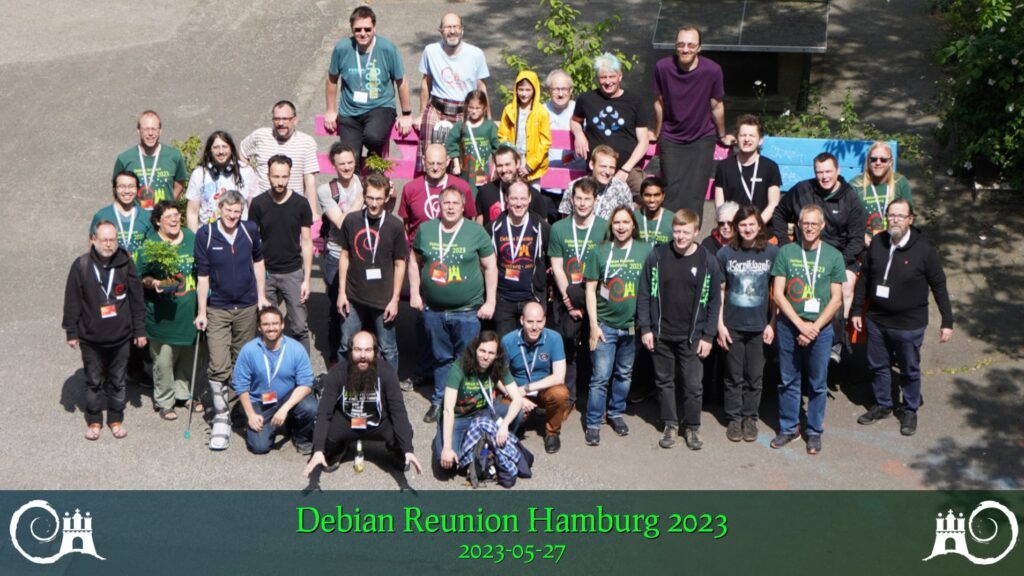
This year I attended Debian Reunion Hamburg (aka MiniDebConf Germany) for the second time. My goal for this MiniDebConf was just to talk to people and make the most of the time I have there. No other specific plans or goals. Despite this simple goal, it was a very productive and successful event for me. Tuesday 23rd:
Wednesday 24th:
Thursday 25th:
Friday 26th:
Saturday 27th: Sunday 28th: Monday 29th:
Das is nicht gut.
Tuesday 30th:

Thank you to Holger for organising this event yet again!

24 May 2023

Scarlett Gately Moore: KDE Gear 23.04.1 Snaps Released! Snapcraft updates and more.

Kweather SnapKweather Snap
I have completed the 23.04.1 KDE Gear applications release for snaps! With this release comes several new KDE Snaps! Plus many long outdated / broken snaps are updated and or fixed! Check them all out here: https://snapcraft.io/search?q=KDE I have been busy triaging and squashing bugs in regards to snaps on https://bugs.kde.org Snapcraft: Updated the kde-neon extension for the newest content pack. Made a core22 qmake plugin with tests PR https://github.com/canonical/craft-parts/pull/463 Future work: Top on my TO-DO list is still PIM. There are many parts, making it more complex. I am working on it though. QT6/KF6 is making it s way to the top of the list as well. KDE Neon has made significant progress here, so I am in early stages of updating our build scripts to generate our qt6/kf6 content snap. Thanks for stopping by! https://gofund.me/2c7b1808 All proceeds go to improving my ability to work. Thanks for your consideration!

9 May 2023

C.J. Collier: Instructions for installing Proxmox onto the Qotom device

These instructions are for qotom devices Q515P and Q1075GE. You can order one from Amazon or directly from Cherry Ni <export03@qotom.com>. Instructions are for those coming from Windows. Prerequisites: To find your windows network details, run the following command at the command prompt:
netsh interface ip show addresses
Here s my output:
PS C:\Users\cjcol> netsh interface ip show addresses "Wi-Fi"
Configuration for interface "Wi-Fi"
    DHCP enabled:                         Yes
    IP Address:                           172.16.79.53
    Subnet Prefix:                        172.16.79.0/24 (mask 255.255.255.0)
    Default Gateway:                      172.16.79.1
    Gateway Metric:                       0
    InterfaceMetric:                      50
Did you follow the instructions linked above in the prerequisites section? If not, take a moment to do so now.
Open Rufus and select the proxmox iso which you downloaded. You may be warned that Rufus will be acting as dd.
Don t forget to select the USB drive that you want to write the image to. In my example, the device is creatively called NO_LABEL .
You may be warned that re-imaging the USB disk will result in the previous data on the USB disk being lost.
Once the process is complete, the application will indicate that it is complete.
You should now have a USB disk with the Proxmox installer image on it. Place the USB disk into one of the blue, USB-3.0, USB-A slots on the Qotom device so that the system can read the installer image from it at full speed. The Proxmox installer requires a keyboard, video and mouse. Please attach these to the device along with inserting the USB disk you just created. Press the power button on the Qotom device. Press the F11 key repeatedly until you see the AMI BIOS menu. Press F11 a couple more times. You ll be presented with a boot menu. One of the options will launch the Proxmox installer. By trial and error, I found that the correct boot menu option was UEFI OS Once you select the correct option, you will be presented with a menu that looks like this. Select the default option and install. During the install, you will be presented with an option of the block device to install to. I think there s only a single block device in this celeron, but if there are more than one, I prefer the smaller one for the ProxMox OS. I also make a point to limit the size of the root filesystem to 16G. I think it will take up the entire volume group if you don t set a limit. Okay, I ll do another install and select the correct filesystem. If you read this far and want me to add some more screenshots and better instructions, leave a comment.

2 May 2023

Neil Williams: Carrying Grief

This isn't a book review, although the reason that I am typing this now is because of a book, You Are Not Alone: from the creator and host of Griefcast, Cariad Lloyd, ISBN: 978-1526621870 and I include a handful of quotes from Cariad where there is really no better way of describing things. Many people experience death for the first time as a child, often relating to a family pet. Death is universal but every experience of death is unique. One of the myths of grief is the idea of the Five Stages but this is a misinterpretation. Denial, Anger, Bargaining, Depression and Acceptance represent the five stage model of death and have nothing to do with grief. The five stages were developed from studying those who are terminally ill, the dying, not those who then grieve for the dead person and have to go on living without them. Grief is for those who loved the person who has died and it varies between each of those people just as people vary in how they love someone. The Five Stages end at the moment of death, grief is what comes next and most people do not grieve in stages, it can be more like a tangled knot. Death has a date and time, so that is why the last stage of the model is Acceptance. Grief has no timetable, those who grieve will carry that grief for the rest of their lives. Death starts the process of grief in those who go on living just as it ends the life of the person who is loved. "Grief eases and changes and returns but it never disappears.". I suspect many will have already stopped reading by this point. People do not talk about death and grief enough and this only adds to the burden of those who carry their grief. It can be of enormous comfort to those who have carried grief for some time to talk directly about the dead, not in vague pleasantries but with specific and strong memories. Find a safe place without distractions and talk with the person grieving face to face. Name the dead person. Go to places with strong memories and be there alongside. Talk about the times with that person before their death. Early on, everything about grief is painful and sad. It does ease but it remains unpredictable. Closing it away in a box inside your head (as I did at one point) is like cutting off a damaged limb but keeping the pain in a box on the shelf. You still miss the limb and eventually, the box starts leaking. For me, there were family pets which died but my first job out of university was to work in hospitals, helping the nurses manage the medication regimen and providing specialist advice as a pharmacist. It will not be long in that environment before everyone on the ward gets direct experience of the death of a person. In some ways, this helped me to separate the process of death from the process of grief. I cared for these people as patients but these were not my loved ones. Later, I worked in specialist terminal care units, including providing potential treatments as part of clinical trials. Here, it was not expected for any patient to be discharged alive. The more aggressive chemotherapies had already been tried and had failed, this was about pain relief, symptom management and helping the loved ones. Palliative care is not just about the patient, it involves helping the loved ones to accept what is happening as this provides comfort to the patient by closing the loop. Grief is stressful. One of the most common causes of personal stress is bereavement. The death of your loved one is outside of your control, it has happened, no amount of regret can change that. Then come all the other stresses, maybe about money or having somewhere to live as a result of what else has changed after the death or having to care for other loved ones. In the early stages, the first two years, I found it helpful to imagine my life as a box containing a ball and a button. The button triggers new waves of pain and loss each time it is hit. The ball bounces around the box and hits the button at random. Initially, the button is large and the ball is enormous, so the button is hit almost constantly. Over time, both the button and the ball change size. Starting off at maximum, initially there is only one direction of change. There are two problems with this analogy. First is that the grief ball has infinite energy which does not happen in reality. The ball may get smaller and the button harder to hit but the ball will continue bouncing. Secondly, the life box is not a predictable shape, so the pattern of movement of the ball is unpredictable. A single stress is one thing, but what has happened since has just kept adding more stress for me. Shortly before my father died 5 years ago now, I had moved house. Then, I was made redundant on the day of the first anniversary of my father's death. A year or so later, my long term relationship failed and a few months after that COVID-19 appeared. As the country eased out of the pandemic in 2021, my mother died (unrelated to COVID itself). A year after that, I had to take early retirement. My brother and sister, of course, share a lot of those stressors. My brother, in particular, took the responsibility for organising both funerals and did most of the visits to my mother before her death. The grief is different for each of the surviving family. Cariad's book helped me understand why I was getting frequent ideas about going back to visit places which my father and I both knew. My parents encouraged each of us to work hard to leave Port Talbot (or Pong Toilet locally) behind, in no small part due to the unrestrained pollution and deprivation that is common to small industrial towns across Wales, the midlands and the north of the UK. It wasn't that I wanted to move house back to our ancestral roots. It was my grief leaking out of the box. Yes, I long for mountains and the sea because I'm now living in a remorselessly flat and landlocked region after moving here for employment. However, it was my grief driving those longings - not for the physical surroundings but out of the shared memories with my father. I can visit those memories without moving house, I just need to arrange things so that I can be undisturbed and undistracted. I am not alone with my grief and I am grateful to my friends who have helped whilst carrying their own grief. It is necessary for everyone to think and talk about death and grief. In respect of your own death, no matter how far ahead that may be, consider Advance Care Planning and Expressions of Wish as well as your Will. Talk to people, document what you want. Your loved ones will be grateful and they deserve that much whilst they try to cope with the first onslaught of grief. Talk to your loved ones and get them to do the same for themselves. Normalise talking about death with your family, especially children. None of us are getting out of this alive and we will all leave behind people who will grieve.

29 April 2023

Russell Coker: Write a blog post in the style of Russell Coker

Feeling a bit bored I asked ChatGPT Write a blog post in the style of Russell Coker and the result is in the section below. I don t know if ChatGPT knows that the person asking the question is the same as the person being asked about. If a human had created that I d be certain that great computer scientist and writer was an attempt at flattery, for a machine I m not sure. I have not written a single book, but I expect that in some alternate universe some version of me has written several. I don t know if humans would describe my writing as being known for clarity, precision, and depth . I would not be surprised if no-one else wrote about it so I guess I m forced to read what he wrote would be a more common response. The actual article part doesn t seem to be in my style at all. Firstly it s very short at only 312 words, while I have written some short posts most of them are much longer. To find this out I did some MySQL queries to get the lengths of posts (I used this blog post as inspiration [1]). Note that multiple sequential spaces counts as multiple words.
# get post ID and word count
SELECT id, LENGTH(post_content) - LENGTH(REPLACE(REPLACE(REPLACE(REPLACE(post_content, "\r", ""), "\n", ""), "\t", ""), " ", "")) + 1 AS wordcount FROM wp_posts where post_status = 'publish' and post_type='post';
# get average word count
SELECT avg(LENGTH(post_content) - LENGTH(REPLACE(REPLACE(REPLACE(REPLACE(post_content, "\r", ""), "\n", ""), "\t", ""), " ", "")) + 1) FROM wp_posts where post_status = 'publish' and post_type='post';
# get the first posts by length
SELECT id, LENGTH(post_content) - LENGTH(REPLACE(REPLACE(REPLACE(REPLACE(post_content, "\r", ""), "\n", ""), "\t", ""), " ", "")) + 1 AS wordcount, post_content FROM wp_posts where post_status = 'publish' and post_type='post' ORDER BY wordcount limit 10;
# get a count of the posts less than 312 words
SELECT count(*) from wp_posts where (LENGTH(post_content) - LENGTH(REPLACE(REPLACE(REPLACE(REPLACE(post_content, "\r", ""), "\n", ""), "\t", ""), " ", "")) + 1) < 312 and post_status = 'publish' and post_type='post';
# get a count of all posts
select count(*) from wp_posts where post_status = 'publish' and post_type='post';
It turns out that there are 333/1521 posts that are less than 312 words and the average length is 665 words. Of the shortest posts a large portion were written before Twitter became popular and had the sort of unimportant content that Twitter is good for. It seems ironic that ChatGPT says that I'm known for "depth" and then writes a short post allegedly in my style. As for the actual content of the "post", it's not something that I greatly disagree with but it's definitely not something I'd write. If some manager or marketing person wrote something like this and asked my opinion I'd probably suppress a sigh and say it's OK for it's target market. I think that free software is better in many ways and for many reasons and that separately from the issue of merit free software is important because of the ways that it is used. We could debate various issues related to the quality of free software vs proprietary software but even people who don't believe that free software is of high quality have to admit that software that runs most mobile phones and most web servers is important. As much as I dislike Windows most desktop PCs and laptops run it so I can't claim it to be unimportant. So my first disagreement with the content is the issue of importance vs quality. One thing that ChatGPT is known for is weak arguments that appear convincing. "This diversity often leads to better software, as bugs are found and fixed faster, and new features are added more quickly" could be opposed by "the payment for proprietary software often leads to better software, as bugs are found and fixed faster, and new features are added more quickly". I think that any case where "feature of option A gives this list of good results" can be rewritten as "feature of the opposite of option A gives the same list of good results" and be equally convincing is a poor argument. Also any argument that seems to rest on "free software is all written by hobbyists" is ignoring the demands of users who need things done on a non-hobby timeframe, the many profitable companies that develop and support free software, and the employment status of a large portion of my Facebook friends (many of whom are paid for ~2000 hours a year of free software development and many more of whom have paid free software development as part of their work supporting the use of free software). Really the entire blog post it wrote seems to me like something a human might write if their boss assigned them to write about the benefits of free software, and that they would then write a new article saying the exact opposite if their boss asked them to. Finally I prefer the term "free software" to "open source software". The difference doesn't seem important to some people, but any being that doesn't know the difference won't do well at impersonating me. ChatGPT Result Hello everyone, I'm ChatGPT, and today I'm going to try my best to write a blog post in the style of the great computer scientist and writer, Russell Coker. Russell Coker is a renowned software engineer and writer, who is best known for his contributions to the Linux community, especially the Debian project. He has authored several books and articles on topics ranging from security to software engineering, and his writing style is known for its clarity, precision, and depth. So, without further ado, let's dive into the topic of this blog post, which is the importance of open-source software. Open-source software is software whose source code is available for anyone to inspect, modify, and distribute. This means that anyone can use, study, and improve the software, without any restrictions or fees. Open-source software has been around for a long time, but it has become more prevalent and important in recent years, thanks to the rise of the internet and the digital economy. Open-source software has several benefits, both for individuals and for society as a whole. One of the most significant benefits is that it fosters innovation and collaboration. When software is open-source, it means that anyone can contribute to it, which leads to a diverse range of perspectives and ideas. This diversity often leads to better software, as bugs are found and fixed faster, and new features are added more quickly. Another benefit of open-source software is that it is often more secure than proprietary software. Because the source code is available for anyone to inspect, vulnerabilities and security flaws can be found and fixed faster. This means that open-source software is often more reliable and trustworthy than proprietary software, which may have hidden backdoors or vulnerabilities that can be exploited by attackers. Open-source software is also often more cost-effective than proprietary software. Because it is free to use and distribute, organizations can save money on licensing fees and other costs associated with proprietary software. This can be particularly important for non-profit organizations or small businesses that may not have the resources to invest in expensive software licenses. In conclusion, open-source software is an important part of the digital landscape, and its benefits are numerous. Whether you are a software developer, a business owner, or an individual user, open-source software has something to offer. So, the next time you are looking for software to use, consider open-source options, and help support the collaborative and innovative spirit of the open-source community.

28 April 2023

Scarlett Gately Moore: KDE Snaps, Gear 23.04.0 available in snap store

KDE Digikam 8.0.0 SnapKDE Digikam 8.0.0 Snap
It has been another crazy busy couple of weeks. There are too many snaps released to list here, but you can track my progress here: https://invent.kde.org/packaging/snapcraft-kde-applications/-/issues/30 Some notable releases are: I updated our Frameworks/QT5 content pack to kf5 105 and qt5 5.15.9. I have added more documentation at: https://invent.kde.org/teams/neon/-/wikis/Snaps I am finishing up the last of 23.04.0 snaps and will tackle KDE PIM suite next week. I will also work on more apps that have their own release cycle. Several snap bugs have been resolved and closed! Please remember if you have issues, to file them at bugs.kde.org as I have a hard time finding them at <insert random forum / social network here> On the Debian front, I successfully closed two CVE s for ruby-rack in Buster! I will be doing more ELTS/LTS security updates next month! Thanks for stopping by! If you enjoy my work, consider a dontation. https://gofund.me/2c7b1808

15 April 2023

Simon Josefsson: Sigstore protects Apt archives: apt-verify & apt-sigstore

Do you want your apt-get update to only ever use files whose hash checksum have been recorded in the globally immutable tamper-resistance ledger rekor provided by the Sigstore project? Well I thought you d never ask, but now you can, thanks to my new projects apt-verify and apt-sigstore. I have not done proper stable releases yet, so this is work in progress. To try it out, adapt to the modern era of running random stuff from the Internet as root, and run the following commands. Use a container or virtual machine if you have trust issues.
apt-get install -y apt gpg bsdutils wget
wget -nv -O/usr/local/bin/rekor-cli 'https://github.com/sigstore/rekor/releases/download/v1.1.0/rekor-cli-linux-amd64'
echo afde22f01d9b6f091a7829a6f5d759d185dc0a8f3fd21de22c6ae9463352cf7d  /usr/local/bin/rekor-cli   sha256sum -c
chmod +x /usr/local/bin/rekor-cli
wget -nv -O/usr/local/bin/apt-verify-gpgv https://gitlab.com/debdistutils/apt-verify/-/raw/main/apt-verify-gpgv
chmod +x /usr/local/bin/apt-verify-gpgv
mkdir -p /etc/apt/verify.d
ln -s /usr/bin/gpgv /etc/apt/verify.d
echo 'APT::Key::gpgvcommand "apt-verify-gpgv";' > /etc/apt/apt.conf.d/75verify
wget -nv -O/etc/apt/verify.d/apt-rekor https://gitlab.com/debdistutils/apt-sigstore/-/raw/main/apt-rekor
chmod +x /etc/apt/verify.d/apt-rekor
apt-get update
less /var/log/syslog
If the stars are aligned (and the puppet projects of debdistget and debdistcanary have ran their GitLab CI/CD pipeline recently enough) you will see a successful output from apt-get update and your syslog will contain debug logs showing the entries from the rekor log for the release index files that you downloaded. See sample outputs in the README. If you get tired of it, disabling is easy:
chmod -x /etc/apt/verify.d/apt-rekor
Our project currently supports Trisquel GNU/Linux 10 (nabia) & 11 (aramo), PureOS 10 (byzantium), Gnuinos chimaera, Ubuntu 20.04 (focal) & 22.04 (jammy), Debian 10 (buster) & 11 (bullseye), and Devuan GNU+Linux 4.0 (chimaera). Others can be supported to, please open an issue about it, although my focus is on FSDG-compliant distributions and their upstreams. This is a continuation of my previous work on apt-canary. I have realized that it was better to separate out the generic part of apt-canary into my new project apt-verify that offers a plugin-based method, and then rewrote apt-canary to be one such plugin. Then apt-sigstore s apt-rekor was my second plugin for apt-verify. Due to the design of things, and some current limitations, Ubuntu is the least stable since they push out new signed InRelease files frequently (mostly due to their use of Phased-Update-Percentage) and debdistget and debdistcanary CI/CD runs have a hard time keeping up. If you have insight on how to improve this, please comment me in the issue tracking the race condition. There are limitations of what additional safety a rekor-based solution actually provides, but I expect that to improve as I get a cosign-based approach up and running. Currently apt-rekor mostly make targeted attacks less deniable. With a cosign-based approach, we could design things such that your machine only downloads updates when they have been publicly archived in an immutable fashion, or submitted for validation by a third-party such as my reproducible build setup for Trisquel GNU/Linux aramo. What do you think? Happy Hacking!

14 April 2023

Scarlett Gately Moore: KDE Snaps! Oh so many released! Debian update

KDE Elisia snapKDE Elisia snap
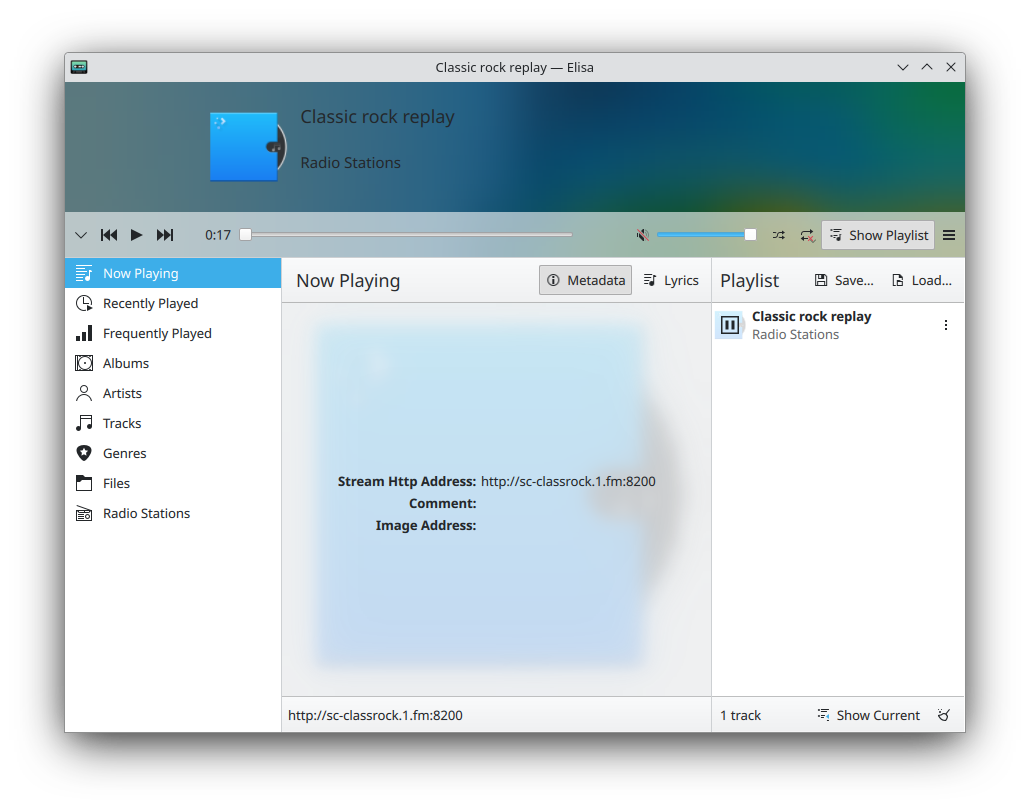
It has been another very busy couple of weeks! I have released many snaps, fixed a few bugs, started the documentation, and have many snaps in progress. So without further ado here is my status update for KDE snaps: Fixed two very important Krita bugs: https://bugs.kde.org/show_bug.cgi?id=465307 Fixed several other minor bugs and triaged all the snap bugs I could find on bugs.kde.org. Remember to assign snap bugs to me! It makes my life easier and I see them quicker. I have started some documentation for developers that want to assist in getting their KDE app snapped here: https://invent.kde.org/teams/neon/-/wikis/Snaps I have released around 40 snaps! This would make for a very unruly blog post to list, so I have created a list here of my releases: https://invent.kde.org/packaging/snapcraft-kde-applications/-/issues/30 I am happy to report there are several first time releases including a very kool music app called Elisia ! I have many more snaps in various stages and many more to come. My goal is to get them all by the end of this 3 months ( 1.5 left to get it done ), a lofty goal I know. What can I say, I am ambitious. Now on to Debian. I am excited to announce that soon I will become contributor status for Freexian ( and hopefully, after time, a collaborator ). I am waiting for my mentor to upload my first security update(s) for Buster LTS. This will be a new type of contributions for me, but I am confident I will do well and I have new hope that I have found my new forever home. I will be very useful in many areas and I look forward to growing with the company. In closing, if you can spare some change we have a few unexpected expenses ( doesn t everyone?! ) Anything helps, thank you! https://gofund.me/2c7b1808

John Goerzen: Easily Accessing All Your Stuff with a Zero-Trust Mesh VPN

Probably everyone is familiar with a regular VPN. The traditional use case is to connect to a corporate or home network from a remote location, and access services as if you were there. But these days, the notion of corporate network and home network are less based around physical location. For instance, a company may have no particular office at all, may have a number of offices plus a number of people working remotely, and so forth. A home network might have, say, a PVR and file server, while highly portable devices such as laptops, tablets, and phones may want to talk to each other regardless of location. For instance, a family member might be traveling with a laptop, another at a coffee shop, and those two devices might want to communicate, in addition to talking to the devices at home. And, in both scenarios, there might be questions about giving limited access to friends. Perhaps you d like to give a friend access to part of your file server, or as a company, you might have contractors working on a limited project. Pretty soon you wind up with a mess of VPNs, forwarded ports, and tricks to make it all work. With the increasing prevalence of CGNAT, a lot of times you can t even open a port to the public Internet. Each application or device probably has its own gateway just to make it visible on the Internet, some of which you pay for. Then you add on the question of: should you really trust your LAN anyhow? With possibilities of guests using it, rogue access points, etc., the answer is probably no . We can move the responsibility for dealing with NAT, fluctuating IPs, encryption, and authentication, from the application layer further down into the network stack. We then arrive at a much simpler picture for all. So this page is fundamentally about making the network work, simply and effectively.

How do we make the Internet work in these scenarios? We re going to combine three concepts:
  1. A VPN, providing fully encrypted and authenticated communication and stable IPs
  2. Mesh Networking, in which devices automatically discover optimal paths to reach each other
  3. Zero-trust networking, in which we do not need to trust anything about the underlying LAN, because all our traffic uses the secure systems in points 1 and 2.
By combining these concepts, we arrive at some nice results:
  • You can ssh hostname, where hostname is one of your machines (server, laptop, whatever), and as long as hostname is up, you can reach it, wherever it is, wherever you are.
    • Combined with mosh, these sessions will be durable even across moving to other host networks.
    • You could just as well use telnet, because the underlying network should be secure.
  • You don t have to mess with encryption keys, certs, etc., for every internal-only service. Since IPs are now trustworthy, that s all you need. hosts.allow could make a comeback!
  • You have a way of transiting out of extremely restrictive networks. Every tool discussed here has a way of falling back on routing things via a broker (relay) on TCP port 443 if all else fails.
There might sometimes be tradeoffs. For instance:
  • On LANs faster than 1Gbps, performance may degrade due to encryption and encapsulation overhead. However, these tools should let hosts discover the locality of each other and not send traffic over the Internet if the devices are local.
  • With some of these tools, hosts local to each other (on the same LAN) may be unable to find each other if they can t reach the control plane over the Internet (Internet is down or provider is down)
Some other features that some of the tools provide include:
  • Easy sharing of limited access with friends/guests
  • Taking care of everything you need, including SSL certs, for exposing a certain on-net service to the public Internet
  • Optional routing of your outbound Internet traffic via an exit node on your network. Useful, for instance, if your local network is blocking tons of stuff.
Let s dive in.

Types of Mesh VPNs I ll go over several types of meshes in this article:
  1. Fully decentralized with automatic hop routing This model has no special central control plane. Nodes discover each other in various ways, and establish routes to each other. These routes can be direct connections over the Internet, or via other nodes. This approach offers the greatest resilience. Examples I ll cover include Yggdrasil and tinc.
  2. Automatic peer-to-peer with centralized control In this model, nodes, by default, communicate by establishing direct links between them. A regular node never carries traffic on behalf of other nodes. Special-purpose relays are used to handle cases in which NAT traversal is impossible. This approach tends to offer simple setup. Examples I ll cover include Tailscale, Zerotier, Nebula, and Netmaker.
  3. Roll your own and hybrid approaches This is a grab bag of other ideas; for instance, running Yggdrasil over Tailscale.

Terminology For the sake of consistency, I m going to use common language to discuss things that have different terms in different ecosystems:
  • Every tool discussed here has a way of dealing with NAT traversal. It may assist with establishing direct connections (eg, STUN), and if that fails, it may simply relay traffic between nodes. I ll call such a relay a broker . This may or may not be the same system that is a control plane for a tool.
  • All of these systems operate over lower layers that are unencrypted. Those lower layers may be a LAN (wired or wireless, which may or may not have Internet access), or the public Internet (IPv4 and/or IPv6). I m going to call the unencrypted lower layer, whatever it is, the clearnet .

Evaluation Criteria Here are the things I want to see from a solution:
  • Secure, with all communications end-to-end encrypted and authenticated, and prevention of traffic from untrusted devices.
  • Flexible, adapting to changes in network topology quickly and automatically.
  • Resilient, without single points of failure, and with devices local to each other able to communicate even if cut off from the Internet or other parts of the network.
  • Private, minimizing leakage of information or metadata about me and my systems
  • Able to traverse CGNAT without having to use a broker whenever possible
  • A lesser requirement for me, but still a nice to have, is the ability to include others via something like Internet publishing or inviting guests.
  • Fully or nearly fully Open Source
  • Free or very cheap for personal use
  • Wide operating system support, including headless Linux on x86_64 and ARM.

Fully Decentralized VPNs with Automatic Hop Routing Two systems fit this description: Yggdrasil and Tinc. Let s dive in.

Yggdrasil I ll start with Yggdrasil because I ve written so much about it already. It featured in prior posts such as:

Yggdrasil can be a private mesh VPN, or something more Yggdrasil can be a private mesh VPN, just like the other tools covered here. It s unique, however, in that a key goal of the project is to also make it useful as a planet-scale global mesh network. As such, Yggdrasil is a testbed of new ideas in distributed routing designed to scale up to massive sizes and all sorts of connection conditions. As of 2023-04-10, the main global Yggdrasil mesh has over 5000 nodes in it. You can choose whether or not to participate. Every node in a Yggdrasil mesh has a public/private keypair. Each node then has an IPv6 address (in a private address space) derived from its public key. Using these IPv6 addresses, you can communicate right away. Yggdrasil differs from most of the other tools here in that it does not necessarily seek to establish a direct link on the clearnet between, say, host A and host G for them to communicate. It will prefer such a direct link if it exists, but it is perfectly happy if it doesn t. The reason is that every Yggdrasil node is also a router in the Yggdrasil mesh. Let s sit with that concept for a moment. Consider:
  • If you have a bunch of machines on your LAN, but only one of them can peer over the clearnet, that s fine; all the other machines will discover this route to the world and use it when necessary.
  • All you need to run a broker is just a regular node with a public IP address. If you are participating in the global mesh, you can use one (or more) of the free public peers for this purpose.
  • It is not necessary for every node to know about the clearnet IP address of every other node (improving privacy). In fact, it s not even necessary for every node to know about the existence of all the other nodes, so long as it can find a route to a given node when it s asked to.
  • Yggdrasil can find one or more routes between nodes, and it can use this knowledge of multiple routes to aggressively optimize for varying network conditions, including combinations of, say, downloads and low-latency ssh sessions.
Behind the scenes, Yggdrasil calculates optimal routes between nodes as necessary, using a mesh-wide DHT for initial contact and then deriving more optimal paths. (You can also read more details about the routing algorithm.) One final way that Yggdrasil is different from most of the other tools is that there is no separate control server. No node is special , in charge, the sole keeper of metadata, or anything like that. The entire system is completely distributed and auto-assembling.

Meeting neighbors There are two ways that Yggdrasil knows about peers:
  • By broadcast discovery on the local LAN
  • By listening on a specific port (or being told to connect to a specific host/port)
Sometimes this might lead to multiple ways to connect to a node; Yggdrasil prefers the connection auto-discovered by broadcast first, then the lowest-latency of the defined path. In other words, when your laptops are in the same room as each other on your local LAN, your packets will flow directly between them without traversing the Internet.

Unique uses Yggdrasil is uniquely suited to network-challenged situations. As an example, in a post-disaster situation, Internet access may be unavailable or flaky, yet there may be many local devices perhaps ones that had never known of each other before that could share information. Yggdrasil meets this situation perfectly. The combination of broadcast auto-detection, distributed routing, and so forth, basically means that if there is any physical path between two nodes, Yggdrasil will find and enable it. Ad-hoc wifi is rarely used because it is a real pain. Yggdrasil actually makes it useful! Its broadcast discovery doesn t require any IP address provisioned on the interface at all (it just uses the IPv6 link-local address), so you don t need to figure out a DHCP server or some such. And, Yggdrasil will tend to perform routing along the contours of the RF path. So you could have a laptop in the middle of a long distance relaying communications from people farther out, because it could see both. Or even a chain of such things.

Yggdrasil: Security and Privacy Yggdrasil s mesh is aggressively greedy. It will peer with any node it can find (unless told otherwise) and will find a route to anywhere it can. There are two main ways to make sure you keep unauthorized traffic out: by restricting who can talk to your mesh, and by firewalling the Yggdrasil interface. Both can be used, and they can be used simultaneously. I ll discuss firewalling more at the end of this article. Basically, you ll almost certainly want to do this if you participate in the public mesh, because doing so is akin to having a globally-routable public IP address direct to your device. If you want to restrict who can talk to your mesh, you just disable the broadcast feature on all your nodes (empty MulticastInterfaces section in the config), and avoid telling any of your nodes to connect to a public peer. You can set a list of authorized public keys that can connect to your nodes listening interfaces, which you ll probably want to do. You will probably want to either open up some inbound ports (if you can) or set up a node with a known clearnet IP on a place like a $5/mo VPS to help with NAT traversal (again, setting AllowedPublicKeys as appropriate). Yggdrasil doesn t allow filtering multicast clients by public key, only by network interface, so that s why we disable broadcast discovery. You can easily enough teach Yggdrasil about static internal LAN IPs of your nodes and have things work that way. (Or, set up an internal gateway node or two, that the clients just connect to when they re local). But fundamentally, you need to put a bit more thought into this with Yggdrasil than with the other tools here, which are closed-only. Compared to some of the other tools here, Yggdrasil is better about information leakage; nodes only know details, such as clearnet IPs, of directly-connected peers. You can obtain the list of directly-connected peers of any known node in the mesh but that list is the public keys of the directly-connected peers, not the clearnet IPs. Some of the other tools contain a limited integrated firewall of sorts (with limited ACLs and such). Yggdrasil does not, but is fully compatible with on-host firewalls. I recommend these anyway even with many other tools.

Yggdrasil: Connectivity and NAT traversal Compared to the other tools, Yggdrasil is an interesting mix. It provides a fully functional mesh and facilitates connectivity in situations in which no other tool can. Yet its NAT traversal, while it exists and does work, results in using a broker under some of the more challenging CGNAT situations more often than some of the other tools, which can impede performance. Yggdrasil s underlying protocol is TCP-based. Before you run away screaming that it must be slow and unreliable like OpenVPN over TCP it s not, and it is even surprisingly good around bufferbloat. I ve found its performance to be on par with the other tools here, and it works as well as I d expect even on flaky 4G links. Overall, the NAT traversal story is mixed. On the one hand, you can run a node that listens on port 443 and Yggdrasil can even make it speak TLS (even though that s unnecessary from a security standpoint), so you can likely get out of most restrictive firewalls you will ever encounter. If you join the public mesh, know that plenty of public peers do listen on port 443 (and other well-known ports like 53, plus random high-numbered ones). If you connect your system to multiple public peers, there is a chance though a very small one that some public transit traffic might be routed via it. In practice, public peers hopefully are already peered with each other, preventing this from happening (you can verify this with yggdrasilctl debug_remotegetpeers key=ABC...). I have never experienced a problem with this. Also, since latency is a factor in routing for Yggdrasil, it is highly unlikely that random connections we use are going to be competitive with datacenter peers.

Yggdrasil: Sharing with friends If you re open to participating in the public mesh, this is one of the easiest things of all. Have your friend install Yggdrasil, point them to a public peer, give them your Yggdrasil IP, and that s it. (Well, presumably you also open up your firewall you did follow my advice to set one up, right?) If your friend is visiting at your location, they can just hop on your wifi, install Yggdrasil, and it will automatically discover a route to you. Yggdrasil even has a zero-config mode for ephemeral nodes such as certain Docker containers. Yggdrasil doesn t directly support publishing to the clearnet, but it is certainly possible to proxy (or even NAT) to/from the clearnet, and people do.

Yggdrasil: DNS There is no particular extra DNS in Yggdrasil. You can, of course, run a DNS server within Yggdrasil, just as you can anywhere else. Personally I just add relevant hosts to /etc/hosts and leave it at that, but it s up to you.

Yggdrasil: Source code, pricing, and portability Yggdrasil is fully open source (LGPLv3 plus additional permissions in an exception) and highly portable. It is written in Go, and has prebuilt binaries for all major platforms (including a Debian package which I made). There is no charge for anything with Yggdrasil. Listed public peers are free and run by volunteers. You can run your own peers if you like; they can be public and unlisted, public and listed (just submit a PR to get it listed), or private (accepting connections only from certain nodes keys). A peer in this case is just a node with a known clearnet IP address. Yggdrasil encourages use in other projects. For instance, NNCP integrates a Yggdrasil node for easy communication with other NNCP nodes.

Yggdrasil conclusions Yggdrasil is tops in reliability (having no single point of failure) and flexibility. It will maintain opportunistic connections between peers even if the Internet is down. The unique added feature of being able to be part of a global mesh is a nice one. The tradeoffs include being more prone to need to use a broker in restrictive CGNAT environments. Some other tools have clients that override the OS DNS resolver to also provide resolution of hostnames of member nodes; Yggdrasil doesn t, though you can certainly run your own DNS infrastructure over Yggdrasil (or, for that matter, let public DNS servers provide Yggdrasil answers if you wish). There is also a need to pay more attention to firewalling or maintaining separation from the public mesh. However, as I explain below, many other options have potential impacts if the control plane, or your account for it, are compromised, meaning you ought to firewall those, too. Still, it may be a more immediate concern with Yggdrasil. Although Yggdrasil is listed as experimental, I have been using it for over a year and have found it to be rock-solid. They did change how mesh IPs were calculated when moving from 0.3 to 0.4, causing a global renumbering, so just be aware that this is a possibility while it is experimental.

tinc tinc is the oldest tool on this list; version 1.0 came out in 2003! You can think of tinc as something akin to an older Yggdrasil without the public option. I will be discussing tinc 1.0.36, the latest stable version, which came out in 2019. The development branch, 1.1, has been going since 2011 and had its latest release in 2021. The last commit to the Github repo was in June 2022. Tinc is the only tool here to support both tun and tap style interfaces. I go into the difference more in the Zerotier review below. Tinc actually provides a better tap implementation than Zerotier, with various sane options for broadcasts, but I still think the call for an Ethernet, as opposed to IP, VPN is small. To configure tinc, you generate a per-host configuration and then distribute it to every tinc node. It contains a host s public key. Therefore, adding a host to the mesh means distributing its key everywhere; de-authorizing it means removing its key everywhere. This makes it rather unwieldy. tinc can do LAN broadcast discovery and mesh routing, but generally speaking you must manually teach it where to connect initially. Somewhat confusingly, the examples all mention listing a public address for a node. This doesn t make sense for a laptop, and I suspect you d just omit it. I think that address is used for something akin to a Yggdrasil peer with a clearnet IP. Unlike all of the other tools described here, tinc has no tool to inspect the running state of the mesh. Some of the properties of tinc made it clear I was unlikely to adopt it, so this review wasn t as thorough as that of Yggdrasil.

tinc: Security and Privacy As mentioned above, every host in the tinc mesh is authenticated based on its public key. However, to be more precise, this key is validated only at the point it connects to its next hop peer. (To be sure, this is also the same as how the list of allowed pubkeys works in Yggdrasil.) Since IPs in tinc are not derived from their key, and any host can assign itself whatever mesh IP it likes, this implies that a compromised host could impersonate another. It is unclear whether packets are end-to-end encrypted when using a tinc node as a router. The fact that they can be routed at the kernel level by the tun interface implies that they may not be.

tinc: Connectivity and NAT traversal I was unable to find much information about NAT traversal in tinc, other than that it does support it. tinc can run over UDP or TCP and auto-detects which to use, preferring UDP.

tinc: Sharing with friends tinc has no special support for this, and the difficulty of configuration makes it unlikely you d do this with tinc.

tinc: Source code, pricing, and portability tinc is fully open source (GPLv2). It is written in C and generally portable. It supports some very old operating systems. Mobile support is iffy. tinc does not seem to be very actively maintained.

tinc conclusions I haven t mentioned performance in my other reviews (see the section at the end of this post). But, it is so poor as to only run about 300Mbps on my 2.5Gbps network. That s 1/3 the speed of Yggdrasil or Tailscale. Combine that with the unwieldiness of adding hosts and some uncertainties in security, and I m not going to be using tinc.

Automatic Peer-to-Peer Mesh VPNs with centralized control These tend to be the options that are frequently discussed. Let s talk about the options.

Tailscale Tailscale is a popular choice in this type of VPN. To use Tailscale, you first sign up on tailscale.com. Then, you install the tailscale client on each machine. On first run, it prints a URL for you to click on to authorize the client to your mesh ( tailnet ). Tailscale assigns a mesh IP to each system. The Tailscale client lets the Tailscale control plane gather IP information about each node, including all detectable public and private clearnet IPs. When you attempt to contact a node via Tailscale, the client will fetch the known contact information from the control plane and attempt to establish a link. If it can contact over the local LAN, it will (it doesn t have broadcast autodetection like Yggdrasil; the information must come from the control plane). Otherwise, it will try various NAT traversal options. If all else fails, it will use a broker to relay traffic; Tailscale calls a broker a DERP relay server. Unlike Yggdrasil, a Tailscale node never relays traffic for another; all connections are either direct P2P or via a broker. Tailscale, like several others, is based around Wireguard; though wireguard-go rather than the in-kernel Wireguard. Tailscale has a number of somewhat unique features in this space:
  • Funnel, which lets you expose ports on your system to the public Internet via the VPN.
  • Exit nodes, which automate the process of routing your public Internet traffic over some other node in the network. This is possible with every tool mentioned here, but Tailscale makes switching it on or off a couple of quick commands away.
  • Node sharing, which lets you share a subset of your network with guests
  • A fantastic set of documentation, easily the best of the bunch.
Funnel, in particular, is interesting. With a couple of tailscale serve -style commands, you can expose a directory tree (or a development webserver) to the world. Tailscale gives you a public hostname, obtains a cert for it, and proxies inbound traffic to you. This is subject to some unspecified bandwidth limits, and you can only choose from three public ports, so it s not really a production solution but as a quick and easy way to demonstrate something cool to a friend, it s a neat feature.

Tailscale: Security and Privacy With Tailscale, as with the other tools in this category, one of the main threats to consider is the control plane. What are the consequences of a compromise of Tailscale s control plane, or of the credentials you use to access it? Let s begin with the credentials used to access it. Tailscale operates no identity system itself, instead relying on third parties. For individuals, this means Google, Github, or Microsoft accounts; Okta and other SAML and similar identity providers are also supported, but this runs into complexity and expense that most individuals aren t wanting to take on. Unfortunately, all three of those types of accounts often have saved auth tokens in a browser. Personally I would rather have a separate, very secure, login. If a person does compromise your account or the Tailscale servers themselves, they can t directly eavesdrop on your traffic because it is end-to-end encrypted. However, assuming an attacker obtains access to your account, they could:
  • Tamper with your Tailscale ACLs, permitting new actions
  • Add new nodes to the network
  • Forcibly remove nodes from the network
  • Enable or disable optional features
Of note is that they cannot just commandeer an existing IP. I would say the riskiest possibility here is that could add new nodes to the mesh. Because they could also tamper with your ACLs, they could then proceed to attempt to access all your internal services. They could even turn on service collection and have Tailscale tell them what and where all the services are. Therefore, as with other tools, I recommend a local firewall on each machine with Tailscale. More on that below. Tailscale has a new alpha feature called tailnet lock which helps with this problem. It requires existing nodes in the mesh to sign a request for a new node to join. Although this doesn t address ACL tampering and some of the other things, it does represent a significant help with the most significant concern. However, tailnet lock is in alpha, only available on the Enterprise plan, and has a waitlist, so I have been unable to test it. Any Tailscale node can request the IP addresses belonging to any other Tailscale node. The Tailscale control plane captures, and exposes to you, this information about every node in your network: the OS hostname, IP addresses and port numbers, operating system, creation date, last seen timestamp, and NAT traversal parameters. You can optionally enable service data capture as well, which sends data about open ports on each node to the control plane. Tailscale likes to highlight their key expiry and rotation feature. By default, all keys expire after 180 days, and traffic to and from the expired node will be interrupted until they are renewed (basically, you re-login with your provider and do a renew operation). Unfortunately, the only mention I can see of warning of impeding expiration is in the Windows client, and even there you need to edit a registry key to get the warning more than the default 24 hours in advance. In short, it seems likely to cut off communications when it s most important. You can disable key expiry on a per-node basis in the admin console web interface, and I mostly do, due to not wanting to lose connectivity at an inopportune time.

Tailscale: Connectivity and NAT traversal When thinking about reliability, the primary consideration here is being able to reach the Tailscale control plane. While it is possible in limited circumstances to reach nodes without the Tailscale control plane, it is a fairly brittle setup and notably will not survive a client restart. So if you use Tailscale to reach other nodes on your LAN, that won t work unless your Internet is up and the control plane is reachable. Assuming your Internet is up and Tailscale s infrastructure is up, there is little to be concerned with. Your own comfort level with cloud providers and your Internet should guide you here. Tailscale wrote a fantastic article about NAT traversal and they, predictably, do very well with it. Tailscale prefers UDP but falls back to TCP if needed. Broker (DERP) servers step in as a last resort, and Tailscale clients automatically select the best ones. I m not aware of anything that is more successful with NAT traversal than Tailscale. This maximizes the situations in which a direct P2P connection can be used without a broker. I have found Tailscale to be a bit slow to notice changes in network topography compared to Yggdrasil, and sometimes needs a kick in the form of restarting the client process to re-establish communications after a network change. However, it s possible (maybe even probable) that if I d waited a bit longer, it would have sorted this all out.

Tailscale: Sharing with friends I touched on the funnel feature earlier. The sharing feature lets you give an invite to an outsider. By default, a person accepting a share can make only outgoing connections to the network they re invited to, and cannot receive incoming connections from that network this makes sense. When sharing an exit node, you get a checkbox that lets you share access to the exit node as well. Of course, the person accepting the share needs to install the Tailnet client. The combination of funnel and sharing make Tailscale the best for ad-hoc sharing.

Tailscale: DNS Tailscale s DNS is called MagicDNS. It runs as a layer atop your standard DNS taking over /etc/resolv.conf on Linux and provides resolution of mesh hostnames and some other features. This is a concept that is pretty slick. It also is a bit flaky on Linux; dueling programs want to write to /etc/resolv.conf. I can t really say this is entirely Tailscale s fault; they document the problem and some workarounds. I would love to be able to add custom records to this service; for instance, to override the public IP for a service to use the in-mesh IP. Unfortunately, that s not yet possible. However, MagicDNS can query existing nameservers for certain domains in a split DNS setup.

Tailscale: Source code, pricing, and portability Tailscale is almost fully open source and the client is highly portable. The client is open source (BSD 3-clause) on open source platforms, and closed source on closed source platforms. The DERP servers are open source. The coordination server is closed source, although there is an open source coordination server called Headscale (also BSD 3-clause) made available with Tailscale s blessing and informal support. It supports most, but not all, features in the Tailscale coordination server. Tailscale s pricing (which does not apply when using Headscale) provides a free plan for 1 user with up to 20 devices. A Personal Pro plan expands that to 100 devices for $48 per year - not a bad deal at $4/mo. A Community on Github plan also exists, and then there are more business-oriented plans as well. See the pricing page for details. As a small note, I appreciated Tailscale s install script. It properly added Tailscale s apt key in a way that it can only be used to authenticate the Tailscale repo, rather than as a systemwide authenticator. This is a nice touch and speaks well of their developers.

Tailscale conclusions Tailscale is tops in sharing and has a broad feature set and excellent documentation. Like other solutions with a centralized control plane, device communications can stop working if the control plane is unreachable, and the threat model of the control plane should be carefully considered.

Zerotier Zerotier is a close competitor to Tailscale, and is similar to it in a lot of ways. So rather than duplicate all of the Tailscale information here, I m mainly going to describe how it differs from Tailscale. The primary difference between the two is that Zerotier emulates an Ethernet network via a Linux tap interface, while Tailscale emulates a TCP/IP network via a Linux tun interface. However, Zerotier has a number of things that make it be a somewhat imperfect Ethernet emulator. For one, it has a problem with broadcast amplification; the machine sending the broadcast sends it to all the other nodes that should receive it (up to a set maximum). I wouldn t want to have a lot of programs broadcasting on a slow link. While in theory this could let you run Netware or DECNet across Zerotier, I m not really convinced there s much call for that these days, and Zerotier is clearly IP-focused as it allocates IP addresses and such anyhow. Zerotier provides special support for emulated ARP (IPv4) and NDP (IPv6). While you could theoretically run Zerotier as a bridge, this eliminates the zero trust principle, and Tailscale supports subnet routers, which provide much of the same feature set anyhow. A somewhat obscure feature, but possibly useful, is Zerotier s built-in support for multipath WAN for the public interface. This actually lets you do a somewhat basic kind of channel bonding for WAN.

Zerotier: Security and Privacy The picture here is similar to Tailscale, with the difference that you can create a Zerotier-local account rather than relying on cloud authentication. I was unable to find as much detail about Zerotier as I could about Tailscale - notably I couldn t find anything about how sticky an IP address is. However, the configuration screen lets me delete a node and assign additional arbitrary IPs within a subnet to other nodes, so I think the assumption here is that if your Zerotier account (or the Zerotier control plane) is compromised, an attacker could remove a legit device, add a malicious one, and assign the previous IP of the legit device to the malicious one. I m not sure how to mitigate against that risk, as firewalling specific IPs is ineffective if an attacker can simply take them over. Zerotier also lacks anything akin to Tailnet Lock. For this reason, I didn t proceed much further in my Zerotier evaluation.

Zerotier: Connectivity and NAT traversal Like Tailscale, Zerotier has NAT traversal with STUN. However, it looks like it s more limited than Tailscale s, and in particular is incompatible with double NAT that is often seen these days. Zerotier operates brokers ( root servers ) that can do relaying, including TCP relaying. So you should be able to connect even from hostile networks, but you are less likely to form a P2P connection than with Tailscale.

Zerotier: Sharing with friends I was unable to find any special features relating to this in the Zerotier documentation. Therefore, it would be at the same level as Yggdrasil: possible, maybe even not too difficult, but without any specific help.

Zerotier: DNS Unlike Tailscale, Zerotier does not support automatically adding DNS entries for your hosts. Therefore, your options are approximately the same as Yggdrasil, though with the added option of pushing configuration pointing to your own non-Zerotier DNS servers to the client.

Zerotier: Source code, pricing, and portability The client ZeroTier One is available on Github under a custom business source license which prevents you from using it in certain settings. This license would preclude it being included in Debian. Their library, libzt, is available under the same license. The pricing page mentions a community edition for self hosting, but the documentation is sparse and it was difficult to understand what its feature set really is. The free plan lets you have 1 user with up to 25 devices. Paid plans are also available.

Zerotier conclusions Frankly I don t see much reason to use Zerotier. The virtual Ethernet model seems to be a weird hybrid that doesn t bring much value. I m concerned about the implications of a compromise of a user account or the control plane, and it lacks a lot of Tailscale features (MagicDNS and sharing). The only thing it may offer in particular is multipath WAN, but that s esoteric enough and also solvable at other layers that it doesn t seem all that compelling to me. Add to that the strange license and, to me anyhow, I don t see much reason to bother with it.

Netmaker Netmaker is one of the projects that is making noise these days. Netmaker is the only one here that is a wrapper around in-kernel Wireguard, which can make a performance difference when talking to peers on a 1Gbps or faster link. Also, unlike other tools, it has an ingress gateway feature that lets people that don t have the Netmaker client, but do have Wireguard, participate in the VPN. I believe I also saw a reference somewhere to nodes as routers as with Yggdrasil, but I m failing to dig it up now. The project is in a bit of an early state; you can sign up for an upcoming closed beta with a SaaS host, but really you are generally pointed to self-hosting using the code in the github repo. There are community and enterprise editions, but it s not clear how to actually choose. The server has a bunch of components: binary, CoreDNS, database, and web server. It also requires elevated privileges on the host, in addition to a container engine. Contrast that to the single binary that some others provide. It looks like releases are frequent, but sometimes break things, and have a somewhat more laborious upgrade processes than most. I don t want to spend a lot of time managing my mesh. So because of the heavy needs of the server, the upgrades being labor-intensive, it taking over iptables and such on the server, I didn t proceed with a more in-depth evaluation of Netmaker. It has a lot of promise, but for me, it doesn t seem to be in a state that will meet my needs yet.

Nebula Nebula is an interesting mesh project that originated within Slack, seems to still be primarily sponsored by Slack, but is also being developed by Defined Networking (though their product looks early right now). Unlike the other tools in this section, Nebula doesn t have a web interface at all. Defined Networking looks likely to provide something of a SaaS service, but for now, you will need to run a broker ( lighthouse ) yourself; perhaps on a $5/mo VPS. Due to the poor firewall traversal properties, I didn t do a full evaluation of Nebula, but it still has a very interesting design.

Nebula: Security and Privacy Since Nebula lacks a traditional control plane, the root of trust in Nebula is a CA (certificate authority). The documentation gives this example of setting it up:
./nebula-cert sign -name "lighthouse1" -ip "192.168.100.1/24"
./nebula-cert sign -name "laptop" -ip "192.168.100.2/24" -groups "laptop,home,ssh"
./nebula-cert sign -name "server1" -ip "192.168.100.9/24" -groups "servers"
./nebula-cert sign -name "host3" -ip "192.168.100.10/24"
So the cert contains your IP, hostname, and group allocation. Each host in the mesh gets your CA certificate, and the per-host cert and key generated from each of these steps. This leads to a really nice security model. Your CA is the gatekeeper to what is trusted in your mesh. You can even have it airgapped or something to make it exceptionally difficult to breach the perimeter. Nebula contains an integrated firewall. Because the ability to keep out unwanted nodes is so strong, I would say this may be the one mesh VPN you might consider using without bothering with an additional on-host firewall. You can define static mappings from a Nebula mesh IP to a clearnet IP. I haven t found information on this, but theoretically if NAT traversal isn t required, these static mappings may allow Nebula nodes to reach each other even if Internet is down. I don t know if this is truly the case, however.

Nebula: Connectivity and NAT traversal This is a weak point of Nebula. Nebula sends all traffic over a single UDP port; there is no provision for using TCP. This is an issue at certain hotel and other public networks which open only TCP egress ports 80 and 443. I couldn t find a lot of detail on what Nebula s NAT traversal is capable of, but according to a certain Github issue, this has been a sore spot for years and isn t as capable as Tailscale. You can designate nodes in Nebula as brokers (relays). The concept is the same as Yggdrasil, but it s less versatile. You have to manually designate what relay to use. It s unclear to me what happens if different nodes designate different relays. Keep in mind that this always happens over a UDP port.

Nebula: Sharing with friends There is no particular support here.

Nebula: DNS Nebula has experimental DNS support. In contrast with Tailscale, which has an internal DNS server on every node, Nebula only runs a DNS server on a lighthouse. This means that it can t forward requests to a DNS server that s upstream for your laptop s particular current location. Actually, Nebula s DNS server doesn t forward at all. It also doesn t resolve its own name. The Nebula documentation makes reference to using multiple lighthouses, which you may want to do for DNS redundancy or performance, but it s unclear to me if this would make each lighthouse form a complete picture of the network.

Nebula: Source code, pricing, and portability Nebula is fully open source (MIT). It consists of a single Go binary and configuration. It is fairly portable.

Nebula conclusions I am attracted to Nebula s unique security model. I would probably be more seriously considering it if not for the lack of support for TCP and poor general NAT traversal properties. Its datacenter connectivity heritage does show through.

Roll your own and hybrid Here is a grab bag of ideas:

Running Yggdrasil over Tailscale One possibility would be to use Tailscale for its superior NAT traversal, then allow Yggdrasil to run over it. (You will need a firewall to prevent Tailscale from trying to run over Yggdrasil at the same time!) This creates a closed network with all the benefits of Yggdrasil, yet getting the NAT traversal from Tailscale. Drawbacks might be the overhead of the double encryption and double encapsulation. A good Yggdrasil peer may wind up being faster than this anyhow.

Public VPN provider for NAT traversal A public VPN provider such as Mullvad will often offer incoming port forwarding and nodes in many cities. This could be an attractive way to solve a bunch of NAT traversal problems: just use one of those services to get you an incoming port, and run whatever you like over that. Be aware that a number of public VPN clients have a kill switch to prevent any traffic from egressing without using the VPN; see, for instance, Mullvad s. You ll need to disable this if you are running a mesh atop it.

Other

Combining with local firewalls For most of these tools, I recommend using a local firewal in conjunction with them. I have been using firehol and find it to be quite nice. This means you don t have to trust the mesh, the control plane, or whatever. The catch is that you do need your mesh VPN to provide strong association between IP address and node. Most, but not all, do.

Performance I tested some of these for performance using iperf3 on a 2.5Gbps LAN. Here are the results. All speeds are in Mbps.
Tool iperf3 (default) iperf3 -P 10 iperf3 -R
Direct (no VPN) 2406 2406 2764
Wireguard (kernel) 1515 1566 2027
Yggdrasil 892 1126 1105
Tailscale 950 1034 1085
Tinc 296 300 277
You can see that Wireguard was significantly faster than the other options. Tailscale and Yggdrasil were roughly comparable, and Tinc was terrible.

IP collisions When you are communicating over a network such as these, you need to trust that the IP address you are communicating with belongs to the system you think it does. This protects against two malicious actor scenarios:
  1. Someone compromises one machine on your mesh and reconfigures it to impersonate a more important one
  2. Someone connects an unauthorized system to the mesh, taking over a trusted IP, and uses the privileges of the trusted IP to access resources
To summarize the state of play as highlighted in the reviews above:
  • Yggdrasil derives IPv6 addresses from a public key
  • tinc allows any node to set any IP
  • Tailscale IPs aren t user-assignable, but the assignment algorithm is unknown
  • Zerotier allows any IP to be allocated to any node at the control plane
  • I don t know what Netmaker does
  • Nebula IPs are baked into the cert and signed by the CA, but I haven t verified the enforcement algorithm
So this discussion really only applies to Yggdrasil and Tailscale. tinc and Zerotier lack detailed IP security, while Nebula expects IP allocations to be handled outside of the tool and baked into the certs (therefore enforcing rigidity at that level). So the question for Yggdrasil and Tailscale is: how easy is it to commandeer a trusted IP? Yggdrasil has a brief discussion of this. In short, Yggdrasil offers you both a dedicated IP and a rarely-used /64 prefix which you can delegate to other machines on your LAN. Obviously by taking the dedicated IP, a lot more bits are available for the hash of the node s public key, making collisions technically impractical, if not outright impossible. However, if you use the /64 prefix, a collision may be more possible. Yggdrasil s hashing algorithm includes some optimizations to make this more difficult. Yggdrasil includes a genkeys tool that uses more CPU cycles to generate keys that are maximally difficult to collide with. Tailscale doesn t document their IP assignment algorithm, but I think it is safe to say that the larger subnet you use, the better. If you try to use a /24 for your mesh, it is certainly conceivable that an attacker could remove your trusted node, then just manually add the 240 or so machines it would take to get that IP reassigned. It might be a good idea to use a purely IPv6 mesh with Tailscale to minimize this problem as well. So, I think the risk is low in the default configurations of both Yggdrasil and Tailscale (certainly lower than with tinc or Zerotier). You can drive the risk even lower with both.

Final thoughts For my own purposes, I suspect I will remain with Yggdrasil in some fashion. Maybe I will just take the small performance hit that using a relay node implies. Or perhaps I will get clever and use an incoming VPN port forward or go over Tailscale. Tailscale was the other option that seemed most interesting. However, living in a region with Internet that goes down more often than I d like, I would like to just be able to send as much traffic over a mesh as possible, trusting that if the LAN is up, the mesh is up. I have one thing that really benefits from performance in excess of Yggdrasil or Tailscale: NFS. That s between two machines that never leave my LAN, so I will probably just set up a direct Wireguard link between them. Heck of a lot easier than trying to do Kerberos! Finally, I wrote this intending to be useful. I dealt with a lot of complexity and under-documentation, so it s possible I got something wrong somewhere. Please let me know if you find any errors.
This blog post is a copy of a page on my website. That page may be periodically updated.

12 April 2023

Jamie McClelland: Doing whatever Gmail says

As we slowly move our members to our new email infrastructure, an unexpected twist turned up: One member reported getting the Gmail warning:
Be careful with this message The sender hasn t authenticated this message so Gmail can t verify that it actually came from them.
They have their email delivered to May First, but have configured Gmail to pull in that email using the Check mail from other accounts feature. It worked fine on our old infrastructure, but started giving this message when we transitioned. A further twist: he only receives this message from email sent by other people in his organization - in other words email sent via May First gets flagged, email sent from other people does not. These Gmail messages typically warn users about email that has failed (or lacks) both SPF and DKIM. However, before diving into the technical details, my first thought was: why is Gmail giving a warning on a message that wasn t even delivered to them? It s always nice to get confirmation from others that this is totally wrong behavior. Unfortunately, when it s Gmail, it doesn t matter if they are wrong. We all have to deal with it. So next, I decided to investigate why this message failed both DKIM (digital signature) and SPF (ensuring the message was sent from an authorized server). Examining the headers immediately turned up the SPF failure:
Authentication-Results: mx.google.com;
       spf=fail (google.com: domain of xxx@xxx.org does not designate n.n.n.n as permitted sender) smtp.mailfrom=xxx@xxx.org
The IP address Google checked to ensure the message was sent by an authorized server is the IP address of our internal mail filter server in our new email infrastructure. That s the last hop before delivery to the user s mailbox, so that s the last hop Gmail sees. This is why Gmail is totally wrong to run this check: all email messages retreived via their mail fecthing service are going to fail the SPF test because Gmail has no way of knowing what the actual last hop is. So why is this problem only showing up after we transitioned to our new infrastructure? Because our old infrastructure had only one mail server for every user. The one mail server was the MX server and the relay server, so it was included in their SPF record. And why does this only affect mail sent via May First and not other domains? Because we add our DKIM signature to outgoing email, not to email delivered internally. Therefore, these messages both fail the SPF check and also don t have a DKIM signature. Other messages have a DKIM signature. Ugggg. So what do we do now? Clearly, something dumb and simple is in order: I added the IP addresses of our internal filter servers to our global SPF record. Someday, years from now, after Gmail is long gone (or has fixed this dumb behavior), when I m doing whatever retired people like me do, someone will notice that our internal filter server IPs are included in our SPF record. Hopefully they will fix the problem, but instead they ll probably think: no idea why these are here - something will probably break if I remove them.

10 April 2023

Simon Josefsson: Trisquel is 42% Reproducible!

The absolute number may not be impressive, but what I hope is at least a useful contribution is that there actually is a number on how much of Trisquel is reproducible. Hopefully this will inspire others to help improve the actual metric. tl;dr: go to reproduce-trisquel. When I set about to understand how Trisquel worked, I identified a number of things that would improve my confidence in it. The lowest hanging fruit for me was to manually audit the package archive, and I wrote a tool called debdistdiff to automate this for me. That led me to think about apt archive transparency more in general. I have made some further work in that area (hint: apt-verify) that deserve its own blog post eventually. Most of apt archive transparency is futile if we don t trust the intended packages that are in the archive. One way to measurable increase trust in the package are to provide reproducible builds of the packages, which should by now be an established best practice. Code review is still important, but since it will never provide positive guarantees we need other processes that can identify sub-optimal situations automatically. The way reproducible builds easily identify negative results is what I believe has driven much of its success: its results are tangible and measurable. The field of software engineering is in need of more such practices. The design of my setup to build Trisquel reproducible are as follows. I did not expect to be able to use the GitLab shared runners to do the building, however they turned out to work quite well and I postponed setting up my own runner. There is a manually curated lists/disabled-aramo.txt with some packages that all required too much disk space or took over two hours to build. Today I finally took the time to setup a GitLab runner using podman running Trisquel aramo, and I expect to complete builds of the remaining packages soon one of my Dell R630 server with 256GB RAM and dual 2680v4 CPUs should deliver sufficient performance. Current limitations and ideas on further work (most are filed as project issues) include: Happy Easter Hacking! Update 2023-04-17: The original project reproduce-trisquel that was announced here has been archived and replaced with two projects, one generic debdistreproduce and one with results for Trisquel: reproduce/trisquel .

7 April 2023

Matthew Palmer: Database Encryption: If It's So Good, Why Isn't Everyone Doing It?

a wordcloud of organisations who have been reported to have had data breaches in 2022 Just some of the organisations that leaked data in 2022

It seems like just about every day there s another report of another company getting hacked and having its sensitive data (or, worse, the sensitive data of its customers) stolen. Sometimes, people s most intimate information gets dumped for the world to see. Other times it s just used for identity theft, extortion, and other crimes. In the least worst case, the attacker gets cold feet, but people suffer stress and inconvenience from having to replace identity documents. A great way to protect information from being leaked is to encrypt it. We encrypt data while it s being sent over the Internet (with TLS), and we encrypt it when it s at rest (with disk or volume encryption). Yet, everyone s data seems to still get stolen on a regular basis. Why? Because the data is kept online in an unencrypted form, sitting in the database while its being used. This means that attackers can just connect to the database, or trick the application into dumping the database, and all the data is just lying there, waiting to be misused.

It s Not the Devs Fault, Though You may be thinking that leaving an entire database full of sensitive data unencrypted seems like a terrible idea. And you re right: it is a terrible idea. But it s seemingly unavoidable. The problem is that in order to do what a database does best (query, sort, and aggregate data), it needs to be able to know what the data is. When you encrypt data, however, all the database sees is a locked box.
a locked box Not very useful for a database
The database can t tell what s in the locked box whether it s a number equal to 42, or a date that s less than 2023-01-01, or a string that contains the substring foo . Every value is just an opaque blob of stuff , and the database is rendered completely useless. Since modern applications usually rely pretty heavily on their database, it s essentially impossible to build an application if you ve turned your database into a glorified flat-file by encrypting everything in it. Thus, it s hardly surprising that developers have to leave the data laying around unencrypted, for anyone to come along and take.

Introducing Enquo I said before that having data unencrypted in a database is seemingly unavoidable. That s because there are some innovative cryptographic techniques that can make it possible to query encrypted data.
Andy Dwyer being amazed Indeed
The purpose of the Enquo project is to provide a common set of cryptographic primitives that implement ENcrypted QUery Operations (ie Enquo ), and integrate those operations into databases, ORMs, and anywhere else that could benefit. The end goal is to provide the ability to encrypt all the data stored in any database server, while still allowing the data to be queried and aggregated. So far, the project consists of these components:
  • the enquo-core library, that implements queryable encrypted integers, dates, and text in Rust and Ruby;
  • a PostgreSQL extension, pg_enquo, that allows PostgreSQL to query encrypted data; and
  • a Rails ActiveRecord extension, ActiveEnquo, that augments ActiveRecord to do the encryption/decryption required.
Support for other languages and ORMs is designed to be as straightforward as possible, and integration with other databases is mostly dependent on their own extensibility. The project s core tenets emphasise both uncompromising security, and a friendly developer experience. Naturally, all Enquo code is open source, released under the MIT licence.

Would You Like To Know More?
Desire to know more intensifies Everyone who uses a database...

If all this sounds relevant to your interests:
  1. If you use Ruby on Rails and PostgreSQL, you re halfway home already. Follow the ActiveEnquo getting started tutorial and see how much of your data Enquo can already protect. When you find data you want to encrypt but can t, tell me about it.
    • If you use Ruby and PostgreSQL with another ORM, such as Sequel, writing a plugin to support Enquo shouldn t be too difficult. The ActiveEnquo code should give you a good start. If you get stuck, get in touch.
  2. If you use PostgreSQL with another programming language, tell me what language you use and we ll work together to get bindings for that library created.
  3. If you use another database server, support is coming for your database of choice eventually, but at present there s no timeline on support. On the off chance that you happen to be a hard-core database hacking expert, and would like to work on getting Enquo support in your preferred database server, I d love to talk to you.

6 April 2023

Reproducible Builds: Reproducible Builds in March 2023

Welcome to the March 2023 report from the Reproducible Builds project. In these reports we outline the most important things that we have been up to over the past month. As a quick recap, the motivation behind the reproducible builds effort is to ensure no malicious flaws have been introduced during compilation and distributing processes. It does this by ensuring identical results are always generated from a given source, thus allowing multiple third-parties to come to a consensus on whether a build was compromised. If you are interested in contributing to the project, please do visit our Contribute page on our website.

News There was progress towards making the Go programming language reproducible this month, with the overall goal remaining making the Go binaries distributed from Google and by Arch Linux (and others) to be bit-for-bit identical. These changes could become part of the upcoming version 1.21 release of Go. An issue in the Go issue tracker (#57120) is being used to follow and record progress on this.
Arnout Engelen updated our website to add and update reproducibility-related links for NixOS to reproducible.nixos.org. [ ]. In addition, Chris Lamb made some cosmetic changes to our presentations and resources page. [ ][ ]
Intel published a guide on how to reproducibly build their Trust Domain Extensions (TDX) firmware. TDX here refers to an Intel technology that combines their existing virtual machine and memory encryption technology with a new kind of virtual machine guest called a Trust Domain. This runs the CPU in a mode that protects the confidentiality of its memory contents and its state from any other software.
A reproducibility-related bug from early 2020 in the GNU GCC compiler as been fixed. The issues was that if GCC was invoked via the as frontend, the -ffile-prefix-map was being ignored. We were tracking this in Debian via the build_path_captured_in_assembly_objects issue. It has now been fixed and will be reflected in GCC version 13.
Holger Levsen will present at foss-north 2023 in April of this year in Gothenburg, Sweden on the topic of Reproducible Builds, the first ten years.
Anthony Andreoli, Anis Lounis, Mourad Debbabi and Aiman Hanna of the Security Research Centre at Concordia University, Montreal published a paper this month entitled On the prevalence of software supply chain attacks: Empirical study and investigative framework:
Software Supply Chain Attacks (SSCAs) typically compromise hosts through trusted but infected software. The intent of this paper is twofold: First, we present an empirical study of the most prominent software supply chain attacks and their characteristics. Second, we propose an investigative framework for identifying, expressing, and evaluating characteristic behaviours of newfound attacks for mitigation and future defense purposes. We hypothesize that these behaviours are statistically malicious, existed in the past, and thus could have been thwarted in modernity through their cementation x-years ago. [ ]

On our mailing list this month:
  • Mattia Rizzolo is asking everyone in the community to save the date for the 2023 s Reproducible Builds summit which will take place between October 31st and November 2nd at Dock Europe in Hamburg, Germany. Separate announcement(s) to follow. [ ]
  • ahojlm posted an message announcing a new project which is the first project offering bootstrappable and verifiable builds without any binary seeds. That is to say, a way of providing a verifiable path towards trusted software development platform without relying on pre-provided binary code in order to prevent against various forms of compiler backdoors. The project s homepage is hosted on Tor (mirror).

The minutes and logs from our March 2023 IRC meeting have been published. In case you missed this one, our next IRC meeting will take place on Tuesday 25th April at 15:00 UTC on #reproducible-builds on the OFTC network.
and as a Valentines Day present, Holger Levsen wrote on his blog on 14th February to express his thanks to OSUOSL for their continuous support of reproducible-builds.org. [ ]

Debian Vagrant Cascadian developed an easier setup for testing debian packages which uses sbuild s unshare mode along and reprotest, our tool for building the same source code twice in different environments and then checking the binaries produced by each build for any differences. [ ]
Over 30 reviews of Debian packages were added, 14 were updated and 7 were removed this month, all adding to our knowledge about identified issues. A number of issues were updated, including the Holger Levsen updating build_path_captured_in_assembly_objects to note that it has been fixed for GCC 13 [ ] and Vagrant Cascadian added new issues to mark packages where the build path is being captured via the Rust toolchain [ ] as well as new categorisation for where virtual packages have nondeterministic versioned dependencies [ ].

Upstream patches The Reproducible Builds project detects, dissects and attempts to fix as many currently-unreproducible packages as possible. We endeavour to send all of our patches upstream where appropriate. This month, we wrote a large number of such patches, including: In addition, Vagrant Cascadian filed a bug with a patch to ensure GNU Modula-2 supports the SOURCE_DATE_EPOCH environment variable.

Testing framework The Reproducible Builds project operates a comprehensive testing framework (available at tests.reproducible-builds.org) in order to check packages and other artifacts for reproducibility. In March, the following changes were made by Holger Levsen:
  • Arch Linux-related changes:
    • Build Arch packages in /tmp/archlinux-ci/$SRCPACKAGE instead of /tmp/$SRCPACKAGE. [ ]
    • Start 2/3 of the builds on the o1 node, the rest on o2. [ ]
    • Add graphs for Arch Linux (and OpenWrt) builds. [ ]
    • Toggle Arch-related builders to debug why a specific node overloaded. [ ][ ][ ][ ]
  • Node health checks:
    • Detect SetuptoolsDeprecationWarning tracebacks in Python builds. [ ]
    • Detect failures do perform chdist calls. [ ][ ]
  • OSUOSL node migration.
    • Install megacli packages that are needed for hardware RAID. [ ][ ]
    • Add health check and maintenance jobs for new nodes. [ ]
    • Add mail config for new nodes. [ ][ ]
    • Handle a node running in the future correctly. [ ][ ]
    • Migrate some nodes to Debian bookworm. [ ]
    • Fix nodes health overview for osuosl3. [ ]
    • Make sure the /srv/workspace directory is owned by by the jenkins user. [ ]
    • Use .debian.net names everywhere, except when communicating with the outside world. [ ]
    • Grant fpierret access to a new node. [ ]
    • Update documentation. [ ]
    • Misc migration changes. [ ][ ][ ][ ][ ][ ][ ][ ]
  • Misc changes:
    • Enable fail2ban everywhere and monitor it with munin [ ].
    • Gracefully deal with non-existing Alpine schroots. [ ]
In addition, Roland Clobus is continuing his work on reproducible Debian ISO images:
  • Add/update openQA configuration [ ], and use the actual timestamp for openQA builds [ ].
  • Moved adding the user to the docker group from the janitor_setup_worker script to the (more general) update_jdn.sh script. [ ]
  • Use the (short-term) reproducible source when generating live-build images. [ ]

diffoscope development diffoscope is our in-depth and content-aware diff utility. Not only can it locate and diagnose reproducibility issues, it can provide human-readable diffs from many kinds of binary formats as well. This month, Mattia Rizzolo released versions 238, and Chris Lamb released versions 239 and 240. Chris Lamb also made the following changes:
  • Fix compatibility with PyPDF 3.x, and correctly restore test data. [ ]
  • Rework PDF annotation handling into a separate method. [ ]
In addition, Holger Levsen performed a long-overdue overhaul of the Lintian overrides in the Debian packaging [ ][ ][ ][ ], and Mattia Rizzolo updated the packaging to silence an include_package_data=True [ ], fixed the build under Debian bullseye [ ], fixed tool name in a list of tools permitted to be absent during package build tests [ ] and as well as documented sending out an email upon [ ]. In addition, Vagrant Cascadian updated the version of GNU Guix to 238 [ and 239 [ ]. Vagrant also updated reprotest to version 0.7.23. [ ]

Other development work Bernhard M. Wiedemann published another monthly report about reproducibility within openSUSE


If you are interested in contributing to the Reproducible Builds project, please visit our Contribute page on our website. However, you can get in touch with us via:

31 March 2023

Scarlett Gately Moore: KDE Snaps! Many new releases, more to come.

I have been extremely busy the last 2 weeks churning out KDE snaps! All of the have been tested and released on AMD64 and Arm64 architectures. If you run into any problems please file bugs @ http://bugs.kde.org and feel free to assign me. Thanks!
KDE Krita snapKDE Krita snap
Krita Version 5.1.5 https://apps.kde.org/krita/
KDE Parley snapKDE Parley snap
Parley Version 22.12.3 https://apps.kde.org/parley/
KDE Kate snapKDE Kate snap
Kate Version 22.12.3 https://apps.kde.org/kate/
KDE Okular snapKDE Okular snap
Okular Version 22.12.3 https://apps.kde.org/okular/
KDE Haruna snapKDE Haruna snap
Haruna Version 0.10.3 https://apps.kde.org/haruna/
KDE Granatier snapKDE Granatier snap
Granatier Version 22.12.3 https://apps.kde.org/granatier/
KDE Gwenview snapKDE Gwenview snap
Gwenview Version 22.12.3 https://apps.kde.org/gwenview/
KDE Gcompris snapKDE Gcompris snap
GCompris-qt Version 3.2 https://apps.kde.org/gcompris/
KDE Bomber snapKDE Bomber snap
Bomber Version 22.12.3 https://apps.kde.org/bomber/
KDE Falkon snapKDE Falkon snap
Falkon Version 22.12.3 https://apps.kde.org/falkon/
KDE Ark snapKDE Ark snap
Ark Version 22.12.3 https://apps.kde.org/ark/
KDE Blinken snapKDE Blinken snap
Blinken Version 22.12.3 https://apps.kde.org/blinken/
KDE Bovo snapKDE Bovo Snap
Bovo Version 22.12.3 https://apps.kde.org/bovo/
KDE Atikulate snapKDE Atikulate snap
Artikulate Version 22.12.3 https://apps.kde.org/artikulate/ There are many more snaps coming your way! As usual, I hate to ask, but if you can spare anything we appreciate it, even if they are just kind words, thank you! https://gofund.me/d73342c3

Next.

Previous.