Russ Allbery: Review: Deep Black
| Series: | Arcana Imperii #2 |
| Publisher: | Gollancz |
| Copyright: | 2024 |
| ISBN: | 1-3996-1506-8 |
| Format: | Kindle |
| Pages: | 509 |
| Series: | Arcana Imperii #2 |
| Publisher: | Gollancz |
| Copyright: | 2024 |
| ISBN: | 1-3996-1506-8 |
| Format: | Kindle |
| Pages: | 509 |
| Publisher: | Tor |
| Copyright: | 2025 |
| ISBN: | 1-250-83502-X |
| Format: | Kindle |
| Pages: | 417 |
Your students forgot you. It was natural for them to forget you. You were a brief cameo in their lives, a walk-on character from the prologue. For every sentimental my teacher changed my life story you heard, there were dozens of my teacher made me moderately bored a few times a week and then I got through the year and moved on with my life and never thought about them again. They forgot you. But you did not forget them.Doctor Saffy Walden is Director of Magic at Chetwood, an elite boarding school for prospective British magicians. She has a collection of impressive degrees in academic magic, a specialization in demonic invocation, and a history of vague but lucrative government job offers that go with that specialty. She turned them down to be a teacher, and although she's now in a mostly administrative position, she's a good teacher, with the usual crop of promising, lazy, irritating, and nervous students. As the story opens, Walden's primary problem is Nikki Conway. Or, rather, Walden's primary problem is protecting Nikki Conway from the Marshals, and the infuriating Laura Kenning in particular. When Nikki was seven, she summoned a demon who killed her entire family and left her a ward of the school. To Laura Kenning, that makes her a risk who should ideally be kept far away from invocation. To Walden, that makes Nikki a prodigious natural talent who is developing into a brilliant student and who needs careful, professional training before she's tempted into trying to learn on her own. Most novels with this setup would become Nikki's story. This one does not. The Incandescent is Walden's story. There have been a lot of young-adult magical boarding school novels since Harry Potter became a mass phenomenon, but most of them focus on the students and the inevitable coming-of-age story. This is a story about the teachers: the paperwork, the faculty meetings, the funding challenges, the students who repeat in endless variations, and the frustrations and joys of attempting to grab the interest of a young mind. It's also about the temptation of higher-paying, higher-status, and less ethical work, which however firmly dismissed still nibbles around the edges. Even if you didn't know Emily Tesh is herself a teacher, you would guess that before you get far into this novel. There is a vividness and a depth of characterization that comes from being deeply immersed in the nuance and tedium of the life that your characters are living. Walden's exasperated fondness for her students was the emotional backbone of this book for me. She likes teenagers without idealizing the process of being a teenager, which I think is harder to pull off in a novel than it sounds.
It was hard to quantify the difference between a merely very intelligent student and a brilliant one. It didn't show up in a list of exam results. Sometimes, in fact, brilliance could be a disadvantage when all you needed to do was neatly jump the hoop of an examiner's grading rubric without ever asking why. It was the teachers who knew, the teachers who could feel the difference. A few times in your career, you would have the privilege of teaching someone truly remarkable; someone who was hard work to teach because they made you work harder, who asked you questions that had never occurred to you before, who stretched you to the very edge of your own abilities. If you were lucky as Walden, this time, had been lucky your remarkable student's chief interest was in your discipline: and then you could have the extraordinary, humbling experience of teaching a child whom you knew would one day totally surpass you.I also loved the world-building, and I say this as someone who is generally not a fan of demons. The demons themselves are a bit of a disappointment and mostly hew to one of the stock demon conventions, but the rest of the magic system is deep enough to have practitioners who approach it from different angles and meaty enough to have some satisfying layered complexity. This is magic, not magical science, so don't expect a fully fleshed-out set of laws, but the magical system felt substantial and satisfying to me. Tesh's first novel, Some Desperate Glory, was by far my favorite science fiction novel of 2023. This is a much different book, which says good things about Tesh's range and the potential of her work yet to come: adult rather than YA, fantasy rather than science fiction, restrained and subtle in places where Some Desperate Glory was forceful and pointed. One thing the books do have in common, though, is some structure, particularly the false climax near the midpoint of the book. I like the feeling of uncertainty and possibility that gives both books, but in the case of The Incandescent, I was not quite in the mood for the second half of the story. My problem with this book is more of a reader preference than an objective critique: I was in the mood for a story about a confident, capable protagonist who was being underestimated, and Tesh was writing a novel with a more complicated and fraught emotional arc. (I'm being intentionally vague to avoid spoilers.) There's nothing wrong with the story that Tesh wanted to tell, and I admire the skill with which she did it, but I got a tight feeling in my stomach when I realized where she was going. There is a satisfying ending, and I'm still very happy I read this book, but be warned that this might not be the novel to read if you're in the mood for a purer competence porn experience. Recommended, and I am once again eagerly awaiting the next thing Emily Tesh writes (and reminding myself to go back and read her novellas). Content warnings: Grievous physical harm, mind control, and some body horror. Rating: 8 out of 10
| Series: | Tales of the Iron Rose #1 |
| Publisher: | Starwatch Press |
| Copyright: | 2024 |
| ISBN: | 1-998257-04-5 |
| Format: | Kindle |
| Pages: | 547 |
If you're still using Vagrant (I am) and try to boot a box that uses UEFI (like boxen/debian-13),
a simple vagrant init boxen/debian-13 and vagrant up will entertain you with a nice traceback:
% vagrant up Bringing machine 'default' up with 'libvirt' provider... ==> default: Checking if box 'boxen/debian-13' version '2025.08.20.12' is up to date... ==> default: Creating image (snapshot of base box volume). ==> default: Creating domain with the following settings... ==> default: -- Name: tmp.JV8X48n30U_default ==> default: -- Description: Source: /tmp/tmp.JV8X48n30U/Vagrantfile ==> default: -- Domain type: kvm ==> default: -- Cpus: 1 ==> default: -- Feature: acpi ==> default: -- Feature: apic ==> default: -- Feature: pae ==> default: -- Clock offset: utc ==> default: -- Memory: 2048M ==> default: -- Loader: /home/evgeni/.vagrant.d/boxes/boxen-VAGRANTSLASH-debian-13/2025.08.20.12/libvirt/OVMF_CODE.fd ==> default: -- Nvram: /home/evgeni/.vagrant.d/boxes/boxen-VAGRANTSLASH-debian-13/2025.08.20.12/libvirt/efivars.fd ==> default: -- Base box: boxen/debian-13 ==> default: -- Storage pool: default ==> default: -- Image(vda): /home/evgeni/.local/share/libvirt/images/tmp.JV8X48n30U_default.img, virtio, 20G ==> default: -- Disk driver opts: cache='default' ==> default: -- Graphics Type: vnc ==> default: -- Video Type: cirrus ==> default: -- Video VRAM: 16384 ==> default: -- Video 3D accel: false ==> default: -- Keymap: en-us ==> default: -- TPM Backend: passthrough ==> default: -- INPUT: type=mouse, bus=ps2 ==> default: -- CHANNEL: type=unix, mode= ==> default: -- CHANNEL: target_type=virtio, target_name=org.qemu.guest_agent.0 ==> default: Creating shared folders metadata... ==> default: Starting domain. ==> default: Removing domain... ==> default: Deleting the machine folder /usr/share/gems/gems/fog-libvirt-0.13.1/lib/fog/libvirt/requests/compute/vm_action.rb:7:in 'Libvirt::Domain#create': Call to virDomainCreate failed: internal error: process exited while connecting to monitor: 2025-09-22T10:07:55.081081Z qemu-system-x86_64: -blockdev "driver":"file","filename":"/home/evgeni/.vagrant.d/boxes/boxen-VAGRANTSLASH-debian-13/2025.08.20.12/libvirt/OVMF_CODE.fd","node-name":"libvirt-pflash0-storage","auto-read-only":true,"discard":"unmap" : Could not open '/home/evgeni/.vagrant.d/boxes/boxen-VAGRANTSLASH-debian-13/2025.08.20.12/libvirt/OVMF_CODE.fd': Permission denied (Libvirt::Error) from /usr/share/gems/gems/fog-libvirt-0.13.1/lib/fog/libvirt/requests/compute/vm_action.rb:7:in 'Fog::Libvirt::Compute::Shared#vm_action' from /usr/share/gems/gems/fog-libvirt-0.13.1/lib/fog/libvirt/models/compute/server.rb:81:in 'Fog::Libvirt::Compute::Server#start' from /usr/share/vagrant/gems/gems/vagrant-libvirt-0.11.2/lib/vagrant-libvirt/action/start_domain.rb:546:in 'VagrantPlugins::ProviderLibvirt::Action::StartDomain#call' from /usr/share/vagrant/gems/gems/vagrant-2.3.4/lib/vagrant/action/warden.rb:48:in 'Vagrant::Action::Warden#call' from /usr/share/vagrant/gems/gems/vagrant-libvirt-0.11.2/lib/vagrant-libvirt/action/set_boot_order.rb:22:in 'VagrantPlugins::ProviderLibvirt::Action::SetBootOrder#call' from /usr/share/vagrant/gems/gems/vagrant-2.3.4/lib/vagrant/action/warden.rb:48:in 'Vagrant::Action::Warden#call' from /usr/share/vagrant/gems/gems/vagrant-libvirt-0.11.2/lib/vagrant-libvirt/action/share_folders.rb:22:in 'VagrantPlugins::ProviderLibvirt::Action::ShareFolders#call' from /usr/share/vagrant/gems/gems/vagrant-2.3.4/lib/vagrant/action/warden.rb:48:in 'Vagrant::Action::Warden#call' from /usr/share/vagrant/gems/gems/vagrant-libvirt-0.11.2/lib/vagrant-libvirt/action/prepare_nfs_settings.rb:21:in 'VagrantPlugins::ProviderLibvirt::Action::PrepareNFSSettings#call' from /usr/share/vagrant/gems/gems/vagrant-2.3.4/lib/vagrant/action/warden.rb:48:in 'Vagrant::Action::Warden#call' from /usr/share/vagrant/gems/gems/vagrant-2.3.4/lib/vagrant/action/builtin/synced_folders.rb:87:in 'Vagrant::Action::Builtin::SyncedFolders#call' from /usr/share/vagrant/gems/gems/vagrant-2.3.4/lib/vagrant/action/warden.rb:48:in 'Vagrant::Action::Warden#call' from /usr/share/vagrant/gems/gems/vagrant-2.3.4/lib/vagrant/action/builtin/delayed.rb:19:in 'Vagrant::Action::Builtin::Delayed#call' from /usr/share/vagrant/gems/gems/vagrant-2.3.4/lib/vagrant/action/warden.rb:48:in 'Vagrant::Action::Warden#call' from /usr/share/vagrant/gems/gems/vagrant-2.3.4/lib/vagrant/action/builtin/synced_folder_cleanup.rb:28:in 'Vagrant::Action::Builtin::SyncedFolderCleanup#call' from /usr/share/vagrant/gems/gems/vagrant-2.3.4/lib/vagrant/action/warden.rb:48:in 'Vagrant::Action::Warden#call' from /usr/share/vagrant/gems/gems/vagrant-2.3.4/plugins/synced_folders/nfs/action_cleanup.rb:25:in 'VagrantPlugins::SyncedFolderNFS::ActionCleanup#call' from /usr/share/vagrant/gems/gems/vagrant-2.3.4/lib/vagrant/action/warden.rb:48:in 'Vagrant::Action::Warden#call' from /usr/share/vagrant/gems/gems/vagrant-libvirt-0.11.2/lib/vagrant-libvirt/action/prepare_nfs_valid_ids.rb:14:in 'VagrantPlugins::ProviderLibvirt::Action::PrepareNFSValidIds#call' from /usr/share/vagrant/gems/gems/vagrant-2.3.4/lib/vagrant/action/warden.rb:48:in 'Vagrant::Action::Warden#call' from /usr/share/vagrant/gems/gems/vagrant-2.3.4/lib/vagrant/action/warden.rb:127:in 'block in Vagrant::Action::Warden#finalize_action' from /usr/share/vagrant/gems/gems/vagrant-2.3.4/lib/vagrant/action/warden.rb:48:in 'Vagrant::Action::Warden#call' from /usr/share/vagrant/gems/gems/vagrant-2.3.4/lib/vagrant/action/builder.rb:180:in 'Vagrant::Action::Builder#call' from /usr/share/vagrant/gems/gems/vagrant-2.3.4/lib/vagrant/action/runner.rb:101:in 'block in Vagrant::Action::Runner#run' from /usr/share/vagrant/gems/gems/vagrant-2.3.4/lib/vagrant/util/busy.rb:19:in 'Vagrant::Util::Busy.busy' from /usr/share/vagrant/gems/gems/vagrant-2.3.4/lib/vagrant/action/runner.rb:101:in 'Vagrant::Action::Runner#run' from /usr/share/vagrant/gems/gems/vagrant-2.3.4/lib/vagrant/action/builtin/call.rb:53:in 'Vagrant::Action::Builtin::Call#call' from /usr/share/vagrant/gems/gems/vagrant-2.3.4/lib/vagrant/action/warden.rb:48:in 'Vagrant::Action::Warden#call' from /usr/share/vagrant/gems/gems/vagrant-2.3.4/lib/vagrant/action/warden.rb:127:in 'block in Vagrant::Action::Warden#finalize_action' from /usr/share/vagrant/gems/gems/vagrant-2.3.4/lib/vagrant/action/warden.rb:48:in 'Vagrant::Action::Warden#call' from /usr/share/vagrant/gems/gems/vagrant-2.3.4/lib/vagrant/action/builder.rb:180:in 'Vagrant::Action::Builder#call' from /usr/share/vagrant/gems/gems/vagrant-2.3.4/lib/vagrant/action/runner.rb:101:in 'block in Vagrant::Action::Runner#run' from /usr/share/vagrant/gems/gems/vagrant-2.3.4/lib/vagrant/util/busy.rb:19:in 'Vagrant::Util::Busy.busy' from /usr/share/vagrant/gems/gems/vagrant-2.3.4/lib/vagrant/action/runner.rb:101:in 'Vagrant::Action::Runner#run' from /usr/share/vagrant/gems/gems/vagrant-2.3.4/lib/vagrant/action/builtin/call.rb:53:in 'Vagrant::Action::Builtin::Call#call' from /usr/share/vagrant/gems/gems/vagrant-2.3.4/lib/vagrant/action/warden.rb:48:in 'Vagrant::Action::Warden#call' from /usr/share/vagrant/gems/gems/vagrant-libvirt-0.11.2/lib/vagrant-libvirt/action/create_network_interfaces.rb:197:in 'VagrantPlugins::ProviderLibvirt::Action::CreateNetworkInterfaces#call' from /usr/share/vagrant/gems/gems/vagrant-2.3.4/lib/vagrant/action/warden.rb:48:in 'Vagrant::Action::Warden#call' from /usr/share/vagrant/gems/gems/vagrant-libvirt-0.11.2/lib/vagrant-libvirt/action/create_networks.rb:40:in 'VagrantPlugins::ProviderLibvirt::Action::CreateNetworks#call' from /usr/share/vagrant/gems/gems/vagrant-2.3.4/lib/vagrant/action/warden.rb:48:in 'Vagrant::Action::Warden#call' from /usr/share/vagrant/gems/gems/vagrant-libvirt-0.11.2/lib/vagrant-libvirt/action/create_domain.rb:452:in 'VagrantPlugins::ProviderLibvirt::Action::CreateDomain#call' from /usr/share/vagrant/gems/gems/vagrant-2.3.4/lib/vagrant/action/warden.rb:48:in 'Vagrant::Action::Warden#call' from /usr/share/vagrant/gems/gems/vagrant-libvirt-0.11.2/lib/vagrant-libvirt/action/resolve_disk_settings.rb:143:in 'VagrantPlugins::ProviderLibvirt::Action::ResolveDiskSettings#call' from /usr/share/vagrant/gems/gems/vagrant-2.3.4/lib/vagrant/action/warden.rb:48:in 'Vagrant::Action::Warden#call' from /usr/share/vagrant/gems/gems/vagrant-libvirt-0.11.2/lib/vagrant-libvirt/action/create_domain_volume.rb:97:in 'VagrantPlugins::ProviderLibvirt::Action::CreateDomainVolume#call' from /usr/share/vagrant/gems/gems/vagrant-2.3.4/lib/vagrant/action/warden.rb:48:in 'Vagrant::Action::Warden#call' from /usr/share/vagrant/gems/gems/vagrant-libvirt-0.11.2/lib/vagrant-libvirt/action/handle_box_image.rb:127:in 'VagrantPlugins::ProviderLibvirt::Action::HandleBoxImage#call' from /usr/share/vagrant/gems/gems/vagrant-2.3.4/lib/vagrant/action/warden.rb:48:in 'Vagrant::Action::Warden#call' from /usr/share/vagrant/gems/gems/vagrant-2.3.4/lib/vagrant/action/builtin/handle_box.rb:56:in 'Vagrant::Action::Builtin::HandleBox#call' from /usr/share/vagrant/gems/gems/vagrant-2.3.4/lib/vagrant/action/warden.rb:48:in 'Vagrant::Action::Warden#call' from /usr/share/vagrant/gems/gems/vagrant-libvirt-0.11.2/lib/vagrant-libvirt/action/handle_storage_pool.rb:63:in 'VagrantPlugins::ProviderLibvirt::Action::HandleStoragePool#call' from /usr/share/vagrant/gems/gems/vagrant-2.3.4/lib/vagrant/action/warden.rb:48:in 'Vagrant::Action::Warden#call' from /usr/share/vagrant/gems/gems/vagrant-libvirt-0.11.2/lib/vagrant-libvirt/action/set_name_of_domain.rb:34:in 'VagrantPlugins::ProviderLibvirt::Action::SetNameOfDomain#call' from /usr/share/vagrant/gems/gems/vagrant-2.3.4/lib/vagrant/action/warden.rb:48:in 'Vagrant::Action::Warden#call' from /usr/share/vagrant/gems/gems/vagrant-2.3.4/lib/vagrant/action/builtin/provision.rb:80:in 'Vagrant::Action::Builtin::Provision#call' from /usr/share/vagrant/gems/gems/vagrant-2.3.4/lib/vagrant/action/warden.rb:48:in 'Vagrant::Action::Warden#call' from /usr/share/vagrant/gems/gems/vagrant-libvirt-0.11.2/lib/vagrant-libvirt/action/cleanup_on_failure.rb:21:in 'VagrantPlugins::ProviderLibvirt::Action::CleanupOnFailure#call' from /usr/share/vagrant/gems/gems/vagrant-2.3.4/lib/vagrant/action/warden.rb:48:in 'Vagrant::Action::Warden#call' from /usr/share/vagrant/gems/gems/vagrant-2.3.4/lib/vagrant/action/warden.rb:127:in 'block in Vagrant::Action::Warden#finalize_action' from /usr/share/vagrant/gems/gems/vagrant-2.3.4/lib/vagrant/action/warden.rb:48:in 'Vagrant::Action::Warden#call' from /usr/share/vagrant/gems/gems/vagrant-2.3.4/lib/vagrant/action/builder.rb:180:in 'Vagrant::Action::Builder#call' from /usr/share/vagrant/gems/gems/vagrant-2.3.4/lib/vagrant/action/runner.rb:101:in 'block in Vagrant::Action::Runner#run' from /usr/share/vagrant/gems/gems/vagrant-2.3.4/lib/vagrant/util/busy.rb:19:in 'Vagrant::Util::Busy.busy' from /usr/share/vagrant/gems/gems/vagrant-2.3.4/lib/vagrant/action/runner.rb:101:in 'Vagrant::Action::Runner#run' from /usr/share/vagrant/gems/gems/vagrant-2.3.4/lib/vagrant/action/builtin/call.rb:53:in 'Vagrant::Action::Builtin::Call#call' from /usr/share/vagrant/gems/gems/vagrant-2.3.4/lib/vagrant/action/warden.rb:48:in 'Vagrant::Action::Warden#call' from /usr/share/vagrant/gems/gems/vagrant-2.3.4/lib/vagrant/action/builtin/box_check_outdated.rb:93:in 'Vagrant::Action::Builtin::BoxCheckOutdated#call' from /usr/share/vagrant/gems/gems/vagrant-2.3.4/lib/vagrant/action/warden.rb:48:in 'Vagrant::Action::Warden#call' from /usr/share/vagrant/gems/gems/vagrant-2.3.4/lib/vagrant/action/builtin/config_validate.rb:25:in 'Vagrant::Action::Builtin::ConfigValidate#call' from /usr/share/vagrant/gems/gems/vagrant-2.3.4/lib/vagrant/action/warden.rb:48:in 'Vagrant::Action::Warden#call' from /usr/share/vagrant/gems/gems/vagrant-2.3.4/lib/vagrant/action/builder.rb:180:in 'Vagrant::Action::Builder#call' from /usr/share/vagrant/gems/gems/vagrant-2.3.4/lib/vagrant/action/runner.rb:101:in 'block in Vagrant::Action::Runner#run' from /usr/share/vagrant/gems/gems/vagrant-2.3.4/lib/vagrant/util/busy.rb:19:in 'Vagrant::Util::Busy.busy' from /usr/share/vagrant/gems/gems/vagrant-2.3.4/lib/vagrant/action/runner.rb:101:in 'Vagrant::Action::Runner#run' from /usr/share/vagrant/gems/gems/vagrant-2.3.4/lib/vagrant/machine.rb:248:in 'Vagrant::Machine#action_raw' from /usr/share/vagrant/gems/gems/vagrant-2.3.4/lib/vagrant/machine.rb:217:in 'block in Vagrant::Machine#action' from /usr/share/vagrant/gems/gems/vagrant-2.3.4/lib/vagrant/environment.rb:631:in 'Vagrant::Environment#lock' from /usr/share/vagrant/gems/gems/vagrant-2.3.4/lib/vagrant/machine.rb:203:in 'Method#call' from /usr/share/vagrant/gems/gems/vagrant-2.3.4/lib/vagrant/machine.rb:203:in 'Vagrant::Machine#action' from /usr/share/vagrant/gems/gems/vagrant-2.3.4/lib/vagrant/batch_action.rb:86:in 'block (2 levels) in Vagrant::BatchAction#run'
Call to virDomainCreate failed: internal error: process exited while connecting to monitor: 2025-09-22T10:07:55.081081Z qemu-system-x86_64: -blockdev "driver":"file","filename":"/home/evgeni/.vagrant.d/boxes/boxen-VAGRANTSLASH-debian-13/2025.08.20.12/libvirt/OVMF_CODE.fd","node-name":"libvirt-pflash0-storage","auto-read-only":true,"discard":"unmap" : Could not open '/home/evgeni/.vagrant.d/boxes/boxen-VAGRANTSLASH-debian-13/2025.08.20.12/libvirt/OVMF_CODE.fd': Permission denied (Libvirt::Error)
ls output), so what's next?
Yes, of course, SELinux!
# ausearch -m AVC time->Mon Sep 22 12:07:55 2025 type=AVC msg=audit(1758535675.080:1613): avc: denied read for pid=257204 comm="qemu-system-x86" name="OVMF_CODE.fd" dev="dm-2" ino=1883946 scontext=unconfined_u:unconfined_r:svirt_t:s0:c352,c717 tcontext=unconfined_u:object_r:user_home_t:s0 tclass=file permissive=0
svirt_t domain tries to access something in the user_home_t domain and is denied by the kernel.
So far, SELinux is both working as designed and preventing us from doing our work, nice.
For "normal" (non-UEFI) boxes, Vagrant uploads the image to libvirt, which stores it in ~/.local/share/libvirt/images/ and boots fine from there.
For UEFI boxen, one also needs loader and nvram files, which Vagrant keeps in ~/.vagrant.d/boxes/<box_name> and that's what explodes in our face here.
As ~/.local/share/libvirt/images/ works well, and is labeled svirt_home_t let's see what other folders use that label:
# semanage fcontext -l grep svirt_home_t /home/[^/]+/\.cache/libvirt/qemu(/.*)? all files unconfined_u:object_r:svirt_home_t:s0 /home/[^/]+/\.config/libvirt/qemu(/.*)? all files unconfined_u:object_r:svirt_home_t:s0 /home/[^/]+/\.libvirt/qemu(/.*)? all files unconfined_u:object_r:svirt_home_t:s0 /home/[^/]+/\.local/share/gnome-boxes/images(/.*)? all files unconfined_u:object_r:svirt_home_t:s0 /home/[^/]+/\.local/share/libvirt/boot(/.*)? all files unconfined_u:object_r:svirt_home_t:s0 /home/[^/]+/\.local/share/libvirt/images(/.*)? all files unconfined_u:object_r:svirt_home_t:s0
# semanage fcontext -a -t svirt_home_t '/home/[^/]+/\.vagrant.d/boxes(/.*)?'
% restorecon -rv ~/.vagrant.d/boxes/boxen-VAGRANTSLASH-debian-13 Relabeled /home/evgeni/.vagrant.d/boxes/boxen-VAGRANTSLASH-debian-13 from unconfined_u:object_r:user_home_t:s0 to unconfined_u:object_r:svirt_home_t:s0 Relabeled /home/evgeni/.vagrant.d/boxes/boxen-VAGRANTSLASH-debian-13/metadata_url from unconfined_u:object_r:user_home_t:s0 to unconfined_u:object_r:svirt_home_t:s0 Relabeled /home/evgeni/.vagrant.d/boxes/boxen-VAGRANTSLASH-debian-13/2025.08.20.12 from unconfined_u:object_r:user_home_t:s0 to unconfined_u:object_r:svirt_home_t:s0 Relabeled /home/evgeni/.vagrant.d/boxes/boxen-VAGRANTSLASH-debian-13/2025.08.20.12/libvirt from unconfined_u:object_r:user_home_t:s0 to unconfined_u:object_r:svirt_home_t:s0 Relabeled /home/evgeni/.vagrant.d/boxes/boxen-VAGRANTSLASH-debian-13/2025.08.20.12/libvirt/box_0.img from unconfined_u:object_r:user_home_t:s0 to unconfined_u:object_r:svirt_home_t:s0 Relabeled /home/evgeni/.vagrant.d/boxes/boxen-VAGRANTSLASH-debian-13/2025.08.20.12/libvirt/metadata.json from unconfined_u:object_r:user_home_t:s0 to unconfined_u:object_r:svirt_home_t:s0 Relabeled /home/evgeni/.vagrant.d/boxes/boxen-VAGRANTSLASH-debian-13/2025.08.20.12/libvirt/Vagrantfile from unconfined_u:object_r:user_home_t:s0 to unconfined_u:object_r:svirt_home_t:s0 Relabeled /home/evgeni/.vagrant.d/boxes/boxen-VAGRANTSLASH-debian-13/2025.08.20.12/libvirt/OVMF_CODE.fd from unconfined_u:object_r:user_home_t:s0 to unconfined_u:object_r:svirt_home_t:s0 Relabeled /home/evgeni/.vagrant.d/boxes/boxen-VAGRANTSLASH-debian-13/2025.08.20.12/libvirt/OVMF_VARS.fd from unconfined_u:object_r:user_home_t:s0 to unconfined_u:object_r:svirt_home_t:s0 Relabeled /home/evgeni/.vagrant.d/boxes/boxen-VAGRANTSLASH-debian-13/2025.08.20.12/libvirt/box_update_check from unconfined_u:object_r:user_home_t:s0 to unconfined_u:object_r:svirt_home_t:s0 Relabeled /home/evgeni/.vagrant.d/boxes/boxen-VAGRANTSLASH-debian-13/2025.08.20.12/libvirt/efivars.fd from unconfined_u:object_r:user_home_t:s0 to unconfined_u:object_r:svirt_home_t:s0
% vagrant up Bringing machine 'default' up with 'libvirt' provider... ==> default: Checking if box 'boxen/debian-13' version '2025.08.20.12' is up to date... ==> default: Creating image (snapshot of base box volume). ==> default: Creating domain with the following settings... ==> default: -- Name: tmp.JV8X48n30U_default ==> default: -- Description: Source: /tmp/tmp.JV8X48n30U/Vagrantfile ==> default: -- Domain type: kvm ==> default: -- Cpus: 1 ==> default: -- Feature: acpi ==> default: -- Feature: apic ==> default: -- Feature: pae ==> default: -- Clock offset: utc ==> default: -- Memory: 2048M ==> default: -- Loader: /home/evgeni/.vagrant.d/boxes/boxen-VAGRANTSLASH-debian-13/2025.08.20.12/libvirt/OVMF_CODE.fd ==> default: -- Nvram: /home/evgeni/.vagrant.d/boxes/boxen-VAGRANTSLASH-debian-13/2025.08.20.12/libvirt/efivars.fd ==> default: -- Base box: boxen/debian-13 ==> default: -- Storage pool: default ==> default: -- Image(vda): /home/evgeni/.local/share/libvirt/images/tmp.JV8X48n30U_default.img, virtio, 20G ==> default: -- Disk driver opts: cache='default' ==> default: -- Graphics Type: vnc ==> default: -- Video Type: cirrus ==> default: -- Video VRAM: 16384 ==> default: -- Video 3D accel: false ==> default: -- Keymap: en-us ==> default: -- TPM Backend: passthrough ==> default: -- INPUT: type=mouse, bus=ps2 ==> default: -- CHANNEL: type=unix, mode= ==> default: -- CHANNEL: target_type=virtio, target_name=org.qemu.guest_agent.0 ==> default: Creating shared folders metadata... ==> default: Starting domain. ==> default: Domain launching with graphics connection settings... ==> default: -- Graphics Port: 5900 ==> default: -- Graphics IP: 127.0.0.1 ==> default: -- Graphics Password: Not defined ==> default: -- Graphics Websocket: 5700 ==> default: Waiting for domain to get an IP address... ==> default: Waiting for machine to boot. This may take a few minutes... default: SSH address: 192.168.124.157:22 default: SSH username: vagrant default: SSH auth method: private key default: default: Vagrant insecure key detected. Vagrant will automatically replace default: this with a newly generated keypair for better security. default: default: Inserting generated public key within guest... default: Removing insecure key from the guest if it's present... default: Key inserted! Disconnecting and reconnecting using new SSH key... ==> default: Machine booted and ready!
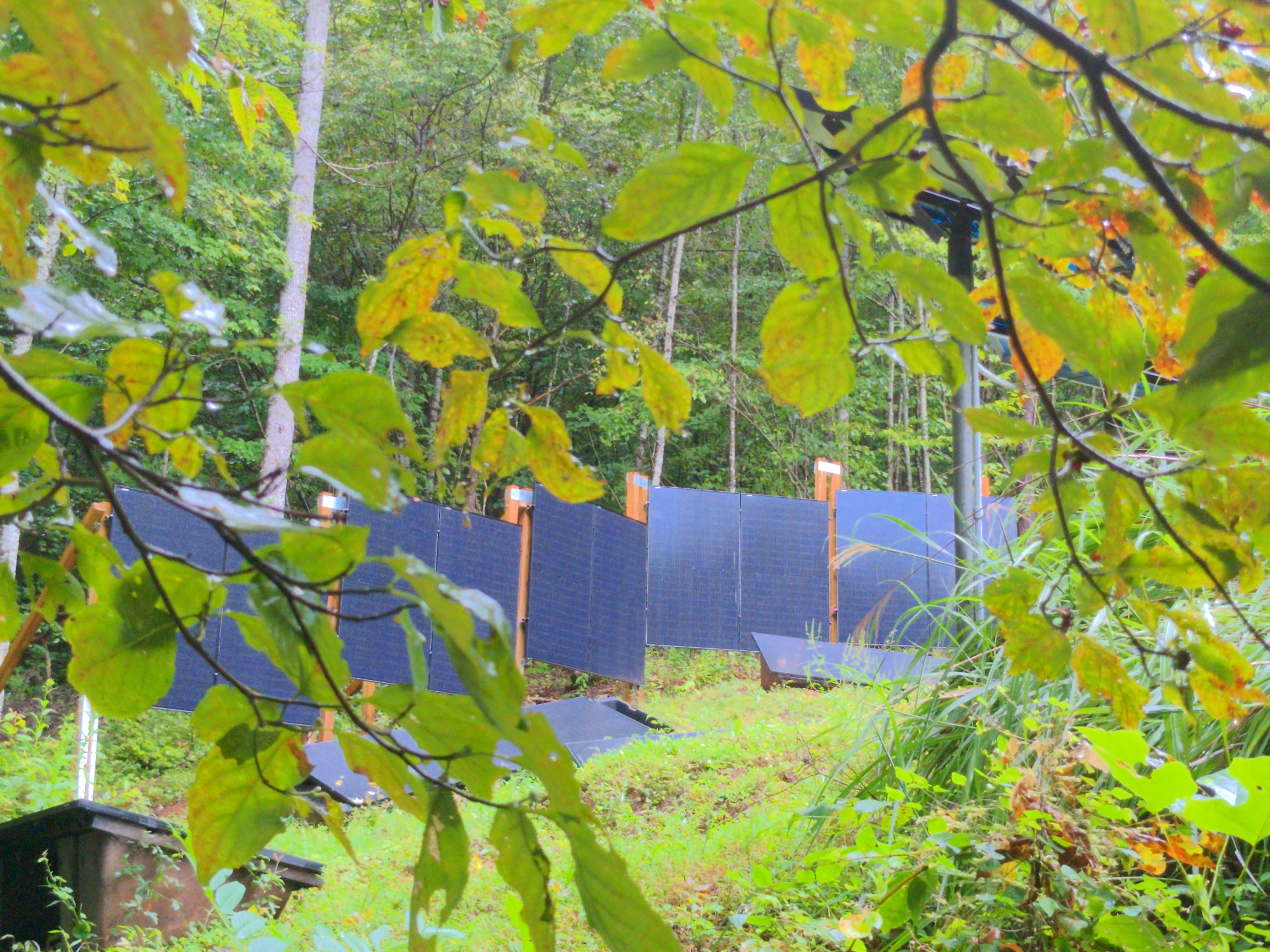
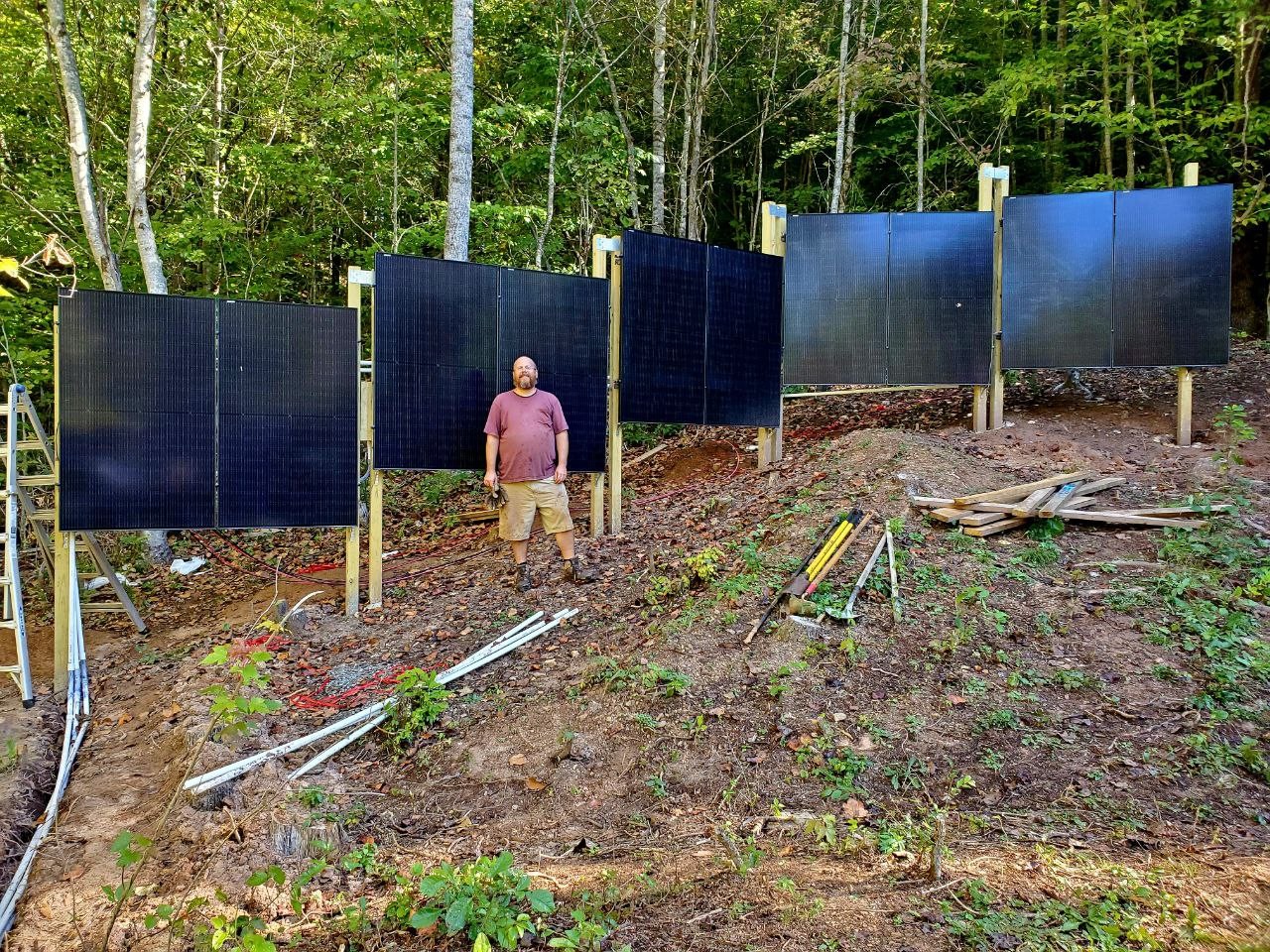
A year ago I installed a 4 kilowatt solar fence.
I'm revisiting it this Sun Day, to share the design,
now that I have prooved it out.
![]() |
![]() |
![]() |
![]() |
| quantity | cost per unit | description |
|---|---|---|
| 10 | $27.89 | 7 foot Ironridge XR-10 rail |
| 12 | $20.18 | 12 foot treated 4x4 |
| 30 | $4.86 | Ironridge UFO-CL-01-A1 |
| 20 | $0.87 | Ironridge UFO-STP-40MM-M1 |
| 1 | $12.62 | Ironridge XR-10 end caps (20 pack) |
| 20 | $2.63 | Ironridge LFT-03-M1 |
| 20 | $1.69 | Ironridge BHW-SQ-02-A1 |
| 22 | $2.65 | 5/8 x 3 inch hot-dipped galvanized lag screw |
| 10 | $0.50 | 6 gravel per post |
| 30 | $6.91 | 50 lb bags of quickcrete |
| 1 | $15.00 | Shurtape PW-100 Corrosion Protection Pipe Wrap Tape |
| N/A | $30 | other bolts and hardware (approximate) |
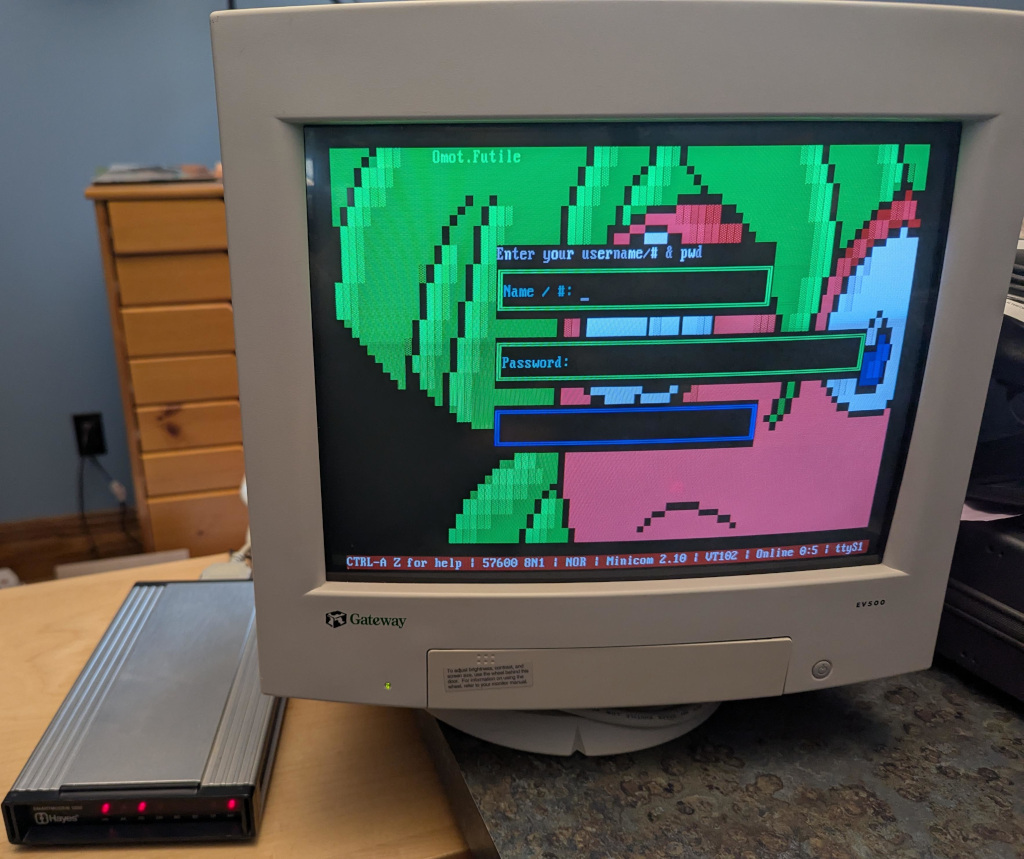
(That s a Wifi Retromodem that I got at VCFMW last year in the Hayes modem case)
ls -l /sys/class/drm. If you also have a GUI, xrandr may help too. But in any case, each directory under /sys/class/drm has a file named modes, and if you cat them all, you will eventually come across one with a bunch of modes defined. Drop the leading card0 or whatever from the directory name, and that s your device. (Verify that 720x400 is in modes while you re at it.)
Now, you re going to edit /etc/default/grub and add something like this to GRUB_CMDLINE_LINUX_DEFAULT:
video=DP-1:720x400@70
DP-1 with whatever your device is.
Now you can run update-grub and reboot. You should have a 720x400 display.
At first, I thought I had succeeded by using Linux s built-in VGA font with that mode. But it looked too tall. After noticing that repeated 0s were touching, I got suspicious about the missing 9th column in the cells. stty -a showed that my screen was 90x25, which is exactly what it would show if I was using 8x16 instead of 9x16 cells. Sooo . I need to prepare a 9x16 font.
/usr/local/etc, then skip to the Activating the font section below.
The font assembled here is based on the Ultimate Oldschool PC Font Pack v2.2, which is (c) 2016-2020 VileR and licensed under Creative Commons Attribution-ShareAlike 4.0 International License. My psf file is derived from this using the instructions below.
apt-get install fontforge bdf2psf
Start by going to the Oldschool PC Font Pack Download page. Download oldschool_pc_font_pack_v2.2_FULL.zip and unpack it.
The file we re interested in is otb - Bm (linux bitmap)/Bm437_IBM_VGA_9x16.otb. Open it in fontforge by running fontforge BmPlus_IBM_VGA_9x16.otb. When it asks if you will load the bitmap fonts, hit select all, then yes. Go to File -> generate fonts. Save in a BDF, no need for outlines, and use guess for resolution.
Now you have a file such as Bm437_IBM_VGA_9x16-16.bdf. Excellent.
Now we need to generate a Unicode map file. We will make sure this matches the system s by enumerating every character from 0x00 to 0xFF, converting it from CP437 to Unicode, and writing the appropriate map.
Here s a Python script to do that:
for i in range(0, 256):
cp437b = b'%c' % i
uni = ord(cp437b.decode('cp437'))
print(f"U+ uni:04x ")
python3 genmap.py > cp437-uni.
Now, we re ready to build the psf file:
bdf2psf --fb Bm437_IBM_VGA_9x16-16.bdf \
/dev/null cp437-uni 256 CP437-VGA.psf
gzip CP437-VGA.psf.
You can test it on the console with setfont CP437-VGA.psf.gz.
Now copy this file into /usr/local/etc.
/etc/default/console-setup. It should look like this:
# CONFIGURATION FILE FOR SETUPCON
# Consult the console-setup(5) manual page.
ACTIVE_CONSOLES="/dev/tty[1-6]"
CHARMAP="UTF-8"
CODESET="Lat15"
FONTFACE="VGA"
FONTSIZE="8x16"
FONT=/usr/local/etc/CP437-VGA.psf.gz
VIDEOMODE=
# The following is an example how to use a braille font
# FONT='lat9w-08.psf.gz brl-8x8.psf'
stty -a to verify it is indeed 80x25.
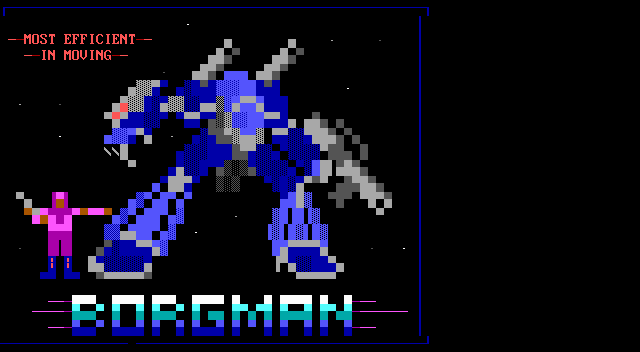
clear; iconv -f CP437 -t UTF-8 < borgman.ans
belinda.ans in particular tries quite a few characters and should give you a good sense if it is working.
apt-get install luit. luit maps CP437 (or any other encoding) to UTF-8 for display, and then of course the Linux console maps UTF-8 back to the CP437 font.
Here s a way you can repeat the earlier experiment using luit to run the cat program:
clear; luit -encoding CP437 cat borgman.ans
luit -encoding CP437 bash if you like. If you do this, it is probably a good idea to follow my instructions on generating locales on my post on serial terminals, and then within luit, set LANG=en_us.IBM437. But note especially that you can run programs like minicom and others for accessing BBSs under luit.
/usr/share/bdf2psf/standard.equivalents instead of /dev/null in the bdf2psf command.
Or you could go for another challenge, such as using the DEC vt-series fonts for coverage of ISO-8859-1. But just using fonts extracted from DEC ROM won t work properly, because DEC terminals had even more strangeness going on than DOS fonts.
It's been a while since the last performance check of Transparent Data Encryption (TDE) in Cybertec's PGEE distribution - that was in 2016. Of course, the question is still interesting, so I did some benchmarks.

Since the difference is really small between running without any extras, with data checksums turned on, and with both encryption and checksums turned on, we need to pick a configuration that will stress-test these features the most. So in the spirit of making PostgreSQL deliberately run slow, I went with only 1MB of shared_buffers with a pgbench workload of scale factor 50. The 770MB of database size will easily fit into RAM. However, having such a small buffer cache setting will cause a lot of cache misses with pages re-read from the OS disk cache, checksums checked, and the page decrypted again. To further increase the effect, I ran pgbench --skip-some-updates so the smaller, in-cache-anyway pgbench tables are not touched. Overall, this yields a pretty consistent buffer cache hit rate of only 82.8%.
Here are the PGEE 17.6 tps (transactions per second) numbers averaged over a few 1-minute 3-client pgbench runs for different combinations of data checksums on/off, TDE off, and the various supported key bit lengths:
| no checksums | data checksums | |||
| no TDE | 2455,6 | 100,00 % | 2449,7 | 99,76 % |
| 128 bits | 2440,9 | 99,40 % | 2443,3 | 99,50 % |
| 192 bits | 2439,6 | 99,35 % | 2446,1 | 99,61 % |
| 256 bits | 2450,3 | 99,78 % | 2443,1 | 99,49 % |
Debusine is a tool designed
for Debian developers and Operating System developers in general. This posts
describes our approach to the use of JavaScript, and some practical designs we
came up with to integrate it with Django with minimal effort.
debusine client command.
<noscript> tag.
This is precisely the intended usage of the <noscript> tag, and it works
perfectly: toasts are displayed by JavaScript when it s available, or rendered
as alerts when not.
The resulting Django template is something like this:
<div aria-live="polite" aria-atomic="true" class="position-relative">
<div class="toast-container position-absolute top-0 end-0 p-3">
% for message in messages %
<div class="toast" role="alert" aria-live="assertive" aria-atomic="true">
<div class="toast-header">
<strong class="me-auto"> message.level_tag capfirst </strong>
<button type="button"
class="btn-close"
data-bs-dismiss="toast"
aria-label="Close"></button>
</div>
<div class="toast-body"> message </div>
</div>
% endfor %
</div>
</div>
<!-- -->
% if messages %
<noscript>
% for message in messages %
<div class="alert alert-primary" role="alert">
message
</div>
% endfor %
</noscript>
% endif %
We have a webpage to test the result.
<noscript> tag, and the JavaScript widget
inside a display: none element, which is later shown by JavaScript code.
As the workspace inheritance is edited, JavaScript serializes its state into
<form type='hidden'> fields that match the structure used by the formset, so
that when the form is submitted, the view performs validation and updates the
server state as usual without any extra maintenance burden.
Serializing state as hidden form fields looks a bit vintage, but it is an
effective way of preserving the established data entry protocol between the
server and the browser, allowing us to do incremental improvement of the UI
while minimizing the maintenance effort.
Please consider supporting my work in Debian and elsewhere through Liberapay. Debian stable updates work through three main channels: point releases, security repositories, and the updates repository. Understanding these ensures your system stays secure and current.
Type: deb
URIs: http://deb.debian.org/debian
Suites: trixie
Components: main
Signed-By: /usr/share/keyrings/debian-archive-keyring.pgp
Or, in legacy sources.list style:
deb https://deb.debian.org/debian trixie main
Type: deb
URIs: https://deb.debian.org/debian-security
Suites: trixie-security
Components: main
Signed-By: /usr/share/keyrings/debian-archive-keyring.pgp
Or, in legacy sources.list style:
deb https://deb.debian.org/debian-security trixie-security main
The Debian installer enables the security suites by default. Debian Security Announcements (DSAs) are published to debian-security-announce@lists.debian.org.
Type: deb
URIs: https://deb.debian.org/debian
Suites: trixie-updates
Components: main
Signed-By: /usr/share/keyrings/debian-archive-keyring.pgp
Or, in legacy sources.list style:
deb https://deb.debian.org/debian trixie-updates main
Debian enables the updates suites by default. Stable Update Announcements (SUAs) are published to debian-stable-announce@lists.debian.org. This is also where announcements of forthcoming point releases are published.
| Suite | Example codename | Purpose | Announcements |
|---|---|---|---|
| stable | trixie | Base suite containing all the available software for a release. Point releases every 2 4 months including lower-severity security fixes that do not require immediate release. | Debian Release Announcements on debian-announce |
| stable-security | trixie-security | Urgent security updates. | Debian Security Announcements on debian-security-announce |
| stable-updates | trixie-updates | Urgent non-security updates, data updates and release maintenance. | Stable Update Announcements on debian-stable-announce |
setup.py install deprecation, by Colin Watson
setuptools upstream will be removing the setup.py install command
on 31 October. While this may not trickle down immediately into Debian, it does
mean that in the near future nearly all Python packages will have to use
pybuild-plugin-pyproject (though they don t necessarily have to use
pyproject.toml; this is just a question of how the packaging runs the build
system). Some of the Python team talked about this a bit at DebConf, and Colin
volunteered to write up some notes
on cases where this isn t straightforward. This page will likely grow as the
team works on this problem.
---
include:
- https://salsa.debian.org/santiago/pipeline/raw/sbuild-unshare-02-salsa-ci/salsa-ci.yml
- https://salsa.debian.org/santiago/pipeline/raw/sbuild-unshare-02-salsa-ci/pipeline-jobs.yml
As a reminder, this MR will make the Salsa CI pipeline build the packages more
similar to how it s built by the Debian official builders. This will also save
some resources, since the default pipeline will have one stage less (the
provisioning) stage, and will make it possible for more projects to be built on
salsa.debian.org (including large projects and
those from the OCaml ecosystem), etc. See the different issues being fixed in
the MR description.
Recommends packages which
don t exist in unstable. Processed (either reported
or ignored due to mis-detected problems or temporary problems) 16% of the
reports. Will continue next month./usr-move.gcc-15.:any annotations. Helmut identified the root cause to be the handling of
virtual packages and fixed it.Welcome to the August 2025 report from the Reproducible Builds project!
Welcome to the latest report from the Reproducible Builds project for August 2025. These monthly reports outline what we ve been up to over the past month, and highlight items of news from elsewhere in the increasingly-important area of software supply-chain security. If you are interested in contributing to the Reproducible Builds project, please see the Contribute page on our website.
In this report:
Please join us at the upcoming Reproducible Builds Summit, set to take place from October 28th 30th 2025 in Vienna, Austria!**
We are thrilled to host the eighth edition of this exciting event, following the success of previous summits in various iconic locations around the world, including Venice, Marrakesh, Paris, Berlin, Hamburg and Athens. Our summits are a unique gathering that brings together attendees from diverse projects, united by a shared vision of advancing the Reproducible Builds effort.
During this enriching event, participants will have the opportunity to engage in discussions, establish connections and exchange ideas to drive progress in this vital field. Our aim is to create an inclusive space that fosters collaboration, innovation and problem-solving.
If you re interesting in joining us this year, please make sure to read the event page which has more details about the event and location. Registration is open until 20th September 2025, and we are very much looking forward to seeing many readers of these reports there!
WHY2025 (What Hackers Yearn) is a nonprofit outdoors hacker camp that takes place in Geestmerambacht in the Netherlands (approximately 40km north of Amsterdam). The event is organised for and by volunteers from the worldwide hacker community, and knowledge sharing, technological advancement, experimentation, connecting with your hacker peers, forging friendships and hacking are at the core of this event .
At this year s event, Frans Faase gave a talk on live-bootstrap, an attempt to provide a reproducible, automatic, complete end-to-end bootstrap from a minimal number of binary seeds to a supported fully functioning operating system .
Frans talk is available to watch on video and his slides are available as well.
Jens Dietrich of the Victoria University of Wellington, New Zealand and Behnaz Hassanshahi of Oracle Labs, Australia published an article this month entitled DALEQ Explainable Equivalence for Java Bytecode which explores the options and difficulties when Java binaries are not identical despite being from the same sources, and what avenues are available for proving equivalence despite the lack of bitwise correlation:
[Java] binaries are often not bitwise identical; however, in most cases, the differences can be attributed to variations in the build environment, and the binaries can still be considered equivalent. Establishing such equivalence, however, is a labor-intensive and error-prone process.Jens and Behnaz therefore propose a tool called DALEQ, which:
disassembles Java byte code into a relational database, and can normalise this database by applying Datalog rules. Those databases can then be used to infer equivalence between two classes. Notably, equivalence statements are accompanied with Datalog proofs recording the normalisation process. We demonstrate the impact of DALEQ in an industrial context through a large-scale evaluation involving 2,714 pairs of jars, comprising 265,690 class pairs. In this evaluation, DALEQ is compared to two existing bytecode transformation tools. Our findings reveal a significant reduction in the manual effort required to assess non-bitwise equivalent artifacts, which would otherwise demand intensive human inspection. Furthermore, the results show that DALEQ outperforms existing tools by identifying more artifacts rebuilt from the same code as equivalent, even when no behavioral differences are present.Jens also posted this news to our mailing list.
Tails developer intrigeri has tracked and followed a reproducibility regression in the generation of AppArmor policy caches, and has identified an issue with the 4.1.0 version of AppArmor.
Although initially tracked on the Tails issue tracker, intrigeri filed an issue on the upstream bug tracker. AppArmor developer John Johansen replied, confirming that they can reproduce the issue and went to work on a draft patch. Through this, John revealed that it was caused by an actual underlying security bug in AppArmor that is to say, it resulted in permissions not (always) matching what the policy intends and, crucially, not merely a cache reproducibility issue.
Work on the fix is ongoing at time of writing.
Rust Clippy is a linting tool for the Rust programming language. It provides a collection of lints (rules) designed to identify common mistakes, stylistic issues, potential performance problems and unidiomatic code patterns in Rust projects. This month, however, Sosth ne Gu don filed a new issue in the GitHub requesting a new check that would lint against non deterministic operations in proc-macros, such as iterating over a HashMap .
In Debian this month:
armhf architecture. From July 2015, Vagrant Cascadian has been hosting a zoo of approximately 35 armhf systems which were used for building Debian packages for that architecture.strip-nondeterminism, our program that improves reproducibility by stripping out non-deterministic information such as timestamps or other elements introduced during packaging. This new version, 1.14.2-1, adds some metadata to aid the deputy tool. ( #1111947)
duperemove package in Debian, which appears to be an issue where the order the object files are linked together is dependent on the underlying filesystem . Chris Lamb provided a detailed analysis, including a suggestion that this can be resolved by adding a locale-agnostic sort.
Lastly, Bernhard M. Wiedemann posted another openSUSE monthly update for their work there.
diffoscope is our in-depth and content-aware diff utility that can locate and diagnose reproducibility issues. This month, Chris Lamb made the following changes, including preparing and uploading versions, 303, 304 and 305 to Debian:
sed(1) backreferences when generating debian/tests/control to avoid duplicating ourselves. [ ]mono-utils dependency to versioned mono-devel mono-utils dependency, taking care to maintain the [!riscv64] architecture restriction. [ ]sed over awk to avoid mangling dependency lines containing = (equals) symbols such as version restrictions. [ ]systemd-ukify version 258~rc3. [ ].class on the filesystem before passing them to javap(1). [ ]jsondiff on files over 100KiB as the algorithm runs in O(n^2) time. [ ]>= 3. [ ]None [ ] and Zbigniew J drzejewski-Szmek fixed compatibility with RPM 6 [ ]. Lastly, John Sirois fixed a missing requests dependency in the trydiffoscope tool. [ ]
Once again, there were a number of improvements made to our website this month including:
The Reproducible Builds project operates a comprehensive testing framework running primarily at tests.reproducible-builds.org in order to check packages and other artifacts for reproducibility. In August, however, a number of changes were made by Holger Levsen, including:
o4 node again in order to speed up testing. [ ][ ][ ][ ]trixie-proposed-updates and trixie-updates etc. [ ][ ]amd64-pull184 pseudo-architecture. [ ][ ]debrebuild without the --cache argument to experiment with a new version of devscripts. [ ][ ][ ]osuosl5 or ionos7 nodes are down. [ ]ppc64el architecture nodes when down. [ ]arm64 nodes to Debian trixie in anticipation of the release. [ ][ ]riscv64 architecture. [ ]armhf architecture; many thanks to Vagrant for physically hosting the nodes for ten years. [ ][ ]armhf architecture. [ ]i386 and armhfr from JSON results. [ ]openwrt_rebuilder jobs. [ ]qa-jenkins-dev@alioth-lists.debian.net as the contact for jenkins.debian.net. [ ]reproducible-builds.org/vienna25 to reproducible-builds.org/vienna2025. [ ]
megacli RAID controller requires packages from Debian bookworm. [ ]deb822 Python module in favour of debian.deb822 in the bin/reproducible_scheduler.py script [ ] and removed a note on reproduce.debian.net note after the release of Debian trixie [ ].
#reproducible-builds on irc.oftc.net.
rb-general@lists.reproducible-builds.org
autopkgtest in the Debian
archive. I had analyzed the presence of a Testsuite: field in source
packages, from wheezy to trixie, and noticed a slowdown in the growth rate of
autopkgtest support, in proportional terms. In each new release, the
percentage of packages declaring a test suite grew less than in the previous
release, for the last 4 releases.
A night of sleep and a rainy morning later, I come back with a more optimistic
view, and present to you the following data, expanded from the raw data:
| Release year | Release | Yes | No | Total | Yes | No | Total |
|---|---|---|---|---|---|---|---|
| 2013 | wheezy | 5 | 17170 | 17175 | -- | -- | -- |
| 2015 | jessie | 1112 | 19484 | 20596 | 1107 | 2314 | 3421 |
| 2017 | stretch | 5110 | 19735 | 24845 | 3998 | 251 | 4249 |
| 2019 | buster | 9966 | 18535 | 28501 | 4856 | -1200 | 3656 |
| 2021 | bullseye | 13949 | 16994 | 30943 | 3983 | -1541 | 2442 |
| 2023 | bookworm | 17868 | 16473 | 34341 | 3919 | -521 | 3398 |
| 2025 | trixie | 21527 | 16143 | 37670 | 3659 | -330 | 3329 |
autopkgtest support to
close to 4,000 packages on each release, on average.autopkgtest support has
decreased in the hundreds.autopkgtest support. I have the
following hypotheses for this:
autopkgtests;autopkgtests added on each release.autopkgtest.
| Release | Packages with tests | Total number of packages | % of packages with tests |
|---|---|---|---|
| wheezy | 5 | 17175 | 0% |
| jessie | 1112 | 20596 | 5% |
| stretch | 5110 | 24845 | 20% |
| buster | 9966 | 28501 | 34% |
| bullseye | 13949 | 30943 | 45% |
| bookworm | 17868 | 34341 | 52% |
| trixie | 21527 | 37670 | 57% |
autopkgtest support.
Looking for common prefixes among the packages missing a Testsuite: field
gives me us the largest groups of packages missing autopkgtest support:
$ grep-dctrl -v -F Testsuite --regex -s Package -n . trixie cut -d - -f 1 uniq -c sort -n tail -20
50 apertium
50 kodi
51 lomiri
53 maven
55 libjs
57 globus
66 cl
67 pd
72 lua
79 php
88 puppet
91 r
111 gnome
124 ruby
140 ocaml
152 rust
178 golang
341 fonts
557 python
1072 haskell
There seems to be a fair amount of Haskell and Python. If someone could figure
out a way of testing installed fonts in a meaningful way, this would a be a
good niche where we can cover 300+ packages.
There is a another analysis that can be made, which I didn't: which percentage
of new packages introduced in a given release have declared autopkgtest
support, compared with the total of new packages in that release? My data only
counts the totals, so we start with the technical debt of the almost all of the
17,000 packages with no tests in wheezy, which was the stable at the time I
started Debian CI. How many of those got tests since
then?
Note that not supporting autopkgtest does not mean that a package is not
tested at all: it can run build-time tests, which are also useful. Not
supporting autopkgtest, though, means that their binaries in the archive
can't be automatically tested in their installed, but then there is a entire
horde of volunteers running testing and unstable on a daily basis who test
Debian and report bugs.
This is the script that produced the table in the beginning of this post:
#!/bin/sh
set -eu
extract()
local release
local url
release="$1"
url="$2"
if [ ! -f "$ release " ]; then
rm -f "$ release .gz"
curl --silent -o $ release .gz "$ url "
gunzip "$ release .gz"
fi
local with_tests
local total
with_tests="$(grep-dctrl -c -F Testsuite --regex . $release)"
total="$(grep-dctrl -c -F Package --regex . $release)"
echo " $ release $ with_tests $ total $((100*with_tests/total))% "
echo " **Release** **Packages with tests** **Total number of packages** **% of packages with tests** "
echo " ------------- ------------------------- ------------------------------ ------------------------------ "
for release in wheezy jessie stretch buster; do
extract "$ release " "http://archive.debian.org/debian/dists/$ release /main/source/Sources.gz"
done
for release in bullseye bookworm trixie; do
extract "$ release " "http://ftp.br.debian.org/debian/dists/$ release /main/source/Sources.gz"
done
noahm@debian.org
host stravinsky.debian.org [2001:41b8:202:deb::311:108]
SMTP error from remote mail server after end of data:
550-malware detected: Sanesecurity.Phishing.Fake.30934.1.UNOFFICIAL:
550 message rejected
submit@bugs.debian.org
host stravinsky.debian.org [2001:41b8:202:deb::311:108]
SMTP error from remote mail server after end of data:
550-malware detected: Sanesecurity.Phishing.Fake.30934.1.UNOFFICIAL:
550 message rejected
This was, in fact, a false positive. And now, because reportbug doesn t record outgoing messages locally, I need to retype the whole thing.
(NB. this is not a complaint about the policies deployed on the Debian mail servers; they d be negligent if they didn t implement such policies on today s internet.)
About 95% of my Debian contributions this month were

sponsored by Freexian.
You can also support my work directly via
Liberapay or GitHub
Sponsors.
Python team
forky is
open!
As a result I m starting to think about the upcoming Python
3.14. At some point we ll doubtless do
a full test rebuild, but in advance of that I concluded that one of the most
useful things I could do would be to work on our very long list of packages
with new upstream
versions.
Of course there s no real chance of this ever becoming empty since upstream
maintainers aren t going to stop work for that long, but there are a lot of
packages there where we re quite a long way out of date, and many of those
include fixes that we ll need for 3.14, either directly or by fixing
interactions with new versions of other packages that in turn will need to
be fixed. We can backport changes when we need to, but more often than not
the most efficient way to do things is just to keep up to date.
So, I upgraded these packages to new upstream versions (deep breath):
NEW), and
python-forbiddenfruit (still in NEW),
all needed as new dependencies of various other packages.
setuptools upstream will be removing the setup.py install
command on 31
October. While this may not trickle down immediately into Debian, it does
mean that in the near future nearly all Python packages will have to use
pybuild-plugin-pyproject (note that this does not mean that they
necessarily have to use pyproject.toml; this is just a question of how the
packaging runs the build system). We talked about this a bit at DebConf,
and I said that I d noticed a number of packages where this isn t
straightforward and promised to write up some notes. I wrote the
Python/PybuildPluginPyproject
wiki page for this; I expect to add more bits and pieces to it as I find them.
On that note, I converted several packages to pybuild-plugin-pyproject:
| Series: | Cyteen #2 |
| Publisher: | DAW |
| Copyright: | January 2009 |
| ISBN: | 0-7564-0592-0 |
| Format: | Mass market |
| Pages: | 682 |
Some additional thoughts after re-reading Regenesis in 2025: Cyteen mostly held up to a re-reading and I had fond memories of Regenesis and hoped that it would as well. Unfortunately, it did not. I think I can see the shape of what I enjoyed the first time I read it, but I apparently was in precisely the right mood for this specific type of political power fantasy. I did at least say that you have to be comfortable with pages of internal monologue, but on re-reading, there was considerably more of that than I remembered and it was quite repetitive. Ari spends most of the book chasing her tail, going over and around and beside the same theories that she'd already considered and worrying over the nuances of every position. The last time around, I clearly enjoyed that; this time, I found it exhausting and not very well-written. The political maneuvering is not that deep; Ari just shows every minutia of her analysis. Regenesis also has more about the big questions of how to design a society and the role of the azi than I had remembered, but I'm not sure those discussions reach any satisfying conclusions. The book puts a great deal of effort into trying to convince the reader that Ari is capable of designing sociological structures that will shape Union society for generations to come through, mostly, manipulation of azi programming (deep sets is the term used in the book). I didn't find this entirely convincing the first time around, and I was even less convinced in this re-read. Human societies are a wicked problem, and I don't find Cherryh's computer projections any more convincing than Asimov's psychohistory. Related, I am surprised, in retrospect, that the authoritarian underpinnings of this book didn't bother me more on my first read. They were blatantly obvious on the second read. This felt like something Cherryh put into these books intentionally, and I think it's left intentionally ambiguous whether the reader is supposed to agree with Ari's goals and decisions, but I was much less in the mood on this re-read to read about Ari making blatantly authoritarian decisions about the future of society simply because she's smart and thinks she, unlike others, is acting ethically. I say this even though I like Ari and mostly enjoyed spending time in her head. But there is a deep fantasy of being able to reprogram society at play here that looks a lot nastier from the perspective of 2025 than apparently it did to me in 2012. Florian and Catlin are still my favorite characters in the series, though. I find it oddly satisfying to read about truly competent bodyguards, although like all of the azi they sit in an (I think intentionally) disturbing space of ambiguity between androids and human slaves. The somewhat too frank sexuality from Cyteen is still present in Regenesis, but I found it a bit less off-putting, mostly because everyone is older. The authoritarian bent is stronger, since Regenesis is the story of Ari consolidating power rather than the underdog power struggle of Cyteen, and I had less tolerance for it on this re-read. The main problem with this book on re-read was that I bogged down about halfway through and found excuses to do other things rather than finish it. On the first read, I was apparently in precisely the right mood to read about Ari building a fortified home for all of her friends; this time, it felt like endless logistics and musings on interior decorating that didn't advance the plot. Similarly, Justin and Grant's slow absorption into Ari's orbit felt like a satisfying slow burn friendship in my previous reading and this time felt touchy and repetitive. I was one of the few avid defenders of Regenesis the first time I read it, and sadly I've joined the general reaction on a re-read: This is not a very good book. It's too long, chases its own tail a bit too much, introduces a lot more authoritarianism and doesn't question it as directly as I wanted, and gets even deeper into Cherryh's invented pseudo-psychology than Cyteen. I have a high tolerance for the endless discussions of azi deep sets and human flux thinking, and even I got bored this time through. On re-read, this book was nowhere near as good as I thought it was originally, and I would only recommend it to people who loved Cyteen and who really wanted a continuation of Ari's story, even if it is flabby and not as well-written. I have normally been keeping the rating of my first read of books, but I went back and lowered this one by two points to ensure it didn't show as high on my list of recommendations.
texlive packages.
However, it was not so easy to just remove texlive with a simple apt remove command. I had to remove the texlive packages from /usr/bin. Then I ran into other errors. Hours after I started the upgrade, I realized I preferred having my system as it was before, as I had to travel to Noida the next day. Needless to say, I wanted to go to sleep rather than fix my broken system. Only if I had a way to go back to my system before I started upgrading, it would have saved a lot of trouble for me. I ended up installing Trixie from scratch.
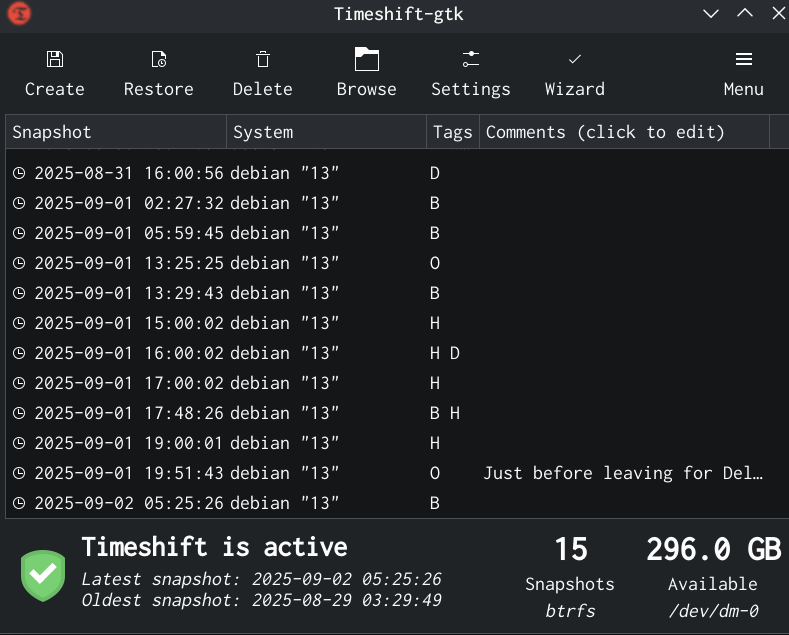
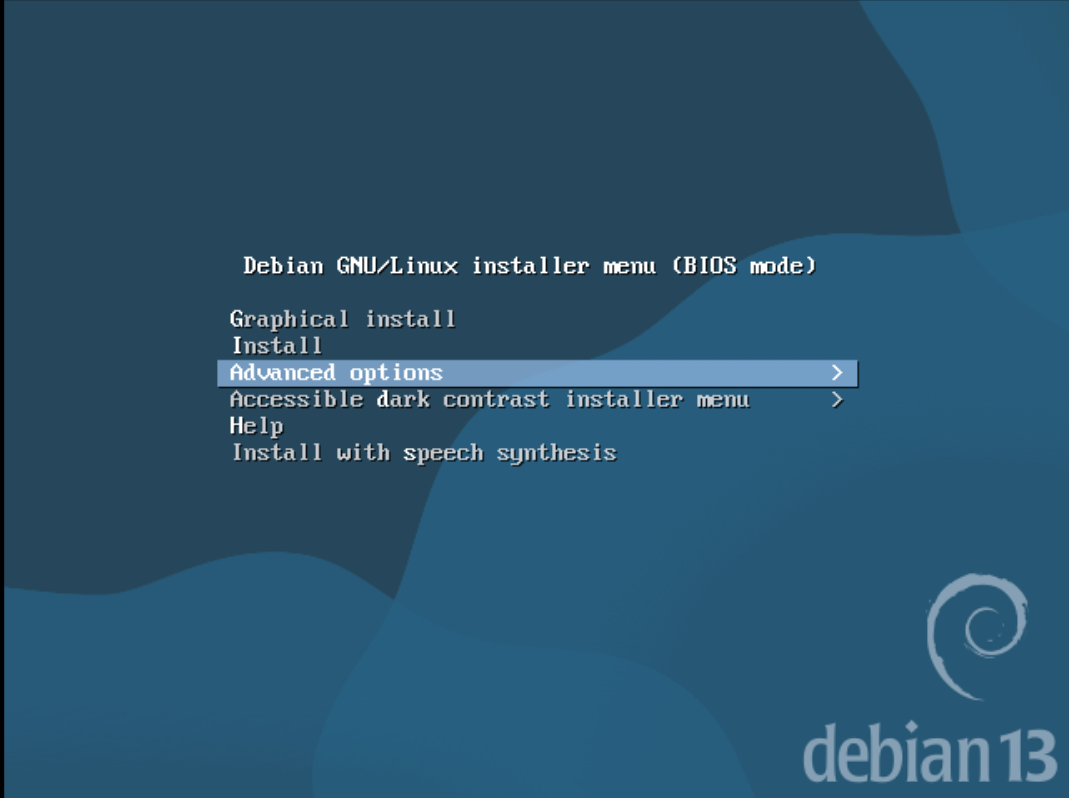
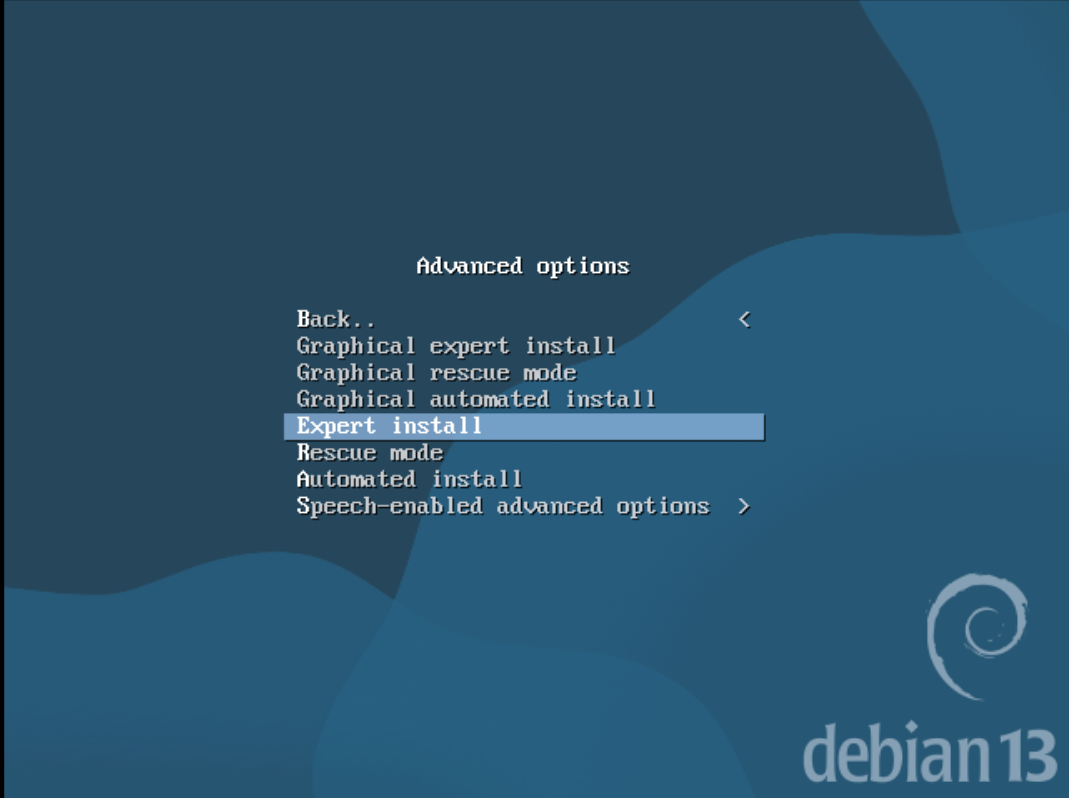
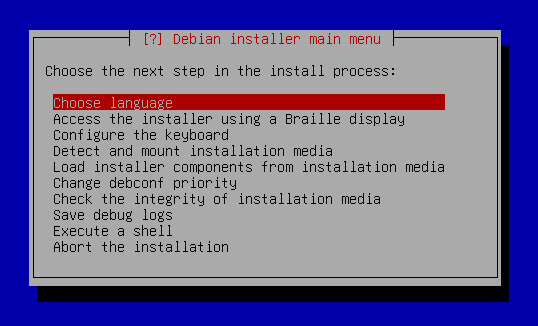
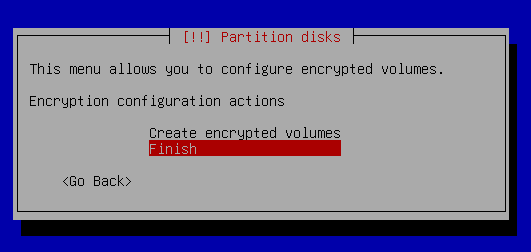
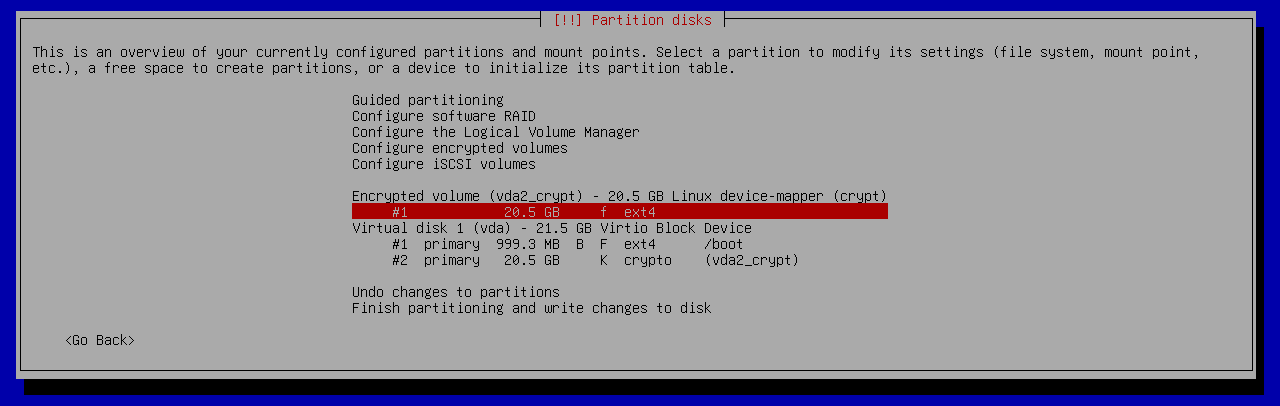
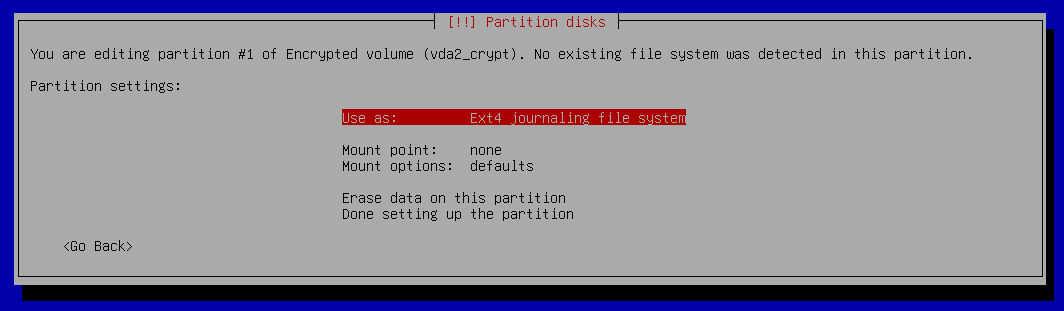
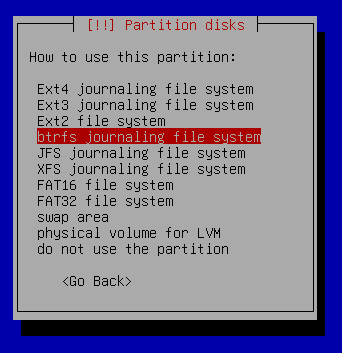
It turns out that there was a way to recover to the state before the upgrade - using Timeshift to roll back the system to a state (in our example, it is the state before the upgrade process started) in the past. However, it needs the Btrfs filesystem with appropriate subvolumes, not provided by Debian installer in their guided partitioning menu.
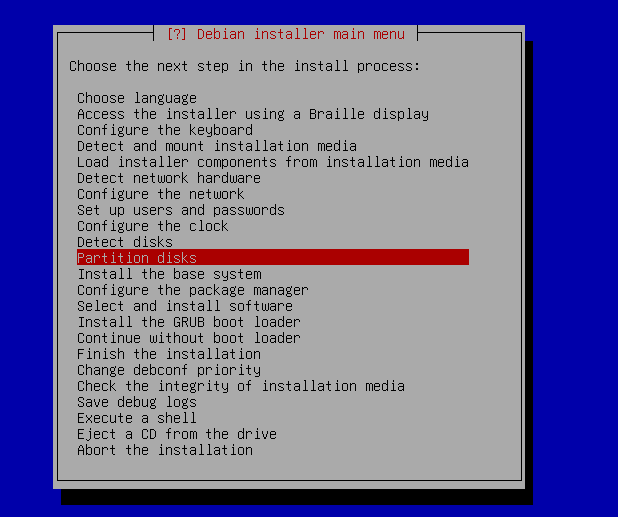
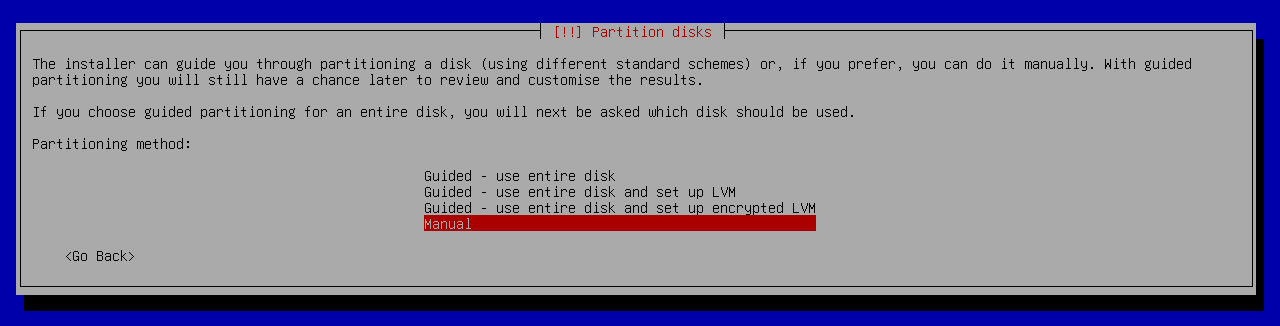
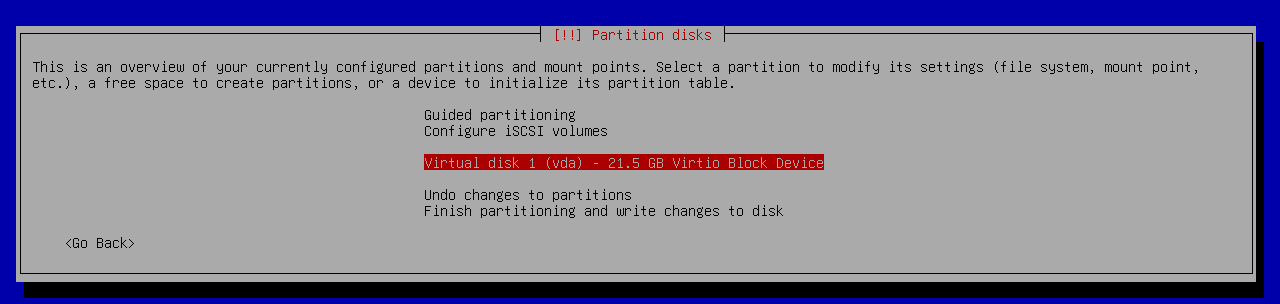
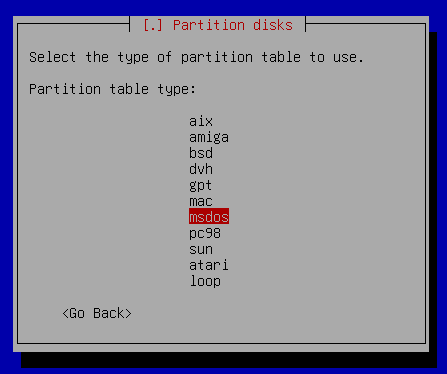
I have set it up after a few weeks of the above-mentioned incident. Let me demonstrate how it works.
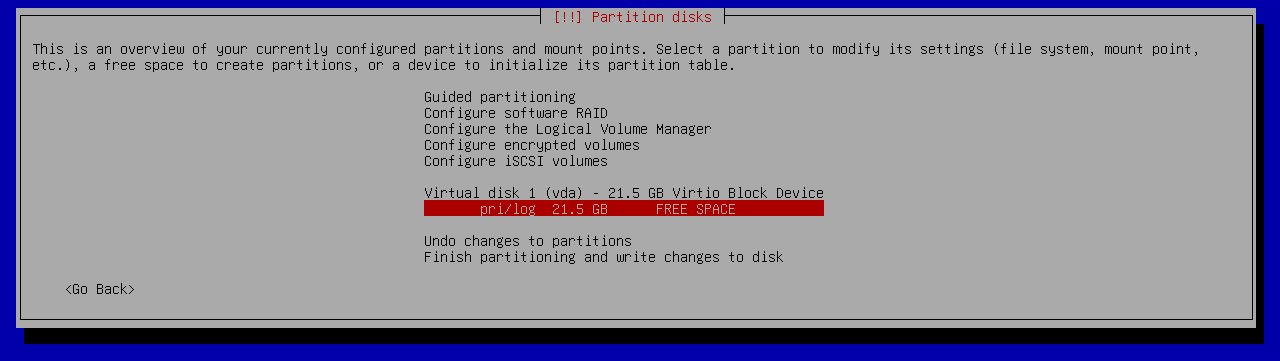
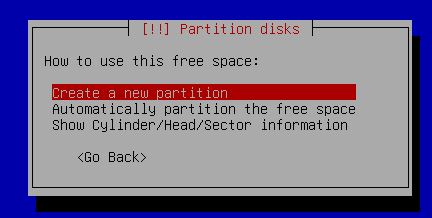
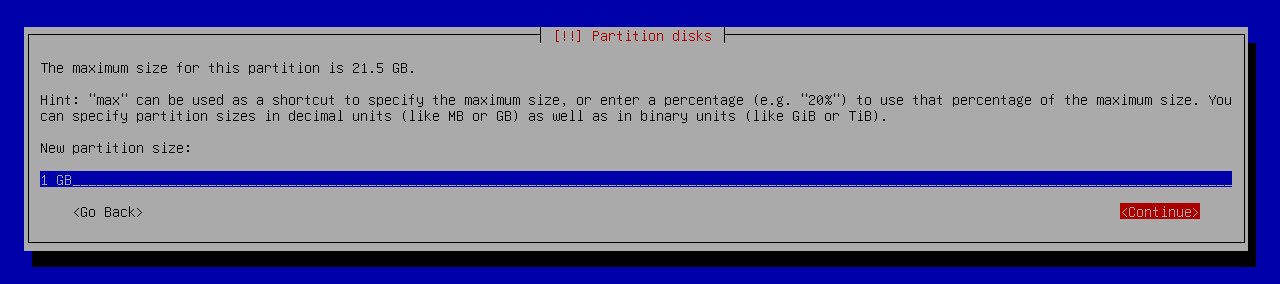
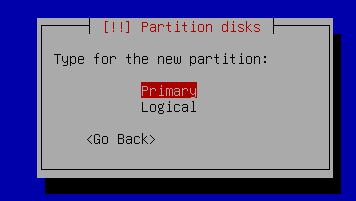
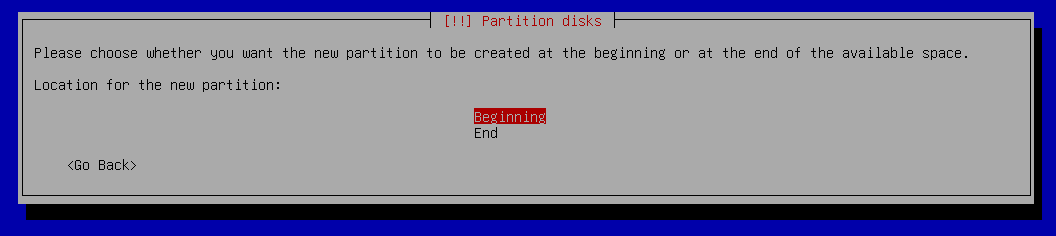
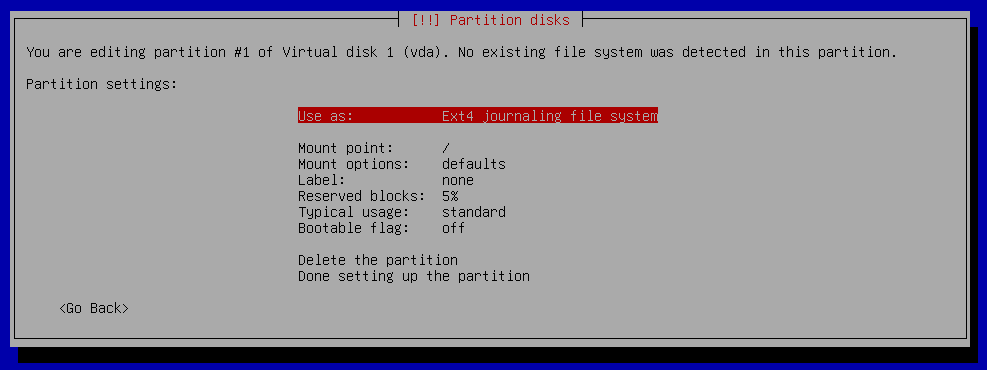
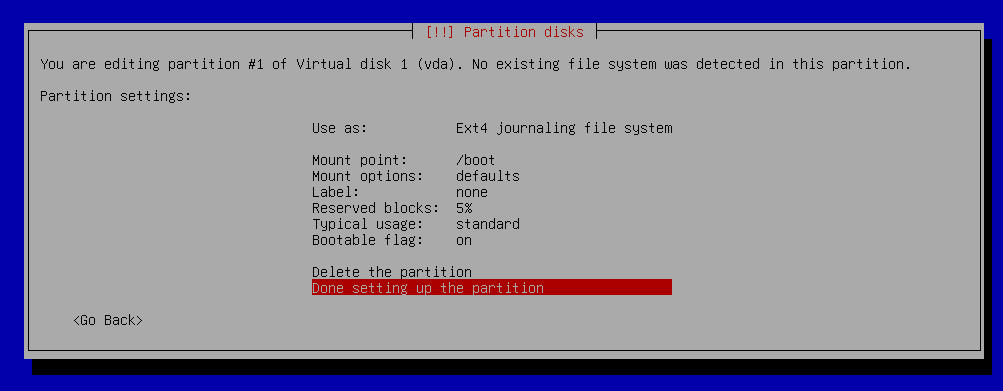
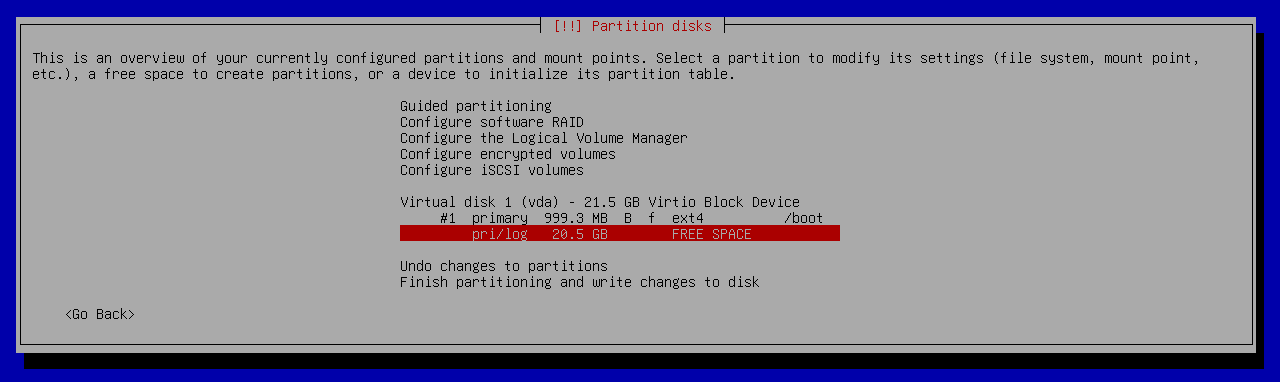
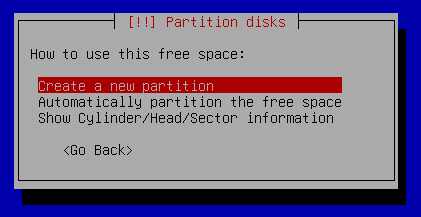
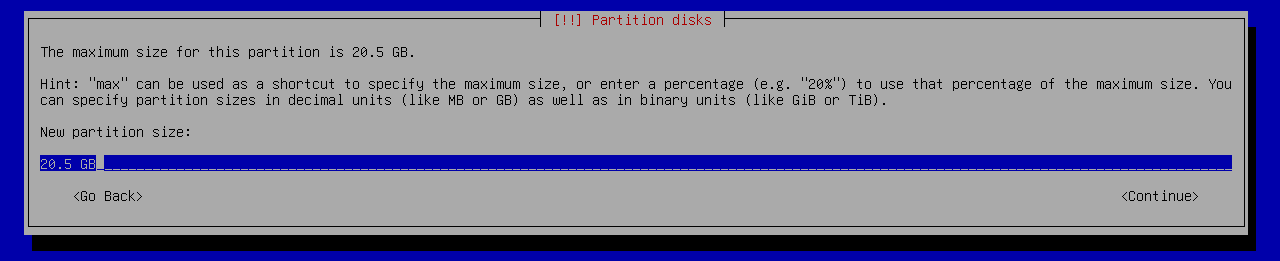
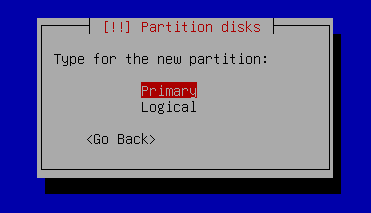
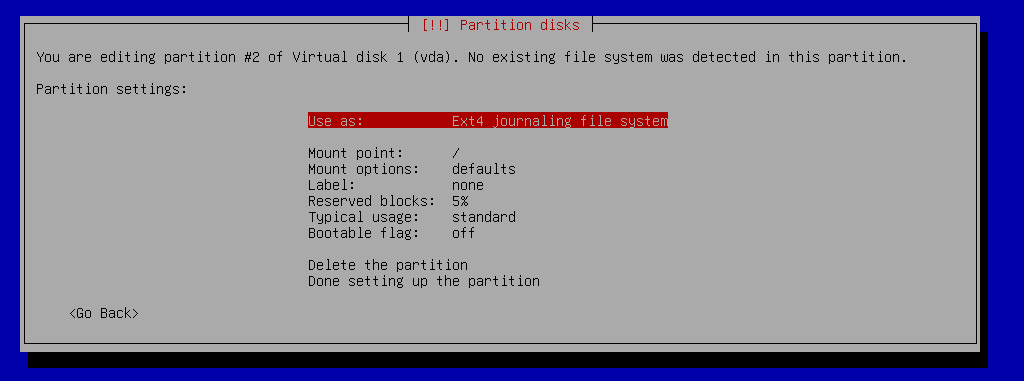
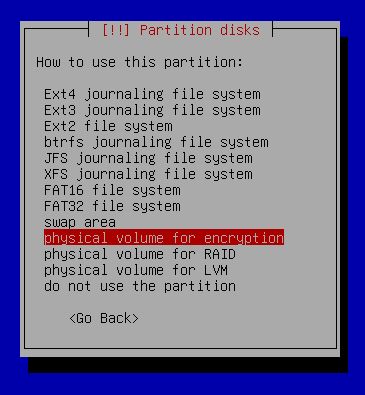
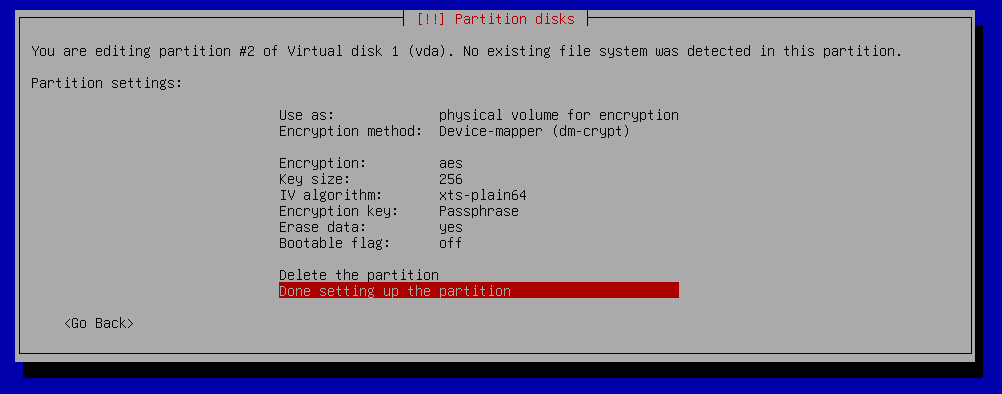
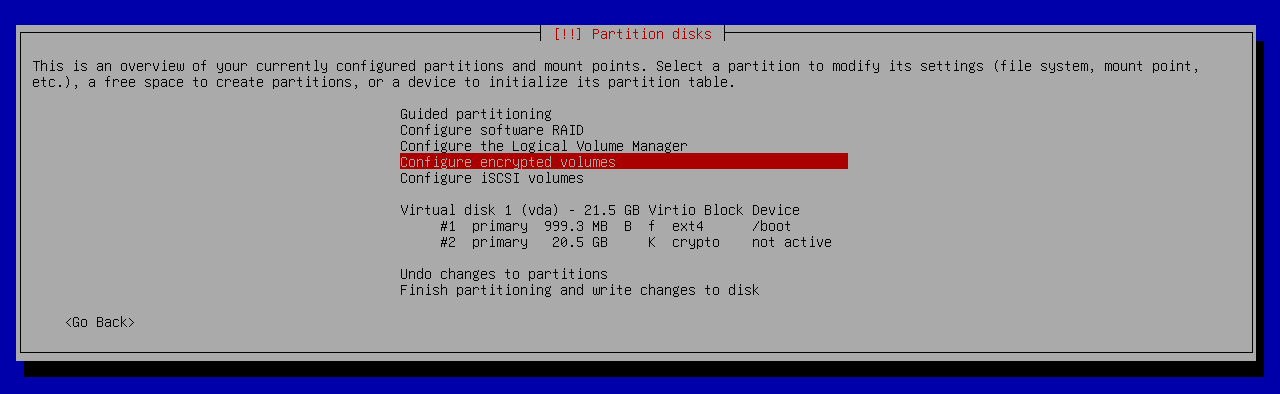
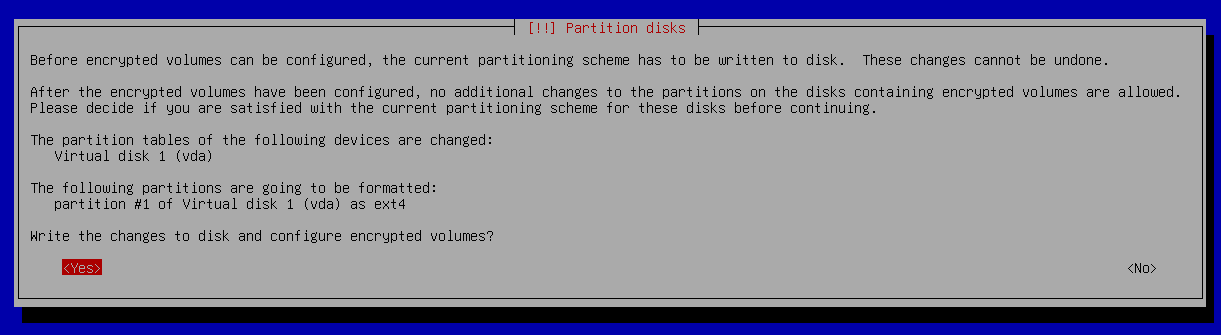
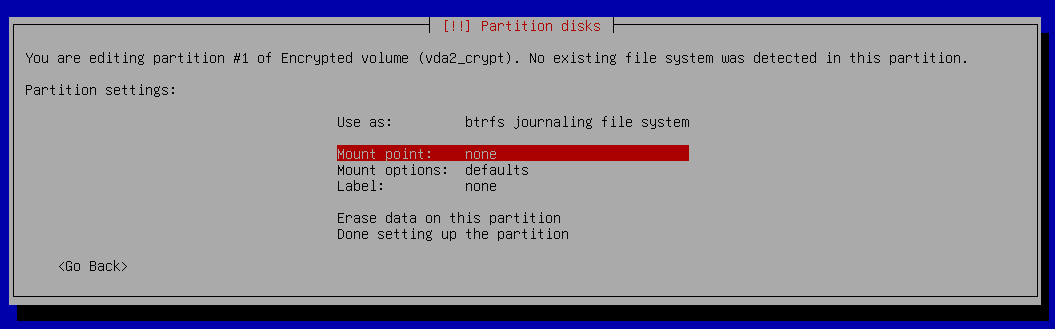
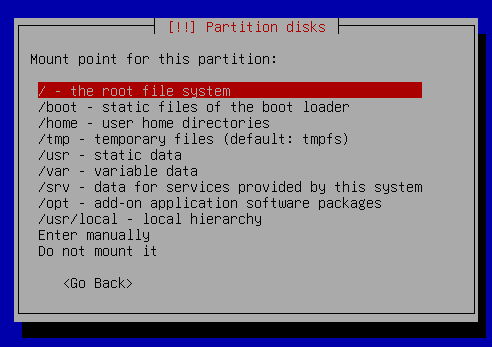
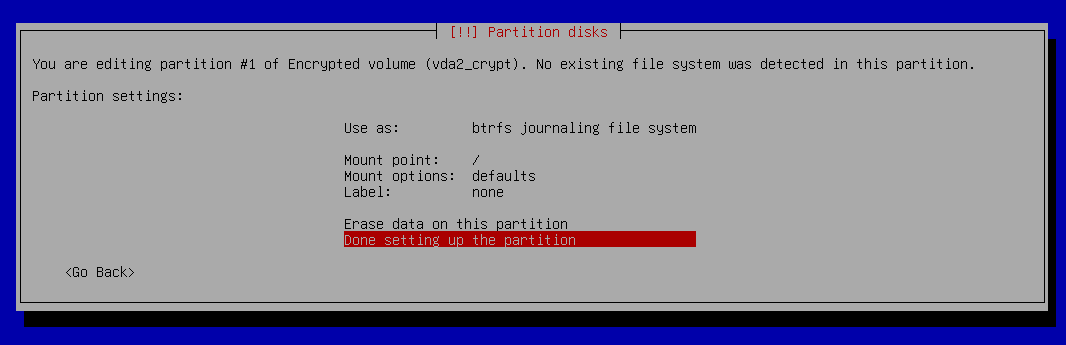
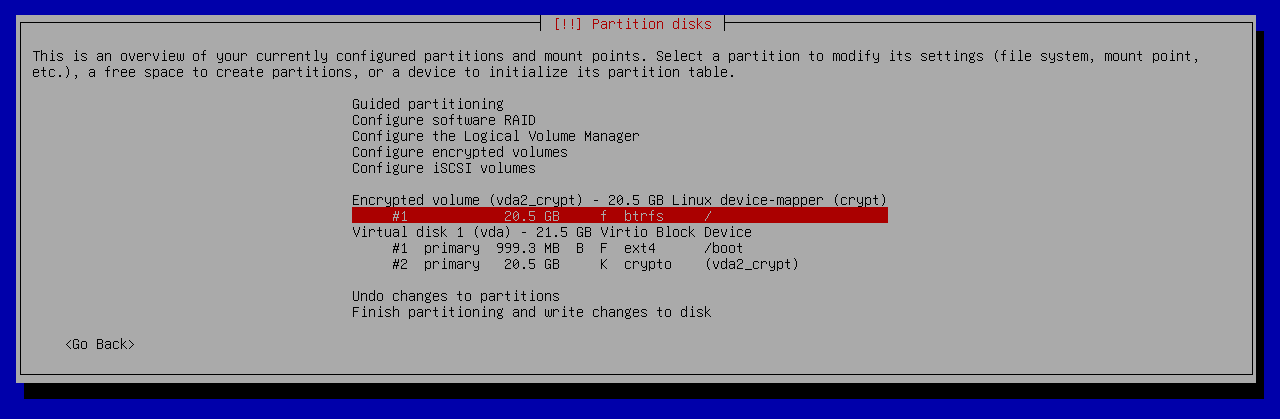
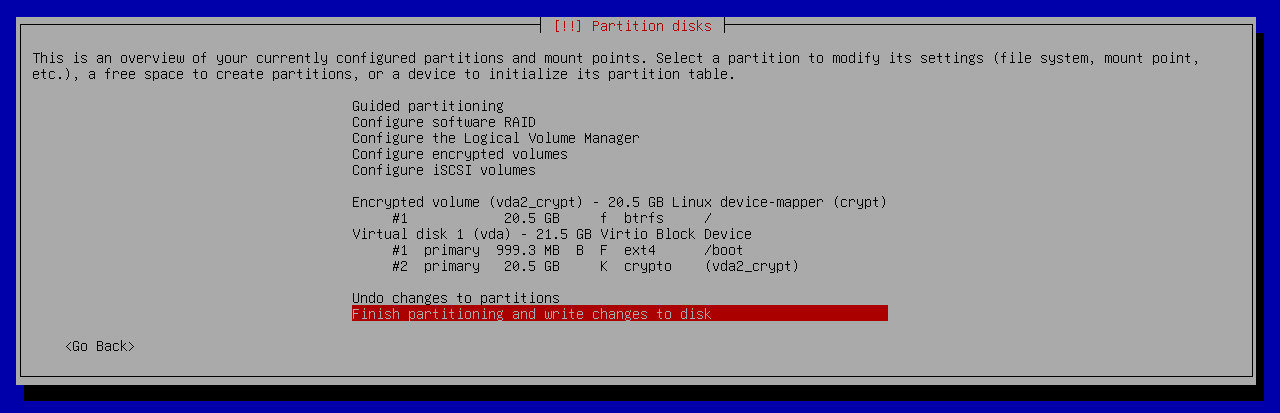
/boot and turned on the bootable flag and then selected Done setting up the partition.
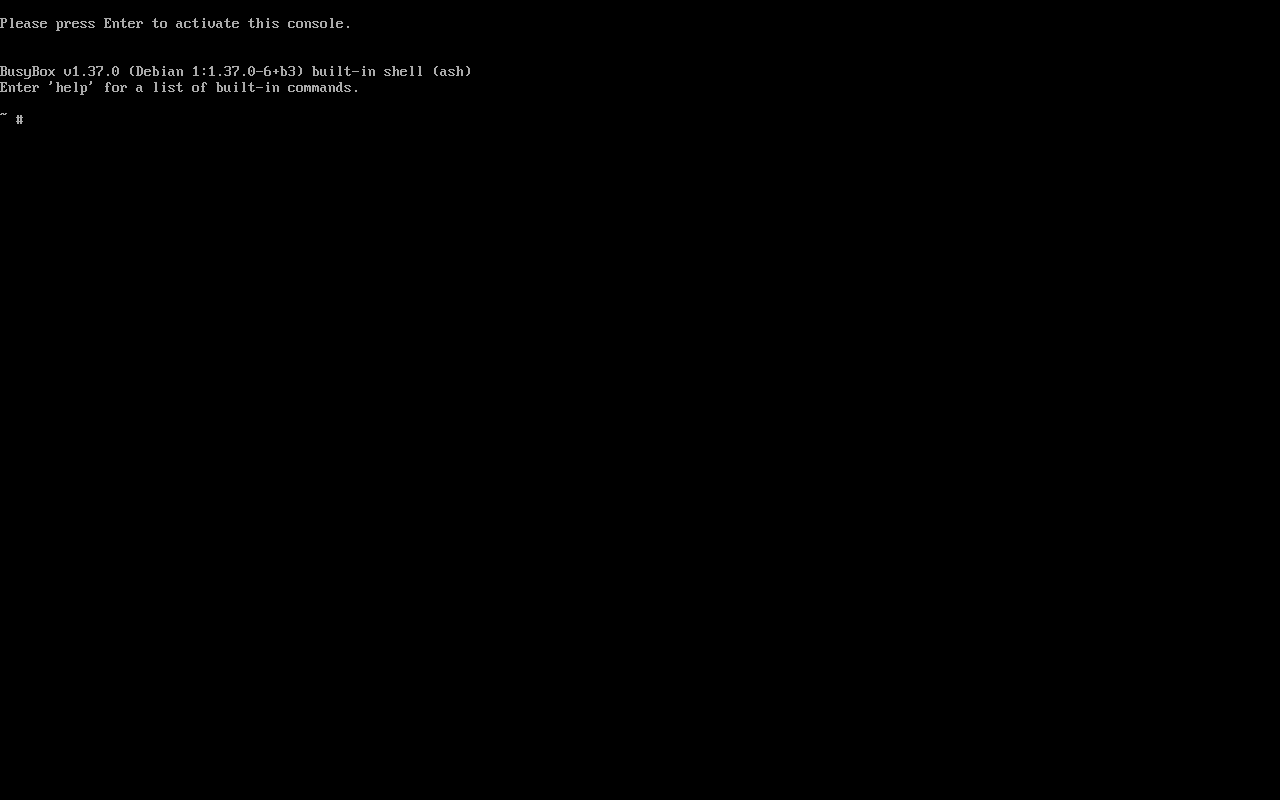
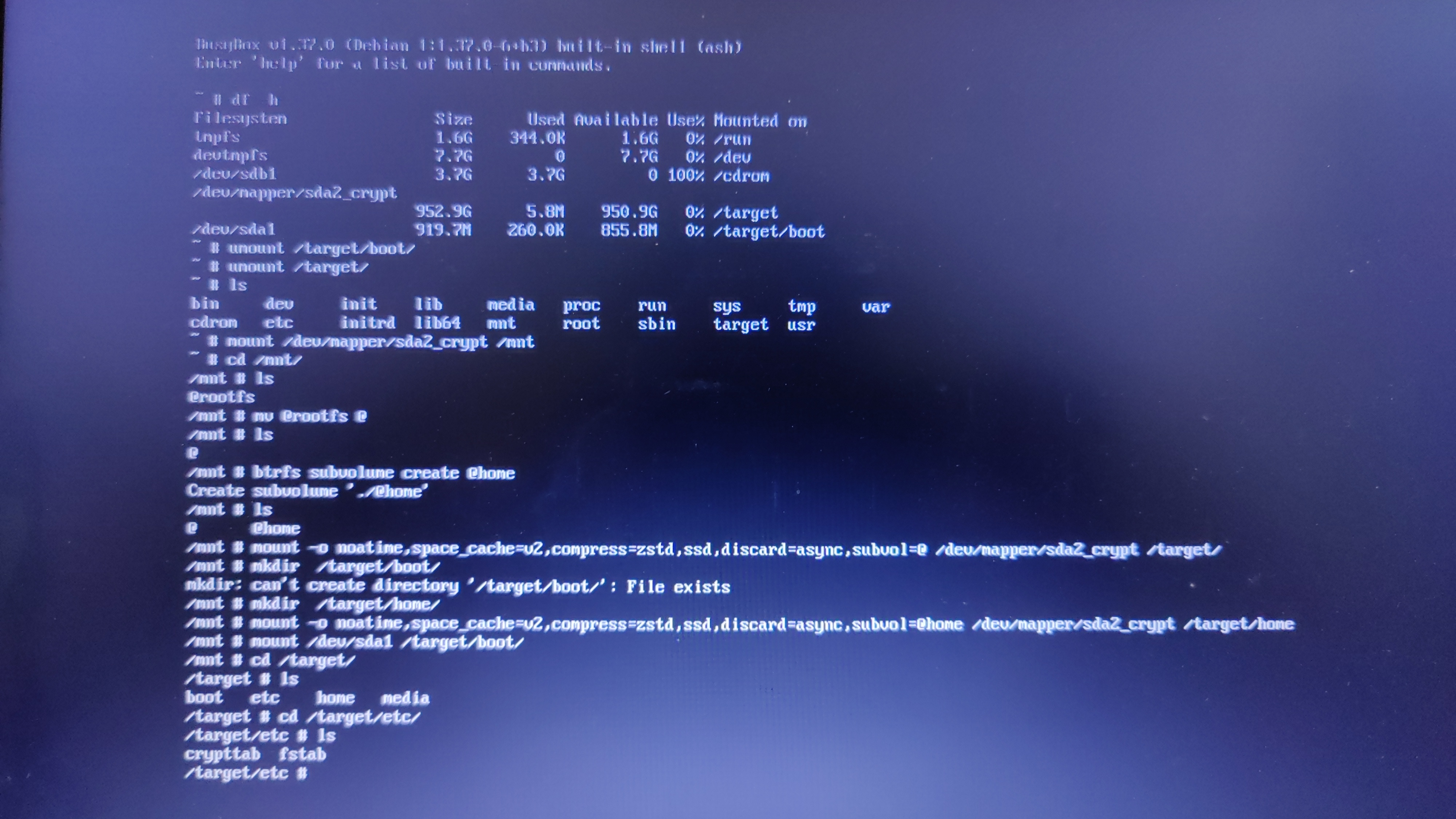
df -h to have a look at how our disk is partitioned. In my case, the output was:
# df -h
Filesystem Size Used Avail Use% Mounted on
tmpfs 1.6G 344.0K 1.6G 0% /run
devtmpfs 7.7G 0 7.7G 0% /dev
/dev/sdb1 3.7G 3.7G 0 100% /cdrom
/dev/mapper/sda2_crypt 952.9G 5.8G 950.9G 0% /target
/dev/sda1 919.7M 260.0K 855.8M 0% /target/boot
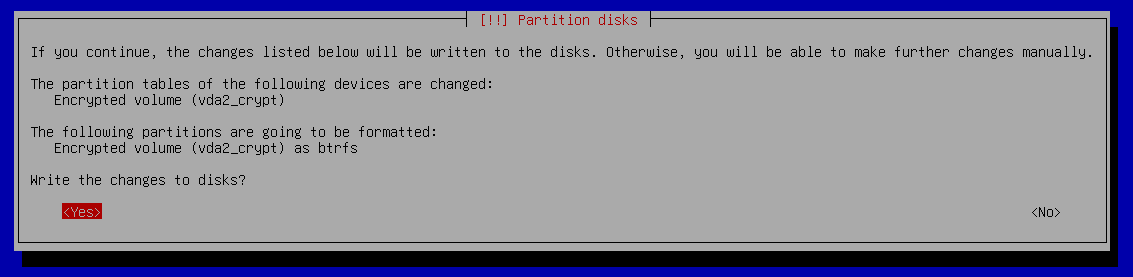
df -h shows us that /dev/mapper/sda2_crypt and /dev/sda1 are mounted on /target and /target/boot respectively.
Let s unmount them. For that, we run:
# umount /target
# umount /target/boot
Next, let s mount our root filesystem to /mnt.
# mount /dev/mapper/sda2_crypt /mnt
Let s go into the /mnt directory.
# cd /mnt
Upon listing the contents of this directory, we get:
/mnt # ls
@rootfs
Debian installer has created a subvolume @rootfs automatically. However, we need the subvolumes to be @ and @home. Therefore, let s rename the @rootfs subvolume to @.
/mnt # mv @rootfs @
Listing the contents of the directory again, we get:
/mnt # ls
@
We only one subvolume right now. Therefore, let us go ahead and create another subvolume @home.
/mnt # btrfs subvolume create @home
Create subvolume './@home'
If we perform ls now, we will see there are two subvolumes:
/mnt # ls
@ @home
Let us mount /dev/mapper/sda2_crypt to /target
/mnt # mount -o noatime,space_cache=v2,compress=zstd,ssd,discard=async,subvol=@ /dev/mapper/sda2_crypt /target/
Now we need to create a directory for /home.
/mnt # mkdir /target/home/
Now we mount the /home directory with subvol=@home option.
/mnt # mount -o noatime,space_cache=v2,compress=zstd,ssd,discard=async,subvol=@home /dev/mapper/sda2_crypt /target/home/
Now mount /dev/sda1 to /target/boot.
/mnt # mount /dev/sda1 /target/boot/
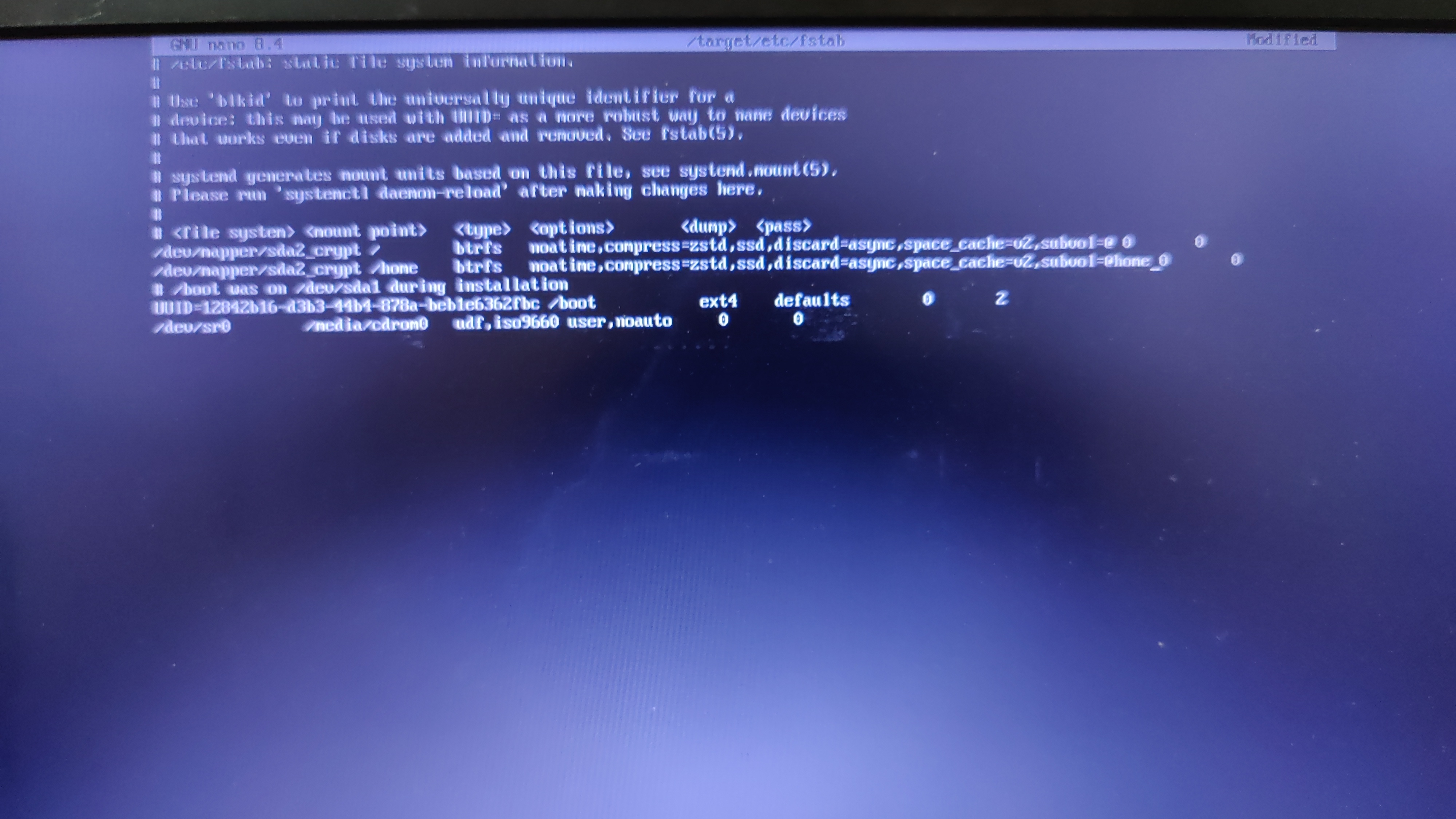
Now we need to add these options to the fstab file, which is located at /target/etc/fstab. Unfortunately, vim is not installed in this console. The only way to edit is Nano.
nano /target/etc/fstab
fstab file to look similar to the one in the screenshot above. I am pasting the fstab file contents below for easy reference.
# /etc/fstab: static file system information.
#
# Use 'blkid' to print the universally unique identifier for a
# device; this may be used with UUID= as a more robust way to name devices
# that works even if disks are added and removed. See fstab(5).
#
# systemd generates mount units based on this file, see systemd.mount(5).
# Please run 'systemctl daemon-reload' after making changes here.
#
# <file system> <mount point> <type> <options> <dump> <pass>
/dev/mapper/sda2_crypt / btrfs noatime,compress=zstd,ssd,discard=async,space_cache=v2,subvol=@ 0 0
/dev/mapper/sda2_crypt /home btrfs noatime,compress=zstd,ssd,discard=async,space_cache=v2,subvol=@home 0 0
# /boot was on /dev/sda1 during installation
UUID=12842b16-d3b3-44b4-878a-beb1e6362fbc /boot ext4 defaults 0 2
/dev/sr0 /media/cdrom0 udf,iso9660 user,noauto 0 0
Please double check the fstab file before saving it. In Nano, you can press Ctrl+O followed by pressing Enter to save the file. Then press Ctrl+X to quit Nano. Now, preview the fstab file by running
cat /target/etc/fstab
and verify that the entries are correct, otherwise you will booted to an unusable and broken system after the installation is complete.
Next, press Ctrl + Alt + F1 to go back to the installer.
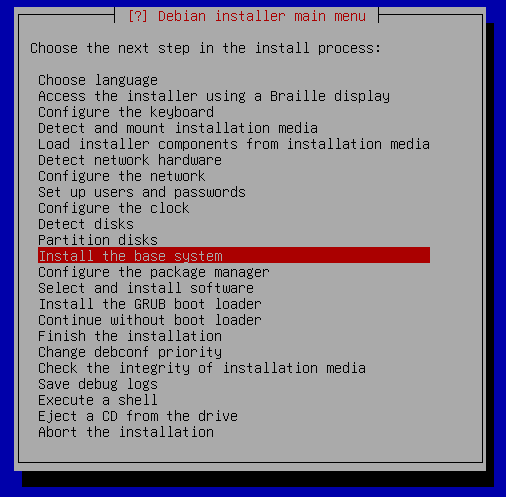
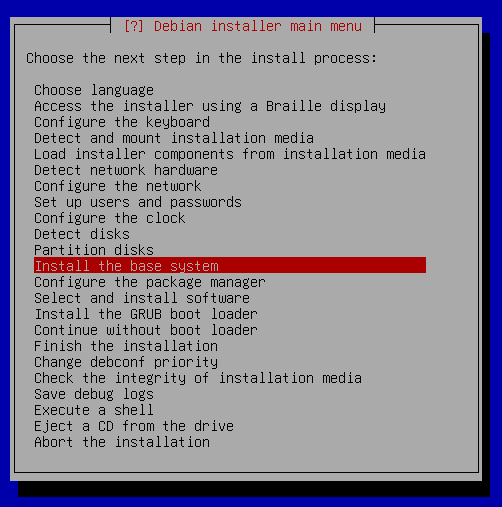
Screenshot of Debian installer installing the base system.
linux-image-amd64.
After this, the installer will ask you a few more questions. For desktop environment, I chose KDE Plasma. You can choose the desktop environment as per your liking. I will not cover the rest of the installation process and assume that you were able to install from here.
ravi to the suoders file (/etc/sudoers) so that ravi can run commands with sudo. Follow this if you would like to do the same.
Now we set up zram as swap. First, install zram-tools.
sudo apt install zram-tools
Now edit the file /etc/default/zramswap and make sure to have the following lines are uncommented:
ALGO=lz4
PERCENT=50
Now, run
sudo systemctl restart zramswap
If you run lsblk now, you should see the below-mentioned entry in the output:
zram0 253:0 0 7.8G 0 disk [SWAP]
This shows us that zram has been activated as swap.
Now we install timeshift, which can be done by running
sudo apt install timeshift
After the installation is complete, run Timeshift and schedule snapshots as you please. We are done now. Hope the tutorial was helpful.
See you in the next post and let me know if you have any suggestions and questions on this tutorial.
Next.