Search Results: "storm"

8 July 2015

Sven Hoexter: F5 BigIP and 1K DH parameter vs SSL Labs

So as a consequence of the weakdh issue(s) Qualys SSL Labs started to cap the rating at a B level if you provide DH cipher suites with 1K DH parameter. Now if you're terminating your TLS connections on F5s BigIP you're currently not able to change the DH parameter (they're random but of a fixed size). Finally there is a public comment from F5 written by Brian McHenry which is worth reading if you're running those boxes. As a side note, what most people running on TMOS 11.6.x should've already done is preferring ECDHE over DHE, which would look like this:
ciphers "!LOW:!SSLv3:!MD5:!RC4-SHA:!EXPORT:ECDHE+AES-GCM:ECDHE+AES:DHE+AES-GCM:DHE+AES:DHE+3DES:AES-GCM+RSA:RSA+AES:RSA+3DES"
That of course does not bring back the somewhat overrated A grade on the SSL Labs site. That boils down to choosing to provide DHE with 1K DH parameter or let everyone else, who does not yet support ECDHE, use RSA with your 2K public key. Honestly, for a public portal with a very wide range of users, I'm far from sure which one is the better choice. Looking at the weakest link "RSA+3DES" with TLSv1.0 is nothing that can convince the paranoid, but this cipher setting would bring you back the A grade:
ciphers "!LOW:!SSLv3:!MD5:!RC4-SHA:!EXPORT:ECDHE+AES-GCM:ECDHE+AES:AES-GCM+RSA:RSA+AES:RSA+3DES"

28 June 2015

Sven Hoexter: moto g GPS reset when it is not working with CM 12.1

There seems to be an issue with the moto g, CM 12.1 (nightlies) and the GPS. My GPS receiver stopped to work as well and I could recover it with the following steps in fastboot mode as described on xda-developers.
fastboot erase modemst1
fastboot erase modemst2
fastboot reboot
That even works with the 4.2.2 fastboot packaged in anroid-tools-fastboot.

22 June 2015

Sven Hoexter: Free SSL/TLS snakeoil from wosign.com

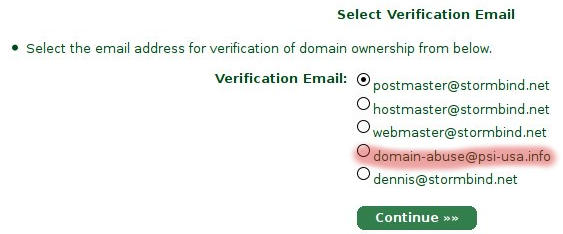
I've been a proponet of CaCert.org for a long time and I'm still using those certificates in some places, but lately I gave in and searched for something that validates even on iOS. It's not that I strictly need it, it's more a favour to make life for friends and family easier. I turned down startssl.com because I always manage to somehow lose the client certificate for the portal login. Plus I failed to generate several certificates for subdomains within the primary domain. I want to use different keys on purpose so SANs are not helpful, neither are wildcard certs for which you've to pay anyway. Another point against a wildcard cert from startssl is that I'd like to refrain from sending in my scanned papers for verification. On a sidenote I'm also not a fan of random email address extractions from whois to sent validation codes to. I just don't see why the abuse desk of a registrar should be able to authorize on DV certificates for a domain under my control. startssl abuse desk in dv validation So I decided to pay the self proclaimed leader of the snakeoil industrie (Comodo) via cheapsslshop.com. That made 12USD for a 3 year Comodo DV certificate. Fair enough for the mailsetup I share with a few friends, and the cheapest one I could find at that time. Actually no hassle with logins or verification. It looks a bit like a scam but the payment is done via 2checkout if I remember correctly and the certificate got issued via a voucher code by Comodo directly. Drawback: credit card payment. Now while we're all waiting for letsencrypt.org I learned about the free offer of wosign.com. The CA is issued by the StartSSL Root CA, so technically we're very close to step one. Beside of that I only had to turn off uBlock origin and the rest of the JavaScript worked fine with Iceweasel once I clicked on the validity time selection checkbox. They offer the certificate for up to 3 years, you can paste your own csr and you can add up to 100 SANs. The only drawback is that it took them about 12 hours to issue the certificate and the mails look a hell lot like spam if you sent them through Spamassassin. That provides now a free and validating certificate for sven.stormbind.net in case you'd like to check out the chain. The validation chain is even one certificate shorter then the chain for the certificate I bought from Comodo. So in case anyone else is waiting for letsencrypt to start, you might want to check wosign until Mozilla et al are ready. From my point of view the only reason to pay one of the major CAs is for the service of running a reliable OCSP system. I also pointed that out here. It's more and more about the service you buy and no longer just money for a few ones and zeroes.

1 June 2015

Sven Hoexter: Out of the comfort zone: CentOS 5 mock chroot and /etc/filesystems vs net-snmp

It turned out that my adventure in backporting net-snmp from CentOS 7 to CentOS 5 has a regression issue with disk stats. The logs provided us with the following error message
2015-05-29T10:27:14+02:00 foobar snmpd[2200]: Cannot statfs
but only on CentOS 5. CentOS 6, build on the same CentOS 7 VM also with mock, worked like a charm. When I attached strace to the snmpd process I could see that the calls to statfs() were executed with an empty string, so no path was supplied. A bit of source code grep'ing already pointed in the direction of #define ETC_MNTTAB but at that point I didn't believe that the chroot could be the culprit. So it took some discussions with the colleagues until I did a test build, the old way with a "./configure --prefix=$HOME/snmpd && make && make install", on a real system. To my surprise that worked. Since I did not fold in all the patches from the CentOS 7 rpm I expected that one of the patches broke something along the way for old Linux releases. So I went on, disabled nearly all patches in the spec file, build again in a chroot and the resulting binary still did not work. Somehow the chroot was at fault. Looking closer at the configure magic linked above you'll see it iterates through a list of various files that contain the list of mounted disks on various of *nix systems. For some unknown reason my CentOS 5 chroot is not populated with a proper /etc/mtab linked to the systems /proc/self/mounts while the one for CentOS 6 is. With /etc/mtab missing the configure script happily picks up /etc/filesystems which is, you might or might not know this, the /etc/fstab pendant on AIX. But on a CentOS system that just contains a list of filesystems. That indeed could not work out and explains why the build itself succeeded but parsing a filesystem path out of that file did not. Luckily we can override that stuff easily with the '--with-mnttab="/etc/mtab"' configure option of net-snmp, but the "/etc/filesystems" file on CentOS was something I did not expect and never noticed before. Hint: for the function of /etc/filesystems take a look at man 8 mount and the section about the "-t" parameter.

28 May 2015

Sven Hoexter: RMS, free software and where I fail the goal

You might have already read this comment by RMS in the Guardian. That comment and a recent discussion about the relevance of GPL changes post GPLv2 made me think again about the battle RMS started to fight. While some think RMS should "retire", at least I still fail on my personal goal to not depend on non-free software and services. So for me this battle is far from over, and here is my personal list of "non-free debt" I've to pay off. general purpose systems aka your computer Looking at the increasing list of firmware blobs required to use a GPU, wireless chipsets and more and more wired NICs, the situation seems to be worse then in the late 90s. Back then the primary issue was finding supported hardware, but the driver was free. Nowadays even the open sourced firmware often requires obscure patched compilers to build. If I look at this stuff I think the OpenBSD project got that right with the more radical position. Oh and then there is CPU microcode. I'm not yet sure what to think about it, but in the end it's software and it's not open source. So it's non-free software running on my system. Maybe my memory is blurred due to the fact, that the seperation of firmware from the Linux kernel, and proper firmware loading got implemented only years later. I remember the discussion about the pwc driver and its removal from Linux. Maybe the situation wasn't better at that time but the firmware was just hidden inside the Linux driver code? On my system at work I've to add the Flash plugin to the list due to my latest test with Prezi which I'll touch later. I also own a few Humble Indie bundles. I played parts of Osmos after a recommendation by Joey Hess, I later finished to play through Limbo and I got pretty far with Machinarium on a Windows system I still had at that time. I also tried a few others but never got far or soon lost interest. Another thing I can not really get rid of is unrar because of stuff I need to pull from xda-developer links just to keep a cell phone running. Update: Josh Triplett pointed out that there is unar available in the Debian archive. And indeed that one works on the rar file I just extracted. Android ecosystem I will soon get rid of a stock S3 mini and try to replace it with a moto g loaded with CyanogenMod. That leaves me with a working phone with a OS that just works because of a shitload of non-free blobs. The time and work required to get there is another story. Among others you need a new bootloader that requires a newer fastboot compared to what we have in Jessie, and later you also need the newer adb to be able to sideload the CM image. There I gave in and just downloaded the pre build SDK from Google. And there you've another binary I did not even try to build from source. Same for the CM image itself, though that's not that much different from using a GNU/Linux distribution if you ignore the trust issues. It's hard to trust the phone I've build that way, but it's the best I can get at the moment with at least some bigger chunks of free software inside. So let's move to the applications on the phone. I do not use GooglePlay, so I rely on f-droid and freeware I can download directly from the vendor. "Cloud" services This category mixes a lot with the stuff listed above, most of them are not only an application, in fact Threema and Wunderlist are useless without the backend service. And Opera is just degraded to a browser - and to be replaced with Firefox - if you discount the compression proxy. The other big addition in this category is Prezi. We tried it out at work after it got into my focus due to a post by Dave Aitel. It's kind of the poster child of non-freeness. It requires a non-free, unstable, insecure and half way deprecated browser plugin to work, you can not download your result in a useful format, you've to buy storage for your presentation at this one vendor, you've to pay if you want to keep your presentation private. It's the perfect lockin situation. But still it's very convenient, prevents a lot of common mistakes you can make when you create a presentation and they invented a new concept of presenting. I know about impress.js(hosted on a non-free platform by the way, but at least you can export it from there) and I also know about hovercraft. I'm impressed by them, but it's still not close to the ease of use of Prezi. So here you can also very prominently see the cost of free and non-free software. Invest the time and write something cool with CSS3 and impress.js or pay Prezi to just klick yourself through. To add something about the instability - I had to use a windows laptop for presenting with Prezi because the Flash plugin on Jessie crashed in the presentation mode, I did not yet check the latest Flash update. I guess that did not make the situation worse, it already is horrible. Update: Daniel Kahn Gillmore pointed out that you can combine inkscape with sozi, though the Debian package is in desperate need for an active maintainer, see also #692989. I also use kind of database services like duden.de and dict.cc. When I was younger you bought such things printed on dead trees but they did not update very well. Thinking a bit further, a Certification Authority is not only questionable due to the whole trust issue, they also provide OCSP responder as kind of a web service. And I've already had the experience what the internet looks like when the OCSP systems of GlobalSign failed. So there is still a lot to fight for and a lot of "personal non-free debt" to pay off.

20 March 2015

Steve McIntyre: Tour of Australia

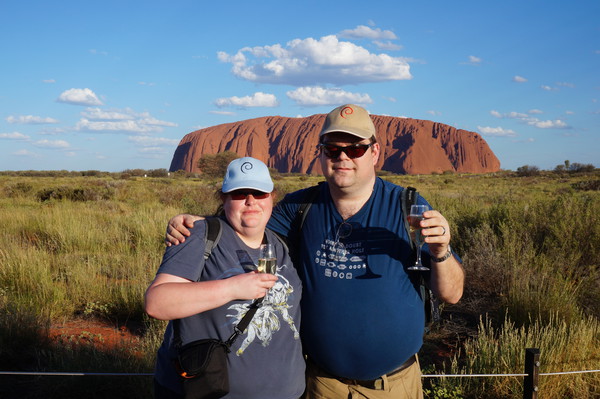
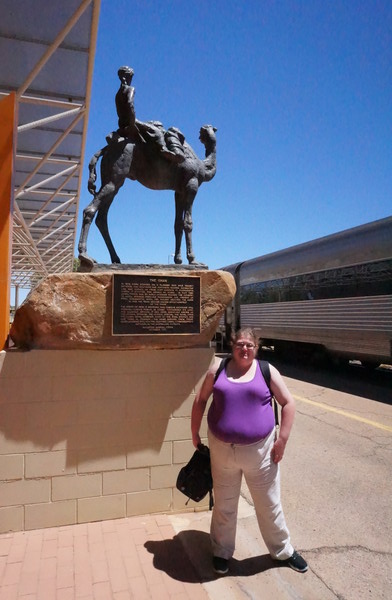
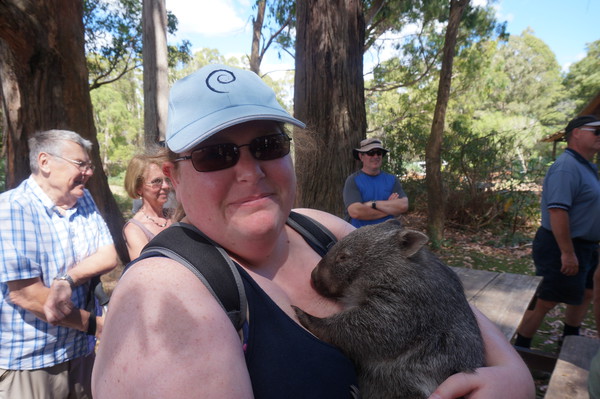
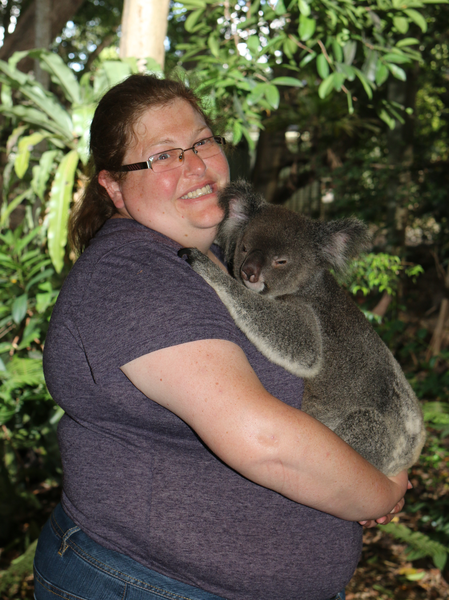
Jo and I just got back from our massive holiday in Australia. We had an awesome time overall, fitting in lots of stuff in 4 weeks. Time for a quick write-up and some photos! Ayers Rock We flew into Sydney, then straight onto Uluru for the obligatory sunset and sunrise viewings. We didn't climb the Rock, both for sensitivity reasons and (to be more honest!) it looked way too much like hard work in 40-plus degree heat. Ghan train Coach over to Alice Springs, where we had a very quick look around before taking the Ghan train down to Adelaide. The train was fun for a day, and we got to see a lot of desert. In Adelaide, we had a look around the city (lovely colonial feel!) and got a couple of evenings in fun comedy shows at the Fringe. Great fun! Cuddling a sleepy wombat! On to Tasmania, where we did a quick (3 days) run around the island by car: into Hobart, up the east coast. Stopped in Swansea (a nice version!) for some heavenly Devonshire teas, then on up to Grindelwald near Launceston. Visited Trowunna Wildlife Park to see (and cuddle!) lots of local animals, which was amazing - Jo's favourite day of the holiday. Then on to Queenstown and drive back down to Hobart past some impossibly beautiful views around Cradle Mountain. Tassie's gorgeous - like the best bits of Scotland, Wales and Cornwall but with even fewer people and better weather. Sydney Opera House Next, on to Sydney for Harry and Cath's wedding. We stayed up in Chatswood. Not knowing anything about the area beforehand, we were a little surprised to basically find ourselves back in Hong Kong! We spent most of the weekend catching up with friends from the wedding group, and the wedding itself was at Quarantine Station, overlooking the harbour. It couldn't have been a more perfect location / weather / view for our friends' big day! We squeezed in a couple of the open-top bus tours of Sydney on the Sunday, but got caught in the horrendous storm that hit and ended up sheltering downstairs under cover on the bus. I'm told Bondi is lovely, but it all looked grey from the bus. :-P Puffing Billy, Yarra Valley Down to Melbourne on the train (bit of a wasted day, in hindsight), where we wandered around the city quite a bit. Caught up with an old friend who lives there for a day, and we did a wine tour up the Yarra Valley which was fun too. Snorkelling at the Reef - all OK! Up to Port Douglas, where we headed out to the Reef for my highlight of the holiday: a snorkelling tour with some local marine experts who showed us the local flora and fauna. We also visited a local Aboriginal cultural centre, skyrail and scenic railway around Kuranda village. Koala! :-) Down to Hervey Bay and a 1-day tour of Fraser Island - an amazing place in combination with quite a thrill-ride experience just being driven around on the sand tracks. Finally, down to Brisbane where we wandered around and visited both the Lone Pine Koala Sanctuary (more cuddles!) and the Gold Coast. Then the long flights home. Whew! We're knackered now. We knew we could't fit everything in, but we're glad we travelled all over and got tastes of almost everything. Now we can work out where we want to spend more time on our future visit(s). We'll definitely want to head over and see Perth and some of WA next time, and definitely more time in Tasmania, Sydney and Adelaide.

13 March 2015

Lior Kaplan: PHP7 replaces non-free JSON extension

For many the PHP JSON extension license might look like a storm in a teacup, but for many Linux distributions the bits of the free software licenses are very important. That was the case when Debian decided (#692613) to remove the non-free JSON extension as part of the transition to PHP 5.5 in May 2013 (after the Debian 7 release). This change was done with the help of Remi Collet (from Fedora / Red Hat) who wrote an alternative extension based on JSON-C implementation. A similar change was done by other Linux distributions, and this became the defacto standard for most Linux users. The situation has recently changed with the acceptance of the Jakub Zelenka s jsond RFC to replace the current non-free implementation with a free one. The change was committed to the code base on early February (Closing #63520) and expected to be released later this year as part of PHP7.
Filed under: Free software licenses, PHP

4 March 2015

Zlatan Todori : Interviews with FLOSS developers: Paul Wise

After starting with Joey Hess, we continue with Paul Wise. What makes his star to shine are many things such as being a DSA (Debian System Administrator), a helpful hand on mailings list, encouraging people to join Debian teams but most of all - he has encyclopedia knowledge on Debian as a whole which he gladly shares with anyone who asks (very fast response on IRC channels). It is almost impossible for any single person to count all Debian teams, work and places - to know most of those things, you can image the vast knowledge which Paul has. The legend says that his brain has better and faster search engine algorithm on Debian related queries than all other engines combined. So lets see what he has to share with world. me: Who are you? pabs: Paul Wise (pabs) and I have to say that I'm no-where near as knowledgeable as your intro suggests. me: How did you start programming? pabs: Messing around with fractals and graphics things in MS BASIC. me: How would you now advise others to start programming? pabs: Pick an issue in a tool you use, investigate how the tool works and how you can change it, fix that and contribute the change back to the project that created that tool. In the process you will learn skills, interact with the community and contribute to the project. me: Setup of your development machine? pabs: Lenovo Thinkpad with external monitor, Debian testing and some tweaks me What is your preferable language (for hacking)? Why? How do you compare it to other languages? pabs: I currently prefer Python for its readability. It still has some rough edges though the documentation covers them fairly well. I generally pick up new languages when working on projects written in them. Haskell is next on the horizon due to Nikki and the Robots. me: Describe your current most memorable situation as software developer/hacker? pabs: I had a great time creating fractals in BASIC, learning about the Mandelbrot set, L-systems and more. My days and nights of hacking on frhed (a GPLed hex editor for Windows) to help me cheat at Civilisation were pretty memorable. frhed led to my work on reverse engineering the CHM file format (a documentation format for Windows programs). A stand-out moment during my time with Debian was hacking on the derivates census patch generation code during the Debian UK BBQ weekend, surrounded by geeks playing Portal, cooking things, hacking on Debian and generally having a good time (thanks Steve!). me: Some memorable moments from Debian conferences? pabs: There are so many; meeting Debian folks, playing Mao once and then never again, late night games of werewolf, both delectably delicious and hideously disgusting cheeses, fried insects, day trips to beautiful landscapes, inspiring keynotes, exciting BoFs, secret IRC channels for planning surprise birthday parties, blue hair, wet air, blocks of fried cheese, a vast quantity of icecream, pants, geeks in the surf, volcanoes, hiking, a wonderful view, a uni-cycling stormtrooper & more. me: How do you see future of Debian development? pabs: I hope we will continue to exist and uphold our principles for the foreseeable future. I don't have any crystal balls though. me: You recently became member of Debian DSA - what is that like, what roles do you have and what tasks are in front of DSA? pabs: We wrote a bit of text about that for DPN recently. me: You have large knowledge on Debian and you share it with anyone who wants to know more. What motivates you to do so? pabs: I want the operating system I personally rely on to exist into the future, helping folks work on and join Debian can help with that. me: Why should developers and users join Debian community? What makes Debian a great and happy place? pabs: Every Debian contributor has different reasons for joining the community. Personally the Social Contract, the DFSG and the spirit and culture behind them are the main reason to be involved. I also like our many efforts towards technical excellence and correctness. Of course I've made a number of good friends over the years, especially as a result of attending DebConf every year since 2007. me: You are member of Debian publicity team which writes Debian news - do you need more people to join that team and how can they start? pabs: Since there is an infinite amount of work to do, pretty much every part of Debian always needs help, that includes the publicity team. We published a post about ways to help here. me: If someone wants to contribute to Debian in terms of packaging, can they do it anonymously (for example over Tor network, does Debian have .onion address)? pabs: Due to Debian's penchant for transparency it is harder but there are definitely package maintainers who have built up a reputation for good work under a pseudonym over the years and become Debian contributors as a result. I'm not aware of completely anonymous package maintainers but there are definitely people who file bugs using one-off pseudonyms, which is almost the same thing as anonymously. There are definitely Debian contributors and members who use Tor while contributing to Debian. In fact, as Debian is very highly dependent on OpenPGP and the best practices for OpenPGP include refreshing your keyring slowly over Tor, so probably quite a number of Debian contributors use Tor. As far as I know Debian itself does not run any Tor relays or onion services. me: What are places that non-packaging developers and people could join and help spread Debian even more? pabs: There are many ways to help Debian, including non-technical ones. Unfortunately our web page about helping Debian isn't quite up-to-date with all of them but a few more are to volunteer at DebConf, helo with artwork requests, speak about Debian at events or even come up with ideas for projects. Whatever skills you have, Debian can probably make use of them. If you aren't sure where to start, jump on the debian-mentors mailing list or IRC channel and we can probably guide you to the right place within Debian. Don't worry about not being skilled enough, everyone starts somewhere. me: How do you see Debian will manage webapps? pabs: Personally I prefer locally installed software, standard data formats and standard data transfer protocols to the wild webapps world but I understand they are becoming very popular to produce and use due to the ubiquity of the web browser platform. Antonio Terceiro is mentoring a project for this year's newcomer mentorship programs (outreachy/gsoc) that aims to improve support for installing web apps on Debian installations. I hope it succeeds as it could help make Debian more popular on servers and home servers in particular. me: How would you advise Debian (and other FLOSS users) to setup their machine in terms of security and anonymity? pabs: All technology has upsides and downsides. I would advise anyone to analyse their situation and protect themselves accordingly. For example if you have a bad memory, full disk encryption, which is based on pass-phrases might lead to data loss and physical security might be a better choice for protecting your data. The right choices around technology are very much a personal thing. me: Is it better to setup xmonad (because it is Haskell based WM) with small dependency chain or GNOME (because it is getting sandboxed apps) in term of security and privacy implications? pabs: Again, the right choices around technology are very much a personal thing. Due to the design of X11, both of these are approximately equivalent from a window-manager security properties point of view, that is to say, pretty bad. Wayland is one of the possible X11 successors and offers much better security properties. GNOME folks are working on switching to Wayland. Ultimately though it comes down to how each person uses their window manager and which software they run under it. me: Should Debian join Tor project as distro that installs Tor relays by default - should it offer that as option in installer in Debian 9? pabs: Running a Tor relay requires a reasonably fast and reliable Internet connection and should be a conscious decision on behalf of the sysadmin for a computer so Debian probably shouldn't install them by default. If tasksel gets support for installing tasks from Debian Pure Blends, then we could add a Tor relay task to the Debian Sanctuary Pure Blend. me: Have you ever considered joining initiatives such as FreedomBox? pabs: I was quite moved by Eben Moglen's talk at DebConf10 in New York and the resulting BoF. It seemed like a very ambitious project but I didn't really have the knowledge, skills or time to contribute yet. me: Are you a gamer? Valve Steam games are offered for free to Debian Developers - do you use steam and play Valve games? Your thoughts on Steam and non-free Linux gaming? pabs: I play computer games occasionally, all from Debian main or ones that I'm packaging. 0ad is my current go-to for a bit of gaming. I don't have any experience with Steam or non-free games on Linux. me: Is there something you would change in FLOSS ecosystem? pabs: Various folks have highlighted new and ongoing challenges for the FLOSS ecosystem in various places in recent years. Something that I would like to highlight that does not get talked about enough is the choices we make around our digital artefacts. This is the discussion around "preferred form for modification" or "source". The "source" for a particular digital artefact is a deliberate choice on behalf of the authors. Often generated files are distributed alongside the "source" without any instructions for reproducing the generated files from the "source". It sometimes happens that FLOSS contributors forget to distriute what they have chosen as "source", instead just distributing the generated files. This is a fairly well known issue but still happens. What isn't thought about quite as much is that the choice of "source" has consequences for future development possibilities of that "source". Some forms of "source" are more expressive than others, can be modified in a wider variety of ways and are better choices in general. Sometimes the consequences of choosing less expressive forms are mild and other times they are quite important. I hope more people will start to think about these choices. Some examples where, in my opinion, various people could have made better choices are listed in the mail I sent to the games team list last year. Another thing I would like to highlight is the work that organisations like Software Freedom Conservancy and Software in the Public Interest do to protect, defend, promote and support FLOSS projects. It is very important work that needs our interest and support. me: Can FLOSS world create great alternatives to Viber, Dropbox, WhatsUp, Facebook, Skype and other non-free services? pabs: I think that the FLOSS world has already created alternatives to all of those. The success of non-free services doesn't take these alternatives away but it does mean some of them are less useful because some of them are the kind of tools that become more useful with a larger amount of people using them. I don't know what it would take for the FLOSS alternatives to achieve similar success as network effects are hard to overcome. Hopefully mako is right and the network effects are overrated. me: Your thoughts and compare Cloud, IaaS, PaaS, SaaSS? To what should the FLOSS world pay more attention and energy? pabs: Initially I dismissed these as buzzwords and a threat to Free Software. These days I view them as potential opportunities for Free Software. Cloud-related technologies such as OpenStack and virtual machines can make private compute farm hardware more flexible and useful to their owners. IaaS providers can be used to run Debian more simply and cheaply and therefore bring Debian to more people than possible with hardware. PaaS providers can be used to run Free Software services. SaaSS can be based entirely on Free Software and respect users. Of course, just like running Free Software on hardware (proprietary or libre), cloud technology, IaaS, PaaS and SaaSS all come with downsides. The FLOSS world should aim to inform users of our software of these downsides. For example, the Debian installer could note that it is running on Intel CPUs with a proprietary BIOS and various proprietary software running, that it is running on a mobile phone with a locked bootloader, that it is running in a Xen VM on machines owned by Amazon. Free Software services could note they are running on Google App Engine etc. Free Software web browsers, chat clients etc could note when they are connecting to proprietary network services. All these notes could inform users about the downsides present in the particular situation encountered. There is also much work to be done making it easier to run Free Software on top of or use Free Software to connect to all manner of platforms from lowRISC to UEFI to VMware to Google App Engine to GitHub to Facebook. The more places Free Software can reach, the more people will be exposed to the philosophy behind it and the more potential there is for folks to join the community. While co-option of the FLOSS world is a dangerous certainty, co-option of proprietary platforms might be able to expand the reach of the philosophy behind Free Software. me: Your thoughts on Purism (the open hardware laptop initiative that got recently funded on CrowdSupply)? pabs: I don't know enough about that to comment but personally I am more interested in a laptop based on a libre CPU architecture. The RISC-V ISA and the lowRISC project seems to be one of the more promising possibilities at this point in time. me: Did you watch Citizenfour - comments on it? pabs: I've seen the trailer and look forward to watching it at some point, I read there might be a screening at DebConf15.

24 February 2015

Sven Hoexter: admiration

I recently learnt that my former coworker Jonny took his efforts around his own monitoring system Bloonix and moved to self-employment. If you're considering to outsource your monitoring consider Bloonix. :) As a plus all the code is open under GPLv3 and available on GitHub. So if you do not like to outsource it you can still build up an instance on your own. Since this has been a one man show for a long time most of the documentation is still in german. Might be a pro for some but a minus for others, if you like Bloonix I guess documentation translations or a howto in english is welcome. Beside of that Jonny is also the upstream author of a few Perl modules like libsys-statistics-linux-perl. So another one has taken the bold step to base his living on free and open source software, something that always has my admiration. Jonny, I hope you'll succeed with this step.

Sven Hoexter: just because

That inevitable led to this on the office wall.

12 February 2015

Sven Hoexter: Out of the comfort zone: What I learned from my net-snmp backport on CentOS 5 and 6

This is a short roundup of things I learned after I've rolled out the stuff I wrote about here. Bugs and fighting with multiarch rpm/yum One oversight led me to not special case the perl-devel dependency on the net-snmp-devel package for CentOS 5, to depend on perl instead. That was easily fixed but afterwards a yum install net-snmp-devel still failed because it tried to install the stock CentOS 5 net-snmp-devel package and its dependencies. Closer investigation showed that it did so because I only provided x86_64 packages in our internal repository but it wanted to install i386 and x86_64 packages. Looking around this issue is documented in the Fedora Wiki. So the modern way to deal with it is to make the dependency architecture dependend with the
% ?_isa 
macro. That is evaluated at build time of the src.rpm and then the depedency is hardcoded together with the architecture. Compare
$ rpm -qRp net-snmp-devel-5.7.2-18.el6.x86_64.rpm grep perl
perl-devel(x86-64)
to
$ rpm -qRp net-snmp-devel-5.7.2-19.el5.centos.x86_64.rpm  grep perl
perl
As you can see it's missing for the el5 package and that's because it's too old, or more specific, rpm is too old to know about it. The workaround we use for now is to explicitly install only the x86_64 version of net-snmp-devel on CentOS 5 when required. That's a
yum install net-snmp-devel.x86_64
Another possible workaround is to remove i386 from your repository or just blacklist it in your yum configuration. I've read that's possible but did not try it. steal time still missing on CentOS 6 One of the motivations for this backport is support for steal time reporting via SNMP. For CentOS 5 that's solved with our net-snmp backport but for CentOS 6 we still do not see steal time. A short look around showed that it's also missing in top, vmstat and friends. Could it be a kernel issue? Since we're already running on the CentOS Xen hypervisor we gave the Linux 3.10.x packages a spin in a domU and now we also have steal time reporting. Yes, a kernel issue with the stock CentOS 6/RHEL 6 kernel. I'm not sure where and how to fill it since RedHat moved to KVM.

Sven Hoexter: Comparing apples and oranges: IPv6 adoption vs HTTP/2 adoption

I did not yet read the HTTP/2 draft but I've read the SPDY draft about 2.5 years ago. So I might be wrong here with my assumptions. We're now about 17 years into the IPv6 migration and still we do not have widespread IPv6 adoption on the client side. That's mostly an issue of CPE device rotation at the customer side and updating provisioning solutions. For the server side we're more or less done. Operating system support is there, commercial firewall and router vendors picked it up in the last ten years, datacenter providers are ready, so we're waiting for the users to put some pressure on providing a service via IPv6. Looking at HTTP/2 it's also a different protocol. The gap might be somewhat closer than the one between IPv4 and IPv6, but it's still huge. Now I'd bet that in the case of HTTP/2 we'll also see a really slow adoption, but this time it's not the client side that's holding back the adoption. For HTTP/2 I've no doubts about a fast adoption on the client side. Google and Mozilla are nowadays providing some kind of continues delivery of new features to the end user on a monthly basis (surprisingly that also works for mobile devices!). So the web browser near you will soon have a HTTP/2 implementation. Even Microsoft is switching to a new development model of rolling updates with Windows 10 and the Internet Explorer successor. But looking at the server side I doubt we'll have widespread HTTP/2 support within the next 5 years. Maybe in 10. But I doubt even that. With all those reverse proxies, interception devices for header enrichment at mobile carriers, application servers, self written HTTP implementations, load balancers and so on I doubt we'll have a fast and smooth migration ahead. But maybe we're all lucky and I'm wrong. I'd really love to be wrong here. Maybe we can provide working IPv4-IPv6 dual-stack setups for everyone in the meantime.

20 January 2015

Sven Hoexter: Heads up: possible changes in fonts-lyx

Today the super nice upstream developers of LyX reached out to me (and pelle@) as the former and still part time lyx package maintainers to inform us of an ongoing discussion in http://www.lyx.org/trac/ticket/9229. The current aproach to fix this bug might result in a name change of all fonts shipped in fonts-lyx with the next LyX release. Why is it relevant for people not using LyX? For some historic reasons beyond my knowledge the LyX project ships a bunch of math symbol fonts converted to ttf files. From a seperate source package they moved to be part of the lyx source package and are currently delivered via the fonts-lyx package. Over time a bunch of other packages picked this font package up as a dependency. Among them also rather popular packages like icedove, which results in a rather fancy popcon graph. Drawback as usual is that changes might have a visible impact in places where you do not expect them. So if you've some clue about fonts, or depend on fonts-lyx in some way, you might want to follow that issue cited above and/or get in contact with the LyX developers. If you've some spare time feel also invited to contribute to the lyx packaging in Debian. It really deserves a lot more love then what it seldomly gets today by the brave Nick Andrik, Per and myself.

Sven Hoexter: python-ipcalc bumped from 0.3 to 1.1.3

I've helped a friend to get started with Debian packaging and he has now adopted python-ipcalc. Since I've no prior experience with packaging of Python modules and there were five years of upstream development in between, I've uploaded to experimental to give it some exposure. So if you still use the python-ipcalc package, which is part of all current Debian releases and the upcoming jessie release, please check out the package from experimental. I think the only reverse dependency within Debian is sshfp, that one of course also requires some testing.

26 December 2014

Sven Hoexter: on call one-liner: Who is sitting in my swap space?

A "nearly out of swap"-alarm during on call duty led me to quickly assemble a one-liner to grab a list of PIDs and the amount of memory swapped out from /proc/[pid]/smaps. That one-liner later got a bit polishing from my colleague H. to look like this:
for x in $(ps -eo pid h); do s=/proc/$ x /smaps; [ -e $ s  ] && awk -vp=$ x  'BEGIN   sum=0   /Swap:/   sum+=$2   END   if (sum!=0) print sum " PID " p ' $ s ; done   sort -rg
After I shared this one with some friends V. came up with a faster version (and properly formatted output :), that relies on the "VMSwap" value in /proc/[pid]/status. Since the one-liner above has to add up one "Swap" value per memory segment it's obvious why it's very slow on systems with many processes and a lot of memory.
awk 'BEGIN printf "%-7s %-16s %s (KB)\n", "PID","COMM","VMSWAP"   
if($1 == "Name:") n=$2 
if($1 == "Pid:") p=$2 
if($1 == "VmSwap:" && $2 != "0") printf "%-7s %-16s %s\n", p,n,$2   "sort -nrk3" 
 ' /proc/*/status
Drawback of this second version is that it relies on the "VmSwap" value which is only part of Linux 2.6.34 and later. It also ended up in the 2.6.32 based kernel of RHEL 6, so this one should work from RHEL 6 and Debian/wheezy onwards. The first version also works on RHEL 5 and Debian/squeeze since both have a (default) kernel with "CONFIG_PROC_PAGE_MONITOR" enabled, which is what you need to enable /proc/[pid]/smaps. Update: C.R. pointed out via mail that there is a versatile Python script smem. It's available in Debian and at least EPEL 6 and 7. Thanks for the hint. The usefulness of swap and why there is no automatic ressource assignment check and bookkeeping, based on calculations around things like the JVM -Xmx settings and other input, is a story on its own. There is room for improvement. A CMDB (Chapter 10.7) would be a starting point.

7 December 2014

Sven Hoexter: Failing with F5: Implementing HTTP session persistence

In the old days people deployed the Apache HTTPD together with mod_jk and mod_balancer in front of Apache Tomcat instances to achieve scalability and resilience. That sooner or later turns out to not provide features you nowadays would like to have to run a service 24/7. So it happened that I had to jump into the sometimes cold sea of managing services fronted by F5 BigIP devices, a somewhat common load balancing solution. Soon after you start to introduce loadbalancing, because you grow beyond the "one fat webserver" state, you'll have the requirement to implement some way of session persistence. In the old days you might have added a unique jvmRoute value to your mod_balancer pool and to your tomcat configuration to match the connection to the right pool member. If you're clever you've set it on the Tomcat as a variable that automatically builds up the jvmRoute based on the hostname, so you can add new instances without having to touch the Tomcat configuration. In case you were not that clever (like we were when we started) you might have added placeholders in the server.xml to set the jvmRoute value in your deployment script. I think in a somewhat better world your first step usually is to introduce a shared session store, be it the php session handler backed by a memcached or Hazelcast for the Java afficionados, to avoid the persistence requirement on your balancer. But if you grow even bigger the requirement will soon reappear because you might have to add some form of sharding and now have to sent users to the same cluster serving a specific shard. In the end all of that is not cool and your developers have to be aware of those issues. For all cases where fault tolerance within the session is not a priority we aimed for something that we can enable or disable on the balancer without application code changes. The "let the box do its job" solution The nicest solution from our point of view is letting the F5 inject a cookie that points the device on subsequent requests to the right pool node. If you like you can define the cookie name, a timeout, force the injection on replies and some other tunables. Take a look at the help for ltm persistence cookie if you'd like to have a look at the details. The "let's do it by hand but on the box" solution Most Java frameworks provide a session cookie called JSESSIONID. Why not use that one and add a persistence table entry on the BigIP with the cookie as the lookup key? As always if there's no solution provided out of the box you can implement an iRule for it. Kind of an F5 mantra. There are many examples out there, here is what we ended up with:
when HTTP_REQUEST  
    if   [HTTP::cookie "JSESSIONID"] ne ""  
        persist uie [string tolower [HTTP::cookie "JSESSIONID"]] 1800 
     
 
when HTTP_RESPONSE  
    if   [HTTP::cookie "JSESSIONID"] ne ""  
        persist add uie [string tolower [HTTP::cookie "JSESSIONID"]] 1800
     
 
And here is where I failed Now imagine you're running an application that so far handles only machine to machine traffic without session persistence. A few month later you're approached to enable session persistence, because someone introduced a management console for the application as a web user interface. Without further ado you jump on board and provide - showcasing the flexibility of the new balancer - session persistence based on cookies injected by the BigIP. You've done it before, you enable it for the test environment, everything looks fine, you enable it for the production setup. Everything is fine (at least for now ...), the WUI workes fine, sessions are persistent to the node the user hit first. A month or two later someone from the development team approaches you again, this time asking if the balancing setup has some issues because over 90% of the live traffic hit one of the two machines in the pool until it wents down due to a crash or a deployment. Then about 90% hit the other node, even after the crashed one is resurrected. But every time the developer tests the balancing with a "while true" loop sending several hundred requests via curl the balancing is perfectly equal. After beeing puzzled by the behaviour myself we started to look at the live traffic with tcpdump and suddenly it was all clear when I saw the BigIP cookie beeing passed around. Actually everything behaved as we configured it. The application used a proper HTTP library and that one implemented cookies: If you receive one you're polite and pass it back to the sender. The original sender of course also implements HTTP with cookie support and now, due to the natur of the traffic, we have long living connections between two applications passing around the same cookie. On every single HTTP request sent through this connection. And every time the balancer will look at the cookie and happily base the routing decision on the pool member noted in this cookie. When we tested with curl we did not have the usage of cookies on our mind. Because our false assumption was that the applications do not create cookies for machine to machine traffic. Nobody, including myself, actively remembered the decision to base the session persistence on cookies injected by the balancer. We went on and switched to the iRule mentioned above. Luckily we already had that one implemented and tested for a different use case with the requirement to not inject additional cookies.
  1. Can we maybe improve the change process for the balancer to handle a mixed traffic scenario?
  2. Do we need monitoring to monitor the balancing of requests?
  3. Is it a wise idea to mix machine2machine and user2machine traffic on the same port?
  4. Should we maybe, if we seperate properly, place management applications on a different system?
  5. Is our documentation sufficient?
Combine 3. and 4. and ask yourself how resilient you are if someone tries to exhaust the memory of the balancer with a lot of connection attempts that have random JSESSIONID cookies? Or is it even possible to exhaust ressource with faked BigIP cookies you inject? Maybe it's even a vector for something like http://events.ccc.de/congress/2011/Fahrplan/attachments/2007_28C3_Effective_DoS_on_web_application_platforms.pdf? Quite some questions left to think about and draft answers for.

3 December 2014

Diego Escalante Urrelo: Link pack #01

Following the lead of my dear friend Daniel and his fantastic and addictive Summing up series, here s a link pack of recent stuff I read around the web. Link pack is definitely a terrible name, but I m working on it.
How to Silence Negative Thinking
On how to avoid the pitfall of being a Negatron and not an Optimist Prime. You might be your own worst enemy and you might not even know it:
Psychologists use the term automatic negative thoughts to describe the ideas that pop into our heads uninvited, like burglars, and leave behind a mess of uncomfortable emotions. In the 1960s, one of the founders of cognitive therapy, Aaron Beck, concluded that ANTs sabotage our best self, and lead to a vicious circle of misery: creating a general mindset that is variously unhappy or anxious or angry (take your pick) and which is (therefore) all the more likely to generate new ANTs. We get stuck in the same old neural pathways, having the same negative thoughts again and again.
Meet Harlem s Official Street Photographer
A man goes around Harlem with his camera, looking to give instead of taking. Makes you think about your approach to people and photography, things can be simpler. Kinda like Humans of New York, but in Harlem. And grittier, and on film but as touching, or more:
I tell people that my camera is a healing mechanism, Allah says. Let me photograph it and take it away from you.
What Happens When We Let Industry and Government Collect All the Data They Want
Why having nothing to hide is not about the now, but about the later. It s not that someone is going to judge for pushing every detail of your life to Twitter and Instagram, it s just that something you do might be illegal a few years later:
There was a time when it was essentially illegal to be gay. There was a time when it was legal to own people and illegal for them to run away. Sometimes, society gets it wrong. And it s not just nameless bureaucrats; it s men like Thomas Jefferson. When that happens, strong privacy protections including collection controls that let people pick who gets their data, and when allow the persecuted and unpopular to survive.
The Sex-Abuse Scandal Plaguing USA Swimming
Abusive coaches and a bullying culture in sports training are the perfect storm for damaging children. And it s amazing the extent to which a corporation or institution is willing to look the other way, as long as they save face. Very long piece, but intriguing to read. What Cities Would Look Like if Lit Only by the Stars
Thierry Cohen goes around the world and builds beautiful and realistic composite images of how would big cities look like if lit only by stars. The original page has some more cities: Villes teintes (Darkened Cities). On Muppets & Merchandise: How Jim Henson Turned His Art into a Business
Lessons from how Jim Henson managed to juggle both art and business without selling out for the wrong reasons. Really interesting, and reminds you to put Henson in perspective as a very smart man who managed to convince everyone to give him money for playing with muppets. The linked video on How the Muppet Show is Made is also cool. Made me curious enough to get the book. Barbie, Remixed: I (really!) can be a computer engineer
Mattel launched the most misguided book about empowering Barbie to be anything but a computer engineer in a book about being a computer engineer. The internet did not disappoint and fixed the problem within hours. There s now even an app for that (includes user submitted pages).

2 December 2014

Sven Hoexter: Out of the comfort zone: Backporting net-snmp from CentOS 7 to CentOS 5 and 6

Lately I faced the requirement to create a backport of net-snmp 5.7.2, which is part of CentOS 7, to a largely CentOS 5 and 6 based infrastructure. Due to some prior adventures in the rpm world I already knew about Mock (the Fedora equivalent to pbuilder). The easy part was the backporting to CentOS 6. Here the major objectiv is ripping out the newly added systemd support. That boils down to just ripping out a patch, removing a configure flag, some %post, %preun, %postun script snippets and the corresponding %install magic from the spec file. Builds fine but leaves us with the issue that the init script ships in a package net-snmp-sysvinit but the whole chkconfig registration magic is gone. I put that aside for a moment and moved on to CentOS 5. It did not even start to build.
  1. There is no tcp_wrappers-devel in CentOS 5.
  2. The perl libraries are in the main perl package and not in perl-devel.
  3. lm_sensors-devel is not at version 3.
I lowered the versioned build-dep on lm_sensors, disabled via a spec file toggle the tcp-wrapper support and changed the perl build-dep. This time it failed in the configure script due to DTLS support issues with the ancient openssl in CentOS 5. Decided to drop that one as well from the list of configure flags since we do not use it. Tried to build it again, now it failed somewhere down the road post compilation when assembling the package. Not cool. At that time we pushed a few other ideas back and forth. We found an isolated patch for net-snmp 5.6 that could fix our most pressing issue and someone had a look if that could be backported to CentOS 5 easily. Nope, internal structure of net-snmp changed a lot in between. So back to backporting. After staring long enough at the build log I could understand that the variable % RPM_BUILD_ROOT is empty in the CentOS 5 world. And indeed the BuildRoot stanza is also gone from the spec file. So I reintroduced that one and later even found documentation in the Fedora Wiki about this issue. If you know it it's easy to work around it, so I just defined it by hand:
BuildRoot: % _tmppath /% name -% version -% release -root
%global RPM_BUILD_ROOT % buildroot 
About ten minutes later I had a set of rpm files for CentOS 5. Tried to install it, failed due to a depedency on libmysqlclient15 which is part of the mysql package in CentOS 5. Yes, eight years back RedHat did not split off the lib packages and that would mean for us to install a mysql database on every system. So no, we won't do it and we just removed the mysql support. Left with only the init script setup missing I tried to be clever and failed miserable. Be warned, this would've also been a bad idea in the Debian world. Since we have the init script in a seperate binary package I thought I could just use something like
Requires: net-snmp-sysvinit
in the main net-snmp package and re-add the old %post, %preun and %postun magic. Of course that failed at install time for a good reason. In the second (desperate) try to work around it I tried something similar to "PreDepends"
Requires(post): net-snmp-sysvinit 
That works at install time but still breaks on a removal/update. So I think I did the right thing in the end (after reading some more documentation) and just added the scripts to the net-snmp-sysvinit package. It's just about adding the package name to the %post macro invocation. My initial plan included the wish to have one spec file that is usable to build on CentOS 5 and 6 but now I'm left with a number of special cases for CentOS 5. I already knew about the %if %endif conditional macro you can use in rpm spec files, so what was missing was a proper variable to base my decisions on. Every CentOS release ships with a "/etc/rpm/" directory that includes several macro file. Within those one can find the % rhel variable that defines an int we can use.
%if % rhel  <= 5
BuildRequires: perl
%else
BuildRequires: perl-devel
%endif
And finally I could build from one spec file a backport for CentOS 5 and 6. My diff against the CentOS 7 spec is at https://sven.stormbind.net/centos/netsnmp-bp-el56/net-snmp-backport.from_el7.diff Drawbacks of the resulting packages:
  1. No tcp-wrapper support, we don't care but that should be just another package name issue for the conditional Requires, simililar to the perl isssue.
  2. No mysql support. We do not care, one could change that and/or make it conditional or build against newer mysql releases where the -lib package is split.
  3. No DTLS support on CentOS 5. We do not care and that is not easy to fix.
  4. You've to install the net-snmp-sysvinit script to get back the usual setup you'd expect.
  5. We ripped out the systemd support, I did not investigate yet if it's possible to keep that included and just not enable it.
By now CentOS 5 is old. It's painful to backport to it. But it's still possible. Another strategy someone tried was packaging the current net-snmp upstream release based on the CentOS 5 spec file. That would've meant throwing away all 106 patches RedHat includes in that package at the moment and to depend on new upstream releases for your own security support. In case we start using CentOS 7 we would also diverge on the version of snmpd we use. So we decided to stick with the RedHat sources and keep the version consistent on our infrastructure even if we can not keep feature parity. After all the issues one encounters while backporting packages in the rpm world are similar to those in the dpkg world. Still it feels different if you're not familar with the toolchain. For example
  1. If you build a src.rpm with mock you've to copy it out of the result directory before you rebuild it with mock to create the binary package. Mock deletes everything from the result directory when starting a new build. So I guess parallel builds for the same chroot will not work.
  2. Depedencies on files instead of packages are a strange thing.
  3. How on earth do you maintain a patchset of over a hundred patches without something like quilt? I guess you always have to apply them in a for loop on your source directory and then you create a copy of that to implement your modifications and create another patch. I'm pretty sure eight years ago Fedora was far away from using git so I would rule out patch branches in a VCS for the moment. Not sure what they invented inside RedHat to keep track of it.

16 November 2014

Tollef Fog Heen: Resigning as a Debian systemd maintainer

Apparently, people care when you, as privileged person (white, male, long-time Debian Developer) throw in the towel because the amount of crap thrown your way just becomes too much. I guess that's good, both because it gives me a soap box for a short while, but also because if enough people talk about how poisonous the well that Debian is has become, we can fix it. This morning, I resigned as a member of the systemd maintainer team. I then proceeded to leave the relevant IRC channels and announced this on twitter. The responses I've gotten have been almost all been heartwarming. People have generally been offering hugs, saying thanks for the work put into systemd in Debian and so on. I've greatly appreciated those (and I've been getting those before I resigned too, so this isn't just a response to that). I feel bad about leaving the rest of the team, they're a great bunch: competent, caring, funny, wonderful people. On the other hand, at some point I had to draw a line and say "no further". Debian and its various maintainer teams are a bunch of tribes (with possibly Debian itself being a supertribe). Unlike many other situations, you can be part of multiple tribes. I'm still a member of the DSA tribe for instance. Leaving pkg-systemd means leaving one of my tribes. That hurts. It hurts even more because it feels like a forced exit rather than because I've lost interest or been distracted by other shiny things for long enough that you don't really feel like part of a tribe. That happened with me with debian-installer. It was my baby for a while (with a then quite small team), then a bunch of real life thing interfered and other people picked it up and ran with it and made it greater and more fantastic than before. I kinda lost touch, and while it's still dear to me, I no longer identify as part of the debian-boot tribe. Now, how did I, standing stout and tall, get forced out of my tribe? I've been a DD for almost 14 years, I should be able to weather any storm, shouldn't I? It turns out that no, the mountain does get worn down by the rain. It's not a single hurtful comment here and there. There's a constant drum about this all being some sort of conspiracy and there are sometimes flares where people wish people involved in systemd would be run over by a bus or just accusations of incompetence. Our code of conduct says, "assume good faith". If you ever find yourself not doing that, step back, breathe. See if there's a reasonable explanation for why somebody is saying something or behaving in a way that doesn't make sense to you. It might be as simple as your native tongue being English and their being something else. If you do genuinely disagree with somebody (something which is entirely fine), try not to escalate, even if the stakes are high. Examples from the last year include talking about this as a war and talking about "increasingly bitter rear-guard battles". By using and accepting this terminology, we, as a project, poison ourselves. Sam Hartman puts this better than me:
I'm hoping that we can all take a few minutes to gain empathy for those who disagree with us. Then I'm hoping we can use that understanding to reassure them that they are valued and respected and their concerns considered even when we end up strongly disagreeing with them or valuing different things.
I'd be lying if I said I didn't ever feel the urge to demonise my opponents in discussions. That they're worse, as people, than I am. However, it is imperative to never give in to this, since doing that will diminish us as humans and make the entire project poorer. Civil disagreements with reasonable discussions lead to better technical outcomes, happier humans and a healthier projects.

29 October 2014

Rhonda D'Vine: Feminist Year

If someone would have told me that I would visit three feminist events this year I would have slowly nodded at them and responded with "yeah, sure..." not believing it. But sometimes things take their own turns. It all started with the Debian Women Mini-Debconf in Barcelona. The organizers did ask me how they have to word the call for papers so that I would feel invited to give a speech, which felt very welcoming and nice. So we settled for "people who identify themselves as female". Due to private circumstances I didn't prepare well for my talk, but I hope it was still worth it. The next interesting part though happened later when there were lightning talks. Someone on IRC asked why there are male people in the lightning talks, which was explicitly allowed for them only. This also felt very very nice, to be honest, that my talk wasn't questioned. Those are amongst the reasons why I wrote My place is here, my home is Debconf. Second event I went to was the FemCamp Wien. It was my first event that was a barcamp, I didn't know what to expect organization wise. Topic-wise it was set about Queer Feminism. And it was the first event that I went to which had a policy. Granted, there was an extremely silly written part in it, which naturally ended up in a shit storm on twitter (which people from both sides did manage very badly, which disappointed me). Denying that there is sexism against cis-males is just a bad idea, but the background of it was that this wasn't the topic of this event. The background of the policy was that usually barcamps but events in general aren't considered that save of a place for certain people, and that this barcamp wanted to make it clear that people usually shying away from such events in the fear of harassment can feel at home there.
And what can I say, this absolutely was the right thing to do. I never felt any more welcomed and included in any event, including Debian events sorry to say that so frankly. Making it clear through the policy that everyone is on the same boat with addressing each other respectfully totally managed to do exactly that. The first session of the event about dominant talk patterns and how to work around or against them also made sure that the rest of the event was giving shy people a chance to speak up and feel comfortable, too. And the range of the sessions that were held was simply great. This was the event that I came up with the pattern that I have to define the quality of an event on the sessions that I'm unable to attend. The thing that hurt me most in the afterthought was that I couldn't attend the session about minorities within minorities. :/ Last but not least I attended AdaCamp Berlin. This was a small unconference/barcamp dedicated to increase women's participation in open technology and culture named after Ada Lovelace who is considered the first programmer. It was a small event with only 50 slots for people who identify as women. So I was totally hyper when I received the mail that was accepted. It was another event with a policy, and at first reading it looked strange. But given that there are people who are allergic to ingredients of scents, it made sense to raise awareness of that topic. And given that women are facing a fair amount of harassment in the IT and at events, it also makes sense to remind people to behave. After all it was a general policy for all AdaCamps, not for this specific one with only women.
I enjoyed the event. Totally. And that's not only because I was able to meet up with a dear friend who I haven't talked to in years, literally. I enjoyed the environment, and the sessions that were going on. And quite similar to the FemCamp, it started off with a session that helped a lot for the rest of the event. This time it was about the Impostor Syndrome which is extremely common for women in IT. And what can I say, I found myself in one of the slides, given that I just tweeted the day before that I doubted to belong there. Frankly spoken, it even crossed my mind that I was only accepted so that at least one trans person is there. Which is pretty much what the impostor syndrome is all about, isn't it. But when I was there, it did feel right. And we had great sessions that I truly enjoyed. And I have to thank one lady once again for her great definition on feminism that she brought up during one session, which is roughly that feminism for her isn't about gender but equality of all people regardless their sexes or gender definition. It's about dropping this whole binary thinking. I couldn't agree more. All in all, I totally enjoyed these events, and hope that I'll be able to attend more next year. From what I grasped all three of them think of doing it again, the FemCamp Vienna already has the date announced at the end of this year's event, so I am looking forward to meet most of these fine ladies again, if faith permits. And keep in mind, there will always be critics and haters out there, but given that thy wouldn't think of attending such an event anyway in the first place, don't get wound up about it. They just try to talk you down. P.S.: Ah, almost forgot about one thing to mention, which also helps a lot to reduce some barrier for people to attend: The catering during the day and for lunch both at FemCamp and AdaCamp (there was no organized catering at the Debian Women Mini-Debconf) did take off the need for people to ask about whether there could be food without meat and dairy products by offering mostly Vegan food in the first place, even without having to query the participants. Often enough people otherwise choose to go out of the event or bring their own food instead of asking for it, so this is an extremely welcoming move, too. Way to go!

/personal permanent link Comments: 2 Flattr this

Next.

Previous.