Search Results: "oku"

3 August 2015

Sven Hoexter: Failing with F5: CMP - Clustered Multiprocessing

The last Whiteboard Wednesday tackled a few of the gotchas of the F5 CMP implementation. I take that as an opportunity to finish a blog post I started to write six month ago on this topic. I've run into two scenarios where CMP got in my way: All of this happened on TMOS 11.4.1+HF run on BigIP 2K systems. Since F5 is sometimes moving very quickly you might not experience those issues on other hardware or with a different software release. applying low and strict connection limits Apparently connection limits are counted on a per tmm level and are not shared between the tmm processes running on different CPUs. So if you've two CPU cores with HT you'll see four tmm processes that will all enforce the connection limit. If you have a max connection limit set to two you might still see a maximum of eight connections. That is a very bad thing if you abuse the F5 to limit your outbound connections because your counter part is not able to enforce connection limits, but forces you via a contract to not open more then two connections. Disable CMP and it will all end on the same tmm process and suddenly your connection limits work as expected. If your connection limit is big enough you can cheat, say it's twelve connections, you can configure a limit of three. With four processes that makes a max of twelve connections as required. Though due to the hashing and distribution among the tmm processes it could happen that you reject connections on one process while others are idle. Another option would be to enter the dirty land of iRules and tables to maintain your own connection count table. There are examples given in the F5 devcentral community, but the best resolution you can get, without starting to scan the whole table on every request, is X requests per minute. active health checks Active monitoring checks were added to detect the operational state of our application servers. Now imagine you have some realtime processing with over a hundred requests per minute. So in case you've issues with one instance you'd like to remove it from the pool rather sooner then later, which requires frequent checking. So here is a simple active http check:
defaults-from http-appmon
destination *:*
interval 9
recv "^HTTP/1\\.1 200 OK"
send "GET /mon/state HTTP/1.1\\r\\nHost: MON\\r\\nConnection: Close\\r\\n\\r\\n"
time-until-up 0
timeout 2
up-interval 1
(Configuration options are described here) With an up-interval of 1 second and a timeout of 2 seconds someone naive like me expected that a fatal issue like a crashed application would be detected within three seconds and no more requests should hit the application after second 3. That turned out to be slightly longer, at least 4s for this case, often longer. Also for a regular maintenance we had to instruct our scripts to flip the application monitor to unavailable and wait for interval X tmm process count + timeout + 1s + max allowed request duration. That is not an instant off. If you use tcpdump (on the F5 where it's patched to show you the tmm that received the request) to look at the health check traffic you'll notice that the tmm threads pass around the handle to do a health check. So my guess is the threads do only sync the health check state of the application when they're due to run the health check. Makes sense performance wise but if you operate with longer timeouts and bigger intervals you will definetly loose a notable amount of requests. Even in our low end case we already loose a notable amount of requests in 4s. While you could resent them you never know exactly if a request was already processed or not. So you have to ensure that somewhere else in your stack. One option is to disable CMP but I guess that's not an option for most people that are required to scale out to handle the load and not only for the sake of redundancy. If you're running the balancer only for the sake of redundancy the choice is easy. You find a hint on this kind of issue if you lookup the documentation for the inband monitor: Note: Systems with multiple tmm processes use a per-process number to calculate failures, depending on the specified load balancing method. That case is a bit different due to the nature of the monitor but points in the same direction. The actual check is executed by bigd according to this document, so I'm pretty sure I'm still missing some pieces of the picture. Just be warned that you've to really test your outage scenarios and you should double check it if you run a transaction based service that is sensitive to lost requests.

31 July 2015

Raphaël Hertzog: My Free Software Activities in July 2015

My monthly report covers a large part of what I have been doing in the free software world. I write it for my donators (thanks to them!) but also for the wider Debian community because it can give ideas to newcomers and it s one of the best ways to find volunteers to work with me on projects that matter to me. Debian LTS This month I have been paid to work 15 hours on Debian LTS. In that time I did the following: Kali Linux / Debian Stretch work kaliKali Linux wants to experiment something close to Debian Constantly Usable Testing: we have a kali-rolling release that is based on Debian Testing and we want to take a new snapshot every 4 months (in order to have 3 releases per year). More specifically we have a kali-dev repository which is exactly Debian Stretch + our own Kali packages (the kali package take precedence) updated 4 times a day, just like testing is. And we have a britney2 setup that generates kali-rolling out of kali-dev (without any requirement in terms of delay/RC bugs, it just ensures that dependencies are not broken), also 4 times a day. We have jenkins job that ensures that our metapackages are installable in kali-dev (and kali-rolling) and that we can build our ISO images. When things break, I have to fix them and I try to fix them on the Debian side first. So here are some examples of stuff I did in response to various failures: If you analyze this list, you will see that a large part of the issues we had come down to package getting removed from testing due to RC bugs. We should be able to anticipate those issues and monitor the packages that have an impact on Kali. We will probably add new jenkins job that installs all the metapackages and then run how-can-i-help -s testing-autorm --old I just submitted #794238 as a wishlist against how-can-i-help. At the same time, there are bugs that make it into testing and that I fix / work around on the Kali side. But those fixes / work around might be more useful if they were pushed to testing via testing-proposed-updates. I tried to see whether other derivatives had similar needs to see if derivatives could join their efforts at this level but it does not look like so for now. Last but not least, bugs reported on the Kali side also resulted in Debian improvements: Other Debian work Sponsorship. I sponsored multiple packages for Daniel Stender who is packaging prospector, a software that I requested earlier (through RFP bug). So I reviewed and uploaded python-requirements-detector, python-setoptconf, pylint-celery and pylint-common. During a review I also discovered a nice bug in dh-python (#793609a comment in the middle of a Build-Depends could break a package). I also sponsored an upload of notmuch-addrlookup (new package requested by a Freexian customer). Packaging. I uploaded python-django 1.7.9 in unstable and 1.8.3 in experimental to fix security issues. I uploaded a new upstream release of ditaa through a non-maintainer uploaded (again at the request of a Freexian customer). Distro Tracker. Beside the work to integrate detailed security status, I fixed the code to be compatible with Django 1.8 and modified the tox configuration to ensure that the test suite is regularly run against Django 1.8. I also merged multiple patches of Christophe Siraut (cf #784151 and #754413). Thanks See you next month for a new summary of my activities.

2 comments Liked this article? Click here. My blog is Flattr-enabled.

26 July 2015

Lunar: Reproducible builds: week 12 in Stretch cycle

What happened in the reproducible builds effort this week: Toolchain fixes Eric Dorlan uploaded automake-1.15/1:1.15-2 which makes the output of mdate-sh deterministic. Original patch by Reiner Herrmann. Kenneth J. Pronovici uploaded epydoc/3.0.1+dfsg-8 which now honors SOURCE_DATE_EPOCH. Original patch by Reiner Herrmann. Chris Lamb submitted a patch to dh-python to make the order of the generated maintainer scripts deterministic. Chris also offered a fix for a source of non-determinism in dpkg-shlibdeps when packages have alternative dependencies. Dhole provided a patch to add support for SOURCE_DATE_EPOCH to gettext. Packages fixed The following 78 packages became reproducible in our setup due to changes in their build dependencies: chemical-mime-data, clojure-contrib, cobertura-maven-plugin, cpm, davical, debian-security-support, dfc, diction, dvdwizard, galternatives, gentlyweb-utils, gifticlib, gmtkbabel, gnuplot-mode, gplanarity, gpodder, gtg-trace, gyoto, highlight.js, htp, ibus-table, impressive, jags, jansi-native, jnr-constants, jthread, jwm, khronos-api, latex-coffee-stains, latex-make, latex2rtf, latexdiff, libcrcutil, libdc0, libdc1394-22, libidn2-0, libint, libjava-jdbc-clojure, libkryo-java, libphone-ui-shr, libpicocontainer-java, libraw1394, librostlab-blast, librostlab, libshevek, libstxxl, libtools-logging-clojure, libtools-macro-clojure, litl, londonlaw, ltsp, macsyfinder, mapnik, maven-compiler-plugin, mc, microdc2, miniupnpd, monajat, navit, pdmenu, pirl, plm, scikit-learn, snp-sites, sra-sdk, sunpinyin, tilda, vdr-plugin-dvd, vdr-plugin-epgsearch, vdr-plugin-remote, vdr-plugin-spider, vdr-plugin-streamdev, vdr-plugin-sudoku, vdr-plugin-xineliboutput, veromix, voxbo, xaos, xbae. The following packages became reproducible after getting fixed: Some uploads fixed some reproducibility issues but not all of them: Patches submitted which have not made their way to the archive yet: reproducible.debian.net The statistics on the main page of reproducible.debian.net are now updated every five minutes. A random unreviewed package is suggested in the look at a package form on every build. (h01ger) A new package set based new on the Core Internet Infrastructure census has been added. (h01ger) Testing of FreeBSD has started, though no results yet. More details have been posted to the freebsd-hackers mailing list. The build is run on a new virtual machine running FreeBSD 10.1 with 3 cores and 6 GB of RAM, also sponsored by Profitbricks. strip-nondeterminism development Andrew Ayer released version 0.009 of strip-nondeterminism. The new version will strip locales from Javadoc, include the name of files causing errors, and ignore unhandled (but rare) zip64 archives. debbindiff development Lunar continued its major refactoring to enhance code reuse and pave the way to fuzzy-matching and parallel processing. Most file comparators have now been converted to the new class hierarchy. In order to support for archive formats, work has started on packaging Python bindings for libarchive. While getting support for more archive formats with a common interface is very nice, libarchive is a stream oriented library and might have bad performance with how debbindiff currently works. Time will tell if better solutions need to be found. Documentation update Lunar started a Reproducible builds HOWTO intended to explain the different aspects of making software build reproducibly to the different audiences that might have to get involved like software authors, producers of binary packages, and distributors. Package reviews 17 obsolete reviews have been removed, 212 added and 46 updated this week. 15 new bugs for packages failing to build from sources have been reported by Chris West (Faux), and Mattia Rizzolo. Presentations Lunar presented Debian efforts and some recipes on making software build reproducibly at Libre Software Meeting 2015. Slides and a video recording are available. Misc. h01ger, dkg, and Lunar attended a Core Infrastructure Initiative meeting. The progress and tools mode for the Debian efforts were shown. Several discussions also helped getting a better understanding of the needs of other free software projects regarding reproducible builds. The idea of a global append only log, similar to the logs used for Certificate Transparency, came up on multiple occasions. Using such append only logs for keeping records of sources and build results has gotten the name Binary Transparency Logs . They would at least help identifying a compromised software signing key. Whether the benefits in using such logs justify the costs need more research.

14 July 2015

Matthew Palmer: Why DANE isn't going to win

In a comment to my previous post, Daniele asked the entirely reasonable question,
Would you like to comment on why you think that DNSSEC+DANE are not a possible and much better alternative?
Where DANE fails to be a feasible alternative to the current system is that it is not widely acknowledged to be superior in every possible way . A weak demonstration of this is that no browser has implemented DANE support, and very few other TLS-using applications have, either. The only thing I use which has DANE support that I m aware of is Postfix and SMTP is an application in which the limitations of DANE have far less impact. My understanding of the limitations of DANE, for large-scale deployment, are enumerated below.

DNS Is Awful Quoting Google security engineer Adam Langley:
But many (~4% in past tests) of users can t resolve a TXT record when they can resolve an A record for the same name. In practice, consumer DNS is hijacked by many devices that do a poor job of implementing DNS.
Consider that TXT records are far, far older than TLSA records. It seems likely that TLSA records would fail to be retrieved greater than 4% of the time. Extrapolate to the likely failure rate for lookup of TLSA records would be, and imagine what that would do to the reliability of DANE verification. It would either be completely unworkable, or else would cause a whole new round of just click through the security error training. Ugh. This also impacts DNSSEC itself. Lots of recursive resolvers don t validate DNSSEC, and some providers mangle DNS responses in some way, which breaks DNSSEC. Since OSes don t support DNSSEC validation by default (for example, by having the name resolution APIs indicate DNSSEC validation status), browsers would essentially have to ship their own validating resolver code. Some people have concerns around the single point of control for DNS records, too. While the weakest link nature of the CA model is terribad, there is a significant body of opinion that replacing it with a single, minimally-accountable organisation like ICANN isn t a great trade. Finally, performance is also a concern. Having to go out-of-band to retrieve TLSA records delays page generation, and nobody likes slow page loads.

DNSSEC Is Awful Lots of people don t like DNSSEC, for all sorts of reasons. While I don t think it is quite as bad as people make out (I ve deployed it for most zones I manage, there are some legitimate issues that mean browser vendors aren t willing to rely on DNSSEC. 1024 bit RSA keys are quite common throughout the DNSSEC system. Getting rid of 1024 bit keys in the PKI has been a long-running effort; doing the same for DNSSEC is likely to take quite a while. Yes, rapid rotation is possible, by splitting key-signing and zone-signing (a good design choice), but since it can t be enforced, it s entirely likely that long-lived 1024 bit keys for signing DNSSEC zones is the rule, rather than exception.

DNS Providers are Awful While we all poke fun at CAs who get compromised, consider how often someone s DNS control panel gets compromised. Now ponder the fact that, if DANE is supported, TLSA records can be manipulated in that DNS control panel. Those records would then automatically be DNSSEC signed by the DNS provider and served up to anyone who comes along. Ouch. In theory, of course, you should choose a suitably secure DNS provider, to prevent this problem. Given that there are regular hijackings of high-profile domains (which, presumably, the owners of those domains would also want to prevent), there is something in the DNS service provider market which prevents optimal consumer behaviour. Market for lemons, perchance?

Conclusion None of these problems are unsolvable, although none are trivial. I like DANE as a concept, and I d really, really like to see it succeed. However, the problems I ve listed above are all reasonable objections, made by people who have their hands in browser codebases, and so unless they re fixed, I don t see that anyone s going to be able to rely on DANE on the Internet for a long, long time to come.

16 June 2015

C.J. Adams-Collier: Trip Report: UW signing-party

Dear Debian Users, I met last night with a friend from many years ago and a number of students of cryptography. I was disappointed to see the prevalence of black hat, anti-government hackers at the event. I was hoping that civilized humanity had come to agree that using cryptography for deception, harm to others and plausible deniability is bad, m kay? When one speaks of the government as they, nobody s going to get anywhere really quick. Let s take responsibility for the upkeep of the environment in which we find ourselves, please. Despite what I perceived as a negative focus of the presentation, it was good to meet with peers in the Seattle area. I was very pleasantly surprised to find that better than half of the attendees were not male, that many of the socioeconomic classes of the city were represented, as were those of various ethnic backgrounds. I am really quite proud of the progress of our State University, even if I m not always in agreement with the content that they re polluting our kids brains with. I guess I should roll up my sleeves and get busy, eh? V/R, C.J.

27 May 2015

Vincent Bernat: Live patching QEMU for VENOM mitigation

CVE-2015-3456, also known as VENOM, is a security vulnerability in QEMU virtual floppy controller:
The Floppy Disk Controller (FDC) in QEMU, as used in Xen [ ] and KVM, allows local guest users to cause a denial of service (out-of-bounds write and guest crash) or possibly execute arbitrary code via the FD_CMD_READ_ID, FD_CMD_DRIVE_SPECIFICATION_COMMAND, or other unspecified commands.
Even when QEMU has been configured with no floppy drive, the floppy controller code is still active. The vulnerability is easy to test1:
#define FDC_IOPORT 0x3f5
#define FD_CMD_READ_ID 0x0a
int main()  
    ioperm(FDC_IOPORT, 1, 1);
    outb(FD_CMD_READ_ID, FDC_IOPORT);
    for (size_t i = 0;; i++)
        outb(0x42, FDC_IOPORT);
    return 0;
 
Once the fix installed, all processes still have to be restarted for the upgrade to be effective. It is possible to minimize the downtime by leveraging virsh save. Another possibility would be to patch the running processes. The Linux kernel attracted a lot of interest in this area, with solutions like Ksplice (mostly killed by Oracle), kGraft (by Red Hat) and kpatch (by Suse) and the inclusion of a common framework in the kernel. The userspace has far less out-of-the-box solutions2. I present here a simple and self-contained way to patch a running QEMU to remove the vulnerability without requiring any sensible downtime. Here is a short demonstration:

Proof of concept First, let s find a workaround that would be simple to implement through live patching: while modifying running code text is possible, it is easier to modify a single variable.

Concept Looking at the code of the floppy controller and the patch, we can avoid the vulnerability by not accepting any command on the FIFO port. Each request would be answered by Invalid command (0x80) and a user won t be able to push more bytes to the FIFO until the answer is read and the FIFO queue reset. Of course, the floppy controller would be rendered useless in this state. But who cares? The list of commands accepted by the controller on the FIFO port is contained in the handlers[] array:
static const struct  
    uint8_t value;
    uint8_t mask;
    const char* name;
    int parameters;
    void (*handler)(FDCtrl *fdctrl, int direction);
    int direction;
  handlers[] =  
      FD_CMD_READ, 0x1f, "READ", 8, fdctrl_start_transfer, FD_DIR_READ  ,
      FD_CMD_WRITE, 0x3f, "WRITE", 8, fdctrl_start_transfer, FD_DIR_WRITE  ,
    /* [...] */
      0, 0, "unknown", 0, fdctrl_unimplemented  , /* default handler */
 ;
To avoid browsing the array each time a command is received, another array is used to map each command to the appropriate handler:
/* Associate command to an index in the 'handlers' array */
static uint8_t command_to_handler[256];
static void fdctrl_realize_common(FDCtrl *fdctrl, Error **errp)
 
    int i, j;
    static int command_tables_inited = 0;
    /* Fill 'command_to_handler' lookup table */
    if (!command_tables_inited)  
        command_tables_inited = 1;
        for (i = ARRAY_SIZE(handlers) - 1; i >= 0; i--)  
            for (j = 0; j < sizeof(command_to_handler); j++)  
                if ((j & handlers[i].mask) == handlers[i].value)  
                    command_to_handler[j] = i;


    /* [...] */
 
Our workaround is to modify the command_to_handler[] array to map all commands to the fdctrl_unimplemented() handler (the last one in the handlers[] array).

Testing with gdb To check if the workaround works as expected, we test it with gdb. Unless you have compiled QEMU yourself, you need to install a package with debug symbols. Unfortunately, on Debian, they are not available, yet3. On Ubuntu, you can install the qemu-system-x86-dbgsym package after enabling the appropriate repositories. The following function for gdb maps every command to the unimplemented handler:
define patch
  set $handler = sizeof(handlers)/sizeof(*handlers)-1
  set $i = 0
  while ($i < 256)
   set variable command_to_handler[$i++] = $handler
  end
  printf "Done!\n"
end
Attach to the vulnerable process (with attach), call the function (with patch) and detach of the process (with detach). You can check that the exploit is not working anymore. This could be easily automated.

Limitations Using gdb has two main limitations:
  1. It needs to be installed on each host to be patched.
  2. The debug packages need to be installed as well. Moreover, it can be difficult to fetch previous versions of those packages.

Writing a custom patcher To overcome those limitations, we can write a customer patcher using the ptrace() system call without relying on debug symbols being present.

Finding the right memory spot Before being able to modify the command_to_handler[] array, we need to know its location. The first clue is given by the symbol table. To query it, use readelf -s:
$ readelf -s /usr/lib/debug/.build-id/09/95121eb46e2a4c13747ac2bad982829365c694.debug   \
>   sed -n -e 1,3p -e /command_to_handler/p
Symbol table '.symtab' contains 27066 entries:
   Num:    Value          Size Type    Bind   Vis      Ndx Name
  8485: 00000000009f9d00   256 OBJECT  LOCAL  DEFAULT   26 command_to_handler
This table is usually stripped out of the executable to save space, like shown below:
$ file -b /usr/bin/qemu-system-x86_64   tr , \\n
ELF 64-bit LSB shared object
 x86-64
 version 1 (SYSV)
 dynamically linked
 interpreter /lib64/ld-linux-x86-64.so.2
 for GNU/Linux 2.6.32
 BuildID[sha1]=0995121eb46e2a4c13747ac2bad982829365c694
 stripped
If your distribution provides a debug package, the debug symbols are installed in /usr/lib/debug. Most modern distributions are now relying on the build ID4 to map an executable to its debugging symbols, like the example above. Without a debug package, you need to recompile the existing package without stripping debug symbols in a clean environment5. On Debian, this can be done by setting the DEB_BUILD_OPTIONS environment variable to nostrip. We have now two possible cases:
  • the easy one, and
  • the hard one.

The easy case On x86, here is the standard layout of a regular Linux process in memory6: Memory layout of a regular process on x86 The random gaps (ASLR) are here to prevent an attacker from reliably jumping to a particular exploited function in memory. On x86-64, the layout is quite similar. The important point is that the base address of the executable is fixed. The memory mapping of a process is also available through /proc/PID/maps. Here is a shortened and annotated example on x86-64:
$ cat /proc/3609/maps
00400000-00401000         r-xp 00000000 fd:04 483  not-qemu [text segment]
00601000-00602000         r--p 00001000 fd:04 483  not-qemu [data segment]
00602000-00603000         rw-p 00002000 fd:04 483  not-qemu [BSS segment]
[random gap]
02419000-0293d000         rw-p 00000000 00:00 0    [heap]
[random gap]
7f0835543000-7f08356e2000 r-xp 00000000 fd:01 9319 /lib/x86_64-linux-gnu/libc-2.19.so
7f08356e2000-7f08358e2000 ---p 0019f000 fd:01 9319 /lib/x86_64-linux-gnu/libc-2.19.so
7f08358e2000-7f08358e6000 r--p 0019f000 fd:01 9319 /lib/x86_64-linux-gnu/libc-2.19.so
7f08358e6000-7f08358e8000 rw-p 001a3000 fd:01 9319 /lib/x86_64-linux-gnu/libc-2.19.so
7f08358e8000-7f08358ec000 rw-p 00000000 00:00 0
7f08358ec000-7f083590c000 r-xp 00000000 fd:01 5138 /lib/x86_64-linux-gnu/ld-2.19.so
7f0835aca000-7f0835acd000 rw-p 00000000 00:00 0
7f0835b08000-7f0835b0c000 rw-p 00000000 00:00 0
7f0835b0c000-7f0835b0d000 r--p 00020000 fd:01 5138 /lib/x86_64-linux-gnu/ld-2.19.so
7f0835b0d000-7f0835b0e000 rw-p 00021000 fd:01 5138 /lib/x86_64-linux-gnu/ld-2.19.so
7f0835b0e000-7f0835b0f000 rw-p 00000000 00:00 0
[random gap]
7ffdb0f85000-7ffdb0fa6000 rw-p 00000000 00:00 0    [stack]
With a regular executable, the value given in the symbol table is an absolute memory address:
$ readelf -s not-qemu   \
>   sed -n -e 1,3p -e /command_to_handler/p
Symbol table '.dynsym' contains 9 entries:
   Num:    Value          Size Type    Bind   Vis      Ndx Name
    47: 0000000000602080   256 OBJECT  LOCAL  DEFAULT   25 command_to_handler
So, the address of command_to_handler[], in the above example, is just 0x602080.

The hard case To enhance security, it is possible to load some executables at a random base address, just like a library. Such an executable is called a Position Independent Executable (PIE). An attacker won t be able to rely on a fixed address to find some helpful function. Here is the new memory layout: Memory layout of a PIE process on x86 With a PIE process, the value in the symbol table is now an offset from the base address.
$ readelf -s not-qemu-pie   sed -n -e 1,3p -e /command_to_handler/p
Symbol table '.dynsym' contains 17 entries:
   Num:    Value          Size Type    Bind   Vis      Ndx Name
    47: 0000000000202080   256 OBJECT  LOCAL  DEFAULT   25 command_to_handler
If we look at /proc/PID/maps, we can figure out where the array is located in memory:
$ cat /proc/12593/maps
7f6c13565000-7f6c13704000 r-xp 00000000 fd:01 9319  /lib/x86_64-linux-gnu/libc-2.19.so
7f6c13704000-7f6c13904000 ---p 0019f000 fd:01 9319  /lib/x86_64-linux-gnu/libc-2.19.so
7f6c13904000-7f6c13908000 r--p 0019f000 fd:01 9319  /lib/x86_64-linux-gnu/libc-2.19.so
7f6c13908000-7f6c1390a000 rw-p 001a3000 fd:01 9319  /lib/x86_64-linux-gnu/libc-2.19.so
7f6c1390a000-7f6c1390e000 rw-p 00000000 00:00 0
7f6c1390e000-7f6c1392e000 r-xp 00000000 fd:01 5138  /lib/x86_64-linux-gnu/ld-2.19.so
7f6c13b2e000-7f6c13b2f000 r--p 00020000 fd:01 5138  /lib/x86_64-linux-gnu/ld-2.19.so
7f6c13b2f000-7f6c13b30000 rw-p 00021000 fd:01 5138  /lib/x86_64-linux-gnu/ld-2.19.so
7f6c13b30000-7f6c13b31000 rw-p 00000000 00:00 0
7f6c13b31000-7f6c13b33000 r-xp 00000000 fd:04 4594  not-qemu-pie [text segment]
7f6c13cf0000-7f6c13cf3000 rw-p 00000000 00:00 0
7f6c13d2e000-7f6c13d32000 rw-p 00000000 00:00 0
7f6c13d32000-7f6c13d33000 r--p 00001000 fd:04 4594  not-qemu-pie [data segment]
7f6c13d33000-7f6c13d34000 rw-p 00002000 fd:04 4594  not-qemu-pie [BSS segment]
[random gap]
7f6c15c46000-7f6c15c67000 rw-p 00000000 00:00 0     [heap]
[random gap]
7ffe823b0000-7ffe823d1000 rw-p 00000000 00:00 0     [stack]
The base address is 0x7f6c13b31000, the offset is 0x202080 and therefore, the location of the array is 0x7f6c13d33080. We can check with gdb:
$ print &command_to_handler
$1 = (uint8_t (*)[256]) 0x7f6c13d33080 <command_to_handler>

Patching a memory spot Once we know the location of the command_to_handler[] array in memory, patching it is quite straightforward. First, we start tracing the target process:
/* Attach to the running process */
static int
patch_attach(pid_t pid)
 
    int status;
    printf("[.] Attaching to PID %d...\n", pid);
    if (ptrace(PTRACE_ATTACH, pid, NULL, NULL) == -1)  
        fprintf(stderr, "[!] Unable to attach to PID %d: %m\n", pid);
        return -1;
     
    if (waitpid(pid, &status, 0) == -1)  
        fprintf(stderr, "[!] Error while attaching to PID %d: %m\n", pid);
        return -1;
     
    assert(WIFSTOPPED(status)); /* Tracee may have died */
    if (ptrace(PTRACE_GETSIGINFO, pid, NULL, &si) == -1)  
        fprintf(stderr, "[!] Unable to read siginfo for PID %d: %m\n", pid);
        return -1;
     
    assert(si.si_signo == SIGSTOP); /* Other signals may have been received */
    printf("[*] Successfully attached to PID %d\n", pid);
    return 0;
 
Then, we retrieve the command_to_handler[] array, modify it and put it back in memory7.
static int
patch_doit(pid_t pid, unsigned char *target)
 
    int ret = -1;
    unsigned char *command_to_handler = NULL;
    size_t i;
    /* Get the table */
    printf("[.] Retrieving command_to_handler table...\n");
    command_to_handler = ptrace_read(pid,
                                     target,
                                     QEMU_COMMAND_TO_HANDLER_SIZE);
    if (command_to_handler == NULL)  
        fprintf(stderr, "[!] Unable to read command_to_handler table: %m\n");
        goto out;
     
    /* Check if the table has already been patched. */
    /* [...] */
    /* Patch it */
    printf("[.] Patching QEMU...\n");
    for (i = 0; i < QEMU_COMMAND_TO_HANDLER_SIZE; i++)  
        command_to_handler[i] = QEMU_NOT_IMPLEMENTED_HANDLER;
     
    if (ptrace_write(pid, target, command_to_handler,
           QEMU_COMMAND_TO_HANDLER_SIZE) == -1)  
        fprintf(stderr, "[!] Unable to patch command_to_handler table: %m\n");
        goto out;
     
    printf("[*] QEMU successfully patched!\n");
    ret = 0;
out:
    free(command_to_handler);
    return ret;
 
Since ptrace() only allows to read or write a word at a time, ptrace_read() and ptrace_write() are wrappers to read or write arbitrary large chunks of memory8. Here is the code for ptrace_read():
/* Read memory of the given process */
static void *
ptrace_read(pid_t pid, void *address, size_t size)
 
    /* Allocate the buffer */
    uword_t *buffer = malloc((size/sizeof(uword_t) + 1)*sizeof(uword_t));
    if (!buffer) return NULL;
    /* Read word by word */
    size_t readsz = 0;
    do  
        errno = 0;
        if ((buffer[readsz/sizeof(uword_t)] =
                ptrace(PTRACE_PEEKTEXT, pid,
                       (unsigned char*)address + readsz,
                       0)) && errno)  
            fprintf(stderr, "[!] Unable to peek one word at address %p: %m\n",
                    (unsigned char *)address + readsz);
            free(buffer);
            return NULL;
         
        readsz += sizeof(uword_t);
      while (readsz < size);
    return (unsigned char *)buffer;
 

Putting the pieces together The patcher is provided with the following information:
  • the PID of the process to be patched,
  • the command_to_handler[] offset from the symbol table, and
  • the build ID of the executable file used to get this offset (as a safety measure).
The main steps are:
  1. Attach to the process with ptrace().
  2. Get the executable name from /proc/PID/exe.
  3. Parse /proc/PID/maps to find the address of the text segment (it s the first one).
  4. Do some sanity checks:
    • check there is a ELF header at this location (4-byte magic number),
    • check the executable type (ET_EXEC for regular executables, ET_DYN for PIE), and
    • get the build ID and compare with the expected one.
  5. From the base address and the provided offset, compute the location of the command_to_handler[] array.
  6. Patch it.
You can find the complete patcher on GitHub.
$ ./patch --build-id 0995121eb46e2a4c13747ac2bad982829365c694 \
>         --offset 9f9d00 \
>         --pid 16833
[.] Attaching to PID 16833...
[*] Successfully attached to PID 16833
[*] Executable name is /usr/bin/qemu-system-x86_64
[*] Base address is 0x7f7eea912000
[*] Both build IDs match
[.] Retrieving command_to_handler table...
[.] Patching QEMU...
[*] QEMU successfully patched!

  1. The complete code for this test is on GitHub.
  2. An interesting project seems to be Katana. But there are also some insightful hacking papers on the subject.
  3. Some packages come with a -dbg package with debug symbols, some others don t. Fortunately, a proposal to automatically produce debugging symbols for everything is near completion.
  4. The Fedora Wiki contains the rationale behind the build ID.
  5. If the build is incorrectly reproduced, the build ID won t match. The information provided by the debug symbols may or may not be correct. Debian currently has a reproducible builds effort to ensure that each package can be reproduced.
  6. Anatomy of a program in memory is a great blog post explaining in more details how a program lives in memory.
  7. Being an uninitialized static variable, the variable is in the BSS section. This section is mapped to a writable memory segment. If it wasn t the case, with Linux, the ptrace() system call is still allowed to write. Linux will copy the page and mark it as private.
  8. With Linux 3.2 or later, process_vm_readv() and process_vm_writev() can be used to transfer data from/to a remote process without using ptrace() at all. However, ptrace() would still be needed to reliably stop the main thread.

20 May 2015

Norbert Preining: Shishiodoshi or Us and They On the perceived exclusivity of Japanese

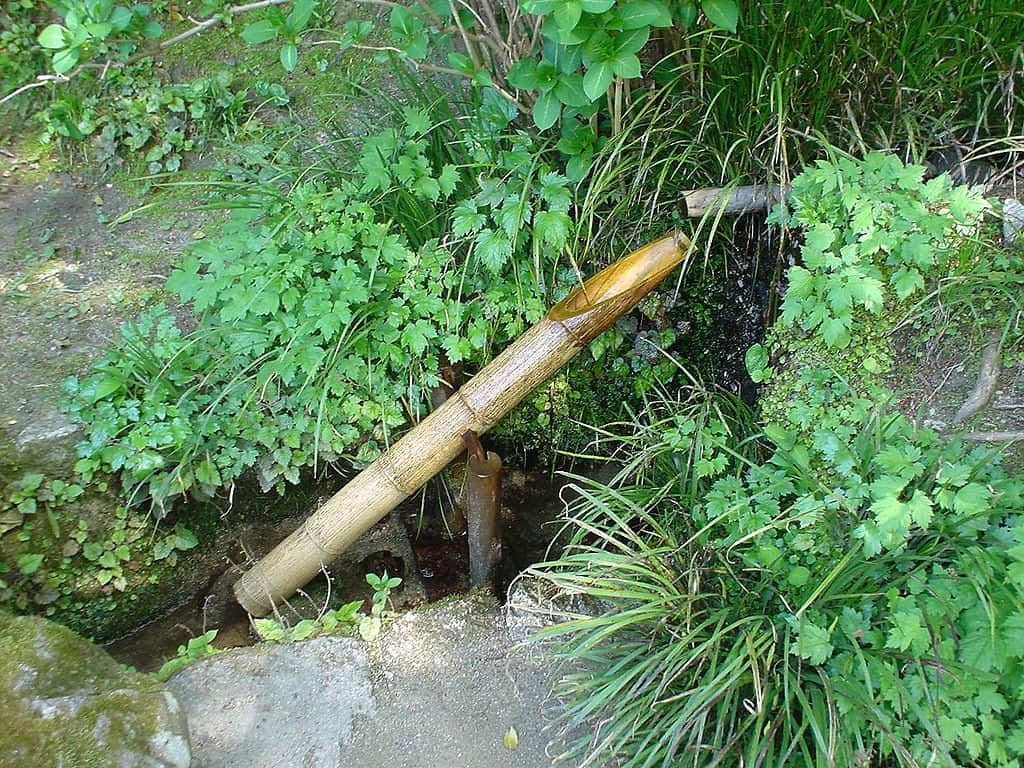
The other day I received from my Japanese teacher an interesting article by Yamazaki Masakazu comparing garden styles, and in particular the attitude towards and presentation of water in Japanese and European gardens (page 1, page 2). The author s list of achievements is long, various professorships, dramatist, literature critique, recognized as Person of Cultural Merit, just to name a view. I was looking forward to an interesting and high quality article! The article itself introduces the reader to Shishiodoshi, one of the standard ingredients of a Japanese garden: It is a device where water drips into a bamboo tube that is also a seesaw. At some point the water in the bamboo tube makes the seesaw switch over and the water pours out, after which the seesaw returns to the original position and a new cycle begins. Shishiodoshi The author describes his feelings and thoughts about the shishiodoshi, in particular connects human life (stress and relieve, cycles), the flow of time, and some other concepts with the shishiodoshi. Up to here it is a wonderful article providing interesting insights into the way the author thinks. Unfortunately, then the author tries to underline his ideas by comparing the Japanese shishiodoshi with European style water fountains, describing the former with all favorable properties and full of deep meaning, while the latter is qualified as beautiful and nice, but bare of any deeper meaning. I don t go into details that the whole comparison is anyway a bad one, as he is comparing Baroque style fountains, a very limited period, and furthermore ignores the fact that water fountains are not genuinely European (isn t there one in the Kenrokuen, one of the three most famous gardens in Japan!?), nor does he consider any other water-installation that might be available. What really destroys the in principle very nice article is the tone: The general tone of the article then can be summarized into: The shishiodoshi is rich on meaning, connects to the life of humans, instigates philosophical reflections, represents nature, the flow of time etc. The water fountain is beautiful and gorgeous, but that is all. I don t think that this separation, or this negative undertone, was created on purpose by the author. A person of his stature is supposedly above this level of primitive comparison. I believe that it is nothing else but a consequence of upbringing and the general attitude that permeates the whole society with this feeling of separateness. Us and They Repeatedly providing sentences like Japanese people and Western people have different tastes.. ( ). About 10 times in this short article expressions like Japanese and Westerner appear, leaving the reader with a bitter taste of an author that considers first the Japanese a people (what about Ainu, Ryukyu, etc?), and second that the Japanese are exclusive in the sense that they are set apart from the rest of the world in their way of thinking, living, being. What puzzles me is that this is not only a singular opinion, but a very general straight in the Japanese media, TV, radio, newspaper, books. Everyone considers Japan and Japanese as something that is fundamentally and profoundly different from everyone else in the world. There is We the Japanese (and that doesn t mean nationality of passport, but blood line!), and there are They the Rest or, as the way of writing and and description on many occasion suggestions, They the Barbarians . A short anecdote will underly this: One of the favorite TV talk show / pseudo-documentary style is about Japanese living abroad. That day a lady married in Paris was interviewed. What followed was a guided tour through Paris showing: Dirt in the gutter, street cleaning cars, waste disposal places. Yes, that was all. Just about the dirt . Of course, at length the (unfortunately only apparent) cleanliness of Japanese cities and neighborhoods are mentioned and shown to remind everyone how wonderful Japan is and how dirty the Barbarians. I don t want to say that I consider Japan more dirty than most other countries just the visible part is clean, the moment you step a bit aside and around the corner, there are the worst trash just thrown away without consideration. Anyway. To return to the topic of Us and They I consider us all humans, first and foremost, and nationality, birthplace, and all that are just by chance. I do NOT reject cultural differences, they are here, of course. But cultural differences are one thing, separating one self and one s perceived people from the rest of the world is another. Conclusion I repeat, I don t think that the author had any ill intentions, but it would have been nicer if the article wouldn t make such a stark distinction. He could have written about Shishiodoshi and water fountains without using the Us They categorization. He could have compared other water installations, could have discussed the long tradition of small ponds in European gardens, just to name a few things. But the author choose to highlight differences instead of commonalities. It is the Us against Them feeling that often makes life in Japan for a foreigner difficult. Japanese are not special, Austrians, too, are not special, nor are Americans, Russians, Tibetans, or any other nationality. No nationality is special, we are all humans. Maybe at some point this will arrive also in the Japanese society and thinking.
Email this to someonePrint this pageShare on FacebookShare on Google+Tweet about this on TwitterShare on LinkedInFlattr the author

17 May 2015

Lunar: Reproducible builds: week 2 in Stretch cycle

What happened about the reproducible builds effort for this week: Media coverage Debian's effort on reproducible builds has been covered in the June 2015 issue of Linux Magazin in Germany. Cover of Linux Magazin June 2015 Article about reproducible builds in Linux Magazin June 2015 Toolchain fixes josch rebased the experimental version of debhelper on 9.20150507. Packages fixed The following 515 packages became reproducible due to changes of their build dependencies: airport-utils, airspy-host, all-in-one-sidebar, ampache, aptfs, arpack, asciio, aspell-kk, asused, balance, batmand, binutils-avr, bioperl, bpm-tools, c2050, cakephp-instaweb, carton, cbp2make, checkbot, checksecurity, chemeq, chronicle, cube2-data, cucumber, darkstat, debci, desktop-file-utils, dh-linktree, django-pagination, dosbox, eekboek, emboss-explorer, encfs, exabgp, fbasics, fife, fonts-lexi-saebom, gdnsd, glances, gnome-clocks, gunicorn, haproxy, haskell-aws, haskell-base-unicode-symbols, haskell-base64-bytestring, haskell-basic-prelude, haskell-binary-shared, haskell-binary, haskell-bitarray, haskell-bool-extras, haskell-boolean, haskell-boomerang, haskell-bytestring-lexing, haskell-bytestring-mmap, haskell-config-value, haskell-mueval, haskell-tasty-kat, itk3, jnr-constants, jshon, kalternatives, kdepim-runtime, kdevplatform, kwalletcli, lemonldap-ng, libalgorithm-combinatorics-perl, libalgorithm-diff-xs-perl, libany-uri-escape-perl, libanyevent-http-scopedclient-perl, libanyevent-perl, libanyevent-processor-perl, libapache-session-wrapper-perl, libapache-sessionx-perl, libapp-options-perl, libarch-perl, libarchive-peek-perl, libaudio-flac-header-perl, libaudio-wav-perl, libaudio-wma-perl, libauth-yubikey-decrypter-perl, libauthen-krb5-simple-perl, libauthen-simple-perl, libautobox-dump-perl, libb-keywords-perl, libbarcode-code128-perl, libbio-das-lite-perl, libbio-mage-perl, libbrowser-open-perl, libbusiness-creditcard-perl, libbusiness-edifact-interchange-perl, libbusiness-isbn-data-perl, libbusiness-tax-vat-validation-perl, libcache-historical-perl, libcache-memcached-perl, libcairo-gobject-perl, libcarp-always-perl, libcarp-fix-1-25-perl, libcatalyst-action-serialize-data-serializer-perl, libcatalyst-controller-formbuilder-perl, libcatalyst-dispatchtype-regex-perl, libcatalyst-plugin-authentication-perl, libcatalyst-plugin-authorization-acl-perl, libcatalyst-plugin-session-store-cache-perl, libcatalyst-plugin-session-store-fastmmap-perl, libcatalyst-plugin-static-simple-perl, libcatalyst-view-gd-perl, libcgi-application-dispatch-perl, libcgi-application-plugin-authentication-perl, libcgi-application-plugin-logdispatch-perl, libcgi-application-plugin-session-perl, libcgi-application-server-perl, libcgi-compile-perl, libcgi-xmlform-perl, libclass-accessor-classy-perl, libclass-accessor-lvalue-perl, libclass-accessor-perl, libclass-c3-adopt-next-perl, libclass-dbi-plugin-type-perl, libclass-field-perl, libclass-handle-perl, libclass-load-perl, libclass-ooorno-perl, libclass-prototyped-perl, libclass-returnvalue-perl, libclass-singleton-perl, libclass-std-fast-perl, libclone-perl, libconfig-auto-perl, libconfig-jfdi-perl, libconfig-simple-perl, libconvert-basen-perl, libconvert-ber-perl, libcpan-checksums-perl, libcpanplus-dist-build-perl, libcriticism-perl, libcrypt-cracklib-perl, libcrypt-dh-gmp-perl, libcrypt-mysql-perl, libcrypt-passwdmd5-perl, libcrypt-simple-perl, libcss-packer-perl, libcss-tiny-perl, libcurses-widgets-perl, libdaemon-control-perl, libdancer-plugin-database-perl, libdancer-session-cookie-perl, libdancer2-plugin-database-perl, libdata-format-html-perl, libdata-uuid-libuuid-perl, libdata-validate-domain-perl, libdate-jd-perl, libdate-simple-perl, libdatetime-astro-sunrise-perl, libdatetime-event-cron-perl, libdatetime-format-dbi-perl, libdatetime-format-epoch-perl, libdatetime-format-mail-perl, libdatetime-tiny-perl, libdatrie, libdb-file-lock-perl, libdbd-firebird-perl, libdbix-abstract-perl, libdbix-class-datetime-epoch-perl, libdbix-class-dynamicdefault-perl, libdbix-class-introspectablem2m-perl, libdbix-class-timestamp-perl, libdbix-connector-perl, libdbix-oo-perl, libdbix-searchbuilder-perl, libdbix-xml-rdb-perl, libdevel-stacktrace-ashtml-perl, libdigest-hmac-perl, libdist-zilla-plugin-emailnotify-perl, libemail-date-format-perl, libemail-mime-perl, libemail-received-perl, libemail-sender-perl, libemail-simple-perl, libencode-detect-perl, libexporter-tidy-perl, libextutils-cchecker-perl, libextutils-installpaths-perl, libextutils-libbuilder-perl, libextutils-makemaker-cpanfile-perl, libextutils-typemap-perl, libfile-counterfile-perl, libfile-pushd-perl, libfile-read-perl, libfile-touch-perl, libfile-type-perl, libfinance-bank-ie-permanenttsb-perl, libfont-freetype-perl, libfrontier-rpc-perl, libgd-securityimage-perl, libgeo-coordinates-utm-perl, libgit-pureperl-perl, libgnome2-canvas-perl, libgnome2-wnck-perl, libgraph-readwrite-perl, libgraphics-colornames-www-perl, libgssapi-perl, libgtk2-appindicator-perl, libgtk2-gladexml-simple-perl, libgtk2-notify-perl, libhash-asobject-perl, libhash-moreutils-perl, libhtml-calendarmonthsimple-perl, libhtml-display-perl, libhtml-fillinform-perl, libhtml-form-perl, libhtml-formhandler-model-dbic-perl, libhtml-html5-entities-perl, libhtml-linkextractor-perl, libhtml-tableextract-perl, libhtml-widget-perl, libhtml-widgets-selectlayers-perl, libhtml-wikiconverter-mediawiki-perl, libhttp-async-perl, libhttp-body-perl, libhttp-date-perl, libimage-imlib2-perl, libimdb-film-perl, libimport-into-perl, libindirect-perl, libio-bufferedselect-perl, libio-compress-lzma-perl, libio-compress-perl, libio-handle-util-perl, libio-interface-perl, libio-multiplex-perl, libio-socket-inet6-perl, libipc-system-simple-perl, libiptables-chainmgr-perl, libjoda-time-java, libjsr305-java, libkiokudb-perl, liblemonldap-ng-cli-perl, liblexical-var-perl, liblingua-en-fathom-perl, liblinux-dvb-perl, liblocales-perl, liblog-dispatch-configurator-any-perl, liblog-log4perl-perl, liblog-report-lexicon-perl, liblwp-mediatypes-perl, liblwp-protocol-https-perl, liblwpx-paranoidagent-perl, libmail-sendeasy-perl, libmarc-xml-perl, libmason-plugin-routersimple-perl, libmasonx-processdir-perl, libmath-base85-perl, libmath-basecalc-perl, libmath-basecnv-perl, libmath-bigint-perl, libmath-convexhull-perl, libmath-gmp-perl, libmath-gradient-perl, libmath-random-isaac-perl, libmath-random-oo-perl, libmath-random-tt800-perl, libmath-tamuanova-perl, libmemoize-expirelru-perl, libmemoize-memcached-perl, libmime-base32-perl, libmime-lite-tt-perl, libmixin-extrafields-param-perl, libmock-quick-perl, libmodule-cpanfile-perl, libmodule-load-conditional-perl, libmodule-starter-pbp-perl, libmodule-util-perl, libmodule-versions-report-perl, libmongodbx-class-perl, libmoo-perl, libmoosex-app-cmd-perl, libmoosex-attributehelpers-perl, libmoosex-blessed-reconstruct-perl, libmoosex-insideout-perl, libmoosex-relatedclassroles-perl, libmoosex-role-timer-perl, libmoosex-role-withoverloading-perl, libmoosex-storage-perl, libmoosex-types-common-perl, libmoosex-types-uri-perl, libmoox-singleton-perl, libmoox-types-mooselike-numeric-perl, libmousex-foreign-perl, libmp3-tag-perl, libmysql-diff-perl, libnamespace-clean-perl, libnet-bonjour-perl, libnet-cli-interact-perl, libnet-daap-dmap-perl, libnet-dbus-glib-perl, libnet-dns-perl, libnet-frame-perl, libnet-google-authsub-perl, libnet-https-any-perl, libnet-https-nb-perl, libnet-idn-encode-perl, libnet-idn-nameprep-perl, libnet-imap-client-perl, libnet-irc-perl, libnet-mac-vendor-perl, libnet-openid-server-perl, libnet-smtp-ssl-perl, libnet-smtp-tls-perl, libnet-smtpauth-perl, libnet-snpp-perl, libnet-sslglue-perl, libnet-telnet-perl, libnhgri-blastall-perl, libnumber-range-perl, libobject-signature-perl, libogg-vorbis-header-pureperl-perl, libopenoffice-oodoc-perl, libparse-cpan-packages-perl, libparse-debian-packages-perl, libparse-fixedlength-perl, libparse-syslog-perl, libparse-win32registry-perl, libpdf-create-perl, libpdf-report-perl, libperl-destruct-level-perl, libperl-metrics-simple-perl, libperl-minimumversion-perl, libperl6-slurp-perl, libpgobject-simple-perl, libplack-middleware-fixmissingbodyinredirect-perl, libplack-test-externalserver-perl, libplucene-perl, libpod-tests-perl, libpoe-component-client-ping-perl, libpoe-component-jabber-perl, libpoe-component-resolver-perl, libpoe-component-server-soap-perl, libpoe-component-syndicator-perl, libposix-strftime-compiler-perl, libposix-strptime-perl, libpostscript-simple-perl, libproc-processtable-perl, libprotocol-osc-perl, librcs-perl, libreadonly-xs-perl, libreturn-multilevel-perl, librivescript-perl, librouter-simple-perl, librrd-simple-perl, libsafe-isa-perl, libscope-guard-perl, libsemver-perl, libset-tiny-perl, libsharyanto-file-util-perl, libshell-command-perl, libsnmp-info-perl, libsoap-lite-perl, libstat-lsmode-perl, libstatistics-online-perl, libstring-compare-constanttime-perl, libstring-format-perl, libstring-toidentifier-en-perl, libstring-tt-perl, libsub-recursive-perl, libsvg-tt-graph-perl, libsvn-notify-perl, libswish-api-common-perl, libtap-formatter-junit-perl, libtap-harness-archive-perl, libtemplate-plugin-number-format-perl, libtemplate-plugin-yaml-perl, libtemplate-tiny-perl, libtenjin-perl, libterm-visual-perl, libtest-block-perl, libtest-carp-perl, libtest-classapi-perl, libtest-cmd-perl, libtest-consistentversion-perl, libtest-data-perl, libtest-databaserow-perl, libtest-differences-perl, libtest-file-sharedir-perl, libtest-hasversion-perl, libtest-kwalitee-perl, libtest-lectrotest-perl, libtest-module-used-perl, libtest-object-perl, libtest-perl-critic-perl, libtest-pod-coverage-perl, libtest-script-perl, libtest-script-run-perl, libtest-spelling-perl, libtest-strict-perl, libtest-synopsis-perl, libtest-trap-perl, libtest-unit-perl, libtest-utf8-perl, libtest-without-module-perl, libtest-www-selenium-perl, libtest-xml-simple-perl, libtest-yaml-perl, libtex-encode-perl, libtext-bibtex-perl, libtext-csv-encoded-perl, libtext-csv-perl, libtext-dhcpleases-perl, libtext-diff-perl, libtext-quoted-perl, libtext-trac-perl, libtext-vfile-asdata-perl, libthai, libthread-conveyor-perl, libthread-sigmask-perl, libtie-cphash-perl, libtie-ical-perl, libtime-stopwatch-perl, libtk-dirselect-perl, libtk-pod-perl, libtorrent, libturpial, libunicode-japanese-perl, libunicode-maputf8-perl, libunicode-stringprep-perl, libuniversal-isa-perl, libuniversal-moniker-perl, liburi-encode-perl, libvi-quickfix-perl, libvideo-capture-v4l-perl, libvideo-fourcc-info-perl, libwiki-toolkit-plugin-rss-reader-perl, libwww-mechanize-formfiller-perl, libwww-mechanize-gzip-perl, libwww-mechanize-perl, libwww-opensearch-perl, libx11-freedesktop-desktopentry-perl, libxc, libxml-dtdparser-perl, libxml-easy-perl, libxml-handler-trees-perl, libxml-libxml-iterator-perl, libxml-libxslt-perl, libxml-rss-perl, libxml-validator-schema-perl, libxml-xpathengine-perl, libxml-xql-perl, llvm-py, madbomber, makefs, mdpress, media-player-info, meta-kde-telepathy, metamonger, mmm-mode, mupen64plus-audio-sdl, mupen64plus-rsp-hle, mupen64plus-ui-console, mupen64plus-video-z64, mussort, newpid, node-formidable, node-github-url-from-git, node-transformers, nsnake, odin, otcl, parsley, pax, pcsc-perl, pd-purepd, pen, prank, proj, proot, puppet-module-puppetlabs-postgresql, python-async, python-pysnmp4, qrencode, r-bioc-graph, r-bioc-hypergraph, r-bioc-iranges, r-bioc-xvector, r-cran-pscl, rbenv, rlinetd, rs, ruby-ascii85, ruby-cutest, ruby-ejs, ruby-factory-girl, ruby-hdfeos5, ruby-kpeg, ruby-libxml, ruby-password, ruby-zip-zip, sdl-sound1.2, stterm, systemd, taktuk, tcc, tryton-modules-account-invoice, ttf-summersby, tupi, tuxpuck, unknown-horizons, unsafe-mock, vcheck, versiontools, vim-addon-manager, vlfeat, vsearch, xacobeo, xen-tools, yubikey-personalization-gui, yubikey-personalization. The following packages became reproducible after getting fixed: Some uploads fixed some reproducibility issues but not all of them: Patches submitted which did not make their way to the archive yet: reproducible.debian.net Alioth now hosts a script that can be used to redo builds and test for a package. This was preliminary done manually through requests over the IRC channel. This should reduce the number of interruptions for jenkins' maintainers The graph of the oldest build per day has been fixed. Maintainance scripts will not error out when they are no files to remove. Holger Levsen started work on being able to test variations of CPU features and build date (as in build in another month of 1984) by using virtual machines. debbindiff development Version 18 has been released. It will uses proper comparators for pk3 and info files. Tar member names are now assumed to be UTF-8 encoded. The limit for the maximum number of different lines has been removed. Let's see on reproducible.debian.net how it goes for pathological cases. It's now possible to specify both --html and --text output. When neither of them is specified, the default will be to print a text report on the standard output (thanks to Paul Wise for the suggestion). Documentation update Nicolas Boulenguez investigated Ada libraries. Package reviews 451 obsolete reviews have been removed and 156 added this week. New identified issues: running kernel version getting captured, random filenames in GHC debug symbols, and timestamps in headers generated by qdbusxml2cpp. Misc. Holger Levsen went to re:publica and talked about reproducible builds to developers and users there. Holger also had a chance to meet FreeBSD developers and discuss the status of FreeBSD. Investigations have started on how it could be made part of our current test system. Laurent Guerby gave Lunar access to systems in the GCC Compile Farm. Hopefully access to these powerful machines will help to fix packages for GCC, Iceweasel, and similar packages requiring long build times.

13 May 2015

NOKUBI Takatsugu: Jessie installer with kvm/serial console

I tried to install Jessie on a brand-new virtual machine (kvm), but it has a problem about serial console login. At least, wheezy installer worked fine because it adds getty entry on /etc/inittab. Jessie uses systemd but no care about getty service for serial console. The probrem is reported as #769406. My solution is invoke systemctl enable serial-getty@ttyS0.service via ssh.

23 April 2015

Jonathan Dowland: Deterministic Doom

What happens if you remove randomness from Doom? For some reason, recently I have been thinking about Doom. This evening I was wanting to explore some behaviour in an old version of Doom and to do so, I hex-edited the binary and replaced the random number lookup table with static values. Rather than consume system randomness, Doom has a fixed 256-value random number table from which numbers are pulled by aspects of the game logic. By replacing the whole table with a constant value, you essentially make the game entirely deterministic. What does it play like? I tried two values, 0x00 and 0xFF. With either value, the screen "melt" effect that is used at the end of levels is replaced with a level vertical wipe: the randomness was used to offset each column. Monsters do not make different death noises at different times; only one is played for each category of monster. The bullet-based (hitscan) weapons have no spread at all: the shotgun becomes like a sniper rifle, and the chain-gun is likewise always true. You'd think this would make the super-shotgun a pretty lethal weapon, but it seems to have been nerfed: the spread pattern is integral to its function. With 0x00, monsters never make their idle noises (breathing etc.) On the other hand, with 0xFF, they always do: so often, that each sample collides with the previous one, and you just get a sort-of monster drone. This is quite overwhelming with even a small pack of monsters. With 0xFF, any strobing sectors (flickering lights etc.), are static. However, with 0x00, they strobe like crazy. With 0x00, monsters seem to choose to attack much more frequently than usual. Damage seems to be worst-case. The most damaging floor type ("super hellslime"/20%) can hurt you even if you are wearing a radiation suit: There was a very low chance of it hurting whilst wearing the suit (~2.6%) each time the game checked; this is rounded up to 100%. Various other aspects of the game become weird. A monster may always choose to use a ranged attack, regardless of how close you are. They might give up pursuing you. I've seen them walk aimlessly in circles if they are obstructed by another thing. The chance of monster in-fighting is never, or a certainty. The player is either mute, or cries in pain whenever he's hurt. If you want to try this yourself, the easiest way is to hack the m_random.c file in the source, but you can hex-edit a binary. Look for a 256-byte sequence beginning beginning ['0x0', '0x8', '0x6d', '0xdc', '0xde', '0xf1'] and ending ['0x78', '0xa3', '0xec', '0xf9'].

14 April 2015

Neil Williams: Extending an existing ARMMP initramfs

The actual use of this extension is still in development and the log files are not currently publicly visible, but it may still be useful for people to know the what and why The Debian ARMMP kernel can be used for multiple devices, just changing the DTB. I ve already done tests with this for Cubietruck and Beaglebone-Black, iMX.53 was one of the original test devices too. Whilst these tests can deploy a full image (there are examples of building such images in the vmdebootstrap package), it is a lot quicker to do simple tests of a kernel using a ramdisk. The default Debian initramfs has a focused objective but still forms a useful base for extension. In particular, I want to be able to test one initramfs on multiple boards (so multiple dtbs) with the same kernel image. I then want to be able, on selected boards, to mount a SATA drive or write an image to eMMC or a USB stick or whatever. LAVA (via the ongoing refactoring, not necessarily in the current dispatcher code) can automate such tests, e.g. to allow me to boot a Cubietruck into a standard Debian ARMMP armhf install on the SATA drive but using a modified (or updated) ARMMP kernel over TFTP without needing to install it on the device itself. That same kernel image can then be tested on multiple boards to see if the changes have benefitted one board at the expense of another. Automating all of that could be of a lot of benefit to the ARM kernel developers in Debian and outside Debian. So, the start point. Install Debian onto a Cubietruck in my case, with a SATA drive attached. All well and good so far, standard Debian Jessie ARMMP. (Cubietruck uses the LPAE kernel flavour but that won t matter for the initramfs.) Rather than building the initramfs manually, this provides a shortcut at some point I may investigate how to do this in QEMU but for now, it s just as quick to SSH onto the Cubietruck and update. I ve already written a little script to download the relevant linux-image package for ARMMP, unpack it and pull out the vmlinuz, the dtbs and a selected list of modules. The list is selective because TFTP has a 32Mb download limit and there are more modules than that. So I borrowed a snippet from the Xen folks (already shown previously here). The script is in a support repository for LAVA but can be used anywhere. (You ll need to edit the package name in the script to choose between ARMMP and ARMMP LPAE. Steps
  1. Get a working initramfs from an installed device running Debian ARMMP and copy some files for use later. Note: use the name of the symlink in the copy so that the file in /tmp/ is the actual file, using the name of the symlink as the filename. This is important later as it saves a step of having to make the (unnecessary) symlink inside the initramfs. Also, mkinitramfs, which built this initrd.img file in the first place, uses the same shared libraries as the main system, so copying these into the initramfs still works. (This is really useful when you get your ramdisk to support the attached secondary storage, allowing you to simply mount the original Debian install and fixup the initramfs by copying files off the main Debian install.) The relevant files are to support DNS lookup inside the initramfs which then allows a test to download a new image to put onto the attached media before rebooting into it.
    cp /boot/initrd.img-3.16.0-4-armmp-lpae /tmp/
    cp /lib/arm-linux-gnueabihf/libresolv.so.2 /tmp/
    cp /mnt/lib/arm-linux-gnueabihf/libnss_dns.so.2 /tmp/
    
    Copy these off the device for local adjustment:
    scp IP_ADDR:/tmp/FILE .
    
  2. Decompress the initrd.img:
    cp initrd.img-3.16.0-4-armmp-lpae initrd.img-3.16.0-4-armmp-lpae.gzip
    gunzip initrd.img-3.16.0-4-armmp-lpae.gzip
    
  3. Make a new empty directory
    mkdir initramfs
    cd initramfs
    
  4. Unpack:
    sudo cpio -id < initrd.img-3.16.0-4-armmp-lpae
    
  5. Remove the old modules (LAVA can add these later, allowing tests to use an updated build with updated modules):
    sudo rm -rf ./lib/modules/*
    
  6. Start to customise - need a script for udhcpc and two of the libraries from the installed system to allow the initramfs to do DNS lookups successfully.
    cp ../libresolv.so.2 ./lib/arm-linux-gnueabihf/
    cp ../libnss_dns.so.2 ./lib/arm-linux-gnueabihf/
    
  7. Copy the udhcpc default script into place:
    mkdir ./etc/udhcpc/
    sudo cp ../udhcpc.d ./etc/udhcpc/default.script
    sudo chmod 0755 ./etc/udhcpc/default.script
    
  8. Rebuild the cpio archive:
    find .   cpio -H newc -o > ../initrd.img-armmp.cpio
    
  9. Recompress:
    cd ..
    gzip initrd.img-armmp.cpio
    
  10. If using u-boot, add the UBoot header:
    mkimage -A arm -T ramdisk -C none -d initrd.img-armmp.cpio.gz initrd.img-armmp.cpio.gz.u-boot
    
  11. Checksum the final file so that you can check that against the LAVA logs.
    md5sum initrd.img-armmp.cpio.gz.u-boot
    
Each type of device will need a set of modules modprobed before tests can start. With the refactoring code, I can use an inline YAML and use dmesg -n 5 to reduce the kernel message noise. The actual module names here are just those for the Cubietruck but by having these only in the job submission, it makes it easier to test particular combinations and requirements.
- dmesg -n 5
- lava-test-case udevadm --shell udevadm hwdb --update
- lava-test-case depmod --shell depmod -a
- lava-test-case sata-mod --shell modprobe -a stmmac ahci_sunxi sd_mod sg ext4
- lava-test-case ifconfig --shell ifconfig eth0 up
- lava-test-case udhcpc --shell udhcpc
- dmesg -n 7
In due course, this will be added to the main LAVA documentation to allow others to keep the initramfs up to date and to support further test development.

13 April 2015

Santiago Garc a Manti n: haproxy as a very very overloaded sslh

After using haproxy at work for some time I realized that it can be configured for a lot of things, for example: it knows about SNI (on ssl is the method we use to know what host the client is trying to reach so that we know what certificate to present and thus we can multiplex several virtual hosts on the same ssl IP:port) and it also knows how to make transparent proxy connections (the connections go through haproxy but the ending server will think they are arriving directly from the client, as it will see the client's IP as the source IP of the packages).With this two little features, which are available on haproxy 1.5 (Jessie's version has them all), I thought I could give it a try to substitute sslh with haproxy giving me a lot of possibilities that sslh cannot do.Having this in mind I thought I could multiplex several ssl services, not only https but also openvpn or similar, on the 443 port and also allow this services to arrive transparently to the final server. Thus what I wanted was not to mimic sslh (which can be done with haproxy) but to get the semantic I needed, which is similar to sslh but with more power and with a little different behaviour, cause I liked it that way.There is however one caveat that I don't like about this setup and it is that to achieve the transparency one has to run haproxy as root, which is not really something one likes :-( so, having transparency is great, but we'll be taking some risks here which I personally don't like, to me it isn't worth it.Anyway, here is the setup, it basically consists of a setup on haproxy but if we want transparency we'll have to add to it a routing and iptables setup, I'll describe here the whole setupHere is what you need to define on /etc/haproxy/haproxy.cfg:frontend ft_ssl bind 192.168.0.1:443 mode tcp option tcplog tcp-request inspect-delay 5s tcp-request content accept if req_ssl_hello_type 1 acl sslvpn req_ssl_sni -i vpn.example.net use_backend bk_sslvpn if sslvpn use_backend bk_web if req_ssl_sni -m found default_backend bk_ssh backend bk_sslvpn mode tcp source 0.0.0.0 usesrc clientip server srvvpn vpnserver:1194 backend bk_web mode tcp source 0.0.0.0 usesrc clientip server srvhttps webserver:443 backend bk_ssh mode tcp source 0.0.0.0 usesrc clientip server srvssh sshserver:22 An example of a transparent setup can be found here but lacks some details, for example, if you need to redirect the traffic to the local haproxy you'll want to use the xt_TPROXY, there is a better doc for that at squid's wiki. Anyway, if you are playing just with your own machine, like we typically do with sslh, you won't need the TPROXY power, as packets will come straight to your 443, so haproxy will be able to get the without any problem. The problem will come if you are using transparency (source 0.0.0.0 usesrc clientip) because then packets coming out of haproxy will be carrying the ip of the real client, and thus the answers of the backend will go to that client (but with different ports and other tcp data), so it will not work. We'll have to get those packets back to haproxy, for that what we'll do is mark the packages with iptables and then route them to the loopback interface using advanced routing. This is where all the examples will tell you to use iptables' mangle table with rules marking on PREROUTING but that won't work out if you are having all the setup (frontend and backends) in just one box, instead you'll have to write those rules to work on the OUTPUT chain of the mangle table, having something like this:*mangle :PREROUTING ACCEPT :INPUT ACCEPT :FORWARD ACCEPT :OUTPUT ACCEPT :POSTROUTING ACCEPT :DIVERT - -A OUTPUT -s public_ip -p tcp --sport 22 -o public_iface -j DIVERT -A OUTPUT -s public_ip -p tcp --sport 443 -o public_iface -j DIVERT -A OUTPUT -s public_ip -p tcp --sport 1194 -o public_iface -j DIVERT -A DIVERT -j MARK --set-mark 1 -A DIVERT -j ACCEPT COMMIT Take that just as an example, better suggestions on how to know what traffic to send to DIVERT are welcome. The point here is that if you are sending the service to some other box you can do it on PREROUTIING, but if you are sending the service to the very same box of haproxy you'll have to mark the packages on the OUTPUT chain.Once we have the packets marked we just need to route them, something like this will work out perfectly:ip rule add fwmark 1 lookup 100 ip route add local 0.0.0.0/0 dev lo table 100 And that's all for this crazy setup. Of course, if, like me, you don't like the root implication of the transparent setup, you can remove the "source 0.0.0.0 usesrc clientip" lines on the backends and forget about transparency (connections to the backend will come from your local IP), but you'll be able to run haproxy with dropped privileges and you'll just need the plain haproxy.cfg setup and not the weird iptables and advanced routing setup.Hope you like the article, btw, I'd like to point out the main difference of this setup vs sslh, it is that I'm only sending the packages to the ssl providers if the client is sending SNI info, otherwise I'm sending them to the ssh server, while sslh will send ssl clients without SNI also to the ssl provider. If your setup mimics sslh and you want to comment on it, feel free to do it.

1 April 2015

Benjamin Mako Hill: RomancR: The Future of the Sharing-Your-Bed Economy

romancer_logo Today, Aaron Shaw and I are pleased to announce a new startup. The startup is based around an app we are building called RomancR that will bring the sharing economy directly into your bedrooms and romantic lives. When launched, RomancR will bring the kind of market-driven convenience and efficiency that Uber has brought to ride sharing, and that AirBnB has brought to room sharing, directly into the most frustrating and inefficient domain of our personal lives. RomancR is Uber for romance and sex. Here s how it will work: Of course, there are many existing applications like Tinder and Grindr that help facilitate romance, dating, and hookups. Unfortunately, each of these still relies on old-fashion intrinsic ways of motivating people to participate in romantic endeavors. The sharing economy has shown us that systems that rely on these non-monetary motivations are ineffective and limiting! For example, many altruistic and socially-driven ride-sharing systems existed on platforms like Craigslist or Ridejoy before Uber. Similarly, volunteer-based communities like Couchsurfing and Hospitality Club existed for many years before AirBnB. None of those older systems took off in the way that their sharing economy counterparts were able to! The reason that Uber and AirBnB exploded where previous efforts stalled is that this new generation of sharing economy startups brings the power of markets to bear on the problems they are trying to solve. Money both encourages more people to participate in providing a service and also makes it socially easier for people to take that service up without feeling like they are socially in debt to the person providing the service for free. The result has been more reliable and effective systems for proving rides and rooms! The reason that the sharing economy works, fundamentally, is that it has nothing to do with sharing at all! Systems that rely on people s social desire to share without money projects like Couchsurfing are relics of the previous century. RomancR, which we plan to launch later this year, will bring the power and efficiency of markets to our romantic lives. You will leave your pitiful dating life where it belongs in the dustbin of history! Go beyond antiquated non-market systems for finding lovers. Why should we rely on people s fickle sense of taste and attractiveness, their complicated ideas of interpersonal compatibility, or their sense of altruism, when we can rely on the power of prices? With RomancR, we won t have to! Note: Thanks to Yochai Benkler whose example of how leaving a $100 bill on the bedside table of a person with whom you spent the night can change the nature of the a romantic interaction inspired the idea for this startup.

23 March 2015

Jonathan Dowland: Linux music players, 2015 edition

Now I'm back to Linux on the Desktop for my dayjob, I was slightly nervous about checking out the state of the art for Linux music players; an area I've never felt the Linux desktop was very strong on. However for the time being I've largely side-stepped the issue by listening to BBC 6 Music for most of the day. For better or worse, I scrobble, and somebody has written a neat web app for scrobbling along to radio stations. When I want to listen to something different for a change, I've been trying out a trial of Google Play Music, for which somebody has written a Chrome extension to scrobble. On the rare occasions I listen to local music, I'm using VLC. Google Play Music seems pretty good, but I'm not getting a lot from my trial because 6 Music is generally fantastic. Scrobbling 6 Music has revealed a bit of a disconnect for how I use last.fm, and how website thinks you should use it. Within a day or two, my "music compability" with 6 Music was (predictably) "SUPER". Looking at my "Top artists", right near the top are 6 Music's current playlist favourites Courtney Barnett and Nadine Shah, who I can (at least) recall the songs that have been played; just below them are Young Fathers, who I cannot. A little lower are Hot Chip and Slaves: both artists who have current singles out which I enjoyed for a while, but the relentless BBC playlist policy is overdoing them and I'm inclined to switch over when they come on now. If I listen to a whole album in a given week, then the artist will likely (and rightly) be sat at the top of "last 7 days"; if I don't, then it could be something I can't even remember listening to.

15 March 2015

Dimitri John Ledkov: My IDE needs a makeover

Current SetupI am a Linux Distribution Engineer and work on arbitrary open source projects. Mostly I'm patching/packaging existing things, and sometimes start fresh projects.

My "IDE", or rather I shall say "toolbox" is rather sparse:

  • GNOME Terminal
  • Google Chrome
  • GNU Emacs
  • GCC toolcahin with GDB
  • Python3 - iPython, iPdb, pyflakes
  • git, GNU bazaar
There are a few things that annoy me, and should be done better these days.

Documentation
I lookup documentation mostly with Google Chrome. This includes the texinfo renderings of the docs. There are a few reasons for that. First of all my developer machine is not polluted with all the dev packages under the sun, instead I compile practically everything in a chroot. And most of the time chroots have much newer versions of everything (from gcc & automake, to boost and whatever other dependencies are in use). However I would like to have easy generic lookup builtin for common things that I lookup in the references and which have not changed for a long time:
  • gcc builtins & defines
  • glibc functions
  • automake/autoconf functions definitions
Given that my preferred editor is Emacs, it should be natural to use info' mode to look things up. However, the rendering there is archaic and is really hard to read. At least when visiting the HTML renderings, the function names are in bold and stand out from the rest of the description.

Ideally I would have unified place to lookup docs, instead of using Google Chrome and navigating: gnu.org, gnome.org, readthedocs.org, freedesktop.org.

Project Management
I really hate "traditional" IDEs that create and pollute the working directories with random extra files. My project management tool is VCS, thus .git should be automatically recognized as a "project". I should be able to navigate repository files, have them scanned for tab-completion and jumping to symbols and the like. At the moment, I exit the editor and use git grep to find things and open those files in the editor again. I don't use any tagging systems at the moment, ideally git repository would be scanned and Exuberant Tags (this seems to be the latest hotness in tagging space) stored inside the .git directory automatically.

"SDK" aware aka chroot support
The IDE should be aware of chroots, how to compile things in a chroot and ideally how to compile packages with sbuild, mock or obs build (these are apt, yum and zypper preferred solutions for package compilation). Most importantly to use those chroots to tag includes headers for tab completion.

Shell
Gnome Terminal is good enough for my needs. I do have a problem of too many terminal windows... I have tried Terminator (a tiling single-window / multiple-tabs terminal). However during development the things I use shell for, should be part of the IDE directly: changing projects, opening/closing/navigating/creating files, invoking build, invoking debug, "refactoring" (sed). I think I do want to try out a pull-down terminal for temporal look-ups together with a tiling "main" terminal. Or ideally ditch it all together. Emacs does provide multiple terminals, but when I did that I ended up with "inception" -> launching an instance of emacs, inside the terminal, inside emacs...

Conclusion
If anybody has tips or suggestions do share. I will investigate and experiment with all of the above, and see if I can experiment and find new cool things that work better than my current setup.


9 March 2015

Axel Beckert: Do we need a zsh-static package in Debian?

Dear Planet Debian, the Debian Zsh Packaging Team (consisting of Michael Prokop, Frank Terbeck, Richard Hartmann and myself) wonders if there s still a reason to build and ship a zsh-static package in Debian. There are multiple reasons: So we ask you, the Planet Debian reader:

Do you need Debian s zsh-static package? If so, please send an e-mail to us Debian Zsh Maintainers <pkg-zsh-devel@lists.alioth.debian.org> and state that you use zsh-static, and, if you want, please also state why or how you re using it. Thanks in advance! Mika, Frank, RichiH and Axel

NOKUBI Takatsugu: Travatar, an OpenSource statistical machine translation system

Graham Neubig published Travater , an OpenSource statistical machine translation system and the demosite (http://ahclab.naist.jp/travatar/translator/). Graham said It makes good result likely Google Translation. Unfortunately, it seems to be crwoded, so I can t get correct result (output IO Error dialog). Anyway, it is a good new for Japanese processing scene.

28 February 2015

Petter Reinholdtsen: The Citizenfour documentary on the Snowden confirmations to Norway

Today I was happy to learn that the documentary Citizenfour by Laura Poitras finally will show up in Norway. According to the magazine Montages, a deal has finally been made for Cinema distribution in Norway and the movie will have its premiere soon. This is great news. As part of my involvement with the Norwegian Unix User Group, me and a friend have tried to get the movie to Norway ourselves, but obviously we were too late and Tor Fosse beat us to it. I am happy he did, as the movie will make its way to the public and we do not have to make it happen ourselves. The trailer can be seen on youtube, if you are curious what kind of film this is. The whistle blower Edward Snowden really deserve political asylum here in Norway, but I am afraid he would not be safe.

Next.

Previous.