Dowry
Few days back, had posted about the movie Raksha Bandhan and whatever I felt about it. Sadly, just couple of days back, somebody shared this link. Part of me was shocked and part of me was not. Couple of acquaintances of mine in the past had said the same thing for their daughters. And in such situations you are generally left speechless because you don t know what the right thing to do is. If he has shared it with you being an outsider, how many times he must have told the same to their wife and daughters? And from what little I have gathered in life, many people have justified it on similar lines. And while the protests were there, sadly the book was not removed. Now if nurses are reading such literature, how their thought process might be forming, you can tell :(. And these are the ones whom we call for when we are sick and tired :(. And I have not taken into account how the girls/women themselves might be feeling. There are similar things in another country but probably not the same, nor the same motivations though although feeling helplessness in both would be a common thing.
But such statements are not alone. Another gentleman in slightly different context shared this as well
The above is a statement shared in a book recommended for CTET (Central Teacher s Eligibility Test that became mandatory to be taken as the RTE (Right To Education) Act came in.). The statement says People from cold places are white, beautiful, well-built, healthy and wise. And people from hot places are black, irritable and of violent nature.
Now while I can agree with one part of the statement that people residing in colder regions are more fair than others but there are loads of other factors that determine fairness or skin color/skin pigmentation. After a bit of search came to know that this and similar articulation have been made in an idea/work called Environmental Determinism . Now if you look at that page, you would realize this was what colonialism is and was all about. The idea that the white man had god-given right to rule over others. Similarly, if you are fair, you can lord over others. Seems simplistic, but yet it has a powerful hold on many people in India. Forget the common man, this thinking is and was applicable to some of our better-known Freedom fighters. Pune s own Bal Gangadhar Tilak The Artic Home to the Vedas. It sort of talks about Aryans and how they invaded India and became settled here. I haven t read or have access to the book so have to rely on third-party sources. The reason I m sharing all this is that the right-wing has been doing this myth-making for sometime now and unless and until you put a light on it, it will continue to perpetuate . For those who have read this blog, do know that India is and has been in casteism from ever. They even took the fair comment and applied it to all Brahmins. According to them, all Brahmins are fair and hence have god-given right to lord over others. What is called the Eton boy s network serves the same in this casteism. The only solution is those idea under limelight and investigate. To take the above, how does one prove that all fair people are wise and peaceful while all people black and brown are violent. If that is so, how does one count for Mahatma Gandhi, Martin Luther King Junior, Nelson Mandela, Michael Jackson the list is probably endless. And not to forget that when Mahatma Gandhiji did his nonviolent movements either in India or in South Africa, both black and brown people in millions took part. Similar examples of Martin Luther King Jr. I know and read of so many non-violent civl movements that took place in the U.S. For e.g. Rosa Parks and the Montgomery Bus Boycott. So just based on these examples, one can conclude that at least the part about the fair having exclusive rights to being fair and noble is not correct.
Now as far as violence goes, while every race, every community has had done violence in the past or been a victim of the same. So no one is and can be blameless, although in light of the above statement, the question can argumentated as to who were the Vikings? Both popular imagination and serious history shares stories about Vikings. The Vikings were somewhat nomadic in nature even though they had permanent settlements but even then they went on raids, raped women, captured both men and women and sold them at slaves. So they are what pirates came to be, but not the kind Hollywood romanticizes about. Europe in itself has been a tale in conflict since time immemorial. It is only after the formation of EU that most of these countries stopped fighting each other From a historical point perspective, it is too new. So even the part of fair being non-violent dies in face of this evidence. I could go on but this is enough on that topic.
Railways and Industrial Action around the World.
While I have shared about Railways so many times on this blog, it continues to fascinate me that how people don t understand the first things about Railways. For e.g. Railways is a natural monopoly. What that means is and you can look at all and any type of privatization around the world, you will see it is a monopoly. Unlike the road or Skies, Railways is and would always be limited by infrastructure and the ability to have new infrastructure. Unlike in road or Skies (even they have their limits) you cannot run train services on a whim. At any particular point in time, only a single train could and should occupy a stretch of Railway network. You could have more trains on one line, but then the likelihood of front or rear-end collisions becomes a real possibility. You also need all sorts of good and reliable communications, redundant infrastructure so if one thing fails then you have something in place. The reason being a single train can carry anywhere from 2000 to 5000 passengers or more. While this is true of Indian Railways, Railways around the world would probably have some sort of similar numbers.It is in this light that I share the below videos.
To be more precise, see the fuller video
Now to give context to the recording above, Mike Lynch is the general secretary at RMT. For those who came in late, both UK and the U.S. have been threatened by railway strikes. And the reason for the strikes or threat of strikes is similar. Now from the company perspective, all they care is to invest less and make the most profits that can be given to equity shareholders. At the same time, they have freezed the salaries of railway workers for the last 3 years. While the politicians who were asking the questions, apparently gave themselves raise twice this year. They are asking them to negotiate at 8% while inflation in the UK has been 12.3% and projected to go higher. And it is not only the money. Since the 1980s when UK privatized the Railways, they stopped investing in the infrastructure. And that meant that the UK Railway infrastructure over period of time started getting behind and is even behind say Indian Railways which used to provide most bang for the buck. And Indian Railways is far from ideal. Ironically, most of the operators on UK are nationalized Railways of France, Germany etc. but after the hard Brexit, they too are mulling to cut their operations short, they have too There is also the EU Entry/Exit system that would come next year.
Why am I sharing about what is happening in UK Rail, because the Indian Government wants to follow the same thing, and fooling the public into saying we would do it better. What inevitably will happen is that ticket prices go up, people no longer use the service, the number of services go down and eventually they are cancelled. This has happened both in Indian Railways as well as Airlines. In fact, GOI just recently announced a credit scheme just a few days back to help Airlines stay afloat. I was chatting with a friend who had come down to Pune from Chennai and the round-trip cost him INR 15k/- on that single trip alone. We reminisced how a few years ago, 8 years to be precise, we could buy an Air ticket for 2.5k/- just a few days before the trip and did it. I remember doing/experiencing at least a dozen odd trips via air in the years before 2014. My friend used to come to Pune, almost every weekend because he could afford it, now he can t do that. And these are people who are in the above 5-10% of the population. And this is not just in UK, but also in the United States. There is one big difference though, the U.S. is mainly a freight carrier while the UK Railway Operations are mostly passenger based. What was and is interesting that Scotland had to nationalize their services as they realized the Operators cannot or will not function when they were most needed. Most of the public even in the UK seem to want a nationalized rail service, at least their polls say so. So, it would definitely be interesting to see what happens in the UK next year.
In the end, I know I promised to share about books, but the above incidents have just been too fascinating to not just share the news but also share what I think about them. Free markets function good where there is competition, for example what is and has been happening in China for EV s but not where you have natural monopolies. In all Railway privatization, you have to handover the area to one person, then they have no motivation. If you have multiple operators, then there would always be haggling as to who will run the train and at what time. In either scenario, it doesn t work and raises prices while not delivering anything better
I do take examples from UK because lot of things are India are still the legacy of the British. The whole civil department that was created in 1953 is/was a copy of the British civil department at that time and it is to this day.
P.S. Just came to know that the UK Chancellor Kwasi Kwarteng was just sacked as UK Chancellor. I do commend Truss for facing the press even though she might be dumped a week later unlike our PM who hasn t faced a single press conference in the last 8 odd years.
https://www.youtube.com/watch?v=oTP6ogBqU7of
The difference in Indian and UK politics seems to be that the English are now asking questions while here in India, most people are still sleeping without a care in the world.
Another thing to note Minidebconf Palakkad is gonna happen 12-13th November 2022. I am probably not gonna go but would request everyone who wants to do something in free software to attend it. I am not sure whether I would be of any use like this and also when I get back, it would be an empty house. But for people young and old, who want to do anything with free/open source software it is a chance not to be missed. Registration of the same closes on 1st of November 2022. All the best, break a leg
Just read this, beautifully done.
The Guile bindings for GnuTLS has been part of GnuTLS since spring 2007 when Ludovic Court s contributed it after some initial discussion. I have been looking into getting back to do GnuTLS coding, and during a recent GnuTLS meeting one topic was Guile bindings. It seemed like a fairly self-contained project to pick up on. It is interesting to re-read the old thread when this work was included: some of the concerns brought up there now have track record to be evaluated on. My opinion that the cost of introducing a new project per language binding today is smaller than the cost of maintaining language bindings as part of the core project. I believe the cost/benefit ratio has changed during the past 15 years: introducing a new project used to come with a significant cost but this is no longer the case, as tooling and processes for packaging have improved. I have had similar experience with Java, C# and Emacs Lisp bindings for GNU Libidn as well, where maintaining them centralized slow down the pace of updates. Andreas Metzler pointed to a similar conclusion reached by Russ Allbery.
There are many ways to separate a project into two projects; just copying the files into a new git repository would have been the simplest and was my original plan. However Ludo mentioned git-filter-branch in an email, and the idea of keeping all git history for some of the relevant files seemed worth pursuing to me. I quickly found git-filter-repo which appears to be the recommend approach, and experimenting with it I found a way to filter out the GnuTLS repo into a small git repository that Guile-GnuTLS could be based on. The commands I used were the following, if you want to reproduce things.
I debated with myself back and forth whether to include some files that would be named the same in the new repository but would share little to no similar lines, for example configure.ac, Makefile.am not to mention README and NEWS. Initially I thought it would be nice to preserve the history for all lines that went into the new project, but this is a subjective judgement call. What brought me over to a more minimal approach was that the contributor history and attribution would be quite strange for the new repository: Should Guile-GnuTLS attribute the work of the thousands of commits to configure.ac which had nothing to do with Guile? Should the people who wrote that be mentioned as contributor of Guile-GnuTLS? I think not.
The next step was to get a reasonable GitLab CI/CD pipeline up, to make sure the project builds on some free GNU/Linux distributions like Trisquel and PureOS as well as the usual non-free distributions like Debian and Fedora to have coverage of dpkg and rpm based distributions. I included builds on Alpine and ArchLinux as well, because they tend to trigger other portability issues. I wish there were GNU Guix docker images available for easy testing on that platform as well. The GitLab CI/CD rules for a project like this are fairly simple.
To get things out of the door, I tagged the result as v3.7.9 and published a GitLab release page for Guile-GnuTLS that includes OpenPGP-signed source tarballs manually uploaded built on my laptop. The URLs for these tarballs are not very pleasant to work with, and discovering new releases automatically appears unreliable, but I don t know of a better approach.
To finish this project, I have proposed a GnuTLS merge request to remove all Guile-related parts from the GnuTLS core.
Doing some GnuTLS-related work again felt nice, it was quite some time ago so thank you for giving me this opportunity. Thoughts or comments? Happy hacking!
Welcome to the September 2022 report from the Reproducible Builds project! In our reports we try to outline the most important things that we have been up to over the past month. As a quick recap, whilst anyone may inspect the source code of free software for malicious flaws, almost all software is distributed to end users as pre-compiled binaries. If you are interested in contributing to the project, please visit our Contribute page on our website.
David A. Wheeler reported to us that the US National Security Agency (NSA), Cybersecurity and Infrastructure Security Agency (CISA) and the Office of the Director of National Intelligence (ODNI) have released a document called Securing the Software Supply Chain: Recommended Practices Guide for Developers (PDF).
As David remarked in his post to our mailing list, it expressly recommends having reproducible builds as part of advanced recommended mitigations . The publication of this document has been accompanied by a press release.
Holger Levsen was made aware of a small Microsoft project called oss-reproducible. Part of, OSSGadget, a larger collection of tools for analyzing open source packages , the purpose of oss-reproducible is to:
analyze open source packages for reproducibility. We start with an existing package (for example, the NPM left-pad package, version 1.3.0), and we try to answer the question, Do the package contents authentically reflect the purported source code?
More details can be found in the README.md file within the code repository.
David A. Wheeler also pointed out that there are some potential upcoming changes to the OpenSSF Best Practices badge for open source software in relation to reproducibility. Whilst the badge programme has three certification levels ( passing , silver and gold ), the gold level includes the criterion that The project MUST have a reproducible build .
David reported that some projects have argued that this reproducibility criterion should be slightly relaxed as outlined in an issue on the best-practices-badge GitHub project. Essentially, though, the claim is that the reproducibility requirement doesn t make sense for projects that do not release built software, and that timestamp differences by themselves don t necessarily indicate malicious changes. Numerous pragmatic problems around excluding timestamps were raised in the discussion of the issue.
Sonatype, a pioneer of software supply chain management , issued a press release month to report that they had found:
[ ] a massive year-over-year increase in cyberattacks aimed at open source project ecosystems. According to early data from Sonatype s 8th annual State of the Software Supply Chain Report, which will be released in full this October, Sonatype has recorded an average 700% jump in repository attacks over the last three years.
More information is available in the press release.
A number of changes were made to the Reproducible Builds website and documentation this month, including Chris Lamb adding a redirect from /projects/ to /who/ in order to keep old or archived links working [], Jelle van der Waa added a Rust programming language example for SOURCE_DATE_EPOCH [][] and Mattia Rizzolo included Protocol Labs amongst our project-level sponsors [].
Debian
There was a large amount of reproducibility work taking place within Debian this month:
The nfft source package was removed from the archive, and now all packages in Debian bookworm now have a corresponding .buildinfo file. This can be confirmed and tracked on the associated page on thetests.reproducible-builds.org site.
Vagrant Cascadian announced on our mailing list an informal online sprint to help clear the huge backlog of reproducible builds patches submitted by performing NMU (Non-Maintainer Uploads). The first such sprint took place on September 22nd with the following results:
Holger Levsen:
Mailed #1010957 in man-db asking for an update and whether to remove the patch tag for now. This was subsequently removed and the maintainer started to address the issue.
Emailed #1017372 in plymouth and asked for the maintainer s opinion on the patch. This resulted in the maintainer improving Vagrant s original patch (and uploading it) as well as filing an issue upstream.
The plan is to repeat these sprints every two weeks, with the next taking place on Thursday October 6th at 16:00 UTC on the #debian-reproducible IRC channel.
Roland Clobus posted his 13th update of the status of reproducible Debian ISO images on our mailing list. During the last month, Roland ensured that the live images are now automatically fed to openQA for automated testing after they have been shown to be reproducible. Additionally Roland asked on the debian-devel mailing list about a way to determine the canonical timestamp of the Debian archive. []
Lastly, 44 reviews of Debian packages were added, 91 were updated and 17 were removed this month adding to our knowledge about identified issues. A number of issue types have been updated too, including the descriptions of cmake_rpath_contains_build_path [], nondeterministic_version_generated_by_python_param [] and timestamps_in_documentation_generated_by_org_mode []. Furthermore, two new issue types were created: build_path_used_to_determine_version_or_package_name [] and captures_build_path_via_cmake_variables [].
Other distributions
In openSUSE, Bernhard M. Wiedemann published his usual openSUSE monthly report.
diffoscopediffoscope is our in-depth and content-aware diff utility. Not only can it locate and diagnose reproducibility issues, it can provide human-readable diffs from many kinds of binary formats. This month, Chris Lamb prepared and uploaded versions 222 and 223 to Debian, as well as made the following changes:
The cbfstools utility is now provided in Debian via the coreboot-utils package so we can enable that functionality within Debian. []
Fixed the try.diffoscope.org service by addressing a compatibility issue between glibc/seccomp that was preventing the Docker-contained diffoscope instance from spawning any external processes whatsoever []. I also updated the requirements.txt file, as some of the specified packages were no longer available [][].
In addition Jelle van der Waa added support for file version 5.43 [] and Mattia Rizzolo updated the packaging:
Also include coreboot-utils in the Build-Depends and Test-Depends fields so that it is available for tests. []
Use pep517 and pip to load the requirements. []
Remove packages in Breaks/Replaces that have been obsoleted since the release of Debian bullseye. []
Reprotestreprotest is our end-user tool to build the same source code twice in widely and deliberate different environments, and checking whether the binaries produced by the builds have any differences. This month, reprotest version 0.7.22 was uploaded to Debian unstable by Holger Levsen, which included the following changes by Philip Hands:
Actually ensure that the setarch(8) utility can actually execute before including an architecture to test. []
Include all files matching *.*deb in the default artifact_pattern in order to archive all results of the build. []
Emit an error when building the Debian package if the Debian packaging version does not patch the Python version of reprotest. []
Remove an unneeded invocation of the head(1) utility. []
Upstream patches
The Reproducible Builds project detects, dissects and attempts to fix as many currently-unreproducible packages as possible. We endeavour to send all of our patches upstream where appropriate. This month, we wrote a large number of such patches, including:
Testing framework
The Reproducible Builds project runs a significant testing framework at tests.reproducible-builds.org in order to check packages and other artifacts for reproducibility. This month, however, the following changes were made:
Holger Levsen:
Add a job to build reprotest from Git [] and use the correct Git branch when building it [].
Mattia Rizzolo:
Enable syncing of results from building live Debian ISO images. []
Use scp -p in order to preserve modification times when syncing live ISO images. []
Apply the shellcheck shell script analysis tool. []
In a build node wrapper script, remove some debugging code which was messing up calling scp(1) correctly [] and consquently add support to use both scp -p and regular scp [].
Roland Clobus:
Track and handle the case where the Debian archive gets updated between two live image builds. []
Remove a call to sudo(1) as it is not (or no longer) required to delete old live-build results. []
Contact
As ever, if you are interested in contributing to the Reproducible Builds project, please visit our Contribute page on our website. However, you can get in touch with us via:
Death Certificate
After waiting for almost two, two, and a half months, I finally got mum s death certificate last week. A part of me was saddened as it felt like I was nailing her or putting nails to the coffin or whatever it is, (even though I m an Agarwal) I just felt sad and awful. I was told just get a death certificate and your problems will be over. Some people wanted me to give some amount under the table or something which I didn t want to party of and because of that perhaps it took a month, month and a half more as I came to know later that it had been issued almost a month and a half back. The inflation over the last 8 years of the present Govt. has made the corrupt even more corrupt, all the while projecting and telling others that the others are corrupt. There had been also a few politicians who were caught red-handed but then pieces of evidence & witnesses vanish overnight. I don t really wanna go in that direction as it would make for an unpleasant reading with no solutions at all unless the present Central Govt. goes out.
Intestate and Will
I came to know the word Intestate. This was a new word/term for me. A lookup told me that intestate means a person dying without putting a will. That legal term comes from U.K. law. I had read a long long time back that almost all our laws have and were made or taken from U.K. law. IIRC, massive sections of the CRPC Act even today have that colonial legacy. While in its (BJP) manifesto that had been shared with the public at the time of the election, they had shared that they will remove a whole swathe of laws that don t make sense in today s environment. But when hard and good questions were asked, they trimmed a few, modified a few, and left most of them as it is. Sadly, most of the laws that they did modify increased Government control over people instead of decreasing, It s been 8 years and yet we still don t have a Privacy law. They had made something but it was too vague and would have invited suits from day 1 so pretty much on backburner :(. A good insight into what I mean is an article in the Hindu I read a few days back. Once you read that article, I am sure you will have as many questions as I have but sadly no answers.
Law is not supposed to be partisan but today it is. I could cite examples from both the U.S. and UK courts about progressive judgments or the way they go about it, but then again when our people think they know better But this again does not help me apart from setting some kind of background of where we are.) I have on this blog also shared how Africans have been setting new records in transparency and they did it almost 5 years back. For those new to the blog, African countries have been now broadcasting proceedings of their SC for almost 5 years now. I noticed it when privacy law was being debated and a few handles that I follow on Twitter and elsewhere had gone and given their submission in their SC. It was fascinating to not only hear but also read about the case from multiple viewpoints.
And just to remind people, I am sharing all of this from Pune, Maharashtra which is the second-biggest city in Maharashtra that has something like six million people and probably a million or more transitory students, and casual laborers but then again that doesn t help me other than providing a kind of context to what I m sharing..
Now a couple of years back or more I had asked mum to make a will. If she wanted to bequeath something to somebody else she could do that, had shared about that. There was some article in Indian Express or elsewhere that told people what they should be doing, especially if they had cost the barrier of age 60. Now for reasons best known to her, she refused and now I have to figure out what is the right way to go about doing things.
Twitter Experiences
Now before Twitter, a few people had been asking me about having a legal heir certificate, while others are asking about a succession certificate and some claim a Death Certificate is enough. Now I asked the same question on Twitter hoping at the max of 5-10 responses but was overwhelmed by the response. I got something like 50-60 odd replies. Probably, one of the better responses was given by Dr. Paras Jain who shared the following
Answer is qualified Movable assets nothing required Bank LIC flat with society nomination done nothing required except death certificate. However, each will insist on a notarized indemnity bond If the nomination is not done. Depends on whims & fancy of each mind legal heir certificate,+ all Dr. Paras Jain. (cleared up the grammar a little, otherwise, views are of Dr. Paras.)
What was interesting for me is that most people just didn t give me advice, many of them also shared their own experiences or what they did or went through. I was surprised to learn e.g. that a succession certificate can take up to 6 months or more. Part of me isn t surprised to learn that as do know we have a huge pendency of cases in High Courts, District Courts leading all the way to the Supreme Court. India Today shared a brief article sharing the same and similar issues. Such delays have become far too common now
Supertech Demolition and Others
Over the last couple of months, a number of high-profile demolitions have taken place and in most cases, the loss has been of homebuyers. See for e.g. the case of Supertech. A much more detailed article was penned by Moneylife. There were a few Muslims whose homes were demolished just a couple of months back that were being celebrated, but now just 2-3 days back a politician by the name of Shrikant Tyagi, a BJP leader, his flat was partly demolished and there was a lot of hue and cry. Although we shouldn t be discussing on the basis of religion but legality, somehow the idea has been put that there are two kinds of laws, one for the majority, the other for the minority. And this has been going on for the last 8 odd years, hence you see different reactions to the same incidents instead of similar reactions. In all the cases, no strictures are passed either against the Municipality or against lenders.
The most obvious question, let s say for argument s sake, I was a homeowner in Supertech. I bought a flat for say 10 lakhs in 2012. According to the courts, today I am supposed to get 22 lakhs at 12% simple interest for 10 years. Let s say even if the builder was in a position and does honor the order, the homeowner will not get a house in the same area as the circle rate would probably have quadrupled by then at the very least. The circle rate alone might be the above amount. The reason is very simple, a builder buys land on the cheap when there is no development around. His/her/their whole idea is once development happens due to other builders also building flats, the whole area gets developed and they are able to sell the flats at a premium. Even Circle rates get affected as the builder pays below the table and asks the officers of the municipal authority to hike the circle rate every few months. Again, wouldn t go into much depth as the whole thing is rotten to the core. There are many such projects. I have shared Krishnaraj Rao s videos on this blog a few times. I am sure there are a few good men like him. At the end, sadly this is where we are
P.S. I haven t shared any book reviews this week as this post itself has become too long. I probably may blog about a couple of books in the next couple of days, till later.
Well this is a mouthful.
I recently worked on a neat hack called puppet-package-check. It
is designed to warn about manually installed packages, to make sure
"everything is in Puppet". But it turns out it can (probably?)
dramatically decrease the bootstrap time of Puppet bootstrap when it
needs to install a large number of packages.
Detecting manual packages
On a cleanly filed workstation, it looks like this:
Yuck! That's a lot of shit to go through.
Notice how the packages get sorted between "old" and "new"
packages. This is because popcon is used as a tool to mark which
packages are "old". If you have unmanaged packages, the "old" ones are
likely things that you can uninstall, for example.
If you don't have popcon installed, you'll also get this warning:
popcon stats not available: [Errno 2] No such file or directory: '/var/log/popularity-contest'
The error can otherwise be safely ignored, but you won't get "help"
prioritizing the packages to add to your manifests.
Note that the tool ignores packages that were "marked" (see
apt-mark(8)) as automatically installed. This implies that you
might have to do a little bit of cleanup the first time you run this,
as Debian doesn't necessarily mark all of those packages correctly on
first install. For example, here's how it looks like on a clean
install, after Puppet ran:
Normally, there should be unmanaged packages here. But because of the
way Debian is installed, a lot of libraries and some core packages are
marked as manually installed, and are of course not managed through
Puppet. There are two solutions to this problem:
really manage everything in Puppet (argh)
mark packages as automatically installed
I typically chose the second path and mark a ton of stuff as
automatic. Then either they will be auto-removed, or will stop being
listed. In the above scenario, one could mark all libraries as
automatically installed with:
apt-mark auto $(./bin/puppet-package-check grep -o 'lib[^ ]*')
... but if you trust that most of that stuff is actually garbage that
you don't really want installed anyways, you could just mark it all
as automatically installed:
apt-mark auto $(./bin/puppet-package-check)
In my case, that ended up keeping basically all libraries (because of
course they're installed for some reason) and auto-removing this:
You'll notice xorg in there: yep, that's bad. Not what I wanted. But
for some reason, on other workstations, I did not actually have
xorg installed. Turns out having xserver-xorg is enough, and that
one has dependencies. So now I guess I just learned to stop worrying
and live without X(org).
Optimizing large package installs
But that, of course, is not all. Why make things simple when you can
have an unreadable title that is trying to be both syntactically
correct and click-baity enough to flatter my vain ego? Right.
One of the challenges in bootstrapping Puppet with large package lists
is that it's slow. Puppet lists packages as individual resources and
will basically run apt install $PKG on every package in the
manifest, one at a time. While the overhead of apt is generally
small, when you add things like apt-listbugs, apt-listchanges,
needrestart, triggers and so on, it can take forever setting up a
new host.
So for initial installs, it can actually makes sense to skip the queue
and just install everything in one big batch.
And because the above tool inspects the packages installed by Puppet,
you can run it against a catalog and have a full lists of all the
packages Puppet would install, even before I even had Puppet
running.
So when reinstalling my laptop, I basically did this:
That massive grep was because there are currently a lot of
packages missing from bookworm. Those are all packages that I have
in my catalog but that still haven't made it to bookworm. Sad, I
know. I eventually worked around that by adding bullseye sources so
that the Puppet manifest actually ran.
The point here is that this improves the Puppet run time a lot. All
packages get installed at once, and you get a nice progress bar. Then
you actually run Puppet to deploy configurations and all the other
goodies:
puppet agent --test
I wish I could tell you how much faster that ran. I don't know, and I
will not go through a full reinstall just to please your
curiosity. The only hard number I have is that it installed 444
packages (which exploded in 10,191 packages with dependencies) in a
mere 10 minutes. That might also be with the packages already
downloaded.
In any case, I have that gut feeling it's faster, so you'll have to
just trust my gut. It is, after all, much more important than you
might think.
It figures out what you ve done manually, stores it locally in a Git
repository, generates code that s able to recreate your efforts, and
helps you deploy those changes to production
That tool has unfortunately been abandoned for a decade at this point.
Also note that the AutoRemove::RecommendsImportant and
AutoRemove::SuggestsImportant are relevant here. If it is set to
true (the default), a package will not be removed if it is
(respectively) a Recommends or Suggests of another package (as
opposed to the normal Depends). In other words, if you want to also
auto-remove packages that are only Suggests, you would, for example,
add this to apt.conf:
AutoRemove::SuggestsImportant false;
Paul Wise has tried to make the Debian installer and debootstrap
properly mark packages as automatically installed in the past, but his
bug reports were rejected. The other suggestions in this section are
also from Paul, thanks!
William MacAskill has been on a book tour for What We Owe to the
Future, which has put effective altruism back in the news. That plus the
decision by GiveWell to
remove GiveDirectly from their top charity list got me thinking about
charity again. I think effective altruism, by embracing long-termism, is
falling into an ethical trap, and I'm going to start heavily discounting
their recommendations for donations.
Background
Some background first for people who have no idea what I'm talking about.
Effective altruism is the idea that we should hold charities accountable
for effectiveness. It's not sufficient to have an appealing mission. A
charity should demonstrate that the money they spend accomplishes the
goals they claimed it would. There is a lot of debate around defining
"effective," but as a basic principle, this is sound. Mainstream charity
evaluators such as Charity
Navigator measure overhead and (arguable) waste, but they don't ask
whether the on-the-ground work of the charity has a positive effect
proportional to the resources it's expending.
This is a good question to
ask.GiveWell is a charity research
organization that directs money for donors based on effective altruism
principles. It's one of the central organizations in effective altruism.
GiveDirectly is a charity that
directly transfers money from donors to poor people. It doesn't attempt
to build infrastructure, buy specific things, or fund programs. It
identifies poor people and gives them cash with no strings attached.
Long-termism is part of the debate over what "effectiveness" means. It
says we should value impact on future generations more highly than we tend
to do. (In other words, we should have a much smaller
future discount rate.) A sloppy but intuitive expression of
long-termism is that (hopefully) there will be far more humans living in
the future than are living today, and therefore a "greatest good for the
greatest number" moral philosophy argues that we should invest significant
resources into making the long-term future brighter. This has obvious
appeal to those of us who are concerned about the long-term impacts of
climate change, for example.
There is a lot of overlap between the communities of effective altruism,
long-termism, and "rationalism." One way this becomes apparent is that
all three communities have a tendency to obsess over the risks of sentient
AI taking over the world. I'm going to come back to that.
Psychology of control
GiveWell, early on, discovered that GiveDirectly was measurably more
effective than most charities. Giving money directly to poor people
without telling them how to spend it produced more benefits for those
people and their surrounding society than nearly all international aid
charities.
GiveDirectly then became the baseline for GiveWell's evaluations, and
GiveWell started looking for ways to be more effective than that. There
is some logic to thinking more effectiveness is possible. Some problems
are poorly addressed by markets and too large for individual spending.
Health care infrastructure is an obvious example.
That said, there's also a psychological reason to look for other
charities. Part of the appeal of charity is picking a cause that supports
your values (whether that be raw effectiveness or something else). Your
opinions and expertise are valued alongside your money. In some cases,
this may be objectively true. But in all cases, it's more flattering to
the ego than giving poor people cash.
At that point, the argument was over how to address immediate and
objectively measurable human problems. The innovation of effective
altruism is to tie charitable giving to a research feedback cycle. You
measure the world, see if it is improving, and adjust your funding
accordingly. Impact is measured by its effects on actual people.
Effective altruism was somewhat suspicious of talking directly to
individuals and preferred "objective" statistical measures, but the point
was to remain in contact with physical reality.
Enter long-termism: what if you could get more value for your money by
addressing problems that would affect vast numbers of future people,
instead of the smaller number of people who happen to be alive today?
Rather than looking at the merits of that argument, look at its
psychology. Real people are messy. They do things you don't approve of.
They have opinions that don't fit your models. They're hard to
"objectively" measure. But people who haven't been born yet are much
tidier. They're comfortably theoretical; instead of having to go to a
strange place with unfamiliar food and languages to talk to people who
aren't like you, you can think hard about future trends in the comfort of
your home. You control how your theoretical future people are defined, so
the results of your analysis will align with your philosophical and
ideological beliefs.
Problems affecting future humans are still extrapolations of problems
visible today in the world, though. They're constrained by observations
of real human societies, despite the layer of projection and
extrapolation. We can do better: what if the most serious problem facing
humanity is the possible future development of rogue AI?
Here's a problem that no one can observe or measure because it's never
happened. It is purely theoretical, and thus under the control of the
smart philosopher or rich western donor. We don't know if a rogue AI is
possible, what it would be like, how one might arise, or what we could do
about it, but we can convince ourselves that all those things can be
calculated with some probability bar through the power of pure logic. Now
we have escaped the uncomfortable psychological tension of effective
altruism and returned to the familiar world in which the rich donor can
define both the problem and the solution. Effectiveness is once again
what we say it is.
William MacAskill, one of the originators of effective altruism, now
constantly talks about the threat of rogue AI. In a way, it's quite sad.
Where to give money?
The mindset of long-termism is bad for the human brain. It whispers to
you that you're smarter than other people, that you know what's really
important, and that you should retain control of more resources because
you'll spend them more wisely than others. It's the opposite of
intellectual humility. A government funding agency should take some risks
on theoretical solutions to real problems, and maybe a few on theoretical
solutions to theoretical problems (although an order of magnitude less).
I don't think this is a useful way for an individual donor to think.
So, if I think effective altruism is abandoning the one good idea it had
and turning back into psychological support for the egos of philosophers
and rich donors, where does this leave my charitable donations?
To their credit, GiveWell so far seems uninterested in shifting from
concrete to theoretical problems. However, they believe they can do
better by picking projects than giving people money, and they're
committing to that by dropping GiveDirectly (while still praising them).
They may be right. But I'm increasingly suspicious of the level of
control donors want to retain. It's too easy to trick oneself into
thinking you know better than the people directly affected.
I have two goals when I donate money. One is to make the world a better,
kinder place. The other is to redistribute wealth. I have more of
something than I need, and it should go to someone who does need it. The
net effect should be to make the world fairer and more equal.
The first goal argues for effective altruism principles: where can I give
money to have the most impact on making the world better? The second goal
argues for giving across an inequality gradient. I should find the people
who are struggling the most and transfer as many resources to them as I
can. This is Peter Singer's classic argument for giving money to the
global poor.
I think one can sometimes do better than transferring money, but doing so
requires a deep understanding of the infrastructure and economies of scale
that are being used as leverage. The more distant one is from a society,
the more dubious I think one should be of one's ability to evaluate that,
and the more wary one should be of retaining any control over how
resources are used.
Therefore, I'm pulling my recurring donation to GiveWell. Half of it is
going to go to GiveDirectly, because
I think it is an effective way of redistributing wealth while giving up
control. The other half is going to my local
foodbank, because they have a straightforward analysis of how they can
take advantage of economy of scale, and because I have more tools
available (such as local news) to understand what problem they're solving
and if they're doing so effectively.
I don't know that those are the best choices. There are a lot of good
ones. But I do feel strongly that the best charity comes from embracing
the idea that I do not have special wisdom, other people know more about
what they need than I do, and deploying my ego and logic from the comfort
of my home is not helpful. Find someone who needs something you have an
excess of. Give it to them. Treat them as equals. Don't retain control.
You won't go far wrong.
The server running this blog is a RockPro64 sitting in my living room. Besides WordPress (the blogging software), I run various other services on it:
Bepasty for sharing files,
Ikiwiki for taking notes,
Quassel for staying connected to IRC chat servers,
Radicale for synchronizing my calendar and tasks,
Shaarli for sharing bookmarks, and
Tiny Tiny RSS for reading other people s blogs.
Most of these are for my personal use, and a few of them have pages for public viewing (linked at the top of this page).
Despite running a server, I don t really consider myself to be a system administrator (or sysadmin for short). I generally try to avoid doing system administration work as much as possible. I think this is due to a number of reasons:
It is not part of my educational or professional background (which mainly consists of embedded software engineering).
I think that I lack the kind of discipline needed to be a sysadmin. For example, taking notes of the commands that you are running, or testing things before you do them on a production server. I m likely to just run commands, and lose track of my notes.
And finally a type of laziness. I just don t want to spend a lot of time and effort setting up or maintaining some services.
These reasons might be surprising to some, but they also suggest that an alternative approach:
I do have a server running in my home, but I don t consider myself a sysadmin.
I have a different kind of discipline than the one I described above.
I m willing to spend time and effort to improve things, but I want to do it in a different way than usual.
So my approach is this: if I want to run an additional service, enhance an existing one, or fix a bug, I don t do those changes directly on my server. Instead, I will make (or suggest, or request) the change somewhere upstream of my server:
In the various Debian packages of the services I have installed.
In FreedomBox configuration and integration of those packages.
Or even directly to the upstream software development.
So basically my system administration task turns into a software development task instead. And (in my opinion) there are much better tools available for this: source control systems such as git, test suites and Continuous Integration (CI) pipelines, and code review processes. These make it easier to keep track of and understand the changes, and reduce the possibility of making a catastrophic mistake.
Besides this, there is one other major advantage to working upstream: the work is not just benefiting the server running in my home, but many others. Anyone who is using the same software or packages will also get the improvements or bug fixes. And likewise, I get to benefit from the work done by many other contributors.
Some final notes about this approach:
The software I am running is very standardized, specifically to what is available in Debian and FreedomBox. This limits the number of services available: for example, I could not easily run a Mastodon server with this approach. Also, I am not maintaining any custom configurations for my own services.
I am presenting these ideas as they occur to me, and specific to my situation. But there are similar concepts out there, for example Infrastructure as Code .
More ICFP-inspired experiments using the rec-def library: In Norman Ramsey s very nice talk about his Functional Pearl Beyond Relooper: Recursive Translation of Unstructured Control Flow to Structured Control Flow , he had the following slide showing the equation for the dominators of a node in a graph:
Norman Ramsey shows a formula
He said it s ICFP and I wanted to say the dominance relation has a beautiful set of equations you can read all these algorithms how to compute this, but the concept is simple .
This made me wonder: If the concept is simple and this formula is beautiful shouldn t this be sufficient for the Haskell programmer to obtain the dominator relation, without reading all those algorithms?
Before we start, we have to clarify the formula a bit: If a node is an entry node (no predecessors) then the big intersection is over the empty set, and that is not a well-defined concept. For these nodes, we need that big intersection to return the empty set, as entry nodes are not dominated by any other node. (Let s assume that the entry nodes are exactly those with no predecessors.)
Let s try, first using plain Haskell data structures. We begin by implementing this big intersection operator on Data.Set, and also a function to find the predecessors of a node in a graph:
At this week s International Conference on Functional Programming I showed my rec-def Haskell library to a few people. As this crowd appreciates writing compilers, and example from the realm of program analysis is quite compelling.
To Throw or not to throw
Here is our little toy language to analyze: It has variables, lambdas and applications, non-recursive (lazy) let bindings and, so that we have something to analyze, a way to throw and to catch exceptions:
Politics
I have been reading books, both fiction and non-fiction for a long long time. My first book was a comic most probably when I was down with Malaria when I was a kid. I must be around 4-5 years old. Over the years, books have given me great joy and I continue to find nuggets of useful information, both in fiction as well as non-fiction books. So here s to sharing something and how that can lead you to a rabbit hole. This entry would be a bit NSFW as far as language is concerned.
NYPD Red 5 by James Patterson First of all, have no clue as to why James Patterson s popularity has been falling. He used to be right there with Lee Child and others, but not so much now. While I try to be mysterious about books, I would give a bit of heads-up so people know what to expect. This is probably more towards the Adult crowd as there is a bit of sex as well as quite a few grey characters. The NYPD Red is a sort of elite police task force that basically is for celebrities. In the book series, they do a lot of ass-kissing (figuratively more than literally).
Now the reason I have always liked fiction is that however wild the assumption or presumption is, it does have somewhere a grain of truth. And each and every time I read a book or two, that gets cemented. One of the statements in the book told something about how 9/11 took a lot of police personnel out of the game. First, there were a number of policemen who were patrolling the Two Towers, so they perished literally during the explosion. Then there were policemen who were given the cases to close the cases (bring the cases to conclusion). When you are investigating your own brethren or even civilians who perished 9/11 they must have experienced emotional trauma and no outlet. Mental health even in cops is the same and given similar help as you and me (i.e. next to none.) But both of these were my assumptions. The only statement that was in the book was they lost a lot of bench strength. Even NYFD (New York Fire Department). This led me to me to With Crime At Record Lows, Should NYC Have Fewer Cops? This is more right-wing sentiment and in fact, there have been calls to defund the police. This led me to https://cbcny.org/ and one specific graph. Unfortunately, this tells the story from 2010-2022 but not before. I was looking for data from around 1999 to 2005 because that will tell whether or not it happened.
Then I remembered reading in newspapers the year or two later how 9/11 had led NYC to recession. I looked up online and for sure NY was booming before 9/11. One can argue that NYC could come down and that is pretty much possible, everything that goes up comes down, it s a law of nature but it would have been steady rather than abrupt. And once you are in recession, the first thing to go is personnel. So people both from NYPD and NYFD were let go, even though they were needed the most then. As you can see, a single statement in a book can take you to places & time literally.
Edit: Addition 11th September There were quite a few people who also died from New York Port Authority and they also lost quite a number of people directly and indirectly and did a lot of patrolling of the water bodies near NYC. Later on, even in their department, there were a lot of early retirements.
Kosovo
A couple of days back I had a look at the Debconf 2023 BOF that was done in Kosovo. One of the interesting things that happened during the BOF is when a woman participant chimed in and asks India to recognize Kosovo. Immediately it triggered me and I opened the Kosovo Wikipedia page to get some understanding of the topic. Reading up on it, came to know Russia didn t agree and doesn t recognize Kosovo. Mr. Modi likes Putin and India imports a lot of its oil from Russia. Unrelatedly, but still useful, we rejected to join IPEF. Earlier, we had rejected China s BRI. India has never been as vulnerable as she is now. Our foreign balance has reached record lows. Now India has been importing quite a bit of Russian crude and has been buying arms and ammunition from them. We are also scheduled to buy a couple of warships and submarines etc. We even took arms and ammunition from them on lease. So we can t afford that they are displeased with India. Even though Russia has more than friendly relations with both China and Pakistan. At the same time, the U.S. is back to aiding Pakistan which the mainstream media in India refuses to even cover. And to top all of this, we have the Chip 4 Alliance but that needs its own article, truth be told but we will do with a paragraph
Edit Addition 11th September Seems Kosovo isn t unique in that situation, there are 3-4 states like that. A brief look at worldpopulationreview tells you there are many more.
Chip 4 Alliance
For almost a decade I have been screaming about this on my blog as well as everywhere that chip fabrication is a national security thing. And for years, most people deny it. And now we have chip 4 alliance. Now to understand this, you have to understand that China for almost a decade, somewhere around 2014 or so came up with something called the big fund . Now one can argue one way or the other how successful the fund has been, but it has, without doubt, created ripples so strong that the U.S., Taiwan, Japan, and probably South Korea will join and try to stem the tide. Interestingly, in this grouping, South Korea is the weakest in the statements and what they have been saying. Within the group itself, there is a lot of tension and China would use that and there are a number of unresolved issues between the three countries that both China & Russia would exploit. For e.g. the Comfort women between South Korea and Japan. Or the 1985 Accord Agreement between Japan and the U.S.
Now people need to understand this, this is not just about China but also about us. If China has 5-6x times India s GDP and their research budget is at the very least 100x times what India spends, how do you think we will be self-reliant? Whom are we fooling? Are we not tired of fooling ourselves In diplomacy, countries use leverage. Sadly, we let go of some of our most experienced negotiators in 2014 and since then have been singing in the wind
Accessibility, Jitsi, IRC, Element-Desktop
The Wikipedia page on Accessibility says the following Accessibility is the design of products, devices, services, vehicles, or environments so as to be usable by people with disabilities. The concept of accessible design and practice of accessible development ensures both direct access (i.e. unassisted) and indirect access meaning compatibility with a person s assistive technology. Now IRC or Internet Relay Chat has been accessible for a long time. I know of even blind people who have been able to navigate IRC quite effortlessly as there has been a lot of work done to make sure all the joints speak to each other so people with one or more disabilities still can use, and contribute without an issue. It does help that IRC and many clients have been there since the 1970s so most of them have had more than enough time to get all the bugs fixed and both text-to-speech and speech-to-text work brilliantly on IRC. Newer software like Jitsi or for that matter Telegram is lacking those features. A few days ago, discovered on Telegram I was shared that Samsung Voice input is also able to do the same. The Samsung Voice Input works wonder as it translates voice to text, I have not yet tried the text-to-speech but perhaps somebody can and they can share whatever the results can be one way or the other. I have tried element-desktop both on the desktop as well as mobile phone and it has been disappointing, to say the least. On the desktop, it is unruly and freezes once in a while, and is buggy. The mobile version is a little better but that s not saying a lot. I prefer the desktop version as I can use the full-size keyboard. The bug I reported has been there since its Riot days. I had put up a bug report even then. All in all, yesterday was disappointing
Haskell is a pure and lazy programming language, and the laziness allows us to write some algorithms very elegantly, by recursively referring to already calculated values. A typical example is the following definition of the Fibonacci numbers, as an infinite stream:
More than sets
The library also provides Data.Recursive.Bool for recursive equations with booleans (preferring False) and Data.Recursive.DualBool (preferring True), and some operations like member :: Ord a => a -> RSet a -> RBool can actually connect different types. I plan to add other data types (natural numbers, maps, Maybe, with suitable orders) as demand arises and as I come across nice small example use-cases for the documentation (e.g. finding shortest paths in a graph).
I believe this idiom is practically useful in a wide range of applications (which of course all have some underlying graph structure but then almost everything in Computer Science is a graph). My original motivation was a program analysis. Imagine you want to find out from where in your program you can run into a division by zero. As long as your program does not have recursion, you can simply keep track of a boolean flag while you traverse the program, keeping track a mapping from function names to whether they can divide by zero all nice and elegant. But once you allow mutually recursive functions, things become tricky. Unless you use RBool! Simply use laziness, pass the analysis result down when analyzing the function s right-hand sides, and it just works!
Inspired by several others (such as Alex Schroeder s post and Szcze uja s prompt), as well as a desire to get this down for my kids, I figure it s time to write a bit about living through the PC and Internet revolution where I did: outside a tiny town in rural Kansas. And, as I ve been back in that same area for the past 15 years, I reflect some on the challenges that continue to play out.
Although the stories from the others were primarily about getting online, I want to start by setting some background. Those of you that didn t grow up in the same era as I did probably never realized that a typical business PC setup might cost $10,000 in today s dollars, for instance. So let me start with the background.
Nothing was easy
This story begins in the 1980s. Somewhere around my Kindergarten year of school, around 1985, my parents bought a TRS-80 Color Computer 2 (aka CoCo II). It had 64K of RAM and used a TV for display and sound.
This got you the computer. It didn t get you any disk drive or anything, no joysticks (required by a number of games). So whenever the system powered down, or it hung and you had to power cycle it a frequent event you d lose whatever you were doing and would have to re-enter the program, literally by typing it in.
The floppy drive for the CoCo II cost more than the computer, and it was quite common for people to buy the computer first and then the floppy drive later when they d saved up the money for that.
I particularly want to mention that computers then didn t come with a modem. What would be like buying a laptop or a tablet without wifi today. A modem, which I ll talk about in a bit, was another expensive accessory. To cobble together a system in the 80s that was capable of talking to others with persistent storage (floppy, or hard drive), screen, keyboard, and modem would be quite expensive. Adjusted for inflation, if you re talking a PC-style device (a clone of the IBM PC that ran DOS), this would easily be more expensive than the Macbook Pros of today.
Few people back in the 80s had a computer at home. And the portion of those that had even the capability to get online in a meaningful way was even smaller.
Eventually my parents bought a PC clone with 640K RAM and dual floppy drives. This was primarily used for my mom s work, but I did my best to take it over whenever possible. It ran DOS and, despite its monochrome screen, was generally a more capable machine than the CoCo II. For instance, it supported lowercase. (I m not even kidding; the CoCo II pretty much didn t.) A while later, they purchased a 32MB hard drive for it what luxury!
Just getting a machine to work wasn t easy. Say you d bought a PC, and then bought a hard drive, and a modem. You didn t just plug in the hard drive and it would work. You would have to fight it every step of the way. The BIOS and DOS partition tables of the day used a cylinder/head/sector method of addressing the drive, and various parts of that those addresses had too few bits to work with the big drives of the day above 20MB. So you would have to lie to the BIOS and fdisk in various ways, and sort of work out how to do it for each drive. For each peripheral serial port, sound card (in later years), etc., you d have to set jumpers for DMA and IRQs, hoping not to conflict with anything already in the system. Perhaps you can now start to see why USB and PCI were so welcomed.
Sharing and finding resources
Despite the two computers in our home, it wasn t as if software written on one machine just ran on another. A lot of software for PC clones assumed a CGA color display. The monochrome HGC in our PC wasn t particularly compatible. You could find a TSR program to emulate the CGA on the HGC, but it wasn t particularly stable, and there s only so much you can do when a program that assumes color displays on a monitor that can only show black, dark amber, or light amber.
So I d periodically get to use other computers most commonly at an office in the evening when it wasn t being used.
There were some local computer clubs that my dad took me to periodically. Software was swapped back then; disks copied, shareware exchanged, and so forth. For me, at least, there was no online to download software from, and selling software over the Internet wasn t a thing at all.
Three Different Worlds
There were sort of three different worlds of computing experience in the 80s:
Home users. Initially using a wide variety of software from Apple, Commodore, Tandy/RadioShack, etc., but eventually coming to be mostly dominated by IBM PC clones
Small and mid-sized business users. Some of them had larger minicomputers or small mainframes, but most that I had contact with by the early 90s were standardized on DOS-based PCs. More advanced ones had a network running Netware, most commonly. Networking hardware and software was generally too expensive for home users to use in the early days.
Universities and large institutions. These are the places that had the mainframes, the earliest implementations of TCP/IP, the earliest users of UUCP, and so forth.
The difference between the home computing experience and the large institution experience were vast. Not only in terms of dollars the large institution hardware could easily cost anywhere from tens of thousands to millions of dollars but also in terms of sheer resources required (large rooms, enormous power circuits, support staff, etc). Nothing was in common between them; not operating systems, not software, not experience. I was never much aware of the third category until the differences started to collapse in the mid-90s, and even then I only was exposed to it once the collapse was well underway.
You might say to me, Well, Google certainly isn t running what I m running at home! And, yes of course, it s different. But fundamentally, most large datacenters are running on x86_64 hardware, with Linux as the operating system, and a TCP/IP network. It s a different scale, obviously, but at a fundamental level, the hardware and operating system stack are pretty similar to what you can readily run at home. Back in the 80s and 90s, this wasn t the case. TCP/IP wasn t even available for DOS or Windows until much later, and when it was, it was a clunky beast that was difficult.
One of the things Kevin Driscoll highlights in his book called Modem World see my short post about it is that the history of the Internet we usually receive is focused on case 3: the large institutions. In reality, the Internet was and is literally a network of networks. Gateways to and from Internet existed from all three kinds of users for years, and while TCP/IP ultimately won the battle of the internetworking protocol, the other two streams of users also shaped the Internet as we now know it. Like many, I had no access to the large institution networks, but as I ve been reflecting on my experiences, I ve found a new appreciation for the way that those of us that grew up with primarily home PCs shaped the evolution of today s online world also.
An Era of Scarcity
I should take a moment to comment about the cost of software back then. A newspaper article from 1985 comments that WordPerfect, then the most powerful word processing program, sold for $495 (or $219 if you could score a mail order discount). That s $1360/$600 in 2022 money. Other popular software, such as Lotus 1-2-3, was up there as well. If you were to buy a new PC clone in the mid to late 80s, it would often cost $2000 in 1980s dollars. Now add a printer a low-end dot matrix for $300 or a laser for $1500 or even more. A modem: another $300. So the basic system would be $3600, or $9900 in 2022 dollars. If you wanted a nice printer, you re now pushing well over $10,000 in 2022 dollars.
You start to see one barrier here, and also why things like shareware and piracy if it was indeed even recognized as such were common in those days.
So you can see, from a home computer setup (TRS-80, Commodore C64, Apple ][, etc) to a business-class PC setup was an order of magnitude increase in cost. From there to the high-end minis/mainframes was another order of magnitude (at least!) increase. Eventually there was price pressure on the higher end and things all got better, which is probably why the non-DOS PCs lasted until the early 90s.
Increasing Capabilities
My first exposure to computers in school was in the 4th grade, when I would have been about 9. There was a single Apple ][ machine in that room. I primarily remember playing Oregon Trail on it. The next year, the school added a computer lab. Remember, this is a small rural area, so each graduating class might have about 25 people in it; this lab was shared by everyone in the K-8 building. It was full of some flavor of IBM PS/2 machines running DOS and Netware. There was a dedicated computer teacher too, though I think she was a regular teacher that was given somewhat minimal training on computers. We were going to learn typing that year, but I did so well on the very first typing program that we soon worked out that I could do programming instead. I started going to school early these machines were far more powerful than the XT at home and worked on programming projects there.
Eventually my parents bought me a Gateway 486SX/25 with a VGA monitor and hard drive. Wow! This was a whole different world. It may have come with Windows 3.0 or 3.1 on it, but I mainly remember running OS/2 on that machine. More on that below.
Programming
That CoCo II came with a BASIC interpreter in ROM. It came with a large manual, which served as a BASIC tutorial as well. The BASIC interpreter was also the shell, so literally you could not use the computer without at least a bit of BASIC.
Once I had access to a DOS machine, it also had a basic interpreter: GW-BASIC. There was a fair bit of software written in BASIC at the time, but most of the more advanced software wasn t. I wondered how these .EXE and .COM programs were written. I could find vague references to DEBUG.EXE, assemblers, and such. But it wasn t until I got a copy of Turbo Pascal that I was able to do that sort of thing myself. Eventually I got Borland C++ and taught myself C as well. A few years later, I wanted to try writing GUI programs for Windows, and bought Watcom C++ much cheaper than the competition, and it could target Windows, DOS (and I think even OS/2).
Notice that, aside from BASIC, none of this was free, and none of it was bundled. You couldn t just download a C compiler, or Python interpreter, or whatnot back then. You had to pay for the ability to write any kind of serious code on the computer you already owned.
The Microsoft Domination
Microsoft came to dominate the PC landscape, and then even the computing landscape as a whole. IBM very quickly lost control over the hardware side of PCs as Compaq and others made clones, but Microsoft has managed in varying degrees even to this day to keep a stranglehold on the software, and especially the operating system, side. Yes, there was occasional talk of things like DR-DOS, but by and large the dominant platform came to be the PC, and if you had a PC, you ran DOS (and later Windows) from Microsoft.
For awhile, it looked like IBM was going to challenge Microsoft on the operating system front; they had OS/2, and when I switched to it sometime around the version 2.1 era in 1993, it was unquestionably more advanced technically than the consumer-grade Windows from Microsoft at the time. It had Internet support baked in, could run most DOS and Windows programs, and had introduced a replacement for the by-then terrible FAT filesystem: HPFS, in 1988. Microsoft wouldn t introduce a better filesystem for its consumer operating systems until Windows XP in 2001, 13 years later. But more on that story later.
Free Software, Shareware, and Commercial Software
I ve covered the high cost of software already. Obviously $500 software wasn t going to sell in the home market. So what did we have?
Mainly, these things:
Public domain software. It was free to use, and if implemented in BASIC, probably had source code with it too.
Shareware
Commercial software (some of it from small publishers was a lot cheaper than $500)
Let s talk about shareware. The idea with shareware was that a company would release a useful program, sometimes limited. You were encouraged to register , or pay for, it if you liked it and used it. And, regardless of whether you registered it or not, were told please copy! Sometimes shareware was fully functional, and registering it got you nothing more than printed manuals and an easy conscience (guilt trips for not registering weren t necessarily very subtle). Sometimes unregistered shareware would have a nag screen a delay of a few seconds while they told you to register. Sometimes they d be limited in some way; you d get more features if you registered. With games, it was popular to have a trilogy, and release the first episode inevitably ending with a cliffhanger as shareware, and the subsequent episodes would require registration. In any event, a lot of software people used in the 80s and 90s was shareware. Also pirated commercial software, though in the earlier days of computing, I think some people didn t even know the difference.
Notice what s missing: Free Software / FLOSS in the Richard Stallman sense of the word. Stallman lived in the big institution world after all, he worked at MIT and what he was doing with the Free Software Foundation and GNU project beginning in 1983 never really filtered into the DOS/Windows world at the time. I had no awareness of it even existing until into the 90s, when I first started getting some hints of it as a port of gcc became available for OS/2. The Internet was what really brought this home, but I m getting ahead of myself.
I want to say again: FLOSS never really entered the DOS and Windows 3.x ecosystems. You d see it make a few inroads here and there in later versions of Windows, and moreso now that Microsoft has been sort of forced to accept it, but still, reflect on its legacy. What is the software market like in Windows compared to Linux, even today?
Now it is, finally, time to talk about connectivity!
Getting On-Line
What does it even mean to get on line? Certainly not connecting to a wifi access point. The answer is, unsurprisingly, complex. But for everyone except the large institutional users, it begins with a telephone.
The telephone system
By the 80s, there was one communication network that already reached into nearly every home in America: the phone system. Virtually every household (note I don t say every person) was uniquely identified by a 10-digit phone number. You could, at least in theory, call up virtually any other phone in the country and be connected in less than a minute.
But I ve got to talk about cost. The way things worked in the USA, you paid a monthly fee for a phone line. Included in that monthly fee was unlimited local calling. What is a local call? That was an extremely complex question. Generally it meant, roughly, calling within your city. But of course, as you deal with things like suburbs and cities growing into each other (eg, the Dallas-Ft. Worth metroplex), things got complicated fast. But let s just say for simplicity you could call others in your city.
What about calling people not in your city? That was long distance , and you paid often hugely by the minute for it. Long distance rates were difficult to figure out, but were generally most expensive during business hours and cheapest at night or on weekends. Prices eventually started to come down when competition was introduced for long distance carriers, but even then you often were stuck with a single carrier for long distance calls outside your city but within your state. Anyhow, let s just leave it at this: local calls were virtually free, and long distance calls were extremely expensive.
Getting a modem
I remember getting a modem that ran at either 1200bps or 2400bps. Either way, quite slow; you could often read even plain text faster than the modem could display it. But what was a modem?
A modem hooked up to a computer with a serial cable, and to the phone system. By the time I got one, modems could automatically dial and answer. You would send a command like ATDT5551212 and it would dial 555-1212. Modems had speakers, because often things wouldn t work right, and the telephone system was oriented around speech, so you could hear what was happening. You d hear it wait for dial tone, then dial, then hopefully the remote end would ring, a modem there would answer, you d hear the screeching of a handshake, and eventually your terminal would say CONNECT 2400. Now your computer was bridged to the other; anything going out your serial port was encoded as sound by your modem and decoded at the other end, and vice-versa.
But what, exactly, was the other end?
It might have been another person at their computer. Turn on local echo, and you can see what they did. Maybe you d send files to each other. But in my case, the answer was different: PC Magazine.
PC Magazine and CompuServe
Starting around 1986 (so I would have been about 6 years old), I got to read PC Magazine. My dad would bring copies that were being discarded at his office home for me to read, and I think eventually bought me a subscription directly. This was not just a standard magazine; it ran something like 350-400 pages an issue, and came out every other week. This thing was a monster. It had reviews of hardware and software, descriptions of upcoming technologies, pages and pages of ads (that often had some degree of being informative to them). And they had sections on programming. Many issues would talk about BASIC or Pascal programming, and there d be a utility in most issues. What do I mean by a utility in most issues ? Did they include a floppy disk with software?
No, of course not. There was a literal program listing printed in the magazine. If you wanted the utility, you had to type it in. And a lot of them were written in assembler, so you had to have an assembler. An assembler, of course, was not free and I didn t have one. Or maybe they wrote it in Microsoft C, and I had Borland C, and (of course) they weren t compatible. Sometimes they would list the program sort of in binary: line after line of a BASIC program, with lines like 64, 193, 253, 0, 53, 0, 87 that you would type in for hours, hopefully correctly. Running the BASIC program would, if you got it correct, emit a .COM file that you could then run. They did have a rudimentary checksum system built in, but it wasn t even a CRC, so something like swapping two numbers you d never notice except when the program would mysteriously hang.
Eventually they teamed up with CompuServe to offer a limited slice of CompuServe for the purpose of downloading PC Magazine utilities. This was called PC MagNet. I am foggy on the details, but I believe that for a time you could connect to the limited PC MagNet part of CompuServe for free (after the cost of the long-distance call, that is) rather than paying for CompuServe itself (because, OF COURSE, that also charged you per the minute.) So in the early days, I would get special permission from my parents to place a long distance call, and after some nerve-wracking minutes in which we were aware every minute was racking up charges, I could navigate the menus, download what I wanted, and log off immediately.
I still, incidentally, mourn what PC Magazine became. As with computing generally, it followed the mass market. It lost its deep technical chops, cut its programming columns, stopped talking about things like how SCSI worked, and so forth. By the time it stopped printing in 2009, it was no longer a square-bound 400-page beheamoth, but rather looked more like a copy of Newsweek, but with less depth.
Continuing with CompuServe
CompuServe was a much larger service than just PC MagNet. Eventually, our family got a subscription. It was still an expensive and scarce resource; I d call it only after hours when the long-distance rates were cheapest. Everyone had a numerical username separated by commas; mine was 71510,1421. CompuServe had forums, and files. Eventually I would use TapCIS to queue up things I wanted to do offline, to minimize phone usage online.
CompuServe eventually added a gateway to the Internet. For the sum of somewhere around $1 a message, you could send or receive an email from someone with an Internet email address! I remember the thrill of one time, as a kid of probably 11 years, sending a message to one of the editors of PC Magazine and getting a kind, if brief, reply back!
But inevitably I had
The Godzilla Phone Bill
Yes, one month I became lax in tracking my time online. I ran up my parents phone bill. I don t remember how high, but I remember it was hundreds of dollars, a hefty sum at the time. As I watched Jason Scott s BBS Documentary, I realized how common an experience this was. I think this was the end of CompuServe for me for awhile.
Toll-Free Numbers
I lived near a town with a population of 500. Not even IN town, but near town. The calling area included another town with a population of maybe 1500, so all told, there were maybe 2000 people total I could talk to with a local call though far fewer numbers, because remember, telephones were allocated by the household. There was, as far as I know, zero modems that were a local call (aside from one that belonged to a friend I met in around 1992). So basically everything was long-distance.
But there was a special feature of the telephone network: toll-free numbers. Normally when calling long-distance, you, the caller, paid the bill. But with a toll-free number, beginning with 1-800, the recipient paid the bill. These numbers almost inevitably belonged to corporations that wanted to make it easy for people to call. Sales and ordering lines, for instance. Some of these companies started to set up modems on toll-free numbers. There were few of these, but they existed, so of course I had to try them!
One of them was a company called PennyWise that sold office supplies. They had a toll-free line you could call with a modem to order stuff. Yes, online ordering before the web! I loved office supplies. And, because I lived far from a big city, if the local K-Mart didn t have it, I probably couldn t get it. Of course, the interface was entirely text, but you could search for products and place orders with the modem. I had loads of fun exploring the system, and actually ordered things from them and probably actually saved money doing so. With the first order they shipped a monster full-color catalog. That thing must have been 500 pages, like the Sears catalogs of the day. Every item had a part number, which streamlined ordering through the modem.
Inbound FAXes
By the 90s, a number of modems became able to send and receive FAXes as well. For those that don t know, a FAX machine was essentially a special modem. It would scan a page and digitally transmit it over the phone system, where it would at least in the early days be printed out in real time (because the machines didn t have the memory to store an entire page as an image). Eventually, PC modems integrated FAX capabilities.
There still wasn t anything useful I could do locally, but there were ways I could get other companies to FAX something to me. I remember two of them.
One was for US Robotics. They had an on demand FAX system. You d call up a toll-free number, which was an automated IVR system. You could navigate through it and select various documents of interest to you: spec sheets and the like. You d key in your FAX number, hang up, and US Robotics would call YOU and FAX you the documents you wanted. Yes! I was talking to a computer (of a sorts) at no cost to me!
The New York Times also ran a service for awhile called TimesFax. Every day, they would FAX out a page or two of summaries of the day s top stories. This was pretty cool in an era in which I had no other way to access anything from the New York Times. I managed to sign up for TimesFax I have no idea how, anymore and for awhile I would get a daily FAX of their top stories. When my family got its first laser printer, I could them even print these FAXes complete with the gothic New York Times masthead. Wow! (OK, so technically I could print it on a dot-matrix printer also, but graphics on a 9-pin dot matrix is a kind of pain that is a whole other article.)
My own phone line
Remember how I discussed that phone lines were allocated per household? This was a problem for a lot of reasons:
Anybody that tried to call my family while I was using my modem would get a busy signal (unable to complete the call)
If anybody in the house picked up the phone while I was using it, that would degrade the quality of the ongoing call and either mess up or disconnect the call in progress. In many cases, that could cancel a file transfer (which wasn t necessarily easy or possible to resume), prompting howls of annoyance from me.
Generally we all had to work around each other
So eventually I found various small jobs and used the money I made to pay for my own phone line and my own long distance costs. Eventually I upgraded to a 28.8Kbps US Robotics Courier modem even! Yes, you heard it right: I got a job and a bank account so I could have a phone line and a faster modem. Uh, isn t that why every teenager gets a job?
Now my local friend and I could call each other freely at least on my end (I can t remember if he had his own phone line too). We could exchange files using HS/Link, which had the added benefit of allowing split-screen chat even while a file transfer is in progress. I m sure we spent hours chatting to each other keyboard-to-keyboard while sharing files with each other.
Technology in Schools
By this point in the story, we re in the late 80s and early 90s. I m still using PC-style OSs at home; OS/2 in the later years of this period, DOS or maybe a bit of Windows in the earlier years. I mentioned that they let me work on programming at school starting in 5th grade. It was soon apparent that I knew more about computers than anybody on staff, and I started getting pulled out of class to help teachers or administrators with vexing school problems. This continued until I graduated from high school, incidentally often to my enjoyment, and the annoyance of one particular teacher who, I must say, I was fine with annoying in this way.
That s not to say that there was institutional support for what I was doing. It was, after all, a small school. Larger schools might have introduced BASIC or maybe Logo in high school. But I had already taught myself BASIC, Pascal, and C by the time I was somewhere around 12 years old. So I wouldn t have had any use for that anyhow.
There were programming contests occasionally held in the area. Schools would send teams. My school didn t really send anybody, but I went as an individual. One of them was run by a local college (but for jr. high or high school students. Years later, I met one of the professors that ran it. He remembered me, and that day, better than I did. The programming contest had problems one could solve in BASIC or Logo. I knew nothing about what to expect going into it, but I had lugged my computer and screen along, and asked him, Can I write my solutions in C? He was, apparently, stunned, but said sure, go for it. I took first place that day, leading to some rather confused teams from much larger schools.
The Netware network that the school had was, as these generally were, itself isolated. There was no link to the Internet or anything like it. Several schools across three local counties eventually invested in a fiber-optic network linking them together. This built a larger, but still closed, network. Its primary purpose was to allow students to be exposed to a wider variety of classes at high schools. Participating schools had an ITV room , outfitted with cameras and mics. So students at any school could take classes offered over ITV at other schools. For instance, only my school taught German classes, so people at any of those participating schools could take German. It was an early Zoom room. But alongside the TV signal, there was enough bandwidth to run some Netware frames. By about 1995 or so, this let one of the schools purchase some CD-ROM software that was made available on a file server and could be accessed by any participating school. Nice! But Netware was mainly about file and printer sharing; there wasn t even a facility like email, at least not on our deployment.
BBSs
My last hop before the Internet was the BBS. A BBS was a computer program, usually ran by a hobbyist like me, on a computer with a modem connected. Callers would call it up, and they d interact with the BBS. Most BBSs had discussion groups like forums and file areas. Some also had games. I, of course, continued to have that most vexing of problems: they were all long-distance.
There were some ways to help with that, chiefly QWK and BlueWave. These, somewhat like TapCIS in the CompuServe days, let me download new message posts for reading offline, and queue up my own messages to send later. QWK and BlueWave didn t help with file downloading, though.
BBSs get networked
BBSs were an interesting thing. You d call up one, and inevitably somewhere in the file area would be a BBS list. Download the BBS list and you ve suddenly got a list of phone numbers to try calling. All of them were long distance, of course. You d try calling them at random and have a success rate of maybe 20%. The other 80% would be defunct; you might get the dreaded this number is no longer in service or the even more dreaded angry human answering the phone (and of course a modem can t talk to a human, so they d just get silence for probably the nth time that week). The phone company cared nothing about BBSs and recycled their numbers just as fast as any others.
To talk to various people, or participate in certain discussion groups, you d have to call specific BBSs. That s annoying enough in the general case, but even more so for someone paying long distance for it all, because it takes a few minutes to establish a connection to a BBS: handshaking, logging in, menu navigation, etc.
But BBSs started talking to each other. The earliest successful such effort was FidoNet, and for the duration of the BBS era, it remained by far the largest. FidoNet was analogous to the UUCP that the institutional users had, but ran on the much cheaper PC hardware. Basically, BBSs that participated in FidoNet would relay email, forum posts, and files between themselves overnight. Eventually, as with UUCP, by hopping through this network, messages could reach around the globe, and forums could have worldwide participation asynchronously, long before they could link to each other directly via the Internet. It was almost entirely volunteer-run.
Running my own BBS
At age 13, I eventually chose to set up my own BBS. It ran on my single phone line, so of course when I was dialing up something else, nobody could dial up me. Not that this was a huge problem; in my town of 500, I probably had a good 1 or 2 regular callers in the beginning.
In the PC era, there was a big difference between a server and a client. Server-class software was expensive and rare. Maybe in later years you had an email client, but an email server would be completely unavailable to you as a home user. But with a BBS, I could effectively run a server. I even ran serial lines in our house so that the BBS could be connected from other rooms! Since I was running OS/2, the BBS didn t tie up the computer; I could continue using it for other things.
FidoNet had an Internet email gateway. This one, unlike CompuServe s, was free. Once I had a BBS on FidoNet, you could reach me from the Internet using the FidoNet address. This didn t support attachments, but then email of the day didn t really, either.
Various others outside Kansas ran FidoNet distribution points. I believe one of them was mgmtsys; my memory is quite vague, but I think they offered a direct gateway and I would call them to pick up Internet mail via FidoNet protocols, but I m not at all certain of this.
Pros and Cons of the Non-Microsoft World
As mentioned, Microsoft was and is the dominant operating system vendor for PCs. But I left that world in 1993, and here, nearly 30 years later, have never really returned. I got an operating system with more technical capabilities than the DOS and Windows of the day, but the tradeoff was a much smaller software ecosystem. OS/2 could run DOS programs, but it ran OS/2 programs a lot better. So if I were to run a BBS, I wanted one that had a native OS/2 version limiting me to a small fraction of available BBS server software. On the other hand, as a fully 32-bit operating system, there started to be OS/2 ports of certain software with a Unix heritage; most notably for me at the time, gcc. At some point, I eventually came across the RMS essays and started to be hooked.
Internet: The Hunt Begins
I certainly was aware that the Internet was out there and interesting. But the first problem was: how the heck do I get connected to the Internet?
Learning Link and Gopher
ISPs weren t really a thing; the first one in my area (though still a long-distance call) started in, I think, 1994. One service that one of my teachers got me hooked up with was Learning Link. Learning Link was a nationwide collaboration of PBS stations and schools, designed to build on the educational mission of PBS. The nearest Learning Link station was more than a 3-hour drive away but critically, they had a toll-free access number, and my teacher convinced them to let me use it. I connected via a terminal program and a modem, like with most other things. I don t remember much about it, but I do remember a very important thing it had: Gopher. That was my first experience with Gopher.
Learning Link was hosted by a Unix derivative (Xenix), but it didn t exactly give everyone a shell. I seem to recall it didn t have open FTP access either. The Gopher client had FTP access at some point; I don t recall for sure if it did then. If it did, then when a Gopher server referred to an FTP server, I could get to it. (I am unclear at this point if I could key in an arbitrary FTP location, or knew how, at that time.) I also had email access there, but I don t recall exactly how; probably Pine. If that s correct, that would have dated my Learning Link access as no earlier than 1992.
I think my access time to Learning Link was limited. And, since the only way to get out on the Internet from there was Gopher and Pine, I was somewhat limited in terms of technology as well. I believe that telnet services, for instance, weren t available to me.
Computer labs
There was one place that tended to have Internet access: colleges and universities. In 7th grade, I participated in a program that resulted in me being invited to visit Duke University, and in 8th grade, I participated in National History Day, resulting in a trip to visit the University of Maryland. I probably sought out computer labs at both of those. My most distinct memory was finding my way into a computer lab at one of those universities, and it was full of NeXT workstations. I had never seen or used NeXT before, and had no idea how to operate it. I had brought a box of floppy disks, unaware that the DOS disks probably weren t compatible with NeXT.
Closer to home, a small college had a computer lab that I could also visit. I would go there in summer or when it wasn t used with my stack of floppies. I remember downloading disk images of FLOSS operating systems: FreeBSD, Slackware, or Debian, at the time. The hash marks from the DOS-based FTP client would creep across the screen as the 1.44MB disk images would slowly download. telnet was also available on those machines, so I could telnet to things like public-access Archie servers and libraries though not Gopher. Still, FTP and telnet access opened up a lot, and I learned quite a bit in those years.
Continuing the Journey
At some point, I got a copy of the Whole Internet User s Guide and Catalog, published in 1994. I still have it. If it hadn t already figured it out by then, I certainly became aware from it that Unix was the dominant operating system on the Internet. The examples in Whole Internet covered FTP, telnet, gopher all assuming the user somehow got to a Unix prompt. The web was introduced about 300 pages in; clearly viewed as something that wasn t page 1 material. And it covered the command-line www client before introducing the graphical Mosaic. Even then, though, the book highlighted Mosaic s utility as a front-end for Gopher and FTP, and even the ability to launch telnet sessions by clicking on links. But having a copy of the book didn t equate to having any way to run Mosaic. The machines in the computer lab I mentioned above all ran DOS and were incapable of running a graphical browser. I had no SLIP or PPP (both ways to run Internet traffic over a modem) connectivity at home. In short, the Web was something for the large institutional users at the time.
CD-ROMs
As CD-ROMs came out, with their huge (for the day) 650MB capacity, various companies started collecting software that could be downloaded on the Internet and selling it on CD-ROM. The two most popular ones were Walnut Creek CD-ROM and Infomagic. One could buy extensive Shareware and gaming collections, and then even entire Linux and BSD distributions. Although not exactly an Internet service per se, it was a way of bringing what may ordinarily only be accessible to institutional users into the home computer realm.
Free Software Jumps In
As I mentioned, by the mid 90s, I had come across RMS s writings about free software most probably his 1992 essay Why Software Should Be Free. (Please note, this is not a commentary on the more recently-revealed issues surrounding RMS, but rather his writings and work as I encountered them in the 90s.) The notion of a Free operating system not just in cost but in openness was incredibly appealing. Not only could I tinker with it to a much greater extent due to having source for everything, but it included so much software that I d otherwise have to pay for. Compilers! Interpreters! Editors! Terminal emulators! And, especially, server software of all sorts. There d be no way I could afford or run Netware, but with a Free Unixy operating system, I could do all that. My interest was obviously piqued. Add to that the fact that I could actually participate and contribute I was about to become hooked on something that I ve stayed hooked on for decades.
But then the question was: which Free operating system? Eventually I chose FreeBSD to begin with; that would have been sometime in 1995. I don t recall the exact reasons for that. I remember downloading Slackware install floppies, and probably the fact that Debian wasn t yet at 1.0 scared me off for a time. FreeBSD s fantastic Handbook far better than anything I could find for Linux at the time was no doubt also a factor.
The de Raadt Factor
Why not NetBSD or OpenBSD? The short answer is Theo de Raadt. Somewhere in this time, when I was somewhere between 14 and 16 years old, I asked some questions comparing NetBSD to the other two free BSDs. This was on a NetBSD mailing list, but for some reason Theo saw it and got a flame war going, which CC d me. Now keep in mind that even if NetBSD had a web presence at the time, it would have been minimal, and I would have not all that unusually for the time had no way to access it. I was certainly not aware of the, shall we say, acrimony between Theo and NetBSD. While I had certainly seen an online flamewar before, this took on a different and more disturbing tone; months later, Theo randomly emailed me under the subject SLIME saying that I was, well, SLIME . I seem to recall periodic emails from him thereafter reminding me that he hates me and that he had blocked me. (Disclaimer: I have poor email archives from this period, so the full details are lost to me, but I believe I am accurately conveying these events from over 25 years ago)
This was a surprise, and an unpleasant one. I was trying to learn, and while it is possible I didn t understand some aspect or other of netiquette (or Theo s personal hatred of NetBSD) at the time, still that is not a reason to flame a 16-year-old (though he would have had no way to know my age). This didn t leave any kind of scar, but did leave a lasting impression; to this day, I am particularly concerned with how FLOSS projects handle poisonous people. Debian, for instance, has come a long way in this over the years, and even Linus Torvalds has turned over a new leaf. I don t know if Theo has.
In any case, I didn t use NetBSD then. I did try it periodically in the years since, but never found it compelling enough to justify a large switch from Debian. I never tried OpenBSD for various reasons, but one of them was that I didn t want to join a community that tolerates behavior such as Theo s from its leader.
Moving to FreeBSD
Moving from OS/2 to FreeBSD was final. That is, I didn t have enough hard drive space to keep both. I also didn t have the backup capacity to back up OS/2 completely. My BBS, which ran Virtual BBS (and at some point also AdeptXBBS) was deleted and reincarnated in a different form. My BBS was a member of both FidoNet and VirtualNet; the latter was specific to VBBS, and had to be dropped. I believe I may have also had to drop the FidoNet link for a time. This was the biggest change of computing in my life to that point. The earlier experiences hadn t literally destroyed what came before. OS/2 could still run my DOS programs. Its command shell was quite DOS-like. It ran Windows programs. I was going to throw all that away and leap into the unknown.
I wish I had saved a copy of my BBS; I would love to see the messages I exchanged back then, or see its menu screens again. I have little memory of what it looked like. But other than that, I have no regrets. Pursuing Free, Unixy operating systems brought me a lot of enjoyment and a good career.
That s not to say it was easy. All the problems of not being in the Microsoft ecosystem were magnified under FreeBSD and Linux. In a day before EDID, monitor timings had to be calculated manually and you risked destroying your monitor if you got them wrong. Word processing and spreadsheet software was pretty much not there for FreeBSD or Linux at the time; I was therefore forced to learn LaTeX and actually appreciated that. Software like PageMaker or CorelDraw was certainly nowhere to be found for those free operating systems either. But I got a ton of new capabilities.
I mentioned the BBS didn t shut down, and indeed it didn t. I ran what was surely a supremely unique oddity: a free, dialin Unix shell server in the middle of a small town in Kansas. I m sure I provided things such as pine for email and some help text and maybe even printouts for how to use it. The set of callers slowly grew over the time period, in fact.
And then I got UUCP.
Enter UUCP
Even throughout all this, there was no local Internet provider and things were still long distance. I had Internet Email access via assorted strange routes, but they were all strange. And, I wanted access to Usenet. In 1995, it happened.
The local ISP I mentioned offered UUCP access. Though I couldn t afford the dialup shell (or later, SLIP/PPP) that they offered due to long-distance costs, UUCP s very efficient batched processes looked doable. I believe I established that link when I was 15, so in 1995.
I worked to register my domain, complete.org, as well. At the time, the process was a bit lengthy and involved downloading a text file form, filling it out in a precise way, sending it to InterNIC, and probably mailing them a check. Well I did that, and in September of 1995, complete.org became mine. I set up sendmail on my local system, as well as INN to handle the limited Usenet newsfeed I requested from the ISP. I even ran Majordomo to host some mailing lists, including some that were surprisingly high-traffic for a few-times-a-day long-distance modem UUCP link!
The modem client programs for FreeBSD were somewhat less advanced than for OS/2, but I believe I wound up using Minicom or Seyon to continue to dial out to BBSs and, I believe, continue to use Learning Link. So all the while I was setting up my local BBS, I continued to have access to the text Internet, consisting of chiefly Gopher for me.
Switching to Debian
I switched to Debian sometime in 1995 or 1996, and have been using Debian as my primary OS ever since. I continued to offer shell access, but added the WorldVU Atlantis menuing BBS system. This provided a return of a more BBS-like interface (by default; shell was still an uption) as well as some BBS door games such as LoRD and TradeWars 2002, running under DOS emulation.
I also continued to run INN, and ran ifgate to allow FidoNet echomail to be presented into INN Usenet-like newsgroups, and netmail to be gated to Unix email. This worked pretty well. The BBS continued to grow in these days, peaking at about two dozen total user accounts, and maybe a dozen regular users.
Dial-up access availability
I believe it was in 1996 that dial up PPP access finally became available in my small town. What a thrill! FINALLY! I could now FTP, use Gopher, telnet, and the web all from home. Of course, it was at modem speeds, but still.
(Strangely, I have a memory of accessing the Web using WebExplorer from OS/2. I don t know exactly why; it s possible that by this time, I had upgraded to a 486 DX2/66 and was able to reinstall OS/2 on the old 25MHz 486, or maybe something was wrong with the timeline from my memories from 25 years ago above. Or perhaps I made the occasional long-distance call somewhere before I ditched OS/2.)
Gopher sites still existed at this point, and I could access them using Netscape Navigator which likely became my standard Gopher client at that point. I don t recall using UMN text-mode gopher client locally at that time, though it s certainly possible I did.
The city
Starting when I was 15, I took computer science classes at Wichita State University. The first one was a class in the summer of 1995 on C++. I remember being worried about being good enough for it I was, after all, just after my HS freshman year and had never taken the prerequisite C class. I loved it and got an A! By 1996, I was taking more classes.
In 1996 or 1997 I stayed in Wichita during the day due to having more than one class. So, what would I do then but enjoy the computer lab? The CS dept. had two of them: one that had NCD X terminals connected to a pair of SunOS servers, and another one running Windows. I spent most of the time in the Unix lab with the NCDs; I d use Netscape or pine, write code, enjoy the University s fast Internet connection, and so forth.
In 1997 I had graduated high school and that summer I moved to Wichita to attend college. As was so often the case, I shut down the BBS at that time. It would be 5 years until I again dealt with Internet at home in a rural community.
By the time I moved to my apartment in Wichita, I had stopped using OS/2 entirely. I have no memory of ever having OS/2 there. Along the way, I had bought a Pentium 166, and then the most expensive piece of computing equipment I have ever owned: a DEC Alpha, which, of course, ran Linux.
ISDN
I must have used dialup PPP for a time, but I eventually got a job working for the ISP I had used for UUCP, and then PPP. While there, I got a 128Kbps ISDN line installed in my apartment, and they gave me a discount on the service for it. That was around 3x the speed of a modem, and crucially was always on and gave me a public IP. No longer did I have to use UUCP; now I got to host my own things! By at least 1998, I was running a web server on www.complete.org, and I had an FTP server going as well.
Even Bigger Cities
In 1999 I moved to Dallas, and there got my first broadband connection: an ADSL link at, I think, 1.5Mbps! Now that was something! But it had some reliability problems. I eventually put together a server and had it hosted at an acquantaince s place who had SDSL in his apartment. Within a couple of years, I had switched to various kinds of proper hosting for it, but that is a whole other article.
In Indianapolis, I got a cable modem for the first time, with even tighter speeds but prohibitions on running servers on it. Yuck.
Challenges
Being non-Microsoft continued to have challenges. Until the advent of Firefox, a web browser was one of the biggest. While Netscape supported Linux on i386, it didn t support Linux on Alpha. I hobbled along with various attempts at emulators, old versions of Mosaic, and so forth. And, until StarOffice was open-sourced as Open Office, reading Microsoft file formats was also a challenge, though WordPerfect was briefly available for Linux.
Over the years, I have become used to the Linux ecosystem. Perhaps I use Gimp instead of Photoshop and digikam instead of well, whatever somebody would use on Windows. But I get ZFS, and containers, and so much that isn t available there.
Yes, I know Apple never went away and is a thing, but for most of the time period I discuss in this article, at least after the rise of DOS, it was niche compared to the PC market.
Back to Kansas
In 2002, I moved back to Kansas, to a rural home near a different small town in the county next to where I grew up. Over there, it was back to dialup at home, but I had faster access at work. I didn t much care for this, and thus began a 20+-year effort to get broadband in the country. At first, I got a wireless link, which worked well enough in the winter, but had serious problems in the summer when the trees leafed out. Eventually DSL became available locally highly unreliable, but still, it was something. Then I moved back to the community I grew up in, a few miles from where I grew up. Again I got DSL a bit better. But after some years, being at the end of the run of DSL meant I had poor speeds and reliability problems. I eventually switched to various wireless ISPs, which continues to the present day; while people in cities can get Gbps service, I can get, at best, about 50Mbps. Long-distance fees are gone, but the speed disparity remains.
Concluding Reflections
I am glad I grew up where I did; the strong community has a lot of advantages I don t have room to discuss here. In a number of very real senses, having no local services made things a lot more difficult than they otherwise would have been. However, perhaps I could say that I also learned a lot through the need to come up with inventive solutions to those challenges. To this day, I think a lot about computing in remote environments: partially because I live in one, and partially because I enjoy visiting places that are remote enough that they have no Internet, phone, or cell service whatsoever. I have written articles like Tools for Communicating Offline and in Difficult Circumstances based on my own personal experience. I instinctively think about making protocols robust in the face of various kinds of connectivity failures because I experience various kinds of connectivity failures myself.
(Almost) Everything Lives On
In 2002, Gopher turned 10 years old. It had probably been about 9 or 10 years since I had first used Gopher, which was the first way I got on live Internet from my house. It was hard to believe. By that point, I had an always-on Internet link at home and at work. I had my Alpha, and probably also at least PCMCIA Ethernet for a laptop (many laptops had modems by the 90s also). Despite its popularity in the early 90s, less than 10 years after it came on the scene and started to unify the Internet, it was mostly forgotten.
And it was at that moment that I decided to try to resurrect it. The University of Minnesota finally released it under an Open Source license. I wrote the first new gopher server in years, pygopherd, and introduced gopher to Debian. Gopher lives on; there are now quite a few Gopher clients and servers out there, newly started post-2002. The Gemini protocol can be thought of as something akin to Gopher 2.0, and it too has a small but blossoming ecosystem.
Archie, the old FTP search tool, is dead though. Same for WAIS and a number of the other pre-web search tools. But still, even FTP lives on today.
And BBSs? Well, they didn t go away either. Jason Scott s fabulous BBS documentary looks back at the history of the BBS, while Back to the BBS from last year talks about the modern BBS scene. FidoNet somehow is still alive and kicking. UUCP still has its place and has inspired a whole string of successors. Some, like NNCP, are clearly direct descendents of UUCP. Filespooler lives in that ecosystem, and you can even see UUCP concepts in projects as far afield as Syncthing and Meshtastic. Usenet still exists, and you can now run Usenet over NNCP just as I ran Usenet over UUCP back in the day (which you can still do as well). Telnet, of course, has been largely supplanted by ssh, but the concept is more popular now than ever, as Linux has made ssh be available on everything from Raspberry Pi to Android.
And I still run a Gopher server, looking pretty much like it did in 2002.
This post also has a permanent home on my website, where it may be periodically updated.
Rogers had a catastrophic failure in July
2022. It affected emergency services (as in: people couldn't call 911,
but also some 911 services themselves failed), hospitals (which
couldn't access prescriptions), banks and payment systems (as payment
terminals stopped working), and regular users as well. The outage
lasted almost a full day, and Rogers took days to give any technical
explanation on the outage, and even when they did, details were
sparse. So far the only detailed account is from outside actors like
Cloudflare which seem to point at an internal BGP failure.
Its impact on the economy has yet to be measured, but it probably cost
millions of dollars in wasted time and possibly lead to
life-threatening situations. Apart from holding Rogers (criminally?)
responsible for this, what should be done in the future to avoid such
problems?
It's not the first time something like this has happened: it happened to
Bell Canada as well. The Rogers outage is also strangely similar
to the Facebook outage last year, but, to its credit, Facebook
did post a fairly detailed explanation only a day later.
The internet is designed to be decentralised, and having
large companies like Rogers hold so much power is a crucial mistake
that should be reverted. The question is how. Some critics were
quick to point out that we need more ISP diversity and competition,
but I think that's missing the point. Others have suggested that the
internet should be a public good or even straight out
nationalized.
I believe the solution to the problem of large, private, centralised
telcos and ISPs is to replace them with smaller, public, decentralised
service providers. The only way to ensure that works is to make sure
that public money ends up creating infrastructure controlled by the
public, which means treating ISPs as a public utility. This has been
implemented elsewhere: it works, it's cheaper, and provides better
service.
A modest proposal
Global wireless services (like phone services) and home internet
inevitably grow into monopolies. They are public utilities, just like
water, power, railways, and roads. The question of how they should be
managed is therefore inherently political, yet people don't seem to
question the idea that only the market (i.e. "competition") can solve
this problem. I disagree.
10 years ago (in french), I suggested we, in Qu bec, should
nationalize large telcos and internet service providers. I no longer
believe is a realistic approach: most of those companies have crap
copper-based networks (at least for the last mile), yet are worth
billions of dollars. It would be prohibitive, and a waste, to buy them
out.
Back then, I called this idea "R seau-Qu bec", a reference to the
already nationalized power company, Hydro-Qu bec. (This idea,
incidentally, made it into the plan of a political party.)
Now, I think we should instead build our own, public internet. Start
setting up municipal internet services, fiber to the home in all
cities, progressively. Then interconnect cities with fiber, and build
peering agreements with other providers. This also includes a bid on
wireless spectrum to start competing with phone providers as well.
And while that sounds really ambitious, I think it's possible to take
this one step at a time.
Municipal broadband
In many parts of the world, municipal broadband is an elegant
solution to the problem, with solutions ranging from Stockholm's
city-owned fiber network (dark fiber, layer 1) to Utah's
UTOPIA network (fiber to the premises, layer 2) and
municipal wireless networks like Guifi.net which connects
about 40,000 nodes in Catalonia.
A good first step would be for cities to start providing broadband
services to its residents, directly. Cities normally own sewage and
water systems that interconnect most residences and therefore have
direct physical access everywhere. In Montr al, in particular,
there is an ongoing project to replace a lot of old lead-based
plumbing which would give an
opportunity to lay down a wired fiber network across the city.
This is a wild guess, but I suspect this would be much less
expensive than one would think. Some people agree with me and quote
this as low as 1000$ per household. There is about 800,000
households in the city of Montr al, so we're talking about a 800
million dollars investment here, to connect every household in
Montr al with fiber and incidentally a quarter of the province's
population. And this is not an up-front cost: this can be built
progressively, with expenses amortized over many years.
(We should not, however, connect Montr al first: it's used as an
example here because it's a large number of households to connect.)
Such a network should be built with a redundant topology.
I leave it as an open question whether we
should adopt Stockholm's more minimalist approach or provide direct IP
connectivity. I would tend to favor the latter, because then you can
immediately start to offer the service to households and generate
revenues to compensate for the capital expenditures.
Given the ridiculous profit margins telcos currently have 8 billion
$CAD net income for BCE (2019), 2 billion $CAD for Rogers
(2020) I also believe this would actually turn into a
profitable revenue stream for the city, the same way Hydro-Qu bec is
more and more considered as a revenue stream for the state. (I
personally believe that's actually wrong and we should treat those
resources as human rights and not money cows, but I digress. The
point is: this is not a cost point, it's a revenue.)
The other major challenge here is that the city will need competent
engineers to drive this project forward. But this is not different
from the way other public utilities run: we have electrical engineers
at Hydro, sewer and water engineers at the city, this is just another
profession. If anything, the computing science sector might be more at
fault than the city here in its failure to provide competent and
accountable engineers to society...
Right now, most of the network in Canada is copper: we are hitting the
limits of that technology with DSL, and while cable has some life
left to it (DOCSIS 4.0 does 4Gbps), that is nowhere near the
capacity of fiber. Take the town of Chattanooga, Tennessee: in
2010, the city-owned ISP EPB finished deploying a fiber network to
the entire town and provided gigabit internet to everyone. Now, 12
years later, they are using this same network to provide the
mind-boggling speed of 25 gigabit to the home. To give you an
idea, Chattanooga is roughly the size and density of Sherbrooke.
Provincial public internet
As part of building a municipal network, the question of getting
access to "the internet" will immediately come up. Naturally, this
will first be solved by using already existing commercial providers to
hook up residents to the rest of the global network.
But eventually, networks should inter-connect: Montr al should connect
with Laval, and then Trois-Rivi res, then Qu bec
City. This will require long haul fiber runs, but those links are
not actually that expensive, and many of those already exist as a
public resource at RISQ and CANARIE, which cross-connects
universities and colleges across the province and the
country. Those networks might not have the capacity to cover the
needs of the entire province right now, but that is a router upgrade
away, thanks to the amazing capacity of fiber.
There are two crucial mistakes to avoid at this point. First, the
network needs to remain decentralised. Long haul links should be IP
links with BGP sessions, and each city (or MRC) should have its
own independent network, to avoid Rogers-class catastrophic failures.
Second, skill needs to remain in-house: RISQ has already made that
mistake, to a certain extent, by selling its neutral datacenter.
Tellingly, MetroOptic, probably the largest commercial
dark fiber provider in the province, now operates the QIX, the second
largest "public" internet exchange in Canada.
Still, we have a lot of infrastructure we can leverage here. If RISQ
or CANARIE cannot be up to the task, Hydro-Qu bec has power lines
running into every house in the province, with high voltage power lines
running hundreds of kilometers far north. The logistics of long
distance maintenance are already solved by that institution.
In fact, Hydro already has fiber all over the province, but it is
a private network, separate from the internet for security reasons
(and that should probably remain so). But this only shows they already
have the expertise to lay down fiber: they would just need to lay down
a parallel network to the existing one.
In that architecture, Hydro would be a "dark fiber" provider.
International public internet
None of the above solves the problem for
the entire population of Qu bec, which is notoriously dispersed, with
an area three times the size of France, but with only an eight of its
population (8 million vs 67). More specifically, Canada was originally
a french colony, a land violently stolen from native people who
have lived here for thousands of years. Some of those people now live
in reservations, sometimes far from urban centers (but definitely
not always). So the idea of leveraging the Hydro-Qu bec
infrastructure doesn't always work to solve this, because while Hydro
will happily flood a traditional hunting territory for an electric
dam, they don't bother running power lines to the village they
forcibly moved, powering it instead with noisy and polluting diesel
generators. So before giving me fiber to the home, we should give
power (and potable water, for that matter), to those communities
first.
So we need to discuss international connectivity. (How else could we
consider those communities than peer nations anyways?c) Qu bec has
virtually zero international links. Even in Montr al, which likes to
style itself a major player in gaming, AI, and technology, most
peering goes through either Toronto or New York.
That's a problem that we must fix,
regardless of the other problems stated here.
Looking at the submarine cable map, we
see very few international links actually landing in Canada. There is
the Greenland connect which connects Newfoundland to Iceland
through Greenland. There's the EXA which lands in Ireland, the UK
and the US, and Google has the Topaz link on the west
coast. That's about it, and none of those land anywhere near any major
urban center in Qu bec.
We should have a cable running from France up to
Saint-F licien. There should be a cable from Vancouver to
China. Heck, there should be a fiber cable running all the way
from the end of the great lakes through Qu bec, then up around the
northern passage and back down to British Columbia. Those cables are
expensive, and the idea might sound ludicrous, but Russia is actually
planning such a project for 2026. The US has cables running all the
way up (and around!) Alaska, neatly bypassing all of Canada in the
process. We just look ridiculous on that map.
(Addendum: I somehow forgot to talk about Teleglobe here was
founded as publicly owned company in 1950, growing international phone
and (later) data links all over the world. It was privatized by the
conservatives in 1984, along with rails and other "crown
corporations". So that's one major risk to any effort to make public
utilities work properly: some government might be elected and promptly
sell it out to its friends for peanuts.)
Wireless networks
I know most people will have rolled their eyes so far back their heads
have exploded. But I'm not done yet. I want wireless too. And by wireless, I
don't mean a bunch of geeks setting up OpenWRT routers on rooftops. I
tried that, and while it was fun and educational, it didn't scale.
A public networking utility wouldn't be complete without providing
cellular phone service. This involves bidding for frequencies at
the federal level, and deploying a rather large amount of
infrastructure, but it could be a later phase, when the engineers and
politicians have proven their worth.
At least part of the Rogers fiasco would have been averted if such a
decentralized network backend existed. One might even want to argue that a separate
institution should be setup to provide phone services, independently
from the regular wired networking, if only for reliability.
Because remember here: the problem we're trying to solve is not just
technical, it's about political boundaries, centralisation, and
automation. If everything is ran by this one organisation again, we
will have failed.
However, I must admit that phone services is where my ideas fall a
little short. I can't help but think it's also an accessible goal
maybe starting with a virtual operator but it seems slightly
less so than the others, especially considering how closed the phone
ecosystem is.
Counter points
In debating these ideas while writing this article, the following
objections came up.
I don't want the state to control my internet
One legitimate concern I have about the idea of the state running the
internet is the potential it would have to censor or control the
content running over the wires.
But I don't think there is necessarily a direct relationship between
resource ownership and control of content. Sure, China has strong
censorship in place, partly implemented through state-controlled
businesses. But Russia also has strong censorship in place, based on
regulatory tools: they force private service providers to install
back-doors in their networks to control content and surveil their
users.
Besides, the USA have been doing warrantless wiretapping since
at least 2003 (and yes, that's 10 years before the Snowden
revelations) so a commercial internet is no assurance that we have
a free internet. Quite the contrary in fact: if anything, the
commercial internet goes hand in hand with the neo-colonial
internet, just like businesses
did in the "good old colonial days".
Large media companies are the primary
censors of content here. In Canada, the media cartel requested the
first site-blocking order in 2018. The plaintiffs (including
Qu becor, Rogers, and Bell Canada) are both content providers and
internet service providers, an obvious conflict of interest.
Nevertheless, there are some strong arguments against having a
centralised, state-owned monopoly on internet service providers. FDN
makes a good point on this. But this is not what I am suggesting:
at the provincial level, the network would be purely physical, and
regional entities (which could include private companies) would peer
over that physical network, ensuring decentralization. Delegating the
management of that infrastructure to an independent non-profit or
cooperative (but owned by the state) would also ensure some level of
independence.
Isn't the government incompetent and corrupt?
Also known as "private enterprise is better skilled at handling this,
the state can't do anything right"
I don't think this is a "fait accomplit". If anything, I have found
publicly ran utilities to be spectacularly reliable here. I rarely
have trouble with sewage, water, or power, and keep in mind I live in
a city where we receive about 2 meters of snow a year, which tend
to create lots of trouble with power lines. Unless there's a major
weather event, power just runs here.
I think the same can happen with an internet service provider. But it
would certainly need to have higher standards to what we're used to,
because frankly Internet is kind of janky.
A single monopoly will be less reliable
I actually agree with that, but that is not what I am
proposing anyways.
Current commercial or non-profit entities will be free to offer their services on
top of the public network.
And besides, the current "ha! diversity is
great" approach is exactly what we have now, and it's not working.
The pretense that we can have competition over a single network is
what led the US into the ridiculous situation where they also pretend
to have competition over the power utility market. This led to
massive forest fires in California and major power outages in
Texas. It doesn't work.
Wouldn't this create an isolated network?
One theory is that this new network would be so hostile to incumbent
telcos and ISPs that they would simply refuse to network with the
public utility. And while it is true that the telcos currently do
also act as a kind of "tier one" provider in some places, I
strongly feel this is also a problem that needs to be solved,
regardless of ownership of networking infrastructure.
Right now, telcos often hold both ends of the stick: they are the
gateway to users, the "last mile", but they also provide peering to
the larger internet in some locations. In at least one datacenter in
downtown Montr al, I've seen traffic go through Bell Canada that was
not directly targeted at Bell customers. So in effect, they are in a
position of charging twice for the same traffic, and that's not only
ridiculous, it should just be plain illegal.
And besides, this is not a big problem: there are other providers
out there. As bad as the market is in Qu bec, there is still some
diversity in Tier one providers that could allow for some exits to the
wider network (e.g. yes, Cogent is here too).
What about Google and Facebook?
Nationalization of other service
providers like Google and Facebook is out of scope of this discussion.
That said, I am not sure the state should get into the business of
organising the web or providing content services however, but I will
point out it already does do some of that through its own
websites. It should probably keep itself to this, and also
consider providing normal services for people who don't or can't
access the internet.
(And I would also be ready to argue that Google and Facebook already
act as extensions of the state: certainly if Facebook didn't exist,
the CIA or the NSA would like to create it at this point. And Google
has lucrative business with the US department of defense.)
What does not work
So we've seen one thing that could work. Maybe it's too
expensive. Maybe the political will isn't there. Maybe it will
fail. We don't know yet.
But we know what does not work, and it's what we've been doing ever
since the internet has gone commercial.
Legal pressure and regulation
In 1984 (of all years), the US Department of Justice finally
broke up AT&T in half a dozen corporations, after a 10 year legal
battle. Yet a decades later, we're back to only three large
providers doing essentially what AT&T was doing back then, and those
are regional monopolies: AT&T, Verizon, and Lumen (not counting
T-Mobile that is from a different breed). So the legal approach
really didn't work that well, especially considering the political
landscape changed in the US, and the FTC seems perfectly happy to let
those major mergers continue.
In Canada, we never even pretended we would solve this problem at all:
Bell Canada (the literal "father" of AT&T) is in the same
situation now. We have either a regional monopoly (e.g. Videotron for
cable in Qu bec) or an oligopoly (Bell, Rogers, and Telus controlling
more than 90% of the market). Telus does have one competitor in the
west of Canada, Shaw, but Rogers has been trying to buy it
out. The competition bureau seems to have blocked the merger
for now, but it didn't stop other recent mergers like Bell's
acquisition one of its main competitors in Qu bec, eBox.
Regulation doesn't seem capable of ensuring those profitable
corporations provide us with decent pricing, which makes Canada one
of the most expensive countries (research) for mobile data on
the planet. The recent failure of the CRTC to properly protect smaller
providers has even lead to price hikes. Meanwhile the oligopoly
is actually agreeing on their own price hikes therefore becoming
a real cartel, complete with price fixing and reductions in
output.
There are actually regulations in Canada supposed to keep the worst of
the Rogers outage from happening at all. According to CBC:
Under Canadian Radio-television and Telecommunications Commission
(CRTC) rules in place since 2017, telecom networks are supposed to
ensure that cellphones are able to contact 911 even if they do not
have service.
I could personally confirm that my phone couldn't reach 911 services,
because all calls would fail: the problem was that towers were still
up, so your phone wouldn't fall back to alternative service providers
(which could have resolved the issue). I can only speculate as to why
Rogers didn't take cell phone towers out of the network to let phones
work properly for 911 service, but it seems like a dangerous game to
play.
Hilariously, the CRTC itself didn't have a reliable phone service due
to the service outage:
Please note that our phone lines are affected by the Rogers network outage.
Our website is still available: https://crtc.gc.ca/eng/contact/
https://mobile.twitter.com/CRTCeng/status/1545421218534359041
I wonder if they will file a complaint against Rogers themselves about
this. I probably should.
It seems the federal government is thinking more of the same medicine
will fix the problem and has told companies should "help" each other
in an emergency. I doubt this will fix anything, and could
actually make things worse if the competitors actually interoperate
more, as it could cause multi-provider, cascading failures.
Subsidies
The absurd price we pay for data does not actually mean everyone gets
high speed internet at home. Large swathes of the Qu bec countryside
don't get broadband at all, and it can be difficult or expensive, even
in large urban centers like Montr al, to get high speed internet.
That is despite having a series of subsidies that all avoided
investing in our own infrastructure. We had the "fonds de l'autoroute
de l'information", "information highway fund" (site dead since
2003, archive.org link) and "branchez les familles",
"connecting families" (site dead since 2003, archive.org
link)
which subsidized the development of a copper network. In 2014, more of
the same: the federal government poured hundreds of millions of
dollars into a program called connecting Canadians to connect 280
000 households to "high speed internet". And now, the federal and
provincial governments are proudly announcing that "everyone is now
connected to high speed internet", after pouring more than 1.1
billion dollars to connect, guess what, another 380 000 homes, right
in time for the provincial election.
Of course, technically, the deadline won't actually be met
until 2023. Qu bec is a big area to cover, and you can guess what
happens next: the telcos threw up their hand and said some areas just
can't be connected. (Or they connect their CEO but not the poor folks
across the lake.) The story then takes the predictable twist of
giving more money out to billionaires, subsidizing now Musk's
Starlink system to connect those remote areas.
To give a concrete example: a friend who lives about 1000km away from
Montr al, 4km from a small, 2500 habitant village, has recently
got symmetric 100 mbps fiber at home from Telus, thanks to those subsidies. But I can't get that
service in Montr al at all, presumably because Telus and Bell colluded
to split that market. Bell doesn't provide me with such a service
either: they tell me they have "fiber to my neighborhood", and only
offer me a 25/10 mbps ADSL service. (There is Vid otron offering
400mbps, but that's copper cable, again a dead technology, and
asymmetric.)
Conclusion
Remember Chattanooga? Back in 2010, they funded the development of a
fiber network, and now they have deployed a network roughly a
thousand times faster than what we have just funded with a billion
dollars. In 2010, I was paying Bell
Canada
60$/mth for 20mbps and a 125GB cap, and now, I'm still (indirectly)
paying Bell for roughly the same speed (25mbps). Back then, Bell was
throttling their competitors networks until 2009, when they were
forced by the CRTC to stop
throttling. Both
Bell and Vid otron still explicitly forbid you from running your own servers
at home, Vid otron charges prohibitive prices which make it near
impossible for resellers to sell uncapped services. Those companies
are not spurring innovation: they are blocking it.
We have spent all this money for the private sector to build
us a private internet, over decades, without any assurance of quality,
equity or reliability. And while in some locations, ISPs did deploy
fiber to the home, they certainly didn't upgrade their entire network
to follow suit, and even less allowed resellers to compete on that
network.
In 10 years, when 100mbps will be laughable, I bet those service
providers will again punt the ball in the public courtyard and tell us
they don't have the money to upgrade everyone's equipment.
We got screwed. It's time to try something new.
Updates
There was a discussion about this article on Hacker News which
was surprisingly productive. Trigger warning: Hacker News is kind of
right-wing, in case you didn't know.
Since this article was written, at least two more major acquisitions
happened, just in Qu bec:
In the latter case, vMedia was explicitly saying it couldn't grow
because of "lack of access to capital". So basically, we have given
those companies a billion dollars, and they are not using that very
money to buy out their competition. At least we could have given
that money to small players to even out the playing field. But this is
not how that works at all. Also, in a bizarre twist, an "analyst"
believes the acquisition is likely to help Rogers acquire Shaw.
Also, since this article was written, the Washington Post published a
review of a book bringing similar ideas: Internet for the People
The Fight for Our Digital Future, by Ben Tarnoff, at Verso
books. It's short, but even more ambitious than what I am suggesting
in this article, arguing that all big tech companies should be broken
up and better regulated:
He pulls from Ethan Zuckerman s idea of a web that is plural in
purpose that just as pool halls, libraries and churches each have
different norms, purposes and designs, so too should different
places on the internet. To achieve this, Tarnoff wants governments
to pass laws that would make the big platforms unprofitable and, in
their place, fund small-scale, local experiments in social media
design. Instead of having platforms ruled by engagement-maximizing
algorithms, Tarnoff imagines public platforms run by local
librarians that include content from public media.
(Links mine: the Washington Post obviously prefers to not link to the
real web, and instead doesn't link to Zuckerman's site all and
suggests Amazon for the book, in a cynical example.)
And in another example of how the private sector has failed us, there
was recently a fluke in the AMBER alert system where the entire
province was warned about a loose shooter in Saint-Elz arexcept
the people in the town, because they have spotty cell phone
coverage. In other words, millions of people received a strongly
toned, "life-threatening", alert for a city sometimes hours away,
except the people most vulnerable to the alert. Not missing a beat,
the CAQ party is promising more of the same medicine again and giving
more money to telcos to fix the problem, suggesting to spend
three billion dollars in private infrastructure.
Review: A Prayer for the Crown-Shy, by Becky Chambers
Series:
Monk & Robot #2
Publisher:
Tordotcom
Copyright:
2022
ISBN:
1-250-23624-X
Format:
Kindle
Pages:
151
A Prayer for the Crown Shy is the second novella in the Monk &
Robot series and a direct sequel to A
Psalm for the Wild-Built. Don't start here.
I would call this the continuing adventures of Sibling Dex and Mosscap the
robot, except adventures is entirely the wrong term for stories with so
little risk or danger. The continuing tour? The continuing philosophical
musings? Whatever one calls it, it's a slow exploration of Dex's world,
this time with Mosscap alongside. Humans are about to have their first
contact with a robot since the Awakening.
If you're expecting that to involve any conflict, well, you've
misunderstood the sort of story that this is. Mosscap causes a sensation,
certainly, but a very polite and calm one, and almost devoid of suspicion
or fear. There is one village where they get a slightly chilly reception,
but even that is at most a quiet disapproval for well-understood reasons.
This world is more utopian than post-scarcity, in that old sense of
utopian in which human nature has clearly been rewritten to make the
utopia work.
I have to admit I'm struggling with this series. It's calm and happy and
charming and occasionally beautiful in its descriptions. Dex continues to
be a great character, with enough minor frustration, occasional
irritation, and inner complications to make me want to keep reading about
them. But it's one thing to have one character in a story who is simply a
nice person at a bone-deep level, particularly given that Dex chose
religious orders and to some extent has being a nice person as their
vocation. It's another matter entirely when apparently everyone in the
society is equally nice, and the only conflicts come from
misunderstandings, respectful disagreements of opinion, and the occasional
minor personality conflict.
Realism has long been the primary criticism of Chambers's work, but in her
Wayfarers series the problems were mostly in
the technology and its perpetual motion machines. Human civilization in
the Exodus Fleet was a little too calm and nice
given its traumatic past (and, well, humans), but there were enough
conflicts, suspicions, and poor decisions for me to recognize it as human
society. It was arguably a bit too chastened, meek, and devoid of
shit-stirring demagogues, but it was at least in contact with human
society as I recognize it.
I don't recognize Panga as humanity. I realize this is to some degree the
point of this series: to present a human society in which nearly all of
the problems of anger and conflict have been solved, and to ask what would
come after, given all of that space. And I'm sure that one purpose of
this type of story is to be, as I saw someone describe it, hugfic: the
fictional equivalent of a warm hug from a dear friend, safe and supportive
and comforting. Maybe it says bad, or at least interesting, things about
my cynicism that I don't understand a society that's this nice. But
that's where I'm stuck.
If there were other dramatic elements to focus on, I might not mind it as
much, but the other pole of the story apart from the world tour is
Mosscap's philosophical musings, and I'm afraid I'm already a bit tired of
them. Mosscap is earnest and thoughtful and sincere, but they're curious
about Philosophy 101 material and it's becoming frustrating to see Mosscap
and Dex meander through these discussions without attempting to apply any
theoretical framework whatsoever. Dex is a monk, who supposedly has a
scholarship tradition from which to draw, and yet appears to approach all
philosophical questions with nothing more than gut feeling, common sense,
and random whim. Mosscap is asking very basic meaning-of-life sorts of
questions, the kind of thing that humans have been writing and arguing
about from before we started keeping records and which are at the center
of any religious philosophy. I find it frustrating that someone
supposedly educated in a religious tradition can't bring more
philosophical firepower to these discussions.
It doesn't help that this entry in the series reinforces the revelation
that Mosscap's own belief system is weirdly unsustainable to such a degree
that it's staggering that any robots still exist. If I squint, I can see
some interesting questions raised by the robot attitude towards their
continued existence (although most of them feel profoundly depressing to
me), but I was completely unable to connect their philosophy in any
believable way with their origins and the stated history of the world. I
don't understand how this world got here, and apparently I'm not able to
let that go.
This all sounds very negative, and yet I did enjoy this novella. Chambers
is great at description of places that I'd love to visit, and there is
something calm and peaceful about spending some time in a society this
devoid of conflict. I also really like Dex, even more so after seeing
their family, and I'm at least somewhat invested in their life decisions.
I can see why people like these novellas. But if I'm going to read a
series that's centered on questions of ethics and philosophy, I would like
it to have more intellectual heft than we've gotten so far.
For what it's worth, I'm seeing a bit of a pattern where people who
bounced off the Wayfarers books like this series much better, whereas
people who loved the Wayfarers books are not enjoying these quite as
much. I'm in the latter camp, so if you didn't like Chambers's earlier
work, maybe you'll find this more congenial? There's a lot less found
family here, for one thing; I love found family stories, but they're not
to everyone's taste.
If you liked A Psalm for the Wild-Built, you will probably also
like A Prayer for the Crown-Shy; it's more of the same thing in
both style and story. If you found the first story frustratingly
unbelievable or needing more philosophical depth, I'm afraid this is
unlikely to be an improvement. It does have some lovely scenes, though,
and is stuffed full of sheer delight in both the wild world and in happy
communities of people.
Rating: 7 out of 10
Welcome to the July 2022 report from the Reproducible Builds project!
In our reports we attempt to outline the most relevant things that have been going on in the past month. As a brief introduction, the reproducible builds effort is concerned with ensuring no flaws have been introduced during this compilation process by promising identical results are always generated from a given source, thus allowing multiple third-parties to come to a consensus on whether a build was compromised. As ever, if you are interested in contributing to the project, please visit our Contribute page on our website.
Reproducible Builds summit 2022
Despite several delays, we are pleased to announce that registration is open for our in-person summit this year:
November 1st November 3rd
The event will happen in Venice (Italy). We intend to pick a venue reachable via the train station and an international airport. However, the precise venue will depend on the number of attendees.
Please see the announcement email for information about how to register.
Our attention was recently caught by a nice slide deck on the methods and tools for reproducible research in the R programming language. Among those, the talk mentions Guix, stating that it is for professional, sensitive applications that require ultimate reproducibility , which is probably a bit overkill for Reproducible Research . While we were flattered to see Guix suggested as good tool for reproducibility, the very notion that there s a kind of reproducibility that is ultimate and, essentially, impractical, is something that left us wondering: What kind of reproducibility do scientists need, if not the ultimate kind? Is reproducibility practical at all, or is it more of a horizon?
The post goes on to outlines the concept of reproducibility, situating examples within the context of the GNU Guix operating system.
diffoscopediffoscope is our in-depth and content-aware diff utility. Not only can it locate and diagnose reproducibility issues, it can provide human-readable diffs from many kinds of binary formats. This month, Chris Lamb prepared and uploaded versions 218, 219 and 220 to Debian, as well as made the following changes:
Fix a regression introduced in version 207 where diffoscope would crash if one directory contained a directory that wasn t in the other. Thanks to Alderico Gallo for the testcase. []
Don t traceback if we encounter an invalid Unicode character in Haskell versioning headers. []
Santiago Torres-Arias announced a Call for Papers (CfP) for a new SCORED conference, an academic workshop around software supply chain security . As Santiago highlights, this new conference invites reviewers from industry, open source, governement and academia to review the papers [and] I think that this is super important to tackle the supply chain security task .
Upstream patches
The Reproducible Builds project attempts to fix as many currently-unreproducible packages as possible. This month, however, we submitted the following patches:
Reprotestreprotest is the Reproducible Builds project s end-user tool to build the same source code twice in widely and deliberate different environments, and checking whether the binaries produced by the builds have any differences. This month, the following changes were made:
Holger Levsen:
Uploaded version 0.7.21 to Debian unstable as well as mark 0.7.22 development in the repository [].
Make diffoscope dependency unversioned as the required version is met even in Debian buster. []
Revert an accidentally committed hunk. []
Mattia Rizzolo:
Apply a patch from Nick Rosbrook to not force the tests to run only against Python 3.9. []
Run the tests through pybuild in order to run them against all supported Python 3.x versions. []
Fix a deprecation warning in the setup.cfg file. []
Close a new Debian bug. []
Reproducible builds website
A number of changes were made to the Reproducible Builds website and documentation this month, including:
Add talk from FOSDEM 2015 presented by Holger and Lunar. []
Show date of presentations if we have them. [][]
Add my presentation from DebConf22 [] and from Debian Reunion Hamburg 2022 [].
Add dhole to the speakers of the DebConf15 talk. []
Add raboof s talk Reproducible Builds for Trustworthy Binaries from May Contain Hackers. []
Drop some Debian-related suggested ideas which are not really relevant anymore. []
Add a link to list of packages with patches ready to be NMUed. []
Mattia Rizzolo:
Add information about our upcoming event in Venice. [][][][]
Testing framework
The Reproducible Builds project runs a significant testing framework at tests.reproducible-builds.org, to check packages and other artifacts for reproducibility. This month, Holger Levsen made the following changes:
Debian-related changes:
Create graphs displaying existing .buildinfo files per each Debian suite/arch. [][]
Fix a typo in the Debian dashboard. [][]
Fix some issues in the pkg-r package set definition. [][][]
Improve the builtin-pho HTML output. [][][][]
Temporarily disable all live builds as our snapshot mirror is offline. []
Automated node health checks:
Detect dpkg failures. []
Detect files with bad UNIX permissions. []
Relax a regular expression in order to detect Debian Live image build failures. []
Misc changes:
Test that FreeBSD virtual machine has been updated to version 13.1. []
Add a reminder about powercycling the armhf-architecture mst0X node. []
Fix a number of typos. [][]
Update documentation. [][]
Fix Munin monitoring configuration for some nodes. []
Fix the static IP address for a node. []
In addition, Vagrant Cascadian updated host keys for the cbxi4pro0 and wbq0 nodes [] and, finally, node maintenance was also performed by Mattia Rizzolo [] and Holger Levsen [][][].
Contact
As ever, if you are interested in contributing to the Reproducible Builds project, please visit our Contribute page on our website. However, you can get in touch with us via:
Three members of the Debian Perl Group
met in Hamburg between May 23 and May 30 2022 as part of the
Debian Reunion Hamburg
to continue perl development work for Bookworm and to work on QA tasks across
our 3800+ packages.
The participants had a good time and met other Debian friends. The
sprint was also productive:
pkg-perl-tools and dh-make-perl were improved and extended.
More than 50 uploads were done, and more than 30 bugs were fixed or at least triaged.
autopkgtests were added to lots of packages.
Some requests to remove obsolete packages were filed as well.
The more detailed report
was posted to the Debian Perl mailing list.
The participants would like to thank the Debian Reunion Hamburg organizers
for providing the framework for our sprint, all sponsors of the event, and
all donors to the Debian project who helped to cover parts of our expenses.
Like many lifetime readers, I adored the public library. I read my way
through three different children's libraries at the rate of a grocery sack
of books per week, including numerous re-readings, and then moved on to
the adult section as my introduction to science fiction. But once I had a
regular job, I discovered the fun of filling shelves with books without
having to return them or worry about what the library had available. I've
always supported my local library, but it's been decades since I spent
much time in it. When I last used one heavily, the only computers were at
the checkout desk and the only books were physical, normally hardcovers.
Overdue: Reckoning with the Public Library therefore caught my eye
when I saw a Twitter thread about it before publication. It promised to
be a picture of the modern public library and its crises from the
perspective of the librarian. The author's primary topic was the drafting
of public libraries as de facto homeless service centers, but I hoped it
would also encompass technological change, demand for new services, and
the shifting meaning of what a public library is for.
Overdue does... some of that. The author was a children's
librarian in a Washington DC public school and then worked at a downtown
branch of the Washington DC public library, and the book includes a few
anecdotes from both experiences. Most of the book, though, is Oliver's
personal memoir of how she got into field, why she chose to leave it, and
how she is making sense of her feelings about the profession. Intermixed
with that memoir is wide-ranging political commentary on topics ranging
from gentrification to mental health care. This material is relevant to
the current challenges libraries face, but it wandered far afield from
what I was hoping to get from the book.
I think of non-fiction books as coming in a few basic shapes. One is
knowledge from an expert: the author has knowledge about a topic that is
not widely shared, and they write a book to share it. Another is
popularization: an author, possibly without prior special expertise in the
topic, does research the reader could have done but doesn't have time to
do and then summarizes the results in a format that's easier to understand
than the original material. And a third is memoir, in which the author
tells the story of their own life. This is a variation of the first type,
since the author is obviously an expert in their own life, but most
people's lives are not interesting. (Mine certainly isn't!) Successful
memoir therefore depends on either having an unusual life or being a
compelling storyteller, and ideally both.
Many non-fiction books fall into multiple categories, but it's helpful for
an author to have a clear idea of which of these goals they're pursuing
since they result in different books. If the author is writing primarily
from a position of special expertise, the book should focus on that
expertise. I am interested in librarians and libraries and would like to
know more about that job, so I will read with interest your personal
stories about being a librarian. I am somewhat interested in your policy
suggestions for how to make libraries work better, although more so if you
can offer context and analysis beyond your personal experiences. I am
less interested in your opinions on, say, gentrification. That's not
because I doubt it is a serious problem (it is) or that it impacts
libraries (it does). It's because working in a library doesn't provide
any special expertise in gentrification beyond knowing that it exists,
something that I can see by walking around the corner. If I want to know
more, I will read books by urban planners, sociologists, and housing
rights activists.
This is a long-winded way of saying that I wish Overdue had about
four times as many stories about libraries, preferably framed by general
research and background that extended beyond the author's personal
experience, or at least more specific details of the politics of the
Washington DC library system. The personal memoir outside of the library
stories failed to hold my interest.
This is not intended as a slam on the author. Oliver seems like a
thoughtful and sincere person who is struggling with how to do good in the
world without burning out, which is easy for me to sympathize with. I
suspect I broadly agree with her on many political positions. But I have
read all of this before, and personally lived through some of the same
processing, and I don't think Oliver offered new insight. The library
stories were memorable enough to form the core of a good book, but the
memoir structure did nothing for them and they were strangled by the
unoriginal and too-general political analysis.
At the risk of belaboring a negative review, there are two other things
in Overdue that I've also seen in other writing and seem worth
commenting on.
The first is the defensive apology that the author may not have the best
perspective to write the book. It's important to be clear: I am glad that
the Oliver has thought about the ways her experiences as a white woman may
not be representative of other people. This is great; the world is a
better place when more people consider that. I'm less fond of putting
that observation in the book, particularly at length.
As the author, rather than writing paragraphs vaguely acknowledging that
other people have different experiences, she could instead fix the
problem: go talk to librarians of other ethnic and social backgrounds and
put their stories in this book. The book would then represent broader
experiences and not require the apology. Overdue desperately
needed more library-specific content, so that would have improved the book
in more than one way. Or if Oliver is ideologically opposed to speaking
for other people (she makes some comments to that effect), state up-front,
once, that this is a personal memoir and, as a memoir, represents only her
own experience. But the author should do something with this observation
other than dump its awkwardness on the reader, if for no other reason than
that lengthy disclaimers about the author's limited perspective are
boring.
The second point is about academic jargon and stock phrasing. I work in a
field that relies on precise distinctions of meaning (between identity,
authentication, and authorization, for example), and therefore I rely on
jargon. Its purpose is to make those types of fine distinctions. But
authors who read heavily in fields with jargon tend to let that phrasing
slip into popular writing where it's not necessary. The result is, to
quote
Orwell, "gumming together long strips of words which have already been
set in order by someone else." The effect may be small in a single
sentence but, when continued throughout a book, the overuse of jargon is
leaden, belabored, and confusing.
Any example I choose will be minor since the effect is cumulative, but one
of several I noticed in Overdue is "lived experience." This is
jargon from philosophy that, within the field, draws a useful distinction
between one's direct experiences of living in the world, and academic or
scientific experience with a field. Both types of experience are valuable
in different situations, but they're not equivalent. This is a useful
phrase when the distinction matters and is unclear. When the type of
experience one is discussing is obvious in context (the case in at least
three of the four uses in this book), the word "lived" adds nothing but
verbosity. If too much of this creeps into writing, it becomes clunky and
irritating to read.
The best (and not coincidentally the least clunky) part of this book is
Oliver's stories of the patrons and other employees of the Northwest One
branch of the Washington DC library system and her experiences with them.
The picture was not as vivid as I was hoping for, but I came away with
some new understanding of typical interactions and day-to-day
difficulties. The same was true to a lesser extent for her experiences as
a school librarian. For both, I wish there had been more context and
framing so that I could see how her experiences fit into a whole system,
but those parts of the book were worth reading.
Unfortunately, they weren't enough of those parts in the book for me to
recommend Overdue. But I'm still interested in reading the book I
hoped I was getting!
Rating: 5 out of 10
I guess it is time to bring some light on the various free software
and open culture activities and projects I have worked on or been
involved in the last year and a half.
First, lets mention the book
releases I managed to
publish. The Cory Doctorow book "Hvordan knuse
overv kningskapitalismen" argue that it is not the magic machine
learning of the big technology companies that causes the surveillance
capitalism to thrive, it is the lack of trust busting to enforce
existing anti-monopoly laws. I also published a family of
dictionaries for machinists, one sorted on the English words, one
sorted on the Norwegian and the last sorted on the North S mi words.
A bit on the back burner but not forgotten is the Debian
Administrators Handbook, where a new edition is being worked on. I
have not spent as much time as I want to help bring it to completion,
but hope I will get more spare time to look at it before the end of
the year.
With my Debian had I have spent time on several projects, both
updating existing packages, helping to bring in new packages and
working with upstream projects to try to get them ready to go into
Debian. The list is rather long, and I will only mention my own
isenkram, openmotor, vlc bittorrent plugin, xprintidle, norwegian
letter style for latex, bs1770gain, and recordmydesktop. In addition
to these I have sponsored several packages into Debian, like audmes.
The last year I have looked at several infrastructure projects for
collecting meter data and video surveillance recordings. This include
several ONVIF related tools like onvifviewer and zoneminder as well as
rtl-433, wmbusmeters and rtl-wmbus.
In parallel with this I have looked at fabrication related free
software solutions like pycam and LinuxCNC. The latter recently
gained improved translation support using po4a and weblate, which was
a harder nut to crack that I had anticipated when I started.
Several hours have been spent translating free software to
Norwegian Bokm l on the Weblate hosted service. Do not have a
complete list, but you will find my contributions in at least gnucash,
minetest and po4a.
I also spent quite some time on the Norwegian archiving specification
Noark 5, and its companion project Nikita implementing the API
specification for Noark 5.
Recently I have been looking into free software tools to do company
accounting here in Norway., which present an interesting mix between
law, rules, regulations, format specifications and API interfaces.
I guess I should also mention the Norwegian community driven
government interfacing projects Mimes Br nn and Fiksgatami, which have
ended up in a kind of limbo while the future of the projects is being
worked out.
These are just a few of the projects I have been involved it, and
would like to give more visibility. I'll stop here to avoid delaying
this post.
As usual, if you use Bitcoin and want to show your support of my
activities, please send Bitcoin donations to my address
15oWEoG9dUPovwmUL9KWAnYRtNJEkP1u1b.
I have some concerns about Matrix (the protocol, not the movie that
came out recently, although I do have concerns about that as
well). I've been watching the project for a long time, and it seems
more a promising alternative to many protocols like IRC, XMPP, and
Signal.
This review may sound a bit negative, because it focuses on those
concerns. I am the operator of an IRC network and people keep asking
me to bridge it with Matrix. I have myself considered just giving up
on IRC and converting to Matrix. This space is a living document
exploring my research of that problem space. The TL;DR: is that no,
I'm not setting up a bridge just yet, and I'm still on IRC.
This article was written over the course of the last three months, but
I have been watching the Matrix project for years (my logs seem to say
2016 at least). The article is rather long. It will likely take you
half an hour to read, so copy this over to your ebook reader,
your tablet, or dead trees, and lean back and relax as I show you
around the Matrix. Or, alternatively, just jump to a section that
interest you, most likely the conclusion.
Introduction to Matrix
Matrix is an "open standard for interoperable, decentralised,
real-time communication over IP. It can be used to power Instant
Messaging, VoIP/WebRTC signalling, Internet of Things communication -
or anywhere you need a standard HTTP API for publishing and
subscribing to data whilst tracking the conversation history".
It's also (when compared with XMPP) "an eventually consistent
global JSON database with an HTTP API and pubsub semantics - whilst
XMPP can be thought of as a message passing protocol."
According to their FAQ, the project started in 2014, has about
20,000 servers, and millions of users. Matrix works over HTTPS but
over a special port: 8448.
Security and privacy
I have some concerns about the security promises of Matrix. It's
advertised as a "secure" with "E2E [end-to-end] encryption", but how
does it actually work?
Data retention defaults
One of my main concerns with Matrix is data retention, which is a key
part of security in a threat model where (for example) an hostile
state actor wants to surveil your communications and can seize your
devices.
On IRC, servers don't actually keep messages all that long: they pass
them along to other servers and clients as fast as they can, only keep
them in memory, and move on to the next message. There are no concerns
about data retention on messages (and their metadata) other than the
network layer. (I'm ignoring the issues with user registration, which
is a separate, if valid, concern.) Obviously, an hostile server
could log everything passing through it, but IRC federations are
normally tightly controlled. So, if you trust your IRC operators, you
should be fairly safe. Obviously, clients can (and often do, even if
OTR is configured!) log all messages, but this is generally not
the default. Irssi, for example, does not log by
default. IRC bouncers are more likely to log to disk, of course,
to be able to do what they do.
Compare this to Matrix: when you send a message to a Matrix
homeserver, that server first stores it in its internal SQL
database. Then it will transmit that message to all clients connected
to that server and room, and to all other servers that have clients
connected to that room. Those remote servers, in turn, will keep a
copy of that message and all its metadata in their own database, by
default forever. On encrypted rooms those messages are encrypted, but
not their metadata.
There is a mechanism to expire entries in Synapse, but it is not
enabled by default. So one should generally assume that a message
sent on Matrix is never expired.
GDPR in the federation
But even if that setting was enabled by default, how do you control
it? This is a fundamental problem of the federation: if any user is
allowed to join a room (which is the default), those user's servers
will log all content and metadata from that room. That includes
private, one-on-one conversations, since those are essentially rooms
as well.
In the context of the GDPR, this is really tricky: who is the
responsible party (known as the "data controller") here? It's
basically any yahoo who fires up a home server and joins a room.
In a federated network, one has to wonder whether GDPR enforcement is
even possible at all. But in Matrix in particular, if you want to
enforce your right to be forgotten in a given room, you would have to:
enumerate all the users that ever joined the room while you were
there
discover all their home servers
start a GDPR procedure against all those servers
I recognize this is a hard problem to solve while still keeping an
open ecosystem. But I believe that Matrix should have much stricter
defaults towards data retention than right now. Message expiry should
be enforced by default, for example. (Note that there are also
redaction policies that could be used to implement part of the GDPR
automatically, see the privacy policy discussion below on that.)
Also keep in mind that, in the brave new peer-to-peer world that
Matrix is heading towards, the boundary between server and client is
likely to be fuzzier, which would make applying the GDPR even more difficult.
Update: this comment links to this post (in german) which
apparently studied the question and concluded that Matrix is not
GDPR-compliant.
In fact, maybe Synapse should be designed so that there's no
configurable flag to turn off data retention. A bit like how most
system loggers in UNIX (e.g. syslog) come with a log retention system
that typically rotate logs after a few weeks or month. Historically,
this was designed to keep hard drives from filling up, but it also has
the added benefit of limiting the amount of personal information kept
on disk in this modern day. (Arguably, syslog doesn't rotate logs on
its own, but, say, Debian GNU/Linux, as an installed system, does have
log retention policies well defined for installed packages, and those
can be discussed. And "no expiry" is definitely a bug.
We currently use cookies to support our use of Google Analytics on
the Website and Service. Google Analytics collects information about
how you use the Website and Service.
[...]
This helps us to provide you with a good experience when you
browse our Website and use our Service and also allows us to improve
our Website and our Service.
When I asked Matrix people about why they were using Google Analytics,
they explained this was for development purposes and they were aiming
for velocity at the time, not privacy (paraphrasing here).
They also included a "free to snitch" clause:
If we are or believe that we are under a duty to disclose or share
your personal data, we will do so in order to comply with any legal
obligation, the instructions or requests of a governmental authority
or regulator, including those outside of the UK.
Those are really broad terms, above and beyond what is typically
expected legally.
Like the current retention policies, such user tracking and
... "liberal" collaboration practices with the state set a bad
precedent for other home servers.
Thankfully, since the above policy was published (2017), the GDPR was
"implemented" (2018) and it seems like both the Element.io
privacy policy and the Matrix.org privacy policy have been
somewhat improved since.
Notable points of the new privacy policies:
2.3.1.1: the "federation" section actually outlines that
"Federated homeservers and Matrix clients which respect the Matrix
protocol are expected to honour these controls and
redaction/erasure requests, but other federated homeservers are
outside of the span of control of Element, and we cannot guarantee
how this data will be processed"
2.6: users under the age of 16 should not use the
matrix.org service
2.10: Upcloud, Mythic Beast, Amazon, and CloudFlare possibly
have access to your data (it's nice to at least mention this in the
privacy policy: many providers don't even bother admitting to this
kind of delegation)
I'm not super happy with all the trackers they have on the Element
platform, but then again you don't have to use that service. Your
favorite homeserver (assuming you are not on Matrix.org) probably has
their own Element deployment, hopefully without all that garbage.
Overall, this is all a huge improvement over the previous privacy
policy, so hats off to the Matrix people for figuring out a reasonable
policy in such a tricky context. I particularly like this bit:
We will forget your copy of your data upon your request. We will
also forward your request to be forgotten onto federated
homeservers. However - these homeservers are outside our span of
control, so we cannot guarantee they will forget your data.
It's great they implemented those mechanisms and, after all, if
there's an hostile party in there, nothing can prevent them from using
screenshots to just exfiltrate your data away from the client side
anyways, even with services typically seen as more secure, like
Signal.
As an aside, I also appreciate that Matrix.org has a fairly decent
code of conduct, based on the TODO CoC which checks all the
boxes in the geekfeminism wiki.
Metadata handling
Overall, privacy protections in Matrix mostly concern message
contents, not metadata. In other words, who's talking with who, when
and from where is not well protected. Compared to a tool like Signal,
which goes through great lengths to anonymize that data with features
like private contact discovery, disappearing messages,
sealed senders, and private groups, Matrix is definitely
behind. (Note: there is an issue open about message lifetimes in
Element since 2020, but it's not at even at the MSC stage yet.)
This is a known issue (opened in 2019) in Synapse, but this is
not just an implementation issue, it's a flaw in the protocol
itself. Home servers keep join/leave of all rooms, which gives clear
text information about who is talking to. Synapse logs may also
contain privately identifiable information that home server admins
might not be aware of in the first place. Those log rotation policies
are separate from the server-level retention policy, which may be
confusing for a novice sysadmin.
Combine this with the federation: even if you trust your home server
to do the right thing, the second you join a public room with
third-party home servers, those ideas kind of get thrown out because
those servers can do whatever they want with that information. Again,
a problem that is hard to solve in any federation.
To be fair, IRC doesn't have a great story here either: any client
knows not only who's talking to who in a room, but also typically
their client IP address. Servers can (and often do) obfuscate
this, but often that obfuscation is trivial to reverse. Some servers
do provide "cloaks" (sometimes automatically), but that's kind of a
"slap-on" solution that actually moves the problem elsewhere: now the
server knows a little more about the user.
Overall, I would worry much more about a Matrix home server seizure
than a IRC or Signal server seizure. Signal does get subpoenas,
and they can only give out a tiny bit of information about their
users: their phone number, and their registration, and last connection
date. Matrix carries a lot more information in its database.
Amplification attacks on URL previews
I (still!) run an Icecast server and sometimes share links to it
on IRC which, obviously, also ends up on (more than one!) Matrix home
servers because some people connect to IRC using Matrix. This, in
turn, means that Matrix will connect to that URL to generate a link
preview.
I feel this outlines a security issue, especially because those
sockets would be kept open seemingly forever. I tried to warn the
Matrix security team but somehow, I don't think this issue was taken
very seriously. Here's the disclosure timeline:
the bug was publicly disclosed in September 2020, and not
considered a security issue until I notified them, and even then,
I had to insist
no clear disclosure policy timeline was proposed or seems
established in the project (there is a security disclosure
policy but it doesn't include any predefined timeline)
I wasn't informed of the disclosure
the actual solution is a size limit (10MB, already implemented), a
time limit (30 seconds, implemented in PR 11784), and a
content type allow list (HTML, "media" or JSON, implemented in PR
11936), and I'm not sure it's adequate
(pure vanity:) I did not make it to their Hall of fame
I'm not sure those solutions are adequate because they all seem to
assume a single home server will pull that one URL for a little while
then stop. But in a federated network, many (possibly thousands)
home servers may be connected in a single room at once. If an attacker
drops a link into such a room, all those servers would connect to
that link all at once. This is an amplification attack: a small
amount of traffic will generate a lot more traffic to a single
target. It doesn't matter there are size or time limits: the
amplification is what matters here.
It should also be noted that clients that generate link previews
have more amplification because they are more numerous than
servers. And of course, the default Matrix client (Element) does
generate link previews as well.
That said, this is possibly not a problem specific to Matrix: any
federated service that generates link previews may suffer from this.
I'm honestly not sure what the solution is here. Maybe moderation?
Maybe link previews are just evil? All I know is there was this weird
bug in my Icecast server and I tried to ring the bell about it, and it
feels it was swept under the rug. Somehow I feel this is bound to blow
up again in the future, even with the current mitigation.
Moderation
In Matrix like elsewhere, Moderation is a hard problem. There is a
detailed moderation guide and much of this problem space is
actively worked on in Matrix right now. A fundamental problem with
moderating a federated space is that a user banned from a room can
rejoin the room from another server. This is why spam is such a
problem in Email, and why IRC networks have stopped federating ages
ago (see the IRC history for that fascinating story).
The mjolnir bot
The mjolnir moderation bot is designed to help with some of those
things. It can kick and ban users, redact all of a user's message (as
opposed to one by one), all of this across multiple rooms. It can also
subscribe to a federated block list published by matrix.org to block
known abusers (users or servers). Bans are pretty flexible and
can operate at the user, room, or server level.
Matrix people suggest making the bot admin of your channels, because
you can't take back admin from a user once given.
The command-line tool
There's also a new command line tool designed to do things like:
System notify users (all users/users from a list, specific user)
delete sessions/devices not seen for X days
purge the remote media cache
select rooms with various criteria (external/local/empty/created by/encrypted/cleartext)
purge history of theses rooms
shutdown rooms
This tool and Mjolnir are based on the admin API built into
Synapse.
Rate limiting
Synapse has pretty good built-in rate-limiting which blocks
repeated login, registration, joining, or messaging attempts. It may
also end up throttling servers on the federation based on those
settings.
Fundamental federation problems
Because users joining a room may come from another server, room
moderators are at the mercy of the registration and moderation
policies of those servers. Matrix is like IRC's +R mode ("only
registered users can join") by default, except that anyone can
register their own homeserver, which makes this limited.
Server admins can block IP addresses and home servers, but those tools
are not easily available to room admins. There is an API
(m.room.server_acl in /devtools) but it is not reliable
(thanks Austin Huang for the clarification).
Matrix has the concept of guest accounts, but it is not used very
much, and virtually no client or homeserver supports it. This contrasts with the way
IRC works: by default, anyone can join an IRC network even without
authentication. Some channels require registration, but in general you
are free to join and look around (until you get blocked, of course).
I have seen anecdotal evidence (CW: Twitter, nitter link) that "moderating bridges is hell", and
I can imagine why. Moderation is already hard enough on one
federation, when you bridge a room with another network, you inherit
all the problems from that network but without the entire abuse
control tools from the original network's API...
Room admins
Matrix, in particular, has the problem that room administrators (which
have the power to redact messages, ban users, and promote other users)
are bound to their Matrix ID which is, in turn, bound to their home
servers. This implies that a home server administrators could (1)
impersonate a given user and (2) use that to hijack the room. So in
practice, the home server is the trust anchor for rooms, not the user
themselves.
That said, if server B administrator hijack user joe on server B,
they will hijack that room on that specific server. This will not
(necessarily) affect users on the other servers, as servers could
refuse parts of the updates or ban the compromised account (or
server).
It does seem like a major flaw that room credentials are bound to
Matrix identifiers, as opposed to the E2E encryption credentials. In
an encrypted room even with fully verified members, a compromised or
hostile home server can still take over the room by impersonating an
admin. That admin (or even a newly minted user) can then send events
or listen on the conversations.
This is even more frustrating when you consider that Matrix events are
actually signed and therefore have some authentication attached
to them, acting like some sort of Merkle tree (as it contains a link
to previous events). That signature, however, is made from the
homeserver PKI keys, not the client's E2E keys, which makes E2E feel
like it has been "bolted on" later.
Availability
While Matrix has a strong advantage over Signal in that it's
decentralized (so anyone can run their own homeserver,), I couldn't
find an easy way to run a "multi-primary" setup, or even a "redundant"
setup (even if with a single primary backend), short of going full-on
"replicate PostgreSQL and Redis data", which is not typically for the
faint of heart.
How this works in IRC
On IRC, it's quite easy to setup redundant nodes. All you need is:
a new machine (with it's own public address with an open port)
a shared secret (or certificate) between that machine and an
existing one on the network
a connect block on both servers
That's it: the node will join the network and people can connect to it
as usual and share the same user/namespace as the rest of the
network. The servers take care of synchronizing state: you do not need
to worry about replicating a database server.
(Now, experienced IRC people will know there's a catch here: IRC
doesn't have authentication built in, and relies on "services" which
are basically bots that authenticate users (I'm simplifying, don't
nitpick). If that service goes down, the network still works, but
then people can't authenticate, and they can start doing nasty things
like steal people's identity if they get knocked offline. But still:
basic functionality still works: you can talk in rooms and with users
that are on the reachable network.)
User identities
Matrix is more complicated. Each "home server" has its own identity
namespace: a specific user (say @anarcat:matrix.org) is bound to
that specific home server. If that server goes down, that user is
completely disconnected. They could register a new account elsewhere
and reconnect, but then they basically lose all their configuration:
contacts, joined channels are all lost.
(Also notice how the Matrix IDs don't look like a typical user address
like an email in XMPP. They at least did their homework and got the
allocation for the scheme.)
Rooms
Users talk to each other in "rooms", even in one-to-one
communications. (Rooms are also used for other things like "spaces",
they're basically used for everything, think "everything is a file"
kind of tool.) For rooms, home servers act more like IRC nodes in that
they keep a local state of the chat room and synchronize it with other
servers. Users can keep talking inside a room if the server that
originally hosts the room goes down. Rooms can have a local,
server-specific "alias" so that, say, #room:matrix.org is also
visible as #room:example.com on the example.com home server. Both
addresses refer to the same room underlying room.
(Finding this in the Element settings is not obvious though, because
that "alias" are actually called a "local address" there. So to create
such an alias (in Element), you need to go in the room settings'
"General" section, "Show more" in "Local address", then add the alias
name (e.g. foo), and then that room will be available on your
example.com homeserver as #foo:example.com.)
So a room doesn't belong to a server, it belongs to the federation,
and anyone can join the room from any serer (if the room is public, or
if invited otherwise). You can create a room on server A and when a
user from server B joins, the room will be replicated on server B as
well. If server A fails, server B will keep relaying traffic to
connected users and servers.
A room is therefore not fundamentally addressed with the above alias,
instead ,it has a internal Matrix ID, which basically a random
string. It has a server name attached to it, but that was made just to
avoid collisions. That can get a little confusing. For example, the
#fractal:gnome.org room is an alias on the gnome.org server, but
the room ID is !hwiGbsdSTZIwSRfybq:matrix.org. That's because the
room was created on matrix.org, but the preferred branding is
gnome.org now.
As an aside, rooms, by default, live forever, even after the last user
quits. There's an admin API to delete rooms and a tombstone
event to redirect to another one, but neither have a GUI yet. The
latter is part of MSC1501 ("Room version upgrades") which allows
a room admin to close a room, with a message and a pointer to another
room.
Spaces
Discovering rooms can be tricky: there is a per-server room
directory, but Matrix.org people are trying to deprecate it in favor
of "Spaces". Room directories were ripe for abuse: anyone can create a
room, so anyone can show up in there. It's possible to restrict who
can add aliases, but anyways directories were seen as too limited.
In contrast, a "Space" is basically a room that's an index of other
rooms (including other spaces), so existing moderation and
administration mechanism that work in rooms can (somewhat) work in
spaces as well. This enables a room directory that works across
federation, regardless on which server they were originally created.
New users can be added to a space or room automatically in
Synapse. (Existing users can be told about the space with a server
notice.) This gives admins a way to pre-populate a list of rooms on a
server, which is useful to build clusters of related home servers,
providing some sort of redundancy, at the room -- not user -- level.
Home servers
So while you can workaround a home server going down at the room
level, there's no such thing at the home server level, for user
identities. So if you want those identities to be stable in the long
term, you need to think about high availability. One limitation is
that the domain name (e.g. matrix.example.com) must never change in
the future, as renaming home servers is not supported.
The documentation used to say you could "run a hot spare" but that has
been removed. Last I heard, it was not possible to run a
high-availability setup where multiple, separate locations could
replace each other automatically. You can have high performance
setups where the load gets distributed among workers, but those
are based on a shared database (Redis and PostgreSQL) backend.
So my guess is it would be possible to create a "warm" spare server of
a matrix home server with regular PostgreSQL replication, but
that is not documented in the Synapse manual. This sort of setup
would also not be useful to deal with networking issues or denial of
service attacks, as you will not be able to spread the load over
multiple network locations easily. Redis and PostgreSQL heroes are
welcome to provide their multi-primary solution in the comments. In
the meantime, I'll just point out this is a solution that's handled
somewhat more gracefully in IRC, by having the possibility of
delegating the authentication layer.
Delegations
If you do not want to run a Matrix server yourself, it's possible to
delegate the entire thing to another server. There's a server
discovery API which uses the .well-known pattern (or SRV
records, but that's "not recommended" and a bit confusing) to
delegate that service to another server. Be warned that the server
still needs to be explicitly configured for your domain. You can't
just put:
"m.server": "matrix.org:443"
... on https://example.com/.well-known/matrix/server and start using
@you:example.com as a Matrix ID. That's because Matrix doesn't
support "virtual hosting" and you'd still be connecting to rooms and
people with your matrix.org identity, not example.com as you would
normally expect. This is also why you cannot rename your home
server.
The server discovery API is what allows servers to find each
other. Clients, on the other hand, use the client-server discovery
API: this is what allows a given client to find your home server
when you type your Matrix ID on login.
Performance
The high availability discussion brushed over the performance of
Matrix itself, but let's now dig into that.
Horizontal scalability
There were serious scalability issues of the main Matrix server,
Synapse, in the past. So the Matrix team has been working hard to
improve its design. Since Synapse 1.22 the home server can
horizontally scale to multiple workers (see this blog post for details)
which can make it easier to scale large servers.
Other implementations
There are other promising home servers implementations from a
performance standpoint (dendrite, Golang, entered beta in late
2020; conduit, Rust, beta; others), but none of those
are feature-complete so there's a trade-off to be made there. Synapse
is also adding a lot of feature fast, so it's an open question whether
the others will ever catch up. (I have heard that Dendrite might
actually surpass Synapse in features within a few years, which would
put Synapse in a more "LTS" situation.)
Latency
Matrix can feel slow sometimes. For example, joining the "Matrix HQ"
room in Element (from matrix.debian.social) takes a few minutes
and then fails. That is because the home server has to sync the
entire room state when you join the room. There was promising work on
this announced in the lengthy 2021 retrospective, and some of
that work landed (partial sync) in the 1.53 release already.
Other improvements coming include sliding sync, lazy loading
over federation, and fast room joins. So that's actually
something that could be fixed in the fairly short term.
But in general, communication in Matrix doesn't feel as "snappy" as on
IRC or even Signal. It's hard to quantify this without instrumenting a
full latency test bed (for example the tools I used in the terminal
emulators latency tests), but
even just typing in a web browser feels slower than typing in a xterm
or Emacs for me.
Even in conversations, I "feel" people don't immediately respond as
fast. In fact, this could be an interesting double-blind experiment to
make: have people guess whether they are talking to a person on
Matrix, XMPP, or IRC, for example. My theory would be that people
could notice that Matrix users are slower, if only because of the TCP
round-trip time each message has to take.
Matrix: "struggled to send and receive messages", joining a room
takes forever as it has to sync all history, "took 20-30 seconds
for my messages to be sent and another 20 seconds for further
responses"
XMPP: "worked in real-time, full encryption, with nearly zero
lag"
So that was interesting. I suspect IRC would have also fared better,
but that's just a feeling.
Other improvements to the transport layer include support for
websocket and the CoAP proxy work from 2019 (targeting
100bps links), but both seem stalled at the time of writing. The
Matrix people have also announced the pinecone p2p overlay
network which aims at solving large, internet-scale routing
problems. See also this talk at FOSDEM 2022.
Usability
Onboarding and workflow
The workflow for joining a room, when you use Element web, is not
great:
As you might have guessed by now, there is a specification to
solve this, but web browsers need to adopt it as well, so that's far
from actually being solved. At least browsers generally know about the
matrix: scheme, it's just not exactly clear what they should do with
it, especially when the handler is just another web page (e.g. Element
web).
In general, when compared with tools like Signal or WhatsApp, Matrix
doesn't fare so well in terms of user discovery. I probably have some
of my normal contacts that have a Matrix account as well, but there's
really no way to know. It's kind of creepy when Signal tells you
"this person is on Signal!" but it's also pretty cool that it works,
and they actually implemented it pretty well.
Registration is also less obvious: in Signal, the app confirms your
phone number automatically. It's friction-less and quick. In Matrix,
you need to learn about home servers, pick one, register (with a
password! aargh!), and then setup encryption keys (not default),
etc. It's a lot more friction.
And look, I understand: giving away your phone number is a huge
trade-off. I don't like it either. But it solves a real problem and
makes encryption accessible to a ton more people. Matrix does have
"identity servers" that can serve that purpose, but I don't feel
confident sharing my phone number there. It doesn't help that the
identity servers don't have private contact discovery: giving them
your phone number is a more serious security compromise than with
Signal.
There's a catch-22 here too: because no one feels like giving away
their phone numbers, no one does, and everyone assumes that stuff
doesn't work anyways. Like it or not, Signal forcing people to
divulge their phone number actually gives them critical mass that
means actually a lot of my relatives are on Signal and I don't have
to install crap like WhatsApp to talk with them.
5 minute clients evaluation
Throughout all my tests I evaluated a handful of Matrix clients,
mostly from Flathub because almost none of them are packaged in
Debian.
Right now I'm using Element, the flagship client from Matrix.org, in a
web browser window, with the PopUp Window extension. This makes
it look almost like a native app, and opens links in my main browser
window (instead of a new tab in that separate window), which is
nice. But I'm tired of buying memory to feed my web browser, so this
indirection has to stop. Furthermore, I'm often getting completely
logged off from Element, which means re-logging in, recovering my
security keys, and reconfiguring my settings. That is extremely
annoying.
Coming from Irssi, Element is really "GUI-y" (pronounced
"gooey"). Lots of clickety happening. To mark conversations as read,
in particular, I need to click-click-click on all the tabs that have
some activity. There's no "jump to latest message" or "mark all as
read" functionality as far as I could tell. In Irssi the former is
built-in (alt-a) and I made a custom /READ command for
the latter:
/ALIAS READ script exec \$_->activity(0) for Irssi::windows
And yes, that's a Perl script in my IRC client. I am not aware of any
Matrix client that does stuff like that, except maybe Weechat, if we
can call it a Matrix client, or Irssi itself, now that it has a
Matrix plugin (!).
As for other clients, I have looked through the Matrix Client
Matrix (confusing right?) to try to figure out which one to try,
and, even after selecting Linux as a filter, the chart is just too
wide to figure out anything. So I tried those, kind of randomly:
Fractal
Mirage
Nheko
Quaternion
Unfortunately, I lost my notes on those, I don't actually remember
which one did what. I still have a session open with Mirage, so I
guess that means it's the one I preferred, but I remember they were
also all very GUI-y.
Maybe I need to look at weechat-matrix or gomuks. At least Weechat
is scriptable so I could continue playing the power-user. Right now my
strategy with messaging (and that includes microblogging like Twitter
or Mastodon) is that everything goes through my IRC client, so Weechat
could actually fit well in there. Going with gomuks, on the other
hand, would mean running it in parallel with Irssi or ... ditching
IRC, which is a leap I'm not quite ready to take just yet.
Oh, and basically none of those clients (except Nheko and Element)
support VoIP, which is still kind of a second-class citizen in
Matrix. It does not support large multimedia rooms, for example:
Jitsi was used for FOSDEM instead of the native videoconferencing
system.
Bots
This falls a little aside the "usability" section, but I didn't know
where to put this... There's a few Matrix bots out there, and you are
likely going to be able to replace your existing bots with Matrix
bots. It's true that IRC has a long and impressive history with lots
of various bots doing various things, but given how young Matrix is,
there's still a good variety:
maubot: generic bot with tons of usual plugins like sed, dice,
karma, xkcd, echo, rss, reminder, translate, react, exec,
gitlab/github webhook receivers, weather, etc
opsdroid: framework to implement "chat ops" in Matrix,
connects with Matrix, GitHub, GitLab, Shell commands, Slack, etc
One thing I haven't found an equivalent for is Debian's
MeetBot. There's an archive bot but it doesn't have topics
or a meeting chair, or HTML logs.
Working on Matrix
As a developer, I find Matrix kind of intimidating. The specification
is huge. The official specification itself looks somewhat
digestable: it's only 6 APIs so that looks, at first, kind of
reasonable. But whenever you start asking complicated questions about
Matrix, you quickly fall into the Matrix Spec Change
specification (which, yes, is a separate specification). And there are
literally hundreds of MSCs flying around. It's hard to tell
what's been adopted and what hasn't, and even harder to figure out if
your specific client has implemented it.
(One trendy answer to this problem is to "rewrite it in rust": Matrix
are working on implementing a lot of those specifications in a
matrix-rust-sdk that's designed to take the implementation
details away from users.)
Just taking the latest weekly Matrix report, you find that
three new MSCs proposed, just last week! There's even a graph that
shows the number of MSCs is progressing steadily, at 600+ proposals
total, with the majority (300+) "new". I would guess the "merged" ones
are at about 150.
That's a lot of text which includes stuff like 3D worlds which,
frankly, I don't think you should be working on when you have such
important security and usability problems. (The internet as a whole,
arguably, doesn't fare much better. RFC600 is a really obscure
discussion about "INTERFACING AN ILLINOIS PLASMA TERMINAL TO THE
ARPANET". Maybe that's how many MSCs will end up as well, left
forgotten in the pits of history.)
And that's the thing: maybe the Matrix people have a different
objective than I have. They want to connect everything to everything,
and make Matrix a generic transport for all sorts of applications,
including virtual reality, collaborative editors, and so on.
I just want secure, simple messaging. Possibly with good file
transfers, and video calls. That it works with existing stuff is good,
and it should be federated to remove the "Signal point of
failure". So I'm a bit worried with the direction all those MSCs are
taking, especially when you consider that clients other than Element
are still struggling to keep up with basic features like end-to-end
encryption or room discovery, never mind voice or spaces...
Conclusion
Overall, Matrix is somehow in the space XMPP was a few years ago. It
has a ton of features, pretty good clients, and a large
community. It seems to have gained some of the momentum that XMPP has
lost. It may have the most potential to replace Signal if something
bad would happen to it (like, I don't know, getting banned or
going nuts with cryptocurrency)...
But it's really not there yet, and I don't see Matrix trying to get
there either, which is a bit worrisome.
Looking back at history
I'm also worried that we are repeating the errors of the past. The
history of federated services is really fascinating:. IRC, FTP, HTTP,
and SMTP were all created in the early days of the internet, and are
all still around (except, arguably, FTP, which was removed from major
browsers recently). All of them had to face serious challenges in
growing their federation.
IRC had numerous conflicts and forks, both at the technical level
but also at the political level. The history of IRC is really
something that anyone working on a federated system should study in
detail, because they are bound to make the same mistakes if they are
not familiar with it. The "short" version is:
1988: Finnish researcher publishes first IRC source code
1989: 40 servers worldwide, mostly universities
1990: EFnet ("eris-free network") fork which blocks the "open
relay", named Eris - followers of Eris form the A-net, which
promptly dissolves itself, with only EFnet remaining
1992: Undernet fork, which offered authentication ("services"),
routing improvements and timestamp-based channel synchronisation
1994: DALnet fork, from Undernet, again on a technical disagreement
1995: Freenode founded
1996: IRCnet forks from EFnet, following a flame war of historical
proportion, splitting the network between Europe and the Americas
1997: Quakenet founded
1999: (XMPP founded)
2001: 6 million users, OFTC founded
2002: DALnet peaks at 136,000 users
2003: IRC as a whole peaks at 10 million users, EFnet peaks at
141,000 users
2004: (Facebook founded), Undernet peaks at 159,000 users
2005: Quakenet peaks at 242,000 users, IRCnet peaks at 136,000
(Youtube founded)
2006: (Twitter founded)
2009: (WhatsApp, Pinterest founded)
2010: (TextSecure AKA Signal, Instagram founded)
2011: (Snapchat founded)
~2013: Freenode peaks at ~100,000 users
2016: IRCv3 standardisation effort started (TikTok founded)
2021: Freenode self-destructs, Libera chat founded
2022: Libera peaks at 50,000 users, OFTC peaks at 30,000 users
(The numbers were taken from the Wikipedia page and
Netsplit.de. Note that I also include other networks launch in
parenthesis for context.)
Pretty dramatic, don't you think? Eventually, somehow, IRC became
irrelevant for most people: few people are even aware of it now. With
less than a million users active, it's smaller than Mastodon, XMPP, or
Matrix at this point.1 If I were to venture a guess, I'd say that
infighting, lack of a standardization body, and a somewhat annoying
protocol meant the network could not grow. It's also possible that the
decentralised yet centralised structure of IRC networks limited their
reliability and growth.
But large social media companies have also taken over the space:
observe how IRC numbers peak around the time the wave of large social
media companies emerge, especially Facebook (2.9B users!!) and Twitter
(400M users).
Where the federated services are in history
Right now, Matrix, and Mastodon (and email!) are at the
"pre-EFnet" stage: anyone can join the federation. Mastodon has
started working on a global block list of fascist servers which is
interesting, but it's still an open federation. Right now, Matrix is
totally open, but matrix.org publishes a (federated) block list
of hostile servers (#matrix-org-coc-bl:matrix.org, yes, of course
it's a room).
Interestingly, Email is also in that stage, where there are block
lists of spammers, and it's a race between those blockers and
spammers. Large email providers, obviously, are getting closer to the
EFnet stage: you could consider they only accept email from themselves
or between themselves. It's getting increasingly hard to deliver mail
to Outlook and Gmail for example, partly because of bias against small
providers, but also because they are including more and more
machine-learning tools to sort through email and those systems are,
fundamentally, unknowable. It's not quite the same as splitting the
federation the way EFnet did, but the effect is similar.
HTTP has somehow managed to live in a parallel universe, as it's
technically still completely federated: anyone can start a web server
if they have a public IP address and anyone can connect to it. The
catch, of course, is how you find the darn thing. Which is how Google
became one of the most powerful corporations on earth, and how they
became the gatekeepers of human knowledge online.
I have only briefly mentioned XMPP here, and my XMPP fans will
undoubtedly comment on that, but I think it's somewhere in the middle
of all of this. It was co-opted by Facebook and Google, and
both corporations have abandoned it to its fate. I remember fondly the
days where I could do instant messaging with my contacts who had a
Gmail account. Those days are gone, and I don't talk to anyone over
Jabber anymore, unfortunately. And this is a threat that Matrix still
has to face.
It's also the threat Email is currently facing. On the one hand
corporations like Facebook want to completely destroy it and have
mostly succeeded: many people just have an email account to
register on things and talk to their friends over Instagram or
(lately) TikTok (which, I know, is not Facebook, but they started that
fire).
On the other hand, you have corporations like Microsoft and Google who
are still using and providing email services because, frankly, you
still do need email for stuff, just like fax is still around
but they are more and more isolated in their own silo. At this point,
it's only a matter of time they reach critical mass and just decide
that the risk of allowing external mail coming in is not worth the
cost. They'll simply flip the switch and work on an allow-list
principle. Then we'll have closed the loop and email will be
dead, just like IRC is "dead" now.
I wonder which path Matrix will take. Could it liberate us from these
vicious cycles?
Update: this generated some discussions on lobste.rs.
Notable omission from that list: Youtube, with its mind-boggling
2.6 billion users...
Those are not the kind of numbers you just "need to convince a
brother or sister" to grow the network...
Welcome to the May 2022 report from the Reproducible Builds project. In our reports we outline the most important things that we have been up to over the past month. As ever, if you are interested in contributing to the project, please visit our Contribute page on our website.
Repfix paper
Zhilei Ren, Shiwei Sun, Jifeng Xuan, Xiaochen Li, Zhide Zhou and He Jiang have published an academic paper titled Automated Patching for Unreproducible Builds:
[..] fixing unreproducible build issues poses a set of challenges [..], among which we consider the localization granularity and the historical knowledge utilization as the most significant ones. To tackle these challenges, we propose a novel approach [called] RepFix that combines tracing-based fine-grained localization with history-based patch generation mechanisms.
The paper (PDF, 3.5MB) uses the Debian mylvmbackup package as an example to show how RepFix can automatically generate patches to make software build reproducibly. As it happens, Reiner Herrmann submitted a patch for the mylvmbackup package which has remained unapplied by the Debian package maintainer for over seven years, thus this paper inadvertently underscores that achieving reproducible builds will require both technical and social solutions.
Python variables
Johannes Schauer discovered a fascinating bug where simply naming your Python variable _m led to unreproducible .pyc files. In particular, the types module in Python 3.10 requires the following patch to make it reproducible:
Simply renaming the dummy method from _m to _b was enough to workaround the problem. Johannes bug report first led to a number of improvements in diffoscope to aid in dissecting .pyc files, but upstream identified this as caused by an issue surrounding interned strings and is being tracked in CPython bug #78274.
New SPDX team to incorporate build metadata in Software Bill of Materials
SPDX, the open standard for Software Bill of Materials (SBOM), is continuously developed by a number of teams and committees. However, SPDX has welcomed a new addition; a team dedicated to enhancing metadata about software builds, complementing reproducible builds in creating a more secure software supply chain. The SPDX Builds Team has been working throughout May to define the universal primitives shared by all build systems, including the who, what, where and how of builds:
Who: the identity of the person or organisation that controls the build infrastructure.
What: the inputs and outputs of a given build, combining metadata about the build s configuration with an SBOM describing source code and dependencies.
Where: the software packages making up the build system, from build orchestration tools such as Woodpecker CI and Tekton to language-specific tools.
How: the invocation of a build, linking metadata of a build to the identity of the person or automation tool that initiated it.
The SPDX Builds Team expects to have a usable data model by September, ready for inclusion in the SPDX 3.0 standard. The team welcomes new contributors, inviting those interested in joining to introduce themselves on the SPDX-Tech mailing list.
Supply-chain security attacks
This was another bumper month for supply-chain attacks in package repositories. Early in the month, Lance R. Vick noticed that the maintainer of the NPM foreach package let their personal email domain expire, so they bought it and now controls foreach on NPM and the 36,826 projects that depend on it . Shortly afterwards, Drew DeVault published a related blog post titled When will we learn? that offers a brief timeline of major incidents in this area and, not uncontroversially, suggests that the correct way to ship packages is with your distribution s package manager .
Bootstrapping
Bootstrapping is a process for building software tools progressively from a primitive compiler tool and source language up to a full Linux development environment with GCC, etc. This is important given the amount of trust we put in existing compiler binaries. This month, a bootstrappable mini-kernel was announced. Called boot2now, it comprises a series of compilers in the form of bootable machine images.
Google s new Assured Open Source Software service
Google Cloud (the division responsible for the Google Compute Engine) announced a new Assured Open Source Software service. Noting the considerable 650% year-over-year increase in cyberattacks aimed at open source suppliers, the new service claims to enable enterprise and public sector users of open source software to easily incorporate the same OSS packages that Google uses into their own developer workflows . The announcement goes on to enumerate that packages curated by the new service would be:
Regularly scanned, analyzed, and fuzz-tested for vulnerabilities.
Have corresponding enriched metadata incorporating Container/Artifact Analysis data.
Are built with Cloud Build including evidence of verifiable SLSA-compliance
Are verifiably signed by Google.
Are distributed from an Artifact Registry secured and protected by Google.
A retrospective on the Rust programming language
Andrew bunnie Huang published a long blog post this month promising a critical retrospective on the Rust programming language. Amongst many acute observations about the evolution of the language s syntax (etc.), the post beings to critique the languages approach to supply chain security ( Rust Has A Limited View of Supply Chain Security ) and reproducibility ( You Can t Reproduce Someone Else s Rust Build ):
There s some bugs open with the Rust maintainers to address reproducible builds, but with the number of issues they have to deal with in the language, I am not optimistic that this problem will be resolved anytime soon. Assuming the only driver of the unreproducibility is the inclusion of OS paths in the binary, one fix to this would be to re-configure our build system to run in some sort of a chroot environment or a virtual machine that fixes the paths in a way that almost anyone else could reproduce. I say almost anyone else because this fix would be OS-dependent, so we d be able to get reproducible builds under, for example, Linux, but it would not help Windows users where chroot environments are not a thing.
Reproducible Builds IRC meeting
The minutes and logs from our May 2022 IRC meeting have been published. In case you missed this one, our next IRC meeting will take place on Tuesday 28th June at 15:00 UTC on #reproducible-builds on the OFTC network.
A new tool to improve supply-chain security in Arch Linux
kpcyrd published yet another interesting tool related to reproducibility. Writing about the tool in a recent blog post, kpcyrd mentions that although many PKGBUILDs provide authentication in the context of signed Git tags (i.e. the ability to verify the Git tag was signed by one of the two trusted keys ), they do not support pinning, ie. that upstream could create a new signed Git tag with an identical name, and arbitrarily change the source code without the [maintainer] noticing . Conversely, other PKGBUILDs support pinning but not authentication. The new tool, auth-tarball-from-git, fixes both problems, as nearly outlined in kpcyrd s original blog post.
diffoscopediffoscope is our in-depth and content-aware diff utility. Not only can it locate and diagnose reproducibility issues, it can provide human-readable diffs from many kinds of binary formats. This month, Chris Lamb prepared and uploaded versions 212, 213 and 214 to Debian unstable.
Chris also made the following changes:
New features:
Add support for extracting vmlinuz Linux kernel images. []
Support both python-argcomplete 1.x and 2.x. []
Strip sticky etc. from x.deb: sticky Debian binary package [ ]. []
Integrate test coverage with GitLab s concept of artifacts. [][][]
Bug fixes:
Don t mask differences in .zip or .jar central directory extra fields. []
Don t show a binary comparison of .zip or .jar files if we have observed at least one nested difference. []
Codebase improvements:
Substantially update comment for our calls to zipinfo and zipinfo -v. []
Use assert_diff in test_zip over calling get_data with a separate assert. []
Don t call re.compile and then call .sub on the result; just call re.sub directly. []
Clarify the comment around the difference between --usage and --help. []
Testsuite improvements:
Test --help and --usage. []
Test that --help includes the file formats. []
Vagrant Cascadian added an external tool reference xb-tool for GNU Guix [] as well as updated the diffoscope package in GNU Guix itself [][][].
Distribution work
In Debian, 41 reviews of Debian packages were added, 85 were updated and 13 were removed this month adding to our knowledge about identified issues. A number of issue types have been updated, including adding a new nondeterministic_ordering_in_deprecated_items_collected_by_doxygen toolchain issue [] as well as ones for mono_mastersummary_xml_files_inherit_filesystem_ordering [], extended_attributes_in_jar_file_created_without_manifest [] and apxs_captures_build_path [].
Vagrant Cascadian performed a rough check of the reproducibility of core package sets in GNU Guix, and in openSUSE, Bernhard M. Wiedemann posted his usual monthly reproducible builds status report.
Upstream patches
The Reproducible Builds project detects, dissects and attempts to fix as many currently-unreproducible packages as possible. We endeavour to send all of our patches upstream where appropriate. This month, we wrote a large number of such patches, including:
Testing framework
The Reproducible Builds project runs a significant testing framework at tests.reproducible-builds.org, to check packages and other artifacts for reproducibility. This month, the following changes were made:
Holger Levsen:
Add support for detecting running kernels that require attention. []
Temporarily configure a host to support performing Debian builds for packages that lack .buildinfo files. []
Update generated webpages to clarify wishes for feedback. []
Update copyright years on various scripts. []
Mattia Rizzolo:
Provide a facility so that Debian Live image generation can copy a file remotely. [][][][]
Roland Clobus:
Add initial support for testing generated images with OpenQA. []
And finally, as usual, node maintenance was also performed by Holger Levsen [][].
Contact
If you are interested in contributing to the Reproducible Builds project, please visit our Contribute page on our website. However, you can get in touch with us via:


 . For those who have read this blog, do know that India is and has been in casteism from ever. They even took the fair comment and applied it to all Brahmins. According to them, all Brahmins are fair and hence have god-given right to lord over others. What is called the Eton boy s network serves the same in this casteism. The only solution is those idea under limelight and investigate. To take the above, how does one prove that all fair people are wise and peaceful while all people black and brown are violent. If that is so, how does one count for Mahatma Gandhi, Martin Luther King Junior, Nelson Mandela, Michael Jackson the list is probably endless. And not to forget that when Mahatma Gandhiji did his nonviolent movements either in India or in South Africa, both black and brown people in millions took part. Similar examples of Martin Luther King Jr. I know and read of so many non-violent civl movements that took place in the U.S. For e.g. Rosa Parks and the Montgomery Bus Boycott. So just based on these examples, one can conclude that at least the part about the fair having exclusive rights to being fair and noble is not correct.
Now as far as violence goes, while every race, every community has had done violence in the past or been a victim of the same. So no one is and can be blameless, although in light of the above statement, the question can argumentated as to who were the Vikings? Both popular imagination and serious history shares stories about Vikings. The Vikings were somewhat nomadic in nature even though they had permanent settlements but even then they went on raids, raped women, captured both men and women and sold them at slaves. So they are what pirates came to be, but not the kind Hollywood romanticizes about. Europe in itself has been a tale in conflict since time immemorial. It is only after the formation of EU that most of these countries stopped fighting each other From a historical point perspective, it is too new. So even the part of fair being non-violent dies in face of this evidence. I could go on but this is enough on that topic.
 Just read this, beautifully done.







 More ICFP-inspired experiments using the
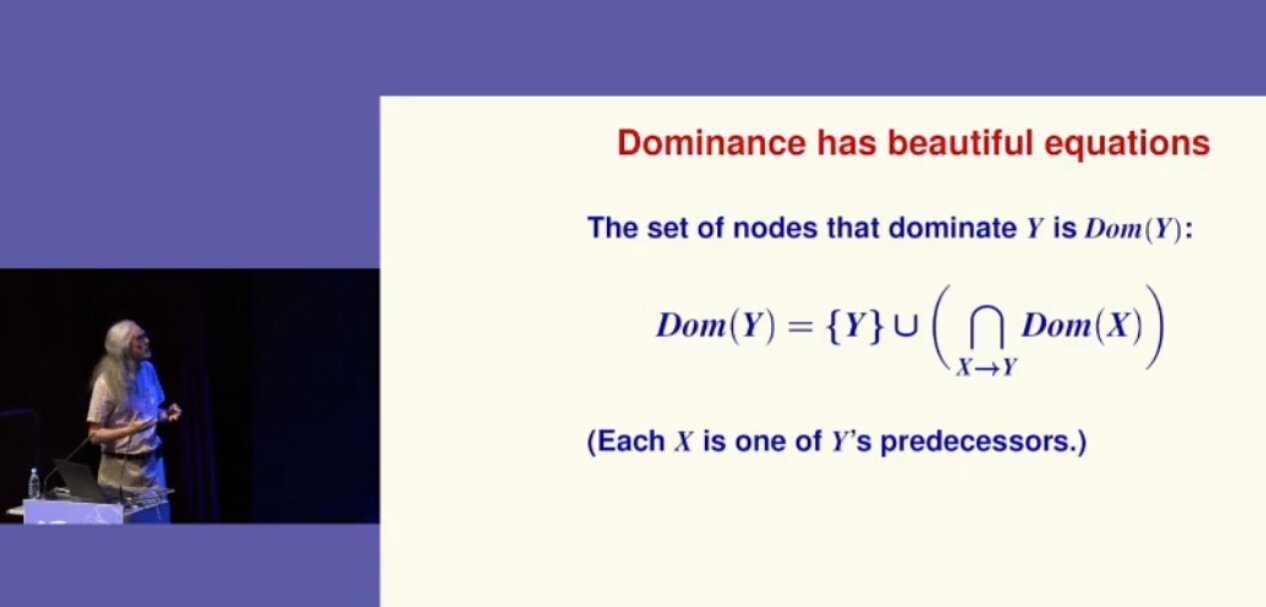 Norman Ramsey shows a formula




 Three members of the