Search Results: "gabriel"

21 February 2010

Biella Coleman: Logos of our Lives

Two of the more influential books that have taken swipe at our contemporary intellectual property landscape concerned themselves with trademark, logos, and capitalism. Here i am thinking of Rosemary Coombe s seminal The Cultural Life of Intellectual Property Law and Naomi Klein s more activist take on the subject, No Logo. What would happen if you condensed the arguments in these two books into a 15 minute video? Well, this morning I found out what this might look like. Someone pointed me to a mind blowing video that might be called All Logo, All the Time: an amazing visual and dystopian rendition of the alphabet soup of logos, trademark acronyms, corporate mascots that pervade our landscape, one might even say consciousness. I would take a whirl and watch before the IP police take it down.

15 February 2010

Biella Coleman: Timing Life

The Chronicle recently published a piece that drew a lot of attention on the difficulties that female academics with kids face during the first 4-7 seven years of their job when academics are expected to do nothing but produce, produce, and produce and yet because they have produced children, they can t produce all that much writing. I don t share the author s predicament in that I don t have kids. But I have had to be an (often long-distance) caretaker for the last 8 years, 4 of which I spent considerable time in PR taking over my mom s caretaker s duties. Although when it comes to female academics and kids there is a lot that can (really must) be done to facilitate a career and motherhood, when it comes to taking care of my mom, being an academic has been an odd and mixed blessing, although it did require me to play with the system self-consciously or else it would have been an early academic death. When my mom was first falling pretty ill, I was wrapping up my dissertation. Though I was ready (on paper at least) to go on the market, I did not step foot in it. I knew that if I landed a job it would be the end of seeing my mom and since she only had a few years of capacity left, I decided to 1) apply only for one postdoctoral position (that had no teaching and was in NJ making it very easy to fly home frequently) 2) if I did not land it, I would return home to spend time with her, keep on writing but not graduate. If I had started a job right after my dissertation, I would have killed my chances of churning out articles, and worse, not have seen much of my mom. I was lucky enough to land this postdoctoral fellowship, which was a life savior. I was able to get a heck of a lot of work done that I would never ever would have been able to do my first two years of teaching (kids or no kids) and I spent many months in PR as well. I always encourage graduate students to apply for these positions because the payback is enormous (with the exception of fellowships that require a ton of teaching), even if the applications are really time consuming, more so than applying for jobs. Though rarely stated in such terms, the first few years of an academic position is not unlike medical residency. It takes a brutal amount of time, not only because of the sheer time you have to work but also because there is so much new to learn and so many different responsibilities to juggle. It is exhiliarting but draining, even disorienting. But there is one important difference from our medical school counterparts (aside from the blood and guts and gore :-)): their hell continues throughout the year, while our hell diminishes during the summer when classes end and writing is supposed to dominate your attention. Also since I am not required to be here once classes ended, I am able to leave NYC and spend it back home. I would simply not be able to do this with most any other full time job (unless it involved telecommunting) and for that I am grateful I landed the job I did. Academia, despite its rat race quality, has allowed me to visit my mom throughout the year and summer. Given the importance of summers for writing it seem that departments/universities can do a lot for female faculty simply by sponsoring or helping to pay for summer day care for two years, thus offsetting some of the costs and then providing them with the space needed to write/produce.This can accompany the policy that some, though not enough schools have, which is turning off your tenure clock for the year you are pregnant, and in some cases, even giving you leave. Thankfully at NYU you can stop your clock not just for pregnancy (which they now automatically do because when it was optional some female professors were not taking it!) but also for circumstances like mine. I was given a short tenure extension, which was not easy to ask for but it is important to do so. I am extremely grateful they have this policy. Something else partially unique about caring for a parent is the perspective it affords. Although it would be a lie to say I suffer no anxieties about my job, I find it hard to get embroiled in a lot of the petty politics of academia, a perspective that clings to me, especially after having to take care of someone with Alzheimers, and especially my mom who we nicknamed the Russian Terror for her turbulent (but really fun) personality. Sitting in front of your computer to write and think about some obscure academic topic feels not only easy after those experiences but a scamish sort of privilege. My mom is now in a nursing home and I no longer have to spend time taking care of her. Instead I visit and see her and get overwhelmingly sad when I do. In one month, it will be her 2 year anniversary in a nursing home and I still have not come to grips with the situation. It strikes me as obscene and unreasonably cruel that this illness can afflict a person for years, even a decade or more. Perhaps more than anything it is the sheer massive length and persistence of this illness that makes it so hard to bear. And I am sure my work for better or for worse has acted as an emotional refuge, where I drown myself in work that I love instead of drowning in the sorrow that I often feel, making what is a difficult job far easier.

12 February 2010

Biella Coleman: Explosive Mural

A mural that geeks just might like. (via one of my students )

10 February 2010

Biella Coleman: today


p1050051.jpg, originally uploaded by the biella.

Biella Coleman: Suffering from MEAD?

If I told you that you suffer from MEAD you might think (if you are an anthropologist like me) that you suffer from an obsession with a plump anthropologist of said name who popularized the discipline bringing home tales of Samoan teenagers who did not seem to suffer from the angst and anxiety of their American counterpart. Or you might think MASSIVE EMAIL ANXIETY DISORDER, which is a DSM diagnosis I invented last week and thus have minimized the work that the American Psychiatric Association will have to put into updating their DSM (you re welcome). So I have penned down its major characteristics and effects so that you too can identify with some other inner pathology that might mark your daily life and being (you re welcome)

The Diagnostic and Statistical Manual of the American Psychiatric Association currently defines Massive Email Anxiety Disorder (MEAD) disorder in the following way. Please note that while this definition of MEAD is the most definitive and clearly produced to date, there are several potential problems with this definition that will hopefully be addressed by the task forces, editors, and research coordinators of the association as time progresses. The Current DSM-IV Definition (Abridged): A. A persistent fear of one or more emails situations in which an author of an email worries about the status of a sent email. The individual fears that the tone or content of a message was misinterpreted or that an email never arrived to its correct destination. Alternatively, they worry excessively about why they have not received a response. B. Exposure to the feared situation almost invariably provokes anxiety, which may take the form of a situationally bound or situationally pre-disposed Panic Attack. C. The person recognizes that this fear is unreasonable or excessive. D. The feared situations are avoided or else are endured with intense anxiety and distress. Alternatively the person suffering from MEAD shuffles over to their partner or office-mate to talk (obsessively) about the nature and possible effect of the email, sometimes for hours, sometimes even for days. E. The avoidance, anxious anticipation, or distress in writing email, which interferes significantly with the person s normal routine, occupational (academic) functioning, or social activities or relationships, or there is marked distress about having the phobia. F. In individuals under age 18 years, the duration is at least 6 months. G. The fear or avoidance is not due to direct physiological effects of a substance (e.g., drugs, medications) or a general medical condition not better accounted for by another mental disorder. Problems with the DSM Definition of Massive Email Anxiety Disorder While this definition is clearly the most definitive and precise official definition produced so far, Massive Email Anxiety Disorder has only been officially recognized since 2020, and the problem did not become adequately explained until the 2015 version of the DSM. Thus, the definition of MEAD disorder is becoming clearer and more precise with each edition.
Written in honor of current revisions for the DSM, expected to be published in 2013

8 February 2010

Biella Coleman: Hacker and Troller as Trickster

trickster If you read the literature on tricksters, you will confront a string of words that capture the moral quality and sensibilities of these figures, figures scattered across time and place and largely enshrined in myths and stories:
Cunning, deceit, lying, provocateur, mischief, audacious, thief, play, shrewdness, audacity, grotesque, over the top, appetite, shocking, fun, delight, wit, trap, subversive, ability, wanderer.
These figures, which include Coyote, Loki, Hermes, and Eshu, among many more, push the envelope of what is morally acceptable and in so doing, argues Lewis Hyde (in his tome on the subject), renew and revitalize culture, especially the moral stuff of culture. They are not only boundary crossers, they are boundary makers. As the title of his book so succinctly and masterfully broadcasts Trickster Makes this World. Or as he suggests with a bit more elaboration:
I want to argue a paradox that the myth asserts: that the origins, liveliness, and durability of cultures require that there be a space for figures whose function is to uncover and disrupt the very things that cultures are based on p. 9
At the opening of the book, Hyde asks whether there are tricksters in modern industrial societies. His answer is a plain no. The con man who might share some similarities does not qualify. For in fact what is needed is either a polytheistic system or lacking that, he needs at least a relationship to other powers, to people, to instructions, and traditions that can manage the odd double attitude of both insisting that boundaries be respected and recognizing that in the long run their liveliness depends on having those boundaries regularly distributed p.13 He does locate the spirit of the trickster in spirited individuals: in Picasso, in Frederick Douglass, in laudable figures who push certain boundaries and renew our world for the better but nonetheless fall short of the archetypal trickster. I bet it is pretty obvious where I am going with all of this given my object of study: phreakers, hackers, and trollers. The trickster does exist across America, across Europe, really across the world and it is not in myth but in embodied in group and living practice: in that of the prankster, hacker, the phreaker, the troller (all of whom, have their own unique elements of course, but so does each trickster). Their relationship to other powers are many and can be located in terms of information, intellectual property, the government, language itself, institutions of power like the FBI and AT&T. The list is not short. For a few years now I have been thinking about the linkages between the trickster and hackers as well as the troller but it was only in the fall when I found myself trapped in a hospital for a week that I finally cracked open the book by Hyde and devoured it. Within a the first few pages, it was undeniable: there are many links to be made between the trickster and hacking. Many of these figures, push boundaries of all sorts: they upset ideas of propriety and property; they use their sharpened wits sometimes for play, sometimes for political ends; they get trapped by their cunning (which happens ALL the time with tricksters! That is how they learn); and they remake the world, technically, socially, and legally and includes software, licensing and even forms of literature (think textfile, the Jargon File or most dramatically, ED). But if the trickster generally resides in myth, and the trickster of the information age resides in practice, myth matters everywhere because there is a mythos created around these figures. Sometimes the mythos is propagated these groups (take a look of ED for example or Phrack in the past) and of course the media has played an undeniable role. And yet, unlike what is represented in the pages of Hyde, there are living, actual bodies in motion, in conversation, in transformation, a group that goes far beyond the other more controlled and bounded tricksters we might be able to locate in society, such as artistic/political groups like the Yes Men. But the most shocking (or hard to think through) element lies less in the many associations one can make, but in the following curious fact. For the most part the trickster is enshrined in myth and stories but the tricksters I am referring to are in fact full-bodied, full-blooded groups of people who are actually engaging in all sorts of acts of trickery. This is culture not in the sense of art and myth but people and practice and this of course makes an (ethical) difference. What happens when you are the recipient not of a story offered an elder, but the recipient of trickery, an act of pranking or trolling, for example? What happens when you can trace all sorts of instances of boundary re-shifting and remaking, as with the GPL? I think this, even more than the linkages, is what makes this connection so remarkable and I trying to think through what it means to have a figure that we can find and talk to, as opposed to one embodied in myth and story. For now I am going to leave this post short and in the next installment, will start raising some of the connections between trickery and variants of hacking and trolling.

6 February 2010

Biella Coleman: Hard to imagine but it is our history

Stowe v Thomas (1853) where the court argued that a German translation of Uncle s Tom s Cabins did not constitute copyright infringement (quoted from Meredith McGill s excellent bookAmerican Literature and the Culture of Reprinting, 1834-1853:
Before publication [the author] has the exclusive possession of his invention. His dominion is perfect. But when he has published his book and given his thoughts, sentiments, knowledge or discoveries to the world, he can have no longer an exclusive possession of them. Such an appropriation becomes impossible, and is inconsistent with the object of publication. The author s conceptions have become common property of his readers, who cannot be deprived of the use of them, or their right to communicate them to others clothed in their own language, by lecture or by treatise

3 February 2010

Biella Coleman: 2600 papers

:-) Glad to see his paper on hacking and zines was picked from a pool of 2600 papers .

2 February 2010

David Moreno: Eben Moglen 'Freedom in the Cloud' 2/5 @ NYU

Biella passed this flyer around on the Debian-NYC mailing list. If you are in New York City this Friday, you won't want to miss this Eben Moglen's talk.

<object data="http://d1.scribdassets.com/ScribdViewer.swf" height="600" id="doc_178351046781277" name="doc_178351046781277" style="outline:none;" type="application/x-shockwave-flash" width="100%"><param name="movie" value="http://d1.scribdassets.com/ScribdViewer.swf"><param name="wmode" value="opaque"><param name="bgcolor" value="#ffffff"><param name="allowFullScreen" value="true"><param name="allowScriptAccess" value="always"><param name="FlashVars" value="document_id=26266103&amp;access_key=key-ie370f25lousi01fmdj&amp;page=1&amp;viewMode=list"></object>

If you can't see the embedded object, go here or to this post's permalink.

1 February 2010

Biella Coleman: Patenting of Genes

There is a *very important* patent case being deliberated tomorrow in NYC. I am SO tempted to ditch some important work to go. We will see Whatever case, I will be following it closely. Does anyone know if you are allowed to bring a laptop into federal court?
ACLU attorneys Chris Hansen and Sandra Park will argue the case before Judge Robert W. Sweet of the U.S. District Court for the Southern District of New York Court. Other co-counsel in the lawsuit, including Daniel B. Ravicher, Executive Director of PUBPAT, as well as some plaintiffs and expert witnesses will also attend the hearing. WHEN:
Tuesday, February 2, 2010
10:00 a.m. EST WHERE:
Daniel Patrick Moynihan U.S. Courthouse
Judge Robert Sweet s Courtroom 18C
500 Pearl Street
New York, NY 10007

31 January 2010

Cyril Brulebois: Saving Private G-I

(Disclaimer: this post is not about G.I.) Graphical installer Josselin posted his thoughts about g-i, and given at least the first parts sound doable, I m tempted to have a look at dealing with the needed udebs. Never touched anything like this before, but oh well, one learns every day. Time to learn a bit more about X11 as well. It looks like generating a new mini.iso (using d-i s trunk) wasn t that difficult, so hopefully once I m done with a few udebs, it should be possible to add them to this image and make sure those are usable, at least when loaded manually. Once that finished, gluing everything together is probably going to be another story, but hopefully that won t be impossible. Unrelated stories

29 January 2010

Biella Coleman: Freedom in the Cloud

Eben Moglen, Professor of Law and Legal History at Columbia University,
and founder, Director-Counsel and Chairman of the Software Freedom Law
Center, will speak about Freedom in the Cloud: Software Freedom,
Privacy and Security for Web 2.0 and Cloud Computing on Friday,
February 5, 2010, 7-9 pm. This event will be webcast live. * What: ISOC-NY Public Meeting: Eben Moglen Freedom In The Cloud
* When: Fri. Feb 5 2010 7pm-9pm
* Where: Room 109, Warren Weaver Hall, 251 Mercer Street NYC (SW corner
of West 4th) (See note below)
* Webcast: http://www.livestream.com/isocny * Note: Use the entrance on the west side since construction blocks the
Mercer Street entrance. Must bring ID.

Biella Coleman: Entropy

Great way to conceptualize a conference.

28 January 2010

Biella Coleman: New Zealand, a photo-round up

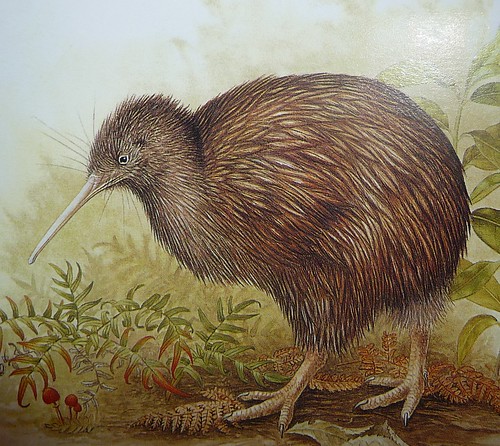
kiwiwiwiwiw Kiwis have to be one of the cutest birds of all time. A bit chubby and clumsy looking, they are (to me, at least), walking, breathing icon of furry cuteness. Truth be told, I did not see one live in action during my recent trip to New Zealand, but I did see a Weka bird which is pretty similar. (Micah and I just consulted the Internets and agreed that we did in fact see cherubic Kiwi not a Weka. In fact, Micah almost ran one over on the west coast of the southern island but his quick reflexes born from years of saving servers while typing saved the bird. So as you can tell by now I finally got to go to New Zealand for a few weeks, even able to travel the south island before attending THE Linux conference of the region, LCA where I gave a talk (video to be posted when available). I jumped at the opportunity and was thrilled to find out that I could actually spend some time traveling around before the intense week long conference. So on January 5th I headed down with Micah to what I have found out is one of the windiest cities on earth ( Windy Wellington ) for a few days before heading to the south island to do a loop on the northern half of the island. I wanted to conquer the mountains made famous by a certain set of movies, but last semester was all about sitting in front of the computer, a sort of agonizing life of the mind, which did not prepare me physically for mountain trekking or as it call it there, tramping. So we decided to stick close to the coast (with one transalpine train that serenaded us through some awesome mountain passes) and hike along the coast, snorkel and swim, and kayak. After Andrew showed us around Wellington, we headed to the sea town of Kaikoura brimming with sea life, such as seals, dolphins, and birds. The two highlights there were our snorkeling trip and a hike along the peninsula. Originally we were going to go diving but I arrived to NZ with a head cold so we opted for the sinus friendlier version and snorkeled in the massive kelp forest, which was strikingly beautiful (I am used to tropical reefs and waters). There happened to be a lot of seals and given their curious nature, they would dart over right next to you and play. One seal I called him the twirler was chubby and mellow and twirled next to me for a long while. The lady seals were sleeker and faster and liked to dive deep down and the zoom up and surprise you. As someone who has spent a lot of time underwater, I found it fun and weird to be with animals that pay attention to you given that most of the sea life ignores you. The hike in Kaikoura was fantastic as well. You go high on a bluff and stare down at this water sparkling with the most beautiful blue hues brought out even more majestically by the white rocks. If I were to go back I would hike along the water and up above on the bluff. After a brief stopover in Christchurch to visit a friend, we took the transalpine train (across Arthur s pass) which was superbly beautiful and arrived on the west coast whose seas are far more rough, rocky, andtemperamental than on the east coast. The vegetation is lush as lush can be and you get the feeling that dinosaurs would have been a happy lot in these parts. The cool part about this area are the many rivers that feed into the ocean (we spent an afternoon swimming and exploring the caves in one) and then what are called the pancake rocks, which are odd geological creatures that really amaze. We then made our way to the Marlborough Sounds area, which includes the city of Nelson (apparently the sunniest in New Zealand) as well as many olive and grape vineyards in outlying areas. We spent some time in the Alpine lakes region hiking but more of the time on the coast. The highlight for me and it is a place I would love to go back to is the Abel Tasman National Park. We spent time hiking and kayaking there and you can even hike down the coast for 5-6 days (there are excellent camping facilities along the way). The coast is simply majestic with alpine like forest conditions (unfortunately a cool old tree whose name I can t remember is no longer common). This forest is situated along the most stunning waters, an electric but totally clear turquoise blue deceivingly inviting because the water was quite cold (but not as cold as the Oregon coast over the summer, which I went swimming in only once after weeks of bike travel). Along with the blue, parts of the coastal waters were a stunning clear green that I have never seen despite my many sea travels. If you ever plan on going to the South Island, I would not miss this area and might even try to spend a few days or more hiking the coastal trails and listening to the cool-as/sweet as birds, one of which has double vocal cords so it sings what sounds to be like totally electronic bird calls. We returned via the same ferry a massive 7 story ship from Picton to Wellington but the conditions were far far worse during our return trip. When we got out of the sounds, we hit the Cook Straight, notorious for being rough and tumble. And indeed, once we hit the waves, I felt like I was no longer in a boat but amusement park ride, the bow of the ship thrown high only to fall hard on upon the waves. It was sort of fun or fun for about 10 minutes until people, most especially kids, started yaking all over the place. It was really the most flagrant yakfest I have ever experienced (I mean it is a 7 story ferry, you can fit a lot of people on that boat) and that made the sail particularly difficult. I have pretty strong sea legs, never once getting sick sick during the year I spent at sea but massive yaking will bring out the sea sick feeling in even the hardiest of sea souls and I was thrilled to arrive in Wellington. Wellington is the only large city I spent any considerable time in and it is a pretty awesome one. The city center area is flat and by the water, with a magnificent area filled with museums, the national library, parks, breweries, and piers where kids like to jump off high things. The botanical gardens were the most beautiful I have been to and since I am a flower nut, I was in high heaven. In this area there are a ridiculous number of great coffee shops (NYC has a thing or two to learn as we don t have enough, I suspect it has something to do with insane real estate prices). The city is surrounded by hills populated by houses, some of the precipitously perched on cliffs that require lifts to get to! It was a wonderful home base for what was a sweet as conference (as they would say down there). And I hope to write about it sometime soon.

19 January 2010

Robert Collins: LCA 2010 Tuesday


Gabriella Colemans keynote was really good; grab it from the videos once they come online. WETA run Ubuntu for their render farm: 3700 machines, 35000 cores, 7kw per cold rack and 22kw per hot rack. (Hot racks are rendering, cold racks are storage). Wow. Another talk well worth watching if you are at all interested in the issues related to running large numbers of very active machines in a small space. And a classic thing from the samba4 talk at the start of the afternoon: MS AD domain controllers do no validation of updates from other domain controllers: classic crunchy surface security. (Discovered by samba4 borking AD while testing r/w replica mode). Blue-ray on linux is getting there, however one sad thing is that the Blue ray standard has no requirement that vendors make players be able to play un-encrypted content and there are some hints that in fact licences may require them to not play un-encrypted content. Peter Chubb s talk on Articulate was excellent for music geeks: midi that sounds like music from lillypond. Ben Balbo talked about Roll your own dropbox . Ben works at a multimedia agency, but the staff work locally and don t use the file server . use instant messenger to send files around! Tried using subversion too hard. Dropbox looked good but 3-7 hundred a month too pricey given an existing 1.4TB of spare capacity. He then considered svn + cron but deleted directories cause havoc & something automatic was wanted so git + cron instead. Key thing used in doing this was having a work area with absolutely no metadata. Conflicts dealt with by filename.conflict.DATESTAMP.HOSTNAME.origextention Doesn t trigger of inotify, no status bar widget, only single user etc at the moment, but was written to meet the office needs so is sufficient. Interestingly he hadn t looked at e.g. iFolder.

16 January 2010

Biella Coleman: Being Bad-Ass w/o the Arrogance

bad-ass For the first time in a long while I took a vacation in New Zealand where I am for LCA. I decided to also take a break (mostly) from the Internet but I decided to it was worth to come back to write a brief response to Clay Shirky s rant about women, which I find pretty unsettling. So the basic upshot of his entry is that for women to get ahead in this world, they need to not only behave more like men but in specific, like all the effing blow-hard jerky self-promoting men like, well Clay Shirky (I guess, right? and he in fact might be proud, I a woman, made this accusation). What I appreciate about the post is the fact that he does not pigeon hole women as caring, maternal, and meek. I have always resented the idea that women can t be assertive and confident. However, confidence and self-esteem, which I agree are vital for getting noted, does not inherently entail jerky behavior.I think Shirky s perspective might be skewed because of his home field, which is filled with just the type of guys he is describing. I call them pundit-entrepreneurs (though to be sure some are pretty darn nice). If you take the field of anthropology, for example, it has traditionally and for a long time been known for grand slam female scholars from Ruth Benedict and Margaret Mead in the past to the ones of the present like Nancy Scheper Hughes and Jean Comaroff. During grad school, I was surrounded by strong, smart, witty, confident ladies and always felt I had role models to follow and emulate. They were not, however, low-life jerks clawing their way to the top of the academic mountain leaving a trail of destruction behind their path. Then when I started to go to the tech and media academic conferences, I was soon swimming in a sea of mostly white men and the vibe was different. I was ignored and talked over a handful of times, which had never happened to me before. There was a lot more self-promotion than I had seen in other fields, in part, it seemed because the media pays more attention to this field so folks are trying to get the media light focused on them. While I don t disagree that many fields from medicine to law promote and reward blow-hards and massive unrestrained arrogance, I would rather not create a false binary between meek/low self-esteem/female and total-jerky/arrogance/confidence. Why not instead promote and highlight behavior that rewards confidence sans the arrogance? Here are some thoughtful related posts.

15 January 2010

Stefano Zacchiroli: Preserving privacy with Google Docs

Eclectic paper: SEcure GOogle DOCumentS Two days from an important Google announcement, privacy awareness is steadily increasing in the media. The old mantra that "despotic governments might use your data in unexpected way" sounds more real than last week, and recent movies ring different bells in our heads. That event has prodded me to (finally!) blog about yet another eclectic paper of mine, co-authored with my old friend Gabriele D'Angelo, and which I'm going to present at the forthcoming ACM SAC conference. The paper is titled Content Cloaking: Preserving Privacy with Google Docs and other Web Applications and poses (again) a rather simple question: why should you trust Google to faithfully store your Google Docs data? What if roles in the recent Google-vs-China issue were inverted? The proposed solution (Content Cloaking) then simply implements transparent encryption and decryption in the payload which is sent back and forth between your browser and the Docs backend. Trying to access your Docs data without a decryption layer and the needed key will then just show garbage, for both humans and Google harvesters. Of course you lose something, like full text search which is performed server-side by Google, but at least you're back in charge again: it is you who decides to which extent trading-off your privacy with offered services. A proof-of-concept implementation is provided (and of course is free software!) as an extension for the Firefox browser, but is now out of date wrt Firefox mainline and was not really production ready anyhow (let's say it was master-thesis-implementation-quality ...). Still we, the authors, stand behind the idea even if we don't have the energy to maintain a production-quality implementation. So, Dear LazyWeb, If you are interested in the topic and you've development cycles to spare, please drop me a mail and I'll be happy to point you to all needed details to resurrect the implementation (or create one from scratch, which should be pretty easy and quick if you're familiar with extension development).

4 January 2010

Biella Coleman: All tech

Fall semester I did not teach any classes that covered digital media (in part because I was swimming in the stuff writing a review essay on the topic, which I am sending today to the journal, ending about 4 months of hell). On the other hand, spring semester will be all about digital media: hackers, free software, privacy, piracy, phone phreaking and more. I am excited. Here is my graduate syllabus on the commons and piracy and here is my undergraduate class on hacking. Both are still under development but pretty far along.

29 December 2009

Biella Coleman: This is one if for you: the hacker conference as ritual

One of the most frustrating things about being an untenured anthropology professor (aside from being untenured) is that, for the most part, the articles you must write to get tenure strike those you write about as hopelessly boring and jargony. I always imagine that when geeks read my articles, the experience can be represented as follows:
%*&%*&*(((& Linux *(&*(^%&%%^%% DeCSS &*(&^&&*^&^&^& Free Speech %^&%^%^%%^ Hacking &*(&^*(^^*^**^*Code*((*&&**&&*&* Emacs **(**)*( New Maintainer Process *&())))))))))&*&7&&*&)*&*&*&& DMCA **(**((( Copyleft. ****W$$&& TINC
Well, finally, I have my hands on the uncorrected proofs of an article that is far far more readable, accessible, and truth be told, romantic than anything I have written The Hacker Conference: A Ritual Condensation and Celebration of a Lifeworld. This article s ancestry goes back to this ancient blog entry that I wrote after Debconf4 in Brazil, later made it into my dissertation, and finally a gabillion years later is on the verge of publication. Debian developers, in particular, might dig this piece. I made use of your blog entries, mailing list discussions, interviews, and photos to reveal what is special about these events and also memorialize some important events, such as the the founding of Debian Women. So while some I am sure some academics will find this piece distasteful for idealizing these events, so be it. I grew very fond of these conferences, they changed the way I thought of computer hacking, and why not write something that makes those you worked with feel good (as opposed to bored and confused). Finally, academics have totally missed the theoretical boat when it comes to conferences, which are probably one of the most important ritual forms of modernity and yet there is so little written on them an issue I address briefly in the conclusion. Note that this version has various mistakes (including the name of Joel Espy Klecker and the caption under Figure 3, and Figure 9). Since many of your are human debugging machines, if anyone takes a preview read and finds any typos, feel free to send along as I will be sending the proofs back next week.

Next.

Previous.