Thorsten Alteholz: My Debian Activities in March 2026
Debian LTS/ELTS
This was my hundred-forty-first month that I did some work for the Debian LTS initiative, started by Raphael Hertzog at Freexian.
During my allocated time I uploaded or worked on:
- [DLA 4500-1] gimp security update to fix four CVEs related to denial of service or execution of arbitrary code.
- [DLA 4503-1] evolution-data-server to fix one CVE related to a missing canonicalization of a file path.
- [DLA 4512-1] strongswan security update to fix one CVE related to a denial of service.
- [ELA-1656-1] gimp security update to fix four CVEs in Buster and Stretch related to denial of service or execution of arbitrary code.
- [ELA-1660-1] evolution-data-server security update to fix one CVE in Buster and Stretch related to a missing canonicalization of a file path.
- [ELA-1665-1] strongswan security update to fix one CVE in Buster related to a denial of service.
- [ELA-1666-1] libvpx security update to fix one CVE in Buster and Stretch related to a denial of service or potentially execution of arbitrary code.
- epson-inkjet-printer-escpr to unstable.
- sane-airscan to unstable.
- printer-driver-oki to unstable.
- libplayerone to experimental. For a list of other packages please see below.
- pywws to unstable.
- osmo-trx to unstable.
- cc-tool to unstable.
- mailio to unstable.
- gnupg-pkcs11-scd to unstable.
- odoo to unstable.

 Because I am bad at giving up on things, I ve been running my own email
server for over 20 years. Some of that time it s been a PC at the end of a
DSL line, some of that time it s been a Mac Mini in a data centre, and some
of that time it s been a hosted VM. Last year I decided to bring it in
house, and since then I ve been gradually consolidating as much of the rest
of my online presence as possible on it. I mentioned this




 I finally upgraded my mail server to Debian 13 and, as expected, the Dovecot part was quite a ride.
The configuration syntax changed between Dovecot 2.3 (Debian 12) and Dovecot 2.4 (Debian 13),
so I started first with diffing my configuration against a vanilla Debian 12 one (this setup is slightly old) and then applied the same (logical) changes to a vanilla Debian 13 one.
This mostly went well.
Mostly because my user database is stored in SQL and while the
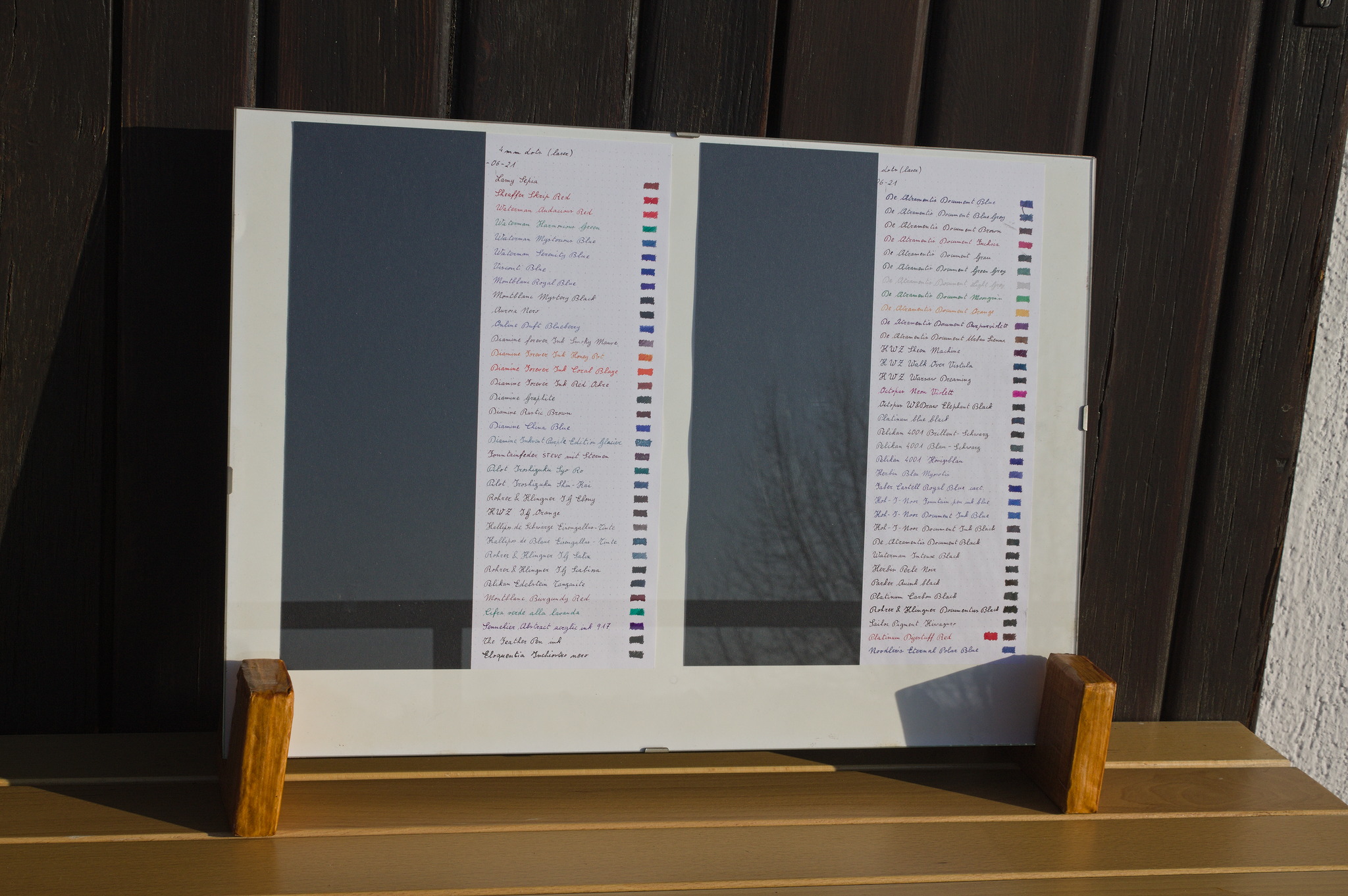
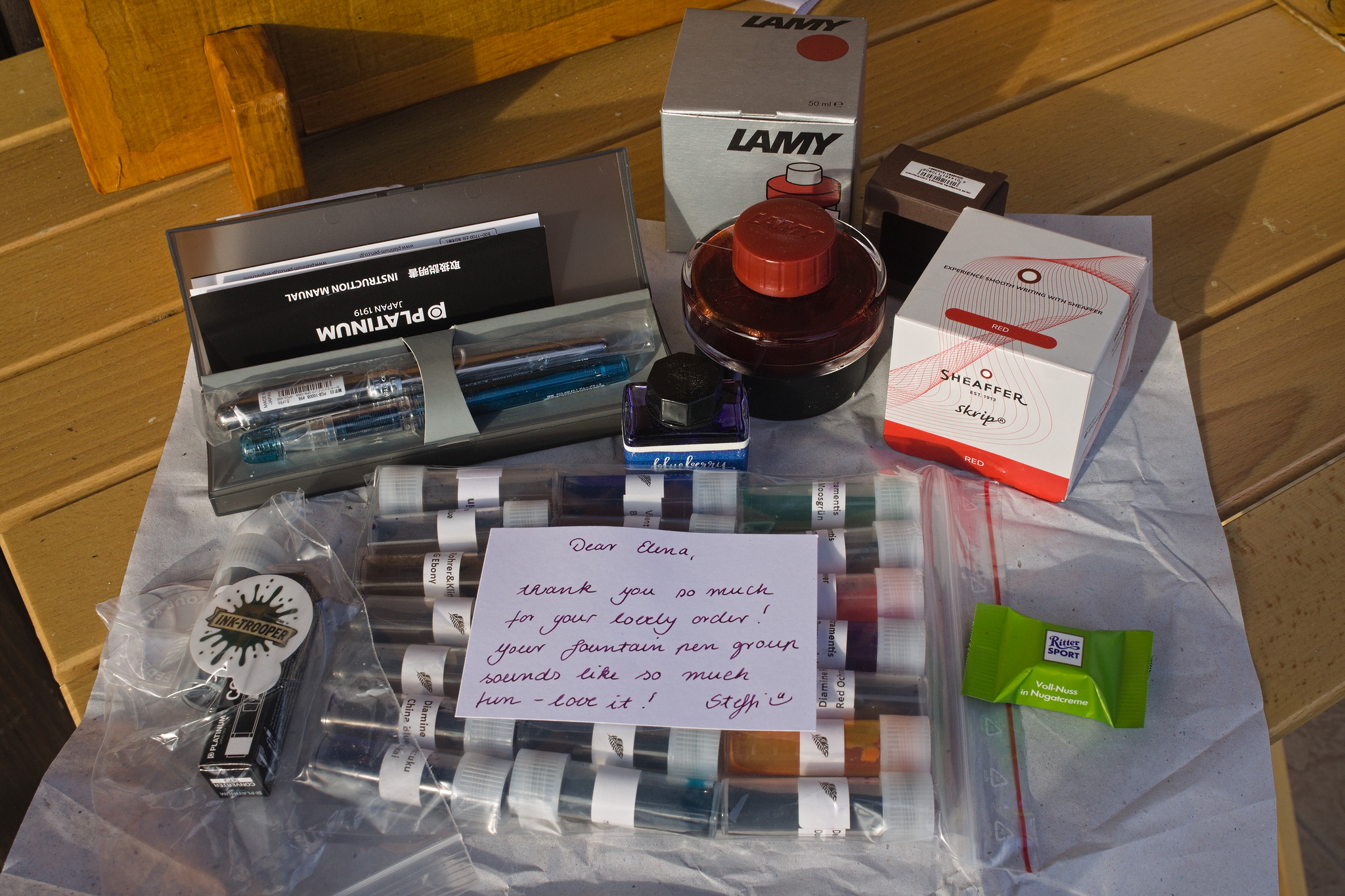 The next step, already in January, was mentioning in a fountain-pen
enthusiasts forum that I planned such a test, and asking if people were
interested in having me buy a few samples of more inks when I was
buying my next pen.
The word enthusiasts is probably a hint of the reason why soon
afterwards I received a package with the pen I had planned to buy, its
converter, and a couple dozens ink samples.
And then a couple envelopes with additional samples of inks that weren t
available on the shops, from said enthusiasts.
Added to the inks I already had acquired since the last lightfastness
test, it meant that they couldn t all fit in one single page, and thus I
had some room to add some inks I had already tested: some were requests,
and for others I tried to select ones that felt relevant.
Since I m changing the test setup, I ve decided I should probably keep
doing this until I ve tested again all of the inks I still have
available.
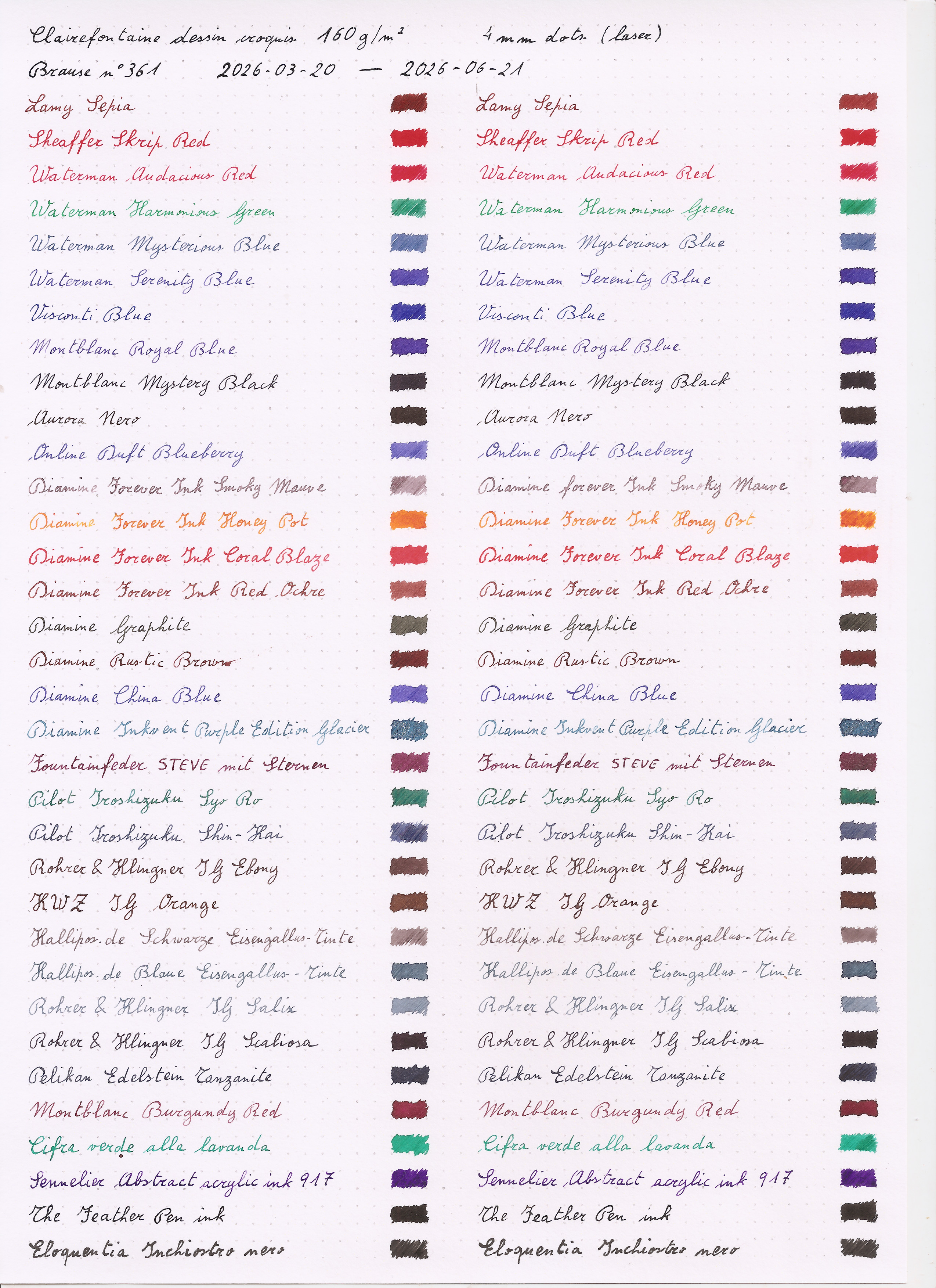
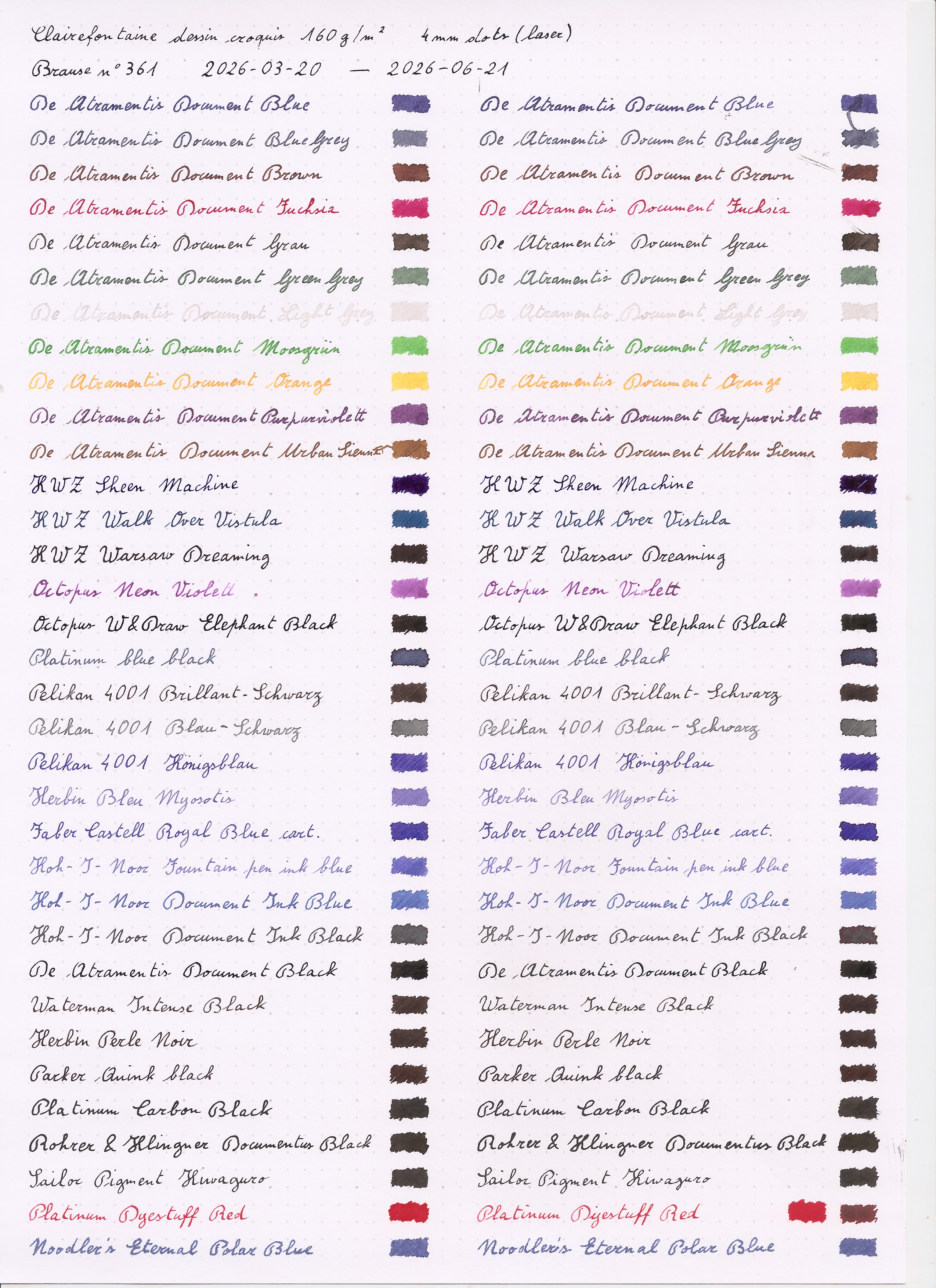 For the paper, I ve used A4 sheets of
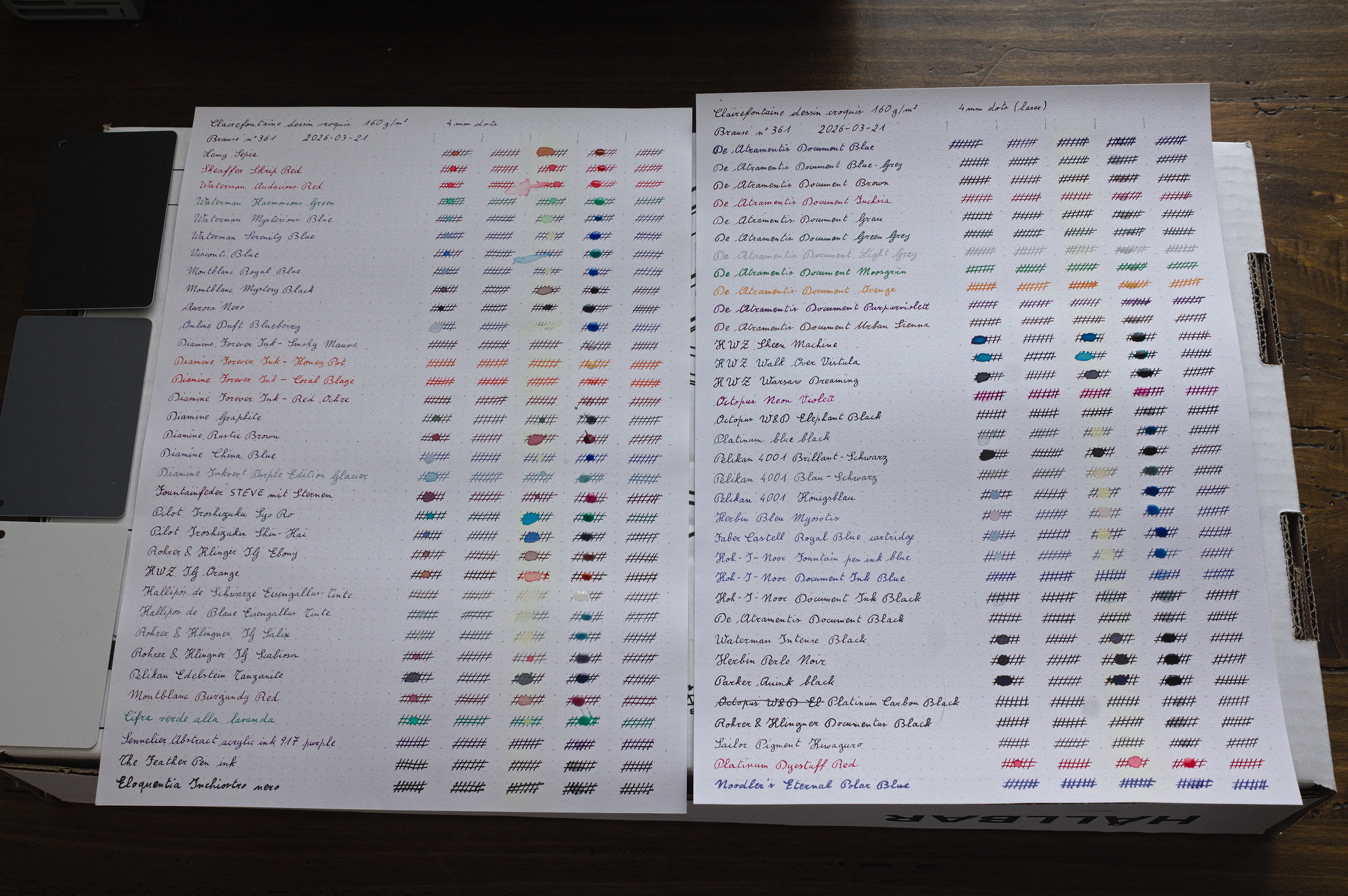 While I was filling the sheet for the lightfastness tests, I decided to
also prepare a second set of sheet, for a liquid resistance drop test.
On each line, beside the name of the ink, I added five sets of crossing
parallel lines, and let everything dry for a few days.
Then I used a syringe to put a drop of a liquid on each set of lines,
waited for it to be absorbed into the paper and to dry, at least
overnight, but sometimes also for a day or two (life happened), and then
looked at the results and did the next test.
The first liquid was water, with the usual wild difference between
washable and permanent inks, and all of the intermediate possibilities.
The second liquid was isopropyl alcohol, and I was surprised to see
that, with very few exceptions, most inks didn t change at all. I
wonder whether that s related to the fact that instead of forming a drop
it was absorbed almost immediately into the paper, and dried in a very
short time.
The third liquid was hydrogen peroxide: beside the individual results I
noticed that its column yellowed visibly; I wonder whether that means
that the paper I used has optical brighteners, and it will also yellow
under the sun: that wouldn t be ideal, but it would also be a surprise,
for paper that is acid free and sold for arts.
The fourth liquid was citric acid, by mixing a bit less than a teaspoon
of citric acid granules in just enough very warm water (heated to 70 C,
i.e. the lowest temperature available on my kettle) to dissolve most of
the acid. I forgot that I had some old PH strips until one hour after
I ve put the drop on the paper, and I don t know whether something had
changed, but when I did remember about them it showed a deep red between
1 and 2. I don t think I can trust those strips too much, however.
This backfired badly: the drop of citric acid never dried out, but
formed a sticky paste that prevented me from scanning the results,
and I m not sure whether I ll do the last test, which was supposed to be
household bleach.
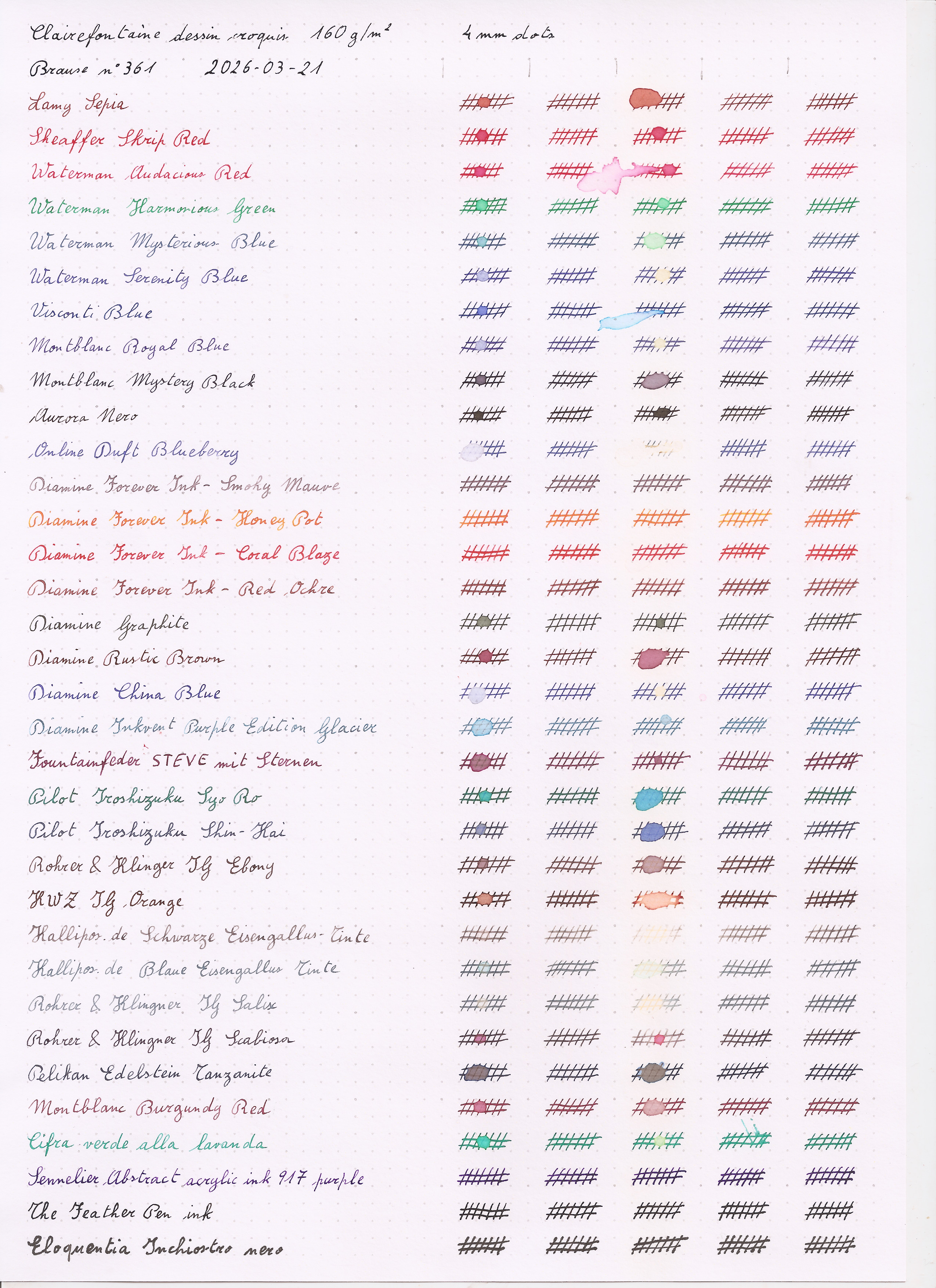
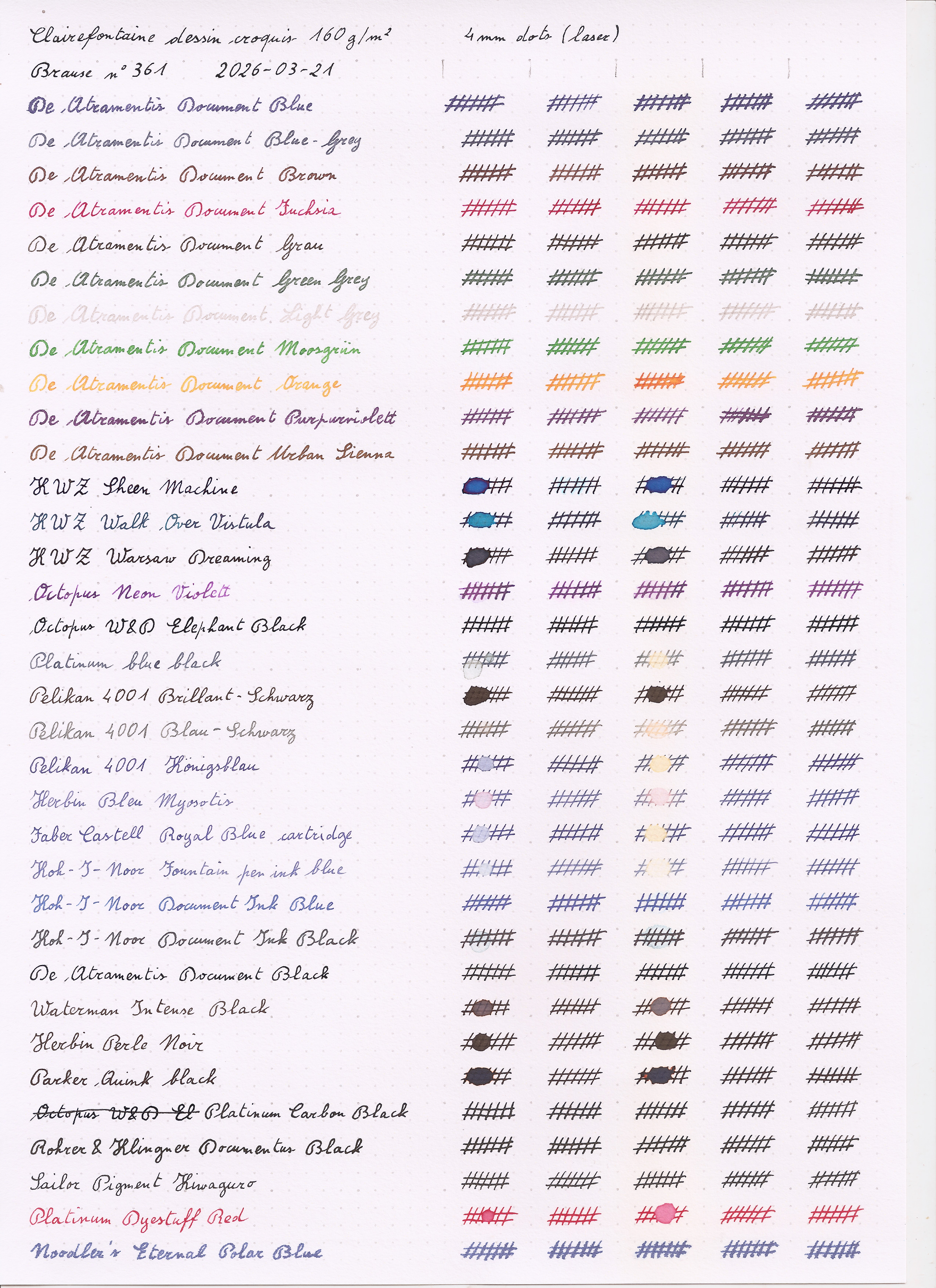 Luckily I had scanned the partial results, and they are shown here.
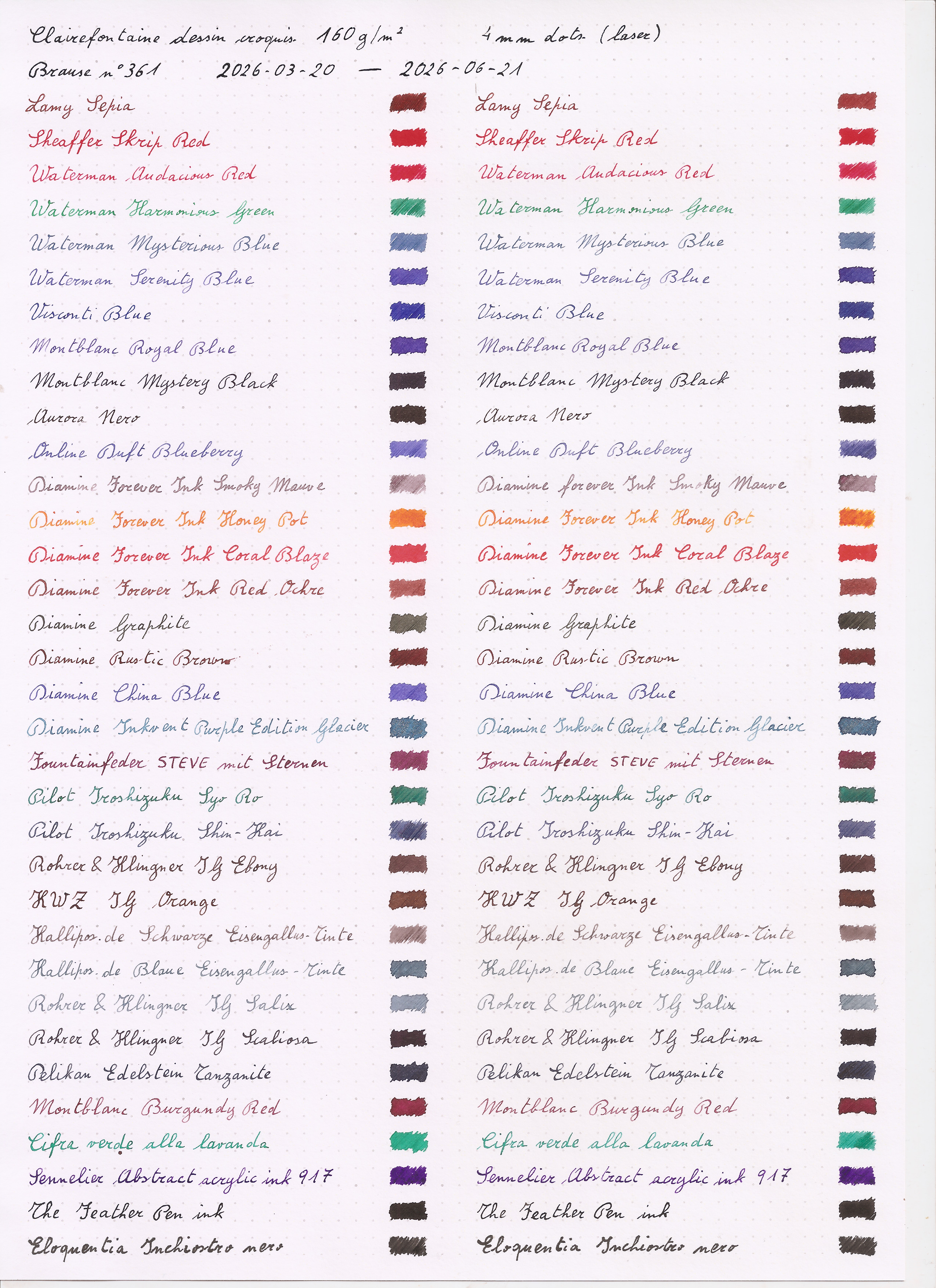
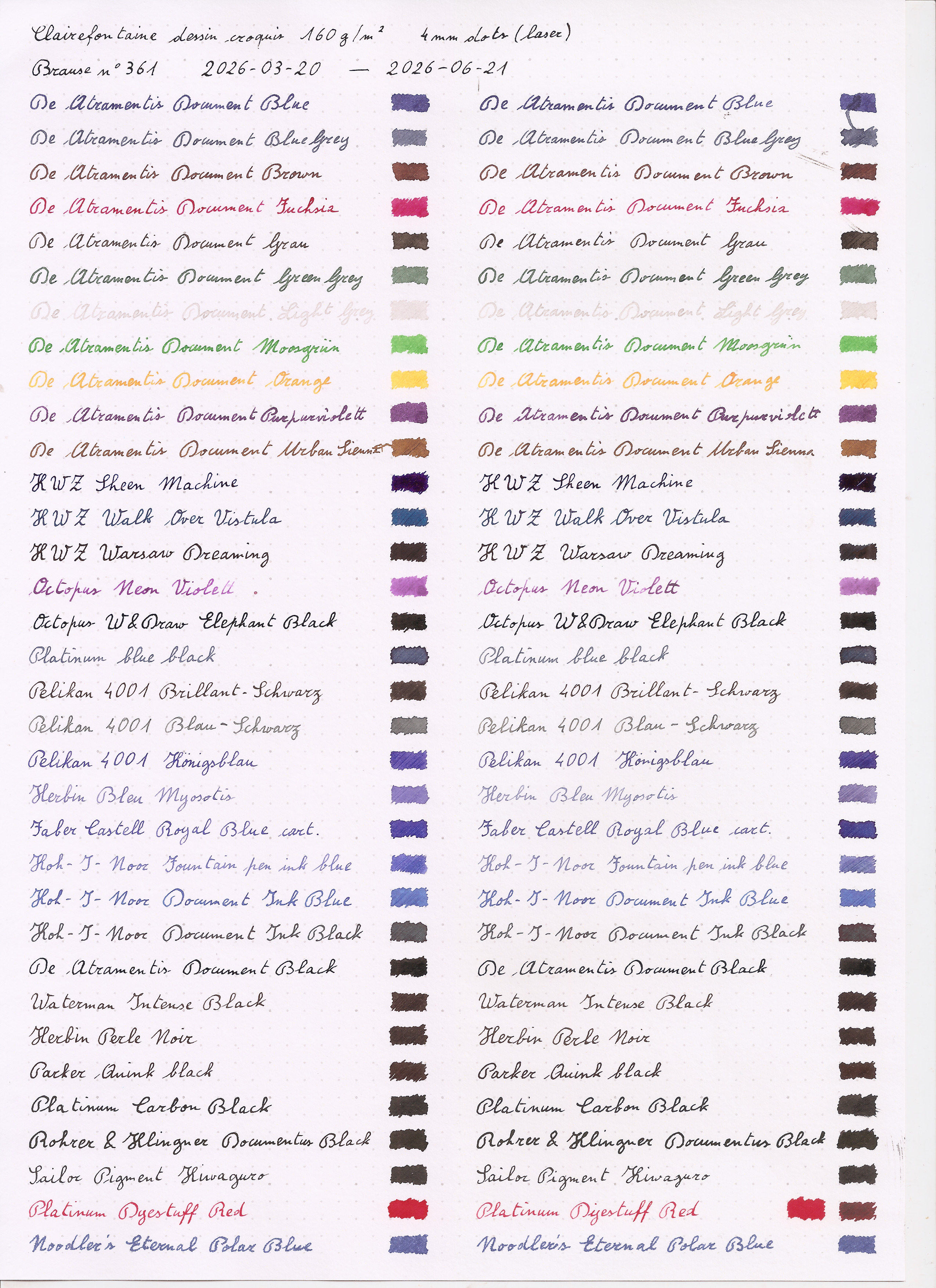 After one full day with plenty of sun, nothing really had changed,
except possibly for a vague hint that the Herbin Bleu Myosotis may have
have been a bit lighter than it started, but it may also have been a
suggestion.
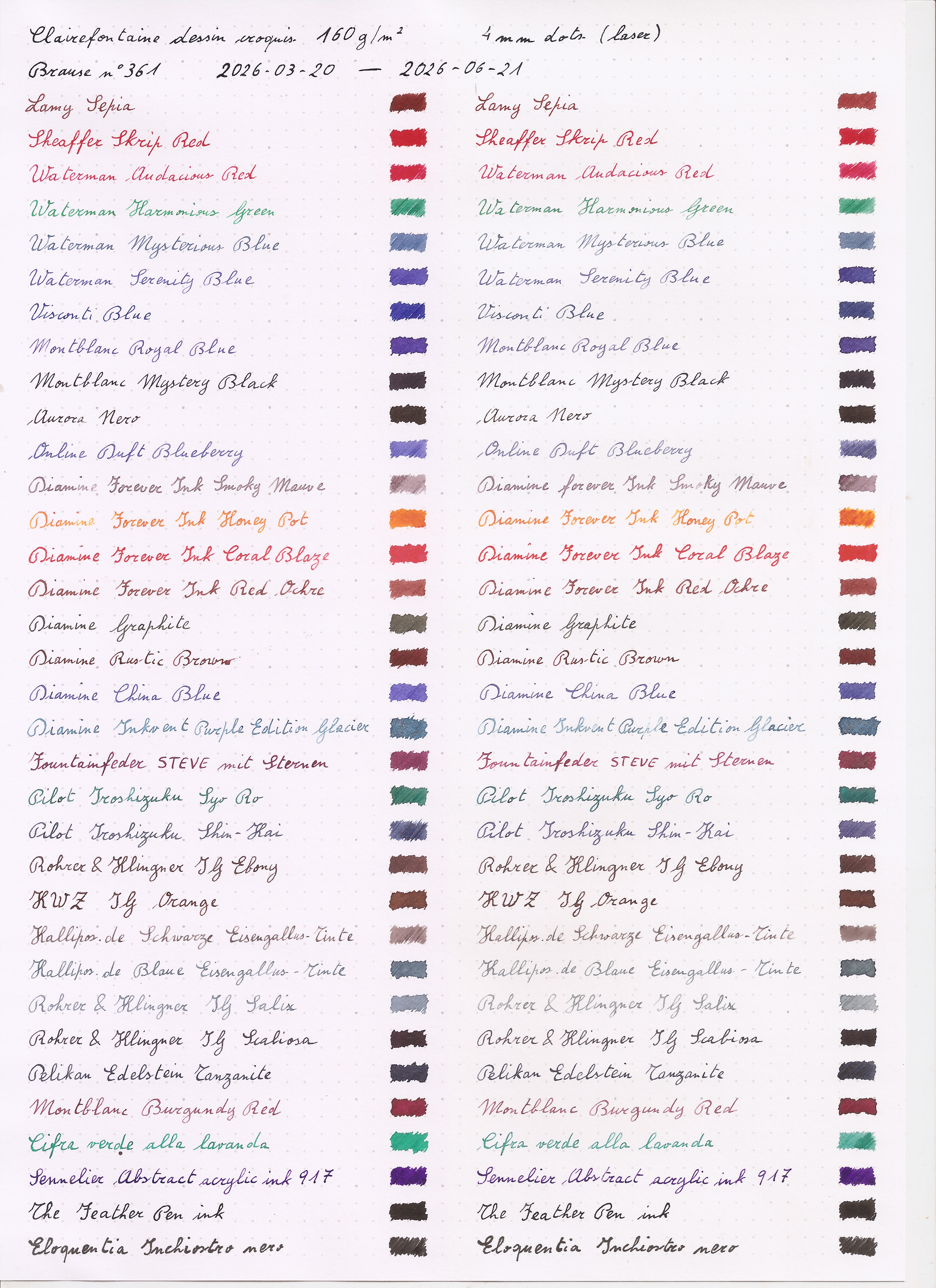
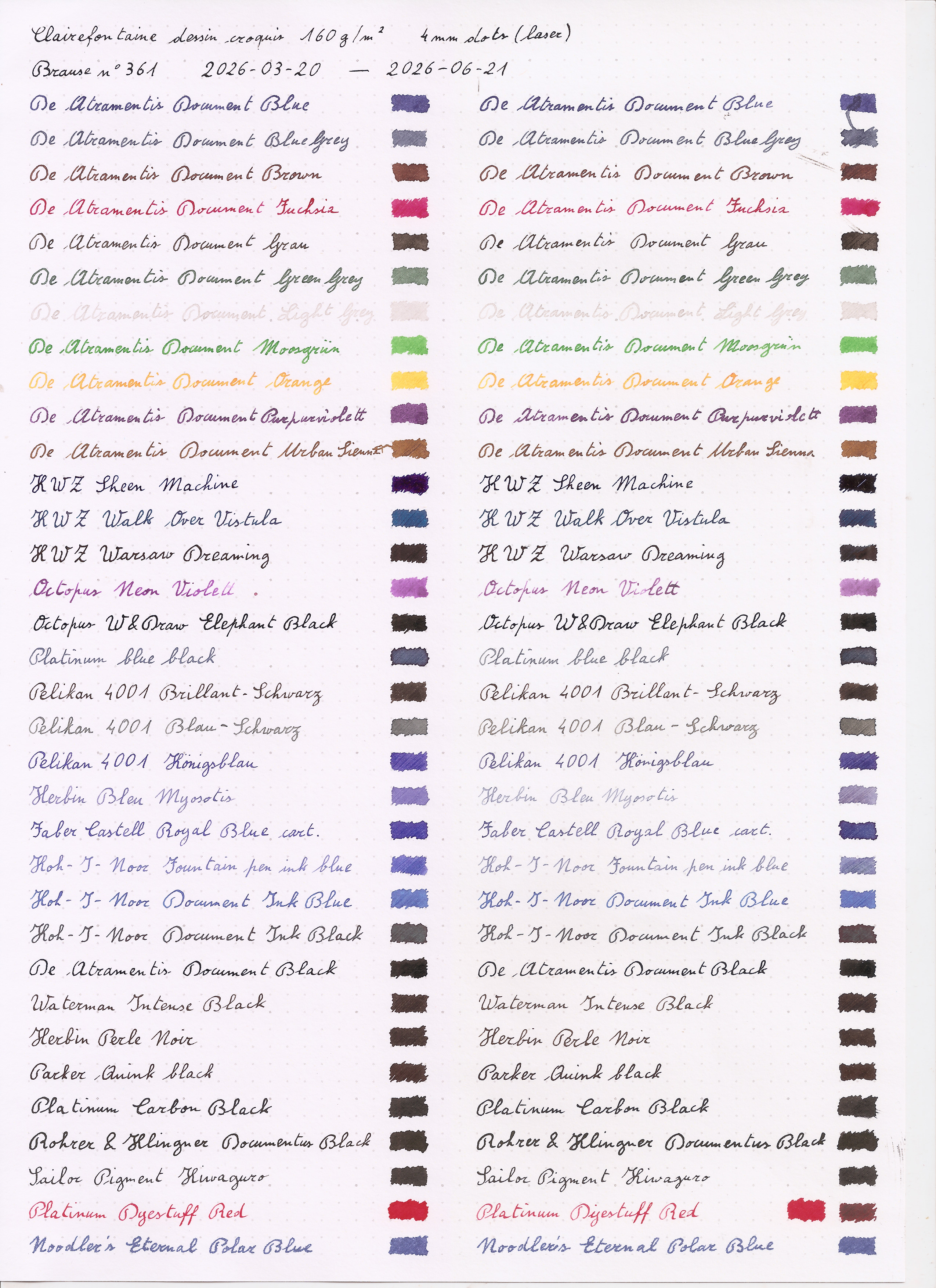 After three days, however, some results started to show, with the most
fugitive inks starting to be visibly changed, becoming either paler or
in some case duller.
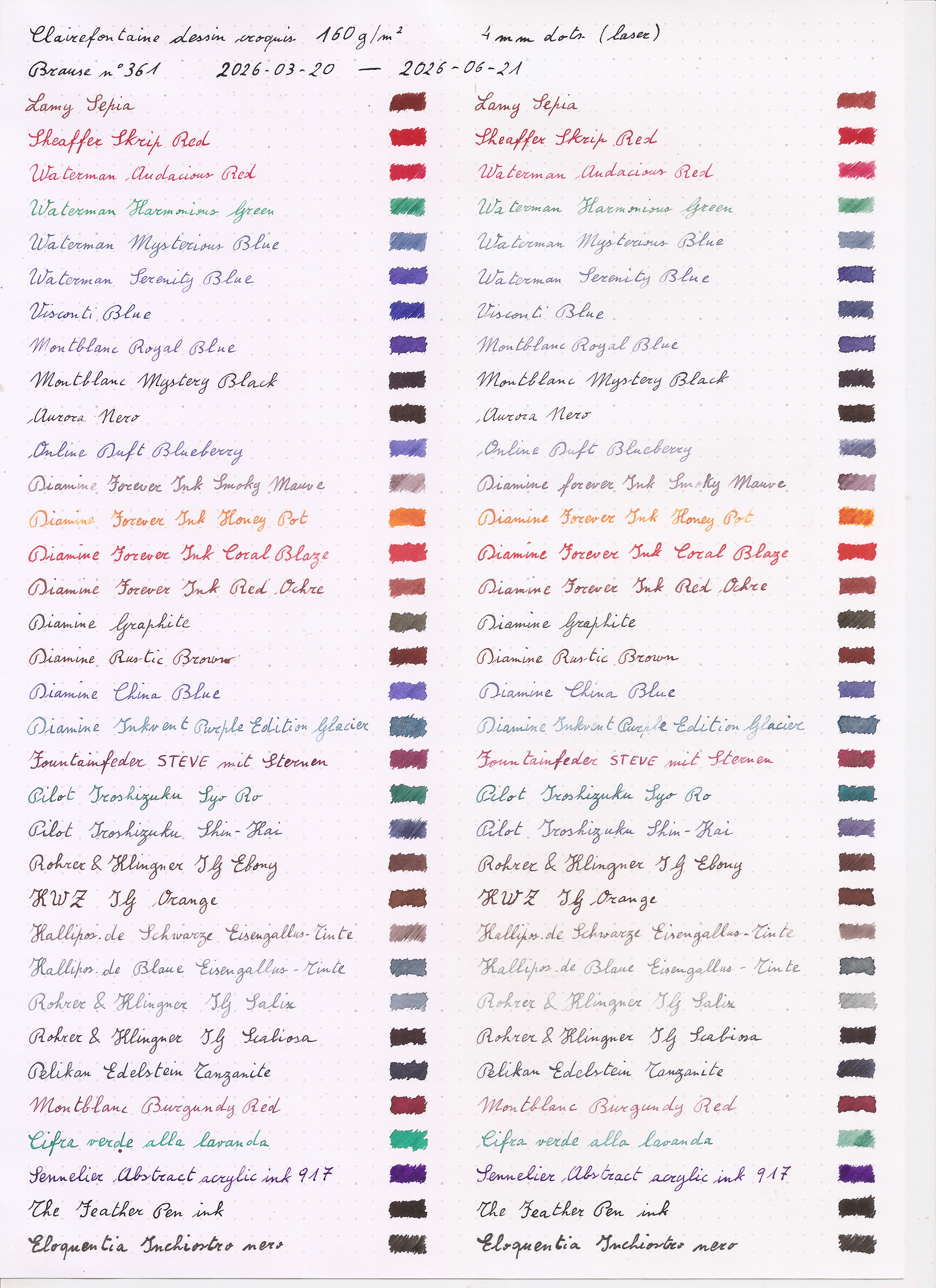
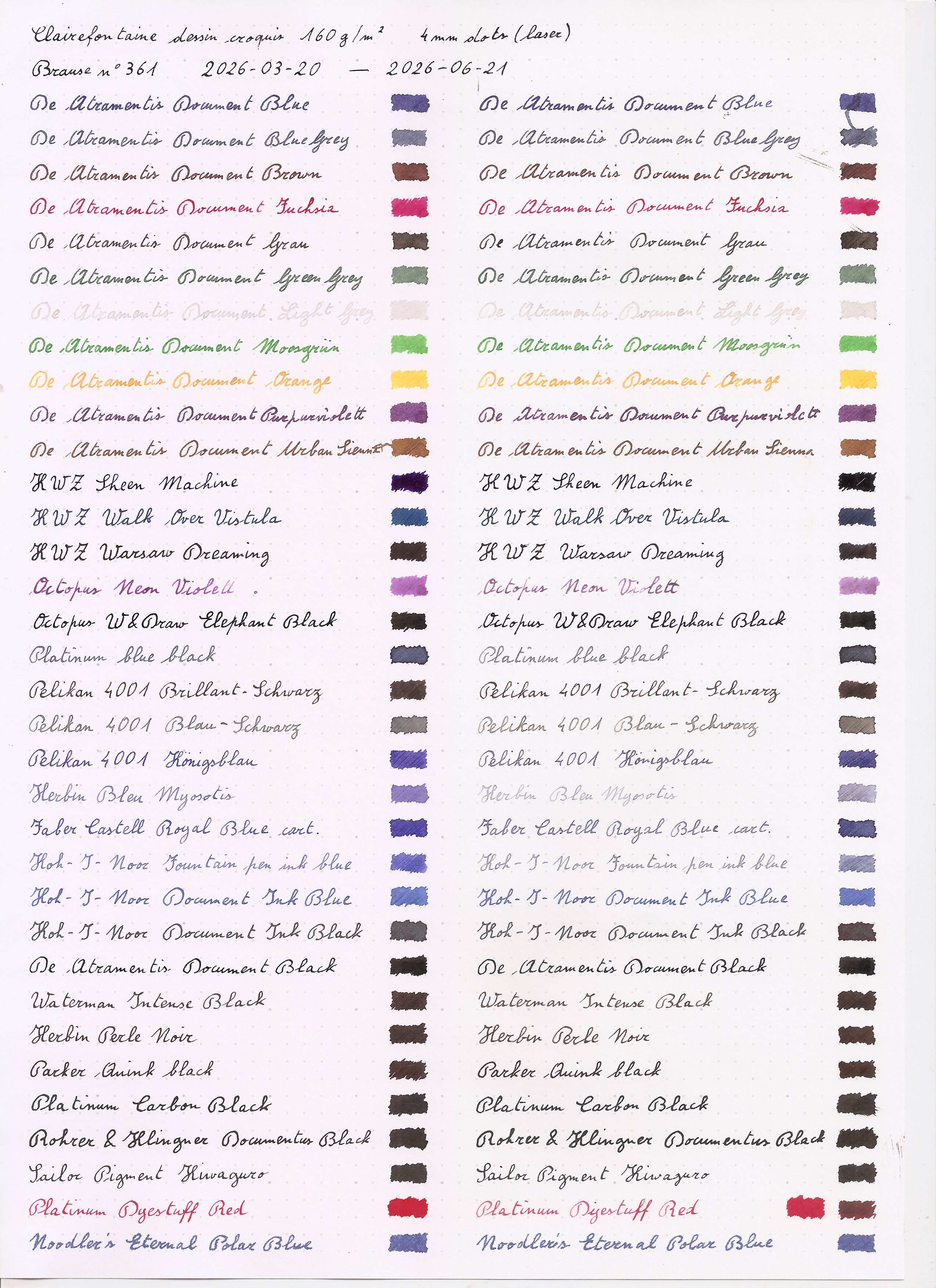 And the full week showed more of that, with a few more inks starting to
show visible change.

 After two weeks the paper had significantly yellowed, something I did
not expect from drawing paper (and which means that I will probably use
a different paper when making similar tests in the future).
As for the inks, there were a couple more inks with visible changes, but
mostly it was more of the same as seen in the previous week.
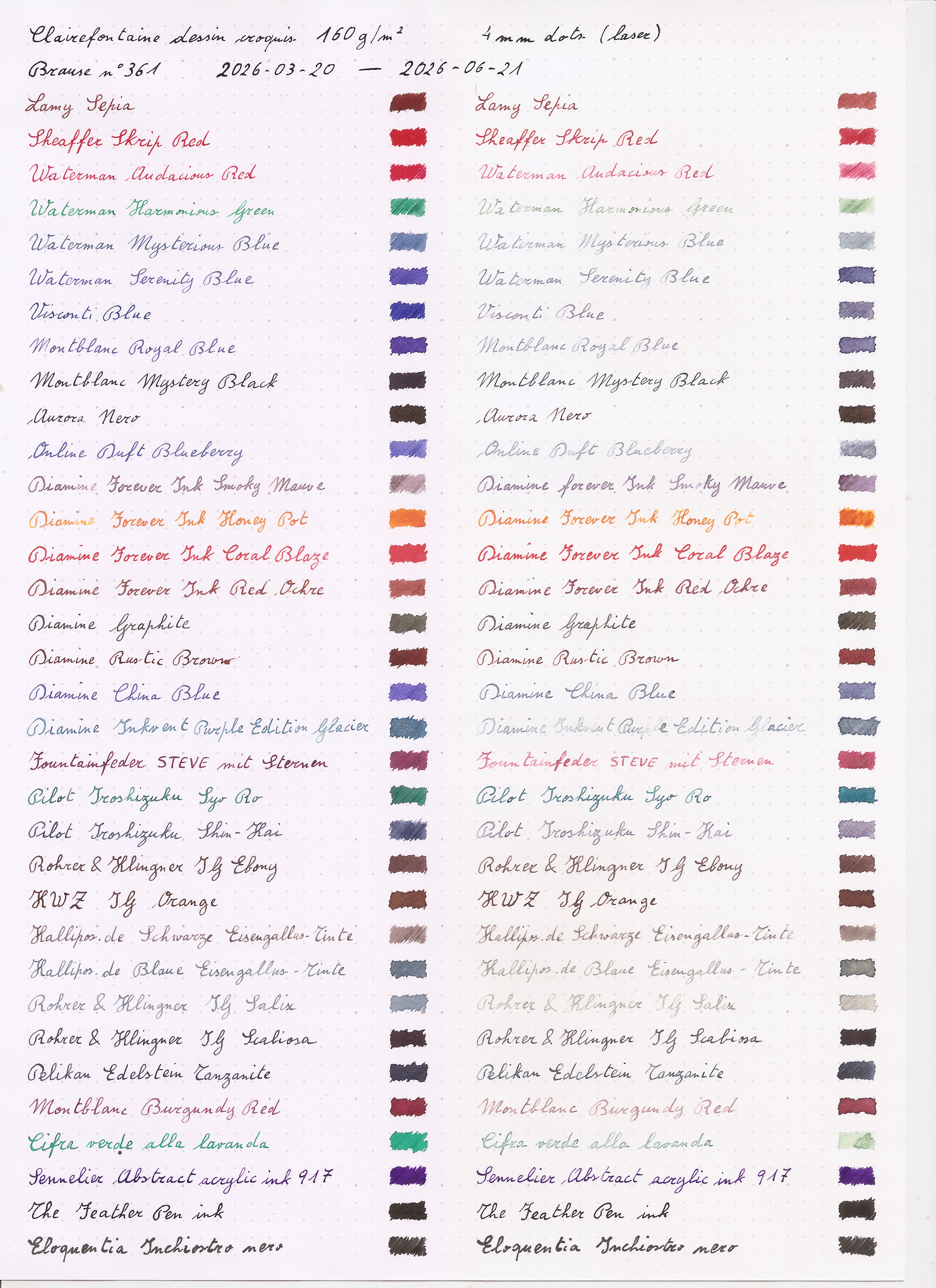
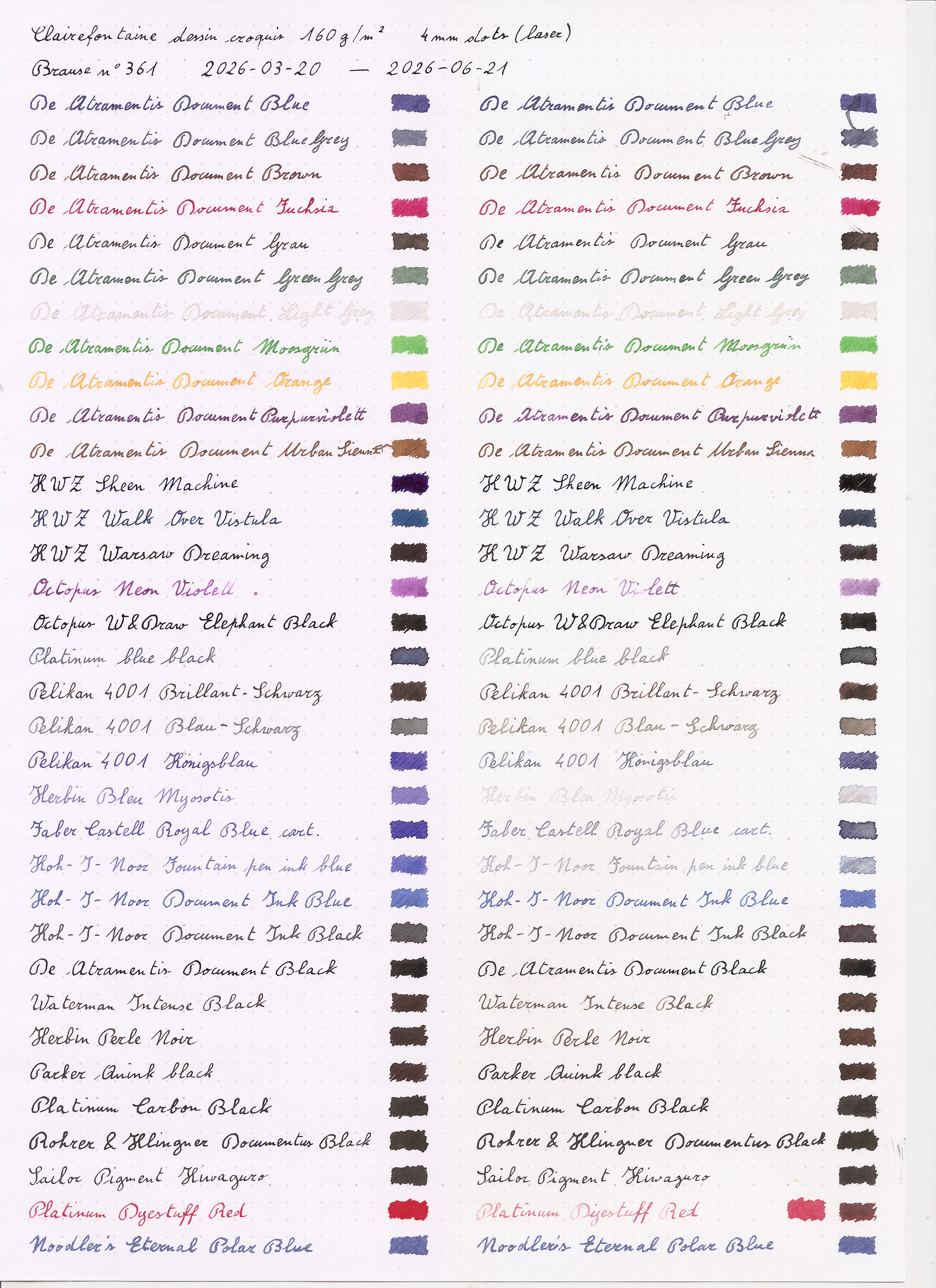 Three weeks started to show changes in the black and most irongall inks, and of course more changes in the even less resistant inks.
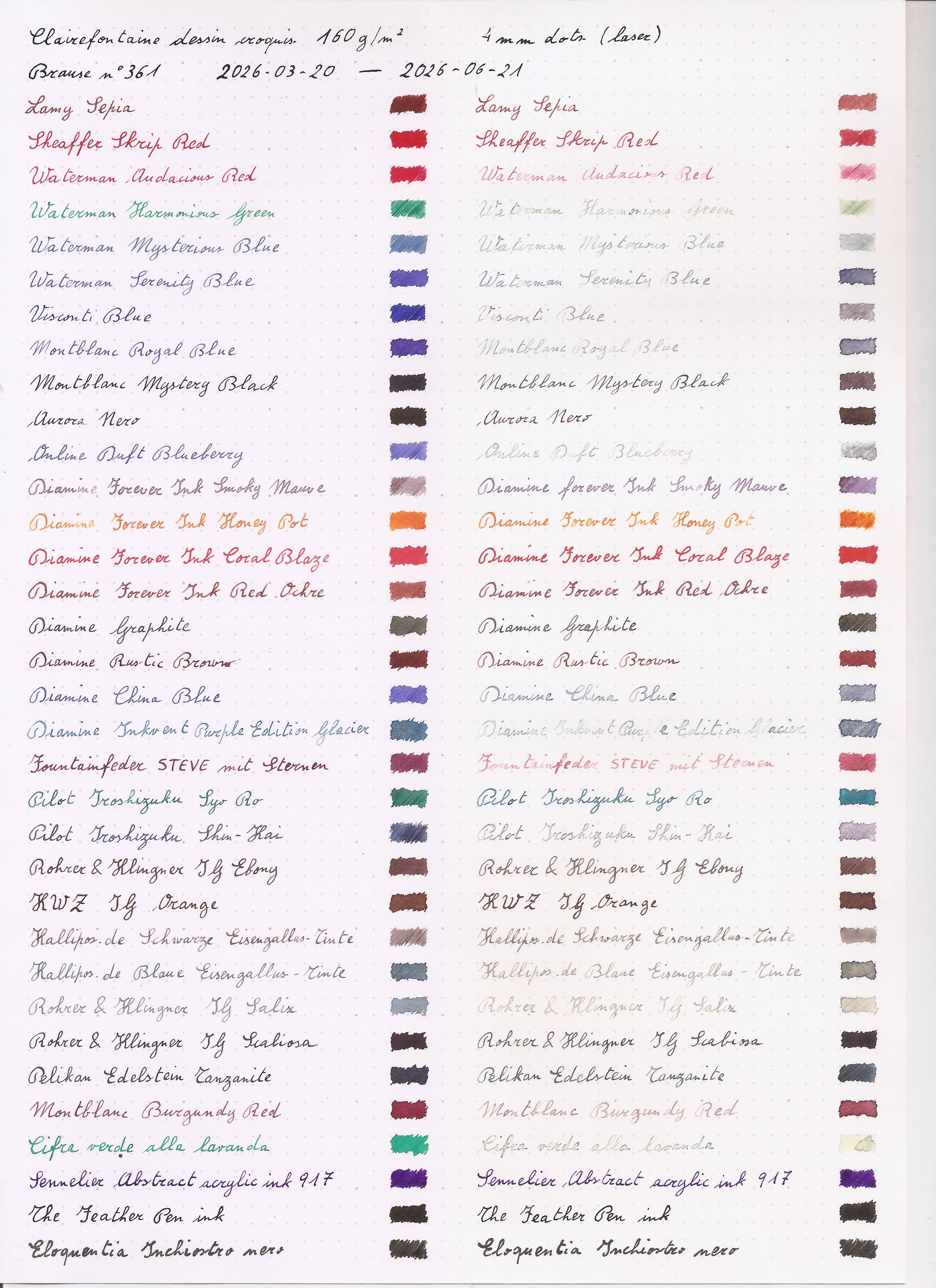
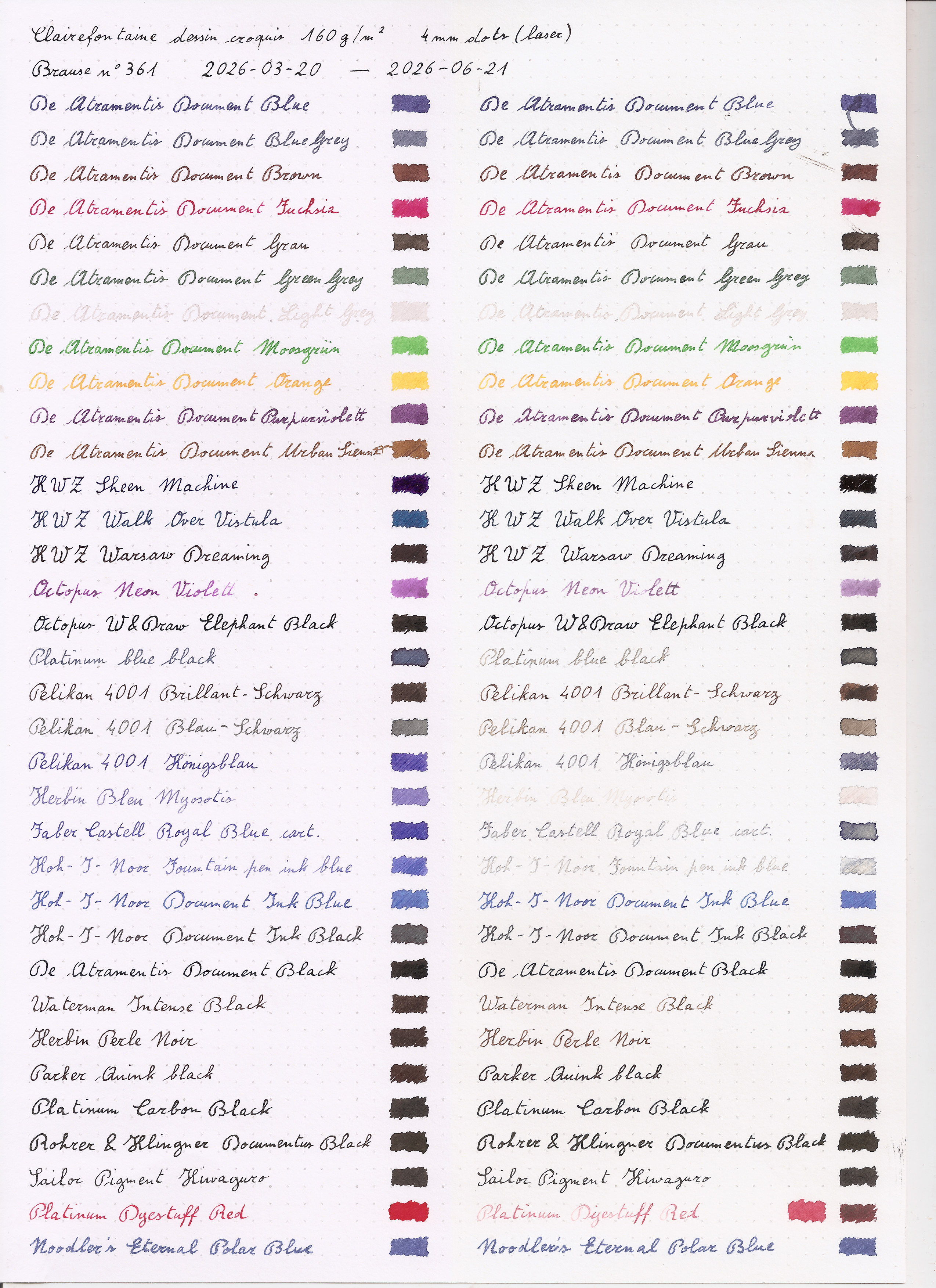 Week four saw a bit more clouds and rain than the first few weeks, and
there weren t big changes, but mostly more of what had already started
to happen earlier.
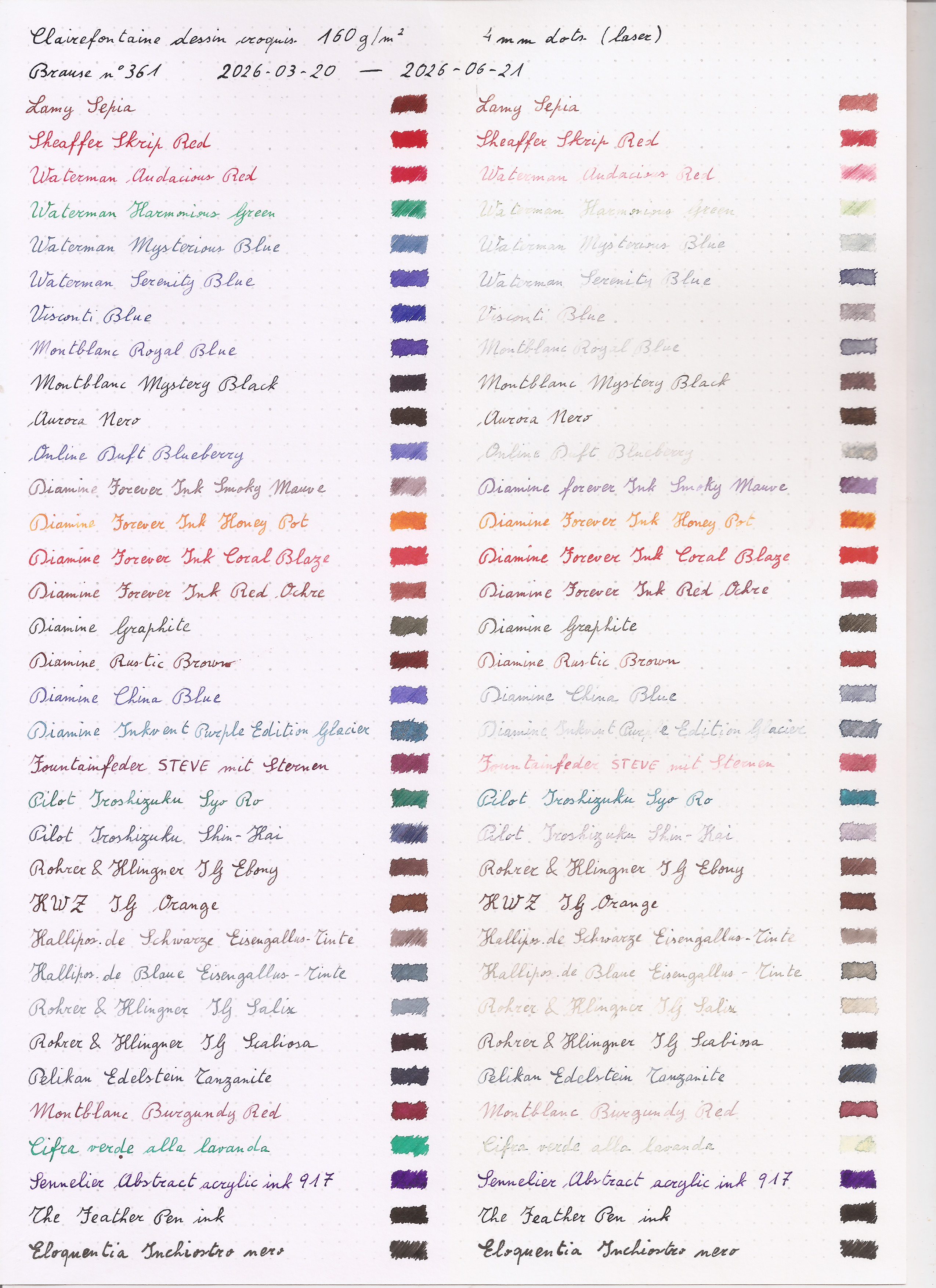
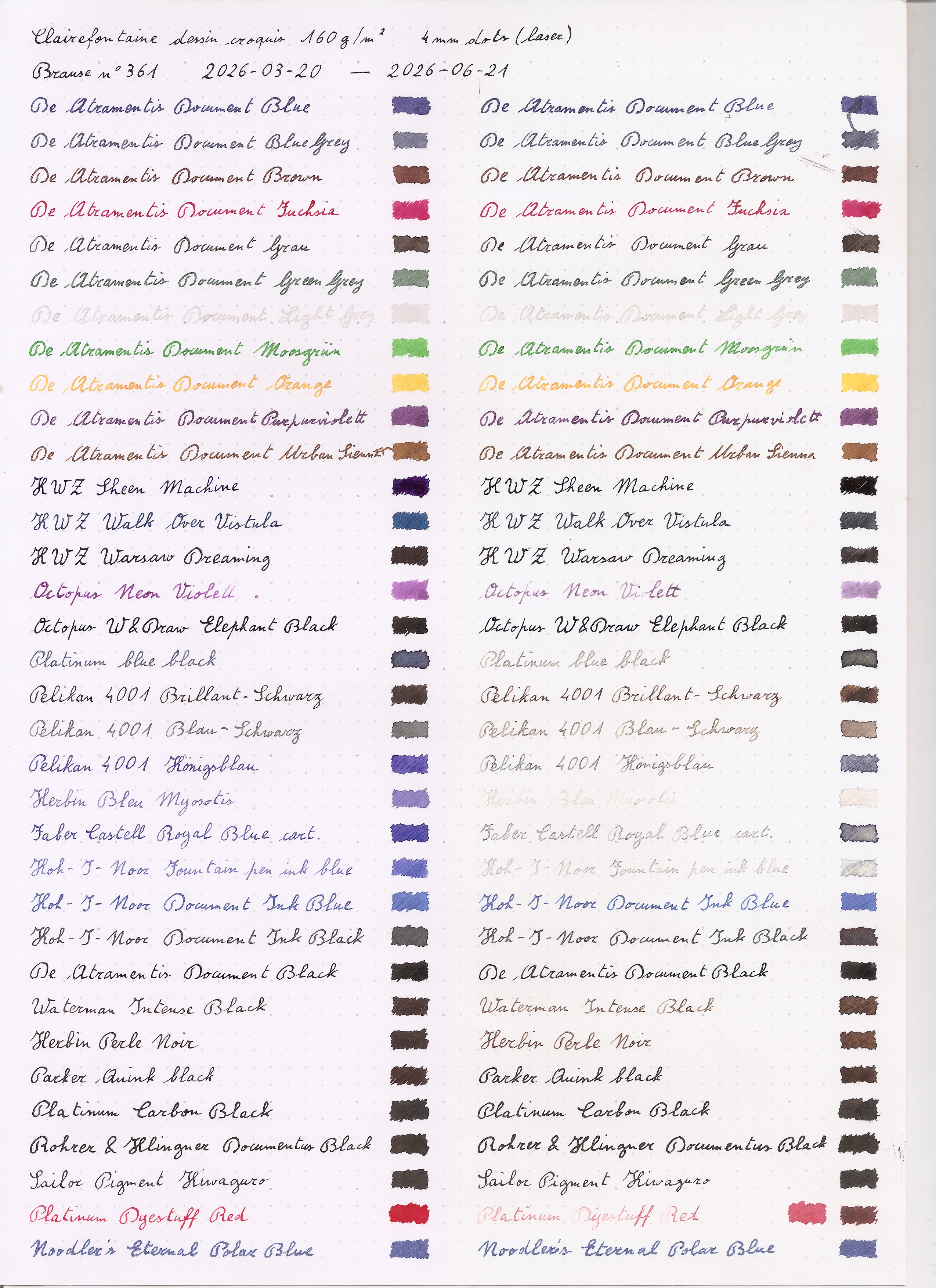 A month didn t change much compared to the four weeks, but I did the
scans for completeness, and from now on I m going to update monthly.

 Huge. Huge. Amazing. It did crash as soon as I tried to actually use the
radio, but after fixing a few dangling bugs in the API surface (and some
assumptions I think some underlying gnuradio driver may be making that I need
to double check in the code), I was able to get a super solid stream of
broadcast fm radio, with gqrx being none the wiser. It thought it was
just talking to the device it knows as
 Nice. I can t wait to try this with the rest of the rtl-sdr based tools I like
having around using my
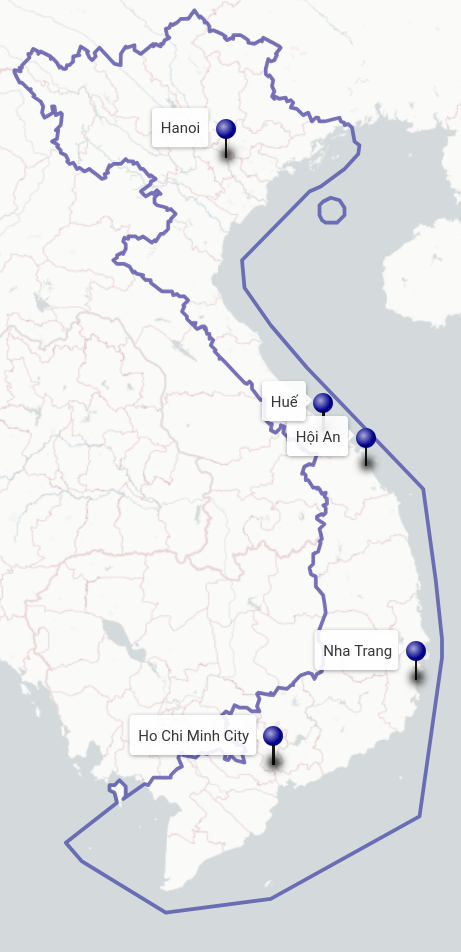 A map of Vietnam with points of places we went to labeled. CARTO MAPTILER OPENSTREETMAP
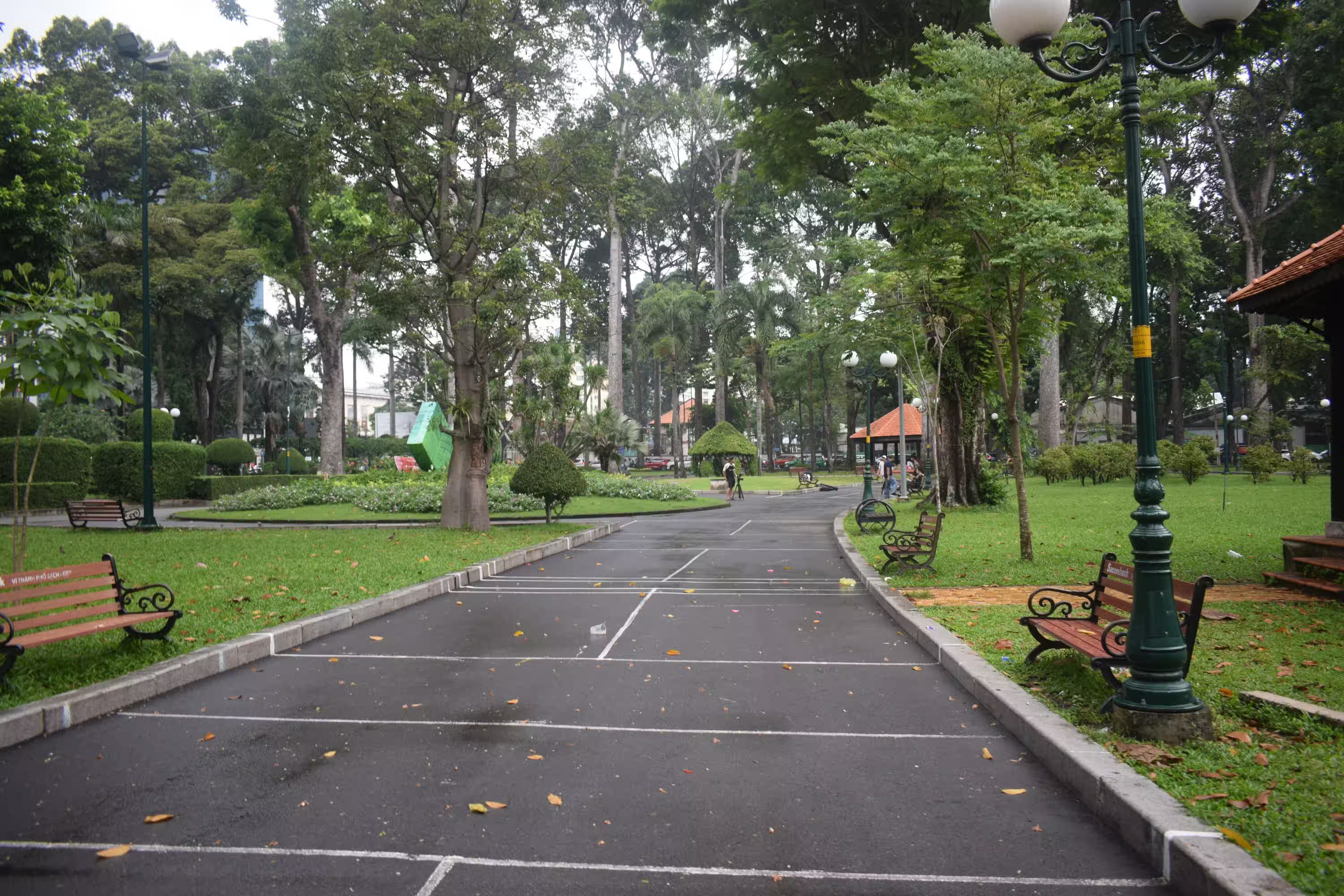 A picture of the park we roamed around in Ho Chi Minh City. Photo by Ravi Dwivedi, released under CC-BY-SA 4.0.
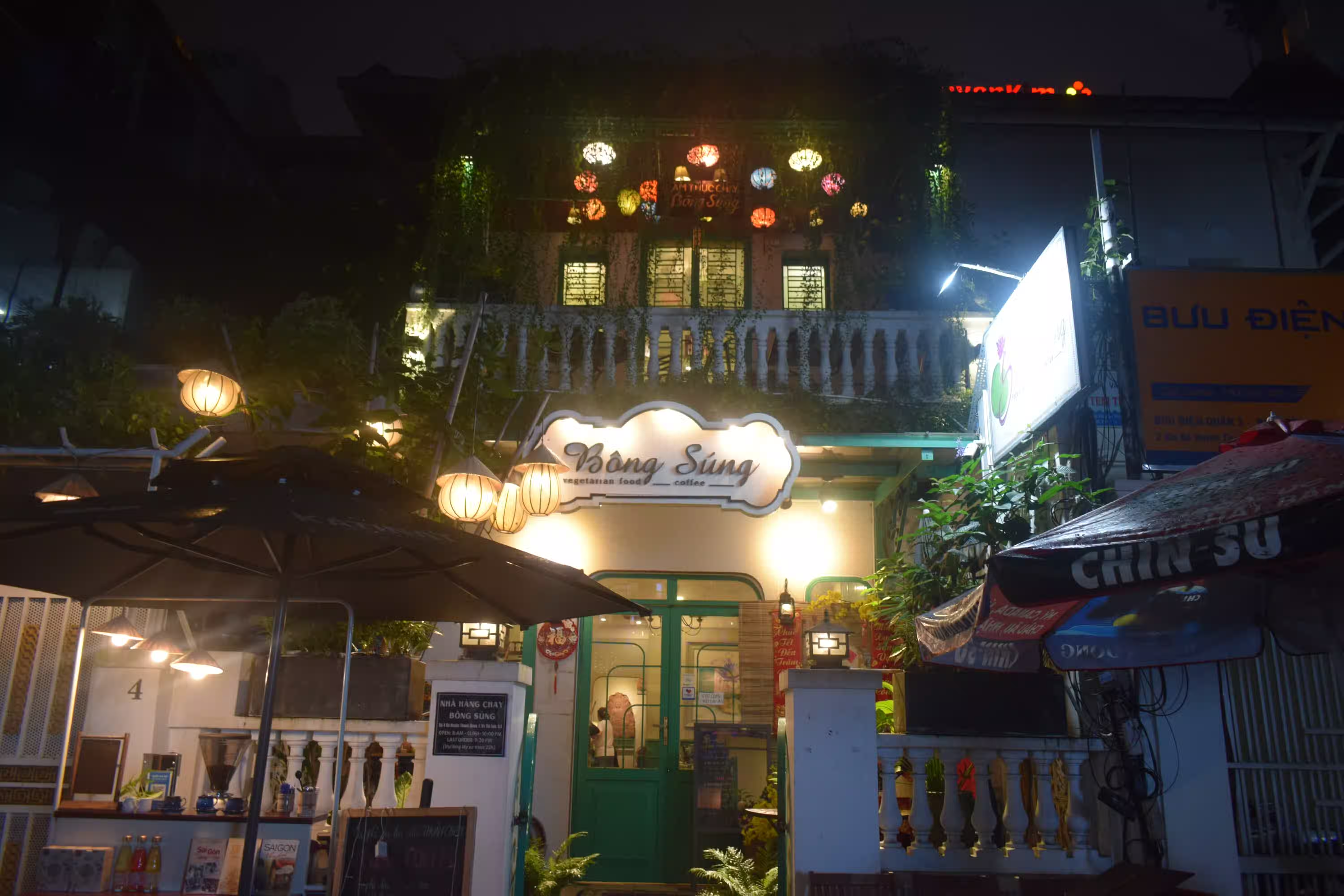 This is the restaurant Badri s friend took us to. Photo by Ravi Dwivedi, released under CC-BY-SA 4.0.
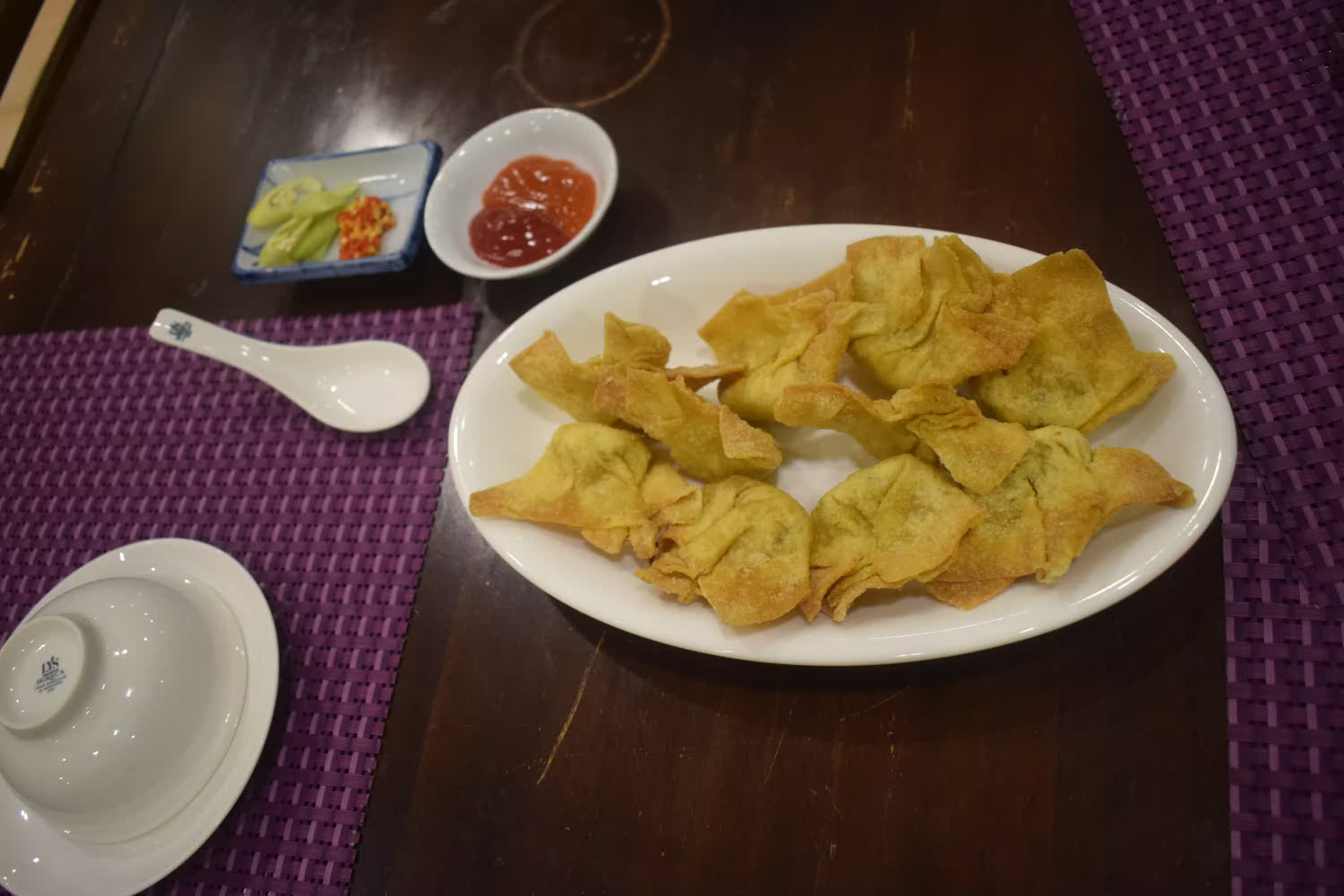 One of the dishes we had in the restaurant. This one was especially tasty. Photo by Ravi Dwivedi, released under CC-BY-SA 4.0.
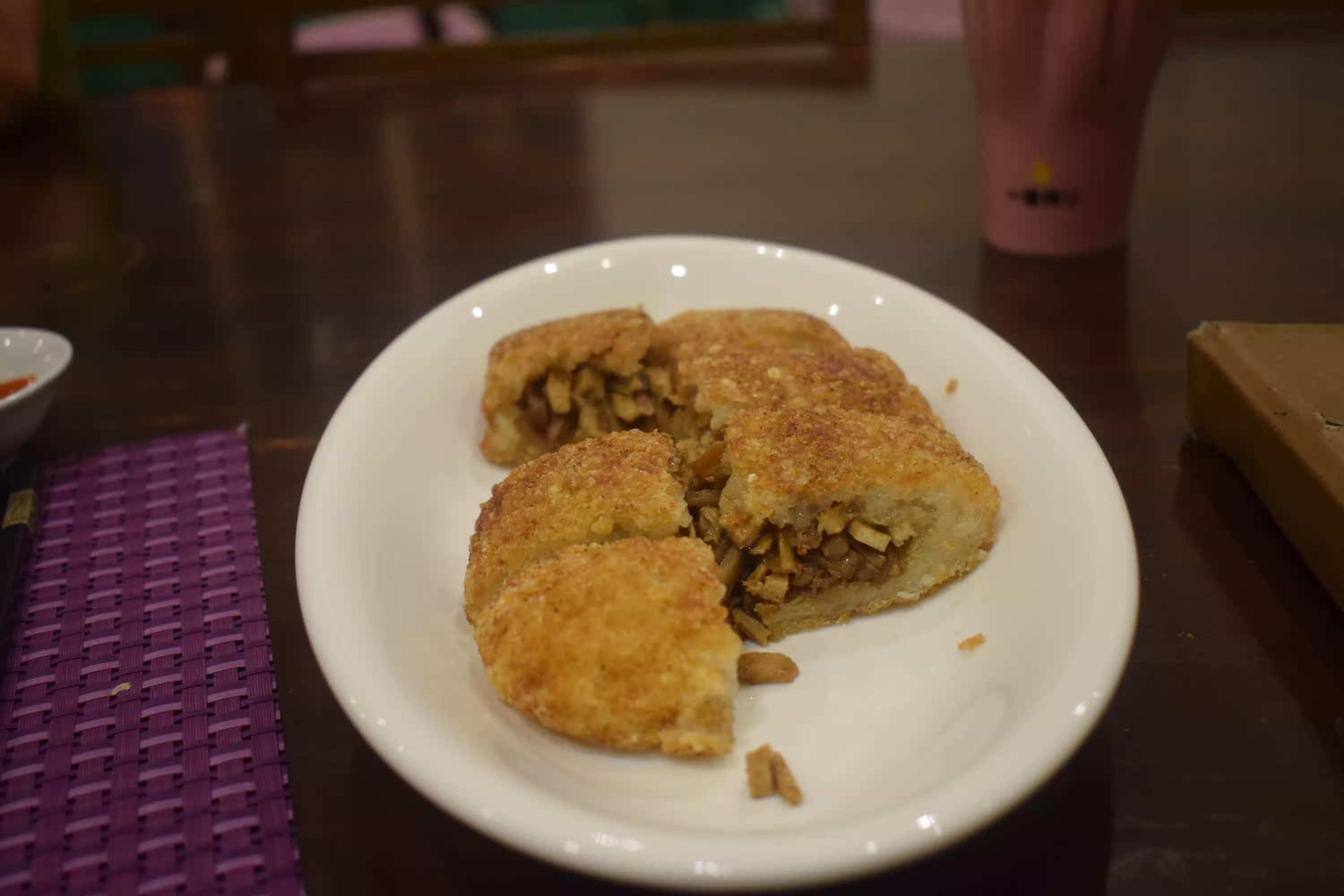 One of the dishes we had in the restaurant. Photo by Ravi Dwivedi, released under CC-BY-SA 4.0.
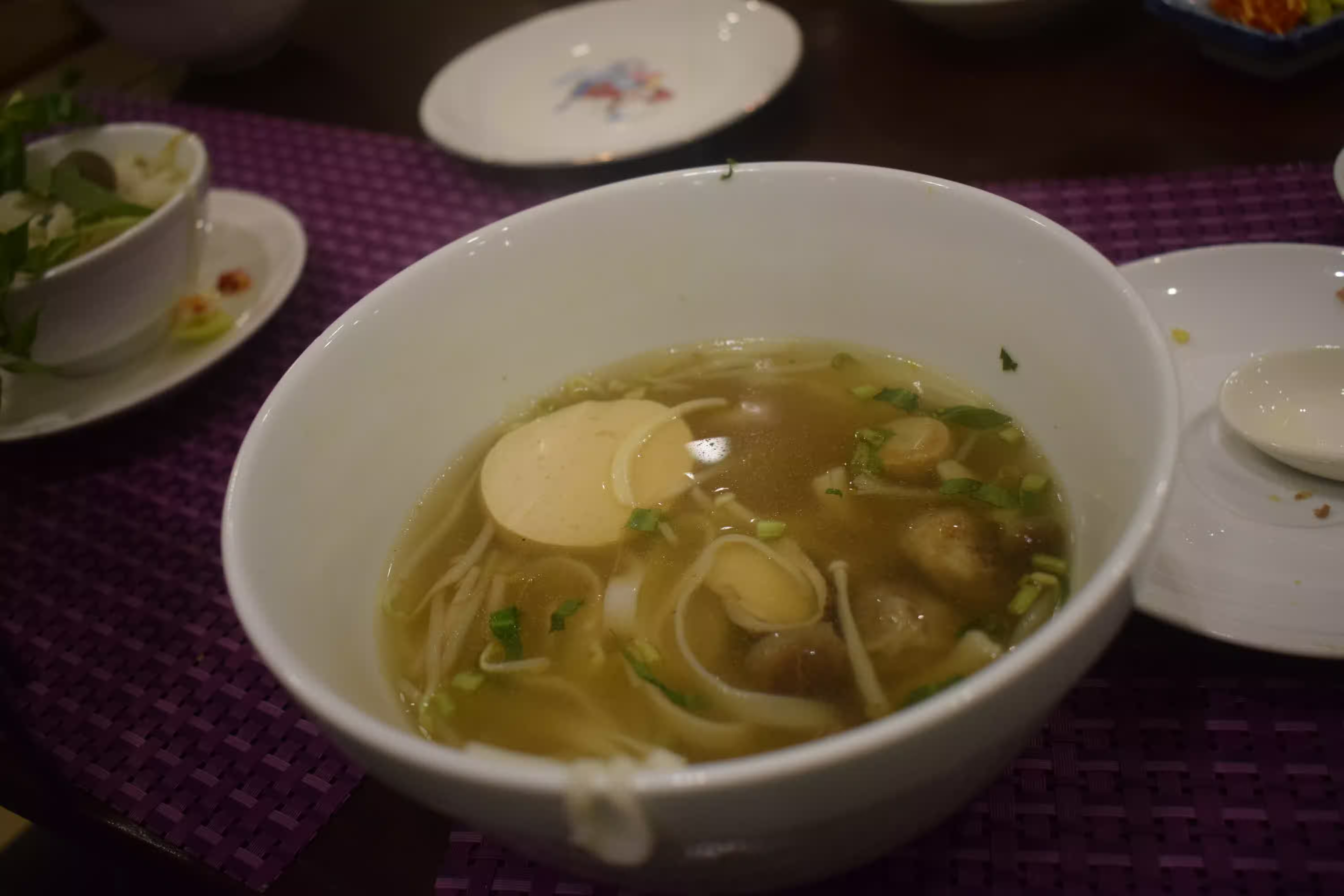 These noodles are called Pho and are very popular in Vietnam. Photo by Ravi Dwivedi, released under CC-BY-SA 4.0.
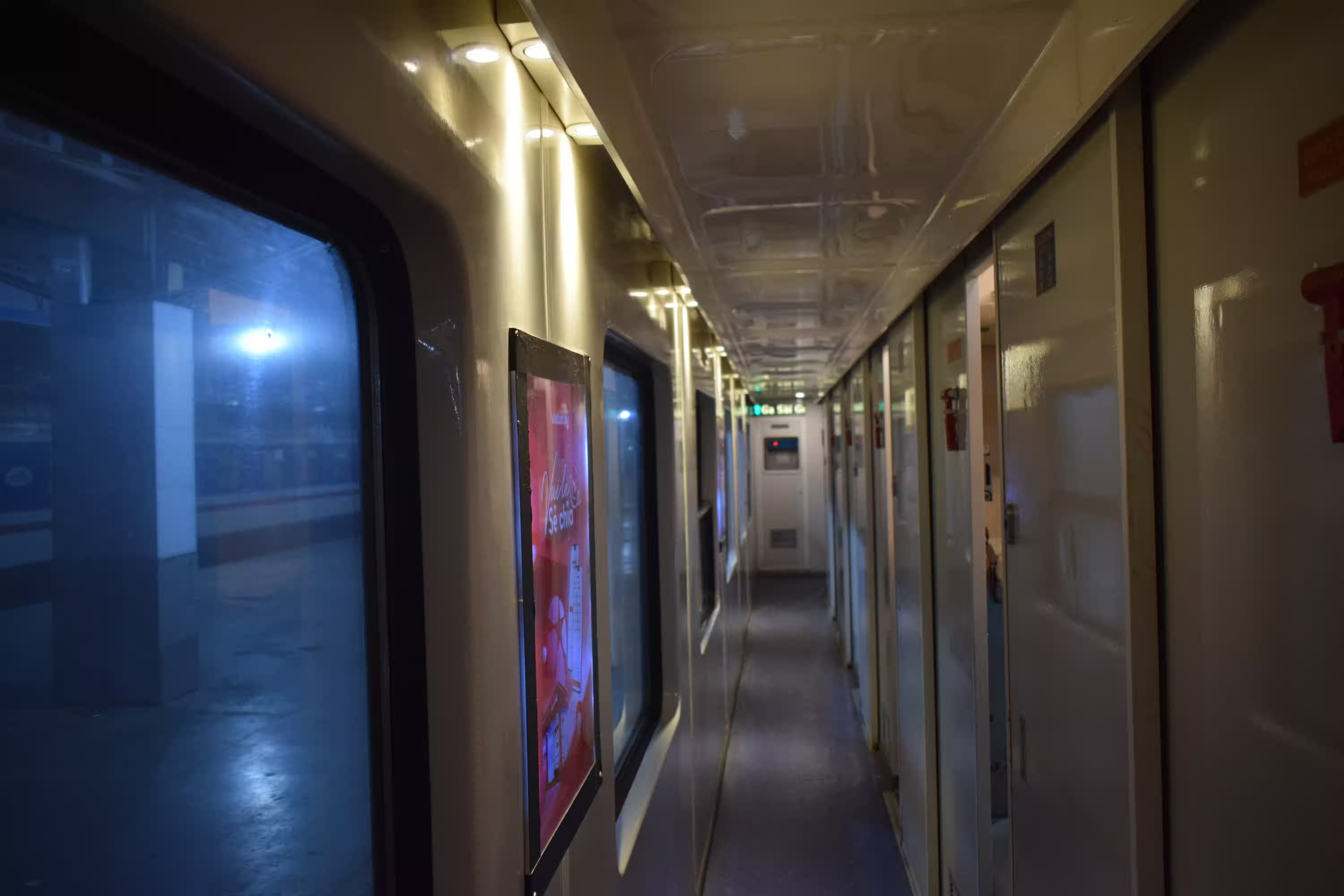 Interior of our train coach. Trains in Vietnam don t have side berths, unlike India. Photo by Ravi Dwivedi, released under CC-BY-SA 4.0.
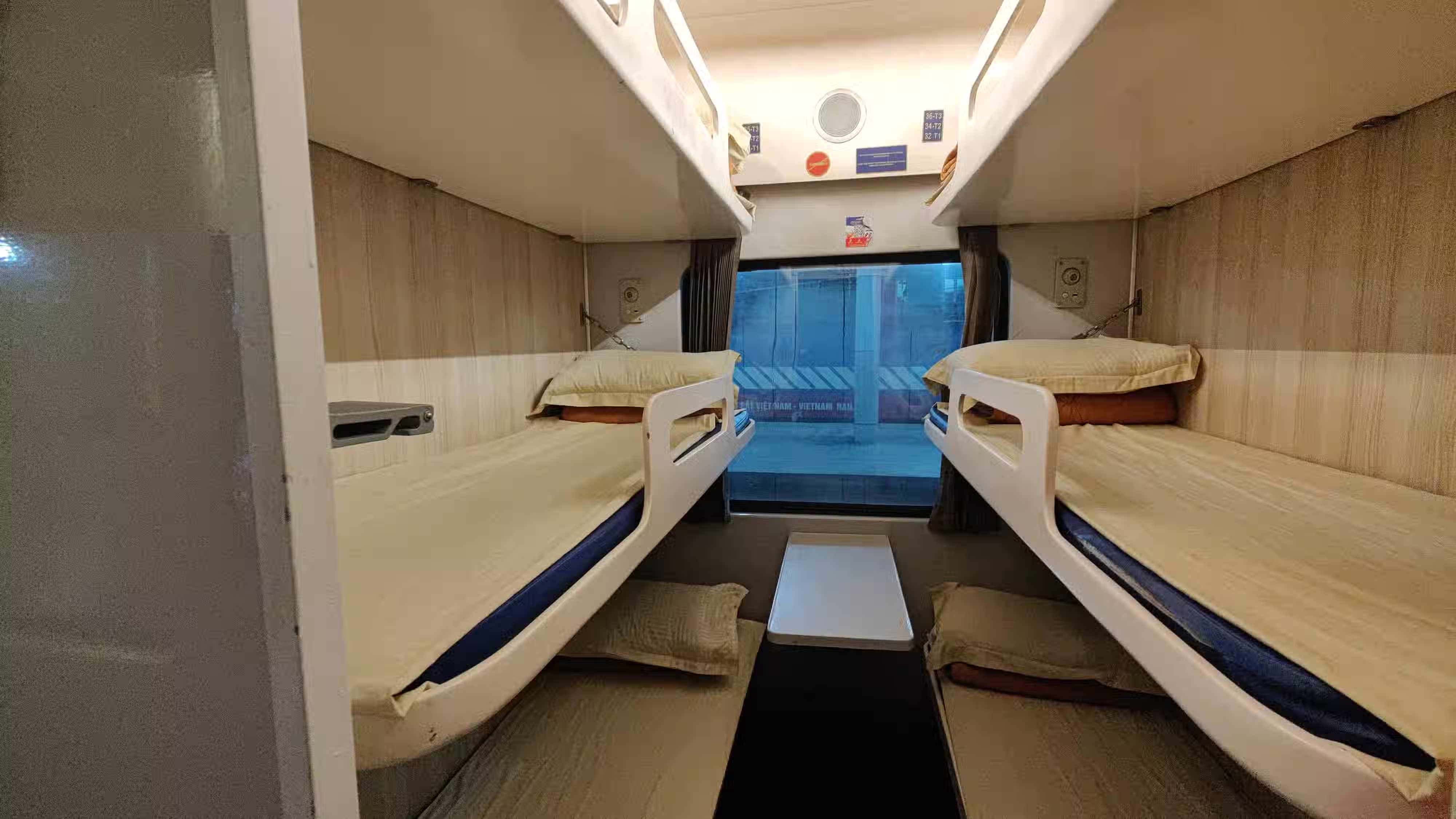 A picture of the berths from our coach. It had three tiers, similar to a 3 AC coach in Indian trains. Photo by Ravi Dwivedi, released under CC-BY-SA 4.0.
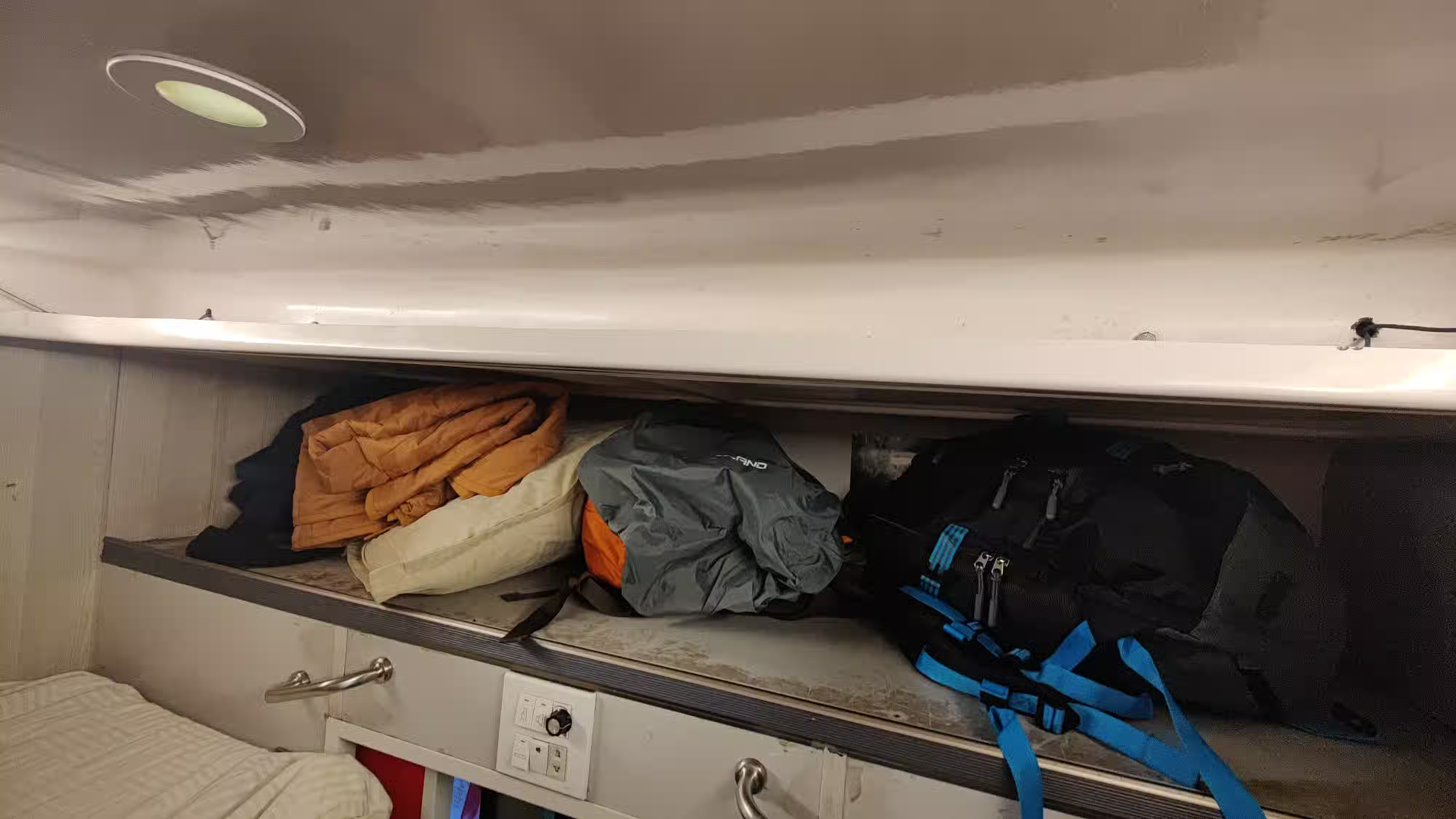 The train had a cabin to put the bags in. Photo by Ravi Dwivedi, released under CC-BY-SA 4.0.
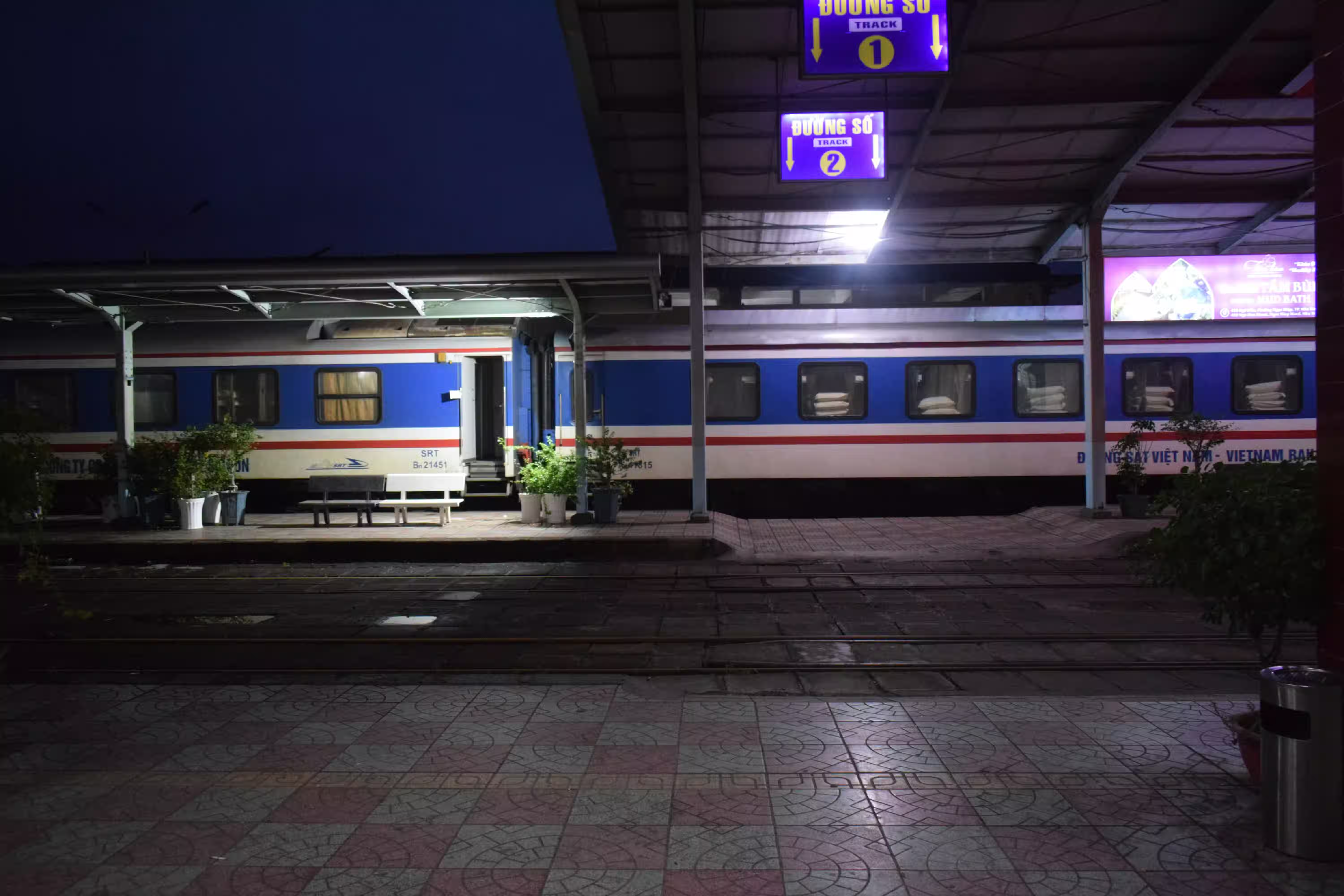 Nha Trang train station. Photo by Ravi Dwivedi, released under CC-BY-SA 4.0.
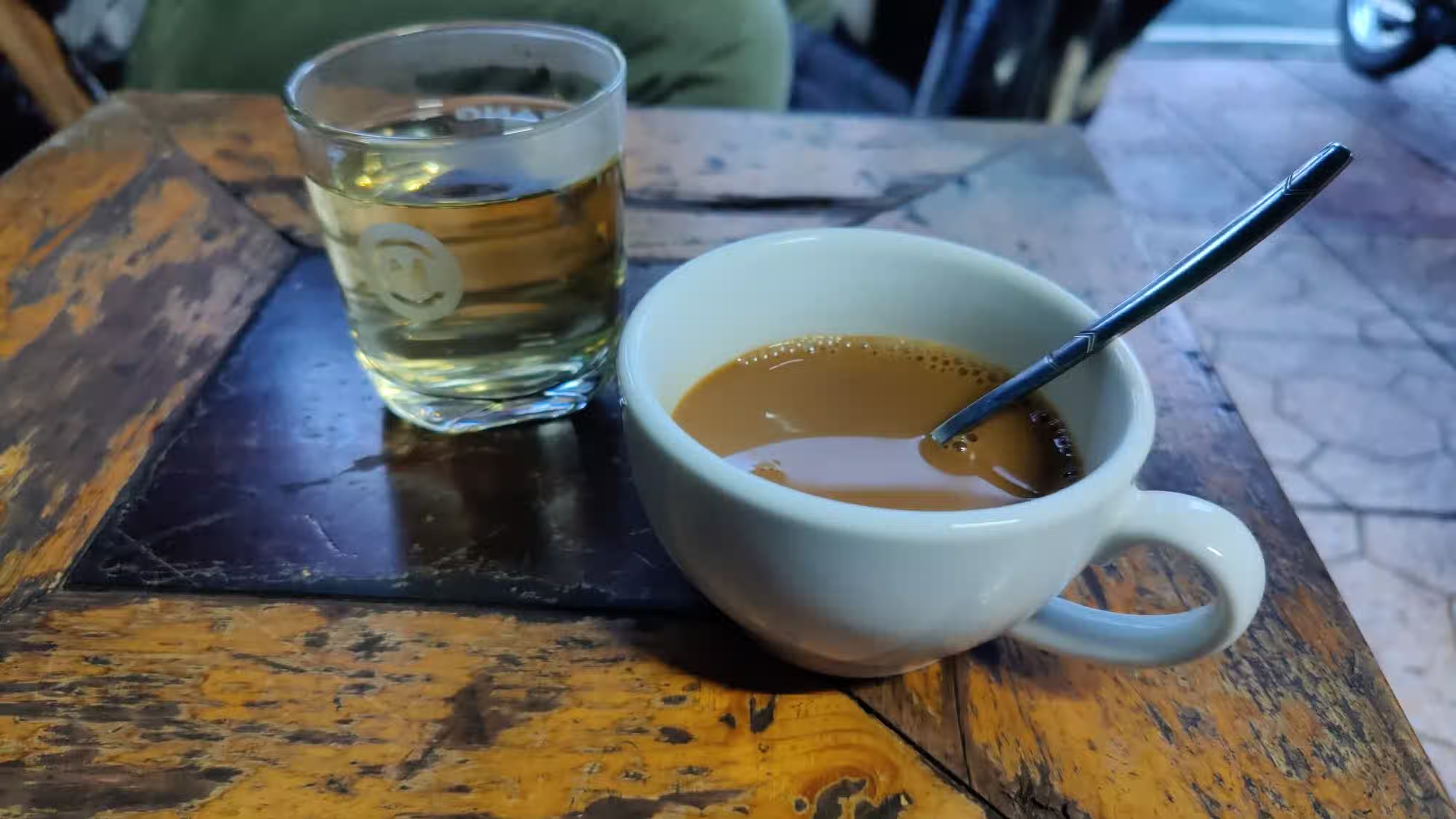 I got a complimentary cup of green tea along with coffee in Nha Trang. In this trip, Badri and I found out that this is customary at local places in Vietnam. Photo by Ravi Dwivedi, released under CC-BY-SA 4.0.
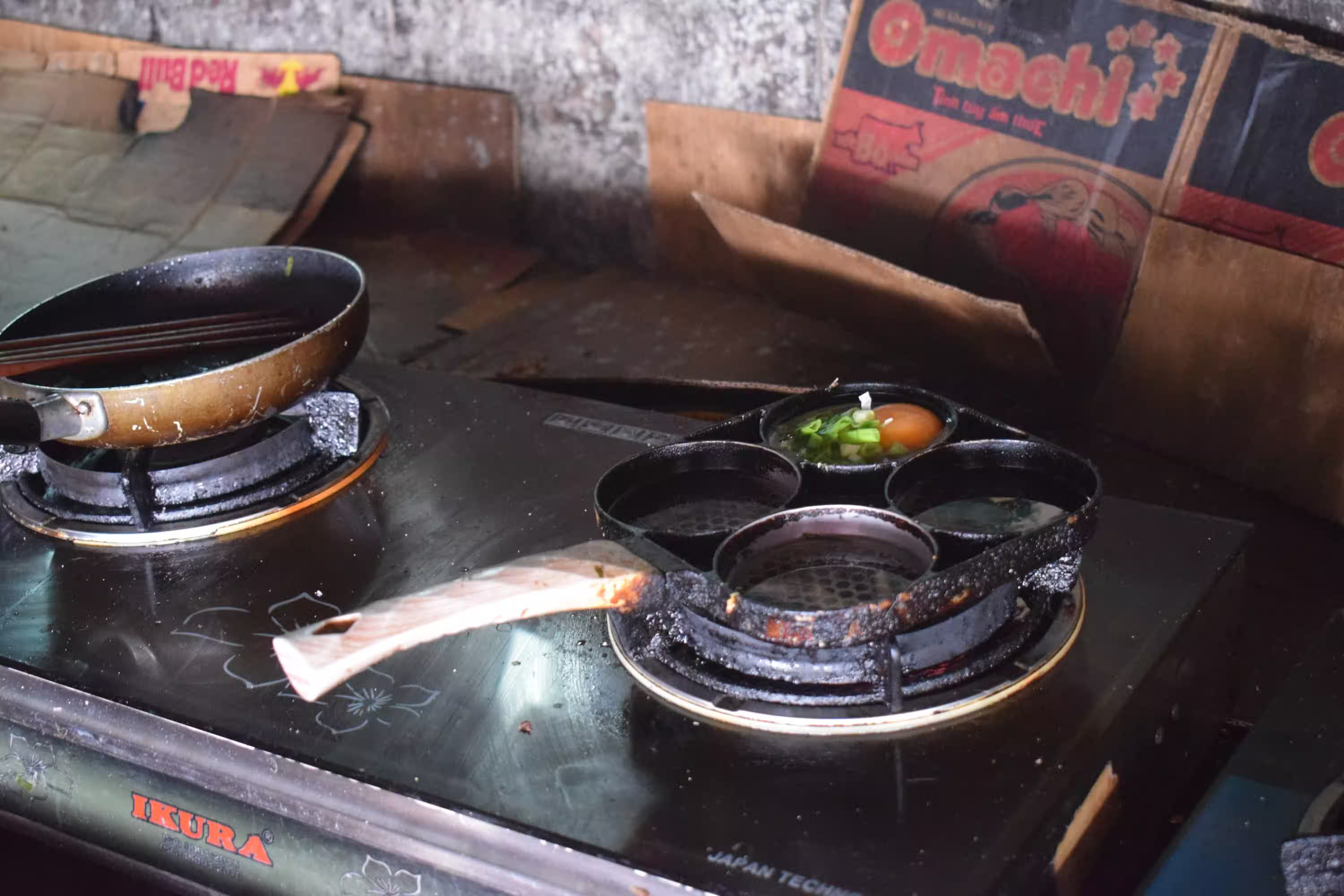 Eggs being cooked on a pan for my order. Photo by Ravi Dwivedi, released under CC-BY-SA 4.0.
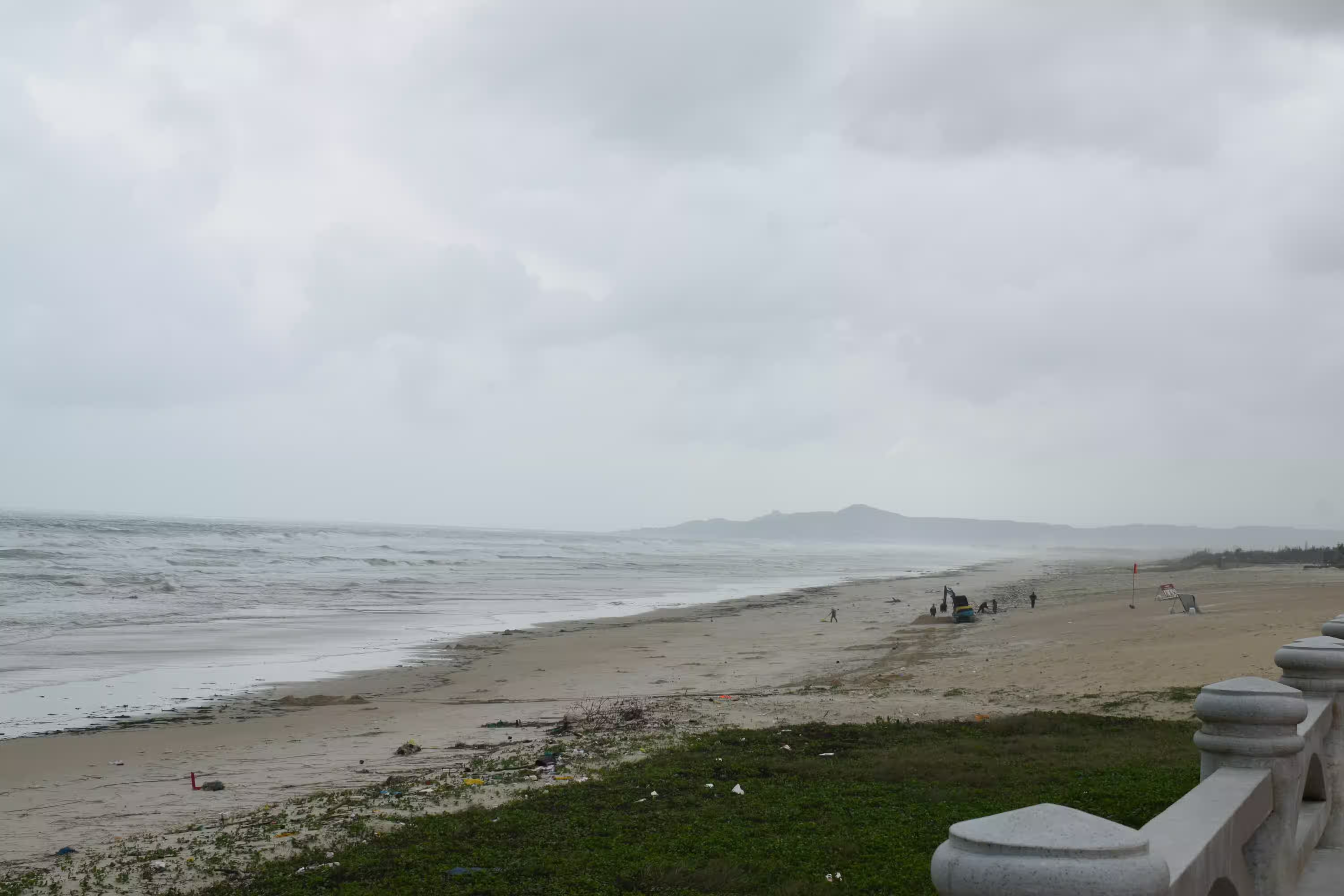 The beach we went to in Nha Trang. Photo by Ravi Dwivedi, released under CC-BY-SA 4.0.
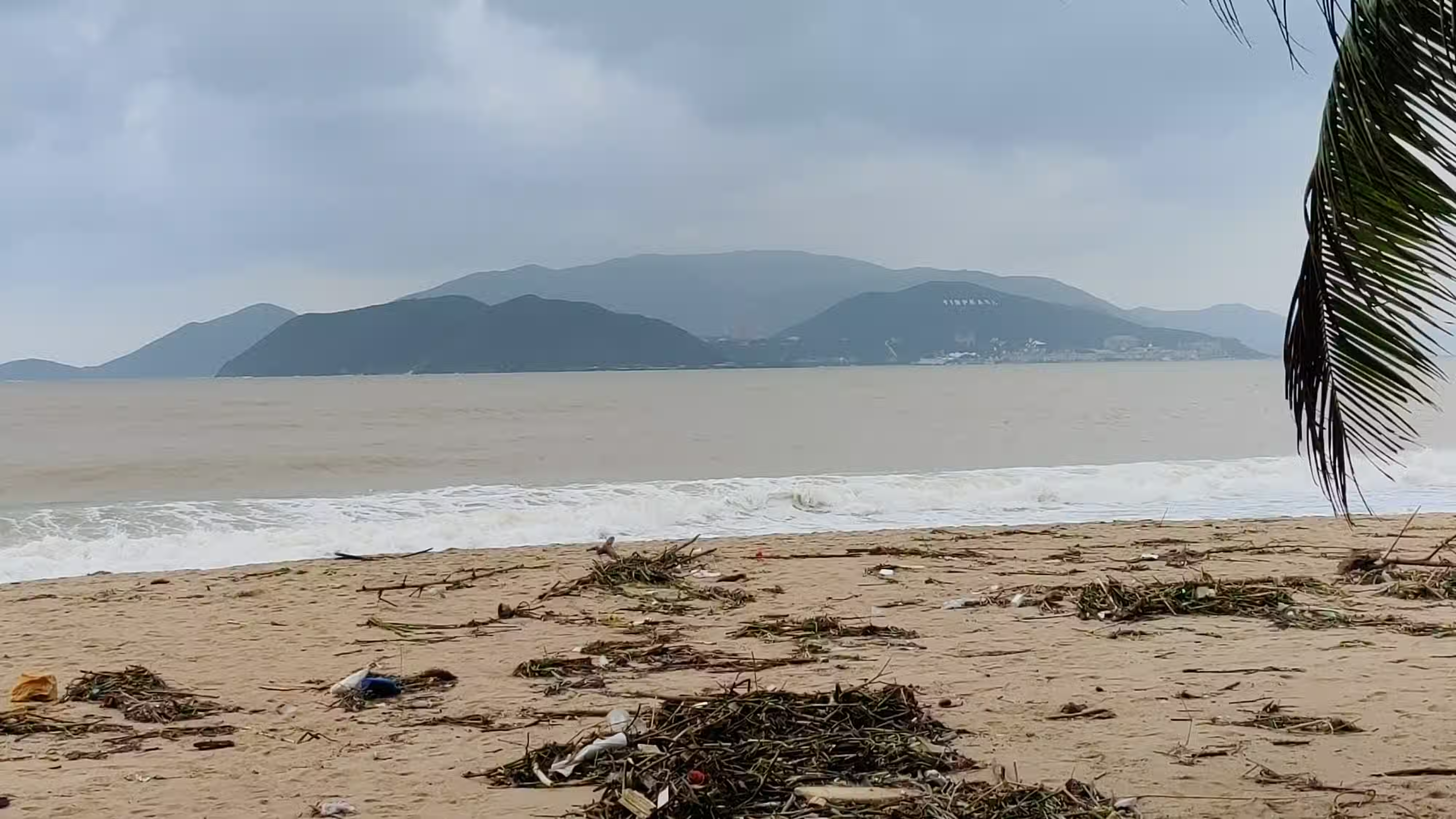 This one was shot in the city center. In this trip, Badri and I found out that this is customary at local places in Vietnam. Photo by Ravi Dwivedi, released under CC-BY-SA 4.0.
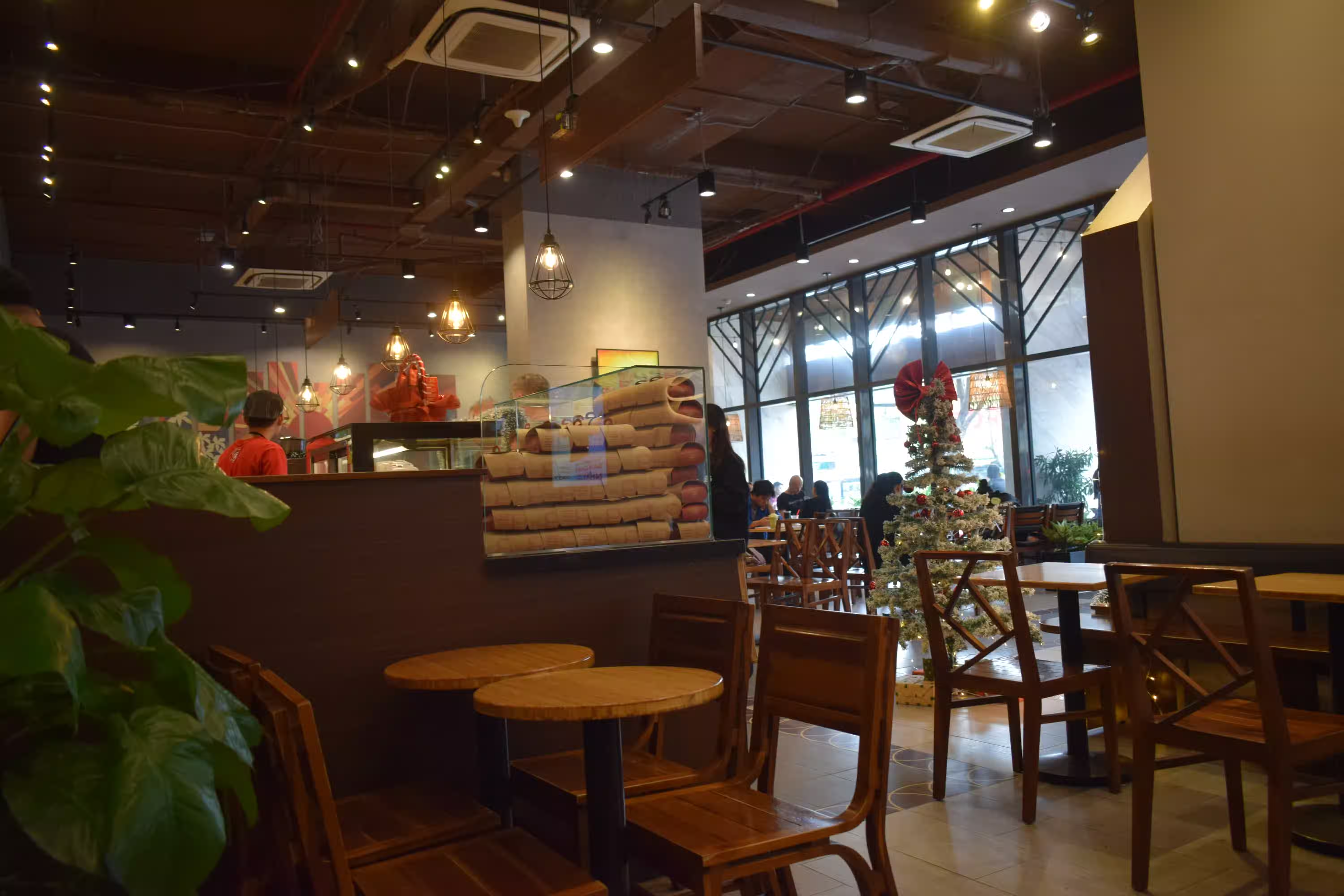 Inside a Highlands Coffee cafe in Nha Trang. Photo by Ravi Dwivedi, released under CC-BY-SA 4.0.
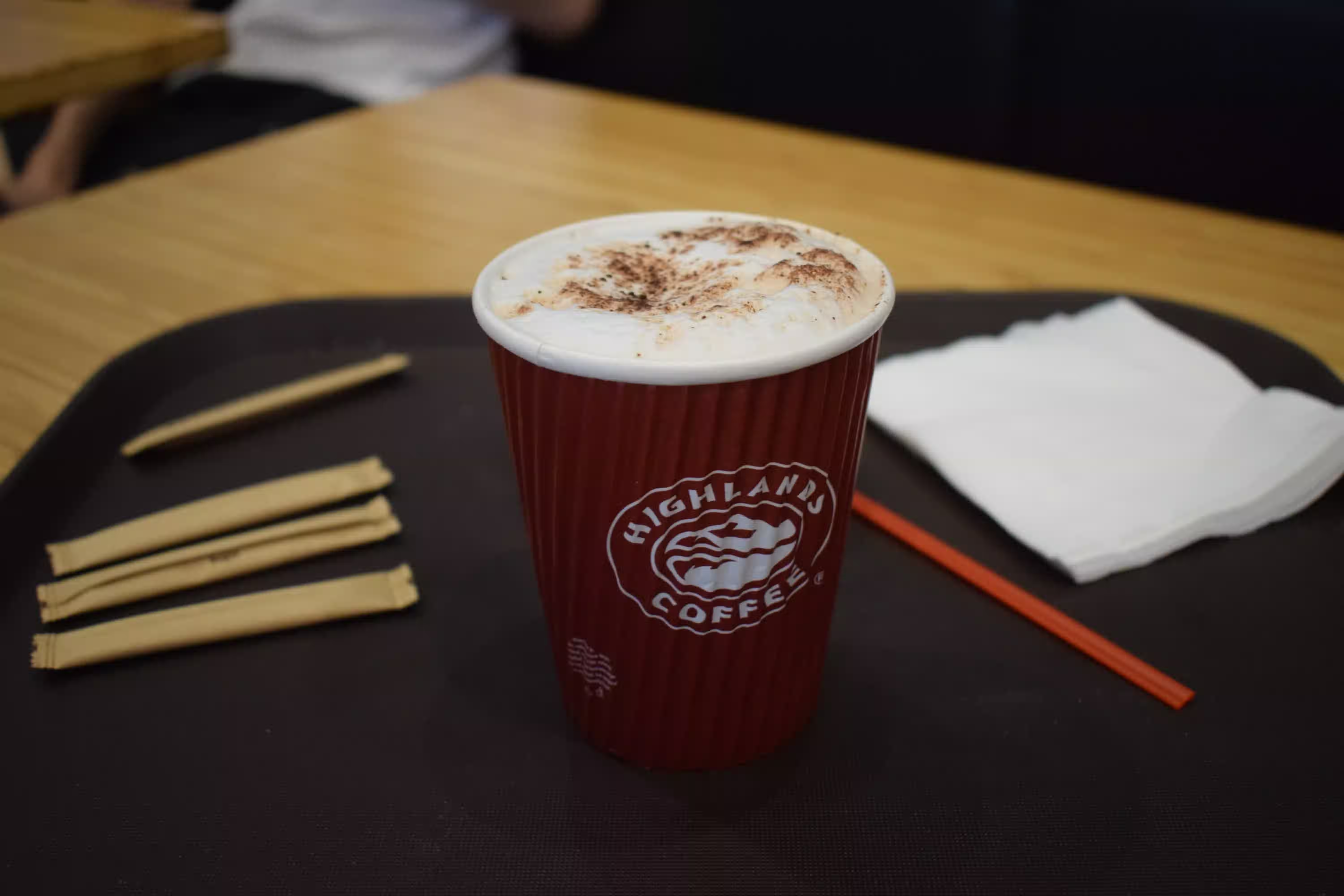 A coffee I got from Highlands Coffee in Nha Trang. Photo by Ravi Dwivedi, released under CC-BY-SA 4.0.
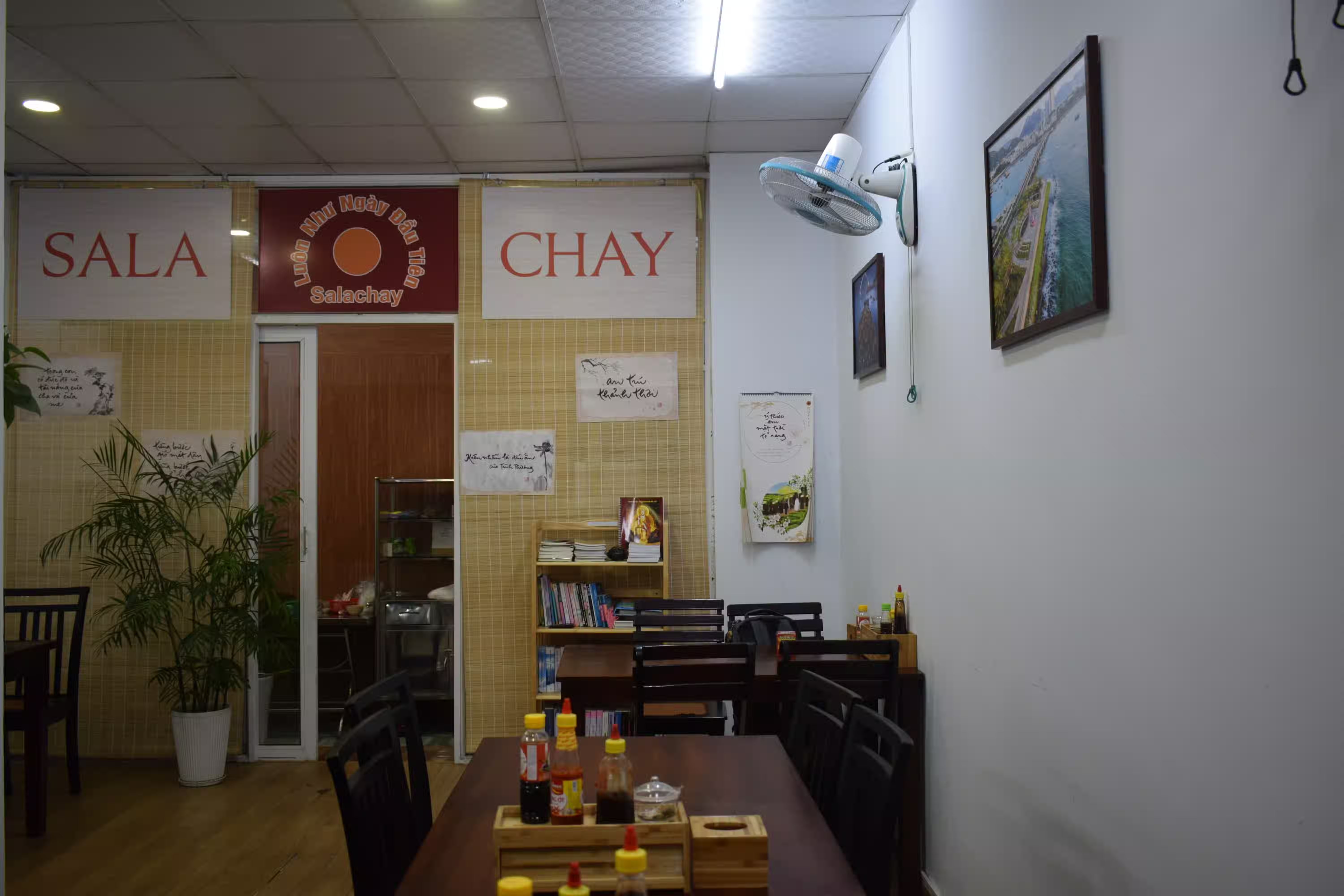 The restaurant we went to in Nha Trang. The word Chay in the name means it was a vegan restaurant. Photo by Ravi Dwivedi, released under CC-BY-SA 4.0.
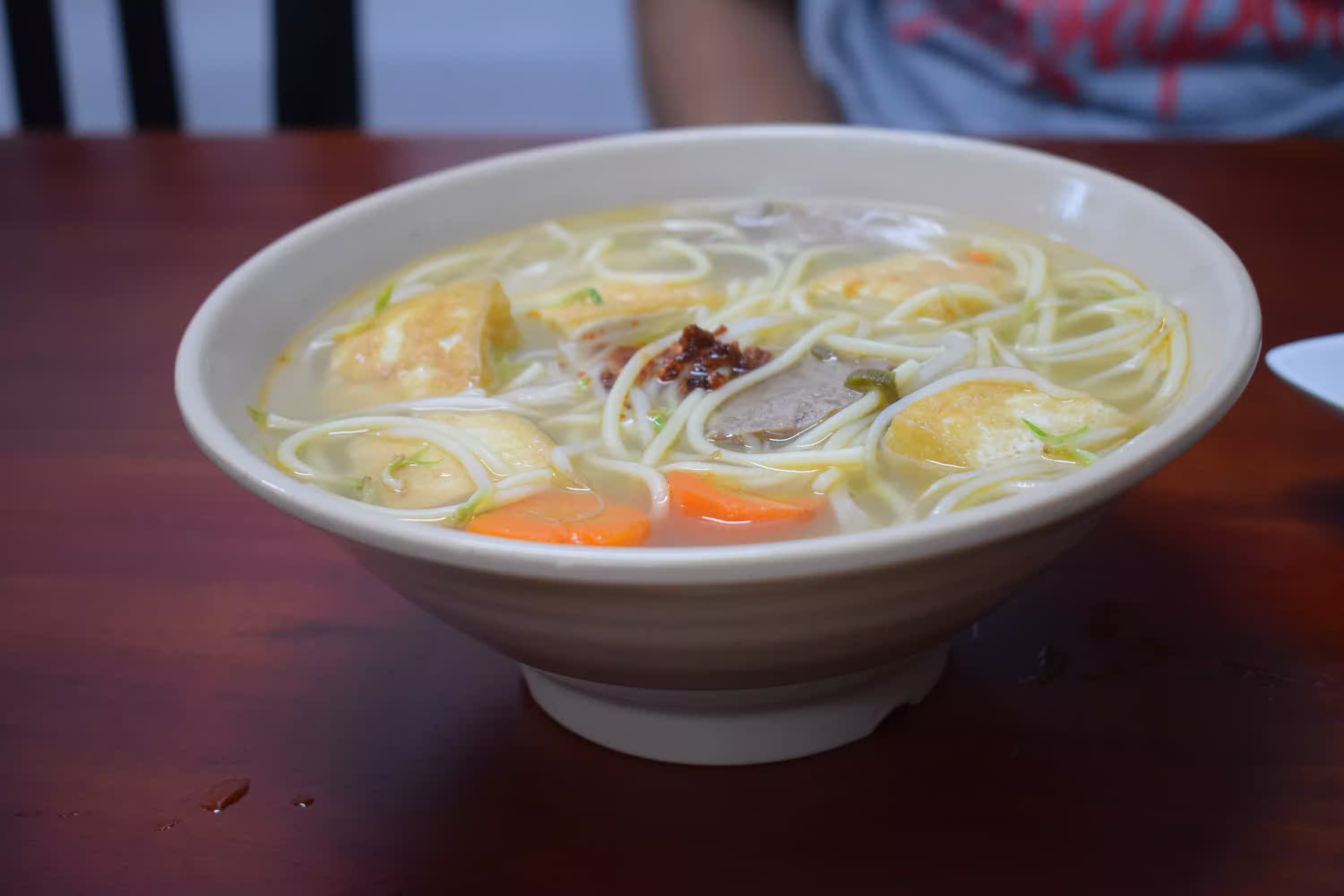 Soupy noodles we got at that restaurant. Photo by Ravi Dwivedi, released under CC-BY-SA 4.0.
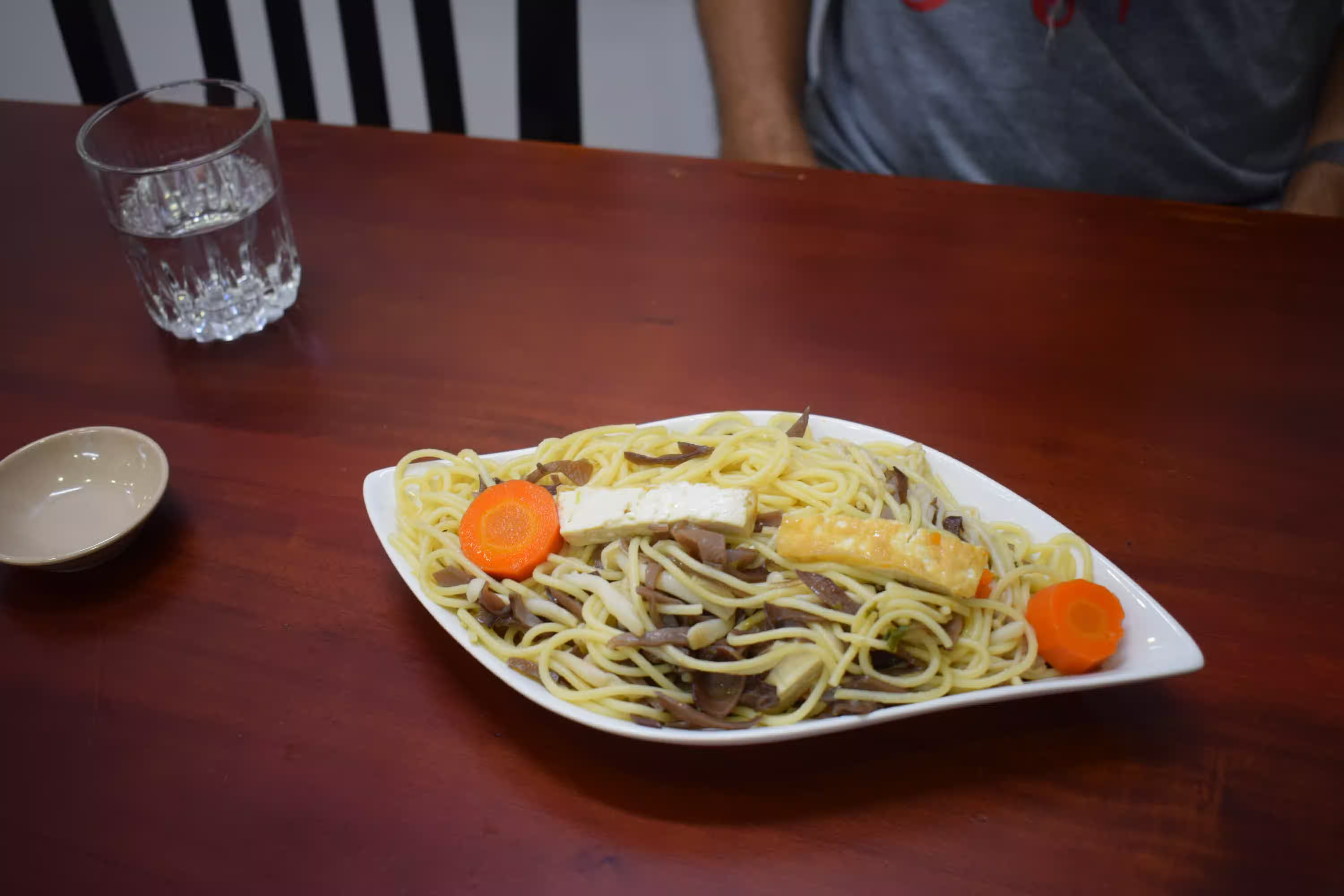 Dry noodles we got at that restaurant. Photo by Ravi Dwivedi, released under CC-BY-SA 4.0.
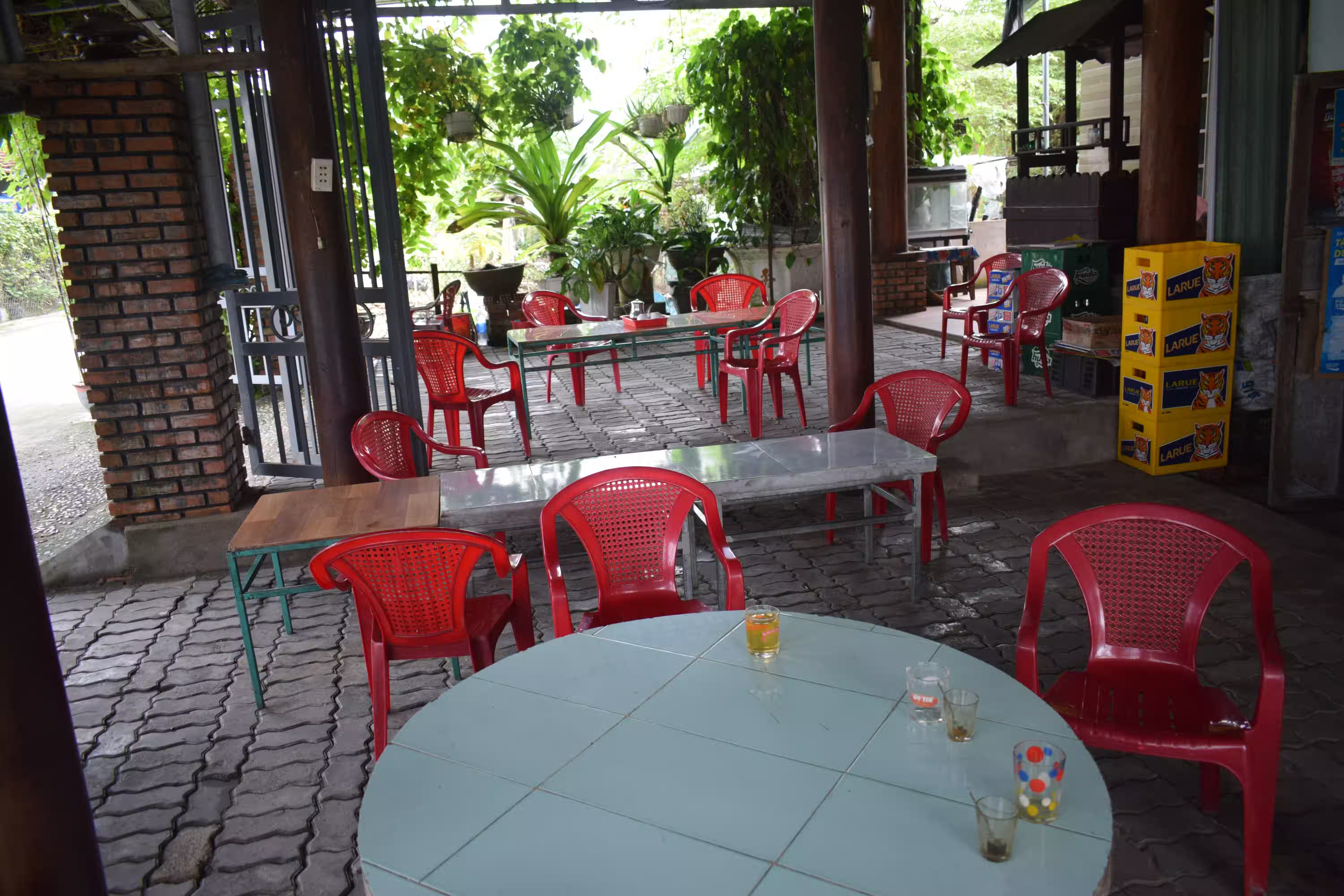 This was the place we had our coffee in Tra Kieu. Photo by Ravi Dwivedi, released under CC-BY-SA 4.0.
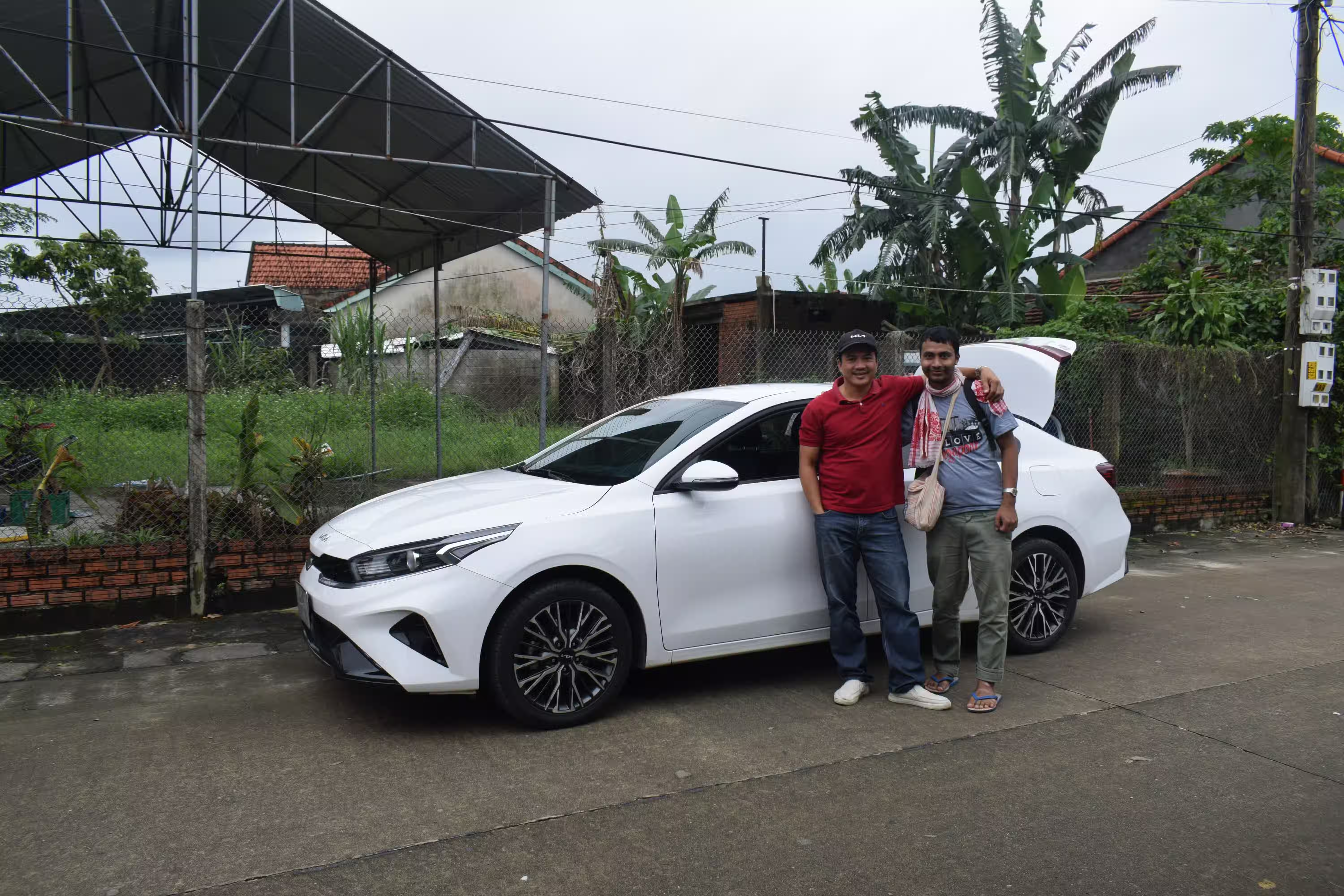 Photo of Badri with taxi driver. Photo by Ravi Dwivedi, released under CC-BY-SA 4.0.
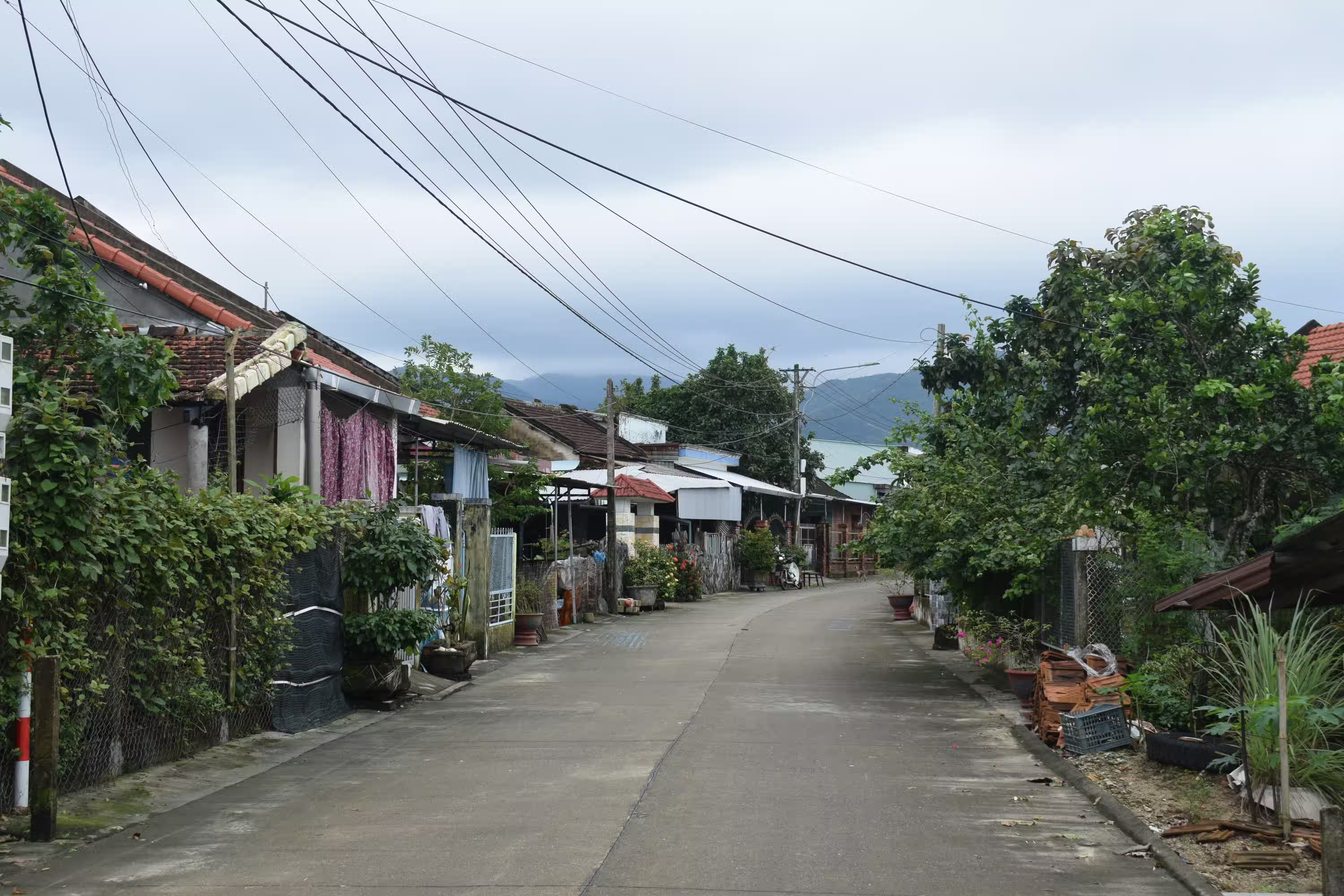 A picture of Tra Kieu area near the train station we got down at. Photo by Ravi Dwivedi, released under CC-BY-SA 4.0.
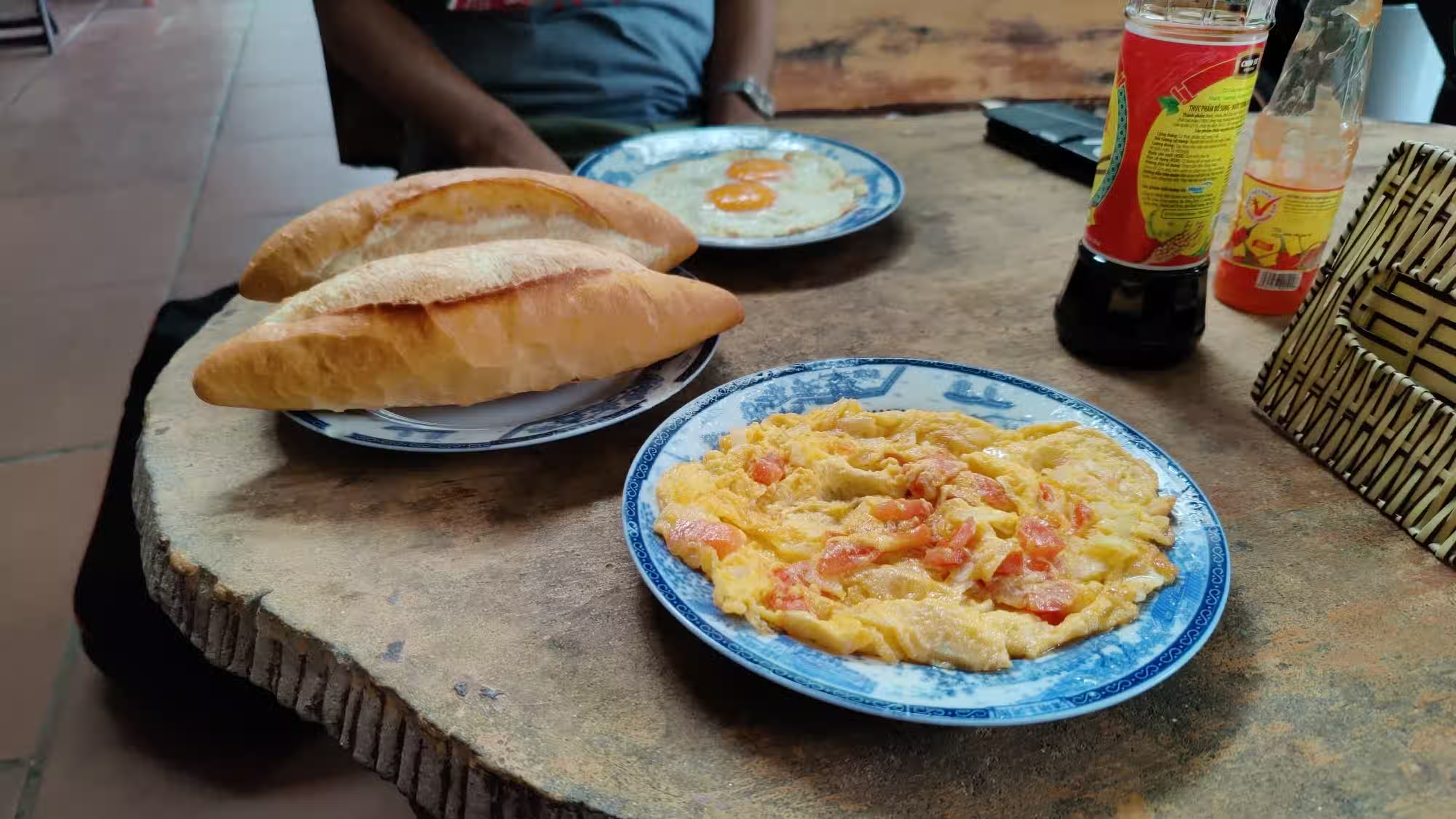 Our breakfast in Hoi An. Photo by Ravi Dwivedi, released under CC-BY-SA 4.0.
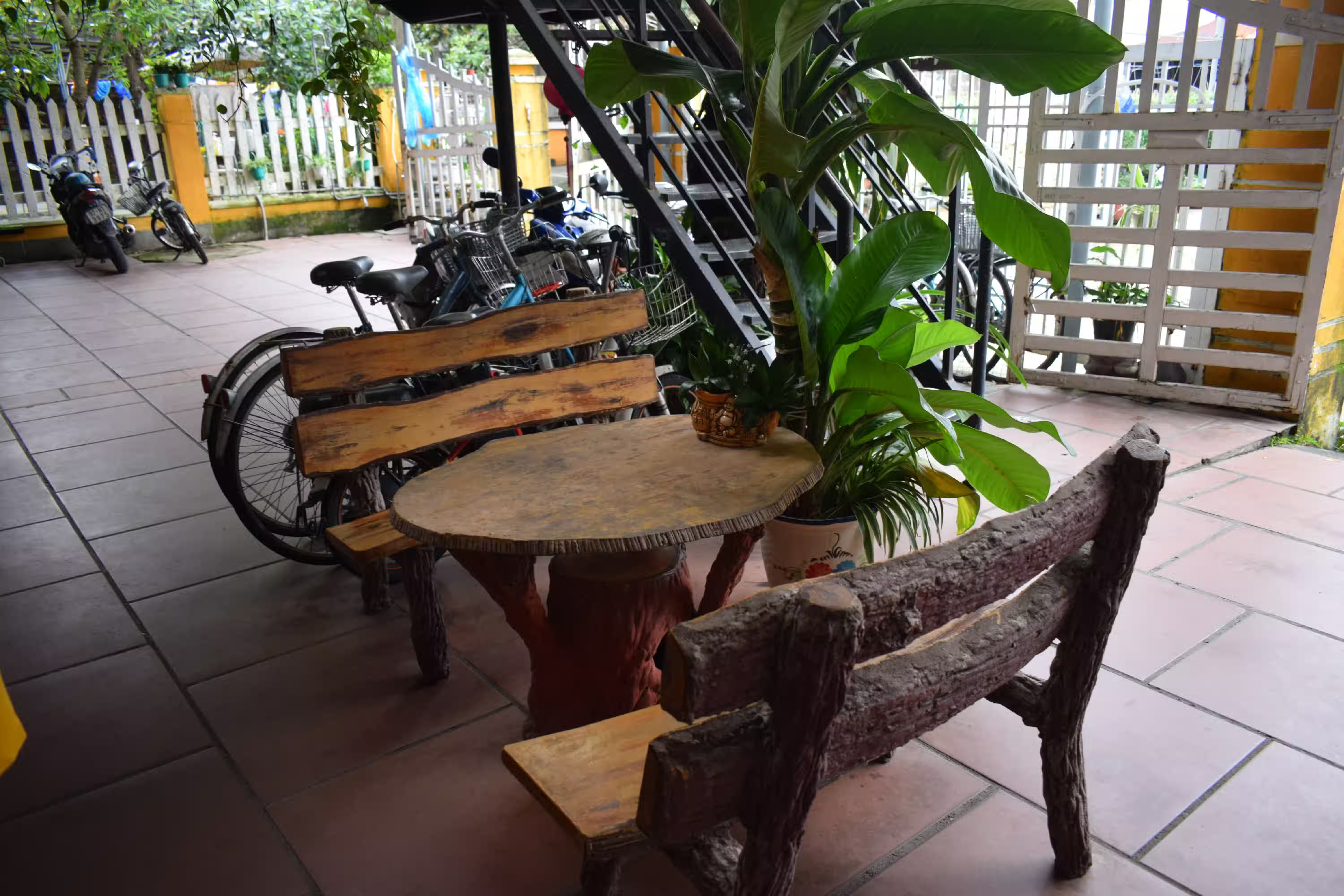 A photo of the hostel we stayed in Hoi An. Photo by Ravi Dwivedi, released under CC-BY-SA 4.0.
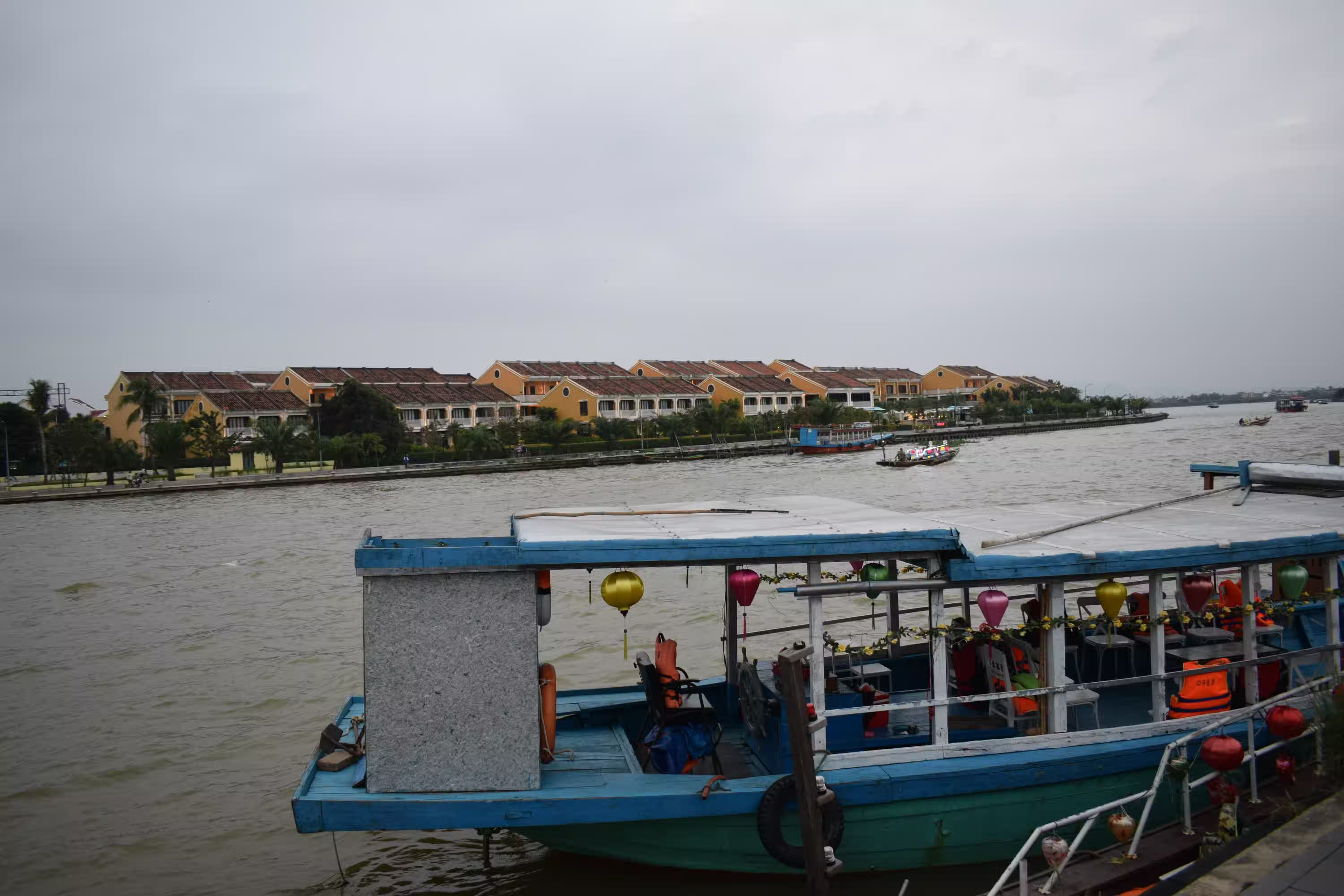 Typical yellow house with gabled roof in Hoi An old town. Photo by Ravi Dwivedi, released under CC-BY-SA 4.0.
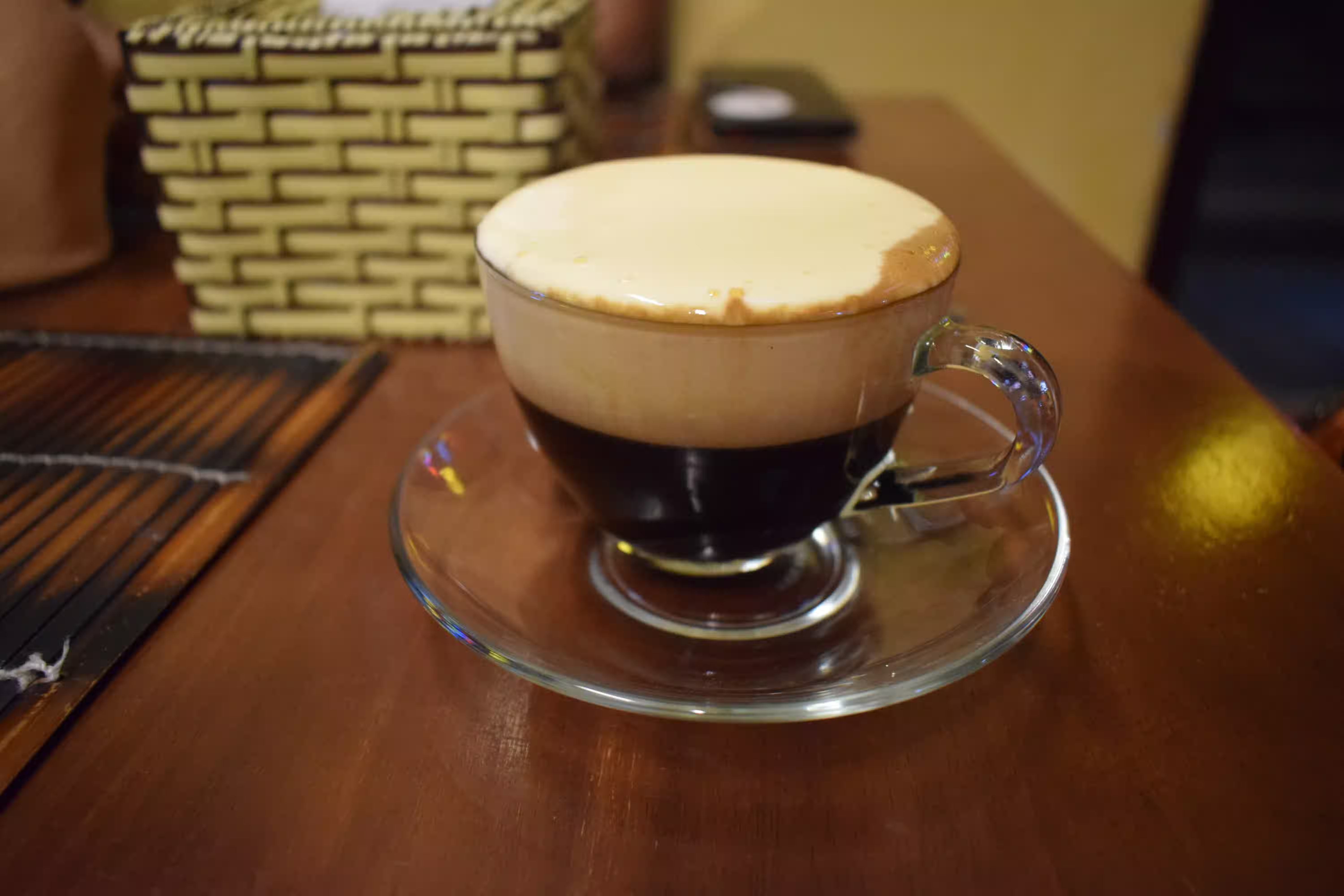 Egg coffee I had in Hoi An. Photo by Ravi Dwivedi, released under CC-BY-SA 4.0.
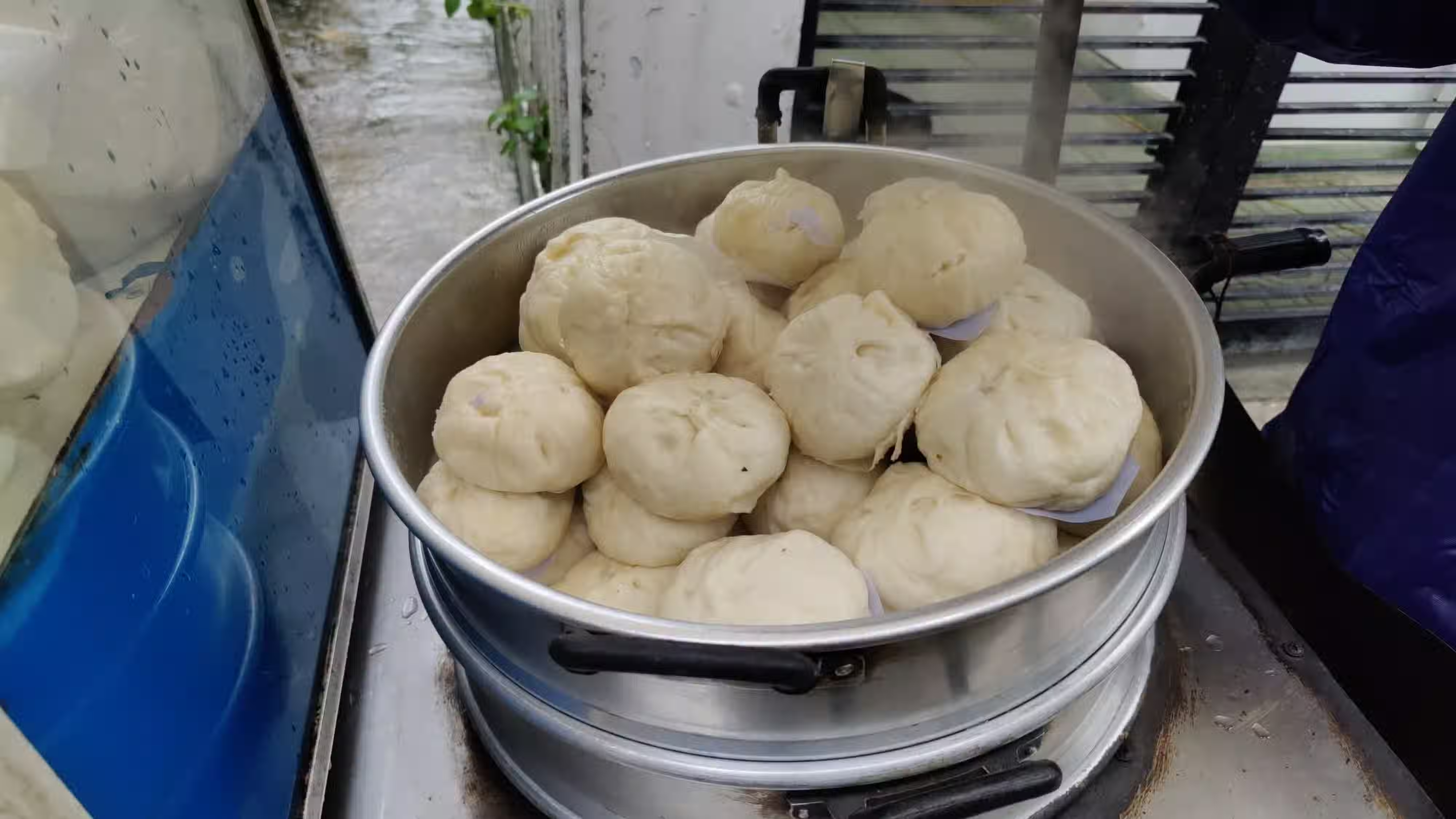 Bahn Bao in Hue. Photo by Ravi Dwivedi, released under CC-BY-SA 4.0.
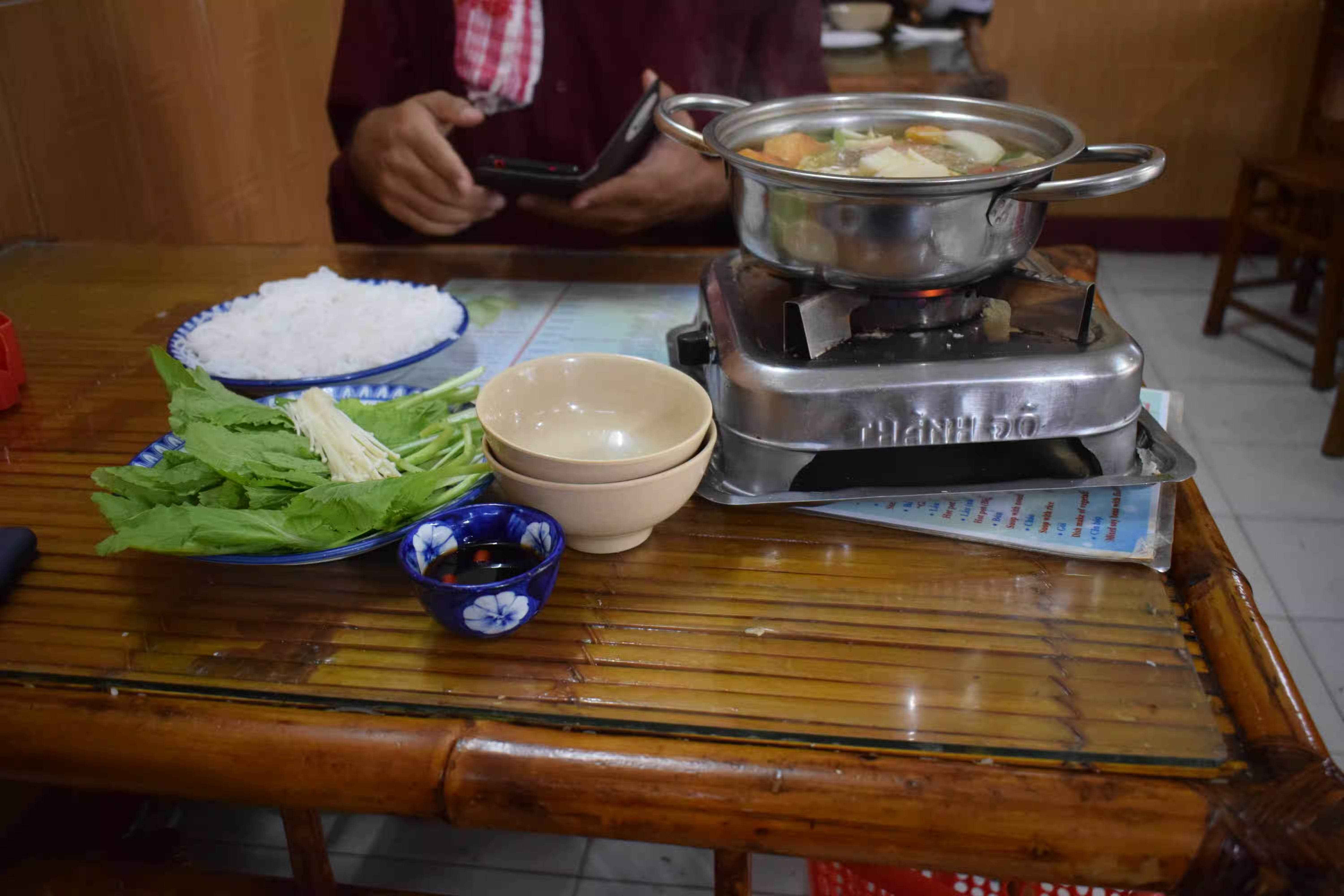 Hot Pot. Photo by Ravi Dwivedi, released under CC-BY-SA 4.0.
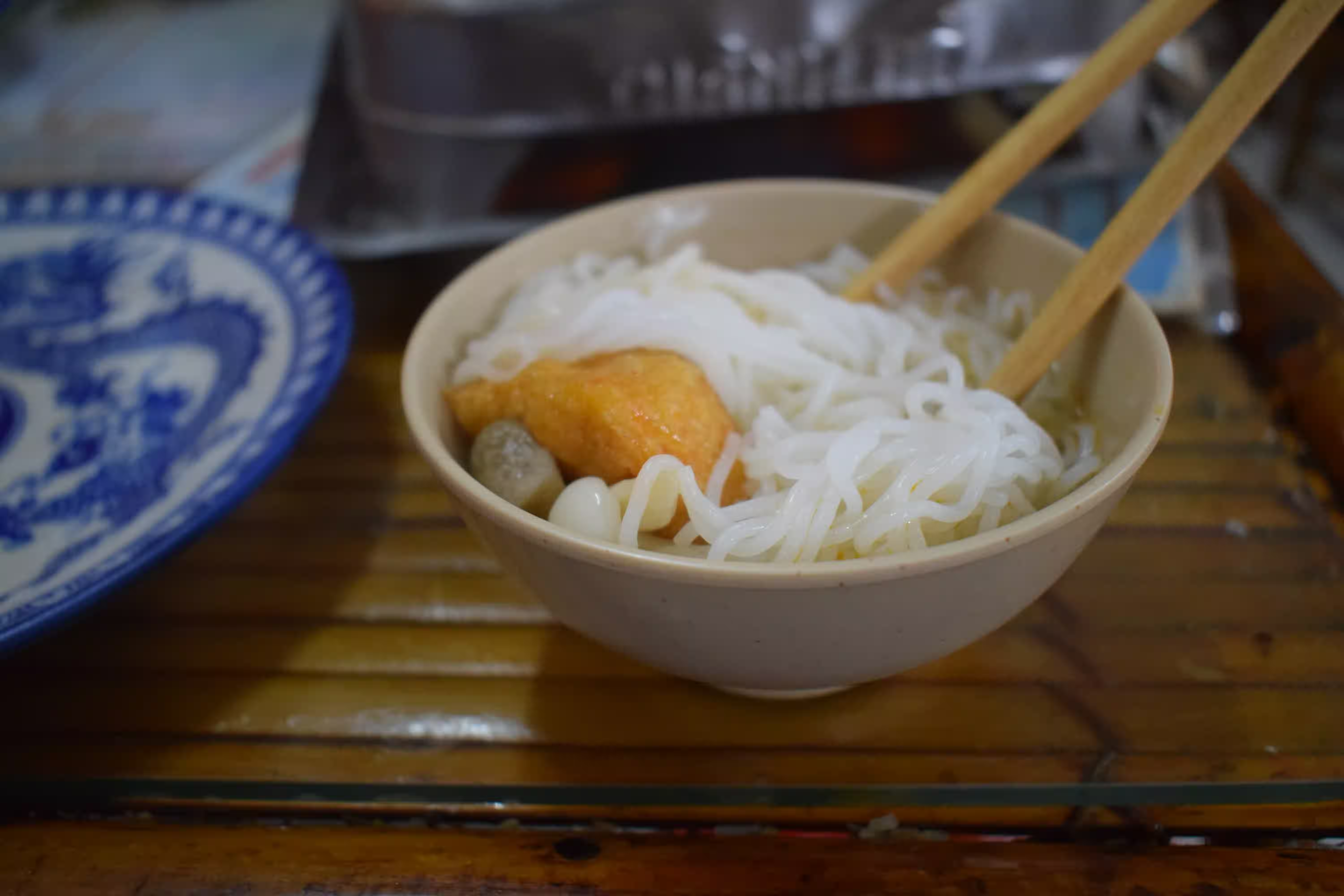 Added soup to the noodles. Photo by Ravi Dwivedi, released under CC-BY-SA 4.0.
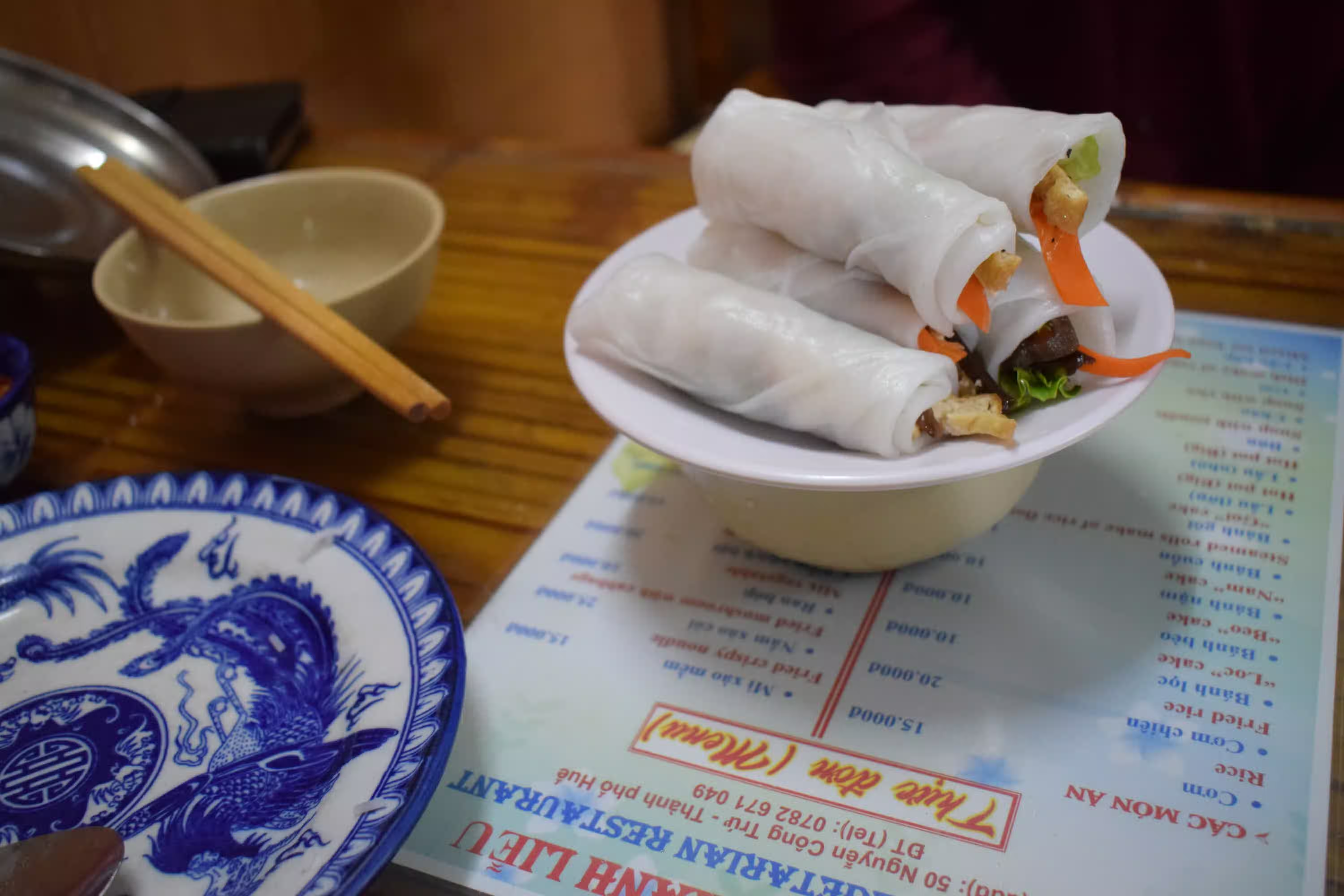 Steamed rolls made of rice flour. Photo by Ravi Dwivedi, released under CC-BY-SA 4.0.
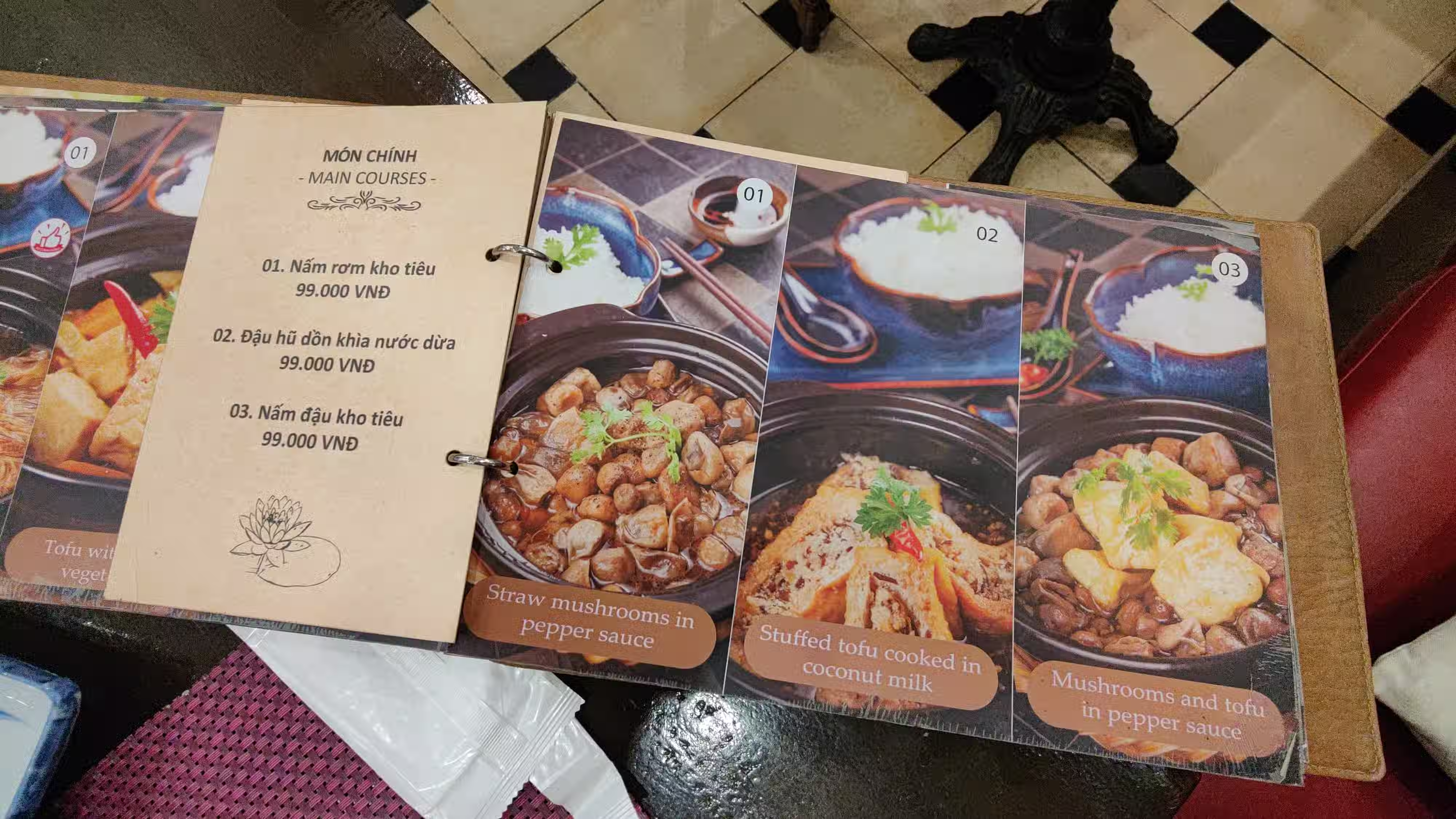 Menu from a restaurant in Ho Chi Minh City with detailed description of the food. Photo by Ravi Dwivedi, released under CC-BY-SA 4.0.
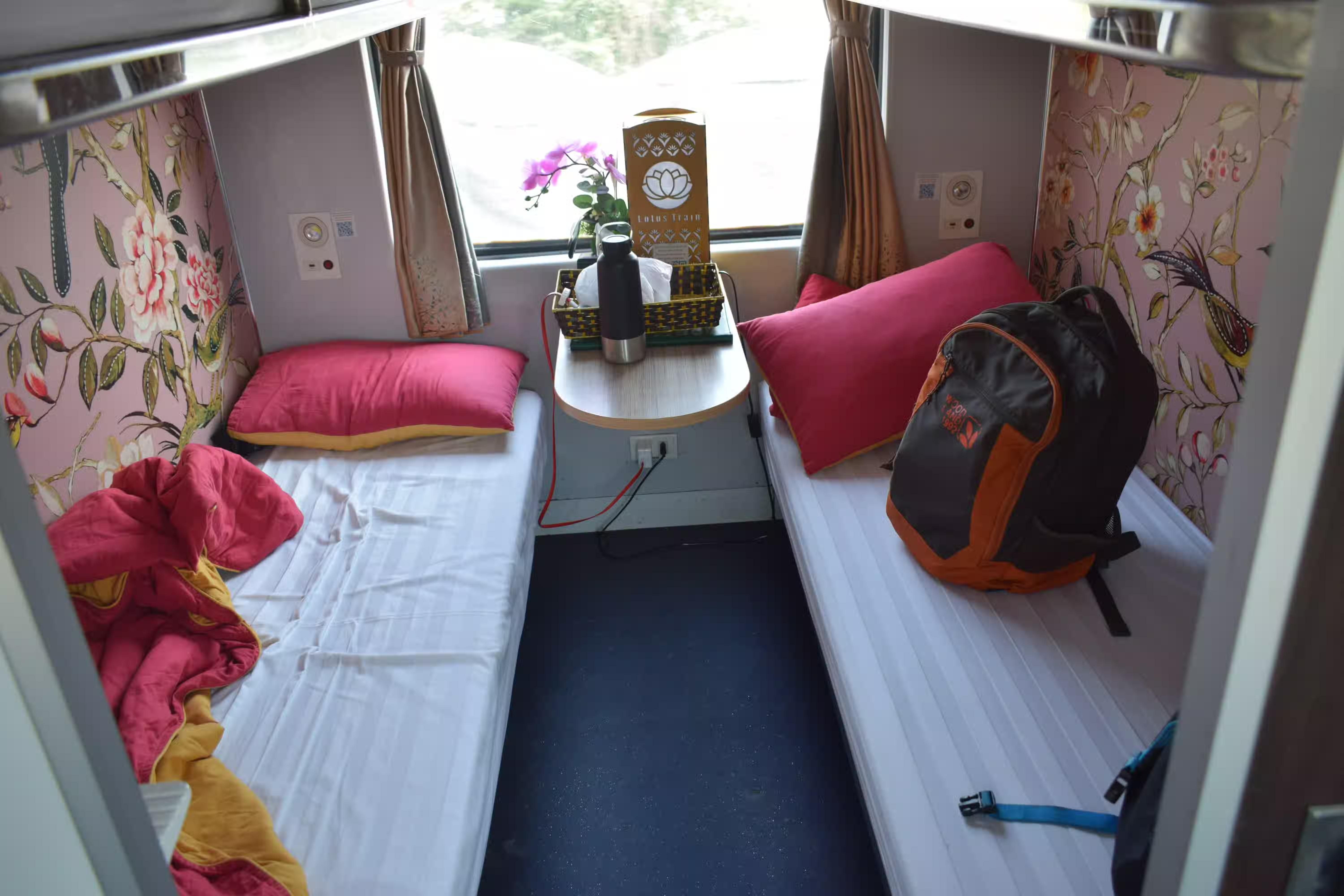 Our berths in the train. Photo by Ravi Dwivedi, released under CC-BY-SA 4.0.
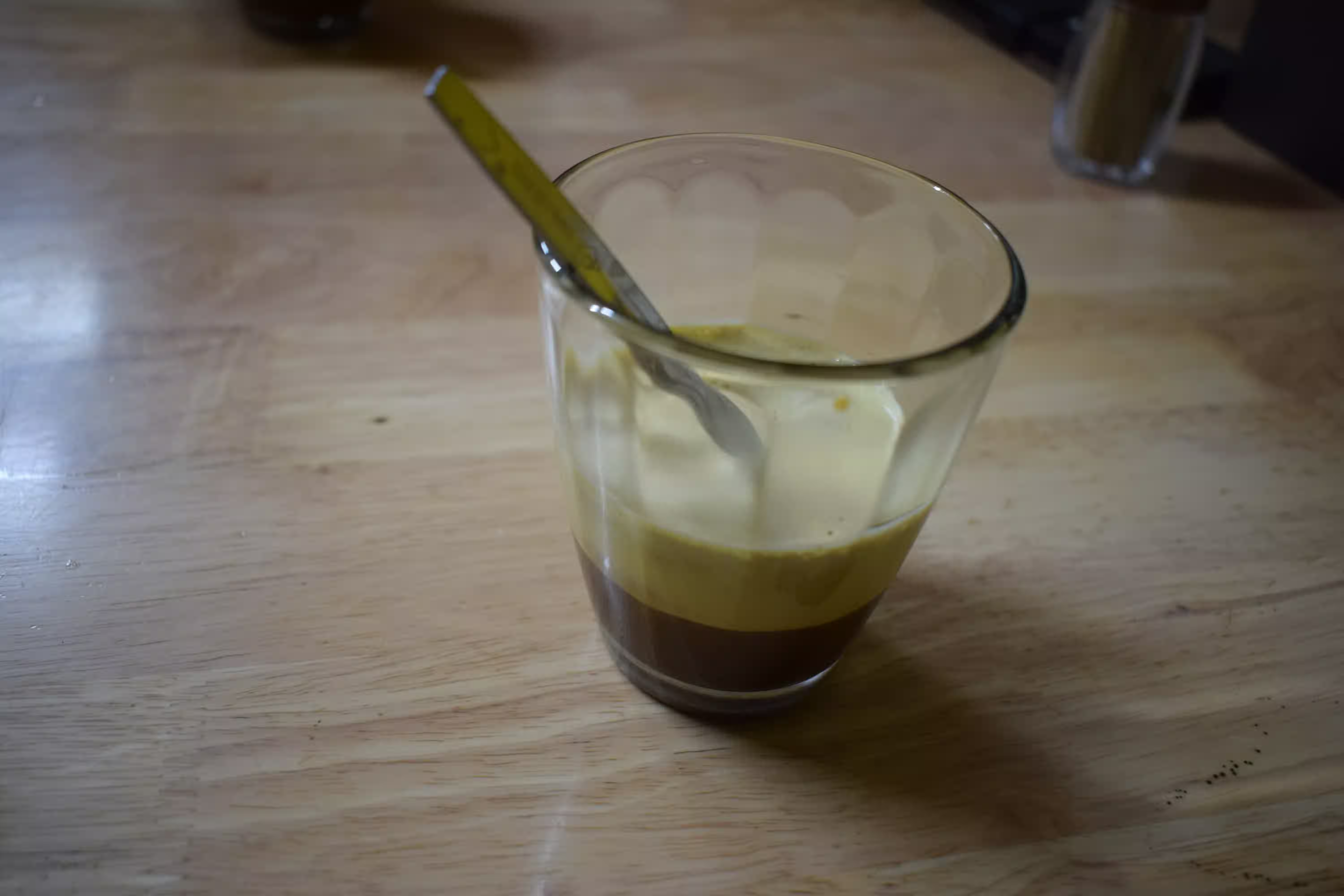 Egg coffee in Hanoi. Photo by Ravi Dwivedi, released under CC-BY-SA 4.0.
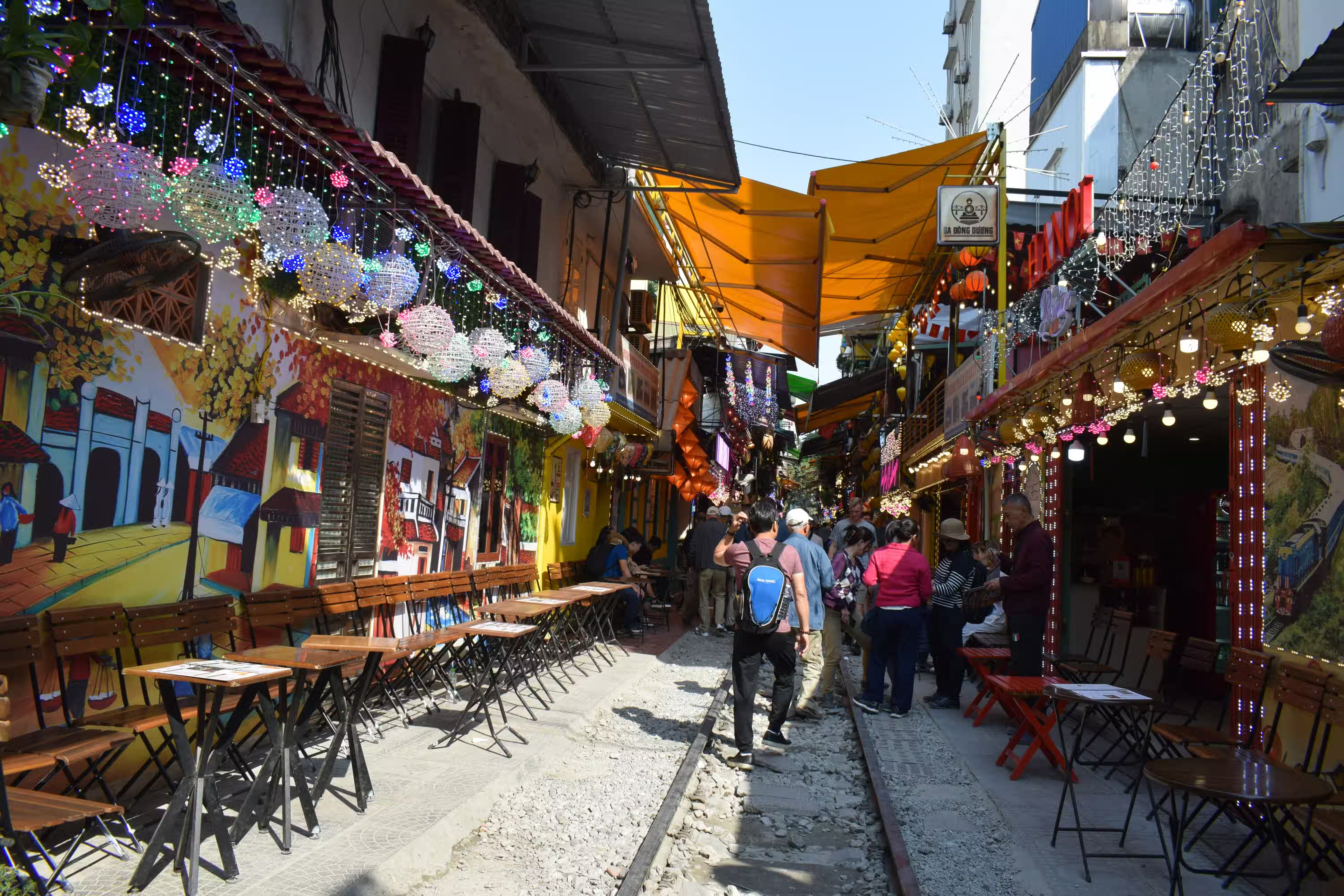 Hanoi train street is a tourist attraction in Hanoi. Photo by Ravi Dwivedi, released under CC-BY-SA 4.0.
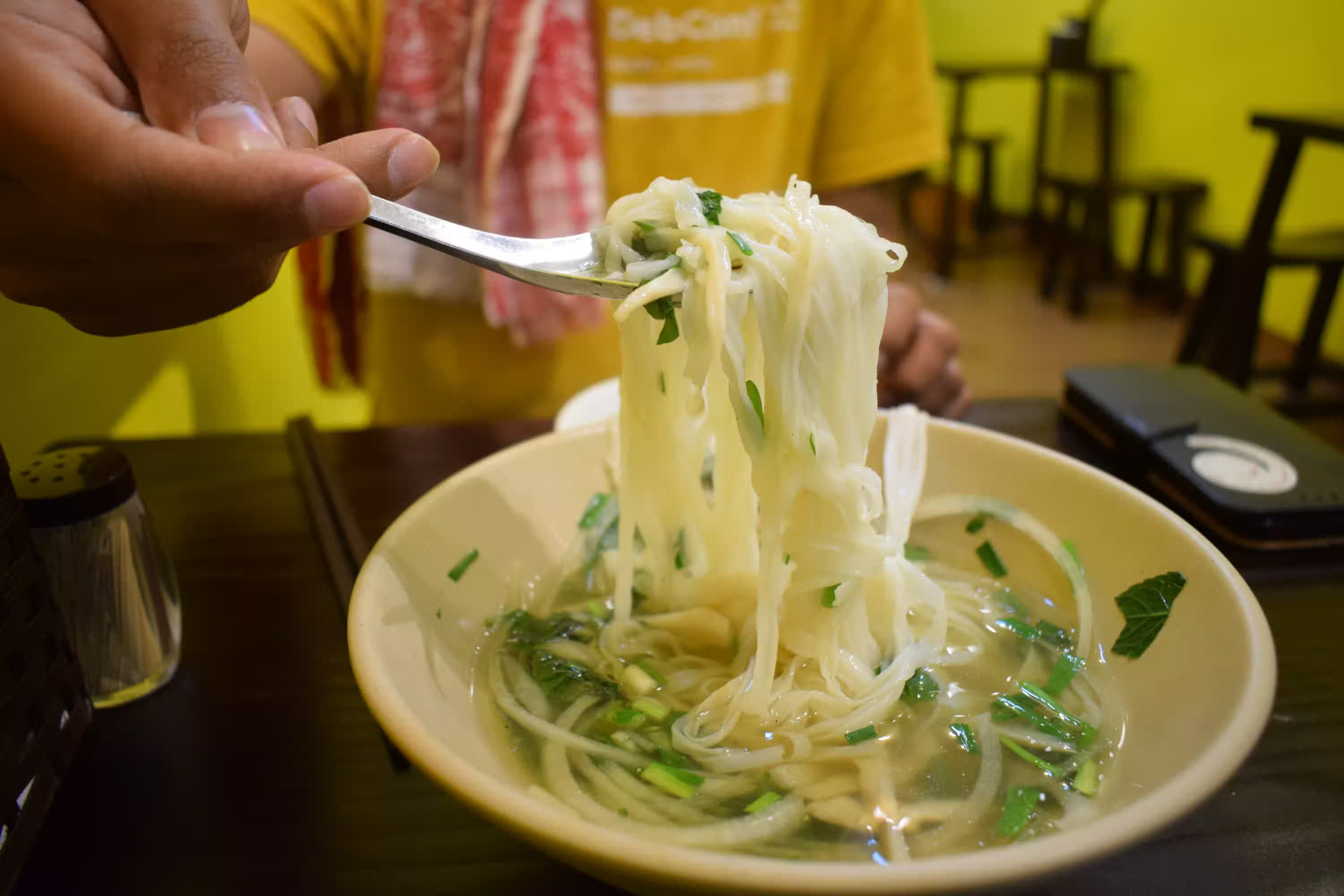 A picture of pho we had in Hanoi. Photo by Ravi Dwivedi, released under CC-BY-SA 4.0.
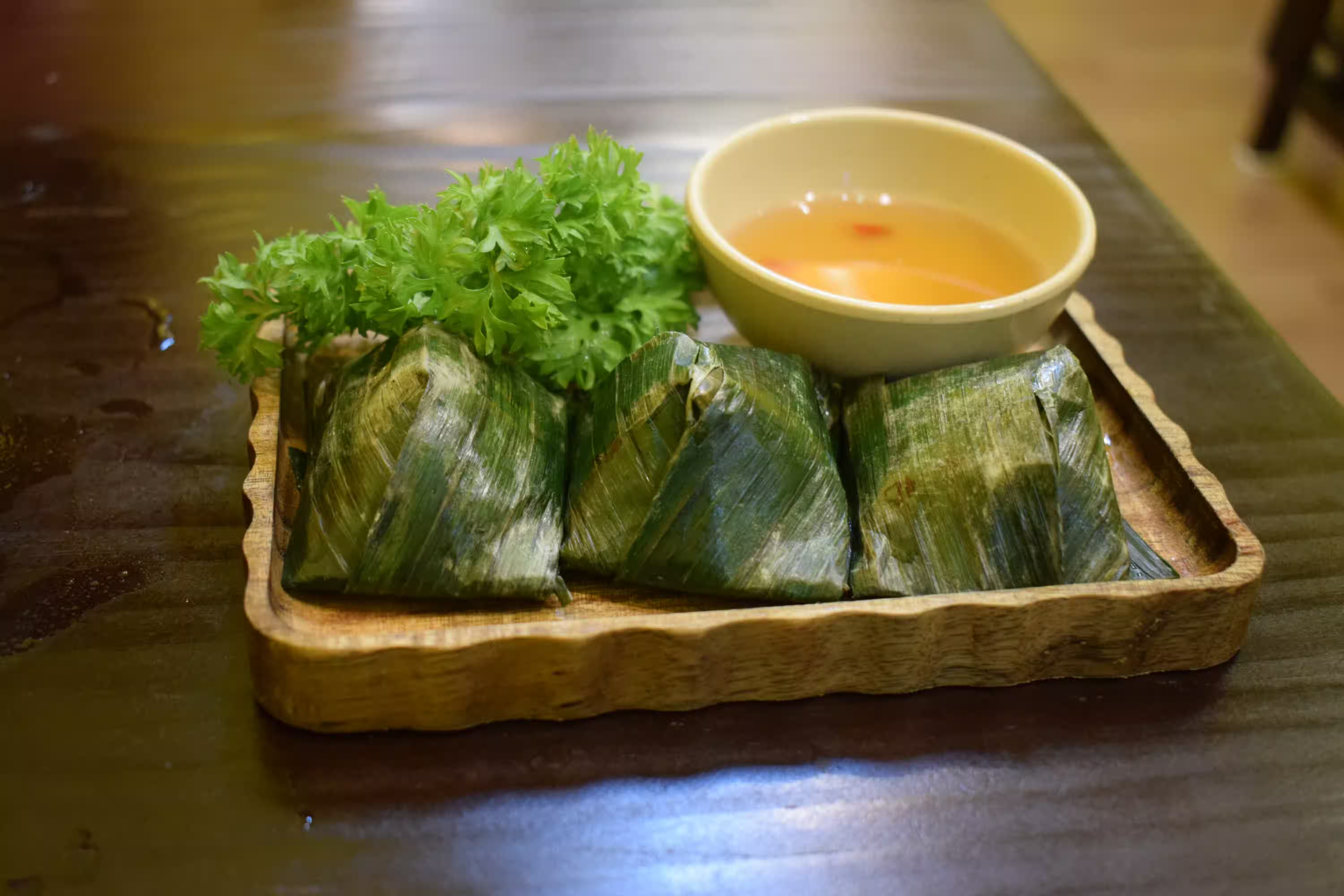 Bahn it is served packed in banana leaves. Photo by Ravi Dwivedi, released under CC-BY-SA 4.0.
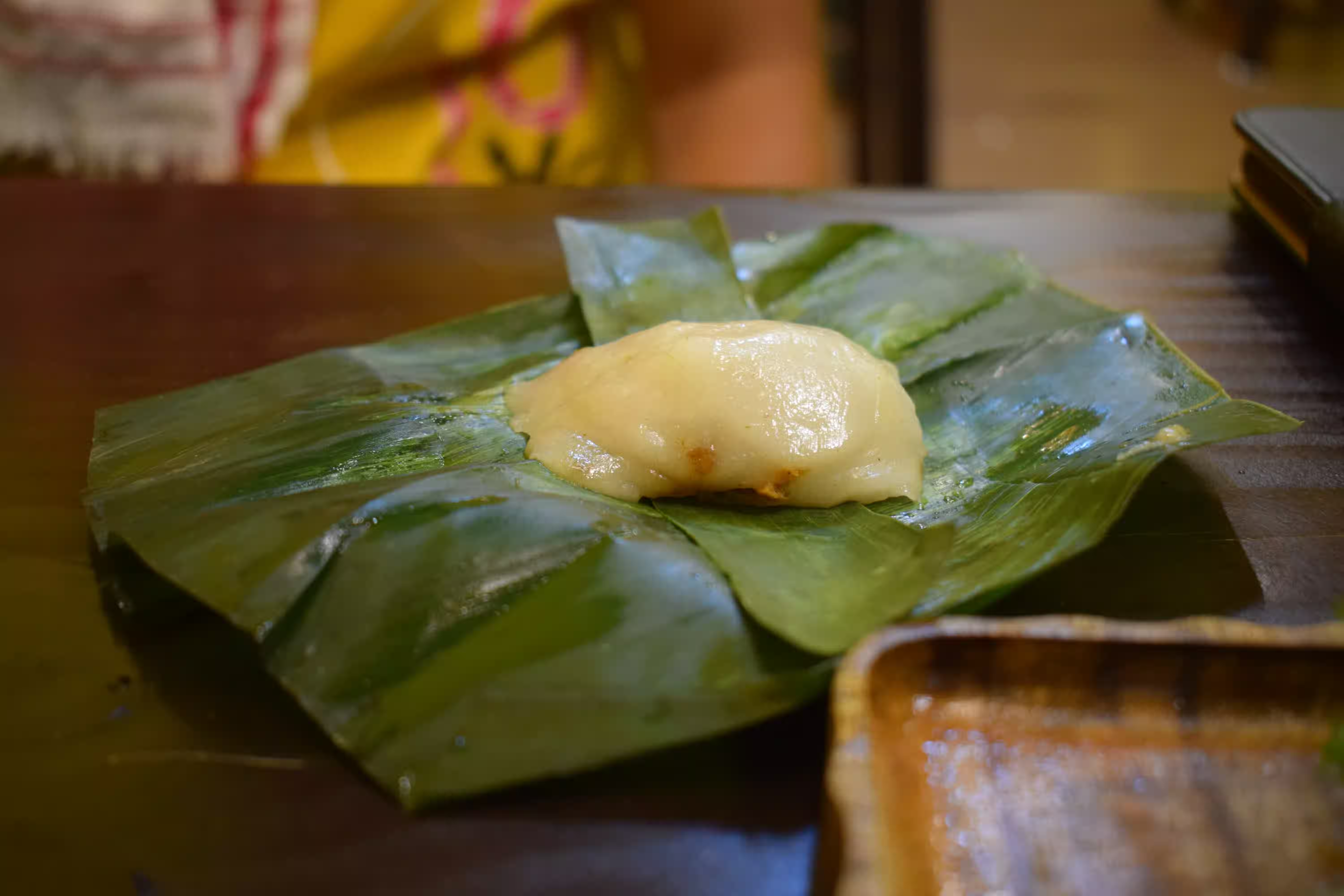 Bahn it. Photo by Ravi Dwivedi, released under CC-BY-SA 4.0.