Search Results: "christoph"

31 March 2011

Christoph Berg: PostgreSQL in Debian

At work, I'm dealing with lots of different database setups, luckily mostly PostgreSQL running on Debian. At the same time, a fair amount of the tools in the PostgreSQL ecosystem (not the PostgreSQL server packages itself) are not in the best shape in the Debian archive. I'm trying to change that by adopting some of the packages. So far, I have fixed a few RC bugs where packages where suddenly trying to build against PostgreSQL 9.0 while expecting 8.4. To my surprise, there are no packages yet in the archive that support multiple PostgreSQL versions in parallel. There is even a package ready to help doing this - postgresql-server-dev-all, but apparently nobody has used it yet. It turned out that after working around a few trivial problems and adding just a few lines of sh code, it was pretty straightforward to port skytools and postgresql-pllua to 9.0 while keeping 8.4 support. The latter has no version-specific code left in debian/ except for a list of supported versions in debian/pgversions, so a future port to 9.1 will be trivial. (Fun fact: the old postgresql-pllua version 0.8.1 was actually a typoed 0.3.1 version.) Most PostgreSQL tools use a common subversion repository on Alioth, but there is no common mailing list address that is put into the Uploaders fields, so it is hard to get an overview over the state of all packages. I've compiled a list of all packages in svn, git, bzr (the server packages), and a few others in DDPO to fix that for now. Other packages I've updated so far are pgtune, pgbouncer, and pgpool2.

Russell Coker: Links March 2011

Cory Doctorow wrote an interesting article for The Guardian about Harper-Collins attempts to make self-destructing books [1]. They claim that a traditional book falls apart after being read 26 times (a claim that Cory disputes based on personal experience working at libraries) and want ebooks to be deleted after being borrowed so often. Really the copy-right fascists are jumping the shark here.Socialogical Images has an interesting archive of adverts for supposed treatments for autism, obsessive-compulsive disorder, asperger syndrome, and attention deficit and hyperactivity disorder [2]. The New York University Child Study Center conducted the campaign of fake ransom notes to describe a psychological difference as something that kidnaps a child. The possibility that parents should to some extent learn to adapt to their child s nature rather than fixing them with medication is something that most people can t seem to understand.William Cronon has written an interesting analysis of the way Conservative , lobby groups work [3]. They are more organised than I expected.The Reid Report has a good summary of some of the corporat issues related to the Japanese nuclear melt-down [4], apparently the company that runs the reactors decided to delay using sea-water in the hope that their investment could be salvaged and thus put everyone at increased risk. I think that this proves that reactors shouldn t be privately owned.Ian Lowe wrote a good summary of the reasons why Australia should not be using nuclear power when we believed that the Fukushima disaster was over [5]. But it turns out that the Fukushima problems were worse than we thought and the melt-down is getting worse.Christopher Smart wrote a good analysis of Microsoft s latest attempt to extort money from Linux users where they assert patent claims over Android [6]. He points out that .NET/Mono is a risk to Linux.Major Keary wrote a positive review of Snip Burn Solder Shred which is a book about Seriously geeky stuff to make with your kids [7]. Sounds like a fun book.The internal network of RSA has been cracked in some way that apparently weakens the security of SecureID, Bruce Schneier s blog comments section has an interesting discussion of the possibilities [8]. I expect that it s a fairly bad attack, if the attack was minor then surely the RSA people would have told us all the details.Hans Rosling gave an interesting TED talk about The Magic Washing Machine [9]. He describes how his family benefited when his mother first got a washing machine and how this resulted in better education as his mother had more time to get library books for her children. It seems that deploying more electric washing machines should be a priority for improving education and food supplies in third-world countries.Paul Root Wolpe gave an interesting and disturbing TED talk about bio-engineering [10]. He catalogues the various engineered animals and talks about the potential for future developments.Ron Rosenbaum wrote an interesting and insightful article for Slate about Maj. Harold Hering who s military career ended after he asked how to determine whether a nuclear launch order is lawful, legitimate, and comes from a sane president [11]. The question never received a good answer, this is a good reason for moving towards nuclear disarmament and for Americans to vote for the sanest and most intelligent candidate in the presidential elections.Eythor Bender gave an inspiring TED talk about human exoskeletons [12]. He had live demonstrations on stage of a soldier using an exo-skeleton to carry a heavy backpack and a woman who suffered a severe spinal-cord injury walking after being in a wheel-chair for 19 years.

20 February 2011

Christoph Egger: CSSH but without X

There are many ways to run some commands simultaneously on multiple hosts like cssh or dsh. They come handy for example when you are installing software updates on a set of hosts. dsh is a rather simple comandline tool allowing to execute a command over ssh on multiple hosts. However it doesn't allow any interactive input -- so you can't look at the potentially upgrading packages and press y to accept and you can't go through debconf promts or similar. This is solved by cssh which opens a XTerm for every host and a input area that is broadcastet to all of them. this is working really well -- you can execute your update on all hosts and still do individual adjustments just as needed: switch focus from the broadcasted input to one of the terminal windows and anything you type just goes there. Now cssh has a big disadvantage: it requires a running X server (and doesn't do too well with a fullscreen windowmanager). Requiring X is quite a blocker if you need to run that ssh multiplexer on a remote host, for example if the firewalling doesn't allow direct connections. Fortunately you can make tmux behave as we want -- in a simple terminal: First you need a script spawning the ssh sessions in separate tmux panes and direct input to all of them -- here called ssh-everywhere.sh (you could also write a tmux config I guess):
#/bin/sh
# ssh-everywhere.sh
for i in $HOSTS
do
  tmux splitw "ssh $i"
  tmux select-layout tiled
done
tmux set-window-option synchronize-panes on
Now start the whole thing:
tmux new 'exec sh ssh-everywhere.sh'
And be done. Update If you want to type in just one pane (on one host) you can do that as well: C-b : set-window-option synchronize-panes off and moving to the right pane (C-b + Arrow keys)

17 February 2011

Raphaël Hertzog: People behind Debian: Maximilian Attems, member of the kernel team

Maximilian, along with the other members of the Debian kernel team, has the overwhelming job of maintaining the Linux kernel in Debian. It s one of the largest package and certainly one where dealing with bug reports is really difficult as most of them are hardware-specific, and thus difficult to reproduce. He s very enthusiastic and energetic, and does not fear criticizing when something doesn t please him. You ll see. My questions are in bold, the rest is by Maximilian. Who are you? My name is Maximilian Attems. I am a theoretical physicist in my last year of PhD at the Technical University of Vienna. My main research area is the early phase of a Quark-Gluon Plasma as produced in heavy ion collisions at the LHC at CERN. I am developing simulations that take weeks on the Vienna Scientific Cluster (in the TOP 500 list). The rest of the lab is much less fancy and boils down to straight intel boxes without any binary blobs or external drivers (although lately we add radeon graphics for decent free 3D). Mathematica and Maple are the rare exceptions to the many dev tools of Debian (LaTeX, editors, git, IDE s, Open MPI, ..) found at the institute, as those are unfortunately yet unmatched in Free Software for symbolic computations. The lab mostly runs a combination of Debian stable (testing starting from freeze) for desktops and oldstable/stable for servers. Debian is in use for more than 10 years. So people in the institute know some ups and downs of the project. Newcomers like my room neighbors are always surprised how functional a free Debian Desktop is. :) What s your biggest achievement within Debian? Building lots and lots of kernels together with an growing uptake of the officially released linux images. I joined the Debian kernel team shortly after Herbert Xu departed. I had been upstream Maintainer of the linux-2.6 janitor project for almost a year brewing hundreds of small cleanups with quilt in a tree named kjt for early linux-2.6. In Debian we had lots of fun in sorting out the troubles that the long 2.5 freeze had imposed: Meaning we were sitting on a huge diverging monolithic semi-good patchset. It was great fun to prepare 2.6.8 for Sarge with a huge team enthusiastic in shipping something real close to mainline (You have to imagine that back then you had no stable or longterm release nor any useful free tools like git. This involved passing patches around, hand editing them and seeing what the result does.) From the Sarge install reports a common pattern emerged that the current Debian early userspace was causing lots of boot failures. This motivated me to develop an alternative using the new upstream initramfs features. So I got involved in early userspace. Thanks to large and active development team initramfs-tools got a nice ecosystem. It still tries to be as generic and flexible as possible and thus gains many nice features. Also H. Peter Anvin (hpa) gave me the official co-maintenance of klibc. klibc saw uptake and good patches from Google in the last 2 years. I am proud that the early userspace is working out fairly well these days, meaning you can shuffle discs around and see your box boot. Later on we focused on 2.6.18 for Etch, which turned out to a be good release and picked up by several other distributions. Only very much later we would see such a sync again. With 2.6.26 for Lenny we got somehow unlucky as we just missed the new longterm release by one release. We also pushed for another update very late (during freeze) in the release cycle, which turned out to semi-work as too much things depend on linux-2.6. For Squeeze 2.6.32 got picked thanks to discussions at Portland Linux Plumbers and it turned out to be a good release picked up by many distributions and external patchsets. The long-term support is going very well. Greg KH is doing a great job in collecting various needed fixes for it. Somehow we had hoped that the Squeeze freeze would start sooner and that the freeze duration would be shorter, since we were ready for a release starting from the actual freeze on. The only real big bastard on the cool 2.6.32 sync is Red Hat. Red Hat Enterprise 6.0 is shipping the linux-2.6 2.6.32 in obfuscated form. They released their linux-2.6 as one big tarball clashing with the spirit of the GPL. One can only mildly guess from the changelog which patches get applied. This is in sharp contrast to any previous Red Hat release and has not yet generated the sharp and snide comments in press it deserves. Red Hat should really step back and not make such stupid management moves. Next to them even the semi-maintained Oracle Unbreakable 2.6.32 branch looks better: It is git fetchable. What are your plans and those of the kernel team for Debian Wheezy? Since 2.6.32 many of the used patches landed upstream or are on the way (speakup, Kbuild Debian specific targets, ..). The proper vfs based unionfs is something we d be looking forward. We haven t yet picked the next upstream release we will base Wheezy on, so currently we can happily jump to the most recent ones. There are plans for better interaction with Debian Installer thanks to generating our udebs properly in linux-2.6 source itself. Also we are looking forward to using git as tool of maintenance. We d hope that this will also allow for even better cross distribution collaboration. Concerning early userspace I plan to release an initramfs-tools with more generic userspace for the default case and finally also a klibc only for embedded or tuning cases. What do you like most in Debian? For one thing I do like the 2 year release cycle. It is not too long to have completely outdated software and on the other hand it gives enough time to really see huge progress from release to release. Also at my institute the software is is recent enough without too much admin overhead. For servers the three years support are a bit short, but on the manageable side. I do enjoy a lot the testing distribution. For my personal use it is very stable and thus I mainly run testing on my desktop and work boxes. (Occasionally mixing in things from sid for unbreaking transition or newer security fixes). Debian is independent and not a commercial entity. I think this is its main force and even more important these days. I enjoy using the Debian platform a lot at work thus in return this motivates me to contribute to Debian itself. I also like the fact that we strive for technical correctness. Is there some recurrent problem that hinders the progress of Debian? The New Maintainer process is a strange way to discourage people to contribute to Debian. It is particularly bureaucratic and a huge waste of time both for the applicant and his manager. It should be completely thrown overboard. One needs a more scalable approach for trust and credibility that also enhances the technical knowledge for coding and packaging of the applicant. NM is currently set in stone as any outside critics is automatically rejected. Young and energetic people are crucial for Debian and the long-term viability of the project, this is the reason why I d consider the New Maintainer process as Debian s biggest problem. Note from Rapha l Hertzog: I must say I do not share this point of view on the New Maintainer process, I have witnessed lots of improvements lately thanks to the addition of the Debian Maintainer status, and to the fact that a good history of contribution can easily subsume the annoying Tasks & Skills questionnaire. Another thing I miss is professional graphics input both for the desktop theme and the website. I know that effort has been done there lately and it is good to see movement there, but the end result is still lacking. Another trouble of Debian is its marketing capabilities. It should learn to better sell itself. It is the distribution users want to run and use not the rebranded copies of itself with lock-in sugar . Debian is about choice and it offers plenty of it: it is a great default Desktop. Linus Torvalds doesn t find Debian (and/or Ubuntu) a good platform to hack on the kernel. Do you know why and what can we do about this? The Fedora linux-2.6 receives contributions from several Red Hat employed upstream sub-Maintainers. Thus it typically carries huge patches which are not yet upstream. As a consequence eventual userland troubles get revealed quite quickly and are often seen there first. The cutting edge nature of Fedora rawhide is appealing for many developers. The usual Debian package division of library development files and the library itself is traditionally an entry barrier for dev on Debian. Debian got pretty easily usable these days, although we could and should again improve a lot more in this sector. Personally I think that Linus hasn t tried Debian for years. I have the feeling that the implication of the Debian Kernel team in LKML has been on the rise. Is that true and how do you explain this? Ben Hutchings is the Nr.1 contributor for 2.6.33. He also is top listed as author of patches on stable 2.6.32. Debian is not listed as organization as many send their linux-2.6 patches from their corporate or personal email address and thus it won t be attributed to Debian. There is currently no means to see how many patches get forwarded for the stable tree, but I certainly forwarded more then fifty patches. I was very happy when Greg KH personally thanked me in the 2.6.32.12 release. In the Squeeze kernel, the firmwares have been stripped and moved into separate packages in the non-free section. What should a user do to ensure his system keeps working? There is a debconf warning on linux-2.6 installation. It is quite clear that the free linux-2.6 can t depend on the firmware of the non-free archive (also there is no strict dependency there technically). On the terminal you d also see warnings by update-initramfs on the initramfs generation for drivers included in the initramfs. The debconf warning lists the filename(s) of the missing firmware(s). One can then apt-cache search for the firmware package name and install it via the non-free repository. The check runs against the current loaded modules. The match is not 100% accurate for special cases as the one where the device might be handled well by this driver without firmware, but is accurate enough to warrant the warning. The set of virtualization technologies that the official Debian kernel supports seems to change regularly. Which of the currently available options would you recommend to users who want to build on something that will last? KVM has been a smooth ride from day zero. It almost got included instantly upstream. The uptake it has is great as it sees both dev from Intel and AMD. Together with libvirt it s management is easy. Also the performance of virtio is very good. The linux containers are the thing we are looking forward for enhanced chroots in the Wheezy schedule. They are also manageable by libvirt. Xen being the bad outside boy has an incredible shrinking patchset, thus is fair to expect to see it for Wheezy and beyond. For many it may come a bit late, but for old hardware without relevant CPU it is there. Many tend to overstate the importance of the virtualization tech. I d be much more looking forward to the better Desktop support in newer linux-2.6. The Desktop is important for linux and something that is in heavy use. The much better graphics support of the radeon and nouveau drivers: The performance optimizations thanks to dcache scalability work and the neat automatic task-grouping for the CPU scheduler are very promising features for the usability of the linux desktop. Another nice to have feature is the online defrag of ext4 and its faster mkfs. Even cooler would be better scalability in ext4 (This side seems to have seen not enough effort lately). Is there someone in Debian that you admire for their contributions? Hans Peter Anvin and Ted Tso are a huge source of deep linux-2.6 knowledge and personal wisdom. I do enjoy all sorts of interactions with them. Christoph Hellwig with Matthew Wilcox and also William Irwin for setting up the Debian kernel Team. Several Debian leaders including the previous and the current one for their engagement, which very often happens behind the scene. The Debian Gnome Team work is great, also the interactions have always been always easy and a pleasure. Martin Michlmayr and previously Thiemo Seufer do an incredible job in porting Debian on funny and interesting ARM and MIPS boxes. Debian has a lot of upcoming potential on this area. I m looking forward to other young enthusiastic people in that area. Colin Watson is bridging Debian and Ubuntu, which is an immense task. Michael Prokop bases on Debian an excellent recovery boot CD: http://www.grml.org. I d be happy if any Debian Developer would work as carefully coding and working.
Thank you to Maximilian for the time spent answering my questions. I hope you enjoyed reading his answers as I did. Subscribe to my newsletter to get my monthly summary of the Debian/Ubuntu news and to not miss further interviews. You can also follow along on Identi.ca, Twitter and Facebook.

One comment Liked this article? Click here. My blog is Flattr-enabled.

Christoph Berg: Heartbeat and bind9

Using a virtual IP managed by heartbeat is a nice way to work around the slow fallback behavior with multiple nameservers in /etc/hosts. But unlike ntpd, bind9 doesn't automatically listen on new IPs on the system. Here's a cute hack to fix that:
# cat /etc/ha.d/haresources
server01 bind9release IPaddr::10.0.0.3 bind9takeover
# cat /etc/ha.d/resource.d/bind9release
#!/bin/sh
# when giving up resources, reload bind9
case $1 in
        stop) /etc/init.d/bind9 reload ;;
esac
exit 0
# cat /etc/ha.d/resource.d/bind9takeover
#!/bin/sh
# on takeover, reload bind9
case $1 in
        start) /etc/init.d/bind9 reload ;;
esac
exit 0

Cyril Brulebois: Debian XSF News #5

Time for a fifth Debian XSF News issue!

8 February 2011

Christoph G hre: Squeeze finally landed

Half a year after I found three Squeezes in my luggage, some more of these cute green guys landed at FOSDEM.

Thanks to Gavin for the fun and all involved Debian people for Squeeze!
landed squeezes

6 February 2011

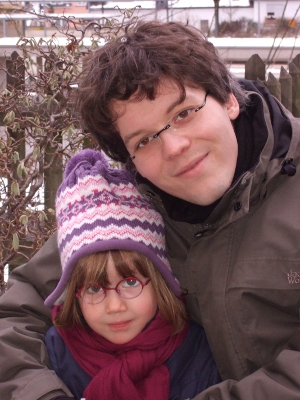
Alexander Reichle-Schmehl: A plea to all FOSDEM visitors:

Could some please put a picture of one of the new spacefun themed T-Shirts somewhere? I really want to see them... Update: Christoph Kluenter was so nice to upload some pictures.
25 January 2011

Christoph Berg: HP 2605dn not recognizing new cartridge

When my wife bought her HP 2605dn color laser, she had also ordered a set of replacement cartridges because the originals would supposedly not last very long. It turned out that they would last over two years, though. Now, the black cartridge was empty. The replacements are original HP components, but recycled/refilled second hand from a different source. I put in the black one, and the trouble started with the new drum having a big scratch that would appear in every print. After two years, returning the cartridge was not an option. As the old drum was still good, the idea was to put the new toner into the old cartridge. A bit of googling (and visual inspection) quickly revealed that you are not supposed to do this, the device doesn't have any facilities to access anything. Some post did indicate though that the cartridge actually consists of two parts that are only held together by two pivot pins and two small springs. If you pull the two parts apart a bit, you can feel the axis the parts are moving around. So, I would try to use the old drum part with the new toner container part. Removing the springs is easy (also removing the flap covering the drum, along with a tiny third spring). The two pivot pins are pretty inaccessible, but I managed to pull out both using a pointy tong. One pin is made of metal, if you need more space you can drill a small hole right next to it. The other pin is made of plastic with a small hole in it, in one case I succeeded by screwing in a little screw and pulling at it. Reassembling the parts is not so hard. I put the "new" cartridge into the printer, waited for the initialization to finish, only to find out the printer would still think the cartridge was empty and should be replaced. Duh. I then discovered a small chip attached to one corner of the drum unit, probably carrying product ID and some serial number. Luckily, it was easy to be removed and exchanged with the other drum unit. Still, the printer thought the cartridge was empty. Some (windows) driver re-installations later it was clear that there is no "ignore fill level and print anyway" option. (Cups didn't print either.) The HP Support Forum has a long Ink cartridge empty but it's not thread with lots of complaints but few answers. (Their problem is mostly with new HP cartridges becoming "empty" after a few days.) Someone suggests trying to cold reset the printer. For the 2605dn, that's holding the left and right buttons while powering on. I removed the cartridges for doing so. When I had put them back in, the printer asked me to confirm that non-HP material was installed, and subsequently didn't display any fill level for the black cartridge anymore, just " ? " in the display. Printing works now. Yay. (Lesson learned: I still hate dealing with printers.)

21 January 2011

Raphaël Hertzog: People behind Debian: Michael Vogt, synaptic and APT developer

Michael and his daughter Marie

Michael has been around for more than 10 years and has always contributed to the APT software family. He s the author of the first real graphical interface to APT synaptic. Since then he created software-center as part of his work for Ubuntu. Being the most experienced APT developer, he s naturally the coordinator of the APT team. Check out what he has to say about APT s possible evolutions. My questions are in bold, the rest is by Michael. Who are you? My name is Michael Vogt, I m married and have two little daughters. We live in Germany (near to Trier) and I work for Canonical as a software developer. I joined Debian as a developer in early 2000 and started to contribute to Ubuntu in 2004. What s your biggest achievement within Debian or Ubuntu? I can not decide on a single one so I will just be a bit verbose. From the very beginning I was interested in improving the package manager experience and the UI on top for our users. I m proud of the work I did with synaptic. It was one of the earliest UIs on top of apt. Because of my work on synaptic I got into apt development as well and fixed bugs there and added new features. I still do most of the uploads here, but nowadays David Kalnischkies is the most active developer. I also wrote a bunch of tools like gdebi, update-notifier, update-manager, unattended-upgrade and software-properties to make the update/install situation for the user easier to deal with. Most of the tools are written in python so I added a lot of improvements to python-apt along the way, including the initial high level apt interface and a bunch of missing low-level apt_pkg features. Julian Andres Klode made a big push in this area recently and thanks to his effort the bindings are fully complete now and have good documentation. My most recent project is software-center. Its aim is to provide a UI strongly targeted for end-users. The goal of this project is to make finding and installing software easy and beautiful. We have a fantastic collection of software to offer and software-center tries to present it well (including screenshots, instant search results and soon ratings&reviews). This builds on great foundations like aptdaemon by Sebastian Heinlein, screenshots.debian.net by Christoph Haas, ddtp.debian.org by Michael Bramer, apt-xapian-index by Enrico Zini and many others (this is what I love about free software, it usually adds , rarely takes away ). What are your plans for Debian Wheezy? For apt I would love to see a more plugable architecture for the acquire system. It would be nice to be able to make apt-get update (and the frontends that use this from libapt) be able to download additional data (like debtags or additional index file that contains more end-user targeted information). I also want to add some scripts so that apt (optionally) creates btrfs snapshots on upgrade and provide some easy way to rollback in case of problems. There is also some interesting work going on around making the apt problem resolver a more plugable part. This way we should be able to do much faster development. software-center will get ratings&reviews in the upstream branch, I really hope we can get that into Wheezy. If you could spend all your time on Debian, what would you work on? In that case I would start with a refactor of apt to make it more robust about ABI breaks. It would be possible to move much faster once this problem is solved (its not even hard, it just need to be done). Then I would add a more complete testsuite. Another important problem to tackle is to make maintainer scripts more declarative. I triaged a lot of upgrade bug reports (mostly in ubuntu though) and a lot of them are caused by maintainer script failures. Worse is that depending on the error its really hard for the user to solve the problem. There is also a lot of code duplication. Having a central place that contains well tested code to do these jobs would be more robust. Triggers help us a lot here already, but I think there is still more room for improvement. What s the biggest problem of Debian? That s a hard question :) I mostly like Debian the way it is. What frustrated me in the past were flamewars that could have been avoided. To me being respectful to each other is important, I don t like flames and insults because I like solving problems and fighting like this rarely helps that. The other attitude I don t like is to blame people and complain instead of trying to help and be positive (the difference between it sucks because it does not support $foo instead of it would be so helpful if we had $foo because it enables me to let me do $bar ). For a long time, I had the feeling you were mostly alone working on APT and were just ensuring that it keeps working. Did you also had this feeling and are things better nowadays ? I felt a bit alone sometimes :) That being said, there were great people like Eugene V. Lyubimkin and Otavio Salvador during my time who did do a lot of good work (especially at release crunch times) and helped me with the maintenance (but got interested in other area than apt later). And now we have the unstoppable David Kalnischkies and Julian Andres Klode. Apt is too big for a single person, so I m very happy that especially David is doing superb work on the day-to-day tasks and fixes (plus big project like multiarch and the important but not very thankful testsuite work). We talk about apt stuff almost daily, doing code reviews and discuss bugs. This makes the development process much more fun and healthy. Julian Andres Klode is doing interesting work around making the resolver more plugable and Christian Perrier is as tireless as always when it comes to the translations merging. I did a quick grep over the bzr log output (including all branch merges) and count around ~4300 total commits (including all revisions of branches merged). Of that there ~950 commits from me plus an additional ~500 merges. It was more than just ensuring that it keeps working but I can see where this feeling comes from as I was never very verbose. Apt also was never my only project, I am involved in other upstream work like synaptic or update-manager or python-apt etc). This naturally reduced the time available to hack on apt and spend time doing the important day-to-day bug triage, response to mailing list messages etc. One the python-apt side Julian Andres Klode did great work to improve the code and the documentation. It s a really nice interface and if you need to do anything related to packages and love python I encourage you to try it. Its as simple as:
import apt
cache = apt.Cache()
cache["update-manager"].mark_install()
cache.commit()
Of course you can do much more with it (update-manager, software-center and lots of more tools use it). With pydoc apt you can get a good overview. The apt team always welcomes contributors. We have a mailing list and a irc channel and it s a great opportunity to solve real world problems. It does not matter if you want to help triage bugs or write documentation or write code, we welcome all contributors. You re also an Ubuntu developer employed by Canonical. Are you satisfied with the level of cooperation between both projects? What can we do to get Ubuntu to package new applications developed by Canonical directly in Debian? Again a tricky question :) When it comes to cooperation there is always room for improvement. I think (with my Canonical hat on) we do a lot better than we did in the past. And it s great to see the current DPL coming to Ubuntu events and talking about ways to improve the collaboration. One area that I feel that Debian would benefit is to be more positive about NMUs and shared source repositories (collab-maint and LowThresholdNmu are good steps here). The lower the cost is to push a patch/fix (e.g. via direct commit or upload) the more there will be. When it comes to getting packages into Debian I think the best solution is to have a person in Debian as a point of contact to help with that. Usually the amount of work is pretty small as the software will have a debian/* dir already with useful stuff in it. But it helps me a lot to have someone doing the Debian uploads, responding to the bugmail etc (even if the bugmail is just forwarded as upstream bugreports :) IMO it is a great opportunity especially for new packagers as they will not have to do a lot of packaging work to get those apps into Debian. This model works very well for me for e.g. gdebi (where Luca Falavigna is really helpful on the Debian side). Is there someone in Debian that you admire for his contributions? There are many people I admire. Probably too many to mention them all. I always find it hard to single out individual people because the project as a whole can be so proud of their achievements. The first name that comes to my mind is Jason Gunthorpe (the original apt author) who I ve never met. The next is Daniel Burrows who I met and was inspired by. David Kalnischkies is doing great work on apt. From contributing his first (small) patch to being able to virtually fix any problem and adding big features like multiarch support in about a year. Sebastian Heinlein for aptdaemon. Christian Perrier has always be one of my heroes because he cares so much about i18n. Christoph Haas for screenshots.debian.net, Michael Bramer for his work on debian translated package descriptions.
Thank you to Michael for the time spent answering my questions. I hope you enjoyed reading his answers as I did. Subscribe to my newsletter to get my monthly summary of the Debian/Ubuntu news and to not miss further interviews. You can also follow along on Identi.ca, Twitter and Facebook.

4 comments Liked this article? Click here. My blog is Flattr-enabled.

10 January 2011

Christoph G hre: Shredder (aka Thunderbird/Icedove) Nightly Builds

Last August I listened to Axel Beckert's (abe) talk at FrOSCon about Automated building .deb packages from VCS snapshots. Axel builds the web browser Conkeror this way and I daydreamed from a nightly built Icedove. Mozilla provides nightly snapshots of Thunderbird, but these are compressed tar files and I'm too lazy to do things (download, extract, remove, purge, ...) which a package manager does better and faster than me. Today, four months later, I want to announce my nightly build service for Icedove. It provides binary packages - shredder-nightly - for i386 and amd64 in a signed APT repository.

5 January 2011

Christoph Berg: Julia

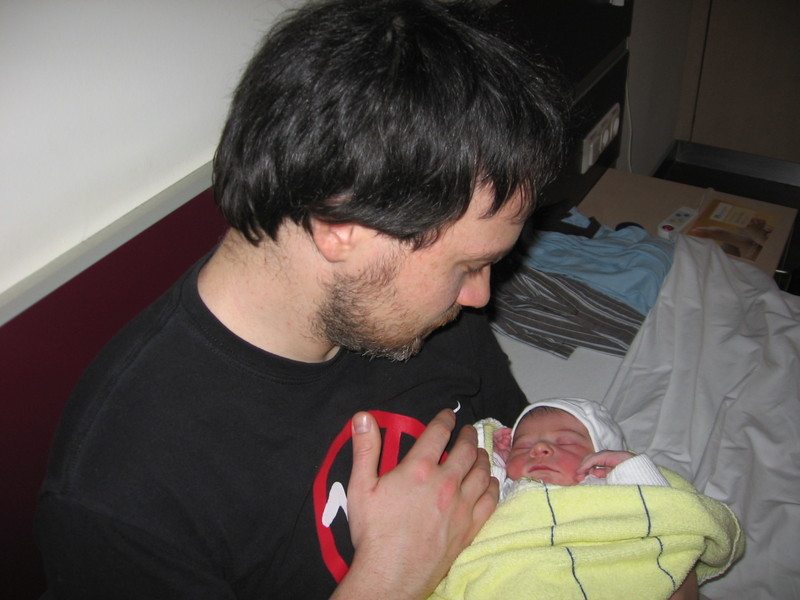
Jan 5 2011, 3070g, 54cm Julia, Mom and Dad are all well and very happy.

29 December 2010

Christoph Egger: Debian GNU/kFreeBSD

So when I was travveling to my parent's for christmas it looked like I'd have limited computer access. My Netbook is quite OK for reading mail but not really useable for any real hacking. And my trusty Thinkpad (Z61m) was oopsing when X was running so not much useable either. But as some Live CDs placed here were working well I decided that this would be fixed by an reinstall. And as I was reinstalling anyway I decided I could just choose kfreebsd-amd64. Turned out to be a quite entertaining decision with lots of stuff to hack away with wireless Bad news: there's no wireless support on Debian GNU/kFreeBSD at the moment. This problem is tracked as Bug #601803 so for wireless internet you will need a (plain) Freebsd chroot. Haven't tried this myself yet -- busy figuring other stuff out. SBCL Having a FreeBSD chroot I decided to give SBCL on GNU/kFreeBSD another try after having failed to get it working in a VM some time ago. With quite some help on SBCL's IRC channel I managed to build a patch that enables building (you need to force a :os-provides-dlopen to the feature list additionally). There's currently no multi-threading working so I hae a project for the rest of the hoidays (well lots of other stuff to do as well ;)) Audio Some more user-related stuff now. As it is this time of the year I wanted to listen to some 27c3 streams so I needed working audio. However there's no OSS device available. Turned out you just need to kldload the right module (here snd_hda) to get sound working. Volume was rather low although hardware controls of the soundcard where at max. As that's all OSS there's no point looking for alsamixer. Turns out aumix can do that here. IPv6 aiccu stuff Installing aiccu, copying the config in and starting did not work out as well. I already tried to do that from within the FreeBSD chroot already (which doesn't work for some reason) until I discovered just loading the if_tun kernel module solves the aiccu on Debian issue quite well. To get a default route up the last step was finding /lib/freebsd/route again -- /sbin/route is a wrapper around that abstracting differences in BSD route but not supporting IPv6.

18 December 2010

Christoph G hre: Postfix mail queue

Did you ever have to analyse a mail queue in postfix - more than typing 'mailq' in a shell and hope after some time the queue empties? I thought there'd be a command in postfix to show the message body or header from a specified message id. But I was disappointed, only exim has this with -Mvb or -Mvh. Postfix ships postcat to show queue files, but it needs the absolute path to the queued file - so I can use less or cat instead. With a Google search I found a small bash script called pfcat to do this job. It walks through all queue directories and uses postcat to display the message with the given message id. BTW: I found another nice tool called qshape to display all queue content in a table view. This one is shipped with standard postfix.

Christoph Berg: Using multiple IMAP accounts with Mutt

Mutt's configuration is sometime more a toolbox than something offering ready solutions, and "how to I use multiple accounts?" is one of the most FAQs. Here's a condensed version of my setup. In the most simple solution, just 'c'hange folders to the IMAP server:
c imaps://imap.example.com <enter>
c imaps://imap.otherdomain.tld <enter>
That's cumbersome to type, so let's automate it:
# .mutt/muttrc
macro index <f2> '<change-folder>imaps://imap.example.com<enter>'
macro index <f3> '<change-folder>imaps://imap.otherdomain.tld<enter>'
That would be the basic setup. The two accounts have settings associated with them, we put them in two files:
# .mutt/account.example
set from=me@example.com
set hostname="example.com"
set folder="imaps://imap.example.com/"
set postponed="=Drafts"
set spoolfile="imaps://imap.example.com/INBOX"
set signature="~/.mutt/signature.example"
# .mutt/account.otherdomain
set from=myself@otherdomain.tld
set hostname="otherdomain.tld"
set folder="imaps://imap.otherdomain.tld/"
set postponed="=Drafts"
set spoolfile="imaps://imap.otherdomain.tld/INBOX"
set signature="~/.mutt/signature.otherdomain"
Now all that's left to do is two folder-hooks to load the files:
# .mutt/muttrc
folder-hook 'example.com' 'source ~/.mutt/account.example'
folder-hook 'otherdomain.tld' 'source ~/.mutt/account.otherdomain'
# switch to default account on startup
source ~/.mutt/account.example
A slight variation of the macros also uses the account files:
macro index <f2> '<sync-mailbox><enter-command>source ~/.mutt/account.example<enter><change-folder>!<enter>'
macro index <f3> '<sync-mailbox><enter-command>source ~/.mutt/account.otherdomain<enter><change-folder>!<enter>'
To save entering the password all the time, we use account-hooks:
account-hook example.org 'set imap_user=me imap_pass=pw1'
account-hook otherdomain.tld 'set imap_user=myself imap_pass=pw2'
Putting passwords in configs isn't something I like, so I pull them from the Gnome keyring:
set my_pw_example= gnome-keyring-query get mutt_example 
set my_pw_otherdomain= gnome-keyring-query get mutt_otherdomain 
account-hook example.org 'set imap_user=me imap_pass=$my_pw_example'
account-hook otherdomain.tld 'set imap_user=myself imap_pass=$my_pw_otherdomain'
(I found gnome-keyring-query in the Gentoo Wiki.) Martti Rahkila has more verbose article with similar ideas.

5 December 2010

Christoph Egger: The erlang experience

This week I had to write a little tool that would collect input on different channels, via socket / netcat, via a http server, .... Calls for a parralel Design -- Maybe a good place to write something real in Erlang. While erlang itself was really nice to write -- I do like Prolog as well as the bunch of functional languages -- doing networking in erlang seems a bit special, the interfaces just aren't thin wrappers around the libc stuff. Getting a Socket Text interface What sounds like a easy challenge to accomplish was actually harder than expected. All I found was some way to pass binaries representing erlang code over a socket and evaluating it remotle. While it's nice that such things are as easy to do as they are it doesn't help me with my task of moving simple strings.
start() ->
     ok, Listen  = gen_tcp:listen(51622, [binary,  packet, 0 ,
                                          reuseaddr, true ,
                                          active, true ]),
    spawn(fun () -> accept_loop(Listen) end).
accept_loop(Listen) ->
     ok, Socket  = gen_tcp:accept(Listen),
    accept_loop(Listen),
    handle(Socket)
handle(Socket) ->
    receive
         tcp, Socket, Bin  ->
            io:format("~p~n", binary_to_list(Bin));
         tcp_closed, Socket  ->
            Buffer
    end.
So the socket is now up and receives text as wanted. However, as we are already runnign a parralel program it would be nice to be hable to handle multiple socket connections in parralel right? For that we just need to add a spawn() at the right place. The right place is not the handle(Socket) but the accept_loop(Listen) because the process that called accept will receive all the tcp messages. This last part was quite obvious after finding the documentation of the active, _ properties for the socket. always here means that you'll receive all data from the socket as erlang Messages, once delivers one package and waits until it is activated again and false requires calling a method -- this would have been possible as well when forking handle(Socket). The web server Ok we also want a webserver. We do not want to run some webapplication inside appache or so, just do some post/get and simple pages. Erlang here provides a built-in httpd with some mod_esi that calls some function depending on the URL used. It doesn't do anything fancy like templating or DB backends or stuff, just taking strings and building the http answers. Unfortunately there are no examples around and basically noone seems to be using this combination (apart from some hacks like mine probably). So as I needed to get some additional information into the handler function (a Pid to connect to some service), I, as a novice, just couldn't find a way. Asking on IRC the solution was rather simple: Just using erlang's process registry. For more complex stuf gproc might prove usefull here. Result I guess I've got a huge step farther in programming erlang now. The manpages are easily found by your search engine -- for python I have to either walk through the (well structured) online documentation or search for the right link in the search results, for erlang they're typically first. Also Joe Armstrong's Books as proven usefull. The most dificult part probably is getting around all the nice extras you can do (transfering functions over sockets et al) and find out how to do the thing you need.

25 November 2010

Cyril Brulebois: Debian XSF News

Since people seem to like it, I ll be trying to publish some news about ongoing work on the XSF side, on a (possibly) regular basis. Let s have a look at what happened since last time I blogged about X in Debian, mostly by checking what appeared in my =debian-x mailbox. Debian XSF News #1 What are the XSF plans?

12 November 2010

Christoph Berg: I need to look this up every time

I need to look this up every time I need a backport (mostly PostgreSQL) at a customer site with limited networking:
$ lftp -c 'mget http://backports.debian.org/debian-backports/pool/main/p/postgresql-8.4/*_8.4.5-1~bpo50+1_amd64.deb'
Hopefully I can remember this in the future.

Christoph Berg: I need to look up this every time

I need to look up this every time I need a backport (mostly PostgreSQL) at a customer site with limited networking:
$ lftp -c 'mget http://backports.debian.org/debian-backports/pool/main/p/postgresql-8.4/*_8.4.5-1~bpo50+1_amd64.deb'
Hopefully I can remember that in the future.

9 November 2010

Julien Valroff: I am a Debian Developer!

A few months after starting the NM process, I have just been accepted as a Debian Developer. My account name is simply: julien I have been a Debian user for about 10 years now, and have begun contributing to Debian in 2005. I have then been accepted as a Debian Maintainer in 2007. This post is mainly to thank: Also thanks to all people who have already sent their congratulations, it makes me very proud!

Next.

Previous.