Our project funding work continues with an active bid on the work of packaging gradle in Debian. The next steps are reviewing the bid and formal approval.
We re looking forward to receiving more projects from various Debian teams! Learn more about the rationale behind this initiative in this article.
Debian LTS contributors
In October 12 contributors were paid to work on Debian LTS, their reports are available below.
Adrian Bunk did 40.5h in October (out of 28.5h assigned and 18h remaining, thus keeping 6h for November).
Evolution of the situation
In October we released 34 DLAs.
Also, we would like to remark once again that we are constantly looking for new contributors. Please contact Jeremiah if you are interested!
The security tracker currently lists 37 packages with a known CVE and the dla-needed.txt file has 22 packages needing an update.
Thanks to our sponsors
Sponsors that joined recently are in bold.
The diffoscope maintainers are pleased to announce the release of diffoscope
version 191. This version includes the following changes:
[ Chris Lamb ]
* Detect XML files as XML files if either file(1) claims if they are XML
  files, or if they are named .xml.
  (Closes: #999438, reproducible-builds/diffoscope#287)
* Don't reject Debian .changes files if they contain non-printable
  characters. (Closes: reproducible-builds/diffoscope#286)
* Continue loading a .changes file even if the referenced files inside it do
  not exist, but include a comment in the diff as a result.
* Log the reason if we cannot load a Debian .changes file.
[ Zbigniew J drzejewski-Szmek ]
* Fix inverted logic in the assert_diff_startswith() utility.
Arch Linux uses libarchive (bsdtar) in its build environment. The default tar
program installed is GNU tar. It is possible to create a source distribution
which leads to different files seen by the build environment than compared to
a careful reviewer and other Linux distributions.
Samanta notes that addressing the tar utilities themselves will not be a
sufficient fix:
I have submitted bug reports and patches to some projects but eventually I
had to conclude that the problem itself cannot be fixed by these
implementations alone. The best choice for these tools would be to only allow
archives which are fully compatible to standards but this in turn would
render a lot of archives broken.
Reproducible builds, with its twin ideas of reaching consensus on the build outputs as well as precisely recording and describing the build environment, would help address this problem at a higher level.
Codethink announced that they had achieved ISO-26262 ASIL D Tool Certification, a way of determining specific safety standards for software. Codethink used open source tooling to achieve this, but they also leverage:
Reproducibility, repeatability and traceability of builds, drawing heavily on best-practices championed by the Reproducible Builds project.
PackagingCon is a conference for developers of package management software, their communities and other stakeholders. This virtual event, which will take place on the 9th and 10th November 2021, has a mission is to bring different ecosystems together . The schedule for the event is now available to view online.
In addition, Trevor Rosen from SolarWinds presented at the Linux Foundation s Supply Chain Security Con last month on incorporating in-toto into their build system. in-toto a framework to secure the integrity of software supply chains. Trevor also discusses building everything twice to validate the first build la reproducible builds. (PDF slides)
Jeremiah announced the release of version 1.4 of stage0-posix, part of a broader effort to provide an ultra-minimal bootstrap seed to increase trust in our software stack.
Fredrik Str mberg offered an update on the Sigsum project and some specific milestones within transparency logging efforts: after a year of design iterations we have not only designed a transparency log but also decided to turn it into a project of its own .
There were quite a few changes to the Reproducible Builds website and documentation this month as well, including Feng Chai updating some links on our publications page [] and marco updated our project metadata around the Bitcoin Core building guide [].
Lastly, we ran another productive meeting on IRC during October. A full set of notes from the meeting is available to view.
Distribution work
Qubes was heavily featured in the latest edition of Linux Weekly News, and a significant section was dedicated to discussing reproducibility. For example, it was mentioned that the Qubes project has been working on incorporating reproducible builds into its continuous integration (CI) infrastructure . But the LWN article goes on to describe that:
The current goal is to be able to build the Qubes OS Debian templates solely from packages that can be built reproducibly. Templates in Qubes OS are VM images that can be used to start an application qube quickly based on the template. The qube will have read-only access to the root filesystem of the template, so that the same root filesystem can be shared with multiple application qubes. There are official templates for several variants of both Fedora and Debian, as well as community maintained templates for several other distributions.
You can view the whole article on LWN, and Fr d ric also published a lengthy summary about their work on reproducible builds in Qubes as well for those wishing to learn more.
In Debian this month, 133 reviews of Debian packages were added, 81 were updated and 24 were removed this month, adding to Debian s ever-growing knowledge about identified issues. A number of issues were categorised and added by Chris Lamb and Vagrant Cascadian too [][][]. In addition, work on alternative snapshot service has made progress by Fr d ric Pierret and Holger Levsen this month, including moving from the existing host (snapshot.notset.fr) to snapshot.reproducible-builds.org (more info) thanks to OSUOSL for the machine and hosting and Debian for the disks.
Finally, Bernhard M. Wiedemann posted his monthly reproducible builds status report.
diffoscopediffoscope is our in-depth and content-aware diff utility. Not only can it locate and diagnose reproducibility issues, it can provide human-readable diffs from many kinds of binary formats. This month, Chris Lamb made the following changes, including preparing and uploading versions 186, 187, 188 and 189 to Debian
New features:
Add support for Python Sphinx inventory files (usually named objects.inv on-disk). []
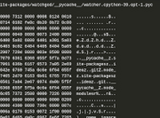
Add support for comparing .pyc files. Thanks to Sergei Trofimovich for the inspiration. []
Try some alternative suffixes (e.g. .py) to support distributions that strip or retain them. [][]
Bug fixes:
Fix Python decompilation tests under Python 3.10+ [] and for Python 3.7 [].
Don t raise a traceback if we cannot unmarshal Python bytecode. This is in order to support Python 3.7 failing to load .pyc files generated with newer versions of Python. []
Skip Python bytecode testing where we do not have an expected diff. []
Codebase improvements:
Use our file_version_is_lt utility instead of accepting both versions of uImage expected diff. []
Split out a custom call to assert_diff for a .startswith equivalent. []
Use skipif instead of manual conditionals in some tests. []
In addition, Jelle van der Waa added external tool references for Arch Linux for ocamlobjinfo, openssl and ffmpeg [][][] and added Arch Linux as a Continuous Integration (CI) test target. [] and Vagrant Cascadian updated the testsuite to skip Python bytecode comparisons when file(1) is older than 5.39. [] as well as added external tool references for the Guix distribution for dumppdf and ppudump. [][]. Vagrant Cascadian also updated the diffoscope package in GNU Guix [][].
Lastly, Guangyuan Yang updated the FreeBSD package name on the website [], Mattia Rizzolo made a change to override a new Lintian warning due to the new test files [], Roland Clobus added support to detect and log if the GNU_BUILD_ID field in an ELF binary been modified [], Sandro J ckel updated a number of helpful links on the website [] and Sergei Trofimovich made the uImage test output support file() version 5.41 [].
reprotestreprotest is the Reproducible Build s project end-user tool to build same source code twice in widely differing environments, checking the binaries produced by the builds for any differences.
This month, reprotest version 0.7.18 was uploaded to Debian unstable by Holger Levsen, which also included a change by Holger to clarify that Python 3.9 is used nowadays [], but it also included two changes by Vasyl Gello to implement realistic CPU architecture shuffling [] and to log the selected variations when the verbosity is configured at a sufficiently high level []. Finally, Vagrant Cascadian updated reprotest to version 0.7.18 in GNU Guix.
Upstream patches
The Reproducible Builds project detects, dissects and attempts to fix unreproducible packages. We try to send all of our patches upstream where appropriate. We authored a large number of such patches this month, including:
Testing framework
The Reproducible Builds project runs a testing framework at tests.reproducible-builds.org, to check packages and other artifacts for reproducibility. This month, the following changes were made:
Handle schroot errors when invoking diffoscope instead of masking them. [][]
Declare and define some variables separately to avoid masking the subshell return code. []
Fix variable name. []
Improve log reporting. []
Execute apt-get update with the -q argument to get more decent logs. []
Set the Debian HTTP mirror and proxy for snapshot.reproducible-builds.org. []
Install the libarchive-tools package (instead of bsdtar) when updating Jenkins nodes. []
Be stricter about errors when starting the node agent [] and don t overwrite NODE_NAME so that we can expect Jenkins to properly set for us [].
Explicitly warn if the NODE_NAME is not a fully-qualified domain name (FQDN). []
Document whether a node runs in the future. []
Disable postgresql_autodoc as it not available in bullseye. []
Don t be so eager when deleting schroot internals, call to schroot -e to terminate the schroots instead. []
Only consider schroot underlays for deletion that are over a month old. [][]
Only try to unmount /proc if it s actually mounted. []
Move the db_backup task to its own Jenkins job. []
Lastly, Vasyl Gello added usage information to the reproducible_build.sh script [].
Contributing
If you are interested in contributing to the Reproducible Builds project, please visit our Contribute page on our website. However, you can get in touch with us via:
The diffoscope maintainers are pleased to announce the release of diffoscope
version 190. This version includes the following changes:
[ Chris Lamb ]
* Don't raise a traceback if we cannot de-marshal Python bytecode to support
  Python 3.7 loading newer .pyc files.
  (Closes: reproducible-builds/diffoscope#284)
* Fix Python tests under Python 3.7 with file 5.39+.
[ Vagrant Cascadian ]
* Skip Python bytecode testing when "file" is older than 5.39.
[ Roland Clobus ]
* Detect whether the GNU_BUILD_ID field has been modified.
The diffoscope maintainers are pleased to announce the release of diffoscope
version 189. This version includes the following changes:
[ Chris Lamb ]
* Try some alternative suffixes (eg. ".py") to support distributions that
  strip or retain them. (Closes: reproducible-builds/diffoscope#283)
* Skip Python bytecode testing where we do not have an expected diff.
  (Closes: reproducible-builds/diffoscope#284)
* Refactor the find_executable utility into an explicit method.
* Split out a custom call to assert_diff to support a .startswith equivalent.
* Use skipif instead of manual conditionals in some tests.
[ Vagrant Cascadian ]
* Add an external tool reference for Guix to support ppudump and dumppdf.
[ Sergei Trofimovich ]
* Update uImage test output for file(1) version 5.41.
[ Jelle van der Waa ]
* Add Arch Linux as CI test target.
* Add external tools on Arch Linux for ffmpeg, openssl and ocalobjinfo.
Like each month, have a look at the work funded by Freexian s Debian LTS offering.
Debian project funding
Folks from the LTS team, along with members of the Debian Android Tools team and Phil Morrel, have proposed work on the Java build tool, gradle, which is currently blocked due to the need to build with a plugin not available in Debian. The LTS team reviewed the project submission and it has been approved. After approval we ve created a Request for Bids which is active now.
You ll hear more about this through official Debian channels, but in the meantime, if you feel you can help with this project, please submit a bid. Thanks!
This September, Freexian set aside 2550 EUR to fund Debian projects.
We re looking forward to receive more projects from various Debian teams! Learn more about the rationale behind this initiative in this article.
Debian LTS contributors
In September, 15 contributors have been paid to work on Debian LTS, their reports are available:
Abhijith PA has returned hours and marked themselves inactive, at least for the time being. He did 0h out of 14h, carried over 14h and returned 28h.
Adrian Bunk did 19.5h (out of 24.75h assigned and 12.75 from August), carrying over 18h to October.
Emilio Pozuelo Monfort did not report back about their work so we assume they did nothing (out of 5.5h assigned plus 74.5h from August), thus is carrying over 80h for October.
Holger Levsen did 3h (out of 12h assigned) and gave back 9h and carried over 3h.
Jeremiah Foster worked 10 hours (out of 20h assigned) on LTS work, carrying over 10h.
Lee Garrett did not report back about their work so we assume they did nothing (out of 24.75h assigned and 23.75 from August), thus is carrying over 48.50h for October.
Markus Koschany did 43.5h (out of 24.75h assigned and 18.75h from August)
Utkarsh Gupta did 24.75h (out of 24.75h assigned) but did not publish his report yet.
Ola Lundqvist did 2 hours (out of 21h carried over from previous months), and is thus carrying 19h for October.
Evolution of the situation
In September we released 30 DLAs. September was also the second month of Jeremiah coordinating LTS contributors.
Also, we would like say that we are always looking for new contributors to LTS. Please contact Jeremiah if you are interested!
The security tracker currently lists 33 packages with a known CVE and the dla-needed.txt file has 26 packages needing an update.
Thanks to our sponsors
Sponsors that joined recently are in bold.
Although it is possible to increase confidence in Free and Open Source Software (FOSS) by reviewing its source code, trusting code is not the same as trusting its executable counterparts. These are typically built and distributed by third-party vendors with severe security consequences if their supply chains are compromised.
In this paper, we present reproducible builds, an approach that can determine whether generated binaries correspond with their original source code. We first define the problem and then provide insight into the challenges of making real-world software build in a "reproducible" manner that is, when every build generates bit-for-bit identical results. Through the experience of the Reproducible Builds project making the Debian Linux distribution reproducible, we also describe the affinity between reproducibility and quality assurance (QA).
The full text of the paper can be found in PDF format and should appear, with an alternative layout, within a forthcoming issue of the physical IEEE Software magazine.
The goal behind reproducible builds is to ensure that no deliberate flaws have been introduced during compilation processes via promising or mandating that identical results are always generated from a given source. This allowing multiple third-parties to come to an agreement on whether a build was compromised or not by a system of distributed consensus.
In these reports we outline the most important things that have been happening in the world of reproducible builds in the past month:
First mentioned in our March 2021 report, Martin Heinz published two blog posts on sigstore, a project that endeavours to offer software signing as a public good, [the] software-signing equivalent to Let s Encrypt . The two posts, the first entitled Sigstore: A Solution to Software Supply Chain Security outlines more about the project and justifies its existence:
Software signing is not a new problem, so there must be some solution already, right? Yes, but signing software and maintaining keys is very difficult especially for non-security folks and UX of existing tools such as PGP leave much to be desired. That s why we need something like sigstore - an easy to use software/toolset for signing software artifacts.
Some time ago I checked Signal s reproducibility and it failed. I asked others to test in case I did something wrong, but nobody made any reports. Since then I tried to test the Google Play Store version of the apk against one I compiled myself, and that doesn t match either.
BitcoinBinary.org was announced this month, which aims to be a repository of Reproducible Build Proofs for Bitcoin Projects :
Most users are not capable of building from source code themselves, but we can at least get them able enough to check signatures and shasums. When reputable people who can tell everyone they were able to reproduce the project s build, others at least have a secondary source of validation.
Related to this, there was continuing discussion on how to embed/encode the build metadata for the Debian live images which were being worked on by Roland Clobus.
Ariadne Conill published another detailed blog post related to various security initiatives within the Alpine Linux distribution. After summarising some conventional security work being done (eg. with sudo and the release of OpenSSH version 3.0), Ariadne included another section on reproducible builds: The main blocker [was] determining what to do about storing the build metadata so that a build environment can be recreated precisely .
Finally, Bernhard M. Wiedemann posted his monthly reproducible builds status report.
Community news
On our website this month, Bernhard M. Wiedemann fixed some broken links [] and Holger Levsen made a number of changes to the Who is Involved? page [][][]. On our mailing list, Magnus Ihse Bursie started a thread with the subject Reproducible builds on Java, which begins as follows:
I m working for Oracle in the Build Group for OpenJDK which is primary responsible for creating a built artifact of the OpenJDK source code. [ ] For the last few years, we have worked on a low-effort, background-style project to make the build of OpenJDK itself building reproducible. We ve come far, but there are still issues I d like to address. []
diffoscopediffoscope is our in-depth and content-aware diff utility. Not only can it locate and diagnose reproducibility issues, it can provide human-readable diffs from many kinds of binary formats. This month, Chris Lamb prepared and uploaded versions 183, 184 and 185 as well as performed significant triaging of merge requests and other issues in addition to making the following changes:
New features:
Support a newer format version of the R language s .rds files. []
Don t call close_archive when garbage collecting Archive instances, unless open_archive definitely returned successfully. This prevents, for example, an AttributeError where PGPContainer s cleanup routines were rightfully assuming that its temporary directory had actually been created. []
Fix (and test) the comparison of R language s .rdb files after refactoring temporary directory handling. []
Ensure that RPM archives exists in the Debian package description, regardless of whether python3-rpm is installed or not at build time. []
Codebase improvements:
Use our assert_diff routine in tests/comparators/test_rdata.py. []
Move diffoscope.versions to diffoscope.tests.utils.versions. []
Reformat a number of modules with Black. [][]
However, the following changes were also made:
Mattia Rizzolo:
Fix an autopkgtest caused by the androguard module not being in the (expected) python3-androguard Debian package. []
Appease a shellcheck warning in debian/tests/control.sh. []
Ignore a warning from h5py in our tests that doesn t concern us. []
Drop a trailing .1 from the Standards-Version field as it s required. []
Zbigniew J drzejewski-Szmek:
Stop using the deprecated distutils.spawn.find_executable utility. [][][][][]
Adjust an LLVM-related test for LLVM version 13. []
Update invocations of llvm-objdump. []
Adjust a test with a one-byte text file for file version 5.40. []
And, finally, Benjamin Peterson added a --diff-context option to control unified diff context size [] and Jean-Romain Garnier fixed the Macho comparator for architectures other than x86-64 [].
Upstream patches
The Reproducible Builds project detects, dissects and attempts to fix as many currently-unreproducible packages as possible. We endeavour to send all of our patches upstream where appropriate. This month, we wrote a large number of such patches, including:
#990246 filed against vlc (forwarded upstream [][])
Testing framework
The Reproducible Builds project runs a testing framework at tests.reproducible-builds.org, to check packages and other artifacts for reproducibility. This month, the following changes were made:
Holger Levsen:
Drop my package rebuilder prototype as it s not useful anymore. []
Schedule old packages in Debian bookworm. []
Stop scheduling packages for Debian buster. [][]
Don t include PostgreSQL debug output in package lists. []
Detect Python library mismatches during build in the node health check. []
Update a note on updating the FreeBSD system. []
Mattia Rizzolo:
Silence a warning from Git. []
Update a setting to reflect that Debian bookworm is the new testing. []
Upgrade the PostgreSQL database to version 13. []
Roland Clobus (Debian live image generation):
Workaround non-reproducible config files in the libxml-sax-perl package. []
Use the new DNS for the snapshot service. []
Vagrant Cascadian:
Also note that the armhf architecture also systematically varies by the kernel. []
Contributing
If you are interested in contributing to the Reproducible Builds project, please visit our Contribute page on our website. However, you can get in touch with us via:
Like each month, have a look at the work funded by Freexian s Debian LTS offering.
Debian project funding
In August, we put aside 2460 EUR to fund Debian projects. We received a new project proposal that got approved and there s an associated bid request if you feel like proposing yourself to implement this project.
We re looking forward to receive more projects from various Debian teams! Learn more about the rationale behind this initiative in this article.
Debian LTS contributors
In August, 14 contributors have been paid to work on Debian LTS, their reports are available:
Abhijith PA did 4.0h (out of 14h assigned and 5h from August), thus carrying over 15h to September.
Adrian Bunk did 11h (out of 23.75h assigned), thus carrying over 12.75h to September.
Emilio Pozuelo Monfort did not report back about their work so we assume they did nothing (out of 23.75h assigned plus 50.75h from August), thus is carrying over 74.5h for September.
Holger Levsen did 3h (out of 12h assigned) to help coordinate the team, and gave back the remaining hours.
Lee Garrett did nothing (out of 23.75h assigned), thus is carrying over 23.75h for September.
Markus Koschany did 35h (out of 23.75h assigned and 30h from August), thus carrying over 18.75h to September.
Neil Williams did 24h (out of 23.75h assigned), thus anticipating 0.25h of October.
Roberto C. S nchez did 22.25h (out of 23.75h assigned), thus carrying over 1.5h to September.
Sylvain Beucler did 21.5h (out of 23.75h assigned), thus carrying over 2.25h to September.
Evolution of the situation
In August we released 30 DLAs.
This is the first month of Jeremiah coordinating LTS contributors. We would like to thank Holger Levsen for his work on this role up to now.
Also, we would like to remark once again that we are constantly looking for new contributors. Please contact Jeremiah if you are interested!
The security tracker currently lists 73 packages with a known CVE and the dla-needed.txt file has 29 packages needing an update.
Thanks to our sponsors
Sponsors that joined recently are in bold.
The diffoscope maintainers are pleased to announce the release of diffoscope
version 186. This version includes the following changes:
[ Chris Lamb ]
* Don't call close_archive when garbage-collecting Archive instances unless
  open_archive returned successfully. This prevents, amongst others, an
  AttributeError traceback due to PGPContainer's cleanup routines assuming
  that its temporary directory had been created.
  (Closes: reproducible-builds/diffoscope#276)
* Ensure that the string "RPM archives" exists in the package description,
  regardless of whether python3-rpm is installed or not at build time.
[ Jean-Romain Garnier ]
* Fix the LVM Macho comparator for non-x86-64 architectures.
The diffoscope maintainers are pleased to announce the release of diffoscope
version 185. This version includes the following changes:
[ Mattia Rizzolo ]
* Fix the autopkgtest in order to fix testing migration: the androguard
  Python module is not in the python3-androguard Debian package
* Ignore a warning in the tests from the h5py package that doesn't concern
  diffoscope.
[ Chris Lamb ]
* Bump Standards-Version to 4.6.0.
The diffoscope maintainers are pleased to announce the release of diffoscope
version 184. This version includes the following changes:
[ Chris Lamb ]
* Fix the semantic comparison of R's .rdb files after a refactoring of
  temporary directory handling in a previous version.
* Support a newer format version of R's .rds files.
* Update tests for OCaml 4.12. (Closes: reproducible-builds/diffoscope#274)
* Move diffoscope.versions to diffoscope.tests.utils.versions.
* Use assert_diff in tests/comparators/test_rdata.py.
* Reformat various modules with Black.
[ Zbigniew J drzejewski-Szmek ]
* Stop using the deprecated distutils module by adding a version
  comparison class based on the RPM version rules.
* Update invocations of llvm-objdump for the latest version of LLVM.
* Adjust a test with one-byte text file for file(1) version 5.40.
* Improve the parsing of the version of OpenSSH.
[ Benjamin Peterson ]
* Add a --diff-context option to control the unified diff context size.
  (reproducible-builds/diffoscope!88)
Colson Whitehead's latest novel, Harlem Shuffle, was always going to be widely reviewed, if only because his last two books won Pulitzer prizes. Still, after enjoying both The Underground Railroad and The Nickel Boys, I was certainly going to read his next book, regardless of what the critics were saying indeed, it was actually quite agreeable to float above the manufactured energy of the book's launch.
Saying that, I was encouraged to listen to an interview with the author by Ezra Klein. Now I had heard Whitehead speak once before when he accepted the Orwell Prize in 2020, and once again he came across as a pretty down-to-earth guy. Or if I were to emulate the detached and cynical tone Whitehead embodied in The Nickel Boys, after winning so many literary prizes in the past few years, he has clearly rehearsed how to respond to the cliched questions authors must be asked in every interview. With the obligatory throat-clearing of 'so, how did you get into writing?', for instance, Whitehead replies with his part of the catechism that 'It seemed like being a writer could be a cool job. You could work from home and not talk to people.' The response is the right combination of cute and self-effacing... and with its slight tone-deafness towards enforced isolation, it was no doubt honed before Covid-19.
Harlem Shuffle tells three separate stories about Ray Carney, a furniture salesman and 'fence' for stolen goods in New York in the 1960s. Carney doesn't consider himself a genuine criminal though, and there's a certain logic to his relativistic morality. After all, everyone in New York City is on the take in some way, and if some 'lightly used items' in Carney's shop happened to have had 'previous owners', well, that's not quite his problem. 'Nothing solid in the city but the bedrock,' as one character dryly observes. Yet as Ezra pounces on in his NYT interview mentioned abov, the focus on the Harlem underworld means there are very few women in the book, and Whitehead's circular response ah well, it's a book about the criminals at that time! was a little unsatisfying. Not only did it feel uncharacteristically slippery of someone justly lauded for his unflinching power of observation (after all, it was the author who decided what to write about in the first place), it foreclosed on the opportunity to delve into why the heist and caper genres (from The Killing, The Feather Thief, Ocean's 11, etc.) have historically been a 'male' mode of storytelling.
Perhaps knowing this to be the case, the conversation quickly steered towards Ray Carney's wife, Elizabeth, the only woman in the book who could be said possesses some plausible interiority. The following off-hand remark from Whitehead caught my attention:
My wife is convinced that [Elizabeth] knows everything about Carney's criminal life, and is sort of giving him a pass. And I'm not sure if that's true. I have to have to figure out exactly what she knows and when she knows it and how she feels about it.
I was quite taken by this, although not simply due to its effect on the story it self. As in, it immediately conjured up a charming picture of Whitehead's domestic arrangements: not only does Whitehead's wife feel free to disagree with what one of Whitehead's 'own' characters knows or believes, but that Colson has no problem whatsoever sharing that disagreement with the public at large. (It feels somehow natural that Whitehead's wife believes her counterpart knows more than she lets on, whilst Whitehead himself imbues the protagonist's wife with a kind of neo-Victorian innocence.) I'm minded to agree with Whitehead's partner myself, if only due to the passages where Elizabeth is studiously ignoring Carney's otherwise unexplained freak-outs.
But all of these meta-thoughts simply underline just how emancipatory the Death of the Author can be. This product of academic literary criticism (the term was coined by Roland Barthes' 1967 essay of the same name) holds that the original author's intentions, ideas or biographical background carry no especial weight in determining how others should interpret their work. It is usually understood as meaning that a writer's own views are no more valid or 'correct' than the views held by someone else. (As an aside, I've found that most readers who encounter this concept for the first time have been reading books in this way since they were young. But the opposite is invariably true with cinephiles, who often have a bizarre obsession with researching or deciphering the 'true' interpretation of a film.) And with all that in mind, can you think of a more wry example of how freeing (and fun) nature of the Death of the Author than an author's own partner dissenting with their (Pulitzer Prize-winning) husband on the position of a lynchpin character?
The 1964 Harlem riot began after James Powell, a 15-year-old African American, was shot and killed by Thomas Gilligan, an NYPD police officer in front of 10s of witnesses. Gilligan was subsequently cleared by a grand jury.
As it turns out, the reviews for Harlem Shuffle have been almost universally positive, and after reading it in the two days after its release, I would certainly agree it is an above-average book. But it didn't quite take hold of me in the way that The Underground Railroad or The Nickel Boys did, especially the later chapters of The Nickel Boys that were set in contemporary New York and could thus make some (admittedly fairly explicit) connections from the 1960s to the present day that kind of connection is not there in Harlem Shuffle, or at least I did not pick up on it during my reading.
I can see why one might take exception to that, though. For instance, it is certainly true that the week-long Harlem Riot forms a significant part of the plot, and some events in particular are entirely contingent on the ramifications of this momentous event. But it's difficult to argue the riot's impact are truly integral to the story, so not only is this uprising against police brutality almost regarded as a background event, any contemporary allusion to the murder of George Floyd is subsequently watered down. It's nowhere near the historical rubbernecking of Forrest Gump (1994), of course, but that's not a battle you should ever be fighting.
Indeed, whilst a certain smoothness of affect is to be priced into the Whitehead reading experience, my initial overall reaction to Harlem Shuffle was fairly flat, despite all the action and intrigue on the page. The book perhaps belies its origins as a work conceived during quarantine after all, the book is essentially comprised of three loosely connected novellas, almost as if the unreality and mental turbulence of lockdown prevented the author from performing the psychological 'deep work' of producing a novel-length text with his usual depth of craft. A few other elements chimed with this being a 'lockdown novel' as well, particularly the book's preoccupation with the sheer physicality of the city compared to the usual complex interplay between its architecture and its inhabitants. This felt like it had been directly absorbed into the book from the author walking around his deserted city, and thus being able to take in details for the first time:
The doorways were entrances into different cities no, different entrances into one vast, secret city. Ever close, adjacent to all you know, just underneath. If you know where to look.
And I can't fail to mention that you can almost touch Whitehead's sublimated hunger to eat out again as well:
Stickups were chops they cook fast and hot, you re in and out. A stakeout was ribs fire down low, slow, taking your time.
[ ]
Sometimes when Carney jumped into the Hudson when he was a kid, some of that stuff got into his mouth. The Big Apple Diner served it up and called it coffee.
More seriously, however, the relatively thin personalities of minor characters then reminded me of the simulacrum of Zoom-based relationships, and the essentially unsatisfactory endings to the novellas felt reminiscent of lockdown pseudo-events that simply fizzle out without a bang. One of the stories ties up loose ends with: 'These things were usually enough to terminate a mob war, and they appeared to end the hostilities in this case as well.' They did? Well, okay, I guess.
The corner of 125th Street and Morningside Avenue in 2019, the purported location of Carney's fictional furniture store. Signage plays a prominent role in Harlem Shuffle, possibly due to the author's quarantine walks.
Still, it would be unfair to characterise myself as 'disappointed' with the novel, and none of this piece should be taken as really deep criticism. The book certainly was entertaining enough, and pretty funny in places as well:
Carney didn t have an etiquette book in front of him, but he was sure it was bad manners to sit on a man s safe.
[ ]
The manager of the laundromat was a scrawny man in a saggy undershirt painted with sweat stains. Launderer, heal thyself.
Yet I can't shake the feeling that every book you write is a book that you don't, and so we might need to hold out a little longer for Whitehead's 'George Floyd novel'. (Although it is for others to say how much of this sentiment is the expectations of a White Reader for The Black Author to ventriloquise the pain of 'their' community.)
Some room for personal critique is surely permitted. I dearly missed the junk food energy of the dry and acerbic observations that run through Whitehead's previous work. At one point he had a good line on the model tokenisation that lurks behind 'The First Negro to...' labels, but the callbacks to this idea ceased without any payoff. Similar things happened with the not-so-subtle critiques of the American Dream:
Entrepreneur? Pepper said the last part like manure. That s just a
hustler who pays taxes.
[ ]
One thing I ve learned in my job is that life is cheap, and when things start getting expensive, it gets cheaper still.
Ultimately, though, I think I just wanted more. I wanted a deeper exploration of how the real power in New York is not wielded by individual street hoodlums or even the cops but in the form of real estate, essentially serving as a synecdoche for Capital as a whole. (A recent take of this can be felt in Jed Rothstein's 2021 documentary, WeWork: Or the Making and Breaking of a $47 Billion Unicorn and it is perhaps pertinent to remember that the US President at the time this novel was written was affecting to be a real estate tycoon.). Indeed, just like the concluding scenes of J. J. Connolly's Layer Cake, although you can certainly pull off a cool heist against the Man, power ultimately resides in those who control the means of production... and a homespun furniture salesman on the corner of 125 & Morningside just ain't that. There are some nods to kind of analysis in the conclusion of the final story ('Their heist unwound as if it had never happened, and Van Wyck kept throwing up buildings.'), but, again, I would have simply liked more.
And when I attempted then file this book away into the broader media landscape, given the current cultural visibility of 1960s pop culture (e.g. One Night in Miami (2020), Judas and the Black Messiah (2021), Summer of Soul (2021), etc.), Harlem Shuffle also seemed like a missed opportunity to critically analyse our (highly-qualified) longing for the civil rights era. I can certainly understand why we might look fondly on the cultural products from a period when politics was less alienated, when society was less atomised, and when it was still possible to imagine meaningful change, but in this dimension at least, Harlem Shuffle seems to merely contribute to this nostalgic escapism.
Welcome to the latest report from the Reproducible Builds project. In this post, we round up the important things that happened in the world of reproducible builds in August 2021. As always, if you are interested in contributing to the project, please visit the Contribute page on our website.
There were a large number of talks related to reproducible builds at DebConf21 this year, the 21st annual conference of the Debian Linux distribution (full schedule):
Secondly, Vagrant Cascadian gave a talk titled Looking Forward to Reproducible Builds which mentions some historic blockers within Debian that have been solved, worked around or which are still in progress. It also touched on some recent developments, with an eye to what might happen as Debian embarks upon the new Bookworm development cycle after the release of Bullseye.
Lastly, Johannes Schauer Marin Rodrigues & Fr d ric Pierret gave a joint talk on Making use of snapshot.debian.org for fun and profit about various tools they have developed to interact with the snapshot.debian.org wayback machine for Debian packages. In particular, they mention how they are using the service to reproduce and validate builds as well as touch on an alternative snapshot service that has been mentioned in previous reports.
PackagingCon (@PackagingCon) is new conference for developers of package management software as well as their related communities and stakeholders. The virtual event, which is scheduled to take place on the 9th and 10th November 2021, has a mission is to bring different ecosystems together: from Python s pip to Rust s cargo to Julia s Pkg, from Debian apt over Nix to conda and mamba, and from vcpkg to Spack we hope to have many different approaches to package management at the conference . A number of people from reproducible builds community are planning on attending this new conference, and some may even present. Tickets start at $20 USD.
As reported in our May report, the president of the United States signed an executive order outlining policies aimed to improve the cybersecurity in the US. The executive order comes after a number of highly-publicised security problems such as a ransomware attack that affected an oil pipeline between Texas and New York and the SolarWinds hack that affected a large number of US federal agencies. As a followup this month, however, a detailed fact sheet was released announcing a number large-scale initiatives and that will undoubtedly be related to software supply chain security and, as a result, reproducible builds.
Lastly, We ran another productive meeting on IRC in August (original announcement) which ran for just short of two hours. A full set of notes from the meeting is available.
Software development
kpcyrd announced an interesting new project this month called I probably didn t backdoor this which is an attempt to be:
a practical attempt at shipping a program and having reasonably solid evidence there s probably no backdoor. All source code is annotated and there are instructions explaining how to use reproducible builds to rebuild the artifacts distributed in this repository from source.
The idea is shifting the burden of proof from you need to prove there s a backdoor to we need to prove there s probably no backdoor . This repository is less about code (we re going to try to keep code at a minimum actually) and instead contains technical writing that explains why these controls are effective and how to verify them. You are very welcome to adopt the techniques used here in your projects. ()
As the project s README goes on the mention: the techniques used to rebuild the binary artifacts are only possible because the builds for this project are reproducible . This was also announced on our mailing list this month in a thread titled i-probably-didnt-backdoor-this: Reproducible Builds for upstreams.
kpcyrd also wrote a detailed blog post about the problems surrounding Linux distributions (such as Alpine and Arch Linux) that distribute compiled Python bytecode in the form of .pyc files generated during the build process.
diffoscopediffoscope is our in-depth and content-aware diff utility. Not only can it locate and diagnose reproducibility issues, it can provide human-readable diffs from many kinds of binary formats. This month, Chris Lamb made a number of changes, including releasing version 180), version 181) and version 182) as well as the following changes:
New features:
Add support for extracting the signing block from Android APKs. []
If we specify a suffix for a temporary file or directory within the code, ensure it starts with an underscore (ie. _ ) to make the generated filenames more human-readable. []
Don t include short GCC lines that differ on a single prefix byte either. These are distracting, not very useful and are simply the strings(1) command s idea of the build ID, which is displayed elsewhere in the diff. [][]
Don t include specific .debug-like lines in the ELF-related output, as it is invariably a duplicate of the debug ID that exists better in the readelf(1) differences for this file. []
Bug fixes:
Add a special case to SquashFS image extraction to not fail if we aren t the superuser. []
Only use java -jar /path/to/apksigner.jar if we have an apksigner.jar as newer versions of apksigner in Debian use a shell wrapper script which will be rejected if passed directly to the JVM. []
Reduce the maximum line length for calculating Wagner-Fischer, improving the speed of output generation a lot. []
Don t require apksigner in order to compare .apk files using apktool. []
Update calls (and tests) for the new version of odt2txt. []
Output improvements:
Mention in the output if the apksigner tool is missing. []
Profile diffoscope.diff.linediff and specialize. [][]
Logging improvements:
Format debug-level messages related to ELF sections using the diffoscope.utils.format_class. []
Print the size of generated reports in the logs (if possible). []
Include profiling information in --debug output if --profile is not set. []
Codebase improvements:
Clarify a comment about the HUGE_TOOLS Python dictionary. []
We can pass -f to apktool to avoid creating a strangely-named subdirectory. []
Drop an unused File import. []
Update the supported & minimum version of Black. []
We don t use the logging variable in a specific place, so alias it to an underscore (ie. _ ) instead. []
Update some various copyright years. []
Clarify a comment. []
Test improvements:
Update a test to check specific contents of SquashFS listings, otherwise it fails depending on the test systems user ID to username passwd(5) mapping. []
Assign seen and expected values to local variables to improve contextual information in failed tests. []
Don t print an orphan newline when the source code formatting test passes. []
In addition Santiago Torres Arias added support for Squashfs version 4.5 [] and Felix C. Stegerman suggested a number of small improvements to the output of the new APK signing block []. Lastly, Chris Lamb uploaded python-libarchive-c version 3.1-1 to Debian experimental for the new 3.x branch python-libarchive-c is used by diffoscope.
Upstream patches
The Reproducible Builds project detects, dissects and attempts to fix as many currently-unreproducible packages as possible. We endeavour to send all of our patches upstream where appropriate. This month, we wrote a large number of such patches, including:
Update the website self-build process to not use the buster-backports suite now that Debian Bullseye is the stable release. []
Holger Levsen:
Add a new page documenting various package rebuilder solutions. []
Add some historical talks and slides from DebConf20. [][]
Various improvements to the history page. [][][]
Rename the Comparison protocol documentation category to Verification . []
Update links to F-Droid documentation. []
Ian Muchina:
Increase the font size of titles and de-emphasize event details on the talk page. []
Rename the README file to README.md to improve the user experience when browsing the Git repository in a web browser. []
Mattia Rizzolo:
Drop a position:fixed CSS statement that is negatively affecting with some width settings. []
Fix the sizing of the elements inside the side navigation bar. []
Show gold level sponsors and above in the sidebar. []
Updated the documentation within reprotest to mention how ldconfig conflicts with the kernel variation. []
Roland Clobus:
Added a ticket number for the issue with the live Cinnamon image and diffoscope. []
Testing framework
The Reproducible Builds project runs a testing framework at tests.reproducible-builds.org, to check packages and other artifacts for reproducibility. This month, the following changes were made:
Make a large number of changes to support the new Debian bookworm release, including adding it to the dashboard [], start scheduling tests [], adding suitable Apache redirects [] etc. [][][][][]
Make the first build use LANG=C.UTF-8 to match the official Debian build servers. []
Only test Debian Live images once a week. []
Upgrade all nodes to use Debian Bullseye [] []
Update README documentation for the Debian Bullseye release. []
Other changes:
Only include rsync output if the $DEBUG variable is enabled. []
Don t try to install mock, a tool used to build Fedora packages some time ago. []
Drop an unused function. []
Various documentation improvements. [][]
Improve the node health check to detect zombie jobs. []
Update the location and branch name for the main FreeBSD Git repository. []
Correctly ignore the source tarball when comparing build results. []
Drop an outdated version number from the documentation. []
Mattia Rizzolo:
Block F-Droid jobs from running whilst the setup is running. []
Enable debugging for the rsync job related to Debian Live images. []
Pass BUILD_TAG and BUILD_URL environment for the Debian Live jobs. []
Refactor the master_wrapper script to use a Bash array for the parameters. []
Prefer YAML s safe_load() function over the unsafe variant. []
Use the correct variable in the Apache config to match possible existing files on disk. []
Stop issuing HTTP 301 redirects for things that not actually permanent. []
Roland Clobus (Debian live image generation):
Increase the diffoscope timeout from 120 to 240 minutes; the Cinnamon image should now be able to finish. []
Use the new snapshot service. []
Make a number of improvements to artifact handling, such as moving the artifacts to the Jenkins host [] and correctly cleaning them up at the right time. [][][]
Where possible, link to the Jenkins build URL that created the artifacts. [][]
Only allow only one job to run at the same time. []
Vagrant Cascadian:
Temporarily disable armhf nodes for DebConf21. [][]
Lastly, if you are interested in contributing to the Reproducible Builds project, please visit the Contribute page on our website. You can get in touch with us via:
The diffoscope maintainers are pleased to announce the release of diffoscope
version 183. This version includes the following changes:
[ Chris Lamb ]
* Add support for extracting Android signing blocks.
  (Closes: reproducible-builds/diffoscope#246)
* Format debug messages for elf sections using our
  diffoscope.utils.format_class utility.
* Clarify a comment about the HUGE_TOOLS dict in diffoscope.external_tools.
[ Felix C. Stegerman ]
* Clarify output around APK Signing Blocks and remove an accidental duplicate
  "0x" prefix.
The diffoscope maintainers are pleased to announce the release of diffoscope
version 182. This version includes the following changes:
[ Chris Lamb ]
* Also ignore, for example, spurious "fwGCC: (Debian ... )" lines in output
  from strings(1).
* Only use "java -jar /path/to/apksigner.jar" if we have a .jar as newer
  versions of apksigner use a shell wrapper script which will obviously be
  rejected by the JVM. Also mention in the diff if apksigner is missing.
* Pass "-f" to apktool to avoid creating a strangely-named subdirectory and
  to simplify code.
* If we specify a suffix for temporary file or directory, ensure it starts
  with a "_" to make the generated filenames more human-readable.
* Drop an unused File import.
* Update the minimum version of the Black source code formatter.
[ Santiago Torres Arias ]
* Support parsing the return value of squashfs versions which discriminate
  between fatal and non-fatal errors.
Like each month, have a look at the work funded by Freexian s Debian LTS offering.
Debian project funding
In July, we put aside 2400 EUR to fund Debian projects. We haven t received proposals of projects to fund in the last months, so we have scheduled a discussion during Debconf to try to to figure out why that is and how we can fix that. Join us on August 26th at 16:00 UTC on this link.
We are pleased to announce that Jeremiah Foster will help out to make this initiative a success : he can help Debian members to come up with solid proposals, he can look for people willing to do the work once the project has been formalized and approved, and he will make sure that the project implementation keeps on track when the actual work has begun.
We re looking forward to receive more projects from various Debian teams! Learn more about the rationale behind this initiative in this article.
Debian LTS contributors
In July, 12 contributors have been paid to work on Debian LTS, their reports are available:
Abhijith PA did 5.0h (out of 7h assigned and 3h remaining), thus carrying over 5h to August.
Emilio Pozuelo Monfort did not report back about their work so we assume they did nothing (out of 39.75h assigned plus 11h from June), thus is carrying over 50.75h for August.
Holger Levsen s work was coordinating/managing the LTS team, he did 3.5h (out of 12h assigned) and gave back 8.5h to the pool.
Markus Koschany did 30h (out of 30h assigned and 30h from June), thus carrying over 30h to August.
Ola Lundqvist did nothing (out of 12h assigned plus 20h from June), thus is carrying over 32h for August.
Roberto C. S nchez did 13.5h (out of 32h assigned and 20h from June), and gave back 38.5h to the pool.
Evolution of the situation
In July we released 30 DLAs. Also we were glad to welcome Neil Williams and Lee Garrett who became active contributors.
The security tracker currently lists 63 packages with a known CVE and the dla-needed.txt file has 17 packages needing an update.
We would like to thank Holger Levsen for the years of work where he managed/coordinated the paid LTS contributors. Jeremiah Foster will take over his duties.
Thanks to our sponsors
Sponsors that joined recently are in bold.
The diffoscope maintainers are pleased to announce the release of diffoscope
version 181. This version includes the following changes:
[ Chris Lamb ]
* New features and bug fixes:
  - Don't require apksigner in order to compare .apk files using apktool.
  - Add a special-case to squshfs image extraction to not fail if we aren't
    root/superuser. (Closes: #991059)
  - Reduce the maximum line length to avoid O(n^2) Wagner-Fischer algorithm,
    which meant that diff generation took an inordinate amount of time.
    (Closes: reproducible-builds/diffoscope#272)
  - Include profiling information in --debug output if --profile is not set.
  - Don't print an orphan newline when the Black source code formatter
    self-test passes.
* Tests:
  - Update test to check specific contents of squashfs listing, otherwise it
    fails depending on the test systems uid-to-username mapping in passwd(5).
  - Assign "seen" and "expected" values to local variables to improve
    contextual information in/around failed tests.
* Misc changes:
  - Print the size of generated HTML, text (etc.) reports.
  - Profile calls to specialize and diffoscope.diff.linediff.
  - Update various copyright years.
Here is my monthly update covering what I have been doing in the free software world during July 2021 (previous month):
As part of my role of being the assistant Secretary of the Open Source Initiative and a board director of Software in the Public Interest I attended their respective monthly meetings. As outlined in last months posts, however, my term on the OSI board has been slightly extended due to the discovery of a vulnerability in OSI's recent election as a result, the 2021 election is currently being re-run.
Reproducible Builds
One of the original promises of open source software is that distributed peer review and transparency of process results in enhanced end-user security. However, whilst anyone may inspect the source code of free and open source software for malicious flaws, almost all software today is distributed as pre-compiled binaries. This allows nefarious third parties to compromise systems by injecting malicious code into ostensibly secure software during the various compilation and distribution processes. The motivation behind the Reproducible Builds effort is to ensure no flaws have been introduced during this compilation process by promising identical results are always generated from a given source, thus allowing multiple third-parties to come to a consensus on whether a build was compromised.
This month, I:
Updated the Lintian static analysis tool to check for Python tracebacks in manual pages, usually caused by failing help2man calls and the cause of avoidable reproducibility issues. (#984778 filed against the heudiconv package is a good example of the problem.) [...]
3.2.5-2 (to Debian experimental) Don't symlink /usr/bin/django-admin to django-admin.py. Instead, ship the script generated by the Python entry_points system, otherwise we introduce a confusing django-admin.py-related deprecation message when using django-admin (ie. without the .py extension). (#991098)
It was discovered that there was a potential an entity-expansion issue in libjdom1-java, a lightweight and fast library for using XML. Attackers could have caused a denial of service via a
specially-crafted HTTP request. I therefore issued DLA 2712-1 to address this problem.
Issued DLA 2717-1 and ELA 460-1 for the redis key-value database system to address several integer overflow issues. Some BITFIELD commands were affected, although only on 32-bit systems. The issue was also addressed in Debian sid and experimental too.
Like each month, have a look at the work funded by Freexian s Debian LTS offering.
Debian project funding
In June, we put aside 5775 EUR to fund Debian projects for which we re looking forward to receive more projects from various Debian teams! Learn more about the rationale behind this initiative in this article.
Debian LTS contributors
In June, 12 contributors have been paid to work on Debian LTS, their reports are available:
Abhijith PA did 18.0h (out of 14h assigned and 19h from May), thus carrying over 15h to July.
Utkarsh Gupta did not report back about their work so we assume they did nothing (out of 40h assigned), thus is carrying over 40h for July.
Evolution of the situation
In June we released 30 DLAs. As already written last month we are looking for a Debian LTS project manager and team coordinator. Finally, we would like to remark once again that we are constantly looking for new contributors. Please contact Holger if you are interested!
The security tracker currently lists 41 packages with a known CVE and the dla-needed.txt file has 23 packages needing an update.
Thanks to our sponsors
Sponsors that joined recently are in bold.









 I didn't blog about it at the time, but a paper I co-authored with