Dirk Eddelbuettel: #1: Easy Package Registration
 Welcome to the first actual post in the R4 series, following the short announcement earlier this week.
Context
Last month, Brian Ripley announced on r-devel that registration of routines would now be tested for by R CMD check in r-devel (which by next month will become R 3.4.0). A NOTE will be issued now, this will presumably turn into a WARNING at some point. Writing R Extensions has an updated introduction) of the topic.
Package registration has long been available, and applies to all native (i.e. "compiled") function via the .C(), .Call(), .Fortran() or .External() interfaces. If you use any of those -- and .Call() may be the only truly relevant one here -- then is of interest to you.
Brian Ripley and Kurt Hornik also added a new helper function: tools::package_native_routine_registration_skeleton(). It parses the R code of your package and collects all native function entrypoints in order to autogenerate the registration. It is available in R-devel now, will be in R 3.4.0 and makes adding such registration truly trivial.
But as of today, it requires that you have R-devel. Once R 3.4.0 is out, you can call the helper directly.
As for R-devel, there have always been at least two ways to use it: build it locally (which we may cover in another R4 installment), or using Docker. Here will focus on the latter by relying on the Rocker project by Carl and myself.
Use the Rocker drd Image
We assume you can run Docker on your system. How to add it on Windows, macOS or Linux is beyond our scope here today, but also covered extensively elsewhere. So we assume you can execute docker and e.g. bring in the 'daily r-devel' image drd from our Rocker project via
~$ docker pull rocker/drd
With that, we can use R-devel to create the registration file very easily in a single call (which is a long command-line we have broken up with one line-break for the display below).
The following is real-life example when I needed to add registration to the RcppTOML package for this week's update:
~/git/rcpptoml(master)$ docker run --rm -ti -v $(pwd):/mnt rocker/drd \  ## line break
             RD --slave -e 'tools::package_native_routine_registration_skeleton("/mnt")'
#include <R.h>
#include <Rinternals.h>
#include <stdlib.h> // for NULL
#include <R_ext/Rdynload.h>
/* FIXME:
   Check these declarations against the C/Fortran source code.
*/
/* .Call calls */
extern SEXP RcppTOML_tomlparseImpl(SEXP, SEXP, SEXP);
static const R_CallMethodDef CallEntries[] =
     "RcppTOML_tomlparseImpl", (DL_FUNC) &RcppTOML_tomlparseImpl, 3 ,
     NULL, NULL, 0
 ;
void R_init_RcppTOML(DllInfo *dll)

    R_registerRoutines(dll, NULL, CallEntries, NULL, NULL);
    R_useDynamicSymbols(dll, FALSE);

edd@max:~/git/rcpptoml(master)$
Decompose the Command
We can understand the docker command invocation above through its components:
docker run is the basic call to a container--rm -ti does subsequent cleanup (--rm) and gives a terminal (-t) that is interactive (-i)-v $(pwd):/mnt uses the -v a:b options to make local directory a available as b in the container; here $(pwd) calls print working directory to get the local directory which is now mapped to /mnt in the containerrocker/drd invokes the 'drd' container of the Rocker projectRD is a shorthand to the R-devel binary inside the container, and the main reason we use this container-e 'tools::package_native_routine_registration_skeleton("/mnt") calls the helper function of R (currently in R-devel only, so we use RD) to compute a possible init.c file based on the current directory -- which is /mnt inside the container
That it. We get a call to the R function executed inside the Docker container, examining the package in the working directory and creating a registration file for it which is display to the console.
Copy the Output to src/init.c
We simply copy the output to a file src/init.c; I often fold one opening brace one line up.
Update NAMESPACE
We also change one line in NAMESPACE from (for this package) useDynLib("RcppTOML") to useDynLib("RcppTOML", .registration=TRUE). Adjust accordingly for other package names.
That's it!
And with that we a have a package which no longer provokes the NOTE as seen by the checks page. Calls to native routines are now safer (less of a chance for name clashing), get called quicker as we skip the symbol search (see the WRE discussion) and best of all this applies to all native routines whether written by hand or written via a generator such as Rcpp Attributes.
So give this a try to get your package up-to-date.
docker and e.g. bring in the 'daily r-devel' image drd from our Rocker project via
~$ docker pull rocker/drd~/git/rcpptoml(master)$ docker run --rm -ti -v $(pwd):/mnt rocker/drd \ ## line break
RD --slave -e 'tools::package_native_routine_registration_skeleton("/mnt")'
#include <R.h>
#include <Rinternals.h>
#include <stdlib.h> // for NULL
#include <R_ext/Rdynload.h>
/* FIXME:
Check these declarations against the C/Fortran source code.
*/
/* .Call calls */
extern SEXP RcppTOML_tomlparseImpl(SEXP, SEXP, SEXP);
static const R_CallMethodDef CallEntries[] =
"RcppTOML_tomlparseImpl", (DL_FUNC) &RcppTOML_tomlparseImpl, 3 ,
NULL, NULL, 0
;
void R_init_RcppTOML(DllInfo *dll)
R_registerRoutines(dll, NULL, CallEntries, NULL, NULL);
R_useDynamicSymbols(dll, FALSE);
edd@max:~/git/rcpptoml(master)$ Decompose the Command
We can understand the docker command invocation above through its components:
docker run is the basic call to a container--rm -ti does subsequent cleanup (--rm) and gives a terminal (-t) that is interactive (-i)-v $(pwd):/mnt uses the -v a:b options to make local directory a available as b in the container; here $(pwd) calls print working directory to get the local directory which is now mapped to /mnt in the containerrocker/drd invokes the 'drd' container of the Rocker projectRD is a shorthand to the R-devel binary inside the container, and the main reason we use this container-e 'tools::package_native_routine_registration_skeleton("/mnt") calls the helper function of R (currently in R-devel only, so we use RD) to compute a possible init.c file based on the current directory -- which is /mnt inside the container
That it. We get a call to the R function executed inside the Docker container, examining the package in the working directory and creating a registration file for it which is display to the console.
Copy the Output to src/init.c
We simply copy the output to a file src/init.c; I often fold one opening brace one line up.
Update NAMESPACE
We also change one line in NAMESPACE from (for this package) useDynLib("RcppTOML") to useDynLib("RcppTOML", .registration=TRUE). Adjust accordingly for other package names.
That's it!
And with that we a have a package which no longer provokes the NOTE as seen by the checks page. Calls to native routines are now safer (less of a chance for name clashing), get called quicker as we skip the symbol search (see the WRE discussion) and best of all this applies to all native routines whether written by hand or written via a generator such as Rcpp Attributes.
So give this a try to get your package up-to-date.
docker run is the basic call to a container--rm -ti does subsequent cleanup (--rm) and gives a terminal (-t) that is interactive (-i)-v $(pwd):/mnt uses the -v a:b options to make local directory a available as b in the container; here $(pwd) calls print working directory to get the local directory which is now mapped to /mnt in the containerrocker/drd invokes the 'drd' container of the Rocker projectRD is a shorthand to the R-devel binary inside the container, and the main reason we use this container-e 'tools::package_native_routine_registration_skeleton("/mnt") calls the helper function of R (currently in R-devel only, so we use RD) to compute a possible init.c file based on the current directory -- which is /mnt inside the containersrc/init.c
We simply copy the output to a file src/init.c; I often fold one opening brace one line up.
Update NAMESPACE
We also change one line in NAMESPACE from (for this package) useDynLib("RcppTOML") to useDynLib("RcppTOML", .registration=TRUE). Adjust accordingly for other package names.
That's it!
And with that we a have a package which no longer provokes the NOTE as seen by the checks page. Calls to native routines are now safer (less of a chance for name clashing), get called quicker as we skip the symbol search (see the WRE discussion) and best of all this applies to all native routines whether written by hand or written via a generator such as Rcpp Attributes.
So give this a try to get your package up-to-date.
This post by Dirk Eddelbuettel originated on his Thinking inside the box blog. Please report excessive re-aggregation in third-party for-profit settings.

 Home office minister Amber Rudd recently suggested British firms should
 All this racism, it's just not cricket. Or is it? One of the most remarkable cricketers to play for England in recent times,
 In fact, after Brexit, people like Venables and Thompson will remain in Britain while
 What does "maximum control" over other human beings mean to you?
The new British PM has said she wants "
 Echoes of the Third Reich
Most people associate acts of mass murder with the Germans who lived in the time of Adolf Hitler. These are the stories told over and and over again in movies, books and the press.
Look more closely, however, and it appears that the vast majority of Germans were not in immediate contact with the gas chambers. Even Gobels' secretary writes that
 There is no middle ground between "soft" and "hard" brexit
An important point for British citizens and foreigners in the UK to consider today is that there is no compromise between a "soft" Brexit and a "hard" Brexit. It is one or the other. Anything less (for example, a deal that is "better" for British companies and worse for EU citizens) would imply that the British are a superior species and it is impossible to imagine the EU putting their stamp on such a deal. Anybody from the EU who is trying to make a life in the UK now is playing a game of Russian Roulette - sure, everything might be fine if it morphs into "soft" Brexit, but if Theresa May has her way, at some point in your life, maybe 20 years down the track, you could be rounded up by the gestapo and thrown behind bars for a parking violation.
 DRM display resource leasing (kernel side)
So, you've got a fine head-mounted display and want to explore the
delights of virtual reality. Right now, on Linux, that means getting
the window system to cooperate because the window system is the DRM
master and holds sole access to all display resources. So, you
plug in your device, play with RandR to get it displaying bits from
the window system and then carefully configure your VR application to
use the whole monitor area and hope that the desktop will actually
grant you the boon of page flipping so that you will get reasonable
performance and maybe not even experience tearing. Results so far have
been mixed, and depend on a lot of pieces working in ways that aren't
exactly how they were designed to work.
We could just hack up the window system(s) and try to let applications
reserve the HMD monitors and somehow removing them from the normal
display area so that other applications don't randomly pop up in the
middle of the screen. That would probably work, and would take
advantage of much of the existing window system infrastructure for
setting video modes and performing page flips. However, we've got a
pretty spiffy standard API in the kernel for both of those, and
getting the window system entirely out of the way seems like something
worth trying.
I spent a few hours in Hobart chatting with Dave Airlie during LCA and
discussed how this might actually work.
Goals

 Maintaining
 Dear lazyweb,
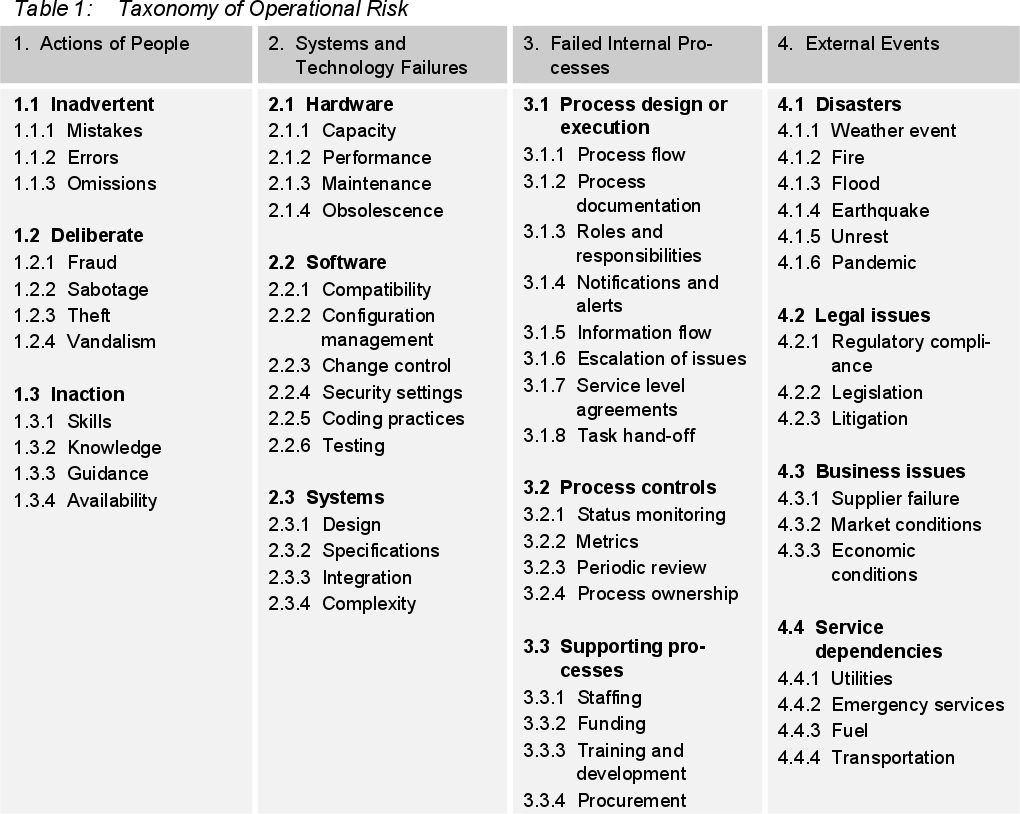
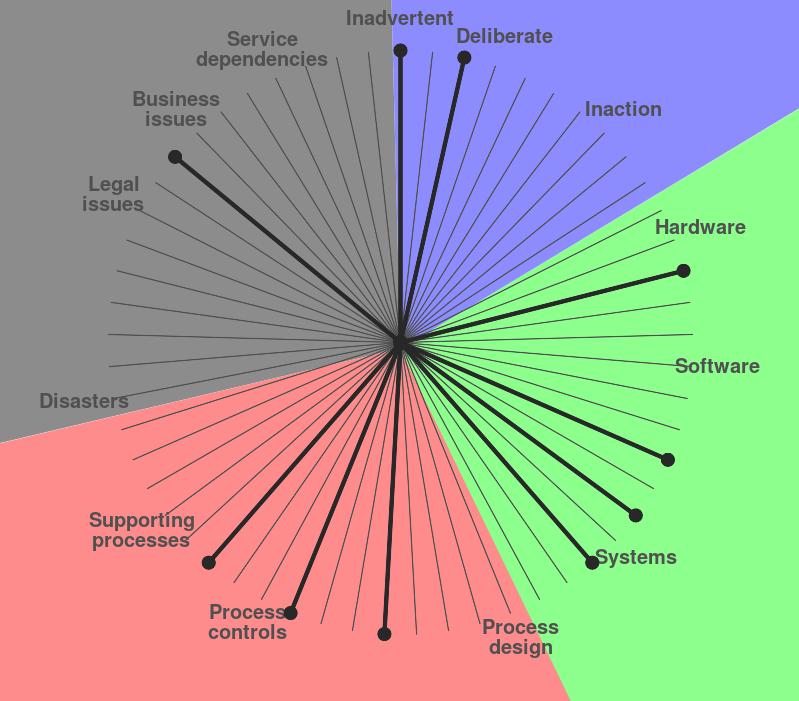
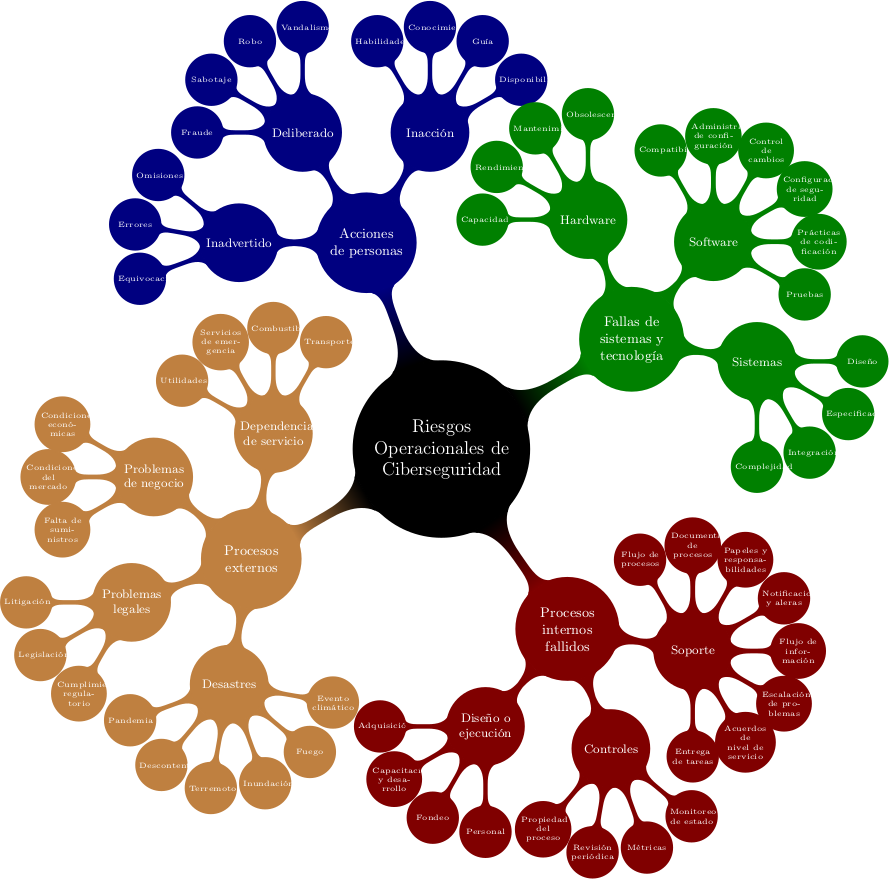
I am trying to get a good way to present the categorization of several cases studied with a fitting graph. I am rating several vulnerabilities / failures according to James Cebula et. al.'s paper,

 Today I ended reading an interesting article by the 4th spanish ISP
regarding IPv6 and
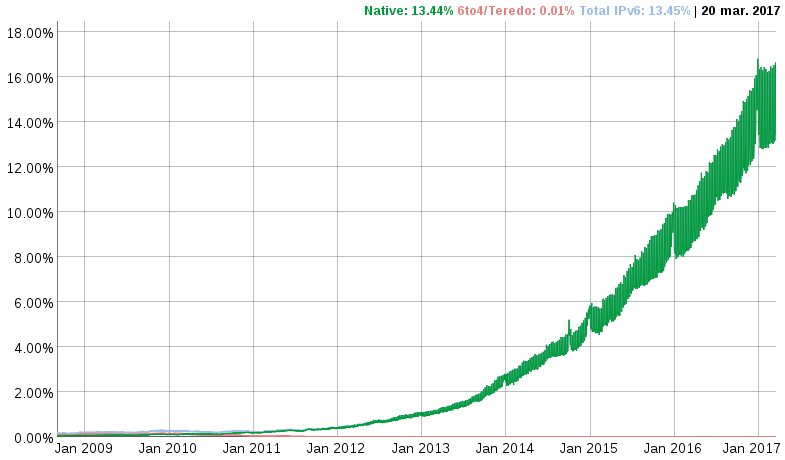 Others ISP operators are giving IPv6 strong precedence over IPv4, that s the case
of Verizon in USA:

 Apologies the first blog post got sent out by mistake.
Weather comparisons between the two countries
Last year, I had come to know that this year s debconf is happening in Canada, a cold country. Hence, few weeks/month back, I started trying to find information online when I stumbled across few discussion boards where people were discussing about Innerwear and Outerwear and I couldn t understand what that was all about. Then somehow stumbled across this Video, which is of a game called the Long Dark and just seeing couple of episodes it became pretty clear to me why the people there were obsessing with getting the right clothes and everything about it. Couple of Debconf people were talking about the weather in Montreal, and surprise, surprise it was
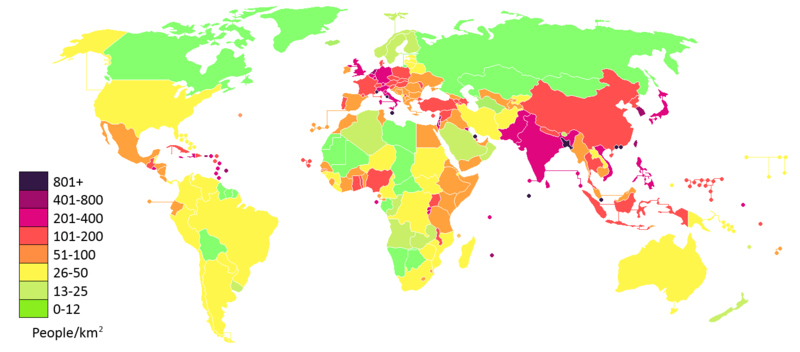 Population Density
As well in the game and whatever I could find on the web, Canada seems to be on the lower side as far as population is concerned.
 Rail
This is one thing that is similar in both the great countries. India has Indian Railways and while the Canadians have their own mountain railway called
 Business houses, Political Families
This is again something that is similar in both the countries, it seems (from afar) that its only few business houses and more importantly political families which have governed for years. From what little I could understand, both India and Canada have first past the post system which as shared by its critics is unfair to new and small parties. It would be interesting to see if Canada does a re-think. For India, it would need a massive public education outreach policy and implementation. We just had elections in 5 states of India with U.P. (with respect to area-size and population density) and from the last several years, the EVM s (Electronic Voting Machines) tries to make sure that nobody could know which area which party got the most votes. This is to make sure the winning party is not able to take revenge on people or areas which did not vote for them. Instead you have general region counting of votes with probably even the Election Commission not knowing which EVM went to what area and what results are there in sort of double-blind methodology.
As far as Business houses are concerned, I am guessing it s the same world-over, only certain people hold the wealth while majority of us are in hard-working, non-wealthy status.
 Northern Lights, Aurora Borealis
Apart from all the social activities that Montreal is famous for, somebody told/shared with me that it is possible to see the Northern Lights, Aurora Borealis can be seen in Canada. I dunno how true or not it is, while probably in Montreal it isn t possible to see due to light pollution, but maybe around 40-50 kms. from the city ? Can people see it from Canada ? IF yes, how far would you have to go ? Are there any companies or people who take people to see the Northern Lights.
While I still have to apply for bursary, and if that gets ok, then try getting the visa, but if that goes through, apart from debconf and social activities happening in and around Montreal, Museums, Music etc. , this would be something I would like to experience if it s possible. While I certainly would have to be prepared for the cold that would be, if it s possible, no offence to debconf or anybody else but it probably would be the highlight of the entire trip if its possible. This should be called/labelled as the greatest show on earth TM.


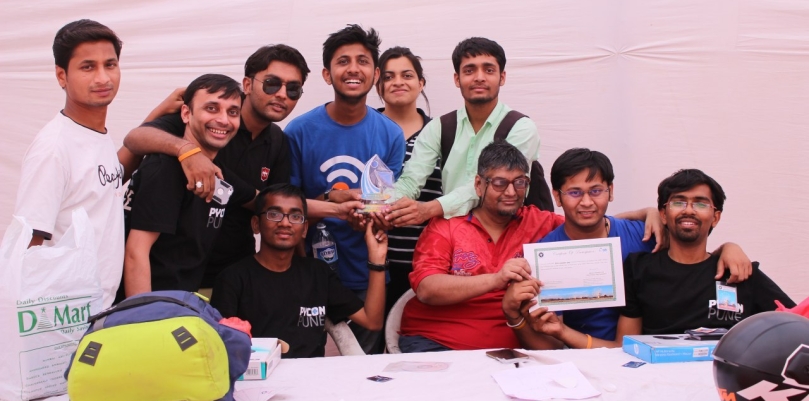 The above picture is the blend of the two communities from foss community and mozilla India. And unless you were there you wouldn t know who is from which community which is what FOSS is all about. But as always I m getting a bit ahead of myself.
Akshat, who works at NCRA as a programmer, the standing guy on the left shared with me in January this year that this year too, we should have two stalls, foss community and mozilla India stalls next to each other. While we had the banners, we were missing stickers and flyers. Funds were and are always an issue and this year too, it would have been emptier if we didn t get some money saved from last year minidebconf 2016 that we had in Mumbai. Our major expenses included printing stickers, stationery and flyers which came to around INR 5000/- and couple of LCD TV monitors which came for around INR 2k/- as rent. All the labour was voluntary in nature, but both me and Akshat easily spending upto 100 hours before the event. Next year, we want to raise to around INR 10-15k so we can buy 1 or 2 LCD monitors and we don t have to think for funds for next couple of years. How will we do that I have no idea atm.
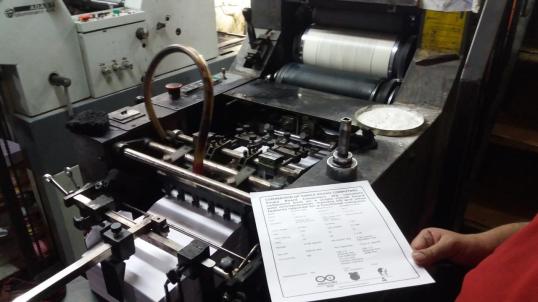 Me and Akshat did all the printing and stationery runs and hence had not been using my lappy for about 3-4 days.
Come to the evening before the event and the laptop would not start. Coincidentally, or not few months or even last at last year s Debconf people had commented on IBM/Lenovo s obsession with proprietary power cords and adaptors. I hadn t given it much thought but when I got no power even after putting it on AC power for 3-4 hours, I looked up on the web and saw that the power cord and power adaptors were all different even in T440 and even that under existing models. In fact I couldn t find mine hence sharing it via pictures below.
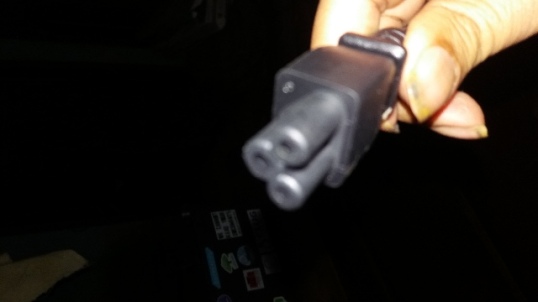
 I knew/suspected that thinkpads would be rare where I was going, it would be rarer still to find the exact power cord and I was unsure whether it was the power cord at fault or adaptor or whatever goes for SMPS in laptop or memory or motherboard/CPU itself. I did look up the documentation at support.lenovo.com and was surprised at the extensive documentation that Lenovo has for remote troubleshooting.
I did the usual take out the battery, put it back in, twiddle with the little hole in the bottom of the laptop, trying to switch on without the battery on AC mains, trying to switch on with battery power only but nothing worked. Couple of hours had gone by and with a resigned thought went to bed, convincing myself that anyways it s good I am not taking the lappy as it is extra-dusty there and who needs a dead laptop anyways.
Update After the event was over, I did contact Lenovo support and within a week, with one visit from a service engineer, he was able to identify that it was a faulty cable which was at fault and not the the other things which I was afraid of. Another week gone by and lenovo replaced the cable. Going by service standards that I have seen of other companies, Lenovo deserves a gold star here for the prompt service they provided. I probably would end up subscribing to their extended 2-year warranty service when my existing 3 year warranty is about to be over.
Next day, woke up early morning, two students from COEP hostel were volunteering and we made our way to NCRA, Pune University Campus. Ironically, though we were under the impression that we would be the late arrivals, it turned out we were the early birds. 5-10 minutes passed by and soon enough we were joined by
 Our find for the event was Aarti Kashyap who you can see above. She is a third-year student at COEP and one of the rare people who chose to interact with hardware rather than software. From last several years, we had been trying, successfully and unsuccessfully to get more Indian women and girls interested into technology. It is a vicious circle as till a girl/woman doesn t volunteer we are unable to share our knowledge to the extent we can which leads them to not have much interest in FOSS or even technology in general.
While there are groups are
 What had been interesting about the whole journey were the new people who were bringing all their passion and creativity to the fore. From the mozilla community, we had Akshay who is supposed to be a wizard on graphics, animation, editing anything to do with the visual medium. He shared some of the work he had done and also shared a bit about how blender works with people who wanted to learn about that.
Mayur, whom you see in the picture pointing out something about FOSS and this was the culture that we strove to have. I know and love and hate the browser but haven t been able to fathom the recklessness that Mozilla has been doing the last few years, which has just been having one mis-adventure after another.
For instance,


