Search Results: "ema"

31 October 2016

James Bromberger: The Debian Cloud Sprint 2016

I m at an airport, about to board the first of three flights across the world, from timezone +8 to timezone -8. I ll be in transit 27 hours to get to Seattle, Washington state. I m leaving my wife and two young children behind. My work has given me a days worth of leave under the Corporate Social Responsibility program, and I m taking three days annual leave, to do this. 27 hours each way in transit, for 3 days on the ground. Why? Backstory I started playing in technology as a kid in the 1980s; my first PC was a clone (as they were called) 286 running MS-DOS. It was clunky, and the most I could do to extend it was to write batch scripts. As a child I had no funds for commercial compilers, no network connections (this was pre Internet in Australia), no access to documentation, and no idea where to start programming properly. It was a closed world. I hit university in the summer of 1994 to study Computer Science and French. I d heard of Linux, and soon found myself installing the Linux distributions of the day. The Freedom of the licensing, the encouragement to use, modify, share, was in stark contrast to the world of consumer PCs of the late 1980 s. It was there at the UCC at UWA I discovered Debian. Some of the kind network/system admins at the University maintained a Debian mirror on the campus LAN, updated regularly and always online. It was fast, and more importantly, free for me to access. Back in the 1990s, bandwidth in Australia was incredibly expensive. The vast distances of the country mean that bandwidth was scarce. Telcos were in races to put fiber between Perth and the Eastern States, and without that in place, IP connectivity was constrained, and thus costly. Over many long days and nights I huddled down, learning window managers, protocols, programming and scripting languages. I became a system/network administrator, web developer, dev ops engineer, etc. My official degree workload, algorithmic complexity, protocol stacks, were interesting, but fiddling with Linux based implementations was practical. Volunteer After years of consuming the output of Debian and running many services with it I decided to put my hand up and volunteer as a Debian Developer: it was time to give back. I had benefited from Debian, and I saw others benefit from it as well. As the 2000 s started, I had my PGP key in the Debian key ring. I had adopted a package and was maintaining it load balancing Apache web servers. The web was yet to expand to the traffic levels you see today; most web sites were served from one physical web server. Site Reliability Engineering was a term not yet dreamed of. What became more apparent was the applicability of Linux, Open Source, and in my line-of-sight Debian to a wider community beyond myself and my university peers. Debain was being used to revive recycled computers that were being donated to charities; in some cases, unable to transfer commercial software licenses with the hardware that was no longer required by organisations that had upgraded. It appeared that Debian was being used as a baseline above which society in general had access to fundamental capability of computing and network services. The removal of subscriptions, registrations, and the encouragement of distribution meant this occurred at rates that could never be tracked, and more importantly, the consensus was that it should not be automatically tracked. The privacy of the user is paramount more important than some statistics for the Developer to ponder. When the Bosnia-Herzegovina war ended in 1995, I recall an email from academics there, having found some connectivity, writing to ask if they would be able to use Debian as part of their re-deployment of services for the Tertiary institutions in the region. This was an unnecessary request as Debian GNU/Linux is freely available, but it was a reminder that, for the country to have tried to procure commercial solutions at that time would have been difficult. Instead, those that could do the task just got on with it. There s been many similar project where the grass-roots organisations non profits, NGOs, and even just loose collectives of individuals have turned to Linux, Open Source, and sometimes Debian to solve their problems. Many fine projects have been established to make technology accessible to all, regardless of race, gender, nationality, class, or any other label society has used to divide humans. Big hat tip to Humanitarian Open Street Map, Serval Project. I ve always loved Debian s position on being the Universal operating system. Its vast range of packages and wide range of computing architectures supported means that quite often a litmus test of is project X a good project? was met with is it packaged for Debian? . That wide range of architectures has meant that administrators of systems had fewer surprises and a faster adoption cycle when changing platforms, such as the switch from x86 32 bit to x86 64 bit. Enter the Cloud I first laid eyes on the AWS Cloud in 2008. It was nothing like the rich environment you see today. The first thing I looked for was my favourite operating system, so that what I already knew and was familiar with was available in this environment to minimise the learning curve. However there were no official images, which was disconcerting. In 2012 I joined AWS as an employee. Living in Australia they hired me into the field sales team as a Solution Architect a sort of pre-sales tech with a customer focused depth in security. It was a wonderful opportunity, and I learnt a great deal. It also made sense (to me, at least) to do something about getting Debian s images blessed. It turned out, that I had to almost define what that was: images endorsed by a Debian Developer, handed to the AWS Marketplace team. And so since 2013 I have done so, keeping track of Debian s releases across the AWS regions, collaborating with other Debian folk on other cloud platforms to attempt a unified approach to generating and maintaining these images. This included (for a stint) generating them into the AWS GovCloud Region, and still into the AWS China (Beijing) Region the other side of the so-called Great Firewall of China. So why the trip? We ve had focus groups at the Debconf (Debian conference) around the world, but its often difficult to get the right group of people in the same rooms at the same time. So the proposal was to hold a focused Debian Cloud Sprint. Google was good enough to host this, for all the volunteers across all the cloud providers. Furthermore, donated funds were found to secure the travel for a set of people to attend who otherwise could not. I was lucky enough to be given a flight. So here I am, in the terminal in Australia: my kids are tucked up in bed, dreaming of the candy they just collected for Halloween. It will be a draining week I am sure, but if it helps set and improve the state of Debian then its worth it.

28 October 2016

Alessio Treglia: The logical contradictions of the Universe

Ouroboros

Ouroboros

Is Erwin Schr dinger s wave function which did in the atomic and subatomic world an operation altogether similar to the one performed by Newton in the macroscopic world an objective reality or just a subjective knowledge? Physicists, philosophers and epistemologist have debated at length on this matter. In 1960, theoretical physicist Eugene Wigner has proposed that the observer s consciousness is the dividing line that triggers the collapse of the wave function[1], and this theory was later taken up and developed in recent years. The rules of quantum mechanics are correct but there is only one system which may be treated with quantum mechanics, namely the entire material world. There exist external observers which cannot be treated within quantum mechanics, namely human (and perhaps animal) minds, which perform measurements on the brain causing wave function collapse [2]. The English mathematical physicist and philosopher of science Roger Penrose developed the hypothesis called Orch-OR (Orchestrated objective reduction) according to which consciousness originates from processes within neurons, rather than from the connections between neurons (the conventional view). The mechanism is believed to be a quantum physical process called objective reduction which is orchestrated by the molecular structures of the microtubules of brain cells (which constitute the cytoskeleton of the cells themselves). Together with the physician Stuart Hameroff, Penrose has suggested a direct relationship between the quantum vibrations of microtubules and the formation of consciousness.

<Read More [by Fabio Marzocca]>

Jaldhar Vyas: Get Ready For Bikini Season With These n Weird Tricks

It all started last June when my son had his Janoi (Yagnopavita) ceremony -- the ritual by which a Brahmana boy becomes "twice-born" and eligible to study the Vedas. As well as a profound religious experience, it is also an important social occasion with a reception for as many friends and family as can attend. (I think our final guest total was ~250.) This meant new outfits for everyone which might be exciting for some people but not me. I still don't know why I couldn't just keep wearing the khes and pitambar from the puja but no, apparently that's a faux pas. So I relented and agreed to wear my "darbari" suit from my wedding. And it didn't fit. I knew I had gained some weight in the intermediate 17 years but the thing was sitcom levels of too small. I ended up having to purchase a new one, a snazzy (and shiny!) maroon number with gold stripes (or were they black stripes?) Problem having been solved, much was eaten, more weight was gained and then I forgot about the whole thing. Tip 1: Actually Do Something. I have over the years tried to improve my physical condition but it has never gotten very far. For instance I have a treadmill/coatrack and a couple of years ago I began using it in earnest. I got to the point where I actually ran a 10K race without dying. But I did not train systematically and I ended up in some pain which caused me to stop working out for a while and then I never got around to restarting. Diets have also failed because I don't have a clear idea of what and how much I am eating. All I know is that women go into the kitchen and when they come out they have food. By what eldritch process this occurs is a mystery, I just eat whats given to me thankful that the magic happens. Once I was moved to try and help but quickly fell afoul of the lack of well-defined algorithms in Gujarati home cooking.
"How much saffron should I add?"
"this much."
"How much is this much in SI units?"
"You're annoying me. Get out."
Fast forward to March of this year. For my birthday, my wife got me a Fitbit fitness tracker. This is what I had needed all this time. It measure heart rate, distance travelled, time slept and several other pieces of info you can use to really plan a fitness regimen rationally. For example, I was chagrined to learn that sometimes when I'm at the computer, I am so immobile that the fitbit thought I was asleep. So I started planning to taken more frequent breaks. (A recent firmware upgrade has added the ability to nudge to walk atleast 250 paces each daytime hour which is handy for this.) Also by checking my heart rate I discovered that I went on the treadmill I ran too fast thereby stressing my body for little gain and ending up going too slow to get much aerobic effect. Now I can pace myself appropriately for maximum cardiac efficiency without ending up injuring myself and giving up. I also get a little more activity each day by simple changes such as taking the stairs instead of the lift and instead of getting off at the 14th street PATH I go all the way to 34th street and walk down. Tip 2: You must have data in order to see what you did right or wrong and to plan what you need to do moving forward. One caveat about these fitness trackers. They are not anywhere as accurate as a proper checkup from a doctor who specializes in such things. If you want to do any kind of pro or amateur athletics you probably should not rely on them but for the average shlub who just wants to avoid appearing on the news being winched off his sofa by the fire brigade they are good enough. Another practice I began was keeping a food diary. It can be a real eye-opener to see how much you are actually eating. It is probably much more than you thought. I am fortunate that my diet is pretty good to begin with. Vegetarian, (not vegan, Hindus eat dairy products,) mostly home-cooked with fresh ingredients, not fried or processed, and I don't drink alcohol. However there were a few optimizations I could make. I drink a lot of soda; atleast two cans a day. I really ought to stop altogether but in lieu of that I have atleast switched from Coke to Coke Zero thereby saving a lot of empty calories. I now eat 4 rotlis with my dinner instead of six. We as a family eat more green vegetables instead of potatos, skim milk instead of whole fat, canola oil instead of corn oil, and less rice and don't slather ghee on everything quite so much. One entirely new practice I've adopted that may seem faddish but works for me is intermittent fasting. The idea is to steadily train your body to need less food by eating all your days allowed amount pf calories during a 6-8 hour window and not eating at all during the remaining time. It's hard to get used to for many people but I fast atleast 2-3 times a month for religious reasons anyway so I adapted pretty quickly. The fitbit tells me how many calories I am expending and how many I can eat to maintain a healthy level of weight loss but other than that I don't bother with "food groups" or specific diets such as paleo, or low-carb etc. As long as what you eat is reasonably balanced and you are burning more calories than you are adding, it should be enough for weight loss. Indeed from the end of March to now, I've lost 3 stones (20Kg) even with the occasional "cheat" day. Tip 3: All published diets are bullshit without scientifically proven efficacy. Don't bother with them. Experiment instead and see what works for you and your metabolism. As long as you are getting all the proper nutrients (you shouldn't need a supplement unless you have an actual medical condition.) and you have a net calorie deficit, it's all good. If you eat food you enjoy, you are more likely to stick to your diet. The proper amount of sleep is one area of a healthy lifestyle I am still doing poorly in and the reasons are not all raven-related. I have always had problems with insomnia and was once actually diagnosed with sleep apnea. Losing weight has helped a lot but the fitbit is still reporting that I toss and turn a lot during the night. And that's when I'm in bed in the first place. I stay up much too late which can also lead to subsidiary bad behaviours such as midnight snacking. It's something I need to work on. Tip 4: Stop blogging at all hours of the night, It's not doing you any good. So that's what I'm doing. Moving forward, I need to deal with the sleep thing and I would also like to start some program of strength-training, I'm doing ok in terms of aerobic exercise but from what I've read, you also have to build up muscles to keep weight loss permanent. The difficulty is that it would involve joining a gym and then actually going to that gym so I've put it off for now. The immediate threat is Diwali (and Thanksgiving and Christmas...) My wife bought 4 lbs of sweets today and I can feel their presence in the fridge calling to me.

26 October 2016

Daniel Pocock: FOSDEM 2017 Real-Time Communications Call for Participation

FOSDEM is one of the world's premier meetings of free software developers, with over five thousand people attending each year. FOSDEM 2017 takes place 4-5 February 2017 in Brussels, Belgium. This email contains information about:
  • Real-Time communications dev-room and lounge,
  • speaking opportunities,
  • volunteering in the dev-room and lounge,
  • related events around FOSDEM, including the XMPP summit,
  • social events (the legendary FOSDEM Beer Night and Saturday night dinners provide endless networking opportunities),
  • the Planet aggregation sites for RTC blogs
Call for participation - Real Time Communications (RTC) The Real-Time dev-room and Real-Time lounge is about all things involving real-time communication, including: XMPP, SIP, WebRTC, telephony, mobile VoIP, codecs, peer-to-peer, privacy and encryption. The dev-room is a successor to the previous XMPP and telephony dev-rooms. We are looking for speakers for the dev-room and volunteers and participants for the tables in the Real-Time lounge. The dev-room is only on Saturday, 4 February 2017. The lounge will be present for both days. To discuss the dev-room and lounge, please join the FSFE-sponsored Free RTC mailing list. To be kept aware of major developments in Free RTC, without being on the discussion list, please join the Free-RTC Announce list. Speaking opportunities Note: if you used FOSDEM Pentabarf before, please use the same account/username Real-Time Communications dev-room: deadline 23:59 UTC on 17 November. Please use the Pentabarf system to submit a talk proposal for the dev-room. On the "General" tab, please look for the "Track" option and choose "Real-Time devroom". Link to talk submission. Other dev-rooms and lightning talks: some speakers may find their topic is in the scope of more than one dev-room. It is encouraged to apply to more than one dev-room and also consider proposing a lightning talk, but please be kind enough to tell us if you do this by filling out the notes in the form. You can find the full list of dev-rooms on this page and apply for a lightning talk at https://fosdem.org/submit Main track: the deadline for main track presentations is 23:59 UTC 31 October. Leading developers in the Real-Time Communications field are encouraged to consider submitting a presentation to the main track. First-time speaking? FOSDEM dev-rooms are a welcoming environment for people who have never given a talk before. Please feel free to contact the dev-room administrators personally if you would like to ask any questions about it. Submission guidelines The Pentabarf system will ask for many of the essential details. Please remember to re-use your account from previous years if you have one. In the "Submission notes", please tell us about:
  • the purpose of your talk
  • any other talk applications (dev-rooms, lightning talks, main track)
  • availability constraints and special needs
You can use HTML and links in your bio, abstract and description. If you maintain a blog, please consider providing us with the URL of a feed with posts tagged for your RTC-related work. We will be looking for relevance to the conference and dev-room themes, presentations aimed at developers of free and open source software about RTC-related topics. Please feel free to suggest a duration between 20 minutes and 55 minutes but note that the final decision on talk durations will be made by the dev-room administrators. As the two previous dev-rooms have been combined into one, we may decide to give shorter slots than in previous years so that more speakers can participate. Please note FOSDEM aims to record and live-stream all talks. The CC-BY license is used. Volunteers needed To make the dev-room and lounge run successfully, we are looking for volunteers:
  • FOSDEM provides video recording equipment and live streaming, volunteers are needed to assist in this
  • organizing one or more restaurant bookings (dependending upon number of participants) for the evening of Saturday, 4 February
  • participation in the Real-Time lounge
  • helping attract sponsorship funds for the dev-room to pay for the Saturday night dinner and any other expenses
  • circulating this Call for Participation (text version) to other mailing lists
See the mailing list discussion for more details about volunteering. Related events - XMPP and RTC summits The XMPP Standards Foundation (XSF) has traditionally held a summit in the days before FOSDEM. There is discussion about a similar summit taking place on 2 and 3 February 2017. XMPP Summit web site - please join the mailing list for details. We are also considering a more general RTC or telephony summit, potentially in collaboration with the XMPP summit. Please join the Free-RTC mailing list and send an email if you would be interested in participating, sponsoring or hosting such an event. Social events and dinners The traditional FOSDEM beer night occurs on Friday, 3 February. On Saturday night, there are usually dinners associated with each of the dev-rooms. Most restaurants in Brussels are not so large so these dinners have space constraints and reservations are essential. Please subscribe to the Free-RTC mailing list for further details about the Saturday night dinner options and how you can register for a seat. Spread the word and discuss If you know of any mailing lists where this CfP would be relevant, please forward this email (text version). If this dev-room excites you, please blog or microblog about it, especially if you are submitting a talk. If you regularly blog about RTC topics, please send details about your blog to the planet site administrators:
Planet site Admin contact
All projects Free-RTC Planet (http://planet.freertc.org) contact planet@freertc.org
XMPP Planet Jabber (http://planet.jabber.org) contact ralphm@ik.nu
SIP Planet SIP (http://planet.sip5060.net) contact planet@sip5060.net
SIP (Espa ol) Planet SIP-es (http://planet.sip5060.net/es/) contact planet@sip5060.net
Please also link to the Planet sites from your own blog or web site as this helps everybody in the free real-time communications community. Contact For any private queries, contact us directly using the address fosdem-rtc-admin@freertc.org and for any other queries please ask on the Free-RTC mailing list. The dev-room administration team:

Joachim Breitner: Showcasing Applicative

My plan for this week s lecture of the CIS 194 Haskell course at the University of Pennsylvania is to dwell a bit on the concept of Functor, Applicative and Monad, and to highlight the value of the Applicative abstraction. I quite like the example that I came up with, so I want to share it here. In the interest of long-term archival and stand-alone presentation, I include all the material in this post.1

Imports In case you want to follow along, start with these imports:
import Data.Char
import Data.Maybe
import Data.List
import System.Environment
import System.IO
import System.Exit

The parser The starting point for this exercise is a fairly standard parser-combinator monad, which happens to be the result of the student s homework from last week:
newtype Parser a = P (String -> Maybe (a, String))
runParser :: Parser t -> String -> Maybe (t, String)
runParser (P p) = p
parse :: Parser a -> String -> Maybe a
parse p input = case runParser p input of
    Just (result, "") -> Just result
    _ -> Nothing -- handles both no result and leftover input
noParserP :: Parser a
noParserP = P (\_ -> Nothing)
pureParserP :: a -> Parser a
pureParserP x = P (\input -> Just (x,input))
instance Functor Parser where
    fmap f p = P $ \input -> do
	(x, rest) <- runParser p input
	return (f x, rest)
instance Applicative Parser where
    pure = pureParserP
    p1 <*> p2 = P $ \input -> do
        (f, rest1) <- runParser p1 input
        (x, rest2) <- runParser p2 rest1
        return (f x, rest2)
instance Monad Parser where
    return = pure
    p1 >>= k = P $ \input -> do
        (x, rest1) <- runParser p1 input
        runParser (k x) rest1
anyCharP :: Parser Char
anyCharP = P $ \input -> case input of
    (c:rest) -> Just (c, rest)
    []       -> Nothing
charP :: Char -> Parser ()
charP c = do
    c' <- anyCharP
    if c == c' then return ()
               else noParserP
anyCharButP :: Char -> Parser Char
anyCharButP c = do
    c' <- anyCharP
    if c /= c' then return c'
               else noParserP
letterOrDigitP :: Parser Char
letterOrDigitP = do
    c <- anyCharP
    if isAlphaNum c then return c else noParserP
orElseP :: Parser a -> Parser a -> Parser a
orElseP p1 p2 = P $ \input -> case runParser p1 input of
    Just r -> Just r
    Nothing -> runParser p2 input
manyP :: Parser a -> Parser [a]
manyP p = (pure (:) <*> p <*> manyP p)  orElseP  pure []
many1P :: Parser a -> Parser [a]
many1P p = pure (:) <*> p <*> manyP p
sepByP :: Parser a -> Parser () -> Parser [a]
sepByP p1 p2 = (pure (:) <*> p1 <*> (manyP (p2 *> p1)))  orElseP  pure []
A parser using this library for, for example, CSV files could take this form:
parseCSVP :: Parser [[String]]
parseCSVP = manyP parseLine
  where
    parseLine = parseCell  sepByP  charP ',' <* charP '\n'
    parseCell = do
        charP '"'
        content <- manyP (anyCharButP '"')
        charP '"'
        return content

We want EBNF Often when we write a parser for a file format, we might also want to have a formal specification of the format. A common form for such a specification is EBNF. This might look as follows, for a CSV file:
cell = '"',  not-quote , '"';
line = (cell,  ',', cell    ''), newline;
csv  =  line ;
It is straightforward to create a Haskell data type to represent an EBNF syntax description. Here is a simple EBNF library (data type and pretty-printer) for your convenience:
data RHS
  = Terminal String
    NonTerminal String
    Choice RHS RHS
    Sequence RHS RHS
    Optional RHS
    Repetition RHS
  deriving (Show, Eq)
ppRHS :: RHS -> String
ppRHS = go 0
  where
    go _ (Terminal s)     = surround "'" "'" $ concatMap quote s
    go _ (NonTerminal s)  = s
    go a (Choice x1 x2)   = p a 1 $ go 1 x1 ++ "   " ++ go 1 x2
    go a (Sequence x1 x2) = p a 2 $ go 2 x1 ++ ", "  ++ go 2 x2
    go _ (Optional x)     = surround "[" "]" $ go 0 x
    go _ (Repetition x)   = surround " " " " $ go 0 x
    surround c1 c2 x = c1 ++ x ++ c2
    p a n   a > n     = surround "(" ")"
            otherwise = id
    quote '\'' = "\\'"
    quote '\\' = "\\\\"
    quote c    = [c]
type Production = (String, RHS)
type BNF = [Production]
ppBNF :: BNF -> String
ppBNF = unlines . map (\(i,rhs) -> i ++ " = " ++ ppRHS rhs ++ ";")

Code to produce EBNF We had a good time writing combinators that create complex parsers from primitive pieces. Let us do the same for EBNF grammars. We could simply work on the RHS type directly, but we can do something more nifty: We create a data type that keeps track, via a phantom type parameter, of what Haskell type the given EBNF syntax is the specification:
newtype Grammar a = G RHS
ppGrammar :: Grammar a -> String
ppGrammar (G rhs) = ppRHS rhs
So a value of type Grammar t is a description of the textual representation of the Haskell type t. Here is one simple example:
anyCharG :: Grammar Char
anyCharG = G (NonTerminal "char")
Here is another one. This one does not describe any interesting Haskell type, but is useful when spelling out the special characters in the syntax described by the grammar:
charG :: Char -> Grammar ()
charG c = G (Terminal [c])
A combinator that creates new grammar from two existing grammars:
orElseG :: Grammar a -> Grammar a -> Grammar a
orElseG (G rhs1) (G rhs2) = G (Choice rhs1 rhs2)
We want the convenience of our well-known type classes in order to combine these values some more:
instance Functor Grammar where
    fmap _ (G rhs) = G rhs
instance Applicative Grammar where
    pure x = G (Terminal "")
    (G rhs1) <*> (G rhs2) = G (Sequence rhs1 rhs2)
Note how the Functor instance does not actually use the function. How should it? There are no values inside a Grammar! We cannot define a Monad instance for Grammar: We would start with (G rhs1) >>= k = , but there is simply no way of getting a value of type a that we can feed to k. So we will do without a Monad instance. This is interesting, and we will come back to that later. Like with the parser, we can now begin to build on the primitive example to build more complicated combinators:
manyG :: Grammar a -> Grammar [a]
manyG p = (pure (:) <*> p <*> manyG p)  orElseG  pure []
many1G :: Grammar a -> Grammar [a]
many1G p = pure (:) <*> p <*> manyG p
sepByG :: Grammar a -> Grammar () -> Grammar [a]
sepByG p1 p2 = ((:) <$> p1 <*> (manyG (p2 *> p1)))  orElseG  pure []
Let us run a small example:
dottedWordsG :: Grammar [String]
dottedWordsG = many1G (manyG anyCharG <* charG '.')
*Main> putStrLn $ ppGrammar dottedWordsG
'', ('', char, ('', char, ('', char, ('', char, ('', char, ('',  
Oh my, that is not good. Looks like the recursion in manyG does not work well, so we need to avoid that. But anyways we want to be explicit in the EBNF grammars about where something can be repeated, so let us just make many a primitive:
manyG :: Grammar a -> Grammar [a]
manyG (G rhs) = G (Repetition rhs)
With this definition, we already get a simple grammar for dottedWordsG:
*Main> putStrLn $ ppGrammar dottedWordsG
'',  char , '.',  char , '.' 
This already looks like a proper EBNF grammar. One thing that is not nice about it is that there is an empty string ('') in a sequence ( , ). We do not want that. Why is it there in the first place? Because our Applicative instance is not lawful! Remember that pure id <*> g == g should hold. One way to achieve that is to improve the Applicative instance to optimize this case away:
instance Applicative Grammar where
    pure x = G (Terminal "")
    G (Terminal "") <*> G rhs2 = G rhs2
    G rhs1 <*> G (Terminal "") = G rhs1
    (G rhs1) <*> (G rhs2) = G (Sequence rhs1 rhs2)
	 
Now we get what we want:
*Main> putStrLn $ ppGrammar dottedWordsG
 char , '.',  char , '.' 
Remember our parser for CSV files above? Let me repeat it here, this time using only Applicative combinators, i.e. avoiding (>>=), (>>), return and do-notation:
parseCSVP :: Parser [[String]]
parseCSVP = manyP parseLine
  where
    parseLine = parseCell  sepByP  charG ',' <* charP '\n'
    parseCell = charP '"' *> manyP (anyCharButP '"') <* charP '"'
And now we try to rewrite the code to produce Grammar instead of Parser. This is straightforward with the exception of anyCharButP. The parser code for that inherently monadic, and we just do not have a monad instance. So we work around the issue by making that a primitive grammar, i.e. introducing a non-terminal in the EBNF without a production rule pretty much like we did for anyCharG:
primitiveG :: String -> Grammar a
primitiveG s = G (NonTerminal s)
parseCSVG :: Grammar [[String]]
parseCSVG = manyG parseLine
  where
    parseLine = parseCell  sepByG  charG ',' <* charG '\n'
    parseCell = charG '"' *> manyG (primitiveG "not-quote") <* charG '"'
Of course the names parse are not quite right any more, but let us just leave that for now. Here is the result:
*Main> putStrLn $ ppGrammar parseCSVG
 ('"',  not-quote , '"',  ',', '"',  not-quote , '"'    ''), '
' 
The line break is weird. We do not really want newlines in the grammar. So let us make that primitive as well, and replace charG '\n' with newlineG:
newlineG :: Grammar ()
newlineG = primitiveG "newline"
Now we get
*Main> putStrLn $ ppGrammar parseCSVG
 ('"',  not-quote , '"',  ',', '"',  not-quote , '"'    ''), newline 
which is nice and correct, but still not quite the easily readable EBNF that we saw further up.

Code to produce EBNF, with productions We currently let our grammars produce only the right-hand side of one EBNF production, but really, we want to produce a RHS that may refer to other productions. So let us change the type accordingly:
newtype Grammar a = G (BNF, RHS)
runGrammer :: String -> Grammar a -> BNF
runGrammer main (G (prods, rhs)) = prods ++ [(main, rhs)]
ppGrammar :: String -> Grammar a -> String
ppGrammar main g = ppBNF $ runGrammer main g
Now we have to adjust all our primitive combinators (but not the derived ones!):
charG :: Char -> Grammar ()
charG c = G ([], Terminal [c])
anyCharG :: Grammar Char
anyCharG = G ([], NonTerminal "char")
manyG :: Grammar a -> Grammar [a]
manyG (G (prods, rhs)) = G (prods, Repetition rhs)
mergeProds :: [Production] -> [Production] -> [Production]
mergeProds prods1 prods2 = nub $ prods1 ++ prods2
orElseG :: Grammar a -> Grammar a -> Grammar a
orElseG (G (prods1, rhs1)) (G (prods2, rhs2))
    = G (mergeProds prods1 prods2, Choice rhs1 rhs2)
instance Functor Grammar where
    fmap _ (G bnf) = G bnf
instance Applicative Grammar where
    pure x = G ([], Terminal "")
    G (prods1, Terminal "") <*> G (prods2, rhs2)
        = G (mergeProds prods1 prods2, rhs2)
    G (prods1, rhs1) <*> G (prods2, Terminal "")
        = G (mergeProds prods1 prods2, rhs1)
    G (prods1, rhs1) <*> G (prods2, rhs2)
        = G (mergeProds prods1 prods2, Sequence rhs1 rhs2)
primitiveG :: String -> Grammar a
primitiveG s = G (NonTerminal s)
The use of nub when combining productions removes duplicates that might be used in different parts of the grammar. Not efficient, but good enough for now. Did we gain anything? Not yet:
*Main> putStr $ ppGrammar "csv" (parseCSVG)
csv =  ('"',  not-quote , '"',  ',', '"',  not-quote , '"'    ''), newline ;
But we can now introduce a function that lets us tell the system where to give names to a piece of grammar:
nonTerminal :: String -> Grammar a -> Grammar a
nonTerminal name (G (prods, rhs))
  = G (prods ++ [(name, rhs)], NonTerminal name)
Ample use of this in parseCSVG yields the desired result:
parseCSVG :: Grammar [[String]]
parseCSVG = manyG parseLine
  where
    parseLine = nonTerminal "line" $
        parseCell  sepByG  charG ',' <* newline
    parseCell = nonTerminal "cell" $
        charG '"' *> manyG (primitiveG "not-quote") <* charG '"
*Main> putStr $ ppGrammar "csv" (parseCSVG)
cell = '"',  not-quote , '"';
line = (cell,  ',', cell    ''), newline;
csv =  line ;
This is great!

Unifying parsing and grammar-generating Note how simliar parseCSVG and parseCSVP are! Would it not be great if we could implement that functionality only once, and get both a parser and a grammar description out of it? This way, the two would never be out of sync! And surely this must be possible. The tool to reach for is of course to define a type class that abstracts over the parts where Parser and Grammer differ. So we have to identify all functions that are primitive in one of the two worlds, and turn them into type class methods. This includes char and orElse. It includes many, too: Although manyP is not primitive, manyG is. It also includes nonTerminal, which does not exist in the world of parsers (yet), but we need it for the grammars. The primitiveG function is tricky. We use it in grammars when the code that we might use while parsing is not expressible as a grammar. So the solution is to let it take two arguments: A String, when used as a descriptive non-terminal in a grammar, and a Parser a, used in the parsing code. Finally, the type classes that we except, Applicative (and thus Functor), are added as constraints on our type class:
class Applicative f => Descr f where
    char :: Char -> f ()
    many :: f a -> f [a]
    orElse :: f a -> f a -> f a
    primitive :: String -> Parser a -> f a
    nonTerminal :: String -> f a -> f a
The instances are easily written:
instance Descr Parser where
    char = charP
    many = manyP
    orElse = orElseP
    primitive _ p = p
    nonTerminal _ p = p
instance Descr Grammar where
    char = charG
    many = manyG
    orElse = orElseG
    primitive s _ = primitiveG s
    nonTerminal s g = nonTerminal s g
And we can now take the derived definitions, of which so far we had two copies, and define them once and for all:
many1 :: Descr f => f a -> f [a]
many1 p = pure (:) <*> p <*> many p
anyChar :: Descr f => f Char
anyChar = primitive "char" anyCharP
dottedWords :: Descr f => f [String]
dottedWords = many1 (many anyChar <* char '.')
sepBy :: Descr f => f a -> f () -> f [a]
sepBy p1 p2 = ((:) <$> p1 <*> (many (p2 *> p1)))  orElse  pure []
newline :: Descr f => f ()
newline = primitive "newline" (charP '\n')
And thus we now have our CSV parser/grammar generator:
parseCSV :: Descr f => f [[String]]
parseCSV = many parseLine
  where
    parseLine = nonTerminal "line" $
        parseCell  sepBy  char ',' <* newline
    parseCell = nonTerminal "cell" $
        char '"' *> many (primitive "not-quote" (anyCharButP '"')) <* char '"'
We can now use this definition both to parse and to generate grammars:
*Main> putStr $ ppGrammar2 "csv" (parseCSV)
cell = '"',  not-quote , '"';
line = (cell,  ',', cell    ''), newline;
csv =  line ;
*Main> parse parseCSV "\"ab\",\"cd\"\n\"\",\"de\"\n\n"
Just [["ab","cd"],["","de"],[]]

The INI file parser and grammar As a final exercise, let us transform the INI file parser into a combined thing. Here is the parser (another artifact of last week s homework) again using applicative style2:
parseINIP :: Parser INIFile
parseINIP = many1P parseSection
  where
    parseSection =
        (,) <$  charP '['
            <*> parseIdent
            <*  charP ']'
            <*  charP '\n'
            <*> (catMaybes <$> manyP parseLine)
    parseIdent = many1P letterOrDigitP
    parseLine = parseDecl  orElseP  parseComment  orElseP  parseEmpty
    parseDecl = Just <$> (
        (,) <*> parseIdent
            <*  manyP (charP ' ')
            <*  charP '='
            <*  manyP (charP ' ')
            <*> many1P (anyCharButP '\n')
            <*  charP '\n')
    parseComment =
        Nothing <$ charP '#'
                <* many1P (anyCharButP '\n')
                <* charP '\n'
    parseEmpty = Nothing <$ charP '\n'
Transforming that to a generic description is quite straightforward. We use primitive again to wrap letterOrDigitP:
descrINI :: Descr f => f INIFile
descrINI = many1 parseSection
  where
    parseSection =
        (,) <*  char '['
            <*> parseIdent
            <*  char ']'
            <*  newline
            <*> (catMaybes <$> many parseLine)
    parseIdent = many1 (primitive "alphanum" letterOrDigitP)
    parseLine = parseDecl  orElse  parseComment  orElse  parseEmpty
    parseDecl = Just <$> (
        (,) <*> parseIdent
            <*  many (char ' ')
            <*  char '='
            <*  many (char ' ')
            <*> many1 (primitive "non-newline" (anyCharButP '\n'))
	    <*  newline)
    parseComment =
        Nothing <$ char '#'
                <* many1 (primitive "non-newline" (anyCharButP '\n'))
		<* newline
    parseEmpty = Nothing <$ newline
This yields this not very helpful grammar (abbreviated here):
*Main> putStr $ ppGrammar2 "ini" descrINI
ini = '[', alphanum,  alphanum , ']', newline,  alphanum,  alphanum ,  ' ' 
But with a few uses of nonTerminal, we get something really nice:
descrINI :: Descr f => f INIFile
descrINI = many1 parseSection
  where
    parseSection = nonTerminal "section" $
        (,) <$  char '['
            <*> parseIdent
            <*  char ']'
            <*  newline
            <*> (catMaybes <$> many parseLine)
    parseIdent = nonTerminal "identifier" $
        many1 (primitive "alphanum" letterOrDigitP)
    parseLine = nonTerminal "line" $
        parseDecl  orElse  parseComment  orElse  parseEmpty
    parseDecl = nonTerminal "declaration" $ Just <$> (
        (,) <$> parseIdent
            <*  spaces
            <*  char '='
            <*  spaces
            <*> remainder)
    parseComment = nonTerminal "comment" $
        Nothing <$ char '#' <* remainder
    remainder = nonTerminal "line-remainder" $
        many1 (primitive "non-newline" (anyCharButP '\n')) <* newline
    parseEmpty = Nothing <$ newline
    spaces = nonTerminal "spaces" $ many (char ' ')
*Main> putStr $ ppGrammar "ini" descrINI
identifier = alphanum,  alphanum ;
spaces =  ' ' ;
line-remainder = non-newline,  non-newline , newline;
declaration = identifier, spaces, '=', spaces, line-remainder;
comment = '#', line-remainder;
line = declaration   comment   newline;
section = '[', identifier, ']', newline,  line ;
ini = section,  section ;

Recursion (variant 1) What if we want to write a parser/grammar-generator that is able to generate the following grammar, which describes terms that are additions and multiplications of natural numbers:
const = digit,  digit ;
spaces =  ' '   newline ;
atom = const   '(', spaces, expr, spaces, ')', spaces;
mult = atom,  spaces, '*', spaces, atom , spaces;
plus = mult,  spaces, '+', spaces, mult , spaces;
expr = plus;
The production of expr is recursive (via plus, mult, atom). We have seen above that simply defining a Grammar a recursively does not go well. One solution is to add a new combinator for explicit recursion, which replaces nonTerminal in the method:
class Applicative f => Descr f where
     
    recNonTerminal :: String -> (f a -> f a) -> f a
instance Descr Parser where
     
    recNonTerminal _ p = let r = p r in r
instance Descr Grammar where
     
    recNonTerminal = recNonTerminalG
recNonTerminalG :: String -> (Grammar a -> Grammar a) -> Grammar a
recNonTerminalG name f =
    let G (prods, rhs) = f (G ([], NonTerminal name))
    in G (prods ++ [(name, rhs)], NonTerminal name)
nonTerminal :: Descr f => String -> f a -> f a
nonTerminal name p = recNonTerminal name (const p)
runGrammer :: String -> Grammar a -> BNF
runGrammer main (G (prods, NonTerminal nt))   main == nt = prods
runGrammer main (G (prods, rhs)) = prods ++ [(main, rhs)]
The change in runGrammer avoids adding a pointless expr = expr production to the output. This lets us define a parser/grammar-generator for the arithmetic expressions given above:
data Expr = Plus Expr Expr   Mult Expr Expr   Const Integer
    deriving Show
mkPlus :: Expr -> [Expr] -> Expr
mkPlus = foldl Plus
mkMult :: Expr -> [Expr] -> Expr
mkMult = foldl Mult
parseExpr :: Descr f => f Expr
parseExpr = recNonTerminal "expr" $ \ exp ->
    ePlus exp
ePlus :: Descr f => f Expr -> f Expr
ePlus exp = nonTerminal "plus" $
    mkPlus <$> eMult exp
           <*> many (spaces *> char '+' *> spaces *> eMult exp)
           <*  spaces
eMult :: Descr f => f Expr -> f Expr
eMult exp = nonTerminal "mult" $
    mkPlus <$> eAtom exp
           <*> many (spaces *> char '*' *> spaces *> eAtom exp)
           <*  spaces
eAtom :: Descr f => f Expr -> f Expr
eAtom exp = nonTerminal "atom" $
    aConst  orElse  eParens exp
aConst :: Descr f => f Expr
aConst = nonTerminal "const" $ Const . read <$> many1 digit
eParens :: Descr f => f a -> f a
eParens inner =
    id <$  char '('
       <*  spaces
       <*> inner
       <*  spaces
       <*  char ')'
       <*  spaces
And indeed, this works:
*Main> putStr $ ppGrammar "expr" parseExpr
const = digit,  digit ;
spaces =  ' '   newline ;
atom = const   '(', spaces, expr, spaces, ')', spaces;
mult = atom,  spaces, '*', spaces, atom , spaces;
plus = mult,  spaces, '+', spaces, mult , spaces;
expr = plus;

Recursion (variant 2) Interestingly, there is another solution to this problem, which avoids introducing recNonTerminal and explicitly passing around the recursive call (i.e. the exp in the example). To implement that we have to adjust our Grammar type as follows:
newtype Grammar a = G ([String] -> (BNF, RHS))
The idea is that the list of strings is those non-terminals that we are currently defining. So in nonTerminal, we check if the non-terminal to be introduced is currently in the process of being defined, and then simply ignore the body. This way, the recursion is stopped automatically:
nonTerminalG :: String -> (Grammar a) -> Grammar a
nonTerminalG name (G g) = G $ \seen ->
    if name  elem  seen
    then ([], NonTerminal name)
    else let (prods, rhs) = g (name : seen)
         in (prods ++ [(name, rhs)], NonTerminal name)
After adjusting the other primitives of Grammar (including the Functor and Applicative instances, wich now again have nonTerminal) to type-check again, we observe that this parser/grammar generator for expressions, with genuine recursion, works now:
parseExp :: Descr f => f Expr
parseExp = nonTerminal "expr" $
    ePlus
ePlus :: Descr f => f Expr
ePlus = nonTerminal "plus" $
    mkPlus <$> eMult
           <*> many (spaces *> char '+' *> spaces *> eMult)
           <*  spaces
eMult :: Descr f => f Expr
eMult = nonTerminal "mult" $
    mkPlus <$> eAtom
           <*> many (spaces *> char '*' *> spaces *> eAtom)
           <*  spaces
eAtom :: Descr f => f Expr
eAtom = nonTerminal "atom" $
    aConst  orElse  eParens parseExp
Note that the recursion is only going to work if there is at least one call to nonTerminal somewhere around the recursive calls. We still cannot implement many as naively as above.

Homework If you want to play more with this: The homework is to define a parser/grammar-generator for EBNF itself, as specified in this variant:
identifier = letter,  letter   digit   '-' ;
spaces =  ' '   newline ;
quoted-char = non-quote-or-backslash   '\\', '\\'   '\\', '\'';
terminal = '\'',  quoted-char , '\'', spaces;
non-terminal = identifier, spaces;
option = '[', spaces, rhs, spaces, ']', spaces;
repetition = ' ', spaces, rhs, spaces, ' ', spaces;
group = '(', spaces, rhs, spaces, ')', spaces;
atom = terminal   non-terminal   option   repetition   group;
sequence = atom,  spaces, ',', spaces, atom , spaces;
choice = sequence,  spaces, ' ', spaces, sequence , spaces;
rhs = choice;
production = identifier, spaces, '=', spaces, rhs, ';', spaces;
bnf = production,  production ;
This grammar is set up so that the precedence of , and is correctly implemented: a , b c will parse as (a, b) c. In this syntax for BNF, terminal characters are quoted, i.e. inside ' ', a ' is replaced by \' and a \ is replaced by \\ this is done by the function quote in ppRHS. If you do this, you should able to round-trip with the pretty-printer, i.e. parse back what it wrote:
*Main> let bnf1 = runGrammer "expr" parseExpr
*Main> let bnf2 = runGrammer "expr" parseBNF
*Main> let f = Data.Maybe.fromJust . parse parseBNF. ppBNF
*Main> f bnf1 == bnf1
True
*Main> f bnf2 == bnf2
True
The last line is quite meta: We are using parseBNF as a parser on the pretty-printed grammar produced from interpreting parseBNF as a grammar.

Conclusion We have again seen an example of the excellent support for abstraction in Haskell: Being able to define so very different things such as a parser and a grammar description with the same code is great. Type classes helped us here. Note that it was crucial that our combined parser/grammars are only able to use the methods of Applicative, and not Monad. Applicative is less powerful, so by giving less power to the user of our Descr interface, the other side, i.e. the implementation, can be more powerful. The reason why Applicative is ok, but Monad is not, is that in Applicative, the results do not affect the shape of the computation, whereas in Monad, the whole point of the bind operator (>>=) is that the result of the computation is used to decide the next computation. And while this is perfectly fine for a parser, it just makes no sense for a grammar generator, where there simply are no values around! We have also seen that a phantom type, namely the parameter of Grammar, can be useful, as it lets the type system make sure we do not write nonsense. For example, the type of orElseG ensures that both grammars that are combined here indeed describe something of the same type.

  1. It seems to be the week of applicative-appraising blog posts: Brent has posted a nice piece about enumerations using Applicative yesterday.
  2. I like how in this alignment of <*> and <* the > point out where the arguments are that are being passed to the function on the left.

25 October 2016

Russ Allbery: Review: Lord of Emperors

Review: Lord of Emperors, by Guy Gavriel Kay
Series: Sarantine Mosaic #2
Publisher: Eos
Copyright: 2000
Printing: February 2001
ISBN: 0-06-102002-8
Format: Mass market
Pages: 560
Lord of Emperors is the second half of a work that began with Sailing to Sarantium and is best thought of as a single book split for publishing reasons. You want to read the two together and in order. As is typical for this sort of two-part work, it's difficult to review the second half without spoilers. I'll be more vague about the plot and the characters than normal, and will mark one bit that's arguably a bit of a spoiler (although I don't think it would affect the enjoyment of the book). At the end of Sailing to Sarantium, we left Crispin in the great city, oddly and surprisingly entangled with some frighteningly powerful people and some more mundane ones (insofar as anyone is mundane in a Guy Gavriel Kay novel, but more on that in a bit). The opening of Lord of Emperors takes a break from the city to introduce a new people, the Bassanids, and a new character, Rustem of Karakek. While Crispin is still the heart of this story, the thread that binds the entirety of the Sarantine Mosaic together, Rustem is the primary protagonist for much of this book. I had somehow forgotten him completely since my first read of this series many years ago. I have no idea how. I mentioned in my review of the previous book that one of the joys of reading this series is competence porn: watching the work of someone who is extremely good at what they do, and experiencing vicariously some of the passion and satisfaction they have for their work. Kay's handling of Crispin's mosaics is still the highlight of the series for me, but Rustem's medical practice (and Strumosus, and the chariot races) comes close. Rustem is a brilliant doctor by the standards of the time, utterly frustrated with the incompetence of the Sarantine doctors, but also weaving his own culture's belief in omens and portents into his actions. He's more reserved, more laconic than Crispin, but is another character with focused expertise and a deep internal sense of honor, swept unexpectedly into broader affairs and attempting to navigate them by doing the right thing in each moment. Kay fills this book with people like that, and it's compelling reading. Rustem's entrance into the city accidentally sets off a complex chain of events that draws together all of the major characters of Sailing to Sarantium and adds a few more. The stakes are no less than war and control of major empires, and here Kay departs firmly from recorded history into his own creation. I had mentioned in the previous review that Justinian and Theodora are the clear inspirations for this story; that remains true, and many other characters are easy to map, but don't expect history to go here the way that it did in our world. Kay's version diverges significantly, and dramatically. But one of the things I love the most about this book is its focus on the individual acts of courage, empathy, and ethics of each of the characters, even when those acts do not change the course of empires. The palace intrigue happens, and is important, but the individual acts of Kay's large cast get just as much epic narrative attention even if they would never appear in a history book. The most globally significant moment of the book is not the most stirring; that happens slightly earlier, in a chariot race destined to be forgotten by history. And the most touching moment of the book is a moment of connection between two people who would never appear in history, over the life of a third, that matters so much to the reader only because of the careful attention to individual lives and personalities Kay has shown over the course of a hundreds of pages. A minor spoiler follows in the next paragraph, although I don't think it affects the reading of the book. One brilliant part of Kay's fiction is that he doesn't have many villains, and goes to some lengths to humanize the actions of nearly everyone in the book. But sometimes the author's deep dislike of one particular character shows through, and here it's Pertennius (the clear analogue of Procopius). In a way, one could say the entirety of the Sarantine Mosaic is a rebuttal of the Secret History. But I think Kay's contrast between Crispin's art (and Scortius's, and Strumosus's) and Pertennius's history has a deeper thematic goal. I came away from this book feeling like the Sarantine Mosaic as a whole stands in contrast to a traditional history, stands against a reduction of people to dates and wars and buildings and governments. Crispin's greatest work attempts to capture emotion, awe, and an inner life. The endlessly complex human relationships shown in this book running beneath the political events occasionally surface in dramatic upheavals, but in Kay's telling the ones that stay below the surface are just as important. And while much of the other art shown in this book differs from Crispin's in being inherently ephemeral, it shares that quality of being the art of life, of complexity, of people in dynamic, changing, situational understanding of the world, exercising competence in some area that may or may not be remembered. Kay raises to the level of epic the bits of history that don't get recorded, and, in his grand and self-conscious fantasy epic style, encourages the reader to feel those just as deeply as the ones that will have later historical significance. The measure of people, their true inner selves, is often shown in moments that Pertennius would dismiss and consider unworthy of recording in his history. End minor spoiler. I think Lord of Emperors is the best part of the Sarantine Mosaic duology. It keeps the same deeply enjoyable view of people doing things they are extremely good at while correcting some of the structural issues in the previous book. Kay continues to use a large cast, and continues to cut between viewpoint characters to show each event from multiple angles, but he has a better grasp of timing and order here than in Sailing to Sarantium. I never got confused about the timeline, thanks in part to more frequent and more linear scene cuts. And Lord of Emperors passes, with flying colors, the hardest test of a novel with a huge number of viewpoint characters: when Kay cuts to a new viewpoint, my reaction is almost always "yes, I wanted to see what they were thinking!" and almost never "wait, no, go back!". My other main complaint about Sailing to Sarantium was the treatment of women, specifically the irresistibility of female sexual allure. Kay thankfully tones that down a lot here. His treatment of women is still a bit odd one notices that five women seem to all touch the lives of the same men, and little room is left for Platonic friendship between the genders but they're somewhat less persistently sexualized. And the women get a great deal of agency in this book, and a great deal of narrative respect. That said, Lord of Emperors is also emotionally brutal. It's beautifully done, and entirely appropriate to the story, and Kay does provide a denouement that takes away a bit of the sting. But it's still very hard to read in spots if you become as invested in the characters and in the world as I do. Kay is writing epic that borders on tragedy, and uses his full capabilities as a writer to make the reader feel it. I love it, but it's not a book that I want to read too often. As with nearly all Kay, the Sarantine Mosaic as a whole is intentional, deliberate epic writing, wearing its technique on its sleeve and making no apologies. There is constant foreshadowing, constant attempts to draw larger conclusions or reveal great principles of human nature, and a very open, repeated stress on the greatness and importance of events while they're being described. This works for me, but it doesn't work for everyone. If it doesn't work for you, the Sarantine Mosaic is unlikely to change your mind. But if you're in the mood for that type of story, I think this is one of Kay's best, and Lord of Emperors is the best half of the book. Rating: 10 out of 10

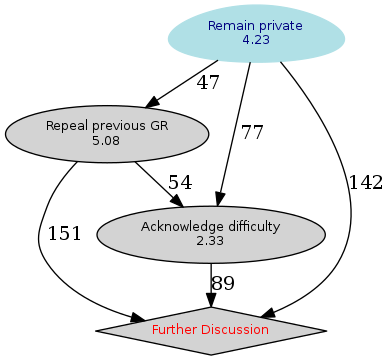
Gunnar Wolf: On the results of vote "gr_private2"

Given that I started the GR process, and that I called for discussion and votes, I feel somehow as my duty to also put a simple wrap-around to this process. Of course, I'll say many things already well-known to my fellow Debian people, but also non-debianers read this. So, for further context, if you need to, please read my previous blog post, where I was about to send a call for votes. It summarizes the situation and proposals; you will find we had a nice set of messages in debian-vote@lists.debian.org during September; I have to thank all the involved parties, much specially to Ian Jackson, who spent a lot of energy summing up the situation and clarifying the different bits to everyone involved. So, we held the vote; you can be interested in looking at the detailed vote statistics for the 235 correctly received votes, and most importantly, the results: Results for gr_private2 First of all, I'll say I'm actually surprised at the results, as I expected Ian's proposal (acknowledge difficulty; I actually voted this proposal as my top option) to win and mine (repeal previous GR) to be last; turns out, the winner option was Iain's (remain private). But all in all, I am happy with the results: As I said during the discussion, I was much disappointed with the results to the previous GR on this topic And, yes, it seems the breaking point was when many people thought the privacy status of posted messages was in jeopardy; we cannot really compare what I would have liked to have in said vote if we had followed the strategy of leaving the original resolution text instead of replacing it, but I believe it would have passed. In fact, one more surprise of this iteration was that I expected Further Discussion to be ranked higher, somewhere between the three explicit options. I am happy, of course, we got such an overwhelming clarity of what does the project as a whole prefer. And what was gained or lost with this whole excercise? Well, if nothing else, we gain to stop lying. For over ten years, we have had an accepted resolution binding us to release the messages sent to debian-private given such-and-such-conditions... But never got around to implement it. We now know that debian-private will remain private... But we should keep reminding ourselves to use the list as little as possible. For a project such as Debian, which is often seen as a beacon of doing the right thing no matter what, I feel being explicit about not lying to ourselves of great importance. Yes, we have the principle of not hiding our problems, but it has long been argued that the use of this list is not hiding or problems. Private communication can happen whenever you have humans involved, even if administratively we tried to avoid it. Any of the three running options could have won, and I'd be happy. My #1 didn't win, but my #2 did. And, I am sure, it's for the best of the project as a whole.

24 October 2016

Chris Lamb: Concorde

Today marks the 13th anniversary since the last passenger flight from New York arrived in the UK. Every seat was filled, a feat that had become increasingly rare for a plane that was a technological marvel but a commercial flop .


See also: A Rocket to Nowhere.

Russ Allbery: Review: The Design of Everyday Things

Review: The Design of Everyday Things, by Don Norman
Publisher: Basic Books
Copyright: 2013
ISBN: 0-465-05065-4
Format: Trade paperback
Pages: 298
There are several editions of this book (the first under a different title, The Psychology of Everyday Things). This review is for the Revised and Expanded Edition, first published in 2013 and quite significantly revised compared to the original. I probably read at least some of the original for a class in human-computer interaction around 1994, but that was long enough ago that I didn't remember any of the details. I'm not sure how much impact this book has had outside of the computer field, but The Design of Everyday Things is a foundational text of HCI (human-computer interaction) despite the fact that many of its examples and much of its analysis is not specific to computers. Norman's goal is clearly to write a book that's fundamental to the entire field of design; not having studied the field, I don't know if he succeeded, but the impact on computing was certainly immense. This is the sort of book that everyone ends up hearing about, if not necessarily reading, in college. I was looking forward to filling a gap in my general knowledge. Having now read it cover-to-cover, would I recommend others invest the time? Maybe. But probably not. There are several things this book does well. One of the most significant is that it builds a lexicon and a set of general principles that provide a way of talking about design issues. Lexicons are not the most compelling reading material (see also Design Patterns), but having a common language is useful. I still remember affordances from college (probably from this book or something else based on it). Norman also adds, and defines, signifiers, constraints, mappings, and feedback, and talks about the human process of building a conceptual model of the objects with which one is interacting. Even more useful, at least in my opinion, is the discussion of human task-oriented behavior. The seven stages of action is a great systematic way of analyzing how humans perform tasks, where those actions can fail, and how designers can help minimize failure. One thing I particularly like about Norman's presentation here is the emphasis on the feedback cycle after performing a task, or a step in a task. That feedback, and what makes good or poor feedback, is (I think) an underappreciated part of design and something that too often goes missing. I thought Norman was a bit too dismissive of simple beeps as feedback (he thinks they don't carry enough information; while that's not wrong, I think they're far superior to no feedback at all), but the emphasis on this point was much appreciated. Beyond these dry but useful intellectual frameworks, though, Norman seems to have a larger purpose in The Design of Everyday Things: making a passionate argument for the importance of design and for not tolerating poor design. This is where I think his book goes a bit off the rails. I can appreciate the boosterism of someone who feels an aspect of creating products is underappreciated and underfunded. But Norman hammers on the unacceptability of bad design to the point of tedium, and seems remarkably intolerant of, and unwilling to confront, the reasons why products may be released with poor designs for their eventual users. Norman clearly wishes that we would all boycott products with poor designs and prize usability above most (all?) other factors in our decisions. Equally clearly, this is not happening, and Norman knows it. He even describes some of the reasons why not, most notably (and most difficultly) the fact that the purchasers of many products are not the eventual users. Stoves are largely sold to builders, not kitchen cooks. Light switches are laid out for the convenience of the electrician; here too, the motive for the builder to spend additional money on better lighting controls is unclear. So much business software is purchased by people who will never use it directly, and may have little or no contact with the people who do. These layers of economic separation result in deep disconnects of incentive structure between product manufacturers and eventual consumers. Norman acknowledges this, writes about it at some length, and then seems to ignore the point entirely, returning to ranting about the deficiencies of obviously poor design and encouraging people to care more about design. This seems weirdly superficial in this foundational of a book. I came away half-convinced that these disconnects of incentive (and some related problems, such as the unwillingness to invest in proper field research or the elaborate, expensive, and lengthy design process Norman lays out as ideal) are the primary obstacle in the way of better-designed consumer goods. If that's the case, then this is one of the largest, if not the largest, obstacle in the way of doing good design, and I would have expected this foundational of a book to tackle it head-on and provide some guidance for how to fight back against this problem. But Norman largely doesn't. There is some mention of this in the introduction. Apparently much of the discussion of the practical constraints on product design in the business world was added in this revised edition, and perhaps what I'm seeing is the limitations of attempting to revise an existing text. But that also implies that the original took an even harder line against poor design. Throughout, Norman is remarkably high-handed in his dismissal of bad design, focusing more on condemnation than on an investigation of why bad design might happen and what we, as readers, can learn from that process to avoid repeating it. Norman does provide extensive analysis of the design process and the psychology of human interaction, but still left me with the impression that he believes most design failures stem from laziness and stupidity. The negativity and frustration got a bit tedious by the middle of the book. There's quite a lot here that someone working in design, particularly interface design, should be at least somewhat familiar with: affordances, signifiers, the importance of feedback, the psychological model of tasks and actions, and the classification of errors, just to name a few. However, I'm not sure this book is the best medium for learning those things. I found it a bit tedious, a bit too arrogant, and weirdly unconcerned with feasible solutions to the challenge of mismatched incentives. I also didn't learn that much from it; while the concepts here are quite important, most of them I'd picked up by osmosis from working in the computing field for twenty years. In that way, The Design of Everyday Things reminded me a great deal of the Gang of Four's Design Patterns, even though it's a more readable book and less of an exercise in academic classification. The concepts presented are useful and important, but I'm not sure I can recommend the book as a book. It may be better to pick up the same concepts as you go, with the help of Internet searches and shorter essays. Rating: 6 out of 10

Francois Marier: Tweaking Referrers For Privacy in Firefox

The Referer header has been a part of the web for a long time. Websites rely on it for a few different purposes (e.g. analytics, ads, CSRF protection) but it can be quite problematic from a privacy perspective. Thankfully, there are now tools in Firefox to help users and developers mitigate some of these problems.

Description In a nutshell, the browser adds a Referer header to all outgoing HTTP requests, revealing to the server on the other end the URL of the page you were on when you placed the request. For example, it tells the server where you were when you followed a link to that site, or what page you were on when you requested an image or a script. There are, however, a few limitations to this simplified explanation. First of all, by default, browsers won't send a referrer if you place a request from an HTTPS page to an HTTP page. This would reveal potentially confidential information (such as the URL path and query string which could contain session tokens or other secret identifiers) from a secure page over an insecure HTTP channel. Firefox will however include a Referer header in HTTPS to HTTPS transitions unless network.http.sendSecureXSiteReferrer (removed in Firefox 52) is set to false in about:config. Secondly, using the new Referrer Policy specification web developers can override the default behaviour for their pages, including on a per-element basis. This can be used both to increase or reduce the amount of information present in the referrer.

Legitimate Uses Because the Referer header has been around for so long, a number of techniques rely on it. Armed with the Referer information, analytics tools can figure out:
  • where website traffic comes from, and
  • how users are navigating the site.
Another place where the Referer is useful is as a mitigation against cross-site request forgeries. In that case, a website receiving a form submission can reject that form submission if the request originated from a different website. It's worth pointing out that this CSRF mitigation might be better implemented via a separate header that could be restricted to particularly dangerous requests (i.e. POST and DELETE requests) and only include the information required for that security check (i.e. the origin).

Problems with the Referrer Unfortunately, this header also creates significant privacy and security concerns. The most obvious one is that it leaks part of your browsing history to sites you visit as well as all of the resources they pull in (e.g. ads and third-party scripts). It can be quite complicated to fix these leaks in a cross-browser way. These leaks can also lead to exposing private personally-identifiable information when they are part of the query string. One of the most high-profile example is the accidental leakage of user searches by healthcare.gov.

Solutions for Firefox Users While web developers can use the new mechanisms exposed through the Referrer Policy, Firefox users can also take steps to limit the amount of information they send to websites, advertisers and trackers. In addition to enabling Firefox's built-in tracking protection by setting privacy.trackingprotection.enabled to true in about:config, which will prevent all network connections to known trackers, users can control when the Referer header is sent by setting network.http.sendRefererHeader to:
  • 0 to never send the header
  • 1 to send the header only when clicking on links and similar elements
  • 2 (default) to send the header on all requests (e.g. images, links, etc.)
It's also possible to put a limit on the maximum amount of information that the header will contain by setting the network.http.referer.trimmingPolicy to:
  • 0 (default) to send the full URL
  • 1 to send the URL without its query string
  • 2 to only send the scheme, host and port
or using the network.http.referer.XOriginTrimmingPolicy option (added in Firefox 52) to only restrict the contents of referrers attached to cross-origin requests. Site owners can opt to share less information with other sites, but they can't share any more than what the user trimming policies allow. Another approach is to disable the Referer when doing cross-origin requests (from one site to another). The network.http.referer.XOriginPolicy preference can be set to:
  • 0 (default) to send the referrer in all cases
  • 1 to send a referrer only when the base domains are the same
  • 2 to send a referrer only when the full hostnames match

Breakage If you try to remove all referrers (i.e. network.http.sendRefererHeader = 0, you will most likely run into problems on a number of sites, for example: The first two have been worked-around successfully by setting network.http.referer.spoofSource to true, an advanced setting which always sends the destination URL as the referrer, thereby not leaking anything about the original page. Unfortunately, the last two are examples of the kind of breakage that can only be fixed through a whitelist (an approach supported by the smart referer add-on) or by temporarily using a different browser profile.

My Recommended Settings As with my cookie recommendations, I recommend strengthening your referrer settings but not disabling (or spoofing) it entirely. While spoofing does solve many the breakage problems mentioned above, it also effectively disables the anti-CSRF protections that some sites may rely on and that have tangible user benefits. A better approach is to limit the amount of information that leaks through cross-origin requests. If you are willing to live with some amount of breakage, you can simply restrict referrers to the same site by setting:
network.http.referer.XOriginPolicy = 2
or to sites which belong to the same organization (i.e. same ETLD/public suffix) using:
network.http.referer.XOriginPolicy = 1
This prevent leaks to third-parties while giving websites all of the information that they can already see in their own server logs. On the other hand, if you prefer a weaker but more compatible solution, you can trim cross-origin referrers down to just the scheme, hostname and port:
network.http.referer.XOriginTrimmingPolicy = 2
I have not yet found user-visible breakage using this last configuration. Let me know if you find any!

23 October 2016

Vincent Sanders: Rabbit of Caerbannog

Subsequent to my previous use of American Fuzzy Lop (AFL) on the NetSurf bitmap image library I applied it to the gif library which, after fixing the test runner, failed to produce any crashes but did result in a better test corpus improving coverage above 90%

I then turned my attention to the SVG processing library. This was different to the bitmap libraries in that it required parsing a much lower density text format and performing operations on the resulting tree representation.

The test program for the SVG library needed some improvement but is very basic in operation. It takes the test SVG, parses it using libsvgtiny and then uses the parsed output to write out an imagemagick mvg file.

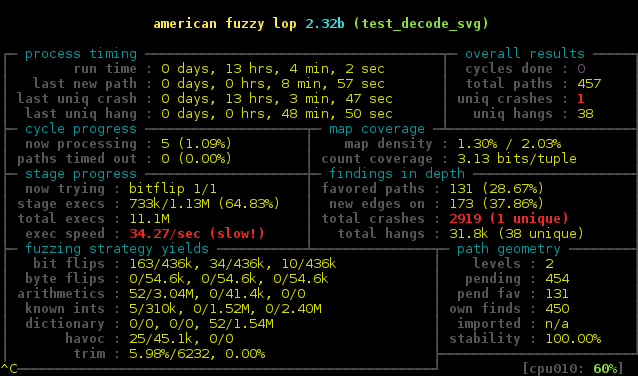
The libsvg processing uses the NetSurf DOM library which in turn uses an expat binding to parse the SVG XML text. To process this with AFL required instrumenting not only the XVG library but the DOM library. I did not initially understand this and my first run resulted in a "map coverage" indicating an issue. Helpfully the AFL docs do cover this so it was straightforward to rectify.

Once the test program was written and environment set up an AFL run was started and left to run. The next day I was somewhat alarmed to discover the fuzzer had made almost no progress and was running very slowly. I asked for help on the AFL mailing list and got a polite and helpful response, basically I needed to RTFM.

I must thank the members of the AFL mailing list for being so helpful and tolerating someone who ought to know better asking dumb questions.

After reading the fine manual I understood I needed to ensure all my test cases were as small as possible and further that the fuzzer needed a dictionary as a hint to the file format because the text file was of such low data density compared to binary formats.

Rabbit of Caerbannog. Death awaits you with pointy teeth
I crafted an SVG dictionary based on the XML one, ensured all the seed SVG files were as small as possible and tried again. The immediate result was thousands of crashes, nothing like being savaged by a rabbit to cause a surprise.

Not being in possession of the appropriate holy hand grenade I resorted instead to GDB and electric fence. Unlike the bitmap library crashes memory bounds issues simply did not feature in the crashes.Instead they mainly centered around actual logic errors when constructing and traversing the data structures.

For example Daniel Silverstone fixed an interesting bug where the XML parser binding would try and go "above" the root node in the tree if the source closed more tags than it opened which resulted in wild pointers and NULL references.

I found and squashed several others including dealing with SVG which has no valid root element and division by zero errors when things like colour gradients have no points.

I find it interesting that the type and texture of the crashes completely changed between the SVG and binary formats. Perhaps it is just the nature of the textural formats that causes this although it might be due to the techniques used to parse the formats.

Once all the immediately reproducible crashes were dealt with I performed a longer run. I used my monster system as previously described and ran the fuzzer for a whole week.

Summary stats
=============

Fuzzers alive : 10
Total run time : 68 days, 7 hours
Total execs : 9268 million
Cumulative speed : 15698 execs/sec
Pending paths : 0 faves, 2501 total
Pending per fuzzer : 0 faves, 250 total (on average)
Crashes found : 9 locally unique

After burning almost seventy days of processor time AFL found me another nine crashes and possibly more importantly a test corpus that generates over 90% coverage.

A useful tool that AFL provides is afl-cmin. This reduces the number of test files in a corpus to only those that are required to exercise all the code paths reached by the test set. In this case it reduced the number of files from 8242 to 2612

afl-cmin -i queue_all/ -o queue_cmin -- test_decode_svg @@ 1.0 /dev/null
corpus minimization tool for afl-fuzz by

[+] OK, 1447 tuples recorded.
[*] Obtaining traces for input files in 'queue_all/'...
Processing file 8242/8242...
[*] Sorting trace sets (this may take a while)...
[+] Found 23812 unique tuples across 8242 files.
[*] Finding best candidates for each tuple...
Processing file 8242/8242...
[*] Sorting candidate list (be patient)...
[*] Processing candidates and writing output files...
Processing tuple 23812/23812...
[+] Narrowed down to 2612 files, saved in 'queue_cmin'.

Additionally the actual information within the test files can be minimised with the afl-tmin tool. This must be run on each file individually and can take a relatively long time. Fortunately with GNU parallel one can run many of these jobs simultaneously which merely required another three days of CPU time to process. The resulting test corpus weighs in at a svelte 15 Megabytes or so against the 25 Megabytes before minimisation.

The result is yet another NetSurf library significantly improved by the use of AFL both from finding and squashing crashing bugs and from having a greatly improved test corpus to allow future library changes with a high confidence there will not be any regressions.

Jaldhar Vyas: What I Did During My Summer Vacation

Thats So Raven If I could sum up the past year in one word, that word would be distraction. There have been so many strange, confusing or simply unforseen things going on I have had trouble focusing like never before. For instance, on the opposite side of the street from me is one of Jersey City's old resorvoirs. It's not used for drinking water anymore and the city eventually plans on merging it into the park on the other side. In the meantime it has become something of a wildlife refuge. Which is nice except one of the newly settled critters was a bird of prey -- the consensus is possibly some kind of hawk or raven. Starting your morning commute under the eyes of a harbinger of death is very goth and I even learned to deal with the occasional piece of deconstructed rodent on my doorstep but nighttime was a big problem. For contrary to popular belief, ravens do not quoth "nevermore" but "KRRAAAA". Very loudly. Just as soon as you have drifted of to sleep. Eventually my sleep-deprived neighbors and I appealed to the NJ division of enviromental protection to get it removed but by the time they were ready to swing into action the bird had left for somewhere more congenial like Transylvania or Newark. Or here are some more complete wastes of time: I go the doctor for my annual physical. The insurance company codes it as Adult Onset Diabetes by accident. One day I opened the lid of my laptop and there's a "ping" sound and a piece of the hinge flies off. Apparently that also severed the connection to the screen and naturally the warranty had just expired so I had to spend the next month tethered to an external monitor until I could afford to buy a new one. Mix in all the usual social, political, family and work drama and you can see that it has been a very trying time for me. Dovecot I have managed to get some Debian work done. On Dovecot, my principal package, I have gotten tremendous support from Apollon Oikonomopolous who I belatedly welcome as a member of the Dovecot maintainer team. He has been particularly helpful in fixing our systemd support and cleaning out a lot of the old and invalid bugs. We're in pretty good shape for the freeze. Upstream has released an RC of 2.2.26 and hopefully the final version will be out in the next couple of days so we can include it in Stretch. We can always use more help with the package so let me know if you're interested. Debian-IN Most of the action has been going on without me but I've been lending support and sponsoring whenever I can. We have several new DDs and DMs but still no one north of the Vindhyas I'm afraid. Debian Perl Group gregoa did a ping of inactive maintainers and I regretfully had to admit to myself that I wasn't going to be of use anytime soon so I resigned. Perl remains my favorite language and I've actually been more involved in the meetings of my local Perlmongers group so hopefully I will be back again one day. And I still maintain the Perl modules I wrote myself. Debian-Axe-Murderers* May have gained a recruit. *Stricly speaking it should be called Debian-People-Who-Dont-Think-Faults-in-One-Moral-Domain-Such-As-For-Example-Axe-Murdering-Should-Leak-Into-Another-Moral-Domain-Such-As-For-Example-Debian but come on, that's just silly.

22 October 2016

Matthew Garrett: Fixing the IoT isn't going to be easy

A large part of the internet became inaccessible today after a botnet made up of IP cameras and digital video recorders was used to DoS a major DNS provider. This highlighted a bunch of things including how maybe having all your DNS handled by a single provider is not the best of plans, but in the long run there's no real amount of diversification that can fix this - malicious actors have control of a sufficiently large number of hosts that they could easily take out multiple providers simultaneously.

To fix this properly we need to get rid of the compromised systems. The question is how. Many of these devices are sold by resellers who have no resources to handle any kind of recall. The manufacturer may not have any kind of legal presence in many of the countries where their products are sold. There's no way anybody can compel a recall, and even if they could it probably wouldn't help. If I've paid a contractor to install a security camera in my office, and if I get a notification that my camera is being used to take down Twitter, what do I do? Pay someone to come and take the camera down again, wait for a fixed one and pay to get that put up? That's probably not going to happen. As long as the device carries on working, many users are going to ignore any voluntary request.

We're left with more aggressive remedies. If ISPs threaten to cut off customers who host compromised devices, we might get somewhere. But, inevitably, a number of small businesses and unskilled users will get cut off. Probably a large number. The economic damage is still going to be significant. And it doesn't necessarily help that much - if the US were to compel ISPs to do this, but nobody else did, public outcry would be massive, the botnet would not be much smaller and the attacks would continue. Do we start cutting off countries that fail to police their internet?

Ok, so maybe we just chalk this one up as a loss and have everyone build out enough infrastructure that we're able to withstand attacks from this botnet and take steps to ensure that nobody is ever able to build a bigger one. To do that, we'd need to ensure that all IoT devices are secure, all the time. So, uh, how do we do that?

These devices had trivial vulnerabilities in the form of hardcoded passwords and open telnet. It wouldn't take terribly strong skills to identify this at import time and block a shipment, so the "obvious" answer is to set up forces in customs who do a security analysis of each device. We'll ignore the fact that this would be a pretty huge set of people to keep up with the sheer quantity of crap being developed and skip straight to the explanation for why this wouldn't work.

Yeah, sure, this vulnerability was obvious. But what about the product from a well-known vendor that included a debug app listening on a high numbered UDP port that accepted a packet of the form "BackdoorPacketCmdLine_Req" and then executed the rest of the payload as root? A portscan's not going to show that up[1]. Finding this kind of thing involves pulling the device apart, dumping the firmware and reverse engineering the binaries. It typically takes me about a day to do that. Amazon has over 30,000 listings that match "IP camera" right now, so you're going to need 99 more of me and a year just to examine the cameras. And that's assuming nobody ships any new ones.

Even that's insufficient. Ok, with luck we've identified all the cases where the vendor has left an explicit backdoor in the code[2]. But these devices are still running software that's going to be full of bugs and which is almost certainly still vulnerable to at least half a dozen buffer overflows[3]. Who's going to audit that? All it takes is one attacker to find one flaw in one popular device line, and that's another botnet built.

If we can't stop the vulnerabilities getting into people's homes in the first place, can we at least fix them afterwards? From an economic perspective, demanding that vendors ship security updates whenever a vulnerability is discovered no matter how old the device is is just not going to work. Many of these vendors are small enough that it'd be more cost effective for them to simply fold the company and reopen under a new name than it would be to put the engineering work into fixing a decade old codebase. And how does this actually help? So far the attackers building these networks haven't been terribly competent. The first thing a competent attacker would do would be to silently disable the firmware update mechanism.

We can't easily fix the already broken devices, we can't easily stop more broken devices from being shipped and we can't easily guarantee that we can fix future devices that end up broken. The only solution I see working at all is to require ISPs to cut people off, and that's going to involve a great deal of pain. The harsh reality is that this is almost certainly just the tip of the iceberg, and things are going to get much worse before they get any better.

Right. I'm off to portscan another smart socket.

[1] UDP connection refused messages are typically ratelimited to one per second, so it'll take almost a day to do a full UDP portscan, and even then you have no idea what the service actually does.

[2] It's worth noting that this is usually leftover test or debug code, not an overtly malicious act. Vendors should have processes in place to ensure that this isn't left in release builds, but ha well.

[3] My vacuum cleaner crashes if I send certain malformed HTTP requests to the local API endpoint, which isn't a good sign

comment count unavailable comments

20 October 2016

H ctor Or n Mart nez: Build a Debian package against Debian 8.0 using Download On Demand (DoD) service

In the previous post Open Build Service software architecture has been overviewed. In the current blog post, a tutorial on setting up a package build with OBS from Debian packages is presented. Steps: Generate a test environment by creating Stretch/SID VM Really, use whatever suits you best, but please create an untrusted test environment for this one. In the current tutorial it assumes $hostname is stretch , which should be stretch or sid suite. Be aware that copy & paste configuration files from current post might lead you into broken characters (i.e. ). Debian Stretch weekly netinst CD Enable experimental repository
# echo "deb http://httpredir.debian.org/debian experimental main" >> /etc/apt/sources.list.d/experimental.list
# apt-get update
Install and setup OBS server, api, worker and osc CLI packages
# apt-get install obs-server obs-api obs-worker osc
In the install process mysql database is needed, therefore if mysql server is not setup, a password needs to be provided.
When OBS API database obs-api is created, we need to pick a password for it, provide opensuse . The obs-api package will configure apache2 https webserver (creating a dummy certificate for stretch ) to serve OBS webui.
Add stretch and obs aliases to localhost entry in your /etc/hosts file.
Enable worker by setting ENABLED=1 in /etc/default/obsworker
Try to connect to the web UI https://stretch/
Login into OBS webui, default login credentials: Admin/opensuse).
From command line tool, try to list projects in OBS
 $ osc -A https://stretch ls
Accept dummy certificate and provide credentials (defaults: Admin/opensuse)
If the install proceeds as expected follow to the next step. Ensure all OBS services are running
# backend services
obsrun     813  0.0  0.9 104960 20448 ?        Ss   08:33   0:03 /usr/bin/perl -w /usr/lib/obs/server/bs_dodup
obsrun     815  0.0  1.5 157512 31940 ?        Ss   08:33   0:07 /usr/bin/perl -w /usr/lib/obs/server/bs_repserver
obsrun    1295  0.0  1.6 157644 32960 ?        S    08:34   0:07  \_ /usr/bin/perl -w /usr/lib/obs/server/bs_repserver
obsrun     816  0.0  1.8 167972 38600 ?        Ss   08:33   0:08 /usr/bin/perl -w /usr/lib/obs/server/bs_srcserver
obsrun    1296  0.0  1.8 168100 38864 ?        S    08:34   0:09  \_ /usr/bin/perl -w /usr/lib/obs/server/bs_srcserver
memcache   817  0.0  0.6 346964 12872 ?        Ssl  08:33   0:11 /usr/bin/memcached -m 64 -p 11211 -u memcache -l 127.0.0.1
obsrun     818  0.1  0.5  78548 11884 ?        Ss   08:33   0:41 /usr/bin/perl -w /usr/lib/obs/server/bs_dispatch
obsserv+   819  0.0  0.3  77516  7196 ?        Ss   08:33   0:05 /usr/bin/perl -w /usr/lib/obs/server/bs_service
mysql      851  0.0  0.0   4284  1324 ?        Ss   08:33   0:00 /bin/sh /usr/bin/mysqld_safe
mysql     1239  0.2  6.3 1010744 130104 ?      Sl   08:33   1:31  \_ /usr/sbin/mysqld --basedir=/usr --datadir=/var/lib/mysql --plugin-dir=/usr/lib/mysql/plugin --log-error=/var/log/mysql/error.log --pid-file=/var/run/mysqld/mysqld.pid --socket=/var/run/mysqld/mysqld.sock --port=3306
# web services
root      1452  0.0  0.1 110020  3968 ?        Ss   08:34   0:01 /usr/sbin/apache2 -k start
root      1454  0.0  0.1 435992  3496 ?        Ssl  08:34   0:00  \_ Passenger watchdog
root      1460  0.3  0.2 651044  5188 ?        Sl   08:34   1:46      \_ Passenger core
nobody    1465  0.0  0.1 444572  3312 ?        Sl   08:34   0:00      \_ Passenger ust-router
www-data  1476  0.0  0.1 855892  2608 ?        Sl   08:34   0:09  \_ /usr/sbin/apache2 -k start
www-data  1477  0.0  0.1 856068  2880 ?        Sl   08:34   0:09  \_ /usr/sbin/apache2 -k start
www-data  1761  0.0  4.9 426868 102040 ?       Sl   08:34   0:29 delayed_job.0
www-data  1767  0.0  4.8 425624 99888 ?        Sl   08:34   0:30 delayed_job.1
www-data  1775  0.0  4.9 426516 101708 ?       Sl   08:34   0:28 delayed_job.2
nobody    1788  0.0  5.7 496092 117480 ?       Sl   08:34   0:03 Passenger RubyApp: /usr/share/obs/api
nobody    1796  0.0  4.9 488888 102176 ?       Sl   08:34   0:00 Passenger RubyApp: /usr/share/obs/api
www-data  1814  0.0  4.5 282576 92376 ?        Sl   08:34   0:22 delayed_job.1000
www-data  1829  0.0  4.4 282684 92228 ?        Sl   08:34   0:22 delayed_job.1010
www-data  1841  0.0  4.5 282932 92536 ?        Sl   08:34   0:22 delayed_job.1020
www-data  1855  0.0  4.9 427988 101492 ?       Sl   08:34   0:29 delayed_job.1030
www-data  1865  0.2  5.0 492500 102964 ?       Sl   08:34   1:09 clockworkd.clock
www-data  1899  0.0  0.0  87100  1400 ?        S    08:34   0:00 /usr/bin/searchd --pidfile --config /usr/share/obs/api/config/production.sphinx.conf
www-data  1900  0.1  0.4 161620  8276 ?        Sl   08:34   0:51  \_ /usr/bin/searchd --pidfile --config /usr/share/obs/api/config/production.sphinx.conf
# OBS worker
root      1604  0.0  0.0  28116  1492 ?        Ss   08:34   0:00 SCREEN -m -d -c /srv/obs/run/worker/boot/screenrc
root      1605  0.0  0.9  75424 18764 pts/0    Ss+  08:34   0:06  \_ /usr/bin/perl -w ./bs_worker --hardstatus --root /srv/obs/worker/root_1 --statedir /srv/obs/run/worker/1 --id stretch:1 --reposerver http://obs:5252 --jobs 1
Create an OBS project for Download on Demand (DoD) Create a meta project file:
$ osc -A https://stretch:443 meta prj Debian:8 -e
<project name= Debian:8 >
<title>Debian 8 DoD</title>
<description>Debian 8 DoD</description>
<person userid= Admin role= maintainer />
<repository name= main >
<download arch= x86_64 url= http://deb.debian.org/debian/jessie/main repotype= deb />
<arch>x86_64</arch>
</repository>
</project>
Visit webUI to check project configuration Create a meta project configuration file:
$ osc -A https://stretch:443 meta prjconf Debian:8 -e
Add the following file, as found at build.opensuse.org
Repotype: debian
# create initial user
Preinstall: base-passwd
Preinstall: user-setup
# required for preinstall images
Preinstall: perl
# preinstall essentials + dependencies
Preinstall: base-files base-passwd bash bsdutils coreutils dash debconf
Preinstall: debianutils diffutils dpkg e2fslibs e2fsprogs findutils gawk
Preinstall: gcc-4.9-base grep gzip hostname initscripts insserv libacl1
Preinstall: libattr1 libblkid1 libbz2-1.0 libc-bin libc6 libcomerr2 libdb5.3
Preinstall: libgcc1 liblzma5 libmount1 libncurses5 libpam-modules
Preinstall: libpcre3 libsmartcols1
Preinstall: libpam-modules-bin libpam-runtime libpam0g libreadline6
Preinstall: libselinux1 libsemanage-common libsemanage1 libsepol1 libsigsegv2
Preinstall: libslang2 libss2 libtinfo5 libustr-1.0-1 libuuid1 login lsb-base
Preinstall: mount multiarch-support ncurses-base ncurses-bin passwd perl-base
Preinstall: readline-common sed sensible-utils sysv-rc sysvinit sysvinit-utils
Preinstall: tar tzdata util-linux zlib1g
Runscripts: base-passwd user-setup base-files gawk
VMinstall: libdevmapper1.02.1
Order: user-setup:base-files
# Essential packages (this should also pull the dependencies)
Support: base-files base-passwd bash bsdutils coreutils dash debianutils
Support: diffutils dpkg e2fsprogs findutils grep gzip hostname libc-bin 
Support: login mount ncurses-base ncurses-bin perl-base sed sysvinit 
Support: sysvinit-utils tar util-linux
# Build-essentials
Required: build-essential
Prefer: build-essential:make
# build script needs fakeroot
Support: fakeroot
# lintian support would be nice, but breaks too much atm
#Support: lintian
# helper tools in the chroot
Support: less kmod net-tools procps psmisc strace vim
# everything below same as for Debian:6.0 (apart from the version macros ofc)
# circular dependendencies in openjdk stack
Order: openjdk-6-jre-lib:openjdk-6-jre-headless
Order: openjdk-6-jre-headless:ca-certificates-java
Keep: binutils cpp cracklib file findutils gawk gcc gcc-ada gcc-c++
Keep: gzip libada libstdc++ libunwind
Keep: libunwind-devel libzio make mktemp pam-devel pam-modules
Keep: patch perl rcs timezone
Prefer: cvs libesd0 libfam0 libfam-dev expect
Prefer: gawk locales default-jdk
Prefer: xorg-x11-libs libpng fam mozilla mozilla-nss xorg-x11-Mesa
Prefer: unixODBC libsoup glitz java-1_4_2-sun gnome-panel
Prefer: desktop-data-SuSE gnome2-SuSE mono-nunit gecko-sharp2
Prefer: apache2-prefork openmotif-libs ghostscript-mini gtk-sharp
Prefer: glib-sharp libzypp-zmd-backend mDNSResponder
Prefer: -libgcc-mainline -libstdc++-mainline -gcc-mainline-c++
Prefer: -libgcj-mainline -viewperf -compat -compat-openssl097g
Prefer: -zmd -OpenOffice_org -pam-laus -libgcc-tree-ssa -busybox-links
Prefer: -crossover-office -libgnutls11-dev
# alternative pkg-config implementation
Prefer: -pkgconf
Prefer: -openrc
Prefer: -file-rc
Conflict: ghostscript-library:ghostscript-mini
Ignore: sysvinit:initscripts
Ignore: aaa_base:aaa_skel,suse-release,logrotate,ash,mingetty,distribution-release
Ignore: gettext-devel:libgcj,libstdc++-devel
Ignore: pwdutils:openslp
Ignore: pam-modules:resmgr
Ignore: rpm:suse-build-key,build-key
Ignore: bind-utils:bind-libs
Ignore: alsa:dialog,pciutils
Ignore: portmap:syslogd
Ignore: fontconfig:freetype2
Ignore: fontconfig-devel:freetype2-devel
Ignore: xorg-x11-libs:freetype2
Ignore: xorg-x11:x11-tools,resmgr,xkeyboard-config,xorg-x11-Mesa,libusb,freetype2,libjpeg,libpng
Ignore: apache2:logrotate
Ignore: arts:alsa,audiofile,resmgr,libogg,libvorbis
Ignore: kdelibs3:alsa,arts,pcre,OpenEXR,aspell,cups-libs,mDNSResponder,krb5,libjasper
Ignore: kdelibs3-devel:libvorbis-devel
Ignore: kdebase3:kdebase3-ksysguardd,OpenEXR,dbus-1,dbus-1-qt,hal,powersave,openslp,libusb
Ignore: kdebase3-SuSE:release-notes
Ignore: jack:alsa,libsndfile
Ignore: libxml2-devel:readline-devel
Ignore: gnome-vfs2:gnome-mime-data,desktop-file-utils,cdparanoia,dbus-1,dbus-1-glib,krb5,hal,libsmbclient,fam,file_alteration
Ignore: libgda:file_alteration
Ignore: gnutls:lzo,libopencdk
Ignore: gnutls-devel:lzo-devel,libopencdk-devel
Ignore: pango:cairo,glitz,libpixman,libpng
Ignore: pango-devel:cairo-devel
Ignore: cairo-devel:libpixman-devel
Ignore: libgnomeprint:libgnomecups
Ignore: libgnomeprintui:libgnomecups
Ignore: orbit2:libidl
Ignore: orbit2-devel:libidl,libidl-devel,indent
Ignore: qt3:libmng
Ignore: qt-sql:qt_database_plugin
Ignore: gtk2:libpng,libtiff
Ignore: libgnomecanvas-devel:glib-devel
Ignore: libgnomeui:gnome-icon-theme,shared-mime-info
Ignore: scrollkeeper:docbook_4,sgml-skel
Ignore: gnome-desktop:libgnomesu,startup-notification
Ignore: python-devel:python-tk
Ignore: gnome-pilot:gnome-panel
Ignore: gnome-panel:control-center2
Ignore: gnome-menus:kdebase3
Ignore: gnome-main-menu:rug
Ignore: libbonoboui:gnome-desktop
Ignore: postfix:pcre
Ignore: docbook_4:iso_ent,sgml-skel,xmlcharent
Ignore: control-center2:nautilus,evolution-data-server,gnome-menus,gstreamer-plugins,gstreamer,metacity,mozilla-nspr,mozilla,libxklavier,gnome-desktop,startup-notification
Ignore: docbook-xsl-stylesheets:xmlcharent
Ignore: liby2util-devel:libstdc++-devel,openssl-devel
Ignore: yast2:yast2-ncurses,yast2-theme-SuSELinux,perl-Config-Crontab,yast2-xml,SuSEfirewall2
Ignore: yast2-core:netcat,hwinfo,wireless-tools,sysfsutils
Ignore: yast2-core-devel:libxcrypt-devel,hwinfo-devel,blocxx-devel,sysfsutils,libstdc++-devel
Ignore: yast2-packagemanager-devel:rpm-devel,curl-devel,openssl-devel
Ignore: yast2-devtools:perl-XML-Writer,libxslt,pkgconfig
Ignore: yast2-installation:yast2-update,yast2-mouse,yast2-country,yast2-bootloader,yast2-packager,yast2-network,yast2-online-update,yast2-users,release-notes,autoyast2-installation
Ignore: yast2-bootloader:bootloader-theme
Ignore: yast2-packager:yast2-x11
Ignore: yast2-x11:sax2-libsax-perl
Ignore: openslp-devel:openssl-devel
Ignore: java-1_4_2-sun:xorg-x11-libs
Ignore: java-1_4_2-sun-devel:xorg-x11-libs
Ignore: kernel-um:xorg-x11-libs
Ignore: tetex:xorg-x11-libs,expat,fontconfig,freetype2,libjpeg,libpng,ghostscript-x11,xaw3d,gd,dialog,ed
Ignore: yast2-country:yast2-trans-stats
Ignore: susehelp:susehelp_lang,suse_help_viewer
Ignore: mailx:smtp_daemon
Ignore: cron:smtp_daemon
Ignore: hotplug:syslog
Ignore: pcmcia:syslog
Ignore: avalon-logkit:servlet
Ignore: jython:servlet
Ignore: ispell:ispell_dictionary,ispell_english_dictionary
Ignore: aspell:aspel_dictionary,aspell_dictionary
Ignore: smartlink-softmodem:kernel,kernel-nongpl
Ignore: OpenOffice_org-de:myspell-german-dictionary
Ignore: mediawiki:php-session,php-gettext,php-zlib,php-mysql,mod_php_any
Ignore: squirrelmail:mod_php_any,php-session,php-gettext,php-iconv,php-mbstring,php-openssl
Ignore: simias:mono(log4net)
Ignore: zmd:mono(log4net)
Ignore: horde:mod_php_any,php-gettext,php-mcrypt,php-imap,php-pear-log,php-pear,php-session,php
Ignore: xerces-j2:xml-commons-apis,xml-commons-resolver
Ignore: xdg-menu:desktop-data
Ignore: nessus-libraries:nessus-core
Ignore: evolution:yelp
Ignore: mono-tools:mono(gconf-sharp),mono(glade-sharp),mono(gnome-sharp),mono(gtkhtml-sharp),mono(atk-sharp),mono(gdk-sharp),mono(glib-sharp),mono(gtk-sharp),mono(pango-sharp)
Ignore: gecko-sharp2:mono(glib-sharp),mono(gtk-sharp)
Ignore: vcdimager:libcdio.so.6,libcdio.so.6(CDIO_6),libiso9660.so.4,libiso9660.so.4(ISO9660_4)
Ignore: libcdio:libcddb.so.2
Ignore: gnome-libs:libgnomeui
Ignore: nautilus:gnome-themes
Ignore: gnome-panel:gnome-themes
Ignore: gnome-panel:tomboy
Substitute: utempter
%ifnarch s390 s390x ppc ia64
Substitute: java2-devel-packages java-1_4_2-sun-devel
%else
 %ifnarch s390x
Substitute: java2-devel-packages java-1_4_2-ibm-devel
 %else
Substitute: java2-devel-packages java-1_4_2-ibm-devel xorg-x11-libs-32bit
 %endif
%endif
Substitute: yast2-devel-packages docbook-xsl-stylesheets doxygen libxslt perl-XML-Writer popt-devel sgml-skel update-desktop-files yast2 yast2-devtools yast2-packagemanager-devel yast2-perl-bindings yast2-testsuite
#
# SUSE compat mappings
#
Substitute: gcc-c++ gcc
Substitute: libsigc++2-devel libsigc++-2.0-dev
Substitute: glibc-devel-32bit
Substitute: pkgconfig pkg-config
%ifarch %ix86
Substitute: kernel-binary-packages kernel-default kernel-smp kernel-bigsmp kernel-debug kernel-um kernel-xen kernel-kdump
%endif
%ifarch ia64
Substitute: kernel-binary-packages kernel-default kernel-debug
%endif
%ifarch x86_64
Substitute: kernel-binary-packages kernel-default kernel-smp kernel-xen kernel-kdump
%endif
%ifarch ppc
Substitute: kernel-binary-packages kernel-default kernel-kdump kernel-ppc64 kernel-iseries64
%endif
%ifarch ppc64
Substitute: kernel-binary-packages kernel-ppc64 kernel-iseries64
%endif
%ifarch s390
Substitute: kernel-binary-packages kernel-s390
%endif
%ifarch s390x
Substitute: kernel-binary-packages kernel-default
%endif
%define debian_version 800
Macros:
%debian_version 800
Visit webUI to check project configuration Create an OBS project linked to DoD
$ osc -A https://stretch:443 meta prj test -e
<project name= test >
<title>test</title>
<description>test</description>
<person userid= Admin role= maintainer />
<repository name= Debian_8.0 >
<path project= Debian:8 repository= main />
<arch>x86_64</arch>
</repository>
</project>
Visit webUI to check project configuration Adding a package to the project
$ osc -A https://stretch:443 co test ; cd test
$ mkdir hello ; cd hello ; apt-get source -d hello ; cd - ; 
$ osc add hello 
$ osc ci -m "New import" hello
The package should go to dispatched state then get in blocked state while it downloads build dependencies from DoD link, eventually it should start building. Please check the journal logs to check if something went wrong or gets stuck. Visit webUI to check hello package build state OBS logging to the journal Check in the journal logs everything went fine:
$ sudo journalctl -u obsdispatcher.service -u obsdodup.service -u obsscheduler@x86_64.service -u obsworker.service -u obspublisher.service
Troubleshooting Currently we are facing few issues with web UI: And there are more issues that have not been reported, please do reportbug obs-api .

19 October 2016

Rapha&#235;l Hertzog: Freexian s report about Debian Long Term Support, September 2016

A Debian LTS logoLike each month, here comes a report about the work of paid contributors to Debian LTS. Individual reports In September, about 152 work hours have been dispatched among 13 paid contributors. Their reports are available: Evolution of the situation The number of sponsored hours reached 172 hours per month thanks to maxcluster GmbH joining as silver sponsor and RHX Srl joining as bronze sponsor. We only need a couple of supplementary sponsors now to reach our objective of funding the equivalent of a full time position. The security tracker currently lists 39 packages with a known CVE and the dla-needed.txt file 34. It s a small bump compared to last month but almost all issues are affected to someone. Thanks to our sponsors New sponsors are in bold.

No comment Liked this article? Click here. My blog is Flattr-enabled.

Kees Cook: Security bug lifetime

In several of my recent presentations, I ve discussed the lifetime of security flaws in the Linux kernel. Jon Corbet did an analysis in 2010, and found that security bugs appeared to have roughly a 5 year lifetime. As in, the flaw gets introduced in a Linux release, and then goes unnoticed by upstream developers until another release 5 years later, on average. I updated this research for 2011 through 2016, and used the Ubuntu Security Team s CVE Tracker to assist in the process. The Ubuntu kernel team already does the hard work of trying to identify when flaws were introduced in the kernel, so I didn t have to re-do this for the 557 kernel CVEs since 2011. As the README details, the raw CVE data is spread across the active/, retired/, and ignored/ directories. By scanning through the CVE files to find any that contain the line Patches_linux: , I can extract the details on when a flaw was introduced and when it was fixed. For example CVE-2016-0728 shows:
Patches_linux:
 break-fix: 3a50597de8635cd05133bd12c95681c82fe7b878 23567fd052a9abb6d67fe8e7a9ccdd9800a540f2
This means that CVE-2016-0728 is believed to have been introduced by commit 3a50597de8635cd05133bd12c95681c82fe7b878 and fixed by commit 23567fd052a9abb6d67fe8e7a9ccdd9800a540f2. If there are multiple lines, then there may be multiple SHAs identified as contributing to the flaw or the fix. And a - is just short-hand for the start of Linux git history. Then for each SHA, I queried git to find its corresponding release, and made a mapping of release version to release date, wrote out the raw data, and rendered graphs. Each vertical line shows a given CVE from when it was introduced to when it was fixed. Red is Critical , orange is High , blue is Medium , and black is Low : CVE lifetimes 2011-2016 And here it is zoomed in to just Critical and High: Critical and High CVE lifetimes 2011-2016 The line in the middle is the date from which I started the CVE search (2011). The vertical axis is actually linear time, but it s labeled with kernel releases (which are pretty regular). The numerical summary is: This comes out to roughly 5 years lifetime again, so not much has changed from Jon s 2010 analysis. While we re getting better at fixing bugs, we re also adding more bugs. And for many devices that have been built on a given kernel version, there haven t been frequent (or some times any) security updates, so the bug lifetime for those devices is even longer. To really create a safe kernel, we need to get proactive about self-protection technologies. The systems using a Linux kernel are right now running with security flaws. Those flaws are just not known to the developers yet, but they re likely known to attackers, as there have been prior boasts/gray-market advertisements for at least CVE-2010-3081 and CVE-2013-2888. (Edit: see my updated graphs that include CVE-2016-5195.)
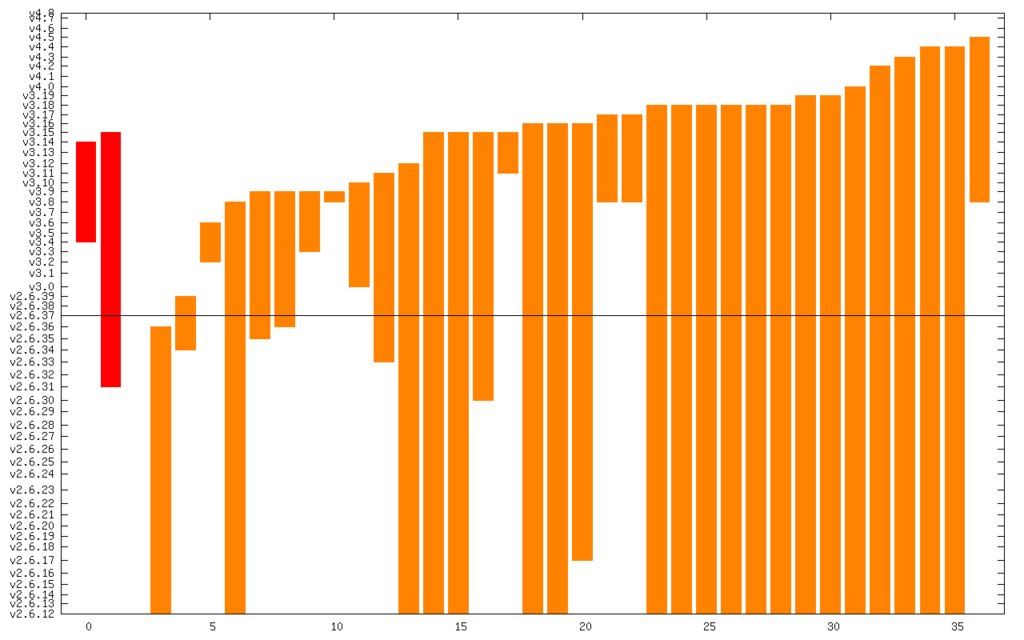
2016, Kees Cook. This work is licensed under a Creative Commons Attribution-ShareAlike 3.0 License.
Creative Commons License

Michal &#268;iha&#345;: Gammu 1.37.90

Yesterday Gammu 1.37.90 has been released. This release brings quite a lot of changes and it's for testing purposes. Hopefully stable 1.38.0 will follow soon as soon as I won't get negative feedback on the changes. Besides code changes, there is one news for Windows users - there is Windows binary coming with the release. This was possible to automate thanks to AppVeyor, who does provide CI service where you can download built artifacts. Without this, I'd not be able to do make this as I don't have single Windows computer :-). Full list of changes: Would you like to see more features in Gammu? You an support further Gammu development at Bountysource salt or by direct donation.

Filed under: Debian English Gammu 0 comments

Reproducible builds folks: Reproducible Builds: week 77 in Stretch cycle

What happened in the Reproducible Builds effort between Sunday October 9 and Saturday October 15 2016: Media coverage Documentation update After discussions with HW42, Steven Chamberlain, Vagrant Cascadian, Daniel Shahaf, Christopher Berg, Daniel Kahn Gillmor and others, Ximin Luo has started writing up more concrete and detailed design plans for setting SOURCE_ROOT_DIR for reproducible debugging symbols, buildinfo security semantics and buildinfo security infrastructure. Toolchain development and fixes Dmitry Shachnev noted that our patch for #831779 has been temporarily rejected by docutils upstream; we are trying to persuade them again. Tony Mancill uploaded javatools/0.59 to unstable containing original patch by Chris Lamb. This fixed an issue where documentation Recommends: substvars would not be reproducible. Ximin Luo filed bug 77985 to GCC as a pre-requisite for future patches to make debugging symbols reproducible. Packages reviewed and fixed, and bugs filed The following updated packages have become reproducible - in our current test setup - after being fixed: The following updated packages appear to be reproducible now, for reasons we were not able to figure out. (Relevant changelogs did not mention reproducible builds.) Some uploads have addressed some reproducibility issues, but not all of them: Some uploads have addressed nearly all reproducibility issues, except for build path issues: Patches submitted that have not made their way to the archive yet: Reviews of unreproducible packages 101 package reviews have been added, 49 have been updated and 4 have been removed in this week, adding to our knowledge about identified issues. 3 issue types have been updated: Weekly QA work During of reproducibility testing, some FTBFS bugs have been detected and reported by: tests.reproducible-builds.org Debian: Openwrt/LEDE/NetBSD/coreboot/Fedora/archlinux: Misc. We are running a poll to find a good time for an IRC meeting. This week's edition was written by Ximin Luo, Holger Levsen & Chris Lamb and reviewed by a bunch of Reproducible Builds folks on IRC.

17 October 2016

Arturo Borrero Gonz lez: nftables in Debian Stretch

Debian - Netfilter The next Debian stable release is codenamed Stretch, which I would expect to be released in less than a year. The Netfilter Project has been developing nftables for years now, and the status of the framework has been improved to a good point: it s ready for wide usage and adoption, even in high-demand production environments. The last released version of nft was 0.6, and the Debian package was updated just a day after Netfilter announced it. With the 0.6 version the software framework reached a good state of maturity, and I myself encourage users to migrate from iptables to nftables. In case you don t know about nftables yet, here is a quick reference: To run nftables in Debian Stretch you need several components:
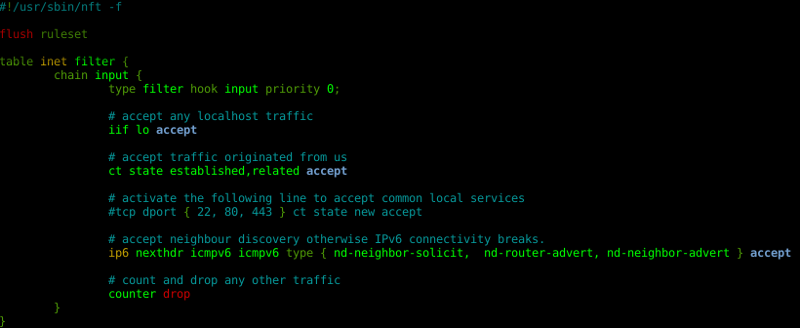
  1. nft: the command line interface
  2. libnftnl: the nftables-netlink library
  3. linux kernel: a least 4.7 is recommended
A simple aptitude run will put your system ready to go, out of the box, with nftables:
root@debian:~# aptitude install nftables
Once installed, you can start using the nft command:
root@debian:~# nft list ruleset
A good starting point is to copy a simple workstation firewall configuration:
root@debian:~# cp /usr/share/doc/nftables/examples/syntax/workstation /etc/nftables.conf
And load it:
root@debian:~# nft -f /etc/nftables.conf
Your nftables ruleset is now firewalling your network:
root@debian:~# nft list ruleset
table inet filter  
        chain input  
                type filter hook input priority 0;
                iif lo accept
                ct state established,related accept
                ip6 nexthdr icmpv6 icmpv6 type   nd-neighbor-solicit,  nd-router-advert, nd-neighbor-advert   accept
                counter drop
         
 
Several examples can be found at /usr/share/doc/nftables/examples/. A simple systemd service is included to load your ruleset at boot time, which is disabled by default. If you are running Debian Jessie and want to give a try, you can use nftables from jessie-backports. If you want to migrate your ruleset from iptables to nftables, good news. There are some tools in place to help in the task of translating from iptables to nftables, but that doesn t belong to this post :-) nft The nano editor includes nft syntax highlighting. What are you waiting for to use nftables?

16 October 2016

Steinar H. Gunderson: backup.sh opensourced

It's been said that backup is a bit like flossing; everybody knows you should do it, but nobody does it. If you want to start flossing, an immediate question is what kind of dental floss to get and conversely, for backup, which backup software do you want to rely on? I had some criteria: I looked at basically everything that existed in Debian and then some, and all of them failed. But Samfundet had its own script that's basically just a simple wrapper around tar and ssh, which has worked for 15+ years without a hitch (including several restores), so why not use it? All the authors agreed to a GPLv2+ licensing, so now it's time for backup.sh to meet the world. It does about the simplest thing you can imagine: ssh to the server and use GNU tar to tar down every filesystem that has the dump bit set in fstab. Every 30 days, it does a full backup; otherwise, it does an incremental backup using GNU tar's incremental mode (which makes sure you will also get information about file deletes). It doesn't do inter-file diffs (so if you have huge files that change only a little bit every day, you'll get blowup), and you can't do single-file restores without basically scanning through all the files; tar isn't random-access. So it doesn't do much fancy, but it works, and it sends you a nice little email every day so you can know your backup went well. (There's also a less frequently used mode where the backed-up server encrypts the backup using GnuPG, so you don't even need to trust the backup server.) It really takes fifteen minutes to set up, so now there's no excuse. :-) Oh, and the only good dental floss is this one. :-)
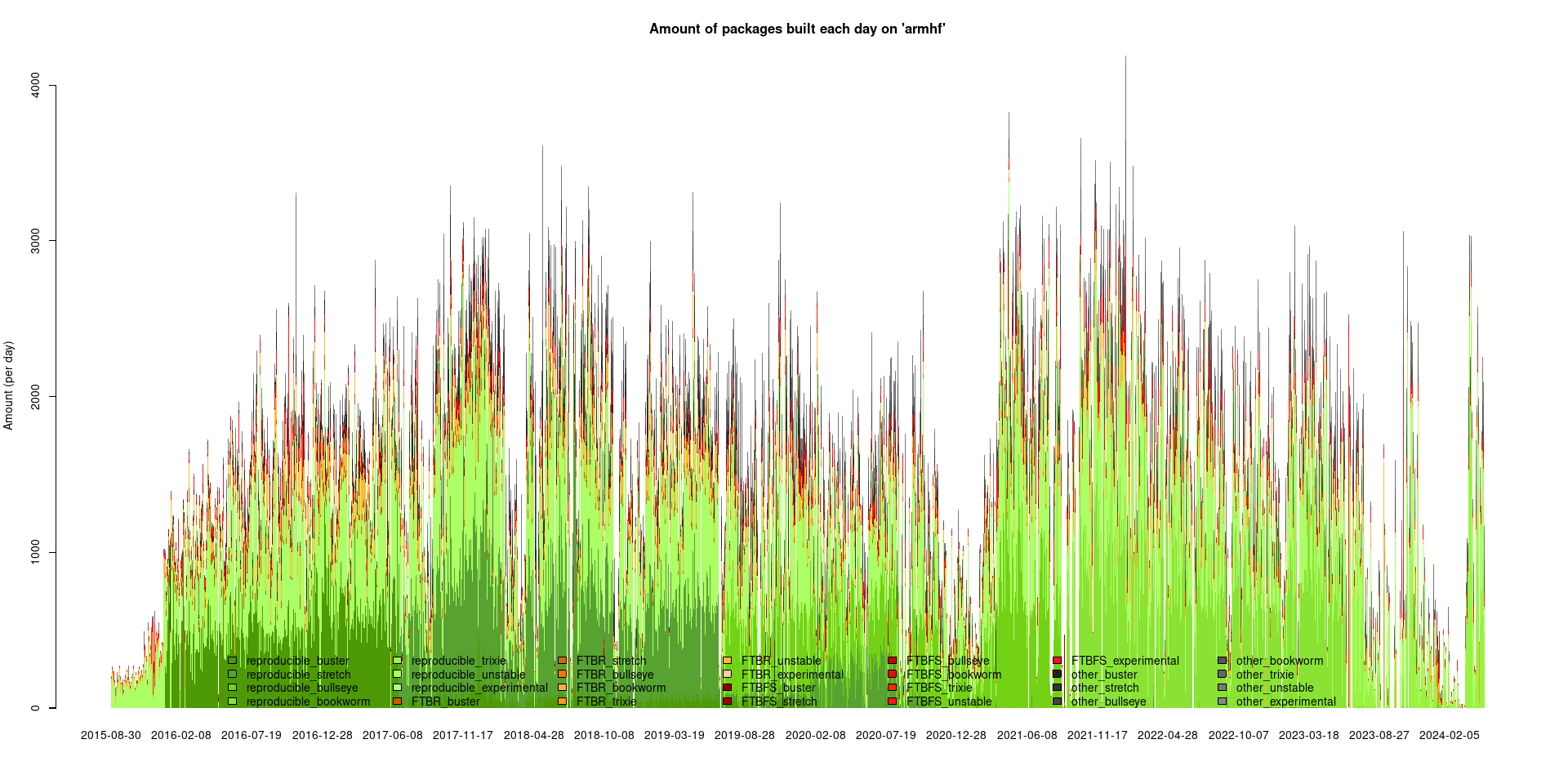
Next.

Previous.