Search Results: "ag"

21 September 2008

Christian Perrier: The final count is 63

After a short discussion time, my proposals have been ACK'ed and we will have 63 languages supported, including English, in Debian Installer for Lenny. Etch had 58 supported languages. The final winners are (alphabetical order of ISO code): Amharic, Arabic, Belarusian, Bulgarian, Bengali, Bosnian, Catalan, Czech, Welsh, Danish, German, Dzongkha, Greek, English, Esperanto, Spanish, Basque, Finnish, French, Irish, Galician, Gujarati, Hebrew, Hindi, Croatian, Hungarian, Indonesian, Italian, Japanese, Georgian, Khmer, Korean, Kurdish, Lithuanian, Latvian, Macedonian, Malayalam, Marathi, Norwegian Bokm l, Nepali, Dutch, Norwegian Nynorsk, Punjabi, Polish, Portuguese, Brazilian Portuguese, Romanian, Russian, Northern Sami, Slovak, Slovenian, Albabian, Serbian, Swedish, Tamil, Thai, Tagalog, Turkish, Ukrainian, Vietnamese, Wolof, Simplified Chinese, Traditional Chinese Newcomers for Lenny are: Amharic, Welsh (back), Irish, Marathi, Northern Sami, Serbian We lost Estonian which was in Etch. Those that missed the deadline are of course all other languages of the world. We will put focus on languages where an effort started at some moment but could not be complete enough: Afrikaans, Estonian, Persian, Armenian, Icelandic, Kazakh, Kannada, Kashmiri, Lao, Malagasy, Malay, Sanskrit, Secwepemctsin, Telugu, Urdu, Xhosa Many thanks to all translators for this final effort. Thanks also to all people who urgently popped up last week to complete the translations for languages that were "orphaned". I hope this will bring us more translators...:-) I keep special thanks to Frans Pop here. He is, along with me, the author of the code that allows us to split D-I translations in "sublevels", allowing translators to focus on the most "important" messages. He also implemented prior warnings when users pick up a language where some less important screens aren't translated. This also allows us to more easily keep partly complete translations, or activate languages earlier. Without this, 11 languages should have been dropped.

Aigars Mahinovs: Following the US finansial problems OR elections

Lately following the US elections (and lately the finance collapse) is an interesting thing, I have been watching the following (in the order of importance):
  1. NBC Nightly News
  2. NBC Meet the Press
  3. NBC Countdown
  4. The Daily Show/The Colbert Report
Additionally, if you watch it in this order, the fear and maybe even panic that sets in watching the news is slightly relived by the common sense and a bit of humor. And to the people that say that that the above is very anti-Republican leaning - I admit, it is a bit, but when Democrats fail, they cover it as well. It just does not happen as much lately. I mean, Republicans manage to contradict themselves inside one sentence, entertainment TV loves that and Democrats actually have hard time competing for air time. A Democrat gets an oral relief from his secretary? A bunch Republicans are selling government oil-rich lands for sex! Beat that! Poor Democrats :D

Frank Lichtenheld: Lintian 2.0.0~rc2 in experimental

For the impatient reader: New lintian in experimental, please test and give feedback. You will miss most changes though unless you read the rest of the post (Hint, Hint ;)) During the past week I've uploaded new lintian versions to experimental which we designated to be release candidates for 2.0.0. Code-wise the changes are not that much more intrusive than for many of our past releases, but they change the way lintian classifies tags in a fundamental way, thanks due to the hard work of Jord Polo in his Google Summer of Code project (mentored by Marc Brockschmidt). Lintian Tag Classification, old and new Previously lintian classified tags only in one dimension, in the categories "Info", "Warning", and "Error". While this worked reasonably well, the difference between the categories was not very well defined. The general idea was that everything violating a "must" in Debian Policy or endangering the building or usage of the package should be an "Error", i.e. something very similar to the definition of RC bugs (except that not all "must"s in Policy are deemed worthy of filing RC bugs). Some errors were downgraded to "Warning" or even "Info" though on the basis that their detection was too prone to false positives. Due to this it was a long existing desire to split the classification of tags into two dimensions, one for the impact/importance of the tag, and one for the certainty of its correct detection. This should make it easier for people to interpret and/or filter the output. At various points in the last few years people began to work on this but quickly gave up, usually overwhelmed by the sheer number of tags (728 in 2.0.0~rc2) to classify anew and to make sure that the old and new categorisation could exist side-by-side (because breaking backwards compatibility was not really feasible). Finally this year Jord Polo decided to tackle this task as a Google Summer of Code project, with great success. Tags are now classified in two dimensions "Severity" (with the possible values wishlist, minor, normal, important, serious, which are intentionally very close to the available severities in the Debian bug tracking system), and "Certainty" (possible values: wild-guess, possible, certain). A third classification by "Source" (i.e. Policy, Developers Reference, ...) is planned but not yet fully implemented. For backwards compatibility there is a mapping of these new classification to the old ones (which lead to a few reclassifications of tags). The default output of lintian is unchanged. The new output formats that support the classification are still experimental (see below). How to use it You can specify exactly which levels of Severity and Certainty you want to have displayed with the new --display-level (-L) option. Please see the manual page for the details, but to give you an idea, the default behaviour (i.e. "show warnings and errors" in the "old" vocabulary) is equivalent to specifying
-L ">=important" -L "+>=normal/possible" -L +minor/certain
And to get a report with only severe tags we're very certain of, you could use
-L ">=important/certain"
which will only display tags that have severity "important" or "serious" and a certainty of certain. There is also the (intentionally undocumented) option --exp-output which allows you to play with some experiments we're doing with the output format. --exp-output format=letterqualifier will give you an output very similar to the "classic" one, but with additional information about severity and certainty. --exp-output format=colons gives you a colon-separated format which includes all the possible information lintian currently has available during tag output and which should be easily machine-consumable. Note that these formats are experimental and might be changed at any point without notice. If you're interested in using alternative formats for lintian output, please join the mailing list and talk to us about it. Etc. Other changes include the usual share of bug fixes and of course: New tags Credits This lintian release is brought to you by (sorted by number of changesets):

Frank S. Thomas: Goddies with bts status and select

Since I was watching Don Armstrong’s talk about Debbugs’ SOAP interface I wanted to use devscripts' bts to get a list of boinc’s top five bug reporter. Finally, this is possible with devscripts (>= 2.10.36):
bts status file:-  bts select source:boinc archive:both  \
    egrep "^originator"   cut -f2-   sort   uniq -ci   sort -n \
    tail -n5
 2 Riccardo Stagni <unriccio@email.it>
 3 Martin Michlmayr <tbm@cyrius.com>
 6 Robert Millan <rmh@aybabtu.com>
 6 Thibaut VARENE <varenet@debian.org>
10 Sandro Tosi <matrixhasu@gmail.com>
Sweet - Thanks Debbugs and Devscripts maintainers!
And congratulations Sandro (or thank you - whatever you find appropriate)!

Russell Coker: Things you can do for your LUG

A Linux Users Group like most volunteer organisations will often have a small portion of the membership making most of the contributions. I believe that every LUG has many people who would like to contribute but don’t know how, here are some suggestions for what you can do. Firstly offer talks. Many people seem to believe that giving a talk for a LUG requires expert knowledge. While it is desired to get any experts in the area to share their knowledge, it is definitely not a requirement that you be an expert to give a talk. The only requirement is that you know more than the audience - and a small amount of research can achieve that goal. One popular talk that is often given is “what’s new in Linux”. This is not a talk that requires deep knowledge, it does require spending some time reading the news (which lots of people do for fun anyway). So if you spend an average of 30 minutes a day every week day reading about new developments in Linux and other new technology, you could spend another minute a day (20 minutes a month) making notes and the result would be a 10 to 15 minute talk that would be well received. A talk about what’s new is one way that a novice can give a presentation that will get the attention of all the experts (who know their own area well but often don’t have time to see the big picture). There are many aspects of Linux that are subtle, tricky, and widely misunderstood. Often mastering them is a matter that is more related to spending time testing than anything else. An example of this is the chmod command (and all the Unix permissions that are associated with it). I believe that the majority of Linux users don’t understand all the subtleties of Unix permissions (I have even seen an employee of a Linux vendor make an error in this regard while running a formal training session). A newbie who spent a few hours trying the various combinations of chmod etc and spoke about the results could give a talk that would teach something to almost everyone in the audience. I believe that there are many other potential talk topics of this nature. One thing that is often overlooked when considering how to contribute to LUGs is the possibility of sharing hardware. We all have all the software we need for free but hardware still costs money. If you have some hardware that hasn’t been used for a year then consider whether you will ever use it again, if it’s not likely to be used then offer it to your LUG (either via a mailing list or by just bringing it to a meeting). Also if you see some hardware that is about to be discarded and you think that someone in your LUG will like it then grab it! In a typical year I give away a couple of car-loads of second-hand hardware, most of it was about to be thrown out by a client so I grab it for my local LUG. Taking such hardware reduces disposal costs for my clients, prevents computer gear from poisoning landfill (you’re not supposed to put it in the garbage but most people do), and helps random people who need hardware. One common use for the hardware I give away is for children. Most people are hesitant to buy hardware specifically for children as it only takes one incident of playing with the switch labeled 240V/110V (or something of a similar nature) to destroy it. Free hardware allows children to get more access to computers at an early age. Finally one way to contribute is by joining the committee. Many people find it difficult to attend meetings, so attending a regular meeting and a committee meeting every month is difficult. So if you have no problems in attending meetings then please consider contributing in this way.

Jeff Bailey: Memory lane

Angie and I are sifting through boxes of paper that got moved to California so that we don't have to move them home. There are several trips down memory lane involved here. One in particular might be familiar to my friends from Canonical from a couple of years ago:

Shit goddamn piss mother fuck,
The meat eaters got some more duck!
The bad hotel wine,
tastes like urine of swing!
A plate of steamed vegetables... what luck!


Those were certainly fun times. Three cheers to the vegans at UDS-Paris. ;)

Wouter Verhelst: SSL "telnet"

A common way to debug a network server is to use 'telnet' or 'nc' to connect to the server and issue some commands in the protocol to verify whether everything is working correctly. That obviously only works for ASCII protocols (as opposed to binary protocols), and it obviously also only works if you're not using any encryption. But that doesn't mean you can't test an encrypted protocol in a similar way, thanks to openssl's s_client:
wouter@country:~$ openssl s_client -host samba.grep.be -port 443
CONNECTED(00000003)
depth=0 /C=BE/ST=Antwerp/L=Mechelen/O=NixSys BVBA/CN=svn.grep.be/emailAddress=wouter@grep.be
verify error:num=18:self signed certificate
verify return:1
depth=0 /C=BE/ST=Antwerp/L=Mechelen/O=NixSys BVBA/CN=svn.grep.be/emailAddress=wouter@grep.be
verify return:1
---
Certificate chain
 0 s:/C=BE/ST=Antwerp/L=Mechelen/O=NixSys BVBA/CN=svn.grep.be/emailAddress=wouter@grep.be
   i:/C=BE/ST=Antwerp/L=Mechelen/O=NixSys BVBA/CN=svn.grep.be/emailAddress=wouter@grep.be
---
Server certificate
-----BEGIN CERTIFICATE-----
MIIDXDCCAsWgAwIBAgIJAITRhiXp+37JMA0GCSqGSIb3DQEBBQUAMH0xCzAJBgNV
BAYTAkJFMRAwDgYDVQQIEwdBbnR3ZXJwMREwDwYDVQQHEwhNZWNoZWxlbjEUMBIG
A1UEChMLTml4U3lzIEJWQkExFDASBgNVBAMTC3N2bi5ncmVwLmJlMR0wGwYJKoZI
hvcNAQkBFg53b3V0ZXJAZ3JlcC5iZTAeFw0wNTA1MjEwOTMwMDFaFw0xNTA1MTkw
OTMwMDFaMH0xCzAJBgNVBAYTAkJFMRAwDgYDVQQIEwdBbnR3ZXJwMREwDwYDVQQH
EwhNZWNoZWxlbjEUMBIGA1UEChMLTml4U3lzIEJWQkExFDASBgNVBAMTC3N2bi5n
cmVwLmJlMR0wGwYJKoZIhvcNAQkBFg53b3V0ZXJAZ3JlcC5iZTCBnzANBgkqhkiG
9w0BAQEFAAOBjQAwgYkCgYEAsGTECq0VXyw09Zcg/OBijP1LALMh9InyU0Ebe2HH
NEQ605mfyjAENG8rKxrjOQyZzD25K5Oh56/F+clMNtKAfs6OuA2NygD1/y4w7Gcq
1kXhsM1MOIOBdtXAFi9s9i5ZATAgmDRIzuKZ6c2YJxJfyVbU+Pthr6L1SFftEdfb
L7MCAwEAAaOB4zCB4DAdBgNVHQ4EFgQUtUK7aapBDaCoSFRWTf1wRauCmdowgbAG
A1UdIwSBqDCBpYAUtUK7aapBDaCoSFRWTf1wRauCmdqhgYGkfzB9MQswCQYDVQQG
EwJCRTEQMA4GA1UECBMHQW50d2VycDERMA8GA1UEBxMITWVjaGVsZW4xFDASBgNV
BAoTC05peFN5cyBCVkJBMRQwEgYDVQQDEwtzdm4uZ3JlcC5iZTEdMBsGCSqGSIb3
DQEJARYOd291dGVyQGdyZXAuYmWCCQCE0YYl6ft+yTAMBgNVHRMEBTADAQH/MA0G
CSqGSIb3DQEBBQUAA4GBADGkLc+CWWbfpBpY2+Pmknsz01CK8P5qCX3XBt4OtZLZ
NYKdrqleYq7r7H8PHJbTTiGOv9L56B84QPGwAzGxw/GzblrqR67iIo8e5reGbvXl
s1TFqKyvoXy9LJoGecMwjznAEulw9cYcFz+VuV5xnYPyJMLWk4Bo9WCVKGuAqVdw
-----END CERTIFICATE-----
subject=/C=BE/ST=Antwerp/L=Mechelen/O=NixSys BVBA/CN=svn.grep.be/emailAddress=wouter@grep.be
issuer=/C=BE/ST=Antwerp/L=Mechelen/O=NixSys BVBA/CN=svn.grep.be/emailAddress=wouter@grep.be
---
No client certificate CA names sent
---
SSL handshake has read 1428 bytes and written 316 bytes
---
New, TLSv1/SSLv3, Cipher is DHE-RSA-AES256-SHA
Server public key is 1024 bit
Compression: NONE
Expansion: NONE
SSL-Session:
    Protocol  : TLSv1
    Cipher    : DHE-RSA-AES256-SHA
    Session-ID: 65E69139622D06B9D284AEDFBFC1969FE14E826FAD01FB45E51F1020B4CEA42C
    Session-ID-ctx: 
    Master-Key: 606553D558AF15491FEF6FD1A523E16D2E40A8A005A358DF9A756A21FC05DFAF2C9985ABE109DCD29DD5D77BE6BC5C4F
    Key-Arg   : None
    Start Time: 1222001082
    Timeout   : 300 (sec)
    Verify return code: 18 (self signed certificate)
---
HEAD / HTTP/1.1
Host: svn.grep.be
User-Agent: openssl s_client
Connection: close
HTTP/1.1 404 Not Found
Date: Sun, 21 Sep 2008 12:44:55 GMT
Server: Apache/2.2.3 (Debian) mod_auth_kerb/5.3 DAV/2 SVN/1.4.2 PHP/5.2.0-8+etch11 mod_ssl/2.2.3 OpenSSL/0.9.8c
Connection: close
Content-Type: text/html; charset=iso-8859-1
closed
wouter@country:~$ 
As you can see, we connect to an HTTPS server, get to see what the server's certificate looks like, issue some commands, and the server responds properly. It also works for (some) protocols who work in a STARTTLS kind of way:
wouter@country:~$ openssl s_client -host samba.grep.be -port 587 -starttls smtp
CONNECTED(00000003)
depth=0 /C=BE/ST=Antwerp/L=Mechelen/O=NixSys BVBA/CN=samba.grep.be
verify error:num=18:self signed certificate
verify return:1
depth=0 /C=BE/ST=Antwerp/L=Mechelen/O=NixSys BVBA/CN=samba.grep.be
verify return:1
---
Certificate chain
 0 s:/C=BE/ST=Antwerp/L=Mechelen/O=NixSys BVBA/CN=samba.grep.be
   i:/C=BE/ST=Antwerp/L=Mechelen/O=NixSys BVBA/CN=samba.grep.be
---
Server certificate
-----BEGIN CERTIFICATE-----
MIIDBDCCAm2gAwIBAgIJAK53w+1YhWocMA0GCSqGSIb3DQEBBQUAMGAxCzAJBgNV
BAYTAkJFMRAwDgYDVQQIEwdBbnR3ZXJwMREwDwYDVQQHEwhNZWNoZWxlbjEUMBIG
A1UEChMLTml4U3lzIEJWQkExFjAUBgNVBAMTDXNhbWJhLmdyZXAuYmUwHhcNMDgw
OTIwMTYyMjI3WhcNMDkwOTIwMTYyMjI3WjBgMQswCQYDVQQGEwJCRTEQMA4GA1UE
CBMHQW50d2VycDERMA8GA1UEBxMITWVjaGVsZW4xFDASBgNVBAoTC05peFN5cyBC
VkJBMRYwFAYDVQQDEw1zYW1iYS5ncmVwLmJlMIGfMA0GCSqGSIb3DQEBAQUAA4GN
ADCBiQKBgQCee+Ibci3atTgoJqUU7cK13oD/E1IV2lKcvdviJBtr4rd1aRWfxcvD
PS00jRXGJ9AAM+EO2iuZv0Z5NFQkcF3Yia0yj6hvjQvlev1OWxaWuvWhRRLV/013
JL8cIrKYrlHqgHow60cgUt7kfSxq9kjkMTWLsGdqlE+Q7eelMN94tQIDAQABo4HF
MIHCMB0GA1UdDgQWBBT9N54b/zoiUNl2GnWYbDf6YeixgTCBkgYDVR0jBIGKMIGH
gBT9N54b/zoiUNl2GnWYbDf6YeixgaFkpGIwYDELMAkGA1UEBhMCQkUxEDAOBgNV
BAgTB0FudHdlcnAxETAPBgNVBAcTCE1lY2hlbGVuMRQwEgYDVQQKEwtOaXhTeXMg
QlZCQTEWMBQGA1UEAxMNc2FtYmEuZ3JlcC5iZYIJAK53w+1YhWocMAwGA1UdEwQF
MAMBAf8wDQYJKoZIhvcNAQEFBQADgYEAAnMdbAgLRJ3xWOBlqNjLDzGWAEzOJUHo
5R9ljMFPwt1WdjRy7L96ETdc0AquQsW31AJsDJDf+Ls4zka+++DrVWk4kCOC0FOO
40ar0WUfdOtuusdIFLDfHJgbzp0mBu125VBZ651Db99IX+0BuJLdtb8fz2LOOe8b
eN7obSZTguM=
-----END CERTIFICATE-----
subject=/C=BE/ST=Antwerp/L=Mechelen/O=NixSys BVBA/CN=samba.grep.be
issuer=/C=BE/ST=Antwerp/L=Mechelen/O=NixSys BVBA/CN=samba.grep.be
---
No client certificate CA names sent
---
SSL handshake has read 1707 bytes and written 351 bytes
---
New, TLSv1/SSLv3, Cipher is DHE-RSA-AES256-SHA
Server public key is 1024 bit
Compression: NONE
Expansion: NONE
SSL-Session:
    Protocol  : TLSv1
    Cipher    : DHE-RSA-AES256-SHA
    Session-ID: 6D28368494A3879054143C7C6B926C9BDCDBA20F1E099BF4BA7E76FCF357FD55
    Session-ID-ctx: 
    Master-Key: B246EA50357EAA6C335B50B67AE8CE41635EBCA6EFF7EFCE082225C4EFF5CFBB2E50C07D8320E0EFCBFABDCDF8A9A851
    Key-Arg   : None
    Start Time: 1222000892
    Timeout   : 300 (sec)
    Verify return code: 18 (self signed certificate)
---
250 HELP
quit
221 samba.grep.be closing connection
closed
wouter@country:~$ 
OpenSSL here connects to the server, issues a proper EHLO command, does STARTTLS, and then gives me the same data as it did for the HTTPS connection. Isn't that nice.

Steve Kemp: Things are more moderner than before

Every now and again the topic of SELinux arises locally. I still believe it is: I kept quiet when the Should SELinux be standard topic was recently raised. But I personally believe the answer should be emphatically "No". Anyway, change of subject. The recent "What do you look like right now" meme. I looked like this a couple of days ago. Today I have no hair. In other news my mail scanning service has now reached a new record. Over the last 30 days it has rejected/archived ovr three million SPAM messages. Three million messages over a month averages out at about 100,000 messages a day. Sustained. Nice. Finally I really owe Runa a new letter. I will write it today. ObQuote: Bill & Ted's Excellent Adventure

Christian Perrier: Between 60 and 64 languages supported in Debian Installer

(including English!) The string freeze of Debian Installer officially ended at 23:59 yesterday (Sept. 20th). Indeed, this was extended a bit to today, with agreement by Otavio Salvador who I thank for this. That allowed Zak to "save" Tagalog and also the Welsh and Latvian translators to polish their work. We now have to decide about some of these languages: those that failed to meet the release criteria but were formerly activated in D-I. There are four such languages: Amharic, Welsh, Estonian and Northern Sami. Please find below the mail I just sent to debian-i18n and debian-boot. I promised that this discussion would happen in public. It will (but it will be short as we can't delay the release of the installer for ages....and I think that my proposals are reasonable!)
First of all, the numbers as of Sunday Sept. 21st 09:32 UTC (date of
the last commit with an l10n update):
Languages meeting the release criteria: 59
------------------------------------------
Already activated and complete for level 1: 51
 Arabic, Belarusian, Bulgarian, Bosnian, Catalan, Czech, Danish,
 German, Dzongkha, Greek, Esperanto, Spanish, Basque, Finnish, French,
 Galician, Gujarati, Hebrew, Hindi, Croatian, Hungarian, Indonesian,
 Italian, Japanese, Georgian, Khmer, Korean, Lithuanian, Latvian,
 Macedonian, Malayalam, Marathi, Norwegian Bokm l, Nepali, Dutch,
 Norwegian Nynorsk, Punjabi, Polish, Portuguese, Brazilian Portuguese,
 Romanian, Russian, Slovak, Albabian, Swedish, Tamil, Thai, Turkish,
 Vietnamese, Simplified Chinese, Traditional Chinese
Already activated and complete for sublevels 1 and 2: 6
Bengali, Kurdish, Slovenian, Tagalog, Ukrainian, Wolof
Not yet activated languages complete for sublevels 1 and 2: 2
 (the mail in -i18n and -boot says 3 but this is an error by me)
Irish, Serbian
Languages failing to meet the release criteria: 15
--------------------------------------------------
Activated languages: 4
Amharic, Welsh, Estonian, Northern Sami
Not yet activated languages: 11
Afrikaans, Persian, Armenian, Icelandic, Kazakh, Kannada,
Malagasy, Malay, Telugu, Urdu, Xhosa
Discussion
----------
(careful people will notice that I moved Welsh down to "failed to meet
the release criteria" as this is what is technically correct)
Nothing to discuss for the 57 already activated languages that meet
the defined criteria. They'll be kept or first activated in the RC1
release of Debian Installer.
Similarly, nothing to discuss for the 11 languages that were not
activated and haven't made it. They will remain unactivated.
Two languages should be activated as they have met the release
criteria for the first time during the string freeze: Irish and Serbian.
This adds more load (and size changes) to D-I but I really don't see
any reason to not follow our own rules there.
The discussion comes for the 4 languages that fail to meet the release
criteria. Here are my proposals with some rationale:
Amharic: 
  I would really dislike deactivating Amharic because it's highly
  symbolic to have the language of Ethiopia activated. We have so few
  African languages. Also, the translation is nearly complete and the
  translator was well coping with updates until July. The missing
  stuff for Amharic in sublevels 1 and 2 are messages about loading
  drivers or firmware from removable media, the rescue mode stuff for
  the graphical installer and some messages that briefly appear during
  finish-install. A little bit more important is the message warning
  that the boot partition is not ext2 or ext3, added in August by
  tbm. I think this is not enough to drop out one year of efforts for
  the translator
  As a consequence, I propose to KEEP Amharic.
Welsh:
  Only five strings are missing in sublevels 1 and 2 because of the
  small experience of PO files by the person who completed the
  translation during last week. One will make the regular user login
  name screen to be in English and others will make the GRUB password
  screen to be in English as well, that's all.
  Additionnally, we can safely assume that all potential users of
  Welsh have good skills in English...and will therefore very easily
  cope with these screens.
  As a consequence, I propose to KEEP Welsh.
Estonian:
  The translation had NO update since Etch. The last update is dated
  back to Feb. 17th 2007. I haven't got any sign of life from the
  translator and no Estonian users have volunteered to maintain the
  translation.
  Missing strings are in many places, including several screens that
  appear in default installs. Even though one can assume that the
  skills of the average Linux user in Estonia is fairly good, I think
  this is not enough to throw users in a big mix of English and
  Estonian.
  As a consequence, I propose to DROP Estonian.
Northern Sami:
  The translation is very incomplete. With about any other language,
  that would be a reason to drop the translation.
  However, a few reasons make me suggest keeping it:
   - Northern Sami is mostly used in Norway and D-I will fall back
     to Norwegian Bokm l which is understood by all potentials users
     as it is teached in all Norwegian schools. 
   - Users will be warned, *in Sami*, about this situation
   - The choice of Sami will be kept in localechooser even if the
     translations are dropped. This is on request of Debian Edu
     developers to avoid them to develop a special boot floppy
     to offer the choice of Sami (a requirement for Norwegian
     schools). I personnally think this is a reward to Debian Edu and
     its ancestor Skolelinux for their initial involvement in the
     development of D-I
  As a consequence, I propose to KEEP Northern Sami.
I understand that these choices may be debatable and some may sound
slightly subjective. I however think this is the best way to be fair
with translators' efforts without compromising the quality of D-I.
Please note that the final word on this will be by D-I release
managers...but advices are very much welcomed.

Russell Coker: An Update on DKIM Signing and SE Linux Policy

In my previous post about DKIM [1] I forgot to mention one critical item, how to get Postfix to actually talk to the DKIM milter. This wasn’t a bad thing because it turned out that I hadn’t got it right. I had configured the DKIM milter on the same line as the milters for ClamAV and SpamAssassin - in the smtpd_milters section. This was fine for relaying outbound mail via my server but didn’t work for locally generated mail. For locally generated mail Postfix has a directive named non_smtpd_milters which you need to use. So it seems that a fully functional Postfix DKIM milter configuration requires adding the following two lines to /etc/postfix/main.cf: smtpd_milters = unix:/var/run/dkim-filter/dkim-filter.sock
non_smtpd_milters = unix:/var/run/dkim-filter/dkim-filter.sock This also required an update to the SE Linux policy. When I was working on setting up DKIM I also wrote SE Linux policy to allow it and also wrote policy for the ClamAV milter. That policy is now in Debian/Unstable and has been approved for Lenny. So I now need to build a new policy package that allows the non_smtpd_milter access to the DKIM milter and apply for it to be included in Lenny. SE Linux in Lenny is going to be really good. I think that I’ve already made the SE Linux support in the pre-release (*) of Lenny significantly better than Etch plus all my extra updates is. More testers would be appreciated, and more people joining the coding would be appreciated even more. (*) I use the term pre-release to refer to the fact that the Lenny repository is available for anyone to download packages.

Zak B. Elep: Saving Tagalog from d-i Translations Removal

Thanks to pabs's and bubulle's notice on both IRC and planet, I got wind on Tagalog's impending removal from the Debian-Installer translations. Having been quite inactive on my Debian work for a while, this provided me an opportunity to get back to it, even if it were only small stuff (compared to packaging.) In the nick of time, I submitted updates to sublevels 1 (505 translations) and 2 (511 translations) of the d-i tl_PH translations; doing it twice due to my first run missing out the fuzzy translation strings. I was fortunate that the missing and fuzzy string needing translation weren't many; most of the work has already been done by pusakat and the rest of the Debian-TL team. Kudos for them on starting this in the first place! There's still a lot of work to be done, and even in d-i itself there are the other sublevels needing Tagalog translation (3 and 5.) Kung may alam ka sa Tagalog at gusto mong gamitin itong wika sa Debian, wag mahiyang kunin ang mga talakdang kailangang isalin! Others (even fellow Filipinos) may find it impractical, but I think its a worthwhile effort, to make it as accessible as possible to our fellowmen having difficulties in English. All in all, it feels good to contribute again. :)

20 September 2008

David Bremner: managing many git repos

I have been thinking about ways to speed multiple remote git on the same hosts. My starting point is mr, which does the job, but is a bit slow. I am thinking about giving up some generality for some speed. In particular it seems like it ought to be possible to optimize for the two following use cases: For my needs, mr is almost fast enough, but I can see it getting annoying as I add repos (I currently have 11, and mr update takes about 5 seconds; I am already running ssh multiplexing). I am also thinking about the needs of the Debian Perl Modules Team, which would have over 900 git repos if the current setup was converted to one git repo per module. My first attempt, using perl module Net::SSH::Expect to keep an ssh channel open can be scientifically classified as "utter fail", since Net::SSH::Expect takes about 1 second to round trip "/bin/true". Initial experiments using IPC::PerlSSH are more promising. The following script grabs the head commit in 11 repos in about 0.5 seconds. Of course, it still doesn't do anything useful, but I thought I would toss this out there in case there already exists a solution to this problem I don't know about.
 
#!/usr/bin/perl
use IPC::PerlSSH;
use Getopt::Std;
use File::Slurp;
my %config; 
eval( "\%config=(".read_file(shift(@ARGV)).")");
die "reading configuration failed: $@" if $@;
my $ips= IPC::PerlSSH->new(Host=>$config host );
$ips->eval("use Git");
$ips->store( "ls_remote", q my $repo=shift;
                       return Git::command_oneline('ls-remote',$repo,'HEAD');
                            );
foreach $repo (@ $config repos ) 
    print $ips->call("ls_remote",$repo);
 
P.S. If you google for "mr joey hess", you will find a Kiss tribute band called Mr. Speed, started by Joe Hess" P.P.S. Hello planet debian!

David Bremner: managing many git repos II

In a previous post I complained that mr was too slow. madduck pointed me to the "-j" flag, which runs updates in parallel. With -j 5, my 11 repos update in 1.2s, so this is probably good enough to put this project on the back burner until I get annoyed again. I have the feeling that the "right solution" (TM) involves running either git-daemon or something like it on the remote host. The concept would be to set up a pair of file descriptors connected via ssh to the remote git-daemon, and have your local git commands talk to that pair of file descriptors instead of a socket. Alas, that looks like a bit of work to do, if it is even possible.

Joey Hess: pawnshop row

Leaving Doc Watson early, I headed up State St. in a hurry, taking the sidewalk to avoid the crowd in the road. But I had to stop to listen to a few classics from a five-piece string band, sitting under the awning of Uncle Sam's Loan Office, in front of the display of old stereos and swords. Bunch of real old-timers. Pulled myself away only to pass by an even better, six-piece band in the entrance to The Gold Man pawn shop. The fiddle was played by a girl who couldn't be older than ten. I wanted to listen to them some more, but I managed to pull myself away in time to get into the Paramount and get a good seat for the Red Stick Ramblers. Conclusion: This town needs more pawn shops. And it's Rhythm and Roots time in Bristol. Best bands so far: Mike Marshall's trio, Cephas and Wiggins, Larry Keel and Natural Bridge, Chatham County Line.

John Goerzen: 55 Miles on a Bicycle, 1 on a Mower

Today was the MCC Flatlander bike ride, or as Terah put it, the day we build a cistern with our bicycles.

I've never gone this far on a bike in a single day before. I rode 35 miles for the Flatlander, plus I rode to and from home, for a total of 55 miles (88km). When I got home, I was sore pretty much all over. But it was a good experience, and I'll surely do it again next year.

Yesterday evening, I was getting our bikes ready. I noticed that Terah's bike had a problem: a large gouge that had punctured the tube and ripped apart part of the tire. I had a spare tube on hand, but not a spare tire, and it was too late to get one. I went inside to discuss it with Terah. After a few minutes of pondering, she remembered that the local bike shop I go to was a sponsor of the Flatlander -- maybe if I call before they close, they'd bring one. I called, the owner happened to answer. I explained the situation, and she said, "Of COURSE will get you all fixed up! Look for me at just after 7." I gave her the tire specs, and sure enough, there she was this morning. She also did the repair and tossed in a free tube. I'm continuing to be a big fan of Bicycle Pedaler.

Here's my shirt tag for the day:

My tag from the MCC Flatlander ride

So after I got home, the lawn was way overdue for some mowing. Hence the extra mile on a mower.

Benjamin Mako Hill: Software Freedom Day Boston

It's late notice but Boston area folks should drop by the local Software Freedom Day events today. It goes from 10:00-16:00 and is located in a great space in Chinatown. More information in on the wiki. I'm teaming up with John Sullivan of the FSF to talk about free software on in your pocket on unexecpted platforms. We'll show off CHDK (for cameras), the FreeRunner (a phone), and probably also talk about RockBox, iPodLinux, and more. It should be laid back and fun! The whole point of SFD (and this SFD event in particular) is create a space that's appropriate to folks that don't already know about free and open source software and that aren't necessary technical. If you are a hacker or an advocate, show up and meet some like minded folks and introduce new people to the ideas that inspire you. If you are just curious about this stuff this event is designed for you. If you're not in Boston, check the SFD webpage. There are hundreds of events around the world and may even be one near you!
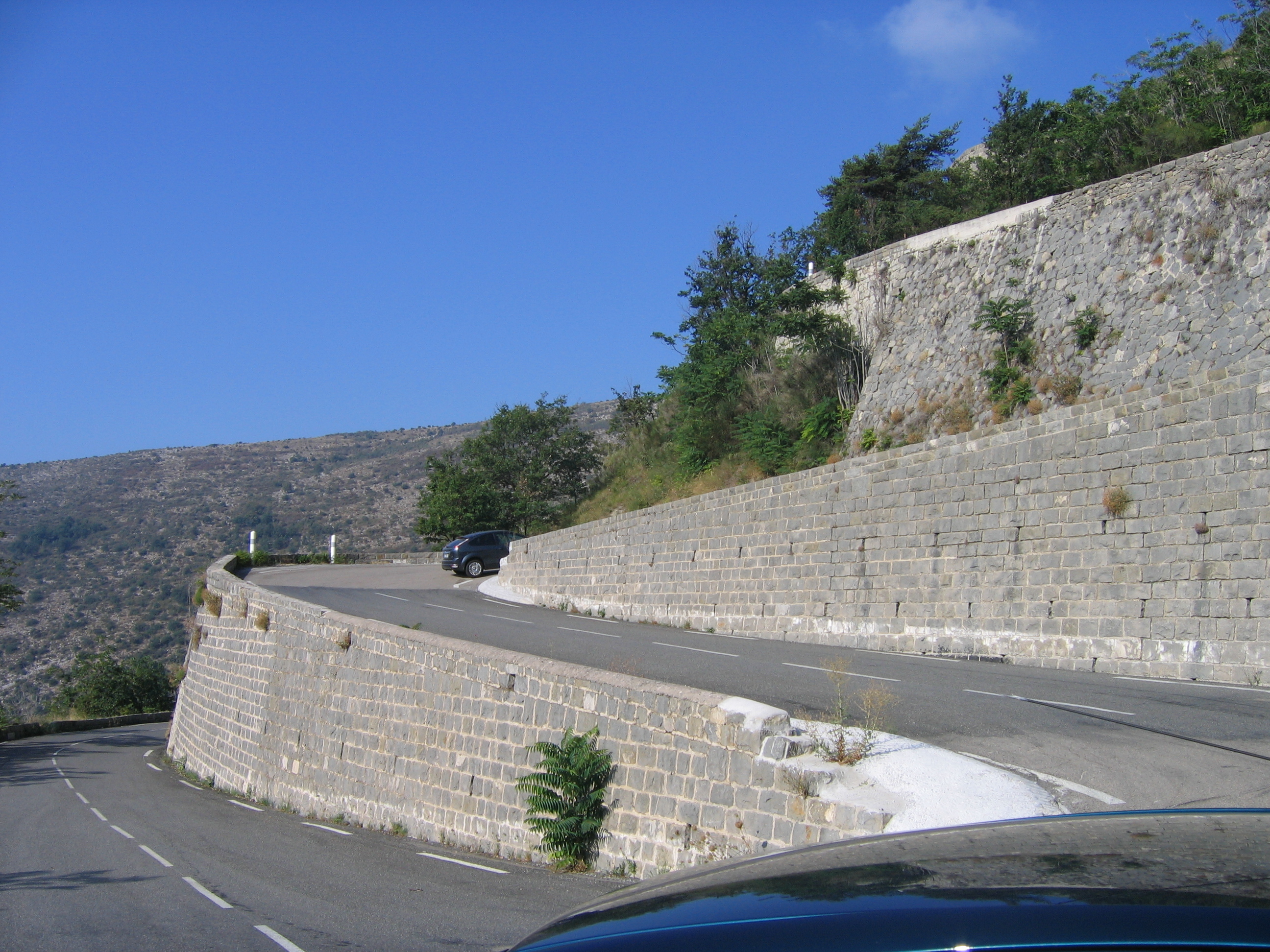
Andreas Metzler: aux fines herbes

I am back from a really nice holiday, driving around in the Provence. Best stuff:

Francois Marier: Getting your project included into Free Software distributions

After releasing a new Free Software project to the world, you may be interested to see it included by the main Linux or Free Software distributions. After all this is the easiest way for end-users to download and install your software.

Here are a couple of technical details that will increase the chances that your project will be picked up by a distribution.
Can I distribute this software?The first question that a distribution maintainer will need to answer is this one: can my distribution legally distribute this piece of software?

There are two ways you can help here:Once your software has past this check, the next question will be of course: does it actually work?
Will it work on my distro?To answer this question, the maintainer will have to install the software and figure out all of the external dependencies that need to be installed at the same time.

Therefore, your tarball should include:What's changed?Another element that can make life easier for the maintainers of your software in downstream distributions is to include indications of what changes from one release to the next.

One important detail is to use a sane versioning system. In a nutshell, this means:Another thing that you should include is a changelog (normally in a file called Changes or ChangeLog). This document will be used by maintainers to decide when to upgrade to a new version and to figure out which bugs may be fixed by the new version. It should contain:Finally, to make sure that distro maintainers don't miss new releases of your software, make sure you sign your project up on Freshmeat and announce new releases there.
Proposing your Package to DistrosOn Debian, the main way that users and upstream developers can suggest packages for inclusion in the archive is through the Debian Bug Tracking system. Bugs are filled against the special wnpp (Work-needed and Prospective Packages) pseudo-package and are titled something like RFP: superfoo -- bringing more foo to the desktop where RFP stands for "Request For Package".

Alternatively, if you are a Debian/Ubuntu user, you may also want to build and maintain the package yourself. In which case, you will need to find a sponsor.

Other distributions have different procedures. Feel free to leave a comment explaining what these may be.

More detailed information on getting packaged for Debian is available on the Debian wiki.

MJ Ray: Lots of Days: Software Freedom, British Food and World Peace

Today is Software Freedom Day. It is also the start of British Food Fortnight. (Tip to total coverage cooperative.) There is an open day 11-3 at Thatchers Cider, near here in Sandford. (To get there from Worle by bike, leave through St Georges to Bourton, then Hewish, Puxton, Nye, over the Strawberry Line and you’ll arrive on Nye Road in Sandford - turn right for the cider. I’m not sure of the best way from Locking direction…) Tomorrow is the second equinox and International Day of Peace. (Tip to New Internationalist cooperative.) What are you doing this weekend?

19 September 2008

Christian Perrier: 499585

This is the highest bug number as of now. Will we turn bug #500000 this week-end? This is fairly unlikely. So, the best chances to win the bet are for Rene Mayorga. If I'm wrong and #500000 is reached before Sunday 23:59 UTC, then Fabian Fagerholm wins the bet. Suspense... Fabian, I *will* watch your own bug reports! MBF forbidden for you...:-)

Next.

Previous.