Search Results: "ron"

14 April 2020

Dirk Eddelbuettel: RcppArmadillo 0.9.860.2.0

armadillo image Armadillo is a powerful and expressive C++ template library for linear algebra aiming towards a good balance between speed and ease of use with a syntax deliberately close to a Matlab. RcppArmadillo integrates this library with the R environment and language and is widely used by (currently) 706 other packages on CRAN. A new upstream release 9.860.2 of Armadillo was just released. The theme of convergence continues; the previous release increased the minor from 800 to 850, now we are at 860. We first wrapped this up as version 0.9.859.1.0, but it turned out to have been held back by a buglet between R 4.0.0 and Rcpp which the recent patch release fixed (along with other woes on old R or non-CRAN-alike macOS). It then turns out that the new (upstream) version 9.860.1 had a minor bug which I missed as I reverse-depends checked the prior version. Doh. My thanks, as always, to CRAN for spotting this. The fix was added upstream and we have 9.860.2 as RcppArmadillo 0.9.860.2.0. Changes in the new release are noted below.

Changes in RcppArmadillo version 0.9.860.2.0 (2020-04-13)
  • Upgraded to Armadillo release 9.860.2 (Roasted Mocha Fix)
    • Added powmat()
    • Faster access to columns in sparse submatrix views
    • Faster handling of relational expressions by accu()
    • Faster handling of sympd matrices by expmat(), logmat(), sqrtmat()
    • Workaround for save/load issues with HDF5 v1.12
  • Vignettes are now pre-made and include (#285)
  • Two test files are now skipped on 32-bit Windows

Courtesy of CRANberries, there is a diffstat report relative to previous release. More detailed information is on the RcppArmadillo page. Questions, comments etc should go to the rcpp-devel mailing list off the R-Forge page. If you like this or other open-source work I do, you can now sponsor me at GitHub. For the first year, GitHub will match your contributions.

This post by Dirk Eddelbuettel originated on his Thinking inside the box blog. Please report excessive re-aggregation in third-party for-profit settings.

Daniel Lange: I think we need more creativity in statistics

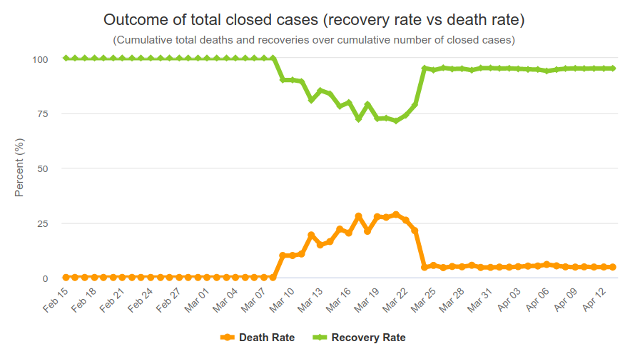
" 'Boa constrictors swallow their prey whole, without chewing it. After that they are not able to move, and they sleep through the six months that they need for digestion.' I pondered deeply, then, over the adventures of the jungle. And after some work with a colored pencil I succeeded in making my first drawing. My Drawing Number One. It looked something like this: Boa Constrictor by Antoine de Saint Exup ry I showed my masterpiece to the grown-ups, and asked them whether the drawing frightened them. But they answered: 'Frighten? Why should any one be frightened by a hat?' My drawing was not a picture of a hat. It was a picture of a boa constrictor digesting an elephant. But since the grown-ups were not able to understand it, I made another drawing: I drew the inside of a boa constrictor, so that the grown-ups could see it clearly. They always need to have things explained. My Drawing Number Two looked like this: Boa Constrictor in sectional drawing by Antoine de Saint Exup ry The grown-ups' response, this time, was to advise me to lay aside my drawings of boa constrictors, whether from the inside or the outside, and devote myself instead to geography, history, arithmetic, and grammar. That is why, at the age of six, I gave up what might have been a magnificent career as a painter. I had been disheartened by the failure of my Drawing Number One and my Drawing Number Two. Grown-ups never understand anything by themselves, and it is tiresome for children to be always and forever explaining things to them." from The Little Prince by Antoine de Saint Exup ry Outcome of Cases (Recovery or Death) in Germany by Worldometers from the Corona Fun with Statistics department at Worldometers (source, archive.org link)


13 April 2020

Shirish Agarwal: Migrant worker woes and many other stories

I was gonna use this blog post to share about the migrant worker woes as there has been multiple stories doing the rounds. For e.g. a story which caught the idea of few people but most of us, i.e. middle-class people are so much into our own thing that we care a fig leaf about what happens to migrants. This should not be a story coming from a humane society but it seems India is no different than any other country of the world and in not a good way. Allow me to share
Or for those who don t like youtube, here s an alternative link https://www.invidio.us/watch?v=JGEgZq_1jmc Now the above two editorial shares two stories, one of Trump retaliatory threat to India in the Q&A of the journalist. In fact, Trump has upped the ante on visa sanctions as India buckled so easily under pressure. There have been other stories doing the rounds how people who have illnesses who need HCQ in India are either dying or are close to death because of unavailability of HCQ in the medicine shop. There have been reports in Pune as well as South Mumbai (one of the poshest localities in Mumbai/Bombay) that medicine shops are running empty or emptier. There have been so many stories on that, with reporters going to shops and asking owners of the medicine shops and shop-owners being clueless. I think the best article which vividly describes the Government of India (GOI) response to the pandemic is the free-to-read article shared by Arundhati Roy in Financial Times. It has reduced so much of my work or sharing that it s unbelievable. And she has shared it with pictures and all so I can share other aspects of how the pandemic has been affecting India and bringing the worst out in the Government in its our of need. In fact, not surprisingly though, apparently there was also a pro-Israel similar thing which happened in Africa too . As India has too few friends now globally, hence it decided to give a free pass to them.

Government of India, news agencies and paid News One of the attempts the state tried to do, although very late IMHO is that it tried to reach out to the opposition i.e. Congress party and the others. Mrs. Sonia Gandhi, who is the Congress president asked that the Government should not run any of its ads on private television channels for a period of two years. There had been plenty of articles, both by medianama and others who have alleged that at least from the last 6 odd years, Government ads. comprise of almost 50-60% advertising budget of a channel advertising budget. This has been discussed also in medianama s roundtable on online content which happened few months back. While an edited version is out there on YT, this was full two day s event which happened across two different cities.
or the alternative to youtube https://www.invidio.us/watch?v=c1PhWR1-Urs It was as if the roundtable discussions were not enough, Mrs. Gandhi clarion call was answered by News Broadcaster s Association (NBA) and this is what they had to say
News Broadcasters Association reply to Mrs. Gandhi
To put it simply, NBA deplored the suggestion by Mrs. Gandhi and even called the economy in recession and all they had were the Government s own advertising budget to justify their existence. The statements in themselves are highly pregnant and reveal both the relationship that the media, print or mainstream news channels have with the Government of India. Now if you see that, doesn t it make sense that media always slants the story from the Government s perspective rather than remaining neutral. If my bread basket were on the onus of me siding with the Govt. that is what most sane persons would do, otherwise they would resign and leave which many reporters who had a conscience did. Interestingly enough, the NBA statement didn t just end there but also used the word recession , this is the term that Government of India (GOI) hates and has in turn has been maintaining the word, terminology slowdown . While from a layman s perspective the two terms may seem to be similar, if India has indeed been in recession then the tools and the decisions that should have been taken by GOI should have been much different than what they took. Interestingly, enough GOI has refrained from saying anything on the matter which only reveals their own interests in the matter. Also if an association head is making the statement, it is more than likely that he consulted a lawyer or two and used application of mind while drafting the response. In other words, or put more simply, this was a very carefully drafted letter because they know that tomorrow the opposition party may come into power so they don t want to upset the power dynamics too much.

Privacy issues arising due to the Pandemic On the same Financial Times, two stories which dealt with the possible privacy violations due to the Pandemic have been doing the rounds. The first one, by Yuval Noah Harari is more exploratory by nature and makes some very good points without going far too deep into specific instances of recent times but rather goes into history and past instances where Governments have used the pandemics to exert more control over their populace and drive their agenda. I especially liked the last few lines which he shared in his op-ed Even if the current administration eventually changes tack and comes up with a global plan of action, few would follow a leader who never takes responsibility, who never admits mistakes, and who routinely takes all the credit for himself while leaving all the blame to others. Yuval Noah Harari . The whole statement could right fit onto the American President which he was talking about while at the same time, fits right into the current Indian Prime Minister, Boris Johnson of UK and perhaps Jair Bolsanaro of Brazil. All these three-four individuals have in common is that most of them belong to right-wing and hence cater only to the rich industrialist s agenda. While I don t know about Jair Bolsanaro much, at least three out of four had to turn to socialism and had to give some bailout packages to the public at large, even though continuing to undermine their own actions. More on this probably a bit down the line. The second story shared by Nic Fildes and Javier Espinoza who broke the story of various surveillance attempts and the privacy concerns that people have. Even the Indian PMO has asked this data and because there was no protest by the civil society, a token protest was done by COAI (Cellular Operator Association of India) but beyond that nothing, I am guessing because the civil society didn t make much noise as everybody is busy with their own concerns of safety and things going on, it s possible that such data may have gone to the Government. There is not much new here that people who had been working on the privacy issues know, it s just how easy Governments are finding to do it. The part of informed consent is really a misnomer . Governments lie all the time, for e.g. in the UK, did the leave party and people take informed consent, no they pushed their own agenda. This is and will be similar in many countries of the world.

False Socialism by RW parties In at least the three countries I have observing, simply due to available time, that lot of false promises are being made by our leaders and more often than not, the bailouts will be given to already rich industrialists. An op-ed by Vivek Kaul, who initially went by his handle which means somebody who is educated but unemployed. While Vivek has been one-man army in revealing most of the Government s mischiefs especially as fudging numbers are concerned among other things, there have been others too. As far as the US is concerned, an e-zine called free press (literally) has been sharing Trump s hollowness and proclamations for U.S. . Far more interestingly, I found New York times investigated and found a cache of e-mails starting from early January, which they are calling Red Dawn . The cache is undeniable proof that medical personnel in the U.S. were very much concerned since January 2020 but it was only after other countries started lock-down that U.S. had to follow suit. I am sure Indian medical professionals may have done similar mail exchanges but we will never know as the Indian media isn t independent enough.

Domestic violence and Patriarchy There have been numerous reports of domestic violence against women going up, in fact two prominent publications have shared pieces about how domestic violence has gone up in India since the lockdown but the mainstream press is busy with its own tropes, the reasons already stated above. In fact, interestingly enough, most women can t wear loose fitting clothes inside the house because of the near ones being there 24 7 . This was being shared as India is going through summer where heat waves are common and most families do not have access to A/C s and rely on either a fan or just ventilation to help them out. I can t write more about this as simply I m not a woman so I haven t had to face the pressures that they have to every day. Interestingly though, there was a piece shared by arre. Interestingly, also arre whose content I have shared a few times on my blog has gone from light, funny to be much darker and more serious tone. Whether this is due to the times we live in is something that a social scientist or a social anthropologist may look into in the times to come. One of the good things though, there hasn t been any grid failures as no industrial activity is happening (at all). In fact SEB s (State Electricity Boards) has shown a de-growth in electricity uptake as no industrial activity has been taken. While they haven t reduced any prices (which they ideally should have) as everybody is suffering.

Loot and price rise Again, don t think it is an Indian issue but perhaps may be the same globally. Because of broken supply chains, there are both real and artificial shortages happening which is leading to reasonable and unreasonable price hikes in the market. Fresh veggies which were normally between INR 10/- to INR 20/- for 250 gm have reached INR 40/- 50/- and even above. Many of the things that we have to become depend upon are not there anymore. The shortage of plastic bottles being case in point.
Aryan Plastic bottle
This and many others like these pictures have been shared on social media but it seems the Government is busy doing something else. The only thing we know for sure is that the lock-down period is only gonna increase, no word about PPE s (Personal Protection Equipment) or face masks or anything else. While India has ordered some, those orders are being diverted to US or EU. In fact, many doctors who have asked for the same have been arrested, sacked or suspended for asking such inconvenient questions, although whether in BJP ruled states or otherwise. In fact, the Centre has suspended MPLADS funds , members of parliament get funds which they can use to provide relief work or whatever they think the money is best to spend upon.

Conditions of Labor in the Pandemic Another sort of depressing story has been how the Supreme Court CJI Justice SA Bobde has made statements and refrained from playing any role in directing the Center to provide relief to the daily wage laborers. In fact, Mr. Bobde made statements such as why they need salaries if they are getting food. This was shared by barandbench, a site curated by lawyers and reporters alike. Both livelaw as well as barandbench have worked to enhance people s awareness about the legal happenings in our High Courts and Supreme Court. And while sadly, they cannot cover all, they at least do attempt to cover a bit of what s hot atm. The Chief Justice who draws a salary of INR 250,000 per month besides other perks is perhaps unaware or doesn t care about fate of millions of casual workers, 400 460 million workers who will face abject poverty and by extension even if there are 4 members of the family so probably 1.2 billion people will fall below the poverty line. Three, four major sectors are going to be severely impacted, namely Agriculture, Construction and then MSME (Micro, small and medium enterprises) which cover everything from autos, industrial components, FMCG, electronics, you name it, it s done by the MSME sector. We know that the Rabi crop, even though it was gonna be a bumper crop this year will rot away in the fields. Even the Kharif crop whose window for sowing is at the most 2-3 weeks will not be able to get it done in time. In fact, with the extended lockdown of another 21 days, people will probably return home after 2 months by which time they would have nothing to do there as well as here in the cities. Another good report was done by the wire, the mainstream media has already left the station.

Ministry of Public Health There was an article penned by Dr. Edmond Fernandes which he published last year. The low salary along with the complexities that Indian doctors are and may face in the near future are just mind-boggling.

The Loss Losses have already started pouring in. Just today Air Deccan has ceased all its operations. I had loved Mr. Gopinath s airline which was started in the early 2000 s. While I won t bore you with the history, most of it can be seen from simplify Deccan . This I believe is just the start and it s only after the few months after the lock-down has been lifted would we really know the true extent of losses everywhere. And the more lenghthier the lockdown, the more difficult it would be businesses to ramp back. People have already diagnosed at the very least 15-20 sectors of the economy which would be hit and another similar or more number of sectors which will have first and second-order of losses and ramp-downs. While some guesses are being made, many are wildly optimistic and many are wildly pessimistic, as shared we would only know the results when the lockdown is opened up.

Predictions for the future While things are very much in the air, some predictions can be made or rationally deduced. For instance, investments made in automation and IT would remain and perhaps even accelerate a little. Logistics models would need to be re-worked and maybe, just maybe there would be talk and action in making local supply chains a bit more robust. Financing is going to be a huge issue for at least 6 months to a year. Infrastructure projects which require huge amount of cash upfront will either have to be re-worked or delayed, how they will affect projects like Pune Metro and other such projects only time will tell.

Raghuram Rajan Raghuram Rajan was recently asked if he would come back and let bygones be bygones. Raghuram in his own roundabout way said no. He is right now with Chicago Booth doing the work that he always love. Why would he leave that and be right in the middle of the messes other people have made. He probably gets more money, more freedom and probably has a class full of potential future economists. Immigration Control, Conferences and thought experiment There are so many clueless people out there, who don t know why it takes so long for any visa to be processed. From what little I know, it is to verify who you say you are and you have valid reason to enter the country. The people from home ministry verify credentials, as well as probably check with lists of known criminals and their networks world-wide. They probably have programs for such scenarios and are part and parcel of their everyday work. The same applies to immigration control at Airports. there has been a huge gap at immigration counters and the numbers of passengers who were flying internationally to and fro from India. While in India, we call them as Ministry of Home Affairs, in U.S. it s Department of Homeland security, other countries using similar jargons. Now even before this pandemic happened, the number of people who are supposed to do border control and check people was way less and there have been scenes of Air rage especially in Indian airports after people came after a long-distance flight. Now there are couple of thought experiments, just day before yesterday scientists discovered six new coronaviruses in bats and scientists in Iceland found 40 odd mutations of the virus on people. Now are countries going to ban people from Iceland as in time the icelandic people probably would have anti-bodies on all the forty odd mutations. Now if and when they come in contact onto others who have not, what would happen ? And this is not specifically about one space or ethnicity or whatever, microbes and viruses have been longer on earth than we have. In our greed we have made viruses resistant to antibiotics. While Mr. Trump says as he discovered it today, this has been known to the medical fraternity since tht 1950 s. CDC s own chart shows it. We cannot live in fear of a virus, the only way we can beat it is by understanding it and using science. Jon Cohen shared some of the incredible ways science is looking to beat this thing
or as again an alternative to youtube https://www.invidio.us/watch?v=MPVG_n3w_vM One of the most troubling question is how the differently-abled communities which don t have media coverage at the best of times, haven t had any media coverage at all during the pandemic. What are their stories and what they are experiencing ? How are they coping ? Are there anyways we could help each other ? By not having those stories, we perhaps have left them more vulnerable than we intend. And what does that speak about us, as people or as a community or a society ?

Silver Linings While there is not a lot to be positive about, one interesting project I came about is openbreath.tech . This is an idea, venture started by IISER (Indian Institute of Science Education and Research) , IUCAA (Inter-University Centre for Astronomy and Astrophysics). They are collaborating with octogeneraian Capt (Retd) Rustom Barucha from Barucha Instrumentation and Control, besides IndoGenius, New Delhi, and King s College, London. The first two institutes are from my home town, Pune. While I don t know much of the specifics of this idea other than that there is an existing Barucha ventilator which they hope to open-source and make it easier for people to produce their own. While I have more questions than answers at this point, this is something hopefully to watch out for in the coming days and weeks. The other jolly bit of good news has come from Punjab where after several decades, people in Northern Punjab are finally able to see the Himalayas or the Himalayan mountain range.
Dhauladhar range Northern Punjab Copyright CNN.Com
There you have it, What I have covered is barely scratching the surface. As a large section of the media only focuses on one narrative, other stories and narratives are lost. Be safe, till later.

11 April 2020

Joey Hess: lemons

Lemon is one of my things. I homegrow meyer lemons and mostly eat them whole. My mom makes me lemon meringue pie on my birthday. I thought I knew how much work that must be. Gorgeous whole lemon-meringue pie Well, that was harder than anticipated, and so worth it. Glad my mom was there on jitsi to give moral support while I hand whisked the egg whites and cursed. I also got a homemade mask whose quarantimer expired just in time. But all I really want want for my birthday, this April 11th 2020, is for the coronavirus to have peaked today. I mean, having a pandemic peak on your birthday is sour, but it's better than the alternative. Please give me that gift. Stay home. Even when some are saying it's over, watch the graphs. Don't go visit even just one person, even on their birthday. I think you can do it. Yes? Joey in a rainbow tie-die mask, holding a thumb up. Lemon-meringue pie slice

9 April 2020

Antoine Beaupr : Mumble dreams

With everyone switching to remote tools for social distancing, I've been using Mumble more and more. That's partly by choice -- I don't like videoconferencing much, frankly -- and partly by necessity: sometimes my web browser fails and Mumble is generally more reliable. Some friend on a mailing list recently asked "shouldn't we make Mumble better?" and opened the door for me to go on a long "can I get a pony?" email. Because I doubt anyone on that mailing list has the time or capacity to actually fix those issues, I figured I would copy this to a broader audience in the hope that someone else would pick it up.

Why Mumble rocks Before I go on with the UI critique, I should show why care: Mumble is awesome. When you do manage to configure it correctly, Mumble just works; it's highly reliable. It uses little CPU, both on the client and the server side, and can have rooms with tens if not hundreds of participants. The server can be easily installed and configured: there's a Debian package and resource requirements are minimal. It's basically network-bound. There are at least three server implementations, the official one called Murmur, the minimalist umurmur and Grumble, a Go rewrite. It has great quality: echo canceling, when correctly configured, is solid and latency is minimal. It has "overlays" so you can use it while gaming or demo'ing in full screen while still having an idea of who's talking. It also supports positional audio for gaming that integrates with popular games like Counterstrike or Half-Life. It's moderately secure: it doesn't support end-to-end encryption, but client/server communication is encrypted with TLS. It supports a server password and some moderation mechanisms.

UI improvements Mumble should be smarter about a bunch of things. Having all those settings is nice for geeky control freaks, but it makes the configuration absolutely unusable for most people. Hide most settings by default, and make better defaults. Specifically, those should be on by default:
  • RNNoise
  • echo cancellation (the proper "monitor" channels)
  • pre-configured shortcut for PTT (Push To Talk) -- right-shift is my favorite
  • "double-PTT" to hold it enabled
  • be more silent by default (I understand why it would want to do voice synthesis, but it would need to be much better at it before it's default)
The echo test should be more accessible, one or two clicks away from the main UI. I have only found out about that feature when someone told me where to find it. This basically means to take it out of the settings page and into its own dialog. The basic UI should be much simpler. It could look something like Jitsi: just one giant mute button with a list of speakers. Basically:
  1. Take that status bar and make it use the entire space of the main window
  2. Push the chat and room list dialog to separate, optional dialog (e.g. the room list could be a popup on login, but we don't need to continuously see the damn thing)
  3. Show the name of the person talking in the main UI, along with other speakers (Big Blue Button does this well: just a label that fades away with time after a person talks)
Some features could be better explained. For example, the "overlay" feature makes no sense at all for most users. It only makes sense when you're a gamer and use Mumble alongside another full-screen program, to show you who's talking. Improved authentication. The current authentication systems in Mumble are somewhat limited: the server can have a shared password to get access to it, and from there it's pretty much free-for-all. There are client certificates but those are hard to understand and the most common usage scenario is that someone manages to configure it once, forgets about it and then cannot login again with the same username. It should be easier to get the audio right. Now, to be fair, this is hard to do in any setup, and Mumble is only a part of this. There are way too many moving parts in Linux for this to be easy: between your hardware, ALSA drivers, Pulseaudio mixers and Mumble, too many things can go wrong. So this is a general problem when doing multimedia in general, and the Linux ecosystem in particular, but Mumble is especially hard to configure in there. Improved speaker stats. When you right-click on a user in Mumble, you get detailed stats about the user: packet loss, latency, bandwidth, codecs... It's pretty neat. But that is hard to parse for a user. Jitsi, in contrast, shows a neat little "bar graph" (similar to what you get on a cell phone) with a color code to show network conditions for that user. Then you can drill down to show more information. Having that info for the user would be really useful to figure out which user is causing that echo or latency. Heck, while I'm dreaming, we could do the same thing Jitsi and tell the user when we detect too much noise on their side and suggest muting! There's probably more UI issues, but at that point you have basically rebuilt the entire user interface. This problem is hard to fix because UX people are unlikely to have the skills required to hack at an (old) Qt app, and C++ hackers are unlikely to have the best UX skills...

Missing features Video. It has been on the roadmap since 2011, so I'm not holding my breath. It is, obviously, the key feature missing from the software when compared to other conferencing tools and it's nice to see they are considering it. Screensharing and whiteboarding would also be a nice addition. Unfortunately, all that is a huge undertaking and it's unlikely to happen in the short term. And even if it does, it's possible hard-core Mumble users would be really upset at the change... A good web app -- a major blocker to the adoption of Mumble is the need for that complex app. If users could join just with a web browser, adoption would be much easier. There is a web app called mumble-web out there, but it seems to work only for listening as there are numerous problems with recording: quality issues, audio glitches, voice activation, voice activation.. The CCC seems to be using that app to stream talk translation, so that part supposedly works correctly. Dial-in -- allow plain old telephones to call into conferences. There seems to be a program called mumsi that can do this, but it's unmaintained and it's unclear if any of the forks work at all. Update: according to samba, mumsi works, but sometimes freezes and needs to be restarted. Each SIP account shows up as a bot that comes up when someone calls the number. It supports multiple callers, although apparently mumsi crashes after a while with 4 callers. A comment here also mentioned there's a fork that mentions using a "pin" as well for dialing in.

Caveats Now the above will probably not happen soon. Unfortunately, Mumble has had trouble with their release process recently. It took them a long time to even agree on releasing 1.3, and when they did agree, it took them a long time again to actually do the release. There has been much more activity on the Mumble client and web app recently, so hopefully I will be proven wrong. The 1.3.1 release actually came out recently(correction:) is actually being worked on, which is encouraging. All in all, mumble has some deeply ingrained UI limitations. it's built like an app from the 1990, all the way down to the menu system and "status bar" buttons. It's definitely not intuitive for a new user and while there's an audio wizard that can help you get started, it doesn't always work and can be confusing in itself. I understand that I'm just this guy saying "please make this for me ktxbye". I'm not writing this as a critic of Mumble: I love the little guy, the underdog. Mumble has been around forever and it kicks ass. I'm writing this in a spirit of solidarity, in the hope the feedback can be useful and to provide useful guidelines on how things could be improved. I wish I had the time to do this myself and actually help the project beyond just writing, but unfortunately the reality is I'm a poor UI designer and I have little time to contribute to more software projects. So hopefully someone could take those ideas and make Mumble even greater. And if not, we'll just have to live with it. Thanks to all the Mumble developers who, over all those years, managed to make and maintain such an awesome product. You rock!

Update: a chat with Mumble folks Update: it seems the idea of simplifying the Mumble interface will take some time to sink in. After presenting this article in the #mumble Freenode IRC channel, it became obvious that having a more usable interface is not a priority. To put it in the words of a participant in the channel:
If someone is too stupid to use a piece of software than they should probably use something else or have someone capable of critical thinking set it up for them. -- meep
So I guess "I'm with stupid": I do not believe we should make software only for "smart" people because that leads to overly complicated and over-engineered user interfaces that are needlessly hard to use and configure. Mumble is actually an excellent example of such programs: powerful software, but too hard to use to actually reach critical mass. Thankfully, meep is not a Mumble developer and does not actually represent the official position of the Mumble project. A core developer (not representing the project either) was more nuanced:
The UI being not up to date is a matter of taste. The kind of UI you are describing is the kind of UI I certainly don't want. More gernally though I agree that the UI needs some rework and especially: Flexibility so that each user can (ideally) make it appear as (s)he wants. Before this can happen though, we'll have to rewrite a fair bit of code as we'll have to separate backend and frontend from one another. -- krzmbrzl
So this will take time. The fact that Qt seems to be moving back to closed-source does not help the situation with Mumble's GUI development, unfortunately. But the other hand, maybe it will provide the necessary "kick" to write a new, simpler GUI.

8 April 2020

Louis-Philippe V ronneau: Using Jitsi Meet with Puppet for self-hosted video conferencing

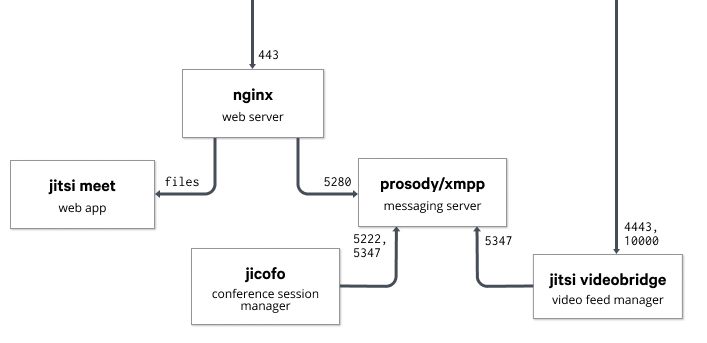
Here's a blog post I wrote for the puppet.com blog. Many thanks to Ben Ford and all their team!. With everything that is currently happening around the world, many of us IT folks have had to solve complex problems in a very short amount of time. Pretty quickly at work, I was tasked with finding a way to make virtual meetings easy, private and secure. Whereas many would have turned to a SaaS offering, we decided to use Jitsi Meet, a modern and fully on-premise FOSS videoconferencing solution. Jitsi works on all platforms by running in a browser and comes with nifty Android and iOS applications. We've been using our instance quite a bit, and so far everyone from technical to non-technical users have been pretty happy with it. Jitsi Meet is powered by WebRTC and can be broken into multiple parts across multiple machines if needed. In addition to the webserver running the Jitsi Meet JavaScript code, the base configuration uses the Videobridge to manage users' video feeds, Jicofo as a conference focus to manage media sessions and the Prosody XMPP server to tie it all together. Here's a network diagram I took from their documentation to show how those applications interact: A network diagram that shows how the different bits of jitsi meet work together Getting started with the Jitsi Puppet module First of all, you'll need a valid domain name and a server with decent bandwidth. Jitsi has published a performance evaluation of the Videobridge to help you spec your instance appropriately. You will also need to open TCP ports 443, 4443 and UDP port 10000 in your firewall. The puppetlabs/firewall module could come in handy here. Once that is done, you can use the smash/jitsimeet Puppet module on a Debian 10 (Buster) server to spin up an instance. A basic configuration would look like this:
  class   'jitsimeet':
    fqdn                 => 'jitsi.example.com',
    repo_key             => puppet:///files/apt/jitsimeet.gpg,
    manage_certs         => true,
    jitsi_vhost_ssl_key  => '/etc/letsencrypt/live/jitsi.example.com/privkey.pem'
    jitsi_vhost_ssl_cert => '/etc/letsencrypt/live/jitsi.example.com/cert.pem'
    auth_vhost_ssl_key   => '/etc/letsencrypt/live/auth.jitsi.example.com/privkey.pem'
    auth_vhost_ssl_cert  => '/etc/letsencrypt/live/auth.jitsi.example.com/cert.pem'
    jvb_secret           => 'mysupersecretstring',
    focus_secret         => 'anothersupersecretstring',
    focus_user_password  => 'yetanothersecret',
    meet_custom_options  =>  
      'enableWelcomePage'         => true,
      'disableThirdPartyRequests' => true,
     ;
   
The jitsimeet module is still pretty young: it clearly isn't perfect and some external help would be very appreciated. If you have some time, here are a few things that would be nice to work on: If you use this module to manage your Jitsi Meet instance, please send patches and bug reports our way! Learn more

7 April 2020

Shirish Agarwal: GMRT 2020 and lots of stories

First of all, congratulations to all those who got us 2022 Debconf, so we will finally have a debconf in India. There is of course, lot of work to be done between now and then. For those who would be looking forward to visit India and especially Kochi I would suggest you to hear this enriching tale
I am sorry I used youtube link but it is too good a podcast not to be shared. Those who don t want youtube can use the invidio.us link for the same as shared below. https://www.invidio.us/watch?v=BvjgKuKmnQ4 I am sure there are lot more details, questions, answers etc. but would direct them gently to Praveen, Shruti, Balasankar and the rest who are from Kochi to answer if you have any questions about that history.

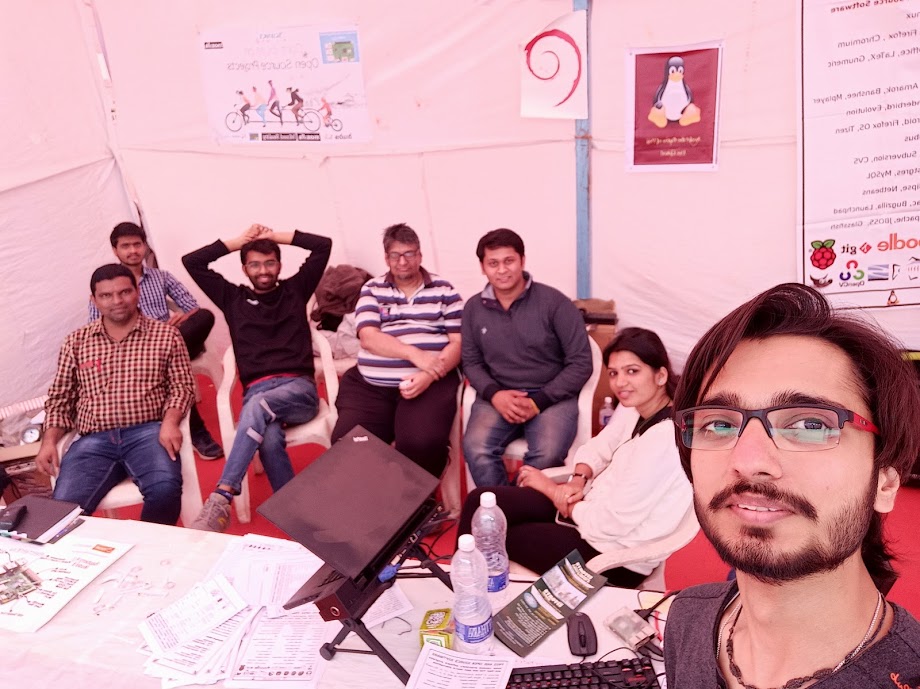
National Science Day, GMRT 2020 First, as always, we are and were grateful to both NCRA as well as GMRT for taking such good care of us. Even though Akshat was not around, probably getting engaged, a few of us were there. About 6-7 from the Mozilla Nasik while the rest representing the foss community. Here is a small picture which commentrates the event
National Science Day, GMRT 2020
While there is and was a lot to share about the event. For e.g. Akshay had bought RPI- Zero as well as RPI-2 (Raspberry Pi s ) and showed some things. He had also bought up a Debian stable live drive with persistence although the glare from the sun was too much that we couldn t show it to clearly to students. This was also the case with RPI but still we shared what and how much we could. Maybe next year, we either ask them to have double screens or give us dark room so we can showcase things much better. We did try playing with contrast and all but it didn t have much of an effect  . Of course in another stall few students had used RPI s as part of their projects so at times we did tell some of the newbies to go to those stalls and see and ask about those projects so they would have a much wider experience of things. The Mozilla people were pushing VR as well as Mozilla lite the browser for the mobile. We also gossiped quite a bit. I shared about indicatelts , a third-party certificate extension although I dunno if I should file a wnpp about it or not. We didn t have a good experience of when I had put an RFP (Request for Package) which was accepted for an extension which had similar functionality which we later come to know was sharing the sites people were using the extension to call home and share both the URL and the IP Address they were using it from. Sadly, didn t leave a good taste in mouth

Delhi Riots One thing I have been disappointed with is the lack of general awareness about things especially in the youth. We have people who didn t know that for e.g. in the Delhi riots which happened recently the law and order (Police) lies with Home Minister of India, Amit Shah. This is perhaps the only capital in the world which has its own Chief Minister but doesn t have any say on its law and order. And this has been the case for last 70 years i.e. since independance. The closest I know so far is the UK but they too changed their tune in 2012. India and especially Delhi seems to be in a time-capsule which while being dysfunctional somehow is made to work. In many ways, it s three body or a body split into three personalities which often makes governance a messy issue but that probably is a topic for another day. In fact, scroll had written a beautiful editorial that full statehood for Delhi was not only Arvind Kejriwal s call (AAP) but also something that both BJP as well as Congress had asked in the past. In fact, nothing about the policing is in AAP s power. All salaries, postings, transfers of police personnel everything is done by the Home Ministry, so if any blame has to be given it has to be given to the Home Ministry for the same.

American Capitalism and Ventilators America had been having a history of high cost healthcare as can be seen in this edition of USA today from 2017 . The Affordable Care Act was signed as a law by President Obama in 2010 which Mr. Trump curtailed when he came into power couple of years back. An estimated 80,000 people died due to seasonal flu in 2018-19 . Similarly, anywhere between 24-63,000 have supposed to have died from Last October to February-March this year. Now if the richest country can t take care of their population which is 1/3rd of the population of this country while at the same time United States has thrice the area that India has. This I am sharing as seasonal flu also strikes the elderly as well as young children more than adults. So in one senses, the vulnerable groups overlap although from some of the recent stats, for Covid-19 even those who are 20+ are also vulnerable but that s another story altogether. If you see the CDC graph of the seasonal flu it is clear that American health experts knew about it. One another common factor which joins both the seasonal flu and covid is both need ventilators for the most serious cases. So, in 2007 it was decided that the number of ventilators needed to be ramped up, they had approximately 62k ventilators at that point in time all over U.S. The U.S. in 2010, asked for bids and got bid from a small californian company called Newport Medic Instruments. The price of the ventilators was approximately INR 700000 at 2010 prices, while Newport said they would be able to mass-produce at INR 200000 at 2010 prices. The company got the order and they started designing the model which needed to be certified by FDA. By 2011, they got the product ready when a big company called Covidgen bought Newport Medic and shutdown the project. This was shared in a press release in 2012. The whole story was broken by New York Times again, just a few days ago which highlighted how America s capitalism rough shod over public health and put people s life unnecessarily in jeopardy. If those new-age ventilators would have been a reality then not just U.S. but India and many other countries would have bought the ventilators as every county has same/similar needs but are unable to pay the high cost which in many cases would be passed on to their citizens either as price of service, or by raising taxes or a mixture of both with public being none the wiser. Due to dearth of ventilators and specialized people to operate it and space, there is possibility that many countries including India may have to make tough choices like Italian doctors had to make as to who to give ventilator to and have the mental and emotional guilt which would be associated with the choices made.

Some science coverage about diseases in wire and other publications Since Covid coverage broke out, the wire has been bringing various reports of India s handling of various epidemics, mysteries, some solved, some still remaining unsolved due to lack of interest or funding or both. The Nipah virus has been amply discussed in the movie Virus (2019) which I shared in the last blog post and how easily it could have been similar to Italy in Kerala. Thankfully, only 24 people including a nurse succumbed to that outbreak as shared in the movie. I had shared about Kerala nurses professionalism when I was in hospital couple of years back. It s no wonder that their understanding of hygeine and nursing procedures are a cut above the rest hence they are sought after not just in India but world-over including US and UK and the middle-east. Another study on respitory illness was bought to my attention by my friend Pavithran.

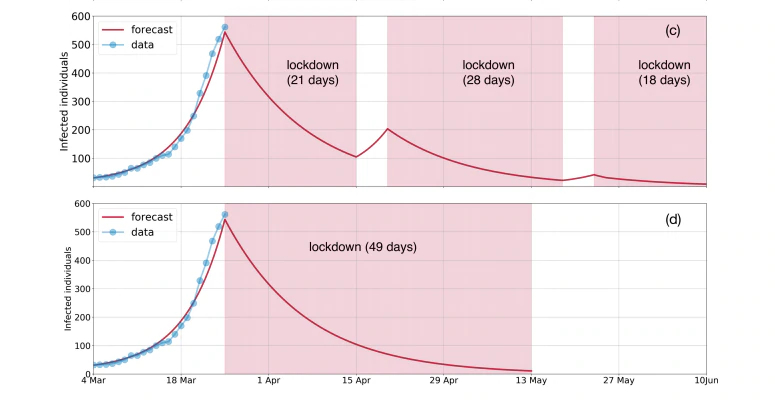
Possibility of extended lockdown in India There was talk in the media of extended lockdown or better put an environment is being created so that an extended lockdown can be done. This is probably in part due to a mathematical model and its derivatives shared by two Indian-origin Cambridge scholars who predict that a minimum 49 days lockdown may be necessary to flatten the covid curve about a week back.
Predictions of the outcome of the current 21-day lockdown (Source: Rajesh Singh, R. Adhikari, Cambridge University)
Alternative lockdown strategies suggested by the Cambridge model (Source: Rajesh Singh, R. Adhikari, Cambridge University)
India caving to US pressure on Hydroxychloroquine While there has been lot of speculation in U.S. about Hydroxychloroquine as the wonder cure, last night Mr. Trump threatened India in a response to a reporter that Mr. Modi has to say no for Hydroxychloroquine and there may be retaliations.
As shared before if youtube is not your cup you can see the same on invidio.us https://www.invidio.us/watch?v=YP-ewgoJPLw Now while there have been several instances in the past of U.S. trying to bully India, going all the way back to 1954. In fact, in recent memory, there were sanctions on India by US under Atal Bihari Vajpayee Government (BJP) 1998 but he didn t buckle under the pressure and now we see our current PM taking down our own notification from a day ago and not just sharing Hydroxychloroquine but also Paracetemol to other countries so it would look as if India is sharing with other countries. Keep in mind, that India, Brazil haven t seen eye to eye on trade agreements of late and Paracetemol prices have risen in India. The price rise has been because the API (Active Pharmaceutical Ingredients) for the same come from China where the supply chain will take time to be fixed and we would also have to open up, although should we, should we not is another question altogether. I talk about supply chains as lean supply chains were the talk since late 90 s when the Japanese introduced Just-in-time manufacturing which lead to lean supply chains as well as lot of outsourcing as consequence. Of course, the companies saved money but at the cost of flexibility and how this model was perhaps flawed was shared by a series of articles in Economist as early as 2004 when there were lot of shocks to that model and would be exaberated since then. There have been frequent shocks to these fragile ecosystem more since 2008 after the financial meltdown and this would put more companies out of business than ever before. The MSME sector in India had already been severely impacted first by demonetization and then by the horrendous implementation of GST whose cries can be heard from all sectors. Also the frequent changing of GST taxes has made markets jumpy and investors unsure. With judgements such as retrospective taxes, AGR (Adjusted Gross Revenue) etc. it made not only the international investors scared, but also domestic investors. The flight of the capital has been noticeable. This I had shared before when Indian Government shared about LRS report which it hasn t since then. In fact Outlook Business had an interesting article about it where incidentally it talked about localcircles, a community networking platform where you get to know of lot of things and whom I am also a member of. At the very end I apologize for not sharing the blog post before but then I was feeling down but then I m not the only one.

Reproducible Builds: Reproducible Builds in March 2020

Welcome to the March 2020 report from the Reproducible Builds project. In our reports we outline the most important things that we have been up to over the past month and some plans for the future.
What are reproducible builds? One of the original promises of open source software is that distributed peer review and transparency of process results in enhanced end-user security. However, whilst anyone may inspect the source code of free and open source software for malicious flaws, almost all software today is distributed as pre-compiled binaries. This allows nefarious third-parties to compromise systems by injecting malicious code into ostensibly secure software during the various compilation and distribution processes.

News The report from our recent summit in Marrakesh was published and is now available in both PDF and HTML formats. A sincere thank you to all of the Reproducible Builds community for the input to the event a sincere thank you to Aspiration for preparing and collating this report. Harmut Schorrig published a detailed document on how to compile Java applications in such as way that the .jar build artefact is reproducible across builds. A practical and hands-on guide, it details how to avoid unnecessary differences between builds by explicitly declaring an encoding as the default value differs across Linux and MS Windows systems and ensuring that the generated .jar a variant of a .zip archive does not embed any nondeterministic filesystem metadata, and so on. Janneke gave a quick presentation on GNU Mes and reproducible builds during the lighting talk session at LibrePlanet 2020. [ ] Vagrant Cascadian presented There and Back Again, Reproducibly! video at SCaLE 18x in Pasadena in California which generated some attention on Twitter. Herv Boutemy mentioned on our mailing list in a thread titled Rebuilding and checking Reproducible Builds from Maven Central repository that since the update of a central build script (the parent POM ) every Apache project using the Maven build system should build reproducibly. A follow-up discussion regarding how to perform such rebuilds was also started on the Apache mailing list. The Telegram instant-messaging platform announced that they had updated their iOS and Android OS applications and claim that they are reproducible according to their full instructions, verifying that its original source code is exactly the same code that is used to build the versions available on the Apple App Store and Google Play distribution platforms respectfully. Herv Boutemy also reported about a new project called reproducible-central which aims to allow anyone to rebuild a component from the Maven Central Repository that is expected to be reproducible and check that the result is as expected. In last month s report we detailed Omar Navarro Leija s work in and around an academic paper titled Reproducible Containers which describes in detail the workings of a user-space container tool called dettrace (PDF). Since then, the PhD student from the University Of Pennsylvania presented on this tool at the ASPLOS 2020 conference in Lausanne, Switzerland. Furthermore, there were contributions to dettrace from the Reproducible Builds community itself. [ ][ ]

Distribution work

openSUSE In openSUSE, Bernhard M. Wiedemann published his monthly Reproducible Builds status update as well as made the following changes within the distribution itself:

Debian Chris Lamb further refined his merge request for the debian-installer component to allow all arguments from sources.list files (such as [check-valid-until=no] ) in order that we can test the reproducibility of the installer images on the Reproducible Builds own testing infrastructure. (#13) Holger Levsen filed a number of bug reports against the debrebuild tool that attempts to rebuild a Debian package given a .buildinfo file as input, including: 48 reviews of Debian packages were added, 17 were updated and 34 were removed this month adding to our knowledge about identified issues. Many issue types were noticed, categorised and updated by Chris Lamb, including: Finally, Holger opened a bug report against the software running tracker.debian.org, a service for Debian Developers to follow the evolution of packages via web and email interfaces to request that they integrate information from buildinfos.debian.net (#955434) and Chris Lamb kept isdebianreproducibleyet.com up to date. [ ]

Software development

diffoscope Chris Lamb made the following changes to diffoscope, the Reproducible Builds project s in-depth and content-aware diff utility that can locate and diagnose reproducibility issues, including preparing and uploading version 138 to Debian:
  • Improvements:
    • Don t allow errors with R script deserialisation cause the entire operation to fail, for example if an external library cannot be loaded. (#91)
    • Experiment with memoising output from expensive external commands, eg. readelf. (#93)
    • Use dumppdf from the python3-pdfminer if we do not see any other differences from pdftext, etc. (#92)
    • Prevent a traceback when comparing two R .rdx files directly as the get_member method will return a file even if the file is missing. [ ]
  • Reporting:
    • Display the supported file formats into the package long description. (#90)
    • Print a potentially-helpful message if the PyPDF2 module is not installed. [ ]
    • Remove any duplicate comparator descriptions when formatting in the --help output or in the package long description. [ ]
    • Weaken Install the X package to get a better output message to may produce a better output as the former is not actually guaranteed. [ ]
  • Misc:
    • Ensure we only parse the recommended packages from --list-debian-substvars when we want them for debian/tests/control generation. [ ]
    • Add upstream metadata file [ ] and add a Lintian override for upstream-metadata-in-native-source as we are upstream. [ ]
    • Inline the RequiredToolNotFound.get_package method s functionality as it is only used once. [ ]
    • Drop the deprecated py36 = [..] argument in the pyproject.toml file. [ ]
In addition, Vagrant Cascadian updated diffoscope in GNU Guix to version 138 [ ], as well as updating reprotest our end-user tool to build same source code twice in widely differing environments and then checks the binaries produced by each build for any differences to version 0.7.14 [ ].

Upstream patches The Reproducible Builds project detects, dissects and attempts to fix as many currently-unreproducible packages as possible. We endeavour to send all of our patches upstream where appropriate. This month we wrote a large number of such patches, including:

Project documentation There was further work performed on our documentation and website this month including Alex Wilson adding a section regarding using Gradle for reproducible builds in JVM projects [ ] and Holger Levsen added the report from our recent summit in Marrakesh [ ][ ]. In addition, Chris Lamb made a number of changes, including correcting the syntax of some CSS class formatting [ ], improved some filed against copy a little better [ ] and corrected a reference to calendar.monthrange Python method in a utility function. [ ]

Testing framework We operate a large and many-featured Jenkins-based testing framework that powers tests.reproducible-builds.org that, amongst many other tasks, tracks the status of our reproducibility efforts as well as identifies any regressions that have been introduced. This month, Chris Lamb reworked the web-based package rescheduling tool to:
  • Require a HTTP POST method in the web-based scheduler as not only should HTTP GET requests be idempotent but this will allow many future improvements in the user interface. [ ][ ][ ]
  • Improve the authentication error message in said rescheduler to suggest that the developer s SSL certificate may have expired. [ ]
In addition, Holger Levsen made the following changes:
  • Add a new ath97 subtarget for the OpenWrt distribution.
  • Revisit ordering of Debian suites; sort the experimental distribution last and reverse the ordering of suites to prioritise the suites in development. [ ][ ][ ]
  • Schedule Debian buster and bullseye a little less in order to allow unstable to catch up on the i386 architecture. [ ][ ]
  • Various cosmetic changes to the web-based scheduler. [ ][ ][ ][ ]
  • Improve wordings in the node health maintenance output. [ ]
Lastly, Vagrant Cascadian updated a link to the (formerly) weekly news to our reports page [ ] and kpcyrd fixed the escaping in an Alpine Linux inline patch [ ]. The usual build nodes maintenance was performed by Holger Levsen [ ][ ], Mattia Rizzolo [ ] and Vagrant Cascadian [ ][ ].
If you are interested in contributing to the Reproducible Builds project, please visit our Contribute page on our website. However, you can get in touch with us via:

This month s report was written by Bernhard M. Wiedemann, Chris Lamb, Holger Levsen and Vagrant Cascadian. It was subsequently reviewed by a bunch of Reproducible Builds folks on IRC and the mailing list.

Jonathan Dowland: Morphite

Further Switch game recommendations Morphite is a first-person space exploration game, with a very distinctive aesthetic, which reminds me a little bit of No Man's Sky. This is a fairly child-friendly game of exploration and discovery. It also reminds me a little bit of Frontier: First Encounters, the second sequel to Elite.
[pic]
It's currently discounted in the Nintendo Switch eShop by 83%, an all-time low price of 2.29, until 5th May. I've barely scratched the surface of this one, so I don't know how deep the game will go, but it looks promising. Certainly worth sacrificing one Flat White for.
[pic]

Steve Kemp: A busy few days

Over the past few weeks things have been pretty hectic. Since I'm not working at the moment I'm mostly doing childcare instead. I need a break, now and again, so I've been sending our child to p iv koti two days a week with him home the rest of the time. I love taking care of the child, because he's seriously awesome, but it's a hell of a lot of work when most of our usual escapes are unavailable. For example we can't go to the (awesome) Helsinki Central Library as that is closed. Instead of doing things outdoors we've been baking bread together, painting, listening to music and similar. He's a big fan of any music with drums and shouting, so we've been listening to Rammstein, The Prodigy, and as much Queen as I can slip in without him complaining ("more bang bang!"). I've also signed up for some courses at the Helsinki open university, including Devops with Docker so perhaps I have a future career working with computers? I'm hazy. Finally I saw a fun post the other day on reddit asking about the creation of a DSL for server-setup. I wrote a reply which basically said two things: Anyway I had an idea of just expressing things in a simple fashion, borrowing Puppet syntax (which I guess is just Ruby hash literals). So a module to do stuff with files would just look like this:
file   name   => "This is my rule",
       target => "/tmp/blah",
       ensure => "absent"  
The next thing to do is to allow that to notify another rule, when it results in a change. So you add in:
notify => "Name of rule"
# or
notify => [ "Name of rule", "Name of another rule" ]
You could also express dependencies the other way round:
shell   name => "Do stuff",
        command => "wc -l /etc/passwd > /tmp/foo",
        requires => [ "Rule 1", "Rule 2"]  
Anyway the end result is a simple syntax which allows you to do things; I wrote a file to allow me to take a clean system and configure it to run a simple golang application in an hour or so. The downside? Well the obvious one is that there's no support for setting up cron jobs, setting up docker images, MySQL usernames/passwords, etc. Just a core set of primitives. Adding new things is easy, but also an endless job. So I added the ability to run external/binary plugins stored outside the project. To support that is simple with the syntax we have: All good. People can write modules, if they like, and they can do that in any language they like. Fun times. We'll call it marionette since it's all puppet-inspired: And that concludes this irregular update.

5 April 2020

Vincent Bernat: Safer SSH agent forwarding

ssh-agent is a program to hold in memory the private keys used by SSH for public-key authentication. When the agent is running, ssh forwards to it the signature requests from the server. The agent performs the private key operations and returns the results to ssh. It is useful if you keep your private keys encrypted on disk and you don t want to type the password at each connection. Keeping the agent secure is critical: someone able to communicate with the agent can authenticate on your behalf on remote servers. ssh also provides the ability to forward the agent to a remote server. From this remote server, you can authenticate to another server using your local agent, without copying your private key on the intermediate server. As stated in the manual page, this is dangerous!
Agent forwarding should be enabled with caution. Users with the ability to bypass file permissions on the remote host (for the agent s UNIX-domain socket) can access the local agent through the forwarded connection. An attacker cannot obtain key material from the agent, however they can perform operations on the keys that enable them to authenticate using the identities loaded into the agent. A safer alternative may be to use a jump host (see -J).
As mentioned, a better alternative is to use the jump host feature: the SSH connection to the target host is tunneled through the SSH connection to the jump host. See the manual page and this blog post for more details.
If you really need to use SSH agent forwarding, you can secure it a bit through a dedicated agent with two main attributes: The following alias around the ssh command will spawn such an ephemeral agent:
alias assh="ssh-agent ssh -o AddKeysToAgent=confirm -o ForwardAgent=yes"
With the -o AddKeysToAgent=confirm directive, ssh adds the unencrypted private key to the agent but each use must be confirmed.1 Once connected, you get a password prompt for each signature request:2
ssh-agent prompt confirmation with fingerprint and yes/no buttons
Request for the agent to use the specified private key
But, again, avoid using agent forwarding!

Update (2020-04) In a previous version of this article, the wrapper around the ssh command was a more complex function. Alexandre Oliva was kind enough to point me to the simpler solution above.

Update (2020-04) Guardian Agent is an even safer alternative: it shows and ensures the usage (target and command) of the requested signature. There is also a wide range of alternative solutions to this problem. See for example SSH-Ident, Wikimedia solution and solo-agent.


  1. Alternatively, you can add the keys with ssh-add -c.
  2. Unfortunately, the dialog box default answer is Yes.

4 April 2020

Thorsten Alteholz: My Debian Activities in March 2020

FTP master This month I accepted 156 packages and rejected 26. The overall number of packages that got accepted was 203. Debian LTS This was my sixty ninth month that I did some work for the Debian LTS initiative, started by Raphael Hertzog at Freexian. This month my all in all workload has been 30h. During that time I did LTS uploads of: Also my work on graphicsmagic was accepted which resulted in: Further I sent debdiffs of weechat/stretch, weechat/buster, e2fsprogs/stretch to the corresponding maintainers but got no feedback yet. As there have been lots of no-dsa-CVEs accumulated for wireshark, I started to work on them but could not upload yet. Last but not least I did some days of frontdesk duties. Debian ELTS This month was the twenty first ELTS month. During my really allocated time I uploaded: I also did some days of frontdesk duties. Other stuff Unfortunately this month again strange things happened outside Debian and the discussions within Debian did not stop. Nonetheless I got some stuff done. I improved packaging of I sponsored uploads of Sorry to all people who also requested sponsoring, but sometimes things happen and your upload might be delayed. I uploaded new upstream versions of On my Go challenge I uploaded:
golang-github-dreamitgetit-statuscake, golang-github-ensighten-udnssdk, golang-github-apparentlymart-go-dump, golang-github-suapapa-go-eddystone, golang-github-joyent-gosdc, golang-github-nrdcg-goinwx, golang-github-bmatcuk-doublestar, golang-github-go-xorm-core, golang-github-svanharmelen-jsonapi, golang-github-goji-httpauth, golang-github-phpdave11-gofpdi

3 April 2020

Sean Whitton: Manifest to run Debian pre-upload tests on builds.sr.ht

Before uploading stuff to Debian, I build in a clean chroot, and then run piuparts, autopkgtest and lintian. For some of my packages this can take around an hour on my laptop, which is fairly old. Normally I don t mind waiting, but sometimes I want to put my laptop away, and then it would be good for things to be faster. It occurred to me that I could make use of my builds.sr.ht account to run these tests on more powerful hardware. This build manifest seems to work:
# BEGIN CONFIGURABLE
sources:
  - https://salsa.debian.org/perl-team/modules/packages/libgit-annex-perl.git
environment:
  source: libgit-annex-perl
  quilt:  auto
# END CONFIGURABLE
image: debian/unstable
packages:
  - autopkgtest
  - devscripts
  - dgit
  - lintian
  - piuparts
  - sbuild
tasks:
  - setup:  
      cd $source
      source_version=$(dpkg-parsechangelog -SVersion)
      echo "source_version=$source_version" >>~/.buildenv
      git deborig   origtargz
      sudo sbuild-createchroot --command-prefix=eatmydata --include=eatmydata unstable /srv/chroot/unstable-amd64-sbuild
      sudo sbuild-adduser $USER
  - build:  
      cd $source
      dgit --quilt=$quilt sbuild -d unstable --no-run-lintian
  - lintian:  
      lintian $ source _$ source_version _multi.changes
  - piuparts:  
      sudo piuparts --no-eatmydata --schroot unstable-amd64-sbuild $ source _$ source_version _multi.changes
  - autopkgtest:  
      autopkgtest $ source _$ source_version _multi.changes -- schroot unstable-amd64-sbuild
And here s my script.

2 April 2020

Dirk Eddelbuettel: RQuantLib 0.4.12: Small QuantLib 1.18 update

A new release 0.4.12 of RQuantLib arrived on CRAN today, and was uploaded to Debian as well. QuantLib is a very comprehensice free/open-source library for quantitative finance; RQuantLib connects it to the R environment and language. This version does relatively little. When QuantLib 1.18 came out, I immediately did my usual bit of packaging it for Debian as well creating binaries via my Ubuntu PPA so that I could test the package against it. And a few call from RQuantLib are now hitting interface functions marked as deprecated leading to compiler nags. So I fixed that in PR #146. And today CRAN sent me email to please fix in the released version so I rolled this up as 0.4.12. Not other changes.

Changes in RQuantLib version 0.4.12 (2020-04-01)
  • Changes in RQuantLib code:
    • Calls deprecated-in-QuantLib 1.18 were updated (Dirk in #146).

Courtesy of CRANberries, there is also a diffstat report for the this release. As always, more detailed information is on the RQuantLib page. Questions, comments etc should go to the new rquantlib-devel mailing list. Issue tickets can be filed at the GitHub repo. If you like this or other open-source work I do, you can now sponsor me at GitHub. For the first year, GitHub will match your contributions.

This post by Dirk Eddelbuettel originated on his Thinking inside the box blog. Please report excessive re-aggregation in third-party for-profit settings.

Sven Hoexter: New TLDs and Automatic link detection was a bad idea

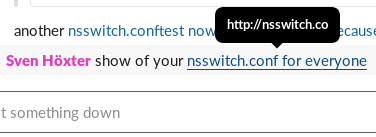
Update: Seems this is a Firefox specific bug in the Slack Webapplication, it works in Chrome and the Slack Electron Application as it should. Tested with Firefox ESR on Debian/buster and Firefox 74 on OS X. Ah I like it that we now have so many TLDs and matching on those seems to go bad more often now. Last occassion is Slack (which I think is a pile of shit written by morons, but that is a different story) which somehow does not properly match on .co domains. Leading to this auto linking: nsswitch.conf link Now I'm not sure if someone enocountered the same issue, or people just registered random domains just because they could. I found registrations for I've a few more .conf files in /etc which could be interesting in an IT environment, but for the sake of playing with it I registered nsswitch.co at godaddy. I do not want to endorse them in anyway, but for the first year it's only 13.08EUR right now, which is okay to pay for a stupid demo. So if you feel like it, you can probably register something stupid for yourself to play around with. I do not intent to renew this domain next year, so be aware of what happens then with the next owner.

1 April 2020

Sylvain Beucler: Debian LTS and ELTS - March 2020

Debian LTS Logo Here is my transparent report for my work on the Debian Long Term Support (LTS) and Debian Extended Long Term Support (ELTS), which extend the security support for past Debian releases, as a paid contributor. In March, the monthly sponsored hours were split evenly among contributors depending on their max availability - I was assigned 30h for LTS (out of 30 max; all done) and 20h for ELTS (out of 20 max; I did 0). Most contributors claimed vulnerabilities by performing early CVE monitoring/triaging on their own, making me question the relevance of the Front-Desk role. It could be due to a transient combination of higher hours volume and lower open vulnerabilities. Working as a collective of hourly paid freelancers makes it more likely to work in silos, resulting in little interaction when raising workflow topics on the mailing list. Maybe we're reaching a point where regular team meetings will be benefical. As previously mentioned, I structure my work keeping the global Debian security in mind. It can be stressful though, and I believe current communication practices may deter such initiatives. ELTS - Wheezy LTS - Jessie Documentation/Scripts

Joey Hess: DIN distractions

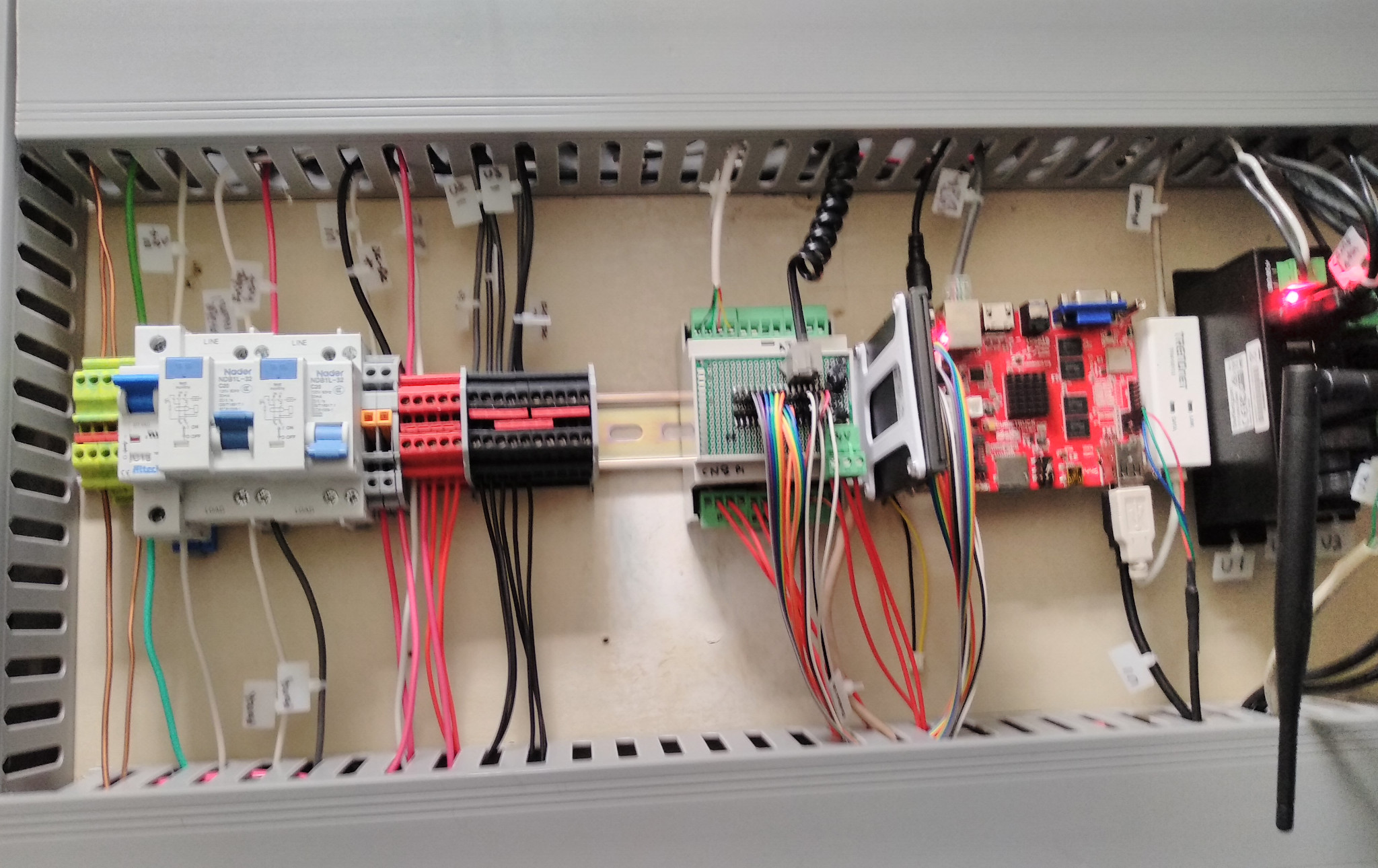
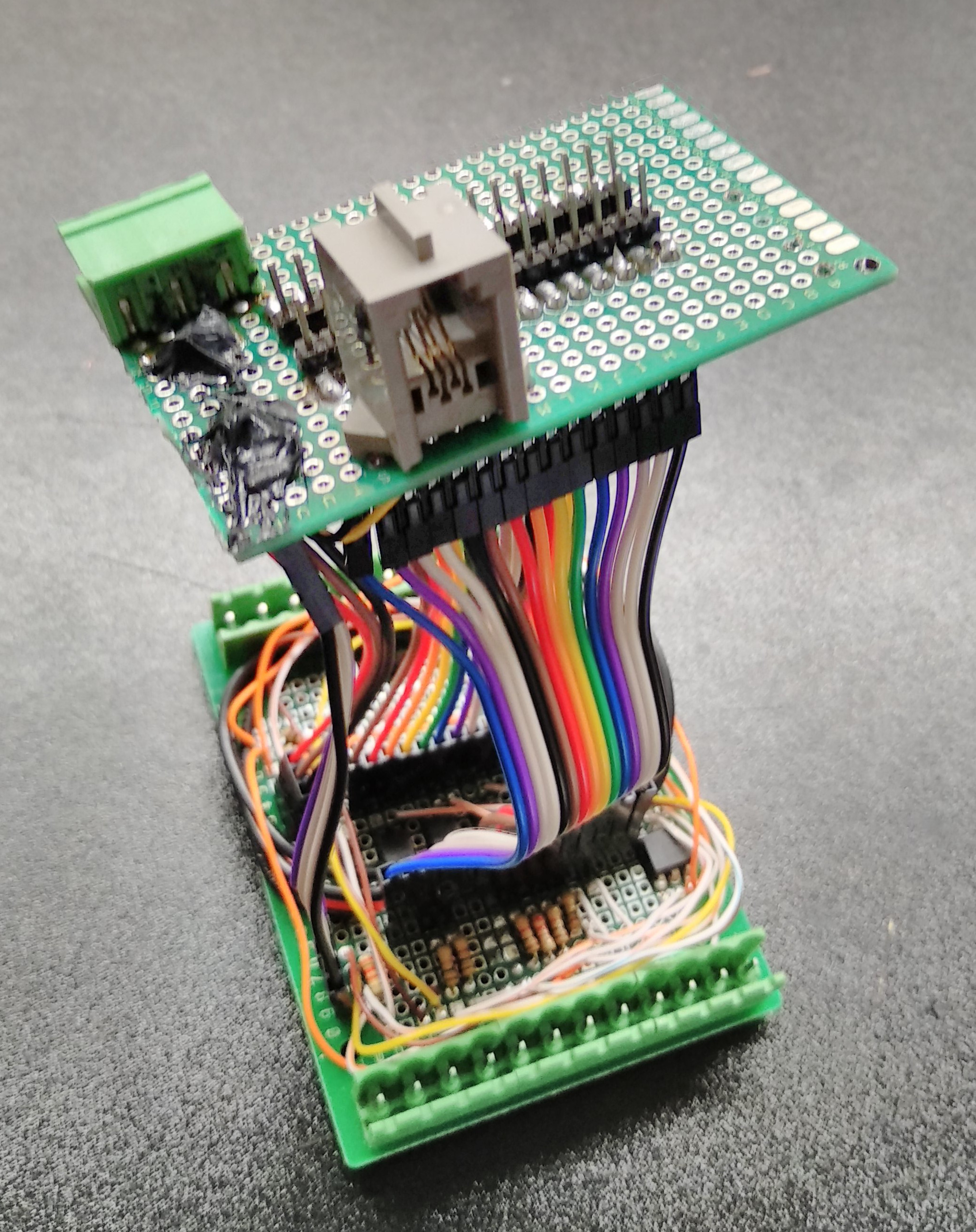
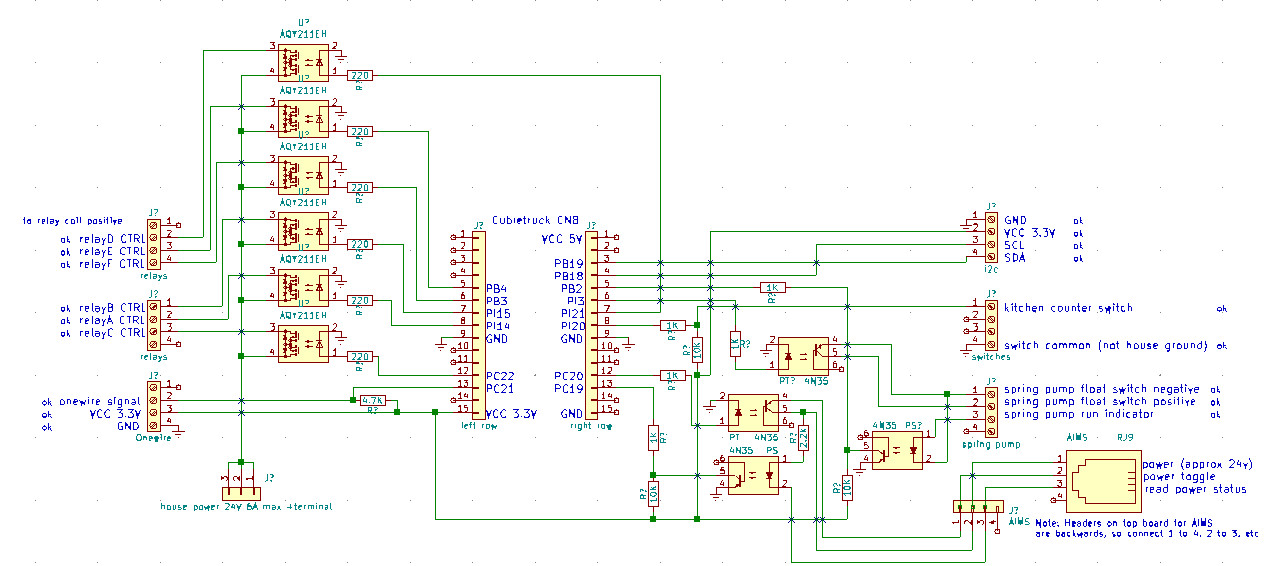
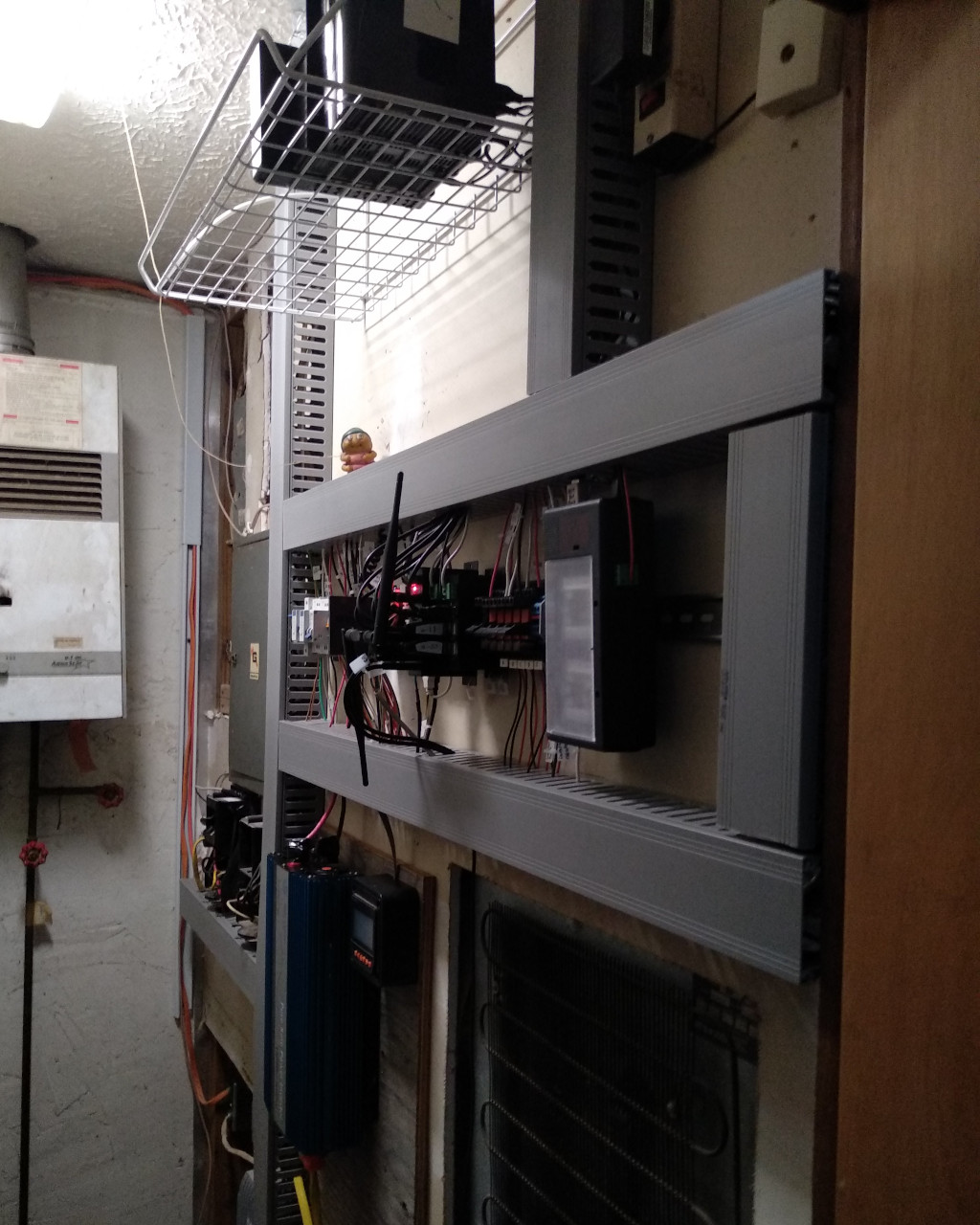
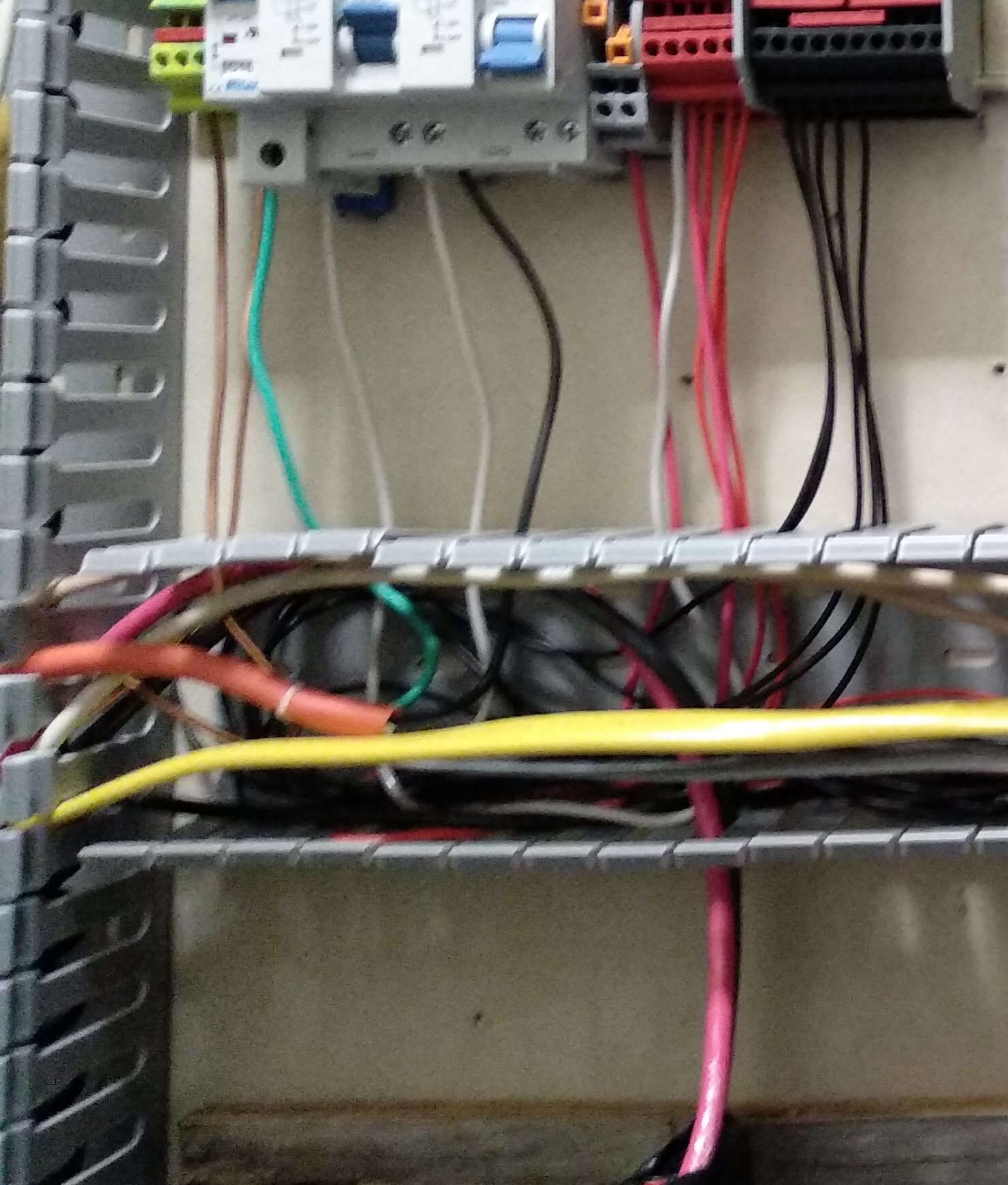
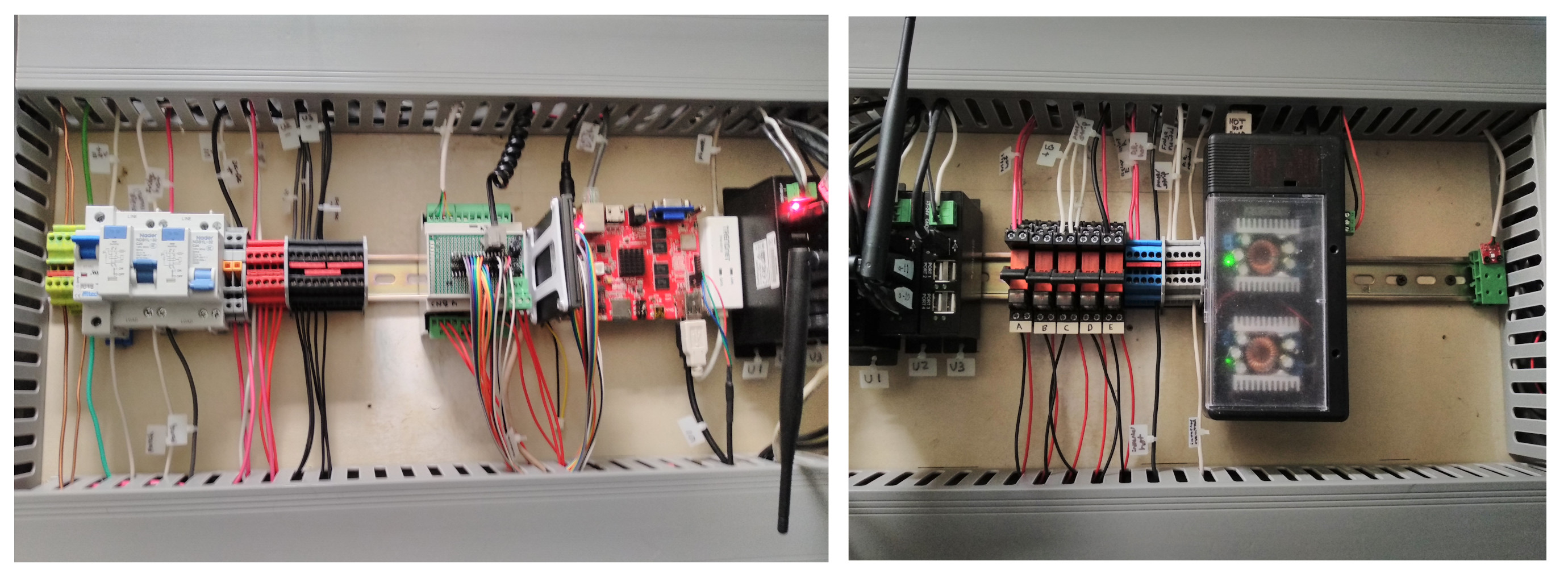
My offgrid house has an industrial automation panel. A row of electrical devices, mounted on a metal rail. Many wires neatly extend from it above and below, disappearing into wire gutters. I started building this in February, before covid-19 was impacting us here, when lots of mail orders were no big problem, and getting an unusual 3D-printed DIN rail bracket for a SSD was just a couple clicks. I finished a month later, deep into social isolation and quarentine, scrounging around the house for scrap wire, scavenging screws from unused stuff and cutting them to size, and hoping I would not end up in a "need just one more part that I can't get" situation. It got rather elaborate, and working on it was often a welcome distraction from the news when I couldn't concentrate on my usual work. I'm posting this now because people sometimes tell me they like hearing about my offfgrid stuff, and perhaps you could use a distraction too. The panel has my house's computer on it, as well as both AC and DC power distribution, breakers, and switching. Since the house is offgrid, the panel is designed to let every non-essential power drain be turned off, from my offgrid fridge to the 20 terabytes of offline storage to the inverter and satellite dish, the spring pump for my gravity flow water system, and even the power outlet by the kitchen sink. Saving power is part of why I'm using old-school relays and stuff and not IOT devices, the other reason is of course: IOT devices are horrible dystopian e-waste. I'm taking the utopian Star Trek approach, where I can command "full power to the vacuum cleaner!" Two circuit boards, connected by numerous ribbon cables, and clearly hand-soldered. The smaller board is suspended above the larger. An electrical schematic, of moderate complexity. At the core of the panel, next to the cubietruck arm board, is a custom IO daughterboard. Designed and built by hand to fit into a DIN mount case, it uses every GPIO pin on the cubietruck's main GPIO header. Making this board took 40+ hours, and was about half the project. It got pretty tight in there. This was my first foray into DIN rail mount, and it really is industrial lego -- a whole universe of parts that all fit together and are immensely flexible. Often priced more than seems reasonable for a little bit of plastic and metal, until you look at the spec sheets and the ratings. (Total cost for my panel was $400.) It's odd that it's not more used outside its niche -- I came of age in the Bay Area, surrounded by rack mount equipment, but no DIN mount equipment. Hacking the hardware in a rack is unusual, but DIN invites hacking. Admittedly, this is a second system kind of project, replacing some unsightly shelves full of gear and wires everywhere with something kind of overdone. But should be worth it in the long run as new gear gets clipped into place and it evolves for changing needs. Also, wire gutters, where have you been all my life? A cramped utility room with an entire wall covered with electronic gear, including the DIN rail, which is surrounded by wire gutters Detail of a wire gutter with the cover removed. Numerous large and small wires run along it and exit here and there. Finally, if you'd like to know what everything on the DIN rail is, from left to right: Ground block, 24v DC disconnect, fridge GFI, spare GFI, USB hub switch, computer switch, +24v block, -24v block, IO daughterboard, 1tb SSD, arm board, modem, 3 USB hubs, 5 relays, AC hot block, AC neutral block, DC-DC power converters, humidity sensor. Full width of DIN rail.

Mike Gabriel: My Work on Debian LTS (March 2020)

In March 2020, I have worked on the Debian LTS project for 10.25 hours (of 10.25 hours planned). LTS Work Other security related work for Debian Credits A very big thanks goes to Utkarsh Gupta, a colleague from the Debian LTS team, who sponsored all my uploads and who sent the DLA mails on my behalf, while I was (and still am) in self-induced GPG lockdown (I forgot to update my GPG public key in Debian's GPG keyring). Thanks, Utkarsh! References

Russ Allbery: Review: A Grand and Bold Thing

Review: A Grand and Bold Thing, by Ann Finkbeiner
Publisher: Free Press
Copyright: August 2010
ISBN: 1-4391-9647-8
Format: Kindle
Pages: 200
With the (somewhat excessively long) subtitle of An Extraordinary New Map of the Universe Ushering In a New Era of Discovery, this is a history of the Sloan Digital Sky Survey. It's structured as a mostly chronological history of the project with background profiles on key project members, particularly James Gunn. Those who follow my blog will know that I recently started a new job at Vera C. Rubin Observatory (formerly the Large Synoptic Survey Telescope). Our goal is to take a complete survey of the night sky several times a week for ten years. That project is the direct successor of the Sloan Digital Sky Survey, and its project team includes many people who formerly worked on Sloan. This book (and another one, Giant Telescopes) was recommended to me as a way to come up to speed on the history of this branch of astronomy. Before reading this book, I hadn't understood how deeply the ready availability of the Sloan sky survey data had changed astronomy. Prior to the availability of that survey data, astronomers would develop theories and then try to book telescope time to make observations to test those theories. That telescope time was precious and in high demand, so was not readily available, and was vulnerable to poor weather conditions (like overcast skies) once the allocated time finally arrived. The Sloan project changed all of that. Its output was a comprehensive sky survey available digitally whenever and wherever an astronomer needed it. One could develop a theory and then search the Sloan Digital Sky Survey for relevant data and, for at least some types of theories, test that theory against the data without needing precious telescope time or new observations. It was a transformational change in astronomy, made possible by the radical decision, early in the project, to release all of the data instead of keeping it private to a specific research project. The shape of that change is one takeaway from this book. The other is how many problems the project ran into trying to achieve that goal. About a third of the way into this book, I started wondering if the project was cursed. So many things went wrong, from institutional politics through equipment failures to software bugs and manufacturing problems with the telescope mirror. That makes it all the more impressive how much impact the project eventually had. It's also remarkable just how many bad things can happen to a telescope mirror without making the telescope unusable. Finkbeiner provides the most relevant astronomical background as she tells the story so that the unfamiliar reader can get an idea of what questions the Sloan survey originally set out to answer (particularly about quasars), but this is more of a project history than a popular astronomy book. There's enough astronomy here for context, but not enough to satisfy curiosity. If you're like me, expect to have your curiosity piqued, possibly resulting in buying popular surveys of current astronomy research. (At least one review is coming soon.) Obviously this book is of special interest to me because of my new field of work, my background at a research university, and because it features some of my co-workers. I'm not sure how interesting it will be to someone without that background and personal connection. But if you've ever been adjacent to or curious about how large-scale science projects are done, this is a fascinating story. Both the failures and problems and the way they were eventually solved is different than how the more common stories of successful or failed companies are told. (It helps, at least for me, that the shared goal was to do science, rather than to make money for a corporation whose fortunes are loosely connected to those of the people doing the work.) Recommended if this topic sounds at all interesting. Rating: 7 out of 10

Paul Wise: FLOSS Activities March 2020

Changes

Issues

Review

Administration
  • Debian wiki: approve accounts

Communication

Sponsors The dh-make-perl feature requests, file bug report, File::Libmagic changes, autoconf-archive change, libpst work and the purple-discord upload were sponsored by my employer. All other work was done on a volunteer basis.

Next.

Previous.