Search Results: "ads"

2 July 2022

Junichi Uekawa: Watching my raspberry pi update I noticed I have nodejs 12 in them.

Watching my raspberry pi update I noticed I have nodejs 12 in them. Most systems I work on have nodejs 16 installed. I don't remember what changed ...

1 July 2022

Steve Kemp: An update on my simple golang TCL interpreter

So my previous post introduced a trivial interpreter for a TCL-like language. In the past week or two I've cleaned it up, fixed a bunch of bugs, and added 100% test-coverage. I'm actually pretty happy with it now. One of the reasons for starting this toy project was to experiment with how easy it is to extend the language using itself Some things are simple, for example replacing this:
puts "3 x 4 = [expr 3 * 4]"
With this:
puts "3 x 4 = [* 3 4]"
Just means defining a function (proc) named *. Which we can do like so:
proc *  a b   
    expr $a * $b
 
(Of course we don't have lists, or variadic arguments, so this is still a bit of a toy example.) Doing more than that is hard though without support for more primitives written in the parent language than I've implemented. The obvious thing I'm missing is a native implementation of upvalue, which is TCL primitive allowing you to affect/update variables in higher-scopes. Without that you can't write things as nicely as you would like, and have to fall back to horrid hacks or be unable to do things.
# define a procedure to run a body N times
proc repeat  n body   
    set res ""
    while  > $n 0   
        decr n
        set res [$body]
     
    $res
 
# test it out
set foo 12
repeat 5   incr foo  
#  foo is now 17 (i.e. 12 + 5)
A similar story implementing the loop word, which should allow you to set the contents of a variable and run a body a number of times:
proc loop  var min max bdy   
    // result
    set res ""
    // set the variable.  Horrid.
    // We miss upvalue here.
    eval "set $var [set min]"
    // Run the test
    while  <= [set "$$var"] $max    
        set res [$bdy]
        // This is a bit horrid
        // We miss upvalue here, and not for the first time.
        eval  incr "$var" 
     
    // return the last result
    $res
 
loop cur 0 10   puts "current iteration $cur ($min->$max)"  
# output is:
# => current iteration 0 (0-10)
# => current iteration 1 (0-10)
# ...
That said I did have fun writing some simple test-cases, and implementing assert, assert_equal, etc. In conclusion I think the number of required primitives needed to implement your own control-flow, and run-time behaviour, is a bit higher than I'd like. Writing switch, repeat, while, and similar primitives inside TCL is harder than creating those same things in FORTH, for example.

Ben Hutchings: Debian LTS work, June 2022

In June I was not assigned additional hours of work by Freexian's Debian LTS initiative, but carried over 16 hours from May and worked all of those hours. I spent some time triaging security issues for Linux. I tested several security fixes for Linux 4.9 and 4.19 and submitted them for inclusion in the upstream stable branches. I rebased the Linux 4.9 (linux) package on the latest stable update (4.9.320), uploaded this and issued the final DLA for stretch, DLA-3065-1.

Paul Wise: FLOSS Activities June 2022

Focus This month I didn't have any particular focus. I just worked on issues in my info bubble.

Changes

Issues

Review
  • Spam: reported 5 Debian bug reports and 45 Debian mailing list posts
  • Debian wiki: RecentChanges for the month
  • Debian BTS usertags: changes for the month
  • Debian screenshots:

Administration
  • Debian wiki: unblock IP addresses, assist with account recovery, approve accounts

Communication

Sponsors The sptag work was sponsored. All other work was done on a volunteer basis.

30 June 2022

Russell Coker: Links June 2022

Google did some interesting research on the impact of discrimination on code reviers [1]. It turns out that this is a bigger problem than most white men would have ever suspected and it even has an adverse effect on Asian people. nothello.net is an amusing site to make the point that you shouldn t use IM to say hello separately from asking the question [2]. A good link to share on your corporate IM system. TechCrunch has an amusing article about the Facebook farewell to Sheryl Sandburg [3]. BleepingComputer has an interesting article about a bug-bunty program from a crime syndicate offering up to $1M in crypto-currency [4]. Among other things finding the real first and last names of the crime lord gets you $1M. BleepingComputer has an interesting article about how deepfakes are being used to apply for work from home jobs [5]. I wonder whether the people doing that intend to actually do any of the work or just get paid for doing nothing while delaying getting sacked for as long as possible. I have read about people getting a job they don t want to do that has a long training period so that they can quit at the end of training without working apparently call center work is a good option for this. BleepingComputer has an interesting article about phishing attacks that use a VNC remote desktop connection to trick a user into authenticating using the attacker s PC [6]. The real problem here is getting humans to do things that computers do better, which is recognising the correct foreign party. Fortune has an interesting article about the problems with Tesla self-driving and the possibility of a recall [7]. The main issue is apparently Teslas driving at full speed into emergency services vehicles that are parked while attending an incident. Having a police car unexpectedly occupying a lane of traffic is something you just have to deal with, either stop or change lanes. Teslas have been turning off autopilot less than one second before impact so Telsa can claim that it didn t happen with autopilot engaged but in reality a human can t take over in less than one second, a pilot I know says it takes 2-3 seconds to take over the controls in a plane. BonAppetit has an interesting and amusing article about protest foods [8] which starts by explaining why Ukrainians are throwing pasta at the Russian consulate. The NVidia blog has an informative post about how Pony.ai optimised their pipeline for sensor data for autonomous cars [9]. Matt Crump wrote an educational and amusing blog post about his battle with cheaters in university tests he administered [10]. The Cricket Monthly has an insightful article about how a batsman manages to see and hit a cricket ball that s going well in excess of 100KM/h [11]. One particularly noteworthy part of this article is the comparison of what amateur cricketers do with what anyone who wants to be a contender for the national team must do. Darker Shades of Blue is an insightful paper by Tony Kern about the needless crash of a B52 at Fairchild air base in 1994 [12]. This is specifically written to teach people about correct and effective leadership.

29 June 2022

Aigars Mahinovs: Long travel in an electric car

Since the first week of April 2022 I have (finally!) changed my company car from a plug-in hybrid to a fully electic car. My new ride, for the next two years, is a BMW i4 M50 in Aventurine Red metallic. An ellegant car with very deep and memorable color, insanely powerful (544 hp/795 Nm), sub-4 second 0-100 km/h, large 84 kWh battery (80 kWh usable), charging up to 210 kW, top speed of 225 km/h and also very efficient (which came out best in this trip) with WLTP range of 510 km and EVDB real range of 435 km. The car also has performance tyres (Hankook Ventus S1 evo3 245/45R18 100Y XL in front and 255/45R18 103Y XL in rear all at recommended 2.5 bar) that have reduced efficiency. So I wanted to document and describe how was it for me to travel ~2000 km (one way) with this, electric, car from south of Germany to north of Latvia. I have done this trip many times before since I live in Germany now and travel back to my relatives in Latvia 1-2 times per year. This was the first time I made this trip in an electric car. And as this trip includes both travelling in Germany (where BEV infrastructure is best in the world) and across Eastern/Northen Europe, I believe that this can be interesting to a few people out there. Normally when I travelled this trip with a gasoline/diesel car I would normally drive for two days with an intermediate stop somewhere around Warsaw with about 12 hours of travel time in each day. This would normally include a couple bathroom stops in each day, at least one longer lunch stop and 3-4 refueling stops on top of that. Normally this would use at least 6 liters of fuel per 100 km on average with total usage of about 270 liters for the whole trip (or about 540 just in fuel costs, nowadays). My (personal) quirk is that both fuel and recharging of my (business) car inside Germany is actually paid by my employer, so it is useful for me to charge up (or fill up) at the last station in Gemany before driving on. The plan for this trip was made in a similar way as when travelling with a gasoline car: travelling as fast as possible on German Autobahn network to last chargin stop on the A4 near G rlitz, there charging up as much as reasonable and then travelling to a hotel in Warsaw, charging there overnight and travelling north towards Ionity chargers in Lithuania from where reaching the final target in north of Latvia should be possible. How did this plan meet the reality? Travelling inside Germany with an electric car was basically perfect. The most efficient way would involve driving fast and hard with top speed of even 180 km/h (where possible due to speed limits and traffic). BMW i4 is very efficient at high speeds with consumption maxing out at 28 kWh/100km when you actually drive at this speed all the time. In real situation in this trip we saw consumption of 20.8-22.2 kWh/100km in the first legs of the trip. The more traffic there is, the more speed limits and roadworks, the lower is the average speed and also the lower the consumption. With this kind of consumption we could comfortably drive 2 hours as fast as we could and then pick any fast charger along the route and in 26 minutes at a charger (50 kWh charged total) we'd be ready to drive for another 2 hours. This lines up very well with recommended rest stops for biological reasons (bathroom, water or coffee, a bit of movement to get blood circulating) and very close to what I had to do anyway with a gasoline car. With a gasoline car I had to refuel first, then park, then go to bathroom and so on. With an electric car I can do all of that while the car is charging and in the end the total time for a stop is very similar. Also not that there was a crazy heat wave going on and temperature outside was at about 34C minimum the whole day and hitting 40C at one point of the trip, so a lot of power was used for cooling. The car has a heat pump standard, but it still was working hard to keep us cool in the sun. The car was able to plan a charging route with all the charging stops required and had all the good options (like multiple intermediate stops) that many other cars (hi Tesla) and mobile apps (hi Google and Apple) do not have yet. There are a couple bugs with charging route and display of current route guidance, those are already fixed and will be delivered with over the air update with July 2022 update. Another good alterantive is the ABRP (A Better Route Planner) that was specifically designed for electric car routing along the best route for charging. Most phone apps (like Google Maps) have no idea about your specific electric car - it has no idea about the battery capacity, charging curve and is missing key live data as well - what is the current consumption and remaining energy in the battery. ABRP is different - it has data and profiles for almost all electric cars and can also be linked to live vehicle data, either via a OBD dongle or via a new Tronity cloud service. Tronity reads data from vehicle-specific cloud service, such as MyBMW service, saves it, tracks history and also re-transmits it to ABRP for live navigation planning. ABRP allows for options and settings that no car or app offers, for example, saying that you want to stop at a particular place for an hour or until battery is charged to 90%, or saying that you have specific charging cards and would only want to stop at chargers that support those. Both the car and the ABRP also support alternate routes even with multiple intermediate stops. In comparison, route planning by Google Maps or Apple Maps or Waze or even Tesla does not really come close. After charging up in the last German fast charger, a more interesting part of the trip started. In Poland the density of high performance chargers (HPC) is much lower than in Germany. There are many chargers (west of Warsaw), but vast majority of them are (relatively) slow 50kW chargers. And that is a difference between putting 50kWh into the car in 23-26 minutes or in 60 minutes. It does not seem too much, but the key bit here is that for 20 minutes there is easy to find stuff that should be done anyway, but after that you are done and you are just waiting for the car and if that takes 4 more minutes or 40 more minutes is a big, perceptual, difference. So using HPC is much, much preferable. So we put in the Ionity charger near Lodz as our intermediate target and the car suggested an intermediate stop at a Greenway charger by Katy Wroclawskie. The location is a bit weird - it has 4 charging stations with 150 kW each. The weird bits are that each station has two CCS connectors, but only one parking place (and the connectors share power, so if two cars were to connect, each would get half power). Also from the front of the location one can only see two stations, the otehr two are semi-hidden around a corner. We actually missed them on the way to Latvia and one person actually waited for the charger behind us for about 10 minutes. We only discovered the other two stations on the way back. With slower speeds in Poland the consumption goes down to 18 kWh/100km which translates to now up to 3 hours driving between stops. At the end of the first day we drove istarting from Ulm from 9:30 in the morning until about 23:00 in the evening with total distance of about 1100 km, 5 charging stops, starting with 92% battery, charging for 26 min (50 kWh), 33 min (57 kWh + lunch), 17 min (23 kWh), 12 min (17 kWh) and 13 min (37 kW). In the last two chargers you can see the difference between a good and fast 150 kW charger at high battery charge level and a really fast Ionity charger at low battery charge level, which makes charging faster still. Arriving to hotel with 23% of battery. Overnight the car charged from a Porsche Destination Charger to 87% (57 kWh). That was a bit less than I would expect from a full power 11kW charger, but good enough. Hotels should really install 11kW Type2 chargers for their guests, it is a really significant bonus that drives more clients to you. The road between Warsaw and Kaunas is the most difficult part of the trip for both driving itself and also for charging. For driving the problem is that there will be a new highway going from Warsaw to Lithuanian border, but it is actually not fully ready yet. So parts of the way one drives on the new, great and wide highway and parts of the way one drives on temporary roads or on old single lane undivided roads. And the most annoying part is navigating between parts as signs are not always clear and the maps are either too old or too new. Some maps do not have the new roads and others have on the roads that have not been actually build or opened to traffic yet. It's really easy to loose ones way and take a significant detour. As far as charging goes, basically there is only the slow 50 kW chargers between Warsaw and Kaunas (for now). We chose to charge on the last charger in Poland, by Suwalki Kaufland. That was not a good idea - there is only one 50 kW CCS and many people decide the same, so there can be a wait. We had to wait 17 minutes before we could charge for 30 more minutes just to get 18 kWh into the battery. Not the best use of time. On the way back we chose a different charger in Lomza where would have a relaxed dinner while the car was charging. That was far more relaxing and a better use of time. We also tried charging at an Orlen charger that was not recommended by our car and we found out why. Unlike all other chargers during our entire trip, this charger did not accept our universal BMW Charging RFID card. Instead it demanded that we download their own Orlen app and register there. The app is only available in some countries (and not in others) and on iPhone it is only available in Polish. That is a bad exception to the rule and a bad example. This is also how most charging works in USA. Here in Europe that is not normal. The normal is to use a charging card - either provided from the car maker or from another supplier (like PlugSufring or Maingau Energy). The providers then make roaming arrangements with all the charging networks, so the cards just work everywhere. In the end the user gets the prices and the bills from their card provider as a single monthly bill. This also saves all any credit card charges for the user. Having a clear, separate RFID card also means that one can easily choose how to pay for each charging session. For example, I have a corporate RFID card that my company pays for (for charging in Germany) and a private BMW Charging card that I am paying myself for (for charging abroad). Having the car itself authenticate direct with the charger (like Tesla does) removes the option to choose how to pay. Having each charge network have to use their own app or token bring too much chaos and takes too much setup. The optimum is having one card that works everywhere and having the option to have additional card or cards for specific purposes. Reaching Ionity chargers in Lithuania is again a breath of fresh air - 20-24 minutes to charge 50 kWh is as expected. One can charge on the first Ionity just enough to reach the next one and then on the second charger one can charge up enough to either reach the Ionity charger in Adazi or the final target in Latvia. There is a huge number of CSDD (Road Traffic and Safety Directorate) managed chargers all over Latvia, but they are 50 kW chargers. Good enough for local travel, but not great for long distance trips. BMW i4 charges at over 50 kW on a HPC even at over 90% battery state of charge (SoC). This means that it is always faster to charge up in a HPC than in a 50 kW charger, if that is at all possible. We also tested the CSDD chargers - they worked without any issues. One could pay with the BMW Charging RFID card, one could use the CSDD e-mobi app or token and one could also use Mobilly - an app that you can use in Latvia for everything from parking to public transport tickets or museums or car washes. We managed to reach our final destination near Aluksne with 17% range remaining after just 3 charging stops: 17+30 min (18 kWh), 24 min (48 kWh), 28 min (36 kWh). Last stop we charged to 90% which took a few extra minutes that would have been optimal. For travel around in Latvia we were charging at our target farmhouse from a normal 3 kW Schuko EU socket. That is very slow. We charged for 33 hours and went from 17% to 94%, so not really full. That was perfectly fine for our purposes. We easily reached Riga, drove to the sea and then back to Aluksne with 8% still in reserve and started charging again for the next trip. If it were required to drive around more and charge faster, we could have used the normal 3-phase 440V connection in the farmhouse to have a red CEE 16A plug installed (same as people use for welders). BMW i4 comes standard with a new BMW Flexible Fast Charger that has changable socket adapters. It comes by default with a Schucko connector in Europe, but for 90 one can buy an adapter for blue CEE plug (3.7 kW) or red CEE 16A or 32A plugs (11 kW). Some public charging stations in France actually use the blue CEE plugs instead of more common Type2 electric car charging stations. The CEE plugs are also common in camping parking places. On the way back the long distance BEV travel was already well understood and did not cause us any problem. From our destination we could easily reach the first Ionity in Lithuania, on the Panevezhis bypass road where in just 8 minutes we got 19 kWh and were ready to drive on to Kaunas, there a longer 32 minute stop before the charging desert of Suwalki Gap that gave us 52 kWh to 90%. That brought us to a shopping mall in Lomzha where we had some food and charged up 39 kWh in lazy 50 minutes. That was enough to bring us to our return hotel for the night - Hotel 500W in Strykow by Lodz that has a 50kW charger on site, while we were having late dinner and preparing for sleep, the car easily recharged to full (71 kWh in 95 minutes), so I just moved it from charger to a parking spot just before going to sleep. Really easy and well flowing day. Second day back went even better as we just needed an 18 minute stop at the same Katy Wroclawskie charger as before to get 22 kWh and that was enough to get back to Germany. After that we were again flying on the Autobahn and charging as needed, 15 min (31 kWh), 23 min (48 kWh) and 31 min (54 kWh + food). We started the day on about 9:40 and were home at 21:40 after driving just over 1000 km on that day. So less than 12 hours for 1000 km travelled, including all charging, bio stops, food and some traffic jams as well. Not bad. Now let's take a look at all the apps and data connections that a technically minded customer can have for their car. Architecturally the car is a network of computers by itself, but it is very secured and normally people do not have any direct access. However, once you log in into the car with your BMW account the car gets your profile info and preferences (seat settings, navigation favorites, ...) and the car then also can start sending information to the BMW backend about its status. This information is then available to the user over multiple different channels. There is no separate channel for each of those data flow. The data only goes once to the backend and then all other communication of apps happens with the backend. First of all the MyBMW app. This is the go-to for everything about the car - seeing its current status and location (when not driving), sending commands to the car (lock, unlock, flash lights, pre-condition, ...) and also monitor and control charging processes. You can also plan a route or destination in the app in advance and then just send it over to the car so it already knows where to drive to when you get to the car. This can also integrate with calendar entries, if you have locations for appointments, for example. This also shows full charging history and allows a very easy export of that data, here I exported all charging sessions from June and then trimmed it back to only sessions relevant to the trip and cut off some design elements to have the data more visible. So one can very easily see when and where we were charging, how much power we got at each spot and (if you set prices for locations) can even show costs. I've already mentioned the Tronity service and its ABRP integration, but it also saves the information that it gets from the car and gathers that data over time. It has nice aspects, like showing the driven routes on a map, having ways to do business trip accounting and having good calendar view. Sadly it does not correctly capture the data for charging sessions (the amounts are incorrect). Update: after talking to Tronity support, it looks like the bug was in the incorrect value for the usable battery capacity for my car. They will look into getting th eright values there by default, but as a workaround one can edit their car in their system (after at least one charging session) and directly set the expected battery capacity (usable) in the car properties on the Tronity web portal settings. One other fun way to see data from your BMW is using the BMW integration in Home Assistant. This brings the car as a device in your own smart home. You can read all the variables from the car current status (and Home Asisstant makes cute historical charts) and you can even see interesting trends, for example for remaining range shows much higher value in Latvia as its prediction is adapted to Latvian road speeds and during the trip it adapts to Polish and then to German road speeds and thus to higher consumption and thus lower maximum predicted remaining range. Having the car attached to the Home Assistant also allows you to attach the car to automations, both as data and event source (like detecting when car enters the "Home" zone) and also as target, so you could flash car lights or even unlock or lock it when certain conditions are met. So, what in the end was the most important thing - cost of the trip? In total we charged up 863 kWh, so that would normally cost one about 290 , which is close to half what this trip would have costed with a gasoline car. Out of that 279 kWh in Germany (paid by my employer) and 154 kWh in the farmhouse (paid by our wonderful relatives :D) so in the end the charging that I actually need to pay adds up to 430 kWh or about 150 . Typically, it took about 400 in fuel that I had to pay to get to Latvia and back. The difference is really nice! In the end I believe that there are three different ways of charging:
  • incidental charging - this is wast majority of charging in the normal day-to-day life. The car gets charged when and where it is convinient to do so along the way. If we go to a movie or a shop and there is a chance to leave the car at a charger, then it can charge up. Works really well, does not take extra time for charging from us.
  • fast charging - charging up at a HPC during optimal charging conditions - from relatively low level to no more than 70-80% while you are still doing all the normal things one would do in a quick stop in a long travel process: bio things, cleaning the windscreen, getting a coffee or a snack.
  • necessary charging - charging from a whatever charger is available just enough to be able to reach the next destination or the next fast charger.
The last category is the only one that is really annoying and should be avoided at all costs. Even by shifting your plans so that you find something else useful to do while necessary charging is happening and thus, at least partially, shifting it over to incidental charging category. Then you are no longer just waiting for the car, you are doing something else and the car magically is charged up again. And when one does that, then travelling with an electric car becomes no more annoying than travelling with a gasoline car. Having more breaks in a trip is a good thing and makes the trips actually easier and less stressfull - I was more relaxed during and after this trip than during previous trips. Having the car air conditioning always be on, even when stopped, was a godsend in the insane heat wave of 30C-38C that we were driving trough. Final stats: 4425 km driven in the trip. Average consumption: 18.7 kWh/100km. Time driving: 2 days and 3 hours. Car regened 152 kWh. Charging stations recharged 863 kWh. Questions? You can use this i4talk forum thread or this Twitter thread to ask them to me.

28 June 2022

Jonathan Dowland: WadC 3.1

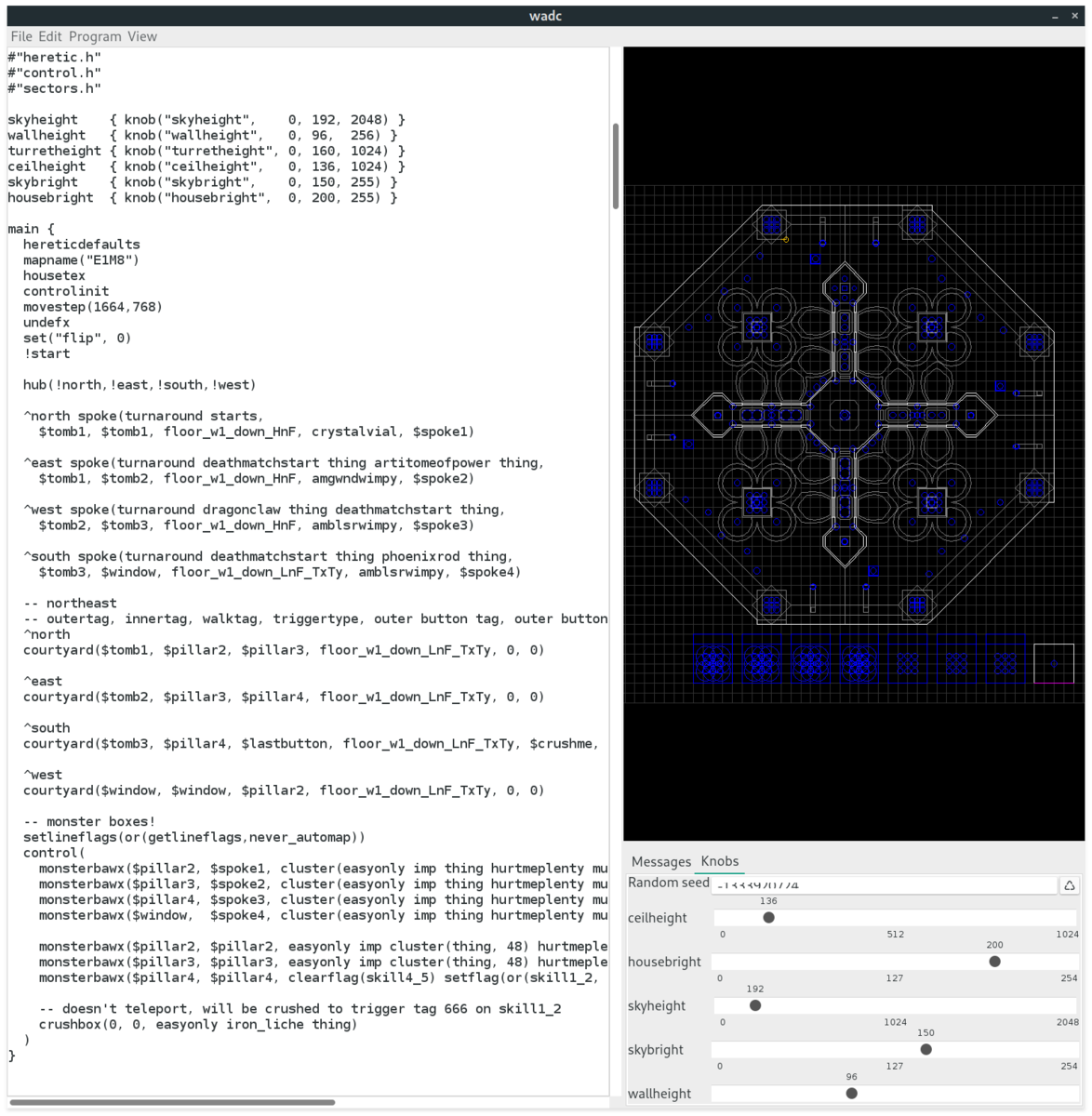
Example map with tuneables on the right Example map with tuneables on the right
WadC the procedural programming environment for generating Doom maps version 3.1 has been released. The majority of this was done a long time ago, but I've dragged my feet in releasing it. I've said this before, but this is intended to be the last release I do of WadC. The headline feature for this release is the introduction of a tuning concept I had for the UI. It occurred to me that a beginner to WadC might want to load up an example program which is potentially very complex and hard to unpick to figure out how it works. If the author could mark certain variables as "tuneable", the UI could provide an easy way for someone to tweak parameters and then see what happened. I had in mind the walls of patch panels and knobs you see with analog synthesizers: tweak this thing over here and see what happens over there. I think this kind of feature would be useful in other, similar programming environments, like OpenSCAD: I don't think they do yet, but I could be wrong.
Kayvan and Me, riding horse statues, somewhere in Germany, in the 1990s
This release of WadC is dedicated to the memory of Kayvan Walker (1983-2022). Kayvan was a childhood friend who committed suicide in March this year. Back in the nineties, Kayvan was responsible for introducing me to Doom in the first place: I used to visit his house on the way home to mine, as it was on the walk back from School. His mum works in IT and always encouraged us into it. Doom was so far ahead, in technical terms, of any other computer game I'd ever seen, and was the closest thing we had to virtual reality: we could create our own worlds. It's in no small part thanks to Kayvan and his Mum that I'm still creating worlds, nearly thirty years later. I owe my career and most of my hobbies to those pivotal moments. Thank you both. Kayvan did a lot more for me than just introduce me to Doom, or computing. He was one of a set of friends that I had every confidence that, no matter what, we would always be friends, through thick and thin. I miss him terribly. Please, if you reading this, are suffering, talk to someone. In the UK you can talk to Samaritans on 116 123.

26 June 2022

Russ Allbery: Review: Feet of Clay

Review: Feet of Clay, by Terry Pratchett
Series: Discworld #19
Publisher: Harper
Copyright: October 1996
Printing: February 2014
ISBN: 0-06-227551-8
Format: Mass market
Pages: 392
Feet of Clay is the 19th Discworld novel, the third Watch novel, and probably not the best place to start. You could read only Guards! Guards! and Men at Arms before this one, though, if you wanted. This story opens with a golem selling another golem to a factory owner, obviously not caring about the price. This is followed by two murders: an elderly priest, and the curator of a dwarven bread museum. (Dwarf bread is a much-feared weapon of war.) Meanwhile, assassins are still trying to kill Watch Commander Vimes, who has an appointment to get a coat of arms. A dwarf named Cheery Littlebottom is joining the Watch. And Lord Vetinari, the ruler of Ankh-Morpork, has been poisoned. There's a lot going on in this book, and while it's all in some sense related, it's more interwoven than part of a single story. The result felt to me like a day-in-the-life episode of a cop show: a lot of character development, a few largely separate plot lines so that the characters have something to do, and the development of a few long-running themes that are neither started nor concluded in this book. We check in on all the individual Watch members we've met to date, add new ones, and at the end of the book everyone is roughly back to where they were when the book started. This is, to be clear, not a bad thing for a book to do. It relies on the reader already caring about the characters and being invested in the long arc of the series, but both of those are true of me, so it worked. Cheery is a good addition, giving Pratchett an opportunity to explore gender nonconformity with a twist (all dwarfs are expected to act the same way regardless of gender, which doesn't work for Cheery) and, even better, giving Angua more scenes. Angua is among my favorite Watch characters, although I wish she'd gotten more of a resolution for her relationship anxiety in this book. The primary plot is about golems, which on Discworld are used in factories because they work nonstop, have no other needs, and do whatever they're told. Nearly everyone in Ankh-Morpork considers them machinery. If you've read any Discworld books before, you will find it unsurprising that Pratchett calls that belief into question, but the ways he gets there, and the links between the golem plot and the other plot threads, have a few good twists and turns. Reading this, I was reminded vividly of Orwell's discussion of Charles Dickens:
It seems that in every attack Dickens makes upon society he is always pointing to a change of spirit rather than a change of structure. It is hopeless to try and pin him down to any definite remedy, still more to any political doctrine. His approach is always along the moral plane, and his attitude is sufficiently summed up in that remark about Strong's school being as different from Creakle's "as good is from evil." Two things can be very much alike and yet abysmally different. Heaven and Hell are in the same place. Useless to change institutions without a "change of heart" that, essentially, is what he is always saying. If that were all, he might be no more than a cheer-up writer, a reactionary humbug. A "change of heart" is in fact the alibi of people who do not wish to endanger the status quo. But Dickens is not a humbug, except in minor matters, and the strongest single impression one carries away from his books is that of a hatred of tyranny.
and later:
His radicalism is of the vaguest kind, and yet one always knows that it is there. That is the difference between being a moralist and a politician. He has no constructive suggestions, not even a clear grasp of the nature of the society he is attacking, only an emotional perception that something is wrong, all he can finally say is, "Behave decently," which, as I suggested earlier, is not necessarily so shallow as it sounds. Most revolutionaries are potential Tories, because they imagine that everything can be put right by altering the shape of society; once that change is effected, as it sometimes is, they see no need for any other. Dickens has not this kind of mental coarseness. The vagueness of his discontent is the mark of its permanence. What he is out against is not this or that institution, but, as Chesterton put it, "an expression on the human face."
I think Pratchett is, in that sense, a Dickensian writer, and it shows all through Discworld. He does write political crises (there is one in this book), but the crises are moral or personal, not ideological or structural. The Watch novels are often concerned with systems of government, but focus primarily on the popular appeal of kings, the skill of the Patrician, and the greed of those who would maneuver for power. Pratchett does not write (at least so far) about the proper role of government, the impact of Vetinari's policies (or even what those policies may be), or political theory in any deep sense. What he does write about, at great length, is morality, fairness, and a deeply generous humanism, all of which are central to the golem plot. Vimes is a great protagonist for this type of story. He's grumpy, cynical, stubborn, and prejudiced, and we learn in this book that he's a descendant of the Discworld version of Oliver Cromwell. He can be reflexively self-centered, and he has no clear idea how to use his newfound resources. But he behaves decently towards people, in both big and small things, for reasons that the reader feels he could never adequately explain, but which are rooted in empathy and an instinctual sense of fairness. It's fun to watch him grumble his way through the plot while making snide comments about mysteries and detectives. I do have to complain a bit about one of those mysteries, though. I would have enjoyed the plot around Vetinari's poisoning more if Pratchett hadn't mercilessly teased readers who know a bit about French history. An allusion or two would have been fun, but he kept dropping references while having Vimes ignore them, and I found the overall effect both frustrating and irritating. That and a few other bits, like Angua's uncommunicative angst, fell flat for me. Thankfully, several other excellent scenes made up for them, such as Nobby's high society party and everything about the College of Heralds. Also, Vimes's impish PDA (smartphone without the phone, for those younger than I am) remains absurdly good commentary on the annoyances of portable digital devices despite an original publication date of 1996. Feet of Clay is less focused than the previous Watch novels and more of a series book than most Discworld novels. You're reading about characters introduced in previous books with problems that will continue into subsequent books. The plot and the mysteries are there to drive the story but seem relatively incidental to the characterization. This isn't a complaint; at this point in the series, I'm in it for the long haul, and I liked the variation. As usual, Pratchett is stronger for me when he's not overly focused on parody. His own characters are as good as the material he's been parodying, and I'm happy to see them get a book that's not overshadowed by another material. If you've read this far in the series, or even in just the Watch novels, recommended. Followed by Hogfather in publication order and, thematically, by Jingo. Rating: 8 out of 10

24 June 2022

Kees Cook: finding binary differences

As part of the continuing work to replace 1-element arrays in the Linux kernel, it s very handy to show that a source change has had no executable code difference. For example, if you started with this:
struct foo  
    unsigned long flags;
    u32 length;
    u32 data[1];
 ;
void foo_init(int count)
 
    struct foo *instance;
    size_t bytes = sizeof(*instance) + sizeof(u32) * (count - 1);
    ...
    instance = kmalloc(bytes, GFP_KERNEL);
    ...
 ;
And you changed only the struct definition:
-    u32 data[1];
+    u32 data[];
The bytes calculation is going to be incorrect, since it is still subtracting 1 element s worth of space from the desired count. (And let s ignore for the moment the open-coded calculation that may end up with an arithmetic over/underflow here; that can be solved separately by using the struct_size() helper or the size_mul(), size_add(), etc family of helpers.) The missed adjustment to the size calculation is relatively easy to find in this example, but sometimes it s much less obvious how structure sizes might be woven into the code. I ve been checking for issues by using the fantastic diffoscope tool. It can produce a LOT of noise if you try to compare builds without keeping in mind the issues solved by reproducible builds, with some additional notes. I prepare my build with the known to disrupt code layout options disabled, but with debug info enabled:
$ KBF="KBUILD_BUILD_TIMESTAMP=1970-01-01 KBUILD_BUILD_USER=user KBUILD_BUILD_HOST=host KBUILD_BUILD_VERSION=1"
$ OUT=gcc
$ make $KBF O=$OUT allmodconfig
$ ./scripts/config --file $OUT/.config \
        -d GCOV_KERNEL -d KCOV -d GCC_PLUGINS -d IKHEADERS -d KASAN -d UBSAN \
        -d DEBUG_INFO_NONE -e DEBUG_INFO_DWARF_TOOLCHAIN_DEFAULT
$ make $KBF O=$OUT olddefconfig
Then I build a stock target, saving the output in before . In this case, I m examining drivers/scsi/megaraid/:
$ make -jN $KBF O=$OUT drivers/scsi/megaraid/
$ mkdir -p $OUT/before
$ cp $OUT/drivers/scsi/megaraid/*.o $OUT/before/
Then I patch and build a modified target, saving the output in after :
$ vi the/source/code.c
$ make -jN $KBF O=$OUT drivers/scsi/megaraid/
$ mkdir -p $OUT/after
$ cp $OUT/drivers/scsi/megaraid/*.o $OUT/after/
And then run diffoscope:
$ diffoscope $OUT/before/ $OUT/after/
If diffoscope output reports nothing, then we re done. Usually, though, when source lines move around other stuff will shift too (e.g. WARN macros rely on line numbers, so the bug table may change contents a bit, etc), and diffoscope output will look noisy. To examine just the executable code, the command that diffoscope used is reported in the output, and we can run it directly, but with possibly shifted line numbers not reported. i.e. running objdump without --line-numbers:
$ ARGS="--disassemble --demangle --reloc --no-show-raw-insn --section=.text"
$ for i in $(cd $OUT/before && echo *.o); do
        echo $i
        diff -u <(objdump $ARGS $OUT/before/$i   sed "0,/^Disassembly/d") \
                <(objdump $ARGS $OUT/after/$i    sed "0,/^Disassembly/d")
done
If I see an unexpected difference, for example:
-    c120:      movq   $0x0,0x800(%rbx)
+    c120:      movq   $0x0,0x7f8(%rbx)
Then I'll search for the pattern with line numbers added to the objdump output:
$ vi <(objdump --line-numbers $ARGS $OUT/after/megaraid_sas_fp.o)
I'd search for "0x0,0x7f8", find the source file and line number above it, open that source file at that position, and look to see where something was being miscalculated:
$ vi drivers/scsi/megaraid/megaraid_sas_fp.c +329
Once tracked down, I'd start over at the "patch and build a modified target" step above, repeating until there were no differences. For example, in the starting example, I'd also need to make this change:
-    size_t bytes = sizeof(*instance) + sizeof(u32) * (count - 1);
+    size_t bytes = sizeof(*instance) + sizeof(u32) * count;
Though, as hinted earlier, better yet would be:
-    size_t bytes = sizeof(*instance) + sizeof(u32) * (count - 1);
+    size_t bytes = struct_size(instance, data, count);
But sometimes adding the helper usage will add binary output differences since they're performing overflow checking that might saturate at SIZE_MAX. To help with patch clarity, those changes can be done separately from fixing the array declaration.

2022, Kees Cook. This work is licensed under a Creative Commons Attribution-ShareAlike 4.0 License.
CC BY-SA 4.0

23 June 2022

Rapha&#235;l Hertzog: Freexian s report about Debian Long Term Support, May 2022

A Debian LTS logo
Like each month, have a look at the work funded by Freexian s Debian LTS offering. Debian project funding Two [1, 2] projects are in the pipeline now. Tryton project is in a final phase. Gradle projects is fighting with technical difficulties. In May, we put aside 2233 EUR to fund Debian projects. We re looking forward to receive more projects from various Debian teams! Learn more about the rationale behind this initiative in this article. Debian LTS contributors In May, 14 contributors have been paid to work on Debian LTS, their reports are available: Evolution of the situation In May we released 49 DLAs. The security tracker currently lists 71 packages with a known CVE and the dla-needed.txt file has 65 packages needing an update. The number of paid contributors increased significantly, we are pleased to welcome our latest team members: Andreas R nnquist, Dominik George, Enrico Zini and Stefano Rivera. It is worth pointing out that we are getting close to the end of the LTS period for Debian 9. After June 30th, no new security updates will be made available on security.debian.org. We are preparing to overtake Debian 10 Buster for the next two years and to make this process as smooth as possible. But Freexian and its team of paid Debian contributors will continue to maintain Debian 9 going forward for the customers of the Extended LTS offer. If you have Debian 9 servers to keep secure, it s time to subscribe! You might not have noticed, but Freexian formalized a mission statement where we explain that our purpose is to help improve Debian. For this, we want to fund work time for the Debian developers that recently joined Freexian as collaborators. The Extended LTS and the PHP LTS offers are built following a model that will help us to achieve this if we manage to have enough customers for those offers. So consider subscribing: you help your organization but you also help Debian! Thanks to our sponsors Sponsors that joined recently are in bold.

21 June 2022

Louis-Philippe V ronneau: Montreal's Debian & Stuff - June 2022

As planned, we held our second local Debian meeting of the year last Sunday. We met at the lovely Eastern Bloc (an artists' hacklab) to work on Debian (and other stuff!), chat and socialise. Although there were fewer people than at our last meeting1, we still did a lot of work! I worked on fixing a bunch of bugs in Clojure packages2, LeLutin worked on podman and packaged libinfluxdb-http-perl and anarcat worked on internetarchive, trocla and moneta. Olivier also came by and worked on debugging his Kali install. We are planning to have our next meeting at the end of August. If you are interested, the best way to stay in touch is either to subscribe to our mailing list or to join our IRC channel (#debian-quebec on OFTC). Events are also posted on Quebec's Agenda du libre. Many thanks to Debian for providing us a budget to rent the venue for the day and for the pizza! Here is a nice picture anarcat took of (one of) the glasses of porter we had afterwards, at the next door brewery: A glass of English Porter from Silo Brewery

  1. Summer meetings are always less populous and it also happened to be Father's Day...
  2. #1012824, #1011856, #1011837, #1011844, #1011864 and #1011967.

Steve Kemp: Writing a simple TCL interpreter in golang

Recently I was reading Antirez's piece TCL the Misunderstood again, which is a nice defense of the utility and value of the TCL language. TCL is one of those scripting languages which used to be used a hell of a lot in the past, for scripting routers, creating GUIs, and more. These days it quietly lives on, but doesn't get much love. That said it's a remarkably simple language to learn, and experiment with. Using TCL always reminds me of FORTH, in the sense that the syntax consists of "words" with "arguments", and everything is a string (well, not really, but almost. Some things are lists too of course). A simple overview of TCL would probably begin by saying that everything is a command, and that the syntax is very free. There are just a couple of clever rules which are applied consistently to give you a remarkably flexible environment. To get started we'll set a string value to a variable:
  set name "Steve Kemp"
  => "Steve Kemp"
Now you can output that variable:
  puts "Hello, my name is $name"
  => "Hello, my name is Steve Kemp"
OK, it looks a little verbose due to the use of set, and puts is less pleasant than print or echo, but it works. It is readable. Next up? Interpolation. We saw how $name expanded to "Steve Kemp" within the string. That's true more generally, so we can do this:
 set print pu
 set me    ts
 $print$me "Hello, World"
 => "Hello, World"
There "$print" and "$me" expanded to "pu" and "ts" respectively. Resulting in:
 puts "Hello, World"
That expansion happened before the input was executed, and works as you'd expect. There's another form of expansion too, which involves the [ and ] characters. Anything within the square-brackets is replaced with the contents of evaluating that body. So we can do this:
 puts "1 + 1 = [expr 1 + 1]"
 => "1 + 1 = 2"
Perhaps enough detail there, except to say that we can use and to enclose things that are NOT expanded, or executed, at parse time. This facility lets us evaluate those blocks later, so you can write a while-loop like so:
 set cur 1
 set max 10
 while   expr $cur <= $max    
       puts "Loop $cur of $max"
       incr cur
  
Anyway that's enough detail. Much like writing a FORTH interpreter the key to implementing something like this is to provide the bare minimum of primitives, then write the rest of the language in itself. You can get a usable scripting language with only a small number of the primitives, and then evolve the rest yourself. Antirez also did this, he put together a small TCL interpreter in C named picol: Other people have done similar things, recently I saw this writeup which follows the same approach: So of course I had to do the same thing, in golang: My code runs the original code from Antirez with only minor changes, and was a fair bit of fun to put together. Because the syntax is so fluid there's no complicated parsing involved, and the core interpreter was written in only a few hours then improved step by step. Of course to make a language more useful you need I/O, beyond just writing to the console - and being able to run the list-operations would make it much more useful to TCL users, but that said I had fun writing it, it seems to work, and once again I added fuzz-testers to the lexer and parser to satisfy myself it was at least somewhat robust. Feedback welcome, but even in quiet isolation it's fun to look back at these "legacy" languages and recognize their simplicity lead to a lot of flexibility.

20 June 2022

John Goerzen: Pipe Issue Likely a Kernel Bug

Saturday, I wrote in Pipes, deadlocks, and strace annoyingly fixing them about an issue where a certain pipeline seems to have a deadlock. I described tracing it into kernel code. Indeed, it appears to be kernel bug 212295, which has had a patch for over a year that has never been merged. After continuing to dig into the issue, I eventually reported it as a bug in ZFS. One of the ZFS people connected this to an older issue my searching hadn t uncovered. rincebrain summarized:
I believe, if I understand the bug correctly, it only triggers if you F_SETPIPE_SZ when the writer has put nonzero but not a full unit s worth in yet, which is why the world isn t on fire screaming about this you need to either have a very slow but nonzero or otherwise very strange write pattern to hit it, which is why it doesn t come up in, say, the CI or most of my testbeds, but my poor little SPARC (440 MHz, 1c1t) and Raspberry Pis were not so fortunate.
You might recall in Saturday s post that I explained that Filespooler reads a few bytes from the gpg/zstdcat pipeline before spawning and connecting it to zfs receive. I think this is the critical piece of the puzzle; it makes it much more likely to encounter the kernel bug. zfs receive is calls F_SETPIPE_SZ when it starts. Let s look at how this could be triggered: In the pre-Filespooler days, the gpg zstdcat zfs pipeline was all being set up at once. There would be no data sent to zfs receive until gpg had initialized and begun to decrypt the data, and then zstdcat had begun to decompress it. Those things almost certainly took longer than zfs receive s initialization, meaning that usually F_SETPIPE_SZ would have been invoked before any data entered the pipe. After switching to Filespooler, the particular situation here has Filespooler reading somewhere around 100 bytes from the gpg zstdcat part of the pipeline before ever invoking zfs receive. zstdcat generally emits more than 100 bytes at a time. Therefore, when Filespooler invokes zfs receive and hooks the pipeline up to it, it has a very high chance of there already being data in the pipeline when zfs receive uses F_SETPIPE_SZ. This means that the chances of encountering the conditions that trigger the particular kernel bug are also elevated. ZFS is integrating a patch to no longer use F_SETPIPE_SZ in zfs receive. I have applied that on my local end to see what happens, and hopefully in a day or two will know for sure if it resolves things. In the meantime, I hope you enjoyed this little exploration. It resulted in a new bug report to Rust as well as digging up an existing kernel bug. And, interestingly, no bugs in filespooler. Sometimes the thing that changed isn t the source of the bug!

19 June 2022

Dirk Eddelbuettel: #38: Faster Feedback Systems

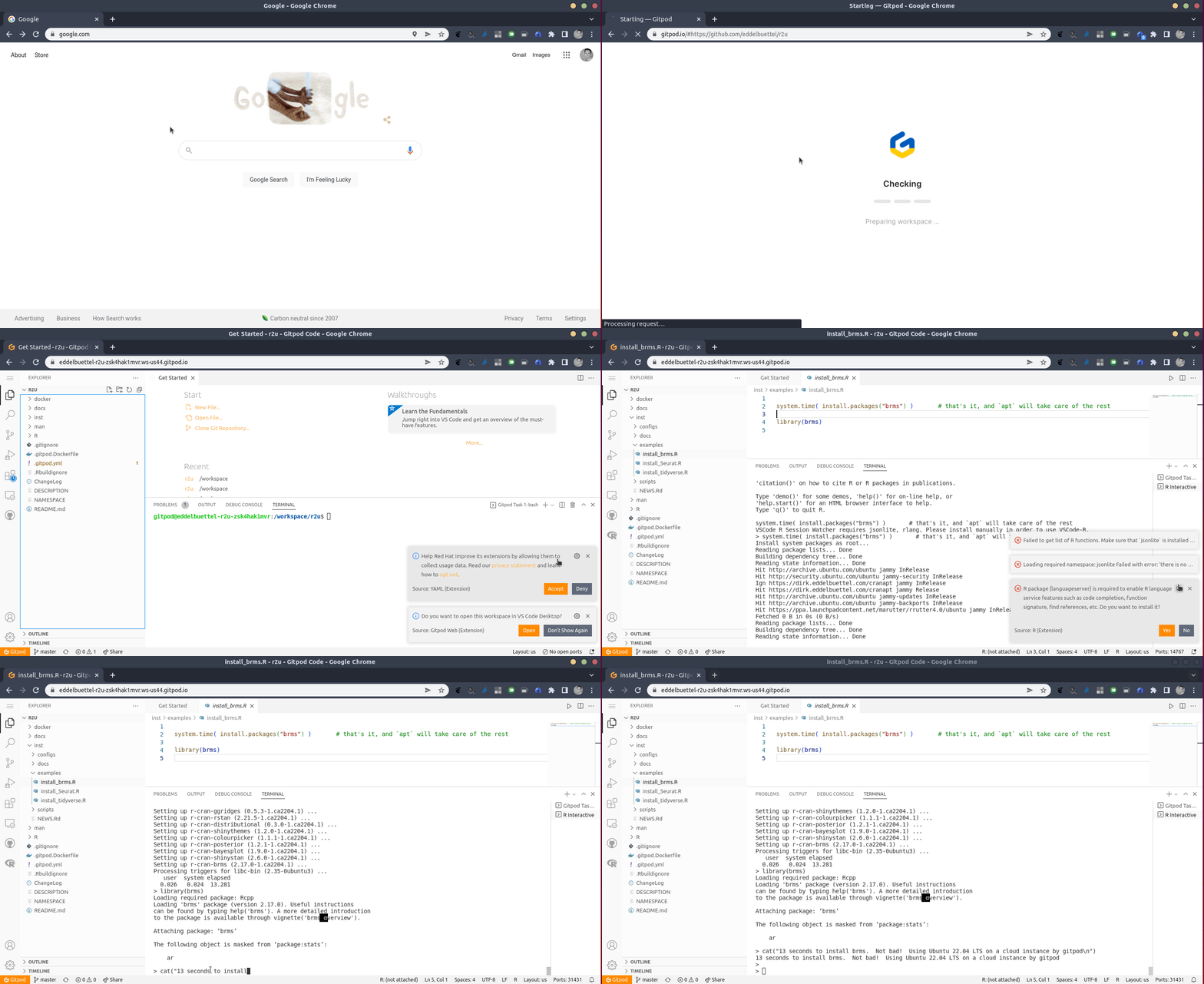
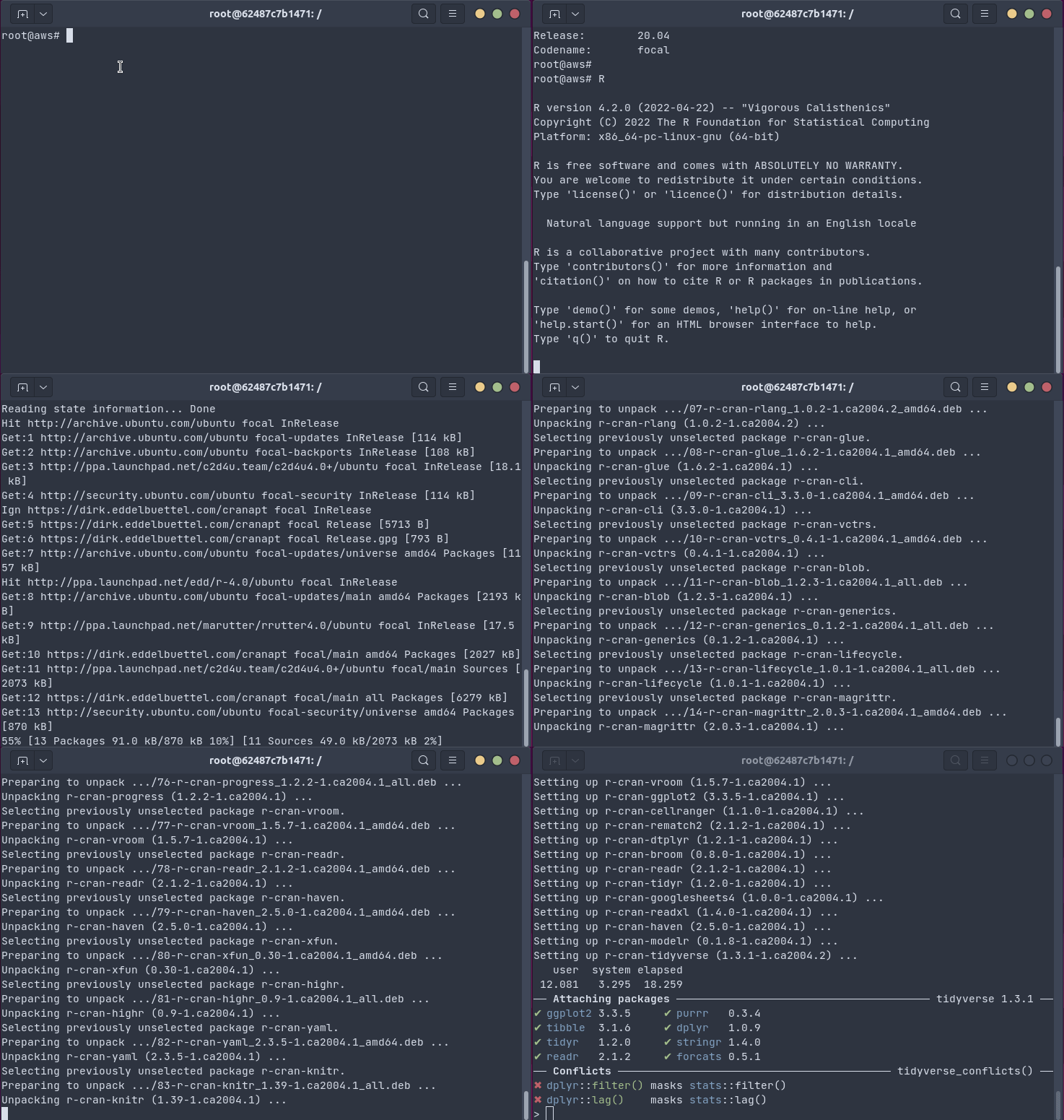
Engineers build systems. Good engineers always stress and focus efficiency of these systems. Two recent examples of engineering thinking follow. One was in a video / podcast interview with Martin Thompson (who is a noted high-performance code expert) I came across recently. The overall focus of the hour-long interview is on managing software complexity . Around minute twenty-two, the conversation turns to feedback loops and systems, and a strong preference for simple and fast systems for more immediate feedback. An important topic indeed. The second example connects to this and permeates many tweets and other writings by Erik Bernhardsson. He had an earlier 2017 post on Optimizing for iteration speed , as well as a 17 May 2022 tweet on minimizing feedback loop size, another 28 Mar 2022 tweet reply on shorter feedback loops, then a 14 Feb 2022 post on problems with slow feedback loops, as well as a 13 Jan 2022 post on a priority for tighter feedback loops, and lastly a 23 Jul 2021 post on fast feedback cycles. You get the idea: Erik really digs faster feedback loops. Nobody likes to wait: immediatecy wins each time. A few years ago, I had touched on this topic with two posts on how to make (R) package compilation (and hence installation) faster. One idea (which I still use whenever I must compile) was in post #11 on caching compilation. Another idea was in post #13: make it faster by not doing it, in this case via binary installation which skip the need for compilation (and which is what I aim for with, say, CI dependencies). Several subsequent posts can be found by scrolling down the r^4 blog section: we stressed the use of the amazing Rutter PPA c2d4u for CRAN binaries (often via Rocker containers, the (post #28) promise of RSPM, and the (post #29) awesomeness of bspm. And then in the more recent post #34 from last December we got back to a topic which ties all these things together: Dependencies. We quoted Mies van der Rohe: Less is more. Especially when it comes to dependencies as these elongate the feedback loop and thereby delay feedback. Our most recent post #37 on r2u connects these dots. Access to a complete set of CRAN binaries with full-dependency resolution accelerates use and installation. This of course also covers testing and continuous integration. Why wait minutes to recompile the same packages over and over when you can install the full Tidyverse in 18 seconds or the brms package and all it needs in 13 seconds as shown in the two gifs also on the r2u documentation site. You can even power up the example setup of the second gif via this gitpod link giving you a full Ubuntu 22.04 session in your browser to try this: so go forth and install something from CRAN with ease! The benefit of a system such our r2u CRAN binaries is clear: faster feedback loops. This holds whether you work with few or many dependencies, tiny or tidy. Faster matters, and feedback can be had sooner. And with the title of this post we now get a rallying cry to advocate for faster feedback systems: FFS .

This post by Dirk Eddelbuettel originated on his Thinking inside the box blog. Please report excessive re-aggregation in third-party for-profit settings.

John Goerzen: Pipes, deadlocks, and strace annoyingly fixing them

This is a complex tale I will attempt to make simple(ish). I ve (re)learned more than I cared to about the details of pipes, signals, and certain system calls and the solution is still elusive. For some time now, I have been using NNCP to back up my files. These backups are sent to my backup system, which effectively does this to process them (each ZFS send is piped to a shell script that winds up running this):
gpg -q -d   zstdcat -T0   zfs receive -u -o readonly=on "$STORE/$DEST"
This processes tens of thousands of zfs sends per week. Recently, having written Filespooler, I switched to sending the backups using Filespooler over NNCP. Now fspl (the Filespooler executable) opens the file for each stream and then connects it to what amounts to this pipeline:
bash -c 'gpg -q -d 2>/dev/null   zstdcat -T0'   zfs receive -u -o readonly=on "$STORE/$DEST"
Actually, to be more precise, it spins up the bash part of it, reads a few bytes from it, and then connects it to the zfs receive. And this works well almost always. In something like 1/1000 of the cases, it deadlocks, and I still don t know why. But I can talk about the journey of trying to figure it out (and maybe some of you will have some ideas). Filespooler is written in Rust, and uses Rust s Command system. Effectively what happens is this:
  1. The fspl process has a File handle, which after forking but before invoking bash, it dup2 s to stdin.
  2. The connection between bash and zfs receive is a standard Unix pipe.
I cannot get the problem to duplicate when I run the entire thing under strace -f. So I am left trying to peek at it from the outside. What happens if I try to attach to each component with strace -p? So the plot thickens! Why would connecting to zstdcat and zfs receive cause them to actually change behavior? strace works by using the ptrace system call, and ptrace in a number of cases requires sending SIGSTOP to a process. In a complicated set of circumstances, a system call may return EINTR when a SIGSTOP is received, with the idea that the system call should be retried. I can t see, from either zstdcat or zfs, if this is happening, though. So I thought, how about having Filespooler manually copy data from bash to zfs receive in a read/write loop instead of having them connected directly via a pipe? That is, there would be two pipes going there: one where Filespooler reads from the bash command, and one where it writes to zfs. If nothing else, I could instrument it with debugging. And so I did, and I found that when it deadlocked, it was deadlocking on write but with no discernible pattern as to where or when. So I went back to directly connected. In analyzing straces, I found a Rust bug which I reported in which it is failing to close the read end of a pipe in the parent post-fork. However, having implemented a workaround for this, it doesn t prevent the deadlock so this is orthogonal to the issue at hand. Among the two strange things here are things returning to normal when I attach strace to zstdcat, and things crashing when I attach strace to zfs. I decided to investigate the latter. It turns out that the ZFS code that is reading from stdin during zfs receive is in the kernel module, not userland. Here is the part that is triggering the imcomplete stream error:
                int err = zfs_file_read(fp, (char *)buf + done,
                    len - done, &resid);
                if (resid == len - done)  
                        /*
                         * Note: ECKSUM or ZFS_ERR_STREAM_TRUNCATED indicates
                         * that the receive was interrupted and can
                         * potentially be resumed.
                         */
                        err = SET_ERROR(ZFS_ERR_STREAM_TRUNCATED);
                 
resid is an output parameter with the number of bytes remaining from a short read, so in this case, if the read produced zero bytes, then it sets that error. What s zfs_file_read then? It boils down to a thin wrapper around kernel_read(). This winds up calling __kernel_read(), which calls read_iter on the pipe, which is pipe_read(). That s where I don t have the knowledge to get into the weeds right now. So it seems likely to me that the problem has something to do with zfs receive. But, what, and why does it only not work in this one very specific situation, and only so rarely? And why does attaching strace to zstdcat make it all work again? I m indeed puzzled! Update 2022-06-20: See the followup post which identifies this as likely a kernel bug and explains why this particular use of Filespooler made it easier to trigger.

18 June 2022

Bastian Venthur: blag is now available in Debian

Last year, I wrote my own blog-aware static site generator in Python. I called it blag named after the blag of the webcomic xkcd. Now I finally got around packaging- and uploading blag to Debian. It passed the NEW queue and is now part of the distribution. That means if you re using Debian, you can install it via:
sudo aptitude install blag
Ubuntu will probably follow soon. For every other system, blag is also available on PyPI:
pip install blag
To get started, you can
mkdir blog && cd blog
blag quickstart                        # fill out some info
nvim content/hello-world.md            # write some content
blag build                             # build the website
Blag is aware of articles and pages: the difference is that articles are part of the blog and will be added to the atom feed, the archive and aggregated in the tag pages. Pages are just rendered out to HTML. Articles and pages can be freely mixed in the content directory, what differentiates an article from a page is the existence of the dade metadata element:
title: My first article
description: Short description of the article
date: 2022-06-18 23:00
tags: blogging, markdown
## Hello World!
Lorem ipsum.
[...]
blag also comes with a dev-server that rebuilds the website automatically on every change detected, you can start it using:
blag serve
The default theme looks quite ugly, and you probably want to create your own styling to make it more beautiful. The process is not very difficult if you re familiar with jinja templating. Help on that can be found in the Templating section of the online documentation, the offline version in the blag-doc package, or the man page, respectively. Speaking of the blag-doc package: packaging it was surprisingly tricky, and it also took me a lot of trial and error to realize that dh_sphinxdocs alone does not automatically put the generated html output into the appropriate package, you rather have to list them in the package.docs-file (i.e. blag-doc.docs) so dh_installdocs can install them properly.

16 June 2022

Dirk Eddelbuettel: RcppArmadillo 0.11.2.0.0 on CRAN: New Upstream

armadillo image Armadillo is a powerful and expressive C++ template library for linear algebra and scientific computing. It aims towards a good balance between speed and ease of use, has a syntax deliberately close to Matlab, and is useful for algorithm development directly in C++, or quick conversion of research code into production environments. RcppArmadillo integrates this library with the R environment and language and is widely used by (currently) 991 other packages on CRAN, downloaded over 25 million times (per the partial logs from the cloud mirrors of CRAN), and the CSDA paper (preprint / vignette) by Conrad and myself has been cited 476 times according to Google Scholar. This release brings a second upstream fix by Conrad in the release series 11.*. We once again tested this very rigorously via a complete reverse-depedency check (for which results are always logged here). It so happens that CRAN then had a spurious error when re-checking on upload, and it took a fews days to square this as everybody remains busy but the release prepared on June 10 is now on CRAN. The full set of changes (since the last CRAN release 0.11.1.1.0) follows.

Changes in RcppArmadillo version 0.11.2.0.0 (2022-06-10)
  • Upgraded to Armadillo release 11.2 (Classic Roast)
    • faster handling of sparse submatrix column views by norm(), accu(), nonzeros()
    • extended randu() and randn() to allow specification of distribution parameters
    • internal refactoring, leading to faster compilation times

Courtesy of my CRANberries, there is a diffstat report relative to previous release. More detailed information is on the RcppArmadillo page. Questions, comments etc should go to the rcpp-devel mailing list off the R-Forge page. If you like this or other open-source work I do, you can sponsor me at GitHub.

This post by Dirk Eddelbuettel originated on his Thinking inside the box blog. Please report excessive re-aggregation in third-party for-profit settings.

15 June 2022

Dirk Eddelbuettel: AsioHeaders 1.22.1-1 on CRAN

An updated version of the AsioHeaders package arrived at CRAN yesterday (in one of those pleasant fully-automated uploads and transitions). Asio provides a cross-platform C++ library for network and low-level I/O programming. It is also included in Boost but requires linking when used as part of Boost. This standalone version of Asio is a header-only C++ library which can be used without linking (just like our BH package with parts of Boost). This release brings a new upstream version, following a two-year period without updated. This was tickled by OpenSSL 3.0 header changes as seen in a package using both AsioHeaders and OpenSSL.

Changes in version 1.22.1-1 (2022-06-14)
  • Upgraded to Asio 1.22.1 (Dirk in #7 fixing #6).

Thanks to my CRANberries, there is also a diffstat report relative to the previous release. Comments and suggestions about AsioHeaders are welcome via the issue tracker at the GitHub GitHub repo. If you like this or other open-source work I do, you can now sponsor me at GitHub.

This post by Dirk Eddelbuettel originated on his Thinking inside the box blog. Please report excessive re-aggregation in third-party for-profit settings.

13 June 2022

Edward Betts: Fixing spelling in GitHub repos using codespell

Codespell is a spell checker specifically designed for finding misspellings in source code. I've been using it to correct spelling mistakes in GitHub repos sine 2016. Most spell checkers use a list of valid words and highlighting any word in a document that is not in the word list. This method doesn't work for source code because code contains abbreviations and words joined together without spaces, a spell checker will generate too many false positives. Codespell uses a different approach, instead of a list of valid words it has a dictionary of common misspellings. Currently the codespell dictionary includes 34,466 known misspellings. I've contributed 300 misspellings to the dictionary. Whenever I find an interesting open source project I run codespell to check for spelling mistakes. Most projects have spelling mistakes and I can send a pull request to fix them. In 2019 Microsoft made the Windows calculator open source and uploaded it to GitHub. I used codespell to find some spelling mistakes, sent them a pull request and they accepted it. A great source for GitHub repos to spell check is Hacker News. Let's have a look.
Hacker News has a link to forum software called Flarum. I can use codespell to look for spelling mistakes. When I'm looking for errors in a GitHub repo I don't fork the project until I know there is a spelling mistake to fix.
edward@x1c9 ~/spelling> git clone git@github.com:flarum/flarum.git
Cloning into &aposflarum&apos...
remote: Enumerating objects: 1338, done.
remote: Counting objects: 100% (42/42), done.
remote: Compressing objects: 100% (23/23), done.
remote: Total 1338 (delta 21), reused 36 (delta 19), pack-reused 1296
Receiving objects: 100% (1338/1338), 725.02 KiB   1.09 MiB/s, done.
Resolving deltas: 100% (720/720), done.
edward@x1c9 ~/spelling> cd flarum/
edward@x1c9 ~/spelling/flarum (master)> codespell -q3
./public/web.config:13: sensitve ==> sensitive
edward@x1c9 ~/spelling/flarum (master)> gh repo fork
  Created fork EdwardBetts/flarum
? Would you like to add a remote for the fork? Yes
  Added remote origin
edward@x1c9 ~/spelling/flarum (master)> git checkout -b spelling
Switched to a new branch &aposspelling&apos
edward@x1c9 ~/spelling/flarum (spelling)> codespell -q3
./public/web.config:13: sensitve ==> sensitive
edward@x1c9 ~/spelling/flarum (spelling)> codespell -q3 -w
FIXED: ./public/web.config
edward@x1c9 ~/spelling/flarum (spelling)> git commit -am "Correct spelling mistakes"
[spelling bbb04c7] Correct spelling mistakes
 1 file changed, 1 insertion(+), 1 deletion(-)
edward@x1c9 ~/spelling/flarum (spelling)> git push -u origin
Enumerating objects: 7, done.
Counting objects: 100% (7/7), done.
Delta compression using up to 8 threads
Compressing objects: 100% (4/4), done.
Writing objects: 100% (4/4), 360 bytes   360.00 KiB/s, done.
Total 4 (delta 3), reused 0 (delta 0), pack-reused 0
remote: Resolving deltas: 100% (3/3), completed with 3 local objects.
remote: 
remote: Create a pull request for &aposspelling&apos on GitHub by visiting:
remote:      https://github.com/EdwardBetts/flarum/pull/new/spelling
remote: 
To github.com:EdwardBetts/flarum.git
 * [new branch]      spelling -> spelling
branch &aposspelling&apos set up to track &aposorigin/spelling&apos.
edward@x1c9 ~/spelling/flarum (spelling)> gh pr create 
Creating pull request for EdwardBetts:spelling into master in flarum/flarum
? Title Correct spelling mistakes
? Choose a template Open a blank pull request
? Body <Received>
? What&aposs next? Submit
https://github.com/flarum/flarum/pull/81
edward@x1c9 ~/spelling/flarum (spelling)> 
That worked. I found one spelling mistake, the word "sensitive" was spelled wrong. I forked the repo, fixed the spelling mistake and submitted the fix as a pull request.
The maintainer of Flarum accepted my pull request. Fixing spelling mistakes in Bootstrap helped me unlocked the Mars 2020 Contributor achievements on GitHub.
Why not try running codespell on your own codebase? You'll probably find some spelling mistakes to fix.

Ben Hutchings: Debian LTS work, May 2022

In May I was assigned 11 hours of work by Freexian's Debian LTS initiative and carried over 13 hours from April. I worked 8 hours, and will carry over the remaining time to June. I spent some time triaging security issues for Linux, working out which of them were fixed upstream and which actually applied to the versions provided in Debian 9 "stretch". I rebased the Linux 4.9 (linux) package on the latest stable update, but did not make an upload this month. I started backporting several security fixes to 4.9, but those still have to be tested and reviewed.

Next.
Previous.