Search Results: "tb"

14 May 2014

C.J. Adams-Collier: Configuring voice service on a Cisco 2801 Integrated Services Router via Asterisk

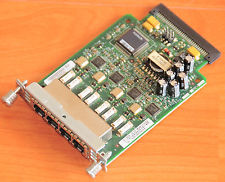
So I ve configured voice service a number of times, but never using Cisco equipment. There s a business starting up here on Orcas Island and they need a number of lines voice and fax service. I had a spare 2801 router laying around and heard that it s possible to provision voice service using these machines. So I looked on eBay for a module that will provide more than two FXS ports and decided on the VIC-4FXS. When it was delivered, I installed it and booted the router. It told me that it needed a PVDM DSP Module, so I got one of those as well. It has arrived. I have installed it. Now when I boot the router, I don t get a warning or an error. configure the router to send outbound calls to the SIP server configure the router to send inbound calls to FXS ports 2,3,4 in round robin
trunk group FXSlines
!
voice-port 0/2/1
 trunk-group FXSlines
!
voice-port 0/2/2
 trunk-group FXSlines
!
voice-port 0/2/3
 trunk-group FXSlines
configure the router to send inbound calls to the correct ports on the VIC-4FXS
dial-peer voice 1 pots
 preference 7
 destination-pattern 3602987792
 translate-outgoing called 10
 port 0/2/0
 forward-digits all
!
dial-peer voice 2 pots
 preference 2
 destination-pattern 3602987793
 translate-outgoing called 10
 port 0/2/1
 forward-digits all
!
dial-peer voice 3 pots
 preference 3
 destination-pattern 3602987794
 translate-outgoing called 10
 port 0/2/2
 forward-digits all
!
dial-peer voice 4 pots
 preference 4
 destination-pattern 3602987795
 translate-outgoing called 10
 port 0/2/3
 forward-digits all
configure the router to accept inbound calls from the asterisk call server
voice service voip
 allow-connections sip to sip
 no supplementary-service sip moved-temporarily
 no supplementary-service sip refer
 fax protocol t38 ls-redundancy 0 hs-redundancy 0 fallback cisco
 sip
  registrar server expires max 3600 min 3600
  localhost dns:8.8.8.8
configure the asterisk call server to send inbound calls to the router On asterisk call server, edit sip.conf to register with SIP server on cisco router at 172.16.78.209:
[fhvoice]
type=peer
insecure=port,invite
context=fhvoice
disallow=all
allow=ulaw
language=en
canreinvite=no
host=172.16.78.209
qualify=20000
dtmfmode=rfc2833
On asterisk call server, edit extensions.conf and add extensions to the incoming context:
exten => 3602987792,1,Dial(SIP/fhvoice/$ EXTEN ,30)
   same => n,Hangup()
exten => 3602987793,1,Dial(SIP/fhvoice/$ EXTEN ,30)
   same => n,Hangup()
exten => 3602987794,1,Dial(SIP/fhvoice/$ EXTEN ,30)
   same => n,Hangup()
exten => 3602987795,1,Dial(SIP/fhvoice/$ EXTEN ,30)
   same => n,Hangup()
configure the asterisk call server to accept outbound calls from the router

Francesca Ciceri: A month with Mozilla

Random thoughts of a new contributor I've started to contribute to Mozilla - and particularly to the Firefox Desktop QA team - at the end of March, in order to apply for the OPW with Mozilla as Bug Wrangler.
While being already part of the Free Software world as contributor clearly helps, it's always difficult to find your way at first in such a big project, no matter how helpful the people you're working with are. It's about trying to understand how the project is organized and who works on what, what is expected from you as contributor and the specific style of interaction and contribution accepted in the project. So, here's a couple of thought about it: the necessary disclaimer is that I'm a long-time Debian contributor meaning that, inevitably, Debian is my reference model. Also, everything I'm writing here regards only the specific part of the project I've been working in: Desktop QA and Bugmastering. Documentation The first thing that I noticed is the huge amount of documentation. Everything is very well documented and while this is definitely a plus in my book, it's sometimes difficult to keep track of all this resources. AFAICT, there are basically three main sources of documentation:
  1. the wiki
  2. the Mozilla Developer Network
  3. the site of the QA team
Some of the documents on these three different places are sometimes similar, making them redundant and it's difficult to remember where you read what. At least for me. My workaround has been to bookmark pages as a mad woman, and also to make a list on my wikipage of the pages I found more useful.
My top five of useful pages? Here we go!
  1. a bug's life: lifecycle of bugs in BMO
  2. Tyler's BMO survival guide (parts 1, 2 and 3)
  3. Tyler's Triage Guidelines
  4. on reducing testcases
  5. bug verification walkthrough
And speaking of triage, special shout-out for the most useful addon ever for Mozilla triagers/testers: Nightly Tester Tools. Community interaction For someone coming from Debian, where everything is done via public mailing lists and/or IRC chans, Mozilla was a bit of a cultural shock. The mailing lists are not very much used, at least in the QA community (or I'm not subscribed to the right ones ;)). As for IRC, while there are many channels, they are not very active: meetings and important discussions are held using a proprietary videoconference software (Vidyo), and are mostly restricted to employees (but other people can join if they have a guest URL). On the other hand, every time I asked for help - even the most stupid question - on IRC, I got a useful reply. And thanks to the folks on #testdays and #qa (especially petruta and Aleksej) I was able to speed up the learning process and understand how things work in the project. So, while I'd like to see more public meetings, it's also true that the community is working well on interaction among contributors. Community outreach This is where I think Debian could borrow a couple of ideas. Mozilla basically got me hooked thanks to their Bugdays: every Monday and Wednesday are - respectively - dedicated to Triage and Verification of bugs. The events are open to everyone, the wikipages for the events provide a good tutorial explaining the workflow in detail, and if you have any doubts there are always people willing to help you on the dedicated IRC chan. Every bug worked on during these events is also tagged: so that later it's possible to check how successful the day was in terms of participation. Bugzilla and the triaging/verification workflow About Bugzilla I can only say that I like it. I like how flexible is for search queries, I like the possibility to have custom tags on the whiteboard (as the [bugday-xxxxxx] one) and the smart way to interact among people in the bug without making the bug go stale (ie, mostly the needinfo feature). But beside the software used as BTS, I must admit that I really like the workflow and the whole concept of triaging in Mozilla. The granularity of rights (everyone, canconfirm, editbugs) and the clear procedure for a permission upgrade; the presence of a team constantly working on cleaning the incoming bugs, regardless of the product/component, to make easier for the developers the filtering and the resolution as well; the attention to details of the verification process: each bug marked as Resolved Fixed need to be Verified, to be sure that it's been actually fixed... All these things are really impressive. This, obviously, is something that can be done inside an upstream project where there are people doing paid work, and where the products are not too many. I cannot see how this kind of QA process can be applied to bugs against an entire OS.
But there are some things we (as in Debian) could take inspiration from. Organizing regular Bugdays, for instance. Creating a team of triagers to help both with incoming and with very old bugs. And this, again, is a kind of work that can be done by everyone, not only coding contributors: meaning that an additional effect would be to increase the diversity in the contributors pool. As a side note: I'll start my OPW internship next Monday, and will spend three months playing with bugs and learning how to be a Bug Wrangler! \o/\o/

Jose Luis Rivas: transloadit-api v1.0.0-rc1

A release candidate for v1.0.0 of transloadit-api is out. You can install it via npm and give it a try.
npm install transloadit-api@1.0.0-rc1
Now it supports the full transloadit API, together with signature's creation, assemblies, notifications and templates management. The source is on github, the docs are in this website as well as in the comments in the code (which is the source for the website) and of course, any issue just report it on the github's tracker. It has a lot of tests but there are some tests missing, specially for operations that require internet. Hopefully I will have time to write them this week and then release a proper v1.0.0.

13 May 2014

Hideki Yamane: rpm % ?_smp_flags macro for dpkg-buildpackage

I've watched openSUSE Conference video and been interested in RPM packaging workshop. Some features are nice, so I'd like to introduce one of those.

He says
Using % ?_smp_flags can speed up your build a lot.
Above RPM macro enables SMP, use all CPU cores to build package and it looks good. We can easily buy multi core processor machine nowadays even if it is cheapest laptop.

In Debian, we can do parallel build by specifiying DEBBUILDOPT=-"j<job number>" in /etc/pbuilderrc and run pbuilder/cowbuilder, but this % ?_smp_flags can automatically use multiple cores without any setting, good. However, add % ?_smp_flags to each rpm spec file, it means that we need to modify each source package, is not handy.

Then back to Debian, I've made a quick hack to dpkg-buildpackage (disclaimer: I'm Perl beginner, you know :).


Pros)
- Automatically use all CPU cores to build package, faster build.

Cons)
- some package would be FTBFS (e.g. Bug#694726) but it should be fixed, right? ;)


It may break some builds but "enable multiple build by default, and specify single build exceptions to each problematic packages" is better, IMHO.

Any suggestions are welcome, of course.

Jose Luis Rivas: angular-geocomplete's first version

So I was needing a resulting JSON array with possible solutions for a given address or city name and then angular-geocomplete was made. The great thing is that you can use it together with typeahead and now you have address/location autocomplete, just like the one on Google Maps. And yes, it does uses Google Maps's API. What's the advantage of this thing? You get coordinates together with all the names. Installable via bower as well with bower install angular-geocomplete. Any issue: to the GitHub tracker.

12 May 2014

Russell Coker: BTRFS vs LVM

For some years LVM (the Linux Logical Volume Manager) has been used in most Linux systems. LVM allows one or more storage devices (either disks, partitions, or RAID sets) to be assigned to a Volume Group (VG) some of which can then allocated to a Logical Volume (LVs) which are equivalent to any other block device, a VG can have many LVs. One of the significant features of LVM is that you can create snapshots of a LV. One common use is to have multiple snapshots of a LV for online backups and another is to make a snapshot of a filesystem before making a backup to external storage, the snapshot is unchanging so there s no problem of inconsistencies due to backing up a changing data set. When you create a snapshot it will have the same filesystem label and UUID so you should always mount a LVM device by it s name (which will be /dev/$VGNAME/$LVNAME). One of the problems with the ReiserFS filesystem was that there was no way to know whether a block of storage was a data block, a metadata block, or unused. A reiserfsck --rebuild-tree would find any blocks that appeared to be metadata and treat them as such, deleted files would reappear and file contents which matched metadata (such as a file containing an image of a ReiserFS filesystem) would be treated as metadata. One of the impacts of this was that a hostile user could create a file which would create a SUID root program if the sysadmin ran a --rebuild-tree operation. BTRFS solves the problem of filesystem images by using a filesystem specific UUID in every metadata block. One impact of this is that if you want to duplicate a BTRFS filesystem image and use both copies on the same system you need to regenerate all the checksums of metadata blocks with the new UUID. The way BTRFS works is that filesystems are identified by UUID so having multiple block devices with the same UUID causes the kernel to get confused. Making an LVM snapshot really isn t a good idea in this situation. It s possible to change BTRFS kernel code to avoid some of the problems of duplicate block devices and it s most likely that something will be done about it in future. But it still seems like a bad idea to use LVM with BTRFS. The most common use of LVM is to divide the storage of a single disk or RAID array for the use of multiple filesystems. Each filesystem can be enlarged (through extending the LV and making the filesystem use the space) and snapshots can be taken. With BTRFS you can use subvolumes for the snapshots and the best use of BTRFS (IMHO) is to give it all the storage that s available so there is no need to enlarge a filesystem in typical use. BTRFS supports quotas on subvolumes which aren t really usable yet but in the future will remove the need to create multiple filesystems to control disk space use. An important but less common use of LVM is to migrate a live filesystem to a new disk or RAID array, but this can be done by BTRFS too by adding a new partition or disk to a filesystem and then removing the old one. It doesn t seem that LVM offers any benefits when you use BTRFS. When I first experimented with BTRFS I used LVM but I didn t find any benefit in using LVM and it was only a matter of luck that I didn t use a snapshot and break things. Snapshots of BTRFS Filesystems One reason for creating a snapshot of a filesystem (as opposed to a snapshot of a subvolume) is for making backups of virtual machines without support from inside the virtual machine (EG running an old RHEL5 virtual machine that doesn t have the BTRFS utilities). Another is for running training on virtual servers where you want to create one copy of the filesystem for each student. To solve both these problems I am currently using files in a BTRFS subvolume. The BTRFS kernel code won t touch those files unless I create a loop device so I can only create a loop device for one file at a time. One tip for doing this, don t use names such as /xenstore/vm1 for the files containing filesystem images, use names such as /xenstore/vm1-root. If you try to create a virtual machine named vm1 then Xen will look for a file named vm1 in the current directory before looking in /etc/xen and tries to use a filesystem image as a Xen configuration file. It would be nice if there was a path for Xen configuration files that either didn t include the current directory or included it at the end of the list. Including the current directory in the path is a DOS mistake that should have gone away a long time ago. Psychology and Block Devices ZFS has a similar design to BTRFS in many ways and has some similar issues. But one benefit for ZFS is that it manages block devices in a zpool , first you create a zpool with the block devices and after that you can create ZFS filesystems or ZVOL block devices. I think that most sysadmins would regard a zpool as something similar to LVM (which may or may not be correct depending on how you look at it) and immediately rule out the possibility of running a zpool on LVM. BTRFS looks like a regular Unix filesystem in many ways, you can have a single block device that you mount with the usual mount command. The fact that BTRFS can support multiple block devices in a RAID configuration isn t so obvious and the fact that it implements equivalents to most LVM functionality probably isn t known to most people when they start using it. The most obvious way to start using BTRFS is to use it just like an Ext3/4 filesystem on an LV, and to use LVM snapshots to backup data, this is made even more likely by the fact that there is a program to convert a ext2/3/4 filesystem to BTRFS. This seems likely to cause data loss.

5 May 2014

Vincent Bernat: Dashkiosk: manage dashboards on multiple displays

Dashkiosk is a solution to manage dashboards on multiple displays. It comes in four parts:
  1. A server will manage the screens by sending URL to be displayed. A web interface enables an administrator to configure groups of dashboards and attach them to a set of displays.
  2. A receiver runs in a browser attached to each screen. On start, it contacts the server and waits for the URL to display.
  3. An Android application provides a simple fullscreen webview to display the receiver.
  4. A Chromecast custom receiver which will run the regular receiver to display dashboards using Google Chromecast devices. The server is able to drive Chromecast devices through nodecastor, a reimplementation of the sender API.
For a demo, have a look at the following video (it is also available as an Ogg Theora video).

Gunnar Wolf: Correction for @osupiita

I was invited to give a talk at a local conference, OS-UPIITA. I have been invited to this conference before, and will gladly be there again. But I was recently pointed at the invitation poster they are distributing (which I reproduce here for your convenience) And I must make a couple of corrections here:
  1. First and foremost: I don't want to trick anybody. I am not the Director of Debian Mexico. In fact, Debian Mexico does not exist. I am just a humble Debian Developer.
  2. I accept the conference title, because that's what they requested from me. I'm trying to come up with a coherent exposition, but whoever knows me must be perfectly aware that I don't know (nor really care about) how to make money with Free Software. I have lived all of my professional life thanks to Free Software, but I'm against the entrepenurial culture. I will talk about my vision, of course, so if you want to hear me rant, you are invited to join us ;-)
  3. I specifically asked the organizing committee by mid-April, when they gave me the talk title, to replace "Open Source" with "Free Software" in my talk. Even though the conference is called "OS UPIITA" (as it is the Open Source conference in the UPIITA unit of Instituto Polit cnico Nacional), I cannot identify with the Open Source monkier. And if we are talking about a deeply ideological issue, which is the case here, I request to use the name I can relate with. For my talk only, of course.
</rant> But anyway, I will be very happy to be there, and believe me, am working to come up with a good talk. OS-UPIITA friends: Please correct your online banners carrying this wrong data. [update] OS-UPIITA changed the poster! I'm just keeping this one for the memory ;-) [update 2] I was there, and gave the talk. And it was even a success, yay! \o/ Care to see it? Here is the presented material.
AttachmentSize
osupiita_chico.jpg43.74 KB

Thomas Goirand: OpenStack Icehouse bugs all cleaned-up

I ve done some clean-up in the Debian BTS. The result can be seen in the QA graphs: The last remaining 6 bugs are only affecting OpenStack Essex (which is what Wheezy ships, and which unfortunately I have not enough time to support properly), and the last one is waiting for FTP masters approval after I added Python 3 support to oslo-config (OpenStack is slowly moving to Python3, and I ve tried to add support to Python3 in the packages as well each time it was possible). Also, the Icehouse packages have passed the tempest tests (a set of functional tests) which we run in our continuous integration system. As I was doing some triaging, it is possible that some bugs have been closed a bit quickly (like for example the Ceilometer FTBFS which I couldn t reproduce, even with sbuild and cowbuilder), so it is well possible that some more QA work will be needed later on. I m also expecting a new set of patches for supporting Ceph in Nova. I m sure there s issues which we will discover later on, however, it is nice to have this result right after the first Icehouse release of OpenStack. Next up: testing new components that I uploaded for this release: Trove (DB as a Service), Designate (DNS as a Service), Ironic (Metal as a Service, or cloud computing on bare-metal), and TripleO (OpenStack on OpenStack). I unfortunately know already that TripleO and Tuskar wont really work yet, and that it needs some patches to be sent upstream for it to support Debian correctly (let s work it out for Juno!). So please consider it as a technology preview only. Though Trove, Designate and Ironic are supposed to be in good enough shape, I didn t have the chance to test them more than just installing the packages and checking daemons are running and connected to the various components of OpenStack (eg: database, keystone and RabbitMQ). Please do test them and report bugs in the BTS. I d like to thanks Gustavo Panizzo & Thomas Bechtold who contributed to this release, and also the folks at eNovance (Emilien, Cyril, Seb ) who provided precious help with the CI and package quality. See you in the Juno Atlanta design summit next week (as hopefully, my plane ticket issue will be soon solved).

3 May 2014

Matthias Klumpp: Translated AppStream metadata for KDE!

kde-appstreamIt took some time, but now it s finally done: KDE has translations for AppStream upstream metadata! AppStream is a Freedesktop project to extend metadata about the software projects which is available in distributions, especially regarding applications. Distributions compile a metadata file from data collected from packages, .desktop files and possibly other information sources, and create an AppStream XML file from it, which is then directly or via a Xapian cache read by software-center-like applications such as GNOME-Software or KDEs Apper. Since the metadata available from current sources is not standardized and rather poor, upstream projects can ship small XML files, AppStream upstream metadata or AppData in short. These files contain additional information about a project, such as a long description and links to screenshots. They also provide hints about public interfaces a software provides, for example binaries and libraries, making it possible for distributors to give users exactly the right package name in case they are missing a software component. So, in order to represent graphical KDE applications like they deserve it in the new software centers making use of AppStream, we need to ship AppData files, with long descriptions, screenshots and a few URLs. But how can you create these metadata files? In case you want your graphical KDE app to ship an AppData file, there is now a help page on the Techbase Wiki which provides all information needed to get started! For non-visual stuff or software which just wants to publish it s provided interfaces with AppStream metadata, there is a dedicated page for that as well. Shipping metadata for non-GUI apps will help programmers to satisfy depedencies in order to compile new software, enhance bash-completion for missing binaries and provides some other neat stuff (take a look at this blogpost to get a taste of it). And if you want to read a FAQ about the metadata stuff and get the bigger picture, just go to the Techbase Wiki page about AppStream metadata as well. The pages are not 100% final, so if you have questions, please write me a mail and I ll update the pages, or simply correct/refine it by yourself (it s a wiki afterall). And now to the best thing: As soon as you ship an AppStream upstream metadata file (*.appdata.xml* for apps or *.metainfo.xml* for other stuff), the KDE l10n-script (Scripty!) will automatically start translating it, just like we already do with .desktop files. No further actions are necessary. I already have a large amount of metadata files here, partially auto-generated, which show that we have about 160+ applications in KDE which could get an AppData file, not counting any frameworks or other non-GUI stuff yet. Since that is a bit much to submit via Reviewboard (which I originally planned to do), I hope I can commit the changes directly to the respective repositories, where the maintainers can take a look at it and adjust it to their liking. If that idea does not receive approval, I will just publish a set of data at some place for the KDE app maintainers to take as a reference (the auto-generated stuff needs some fixup to be commit-ready (which I d do in case I can just commit changes)). Either way, it is safe now to write and ship AppData files in KDE projects! In order to get your stuff translated, it is necessary that you follow the AppStream 0.6 metadata specification, and not one of ther older revisions. You can easily detect 0.6 metadata by the <component> root node, instead of <application>, or by it having a metadata_license tag. We don t support the older versions simply because it s not necessary, as there were only two KDE projects shipping AppData before, which are now using 0.6 data as well. Since 0.6, the metadata XML format is guaranteed to be stable, and the only reason which could make me change it in an incompatible way is to prevent something as bad as the end of the world from happening (== won t happen ;-) ). You can find the full specification (upstream and distro data) here. All parsers are able to handle 0.6 data now, and the existing tools are almost all migrated already (might take a few months to hit the distributions though). So, happy metadata-writing! :-) Thanks to all people who helped with making this happen, and especially Burkhard L ck and Albert Astals Cid for their patch-review and help with integrating the necessary changes into the KDE l10n-script.

Andrea Veri: Adding reCAPTCHA support to Mailman

The GNOME and many other infrastructures have been recently attacked by an huge amount of subscription-based spam against their Mailman istances. What the attackers were doing was simply launching a GET call against a specific REST API URL passing all the parameters it needed for a subscription request (and confirmation) to be sent out. Understanding it becomes very easy when you look at the following example taken from our apache.log:
May 3 04:14:38 restaurant apache: 81.17.17.90, 127.0.0.1 - - [03/May/2014:04:14:38 +0000] "GET /mailman/subscribe/banshee-list?email=example@me.com&amp;fullname=&amp;pw=123456789&amp;pw-conf=123456789&amp;language=en&amp;digest=0&amp;email-button=Subscribe HTTP/1.1" 403 313 "http://spam/index2.html" "Mozilla/5.0 (Windows NT 6.1; WOW64) AppleWebKit/537.36 (KHTML, like Gecko) Chrome/34.0.1847.131 Safari/537.36"
As you can the see attackers were sending all the relevant details needed for the subscription to go forward (and specifically the full name, the email, the digest option and the password for the target list). At first we tried to either stop the spam by banning the subnets where the requests were coming from, then when it was obvious that more subnets were being used and manual intervention was needed we tried banning their User-Agents. Again no luck, the spammers were smart enough to change it every now and then making it to match an existing browser User-Agent. (with a good percentage to have a lot of false-positives) Now you might be wondering why such an attack caused a lot of issues and pain, well, the attackers made use of addresses found around the web for their malicius subscription requests. That means we received a lot of emails from people that have never heard about the GNOME mailing lists but received around 10k subscription requests that were seemingly being sent by themselves. It was obvious we needed to look at a backup solution and luckily someone on our support channel suggested the freedesktop.org sysadmins recently added CAPTCHAs support to Mailman. I m now sharing the patch and providing a few more details on how to properly set it up on either DEB or RPM based distributions. Credits for the patch should be given to Debian Developer Tollef Fog Heen, who has been so kind to share it with us. Before patching your installation make sure to install the python-recaptcha package (tested on Debian with Mailman 2.1.15) on DEB based distributions and python-recaptcha-client on RPM based distributions. (I personally tested it against Mailman release 2.1.15, RHEL 6) The Patch
diff --git a/Mailman/Cgi/listinfo.py b/Mailman/Cgi/listinfo.py
index 4a54517..d6417ca 100644
--- a/Mailman/Cgi/listinfo.py
+++ b/Mailman/Cgi/listinfo.py
@@ -22,6 +22,7 @@
 
 import os
 import cgi
+import sys
 
 from Mailman import mm_cfg
 from Mailman import Utils
@@ -30,6 +31,8 @@ from Mailman import Errors
 from Mailman import i18n
 from Mailman.htmlformat import *
 from Mailman.Logging.Syslog import syslog
+sys.path.append("/usr/share/pyshared")
+from recaptcha.client import captcha
 
 # Set up i18n
 _ = i18n._
@@ -200,6 +203,9 @@ def list_listinfo(mlist, lang):
     replacements[''] = mlist.FormatFormStart('listinfo')
     replacements[''] = mlist.FormatBox('fullname', size=30)
 
+    # Captcha
+    replacements[''] = captcha.displayhtml(mm_cfg.RECAPTCHA_PUBLIC_KEY, use_ssl=False)
+
     # Do the expansion.
     doc.AddItem(mlist.ParseTags('listinfo.html', replacements, lang))
     print doc.Format()
diff --git a/Mailman/Cgi/subscribe.py b/Mailman/Cgi/subscribe.py
index 7b0b0e4..c1c7b8c 100644
--- a/Mailman/Cgi/subscribe.py
+++ b/Mailman/Cgi/subscribe.py
@@ -21,6 +21,8 @@ import sys
 import os
 import cgi
 import signal
+sys.path.append("/usr/share/pyshared")
+from recaptcha.client import captcha
 
 from Mailman import mm_cfg
 from Mailman import Utils
@@ -132,6 +130,17 @@ def process_form(mlist, doc, cgidata, lang):
     remote = os.environ.get('REMOTE_HOST',
                             os.environ.get('REMOTE_ADDR',
                                            'unidentified origin'))
+
+    # recaptcha
+    captcha_response = captcha.submit(
+        cgidata.getvalue('recaptcha_challenge_field', ""),
+        cgidata.getvalue('recaptcha_response_field', ""),
+        mm_cfg.RECPTCHA_PRIVATE_KEY,
+        remote,
+        )
+    if not captcha_response.is_valid:
+        results.append(_('Invalid captcha'))
+
     # Was an attempt made to subscribe the list to itself?
     if email == mlist.GetListEmail():
         syslog('mischief', 'Attempt to self subscribe %s: %s', email, remote)
Additional setup Then on the /var/lib/mailman/templates/en/listinfo.html template (right below <mm-digest-question-end>) add:
      <tr>
        <td>Please fill out the following captcha</td>
        <td><mm-recaptcha-javascript></TD>
      </tr>
Make also sure to generate a public and private key at https://www.google.com/recaptcha and add the following paramaters on your mm_cfg.py file: Loading reCAPTCHAs images from a trusted HTTPS source can be done by changing the following line:
replacements[''] = captcha.displayhtml(mm_cfg.RECAPTCHA_PUBLIC_KEY, use_ssl=False)
to
replacements[''] = captcha.displayhtml(mm_cfg.RECAPTCHA_PUBLIC_KEY, use_ssl=True)
EPEL 6 related details A few additional details should be provided in case you are setting this up against a RHEL 6 host: (or any other machine using the EPEL 6 package python-recaptcha-client-1.0.5-3.1.el6) Importing the recaptcha.client module will fail for some strange reason, importing it correctly can be done this way:
ln -s /usr/lib/python2.6/site-packages/recaptcha/client /usr/lib/mailman/pythonlib/recaptcha
and then fix the imports also making sure sys.path.append( /usr/share/pyshared ) is not there:
from recaptcha import captcha
That s not all, the package still won t work as expected given the API_SSL_SERVER, API_SERVER and VERIFY_SERVER variables on captcha.py are outdated (filed as bug #1093855), substitute them with the following ones:
API_SSL_SERVER="https://www.google.com/recaptcha/api"
API_SERVER="http://www.google.com/recaptcha/api"
VERIFY_SERVER="www.google.com"
And then on line 76:
url = "https://%s/recaptcha/api/verify" % VERIFY_SERVER,
That should be all! Enjoy!

Russell Coker: Source Escrow for Proprietary Software

British taxpayers are paying for extra support for Windows XP due to a lack of planning by the UK government [1]. While the cost of this is trivial compared to other government stupidity (such as starting wars of aggression) this sort of thing should be stopped. The best way to solve such problems is for governments to only use free software. If the UK government used Red Hat Enterprise Linux then when Red Hat dropped support for old versions they would have the option of providing their own support for old versions, hiring any other company to support old versions, or paying Red Hat for supporting it. In that case the Red Hat offer would probably be quite reasonable as competition drives the prices down. It doesn t seem likely that the UK government will start using only free software in the near future. It s not impossible to do so, there are organisations dedicated to this task such as Free-gov.org which aims to develop e-government software that is under GPL licenses [2]. The Wikipedia page List of Linux Adopters [3] has a large section on government use, while not all entries are positive (some have reverted) it shows that it s possible to use Linux for all areas of government. But governments often move slowly and in the case of wealthy countries such as the UK it can be easier to just tax the citizens a little more than to go to the effort of saving money. But when governments use proprietary software they shouldn t be restricted in support. It seems that the only way to ensure that the government can do what it needs is to have a source escrow system. Then if the company that owned the software ceased supporting it anyone who wanted to offer support would be able to do so. This would probably require that software which is out of support be released to the public domain so that anyone who wanted to tender for such support work could first inspect the code to determine if they were capable of doing the work. People who believe the myths about secret source software claim that allowing the source code to be released would damage the company that owns it. This has been proved incorrect by the occasions when source code for software such as MS-Windows has been released on the Internet with no apparent harm. Also Microsoft have a long history of licensing their source code to universities, governments, and other companies for various purposes (including porting Windows to other CPUs). It s most likely that some part of the UK government already has the full source code to Windows XP, and it s also quite likely that computer criminals have obtained copies of the source by now for the purpose of exploiting security flaws. Also they stop supporting software when they can t make money from providing the usual support, so by definition the value to a company of the copyright is approaching zero by the time they decide to cease support. Given the lack of success experienced by companies that specialise in security (for example the attack on RSA to steal the SecurID data [4]) it doesn t seem plausible that Microsoft has had much success in keeping the source to Windows XP (or any other widely used product) secret over the course of 12 years. In summary source code to major proprietary software products is probably available to criminals long before support expires and is of little value to the copyright owners. But access to it can provide value to governments and other users of the software. The only possible down-side to the software vendor is if the new version doesn t provide any benefits to the user. This could be a problem for Microsoft who seem to have the users hate every second version of Windows enough to pay extra for the old version. The solution is to just develop quality software that satisfies the needs of the users. Providing a legal incentive for this would be a good idea.

2 May 2014

Dimitri John Ledkov: X4D Icons released

I am releasing some icons under MIT license. They will be hosted at x4d.surgut.co.uk and available for development on GitHub.

I had to create my own icons, as I couldn't find icons of similar nature under a free license. Hopefully others will find these useful as well.

The icons below are all available in PNG, GIF, SVG and EPS. To link to a specific version directly, add .png, .gif, -v.svg or -v.eps to the generic URI (or browse the icons repository to see all versions).

Document type Light Dark
HTML 2.0 Valid HTML2 Valid HTML20
HTML 3.2 Valid HTML32 Valid HTML32
HTML 4.0 Valid HTML40 Valid HTML40
HTML 4.01 Valid HTML4.01 Valid HTML4.01
XHTML 1.0 Valid XHTML10 Valid XHTML10
XHTML 1.1 Valid XHTML11 Valid XHTML11
XHTML Basic 1.0 Valid XHTML Basic 10 Valid XHTML Basic 10
XHTML-Print 1.0 Valid XHTML Print 10 Valid XHTML Print 10
CSS Valid CSS Valid CSS
CSS 1 Valid CSS1 Valid CSS1
CSS 2 Valid CSS2 Valid CSS2
MathML 2.0 Valid MathML 20 Valid MATHML20
SVG 1.0 Valid SVG10 Valid SVG10
SVG 1.1 Valid SVG11 Valid SVG11
SVG 1.2 Valid SVG12 Valid SVG12
SVG Tiny 1.1 Valid SVG Tiny11 Valid SVG Tiny11
SVG Tiny 1.2 Valid SVG Tiny12 Valid SVG Tiny12
XML 1.0 well-formed XML10 well-formed XML10
XML 1.1 well-formed XML11 well-formed XML11

1 May 2014

Daniel Pocock: reSIProcate v1.9 WebRTC available for Fedora 20 testing

Today I just released reSIProcate v1.9 packages into the Fedora 20 testing updates repository. This means Fedora 20 users can now try WebRTC more easily. The same version is already available in Debian wheezy-backports and Ubuntu trusty. Get started today Install the resiprocate-repro proxy server package using yum. Set up a DNS entry, here is what we will use in the example:
Domain sip-ws1.example.org
WebSocket URL
Use this in JSCommunicator or JsSIP
ws://sip-ws1.example.org
IP address of server 198.51.100.50
so the DNS entry will be
sip-ws1.example.org.     IN    A    198.51.100.50
Notice that in the ws:// URL, we do not specify a port. This means port 80 is used by default. You can also use a non-standard port if you prefer or if you dont' have root permissions. Now edit the file /etc/repro/repro.config, adding a transport definition for WebSockets (WS) and change a few other parameters from their defaults:
# Bind to 198.51.100.50 on port 80
Transport1Interface = 198.51.100.50:80
# Use WS (can also use WSS for TLS, see repro.config for full details)
Transport1Type = WS
# if using WSS, must also change the transport param here
Transport1RecordRouteUri = sip:sip-ws1.example.org;transport=WS
EnableFlowTokens = true
DisableOutbound = false
# Disable all authentication - just for testing
DisableAuth = false
# allow http admin access on all interfaces,
# default is 127.0.0.1
# HttpBindAddress = 0.0.0.0
Now set up a password for the web admin tool using htdigest:
# htdigest /etc/repro/users.txt repro admin
After all that, restart the repro process
# service repro restart
Go to the web interface on port 5080 (only listening on localhost by default), go to the "ADD DOMAIN" page and add sip-ws1.example.org Now restart repro again so it recognises the new domain.
# service repro restart
Finally, you can test it using JSCommunicator or tryit.jssip.net Next steps
  • Set up a TURN server for NAT traversal
  • Use WebSockets over TLS (WSS) instead of regular WS mode
  • Set up authentication (see the various options, including client certificate support, in repro.confg)
  • Connect to regular SIP infrastructure such as Asterisk
Questions? Please come and ask on the repro-users mailing list

Andrew Pollock: [life] Day 93: A whole lot of running around

This morning Zoe woke up again at around 4am and ended up in bed with me. I don't even remember why she woke up, and neither does she, but she's assuring me it won't happen tomorrow morning. We'll see. As a result of the disturbed night's sleep, we had a bit of a slow start to the day. Zoe was happy to go off and watch some TV after she woke up for the day, and that let me have a bit more of a doze before I got up, which made things vaguely better for me. ABC 4 Kids has been showing a lot of ads for Ha Ha Hairies, which airs at 10:20am, lately, and it's one of the shows that isn't available on iView. Zoe had been lamenting that she never got to see it, and asking me if she could. Today the schedule was fairly open, so I made sure we were home at 10:20am. That involved a quick dash out to Woolies first to get a few bits and pieces for Zoe's birthday party. While Zoe watched the Ha Ha Hairies, I did some bulk egg hard boiling in the oven. After the Ha Ha Hairies and a little bit of general mucking around, we drove out to Spotlight to pick up the helium tank I'd rented. Zoe nearly fell asleep on the way out there. We picked up the helium tank and headed back home. That errand alone probably took a bit over an hour all up. We got back home and had lunch, but by the time all of that was out of the way, Zoe seemed to have missed the window for her nap. She did have a bit of a rest in bed, flipping through her library books, and I got to read some of my book as well, so that was nice. During that time, I got the call from Bunkers saying they were about half an hour out with the delivery of Zoe's bunk bed (my birthday present for her). That worked out well, as it was towards the start of the two hour window they'd advised me of. The bunk bed was delivered and then we popped out to Overflow to see if they had any food covers for the party food (they did) so we picked up a few of them. Today I learned that "As Seen On TV" is trademarked, and so "Similar To As Seen On TV" is the trademark dodging thing to put on cheap knock-offs. As Overflow is two doors down from Petbarn, we stopped in there as well and grabbed some more kitty litter. One does not just pop into Petbarn with Zoe, so we spent some time there looking at the fish and assorting aquarium paraphernalia. They also had some hermit crabs now too. On the way back home, we stopped in at (a different) Woolies to pick up the half slab of chocolate mudcake that I'd ordered for Zoe's birthday cake. I'd decided that the upright Minion cake I'd initially wanted to do was just way too adventurous for my abilities and not a good use of my time (and the quotes I'd sought for outsourcing it had come in at over $300). I scaled things back to just a flat slab Minion, which may still exceed my cake decorating abilities, but we'll find out tomorrow. There'd been a miscommunication at Woolworths, and my half slab hadn't been boxed up and wasn't ready for my collection. All the bakery staff had already gone home, and I didn't really want to come back tomorrow, because I had this crazy idea of possibly starting on the cake tonight (not going to happen), so a couple of non-bakery staff had to find the cake and figure out how to extract a full slab from the baking tray and cut it in half and box it up. It provided some entertainment for Zoe and I. We finally got home, and I rehashed some frozen leftovers for dinner. I decided to try something different for the bath time and bed time routine to see if it'd reduce procrastination. I got Zoe to pick out the three books she wanted to read at bed time before we got to story time, so we'd have something concrete to negotiate with. I also threw in the possibility of a "bonus story" if she didn't muck around. It seemed to work, and we had a fairly streamlined bath time. There's no doubt she was pretty tired today, and she went to bed without any fuss, so I'm hopeful that we'll have a good night tonight.

30 April 2014

Russell Coker: Links April 2014

Yves Rossy is the Jetman, he flys with a wing and four jet engines strapped to his body, he gave an interesting TED talk about flying along with some exciting videos [1]. Larry Brilliant gave an informative and inspiring TED talk about stopping pandemics [2]. I thought that Smallpox was the last disease to be eradicated but I was wrong. Michael Shermer gave an interesting TED talk about pattern recognition and self deception [3]. It s a pity that the kissing prank shown at the end only pranked women, they should be less sexist and prank men too. Raffaello D Andrea gave an interesting TED presentation about Athletic quadcopters [4]. It s very impressive and has the potential for several new human/machine sports. Lisa D wrote an insightful article about Prejudice Spillover discussing the way that people who aren t in minority groups only seem to care about injustice when a member of the majority is targetted by mistake [5]. Ron Garret wrote an insightful post about the Divine Right of Billionaires which debunks some stupid arguments by a billionaire [6]. Ron says that it s often instructive to examine incorrect arguments, especially when those arguments are advanced by smart people and demonstrates it in this post. Lisa D wrote an interesting post about her problems with financial aid bureaucracy [7]. She intended the post to be a personal one about her situation, but I think it illustrates problems with the various aid programs. If aid was available to her with less bureaucracy then she would be doing paid work, completing her studies, and heading towards post-graduate studies. Mark Shuttleworth wrote an insightful article about ACPI, security, and device tree [8]. It s the first time I ve seen a good argument for device tree. TED presented an interesting video-conference interview with Edward Snowden [9]. It s unusually long by TED standards but definitely worth watching. Tom Meagher (who s wife was raped and murdered two years ago) wrote an insightful article about rape culture [10]. Key Lay (the Victorian Chief Commissioner of Police) wrote a good article encouraging men to act to stop violence against women [11]. It s particularly noteworthy when a senior police officer speaks out about this given the difficulties women have had in reporting such crimes to police. Emily Baker wrote an insightful article about the lack of support for soldiers who survive war [12]. A lot of attention and money is spent remembering the soldiers who died in the field but little on those who live suffer afterwards, more soldiers die from suicide than enemy fire. Daniel Pocock wrote an informative article about the failings of SMS authentication for online banking [13]. While he has good points I think he s a little extreme. Stopping the least competent attackers is still a significant benefit as most potential attackers aren t that competent. Jess Zimmerman wrote an interesting article for Time about the Not All Men argument that is a current trend in derailing discussions about the treatment of women [14]. The Belle Jar has an insightful article Why Won t You Educate Me About Feminism about some ways that men pretend to care about the treatment of women [15]. Jon Evans wrote an article for Tech Crunch about the Honywell Bubble Count measure of diversity in people you follow on social media [16]. Currently on Twitter I follow 57 accounts of which 15 are companies and organisations, so I follow 42 people. I follow 13 women 31%, for a visible minority group other than my own it s 2/42 or 5%, for people who live in other countries I think it s 8/42 (although it s difficult to determine where some people live) which is 19%. So my Honywell number is 55. The Top Stocks forum has an interesting post by a Coal Seam Gas (CSG) worker [17]. It seems that CSG is even worse than I thought. Ashe Dryden wrote an informative post for Model View Culture about the backlash that members of minority groups (primarily women) receive when they speak out [18].

29 April 2014

Joey Hess: the real Brazil

(click to enlarge)
"This is the real Brazil" -- Fernao After 3 days of travel, including 22 hours driving from Brasilia to the coast of Bahia, I can't say much more. A few things not pictured above.. The two hours of car-swallowing potholes in an arrow-straight highway in a flat plain, playing chicken against oncoming trucks. Night swim in the river in Correntina, followed by a whole grilled fish and ice cold guarana. Bliss. Push starting the car in a small cattle-farming village when it wouldn't start. The first sight of ocean waves and the drum circle last night.

Petter Reinholdtsen: Half the Coverity issues in Gnash fixed in the next release

I've been following the Gnash project for quite a while now. It is a free software implementation of Adobe Flash, both a standalone player and a browser plugin. Gnash implement support for the AVM1 format (and not the newer AVM2 format - see Lightspark for that one), allowing several flash based sites to work. Thanks to the friendly developers at Youtube, it also work with Youtube videos, because the Javascript code at Youtube detect Gnash and serve a AVM1 player to those users. :) Would be great if someone found time to implement AVM2 support, but it has not happened yet. If you install both Lightspark and Gnash, Lightspark will invoke Gnash if it find a AVM1 flash file, so you can get both handled as free software. Unfortunately, Lightspark so far only implement a small subset of AVM2, and many sites do not work yet. A few months ago, I started looking at Coverity, the static source checker used to find heaps and heaps of bugs in free software (thanks to the donation of a scanning service to free software projects by the company developing this non-free code checker), and Gnash was one of the projects I decided to check out. Coverity is able to find lock errors, memory errors, dead code and more. A few days ago they even extended it to also be able to find the heartbleed bug in OpenSSL. There are heaps of checks being done on the instrumented code, and the amount of bogus warnings is quite low compared to the other static code checkers I have tested over the years. Since a few weeks ago, I've been working with the other Gnash developers squashing bugs discovered by Coverity. I was quite happy today when I checked the current status and saw that of the 777 issues detected so far, 374 are marked as fixed. This make me confident that the next Gnash release will be more stable and more dependable than the previous one. Most of the reported issues were and are in the test suite, but it also found a few in the rest of the code. If you want to help out, you find us on the gnash-dev mailing list and on the #gnash channel on irc.freenode.net IRC server.

Russell Coker: Autism and the Treatment of Women Again

Background I ve previously written about the claim that people use Autism as an excuse for bad behavior [1]. In summary it doesn t and such claims instead lead to people not being assessed for Autism. I ve also previously written about empathy and Autism in the context of discussions about conference sexual harassment [2]. The main point is that anyone who s going to blame empathy disorders for the widespread mistreatment of women in society and divert the subject from the actions of average men to men in minority groups isn t demonstrating empathy. Discussions of the actions of average men are so often derailed to cover Autism that the Geek Feminism Wiki has a page about the issue of blaming Autism [3]. The Latest Issue Last year Shanley Kane wrote an informative article for Medium titled What Can Men Do about the treatment of women in the IT industry [4]. It s a good article, I recommend reading it. As an aside @shanley s twitter feed is worth reading [5]. In response to Shanley s article Jeff Atwood wrote an article of the same title this year which covered lots of other things [6]. He writes about Autism but doesn t seem to realise that officially Asperger Syndrome is now Autism according to DSM-V (they decided that separate diagnosis of Autism, Asperger Syndrome, and PDD-NOS were too difficult and merged them). Asperger Syndrome is now a term that refers to historic issues (IE research that was published before DSM-V) and slang use. Gender and the Autism Spectrum Jeff claims that autism skews heavily towards males at a 4:1 ratio and cites the Epidemiology of Autism Wikipedia page as a reference. Firstly that page isn t a great reference, I fixed one major error (which was obviously wrong to anyone who knows anything about Autism and also contradicted the cited reference) in the first section while writing this post. The Wikipedia page cites a PDF about the Epidemiology of Autism that claims the 4.3:1 ratio of boys to girls [7]. However that PDF is a summary of other articles and the one which originated the 4.3:1 claim is behind a paywall. One thing that is worth noting in the PDF is that the section containing the 4.3:1 claim also references claims about correlations between race and Autism and studies contradicting such claims it notes the possibility of ascertainment bias . I think that anyone who reads that section should immediately consider the possibility of ascertainment bias in regard to the gender ratio. Most people who are diagnosed with Autism are diagnosed as children. An Autism diagnosis of a child is quite subjective, an important part is an IQ test (where the psychologist interprets the intent of the child in the many cases where answers aren t clear) to compare social skills with IQ. So whether a child is diagnosed is determined by the psychologist s impression of the child s IQ vs the impression of their social skills. Whether a child is even taken for assessment depends on whether they act in a way that s considered to be obviously different. Any child who is suspected of being on the Autism Spectrum will be compared other children who have been diagnosed (IE mostly boys) and this will probably increase the probability that a boy will be assessed. So an Aspie girl might not be assessed because she acts like other Aspie girls not like the Aspie boys her parents and teachers have seen. The way kids act is not solely determined by neuro-type. Our society expects and encourages boys to be louder than girls and take longer and more frequent turns to speak, this is so widespread that I don t think it s possible for parents to avoid it if their kids are exposed to the outside world. Because of this boys who would be diagnosed with Asperger Syndrome by DSM-IV tend to act in ways that are obviously different from other kids. While the combination of Autism and the the social expectations on girls tends to result in girls who are quiet, shy, and apologetic. The fact that girls are less obviously different and that their differences cause fewer difficulties for parents and teachers makes them less likely to be assessed. Note that the differences in behavior of boys and girls who have been diagnosed is noted by the professionals (and was discussed at a conference on AsperGirls that my wife attended) while the idea that this affects assessment rates is my theory. Jeff also cites the book The Essential Difference: Male And Female Brains And The Truth About Autism by Professor Simon Baron-Cohen (who s (in)famous for his Extreme Male Brain theory). The first thing to note about the Extreme Male Brain theory are that it depends almost entirely on the 4.3:1 ratio of males to females on the Autism Spectrum (which is dubious as I noted above). The only other evidence in support of it is subjective studies of children which suffer from the same cultural issues this is why double blind tests should be used whenever possible. The book Delusions of Gender by Cordelia Fine [8] debunks Simon Baron-Cohen s work among other things. The look inside feature of the Amazon page for Delusions of Gender allows you to read about Simon Baron-Cohen s work [9]. Now even if the Extreme Male Brain theory had any merit it would be a really bad idea to cite it (or a book based on it) if you want to make things better for women in the IT industry. Cordelia s book debunks the science and also shows how such claims about supposed essential difference are taken as exclusionary. The Problem with Jeff Atwood Jeff suggests in his post that men should listen to women. Then he and his followers have a huge flame-war with many women over twitter during which which he tweeted Trying to diversify my follows by following any female voices that engaged me in a civil, constructive way recently . If you only listen to women who agree with you then that doesn t really count as listening to women. When you have a stated policy of only listening to women who agree then it seems to be more about limiting what women may feel free to say around you. The Geek Feminism wiki page about the Tone Argument [10] says the following: One way in which the tone argument frequently manifests itself is as a call for civility. A way to gauge whether a request for civility is sincere or not is to ask whether the person asking for civility has more power along whatever axes are contextually relevant (see Intersectionality) than the person being called incivil , less power, or equal power. Often, people who have the privilege of being listened to and taken seriously level accusations of incivility as a silencing tactic, and label as incivil any speech or behavior that questions their privilege. For example, some men label any feminist thought or speech as hostile or impolite; there is no way for anybody to question male power or privilege without being called rude or aggressive. Likewise, some white people label any critical discussion of race, particularly when initiated by people of color, as incivil. Writing about one topic is also a really good idea. A blog post titled What Can Men Do should be about things that men can do. Not about Autism, speculation about supposed inherent differences between men and women which are based on bad research, gender diversity in various occupations, etc. Following up a post on What Can Men Do with discussion (in blog comments and twitter) about what women should do before they are allowed to join the conversation is ridiculous. Jeff s blog post says that men should listen to women, excluding women based on the tone argument is gross hypocrisy. Swearing Jeff makes a big deal of the fact that Shanley uses some profane language in her tweets. This combines a couple of different ways of silencing women. It s quite common for women to be held to a high standard of ladylike behavior, while men get a free pass on doing the same thing. One example of this is the Geek Feminism article about the results of Sarah Sharp s request for civility in the Linux kernel community [11]. That s not an isolated incident, to the best of my recollection in 20+ years my local Linux Users Group has had only one debate about profanity on mailing lists in that case a woman (who is no longer active in the group) was criticised for using lesser profanity than men used both before and after with no comment (as an experiment I used some gratuitous profanity a couple of weeks later and no-one commented). There is also a common difference in interpretation of expressions of emotion, when a woman seems angry then she invariably has men tell her to change her approach (even when there are obvious reasons for her anger) while when a man is angry the possibility that other people shouldn t make him angry will usually be considered. The issues related to the treatment of women have had a large affect on Shanley s life and her friend s lives. It s quite understandable that she is angry about this. Her use of profanity in tweets seems appropriate to the situation. Other Links Newsweek s Gentlemen in Technology article has a section about Jeff [12], it s interesting to note his history of deleting tweets and editing his post. I presume he will change his post in response to mine and not make any note of the differences. Jacob Kaplan-Moss wrote a good rebuttal to Jeff s post [13]. It s a good article and has some other relevant links that are worth reading.

28 April 2014

Daniel Pocock: SMS logins: an illusion of security

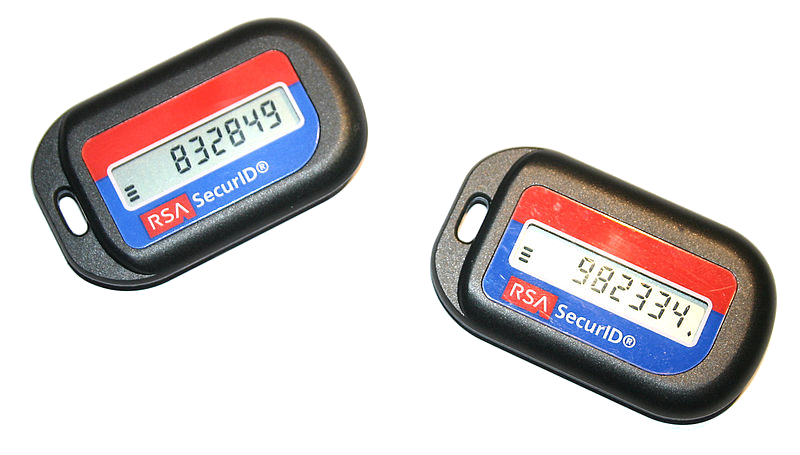
The IT security world is still reeling from the impact of the OpenSSL Heartbleed bug. Thanks to the bug, many experts have been reviewing other technologies to try and find similar risks. While Heartbleed was hidden away in the depths of the OpenSSL code base, another major security risk has been hiding in plain sight: SMS authentication for web site logins. Remarkably, a number of firms have started giving customers the ability to receive single-use passwords over SMS for logging into their secure web sites. Some have even insisted that customers can no longer log in without it, denying customers the right to make an important choice about their own security preferences. Unfortunately, SMS is no substitute to the one-time-passwords generated using proper authentication tokens or the use of other strong authentication schemes such as cryptographic smart cards. Even telephone companies themselves advise that SMS should not be used to secure financial transactions. Ocean's 11 in real life: exploiting the weakest link in the chain To deliver single-use SMS passwords, the SMS must travel through various networks from the firm's headquarters, to a wholesale SMS gateway, international SMS network and finally down the line of the local phone company. In comparison, properly certified token devices generate a code inside the device in the palm of your hand. The code only travels from the screen to your eyes. In a litany of frauds coming in all shapes and sizes, telephone networks have been exploited over and over again because they are almost always the weakest link in the chain. Using the mobile SMS network for authentication is not building on solid ground - some experts even feel it is downright stupidity. One of the most serious examples was the theft of $150,000,000 from a pension fund deposited with JP Morgan: it was described as a real-life case of Ocean's 11. The authentication was meant to be a phone call rather than an SMS: a phone company employee who was in on the scam duly ensured the call never reached the correct place. The insecurity of traditional telephone networks has been on display for all the world to see in the ongoing trial of News Corporation executives for phone hacking. If journalists from a tabloid newspaper can allegedly hack a dozen phones before their first cigarette of the day, is it really wise to use an insecure technology like SMS as the cornerstone of a security system for authorizing transactions? A fraud recently played out on many credit card holders in the UK exploited a low-tech feature of the phone system to trick people to believe they were safe by "calling back" to their bank. A plethora of new attack vectors The staggering reality of the situation is that attackers don't even have to directly hack their victim's phones to access SMS messages. As the Android API documentation demonstrates, SMS reception is notified to all apps in real-time. Apps can process the messages even when the phone is sleeping and the message is not read by the user. Just consider all the apps on a phone that have requested permission to read incoming messages. There was an uproar recently when a new version of the Facebook app started demanding permissions to read incoming SMS. The app can't be installed if the user doesn't agree to these new permissions. WhatsApp, another popular app that has SMS access rights, was recently exposed in a major security scandal which revealed they use a phone's IMEI number as the password. When people install an app like Tinder (which does not yet request SMS access) is the security of their bank account likely to be at the front of their mind? Even if Facebook intends no harm, they have opened the floodgates by further de-sensitizing users to the risks of giving apps un-necessary access to their data. These companies are looking for every piece of data that could give them an edge in their customer profiling and marketing programs. Having real-time access to your SMS is a powerful way for them to understand your activities and feelings at every moment in the day. To facilitate these data analysis techniques, replicating and archiving your messages into their cloud databases (whether you can see them there or not) is par for the course. The cloud, of course, has become a virtual smorgasboard for cyber-criminals, including both hackers and occasionally insiders wanting to peek at private data or harvest it en-masse. Social networking and communication sites are built on a philosophy of sharing data to create interaction and excitement. Unfortunately, this is orthogonal to the needs of security. In this context, the telephone network itself may no longer be the weakest link in the chain. The diligent attacker only needs to look for the cloud operator with an unplugged security hole and use their system as a stepping stone to read any SMS they want, when they want. Would you notice a stray SMS? Maybe you feel that you would notice a stray SMS carrying a login code for your bank account. Would you always be able to react faster than the criminal however? Thanks to social networks, or location data inadvertently leaked by other apps the attacker can easily work out whether you are on holiday, at the gym, at a party or sleeping or in some other situation where you are not likely to check messages immediately. If you receive a flood of SMS spam messages (deliberately sent by an attacker) in the middle of the night and you put your phone into silent mode and ignore it, you may well miss one message that was a login to your bank account. SMS technology was never designed for secure activities. The inconvenience of SMS While security is a headline issue these days, it is also worth reflecting on the inconvenience of SMS in some situations. Travel is at the top of the list: SMS doesn't work universally when abroad. These are usually the times when the only way to access the bank is through the web site. After dealing with the irritations of the hotel or airport wifi registration, do you really need more stress from your bank's systems too? For some networks, SMS can be delayed by hours or days, sometimes never arriving at all. Many people swap their SIM cards when travelling to avoid the excessive roaming charges and there is extra inconvenience in swapping SIM cards back again just to log in to a bank account. Worst of all, if you are tethering with a SIM card from the country you are visiting, then it is impossible for you to receive the SMS message from the bank on your regular SIM card while simultaneously maintaining the SSL connection to their web site over your new SIM card. Other problems like a flat battery, water damage or PIN permanently blocked by children playing with the phone can also leave you without access to your bank account for varying lengths of time. Is there any up-side to SMS authentication? The only potential benefit to SMS authentication is that it weeds out some of the most amateur attempts to compromise your bank account, but this is a false sense of security and it opens up new attack vectors through the cloud as we have just demonstrated. For all other purposes, it smells like a new form of security theater. A more likely reason why it has become popular amongst some firms is that many lenders want to ensure they have mobile phone numbers to contact customers when loan or credit card payments are missed. Making the mobile phone number mandatory for login ensures they almost always have the correct phone number for almost 100% of customers. It is not clear that this benefit justifies the failure to provide proper security and the inconvenience when travelling though. Opting out Next time you log in to a web site, if the firm does try to enrol you in an SMS authentication scheme, it may be a good idea to click the "No thanks" option. If you have already been registered into an SMS authentication scheme, fill out the online complaint form and inform the firm that you will only accept a proper authentication token or cryptographic smart card. These solutions are tried and tested and they are the correct tool for the job.

Next.

Previous.