Search Results: "ina"

31 December 2021

Chris Lamb: Favourite books of 2021: Fiction

In my two most recent posts, I listed the memoirs and biographies and followed this up with the non-fiction I enjoyed the most in 2021. I'll leave my roundup of 'classic' fiction until tomorrow, but today I'll be going over my favourite fiction. Books that just miss the cut here include Kingsley Amis' comic Lucky Jim, Cormac McCarthy's The Road (although see below for McCarthy's Blood Meridian) and the Complete Adventures of Tintin by Herg , the latter forming an inadvertently incisive portrait of the first half of the 20th century. Like ever, there were a handful of books that didn't live up to prior expectations. Despite all of the hype, Emily St. John Mandel's post-pandemic dystopia Station Eleven didn't match her superb The Glass Hotel (one of my favourite books of 2020). The same could be said of John le Carr 's The Spy Who Came in from the Cold, which felt significantly shallower compared to Tinker, Tailor, Soldier, Spy again, a favourite of last year. The strangest book (and most difficult to classify at all) was undoubtedly Patrick S skind's Perfume: The Story of a Murderer, and the non-fiction book I disliked the most was almost-certainly Beartown by Fredrik Bachman. Two other mild disappointments were actually film adaptions. Specifically, the original source for Vertigo by Pierre Boileau and Thomas Narcejac didn't match Alfred Hitchock's 1958 masterpiece, as did James Sallis' Drive which was made into a superb 2011 neon-noir directed by Nicolas Winding Refn. These two films thus defy the usual trend and are 'better than the book', but that's a post for another day.

A Wizard of Earthsea (1971) Ursula K. Le Guin How did it come to be that Harry Potter is the publishing sensation of the century, yet Ursula K. Le Guin's Earthsea is only a popular cult novel? Indeed, the comparisons and unintentional intertextuality with Harry Potter are entirely unavoidable when reading this book, and, in almost every respect, Ursula K. Le Guin's universe comes out the victor. In particular, the wizarding world that Le Guin portrays feels a lot more generous and humble than the class-ridden world of Hogwarts School of Witchcraft and Wizardry. Just to take one example from many, in Earthsea, magic turns out to be nurtured in a bottom-up manner within small village communities, in almost complete contrast to J. K. Rowling's concept of benevolent government departments and NGOs-like institutions, which now seems a far too New Labour for me. Indeed, imagine an entire world imbued with the kindly benevolence of Dumbledore, and you've got some of the moral palette of Earthsea. The gently moralising tone that runs through A Wizard of Earthsea may put some people off:
Vetch had been three years at the School and soon would be made Sorcerer; he thought no more of performing the lesser arts of magic than a bird thinks of flying. Yet a greater, unlearned skill he possessed, which was the art of kindness.
Still, these parables aimed directly at the reader are fairly rare, and, for me, remain on the right side of being mawkish or hectoring. I'm thus looking forward to reading the next two books in the series soon.

Blood Meridian (1985) Cormac McCarthy Blood Meridian follows a band of American bounty hunters who are roaming the Mexican-American borderlands in the late 1840s. Far from being remotely swashbuckling, though, the group are collecting scalps for money and killing anyone who crosses their path. It is the most unsparing treatment of American genocide and moral depravity I have ever come across, an anti-Western that flouts every convention of the genre. Blood Meridian thus has a family resemblance to that other great anti-Western, Once Upon a Time in the West: after making a number of gun-toting films that venerate the American West (ie. his Dollars Trilogy), Sergio Leone turned his cynical eye to the western. Yet my previous paragraph actually euphemises just how violent Blood Meridian is. Indeed, I would need to be a much better writer (indeed, perhaps McCarthy himself) to adequately 0utline the tone of this book. In a certain sense, it's less than you read this book in a conventional sense, but rather that you are forced to witness successive chapters of grotesque violence... all occurring for no obvious reason. It is often said that books 'subvert' a genre and, indeed, I implied as such above. But the term subvert implies a kind of Puck-like mischievousness, or brings to mind court jesters licensed to poke fun at the courtiers. By contrast, however, Blood Meridian isn't funny in the slightest. There isn't animal cruelty per se, but rather wanton negligence of another kind entirely. In fact, recalling a particular passage involving an injured horse makes me feel physically ill. McCarthy's prose is at once both baroque in its language and thrifty in its presentation. As Philip Connors wrote back in 2007, McCarthy has spent forty years writing as if he were trying to expand the Old Testament, and learning that McCarthy grew up around the Church therefore came as no real surprise. As an example of his textual frugality, I often looked for greater precision in the text, finding myself asking whether who a particular 'he' is, or to which side of a fight some two men belonged to. Yet we must always remember that there is no precision to found in a gunfight, so this infidelity is turned into a virtue. It's not that these are fair fights anyway, or even 'murder': Blood Meridian is just slaughter; pure butchery. Murder is a gross understatement for what this book is, and at many points we are grateful that McCarthy spares us precision. At others, however, we can be thankful for his exactitude. There is no ambiguity regarding the morality of the puppy-drowning Judge, for example: a Colonel Kurtz who has been given free license over the entire American south. There is, thank God, no danger of Hollywood mythologising him into a badass hero. Indeed, we must all be thankful that it is impossible to film this ultra-violent book... Indeed, the broader idea of 'adapting' anything to this world is, beyond sick. An absolutely brutal read; I cannot recommend it highly enough.

Bodies of Light (2014) Sarah Moss Bodies of Light is a 2014 book by Glasgow-born Sarah Moss on the stirrings of women's suffrage within an arty clique in nineteenth-century England. Set in the intellectually smoggy cities of Manchester and London, this poignant book follows the studiously intelligent Alethia 'Ally' Moberly who is struggling to gain the acceptance of herself, her mother and the General Medical Council. You can read my full review from July.

House of Leaves (2000) Mark Z. Danielewski House of Leaves is a remarkably difficult book to explain. Although the plot refers to a fictional documentary about a family whose house is somehow larger on the inside than the outside, this quotidian horror premise doesn't explain the complex meta-commentary that Danielewski adds on top. For instance, the book contains a large number of pseudo-academic footnotes (many of which contain footnotes themselves), with references to scholarly papers, books, films and other articles. Most of these references are obviously fictional, but it's the kind of book where the joke is that some of them are not. The format, structure and typography of the book is highly unconventional too, with extremely unusual page layouts and styles. It's the sort of book and idea that should be a tired gimmick but somehow isn't. This is particularly so when you realise it seems specifically designed to create a fandom around it and to manufacturer its own 'cult' status, something that should be extremely tedious. But not only does this not happen, House of Leaves seems to have survived through two exhausting decades of found footage: The Blair Witch Project and Paranormal Activity are, to an admittedly lesser degree, doing much of the same thing as House of Leaves. House of Leaves might have its origins in Nabokov's Pale Fire or even Derrida's Glas, but it seems to have more in common with the claustrophobic horror of Cube (1997). And like all of these works, House of Leaves book has an extremely strange effect on the reader or viewer, something quite unlike reading a conventional book. It wasn't so much what I got out of the book itself, but how it added a glow to everything else I read, watched or saw at the time. An experience.

Milkman (2018) Anna Burns This quietly dazzling novel from Irish author Anna Burns is full of intellectual whimsy and oddball incident. Incongruously set in 1970s Belfast during The Irish Troubles, Milkman's 18-year-old narrator (known only as middle sister ), is the kind of dreamer who walks down the street with a Victorian-era novel in her hand. It's usually an error for a book that specifically mention other books, if only because inviting comparisons to great novels is grossly ill-advised. But it is a credit to Burns' writing that the references here actually add to the text and don't feel like they are a kind of literary paint by numbers. Our humble narrator has a boyfriend of sorts, but the figure who looms the largest in her life is a creepy milkman an older, married man who's deeply integrated in the paramilitary tribalism. And when gossip about the narrator and the milkman surfaces, the milkman beings to invade her life to a suffocating degree. Yet this milkman is not even a milkman at all. Indeed, it's precisely this kind of oblique irony that runs through this daring but darkly compelling book.

The First Fifteen Lives of Harry August (2014) Claire North Harry August is born, lives a relatively unremarkable life and finally dies a relatively unremarkable death. Not worth writing a novel about, I suppose. But then Harry finds himself born again in the very same circumstances, and as he grows from infancy into childhood again, he starts to remember his previous lives. This loop naturally drives Harry insane at first, but after finding that suicide doesn't stop the quasi-reincarnation, he becomes somewhat acclimatised to his fate. He prospers much better at school the next time around and is ultimately able to make better decisions about his life, especially when he just happens to know how to stay out of trouble during the Second World War. Yet what caught my attention in this 'soft' sci-fi book was not necessarily the book's core idea but rather the way its connotations were so intelligently thought through. Just like in a musical theme and varations, the success of any concept-driven book is far more a product of how the implications of the key idea are played out than how clever the central idea was to begin with. Otherwise, you just have another neat Borges short story: satisfying, to be sure, but in a narrower way. From her relatively simple premise, for example, North has divined that if there was a community of people who could remember their past lives, this would actually allow messages and knowledge to be passed backwards and forwards in time. Ah, of course! Indeed, this very mechanism drives the plot: news comes back from the future that the progress of history is being interfered with, and, because of this, the end of the world is slowly coming. Through the lives that follow, Harry sets out to find out who is passing on technology before its time, and work out how to stop them. With its gently-moralising romp through the salient historical touchpoints of the twentieth century, I sometimes got a whiff of Forrest Gump. But it must be stressed that this book is far less certain of its 'right-on' liberal credentials than Robert Zemeckis' badly-aged film. And whilst we're on the topic of other media, if you liked the underlying conceit behind Stuart Turton's The Seven Deaths of Evelyn Hardcastle yet didn't enjoy the 'variations' of that particular tale, then I'd definitely give The First Fifteen Lives a try. At the very least, 15 is bigger than 7. More seriously, though, The First Fifteen Lives appears to reflect anxieties about technology, particularly around modern technological accelerationism. At no point does it seriously suggest that if we could somehow possess the technology from a decade in the future then our lives would be improved in any meaningful way. Indeed, precisely the opposite is invariably implied. To me, at least, homo sapiens often seems to be merely marking time until we can blow each other up and destroying the climate whilst sleepwalking into some crisis that might precipitate a thermonuclear genocide sometimes seems to be built into our DNA. In an era of cli-fi fiction and our non-fiction newspaper headlines, to label North's insight as 'prescience' might perhaps be overstating it, but perhaps that is the point: this destructive and negative streak is universal to all periods of our violent, insecure species.

The Goldfinch (2013) Donna Tartt After Breaking Bad, the second biggest runaway success of 2014 was probably Donna Tartt's doorstop of a novel, The Goldfinch. Yet upon its release and popular reception, it got a significant number of bad reviews in the literary press with, of course, an equal number of predictable think pieces claiming this was sour grapes on the part of the cognoscenti. Ah, to be in 2014 again, when our arguments were so much more trivial. For the uninitiated, The Goldfinch is a sprawling bildungsroman that centres on Theo Decker, a 13-year-old whose world is turned upside down when a terrorist bomb goes off whilst visiting the Metropolitan Museum of Art, killing his mother among other bystanders. Perhaps more importantly, he makes off with a painting in order to fulfil a promise to a dying old man: Carel Fabritius' 1654 masterpiece The Goldfinch. For the next 14 years (and almost 800 pages), the painting becomes the only connection to his lost mother as he's flung, almost entirely rudderless, around the Western world, encountering an array of eccentric characters. Whatever the critics claimed, Tartt's near-perfect evocation of scenes, from the everyday to the unimaginable, is difficult to summarise. I wouldn't label it 'cinematic' due to her evocation of the interiority of the characters. Take, for example: Even the suggestion that my father had close friends conveyed a misunderstanding of his personality that I didn't know how to respond it's precisely this kind of relatable inner subjectivity that cannot be easily conveyed by film, likely is one of the main reasons why the 2019 film adaptation was such a damp squib. Tartt's writing is definitely not 'impressionistic' either: there are many near-perfect evocations of scenes, even ones we hope we cannot recognise from real life. In particular, some of the drug-taking scenes feel so credibly authentic that I sometimes worried about the author herself. Almost eight months on from first reading this novel, what I remember most was what a joy this was to read. I do worry that it won't stand up to a more critical re-reading (the character named Xandra even sounds like the pharmaceuticals she is taking), but I think I'll always treasure the first days I spent with this often-beautiful novel.

Beyond Black (2005) Hilary Mantel Published about five years before the hyperfamous Wolf Hall (2004), Hilary Mantel's Beyond Black is a deeply disturbing book about spiritualism and the nature of Hell, somewhat incongruously set in modern-day England. Alison Harte is a middle-aged physic medium who works in the various towns of the London orbital motorway. She is accompanied by her stuffy assistant, Colette, and her spirit guide, Morris, who is invisible to everyone but Alison. However, this is no gentle and musk-smelling world of the clairvoyant and mystic, for Alison is plagued by spirits from her past who infiltrate her physical world, becoming stronger and nastier every day. Alison's smiling and rotund persona thus conceals a truly desperate woman: she knows beyond doubt the terrors of the next life, yet must studiously conceal them from her credulous clients. Beyond Black would be worth reading for its dark atmosphere alone, but it offers much more than a chilling and creepy tale. Indeed, it is extraordinarily observant as well as unsettlingly funny about a particular tranche of British middle-class life. Still, the book's unnerving nature that sticks in the mind, and reading it noticeably changed my mood for days afterwards, and not necessarily for the best.

The Wall (2019) John Lanchester The Wall tells the story of a young man called Kavanagh, one of the thousands of Defenders standing guard around a solid fortress that envelopes the British Isles. A national service of sorts, it is Kavanagh's job to stop the so-called Others getting in. Lanchester is frank about what his wall provides to those who stand guard: the Defenders of the Wall are conscripted for two years on the Wall, with no exceptions, giving everyone in society a life plan and a story. But whilst The Wall is ostensibly about a physical wall, it works even better as a story about the walls in our mind. In fact, the book blends together of some of the most important issues of our time: climate change, increasing isolation, Brexit and other widening societal divisions. If you liked P. D. James' The Children of Men you'll undoubtedly recognise much of the same intellectual atmosphere, although the sterility of John Lanchester's dystopia is definitely figurative and textual rather than literal. Despite the final chapters perhaps not living up to the world-building of the opening, The Wall features a taut and engrossing narrative, and it undoubtedly warrants even the most cursory glance at its symbolism. I've yet to read something by Lanchester I haven't enjoyed (even his short essay on cheating in sports, for example) and will be definitely reading more from him in 2022.

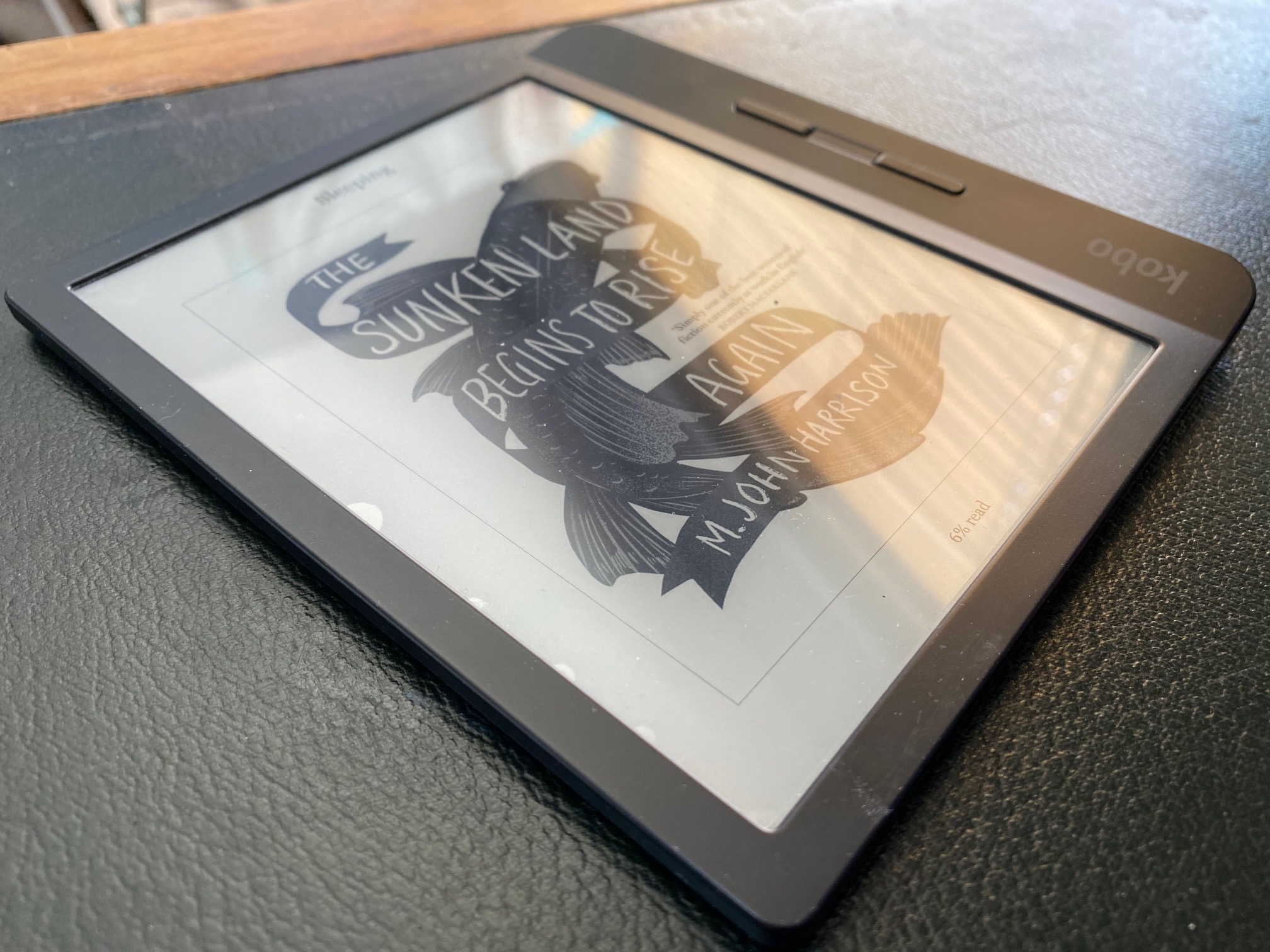
The Only Story (2018) Julian Barnes The Only Story is the story of Paul, a 19-year-old boy who falls in love with 42-year-old Susan, a married woman with two daughters who are about Paul's age. The book begins with how Paul meets Susan in happy (albeit complicated) circumstances, but as the story unfolds, the novel becomes significantly more tragic and moving. Whilst the story begins from the first-person perspective, midway through the book it shifts into the second person, and, later, into the third as well. Both of these narrative changes suggested to me an attempt on the part of Paul the narrator (if not Barnes himself), to distance himself emotionally from the events taking place. This effect is a lot more subtle than it sounds, however: far more prominent and devastating is the underlying and deeply moving story about the relationship ends up. Throughout this touching book, Barnes uses his mastery of language and observation to avoid the saccharine and the maudlin, and ends up with a heart-wrenching and emotive narrative. Without a doubt, this is the saddest book I read this year.

Russell Coker: Links December 2021

Wired magazine has many short documentary films on YouTube, this one about How Photography is Affecting Our Brains is particularly good [1]. Matt Blaze wrote an informative blog post about Faraday cages for phones [2]. It seems that the commercial shielded bags are all pretty good while doing it yourself with aluminium foil may get similar results or may get much worse results with no obvious difference in the quality of the wrapping. Aluminium foil doesn t protect that well and doesn t protect consistently. A metal biscuit tin performed quite well and consistently, so that s a cheap option for reducing signals. Umair Haque wrote an insightful article about the single word that describes most of the problems the world faces right now [3]. Forbes has an informative article about the early days of the Ford company when they doubled wages, it proves that they didn t do so to enable workders to afford cars but to avoid staff turnover (which is expensive) [4]. Also the Ford company had a fascistic approach to employees, controlling what they were allowed to do in their spare time if they wanted the bonus payment. The wages weren t doubled, there was a bonus payment that would double the salary if the employee was eligible for the bonus. One thing that Forbes gets wrong is that they claim that it was only having higher pay than other companies that provided a benefit and that a higher minimum wage wouldn t, the problem with that idea is that a higher minimum wage would discourage people from having multiple jobs and allow more families to not have the mother working (a condition for a man to get the Ford bonus was for his wife to not work). The WSJ has an interesting article about Intel s datacenter for running all the different configurations of CPUs that they have supported over the last 10 years for security tests [5]. My Thinkpad (which is less than 10yo) is vulnerable to one of the SPECTRE family of exploits as Intel hasn t released microcode to fix it, getting fixed microcode out for all the systems from major vendors like Lenovo would be a good idea if they want to improve their security. NPR has an interesting article about the correlation between support for Trump in counties of the US with lack of vaccination and Covid19 deaths [6]. No surprises, but it s good to see the graphs. Cory Doctorow wrote an interesting article on the lack of slack in the current American education system [7]. It s not that bad in Australia but we are unfortunately moving in the American direction. Teen Vogue has an insightful article about the problems with the focus on resilience [8], while resilience is good we should make it a higher priority to avoid putting people in situations where they need to be resiliant than on encouraging resilience.

Russ Allbery: Review: The Space Between Worlds

Review: The Space Between Worlds, by Micaiah Johnson
Publisher: Del Rey
Copyright: 2020
ISBN: 0-593-13506-7
Format: Kindle
Pages: 327
Cara is valuable because, in most places, she's dead. In the world of Earth Zero, as the employees of the Eldridge Institute call it, a scientific genius named Adam Bosch developed the ability to travel between parallel worlds. This ability is not limitless, however. One restriction is that the parallel world has to be very close; large divergences of history render them unreachable. The other restriction is that anyone who attempts to travel to a world in which the local version of themselves is still alive is rejected: physically mangled in ways that result in a very short remaining lifespan. Earth Zero has not found a way to send information between worlds without sending people there physically to collect it. Those people are traversers, and their value lies in how many of their parallel selves have died. Each death in one of the 380 worlds Earth Zero can reach means another world that person can traverse to. They are the transportation system for a network of information-gathering nodes, whose collected contents are mined for stock tips, political cautions, and other information of value. Cara is dead on 372 worlds, and thus provides valuable savings on employee salaries. These related worlds are not so much post-apocalyptic as a continuation of current wealth disparity trends, although it's also clear that the climate has gotten worse. The Eldridge Institute, which controls traversing, is based in Wiley City, a walled, climate-controlled arcology of skyscrapers with a dome that filters out the dangerous sun. Its citizens are rich, with the best social support that money can buy. They are not interested in immigrants, unless they are extremely valuable. Cara is not from Wiley City. She is from Ashtown, the encampment in the desert outside of Wiley City's walls. That's part of the explanation for her death rate; in Ashtown, there are only a few ways to survive, particularly if one is not from the stiflingly religious Rurals, and most of them are dependent on being in the good graces of the local warlord and his Mad-Max-style enforcers. Being a traverser gets Cara out of Ashtown and into Wiley City, but not as a citizen, although that's dangled vaguely as a possible future prize. She's simply an employee, on a work permit, who enjoys the comforts of Wiley City for exactly as long as she's useful. Meanwhile, she juggles the demands of her job, her attraction to her watcher Dell, and her family in Ashtown. She is profoundly, aggressively cynical. Cara is also not precisely who people think she is. The Space Between Worlds pulls off a beautifully elegant combination of two science fiction subgenres: parallel universes and time travel. Both have been part of science fiction for decades, but normally parallel universes are substantially different from each other. Major historical events go differently, Nazis win World War II, Spock has a goatee, etc. Minor deviations are more often the subject of time travel stories, as travelers attempt to tweak the past and influence the future. Johnson instead provides the minor variations and small divergences of time travel stories in a parallel world framework, with no actual time travel involved or possible. The resulting story shows the same ripple effect of small differences, but the future remains unwritten and unconstrained, which avoids the stiflingly closed feeling of most time travel plots. Against that backdrop is set a story of corporate and personal intrigue, but one with a far deeper understanding of class and place than almost all of science fiction. Cara is not from Ashtown in the normal sense of science fiction novels written by comfortably middle-class white authors about protagonists from the wrong side of the tracks, who show their merit and then never look back. Cara is from Ashtown in a way that means she misses the taste of its dirt and understands its people and feels seen there. Wiley City knows very well that she's from Ashtown, and doesn't let her forget it. This type of ambiguous relationship with place and wealth, and deep connection to where one comes from, is so rare in science fiction, and it's beautifully written here. Cara wants to be in Wiley City over the alternative; the potential loss of her job is a real threat. But at the same time she is not at home there, because she is not visible there. Everything is slightly off, she has no one she can really talk to, and her reactions don't quite fit. No one understands her the way that her family in Ashtown does. And yet, by living in Wiley City, she is becoming less at home in Ashtown as well. She is becoming an outsider. It takes about 70 pages for the story in The Space Between Worlds to really get started. Those first 70 pages is very important background information that the rest of the story builds on, but they weren't that engrossing. Once the story kicks into gear, though, it's a tense, complicated story that I had a hard time predicting and an even harder time putting down. It's not perfect (more on that in a moment), but Johnson weaves together Cara's sense of place, her family connections, her sense of self, and her internal moral compass to create a memorable protagonist in a page-turning plot with a satisfying payoff. She uses our ability to look in on several versions of each character to give them additional satisfying heft and depth. Esther, Cara's highly religious sister, is the most delightful character in this book, and that's saying a lot coming from someone who usually doesn't like highly religious characters. I do have some world-building quibbles, and came up with more when I mulled over the book after finishing it, so you may need to strengthen your suspension of disbelief. The passive information gathering via traversing made a lot of sense; the bulk import of raw materials via the industrial hatch makes less sense given the constraints of the world. (Who is loading those materials into the other side? Or are they somehow traversing them directly out of the ground? Wouldn't someone notice?) The plot also partly hinges on a bit of lost technology that is extremely difficult to square with the rest of the setting, and felt like a transparent justification for introducing Mad Max elements into the setting. The quibble I noticed the most may be unavoidable given the setting: alternate worlds with slightly different versions of the same characters creates a potential explosion in cast size, which Johnson deals with by focusing on the cross-world variations of a small number of characters. I like all of those characters, but it does give the story a bit of an incestuous feel. The politics of every world revolve around the same ten people, and no one else seems to matter (or usually even has a name). That said, a small cast is a better problem to have than a confusing cast. Johnson does a great job helping the reader keep all the characters and relationships straight across their alternate world variations. I didn't realize until after I finished the book how difficult that probably was, which is the sign of a job well done. I do also have to complain about how completely dense Cara is when it comes to Dell, but I won't say any more than that to avoid spoilers. There are some things I figured out way before Cara did, though, and that made her behavior rather frustrating. This is an extremely impressive first novel that does some lovely things with genre and even more impressive things with social class and mobility. It's a little rough in places, you have to bear with the first 70 pages, and the ending, while a fitting conclusion to the emotional arc, seemed wildly unbelievable to me given the events of the plot. But it's very much worth reading despite those flaws. Johnson respects her characters and their culture and their world, and it shows. This was one of the best science fiction novels I read in 2021. (Content warning for physical and emotional partner abuse.) Rating: 8 out of 10

Matthew Garrett: Update on Linux hibernation support when lockdown is enabled

Some time back I wrote up a description of my proposed (and implemented) solution for making hibernation work under Linux even within the bounds of the integrity model. It's been a while, so here's an update.

The first is that localities just aren't an option. It turns out that they're optional in the spec, and TPMs are entirely permitted to say they don't support them. The only time they're likely to work is on platforms that support DRTM implementations like TXT. Most consumer hardware doesn't fall into that category, so we don't get to use that solution. Unfortunate, but, well.

The second is that I'd ignored an attack vector. If the kernel is configured to restrict access to PCR 23, then yes, an attacker is never able to modify PCR 23 to be in the same state it would be if hibernation were occurring and the key certification data will fail to validate. Unfortunately, an attacker could simply boot into an older kernel that didn't implement the PCR 23 restriction, and could fake things up there (yes, this is getting a bit convoluted, but the entire point here is to make this impossible rather than just awkward). Once PCR 23 was in the correct state, they would then be able to write out a new swap image, boot into a new kernel that supported the secure hibernation solution, and have that resume successfully in the (incorrect) belief that the image was written out in a secure environment.

This felt like an awkward problem to fix. We need to be able to distinguish between the kernel having modified the PCRs and userland having modified the PCRs, and we need to be able to do this without modifying any kernels that have already been released[1]. The normal approach to determining whether an event occurred in a specific phase of the boot process is to "cap" the PCR - extend it with a known value that indicates a transition between stages of the boot process. Any events that occur before the cap event must have occurred in the previous stage of boot, and since the final PCR value depends on the order of measurements and not just the contents of those measurements, if a PCR is capped before userland runs, userland can't fake the same PCR value afterwards. If Linux capped a PCR before userland started running, we'd be able to place a measurement there before the cap occurred and then prove that that extension occurred before userland had the opportunity to interfere. We could simply place a statement that the kernel supported the PCR 23 restrictions there, and we'd be fine.

Unfortunately Linux doesn't currently do this, and adding support for doing so doesn't fix the problem - if an attacker boots a kernel that doesn't cap a PCR, they can just cap it themselves from userland. So, we're faced with the same problem: booting an older kernel allows the system to be placed in an identical state to the current kernel, and a fake hibernation image can be written out. Solving this required a PCR that was being modified after kernel code was running, but before userland was started, even with existing kernels.

Thankfully, there is one! PCR 5 is defined as containing measurements related to boot management configuration and data. One of the measurements it contains is the result of the UEFI ExitBootServices() call. ExitBootServices() is called at the transition from the UEFI boot environment to the running OS, and the kernel contains code that executes before it. So, if we measure an assertion regarding whether or not we support restricted access to PCR 23 into PCR 5 before we call ExitBootServices(), this will prevent userspace from spoofing us (because userspace will only be able to extend PCR 5 after the firmware extended PCR 5 in response to ExitBootServices() being called). Obviously this depends on the firmware actually performing the PCR 5 extension when ExitBootServices() is called, but if firmware's out of spec then I don't think there's any real expectation of it being secure enough for any of this to buy you anything anyway.

My current tree is here, but there's a couple of things I want to do before submitting it, including ensuring that the key material is wiped from RAM after use (otherwise it could potentially be scraped out and used to generate another image afterwards) and, uh, actually making sure this works (I no longer have the machine I was previously using for testing, and switching my other dev machine over to TPM 2 firmware is proving troublesome, so I need to pull another machine out of the stack and reimage it).

[1] The linear nature of time makes feature development much more frustrating

comment count unavailable comments

30 December 2021

Chris Lamb: Favourite books of 2021: Non-fiction

As a follow-up to yesterday's post listing my favourite memoirs and biographies I read in 2021, today I'll be outlining my favourite works of non-fiction. Books that just missed the cut include: The Unusual Suspect by Ben Machell for its thrilleresque narrative of a modern-day Robin Hood (and if you get to the end, a completely unexpected twist); Paul Fussell's Class: A Guide to the American Status System as an amusing chaser of sorts to Kate Fox's Watching the English; John Carey's Little History of Poetry for its exhilarating summation of almost four millennia of verse; David Graeber's Debt: The First 5000 Years for numerous historical insights, not least its rejoinder to our dangerously misleading view of ancient barter systems; and, although I didn't treasure everything about it, I won't hesitate to gift Pen Vogler's Scoff to a number of friends over the next year. The weakest book of non-fiction I read this year was undoubtedly Roger Scruton's How to Be a Conservative: I much preferred The Decadent Society for Ross Douthat for my yearly ration of the 'intellectual right'. I also very much enjoyed reading a number of classic texts from academic sociology, but they are difficult to recommend or even summarise. These included One-Dimensional Man by Herbert Marcuse, Postmodernism: Or, the Cultural Logic of Late Capitalism by Frederic Jameson and The Protestant Ethic and the Spirit of Capitalism by Max Weber. 'These are heavy books', remarks John Proctor in Arthur Miller's The Crucible... All round-up posts for 2021: Memoir/biography, Non-fiction (this post) & Fiction (coming soon).

Hidden Valley Road (2020) Robert Kolker A compelling and disturbing account of the Galvin family six of whom were diagnosed with schizophrenia which details a journey through the study and misunderstanding of the condition. The story of the Galvin family offers a parallel history of the science of schizophrenia itself, from the era of institutionalisation, lobotomies and the 'schizo mother', to the contemporary search for genetic markers for the disease... all amidst fundamental disagreements about the nature of schizophrenia and, indeed, of all illnesses of the mind. Samples of the Galvins' DNA informed decades of research which, curiously, continues to this day, potentially offering paths to treatment, prediction and even eradication of the disease, although on this last point I fancy that I detect a kind of neo-Victorian hubris that we alone will be the ones to find a cure. Either way, a gentle yet ultimately tragic view of a curiously 'American' family, where the inherent lack of narrative satisfaction brings a frustration and sadness of its own.

Islands of Abandonment: Life in the Post-Human Landscape (2021) Cat Flyn In this disarmingly lyrical book, Cat Flyn addresses the twin questions of what happens after humans are gone and how far can our damage to nature be undone. From the forbidden areas of post-war France to the mining regions of Scotland, Islands of Abandonment explores the extraordinary places where humans no longer live in an attempt to give us a glimpse into what happens when mankind's impact on nature is, for one reason or another, forced to stop. Needless to say, if anxieties in this area are not curdling away in your subconscious mind, you are probably in some kind of denial. Through a journey into desolate, eerie and ravaged areas in the world, this artfully-written study offers profound insights into human nature, eschewing the usual dry sawdust of Wikipedia trivia. Indeed, I summed it up to a close friend remarking that, through some kind of hilarious administrative error, the book's publisher accidentally dispatched a poet instead of a scientist to write this book. With glimmers of hope within the (mostly) tragic travelogue, Islands of Abandonment is not only a compelling read, but also a fascinating insight into the relationship between Nature and Man.

The Anatomy of Fascism (2004) Robert O. Paxton Everyone is absolutely sure they know what fascism is... or at least they feel confident choosing from a buffet of features to suit the political mood. To be sure, this is not a new phenomenon: even as 'early' as 1946, George Orwell complained in Politics and the English Language that the word Fascism has now no meaning except in so far as it signifies something not desirable . Still, it has proved uncommonly hard to define the core nature of fascism and what differentiates it from related political movements. This is still of great significance in the twenty-first century, for the definition ultimately determines where the powerful label of 'fascist' can be applied today. Part of the enjoyment of reading this book was having my own cosy definition thoroughly dismantled and replaced with a robust system of abstractions and common themes. This is achieved through a study of the intellectual origins of fascism and how it played out in the streets of Berlin, Rome and Paris. Moreover, unlike Strongmen (see above), fascisms that failed to gain meaningful power are analysed too, including Oswald Mosley's British Union of Fascists. Curiously enough, Paxton's own definition of fascism is left to the final chapter, and by the time you reach it, you get an anti-climatic feeling of it being redundant. Indeed, whatever it actually is, fascism is really not quite like any other 'isms' at all, so to try and classify it like one might be a mistake. In his introduction, Paxton warns that many of those infamous images associated with fascism (eg. Hitler in Triumph of the Will, Mussolini speaking from a balcony, etc.) have the ability to induce facile errors about the fascist leader and the apparent compliance of the crowd. (Contemporary accounts often record how sceptical the common man was of the leader's political message, even if they were transfixed by their oratorical bombast.) As it happens, I thus believe I had something of an advantage of reading this via an audiobook, and completely avoided re-absorbing these iconic images. To me, this was an implicit reminder that, however you choose to reduce it to a definition, fascism is undoubtedly the most visual of all political forms, presenting itself to us in vivid and iconic primary images: ranks of disciplined marching youths, coloured-shirted militants beating up members of demonised minorities; the post-war pictures from the concentration camps... Still, regardless of you choose to read it, The Anatomy of Fascism is a powerful book that can teach a great deal about fascism in particular and history in general.

What Good are the Arts? (2005) John Carey What Good are the Arts? takes a delightfully sceptical look at the nature of art, and cuts through the sanctimony and cant that inevitably surrounds them. It begins by revealing the flaws in lofty aesthetic theories and, along the way, debunks the claims that art makes us better people. They may certainly bring joy into your life, but by no means do the fine arts make you automatically virtuous. Carey also rejects the entire enterprise of separating things into things that are art and things that are not, making a thoroughly convincing case that there is no transcendental category containing so-called 'true' works of art. But what is perhaps equally important to what Carey is claiming is the way he does all this. As in, this is an extremely enjoyable book to read, with not only a fine sense of pace and language, but a devilish sense of humour as well. To be clear, What Good are the Arts? it is no crotchety monograph: Leo Tolstoy's *What Is Art? (1897) is hilarious to read in similar ways, but you can't avoid feeling its cantankerous tone holds Tolstoy's argument back. By contrast, Carey makes his argument in a playful sort of manner, in a way that made me slightly sad to read other polemics throughout the year. It's definitely not that modern genre of boomer jeremiad about the young, political correctness or, heaven forbid, 'cancel culture'... which, incidentally, made Carey's 2014 memoir, The Unexpected Professor something of a disappointing follow-up. Just for fun, Carey later undermines his own argument by arguing at length for the value of one art in particular. Literature, Carey asserts, is the only art capable of reasoning and the only art with the ability to criticise. Perhaps so, and Carey spends a chapter or so contending that fiction has the exclusive power to inspire the mind and move the heart towards practical ends... or at least far better than any work of conceptual art. Whilst reading this book I found myself taking down innumerable quotations and laughing at the jokes far more than I disagreed. And the sustained and intellectual style of polemic makes this a pretty strong candidate for my favourite overall book of the year.

29 December 2021

Noah Meyerhans: When You Could Hear Security Scans

Have you ever wondered what a security probe of a computer sounded like? I d guess probably not, because on the face of it that doesn t make a whole lot of sense. But there was a time when I could very clearly discern the sound of a computer being scanned. It sounded like a small mechanical heart beat: Click-click click-click click-click Prior to 2010, I had a computer under my desk with what at the time were not unheard-of properties: Its storage was based on a stack of spinning metal platters (a now-antiquated device known as a hard drive ), and it had a publicly routable IPv4 address with an unfiltered connection to the Internet. Naturally it ran Linux and an ssh server. As was common in those days, service logging was handled by a syslog daemon. The syslog daemon would sort log messages based on various criteria and record them somewhere. In most simple environments, somewhere was simply a file on local storage. When writing to a local file, syslog daemons can be optionally configured to use the fsync() system call to ensure that writes are flushed to disk. Practically speaking, what this meant is that a page of disk-backed memory would be written to the disk as soon as an event occurred that triggered a log message. Because of potential performance implications, fsync() was not typically enabled for most log files. However, due to the more sensitive nature of authentication logs, it was often enabled for /var/log/auth.log. In the first decade of the 2000 s, there was a fairly unsophisticated worm loose on the Internet that would probe sshd with some common username/password combinations. The worm would pause for a second or so between login attempts, most likely in an effort to avoid automated security responses. The effect was that a system being probed by this worm would generate disk write every second, with a very distinct audible signature from the hard drive. I think this situation is a fun demonstration of a side-channel data leak. It s primitive and doesn t leak very much information, but it was certainly enough to make some inference about the state of the system in question. Of course, side-channel leakage issues have been a concern for ages, but I like this one for its simplicity. It was something that could be explained and demonstrated easily, even to somebody with relatively limited understanding of how computers work , unlike, for instance measuring electromagnetic emanations from CPU power management units. For a different take on the sounds of a computing infrastructure, Peep (The Network Auralizer) won an award at a USENIX conference long, long ago. I d love to see a modern deployment of such a system. I m sure you could build something for your cloud deployment using something like AWS EventBridge or Amazon SQS fairly easily. For more on research into actual real-world side-channel attacks, you can read A Survey of Microarchitectural Side-channel Vulnerabilities, Attacks and Defenses in Cryptography or A Survey of Electromagnetic Side-Channel Attacks and Discussion on their Case-Progressing Potential for Digital Forensics.

Chris Lamb: Favourite books of 2021: Memoir/biography

Just as I did for 2020, I won't publically disclose exactly how many books I read in 2021, but they evidently provoked enough thoughts that felt it worth splitting my yearly writeup into separate posts. I will reveal, however, that I got through more books than the previous year, and, like before, I enjoyed the books I read this year even more in comparison as well. How much of this is due to refining my own preferences over time, and how much can be ascribed to feeling less pressure to read particular books? It s impossible to say, and the question is complicated further by the fact I found many of the classics I read well worth of their entry into the dreaded canon. But enough of the throat-clearing. In today's post I'll be looking at my favourite books filed under memoir and biography, in no particular order. Books that just missed the cut here include: Bernard Crick's celebrated 1980 biography of George Orwell, if nothing else because it was a pleasure to read; Hilary Mantel's exhilaratingly bitter early memoir, Giving up the Ghost (2003); and Patricia Lockwood's hilarious Priestdaddy (2017). I also had a soft spot for Tim Kreider's We Learn Nothing (2012) as well, despite not knowing anything about the author in advance, likely a sign of good writing. The strangest book in this category I read was definitely Michelle Zauner's Crying in H Mart. Based on a highly-recommended 2018 essay in the New Yorker, its rich broth of genuine yearning for a departed mother made my eyebrows raise numerous times when I encountered inadvertent extra details about Zauner's relationships.

Beethoven: A Life in Nine Pieces (2020) Laura Tunbridge Whilst it might immediately present itself as a clickbait conceit, organising an overarching narrative around just nine compositions by Beethoven turns out to be an elegant way of saying something fresh about this grizzled old bear. Some of Beethoven's most famous compositions are naturally included in the nine (eg. the Eroica and the Hammerklavier piano sonata), but the book raises itself above conventional Beethoven fare when it highlights, for instance, his Septet, Op. 20, an early work that is virtually nobody's favourite Beethoven piece today. The insight here is that it was widely popular in its time, played again and again around Vienna for the rest of his life. No doubt many contemporary authors can relate to this inability to escape being artistically haunted by an earlier runaway success. The easiest way to say something interesting about Beethoven in the twenty-first century is to talk about the myth of Beethoven instead. Or, as Tunbridge implies, perhaps that should really be 'Beethoven' in leaden quotation marks, given so much about what we think we know about the man is a quasi-fictional construction. Take Anton Schindler, Beethoven's first biographer and occasional amanuensis, who destroyed and fabricated details about Beethoven's life, casting himself in a favourable light and exaggerating his influence with the composer. Only a few decades later, the idea of a 'heroic' German was to be politically useful as well; the Anglosphere often need reminding that Germany did not exist as a nation-state prior to 1871, so it should be unsurprising to us that the late nineteenth-century saw a determined attempt to create a uniquely 'German' culture ex nihilo. (And the less we say about Immortal Beloved the better, even though I treasure that film.) Nevertheless, Tunbridge cuts through Beethoven's substantial legacy using surgical precision that not only avoids feeling like it is settling a score, but it also does so in a way that is unlikely to completely alienate anyone emotionally dedicated to some already-established idea of the man to bring forth the tediously predictable sentiment that Beethoven has 'gone woke'. With Alex Ross on the cult of Wagner, it seems that books about the 'myth of X' are somewhat in vogue right now. And this pattern within classical music might fit into some broader trend of deconstruction in popular non-fiction too, especially when we consider the numerous contemporary books on the long hangover of the Civil Rights era (Robin DiAngelo's White Fragility, etc.), the multifarious ghosts of Empire (Akala's Natives, Sathnam Sanghera's Empireland, etc.) or even the 'transmogrification' of George Orwell into myth. But regardless of its place in some wider canon, A Life in Nine Pieces is beautifully printed in hardback form (worth acquiring for that very reason alone), and it is one of the rare good books about classical music that can be recommended to both the connoisseur and the layperson alike.

Sea State (2021) Tabitha Lasley In her mid-30s and jerking herself out of a terrible relationship, Tabitha Lasley left London and put all her savings into a six-month lease on a flat within a questionable neighbourhood in Aberdeen, Scotland. She left to make good on a lukewarm idea for a book about oil rigs and the kinds of men who work on them: I wanted to see what men were like with no women around, she claims. The result is Sea State, a forthright examination of the life of North Sea oil riggers, and an unsparing portrayal of loneliness, masculinity, female desire and the decline of industry in Britain. (It might almost be said that Sea State is an update of a sort to George Orwell's visit to the mines in the North of England.) As bracing as the North Sea air, Sea State spoke to me on multiple levels but I found it additionally interesting to compare and contrast with Julian Barnes' The Man with Red Coat (see below). Women writers are rarely thought to be using fiction for higher purposes: it is assumed that, unlike men, whatever women commit to paper is confessional without any hint of artfulness. Indeed, it seems to me that the reaction against the decades-old genre of autofiction only really took hold when it became the domain of millennial women. (By contrast, as a 75-year-old male writer with a firmly established reputation in the literary establishment, Julian Barnes is allowed wide latitude in what he does with his sources and his writing can be imbued with supremely confident airs as a result.) Furthermore, women are rarely allowed metaphor or exaggeration for dramatic effect, and they certainly aren t permitted to emphasise darker parts in order to explore them... hence some of the transgressive gratification of reading Sea State. Sea State is admittedly not a work of autofiction, but the sense that you are reading about an author writing a book is pleasantly unavoidable throughout. It frequently returns to the topic of oil workers who live multiple lives, and Lasley admits to living two lives herself: she may be in love but she's also on assignment, and a lot of the pleasure in this candid and remarkably accessible book lies in the way these states become slowly inseparable.

Twilight of Democracy (2020) Anne Applebaum For the uninitiated, Anne Applebaum is a staff writer for The Atlantic magazine who won a Pulitzer-prize for her 2004 book on the Soviet Gulag system. Her latest book, however, Twilight of Democracy is part memoir and part political analysis and discusses the democratic decline and the rise of right-wing populism. This, according to Applebaum, displays distinctly authoritarian tendencies, and who am I to disagree? Applebaum does this through three main case studies (Poland, the United Kingdom and the United States), but the book also touches on Hungary as well. The strongest feature of this engaging book is that Appelbaum's analysis focuses on the intellectual classes and how they provide significant justification for a descent into authoritarianism. This is always an important point to be remembered, especially as much of the folk understanding of the rise of authoritarian regimes tends to place exaggerated responsibility on the ordinary and everyday citizen: the blame placed on the working-class in the Weimar Republic or the scorn heaped upon 'white trash' of the contemporary Rust Belt, for example. Applebaum is uniquely poised to discuss these intellectuals because, well, she actually knows a lot of them personally. Or at least, she used to know them. Indeed, the narrative of the book revolves around two parties she hosted, both in the same house in northwest Poland. The first party, on 31 December 1999, was attended by friends from around the Western world, but most of the guests were Poles from the broad anti-communist alliance. They all agreed about democracy, the rule of law and the route to prosperity whilst toasting in the new millennium. (I found it amusing to realise that War and Peace also starts with a party.) But nearly two decades later, many of the attendees have ended up as supporters of the problematic 'Law and Justice' party which currently governs the country. Applebaum would now cross the road to avoid them, and they would do the same to her, let alone behave themselves at a cordial reception. The result of this autobiographical detail is that by personalising the argument, Applebaum avoids the trap of making too much of high-minded abstract argument for 'democracy', and additionally makes her book compellingly spicy too. Yet the strongest part of this book is also its weakest. By individualising the argument, it often feels that Applebaum is settling a number of personal scores. She might be very well justified in doing this, but at times it feels like the reader has walked in halfway through some personal argument and is being asked to judge who is in the right. Furthermore, Applebaum's account of contemporary British politics sometimes deviates into the cartoonish: nothing was egregiously incorrect in any of her summations, but her explanation of the Brexit referendum result didn't read as completely sound. Nevertheless, this lively and entertaining book that can be read with profit, even if you disagree with significant portions of it, and its highly-personal approach makes it a refreshing change from similar contemporary political analysis (eg. David Runciman's How Democracy Ends) which reaches for that more 'objective' line.

The Man in the Red Coat (2019) Julian Barnes As rich as the eponymous red coat that adorns his cover, Julian Barnes quasi-biography of French gynaecologist Samuel-Jean Pozzi (1846 1918) is at once illuminating, perplexing and downright hilarious. Yet even that short description is rather misleading, for this book evades classification all manner number of ways. For instance, it is unclear that, with the biographer's narrative voice so obviously manifest, it is even a biography in the useful sense of the word. After all, doesn't the implied pact between author and reader require the biographer to at least pretend that they are hiding from the reader? Perhaps this is just what happens when an author of very fine fiction turns his hand to non-fiction history, and, if so, it represents a deeper incursion into enemy territory after his 1984 metafictional Flaubert's Parrot. Indeed, upon encountering an intriguing mystery in Pozzi's life crying out for a solution, Barnes baldly turns to the reader, winks and states: These matters could, of course, be solved in a novel. Well, quite. Perhaps Barnes' broader point is that, given that's impossible for the author to completely melt into air, why not simply put down your cards and have a bit of fun whilst you're at it? If there's any biography that makes the case for a rambling and lightly polemical treatment, then it is this one. Speaking of having fun, however, two qualities you do not expect in a typical biography is simply how witty they can be, as well as it having something of the whiff of the thriller about it. A bullet might be mentioned in an early chapter, but given the name and history of Monsieur Pozzi is not widely known, one is unlikely to learn how he lived his final years until the closing chapters. (Or what happened to that turtle.) Humour is primarily incorporated into the book in two main ways: first, by explicitly citing the various wits of the day ( What is a vice? Merely a taste you don t share. etc.), but perhaps more powerful is the gentle ironies, bon mots and observations in Barnes' entirely unflappable prose style, along with the satire implicit in him writing this moreish pseudo-biography to begin with. The opening page, with its steadfast refusal to even choose where to begin, is somewhat characteristic of Barnes' method, so if you don't enjoy the first few pages then you are unlikely to like the rest. (Indeed, the whole enterprise may be something of an acquired taste. Like Campari.) For me, though, I was left wryly grinning and often couldn't wait to turn the page. Indeed, at times it reminded me of a being at a dinner party with an extremely charming guest at the very peak of his form as a wit and raconteur, delighting the party with his rambling yet well-informed discursive on his topic de jour. A significant book, and a book of significance.

Thorsten Alteholz: Fun with Telescopes

Recently I purchased a small telescope to look at solar spots. When choosing a mount, I checked whether it can be controlled with OSS. In this context INDI is mentioned everywhere and my desired mount was supported. indi and kstars are already part of Debian, so apt install , selecting my mount, . oh, wait, the menu shows it, but I can not select it. Ok, that was the time when I learned about the difference of indi and indi-3rdparty. The indi package just contains a few drivers and others are available from a different repository. This split has been done either due to different release cycles of the driver, a different OSS license of it, or just due to binary blobs without source being part of some drivers. Fine, there are already packages of the 3rdparty-repository available from an Ubuntu PPA, so it should be no problem to add them do Debian as well. Some manufacturers freely distribute at least the specification of their API so that others are able to write the corresponding software. Some manufacturers even write their own driver. Examples are: A minor part actually does not have binary blobs but distributes the sources of their software. Unfortunately they have licenses that are not compatible with DFSG and those packages still need to go to non-free. Examples are: But there also seem to exist lots of manufacturers of astronomically accessories, especially cameras, that just distribute some binary blobs to talk to their hardware. This is sad, but at the moment it is just the way it is and such package need to go to non-free. Luckily their blobs are accompanied with corresponding licenses. At least those manufacturers understand how software licenses work and packaging their SDK is just straight forward. Examples are: However, when looking at the license information of some Ubuntu packages, several of them were distributed under a CC license. This is not a common license for software, so I wanted to get a confirmation whether these information are correct. Unfortunately most of such manufacturers don t want to disclose their licenses. For whatever reason they distribute their tarballs without any hint and emails to their support channels are just ignored. Examples of such bad behaviour are: However the best answer comes from the Levenhuk support. My question about the license of their SDK was answered by:
I am afraid we cannot disclose any further information except the software file that is available on our website.
So strictly speaking nobody is allowed to use their software. I wonder whether such competence also becomes visible in their products. I will never really know as there are more than enough OSS friendly manufacturers available. Anyway, most of the indi-3rdparty drivers are now available and I got lots of suggestions about hardware I need to buy in the future :-).

Russ Allbery: Review: A Spindle Splintered

Review: A Spindle Splintered, by Alix E. Harrow
Series: Fractured Fables #1
Publisher: Tordotcom
Copyright: 2021
ISBN: 1-250-76536-6
Format: Kindle
Pages: 121
Zinnia Gray lives in rural Ohio and is obsessed with Sleeping Beauty, even though the fairy tale objectively sucks. That has a lot to do with having Generalized Roseville Malady, an always-fatal progressive amyloidosis caused by teratogenic industrial waste. No one with GRM has ever lived to turn twenty-two. A Spindle Splintered opens on Zinnia's twenty-first birthday. For her birthday, her best (and only) friend Charm (Charmaine Baldwin) throws her a party at the tower. There aren't a lot of towers in Ohio; this one is a guard tower at an abandoned state penitentiary occasionally used by the local teenagers, which is not quite the image one would get from fairy tales. But Charm fills it with roses, guests wearing cheap fairy wings, beer, and even an honest-to-god spinning wheel. At the end of the night, Zinnia decides to prick her finger on the spindle on a whim. Much to both of their surprise, that's enough to trigger some form of magic in Zinnia's otherwise entirely mundane world. She doesn't fall asleep for a thousand years, but she does get dumped into an actual fairy-tale tower near an actual princess, just in time to prevent her from pricking her finger. This is, as advertised on the tin, a fractured fairy tale, but it's one that barely introduces the Sleeping Beauty story before driving it entirely off the rails. It's also a fractured fairy tale in which the protagonist knows exactly what sort of story she's in, given that she graduated early from high school and has a college degree in folk studies. (Dying girl rule #1: move fast.) And it's one in which the fairy tale universe still has cell reception, if not chargers, which means you can text your best friend sarcastic commentary on your multiversal travels. Also, cell phone pictures of the impossibly beautiful princess. I should mention up-front that I have not watched Spider-Man: Into the Spider-Verse (yes, I know, I'm sure it's wonderful, I just don't watch things, basically ever), which is a quite explicit inspiration for this story. I'm therefore not sure how obvious the story would be to people familiar with that movie. Even with my familiarity with the general genre of fractured fairy tales, nothing plot-wise here was all that surprising. What carries this story is the characters and the emotional core, particularly Zinnia's complex and sardonic feelings about dying and the note-perfect friendship between Zinnia and Charm.
"You know it wasn't originally a spinning wheel in the story?" I offer, because alcohol transforms me into a chatty Wikipedia page.
A Spindle Splintered is told from Zinnia's first-person perspective, and Zinnia is great. My favorite thing about Harrow's writing is the fierce and complex emotions of her characters. The overall tone is lighter than The Once and Future Witches or The Ten Thousand Doors of January, but Harrow doesn't shy away from showing the reader Zinnia's internal thought process about her illness (and her eye-rolling bemusement at some of the earlier emotional stages she went through).
Dying girl rule #3 is no romance, because my entire life is one long trolley problem and I don't want to put any more bodies on the tracks. (I've spent enough time in therapy to know that this isn't "a healthy attitude towards attachment," but I personally feel that accepting my own imminent mortality is enough work without also having a healthy attitude about it.)
There's a content warning for parents here, since Harrow spends some time on the reaction of Zinnia's parents and the complicated dance between hope, despair, smothering, and freedom that she and they had to go through. There were no easy answers and all balances were fragile, but Zinnia always finds her feet. For me, Harrow's character writing is like emotional martial arts: rolling with punches, taking falls, clear-eyed about the setbacks, but always finding a new point of stability to punch back at the world. Zinnia adds just enough teenage irreverence and impatience to blunt the hardest emotional hits. I really enjoy reading it. The one caution I will make about that part of the story is that the focus is on Zinnia's projected lifespan and not on her illness specifically. Harrow uses it as setup to dig into how she and her parents would react to that knowledge (and I thought those parts were done well), but it's told from the perspective of "what would you do if you knew your date of death," not from the perspective of someone living with a disability. It is to some extent disability as plot device, and like the fairy tale that it's based on, it's deeply invested in the "find a cure" approach to the problem. I'm not disabled and am not the person to ask about how well a story handles disability, but I suspect this one may leave something to be desired. I thought the opening of this story is great. Zinnia is a great first-person protagonist and the opening few chapters are overflowing with snark and acerbic commentary. Dumping Zinnia into another world but having text messaging still work is genius, and I kind of wish Harrow had made that even more central to the book. The rest of the story was good but not as good, and the ending was somewhat predictable and a bit of a deus ex machina. But the characters carried it throughout, and I will happily read more of this. Recommended, with the caveat about disability and the content warning for parents. Followed by A Mirror Mended, which I have already pre-ordered. Rating: 8 out of 10

28 December 2021

Russ Allbery: Review: Out of Office

Review: Out of Office, by Charlie Warzel & Anne Helen Petersen
Publisher: Alfred A. Knopf
Copyright: 2021
ISBN: 0-593-32010-7
Format: Kindle
Pages: 260
Out of Office opens with the provocative assertion that you were not working from home during the pandemic, even if you were among the 42% of Americans who were able to work remotely.
You were, quite literally, doing your job from home. But you weren't working from home. You were laboring in confinement and under duress. Others have described it as living at work. You were frantically tapping out an email while trying to make lunch and supervise distance learning. You were stuck alone in a cramped apartment for weeks, unable to see friends or family, exhausted, and managing a level of stress you didn't know was possible. Work became life, and life became work. You weren't thriving. You were surviving.
The stated goal of this book is to reclaim the concept of working from home, not only from the pandemic, but also from the boundary-destroying metastasis of work into non-work life. It does work towards that goal, but the description of what would be required for working from home to live up to its promise becomes a sweeping critique of the organization and conception of work, leaving it nearly as applicable to those who continue working from an office. Turns out that the main problem with working from home is the work part, not the "from home" part. This was a fascinating book to read in conjunction with A World Without Email. Warzel and Petersen do the the structural and political analysis that I sometimes wish Newport would do more of, but as a result offer less concrete advice. Both, however, have similar diagnoses of the core problems of the sort of modern office work that could be done from home: it's poorly organized, poorly managed, and desperately inefficient. Rather than attempting to fix those problems, which is difficult, structural, and requires thought and institutional cooperation, we're compensating by working more. This both doesn't work and isn't sustainable. Newport has a background in productivity books and a love of systems and protocols, so his focus in A World Without Email is on building better systems of communication and organization of work. Warzel and Petersen come from a background of reporting and cultural critique, so they put more focus on power imbalances and power-serving myths about the American dream. Where Newport sees an easy-to-deploy ad hoc work style that isn't fit for purpose, Warzel and Petersen are more willing to point out intentional exploitation of workers in the guise of flexibility. But they arrive at some similar conclusions. The way office work is organized is not leading to more productivity. Tools like Slack encourage the public performance of apparent productivity at the cost of the attention and focus required to do meaningful work. And the process is making us miserable. Out of Office is, in part, a discussion of what would be required to do better work with less stress, but it also shares a goal with Newport and some (but not most) corners of productivity writing: spend less time and energy on work. The goal of Out of Office is not to get more work done. It's to work more efficiently and sustainably and thus work less. To reclaim the promise of flexibility so that it benefits the employee and not the employer. To recognize, in the authors' words, that the office can be a bully, locking people in to commute schedules and unnatural work patterns, although it also provides valuable moments of spontaneous human connection. Out of Office tries to envision a style of work that includes the office sometimes, home sometimes, time during the day to attend to personal chores or simply to take a mental break from an unnatural eight hours (or more) of continuous focus, universal design, real worker-centric flexibility, and an end to the constant productivity ratchet where faster work simply means more work for the same pay. That's a lot of topics for a short book, and structurally this is a grab bag. Some sections will land and some won't. Loom's video messages sound like a nightmare to me, and I rolled my eyes heavily at the VR boosterism, reluctant as it may be. The section on DEI (diversity, equity, and inclusion) was a valiant effort that at least gestures towards the dismal track record of most such efforts, but still left me unconvinced that anyone knows how to improve diversity in an existing organization without far more brute-force approaches than anyone with power is usually willing to consider. But there's enough here, and the authors move through topics quickly enough, that a section that isn't working for you will soon be over. And some of the sections that do work are great. For example, the whole discussion of management.
Many of these companies view middle management as bloat, waste, what David Graeber would call a "bullshit job." But that's because bad management is a waste; you're paying someone more money to essentially annoy everyone around them. And the more people experience that sort of bad management, and think of it as "just the way it is," the less they're going to value management in general.
I admit to a lot of confirmation bias here, since I've been ranting about this for years, but management must be the most wide-spread professional job for which we ignore both training and capability and assume that anyone who can do any type of useful work can also manage people doing that work. It's simply not true, it creates workplaces full of horrible management, and that in turn creates a deep and unhelpful cynicism about all management. There is still a tendency on the left to frame this problem in terms of class struggle, on the reasonable grounds that for decades under "scientific management" of manufacturing that's what it was. Managers were there to overwork workers and extract more profits for the owners, and labor unions were there to fight back against managers. But while some of this does happen in the sort of office work this book is focused on, I think Warzel and Petersen correctly point to a different cause.
"The reason she was underpaid on the team was not because her boss was cackling in the corner. It was because nobody told the boss it was their responsibility to look at the fucking spreadsheet."
We don't train managers, we have no clear expectations for what managers should do, we don't meaningfully measure their performance, we accept a high-overhead and high-chaos workstyle based on ad hoc one-to-one communication that de-emphasizes management, and many managers have never seen good management and therefore have no idea what they're supposed to be doing. The management problem for many office workers is less malicious management than incompetent management, or simply no effective management at all apart from an occasional reorg and a complicated and mind-numbing annual review form. The last section of this book (apart from concluding letters to bosses and workers) is on community, and more specifically on extracting time and energy from work (via the roadmap in previous chapters) and instead investing it in the people around you. Much ink has been spilled about the collapse of American civic life, about how we went from a nation of joiners to a nation of isolated individual workers with weak and failing community institutions. Warzel and Petersen correctly lay some blame for this at the foot of work, and see the reorganization of work and an increase in work from home (and thus a decrease in commutes) as an opportunity to reverse that trend. David Brooks recently filled in for Ezra Klein on his podcast and talked with University of Chicago professor Leon Kass, which I listened to shortly after reading this book. In one segment, they talked about marriage and complained about the decline in marriage rates. They were looking for causes in people's moral upbringing, in their life priorities, in the lack of aspiration for permanence in kids these days, and in any other personal or moral failing that would allow them to be smugly judgmental. It was a truly remarkable thing to witness. Neither man at any point in the conversation mentioned either money or time. Back in the world most Americans live in, real wages have been stagnant for decades, student loan debt is skyrocketing as people desperately try to keep up with the ever-shifting requirements for a halfway-decent job, and work has expanded to fill all hours of the day, even for people who don't have to work multiple jobs to make ends meet. Employers have fully embraced a "flexible" workforce via layoffs, micro-optimizing work scheduling, eliminating benefits, relying on contract and gig labor, and embracing exceptional levels of employee turnover. The American worker has far less of money, time, and stability, three important foundations for marriage and family as well as participation in most other civic institutions. People like Brooks and Kass stubbornly cling to their feelings of moral superiority instead of seeing a resource crisis. Work has stolen the resources that people previously put into those other areas of their life. And it's not even using those resources effectively. That's, in a way, a restatement of the topic of this book. Our current way of organizing work is not sustainable, healthy, or wise. Working from home may be part of a strategy for changing it. The pandemic has already heavily disrupted work, and some of those changes, including increased working from home, seem likely to stick. That provides a narrow opportunity to renegotiate our arrangement with work and try to make those changes stick. I largely agree with the analysis, but I'm pessimistic. I think the authors are as well. We're very bad at social change, and there will be immense pressure for everything to go "back to normal." Those in the best bargaining position to renegotiate work for themselves are not in the habit of sharing that renegotiation with anyone else. But I'm somewhat heartened by how much public discussion there currently is about a more fundamental renegotiation of the rules of office work. I'm also reminded of a deceptively profound aphorism from economist Herbert Stein: "If something cannot go on forever, it will stop." This book is a bit uneven and is more of a collection of related thoughts than a cohesive argument, but if you are hungry for more worker-centric analyses of the dynamics of office work (inside or outside the office), I think it's worth reading. Rating: 7 out of 10

27 December 2021

Abiola Ajadi: Outreachy-Everyone Struggles!

Hello Everyone! Three weeks into my internship and it s been great so far with Awesome Mentors. I am currently learning a new Language which is Ruby and this is the perfect time to remind myself that everyone struggles! I struggled a bit getting farmiliar with the codebase and pushing my first merge request during the internship. I won t say i have a perfect understanding of how everything works, but i am learning.

What is Debci? Debci stands for Debian Continous Integration before i move on, what is continous integration? according to Atlassian Continuous integration (CI) is the practice of automating the integration of code changes from multiple contributors into a single software project. It s a primary DevOps best practice, allowing developers to frequently merge code changes into a central repository where builds and tests then run. Automated tools are used to assert the new code s correctness before integration. From the official documentation; The Debian continuous integration (debci) is an automated system that coordinates the execution of automated tests against packages in the Debian system. Debci exist to make sure packages work currently after an update, How it does this is by testing all of the packages that have tests written in them to make sure it works and nothing is broken. It has a UI for developers to see if the test passes or not.

Progress This week; I have learnt how to write automated test and Squashing multiple commits into one single commit.

25 December 2021

Aurelien Jarno: James Webb Space Telescope launched!

The long awaited James Webb Space Telescope has finally been successfully launched today. It is a Xmas gift for many people who have been waiting for it for many years. On a more personal side, I am happy and proud to have contributed to a tiny part of a tiny piece of software of this huge project over the last 15 years: the Instrument Performance Simulator of the NIRSpec instrument.

23 December 2021

Mike Gabriel: MATE 1.26 has finally landed in Debian testing

For those, who haven't realized, yet: MATE 1.26 has now been uploaded to Debian and should be available in Debian testing to all happy testers. During December, me and the whole family, we had been infected with Covid-19. All of us have recovered well, by now. In fact, I was very happy about a proper fever which I haven't had in years. (Fever is a well-known form of cancer prevention / prophylaxis). Drinking a lot (of warm water!), not eating for five days, and additionally following some health practices from the natural healing context supported the recovery process really well. The MATE 1.26 DEB package preparations had been done while sitting in bed with my hot water bottle in the back and a pot of honeyed thyme tea next to me on the window sill. Things were getting too boring while being sick, so the monotonous wrapping up of +/- 40 desktop environment DEB packages was a welcome change then (and not too complex for the reduced brain activity of mine, either). Hope, that MATE 1.26 in Debian works well for many Debian users. I also plan to bring MATE 1.26 to bullseye-backports soon (second half of January, probably). light+love
Mike (aka sunweaver at debian.org)

Russ Allbery: Review: The Empress of Salt and Fortune

Review: The Empress of Salt and Fortune, by Nghi Vo
Series: Singing Hills Cycle #1
Publisher: Tordotcom
Copyright: March 2020
ISBN: 1-250-75029-6
Format: Kindle
Pages: 119
Cleric Chih is a record-keeper and historian from the Singing Hills abbey. They have come to Lake Scarlet with their neixin, the hoopoe Almost Brilliant, because the magical imperial lock placed on the site by the Empress In-yo has just been lifted. They hope to be one of the first to catalog what may be found there, but are surprised to encounter an old woman named Rabbit. Along with a catalog of objects will come a catalog of stories. Empress In-yo came from the north, a political bride for Emperor Sung. She was exiled to Lake Scarlet, to a compound her attendants called Thriving Fortune as a bitter joke. This is the site that Cleric Chih is cataloging. The old woman named Rabbit was one of the empress's attendants. Cleric Chih slowly draws out her stories, often sparked by an object found in the compound and described in the chapter epigraphs. The Empress of Salt and Fortune is a short fantasy novella set in a slightly modified version of China. In-yo comes from a recognizably Mongolian north, but it's colder and has mammoths. Anh, the analogue of China, uses magic to ensure that winter never comes. The court politics, though, seem largely unchanged from our world. The empress from the north had one important duty: delivery of an heir. Once that was done, the empire had no more need for her. That was, as foreshadowed at the start of the novella, not the end of In-yo or Rabbit's story. This is a lovely, layered, and subtle story that was a bit too subtle for my mood when I was reading it. It is the type of story that understates the emotions of the characters and rewards close reading and paying attention. I was not paying enough attention and missed a few significant character developments, which in this concise and careful of a story is not advisable. If you read this, learn from my experience, take it slow, and don't expect major plot events to be signaled in neon. The center of this story is careful and ruthless use of power in a world that is attempting to deny you any, and the sacrifices that one makes to reach that power anyway. Both the empress and Rabbit play bad hands with great effectiveness, taking advantage of the ways in which they're underestimated. It's a sharp and difficult and quietly angry story with a good emotional payoff that doesn't deliver a typical ending. I like stories in which characters make difficult decisions with their eyes wide open, and then refuse to second-guess them or feel bad about the expected consequences. If you like stories about decisive women using and bypassing systems that were stacked against them, you will probably enjoy this novella. The Empress of Salt and Fortune won the 2021 Hugo for best novella, but there is not a lot of fantasy here. It's mostly in the background and setting of a political and character story, and I'm not sure any of it was essential to the plot. What it does have is memorable characters and concise and effective storytelling. We may be living through the golden age of the novella, at least in the science fiction and fantasy world. Chih is a quiet and careful questioner who knows the value of patience and creating space. They don't get much opportunity for characterization in this novella, but what hints we get of their order's approach are intriguing. It appears that this series of novellas will be following Chih rather than the other branches of the story. That will likely keep me reading. Followed by When the Tiger Came Down the Mountain. Rating: 7 out of 10

20 December 2021

Dirk Eddelbuettel: RcppSMC 0.2.6 on CRAN: Compiler Update

A new maintenance RcppSMC release 0.2.6 arrived at CRAN yesterday. It chiefly updates the code to comply with g++-11 which default to C++17 which brings us std::data(). And if one is not careful, as we weren t in three files, this can clash with other uses of data as I tweeted a good week ago. Otherwise some JSS URLs now sport the preferred shorter doi form. RcppSMC provides Rcpp-based bindings to R for the Sequential Monte Carlo Template Classes (SMCTC) by Adam Johansen described in his JSS article. Sequential Monte Carlo is also referred to as Particle Filter in some contexts. The package features the Google Summer of Code work by Leah South in 2017, and by Ilya Zarubin in 2021. This release is summarized below.

Changes in RcppSMC version 0.2.6 (2021-12-17)
  • Updated URLs to JSS for the new DOI scheme upon their request
  • Adjusted three source files for C++17 compilation under g++-11

Courtesy of my CRANberries, there is a diffstat report for this release. More information is on the RcppSMC page. Issues and bugreports should go to the GitHub issue tracker. If you like this or other open-source work I do, you can now sponsor me at GitHub.

This post by Dirk Eddelbuettel originated on his Thinking inside the box blog. Please report excessive re-aggregation in third-party for-profit settings.

19 December 2021

Russ Allbery: Review: Raybearer

Review: Raybearer, by Jordan Ifueko
Series: Raybearer #1
Publisher: Amulet Books
Copyright: 2020
ISBN: 1-68335-719-1
Format: Kindle
Pages: 308
Tarisai was raised alone in Bhekina House by an array of servants and tutors who were not allowed to touch her. Glimpses of the world were fleeting and sometimes ended by nailed-shut windows. Her life revolved around her rarely-seen mother, The Lady, who treats her with deep affection but rarely offers a word of praise, instead only pushing her to study harder. The servants whispered behind her back (but still in her hearing) that she was not human. At the age of seven, in a child's attempt to locate her absent mother by sneaking out of the house, she finds her father and is told a piece of the truth: she is the daughter of the Lady and a captive ehru, a djinn. At the age of eleven she's sent with two guardians to Oluwan City, the capital of Aritsar, to enter a competition she knows nothing about, for reasons no one has ever explained. Raybearer is a young adult fantasy novel, the first of a duology. Like a lot of young adult novels, it is a coming of age story that follows Tarisai from the end of her highly manipulated childhood through her introduction to a world she was carefully never taught about. Like a lot of young adult fantasy novels, Tarisai has some unusual abilities. What those are, and why she has them, is perhaps less obvious than it may appear at first. Unlike a lot of young adult fantasy novels, Raybearer is not set in a facsimile of Western Europe, the structure of gods and religion is not obviously derived from Christianity or Greek or Norse mythology, and neither Tarisai nor most of the characters of this story are white. Some of the characters are; Ifueko draws from a grab bag of cultures that does include European as well as African, Middle Eastern, and Asian. But the food, the physical descriptions, the landscape, and the hair and hair styles feel primarily African not in the sense of specific identifiable regions, but in the same way that most fantasy feels European even if the map isn't recognizable. That gives this story a freshness that I found delightful. The mythology of this world shares some similarities to standard fantasy tropes, including a bargain with the underworld that plays a similar role to fae bargains in some European fantasy, but it also goes in different directions and finds atypical balances, which gave the story room to catch me by surprise. The magical center of this book (and series), which Tarisai is carefully not told about until the story starts, is a system for anointing and protecting the emperor: selection of people who swear loyalty to him and each other and become his innermost circle, and thereby grant him magical protection. The emperor himself is the Raybearer, possessing an artifact that makes him invulnerable to one form of death for each member of his council he anoints. At eleven council members, he becomes invulnerable to anything but old age, or an attack from one of the council themselves. As the reader learns early in the book, that last part is important. Tarisai is an assassin; her mother's goal is for her to be selected as a member of the council for the prince, who will become the next emperor. But there is rather more to this system of magic than it may first appear, in a way that adds good depth to the mythology. And there is quite a bit more to Tarisai herself than anyone expects. Tarisai as a protagonist follows a more typical young adult pattern, but it's a formula that works for me. Her upbringing isolated from any other children has left her craving connection, but it also made her self-reliant, stubborn, and good at keeping her own counsel. One of the things that I loved about this book is that she's not thrown into a nest of vipers and cynical politics. Some of that is happening in the background, but the first step of her mother's plan is for her to earn the trust of the prince in a competition with other potential council members, all of whom are, well, kids. They fight (some), but they also make friends, helped along by the goal and requirement that they join a cooperative council or be sent home. That gives the plot a more collaborative and social feel than one would otherwise expect from the setup. Ifueko does a great job juggling a challenging cast size by focusing on a few kids with whom Tarisai strikes up a friendship but giving the others distinct-enough personalities that their presence is still felt in the story. There are two character dynamics that stand out: Tarisai's relationship with Prince Ekundayo, and her friendship with Sanjeet. The first carries much of the weight of the plot, of course; Tarisai is supposed to gain his trust and then kill him, and the reader will be unsurprised that this takes twists and turns no one expected. But Ifueko, refreshingly, does not reach for the stock plot development of a romance to complicate matters, even though many of the characters expect that. To the contrary, this is a rare story that at least hints at an acknowledgment that some people are not interested in romance at all, and there are other forms that mutual respect can take. Tarisai's relationship with Sanjeet is a different type of depth: two kids with very different histories finding a common understanding in the ways that they were both abused, and create space for each other. It's a great friendship that includes some deeply touching moments. It took me a bit to get into this book, but once Tarisai starts finding her feet and navigating her new relationships, I was engrossed. The story takes a sharp and nasty turn that was hard to read, but Ifueko chooses to turn it into a story of resiliency rather than survival, which makes it much easier to read than it could have been. She also pulls off the kind of plot that complicates and deepens the motives of the obvious villains in a way that gives the story much greater heft, but without disregarding the damage that they have done. I think the plot did fall apart a bit at the end of the book, with too much quick travel and world-building revelations at the cost of development of the relationships that were otherwise at the center of the book, but I'm hoping the sequel will pull those threads back together. And it's so refreshing to read a fantasy novel of this type with a different setting. It's not perfect: Ifueko falls back on Planet of the Hats regional characterization in a few places, and Songland is so obviously Korea that it felt jarring and out of place. Christianity also snuck its nose into the world-building tent near the end in ways that bugged me a bit, although it was subtle enough that I think most readers won't notice. But compared to most fantasy settings, it feels original and fresh. More of this! Ifueko starts this book with a wonderfully memorable dedication:
For the kid scanning fairy tales for a hero with a face like theirs. And for the girls whose stories we compressed into pities and wonders, triumphs and cautions, without asking, even once, for their names.
I think she was successful on both parts of that promise, and it makes for some great reading. Recommended. Followed by Redemptor. Rating: 8 out of 10

17 December 2021

Jonathan Dowland: ereader

Kobo Libra H2O e-reader Kobo Libra H2O e-reader
This year I finally bought an e-reader: a "Kobo Libra H2O": a 7" 300ppi screen with an adjustable colour temperature front light, waterproof, physical buttons on a "margin"/spine which pushes the case dimensions up to 8", which is sadly a little too big for most jeans pockets. In fact this is the second time I've bought one. Sarah and I bought a pair of Amazon Kindle Paperwhite (2nd generation) readers as Honeymoon gifts for each other in 2013. Sarah took to hers, but after giving mine a try and reading a couple of books on it I ended up giving it to my Father-in-law. The main problem I had with it was the colour temperature of the backlight: it was too blue and "clinical". It's interesting to me to realise how the environment that I read in can become indelibly linked to the memory of that book. One book in particular that I read on the Kindle was James Smythe's "The Machine", a modern twist on a classic horror story. This was perfectly complemented by the somewhat pallid, sick colour of the backlight, especially on its lowest brightness settings. It didn't go so well with other stories.
Broken Libra H2O e-reader Broken Libra H2O e-reader
I got on much better with the Libra H2O. For me, e-books and e-reading has not replaced traditional paper books, but complemented them, giving me an opportunity to read in contexts and situations where I couldn't manage with a real book (such as in the pitch black, lying on my back with a toddler on my chest). I feel that being able to read more often thanks to the e-reader has spurred me on to read even paper books more frequently as well. Unfortunately the screen broke, about 10 months after I bought it! After a bit of soul-searching on what to do about replacing it, and briefly considering the latest Amazon Paperwhite (which now has a 300ppi display and adjustable-colour temperature front-light). This looks like a very nice e-reader: no physical buttons which is a bit of a shame but narrower without the margin/spine of the Kobo, so possibly more pocket-friendly. On the other hand, I really felt that I wanted to avoid giving Amazon the money, for a whole variety of reasons.
Libra 2 e-reader. Spot the difference? Libra 2 e-reader. Spot the difference?
So I instead settled on the "Kobo Libra 2", which is a slight refresh of the Libra H2O, but almost identical. I'm going to pair it with a nice cover for when its not in use and hopefully it will last longer than its predecessor. My current favourite feature on the Libra 2, that I don't remember on the H2O and I'm fairly sure doesn't exist on Kindles is it supports a "night mode", which is effectively a reverse video, white-on-black mode. This is fantastic for keeping the light levels down at night. I was already using the backlight at about 2% brightness and occasionally found even that too bright.

Dirk Eddelbuettel: RcppArmadillo 0.10.7.5.0 on CRAN: Bugfixes

armadillo image Armadillo is a powerful and expressive C++ template library for linear algebra aiming towards a good balance between speed and ease of use with a syntax deliberately close to a Matlab. RcppArmadillo integrates this library with the R environment and language and is widely used by (currently) 937 other packages on CRAN, and downloaded over 22 million times (per the partial logs from the cloud mirrors of CRAN). This release brings another bug fix release 10.7.5 by Conrad in the long-term support 10.7.* series we started with 0.10.7.0 on September 30. As the bug fixes can come a little quicker than the desired monthly cadence CRAN aims for, we skipped a few of those release for CRAN only but of course still provide them via the Rcpp drat repo. The full set of changes (since the last CRAN release 0.10.7.3.0) follows. It includes the nice fixes to the fields type mentioned right after the last release.

Changes in RcppArmadillo version 0.10.7.5.0 (2021-12-16)
  • Upgraded to Armadillo release 10.7.5
    • fix aliasing bug in diagmat()
    • fix detection of 2x2 triangular matrices

Changes in RcppArmadillo version 0.10.7.4.0 (2021-11-23)
  • Upgraded to Armadillo release 10.7.4
    • faster handling of diagonal matrices by inv_sympd(), pinv(), rank()
    • more robust detection of incorrect data format by .load()
  • Correct dimensions setting in import/export of arma::field types, protected by #define (Jonathan Berrisch in #352 fixing #351)
  • Add unit tests for fields both with and without new #define (Dirk)

Courtesy of my CRANberries, there is a diffstat report relative to previous release. More detailed information is on the RcppArmadillo page. Questions, comments etc should go to the rcpp-devel mailing list off the R-Forge page. If you like this or other open-source work I do, you can sponsor me at GitHub.

This post by Dirk Eddelbuettel originated on his Thinking inside the box blog. Please report excessive re-aggregation in third-party for-profit settings.

Reproducible Builds (diffoscope): diffoscope 197 released

The diffoscope maintainers are pleased to announce the release of diffoscope version 197. This version includes the following changes:
[ Chris Lamb ]
* Drop unnecessary has_same_content_as logging calls.
[ Mattia Rizzolo ]
* Ignore the new "binary-with-bad-dynamic-table" Lintian tag.
* Support pgpdump 0.34 in the tests. Thanks to Michael Weiss
  <dev.primeos@gmail.com> for reporting and testing the fix.
You find out more by visiting the project homepage.

16 December 2021

Dirk Eddelbuettel: RProtoBuf 0.4.18: Multiple Updates

A new release 0.4.18 of RProtoBuf arrived on CRAN earlier today. RProtoBuf provides R with bindings for the Google Protocol Buffers ( ProtoBuf ) data encoding and serialization library used and released by Google, and deployed very widely in numerous projects as a language and operating-system agnostic protocol. This release, the first since March of last year, contains two contributed pull requests improving or extending the package, some internal maintance updating the CI setup as well as retiring an old-yet-unused stub interface for RPC, as well as an update for UCRT builds on Windows. The following section from the NEWS.Rd file has more details.

Changes in RProtoBuf version 0.4.18 (2021-12-15)
  • Support string_view in FindMethodByName() (Adam Cozzette in #72).
  • CI use was updated first at Travis, later at GitHub and now uses r-ci (Dirk in #74 and (parts of) #76).
  • The (to the best of our knowledge) unused minimal RPC mechanism has been removed, retiring one method and one class as well as the import of the RCurl package (Dirk in #76).
  • The toJSON() method supports two (upstream) formatting toggles (Vitali Spinu in #79 with minor edit by Dirk).
  • Windows UCRT builds are now supported (Jeroen in #81, Dirk and Tomas Kalibera in #82).

Thanks to my CRANberries, there is a diff to the previous release. The RProtoBuf page has copies of the (older) package vignette, the quick overview vignette, and the pre-print of our JSS paper. Questions, comments etc should go to the GitHub issue tracker off the GitHub repo. If you like this or other open-source work I do, you can now sponsor me at GitHub.

This post by Dirk Eddelbuettel originated on his Thinking inside the box blog. Please report excessive re-aggregation in third-party for-profit settings.

Next.

Previous.