Search Results: "pm"

4 September 2014

Raphaël Hertzog: The problem of distributing applications

A few days ago I watched a Q/A session with Linus Torvalds at Debconf 14. One of the main complaint of Linus towards Linux distribution was the way that distribution ends up using different versions of libraries than what has been used during application development. And the fact that it s next to impossible to support properly all Linux distributions at the same time due to this kind of differences. Warning, some internals ahead
And now I just discovered a new proposal of the systemd team that basically tries to address this: Revisiting how we put together Linux Systems. They suggest to make extensive use of btrfs subvolumes to host multiple variants of the /usr tree (that is supposed to contain all the invariant system code/data) that you could combine with multiple runtime/framework subvolumes thanks to filesytem namespaces and make available to individual applications. This way of grouping libraries in runtime subvolumes reminds me a bit of the concepts of baserock (they are using git instead of btrfs) and while I was a bit dubious of all this (because it goes against quite a few of the principles of distribution integration) I m beginning to believe that there s room for both models to work together. It would be nice if Debian could become the reference distribution that upstream developers are using to develop against Linux. This would in turn mean that when upstream distribution their application under this new form, they will provide (or reference) Debian-based subvolumes ready for use by users (even those who are not using Debian as their main OS). And those subvolumes would be managed by the Debian project (probably automatically built from our collection of .deb). We re still quite far from this goal but it will interesting to see this idea mature and become reality. There are plenty of challenges facing us.

18 comments Liked this article? Click here. My blog is Flattr-enabled.

Russell Coker: Inteltech/Clicksend SMS Script

USER=username
API_KEY=1234ABC
OUTPUTDIR=/var/spool/sms
LOG_SERVICE=local1 I ve just written the below script to send SMS via the inteltech.com/clicksend.com service. It takes the above configuration in /etc/sms-pass.cfg where the username is assigned with the clicksend web page and the API key is a long hex string that clicksend provides as a password. The LOG_SERVICE is which syslog service to use for the log messages, on systems that are expected to send many messages I use the service local1 and I use user for development systems. I hope this is useful to someone, and if you have any ideas for improvement then please let me know. #!/bin/sh
# $1 is destination number
# text is on standard input
# standard output gives message ID on success, and 0 is returned
# standard error gives error from server on failure, and 1 is returned . /etc/sms-pass.cfg
OUTPUT=$OUTPUTDIR/out.$$
TEXT= tr "[:space:]" + cut -c 1-159 logger -t sms -p $LOG_SERVICE.info "sending message to $1"
wget -O $OUTPUT "https://api.clicksend.com/http/v2/send.php?method=http&username=$USER&key=$API_KEY&to=$1&message=$TEXT" > /dev/null 2> /dev/null if [ "$?" != "0" ]; then
echo "Error running wget" >&2
logger -t sms -p $LOG_SERVICE.err "failed to send message \"$TEXT\" to $1 wget error"
exit 1
fi if ! grep -q ^.errortext.Success $OUTPUT ; then
cat $OUTPUT >&2
echo >&2
ERR=$(grep ^.errortext $OUTPUT sed -e s/^.errortext.// -e s/..errortext.$//)
logger -t sms -p $LOG_SERVICE.err "failed to send message \"$TEXT\" to $1 $ERR"
rm $OUTPUT
exit 1
fi ID=$(grep ^.messageid $OUTPUT sed -e s/^.messageid.// -e s/..messageid.$//)
rm $OUTPUT logger -t sms -p $LOG_SERVICE.info "sent message to $1 with ID $ID"
exit 0

2 September 2014

Mario Lang: exercism.io C++ track

exercism.io is a croud-sourced mentorship platform for learning to program. In my opinion, they do a lot of things right. In particular, an exercise on exercism.io consists of a descriptive README file and a set of test cases implemented in the target programming language. The tests have two positive sides: You learn to do test-driven development, which is good. And you also have an automated validation suite. Of course, a test can not give you feedback on your actual implementation, but at least it can give you an idea if you have managed to implement what was required of you. But that is not the end of it. Once you have submitted a solution to a particular exercise, other users of exercism.io can comment on your implementation. And you can, as soon as you have submitted the first implementation, look at the solutions that other people have submitted to that particular problem. So knowledge transfer can happen both ways from there on: You can learn new things from how other people have solved the same problem, and you can also tell other people about things they might have done in a different way. These comments are, somewhat appropriately, called nitpicks on exercism.io. Now, exercism has recently gained a C++ track. That track is particularily fun, because it is based on C++11, Boost, and CMake. Things that are quite standard to C++ development these days. And the use of C++11 and Boost makes some solutions really shine.

Antonio Terceiro: DebConf 14: Community, Debian CI, Ruby, Redmine, and Noosfero

This time, for personal reasons I wasn t able to attend the full DebConf, which started on the Saturday August 22nd. I arrived at Portland on the Tuesday the 26th by noon, at the 4th of the conference. Even though I would like to arrive earlier, the loss was alleviated by the work of the amazing DebConf video team. I was able to follow remotely most of the sessions I would like to attend if I were there already. As I will say to everyone, DebConf is for sure the best conference I have ever attended. The technical and philosophical discussions that take place in talks, BoF sessions or even unplanned ad-hoc gathering are deep. The hacking moments where you have a chance to pair with fellow developers, with whom you usually only have contact remotely via IRC or email, are precious. That is all great. But definitively, catching up with old friends, and making new ones, is what makes DebConf so special. Your old friends are your old friends, and meeting them again after so much time is always a pleasure. New friendships will already start with a powerful bond, which is being part of the Debian community. Being only 4 hours behind my home time zone, jetlag wasn t a big problem during the day. However, I was waking up too early in the morning and consequently getting tired very early at night, so I mostly didn t go out after hacklabs were closed at 10PM. Despite all of the discussion, being in the audience for several talks, other social interactions and whatnot, during this DebConf I have managed to do quite some useful work. debci and the Debian Continuous Integration project I gave a talk where I discussed past, present, and future of debci and the Debian Continuous Integration project. The slides are available, as well as the video recording. One thing I want you to take away is that there is a difference between debci and the Debian Continuous Integration project: A few days before DebConf, C dric Boutillier managed to extract gem2deb-test-runner from gem2deb, so that autopkgtest tests can be run against any Ruby package that has tests by running gem2deb-test-runner --autopkgtest. gem2deb-test-runner will do the right thing, make sure that the tests don t use code from the source package, but instead run them against the installed package. Then, right after my talk I was glad to discover that the Perl team is also working on a similar tool that will automate running tests for their packages against the installed package. We agreed that they will send me a whitelist of packages in which we could just call that tool and have it do The Right Thing. We might be talking here about getting autopkgtest support (and consequentially continuous integration) for free for almost 2000 4000 packages. The missing bits for this to happen are: During a few days I have mentored Lucas Kanashiro, who also attended DebConf, on writing a patch to add support for email notifications in debci so maintainers can be pro-actively notified of status changes (pass/fail, fail/pass) in their packages. I have also started hacking on the support for distributed workers, based on the initial work by Martin Pitt: Ruby I had some discusion with Christian about making Rubygems install to $HOME by default when the user is not root. We discussed a few implementation options, and while I don t have a solution yet, we have a better understanding of the potential pitfalls. The Ruby BoF session on Friday produced a few interesting discussions. Some take away point include, but are not limited to: Redmine I was able to make Redmine work with the Rails 4 stack we currently have in unstable/testing. This required using a snapshot of the still unreleased version 3.0 based on the rails-4.1 branch in the upstream Subversion repository as source. I am a little nervous about using a upstream snapshot, though. According to the "roadmap of the project ":http://www.redmine.org/projects/redmine/roadmap the only purpose of the 3.0 release will be to upgrade to Rails 4, but before that happens there should be a 2.6.0 release that is also not released yet. 3.0 should be equivalent to that 2.6.0 version both feature-wise and, specially, bug-wise. The only problem is that we don t know what that 2.6.0 looks like yet. According to the roadmap it seems there is not much left in term of features for 2.6.0, though. The updated package is not in unstable yet, but will be soon. It needs more testing, and a good update to the documentation. Those interested in helping to test Redmine on jessie before the freeze please get in touch with me. Noosfero I gave a lighting talk on Noosfero, a platform for social networking websites I am upstream for. It is a Rails appplication licensed under the AGPLv3, and there are packages for wheezy. You can checkout the slides I used. Video recording is not available yet, but should be soon. That s it. I am looking forward to DebConf 15 at Heidelberg. :-)

1 September 2014

Jo Shields: Xamarin Apt and Yum repos now open for testing

Howdy y all Two of the main things I ve been working on since I started at Xamarin are making it easier for people to try out the latest bleeding-edge Mono, and making it easier for people on older distributions to upgrade Mono without upgrading their entire OS. Public Jenkins packages Every time anyone commits to Mono git master or MonoDevelop git master, our public Jenkins will try and turn those into packages, and add them to repositories. There s a garbage collection policy currently the 20 most recent builds are always kept, then the first build of the month for everything older than 20 builds. Because we re talking potentially broken packages here, I wrote a simple environment mangling script called mono-snapshot. When you install a Jenkins package, mono-snapshot will also be installed and configured. This allows you to have multiple Mono versions installed at once, for easy bug bisecting.
directhex@marceline:~$ mono --version
Mono JIT compiler version 3.6.0 (tarball Wed Aug 20 13:05:36 UTC 2014)
directhex@marceline:~$ . mono-snapshot mono
[mono-20140828234844]directhex@marceline:~$ mono --version
Mono JIT compiler version 3.8.1 (tarball Fri Aug 29 07:11:20 UTC 2014)
The instructions for setting up the Jenkins packages are on the new Mono web site, specifically here. The packages are built on CentOS 7 x64, Debian 7 x64, and Debian 7 i386 they should work on most newer distributions or derivatives. Stable release packages This has taken a bit longer to get working. The aim is to offer packages in our Apt/Yum repositories for every Mono release, in a timely fashion, more or less around the same time as the Mac installers are released. Info for setting this up is, again, on the new website. Like the Jenkins packages, they are designed as far as I am able to cleanly integrate with different versions of major popular distributions though there are a few instances of ABI breakage in there which I have opted to fix using one evil method rather than another evil method. Please note that these are still at preview or beta quality, and shouldn t be considered usable in major production environments until I get a bit more user feedback. The RPM packages especially are super new, and I haven t tested them exhaustively at this point I d welcome feedback. I hope to remove the testing!!! warning labels from these packages soon, but that relies on user feedback to my xamarin.com account preferably (jo.shields@)

Peter Palfrader: Fun and Profit with lirc

= Fun and Profit with lirc == Getting the basics A couple weeks ago I got myself a small USB Infrared Transceiver from the people at iguanaworks. It comes in different models and I got the dual socket one that allows me to hook up external IR emitters. The goal was to remote control my stereo from my desktop machine, so using wired IR blasters gives me the flexibility I need with the wiring. They provide Debian packages built for some version of Ubunutu from their website. I wanted to build them from source, so apt-get source from their repository it is. The build process of the package is pretty broken -- it assumes there already is an iguanair user for instance. If somebody could package this up properly for Debian that'd be real nice. And who knows, maybe upstream would appreciate that as well. At first glance the software looks free enough. Once iguanair has been built and installed, lirc needs a recompile -- it will pick up the iguanair library automatically. Their Getting Started docs are actually pretty good. == Learning the IR codes Anyway, once the software was set up, I needed the IR-codes to send to my Denon. There are a couple of databases for varios remote controls and receivers on the internet, but I didn't find a single entry for my old Denon AVR-1600RD. Fortunately lirc alls you to learn codes off a remote control you already have, and since the iguana device also comes with a receiver, I could use irrecord to get the needed magic bytes for commands like power on/off, mute, volume up/down. This actually worked quite well, the only problem was realizing that the IR blasters are really picky about being properly aligned and close to the receiver (my Denon). Once I got that right, all the recorded codes worked. lircd.conf for Denon AVR-1600RD == Putting it all together I can now use this to mute my stereo using irsend send_once denon KEY_MUTE for instance. What I also wanted to get out of this was that the stereo should be shut off automatically when my machine goes to sleep, or when I haven't used it in a while. Since my Denon only has a power toggle command and does not appear to have a discrete power-off command -- at least I don't know it -- I needed something on my system to keep state, and it means I no longer should use my real remote control or else things will get out of sync. I have written a small wrapper script that does this for me -- stereo. It's in /usr/local/bin . === Initialisation On boot, the script creates its state file when called with the init command. There is a small init script that takes care of this, as well as turning off the stereo when the machine reboots or powers off. === Power off on suspend In addition to powering off the stereo when the machine goes down, I also want it to do that when it goes to sleep. Enter /etc/pm/sleep.d/20 stereo . === Power off on idle Furthermore, I run the script out of cron every 5 minutes - to see if anything is using the alsa device. If there isn't for half an hour the stereo gets turned off. Crontab entry: */5 * * * * /usr/local/bin/stereo off-if-idle === Manually controlling it And last not least I have integrated it into my xbindkeys config. I am abusing a couple special keys that I never ever use. Here's the snippet from my ~/.xbindkeysrc : "stereo mute" XF86HomePage "stereo vol-" XF86Search "stereo vol+" XF86Mail "stereo toggle" c:193 "stereo touch" c:192 Cheers,

31 August 2014

Stefano Zacchiroli: debsources hacking

Debsources now has a HACKING file Here at DebConf14 I have given a few talks. The second one has been a technical talk about recent and future developments on Debsources. Both the talk slides and video are available. After the talk, various DebConf participants have approached me and started hacking on Debsources, which is awesome! As a result of their work, new shiny features will probably be announced shortly. Stay tuned. When discussing with new contributors (hi Luciano, Raphael!), though, it quickly became clear that getting started with Debsources hacking wasn't particularly easy. In particular, doing a local deployment for testing purposes might be intimidating, due to the need of having a (partial) source mirror and whatnot. To fix that, I have now written a HACKING file for Debsources, which you can find at top-level in the Git repo. Happy Debsources hacking!

30 August 2014

Francois Marier: Outsourcing your webapp maintenance to Debian

Modern web applications are much more complicated than the simple Perl CGI scripts or PHP pages of the past. They usually start with a framework and include lots of external components both on the front-end and on the back-end. Here's an example from the Node.js back-end of a real application:
$ npm list   wc -l
256
What if one of these 256 external components has a security vulnerability? How would you know and what would you do if of your direct dependencies had a hard-coded dependency on the vulnerable version? It's a real problem and of course one way to avoid this is to write everything yourself. But that's neither realistic nor desirable. However, it's not a new problem. It was solved years ago by Linux distributions for C and C++ applications. For some reason though, this learning has not propagated to the web where the standard approach seems to be to "statically link everything". What if we could build on the work done by Debian maintainers and the security team?

Case study - the Libravatar project As a way of discussing a different approach to the problem of dependency management in web applications, let me describe the decisions made by the Libravatar project.

Description Libravatar is a federated and free software alternative to the Gravatar profile photo hosting site. From a developer point of view, it's a fairly simple stack: The service is split between the master node, where you create an account and upload your avatar, and a few mirrors, which serve the photos to third-party sites. Like with Gravatar, sites wanting to display images don't have to worry about a complicated protocol. In a nutshell, all that a site needs to do is hash the user's email and add that hash to a base URL. Where the federation kicks in is that every email domain is able to specify a different base URL via an SRV record in DNS. For example, francois@debian.org hashes to 7cc352a2907216992f0f16d2af50b070 and so the full URL is:
http://cdn.libravatar.org/avatar/7cc352a2907216992f0f16d2af50b070
whereas francois@fmarier.org hashes to 0110e86fdb31486c22dd381326d99de9 and the full URL is:
http://fmarier.org/avatar/0110e86fdb31486c22dd381326d99de9
due to the presence of an SRV record on fmarier.org.

Ground rules The main rules that the project follows is to:
  1. only use Python libraries that are in Debian
  2. use the versions present in the latest stable release (including backports)

Deployment using packages In addition to these rules around dependencies, we decided to treat the application as if it were going to be uploaded to Debian:
  • It includes an "upstream" Makefile which minifies CSS and JavaScript, gzips them, and compiles PO files (i.e. a "build" step).
  • The Makefile includes a test target which runs the unit tests and some lint checks (pylint, pyflakes and pep8).
  • Debian packages are produced to encode the dependencies in the standard way as well as to run various setup commands in maintainer scripts and install cron jobs.
  • The project runs its own package repository using reprepro to easily distribute these custom packages.
  • In order to update the repository and the packages installed on servers that we control, we use fabric, which is basically a fancy way to run commands over ssh.
  • Mirrors can simply add our repository to their apt sources.list and upgrade Libravatar packages at the same time as their system packages.

Results Overall, this approach has been quite successful and Libravatar has been a very low-maintenance service to run. The ground rules have however limited our choice of libraries. For example, to talk to our queuing system, we had to use the raw Python bindings to the C Gearman library instead of being able to use a nice pythonic library which wasn't in Debian squeeze at the time. There is of course always the possibility of packaging a missing library for Debian and maintaining a backport of it until the next Debian release. This wouldn't be a lot of work considering the fact that responsible bundling of a library would normally force you to follow its releases closely and keep any dependencies up to date, so you may as well share the result of that effort. But in the end, it turns out that there is a lot of Python stuff already in Debian and we haven't had to package anything new yet. Another thing that was somewhat scary, due to the number of packages that were going to get bumped to a new major version, was the upgrade from squeeze to wheezy. It turned out however that it was surprisingly easy to upgrade to wheezy's version of Django, Apache and Postgres. It may be a problem next time, but all that means is that you have to set a day aside every 2 years to bring everything up to date.

Problems The main problem we ran into is that we optimized for sysadmins and unfortunately made it harder for new developers to setup their environment. That's not very good from the point of view of welcoming new contributors as there is quite a bit of friction in preparing and testing your first patch. That's why we're looking at encoding our setup instructions into a Vagrant script so that new contributors can get started quickly. Another problem we faced is that because we use the Debian version of jQuery and minify our own JavaScript files in the build step of the Makefile, we were affected by the removal from that package of the minified version of jQuery. In our setup, there is no way to minify JavaScript files that are provided by other packages and so the only way to fix this would be to fork the package in our repository or (preferably) to work with the Debian maintainer and get it fixed globally in Debian. One thing worth noting is that while the Django project is very good at issuing backwards-compatible fixes for security issues, sometimes there is no way around disabling broken features. In practice, this means that we cannot run unattended-upgrades on our main server in case something breaks. Instead, we make use of apticron to automatically receive email reminders for any outstanding package updates. On that topic, it can occasionally take a while for security updates to be released in Debian, but this usually falls into one of two cases:
  1. You either notice because you're already tracking releases pretty well and therefore could help Debian with backporting of fixes and/or testing;
  2. or you don't notice because it has slipped through the cracks or there simply are too many potential things to keep track of, in which case the fact that it eventually gets fixed without your intervention is a huge improvement.
Finally, relying too much on Debian packaging does prevent Fedora users (a project that also makes use of Libravatar) from easily contributing mirrors. Though if we had a concrete offer, we would certainly look into creating the appropriate RPMs.

Is it realistic? It turns out that I'm not the only one who thought about this approach, which has been named "debops". The same day that my talk was announced on the DebConf website, someone emailed me saying that he had instituted the exact same rules at his company, which operates a large Django-based web application in the US and Russia. It was pretty impressive to read about a real business coming to the same conclusions and using the same approach (i.e. system libraries, deployment packages) as Libravatar. Regardless of this though, I think there is a class of applications that are particularly well-suited for the approach we've just described. If a web application is not your full-time job and you want to minimize the amount of work required to keep it running, then it's a good investment to restrict your options and leverage the work of the Debian community to simplify your maintenance burden. The second criterion I would look at is framework maturity. Given the 2-3 year release cycle of stable distributions, this approach is more likely to work with a mature framework like Django. After all, you probably wouldn't compile Apache from source, but until recently building Node.js from source was the preferred option as it was changing so quickly. While it goes against conventional wisdom, relying on system libraries is a sustainable approach you should at least consider in your next project. After all, there is a real cost in bundling and keeping up with external dependencies. This blog post is based on a talk I gave at DebConf 14: slides, video.

29 August 2014

Robert Collins: Test processes as servers

Since its very early days subunit has had a single model you run a process, it outputs test results. This works great, except when it doesn t. On the up side, you have a one way pipeline there s no interactivity needed, which makes it very very easy to write a subunit backend that e.g. testr can use. On the downside, there s no interactivity, which means that anytime you want to do something with those tests, a new process is needed and thats sometimes quite expensive particularly in test suites with 10 s of thousands of tests.Now, for use in the development edit-execute loop, this is arguably ok, because one needs to load the new tests into memory anyway; but wouldn t it be nice if tools like testr that run tests for you didn t have to decide upfront exactly how they were going to run. If instead they could get things running straight away and then give progressively larger and larger units of work to be run, without forcing a new process (and thus new discovery directory walking and importing) ? Secondly, testr has an inconsistent interface if testr is letting a user debug things to testr through to child workers in a chain, it needs to use something structured (e.g. subunit) and route stdin to the actual worker, but the final testr needs to unwrap everything this is needlessly complex. Lastly, for some languages at least, its possibly to dynamically pick up new code at runtime so a simple inotify loop and we could avoid new-process (and more importantly complete-enumeration) *entirely*, leading to very fast edit-test cycles. So, in this blog post I m really running this idea up the flagpole, and trying to sketch out the interface and hopefully get feedback on it. Taking subunit.run as an example process to do this to:
  1. There should be an option to change from one-shot to server mode
  2. In server mode, it will listen for commands somewhere (lets say stdin)
  3. On startup it might eager load the available tests
  4. One command would be list-tests which would enumerate all the tests to its output channel (which is stdout today so lets stay with that for now)
  5. Another would be run-tests, which would take a set of test ids, and then filter-and-run just those ids from the available tests, output, as it does today, going to stdout. Passing somewhat large sets of test ids in may be desirable, because some test runners perform fixture optimisations (e.g. bringing up DB servers or web servers) and test-at-a-time is pretty much worst case for that sort of environment.
  6. Another would be be std-in a command providing a packet of stdin used for interacting with debuggers
So that seems pretty approachable to me we don t even need an async loop in there, as long as we re willing to patch select etc (for the stdin handling in some environments like Twisted). If we don t want to monkey patch like that, we ll need to make stdin a socketpair, and have an event loop running to shepard bytes from the real stdin to the one we let the rest of Python have. What about that nirvana above? If we assume inotify support, then list_tests (and run_tests) can just consult a changed-file list and reload those modules before continuing. Reloading them just-in-time would be likely to create havoc I think reloading only when synchronised with test completion makes a great deal of sense. Would such a test server make sense in other languages? What about e.g. testtools.run vs subunit.run such a server wouldn t want to use subunit, but perhaps a regular CLI UI would be nice

28 August 2014

Lior Kaplan: The importance of close integration between distribution and upstream

Many package maintainers need to decide when to upload a new version to Debian. Should the upload be done only after the official release, or is there a place for uploads during the development process. In the latter case there s a need to balance between the benefit of early testing and feedback with the stability and not completely breaking user s environment (and package relationships) too often. With the coming PHP 5.6.0 release, Debian kept being on the cutting edge. Thanks to Ond ej, the new version was available in experimental since alpha1 and in unstable/testing since beta3. Considering the timing of the PHP release related to the Debian freeze, I m happy we started early, and did the transition to PHP 5.6 a few months ago. But just following the development releases (betas ,RCs) isn t enough. Both Ond ej and myself are part of the PHP community, and know the planned timelines, current status and what are the critical points. Such knowledge was very useful this week, when we new 5.6.0 was pending finale tagging before release (after RC4). This made take the report of Debian bug #759381: php5: TLS connections broken in 5.6.0 RC4 seriously and contact the release managers. First it was a heads up and then a real problem. After a quick discussion (both private mails by me and on github by Ond ej), the relevant commit was reverted by the release managers (Julien Pauli & Ferenc Kovacs), and 5.6.0 was retagged. The issue will get more checks towards 5.6.1 without any time pressure. Although 5.6.0 isn t in production for anyone (yet), and like any major release can have issues, the close connectivity between everyone saved complaints from the PHP users and ecosystem. I don t imagine the issue been sorted so quickly 16 hours later. This is also due to the bug been reported on difference between two close release (regression in RC4 comparing to RC3). To close the loop, if we ve uploaded 5.6.0 only after the release, the report would be regression between 5.5.x and 5.6.0, which is obviously much harder to pinpoint. So, I m not sure I have a good answer for the question in the beginning of the post, but for this case our policy proved itself.
Filed under: Debian GNU/Linux, PHP

26 August 2014

Simon Josefsson: The Case for Short OpenPGP Key Validity Periods

After I moved to a new OpenPGP key (see key transition statement) I have received comments about the short life length of my new key. When I created the key (see my GnuPG setup) I set it to expire after 100 days. Some people assumed that I would have to create a new key then, and therefore wondered what value there is to sign a key that will expire in two months. It doesn t work like that, and below I will explain how OpenPGP key expiration works; how to extend the expiration time of your key; and argue why having a relatively short validity period can be a good thing.
The OpenPGP message format has a sub-packet called the Key Expiration Time, quoting the RFC:
5.2.3.6. Key Expiration Time
   (4-octet time field)
   The validity period of the key.  This is the number of seconds after
   the key creation time that the key expires.  If this is not present
   or has a value of zero, the key never expires.  This is found only on
   a self-signature.
You can print the sub-packets in your OpenPGP key with gpg --list-packets. See below an output for my key, and notice the created 1403464490 (which is Unix time for 2014-06-22 21:14:50) and the subpkt 9 len 4 (key expires after 100d0h0m) which adds up to an expiration on 2014-09-26. Don t confuse the creation time of the key ( created 1403464321 ) with when the signature was created ( created 1403464490 ).
jas@latte:~$ gpg --export 54265e8c   gpg --list-packets  head -20
:public key packet:
	version 4, algo 1, created 1403464321, expires 0
	pkey[0]: [3744 bits]
	pkey[1]: [17 bits]
:user ID packet: "Simon Josefsson "
:signature packet: algo 1, keyid 0664A76954265E8C
	version 4, created 1403464490, md5len 0, sigclass 0x13
	digest algo 10, begin of digest be 8e
	hashed subpkt 27 len 1 (key flags: 03)
	hashed subpkt 9 len 4 (key expires after 100d0h0m)
	hashed subpkt 11 len 7 (pref-sym-algos: 9 8 7 13 12 11 10)
	hashed subpkt 21 len 4 (pref-hash-algos: 10 9 8 11)
	hashed subpkt 30 len 1 (features: 01)
	hashed subpkt 23 len 1 (key server preferences: 80)
	hashed subpkt 2 len 4 (sig created 2014-06-22)
	hashed subpkt 25 len 1 (primary user ID)
	subpkt 16 len 8 (issuer key ID 0664A76954265E8C)
	data: [3743 bits]
:signature packet: algo 1, keyid EDA21E94B565716F
	version 4, created 1403466403, md5len 0, sigclass 0x10
jas@latte:~$ 
So the key will simply stop being valid after that time? No. It is possible to update the key expiration time value, re-sign the key, and distribute the key to people you communicate with directly or indirectly to OpenPGP keyservers. Since that date is a couple of weeks away, now felt like the perfect opportunity to go through the exercise of taking out my offline master key and boot from a Debian LiveCD and extend its expiry time. See my earlier writeup for LiveCD and USB stick conventions.
user@debian:~$ export GNUPGHOME=/media/FA21-AE97/gnupghome
user@debian:~$ gpg --edit-key 54265e8c
gpg (GnuPG) 1.4.12; Copyright (C) 2012 Free Software Foundation, Inc.
This is free software: you are free to change and redistribute it.
There is NO WARRANTY, to the extent permitted by law.
Secret key is available.
pub  3744R/54265E8C  created: 2014-06-22  expires: 2014-09-30  usage: SC  
                     trust: ultimate      validity: ultimate
sub  2048R/32F8119D  created: 2014-06-22  expires: 2014-09-30  usage: S   
sub  2048R/78ECD86B  created: 2014-06-22  expires: 2014-09-30  usage: E   
sub  2048R/36BA8F9B  created: 2014-06-22  expires: 2014-09-30  usage: A   
[ultimate] (1). Simon Josefsson 
[ultimate] (2)  Simon Josefsson 
gpg> expire
Changing expiration time for the primary key.
Please specify how long the key should be valid.
         0 = key does not expire
        = key expires in n days
      w = key expires in n weeks
      m = key expires in n months
      y = key expires in n years
Key is valid for? (0) 150
Key expires at Fri 23 Jan 2015 02:47:48 PM UTC
Is this correct? (y/N) y
You need a passphrase to unlock the secret key for
user: "Simon Josefsson "
3744-bit RSA key, ID 54265E8C, created 2014-06-22
pub  3744R/54265E8C  created: 2014-06-22  expires: 2015-01-23  usage: SC  
                     trust: ultimate      validity: ultimate
sub  2048R/32F8119D  created: 2014-06-22  expires: 2014-09-30  usage: S   
sub  2048R/78ECD86B  created: 2014-06-22  expires: 2014-09-30  usage: E   
sub  2048R/36BA8F9B  created: 2014-06-22  expires: 2014-09-30  usage: A   
[ultimate] (1). Simon Josefsson 
[ultimate] (2)  Simon Josefsson 
gpg> key 1
pub  3744R/54265E8C  created: 2014-06-22  expires: 2015-01-23  usage: SC  
                     trust: ultimate      validity: ultimate
sub* 2048R/32F8119D  created: 2014-06-22  expires: 2014-09-30  usage: S   
sub  2048R/78ECD86B  created: 2014-06-22  expires: 2014-09-30  usage: E   
sub  2048R/36BA8F9B  created: 2014-06-22  expires: 2014-09-30  usage: A   
[ultimate] (1). Simon Josefsson 
[ultimate] (2)  Simon Josefsson 
gpg> expire
Changing expiration time for a subkey.
Please specify how long the key should be valid.
         0 = key does not expire
        = key expires in n days
      w = key expires in n weeks
      m = key expires in n months
      y = key expires in n years
Key is valid for? (0) 150
Key expires at Fri 23 Jan 2015 02:48:05 PM UTC
Is this correct? (y/N) y
You need a passphrase to unlock the secret key for
user: "Simon Josefsson "
3744-bit RSA key, ID 54265E8C, created 2014-06-22
pub  3744R/54265E8C  created: 2014-06-22  expires: 2015-01-23  usage: SC  
                     trust: ultimate      validity: ultimate
sub* 2048R/32F8119D  created: 2014-06-22  expires: 2015-01-23  usage: S   
sub  2048R/78ECD86B  created: 2014-06-22  expires: 2014-09-30  usage: E   
sub  2048R/36BA8F9B  created: 2014-06-22  expires: 2014-09-30  usage: A   
[ultimate] (1). Simon Josefsson 
[ultimate] (2)  Simon Josefsson 
gpg> key 2
pub  3744R/54265E8C  created: 2014-06-22  expires: 2015-01-23  usage: SC  
                     trust: ultimate      validity: ultimate
sub* 2048R/32F8119D  created: 2014-06-22  expires: 2015-01-23  usage: S   
sub* 2048R/78ECD86B  created: 2014-06-22  expires: 2014-09-30  usage: E   
sub  2048R/36BA8F9B  created: 2014-06-22  expires: 2014-09-30  usage: A   
[ultimate] (1). Simon Josefsson 
[ultimate] (2)  Simon Josefsson 
gpg> key 1
pub  3744R/54265E8C  created: 2014-06-22  expires: 2015-01-23  usage: SC  
                     trust: ultimate      validity: ultimate
sub  2048R/32F8119D  created: 2014-06-22  expires: 2015-01-23  usage: S   
sub* 2048R/78ECD86B  created: 2014-06-22  expires: 2014-09-30  usage: E   
sub  2048R/36BA8F9B  created: 2014-06-22  expires: 2014-09-30  usage: A   
[ultimate] (1). Simon Josefsson 
[ultimate] (2)  Simon Josefsson 
gpg> expire
Changing expiration time for a subkey.
Please specify how long the key should be valid.
         0 = key does not expire
        = key expires in n days
      w = key expires in n weeks
      m = key expires in n months
      y = key expires in n years
Key is valid for? (0) 150
Key expires at Fri 23 Jan 2015 02:48:14 PM UTC
Is this correct? (y/N) y
You need a passphrase to unlock the secret key for
user: "Simon Josefsson "
3744-bit RSA key, ID 54265E8C, created 2014-06-22
pub  3744R/54265E8C  created: 2014-06-22  expires: 2015-01-23  usage: SC  
                     trust: ultimate      validity: ultimate
sub  2048R/32F8119D  created: 2014-06-22  expires: 2015-01-23  usage: S   
sub* 2048R/78ECD86B  created: 2014-06-22  expires: 2015-01-23  usage: E   
sub  2048R/36BA8F9B  created: 2014-06-22  expires: 2014-09-30  usage: A   
[ultimate] (1). Simon Josefsson 
[ultimate] (2)  Simon Josefsson 
gpg> key 3
pub  3744R/54265E8C  created: 2014-06-22  expires: 2015-01-23  usage: SC  
                     trust: ultimate      validity: ultimate
sub  2048R/32F8119D  created: 2014-06-22  expires: 2015-01-23  usage: S   
sub* 2048R/78ECD86B  created: 2014-06-22  expires: 2015-01-23  usage: E   
sub* 2048R/36BA8F9B  created: 2014-06-22  expires: 2014-09-30  usage: A   
[ultimate] (1). Simon Josefsson 
[ultimate] (2)  Simon Josefsson 
gpg> key 2
pub  3744R/54265E8C  created: 2014-06-22  expires: 2015-01-23  usage: SC  
                     trust: ultimate      validity: ultimate
sub  2048R/32F8119D  created: 2014-06-22  expires: 2015-01-23  usage: S   
sub  2048R/78ECD86B  created: 2014-06-22  expires: 2015-01-23  usage: E   
sub* 2048R/36BA8F9B  created: 2014-06-22  expires: 2014-09-30  usage: A   
[ultimate] (1). Simon Josefsson 
[ultimate] (2)  Simon Josefsson 
gpg> expire
Changing expiration time for a subkey.
Please specify how long the key should be valid.
         0 = key does not expire
        = key expires in n days
      w = key expires in n weeks
      m = key expires in n months
      y = key expires in n years
Key is valid for? (0) 150
Key expires at Fri 23 Jan 2015 02:48:23 PM UTC
Is this correct? (y/N) y
You need a passphrase to unlock the secret key for
user: "Simon Josefsson "
3744-bit RSA key, ID 54265E8C, created 2014-06-22
pub  3744R/54265E8C  created: 2014-06-22  expires: 2015-01-23  usage: SC  
                     trust: ultimate      validity: ultimate
sub  2048R/32F8119D  created: 2014-06-22  expires: 2015-01-23  usage: S   
sub  2048R/78ECD86B  created: 2014-06-22  expires: 2015-01-23  usage: E   
sub* 2048R/36BA8F9B  created: 2014-06-22  expires: 2015-01-23  usage: A   
[ultimate] (1). Simon Josefsson 
[ultimate] (2)  Simon Josefsson 
gpg> save
user@debian:~$ gpg -a --export 54265e8c > /media/KINGSTON/updated-key.txt
user@debian:~$ 
I remove the transport USB stick from the offline computer, and back on my laptop I can inspect the new updated key. Let s use the same command as before. The key creation time is the same ( created 1403464321 ), of course, but the signature packet has a new time ( created 1409064478 ) since it was signed now. Notice created 1409064478 and subpkt 9 len 4 (key expires after 214d19h35m) . The expiration time is computed based on when the key was generated, not when the signature packet was generated. You may want to double-check the pref-sym-algos, pref-hash-algos and other sub-packets so that you don t accidentally change anything else. (Btw, re-signing your key is also how you would modify those preferences over time.)
jas@latte:~$ cat /media/KINGSTON/updated-key.txt  gpg --list-packets   head -20
:public key packet:
	version 4, algo 1, created 1403464321, expires 0
	pkey[0]: [3744 bits]
	pkey[1]: [17 bits]
:user ID packet: "Simon Josefsson "
:signature packet: algo 1, keyid 0664A76954265E8C
	version 4, created 1409064478, md5len 0, sigclass 0x13
	digest algo 10, begin of digest 5c b2
	hashed subpkt 27 len 1 (key flags: 03)
	hashed subpkt 11 len 7 (pref-sym-algos: 9 8 7 13 12 11 10)
	hashed subpkt 21 len 4 (pref-hash-algos: 10 9 8 11)
	hashed subpkt 30 len 1 (features: 01)
	hashed subpkt 23 len 1 (key server preferences: 80)
	hashed subpkt 25 len 1 (primary user ID)
	hashed subpkt 2 len 4 (sig created 2014-08-26)
	hashed subpkt 9 len 4 (key expires after 214d19h35m)
	subpkt 16 len 8 (issuer key ID 0664A76954265E8C)
	data: [3744 bits]
:user ID packet: "Simon Josefsson "
:signature packet: algo 1, keyid 0664A76954265E8C
jas@latte:~$ 
Being happy with the new key, I import it and send it to key servers out there.
jas@latte:~$ gpg --import /media/KINGSTON/updated-key.txt 
gpg: key 54265E8C: "Simon Josefsson " 5 new signatures
gpg: Total number processed: 1
gpg:         new signatures: 5
jas@latte:~$ gpg --send-keys 54265e8c
gpg: sending key 54265E8C to hkp server keys.gnupg.net
jas@latte:~$ gpg --keyserver keyring.debian.org  --send-keys 54265e8c
gpg: sending key 54265E8C to hkp server keyring.debian.org
jas@latte:~$ 
Finally: why go through this hassle, rather than set the key to expire in 50 years? Some reasons for this are:
  1. I don t trust myselt to keep track of a private key (or revocation cert) for 50 years.
  2. I want people to notice my revocation certificate as quickly as possible.
  3. I want people to notice other changes to my key (e.g., cipher preferences) as quickly as possible.
Let s look into the first reason a bit more. What would happen if I lose both the master key and the revocation cert, for a key that s valid 50 years? I would start from scratch and create a new key that I upload to keyservers. Then there would be two keys out there that are valid and identify me, and both will have a set of signatures on it. None of them will be revoked. If I happen to lose the new key again, there will be three valid keys out there with signatures on it. You may argue that this shouldn t be a problem, and that nobody should use any other key than the latest one I want to be used, but that s a technical argument and at this point we have moved into usability, and that s a trickier area. Having users select which out of a couple of apparently all valid keys that exist for me is simply not going to work well. The second is more subtle, but considerably more important. If people retrieve my key from keyservers today, and it expires in 50 years, there will be no need to refresh it from key servers. If for some reason I have to publish my revocation certificate, there will be people that won t see it. If instead I set a short validity period, people will have to refresh my key once in a while, and will then either get an updated expiration time, or will get the revocation certificate. This amounts to a CRL/OCSP-like model. The third is similar to the second, but deserves to be mentioned on its own. Because the cipher preferences are expressed (and signed) in my key, and that ciphers come and go, I would expect that I will modify those during the life-time of my long-term key. If I have a long validity period of my key, people would not refresh it from key servers, and would encrypt messages to me with ciphers I may no longer want to be used. The downside of having a short validity period is that I have to do slightly more work to get out the offline master key once in a while (which I have to once in a while anyway because I m signing other peoples keys) and that others need to refresh my key from the key servers. Can anyone identify other disadvantages? Also, having to explain why I m using a short validity period used to be a downside, but with this writeup posted that won t be the case any more. :-) flattr this!

Christian Perrier: [life] Follow bubulle running adventures....

Just in case some of my free software friends would care and try understanding why I'm currently not attending my first DebConf since 2004... Starting tomorrow 07:00am EST (so, 22:00 PST for Debconfers), I'll be running the "TDS" race of the Ultra-Trail du Mont-Blanc races. Ultra-Trail du Mont-Blanc (UTMB) is one of the world famous long distance moutain trail races. It takes places in Chamonix, just below the Mont-Blanc, France's and Europe's highest moutain. The race is indeed simple : "go around the Mont-Blanc in a big circle, 160km long, with 10,000 meters positive climb cumulated on the climb of about 10 high passes between 2000 and 2700 meters altitude". "My" race is a shortened version of UTMB that does half of the full loop, from Courmayeur in Italy (just "the other side" of Mont-Blanc, from Chamonix) and goes back to Chamonix. It is "only" 120 kilometers long with 7200 meters of positive climb. Some of these are however know as more difficult than UTMB itself. Many firsts for me in this race : first "over 100km", first "over 24 hours running". Still, I trained hard for this, achieved a very though race in early July (60km, 5000m climb) with a very good result, and I expect to make it well. Top runners complete this in 17 hours.....last arrivals are expected after 33 hours "running" (often fast walking, indeed). I plan to achieve the race in 28 hours but, indeed, I have no idea..:-) So, in case you're boring in a night hacklab, or just want to draw your attention out of IRC, or don't have any package to polish...or just want to have a thought for an old friend, you can try to use the following link and follow all this live : http://utmb.livetrail.net/coureur.php?rech=6384 =en Race start : 7am EST, Wednesday Aug 27th. bubulle arrival: Thursday Aug. 28th, between 10am and 4pm (best projection is 11am). And there will be cheese at pit stops....

24 August 2014

Noah Meyerhans: Debconf by train

Today is the first time I've taken an interstate train trip in something like 15 years. A few things about the trip were pleasantly surprising. Most of these will come as no surprise:
  1. Less time wasted in security theater at the station prior to departure.
  2. On-time departure
  3. More comfortable seats than a plane or bus.
  4. Quiet.
  5. Permissive free wifi
Wifi was the biggest surprise. Not that it existed, since we're living in the future and wifi is expected everywhere. It's IPv4 only and stuck behind a NAT, which isn't a big surprise, but it is reasonably open. There isn't any port filtering of non-web TCP ports, and even non-TCP protocols are allowed out. Even my aiccu IPv6 tunnel worked fine from the train, although I did experience some weird behavior with it. I haven't used aiccu much in quite a while, since I have a native IPv6 connection at home, but it can be convenient while travelling. I'm still trying to figure out happened today, though. The first symptoms were that, although I could ping IPv6 hosts, I could not actually log in via IMAP or ssh. Tcpdump showed all the standard symptoms of a PMTU blackhole. Small packets flow fine, large ones are dropped. The interface MTU is set to 1280, which is the minimum MTU for IPv6 and any path on the internet is expected to handle packets of at least that size. Experimentation via ping6 reveals that the largest payload size I can successfully exchange with a peer is 820 bytes. Add 8 bytes for the ICMPv6 header for 828 bytes of payload, plus 40 bytes for the IPv6 header gives an 868 byte packet, which is well under what should be the MTU for this path. I've worked around this problem with an ip6tables rule to rewrite the MSS on outgoing SYN packets to 760 bytes, which should leave 40 for the IPv6 header and 20 for any extension headers:
sudo ip6tables -t mangle -A OUTPUT -p tcp --tcp-flags SYN,RST SYN -j TCPMSS --set-mss 760
It is working well and will allow me to publish this from the train, which I'd otherwise have been unable to do. But... weird.

23 August 2014

Daniel Pocock: Want to be selected for Google Summer of Code 2015?

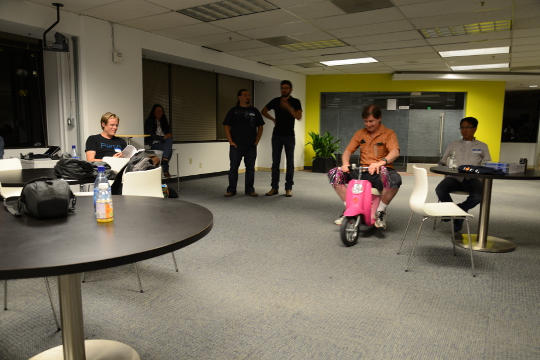
I've mentored a number of students in 2013 and 2014 for Debian and Ganglia and most of the companies I've worked with have run internships and graduate programs from time to time. GSoC 2014 has just finished and with all the excitement, many students are already asking what they can do to prepare and be selected in 2015. My own observation is that the more time the organization has to get to know the student, the more confident they can be selecting that student. Furthermore, the more time that the student has spent getting to know the free software community, the more easily they can complete GSoC. Here I present a list of things that students can do to maximize their chance of selection and career opportunities at the same time. These tips are useful for people applying for GSoC itself and related programs such as GNOME's Outreach Program for Women or graduate placements in companies. Disclaimers There is no guarantee that Google will run the program again in 2015 or any future year. There is no guarantee that any organization or mentor (including myself) will be involved until the official list of organizations is published by Google. Do not follow the advice of web sites that invite you to send pizza or anything else of value to prospective mentors. Following the steps in this page doesn't guarantee selection. That said, people who do follow these steps are much more likely to be considered and interviewed than somebody who hasn't done any of the things in this list. Understand what free software really is You may hear terms like free software and open source software used interchangeably. They don't mean exactly the same thing and many people use the term free software for the wrong things. Not all open source projects meet the definition of free software. Those that don't, usually as a result of deficiencies in their licenses, are fundamentally incompatible with the majority of software that does use genuinely free licenses. Google Summer of Code is about both writing and publishing your code and it is also about community. It is fundamental that you know the basics of licensing and how to choose a free license that empowers the community to collaborate on your code well after GSoC has finished. Please review the definition of free software early on and come back and review it from time to time. The The GNU Project / Free Software Foundation have excellent resources to help you understand what a free software license is and how it works to maximize community collaboration. Don't look for shortcuts There is no shortcut to GSoC selection and there is no shortcut to GSoC completion. The student stipend (USD $5,500 in 2014) is not paid to students unless they complete a minimum amount of valid code. This means that even if a student did find some shortcut to selection, it is unlikely they would be paid without completing meaningful work. If you are the right candidate for GSoC, you will not need a shortcut anyway. Are you the sort of person who can't leave a coding problem until you really feel it is fixed, even if you keep going all night? Have you ever woken up in the night with a dream about writing code still in your head? Do you become irritated by tedious or repetitive tasks and often think of ways to write code to eliminate such tasks? Does your family get cross with you because you take your laptop to Christmas dinner or some other significant occasion and start coding? If some of these statements summarize the way you think or feel you are probably a natural fit for GSoC. An opportunity money can't buy The GSoC stipend will not make you rich. It is intended to make sure you have enough money to survive through the summer and focus on your project. Professional developers make this much money in a week in leading business centers like New York, London and Singapore. When you get to that stage in 3-5 years, you will not even be thinking about exactly how much you made during internships. GSoC gives you an edge over other internships because it involves publicly promoting your work. Many companies still try to hide the potential of their best recruits for fear they will be poached or that they will be able to demand higher salaries. Everything you complete in GSoC is intended to be published and you get full credit for it. Imagine a young musician getting the opportunity to perform on the main stage at a rock festival. This is how the free software community works. It is a meritocracy and there is nobody to hold you back. Having a portfolio of free software that you have created or collaborated on and a wide network of professional contacts that you develop before, during and after GSoC will continue to pay you back for years to come. While other graduates are being screened through group interviews and testing days run by employers, people with a track record in a free software project often find they go straight to the final interview round. Register your domain name and make a permanent email address Free software is all about community and collaboration. Register your own domain name as this will become a focal point for your work and for people to get to know you as you become part of the community. This is sound advice for anybody working in IT, not just programmers. It gives the impression that you are confident and have a long term interest in a technology career. Choosing the provider: as a minimum, you want a provider that offers DNS management, static web site hosting, email forwarding and XMPP services all linked to your domain. You do not need to choose the provider that is linked to your internet connection at home and that is often not the best choice anyway. The XMPP foundation maintains a list of providers known to support XMPP. Create an email address within your domain name. The most basic domain hosting providers will let you forward the email address to a webmail or university email account of your choice. Configure your webmail to send replies using your personalized email address in the From header. Update your ~/.gitconfig file to use your personalized email address in your Git commits. Create a web site and blog Start writing a blog. Host it using your domain name. Some people blog every day, other people just blog once every two or three months. Create links from your web site to your other profiles, such as a Github profile page. This helps reinforce the pages/profiles that are genuinely related to you and avoid confusion with the pages of other developers. Many mentors are keen to see their students writing a weekly report on a blog during GSoC so starting a blog now gives you a head start. Mentors look at blogs during the selection process to try and gain insight into which topics a student is most suitable for. Create a profile on Github Github is one of the most widely used software development web sites. Github makes it quick and easy for you to publish your work and collaborate on the work of other people. Create an account today and get in the habbit of forking other projects, improving them, committing your changes and pushing the work back into your Github account. Github will quickly build a profile of your commits and this allows mentors to see and understand your interests and your strengths. In your Github profile, add a link to your web site/blog and make sure the email address you are using for Git commits (in the ~/.gitconfig file) is based on your personal domain. Start using PGP Pretty Good Privacy (PGP) is the industry standard in protecting your identity online. All serious free software projects use PGP to sign tags in Git, to sign official emails and to sign official release files. The most common way to start using PGP is with the GnuPG (GNU Privacy Guard) utility. It is installed by the package manager on most Linux systems. When you create your own PGP key, use the email address involving your domain name. This is the most permanent and stable solution. Print your key fingerprint using the gpg-key2ps command, it is in the signing-party package on most Linux systems. Keep copies of the fingerprint slips with you. This is what my own PGP fingerprint slip looks like. You can also print the key fingerprint on a business card for a more professional look. Using PGP, it is recommend that you sign any important messages you send but you do not have to encrypt the messages you send, especially if some of the people you send messages to (like family and friends) do not yet have the PGP software to decrypt them. If using the Thunderbird (Icedove) email client from Mozilla, you can easily send signed messages and validate the messages you receive using the Enigmail plugin. Get your PGP key signed Once you have a PGP key, you will need to find other developers to sign it. For people I mentor personally in GSoC, I'm keen to see that you try and find another Debian Developer in your area to sign your key as early as possible. Free software events Try and find all the free software events in your area in the months between now and the end of the next Google Summer of Code season. Aim to attend at least two of them before GSoC. Look closely at the schedules and find out about the individual speakers, the companies and the free software projects that are participating. For events that span more than one day, find out about the dinners, pub nights and other social parts of the event. Try and identify people who will attend the event who have been GSoC mentors or who intend to be. Contact them before the event, if you are keen to work on something in their domain they may be able to make time to discuss it with you in person. Take your PGP fingerprint slips. Even if you don't participate in a formal key-signing party at the event, you will still find some developers to sign your PGP key individually. You must take a photo ID document (such as your passport) for the other developer to check the name on your fingerprint but you do not give them a copy of the ID document. Events come in all shapes and sizes. FOSDEM is an example of one of the bigger events in Europe, linux.conf.au is a similarly large event in Australia. There are many, many more local events such as the Debian France mini-DebConf in Lyon, 2015. Many events are either free or free for students but please check carefully if there is a requirement to register before attending. On your blog, discuss which events you are attending and which sessions interest you. Write a blog during or after the event too, including photos. Quantcast generously hosted the Ganglia community meeting in San Francisco, October 2013. We had a wild time in their offices with mini-scooters, burgers, beers and the Ganglia book. That's me on the pink mini-scooter and Bernard Li, one of the other Ganglia GSoC 2014 admins is on the right. Install Linux GSoC is fundamentally about free software. Linux is to free software what a tree is to the forest. Using Linux every day on your personal computer dramatically increases your ability to interact with the free software community and increases the number of potential GSoC projects that you can participate in. This is not to say that people using Mac OS or Windows are unwelcome. I have worked with some great developers who were not Linux users. Linux gives you an edge though and the best time to gain that edge is now, while you are a student and well before you apply for GSoC. If you must run Windows for some applications used in your course, it will run just fine in a virtual machine using Virtual Box, a free software solution for desktop virtualization. Use Linux as the primary operating system. Here are links to download ISO DVD (and CD) images for some of the main Linux distributions: If you are nervous about getting started with Linux, install it on a spare PC or in a virtual machine before you install it on your main PC or laptop. Linux is much less demanding on the hardware than Windows so you can easily run it on a machine that is 5-10 years old. Having just 4GB of RAM and 20GB of hard disk is usually more than enough for a basic graphical desktop environment although having better hardware makes it faster. Your experiences installing and running Linux, especially if it requires some special effort to make it work with some of your hardware, make interesting topics for your blog. Decide which technologies you know best Personally, I have mentored students working with C, C++, Java, Python and JavaScript/HTML5. In a GSoC program, you will typically do most of your work in just one of these languages. From the outset, decide which language you will focus on and do everything you can to improve your competence with that language. For example, if you have already used Java in most of your course, plan on using Java in GSoC and make sure you read Effective Java (2nd Edition) by Joshua Bloch. Decide which themes appeal to you Find a topic that has long-term appeal for you. Maybe the topic relates to your course or maybe you already know what type of company you would like to work in. Here is a list of some topics and some of the relevant software projects:



  • System administration, servers and networking: consider projects involving monitoring, automation, packaging. Ganglia is a great community to get involved with and you will encounter the Ganglia software in many large companies and academic/research networks. Contributing to a Linux distribution like Debian or Fedora packaging is another great way to get into system administration.
  • Desktop and user interface: consider projects involving window managers and desktop tools or adding to the user interface of just about any other software.
  • Big data and data science: this can apply to just about any other theme. For example, data science techniques are frequently used now to improve system administration.
  • Business and accounting: consider accounting, CRM and ERP software.
  • Finance and trading: consider projects like R, market data software like OpenMAMA and connectivity software (Apache Camel)
  • Real-time communication (RTC), VoIP, webcam and chat: look at the JSCommunicator or the Jitsi project
  • Web (JavaScript, HTML5): look at the JSCommunicator
Before the GSoC application process begins, you should aim to learn as much as possible about the theme you prefer and also gain practical experience using the software relating to that theme. For example, if you are attracted to the business and accounting theme, install the PostBooks suite and get to know it. Maybe you know somebody who runs a small business: help them to upgrade to PostBooks and use it to prepare some reports. Make something Make some small project, less than two week's work, to demonstrate your skills. It is important to make something that somebody will use for a practical purpose, this will help you gain experience communicating with other users through Github. For an example, see the servlet Juliana Louback created for fixing phone numbers in December 2013. It has since been used as part of the Lumicall web site and Juliana was selected for a GSoC 2014 project with Debian. There is no better way to demonstrate to a prospective mentor that you are ready for GSoC than by completing and publishing some small project like this yourself. If you don't have any immediate project ideas, many developers will also be able to give you tips on small projects like this that you can attempt, just come and ask us on one of the mailing lists. Ideally, the project will be something that you would use anyway even if you do not end up participating in GSoC. Such projects are the most motivating and rewarding and usually end up becoming an example of your best work. To continue the example of somebody with a preference for business and accounting software, a small project you might create is a plugin or extension for PostBooks. Getting to know prospective mentors Many web sites provide useful information about the developers who contribute to free software projects. Some of these developers may be willing to be a GSoC mentor. For example, look through some of the following: Getting on the mentor's shortlist Once you have identified projects that are interesting to you and developers who work on those projects, it is important to get yourself on the developer's shortlist. Basically, the shortlist is a list of all students who the developer believes can complete the project. If I feel that a student is unlikely to complete a project or if I don't have enough information to judge a student's probability of success, that student will not be on my shortlist. If I don't have any student on my shortlist, then a project will not go ahead at all. If there are multiple students on the shortlist, then I will be looking more closely at each of them to try and work out who is the best match. One way to get a developer's attention is to look at bug reports they have created. Github makes it easy to see complaints or bug reports they have made about their own projects or other projects they depend on. Another way to do this is to search through their code for strings like FIXME and TODO. Projects with standalone bug trackers like the Debian bug tracker also provide an easy way to search for bug reports that a specific person has created or commented on. Once you find some relevant bug reports, email the developer. Ask if anybody else is working on those issues. Try and start with an issue that is particularly easy and where the solution is interesting for you. This will help you learn to compile and test the program before you try to fix any more complicated bugs. It may even be something you can work on as part of your academic program. Find successful projects from the previous year Contact organizations and ask them which GSoC projects were most successful. In many organizations, you can find the past students' project plans and their final reports published on the web. Read through the plans submitted by the students who were chosen. Then read through the final reports by the same students and see how they compare to the original plans. Start building your project proposal now Don't wait for the application period to begin. Start writing a project proposal now. When writing a proposal, it is important to include several things:
  • Think big: what is the goal at the end of the project? Does your work help the greater good in some way, such as increasing the market share of Linux on the desktop?
  • Details: what are specific challenges? What tools will you use?
  • Time management: what will you do each week? Are there weeks where you will not work on GSoC due to vacation or other events? These things are permitted but they must be in your plan if you know them in advance. If an accident or death in the family cut a week out of your GSoC project, which work would you skip and would your project still be useful without that? Having two weeks of flexible time in your plan makes it more resilient against interruptions.
  • Communication: are you on mailing lists, IRC and XMPP chat? Will you make a weekly report on your blog?
  • Users: who will benefit from your work?
  • Testing: who will test and validate your work throughout the project? Ideally, this should involve more than just the mentor.
If your project plan is good enough, could you put it on Kickstarter or another crowdfunding site? This is a good test of whether or not a project is going to be supported by a GSoC mentor. Learn about packaging and distributing software Packaging is a vital part of the free software lifecycle. It is very easy to upload a project to Github but it takes more effort to have it become an official package in systems like Debian, Fedora and Ubuntu. Packaging and the communities around Linux distributions help you reach out to users of your software and get valuable feedback and new contributors. This boosts the impact of your work. To start with, you may want to help the maintainer of an existing package. Debian packaging teams are existing communities that work in a team and welcome new contributors. The Debian Mentors initiative is another great starting place. In the Fedora world, the place to start may be in one of the Special Interest Groups (SIGs). Think from the mentor's perspective After the application deadline, mentors have just 2 or 3 weeks to choose the students. This is actually not a lot of time to be certain if a particular student is capable of completing a project. If the student has a published history of free software activity, the mentor feels a lot more confident about choosing the student. Some mentors have more than one good student while other mentors receive no applications from capable students. In this situation, it is very common for mentors to send each other details of students who may be suitable. Once again, if a student has a good Github profile and a blog, it is much easier for mentors to try and match that student with another project. GSoC logo generic Conclusion Getting into the world of software engineering is much like joining any other profession or even joining a new hobby or sporting activity. If you run, you probably have various types of shoe and a running watch and you may even spend a couple of nights at the track each week. If you enjoy playing a musical instrument, you probably have a collection of sheet music, accessories for your instrument and you may even aspire to build a recording studio in your garage (or you probably know somebody else who already did that). The things listed on this page will not just help you walk the walk and talk the talk of a software developer, they will put you on a track to being one of the leaders. If you look over the profiles of other software developers on the Internet, you will find they are doing most of the things on this page already. Even if you are not selected for GSoC at all or decide not to apply, working through the steps on this page will help you clarify your own ideas about your career and help you make new friends in the software engineering community.

22 August 2014

Ian Donnelly: Wrapping Up

Hi Everybody! I have been keeping very busy on this blog the past few days with some very exciting updates! Everything is now in place for my Google Summer of Code project! Elektra now has the ability to merge KeySets, ucf has been patched to allow custom merge commands, we included a new elektra-merge script to use in conjunction with the new ucf command, and we wrote a great tutorial on how to use Elektra to merge configuration files in any package using ucf. There are few things I have missed updating you all on or are still wrapping up. First of all, I would like to address the Debian packages. While Elektra includes everything needed for my Google Summer of Code Project, it must be built from source right now. Unfortunately, with the rapid development Elektra has seen the past few months, we did not pay enough attention to the Debian packages and they became dusty and riddles with bugs. Fortunately, we have a solution and his name is Pino Toscano. Pino has, very graciously, agreed to help us fix our Debian packages back into shape. If you wish to see the current progress of the packages, you can check his repo. Pino has already made fantastic progress creating the Debian packages. I will post here when packages are all fixed up and the latest versions of Elektra are into the Debian repo. Some great news that we just received is that Elektra 0.8.7 has just been accepted into Debian unstable! This is huge progress for our team and means that users can now download our packages directly from Debian s unstable repo and test out these new features. Obviously, the normal caveats apply for any packages in unstable but this is still an amazing piece of news and I would like to thank Pino again for all the support he has provided. Another worthy piece of news that I unfortunately haven t had time to cover is that thanks to Felix Berlakovich Elektra has a new plug-in called ini. In case you couldn t guess, this new plug-in is used to mount ini files and the good news is that it is a vast improvement on our older simpleini plug-in. While it is still a work in progress, this new plug-in is much more powerful than simpleini. The new plug-in supports section and comments and works with many more ini files than the old plug-in. You may have noticed that I used this new plug-in to mount smb.conf in my technical demo of Samba using Elektra from configuration merging. Since smb.conf follows the same syntax as an ini file this new plug-in works great for mounting this file into the Elektra Key Database. I hope my blogs so far have been very informative and helpful. Sincerely,
Ian S. Donnelly

21 August 2014

Wouter Verhelst: Multiarchified eID libraries, now public

Yesterday, I spent most of the day finishing up the multiarch work I'd been doing on introducing multiarch to the eID middleware, and did another release of the Linux builds. As such, it's now possible to install 32-bit versions of the eID middleware on a 64-bit Linux distribution. For more details, please see the announcement. Learning how to do multiarch (or biarch, as the case may be) for three different distribution families has been a, well, learning experience. Being a Debian Developer, figuring out the technical details for doing this on Debian and its derivatives wasn't all that hard. You just make sure the libraries are installed to the multiarch-safe directories (i.e., /usr/lib/<gnu arch triplet>), you add some Multi-Arch: foreign or Multi-Arch: same headers where appropriate, and you're done. Of course the devil is in the details (define "where appropriate"), but all in all it's not that difficult and fairly deterministic. The Fedora (and derivatives, like RHEL) approach to biarch is that 64-bit distributions install into /usr/lib64 and 32-bit distributions install into /usr/lib. This goes for any architecture family, not just the x86 family; the same method works on ppc and ppc64. However, since fedora doesn't do powerpc anymore, that part is a detail of little relevance. Once that's done, yum has some heuristics whereby it will prefer native-architecture versions of binaries when asked, and may install both the native-architecture and foreign-architecture version of a particular library package at the same time. Since RPM already has support for installing multiple versions of the same package on the same system (a feature that was originally created, AIUI, to support the installation of multiple kernel versions), that's really all there is to it. It feels a bit fiddly and somewhat fragile, since there isn't really a spec and some parts seem fairly undefined, but all in all it seems to work well enough in practice. The openSUSE approach is vastly different to the other two. Rather than installing the foreign-architecture packages natively, as in the Debian and Fedora approaches, openSUSE wants you to take the native foo.ix86.rpm package and convert that to a foo-32bit.x86_64.rpm package. The conversion process filters out non-unique files (only allows files to remain in the package if they are in library directories, IIUC), and copes with the lack of license files in /usr/share/doc by adding a dependency header on the native package. While the approach works, it feels like unnecessary extra work and bandwidth to me, and obviously also wouldn't scale beyond biarch. It also isn't documented very well; when I went to openSUSE IRC channels and started asking questions, the reply was something along the lines of "hand this configuration file to your OBS instance". When I told them I wasn't actually using OBS and had no plans of migrating to it (because my current setup is complex enough as it is, and replacing it would be far too much work for too little gain), it suddenly got eerily quiet. Eventually I found out that the part of OBS which does the actual build is a separate codebase, and integrating just that part into my existing build system was not that hard to do, even though it doesn't come with a specfile or RPM package and wants to install files into /usr/bin and /usr/lib. With all that and some more weirdness I've found in the past few months that I've been building packages for openSUSE I now have... Ideas(TM) about how openSUSE does things. That's for another time, though. (disclaimer: there's a reason why I'm posting this on my personal blog and not on an official website... don't take this as an official statement of any sort!)

20 August 2014

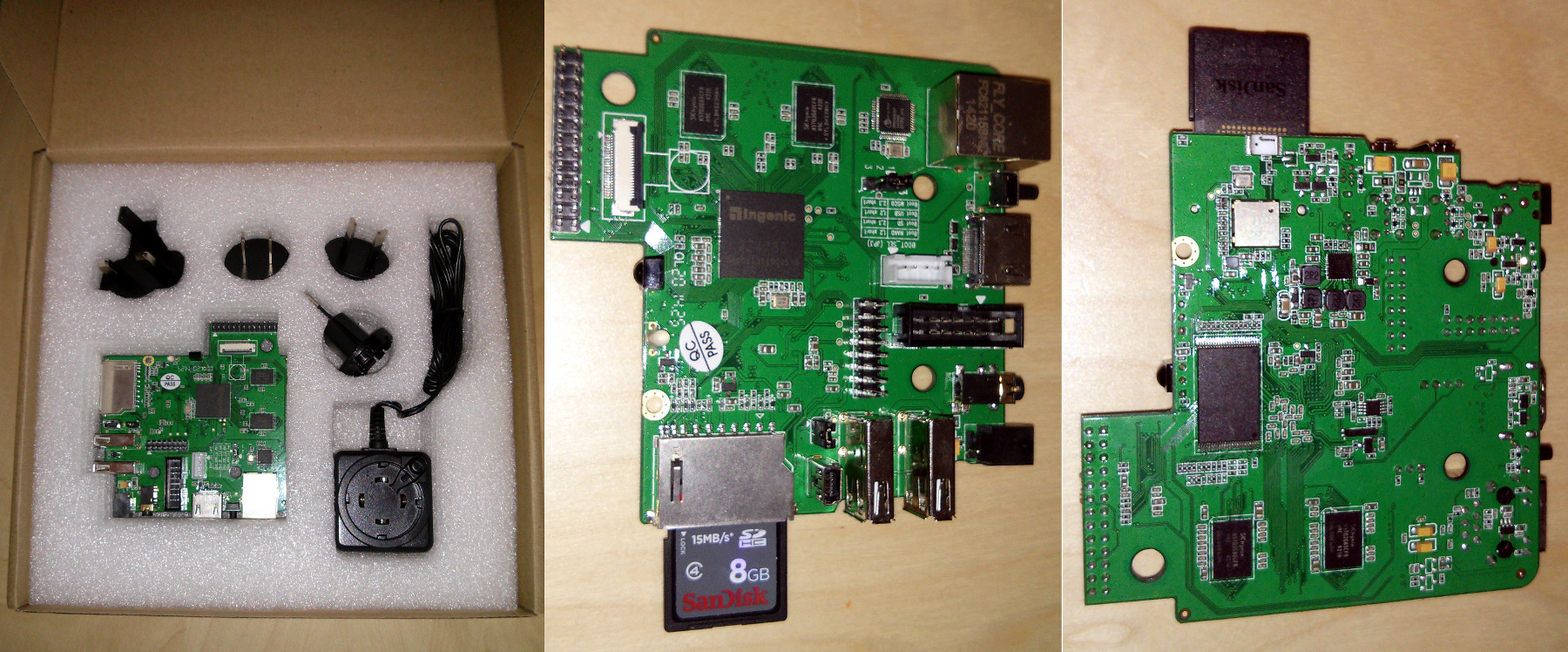
Aurelien Jarno: MIPS Creator CI20

I have received two MIPS Creator CI20 boards, thanks to Imagination Technologies. It s a small MIPS32 development board: mips-ci20 As you can see it comes in a nice packaging with a world-compatible power adapter. It uses a Ingenic JZ4780 SoC with a dual core MIPS32 CPU running at 1.2GHz with a PowerVR SGX540 GPU. The board is fitted with 1GB of RAM, 8GB of NOR flash, HDMI output, USB 2.0 ports, Ethernet + Wi-Fi + BlueTooth, SD card slot, IR receiver, expansion headers and more. The schematics are available. The Linux kernel and the U-Boot bootloader sources are also available. Powering this board with a USB keyboard, a USB mouse and a HDMI display, it boots off the internal flash on a Debian Wheezy up to the XFCE environment. Besides the kernel, the Wi-Fi + Bluetooth firmware, and very few configuration changes, it runs a vanilla Debian. Unfortunately I haven t found time to play more with it yet, but it looks already quite promising. The board has not been formally announced yet, so I do not know when it will become available, nor the price, but if you are interested I ll bring it to DebConf14. Don t hesitate to ask me if you want to look at it or play with it.

Olivier Berger: Building a lab VM based on Debian for a MOOC, using Vagrant + VirtualBox

We ve been busy setting up a Virtual Machine (VM) image to be used by participants of a MOOC that s opening in early september on Relational Databases at Telecom SudParis. We ve chosen to use Vagrant and VirtualBox which are used to build, distribute and run the box, providing scriptability (reproducibility) and making it portable on most operating systems. The VM itself contains a Debian (jessie) minimal system which runs (in the background) PostgreSQL, Apache + mod_php, phpPgAdmin, and a few applications of our own to play with example databases already populated in PostgreSQL.
As the MOOC s language will be french, we expect the box to be used mostly on machines with azerty keyboards. This and other context elements led us to add some customizations (locale, APT mirror) in provisioning scripts run during the box creation. At the moment, we generate 2 variants of the box, one for 32 bits kernel (i686) and one for 64 bits kernel (amd64) which (once compressed) represent betw. 300 and 350 Mb. The resulting boxes are uploaded to a self-hosting site, and distributed through vagrantcloud. Once the VM are created in VirtualBox, the typical VMDK drives file is around 1.3Gb. We use our own Debian base boxes containing a minimal Debian jessie/testing, instead of relying on someone else s, and recreate them using (the development branch version of) bootsrap-vz. This ensure we can put more trust in the content as it s a native Debian package installation without MITM intervention. The VM are meant to be run headless for the moment, keeping their size to the minimum, even though we also provide a script to install and configure a desktop environment based on XFCE4. The applications are either used through vagrant ssh, for instance for SQL command-line in psql, or in the Web browser, for our own Web based SQL exerciser, or phpPgAdmin (see a demo screencast (in french, w/ english subtitles)), which can then be used even off-line by the participants, which also means this requires no servers availability for our IT staff.
The MOOC includes a section on PHP + SQL programming, whose exercises can be performed using a shared sub-folder of /vagrant/ which allows editing on the host with the favourite native editor/IDE, while running PHP inside the VM s Apache + mod_php. The sources of our environment are available as free software, if you re interested to replicate a similar environment for another project. As we re still polishing the environment before the MOOC opening (on september 10th), I m not mentioning the box URLs but they shouldn t be too hard to find if you re investigating (refering to the fusionforge project s web site). We don t know yet how suitable this environment will be for learning SQL and database design and programming, and if Vagrant will bring more difficulties than benefits. Still we hope that the participants will find this practical, allowing them to work on the lab / exercises whenever and wherever they chose, removing the pain of installing and configuring a RDBMS on their machines, or the need to be connected to a cloud or to our overloaded servers. Of course, one limitation will be the requirements on the host machines, that will need to be reasonably modern, in order to run a virtualized Linux system. Another is access to high bandwidth for downloading the boxes, but this is kind of a requirement already for downloading/watching the videos of the MOOC classes ;-) Big thanks go to our intern St phane Germain, who joined us this summer to work on this virtualized environment.

Gunnar Wolf: Bigger than the cloud

Summer is cool in Mexico City. It is cool because, unlike Spring, this is our rainy season And rains are very predictable. Almost every day we wake up with a gorgeous, clean, blue sky. Cool, nice temperature, around 15 C. The sun slowly evaporates the rain throughout the morning; when I go out for lunch, the sky is no longer so blue, giving way to a seemingly dirty white/grayish tint. No, it's not our world-famous pollution: It's just yesterday's rain. Rain starts falling usually between 4 and 7 PM. Sometimes it starts as a light rain, sometimes it starts with all of its thunder, all of its might. But anyway, almost every night, there is a moment of awe, of not believing how much rain we are getting today. It slowly fades away during the late night. And when I wake up, early next morning, everything is wet and still smells fresh. Yes, I love our summer, even though it makes shy away from my much enjoyed cycling to work and school. And I love taking some minutes off work, look through the window of my office (located ~70m over the level of our mostly flat city) and watching how different parts of the city have sun or rain; learning to estimate the distance to the clouds, adding it to the direction and guessing which of my friends have which weather. But I didn't realize our city had so clearly defined micro-climates... (would they really be *micro*-climates?) In fact, it even goes against my knowledge of Mexico City's logic I always thought Coyoac n, towards the South of the city, got more rain than the Center and North because we are near the mountains, and the dominant air currents go Southwards, "clumping" the clouds by us. But no, or at least, not this year. Regina (still in the far South Far because she's too far away from me and I'm too egocentric; she returns home after DebConf) often asks me about the weather, as our friends working nearer the center of the city. According to the photos they post on their $social_media_of_the_day accounts, rains are really heavier there. Today I heard on the radio accounts of yesterday's chaos after the rain. This evening, at ESIME-Culhuac n, I saw one of the reported fallen trees (of course, I am not sure if it's from yesterday's rain). And the media pushes galleries of images of a city covered in hail... While in Copilco we only had a regular rain, I'd even say a mild one. This city is bigger than any cloud you can throw at it.

AttachmentSize
IMG_20140819_155052.jpg929.69 KB

18 August 2014

Daniel Pocock: Is WebRTC private?

With the exciting developments at rtc.debian.org, many people are starting to look more closely at browser-based real-time communications. Some have dared to ask: does it solve the privacy problems of existing solutions? Privacy is a relative term Perfect privacy and its technical manifestations are hard to define. I had a go at it in a blog on the Gold Standard for free communications technology on 5 June 2013. By pure co-incidence, a few hours later, the first Snowden leaks appeared and this particular human right was suddenly thrust into the spotlight. WebRTC and ICE privacy risk WebRTC does not give you perfect privacy. At least one astute observer at my session at Paris mini-DebConf 2014 questioned the privacy of Interactive Connectivity Establishment (ICE, RFC 5245). In its most basic form, ICE scans all the local IP addresses on your machine and NAT gateway and sends them to the person calling you so that their phone can find the optimal path to contact you. This clearly has privacy implications as a caller can work out which ISP you are connected to and some rough details of your network topology at any given moment in time. What WebRTC does bring to the table Some of this can be mitigated though: an ICE implementation can be tuned so that it only advertises the IP address of a dedicated relay host. If you can afford a little latency, your privacy is safe again. This privacy protecting initiative could be made by a browser vendor such as Mozilla or it can be done in JavaScript by a softphone such as JSCommunicator. Many individuals are now using a proprietary softphone to talk to family and friends around the world. The softphone in question has properties like a virus, siphoning away your private information. This proprietary softphone is also an insidious threat to open source and free operating systems on the desktop. WebRTC is a positive step back from the brink. It gives people a choice. WebRTC is a particularly relevant choice for business. Can you imagine going to a business and asking them to make all their email communication through hotmail? When a business starts using a particular proprietary softphone, how is it any different? WebRTC offers a solution that is actually easier for the user and can be secured back to the business network using TLS. WebRTC is based on open standards, particularly HTML5. Leading implementations, such as the SIP over WebSocket support in reSIProcate, JSCommunicator and the DruCall module for Drupal are fully open source. Not only is it great to be free, it is possible to extend and customize any of these components. What is missing There are some things that are not quite there yet and require a serious effort from the browser vendors. At the top of the list for privacy:
  • ZRTP support - browsers currently support DTLS-SRTP, which is based on X.509. ZRTP is more like PGP, a democratic and distributed peer-to-peer privacy solution without needing to trust some central certificate authority.
  • TLS with PGP - the TLS protocol used to secure the WebSocket signalling channel is also based on X.509 with the risk of a central certificate authority. There is increasing chatter about the need for TLS to use PGP instead of X.509 and WebRTC would be a big winner if this were to eventuate and be combined with ZRTP.
You may think "I'll believe it when I see it". Each of these features, including WebRTC itself, is a piece of the puzzle and even solving one piece at a time brings people further out of danger from the proprietary mess the world lives with today. To find out more about practical integration of WebRTC into free software solutions, consider coming to my talk at xTupleCon in October.

Next.

Previous.