Search Results: "bod"

5 August 2013

Daniel Pocock: Effectively supporting virtual domains with Mailman

When I first decided to run my own list server, I was well aware of the popularity of Mailman but I was deterred from using it by the complexity of setting up virtual hosts. In particular, 99% of the software I use for servers is packaged. Whenever I choose a new piece of software, using something that is packaged and supported is high on my list of priorities. Mailman's distribution tarball and the packages built from it only have limited support for virtual hosting. My own objective is to host lists for open source projects. As some of these projects don't have dedicated budgets, it is particularly important to find lightweight, low-maintenance solutions. Furthermore, it is important that those solutions don't detract from the time I want to invest in the projects themselves. I've developed some scripts to solve the problem: to start using them quickly, please see the README file. Here I provide a more detailed overview of the logic behind this approach. Mailman's limitations and workarounds For me, the biggest limitation of Mailman is that the site list is always linked to a single domain, which has to be chosen arbitrarily from the list of domains being hosted. Although it is not emphasized in the documentation, there is also the inconvenience of having all the lists from potentially unrelated projects appearing together on Mailman's main index page. Another limitation is that each list name must be globally unique across all domains. Some existing workarounds exist but they have limitations too. There is a virtual domain patch, but it is not clear how this handles the site list or the site index page. There is also the postfix-to-mailman script distributed by Debian and Ubuntu: using a transport-based solution looks elegant at first, but when you realise that you need to whitelist the addresses (to ensure messages are rejected at ingress rather than bounced), it becomes just as much work to maintain as the alternatives it aims to avoid: Mailman's authors do not endorse this approach. Experimenting with Sympa Deterred by Mailman's limitations, I initially went with Sympa and that seemed to run quite well for a number of years. In particular, it supports full virtual hosting out-of-the-box and all this is standard in the convenient Debian packages. From time-to-time, users have complained about the use of JavaScript in the web UI, but that was not something I could immediately resolve. However, when I upgraded to Debian 7 (wheezy), more serious problems appeared. Initially, the web UI (used for subscribing or browsing the archives) was completely broken. Anybody accessing the site would be given a download of the wws binary rather than the page that was supposed to be generated by the binary. I discovered errors about this in Apache's error.log and tried installing libapache2-mod-fcgid. The problem was resolved, but from then on, my whole web server became unstable and at least once every day I would have to restart the Apache process or it would become inaccessible. I put the details into a bug report and after not getting any feedback, decided to go and have another look at Mailman. A closer look at Mailman Looking at Mailman again, it appeared that the only way to achieve a relatively "pure" virtual hosting solution would be to run multiple installations of Mailman in different directory trees. Initially, I hoped this could be done by sharing copies of the binaries and just creating replicas of the structure under /var/lib/mailman. Looking under the hood, I discovered that the paths were compiled into the binaries and could not be easily overriden. It appears that this limitation could be overcome with some trivial patches to read directory names from the environment. The main aims of using shared binaries are disk space efficiency and also being able to benefit from security updates for the binary packages. However, if I had to patch the binaries, then I wouldn't be able to benefit from the security update packages anyway. So, it became inevitable that I would have to build binaries from source one way or another: either with a patch or by building multiple copies of each binary, each hardcoded with a different path. Putting it into practice Looking over the Mailman architecture, there are four things to be replicated for each installation:
  • init script to start a standalone qrunner per domain
  • cron jobs
  • CGI configuration from Apache (easily isolated by using a different ScriptAlias inside each Apache <VirtualHost>
  • Invocation of the Mailman binary from the mailer's aliases file
The init scripts and crontabs can be easily generated from a template (I used Debian's copies of these files as a base for that). Some of the Apache configuration can be handled by putting wildcards in the <Directory> specifications and the rest can be easily cut-and-pasted into <VirtualHost> definitions. Based on all of the above, all I had to do was run Mailman's configure script and make once for each virtual domain. I've scripted the whole process - my script is available here Managing the aliases file One particular limitation of my mailer (Postfix) is that the Mailman message processor can't be invoked directly from a rule in the virtual alias map. Scripts like this can only be invoked from the normal /etc/aliases file. This problem is not unique to Mailman: for Sympa, I also had to deal with this. The most common solution is to use the virtual file to translate all the virtual list addresses into very verbose usernames within the local domain:
Address Mapped to
widget-users@lists.example.org lists.example.org-widget-users@my-local-domain
The local part, lists.example.org-widget-users can then be used in the regular /etc/aliases file. This approach is described in the Sympa documentation and also in one of the virtual domain patches for Mailman. I've included a script for generating these alias mappings in the repository with my other scripts for building virtual Mailman installations. It would also be possible to patch Mailman itself to generate such files dynamically when new lists are created. Conclusion and next steps Using the techniques described and these small scripts, I successfully built independent virtual hosts for two of my domains, lists.lumicall.org and lists.dynalogin.org on a single mail host. Notice how each of them has the appearance of a clean, standalone Mailman installation? Going forward, I believe it would not be hard for the 2.x branch of Mailman to support this approach to virtual hosting with three changes:
  • Allowing the binaries to take their directory tree name from an environment variable or command line option or by inspecting argv[0] to discover their own location,
  • Generating the aliases file in the more verbose format and
  • Providing some convenient init script and crontab that iterates over all the domains

3 August 2013

Daniel Leidert: Setting up a network buildd with pbuilder, ccache, inoticoming and NFS

I recently bought an N54L HP microserver, which shall act as a build-daemon (buildd) for Debian packaging. The idea of my workflow is the following:
  1. do the maintenance tasks locally, usually using svn-buildpackage, quilt etc.pp
  2. build a source package locally
  3. upload the source to an incoming directory on the server
  4. watch this incoming directory and start a build process as soon as a package is uploaded
  5. put the result into an accessible directory
  6. support different vendors (debian, ubuntu)
  7. support different releases (experimental, unstable, stable, oldstable)
  8. support different architectures (amd64, i386)
  9. speed up the build process
Setting up the building environmentMy first idea was to use sbuild as described in several places. However I went with pbuilder for a long time having a setup I personally like. So I decided to stay with it. I reduce the time and work to update the configure files by using
  • one central file /etc/pbuilderrc.inc defining all the common/shared settings and
  • small configure files defining vendor, release, architecture and mirrors
Here are the relevant parts of my central configure snippet:

[..]
EXTRAPACKAGES="apt-utils debconf debconf-utils libfile-fcntllock-perl"
[..]
BASETGZ="/var/cache/pbuilder/base.$DISTRIBUTION.$ARCHITECTURE.tgz"
APTCACHE="/var/cache/pbuilder/aptcache/$DISTRIBUTION/$ARCHITECTURE/"
BUILDRESULT="/var/cache/pbuilder/result/$DISTRIBUTION/$ARCHITECTURE/"
[..]
case "$VENDOR" in
ubuntu)
MIRRORSITE="http://archive.ubuntu.com/ubuntu"
COMPONENTS="main restricted universe multiverse"
OTHERMIRROR="\
deb http://de.archive.ubuntu.com/ubuntu $DISTRIBUTION main restricted universe multiverse \
deb http://archive.ubuntu.com/ubuntu $DISTRIBUTION-updates main restricted universe multiverse \
deb http://security.ubuntu.com/ubuntu $DISTRIBUTION-security main restricted universe multiverse \
"
;;
*)
MIRRORSITE="http://ftp.debian.org/debian"
COMPONENTS="main contrib non-free"
OTHERMIRROR="\
deb http://ftp.de.debian.org/debian $DISTRIBUTION main contrib non-free \
"
;;
esac
[..]
DEBBUILDOPTS="-us -uc -j2"
AUTO_DEBSIGN=no
USE_PDEBUILD_INTERNAL=yes
[..]
You get the main idea, right? Create own files and directories for each architecture, release and vendor. Further I only want to pull build related packages into the build environment, not into the server environment. So I enabled USE_PDEBUILD_INTERNAL. I don't want to sign anything on the buildd itself and use both cores. That's what DEBBUILDOPTS and AUTO_DEBSIGN are used for. Further I saw some warnings reported during build processes. I therefor install the packages mentioned in EXTRAPACKAGES to every build enviroment. The following are the configure files for the unstable amd64 (default) and the stable i386 build environments:

VENDOR="debian"
DISTRIBUTION="sid"
ARCHITECTURE="amd64"

. /etc/pbuilderrc.inc

VENDOR="debian"
DISTRIBUTION="wheezy"
ARCHITECTURE="i386"

. /etc/pbuilderrc.inc

OTHERMIRROR+="\
deb http://security.debian.org $DISTRIBUTION/updates main contrib non-free \
"
Now to not having to update all of these environments manually there is a small parallelized script /usr/local/sbin/update-pbuilder-chroots:

#!/bin/sh

t=$(tempfile -p .upc. -s .list) exit 1

cat > $t << EOF
/etc/pbuilderrc.amd64.sid
/etc/pbuilderrc.i386.sid
/etc/pbuilderrc.amd64.wheezy
/etc/pbuilderrc.i386.wheezy
/etc/pbuilderrc.amd64.squeeze
/etc/pbuilderrc.i386.squeeze
EOF

parallel /usr/sbin/pbuilder update --override-config --configfile :::: $t tee -a /var/log/pbuilder.log

rm -f $t

exit 0
The script will make sure, that every change to the configuration file(s) will be considered (--override-config) and is run once a week via cron. The default build environment is updated on a daily base without this restriction:

@reboot root rm -rf /var/cache/pbuilder/build/*/ >> /dev/null 2>&1
@daily root test -x /usr/sbin/pbuilder && /usr/sbin/pbuilder update --configfile /etc/pbuilderrc.amd64.sid tee -a /var/log/pbuilder.log >> /dev/null 2>&1
@weekly root test -x /usr/local/sbin/update-pbuilder-chroots && /usr/local/sbin/update-pbuilder-chroots >> /dev/null 2>&1
Speeding up the build processSometimes it is necessary to recompile a package. The tool to speed up this process is ccache, which can be easily integrated into pbuilder by setting CCACHEDIR in /etc/pbuilderrc.inc. It acts like a cache for compiled files and avoids recompilation in several buildd runs.

CCACHEDIR=/var/cache/pbuilder/ccache
It is also possible to use a TMPFS for BUILDPLACE to speed up the build process itself. In this case APTCACHEHARDLINK must be disabled. Well, yeah, I don't do this.Watch an incoming directory and start the build processNot much to say about this except that the user nobody is used to run the pbuilder command. Therefor it is necessary to mention this in /etc/sudoers to allow him to do this via sudo command:

Defaults env_keep = "DH_OPTIONS DH_VERBOSE DEB_BUILD_OPTIONS DH_OPTIONS MAKEFLAGS CC CXX CPP F77 F90"
[..]
nobody ALL=NOPASSWD:/usr/sbin/pbuilder
The first line is only necessary, if a pbuilder command is started with one of these environmental variables set. This can be useful when e.g. debugging a build failure with a future gcc version that is not yet the default or when debugging a clang build issue or when creating non-stripped binary packages for creating a backtrace (BTW: When there is a common repository of all debugging symbols created?).Now to start the build process, I created an incoming directory with mods 777 at /var/cache/pbuilder/incoming/ and use inoticoming to watch it. This is started during boot via cron. The following shows the entry for the default unstable amd64 build environment:

@reboot root /usr/bin/inoticoming --logfile /var/log/inoticoming.log --pid-file /var/run/inoticoming.pid /var/cache/pbuilder/incoming --chdir /var/cache/pbuilder/incoming --suffix .dsc --stderr-to-log --stdout-to-log /bin/su -c '/usr/bin/sudo /usr/sbin/pbuilder build --autocleanaptcache ' nobody \;
Done. That's how the basic buildd works.Getting the resultsThe pbuilder BUILDRESULT directory with mods 777 is shared via NFS mount to the workstation. After successfully building the package, debsign and dput can be used as usual.Setting up the workstationI use svn-buildpackage for most of my packages. Because pbuilder won't download source tarballs on demand by default (maybe via hook?), the tarball must always be included building the source package, which then gets uploaded via dput to the buildd. This is considered in the command listed in svn-builder in ~/.svn-buildpackage.conf (note, below shows my personal layout):

svn-builder=debuild --post-dpkg-buildpackage-hook=\"dput -f buildd /usr/local/src/packages/$PACKAGE/%p_%v_source.changes\" --no-lintian -d -sa -us -uc -S
svn-override=origDir=/usr/local/src/packages/$PACKAGE
svn-override=buildArea=/usr/local/src/packages/$PACKAGE
[..]
The host buildd has been added to ~/.dput.cf:

[buildd]
fqdn = mybuildd
login = mylogin
method = scp
incoming = /var/cache/pbuilder/incoming
allow_unsigned_uploads = 1
run_lintian = 0
Done. Now the svn-buildpackage command will create a source package including the source tarball and upload it to the buildd, where the package building starts right after the upload.ConclusionsThis is the main setup which works nicely for the default build environment so far. On the TODO list is to extend this setup so I can easily deal with all the architectures and releases (point 6..8 at the beginning).

2 August 2013

Rapha&#235;l Hertzog: My Free Software Activities in July 2013

This is my monthly summary of my free software related activities. If you re among the people who made a donation to support my work (167.67 , thanks everybody!), then you can learn how I spent your money. Otherwise it s just an interesting status update on my various projects. The Debian Administrator s Handbook After the successful crowdfunding campaign, I had a bunch of rewards to ship: I subcontracted most of the job but I had to take care of the books with dedication. I also dealt regularly with books/stickers coming back to the sender (due to invalid address or people not picking up their parcels in the post-office). After the rewards, we had to take care to actually finalize the liberation of the French translation. I merged the translations we had in Git and Roland updated/translated a few strings that weren t in the original book in French. Then I have put the book online. Last but not least, I started to work on updating the English book for Debian 7 (Roland started way before me) and we have put some updated chapters up for review. Debian France Elections. After Debian France s general assembly, the new board of administrators voted the officers: I have been re-elected as President, Sylvestre continues as Treasurer but we have a new Secretary in the person of Alexandre Delano . Welcome Alexandre! I did the administrative work to register the new board/officers in the Tribunal d instance and to give access to the internal git repositories to the new members. Galette. I also did a bunch of tests on Galette s new features that Debian France ordered to the upstream author. They should all land in the next upstream release due in the next weeks. \o/ Accounting. I worked on the accounting to bring it up-to-date so that Sylvestre can pick up the work from now on. We re learning how to best use ledger for our needs. PTS rewrite I continued to spend about 12 hours a week to mentor Marko Lalic who is rewriting the Package Tracking System. I m pretty happy with the results so far so I marked him as pass for the mid-term evaluation required by Google. You can have a look at the documentation and the web interface is starting to show some content. The email interface is fully working and I have configured the real PTS to forward all mails to our test instance (pts.debian.net) so that you can use the rewritten PTS for real-life work. Mail your subscription commands to control@pts.debian.net and start using it! Thanks to the test driven development methodology we re using, we re pretty confident that it works reasonably well! :-) I also packaged python-django-jsonfield (still in NEW) since Marko has been using this python module in his code, and filed bug #717900 on sqlite3 to raise a limit that we have hit with queries made by the PTS. Kali Linux I used the Calxeda Highbank node donated to Debian by Offensive Security to test the new -armmp kernel flavor on it. It seemed to work except for a missing network driver (filed in #717269). Misc Debian work Issues with social networks. With the move of identi.ca to pump.io, we don t have any possibility to auto-post status updates based on RSS feeds. Identi.ca s @debian account was also configured to push updates to the @debian account on twitter.com (and from there it was grabbed in the Debian page on Facebook). This is also gone so to limit the damage, I setup twitterfeed.com so that the twitter/facebook accounts continue to have updates). If you re looking for a development project, here s an area that is not well covered by free software! We need code to do what twitterfeed does and we need that code to also support pump.io. Dpkg work. It s been a long time since I last pushed some code to dpkg s git repository. I took care of reworking and merging a patch submitted by Steve Langasek to fix #716948 (an issue with dpkg-maintscript-helper rm_conffile messing with conffiles that the package no longer owns). Git mail notification. When I was still administrator of Alioth, I wrote git-commit-notice (a fork of Git s post-receive-email) and many packaging projects are using this hook script to send commit notices to mailing lists. This script has not been updated for multiple years and it started spewing warnings recently due to deprecated features in Wheezy s git. So I looked at updating it and while doing so I discovered a much better replacement with git-multimail. Thus I adapted git-commit-notice to work on top of this new script. The result has now been installed on git.debian.org (this is to be properly announced in the next DeveloperNews). Misc work. I packaged sql-ledger 3.0.5-1, forwarded #714739 on publican, and I participated in discussions to move the French Debian planets to planet.debian.org. Thanks See you next month for a new summary of my activities.

10 comments Liked this article? Click here. My blog is Flattr-enabled.

1 August 2013

Michal &#268;iha&#345;: Weblate 1.6 in SUSE Studio

Finally, Weblate 1.6 is available as ready to use appliance in SUSE Studio. This took quite long as openSUSE 12.3 does not work as expected inside SUSE Studio and I was too lazy to find all necessary tweaks earlier. The same problem actually prevented from Weblate 1.5 being there at all. The biggest obstacle was MySQL setup - after enabling "Set up MySQL" in studio, you end up with MySQL database with empty mysql.users table, which obviously can not authenticate anybody. As I've found out, the only way around is manual setup. Once this was figured out, the appliance only needed minor tweaking and is now ready to use in SUSE Gallery in all formats used for virtualization.

Filed under: English Suse Weblate 0 comments Flattr this!

Russ Allbery: Review: And Playing the Role of Herself

Review: And Playing the Role of Herself, by K.E. Lane
Publisher: Regal Crest
Copyright: 2006
Printing: June 2010
ISBN: 1-932300-72-4
Format: Kindle
Pages: 336
Caidence Harris is an actress who has finally gotten her big shot: a starring role in the hit police drama 9th Precinct. She plays half of a police partnership; the other half is played by her best friend, the considerably more famous Liz Stokley. She's quite happy with her life and her work, and only tentatively pondering what to do about coming out (at least to herself) as a lesbian. But matters get considerably more complicated when she starts falling for Robyn Ward, a star in a parallel legal drama. And the very high-profile girlfriend of one of the best male tennis players in the world. Yes, another lesbian romance. This one has won several awards, including the highest recommendation from my friend who's been prefiltering the genre for me and pointing out only the best stories. And despite being set firmly among the rich and famous and involving TV dramas with the serial numbers filed off, he was right. This is a thoroughly enjoyable story. One of its strongest parts is how Lane develops the romance between Caidence and Robyn. There is a bit of the inevitable physical chemistry so common in romances (I still don't believe kisses work that way), and a few descriptions of physical beauty (after all, there's a built-in excuse for everyone to be TV-star beautiful). But Lane avoids putting either at the center of the relationship. Instead, this is a romance built on trust, tentative at first and then growing but rocky. That speaks to me a lot more than all the descriptions of physical chemistry. For example, we don't see Caidence and Robyn meet for the first time in the novel, as is usually the case. They've been around each other before, with Caidence acting rather tongue-tied and a bit star-struck and Robyn thinking she's rather silly. The story begins when, for whatever reason, Caidence finally manages to relax and become genuine, and then both of them become closer as they find themselves lowering barriers around each other that they normally don't lower. Lane does an excellent job using a few key facial expressions as symbols and hallmarks of that, letting the reader follow the way that trust builds through the story. The other great element of this book is Caidence's friend Liz. She could have been a stereotype of a movie star: drop-dead gorgeous, a new boyfriend each week, but not particularly intelligent. That's how she comes off at first. But as the story progresses, Lane shows more and more of their friendship, and the reader gets to see just how much Liz's first impression is a combination of an act and her unapologetic tendency to do what she wants. Underneath, she's a strong female character and an excellent, if meddling friend; by the end of the book, she was in the running for my favorite character. This is characterization of a quality that I rarely see in any genre of novel. Given that it's a romance that I enjoyed, you can correctly expect there not to be a lot of obnoxious communication breakdowns or chapters full of the main characters refusing to communicate with each other. There are, of course, a wide variety of barriers in the way of a relationship for the main characters, not the least of which being that neither of them was looking for something serious. But while they both do occasionally thoughtless or hurtful things, it's always clear just why they were thoughtless, or where their buttons were accidentally pressed, and few of the character actions are outright stupid. And, delightfully, Lane structures the story so that there are multiple, incremental payoffs. One can not only enjoy the characters getting together in the end, as they always do in this genre, but a lot of important and meaningful steps along the way. Lane does a great job putting the reader in Caidence's head, helped by first-person narration, so that one can feel just how much some moments mean to her emotionally. Add in several other fleshed-out and interesting supporting characters, some incredible architecture that was fun to imagine, and rather more in the way of plot twists and dramatic moments than I usually expect in a romance (and although the book worried me once, none of them go to the dark places that would have been less fun), and one gets a novel that kept me engrossed from start to finish. I'm tempted to read it again, and that's rare for me for a romance novel. If you're in the mood for a heart-warming story about intelligent people learning how to be together, I highly recommend this book. It's a great book to read as a stress relief when you want a story that you know will turn out "right." Rating: 9 out of 10

31 July 2013

Jan Wagner: Updated roundcube for wheezy

Roundcube is one of the well known OpenSource solutions for accessing Mails via webinterface. Unfortunately the package in wheezy is ~2 years old.
In Debian unstable the package was updated, but #714727 is blocking the migration to jessie. In the meanwhile I backported the package to wheezy. For everybody still using the sqlite (v2) backend, see here. There is no automatic migration from sqlite to sqlite3 backend.
For everybody using the package roundcube-plugins-extra, I created an updated package for roundcube 0.9 and submitted my changes to the Debian Roundcube Maintainers. If you want to give it a try, you could install the packages from my wheezy-backports repository:
# wget "http://ftp.cyconet.org/debian/sources.list.d/wheezy-backports-cyconet.list" \
    -O /etc/apt/sources.list.d/wheezy-backports-cyconet.list
# aptitude update
# aptitude -t wheezy-backports install roundcube-mysql roundcube-plugins roundcube-plugins-extra
For adding my archive key, you can just install the package "debian-cyconet-archive-keyring"

30 July 2013

Daniel Pocock: Switzerland's scariest railway (video)

Although promoted as a funicular railway, the Gelmerbahn funicular has the appearance of a giant roller coaster and all of the fun too. For all those still having nightmares about recent rail tragedies in the age of non-stop surveillance and on-line replays, the 108 degree ascent (or descent) may not be your thing. On the other hand, for those who experience the London Underground each morning, "mind the gap" takes on a whole new meaning as you see your feet hanging out the bottom of the train and the tracks descending vertically into the valley below. <video controls="" height="340" poster="http://danielpocock.com/sites/danielpocock.com/files/gbahn-preview.jpg" width="560">

<source src="http://video.danielpocock.com/Gelmerbahn.webm" type="video/webm"></source>
Click to access video on original page
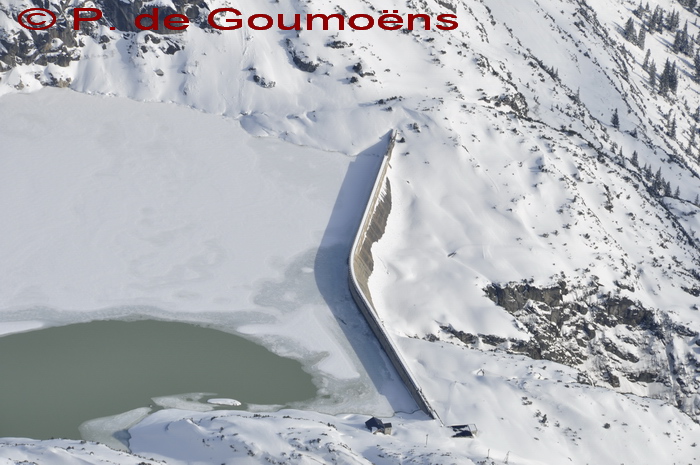
</video> and here are download links for those who prefer to download now and watch later (about 160MB): At the top At the top, there is a scenic two hour walk around Lake Gelmer, the path takes you across the top of a dam built for hydro-electric power generation. Lake Gelmer - hydro-electric dam Getting there from DebConf13 and the Debian 20th birthday For those coming to Switzerland for DebConf13 next month, the Gelmerbahn is probably a little bit too far for a day trip but makes an excellent place to stop during a 2 or 3 day tour around Switzerland. It is accessible using the all-day bus pass for the tour of 3 or 4 mountain passes or by train to Innertkirchen and then a short ride on the bus. The busses are irregular, use sbb.ch to plan the journey. Walking down the mountain from the lake to the bus stop takes about 90 minutes and for those who choose this option, the ticket is cheaper. More Swiss travel blogs Please click here to access some of my previous blogs about Swiss travel with videos and useful ideas for day trips.

28 July 2013

Daniel Pocock: This blog was slashdotted

My earlier blog about rigged elections was slashdotted over the weekend. I had an email from the slashdot team giving me advance warning, having heard the stories about other sites getting knocked offline, I immediately logged into my Ganglia console to start the tsunami watch. I then set about enabling a reverse proxy using Squid to accelerate web server performance. This took about 30 minutes to set up. I chose Squid 3 so I could use a logging format similar to Apache. The wave hits A few hours after the warning email, details appeared on slashdot and sure enough, thousands of visitors started coming to this site. As detailed previously, the site is running on Debian servers with XCP. The web site is managed by Drupal/Apache/MySQL. Everything held together very well. Ganglia demonstrated an initial surge lasting about 10 minutes. From there, traffic has tapered off gradually over 24 hours, although it still remains well above average. slashdot comments One of the most interesting things about the slashdot community are the comments. Given that nobody really wanted to defend the indefensible and nothing in my blog surpasses some of what has been in the news recently (150 charges of fraud against a single MP), most of the discussion quickly turned to a comparison of broadband policies. For those not already aware of it, the Australian Government (Labor Party) is currently rolling out fibre to the home. The project is expected to take about 10 years, although it was delivered very quickly in certain areas where the Government needs votes. Opinions are divided: people who got it first think it is great, some people feel it is too expensive (it's much more expensive than a similar service in Switzerland, for example), some people feel it will be too slow when the final stages are completed in 10 years. It appears technically stronger than the solution proposed by the alternative party.

27 July 2013

Christian Perrier: Developers per country (July 2013)

This is time again for my annual report about the number of developers per country. This is now the fifth edition of this report, after the 2012, 2011, 2010 and 2009 editions. So, here we are with the July 2013 version, sorted by the ratio of *active* developers per million population for each country.
Act: number of active developers
Dev: total number of developers
A/M: number of active devels per million pop.
D/M: number of devels per million pop.
2009: rank in 2009
2010: rank in 2010
2011: rank in 2011 (June)
2011: rank in 2012 (June)
2013: rank now
Code Name Population Act Dev Dev Act/Million Dev/Million 2009 2010 June 2011 June 2012 July 2013
fi Finland 5259250 19 31 3,61 5,89 1 1 1 1 1
ie Ireland 4670976 12 15 2,57 3,21 13 9 6 2 2
ch Switzerland 7870134 20 27 2,54 3,43 2 2 2 3 3
mq Martinique 396404 1 1 2,52 2,52

3 4 4
se Sweden 9088728 22 37 2,42 4,07 3 6 7 5 5
no Norway 4973029 12 15 2,41 3,02 5 4 4 6 6
nz New Zealand 4331600 10 15 2,31 3,46 4 3 5 7 7
de Germany 81471834 165 235 2,03 2,88 7 7 9 9 8 *
lu Luxemburg 503302 1 1 1,99 1,99 8 5 8 8 9 *
at Austria 8217280 16 26 1,95 3,16 6 8 10 10 10
fr France 65350000 100 130 1,53 1,99 12 12 11 11 11
au Australia 22607571 31 59 1,37 2,61 9 10 12 12 12
be Belgium 11071483 14 17 1,26 1,54 10 11 13 13 13
uk United-Kingdom 62698362 73 114 1,16 1,82 14 14 14 14 14
nl Netherlands 16728091 19 40 1,14 2,39 11 13 15 15 15
ca Canada 33476688 32 61 0,96 1,82 15 15 17 16 16
dk Denmark 5529888 5 10 0,9 1,81 17 17 16 17 17
es Spain 46754784 35 56 0,75 1,2 16 16 19 18 18
it Italy 59464644 36 51 0,61 0,86 23 22 22 19 19
cz Czech Rep 10190213 6 6 0,59 0,59 21 20 21 21 20 *
lt Lithuania 3535547 2 2 0,57 0,57 28 19 20 22 21 *
us USA 313232044 173 378 0,55 1,21 19 21 25 24 22 *
il Israel 7740900 4 6 0,52 0,78 24 24 24 25 23 *
hu Hungary 10076062 5 10 0,5 0,99 18 25 26 20 24 *
hr Croatia 4290612 2 2 0,47 0,47 20 18 18 26 25 *
lv Latvia 2204708 1 1 0,45 0,45 26 26 27 27 26 *
bg Bulgaria 7364570 3 3 0,41 0,41 25 23 23 23 27 *
uy Uruguay 3477778 1 2 0,29 0,58 22 27 28 28 28
jp Japan 127078679 35 50 0,28 0,39 30 28 29 29 29
pl Poland 38441588 10 14 0,26 0,36 29 29 30 30 30
cr Costa Rica 4301712 1 1 0,23 0,23 31 30 31 31 31
by Belarus 9577552 2 2 0,21 0,21 35 36 39 39 32 *
sg Singapore 5183700 1 1 0,19 0,19


33 33
pt Portugal 10561614 2 4 0,19 0,38 27 32 32 34 34
gr Greece 10787690 2 3 0,19 0,28 33 38 34 35 35
sk Slovakia 5477038 1 1 0,18 0,18 32 31 33 36 36
ar Argentina 40677348 6 8 0,15 0,2 34 33 35 32 37 *
rs Serbia 7186862 1 1 0,14 0,14


38 *
tw Taiwan 23040040 3 3 0,13 0,13 37 34 37 37 39 *
br Brazil 192376496 21 23 0,11 0,12 36 35 38 38 40 *
cu Cuba 11241161 1 1 0,09 0,09
38 41 41 41
kr South Korea 48754657 4 6 0,08 0,12 39 39 42 42 42
gt Guatemala 13824463 1 1 0,07 0,07


43 *
ve Venezuela 28047938 2 2 0,07 0,07 40 45 50 49 44 *
ec Ecuador 15007343 1 1 0,07 0,07
40 43 43 45 *
co Colombia 45566856 3 4 0,07 0,09 41 44 46 47 46 *
cl Chile 16746491 1 2 0,06 0,12 42 41 44 44 47 *
za South Africa 50590000 3 10 0,06 0,2 38 48 48 48 48
ru Russia 143030106 7 8 0,05 0,06 43 42 47 45 49 *
mg Madagascar 21281844 1 1 0,05 0,05 44 37 40 40 50 *
ro Romania 21904551 1 2 0,05 0,09 45 43 45 46 51 *
my Malaysia 28250000 1 1 0,04 0,04

49 50 52 *
pe Peru 29907003 1 1 0,03 0,03 46 46 51 51 53 *
tr Turkey 74724269 2 2 0,03 0,03 47 47 52 52 54 *
ua Ukraine 45134707 1 1 0,02 0,02 48 53 58 59 55 *
th Thailand 66720153 1 2 0,01 0,03 50 50 54 54 56 *
eg Egypt 80081093 1 3 0,01 0,04 51 51 55 55 57 *
mx Mexico 112336538 1 1 0,01 0,01 49 49 53 53 58 *
cn China 1344413526 10 14 0,01 0,01 53 53 57 56 59 *
in India 1210193422 9 9 0,01 0,01 52 52 56 57 60 *
sv El Salvador 7066403 0 1 0 0,14

36 58 61 *


957 1535 62,35%


A few interesting facts:

25 July 2013

John Goerzen: Spring Always Comes

There will come a time when you believe everything is finished. That will be the beginning. Louis L Amour
Last year, I wrote about the difficult times in my life and hope for future, but never really explained why. I have written little since, because there is little I can write without a bit of explanation. It is partly because of the complexity of the task of telling my story without telling too much of others stories. But it is important I tell this story. So often on the Internet, we hear only the brave face, the positive things that happen. This story involves tears and difficulty. And also we often see only anger and bitterness. This story involves joy and celebration. One afternoon last year, I was working as usual (I work from home) when two sheriff deputies arrived on my doorstep. They gave me paperwork showing that my now ex-wife had filed for divorce, had asked them to serve me the paperwork, and that she had been given temporary possession of the house. I had 2 hours to gather up clothes and a little computer equipment (there was a list) and leave the house. Thus began the most difficult time in my life. I went from reading a bedtime story and singing a bedtime song to my young boys every night to seeing them only a little, from living in the house my grandparents and dad had lived in to having no particular plan for where I d sleep that night, from thinking I had a good idea of what the future held to not knowing when, if ever, I d ever be back home. I worried about how the boys would fare (they have done well so far). And it was incomprehensible; I couldn t find answers to why? . In the time since, the divorce became final, I did return home, the boys spend more time with me, and a new normal emerged. At the time, it seemed like a sudden, deep winter blizzard. I couldn t see very far down the road, spring seemed far off, and I couldn t see very well either forward or backward. But I was determined to find positives in the situation. It started almost immediately; I had never been a person to talk about pain, but just a few hours after the divorce was filed, I knew I needed to talk to someone about it, and did. A week later, I shared about it in church. Amazing friends, locally and all over the world, provided support and encouragement. I had less total time with the boys than before the divorce, but more time with just the three of us, and we used it to play together at home, spend days in town, and even take a train trip to Santa Fe, where none of us had ever been before. I realized how much I could forgive, and that my ex-wife probably did the best she could with the persistent legacy of difficult life events that happened to her long before she met me. I understood this, and was never angry, just sad, for everyone. I have always known nobody is perfect, myself included, but can be hard on myself when I m less than perfect. I forgave myself, too, realizing that I did my best to help in the most unfamiliar of waters, and although I sometimes didn t get it right, my conscience is clear because my heart was in the right place and I tried, very hard. Most incredibly, I became a person with a deep sense of inner peace. I always tried to work hard to set life on a good path; I got good grades in school, am a good employee, and have a strong set of values. But where courts are involved, there s a strong sense of powerlessness. At times, there was nothing I could do to make life better for my boys or for me. I finally had to let go of taking on responsibility for all that on my own shoulders. I simply knew that things would be OK, and in fact were OK, and that there is nothing in life that really deserves worries. That doesn t mean worries are never present, but that mostly they are subdued, like a radio quietly playing in another room. When they aren t, I can sit down at the piano, play my penny whistle, sing, walk to my creek, talk to friends, or any of so many things that let them melt away. I stopped searching for happiness and peace, and let those things find me. In religious terms, my faith became not just an intellectual one, but also a spiritual one. An atheist friend asked me, Just what does religion mean to you anyway? My answer: The certainty that spring always comes, for everyone that understands this.
People speak of misfortunes and sufferings, remarked Pierre, but if at this moment I were asked: Would you rather be what you were before you were taken prisoner, or go through all this again? then for heaven s sake let me again have captivity and horseflesh! We imagine that when we are thrown out of our usual ruts all is lost, but it is only then that what is new and good begins. While there is life there is happiness. There is much, much before us. Tolstoy, War and Peace
By Thanksgiving, I had much to be thankful for. Some of it under my nose waiting to be rediscovered after years of distraction, such as the glorious Kansas sunrises. Some things were new, such as roasting a turkey all by myself (or, rather, with Jacob and Oliver) for the first time, and having it come out absolutely perfectly. And some were just the things of everyday life: that I lived in my own house again, that I could walk out to the creek at the edge of my property whenever I wanted, that I could play piano, that the sounds of laughter and little running feet again could often be heard on my wood floors. That s not to say everything was easy; the courts sometimes made decisions sometimes I didn t think were in the boys best interests, legal things dragged on and on, but in the end, peace endured. Happiness endured. I found myself thinking at Thanksgiving that it was the best Thanksgiving ever. Not much later, I considered myself happier than I ve ever been. I was focusing on the daily gifts of life, marveling at the sunrises, looking forward to life s next adventure, confident that it would be far better than the last. And then, to my complete surprise, I found myself in a relationship again. On top of all the wonderful things happening in my life, I met Laura. I never could have imagined a friend so wonderful, a relationship so loving and joyful, something to treasure so deeply. I can look back at events and shake my head in amazement and wonder, that I found myself happier than I d ever been, and then this wonderful relationship on top of that. I have been blessed to have the life I do, and feel almost embarrassingly lucky. I share this story because friends that had been through divorce years ago shared their stories. They gave me hope. And if I didn t share this story in this public way, I would be squandering an opportunity to find more positives from what happened. I hope that this helps, somehow, someone that is in pain know that there is beauty in the valley, and spring always comes, every single year. And I share it because happiness like this can t be repressed for long. Tolstoy was right. While there is life, there is happiness. I ll end with a story from last Thanksgiving. It was 6:10AM that weekend. I was still asleep, and heard this: Jacob, yelling from his room: Dad? Dad! Me, groggy: Yes, Jacob? Jacob: Can I go down and look at the Christmas tree? Me: Sure, and you can turn it on too. Jacob: Great! At that point, I could have gone back to sleep. I was really short on sleep that morning, and Jacob would have been fine. But I gave him a couple of minutes, then I went downstairs too. He was curled up on the piano bench, looking at the tree. I quietly turned up the downstairs thermostat, got a chair, put it next to the piano bench, and sat down by the tree too. Jacob crawled over onto my lap and snuggled up for awhile. Neither of us said anything. Then: Dad? Yes? This is the best Thanksgiving ever. And he gave me a big hug. And he was right. Yes, he was RIGHT! That will be the beginning. Spring comes!

24 July 2013

Daniel Leidert: Moving from (software) RAID 1 to RAID 5 and testing performance

Finally I finished migrating my new N54L from a 2-disk software RAID 1 (2x2TB WD20EFRX) to 3-disk RAID 5 (3x2TB WD20EFRX) using mdadm. I got an excellent mini HOWTO I followed. Resyncing and reshaping the RAID took several days ... top speed was 110.000K/s ... but left my data untouched. Finally growing the RAID now I have two partitions; one with 0.5GB (md0) and the other with 3.4GB (md1) which both host an EXT4 file system, whereas the first one is encrypted via LUKS and the second one is not. RAID device and file system configuration Below is a summary of the setup and the values I found working well for my system.
3-disk RAID 5 devicefile system
devicechunkstripe_cache_sizeread_ahead_kbtypeencryptionstridestripe-width
/dev/md064409632768ext4luks1632
/dev/md15121638432768ext4no128256
I've played around with the system a bit. Changing the chunk size on the fly however took a long time. /dev/md0 will contain some backups, so there probably will be a mixture of small and large files. So I've chosen to only test the values 64K, 128K and 512K (default) for this device. I left the other untouched as it will mainly contain large files. Performance measurement Below are the results using hdparm to measure performance. First lets take a look at the drives ...

$ hdparm -tT /dev/sd[bcd]
/dev/sdb:
Timing cached reads: 3268 MB in 2.00 seconds = 1634.54 MB/sec
Timing buffered disk reads: 438 MB in 3.00 seconds = 145.87 MB/sec

/dev/sdc:
Timing cached reads: 3292 MB in 2.00 seconds = 1646.32 MB/sec
Timing buffered disk reads: 392 MB in 3.01 seconds = 130.22 MB/sec

/dev/sdd:
Timing cached reads: 3306 MB in 2.00 seconds = 1653.18 MB/sec
Timing buffered disk reads: 436 MB in 3.00 seconds = 145.26 MB/sec

$ hdparm --direct -tT /dev/sd[bcd]
/dev/sdb:
Timing O_DIRECT cached reads: 468 MB in 2.01 seconds = 233.17 MB/sec
Timing O_DIRECT disk reads: 442 MB in 3.00 seconds = 147.15 MB/sec

/dev/sdc:
Timing O_DIRECT cached reads: 468 MB in 2.00 seconds = 233.69 MB/sec
Timing O_DIRECT disk reads: 392 MB in 3.01 seconds = 130.36 MB/sec

/dev/sdd:
Timing O_DIRECT cached reads: 468 MB in 2.00 seconds = 233.94 MB/sec
Timing O_DIRECT disk reads: 442 MB in 3.01 seconds = 146.93 MB/sec
... and now at the RAID devices ...

$ hdparm -tT /dev/md?
/dev/md0:
Timing cached reads: 3320 MB in 2.00 seconds = 1660.37 MB/sec
Timing buffered disk reads: 770 MB in 3.01 seconds = 256.05 MB/sec

/dev/md1:
Timing cached reads: 3336 MB in 2.00 seconds = 1668.07 MB/sec
Timing buffered disk reads: 742 MB in 3.01 seconds = 246.89 MB/sec

$ hdparm --direct -tT /dev/md?
/dev/md0:
Timing O_DIRECT cached reads: 974 MB in 2.00 seconds = 487.08 MB/sec
Timing O_DIRECT disk reads: 770 MB in 3.01 seconds = 256.17 MB/sec

/dev/md1:
Timing O_DIRECT cached reads: 784 MB in 2.00 seconds = 391.18 MB/sec
Timing O_DIRECT disk reads: 742 MB in 3.01 seconds = 246.42 MB/sec
... and now lets see, which actual speed we reach using dd. First lets check the encrypted device:

RAID-5 /dev/md0 (LUKS encrypted EXT4): chunk=64K, stripe_cache_size=4096,
readahead(blockdev)=65536, stride=16, stripe-width=32 ...

$ dd if=/dev/zero of=/mnt/md0/10g.img bs=1k count=10000000
10000000+0 Datens tze ein
10000000+0 Datens tze aus
10240000000 Bytes (10 GB) kopiert, 64,1227 s, 160 MB/s

$ dd if=/mnt/md0/10g.img of=/dev/null bs=1k count=10000000
10000000+0 Datens tze ein
10000000+0 Datens tze aus
10240000000 Bytes (10 GB) kopiert, 85,768 s, 119 MB/s
Well, read speed is consistently lower than write speed for the encrypted file system. Lets take a look at the non-encrypted device:

RAID-5 /dev/md1 (EXT4): chunk=512K, stripe_cache_size=16384,
readahead(blockdev)=65536, stride=128, stripe-width=256 ...

$ dd if=/dev/zero of=/mnt/md1/10g.img bs=1k count=10000000
10000000+0 Datens tze ein
10000000+0 Datens tze aus
10240000000 Bytes (10 GB) kopiert, 37,0016 s, 277 MB/s

$ dd if=/mnt/md1/10g.img of=/dev/null bs=1k count=10000000
10000000+0 Datens tze ein
10000000+0 Datens tze aus
10240000000 Bytes (10 GB) kopiert, 33,5901 s, 305 MB/s
Looks nice to me. How to set these values I use a mixture of udev, util-linux and e2fsprogs to set the values. First I checked, which values for stripe_cache_size and read_ahead_kb are working best for me. For the LUKS encrypted EXT4 I got varying results showing best performances with values of 4096, 8192 and 16384 for stripe_cache_size. I decided for the first value, because it appeared more often with the best performance than the others.

$ less /etc/udev/rules.d/90-local-n54l.rules grep stripe_cache
SUBSYSTEM=="block", KERNEL=="md0", ACTION=="add", TEST=="md/stripe_cache_size", TEST=="queue/read_ahead_kb", ATTR md/stripe_cache_size ="4096", ATTR queue/read_ahead_kb ="32768", ATTR bdi/read_ahead_kb ="32768"
SUBSYSTEM=="block", KERNEL=="md1", ACTION=="add", TEST=="md/stripe_cache_size", TEST=="queue/read_ahead_kb", ATTR md/stripe_cache_size ="16384", ATTR queue/read_ahead_kb ="32768", ATTR bdi/read_ahead_kb ="32768"
The read_ahead_kb value can also be set using blockdev. Note that this command expects a value of 512-byte sectors whereas read_ahead_kb is the size in kbyte. Therefor the difference in values:

$ blockdev --setra 65536 /dev/md[01]
Tuning the EXT4 file system performance with calculated values using tune2fs:

$ tune2fs -E stride=16,stripe-width=32 -O dir_index /dev/mapper/_dev_md0
$ tune2fs -E stride=128,stripe-width=256 -O dir_index /dev/md1
Disabling NCQ reduced the speed a lot for me, so I left the values as is and did not struggle with it:

$ cat /sys/block/sd[bcd]/device/queue_depth
31
31
31

23 July 2013

Daniel Pocock: If Assange is a rapist, what type of monsters are running Australia?

It's almost one year since Julian Assange was granted asylum by the republic of Ecuador. Newspapers often incorrectly report that he sought political asylum to avoid those disturbing rape allegations (they are not charges). The real basis of his claim to asylum, which is the foundation that asylum law is based on, is that Mr Assange is not safe from political persecution in his own country. Let's not talk about rape It's often difficult for men to talk about this subject without putting their foot in their mouth. In this case, it may be easier to understand by trying to put it in context. Safer with Mr Assange?
Just last week, our Government announced plans to expand their program of dumping poor coloured people into random countries around the Asia-Pacific region. On Monday they broke every rule in the UN's book of human rights by using the Internet to distribute gut wrenching youtube videos of a woman suffering at the hands of our immigration officers. They hope this degradation will scare away other migrants who do not meet the right economic criteria. It makes me wonder, if Mr Assange is genuinely guilty of rape despite his alleged victim boasting about her experience on Twitter, what has happened to this other woman in the care of Kevin Rudd's scorched-Earth immigration policy? Maybe because she's not a Swedish blonde, nobody cares. More racist videos from the immigration department fail to correctly inform migrants of their right to seek asylum under international law - is it possible that this offensive and misleading propaganda violates Youtube's terms of service? Crimes so bad that whistle-blowers are inevitable Former employees of the Manus Island concentration camp have stepped forward and revealed what the Government naturally doesn't want us to know. According to one former security manager, vulnerable migrants had suffered virtually every form of physical abuse, including rapes, and under orders from management in Australia, the victims were simply locked up with their abusers and no formal complaints were documented. All of a sudden, those pictures of the woman crying in the degrading video made by immigration officials take on a new meaning: she is next in line for the same destination, PNG. I somewhat suspect she would enjoy greater dignity and safety confined to Ecuador's London embassy with the so-called rapist that everybody has been distracted with. Can anybody imagine the widely discussed expression on her face improving after 20 months enforced confinement with rapists under the protection of Australia's refugee program?

Ritesh Raj Sarraf: Power consumption on Linux 3.10

The power consumption on the Linux kernel 3.10 is pretty bad. On kernel 3.10, with the follwing config, the PowerTop results are:
#
# Timers subsystem
#
CONFIG_TICK_ONESHOT=y
CONFIG_NO_HZ_COMMON=y
# CONFIG_HZ_PERIODIC is not set
CONFIG_NO_HZ_IDLE=y
# CONFIG_NO_HZ_FULL is not set
CONFIG_NO_HZ=y
CONFIG_HIGH_RES_TIMERS=y
PowerTOP v2.0 Overview Idle stats Frequency stats Device stats Tunables
The battery reports a discharge rate of 28.0 W
The estimated remaining time is 23 minutes
Summary: 1785.5 wakeups/second, 0.0 GPU ops/second, 0.0 VFS ops/sec and 22.1% CPU use
Power est. Usage Events/s Category Description
16.3 W 2915 rpm Device Laptop fan
5.11 W 100.0% Device USB device: WALTON Primo-X1 Primo-X1
1.70 W 33.3% Device Display backlight
849 mW 33.3% Device Display backlight
425 mW 86.0 ms/s 330.7 Process /usr/bin/konsole
316 mW 63.9 ms/s 66.1 Process /usr/bin/plasma-desktop
142 mW 28.6 ms/s 396.8 Process /usr/bin/X :0 -auth /var/run/lightdm/root/:0 -nolisten tcp vt7
64.1 mW 13.0 ms/s 198.4 Process kwin -session 101261418fe3000136103713100000053880000_13746081
53.6 mW 10.8 ms/s 0.00 Process powertop
35.9 mW 7.3 ms/s 66.1 Process /usr/lib/chromium/chromium --type=plugin --plugin-path=/usr/li
24.3 mW 4.9 ms/s 396.8 Interrupt PS/2 Touchpad / Keyboard / Mouse
6.92 mW 1.4 ms/s 0.00 Interrupt [48] i915
5.94 mW 1.2 ms/s 66.1 Interrupt [9] RCU(softirq)
3.98 mW 0.8 ms/s 0.00 kWork flush_to_ldisc
3.78 mW 0.8 ms/s 66.1 Process [ksoftirqd/2]
3.33 mW 673.3 us/s 66.1 Process [rcu_sched]
1.80 mW 363.1 us/s 66.1 Interrupt [1] timer(softirq)
1.79 mW 363.0 us/s 0.00 Process [ksoftirqd/4]
Where as on the 3.9 kernel:
The battery reports a discharge rate of 13.2 W
The estimated remaining time is 43 minutes
Summary: 611.5 wakeups/second, 0.0 GPU ops/second, 0.0 VFS ops/sec and 14.2% CPU use
Power est. Usage Events/s Category Description
14.0 W 2722 rpm Device Laptop fan
1.72 W 33.3% Device Display backlight
862 mW 33.3% Device Display backlight
255 mW 65.7 ms/s 58.0 Process /usr/bin/plasma-desktop
91.9 mW 23.7 ms/s 27.5 Process /usr/lib/chromium/chromium --type=renderer --lang=en-US --forc
60.1 mW 15.5 ms/s 96.1 Process /usr/lib/chromium/chromium --type=plugin --plugin-path=/usr/li
25.0 mW 6.4 ms/s 25.1 Process kwin -session 101261418fe3000136103713100000053880000_13746094
21.5 mW 5.6 ms/s 34.2 Process /usr/bin/X :0 -auth /var/run/lightdm/root/:0 -nolisten tcp vt7
13.1 mW 3.4 ms/s 5.6 Process /usr/bin/konsole
9.82 mW 2.5 ms/s 53.7 Process [irq/48-iwlwifi]
9.11 mW 2.4 ms/s 2.2 Process /usr/bin/knemo
8.62 mW 2.2 ms/s 12.3 Process /usr/lib/chromium/chromium --password-store=detect
8.32 mW 2.1 ms/s 45.5 Interrupt [48] iwlwifi
6.96 mW 1.8 ms/s 35.3 Interrupt [7] sched(softirq)
5.13 mW 1.3 ms/s 57.1 Interrupt [47] i915
4.24 mW 1.1 ms/s 0.4 Process powertop
3.38 mW 0.9 ms/s 1.5 Timer tcp_keepalive_timer
2.85 mW 0.7 ms/s 11.9 Process /usr/sbin/mysqld --basedir=/usr --datadir=/var/lib/mysql --plu
<section class="field field-name-taxonomy-vocabulary-1 field-type-taxonomy-term-reference field-label-above view-mode-rss">

Categories: </section><section class="field field-name-taxonomy-vocabulary-2 field-type-taxonomy-term-reference field-label-above view-mode-rss">

Keywords: </section>

MJ Ray: Misusing a Royal Baby and Child Porn to Censor The Internet

There s been some media coverage at the start of this week about blocking child porn. Except it s not about child porn that s a trojan horse. People who want to access pornography that is already illegal (Protection of Children Act 1978) are probably already using security tools to hide their downloading and will be unaffected by this unless they re pretty stupid. And the announcement, about the same time as the predicted birth of a royal baby, third in line to the throne, seems like a cynical attempt to bury bad news taken straight from the Blair Government. That would almost be enough reason to oppose it: they don t want the media to look at this too closely for some reason. So what s this actually about? It looks like a way to force through widespread acceptance of the ability to censor most UK internet users by shouting won t somebody think of the children? If you doubt it, take a look at the list of filtered topics: So if they get away with this censorship, you won t be able to use Twitter or contact the Samaritans until you deactivate it. Except I suspect you will because they re pretty big and the Cameron Government won t want to pick a fight with them: it ll be the next Twitter and the next Samaritans, currently much smaller and unable to defend themselves, who get shut out of UK homes. So what can we do, besides explaining this and writing to our MPs? Are we better off joining parties who oppose this censorship, like the Pirate Party, or joining existing parties and trying to overturn their stupid support for it?

22 July 2013

Daniel Pocock: Building existing autotools C/C++ projects on Android

I recently came across a requirement to build a project involving C++ code on Android. I've done this before with small C projects, for example, patching the JNI code in Lumicall. Google supplies a toolchain dubbed the Native Development Kit (NDK) for Android. Using the NDK typically involves using it's custom build system, usually duplicating all Makefile content into a file called Android.mk in each subdirectory. For large projects, that duplication doesn't sound like fun to implement and it definitely doesn't sound like fun keeping it up to date. reSIProcate: 39 Makefiles + dependencies reSIProcate is quite a large project involving multiple shared libraries, some useful demonstration apps, a SIP proxy (repro) and a TURN server (reTurn). There are 39 Makefiles and numerous dependencies. There are numerous test cases for each library and sub-project too. Sounds like a perfect fit for Android Alternative ways to proceed The Android NDK documentation pack describes a process for bypassing Android.mk files, invoking the toolchain (compiler, linker, etc) directly to build standalone apps with their own Makefile system I felt this was worth a go Two approaches are described. The first approach is to simply reference toolchain binaries (e.g. arm-linux-androideabi-gcc) using the well-known environment variables such as CC and LD. The documentation warns that in this case, support for the Standard Template Library (STL) is extremely limited. Nonetheless, I decided to try this first and found that I couldn't easily link binaries with the full STL feature set required by reSIProcate. I moved on to the second approach. The second approach involves calling the script $ NDK_HOME /build/tools/make-standalone-toolchain.sh to export a custom toolchain directory tree with full STL support. Using a little more disk space, but not so hard. Initially I had NDK version r7 on my system and I found that make-standalone-toolchain.sh was not working reliably. It appeared to complete successfully (exit status = 0) but in reality it was not copying the STL components to the custom directory. I upgraded to version r8e and the problem was resolved. Making it easy Finally, I wrote a little wrapper script that can do everything: build the custom toolchain, set up all those environment variables for the tools and then invoke the configure script with some of the special settings that are required for a cross compile. Coding problems To gain some confidence in this progress, I had already run the full reSIProcate build, including test cases, on all hosts in the Debian build farm, including some ARM hosts. This helped confirm that the code is correct for such CPUs as well as helping to identify some previously unknown errors on the more typical platforms. Nonetheless, some minor problems appeared with the build for Android:
  • Android's pthread capabilities are built into the C library so -lpthread must not be included on the linker command line. This is easily adapted using Makefile variables.
  • Although Android is Linux, some of the header locations are not quite the same. For example, references to sys/fcntl.h must be wrapped in a pre-processor conditional that uses just the path fcntl.h when __ANDROID__ is defined
After fixing a few of these minor issues, everything fell into place and the build was successful. High quality portable code The reSIProcate project has a strong tradition of providing cross-platform support. The code quality is quite good and well documented. Despite the project's large size and complicated build system, there was already a good chance of success. This may not be the case for every C/C++ project, especially those making extensive use of other shared libraries. Building the dependencies: OpenSSL on Android For the core features I wanted to use, I only needed one major dependency, the OpenSSL project. libcrypto and libssl already appear in Android. Nonetheless, their headers are not present in the NDK tree and therefore their API (and compile-time flags) can not be considered 100% stable across all handsets past and future. The solution is to build a standalone libcrypto and libssl and ship them with your own app. Fortunately this has been done before: I grabbed the code from Guardian Project's OpenSSL in github and found that it built immediately with my NDK version. To use it, simply make sure that CPPFLAGS and LDFLAGS include the necessary references to OpenSSL, as demonstrated in my script Test cases I found that make -i check would enable me to build all test cases on the build host. Naturally it would fail to run any of them as they are ARM binaries. Using -i in the make command line makes it possible to build them all anyway, ignoring the failures, for running them later. Copying the test* binaries from the .libs directories to the phone, I was able to run them immediately What next There are three further steps in this work:
  • Generalising the script to make binaries for all supported Android architectures (not just ARM)
  • Extending the script to copy the shared libraries into the build tree of a traditional Android project where they will be automatically scooped up when the apk file is assembled.
  • Writing the necessary JNI code to access the C/C++ code from Java

Daniel Pocock: Winning at any cost

It's not every day that a student messing around with keystroke loggers comes to fame through slashdot. Nonetheless, systematically rigging an election and getting sentenced to 12 months in a dorm with bars has helped raise 22 year old Matthew Weaver's profile well above that of the average script kiddie. Now let's stop and reflect on poor Weaver's future. You may be thinking that with an exchange program like this on his academic record he won't be so popular with employers. Given that he was busted by campus security rather than the FBI he won't even attract the interest of those companies who hire ex-hackers. So where could he go? How is it done in Australia? Not too long ago, when I was a student myself, one of our prominent universities was subjected to a very similar scam. Four members of the Tin Tin for NUS ticket at La Trobe University were implicated in stuffing the ballot the old fashioned way. The incidents even share the characteristics of chronic stupidity: just as Weaver had been caught voting for himself 259 times from the same IP address in a campus computer lab, team Tin Tin had tried to hand their bag of manipulated postal votes directly to the deputy returning officer rather than discretely posting them through the internal mail. According to an official report by the Deputy Returning Officer, Karsten Haley, all four candidates were charged with Dishonest Conduct and Interfering with Ballot Papers. Unfortunately, the report notes that

La Trobe University SRC Electoral Regulations do not empower the Returning Officer or Deputy to enforce charges or disciplinary procedures and the charges were never faced by the accused.
Given the seriousness of the matter, Haley did not give up his attempts to hold them to account. He escalated it to the Dean of the college and then to the University Secretary. He reports that "their disinterest was extraordinary" and that nobody would involve the police. Young Labor suspended Just over a year later, in 1997, the ALP's youth division for the state of Victoria, Young Labor, was suspended after attempts to rig the ballot to elect the Young Labor leadership team. The guilty parties were never publicly named. Nobody was formally suspended or expelled and this simply left them with more time on their hands to invest their energy in other elections. The suspension of Victorian Young Labor remained in effect for a number of years. The specific allegations about the Young Labor ballot suggest that those people particularly keen to win had printed fake student cards and given them to stooges who would impersonate other Young Labor members who had not attended to vote in person. Where are they now? It is no co-incidence that these students were (and still are) members of Labor Unity, a powerful faction within Australia's ruling Labor Party, the ALP. Most political organisations would presumably express concern about these allegations. The ALP does things differently. One of the students who withdrew his nomination in La Trobe, Mr Larocca, subsequently became Mayor in the City of Moreland, one of the ALP's strongholds. Even more remarkably from an outsider's viewpoint, another of these figures, Stephen Donnelly, is currently employed as the Assistant State Secretary of the ALP in Victoria. Communications like this newsletter reveal that he is one of the key figures in the party's pre-selection process. He has recently been appointed to direct the ALP's 2013 federal election campaign for the state of Victoria. Another co-incidence On the same weekend that Weaver was in the news for his antics, Donnelly's latest employer, the ALP's Victorian branch, was conducting pre-selection ballots to choose candidates for the upcoming federal election. So it's no surprise that Monday's newspaper headlines report fresh allegations of voting irregularities. Sadly, I've seen some of Labor Unity's bad behavior first hand. About 10 years ago I was living in South Melbourne, which is in the federal electoral district of Melbourne Ports. A young female friend of mine, a member of the local Elwood branch of the ALP, had spent election day handing out brochures for an ALP candidate in a marginal seat rather than assisting the controversial local ALP candidate, Michael Danby. A few days later I was witness to an incident where Danby aggressively confronted this young woman and demanded to know why he hadn't seen her handing out his own leaflets on polling day. He stood within centimeters of her and was literally looking down on her as he demanded some kind of apology to sooth his bruised ego. She looked terrified and barely responded. Within moments one of his handlers approached and physically moved Danby away from this young woman, I dare to think where things would have gone otherwise. Eye for talent Remarkably, at the same time, the infamous Stephen Donnelly had started shadowing Danby in his movements about the district. Fresh out of university, his talents had been recognised by Danby and he was employed in Danby's office, enabling him to continue honing his skills on a full-time basis with a tax-payer funded salary. What a remarkable contrast to the story of Weaver. Can anybody imagine a US congressman collecting Weaver from the prison gates and deploying him to an office on Capitol Hill? The biggest bankruptcy in student history Around the same time, Donnelly's Student Unity, the student arm of Labor Unity were successful in taking over the student union of my own campus, the University of Melbourne. Not long after I graduated I heard that they had been accused of skimming off $1 million from catering providers and a high-risk $46 million property transaction that put the organisation into liquidation. Unlike Mr Weaver, who's scheme at Cal State barely got off the ground, none of those involved in the Melbourne University incident has faced criminal proceedings. One ALP figure, Andrew Landeryou, spent several months in Costa Rica while wanted for questioning in the Supreme Court. His wife has just been endorsed for a seat in the Senate with support from various Labor Unity figures including Danby. The Gillard questions In 1996, around the same time that Donnelly & Co. were romping around student unions learning the tricks of the political trade, a lawyer quietly departed from the firm Slater and Gorden after an internal investigation into a property transaction linked to a union slush fund. Like Donnelly, this lawyer's next move was to take employment in the office of a Labor Party MP. More recently she was backed by Labor Unity to become Prime Minister. The union slush fund remains under investigation, frustrated by the disappearance of documents. The $60 million heist Recently I blogged about Gillard and Abbott, leaders of the two main political parties in Australia, agreeing to take $60 million of taxpayer money to fund their parties' campaigns in the upcoming federal election, giving themselves an obscenely unfair unadvantage over all other contestants. Where would that money end up? In the case of the ALP, does it appear likely that figures like the Victorian ALP's federal campaign director, Mr Donnelly, would be involved in the expenditure? National shame With this background, it becomes easier to understand the quality (or lack of it) in Australia's national leadership. When you consider that the generation responsible for the La Trobe incident, the Young Labor suspension and the MUSU bankruptcy are now growing into positions of greater responsibility in the ALP it leaves me feeling the quality of leadership is only going to get a lot worse before it starts getting better. For example, the recent incident where coloured people were fed to the sharks has nothing to do with the worldwide refugee crisis and everything to do with maintaining the dumbed-down level of political discourse that Labor Unity thugs and their followers can cope with. Real issues like climate change and energy policy, for example, appear to be beyond the pay grade of Australia's political class Ranjini - coloured, indefinite detention It is startling that up to her own recent demise, Gillard herself had repeatedly begged the public to stop asking questions about her own past and remember that Labor politicians are innocent until proven guilty - yet she had a pregnant coloured woman thrown into a concentration camp on unfounded fears about "national security". No evidence has ever been presented that poor Ranjini committed a crime, but the houses bought with money from trade unions, transactions handled through Gillard's own office, seem to be as solid as bricks and mortar. If only poor Matthew Weaver had been an Australian, how much further would his star have risen? Update: please sign the petition at change.org asking La Trobe university to re-examine the report and refer it formally to the police. If you are concerned about the plight of poor Ranjini and other people subject to Australia's domestic rendition program, please take a moment to see Letters for Ranjini

21 July 2013

Rog rio Brito: Beginning Ruby

These are some very rough/sketchy notes that I took while doing the exercises on the introductory track of the Ruby language at codeacademy. They were written from the point-of-view of an amateur programmer in C and Python (read: "me"). Since this is my first time with Ruby and I only have about 1 week of experience with it, these notes are likely to contain many mistakes, many simplifications, many omissions or simply gross errors. I would love to be informed of such facts so that I can fix them and not write code that is burdensome for others to maintain. Operators Numbers Basic I/O Strings Control flow If While For Loop Arrays Hashes Functions/methods Symbols Comments Lambda functions Classes Modules Mixins Conventions

17 July 2013

Daniel Pocock: Some further observations on init replacement

My blog about replacements for SysV init received a significant number of comments Monday, revealing a solid base of community support for systemd. One reader was even generous enough to contribute a pull request fixing the reSIProcate package systemd artifact The blog wasn't intended to disparage any of the init replacements or suggest that these types of issues are show-stoppers. Rather, it was simply to demonstrate the fact that developers need to divert attention from other activities (like bug fixing, new features, etc) to correctly adapt things and support the wide range of init replacements that have emerged. As revealed in some comments like this one, systemd can even assist with privileged port assignments: it's nice a feature, but also likely to require more development time to integrate. None of these things are difficult though, they just take time. The real challenge The biggest headache is that it becomes tedious for any upstream developer to start getting into that much depth learning about each system they want to support. That is before we even start talking about how daemons and other services are managed in cloud deployments (e.g. the Juju charms from Ubuntu). For a developer to seriously integrate and test their daemon in all of these environments and make maximum use of all their features could easily take a month: without adding any new features to the application itself. In the last five years, I have personally come across all of these platforms and formal packaging systems: This is nothing to boast about: with enough time (and bandwidth to download the installer ISOs) I'm sure anybody could set up all these environments and many more. The question, though, is whether developers can afford to stretch themselves so thin, particularly on smaller projects that are not commercially supported. systemd: struggling to find documentation My first impression of systemd was that it is not widely documented. This is not the developers fault, they do provide some great documentation. Rather, at the time I was looking for it, Google's search algorithm was under the impression that systemd was a typo. Several other forum posts reveal other people had the same problem. I wasn't immediately aware of the fact that systemd has to be quoted in Google searches although I've since discovered quoting it can help find significantly more helpful details in a search. Nonetheless, this initial experience wasted time for me and it is more likely that I would have discovered things like tmpfiles.d if I hadn't lost time on that issue. In my mind, this is not a fault with systemd at all, it is just bad luck and limited time to allocate on the task. A single effort to support multiple solutions This brings me back to one of the points I made Monday, that it would be good to see a single solution that allows upstream developers to auto-generate artifacts for all common init replacements. Maybe it wouldn't exercise all of their cool new features. One further comment on Monday even observed that such a tool does exist for invoking systemd artifacts from SysV init. Obviously we already have tools like alien to convert package formats (although it is obviously not used to auto-create packages for Debian's archive). Nonetheless, developers of free software would be able to see their code deployed much more widely, more quickly, if they could get away with using a common tool for this job, just as a single autotools or cmake can support compilation on platforms the developer never even heard of.

15 July 2013

Daniel Pocock: Linux init-systems

Several value-added init systems have emerged in recent times. Most notably, Upstart has become the default on Ubuntu while systemd is now default in Fedora. Let's not forget the crusade to move beyond traditional init was given a big boost back in 2005 by Sun's introduction of SMF on Solaris 10 some years before the main Linux solutions gained prominence. Debian is currently debating whether to use one of these alternatives as a default. My own position on the matter is not decided, but I do feel that some of the debates are asking the wrong questions. Some of the most interesting issues here are likely to have ramifications for other distributions. My experience with systemd I've come across systemd in my efforts to package reSIProcate on Fedora. One of the challenges I came across was trying to both create a /var/run/repro directory and telling systemd to launch the process as a non-root user. I tried using the ExecStartPre directive in the systemd manifest to invoke mkdir. Unfortunately, it runs as the non-root user too and could not create the PID directory. The conventional init script doesn't suffer this problem. In the end, I have patched the repro binary to start as root and drop privileges itself, but that was only when it became apparent that we need to do that for WebRTC support (listening on port 443). While most daemons have the ability to drop privileges, there will be edge cases like this that need more than just a systemd manifest. Maintainers who encounter such issues may have to give feedback to the systemd and Upstart upstreams and give them the opportunity to provide generalized solutions. Then again, the most generalized solution would be another scripting language and then we'd be back where we started. The reason to change and the reason not to Some people have argued that Debian should change simply because other distributions did so. This is not a compelling technical argument alone. The fragmentation of init-alternatives is not something that makes upstreams excited either. It would be interesting to see if Upstart and systemd could agree on a common manifest format - maybe even a format that could be parsed by a wrapper from SysV init. Then Debian wouldn't really have to give up support for kFreeBSD and other non-Linux kernel efforts. A slight alternative to this approach would be using a system like cmake to read a single service XML manifest and spit out permutations readable by each of the different init schemes. It has also been well argued that the simple and well known solution of scripts is much less complicated to understand and maintain and is extremely stable. Wishlist items for all distributions While I don't know which solution is the best, one thing I do believe is that if there is a change and if it is going to be disruptive to maintainers and users then it should aim to bring in as many benefits as possible to offset the pain and encourage people to support the migration effort. Some of the potential road-map items are not only possible for Debian but could also become part of other platforms. Here are some of the issues that came to my mind:
  • Better support for starting multiple instances of a single process
  • Support for distributed solutions, for example, making sure that process A only starts on host 1 after process B on host 2
  • Support for clustering, for example, making sure that at least 2 instances of process A are running across 3 hosts.
  • Automated integration with monitoring and fault recovery systems: for example, can Nagios (or another tool) automatically detect whether a particular process should be running and whether it is running? Given that init-replacements typically need to start processes in the correct order, can they share that dependency information with Nagios to avoid manual/duplicated dependency mappings? Can Nagios restart the process without any manual scripting? Can this all be enabled for all processes on a given system in a plug-and-play manner?
  • Scheduler interaction: can and should any of the above, particularly the dependency mappings, be integrated with scheduling? For example, should some cron jobs be deferred when MySQL is down?
What other potential improvements do people feel to be worthwhile?

13 July 2013

Michael Stapelberg: Survey answers part 3: systemd is not portable and what this means for our ports

This blog post is the third of a series of posts dealing with the results of the Debian systemd survey. I intend to give a presentation at DebConf 2013, too, so you could either read my posts, or watch the talk, or both :-). The second-biggest concern in the survey results was that systemd is not portable to non-Linux systems, for example Debian GNU/kFreeBSD or Debian GNU/HURD. For convenience, I will from now on write kFreeBSD when I really mean all non-Linux ports. systemd not being portable is not an arbitrary decision Some people seem to think that the systemd upstream is just hostile to users of other operating systems when they hear that systemd is not portable. However, keep in mind that Lennart, Kay and other contributors have considerable experience with writing portable software such as Avahi and PulseAudio. The decision to only support Linux in systemd was thus not taken lightly. systemd s design requires many kernel features and certain semantics (e.g. procfs is not enough, /proc/$PID/exe needs to be supported), which are currently only available on Linux. Point 15 of Lennart s blog post 0pointer.de/blog/projects/the-biggest-myths.html contains an incomplete list of these features. Maintaining portable code increases complexity Since systemd is written in C, the canonical way to write portable code is by using conditional compilation, for example with ifdef statements. That makes the code harder to understand and reason about, but more importantly it blows up the test matrix. It also requires any new change to be tested on all supported systems, which is not feasible for most contributors. I think everybody agrees keeping complexity low is a good thing. What are the implications for our non-Linux ports? We, the Debian project, have two realistic options in my point of view:
  1. We stay with sysvinit, the least common denominator, forever.
  2. We use a modern init system such as systemd on Debian GNU/Linux.
In case we go with the first option, Debian will diverge more and more from virtually every other Linux distribution. This also means we are stuck with the limited features and capabilities that sysvinit has. A modern operating system needs to be able to adapt to a changing environment and the once static world in which sysvinit was developed has become much more dynamic. In our opinion, the only reasonable choice is the latter option: use systemd on Debian GNU/Linux. How will this work? For individual maintainers, this means they need to support two init systems. Luckily, systemd service files are usually really simple, but there still is additional maintenance work such as testing whether your service actually starts when using systemd. We think this maintenance overhead is justified due to the advantages a modern init system brings. Of course, not every maintainer can arrange it to install systemd and test his/her package. You are invited to contact us at pkg-systemd-maintainers@lists.alioth.debian.org at any time and we can help you out. Furthermore, automation can be introduced (and we have a proof of concept) to make it easier to spot mistakes and perform some simple tests, such as whether the service can be started. A concern that was voiced is that as sysvinit usage decreases, the init scripts would bit-rot and stop working at some point. If that happens, we rely on the users to file appropriate bug reports. This is no different from the situation today it is not feasible for maintainers to test every single combination of features all the time. Ports are different and that diversity is good The FreeBSD kernel and the Linux kernel are different, and each kernel provides distinct features that the other kernel does not have. As an example, Linux provides cgroups, which are heavily used by systemd. The FreeBSD kernel in turn offers the packet filter pf , which is not available on Linux. There certainly is value in having common infrastructure. But there also is value in providing the best features that each platform has to offer in case of Linux, that is clearly systemd as an init system IMO. Conclusion systemd is not portable because it relies on features only the Linux kernel provides an example is cgroups, which systemd uses to track processes in a reliable way. Not embracing these features and staying with sysvinit indefinitely is not a viable option if Debian wants to remain relevant for today s demands. In the short term, the migration to systemd will cause additional maintenance effort for individual package maintainers, but it will pay off in the long term.

Next.

Previous.